Volume 47 [2012–13]

The Pope’s political sins

1

news@sfbg.com

OPINION I still remember when I was removed from solitary confinement into the general inmate population of Tres Alamos — one of the infamous concentration camps of Chilean dictator Augusto Pinochet -– and the special welcome given to us 30 or so freshly arrived detainees by the commander of the camp, Conrado Pacheco.

He was dressed in his best military attire. I will never forget the clattering of his black shiny boots, his watery eyes, his mouth salivating like a predator before a feast.

The bloody military rule was in full swing. It was the end of 1975, a time when one of the fiercest repressions was unleashed against the left, the supporters of the ousted Salvador Allende’s government — and the progressive wing of the Catholic church, lead mostly by Jesuit priests.

Next to me was a tall dirty man with a somber yet authoritative look behind his glasses. A bold lawyer who later became president of Amnesty International, Jose Zalaquett’s unclenched look made Conrado Pacheco uneasy. The curas buenos — the good priests Patricio Gajardo and US citizen Daniel Panchot — were also standing in the line.

The roughed up lawyer and priests were from the Comité Pro Paz. Created a few months after the military coup of 1973 the Committee for Peace was the only organization that, under the protection of a sector of the Catholic Church, was defending and giving sanctuary to the thousands of victims of human rights violations.

The welcoming speech of the commander waxed Nazi-like verbose about nationalism, order, communist evil, Che Guevara, and sarcastic references about God. “Mister lawyer here,” I remember him saying while looking at Zalaquett, “since he should be outside and not inside … I’m not sure what he can do to defend you all.” And pointing at the priests, the scoundrel said, “since we have two distinguished representatives of God, you all now know where to go in case you have some pending debts with the Lord, you all fucking sinners!”

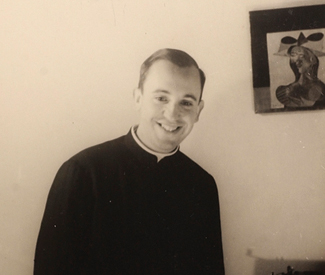
All these memories flooded back to me when I learned about the ascent of Jorge Mario Bergoglio as Pope Francis I, and the stories dripping out of Argentina about his collusion with the military during the guerra sucia, dirty war.

Horacio Verbinsky, an Argentinean investigative journalist who has written extensively about the church and the military, wrote in his 1995 book, The Silence, that Bergoglio gave information to the Argentinean secret police about the activities of the Jesuit priests Francisco Jalics and Orlando Yorio, after they refused to stop working with the poor in Buenos Aires’ shanty towns. Bergoglio dropped their protection, a sort of immunity offered to the Jesuit society by the military, which eventually lead to their arrest. Both were brutally tortured and dumped drugged and naked on a wasteland.

Bergoglio also befriended General Emilio Massera, a member of the Argentinean military junta, who was later accused of crimes against humanity and of stealing the babies of disappeared political prisoners to be raised by military families.

Jalics, Yorio, and those two fathers I came to know in prison, Gajardo and Panchot, were among those priests who followed to the letter the teachings of Christ to protect the helpless, to feed and be with the needy and did not capitulate in silence.

The Vatican has recognized that Bergoglio asked “a request for forgiveness of the Church in Argentina for not having done enough at the time of the dictatorship …” But the statement, read by Vatican spokesman Father Federico Lombardi March 15, falls short.

The Sumo Pontífice, the Pope Francis l, the one who will lead more than 1.1 billion people, must come clean and respond to all the testimony that is fogging his character. He must side with truth and justice; the only door that can lead us to reconciliation. After all, forgiveness, after the truth comes out, has always been an option in the Catholic Church.

Fernando Andrés Torres is a San Francisco writer

Fighting for patients, beyond the bedside

1

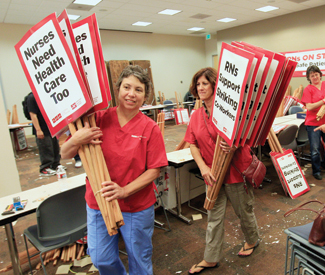
It’s no coincidence that the California Nurses Association has been the most active and effective union in fighting for a broad social and economic justice agenda, one that seeks to give greater value to caring and caregiving. Unlike many unions that fight mostly for their members’ interests, CNA is an extension of the nursing ethos itself.

“It’s not enough to advocate for patients at the bedside. We take it out into the streets and the community. That’s what nursing is,” Zenei Cortez, an RN of 33 years and co-president of CNA, told us. The CNA agenda has included support for increasing taxes on the wealthy to restore cuts to social services, advocacy for a single-payer healthcare system, affordable housing, and some of the best and sharpest opposition to the gubernatorial ambitions of Meg Whitman, who proposed deep cuts to state spending on education and other essential programs.

“We have a health care system that only cares about profits and nothing else,” said Chuck Idelson, who heads the communications staff that works for the nurses, “which is why you need people who value care over profit.”

And that’s the nurses, who have been growing in both numbers and political strength just as the healthcare profession has increasingly fallen under the sway of Wall Street and its values, making CNA an important political force.

“When I first started in nursing, we had a lot of time with our patients at the bedside,” Cortez told us. “But now, that human factor has disappeared.”

Nurses first began to flex their power early in Cortez’s career when “nurses were thought to be the handmaidens of doctors. But we were able to change that mentality,” one that was rooted in sexism and old domination-based models.

After the doctors, the nurses stood up to the healthcare corporations, winning statewide minimum patient care staffing ratios and contracts for themselves that gave them a stronger voice in patient care. As the Occupy Wall Street movement took root two years ago, CNA and its larger National Nurses United launched its Main Street Campaign to push people’s interests over those of the wealthiest 1 percent of Americans. “We have to have partnerships with our patients,” Cortez said. “The companies only care about the bottom line…We are not afraid to fight, particularly because we know it’s not for our own jobs, but for the good of our communities.”

Triggers

0

arts@sfbg.com

THEATER An average of 22 veterans a day committed suicide in the United States in 2010, according to a report last year by the U.S. Department of Veteran Affairs. Chris Kyle, however, was not likely to be one of them. The former Navy SEAL and author of a best-selling memoir had returned from military deployment in Iraq with a bounding enthusiasm for succeeding in civilian life, not least by helping other veterans with war-related trauma. Last month, on a shooting range in North Texas, a fellow vet apparently suffering from PTSD shot and killed Kyle, by then renowned as the U.S. military’s all-time deadliest sniper.

Irony like this defies fiction. But then that’s something George F. Walker understands. When the acclaimed Canadian playwright levels his pen at his primary target — he cruelly exploitative class system we inhabit back here on the “civilized” and oblivious home front —the result is dark and powerful comedy. A case in point is Dead Metaphor, his new play about a well-intentioned former army sniper facing a dismal job market and family pressures back home who goes to work for a right-wing candidate of the Michele Bachmann stripe. The world premiere comes to the Bay Area courtesy of an admirable production by American Conservatory Theater under the astute direction of Irene Lewis. As very serious as it is very funny, Dead Metaphor rings like the report from a not-so-distant battlefield.

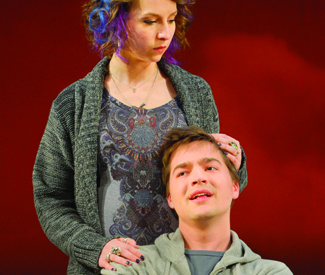
Five months back from military duty, and despite hearing nothing good about the government’s job placement services, Dean Trusk (a winningly cheerful, subtly shaded George Hampe) finally puts himself before the local job counselor (a dryly comical, increasingly disconcerted Anthony Fusco). After all, Dean has to consider his pregnant ex-wife (a smart, scrappy Rebekah Brockman) now that he’s defied expectations by coming back home alive and she’s accordingly re-marrying him. He also has an increasingly erratic and absent-minded father (a charmingly earthy, alarmingly volcanic Tom Bloom) coming unhinged by an as yet undiagnosed disease, and his brave but reeling mother (a heartbreakingly genuine Sharon Lockwood) who is faced with the prospect of having to soon place him in an expensive managed care facility.

The job counselor is unsettled by Dean’s ingenuous highlighting of his “high-level kills” on the battlefield as testament to his employable “efficiency” but, finally disarmed by the young man’s honorable sincerity, gets him a position as a coffee-fetching assistant to his politician-wife—a coldly calculating true believer of the now-mainstream Far Right (played with just the right mixture of acumen, conviction and parodic excess by an excellent René Augesen). The job exposes a rather blasé Dean to some campaign shenanigans his wife quickly deciphers as illicit, leading to a crisis for the couple as his moral compass swings first away from such dirty work and then back toward a desperate deal that might save his family from destitution.

Cast on a rotating set that moves an assortment of indoor and outdoor furnishing into and out of focus (against scenic designer Christopher Barreca’s semi-circular panorama of cloud-flecked sky), the story is a merry-go-round of insiders and outsiders, wheeling and dealing, war and peace, loyalty and opportunity, and truth and appearances. Act one in particular carries real force in the shrewd balance it strikes between razor-sharp comic dialogue and all-too-believable situations. This force attenuates somewhat in act two’s increasingly far-fetched details and strident humor. Nevertheless, the story remains anchored to a clear-sighted purpose, manifested in an unnerving and thought-provoking ending. Moreover, every scene along the way is engaging and often a sheer delight, propelled by fine acting, consistently hilarious and caustic dialogue, unexpected pangs of heartache, and a devilishly intriguing plot.

There seems to be a new raft of war-related dramas on stages lately (Word for Word’s You Know When the Men Are Gone being among the more recent, as ACT itself gets ready to bring in the internationally acclaimed Scottish production, Black Watch), but few use humor so powerfully to indict the hypocrisy and self-destruction of a society committed to permanent war. When tragedy repeats itself this long, suggests Dead Metaphor, it can only be played as farce.

DEAD METAPHOR

Wed/20-Sat/23, 8pm (also Sat/23, 2pm); Sun/24, 2 and 7pm, $20-$95

Geary Theater

415 Geary, SF

www.act-sf.org


Back to life?

0

arts@sfbg.com

GAMER There’s no single trick to staying relevant in today’s game market. The past month has seen three overt attempts to kick-start flagging franchises, and the different approaches developers have taken to boost sales demonstrate just how wily this second Wild West has become for the industry.

SOCIALIZE

Last week’s release of God of War: Ascension, a prequel to the superlatively successful — and single-player-only — God of War trilogy, arrived in stores with meager details about its twisting, soapy take on ancient Greece, but we knew plenty about the action title’s new multiplayer mode. With publishers like Electronic Arts and Crytek nobly prophesying the death of the single-player experience, multiplayer and other online services have become the go-to additions to franchises that are otherwise at odds with any sort of social interaction.

Fast-paced and frenetic, the multiplayer fills a niche that was lacking in the action-combat field, but it remains a mode no one really asked for. And it’s the single-player experience that suffers as a result. With no coherent sense of purpose for the oft-spurned demigod Kratos, and hampered by outmoded game design, it’s a shame that when it came time to reestablish the franchise developer Santa Monica Studio were afraid to truly color outside the lines.

SPIN-OFF

The Metal Gear franchise has been a dependable stealth series for decades, but the extended wait between releases has forced Solid Snake to pass the mic to newer sneaky heroes like Sam Fisher and all those hooded guys in Assassin’s Creed. Which is why Metal Gear Rising: Revengeance is a brilliant method of enriching that legacy and attracting new fans at the same time.

Konami outsourced Revengeance‘s development to Platinum Games, developers of the over-the-top Bayonetta series, and allowed some of Japan’s most outrageous game creators to twist the Metal Gear formula in a refreshing way. Rather than the stealth combat that drives the main series, Revengeance is a ruthless action game, built on linking combos and a thrilling kinetic conversation of offensive and defensive movement. Focusing on bit character (and cybernetic ninja) Raiden invigorates the franchise without messing with canon and speaks to a range of people who wouldn’t normally be interested in a Metal Gear game.

REBOOT

When all else fails, reboot. Tomb Raider‘s Lara Croft has become a punch line in her old age: an iconic pedigree ultimately overshadowed by a pair of Angelina Jolie movies and a controversial PC mod that allows you to play in the polygonal buff. Developer Crystal Dynamics recently attempted to rejuvenate the series with cooperative play in the spin-off The Guardian of Light, but it needed — and failed to provide — something stylish enough to draw in a generation of gamers who were already getting a solid archeology fix from the Uncharted series.

Approachable and slick, Tomb Raider (2013) has a gruesome sense of physicality, as young Lara is pushed to her limit for the first time on an unforgiving island off the coast of Japan. Ditching the cheeky humor and prehistoric dinosaurs and focusing on an origin story that humanizes a character that was a hair’s breadth from becoming a caricature, this new Lara Croft earns a second life and proves there’s still an audience seeking deep single-player experiences.

Of course, Tomb Raider also has a multiplayer mode. Always hedge your bets, I suppose.

Home for brews

1

culture@sfbg.com

BEER My cab pulled up to an unassuming house on a quiet street in the Mission. An etched sign on the front porch bearing the words “Brewlab San Francisco” was my first greeting to the space. I entered, and after checking me in, a man in a green vintage Adidas tracksuit handed me a customized Mason jar and said, “Enjoy.” It was time for a tasting at Brewlab (www.brewlabsf.com).

This wasn’t my first time at the quickly growing hackerspace for homebrewers. What brings me back is not the brew found at its invite-only tasting events, but the community that produces those pints. It’s a community that is thriving with Brewlab as its hub.

The mission behind Brewlab is very simple: to create a space for home beer makers to gather together, share their creations, and get feedback from each other and beer enthusiasts. Brewlab will soon offer classes, and currently provides equipment-sharing opportunities for aspiring home brewers. It hosts tasting events and competitions where ale makers gain feedback on their work from their community.

“There wasn’t an organization supporting homebrewers at the time, so I decided to start one with my friend Emily Ford,” Sam Gilbert says via email. As Brewlab’s co-founder, he operates the organization with Matt Smith, who joined up when Ford left the group early on in its existence.

“At the time, I was really inspired by what ForageSF was doing for people making food at home, and so [I] wanted to try to do the same thing for home brewers,” Gilbert explains.

In a move that sprang from his interest in cooking, Gilbert started brewing about five years ago while living in Boston. Enticed by the complexities of hops and fermentation, he hasn’t looked back since: “There’s a lot of biology and chemistry to learn about, as well as equipment to build and maintain.” He came to San Francisco to work in the tech industry and started Brewlab soon after, in the spring of 2011.

“I quickly started craving that feeling of community you get from making stuff with like-minded people,” he says. “Home-brewing tends to attract people who are really passionate about the craft, but who also like to have fun. Drinking is built right into the hobby, after all.”

To say that Gilbert’s project has become a presence in the brewing community would be an understatement. Every time I’ve set foot in the Brewlab headquarters, I’ve been bowled over by the sense of friendliness and camaraderie — not to mention by the plain ol’ good times to be had there. People know my face, they know my name, they remember our last conversations — and I don’t even make beer. “There’s nothing like being in the middle of a growing community,” Gilbert writes, and surely he’s in a good position to judge.

“It’s been the most thrilling, exhausting, nerve-wracking, inspiring thing I’ve ever done,” he continues. “Brewlab sits at the intersection of what are probably San Francisco’s three favorite things: beer, tech, and local craftsmanship. So from a very early stage it felt like we had hit a nerve.”

Now in its second year of operation, Brewlab is working on ways to serve the homebrew community. From what I can see, the future is very exciting. At its last tasting event, sensors were placed at the bottom of each taster’s glass. They recorded how many times each beer was ordered. iPad stations in Brewlab’s garage allowed visitors to submit detailed feedback on the flavor profiles of the various pours.

In addition to its tasting events (which are now invite-only to deal with the unexpectedly high level of demand for these rad happenings) Brewlab is currently collaborating with nearly a dozen brewers to make a Belgian tripel that will age for six months in a wine barrel.

Perhaps most exciting of all, the group will be offering basic classes for people like me: wannabes who observe and admire the homebrewing craft but have no idea how to start making their own beer. The classes will be free to the public. No experience is necessary, and Brewlab’s equipment sharing program can help ease you into brewerdom on the cheap.

Throughout my conversations with Gilbert and Smith, it seemed clear that while they’re excited about expanding the Brewlab community and continuing to expand its programming, their primary goal is to nurture a small and strong community that stays true to the craft.

“So many awesome people have come through our doors, tasted our beers, and worked hard to support the organization at this point,” Gilbert writes. Thanks to Brewlab, it’s a good time to be a little guy in the brewing game in San Francisco.

Emotions in motion

0

arts@sfbg.com

FILM Imagine being trapped, No Exit–style, on a city bus — let’s say Muni’s dreaded “Double Deuce” Fillmore for the sake of creative visualization — in the midst of a dozen or so out-of-control teenagers hell-bent on humiliating and terrorizing their peers and, if you have an obvious human frailty, you as well. Sound like fun? Well, Michel Gondry’s The We and the I puts you there (dramatically speaking, at least) and is often surprisingly just that. To paraphrase Sartre, “Hell is other people … on the bus,” but thankfully we get to take the trip from the safety of cushy theater seats and comfy couches.

Arguably minor Gondry (unlike 2011’s abominable The Green Hornet, whose failure can only be described as major), it’s a nice little palate cleanser in anticipation of his upcoming, much-publicized “return to form,” the Audrey Tautou–starring Mood Indigo, a film that looks to be as visually lush and romantic as The We and the I is stripped down.

Almost all of the film takes place on the aforementioned city bus as it crawls around the mean streets of New York City’s Bronx borough, ostensibly to take home kids (all played by nonprofessional actors, all minorities) after their last day of school. One or two of them do disembark early, but most seem stuck on a fossil-fueled existential journey of the damned. At about the 70-minute mark it’s hard not to wonder if the disgruntled bus driver isn’t just tooling around in circles past the same storefronts à la Joel Barish’s mind trips in Gondry’s Eternal Sunshine of the Spotless Mind (2004) — just exactly how big is the Bronx anyway? “Drop out, get your GED, join the army. I don’t give a fuck,” the driver tells a confused girl. It’s clear that the kids suffer from this kind of general adult apathy, but most bear it with a hard-edged bravado that belies their vulnerability.

That particularly applies to the trio of bullies at the back of the bus, who treat both the kids and the adults with equal-opportunity disdain. They smash an arty boy’s acoustic guitar, hurl insults while sneaking smokes, and even shame a middle-aged guy with a cleft palette. But most of their ire is saved for Teresa (Teresa Lynn), a slightly chubby, obviously troubled girl who shows up wearing a laughably bad blonde wig after being MIA from school for weeks. Teresa becomes the emotional heart of the story after it’s revealed her relationships with several kids on the bus are more complicated than initially thought.

Those kids include a drama-queen sexpot with apparent self-harming issues, a refreshingly upfront couple of gay teens, and a gaggle of giggling girls who toss around a water bra like a football. (The girls, tellingly, are just as aggressive as the boys.) Geek and bully alike connect regularly through the preferred teen method of communication: social media, specifically in the form of a YouTube video of a local doofus named Elijah repeatedly falling on his ass. Some joys are universal.

Visually, The We and the I marks a departure for Gondry. While his films always have a low-fi, arts-and-crafts vibe full of DIY quirk, this one generally eschews his love of handmade ephemera. (A major exception is the boom box rejiggered to resemble a tiny bus, which tools around to Young MC’s “Bust A Move” during the opening credits.) There is a touch of fast-motion and papier-mâché goofiness, but mostly the whole thing is done in a straightforward, verité style.

The tone, however, is pure Gondry: dopey-funny and sophisticatedly unsophisticated. You get the sense that, unlike his tony New York–loving counterparts Wes Anderson and Noah Baumbach, Gondry is a true populist. The We and the I is certainly nothing if not populist. But it’s also about the individual — specifically who we are inside and outside of an often-grueling social system. Despite some hiccups, like an unnecessarily dark third-act revelation, it’s more or less successful in illuminating the joys, cruelties, and uncertainties of life, which remain viscerally real after the sun sets and we finally get off the bus, vulnerable as ever in our solitude. 

THE WE AND THE I opens Fri/22 in Bay Area theaters.

The devil’s business

0

cheryl@sfbg.com

FILM Ten years after its release (and more than 15 years since Jim Van Bebber started working on it), the legendary cult film The Manson Family returns for special theatrical screenings in conjunction with a remastered Blu-ray release. Also on the bill: short film Gator Green, Van Bebber’s most recent project.

Personal circumstances have the Ohio native living in Florida these days. “I’m like, goddammit, I’m down here — I gotta make a movie! So that’s what I’m up to with Gator Green,” he drawls over the phone. “It’s about a Vietnam veteran who swindles his way into this alligator farm from the Seminole Indians in 1973, and abuses every right. It’s the worst portrait of America I can think of.”

Strong words coming from the guy who made The Manson Family, maybe the most gruesomely realistic study of the hippie cult, crafted with an eye for detail that speaks to true-crime scholarship of the highest order. His fascination with Charles Manson is a long-standing one, having begun in the late 1970s when the Helter Skelter miniseries aired.

“It was a big fuckin’ deal,” he remembers. He was still in elementary school at the time. “This is back in the day when you only had three channels. I was not allowed to watch the film, so I had to ask my friends on the playground, ‘What was that about?’ It kind of haunted me.”

Unlike Helter Skelter, which is based on the best-seller written by Manson prosecutor Vincent Bugliosi, Van Bebber’s film focuses on the months of drug-fueled delirium (“a crazy, psychotic rush to absolute zero”) prior to the Family’s crime spree.

“How can you touch Helter Skelter, which is basically a great depiction of the trial? I decided to do everything leading up to that. If you watched them together, it would be a great double feature — Manson 101.”

He began The Manson Family after finding underground success with 1988’s Deadbeat at Dawn, which he wrote, produced, directed, and starred in. (He has a similar stack of credits on Manson, too.) At the time, he’d recently seen Geraldo Rivera’s infamous jailhouse interview with a ranting, tongue-twisting Manson.

“I flipped out,” he chuckles. “I mean, are you kidding me?” Conveniently, he already had a friend who resembled Manson; the rest of the cast — many of whom appear fully nude and/or screaming, covered in blood, etc. — came from the theater department at Wright State University, where he was a student.

“I was very up-front with everybody. I was like, this is gonna be freaky,” he says. “We dove into it without the entire budget in place, and it became this ongoing thing. Thankfully we wrapped the photography within, like, four years. But then it was an eternal struggle to see it fully realized. I got plenty of offers, ‘Ok, let’s just slam this into the DVD market. But first, we gotta cut out this one scene …'”

Determined to stay true to his vision — dark and nightmarish though it was — Van Bebber held out until he met producers David Gregory and Carl Daft. “They got it done the right way. They’re warriors. And I’m pleased that it’s finding its Blu-ray home.”

Looking ahead, he hopes to expand Gator Green into a feature. “I’m just gonna keep going. I was born to make films, and that’s just what I do. Sometimes it takes me a long time, but it’s always worth it.”


PERMANENT VACATION

Another sordid tale from the Sunshine State beckons in Harmony Korine’s Spring Breakers. The idea of enfant terrible emeritus Korine — 1997’s Gummo, 2007’s Mister Lonely, 2009’s Trash Humpers — directing something so utterly common as a spring break movie is head-scratching enough, even more so compounded by the casting of teen dreams Vanessa Hudgens, Selena Gomez, and Ashley Benson as bikini-clad girls gone wild. James Franco co-stars as drug dealer Alien, all platinum teeth and cornrows and shitty tattoos, who befriends the lasses after they’re busted by the fun police.

“Are you being serious?” Gomez’s character asks Alien, soon after meeting him. “What do you think?” he grins back. Unschooled filmgoers who stumble into the theater to see their favorite starlets might be shocked by Breakers‘ hard-R hijinks. But Korine fans will understand that this neon-lit, Skrillex-scored tale of debauchery and dirty menace is not to be taken at face value. The subject matter, the casting, the Britney Spears songs, the deliberately lurid camerawork — all are carefully-constructed elements in a film that takes not-taking-itself-seriously, very seriously indeed. Korine has said he prefers his films to make “perfect nonsense” instead of perfect sense. Spring Breakers makes perfect nonsense, and it also makes nonsense perfect.

After a slo-mo opening sequence of generic partying stuffed with the three Bs (boobs, beer, beach), Spring Breakers shifts to a crummy town in Southern Nowheresville, home to bored college students Brit (Benson), Candy (Hudgens), Cotty (Rachel Korine, wife of the director), and Faith (Gomez). (Can you guess which one is the Christian?) The friends moan about the spring break they’re being denied due to lack of funds, until a plan to rob a fast-food restaurant emerges, and Spring Breakers’ prevailing visual motif — ski mask-wearing hot chicks with guns — is born. It’s one of the film’s many “jokes without a punch line” (another favorite Korine pursuit) that the girls’ college life already resembles one big party — they’re already kinda living spraaaannng braaakkke forevaa, as Alien is fond of saying.

That’s important, because there’s a reason spring break is typically just a one-week affair. For most, full-tilt crazy is only a safe state of being when there’s a clearly-defined endpoint. School begins again; as your liver starts to repair itself, you’re left with a peeling sunburn, stories to tell, maybe a questionable new tattoo. For these girls, spring break is elevated into a chance to “find ourselves, to find out who we are,” according to one of Faith’s dreamy voice-overs. For certain among the group, it’s a quest that leads to some very dark places. Is that a good idea? What do you think? But don’t think too hard, now: to quote Alien again, “Bikinis and big booties, y’all … that’s what life is about.”

THE MANSON FAMILY

Fri/22-Sat/23, midnight, $9-10

Clay Theater

2261 Fillmore, SF

www.landmarktheatres.com

SPRING BREAKERS opens Fri/22 in Bay Area theaters.

Spring’s best fairs and festivals

0

caitlin@sfbg.com

Corn Dog Day (March 23, free entry with RSVP. SoMa StrEat Food Park, SF) Observe this very important holiday with savory dogs from SoMa’s superb outdoor food truck court and catch the game while you’re at it — the first weekend of March Madness will be showing on several screens around this gourmand parking lot. Sponsored by that online encyclopedia of awesome, FunCheapSF. sf.funcheap.com/corn-dog-day-funcheap

International Chocolate Salon (March 24, $25-30. Fort Mason, SF) With over 40 purveyors of dark, milk, white, bitter, etc., you will most likely be a mess of sugar high halfway through your tour of this expo’s floor. Take a break to inhale artisan perfume in the connected fragrance salon, or check out an expert talk by food critics and chocolatiers. www.sfchocolatesalon.com

Whiskies of the World (April 6, $120. Hornblower Yacht, Pier 3, SF) Thank goodness for the world’s heaviest buffet (steak and potatoes like whoa) at this world-class whiskey expo. You’ll need that tummy padding to tackle the hundreds of rare and delicious scotches, bourbons, etc. This year it’s on a boat, so you can blame your swerve on faulty sea legs. www.whiskiesoftheworld.com

DogFest (April 13, free. Duboce Park, SF) McKinley Elementary scored big when it thought up this daylong parkside dog-a-thon fundraiser for its kiddos. Daniel Handler, author of the Lemony Snicket series, hosts contests for the pup with the best tail, trick, bark, lookalike, and other superlatives. Bouncy castle and other activities to boot! www.mckinleyschool.org/dogfest

Northern California Cherry Blossom Festival (April 13-14, 20-21) Check out Japantown’s premier celebration of neighborhood culture. You can watch this year’s Cherry Blossom Queen crowned on April 13 and on April 21, the fest’s grand parade. Drop by the Sanrio kid’s corner with your little guy for sand painting and kawaii games. www.sfcherryblossom.org

Earth Day (April 20, free. Civic Center Plaza, SF) A “trashion” show by Truckee High School students, a sustainable cooking showcase, and mass yoga classes will be highlights of this year’s city celebrations for Mother Earth’s big day. www.earthdaysf.org

Maker Faire (May 18-19, early bird prices: $25 one-day, $45 weekend pass. San Mateo Event Center) DIY heads of all stripes will swoon for this mega-collection of self-made projects. Last year featured weird food, wacky wiring art, sports mania, and more. www.makerfaire.com

Bay to Breakers (May 19, race registration $58. See website for route) You need to mark this costumed wackadoo of a footrace on your calendar for one of two reasons: to prep your liver for definitely not drinking on the parade route or so you can set up cyclone fencing to prevent errant streams of urine from over-hydrated toga partiers and people in gold bodypaint. www.baytobreakers.com

North Beach Festival (June 15-16, free. North Beach neighborhood, SF) Tell us that all the neighborhood street fairs are essentially the same amalgamation of elephant ears, “quirky” accessory vendors, and pleasant live music. Untrue — North Beach’s massive edition of the tradition includes a church dispensing blessings for animals, so bring your bush python through! www.sresproductions.com


Mathematical certainty

0

arts@sfbg.com

DANCE ODC/Dance started its 42nd season with a party-happy gala and two contrasting but complementary works: Brenda Way’s new Lifesaving Maneuvers and KT Nelson’s redressed and finessed 2012 Transit: Next Stop. Two days later, the season’s major premiere, Triangulating Euclid, co-choreographed by Way, Nelson, and Kate Weare, opened an intriguing perspective on what gifted women can do when they put their heads and hearts together. Of course, women working together is not exactly a fresh idea at ODC — it’s at the core of what this troupe set out to do four decades ago.

Though the dark Lifesaving has its moments of humor, Way’s look at wild excesses and paralyzing paranoia, both as social and personal phenomena, is a tough watch. The piece develops in front of Alexander Nichols’ semi-transparent curtain that closes off some ominous, hinted-at life beyond our vision.

While the sheer clarity and force of its choreographic vision pulls you in, Way’s unsparing look on coping strategies is chilling. Chaotic explosions could distill into social dance sequences where a partner, nonetheless, could be dropped like a rock. Yayoi Kambara looked caught in a tornado from which there seemed to be no exit, while Anne Zivolich darted around like a hunted rabbit.

Way grounds the choreography in an intense, often frantic energy that implodes mid-air. She balances discontinuity with unity processions, starting with battlefield imagery of dancers carrying off fallen comrades, women being pushed into the wings like brooms and vacuously waving men and women that might have stepped out of a Pina Bausch piece.

Still, Way doesn’t want us to feel too gloomy. You can’t help but smile when dancers choke and need Heimlich maneuvers as "Mad About the Boy" plays. In a silent movie melodrama, Natasha Adorlee Johnson throws herself at Corey Brady’s suave villain; he coolly assesses his victim and flips her off.

The piece ends with Justin Andrews cradling a desperately flailing Vanessa Thiessen. He tries to comfort her; she can’t respond. Curtain.

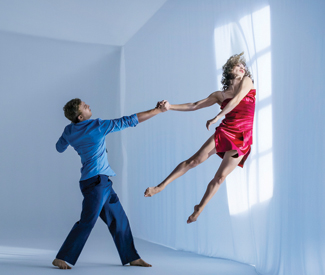
Whatever the process that the three collaborators engaged in for Triangulating, it worked. At first the piece looks like an illustration of basic plane geometry, but it quickly blossoms into an exuberant celebration of the way dancers inscribe themselves into space. From the moment a dancer’s leg smudges the carefully drawn line on the floor, you realize that poetry supersedes science.

The half-hour piece sails through its accumulations and dissolutions of staggered and overlapping encounters with surety and an increasing sense of freedom. The piece grows and finishes with Yayoi Kambara as the single dancer who draws the others onto the stage. Line formations give way to duets — still at the core of how and why we dance. Wonderfully, the cantilevered lifts, upside-down holds, and kicking feet feel thoroughly at home in Schubert’s music. The partnering between Corey Brady and Maggie Stack, contentious and passionate in the way he throws and whips her around, stands out.

Finally, Anne Zivolich sniffs, tiptoes, and encircles an indifferent Jeremy Smith; she breaks into one of her by-now-legendary whiplashing explosions when he takes off with someone else. One by one her colleagues march in and try to stomp her to the ground. The scene was both hilarious and spoke to truth: surely there is more to this dancer than being a female hurricane —something she appears as in just about every choreography that ODC produces.

The simple costumes (by Way and Lisa Claybaugh) of black shorts and bras for the women, and then supplemented by diaphanous white blouses, couldn’t be better. The score’s trajectory from synthesizer to Schubert to grand-style minimalism did its job as well.

Nelson’s Transit: Next Stop has acquired a spectacular set of animations which contextualize her urban dwellers’ attempts to manage their relationships. Yet Barry Steele’s design is so big that it draws undue attention to itself. It works best during a night scene in which life becomes a dream. But I am not sure whether adding a filmic sense of passing and changing habitats brings that much to this funny-yet-tender perspective on what it means to be a contemporary city dweller. *

ODC/DANCE DOWNTOWN 2013

Wed/20-Thu/21, 7:30pm; Fri/22-Sat/23, 8pm; Sun/24, 4pm, $20-$75

Yerba Buena Center for the Arts Theater

700 Howard, SF

www.odcdance.org

The real CPMC story

10

OPINION The recently announced terms for the development of California Pacific Medical Center’s hospitals at Cathedral Hill and St. Luke’s generated front-page and lead stories in the local news media. But nearly without exception, only part of the story was reported. Missing from most accounts of the terms of the new deal, which dramatically changed last year’s failed draft development agreement negotiated by Mayor Ed Lee, was the decisive role played by a community/labor coalition, San Franciscans for Healthcare, Housing, Jobs and Justice.

Key details of the agreement have yet to be finalized, and provisions of the terms announced on March 5th need to be improved. But the new agreement, in virtually all respects, is an improvement over the old one. And on the same day the terms of the new deal was announced one of the union members of the coalition, the National Union of Healthcare Workers signed a contact with CPMC that protected union organizing rights, job security at Cathedral Hill and full employer paid health care — issues that had been unresolved over the last few years. Still missing is an ageement between Sutter and its nurses, a critical component of labor peace.

The basic structure of the current terms mirror almost exactly the positions outlined by the SFHHJJ over the last year, including a requirement for labor peace with all unions at CPMC. This was no accident; it was the result of the efforts of the community/labor coalition. When the old deal was stalled at the Board of Supervisors in early 2013 and it was clear that the Mayors Office had no idea how to proceed, the members of the coalition came up with a framework to get discussions going again. The key ingredient was the involvement of a skilled an knowledgeable mediator, mutually respected by all parties and the participation of Sutter Corp. in Sacramento — the real party able to make actual binding corporate commitments, not the subsidiary the mayor had dealt with.

The second step was to agree to a framework of issues that would form the substance of negotiations — and the coalition’s own comprehensive set of positions served as that framework.

The next step was to get a critical mass of supervisors to agree to participate in the negotiations. Two Supervisors, David Chiu and David Campos, agreed to the coalition’s framework and the use of a third-party mediator. They added a third supervisor, Mark Farrell, to their group in order to assure buy-in from the full board.

Finally, the mediator had to be found and in that the coalition (and the rest of the city) simply were lucky that Lou Girardo was willing and able to provide his own special skills and credibility.

The SFHHJJ is not the first community/labor coalition in San Francisco history. Such coalitions were present in both the District 1 and District 5 supervisors races last year with mixed success, and in 2008 a community/labor coalition fought for revenue measures, again with mixed success but real unity. A new labor/community coalition has emerged to oppose Scott Wiener’s ill-advised weakening of our local California Environmental Policy Act procedures.

As the Democratic Party transforms itself into ever greater political irrelevancy by becoming the home of moderate Republicanism at all levels of government, community and labor co-operation seems to be growing over an increasing number of issues, showing a level of political vibrancy impossible to ignore.

Calvin Welch is a longtime community organizer in San Francisco and is a member of the SFHHJJ CPMC Negotiating Committee

Who gets hit by Muni switchbacks?

20

rebecca@sfbg.com

Muni switchbacks — that annoying practice where trains force all the passengers off well before the end of the line — have been in the news lately, with new Supervisor Katy Tang making switchbacks her first political priority.

But when you zero in on who bears the brunt of these service disruptions, it becomes clear that not all transit passengers are created equal. In fact, Muni data shows that the vast majority of switchbacks were concentrated in just three locations this past January.

San Francisco Municipal Transportation Agency reports shows that the top three stations hit by switchbacks in January were the T Third stop at Third Street and Carroll Avenue; the N Judah stop at Judah Street and Sunset Boulevard; and the J Church stop at Glen Park Station, in that order. While the January data provides only a snapshot, annual figures show that the T and J lines each averaged around 36 switchbacks per month since February of 2012, while the N averaged 49.

View MUNI Switchbacks in a larger map

This map displays the top five locations where switchbacks occurred in January 2013.

Muni defends the switchbacks, saying that trains sometimes have to be rerouted to fill service gaps elsewhere. But for passengers, it’s a huge inconvenience — they’re left with little choice but to sit tight until the next train arrives, which in some cases can be as long as 30 minutes.

Switchbacks can happen in foul weather, and at night. They can impact elderly transit riders with few other transportation options. For weary Muni customers headed to the outskirts of the city after a long workday — or trying to get to a job or child-care responsibilities on time — a switchback can be the proverbial last straw.

The SFMTA data was included in a February memo to Sup. Carmen Chu, predecessor to newly minted District 4 Sup. Tang, who did not return Guardian calls seeking comment.

Some view switchbacks as a social justice issue. In the case of riders traveling to the end of the T line in the Bayview, the disruptions disproportionately affect riders who have longer trips to begin with — it takes 40 minutes to get from Van Ness Station to the end of the T line during normal weekday hours, compared with 28 minutes to the end of the N line and 26 minutes to the end of the J line. And those traveling to the city’s lower income, southeastern sector are less likely to have alternative means of transportation.

The 39 switchbacks that left southbound passengers waiting at the T Third Carroll stop, near Armstrong Ave, accounted for almost a third of all switchbacks recorded in January. Since they happen more frequently during off-peak hours, passengers are more likely to be left standing out on the platforms at night, when there are longer gaps between train arrivals.

That’s a public-safety issue: Police Department data accessed on San Francisco’s Open Data Portal shows multiple car break-ins, a robbery with force, and a meth possession charge all occurring nearby that train stop over the past three months.

According to the SFMTA memo, “Vehicle maintenance issues and automatic train control system issues accounted for most delays in which switchbacks were used to rebalance and restore scheduled service.” There were more disruptions on the K/T and N lines, Transit Director John Haley wrote, because they are “longer than the other lines and, as a result, have more opportunity to fall behind schedule.” The memo added that upgrades are underway to improve reliability and reduce breakdowns.

“SFMTA needs to prioritize providing reliable transit service to all San Franciscans,” Sup. Malia Cohen, who represents the Bayview, told us. “While I understand that systems need to be flexible to adjust to accidents or other issues, the data tells us that there is a pattern of these switchbacks in our outer neighborhoods in District 10 and District 4, disproportionately impacting low income transit riders, seniors and families.”

San Francisco’s Transit First policy, which appears in the City Charter, states: “The primary objective of the transportation system must be the safe and efficient movement of people and goods.” But Muni regularly boots three specific groups of train passengers off the trains, even though they have the farthest to travel. They’re left out on the platforms during off-peak hours, sometimes after dark, when there are longer wait times between trains. Does anyone actually believe that’s safe and efficient?

Editor’s Notes

5

tredmond@sfbg.com

EDITORS NOTES Ten years ago, we shut San Francisco down.

When George W. Bush gave the order to launch the invasion of Iraq, so many protesters hit the streets that it was impossible to do business. Market Street was closed. Tens of thousands of people didn’t go to work. Some 2,300 people were arrested, held in warehouses at the piers because there was no way to fit them in the county jail.

It was an exhilarating week (although I spent much of it trying to get my reporters out of the clink; the SFPD wasn’t paying much attention to press passes in the massive sweeps). It was a statement of how overwhelmingly this city was opposed to Bush’s War. It was repeated in smaller versions all over the country.

And it didn’t matter. Rep. Nancy Pelosi not only missed the antiwar rallies, she criticized us for costing the city money. A virtually unanimous Congress sides with Bush. Anyone who disputed the government line was branded as un-American.

And now we know the truth. It’s hard to find a single credible person who argues that the Iraq War was a good idea. After nearly $2 trillion dollars wasted, 4,300 US soldiers dead, and at least 100,000 Iraqi civilians killed, nothing of value has been achieved. The new Iraq is not a reliable US ally in the Middle East. That nation is not stabilized; in fact, it’s headed for civil war. There were no weapons of mass destruction.

Even if you want to be a pro-imperialist, US-interests-above-all type, you’re still going to be disappointed — American companies don’t control Iraq’s oil supply.

Ten years later, Bush is nowhere to be seen. He’s hiding out, painting pictures of himself, living comfortably. His kids didn’t die in the desert or come home with PTSD. He’s not going to be on the hook for the debt.

And none of the leaders of the pro-war march is apologizing — or even kinda, sorta admitting that they were terribly wrong. It’s hard to find any major news media accounts saying that the protesters — the ones who shut down San Francisco — were absolutely right.

Paul Krugman, one of the few mainstream news media voices who recognized the folly of the war from the start, put it this way in his March 18, 2013 column:

“What we should have learned from the Iraq debacle was that you should always be skeptical and that you should never rely on supposed authority. If you hear that ‘everyone’ supports a policy, whether it’s a war of choice or fiscal austerity, you should ask whether ‘everyone’ has been defined to exclude anyone expressing a different opinion.”

So let’s just take a moment now to reflect — not only on the horrible human tragedy but the political lessons. Because we were right, and they were wrong — and I just wish that for once, they’d admit it.

Angels in Budapest

0

arts@sfbg.com

THEATER On two old VHS tapes in the collection of San Francisco’s Museum of Performance and Design you can watch the Eureka Theater’s 1991 world premiere of Tony Kushner’s Angels in America, a response to the AIDS epidemic and the reactionary politics of the Reagan era. It’s a low-fi document, with poor sound quality, but it’s completely riveting. Something more than the play’s words and images, as striking as they are, cling to that worn magnetic tape: there’s the electric excitement of a work of art cracking open its historical moment.

A similar frisson passed through the main auditorium of the National Theatre of Budapest last week, where I joined a group of international guests and a local audience for Romanian-born American director Andrei Serban’s production of Angels in America, starring as Prior Walter the National’s celebrated yet politically embattled artistic director, Robert Alföldi, an award-winning international director in his own right and one of the country’s most famous actors.

The production was the capstone of an impressive weeklong festival featuring some of the best work in contemporary Hungarian independent and state-sponsored repertory theater. Presented by the Hungarian Critics Association, in international partnership with Philip Arnoult’s Center for International Theatre Development and the Trust for Mutual Understanding, the Hungarian Showcase (March 2–9) encompassed a revelatory range of styles and talents. It also highlighted a theater actively responding to a rising tide of reactionary politics — reminiscent (especially in its overt anti-Semitism, homophobia, and anti-Roma racism) of the ultra-nationalism of the 1930s — even as the arts in general and theater in particular reel under the economic strain of the conservative government’s neoliberal agenda and attempted curbs on free expression.

The National’s production of Angels is just one instance of theater’s critical role in public dialogue in Hungary today, but in many ways it was the most poignant instance encountered. That’s in large part owed to Alföldi’s powerhouse performance in the lead — a muscular, charismatic performance, extremely witty and wrenching by turns — and simultaneously to his history as artistic director over the last five years. Since Alföldi’s government appointment in 2008, something extraordinary has been underway at the country’s premier stage. Previously, Budapest’s National Theatre had been better known for its kitschy postmodern edifice (opened in 2002 and made to resemble a rather gaudy ship aimed vaguely at the nearby Danube) than for the unexceptional productions on display inside. Under Alföldi’s brilliant and maverick leadership, the theater has come to be widely regarded as one of the best — if not the best — in the country, and attendance has grown dramatically, including among younger audiences.

Alföldi’s attempts to make the theater a place of inclusion and dialogue, meanwhile, as well as his lively and provocative interpretations of classic Hungarian nationalist texts like The Tragedy of Man and John the Valliant, have earned the disfavor of rightwing politicians — including members of the ultra nationalist Jobbik party, who were not above demonstrating noisily outside the theater to demand his ouster, and slandering Alföldi on the floor of the Parliament. Alföldi, popular and unprecedentedly successful in the post, has managed to stay on for his five-year term, but the government denied his application for a second term in favor of a well-known director with conservative political opinions.

In Serban’s considerably pared down version, Millennium Approaches and Perestroika together come in at just under four hours, separated by a short intermission. There are naturally some sacrifices entailed. The subplot involving Roy Cohn (played by the National’s brilliant János Kulka), for example, takes a big hit in terms of stage time. But whatever the faults of the production, the exuberant, ironical tone feels aptly knowing, as does the rotating stage set up like a cross between a dance floor and a merry-go-round.

In just one example of the production’s winking conversation with the audience, an announcement over the PA system at the outset of Part II reminds patrons in this former Soviet bloc country that the play is set in a far off land bearing little resemblance to anything close by — only to be followed by the familiar twang of an electric guitar as the Beatles’ “Back in the USSR” creates a musical bridge to a speech by the Oldest Living Bolshevik. Like Prior’s heavenly counselors, the Bolshevik urges a halt to history. The significance of the theme is unlikely to be lost on an audience facing the atavistic return to authoritarian models of the past.

While this isn’t the first time a Hungarian theater has essayed Kushner’s play, enough has changed politically in Hungary in the last few years to make this production, in which Alföldi assumes the role of the play’s cross-dressing openly gay hero, an act of brazen defiance as well as solidarity with all “outsiders” in the right wing’s narrow compass of nationhood.

“The world only spins forward. We will be citizens. The time has come,” says Alföldi as Prior. “The great work begins.” In its own call for “more life,” the National’s production captures something of the original life of the play all over again — defining the nation and its theater as a place of empathy and inclusion, of harmony in difference.

Meanwhile, tickets for Angels in America, widely seen as Alföldi’s farewell bow, are completely sold out.


Mall the right moves

0

caitlin@sfbg.com

STREET SEEN The fact that that our conversation is taking place to beat of Carly Rae Jepsen’s 2012 seminal classic “Call Me Maybe” leads me to believe that T-We Tea owner Christopher Coccagna is being real when he says he’ll be holding 12:30pm dance parties for the FiDi lunch set in the darling tea shop he just opened in the neighborhood.

It also leads me to believe that Crocker Galleria may be downtown’s most fun mall — or at least, that it’s on the way.

“I was totally down on having a retail store,” Coccagna tells me as we ship cups of his “Chai Me” blend in his small shop’s kiki parlor. For years he sold at events like the Renegade Craft Fair, consterning regulars who often ran out of his cheekily-titled single origin teas (“Bicurious George,” “Sexpot,” and “Hipsters in Wonderland”) before the next sales opportunity. But the five-year lease contracts often associated with renting commercial space scared the young business owner away.

In contrast, Crocker Galleria is offering him a much more flexible agreement and he’s been presiding over his space, lovingly decorated in fuchsias and Moroccan poufs since February. “I’m going for Euro pop, eclectic, and adorable,” Coccagna says.

Does Topshelf Boutique have FiDi’s new look? Guardian photo by Caitlin Donohue

That craft-fair-over-corporate-chic aesthetic may speak to Cushman and Wakeman retail manager Sabrina Goris’ plans for Crocker. In the past few years, Versaces and Dolce and Gabbanas have been vacating the center. At the moment, Ralph Lauren’s shuttered doors make a great visual metaphor for this sea change, although not as good as the expensive tiling floor work that Versace left behind for new tenant VIP Luggage. The turnover has made way for a mix of tenants who count 85 percent local owners among them.

Goris partners with local business nonprofits like La Cocina and Renaissance Entrepreneurship Center to attract new entrepreneurs to their first brick-and-mortar location. La Luna Cupcakes, a La Cocina grad, is set to open in Crocker this spring and Tomboy Tailors, the city’s best genderqueer place for a butch dandy to get a perfectly tailored three-piece, went through the Renaissance program and also opened at Crocker this year.

The challenge with the space is figuring how to make the robust lunch crowd that comes for the mall’s top floor food court stay to shop. Every Thursday from 11am to 3pm a year-round farmer’s market sets up on the first floor, opening on Tuesdays during the summer as well. The mall even hosts a concert series to get shoppers in the glass doors.

Like the rest of the universe, Crocker is experimenting with pop-ups, too. On the first floor, a quartet of small local clothing and accessory companies opened a single storefront in February. Surf brand After Eleven and its irreverent pizza cross t-shirts, Topshelf Boutique, kids shirts and zoo-themed tees from Animal Instinct, and Embergrass Jewelry bring a fresher fashion tone to the mall. Their pop-up run’s was recently extended — it’ll now be open until the end of March.

Christina Ruiz, who opened Topshelf Boutique originally in a van that traveled about, bringing gauzy, bright dresses, studded button-downs, cat-eye sunglasses, and the occasional vintage piece to shoppers, has had a lot of luck in the pop-up space. She admits that originally, she wasn’t sure if the Topshelf’s club casual style would sell to the big-money downtown types.

“I was surprised that I sold so well,” she says. “I worked as a bartender for a long time when I didn’t have to dress up for anything.” She’s grown to appreciate the day job schedule, though. “I really like it here because [customers come through] Monday to Friday, 10am to 6pm. That’s so not traditional for retail.”

Office workers who wear studs, tea shop kikis, a mall that could be kind of cool — sounds like a different kind of commercial community is being built. Says Coccagna of this mall magic: “you can feel the shift here.”

Crocker Galleria 50 Post, SF. www.thecrockergalleria.com


Frankie says feminist pornography

1

caitlin@sfbg.com

SEX It is hard to imagine an industry as rich, yet as under-examined as that of pornography. We spend billions of dollars on porn in this country, and billions of hours trying to hide that fact, erasing search histories and wedging DVDs under the bed when our parents are coming over.

So perhaps it makes sense that The Feminist Porn Book, the first of its kind to include writings from porn-studying academics and porn performers, is designed so as to resemble nothing so much as a traffic sign. “What are you reading?” I doofily joked to myself on BART while positioning the Day-Glo paperback with its “FRANKIE SAYS RELAX” massive font in a way I hoped would avoid undue scorn-face from my fellow passengers.

It’s their loss, really. The book is a big deal, a first-time conglomeration of viewpoints from across the pro-sex feminist landscape. Its introduction alone was the most comprehensive history of feminist pornography I’ve ever seen (how appropriate that we’re in the middle of Women’s History Month 2013.) The next time anyone has a question about whether porn can really be anti-sexist, I will direct them to The Feminist Porn Book‘s neon glow.

Within its pages, professionals from a variety of nooks and crannies tackle some issues that even we, as feminists who believe porn can reflect and augment healthy sexuality, have trouble resolving. Penn State’s Ariana Cruz tackles the image of black women in porn (and the no-less-interesting reality of being a black female academic who studies black women in porn.) Am I the only one who gets giddy about heavily-footnoted academic essays on the race issues stirred up by Asian porn star Keni Styles’ participation in locker room orgy scenes?

Performers’ voices are well represented here, mainly in first-person testimonials that explain their career paths, complicated stories that don’t dodge critique of the adult industry. Transman pioneer Buck Angel talks vagina, seasoned pro Nina Hartley about being a role model. The Bay Area’s April Flores explains how she busts up the BBW stereotype. Kink.com model Dylan Ryan and director Lorelei Lee explore society’s conception of their professional lives.

In a brief phone chat, one of the book’s editors and longtime feminist pornographer herself Tristan Taormino explained to me that the book came about after a panel discussion in which she participated that featured both academics and porn stars. That fusion, the participants felt, gave birth to a conversation that had to be continued. A few panelists from that chat can now be found within the anthology’s pages, and Taormino is now organizing a day-long conference to take place on April 6 amid the hangovers from the eight-year-old Feminist Porn Awards in Toronto.

“There are feminists in mainstream porn. I’m not the only one, I swear!” Taormino says this in a jocular manner, but given those billions of dollars, her implication that porn is starting to allow more room for feminist imagery and voices is a rather big deal. For now, I resolve to worry less about what other people on BART think of my reading list.

THIS WEEK’S SEX EVENTS

Three years of Oh! Powerhouse, 1347 Folsom, SF. www.powerhouse-sf.com. Wed/13, 10pm-2am, $3. Darling DJ Robin Simmons will give you something to listen to beyond the slaps and moans at the third anniversary of this gentlemanly meet-up for dirty dappers.

BDSM panel for anarchists California Institute of Integral Studies, Room 304, 1453 Mission, SF. bayareaanarchistbookfair.wordpress.com. Sat/16, 6:30-8:30pm, free. Internet flame wars ensued when Native scholar Roxanne Dunbar Ortiz canceled her talk at the Bay Area Anarchist Book Fair upon realizing it would be held in the event rental space of Kink.com’s Armory this year. Today’s discussion looks to re-unite members of the radical community who disagreed over the issue. Pre-open floor, a history of pornography and feminism will be presented, as well as ways to support sex workers, women, and people who think differently than you do.

Vinyl addicts

1

emilysavage@sfbg.com

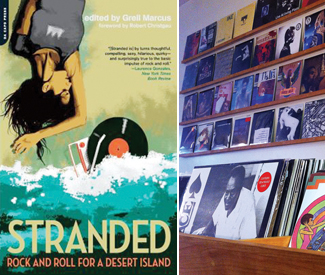
TOFU AND WHISKEY “Rock and roll has never been remotely monolithic,” early Rolling Stone columnist Greil Marcus writes in the introduction to the 1978 book he edited, Stranded: Rock and Roll for a Desert Island (Da Capo Press). “There have always been countless performers to pin your hopes on; though one may have found identity as a member of an audience, one also found it by staking a place in that audience, defining one’s self against it.”

He recalls a time when all rock fans simply had to have an opinion about the Beatles, about Elvis, but notes there’s is no longer a single figure that “one has felt compelled to celebrate or denigrate.”

“The objects of the obsessiveness that has always been a part of being a rock and roll fan…are no longer obvious,” he continues, “which means, for one thing, that while one’s sense of the music may not have perfect shape, it’s probably a lot richer.”

Marcus wrote these words in Berkeley in the late ’70s, though they ring truer today. For Stranded, Marcus invited rock critics such as Lester Bangs, Ellen Willis, and Nick Tosches to answer the basic parlor game question in essay form: “What one rock-and-roll album would you take to a desert island?” He’ll read from the book this Thu/14 at 6pm at a new record shop, also called Stranded, 6436 Telegraph, Oakl. (www.strandedinoakland.com).

The brick-and-mortar Stranded opened about five months ago (in November 2012) and is run by Oakland’s Steve Viaduct, the 36-year-old founder of Superior Viaduct records, an archival label that focused on reissues and archival collections of Bay Area punk and post-punk for its first year and is now in the process of expanding its output. One of those releases was MX-80 Sound’s ’77 album, Hard Attack, which is the record Viaduct says he‘d take to a desert island.

Since the Stranded opened, there have been a handful of shows and author appearances, along with the everyday bustle of record obsessives. “We had pretty modest goals [for Stranded]. We wanted a cool place to hang out and meet other vinyl enthusiasts. With no budget for things like advertising, our biggest milestone has been that we are breaking-even financially and we are having fun doing it.”

I asked Viaduct what bands best exemplified the ethos of the label and shop, and instead he chose a book: “That is a tough question because Superior Viaduct is very much a work in progress. Perhaps the best example of the label’s ethos is our first book, From the Edge of the World: California Punk 1977-81, by photographer Ruby Ray. The photos are amazing. Ruby captures a moment that barely existed in the first place, yet still resonates today.”

Marcus’ appearance came naturally. A noted lover of vinyl, he’d stopped by Stranded a few times and gave the owners of a copy of his book. When Viaduct found out his friend had chosen the book for her Rock N’ Roll Book Club, he decided it was time to invite Marcus to speak at the store. After that, the next events at the shop are Dawn McCarthy and Bonnie “Prince” Billy performing live in-store (March 31), then Rock and the Pop Narcotic author Joe Carducci reading May 3.

Given the crumbling of big box music chains and the US economy as a terrifying whole, it’s a particularly troublesome time to open a store of any kind, let alone one mostly focused on physical music — though there are shining examples to the contrary, such as Burger Records and Amoeba Music — so I was intrigued by the store’s arrival.

“Buying records in stores is more fun for customers and shopkeepers,” Viaduct says, shrugging off the concern. “The personal contact really makes a difference. There is nothing better than to recommend something and a day or two later the person comes back and says, ‘Thanks! That record is great.’ Of course, we know that folks can buy records online, so we do not even try to compete with that.”

1-2-3-4 GO!

One of those shining star examples of making it work in the name of the music you obsessively collect — fellow East Bay record shop and label, 1-2-3-4 Go! (www.1234gorecords.com) is this month celebrating five years in Oakland.

Also noteworthy: the label will be 12 come August (time for a Bar Mitzvah?). It’s notable for discovering and releasing records by trash, thrash, psych, punk, garage, surf, doo-wop, whatever local acts along the lines of Nobunny, Shannon and the Clams, Personal and the Pizzas, Lenz, and Synthetic ID.

With its move to a bigger space, the store is now also noted for its all-ages shows, with many of the above frequenting the location along with out-of-towners from LA and beyond. For the five-year marker, the shop is having a big sale on March 23 and 24, and will celebrate further with its second annual the Go! Go! fest May 16 through 19.

I asked label-store owner Steve Stevenson, a 33-year-old Oakland resident, the same question as Viaduct regarding the problems with opening a store such as this. Stevenson perhaps had it rougher, as his doors first opened in that very tumultuous year of ’08.

“2008 was brutal but there was a ton of support. I had no money to advertise but for the first three weeks I was packed with people who had heard about this record store that was barely bigger than a walk-in closet,” he says. “Honestly, the store struggled for the first three or so years; always making it but always just barely. Since moving in to this new space, things have really taken off. I’m able to hire employees so I don’t have to do everything myself which gives me time to do even more cool stuff for the store and book shows outside of it at places like New Parish.”

“We’re one of the very few record stores in the East Bay and we exist through the support of this community and our mail order customers around the world,” he adds. “We’re always growing, expanding, and trying new things because of this support and there’s no way I can say how much I appreciate it. It’s massive.”

AFROLICIOUS

Is Afrolicious the hardest working world band in the Bay Area? It seems to pop up everywhere. The 12-piece Latin soul-tropical Afrobeat act met at Elbo Room’s energetic weekly Afrolicious party, and is this week playing the Great American Music Hall in celebration of its debut full-length album California Dreaming, released on its own label, Afrolicious Music. With Midtown Social Band, Afrolicious DJs Pleasure Maker and Senor Oz.

Fri/15, 9pm, $15. Great American Music Hall, 850 O’Farrell, SF. www.slimspresents.com

Unexplored terrain

0

arts@sfbg.com

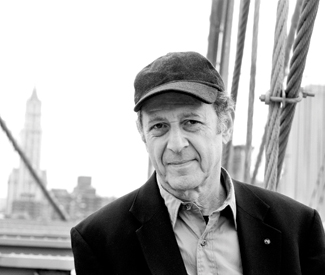
MUSIC From David Bowie and Brian Eno’s forays into ambience, to the unrelenting pulse of trance and house, minimalist icon Steve Reich’s propulsive compositions have irreversibly shaped the pop world’s development since the 1970s. Now, four decades into his career, Reich is reversing the formula with “Radio Rewrite:” a new piece adapted from and inspired by the recordings of alt-rock institution Radiohead.

This Saturday, Stanford University is set to host the US premiere of “Radio Rewrite,” performed by acclaimed new-music ensemble Alarm Will Sound, in a program comprised entirely of Reich’s works.

Credited alongside Philip Glass, Terry Riley, and LaMonte Young for introducing minimalism to classical music, Reich is often cited as the most influential living composer. After moving west from his native NYC to study composition at Mills College in Oakland, and finding his voice with a series of groundbreaking, spoken-word tape loops (’65’s “It’s Gonna Rain” ’66’s “Come Out,”), he headed back east to form his own large ensemble: Steve Reich and Musicians.

The sound Reich achieved with this group was refreshing and unprecedented, combining pianos, strings and mallet instruments to create glassy, resonant textures, and mechanical rhythms that mirrored NYC’s industrial, caffeinated soul. His flagship composition, “Music for 18 Musicians,” (1976) showed a remarkable ability to breathe life into rigid structures, resulting in, arguably, the richest, lushest, most approachable recording of the Minimalist era.

Reich is noted for cutting against the grain of classical traditionalism. The percussive drive of his music reflects his beginnings as a bebop drummer, as well his time spent studying West African percussion and Indonesian gamelan. “Music for 18 Musicians” was released in ’76 by ECM, the esteemed jazz label, earning him cultural capital far beyond the confines of the so-called “new-music ghetto.” And, in 2008, Reich premiered “2×5,” his first piece written for rock-band instrumentation, electric guitars and all. Though Reich might be classified as a classical composer, he remains a musical omnivore.

Similarly, guitarist and composer Jonny Greenwood has built a reputation over the past decade as Radiohead’s experimenter-in-chief, by employing exotic instruments (Ondes Martenot, anyone?) and imaginative guitar techniques, as well as delving into the classical world with compositions of his own. After testing the waters with “Popcorn Superhet Receiver” in 2006, and penning the acclaimed score to Paul Thomas Anderson’s There Will Be Blood, (2007) Greenwood flew to Krakow, Poland in 2011 to take part in Sacrum Profanum: a festival dedicated to Reich’s music, where the two musicians would first meet.

Before Greenwood caught his ear with a solo rendition of 1987’s “Electric Counterpoint,” (a piece written for 14 guitarists), Reich had been unaware of Radiohead. “It was a great performance and we began talking,” Reich told the Independent (UK) recently, in anticipation of “Radio Rewrite”‘s world premiere in London.

“I found his background as a violinist and his present active role as a composer extremely interesting when added to his major role in such an important and innovative rock group,” Reich continues in the Independent article. “When I returned home I made it a point to go online and listen to Radiohead, and the songs ‘Everything in its Right Place’ and ‘Jigsaw Falling into Place’ stuck in my mind.”

In an interview with the Herald Scotland, Reich described his affinity for the two pieces, explaining, “‘Everything’ is a very rich song. It’s very simple and very complex at the same time. What does it mean? Maybe it’s about a relationship, maybe I should ask (Radiohead bandleader) Thom Yorke, but he wouldn’t tell me, I wouldn’t get anywhere with that… For ‘Jigsaw,’ it’s the harmonic jumps of the piece, it’s a beautiful tune.”

Two years later, Reich has re-interpreted both songs as the foundation for “Radio Rewrite.” The five-movement piece takes significant creative liberties, barely resembling the source material at times, Reich explains.

“It was not my intention to make anything like ‘variations’ on these songs, but rather to draw on their harmonies and sometimes melodic fragments and work them into my own piece. This is what I have done. As to whether you actually hear the original songs, the truth is — sometimes you hear them and sometimes you don’t.”

Instrumentation for “Radio Rewrite” consists of flute, clarinet, two vibes, two pianos, electric bass, and a string quartet. Other works included in the all-Reich program are “Clapping Music,” (featuring Mr. Reich, himself) “Piano Counterpoint,” (1985) “City Life,” (1995), “Four Genesis Settings from The Cave,” (1993) and “New York Counterpoint.” (1985)

Debuting the piece is NYC’s Alarm Will Sound, one of the most aggressively modern classical ensembles currently working. Having performed works by Aphex Twin, and collaborated with Dirty Projectors, the 20-piece seems aptly chosen to tackle “Radio Rewrite”‘s inherent genre-ambiguity.

Considering Reich’s enormous influence, the opportunity to witness him approach a younger generation’s music for the first time is a significant one. Implied within “Radio Rewrite” is a collision between two musical worlds, and the exploration of new, unpredictable terrain. Live music rarely seems so promising.

MUSIC BY STEVE REICH

Performed by Alarm Will Sound

Sat/16, 8pm, $25–$60

Bing Concert Hall

327 Lausen, Stanford

650) 725-2787

live.stanford.edu