Volume 47 [2012–13]

A hello to arms

0

arts@sfbg.com

FILM The results of the wee election that happened a couple weeks ago were generally a good thing, needless to say, but just as light also causes shadow, so the light bulb that went off for a majority of voters cast into deeper darkness a certain minority. Oh, you’ve heard the wailings and lamentations: the death of “traditional” America (read: white people, “they” are coming to take your women and steal your home entertainment center), brutal new taxations designed to funnel your hard-earned money to whole communities of professional freeloaders, the national anthem to be translated into Communist (it’s a language, like speaking in demonic tongues), etc.

Some patriots, no longer loving it, are leaving it — mostly to inexpensive warmer retirement magnets whose natives aren’t too uppity yet to avoid calling you “Sir” or “Boss.” Others are planning to secede, one state at a time. (Yes, definitely including the ones you were already hoping would somehow cut ties. Can they take Fox News with them?) Mentally and politically, they seceded a while ago. But now it is on — Elvis is leaving the building, because he didn’t get his way so fuck y’all.

What’s bad about this is that, as with any psychotic break, bystanders may suffer for not sharing or getting in the way of the sufferer’s particular symptoms — in this case likely to primarily consist of depression, violent outbursts, substance abuse, weapons stockpiling, paranoid delusions, paranoid delusions, and reckless home schooling. How many basement man caves have been fertilizing plans for what we might term “assassination,” “domestic terrorism” or “going postal” since November 6, imaging personal heroism and national salvation their eventual reward? It’s like a significant section of the populace has turned into our crazy uncle, off his meds, muttering apocalyptically in the corner and sure to remember where we live sooner or later.

So it is with mixed emotions, to say the least, that one greets the alarmingly timely arrival of Red Dawn. A remake of a 1984 movie that seemed a pretty nutty ideological throwback even during the Reagan Era’s revived Cold War air conditioning (and even alongside such crazy Satan-is-Soviet competition as 1985’s Rambo: First Blood Part II and Rocky IV), it is a movie that should have come out a couple years ago, having been shot late 2009. But in the meantime MGM was undergoing yet another seismic financial rupture, and as the film sat around for lack of the means needed for distribution and marketing, it occurred that perhaps it already had a fatal, internal flaw. You see, this update re-cast our invaders from Russkies to People’s Republicans, tapping into the modern fear of China as debtor and international bully. But: China is also a huge fledgling market for Hollywood product, despite censorship, import quotas, and whatnot. China heard about Red Dawn and was not happy, endangering the foreign profit margins for future MGM product.

So a tortured makeover of the remake ensued; scenes were added, re-shot, and digitally altered to impose a drastic narrative change. China now goes unmentioned, replaced as villain by the country which is nobody’s film market, even if that choice is so absurd it gets acknowledged as such by dialogue: “North Korea? It doesn’t make any sense!” someone says here. It’s a query that goes unanswered.

Yup, in the new Red Dawn a coastal Washington state burg — mom, apple pie and flag figuring large in the opening montage — is the first attack point in a wholesale invasion of the U.S. (pop. 315 million) by the Democratic People’s Republic (pop. 25 million). It’s football season, so a Spokane suburb’s team — Wolverines!! — lends its name as battle cry and its revved up healthy young flesh as guerilla martyrs to the fight for, ohm yeah, freedom. Do they drink beer? Do they rescue cheerleader girlfriends from concentration camps? Do they kick North Korean ass? Do you really need to ask?

Of course this Red Dawn is ridiculous, though as a pulp action fantasy it’s actually fairly entertainingly well-crafted by veteran stunt coordinator-second unit director Dan Bradley. The actors maintain straight faces with variable degrees of success — on the upside pre-Thor Chris Hemsworth, (whose other 2009-shot MGM film The Cabin in the Woods also got released this year) as ex-Marine alpha male, on the downside an irksome Josh Peck as his little bro and an inexplicable Connor Cruise as a teammate. The adopted son of a certain really famous Scientologist, the latter surely got this role on merit alone; otherwise we’d be forced to believe he made up in nepotism what he amply lacks in looks, voice, and presence.

So what does this silly movie have to do with the election, you ask? Just this: its production travails mean this rah-rah, just-credibly-gritty-enough (but still mostly video-game-like) tale of fighting the power has arrived just in time to become a training manual (or at least recruitment video) for revolutionist reactionary rednecks. It’s ready-made for an audience so deprived of air, irony, and other key elements to reality that they’re probably in a hundred or more basements right now, plotting the overthrow of our Socialist Islamophilic oligarchy. 

RED DAWN opens Wed/21 in Bay Area theaters.
No satisfaction

0

arts@sfbg.com

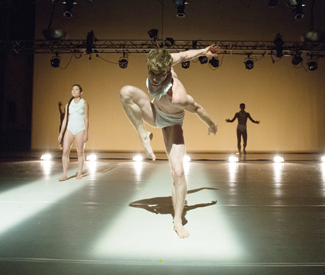
DANCE The tenth anniversary concert for Benjamin Levy’s LEVYdance Company should have been an occasion for looking back a little and glancing into the future a lot. The fact that this was a subdued, at-time depressing event was certainly not the dancers’ fault. They were fabulous, crackerjack performers: fierce, fast, and committed, whether in solo passages or in ensemble work. If you watch dance primarily because of its performers, this was your night.

Where the program fell short was in choreography that would stay in your mind beyond its ephemeral existence on stage. Instead of showing a work that would hint at where he might be going in the next decade, Levy chose to present two pieces from the past. Good as they were, they gave the unfortunate impression that he is a one-note choreographer. He is not. One of the reasons this choreographer has been a pleasure to watch over the years is because he tries to find new vehicles for his volatile and fractured vocabulary. Despite their surface appeal, an undercurrent of violence and danger often propels Levy’s choreographies. It’s what keeps you on the edge of your seat.

It’s with the stunningly tight Falling After Too that Levy introduced himself as choreographer in 2003. Performing it himself at the time, he was partnered by a much heftier Christopher Hajin Lee. The up and down of this contest between will and muscle was partly based on the two men’s different physicalities. Reprised as a duet between Yu Reigen and a slender Paul Vickers, it inevitably shifted the focus onto a male-female relationship. It’s a sign of the work’s choreographic strength — and the performance, including Anthony Porter on piano — that it worked as well as it did.

But why did Levy program Physics (2008), which is essentially an elaboration for two couples of that earlier work? The sequential and overlapping duets, including switching partners, didn’t really tell us much about these couples. Still, Levy has an appealing way of including tiny gestures — a pat here, a kick there — in the muscularity of these ever-shifting encounters. They suggested a sense of spontaneity not unlike the grace notes in a piece of music.

And why Levy chose Sidra Bell Dance New York to collaborate on this concert remains a mystery. What on earth did he think his company — such as it is — could learn from Bell’s? Robert Moses’ Kin introduced her last spring when she set a modest quartet on his female dancers. Here the New York-based artist created less for Levy, and Nudity for her own dancers. Bell knows a good thing when she sees it; she sent her dancers behind the screen, up the walls, and into the audience. She took advantage of ODC Theater’s vaunted lighting possibilities, lowering and tilting levels of the grids in less and having a bank of floor lights shine directly into her audience in Nudity. Maybe turn-around is fair play since that’s what performers have to deal with on a daily basis. But there was something offensive about the approach that left my seat neighbor with a fierce headache and a fiercer fury.

Bell is a complete creature of the theater. Interestingly, she takes credit as “director” instead of “choreographer” of her works. One thing is certain: she is big on image making — whether they come from Glamour or “girlie” (and their male counterpart) magazines. And the accoutrement of these two dance theater works looked promising; the dancers in less wore flimsy whites with big, noose-like scarves, and in Nudity they went Goth — mohawks, black outfits, and fright make-up.

Spectacle, in-your-face aggressiveness, a contempt for continuity in favor of the moment, and raw and supposedly unmediated energy seem to be the elements that fascinate Bell. That’s fine and good, but these practices need to arise from ideas that suggest more than clichés. A man crawling on all fours? Throwing people and catching them — sometimes? Retching to some comment on nutrition — in French? Dominatrixes in both pieces?

The ferocious physicality of Bell’s dance making is its most attractive quality, but the imagery — and she uses a lot of it — has to accumulate into something bigger than its constituent parts. Otherwise why do it? Both of Bell’s works fell short that way. They left behind a sense of ennui and déjà vu.

Sattdown strike

0

le.chicken.farmer@gmail.com

CHEAP EATS Dang it, my sports writer has gone on strike. Over something really stupid, too. Really really stupid. How stupid? A couple columns ago, I changed her spelling of youse to yous. Why?

Oh, you escape my meaning entirely, don’t you?

Youse. Yous. The former preferred by Hedgehog, whereas I like the latter.

Understand, dear reader, if you dare (for it’s bad luck, allegedly, to stand under latters): either word, according to expert wordstress Miriam Webster, is an acceptable misspelling of y’all. But before you leap to inclusions, let me tell you for a Cheap Eats fact that yous is better.

“No!” insisteth Hedgehog. “You don’t understand. I researched this. In Central Pennsylvania, where ‘yous’ is said, I asked a lot of people how to spell yous, and they all said yous: y-o-u-s-e.”

“That’s great, but wait’ll you read how I write what you just said!” I said. “Besides, this isn’t Central Pennsylvania. It’s Cheap Eats. And Cheap Eats has its own Manual of Style, just like Chicago.”

“Then I’m going on strike.”

“You can’t!” I screamed. I kicked, bucked, clucked, and sputtered to this end and that one — the crux of my argument being that Cheap Eats was already on strike, and that, Cheap Sports being my sophisticatedly subversive and top-secret way of being on strike and still getting paid, going on strike from the very strike of which she was, in effect, the expression, would create a profoundly dense expressionlessness on this page, which blank hole, if it fell into the wrong hands, could (for example) wipe Austin, Texas off the map.

And do you know what she said?

“Mwa-ha-ha,” she said, the evil and cuddly animal, “ha!”

And she walked out. Just like that. Over one lousy letter, albeit a pretty popular one, Cheap Sports walked out on my walkout, engendering an all-out word stoppage the likes of which this column has never known.

Thus the ramble. Because I can’t exactly bring you a relevant restaurant, can I? Under the circumstances.

Lucky thing, I am in Los Angeles. Eating hot dogs and hot dogs at Pink’s, and other things at other Bay Irrelevant places.

Tomorrow night a short film which I catered is up for an award down here. Oh, and I’ll bet Hedgehog would have loved to have written that last sentence instead of me, since she was also peripherally involved in the project — writing, directing, videographing, editing, mixing, and just generally producing it.

If we win (as I understand it) we will be awarded $60,000 worth of whisks, pans, and Brillo and things, so please keep your fingers crossed for me. Us, technically. Or “use,” as Hedgehog would have it.

In fact, had she not walked out on my walkout, over e, my everloving life partner and future ex-sportswriter (if she doesn’t come off strike soon) would have by now told you all about her first ever real live baseball game. That she played in, I mean.

Since there’s no sports section this week, however, how will you know whether she ripped her first fastball down the right field line for a triple or dribbled a grounder back to the pitcher? How will you know whether she made diving catches in the outfield or merely got the ball back into the infield in a timely and generally athletic manner?

I wish I could just publish a picture I took instead of all this gobble-de-gravy, Happy Thanksgiving, but if you want to see how friggin’ hot Hedgehog looked in her baseball uniform, stepping up to the plate for her first time ever, with a cheekful of sunflower spits, you will just have to ax/axe. (Hint: pretty friggin’ hot.)

My knee was monked, or I’d of been out there on the field with her — maybe even throwing her big slow curves — instead of standing behind the fence with her camera, photographering.

BTW, my new favorite restaurant in Los Angeles is not Pink’s famous hot dog stand, which I loved, but the Jamaican joint on Ventura where I had curry goat with roti for the first time in a long time and it was awesome.

Does anybody know? Where is Penny? She could end this madness. She could.

SATTDOWN

Tue.-Thu., 11am-8pm; Fri.-Sat., 11am-9pm; Sun. 4-8pm; Closed Mon.

11320 Ventura Boulevard, Studio City

(818) 766-3696

AE,MC,V

No alcohol

www.sattdownjamaicangrill.com


Sea change

1

virgina@sfbayguardian.com

APPETITE Two unrelated seafood restaurants have quietly undergone chef and menu changes in the last year. I was less than impressed with both when they debuted; now they’ve taken a turn for the better. There’s a low-key Mission seafood outpost with vegan accents, Weird Fish (renamed Dante’s Weird Fish), and a Financial District restaurant catering to the FiDi set, Georges, with upscale-casual seafood.

Tiny Weird Fish (2193 Mission, SF. www.weirdfishsf.com) has been around a few years, pleasing vegans and hipsters alike with grilled fish and seitan tacos. Owner Tim Holt left in 2011 to focus on Roshambo Farms (www.roshambofarms.com) in Healdsburg, which still supplies the restaurant with much of its produce. Holt opened Weird Fish with Peter Hood, who is back as owner alongside Ryan Simas, returning to roots of fish and vegan options, infused with new life. Simas knows seafood as chef de cuisine at Farallon, where he’s worked for nine years, now simultaneously co-owner at Dante’s and its neighbor, The Perch, eventually supposed to open next door.

Dante’s all day hours and a playful, affordable menu (discounted during lunch hours) are its selling points. Portions are small, but it’s rare to see enticing fish entrees under $10 — think of it as piecing together a meal. I can’t say the hit-and-miss aspects of the former Weird Fish has entirely changed, but I notice greater consistency and higher “high points” than before. “Pete’s famous clam chowder” ($4.75 cup, $6.75 bowl) is one surprise. Unlike the bland tortilla soup, the creamy chowder is flavor-rich with spanking-fresh clams. Fish and chips ($11 for two pieces, $14 for three), filling all on its own, features fresh fish of the day, flaky and light in Speakeasy’s Big Daddy IPA beer batter. A mix of sweet potato and regular potato fries falls flat, but fried fish dissolves comfortingly.

The vegetarian Waco Taco ($5) is one of their best bites. Though I’m a fish taco fanatic, a tilapia fish taco tasted over-salted and lifeless under mango salsa compared to this lively Waco Taco, packed with mashed yams, spinach, pepitas (pumpkin seeds), and guacamole. Fried calamari ($9.50) is perked up by fried lemon and sage leaves, dipped in lemon aioli and oh! chipotle sauce. Among fish entrees, I’ve fared best with Dijon-almond encrusted rainbow trout ($9.50) alongside buttery mashed yams ($4.75) laced with coconut milk and curry.

Dante’s casual, rock-and-roll (sometimes blaring a bit loud in the small space) attitude is a bright spot on Mission Street, uncommon if not “weird,” amid a sea of taquerias and 99 cent stores. In its Dante’s incarnation since March, Weird Fish captures the quirk of former days with greater focus on the food.

Georges (415 Sansome, SF. www.georgessf.com) took over the Financial District’s classic London Wine Bar in 2010 (which lacked an impressive wine list but boasted dated charm), completely revamping the space from dim, old school to white and airy. I dined during opening weeks — but was immediately turned off by overcooked fish at high prices. I didn’t return until a couple months ago, having heard good things about Chef Michael Bilger who came on in early 2011 from Wayfare Tavern, and now defunct Moose’s and Vivande Porta Via. Bilger’s cooking is a marked improvement since my 2010 visit.

Serving sustainably-sourced seafood per Monterey Bay Aquarium Seafood Watch (www.montereybayaquarium.org) standards, Georges’ focuses on being environmentally responsible in numerous aspects, like crushing raw bar shells into fertilizer for the local farmers who provide its produce.

Lunch is a bustling, convivial time to dine. As with lobster rolls, a Dungeness crab roll is expensive ($21), but a real beauty. Lush white crab is packed between bread with basil, piquillo pepper, and pleasing Southern touches of fried green tomatoes and remoulade, and the whole thing is accompanied by housemade BBQ potato chips. A silky crudo ($15) of albacore tuna cleanses the palate alongside a crisp white wine. Six cuts of tuna rest on hearts of palm, reasonably doused in garum (a fermented fish sauce I’m seeing on many menus lately), McEvoy Ranch olive oil, and vivid Meyer lemon.

Mussels and frites ($16 for mussels, $20 with fries) comfort on a chilly day, particularly with beer. Bilger steams plump mussels in Ommegang Witte beer, the broth exhibiting notes of fall from Rubinstar apples, savory with smoked bacon and leeks. One seafood misstep on a follow-up visit, however, was an overcooked, dry albacore tuna confit in bucatini pasta, tossed with zucchini, Calabrian chilis, Castelvetrano olives, and dose of bread crumbs ($16 lunch, $19 dinner). An affogato, a robust shot of espresso drowning lush vanilla gelato, the glass covered with a waffle cone crisp, is an ideal finish and caffeine boost before returning to work.

Georges is pricey but not out of line with the FiDi or the quality of ingredients. It’s not the same restaurant I dined at when it opened… and for this the entire staff deserves kudos.

Subscribe to Virgina’s twice-monthly newsletter, The Perfect Spot, www.theperfectspotsf.com

The master

1

cheryl@sfbg.com

FILM If there’s one thing Hollywood loves more than a biopic, it’s a biopic about someone in showbiz. (Well, OK — first choice is probably someone in politics. But showbiz is a close second.) How better to explain the praise lavished on last year’s mediocre My Week With Marilyn? In retrospect, Marilyn‘s most intriguing element was not Michelle Williams’ decision to go with padding rather than weight gain, it was the scenes filmed backstage at Pinewood Studios, affording viewers a glimpse of what the real Marilyn’s workplace might have looked like.

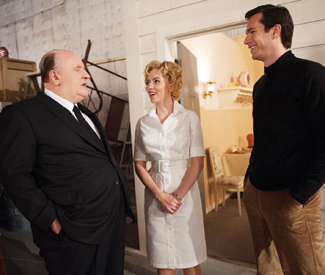
Movie magic in the making is a theme in Hitchcock, too — another biopic about an instantly recognizable celebrity viewed through the lens of a specific film shoot. Here, we have Anthony Hopkins (also sporting padding, one assumes) playing the Master of Suspense, mulling over which project to pursue after the success of 1959’s North by Northwest. Even if you’re not a Hitch buff, it’s clear from the first scene that Psycho, based on Robert Bloch’s true crime-inspired pulpy thriller, is looming. We open on “Ed Gein’s Farmhouse, 1944;” Gein (Michael Wincott) is seen in his yard, his various heinous crimes — murder, grave-robbing, body-part hoarding, human-skin-mask crafting, etc. — as yet undiscovered. Hitchcock, portrayed by the guy who also played the Gein-inspired Hannibal Lecter, steps into the frame with that familiar droll greeting: “Guhhd eevvveeeening.”

And we’re off, following the veteran director as he hunts for new material, determined not to repeat himself and to stay relevant, despite a softened image thanks to his successful TV show. “What if somebody really good made a horror picture?” he muses, and though his wife and collaborator, Alma (Helen Mirren), cautions him against doing something simply because everyone tells him not to, he plows ahead for (partially, it seems) that reason. When he strikes a deal to finance the film himself — because the studio disapproves of its content, much like the censor board will, in an era when showing a toilet flushing onscreen was nearly as scandalous as a shower murder — Psycho becomes even more personal. His reputation (and his continued ability to live in a fancy house and fund his foie gras habit) teeters in the balance.

The filmmaking scenes are fun to watch, peppered with behind-the-scenes moments detailed in Stephen Rebello’s Alfred Hitchcock and the Making of Psycho, the inspiration for John J. McLaughlin’s script. Also important is the contrast between Hitchcock’s contentious relationship with Vera Miles (Jessica Biel) — his onetime protégé who’d dropped out of 1958’s Vertigo due to pregnancy, to the director’s supreme annoyance — and his warm interactions with Janet Leigh (Scarlett Johansson, working hard but perhaps too recognizable to be playing such an icon) and Anthony Perkins (Cloud Atlas‘ James D’Arcy, an uncanny match for Norman Bates).

Hitchcock avoids shot-for-shot replications of Psycho scenes — been there, Gus Van Sant’ed that — but there’s a particularly vivid re-enactment of filming the infamous shower scene. When the knife-wielding stunt double playing Mrs. Bates isn’t slashing vigorously enough, Hitch himself steps in to elicit the proper level of terror from Johansson-as-Leigh’s Marion Crane. There emerges the demanding, perfectionist tyrant suggested by sources beyond the Rebello book; most recently, the made-for-HBO film The Girl featured a particularly lecherous Hitchcock (Toby Jones) as cruel, sexually harassing boss to Tippi Hedren, star of Psycho follow-up The Birds (1963).

But Hopkins’ Hitch offers nothing so extreme, aside from gentle leering at his leading ladies’ ample assets — still enough to make Alma Hitchcock (“a smart, shrewd lady who had a lot of influence over him,” the book praises, in one of few mentions of her) cringe. Feeling overlooked, she begins spending time with the unctuous Whitfield Cook (Danny Huston), a writer who’d worked on Hitchcock’s 1951 Strangers on a Train, but whose current project is the shudderingly-titled Taxi to Dubrovnik.

As the film’s tagline — “Behind every Psycho is a great woman” — suggests, the relationship between Alma and Hitch is, stubbornly, Hitchcock‘s main focus. While Mirren is effective (and I’m all for seeing a lady who works hard behind the scenes get recognition), the Whit subplot exists only to shoehorn more conflict into a tale that’s got plenty already. We can tell Whit is a sleaze from the moment he appears, but the film insists on having him hang around, lure the attention-starved Alma out to his beach house, etc. If this were a real Hitchcock movie, the ruthless director would’ve excised this go-nowhere drama from his first-draft storyboards.

Elsewhere, however, Hitchcock director Sacha Gervasi — making his narrative debut after hit 2008 doc Anvil: The Story of Anvil — shows stylistic flair, working Hitchcock references into the mise-en-scène (lots of birds), and echoing Psycho‘s themes (Hitch as voyeur, peering through window blinds and peepholes) and symbolism (the first time we see Alma, she’s wearing white undergarments, much like our initial glimpse of Marion in Psycho). There are comedic moments that spring from Hitchcock’s own dry wit and canny grasp of showmanship, as when he invites the Hollywood press over to his house to discuss his new project — then proceeds to solemnly pass around gruesome Ed Gein crime scene photos. (Gein pops up throughout the film as a kind of Hitchcock inner demon; clever, but the device gets old quickly.) Also nice: Hitch’s reaction to the audience‘s reaction at Psycho‘s first public screening.

Hopkins, all things considered a pretty obvious casting choice, is 74 — nearly 15 years older than Hitchcock was in 1959 — and is helped along to that famous profile with prosthetics. But his portrayal of the Master renders the great man a likable but flawed artist: still determined to improve his craft after decades in the biz (Psycho was his 47th film); anxious for approval (he finally won an honorary Oscar in 1968); and a consummate professional on-set — but fond of studying hot-young-thing headshots a little too closely in his home office. And while Hitchcock may not best the political biopic that’s its current box-office competition, Lincoln (nor will Hopkins likely upset Daniel Day-Lewis on any award-show podiums), it’s miles better than another Hopkins-starrer in that vein: 1995’s Nixon. 

HITCHCOCK opens Fri/23 in Bay Area theaters.

A developer’s wet dream

90

CORRECTION: This article has been updated to correct a statement from Sup. Scott Wiener about affordable housing.


tredmond@sfbg.com


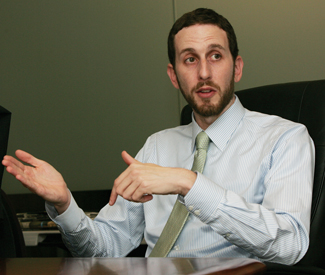
Sup. Scott Wiener is proposing a dramatic overhaul of the city’s environmental review process that would limit the ability of citizen activists to appeal projects and could ease the path for major developments.


The new rules — some of which are fairly simple and routine, others more far-reaching — cover the city’s interpretation and implementation of the California Environmental Quality Act (CEQA), the state’s venerable land-use and environmental oversight law. The legislation is before the Planning Commission and could reach the supervisors in December.


According to city staff and outside analysts, the Wiener proposals would:


• Eliminate the public’s legal right to appeal a ruling by the Planning Commission if the Board of Supervisors has to approve any part of the project.


• Weaken the standard for environmental review by city planners.


• Weaken the public notice requirements for CEQA exemptions.


• Speed up the process for developments by compacting the time frame for CEQA appeals.


“Generally, the amendments decrease the opportunities for individuals and community groups with serious environmental concerns to provide input and assert influence on development projects as part of the CEQA process,” an analysis by Community Economic Development Clinic at Hastings College of the Law notes. “The amendments arguably would streamline the CEQA process for various projects, but at the cost of significantly curtailing public participation.”


Wiener told us that he wants to eliminate lengthy, sometimes unpredictable appeals. “The goal is to make sure we have a good CEQA process but also a more predictable process,” he said. “Right now it’s so chaotic and loose that we have unnecessary delays.”


Aaron Peskin, a former supervisor and neighborhood activist, calls the proposed legislation “a developer’s wet dream. It shuts off or makes impossible citizens’ ability to participate in the environmental review process.”


WHAT ARE THE ABUSES?


At issue is a critical part of city planning, mandated by state law and sharpened by years of court decisions. Before any project is approved, the city’s environmental review officer (ERO) must either determine that the proposal “could not have a significant impact on the environment” or is exempt by law from CEQA review. If not — if in fact the proposal could have an impact — then the project sponsor has to pay for a full environmental impact report.


If any member of the public thinks that the ERO’s decision is wrong — or believes that an EIR is inadequate — he or she can appeal to the Board of Supervisors. An appeal halts all work on the project until the supervisors resolve it.


If the board rejects the environmental review, it doesn’t kill the project — planners just have to go back and write, or rewrite, an EIR.


On a practical basis, appeals are relatively rare — the city, Peskin told us, makes tens of thousands of CEQA determinations every year, and at most a couple dozen get appealed. “I don’t understand what the abuses are,” Peskin said.


But in some cases, opponents of a project file a CEQA appeal after they’ve lost at all the policy bodies — and that, Wiener argues, just slows things down. “If you’re going to appeal, then appeal, but don’t wait around,” he said.


Wiener said his proposals would benefit not only private developers but also nonprofit affordable housing projects. “This will help prevent unnecessary challenges to affordable housing,” he told us.


But Calvin Welch, a member of the Council of Community Housing Organizations who has been working to build affordable housing for more than 30 years, told us he doesn’t see the problem. “CEQA never gets used to stop affordable housing,” he said. “It just doesn’t happen.”


CONSOLIDATED APPEALS


Perhaps the most profound change would eliminate any CEQA appeal for a project that has to go to the supervisors anyway. Wiener’s idea: if the board already has to sign off on, say, a zoning change or a special use district or any finances of a project, the environmental review can be done at the same time. “It’s as if there’s an automatic appeal,” he said.


But that conflicts with the concept of environmental review, critics say. No member of the public has the legal right to a sustainable or environmentally sound project; planning commissions, city councils, and county supervisors can, and often do, approve horrible projects.


But everyone has the right to a complete and fair environmental review. CEQA mandates that the decision-makers accept and acknowledge the consequences of their decisions — and if an EIR is flawed, those consequences can be understated.


Wiener would do away with the mandate that the supervisors hold a hearing, accept appeal briefs, and address CEQA questions as a distinct and separate part of a project approval. “The public would be denied the right to a hearing before the full elected body on the adequacy of an EIR or other CEQA determination,” a Planning Department staff analysis states. “And if a member of the public introduced new information at the committee hearing, there would be no way for the city to respond to or modify the environmental document.”


Among the projects that this provision would affect — where the public would lose the right to appeal an environmental determination: The America’s Cup, the Central Subway, the Parkmerced rebuild, the 8 Washington project, and the California Pacific Medical Center’s billion-dollar hospital proposal.


The proposal would also change the standard city planners apply when they review projects. The current rules require that the city show there is a “fair argument” that a project would have a significant environmental impact. The new language would mandate the staffers find “substantial evidence” that a full review is needed.


“It is likely more projects would require an EIR under the ‘fair argument’ standard and fewer projects would require an EIR under the ‘substantial evidence’ standard,” the Hastings analysis concludes.


And while the Board of Supervisors now has to certify that an environmental determination is accurate and correct, Wiener would change that to a determination that the city has made “an independent judgment” on the merits of the review. That, the Hastings lawyers state, “is a more discretionary standard that would be used to uphold an EIR certification decision even if the board determines that the conclusions and findings in the EIR are incorrect.”


MORE LAWSUITS?


A lot of the language in the complex package of CEQA changes involves public information and notice. Many of the lawyers and activists who have reviewed the legislation say it limits public notification of some CEQA determinations, particularly when the city concludes that a project is categorically exempt.


“If the ERO determines that a project is exempt from CEQA review, he may or may not be required to provide public notice of this determination,” the Hastings analysis states.


There’s no question that it would add to the complexity and burden of filing an appeal; and shorten the time frame for doing so — in a way that some say would actually encourage more lawsuits.


Kevin Bundy, a lawyer with the Center for Biological Diversity, argues that “The proposed amendments create a situation where appellants will be required to file litigation prior to the board’s decision on appeal.”


It’s a complicated situation, but in essence, the new Wiener rules would set the timeline for project approval at the first stage of policy decision — and if the supervisors overturned an environmental appeal, the clock for the project would be set back to that day.


That could upset the statutory timeline for CEQA lawsuits — and thus lead to more cases.


Wiener acknowledged that there were a lot of technical issues like that one that still need to be resolved. “We will be conferring with the people who have commented on the legislation and making the appropriate changes,” he said.


He added, however, that he sticks by the essential parts of his proposal despite the opposition: “There are a lot of CEQA lawyers out there,” he said. “And they aren’t always right.”

Aggressive Warriors

0

steve@sfbg.com

No standard defensive strategy is likely to stop the Golden State Warriors, Mayor Ed Lee, and their huge team of partners and employees from dominating the game of approving construction of a new basketball and concert arena on San Francisco’s central waterfront. That became clear on Nov. 14, as the political operation overcame fire, darkness, and neighborhood-based opposition for the first big score.

The Board of Supervisors Budget and Finance Committee was set to consider declaring the project, which the Warriors want to build on Piers 30-32 by the 2017 basketball season, to be “fiscally feasible,” recommending it move forward with more detailed environmental studies and a term sheet nailing down myriad administrative details.

Before the 11am hearing, the project team held a packed press conference to announce that the Warriors had volunteered to abide by the city’s local-hire standards for public works projects, hiring San Francisco residents or military veterans for at least 25 percent of total construction jobs and 50 percent of apprenticeships. A beaming Lee praised the deal as an “unprecedented” indicator of the Warriors’ willingness to partner with the city.

The event overflowed with union members in hard hats and orange “Build It Now!” T-shirts, as well as a full range of local political pros, from former mayoral and current project spokespersons PJ Johnston and Nathan Ballard to former aides to progressive supervisors, David Owen and David Loyola. Among the agreement’s four signatories were Joshua Arce, the Brightline Defense Project head who last year crusaded for Sup. John Avalos’s local hire ordinance, and building trades chief Michael Theriault.

Strikingly missing at the press conference was Sup. Jane Kim, in whose District 6 the project would be built — over the objections of many residents who are raising concerns about the loss of waterfront views, huge crowds attending what is projected to be more than 200 events per year, high interest rates paid by city taxpayers, the project’s accelerated approval schedule, and other concerns.

Kim is one of the three members of the Budget Committee, which held its meeting despite an electrical fire in the basement of City Hall that knocked out power to the building. Portable photography lighting was brought in to supplement the emergency backup lights, making it bright enough so the televised show could go on but giving a strangely surreal feel to the proceedings and reinforcing the urgency project supporters feel to move this forward without delay.

Kim raised the concerns of her constituents, winning support for amending the resolution to ensure the Citizens Advisory Committee — whose chair was given two minutes to convey how its members feel steamrolled by the accelerated process, asking it be delayed by a month or two — will be given chances to weigh in and pushing the EIR scoping meetings back a few weeks to January.

In the end, Kim and the committee voted to move the project forward. A few days later, on Nov. 19, the process repeated itself with another flashy press conference in the Mayor’s Office — with another important union endorsing the project — followed by the Land Use Committee responding favorably to the project.

The full Board of Supervisors was scheduled to approve the project’s fiscal feasibility the next day, after Guardian press time, but there was little chance that the full board would take any other action than giving the Warriors, Lee, and their huge roster of teammates what they want.

This despite unusual financing and some very real concerns about waterfront development.


JOBS, MONEY, AND SUPPORT

Mayor Lee — who has placed a high priority on this project since announcing his deal with the team in May — emphasized its job creation and contribution to the local economy during the Nov. 19 press conference.

“I remind people, this is a private investment of hundreds of millions of dollars,” Lee said of a project pegged to cost around $1 billion. “It means a lot of jobs, and that is so important to all of us.”

The project is expected to directly create 4,300 jobs: 2,600 construction jobs and 1,700 permanent jobs, including those at the 17,000-seat sports and entertainment arena and the 250-room hotel and 100,000 square feet of retail and restaurants that would be built as part of the project.

“We’ve been spending a lot of these last many months describing what it is we want to build,” Warriors President Rick Welts said at the press conference before casting the project in grander terms. “That’s not really what we’re building. What we’re really building are memories.”

But city residents and workers are looking for more tangible benefits than just the highs of watching big games or concerts. The building trades were already expected to strongly support the project, which only got stronger with last week’s local-hire deal. Labor’s support for the project was broadened on Nov. 19 with the announcement that the Warriors agreed to card-check neutrality for the hotel, making it easier for its employees to join UNITE-HERE Local 2.

“Thank you for being a partner and we’re looking forward to working with you in the future,” Local 2 head Mike Casey, who notably also serves as president of the San Francisco Labor Council, said to Welts at the event before the two signed a formal agreement.

In addition to allowing the hotel workers to easily organize, the Warriors agreed to card-check neutrality for vendors at the arena with at least 15 employees and those outside the arena with more than 45 employees, as well as giving those who now work Warriors’ games at Oracle Arena first dibs on jobs at the new arena.

“I think that speaks a lot about what the project is. It’s not just a San Francisco project, but a Bay Area project,” Casey said. He also said, “I want to thank the mayor for bringing people together and laying all this out.”

While Lee and the Warriors do seem to have this deal pretty well wired, this is still a San Francisco project, a complex one on the politically and environmentally sensitive waterfront that city taxpayers are helping to pay for and one for which the residents there will bear the brunt of its impacts.


PAYING FOR IT

Lee, Office of Economic and Workforce Development head Jennifer Matz, and other key project supporters have repeatedly claimed this project is funded completely with private money, noting how rare that is for urban sports stadiums these days.

But in reality, city taxpayers are spending up to $120 million for the Warriors to rebuild the unstable piers on which the arena will be built, plus an interest rate of 13 percent, an arrangement that has drawn criticism from a key source.

Rudy Nothenberg, who served as city administrator and other level fiscal advisory roles to six SF mayors and currently serves as president of the city’s Bond Oversight Committee, wrote a Nov. 12 letter to the Board of Supervisors urging it to reject the deal.

“Quite simply, I would have been ashamed of such a recommendation,” Nothenberg wrote of the high interest rate. “In today’s markets it is incomprehensible to have such a stunning recommendation brought to your honorable Board in such haste.”

Johnston and Matz each disputed Nothenberg’s characterization, citing a report by the project consultants, the Berkeley-based Economic and Planning Systems Inc. (EPS), that 13 percent is a “reasonable and appropriate market based return.”

Matz told us the rate was based on the risky nature of rebuilding the piers, for which the Warriors are responsible for any cost overruns. And she compared the project to the massive redevelopment projects now underway on Treasure Island and Hunters Point, from which the city is guaranteeing powerful developer Lennar returns on investment of 18.5 percent and 20 percent respectively.

Johnston, who was press secretary to former Mayor Willie Brown and worked with Nothenberg on building AT&T Park and other projects, told us “I have great respect for Rudy.” But then he went on to criticize him for taking a self-interested stand to defend the views from the condo he owns nearby: “They don’t want anything built in their neighborhood. They would rather leave it a dilapidated parking lot.”

But Nothenberg told us his stand is consistent with the work he did throughout his public service career in trying to keep the waterfront open and accessible to the public, rather than blocking those views with a 14-story stadium and hotel complex.

“I have a self-interest as a San Franciscan, and after 20 years of doing the right thing, I don’t want to see this rushed through in an arrogant way that would have been unthinkable even a year ago,” Nothenberg told us. “I spent 20 years of my life trying to deal with waterfront issues.”

He is being joined in his opposition by other neighborhood residents, land use experts such as attorney Sue Hestor, some opponents of the 8 Washington project concerned with the creeping rollback of waterfront development standards, and members of the Citizens Advisory Committee who have felt steamrolled by the rapid process so far and unable to thoroughly discuss the project or the neighborhood’s concerns.

“We would like to slow this process down,” committee Chair Katy Liddell told supervisors on Nov. 14. “Things are going so quickly.”


DETAILS OF THE DEAL

The $120 million plus interest that the city will owe the Warriors would be offset by the $30 million the team would pay for Seawall Lot 330 (the property across from the piers where the hotel would be built), a one-time payment of $53.8 million (mostly in development impact fees), annual rent of nearly $2 million on its 66-year lease of Piers 30-32, and annual tax and mitigation payments to the city of between $9.8 million and $19 million.

Kim raised concerns at the Budget Committee hearing about the more than 200 events a year that the arena will host, but she was told by Matz that’s necessary to make the project pencil out for the Warriors.

Many of the project’s financial and administrative details are still being worked out as part of a term sheet going to the Board of Supervisors for approval, probably in April. Other details will be studied in the project Environmental Impact Report, which is expected to come back to the board in the fall.

The Department of Public Works, Police Department, and — perhaps most critically given its impact on Muni and roadways — Municipal Transportation Agency have yet to estimate their costs.

“We do have a lot of concerns in the neighborhood about this project,” Kim told the Land Use Committee, singling out impacts to the transportation system as perhaps the most important, followed by quality-of-life issues associated with huge crowds of sports fans.

Kim noted that the area already has a problematic transportation infrastructure, with some of the highest rates of motorist-pedestrian collisions in the city and a public transit system that reaches capacity at peak times, and said that many residents worry this project will make things worse. The EIR will deal with the transportation details. But Kim praised how about half the space on the piers, about seven acres, will be maintained as public open space: “I think the open space aspect is incredible and it could actually increase access to the waterfront.” In the end, Kim urged project proponents to heed the input of the CAC and other concerned parties because, “This could be a very valuable project, or it could also be a disaster.”

A crisis of will

10

OPINION In 2009, I was working in Congress when the eminent South African judge Richard Goldstone came to the House of Representatives to defend the UN report he authored on war crimes committed by both Israelis and Palestinians during that year’s war.

Goldstone stood before a few of members of Congress and told them that before they condemned the report, they should at least read it. A few staffers and I sent emails across Capitol Hill offering to hand deliver a paper copy of the entire 575 page report. Only two members took up our offer. That afternoon 344 out of the 435 members of US Congress voted in favor of condemning the report. Most members said the same thing: we need to move forward and not point fingers.

But pointing fingers, Goldstone reminded us, is sometimes the most important thing to do. Without ascertaining who violated the law and therefore who should be held accountable, we create no system of punishment for those who harm civilians. We give them, in short, no incentive not to do such things again. As I left the Capitol building, an Israeli friend who worked with me in support of Judge Goldstone reminded me that in Congress the ultimate four letter word is “accountability.”

Three years later Goldstone’s fear has come true: The same war is happening again. And it is happening again because the US too often looks away when Israel violates international law.

You can almost copy a news article from 2009 and paste it into a newspaper today: Israel kills children in Gaza. Hamas fires rockets into southern Israel, killing civilians. The US issues a statement defending Israel’s right to self defense. The US says Hamas must change its actions but will not deliver these messages to Hamas because the US does not talk to terrorists. Then a few months later, a fact-finding report is released saying Israelis used US weapons and failed to distinguish between civilians and combatants. The UN votes on the report, the US vetoes, and the report’s author, like Goldstone, is vilified. Pundits come on TV and debate who fired first, and Fox News argues if there is a Palestinian proclivity to violence and hopelessness. And finally, NGOs put together donor pitches about how the solution to the Israeli Palestinian conflict is getting Israelis and Palestinians to spend a summer on a picturesque lake in Maine.

But the solution is not getting Israelis and Palestinians to drink tea together. Nor is the solution to investigate Palestinian culture. The solution is addressing US aid to Israel. Last year, the US gave $3.1 billion to Israel. In comparison, Ethiopia received just $580 million. And while US law stipulates that no US weapon should be used to carry out human rights abuses, these laws are seldom applied to Israel. Even when 23-year-old American Rachel Corrie was killed by an Israeli bulldozer, the US did not press Israel for justice.

This is not to absolve Palestinians of guilt—Israelis civilians have also been killed, and we must not forget that. But we should not think this is an Israeli-Palestinian conflict. This is a issue of occupation.

Thankfully there is rising resentment over this lopsided support. Jon Stewart regularly skewers Israel and there is a growing group of Americans—across all faith lines—who wonder if the US should give Israel so much money given its record.

But this shift is not reflected among US politicians. This is a crisis of will, after all, not a crisis of solutions.

Popping up

0

le.chicken.farmer@gmail.com

CHEAP EATS Another new restaurant has sprung up at the corner of Castro and 18th St. across from Walgreens. Korean, this time.

CHEAP SPORTS

by Hedgehog

There are several problems inherent with writing a pirate sports column embedded within a “food” column in any free weekly paper, even when the “food” column isn’t written by your domesticated partner. Which mine is. And don’t think I haven’t suspected that’s how I landed the gig in the first place.

In the second place, local politics is what passes for sport in this paper. You all don’t really care about rec center racquetball, pickup soccer, baseball, or women’s flag football. And that list pretty near completes the length and breadth of my sports experience around here. It’s enough to make me want to hang up my cleats and walk out on Chicken Farmer’s strike. But enough about me. And you. And the Bay Area sports scene.

Last week, while I was in Los Angeles, Kristy Kreme told me about something I’d never heard of or ever even imagined possible:

Trampoline dodge ball.

For the uninitiated, I’ll elucidate: I’m talking about dodge ball, but played on a trampoline.

What?

Yes. It really happens! Kristy played it in the Valley but it can occur anywhere there is a trampoline park. These are giant rooms of interconnected trampolines, so that you have a basketball court-sized bouncing surface. On which to play dodge ball. How brilliant is that?

Here is where I leave the purview of underappreciated so-called sports writer and offer up my opinion in the civic arena, editorialist-style: Can we get some of that there Prop B money allocated to convert the now-dormant Mission playground swimming pool into a trampoline park? Now? It would be one sure way to silence your detractors who cried “fiscal irresponsibility” and so forth.

Trampoline dodgeball.

Pretty please?

Cheap Eats continued …

Yeah! A free one, because the House of Air in the Presidio costs like 15, 16 clams an hour. Per person! Most people I know can’t afford those kinds of clams-per-hour, not to mention per person.

But speaking of the metric system, my friend the Maze has moved to Palo Alto and I had the honor of helping him pack his kitchen. Not to mention pick up lunch.

And that is how I knew that there was a new Korean restaurant called Kpop at the corner of Castro and 18th, where that stupid soup place used to be, and before that I forget what.

Well, so I grabbed an order of kimchee fried rice and an order of bulgogi on my way to the Maze’s box-strewn mess of an ex-place, and we had us a little mid-afternoon lunch break.

OK.

The place wraps its takeout orders like microwave hospital cafeteria food: in plastic containers with plastic wrap stuck over the top, which is weird and hard to open.

And pointless.

What are you trying to prove, Kpop?

The sausage in the kimchi fried rice was pretty weak. It kind of seemed like little pieces of hot dogs, only not as yummy. And the fried egg on top of the fried rice … somehow it managed to be both overdone and underdone at the same time. There wasn’t hardly any juice at all left to the yolk, yet the sunny side was still slimy.

The bulgogi was alright. Nothing special.

Gasp, it’s not my new favorite restaurant; but I will give it another chance, because it’s only been open for a couple weeks. And I love the idea of Korean food a short walk from home.

I just wish this one had bigger portions, or at least better portions. Or, hell, the same size and quality of portions for a slightly smaller price. I would settle for that.

KPOP

Mon-Thu, Sun 11am-11pm; Fri-Sat 11am-2am

499 Castro St., SF

(415) 252-9500

MC,V

No alcohol


GOLDIES 2012

2

GOLDIES With Obama’s re-election dominating the news, and the 24th annual Guardian Outstanding Local Discovery Awards — or Goldies — dominating this week’s issue, I’m reminded of the 2004 Goldies celebration, a muted affair held just days after George W. Bush was re-elected. Way to wreck our shindig, George. Fortunately, the mood is decidedly happier in 2012. In this issue, we honor local musicians, filmmakers, dancers, and theater and visual artists — all of whom are currently making creative, inspiring contributions to the Bay Area’s arts scene. We aim to award Goldies to those whose careers are still on the rise, having not yet achieved the widespread recognition we suspect they’ll soon be enjoying.

This year, we also bestow an award for Lifetime Achievement on Berkeley’s Shawl-Anderson Dance Studio, a remarkable “heaven for dance” for 54 years (and counting). Thinking back again to Goldies past, the Guardian has had an incredible track record in picking those who’re destined for greatness: Craig Baldwin (film, 1991); Beth Custer (music, 1992); Barry McGee (visual arts, 1994); Charlie Hunter Trio (music, 1994); Charlie Varon (performance, 1995); Dan “The Automator” Nakamura (music, 1997); Krissy Keefer (dance, 1997); Paula Frazer (music, 1997); The Coup (music, 1998); Neurosis (music, 1999) — all big names, and this list ain’t even reached the current millennium yet. In other words, keep this issue around, and you can say you knew ’em when.

The 2012 Goldie winners were selected by a group of Guardian editors and contributors, including Emily Savage, Robert Avila, Rita Felciano, Nicole Gluckstern, and Marke B. Please share the golden moment with us and this year’s winners by hitting up the 2012 Goldies party — details below. Stay gold! (Cheryl Eddy)

GOLDIES PARTY
With Mad Noise, Kat Marie Yoas, Dr. Zebrovski, and DJ Bus Station John
Nov. 28, 9pm, free
111 Minna Gallery, SF.

GOLDIES 2012 (click below to read about our winners):

MUSIC: THE MALLARD

DANCE: JOE LANDINI AND THE GARAGE

FILM: JAMIE MELTZER

PERFORMANCE: MICA SIGOURNEY

VISUAL ART: BRETT AMORY

THEATER: ANNA ISHIDA

MUSIC: 5KINANDBONE5

THEATER: PIANOFIGHT

MUSIC: WATERS

LIFETIME ACHIEVEMENT:  FRANK SHAWL AND VICTOR ANDERSON, SHAWL-ANDERSON DANCE STUDIO


GOLDIES 2012 LIFETIME ACHIEVEMENT: Frank Shawl and Victor Anderson, Shawl-Anderson Dance Center

1

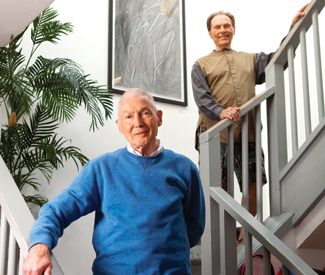
GOLDIES John Cage and Merce Cunningham, Ginger Rogers and Fred Astaire, and Fayard and Harold Nicholas are among the dance world’s most famous couples. In the Bay Area, nobody comes close to the relationship between Frank Shawl and Victor Anderson, of Berkeley’s Shawl-Anderson Dance Center.

Over the years the two men have a created a heaven for dance unlike anything that exists here, and probably could not be replicated anywhere else. Shawl and Anderson are the local dance community’s patriarchs.

They started modestly in 1958, above a liquor store on the corner of Alcatraz and College. After dance careers that spanned both coasts, they moved West from New York because they wanted to teach. Anderson had family roots in Berkeley, and the duo figured they might have a better chance at making a living in the Bay Area than in NYC’s competitive jungle.

Having performed and studied with May O’Donnell, a Martha Graham Dance Company member, they wanted to teach modern dance — at the time, a discipline that was not easily available to local dancers. They called their studio “Shawl-Anderson Modern Dance Center,” still its official name. In the beginning, Shawl remembers, “We did not even make enough money to pay its one-hundred dollar rent.”

From those early beginnings has grown the Bay Area’s oldest and — if you listen to dancers — most-beloved teaching institution, with over 100 classes per week. In addition to a full pre-professional curriculum for children, they teach modern dance; that style’s focus on individuality and personal expression has created an atmosphere that also welcomes ballet, hip-hop, jazz, and Horton, plus physical practices like Feldenkrais, pilates, and yoga.

Most remarkable is the breadth and longevity of its teaching staff, all of whom are on salary. Marina Eglevsky, whose artistic roots go back to the legendary André Eglevsky, considered the greatest ballet dancer of his generation, still teaches ballet twice a week. “Her classes are packed — people come from all over,” Shawl says. Wendy Diamond has taught modern since 1988; Joanna Harris’ decade-long Sunday morning class, “Lifelong Movement,” addresses the needs of older adults.

Younger teachers who are still actively choreographing — like Randee Paufve, Nina Haft, Antoine Hunter, and Nol Simonse — bring their own creative perspectives to the classes. The combination of life-long experiences and fresh approaches is invaluable to student dancers.

To get teachers — some start as substitutes — Shawl relies on his instincts and his experience. “I talk with them, and I can usually tell whether they would be a good fit,” he explains. “Very rarely have we had to let somebody go.”

He remembers Reginald Ray-Savage just walking in a few years ago. “I listened to what he had to say, and I just could tell that he was the real thing.” Today, Shawl-Anderson has the Savage Jazz Dance Company in residence.

But back to the earlier days: when the center was facing eviction from the liquor store (apparently, all that dancing made too much noise), student Sylvia McGraw suggested the two men look at a building across the street. “It was a home,” Shawl remembers. “I walked in and all I saw was a bunch of tiny little rooms.” McGraw pointed out that the house was zoned residential-commercial and, furthermore, that her husband was an architect.

With the budget spent on the essentials, in 1968 the school moved into the reconfigured space, with two small studios on the entry level and two huge ones — beautiful dance floors, lots of light, and high ceilings — one floor up. Shawl’s office is still the size of a closet, and the women’s dressing room still looks like it might originally have been a kitchen.

Most remarkably, the building still feels like a home. Walking up the small pathway from the street and the few steps that invite stoop-sitting, it uncannily feels like the rest of the Arts and Crafts residences that stretch toward the Berkeley hills. The wooden floors in the entry are well-worn, and the bench on the side looks like it has been there forever.

No doubt its funky charm and good usable studios have helped make what Shawl-Anderson has become. But it’s these two remarkable men who have given the place its soul. The minute you walk in, you pick up its sense of generosity of spirit, a commitment to craft and creativity, and a welcoming embrace of diversity in all its manifestations.

It’s what Paufve, whose company now is in residence, experienced when she first stepped through the door in 1986. “I don’t remember not ever having felt at home here,” she says. After moving from New York, she heard about the place the first week she was here. She also found teachers with whom she wanted to work. Over the years, she says, “People here have been incredibly generous. I honestly don’t know if I would still have Paufve Dance if it was not for Shawl-Anderson.”

Fog Beast, one of San Francisco’s newest dance companies (formed by Joe Goode dancers Melecio Estrella and Andrew Ward), recently paid tribute to “the decades of dance art cultivation at Shawl-Anderson.” Move Here, created when the duo was in residence, was a site-specific work using the building’s architectural space. It allowed the choreographers “to step into the role of host, exploring the aesthetics of hospitality, the art of friendliness and warmth.” Shawl enjoyed the performance. “They had pictures of the two of us on the walls — it was so nice,” he smiles.

Both men are now in their 80s. Anderson is semi-retired, but Shawl still takes class every day and substitute teaches when needed. Looking back over more than 50 years, is there something that they would have changed? “It is the way it was [meant] to be,” Shawl says. “I believe in the right path. We didn’t do it for the ego, we did it for love.”

GOLDIES 2012: PianoFight

4

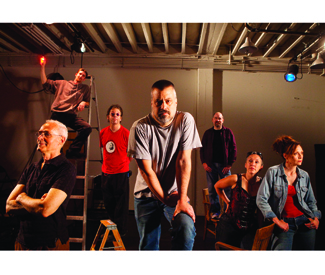
GOLDIES A PianoFight show can be almost as striking for its audience as for what the company puts onstage, even if few audiences will upstage a machine that blows ducks out of people’s butts, per Duck Lake. PianoFight crowds are conspicuously not your typical theatergoers — they’re closer to the boisterous women in office attire I noticed at the now-defunct Off-Market Theater, PianoFight’s old haunt, who had smuggled in a bottle of Chardonnay and were picnicking in a back row like it was Baker Beach. Such eager insouciance is one sign of this young company’s burgeoning success.

“We’re aiming for those people,” says Rob Ready. “We’re aiming our stuff at Giants fans. That’s who we want in the door. Our generation didn’t grow up with theatergoing as a habit.”

“On the contrary,” says Ready’s colleague, Dan Williams. “You grew up with theater as a joke, as a byline for something boring and stuffy. There’s no reason it has to be that.”

Let it be known that PianoFight is doing its part to insure it isn’t. A PianoFight show takes many forms — sketch comedy, original drama, new play festivals, oyster-fuelled theater al fresco, a rotten vegetable barrage, or the fowl comedy-horror-ballet-musical mash-up of 2012’s aforementioned Duck Lake — but it always includes a rambunctious spirit of collusion with an audience who, very often, take some part in the proceedings.

Ready and Williams, two guys whose laid-back nature belies their seriousness and savvy as theatrical entrepreneurs, first met doing theater in their Santa Barbara high school. After Ready got his arts degree at NYU, he moved out to San Francisco specifically to start a theater company with Williams, who was then working a day job downtown. In Ready’s hands was his own script for a play based on NYU’s string of student suicides called Roommate Wanted. With the help of friends and family, they produced a successful two-weekend run in 2007.

From this humble beginning, PianoFight has mushroomed into a multi-faceted, multi-armed organization that includes sketch comedy troupe Mission Control and its female-driven counterpart, Monday Night ForePlays. It regularly sells out shows, boasts a semi-official “flexible” roster of 46 company members (with many more in unofficial orbit around the company), and is building its own bar-theater complex on the site of the old Original Joe’s on Taylor Street.

Along the way, it’s toured the West Coast (twice), scattered a set of new playlets across an oyster bed in Tomales Bay (two years in a row), opened productions simultaneously in SF and LA, taken four company retreats, and generally developed ambitious programs that balk at the usual small-cast, three-weekend production model, while adding fuel to the fire of local playwrights like Tim Bauer, William Bivins (Pulp Scripture, The Position), Jon Brooks, Megan Cohen, Bennett Fisher, Daniel Heath (FORKING!, A Merry FORKING! Christmas), and Lauren Yee, among others.

Ready and Williams credit Matthew Quinn with taking a chance on their inexperienced but fervent selves when the producing artistic director of Combined Art Form Entertainment, who had co-founded Off-Market Theater in 2004, handed them the keys in 2007. PianoFight eventually left Off-Market when the rent rose, but by then it was on a roll, having proved resourceful and inspired in its own venue. When tenants Point Break Live! moved onto a bigger venue, for instance, Ready and Williams filled the gap by inventing “the nation’s largest audience-judged playwriting competition,” the (now long-lived) ShortLived series.

“So glad Point Break Live! dropped out,” muses Williams, “because ShortLived turned out to be an amazing community builder. It really was one of the biggest drivers of our company initially, since we had to get a bunch of actors, a bunch of directors, and a bunch of writers.”

“The R&D wing of the theater business is [made up of] small, scrappy companies,” says Ready. “If it was just us I’d be, ‘All right, we’re just that more awesome,’ but it’s not. There are a lot of people saying theater can be a lot of different things to a lot of different people.”

As for the name PianoFight, apparently there’s no short answer to that question. I was invited to come back some time with a bottle of whiskey and ask again. “Have at least 24 hours,” cautions Williams. “You’ve got to set aside some time, some whiskey … and bring a credit card, too.”

GOLDIES 2012: Jamie Meltzer

1

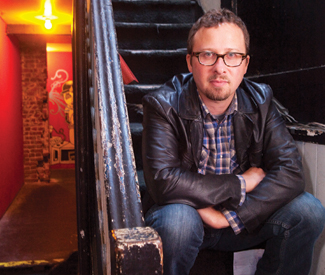
GOLDIES He may be a filmmaker, but the inspiration for Jamie Meltzer’s first feature-length documentary came while he was flipping through the bins at a record store.

“I found this song-poem compilation,” Meltzer remembers. At the time, he was a San Francisco State University MFA student. “It was such an amazing, undiscovered-to-me subculture that I started making the film that day. It took me two years to go around and meet all of these song poets and musicians, but it really started in the record store.”

The end result morphed from thesis film into 2003’s Off the Charts: The Song-Poem Story, which aired on PBS and earned a cult following. It also opened professional doors for Meltzer; after thanking one of his undergrad professors in the film’s credits, he learned that his alma matter, Vassar College, was hiring in its film department. In 2007, he transitioned to his current teaching gig, at Stanford’s prestigious MFA program in Documentary Film and Video.

“I was happy to come back to San Francisco, of course, but I was also really happy to step into the documentary-centric environment at Stanford,” Meltzer says. “It’s almost like a documentary lab — between the students and other professors, we’re all thinking about documentary films, talking about them, studying them, making them.”

His follow-up to Off the Charts, 2007’s Welcome to Nollywood, takes on another “Who knew?” subject: Nigeria’s vibrant film industry.

“Nollywood is the third-largest film industry in the world, and they have this independent film model that makes a lot more sense than even what we have in the US. That just kind of blew my mind,” Meltzer says.

“But beyond just being a portrait of an industry, the film ended up being a complex story. There’s all sorts of questions of, are these quote-unquote good films, or is the value that they’re being made and consumed as kind of a self-representation? To me, Nollywood and Off the Charts were similar in that way: different people passionately making art, but not sure how well it will be received. The character of the dreamer against all odds, that outsized ambition — I think that’s a big parallel with independent filmmaking in general. You always believe in what you’re doing, but you’re not really expecting other people to believe in what you’re doing.”

Meltzer’s current film, Informant, premiered at the 2012 San Francisco International Film Festival, and has since been on a nonstop festival tour. The doc explores the strange life of Brandon Darby, a lefty activist turned FBI informant who helped send two 2008 Republican National Convention protestors to jail. He’s a polarizing guy, but the film, which is anchored by an extensive interview with Darby, invites the audience to draw their own conclusions. Complexity is once again an important theme.

“The main thing was to try to respect the complexity of Brandon, as a subject, as a person, because he has all these different facets,” Meltzer says. “His story’s very intense, and he was very sincere and conflicted in ways that I found really compelling. It brought up a lot of interesting moral territory and all these moral issues. Then you’d go and talk to Brandon’s activist nemesis, and he had a totally different take, and you’d find yourself agreeing with his story. So, to have that kind of character who can be seen from such different perspectives — that’s totally astounding. I really wanted to get that across in the film.”

Informant, which avoids making any tidy conclusions, reflects Meltzer’s own philosophy on documentary making.

“Some audiences have this idea that documentaries have to make very clear and usually politically-based arguments. And that’s the thing that I set out not to do. I think it’s great that the film creates a dialogue over, ‘What is documentary?’ People question my point of view, they question the point of view of Brandon and the other characters,” he says. “Hopefully they will start questioning other documentaries, too, and the notion of objectivity. Documentary filmmakers know that documentaries aren’t objective in the least. But I think audiences still aren’t entirely clear on that.”

Meltzer credits both the Bay Area filmmaking community (particularly Frazer Bradshaw, Informant‘s director of photography) and his Stanford colleagues (including numerous former students) for helping him make the film. “San Francisco has a lot of people who are committed to working on things that they believe in for little or no money, out of passion. That can’t be overstated,” he says.

So what’s next? Making Informant was so difficult, Meltzer confesses, that he thought it would be his last film. But then he heard about a group of exonerated men in Texas who’ve formed a detective agency to help other innocent people behind bars. “You can’t pass up those kind of ideas,” the filmmaker says. “You have to grab them when they come.”

No doubt it won’t end up being a simple story — but Meltzer will weave all of its threads into a captivating tale.

GOLDIES 2012: Joe Landini and the Garage

1

GOLDIES Choreographer, impresario, and arts advocate Joe Landini likes to say yes. “It’s my philosophy to start that way,” the founder and artistic director of the Garage — San Francisco’s most hoppin’ performance venue — explains. “If you say no to something, the conversation is closed. There is nowhere to go.”

Landini is a curious mixture between visionary idealist and pragmatist who has a solid grasp of what it takes to get a job done. As a young jazz dancer, he was told to take ballet to improve his alignment. So he did, until his knees gave out and he switched to modern dance at UC Irvine, where he majored in choreography.

While Landini was in college, master choreographer Donald McKayle suggested that he had talents as an administrator. Landini accepted the observation though he saw himself primarily as a choreographer. He moved back to San Francisco — he grew up in Concord — and waited tables while interning for Mary Alice Fry’s Footloose Dance Company and Shotwell Studios. “I learned to write grants,” he remembers over coffee, near the Garage’s digs at 715 Bryant. “And I got free rehearsal space for my own choreography.” He also learned that per capita, San Francisco funds its dancers reasonably well. “In New York, you might have 200 applicants for one grant. Here, there may be 50 to 60.”

Opening the Garage in 2007 (its original location was on Howard Street) allowed him to offer what he thought artists, particularly young ones, need: an environment where experimentation, learning, and risk-taking are welcome. Artistic failure doesn’t bother Landini; it’s part of the learning process, he says. During the first five years, he estimated that annually around 10,000 people walked through that iconic red door on Howard.

Landini’s major initiative, RAW (Resident Artists’ Workshop), is modeled after AIRspace (AIR standing for “artists in residence”) — which had been set up for queer performers at the Jon Sims Center for the Arts. Landini ran it for a year. When the Sims Center closed, he bought the seats and tech equipment, putting them in storage until needed.

The Garage is run like a time-share in which 30 groups evenly divide up the time slots. While primarily a haven for dancers, theater folks and performance artists are equally welcome. Anybody can apply. True to form, Landini doesn’t tell them no, though “they just may have to wait until a space opens up.”

Wayne Hazzard, executive director of Dancers’ Group, the Bay Area’s dance service organization, considers the Garage a “powerful space where community-building can start. Joe, with his practically 24-hour open-door policy and constant presence, is almost like a neighborhood mom-and-pop store. For first-time young artists, this is particularly valuable.”

All Garage artists get three months of four-hours-a-week rehearsal time that ends with a public performance. Artists can come back — and many do. As for his own choreography, Landini is just getting back into it. During a two-year stint in London for an MA in choreography from the Laban Centre, he immersed himself in the European dance theater tradition. “I learned so much, and I have never been able to use it,” he says — until now: on November 27, he will present his new physical theater piece, Bitter Queen.

As if running the Garage seven days a week was not enough, Landini also started a Summer Performance Festival this year, curated in conjunction with ODC Theater. Again, he couldn’t say no — this time to offering a select group of Garage choreographers a venue more professional than his own modest theater can provide. The event will return in August 2013.

And, of course, Landini couldn’t say no when he heard that the city was interested in keeping another summer event, the 22-year-old West Wave Dance Festival, alive. “Every city needs a yearly independent dance festival, right?” he asks. One guess who will be running it in 2013.

GOLDIES 2012: Mica Sigourney

9

GOLDIES Regular appearances are not Mica Sigourney’s thing. True, most Friday nights you’ll find alt-persona VivvyAnne ForeverMORE! at the Stud hosting Some Thing, the boisterously resourceful drag cavalcade (formerly Tiara Sensation) started two years ago with drag mother Glamamore and dj down-E. Even there, though, you couldn’t call VivvyAnne’s appearance regular: one night it’s ersatz Dior, another it’s lipstick, hobo beard, and a jock strap.

Beyond that, you never know where or how you’ll see either VivvyAnne or Sigourney. This is an artist drawn not only to the spotlight (what drag queen isn’t?) but to the genuinely experimental and demanding, whose work runs the gamut from go-go to performance art to contemporary dance (the latter most notably as an all-out ensemble member of Laura Arrington’s Wag in 2011) and in the process bridges the nightlife and performance scenes with untiring ingenuity.

This crossover élan was on display at the 2009 National Queer Arts Festival with the unveiling of Martha Martha Martha, a drag piece co-created with Eli Magid (a.k.a. Elijah Minnelli) in which some maniacally looped dialogue from Who’s Afraid of Virginia Woolf? gets refracted through a stage-full of renegade Liz Taylors. A year later, at the debut of Keith Hennessy and Julie Phelps’ “Too Much!” marathon of queer performance, VivvyAnne ForeverMORE! led an impressive roster of SF drag superstars into the proceedings (including Glamamore and Fauxnique, a.k.a. past Goldie winner Monique Jenkinson, another major influence).

That showcase brought the nightlife scene squarely into the realm of contemporary queer performance, and evolved into the sporadic Work MORE! series, based on crossover collaboration between highly distinct artists. Sigourney, who just produced its fourth installment in August, plans to tour it next year. Meanwhile, a 2012 CounterPULSE residency produced the winking hubris of MASTERWORK, marshaling a cast of po-mo drag queens under Sigourney’s control to question the egotism of the artist and the role of the audience. And in a highlight of 2012’s This Is What I Want festival, Sigourney re-purposed his performance fee to negotiate his sexual currency in real-time with his audience, while a chorus beside him voiced the testimonials of ex-lovers.

The brio and subtle play in these and other works keep Sigourney a vital presence on multiple stages, as well as an important catalyst for new work. But the more makeshift outings, without any stage at all, can be just as memorable: Sigourney in a crowded men’s room at SOMArts, for instance, seated at a table in a wife-beater beside a stack of his own poems, some pages from David Wojnarowicz, a fifth of bourbon, and a lot of shot glasses.

“It was the first time I’d brought my writing into a performance,” says Sigourney of the inebriated presentation in the john (mounted as part of SOMArts’ monthly new queer performance showcase, “The News”). “It was my writing and Wojnarowicz’s from two of his books, and the audience picked what I read.” Sigourney offered bourbon to anyone who wanted a shot with their request, and he committed himself to always drinking one with them. “I was trying to layer people on top of people. It was good for that,” recalls the artist, a little hazily. “Someone actually used the bathroom.”

Another sighting: a makeshift biergarten in Portland last September, during one of the nightly after-parties for that city’s Time-Based Art festival. Out of a small huddle by the fence rises VivvyAnne like a gibbous moon, flashlight held firmly to her face and balancing her leggy fishnets on a combination of high heels and patio furniture. After instructing the crowd in a few dance steps, she leads an impromptu off-program all her own, lip-syncing to a boom box that blasted Miley Cyrus’ “Party in the USA.”

Surprisingly, the Long Island native, a longtime theater (and later, club) kid who moved to San Francisco in 2004 and birthed VivvyAnne ForeverMORE! in 2008, says drag was something he grew up admiring but never thought he could do. Maybe that’s why he can do so much with it.

“I’ll never be a ‘lady lady’ drag queen,” he says. “It just won’t happen for me. So I started out saying fuck the illusion, what illusion? I’d wear things where my chest was exposed or a see-through dress or just underwear. There’s no illusion here to ruin in the first place. Once we agree that it is an illusion [we’re after], then we can make it together.”

GOLDIES 2012: WATERS

0

GOLDIES “It’s been a great year for me,” says Van Pierszalowski, slightly out of breath after pushing his bicycle up a seriously steep hill. “It’s been the first year that I’ve lived anywhere in a long time.”

Pierszalowski has been part of the San Francisco indie rock scene for years, first with Port O’Brien and now with WATERS, but he hasn’t actually lived in the Bay Area since his days at UC Berkeley. He’s been mostly out on the road, couch-hopping at friends’ houses upon return, spending summers fishing in Alaska with his father — or in Oslo with his European girlfriend, Marte Solbakken, who also plays in WATERS.

But in 2012, following positive reviews for 2011’s Out In The Light (TBD Records), his debut album as WATERS, he’s finally on dry ground. He’s got a somewhat permanent structure — an apartment he shares with Solbakken — on the top of Potrero Hill, and a part-time job at the bottom of those hills, at Four Barrel.

“I haven’t had a job, other than music and fishing, since college,” he says with a laugh. “Finally I’m not touring for a little while, and I’m just concentrating on writing songs, and I wanted my days to have a little more structure. So I sought out a job — I love coffee and I love Four Barrel.”

Java-brewing skills aside, Pierszlawski’s been garnering notice from music fans for other reasons: his earnest, salty sea-referencing lyrics; matured and more aggressive vocals; grungy, fuzzed out guitar-work; and seriously tripped-out music videos. As far as imagery goes, there’s a lot to take in with the video for “For the One” — flaming dream catchers, creepy convenience store clerks, acid-laced dreams, purplish starry nightscapes that look like screensavers for Windows 95, extras fleeing through smoke machine fog, and Pierszalowski riding his bicycle through a tunnel full of trash and glitter. https://www.youtube.com/watch?v=JIOJkUFTiwY

It’s kind of what WATERS is all about, the light and the dark, the weird and the weirdly confident, the grungier moments of the ’90s, soulful voyages through choppy seas, the hooks (pop and otherwise), a fisherman in a flannel.

Then there’s the more straightforward tour video for sparkly, garage-punk standout track “Back to You,” and two for moodier, yearning acoustic single “Mickey Mantle” — one clip that’s of Pierszalowski with a guitar on a rooftop, and the other a zoomed-in snapshot of his day — created for the 48-hour Music Video Race this spring. Live, the song’s a crowd-pleaser in which he pleads, “forever, forever” and gets the audience chanting the word back to him. https://www.youtube.com/watch?v=izgmACVXVBA

Pierszalowski also toured a whole lot with WATERS this year, opening for Delta Spirit across the US and Nada Surf throughout Europe. But WATERS’ biggest moment came this summer, when the band topped a bill at Brick and Mortar Music Hall.

“It was the first WATERS headlining show and I was super nervous and anxious about it. I thought no one was going to come. I could feel that my mood for the next while was dependent on how it would go,” he says. “To my great surprise, it was an amazing turnout. It was packed, and people knew the songs and were singing along and dancing. It just really felt like almost a solid year of promoting the album had paid off. And I know that’s not a huge deal, but it kind of is to me. It felt like the start of something new.”

With a boyish gleam of hope in his eyes, he adds, “Getting to play for people in San Francisco, on our own, felt infinitely more powerful than any of those [previous] experiences.”

Plus, now that he’s got his own apartment in SF, it probably didn’t take him too long to find his way home after the show.

GOLDIES 2012: Anna Ishida

0

GOLDIES One of the very first things you’ll notice about Anna Ishida, onstage and off, is an aura of self-possession that simultaneously grounds her and yet sets her ever-so-subtly apart in a crowd. But she also has a chameleon-like quality, a way of blending seamlessly into her surroundings, whether it’s a 49-seat black box theater on Natoma Street, or the hip buzz of Farley’s East in Oakland, where we meet over coffee and sandwiches.

It’s this very quality that helps make her such a compelling actor to watch onstage. No matter what the role, Ishida appears born to it, whether appearing as an allegorical peasant in an imaginary land (in The Forest War at Shotgun Players), a horny Russian aristocrat with a mic (in Beardo, also at Shotgun), or a frustrated former drag queen forced to languish in the glitter-dusted shadow of her employer-lover (in Boxcar Theatre’s Hedwig and the Angry Inch).

Professionally, Ishida appeared first in The Color of Justice at Oakland’s TheatreFIRST in 2002, following up with roles with a miscellany of companies such as Woman’s Will and the San Francisco Shakespeare Festival, plus a long association with Shotgun Players. But this year, after a powerful performance as Tamora, Queen of the Goths, in Impact Theatre’s Titus Andronicus, Ishida’s been working to make herself even better-known as a triple threat: vocalist, actor, and independent film star. Her turn as Yitzhak in Boxcar’s summer production of Hedwig framed her trademark spiky hairdo in black leather and heartbreak, and matched her versatile vocals and formidable stage presence to the dozen glam-rock divas cast in the title role.

Her current show, Christopher Chen’s The Hundred Flowers Project with Crowded Fire Theater, casts her as an actor exploring the sprawling epic of China’s Cultural Revolution via the creative process. Earlier this year, she spent a week basically locked up in a room for 16 hours a day for her cinematic debut in HP Mendoza’s unsettling art house ode to the horror film genre, I Am a Ghost. The film — about a literal lost soul trapped in an unending routine — premiered at the 2012 San Francisco International Asian American Film Festival, and has been getting raves elsewhere on the festival circuit.

Ishida was born in Tokyo; her family moved to the East Bay when she was four, where she first attended a mostly all-black kindergarten followed by an almost all-white Catholic school, which naturally meant she fit into neither. Gravitating towards music at a young age, she narrowly escaped becoming a business major in college and instead attended the Pacific Conservatory of the Performing Arts in Southern California, where she connected on a deeper level to acting, and has mostly stuck with it ever since.

“The grass is always greener,” she confesses with a smile. “If I’m acting, I want to be singing; if I sing, I want to do Shakespeare; if I do Shakespeare, I want to dance. I’m fortunate I can do all three.”

Onstage, no matter what the role, Ishida never lets her focus flag, and her signature watchfulness gives her characters a feral, almost predatory depth. Perhaps most interestingly, in a climate of casting controversies particularly affecting Asian actors (such as a recent production of The Nightingale at La Jolla Playhouse, where a Caucasian actor played the Emperor of China), Ishida has successfully avoided being categorized by her racial makeup. With the exceptions of The Forest War and The Hundred Flowers Project, she’s been seen in roles she has successfully rendered colorblind.

“I’ve demanded that people see me as an actor, rather than as ‘Asian’ — and if I didn’t work, then so be it, but I was not going to be pigeonholed,” she emphasizes.

Then she laughs, considering some of her recent roles: a Russian tsaritsa, Poseidon (in Shotgun’s The Salt Plays, Part Two: Of the Earth), and Tamora. “I may have escaped being typecast as Asian,” she allows, “but now I’m typecast as the angry queen. The angry god-queen!”

GOLDIES 2012: The Mallard

3

GOLDIES You always hear of those artists that simply must keep creating, regardless of location, monetary resources, health, or free time. It’s the urge, the craving, something deep in the pit of their being. Idle hands and all that. I get the feeling this is just how it is for Greer McGettrick, the Mallard’s lead vocalist-guitarist. There’s a fire in her belly, and it burns from a sonic tinder.

Let’s take just this year as a case example. The Mallard released its psych-garage influenced debut full-length, Yes on Blood, in March on John Dwyer’s Castle Face Records to increasingly rave reviews. The band opened for Ty Segall, Thee Oh Sees, Shonen Knife, Hot Snakes, and countless others, at shows at places like the Verdi Club, Slim’s, and Bottom of the Hill. It toured with the Fresh and Onlys’ Wymond Miles. It put out a split seven-inch with Thee Oh Sees. It’ll have a plexi seven-inch out later this month. It contributed a stirring cover of the classicaly morose track “There She Goes Again” to Castle Face Records’ Velvet Underground and Nico tribute album. Oh, and McGettrick has had a few art shows around the city, showcasing her intricate woodcuts.

In addition to all that, the fuzzy San Francisco four-piece is now working on its follow-up to Blood. “I’m still writing a lot, but I feel like it’s more of a record for me,” says McGettrick, sitting outside the coffee shop-video store where she works. “I feel like Yes on Blood was more of a record for San Francisco, an homage, where it was like, ‘These are the bands that I love and I’m drawing from them’ — there’s the Thee Oh Sees song, the Ty Segall song, the Intelligence song.”

Or, as she’s been know to describe it, the band makes “inside-out-echo-laser-garage-psych-rock.”

“This is more of an album for me in that it’s a lot weirder, a lot darker, more personal,” she says. “I’m learning how to use my voice versus yelping.”

Live, that yelping comes across as more of a gritty punk plea, an emotional core tumbling out, backed by McGettrick’s noisy guitar work; “boy” Dylan Tidyman-Jones on guitar, keys, and backing vocals; “girl” Dylan Edrich on bass; and Miles Luttrell on drums.

This current formation of the Mallard is here after a few false starts. When McGettrick first moved to SF three years back, she gathered friends to start a new band, but it quickly fizzled. So she started again. “I just needed to keep playing songs, keep playing shows,” McGettrick says.

She’d already been in bands for years before her move to the Bay Area. The Studio City, Calif. native was part of the Fresno music scene for five years after college. “I kind of got stuck there, but it was good for me. There are some great people there, some really talented musicians, there’s just not a lot to do. A lot of people move away once they realize there’s something else out there.”

Once in SF, she clicked with the booming garage rock scene, and fortuitously met Dwyer. She played him some of her raw home recordings and he told her to go record more, and he’d put them out on Castle Face.

“It’s a really great scene,” McGettrick says. “Living in Fresno for five years — where it was just such a struggle to get other bands to play from out of town, and it was hard to get any momentum there. People moved away, bands broke up — it got me to work a lot harder. I moved to San Francisco and it kind of seemed easy. There’s all these bands, all these shows, people go to shows. It feels nourishing. We’re really lucky to live in this city.”