Volume 47 [2012–13]

No talking

0

arts@sfbg.com

FILM The 2013 San Francisco Silent Film Festival isn’t until July, but the fest’s Silent Winter offshoot offers a day packed full of classic delights to tide over its legions of fans until summer. The Castro Theatre plays host to four features and one shorts program, all of which boast live musical accompaniment.

Silent Winter’s earliest (1916) and latest films (1927) are both buoyed by charismatic leading ladies: Marguerite Clark, in J. Searle Dawley’s Snow White, and Mary Pickford in Sam Taylor’s My Best Girl. Clark, who found early fame as a Broadway star, was already in her 30s by the time film acting became a viable career option. No matter — she’s believably girlish as the princess with “skin white as snow,” hated by her jealous stepmother, whose own beauty comes courtesy of witchcraft. (Dig the proto-Witchiepoo who helps the conniving queen in her various evil schemes, and her giant kitty helper, too.) A teenage Walt Disney saw the film in 1917 and made animation history with the same story 20 years later — though his heroine lacks Clark’s easy effervescence.

Pickford’s own joie de vivre has been exhaustively documented, but she’s particularly charming in My Best Girl, a late-career film that marked her final silent film, as well as her only onscreen pairing with the man who’d become her third husband, Buddy Rogers (in a marriage that would last from 1937 until her death in 1979). Watching My Best Girl is an excellent reminder that the romantic comedy structure still used with great frequency today — boy meets girl, boy loses girl, boy wins girl back just in time for a happy ending — is very much an old-school invention. Here, Pickford plays sassy shopgirl Maggie, who has no idea her cute new co-worker, Joe (Rogers), is actually the store owner’s son pulling an Undercover Boss.

Though My Best Girl is ostensibly a comedy, Pickford’s standout scenes are the film’s most melodramatic: first, when she conveys equal parts mortification and heartbreak when she realizes who her new crush really is, and later, when she pretends to be a gold-digging jazz baby to chase him away, believing he’s too good for her. Sob. Suck it, Reese, Julia, and whoever else — Mary (who was actually Canadian) is America’s sweetheart forever.

Buster Keaton, another actor (and director) much-beloved by silent film fans, is spotlighted in “Think Slow, Act Fast,” a program of three early shorts. The Scarecrow (1920), about a pair of farm hands battling over the farmer’s comely daughter, features a winning turn by one of Hollywood’s first canine stars — Luke, a pit bull owned by Keaton mentor Fatty Arbuckle. One Week (1920) follows a hapless newlywed couple as they attempt to assemble their pre-fab house; it’s a set-up that offers ample opportunity to showcase Keaton’s physical-comedy gifts. Third entry The Play House (1921) opens with what was a dazzling special-effects achievement at the time, as multiple Keatons play all of the parts in a minstrel show (yes, there’s blackface). After this Keaton-opoly is revealed to be a backstage dream, the rest of the short follows the comedian as he woos a twin he can’t quite tell apart from her sister — pausing here and there to crash different shows, including one where he impersonates a monkey.

Rounding out Silent Winter are a freshly restored Douglas Fairbanks classic, Raoul Walsh’s high-flying fantasy The Thief of Bagdad (1924); and Nosferatu (1922) director F.W. Murnau’s take on Faust (1926), his final German film.

SILENT WINTER

Sat/16, $5–<\d>$15

Castro Theatre

429 Castro, SF

www.silentfilm.org

Heat of the moment

0

arts@sfbg.com

FILM The late 1950s saw Japanese film production and attendance at all-time highs. Soon the expanding television market would steadily draw audiences away, but in the meantime the industry was robust enough to encourage the promotion of assistant directors and other next-generation talents influenced by the era’s various artistic avant-gardes to make their own features. This resulted in a flowering of bold new voices parallel to France’s New Wave and other radical filmmaking shifts around the globe. As elsewhere, ideas and influences from the underground began bubbling up to the mainstream surface.

Unlike other places, however, Japan had its own conglomerate means of importing, producing, and exhibiting (in a micro-chain of specially designated theaters) more experimental work in direct if modest competition with commercial product. That means would be the Art Theater Guild of Japan, which a group of cineastes, filmmakers, and critics launched in 1961; by spring of the next year they’d secured 10 venues across the nation to showcase the work ATG distributed and, eventually, created in-house.

Two concurrent local retrospectives highlight the Art Theater Guild’s important but (at least in the West) underseen contributions. The organization is tangentially related to the roster of experimental shorts (plus Michio Okabe’s mondo-like 1968 feature counterculture overview Crazy Love) in Yerba Buena Center for the Arts and San Francisco Cinematheque’s two-week “Fragments of Japanese Underground Cinema 1960-1974” series, which begins this week. But it’s central to the Pacific Film Archive’s already in-progress “Chronicles of Inferno: Japan’s Art Theater Guild,” continuing through month’s end.

Raised in a society whose rigid codes for behavior and loyalty enabled a remarkable post-World War II economic recovery, but which could also stifle individual expression, Japanese filmmakers emerging in the 1960s were if anything even more eager than young Americans and Europeans to tear apart inherited thematic, stylistic, and commercial conventions. Whether advocating for full-on revolution, critiquing the status quo, or playing with form, ATG’s productions pushed both medium and audiences out of the comfort zone.

That aim couldn’t have been more apparent in the company’s first original feature (co-produced with Nikkatsu Corp.), 1967’s A Man Vanishes by the celebrated Shohei Imamura (1963’s The Insect Woman, 1966’s The Pornographers, 1983’s The Ballad of Narayama). Ostensibly an investigative documentary about a salaryman who’s gone missing for two years, it’s a poker-faced prank that slowly grows more convoluted and bizarre until the film becomes a chronicle of its own unmaking, and an accusation directed at any notion of truth in cinema.

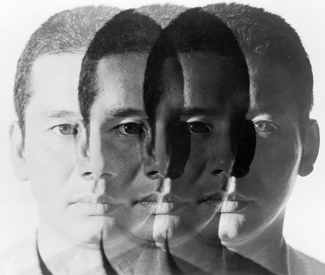
More traditional subjects are turned inside out in Masahiro Shinoda’s Double Suicide (1969) and Toshio Matsumoto’s Shura (1971). The former is drawn from a 300-year-old tragic romance written for bunraku (puppet) theater; mixing abstraction and naturalism, actors human and otherwise, it’s a jewel that questions artifice itself. In contrast to the prolific Shinoda, Matsumoto made very few features, most famously 1969’s pop art-camp extravaganza Funeral Parade of Roses, which transplants Oedipus Rex to the Tokyo gay underground with cross-dressing singer-actor “Peter” as its ruthless glamazon protagonist.

Shura (a.k.a. Demons) is as cramped as that film is extravagant. Turning its extreme physical and budgetary limitations into the stuff of claustrophobic nightmare à la Edgar G. Ulmer’s Detour (1945) or Roger Corman’s Teenage Doll (1957), it’s the tale of a samurai who gives everything up for love of a geisha — you know that’s a bad idea when early on she asks the question that needs no answer, “How dare you call me a vixen?” Once he realizes he’s been betrayed, all hell breaks loose in bursts of over-the-top violence that might be real or imaginary, given the film’s penchant for showing us successive alternate versions of the same scenes.

Arguably the series’ wildest stylistic leap is Shuji Terayama’s 1974 Pastoral: Hide and Seek, a bracing phantasmagorical chronicle of a very troubled mother-child relationship that reels from circus surrealism and mime makeup to porno sex and quiet lyricism. Perhaps its bitterest statement comes in the form of 1971’s The Ceremony from a pre-In the Realm of the Senses (1976) Nagisa Oshima. Rigorously formal in presentation (and taking place almost exclusively during public rituals), it traces the gradual soul crushing of a protagonist whose forced lifelong hewing to the model of a “pure and perfect Japanese” sacrifices any possibility of happiness. One of the ultimate “You think you hate your family?” horror films, it features multiple suicides and gruesomely joyless sexual interludes testifying to the suffocation of bourgeoisie conformity.

While its stature and role changed over time, ATG hung on through the mid 1980s, its final releases including such memorable ones as Yoshimitsu Morita’s anarchic social satire The Family Game (1983), an international hit. *

“CHRONICLES OF INFERNO: JAPAN’S ART THEATER GUILD”

Through Feb. 27

Pacific Film Archive

2575 Bancroft, Berk.

bampfa.berkeley.edu

“FRAGMENTS OF JAPANESE UNDERGROUND CINEMA 1960-1974”

Feb. 14-28

Yerba Buena Center for the Arts

701 Mission, SF

www.ybca.org


Bowled over

3

le.chicken.farmer@gmail.com

CHEAP EATS It started when our friend Stringbean texted that their mom and pop were going to New Orleans, where should they tell them to eat? Hedgehog was preparing a long, thorough, annotated email response while I texted back one word: Bacchanal. And then we both looked at each other and started to cry.

The two weeks leading up to the Super Bowl were tough — even tougher than the two days after. I actually listen to sports talk radio, see, on my way to and from work, and all anyone was talking about, even more than football, see, was po’ boys, etouffe, jambalaya, and gumbo.

And even when they weren’t, they were talking about Hurricanes and Pimm’s Cups and how many everybody had and then-what-happened. Until I even started to miss that side of it — which I never much participated in anyway.

Almost by accident, on Super Bowl Sunday morning, we had brunch at the Front Porch, and I’m trying not to say “new favorite restaurant” anymore; but sweet baby Jesus the shrimp and grits!

Poor Hedgehog is still kicking herself for going with chicken and waffles. Chawing on her fingers, rending her garments, and thrashing in her sleep . . . you would think she called for a fade route on fourth-and-goal at the five, or something.

“We get to go back,” I keep telling her, over me-made chicken and other anti-depressants. “Possibly as soon as next weekend!”

But I do see her point. It was one of the wonkiest mal-orders in Meal History. She’s gluten-free, and so are shrimp and grits. Whereas waffles are not. San Francisco A.G. (Anno Gravy’s) is not a fried chickeny town. It’s just not, and probably never will be. I can go on and on: she wasn’t hungry. We’d just had breakfast and were going after brunch to Binko’s Super Bowl party, where there would be giant vats of chili gurgling on the stove.

She even asked me if she should order the chicken and waffles and do you know what I said? I said, “No!”

But she audibilized at the line-of-scrimmage and the rest is mystery.

Possibly she was distracted by the radiance of our brunching companion, Lalalala “Happy” Valentina, one of my favorite people to sit around a campfire with, although we haven’t sat around one for several years. Her dad played pro baseball. Made it briefly to the majors, I forget who with, and Hedgehog gets flustered around the progeny of ex-major-league-baseball players.

So there was that.

Luckily, I kept my own wits about me and ordered what Hedgehog should have ordered: shrimp and grits. So good. So so so so . . . whereas the fried chicken was just so so. I mean, sustainable, free-range, vegetarian, home-schooled chicken, no doubt, but that is exactly why we will never be a fried chickeny town. We care too much.

Even I do.

But at least it was fried to-order. You know because they warn you it takes 25 minutes. Fine. Hedgehog and Happy had a lot to talk about. For a long time they’ve both been on the nuts-and-boltsy end of making TV and picters, and both have big, good, sometimes somewhat similar ideas about writing and producing. One gets the feeling if they put their big good heads together, either amazing things or lawsuits will happen.

I’m telling you: best shrimp and grits I’ve had this side of Luke. Fluffy and flavorful, with a poached egg nestled into the top of it. As you read this, I’m realizing just now, writing it, Hedgehog will be eating at Luke without me. It’s already in our calendar: Happy Valentine’s Day, dang it. She’ll be in New Orleans, working for a week, and I’ll be here haunting the Front Porch.

Beignets, fried okra, gumbo, red beans and rice, even po’ boys . . . all of it’s at least a little overpriced, but what I love is the atmosphere is down-to-earth. The front porch itself. The checkered floor, wooden tables, what Happy’s li’l son calls “the chocolate bar ceiling” . . . Wait, there’s nothing down-to-earth about a chocolate bar ceiling. Or any other kind, come to think of it.

I just can’t believe it took me this long to get there.

THE FRONT PORCH

Dinner: Mon.-Sat., 5:30-10:30pm; Sun., 5-10pm; Brunch: Sat.-Sun., 10am-2:30pm

65A 29th St., SF

(415) 695-7800

AE/D/MC/V

Full bar


Latin highs

0

virginia@sfbg.com

APPETITE Nothing replaces actually experiencing a cuisine served in its place of origin, but regional dinners are one way of traveling vicariously (and, perhaps, with less of a carbon footprint).

Occasionally, you get more than a meal, as with a January 23 dinner at Oakland’s Latin American haven, Bocanova (www.bocanova.com), which hosts the monthly Rick’s Supper Club, highlighting South American cuisine. As a lucky few dug into wild shrimp and lobster ceviche or smoky, steamed mussels, dinner sponsor LAN Airlines surprised attendees with free round trip tickets to fly to any South American destination… a freak out “Oprah moment.” In lieu of that kind of bell and whistle, here are two restaurants fiercely dedicated to uncovering the subtlety of their chosen cuisine.


OLIVETO

Every year I’d anticipate legendary Whole Hog dinners at Oakland’s temple to regional Italian cuisine, Oliveto, which recently celebrated its 25th anniversary. I dropped off after chef of 15 years, Paul Canales departed — he just opened buzzed-about restaurant-bar-music venue Duende. But I returned this year to the warm and stylish upstairs restaurant (there’s a more casual cafe downstairs). Just over a year ago, young chef Jonah Rhodehamel took over. With consummate host-proprietors Bob and Maggie Klein thankfully still running the restaurant, Oliveto maintains its purpose as a culinary community stalwart akin to Chez Panisse (community journal, whole-animal history, food activism), with regional Italian focus and themed dinners.

Rhodehamel honors Oliveto history while unafraid to experiment. Pastas ($15-18), which remain the highlight, might be a traditionally-influenced spaghettini neri of squid ink pasta, shrimp, and chili pepper, but he’ll add chocolate to tomato-braised oxtail corzetti, use red winter wheat in penne alla Bolognese, or infuse Floriani Red Flint corn polenta under duck giblet ragu with intense lavender vanilla notes. The fritto misto ($13) stands out from what is often merely a pile of fried food. Rhodehamel fries up the unusual: scungil (whelk), herring, blood orange, and shirako (cod milt, ahem, I mean, sperm).

The only lackluster starter was miniscule pan-fried frog’s legs ($14) with a parsley sformatino (like savory panna cotta). Charcoal-grilled meats are impeccable: buttery, crispy pork porterhouse ($30) sits amidst cannellini beans and braised chard, while rare Piedmontese ribeye ($36) is crispy on the exterior, radiant pink inside, next to creamed spinach and Yukon Gold potatoes. Espresso chocolate stracciatella ice cream ($8) is a lush, caffeine finish, though after trying all recent desserts, I’d also take fluffy ricotta cheesecake ($8) with candied kumquats.

5655 College Ave., Oakl. (510) 547-5356, www.oliveto.com


GITANE

Since opening in 2008, Gitane is easily one of our sexiest restaurants. Ducking into an alley, down a couple steps into the lush reds, tapestries, and chandelier glow of a tiny, two level space… so begins your seduction by a lover who knows how. Executive chef Bridget Batson has been here since the beginning. In November, the restaurant shifted directions with the addition her husband, co-executive chef Patrick Kelly (of La Folie and Napa’s Angèle), and chef de cuisine David Martinez.

Staying true to the meaning of gitane — gypsy woman — the new menu wanders gypsy-like through Southern Spain, changing cities (Andalusia, Sevilla, Valencia) every few weeks. In keeping with the celebratory setting, the appropriately deemed “passport” tasting menu is $65 for five courses (wine pairings from new wine director, Sarah Knoefler, $45), available in the intimate upstairs dining room. Bar and alley/patio seating offers an a la carte menu ($12-36) or bar bites.

Though they’ve combined Spanish and Moroccan influence since day one, Bridget and Patrick’s recent Spain travels allow them to now dig deeper into regional Spanish cuisine. The first regional focus was Valencia. The tasting menu began with a salad of baby beets, fuyu persimmon, Marcona almonds, citrus, nasturtium paired with honeysuckle notes of a Musva Moscatel from Valencia. Moving on, Dungeness crab and cuttlefish were touched with sea urchin vinaigrette and pineapple. A delight of fatty Iberico pork cheeks, Matsutake mushroom and raw Nantucket Bay scallops sat in a brilliant golden raisin-saffron-mushroom coulis. Fourth course: pan-roasted duck breast in tempranillo chili puree accented by oloroso sherry-compressed pears (yes!) The finish? A winning pumpkin creme caramel.

An à la carte meal yielded an over-salted but beautifully seared scallop with crispy sweetbreads ($16). I preferred crisped, roasted artichokes piled with sunchokes and Manchego cheese ($13), or an entree of rabbit (conejo) two ways ($32): roasted saddle and a dreamy riletta, accompanied by braised snails and caramelized squash. Ramon Garcia remains Bar Manager, still serving refreshing cocktails ($12) like an elegantly smoky Chimenea: mezcal, rye, allspice dram, maple syrup, orange bitters.

6 Claude Lane, SF. (415) 788-6686, www.gitanerestaurant.com

Subscribe to Virginia’s twice-monthly newsletter The Perfect Spot, www.theperfectspotsf.com


On the Rise: The Seshen

0

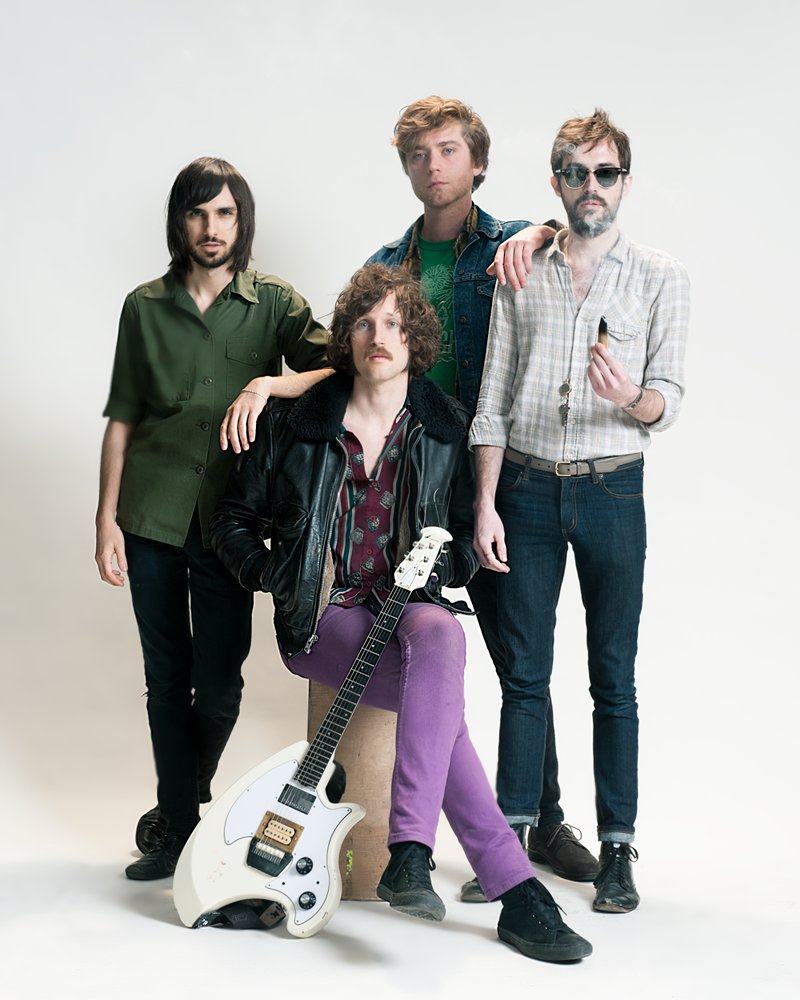
If Erykah Badu, Little Dragon, and Beach House, met-cute and made jazzy, passionate pop music together, the resulting mix might sound something like a song by the Seshen (as those are its main influences). The seven-piece Oakland band is known for its blend of sounds and regions, with robust musicianship by bassist Aki Ehara, drummer Chris Thalmann, percussionist Mirza Kopelman, Kumar Butler on samples, and Mahesh Rao on keys, filled out by fierce vocalists Lalin St. Juste and Akasha Orr. Though mostly, at this point, it’s known for a little track called “Oblivion.”

The electronic pop song, off the band’s self-titled 2012 debut LP, employs the consistent Seshen method, a live rock band set-up with deeply soulful singing, cosmic hip-hop beats, and densely layered effects and samples.

Most recently, the Seshen remixed fellow On the Risers Trails and Ways’ “Border Crosser.” Next up, the band will drop “Turn,” the first single off its upcoming EP, due later this year.

Description of sound: Our sound utilizes electronic textures and layers that seek to blur the distinction between the abstract and the familiar while incorporating influences from a variety of genres.

http://www.youtube.com/watch?v=gOkubxzD4gY

What piece of music means a lot to you: There’s seven of us so there are many pieces of music that have moved us, some of which include: Mama’s Gun (Erykah Badu), Voodoo (D’Angelo), Pink Moon (Nick Drake) and the works of Radiohead, Stevie Wonder, James Blake, Bob Marley, and Broadcast, to name a few.

Favorite local eatery and dish: Too hard to narrow it down to one!! We love Souley Vegan in Oakland, Pancho Villa in the Mission, and Zachary’s Pizza (spinach and mushroom deep dish pizza).

Who would you most like to tour with: Little Dragon or Animal Collective would be amazing but more immediately it’d be fun to tour with some of the other Bay Area bands we love like Bells Atlas or DRMS.

The Seshen with Guy Fox, Ash Reiter. Feb. 22, 9pm, $10. Rickshaw Stop, 155 Fell, SF. www.rickshawstop.com, www.theseshen.com

On the Rise: Space Ghost

1

Space Ghost’s textured, sample-based electronic compositions might sound like fat rain drops dribbling over tight beats, as is the case with “SD”, or like the remnants of a soulful club hit stretched over hollow wooden percussion in newly uploaded tracks like one-minute-long “King City.”

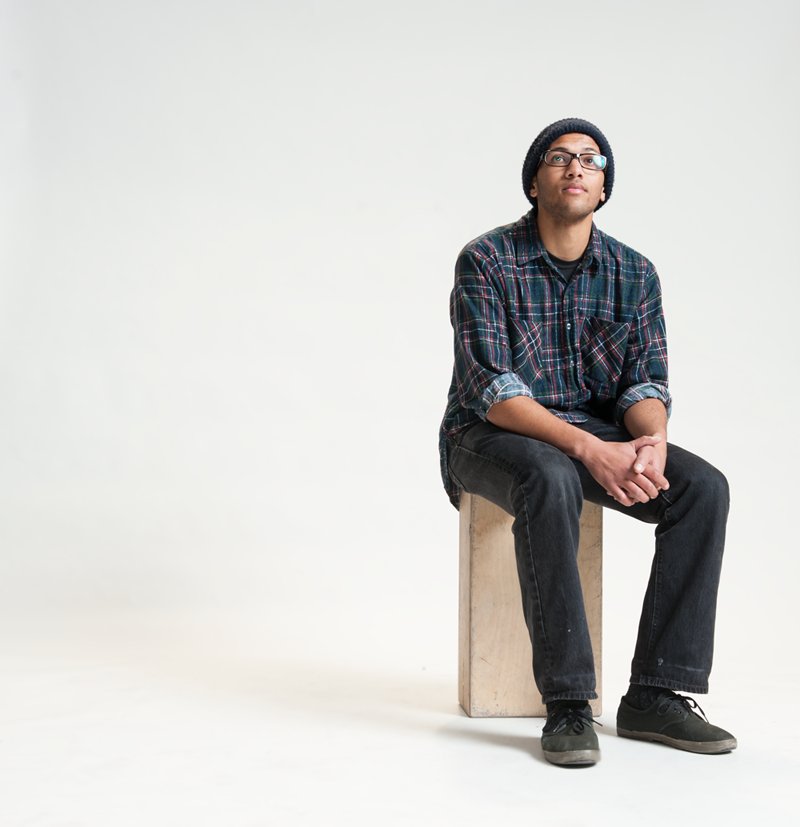
He is ambient music-maker/Oakland producer Sudi Wachspress — not the masked Hanna-Barbera character — who pieces together tracks using sounds found on the Internet and arranges them in Ableton. The Ukiah native, born in ’91, says he also has a Zoom H4 audio recorder, which he’s used for field recordings in the past, an Alesis Micron, and a vintage Korg Mono/Poly, which he’s currently learning to incorporate into his music. He also occasionally works with his own recorded voice.

His music is, for the most part, simply created in his bedroom then uploaded to Soundcloud, sometimes unfinished, often with a raw murmur, always intriguing. He’s also put out a few actual records, including 2012’s You’re There, and he’s one of the hosts of Sick Sad World, with fellow DJs Mike Melero and Albert Luera. He described the monthly party — which has seen Le1f, Friendzone, and Main Attrakionz — in another publication as “a grimey warehouse Oakland rap-bass-dance party.”

Description of sound: Ambient/electronic/hip-hop based/instrumental/meditative.

What you like most about the Bay Area music scene: I don’t really think there is a specific electronic music scene in the Bay Area like the way Chicago has house music, Detroit with house and techno, LA with beats. And because of that I think the Bay Area is a really good place to be, for electronic music, because I feel like I stand out more at shows. I can play songs at shows that are completely rinsed in other places, but it could be some people’s first time hearing that song in the crowd. Also, at Sick Sad World, we have been pushing different bass heavy genres of electronic music in our sets, as well as including old and current rap, creating a sort of mixture of sounds at our shows. And because there is a lot of ground to be explored in electronic stuff around here, I think we are in the right place at the right time.

What piece of music means a lot to you: “Left Side Drive” by Boards of Canada. That was the first song I heard by them, second to “Roygbiv,” and it’s kind of unexplainable how it made me feel. I had never really heard much electronic music before then, and that song was just so deep. It just had this slow lagging hip-hop beat but was super grainy and had sounds I had never heard. All the sounds flow around each other so fluently and then at the end it enters 30 seconds of just pure angelic-like chords.

Favorite local eatery and dish: I’m super into nachos. I went to this place in Emeryville the other day called “Los Cantaros Taqueria,” and they have real good nachos and horchata.

Who would you most like to tour with: I think it would be tight to tour with the other guys on Astro Nautico, the label I released my last album on.

soundcloud.com/space-ghost-1

On the Rise: Kowloon Walled City

2

The line to get in to Kowloon Walled City’s album release show with Golden Void at the Hemlock in early January snaked around the building and into the alleyway. It was undeniably packed, and entirely sold out, with hordes of black-hoodied fans still waiting outside in the rain. A relatively uncommon sight for a night with a few local acts at the divey Tendernob venue.

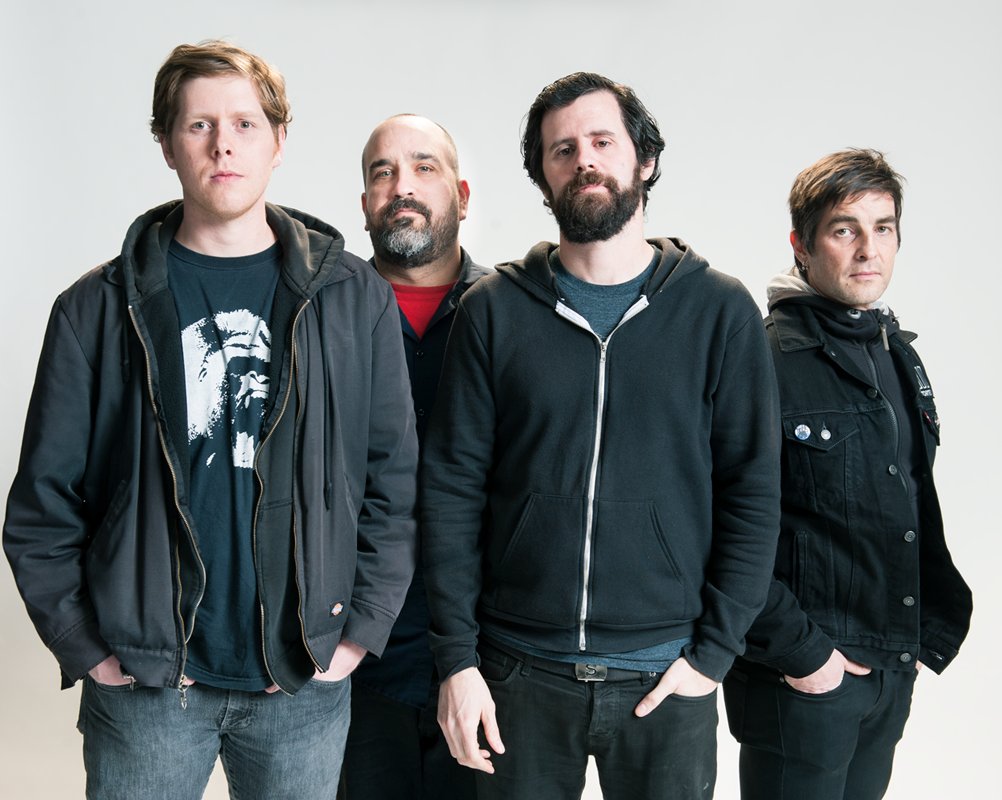
Plus, Kowloon Walled City has been around for awhile. It was born in 2005, released a handful of LPs, briefly toured with Sleep, and has gained a steady, dedicated following. Yet it took December 2012’s ominous, muscular Container Ships for people to stand up and take notice — and that’s expanded to beyond the Bay Area’s incestuous metal scene. (Though don’t call the noisey rock band straight-forward metal, vocalist-guitarist Scott Evans once told the Guardian; just because it’s heavy, doesn’t make it metal.)

The new album is a thick slab of sludgy hard rock, with, yes, some elements of metal, doomy down-tuned guitars, Evans’ forceful howl, heavy drumming, and inevitable comparisons to the likes of Isis and Unsane. Yet, it’s not like the current musicians of Kowloon Walled City — Evans, Jeff Fagundes, Jon Howell, Ian Miller — are in it to break big; they’re all longtime local players, lovers of the art of creating loud music, especially Evans, who’s also known as the inventive sound engineer at Oakland’s Sharkbite Studios.

Description of sound: Post-partum.

http://www.youtube.com/watch?v=L93-wAvwPPY

What you like most about the Bay Area music scene: All music scenes are beautiful. OK, the truth is I love music in the Bay Area, both as a musician and as a recording guy. There are so many great people and bands and venues and it’s great.

Favorite local eatery and dish: Tu Lan tofu pile, RIP.

Who would you most like to tour with: All tours are beautiful.

www.inthewalledcity.com

On the Rise: Warm Soda

0

The people were itching to be pumped for whatever Warm Soda was going to be. After producer-musician Matthew Melton’s beloved garage pop outfit Bare Wires dismantled ceremoniously early last year, he announced the name Warm Soda, and we collectively gripped our seats. Thankfully, there was no cause for disappointment.

This time around, Melton, who also co-runs studio-label Fuzz City, teamed up with bassist Chase Oren, guitarist Rob Good, and drummer Ian McBrayer. Similar to the band’s first single album cover (for the song “Reaction”) Warm Soda is like the sonic version of an early ’80s bombshell in skintight Gloria Vanderbilt jeans, sucking down a can of Coca-Cola through a straw, and hitting up the jukebox for early T-Rex, Cheap Trick, and glammy garage acts in that oeuvre. Or as Melton describes Warm Soda’s vision — “lo-fi glam garage pop.”

Sugary and syrupy, with fizzy pop hooks and pump-up drum hits, Warm Soda’s full-length debut, Someone For You, is out now on local Castle Face Records, and sweetly picks up where “Reaction” left off. Lucky we didn’t have to wait long for another Melton classic. As Castle Face describes it, “a lean, mean gang of masterful power pop tunes with just the right blend of studio sweetness, teenage angst, and gritty bubblegum. All killer, no filler.”

Description of sound: “Lo-Fi Glam Garage Pop.”

What you like most about the Bay Area music scene: There’s never a dull moment in the Bay Area — always something cool to check out. A brand new act will pop up as soon as you think you’re clued in on everything that’s happening.

What piece of music means a lot to you: Slade, Slade in Flame — “The Citizen Kane of Rock Musicals” — 1975 essential film (and album) about the perils of being in a traveling rock band. This hilarious movie is a must-see for anyone in a band, and the album Slade composed to “score” the film is a UK glitter rock classic.

Favorite local eatery and dish: Taqueria Cancun (19th and Mission), veggie burrito (no cheese, no sour cream) with extra green sauce!

Who would you most like to tour with: Part Time.

Warm Soda record release party with Bad Vibez, Cocktails. Feb. 23, 9pm. Night Light, 311 Broadway, Oakl. www.thenightlightoakland.com. www.warmsoda.org.

Warm Soda at Noise Pop with Free Energy, In the Valley Below, Miner. Feb. 28, 8pm, $14. Brick and Mortar Music Hall, 1710 Mission, SF. www.brickandmortarmusichall.com

On the Rise: Trails and Ways

1

This is the year we’ll finally get to spend some QT with Trilingual, which will technically be Trails and Ways’ debut LP. Though there’s still no release date or label, it will be coming out in 2013. It seems like we’ve been hearing about this much-anticipated release for ages, given all the buzzy blog love thrust on the Oakland indie-pop quartet.

And when I say anticipated, I mean it. Trails and Ways even made it on Hype Machine’s list of the “Most Blogged About Artists of 2012,” partially due to chatter about Trilingual, but likely more to the ingenious covers of Miike Snow, M83, and the like by guitarist-synth master Hannah Van Loon, rhythm guitarist Keith Brower Brown, bassist Emma Oppen, and drummer Ian Quirk.

The band is savvy, and knows how to keep up the momentum for its own projects. It’s posted dreamy official videos for tracks off the upcoming record, including “MTN Tune” and “Border Crosser.” And since December 2012, Trails and Ways have been slowly releasing songs for a remix EP, including one for “Border Crosser” by another On the Rise 2013 act: the Seshen.

Of course there’s more to T&W than a media-hold; the root reason for the frenzy is the music itself. Along with tropical synths, technical guitarwork, and Afro-pop inspired rat-a-tat drums, there’s the four glorious female-male multi-part harmonies that warm and come together like a picturesque sunrise on any given white sand beach (with or without tequila). It’s snark-proof, globally inspired pop, with hints of Brazilian tones, Spanish language snippets, and the occasional whistle, or group ooh-ooh.

Description of sound: You say bossa nova dream pop, I say Brazilian shoegaze.

What you like most about the Bay Area music scene: Our friends Bells Atlas, Astronauts Etc., the Bilinda Butchers, Waterstrider, the Seshen, and the widespread non-commercial ethos of groove.

What piece of music means a lot to you: Pat Metheny Group ft. David Bowie, “This Is Not America”; This song sounds like the boundary waters of dream pop and smooth jazz and it was my favorite song from my dad’s whole CD collection and I think I learned how to use a stereo by hitting repeat for this song.

Favorite local eatery and dish: Oasis Food Market falafel sandwich.

Who would you most like to tour with: tUnE-yArDs.

www.trailsandways.com

On the Rise: Holly Herndon

0

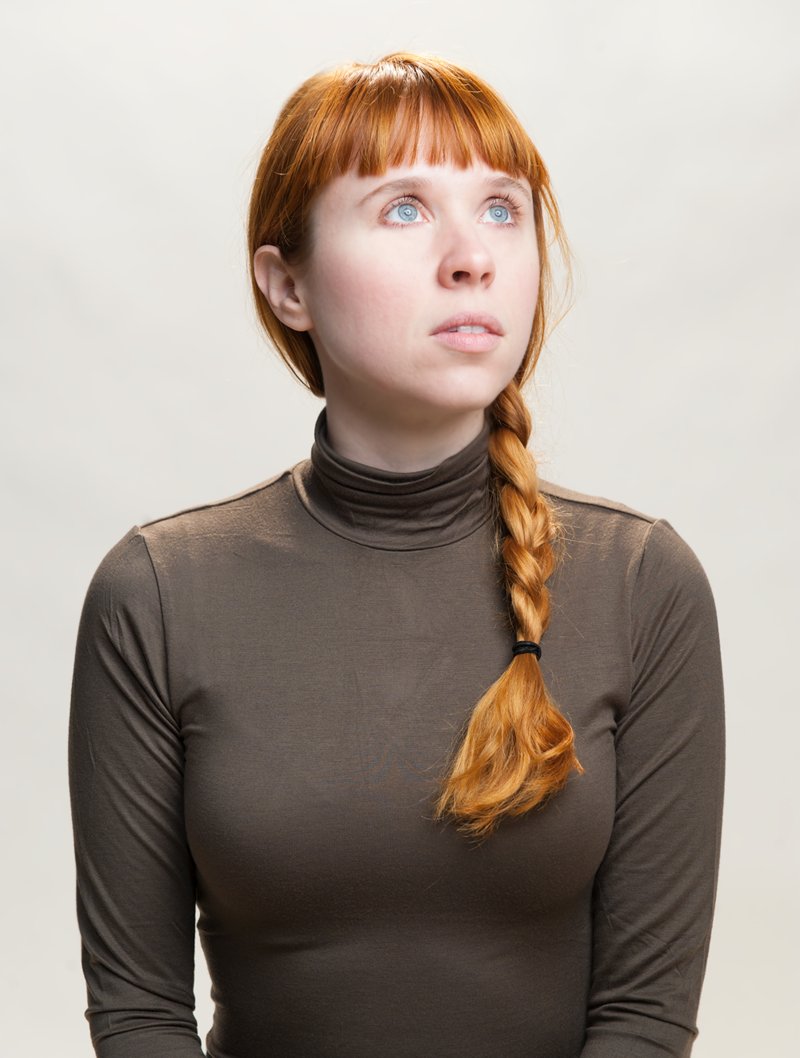
Using just her laptop and live vocal processing, Holly Herndon creates alternate universes. The PhD student at Stanford’s Center for Computer Research in Music and Acoustics manipulates programs into heart-racing, thumping, brain dripping compositions that methodically carry the listener away, then jerk it back with startling shots of noise. The best case example of this is “Movement,” the title track off last fall’s experimental RVNG Intl. release.

Like the others, the song surprises with impact, despite Herndon’s hushed, layered vocals trailing off into an unseen world. While it’s robotically tied to electronics, the track has a base in the natural, which makes sense for a former choir girl from Johnson City, Tennessee who spent her summers in the Berlin club scene. It’s the two halves of her worlds coming together.

She just got back from a brief European tour — which included a stop in underground music mecca, the Boiler Room — and is planning a new single for a spring release. For it, she says she’s “inspired to get more abstract while remaining approachable,” which sounds like a worthy challenge. There also will be a collaboration with Hieroglyphic Being this year, another with Reza Negarestani and Mat Dryhurst that will unfold in an art institution, a few remixes, and her doctoral exams. And likely plenty more media gushing if these first few months have been good indicators of the future.

Description of sound: I make computer music with a focus on live vocal processing and physical sound.

What you like most about the Bay Area music scene: We are literally at the end of the world, and the lack of attention focused here allows for artists to develop their own identities outside of hype bubbles.

What piece of music means a lot to you: I got deep with Trevor Wishart’s “Globalia” last summer and still cannot get over how well his concept of exploring (and collapsing) the diversity of language is executed. It is a gorgeous piece.

Favorite local eatery and dish: Bagel and latte at Java Supreme on Guerrero and 19th; I am there every day and the owners are wonderful.

Who would you most like to tour with: Mat Dryhurst, he is my life and creative partner and touring alone is exhausting.

Holly Herndon at Future|Perfect with Nguzunguzu, DJs Marco de la Vega, Loric Sih. Thu/14, 9pm, $10–$15. Public Works, 161 Erie, SF. www.publicsf.com, hollyherndon.tumblr.com

Bands on the Rise 2013

7

emilysavage@sfbg.com

MUSIC Ask 10 artists the same question, get back a dozen answers. The replies to my very brief questionnaires this year — it’s our second annual On the Rise issue — were revealing, like peeling back the skin of a tender orange, or rather fragrant onion.

Some juicy responses filled me with pride for our fair city and sisters across the bay, some inspired me to dig deeper, some just stunk. Jokes — they were all much appreciated, thank you. As the surveys came floating back in, I got excited by personal sonic descriptions such as “club bangers and sultry club grind jams,” “morbid classics,” and “Brazilian shoegaze.”

Another question that garnered a flurry of diverse answers from the acts: what’s the best part of life as a Bay Area artist? Turns out, the artists like that the crowds here mosh and smile, that making music locally isn’t intimidating like it can be in LA or NY, that new groups pop up whenever you think you’re clued in to it all, that they’re able to see live music every night of the week, the monthly showcases like Sick Sad World, the tight knit community of elder area rappers, and “the widespread non-commercial ethos of groove.”

And like last year’s list, this On the Rise bunch is rather varied, dealing in electronic arts, post-metal, hip-hop hype, ’70s glam, radio-friendly soul pop, and beyond — truly creating unique sounds across the board. One common thread I did find was the location; more than half of those picked for the 2013 list happen to be based in the East Bay, meaning at least six of the 10 are usually spotted across the bridges and BART stations. What that says about our local music scene, I haven’t quite dissected, though I often hear rumblings from artists in the area about rising SF rents and lack of rehearsal space. These are concerns to discuss amongst ourselves.

For On the Rise 2013, this much I know: these are the acts that I’d like to see get more attention this year and beyond. These are the bands, singers, musicians, and rappers that have been creating exciting output for less than a year, or some, for nearly a decade. They’re the ones to keep your eye on, to stay involved with, to hand over your hard-earned cash to see live. They’re keeping the Bay interesting — and weird — and for that, I’m grateful. Here are their stories.

>>A-1

>>CHIPPY NONSTOP

>>HOLLY HERNDON

>>KOWLOON WALLED CITY

>>THE SHE’S

>>SPACE GHOST

>>THE SESHEN

>>TRAILS AND WAYS

>>WARM SODA

>>WAX IDOLS

Union divisions

28

steve@sfbg.com

Service Employees International Union Local 1021 strenuously resists the wage and benefit givebacks regularly demanded in recent years by employers, including the city of San Francisco, which is now trying to slash the salaries for more than 40 city job classifications.

At the same time, Local 1021 is asking its own employees for benefit givebacks during new contract negotiations, a move that their own union is blasting as hypocritical.

That has squeezed Local 1021 President Roxanne Sanchez and her leadership team into a difficult position. They must fend off a revolt from staff that is turning vitriolic, without offending members who are in some cases worse off than the SEIU employees who represent them — all without weakening the union’s position at the bargaining tables with employers that relentlessly work to undermine the labor movement.

And they have to do it in the middle of an internal union election that they need to win to stay in power.

“The irony here is SEIU works assiduously to avoid takeaways in their contracts with employers and here they want givebacks from their own sweatshop-type working conditions,” says Libby Sayre, area director for Communications Workers of America Local 9404, which has represented SEIU Local 1021 employees since an internal reorganization in 2007. “It’s time for them to put some of their union principles into play.”

Local 1021 is proposing to increase how much employees pay for one of their health plans, eliminate the 401(k) pension match, and change some work rules, while keeping salaries where they’ve been stuck for many years. Employees say the givebacks total $416,000, and they’re coming even as the union maintains healthy reserves of about $11 million (the union says that level is now closer to $9 million).

“These are proposals they wouldn’t accept from an employer and they’re trying to impose them on their own employees,” Sayre told us. “It’s not justifiable. It’s not like this is a union in collapse.”

Yet Sanchez and her team, including Political Director Chris Daly, say the internal revolt led by a small number of disgruntled employees misrepresents how good the workers actually have it, particularly compared to members who have endured severe layoffs and salary and benefit cuts in recent years. Employees have another generous pension on top of the 401(k) (paying 2.5 percent of final salary per year worked), employer-paid health benefits (costs would go up for the PacificCare plan, but not Kaiser), normal step salary increases, and bonuses in lieu of raises in each of the last two years.

“Our staff has not given up anything,” Sanchez said. “They saw us cut the board’s budget by several hundred thousand dollars before we asked for anything.”

She said that with dues revenue falling along with membership numbers, and pension and health care costs rising steeply, the union can’t afford to keep dipping into its reserve funds, as it has in each of the last two years.

“We’re asking them to give modestly to their health care costs, and that we don’t pay for that second pension,” Sanchez said. “We are not balancing the budget on their backs, like what gets done with us.”

While both Daly and Sanchez admit the local has healthy reserve funds for its budget level, they say that’s necessary for the union to project strength, whether it be threatening a strike at the bargaining table or taking on ballot measures that would cripple the labor movement, such as last year’s Prop. 32, which the local dug into its reserve funds to fight.

“If we didn’t have healthy reserves, we’d be coming at them for more [givebacks] and doing layoffs,” Sanchez said.

While Sanchez said she resents being compared to the employers that her union battles, her rhetoric about the need for fiscal discipline is echoed by city officials who say they are already being generous with workers and they can’t afford to continue paying salaries that are so far beyond market rates.

“The city has to look at all the costs and be fiscally responsible and prudent,” said Susan Gard, a spokesperson for the city’s Department of Human Resources. “We don’t have the luxury of just looking at what’s best for employees.”

As allowed by the two-year contract Local 1021 reached with the city last year, DHR did a study comparing local salaries with eight other jurisdictions, finding that positions such as social workers, clerks, secretaries, custodians, and nursing assistants were between 16 and 48 percent above the Bay Area average. So the city is seeking to lower the salaries in 43 job classifications (applied to new hires only) and raise them for four classifications. The proposal will go before an arbitrator for a decision early next month.

Gard said the increases take into account San Francisco’s high cost of living and historic desire for pay equity, so most increases are less than half of the pay differentials the survey revealed. “They would all still be above market rates,” she said.

But Local 1021 officials say most of these positions had their salaries deliberately increased back in the 1980s and 1990s as part of an official city policy promoting pay equity for jobs often held by women and minorities. Even though that provision was removed from the official City Charter in 1996, they say it remains an important city policy.

“The city is rolling back decades of historic work on pay equity in this city,” Daly said. “We were concerned about equal treatment of workers who were disproportionately women and people of color.”

To highlight that pay equity issue, Local 1021 is planning a rally on Feb. 14 at noon outside DHR offices at 1 South Van Ness Avenue. Gard denies that the DHR proposal rolls back pay equity advances: “The city is committed to that principal, equal pay for equal work, and we don’t think our proposal erodes that.”

Sanchez said Local 1021 employees are undermining the union’s position in fights like this one, but they say the local needs to recognize and reward their work rather than justifying givebacks by comparing employees to members. “We don’t want to play the ‘our benefits are better than X-group’ games,” Nick Peraino, a 1021 researcher and CWA steward, told us. “We work very hard on behalf of the membership.”

Sayer accused Local 1021 leaders of arrogance and told us, “There is an attitude problem on the bargaining team and a reality problem on the part of the local,” a tone that that Sanchez sometimes mirrored when talking about the CWA campaign against her leadership.

Yet such vitriolic rhetoric may have as much to do with internal union politics as it does a true impasse. The leaders of the revolt by SEIU employees recently tried to decertify CWA and go with more forceful representation, a vote they lost badly but which may have spurred CWA to toughen its approach. Similarly, after SEIU members have accepted some bad contracts in recent years, some members may resent the organizers. Sanchez stressed how Local 1021 is member-led and responsive to the needs of workers, despite the current conflict.

“We want to make this organization good and strong,” Sanchez said, “and you can’t do that if you’re screwing over someone.”


Time out by the Bay

5

OPINION Pretend that you and your best friends are entrusted — temporarily — with responsibility to run a big city. The energy of its people, the diversity of its residential neighborhoods, and its natural beauty have made this a successful city. The centerpiece of its natural beauty is its front yard, a body of sparking water called “The Bay.” You are entrusted with keeping the Bay accessible and visible to the people — all of whom own it.

One day developers come along and say that they want to build an entertainment complex on public property, right on this Bay. It will be a big, 14-story structure. It will bring in some 2 million patrons for more than 200 entertainment events each year. And, the developers go on, it will be in the middle of a residential community, mess up traffic and block physical and visual access to the Bay. Furthermore they tell you, we will need you to violate all the controls you have painfully placed on building heights and uses on the waterfront. And, by the way, they will need a subsidy of $120 million in public money.

Lastly they tell you, they will play 41 professional basketball games in the building. This will double or triple the value of their franchise — but unfortunately requires that they significantly increase the ticket price for their fans.

As a good manager you might ask what the landlord, the Port — which holds the land as a public trust — will get in return for its $120 million subsidy and for the use of public property. You are astonished to learn that, for the next many decades, the Port receives not a penny. Knowing the environmental damages, the impact on transportation in your city and being concerned about maintaining livable neighborhoods, you might then say: “Hold on — this is a bad deal. Is there not a better, less costly, less destructive, less divisive location in our city?”

You might say that — but SF’s city management has not. There has been no effort whatsoever to find a more appropriate location, one less destructive to San Francisco’s environmental values, that would require less than a $120 million subsidy.

And time has virtually run out to ask the basic question of whether the proposed site on Pier 30/32 is an appropriate site for this entertainment complex. The city is rushing headlong into making this deal. The Board of Supervisors does have final authority, but when it gets there, so much time and effort will have been spent that the likelihood of it being stopped is virtually zero.

You, the pretend manager, would surely call a time out. You would put together city officials and representatives of the city’s neighborhoods with the developer and require that they, together, come up with a site that all could gladly support. That might be what you’d do -– but it is not what is happening in the real world of City Hall.

It’s time for people like you, and others like you, to demand that the real city officials call a temporary halt to their juggernaut and provide a process that would first answer the basic question of whether Pier 30/32 is an appropriate site for this entertainment complex or whether alternative sites would not better serve the city and its Bay.

Rudy Nothenberg has held senior positions in the administrations of six San Francisco mayors.

Editor’s notes

37

tredmond@sfbg.com

EDITORS NOTES This is how dysfunctional the San Francisco housing market has become:

The Chron reported in late January that young people who are just arriving in San Francisco are paying exorbitant rents for tiny spaces — $500 for a laundry room, $600 for an upper bunk — and often living in substandard conditions.

And on Feb. 11, The New York Times reported that a significant number of high-end condos in that city were vacant almost all the time, owned by the uber-rich who used them as pieds a terre — something that’s going on increasingly in San Francisco.

The Times notes:

“The higher up you go in price, the higher the concentration is likely to be of owners who spend only a few months, a few weeks or even just a few days each year in their apartments. This very costly form of desolation means that some of the city’s most expensive residential buildings stand mostly dark, lonesome and empty on the inside.”

I called Brad Paul, a former deputy mayor for housing and a longtime expert on development in San Francisco and read him that quote. “As my nine-year-old son would say, ‘You think?'” he said. My kids would be shorter: “Duh.”

The more housing you build that only multimillionaires can afford, the more likely your serving a population that has three or four other houses and just wants this one for the couple of weeks a year that they jet into San Francisco.

Planning Commission member Katherine Moore has mused about the problem in public, noting that in her Nob Hill neighborhood, there are more and more dark apartments.

Who cares? Everyone should — for a couple of reasons. For one, empty neighborhoods are no good for small businesses. They’re also not as safe. And it just seems so ass-backward: A city that can’t provide decent affordable housing for current residents, much less for the next generation of immigrants who keep the place lively, is giving up valuable land to build housing for people who aren’t going to live here at all.

That’s what the fight over the new condo projects on the waterfront, 8 Washington and 75 Howard, ought to be about.

At the very least, the city ought to get some data here. It’s not that hard — just check property records against the tax documents filed for homeownership exemptions. As Sup. David Chiu told me, “It would be good for us to know if San Francisco’s high-end condos are actually being used.”

Maybe we should find that out before we build any more. You think?


Milk’s real legacy

11

OPINION Ever since Supervisor David Campos announced his proposal to add Harvey Milk’s name to SFO, there’s been an unending string of criticism — mostly from one source — that has an eerily familiar ring to it.

We heard it years ago when we tried to change the name of Douglas School in the Castro to Harvey Milk Civil Rights Academy. Believe it or not, it took seven years before the School Board finally voted for the name change — and there was still bitterness. This was a school in Harvey’s neighborhood that Harvey personally helped when he was alive.

And of course Harvey heard it himself, when he was constantly told not to rock the boat, not to make waves, not to be so out about being gay. Why? Because it would be divisive, alarm our friends, empower the gay community’s enemies, and set the movement back. And forty years later, people are still saying that.

It’s not just Harvey Milk. When we went to change the name of Army Street to Cesar Chavez, the same cast of characters voiced the same empty complaints, and it wasn’t until a vote of the people that it was finally settled.

Now we come to Campos’s courageous proposal to add Harvey’s name to San Francisco International Airport. For the city that wildly celebrated gay marriages at City Hall (another event that naysayers were quick to criticize), the city that is the emotional heart of the gay civil rights movement, and the city in which Harvey Milk lived, rose to prominence, and died — this should be a no-brainer. People say this is divisive? In fact, it should be an issue that unites us.

Yes, it will cost the airport some money to change its signage. But this can be done over time, through attrition, and can be far less than the estimates. (Which still only amount to one-half of one percent of the airport’s annual budget.)

But by far the most pernicious charge against the proposal is that it would tarnish Harvey’s legacy if it loses. Let me tell you — a little adversity never scared off Harvey Milk. He knew how to take a punch. And he knew how to move the civil rights agenda forward through provocative proposals.

For example, did you know before this that 80 airports in the United States are named after individuals, and not one is gay? How long are we going to be second-class citizens?

I commend Supervisor Campos for having the guts to put this proposal forward. That’s the real legacy of Harvey Milk: a city with openly gay elected officials who are willing to put their own careers on the line to challenge the status quo. Harvey would be proud.

And, as the powers that be sanctimoniously intone that we shouldn’t name the airport after any individual, our great city itself is named after St. Francis.

If being named after an inspiring individual is good enough for our city, it’s good enough for our airport.

Assemblymember Tom Ammiano represents the 17th District.


My campy Valentine

0

FILM Love is the drug, or so sang somebody once. Yet violent conflict has always been a more predominatingly addicting factor in movies — which is why it seems both natural and despairing that the Vortex Room‘s “For Your Vortex Only” celebration of “Love…Vortex Style” (please guys, only one title per series), every Thursday in February, features eight vintage movies in which “love” is less a matter of romantic fulfillment than a titular selling point.

Which is not to say the Vortex programmers have not ranged far and extra wide to find 16mm prints (when available) of the most obscure and eccentric among odes to St. Valentine, though several weren’t remotely obscure at the time. That would include the kick-off double bill, which starts off with 1979’s Love at First Bite — a post-Young Frankenstein knockoff farce whose selling point was aging Old Hollywood himbo George Hamilton as a Count Dracula exported via coffin-encased necessity to disco-era Manhattan. He’s funny; Richard Benjamin as Jewish-shrink Van Helsing is funnier. Not so much: the tiresome racial stereotypes or clutter of TV sitcom faces.

That movie was a sleeper hit. A shameful semi-success, by contrast, was its Vortex co-feature The Love Machine (1971) — second adaptation of a Jacqueline Susann bestseller after 1967 camp classic Valley of the Dolls, and by far the best. Of course it’s still a glossy, ridiculous swamp of lurid melodrama and degraded “name” actors. John Phillip Law (1968’s Barbarella and Skidoo) probably locked himself out of the mainstream stardom by playing Susann’s soulless, indiscriminately sexually satisfying TV-executive climber. He’s actually very good — more than one can say for the fellow thespians (notably Dyan Cannon, Robert Ryan, Jackie Cooper, and David Hemmings as a particularly mean homosexual caricature) in what was only director Jack Haley Jr.’s second stab at narrative directing before he turned exclusively to celebrating his son-of-Tin-Man Old Hollywood heritage via documentaries like 1974’s That’s Entertainment!

Actual Valentine’s Day programming at the Vortex is certifiably insane: 1935’s Mad Love has Peter Lorre as a mad scientist in the daddy of all severed-transplanted-hands-of-a-murderer thrillers; while 1987’s Love is a Dog From Hell, a.k.a. Crazy Love, channels the Skid Row poetics of Charles Bukowski into a dazzling Belgian demonstration of art house bravado. It’s fatiguingly great.

https://www.youtube.com/watch?v=eTd3B0NXf44

The last two Vortex Thursdays in February wade into genuinely forgotten cinematic chapters. Least (forgotten, but also worthy) among them is The Love-Ins, an inadvertently hilarious 1967 highlight in hippiesploitation with Peyton Place regular Susan Oliver and future Hawaii Five-O star James MacArthur as vulnerable university students roped into the dangerous radicalism of a Timothy Leary-like prof (Richard Todd). When she’s dosed on acid, the ensuing polite Alice in Wonderland “freak-out” ballet is perhaps Hollywood’s dumbest counterculture indictment ever.

Yea more obscure are this amorous series’ final selections. The Love War (1970) is a TV movie sci-fi with Lloyd Bridges and Angie Dickinson as combatants on an interplanetary-games war using Earth as its playing field. It’s gimmicky but stupid alongside the next year’s Quest for Love, a clever parallel-time fantasy perhaps beyond the capabilities of director Ralph Thomas (1974’s It’s Not the Size That Counts) and star Joan Collins (whose earnest efforts suggest she never had a naturalistic acting moment in her life).

Unavailable for preview was that Quest‘s Vortex co-feature Love Slaves of the Amazon, a 1957 Universal International exploitation film of which surely more should be known, if only to preserve our fragile balance between the sexes against so much perverted input. Including, of course, camp retrospectives like the Vortex’s. *

“FOR YOUR VORTEX ONLY: THURSDAY FILM CULT PRESENTS LOVE … VORTEX STYLE”

Thu/7, Feb 14, 21, and 28, 9 and 11pm, $10

Vortex Room

1082 Howard, SF

Facebook: The Vortex Room


Six pack

0

Antiviral (Brandon Cronenberg, Canada, 2012) Yes, that Cronenberg. The spawn of veteran filmmaker David makes an auspicious feature debut with this, uh, Cronenberg-esque body-horror tale. In the stark, gloomy near-future, celebrity worship has become so out of control that healthy people visit special clinics to be injected with diseases gathered from superstars. When he’s not offering “biological communion” via shared flu germs plucked from blonde goddess Hannah Geist (Sarah Gadon of Cronenberg Sr.’s 2012 Cosmopolis), medical technician Syd (Friday Night Lights’ Caleb Landry Jones) is working black-market deals on the side, peddling illnesses to a sketchy broker who works out of a butcher shop that sells steaks grown from celebrity muscle cells. And if that sounds gross, just know that as Antiviral‘s clever, sci-fi noir plot twists itself into ever-darker (and gorier) contortions, there’s plenty more stomach-turning mad science ahead. You done good, son. Sat/9, 7:15pm; Tue/12, 9:30pm, Roxie.

Berberian Sound Studio (Peter Strickland, UK, 2012) It’s the 1970s, and frumpy British sound designer Gilderoy (a flawless Toby Jones) has, somewhat inexplicably, been hired by a flamboyant Italian filmmaker to work on his latest lurid genre piece, The Equestrian Vortex — about a girl who realizes her riding academy is haunted by witches. Any resemblance to 1977’s Suspiria is entirely intentional, as writer-director Peter Strickland crafts a meta-horror film that’s both tribute to Argento and co. and a freaky number all its own, as Gilderoy begins to realize that the “vortex” he’s dealing with isn’t merely confined to the screen. Fans of vintage Euro horror will appreciate the behind-the-scenes peek at the era’s filmmaking process, as well as Strickland’s obvious affection for one of cinema’s most oddly addictive genres. Bonus points for the Goblin reference. Fri/8, 9:30pm; Feb. 13, 7:15pm, Roxie.

Bound By Flesh (Leslie Zemeckis, US, 2012) Following up her 2010 burlesque doc Behind the Burly Q, Leslie Zemeckis (wife of Robert, director of 2012’s Flight) tackles another subject sprinkled with the tarnished glitter of a bygone era: conjoined twins Violet and Daisy Hilton, vaudeville and film (1932’s Freaks) stars who were exploited from birth by a series of shady guardians. When they finally earned their freedom in a landmark emancipation trial, their triumph was short-lived; not only were they ill-equipped to negotiate the perils of show biz on their own, they also suffered from grown-up-child-star syndrome, having tasted a level of fame early in life that they’d never reach again, though not for lack of trying. And, of course, they were conjoined twins — so amplify every possible life obstacle by about a million. Though Bound By Flesh suffers a bit from its limited source materials — be prepared to see the same photos of the Hiltons used over and over throughout the film — it nonetheless tells a tragic, fascinating, and utterly unique tale. Feb. 16, 5pm; Feb/ 17, 2:45pm, Roxie.

Iceberg Slim: Portrait of a Pimp (Jorge Hinojosa, US, 2012) Ice-T presents this study of a man (real name: Robert Beck) whose early years dabbling in “the second oldest profession” led him first to prison, and then — rather improbably — to the top of best-seller lists, as books like Pimp: The Story of My Life and Trick Baby (which became a 1972 blaxsploitation film) achieved cult status. Though the film’s first 30 minutes lay on the hero worship a bit thick (yeah, pimps are cool cats as far as movies and hip-hop’s concerned, but the real Beck is described as someone who “got a thrill out of degrading women”), the author’s talkative first wife and three daughters soon appear to offer some perspective. Archival interviews with Beck, and a detailed examination of his publisher, Holloway House (which employed only whites but specialized in African American literature), only add to this vivid biography. Sat/9, 5pm; Mon/11, 7:15pm, Roxie.

The Life and Times of Paul the Psychic Octopus (Alexandre Philippe, US, 2012) Eight correct predictions, eight tentacled arms, millions of enraptured cephalopod admirers: who could forget Paul, whose apparent ESP earned him nearly as much vuvuzela-blaring fanfare as the 2010 World Cup itself? This “fairytale” from the director of 2010’s The People vs. George Lucas begins with Paul’s death — he was young for an oracle, but old for an octopus, explains an employee at Sea Life Oberhausen, Paul’s German home. The doc then doubles back to examine how a publicity stunt involving acrylic boxes with taped-on flags and food tucked inside, plus one hungry octopus, could incite a global frenzy: epic lines at the aquarium, scrambling bookmakers, a full-scale media blitz, death threats, a rich Russian offering to buy Paul for a cool million Euros, an “Ask the Octopus” app, YouTube tributes, and more. At 90 minutes the doc stretches a little thin (fellow psychic animal Punxsutawney Phil even puts in an appearance), but this is fun stuff nonetheless. Sat/9, 2:45pm; Sun/10, 5pm, Roxie.

Sightseers (Ben Wheatley, UK, 2012) Ooh, yes, it’s the US premiere of the latest from rising star Ben Wheatley, who exceeds even 2011’s very fine hitman-goes-bananas Kill List with the sick and hilarious Sightseers. Awkward, nerdy couple Tina and Chris (Alice Lowe and Steve Oram, comedians who wrote the script with Amy Jump) pile into an RV and burn rubber toward some of Britain’s lesser-known attractions: Crich Tramway Village, the Cumberland Pencil Museum, etc. But it’s clear from the start that all’s not well in this relationship, and it doesn’t take long before their “erotic odyssey” also includes screaming fights, dognapping, and multiple homicides. So wrong, and yet so right — the evocative Sightseers manages to invent, and perfect, its own genre: the serial-killer road-tip rom-com. Sat/9 and Mon/11, 9:30pm, Roxie. (Cheryl Eddy) *

SAN FRANCISCO INDEPENDENT FILM FESTIVAL

Feb 7-21, most shows $12

Roxie Theater

3117 16th St, SF

www.sfindie.com

Muppets, manholes, and mayhem

0

cheryl@sfbg.com

FILM Vincent Gargiulo is originally from Stockton and lives in San Francisco, but I spoke with him over the phone from Duluth, Minn., where he’s about to start filming his latest project, Duluth is Horrible. “So far, it’s actually lovely,” he admits. “But Duluth is Lovely, nobody wants to watch that movie.”

The title came to him in a dream — he’d never been to Duluth before — but he decided to take the inspiration and run with it. “I came up with a bunch of little stories, semi-based on my life, and decided to set it in Duluth and use that title, and here I am,” he says, noting that he’s casting locals to act in the project. “A lot of people have been supportive, and a lot have not been. But I’m just hanging out with the supportive ones.”

Before his Great Lakes odyssey, Gargiulo was best-known for a pair of videos that brought him a certain amount of notoriety: “David’s Pizza Commercial” (which has over half a million views on YouTube) and “Taste the Biscuit,” which caught comedian George Lopez’s eye and became a running joke on Lopez Tonight. Both clips are excerpts from longer Gargiulo projects; the pizza ad was part of a 1980s TV parody, KNFR From 7:00-7:30.

“I needed some local commercials, and I came up with this pizza song. I thought, ‘I should just give it to a random pizza place,’ so I gave it to David’s Pizza in Stockton — they got a commercial without them knowing about it,” he says. “I thought if anything from that film would have viral potential, it would be that, because the song’s pretty catchy. So I just put it out there, and sure enough, it did. I mean, I like all attention I can get, but I don’t necessarily seek it out. It was funny because a lot of people were interviewing David — he was on talk shows and stuff, and it was fun to watch. And they don’t even mention me at all.”

The San Francisco Independent Film Festival’s local-shorts focus, “Cults, Manholes, and Slide Rail Riders,” contains seven entries, but only one that features humans playing puppets. That’d be Gargiulo’s The Muppetless Movie, a fake movie trailer that pays earnest homage to the Muppets as only a true fan with a crazy idea can. The casting is impeccable: the director busts out a killer Kermit impression, and there’s dead-on Statler and Waldorf banter and an uncannily perfect Gonzo.

“I am a huge Muppets fan,” Gargiulo admits. “The new Muppet movie was coming out at that time, and I was afraid it was gonna suck. So I thought, ‘I’ll make my own Muppet movie, just to be on the safe side.’ Originally I was going to use puppets, but there’s probably more legal issues there. So I decided to have humans do it instead.”

Just about the only thing Manhole 452 has in common with Muppetless is that it’s another standout in “Cults, Manholes, and Slide Rail Riders.” Jeanne C. Finley and John Muse’s eerie short is narrated by an unseen commuter as he nervously rides the 38 Geary downtown from the Richmond. His paranoia: exploding manholes. As the film progresses, his fears are backed up by found footage depicting actual manhole explosions. His unease become ours, as we start to realize he’s onto something real and terrifying.

Muse and Finley have been working together since 1988; for the past several years, it’s been a cross-country collaboration, since Muse teaches at Haverford College in Pennsylvania, and Finley teaches at California College of the Arts in SF. Manhole 452 originally appeared as part of a 2011 installation at Patricia Sweetow Gallery, whose Geary Street location provided early inspiration.

“My antenna was up, as was John’s, around the question of manhole covers,” Finley recalls. “We did a lot of research, and it became really evident that they blow all the time. For example, three days before our show opened, a manhole blew right in front of the gallery. So we were aware of this phenomenon — and then San Bruno happened. A horrible, horrible tragedy.”

Finley decided to count all of Geary Street’s manhole covers. “A lot of weird things have happened on Geary Street,” Finley says. (Manhole 452 specifically points out the former location of Jim Jones’ Peoples Temple.) “It’s a really interesting San Francisco street, and a pretty ugly street, too.”

Soon after, the pair wrote a script based on actual stories that they’d dug up, interwoven with a character they imagined as their narrator: a man who’d had a manhole blow under his car while he was driving down Geary, forcing him to take the bus — and to question the stability of his surroundings.

“A lot of our work deals with inexplicable, unpredictable random events and the relationship of personal will to those random events: how do you confront an event of that nature, and move through it? And as you move on, how do you take it with you?” Finley explains.

Adds Muse, “We tend to try and make free-floating anxieties explicit and real, and give them shape. In this case, it’s the street: the street is a surface, it’s a membrane, it’s porous and delicate. At any moment that membrane could be torn away, and the fragility of everything is suddenly exposed. We thought about that metaphor a lot — the surface of the street as barely protecting us from what’s underneath.” *

“CULTS, MANHOLES, AND SLIDE RAIL RIDERS”

Feb. 17, 2:45pm; Feb. 19, 7:15pm, $12

Roxie Theater

3117 16th St, SF

www.sfindie.com

Buy me love

0

caitlin@sfbg.com

STREET SEEN You are welcome to spend Valentine’s Day as I will this year: corralled onto a dark dancefloor with 200 similar atheists in the face of the love goddess. But as many of you will be happily celebrating with partners (hiss!), I’ve assembled this four-pack of completely locally-made Valentine’s Day gifts. You’re welcome (pfft.)

TOURANCE FAKE FUR RABBIT ROBE, $178

You can’t get more luxe than this without killing something, and unless it’s vintage, I find artifacts of animal death incredibly unsexy. Tourance makes all its faux fur right here in the city, so if your Valentine isn’t much for Hef wear, check out the line’s vests in faux fox and mink, and its throw blankets modeled on chinchilla fuzz or inspired by mane of lion. Highly recommended for those of us too embarrassed by the word “snuggle” to ever ask to be embraced — nuzzling comes naturally when you just unwrapped the softest garment known to personkind.

www.tourance.com


RECCHIUTI’S CREATIVITY EXPLORED DOG ART CHOCOLATES, $21


Guardian photo by Caitlin Donohue

I am not a fan of gifting chocolates on V-Day to anyone but the most perfunctory recipient (the sweet woman who lives above you, the office manager, one’s priest.) That being said, it is possible to make a case for the originality of this four-pack of burnt caramel bites. The foursome is only available at Recchiuti’s Dogpatch shop, which is tucked into the flank of the factory where the chocolates are made (next to the company’s super-fly Chocolate Lab café, which is doing two dinner seatings for a special Feb. 14 menu.) The doggie designs were born as art made by developmentally-disabled adults at community gallery Creativity Explored, an echo of the for-sale exhibition you’ll find behind Recchiuti’s cash register. And in addition to all these things: doggies. People love those guys.

807 22nd St., SF. (415) 826-2868, www.recchiuti.com

VARIANCE OBJECTS HARNESS, PRICES START AT $240/SET

Why does BDSM fashion have to be so damn obvious? Everybody knows you’re there to be roughed up, do we really need to drop hundreds of dollars on the same industrially-accessorized black patent leather that everyone’s wearing? I love Variance Object’s founder Nicole Rimedio for making beaded bondage gear for your kinky-yet-discreet angel. “I love the idea that I may be wearing a rope to bind my lover’s body, but that most everyone else thinks is just an onyx necklace,” Rimedio told me in an email. The line includes pieces strung with super-strong cord that can be worn around the calves, looped underneath the crotch, or tied around wrists. Most everything is modular, for versatility/variety’s sake.

www.varianceobjects.com

SF BEER WEEK, PRICES VARY


Photo via Yelp

Although you will get side-eyed by many Valentines if you suggest that a bottle of Miller High Life is an adequate way to celebrate Cupid’s aim, warm fuzzies while boozing are still totally possible. Per usual, V-Day falls in the thick of the Bay Area’s marquee week for gourmet brew events, SF Beer Week. So take your low-key, suds-loving babe to Thirsty Bear’s $20-25 “Chocolate, Beer, and Cupid” night to sip coco-vanilla cask ale while making your own chocolates (feel free to bring your boo’s favorite aphrodisiac throw-in for xxxtra points.) Also happening on Feb. 14: sweet and sour beer pairings at The Monk’s Kettle, four limited release brews on tap, with sweet bites from Socola Chocolatier at Speakeasy Brewery’s newly-opened, Kelly Malone-designed tap room. Elixir, Noc Noc, the Sycamore, Rosamunde’s Mission location, La Trappe, and Blackbird are all doing V-Day Beer Week specials as well.

Various Bay Area locations, www.sfbeerweek.org