Volumes

Dixie

1

virginia@sfbg.com

APPETITE A fledgling new restaurant is a work in progress, evolving. Often I’ll visit restaurants in their opening week, then return three to four weeks later, noticing a marked improvement in rhythm and flow, if not a dramatic change in food (often first food impressions prove to be consistent).

Returning a few months into a restaurant’s life, if things are heading the right direction, a distinct voice emerges, reflected in service and menus. Other times, one still searches for a point of view, a compelling enough reason to return. Opening in May with big vision and standouts on the plate, Dixie in the Presidio struggles to find cohesion after three months of visits.

The Southern intention of chef Joseph Humphrey (a Florida native) is just the sort of thing I get excited about: California-fresh with a New Southern ethos, not dissimilar to some of the Southern-influenced mashups I find at the likes of Maverick, the new St. Vincent, or in the best food cities of the South. Humphrey cooked at Michelin-starred Meadowood and Murray Circle, and in New Orleans with none other than Dickie Brennan & Co. South truly meets West in Dixie.

In the former Pres a Vi, Dixie hints at Southern plantation feel on the roomy veranda — ideal for the just-launched brunch — clearly the best area in the roomy restaurant. Though dreamily set in the Presidio, surrounded by trees, the Palace of Fine Arts standing majestically across the lawn, the inside remodel hasn’t quite covered up the space’s corporate feel. Rich wood grains and musical instrument art installations warm slightly, but neutral tones and a subdued air communicate “bland.”

Nearly condescending, cold service on my first visit had me actually dreading a return. Dread should never be on the menu, especially at this price. In another visit, I dined in the back space where at 7:30pm on a Saturday night more than half the tables were filled with thankfully well-behaved children. Here service improved: sweet if unsure.

Humphrey’s skill shines in chicken-fried quail on garlic waffles ($15), a twist on my soul food favorite, with cabbage and kale slaw and a subtle kick from Thai chilies in the syrup. Another excellent dish is chicken and dumplings ($24). “Dumplings” are melting-soft ricotta gnudi surrounding tender cuts of chicken draped with baby carrots. This reinterpretation does what it should: it makes you rethink, but still thoroughly enjoy, a classic.

Red miso black cod ($23), silky in apple and bourbon-tinged foam, was so good it was the one dish I reordered. Accompanied by lobster mushrooms, only a mound of farro was flavorless and forlorn. I couldn’t help but long for 4505 Meats and Ryan Farr’s unparalleled, dissolve-in-your-mouth chicharrones when chomping on the harder, overly-salty version ($6) with nori salt here. Abalone and pickled jalapeno peek out of creamy corn soup ($14), while horseradish deviled eggs ($7) are smartly topped with fried chicken liver. Despite the promise of shaved tasso ham (I adore tasso), a Dixie chopped salad ($12) is almost banal, the ham more like two big slices of deli meat draped across an otherwise unadorned salad (merely lettuce in creamy shallot dressing with a smattering of radishes), rather than sliced up and in the mix.

Wine or a pour of whiskey were the more gratifying drink choices. On the cocktail front, a pricey Terroir Fizz ($14) utilizes amazing, local St. George Terroir gin with lemon, lime, Cointreau, lemon verbena, and egg white for froth. Though I commend the move away from sweet, it was so sour (and I’ve been to known suck on lemons, that’s how much I crave sour), balance was lost in what could have been a beautiful aperitif — a bigger blow when this town is packed with excellent cocktails in the $8–$12 range. Dixie Triple S ($12) fared better in balance of sweet-smoky-spicy (the triple “S”) with Espolon silver tequila, lime, watermelon-jalapeno puree, and a hickory-smoked salt rim. 2 Bens is a playful tribute to “what dad and granddad drank” — a pint of Guinness and shot of Jack Daniels — but I cannot fathom paying $16 for a pour of such basic brands.

Dixie’s musical, New Southern vision is among my dream restaurant concepts but in actuality feels incongruent and out-of-sync despite supreme moments of taste. After the bill arrives at well over $100 for two, walking out into misty Presidio air before a green expanse leading to the Bay, our first thought is where to go next to fill up.

DIXIE

One Letterman Dr., SF

(415) 829-3363

www.sfdixie.com


More than ink

2

arts@sfbg.com

THEATER In 2009, Paul S. Flores was at work on his new play, Placas: The Most Dangerous Tattoo, in consultation with Alex Sanchez, founder of Homies Unidos, when a call came from Denver that brought everything to a standstill.

Federal agents were then cracking down nationwide on Mara Salvatrucha (or MS-13), the notorious Salvadoran gang that arose in 1980s Los Angeles among refugees of El Salvador’s US-fueled civil war and later spread in a loose network across North and Central America. Locally, U.S. Immigration and Customs Enforcement (ICE) had launched Operation Devil Horns on the Mission District’s 20th Street contingent. In Denver, flummoxed MS members called Sanchez (a staunch, internationally-respected Salvadoran-born peace activist whose former MS affiliation made him a natural confidant to some) with news of the raids.

Flores, whose play concerns a Salvadoran family impacted by gang life in the Mission, had already interviewed over 60 active and non-active MS members in Los Angeles, San Francisco, and El Salvador. No easy feat, it required a strict adherence to gang protocol, respecting the conditions set by the subjects for their cooperation.

“I had to hide all my video,” remembers Flores. “I had to give it to the reporter [who was helping us] so he could hold it under First Amendment rights — because I didn’t want anybody coming to my house looking for evidence on any of these guys. It’s not like they were telling me who they killed or who they robbed, but these were active and non-active gang members. If you wanted to find out who was who, you could have looked at my videos.”

The crisis passed, and Flores went back to work. But the moment speaks to the international context and complexity of the subject he had set out to dramatize.

In fact, the project, which did not originate with the playwright, was always rooted in the concerns of the local Latino community (particularly its Salvadoran population) as well as larger socio-economic and political realities. The idea for a play about Mission gangs came from Ana Pérez — executive director of the Central American Resource Center (CARECEN), an organization devoted to immigrant family rights and well-being in the Bay Area — soon after the 2008 Bologna family killings in San Francisco’s Excelsior District, which were linked to MS-13 members. Pérez brought the idea to Andrew Wood, executive director of the San Francisco International Arts Festival, who agreed to help produce it (with Mission Cultural Center for Latino Arts coming in as third co-producer). Together they recruited Flores to write it.

Flores isn’t Salvadoran, he’s of Cuban and Mexican extraction, but as a longtime community and youth violence prevention activist as well as prominent Latino artist (a writer-poet well known for, among other things, his work as co-founder of Youth Speaks), he was clearly the most knowledgeable and expert person around. A Mission denizen since 1995, his work in juvenile hall and counseling centers already connected him to the marginalized and at-risk youth of the neighborhood. And his artistic work specifically bridged youth culture and political theater. Placas — a title referring to barrio slang for tattoos, graffiti tags, or a nickname — would be his sixth full-length theatrical production. Still, Flores admits he had no idea what he was getting into.

“I never thought I’d get in this deep, to being in El Salvador in a prison talking to MS members and getting their permission to interview them. That was very cool,” he says respectfully. “Then realizing what was at stake. Having to meet in secret with these guys, having to pay them to interview them — people’s lives were at stake.”

But his research proved remarkably fruitful, despite initial suspicion from people who thought he was probably a cop pretending to be a playwright. “They didn’t tell me about their crimes,” he explains, describing heart-to-heart conversations with young men eager to dispel characterizations of themselves as monsters or thugs. “They were going to tell me about what makes them hurt and what makes them feel love. And that’s what I was looking for.”


ENTER RIC SALINAS, NATIVE SON

Placas opens this week at the Lorraine Hansberry Theatre — a venue chosen partly for its location in neutral territory outside the Mission, where the rivalry between Sureños and Norteños (Southern and Northern gangs) makes staging the play impossible.

In a crucial coup for the production, its main character, Fausto, is played by Ric Salinas, the Salvadoran-born co-founder of Culture Clash, the now LA-based but Mission-bred Latino theater trio and political-satirical juggernaut. Fausto is a middle-aged former gang member back after deportation and years in prison who hopes to reunite with wife Claudia (Cristina Frias) and teenage son Edgar (Ricky Saenz), who is himself just becoming involved with gang life and resists his father’s belated call to familia. As a condition of his parole, Fausto is also getting his old gang tattoos removed (a literal and serious issue that the play subtly expands into a metaphor for identity and renewal).

Salinas says he signed onto the project enthusiastically after reading Flores’s heavily researched script.

“I remember telling him, ‘Wow, I don’t think anyone has ever done this.'”

In a play that draws sometimes verbatim on the real lives of the gang members and former gang members, and the concerns and dynamics of the larger Salvadoran community, Fausto comes particularly indebted to the experiences of Alex Sanchez and another unnamed source the playwright has by necessity kept secret.

Salinas himself, however, shares a particularly violent but formative identification with Fausto, whose opening monologue describes surviving a near fatal shooting — and seeing it as a call to devote himself to his son. In 1989, at the height of the crack epidemic, Salinas was nearly killed in a gang-related shooting, as he attempted to prevent a fight at Harrison and 25th Streets. It had an impact not only on him personally, but on his then-budding career as an artist.

“A 17-year-old kid shot me with a sawed-off shotgun. I survived it; it was a miracle. It gave me a second outlook on life, and it also gave Culture Clash a new outlook: whenever we did something onstage [from then on], it was about something. We weren’t going to just be doing comedy for comedy’s sake.”

Salinas, whose gentle influence on the project has been another important source of the script’s vitality and verisimilitude, is confident the play will not only be involving but will begin conversations long overdue.

“If it starts with the gang, then it will continue with, ‘Ok, who are these people? Who are Salvadorans? What’s a pupusa?'” The actor then recalls with a laugh the song his mother thought should also be represented, a staple of every Salvadoran home.

“It’s ‘La Bala’ by Los Hermanos Flores. So it’s going to be in the play now. This is me educating Paul, and my mom reminding me. It’s really going to be rich in some authentic stuff that’s never seen, you know? But the thing is, it’s going to open up dialogue.”

PLACAS

Through Sept. 16

Opens Thu/6, 8pm; runs Thu-Sat, 8pm and Sun, 3pm, $13-$35

Lorraine Hansberry Theatre

450 Post, SF

www.sfiaf.org

The darn thing’s got wings

0

marke@sfbg.com

SUPER EGO And thus the epic saga of the Eagle Tavern, legendary drunken gay leather biker den of iniquity (which secretly boasted one of the best DJs in the city, Don Baird, on Sundays), closed for a year and a half, ravenously beset upon by upscale restaurant developers, canonized by the Sisters of Perpetual Indulgence, radicalized by queer activists desperate to preserve the scared space around which were scattered the ashes of some of our ancestors, transformed into a symbol of contemporary gentrification, gutted by real estate agents, tossed around by the Board of Supervisors like a hot potato, has finally entered another stage.

Please welcome new gay proprietors Mike Leon and Alex Montiel, who told me they hope to open the SF Eagle (www.sf-eagle.com) by Halloween, they’ll still hold charitable events, they’re looking forward to hosting live music nights again, and they’ll be doing their best to preserve that precious Eagle ambiance. You can read the whole story here, but little patent leather caps off to Glendon Anna Conda Hyde, David Campos, Jane Kim, El Rio (which hosted the Eagle’s wonderfully pervy Sunday beer busts in exile), and everyone else who pushed for the preservation of queer nightlife space in SoMa.

Says Glendon, who really led the push, “People thought we couldn’t preserve queer nightlife in this city — but that’s just a lazy excuse for gentrification. we should all be proud of what happens when we come together. Our nightlife history is a powerful force.”

That’s great. Now if we could only get the EndUp back on track, I could do my old Sunday bar (literally) crawl: Eagle, Lone Star, EndUp. Except for those times when I simply curled up beneath a parked car on Harrison. She was hella classy in the ’00s.


SF ELECTRONIC MUSIC FESTIVAL

There’s a lot going on at this annual feast of nifty experimentation — Negativwobblyland, William Basinski, Dieter Moebius, Cheryl E. Leonard, Guillermo Galindo, soddering trio Loud Objects, Machine Shop’s amplified gongs — kind of freaking out about it, ready for scary beautiful.

Wed/5-Sun/9, various times, prices, and locations. www.sfemf.org


NEW WAVE CITY 20TH ANNIVERSARY

Holy Echo and the Bunnymen! San Francisco’s longest-running party is celebrating two decades? Somebody call Square Pegs. I adore DJs Skip and Shindog — they started being retro about the ’80s almost before the ’80s were over. And their selections (Bauhaus, New Order, the Cure, Depeche Mode) somehow transcend the casket of ubiquity, possibly because of the lively and actually old-school cool crowd still riding the brave new waves of aural devotion. Here’s to 20 more years of Tears for Fears, at which point it will be like listening to Elvis in the ’90s. Or something. Prefab Sprout had a song about it. Just go.

Fri/7, 9pm-3am, $12. DNA Lounge, 375 11th St., SF. www.newwavecity.com


PUSH THE FEELING: LES SINS

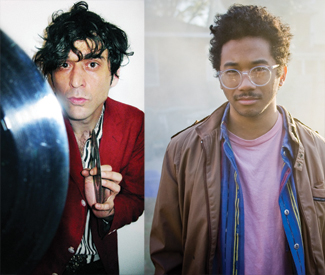
Underground indie impresario Kevin Meenan’s monthly Push the Feeling parties are a hot ticket already — but add in Les Sins and we’re entering another dimension? Who are Les Sins? Oh, just chillwave-plus genius Toro Y Moi dropping a DJ set. For an intimate crowd in Lower Haight. For $5. And you’re one of the only people who know about it.

Fri/7, 9pm, $5. Underground SF, 424 Haight, SF. www.epicsauce.com


DARK ENTRIES THIRD ANNIVERSARY

Speaking of New Wave Cities — Josh Cheon’s Dark Entries label has kept the Bay Area at the forefront of the minimal and dark wave movement, which mines overlooked bands of the synth music past and reverential present acts that are direct descendents of those slightly sinister new waves. (Recent signee Linea Aspera is to die for.) This dark celebration features a live performance by Max + Mara plus a glowering set by Cheon himself, with Nihar, Jason P, and Dreamweapon.

Sat/8, 10pm, $5. SubMission, 2183 Mission, SF. www.darkentriesrecords.com


SOUL CLAP AND DANCE OFF

Considering the garage powerhouse that is Oakland, it’s weird to me that we don’t have a huge dirty-funk, pervy girl group, kooky Hairspray 1960s dance-party scene here. (Hard French and any concert by Shannon and the Clams come close.) NYC DJ Jonathan Toubin was set to bring his great Night Train party here last year, but he was almost killed by a freak accident in Portland that made national headlines (a car drove into his hotel room and ran over him in bed). Well, he’s recovered enough now to get the party going again, and this groovy dance-off will also be an all-ages celebration of life. Celebrity judges and the cream of our underground garage crop will be in attendance.

Sun/9, 7pm, $13, all ages. Great American Music Hall, 859 O’Farrell, SF. www.gamh.com


OPERA IN THE PARK

Dearest drama queens, have you had a hard night out on the town? Do you need your over-the-top batteries recharged? How about just a lovely day on the lawn to check out other cute arts enthusiasts — like me! — swooning along to our hometown opera company’s overwhelming melodiousness? Bring a little (secret) wine, and let’s sing along.

Sun/9, 1:30pm, free. Sharon Meadow, Golden Gate Park, SF. www.sfopera.org


Goodbye to romance

1

cheryl@sfbg.com

FILM A movie called Bachelorette is inevitably going to be accused of riding Bridesmaids‘ coattails, even if — as it happens — Bachelorette‘s source-material play was written years before the 2011 comedy hit theaters.

A coincidence, to say the least, but also a hat tip to the zeitgeist. Bachelorette‘s title evokes not just Bridesmaids, but also TV’s wretchedly addicting The Bachelorette — as well as the wedding-industrial complex, which remains at frenzied heights, recession be damned (I blame Pinterest).

Bachelorette playwright turned scriptwriter-director Leslye Headland may also count herself among the current crop of female writers and directors who are bringing incisive, women-centric entertainment to pop culture’s forefront: Kristin Wiig and Annie Mumolo (Oscar nominees for penning Bridesmaids), Tina Fey, Diablo Cody, and Lena Dunham among them. The latter three’s Mean Girls (2004), Young Adult (2011), and HBO show Girls, respectively, share themes with Bachelorette, an imperfect film that nonetheless does a good job portraying women who are repulsive in realistic ways.

Imagine Young Adult‘s Mavis broken into three parts, stripped of her complexities but with her bad habits intact; you’d more or less have Regan (Kirsten Dunst), Gena (Lizzy Caplan), and Katie (Isla Fisher). A decade ago, they were the popular “B-Faces” at their high school and haven’t matured much since. Competitive Regan is a Type A blonde; Gena’s the queen of one-night stands; and Katie’s a self-destructive party girl. All of them are pushing 30, and though Regan’s the most functional among them, she’s the hardest-hit when she learns that Becky (Bridesmaids‘ Rebel Wilson), always treated as a second-tier B-Face by virtue of being plus-sized, is engaged. “I was supposed to be first,” Regan wails via three-way cell call to Gena and Katie, who’re sympathetic to this sense of entitlement.

The wedding is a fancy New York City affair, so the B-Faces reunite for what they think will be a bachelorette party for the ages. Most of the film takes place during that single night, a madcap, coke-fueled, mean-spirited spiral into chaos that puts Becky’s wedding dress in peril and sees Gena sparring with the high-school boyfriend (Adam Scott) she’s never forgiven or forgotten, Katie OD’ing, and Regan locking horns with the irritatingly hot best man, who also happens to be a complete douchebag (James Marsden). Nothing that transpires is as funny as the high points of The Hangover (2009), though Bachelorette is unafraid to match that film’s raunch factor.

That’s not to say the film lacks any laughs. The scenarios they get themselves into may be exaggerated, but the women themselves often feel unusually true to life. Headland’s dialogue sounds like real people talking (overlapping, snarking), and the script is loaded with 1990s pop-culture references, which makes sense, since the characters are nostalgic for their teenage glory days. Bachelorette also delves into thornier issues — eating disorders, unplanned pregnancies, drug abuse, raging jealousy — that groups of close female friends often grapple with.

However, it’s a problem for the audience when nearly every character is utterly unlikable. Headland’s play was written as part of a series on the deadly sins (Bachelorette was for “gluttony” — obviously reflected in Becky’s weight, but also Katie’s pill-gobbling, Gena’s sluttiness, etc.), and it’s one thing to see a satirical comedy play out onstage. The actors are there in front of your eyes: intermittently hateful, but living, breathing, and palpably human. Blown up to movie size, there’s nothing to temper the toxicity of the characters; even on the small screen, where Bachelorette proved to be a popular On Demand pick prior to its theatrical release, their awfulness can be agonizing.

Back to inevitable comparison point Bridesmaids: sure, Wiig’s hapless maid of honor was prone to cringe-inducing episodes (dear god, the airplane scene), but Bridesmaids took the time to explore the reasons behind her outrageous behavior. Her character was shaped by, not completely defined by, her failings, and through all her fuckups she remained sympathetic. Her sweet conclusion was cheesy, but she’d earned it.

Bachelorette‘s leading ladies are amusingly vile in the moment, but the movie’s so pleased with itself for being “edgy” that its own last-act attempt at sentiment rings jarringly false. Young Adult didn’t need a happy ending, and neither does Bachelorette, a film that would’ve been better served by sticking with its rallying cry: “Fuck everyone!” 


BACHELORETTE opens Fri/7 in San Francisco.

False idol

0

arts@sfbg.com

FILM It’s easy to make fun of religion — particularly this election year — but when people aren’t trying to kill or control one another over it, it’s best to leave the subject alone. Why begrudge anyone whatever makes sense of the world for them, or gives comfort when in need?

All the major prophets — let’s exclude those who self-appointed themselves to the job within the last 150 years or so — had very useful things to say. It’s not their fault if some contemporary followers distort their teachings or choose only to emphasize the parts concerned with “thou shalt not do this,” “go smite that,” etc. For most people, religion is a balm, not an incitement. A strident atheist calling believers idiots can seem just as insufferable as a fundamentalist certain you’re going to hell.

Ergo, just as there was a certain bullying pride of snark that made Bill Maher and Larry Charles’ Religulous (2008) more mean-spirited than necessary, the new Kumaré leaves a sour, smug aftertaste. Raised in New Jersey by a first-generation immigrant family of Hindus, Vikram Gandhi proclaims himself a skeptic who started out wanting to make a documentary about the opportunistic charlatans one can find passing as spiritually enlightened gurus in both India and around the booming US yoga industry. “I wanted to prove to others looking for answers that no one is more spiritual than anyone, that spiritual leaders are just illusions,” he tells us.

A noble impulse. Yet somehow this took the form of growing his hair and beard out, wearing saffron robes, adopting a Kwik-E-Mart Apu accent, and posing as Sri Kumaré, a fresh-off-the-boat guru who arrives in Phoenix, Ariz. to open up shop as a one-stop spiritual guide for the gullible. He asks “Could people find the same peace in a made-up religion that they would in a real one?” But too often the real question here seems to be “How silly can I make these chumps look while starring in my very own nonfiction version of The Love Guru?”

Actually the comedy Kumaré has been primarily compared to is 2006’s Borat, another Larry Charles joint (Charles was, unsurprisingly, solicited for some input on this new film), and one as hilariously subversive as Mike Myers’ 2008 flop was just dumb. But as unhappy as their portraiture in Borat made its duped participants, it was hard to feel sorry for them — given enough rope they gladly hung themselves expressing racism, homophobia, sexism, and sheer Ugly Americanism.

But those who fall under Kumaré‘s farcical spell don’t deserve to be exposed and ridiculed. They aren’t even, it seems, the kind of trust-fund folk with “white people’s problems” and too much time on their hands one finds represented in most New Age circles. They’re just people with real-world issues — financial struggles, low self-esteem, empty-nest loneliness, etc. — looking for somebody to tell them what to do. Of course they could tell themselves; the answers aren’t that mysterious. But a voice of authority always provides motivation. After all, something like “You could lose some weight” sounds very different when a doctor says it, as opposed to your own nagging inner voice.

Using nonsense chants and rituals he’s invented, giving himself a silly backstory, Gandhi duly magnetizes followers who take the bait and then some, attributing him with radiating light, energy, bliss, and healing. He’s called “a living embodiment of the divine;” one woman gushes exposure to him “changed my DNA!” When he says things like “I am the biggest faker I know,” it’s assumed he’s talking about some deep reality vs. illusion stuff. Ha ha.

With his earnest narration attempting to soften the snideness of the joke, Gandhi claims to have realized he’s connected with people more deeply as Kumaré than he ever did as himself. And several acolytes really do appear to benefit, making life changes for the better. When finally does his big “unveiling,” revealing his true identity, some actually applaud him for underlining that the real guru is the one inside each of them.

But what about the others who leave, furious or humiliated? We don’t hear their reactions, or find out how the woman who confided on camera to “Kumaré” about her family’s rampant sexual abuse feels now that her revelations are preserved in the context of a comedic hoax. Gandhi’s slick feature never feels more staged than when he’s supposedly alone, looking pensive and guilty over the possible consequences of his ruse — a performance of conscience that’s as disingenuous as anything here. 

KUMARÉ opens Fri/7 at the Roxie.

Evil genius

2

arts@sfbg.com

MUSIC Mark Mothersbaugh wants to devolve. “I would love to be 20 right now. Kids now have cell phones that have more power than the Beatles had when they recorded their first album. You don’t have to go through the whole gauntlet of getting on a record company.” We’re looking back since Mothersbaugh’s band Devo is currently touring again with Blondie. The two bands haven’t played shows together since 1977, when Devo — on the East Coast for the first time, at Max’s Kansas City and CBGB’s — was an unsigned, pop avant-garde band fresh out of Akron, Ohio.

“As a kid, I’d wondered, how do you get on the other side of the moat? How do you get to be on the side with the castle that has the recording studio? It seemed so impossible when i was a kid and now it’s a non issue.” Mothersbaugh is speaking from his own “castle,” his Mutato Muzika production company on the Sunset Strip.

A multimedia artist, Mothersbaugh has made a solo career in soundtracks. Pee-wee’s Playhouse started the trajectory, and his work on Rugrats and most Wes Anderson films cemented a reputation as a go-to-guy for quirky, slightly off-center scores. (Rivaled only by Danny Elfman.) It’s a different lifestyle, being in the studio, chasing a lot of deadlines for film companies. His recent work includes 21 Jump Street, Safe, and Hotel Transylvania. Evaluating the success of a project, he seems to look to the box office. “What to Expect When You’re Expecting,” he says, “was Lionsgate’s follow-up to The Hunger Games, so it wasn’t as big as their other one.”

If Mothersbaugh looks at the industry shrewdly, it’s for good reason. For much of the last two decades — while still performing at cherry picked festivals and events — Devo was on a recording hiatus. “Dealing with record companies, quite honestly, just became a burn out and made it not fun to be an artist,” Mothersbaugh says.

“At the time cassettes came out, I went to Wexler, the President of Warner Brothers and said, ‘I read something in Variety, it costs you guys more to make an audio cassette than to make an LP, but you deduct 35 percent of my royalties when you make a cassette instead of an LP, instead of letting me share the profit. Why is that?’ He just smiled and said ‘Because that’s the way it is.'”

It’s fairly telling about how labels treated musicians that this is coming from Mothersbaugh. Formed in the aftermath of the Kent State shooting — where the idealism of the ’60s suddenly devolved — Devo took a decidedly anti-punk approach, trying to change the system from within. Mothersbaugh recalls seeing Pachelbel’s Canon turned into a Burger King jingle and being inspired. “I just remember thinking that was evil genius at work. Rebellion isn’t how you change things. It’s through subversion in this country. And who did it best? Madison Avenue.” (Devo would in turn appropriate the BK jingle as lyrics to “Too Much Paranoia.”)

A band that wanted to be a brand, part of Devo’s strategy has been embracing commercialism and infecting it. “For us every time one of our songs got in a commercial we thought there was a chance that some kid would hear the song later on somewhere else and think, what is that song actually about?” An early plan (taking cues from Andy Warhol’s factory) was to send out groups of kids to perform. It actually came about in 2006, as Devo 2.0 on Walt Disney Records, but in the pre-MTV era, it just puzzled execs. “It was hard enough to talk them into letting us make our short films,” Mothersbaugh says.

Today Devo is re-energized. In addition to finding time to tour, it picked up where it left off with 2010’s return to formula, Something for Everybody, a candy-coated pop album with a cynical filling. The timing was right and everybody — the two sets of brothers that make up the band — wanted to make another record. “And probably more than anything, it was Alzheimer’s,” Mothersbaugh says. “We forgot what it was that made us stop.”

DEVO

With Blondie

Mon/10, 8pm, $39.50–$92.50

Warfield

982 Market, SF

(415) 345-0900

www.thewarfieldtheatre.com

Beyond the Pink

2

marke@sfbg.com

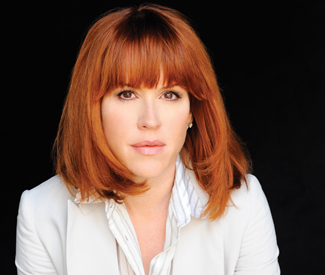
LIT Molly Ringwald is 44, fabulous, and living a dream life in Santa Monica with her gorgeous husband and three daughters. She’s also far from shy when it comes to talking about her storied past as an 1980s movie legend, the red-headed dream girl of choice for a generation of disaffected teens.

No, she didn’t have anything to do with designing Andie’s prom dress in Pretty in Pink (1986). Yes, director John Hughes almost fired Judd Nelson from The Breakfast Club (1985) for being mean to her (Nelson was staying in character). And — sorry those of us who spent hours pushing our boobs together — she cannot put lipstick on with her cleavage. That was “movie magic.”

Also? The quote she gets most on the street is “What’s a-happenin’, hot stuff?”

Ringwald is hot stuff for something else right now. She’s just released When It Happens to You: A Novel in Stories (It Books, 256 pp., $24.99), a debut novel comprised of linked short stories that’s been garnering raves. (She’ll be appearing courtesy of Litquake at the Verdi Club, Thu/6.)

The book deals with the dissolution of the marriage of Phillip and Greta, and the unsettledness that ripples through their family and friends. It’s a naturalistic mosaic of betrayals, full of lovely observations of contemporary human behavior and well-wrought passages that jibe with her love of Gustave Flaubert, Raymond Carver, and poet Mary Oliver — yet still reveal a voice distinctly her own.

The promotion she’s been doing for the book has been revealing too: her sharp wit and playful literary intelligence have had many realizing how much they’ve missed her. (Example: She basically slayed all of Reddit during a community interview when she casually mentioned that she drinks the blood of Kristen Stewart to stay young.) Ringwald called me during a tumultuous morning at her household: her twins were starting their first day of preschool, and she was getting them ready to go. She briefly put one of them on the phone with me, who told me she was excited about her “new backpack and pink nail polish.”


San Francisco Bay Guardian Um, I just talked to one of Molly Ringwald’s kids — that’s kind of a weird time warp for me.

Molly Ringwald Ha, I can see that. Are you OK?


SFBG A bit dazzled, but I’ll survive. Another time warpy thing is finding out how much you’re a self-described “Internet junkie.” I feel that I and so many others connected with your ’80s movies because we were so isolated as weirdos and outsiders. Those movies were like the social networking of the time — not in terms of actually communicating with others like ourselves, but just knowing there were people like us out there …

MR I’ve never thought about it that way, but I certainly know how the presence of the Internet has changed the lives of young people now, which has so much to do with reaching out but also moving forward, always going on to the next thing. My children are Internet natives. And I have to limit myself because I can just dive in to all the distractions. I’m fascinated by the effect it’s having on movies, the opening up, the distribution. I’m working to adapt my book to a screenplay right now, but I could see writing a Web series someday.


SFBG I’m curious how your book took on the form of linked stories. One of the most famous examples of that form is John Steinbeck’s Pastures of Heaven, set in Monterey. Did you model When It Happens to You on any particular linked story collections?

MR You know, the form came about on its own — I wrote one story, and then I was so curious about what was happening with some of the other characters, another came out, then another. I was thinking about all the ways people betray each other, and that theme guided me forward. I didn’t want to do a lot of reading research while I was writing, I was afraid it would overly influence me. After it was all done, I found other linked story collections, like Elizabeth Strout’s Olive Kittredge, which I loved. But there were no intentional influences on the book.


SFBG Themes of motherhood pervade the book — from Greta’s chemical fertility rituals and presence of the super harvest moon in the first story, through the maternal ambivalence of Betty later on, and in between, Marina’s surprise at how much she loves her child Olivia, and her struggle to accept that child’s transgender identity.

MR Motherhood is obviously a huge part of my life right now, and in a way those characters define themselves by their reactions to it. Especially with Marina, I could never understand growing up how anyone could imagine a fulfilling life without wanting or having children — but of course people do. So that character lead me to live in that perspective for a while, so different from what I feel. And society really does judge women through the prism of motherhood.


SFBG You mentioned how much you admire Michel Houllebecq and love Georges Perec — both considered radical experimentalists. Would you ever write something outright experimental?

MR I would love to explore everything I can with my writing, and I do love challenging things. But I feel it still has to retain an emotional component that I can interact with — otherwise it’s like super-abstract jazz fusion [Ringwald is putting out a jazz album next spring], and my brain can’t handle it. I’m reading D.T. Max’s biography of David Foster Wallace right now, and I can totally see where his style was coming from, but that might not be my individual path. But this is my first fiction book, so who knows? *

LITQUAKE: MOLLY RINGWALD IN CONVERSATION

Thu/6, 8pm, $12–$15

Verdi Club

2424 Mariposa, SF

www.litquake.org

PR problems

0

caitlin@sfbg.com

HERBWISE Though I’ll admit the waves of federally-mandated dispensary closures that have washed over the Bay in recent months make it hard to keep in mind, I can’t shake the feeling that the key to legalization is not burning effigies of US Attorney Melinda Haag and harassing Barack Obama when he comes to town. Though those things can be fun.

These nonsensical days of the government blocking our access to cannabis will only stop when regular old citizens realize that the War on Drugs is not making them any safer.

Which is why I’m talking to Kristina Barnes about her porch rowdies. The mother of two, who is a project manager for an energy conservation company, moved to the Mission a year and a half ago. Along some of her neighbors and an agent from the Mission Miracle Mile Business Improvement District, Barnes wrote a letter in protest of property owner Gus Murad’s plan to put a weed dispensary into part of the Mission Street building that until recently housed his restaurant Medjool.

The letters were sent to the city’s Planning Commission, but also to Haag, causing East Bay Express reporter David Downs to call Barnes and her crew “snitches,” and “clueless, craven, money-hungry carpetbaggers,” whose primary goal was to gentrify the Mission. One of the letters, he reported, even used what I like to call “the g-word,” as a positive term, calling into question the protesters’ basic grasp of SF’s social climate.

Fine, I chortled a little at the snitches part.

But I live really close to Morado Collective’s proposed site. It troubled me that my neighbors thought that “this shop will invite loads more undesirable people to our neighborhood,” as Barnes’ letter put it.

The perception of the pot clubs as a dangerous, disruptive place is sadly, common — Haag has used it as justification for her crusade, even though a UCLA study published in the July issue of the Journal of Studies on Alcohol and Drugs found zero evidence that dispensaries raise crime rates.

I needed to know where the negative image was coming from. So I called Barnes up to find out why she didn’t want high-quality nuggets near her family.

Turns out, Barnes does not support medical marijuana. “There’s a lot of misleading legality about it,” she said. “If I were to guess, 80 percent of the people [who frequent dispensaries] have no reason to be there.” In other neighborhoods, she told me, she’s seen people exit clubs and give joints to friends.

She thinks the Morado Collective will adversely affect her block. “My primary concern is that it’s really selfish,” she told me. “We moved into a neighborhood that has the promise of getting a little cleaner and better.” More saliently, she was concerned that her porch would look like an attractive place to smoke that newly-purchased bud. People use it as a smoke spot already, she said.

Of course, there was no reason to base this conversation on conjecture. Until it was shuttered by the feds earlier this summer, Shambhala Healing Center welcomed patients at 2441 Mission — across the street from the Morado Collective’s future home. (The dispensary is now delivery-only.) Had Barnes’ porch been inundated by Shambhala’s patrons? Had such disruptions diminished in the months since the club closed its doors?

Actually, she was unaware that she’d been living around the corner from a dispensary since she moved to the neighborhood. Granted, Shambhala looked like a yoga studio from the outside. “I can’t believe I didn’t know the other one was there,” Barnes said. It was unclear if this fact was enough to affect her views on disruptive dispensaries, but one hopes it was food for thought.


ALSO, LOGIC PROBLEMS

While researching this column, I also spoke with Philip Lesser of the MMMBID, who told me his neighborhood group was firmly in favor of medical marijuana, likening pot clubs to medical centers. But, he said, the Morado Collective’s spot between fancy restaurants Foreign Cinema and Lolinda “just doesn’t seem like the appropriate place to have a doctor’s office.”

What would be appropriate? “I’m thinking that anything that could better promote the arts and entertainment,” he ventured, adding that Alamo Draft House is set to open a five-screen movie theater in another Murad property across the street.

But — what makes you want to go to the movies more than weed?


The latest insurance scam

0

steve@sfbg.com

Mercury Insurance and its billionaire founder George Joseph are trying, for the second time in two years, to charge infrequent drivers more for car insurance.

Only this time, the measure has the surprising support of a progressive advocacy group that represents low-income communities of color — and that recently received a substantial donation from Mercury.

Proposition 33 — which so far has received fairly little news media attention in an election dominated by talk of taxes — is a reprise of a similar measure, Prop. 17, that went down to defeat in 2010.

The measure seeks to allow insurance companies to set premiums based in part on whether consumers have had continuous coverage. In other words, Mercury wants to raise rates on people who take a break from driving for economic, environmental, or other reasons.

The new measure contains a few exemptions targeted at sympathetic groups singled out by opponents in the last campaign, including active-duty soldiers and those unemployed due to layoffs.

And Prop. 33 also has a significant new backer, the Berkeley-based Greenlining Institute.

That alliance has drawn the ire of Consumer Watchdog, the nonprofit group that created California’s regulated car insurance system with Prop. 103 in 1988 and has been fighting to defend it ever since.

“It raises rates on the people that Greenlining claims to represent,” Consumer Watchdog President Jamie Court told us.

GOLDEN STATE GOLD

Mercury got its start in the 1960s, selling insurance to car owners who had spotty records, charging high rates — and aggressively challenging claims. About 80 percent of its business is in California.

And Mercury has been trying for some time to challenge the landmark Prop. 103, the 1988 ballot measure that set tight regulations on what car-insurance companies can charge — and what they can use to set rates.

Under that law, insurance companies can only use three basic rating factors: how long someone has been driving, vehicle miles traveled per year, and a driver’s safety record. There are 16 more factors that the state has allowed to have a smaller impact on rates, including the “persistency discount” that rewards drivers for staying with a single company.

Court said there are good reasons for that discount, noting that it costs companies more to market to and administer new customers than to serve existing ones.

Prop. 33 would allow consumers to shop around and still keep that discount — something that Court said only makes sense if you want to give insurance companies the power to divide customers by class and punish people who choose to give up driving for a while.

“It’s sleight of hand,” Court said. “Some drivers get a discount, everybody else is going to get a surcharge.”

Two years ago, every single legitimate consumer group in the state opposed Mercury’s efforts. So why is the prominent Greenlining Institute changing its tune?

Greenlining says the new measure is better. But the group’s staffers also acknowledge that Mercury is now a significant donor to Greenlining. Joseph appeared as a panelist at Greenlining’s 19th Annual Economic Summit in April, and the company donated $25,000 at that time.

Greenlining General Counsel Sam Kang, who pushed for the new position and is the designated point person in defending the stance, told us the new exemptions make the measure worth supporting. “The protections are what really distinguish Prop. 17 from Prop. 33,” Kang said. “It’s better than what we’ve got now.”

Kang argues that the increased competition it could foster among insurance companies might lower premiums for everyone. “If customers are willing to walk away” from their current insurance provider and still keep their continuous coverage discount, Kang told us, “that’s how it will drive down rates.”

Court called it “ridiculous” to claim this corporate-sponsored measure — Joseph has personally given almost $8.3 million to the Yes on 33 campaign, the lion’s share of its total funding — would drive down premiums through increased competition for customers.

“There’s no dispute on that and Greenlining is using tactics that are really reprehensible, and it’s a shame because they are likely to be the centerpiece of Mercury’s campaign,” he said. “George Joseph is trying to get cover from a group that has no business doing this.”

Greenlining Executive Director Orson Aguilar acknowledged the organization was divided on this measure, and that is still open to being convinced it made the wrong call. “This was hotly debated. This was not an easy issue for us,” Aguilar told us. “Frankly, if we’re wrong, we’re happy to be convinced.”

GREENLINING’S CAMPAIGN ROLE

Yet it may be too late for that: The state voter handbook has already been printed, and the Yes on 33 campaign has been touting the group’s support. “The Greenlining Institute — a consumer group founded to fight unfair business practices — supports Proposition 33 because it protects consumers and allows this discount to everyone who has followed the law,” says a ballot argument that signed by Kang and CDF Firefighters President Robert T. Wolf and California Hispanic Chamber of Commerce President Julian Canete.

“As you know, we opposed Prop. 17 and we opposed it quite vigilantly,” Kang told us. And the main reason was the organization didn’t buy Mercury’s spin that it would simply lower rates for those with continuous coverage. “If someone is going to get a discount, someone else is going to pay more,” Kang acknowledges.

Yet he is now parroting the Yes on 33 campaign’s rhetoric that the measure simply rewards drivers who “followed the law” and maintained continuous insurance coverage, saying the exemptions that Mercury wrote into the new measure actually give those groups — soldiers and the unemployed, which he notes are disproportionately poor people of color — more protections than they now enjoy.

“If you have continuous coverage for five years, you are eligible for a persistency discount,” Kang said, casting the measure as simple and straightforward.

Court and his group strongly object to that simplistic approach, asking why an insurance company would sponsor a measure that lowers premiums. The reality, consumer advocates say, is that this is a duplicitous measure that relies on a flawed premise and is really about giving insurance companies a new tool to capture certain customers and bilk those who can least afford it.

“These exemptions are bullshit, and they are written to be very narrow. It’s lipstick on a pig,” Court said. “It exposes how it raises rates for all low-income people who don’t meet these very narrow exemptions.”

In fact, the official summary by the Attorney General’s Office makes it clear that prop. 33 “Will allow insurance companies to increase cost of insurance to drivers who have not maintained continuous coverage.”

Kang disputes that objective analysis, telling us, “The ballot title and summary is up for discussion as far as what it meant.”

Kang admitted that Mercury is supporting Greenlining. “They gave us $25,000 in anticipation of the summit, and we anticipate they they’ll help us out in the advocacy of this measure,” Kang said. “Corporations regularly contribute to us, and it has never guaranteed our consent or dissent on anything.”

He defended the approach, telling us, “Sometimes working with corporations is the only way to make monumental changes,” citing their successful efforts to improve the billing practices of PG&E, which regularly makes six-figure donations to Greenlining.

Aguilar also strongly defended the organization’s integrity. “To say that just because we got a stipend from Mercury Insurance” that bought their support, Aguilar said, is simply wrong. “Money comes from somewhere.”

Greenlining’s allies in various campaigns to protect low-income communities say they’re willing to give the group the benefit of the doubt. Joshua Arce, executive director of the SF-based Brightline Defense Project, doesn’t think donations from Mercury Insurance influenced the group’s position, noting that it has also received contributions from PG&E and AT&T then subsequently joined campaigns that opposed those companies’ practices.

Instead, he said Greenlining was probably just offering support to the measure because Mercury had addressed Greenlining’s criticism of Prop. 17 two years ago. “That’s one of the things about Greenlining,” Arce told us, “they say, ‘If you fix all the things we laid out, if you address them, then we’ll support it.” Yet Court said the minor changes made between Props. 17 and 33 shouldn’t have won over such a potentially influential ally. “I’m told they’re going to use Greenlining in the commercial. It’s clearly a transactional relationship,” Court said. “When the billionaire behind Mercury Insurance says it, it’s hard to believe, but it’s easier to believe coming from an organization called Greenlining.”

Approve clean power SF

20

EDITORIAL The clean energy plan for San Francisco isn’t perfect. It’s going to cost residents a bit extra to join a sustainable, city-run electricity system. Officials at the San Francisco Public Utilities Commission figure that only about 100,000 residential customers will pay the premium to buy renewable energy — fewer if Pacific Gas and Electric Company launches a huge marketing effort to drive potential customers away. And PG&E will still control the distribution lines, the billing, the meters — and will make most of the profit.

It is, in other words, a long way short of a city-owned public-power system.

But it’s an important step in that direction, and the supervisors should approve the plan.

San Francisco has been talking about community choice aggregation for almost a decade, since the state approved legislation allowing cities and counties to form the equivalent of co-ops to buy electric power. The idea is that the city can purchase power in bulk — either at low rates or with a cleaner generation portfolio — and resell it to local customers. CCA programs don’t displace private utilities, which still own the power lines and charge a fee to deliver the electricity to customers.

But they do offer consumers choice: Right now, PG&E can’t even meet the weak, limited state standards for renewable energy, so San Franciscans are buying power from fossil-fuel and nuclear plants. Clean Power SF, as the city program is called, would offer as much as 100 percent renewable electricity — purchased through Shell Energy — at what at first will be a higher price.

But the goal of the program — and after years of wrangling, the SFPUC is now entirely on board with it — is to use the revenue stream from the early stages of electricity sales to build local renewable-energy facilities that can be brought on line to replace the power from Shell. Eventually, although it may be a decade or more down the road, San Francisco can probably generate enough power from solar, wind, and its existing hydroelectric dam to meet around 40 percent of the total power needs. If part of the program involves aggressive demand reduction, that number could go higher.

The locally produced energy would be cheap and green — and would bring down the price of the city alternative. If the city can build, operate, and make money from renewable energy plants, it will also demonstrate that running a municipal utility is entirely feasible. And the initial work of creating a full public power system will be in place.

It’s a modest experiment. Anyone who doesn’t want to pay extra for green power can opt out, and the city won’t even be trying to take on major commercial customers yet. But as the price of renewables comes down, and San Francisco commences its own build-out, it’s almost certain that Clean Power SF will be offering not only cleaner power but better rates.

For all its flaws, this is a program that community activists and city officials have spent years working out — and both sides are, for once, happy it. It needs strong support at the board, to send a message to the mayor that this is something San Franciscans want.

On the Cheap Listings

0

Submit items for the listings at listings@sfbg.com. For further information on how to submit items for the listings, see Picks.

WEDNESDAY 5

Humpday happy hour Good Vibrations, 2504 San Pablo, Berk.; 1620 Polk, SF. www.goodvibes.com. 6:30-7:30pm, free. The strap-on: a necessity to many, mind-boggling to others, both to some. In Berkeley, tool over to your local Good Vibes for this guided shopping event where experts will talk to you about what you need to look for in a falsie friend. At the chain’s Polk Street location, GV employees will demystify the 50 Shades of Grey phenomenon. What will it take for you to recreate a scene with your own Christian Grey? Chances are, you’ll find the tools you need here.

THURSDAY 6

"Captured: Specimens in Contemporary Art" Bedford Gallery, Lesher Center for the Arts, 1601 Civic Dr., Walnut Creek. (925) 295-1417, www.bedfordgallery.org. Through Nov. 18. Opening reception 6-8pm, $5. Trend watch! Throughout our history, humans have appropriated the natural world as raw material for our bizarre artistic impulses. Nowhere is this more true than in Walnut Creek, where a new exhibit opens showcasing reassembled taxidermy, curiosity cabinets, and specimen boxes.

Geoff Manaugh talks applied topology Banatao Auditorium, Sutardja Dai Hall, UC Berkeley. (510) 495-3505, bcnm.berkeley.edu. 5-7pm, free. Things we know: Manaugh used to be a senior editor at Dwell Magazine, and a contributing editor at Wired UK. Currently, he runs a think tank for the Columbia University architecture department. Today’s UC Berkeley talked will be, according to the press release, about "burglary, tunneling, and urban perforation." In other news, UC Berkeley can sometimes create really confusing press releases.

Fillmore Fashion Night

MADison Avenue party Cartoon Art Museum, 655 Mission, SF. www.cartoonart.org. 7-9pm, $5-500. Celebrate the closing of "What, Me Worry?: 60 Years of Mad Magazine" at this little downtown shrine to the drawn and funny. Early 1960s attire is encouraged – in fact, you’ll get your date in for free if you’re both wearing Mad Men-style flair.

FRIDAY 7

Paralympics viewing party LightHouse for the Blind, 214 Van Ness, SF. (415) 694-7350, www.lighthouse-sf.org. 6-8pm, free. RSVP recommended. This center for the visually-impaired is celebrating its brand-new entertainment center with this party for the London 2012 Paralympic Games. Yes, there will be pizza.

"Party Like It’s 1906" One City One Book launch party The Green Arcade, 1687 Market, SF. www.sfpl.org. 7pm, free. It’s always a good idea to celebrate author-sociologist Rebecca Solnit, and no day better than today, when the SF Public Library launches a citywide reading of her community-forged-in-disaster book A Paradise Built in Hell. It’s the eighth time the library’s encouraged the city to read together, and today Solnit will be on hand, and snacks they were noshing around the time of the 1906 SF earthquake will be available like oysters, sourdough bread, and beer.

Night Market Public Works, 161 Erie, SF. www.publicsf.com. 5-9:30pm, $5. "Bacon Crack" chocolates, vegan soul food, and champagne funnel cakes go fabulously with a ukulele chanteuse — as any attendee of Forage SF’s upcoming Night Market will be able to attest. The organization dedicated to promoting ultra-local nourishment has been striking gold with this recurring nightlife-snack event, at which local small vendors rub elbows with the Bay’s musicos, DJs, and of course, party-hard foodies. Check out Uni and Her Ukulele, the 29th Street Swingtet, and Izzy*Wise.

KALX 50th anniversary art exhibit opening Rock Paper Scissors Collective, 2278 Telegraph, Berk. kalx.berkeley.edu. 6-9pm, free. For a half-century, UC Berkeley’s been home to 90.7 FM, a.k.a. KALX, where John Lennon talked People’s Park riots and Green Day crashed when they came to town. Come tonight to check out a collection of KALX paraphernalia, flyers, and historic photos.

SATURDAY 8

All You Can Dance Alonzo King Lines Dance Center, 26 Seventh St., SF. dancecenter.linesballet.org. 1-5pm, $5. Don’t know jack about dancing? Take a four-hour crash course today, with a sampling of mini-courses on ballet, flamenco, Chinese movement, hip-hop, modern, and more. Teachers will be on hand to possibly turn you on to a whole new beat of your heart.

Babylon Salon Cantina, 580 Sutter, SF. www.babylonsalon.com. 7pm, free. Explore the Bay at this evening of readings – you’ll hear tales from a special education classroom, from assassinated journalist Chauncey Bailey’s finals days and ensuing trial, plus words from the "refreshingly off-kilter" (according to the NY Times Book Review) Lysley Tenorio. Cash bar on-site.

SUNDAY 9

The Last Picture Show free screening Berkeley Underground Film Society, The Tannery, 708 Gillman, Berk. berkeleyundergroundfilms.blogspot.com. 7:30, donations suggested. Small town life examined, in this film about Anarene, Texas, and a bunch of kids just trying to get along. High school honey Jacey is the babe every one wants, but will the perfect sweetheart be enough to counteract the slow death of the town she calls home?

TUESDAY 11

Jefferson Graham’s "Video Nation: A DIY Guide to Planning, Shooting, and Sharing Great Video" The Booksmith, 1644 Haight, SF. (415) 863-8688, www.booksmith.com. 7:30pm, free. These days, it’s all about video. Author Graham knows it – that’s why he compiled this book on how to create the best footage for bloggers, web show hosts, and small business owners. The USA Today columnist and tech video host shares how to get your clip to go viral.

Women’s comedy night The Layover, 1517 Franklin, Oakl. www.feelmore510.com. 7pm, free. Sponsored by downtown Oakland’s sex-positive community shop Feelmore510 (a Best of the Bay 2012 winner!), this evening is for female-focused yucksters. Grab a drink, peruse the art that covers the Layover’s walls, and ready yourself for quips.

Finger waves

2

le.chicken.farmer@gmail.com

CHEAP EATS Oh, I have so many sporty things to tell you about! To my surprise I am playing baseball again, football season starts (for girls) on the same day it starts for the 49ers: next weekend! Meanwhile, the Giants and A’s are both very much “in it,” entering September. Steroid busts . . .

Next week I am going to hire a dedicated sports writer for Cheap Eats. Mine will be the very first cheap eats newspaper column with a sports section in it.

This makes sense, trust me, food and sports being intrinsically intertwined. As any old dog will tell you, chasing a ball makes you hungry. And as any old Hedgehog will tell you, watching people chase a ball makes you hungry too.

For hot dogs! For chicken wings! Pizza . . . What does intrinsically mean?

Well, whatever, this week is this special food issue thing, so I thought I would clue you into this great new brick oven pizza place where I ate with my pal Earl Butter one day while Hedgehog was out in the world. She’s been brought in to try and rescue a horrible horror movie, you see.

Popcorn . . .

Yes, in honor of the occasion, I will devote the rest of this column very very exclusively to this new, cool, quiet pizza place. Except, as I am also (as of this moment) going on my own private writer’s strike, you’re going to have to do most of the work.

Here’s how:

Stand in front of a mirror, please, and make a fist with your right hand, except for the pinky. Now, go on ahead and poke that there teacup-tipping pinky of yours into the palm of your other hand.

Got it? Did you do that? Do you feel kind of goofy? Do you know where I’m going with this?

Sorry: where you’re going.

I’m on strike.

You, my friend, are going to punch yourself in the throat, sort of. Not hard. Just touch that same teacup-pinkied fist to your neck, sidewise, so that your thumb and index finger encircle your Adam’s apple even as the side of your little finger touches your soul patch.

Nicely done, you hipster you!

Next we are going to . . . Next you are going to lose the fist and bring the palm of your hand to your heart, you pledge allegiance to the flag, and so forth. Don’t be afraid to love your country. This is important. We don’t have the best healthcare situation in the world, but we do have Bruce Willis.

So bend your left arm at the elbow and hold it to your stomach, palm up, if you will, as if cradling a baby. Or a watermelon or something. Now scoop your right hand, palm up, over your left hand and on up toward the opposite collarbone.

Do you ever wonder what is wrong with you? Well, start! I don’t recommend all-out hypochondria; just a healthy sense of wonder. Why, for example, are you a scab?

Don’t give me the finger! Give me the opposite of the finger. That is, bend your middle finger down and — all those other ones, even the thumb — give me those. Give me everything but the finger. OK?

Now tap that middle knuckle against your chin. That’s all I’m asking. Is that so much to ask?

And there is yet one more thing you can do for me, Ms. Picket Line Crosser. Cross your fingers for luck. Lord knows we can use it. There are elections coming up later this fall, as well as football seasons.

There are everyday dangers to be avoided, like crossing the street and riding your bike to work.

I’m saying, cross your fingers on your right hand and draw yourself a little Fu Manchu mustache, just the sides of it . . . Yeah, leave the upper lip alone. Just two straight lines, first down the right side of your jaw, then the left, with your fingers crossed. For luck.

Yeah. Like that. Okay.

Now. You know what you need to know.

MOZZERIA

Tue-Thu 5:30-10pm; Fri 5:30-11pm; Sat noon-11pm; Sun noon-10pm

3228 16th St., SF

www.mozzeria.com

AE,D,MC,V

Beer & wine


No cheeseburger status updates

0

By Aaron Carnes

arts@sfbg.com

MUSIC Singer-songwriter Bryan McPherson had this nagging feeling three years ago, that he needed to leave Boston and relocate to the Bay Area. Even he didn’t understand from where this itch grew.

“I came out here to go west, just to go somewhere, go as far away as possible, for whatever reason,” McPherson explains.

He didn’t know it when he left, but the new environment would instantly fuel a whole album’s worth of new material — just as political and folk-oriented as his earlier work, but now with a new level of focus.

“I wrote ‘I See a Flag’ right when I got here. I started seeing flags everywhere. I noticed all this American shit. I got in touch with this whole American theme. Then I was in Oakland during the controversy of the Oscar Grant trial,” McPherson says.

“I See a Flag,” and the rest of the new songs would eventually become the aptly titled American Boy, American Girl, which was released on Stateline Records this spring. Like much of the album, the power of “I See a Flag” is in observation, which explores the contradictory nature of American culture. (“The police shot him down/He was laying on the ground/And now the whole damn town is going to burn to the ground/I don’t understand/But I see a flag blowing in the wind.”)

Playing political folk music is obviously reminiscent of icons like Woody Guthrie and Bob Dylan, but what distinguishes McPherson from these songwriters is how emotion-centric his music is. His words aren’t just cerebral ponderings about the state of the government. It is one man belting — at the top of his lungs — his honest, emotional impressions of the world, which in this case, just so happens to be America.

“I’m not some crazy nationalist. I just grew up in America. This record was written mostly over the course of the last couple years, being broke, just working hard, not getting by, barely making ends meet,” McPherson says. “There’s stories in there about people who are forgotten, not remembered and never were mentioned. It’s all true. It’s all me or someone I know. I’m not sitting there making shit up, wondering what it’s like in Bangladesh. I’m not imagining something. It comes from real experience.”

On the surface, the songs discuss the injustices of America and the contradictions its citizens must bear in order to have a successful, easy life. But underneath the surface, the record is about the McPherson’s alienation, both as he identifies himself as an American and is surrounded by other American’s apathy.

“Americans are so ignorant now. They have no idea what this country was founded on. They’re more concerned with updating their status and throwing a picture of a fucking cheeseburger on the internet than actually thinking they have a little bit of power,” McPherson says.

Of course, his feelings of alienation were compounded while writing these songs because of his relocation to the Bay Area from the vastly different political climate of Boston.

“It’s like being in another country. I felt self-conscious. I came out here with a thick Boston accent. The culture is different. People are way different,” McPherson says.

But being an outcast wasn’t something new to McPherson. Even in Boston, as a young musician from Dorchester, which is a working class neighborhood in Boston, McPherson would play open mic nights in Cambridge, where the art section is. He says the rich kids there immediately identified him as different.

“When I opened my mouth and started talking to people and they start to look at each other, kind of be weird because of the way I talk. I’m stupid because I have this accent. I’m poor. I’m probably dangerous. I’m not them. I definitely don’t have anything to offer. That’s the vibe that I consistently got, my first experiences dealing with the status quo, those sorts of people calling the shots,” McPherson says.

He recorded his first album, Fourteen Stories, while still in Boston in 2007. McPherson already has his third album written. He just needs to record it.

BRYAN MCPHERSON

With Lera Lyn, the Lady Crooners

Thu/30, 9pm, $8

Hotel Utah

500 Fourth St., SF

(415) 546-6300

www.hotelutah.com


Secret Scotsman

0

marke@sfbg.com

SUPER EGO So: woozy hip-hop has snuck back onto better dance floors via trap music, neon mutant Goosebumps-Beetlejuice children are ruling the queer clubs, techno keeps getting rave-wiggier, a true house revival is lighting up Oakland — and right now I’m wearing 6-inch shiny black pumps, a canary yellow pencil skirt, and a pair of sexy hornrims, because I am breaking down summer nightlife for you like the busy head of a global conglomerate, power points everywhere. Now where’s my soy double mocha latte no foam with a single ice cube?

(Belatedly, also, can I give a wee squee over the strange EDM-dubstep party cheerleader-gang phenomenon? Air kisses to the Wompettes, and Atomic Girls. You make that music fun for me.)

However, my ear and heart are still captivated by the excellent wave of esoteric bass music rolling out of various world capitals (and our own backyard). Deep, dark, heavy, and moody will always be my type — I’m basically the fruit on the bottom.

Great SF parties like Soundpieces, Footwerks, Icee Hot, Ritual, and Tormenta Tropical and shindigs from DJ Dials and the Low End Theory crew help keep my bass mechanics well-lubricated. And one of my absolute favorite DJs in the city, Nebakaneza, is doing amazingly moody and apocalyptic things with the post-dubstep vibe of the moment.

But my true ears on the street — my secret weapon, really — belong to the one and only DJ Deevice, who is a bass snoop par excellence, at least of the more occult and groovy UK variety. Deevice, a.k.a. Martin Collins was a resident at Glasgow’s seminal Sub Club during its wild rave years before heading for our fair-but-still-foggy shores in the ’90s. (He threw the storied UK Gold weekly party). There’s a whole thesis to be written about how British Isles immigrants warped and woofed the history of Bay Area dance music, and Deevice is one of the big players, although he’s never held down a regular residency here.

>>READ MORE ABOUT DEEVICE AND HEAR HIS MIXES

Instead, Deevice takes to the airwaves, both invisible and virtual, for his weekly Gridlock radio show on Radio Valencia, 87.9FM (Thursdays, noon-2pm, www.radiovalencia.fm) — the play list of which, posted at gridlockfm.blogspot.com, is an ace cheat sheet for us bass- and househeads. He’s also an A&R scout for the legendary R&S Records’ Apollo imprint. Those two positions put him prime for hearing all the best things first. “For some strange reason a lot of this music isn’t finding a home here like it is in Europe,” Deevice told me through his clipped Scottish brogue in Lower Haight recently. “And people send me great stuff all the time, so I’m happy to be passing it on.”


DJ DEEVICE SUMMER ’12 TOP 10

Makoto, “Another Generation” (Apollo)

Om Unit, “Ulysses” (Civil)

Ave Astra, “More L (Original Mix)” (Filigran)

John Tejada, “When All Around Is Madness” (Kompakt)

Sarrass, “A New Day (Original Mix)” (Third Ear)

Steve Huerta, “Take Me Closer” (Amadeus)

Mathew Jonson “Passage to the other side” (Itiswhatitis Recordings)

Ghosts On Tape “Nature’s Law” (Icee Hot)

Volor Flex “About You” (Apollo)

BWANA “Baby Let Me Finish (Black Orange Juice remix)” (Somethinksounds)


THE FIELD

Last time gorgeously hypnotic looper Alex Willner, aka the Field, came through SF, he had augmented his formidable live bank of tech with a drummer and bassist — the effect was outstanding, even though a certain gaggle of talky gays in the Rickshaw Stop crowd would not shut up during his set. (You know who you are.) Now he’s back with musicians in tow on Mighty’s mighty sound system. Hush, children, and sink into the killer grooves.

Fri/31, 10pm, $15–$20. Mighty, 119 Utah, SF. www.blasthaus.com


ORIGINAL PLUMBING THIRD ANNIVERSARY

The hot-hot-hot trans male quarterly always brings the party — if you missed its Pride weekend shindig, or want more of that uniquely seductive machismo in your life, hightail it to this. With Rocco Katastrophe, Billy Elizabeth, Nicky Click, Jenna Riot, Chelsea Starr, Rapidfire, and more.

Fri/31, 10pm, $3 before 11pm, $6 after. Elbo Room, 647 Valencia, SF. www.elbo.com


ODYSSEY

For well-nigh a year, Odyssey was the underground loft party of choice for those ready for an extralegal journey through the sparkling state of local house music. Robin Malone and crew aren’t letting some silly shutdown stand in their way — it’s bigtime, baby, as they take over Public Works all night with hometown hero DJs Sergio Fedasz, Doc Sleep, P-Play, and Stanley Frank. True SF family vibes!

Sat/1, 10pm-4am, $10. Public Works, 161 Erie, SF. www.tinyurl.com/odysseysf


DUB MISSION 16TH ANNIVERSARY

One of the longest-running and consistently excellent weekly parties turns sweet (and deep) sixteen, with one of my longtime favorites, Vinnie Esparza of the Groove Merchants record store, guesting — if anyone’s got the mindblowing underground Latin funk dubs, it is he. Plus: Seattle Mistah Chatman MCing and Dub Mission founder DJ Sep and Ludachris rolling on decks.

Sun/2, 9pm, $8–$10. Elbo Room, 647 Valencia, SF. www.dubmission.com


Mission sandwiched

0

virginia@sfbg.com

APPETITE Two unusual, new Mission sandwich options: one of the city’s best restaurants launches lunch with Scandinavian influence (part of the Nordic culinary wave finally reaching the West Coast that includes new restaurant Pläj) , and a low-key panini shop opens, refreshingly real with Middle Eastern touches.

SMØRREBRØD AND LANGOS AT BAR TARTINE

Nick Balla’s forward-thinking, Eastern European menu at Bar Tartine offers some of the most exciting food in the city right now, so new daytime hours (Wed-Sun, 10:30am-2:30pm) are a gain. Smørrebrød is Danish for “bread and butter”: these open-faced sandwiches (one for $6; three for $15) lead the way on the new menu, though heartier sandwiches are on offer, too, such as beef tongue ($12) generously laden with sauerkraut, onion, and that Hungarian staple, paprika. Or on the vegetarian side, slab bread filled with lentil croquettes, yogurt, cucumber, padron peppers.

On rustic rye bread, smørrebrød toppings evolve. I find two enough, three for those with a bigger appetite. My favorite is bacon, egg, avocado, dill and roasted tomato in a blue cheese sauce blessedly garlic-heavy. Creamy chicken liver pate is a gourmand’s option, although such a generous scoop of pate overwhelms accompanying apricot jam. Another toast is topped with smoked eggplant, white beans, olive, roasted tomato, while a sweeter side is expressed in hazelnut butter and rhubarb compote.

They’re calling it a sandwich counter and you can certainly take out, but Bar Tartine’s rustic tables and expanded space welcome: they’re ideal for lingering with Four Barrel coffee and that divine Hungarian fried bread, langos ($9), you’ve heard me talk about often — it’s on the lunch menu. Now it’s amped up with toppings like lamb, horseradish cream, summer squash, and tomato, or blackberries, peaches, and cream. Langos with fried egg, hollandaise and bacon is a breakfast dish of my dreams.

In the spirit of meggyleves, Balla’s Hungarian sour cherry soup that wowed me last summer, there’s chilled apricot soup ($9) — not as sweet as suspected — smoked almonds, and sour cream adding texture to the savory-fruity broth. Jars of pickled treats line the walls, available in the menu’s snacks section (pickled curried green beans!), refreshing contrasted with a kefir-ginger-strawberry shake ($5).

561 Valencia, SF. 415-487-1600, www.bartartine.com

ZA-ATAR AND HALLOUMI AT HOT PRESS

With a friendly Middle Eastern welcome, the guys at the new Hot Press welcome customers into their humble Mission shop for panini, Caffe Trieste coffee, and Three Twins ice cream by the scoop, waffle cone, or sundae. While American sandwiches like pastrami-loaded Staten Island ($7.75) with Emmentaler cheese, house Dijonaise, cabbage slaw, and sliced pickles are delicious, the Lebanese touches and vegetarian offerings that skew unusual. Dream Cream ($6.50) is soft-yet-crusty ciabatta bread slathered in light cream cheese, sauteed peppers, caramelized walnuts, and cucumbers, za’atar spices perking up the mild, comforting panini. On a French baguette, another vegetarian sandwich with Middle Eastern leanings is Ayia Napa ($6.99), likewise comforting with melted halloumi (a traditional Cypriot cheese from the island of Cyprus), mint leaves, tomatoes and a douse of olive oil. Pollo de la Mission ($7.75) is a neighborhood tribute of free range chicken on ciabatta in creamy chipotle sauce, pressed with peppers, grilled onions, Colby Jack cheese, and corn.

Sides ($2.25 half pint; $4.25 pint) range from coleslaw to a salad of spinach leaves, goat cheese and strawberries, while three bean salad — cannellini, kidney and garbanzo beans tossed with onion, parsley, lemon, olive oil — comes in mini-tasting cups with each sandwich. Local ingredients go beyond ice cream and coffee to sandwich bread from Bordenave’s in San Rafael, with neighborhood goodwill in the form of a kids menu and dessert sandwiches like Peanut Butter & Better ($4.99): creamy or crunchy PB, sliced bananas, lavender honey, or grape jelly.

The space is nondescript in a refreshing way, with sidewalk seating and Middle Eastern music videos playing on a flat screen. Thankfully, not every new opening in the Mission is a hipster, trendy affair.

2966 Mission, SF. (415) 814-3814, www.hotpresssf.com

Subscribe to Virgina’s twice-monthly newsletter, The Perfect Spot, www.theperfectspotsf.com


Heavy drinking

0

arts@sfbg.com

FILM The much-abused Malvolio in Twelfth Night is far from a great man, but he makes the definitive statement about greatness: that some are born with it, some achieve it, etc. Option number three, however, doesn’t really work for movies. No film has ever successfully had greatness thrust upon it, at least not by its maker. Yet every year there are a handful that seem to be handing themselves golden statuettes in every self-consciously majestic frame.

This often happens in the organized-crime-epic genre, where The Godfather (1972) cuts a grandiose figure many are inclined to imitate. Generally speaking, the more strenuous the aspiration, the more strained the results. In recent years Gangs of New York (2002), Road to Perdition (2002), and American Gangster (2007) have gone for the gold and come up tinsel. These aren’t bad movies, exactly, but they commit the sin of behaving as if their sprawl were iconic and tragic rather than derivative and overblown. Everyone should always set out to make the best art (or entertainment) they can; deciding from the get-go that you’ll cough up a classic, however, tends to backfire.

Now there’s Lawless, which has got to be the most pretentiously humorless movie ever made about moonshiners — a criminal subset whose adventures onscreen have almost always been rambunctious and breezy, even when violent. Not here, bub. Adapting Matt Bondurant’s fact-inspired novel The Wettest County in the World about his family’s very colorful times a couple generations back, director John Hillcoat and scenarist (as well as, natch, composer) Nick Cave have made one of those films in which the characters are presented to you as if already immortalized on Mount Rushmore — monumental, legendary, a bit stony. They’ve got a crackling story about war between hillbilly booze suppliers and corrupt lawmen during Prohibition, and while the results aren’t dull (they’re too bloody for that, anyway), they’d be a whole lot better if the entire enterprise didn’t take itself so gosh darned seriously.

Yes, the Bondurant brothers of Franklin County, Va. are considered “legends” when we meet them in 1931, having defied all and sundry as well as survived a few bullets. Mack-truck-built Forrest (Tom Hardy), in particular, is rumored to be “indestructible,” and has fists that create a Dolby sonic boom whenever they hit an unfortunate face. Eldest Howard (Jason Clarke) just tipples, follows orders, and smiles a lot. “Runt of the litter” Jack (Shia LeBeouf), however, has a chip on his shoulder, and between his whining, impulsiveness, and bad judgment, you know he’s going to cause everyone a lot of grief trying to prove himself. He is to stoic, all-seeing Forrest what Casey Affleck’s “coward” wannabe was to Brad Pitt’s fabled bandit in 2007’s The Assassination of Jesse James by the Coward Robert Ford — another cinematic wade into American outlaw mythology by Australians, albeit one infinitely better than Lawless.

The local law looks the other way so long as their palms are greased. But things change when the Feds send Special Deputy Charlie Rakes (Guy Pearce), a sneering, effete sadist demonstrating how you can get away with a despicable gay stereotype today so long as you include a scene where he’s with a woman (whom he’s abused). Needless to say, it’s an eye for an eye for an eye, etc. from that point on.

Hillcoat and Cave have collaborated a long time, on music videos as well as the 1988 prison cult flick Ghosts … of the Civil Dead and 2005 Australian Western The Proposition. That last was pretentious too — in exactly the way of one of Cave’s glowering psuedo-traditional death ballads — but summoned up the necessary shocks and weight to pretty well pull off its own prairie Guignol classicism. Since then Hillcoat directed (and Cave scored) 2009’s The Road, a Cormac McCarthy adaptation that was probably bound to fall short, and did, though not for want of trying.

The revenge-laden action in Lawless is engaging in a way The Road couldn’t be, though the filmmakers are trying so hard to make it all resonant and folkloric and meta-cinematic, any fun you have is in spite of their efforts. Among the big cast, only Hardy manages to inject some humor — he makes Forrest’s taciturn inarticulacy a joke about strong-and-silent machismo — and Pearce is ingeniously horrible. But everyone else seems to be playing stock figures lifted from better movies, especially (and predictably) the women. Mia Wasikowska plays an absurdity (the sheltered product of a religious sect who’s nonetheless all worldly badinage when courted by LeBeouf’s Jack), while Jessica Chastain’s Chicago b-girl refugee is costumed and lit so she’s like Jean Harlow in a Dorothea Lange photo, a laughable incongruity.

Needless to say, the rural Depression era is in other ways so exquisitely realized you can never quite believe it for a moment, from the location choices to the soundtrack Cave has laden with original songs with names like “Fire and Brimstone.” The latter create a sort of tasteful-downer equivalent to the O Brother, Where Art Thou? (2000) album (using some of its contributors). It’s pretty, but still an imitation of authenticity. Lawless proves you can’t curate blood and thunder.


LAWLESS opens Wed/29 in Bay Area theaters.

Live by the sword

0

cheryl@sfbg.com

FILM The wuxia film is as integral to China’s cinema as the Western is to America’s — though the tradition of the “martial hero” in literature and other art forms dates back well before Clint Eastwood ever donned a serape. Still, the two genres have some notable similarities, a fact acknowledged by Tsui Hark’s Flying Swords of Dragon Gate, which adopts “the good, the bad, and the ugly” as a tagline in the splashy trailer for its American release.

Hardcore fans of flying swordsmen and their ilk will recognize the (ill-) fated locale of the title, previously seen in the 1962 King Hu classic Dragon Gate Inn and the 1992 Tsui-produced New Dragon Gate Inn. But don’t call Flying Swords a remake — it’s more fanboy tribute writ large.

“I hate to remake something when somebody already did a good job on it,” Tsui says from Hong Kong, where he’s filming his next project. “When I was a kid, Dragon Gate Inn was one of my favorite movies. When I started my career, I was lucky to collaborate with King Hu on [1990’s] The Swordsman. But during the preparation for The Swordsman, I spent so much time talking to him about Dragon Gate Inn, how he came up with the story and how he designed his shots.”

Pretty soon, I had the idea of writing a story [inspired by questions] that I saw as not having been answered by Dragon Gate Inn. He was laughing and said, if those are things that you feel like you can answer, that could be New Dragon Gate Inn. That film became a classic in the market in China. I wanted Flying Swords to be a continuation of the old story, with new characters: something you’re familiar with, but with a lot of new elements and people. I would say Flying Swords is a continuation. It’s not a remake or a part two.”

Dragon Gate Inn may be a familiar milieu, but Flying Swords marks the first time the dusty desert way station has been rendered in 3D IMAX. The climactic battle — between a ragtag gang of outlaws led by a mysterious wanderer, and power-mad government officials — goes down in an epic, churning sandstorm.

“It was something I wanted to try: 3D and IMAX at the same time,” Tsui says. “In my last film, [Detective Dee and the Mystery of the Phantom Flame], the investor wanted to make it into IMAX,” he remembers. But he didn’t want to blow up the film to IMAX size in post-production, so he held off until Flying Swords came along.

Likewise, he became interested in 3D while working on Phantom Flame. “I was looking around for the people who could tell me how to shoot a 3D movie. I [started] testing 3D with my cameraman and special effects people. When we saw Avatar, which was quite a cool experience, we invited their team to come give us advice [on Flying Swords].”

He learned so much while making Flying Swords, Tsui says, “I think it could be quite a good beginning for me to do something more fantastic, more crazy, next.”

Tsui, who also penned Flying Swords‘ screenplay, is by now an expert in the fantastic and crazy. He rocketed to infamy with 1983’s Zu Warriors from the Magic Mountain, a cult hit in America for its outrageously enjoyable combination of martial arts and special FX wizardry. Tsui, who honed his craft at UT Austin in the mid-1970s, has made nearly a film a year, and sometimes multiple films per year, for the past three decades. Some haven’t made it stateside, but the ones that have include the Jet Li-starring Once Upon a Time in China series; Jackie Chan’s Twin Dragons (1992); and Jean Claude Van Damme’s best (I guess) efforts, 1997’s Double Team (the one with Dennis Rodman) and 1998’s Knock Off (the one with Rob Schneider).

His 2000 Time and Tide (guns ‘n’ gangsters in modern-day Hong Kong) and 2007 Kurosawa-inspired Seven Swords were both excellent but under seen; Phantom Flame had a brief Bay Area run last year. Though it’s already a blockbuster in China, Flying Swords‘ local run is limited, touching down only in Emeryville and Santa Clara.

Just to put this in perspective, in 2000, Ang Lee picked up four Oscars for Crouching Tiger, Hidden Dragon, which layered an art-house patina over gravity-defying fight scenes — “wire fu” — the novelty of which astonished only viewers who’d never seen an episode of Kung Fu Theatre. (Crouching Tiger is still the highest-grossing foreign-language film ever released in America.) Wire fu is now a common component in mainstream action movies — maybe even a cliché at this point — but nobody uses it more effectively than Tsui, especially when paired with Jet Li.

“I missed him when he went to Hollywood, so I was waiting for the moment when he could come back to our country, our industry, and do movies like Flying Swords with me,” Tsui says, noting that Flying Swords marked a new kind of collaboration for the duo. “I think he became more mature, and also learned so much over the years making movies in different places. I’m expecting to work with him again, hopefully soon.”

The nimble Li (last seen wearily assuring Dolph Lundgren’s character that “you will find another minority” to make fun of, before excusing himself in act one of The Expendables 2) stars in Flying Swords as Zhao Huai’an, crusading fly in the ointment of powerful eunuchs who’ve injected mass corruption into Ming Dynasty-era China. Chief among them is Eunuch Yu (Chen Kun), a preening, eyeliner’d villain intent on capturing both Zhao and a pregnant maid (Mavis Fan) who’s escaped from palace clutches. The cast expands to include a taciturn woman in disguise (Zhou Xun, as butched up here as her Painted Skin: The Resurrection co-star Chen is camp-ified) and multiple ne’er-do-wells (sinister henchmen, heavy-drinking tribal warriors, a goofy rebel who bears a strange resemblance to Eunuch Yu), all of whom descend upon Dragon Gate Inn as the menacing “flying swirl dragon” looms on the horizon.

Alliances form (and are betrayed), schemes are launched (and botched), and the fight scenes — acrobatic and dynamic, with airborne tables, snapping chains, razor-sharp wires, and clashing swords — are mind- and eardrum-blowing. Through it all, Tsui’s trademark melding of classic story and fantastic special effects achieves innovative heights.

“I think audiences are always looking for new experiences in the theater,” Tsui says, who includes himself in that number. “The action genre was always something I watched as a kid. When I became a director, I was making movies for someone like me, [a viewer] who would really look for something challenging and to experience different things on the screen.”

THE FLYING SWORDS OF DRAGON GATE opens Fri/31 at the Bay Street 16 in Emeryville and the Mercado 20 in Santa Clara.


Sugar high

0

cheryl@sfbg.com

DEATH BEFORE DIET San Francisco has a hell of a sweet tooth, judging by all the dessert-themed trucks, artesinal chocolate shops, and curious ice cream flavors dribbling all over everything. For fans of sour and gummy candy who’d prefer a slightly more old-timey experience than the aisles of Walgreens can provide, we also have quite a few candy-focused shops. We sidestepped the prodigious chocolate offerings (for the most part) and tested treats at four of ’em.


Fiona’s Sweetshoppe Tucked into a teeny FiDi storefront, Fiona’s maximizes its snug space with four rows of shelves lined with candy-filled jars. The slogan here is “bewitching candy,” and the selection (much of it imported from Europe and the UK) doesn’t disappoint. Customers can browse a selection of UK candy bars (Cadbury purists rejoice), buy scoops in bulk, or pick up pre-made, ribbon-tied bags of the shop’s most popular wares.

We sampled: Australian Mango Licorice (Fiona’s has a large selection of licorice in different flavors and shapes; this variety is super-soft, chewy, and fruity — and vegan); Lemon Fizzballs (the favorite of the three: lemon drops with a powdery, sour-then-sweet coating); and, bending the chocolate rule a bit, Chocolate Limes (individually-wrapped, citrus hard candy with a dab of chocolate inside). 214 Sutter, SF; www.fionassweetshoppe.com


The Candy Store Russian Hill’s beacon of sugary goodness went national, briefly, thanks to a pop-up stint in Target stores earlier this year. Locals can still hit up the airy space for stylishly packaged indulgences (dark chocolate sea salt caramels are a favorite), lollipops (in sizes ranging from “oversized” to “Godzilla-sized”), nostalgic chocolate bars (Nut Goodies, Mallo Cups), and … ohhhh yeah … jars of sour and gummy goodness.

We tried: Sour Skulls (imported from Sweden, home of extreme metal and, apparently, extremely sour candy); Cinnamon Bears (more sweet than hot); Gummi Filled Whales (marshmallow-y and adorable); and one Gummi Fried Egg (a fruit-flavored conversation piece). 1507 Vallejo, SF; www.thecandystoresf.com


Miette Miette peddles its picture-perfect baked goods at San Francisco’s Ferry Building, Oakland’s Jack London Square, and Larkspur’s Marin County Mart. But candy fans taking a cake break should make a beeline to the Hayes Valley location (449 Octavia, SF). While the retro-styled space (with super-cute seasonal window displays) does feature a pastry case with Miette’s famed cupcakes, cakes, and macarons — the main attraction is pretty obvious: fancy chocolate bars, decadent malt balls, and jars upon jars of bite-sized sweets.

We tasted: Butter Waffles (waffle-shaped hard candy with a refined butterscotch flavor); Sour Apple Belts (a childhood classic); and Lemon Verbena Drops (is it weird to call a candy “sophisticated”? Because these are.) Various Bay Area locations, SF; www.miette.com Shaw’s San Francisco Just two Muni stops from the Castro is West Portal, with its Main Street USA vibe. Situated under a red-and-white awning, Shaw’s — around since 1931 — needs not try to emulate an old-school candy shop, since it already is one. No swish sweets here; in addition to ice cream, fudge, and chocolate truffles, Shaw’s stocks novelty items like Pop Rocks and mounds of sold-by-weight gummies and sour candy, including recognizable items like Swedish Fish and Sour Patch Kids. We inhaled: sour apples, cherries, peaches, and watermelon slices (all fresh, flavorful, soft, and chewy), with a few chocolate-covered gummy bears (a best-seller) for good measure. 122 West Portal, SF; www.shawssf.com

The Turntable Kitchen remixes dinnertime

0

emilysavage@sfbg.com

EAT BEAT I’d venture a guess that no one in this town knows the frosting tipped appeal of hand-mixing music and food more than the couple behind Turntable Kitchen. What started a year and a half ago as a simple (yet highly aesthetically pleasing) website mashing up recipes and records, has grown into a multi-headed creative output machine, with food and music news, giveaways, and physical pairings boxes — on top of the drool-inducing posts.

I caught up with the duo last winter and again this month to find out, among other queries, what ingredient you simply must always have on hand, and the records every collection should include:

San Francisco Bay Guardian For people who have never heard of Turntable Kitchen, can you give a brief rundown on how the concept came together?

Matthew Hickey Turntable Kitchen is a website combining food and music. We do that by pairing recipes Kasey creates in the kitchen with some of my favorite albums. I try to find albums that share the same characteristics as her recipes, pairing them together the way a sommelier would pair wine with food. The idea to start the site was Kasey’s, but we were pairing food and music in our own foggy Inner Sunset apartment long before we launched the site. I’ve always been obsessive about music and Kasey loves to cook. Part of our evening ritual involved her explaining the recipe we were going to make and me then hitting my record collection to find an album to compliment our meal.

SFBG How did you come up with the Pairings Box idea?

MH We liked the idea of sending goodies to our readers in the mail, but we weren’t sure what form that would take. Whatever we did, we wanted it to stay true to the theme of our site. Speaking to the music specific elements: they just made sense for me. I love vinyl records and have an ever-growing record collection. With the ease of digital distribution, though, some of my favorite new music isn’t yet available on vinyl. So the singles we release feature music that I wanted for my collection, but which didn’t already exist on vinyl. I’ve been making mixtapes for my friends for as long as I can remember, so the digital mixtape we include gives me yet another opportunity to share music I love with our supporters.

Kasey Fleisher I have always thought that a big barrier to cooking for many people is having a pantry. A lot of times, a recipe calls for a lot of expensive and/or hard to find ingredients and when you don’t cook often, it’s hard to think, “why not give this a try?” The concept of giving people three recipes and one to two premium dried ingredients gives them that nudge to experiment.

SFBG On the site, what have been the most popular pairing(s) so far?

MH Some of our most popular pairings have been our Pop Overs with Jam paired with Frank Ocean’s channel ORANGE, and Quinoa Sushi paired with Peaking Lights’ new album.

SFBG What’s the most important ingredient to keep in your cupboard?

KF That is a tough question! But I’d probably have to say salt.

SFBG What’s the most important album to keep in your record collection?

MH That is a tough one. If you are going to listen to it by yourself then you’d want your favorite album — whatever that may be. If you want versatile music that sounds great and can be played on any occasion, I highly recommend owning a few Motown records. I don’t think I’ve ever met anyone — young or old — who hates the Four Tops, the Jackson 5, The Supremes, Al Green.

Rich appetites

2

emilysavage@sfbg.com

CHEAPER EATS “By the way, I have the best peanut sauce recipe ever. I would say it’s one of the top three things about me, my peanut sauce recipe.” Author-blogger-chef Gabi Moskowitz mentions over brunch at the Dolores Park Cafe in her Mission neighborhood.

“I develop crushes on peanut sauces and tinker until I get them just right. And — sidebar — peanut sauce, if you make a batch of it and keep it in your fridge, you’re like, 50 percent on your way to dinner.”

Moskowitz is full of helpful asides like this. She initially was discussing her Vietnamese spring rolls recipe, a popular dish she wrote about on her blog — BrokeAss Gourmet — and subsequently included in her first cookbook, The BrokeAss Gourmet Cookbook (Egg & Dart, 224pp, $16.95), released this spring. The book’s subtitle? “Recipes To Keep Your Taste Buds Happy and Your Wallet Thick.”

But the peanut sauce digression is probably the best representation of Moskowitz’s personality. The former kindergarten teacher is friendly and funny, obsessed with good food, and the consummate teacher, always looking for a way to make things better and cheaper. She just wants you to love her peanut sauce and much as she does.

And that’s why the formula for BrokeAss Gourmet dot com, and The Brokeass Gourmet Cookbook, works so well. It’s simple but creative dishes, made with inexpensive components (each ingredient is listed with a price), and explained in a relatable way. Moskowitz always dishes on how she came to these recipes, be it after a rude ex-boyfriend criticized another meal, or a when a close friend fell ill and needed something warm and appetizing in her belly.

The book includes pantry staples and recipes for meals such as lamb-feta burgers, sundried tomato ricotta gnocchi, and garlic-lemon-rosemary chicken (“Third Date Chicken”), which she deems the sluttier version of the legendary “Engagement Chicken.”

The blog, which began in 2009, saw near-instant success, after MSN Money covered it just two weeks after the launch. The morning of the article, Moskowitz says she awoke to see 30,000 hits over 24 hours. Just before the launch, she became aware of the other brokeass, Broke-Ass Stuart — who wrote a popular lifestyle book and runs his own site — and contacted him to let him know. He was fine with the name, as he didn’t plan to cook or include recipes on his own site, and Moskowitz says it was the start of a great friendship. The two support each other on their respective sites.

On the BrokeAss Gourmet site, the chedder-thyme knishes and brown butter pumpkin mac and cheese are the long-running top posts. When Moskowitz was featured in an iPad food app called Appetites, the New York Times wrote it up and included a mention of that creamy fall mac and cheese recipe.

When it came to choosing which posts to include in the cookbook, Moskowitz said she wanted it to be a “really excellent first cookbook for someone” and to show that it’s possible to eat well on a budget.

“I grew up in Sonoma County; I live in the Mission in San Francisco, where food is king. It’s not enough for me to just eat, I think it’s really important to eat well, and to eat fresh food. Even when I was making no money at all, I wasn’t willing to compromise my lifestyle in that way, I wanted to make it work.”

Now that the initial buzz of the cookbook has slowed down a bit, Moskowitz is still wildly busy, keeping up with the blog posts, working on some top-secret TV projects, and finishing the manuscript for her second book: The Brokeass Gourmet Pizza Dough Cookbook. That one is about the different meals you can make with pizza dough, besides the obvious (naan, cinnamon rolls, calzones, donuts, Italian stromboli appetizers).

As with much of her food writing, the concept came from a personal experience. She was invited to a potluck dinner party a few years back and the host asked her to bring a main course. “I had this huge batch of pizza dough and 15 minutes before I was supposed to leave, the host called to say the party was canceled. I was like, ‘ah man, I have all this stuff!’ and I’d basically spent my grocery budget on it, but I found that I could do a million and a half things with pizza dough.”

While she did make a great many dishes with that leftover dough, her weekly go-to meal staple is a bit different. She has a $15.94 Duc Loi Supermarket trip nailed (of course, did a post about it). And her personal comfort dish is built with it: soba or rice noodles with that crush-worthy peanut sauce, shredded vegetables, and shallow-fried cube sprouted tofu. Sometimes garnished with crushed peanuts or sprouts and chili paste.

“I’ll make a big batch of it and seal it in the fridge if I’m having a busy week, and then that’s just what I’ll eat at the end of the day.” Even as the conversation comes to an end, and the Dolores Park Cafe dishes are pushed aside, Moskowitz is still giving tips on low-cost eats.

The agri-chem industry’s secrets

3

OPINION This November, California voters will decide on a question that affects us all: Do we have the right to know what’s in the food we’re eating and feeding our families?

This high-stakes food fight has become the most expensive issue of the upcoming election. Pesticide and junk-food corporations have already poured $25 million into an effort to defeat Proposition 37, a simple labeling measure that would inform California consumers about whether our food has been genetically engineered.

What is it that these corporations don’t want us to know?

Right now, many foods on supermarket shelves, from baby formula to corn chips, contain genetically engineered ingredients that are hidden from consumers. Also called GMOs, these are crops that have been artificially altered in a lab with the DNA of other species in ways that cannot occur in nature.

Numerous studies link genetically engineered foods to allergies and other adverse health effects. But the U.S. government requires no safety studies of GMOs, no long-term health studies have been conducted, and no labeling is required to notify consumers so we can make our own choices about whether we want to eat these foods.

Genetically engineered foods are also linked to serious environmental concerns, including an overall increase in pesticide use, a rise in super weeds that are threatening farm land, and the unintentional contamination of organic crops.

These concerns have led 50 other countries to require GMO labeling. But here in the U.S., the agri-chemical companies have deployed their massive lobby power to stop the federal government and at least 19 U.S. states from passing simple labeling bills.

Now it’s up to the voters of California — and the heavy-artillery corporate lobbying campaign is heading our way.

The Yes on 37 Campaign is currently tracking far ahead in the polls. But the voters have not yet been subjected to the wave of deceptive television ads designed to convince us that GMO labeling is too scary or too expensive.

When you see these ads, consider the source. The largest funders of No on 37 are Monsanto and DuPont, two corporations that hardly have a track record of integrity when it comes to truth in advertising. These are the same companies that told us DDT and Agent Orange were safe.

Major funders of the No campaign also include junk-food companies that have a long history of opposing common-sense labels to give consumers information about their food. Look for these companies to spend tens of millions trying to convince voters that adding a few words to food labels will force them to raise the cost of groceries “hundreds of dollars a year.”

Over on the Yes on 37 side is a true people’s movement made up of millions of moms, dads, and consumers in California, and the many farmers and California businesses that are part of the state’s thriving natural and sustainable food industry.

Now is the time and this is our chance to make sure we have the right to know what’s in our food. Visit Yes on 37 at Carighttoknow.org to volunteer, donate and stay up to date with the latest news about this historic campaign.

Stacy Malkan is the media director for Yes on 37, the California Right to Know campaign to label genetically engineered foods.

Feeding a movement

0

yael@sfbg.com

Keith McHenry was in Tampa, feeding fed-up (and hungry) Republican National Convention protesters, when we spoke by phone. Next he’ll head to Charlotte to do the same for those protesting the Democrats, and then to New York for Occupy Wall Street’s anniversary on Sept. 17.

Everywhere he goes, he’ll feed the masses home-cooked vegetarian meals. But unlike the other protesters, McHenry helped invent the system that gets them fed. He helped to found Food Not Bombs, the organization that salvages food that would otherwise be thrown out, cooks it up, and serves free, tasty meals in public squares throughout the world.

McHenry served the first meal in Boston Common in 1980, then moved to San Francisco a few years later, bringing the movement with him. Now, there are 500 chapters in the United States and hundreds more throughout the world.

“We provided food for 100 days at the Orange Revolution in the Ukraine,” McHenry recalls. “We fed a two-year occupation in Sarajevo. We provided food at Camp Casey,” Cindy Sheehan’s anti-war stakeout at then-President George W. Bush’s ranch.

The FNB approach to hunger is pretty simple: There’s enough food to go around, it’s just not distributed right. So activists find ways to distribute food that would otherwise be thrown out. San Francisco FNB gets donations of extra, unsold food from places like Rainbow Grocery and Other Avenues food co-op.

It was started by anti-nuclear activists, thus the “Not Bombs” part. But there’s more to their analysis than a cry for peace. As the group states, “For over 30 years the movement has worked to end hunger and has supported actions to stop the globalization of the economy, restrictions to the movements of people, end exploitation and the destruction of the earth and its beings.”

A typical Food Not Bombs operation features a table with a vegetarian or vegan meal, maybe some produce, and anti-war and other leftist literature and banners. In 1988, this is what was on the table when the San Francisco Police Department cracked down on Food Not Bombs, arresting dozens for serving food at the entrance to Golden Gate Park at Haight and Stanyan.

“We had our sign such that when you walked in at the corner of Haight you would see the words Food Not Bombs for a block and a half,” McHenry recalls. “What was good about that was you had tourists, and local business people, and local workers, and you had the people in the Golden Gate Park, all coming together to eat at that place. It was really perfect.”

FNB still serves there on Saturdays, but that perfection was disrupted by a high profile series of arrests in 1988, then again a few weeks ago, when Parkwide, the Recreation and Parks Department’s new bike rental program, set up in their old spot.

Food Not Bombs still runs into conflicts with police and courts. Last year, McHenry was one of 24 arrested in Orlando, Florida, spending 19 days in jail after protesting an ordinance making it a crime to feed the homeless in the city’s downtown.

Last week, FNB held its world gathering at Occupy Tampa’s tent city, serving daily breakfast and dinner while planning the future of the movement. Occupy Tampa has only grown in recent weeks as it hosts people in town to protest the RNC. Sharing food and shelter, making art, and protesting politicians doing the bidding of greedy corporations is McHenry’s vision made reality — and one he got to see bloom last fall with the birth of Occupy.

As McHenry tells it, he and others from Food Not Bombs have been part of a decade-long buildup to the “occupy” tactics that erupted into the world in 2011. “I was promoting the idea of occupation ever since a meeting that was held in 2003 after Cancun,” he said. Protests at the World Trade Organization meeting in Cancun were part of a growing trend of disrupting international conventions in which political and business leaders make agreements that further exploitation and neo-liberalism. But McHenry says that more was needed.

“There was a group of us that got together and said these one-off events, like summits, were just becoming more disempowering rather than successful,” he said.

After years of calling for occupations, the notion clicked last fall. “We had seen the Arab Spring, so that made it that much easier to imagine the occupation concept. And the Spanish occupations were just then happening.”

“That’s a common thing,” McHenry said. “People try all these different ways of organizing and then all at the same time, the same thing will start to click. And there’s no real way to say, ‘oh, it started here, it started there, this person started it.'”

When Occupy encampments sprang up, Food Not Bombs was behind many of the kitchens and food sharing efforts — it even had a guide to building a tent city kitchen at foodnotbombs.net/occupy_supplies.

“In the beginning of some of the first occupations like Chicago, DC, Wall Street, we made peanut butter and jelly sandwiches, because we didn’t know if we would get busted,” McHenry said. “We ended up behind the scenes helping provide free meals to the occupations.”

McHenry said he hopes the spirit of occupying grows again. “It’s so important,” he said. “It would be great if we could regroup and retake public space.”