Volumes

All in the game

0

arts@sfbg.com

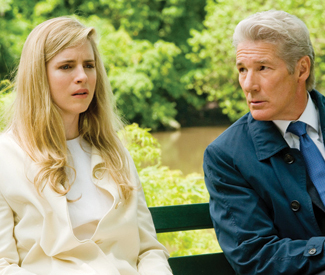
FILM How might filmmaker Nicholas Jarecki measure the success of Arbitrage, his debut feature about a hedge fund honcho’s attempt to sell his way out of desperate circumstances? Perhaps a gauge can be found in the response the writer-director received at a recent East Hampton screening for a roomful of magnates such as John Paulson, figures who provided some of the initial inspiration for Arbitrage.

"I think the net worth of the room was somewhere around $20 or $30 billion," recalls Jarecki on recent visit to San Francisco. "They came up to me after the screening and said, ‘You know, we really liked the film and we just have to tell you — it made us uneasy from beginning to end. Really, what you put up there is our nightmare.’ I said, ‘Well, thank you.’"

The boyish Jarecki looks as pleased as a high-roller who has just bought low and sold high; he’s crafted a capitalist all-American horror story of sorts, for billionaires as well as the fascinated and repulsed 99 percent. As Arbitrage opens, its slick protagonist, Robert Miller (Richard Gere), is trying to close the sale of his life, on his 60th birthday: the purchase of his company by a banking goliath. The trick is completing the deal before his fraud, involving hundreds of millions of dollars, is uncovered, though the whip-smart daughter who works for him (Brit Marling) might soon be onto him.

Meanwhile, Miller’s gaming his personal affairs as well, juggling time between a model wife (Susan Sarandon) and a Gallic gallerist mistress (Laetitia Casta), when sudden-death circumstances threaten to destroy everything, and the power broker’s livelihood — and very existence — ends up in the hands of a young man (Nate Parker) with ambitions of his own.

It’s a realm that Jarecki is all too familiar with. Though like brothers Andrew (2003’s Capturing the Friedmans) and Eugene (2005’s Why We Fight), Jarecki’s first love is documentaries (his first film, 2006’s The Outsider, covered auteur James Toback), his family is steeped in the business world. Both his parents were commodities traders, and Jarecki, who describes himself as a "computer geek in my youth," once owned his own web development firm and internet access provider, among other ventures. Nonetheless, the filmmaker —who graduated from New York University film school at 19, served as a technical adviser on the 1995 film Hackers, and co-wrote the script 2008’s The Informers — continued to hear the siren call of feature film.

"I had knowledge of venture capital and the markets, but at the same time it was, what’s a credit default? What is this?" he remembers of the time he started writing Arbitrage‘s script in 2008. Bernard Madoff interested him less than "someone who was a good guy but who became corrupted along the way and started to believe in his own invincibility and his own press releases."

Jarecki found his "King Lear-esque" nouveau robber baron in Richard Gere, after convincing the actor to take a chance on a first-time director. He ended up digging in deep with Gere and the rest of the cast during a month of rehearsals, research, and rewrites. "I was doing my own mad arbitrage and putting the film together — the voluminous amounts of documents they make you sign, and I borrowed many millions of dollars from a major bank," Jarecki explains. "So it was rehearsing in one room and calling the wire desk on the other."

As a result, the moviemaker found himself understanding Miller’s part only too well: "When I was writing and the characters had to do something, the person I modeled the decision on was myself. What would I do? And the more surprising and frightening the answers, the more I felt I was onto something."

There’s a memorable moment when Miller’s daughter confronts him on his transgressions and he explains, in a moment of startling, almost lamely ineffectual self-consciousness, that he’s a patriarch simply playing his part. Still, Miller doesn’t believe it’s the end of days for those men gathering in East Hampton screening rooms.

"There was a joke I had with the distributor, ‘Will this still be relevant when it comes out?’" he muses. "Yet every week there’s a new revelation of a new fraud: MF Global losing billions of dollars in customer funds in unauthorized trading. A Knight Financial computer glitch and they lose $420 million — I think that’s the exact number lost in the movie — and it just happened two weeks ago. And now it’s, ‘Where’s my morning coffee?’"


ARBITRAGE opens Fri/14 in Bay Area theaters.

Call Miss Jenkins

2

marke@sfbg.com

SUPER EGO I’m not one to gossip, but …. Story of the month, courtesy of weekly Friday drag extravaganza Some Thing at the Stud: a giant party limo parked outside the club. Blah blah Kirsten Dunst, blah blah Alexander Wang, blah blah a dozen hangers-on blah. (I was inside chilling with the true star of the evening, OG NYC clubkid Desi Monster.) Formidable doorperson Dean Disaster: “Seven dollars each, please.” Wang hanger-on, clutching pearls: “But we’ve never paid cover before!” Disaster: “Here, let me guide you through it. Give me seven dollars. And then I’ll let you in the club.” They paid. We’re all VIPs in this house, henty.

ALTON MILLER

The Detroit-Chicago master was integral to the early techno scene (he co-owned the world’s first techno club, the Music Institute) and has produced a vast catalogue of beautiful, grown-up deep house grooves rooted in African drumming’s expansive rhythms and personal tech flourishes — see lovely 2010 album Light Years Away. He also happens to be one of my favorite people ever. (Sorry, journalistic bias!) Join him at fantastic weekly Housepitality for a trip to the stratosphere and some sophisticated magic alongside locals DJ Said of the Fatsouls label and Ivan Ruiz of the just-launched Moulton Music label.

Wed/12, 9pm, $5 before 11pm, $10 after (free before 11pm with RSVP at www.housepitalitysf.com), Icon, 1192 Folsom, SF.

L O S T • C ? T

Weird biweekly dance party. Recommended.

Thu/13, 10pm, $3. Showdown, 10 Sixth St., SF. www.tinyurl.com/lostcatsf

BODY + SPACE

The bi-annual, summer-long Soundwave sonic festival is still in full effect, and this special event sounds experimental-awesome. Example? “Genesis,” a work by Polly Moller “explores 11 dimensions of the universe and the magical creation of a new 12th dimension.” Also: mechanical tone poems, anxiety dances, sonic wombs.

Fri/14, doors 7:30pm, show at 8, $15. Intersection for the Arts, 925 Mission, SF. www.projectsoundwave.com/5/

MADE IN DETROIT

For the past little while, you could actually almost hear the Detroit techno torch being passed to young’uns Kyle Hall and Jay Daniel. It sounded like a butterfly exploding in a Model T factory. Kaychunk! But it actually sounded like an ingenious melding of deep bass sounds and post-glitch effects applied to classic cosmic techno ambiance. Seeing the duo tagteam classic vinyl at this year’s Movement festival cemented my love for them. This As You Like It party may do yours the same.

Fri/14, 9pm-4am, $10 before 10pm, $20 after. Beatbox, 314 11th St., SF. www.ayli-sf.com

RUSTIE

Adore the laser-cut future bass gems that Rustie the Scot has hewn from his sparkling imagination. He’ll be warping 1015 with another great, Kode9, along with sublime electro-stoner Elliot Lipp and locals DJ Dials, Slayers Club, tons more.

Fri/14, 10pm-5am, $20–$25. 1015 Folsom, www.1015.com

BRING YOUR OWN QUEER

Bring Your Own Queer self (not in a paper bag, please!) to this annual free outdoor daytime funfest, filling the Golden Gate park bandshell with hot pick dance party craziness! DJs Carrie Morrison and Steve Fabus, live sets by Adonisaurus and Darling Gunsel, and, like, zillions more. Plus the Jiggalicious Dance Babes. Gotta love the Jiggalicious Dance Babes. Double rainbow part two!

Sat/15, noon-6pm, free. Music Concourse Bandshell, Golden Gate park. www.byoq.org

ANNA CONDA’S BIRTHDAY

She’s 45 alive! SF’s favorite queer-activist drag queen won’t exactly be roasted at this fundraising event for the Harvey Milk Club, but she will be toasted — something like 45 other queens will take the stage at this killer rock ‘n roll dance party (DJs Dirty Knees and Jon Ginoli) and tribute to her royal lowness.

Sat/15, 9pm, suggested donation $5–$10. The Edge, 4149 18th St., SFF. www.tinyurl.com/annaconda45

Eclectic electric

0

arts@sfbg.com

DANCE The newest entry into the arena of collective self-producing is Colin Epstein’s “Constants & Variables” at Dance Mission Theater. None of the six choreographers he presented at its debut (Sept. 7-9) are new, though some of them were, previously, just barely on my radar screen. Epstein has a good eye; he put together a well-balanced program in which the pieces complemented each other in size, genres, and thematic material. They made for an evening of sometimes challenging, sometimes hilarious, never less than competent dance. If Epstein wants an additional career, he just might have one percolating in the back of his head.

As a choreographer-performer Epstein has one foot in the circus world. In A Musement he deftly used a small chair as a prop that acquires its own life to become a contentious partner. The joke is old among clowns, as is the inclusion of a willing audience member. For this to work the timing has to be immaculate. Epstein’s was good but the overall arc could have been tighter.

However, there was nothing wrong in They were already here‘s timing, a splendidly funny courting duet on trapeze for Epstein and the lovely Cat Bodnar (as an ingénue who gets involved with a bumbling suitor). The intricate giving and taking of weight excellently expressed the ebb and flow of their charming relationship.

Venture Dance Project’s smartly designed Wholeding used Laurie Anderson’s whispered “From the Air” as a sonic carpet on top of which the five dancers —all of similar sizes and looks — coalesced into and escaped out of focus. At one moment you saw them as one person and then, in something approximating split screen technique, they divided into different segments. A wafting head, a side bend, or a rocking knee would initiate a scattering and recombination into smaller units without ever disturbing a thrust towards oneness. The evenness of the tone, the excellent use of space, and the small variations within strict parameters made this a pattern dance that breathed with life.

Wasteland: Journey to a New Home paired Derek Harris and the easy-on-her-feet Meegan Hertensteiner in a work that that did exactly what its title suggested. Drawing for some of its funnier imagery on jungle adventure movies, Wasteland‘s morphing identities also suggested a darker underbelly. Though clever and smoothly performed, some of its meandering trajectory could profit from clarification.

Hilary Palanza’s fine duet little heart, out of reach, most recently seen at RAWdance’s CONCEPT series, stood up well in Dance Mission’s larger venue. Here the work developed an elastic sense of breath that expanded its dream-like scale. The contentiousness, the ruptures, and the give and take of aggression popped up like bubbles from a still pond. The dancers slipped out of each other’s embraces and into confrontations, but it was the sensuous physicality of bodily contact that resonated most strongly. What remained was the tactile memory of skin on skin, whether lushly cherished, barely perceived, or roughly rejected.

Jochelle Elise Pereña and Ashley Trottier’s Coat Check started out on a note of high comedy with Trottier dragging what looked like Winnie the Pooh‘s Heffalumps out of a pile of clothes. Then the dancer (who has some of the best-looking gams around) engaged in a hilarious seduction of a spread-out coat, ending in a copulation which fused her with the object of her lust. Unfortunately, the rest of the work didn’t hold nearly as well. My suspicion is that the punch line would have worked better if the “Heffalumps”‘ genders had not been so clearly identifiable from the beginning.

Kelly Kemp’s fascinating excerpt from her new Confessions of a White Girl offered a glimpse of what is to come. Six women in various shades and shapes of white quietly stood one behind one another. Heather Arnett finally stepped out in front. The others followed, each addressing us with mouthed words and tiny gestures. Was this a prisoner line-up, or did we watch the peeling away of layers of Arnett’s identity? Fanning out across the space in overlapping sections, they finally combined into a group shouting answers to an unasked question. The complete Confessions will be seen at the Garage October 5-13.

Nailed it

0

le.chicken.farmer@gmail.com

CHEAP EATS Hedgehog got me this Groupon for a fancy pantsy mani-pedi at a place in San Mateo puts flower petals and orange slices in your feet water! It’s hard for me to hold a grudge, however, because at the time-of-purchase we were living in New Orleans. For all she knew, San Mateo was a suburb of San Fran, like the Sunset or the Richmond.

Nope. You have to drive.

So I was driving back, all relaxed and pretty and shit, and there was Candlestick … and it was very nearly (at the time) football season … and the only thing I don’t like about getting my nails done is the way you smell for the rest of that day. I mean, I am, at heart, a chicken farmer. Lookswise, I can handle being beautiful, but it’s my nature to smell like hay. Not mimosas.

It takes about 30 minutes to drive from San Mateo to the Mission.

Around about Candlestick, I’m saying, enough became enough. Deciding finally to change the smell of my fingernails, I swerved off the freeway in search of barbecue. In search, specifically, of Franks, where I had eaten once recently on account of another goddamn groupon, this one courtesy of Earl Butter. Who, to his credit, did apologize for eating all the brisket off our three-way-combo before Hedgehog and me ever even knew what hit us.

Turns out the brisket is Frank’s best meat! It’s tender, smoky, and doused in a really good, hot (if you ask for it) basic barbecue sauce, I now know. I got it to go, and they gave me a fork.

But I used my fingers….

CHEAP SPORTS

by Hedgehog

Sunday’s baseball was Mission vs. Mission at Balboa. In my copious notes I dubbed the home team the Good Guys and the away team the Better Guys. Chicken Farmer and our friend Long Tall Phil were playing for the Better Guys, hence that side’s upgrade.

Unfortunately, I don’t know many of the other players’ names and resorted to nicknaming them mostly based on what they were wearing, who they reminded me of, and the few scattered facts I remembered about them from previous games. For example, there was Big Blue, Hairdo, Walnut Creek, Old Timey, Lost Horizons, and In’N’Out. After a while, my play-by-play reads more like I’m calling a horse race.

Anyway, I don’t know how many folks are interested in rec league games, but I think more are probably into Fantasy Baseball. Then again, I don’t know which side of the fence the readership of Cheap Eats falls into demographically so I’ll cover both bases with one bird and say that in my opinion, Fantasy Baseball should allow for at least one Rec League player per team. My reasoning is as follows:

1) Rec Leaguers steal a ton of bases. I am in a Stolen Bases race in my Fantasy League right now and if I had In’N’Out or Gray Shirt Tony, or even Chicken Farmer herself, I wouldn’t need to put all this imaginary pressure on Michael Bourn to do what I’m pretend-paying him for.

2) Rec Leaguers are almost all multi-positional and thus, very useful when setting your lineup. I mean someone who plays left field, short, third, second, catcher and pitcher? And steals three bases in one game?! I mean come on…

3) Major league starting pitchers don’t hold a candle to Rec League pitchers. Unless you count speed, accuracy, or variety of pitches. But the Good Guys starter pitched a complete game! And the Better Guys pitcher went seven innings. Colorado Rockies: take note.

Better Guys, 4. Good Guys, 7.

After the game we went to my new favorite barbecue, which isn’t Franks, but only because you can’t walk to it from our house. You can walk to Southpaw. What my beloved and bristly sportswriter couldn’t have known from the press box was that the whole game in the dugout we were talking about barbecue.

The box score for the Mission’s new smoke house reads: weak, weak ‘cue. At least the ribs and brisket. Go for the sides, which are awesome. Pulled pork with beans and (get this) bechemel over warm potato chips, brussels sprouts with bacon, and my favorite: smoked goat served with fry bread. For that, I will be back.

SOUTHPAW BBQ

Mon, Wed-Fri 5-11:30pm; Sat 3-11:30pm; Sun 11:30am-11:30pm

2170 Mission, SF

(415) 934-9300

AE,D,MC,V

Full bar

East Bay buzz

0

caitlin@sfbg.com

BEER I will not re-enter the one-sided debate of whether the East Bay is cooler than San Francisco (we covered that in our much hullabalooed April 11 cover story, helpfully titled “San Francisco’s loss”) But I will tell you this: one side of the Bay Bridge has less hills. Less hills being a boon for the drunk biker in us all.

If that is not enough motivation to embark upon a self-guided cycling tour of the East Bay beer scene, then I don’t know what is. Let me tell you about a recent, successfully-completed jaunt from which my team and I emerged with double IPA paunches, and a newfound appreciation for the San Francisco Bay Trail (of which you can find maps here: baytrail.abag.ca.gov).

EL CERRITO

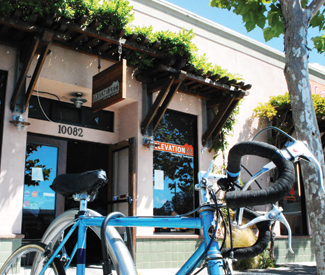
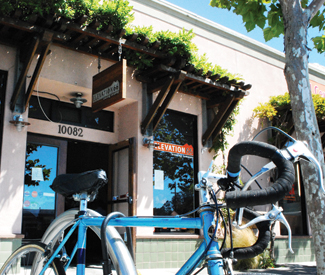
Hook up your handlebars for a pleasant BART ride out to this north-of-Berkeley, family-friendly area, where a cruise of mere blocks will take you to the airy brewpub of Elevation 66 (10082 San Pablo, El Cerrito. (510) 525-4800, www.elevation66.com). Stainless steel fermentation tanks make for tasty eye candy from the bar, where we wound up setting our messenger bags and ordering a sampler flight of seven beers. For such a tiny operation, Elevation 66 offers a swath of pours: on tap the day we visited were seven of its in-house brews, including a heavenly Contra Costa kölsch, the perfect light beverage with which to begin a day of exercising and drinking, and five guest pours, of which we tried a bubbly, sweet Two Rivers blood orange cider. Important matters settled, we tackled the extensive food menu, which stocks homemade potato chips, a Peruvian causa made with poached prawns, avocados, Yukon potatoes, and habanero, and more.

Now, leave the brewery (I know, but there’s lots to see.) Take the beautiful, wetlands-lined Bay Trail south, feeling free to jump off at the overpass when you see the Golden Gate Fields (1100 Eastshore Frontage Road, Berk. (510) 559-7300, www.goldengatefields.com). If it’s Sunday, all the better — $1 entry, $1 beers, $1 hot dogs.

BERKELEY

Note the USDA community garden that will zip by on your right (at 800 Buchanan, Berk.) as you emerge from the Bay Trail into the Albany-Berkeley area, home to some of the largest breweries in the East Bay, besides of course the mega-fermenters at the Budweiser factory in Fairfield.

Your first stop will be at Pyramid Alehouse (91 Gillman, Berk. (510) 528-9880, www.pyramidbrew.com), and though you may find the quality of some of the beers at this Seattle-born chain brewery to be just about what you’d expect from a space tinged with notes of T.G.I. Friday’s, you can make a game of counting the pyramids incorporated into the décor for extra stimulation. If you dare, embark upon a 40-minute free tour given every day at 4pm by a bartender who may or may not include gems like: “if you like metaphors, you’ll love this one.” At any rate, it’s a good primer for people who have no idea how beer is made and it includes tons of free booze at the end. Check out Trumer Pils Braueri (1404 Fourth St., Berk. (510) 526-1160, www.trumer-international.com) a few blocks away for another free tour that runs daily at 3:45pm.

Head back to the Bay Trail, unless you feel like a trip further inland to Berkeley’s two fun brewpubs Jupiter (2181 Shattuck, Berk. (510) 843-8277, www.jupiterbeer.com) and Triple Rock Brewery (1920 Shattuck, Berk. (510) 843-2739, www.triplerock.com). Between Berkeley and Oakland you have three lovely miles of trail ride, and if I’m not mistaken we are in the thick of blackberry season, which means the indigo clumps you’ll see on your right just past Sea Breeze Market and Deli (598 University, Berk.) are ripe for picking.

OAKLAND

You could while away a day within just a few blocks in downtown Oakland, such a prime sitting-out-with-a-microbrew kinda neighborhood it is.

In terms of places that make their own brew, there is none better than the 1890s warehouse building that houses Linden Street Brewery (95 Linden, SF. (510) 812-1264, www.lindenbeer.com), the little brewery that could. There’s only a few meters in between tank and tap here, and on weekdays you can sit in the joint’s tap room and suck down golden pints of its Urban Peoples’ Common Lager, while hearing the story from the bartender of how it came to the forefront of Oakland’s craft beer scene.

You may not even guess, right off the bat, that Pacific Coast Brewing Company (906 Washington, Oakl. (510) 836-2739, www.pacificcoastbrewing.com) is brewing the suds that wind up in your $9/five beer sampler — but it is. The charming brick pub has all the fried pickles one has come to expect from a solid bar menu, and a latticed patio that provides a little privacy from the Oakland cityscape. Out front, you can park your steed and walk it out — the rest of your stops are within stumbling distance, unless you’re trying to really make a day of it and head south to Drake’s Brewing (1933 Davis, San Leandro. (510) 568-2739, www.drinkdrakes.com) and its tucked-away pint parlor.

You may just have saved the best for last. The Trappist (460 Eighth St., Oakl. (510) 238-8900, www.thetrappist.com) and Beer Revolution (464 Third St., SF. (510) 452-2337, www.beer-revolution.com) are two of my favorite Bay beer bars, regardless of area code. Both have superlative selection and cute, sunny patios, but considerably different vibes.

The Trappist is a classy, under-lit place with two bars and an elegant rotating list of beers at each, some local and some from far-flung locales. On our visit, we tried a trio of superb sour beers, including the transcendent red-brown Belgian Rodenbach Grand Cru. Trappist’s food menu is full of elegantly spare, small plates packed with big flavors, like a recent Mahon Reserva cheese platter with truffled almonds and shisito peppers. I’m no meat eater, but I heard rave reviews of the comparatively proletarian Trappist dog, which was studded with bacon and seemed an apt pairing for a beer that may out-class you.

Beer Revolution, as the name would imply, is a populist place — local brewers regularly roll through to share their fermentation philosophies. Though their draft menu is impressively large, the beauty of this place is variety. Inside the bar there is a vast refrigerator land where bottles await for your to-go/for-here fancy. We vote for-here, because you’ll want to savor every drop of your East Bay booze cruise.

Pi in the sky, fig leaf optional

1

arts@sfbg.com

THEATER Aficionados of the San Francisco Fringe Festival, now in its 21st year, know that sorting out the clowns, puppets, relationships, rock operas, and foreskin on display or under consideration across 12 days and roughly 40 shows can be a real crapshoot. But that’s the deal — and at least part of the appeal — with a curator-free, lottery-based program in which anybody with an act and the luck of the draw can set up shop for an hour on one of the handful of stages in operation at the Exit Theatre complex and participating venues.

Invariably ranging widely across (to borrow a title from this year’s lineup) "the good, the bad, and the stupid," the whole usually proves greater than the sum of the parts, private or otherwise. There’s just no event quite like the Fringe. And a really good show can make up for a lot of boredom and horrified silence.

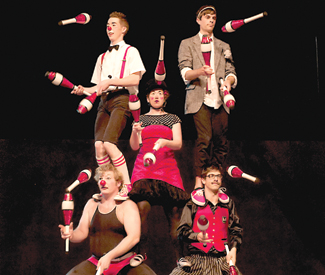
Take, for instance, that title just borrowed above: the Pi Clowns’ latest show may not be perfect in every respect, but you can’t help respecting their perfect portrayal of our general fallibility. The Bay Area–based six-clown physical comedy troupe wowed in 2008 at their Fringe debut (After-Party), and they wow again in The Good, the Bad, and the Stupid, with expert chops, serious smarts, and an undiminished instinct for the ridiculous. Highlights of said lowlights include a horse race on broomstick stallions, a feast of acrobatic juggling, and another delicious slo-mo melee. (Meanwhile, on the significantly darker end of the clown spectrum, there’s Naked Empire Bouffon Company, raucous devotees of the grotesque, whose You Killed Hamlet, or Guilty Creatures Sitting at a Play was not caught in time for review but remains on the must-see list.)

Moving right down the alphabet from clowns, one will find several Christian-themed plays among this year’s offerings. Granted, most of these involve an ironic or satirical approach — like San Francisco–based David Caggiano’s deft and witty solo play, Jurassic Ark, which I caught in an earlier version elsewhere and which concerns an evangelical preacher Hollywood-bound with an idea for a major motion picture selling Creationism to the heathen evolution-swilling masses.

Then there’s Bible-Not: Stories for Grown Ups, which sounds like it sports a subversive edge to its advertised retellings of popular Bible stories, from Adam and Eve to Noah and the Flood. In fact, the play, written by retired journalist and clergyman Charley Lerrigo, is a lifeless resuscitation of ye old adages in a flatfooted comedic-dramatic vein, wherein, for instance, God appears to Noah as a beautiful woman in a silk gown — but still carries out the genocidal flood because she loves people. The last of the proselytizing play’s four dreary episodes (bridged by overtly thoughtful narration from a "showgirl" played by Karen Biscopink) is the second coming of Christ (Tristan Cunningham) to a San Francisco pastor named Bob (Charlie Shoemaker), who is naturally converted from disbelief to rapturous wonder in the face of the ingenuous, miracle-wielding stranger. Overall decently acted by a dutiful cast, the preachy play nevertheless reaches only the choir at best.

In the realm of puppetry, The Collector, by San Diego’s Animal Cracker Conspiracy, begins promisingly, with delicately designed maquette sets featuring a humble debt collector overseen by a tyrannical monkey-manager, simultaneous video projections and animations on a screen above, and a dreamy, clinking, wistful musical soundscape. But the wordless plot is sometimes challenging to decipher, the pace sluggish, and the action repetitive enough that, by the end, you realize it’s just a nifty installation that thought it was a play.

Meanwhile, Legacy of the Tiger Mother, by Las Vegas–based Angela Chan and Michael Manley, manages to pack a very clear, funny, and compellingly heartfelt storyline about intergenerational tensions between a Chinese American mother and daughter succinctly into a very agreeable hour — with music and witty lyrics for good measure. Chan’s semi-autobiographical musical may have formulaic elements, but they’re executed with winning skill and verve by a smart team fronted by the fine duo of Satomi Hofmann and Lynn Craig, accompanied by Chan on a piano that segues slyly between erratic keyboard exercises, controlled classical recitals, and expressive Broadway-style outbursts. (Meanwhile, on the darker and definitely weirder end of the cabaret spectrum, there’s SF’s Dan Carbone and Andrew Goldfarb in The Wounded Stag & Other Cloven-Footed Tales of Enchantment, whose archness is so arch as to be uncomfortably sincere.)

915 Cayuga’s SF Fringe Fest Extravaganza is a more promising title than show, but the radio-style variety piece, recorded as a podcast before its "live" Fringe audience, has a low-key charm despite often clunky or corny writing thanks to a fairly personable and adroit cast.

Among the more misleading titles is Aerial Allusions — at least if, like me, you picture some serious acrobatic work happening on and/or over the stage at some point. True, there’s a little able and lithesome wriggling around a ladder near the outset, but this meandering and semi-inept duet by a Canadian couple is lopsided in talent and altogether rambling. It took only a few seconds for one gentleman at the back to clear a path through some empty chairs and burst out of the theater. My date followed him a few minutes later. *

SAN FRANCISCO FRINGE FESTIVAL

Through Sun/16, most shows $10 or less

Exit Theatreplex

156 Eddy, SF

www.sffringe.org

CEQA: We Need It

0

OPINION Big business interests in California are waging a full-scale assault on the California Environmental Quality Act, known as CEQA, which has been loudly blamed for the slowdown in new construction in recent years.

But sluggish construction has been problematic nationwide and is far beyond CEQA’s reach. The exaggerated attacks on CEQA parallel extreme Tea Party politics, where facts don’t seem to matter and well-funded voices drown out reason. Attackers unfairly scapegoat a law that instead deserves great credit for far-reaching good.

The truth is that while environmental review takes time and costs money, the CEQA process usually moves quickly. In terms of litigation, a recent report recounted 11 CEQA lawsuits filed against San Francisco last year, while many hundreds of projects were approved in the city without CEQA challenges. A Natural Resources Defense Council study in Los Angeles similarly found 18 cases filed after 1182 approvals. A more in-depth analysis by the Public Policy Institute of California found that only one CEQA lawsuit is filed per 354 projects, a fraction of a percent.

So — what good does CEQA do? It assures citizens that they can participate in identifying and solving environmental problems alongside self–interested project applicants and City Hall insiders. The concept is simple and results in tangible benefits to California’s environment via better, smarter projects. The Planning and Conservation League, in a publication aptly entitled “Everyday Heroes,” assembled more than 70 examples of CEQA success. If space permitted I could describe scores of happy endings attributable to CEQA review that I have personally seen and celebrated.

CEQA assures environmental quality for present and future generations. Californians count on being informed about projects with environmental impacts — before their approval. In every California community, citizens organize and volunteer their time to offer comments and problem-solving suggestions. Applicants in turn know that their projects’ environmental impacts must be both disclosed and mitigated.

Attempts to weaken CEQA have also been around for decades. They always fail as Californians continue to champion their unique neighborhoods, cities, farmland, beaches, and wilderness areas. Most developers, even if preferring that their own projects not be subjected to CEQA review, do not want the law waived for all other projects.

Still, the national economic slowdown has given new life to the overblown claims of CEQA critics. A few weeks ago in Sacramento, a last-minute “gut and amend” bill would have taken away key protections. The public responded and the effort, again, failed. But the push to gut CEQA continues in cynical barrage.

What should happen? While well-orchestrated attacks on CEQA in the press and in Sacramento are largely opportunistic and misdirected, there is room for improvement. Over the past five years CEQA has been revised to prevent alleged abuses — including a $10,000 penalty for anyone filing a frivolous suit — and to streamline environmental review. Other positive changes are now being discussed among experts — without sacrificing citizen participation or substantial environmental protections.

Any CEQA amendments should occur only after a broad-based public process with full review by the Senate and Assembly Committees on Natural Resources.

Surely we do not want to regress to back-room planning and development without accountability. Benefiting all Californians in the long run, this profound law must itself be protected. As we continue to welcome millions to our beautiful state, we need CEQA’s protections more than ever.

Attorney Susan Brandt-Hawley represents public-interest environmental preservation groups statewide. In the last 15 years her work has been recognized with state and national awards and her cases have contributed to CEQA precedent in all six districts of the California Court of Appeal and in the Supreme Court.

Still soaring

3

yael@sfbg.com

“I was 18 years old the first time they locked me up in a psych ward.”

So begins “The Bipolar World,” an article published in the Bay Guardian‘s literature section 10 years ago, on September 18, 2002. The writer, Sascha Altman DuBrul, tells the story of his life. He’d been arrested walking on New York subway tracks after the year he first experienced what would later be diagnosed as bipolar disorder.

In the article, DuBrul wrote that the ideas shooting through his head were like a pinball game and he was convinced the radio was talking to him and that the CIA was recording his thoughts via secret neurotransmitters under his skin. But when he was diagnosed and told that he would need to take daily pills for the rest of his life, he wrote“I wasn’t convinced, to say the least, that gulping down a handful of pills every day would make me sane.”

“I think it’s really about time we start carving some more of the middle ground with stories from outside the mainstream and creating a new language for ourselves that reflects all the complexity and brilliance that we hold inside,” the article concludes.

DuBrul was right—the time was ripe.

“Within a couple of days of it being out on the street, I got about 40 emails from strangers,” DuBrul told me. “And it wasn’t just one or two line emails that were,’ hey, great article.’ It was people pouring out their stories to me.”

One of those people was Oakland artist Jacks McNamara, and the two instantly connected.

“You know the myth of Icarus, right? It’s the boy who flies too close to the sun. It’s from Greek mythology. So we were two people who had been diagnosed with bipolar disorder, and we were like, instead of seeing ourselves as diseased or disordered, we see ourselves as having dangerous gifts, like having wings,” DuBrul said. “And so, we put up a website that said, ‘The Icarus Project, navigating the space between brilliance and madness.'”

The Icarus Project began as a website, whose forums quickly filled with discussions as more people shared their stories and connected. Today, The Icarus Project has published three books, including a guide to starting support groups, dozens of which have sprung up around the country. More than 14,000 people have registered on the website.

The Bay Area-born radical mental health project celebrates its 10 year anniversary this year. An art show, concerts, spoken word, film screening, and skill share will take place this coming week. “Icaristas” will do what they do best: share their stories in language that feels right, building connections and community.

“When Sascha and I started it, we’d never seen anything written about bipolar that we could relate to. Everything was sterile and clinical and very mainstream, and didn’t really situate these sort of struggles within a larger political context,” McNamara recalls.

Now, there are Icarus Project books translated into six languages, and a huge collection of writing and art in what one zine editor, Jonah Bossewitch, calls the Icarus “sphere of influence and inspiration.”

“Our lives are made of fleeting moments, and to create documentation — whether in print or online or on canvas — is to make a fleeting moment into something to be shared. The Icarus Project and others who share similar ideas of liberation need to live our lives of beautiful fleeting moments, but also need to create documentation so that we can be heard,” said Laura-Marie Taylor, creator of Functionally Ill, an Icarus-inspired mental health zine now in its 13th edition.

We’re in competition with the loud voices of psychiatry, advertising, governments, and other forces that want to tell us who we are. We need to broadcast our stories far and wide in order to counteract the forces that want to tell us who we are,” Taylor said.

That was also the view of Ken Paul Rosenthal, whose film, Crooked Beauty, will be screened at the 10-year anniversary celebration.

“She who does not write is written upon,” Rosenthal told me. “Society’s narratives will overwrite your authentic self.”

“I think more than anything, Icarus is about hearing stories,” he said.

And that story telling is intimately connected to the building of community and networks.

Rosenthal first got acquainted with Icarus when he read a line Mcnamara had written: “The world seemed to hit me so much harder and fill me so much fuller than anyone else I knew. Slanted sunlight could make me dizzy with its beauty and witnessing unkindness filled me with physical pain.”

“We really wanted to create materials that were beautiful and inspiring and that people actually wanted to read,” said McNamara. “And that they could relate to if they came from more of a subcultural perspective or just had suspicions about the mental health industry and the ways that it diagnoses people and treats them. “

Icarus concepts also spread through means other than their support groups and publications.

“A lot of long-term Icarus members have gone on to become social workers, or to become therapists, or in various ways to have careers that are based in mental health and are bringing alternative perspectives,” McNamara said.

One such Icarista is Kathy Rose. She met McNamara at a screening of Crooked Beauty in 2010, and began participating in support groups and volunteering with Icarus. A teacher at Five Keys Charter School, which operates in San Francisco county jails, Rose said that the understanding and language of mental health she got from Icarus have been useful in her classroom.

“I see how many of my students are struggling with their own mental health, how they are treated, and how so much is related to the trauma they’ve experienced in their lives and lack of support,” said Rose. She said that she has used Icarus materials in the classroom and screened Crooked Beauty.

Those materials explore questions of over-medication and independence and autonomy in decision-making and question the role of institutions like psychiatric hospitals and prisons.

“Institutionalization in prisons and mental hospitals isn’t helping anyone and isn’t getting us anywhere,” Rose said.

The Icarus Project isn’t the first effort to resist the mental health establishment. The Mental Patients Liberation Front, and the larger Psychiatric Survivors movement grew out of civil rights efforts of the 1960s and 70s, as patients demanded an end to coerced and forced psychiatric interventions like electroshock. Today, Mind Freedom International and other groups continue that pressure; most recently, hundreds protested an American Psychiatric Associations meeting discussing new definitions for the Diagnostic and Statistical Manual of Mental Disorders Fifth Edition on May 5.

The Icarus Project is also intimately connected to activist movements, but plays a unique role.

“There’s support networks that get started in activist communities, but there’s a lot of ways that people have a really hard time being supportive of each other if they haven’t done the work themselves to be able to be supportive of themselves,” said DuBrul. “What happens in activist communities is that people burn out, which is kind of the ultimate Icarus project. I mean, that’s the Icarus myth.”

He called the Occupy movement, with its distinctive tent cities packed with people, many of whom were hurting financially and emotionally, a “test case” for implementing Icarus concepts.

In fact, Occupy has led to yet another Icarus-inspired book, Mindful Occupation, due to be released this year. The book “aims to address the need for attention to mental health, healing, and emotional first aid within Occupy and other movement groups.”

Mental health professionals, along with other non-professionals who were a part of Occupy Wall Street, formed the Support working group to intervene when people seemed to be in crisis and patrol the park at night. But Jonah Bossewitch, a member of the working group and one of the editors of Mindful Occupation, said that the broad critique of society and authority present in most of Occupy didn’t always extend to Support.

“Nobody was going to go to the cops after people got into a fight. Yet people were getting forced treatment and psych evaluations, ” Bossewitch said. “Folks are ready to critique the outside world — capitalism, banks — but it’s way harder to look in at their own profession.”

For DuBrul, the emotional tensions that played out at Occupy, as well as the trauma of police beatings, jail, and exposure to chemicals, proved the need to continue and grow The Icarus Project.

“If you know how you are when you’re well, it’s much easier to get back there,” said DuBrul said. “I’m telling you, a movement full of people, an Occupy movement full of people that have a sense of how they are when they’re well, then it’s much easier to work towards what it is that you want. If you’re operating from a place where you’re having a really hard time, it’s much harder to get to where you’re going.”

So where is Icarus going? They hope to formalize the mentorship and education that has already happened, borrowing in some ways from the “sponsorship” approach that groups like Alcoholics Anonymous take.

“We started with a vision of creating a new language and culture about what gets considered mental illness,” DuBrul said. “It’s alright to be ‘mad’ and still be brilliant.”

The schedule of Icarus anniversary events is available at www.theicarusproject.net/10thanniversary

The unregulated cabs

43

EDITORIAL Yeah, the shared economy. Yeah, high tech. Yeah, there’s an app for that. Yeah, the San Francisco cab industry is screwed up and you can never get a cab when you need one.

But that’s not an excuse for the city to stand by and allow a whole cottage industry of unregulated, unlicensed cabs hit the streets, using a business model that everyone knows is fake and undermining decades of painstakingly crafted rules that govern this critical part of the city’s transportation infrastructure.

Over the past year, at least five new companies have opened that offer what the taxi industry offers — rides around the city for money. They do it in a cool new way — you send a message from your phone requesting a ride, you follow where the driver is with a GPS app, and when you get to the destination, you make a “voluntary” payment through a Pal-Pal-style system.

It sounds great: Fast service that the existing industry can’t always offer, an easier way to pay (a lot of drivers still demand cash only, in part because the cab companies charge drivers an extraordinary fee for credit-card transactions) and — more important to a lot of us — a way to know exactly when your ride will arrive. (Ever call a major cab dispatcher to ask when the car will be there? “As soon as he gets there,” is the usual gruff response. Sorry we asked.)

But there’s a reason that the city regulates taxis. Drivers are in constant contact with the public — with vulnerable people who may be tourists with limited English, seniors or others who could easily be exploited, or in the worst case scenario, harmed — so a background check is required for anyone who gets behind the wheel of a cab. Cabs have to carry extra insurance to cover passengers. There’s a city office where you can file complaints against unethical drivers. Companies won’t hire anyone with a serious infraction on his or her license.

There’s nothing, not a single rule or regulation, to protect customers of the new startups.

The city also controls the number of cabs on the streets — in part because too many cabs chasing too few fares leads to problems. You can’t legally drive a cab in the city — that is, pick up and discharge passengers for hire — without a city medallion.

The new companies, like Lyft and Sidecar, get around that rule by claiming the fare is just a “suggested donation” — which everyone knows is bogus. The companies would have no business model without charging money for rides.

The emergence of these new companies demonstrates how far behind the city and the taxi industry is — easier payment and more reliable service is such a mandate that customers are willing to go elsewhere when they don’t get it. But the idea that the free market and tech-savvy entrepreneurs will solve every problem clashes with the longtime, demonstrated need for regulations in the taxi industry.

City officials need to make it clear that they won’t allow these rogue cabs to keep operating. If the new outfits want to offer their services, they need to do what every other cab company does — line up medallions, follow the rules, get the proper insurance and operate within the law.

Defending Richard Aoki — and the movement

5

OPINION In a new book, Bay Area journalist Seth Rosenfeld publicly names longtime Asian American leftist Richard Aoki as an FBI informant during his time as a leader of the Third World Liberation Front movement and as a founding member of the Black Panther Party. As Asian American activists in the movement today, we denounce these claims as baseless and false and are shocked at the way Rosenfeld makes such unsubstantiated claims while promoting his book release. His allegations damage the movement and reinforce trite “yellow peril” stereotypes of Asian Americans.

The allegations against Richard come without any credible evidence. Rosenfeld provides one incomplete document that he claims identifies Richard as an informant called “SF T-2.” It reads: “SF T-2 was designated for [redacted] (Richard M. Aoki) for the limited purposes of describing his connections with the organization and characterizing him.” The FBI cover sheet associates names of informants with their “T” codes. All informants’ names have been redacted.

It is astounding to us that Rosenfeld concluded Richard was an informant from that scrap of evidence. Later in this document, Aoki’s name is used again in order to name an FBI file location. In the few pages available under his FBI file, the informant “SF T-2” goes on to inform about the readings, political thought, and organizational/party membership of Richard Aoki. It appears to us that an informant named “SF T-2” was assigned to inform about Richard.

Rosenfeld also cites a former agent named Burney Threadgill, who claims Richard was an informant; before his death in 2009, Richard denied that in an interview. Threadgill is hardly a credible source and was a major player at the height of COINTELPRO, implementing FBI policy that was designed to deter and divide the movement. Unfortunately, both men are now deceased and cannot defend their claims.

He also uses testimony of a former FBI agent, M. Wesley Swearington, who had no relation to Richard Aoki. Despite this, Swearington claims that Richard was a “perfect informant” because he was a Japanese person in an organization of Black Americans. That makes no sense because Richard stuck out while in the Black Panther Party, and again feeds into the divisive stereotypes of Asian Americans.

Rosenfeld implies that Richard worked as an instigator, pushing people toward violent action. In fact, Richard was cautious about the use of violence and was vigilant about it during mass actions. It’s true that Richard armed the Black Panthers; however, he did so in the name of self-defense and protecting the people against police brutality.

All in all, Seth Rosenfeld’s news story on Richard Aoki was poorly researched and only a small fraction of his new book. His public accusations are unfounded and sensationalist.

Richard’s advanced leftist political thought, mentored and developed new leaders, educated his working-class sisters and brothers, and built black and Asian solidarity — and this was invaluable. Richard and other movement veterans inspired us and a new generation of young leaders to carry forward the work today. We are stronger because of them — and that is how people should be judged and remembered.

Steve Woo is an organizer in the Tenderloin and steering committee member of the Richard Aoki Fund. Alex T. Tom is the executive director of the Chinese Progressive Association.

Fall Beer and Wine Events

0

caitlin@sfbg.com


NORTHERN CALIFORNIA RENAISSANCE FAIR

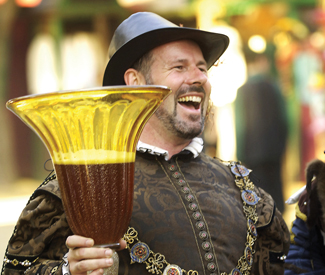
What better pairing for your mug of ale than a feisty joust? Oct. 6-7 at the NorCal Ren Fair means the arrival of the St. Hubertus German mercenaries, costumed troops-for-hire who wear tight colored pants. That weekend is also Oktoberfest at the fair — though of course mead, beer, and four types of cider are available throughout the four-week entirety of the bodice-busting. Just make sure you dodge the roving pack of Puritans who will be roaming ye olde paths and pubs.

Saturdays and Sundays, Sat/15 through Oct.1. 10am-6pm, $25/day, $35/weekend, $150/10-day pass. 10021 Pacheco Pass Hwy 152, Gate 6, Hollister. (408) 847-FAIR, www.norcalrenfaire.com


BREWS ON THE BAY

Because if anywhere is a good place to get drunk on nice beer, a World War II liberty ship is a fantastic place to get drunk on nice beer. After all, the S.S. Jeremiah O’Brien is too large to succumb to the rocking waves of the Bay. Even if it bobbed like a dinghy, this is worth getting wet for: 15 member breweries of the SF Brewer’s Guild pouring all-you-can-drink allotments of over 50 beers, from the companies’ best-sellers to seldom-seen seasonals. Plus live music and food trucks. Ahoy, well-worth-it hangover!

Sat/15, noon-5pm, $50. S.S. Jeremiah O’Brien, Pier 45, SF. www.sfbrewersguild.org


SF COCKTAIL WEEK

Ask anyone –- this town has serious cocktailian chops. That’s why (if you’ve got the cash, admission for most events starts around $45) it’s worth checking out this week of artisan tastings, bartender contests, and classes that’ll leave you shaking like a star.

Mon/17-Sun/23, various SF venues. www.sfcocktailweek.com


GRENACHE DAY

In the 1980s, a group of NorCal wine producers got together to celebrate the excellency of varietals from France’s Rhone Valley. They called themselves the Rhone Rangers, and set about recreating the wines’ majesty here in the Golden State. Today, they celebrate work well done on internationally-celebrated Grenache Day. Check out the special vino in its red, white, and rose forms through free tastings at 15 wineries in Paso Robles, Santa Cruz’s Bonny Doon Vineyard, Santa Rosa’s Sheldon Wines, and Sacramento’s Caverna 57.

Sept. 21, various venues, free. www.rhonerangers.org


EAT REAL FESTIVAL

You know you can nosh away at this fest, which celebrates the best in local, sustainable nourishment — but be sure you wash it down in style. Eat Real offers a chance to sample 20 Bay beers, like sustainable Berkeley pourers Bison Brewing and its beer garden co-curator Adam Lamoreaux’s Oakland-born Linden Street Brewery. 15 NorCal wineries will be represented as well. And no festival markups here — all adult beverages go for $5 per cup.

Sept. 21 1-9pm; Sept. 22, 10:30am-9pm; Sept. 23, 10:30am-5pm; free. Jack London Square, First St. and Broadway, Oakl. www.eatrealfest.com


TOUR DE FAT

The beer and bike carnival of the year is back, with all its usual circus magic and a costumed bike parade under the trees of GGP. Onstage, Fat Tire beer has another full musical line-up planned: Los Amigos Invisibles, He’s My Brother She’s My Sister, Yo-Yo People, and more. Sip the Colorado brand’s brews, and stick around for the end, when a lucky car owner trades their wheels in for a bike during a elaborate yearly ritual.

Sept. 22, 10:30-5pm, free. Lindley Meadow, Golden Gate Park, SF. www.newbelgium.com/events/tour-de-fat


LAGUNITAS DAYTIME PARTY

Retire to the sunny patio of downtown Oakland’s best beer store-pub to meet the masterminds behind Marin’s Lagunitas Brewing Co. They’re not coming empty-handed, either — the label’s new session IPA, named for the time in which such things are best drunk (Daytime) will be on the pour, lubricating what is sure to be a fascinating conversation with local beer greats.

Sept. 22, 1-6pm, free. Beer Revolution, 464 Third St., Oakl. (510) 452-2337, www.beer-revolution.com


OKTOBERFEST BY THE BAY

Snap them lederhosen and rub your belly — you’ll need all the digestive help you can get after this perfectly pleasant weekend of steins, sausages, and oompah. Now with two sessions on Saturday to avoid beer gut overcrowding!

Sept.28, 5pm-midnight; Sept. 29, 11am-5pm and 6pm-midnight; Sept. 30, 11am-6pm, $25-75/session. Pier 49, SF. (888) 746-7522, www.oktoberfestbythebay.com


DRINK GREAT BEERS TASTING PARTY

Beer Connoisseur magazine sponsors this all-you-can-taste Saturday extravaganza in the swanky climes of Blu Restaurant. Taste little-known brews against old favorites, and discover which flavor ways really fill your pint.

Sept. 29, 3-6pm, $60-85. Blu Restaurant, 747 Market, fourth floor, SF. www.drinkgreatbeers.com


LOCA UNCORKED

Because the Blue Angels will be less (?) terrifying with a bellyful of California wine in you, head out to this Bay Area exploration of the wines of Lodi, a small town tucked just between Sacramento and Stockton that is flush with wine producers. Your admission gets you tastes of 200 (!) Lodi wines, tons of snacks, and a front row seat for Fleet Week’s aerial shenanigans.

Oct. 6, 1-5pm, $55-65. 291 Avenue of the Palms, Treasure Island, SF. www.locauncorked.com


You’re drinking Air

0

marke@sfbg.com

AIR Know that for this article I just spent an ungodly amount of time popping the Youtube replay button on Biggie’s 1995 30-second TV spot for St. Ides malt liquor, “Big Poppa” shoutouts from passing flygirls and all. Why besides the fashion tips, you ask? Turns out St. Ides is from good ol’ San Francisco, created by the McKenzie River Corporation, a somewhat overlooked party beverage marketing powerhouse that also brought us Steele Reserve, Black Star, and the one, the only Sparks, truly the hipster runoff off the ’00s.

But this is about the future, not the past — and what could be more “future is now” than McKenzie’s new product, Air (www.drinkair.com), the “alcohol inspired beverage” that’s started popping up in cuter nightclubs and sublebrity paws. A clear, carbonated, deflavored, de-aromatized malt product with 95 calories and four percent alcohol content per can, and available in berry and citrus flavors, Air is packaged in sleek, thin silver cans, and has variously been described to me as “sparkling alcohol water,” “flavored alcoholic club soda,” “diet vodka,” and “Not Redbull, more like clearbuzz.” All of those are kind of true — and we’re obviously through the cocktail-in-a-can looking class, people.

“We like to describe Air as a more healthy, less filling alternative to regular cocktails — although it tastes pretty great when mixed with vodka like club soda,” McKenzie’s marketing director, Ashley Garver told me over the phone. “It’s for people who want to keep the party going without all the sugar highs and lows or, shall we say, any overestimation of their own limits.”

Air had a pretty auspicious launch — thousands of San Francisco sports fans may remember the dude in the hydraulic jet pack zooming up over McCovey Cove this summer during a particularly iconic moment. “Here we were all excited to try out this brand new jetpack technology,” Garver said with a laugh, “and it turned out to be right when Matt Cain pitches a perfect game for the Giants.

Word’s still out on whether sports fans, notoriously fussy about their beverages, will take to Air. One target audience, smartly, is the electronic dance music crowd, whose booze buzz is a little tricker to uphold than that of the average couch potato’s. “I just got back from the Video Music Awards in LA where we had some great interactions with EDM stars,” Ashley told me. “I got to hang out with Kaskade.” An avowed Mormon, Kaskade might abstain, but his legions of complexly inebriated fans may appreciate Air’s quick refreshment. Probably, too, will the more discerning and diverse crowds at local venues like Mezzanine, 222 Hyde, and 1015 Folsom, where Air is now served. And a team up with the awesome Lights Down Low party at Public Works on September 22 should spread more indie and underground dance-fan Air.

Which brings us to the legendary Sparks saga, which McKenzie marketed to indie and hardcore electro types so well that it pretty much branded a generation and was snapped up by Miller for hundreds of millions of dollars — only to be pulled from shelves due to objections over its deliciously killer combo of sugar, caffeine, taurine, and alcohol. What could possibly ever go wrong with that?

Garver laughs at the memory of Sparks, but stays positively on message: “The country came back to us looking for something lighter, more refreshing, less high octane and more innovative. We’d honestly been wanting to do something like Air for a while, but the technology wasn’t yet available to completely take the taste and smell out of malt liquor and leave something lighter.” (For the record, there still is a very, very slight beery mouth-feel of malt that’s not quite covered up by the carbonation or natural flavoring, but if you’ve ever woken up on a 40 oz. pillow, this mouth-feel is of infinitely minuscule concern.)

And what about that effete forerunner of Air, the clear malt liquor drink of the ’90s that became a famous running joke? Is Air just a zombie Zima? Or is it zomething different?

Garver laughs again. “I can certainly see where that comes from, but Air has like one third the calories and alcohol content of Zima, and it’s much more versatile. We have no added sugar so we’re a lot more healthy.

“Well, I guess I don’t know if you can ever get healthy drinking an alcoholic product. But we’re certainly aiming to make you feel lighter.”


Fall wine, uncorked

0

virginia@sfbg.com

WINE Recommended bottles, fall events in Sonoma, urban wine classes … here are a few wine tips for true autumn flight. Check out my online Appetite column on the Pixel Vision blog at SFBG.com this week for restaurants making some of Napa’s best cocktails, a family vineyards wine-tasting report, and more Wine Country dining reviews.


URBAN EXPLORATIONS

An in-house wine club with storage facilities and a wine school launched in April, SF Wine Center (757 Bryant, SF. 415-655-7300, www.sfwinecenter.com) hosts intimate classes, held in owners Brian and Hillary McGonigle’s inviting City Room. With kitchen, library, and comfy leather chairs, it feels more like a friend’s home than a classroom. This room is available for private parties, as is a wood-lined, speakeasy-like room tucked away above the wine storage area — it feels ready for a cigar, a glass of Pinot, and a round of cards and good friends.

Recently, a class led by James Beard award-winning writer and Burgundy expert Jordan Mackay was a walk through regions and wines of Burgundy in the best way possible: by tasting a wide range side-by-side. We discussed styles and regions as we sipped nine different wines — a steal considering class price (generally $60-75) vs. costs of wines poured. Tastes ranged from a meaty 2009 Dujac Fils & Pere Cambolle Musigny ($65 a bottle) boasting excellent acidity and earthiness, to a rare 1976 Domaine Leroy Romanee St. Vivant Grand Cru ($500), with sediment and funkiness (it’s a whole cluster wine, after all), and notes of black tea, mushroom, leather, smoke, moss, tart cherry. Fall classes start up September 25th and sell out quickly. Watch the website for the fall schedule.

********

Bluxome Street Winery (53 Bluxome, SF. 415-543-5353, www.bluxomewinery.com) wins cool points just for being an urban winery whose product is actually made right here in the city with grapes from various Sonoma plots. It’s already a wine-tasting respite, and some change is afoot with new winemaker Web Marquez, who is also one of three winemakers at Anthill Farms and one of two at C. Donatiello. His early days interning at the excellent Williams Selyem — and in New Zealand and France — give him a balanced perspective on Old and New World wine styles.

While we have to wait until next year’s bottling to see the results of his approach with Bluxome’s wines, in the meantime we can enjoy a tart 2011 Rose of Pinot Noir, or the acidic, balanced 2010 Sauvignon Blanc, or a Chardonnay and three Pinots (all bottles under $45). Taste in the candlelit space while watching winemaking through glass windows under a projected movie (shining on a brick wall) showcasing San Francisco in pre-1906 quake days when winemaking in the city was common — there were no less than 120 wineries and commercial cellars in SoMa alone. Here’s to Bluxome reviving our rich urban wine history.


SUNNY SONOMA EVENTS

A foodie’s dream event: Slow Food’s Fresh Food Picnic (Sun/15, 11am-6pm, $40–$125. Rancho Mark West, Santa Rosa, www.slowfoodrr.org) is a picnic and then some. Carlo Petrini, the founder of Slow Food himself, flies out from Italy for a rare appearance, while Alice Waters and Nikki Henderson (of Oakland’s People’s Grocery) join him as speakers for the event. Then there’s the chef line-up. A family-style picnic will be served by Christopher Kostow (Meadowood), Dennis Lee (Namu Gaji), Ryan Farr (4505 Meats), Christopher Kronner (formerly Bar Tartine, Slow Club), Thomas McNaughton (flour+water, Central Kitchen), Christopher Thompson (A16), and more There will be tastes from farmers, food artisans and winemakers, local bands, a petting zoo, guided hikes and tours of Rancho Mark West, the event’s farm setting. Proceeds benefit A Thousand Gardens in Africa, a Slow Food International project, and California-based Slow Food initiatives focused on food and farm education. As a zero waste event, bring your own plates, flatware, and napkins — provide glassware will be provided.

********

Jordan Winery (1474 Alexander Valley Road, Healdsburg. www.jordanwinery.com) is a pioneer in Sonoma’s wine history, started by Tom and Sally Jordan in 1972. These Bordeaux wine lovers built a Bordelais inspired chateau on their 275-acre Alexander Valley vineyard in 1976, a gorgeous structure overseeing the winery’s soothing grounds (tastings by appointment only). With spectacular chateau apartments reserved for overnight guests, the 1100 acre grounds go beyond winery to full working ranch with cattle, chickens, gardens, olive oil groves, and fishing lake with Tiki bar and hammock. As from the beginning, Jordan stays refreshingly focused on only two varietals, a green apple-inflected Chardonnay ($29) and elegant Cabernet ($52 for a bold but balanced 2008 Cab). It’s a family business with son John as CFO, while Rob Davis has been Jordan’s head winemaker for 35 years, since the inaugural vintage in 1976.

Now is the time to shop for your holiday wine with them to earn a fabulous Jordan Winery harvest lunch. You must sign up for their email newsletter and purchase wines to earn the points which can be used towards winemaker tours, Christmas library tastings, and the coveted harvest lunches, which begin this week and run through mid-October. Harvest season is the most enchanting time in Wine Country, ideal for a family-style, weekday feast alongside winemaking staff and a tour of the grounds during crush season.


FALL BOTTLE RECOMMENDS

Where to shop for the below? K&L Wines, Jug Shop, Bi-Rite, Arlequin, Ferry Plaza Wine Merchant, SF Wine Trading Co., and D&M offer excellent wine selections in the city.

CALIFORNIA

Au Bon Climat “Hildegard” White Table Wine, Santa Maria Valley

Au Bon Climat’s is one of the state’s great, small wineries, and Hildegard ($35) is one of my top California whites. A blend of 55 percent Pinot Gris, 40 percent Pinot Blanc, 5 percent Aligoté, it’s layered and complex, unfolding with apple, almond, violet.

www.aubonclimat.com

Heitz Cellar Cabernet and Sauvignon Blanc, St. Helena

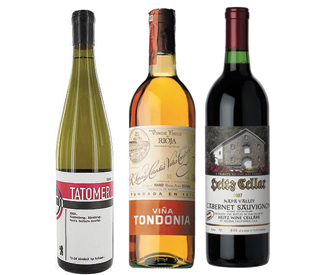
Heitz Cellar is one of my longtime Napa favorites for a beautifully balanced, lively Sauvignon Blanc ($19.75), and splurge-worthy Martha’s Vineyard Cabernet Sauvignon ($110-200) — the far more affordable 2007 Napa Valley Cab ($45) is a worthy substitution. This family-run winery has been going strong since 1964 with Old World balance, one of Napa’s true gems.

www.heitzcellar.com

Lucia Vineyards LUCY, Santa Lucia Highlands

Lucia Vineyards’ LUCY ($18) is a a beauty of a rosé boasting zippy acidity pairs well with a wide range of dishes — another Santa Lucia treasure.

www.luciavineyards.com

Tatomer Riesling Vandenberg, Santa Barbara

2008 Tatomer Riesling Vandenberg ($24.99), named for the neighboring air force base, is easily one of the best wines in the Santa Barbara region. Maintaining an Old World ethos, dry, crisp, it still boasts a New World uniqueness. Incredibly balanced, pear and apple skins shine with minerality that’s gorgeous with food.

www.tatomerwines.com

Amapola Creek’s 2009 Cuvee Alis, Sonoma Valley

Glen Ellen’s Amapola Creek, from Richard Arrowood (who founded Arrowood Winery), is a small, boutique winery. Cuvee Alis ($48) is named after Richard’s wife, a hand-harvested, unfined and unfiltered blend of 55 percent Syrah, 45 percent Grenache, organically grown on a slope of the Mayacamas Mountains on the Arrowood’s 100-acre ranch. The wine gives of a nose of cherry pie, gentle pepper, smoke, tasting of dark berries, spicy meat, with silky tannins and acidic balance.

www.amapolacreek.com

EUROPE

Viña Tondonia Rosé Gran Reserva Rosado, Rioja, Spain One of the best rosés I’ve ever had, 2000 Viña Tondonia Rosé Gran Reserva ($30) is not for novices. At 12 years of age, this blend of 60 percent Garnacha, 30 percent Tempranillo, 10 percent Viura exhibits a velvety, rosy hue, unfolding with damp, funky, mushroom notes dancing alongside bright blood orange, berries, hazelnuts, rhubarb. It’s so unusual, it pairs beautifully with spicy foods from a range of cuisines. Thanks to sommelier Ted Glennon of Restaurant 1833 in Monterey for introducing me to this stunner, available through K&L Wines. Every time I have it, it’s a pleasure.

www.lopezdeheredia.com

Vidal-Fleury Saint Joseph & Muscat, Rhone Valley, France

Vidal-Fleury is produced by winemaker and managing director Guy Sarton du Jonchay, who understands the balance between New and Old World having made wine in France, Chile, Argentina and Australia. “Old world is terroir… New World is winemakers”, he says, as he pursues a balance of both. Stand-outs are a 2007 Vidal-Fleury Saint Joseph Syrah ($28.99), full, bright, earthy, with dark berry, black tea, pepper, and meaty notes (he only releases best vintages so there will not be a 2008 — 2009 releases next); and 2009 Vidal-Fleury Muscat de Beaumes-de-Venise ($18.99), tasting of elderflower, dried apricot, lychee, nuts, with a balanced sweetness and minerality.

www.vidal-fleury.com


Another IPA

0

steve@sfbg.com

BEER I’m addicted to strong beer.

In a less confessional mood, I might just leave it at the fact that I love strong, malty, hoppy India pale ales, the nectar of the gods. That weak-tasting lagers and pilsners just don’t quite do it for me. But the truth is that I’ve begun to think of my taste for strong beer as something closer to an addiction, one that I’m increasingly powerless to resist.

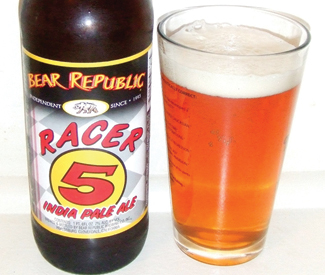
It doesn’t matter what time it is — or what my intention, mood, or level of sobriety. When the bartender asks what I want, my mouth almost involuntarily forms the words “Racer 5” or “Lagunitas IPA” or some other strong beer, as if it has a mind of its own and knows what it wants. I find it difficult to argue with my own mouth.

Even at a superb beer spot like Magnolia Pub and Brewery, with its wide variety of great and tasty beers — many of which I’ll taste from time to time, just to remind myself of what I’m missing — I’ll always wish that I’d ordered one of its house-brewed Proving Ground IPAs instead, and get that on my next round. Never mind the consequences of several 7 percent alcohol beers, it’s just what I have to have.

I seek out bars like Toronado Pub and Murio’s Trophy House that carry Pliny the Elder, Russian River Brewing Company’s decadent double IPA, with its chart-topping 8 percent alcohol content. And on the special occasions when they’re privileged to carry a keg of Pliny the Younger — the rarely-released triple IPA with 10.5 percent alcohol, the malty hops oozing from each pint — I’ll be there with my fellow addicts at any hour of the day, staying until that keg is dead (which usually happens within an hour or so.)

Peer pressure may have something to do with it, because increasingly it seems as if my closest mates share and help enforce my addiction. I’ve been heckled mercilessly when I try to mix things up with a different, lighter pitcher during our long sessions at Zeitgeist, or when we’re taking advantage of the $3 happy hour pints at Dalva and I stray from ordering Green Flash or Bombay by Boat.

Addictions need reinforcement, and we all seem to be part of cultural moment when strong beer — the stronger the better, as befits our maturing constitutions — is king. It’s our birthright and our expectation. When Southern Pacific Brewing Company opened in my Mission District neighborhood last year, it surprised nobody that it brewed a strong pale ale, a stronger India pale ale, and an even stronger extra India pale ale.

As a Northern Californian in his mid-40s, I’m a child of the microbrew revolution, the first generation that rebelled against watery, mass-produced “beer,” rejecting the Coors and Budweiser cans favored by the Baby Boomers in favor of the stronger, tastier ales hatched in bottles and kegs by California craft brewers.

That’s when it began, simply enough, with beers like Anchor Steam and Sierra Nevada Pale Ale that would find themselves fermenting in ever-larger vats due to their popularity with my people.

But pretty soon, they weren’t cutting it anymore, particularly after I began to experiment with homebrewing and developed a taste for the sweet malts and hops that I mixed into my wort, spurred on by watching my yeast consume carbs and expel strength into my bubbling concoction.

Maybe there’s a cure for what ails me, or what ales my buds crave. Frankly, I’m not looking for one. I’ve embraced the fate that strength is my weakness, and I’ll drink it in by the pitcher. Cheers.


Talk that tart to me

0

culture@sfbg.com

BEER Over the past 30 years, California microbrew has conquered niche markets and infiltrated the mainstream. Arguably, no individual is more responsible for this spirit of innovation than Vinnie Cilurzo of Russian River Brewing Company, based in Santa Rosa.

Possessing a cult following with Trekkie-like fervor for his generously hoppy beers, Cilurzo is credited with inventing the double IPA early in his career; and Russian River’s elusive, seasonally-released Pliny the Younger was recently determined by BeerAdovocate.com to be the best beer in the world.

But his maverick side is perhaps best reflected in his sour ales: a highly specialized range of Belgian-derived brews, revered in beer-geek circles for their complexity. Aged in wine barrels for years at a time, with the addition of fruit like sour cherries and currants, and often subjected to the risky practice of spontaneous fermentation, sours are as temperamental as they are inefficient in respect to time, cost-effectiveness, and space preservation. Often called “wild ales,” these beers require a knowledgeable, experienced brewer to tame them.

I spoke with Cilurzo over the phone recently about his approach to the lip-smacking sour. Beer lovers, and novices alike, read on:

SFBG: “Sour” is a pretty popular umbrella term for a whole range of beers. Do you accept that term? Reject that term? How do you classify them?

Vinnie Cilurzo: I’m fine if someone wants to call them sour, or barrel-aged, or whatever they want to call them. I think for the most part the beer connoisseurs know what they are. You know, on occasion a non-beer-enthusiast will buy a bottle and be surprised when they find it is sour in flavor. It doesn’t say it on the front of the label, but we don’t make a huge deal out of it, either way. Barrel-aged funky beers… is the term we tend to go with.

SFBG: These sours, you’ve been making them for a while. Do you feel like you’ve kind of gotten the variables down, and know how to control it, pretty much every step of the way?

VC: We have a good handle on it, but the beer is always in control. The time when you start feeling that you know what you’re doing, the yeast and the bacteria will throw a curveball at you, that’s for sure. So, the beer really does tell you when it’s ready. It’s weather-dependent; it’s temperature-dependent; it’s seasonally-dependent; it’s what was in the barrel before; it’s how long you clean the barrel. For the spontaneous beers, specifically, it’s how long we leave the wort in the koelship, which is the open fermenter. There’s so many variables. So, you have to be very, very pliable, and be able to go with the flow, if you will.

SFBG: Is there a glass that you feel that your sours are particularly well served in?

VC: If you’re at home drinking Belgians or sour, barrel-aged beers, I’d say: try a pint glass with half the beer and put the other half in a wine glass, if you don’t have a stemmed, beer-type glass, and see if you can tell the difference. I think you can tell a big difference, particularly in aroma, and obviously some flavor, as well, by using a non-pint glass.


East Bay buzz

0

caitlin@sfbg.com

BEER I will not re-enter the one-sided debate of whether the East Bay is cooler than San Francisco (we covered that in our much hullabalooed April 11 cover story, helpfully titled “San Francisco’s loss”) But I will tell you this: one side of the Bay Bridge has less hills. Less hills being a boon for the drunk biker in us all.

If that is not enough motivation to embark upon a self-guided cycling tour of the East Bay beer scene, then I don’t know what is. Let me tell you about a recent, successfully-completed jaunt from which my team and I emerged with double IPA paunches, and a newfound appreciation for the San Francisco Bay Trail (of which you can find maps here: baytrail.abag.ca.gov).


EL CERRITO

Hook up your handlebars for a pleasant BART ride out to this north-of-Berkeley, family-friendly area, where a cruise of mere blocks will take you to the airy brewpub of Elevation 66 (10082 San Pablo, El Cerrito. (510) 525-4800, www.elevation66.com). Stainless steel fermentation tanks make for tasty eye candy from the bar, where we wound up setting our messenger bags and ordering a sampler flight of seven beers. For such a tiny operation, Elevation 66 offers a swath of pours: on tap the day we visited were seven of its in-house brews, including a heavenly Contra Costa kölsch, the perfect light beverage with which to begin a day of exercising and drinking, and five guest pours, of which we tried a bubbly, sweet Two Rivers blood orange cider. Important matters settled, we tackled the extensive food menu, which stocks homemade potato chips, a Peruvian causa made with poached prawns, avocados, Yukon potatoes, and habanero, and more.

Now, leave the brewery (I know, but there’s lots to see.) Take the beautiful, wetlands-lined Bay Trail south, feeling free to jump off at the overpass when you see the Golden Gate Fields (1100 Eastshore Frontage Road, Berk. (510) 559-7300, www.goldengatefields.com). If it’s Sunday, all the better — $1 entry, $1 beers, $1 hot dogs.


BERKELEY

Note the USDA community garden that will zip by on your right (at 800 Buchanan, Berk.) as you emerge from the Bay Trail into the Albany-Berkeley area, home to some of the largest breweries in the East Bay, besides of course the mega-fermenters at the Budweiser factory in Fairfield.

Your first stop will be at Pyramid Alehouse (91 Gillman, Berk. (510) 528-9880, www.pyramidbrew.com), and though you may find the quality of some of the beers at this Seattle-born chain brewery to be just about what you’d expect from a space tinged with notes of T.G.I. Friday’s, you can make a game of counting the pyramids incorporated into the décor for extra stimulation. If you dare, embark upon a 40-minute free tour given every day at 4pm by a bartender who may or may not include gems like: “if you like metaphors, you’ll love this one.” At any rate, it’s a good primer for people who have no idea how beer is made and it includes tons of free booze at the end. Check out Trumer Pils Braueri (1404 Fourth St., Berk. (510) 526-1160, www.trumer-international.com) a few blocks away for another free tour that runs daily at 3:45pm.

Head back to the Bay Trail, unless you feel like a trip further inland to Berkeley’s two fun brewpubs Jupiter (2181 Shattuck, Berk. (510) 843-8277, www.jupiterbeer.com) and Triple Rock Brewery (1920 Shattuck, Berk. (510) 843-2739, www.triplerock.com). Between Berkeley and Oakland you have three lovely miles of trail ride, and if I’m not mistaken we are in the thick of blackberry season, which means the indigo clumps you’ll see on your right just past Sea Breeze Market and Deli (598 University, Berk.) are ripe for picking.


OAKLAND

You could while away a day within just a few blocks in downtown Oakland, such a prime sitting-out-with-a-microbrew kinda neighborhood it is.

In terms of places that make their own brew, there is none better than the 1890s warehouse building that houses Linden Street Brewery (95 Linden, SF. (510) 812-1264, www.lindenbeer.com), the little brewery that could. There’s only a few meters in between tank and tap here, and on weekdays you can sit in the joint’s tap room and suck down golden pints of its Urban Peoples’ Common Lager, while hearing the story from the bartender of how it came to the forefront of Oakland’s craft beer scene.

You may not even guess, right off the bat, that Pacific Coast Brewing Company (906 Washington, Oakl. (510) 836-2739, www.pacificcoastbrewing.com) is brewing the suds that wind up in your $9/five beer sampler — but it is. The charming brick pub has all the fried pickles one has come to expect from a solid bar menu, and a latticed patio that provides a little privacy from the Oakland cityscape. Out front, you can park your steed and walk it out — the rest of your stops are within stumbling distance, unless you’re trying to really make a day of it and head south to Drake’s Brewing (1933 Davis, San Leandro. (510) 568-2739, www.drinkdrakes.com) and its tucked-away pint parlor.

You may just have saved the best for last. The Trappist (460 Eighth St., Oakl. (510) 238-8900, www.thetrappist.com) and Beer Revolution (464 Third St., SF. (510) 452-2337, www.beer-revolution.com) are two of my favorite Bay beer bars, regardless of area code. Both have superlative selection and cute, sunny patios, but considerably different vibes.

The Trappist is a classy, under-lit place with two bars and an elegant rotating list of beers at each, some local and some from far-flung locales. On our visit, we tried a trio of superb sour beers, including the transcendent red-brown Belgian Rodenbach Grand Cru. Trappist’s food menu is full of elegantly spare, small plates packed with big flavors, like a recent Mahon Reserva cheese platter with truffled almonds and shisito peppers. I’m no meat eater, but I heard rave reviews of the comparatively proletarian Trappist dog, which was studded with bacon and seemed an apt pairing for a beer that may out-class you.

Beer Revolution, as the name would imply, is a populist place — local brewers regularly roll through to share their fermentation philosophies. Though their draft menu is impressively large, the beauty of this place is variety. Inside the bar there is a vast refrigerator land where bottles await for your to-go/for-here fancy. We vote for-here, because you’ll want to savor every drop of your East Bay booze cruise.


Beer for dinner

0

virginia@sfbg.com

BEER + WINE Craft beers are in their heyday, alongside craft everything else — it only makes sense that they would begin to take prominence on local menus next to intricately prepared and finely sourced dishes. San Francisco beer luminary Dave McLean has been brewing Magnolia beers, among my favorites anywhere, at his Upper Haight brewpub for nearly 15 years, now expanding to a new Dogpatch location. Like Magnolia, modern classic Monk’s Kettle in the Mission has focused since its 2007 opening on serving food to match its beer offerings, and new Maven in Lower Haight is innovative in its extensive beer-food pairings menu. (And we haven’t forgotten more casual beer-and-sausage options like Gestalt and Toronado-Rosamunde.) Now, two new restaurants arrive where food is equally important to beverage, with exciting beer slants.


ST. VINCENT

Opened in May with great wine world buzz, St. Vincent is owned by sommelier David Lynch, known for his impeccable wine list at Quince. Accordingly, the wine list at St. Vincent (named not for the popular indie musician but for a third-century Spanish deacon known as the patron saint of winemakers) is global and excellent, with many bottles in the $30–$50 range, plus affordable by-the-glass pours like a crisp, floral 2011 Domaine de Guillemarine Picpoul de Pinet.

Wisely, Lynch brought on beer director (and certified cicerone) Sayre Piotrkowski, whose brings his beer knowledge and keen eye for the unusual from his former position at Monk’s Kettle. Piotrkowski has made spot-on drink recommendations on every visit, and the friendly staff are well-versed on the menu. I’ve tasted many of the eight rotating beers on draft, like those from Oakland’s Linden Street and Dying Vines breweries, or delightful beers from tiny Pasadena micro-brewery Craftsman Brewing Co., including a Triple White Sage Belgian-Style Tripel or a 1903 Lager, pre-Prohibition style. Splurge for a $22 bottle of fascinating Birrificio del Ducato’s Verdi Russian Imperial Stout, spicy with hot chile from Parma, Italy. ($11 if you can find it at liquor store extraordinaire Healthy Spirits, btw.)

New Jersey native Chef Bill Niles (most recently of Bar Tartine) exhibits a strong dose of New Southern in his California cooking. Although dishes like she-crab soup ($14), utilizing sea urchin, sugar snap peas and Carolina gold rice in a corn-lobster chowder, or rabbit burgoo ($24), a mélange of white turnips, baby green okra, white corn grits, and rabbit loin sausage with unusual lamb’s quarter herb, are nothing like the she-crab soups I’ve loved in South Carolina or the burgoo stews I’ve dined on in Kentucky, Niles has reinterpreted the regional dishes with care — and a distinctly West Coast ethos.

Beet-horseradish or curry pickled eggs ($3 each) are a predictably a good time, while a hand-rolled pretzel with mustard and butter ($5) is a bit small and forlorn. I searched for the listed clothbound cheddar in the baked Vidalia onion soup ($9), where even onions didn’t impart the hoped-for flavor intensity. Rarely-seen, ultra-salty Welsh laverbread ($18) is a hunk of Tartine wheat bread lathered in Pacific sea laver (seaweed), Manila clams, and hen of the woods mushrooms, ideal with beer. Entrees like roasted duck leg ($22), surrounded by buttered rye berries, griddled stonefruit, celery, and pickled mustard are heartier, but, unexpectedly, I preferred a vegetarian entree: an herb-laden spring succotash ($18) of butter beans, white corn, and dandelion, perfected with padron peppers.

Though St. Vincent’s food voice feels like it’s still finding itself, I appreciate that it is not the same iteration of gastropub food we’ve seen a thousand times over.

1270 Valencia, SF. 415-285-1200, www.stvincentsf.com


THE ABBOT’S CELLAR

Abbot’s Cellar opened in July and is Monk’s Kettle sister restaurant. The Lundberg Design (Moss Room, Quince, Slanted Door) space immediately impresses with 24-foot ceilings illuminated by skylights, and a long, 3000-square-foot dining room marked by reclaimed woods for a rustic, urban barn feel. A two-story stone cellar houses beer at proper temperatures, listed in a book that pulls out from the side of each table.

The volume lists more than 120 rotating beers — curated by co-owner and cellarmaster Christian Albertson with co-beer director Mike Reis — grouped by style (sours, saisons, etc.), with two pages dedicated to drafts. There’s a wall of glassware suited to every type of beer served, whether Jolly Pumpkin’s Madrugada Obscura Sour Stout from Dexter, MI, or Italian 2004 Xyauyu Etichetta Rame. A pricey ($14.50 for a six-ounce pour) Belgian Brouwerij De Landtsheer Malheur Brut is a dry, elegant Champagne-style beer served on the stem, one of ten offerings in a by-the-glass selection from large beer bottles rarely available by the pour.

As a temple dedicated to beer, the Cellar succeeds immediately. The bar and chef’s counter are ideal perches from which to sip, accompanied by hand-pump cask engines (sample Firestone Walker’s Unfiltered Double Barrel Ale from these classic pumps), and a reading shelf lined with Dulye’s collection of cookbooks.

Chef, co-owner, and experienced craft beer restaurateur Adam Dulye explores flavors optimal to brews. Dishes — a la carte options or tasting menus: three course $45, $60 with pairing; 5 course $65, $90 with pairing — are well-crafted and artful. As at St. Vincent, some dishes stand well above others, although there’s generally promising possibility. A coon-striped shrimp salad ($11) makes a dramatic presentation but, similar to crawfish, you’ll struggle to pull a tiny bite of meat from the shrimp. Cumin-roasted heirloom carrots ($11), elegantly displayed with quinoa, oyster mushrooms and sprouts, lack distinctive flavor.

Alternately, braised rabbit on tender handkerchief pasta ($23), dotted with English peas and hen of the woods mushrooms, is heartwarming, particularly with beer. “Wow factor” is in play with a unique beef bone marrow ($12) dish. The bone is topped with crispy house pastrami, alongside spicy greens, more pastrami, pickled mustard seeds, and rye croutons — one of the more exciting of countless bone marrow dishes I’ve had. While roast pheasant ($24) with lacinato kale and non-existent (but listed) cauliflower puree was too dry, a generous pork chop ($25) is insanely juicy and satisfying over chewy caraway spaetzle, topped with grilled peaches. A dessert of warm, roasted parsnip cake ($9), co-mingling with whipped cream cheese and a ginger molasses cookie, is a homey highlight, lovely with the coffee-almond malt of Great Divide’s Yeti Imperial Stout.

742 Valencia, SF. 415-626-8700, www.abbotscellar.com


UPCIDER: SF’S FIRST CIDER BAR

Ever since savoring a fantastic New England cider pairing with each course of a fall dinner at NYC’s Gramercy Tavern years ago, I’ve wondered when we might witness the arrival of urban cider bars. SF’s new Upcider and Bushwhacker in Portland are it thus far.

Two aspects of Upcider jump out immediately: Ozgun (Ozzie) Gundogdu and his sister’s warm welcome — Ozzie opened the bar with former roommate and co-worker Omer Cengiz — and a second story upstairs space with floor to ceiling windows overlooking Polk Street. One can sit at the windows, gazing below at a busy street scene, enveloped by low-ceilings and a cozy glow, transported to a European bar or maybe even one in Turkey, Ozzie and Omer’s homeland.

The bar, lined with rustic, reclaimed wood, houses a range of bottled ciders — 19 producers, 40 varieties of cider (and growing) at $5–$26 a bottle, the most expensive being a 750ml of Etienne Dupont Brut De Normandie from Victot-Pontfol, France. You’ll find big brands like Magners or ones we’ve seen often in SF like Fox Barrel, Crispin, and Two Rivers. But you’ll also discover three ciders from Wandering Aengus Ciderworks in Salem, OR, or J.K. Scrumpy Organic, a sweeter cider from Flushing, MI. On the dry side (there’s also a medium-dry option), I liked Hogan’s Cider from Worcestershire, England. A new discovery was Julian Hard Cider from Julian, CA, a small Gold Rush town inland from Escondido and San Diego.

Its tart, dry Cherry Bomb ($11 for 22 oz. bottle) is a fascinating cider with a funky finish. There are Basque ciders, mead, wines, and beers, and bar food from chef Tony Carracci (Cha Cha Cha). For the time being there are no ciders on tap, but that is due to the intensive plumbing rebuild necessary to meet city requirements. Hopefully, there will be a way to provide draft ciders in the future.

Whiling away summer evenings in Upcider feels like traveling. I noticed the neighborhood’s Middle Eastern community gathering below for friendly banter, a refreshing alternative side of a street lined with raucous partiers and bar-hoppers.

1160 Polk, SF. 415-931-1797, www.upcidersf.com

Subscribe to Virgina’s twice-monthly newsletter, The Perfect Spot, www.theperfectspotsf.com

Central Market Guide*

0

CounterPULSE

CounterPULSE is an experimental and innovative non-profit theater, performance space, community center, and gallery with roots deep in the Bay Area’s provocative performance and dance scenes. Supports emerging, local, and talented artists and performers who have not yet tapped into the larger Arts funding streams by producing their own shows, hosting residency programs, and boot camps, not to mention the constant combing of the artist community for emerging talent. Their small and intimate stage can seem to blur the link between audience and performer for a truly unique theater-going experience. Perfect for those seeking an out-of-the-box adventure and fringe art aficionados alike, CounterPULSE is conveniently and centrally located – just a short walk up Ninth St. from the Civic Center BART and Muni Metro stations.

1310 Mission St | (415) 626-2060 | counterpulse.org


A.C.T. Presents: Electra

Direct from its acclaimed sold-out premiere in Los Angeles, A.C.T. director Carey Perloff brings her sweeping production of Sophocles’ Electra to the Bay Area beginning October 25, with a specially-commissioned new translation by London playwright Timberlake Wertenbaker and a haunting original score by Pulitzer Prize-winning composer David Lang. A feast of poetic language, Elektra features two of A.C.T.’s most beloved performers: core acting company member René Augesen in the title role and associate artist (and Academy Award winner) Olympia Dukakis as the fiercely partisan Chorus Leader.

After her mother murders her father, Elektra is driven by grief, perpetually reliving the horrific event to refuel her burning need for revenge. See why the LA Times calls A.C.T.’s production of Electra “shattering in its poignancy.” For show times, visit act-sf.org.


24 Days of Central Market Arts Festival

Central Market Arts, is thrilled to announce its third year offering the 24 Days of Central Market Arts Festival, a free and open-to-the-public art festival in the Central Market district of San Francisco. The festival kicked-off last month and continues through October 21 with action-packed performances and activities at a variety of Central Market locales like Mint Plaza, United Nations Plaza, The Old Mint Building, and Market at 6th Street. A calendar and map of all events can be found by logging on to centralmarketarts.org.

Next up is KUNST-STOFF arts presents: Dance Based Artistic processes at Mint Plaza from 1-4:30pm on Saturday, October 20. Sharing the outdoor stage is Tango & More Argentine Dance, Hallie Dalsimer, Santa Barbara Dance Theater Kate Jordan, Tahoe Youth Ballet, Bruno Augusto, Dance ELIXIR, Anne-Rene Petrarca/Sculpted Motion Samantha Giron, Laura Arrington, KUNST-STOFF Dance Company Dancers, and Guests.


Marinello Schools of Beauty

Started in 1905 by a physician’s wife cooking up batches of face cream in her Wisconsin kitchen, Marinello Schools of Beauty are now the nation’s leading chain of beauty schools, where industry professionals teach aspiring cosmetologists, estheticians, and manicurists their tricks of the trade. Marinello schools are at the forefront of beauty education so rest assured that their advanced students will give you quality services at unbelievably reasonable prices, that will make you feel like a million bucks. For a complete menu or guest services – everything from five-dollar haircuts to forty-dollar Glycolic peels – visit their website.

1035 Market #100, SF | marinello.com | (415) 800-5842


Pearl’s Deluxe Burgers


One cannot call him or herself a burger fan unless they’ve eaten at Pearl’s. With four locations, two of which are in San Francisco, there’s no excuse not to! They’ve got a variety of beef burgers (including Kobe!) and chicken sandwiches, salads, homemade chili, and plenty of sides to make everyone in your party happy. Try the healthier and leaner grass-fed buffalo burger, or the somewhat less so King Burger topped with a hot dog, or the much less so – and appropriately named – Phat Bob with BBQ sauce, bacon, onion rings, and cheese. Pearl’s looks out for the vegetarians with veggie burger options, as well as the more indecisive crowd with their clever sides menu that includes “springs” (half sweet potato fries and onion rings), “spries” (half sweet potato fries and french fries), and “frings” (you guessed it – half french fries and onion rings). Down any combo of their outstanding comfort food with one of their milk shakes and you’re good to go.

1001 Market Street and 708 Post Street, SF | pearlsdeluxe.com


Huckleberry Bikes

Not even open for one year yet, Huckleberry Bikes has already become the FiDi bicycle commuter’s dream come true and go-to (their five-star Yelp score speaks for itself.) Leaving work and need a repair? Riding to work in the morning and catch a flat? Not only are they conveniently located on San Francisco’s heaviest bike commuting corridor with a nice and late close time of 7pm, they were smart – correction: genius – enough to convert a newspaper kiosk on the corner of Market and Seventh Streets for early morning drive-by servicing – open from 7:30am to 9:30am every weekday morning. Their prices are more than reasonable, their staff is less than pretentious, and their shop is stocked to the gills with everything you need for the smoothest ride.

1073 Market Street | huckleberrybicycles.com


Summer of Art continues through fall with What’s On Stage?


What’s on Stage? (produced by Denia Dance and People in Plazas) takes the stage from the theatre to the streets with free Tuesday lunch-time performances at UN Plaza. A part of the Summer of Art series, this cultural respite from the hectic workweek continues throughout the month of September.

Up next is the September 11 event featuring Yannis Andoniou’s KUNST-STOFF Dance Co., who will preview The Moment You Stood Still…#7 moNOs – catch the world premier at the Old Mint Building Courtyard on October 13 and 14. KUNST-STOFF Dance Company partners with The San Francisco Museum and Historical Society to present this funny, dramatic, and at times “real” play on appropriation and acceptance.

Also catch the Leyya Tawail’s DANCE ELIXER preview of Destroy// with live music by Mike Guarino of Tiberius before a full ensemble of dancers and musicians perform it October 4-6 at KUNST-STOFF arts, as well as Kate Jordan Dance Project’s preview of BUILd – performed by Bruno Augusto – before it premiers October 24 at the 24 Days of Central Market Arts Festival.

Defending Richard Aoki — and the movement

0

By Steve Woo and Alex T. Tom

OPINION In a new book, Bay Area journalist Seth Rosenfeld publicly names longtime Asian American leftist Richard Aoki as an FBI informant during his time as a leader of the Third World Liberation Front movement and as a founding member of the Black Panther Party. As Asian American activists in the movement today, we denounce these claims as baseless and false and are shocked at the way Rosenfeld makes such unsubstantiated claims while promoting his book release. His allegations damage the movement and reinforce trite “yellow peril” stereotypes of Asian Americans.

The allegations against Richard come without any credible evidence. Rosenfeld provides one incomplete document that he claims identifies Richard as an informant called “SF T-2.” It reads: “SF T-2 was designated for [redacted] (Richard M. Aoki) for the limited purposes of describing his connections with the organization and characterizing him.” The FBI cover sheet associates names of informants with their “T” codes. All informants’ names have been redacted.

It is astounding to us that Rosenfeld concluded Richard was an informant from that scrap of evidence. Later in this document, Aoki’s name is used again in order to name an FBI file location. In the few pages available under his FBI file, the informant “SF T-2” goes on to inform about the readings, political thought, and organizational/party membership of Richard Aoki. It appears to us that an informant named “SF T-2” was assigned to inform about Richard.

Rosenfeld also cites a former agent named Burney Threadgill, who claims Richard was an informant; before his death in 2009, Richard denied that in an interview. Threadgill is hardly a credible source and was a major player at the height of COINTELPRO, implementing FBI policy that was designed to deter and divide the movement. Unfortunately, both men are now deceased and cannot defend their claims.

He also uses testimony of a former FBI agent, M. Wesley Swearington, who had no relation to Richard Aoki. Despite this, Swearington claims that Richard was a “perfect informant” because he was a Japanese person in an organization of Black Americans. That makes no sense because Richard stuck out while in the Black Panther Party, and again feeds into the divisive stereotypes of Asian Americans.

Rosenfeld implies that Richard worked as an instigator, pushing people toward violent action. In fact, Richard was cautious about the use of violence and was vigilant about it during mass actions. It’s true that Richard armed the Black Panthers; however, he did so in the name of self-defense and protecting the people against police brutality.

All in all, Seth Rosenfeld’s news story on Richard Aoki was poorly researched and only a small fraction of his new book. His public accusations are unfounded and sensationalist.

Richard advanced leftist political thought, mentored and developed new leaders, educated his working-class sisters and brothers, and built Black and Asian solidarity — and this was invaluable. Richard and other movement veterans inspired us and a new generation of young leaders to carry forward the work today. We are stronger because of them — and that is how people should be judged and remembered.
Steve Woo is an organizer in the Tenderloin and steering committee member of the Richard Aoki Fund. Alex T. Tom is the executive director of the Chinese Progressive Association.

Koi hooey

0

le.chicken.farmer@gmail.com

CHEAP EATS Coach’s dad said it was the best Chinese restaurant in the world. The world being a pretty big place, and one which includes all of China, we went. Him, her, me, Hedgehog, Indiana Jake, and a Random Texan.

Daly City. Koi Palace. Pffft.

I’d retract that last little almost involuntary and entirely uncomplex sentence in deference to Mr. Coach, him being a respected figure among us, but come to find (over appetizers) that he didn’t say it was the best Chinese restaurant in the world; some guy did.

Some guy in an interview on NPR, turns out. He had eaten at 5,000 Chinese Restaurants (which is a lot, by even my standards) and Koi Palace in Daly City was his favorite.

OK. If that guy wants to take me there and order what he ordered, I’ll go back. But I happen to consider myself the High Halushki of Hyperbole, and I’m here to tell you that, no matter what Coach’s dad told Coach he heard some guy tell some interviewer, Koi Palace isn’t even the best Chinese restaurant in Daly Goddamn City, let alone the Bay Area, let alone the big fat world.

Why, it’s not even cheap! The kind of portions and quality you pay $8-10 for at the best Chinese restaurants in my world, you can expect to pay $16-18 for at Koi Palace.

And that, in a nutcase, is why I don’t listen to the radio.

Come to think of it, though, the pork and oysters clay pot…

(continued later this page, after sports section)

CHEAP SPORTS

by Hedgehog

Next week I’ll have an actual pickup baseball game to write up. This week, though, I attended my first ever flag football practice. While it’s true that I already broke my arm at a flag football game, I had never actually practiced before. Which evens out since the practice I attended this week was for a team I don’t play on. I don’t play flag football anymore. Or ever. Since I broke my arm just thinking about playing once. Did I mention my arm is broke? Well it is.

Turns out, once you have a broken arm, there isn’t much you can do at a flag football practice. In the beginning, I tried kicking a soccer ball around, and the team initially joined me but finally got wise to my distractions and pulled out the pigskin.

So then I snapped the ball to Stringbean while the rest of the team ran passing routes. And then the Chicken Farmer and I played defense while the offense ran plays. Every play, one of us would blitz Stringbean and the other would drop into pass coverage. But whichever job I had, I kept putting my broken hand up to block the ball, so I decided it was safer to pull that arm into my shirt and run one-armed.

But when I blitzed Stringbean like that she just stopped and laughed and said I was the most “unintimidating” thing she’d ever seen.

She’ll rue the day.

(continued from before the sports section)

…was pretty good. And the seafood noodles, I thought, were great. But the country vegetables and the eggplant dishes were boring, the pork cheeks were at least as weak, and the spicy chicken wasn’t spicy. At all.

But mostly how I can tell when I really don’t like a restaurant is I wake up in the middle of the night that night, not feeling sick so much as cheated. Or maybe disturbed would be a better way to put it.

I have nightmares.

My mouth gets awful.

I mean no disrespect to Coach’s dad, who I kind of idolize because his whole family pretty much breathes football — with the possible exception of Coach herself, who is in it for the babes — but I’ve been so thrown by Koi Palace that I might need to go find some dollar-fifty steam-table fried rice for lunch. By way of a reset.

KOI PALACE

Lunch: Mon-Fri 11am-2:30pm; Sat 10am-3pm; Sun 9am-3pm; Dinner: Sun-Thu 5-9:30pm; Fri-Sat 5-10pm

365 Gellert Blvd., Daly City

(650) 992-9000

AE,D,MC,V

Full bar


The park bond battle

17

yael@sfbg.com

Recreation and Parks clubhouses are privatized and cut off from public access. Public spaces like the Botanical Gardens and the Arboretum in Golden Gate Park are closed to people who can’t pay the price of admission. Event fees and permit processes have become so onerous that they’ve squeezed out grassroots and free events.

It’s been enough to infuriate a long list of neighborhood groups who have been complaining about the San Francisco Recreation and Park  Department for years.

And now those complaints have led to a highly unusual coalition of individuals and groups across the political spectrum coming together to do what in progressive circles was once considered unthinkable: They’re opposing a park bond.

From environmentalists, tenant advocates, labor leaders, and Green Party members to West Side Republicans and fiscal conservatives,  activists are campaigning to try to defeat Proposition B, the Clean and Safe Neighborhood Parks Bond. 

The bond would allow the city to borrow $195 million for capital projects in several parks around the city. It comes five years after the voters passed a $185 million park bond. 

Environmental groups like San Francisco Tomorrow and SF Ocean Edge oppose the bond, and even the Sierra Club doesn’t support it because “In recent years, we have had many concerns with management of the city’s natural places,” as Michelle Meyers, director of the Sierra Club’s Bay Chapter, told us.  

Matt Gonzalez, the only Green Party member ever to serve as Board of Supervisors president, is part of the opposition, as is progressive leader Aaron Peskin.  Joining them is retired Judge Quentin Kopp, darling of the city’s fiscal conservatives.

The San Francisco Tenants Union wrote a ballot argument opposing Prop. B. The left-leaning Haight Ashbury Neighborhood Council and the more centrist Coalition of San Francisco Neighborhoods both want the bond defeated.

Many of the people opposing Prop. B have never before opposed a city bond act. “This is very difficult for me,” said labor activist Denis Mosgofian. “Some of us always support public infrastructure spending.”

When we called Phil Ginsburg, the director of Rec-Park, for comment, his office referred us to Maggie Muir, who’s running the campaign for Yes on B. She sent a statement saying: “Unfortunately, a small group of individuals are opposing Proposition B because they disapprove of Recreation and Park Department efforts to improve our parks and better serve San Francisco’s diverse communities.” The statement refers to Prop B’s opponents as “single issue activists”

 So who are these activists, and why have they come together to oppose the parks bond?

 Many started with, as Muir put it, a single issue.  Journalist Rasa Gustaitis  didn’t want to see fees to enter the Botanical Gardens and Arboretum in Golden Gate Park.  West of Twin Peaks resident George Wooding was upset that Rec-Park has been leasing public clubhouses to private interests. Landscape Architect Kathy Howard took issue with a plan to renovate Beach Chalet soccer fields, complete with artificial turf and stadium lighting.

After a few years of fighting these small battles, people like Gustaitis, Wooding, and Howard started to see a pattern.  Park property was being privatized.

THE ENTERPRISE

Some city departments, like the airport and the port, are so-called enterprise agencies. They don’t receive allocations from the city’s general fund, and operate entirely on money they charge users. In the case of the airport, most of the money comes from landing fees paid by airlines. The port charges ships that dock here, and takes in rent from its real-estate holdings.

Other departments, like Recreation and Parks, provide free services, funded by taxpayer money. In theory, the department creates and maintains open spaces for public use. The recreation side offers services like classes and after-school activities, many of which are centered in recreation centers and clubhouses in parks throughout the city. 

These have been staffed in the past by recreation directors, adults who coordinated and supervised play, in many cases becoming beloved community figures.

But some city officials want that mission to change. In a time of tight budgets (and facing significant cuts to its operating funds), Rec-Park has been looking for ways to increase revenue by charging fees for what was once free.

In fact, in a 2010 Rec-Park Commission meeting, interim General Manager Jared Rosenfeld said, “the sooner we become an enterprise agency, the better off we will be.”

In August 2010, the department fired 48 recreation directors.  In their place, Rec-Park hired part-time workers who were paid to put on programs but not to staff neighborhood rec centers. The department also hired six more employees in the Property Management Division, tasked with leasing out and renting parks property.

In 2010, the commission also approved a plan to impose a fee for non-residents and require residents to show ID to enter the Arboretum. The once-free public garden was on its way to becoming a cash cow (operated in part by the private San Francisco Botanical Society).

A fledgling group formed to fight the fees – and its members soon connected People from SF Ocean Edge, the Parks Alliance and SPEAK who were not pleased with a proposal to install artificial turf and floodlights at the Beach Chalet soccer field and people who opposed the leasing of clubhouses.

 Mosgofian, a member of the Labor Council and worker with Graphic Communications International Union Local 4-N, helped bring together many disparate groups who, they realized, have a common goal in halting the privatization of the parks system.

“It started with a number of different people who were involved in a number of different efforts to get the Rec and Park Department to do the right thing running into each other and eventually getting together,” said Mosgofian “People from these groups found themselves listening to each other’s efforts and got together.”

Subhed: The empty clubhouse

One of the turning points was the fight over J.P. Murphy Clubhouse in the Sunset.

 In July 2010, Rec-Park quietly began taking clubhouses, previously free and open to anyone in the neighborhood, and putting them up for lease. Nonprofits, some of them offering expensive programs,  took exclusive control of public facilities.

For Rec-Park, it was more money. For neighborhood residents, it was a sign they were being cut off from the resources their tax dollars built and funded.

“They would put a notice on the clubhouse door for a hearing, they would have four or five concerned mothers show up, and they would lease the facility,” said George Wooding, then-president of the West of Twin Peaks neighborhood group that got involved in opposing the clubhouse privatization.

The J.P. Murphy clubhouse in the inner sunset had benefitted from the 2008 bond. The building was renovated at a cost of $3.8 million. But when the shiny new rec center was finished, Rec-Park tried to put it up for lease.

Wooding helped organize strong opposition to the lease. They had already paid for the clubhouse through taxes and bond money, the opposition figured—why shouldn’t it be kept open to the public, free? 

 “I’d had enough. We felt, this is our park,  they just spent a ton of money. They fired the rec director. When Rec-Park came to rent out the facility, we just said no way,” Said Wooding.

The department gave up, and J.P. Murphy wasn’t leased. But without a lessee, the department simply closed the center. It’s empty and dark – although it’s available for $90 an hour rent.

Other similarly frustrating battles were going on around the city. 

Muir called the opposition “short-sighted.” 

“This opposition is punishing the people who use the facilities across the city, children who need safe parks to play in, seniors, and those who are disabled who need ADA compliance,” said Muir.

But Friends of Ethics, another group opposing the bond, argues that Rec-Park shouldn’t get another cent until the agency cleans up its act. In a paid ballot argument against Prop B, the group brought up the controversial process of leasing out the Stowe Lake Boathouse last year. The move to put Bruce McLellan, longtime operator of the family business that sold snacks and rented paddle boats, on a month-to-month lease before auctioning a new lease to the highest bidder created a serious backlash.

 On top of that, commission officials were accused of bias when they recommended a lobbyist, Alex Tourk, to one of the companies vying for the contract. 

 “It’s unseemly and it clouds public trust,” said No on Prop B proponent Larry Bush,  who publishes Citireport. 

The boathouse isn’t the only much-beloved tradition ended under the current Rec-Park administration’s reign. The Power the Peaceful festival, which brought big name musicians and thousands of attendants, all for free, has been priced out due to dramatic increases in fees. So has the Anarchist Book Festival. 

 Bob Planthold, a disability rights advocate who is also a member of Friends of Ethics, says that there are issues in the ADA compliance plans for the Parks Bond as well. Planthold says that money from the last bond measure in 2008 was misspent in terms of disability access.

 “Trails weren’t graded properly. There was no attention to whether there were tree roots that might be rising above the level of the trail that could trip somebody,” said Planthold. “They didn’t do a good, proper, fair job on making trails accessible.”

 The bond got unanimous support from the Board of Supervisors. That’s because it earmarks money for parks that desperately need it throughout the city. 

 But that doesn’t mean all the supervisors are pleased with the way Rec- is being run, either. In July 2010, Sup.  David Campos and then-Sup.  Ross Mirkarimi tried to pass a Charter Amendment to split the appointments to the commission among the mayor and the supervisors. 

 But they couldn’t get the measure through, and the commission remains entirely composed of mayoral appointees.  

So now the voters have a choice: Give more money to what  many say is a badly managed department moving toward the privatization of public property – or shoot down what almost everyone agrees is badly needed maintenance money. Of course, the critics say, Rec-Park can always change its direction then come back and try again in a year or two – but once public facilities become pay-per-use private operations, they tend to never come back. 

Pop thrills

0

tredmond@sfbg.com

LIT So much trash lit, so little summer left. It hasn’t been the greatest of years for beach and backyard reading (seriously, more trash than lit), but we struggle on. Some selections:

THE AFFAIR

By Lee Child

Delacourte Press

405 pp, hardcover $28

Jack Reacher is one of the best action characters of our time, up there with Spenser and Travis McGee.

Child came up with a winner, a former military cop who wanders the world like Kwai Chang Caine, doing good work, sometimes reluctantly, with superior fighting skills that make him a true badass.

The Affair is sort of a prequel, and takes us back to Reacher’s army days. It’s absolutely formulaic, completely predictable, just like all the other Reacher books — but so well executed that it’s still a beautifully guilty pleasure.

There’s a murder that puts Reacher in danger, a gang of thugs who get their butts kicked, a hot woman in law enforcement with whom Reacher has what we all know will be a short-lived affair … and plenty of sharp dialogue the keeps the pages turning.

With all the pablum out there, it was nice to sit down and read the work of a master who is still in his prime.

STOLEN PREY

By John Sandford

G.P. Putnam’s Sons

402 pp, hardcover $27.95

Put this one up there with The Affair. If you love Lucas Davenport and his world of twisted murder shit in and around the Twin Cities, then Stolen Prey works fine.

Mexican drug gangs seem to be the Most Evil Fuckers In The World this summer, and in Stolen Prey, they’re particularly horrible, doing a stomach-turning murder that takes place in a nice upper-middle class town. The dead family appears to have no ties to any type of criminal activity — but ah, there is much more here.

Again, nothing radically new (except a suprising ending involving Davenport’s adopted daughter, Letty, who apparently has some of the step-old-man in her), but a fine read for a sunny afternoon.

THE LITIGATORS

By John Grisham

Dell Paperback

488 pp, paper $9.99

Grishman practically invented the modern lawyer novel, and most of his protagonists are brilliant (if tormented) legal advocates who fight valiantly against corporate crime.

It was getting old.

This time around, there’s plenty of evil corporation (big pharma) — but the lawyers are bumbling idiots, worthless ambulance chasers who’ve stumbled into something they’re mind-bendingly unqualified to handle. Drunk lawyers, dumb lawyers, lawyers behaving badly … it’s a grand and glorious testament to the noble profession. And it moves right along.

DON’T BLINK

By James Patterson and Howard Roughan

Hachette

365 pp, paper $9.99

Patterson has written so many books I don’t think even he can keep track. The Alex Cross series is among the modern classics in crime lit. His current M.O.: Find co-writers who can do some of the heavy lifting while he polishes. At least, that’s how much of his stuff reads. And this one, sad to say, is a snooze.

Even in his collaborations, Patterson normally manages to keep things lively. The plots are good, the characters decent, and there’s no shortage of action. He’s into seriously depraved, psychotic villains and seriously evil enemies. Never a dull moment — mostly.

But Don’t Blink bored me. It’s about a reporter (good) who sees a mob killing (cool) and then gets in trouble (predictable). The protag is decent and believable, but the plot goes on and on and gets nowhere. Blink.

LET THE DEVIL SLEEP

By John Verdon

Crown

449 pp, hardcover $25

Verdon’s series hero, retired cop Dave Gurney, continues to live in his gruesome Green Acres in upstate New York, where his wife wants a quiet country life and he keeps tangling with psychokillers. I really liked the first two, Think of a Number and Shut Your Eyes Tight, and this one’s fine, although not as stone-cold sick-ass wacked-out crazy as the past two.

Here, Gurney looks into a cold case and everyone thinks he’s crazy except that the killer, who supposedly isn’t around, keeps doing things like shooting deadly hunting arrows into his garden. Between the murderer and the pain of his tormented marriage, there’s enough to keep you turning the pages. But it’s at best a B-plus.

ROBERT B. PARKER’S LULLABY

By Ace Atkins

G.P. Putnam’s Sons

320pp, hardcover $26.95

All of the knockoffs suck. Tom Clancy’s Ops Center? Worthless. The Jason Bourne sequels? Robert Ludlum’s ghost is puking. You don’t do that shit; it doesn’t work. And another writer trying to take on the Late Great Robert B. Parker and Spenser? Not a prayer. Give it up.

Except that Ace Atkins actually makes it work. And he does it not by becoming Parker but by staying true to the characters and developing just enough of his own voice that it’s not just a weak parody. You’ve got Spenser and Hawk and Vinnie and Susan Silverman and a 14-year-old terrified girl who hired the detective for a box of donuts and leads him into a fierce FBI-Boston mob frameup gig that sparkles like Parker of old.

For real. I’m amazed.

Tasty reads

2

virginia@sfbg.com

LIT A harvest of cookbooks, some set for release in the fall, some ready for your shelf, cupboard, or bar hot off the press.

THE BLUE BOTTLE CRAFT OF COFFEE: GROWING, ROASTING, AND DRINKING, WITH RECIPES

By James Freeman, Caitlin Freeman, and Tara Duggan

Ten Speed Press

240 pp, paper $24.95

Since its first kiosk opened in January 2005, Blue Bottle has been my first choice in coffee, from ethos (served immediately, individually brewed, beans sold fresh after roasting) to taste. Musician James Freeman dove into coffee after being laid off from a corporate job post-9/11: the inspiring story of how he began is detailed in this book. Written with his wife, Caitlin, and James Beard-nominated food writer Tara Duggan, with photography by Clay McLachlan, Craft contains sections on global growing regions, roasting, cupping, pour-over, siphon, espresso machines, and multiple techniques. Caitlin, resident Blue Bottle pastry chef and former owner of Miette, contributes more than 75 pages of recipes — not so much utilizing coffee itself, but including breakfast recipes to go with morning coffee from Blue Bottle cafés, desserts and treats for dunking, and recipes from chef friends like Stuart Brioza of State Bird Provisions’ tuna melt with piquillo peppers. Although Blue Bottle has now gone nationwide with New York locations, these pages allow one to wax nostalgic over this Bay Area success story bringing us all better coffee. To be released October 9.

DESTINATION COCKTAILS: THE TRAVELER’S GUIDE TO SUPERIOR LIBATIONS

By James Teitelbaum

Santa Monica Press

408 pp, paper $19.99

Chicago resident James Teitelbaum wrote the kind of book I would happily pen, the first I’ve seen to detail the world’s best craft cocktail bars. Destination Cocktails (www.destinationcocktails.com) is a cocktail aficionado’s trusty guide to destinations both obvious (NYC and SF) and overlooked (Reno and Cleveland). As for the international scene, the book runs the gamut from Wellington to Edinburgh. While there are a few missing great drinks and bartenders — and info can change so quickly, even since Destination‘s September 1 release date — Teitelbaum’s book offers a comprehensive collection that would set any budding or well-traveled cocktailian on the right path. From London (Worship St. Whistling Shop, 69 Colebrooke Row) to Denver (Williams & Graham), many of my global tops are highlighted, alongside cities and bars I’ve been hankering visit (ah, Tokyo!)

SPQR: MODERN ITALIAN FOOD AND WINE

By Shelley Lindgren and Matthew Accarrino with Kate Leahy

Ten Speed Press

304 pp, hardcover $35

A beautiful, visual tribute to Italy, local restaurant SPQR releases a book by its wine director, Shelley Lindgren (also of A16), and executive chef Matthew Accarrino with Kate Leahy. The book features eight regions of Italy, each influencing creative recipes from SPQR’s kitchen and from which Lindgren chooses wines. Her essays explore lesser-known producers and varietals succinctly but with depth. Accarrino’s artful skill with Italian cuisine may not appear easy for most of us, but there are tips and photo breakdowns of recipes, small animal butchery, and pasta-making. Photos by Sara Remington inspire with a romantic eye tempered by realism. To be released October 16.

FORAGED FLAVOR: FINDING FABULOUS INGREDIENTS IN YOUR BACKYARD OR FARMER’S MARKET

By Tama Matsuoka Wong with Eddy Leroux

Clarkson Potter

224 pp, hardcover $25

At a recent intimate gathering at Coi, I was privileged to spend time with Tama Matsuoka Wong, forager for Daniel restaurant in NYC (Daniel Boulud wrote this book’s forward), sampling bites made with ingredients she’d foraged with Coi staff while visiting the Bay Area. We celebrated Foraged Flavor, released earlier this summer. I learned of her career change from lawyer to forager in New Jersey (my former stomping grounds), where her three daughters are involved in her foraging and cooking lifestyle. The book’s clean, classic layout includes botany-style plant diagrams, seasonal groupings, and approachable gourmet recipes like dandelion leaves with poached eggs and bacon. There are foraging and growth tips and info on key characteristics of each wild plant.

COOKING OFF THE CLOCK: RECIPES FROM MY DOWNTIME

By Elizabeth Falkner

Ten Speed Press

224 pp, hardcover $29.99

Longtime local favorite and Top Chef Master star Elizabeth Falkner recently moved to NYC and released her second book August 28. As a James Beard-nominated pastry chef, her first book, Demolition Desserts, focused on the sweet side, while new Cooking Off the Clock is a volume of everyday, accessible recipe favorites. There are sections on condiments (kimchee, tahini sauce), flavorful salads, playful snacks (three types of hot wings: Moroccan, Tabasco-honey, black bean-sesame-ginger), a few of her beloved desserts (two versions of cherry pie), and pizzas, including her amazing pastrami version — like a Reuben pie, with Russian dressing, shredded cabbage, and thinly-sliced pastrami — which I never forgot from her restaurant Orson.

DAILY DECADENCE: THE ART OF SENSUAL LIVING

By Sherri Dobay

Flying Archer Press

231 pp, paper $14.99

Sherri Dobay feels like a kindred spirit… although young, her romantic, sensual verbiage communicates that “old soul,” the kind of view with which I’ve seen the world since girlhood. Food, wine, art, nature, horses (she’s a rider) are her subject, and she is as inspiring as she is comforting. More memoir than cookbook — and published in a format that’s hard to open while working in the kitchen — the book’s draw is its tone, not its recipes. Sections are grouped around themes of decadence (Divine Decadence, Decadent Simplicity, Decadence of the Seasons, Decadence of Letting Go), and wine recommendations are explored from a right-brain perspective rather than thorough analytical tasting notes. Reading bits of the book at a time is like a sip of crisp, refreshing wine.

Subscribe to Virgina’s twice-monthly newsletter, The Perfect Spot, www.theperfectspotsf.com

Pagoda madness

18

culture@sfbg.com

LIT Either I’m terrible at parking or Philip P. Choy was exactly the right person to author his recently-released San Francisco Chinatown: A Guide to Its History and Architecture (City Lights Publishers, 184pp, $15.95). We find a spot for my car in a well-hidden lot, tucked into an alleyway behind the Chinese Historical Society of America. It’s the first sign of the day that Choy’s knowledge of the area goes beyond tea shops and Peking duck.

“Chinatown…” Choy pauses as we stand outside a sidewalk stall whose owner angrily mutters at us (we’re blocking pedestrian traffic by hovering over his dried sea cucumber display.) “Chinatown is real. There are people here living, relying on Chinatown.”

Choy’s newest publication is not just a faithful retelling of the enclave’s social and architectural history. The book goes out of its way to dispel the stereotypes and fanciful constructions of the neighborhood that the outside world maintains. Choy was born in Chinatown, and as a co-professor of the first collegiate level class in Chinese American history at San Francisco State, he’s well-qualified to tell its story.

With apologies to our embattled shopkeeper, we continue to examine the cukes, first brought to the neighborhood via 1800s trade routes between China and the US. We move past other stalls while Choy points out the historical importance of their wares.

He shows me sandalwood, traditionally burned in Chinese temples, and ginseng root, which had been harvested by Native Americans but became a staple Chinese delicacy.

Choy tells me that the Chinese — who were not-so-charmingly called “mongols” around about 1840 — have suffered alongside Native Americans and other people of color throughout our country’s history, enduring ghettoized living situations and sub-par educational offerings.

As Choy and I wander Grant in search of the infamous pagodas that were built after the 1906 earthquake, we take a small detour up the hill to peek at Gordon J. Lau Elementary School. In the late 1800s a Chinatown father sued the city when his daughter was barred from attending other schools. Though the Supreme Court ruled in his favor, the school district opened the originally-named Chinese Primary School rather than integrate. 

We pass quickly by an East West bank, which was once the home of the first San Francisco paper, the Star. Around the corner stands a cheap retail center, originally the Mandarin Theater, a cultural and artistic mecca for neighborhood residents. Its once-lavish stage now serves as a platform for garish home decorations, its grand balconies now providing seating only to building debris.

Our whirlwind tour ends at the pagoda building Sing Fat, nestled at the corner of Grant Avenue and California Street. It was erected by the San Francisco Chinese Chamber of Commerce and prominent merchants in a post- 1906 earthquake attempt to repackage the once-funky Chinatown as an ornate, prosperous “oriental city.”

But Sing Fat’s pagodas are actually what Choy (an architect himself) calls a “Disneyland approach” to Chinese architecture: unstudied, inauthentic. The only legitimately Chinese quality of the structure is its green, yellow, and red color motif.

“Does any truly, authentically Chinese institution or edifice exist in Chinatown?” I ask, sidestepping tourists to keep up with Choy, who navigates Stockton Street with shocking deftness.

Choy reaches a hand out to avoid my death-by-delivery-truck and laughs. “Doesn’t exist.”

That’s because Chinatown is first and foremost a Chinese American town. And for all its perceived exoticism, the neighborhood has been around since almost the beginning of San Francisco.

Such is the beauty of Choy’s book. It retells a neighborhood’s story that’s too often render mythic by rumors money-hungry tour guides and ignorant outsiders. San Francisco Chinatown illuminates the untold history of the enclave, urging readers to consider its quiet alleyways and SROs housing six people just above the busy streets. The book wants you to consider the political, historical, and cultural implications of Chinatown’s very existence.

Says Choy of the generations who lived in this neighborhood, “they were pioneers of the city. They did more than just open laundries.”

PHILIP CHOY: SAN FRANCISCO CHINATOWN

Oct. 7, 1pm, free

California Historical Society

378 Mission, SF

www.litquake.org


Oct. 27, 11am, free

San Francisco Public Library

100 Larkin, SF

(415) 437-4844

www.sfpl.org