Volumes

OccuPride remembers

6

yael@sfbg.com

QUEER ISSUE “First of all, the parade wouldn’t have barricades, because that immediately creates an us versus them divide, and then you see the parade as just the groups and companies that can afford the fee, which is like $450. Anyone who wanted to march could march, regardless of what the sheriff or Fire Department says. There would be tents for connections to services that people desperately need. I’m not opposed to having companies there, but they shouldn’t be the be-all, end-all of Pride. And there should be more about the history, because people don’t know it. In the Holocaust, anywhere from 10,000 to 100,000 gays were worked to death in Dachau and other work camps. That’s where the pink triangle comes from. But people think Harvey Milk pulled it out of his ass or something.”

That’s what Scott Rossi, one of the organizers of San Francisco’s OccuPride march, told me when I asked him what his ideal SF Pride Parade would look like. The protest’s rallying cry is Community Not Commodity, and the group hopes to bring some rebellious spirit to the parade, which they say has become too watered down with corporate sponsors and assimiliation-lovin’ politics.

Some of the action’s organizers are from Occupy San Francisco and Occupy Oakland, but the majority are a coalition of radical queer groups like HAVOQ, Pride at Work, Act Up, and QUIT (Queers Undermining Israeli Terrorism).

Honestly, it would be weird if there wasn’t a group with an anti-capitalist critique of the parade disrupting Pride this year. It’s been a tradition since 1992 when Act Up members joined the parade and staged intermittent Die-Ins, collapsing every seven minutes, the frequency that people were dying from AIDS that year.

Act Up and related groups staged similar demonstrations practically every year. A decade later, two Gay Shame protesters were arrested when they attempted to enter the parade. That year’s parade was sponsored by Budweiser, and Gay Shame had created a seven-foot-tall cardboard Budweiser can that read “Vomit Out Budweiser Pride and the Selling of Queer Identities,” and other props to confront “the consumerism, blind patriotism and assimilationist agenda of the Pride Parade.”

And radical queers show no sign of stopping. Veteran gay rights warrior Tommi Mecca was at basically all of these disruptions, and he won’t be missing out on this year’s events. Mecca was 21 when he helped organize the first Pride March in Philadelphia in 1972.

“Pride used to be a protest,” Mecca recalls. “It was very free. There were no barricades on the street, there were very few rules. We didn’t have contingents, people just gathered, and at some point there were speeches, usually by activists…I don’t know when it started getting corporate sponsors.”

But the glitz! The glamour! The music enhanced by electricity! Today, Pride is a giant, televised affair — this year, sponsored by Wells Fargo.

“Don’t people in Pride realize how much we’re being used by Wells Fargo?” Mecca said. “It just reeks.”

So if you go to the parade, smell the sweet smell of protesters promoting “pride not profit, a movement not a market, and community not commodity.” After all, if it wasn’t for queer radicals in the ’70s, there wouldn’t be a Pride at all.

A poly push?

0

culture@sfbg.com

QUEER ISSUE Is San Francisco’s polyamorous community experiencing a renaissance? Pepper Mint, organizer of the recent sex education conference Open SF (www.open-sf.org), suspects the non-monogamous in the Bay Area have finally reached a critical mass. His proof? Over the weekend of June 8, OpenSF was attended by over 500 of the poly-curious and practicing.

It might be, however, that they’ve finally found something to relate to. Sonya Brewer, a somatic psychotherapist, OpenSF lecture facilitator, and queer woman of color, has been a practicing polyamorist for 15 years. Brewer pegged the high attendance numbers on Mint’s efforts to diversify the conference and include sexual minorities and other oppressed groups on its planning committee.

Those values were reflected in the conference’s keynote address, delivered by trans-identified sex educator Ignacio Rivera and transgender health educator and social justice activist Yoseñio V. Lewis. The two hosted a lecture entitled “Kink, Race, and Class,” which sought to inspire dialogue about how social forces play into the world of kink. It was one of the many unique talks over the weekend that both celebrated and critiqued the diversity and spread of the polyamorous community.

Looking over the list of lectures for the weekend — “Sex Work and Non-Monogamy,” “Fat Sluts, Hungry Virgins,” and “Trans Queering Your Sex,” to name a few — it was hard to decide which talks to attend.

I settled on two: Kathy Labriola’s “Unmasking the Green-Eyed Monster: Managing Jealousy in Open Relationships” and the Maggie Mayhem-led “Second Generation Poly.” Labriola’s hour-long talk examined jealousy from an anthropological perspective, highlighting it as a universal experience that manifests itself depending on one’s cultural upbringing. The bad news? Jealousy is unavoidable. The good news? It’s a learned behavior, and you can learn to manage it. Labriola provided us with a handy checklist to use in determining whether insecurities are based in fact or freak-out.

“Identify a situation that makes you jealous and ask the questions,” Labriola advised. “One, [do] I have a resource I value very much and I’m fearful of losing? Two, [does] another person wants that resource.? Three, [do] you believe you are in direct competition for something you want? Four, [do] you believe if push comes to shove you will lose out?” Unless you answered yes to all four, she counseled, your jealousy can be worked through.

Mayhem, dressed in a fluorescent orange space suit (a representation of her “out-of-this-world” situation, she said) sat on a panel with her partner in life and in porn Ned (www.meetthemayhems.com) and his polyamorous family: his father, and his father’s second partner — a non-hierarchical term, Maggie was quick to clarify. Maggie and her family discussed negotiating boundaries at sex parties, raising children with more than two parents, and the stigma parents of sex-positive offspring can encounter.

Given the general focus of Open SF, Maggie’s key advice had resonance: “Be the author to your own happily ever after,” she told us.

They call it gunpowder

13

news@sfbg.com

At needle exchange sites around San Francisco, fliers are handed out to intravenous drug users warning them about a new and very potent form of heroin thought to be responsible for a dramatic increase in recent overdoses.

“Gunpowder heroin,” as it’s often called on the street, began infiltrating the city’s illegal drug market back around February, according to widespread reports from various needle exchange participants. Yet public officials appear to be in the dark about the epidemic, partly because budget cuts have created long backlogs for toxicology tests and partly due to indifference about the safety of drug users.

The reports were gathered by the Drug Overdose Prevention and Education Project from their network of needle exchange programs and analyzed by Project Manager Eliza Wheeler. She noticed the trend in April, and a flood of reports followed through May. It soon became clear that she was witnessing a potentially deadly spike in heroin-related overdoses.

“The whole city is reporting strong stuff,” Wheeler told us. “People are overdosing left and right.”

From January through May, 99 heroin-related overdoses were reported. The largest number of overdoses occurred in May with a staggering 40 reports. Wheeler says that an average month has 12 overdoses.

While those directly involved with San Francisco’s drug-using population seem to know all about the increase in overdoses, city and hospital officials seem to know nothing about it.

After checking with local police precincts in drug zones such as the Mission and Tenderloin, SFPD spokesman Sgt. Michael Andraychak told us officers haven’t come in contact with a strong batch of heroin and they are unfamiliar with the term “gunpowder heroin.”

According to Tenderloin Police Captain John Garrity, undercover and street officers only test controlled substances for positive or negative results. They do not test the drugs’ potency or chemical make-up. Garrity told us that the cops haven’t dealt much with opiate-related overdoses since the widespread availability of naxolone, an opiate overdose antidote commonly known by its brand name Narcan.

“We don’t see the overdoses anymore,” Garrity told us, “not for the last 20 years, not since Narcan came out.”

SF General, St. Mary’s, and St. Francis hospitals all say their emergency rooms haven’t seen an increase in heroin overdoses either and are also unfamiliar with the term “gunpowder heroin.”

It seems the city is content with letting nonprofit needle exchanges and programs like the DOPE Project deal with its opiate-using population. Although the DPH does fund and collaborate with many service providers, it rests the bulk of the responsibility on the drug users themselves.

While needle exchange programs combat blood borne diseases like hepatitis C and HIV, which can be contracted through sharing needles and other paraphernalia, DOPE attempts to educate users and prevent fatal opiate overdoses. The DOPE Project, funded through DPH, works with needle exchange programs to provide opiate users with a take home prescription of naloxone, which can be administered from a nasal spray or injected from a vial. At the exchange, if a returning drug user is re-supplying naxolone, he or she is asked “Did you lose it or use it?” If it was used, a report is made.

All the reports gathered by the DOPE Project are of overdose reversals, none of the reports are fatal, thanks to widespread availability of naxolone and the drug using population who use it. That doesn’t mean people haven’t died. In fact, a rash of fatal overdoses is rumored to have occurred. The suspected culprit: gunpowder heroin.

“There’s a new batch of heroin in town—people are dying,” says Johnny Lorenz, community activist and member of San Francisco Drug Users Union, a members-based organization advocating drug-friendly policies and giving a voice to drug users, who say they are often marginalized and seen as not caring about their community.

Lorenz, a former heroin addict, says a friend recently died from heroin-related causes. Whether it was gunpowder heroin that actually caused his death is unknown.

Wheeler and Lorenz say many people have died from the extra-strength heroin, yet no official records have turned up. The Medical Examiner’s Office hasn’t noticed an increase in heroin-related deaths, but Administrator Bill Ahern admits it was 90 days backlogged on toxicology reports.

The police and medical examiner’s lack of knowledge doesn’t surprise Mary Howe, executive director at Homeless Youth Alliance. She says heroin-related overdoses are indeed a real problem, and she personally knows heroin users who have recently died from overdose, but “unless you actually care about helping drug users you wouldn’t know.” And to receive a toxicology report from the medical examiner’s office takes a couple months, adds Howe.

Wheeler and others are currently waiting on toxicology reports to find out what exactly is in the heroin making it so strong. Without a toxicology report there is no way to be certain about the cause of death or the makeup of the drug.

According to SF Medical Examiner’s 2009-2010 annual report, nine out of the 141 people that died from narcotic analgesics related deaths were found with traces of heroin, down from previous years. However, finding out if heroin is the cause of death can be tricky. According to the report, the unique metabolite that identifies heroin, 6-monoacetamorphine, is very short lived and can metabolize in the body while the person is dying—leaving only traces of morphine or codeine.

Worse, a drug user buying heroin off the street will never know what exactly he or she is shooting.

“No one ever knows what’s in the heroin,” says Lorenz, adding that the label “gunpowder” has become a loose term for a stronger heroin. Lorenz, who spent the majority of his 20s doing heroin, remembers that gunpowder heroin at one time used to be a specific reference to a higher grade heroin from Columbia, off-white or grayish in color and crystal-like—resembling gunpowder.

Others say gunpowder heroin is black tar heroin mixed with fentanyl, a synthetic opiate that can be up to 100 times stronger than morphine. Some disagree entirely and say the overdoses aren’t specific to any one type of heroin.

“Whatever people are calling it—it is strong,” says Wheeler adding that people rarely overdose from of a bad batch of heroin; they overdose from a good, strong batch. “In a world where the drug supplies are unregulated, this is what happens.”

If it is black tar heroin mixed with fentanyl, that could explain why hospitals aren’t reporting an increase in overdoses, says Jan Gurely, doctor at a local homeless clinic. She suggests that the people aren’t making it to the ER’s—they are only making it to the morgues.

“‘Gunpowder is very dangerous,” says Dr. Gurely. “It takes a phenomenal amount of antidote vials to reverse the overdose.”

Naxolone unbinds every molecule of heroin from receptors in the brain, reversing an overdose. The problem with naxolone is when too much is administered the overdose victim goes into withdrawal and comes to sick and vomiting. With a normal heroin overdose only half a vial is needed, but multiple vials are needed when dealing with gunpowder, she adds.

“A person could die on you with a vial in your hand,” Dr. Gurely said. “Most people don’t walk around with six or seven vials of Narcan.”

Pauli Gray believes the type of heroin causing a rash of overdoses and deaths is indeed heroin mixed with fentanyl. However, he doesn’t think it is a pure form of the prescription narcotic, but a homebrewed batch. Gray works for the Syringe Access Services program at the San Francisco AIDS Foundation and also works directly with Eliza Wheeler and the DOPE Program.

“It’s called gunpowder and it’s all over the place,” Gray said, adding that heroin users are now actively seeking the extra-strength street drug. “When they hear dealers yelling ‘gunpowder’ they run and buy it,” he said. The street value has skyrocketed. Normally, a gram of heroin sells for $30, gunpowder is selling for $80 a bag, says Gray, and the bag can weigh as little as a quarter of a gram.

Gray says users have learned to shoot up very small amounts of the drug, although rumors of fatal overdoses are rampant. The other day he saw the drug for the first time. It smelled like vitamins and when cooked up it has small black flecks floating around, he says.

“People are selling it everywhere,” Gray said. “It’s really scary. We’re in overdrive.”

Fixing SF’s sunshine problems

8

EDITORIAL Open-government advocates are circulating a series of amendments to the city’s landmark Sunshine Ordinance, and a lot of them make perfect sense. In general, the changes bring the law up to date — and deal with the ongoing and increasing frustration over the lack of enforcement that has rendered toothless one of the most progressive open-government laws in the nation.

The advocates are trying to find four supervisors to place the measure on the November ballot. It won’t be easy: Already, the City Attorney’s Office has circulated a memo arguing that some of the amendments conflict with state law or the City Charter.

And in the background, Sup. Scott Wiener is looking to take another approach to open-government, asking city departments to examine the costs of complying with the existing law — which could easily become an argument for loosening the rules.

The new disclosure rules are relatively modest. A policy body would have to release all documents relevant to a decision 48 hours in advance of a meeting. Documents that include metadata — tracked changes and other digital information — would have to be released in full. Regulations on closed meetings around pending legal issues would be tightened.

But the bulk of the changes have to do with enforcing the law — and that’s where the battle lines are going to be drawn. The measure would create a powerful supervisor of public records, appointed by the city attorney, who would be directed to review all denials of public records — and who, by law, would be ordered to “not consider as authority any position taken by the city attorney.” That seeks to address a key shortfall in existing law — the City Attorney’s Office, which (like most law firms) is often driven by privacy and confidentiality, advises city agencies on what records can be withheld, and city officials who refuse to release documents simply say they were following the advice of their attorney.

The proposal would turn the Sunshine Task Force into an independent commission, some of whose appointments wouldn’t be subject to any official review. The commission would have extensive new authority to levy fines on city employees who it finds in violation of the sunshine law and to force the Ethics Commission — which routinely ignores sunshine violations — to take action against offenders.

The idea, of course, is to mandate consequences for violating the Sunshine Ordinance, which is flouted on a regular basis by public officials who pay no penalty and thus have no real reason to comply. But increasing the scope and certainty of punishment is one side of the coin — and if there were better ways to ensure compliance, none of that would be necessary.

In Connecticut, a state Freedom of Information Commission has the statutory authority to require any government agency to release a document or open a meeting. The panel doesn’t punish people; it obviates that whole process. And it would be much, much easier to get beyond the penalties and simply create a legal process that allowed the Sunshine Commission full authority to order public agencies to comply with its rulings. The commission rules that a meeting was illegally closed? Tapes of that meeting must be released, at once. Documents improperly withheld? Cough them up, now. The only appeal city officials would have: go to court and seek a secrecy order. If the supervisors and other city officials think the proposed rules go too far, they can refuse to put this measure on the ballot, but that be ducking the clear and obvious problems. And there’s an easy solution: Give the Sunshine Commission the same power as the FOI panel in Connecticut, which has operated just fine for more than 30 years.

Make it better now

1

yael@sfbg.com

Noted queer writer and speaker Dan Savage sent a hopeful message to LGBT youth with his 2010 YouTube video, “It Gets Better.” But many queer youth in the Bay Area say they aren’t willing to wait.

“If my adult self could talk to my 14 year old self and tell him anything, I would tell him to really believe the lyrics from “Somewhere,” from West Side Story. There really is a place for us. There really is a place for you. And that one day you will have friends that love and support you, you will find love, you will find a community. And that life gets better,” Savage said.

Savage and his partner Terry Miller’s message went viral. It inspired hundreds of similar videos and eventually led to the creation of the It Gets Better Project, headquartered in Los Angeles. The videos were a response to a tragic cluster of suicides by children bullied for seeming gay, a trend that was only unusual in that the media picked up on it. And for many teens across the country, the “It Gets Better” videos provided crucial hope and support.

But last week, I was talking to Stephanie, Lolo, Ose, and Mia Tu Mutch, four Bay Area teens, about what its like to be a queer youth today. We were talking at the Lavender Youth Recreation and Information Center (LYRIC), a center for queer youth in the heart of the Castro.

When I asked about the “It Gets Better” videos, they all had the same reaction: “Ugh. I don’t like those videos. I don’t like those at all.”

“Those videos are depressing,” Lolo said.

“Yeah. ‘Just wait ’til you’re an adult?'” Stephanie asked.

“Just wait ’til you’re an adult, and your problems will go away,” Mia said, shaking her head.

“And it’s celebrities, too,” Ose noted. “‘I got thousands of dollars, and it gets better!'”

The four of them are facilitators at LYRIC, leading weekly community-building workshops that deal with issues queer kids face. Between 17 and 21 years old, these youth are not waiting for it to get better. They’re doing it for themselves.


LYRIC’S OUTREACH

LYRIC definitely promotes pride and empowerment. Founded in 1988, LYRIC organizers worked to secure funding for a physical space a few years later. Since then, this purple house on Collingwood has functioned as a crucial center for Bay Area queer youth. It offers counseling, food, clothing, community building workshops that kids teach, and a safe place to hang out.

But LYRIC, like many nonprofits, has felt the impact of the severe government cuts to health and human services. As a result, its budget has suffered steady declines from approximately $1.2 million in 2008 to $954,000 this, year primarily due to shrinking government funding.

But LYRIC refuses to give up offering paid internships, a rarity in the nonprofit world.

“The City has made it clear that they no longer intend to invest significant funding into subsidized employment model programs — they want to serve greater numbers of youth at a much lower unit cost — even if we all understand that some of the most marginalized youth will no longer be getting the intensive level of support they need to make it to a successful adulthood” LYRIC’s Executive Director Jodi Schwartz told me, explaining that the organization is now growing support by more grassroots funding networks.

“We used to hire 60-70 young people per year, now it’s more like 20,” Schwartz says.

The organization still serves about 400 young people per year.

“I would guess we have 6,000 queer youth living in the city,” Schwartz said. “So we’re not reaching everyone. Not to say that all those 6,000 queer youth need a LYRIC, but they need community. We all need community.”

Youth from across the country come to San Francisco seeking that community. Often they have escaped intolerant, abusive, or dangerous situations in their families or hometowns. But when they arrive in this storied city, these youth are often disappointed.

“I was that kid who left a small town in Texas and who got to San Francisco as fast as I could,” Mia told me. “And I was like, you know, I’ll figure it out, I’ll find a job, and I’ll do this and that. And it was really hard.”

” I think that the difference is that there are more LGBT specific languages and policies, and organizations that are affirming. All of that is the best in the US, probably,” Mia said. “And there are all these cultural groups and all of that. But queerphobia and transphobia exist here just like it exists everywhere else.”

“So my big thing is how we have all these systems in place that make us a little more queer friendly,” she said. “But how do we actually get the public to stop hating people, to stop doing hate crimes, to stop bullying?”

Ose, who now lives in the Bayview, grew up closer to the city. But coming from a religious family in Modesto, he says, “I had heard things about the Castro itself. I always thought the Castro was the devil…I was a church boy.”

He remembers fear that someone he knew would recognize him in the forbidden neighborhood, that “my mom would find out and be like, what are you doing in the Castro? So I was scared to death my parents would find out I was coming to the Castro.”

That was two years ago. Now, Ose works in the Castro, and he was dressed in cut-off shorts and a slicked back Mohawk, long painted nails clicking on the table. “I’m hella gayed out,” he happily reports.

When Mia made it to San Francisco, she initially settled into the Tenderloin, rather than the gentrifying Castro.

“As a trans person, a lot of trans history is in the Tenderloin and there’s a lot of trans women who live in the Tenderloin and who work in the Tenderloin,” she explained. “So I feel more at home there. Even though it isn’t technically the gay neighborhood, it’s always been the queer ghetto and that’s where the low income and queer people of color live a lot.”

The Tenderloin is also the site of many of the services that queer youth use. Mia made some of her first local connections at Trans: Thrive, a program of the Asian Pacific Islander Center. And many of the kids at LYRIC, as well as the city’s other queer teens, benefit from Larkin Street Youth Services.

The homeless shelter oversees the only beds reserved for queer youth in the city, all 22 of them, a number Schwartz believes in inadequate. A report from Larkin Street in 2010 found that 30 percent of the homeless youth they serve identify as LGBTQQ (lesbian, gay, bisexual, transgender, queer, or questioning).

LYRIC is part of the Community Partnership for LGBTQQ Youth and the Dimensions Clinic Collaborative, which includes service organizations like the queer-specific health clinic Dimensions, the nearby LGBT Center, the Bay Area Young Positives HIV health and support nonprofit, and the city’s Department of Public Health. But LYRIC is one of only a few organizations that focuses on fun, informative community-building workshops.


ACCEPTANCE NOW

Savage promised queer kids that, in the distant future, they would “have friends that love and support you, you will find love, you will find a community.” But LYRIC’s workshops, largely envisioned and run by the youth themselves, show kids that they don’t need to wait: they can create those supportive networks for themselves, in the here and now.

Another such community-building effort was on display at the LGBT Center on June 15: Youth Speaks’ queer poetry slam Queeriosity. The show, which was preceded by five weeks of free poetry workshops for and by queer youth, brought together young queer people from across the Bay Area, and one could feel the love and support in the air.

“Queeriosity is important because, in the poetry scene, we have so many people with so many different backgrounds,” Milani Pelley, one of the show’s hosts and a poet who works with youth in the workshops, told me. “A lot of times people who get identified in the LGBT category, they don’t have that space where they’re front and center and it’s a space for them. It’s very important that we celebrate everyone.”

Pelley, 24, has been working with Youth Speaks since she was 16. She said the message of the It Gets Better videos might be too simple.

“Thinking about being an adult versus a teenager, adults go through the same things,” she said. “The only difference is it’s not encouraged to speak out about it, you’re supposed to act like you have it together and it’s okay.”

Mia said youthful teasing and bullying are precursors to hate crimes: “Bullying and hate crimes are related because it’s all about people not accepting you, and then violently reacting to who are. So either throwing insults or beating you up.”

On April 29, Brandy Martell, an African American trans woman, was murdered in Oakland in a likely hate crime. CeCe McDonald’s recent case has also exhibited the dangers and injustice trans women of color face. The young Chicago woman defended herself against a bigoted attacker who she ended up killing, only to spend time in solitary confinement while awaiting trial, get convicted on manslaughter, and, last week, be placed in a men’s prison to serve her sentence.

I asked the four LYRIC teachers about the campaigns of national organizations like the Human Rights Committee — such as marriage equity or LGBT soldiers — and they all shook their heads.

“There’s a huge disconnect between the national platforms of the major gay organizations and the actual realities of queer youth,” Mia said. “Like they don’t even have queer youth in the majority of their meetings, but then they act like they’re the ones fighting for our rights, you know.”

For example, she said “marriage equality wouldn’t affect me at all. Yeah, it would be okay, it would be better if it was equal across the board. But when you have people dying because of hate crimes, and dying because of bullying, and dying because they don’t have a place to stay and they’re on the streets, it’s like, I just feel like those are a lot more pressing than getting a piece of paper from the government.”


SETTING THE AGENDA

Mia serves on the city’s Youth Commission, where she’s designing training programs for service providers to work with LGBT youth. Ose is working with Schwartz to create programming for LGBTQ youth who don’t want to take the common path of rejecting religion and spirituality as they come to terms with other parts of their identity.

“I go to church a lot,” Ose explained. “I grew up as a Christian. And I wanted to touch base on that because a lot of times, the youth that I come across, the majority of them are being silenced…I’m still going through some issues with my own church, especially with my pastor because just recently I’ve heard that he dislikes me over the fact of the way I dress, the way I act, my feminine gestures.”

Stephanie sighed and said, “I wish there were more LYRICS around the city. One in Bayview, one in every district. And Oakland too.”

“People who provide counseling, food, clothes, water if you need it,” Lola added. “A safe space to go to, a place where you can make friends, and make connections. There need to be more places like that specifically for queer youth.”

Even in San Francisco, harassment is a reality in youth programs and schools. In 2009, the SFUSD studied Youth Risk Behavior in San Francisco’s elementary through high school public schools, and found that more than 80 percent of students reported hearing anti-gay remarks at school, and more than 40 percent said they had never heard school staff stop others from making those remarks. The survey also found that students who identified as LGBT were significantly more likely than their peers to report skipping school out of concern for their safety.

Queer youth will never stop finding informal networks of support. But structured settings like LYRIC can be vital. At places like LYRIC, youth find the community, the love, and the friends that Savage promised would appear with time — before they turn 18.

“It’s easier to build relationships and to build community when its structured, when it has a little bit of structure like, hey, this is a queer specified setting, we’re going to talk to each other, we’re going to hang out, we’re gonna do this, and then you kind of build community off of that. And because it’s based on identity, you feel more comfortable to talk about that,” Mia explained. “You have to change your reality. And you have to be the one to change it for yourself. Because ain’t nobody gonna make it better for you.”

Acquerello

0

virginia@sfbg.com

APPETITE There are but few whispers about Acquerello in dining circles these days. This is an oversight. Not readily visible from the street, the Nob Hill restaurant’s lobby opens onto a glowing dining room that at first glance appears to be an elegant oasis for an older clientele — a classic that has been loyal to the city since 1989. After a recent return to Acquerello, I’ll venture that it is this, but much more as well. For me, this is San Francisco’s great underrated fine dining destination, despite the fac that it has won a coveted Michelin star for six years and counting.

Even with the promise of Acquerello’s forward-thinking food and heartwarming classics in the air, it’s the service that initially stands out. Upon arrival, one is ushered to a table thoughtfully spaced apart from its neighbors, intimate yet still engaged with the Italian decor. In soft peach and beige, the dining room is subtly dated in a way that speaks of the old country, inviting and quiet enough under striking wood rafters but not so hushed as to be museum-like.

A team of waiters, three sommeliers and co-owner Giancarlo Paterlini, alternately attend to each table, the head waiter having been at the restaurant since the 1980s, along with Paterlini’s son, Gianpaolo, who is also the wine director, and chef and co-owner Suzette Gresham-Tognetti. The latter came out to greet those of us that lingered into the evening, clearly still passionate about what she does. Gresham-Tognetti works closely with young chef de cuisine Mark Pensa on all menus. (The classic tasting menu runs for $95 plus $75 for wine pairing; the seasonal tasting menu is $135 plus $95 for wine pairing; you can also choose three courses a la carte for $70, four for $82, five for $95.)

I recommend trying both the classic and seasonal menus, even if the a la carte menu gives you a chance to pick and choose among favorites. Ideally, a dining couple could order both for a glimpse of Acquerello’s entire timeline, past and present.

Maybe the dishes on the classic menu have been around for awhile, but they are far from stale. In fact, the “greatest hits” lineup still offers some of the restaurant’s best dishes. It will be a gourmand’s loss when one of Acquerello’s most popular plates, the ridged pasta in foie gras and Marsala wine sauce scented with black truffles, goes away in a few weeks. The most ecstasy-inducing dish on any menu is this dreamy take on foie gras, served as a sauce over al dente pasta. Another classic is juicy chicken breast decadently stuffed with black truffles over a leek custard and an artful mini-potato gratin, topped with shaved cremini mushrooms.

In contrast, the “chef’s surprises” menu is filled with delicate hints of things to come, like a warm arancini of asparagus and parmesan cream and some profiteroles filled with lush herbed cream. The regular menu holds treasures like pear and foie gras “ravioli” — the chefs slice dry-farmed, organic comice pears into a thin, pasta-like skin, filling it with truffled foie torchon. Saikou, a New Zealand farm-raised salmon, is bright and clean from high, cold elevations. It is poached for a few seconds in a layer of horseradish, and crusted it with chevril, pine nuts, and parsley; an herb pesto of sorts. Each dish explodes with flavor yet corners refinement, maintaining a Cal-Italian ethos that won’t play safe.

On the seasonal menu, the chefs work together closely on inventive takes that rival the better fine dining meals I’ve had. An amuse of raw yellowtail is alive with seabeans and arugula blossoms, while red abalone pairs with cabbage “seaweed” in porcini broth. Snake River Kobe beef is tender and pink, cooked sous vide under shaved hazelnuts. The cheese course is a warm, oozing round of gorgonzola D.O.P. (denominazione di origine protella, or protected designation of origin) beautifully co-mingled with potato, onion, mustard seeds, and nasturtium. Probably the most delightful, unique dish is “baked potato” gnocchi, a playful take on a baked potato made with a base of doughy gnocchi topped with chive crème fraiche, pancetta, and paper thin, fried slivers of potato skin.

Palate cleansers include a shot of carrot-apple-ginger juice with vanilla foam and a refreshing starter of orange juice, vermouth, and bitters. On the seasonal menu, a vivid dessert from pastry chef Theron Marrs marries cucumber sorbet with tart lime curd, sweet strawberry consommé, and herbaceous mint granita. As at Gary Danko, the cheese cart is one of Acquerello’s shining glories. The cart traverses the restaurant covered to contain the smell of its stinkiest offerings. Diners have their work cut out of them to select from among its unusual, largely Italian cheeses. An impression was made with earthy Blu di Valchiusella from Piemonte wrapped in walnut leaves and an impeccable Beppino Occelli in Barolo wine leaves.

Boasting input from no less than three sommeliers, Acquerello’s extensive wine list is novel-thick, dense with Italian wines. There’s an impressive range of varietals and vintages stored in its wine cellars. Suggested pairings meld seamlessly with each dish, whether it be a classic, lovely Nebbiolo d’Alba (2008 La Val Dei Preti), an unusual Langhe Rosso Burgundian-style Italian Pinot, or D’antiche Terre Taurasi Riserva, which transforms when sipped with fabulously rich veal and truffled mortadella tortellini Bolognesi.

For a special occasion, I’d place Acquerello among the best fine dining experiences in San Francisco — even up against hot newcomers and pricey minimalist restaurants. This is a place with a sense of history and a vision for the future.

ACQUERELLO

1722 Sacramento, SF

(415) 567-5432

www.acquerello.com

Subscribe to Virgina’s twice-monthly newsletter, The Perfect Spot, www.theperfectspotsf.com


Distant craving

0

le.chicken.farmer@gmail.com

CHEAP EATS After two days of eating nothing but barbecue, fried chickens, and cupcakes, we started actually craving health food. I speak for the whole de la Cooter household, of which I am a small but important satellite. When I’m there, the kids come and jump on my bed in the morning, and mom and dad get to sleep a little longer.

That’s my importance.

Oh, and I am the one who cleans the cellar — mostly so I can put things in it. But still.

It’s nice to feel like you are part of a family, maybe you’ve noticed. And I have had no shortage of family in my life, but the blood ones are mostly very far away, so I can’t very well bathe their kids and sing them to sleep, let alone play with them.

It was nice when I was a nanny and got paid for all of the above, but I think I like being “like family” even better.

For one thing, I can argue for fried chicken and barbecue, and win! That was how it went my first day back: Barbecue for lunch, fried chicken for dinner.

And the next day was K. Chunk’s birthday, so we made pancakes with almost everything in the world in them for breakfast, by request, and then had pretty much cupcakes for lunch.

Now, Crawdad de la Cooter’s mister, Mr. Crawdad de la Cooter, makes THE best cake I have ever had. That’s why I will always, no matter where in the world I am, come chugging home for his kids’s birthdays. That’s one reason.

And it’s not anything fancy, either. Chocolate cake with white frosting. But you wouldn’t believe how moist. You wouldn’t believe how perfectly iced. Your teeth crunch then cream through the sugary, buttery quarter-inch of heaven, which blends so beautifully with the cakey softness below . . . you want to cry. But you’re too busy licking your lips and angling for your next bite.

I don’t even like cake! I’m a pie girl, all the way.

But now I like cake, thanks to Mr. Crawdad.

Anyway, after the birthday party, when the dust and wrapping paper had cleared and the Chunks de la Cooter were playing with their toys and it was time to start thinking about dinner, Mr. Crawdad says what he almost always says, at such times: Nature’s Express.

And whereas normally I would counter with, “Barbecue,” or “Fried,” I was like, “Damn straight.” And he and me grabbed our jackets and headed down to Solano to pick up.

Nature’s Express is exactly like it sounds, only moreso. It’s not just health food fast food; it’s vegan. The last time I craved vegan food was in 1997. And to give you some idea how long ago that was, it was 15 years ago.

As I recall, I hated it, but that was out of sheer curmudgeonliness. Though I am not likely to crave specifically vegan fare for another 15 years, I loved Nature’s Express. Loved it.

As in: new favorite restaurant. For real, Chunks.

I mean, sure, at first when I saw the bookshelf of vegan propaganda and the coolers full of kombucha, I almost ran screaming from the bright, friendly little joint.

But I’m glad I didn’t. The avocado and quinoa wrap was delicious, especially when I got down to the pickled ginger and jalapenos. There was also hummus, lettuce, and cabbage slaw in there, and the nice thing about vegan is you don’t have to worry about mayonnaise!

I also got the 5-A-Day smoothie, with kale, cucumber, beets, and celery, plus fruit. In fact, I take back what I said about 15 years. I’m craving another one of these earthy, refreshing juices right now.

The Chunks de la Cooter split a Brazilian Super Model smoothie, which is apple, açai, mango, and flax seeds, and I tried this and liked it, but not as much as mine.

Loved the quinoa salad, the cumin-lime dressing, with corn, cilantro, peppers, and onion.

Crawdad got the “essential lentil” — lentils over greens with an avocado dressing, hot sauce, and more slaw — which I tried, and liked.

Her mister got the spicy chik-un taco, about which he was very excited, so I tried this too. It was fine. Fake meat, though.

That’s where I draw the line.

NATURE’S EXPRESS

Daily 11:30am-8pm

1823 Solano, Berk.

(510) 527-5331

D, MC, V

No alcohol

Out for more

0

arts@sfbg.com

FRAMELINE It was Blue (1993) and Swoon (1992) and Frisk (1995), or My Own Private Idaho (1991) and The Hours and Times (1991). Paris Is Burning (1990). The Incredibly True Adventure of Two Girls in Love (1995).

It probably depended a little on who you were and what you’d seen lately that made you feel grateful to be coinciding with this point on the timeline of queer cinema. For me, it was Lilies (1996) and Go Fish (1997), and All Over Me (1997) and Beautiful Thing (1996), and every other gay teen romance, and any totally f***ed up thing Gregg Araki chose to put onscreen (including 1995’s Doom Generation, billed as “a heterosexual film by Gregg Araki,” which made straight look like a fairly provisional state of being). It was kind of like irony or porn — I couldn’t exactly define it, but I was pretty sure I knew it when I saw it while bingeing, mid–gay adolescence, on whatever the 1990s had to offer in the way of LGBT experience on film. “It” being this thing called New Queer Cinema, a term that film critic and scholar (and past Guardian contributor) B. Ruby Rich had coined in a 1992 essay in the British film journal Sight & Sound.

Rich, these days teaching in UC Santa Cruz’s Film and Digital Media Department, offered up the idea of New Queer Cinema as a way to frame a ragged-edged genre that she saw emerging. Populating it were films that told unfamiliar, upsetting, outrageous, and sometimes deeply lyrical stories of queer experience, forcing a more complicated picture onto the screen. As many of them gained a cultural foothold (seldom reaching deep into the mainstream, but drawing respectable numbers of art-house-goers), they made a space around themselves for more such films to follow their unsettling examples.

Over the next decade and beyond, the genre, and the larger, disparate queer culture, welcomed a world of untold stories; films like My Own Private Idaho and later Velvet Goldmine (1998) and Boys Don’t Cry (1999) entered the popular culture by way of some combination of star and story power; and one morning we woke up to the sight of significant swaths of the country heading to the multiplex to watch a swoony, gloomy tale of two cowboys in love.

Now, somehow, Brokeback Mountain (2005) is starting to seem like a long time ago, and you could say that New Queer Cinema has both evolved and devolved, a fact reflected in the rom-com-packed LGBT section of your friendly neighborhood video store as well as in each passing year’s Frameline festival catalog. This year, the San Francisco International LGBT Film Festival offers the opportunity to compare and contrast, casting its eyes back on the genre 20 years after Rich pronounced its existence and sketched its parameters.

In addition to presenting Rich with its annual Frameline Award, the fest has programmed a retrospective of four films that offer a sense of New Queer Cinema’s expansive scope and permeable borders: Alex Sichel’s dark-and-light, riot grrrl music–infused All Over Me (costarring a baby-faced Leisha Hailey from The L Word); Ana Kokkinos’s Head On (1998), about a reckless but closeted young man living in a tight-knit Greek Australian community; Gregg Araki’s violent, trashily romantic, HIV-inflected road movie The Living End (1992); and Cheryl Dunye’s experimental mix of documentary and dyke drama The Watermelon Woman (1996). (In 2012’s Mommy Is Coming, also screening, Dunye adds to the mix Berlin sex clubs, explicit taxicab-backseat role play, and a parent-child dynamic likely to leave you flinching in horror.)

Elsewhere in the fest, French writer-director Virginie Despentes’s Bye Bye Blondie has a mosh pit soundtrack and follows, clumsily, Araki’s frenetic and unrestrained example. Béatrice Dalle (1986’s Betty Blue) and Emmanuelle Béart (2002’s 8 Women) play former teenage punk rock sweethearts who met in a mental institution and reunite after a long estrangement to reenact the past and rip open old wounds. A high point, though not for their relationship, occurs when Dalle’s slightly unhinged character tells a woman at a highbrow cocktail party, populated by Paris’s public-intellectual set, that her dress is sectarian, before physically assaulting another guest. Cloying and soap operatic, offering the gauzy fantasy fulfillment of a Harlequin Romance, Nicole Conn’s A Perfect Ending nevertheless earns points for its premise of an uptight housewife who employs the services of a call girl — and for casting Morgan Fairchild as a madam who uses her Barbie collection as a staffing organizational tool.

Other queer stories are more successfully delineated. Aurora Guerrero’s coming-of-age tale Mosquita y Mari, which screened at the SF International Film Fest in April, soulfully and subtly captures the ambiguous friendship that develops between two Latina high schoolers struggling with unspoken feelings as well as pressures both familial and financial. In Joshua Sanchez’s Four, adapted from a play by Christopher Shinn, Fourth of July fireworks and a mood of lonely isolation serve as a backdrop to four disparate individuals’ uncomfortable attempts to find physical and emotional connection. Stephen Cone’s The Wise Kids is set in and around a Southern Baptist church in Charleston, South Carolina, and tracks a trio of teenagers as they sort out the facts of their religious and sexual identities.

There’s a startlingly small quantity of queer baby-making going on in this year’s fest compared with recent years, and the family proposed in writer-director Jonathan Lisecki’s romantic comedy Gayby (as well as Ash Christian’s Petunia) is not necessarily nuclear or easy to encapsulate in kindergarten on “Let’s draw our family tree!” day, marrying the concept of queer family to the Heather-has-two-mommies narrative. The film’s gay-boy Matt and straight-girl BFF Jenn decide that it’s time to settle down and start a family together, but reject the idea of turkey basting or consulting a fertility specialist in favor of comically awkward, highly unerotic, goal-oriented sexual intercourse.

Come to think of it, their method could resonate with the procreation-only, can’t-wait-to-be-raptured crowd, who might be less enthusiastic when the pair switch to good old-fashioned DIY insemination and Matt’s friend Nelson (a scene-stealing Lisecki) brings over a container of holy cat cremains to sanctify the proceedings. Either way, with queer spawning sometimes serving as the rope in a tug-of-war argument about heteronormativity, queer identity, transgression, and basic rights, an unruly rom-com about queer family planning is a fitting entry in a genre and a festival that have both grown into panoramic representations of the queer world.

FRAMELINE36

June 14-24, most shows $9-$11

Various venues

www.frameline.org

You @ the festival

0

cheryl@sfbg.com

FRAMELINE What happens when a human being becomes a meme? This is the question at the heart of Me @ The Zoo, about YouTube celebrity Chris Crocker — destined to be forever known for his sobbing rant imploring the universe to “Leave Britney alone!”

What could have been a one-joke documentary is, to filmmakers Chris Moukarbel and Valerie Veatch’s credit, a layered look at insta-fame in the internet age, the perils of cultivating an oversized persona (particularly while living in a small, closed-minded town), and the hard lesson that life in the spotlight also equals life under a microscope.

Far from being reducible to a single screen grab, Chris Crocker is a deeply complicated person. As the film begins, he knows exactly who he would like to be — her name rhymes with “Britney Spears” — but is a little less certain about who he actually is. Growing up in Bristol, Tenn. (“A good place to live,” an oft-filmed town sign reassures us), Crocker was bullied for being gay; in high school, home-schooling became necessary. With few friends and little supervision (his troubled mother is a peripheral presence; he lives with his grandparents — the parents of his completely absent father), the bright, charismatic, attention-starved teen turned to the burgeoning world of internet video.

Despite homophobic haters all too happy to shower him with ugly, threatening comments, he became a MySpace sensation with his manic, lip-glossed, gender-bending videos. He cultivated a bratty catch phrase: “Bitch, please!” When YouTube appeared in 2005 (the doc’s title comes from the site’s very first upload), Crocker was one of its early addicts, and his fame grew along with his subscriber count. He danced, he provoked his tough-as-nails grandma, he modeled wigs, and he vlogged, often with exaggerated emotion. When his idol took a dive into paparazzi-documented insanity in 2007 (Feb.: head shave; Sept.: disastrous “comeback” performance on MTV), of course he made a video about it. He could not have known that the clip, which currently has over 43 million views, would go viral, and that suddenly everybody would know about Chris Crocker.

Yay! It’s what he wanted! But was it? “I love acting like I don’t want it,” he gleefully announces, faux-shunning photographers trailing behind him on a visit to Los Angeles. But the Crocker zeitgeist ends nearly as soon as it starts. His reality show (to be called Chris Crocker: Behind the Curtains) fails to find a network, and he soon becomes yesterday’s novelty-news hook. Back in Tennessee, he’s surprisingly sanguine about his short-shrift stab at stardom and eventual slide into notoriety: “I’m one of the first people who’s famous for not being famous,” he says. And later: “I can’t stop being myself.”

As the kids say, haters gonna hate. But when being yourself brings you such joy, who cares? Nickolas Bird and Eleanor Sharpe’s effervescent Ballroom Rules follows a team of Australian same-sex ballroom dancers as they train for the Gay Games. The action revolves around Melbourne’s only LGBT-centric ballroom studio, Dance Cats, and its crew of dedicated learners. Comparisons to 1992’s Strictly Ballroom (frustrating practice sessions; copious sequins; stuffy jerks who oversee the mainstream ballroom scene) can be made, except same-sex dancers must be what the movie calls “ambi-dance-trous” — able to switch leader-follower roles mid-routine. That the Dance Cats crew is such a warm, often hilarious group who’ve overcome much (homophobia is the least of it) to get where they are makes Ballroom Rules that much more inspiring.

Also inspiring: the Lance Bass-produced Mississippi: I Am, Harriet Hirshorn and Katherine Linton’s short doc about what it’s like to be a gay teen in the deep South. Hint: it sucks year-round, but prom season is especially dicey. Julie Wyman’s STRONG!, about Olympic weightlifter Cheryl Haworth, follows the 290-pound athlete as she hefts mind-blowing amounts in the gym and speaks honestly about her issues with confidence and body image. Haworth is a delight (her nickname is “Fun”), and while STRONG!‘s more serious themes are important, the off-the-cuff scenes with its subject (her car, a hilariously retro 1979 Lincoln Continental, is dubbed “Mary Todd”) are just as memorable.

Two more docs worth mentioning, about a pair of men whose fascinating lives are ideally suited for cinematic exploration: the PBS-ish Revealing Mr. Maugham, about hugely successful playwright and author W. Somerset Maugham, whose works are still being made into films today; and Times of Harvey Milk-ish Vito, about groundbreaking activist and Celluloid Closet author Vito Russo — a spot-on opening-night choice for Frameline. 

www.frameline.org

Gimme more

0

For more on this year’s Frameline Film Festival, including times and prices, go to www.frameline.org

Mixed Kebab (Guy Lee Thys, Belgium/Turkey, 2012) A My Beautiful Launderette-type mix of culture clashes ethnic, religious, sexual, and otherwise, Guy Lee Thys’ Belgian-Turkish feature risks over-contrivance, but comes out a tasty blend of narrative and thematic ingredients. Ibrahim, a.k.a. Bram (Cem Akkanat), is the apple of his émigré Antwerp family’s eye, but then he’s kept his hunky-gay-man-at-large double life entirely off their conservative Muslim radar. Even as his best-friendship with Kevin (Simon Van Buyten) looks set to turn into something much more, he goes along with plans for an arranged marriage to Elif (Gamze Tazim), an educated cousin desperate to escape the gender restrictions of Turkey and her father’s home. Several factors will erode those best-laid plans, however, not least the prying eyes of Bram’s black-sheep brother Furkan (Lukas De Wolf), who goes from rebellious juvenile delinquency to obnoxious moral fundamentalism under a far-right local imam’s influence. Thu/14, 10pm, Castro. (Dennis Harvey)

North Sea Texas (Bavo Defurne, Belgium, 2011) Growing up is never easy — especially when you know who you are and who you love from a tender young age, and live in a sleepy Belgium coastal hamlet in the early ’70s. Sexual freedom begins at home, as filmmaker Bavo Defurne’s debut feature opens on our beautiful little protagonist, Pim — a melancholy, shy, diligent soul who has a talent for drawing, a responsible nature, and a yen for ritual dress-up in lipstick and lace. He has an over-the-top role model: an accordion-playing, zaftig mother who has a rep as the village floozy. Left alone far too often as his mom parties at a bar named Texas, Pim takes refuge with kindly single-mom neighbor Marcella, her earnest daughter, and her sexy, motorcycle-loving son, Gino, who turns out to be just Pim’s speed. But this childhood idyll is under threat: Gino’s new girlfriend and a handsome new boarder at Pim’s house promise to change everything. Displaying a gentle, empathetic touch for his cast of mildly quirky characters and a genuine knack for conjuring those long, sensual days of youth, Defurne manages to shine a fresh, romantic light on a somewhat familiar bildungsroman, leaving a lingering taste of sea salt and sweat along with the feeling of walking in one young boy’s very specific shoes. Fri/15, 9:30pm, Castro. (Kimberly Chun)

I Want Your Love (Travis Mathews, US, 2011) Local director Travis Mathews’ first full-length feature — produced by porn impresario Jack Shamama and the good, pervy folks at Naked Sword — is so beautifully shot, edited, paced, and true to life for a certain young, scruffy, artsy fag demographic (not to mention brimming with explicit sex scenes) that you probably won’t notice that hardly anything happens plotwise. A cute performance artist named Jesse, played by one of our top performance artists also named Jesse, is getting ready to move back to Ohio due to those all-too-familiar San Franciscan money woes, but maybe also to forge some deeper connection to life. That’s about it. The true joy here is seeing most of the Bay Area’s gay underground arts scene nailing peripheral roles: Brontez Purnell hilariously steals the movie, cute naked gay boys abound, and the whole thing really does come off as a lovely West Coast boho version of last year’s UK indie hit Weekend, with more fog and condoms. Sun/17, 9:30pm, Castro. (Marke B.)

Beauty (Oliver Hermanus, South Africa/France, 2011) The destructive toll of repression, psychological and otherwise, is vividly illustrated in Oliver Hermanus’ stark minimalist drama. Francois (Deon Lotz) is a middle-aged Afrikaaner husband and father living an entirely concealed double life: the hidden part acted out in secret orgies with other men as successful, privileged, and closeted as he. (When one member of this very exclusive “club” brings a black lover along, the reaction makes clear how sharp South Africa’s race/class divisions remain.) Francois’ control of that schizophrenic existence is masterful — until he spies Christian (Charlie Keegan), a model-handsome new corporate colleague, a close friend’s son, and eventually his younger daughter’s boyfriend. Despite all those red flags, his obsession builds toward a shocking, uncontrollable explosion. A deliberately chilly and unpleasant work of art à la Michael Haneke, Beauty weighs the consequences of living a lie, and finds them aptly repellent. Mon/18, 9:30pm, Castro. (Harvey)

 My Best Day (Erin Greenwell, US, 2012) Sans name stars or a catchy plot hook, Erin Greenwell’s indie comedy attracted little attention at Sundance, and it’s kinda buried in the Frameline program — a pity, since its uncontrived, even-handed balance of gay male, lesbian, and straight protagonists would have been perfect for a higher-profile slot. Not to mention that it’s totally goofy, funny, surprising, and sweet. Over the course of one Fourth of July in Bangor, Penn., a motley assortment of hapless but endearing characters circle one another warily, desiring everything from family reunion to crush-realization to acknowledgement of a closeted relationship. They’re all delightful, although there’s no getting around the wholesale scene stealing of Ashlie Atkinson, whose motorcycle- and slutty local-girl-covetous refrigerator-repair dyke dials down her “Muffler” in Another Gay Movie (2006) to create a character of nuanced comic beauty. My Best Day is unpretentious but so low-key skillful and open-hearted that in the end it feels ever-so-slightly profound. Tue/19, 7pm, Elmwood; June 20, 9:30pm, Castro. (Harvey)

Keep the Lights On (Ira Sachs, US, 2012) At times almost too intimately painful to watch, Ira Sachs’ autobiographical drama charts the long-term disintegration of a relationship between a filmmaker and a bright, adored but addicted and duplicitous soulmate. When expat Danish documentarian Eric (the exceptional Thure Lindhardt) first hooks up with publishing-biz newbie Paul (Zachary Booth), they have sexual chemistry and more. But the Manhattan life they build together is increasingly hole-riddled by Paul’s mood variances, unexplained absences, and other signs of serious drug usage. Sachs lets the narrative be controlled by the empty spaces such a habit leaves for concerned loved ones — time and circumstances often leap forward without full explanation, placing us in Eric’s frustrated position as a man in love with a man whose returned love is both genuine and entirely untrustworthy. Keep the Lights On is unabashedly difficult viewing. But it’s also the best (as well as the first gay-focused) feature Sachs has made since his equally unsettling 1997 debut The Delta. June 20, 6:30pm, Castro. (Harvey)  

Most likely to succeed

0

arts@sfbg.com

FILM Actors writing and directing movies in order to get work as actors can be a dicey business. It worked for the likes of Ed Burns and Vin Diesel, at least in terms of their becoming (however precariously) Hollywood stars. But anyone who’s seen a sizable share of independent features at B-list film festivals knows that more often than not, actor-originated projects can lead to excessive displays of vanity, indulgence, and shameless if frequently unconscious imitation of other movies. (Cassavetes, Scorsese, and Tarantino being the most deathlessly recycled models.)

It’s not that actors aren’t smart; it’s that as in so many things, a collectivist venture like moviemaking benefits from the checks and balances of each collaborator’s clear-eyed perspective on one another’s input. Mark Duplass is now getting roles in mainstream movies and TV — he’s in Kathryn Bigelow’s upcoming Navy SEALs movie, for one — but you can’t say that that was necessarily the plan, or point. You certainly can’t say the so-called “mumblecore” genre he helped invent with sibling Jay (his co-writer and director on five features to date starting with 2005’s The Puffy Chair) is about actorly indulgence, either, much as its specimens might sometimes meander short of structure or meaning. They’ve been outward-looking — out to communities beyond acting school or potential William Morris representation, at least.

And Mark Duplass has been good in them, sometimes almost invisibly so. He stole the show in Lawrence Kasdan’s recent misfire Darling Companion by simply acting sanely amidst a starrier ensemble hell-bent on quirky hysteria. His slightly-shlumpy yet subtler (than Seth Rogen/Jason Segal/Jack Black) appeal is more prominent in two movies that happen to be opening this week, neither written or directed by a Duplass. He’s very good in both of them, albeit in unshowy, average-yoink ways no awards body might ever recognize.

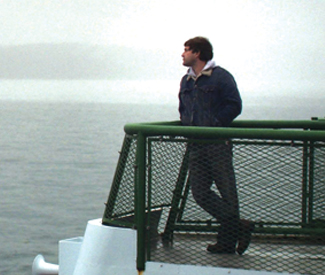
Your Sister’s Sister is the new movie from Lynn Shelton, who sort of came late to the mumblecore table — her first feature, We Go Way Back (2006), was nothing like it — and who directed Duplass in her shaggily amusing, throwaway Humpday (2009). This latest opens more somberly, at a Seattle wake where his Jack makes his deceased brother’s friends uncomfortable by pointing out that the do-gooder guy they’d loved just the last couple years was a bully and jerk for many years before his reformation. This outburst prompts an offer from friend-slash-mutual-crush Iris (Emily Blunt) that he get his head together for a few days at her family’s empty vacation house on a nearby island.

Arriving via ferry and bike, he is disconcerted to find someone already in residence — Iris’ sister Hannah (Rosemarie DeWitt), who’s grieving a loss of her own (she’s split with her girlfriend). Several tequila shots later, two Kinsey-scale opposites meet, which creates complications when Iris turns up the next day. A bit slight in immediate retrospect and contrived in its wrap-up, Shelton’s film is nonetheless insinuating, likable, and a little touching while you’re watching it. That’s largely thanks to the actors’ appeal — especially Duplass, who fills in a blunderingly lucky (and unlucky) character’s many blanks with lived-in understatement.

San Francisco-born director Colin Trevorrow’s narrative debut feature Safety Not Guaranteed, written by Derek Connolly, is more striking both overall and in performance. It’s got an improbable setup: not that rural loner Kenneth (Duplass) would place a personal ad for a time travel partner (“Must bring own weapons”), but that a Seattle alt-weekly magazine would pay expenses for a vainglorious staff reporter (Jake Johnson, hilarious) and two interns (Aubrey Plaza, Karan Soni) to stalk him for a fluff feature over the course of several days. The publishing budget allowing that today is true science-fiction.

But never mind. Inserting herself “undercover” when a direct approach fails, Plaza’s slightly goth college grad finds she actually likes obsessive, paranoid weirdo Kenneth, and is intrigued by his seemingly insane but dead serious mission. For most of its length Safety falls safely into the category of off-center indie comedics, delivering various loopy and crass behavior with a practiced deadpan, providing just enough character depth to achieve eventual poignancy. Then it takes a major leap — one it would be criminal to spoil, but which turns an admirable little movie into something conceptually surprising, reckless, and rather exhilarating.


YOUR SISTER’S SISTER and SAFETY NOT GUARANTEED open Fri/15 in Bay Area theaters.

Same time next year

0

GAMER There was a moment when it seemed this year’s Electronic Entertainment Expo (better known as E3) would be the most exciting since way back in 2006, the year Wii and PlayStation 3 premiered. This January, rumors swirled around Sony and Microsoft, that they were developing next generation consoles, and perhaps looking to premiere them alongside Nintendo’s big Wii U reveal.

But Microsoft’s decision instead was to coast on their current success as market leader, and Sony chose to concentrate on setting themselves apart in an increasingly multi-platform marketplace by focusing on peripherals and exclusives. So, at least one more year for this generation of gaming, making E3 2012 pretty interchangeable with 2011.

Nintendo’s presentation played it safe with first-party games that were either already known (Pikmin 3) or practically indistinguishable from past installments (New Super Mario Bros. 2), and left innovation for new Wii U software to third party developers. Playing nice with outside development teams will go a long way towards winning back the “hardcore” crowd Nintendo desperately craves but the dearth of exciting games evoked too-fresh memories of last year’s disastrous 3DS launch.

Speaking on the Wii U at an investor presentation prior to E3, Nintendo president Satoru Iwata stated “There is always a limit to our internal resources … if I said that an overwhelmingly rich software lineup would be prepared from day one, it would be too much of a promise to make.” Attendees at Nintendo’s conference would have been wise to heed that warning, as an initially excited crowd grew more restless with each announcement that wasn’t a hi-definition Zelda or Metroid game.

On the other side of the coin, Microsoft opened with a guaranteed bread-winner for the Xbox and their only exclusive blockbuster releasing this year, Halo 4. Coupled with the annual release of Call of Duty, the Xbox is in a safe spot, and Microsoft was smart to concentrate the rest of their show on apps and an application they’re calling SmartGlass, even if doing so created some disappointment in the crowd. An experiment in tablet crosstalk, SmartGlass is just one example of the “second-screen” gameplay all three publishers appear keen on for 2013.

Last of the “big three” publishers, Sony attempted to entice consumers into supporting the low-selling PlayStation Move and the new PSVita handheld, but their exclusive titles remained the most compelling reason to own a PlayStation. A new project from Quantic Dream, Beyond: Two Souls improves on Heavy Rain‘s cinematic storytelling, and Naughty Dog’s post-apocalyptic survival piece The Last of Us wowed audiences with gruesome one-on-one combat. Sony also featured the Expo’s biggest failure: way too much time devoted to a buggy and simplistic augmented reality book, Wonderbook, based on the Harry Potter franchise.

Concentrating on games over peripherals, Ubisoft had arguably this year’s best showing. New action/stealth IP WATCH_DOGS, about a hacker who can control the power of a city’s technology, had many declaring it E3’s biggest surprise, and Ubisoft also delivered strong demos for Splinter Cell: Blacklist, Assassin’s Creed III, Far Cry 3, and Rayman Legends, the last of which harnessed the possibilities of the Wii U in ways even Nintendo couldn’t match.

On the E3 show floor, the Tomb Raider series’ reboot is emotionally engrossing and includes a more robust upgrade system than the game it most closely resembles, Uncharted. Where Uncharted is known for strong story and characters, Tomb Raider competes with a terrifying sense of helplessness and mature storytelling. Making its debut at E3, Star Wars 1313 also made a lot of promises about being first to set a “mature” game in the Star Wars universe. It’ll be interesting to see if LucasArts uses that freedom as a tableau to create a truly interesting story, or if it becomes a bar to hit in terms of language and violence. Either way, 1313 features some of the most realistic motion capture I’ve ever seen, and lighting and animation that rivals entries in the film series. If there was a constant among the big E3 games, it was the year 2013. Publishers are tired of getting beat up each fall by Call of Duty‘s annual release and have relocated to next spring. Most titles demoed at E3 have been slotted for 2013’s first quarter, which currently looks as stuffed with games as November usually does. It’ll be interesting to see who stands their ground and who makes one last push to the barren summer months. If 2013 looks to be an exciting time to be a gamer, in 2012 it remains business as usual. 

Possessions and concessions

0

arts@sfbg.com

THEATER A general store in a factory town is the deceptively concrete setting for playwright Christina Anderson’s purposefully nebulous drama, which conflates a range of 20th century African American experiences in a supernatural tale of characters and a town variously “possessed.”

Crowded Fire (which produced the world premiere of Anderson’s DRIP in 2009) takes the premise and runs with it, artistic director Marissa Wolf helming the production with a sure grasp of Anderson’s fluid structure, where time (“between 1961 and 1994”), place (“the side pocket of America”), and position (social, sexual or otherwise) are all on the move and yet passingly specific, as in some Heisenberg Uncertainty Principle of history and identity.

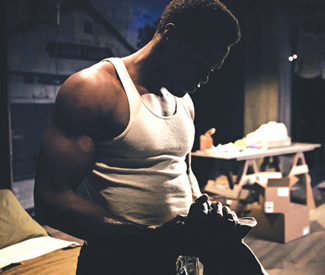
As the story opens, Good Goods proprietor Stacey Good (Yahya Abdul-Mateen II) has recently retuned to town to take over from his father — the original Good — who we learn fled under vague circumstances seemingly connected to a recent “invasion” that has left this exclusively African American community in some sense (again purposely vague) occupied.

Meanwhile, the store itself is contested terrain. Longtime employee Truth (David E. Moore) holds a grudge against Stacey, who was supposed to be born a girl — promised to Truth by Good-the-father along with the keys to the store. But as a male heir, Stacey is instead Truth’s boss (although, as we learn in some of the clunky exposition at the top of the play, he’s obligated to keep Truth on the payroll no matter how ill tempered he may get).

The allegorical air of this premise grows apace with the arrival of Patrick, nicknamed Wire (Armando McClain), and Patricia (an assured and persuasive Mollena Williams), his twin sister with a stalled career as a nightclub comedian. Patricia has just returned this day — Wire’s birthday but not yet hers, since she was born after midnight — with a runaway bride named Sunny (a fittingly bright and captivating Lauren Spencer), who she met on the bus ride to town. Sunny’s innocent, childlike radiance captures Truth’s ardor but it’s soon clear she’s already smitten with Patricia.

As it further becomes obvious there’s some lingering romantic history between Patricia and Stacey, as well as between Stacey and childhood best friend Wire, a horrible accident at the local factory intrudes. The outcome of this tragedy is the supernatural arrival of another member of the community, whose family has earned some resentment for having gone AWOL during the recent invasion. As a local medicine man named Waymon (Anthony Rollins-Mullens), channeling the spirit of the Hunter Priestess, arrives to sort the matter out, history and solidarity, ownership and desire, masculinity and femininity, tyrannical convention, and casual nonconformity are all mixed ever more thoroughly together.

Without giving away too many details of the plot’s central twist, it’s fair to say that who gets to possess whom and under what circumstances (that is, with or without the consent of the other party) is a question that rises and sinks amid the play’s convoluted action like a stone skipping across a roiling pond. If Anderson sacrifices some dramatic coherence along the way, there are productive questions thrown up merely by flouting a more realistic time/place continuum, since not making an issue of the characters’ fluid sexuality, for example, is already to draw attention to the usual regime while toppling its violent logic.

Crowded Fire’s production at Boxcar Playhouse is somewhat erratically paced and has sightline challenges, but it offers scope for some nicely tailored performances (with the most consistent work coming from Williams and Spencer, who anchor the proceedings with fine, vital turns). Emily Greene’s half-open half-realistic scenic design, buttressed by Rebecca Longworth’s mix of still and video backdrops, meanwhile strives with limited success to capture the play’s particular mix of naturalism and supernaturalism.

That mixture is ultimately both a weakness and strength. The action can feel too mysterious, contradictory and diffuse to be as hard-hitting as it wants to be. But the boldness of Anderson’s formal strategy and its deliberately spongy sense of history also invite an invigorating play between necessity and possibility. 

GOOD GOODS

Through June 23

Wed.-Sat., 8pm, $15-$35

Boxcar Playhouse

505 Natoma, SF

www.crowdedfire.org


The prestige

0

marke@sfbg.com

SUPER EGO Everybody’s in an uproar. Panties: twisted! Wig: askew! Weave: berated! Kanga: roo’d! The upper lefthand quadrant of the Internet is aflame.

Respected undergroundish house DJs are being kicked out of upscale club booths at an alarming rate. In February, Dennis Ferrer was tossed from the tables at Miami’s Mansion for not playing “commercial enough.” Last week, our own beloved Mark Farina got bumped from the Marquee poolside in Las Vegas because the management was “getting complaints from the table service crowd” about too much house. (And, most inexplicably, adorable ambient sage Mixmaster Morris was unplugged at a prestigious Berlin event late last year, for not wanting to spontaneously tag team with the tipsy promoter.)

Beyond screaming, “Why the hell would you play these idiotfests to begin with!” (each has their own credible individual explanation), I tend to think this rash of boots is simply symptomatic of dance music’s current bout of mainstreamification. A similar thing happened when oonce-oonce techno took over mainstream-y dance floors in the mid-1990s. Suddenly it seemed every DJ disappeared except Paul van Dyk, Paul Oakenfold, Armin van Buuren, and Sasha and Digweed. Creepy. This time around, house lovers, there’s plenty of venues and crowds for everyone, without having to cry about our time slot in the Electric Daisy Cannibal of life. All is full of PLUR. Just don’t fuss with our Farina again, Vegas, or we’ll Mushroom Jazz your ass.


DMITRI FROM PARIS

And now I will spin you a shaggy tale of reverse-douchebagginess. The year? 2000. The place? Winter Music Conference in Miami. The party? Playboy Mansion. All the fixings of a bottle service fake boobs popped collar disaster-fantasy! Of course I went. But then. Someone handed me one of those little shaker eggs that make maraca noises. And then. DJ Dmitri from Paris launched into a 12-minute version of “Love is Always on Your Mind” by Gladys Knight and the Pips. The floor went wild and I went straight (forward) to heaven. It was totally like that moment in the gay bar in 1978 when someone hands Sandra Bernhard a tambourine. Free at last! Ever since then I’ve adored this kicky disco Greek Frenchman, and now that he’s launched several re-edit projects, he’s back in the pulsating limelight. Will he drop the epic opera version of Pet Shop Boys’ “Left to My Own Devices”? As a guest at Marques Wyatt’s monthly Deep party, one of the best and most diverse in SF, anything goes.

http://www.youtube.com/watch?v=Mi50cNBjSMw

Fri/15, 10pm-3am, $15 advance, $20. Mighty, 119 Utah, SF. www.mighty119.com


THE MAGICIAN

Have we at least reached the late Steve Miller Band stage of electro-disco? Abracadabra, out pops this mysterious prestidigitator, pulling blissful, keyboard-chiming, fog-enshrouded tricks from his fuzzy-wuzzy dream hat. I am assuming ze Magician is French, because he pulls off that excellent French touch trick of pulling your feverishly beating heart out of your chest right when the strobes hit. But in a more contemporary, happy house way. (UPDATE: The Magician is possibly Belgian. Magic!)

Fri/15, 9pm, $17 advance. Mezzanine, 444 Jessie, SF. www.mezzaninesf.com


MAYER HAWTHORNE

Don’t call him a “throwback” — the young soul-funk revivalist prefers to count J. Dilla among his influences, even while he’s nicking inspiration from Holland-Dozier-Holland. The Stones Throw label favorite’s DJ set should span a spectrum of mood-bending, rootsy sounds.

Sat/16, 9pm-late, $10–$15. Public Works, 161 Erie, SF. www.publicsf.com


SON’Y RAYS

Kind of freaking out about this one. Some of the deepest, most intellectually soulful —– and danceable! —– tech-house future beats are being made in Oakland right now (and for the past few years) by the Deepblak crew. This showcase will bring together most of the major players at SF’s SOM: Diaba$e and Nasrockswell, Blaktroniks, Aybee and Afrikan Sciences, and Damon Bell. Do not miss this night of exquisite hometown, hand-crafted live machine vibes.

http://www.youtube.com/watch?v=ASEDs4n6HOk

Sat/16, 10pm, $10. SOM, 2925 16th St., SF. www.som-bar.com

Suspended state

0

news@sfbg.com

In May, a rip appeared in the social safety net that catches many of the people whose careers have been derailed by the continuing economic crisis when Californians lost eligibility for federal relief money under the Fed-Ed portion of the federal unemployment insurance extension program.

The news of the funding loss came to program recipients in a letter from the California Employment Development Department (EDD). According to data obtained from the EDD by the Bay Guardian, 1,994 San Franciscans were among the more than 92,000 people statewide who were cut from the unemployment roles earlier then expected, as the maximum length of benefits was reduced suddenly from 99 weeks to 79 weeks.

A nuance in the legislation that regulates state-by-state eligibly for Fed-Ed caused California’s early exit from the program, while individuals in other states with lower unemployment rates and stronger employment prospects remain eligible for longer coverage. New York state, with an unemployment rate of 8.5 percent, 2.4 points lower then California’s rate, continues to receive Fed-Ed funding.

Ironically, that’s because the recession has lingered longer here than elsewhere, and unemployed Californians are now being punished for being stuck for so long in such a slow economy.

“In order for a state to qualify for the Fed-Ed extension program you have to have a high unemployment rate and certainty California does have a high unemployment rate,” EDD Deputy Director Loree Levy told us. “It is just not 10 percent higher than what it has been over the last three years, and that is a requirement of the program. So the good news is that California’s economy is improving. It is unfortunate news for a lot of the long-term unemployed individuals who will now be doing without these extension benefits.”

In San Francisco, the economy is definitely improving. The Bureau of Labor Statistics (BLS) reports that the San Francisco metropolitan area, which includes San Francisco and San Mateo counties, saw the second highest 12-month rise in employment nationally, creating more than 25,000 jobs, a 2.7 percent leap in employment. This big jump, the second highest nationally, reduced the city’s unemployment rate to 7 percent in April, leaving San Francisco a rare rose in a sea of briars.

But that’s little consolation to people in industries that have yet to recover, from construction to education to other government jobs.

While the city’s economy has been buoyed by tourism, technology, and a segment of pre-existing affluence that has weathered the economic crisis, the statewide the picture is much different. The state’s “improving economy” left more than two million Californians unemployed in May, 10.9 percent the state’s workforce.

When statewide unemployment ticked up slightly in April, the state’s three-month average registered as 8 percent higher than the three-year average, missing by a statistical sliver the federal program’s threshold 10 percent increase. This triggered the BLC, which tracks unemployment across the nation, to notify the California EDD that funding of the Fed-Ed program would cease.

The trouble with this metric as a benchmark for benefits dispersion is when discouraged workers self identify as having stopped looking for a job, they are no longer included in the unemployment figures used by the BLS to determine Fed-Ed eligibility. If a fraction of these workers had identified themselves as seeking work, the Fed-Ed relief would have continued to flow into California.

If the state edges back across that threshold in the coming months, Fed-Ed money will flow into the state again, but those recently cut from the unemployment roles who did not exhaust their Fed-Ed eligibility time will not qualify to be re-added to the program.

The program’s loss could have a significant impact on the state’s economy going forward.

“In the three years since Fed-Ed was passed, more than 912,00 people in California have relied on the benefits,” Levy says. “That has brought $5 billion of federal funds into the ailing state economy. It has had a tremendous impact on the economy and when you add in a multiplying effect from money spent out there from these benefits on local businesses, it can be almost a $10 billion effect on the economy.”

As the economic crisis drags on, federal stimulus and relief programs that were planned with a short downturn in mind dry up, a political climate of austerity in government spending has taken its place. Individuals caught in the fallout of the economic crisis increasingly find themselves with nowhere to turn.

Only one out of three unemployed workers statewide currently receive any unemployment benefits, and before the end of Fed-Ed, a staggering 700,000 people who had been receiving benefits during the economic crisis exhausted the previous maximum 99 weeks without finding work.

“What happens when we require people to go out and get jobs when there are no jobs? That’s a nightmare. People are being cut off with no place to turn,” Princeton professor of economics Paul Krugman said at the Commonwealth Club of San Francisco last month. “Benefits that are emergency benefits should not depend on some arbitrary timeline for the individual but for the duration of the emergency. If we have a flood, you don’t say ‘We are only going to help flood victims for three days.’ We help them until the flood recedes.”

Of those Californians who still do receive an unemployment check, over half have been out of work for more than six months, the period at which normal state funding ends and federally emergency extension programs take over. The remaining federal unemployment extension program enacted during the economic crisis — the Emergency Unemployment Compensation program — is set to phase out on Dec. 23 of this year. That is bad news for Californians locked out of the labor market who have exhausted the normal six months of state funded benefits.

Responding to the release of May’s week jobs report, House Minority Leader Nancy Pelosi (D-SF) said the report, “Makes clear that we have more work to do to restore security and opportunity for the middle class. The time is now for Republicans to join us in moving forward on behalf of the middle class.”

Without the renewal by Congress of federal unemployment extension deep in the presidential election cycle, another larger surge in people booted from the unemployment roles will be locked in competition for the state’s paltry offering of new job creation — a punishing musical chairs game with real life stakes.

Summer ale-manac

0

culture@sfbg.com

SUMMER DRINKS When Anchor Steam began its renaissance back in the early ‘80s, California went all in on the craft beer movement, and hasn’t looked back since. Three decades later, this renewed approach to brewing has not only radically pushed boundaries, but redefined the role of beer in our social fabric.

In the right setting, a quality brew can carry the dignity of a fine wine; but don’t let today’s rampant, beer-geek elitism fool you. It’s still a populist beverage if ever there was one. Looking for a refreshing, approachable ale or lager to nurse on a hot day in Dolores Park? Fear not: our nation’s maverick microbrewers have your back. So, before you go throwing those Coronas in the cooler, take a minute to reassess your options.

For six years now, SoMa’s City Beer Store has curated one of the most exhaustive selections of any bottle shop in town. Owner and buyer Craig Wathen had the following brews to recommend over the coming summer months, which you can snag either in bottles his store (1168 Folsom, SF. www.citybeerstore.com).


SESSION BEERS

Alpha Session (Drake’s; San Leandro, CA)

Table Beer (Stillwater; Baltimore, MD)

Kent Lake Kölsch (Iron Springs; Fairfax, CA)

Highly drinkable and low in alcohol, these session beers are ideal for a leisurely day of drinking in the sunshine. An ideal replacement for macro-lagers like Bud and PBR, they pack a serious hop-punch, while avoiding the heavy malt backbone of most aggressively hopped beers. Stillwater’s Table Beer is fermented with a wild yeast strain, imparting the tart funkiness of Belgian sour ales, while Iron Springs’ Kent Lake Kölsch, a riff on the crisp, clean German style, was awarded the bronze medal for Best Blonde or Golden Ale at the 2011 Great American Beer Festival in Houston.


SOUR BEERS

Gueuze Tilquin (Belgium)

Sanctification (Russian River; Santa Rosa, CA)

Berliner Weisse (High Water; Chico, CA)

Oro de Calabaza (Jolly Pumpkin; Dexter, MI)

Cited for their fruity tartness, barnyard funkiness, and vinegary acidity, Belgian-derived sour beers are among the most complex in the world. Fermented with wild yeasts, and oftentimes aged in barrels, these brews are risky and expensive to make, and usually produced in small quantities. While sours remain a niche product, you owe it to your palate to try one; the four listed above are relatively light-bodied, golden in color (as opposed to certain red and brown sours), and totally satisfying on a hot day.


INDIA PALE ALES

Summer Yulesmith (Alesmith; San Diego, CA)

Simtra Triple IPA (Knee Deep; Lincoln, CA)

Constantly evolving and developing, aggressively hopped IPAs are the bread and butter of California craft brewing. Knee Deep’s Simtra Triple IPA is an extreme example of the style: taking inspiration from Russian River’s Pliny the Younger, it contains three times the hops of a standard IPA, resulting in an onslaught of bitterness. Alesmith’s Summer Yulesmith, a seasonal double-IPA, is similarly assertive; check out the fireworks on its label, and consider picking up a few bottles for your Fourth of July bash.


S’MORE STOUT?!

Campfire Stout (High Water; Chico, CA)

A heavy, roasty, dark beer can be a great indulgence on a summer night, and High Water Brewing offers a great novelty with its Campfire Stout: s’mores in beer form. Brewed with graham crackers, chocolate malt, and toasted marshmallow flavor. Before you begin that rousing round of “Kumbaya,” pop one of these.

OTHER SF BEER SPOTS WORTH CONSIDERING:

Ales Unlimited 2398 Webster, SF. (www.alesunlimited.com)

Healthy Spirits 2299 15th St., SF. (www.healthy-spirits.blogspot.com)

La Trappe 800 Greenwich, SF. (www.latrappecafe.com)

Rosamunde Sausage Grill 2832 Mission, SF. (www.rosamundesausagegrill.com)

Toronado 547 Haight, SF. (www.toronado.com)

Suppenküche 525 Laguna, SF. (Hayes Valley, www.suppenkuche.com)

Beer Revolution 464 Third St., Oakl. (www.beer-revolution.com)


What $40 million buys

5

OPINION I am a diehard and devoted follower of the round-ball. Basketball. If the game did not exist, I wouldn’t spend a minute — hot or cold — planted in front of telly, save the half hour my kids and I watch the new Regular Show. I have no idea who wins the beauty contests or who is villain or hero on reality TV, couldn’t ID you the hit sitcom star of today, don’t know and don’t care.

For this reason, I am intimately aware of the massive anti-Prop 29 campaign waged by the tobacco companies (their target audience is male and of a certain age).

Prop. 29 narrowly lost last Tuesday, almost entirely due to the $40 million plus poured into its defeat from out of state interests, specifically RJ Reynolds.

Without that money, Prop. 29 passes easily, a no-brainer. A dollar-a-pack tax to raise $735 million a year for cancer research, with the secondary effect of smoking reduction (the costlier cigarettes are, the more likely one will quit — also, despite the misinformation, a raised tax on cigarettes doesn’t lead to bootlegging, as is Internet myth).

But at least a half dozen times per NBA playoff game, a grave looking woman in a medical outfit came on the air to warn us of the incipient dangers of this horrible idea — a new bureaucracy, new taxes (well, duh), money going out of state — relentless repetition of talking points ramrodded down the throats of the viewer.

I am told that Lance Armstrong made a pro-29 spot. Never saw it and now, I never will.

In most instances, I would have opposed Prop. 29 myself. I dislike sin taxes. I dislike the idea that one person’s poison is more pernicious than another when less than 15 percent of our state smokes and a much higher percentage is overweight. But the pounding of the tobacco industry — a far more diabolical and lethal group of parasites than even the lowliest dope dealer (but legal, of course and subsidized by the taxpayer) planted enough doubt in the minds of semi-interested sports fans to send a well-meaning and job creating piece of legislation onto the shoals of defeat.

This event, coupled with the Koch family’s purchase of the Wisconsin recall, signals the possible death knell for American democracy. The fact that money is speech and corporations are people has been codified into law doesn’t change the reality that said sentiment is gibberish intended to consolidate a permanent plutocrat class that, on any whim, can simply bury their opposition in an avalanche of half truths and outright lies.

If you own the megaphone, the transmitter, and the mouth, we are not equal — if you are heard and I am not, no one ever hears my side. And that’s where we’re going.

The saddest moment in all of this was taking a trip to a liquor store the other day with my kids to get some sodas and hearing the owner’s justification for supporting No on 29 — “this will wipe me out.” When I pointed out that maybe soon he could sell marijuana in the place of cigarettes when it becomes legal, he turned pale and exclaimed “I don’t want that shit in here”.

Marlboro’s and Jack Daniels, ok. The chronic, no.

And that’s the mindset in America’s most progressive state. I wasn’t made for these times at all.

Johnny Angel Wendell is a talk show host at KTLK-AM1150 and KFI-AM640 in Los Angeles and an American roots musician

The great car slowdown

49

EDITORIAL It’s going to be hard to reach San Francisco’s official bike transportation goal, which calls for 20 percent of all vehicle trips to be taken by bicycle by 2020. Everyone in town knows that; everyone at City Hall and in the biking community agrees that some profound and radical steps would need to be taken to increase bike trips by more than 500 percent in just eight years.

It starts with safety — you’re not getting anywhere near that number of people on light, two-wheeled vehicles unless, as international bicycling advocate Gil Peñalosa recently told San Franciscans, people between the ages of eight and 80 feel safe riding on the city streets.

At the San Francisco Bicycle Coalition’s 20th Annual Golden Wheel Awards, Peñalosa — executive director of 8-80 Cities, a nonprofit that promotes creation of cycling infrastructure that is safe and inviting — laid out a prescription for designing cities around pedestrians and bicyclists (he sees riding a bike as ” just a more efficient way of walking.”) Peñalosa laid out an agenda for achieving that goal — one that includes a step San Francisco can start taking immediately: Cut vehicle speeds on all city streets to no more than 20 miles an hour.

Even if that were only done in residential areas, it would have a huge impact, and not just on bicyclists. Peñalosa cited statistics showing that only about 5 percent of pedestrians hit by cars driving 20 mph will die — but the fatality rate shoots up to 80 percent when the vehicles are traveling 40 mph.

If there are some streets where it’s impractical to have such a low speed limit, it’s imperative to have bike lanes that are separated from cars by physical barriers.

San Francisco’s Municipal Transportation Agency director, Ed Reiskin, told us after Penalosa’s speech that the notion of reducing speed limits made sense: “The logic is unquestioned that slowing speeds reduces the risk of fatality.”

But the city, it turns out, doesn’t have the power to unilaterally lower speed limits: State law requires speed limits to be set based on formulas determined by median vehicle speeds. That seems awfully old-fashioned and out of touch with modern urban transportation policy, which increasingly emphasizes bikes, pedestrians, and transit, and city officials ought to be asking the state Legislature to review those rules and give more latitude to cities that want to control traffic speed.

In the meantime, Reskin argues that a lot can be done by redesigning streets, using bulb-outs and barriers to discourage speeding. That’s fine, and part of the city’s future bike-lane policy should start with traffic-calming measures (Berkeley, to the chagrin of many nonlocal drivers, has done a great job making residential streets into bike-friendly places where cars can’t travel very fast).

Peñalosa had some other great ideas; he noted that cities such as Guadalajara, Mexico require developers to give free bikes away with each home, a program that has put 102,000 more bikes on the streets. That’s a cheap and easy concept — except that so much of the new housing in the city is so expensive, and comes with so much parking, that it’s hard to believe the millionaires who are moving into these units will be motivated by a free bicycle.

But the notion of working with Sacramento to slow down car traffic makes tremendous sense — and that ought to be one of the transportation priorities of Mayor Ed Lee’s administration.

Hospital standoff

2

steve@sfbg.com

The controversial and long-awaited proposal by California Pacific Medical Center (CPMC) to build a 550-bed luxury hospital atop Cathedral Hill and to rebuild St. Luke’s Hospital has finally arrived at the Board of Supervisors — where it appears to have little support.

So far, not one supervisor has stepped up to sponsor the deal, and board members say it will have to undergo major changes to meet the city’s needs. “There are still a lot of questions that remain,” Sup. David Campos told us, citing labor, housing, community benefits, and a long list of other issues that he doesn’t believe CPMC has adequately addressed. “It tells me there’s still more work to be done.”

CPMC, which is Sacramento-based nonprofit corporation Sutter Health’s most lucrative affiliate, has been pushing the project for almost a decade. Its advocates have subtly used a state seismic safety deadline for rebuilding St. Luke’s — a hospital relied on by low-income residents of the Mission District and beyond — as leverage to build the massive Cathedral Hill Hospital it envisions as the Mayo Clinic of the West Coast.

But the project’s draft environmental impact report shows the Cathedral Hill Hospital would have huge negative impacts on the city’s transportation system and exacerbate its affordable housing crisis. And CPMC has been in a pitched battle with its labor unions over its refusal to guarantee the new jobs will go to current employees or local residents and be unionized. There are also concerns with the market power CPMC will gain from the project, how that will affect health care costs paid by the city and its residents, and with the company’s appallingly low charity care rates compared to other health care providers (see “Lack of charity,” 12/13/11).

CPMC had refused to budge in negotiations with the Mayor’s Office under two mayors, for which Mayor Ed Lee publicly criticized the company’s intransigence last year. But under pressure from the business community and local trade unions who support the project, Lee cut a deal with CPMC in March.

That development agreement for the $2.5 billion project calls for CPMC to pay $33 million for public transit and roadway improvements, $20 million to endow community clinics and other social services, and $62 million for affordable housing programs, nearly half of which would go toward helping its employees buy existing homes.

While those numbers seem large, community and labor leaders from San Franciscans for Healthcare, Housing, Jobs and Justice (SFHHJJ), which formed in opposition to the project, say they don’t cover anywhere near the project’s full impacts. And given that CPMC made about $180 million in profit last year in San Francisco alone — money that subsidizes the rest of Sutter’s operations — they say the company can and should do better.

“This is about standing up to corporate blackmail,” SFHHJJ member Steve Woo, a community organizer with the Tenderloin Neighborhood Development Corporation, told us.


PIVOTAL PROJECT

CPMC is perhaps the most high-profile project the board will consider this year, one that will impact the city for years, so the political and economic stakes are high.

The Planning Commission voted 5-1 on April 26 to approve the deal and its environmental impact report, citing the project’s economic benefits and the looming deadline for rebuilding St. Luke’s. The Board of Supervisors was scheduled to consider the appeal of that decision on June 12 (after Guardian press time), but activists say supervisors planned to continue the item until July 17.

In the meantime, the board’s Land Use Committee has scheduled a series of hearings on different aspects of the project, starting June 15 with a project overview and presentation on the jobs issue, continuing June 25 with a hearing on its impacts to the health care system. Traffic and neighborhood impacts would be heard the next week, and then housing after that.

Calvin Welch, a progressive activist and nonprofit affordable housing developer, said the project’s EIR makes clear just how paltry CPMC’s proposed mitigation measures are. It indicates that the project’s 3,000 new workers will create a demand for at least 1,400 new two-bedroom housing units. Even accepting that estimate — which Welch says is low given that many employees have families and won’t simply be bunking with one another — the $26 million being provided for new housing construction would only create about 90 affordable studio apartments.

“We’re going to end up, if we want to house that workforce, subsidizing CPMC,” Welch told us.

Compounding that shortcoming is the fact that the Cathedral Hill Hospital is being built in a special use district that city officials established for the Van Ness corridor — where there is a severe need for more housing, particularly affordable units. The SUD calls for developers to build three square feet of residential for every square foot of non-residential development.

“That would require building 3 million square feet of residential housing with this project,” Welch said. “We don’t think $26 million meets the housing requirement for this project, let alone what was envisioned by this [Van Ness corridor] plan.”

SFHHJJ is calling for CPMC to provide at least $73 million for affordable housing, with no more than 20 percent of that going to the company’s first-time homebuyer assistance program. That assistance program does nothing to add to the city’s housing stock and critics call it a valuable employee perk that will only increase the demand for existing housing — and thus drive up prices.

But the business community is strongly backing the deal, and the trade unions are expected to turn out hordes of construction workers at the hearing to make this an issue of jobs — rather than a corporation paying for its impacts to the community.

“After a decade of discussion, debate and compromise, the city’s departments, commissions, labor, business and community groups all agree on CPMC,” San Francisco Chamber of Commerce President Steve Falk wrote in a June 8 e-mail blast entitled “Message to the Board of Supervisors: Don’t Stand in the Way of Progress.”

“The fate of our city’s healthcare infrastructure now lies solely with the Board of Supervisors,” the Chamber says. “When it comes time to vote, let’s insist they make the right choice.”

Yet it’s simply inaccurate to say that labor and community groups support the deal, and both are expected to be well-represented at the hearings.


CARE FOR WHOM?

Economic justice issues related to health care access and costs are another potential pitfall for this project. SFJJHH activists note that no supervisors have signed on to sponsor the project yet — which is unusual for something this big — and that even the board’s most conservative supervisors have raised concerns that the city’s health care costs aren’t adequately contained by the deal.

“There’s a significant amount of dissatisfaction with the deal, even among conservatives,” SFJJHH member Paul Kumar, a spokesperson for the National Union of Healthcare Workers, told the Guardian.

On the progressive side, a big concern is that CPMC is proposing to rebuild the 220-bed St. Luke’s with only 80 beds, which activists say is not enough. And even then, CPMC is only agreeing to operate that hospital for 20 years, or even less time if Sutter’s fortunes turn around and the hospital giant begins losing money.

CPMC Director of Communications Kathryn Graham, responding by email to questions and issues raised by the Guardian, wrote generally and positively about CPMC and the project without addressing the specific concerns about whether housing, transportation, and other mitigation payments are too low.

On the jobs issue, she wrote, “Our project will create 1,500 union construction jobs immediately—and preserves and protects the 6,200 health care professional jobs that exist today at the hospitals. Currently, nearly 50 percent of our current employees live in San Francisco. During the construction phase of this project, we are committed to hire at least 30 percent of workers from San Francisco. We will create 500 permanent new jobs in just the next five years—200 are guaranteed to be local hires from underserved San Francisco neighborhoods. We don’t know where you got the ridiculous idea that our employees must reapply for jobs at our new hospitals. That is incorrect.”

Yet CPMC has resisted requests by the California Nurses Association and other unions to be recognized at the new facility or to agree to card-check neutrality that would make it easier to unionize. And union representatives say CPMC has offered few assurances about staffing, pay, seniority, and other labor issues.

As one CNA official told us, “If they aren’t going to guarantee jobs to the existing employees, those are jobs lost to the city.”

“We’re giving Sutter a franchise over San Francisco’s health care system for 30 to 40 years, so we should ensure there are basic worker and community protections,” Kumar said.

Welch and other activists say they believe CPMC is prepared to offer much more than it has agreed to so far, and they’re calling on the supervisors to be tougher negotiators than the Mayor’s Office was, including being willing to vote down the project and start over if it comes down to that.

“They make too much money in this city to just leave town,” Welch said of CPMC’s implied threat to pull out of San Francisco and shutter St. Luke’s. “It’s bullshit.”

The biggest burn ever

0

steve@sfbg.com

Burning Man is more popular than ever, judging by a demand for tickets that far exceeded supply this year, after selling out last year for the first time in its 26-year history — and now this year’s event will be far bigger than ever.

The Bureau of Land Management, which manages the Nevada desert where burners build Black Rock City every August, has set a population cap for Burning Man at 60,900, an increase of more than 10,000 over previous events.

For Black Rock City LLC, the San Francisco-based company that stages Burning Man, there was mixed news in BLM’s June 12 permit decision.

BRC was denied the multi-year event permit it sought, but as it struggles to meet demand for this increasingly popular countercultural institution, BLM honored BRC’s late request for more people than the 58,000 it had sought for this year.

“After further discussions, there were requests for a bit more,” Cory Roegner, who oversees the event from BLM’s district office in Winnemucca, told us. Asked why BRC sought the population bump, he said, “The more people they can have, the better.”

BLM has been processing BRC’s lengthy environment assessment and its request for a five-year permit that would allow the event to grow steadily from 58,000 to 70,000 people in 2016. The cap for this year could have been set as low at 50,000, creating some drama around this announcement, but the agency instead issued a single-year permit with a population cap of 60,900.

BRC was placed on probation last fall after violating its 50,000-person cap by a few thousand people each on Sept. 2 and 3, and BLM rules limit groups on probation to a single-year permit. BRC has appealed the status to the Interior Board of Land Appeals, which has not yet acted on it or answered Guardian inquiries.

“Unless we do hear back from them, Black Rock City would be precluded from a multi-year permit,” Roegner told us.

He also said that if BRC violates the population cap for a second year in a row, it could be barred from holding future events, although the high population cap should mean that won’t be a big problem this year, clearing the way for Burning Man’s steady growth through at least 2016.

“Based on the evaluation [of this year’s event], we will consider a multi-year permit going to 2016,” Roegner told us.

BRC has already sold 57,000 tickets and will give away thousands more to art collectives, staff, and VIPs. But the cap is based on a daily population count and BRC board member Marian Goodell said the event never has all attendees there at once.

She said staying below the cap this year shouldn’t be difficult given that many of those who build the city and work on the major art pieces leave before the final weekend when the eponymous Man burns. “Usually at least 6,000 leave before we hit the peak. Sometimes more on dusty, wet, or cold years,” she told us.

It could have been a lot more difficult. BLM officials had told the Guardian in April that they were considering keeping last year’s population cap of 50,000, which could have presented BRC with a logistical nightmare and/or ticket-holder backlash in trying to stay under the cap.

“The issue between us and the BLM continues to be the population cap,” Burning Man founder Larry Harvey told the Guardian.

Harvey, Goodell, and others with BRC took a lobbying trip to Washington DC in late April trying to shore up political support for the event and its culture, arguing that it has become important for artistic and technical innovation and community building rather than just a big party.

Harvey told us he believes that Burning Man could grow to 100,000 participants, although he conceded that would need further study and creative solutions to key problems such as getting people to and from the isolated location accessed only by one highway lane in each direction.

“We think we could go to 100,000 if it was measured growth, carefully planned,” Harvey said.

On the transportation question, he said, “it’s a question of flow.” Right now, participants arriving or leaving on peak days often wait in lines that can take four hours or more.

“We’ve talked to engineers that have proposed solutions to that,” Harvey said of the transportation issue, although he wouldn’t discuss possible solutions except to say, “You could exit in a more phased fashion.”

Roegner said that was one of the big issues identified in the EA. “We are taking a closer look at a couple items this year, traffic being one,” he said. Another one is the use of decomposed granite, which is placed under flaming artworks to prevent burn scars on the playa, and making sure it is properly cleaned up each year.

BRC was facing a bit of a crisis in confidence after this year’s ticket debacle, when a new lottery-based ticket distribution system and higher than expected demand left up to two-thirds of burner veterans without tickets. The resulting furor caused BRC to abandon plans for a secondary sale and instead sell the final 10,000 tickets through established theme camps, art collectives, and volunteers groups.

“It’s pretty obvious that we’ll do something like that again because we don’t expect demand to go down,” Harvey said of that direct distribution of tickets, which was criticized in some burner circles as promoting favoritism and undermining the event’s stated principle of inclusivity.

Yet he also emphasized that much of Burning Man’s growth is occurring off the playa — in cities and at regional events around the world. “All of this is by way of dealing with the capacity problem. I don’t know how much we can grow in the Black Rock Desert,” he said.

Another realm full of both possibilities and perils — depending on one’s perspective — is the ongoing development of The Burning Man Project, a nonprofit that BRC created last year to gradually take on new initiatives, followed by taking over staging of the event, and eventually (probably in five years) full control of Burning Man and its brand and trademarks.

“God knows, we have a lot of opportunities before us,” Harvey said, adding that BMP is now focused on fundraising. “It is the objective before we transfer the event to start transferring the regional events, and that will take more money and staff.”

After that, he sees unlimited potential to grow the culture, not just Black Rock City. “We’ve got to focus on the people. We’re becoming less event-centric,” he said. “We think of this as a cultural movement.”

Guardian City Editor Steven T. Jones is the author of The Tribes of Burning Man: How an Experimental City in the Desert is Shaping the New American Counterculture. For reactions and details on the EA, visit the sfbg.com politics blog.


Who to drink

2

virginia@sfbg.com

SUMMER DRINKS Incas at Heaven’s Dog with a side of Stax? A Cherry Bounce at Comstock Saloon with some Booker T and the M.G.’s? How about just a nice, perfectly made sazerac? Whether through years of bartending or expertise in classic cocktails and spot-on service, the five respected mixers below have long encapsulated what has made San Francisco a leader in the cocktail renaissance of the past decade-plus. To get a (summer) taste of their different styles and recommendations, we asked them to fill out a questionnaire delving into their personalities and cocktail prowess. The responses showed that the past is more present than ever as a delicious, tipsy inspiration in finer Bay bars.


ERIK ELLESTAD

Savoy Stomp, Heaven’s Dog

Erik Ellestad first landed on the cocktail map in 2006 with his blog, Savoy Stomp (www.savoystomp.com) — during his off hours as a tech engineer he began working his way through the classic Savoy Cocktail Book, one recipe at a time. This led to monthly gathering and demonstration Savoy Cocktail Book Nights at revered Upper Haight cocktail hotspot the Alembic since 2008, and bartending at chic SoMa Chinese restaurant Heaven’s Dog since its opening in January 2009. He’s an expert on classic recipes; his technically-minded side informs his precision and sense of balance.

SFBG Where did you grow up, and how did that influence your bartending style and taste?

Erik Ellestad I’m from a small town near Madison, WI. Other than developing my taste for beer, cheese, and Old Fashioned cocktails, I don’t think growing up in Wisconsin particularly affected my bartending. However, the 10 years I spent as a line and prep cook while living in Madison definitely affected both the way I approach cocktails and how I prioritize tasks while bartending.

SFBG What’s your area of expertise or obsession?

EE Pre-Prohibition American beverages. Almost all my real favorite cocktails go back to the 19th and early 20th centuries, or before.

SFBG What do you drink most during off hours?

EE To be honest, now that I’ve nearly finished the Savoy Cocktail Book Project, I’ve been taking a bit of a break from drinking cocktails. You’ll most often find me drinking esoteric beers or interesting wines.

SFBG What cocktail is exciting you lately?

EE I try to learn a new cocktail or perfect an old one every week just so I can have an answer to the inevitable cocktail nerd question, “What have you been working on lately?” This week I was inspired by Leopold’s Navy Strength Gin to perfect the Inca cocktail:

3/4 oz Leopold’s Navy Strength Gin

3/4 oz Dolin Dry Vermouth

3/4 oz Carpano Antica Italian Vermouth

3/4 oz Manzanilla Sherry

1 tsp Small Hand Foods Orgeat

1 dash Orange Bitters

Add ice and stir until well chilled. Strain into a small cocktail glass and garnish with an orange twist.

SFBG Favorite off-hours food or drink hangouts? 

EE I live in Bernal Heights, so the places I get to most often are in the neighborhood: Gialina for pizza, Papalote for burritos, Front Porch for soulful American food, and Ichi Sushi, for, well, awesome sushi. If my wife and I are splurging, we’ll go out to Bar Tartine, Bar Jules, or Commonwealth. Other than the bars I work in, Rock Bar, Royal Cuckoo, Glen Park Station, St. Mary’s Pub, and Wild Side West are the bars I’m most likely to be found in.

SFBG Your bartending playlist? 

EE The core of my playlist at Heaven’s Dog is the box set of Stax-Volt Soul singles from 1959 through 1968.


JEFF LYON

Range

Jeff Lyon has been tending for about 16 years, the last five being at Range in the Mission, where he’s currently the restaurant’s bar manager. Besides a keen love and knowledge of whiskey and tequila, he’s well-versed in music and sets an utterly comfortable tone at his bar with his dry, sly sense of humor.

SFBG Where did you grow up, and how did that influence your bartending style and taste? 

Jeff Lyon I was born in Long Beach, CA, but bumped around CA until I was 20, then moved to Minneapolis to become a rock star with my brother. In order to fund our impending international success (ahem), we waited tables, but I noticed bartenders had way more fun than waiters. So I watched what they did and asked a lot of questions. Eventually I lied and told my boss I knew what I was doing, and they let me behind the bar. Minneapolis influenced my bartending style in that I picked up a strong work ethic. It wasn’t about “mixology” — it was about being nice, working clean and fast, having fun.

SFBG What’s your area of expertise or obsession?

JL I’m a whiskey guy and Bourbon is my favorite, but right now I’m really excited about the wine-based world of vermouth, sherry, and Madeira. I wouldn’t call it an area of expertise, but I find the variety and subtlety of this stuff endlessly fascinating. Who needs crazy tinctures, bitters, and infusions when you can simply pour a Barolo Chinato over a big chunk of ice? Done!

SFBG What do you drink most during off hours?

JL I drink more beer and wine than anything else.

SFBG What cocktail is exciting you lately?

JL I’m proud of a cocktail I do called Dante that’s inspired by the sazerac’s “whiskey, sugar, bitters and a rinse” structure. I stir up Angel’s Envy bourbon, Perucchi Blanc vermouth, and Rothman and Winters Pear Orchard liqueur to provide sweetness, and Peychaud’s to balance it out. Standing in for the absinthe is a generous rinse of St. George Spirits pear eau de vie.

SFBG Current favorite off-hours hangouts for food or drink?

JL More often than not, I go to dive bars. I do my share of cocktail R&D right in my neighborhood — Wo Hing and Locanda are rockin’ it. Beretta is always great. Outside the neighborhood I love the usual suspects: 15 Romolo, Alembic, Bar Agricole, Comstock. The great thing is that there are so many bars raising the standards, even dive-y bars are making better drinks.

SFBG Your bartending playlist?

JL If I could have a night full of Bill Withers, Django Reinhardt, and Thelonious Monk, balanced with Nirvana, The Beatles, and Led Zeppelin, I could smile through just about anything.


AURORA SIEGEL

Hotsy Totsy, Dogwood

A true veteran of cocktailia, Aurora Siegel has been tending bar for the better part of 17 years. Having worked as a GM and beyond, she deeply understands service and the full restaurant-bar experience. Years at North Beach classic Rose Pistola honed her skills in numerous aspects of management and bar service, and she’s quite the cook herself (she makes a mean kimchi). You’ll currently find her rocking the East Bay at Albany’s Hotsy Totsy and Oakland’s Dogwood.

SFBG Where did you grow up, and how did that influence your bartending style and taste?

Aurora Siegel I grew up in Hawaii where hospitality is key and a cold refreshing drink while caressed by a light breeze makes all feel right with the world. That background influenced my style on many levels, hospitality being the most important. I believe if you don’t truly like serving people you shouldn’t because it always shows. I happen to love it. The drinks I tend to create are often light and refreshing: four dimensional, not eight; balanced but not too complicated; drinks you can make in under a minute — with a smile, of course. So you can sit back and say all is right with the world, even without the tropical breeze!

SFBG What’s your area of expertise or obsession?

AS My obsession is balance. Balance of sight, smell and of course taste. I’m often making ingredients to help me meld balance with speed such as my own home-brewed ginger beer, tonic base, and falernum.

SFBG What do you drink most during off hours? 

AS Pisco sours: I just love ’em! Or a good sazerac, negroni, or Old Fashioned. I like trying new drinks but a well-made classic will almost always win out in the end.

SFBG What cocktail is exciting you lately?

AS Robert Hess’ Trident [with sherry, Cynar, aquavit, peach bitters]! I think it’s one of those drinks that will go down in history.

SFBG Current favorite off-hours hangouts for food or drink?

AS Three of my favorite spots are Comstock for the whole package: good late night bites, great drinks, and real bartenders! Madrone on Divisadero: nice staff, good drinks, and unique music. Or Tony Nik’s in North Beach, where the staff are true pros and drinks are good, too.

SFBG Your bartending playlist?

AS Anything from the ’80s just gets my hips shaking, but I must say we have one of the most diverse and fun playlist at the Totsy. I’m almost always feeling the groove there!


JONNY RAGLIN

Comstock Saloon

A bartender for the past 16 years, Jonny Raglin is an English lit major with a sense of style that includes several evolutions of mustache. He started tending in SF over a decade ago at Stars, then B44, then the early days at Absinthe with Jeff Hollinger, with whom he eventually opened Comstock Saloon in 2010, a haven for classic cocktails in a historic Barbary Coast space with live jazz (and the occasional Gold Rush tune) and honky tonk and classic country vinyl Sundays.

SFBG Where did you grow up, and how did that influence your bartending style and taste?

Jonny Raglin I’m from Oklahoma. It certainly does influence my style of bartending. I’m cavalier, self-taught, hard-working, hard-headed, whiskey-slinging, whiskey-drinking, a lover not a fighter — except when fighting — and the fastest hand in the West!

SFBG What’s your area of expertise or obsession?

JR My obsession is the 9/10ths of bartending that has nothing to do with “mixology.” That is what I try every day to improve upon. Not to say I’ve given up on the drink itself, but I am certainly concerned with what Leary called “set and setting,” i.e. a perfect cocktail can only be had in perfect company.

SFBG What do you drink most during off hours?

JR Margaritas with my wife. I typically order dry martinis at any given bar since its REALLY hard to fuck up cold gin.

SFBG What cocktail is exciting you lately?

JR I’m really digging making cocktails from who I consider to be the two queens of the cocktail in New York: Julie Reiner and Audrey Saunders. I feel like they have a firm grasp of not only the classic cocktail but also the modern palate. I find myself in the Savoy Cocktail Book for inspiration as I have for the past five years or so. And people sure like the Cherry Bounce at Comstock which is a recipe I came up with (made from the juice of house-made brandied cherries).

SFBG Favorite off-hours food or drink hangouts?

JR To me the best place to eat and drink in SF is Cotogna. God bless the Tusks [Michael and Lindsay] for their little trattoria a block from us at Comstock!

SFBG Your bartending playlist?

JR When Booker T. and the M.G.’s comes on, I’m the fastest bartender on the planet. On Friday lunch at Comstock, we play Buddy Holly radio on Pandora. It’s a bit of a sock hop with bow ties and suspenders, giving away lunch, selling booze… and fun!


STEVEN LILES

Smugglers Cove

Tending bar since 1997, Steven Liles dons a Hawaiian shirt and mixes it up tiki-style to exotica tunes at the Cove, after having spent years crafting cocktails at fine dining spots like Boulevard and Fifth Floor. Besides his stylin’ wardrobe and hats, Liles has his own 1930s home bar, an extensive music collection (start asking him about ’60s soul), and is well-versed on classic recipes and spirits distillation.

SFBG Where did you grow up, and how did that influence your bartending style and taste?

Steven Liles I was born in Compton, California, but mainly grew up in Lancaster, in the Mojave Desert. So my style is dry, like my humor. Growing up in California with all of its diversity has developed a sense that I should explore the different facets of my career as much as possible. I am defined by the desire to expand the definition of myself.

SFBG What’s your area of expertise or obsession?

SL I’ve never been the type to focus on one particular thing as a bartender. I prefer a more rounded approach. Working at a rum-centric bar is fun and fascinating, but I also pay attention to other spirits and styles of tending bar. I love pisco, gin, Calvados, and so many other amazing spirits with amazing stories.

SFBG What do you drink most during off hours?

SL It varies. My go-to cocktails are the martini and negroni. I love a glass of champagne — or a bottle. With so many great cocktail bars, I always try out new ideas that bartenders are creating. It’s a lot of fun.

SFBG What cocktail is exciting you lately?

SL With 75 drinks on the menu at The Cove, I can’t help but be excited: it is a great challenge. I love making new drinks but that’s not really a big focus of mine. I have a regular, Paul Cramer, that I make original creations for all the time. I don’t bother writing anything down. I find that fun, to just go off he cuff, in a care-free way.

SFBG Favorite off-hours food or drink hangouts?

SL I love Maven, Comstock Saloon, AQ, Heaven’s Dog, Jasper’s, Wo Hing, Bar Agricole. There are so many more.

SFBG Your bartending playlist?

SL Sam Cooke’s “Good Times” is a great bar song to me: “We are going to stay here ’til we soothe our souls, if it takes all night long.” That’s perfect.

Subscribe to Virgina’s twice-monthly newsletter the Perfect Spot, www.theperfectspotsf.com