Volume 48 [2013–14]

Chillwave’s poster boy grows up

0


by Kyle O’Brien

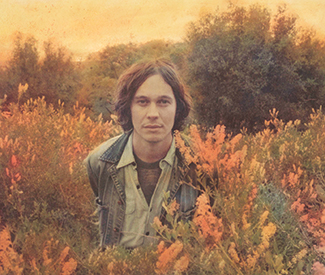
It’s been an adventurous four years for Ernest Greene. In 2009, the musician now known as Washed Out was producing music in his childhood bedroom, considering law school, and planning his wedding. Perry, Ga., is not widely known for its indie/electronica scene, so Greene posted music to his MySpace page and recorded it on a few cassette tapes for road trips. It was a low-key type of thing — until blogs like Pitchfork started paying attention.

This is about the time I became a fan. I was a freshman in college, brand-new to San Francisco, and Washed Out sounded like the future. Most mainstream electronic production at the time seemed made for rappers, or was heavily drum-and-bass influenced. Washed Out was all ’80s influences, hazy, and chilled out. “Retro lo-fi,” “dream-pop,” “synth-pop.” Chillwave is the genre most seem to have settled on — but two EPs, two studio albums, international tours, a deal with Sub Pop, and a Letterman appearance later, Greene doesn’t seem like he’s settling in any other way anytime soon.

“It really took me a couple of years to figure out my own approach to live shows, how to make them happen in a controlled way,” says Greene, 31. He’s currently touring in support of 2013’s Paracosm with a five-piece band (including his wife, Blair, on synth and vocals) — a notable departure from his beginnings as a bedroom artist with a DJ setup. He’ll bring the show to the Fillmore Jan. 28 and 29. “There were a couple of technological breakthroughs I had…where [earlier] some of the things I was doing in the studio, I wasn’t able to figure out how to accomplish live.”

Coming out from behind the computer screen has had its challenges, he says, but he’s committed to creating live music with a band rather than simply pressing play — a move that’s shifted his focus to vocal performance.

“In the studio, I could double my voice 100 times if I wanted to,” he says. “But if we’re on stage and it’s just five of us, by necessity it’s kind of stripped-down, and the live shows definitely have a different vibe because of that.”

“But harmonies have always been a pretty important part of the Washed Out sound,” he says. “When I first started the Washed Out project, actually, I wasn’t really thinking about singing myself — I was going to bring in someone else to sing, and I was just recording myself as a holding place. I didn’t feel like my voice was very good, so part of the process was layering a ton of different vocal takes on top of each other just to make it sound better. After a long period of doing that, it became the sound, and the music was discovered, and it kind of took on a life of its own.” Most of the vocals on the new record are still layered several times over, he says. Vocals, to Greene, are “just an instrument in the mix.”

A longtime friendship with electronic artist Toro Y Moi — Greene and Chaz Bundick met in school in Georgia — has also meant a like-minded artist to bounce ideas off of.

“He’s probably the most talented musician I’ve ever worked with — just a super creative guy,” says Greene. “We were really lucky that we started getting recognition around the same time, and eased into doing this professionally together…I didn’t have any contacts in the music business [starting out], and I remember having phone calls with him where we would catch up, [talk over] what we were going through. I didn’t have that with anyone else.”

“His music just keeps getting better and better,” Greene adds. “Plus all the guys in my band grew up with the dudes in the Toro Y Moi band, so it’s kind of like a big family.”

The first half of 2014 will see Washed Out touring nearly non-stop, including an appearance at Coachella. He’s ready for it. He’s energized by Paracosm, with its warm, lush instrumentation, its constructed sense of escapism — the album’s title itself refers to the concept of a fantasy world. That correlates heavily with the newer record’s vibrant visual art, he says, as opposed to the stark white design of 2011’s Within & Without.

“This newer stuff is a lot more vibrant-feeling, so the colors seem to suit it well,” he says. “It’s all about the music. That will lead the way most of the time.”

Washed Out
With Kisses
Jan 28-29, 8pm $25
Fillmore
1805 Geary, SF

www.thefillmore.com

The good witches of music tech

3

esilvers@sfbg.com

LEFT OF THE DIAL When MTV debuted “Video Killed the Radio Star” at 12:01am on Aug. 1, 1981 — the first music video to air on the brand-new, much-buzzed-about network — producers knew exactly what they were doing. Amid all the excitement about the possibilities video technology presented to the music industry, there was an ambivalence, tinged with apprehension from musicians, about what the sea change would mean for artists. The song perfectly captured the current climate, a combination of brave-new-world optimism and flat-out fear of the future.

Two decades later, a scrappy little Redwood City-based file-sharing startup called Napster would be ordered shut down in federal court. ”It’s time for Napster to stand down and build their business the old-fashioned way — they must get permission first,” said Hilary Rosen, president of the Recording Industry Association of America, told the New York Times, speaking on behalf of five major record labels that sued the company. And, as everyone knows, that sealed it: Music was never obtained for free on the Internet ever again, all artists were paid fairly for their work, and everyone lived happily ever after.

Funny thing about technological advancement — it only goes one way. The collapse of the record industry over the past decade has given way to a sort of Wild West atmosphere when it comes to the ways musicians, fans, producers, etc. can interact, make art, and do commerce. It has been something of an economic equalizer: Anyone with a Wi-fi connection can throw his latest dubstep/witchhouse cover of “Under the Sea” up on Soundcloud one night, and wake up to a bevy of fans. But most musicians I know would agree that the availability of free or very cheap streaming and downloading services has made it difficult, if not impossible, to make a living from their work the way they might have 30 years ago.

And yet: There are those who would argue that the tech world has more to offer musicians than it might initially seem. In the spirit of our “good tech” issue, I reached out to some local techies who aren’t using their powers for evil.

On the vast playing field of websites and apps that promise to help musicians get their work out into the world — without, ideally, anyone going bankrupt — Bandcamp may have built the most trust among artists, using a straightforward revenue-share model: The company takes 15 percent of sales on digital purchases; 10 percent on merch. Of course, it didn’t hurt when Amanda Palmer decided to forego the traditional album-release route in 2010, releasing her ukulele Radiohead covers album solely on Bandcamp, bringing in $15,000 inside three minutes.

When founder Ethan Diamond launched the site in 2007 — after trying to buy a favorite band’s digital album directly from its website and having “every single technical problem that could go wrong, go wrong” — people were saying “music sales are dead,” recalls the SF resident, a programmer who previously co-founded the webmail service that would become Yahoo! mail. “Within a year or two of the business, you could see that wasn’t true: Even in the digital era, fans actually want to support the artists they love. Right now fans are giving artists $2.8 million every month [through Bandcamp]. We have 50,000 unique artists communicating and marketing directly to their fans…our entire goal is to help artists be successful. That’s really it.”

And no, he doesn’t want to name the band whose technical difficulties inspired the company a few years back — the band members don’t know who they are. And they’re not on Bandcamp yet.

At Zoo Labs, a less-than-year-old nonprofit based out of a recording studio in West Oakland, a handful of heavy hitters from the tech and design worlds asked the question: What happens when you apply a business incubator model — like the well-founded training grounds that typically nurture Silicon Valley startups — to a band? The Zoo Labs Residency, a two-week, all-expenses-paid program for musicians, offers practical skill-building workshops, marketing training, mentorship, and studio time to bands who have a vision but haven’t yet achieved a widespread reach.

“We started talking to musicians about their experiences and how they were managing their careers and accomplishing their projects, and it was really interesting to find that a lot of musicians and producers working in music are having very similar experiences to entrepreneurs in the startup world,” says Anna Acquistapace, a designer who founded the program with Vinitha Watson, an ex-Googler (she opened Google’s first satellite office in India) after the two met in California College of the Arts’ Design Strategy MBA program. Music producer Dan Lawrence (whom — full disclosure — I’ve known since elementary school, at which time he wanted to be a music producer) brought his working knowledge of the local music industry to the team.

“With all of these changes in the [music] industry over the last 10 years, musicians have been forced to take way more control over their marketing channels,” says Acquistapace. “They need to get their own fans, they need to bootstrap their own products in a similar to way to what startups do, whether that means funding albums or demos to pitch to a record label, reaching out to the media…they have to become entrepreneurs, out of necessity. From that, the idea of this artists’ residency-meets-business-incubator or accelerator was born.”

Thus far only one band, an Americana/roots four-piece called the Boston Boys, has completed the residency, participating in a series of workshops and recording sessions tailored specifically to their needs: They took a “sonic branding” class from Oakland producer Jumbo (whose credits include work with Blackalicious, Lyrics Born, and others), learned about music law, met with design professionals and leadership coaches. Meanwhile, recording engineer/producer Damien Lewis recorded the band live in the studio most days in sessions that ran from 2 in the afternoon until 2 in the morning; the two-week period culminates in a live show at the studio.

In total, the program costs about $20,000 per session to run, with much of it underwritten by private investors from Silicon Valley who are simply interested in developing new models for the music industry. “If there’s one thing that people are passionate across the board, it’s music,” says Acquistapace.'”I haven’t really seen any other art form that crosses groups the same way.”

(The application period for its March residency just closed, but look for new programming to launch in February; the Beat Lab, which will open next month, aims to be a combination recording studio/coworking space for musicians of all kinds: www.zoolabs.org)

And in, er, music/tech news of a much lower-tech variety: Tom Temprano, co-owner of Virgil’s Sea Room in the Mission, announced this week that the bar, which occupies the space Nap’s III left behind (both physically and in our hearts), will be bringing back the grand Nap’s tradition of sloppy, gleeful karaoke around the glow of a two-tone screen. Starting Jan. 23, every Thursday night at 9pm will find Nap himself back at home base, MCing the action, with songbooks and harmonicas in tow. Because technology will march forward — video may have killed the radio star — but drunken renditions of Salt ‘n’ Pepa’s “Shoop”? Karaoke, my friends, is forever.

Global tension

0

arts@sfbg.com

FILM Though its definition has been stretched hither and yon to accommodate films that might appeal to the same retro-minded audience, film noir is a well you can go to only so many times before risking excess repetition or bottom-scraping. So it’s good news that the latest annual edition of SF-bred Noir City at the Castro Theatre — kicking off Fri/24 — expands its programming to the separate-but-equal terrain of 1940s and ’50s crime melodramas made outside the genre’s traditional home. Dubbed “It’s a Bitter Little World,” Noir City 12 has a smattering of Hollywood titles, but otherwise for the first time ranges far afield, hauling in tough dramas from places like England, Argentina, Germany, and Japan.

The somber post-war mood that spurred noir cinema was, in the US, fomented largely by the trauma and disillusionment suffered by both returning vets and those they came back to. But in many other nations, the damage was more than personal and psychological — people returned to cities reduced to rubble after years of fighting, surviving residents already accustomed to extreme deprivation. Plus, former allies and enemy combatants alike were now regarded with suspicion as they lingered at the war’s end to oversee “reconstruction,” the language and cultural gaps and unfamiliar new lines of authority in turn breeding new avenues of corruption and resistance.

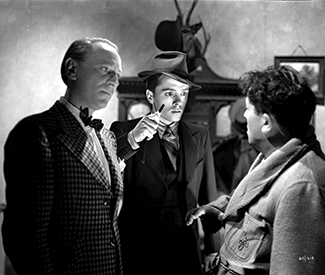
Two films most directly dealing with that atmosphere are double-billed Mon/27. Made in 1946 (though it wasn’t released in some parts of divided, occupied Germany until some time later), The Murderers Are Among Us was the first of the “trümmerfilm,” literally “rubble film” — movies portraying Germans’ struggles with recuperation and loss in the wake of humiliating defeat, not to mention the revelations of heinous Nazi war crimes. Returning home from a concentration camp, Susanne (Hildegard Knef) finds her Berlin apartment already occupied by Hans (Wilhelm Borchert), an embittered, alcoholic physician who no longer practices.

Forced to uneasily cohabit, they try to re-establish some semblance of ordinary life, though that effort is imperiled when former military doctor Hans discovers the superior officer he’d thought dead is in fact alive, well, and prospering — suffering no consequences at all for ordering the massacre of a hundred Polish civilians, including women and children. (Purportedly, occupying Soviet authorities insisted on changing the film’s intended ending, fearing that if Hans actually assassinated the officer, viewers would be tempted toward vigilante justice themselves.)

Duly shot amid a city in ruins, Murderers remains potent stuff, even if it soft-pedals certain aspects: For instance, concentration camp survivor Susanne is as Aryan as can be, the subject of a Jewish Holocaust apparently still being too touchy to mention. Knef (who actually had spent time in a prison camp) became an immediate star, a refreshingly unconventional one who spurned Hollywood offers and shrugged off outrage over a nude sequence (in 1950’s The Sinner) with the memorable observation that such “tumult” was ridiculous coming “five years after Auschwitz!”

Its 1948 co-feature Berlin Express, directed by Jacques Tourneur (of 1942’s Cat People and other horror classics) was a Hollywood production shot on location in Europe, with a multinational cast playing various figures traveling on a train from Paris to the German capital. When one who’d been an important German anti-Nazi resistance figure is killed en route, lingering wartime animosities are overcome to solve the crime — the tentative friendships among them a simple metaphor for the cooperation required among nations to rebuild after catastrophic conflict.

Less politically tilted, but also dealing with a devastated, immediately-postwar landscape, are Akira Kurosawa’s first two collaborations with dynamic star Toshiro Mifune, screening Sun/26. Mifune plays a seriously ill crook in 1948’s Drunken Angel, then crosses over to play a no-less-edgy junior member of the police force in the following year’s Stray Dog. His protagonist in that film is mortified when the revolver he’s issued is stolen on a tram, then used to commit a series of crimes. His obsessive pursuit of the weapon takes him deep into a remarkably seedy makeshift Tokyo of shanty towns, prostitution, and black markets, everyone flop-sweating amid oppressive summer heat.

Other films examine more ordinary, already-entrenched corruption in post-war power structures: Spanish Death of a Cyclist (1955) and Norwegian Death is a Caress (1949) find members of the social elite going to murderous lengths to hide their infidelities; two excellent British dramas from 1947, It Always Rains on Sunday and the Graham Greene-derived Brighton Rock, are bleak slices of lower-class lives driven to crime and desperation; florid Mexican melodrama Victims of Sin (1951) puts its glamorous heroine (blond Cuban Ninon Sevilla) through a mill of sexual hypocrisies and hot “African” dance numbers.

Noir City 12’s US titles, aptly, focus mostly on international criminal and romantic intrigue: Anthony Mann’s 1949 Border Incident involves Mexican immigrant-worker exploitation; the “exotic” settings are billed up front in 1947’s Singapore (Fred MacMurray, Ava Gardner), 1952’s Macao (Robert Mitchum, Jane Russell), and 1942’s The Shanghai Gesture (Gene Tierney, Victor Mature). The latter two films were both directed by Josef von Sternberg, though only willfully camp Gesture fully recaptured the sensuous aesthetic excesses of his 1930s Dietrich vehicles.

Just one title here is strictly all-American, but it’s an important one: Too Late for Tears is an independently produced 1949 “B” potboiler that fell into the public domain and has only been seen for years in inferior prints. The festival’s Film Noir Foundation is premiering its own painstaking 35mm restoration of this little gem by subsequent sci-fi specialist Byron Haskin (1953’s The War of the Worlds, 1964’s Robinson Crusoe on Mars), wherein velvet voiced LA housewife Lizabeth Scott discovers a mighty capacity for greed, deception, and even murder once a bag full of stolen cash accidentally falls into her hands. *

NOIR CITY 12

Jan 24-Feb 2, $10 (“Passport” pass, $120)

Castro Theatre

429 Castro, SF

www.noircity.com


Death and life

0

cheryl@sfbg.com

FILM This week, the African Film Festival National Traveling Series touches down at the Pacific Film Archive, bearing seven features and a number of shorts. The only film to have previous local distribution is Andrew Dosunmu’s Mother of George, about a Nigerian couple living in Brooklyn whose marriage is tested when the wife — played by Walking Dead badass Danai Gurira; her husband is Jim Jarmusch muse Isaach De Bankolé — fails to become pregnant with the son her in-laws demand. The gorgeous photography earned Bradford Young (who also lensed Ain’t Them Bodies Saints) a cinematography prize at last year’s Sundance Film Festival, and, appealing cast aside, his work is the main reason to catch George on the big screen.

The strongest film in the festival is the one that closes it: David Tosh Gitonga’s crime drama Nairobi Half Life, submitted by Kenya as its first Best Foreign Language Film contender last year. Though it didn’t make the Oscar shortlist (frankly, it was a tough year for foreign films, with Amour claiming all major accolades), it’s easy to see why it made the cut. It’s the not-unfamiliar tale of a rural dreamer named Mwas (the charismatic Joseph Wairimu) who sets out to pursue an acting career in the big city (“where the devil lives,” according to his mother). His improv skills are on point, but he is completely gullible, which makes him a prime target as soon as he arrives in “Nairobbery.”

Urban life offers many hard lessons, whether it’s Mwas finding his place in the gang he joins as a means of survival, or overcoming the snooty dismissals of the professional actors he enounters at theatrical auditions. In both realms, he gets in over his head, but he’s a quick thinker and a talented hustler, which gives him an edge his opponents tend to underestimate. If Nairobi Half Life‘s script leans a little heavily on Mwas being caught between two worlds (alternate title suggestion: Nairobi Double Life), its energy is infectious and its presentation is polished — props to producer Tom Twyker (1998’s Run Lola Run, 2012’s Cloud Atlas), whose One Fine Day Film Workshop guided its making.

Director Lonesome Solo’s more rough-hewn and downbeat Burn It Up Djassa also weaves a tale of desperation that culminates in violence, this time in Abidjan, the Ivory Coast’s largest metropolis. Again, there’s a conflicted young man at its center: Tony, or Dabagaou” (as he’s known in the ‘hood), whose rise from cigarette seller to killer on the run is shared via a streetwise narrator who lays down story beats like a hip-hop version of Shakespeare; his scenes are the most cinematic amid what feels like an otherwise largely improvised effort. And indeed, Burn It Up Djassa builds to a tragedy of Bardian proportions. You’ll see it coming, but it’s wrenching nonetheless.

Death is the main character in Alain Gomis’ Dakar-set Tey, or “today,” which takes place in a world that resembles ours but with one key supernatural difference: Those who are about to die are given 24-hour advance notice. One morning, seemingly healthy fortysomething Satché wakes up with the grim knowledge that this is his last day. By the same mysterious power, those closest to him — his family, friends, a bitter former lover, and his wife (though not, it seems, his young children) — are also made aware. Though there’s a certain amount of wailing from his older relatives, Satché accepts his fate, drifting through a day that begins with a sort of living funeral, in which both praise and criticism are lobbed at him, and leads into a raucous street parade and hang time with friends.

As the day grows longer, it turns more melancholy; he visits the man who’ll be preparing his corpse for burial, who reminds Satché he’s lucky to know when his time is up so he has a chance to say his good-byes. But Tey isn’t a total bummer of a movie — it has a dreamy quality and moments of humor, as when Satché shows up late to a ceremony held in his honor, but can’t find anything to eat or drink at the completely pillaged catering table. That this dead man walking is played by American slam poet Saul Williams (though Satché is Senegalese) adds to his inherent outsider vibe. The ticking clock breaks down any forced politeness in his encounters, particularly with his wife, which gives us an idea of what he like was before he knew he was about to die.

End-of-life issues also dominate Akosua Adoma Owusu’s Kwaku Ananse, one of three films composing “Between Cultures: Recent African Shorts” (the other two, Faisal Goes West and the Quvenzhané Wallis-starring Boneshaker, were not available for preview; among the features, Damien Ounouri’s documentary Fidaï, a portrait of his Algerian freedom-fighting great uncle, was also unfortunately unavailable). Kwaku Ananse casts the West African trickster character, Anansi (Americans know him from classic children’s book Anansi the Spider: A Tale from the Ashanti), as its main character’s recently-deceased father. The young woman has come to his Ghanan village for his funeral, and to confront the second family he was keeping on the side. The 25-minute work slowly becomes more fairy tale-like as it progresses, anchored by a solemn but fiery performance by lovely star Jojo Abot.

Elsewhere in the fest, a mockumentary from Cameroon (banned in Cameroon, not coincidentally) about what would happen if the president suddenly disappeared (Le Président) is paired with short Nigerian doc Fuelling Poverty; both examine deep-seated corruption in troubled, post-colonial economies. And for a completely different audience (ages seven and up) is Rémi Bezançon and Jean-Christophe Lie’s Zarafa, the animated story of a young boy who escapes slavery in Africa and becomes enmeshed in the remarkable, mostly true story of the first giraffe to take up residence in France. *

AFRICAN FILM FESTIVAL 2014

Jan. 25-Feb. 26, $5.50-$9.50

Pacific Film Archive

2575 Bancroft, Berk.

bampfa.berkeley.edu


Vanishing point

2

arts@sfbg.com

DANCE Sitting at her large desk overlooking the intersection of Mission and 24th Street, Krissy Keefer speaks eloquently and movingly about the genesis of Hemorrhage: An Ablution of Hope and Despair, the latest work for her 10-woman Dance Brigade Company.

Keefer is a dancer-choreographer-activist who has always enthusiastically plowed into the morass of the social, environmental, and political concerns of the day. Her works are issue-oriented, theatrically savvy, and entertaining, not least because of her sense of humor. Keefer may be deadly serious about her art, but she doesn’t take herself all that seriously.

But on a recent Saturday afternoon, as her crew prepared the main theater for a rehearsal of Hemorrhage, you couldn’t help but notice a note of fatigue, even despair, in her passionate takedown of the types of disasters that drain us of our humanity with ever-increasing frequency.

Keefer admits to being a news junkie. She has her ear to the ground, not just locally; she’s in tune with Midwest farmers who can’t plant crops because of the drought, multi-millionaire Chinese who leave their fellow citizens behind, and the survivors of Fukushima and Hurricane Sandy. Where are they, she wonders, how do people survive? “If you pay attention, you live with hope and despair. You obsess with hope, but what you feel underneath is actually despair. If you are not feeling some kind of despair, you are not paying attention.”

But couldn’t the increased flood of disaster information be the result of our sensationalist 24/7 news cycle? She doesn’t think so, believing instead that violent upheavals have actually become more frequent: “What we have done to the environment, [for instance], is completely despairing.” Included in her indictment are not only the governmental, corporate, and financial forces that act out of self-interest, but also a progressive movement that she believes has not acted strongly and decisively enough.

But Keefer’s major preoccupation at the moment is what she calls the “the corporate monsters — the last robber barons,” who are destroying a culture she has helped build. She lives and works in the Mission, and raised her daughter there. In the last 12 years, Dance Mission Theater has become a community institution, offering classes for adults and children, and providing affordable rehearsal and performance space. These days, when she looks through her office window and sees all those Silicon Valley-bound buses swarming past, she wants to pull out her hair.

“I feel very protective of the culture that we have created in San Francisco. You put layer upon layer on it, from the longshoremen, the Beat poets, the Black Panthers, the hippies, the gay and lesbian solidarity movement, feminism, the immigrant communities. It’s like layers of cheesecloth that you lay down, and this is the culture that came out of it. I participated in that, I am dedicated to it, and I am devastated by its being pulled apart.” Mincing no words, she adds, “It’s one of the cultures that keeps our country from sliding into fascism.”

So Keefer is stepping into the trenches as she always has done: as an artist. Walking into the theater, you realize this is the messiest set she (with Kate Boyd) has ever created. It’s one big junk pile, taking over half the theater and filling the bleachers from top to bottom. It makes you think of the outskirts of Mumbai and Manila, where thousands of people try to eke a living from whatever they can salvage. Where did Dance Brigade get the wheel drums, broken crock pots, fans, at least one bathtub, lace curtains, suitcases, Christmas tree ornaments, and enough body parts to reassemble several automobiles?

“We went to a wrecking yard,” Keefer laughs. “They deliver.”

Thinking of herself and her dancers as having been exiled from their city, as so many people have recently been, she envisioned Hemorrhage as a work about having to live on the edges. “Women always are more vulnerable during catastrophes,” she says, “because they take care of the children.”

For the script, she drew on her own writing but also that of fellow San Franciscans Rebecca Solnit (Hollow City: The Siege of San Francisco and the Crisis of American Urbanism) and performer-activist Guillermo Gómez-Peña, shaping it as a running monologue — a rant, a poem, a meditation, a political manifesto — that runs through the piece and ties it together.

And what do her nine women performers, most of whom have been part of Dance Brigade for close to 20 years, contribute? They sing, they shout, they play the drums, they dance; fiercely, proudly, unstoppably, full of hope, and full of despair. *

HEMORRHAGE: AN ABLUTION OF HOPE AND DESPAIR

Through Feb. 8

Opens Fri/24, 8pm; Thu-Sat, 8pm (Feb 8, shows at 4 and 7pm); Sun, 6pm, $20-$25

Dance Mission Theater

3316 24th St, SF

www.dancemission.com


Tenant battle brewing

44

rebecca@sfbg.com

Benito Santiago, 63, was born and raised in San Francisco. But now that he’s received an eviction notice from the apartment he’s lived in since 1977, he isn’t sure what the future holds.

“This is roots for me,” Santiago told us. “I have more affinity for San Francisco than the Philippines,” his family’s place of origin.

He works part-time with disabled youth enrolled in San Francisco public schools. “The idea that I built a rapport with these students here … to be put in a position where I wouldn’t be able to work with them, I’m a little saddened and depressed by it,” he said. “If I’m homeless, I can’t be taking care of these kids. I mean — it’s a worst-case scenario.”

He’s been exploring alternative housing options, and trying to stay positive. He says he’s even trying to “change the rate of vibration” of the real estate speculators seeking to oust him as part of his pre-dawn meditation and ritualistic movement practice, a routine he developed to mitigate the chronic pain he dealt with after being hit by an automobile when he was crossing the street in 1980.

“Hopefully, they can have some compassion,” he said.

Santiago is hoping to get a temporary extension to stave off his eviction, and he’s been looking into publicly subsidized below-market rate apartments. But rent for even the most affordable of those places would eat up 75 percent of his monthly income, he said. Unless he can find an affordable arrangement somewhere, he might end up having to leave the city.


GROWING MOVEMENT

Santiago has been a part of a growing movement underway in San Francisco to reform the Ellis Act and introduce meaningful legislation at the local level to protect the city’s renters.

In recent weeks, the San Francisco Anti Displacement Coalition, made up of a wide range of organizations including the San Francisco Tenants Union, has hosted a series of neighborhood tenant conventions to solicit ideas that will be boiled down at a citywide tenants’ gathering scheduled for Feb. 8. At that meeting, organizers plan to hash out a strategy and possibly solicit ideas for a ballot initiative.

The tenant conventions are happening on a parallel track with efforts to reform the Ellis Act, which allows landlords to remove apartments from the rental market and evict tenants.

“Our goal is to ban the use of the Ellis Act in certain circumstances,” explained Dean Preston of Tenants Together, a nonprofit focused on strengthening the rights of renters.

“More than half of Ellis Acts are performed by people who bought the properties within the past six months,” he told us. “Their whole purpose is to buy it and kick everyone out. It was supposed to be for long-term landlords to get out of the business” of being landlords, he added. Instead, “it’s being completely abused.”

Sen. Mark Leno is working with Mayor Ed Lee on a response that would seek to lessen the impact the Ellis Act has had in San Francisco. Meanwhile, Assemblymember Tom Ammiano is spearheading a separate effort.

“At this time, he’s not really ready to say which avenue he’s taking” in terms of a legislative strategy, said Carlos Alcalá, Ammiano’s communications director. “Because that can rule out that avenue.”

Preston said he’s been through waves of evictions before, but the organizing now taking place has been especially effective at drawing attention to the issue. Oftentimes, “the speculators are not from within the city or even within the state,” he pointed out. “That has fueled a lot of activism and courage.”

For Santiago, the organizing has given him heart during a difficult time. “I’m hearing a lot of sad stories,” he said, “and I am not alone.”

Positive starts

1

marke@sfbg.com

GOOD TECH Like Tabasco sauce, Lady Gaga, and the color teal, technology in itself is neither good nor bad — it’s all in how you use it. (Indeed, you could argue that those first three examples are technological feats in their own right: Just don’t use too much, please!) And while battles rightly rage about how the Bay Area’s tech industry is reweaving our social fabric, creating and applying technology is an art in itself, albeit one that can have huge economic and political impact.

It can be difficult to see past the whizbang gizmos, marketing dazzle, and glowing dollar signs of how technology is normally presented to us. But in this issue we wanted to take a deeper look at some of the ways technology is impacting or enhancing Bay Area life, and highlight some of its possibilities in addressing some of the city’s real problems (no, not parking or hailing a cab). For all the talk about sharing economies and communal interaction, there’s still a huge gulf between what’s considered “innovation” and what actually offers a path toward civic solutions.

Important questions still hang in the air (beyond the environmental and labor impacts of manufacturing such technologies): How can innovation be better applied to help city infrastructure and social services? How can we integrate startup energy into city policy-making and government transparency? Can the effects of “disruption” be assessed using other indicators beyond market value? In what ways can we ameliorate the knee-jerk resistance to innovation from all sides when it comes to addressing the explosion of homelessness, hunger, and child poverty in the Bay Area? Can we develop new “inputs” or ways of including all Bay Area voices in the conversation about how technology is transforming the way we live?

And why can’t we Kickstart Muni, anyway?

Lately, there’s been some movement toward addressing some of these concerns, especially when it comes to art and culture. The huge, forthcoming 5M project on Mission plans to not only house Yahoo, but also Intersection for the Arts and SF Made, explicitly integrating local arts and businesses into the start-up incubator template. A recent forum hosted by music app WillCall on how tech can better support the local music and nightlife industry packed the Public Works nightclub. Proposals to help teach more coding in schools and make government more transparent are gaining steam.

Of course, it’s always wise to maintain a healthy skepticism about the latest shiny thing, and to realize the limits of technology — often it can’t even clean up its own mess — and especially the people behind it. But it’s also important to keep pushing the conversation about technology’s role in civic engagement forward in positive, thought-provoking, even spicy new directions.


Judging hackers

9

joe@sfbg.com

The Bay Guardian is happy to announce a partnership with BeMyApp, CloudCamp, Hewlett Packard, and Intel in launching a hackathon for societal benefit. I will be one of the judges of their CloudCamp Social Good Hackathon the weekend of Jan. 24.

The hackathon is a contest tasking programmers and designers with creating apps that could change their city, state, country, or the world. Teams will craft those changes around health, fitness, the environment, and education. The Guardian has always been solutions based, and we hope to work with tech to help solve the problems of San Francisco’s rising displacement and inequality together.

Entrance in the hackathon is free, though space is limited. The first and second prizes are $5,000 and $4,000, respectively. Hackers will strut their ones and zeroes at Impact Hub San Francisco, which is housed in the bottom floor of the San Francisco Chronicle Building on Fifth and Mission.

Kalina Machlis, community manager at BeMyApp, said the Guardian was a natural choice to partner with them due to our often critical stance on the tech community: We’d keep them honest. She also hoped it would help build ties with a media community that can be critical of the tech industry.

“It’s a good way for you to see there are positive things happening in the tech world,” she told us. And though no one app can solve all of San Francisco’s social ills, we hope this can be a first step toward harnessing tech for the good of all the city’s residents.

Be advised, you don’t necessarily need to be a tech head to join in. Just bring your ideas, Machlis told us. “Our initial idea for beginning the company was to bring together people who don’t have technical skills with people who design and code,” she said.

We’re looking forward to bringing a bit of Guardian fire to a hub of techies who want to change the world. For every Greg Gopman spewing hatred, no doubt there are tech-savvy folk who care about the less fortunate around them. We want to meet those socially conscious hackers.

By the people

3

rebecca@sfbg.com

A growing number of people seem to be convinced that “civic innovation” is sexy.

Tech-oriented events at San Francisco City Hall, like hackathons for improving government services, have become increasingly common. App developers are gaga over the idea of revolutionizing government through software, and the concept is gaining momentum.

To borrow an analogy referenced in an essay by tech publisher Tim O’Reilly, some software purveyors are moving away from the idea of government as a vending machine: “When we don’t get what we expect, our ‘participation’ is limited to protest—essentially, shaking the vending machine.”

Instead, they’re latching onto the idea of government as an open platform that citizens can tinker with.

That’s exciting. Can it lead to a government that is more responsive to the people, as enthusiasts predict? Can we really hack away the ineffective and irresponsive parts of the public sector?

Or is some of this just hype and libertarian idealism from a cash-drenched tech sector seeking business opportunities and greater political influence?


HACK THE LAW

Sup. Mark Farrell recently proposed doing away with an outmoded and widely disregarded law disallowing bicycle storage in garages. The legislative tweak matters because it was spurred by feedback submitted through a new website, SanFranciscoCode.org.

Operated by a private nonprofit organization called the OpenGov Foundation, the website presents an interactive, online version of the city’s municipal code with an open platform where anyone can easily comb through the thicket of city laws and leave comments on specific sections, using the software as a magnifying glass.

Farrell touted the website — launched in partnership with Mayor Ed Lee’s Office of Civic Innovation last September — as a tool that could spur “a more transparent and accountable city government.”

“I see this leading to better engagement,” said Jess Montejano, Farrell’s legislative aide. Seamus Kraft, executive director of the OpenGov Foundation, has been compiling all the comments submitted via SanFranciscoCode.org, and recently sent a memo with all user feedback to each member of the Board of Supervisors.

“Our mission is to put as much public information into the public’s hands as possible,” Kraft said, “so that people can access their laws the way they deserve in 2013.”

The idea that a law would be changed instantly based on public comments is a new take on an old concept, with shades of being enamored by that shiny new thing. After all, many supervisors have a habit of turning their backs, or very obviously zoning out, during public comment sessions at weekly board meetings.

Yet anyone with an Internet connection can run with this new portal for citizen engagement. How about a reinvigorated response to San Francisco’s Sit/Lie Ordinance? A torrent of online commentary about the public nudity ban? Not everyone has the same idea about what it means to fix a broken law.

In some respects, City Hall appears to be lending itself out as a laboratory in which to test the wide-ranging theories of civic innovators. Mayor Lee has greeted the technology sector with arms wide open, and empowered the Office of Civic Innovation to foster tech-fueled government fine-tuning.

With the rise of amply funded organizations such as Code for America, droves of programmers stand at the ready, eager to chip in and do their part to help transport the public sector out of the analog ages.

A recent brigade of Code for America fellows partnered with the city’s Department Health and Human Services to create an app that automatically notifies food stamp recipients via text when they are about to be automatically dis-enrolled. The idea is to give recipients advance notice so they can take steps to renew their enrollment.

Other initiatives, such as the Department of Public Health’s release of an open data set to reveal housing inspection records, can arm citizens with useful knowledge — like empowering apartment hunters to spot a slumlord from a mile away.

The use of tech for transparency holds potential: What if each and every public record — down to every last email, calendar appointment, or police report — were instantly uploaded to a publicly accessible database, easy to locate, and fully searchable? Would that be a check against corruption?

Ron Bouganim, a San Francisco-based venture capitalist and mentor to the very Code for America teams industriously improving city government through technology, recently filed paperwork with the Securities and Exchange Commission to create GovTech. It’s a new kind of venture capital fund, specifically devoted to fostering companies looking to find their way in the “civic innovation” sector.

Bouganim laid out the dynamics driving the civic innovation trend: First, “2008-2009 was like a nuclear bomb,” he explained. “The financial crisis was a cataclysmic event. The money is not coming back, ever.”


THE NEW NORMAL?

This new normal, characterized by dramatically depleted public-sector finances, has helped make government more open to working with startups instead of trusted brands like IBM, Bouganim said, since startups can help government “do more with less.”

Bouganim also said adoption of cloud computing has changed the game. Whereas governments were initially hesitant to move their data to the cloud, the recent migration has made it possible for companies seeking government contracts to price below the “procurement threshold,” a price point that triggers a long public approval process before a purchase can go through. Now that technology has helped software developers slice through red tape, startups are flooding in, eager to land public sector contracts.

The city’s Entrepreneurship in Residence webpage (entrepreneur.sfgov.org), which markets a program rolled out by the Office of Civic Innovation, says it all. Sporting a gleaming picture of San Francisco City Hall, it bears the caption: “Develop products & services for the $142 billion public sector market.”

Bouganim wasn’t willing to say much in the way of GovTech’s plans, but he mentioned that his accelerator provides mentorship for startups that are paired with government agencies, and hinted that his initial investments would lead to “a dramatic impact on government savings.”

An underlying goal of the whole civic innovation movement, Bouganim added, “is to fundamentally change this concept that government is over there, and I am over here. We the people are the government, we’ve just lost touch with it.”

Bouganim responded to the Guardian’s call within 15 minutes, mentioning he was in London. “I wanted to get back to you so you didn’t think I was ignoring you,” he said, “because that would be awful.”

But the well-compensated public servants at the Mayor’s Office of Civic Innovation evidently had no such compunction. The Bay Guardian placed multiple calls to that office for this story, only to be met with radio silence.

And that’s a quandary. One cannot trumpet lofty goals of citizen engagement while habitually walling off government critics, and still expect to be taken seriously. And therein lies the rub with civic innovation: Even if technology is neutral, politics will never be so.

Hey whistleblowers

6

rebecca@sfbg.com

The San Francisco Bay Guardian newsroom is tapping some high-tech tools to continue its journalistic mission.

Working in partnership with a group of technologists who dislike government corruption just as much as we do, we’re launching a new web-based system to enable sources to anonymously submit documents directly to our news staff.

The system offers better safeguards for protecting sources’ identities than conventional email can offer.

Powered by a software system called SecureDrop, the system is designed to protect the identities of whistleblowers if they wish to share information without fear of retaliation.

If the documents we receive contain newsworthy information that can be independently verified, we’ll use it as the basis for our reporting.

Since this is an experiment, we have no idea what will land in our SecureDrop folder — but it creates the potential for us to partner with sources in breaking significant news items.

The SecureDrop program originated with the late Aaron Swartz, who developed it in collaboration with Wired Editor Kevin Poulson. Swartz was an Internet activist and programmer known for hashing out inventive ways to fight corruption and promote transparency. He’s remembered, among other things, for cofounding Reddit, the online news site; and for founding Demand Progress, an online activism group known for its 2012 campaign against the Stop Online Piracy Act.

Now, SecureDrop is managed by the Freedom of the Press Foundation, a nonprofit organization founded in 2012 that is “dedicated to helping support and defend public-interest journalism focused on exposing mismanagement, corruption, and law-breaking in government.”

Files submitted to the Guardian through the SecureDrop system will remain encrypted until they are securely downloaded. This means there’s no way for a third party to view their contents and trace them back to the sender.

Sources’ actual identities will never be revealed, and they’ll be identified to our news staff only through randomly generated code names.

Of course, whistleblowers desiring to keep their identities unknown always have the option of putting some documents into an unmarked envelope and dropping it in the mail.

But by submitting documents through SecureDrop, sources will have the ability to send high volumes of information that would be logistically difficult to print out or send. The program also enables sources to communicate with journalists in real time without revealing their actual identities.

Stay tuned. In coming weeks, the Guardian will publish a clip-out guide with instructions on how to submit documents to our news staff using SecureDrop. Sending encrypted files to journalists begins with downloading the Tor Browser Bundle, a system that makes online activity invisible to third parties.

Nickels and dimes… or transit for our times?

14

STREET FIGHT Much has been written about the so-called “Google buses” and San Francisco’s latest round of gentrification. It’s a horrible mess and the city’s trifling $1 charge per bus stop will do little to address the broader structural problem that these buses lay bare.

Ordinary people cannot ride them, nor do the people who clean and cook for the tech world. Like tour buses, they are clunky and inappropriate for many neighborhood streets. While they do substitute for some car trips, an ad hoc private transit system does not reflect the kind of thoughtful regional planning needed to truly reduce car use in the Bay Area.

But the controversy over the private commuter buses does show that there is great potential for a public regional express bus system. Consider that in 1980, 9 percent of commuters in San Francisco left the city every day to go to work. In 2010, outbound commuters approached 25 percent. Owing to regional political fragmentation, Muni cannot provide intercounty service and thus is not the travel mode of choice for many of these commuters. And although Caltrain and BART offer some regional service, the sprawling locations of suburban firms often make regional rail impractical or at the very least time-consuming owing to unavoidable multiple transfers to local buses.

So in noteworthy ways, the rise of private transit is an immediate reaction to poor regional transit connections. Yet rather than sidestepping failed regional planning by encouraging an inequitable, two-tiered, private system, we need to expand and regionalize the existing public bus systems. San Francisco’s mayor and Board of Supervisors have seats at the table of regional planning and ought to use the controversy over private buses as an opportunity to kickstart the implementation of a regional public bus system accessible to all.

For example, something like AC Transit’s Transbay routes should be extended through San Mateo and Santa Clara counties, perhaps operated by BART or Caltrain as part of the next iteration of Plan Bay Area. This network would use reallocated express lanes on 101 and I-280 and use transit priority lanes on arterials like 19th Avenue in San Francisco and El Camino Real in San Mateo. Regional property assessments on the corporations and developers, in part already possible within the existing BART district (one should be created for Caltrain), could be used to fund such a system. Congestion charging on 101 and I-280 should also be deployed and those funds used for electrifying Caltrain and developing the parallel and complementary regional bus system.

Of course there will be opposition to a regional public bus system as there already is to progressive regional planning. Transit-connected, walkable communities in the South Bay, for example, have been made all but illegal by decades of conservative middle and upper class, anti-density, anti-tax homeowners in suburban localities. As recently as last year, this Tea Party-style conservative politics dampened Plan Bay Area, resulting in a weak regional housing plan with an underfunded and lackluster transit vision. This conservative approach stifles our collective sense of what is possible and the fear-mongering has rendered regional planners virtually impotent. Yet it can and must be overcome.

Some progressives may find it convenient (and in some cases justifiable) to target tech workers right now, but they could also direct energy into shaping the next round of Plan Bay Area. Remember that Plan Bay Area is a living document, a work in progress. The current version of the plan, weak on transit funding, has been subdued by a loud, irrational mob of Tea Party cranks bent on sabotaging anything that hints of progressive ideas. Plan Bay Area is also stifled by a regional business class that wants to keep the status quo and that is comfortable with the neoliberal model of private transit.

So while a smattering of dedicated and hard-working progressive transit activists showed up and attempted to shape Plan Bay Area last year, in the coming years the plan needs a broader progressive movement — including transit, housing, social justice, and environmental activists — to demand a more visionary regional transportation plan that connects all of the Bay Area. I am hopeful that this would not only steer regional planning in a progressive direction, but many of the tech workers who are now on the private buses would gladly join in the cause.


THE POLITICS OF SUNDAY PARKING

Speaking of hopeful, last month the SFMTA reported that Sunday metering, implemented last January, is a resounding success. Switching-on the meters doubled parking availability on Sundays, which is invariably what small businesses, most of which are open on Sunday, want to see.

Sunday meters increased the number of cars using city-owned garages and decreased the time cars circled in search of parking from an average of four minutes to two — de-cluttering streets in commercial districts. While this might seem like a boon to drivers, it also means less pollution, safer conditions for pedestrians and cyclists, less delay for Muni, and a much needed enhancement of revenue for operating public transit.

So it is mystifying that such success would be ignored by Mayor Ed Lee, who instead has proposed to discontinue Sunday metering. This is doubly confusing because, based on existing travel behavior to many commercial districts, 25 percent of people arrived by driving, while 31 percent took transit and 25 percent walked. So what the mayor is effectively saying to the pedestrian and transit-using majority is you matter little. What does matter is the few whining motorists who called him to complain about being “nickel and dimed.”

The mayor talks a good game when saying he is truly concerned about pedestrian and cyclist safety, and insisting that he wants to fix Muni. But gutting a reliable source of operating funds and pandering to car drivers who will dangerously circle for parking is inconsistent.

Lee says money isn’t an issue because his proposed General Obligation bond (which must be approved by voters) will patch the lost revenue from Sunday metering. But the GO bond will incur further debt and only fund existing capital needs, while parking meters provide a debt-free steady revenue stream for Muni. It’s also slightly misleading because the bond would not cover Muni operations, while revenue from Sunday metering does pay for operations.

The mayor’s pandering also put the SFMTA Board of Directors, which has been working out parking management and Muni finance, on the spot. Ultimately, it has to vote to preserve or scrap Sunday metering in the coming months. Now the directors have to decide if they support transit-first or the mayor’s pandering.

Unfortunately, when it comes to parking policy, the way that the Board of Supervisors has behaved lately suggests it will either jump on the mayor’s bandwagon and pander to motorists or cower in silence as good public policy is trashed. Not a good situation at City Hall, where transit riders seem to be routinely thrown under the bus by the political establishment.

Street Fight is a monthly column by Jason Henderson, an urban geography professor at San Francisco State University.

Protect pedestrians

0

More than 50 public commenters spoke at the Jan. 16 joint Police Commission and Board of Supervisors Neighborhood Services and Safety Committee meeting, and all sounded one message loud and clear: Drivers can maim and kill pedestrians with near impunity in San Francisco, and that must end.

"I’m here very simply to urge you to end the carnage on our streets," said Natalie Burdick of the nonprofit Walk SF. "These crimes cost the city millions annually, and untold value in terms of squandered human capital."

Pedestrian deaths reached a high last year, with 21 killed in traffic collisions. Sup. Eric Mar highlighted the lack of funding in Mayor Ed Lee’s Pedestrian Strategy, which has a funding gap of $5-18 million. But SFPD’s failure to cite motorists was the main criticism.

"The fact is these statistics have been consistent that two-thirds of pedestrian accidents are the fault of the driver," Sup. Scott Wiener said at the outset of the meeting. "It’s the fact of the situation."

State of the City: spin over substance

5

It was maddening to watch Mayor Ed Lee deliver his annual State of the City address on Jan. 17. This was pure politics, from the staged backdrop of housing construction at Hunters Point Shipyard to the use of “regular people” props to the slate of vague and contradictory promises he made.

“This place, the shipyard, links our proud past to an even more promising future,” was how Lee began his hour-plus, invite-only address.

Later, he touted the housing construction being done there by Lennar Urban as emblematic of both his promise to bring 30,000 new housing units online by 2020 — the cornerstone to what he called his “affordability agenda” — and the opposition to unfettered development that he is pledging to overcome.

“A great example is the place we’re standing right now. This took us too long,” Lee said after decrying the “easy slogans and scapegoating” by progressive activists who place demands on developers.

But that implication was bullshit. As we’ve reported, progressive and community activists have long encouraged Lennar Urban (which has a close relationship to Lee) to speed up development on this public land that it was given almost a decade ago, particularly the long-promised affordable housing, rather than waiting for the real estate market to heat up.

That was just one of many examples of misleading and unsupported claims in a speech that might have sounded good to the uninformed listener, but which greatly misrepresented the current realities and challenges in San Francisco.

For example, Lee called for greater investments in the public transit system while acknowledging that his proposal to ask voters this November to increase the vehicle license fee isn’t polling well. And yet even before that vote takes place, Lee wants to extend free Muni for youth and repeal the policy of charging for parking meters on Sundays without explaining how he’ll pay for that $10 million per year proposal.

Lee also glossed over the fact that he hasn’t provided funding for the SFMTA’s severely underfunded bicycle or pedestrian safety programs, yet he still said, “I support the goals of Vision Zero to eliminate traffic deaths in our city.”

Again, nice sentiment, but one disconnected from how he’s choosing to spend taxpayer money and use city resources. And if Lee can somehow achieve his huge new housing development push, Muni and other critical infrastructure will only be pushed to the breaking point faster.

Even with his call to increase the city’s minimum wage — something that “will lift thousands of people out of poverty” — he shied away from his previous suggestion that $15 per hour would be appropriate and said that he needed to consult with the business community first: “We’ll seek consensus around a significant minimum wage increase.”

But Mayor Lee wants you to focus on his words more than his actions, including his identification with renters who “worry that speculators looking to make a buck in a hot market will force them out.”

Yet there’s little in his agenda to protect those vulnerable renters, except for his vague promise to try to do so, and to go lobby in Sacramento for reforms to the Ellis Act.

Lee also noted the “bone dry winter” we’re having and how, “It reminds us that the threat of climate change is real.” Yet none of the programs he mentions for addressing that challenge would be as effective at reducing greenhouse gas emissions as the CleanPowerSF program that Lee and his appointees are blocking, while offering no other plan for building renewable energy capacity.

Far from trying to beef up local public sector resources that vulnerable populations increasingly need, Lee said, “Affordability is also about having a city government taxpayers can afford.”

Manhattanization revisited

116

joe@sfbg.com

The housing crisis is spurring pro-development arguments that threaten to hasten the “Manhattanization of San Francisco,” a buzzphrase from another era that led to local controls on high-rise development.

The city is getting richer and less diverse, and the unaddressed displacement of longtime residents has fueled populist outrage. Now, politicians are finally getting the message, but some are offering solutions that may reopen old civic wounds.

They say that the answer to the housing affordability crisis is to build massive amounts of new housing, and to build it higher and more densely than city codes and processes currently allow.

Sup. Scott Wiener wrote a scathing indictment of the city’s alleged aversion to housing production in the San Francisco Chronicle on Jan. 13, slamming a planning process that he says slows necessary construction.

“This disconnect — saying that we need more housing while arbitrarily finding reasons to kill or water down projects that provide that housing — is having profound effects on our city and its beautiful diversity, economic and otherwise,” Wiener wrote.

Though he mentioned affordable housing, the need to build all kinds of housing was the crux of his argument. It’s the same kind of developer-friendly rhetoric that whips people into a frenzy with faux common sense: build more, and the market will take care of everyone.

But there are flaws to that simplistic argument. Housing advocates (and Guardian editorials) have long argued that market rate units — the median price of which just surpassed $1 million — don’t trickle down to maintain the city’s economic diversity. More supply may help, but with insatiable demand for housing here, it won’t help much with affordability for the working class.

The next day, Wiener introduced legislation to loosen density requirements when developers build below-market-rate housing units on site, creating an incentive to build more of the units that affordable housing advocates say are most valuable.

“Long term, I’m concerned about young persons that can come here,” he told the Guardian. “It’s not just about building more housing.”

Pushing a pro-development agenda while playing lip service to an affordable housing push is all the rage in San Francisco nowadays, with Mayor Ed Lee calling for building 30,000 new housing units by 2020, supporting the rapid growth calls by SPUR, Housing Action Coalition, and other pro-growth groups.

But Peter Cohen, co-director of the Council of Community Housing Organizations, says supply and demand logic doesn’t apply to the San Francisco housing market for a number of reasons.

He pointed to a paper by CCHO cohort Calvin Welch, who teaches a class on the politics of housing development at USF and SFSU. Welch cites data from the City Controller’s Office showing that when San Francisco increases supply, the market responds by raising the average housing price. Contrary to all the supply and demand claims, when we produce more, things get more expensive.

Why?

“In classic economic theory prices are set by supply and demand only when the market is ‘competitive’ when neither consumers nor suppliers have the ‘market power’ to set the price by themselves,” Welch wrote. “Clearly, that is not the case in San Francisco…of the City’s 47 square miles, only 13 square miles is available for housing uses.”

“There is no ‘free land’ in San Francisco,” he wrote. “The owners have total ‘market power’ over its price.”

But that’s the kind of complex argument that has a tough time penetrating the public consciousness. The idea isn’t as catchy as “supply and demand.”

“I think frankly this whole thing about build, build, build — it’s an easy answer to something that’s complex,” Cohen told us. “It resonates. It sounds like the easy path to sound like you know what you’re talking about.”

That simplistic thinking is dangerous, though, because San Francisco is quickly becoming Manhattanized. Since 2002, New York City Mayor Michael Bloomberg rezoned over 37 percent of New York City, according to The New York Times, causing the construction frenzy many are seeking for San Francisco.

Bloomberg added 40,000 buildings in his time as mayor, but that boom had mixed results. It arguably hastened the Big Apple’s gentrification, especially in Manhattan, one of the few US locales denser than San Francisco.

From 2000 to 2010, Manhattan’s ranks of white people swelled by 58,000. During the same period, the wealthy home of Wall Street lost 29,000 African Americans and 14,000 Latinos. More alarming is the income disparity there.

From 1990 to 2010, the city that never sleeps, and its neighborhoods, increasingly became a land of have and have-nots. Census maps showed that while 1990 Manhattan had economic diversity, now the median income hovers over $75,000 for most blocks of that famous borough.

Articles from the Times and NYC-based housing advocacy organizations frequently describe Manhattan as a haven of wealthy white yuppies. Sound familiar?

San Francisco is quickly following suit. The same census maps that show the swell of wealth in Manhattan show a swell of wealthy folk in San Francisco.

BMR housing set-asides help, and Mayor Lee has promised to ramp up BMR production, calling for about 10,000 units by the year 2020. But any serious increase in housing production carries its own cost in a city where public transit and other vital infrastructure are already underfunded and would need serious new investments.

In his Jan. 17 State of the City speech, Mayor Lee warned against demonizing the tech industry or with pitting one group against another. “San Francisco changes us more than any group of newcomers will change San Francisco,” he said to the invite-only crowd.

The difference now is the wealth that threatens to gentrify San Francisco’s weird soul, the one we’ve hung onto since a man named Joshua Norton declared himself Emperor of the United States and was hailed as a San Franciscan icon.

“Manhattanization” is not just a buzz term or a scare tactic: It’s representative of a specific set of zoning and construction policies that many San Franciscans are now advocating for, which will change the demographics and politics of this city, whether we like it or not.

San Francisco’s chief economist addresses supply and demand in terms of housing — it’d take over 100,000 new housing units to make a dent in housing prices in San Francisco.

The secret life of Sylvia Fein

1

arts@sfbg.com

VISUAL ART In 2012, I ran down to the Los Angeles County Museum of Art for “In Wonderland,” a massive exhibition of women surrealist artists working in the US and Mexico from the 1930s through the ’60s. Among the artists — from big names like Frida Kahlo and Leonora Carrington to obscure figures like Bridget Tichenor and Julia Thecla — there were only two living participants: Yayoi Kusama and Sylvia Fein. I was familiar with Kusama’s polka dots and happenings, but Sylvia Fein was altogether something else, a figurative painter whose gleaming egg-tempera-on-gesso works from the ’40s and ’50s suggested at once the allegorical portraiture of the Renaissance and the alchemical surrealism of Remedios Varo.

As it happens, Fein lives out near Martinez, and I soon found myself making pilgrimages to her house. Nor was I the only one, and among the people to have sought her out in the wake of “In Wonderland” are curator Travis Wilson and Jasmine Moorhead, owner of Oakland’s Krowswork Gallery. Together Wilson and Moorhead have mounted an ambitious retrospective, “Surreal Nature,” spanning the whole of Fein’s career but particularly emphasizing her output of the last decade, which has never been publicly shown.

Still using egg tempera on gesso, the spry 94-year-old painter continues to create her most astonishing works today, paintings that defy the usual division between abstract and representational; an eye, for example, might float in the middle of an otherwise wholly abstract cosmos, as in Crucial Eye (2011) or Marble Galaxy (2010). And while the catalog to “Surreal Nature” indicates she has rejected such labels as “surrealist” since her mid-20s, Fein has softened her stance somewhat over the ensuing years.

“I really don’t think that’s the word even though we use it all the time,” Fein says. “I think most paintings are surreal because they’re in another dimension. Sur-real, but in the right sense. Because it is above the ordinary.”


EARLY SPELLS

Certainly Fein’s career has been anything but ordinary; while studying painting as an undergraduate at the University of Wisconsin, Madison, in the early ’40s, Fein became part of a six-person group of “magic realists” led by Marshall Glasier and including fellow “In Wonderland” artist Gertrude Abercrombie. Along with group member John Wilde, Fein earned a show at the university’s gallery in 1941, a rare honor for undergrads. World War II brought a period of intense anxiety over the fate of her enlisted husband, Bill Scheuber, expressed in such works as The Lady with the White Knight (1942-43), but it was during a stay in Mexico (1944-46) that her art fully flowered.

“I lived in a place where there was no running water and no flushing toilets,” she laughs, relating such elemental conditions to her artistic maturation. “God, that really fit my personality. And here I grew up in Milwaukee!”

In 1947, after her husband’s return from the war, the couple moved to the Bay Area, where Fein would receive an MFA from the University of California, Berkeley, participating in a pre-Beat bohemia that included the likes of dancer Anna Halprin and composer Harry Partch. But her real education, she maintains, was at the hands of art theorist Henry Schaefer-Simmern.

“He’d been brought to teach at Cal and his ideas were so revolutionary that technically they threw him out and he started his own art institute,” Fein recalls. “I was one of his first students, and he was teaching that there was an evolutionary artistic intelligence, that most art begins with scribbles, then it starts to get formation, it evolves into circles and out of circles children make other lines. Not only that, but if you look at the history of the world and primitive societies, you see the same evolutionary things, whether in caves or rocks, scribbles on hides.

“I worked with him for 20 years. He was writing books; I did research for him, and then I did drawings for his books, in ink, of historical subject matter, so it was like I was studying the history of the world all over again then delineating it for him. That’s like a secret part of my life nobody has ever mentioned.”


LATE MAGIC

At the same time, Fein managed a successful career as a painter. By the mid-’50s, when monumental abstraction was in, she was working nearly in miniature, painting tiny landscapes and seascapes. Nothing could have been less fashionable, but she still sold well on both coasts. Yet in the early ’70s, she began a 30-year hiatus from painting, as she wrote and self-published two books inspired by her work with Schaefer-Simmern, Heidi’s Horse (1976), an analysis of her daughter’s drawings of horses between the ages of 2 and 16, and First Drawings: Genesis of Visual Thinking (1993), a related account exploring the development of visual logic in children, primitive societies, and other artists. Only in the early 2000s did she return to painting, in time for rediscovery by curator Robert Cozzolino, who staged a show of the ’40s magic realist group, “With Friends,” at the University of Wisconsin in 2005. This show led directly to her inclusion in the 2012 LACMA exhibition.

While both “With Friends” and “In Wonderland” focused on the ’40s and ’50s, “Surreal Nature” is the first opportunity to see Fein’s present work, even as the curators have done an excellent job of contextualizing it in terms of her overall development. One need only juxtapose The Lady with the White Knight with her most recent series of memorial “trees” for her husband Bill — who died in 2013 after some 70 years of marriage — to see how her own version of surrealism has transformed from an image-based style to a more directly experiential art of brushwork and materials.

“It sure is flowering in my late age,” Fein remarks. “I’m so lucky that’s happening. You can’t make yourself do this.” *

SURREAL NATURE

Jan. 18-Feb. 22

Thu-Sat, noon-6pm and by appt.

Krowswork

480 23rd St (side entrance), Oakl.

www.krowswork.com


Art-ic blast

0

arts@sfbg.com

THEATER New York early last week was as cold as Muazzez. True, I’ve never been to Muazzez, but a reputable source called that asteroid “so cold it is a frozen bull roar,” which sounds about right.

“They lied to me about the reality of things here on Muazzez,” began said source, a nondescript speaker seated at a bare wood desk. “About the foundations of these, their basis, their fundament, the profound bottom of things.”

There’s a glass of water on the desk, some loose paper.

“I am an Abandoned Cigar Factory (or ACF),” he goes on to explain, “groaning in the dunes near the settlement of Culpepper.”

The unexpected narrator at the bare wood desk sat in a bare white room, with the incongruous name of the Chocolate Factory (in fact, a terrific theater in Long Island City). The play, called Muazzez, originated as a collection of short stories (all set on asteroids) by Mac Wellman, a writer better known as a playwright and a leading light of the American experimental scene (and a prolific one too, despite receiving few productions in the Bay Area).

Performed with a forthright, faintly odd, wholly captivating precision by longtime collaborator Steve Mellor, Muazzez (directed by Wellman) is an intoxicating and deceptively subdued flight of language and weirdness whose cumulative power, over the course of its brisk 40 minutes, is hard to describe and harder to shake off. Its surface meanings can seem strange, obscure, dryly amusing, even piffling — still, there are things shifting down below in some grim molten core. It was a feeling similar to that produced by one of James Tate’s poems.

Muazzez set the tone well. Expecting the unexpected became second nature over the course of last week’s sampling of shows from PS 122’s COIL (which presented Muazzez), as well as from the Public Theater’s Under the Radar, and Ben Pryor’s American Realness — all together just three (!) of the lively and significant New York festivals that now swirl each January around the annual meeting of the Association of Performing Arts Presenters (or “A-PAP,” as it’s usually pronounced).

Bees are in short supply these days, so better to say the presenting industry’s international confab is a kind of honey pot attracting bears in the performing arts world, by which we mean the artists wrapped in faux fur coats and puffy jackets against the bracing, angry wind and plummeting temperatures of last week’s “arctic blast” (itself just another signal from the larger natural order of things that humanity is wildly off course — or right on target, I guess, depending on your end goal.)

This context heightened the urgency folded into Muazzez‘s extraterrestrial transmission. And there were other, comparable transmissions, including one from the future, articulated in the person and voice of TV’s Captain Kirk. Co-presented by COIL and the New Ohio Theatre, An Evening with William Shatner Asterisk takes place on a stage inhabited by a central flat screen TV on wheels and two larger screens on either side. Onto the center screen comes the iconic image of TV’s starship commander and over-actor par excellence.

Suddenly he speaks — in a funny but vaguely disconcerting stagger of assembled speech bites, culled from the character’s entire lexicon, the actor’s “body” of work. The captain has been commandeered. Someone or something else from beyond (beyond this time and beyond language) is speaking to us through him. The transmission, spelled out on the far screens, comes in segments or “chapters,” and has a philosophical cast: a discussion of the differences between art and science. Its purpose, we are told, is to convey a message to us from the future, which alone knows where we are headed. The message itself (the beautifully written text is by Joe Diebes; the excellent audio-visual scheme by Rob Ramirez) is prefaced and forestalled, in a half-teasing fashion, by a discussion of some basic terms.

The performance’s sole human figure, meanwhile — other than two-dimensional James T. — is an expressionless Japanese woman (an imposingly restrained Mari Akita) who moves the wheeled screen slowly about the stage, illustrates a point or two with a few simple movements, and, in one deceptively incongruous moment, picks up a microphone to deliver (in subtitled Japanese) a monologue about coming to the United States and falling obsessively into the world of drag queens and female impersonation.

Hilarious yet eerie, playful yet purposeful, oblique yet precise, conceiver-director Phil Soltanoff’s An Evening with William Shatner Asterisk proved a dialectical delight; and in its teasing manner and final indirect plea for some small but profound transcendence, it was, pardon the expression, fascinating.

In another wonderfully estranging but altogether earthbound offering, COIL teamed up with American Realness and New York City Players (the latter seen at Yerba Buena Center for the Arts last February with its co-production of Early Plays by Eugene O’Neill) to co-present writer-director Tina Satter’s offbeat, sharp-footed House of Dance (in association with Satter’s own company, Half Straddle, and the Abrons Art Center).

Set in a small New England tap studio among four fractious, serious, and seriously oddball tap dance competitors (played with a combination of understated delivery and irresistible flair by Jess Barbagallo, Elizabeth DeMent, Jim Fletcher, and Paul Pontrelli), the 60-minute House of Dance trumps the hackneyed pomp of reality television with the heightened banality of its obscure, ego-invested lives — who do in fact dance the hell out of their tap shoes.

These startling moments evoked a real joy too, a flight from obscurity into a greatness no championship trophy could hope to convey — at once so light, so personal, yet communal, it made one realize this piece could only make sense as a live performance. And feel sorry for those people who did not venture out this night, but stayed indoors against the howling cold. *


Slice of local soul

3

LEFT OF THE DIAL Looking back with the sense of perspective that four and a half decades can provide, the year 1969 seems almost implausibly momentous. The US government instated the draft for Vietnam. Neil Armstrong walked on the moon. John and Yoko got in bed and stayed there; Jimi shred the Star-Spangled Banner. And the Mets were really, really good.

In San Francisco, Sly and the Family Stone went into the studio — Pacific High Recording, on a tiny street near the 101 between Market and Mission, to be specific—and emerged with a record that would change the course of funk and soul music forever. Stand! was the fourth album from the Vallejo-bred seven-piece, catapulting into the mainstream a band the likes of which popular music had never seen: Two white folks and five black folks, both men and women, who sang about racism, poverty, peace and violence, sex, and other provocative topics in an honest yet irresistably danceable way. At the wheel was Sly Stone (born Sylvester Stewart), a charismatic sometime-soul DJ for SF radio stations and a musical prodigy of sorts who played the keyboard, guitar, bass and drums by age 11.

The record sold more than 3 million copies, propelled by singles like the title track, “Everyday People,” and “I Want to Take You Higher.” It was the apex of the band’s success. Three months later, they would give one of the best performances of their career at Woodstock, at 3:30am on a Sunday. By the end of 1969, after a move to LA, Sly and other Family Stone members were addicted to cocaine; by 1970, tensions were brewing in the studio and on the road. Despite producing a handful of other critically acclaimed records, drug problems and personal rifts grew steadily, and the band dissolved in 1975.

Still: “There are two types of black music,” wrote Joel Selvin in Sly and the Family Stone: An Oral History. “Black music before Sly Stone, and black music after Sly Stone.”

Of the 100-plus Bay Area musicians participating in “UnderCover Presents: Sly and the Family Stone’s Stand!” Jan. 17-19, it’s safe to say most came of age in the latter era — regardless of ethnicity — with popular music that bore Stone’s influence. For three consecutive nights at the Independent, nine artists from diverse genres will recreate the iconic album from start to finish, with each band performing its own unique arrangement of the track they were assigned. A record of all the performances was produced at San Francisco’s Faultline Studios in the weeks leading up to the show.

UnderCover has been producing large-scale shows like this every few months for the a little over three years, each time honoring an influential album with a different bill of Bay Area bands and a different guest musical director: Past shows have included reinterpretations of Joni Mitchell’s Blue, Nick Drake’s Pink Moon, and Radiohead’s Kid A. But Stand! represents new ground for a couple reasons: From a technical standpoint, the sheer quantity of musicians participating is daunting, thanks to guest director David Möschler’s 50-person Awesöme Orchestra, a Berkeley-based collective that holds monthly orchestral rehearsals that are free and open to anyone who wants to play.

Perhaps more importantly, this will be the first show honoring a local musician — one whose legacy still commands so much local respect. Recruiting bands who were excited about the chance to honor Sly and the Family Stone, says Möschler, was the easy part.

“If you’re talking innovation, if you’re talking community, if you’re talking Bay Area, that’s Sly,” says Möschler, a Berkeley-based musical director and conductor who comes from the world of orchestra and musical theater. “It was a natural choice.” He pitched Lyz Luke, UnderCover’s director, after being “blown away” by the Joni Mitchell show last January. Möschler said it was time for an Undercover show highlighting an artist of color — and that, while tribute nights to Michael Jackson, Prince and even Stevie Wonder are in no short supply, Sly’s oeuvre seemed to be under-trodden territory.

Why Stand!? “Every song is so powerful and yet so economical. There are these huge political statements — ‘Don’t Call Me Nigger, Whitey,’ ‘Everyday People,’ ‘You Can Make It If You Try’ — but it’s also just extremely good songwriting. And then there’s this 13-minute jam with ‘Sex Machine,'” says Möschler with a laugh. “You can hear that they were at the height of their creative powers as a band.”

Möschler reached out to Bay Area artists that felt like family bands, as Sly’s was. Seemingly impossibly, every artist, from the acclaimed jazz composer/bassist Marcus Shelby to the hip-hop/funk/Latin 10-piece Bayonics, listed a different first choice of song to cover.

“I think we said yes within two minutes,” says Daniel Blum, drummer for the Tumbleweed Wanderers, a folky soul-rock outfit who’ll be performing “Everyday People.” “We were huge fans of the band, but we didn’t want to fall into just covering the song. We played with harmonies, added some signatures of our sound.” Aside from the thrill of reinterpreting Stone’s music, UnderCover presented a rare opportunity to work with a slew of other artists the band respected, said Blum.

“Every show we do, we have artists tell us that they made connections they might never have otherwise, saying ‘You have to keep doing this,'” says Luke. She had the idea for UnderCover late one night three years ago, over drinks at the Latin American Club with Jazz Mafia founder Adam Theis and Classical Revolution’s Charith Premawardhana, then stayed up until morning crafting a dream-team lineup. “Our very first show [a Velvet Underground and Nico night in which Liz Phair and Third Eye Blind’s Stephan Jenkins took part], there were musicians running out from backstage just to see the next band, exchanging numbers afterward — they were in awe of each other.”

Theis has since watched the shows evolve as both an organizer and a musician. Though it hasn’t been the case with this show, “More than one previous UnderCover artist has told me that they actually didn’t really dig the song they ended up with at first, but that it brought them to a place where they had to dig and search for what the song meant to them,” says Theis, whose ensemble will be performing “You Can Make It If You Try.” “For me, that’s brought me to new musical places that I never would have gotten to just by staying in my comfort zone.”

Speaking of comfort zones: Nothing’s official, but this may be the first UnderCover show featuring members of the band being honored. Sly Stone famously fell on hard times in the early ’80s, suffering from addiction, financial problems and alleged mental illness; the musician, who is believed to live in Vallejo again, has made public appearances only sporadically since. But at least a few other original members have happily said they’ll be there. And Sly definitely knows about the show, thanks to Jeff Kaliss, a former Chronicle entertainment reporter who in 2008 penned the only authorized biography of the band, including the first in-depth interview with the elusive musician in over two decades. The verdict: Sly supposedly thinks it sounds “very cool.”

“The number of people from Sly’s community who have reached out has been truly amazing,” says Luke. “We’re talking major, famous funk guys going ‘We’re on board, we’ll help you. I think the community was waiting for this. I don’t think I realized what he means to the Bay Area.”

UnderCover Presents Sly & the Family Stone’s “Stand!”

Fri/17 – Sun/19

The Independent

628 Divisadero, SF

www.theindependentsf.com/


Soft eyes

2

cheryl@sfbg.com

FILM Chip Lord first came to public attention as a founding member of art collective Ant Farm (1968-78), which allowed him to explore his interest in alternative architecture via projects like the Cadillac Ranch installation in Amarillo, Texas. He later segued into teaching (at UC Santa Cruz) and video art, with works that include a long-running series examining city spaces. A San Francisco resident, he’ll be at the Exploratorium this week screening a trio of urban-themed works.

SF Bay Guardian Before we get into your Exploratorium screening, I wanted to ask about 2010’s Abscam (Framed), a re-creation of the 1981 FBI surveillance operation that exposed a government bribery scandal. Have you seen American Hustle, which dramatizes the same events?

Chip Lord I did! I enjoyed it. Obviously, it takes liberties with the truth of the Abscam events — but it was done in a very clever way.

SFBG Do you think it got the hotel-room surveillance scene right?

CL No, because when I did my re-enactment I went to the actual room where one of the FBI operations took place, at the Travelodge at [New York’s] Kennedy Airport. What was rather ironic was that the art on the wall was the US Capitol building — I think it had to have been added after the fact by an ironic hotel decorator.

SFBG As a nod to the Congressman who was busted there?

CL Yeah. [Laughs.] But I will say, in terms of the way [American Hustle depicted] the appearance of the video surveillance — that scene was very accurate.

SFBG You have three films screening at the Exploratorium, one of which, Venice Underwater, is making its local debut. You’ve been making city-centric films for over 20 years. What drew you to Venice, Italy, as your latest subject?

CL I had a residency in Venice at the Emily Harvey Foundation in 2008. I’d never been there before, and I was attracted to it as a city where there are no cars — and, of course, knowing that it’s a prime tourist destination. At the time, I didn’t have a high definition camera. I shot a lot of footage in standard definition video, and then I realized that I had to go back and reshoot some of it in HD.

It’s largely an observed film. It has some voice-over, but it’s very minimal. I wanted it to be in the style of Frederick Wiseman, which gives the viewer more responsibility in arriving at its meaning. Not being specifically guided as much.

SFBG When the voice-over happens, it’s like the viewer becomes a tourist for a few minutes. But most of the time, the viewer is observing the tourists. And there are so many of them!

CL The title refers metaphorically to the flood of tourists, which has gone up every year over the past 10 or 15 years. Meanwhile, the residential population is diminishing. Most of the people who work in the tourist industry don’t live in the city; they’re commuting in every day. And the city has been cooperative in allowing more and more buildings to be converted into hotels. It reaches a point at which you wonder: Is it becoming a Disneyland version of itself?

SFBG Did the sheer number of tourists allow you to blend in and film discreetly?

CL That was an advantage, especially on the Rialto Bridge, where everybody has a camera. You can be filming a subject, and they’re not aware of it because it’s just another camera. There’s one sequence with a Japanese couple, and I was kind of stalking them for awhile — intentionally trying to construct a sequence where you would see them wandering and taking pictures and interacting. I think that was a more substantive portrait of the tourist experience in a way.

They did become aware, but they didn’t say anything; a couple of shots, I couldn’t use because the young woman was looking at the camera and sort of giving me a dirty look. At that point, I stopped [filming them].

This type of shooting is a form of people-watching. If you introduce a camera into that equation, it’s very challenging. You want to get close to people, but without changing their normative behavior, and you don’t want to be invading somebody’s privacy. It’s a kind of complicated ethical situation.

SFBG Another film in the program is Une Ville de l’Avenir (2011), which uses clips from Jean-Luc Godard’s Alphaville (1965). This recontextualizing technique is one you’ve used previously. What do you think it helps achieve?

CL What’s wonderful about Godard’s film is that it’s set in the future and has a very archetypical sci-fi plot, with a Big Brother character. But he shot it in present-day Paris, which was a brilliant idea. He found very good locations. I love that film, but I thought, “Now we’re in the future that was imagined in that film, in a way. It would be interesting to go back and re-imagine some of the locations.” That’s the basic idea. I also book ended it as an airplane movie. So what you’re seeing of Alphaville, you’re seeing on an airplane.

I’m more interested in defining these kinds of public spaces than sticking to the narrative plot of his original film, although I did use music from Alphaville as well — such an evocative score.

SFBG Air travel is a recurring theme in your films, including the final Exploratorium film, In Transit (2011). Have you encountered any post-9/11 artistic challenges?

CL I’ve been told to stop filming many times. [Laughs.] I happened to make the unfortunate choice of spending some time at Kennedy Airport right after the “shoe bomber” had been apprehended. At that point, anybody who took out a camera in an airport was kind of suspect.

But from a larger perspective, air travel is an activity that has become so boring and routine — but it’s still kind of miraculous. I always try to get a window seat, because it can be just amazing to look out the window for an extended period of time. For In Transit, I wanted to capture both of those elements. *

“OFF THE SCREEN: CHIP LORD CITY FILMS”

Thu/16, 7pm, free with museum admission ($19-$25)

Exploratorium

Pier 15, SF

www.exploratorium.edu


Bee true

8

arts@sfbg.com

FILM It’s January, and our premiere German language film festival, Berlin and Beyond, is back to its rightful place on the cinematic calendar after a year off for regrouping, kicking off the neues Jahr with films from Germany, Austria, and Switzerland — as well as Turkey and France.

It’s not a bad way to begin 2014, unless your resolutions happen to be cutting back on bier and weltschmertz. Even though the B&B selections feel a bit dated — thanks, perhaps, to that one-year hiatus — there are still a few solid picks, including the Oscar-shortlisted Two Lives (2012). The documentary slate also holds plenty of appeal, with films that explore the globally human instincts to interfere, to intervene, and to seek atonement.

Swiss-German-Austrian documentary More Than Honey (2012) offers an alarmingly frank exposé of the ongoing demise of the domesticated honeybee from California to China, and the implications that this population implosion holds for the future of food production. Honey bumbles onscreen like a bee in flight, seemingly directionless yet always with purpose. Director Markus Imhoof weaves his family’s own history of beekeeping with that of modern-day bee husbandry, comparing the techniques of his ancestors with the equally old-school methods employed by elderly Swiss beekeep Fred Jaggi; the industrial-scale beekeeping of “nomadic” John Miller, who transports his bees cross-country each year to pollinate crops from Northern California to North Dakota; and the renegade experimentation with fearsome “killer bees” employed by Arizona-based Fred Terry, who equates Americans’ fear of Africanized bees to our more generalized fear of invasion.

Squeamish masses beware, you will be subjected to extreme close-ups of larval chambers, mid-air bee sex, and ruthless varroa mite infestations, while getting more information about queening, foulbrood, hand pollination, and bee-whispering than you probably realized existed. Like raw honey, the film is both sweet and murky, and the prospects for peaceful cohabitation with a creature driven to possible extinction thanks to our careless treatment of its preferred habitats, which also happen to be where all of our food is grown, don’t appear to be weighted on the side of good news.

One documentary with no less a fascinating premise, albeit a less polished presentation, is Miles and War (2013), which highlights the working life of professional conflict mediators. A side project filmed and directed by Anna Thoma — who has worked as a videographer for the Centre for Humanitarian Dialogue, and therefore had privileged access to three of the Centre’s top mediators — Miles dives into conflict regions, where mediators arrange meetings between warlords or rebel factions and hammer out agreements between them in painstakingly slow increments. Or, as Centre co-founder and former Executive Director Martin Griffiths observes halfway through a negotiation so secret even Anna is not allowed to be in the room, “You need to be a lot more patient than you want to be, because everything is going to take so much longer than it needs to.”

In truth, because mediation is a confidential process, Thoma’s film winds up on the sidelines more often than not, a so-close-yet-so-far teaser of the tense, often solitary downtime between mediations, seemingly composed of endless one-sided phone calls, plane flights, and scheduling blips.

“It’s a life controlled by others,” Griffiths tells Thoma almost ruefully, before slipping away to his secret meeting. “[Waiting] for someone to say yes.”

Another love letter to an institution is Redemption Impossible, aka Unter Menschen (2012), a layered portrait of a group of “retired” lab chimps at Gut Aiderbichl, an Austrian animal sanctuary. After being infected with HIV and hepatitis, the chimps were isolated and experimented on by pharmaceutical company Immuno-AG, for several years, in a bid to discover an AIDS vaccine. When Immuno was taken over by Baxter in 2002, the vaccination trials ended, but the issue of where to send the infected, unsocialized lab chimps became an open controversy. After the chimps were shuffled around in various states of limbo, championed by their self-effacing caretaker Renate Foidl and her small staff of bright-eyed, ponytailed assistants, their care was taken on by GA in 2009, and their conditions increasingly improved upon.

Though the first half-hour of the film is a bit slow going — with real-time footage of the laborious, day-to-day care of the chimps, some of whom still live in isolation, too traumatized to be in the same room with their peers — the tale of the cloak-and-dagger intrigue surrounding their illegal importation into Europe adds a crime thriller dimension to the primates’ unfortunate plight. Money and influence, of course, is the root of this evil, and the implicated players represent a broad spectrum of political figures, big pharma, game poachers, and even wildlife conservation organizations.

But ultimately it’s the gradual rehabilitation of the chimps themselves that provides the documentary’s real human interest, and watching them step into the sunlight for the first time in 30 years is a triumphal catharsis.

“To me this does not really ‘make up for things’,” Foidl explains emotionally as she watches the outdoor play space being built after years in the planning stages. “It’s awful what was done to them. It can’t be undone … I don’t think there can be any talk of ‘redemption’.” Perhaps not, but compassion, it would appear, can still command a central role. *

18TH BERLIN AND BEYOND FILM FESTIVAL

Wed/15-Sun/19, $7-$20

Castro Theatre

429 Castro, SF

Mon/20-Tue/21, $10

Goethe-Institut

530 Bush, SF

www.berlinbeyond.com


The good foot

0

arts@sfbg.com

DANCE The fourth FRESH Festival sounds like something that might attract foodies. In fact you do need an appetite — for thinking way outside of the box. The participating dancers, musicians, designers, and writers feed on each other’s disciplines to stretch their own thinking about who they are and what they want to do. If sometimes the “how” intrigues more than the “what,” so be it. Watching new modes emerging can be such an upper.

The opening weekend (Jan. 3-4 at Kunst-Stoff Arts) presented three dancer-choreographers who took the audience into what was, for me, terra incognita. The trip was more than worth it. What impressed in Christine Bonansea’s Floaters #1, Sara Shelton Mann’s Hybrid 3, and ALTERNATIVA’s apparition was the clarity of purpose, and how — though by no means “choreographed” — these experiments were steeped in a dancer’s awareness of the body.

Bonansea structured her site-specific film noir Floaters #1 into four loosely connected sections that opened with a murky image of herself that fused with the dancer slithering down a fire escape. Thrown into pitch-black darkness, she trotted around the audience seated center stage. The dancer could have been a speed skater except that her feet hammered out percussive patterns (perhaps done in point shoes). Here Bonansea was present as sound — just like those ominous steps in the night we know from crime flicks. In the most dancerly part of the piece, she put her exceptionally lithe and pliable body into black tights, aviator glasses, and a sequined helmet to metamorphosize into scintillating, indefinable creatures — animals, plants, humans, and robots. And then she simply slipped away.

Mann, with her calm demeanor and smoky voice, sat herself center stage and read a manuscript — a script for a show she is planning — that roamed around a universe of autobiography, natural history, and feelings personal and social. All you could do was follow her along on the ride. And what a pleasure it was, to enter a mind like hers.

For apparition, ALTERNATIVA — Kathleen Hermesdorf, a brilliant performer, and longtime collaborator Albert Mathias — used video technology to play with concepts of reality. Almost like a shaman, Hermesdorf both fought and collaborated with those fragile images. Effects “sliced” her torso into layers, so that her shadow looked more reflective of her humanity than her bodily presence. With a flick of her wrist, she also turned a sewing machine, that ultimate tool of domestication, into a sputtering machine gun. If that was not turning reality inside out, and upside down, I don’t know what is.


LIGHTS UP

Across the city at Z Space, scenic and lighting designer Matthew Antaky once more worked his magic with Liss Fain Dance for Fain’s new, intensely private After the Light, inspired by fragments of Virginia Woolf’s writing. Antaky surrounded a square stage space with a series of arbors through which the audience watched the dancers — who, in contrast to the elegant set, wore undershirts, pants, and suspenders (by Mary Domenico). Again we were invited to walk around with the promise of multiple perspectives. Most of us stayed stationary and become visual elements within the set’s graceful arches. The coexistence of an easy formality with casualness, however, set a welcoming tone for another of Fain’s intelligent rethinkings of literary sources.

Excerpts from The Waves (read by Marty Pistone and Val Sinckler) interwove with Dan Wool’s original score; together they generated and commented on the choreography. A few tiny narratives emerged. The heat rose momentarily to party level to the strains of Mendelssohn as the dancers (in their suspenders) remembered ballet phrases. It was a charmingly telling moment, because in the back of Fain’s mind ballet is ever present, though she rarely uses its vocabulary. Hers is a deep but not literal kinship to the tradition.

Once, all six dancers broke into a series of side hops as if engaged in a game. At another spot two people “died” and were mourned with an encircling dance by sister team Shannon Kurashige and Megan Kurashige. But these moments evaporated, leaving no traces — perhaps like memories, perhaps like passing thoughts. My sense, however, is that better familiarity on my part with the text might have yielded more insights on just how Fain used her literary sources.

Her dancers are individualists — wonderful to watch in unisons when circling the stage or hanging on to each other in a chain or a follow-the-leader section. In repeated duets the lanky Jeremiah Crank partnered a short and fierce Carson Stein, while tall Katharine Hawthorne paired with compact Alec Lytton (who promptly flipped her). One of After’s particularly intriguing traits was a plethora of unexpected stops and broken connections, with dancers waiting and watching from the sidelines much like we did. At times you felt that these people knew each other, but their encounters also seemed controlled by serendipity, as if they just happened to bump into each other. *

FRESH FESTIVAL 2014

Through Sun/19

CounterPULSE UnderGround

80 Turk, SF

Kunst-Stoff Arts

1 Grove, SF

www.artsbuildingconsortium.org