Volume 48 [2013–14]

On the waterfront

6

steve@sfbg.com

Who should decide what gets built on San Francisco’s waterfront: the people or the Mayor’s Office and its political appointees? That’s the question that has been raised by a series of high-profile development proposals that exceed current zoning restrictions, as well as by a new initiative campaign that has just begun gathering signatures.

Officially known as the Voter Approval to Waterfront Development Height Increases initiative, the proposal grew out of the No Wall on the Waterfront campaign that defeated Propositions B and C in November, stopping the controversial 8 Washington luxury condo tower in the process.

“The idea was to have a public process around what we’re going to do with the waterfront,” campaign consultant Jim Stearns told the Guardian.

San Franciscans have been here before. When developers and the Mayor’s Office proposed big hotel projects on the city’s waterfront, voters in 1990 reacted by approving Proposition H. It created a temporary moratorium on new hotels and required the city to create a Waterfront Land Use Plan to regulate new development, which was approved in 1997 and hasn’t been updated since.

It was an important transition point for the city’s iconic waterfront, which was still dominated by industrial and maritime uses when the Loma Prieta Earthquake of 1989 led to the removal of the Embarcadero Freeway and opening up of shoreline property controlled by the Port of San Francisco.

Ironically, then-Mayor Art Agnos supported a luxury hotel project at Seawall Lot 330 (which is now part of the proposed Warriors Arena project at Piers 30-32) that helped trigger Prop. H. Agnos stayed neutral on that measure and says he was supportive of setting clear development standards for the waterfront.

Today, Agnos is one of the more vocal critics of the Warriors Arena and how the city is managing its waterfront.

“What’s happened in the last three to four years is all those height limits have been abrogated,” Agnos said of the standards set by the WLUP. “With the sudden availability of big money for investment purposes, there is now funding for these mega-developments projects.”

The trio of high-profile projects that would be most directly affected by the initiative are the proposed Warriors Arena, hotel, and condos at Piers 30-32/Seawall Lot 330; a large housing and retail project proposed by the San Francisco Giants at Pier 48/Seawall Lot 337; and a sprawling office, residential, and retail project that Forest City wants to build at Pier 70. Each project violates parts of the WLUP.

“We need to let the people protect the waterfront and current height limits,” Agnos said, “because clearly there is no protection at City Hall.”


CAMPAIGN LAUNCH

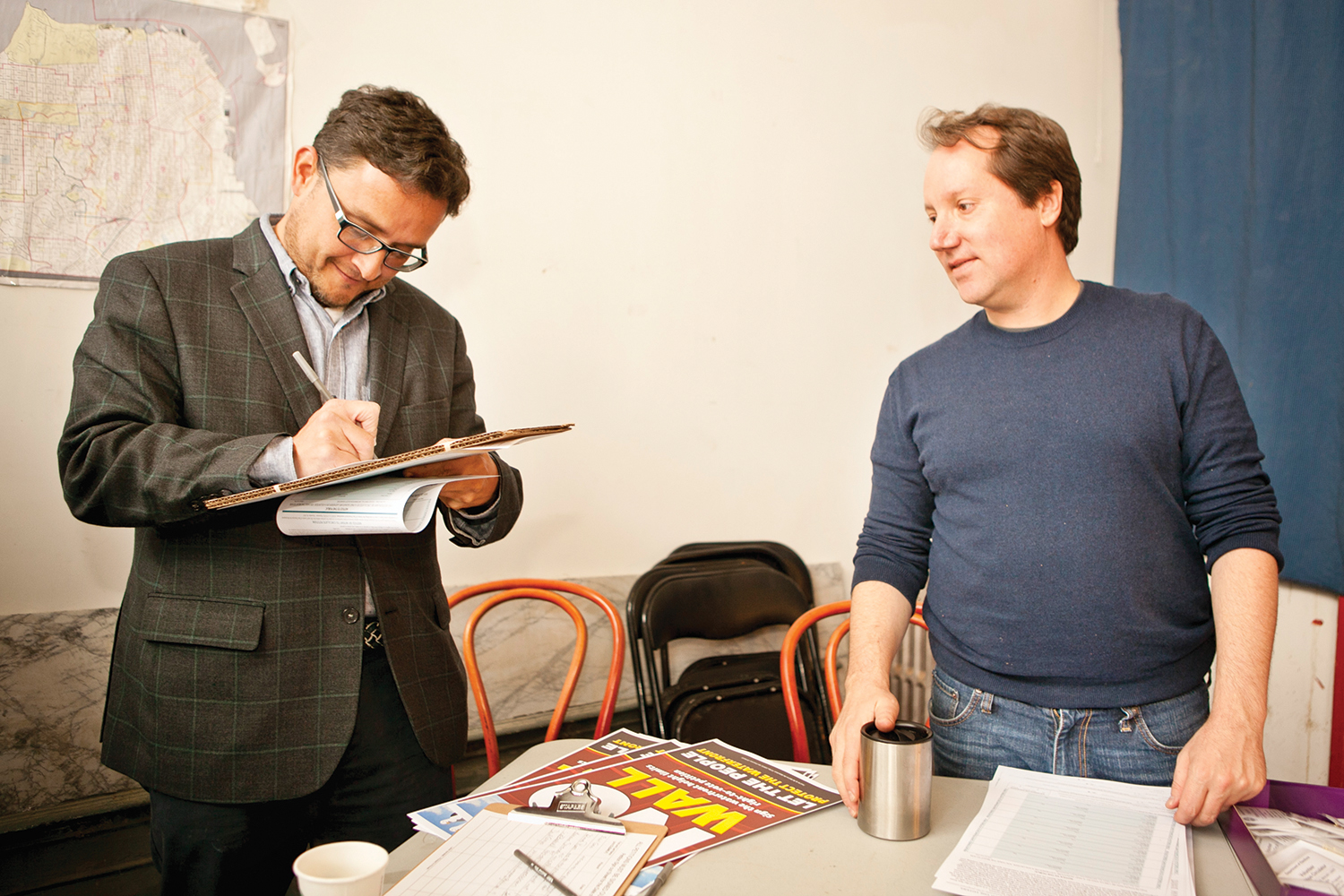
On a drizzly Saturday, Jan. 11, a few dozen activists crowded into the office at 15 Columbus Avenue, preparing to go collect signatures for the new waterfront initiative. It was a space that was already familiar to many of them from their fall campaign against height increases on the 8 Washington project.

“What we’re doing today is launching the next phase of that campaign,” campaign manager Jon Golinger told the assembled volunteers, calling this space “the center of the fight for San Francisco’s future.”

The campaign must collect at least 9,702 valid signatures by Feb. 3 to qualify for the June election, but Golinger said those involved in the campaign actually have six months to gather signatures if they want to wait for the November election.

Golinger said they would prefer June in order to build off of the momentum of the fall campaign and not get caught up in the more crowded November ballot. “There’s a lot of enthusiasm from the last election to ensure the waterfront gets the protection it needs,” he told us.

As for getting the necessary signatures, Golinger said he isn’t worried, noting that almost two years ago, he and other activists collected twice that many signatures — referendums require 10 percent of those voting in the last mayor’s race, but initiatives need only 5 percent — to challenge just the 8 Washington project.

Here, the stakes are much higher, spanning the entire seven-mile waterfront.

“We want the voters to have a say when a project goes beyond the rules that are in place,” said Sup. David Campos, the first elected official to endorse the measure and the first person to sign Golinger’s petition.

Campos also connected the campaign to the eviction crises and tenant organizing now underway, including the first in a series of Neighborhood Tenants Conventions taking place that day, culminating in a Feb. 8 event adopting a platform. “That struggle is part of this struggle,” Campos said. “We have to make sure we’re working collectively.”

The official proponent of the initiative is Becky Evans, who has been working on issues related to San Francisco’s waterfront for more than 40 years. “I remember walking along the waterfront with Herb Caen back in the ’70s,” she said of the late San Francisco Chronicle columnist for whom the promenade on the Embarcadero is now named.

Evans is a longtime Sierra Club member who also served on the city’s first Commission on the Environment, and she believes the shoreline is a critical intersection between the city’s natural and built environments, one where the citizens have an active interest.

“I think the 8 Washington process — including the petition gathering and the vote — awoke a bunch of people to making a difference in what happens to the city,” Evans told us, calling the waterfront a defining feature of San Francisco. “For many people, our skyline is the bay, not the buildings.”


BEYOND THE PLAN

The initiative has few overt critics at this point. Both city and Port officials refused to comment on the measure, citing a City Attorney’s Office memo advising against such electioneering. “I’m incredibly limited as to what I can say,” the Port’s Brad Benson told us.

And none of the spokespeople for the affected development projects wanted to say much. “We’re taking a wait and see attitude,” PJ Johnston, a spokesperson for the Warriors Arena, said when he finally responded to several Guardian inquiries.

“Right now, we’re trying to understand it,” said Staci Slaughter, the senior vice president of communications for the San Francisco Giants, whose proposal for Pier 48 and Seawall Lot 337 includes 3.7 million square feet of residential, commercial, parking, and retail, including the new Anchor Steam Brewery.

That project is just launching its environmental studies, which was the subject of a public scoping meeting on Jan. 13. Slaughter did tell us that “right now, the majority of the site doesn’t have an established height limit,” a reference to the fact that most of the site is zoned for open space with no buildings allowed.

Diane Oshima, associate director of waterfront planning at the Port, told us that during the adoption of the WLUP, “We did not broach the subject of changing any height limits.” But the plan itself says that was because tall buildings weren’t appropriate for the waterfront.

“Maintain existing building height and bulk limitations and encourage building designs that step down to the shoreline,” is the plan’s first design objective. Others include “Improve views of the working waterfront from all perspectives” and “Remove certain piers between Pier 35 and China Basin to create Open Water Basins and to improve Bay views.”

The plan also specifies acceptable uses for its various waterfront properties. Residential isn’t listed as an acceptable use for either Pier 48 or Seawall Lot 337, both of which are slated mostly for open space and maritime uses. Office space and entertainment venues are also not deemed allowable uses on either property, although it does list retail as an allowable use on Pier 48.

By contrast, Piers 30-32 and the adjacent Seawall Lot 330 were envisioned by the plan to allow all the uses proposed for it: “Assembly and Entertainment” and retail on the piers and residential, hotels, and retail on the property across the street — but not at the heights that are being proposed.

The plan calls Pier 70 a “mixed use opportunity area” that allows most uses, but not hotels or residential, despite current plans that call for construction of about 1,000 homes at the site to help fund historic preservation efforts.

Slaughter answered questions about her project’s lack of compliance with the WLUP by saying, “The whole project is going through a community planning process.”

Yet Agnos said that neither that process nor the current makeup of the Port or Mayor’s Office can get the best deal for the public against rich, sophisticated teams of developers, investors, and professional sports franchises.

“They don’t have the expertise for the multi-billion-dollar deals that are in front of them,” Agnos said of the Port of San Francisco. “The new identity for San Francisco’s Port is it has the most valuable land in the country, and maybe the most valuable land in the world.”


Left turn?

27

rebecca@sfbg.com

Dan Siegel, an Oakland civil rights attorney and activist with a long history of working with radical leftist political movements, joined a group of more than 150 supporters in front of Oakland City Hall on Jan. 9 to announce his candidacy for mayor.

With this development, the mayor’s race in Oakland is sure to be closely watched by Bay Area progressives. Siegel’s bid represents a fresh challenge from the left against Mayor Jean Quan at a time when concerns about policing, intensifying gentrification, and economic inequality are on the rise.

Siegel is the latest in a growing list of challengers that includes Joe Tuman, a political science professor who finished fourth in the 2010 mayor’s race; Oakland City Councilmember Libby Schaaf; and Port Commissioner Bryan Parker.

In a campaign kickoff speech emphasizing the ideals of social and economic justice, Siegel laid out a platform designed “to make Oakland a safe city.” But he brought an unusual spin to this oft-touted goal, saying, “We need people to be safe from the despair and hopelessness that comes from poverty and long-term unemployment. We need safety for our tenants from unjust evictions and … gentrification.”

Siegel voiced support for raising the city’s minimum wage to $15 an hour. He also called for shuttering Oakland’s recently approved Domain Awareness Center, a controversial surveillance hub that integrates closed circuit cameras, license plate recognition software, and other technological law enforcement tools funded by a $10.9 million grant from the federal Department of Homeland Security.

He spoke about pushing for improvements in public education “to level the playing field between children from affluent backgrounds and children from poor backgrounds,” and described his vision for reorganizing the Oakland Police Department to foster deeper community engagement.

Among Siegel’s supporters are East Bay organizers with a deep history of involvement in social justice campaigns. His campaign co-chair is Walter Reilly, a prominent Oakland National Lawyers Guild attorney who said he’s been involved with civil rights movements for years. “This is a continuation of that struggle,” Reilly told the Bay Guardian, adding that leadership affiliated with “a progressive and class-conscious movement” is sorely needed in Oakland.

Left Coast Communications was tapped as Siegel’s campaign consultant. Siegel’s communications director is Cat Brooks, an instrumental figure in Occupy Oakland and the grassroots movement that arose in response to the fatal BART police shooting of Oscar Grant, whose Onyx Organizing Committee is focused on racial justice issues.

Olga Miranda, an organizer with San Francisco janitors union, SEIU Local 87, also spoke on Siegel’s behalf during the kickoff event. “San Francisco has become for the rich, and we understand that,” she said. “But at the same time, Oakland isn’t even taking care of its own.”

Referencing a recent surge in Oakland housing prices due in part to an influx of renters priced out of San Francisco, she added, “Dan understands that if you live in Oakland, you should be able to stay in Oakland.”

Siegel’s decision to challenge Quan for the Mayor’s Office has attracted particular interest since he previously served as her legal advisor, but their relationship soured after a public disagreement.

In the fall of 2011, when the Occupy Oakland encampment materialized overnight in front of Oakland City Hall, Siegel resigned from his post as Quan’s adviser over a difference in opinion about her handling of the protest movement. Police crackdowns on Occupy, which resulted in violence and the serious injury of veteran Scott Olsen and others, made national headlines that year.

“I thought that the Occupy movement was a great opportunity for this country to really start to understand the issues of inequality in terms of wealth and power,” Siegel told the Bay Guardian when queried about that. “And I thought the mayor should embrace that movement, and become part of it and even become a leader of it. And obviously, that’s not what happened.”

Since then, his relationship with Quan has been “Cool. As in temperature, not like in hip,” he said during an interview. “I don’t want to make this personal. But we have a difference about policy and leadership.”

With Oakland’s second mayoral election under ranked-choice voting, the race could prove fascinating for Bay Area politicos. Also called instant runoff voting, the system allows voters to select their first, second, and third choice candidates. If nobody wins more than 50 percent of the vote, the last-place candidates are eliminated in subsequent rounds and their vote redistributed until one candidate crosses the majority threshold.

Quan, who ran on a progressive platform in 2010, was elected despite winning fewer first-place votes than her centrist opponent, former State Senate President Don Perata. She managed to eke out an electoral victory with a slim margin (51 percent versus Perata’s 49), after voting tallies buoyed her to the top with the momentum of second- and third-place votes, many gleaned from ballots naming Councilmember Rebecca Kaplan as first choice.

Early polling conducted by David Binder Research showed Quan to be in the lead with the ability to garner 32 percent of the vote, as compared with 22 percent for Tuman, who placed second. That’s despite Quan’s incredibly low approval ratings — 54 percent of respondents said they disapproved of her performance in office.

When Schaaf announced her candidacy in November, Robert Gammon of the East Bay Express opined, “Schaaf’s candidacy … likely will make it much more difficult for Quan to win, particularly if no true progressive candidate emerges in the months ahead.” But Siegel’s entry into the race means there is now a clear progressive challenger.

The Guardian endorsed Kaplan as first choice in 2010, and gave Quan a second-place endorsement. While there has been some speculation as to whether Kaplan would run this time around — the David Binder Research poll suggested she would be a formidable opponent to Quan — Kaplan, who is Oakland’s councilmember-at-large, hasn’t filed.

Siegel, meanwhile, cast his decision to run as part of a broader trend. “I feel that not only in Oakland, but across the country, things are really ripe for change,” he told the Guardian.

Indeed, one of the biggest recent national political stories has been the election of Kshama Sawana, a socialist who rose to prominence during the Occupy Wall Street movement, to the Seattle City Council.

“When you have a city like Oakland where so many people are in poverty or on the edge of poverty, or don’t have jobs or face evictions,” Siegel told us, “it’s no wonder that the social contract falls apart. It seems to me that what government should do is elevate the circumstances of all people, and particularly people who are poor and disadvantaged.”

FCC chair gets an earful in Oakland

0

On Jan. 9, the newly appointed chair of the Federal Communications Commission, Tom Wheeler, visited Oakland’s Preservation Park for a town hall meeting.

It was the first time in more than five years that the head of the FCC engaged in this kind of face-to-face community dialogue in Oakland, Chancellar Williams of Free Press said at the start of the meeting. The event was hosted by the Free Press, the Center for Media Justice, the National Hispanic Media Coalition, and the Voices for Internet Freedom Coalition.

Social justice advocates from Oakland and San Francisco greeted Wheeler with a wide variety of concerns, asking him to help close the digital divide and improve access to basic phone and Internet service for low-income people.

Some spoke out about media consolidation, which Williams said has given rise to cost barriers resulting in abysmally low representation of broadcast station ownership by people of color. Others asked Wheeler to address the high cost of telephone calls in immigration detention.

Before people started lining up to share their thoughts with Wheeler, Malkia Cyril, founder and executive director of the Center for Media Justice, captured everyone’s attention by delivering an impassioned speech on issues of media ownership, democracy, and racial inequality.

“Just as our physical bodies serve to preserve our nervous systems,” she began, “the people right here stand beautifully strong in defense of an affordable, accountable, and accessible media.”

New arts high school would cost $240 million

0

Art advocates have tried to move the Ruth Asawa School of the Arts high school to its new home on Van Ness street since 1987. On Jan. 7, the dream moved one step closer, the only barrier is cost.

At a packed San Francisco Board of Education meeting, planners revealed the move’s sticker price, and it’s a big one: $240 million. Board of Education President Rachel Norton’s face sunk into one hand as she heard the news.

“There’s a big challenge going forward,” said David Goldin, chief facilities officer of the San Francisco Unified School District. “I don’t want to minimize that challenge for one minute. But for the first time in a long time, we’re close to having an architectural reality.”

The school is named for one of its founders, artist Ruth Asawa, with deep roots in San Francisco history as an arts and education activist. It has a unique education model: students attend academic classes in the morning, but spend two hours every afternoon learning a specific art discipline.

SotA is currently housed at the old McAteer campus on Twin Peaks, with its sister school, the Academy of Arts and Sciences (disclosure: I taught students video editing at SotA as a contractor until last summer). Collectively they have 1,000 students enrolled.

The cost of moving the school to the site on Van Ness is steep for a number of reasons, SFUSD spokesperson Gentle Blythe told us. SotA’s new home was formerly the High School of Commerce, and was granted historic landmark status — meaning the facade, at the very least, must be preserved. The building needs a seismic retrofit as well.

Most importantly, though, the cost is so high because the new site would be crafted with the arts in mind.

“It’s a high school for the performing arts with non-standard design considerations, including height of ceiling, and sophisticated electronics,” Blythe said. The building will be crafted for dance studios, orchestra rooms, multimedia facilities and more. It’s also not just a school: the district would also build an on-site auditorium that could seat 47,000 attendees.

By comparison, the new Willie Brown Middle School comes is budgeted at $55 million, Blythe told us. But the chief facilities officer said the price to move SotA was comparable to the cost of newer public arts schools in the US.

San Francisco artists came out in force to advocate for the move. First up to the podium to speak was the music director of the San Francisco Orchestra, Michael Tilson Thomas.

“I’m 10,000 percent behind this idea,” he told the board. “My dream is to do a Big Brothers Big Sisters program with all the grades, to share that vision with younger people.”

Lies, damned lies, and statistics

0

When is a public opinion poll a valid representation of how people feel? That turns out to be a tricky and ever-evolving question, particularly in San Francisco — thanks to its prevalence of tenants and technology — and even more particularly when it concerns the approval rating of Mayor Ed Lee.

Traditionally, the central requirements for public opinion polls to be considered valid is that respondents need to be representative of the larger population and they need to be selected at random. Polls are often skewed when people need to opt-in, as is the case in most online polls.

So the Guardian took issue with claims that 73 percent of voters approve of the job that Mayor Lee is doing, a figure derived from an opt-in online poll focused on “Affordability and Tech” that was conducted by University of San Francisco Professors Corey Cook and David Latterman and released to the San Francisco Chronicle on Dec. 9. That figure quickly wallpapered the comment section of the Guardian’s website as the answer to any criticism of Mayor Lee, his policies, or the city’s eviction and gentrification crises.

“Any survey that relies on the ability and/or availability of respondents to access the Web and choose whether to participate is not representative and therefore not reliable,” is how The New York Times Style Guide explains that newspaper’s refusal to run such polls, a quote we used in our Jan. 10 Politics blog post on the subject, and we quoted an academic making a similar point.

We also interviewed and quoted Latterman discussing the challenges of doing accurate and economical polling in a city with so many renters (64 percent of city residents) and so few telephone landlines. “San Francisco is a more difficult model,” Latterman told us. “So Internet polling has to get better, because phone polling has gotten really expensive.”

So we ran our story dubbing the poll “bogus” — and the next day got angry messages from Cook and Latterman defending the poll and educating us on efforts within academia to craft opt-in online polls that are as credible as traditional telephone polls.

“The author is so quick to dismiss the findings of the study, which is based upon accepted methodology, and which had nothing to do with mayoral approval scores, that he actually misses the entire thrust of the study — that voters in San Francisco are deeply ambivalent about the current environment, concerned about the affordability crisis, and not trusting of local government to come up with a solution,” Cook wrote in a rebuttal we published Jan. 13 on the Politics blog.

Cook told us the survey’s methods are endorsed by the National Science Foundation and peer-reviewed academic papers, including a Harvard University study called “Does Survey Mode Still Matter?” that concludes “a carefully executed opt-in Internet panel produces estimates that are as accurate as a telephone survey.”

That study went to great lengths to create a sample group that was representative of the larger population, while Cook and Latterman both admit that their survey’s respondents had a disproportionate number of homeowners. But they say the results were then weighted to compensate for that and they stand by the accuracy of their work.

Yet Cook also notes that the mayoral approval rating number wasn’t even part of the package they developed from this survey, it was just a finding that they decided to give the Chronicle. “I don’t think the 73 percent means anything,” Cook told us, noting that snapshot in time doesn’t reflect Lee’s actual popularity going forward, despite how Lee supporters focused on it. “The number they use politically is not a meaningful number.”

What Cook found more significant is the “tepid support” for Lee indicated by the poll, including the 86 percent that expressed concern about affordability in the city, a concern that cuts across all demographic groups. Most respondents had little faith in City Hall to address the problem and many felt the tech industry should be doing more to help, particularly companies that have received tax breaks.

Safety Scramble

1

joe@sfbg.com

On New Year’s Eve, six-year-old Sofia Liu was struck and killed when a driver using the Uber rideshare app allegedly failed to yield to her and her family as they progressed through a crosswalk. The girl’s mother and brother survived, but their tear-stained faces were soon all over news networks in heartbreaking reports of their loss. No less sad, 86-year-old Zhen Guang Ng was struck and killed that same night by a driver who allegedly failed to stop at a stop sign in the Crocker-Amazon district. These incidents aren’t isolated.

In 2012, 16 pedestrians were killed in vehicle collisions in San Francisco. That number jumped to 21 in 2013, according to the SFPD, and the new year has brought new collisions and more pedestrian deaths.

Already, the SFPD and other city agencies are scrambling for political cover, and advocacy groups are rushing in to call for changes they say will save lives. On Jan. 16, myriad groups will try to sell their version of safer city streets at a joint meeting between the Board of Supervisors’ Neighborhood Services & Safety Committee and the city’s Police Commission.

As the debate continues to unfold, the road to pedestrian safety looks to be bumpy, and the first pitfall may be the Police Department itself.

Enforcement

At the Jan. 8 Police Commission hearing, the SFPD played defense.

A host of groups were calling out the cops: Cabbies wanted more enforcement against rideshare drivers, the San Francisco Bicycle Coalition wanted more incident tracking. Nobody seemed happy with the current state of affairs around pedestrian safety.

Cmdr. Mikail Ali, tall and broad shouldered, approached the podium to give what amounted to the SFPD’s rebuttal. His presentation boiled down to this: Fewer cops equals fewer traffic citations, and fewer citations are dangerous.

“We did see a decrease in traffic citations issued last year,” Ali said. On the screens around the room, he displayed a chart showing two sloping red lines, one representing police staffing levels and another representing total citations. The charts showed a drop of 127 officers, and 20,000 fewer traffic citations, 2012-2013.

All told, the SFPD had 1,644 officers and issued 87,629 traffic citations last year.

But the idea that bringing on more cops is the only effective strategy for pedestrian safety seemed out of sync with a different aspect of Ali’s presentation, in which he conveyed a plan to “Focus on Five.”

Under that plan, police station captains are urged to boost traffic enforcement around the five intersections in their districts that have been identified as most dangerous. Though Ali said the approach was showing progress, the SFPD has yet to release data on how this enforcement approach has played out.

“Right now we don’t have full transparency into their reporting,” said Natalie Burdick of Walk SF, a pedestrian advocacy nonprofit. “We do have data showing they are issuing citations. What we don’t know yet … is has there been an increase in citations from Focus on Five?”

To be fair, it’s a new program, but data is key to many efforts geared toward improving pedestrian safety. The SFPD’s data shows that Focus on Five represents 22 percent of their citations, but it’s still unknown where they occurred and what incidents spurred the citations.

The Bike Coalition also wants more enforcement data from the SFPD.

“We’re hearing a lot of incidents go unreported,” said Leah Shahum, executive director of the Bicycle Coalition. Incidents that normally don’t get written up, like an accident that only results in a bruise or a scrape, are just as important to record, she said, because thorough reports can help identify problem intersections. “Without solid, good accounting to show where things are happening, we’re not going to necessarily see change,” she said.

But that would require a cultural shift in the SFPD, Shahum said. For now, the police seem as interested in blaming the pedestrians as they do the drivers.

Victim blaming

The first shots fired by the SFPD on pedestrian safety amounted to a public relations gaffe.

“YOU’VE BEEN HIT BY A CAR! … It’s little comfort to know you had the right of way, while you recover from serious injury in the hospital,” reads an SFPD flyer, the message typed next to a picture of a chalk outline on pavement. “Distracted walking is one BIG reason pedestrians get hit by vehicles,” it continues. To emphasize the point, the chalk outline is wearing headphones connected to an iPhone.

Streetsblog San Francisco reporter Aaron Bialick, in his article about the flyers, responded to them thusly: “The SFPD has gone off the deep end with this one, folks.”

His response is understandable. With a choice of two perpetrators, one walking across the street, and another behind the wheel of a two-ton steel killing machine, one would think the latter would be the obvious target. Shahum thinks the problem goes deeper than bad messaging, saying the SFPD’s enforcement is skewed.

“We’ve seen some officers not knowing people’s rights when walking or biking. We’ve seen ‘blame the pedestrians’ from police, in the media,” she said. “We’re hearing things like ‘you should’ve been riding on the sidewalk,’ [showing] a really basic lack of understanding” about regulations cyclists must adhere to.

This issue came to a head when Sgt. Richard Ernst pulled up to a streetside memorial for cyclist Amelie Le Moullac, who died in a fatal collision last August, to lecture those gathered on bicycle safety.

As Guardian Editor Steven T. Jones noted in his article at the time, “apparently Ernst didn’t stop at denouncing Le Moullac for causing her own death, in front of people who are still mourning that death. Shahum said Ernst also blamed the other two bicyclist deaths in SF this year on the cyclists, and on ‘you people’ in the SFBC for not teaching cyclists how to avoid cars.”

Still, Shahum sees potential for change. “This is the area where I think we’re seeing the most promises from them,” she said.

At the Police Commission meeting, Ali noted the challenges police face when assessing traffic collisions. Training officers in the methods to deduce how a collision occurred is no easy task.

“It requires a high degree of science,” Ali said. “Geometry, physics, basic mathematics. Its not just about getting facts from people, but making conclusions from physical evidence.”

Chief Greg Suhr expressed confidence that the new recruits to come out of the academy were abreast of the latest techniques, and commissioners said they may use the need for traffic enforcement as a call to the mayor to help bring more officers into the SFPD’s ranks.

Enforcement and police culture are just some ways pedestrian safety needs to be addressed. Walk SF, the San Francisco Bicycle Coalition and the SFPD all will present their cases at the joint meeting on Thu/16. But as many of them would note, many of these promises have been made before.

Slow momentum

“We’re going to re-engineer streets around at least five schools and two areas that have the highest levels of concentration of senior injuries every year,” Mayor Ed Lee said at a press conference, responding to pedestrian deaths that rocked San Francisco.

No, this wasn’t after the New Year’s Eve fatalities. It was last April, when the mayor trumpeted an ambitious program to make the strets of San Francisco safer.

The San Francisco Pedestrian Strategy identifies 44 miles of the city’s most dangerous streets and intersections in need of upgrades. The goal was to improve five miles of city streets a year, with bulb outs (for better pedestrian visibility), raised crosswalks, new crossing signals, new traffic lights, and narrowing lanes.

One of the high priority intersections identified for improvements was Polk and Ellis — where Sofia Liu was killed on New Year’s Eve.

safetymap

A map of high priority corridors — the most dangerous streets for pedestrians in San Francisco.

That intersection hasn’t yet seen upgrades under the Pedestrian Strategy, Burdick of Walk SF told us.

“Any one or combination of the safety benefits of bulb-outs (or other improvements) could definitely have been the difference between life and death for Sofia,” she said. Walk SF works with city agencies to try to make sure these changes are happening, but she says the city hasn’t been transparent about the effort.

“We know there’s been some progress, but we don’t yet know if we’re doing enough each year to account for getting something done,” she said.

To get a sense of the city’s progress on this front, the Guardian contacted the Planning Department, which referred us to the Municipal Transportation Agency. The MTA did not respond before press time.

“That’s another thing at the hearing with the board (and Police Commission) we’ll be pushing,” Burdick said. “For engineering enforcement work to happen, it’s got to be paid for.”

According to public records outlining the city’s Pedestrian Strategy, the plan needs $65 million a year to hit proposed targets. The lion’s share, more than half, would go toward infrastructure improvements.

Burdick called that amount into question, saying the city had only allocated $17 million. A Pedestrian Strategy report confirmed that the program faces a $5-18 million a year funding gap.

Enforcement, a culture of victim blaming and inadequate funding all pose major challenges to pedestrian safety in San Francisco. Hopefully the joint Board of Supervisors and Police Commission meeting will finally result in some answers.

The joint Board of Supervisors’ Neighborhood Services & Safety Committee and Police Commission meeting will be held Thursday, Jan. 16, at 5pm, Room 250.


End poverty and create wealth with public banks

3


By Ken Walden

OPINION How would you like to increase your spending power by 10 times (or more), relieve student debt by more than 90 percent, increase Social Security benefits, lower taxes, increase pay for teachers, and lower loan amounts for homes and small business to 1-2 percent?

I’ll bet I have your attention. I’m sure you think this is crazy talk, but this is based on a movement that is already happening. It’s the public banking movement.

In 1950s, the buying power of the dollar was over 10 times what it is today. That means you were able to buy 10 times the amount of goods and services with a dollar compared to what you can now.

What happened? Why is it so hard for most people to just barely get by these days? And why are so many are not getting by at all?

First, let’s review how money is created. Did you know the money we have in circulation today is created out of thin air? Most of it is just an entry in a computer system. A small percent is printed dollar bills like you have in your wallet or purse, and a very small percentage is metal coins.

Money is simply trusted as being worth what it says on the bill, coin, or computer screen. Did you also know that money for loans is created this way as well?

When you take out a loan from a bank (for a home loan, a student loan, a business loan, a car loan, etc.), the money that the bank loans you (with interest charges) is not taken from other people’s deposits. It is made (mostly) out of thin air. It is simply an entry in their computer system … that’s it.

Most people think they are borrowing money that is deposited into the bank by other people, but this is not true.

Here is quote from Robert Anderson, the secretary of the US Treasury in 1959, on this topic: “When a bank makes a loan, it simply adds to the borrower’s deposit account in the bank by the amount of the loan. The money is not taken from anyone else’s deposits: it was not previously paid in to the bank by anyone. It’s new money, created by the bank for the use of the borrower.”

Why is this a problem? Let’s look at how much interest we’re paying on a variety of loans. If you buy a house for $500,000 in 30 years at an average interest rate, you will pay an additional $580,000 in interest on money the bank made from thin air. With a public bank you, would pay less than half this amount.

On public projects like bridges, roads and schools, 30-50 percent of the cost is interest. The new span of the Bay Bridge that was just opened at a cost of $7 billion, the interest on this project is estimated to be an additional $7 billion. It’s estimated that the cost of almost everything you buy is increased by 35-40 percent because of interest.

This is just the tip of the iceberg.

The solution to the problem is a public bank. With public banks, these billions of dollars of profit (via interest) are recycled back into the public treasury instead of funneled off to private banks.

If you think this is some theoretical fantasy you should know that San Francisco is currently looking at creating a public bank, 20 states are also considering them, and North Dakota has had a public bank for over 90 years. This is not a new idea.

It’s impossible to give you an in-depth overview in a short article so please go to our website (www.whattheworldcouldbe.com) and on the ‘Solutions’ page click on the box titled ‘Creating Jobs, Student Debt Relief, & the New Green Economy’.

Public banks have the possibility to dramatically change our lives for the better and you can help.

Ken Walden is director of What the World Could Be.

Confronting the speculators

34

rebecca@sfbg.com

A group of tenant advocates has upped the ante in the ongoing protest movement against San Francisco evictions, publicizing the names, photographs, property ownership, and corporate affiliations of a dozen landlords and speculators they’ve deemed “serial evictors.”

The Anti Eviction Mapping Project, a volunteer-led effort that snagged headlines last fall when it released data visualizations charting long-term displacement in San Francisco, released its Dirty Dozen list Jan. 10.

The project spotlights property owners who’ve moved to evict tenants under the Ellis Act, a controversial state law that allows landlords to oust tenants even if they aren’t in violation of lease terms. In practice, the Ellis Act tends to be waged against longtime residents with low monthly rental payments, frequently impacting elderly or low-income tenants who benefit from rent control.

The Anti Eviction Mapping Project’s list gets up close and personal, publishing details such as landlord’s cell phone numbers, home addresses, and histories of legal entanglement.

It’s an edgy use of public records that seems to raise a slew of questions about free speech, privacy, and the use of information sharing and public shaming as a protest tactic in the digital age.

Erin McElroy, a volunteer and lead organizer of the project, said the goal was to spotlight landlords “who are disproportionately impacting senior and disabled tenants,” and to raise public awareness about “people who are making millions at the expense of tenants.”

She added that there is a budding effort to push for Ellis Act reform in Sacramento, and noted that a goal of this project was to fuel that statewide effort by providing easily accessible information.

Among those individuals named on the Dirty Dozen list was David McCloskey of Urban Green Investments, a company that owns more than 15 San Francisco properties. Urban Green has been a frequent target of San Francisco housing activists, in part due to the company’s ongoing attempt to evict Mary Elizabeth Phillips, a Dolores Street tenant who will turn 98 in April.

Another landlord who made the list, Elba Borgen, has also attracted past attention from tenant activists due to her history of pursuing Ellis Act evictions at six different San Francisco properties. A tenant currently residing in a 10th Avenue property, where Borgen’s LLC has filed for eviction, is 90 years old and suffering from Alzheimer’s, according to an interview with her daughter Vivian Montesdeoca posted to the mapping project website.

The Bay Guardian‘s efforts to reach landlords who were spotlighted on the Dirty Dozen list were largely unsuccessful. We did manage to contact Tom Iveli, president of Norcal Ventures, who spoke briefly before excusing himself, saying he had to take another call. Iveli clearly wasn’t aware that he and his business partner Bob Sigmund had been singled out.

McElroy said the Dirty Dozen list was the product of an in-depth research project which entailed filtering through property records, San Francisco Rent Board data, and information gleaned from the website Corporation Wiki.

The Anti Eviction Mapping Project initiative has attracted around 15 volunteers and will be partnering with Stanford University students to produce an oral history project showcasing the narratives of San Francisco tenants facing eviction, McElroy said.

Some of the same activists involved in recent high-profile blockades of tech buses were also part of the Anti Eviction Mapping Project effort.

“We’re not, you know, anti-tech by any means,” said McElroy. “We’re anti- speculative real estate,” and wary of policies like the Ellis Act and city government’s tendency to give deep-pocketed corporations a free pass, regardless of the consequences.

“It’s that linkage that is kind of the crux of the issue,” she added.

What “Google bus” really means

79

EDITORIAL In recent years, “Google bus” has become a term that encompasses more than just the shuttles that one corporation uses to transport its workers from San Francisco down to the Silicon Valley. It has taken on a symbolic meaning representing the technology sector’s desire to shield itself from the infrastructure, values, and responsibilities that most citizens choose to share.

These are the very things that motivate many of us to live here, finding that community spirit in such a beautiful, world-class city. More than just the great restaurants and bars, its vistas and artistic offerings, San Francisco represents an experiment in modern urbanism and cultural development.

It is this collision and collusion of disparate yet public-spirited cultures that gave birth to the region’s great economic and social movements, from gay rights and environmentalism to groundbreaking academic research and the creation of the Internet economy.

The antithesis of this idea of creative collaboration is to consider San Francisco just 49 square miles of valuable real estate, to be used and developed as the highest bidder sees fit, as some tech titans seem to believe. It’s ironic that an industry based on creating online communities would place so little value on engaging with its physical community.

The proposed $1 per bus stop use, and $50 per docking that new exclusive Google ferry is paying, is a privatization of public space that barely covers the city’s costs. The tech industry should be doing much more just to counteract its negative impacts on the city’s economy, let alone actually being good corporate citizens of this region.

A new report called for by the Mayor’s Office says Muni needs a $10 billion investment over the next 15 years just to maintain current service levels. A big chunk of that should come from the wealthy corporations in our community through a downtown transit assessment district and higher fees on Silicon Valley companies that are using us as a bedroom community.

San Francisco writer Rebecca Solnit has been developing a critique of the Google bus since her initial shot last February in the London Review of Books, answering a subsequent techie/enviro criticism published in Grist with a Jan. 7 article in Guernica called “Resisting Monoculture.”

“And thus come the well-paid engineers to San Francisco, and thus go the longtime activists, idealists, artists, teachers, plumbers, all the less-well-paid people,” she writes, citing surveys that the buses allow Silicon Valley workers to live in San Francisco when they otherwise wouldn’t.

That’s the issue. The only thing green about Google buses are the piles of money their riders and their bosses are keeping from the city we all share. Segregated buses have never been a good idea, but if these companies insist on them, that should come with a higher price tag.


Down at the Rickshaw

0

arts@sfbg.com

TOFU AND WHISKEY The Rickshaw Stop has a pretty basic modus operandi: Shows should be fun and bands should be treated well. Hey, it’s a method that’s worked so far. San Francisco’s eclectic, two-story, rock-pop-dance venue on the edge of Hayes Valley opened in January 2004 — exactly 10 years back. The popular independent and locally owned venue has since hosted a slew of then-rising major acts across genres and weekly packed shows for all ages (depending on the night in question).

“God, there are so many great memories,” says longtime Rickshaw Stop talent buyer Dan Strachota.

MIA played the 400-person Rickshaw Stop many years back and climbed right up on the piano while performing. Once, Jens Lenkmen walked through an awestruck crowd and kept singing on his way to a couch, taking a load off mid-show. During a raucous, out-of-control Monotonix gig, a fan in a wheelchair crowd surfed through the Israeli punk trio’s San Francisco set. South Africa’s Die Antwoord brought clamoring crowds, as has DJ Funk at Blow Up, Jonathan Richman, Toro y Moi, Glass Candy, Jessie Ware, Grimes, Vampire Weekend, tUnE-yArDs, Sharon Jones, and Mayer Hawthorne. There was once an iTunes showcase that featured back-to-back sets, weirdly enough, by Jolie Holland, Sammy Hagar, and E-40.

And to think, during all those shows, at least one guy was likely trying to finagle his way into one of the actual rickshaws scattered around the venue. (The comedian Robin Williams once did it too, if you’re curious about random star power).

So in celebration of those 10 years of fun and mayhem, the Rickshaw Stop (155 Fell, SF; www.rickshawstop.com) is throwing a near week-long mini fest, inviting back old favorites including gifted rocker Mikal Cronin with fellow locals Cool Ghouls and Cocktails (Wed/8, 8pm, $17); dramatic, synth-popped Geographer (Thu/9, sold out); experimental pop duo YACHT (Fri/10, 9pm, $20); and queer dance party Cockblock (Sat/11, 10pm, $10). There’s also Leslie and the Lys with Double Duchess and DJ Kidd Sysko (Sun/12, 8pm, $16), which should be an extra-fun dance pop evening. (There was a show Jan. 7 as well, kicking off the fest, with the Spits, Violent Change, and Crez DeeDee.)

The venue is offering a weeklong pass for the event at $65, for those who know they’ll be showing up nightly. And it’ll be giving away free limited edition posters for all the individual shows during the fest.

“The idea behind the headliners was [that] we wanted bands that had all played the club before, that we loved both musically and as people, and that had gone on to play larger venues. For openers, I wanted to do what we always try to do — pick great, fun local bands that will fit nicely with the headliners,” says Strachota.

Strachota has been involved with the venue since day one, in one form or another — DJing the opening night celebration, then throwing a regular party dubbed Three Kinds of Stupid. He began booking some six months into the venue’s run. The western Massachusetts native moved to San Francisco in 1990 and worked previously as the music editor at SF Weekly and as a freelance music writer. But booking was something new when the Rickshaw first opened. “I liked the challenge of starting a club from scratch,” he says.

While the venue has had its fair share of hits, including breaking major acts and hosting ingenious yearly Noise Pop nights, there are also those rare times when it misses a chance at a touring act. It had a first shot at booking Lorde in SF but didn’t realize how quickly she’d blow up. It also, incredibly, never hosted Thee Oh Sees (and yes, it might be awhile now. See below).

Strachota notes his only other main frustration comes from “when no one shows up for a great band and you have no idea why.”

That said, he’s consistently amazed by the enthusiasm of audiences for the broad spectrum of acts they pack in. “We’re really proud of our diversity. That’s something I’ve always strived for. And our staff really clamors for. They don’t want the same thing every night.”

One random week at the club might play host to an up-and-coming rock ‘n’ roll band, a Nerd Nite talk or Moth StorySLAM, and a lesbian dance party. This week, however, will be an even glitzier lineup — a sort of best-of mix of the lively venue’s thrilling past decade.


GOODBYE DWYER

I’d be remiss if I didn’t note a certain pang of despair after learning in late December of John Dwyer’s SF abandonment. The Thee Oh Sees front person is much more than his current band (now on hiatus). He’s a San Francisco art punk-garage rock icon, having cutting his teeth in the late ’90s and early aughts in seminal SF bands Pink and Brown and the Coachwhips before achieving even more national acclaim with Thee Oh Sees. He screamed into megaphones and invited the crowds to circle in closer, closer even.

He was one of the last holdouts of a dwindling local DIY scene, and news of his departure for sunny LA sent shockwaves through the blogosphere. One friend posted: “Somewhere I read, ‘If John Dwyer leaves, you really know it’s an end of an era’ and well, it’s an end of an era.” SF Weekly was first to report the move, quoting Dwyer at the Great American Music Hall — “This will be the last Oh Sees show for a long while, so dig in” — and confirming with the band’s booking agent, Annie Southworth, that Thee Oh Sees would indeed be going on indefinite hiatus. In the meantime, hold your rockers closer tonight.


CHAIN & THE GANG AND THE SHIVAS

Speaking of art punk legends, Ian Svenonius’ Chain & the Gang is back! The DC group, led by the lithe former Make-Up, Nation of Ulysses, and Weird War front person has a sound that matches its moniker. It’s the shrieking, chain-dragging rock ‘n’ roll of weirdo outlaws (the Gang including organ, saxophone, and traditional guitar-drums-bass). Svenonius’ gang comes to SF with the Shivas, a quite young fellow K Records act that pays tribute to fuzzy ’60s dance rock and throws in some horror surf in all the wavy, beat-filled, harmonious ways you’d hope for. The Shivas released its debut LP, Whiteout, on K this past April. A few spins of the record are highly recommended before the show. It makes you want to make out on the beach at night. Thu/9, 7pm, $8. Make-Out Room, 3225 22nd St, SF; www.makeoutroom.com. *


Divining the entrails

5

arts@sfbg.com

LIT On the cover of Incurable Disorder (Last Gasp, 2013), an adolescent deer covered in a thick pelt of diamond-bright Swarovski crystals gazes calmly outward, as ruby-red rhinestone blood drips from the points where golden arrows sprout cruelly from its graceful frame. Upon opening the book we see the piece — The Folly of St. Hubertus, 2010 in its entirety. It’s a delicate, eight-legged anomaly, weeping, bleeding, and glittering all at the same time, housed within an austere glass-paneled case like a hunting trophy bagged in an enchanted forest, which many of Elizabeth McGrath’s strange creations resemble.

A bestiary of improbable wonders awaits within the pages of this confidently-designed coffee-table book: the mounted heads of tattooed rabbits and stags whose majestic horns are tangled with sails or telephone wires; bucktoothed rodents and circus bears with windows to alternate, dystopian landscapes planted in their chubby tummies; a cross-sectioned, gilt-edged pig with a pair of tiny, Victorian-style dollhouses firmly ensconced in its oozy-looking pink innards. Juxtaposition is the key word to many of these modernist mash-ups, and indeed, the LA-based “Bloodbath” McGrath is a favorite artist of famously outsider Juxtapoz magazine.

Inhabiting a territory too grisly to be labeled whimsical and too cartoonish to be labeled truly morbid, McGrath’s relentlessly askew dioramas and sculptures subvert the pop-goth ghetto of icky-cute by cutting just a little too close to the bone. Looking in the eyes of her mutilated menagerie inspires the same sense of fascination and bemused regret that accompanies the contemplation of roadkill or fetal pigs floating in formaldehyde. Her darkly incandescent aesthetic is reminiscent of Christiane Cegavske’s stop-motion tour de force Blood Tea and Red String (2006), wistful and powerful, playful and primal all at the same time

If twisting the familiar tropes of pop art appears to be a guiding principle behind McGrath’s dark menagerie, you can see the mechanics of a more classical approach in the equally haunting art of Laurie Lipton. Prosaically entitled The Drawings of Laurie Lipton (Last Gasp, 2013), the front piece of her book, a work entitled Round and Round (2012), demonstrates a folly of a non-sainted kind, a clutter of grinning skeletons driving in an endless circle around a lonely pair of old-fashioned gas pumps perched atop a wasteland of bones and pipes.

Lipton’s photorealistic, black-and-white line drawings bring to mind the highly-detailed engravings of Albrecht Dürer, an artist Lipton confesses an affinity for. But unlike Dürer, who favored woodcuts and watercolors, Lipton’s tools are charcoal and pencils, and her self-devised method of creating depth and texture with layer upon layer of incredibly fine lines and crosshatching gives her work a distinctive allure. Each white line is the result of the negative space being painstakingly filled in around each, rather than the judicious application of a white pencil (or, for that matter, an eraser), and this obsessive penchant for detail manifests itself further in the amount of same stuffed into each dystopian landscape: mountains of bones, webs spun from hundreds of threads, bushes covered in thousands of tiny leaves, each unique.

It’s precisely the intricacy of such details that makes Lipton’s work a challenge to fit into book format. The book itself is a handsome volume indeed, a compact 10 and a half inches by nine and a half inches, with a black, leather-look cover, and embossed silver lettering which subtly complements the many shades of gray employed by Lipton in her drawings. Many of the collected works are displayed with one page devoted to the full work, and another page with zoomed-in views of some of the most meticulous details. A drawing of a cobwebbed skeleton in royal court attire (Queen of Bones, 2009) gets a close-up of the knuckle bones that line her sumptuous brocade cloak, while The Three Fates (1997) gets one of a hundred tiny bodies crammed onto one small portion of an impossibly long conveyor belt passing in front of the gnarled figures of the titular Fates. But while these close-ups are helpful in decoding some of Lipton’s more ingenious inventions, the full impact of her larger works eludes the reader somewhat.

At a book signing at Varnish Gallery, one could get a slightly better idea of scale and composition via a slideshow, during which Lipton pointed out details we might have missed otherwise: flocked wallpaper decorated with hundreds of unsentimental clocks behind a baby carriage containing an elderly man in Second Childhood (1989); or a weathered, Maria Bello blonde peering frankly at her descending reflection in Mirror Mirror (2002) — the final figure of which is, Lipton assured us, an elderly woman, not quite visible in the book, but clearly delineated on the original.

Lipton herself is a gamine 50-something with a friendly, casual air. By her own account, she grew up in a supportive, suburban environment, but was drawn early to the shadowy themes and macabre images that typify her rigorous art. She described this apparent dissonance with the help of a visual aid: Pandora’s Box (2011), in which a delicate-looking porcelain doll clutches a wooden music box, from which a screaming horde of tortured and demonic faces issues, screaming, into the atmosphere. It’s unsubtle, perhaps, but artfully concise. For artists especially, external appearance means little. It’s what seethes inside that personifies them best.

“I can’t drive, I can’t cook, I can’t put up shelves,” Lipton confessed, flashing a disarmingly bright smile. “All I can do is draw.” That much, at least, is unambiguous. *

www.lastgasp.com


Local heroes

0

joe@sfbg.com

LIT Comics have grown a lot since their humble early days, when superheroes seemed confused as to whether their underwear belonged on the inside or the outside of their tights. Now anti-heroes and tales of personal tragedy guide the ink on the page as often as not, and Berkeley-based publisher Image Comics leads the pack in pushing comic stories to wonderfully dark places.

This year’s Image Expo is an opportunity to rub noses with comic authors whose work is still cool, dammit, even if their work is crossing into the mainstream. We’ll forgive Walking Dead creator Robert Kirkman for letting his comics get turned into a TV show and videogames, if only because they expand the captivatingly complicated, zombie-infested universe he first created on paper.

Image publisher Eric Stephenson attributes the company’s success to its creator-owned model, which might explain why the Telltale-made Walking Dead video games are so good — Kirkman owns the rights to his Walking Dead, allowing all the creative control that entails. Though Kirkman may be one of the shiniest stars at the expo (he gets his own panel, by his lonesome!), he’ll be one of over a dozen comic creators to nerd out over.

Heavy-hitters like Jonathan Hickman (East of West and The Nightly News), Matt Fraction (Sex Criminals and Satellite Sam), Nick Dragotta (East of West), and Kelly Sue DeConnick (Pretty Deadly) will all be on hand. East of West in particular has garnered critical acclaim, and made the New York Times best seller list in October. It has much to love, but the setting is as interesting as any of its characters. It’s an alternate reality-history-dystopian future yarn pitting the Four Horsemen of the Apocalypse against the president of the United States. What’s not to love?

The expo also offers a good opportunity to meet newer artists too, if only to say you knew them before they were a big deal. Ales Kot is one of those up and comers, and his series Zero is an espionage and war story in the near future with disturbing echoes of the present — from Manning’s leaks to our near constant state of war. It’s frank about its brutality, neither glorifying nor hiding it away.

Locals are making their mark with Image as well. Bay Area author Antony Johnston and artist Justin Greenwood’s Fuse concept is “what if a detective story was set on Battlestar Galactica?” (Thanks Johnston, you’ve got me frakkin’ excited now.) It won’t be out until February, but a preview of the comic had my sci-fi loving self drooling over a Babylon 5-like cylindrical space station — but the story is almost Sherlock-like, a genuine whodunit.

With WonderCon’s recent move to SoCal, Image Expo’s Bay Area foothold is more vital than ever. But though it will no doubt yield a handful of cosplayers and swag-hunting fans, Image’s event — now in its second year in its current format — tends to be a lot cozier than WonderCon (or the mightiest behemoth of them all, Comic-Con). With just 600 attendees in 2013, compared to Comic-Con’s 100,000-plus, the comic creators were able to chat with readers at length.

Image’s Stephenson will be my main reason for bum-rushing the expo. Taking time away from his duties as publisher, he penned the recently anthologized Nowhere Men, which rocked, hard. The story of a Beatles-like group of scientists (because science is the new rock ‘n’ roll), it tells a tale similar enough to Frankenstein’s monster — but watching the characters justify their choices is fascinating. Sure, they end up ruining the lives of their test subjects and turning them into twisted super powered monsters, but they meant well, right?

The series will continue through the year, but it can’t come soon enough. (Maybe new Nowhere Men developments will be revealed at the expo?) Though there are only a dozen comic-creator attendees listed on the event’s website, an email from Stephenson hinted that unannounced surprise guests would bring the count of artists and authors to over 20. The slated panels center around the comic artists, the “eccentric” lives of comic authors, and an “interrogation” whose purpose is to deduce where comic creators get their inspiration.

“We have a very ambitious year ahead of us in 2014, and I think some of what we reveal at Image Expo is going to surprise a lot of people,” Stephenson said. *

IMAGE EXPO 2014

Thu/9, 9am, $20-$50

Yerba Buena Center for the Arts

701 Mission, SF

imagecomics.com/expo

A tale of two

0

arts@sfbg.com


FILM No one reads Uncle Tom’s Cabin today — Harriet Beecher Stowe’s enormously popular novel that almost single-handedly tilted public opinion against slavery enough to support the Civil War — for anything but historical-footnote interest. Yet fellow 19th-century celebrity author Charles Dickens, who had nearly as direct and significant a reformist influence across the Atlantic, is still ubiquitous.

Dickens fairs and staged versions of A Christmas Carol are annual rituals; even people who’ve never read the books or seen the umpteen movie versions recognize the titles Oliver Twist and Great Expectations. As with (the very different) Jane Austen, Dickens still delights in the realms of rich characterization, absorbing narratives, and re-readability — qualities that are very much the same ones his original readers adored.

The thread of social critique to his work comes through less strongly today, when we’re more accustomed to brute realism. Indeed, Dickens can seem too genteel in his descriptions of squalor and suffering — like Stowe, he wrote in an era when an author could be dismissed as “vulgar” for rendering unpleasant matters too vividly unpleasant. (God forbid he or she should do more than faintly imply the existence of prostitution, for instance.) Dickens was a regular scold of the British class system and its repercussions, particularly the gentry’s general acceptance that poverty was something the bottom rung of society was suited for, perhaps even deserved. Beyond expressing indignation in fiction, he lectured, petitioned Parliament, sponsored charities, and personally co-founded a home for the rehabilitation of “fallen women.”

Given how many in positions of power would have preferred such issues go ignored, it was all the more important their highest-profile advocate be of unimpeachable “moral character” — which in the Victorian era meant a very high standard of conduct indeed. So it remains remarkable that in long married middle-age he heedlessly risked scandal and possible career-ruin by taking on a much younger mistress. Both she and he eventually burned all their mutual correspondence, so Claire Tomalin’s biography The Invisible Woman is partly a speculative work. But it and now Ralph Fiennes’ film of the same name are fascinating glimpses into the clash between public life and private passion in that most judgmentally prudish of epochs.

Framed by scenes of its now-married, still-secretive heroine several years after the central events, the movie introduces us to a Dickens (Fiennes) who at mid-career is already the most famous and popular man in the UK, with an enormous readership well beyond its shores. In his lesser-remembered capacity as a playwright and director, at age 45 (in 1857) he hired 18-year-old actress Nelly Ternan (Felicity Jones) for an ingénue role. He was instantly smitten; she was, at the least, awed by this great man’s attention. Their professional association permitted some further contact without generating much gossip. But eventually Dickens chafed at the restraints necessary to avoid scandal — no matter the consequences to himself, let alone his wife, his 10 (!) children, or Ternan herself.

Fiennes, by all accounts an exceptional Shakespearean actor on stage, made a strong directorial debut a couple years ago with that guy’s war play Coriolanus (2011) — a movie that, like this one, wasn’t enough of a conventional prestige film or crowd-pleaser to surf the awards-season waves very long. But they’re both films of straightforward confidence, great intelligence, and unshowy good taste that extends to avoiding any vanity project whiff.

By the standards of most modern movies set in this era, Invisible Woman is perhaps a little too measured, melancholy, not “romantic” or sumptuous enough. It’s not a feel-good costume drama, despite having most of the ingredients for that (famous people, star-crossed love, etc.) Like Coriolanus, it’s a bit somber, thinky, and vigorously unsentimental.

Fiennes (who purportedly only took the role after another actor he’d cast dropped out) is very good as usual. You could put together an extraordinary retrospective of roles he’s played onscreen so far (and a dismaying smaller one of the few he was flat-out wrong in, mostly incongruous mainstream duds like 2002’s Maid in Manhattan and 1998’s non-Marvel Avengers), yet few major actors have done so good a job of circumventing the attention they’ve earned. Jones is also fine, though the jury remains out on whether she’ll turn out an actress as interesting as she is polished (and pretty). She’s a little stiff here, a deliberate choice that nonetheless makes the film a few degrees less emotionally engaging.

The entire cast (also including Kristin Scott Thomas as Ternan’s cautiously approving actress mother, and Tom Hollander as the author Wilkie Collins) is impeccable. But in a quiet way the movie is almost stolen by Joanna Scanlan’s Mrs. Dickens — a great squat, stolid lump of a woman, like Queen Victoria herself, but painfully aware of her social and physical lacks.

One sequence that might seem invented and improbable is based on fact: Dickens cruelly made his by-now-wised-up wife deliver a present to his mistress, a means of asserting his ersatz blamelessness that could only acutely humiliate the two women who best knew otherwise. Even today, large women are so seldom portrayed as anything but nasty and/or comedic that Scanlan makes a striking impression simply for taking an important, non-stereotypical role here. But beyond that, her wounded dignity in the few scenes allowed her is heartbreaking. *

THE INVISIBLE WOMAN opens Fri/10 in San Francisco.

Super Tramp

0

cheryl@sfbg.com

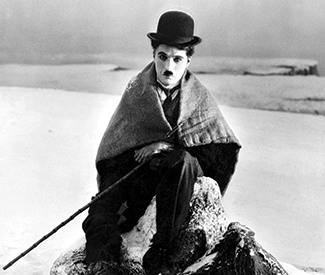
FILM Was ever an actor so closely associated with his signature character than Charlie Chaplin and his Little Tramp? (The best second-place I could come up with: Paul Reubens, aka Pee-wee Herman.) The San Francisco Silent Film Festival honors the 100th anniversary of Chaplin’s creation with “The Little Tramp at 100: A Charlie Chaplin Centennial Celebration.” Naturally, the 11-minute Kid Auto Races at Venice, which introduced the character to audiences Feb. 7, 1914, is on the bill. (For sticklers: Mabel’s Strange Predicament, the actual debut of the Tramp, was filmed prior to Venice, but released a few days later.)

In Chaplin’s 1964 autobiography, he wrote about assembling the character in the wardrobe room. “I wanted everything to be a contradiction: the pants baggy, the coat tight, the hat small, and the shoes large. I was undecided whether to look old or young, but remembering [producer Mack] Sennett had expected me to be a much older man [Chaplin was around 25 at the time of filming], I added a small mustache, which I reasoned, would add age without hiding my expression. I had no idea of the character. But the moment I was dressed, the clothes and the makeup made me feel the person he was. By the time I walked on stage he was fully born.”

You know the rest: Moviegoers couldn’t get enough, and — apologies to Team Buster Keaton — the Tramp became the silent era’s most popular figure, and remains its most iconic symbol. This tribute screens Venice with 1921’s The Kid, which begins as a destitute young mother (Chaplin’s frequent co-star and sometimes girlfriend Edna Purviance) tearfully places her newborn in the back seat of a fancy car with a note: “Please love and care for this orphan child.” Her desperate scheme is foiled when the auto is stolen by a pair of heavies; fortunately, the baby is soon scooped up by the Tramp, whose initial reluctance to play Daddy melts away with reassuring speed.

The action jumps ahead five years, with Jackie Coogan — one of the first child stars, and the reason there’s a California law protecting the earnings of underage performers from their greedy guardians — playing the ovary-rattlingly adorable title character. He and his adoptive father may live in squalor, and earn their dough a few shades on the wrong side of the law, but they make a surprisingly tight family unit, sharing comically huge stacks of pancakes, battling the local bullies, etc. Meanwhile, the tyke’s mother has become wealthy, and there’s a happy ending in store — but not before a rooftop chase, a trippy dream sequence, and deliverance on the film’s opening promise to supply “a picture with a smile, and perhaps a tear.” This screening features accompaniment by the San Francisco Chamber Orchestra (with Timothy Brock conducting Chaplin’s score), plus a Chaplin look-alike contest before the show — so get that mustache correct!

The Kid was Chaplin’s first full-length after nearly a decade of shorts, a trio of which are grouped together in a program dubbed “Our Mutual Friend.” The title references the Mutual Film Corporation, which signed Chaplin to a $670,000-per-year contract in 1916. (Not too shabby a figure today, it was a mind-blowing amount at the time.) He immediately got to work justifying his huge salary, cranking out hit after hit. These three share similar casts, with Purviance playing “the girl” and favorite Chaplin foil Eric Campbell (who stood a foot taller, and from some angles a foot wider, than the diminutive Chaplin) playing “the baddie.”

The Vagabond (1916) is the most melodramatic of the bunch; it follows a violin-playing hobo who encounters a waif being held captive by what the glossary of unfortunate movie stereotypes would call “gypsies.” (Campbell plays a whip-cracking patriarch.) The Tramp rescues her, but not before a passing artist paints her portrait and helps her reunite with her (rich) family — like The Kid, The Vagabond contains themes of economic disparity, a favorite Chaplin topic. Far more lighthearted are Easy Street (1917), in which the Tramp finds religion (thanks to an angelic church worker) and a backbone, after becoming a cop and defeating the local heavy (Campbell, adorned with spectacularly “evil” eyebrows); and The Cure (1917), in which an wobbly “inebriate” checks into a health spa, toting a huge suitcase full of booze. His fellow patients include a comely lass and an angry, towering brute.

The simple stories of all three shorts are elevated by flamboyant comedy set pieces, so effortless-seeming they mask what had to have been elaborate preparations and choreography. Any time there’s a bucket of water, or a hole in the ground, Chaplin is bound to fall in eventually — but there’s great delight in watching him teeter around and prolong disaster as long as possible. He also never met a revolving door he could pass through just once. And there’s never a stretch without some little moment of subtle hilarity, to counteract all the broad slapstick: Watch as Chaplin pretends to share his hymnal with an infant in Easy Street, then shrugs when he’s ignored. (That film also contains one of the oddest moments in Chaplin’s filmography, when the tramp accidentally sits on a heroin addict’s needle and leaps up, infused with drug-fueled super strength — pre-Production Code sordid humor at its finest.) All three films feature accompaniment by Jon Mirsalis on piano.

The final program is 1925’s The Gold Rush — like The Kid, an essential feature that no Chaplin fan minds revisiting, and an ideal vehicle for newbies to make his acquaintance. As a prospector seeking his fortune in the frozen Yukon, the Tramp fights a hungry bully and falls in love with a pretty girl (of course), but he also performs the oft-imitated tableside “roll dance” — and gnaws on his own boot. Priceless. And since lively music is a huge part of the experience: Timothy Brock once again conducts the San Francisco Chamber Orchestra, playing Chaplin’s own score. *

“THE LITTLE TRAMP AT 100: A CHAPLIN CENTENNIAL CELEBRATION”

Sat/11, “Our Mutual Friend,” 1pm; The Kid, 4pm; The Gold Rush, 7:30pm, $10-$22

Castro Theatre

429 Castro, SF

www.silentfilm.org


Beathoven

0

marke@sfbg.com

SUPER EGO A couple of years ago, Muni put out a public safety campaign that showed this gorgeous woman in giant silver headphones texting ferociously right before she stepped into the path of an oncoming train. Tagline: “Do you want Beethoven to be the last thing you hear?

Which was a bit unintentionally hilarious because, yes, I do want Beethoven to be the last thing I hear, specifically the insanely great, otherworldly “late string quartets,” which would be a fine soundtrack with which to finally divest myself from this gorgeous, all-natural, all-me, not-silicone-at-all, nope-definitely-not, personal body.

But I’ll take any Beethoven at all, really — and local contemporary “laptop classical” composer Mason Bates is teaming up with the SF Symphony for a special treat: two nights of great Beethoven works paired with Bates’ electronica-obsessed orchestral pieces (Symphony No. 7 and The B-Sides Jan. 8-11, and Mass in C Major and Liquid Interface Jan. 15-18, www.sfsymphony.org).

If you’re unfamiliar with Bates, he uses digital and electronic instruments to bring lush, eerie dancefloor atmospherics and a leftfield backbeat to a full symphony and chorus setting. Adding Beethoven’s existential and ecstatic works to the mix might start some kind of weird fire.


AMBIVALENT

The Berlin-via-NYC favorite, a.k.a. Kevin McHugh, takes a heady, design-oriented approach to techno, reaching back into minimal to tease skeins of pulsing sonic ideas into a more visceral present. And you can dance to it. With Mossmoss, Brian Knarfield, Bob Five, and more.

Fri/10, 9pm-4am, $15. Monarch, 101 Sixth St., SF. www.monarchsf.com


HOT SINCE ’82

And he is hot! Out of the current crop of tech house pretty boys, Daley Padley of Leeds is also one of the sharpest, with a thoughtful sound that isn’t afraid to recall your champagne hangovers and long-lost puppy love dreams.

Fri/10, 9:30pm, $15-20. Audio Discotech, 316 11th St., SF. www.audiosf.com


MR. TIES

Have you heard this Berlin bearded queer techno wonder’s killer, slow-burn three-hour Boiler Room DJ set? Kind of all you need to hear. He’s coming in from his beloved Homopatik club to play Honey Soundsystem’s “Midi Slave” party, and it will get steamy.

Fri/10, 9pm-4am, $10–$15. F8, 1192 Folsom, SF. mrtieshoneysoundsystem.eventbrite.com


CIRCUIT SLAVE

Experimental psychedelic electronic music brings all the kids to the yard for a mini-festival of sorts. Headliners Circuit Slave slice punk angst through the wiring; duo Cry gets emotive with some 4AD-influenced eeriness, Bezier’s loops and arpeggios drive us back to analog days. With Redredred, PSSNGRS, and PowWow.

Sat/11, 9pm, $5, The Holdout, 2313 San Pablo Ave., Oakl. www.tinyurl.com/circuitslaveOAK


DJ DEEON

“Let me bang!” The legend of booty bass comes to the jackin’ Two Men Will Move You party for a night of low-low-low.

https://www.youtube.com/watch?v=hMtBpGqA1mU

Sat/11, 9pm, $8. Amnesia, 853 Valencia, SF.


KIM ANN FOXMAN

The NYC superfox of house grooves somes to the monthly Isis party, bringing with her a dose of classics with a devilishly danceable helping of transcendent 1980s and early ’90s sound-a-likes. Nice and funky, with a slow-motion vogue-ready twist. With Avalon Emerson, Hi Today, and Brittany B.

Sat/11, 9:30pm-3:30am, $10 advance. Public Works, 161 Erie, SF. www.publicsf.com


LESLIE AND THE LYS

Rickshaw Stop celebrates 10 years of rolling us out — wow, remember the insanely fun hipster-glitzy hardcore electro scene there? — with this appearance by the Iowan queen of hyper-ironic dance rap (she made it into art). Grab your gem sweater and let’s reach for the gold!

Sun/12, 8pm, $16, all ages. Rickshaw Stop, 155 Fell, SF. www.rickshawstop.com


Rise of the machines

3

joe@sfbg.com

CAREERS AND ED As digital gizmos invade our pockets and our lives, the fear of machines replacing human work is as pervasive as ever. But of course that fear isn’t unique to the computer age.

As far back as the 1800s folk legend John Henry competed against a great railroad-building machine, hammering holes for railroad tracks in dirt and rock with the power of his arms.

In that tall tale of flesh versus steel, man won against automaton, and time marched on. The industrial revolution’s tech advances put farmers out of jobs, industrial robots put American factory workers out of jobs, calculators put abacuses out of jobs. So what’s new this time around?

Apparently, it’s a matter of speed.

MIT professors Andrew McAfee and Erik Brynjolfsson, authors of Race Against The Machine: How the Digital Revolution is Accelerating Innovation, Driving Productivity, and Irreversibly Transforming Employment and the Economy (Digital Frontier Press) say our modern robots are becoming so advanced, so quickly, that we can’t retrain our workers fast enough to keep up.

“Now the pace is accelerating, it’s faster than ever before in history, as a consequence we’re not creating jobs at the pace we need to,” Brynjolfsson told 60 Minutes anchor Steve Kroft in a segment on robots in November.

The nation’s unemployment rate was 7 percent last November, the most recent number available from the Bureau of Labor Statistics. That’s not counting the millions of underemployed people in the United States, working low or minimum wage jobs that don’t pay the bills.

Those workers are slowly being replaced by machines, from bank tellers (ATMs) to the Golden Gate Bridge toll takers (“pay-by-plate” systems). San Francisco weathered the job loss well, at least on paper. As Mayor Ed Lee is quick to tout, the city’s unemployment rate was at a low of 5.3 percent in September last year.

Maybe that’s because we’re in the eye of the storm. The Bay Area tech boom is a robotics boom too, and even small startups could innovate, upending entire industries.

San Francisco-based Momentum Machines calls its upcoming burger maker the “next generation” of fast food. They don’t mean Captain Picard serving up beef patties; they do mean burger disruption.

Momentum Machines’ burger machine can do everything a human can do, faster. It makes 360 hamburgers per hour, medium rare, or well done (if you please). It slices tomatoes, doles out pickles, and throws everything on a bun. The company promises this will “democratize” fast food — because everything in tech must be itemized, democratized, and then evangelized.

The company said this will, in the words of its website, “free up” all the hamburger line cooks in the restaurant.

Perhaps more telling is this section of its website, tucked well down at the bottom of its page.

“We want to help the people who may transition to a new job as a result of our technology the best way we know how — education. Our goal is to offer discounted technical training to any former line cook of a restaurant that uses our device,” they wrote.

Momentum Machines declined to be interviewed, citing a busy upcoming project. (Double-cheeseburgers?)

We also reached out to Super Duper Burger, and a spokesperson straight-out laughed at the idea of a robot burger cook. But that doesn’t mean economic forces won’t push the machines to eventually take over.

If thousands of fast food workers were replaced by machines, what would their next jobs be?

If the MIT professors are right, the robot revolution will not be stopped. Like the Terminators, they keep coming, and John Connor won’t save us. But maybe we can find peace and coexist.

That’s what they do at Kink.com.

Deep inside the Mission District brick fortress known as the Armory, over 35 robotic porn stars sit on shelves, waiting. They’re the talent of the website Fucking Machines, started by the Bay Area’s fine purveyors of pornographical pleasure, Kink.com.

John Henry has nothing on a fucking machine named Fuckzilla, a “Johnny 5” (from the movie Short Circuit) look-alike whose arms operate as high-power vibrators. While two women mount his appendages and scream for their lives, a webcam mounted in his face gives viewers an up-close view of the action.

The actresses who use them were not available for interview. But the filmmakers say they go gaga over it.

“The directors ask the girls ‘why do you like machines more?’ They always say it’s because (the machines) don’t get tired,” Sam, a videographer at Kink.com told us.

The machines are powerful too. The Intruder MK II has a fucking speed up to 500 RPM and exerts a torque (twist strength) of 3 foot-pounds. “One of our highest counts was a woman who went through 58 orgasms in a four hour period,” Kink.com videographer Aaron Farmer said.

I asked the pornographers if they lost any porn star employees since gaining the high-stamina bots. Turns out it was a noob question: most talent are freelancers and contractors in the industry, unless they run their own website.

So the machines aren’t displacing any jobs there. But they did create some.

“I was hired for Fucking Machines,” Aaron Farmer, the five-year videographer and sometimes director at Kink.com told us. They even have a machine shop in the armory, which while used for other purposes, also helps maintain the nearly 40 Fucking Machines on site, and even builds new ones.

Somewhere along the way, Kink.com outsmarted us all, riding the wave of tech disruption that one day may affect us all. Let’s hope we’re ready.


Google’s androids

0

rebecca@sfbg.com

CAREERS AND ED Robotics, a field that largely exists in the realm of research and development, is poised to grow leaps and bounds right here in the Bay Area now that Google has decided to dump mountains of cash into it.

So far, the search giant with the “don’t be evil” slogan has acquired eight robotics firms, and is pursuing a robotics initiative that nobody seems willing to describe in detail when speaking on record to the press.

Its December acquisition of Boston Dynamics, a leading robotics firm famous for developing robots like Cheetah — which can move at 29 miles per hour on a treadmill — has generated rampant speculation about the Silicon Valley giant’s ultimate intentions.

Since Boston Robotics receives funding from military sources, including the Defense Advanced Research Projects Agency (DARPA), the high-profile purchase has raised a few eyebrows to be sure — like, they keep all of our email data forever and they just went out and bought some military-funded robots?

“None of these companies have products — they have prototypes,” points out Berkeley robotics professor Dr. Homayoon Kazerooni, who founded Ekso Bionics, a company that aids paraplegics in overcoming mobility limitations with robotic aids.

“Not all scientists or engineers are fully considering commercial applications yet. I don’t know why Google’s buying that stuff, except to push those applications.” From there, the question becomes “what can you do with that, to create jobs that are helpful to people?”

Kazerooni says the research being generated by robot scientists and engineers could yield many possibilities, whether in the form of new robots or something else. While he specializes in robotic machines for paraplegics, he says robots can sometimes be helpful replacements for humans in dangerous situations, like when a repair is needed at a nuclear power plant.

Several of the other firms purchased by Google are based in San Francisco. A recent, um, Google search revealed that while the companies’ website URLs remained intact, their pages had mostly been scrubbed of any information, save a single line of text announcing the acquisitions and that they were joining “the robotics revolution.”

So much for transparency from a company that knows all your secrets.

But thanks to a handy tool created by the San Francisco-based Internet Archive, called the Wayback Machine, we at the Bay Guardian were able to unearth a few nuggets to shed some light on what the hell Google just bought.

Meka Robotics, founded in 2007 by roboticists from the Massachusetts Institute of Technology, is one of the Google robotics acquisitions that lists a San Francisco address. A Wayback search revealed that it has developed something called “the Meka S2 Humanoid Head,” which is a “robotic active vision head” featuring high resolution cameras in each eye. “Designed for a wide range of expressive postures, it is the ideal platform for researchers interested in human-robot interaction and social robotics,” according to a description that no longer exists on Meka’s current website.

Another local firm Google gobbled up is Industrial Perception, a Palo Alto company that the Wayback search revealed is “a leader in 3D vision-guided robot technology” that “enables industrial robots to assume challenging logistical tasks,” mainly related to shipping.

Julia Gottlieb is the executive producer at Bot & Dolly, a San Francisco outfit that operates dinosaur-sized robotic arms equipped with high-end cameras that capture footage while the machines glide through space. “You may have heard the news that we were recently acquired by Google,” she wrote in response to a Bay Guardian inquiry. “Unfortunately, this means I am not able to speak to or make any decisions about press or PR related matters.”

Build a bot

0

culture@sfbg.com

CAREERS AND ED For most of the working world, cardboard represents little more than a recyclable material, something to hold your pizza. But to Jutiki Gunter, cardboard is a construction material with near-limitless potential.

Gunter, founder of Robotics for Fun (www.roboticsforfun.com), an Oakland-based robotics retailer and workshop, can seemingly build anything out of it. He can then take that anything and program it to move on its own. After that, in an exhibition of what is arguably his most impressive talent, he can teach you to do the same.

All it requires is some digestible training, an easy-to-assemble kit, and a bit of imagination. And while Robotics for Fun offers popular adult workshops, it’s the youth program that stands out. “My goal has always been to teach kids what I learned at a professional level,” said Gunter, who holds degrees from Cornell and Harvard in architecture. “If we can introduce them to those concepts early, they’ll be able to move things much further along.”

Dominating the entryway inside Robotics for Fun are dozens of colorful home-cut creations hanging on the walls. A scorpion is proudly displayed next to a penguin perched near an owl. An alligator sits beside a pterodactyl, flanked by a frog, shark, and rhino. The taxidermy-like display might seem morbid if these animal-like cardboard creations didn’t also come to life robotically. But nearly all of them do — and their little Dr. Frankensteins are usually fresh out of kindergarten.

“We’ve found that the kids can understand it conceptually as young as six, but they can’t really retain the information younger than that,” said Gunter. “By six, seven, eight, they can do the projects.”

Those projects start off simple: Most of the beginning classes center on preconstructed “kits” that are made in-house, composed of either Lego pieces or cardboard. The students conceptualize the project, construct the model, then do the requisite programming and circuitry to mobilize their robot, if the model they’re working on is capable of handling motorization.

But in the advanced classes, things get more intricate. And far more creative. “We used to work with Legos, but once the kids started wanting to make their own designs, we started showing them how to make robots out of cardboard, so they could learn to prototype and create any piece that they want.”

Results: awesome. Students have built climbing “rescue robots,” artificially intelligent vacuum cleaners, rovers that run on auto-pilot, even a car-like vehicle that can travel within a 30 mile radius at 15 miles an hour.

Gunter manufactures the parts onsite. His supply room is one part artist’s studio, one part Silicon Valley. Prototype robots lie about half-realized; sketchbooks lie open atop a workbench revealing dreams in the process of actualization, computer code sharing the same page as hastily drawn lines.

Behind the workbench is his most important piece of equipment: an Epilog Legend EXT laser system. The laser-etcher is necessary to create parts with the precision robotics require, and the process itself looks like a microscopic manifestation of the laser-obsessed Archimedes.

The fewer limitations Gunter has when it comes to what he can do, the fewer limitations the kids have when it comes to creation. And for Gunter, fewer limitations is what this is all about. “We’re teaching kids skills here that they’re not even learning in first year college, and why not? They love it, they have the ability to do it, they have the capacity to understand it. Of course, we want to give kids a fun experience. But my real, ideal goal is to give them advanced skills at a young age and see what they can do with it.””


Bits and bots

0

marke@sfbg.com

CAREERS AND ED “When it comes to robots, there’s usually a kneejerk reaction about job loss. But the robotics field is also creating jobs. We haven’t had stagecoach drivers for a hundred years, but still the world has moved forward.” That’s Tim Smith, a robotics public relations expert — talk about robots creating new jobs — speaking to me over the phone from his Element PR home office in Bernal Heights, where he’s busy representing some of the most innovative robotics projects coming out of the Bay Area.

Smith has a gentle way (he’s no robot?) of putting the recent quantum-like advances in the robotics field into perspective — while also noting the limitations of the field. “One of the biggest challenges I face is overcoming the ‘creep factor’ that most people have when it comes to robots. There are different kinds of robots, different niches: industrial, military, personal. Most people, however, jump to a kind of malevolent science fiction combination of all three. And that’s understandable, considering how robots have been presented in the past.

“But really, personal robots are all around us. Thermostats are robots. Smoke alarms are robots,” Smith continues. “And despite people’s misgivings, they really do want the future, they do want science fiction. They want Rosie the Robot to do their laundry, clean the house. But right now, most personal robots do one thing extremely well. It’s when they’re asked to do two things that chaos breaks out. They need controlled environments. For instance, we have robots to clean your floors, but not one to clean your floors and wash your windows. Even Google’s driverless car needs to be in a certain kind of environment to function.

“So that’s what’s really held the industry from advancing. Meanwhile, though, on this side of that wall, there are some spectacular things being done to fine-tune and develop not just robots but the robotics field, including efforts to integrate robotics into daily life. You can see how far intelligent technology has come just by looking in your pocket.”

Smith took me on a tour of some of the Bay Area-based organizations and companies pushing those advances, including direct descendents of Willow Garage, the legendary Menlo Park robotics incubator started by Google developer Scott Hassan in 2006.


ROBOTSLAB BOX

Sure, math in high school was kind of a snoozefest. But what if your geometry class was taught by a box of robots? Yep, that might have you reaching for the protractor a bit more often.

RobotsLAB (www.robotslab.com) has created that box of robots, which is now in use in several schools. “The idea to create RobotsLAB BOX was born after spending hundreds of hours with educators, teachers, and administrators,” founder Elad Inbar told me by email. “The need for a population with basic STEM skills (science, technology, engineering, and mathematics) is imperative, yet we’ve heard over and over again that students don’t understand why they need to learn math, or where math’s core concepts such as linear and quadratic equations are applicable to their lives.

“As a result, they underperform in evaluations and can give up on meaningful careers. But the RobotsLAB BOX robots are serving in the classroom as a bridge between the concrete world we live in and and abstract math concepts.

“There are four robots in the RobotsLAB BOX: a quadcopter, a robotic arm, a rover with a mustache, and a robotic ball. The students love them all. They help teach everything from the law of cosines to the sum of vectors.”

RobotsLAB BOX even offers a STEM kit that guides you through the basics of robotics. Wait, does that mean a robot will actually teach you to build itself?


OPEN SOURCE ROBOTICS FOUNDATION

The Bay Area-based ROS (Robotics Operating System, www.ros.org) organization is a collection of programmers dedicated to advancing robotics development and application through collaborative coding and invention.

The Open Source Robotics Foundation (www.osrf.org) is the nonprofit in charge of overseeing the development of ROS. Basically this means that it helps make robotics coding something shareable and open to all who are interested (and who can gain the technical chops). OSRF also does things like participate in last year’s headline making DARPA Challenge, the awesome-looking, government-sponsored festival and competition aiming to push robotics to the next level, where it completed a challenge to build an open-source robot simulation environment.

“If you want to enter the world of robotics software coding,” advises Brian Gerkey, OSRF CEO, “some familiarity with Linux is helpful. But the best advice is to just dive in. There are tons of resources at ROS for all levels of expertise and a vibrant community ready to help.

“One of the challenges facing robotics is the multi-disciplinary nature of the field — hardware, software, vision, navigation, manipulation — and lots of math. But there are lots of ways for a young person to get started — things like the FIRST Robotics competition and the growing Maker community come to mind.”

To advance the cause of personal robotics containing open-source software, Gerkey is participating in a panel at the Commonwealth Club on Feb. 26 called “Robots in Unconventional Workplaces” (www.commonwealthclub.org).

“Everyone has their own idea of what a robot looks like and what it does, but in many cases those expectations derive from movies, books, and television shows. One of my goals is to help people picture robots in scenarios they never dreamed possible.”


UNBOUNDED ROBOTICS

“The simplest way to describe our UBR-1 robot is that it’s akin to an iPhone without any third party apps,” says Unbounded Robotics (www.unboundedrobotics.org) CEO Melonee Wise of the one-year-old company’s latest protoype.

“The robot, like the phone, is incredibly capable and sophisticated, but the real value comes from what developers are able to add to the platform. For that reason, the practical applications are limited only by the imagination of the ROS developer community.”

Another way to describe the UBR-1 is: squeee.

The little shiny orange robot is so cute I want to have one just to look at when I get tired of Lil Bub pics. The introductory video, in which an “emergency stop” switch is activated to “prevent robot apocalypse” (“not guaranteed to prevent robot apocalypse”) is enough for me to welcome the coming robot apocalypse.

Now I just have to learn to program the darn thing.


Ignore less

0

culture@sfbg.com

CAREERS AND ED Often called the first feminist, Sor Juana Ines de la Cruz could well be your guiding spirit heading into this bright new year. Born in 1651 in colonial Mexico, Sor Juana defied societal expectations about women at the time to study herself into becoming one of the smartest people in New Spain. She became a nun rather than marry, and eventually amassed one of the largest libraries in the Americas.

One of Sor Juana’s enduring catch phrases was “I don’t study to know more, but to ignore less,” a prettily humble bon mot from a woman who constantly had to defend her right to learn. Sadly, threats of censure by the church slowed her educational roll — but nonetheless, her unlikely influence on the fight for women’s rights is still honored today.

Will you ignore less in the new year? Surely there are fewer obstacles in your way than Sor Juana’s. Here are some excellent ways to engage with the world around you in 2014.


FEMINIST BOOK CLUB FOR MEN

So you say you’re a boor? For all the menfolk — or anyone, really — boggled by feminism, this monthly book club may be the ticket. Held at Noisebridge, the Mission’s tech learning center (check its calendar for amazing, mainly free classes and meetups), the club will start with bell hooks’ Feminism is for Everybody and feature conversations about how to be the best ally possible. All gender identities welcome.

Second Wednesdays starting Wed/8, 7pm, free. Noisebridge, 2169 Mission, SF. www.noisebridge.net


BEGINNING STAND-UP COMEDY

The stand-up school with the most working comedians on staff of any similar institution in the country wants to get you in front of an exposed brick wall talking about your boyfriend’s crazy roommate.

Wednesdays Jan. 8-Feb. 12, 6pm, $239-279. SF Comedy College, 442 Post, Fifth Fl., SF. www.sfcomedycollege.com


REGGAETON FUSION DANCE

Instructor Tika Morgan explores the hip-hop, dancehall, Cuban salsa, and other influences that create the pounding rhythms of reggaeton.

Wednesdays, 8-9:30pm, $13. Dance Mission Theater, 3316 24th St., SF. www.dancemission.com


LGBT COUNTRY-WESTERN DANCE

Two-step, skiffle, country swing, and waltz your way through these inclusive country-western lessons and dance parties run by community advocates Sundance Association.

Thursdays 5:30pm, Sundays 7pm, $5. Sundance Saloon, 550 Barneveld, SF. www.sundancesaloon.org


CHOW QIGONG BASICS

Learn about qigong, the Chinese chi-balancing practice that involves breathing, other physical movements, and mental exercises. This free class is taught by Effie Chow, a qigong grandmaster who founded her East West Academy of Healing Arts here in 1973, and has served on White House advisory boards concerning alternative medicine.

Fri/10, 7-9pm, free. Polish Club, 3040 22nd St., SF. tinyurl.com/qigongsf


MEDIA LITERACY

Support your local community college through its battle to retain its accreditation by enrolling in one of its class offerings — there’s no charge for non-credit courses (though you may have to buy books and materials). This class examines the hidden and explicit messages sent out through mass media, and helps students pinpoint how these cues affect the decisions that they and other members of society make.

Fridays Fri/10-May 23, 8am-12:50pm, free. City College of San Francisco, 1125 Valencia, SF. www.ccsf.edu


STAND-UP PADDLING

Start at the Aquatic Center next to Fisherman’s Wharf where you’ll learn safety and equipment basics, then head down with this SF Rec and Park class to Lake Merced’s scenic bird estuary to get down on some core-strengthening, stand-up paddle boarding action. Bring your own wetsuit, kiddies — it gets cold on those waters!

Sat/11, 1-4pm, free. Aquatic Park, Beach and Hyde, SF. www.sfrecpark.org


INTRODUCTION TO GRAPHIC AND WEB DESIGN

To do anything these days, you need a website. To have a website, you need a web designer. So basically, you may need to sign up for one of the Bay Area Video Coalition’s intro courses on dynamic layouts and client interfaces so that you can continue living your life as a functional citizen in 2014.

Sat/11-Sun/12, 10am-6pm, $595. Bay Area Video Coalition, 2727 Mariposa, SF. www.bavc.org


MAGNIFICENT MAGNOLIAS

With 51 species of this lovely, placid bloom sprinkling the premises, the San Francisco Botanical Garden is the perfect place to learn about the majesty of the magnolia. The garden offers daytime walks if you’re scared of the dark, but we think the nocturnal stroll sounds divine.

Jan. 16, 6-8pm, $20. Register in advance. SF Botanical Garden, Ninth Ave. and Lincoln, Golden Gate Park, SF. www.sfbotanicalgardensociety.org


INDOOR CANNABIS HORTICULTURE

Sure the price tag is steep for this class on raising buds in bright indoor light, but you’ll be supporting your green thumb and your local pot movement institution, which has surfed the tsunami of federal persecution and will live to blow clouds right through legalization (we reckon).

Thursdays Jan. 16-March 20, 10:30am-1pm, $1,195. Oaksterdam University, 1734 Telegraph, Oakl. www.oaksterdamuniversity.com


HYPNOTIC RESTORATIVE YOGA

Accessing the subconscious’s potential for healing is the name of the game in this extremely mellow yoga class, during which you’ll be put into a trance-like state through a hybrid method developed by a Reiki, yoga, and hypnotherapy professional. The dream state is said to be highly beneficial for psychic health -– and sounds hella fun.

Jan. 18, 2:30-5:45, $40-50. Yoga Tree Telegraph, 2807 Telegraph, Berk. www.yogatreesf.com


MEZCAL MASTER CLASS

Each month La Urbana, the chic new taqueria on Divisadero, hosts fancy mezcal tastings. But you’re not just getting your drink on: A different producer of the agave-based spirit comes in each time to present a signature mezcal alongside tales of its production. Educated boozery, this is it.

5-6pm, $10-15. La Urbana, 661 Divisadero, SF. mezcalmasterclasses.eventbrite.com


FAN DANCING

Valentine’s Day (sorry for any unwanted reminders) is on its effusive, heart-shaped way, giving you the perfect excuse for you to drop in on this class with Sin Sisters Burlesque co-founder Balla Fire to learn how to swish, conceal, and reveal with the best of them for your sweetheart.

Jan. 21, 7-9pm, $30. Center for Sex and Culture, 1349 Mission, SF. www.sexandculture.org


INEXPENSIVE AND INCREDIBLE: HOW TO SPOT GREAT VALUE WINE

Does paying $40 to learn how to parse affordable wines make sense? Depends on how many bottles of Cab Sauv you’re consuming — and one would think that after partaking in this one-off seminar with Bar Tartine’s old wine director Vinny Eng, that tally will increase.

Jan. 22, 7-9pm, $40. 18 Reasons, 3674 18th St. SF. www.18reasons.org


WORLD OF FISH

A full weekend of learning about ways to cook fish from around the globe will go on at this friendly North Beach cooking school (which tends to book up its workshops early, so book now). On the menu: black cod poached in five-spice broth, brodo di pesce, and much more.

Feb. 1-2, 10am-3pm, $385. Tante Marie’s Cooking School, 271 Francisco, SF. www.tantemaria.com


PORTRAITURE UNVEILED

Do you have a staring problem? Fix your gaze on this 10-session course including anatomy tips, representational tricks, and a focus on the art of portraiture.

Thursdays, Feb. 6-April 10, 6:30-9:30pm, $360. California College of the Arts, 1111 Eighth St., SF. www.cca.edu


THE BASICS OF BUDGETING AND SAVING

If the only thing you can depend on in this wacky 2014 is yourself, it’s time to hone those financial security skills. This free class is held once a month at the LGBT Community Center, and should give you a couple things to think about when it comes to money management.

Feb. 11, 6:30-8:30pm, free. LGBT Community Center, 1800 Market, SF. www.sfcenter.org


HERBS FOR FLUS AND COLDS

In addition to a more long-running courses and a by-donation, student-staffed herbal health clinic that is open to the public, Berkeley’s Ohlone Herbal Center offers practical classes in Western herbalism for regular folks. Your loved ones will thank you for brushing up with this one — it teaches preventative anti-cold and flu measures, and home remedies for when you inevitably catch something. Yes, tea is provided during classtime.

Feb. 12, 7-9:30pm, free. Register at ohlonecenter@gmail.com. Ohlone Herbal Center, 1250 Addison, Berk. www.ohlonecenter.org


AIN’T I A WOMAN? MY JOURNEY TO WOMANHOOD

If you are looking for educational opportunites as to changing the face of culture, look no further than this public lecture hosted by the California Institute of Integral Studies. For two hours, Orange is the New Black breakout star Laverne Cox will discuss her journey to becoming the most visible black transwoman on television (not to mention the first ever to produce and star in her own program with VH1’s “TRANSForm Me”). The talk won’t be lacking in looks-ahead to the important activism that still remains for Cox and her allies.

March 19, 7-9pm, $25-75. Nourse Theater, 275 Hayes, SF. www.ciis.edu


EVENT SPONSORSHIP

You will finally be able to get that organic farmstand delivery service to sponsor your yearly watermelon seed-spitting contest (or whatever) after you take this crash course on getting money to hold events. The secrets to obtaining event sponsorships are divulged during this one-day class: how to pitch potential partners, going market rates, and more, all in a group discussion-centric format.

April 26, 9am-5pm, $300. San Francisco State University Downtown Campus, 835 Market, SF. www.sfsu.edu


Fire displaces Olague

0

A fire broke out on Christmas night at the home of Christina Olague, a former San Francisco supervisor, and fatally injured her housemate and longtime friend, Randy David Sapp.

Now, Olague’s friends and supporters are holding an online fundraiser (www.wepay.com/donations/christina-olague) to help her get back on her feet in the wake of the tragic event. A benefit has also been planned for Jan. 12 at El Rio, 3158 Mission Street.

Olague told us she has been staying with friends since the fire, and doesn’t know where she will wind up living in the long run. She said she’d wanted to be respectful of her housemates’ privacy before making any public statements about what happened, and didn’t reach out to many people initially because she was in a state of shock.

Injunction blocks City College closure

0

City College of San Francisco is safe from closure, for now. A ruling from San Francisco Superior Court Judge Curtis Karnow issued Jan. 2 would bar City College’s accreditors from terminating the college’s accreditation until after legal proceedings against it are done.

The loss of accreditation would make City College’s future degrees basically worthless, resulting in its closure or merger with another district.

“I’m grateful to the court for acknowledging what so far accreditors have refused to, that educational access for tens of thousands of City College students matters,” City Attorney Dennis Herrera said at a press conference announcing the judge’s decision.

Now Herrera and his team have time to save the school, and City College will keep its doors open for the duration of the suit — win or lose.

The ruling was the result of an injunction filed by City Attorney Dennis Herrera on Nov. 25 as part of his office’s suit against the Accrediting Commission for Community and Junior Colleges in August for allegedly using the process to carry out an ideological agenda against CCSF. The ACCJC openly lobbied in public hearings and via public letters for education reform across the state, reforms which City College’s administration believed would harm San Francisco’s most vulnerable students: the poor, certificate seekers, and lifelong learners.

Only part of the injunction was granted by Karnow, however. The ACCJC is barred from shutting down City College, but it can still revoke the accreditation from any of the other 112 community colleges it oversees across the state.

The ruling also doesn’t stop it them from making preparations to close the college, Herrera said.

“It does not stop them from continuing their review and analysis and evaluation, it stops them from issuing a final ruling with respect to taking accreditation of City College,” he said.

Not everyone agrees with Herrera’s efforts.

“Court intervention is not necessary to keep City College open,” State Community College Chancellor Brice Harris wrote to Herrera in a Jan. 2 letter.

Harris argues that the lawsuit detracts from the efforts to save the school made by the special trustee Robert Agrella, who was assigned by Harris to replace City College’s Board of Trustees just after the accreditation crisis broke out.

BART approves contract, union threatens electoral challenges

0

The BART Board of Directors approved a modified contract with its two biggest labor unions on Jan. 2, an action that received faint praise and was followed up with implied threats from both sides, continuing one of the ugliest and most impactful Bay Area labor disputes in recent memory.

The four-year contract resolves a dispute over a paid family leave provision that BART officials say was mistakenly included in the contract that the unions negotiated and approved in November following two strikes and two workers being killed by a train that was being used to train possible replacement drivers on Oct. 19.

Recent negotiations yielded a contract with seven new provisions favorable to workers, including a $500 per employee bonus if ridership rises in the next six months and more pension and flex time options, in exchange for eliminating six weeks of paid leave for family emergencies.

The new contract was approved on a 8-1 vote, with new Director Zakhary Mallett the lone dissenter, continuing his staunchly anti-union stance. Newly elected President Joel Keller was quoted in a district statement put out afterward pledging to change the “process” to prevent future strikes.

“The Bay Area has been put through far too much and we owe it to our riders and the public to make the needed reforms to our contract negotiations process so mistakes are avoided in the future,” Keller said.

But from labor’s perspective, the problem wasn’t the “process,” but the actions taken by the Board of Directors; General Manager Grace Crunican; and Thomas Hock, the union-busting labor negotiator they hired for $400,000 — and the decision by BART to practice bargaining table brinksmanship backed up by a fatally flawed proposal to run limited replacement service to try to break the second strike.

A statement by SEIU Local 1021 Executive Director Pete Castelli put out after the vote began, “Today’s Board vote incrementally restores the faith that the riders and workers have lost in the Board of Directors, but it’s not enough to fix the damage they’ve caused to our communities.”

It goes on the blame the district for the strikes and closes with a vague threat to target the four directors who are up for election this year: Keller, James Fang, Thomas Blalock, and Robert Raburn (whose reelection launch party last month was disrupted by union members).

“Today BART is less safe and less reliable because of the Directors’ reckless leadership,” Castelli said. “Something has to change in order for all of us to regain our confidence in BART, and it starts with having BART Directors who are committed to strengthening the transportation system we all rely on and who prioritize its workers’ and riders’ safety. We look forward to the opportunity to work with our communities and to elect Directors who are committed to improving service and safety to all who depend on BART.”

Asked whether the union was indeed threatening to get involved in those four elections this year, spokesperson Cecille Isidro told the Guardian, “You’re absolutely right, that’s exactly what we’re trying to project.”

Local 1021 Political Director Chris Daly took the threat a step further, singling out Mallett as by far the most caustic and anti-union director, saying the union is currently considering launching a recall campaign against Mallett, although that could be complicated by the fact that he represents pieces of three counties: San Francisco, Alameda, and Contra Costa.

“He is so out-of-touch with the region. When he was elected, people didn’t know what they were getting,” Daly said, noting that voters elected Mallett over longtime incumbent Lynette Sweet in 2012 mostly out of opposition to her and not support for him. The Bay Guardian and others who endorsed Mallett have been critical of Mallett’s erratic actions since then, which included trying to raise fares within San Francisco without required social equity studies before becoming the most dogmatic critic of BART’s employee unions.

Daly was also particularly critical of Keller, who he accused of using today’s vote “to roll out his reelection campaign” with an anti-worker tenor. Mallett didn’t respond to Guardian requests for comment, but Keller told us he takes the union’s threat seriously.

“They’ll probably be successful,” Keller said of the impact that a serious union-backed challenge would have on his race. “If I lose my seat over this, I lose my seat.”

And by “this,” Keller means the likelihood that he’ll push for prohibiting BART employees from going on strike, which he said is already the case with the country’s four largest systems — Boston, Chicago, New York City, and Washington DC — which have deemed transit an essential service.

“Large transit agencies do not allow their employees to strike,” Keller said, noting that the San Francisco City Charter also bans transit strikes, something he pointed out Daly didn’t alter during his tenure on the Board of Supervisors.

And Keller said he’s willing to risk his seat to make that change: “I feel my responsibility is to use my remaining time to break this dysfunctional labor process.”

Daly cited a litany of grievances that could be corrected by new blood on the board. “The experience of the last 8-10 months elevates the importance of these BART Board races,” Daly told us. “They spent about $1 million to basically malign their workers and improve their negotiating position on the contract.”

SEIU Local 1021 members are slated to vote on the latest BART contract on Jan. 13.