Volume 48 [2013–14]

Preserve existing rental housing

8

San Francisco’s housing affordability crisis has become the main threat to the livability of the city for hundreds of thousands of residents. One glimmer of hope came last month, as the Board of Supervisors reformed decades-old laws that permit, and often encourage, the loss of affordable rental units.

When San Francisco adopted its zoning laws in the 1960s, it assigned a zoning district to every parcel in the city. Each zoning district set a maximum number of dwelling units allowed per parcel. These density limits effectively forbade adding units to existing buildings across most of the city, and deemed approximately 51,000 dwelling units “nonconforming.”

Nonconforming units are allowed to remain for the lifetime of the building, but could not be enlarged or improved. The controls on merging dwelling units actually encouraged the loss of units if the units were nonconforming or denser than the neighboring buildings. The planners’ intent was that nonconforming units would be eliminated over time, as buildings are remodeled or rebuilt.

The 2009 General Plan Housing Element moved in a different direction, calling for preservation of dwelling units, especially affordable and rent-controlled housing, and favoring in-kind replacement of affordable units lost to conversion, demolition, and merger. Two ordinances, sponsored by Sup. John Avalos and based on proposals from Livable City, have now brought the Planning Code in line with the Housing Element policies.

One ordinance amended the controls on residential demolition, conversion, and merger to reflect the Housing Element goals. It strengthens requirements that lost units be replaced with similarly affordable units, and restricts mergers in buildings with a recent history of Ellis Act or owner-move-in evictions. It also clarifies the legal status of dwelling units where the permit records are ambiguous, making them legal unless there is conclusive evidence that the units are illegal. This will improve housing security for thousands of San Franciscans who dwell in older, rent-controlled buildings that are denser than the Planning Code currently allows.

A second ordinance permits the improvement and expansion of nonconforming units that exceed current density limits, so long as they remain within the existing building envelope. This allows owners to enlarge units by converting space in existing buildings to dwelling space. To protect tenants from speculative evictions, improvement and expansion are not permitted in buildings with a recent history of Ellis and owner move-in evictions.

In addition, Sup. David Chiu introduced legislation in November to permit legalization of thousands of existing rent-controlled units that were built without planning permission. This ordinance will protect these rent-controlled units from conversion and merger, and allow them to be brought up to building and housing code.

Bolder measures will be needed to make San Francisco an affordable city for all, but preserving more of our affordable housing moves us in the right direction.

Tom Radulovich is the executive director of Livable City.

Start the mayor’s race now

4

EDITORIAL

We hope you enjoyed last week’s cover package, “The Rise of Candidate X,” a parable about politics and the media in San Francisco. While it was clearly a fantastical tale, it also had a serious underlying message that we would like to discuss more directly here. Bold actions are needed to save San Francisco. It will take a broad-based coalition to keep the city open to all, and that movement can and should morph into a progressive campaign for the Mayor’s Office, starting now.

While 22 months seems like an eternity in electoral politics, and it is, any serious campaign to unseat Mayor Ed Lee — with all the institutional and financial support lined up behind him — will need to begin soon. Maybe that doesn’t even need to involve the candidate yet, but the constellation of progressive constituencies needs to coordinate their efforts to create a comprehensive vision for the city, one radical enough to really challenge the status quo, and a roadmap for getting there.

It’s exciting to see the resurgence of progressive politics in the city over the last six months, with effective organizing and actions by tenant, immigrant rights, affordable housing, anti-corporate, labor, economic justice, LGBT, environmental, transit, and other progressive groups.

Already, they’ve started to coordinate their actions and messaging, as we saw with the coalition that made housing rights a centerpiece of the annual Milk-Moscone Memorial March. Next, we’d like to see progressive transportation and affordable housing activists bridge their differences, stop fighting each other for funding within the current zero-sum game of city budgets, and fully support a broad progressive agenda that seeks new resources for those urgent needs and others.

Yet City Hall is out of touch with the growing populist outrage over trends and policies that favor wealthy corporations and individuals, at the expense of this city’s diversity, health, and real economic vitality (which comes from promoting and protecting small businesses, not using local corporate welfare to subsidize Wall Street). The San Francisco Chamber of Commerce recently gave this Board of Supervisors its highest-ever ranking on its annual “Paychecks and Pink Slips” ratings, which is surely a sign that City Hall is becoming more sympathetic to the interests of business elites than that of the average city resident.

This has to change, and it won’t be enough to focus on citizens’ initiatives or this year’s supervisorial races, which provide few opportunities to really change the political dynamics under the dome. We need to support and strengthen the resurgent progressive movement in this city and set its sights on Room 200, with enough time to develop and promote an inclusive agenda.

San Francisco has a strong-mayor form of government, a power that has been effectively and repeatedly wielded on behalf of already-powerful constituents by Mayor Ed Lee and his pro-downtown predecessors. Lee has used it to veto Board of Supervisors’ actions protecting tenants, workers, and immigrants; and the commissions he controls have rubber-stamped development projects without adequate public benefits and blocked the CleanPowerSF program, despite its approval by a veto-proof board majority.

Maybe Mayor Lee will rediscover his roots as a tenant lawyer, or he will heed the prevailing political winds now blowing through the city. Or maybe he’ll never cross the powerful economic interests who put him in office. But we do know that the only way to get the Mayor’s Office to pursue real progressive reforms is for a strong progressive movement to seek that office.

New York City, which faces socioeconomic challenges similar to San Francisco’s, has exciting potential right now because of the election of Mayor Bill de Blasio, who waged a long and difficult campaign based on progressive ideals and issues. By contrast, San Francisco seems stuck in the anachronistic view that catering to capitalists will somehow serve the masses.

The Mayor’s Office has been a potent force for blocking progressive reforms over the last 20 years. Now is the time to place that office in service of the people.


Reformer removed

31

rebecca@sfbg.com

A San Francisco public health official, who’s earned national recognition in his field for launching progressive environmental health initiatives, announced his resignation in late December under bizarre circumstances.

Dr. Rajiv Bhatia, who served as director of environmental health, left his employer of 17 years after being subjected to a months-long internal investigation he described as baseless.

Once the Department of Public Health concluded its inquiry, Bhatia faced no charges of misconduct. He resigned after securing a settlement agreement, under which the city paid him $155,000.

In an open letter circulated to colleagues and reporters, Bhatia announced he was leaving and commented on an internal cultural shift he said had impeded his work, which examined the health consequences of air pollution, poor housing conditions, low-wage employment, and disparities in life expectancy by neighborhood, among other things.

“Unfortunately, changes in the Department’s organization and culture no longer support my pursuit of vigorous and community-oriented public health regulation and advocacy,” Bhatia wrote.

“I understand that the new leadership may not share my broad vision of environmental public health,” he went on, referencing a 2010 leadership transition in which Director Barbara Garcia took the reins from former department chief Mitch Katz. “Yet, it is deeply disconcerting that they chose to subject me to an aggressive and public investigation into groundless allegations.”

Colleen Chawla, deputy director of the health department, said she was prevented from commenting on Bhatia’s resignation or statement, because the issue constituted a personnel matter.

Bhatia spearheaded a series of innovative programs that went beyond the scope of conventional public health practices.

“Rajiv was doing pioneering work,” said Larry Adelman, co-director of documentary filmmaking company California Newsreel and producer of “Unnatural Causes,” a four-part PBS series on health inequity.

“He was concerned with closing the growing gap between health outcomes,” Adelman said, noting that the poor have a lower life expectancy on average than those with higher incomes. “I know other public health departments were looking to his work and trying to learn from him.”

Bob Prentice, who served as DPH deputy director until 1999, sounded a similar note, saying Bhatia’s environmental health work was based on the idea that “fundamental inequalities in life produce inequities in health.”

Bhatia’s departure is only the latest in a series of resignations submitted over the last year or so, causing some to question whether Garcia’s philosophy or management style triggered the departure of more than a half-dozen high-ranking health department staff members.

“Is this about a management culture that wants to suppress the kinds of things Rajiv has represented?” Prentice wondered.

The environmental health director first learned he was under investigation in June, when he returned after a vacation only to learn he’d been locked out of his office.

“They finished doing their investigation in August,” Bhatia explained in a recent phone interview. “I was removed from all roles. They refused to allow me to go back to my work.”

Instead, he says he was directed to work on “trivial special assignments” that had little to do with the goals of the Program on Health Equity and Sustainability, which he’d created.

Bhatia says he still has not been told exactly what city officials hoped to find when they initially placed him under investigation, or what the allegation was. But based on the questions they asked him, “it appears what they were investigating was a program … initiated by a mayor’s executive directive,” he said, referencing a food policy directive initiated under former Mayor Gavin Newsom.

Sources familiar with the situation told the Guardian the investigation started with a whistleblower complaint filed against Bhatia, which led department officials to try and determine whether there was a conflict of interest associated with his role as a nonprofit board director.

But Bhatia reacted strongly to this allegation, which was also alluded to in a San Francisco Chronicle article. “It’s just not true,” he said. “I’m not on the board of any nonprofit that receives any money from the city.”

Some high-ranking health department officials do work with nonprofit organizations that deal closely with the city. As the Bay Guardian previously reported (“Friends in the Shadows,” Oct. 8, 2013), Chawla is a board member of the San Francisco Public Health Foundation, which raises funds for DPH and functions as a city contractor. Sue Currin and Roland Pickens, CEO and COO of San Francisco General Hospital, respectively, serve on the board of the San Francisco General Hospital Foundation. The vast majority of private donations to the city’s safety-net hospital are collected through that nonprofit entity.

Bhatia sits on the board of Human Impact Partners, an Oakland-based nonprofit with 11 staff members dedicated to tackling health equity issues. “I was pretty careful to draw the line,” he said of that role.

“I think the real question is, for me, what facts did the city use to justify their actions? It seems arbitrary,” Bhatia said. “As far as I know, all of the work I was doing was part of the mayor’s agenda. This came out of nowhere, and it apparently has no basis.”

Last October, a group of his professional colleagues wrote to the health department to voice concern that his removal would cause key environmental health programs to fall by the wayside.

Among the initiatives he was moving forward was a Community Air Pollution Risk Reduction plan, which sought to establish new policies for alleviating respiratory problems associated with air pollution hotspots. Since concentrated air pollution occurs within some of the city’s priority residential development areas, that new set of proposed regulations would apply to new and existing real-estate development projects.

“The City began drafting the [risk reduction plan] in 2010 and was to have adopted a plan by 2012,” supporters wrote in an Oct. 1 letter. “We are puzzled by a recent City presentation on the timeline for the CRRP, which suggested that a plan was not yet drafted.”

Chawla said the plan continues to move forward. She also acknowledged that, in general, Bhatia “has really brought a lot of great ideas and work to the health department, and that is something I value and anticipate will continue.”

The air pollution risk reduction plan wasn’t the only place where Bhatia’s work overlapped with development and housing issues. Adelman described how Bhatia had conducted a health impact assessment, a formal study to determine the health outcome of a policy decision, on the potential health benefits of requiring developers to build onsite affordable housing units as part of new construction projects.

He was also engaged in an effort to improve the environmental health division’s code enforcement against housing hazards, such as mold and pests, and pushed for an open data initiative to make housing inspection records publicly available.

“We don’t really want to believe this is happening,” Paloma Pavel, president of Earth House Center and cofounder of Breakthrough Communities, said of the investigation against Bhatia and his subsequent departure. Patel and cofounder Carl Anthony, both former directors of the Ford Foundation, authored a book and created a nonprofit dedicated to advancing environmental justice and regional health equity.

“It’s a terrific loss for our region’s environmental health,” she said of Bhatia’s departure.


Bad company

1

arts@sfbg.com

FILM Considering the relative infrequency of theater-to-film translations today, it’s a bit of a surprise that Tracy Letts had two movies made from his plays before he even got to Broadway. Bug and Killer Joe proved a snug fit for director William Friedkin (in 2006 and 2011, respectively), who well past age 70 experienced something of a career resurgence from them. Those modern Grand Guignols got around, but were too outré for the kind of mainstream success accorded 2007’s August: Osage County, which won the Pulitzer, ran 18 months on Broadway (an eternity for a non-musical at present), and toured the nation.

As a result, August was destined — perhaps doomed — to be a big movie, the kind that shoehorns a distracting array of stars into an ensemble piece, playing jes’ plain folk. On stage, this Long Day’s Journey Into Fuck All Y’All was a juicy-steak drama meal, chockablock with family dysfunction, colorful cussin’, shocking revelations, and ghoulish as well as broad humor. It was like a vintage Sam Shepard text crossed with an old-school three-act “well-made play.” It was also three and a half hours long.

To his credit, Letts’ own screenplay adaptation clocks in at almost exactly two hours, a considerable reduction that nonetheless doesn’t feel gutted. Whether it feels like a movie, though, is another question. What seemed bracingly rude as well as somewhat traditional under the proscenium lights just looks like a lot of reheated Country Gothic hash, and the possibility of profundity you might’ve been willing to consider before is now completely off the menu. If you haven’t seen August before (or even if you have), there may be sufficient fun watching stellar actors chew the scenery with varying degrees of panache. But the play exposes itself in a medium it might have been most suitable for 50 years before it was written. (Not that the censors would have allowed it then.)

Gorgon matriarch Violet Weston (Meryl Streep, who else) is dying of cancer, albeit not fast enough — she’s still quite capable of driving long-suffering, shot-pounding spouse Beverly (Shepard) to distraction, and all other “loved ones” to a safe geographic distance away. Nonetheless, when Bev simply exits their rambling rural Oklahoma home with no apparent intention of returning, the scattered troops are called in for reinforcement.

Pissed-off prodigal daughter Barbara (Julia Roberts) returns in the company of a husband (Ewan McGregor) and teenage daughter (Abigail Breslin) she’s well on her way to alienating just like mommy did. Middle child Karen (Juliette Lewis) is a man-crazy ninny entering another bad marriage, this one to a Master of the Universe, Florida-style (Dermot Mulroney). Family doormat Ivy (Julianne Nicholson), the third sister, stuck around to masochistically endure Violet’s ingratitude and caustic pity but might be plotting her escape at last. Last and least, there’s Auntie Mattie Fae (Margo Martindale), a viperous chatterbox whose husband (Chris Cooper) self-medicates with beer and TV, while their son (Benedict Cumberbatch) is treated like an even bigger loser than he is.

You know the beats: Late-night confessions, drunken hijinks, disastrous dinners, secrets (infidelity, etc.) spilling out everywhere like loose change from moth-eaten trousers. Even at its much greater stage length, August was overstuffed, though what seemed excessive in a mostly good way then now simply plays as a pileup of clichés and contrivances enlivened by some good lines and snappy performances. Of course the dialogue sounds ornately “theatrical” in this more naturalistic presentation. But director John Wells, a veteran TV writer-producer whose prior feature was 2010’s decent corporate-downsizing drama The Company Men, doesn’t make anything seem very natural. (If Nebraska lives and breathes its locations, this movie might as well have been shot on a studio back lot for all the authenticity earned.)

Nor can he magically weld this cast into a credible “family.” Lewis and Martindale get a lot out of their comically vulgar characters, but are ultimately too one-note. Mulroney delivers a very sharp caricature with less visible effort; Cumberbatch and Nicholson are OK as wallflowers amid invasive stinkweeds. Cooper is the kind of actor who can manage a great deal while seemingly doing very little, while McGregor is the type who can sometimes look like he’s working awfully hard to make absolutely no impression whatsoever. The film’s success story, I suppose, is Roberts: She seems very comfortable with her character’s bitter anger, and the four-letter words tumble past those jumbo lips like familiar friends.

On the downside, there’s Streep, who’s a wizard and a wonder as usual yet also in that mode supporting the naysayers’ view that such conspicuous technique prevents our getting lost in her characters. In the national touring stage production, octogenarian Estelle Parsons was manifestly a cranky old lady — you worried for her going up and down those three flights of stairs, and gasped at her not-at-all-cute potty mouth. Streep acts the shit out of being cranky and old; one suspects between takes she’s probably running triathalons and saving whales. She pulls out the stops, but maybe they should have been left in. If Streep can do anything, then logic decrees that include being miscast.

Still, she’s a lucky woman alongside Misty Upham, who plays that eternal most-thankless role: The largely mute, ever-observant “ethnic” (here, Native American) domestic-nurse-helper who graces all these yelling white people with her quiet compassion, swooping in to save the innocent and comfort the comfortless when necessary. (She also cooks so well you half expect magical Like Water for Chocolate-style dishes to heal all wounds.) Among the things August has lost in translation is the pretense of unsentimentality. When Gustavo Santaolalla’s schmaltzy score drips like molasses over Upham’s payoff moments, you know it’s gone way too far in the other direction. *


AUGUST: OSAGE COUNTY opens January 10 in San Francisco.

Starving in a boom

3

On the day before Christmas Eve, a line of hungry San Franciscans winds its way to the second floor of the Women’s Building on 18th Street. There, in a sunlit room, people take their pick of free food: fresh fruit, chicken, canned goods and pasta. This pantry is one of over 200 in the city supplied by the San Francisco and Marin Food Banks.

Acacia Woods-Chen, the pantry’s coordinator, calls off enrollment numbers in broken Cantonese and Spanish as she directs them to the needed sustenance.

Most of the clients are elderly, and one woman said she’s lived in the Mission 50 years. Yet she is facing eviction from her Mission District apartment.

“My income is very low, I don’t even make the rent,” she told us.

A new report, from the city’s Food Security Task Force, found that 19,000 seniors in San Francisco struggle to afford groceries. Many of qualify for Supplemental Security Income benefits, or SSI, yet are ineligible for federally supplied food stamps.

hungerinfographicThe problem goes beyond seniors. The report found that one in four San Franciscans lacks sufficient resources to purchase nutritious food, causing many to turn to food pantries for assistance.


Those pantries are now well beyond their capacity, Food Bank representatives told us, and the system is bursting at the seams.

Awareness of the problem is growing. On Dec. 10, the Board of Supervisors approved a resolution to end hunger and food insecurity in San Francisco by 2020.

“It is unacceptable that in one of the richest cities on earth, so many of our fellow residents should have to go to bed hungry or worried about their children’s nutrition every day,” said District 1 Sup. Eric Mar, who authored the resolution.

It calls on bringing together disparate city agencies, from the Planning Department to those tasked with aiding youth, seniors, and the homeless, to collaborate on addressing San Francisco’s hunger problem.

Just 14 percent of those who face food insecurity are homeless, the report found. Many are actually low-income people who have jobs, but cannot always put food on the table.

Food insecurity isn’t just about hunger, according to the task force’s report, but also manifests as struggling consumers buy only cheaper and nutritionally inadequate food, or ration meals.

Mar’s resolution calls for the creation of a workgroup that will be tasked with, among other things, finding ways to solicit greater enrollment in California’s federally backed food safety net program.

“The biggest opportunity by far, casting a shadow over everything we do, is to get everyone who’s qualified for the SNAP program signed up,” said Paul Ash, executive director of the Food Bank.

SNAP is the Supplemental Nutrition Assistance Program, administered under the name CalFresh in California. It’s more commonly known as food stamps.

Less commonly known is that California has the lowest enrollment rate for SNAP in the entire United States, according to federal data. A report by California Food Policy Advocates, titled “Lost Dollars, Empty Plates,” cast this as an economic loss as well. San Francisco is losing $129 million per year in lost economic activity due to low participation, the advocacy organization found.

In San Francisco, an estimated 84,000 people are eligible for CalFresh — yet only about half as many are enrolled.

Boosting CalFresh enrollment is no easy task.

Liliana Sandoval, CalFresh outreach program manager at the Food Bank, spends her days recruiting enrollees at farmer’s markets and homeless shelters. “A lot of our work is myth busting, educating, and finding people who would never go to a county office to ask for assistance — even if they desperately need it,” she told the Guardian.

In the meantime, the problem of feeding San Francisco persists.

“Compared to other food banks in the nation, we’re at the top,” Ash said, referencing the volume of food it distributes to the hungry. “But you can’t give yourself an A when there are thousands of people who need help who don’t get it.”

And if everyone eligible for CalFresh were enrolled, would the city be on its way to tackling hunger?

“We’d be pretty darn close,” Ash said.

To volunteer with the San Francisco and Marin Food Bank, visit www.sffoodbank.org. The holiday brings an influx of help to food pantries, but they experience a dramatic drop off in January and February — and could use more help then.

One of us

0

arts@sfbg.com

THEATER Take away their unconventional looks and odd talents, and the eponymous carnival performers of Freaks — Tod Browning’s classic carnie horror movie — were not so unusual. Ordinary folks, for the most part, with ordinary problems and everyday virtues. The title secretly pointed to the monstrous souls of their “normal-looking” but heartless colleagues, corrupt to the point of betrayal and murder.

A similar logic is at work in British playwright Anthony Neilson’s droll sideshow, Edward Gant’s Amazing Feats of Loneliness — now enjoying a first-rate Bay Area premiere courtesy of Berkeley’s Shotgun Players — if only in the sense that here too looks can and do deceive; that the truth can prove an elusive, and illusive, thing.

Very funny and beautifully staged with a whimsical, vaguely mysterious mien by director Beth Wilmurt, Edward Gant trades on the gap between our expectations of real life and the fantasies plied by artist-tradesmen like the title character. He’s a strange showman in top hat and tails (played with a nice balance of the corporeal and ethereal by a vacant-eyed Brian Herndon) who heads up a traveling band of scrappy Victorian-era players: innocent Jack Dearlove (Ryan Drummond), restive Nicholas Ludd (Patrick Kelly Jones), and ennui-laden Madame Poulet (Sarah Moser, rounding out an exceptional ensemble).

The farfetched universe these working-class actors conjure from the back of their roving circus truck (in scenic designer Nina Ball’s handsomely evocative construction) might seem like the most preposterous fluff. Gant is worldly enough, however, to know “the truth of life lies least in the facts.” It’s the illusions that count. And in the hands of these showmen they are ribald, wacky, sometimes gruesome stuff.

Hence we come to take seriously, at least a little seriously, the story of a miserable young woman (Moser, done up in a gorgeously macabre, beaded beard) whose massive pimples divulge pearls. These end up appropriated by her evil, good-looking sister (Kelly Jones in a rich “Italian” accent and one of costume designer Christine Crook’s wonderful period getups). And although they also win her a husband (a diabolically dashing Drummond), he turns out to be wayward (not surprising in itself until you see whom he runs off with).

We also get treated to the sad yet hysterical tale of a bereaved fellow (Drummond) who travels to the peaks of Nepal in search of relief from the memory of his deceased fiancée — but the guru (Kelly Jones) he locates to do the job makes something of a botch of it.

These two stories comprising this sleek, uninterrupted 100-minute production come bridged by two songs, arranged in four-part harmony, and include unexpected encounters and asides with soiled teddy bears and other wildlife of the imagination. The “real” story, meanwhile, unfolds among the band of players, as the tensions and frustrations of their life on the road take their toll, leading to discord, dissension, and revelation.

Although a gentler offering than much in playwright Neilson’s generally disquieting oeuvre, Edward Gant continues a line of attack by the dramatist (and often director) on the complacencies of traditional stage realism and their corollaries in everyday life. (The titles of two of his plays, 2006’s Realism and 2013’s Narrative, highlight the terrain pretty neatly.)

Edward Gant also marks the impressive directorial debut of Shotgun company member and well-known Bay Area actor Wilmurt (co-creator, with Mark Jackson, and co-star of 2011’s memorable The Companion Piece at Z Space; and last seen at Shotgun in Jackson’s production of Woyzeck). The director title may be new, but for those familiar with Wilmurt’s admirable comedic and musical abilities — the way she melds influences from vaudeville to Viewpoints into an understated, balletic form of physical humor and wry between-the-lines commentary — her stamp is all over the strong ensemble playing and choice details of this pearl of a production. *


EDWARD GANT’S AMAZING FEATS OF LONELINESS

Through Jan 11

Wed-Thu, 7pm; Fri-Sat, 8pm; Sun, 5pm, $20-$35

Ashby Stage

1901 Ashby, Berk

www.shotgunplayers.org

Mole and mezcal

1

arts@sfbg.com

FOOD Roughly a month after Sabrosa opened its tinted doors to flocks of the rarer type of Marina patron — one hungry for trend-pushing, flavor-forward cuisine — word got out that the plates outshine the cocktails at this upscale Mexican restaurant and bar.

With Chef Jose Ramos of Nopalito at the stove, braising up a mole-darkened storm of costilla de puerco, it’s easy to taste why. The confit pork short ribs slid off the bone with more ease than it took to scoop up mashed plantains. The Veracruzan Xico mole intertwined spices sweet, savory, and earthy all at once, imbibing the meat with a moisture so viscous (and I say this with only the highest compliments) that I mistook myself for an earthworm and the mole for luscious mud. I wanted to bottle it and drink it through a straw.

Ramos’ dishes manifest from memories of growing up as a child on a small farm in Guanajuato, Mexico. Recipes taught by his mother, aunt, and grandmother surface on the menu, recast as gourmet. The food captures a cultural authenticity of various regions of Mexico while contributing to the newest trend in local eateries: high-end Mexican. Much like the decades-old “California Cuisine” pioneered by Alice Waters, this modern twist on Mexican cooking conjures up a vision of authenticity while keeping a cactus-like claw on top of the fine dining scene.

interior

Take the salpicón de jaiba, where Dungeness crab, chayote squash, carrots, onions, and watermelon radish meld in a kindling of colorful citrus slivers over a turf of guacamole. The dish contains recognizably Mexican elements (guacamole, lime) and familiar American favorites (crab, squash). Yet it also carries hidden flavors — or perhaps creates new ones — through the pairing of exquisite ingredients and techniques.

Chef Ramos was busy the night I was invited to visit. The most I glimpsed of him appeared in the bright green of my salad, which masqueraded briefly as bell peppers, until a slight squish between teeth gave way to delightfully slick, cured nopales amid buttery avocado and sprinkles of cotija cheese. The fresh flavor combination reminded me of my own father’s home-style Mexican cooking — though neither my home nor my father are Mexican.

Matt Stanton, the bar manager, sat down to chat. After opening El Dorado Cocktail Lounge and the Noble Experiment with his brothers in San Diego, Stanton took on the challenge of playing matchmaker between drinks and food at Sabrosa, a position that could be likened to the role of connective tissue in a human body.

drink

First, Stanton had to match the precedence of cocktails set by the previous booze-focused venues of owners Hugo Gamboa, Adam Snyder, and Andy Wasserman. Next, he needed to create a drink menu that would highlight Ramos’ cooking — even create a sort of alcoholic baptism between the varying topographies of the aperitivos, barra fria, tacos y quesedillas, and entradas. Trickiest of all, he hoped to push past the boundaries of swinging saloon doors and run with his ideas, all the while holding hands with the traditional taste buds of the Marina.

“People love their vodka sodas down here,” said Stanton. “But that doesn’t mean the neighborhood isn’t ready to get more adventurous.” Rather than create something revolutionary, he decided to elevate classic cocktails using fresh juices and house-made syrups and grenadines. Next, Stanton incorporated ingredients into the bar that Ramos used in the kitchen, allowing the drink to lead diners into their meals. The Fillmore Añejo cocktail guides your palate into spicy dishes through morita chile-infused honey. With the Macho Margarita, a jalapeño gets lit on fire, then submerged into pueblo viejo blanco, topped with fresh lime, and ringed with cracked salt.

Most of the drinks featured tequila or mezcal, the latter a distillation of agave that many people aren’t yet familiar with. Most who’ve encountered mezcal have drunk a cheap, corn syrup-saturated variety, to which Stanton said, “you might as well stir it with your foot.” (Tip: to test the quality of mezcal, shake the bottle. Bubbles should slowly turn to pearls that cling to the glass, and take a long time to disperse.) So Stanton worked on a few introductory cocktails that would warm diners up to mezcal.

Bartender Adrian Vazquez,however, swore that mezcal is best sipped on its own, the same way it’s drunk in Mexican homes for mystic, medic, and aphrodisiac reasons. Vazquez first gave a salutation to the gods — “Dixeebe!” — then began our mezcal tasting.

Mezcal is made from many different types of agave (not just blue agave, where tequila begins), and is roasted for about five days. The proofs range wildly, as does each flavor. A 42 percent mezcal from an espadin agave grown in the mountains tasted smoky, floral, and pungent, while a 47.8 percent espadin tasted oily and dry from the desert air where it was grown. A third mezcal, smelling of leather, came from a white mountain agave called tobala that grew, as Vazquez put it in his soft accent, “under the shadow.”

When I slipped out of Sabrosa and into the shadows that night, I couldn’t decide which had impressed more: Ramos’ dishes or my newfound taste for mezcal. *


SABROSA


Open daily, 11am-3:30pm (lunch), 5:30-11pm (dinner), bar till 2am

Weekend brunch 10am-3:30pm

3200 Fillmore, SF

(415) 638-6500

www.sabrosasf.com

2014 dreams

0

marke@sfbg.com

SUPER EGO Hey, hey, hey — it’s that time again — New Year’s Eve comes hard upon us. Avoid the amateur hour on the streets and duck (sauce) into these warm ragers. All parties below take place Tue/31. Find more rockin’ NYE shindigs here and general fun events here. Clink!


ARAABMUZIK


Damn, I love this performer, who makes live hip-hop and ’90s big-room beats at lightning speed — and knows how to get a crowd up. He’s with DJ Apollo and St. John at Temple’s grand three-room NYE.

9pm-4am, $50–$60. Temple, 540 Howard, SF. www.templesf.com


BEARRACUDA NYE


Hundreds of hot fat, furry, friendly gay guys dancing 2013 right out the door — how ’bout it? With DJs Paul Goodyear and Matt Stands.

9pm-late, $20 advance. Beatbox, 314 11th St, SF. www.bearracuda.com


BEATPIG NYE


“Pop the Pork” with drag goddess Juanita More and Sidekick on the decks, plus hostess with the mostest chicharrones Walter, at fashionable gay sex dungeon the Powerhouse. Lots of flesh and pretty mess.

9pm-2am, $5–$10. Powerhouse, 1347 Folsom, SF. www.powerhouse-sf.com


BIG QUEER NYE


The gorgeous House of Babes presents this pink hip-hop blowout, hosted by Kelly Lovemonster and Krylon Superstar, with tunes by DJs Pink Lightning, Rapidfire, Boyfriend, Jenna Riot, davO, and more. Get on it!

9pm-late, $10 advance. f8, 1192 Folsom, SF. bigqueernye.eventbrite.com


BOOTIE NYE


Let’s mash all that 2013 ish up and fire only positive vibes — and kooky costumes! — into next year. DJ Adrian and Mysterious D’s inimitable mashup party pulls out all the stops. The theme of this four-room banger? Sh!t show, of course.

9pm-late, $30–$40. DNA Lounge, 375 11th St, SF. www.dnalounge.com


CHAMPAGNE SHOWERS


Lezzies! Queers! Friends! Lend me your New Years: This party at too-cute dyke bar the Lexington will cause you enough fun trouble for the rest of 2014. With DJs Footy and Janine Da Feen.

9pm-2am, free. Lexington Club, 3464 19th St, SF. www.lexingtonclub.com


DANNY BROWN


My favorite rapper of the moment brings his goofball cheer and anarchic antics to Mezzanine — who knows what’s gonna happen? With Traxamillion and Flatbush Zombies.

9pm-late, $45–$85. Mezzanine, 444 Jessie, SF. www.mezzaninesf.com


’80S NYE


The name of this party is far less creative than the wonderful music that will be playing — and that everyone will sing along to. Special guest: Kurt Harland from Information Society! Any guesses as to what they’ll play at midnight? (My money’s on the Human League’s “Fascination” — but you know Kurt will probably have to play “Pure Energy.”)

9pm-4am, $20. Cat Club, 1190 Folsom, SF. www.sfcatclub.com


HOLY GHOST!


Aw, who can resist the sweet, disco-haunted catchiness of this live NYC duo, who met cute in seventh grade. Fun, dancey times.

9pm, $30. Independent, 628 Divisadero, SF. www.theindependentsf.com


MAMMOTH MASQUERADE NYE


Burner royalty the Pink Mammoth crew takes over Mighty, with energetic UK duo Blond:ish headlining a “night of sexiness” (LOL why is it never a “night of sexiness” when there’s a good-looking male headliner?). It’ll be a rampager.

9pm-late, $40. Mighty, 119 Utah, SF. www.mighty119.com


MANGO NYE


The classic soulful ladies’ party is back, as El Rio celebrates a queer New Year. “Hot hip-hop and spicy Latin beats” from Olga T, Marcella, and more (plus yummy gumbo and burgers!) and an even hotter and spicier crowd.

8pm-2am, $15. El Rio, 3158 Mission, SF. www.tinyurl.com/mangonye2014


MATTHEW DEAR


The leather-jacketed, pompadoured pretty boy’s own music has an exquisite dark techno sound descended from Depeche Mode — when he DJs, as he will here, he expands that with an incredibly deep knowledge of house and techno (he’s from Detroit, duh). This Honey Soundsystem + Sunset + Public Works collaboration will bring out an amazing crowd of party freaks.

9pm-4am, $20–$40. Public Works, 131 Erie, SF. www.publicsf.com


MOBY


The annual Streets of SF party is visually stunning and draws great headliners (although the crowd is a little broad). This year, everyone’s favorite vegan techno-punk Moby graces us with his exacting presence on the turntables.

9pm-2am, $160. Fort Mason, 2 Marina Blvd, SF. streetsofsfnye-fb.eventbrite.com


MOM + WILL MAGID NYE


Motown on Mondays, one of SF’s best things, is teaming up with supercute global-funk trumpeter Will Magid and his crew (including vocalist Aima the Dreamer) for a very night of worldly sounds and classy cheer.

8pm-2am, $40. Local Edition, 691 Market, SF. www.momfam.com


NEW BOHEMIA


If you add classic ’90s electronic act Crystal Method to the Kink Armory (transformed from giant porn studio into a “kaleidoscopic wonderland” for the occasion), and pour on the high-flyin’ Vau de Vire Society troupe and Opel rave crew — you will definitely get a party, a new Bohemia, even.

9pm-4am, $50 and up. Kink Armory, 1800 Mission, SF. www.newbohemianye.com


NEW GEAR MASQUERADE BALL


Don your gay fetish apparel — oh wait, that was the last holiday. OK, hit the reset and don your gay fetish apparel again, as Casey Spooner and Ministat host (and DJ DAMnation DJs) this kinky-boots ring-in, the Eagle’s first.

9pm-2am, $15 in gear, $20 without. SF Eagle, 398 12th St, SF. www.sf-eagle.com

POP NYE

“Let love bloom” is the theme of this massive EDM-fest at Oracle Arena. Headiners include Nero, New World Punx, and Bingo Players.

6pm-2am, $100–$140, 18+. Oracle Arena, 7000 Coliseum Way, Oakl. www.popnye.com


PSYCHEMAGIK


Yes! One of my favorite ever DJ duos — their specialty is rare disco and funk edits mixed with sunny, psychedelic house vibes — comes to Monarch for what it’s calling the Extravaganza Ball (no vogueing, confusingly, but OK). Sleight of Hand, Greer, Shiny Objects, and more round off this deliciously breezy outtake on the past year.

9pm-late, $40–$100. Monarch, 101 Sixth St, SF. www.monarchsf.com


RISE & HARMONIZE


Start off the new year on a good foot, as the People crew spreads war soulful house vibes and celebrates the life of Nelson Mandela with a fabulously colorful crowd — a rainbow nation, indeed. With Jayvi Velasco, Patrick Wilson, Cecil, and many more.

9pm-3am, $10–$20. New Parish, 579 18th St, SF. www.thenewparish.com


SEA OF DREAMS


The annual sight-and-sound explosion moves to the cavernous Bill Graham Civic Auditorium, with a huge lineup to match: Thievery Corporation, Little Dragon, A-Trak, Dillon Francis, Emancipator, LowRIDERz, Minnesota, the dirtybird crew, and many, many more.

8pm-3am, $90 and up, 18+. Bill Graham Civic Auditorium, 99 Grove, SF. www.seaofdreamsnye.com


SOUL PARTY!


The Elbo Room brings its tremendously successful soul Saturdays to NYE. Do the mashed potato with Phengren Oswald, Paul Paul, and more.

9pm-2am, $20–$25. Elbo Room, 647 Valencia, SF. www.elbo.com


SF SYMPHONY MASQUERADE BALL


Style, people, style! This Symphony tradition may be one you need to save up for, but it’s dapper, dazzling, and just plain dandy. Everything from classic Viennese songbook tunes (with mezzo-soprano Sasha Cooke) to swing jams with the Peter Mintun Orchestra will be on offer (plus lots of free bubbly, duh.)

8pm-2am, $85-$195. Davies Symphony Hall, 201 Van Ness, SF. www.sfsymphony.org


WILDFIRE


Next year will be pure fiyah if these dub and bass masters from favorite crews like Surya Dub, Dutty Artz, Que Bajo, and Tormenta Tropical have any say in the matter (they do). Cumbia, dancehall, tropical, and afro sounds — plus techno in the yard! — with Chief Boima, Kush Arora, Geko Jones, Mano, Uproot Andy, Ushka, Oro11, and many more. Hotness.

9pm-2am, $10-$20. Riddim, 581 Fifth St, Oakl. www.riddimdancehall.com *

Pop psychology

0

By Sara Maria Vizcarrondo

arts@sfbg.com

YEAR IN FILM When Labor Day‘s sexpot convict Josh Brolin holds Kate Winslet and her son hostage in their home, you know he’s dangerous even though he’s not exactly threatening. He starts cooking and fixing stuff around the house, and quickly slips into the role of surrogate father-husband. He’s not just doing it because Winslet’s hot divorcee could use company or her son could use a manly example, he’s filling a void left by an inferior dad whose apology for leaving began, “If I were a better man…” (Labor Day opens in SF next month.)

From fallen fathers to dishonest daddies, 2013’s movies featured a lot of bad providers. Some were crooks, others were benign fuckups, and their stories didn’t necessarily end with redemption or comeuppance. What’s more, most of the men stumbled into fatherhood — and none more clumsily than Delivery Man‘s David, played with surprising pathos by Vince Vaughn.

David’s just gotten excited about his girlfriend’s pregnancy when he learns that his years-ago decision to bank enough sperm to finance a European vacation has resulted in 533 “surprises.” (Director Ken Scott helmed both Delivery Man and its Canadian inspiration, Starbuck.) Oh, and a group of his offspring have filed a class-action lawsuit, intent on discovering who their father is. Granted, it seems unfair to judge him as a parent. He’s blindsided by the existence of his adult kids — and his reaction is to do the embarrassing, heartwarming shit dads do to get to know their teenagers. He may be dumb enough to pile up mob debt, but he’s sticking his neck out as far as it’ll go for relative strangers. (Now that’s the kind of setup — speaking of Brolin flicks — that could almost make Oldboy plausible.)

And then there’s Irving Rosenfeld, Christian Bale’s upwardly mobile con artist in American Hustle. Irv cheats on his wife, but he’s loyal as hell to his stepson, and he stays on the take to provide for the little guy. The Wolf of Wall Street‘s manic maniac Jordan Belfort (Leonardo DiCaprio) swindles the one percent purely to satisfy his own ego. The obscenely rich Quaalude addict could easily buy an island for the world’s orphans. He hires hookers instead.

Wolf is full of drug-fueled sequences that are played for laughs, until the ugliest, most over-the-top scene, which transpires in front of Jordan’s toddler daughter. Finally, the line is crossed. Long having left that line in the dust, along with his dignity, is Kyle Chandler’s weary dad in The Spectacular Now — an alcoholic whose wasted life serves as a warning to his teenage son, whose own boozy habits suggest history is about to repeat itself.

If all you had to go on was 2013’s movies, you could believe someone had to grift, jerk off, and/or do time to be a man. Even foreign releases featured patriarchs with bad judgment. Asghar Farhadi’s The Past begins as Iranian Ahmad (Ali Mossafa) travels to France to finalize his divorce to anxious Marie (Bérénice Bejo); before long, he’s playing traffic cop and detective in a morass that involves Marie’s new boyfriend (Tahar Rahim) and an array of children (none of whom are Ahmad’s). What some people call help, others call “codependence.”

At least Ahmad’s no Charles Dickens. Betcha didn’t know the man behind Tiny Tim talked a lady into making her daughter his concubine, as depicted in The Invisible Woman (also out next month). Worse, Mom (Kristin Scott Thomas) approves because she knows the pretty lass (Felicity Jones) will never receive a better offer. Ralph Fiennes, who also directs, plays Dickens like a daddy with deep pockets and deeper emotional issues. We know he can always pay the girl’s expenses and return to his baby-wrecked wife — but by all means, let’s celebrate the great writer! While I’m on the tangent of fleeing fathers: someone needs to tell Inside Llewyn Davis‘ title character about condoms. (Preferably not Anchorman 2‘s Brian Fantana, however.)

But the honorary Oscar for Best Portrayal of a Wayward Provider goes to Colin Farrell. It’s mesmerizing how the man can be so lovable and yet so simultaneously disappointing. In Saving Mr. Banks, he’s Travers Goff, a banker who nips bourbon in the office and tells the most drunk-mazing stories. The world he gives his children, including Mary Poppins author P.L. Travers, is filled with wonders; the one he forces his wife to occupy is oppressive and darkly real. When he develops consumption (less insulting than the clap but still bad), an imposing agony aunt (Rachel Griffiths) comes to rescue the family, and a legend is born.

When she’s wooed by Walt Disney (Tom Hanks), who’s intent on bringing the Banks family to the big screen, prim Mrs. Travers (Emma Thompson) resists. She’s protective of Mr. Banks, the father in Mary Poppins — a character she created as an act of catharsis. Meanwhile, Disney assumes the role of patriarch to America’s children for his own bleak-childhood reasons. Banks may be one of the few films about daddy issues that doesn’t look like Girls Gone Wild.

Making a living can be hard and taking care of loved ones can be messy. Enter Spike Jonze’s Her, a movie about the ultimate no-fuss girlfriend: a witty, adoring computer operating system blessed with the voice of Scarlett Johansson. Her is the biggest campaign against childbearing since 1997’s Gattaca. We all have issues with our parents — but between 533 happy endings and the positioning of an escaped convict as the ideal man, we should caution against looking for answers in the movies. If you get confused, ask your father. *

Year in Film: Jesse Hawthorne Ficks’ Eclectic 2013 Countdown

0

16. Oldboy (Spike Lee, US) and Drug War (Johnnie To, China/Hong Kong) Two films from two of the hardest-working filmmakers in the biz. Though close to an hour and 20 minutes were butchered from Lee’s reimagining of Park Chan-wook’s 2003 film, it still offered an audacious look at entitlement in America. And To delivered yet another taut gangsters vs. cops drama that ranks up there with The Mission (1999) and PTU (2003).

15. Computer Chess (Andrew Bujalski, US) and Berberian Sound Studio (Peter Strickland, UK) The best psychedelic mindfucks of 2013.

14. Ida (Pawel Pawlikowski, Poland/Denmark) and Walker and Stray Dogs (Tsai Ming-liang, France/Taiwan) Both filmmakers embody the importance of taking one’s time to do it right. And whoever said transcendental cinema is just for the Dardenne brothers?

13. Like Father, Like Son (Hirokazu Kore-eda, Japan) and Mud (Jeff Nichols, US) Masterful, and medicine for my daddy issues.

12. Bastards (Claire Denis, France/Germany) and Moebius (Kim Ki-duk, South Korea) Jonas Mekas should be proud … Baudelairean cinema is alive and well. And I can’t get the faces of actors Vincent Lindon and Lee Eun-woo out of my head.

11. The Dirties (Matt Johnson, Canada) and Magic Magic (Sebastián Silva, Chile/US) I’m not sure which was nastier: Johnson’s bravado, Dawson’s Creek-meets-Man Bites Dog debut, or Michael Cera’s treatment of a losing-her-marbles Juno Temple in Silva’s Chilean tale.

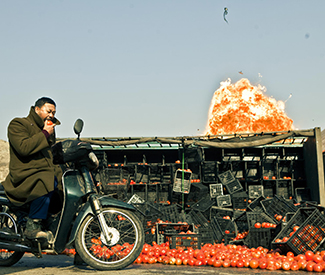
10. Beijing Flickers (Zhang Yuan, China) and A Touch of Sin (Jia Zhang-ke, China/Japan) “Sixth Generation” Chinese cinema is vibrantly alive and well. Do yourself a favor and get wrapped up in these explosive films.

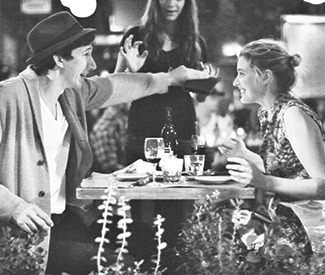
9. Blue Jasmine (Woody Allen, US) and Before Midnight (Richard Linklater, US) As John Waters says, “Woody Allen makes straight relationships seem interesting.” Not only should both Cate Blanchett and Sally Hawkins get Oscar nods for Blue Jasmine, but Andrew Dice Clay should actually win. Add to that Julie Delpy, Ethan Hawke, and Richard Linklater’s most profound film of their trilogy — I can’t wait for the next three.

8. The World’s End (Edgar Wright, UK) and Sion Sono’s The Land of Hope (Sion Sono, Japan/Taiwan/UK/Germany) Both of these cult directors recognize that the loss of personal relationships are as serious as the end of the world. Multiple viewings are recommended.

7. Miss Lovely (Ashim Ahluwalia, India) and The Canyons (Paul Schrader, US) Exploitation cinema that practices what it preaches seems to always be misunderstood or disrespected upon its initial release. The fact that India even allowed Miss Lovely to be made is as exciting as Paul Schrader’s decision to cast troubled starlet Lindsay Lohan.

6. Manakamana (Stephanie Spray and Pacho Velez, Nepal/US) and Leviathan (Lucien Castaing-Taylor and Verena Paravel, France/UK/US) Be patient and rewards will come in these minimalist, deeply moving journeys.

5. Spring Breakers (Harmony Korine, US) and Michael Bay’s Pain & Gain (Michael Bay, US) Don’t stop with Korine’s ode to the ultimate American neon fever dream. I dare you to experience Bay’s pumped-up screwball satire. Added bonus: Dwayne Johnson turns in one of the funniest performances of the year.

4. 12 Years a Slave (Steve McQueen, US/UK) and Gravity (Alfonso Cuarón, US), plus Aningaaq (Jonás Cuarón, US) Mainstream cinema got it right this year and these Oscar-baiting films deserve more credit than just some awards. They might be changing a whole generation. If you haven’t watched the younger Cuarón’s Greenland-set Gravity companion short, go online ASAP. It’s as good as any feature this year.

3. Ulrich Seidl’s Paradise trilogy: Love, Faith, and Hope (Austria/France/Germany) Hands down, the best political-art-porn trilogy of the decade. I can’t choose which one is my favorite.

2. Norte, the End of History (Lav Diaz, Philippines) Diaz’s four-hour masterpiece about a group of existentialist 20-somethings encapsulates why I fell in love with cinema in the first place.

1. The Lone Ranger (Gore Verbinski, US) I will say it, and I will say it loudly: The Lone Ranger is the most subversive Hollywood film since Starship Troopers (1997). This uncompromising, revisionist Western is surprisingly ruthless with its all-American violence, and is highlighted by offbeat slapstick performances (by both Johnny Depp and Armie Hammer) and action scenes that audiences will get to uncover for decades to come. I’ve watched it four times, and it’s only gotten better with each viewing.

Jesse Hawthorne Ficks writes film festival reviews for the SF Bay Guardian, curates Midnites for Maniacs at the Castro and Roxie, and is the Film History Coordinator at Academy of Art University.


YEAR IN FILM: SAM STANDER’S TOP 13

1. Inside Llewyn Davis (Joel and Ethan Coen, US/France)

2. Frances Ha (Noah Baumbach, US)

3. John Dies at the End (Don Coscarelli, US)

4. Pacific Rim (Guillermo del Toro, US)

5. Stories We Tell (Sarah Polley, Canada)

6. Blue Jasmine (Woody Allen, US)

7. The Punk Singer (Sini Anderson, US)

8. The World’s End (Edgar Wright, UK)

9. [tie] Evil Dead (Fede Alvarez, US) and You’re Next (Adam Wingard, US)

10. [tie] The Bling Ring (Sofia Coppola, US/UK/France/Germany/Japan) and Spring Breakers (Harmony Korine, US)

11. The Act of Killing (Joshua Oppenheimer, Denmark/Norway/UK)

Watch out!

0

cheryl@sfbg.com

YEAR IN FILM What the hell am I watching? I muttered that phrase many times in 2013, with interpretations ranging all over the cinematic map. There was a sense of amazed “How did they do that?” during Gravity; feelings of intrigued unease during Upstream Color and The Act of Killing; and a genuine feeling of befuddlement as a book I thoroughly enjoyed, World War Z, was transformed into a puddle of CG mud with Brad Pitt bobbing at its center.

It was a year full of memorable images, for better and worse. I won’t soon forget The Counselor‘s car-fucking sequence; The Conjuring‘s creepy Annabelle doll; or the sight of Jonah Hill becoming possessed by a demon in This is the End (or by a handful of well-aged Quaaludes in The Wolf of Wall Street). On the other hand, I’ve been struggling to remember anything that happened in the number one movie of the year, Iron Man 3.

That’s not Tony Stark’s fault. Mega-budget films like Iron Man 3 make high box-office numbers their top priority. To sell a lot of tickets, you have to appeal to as many different kinds of filmgoers as possible; the avoidance of sharp edges and left-field insanity is to be expected. But there’s hope to be found in films like Alfonso Cuarón’s Gravity, the sixth-biggest moneymaker of the year, which married crowd-pleasing suspense and technical beauty (that 3D!) to a surprisingly stark, profound story about loneliness and loss.

Gravity was among many films this year that lingered on themes of fear, abandonment, and forced self-reliance. The other big example: J.C. Chandor’s All is Lost, which sets a solo sailor — Robert Redford, one of few movie stars with as much built-in audience goodwill as Gravity‘s Sandra Bullock — adrift on a perilously leaky vessel. Unlike Bullock’s Dr. Ryan Stone, Redford’s unnamed salty dog isn’t gasping for oxygen (yet …), and he’s scrambling to survive sudden storms instead of onslaughts of space junk. But Redford’s plight might actually be the tougher one. All is Lost offers neither exposition nor any room for existential reflection. (Hell, it barely offers any dialogue; no wacky Mardi Gras stories from George Clooney here.) We have no idea who Redford’s character is, or why he’s puttering around alone on the Indian Ocean. Compared to Ryan, he remains calm as each new calamity presents itself. But both characters — she, a rookie in space; he, a seemingly experienced seaman — scramble to read instruction manuals when they find gizmos that might help them survive, even for just a few more moments.

The stakes are less dire for the lonely protagonists of Spike Jonze’s Her and the Coen brothers’ Inside Llewyn Davis. And you kinda get the sense that both Her‘s Theodore (Joaquin Phoenix) and Inside‘s Llewyn (Oscar Isaac) have only themselves to blame for their ennui. But unlike Llewyn, who bumbles his way through a 1960s New York folk scene riddled with mistakes he’s only recently begun to regret, mid-21st century Los Angeleno Theodore finds a coping strategy that brings him joy. Even when the “relationship” he’s cultivated with his computer operating system hits the expected snags, Jonze sneaks a little bit of optimism in there. By the film’s end, Theodore’s intimate brush with technology has guided him toward some very human soul-searching — again, unlike Llewyn, whose story finishes exactly where it began.

Gabriela Cowperthwaite’s Blackfish — a documentary investigating the 2010 death of a SeaWorld trainer at the jaws of a male orca named Tilikum — also brought a tale of isolation to the forefront. It’s capped with a lingering shot of the giant animal hovering, motionless, in a solitary-confinement tank. Home sweet home. Thoughtful and provocative, Blackfish avoids sensationalism, adding interviews with killer-whale experts to its slate of ex-SeaWorld employee talking heads. It’s not simply an exposé of a specific attack, though it does contain footage shot just before the Tilikum incident. It’s an indictment of an amusement-park industry that puts profits above the safety of its employees, and tries mightily to turn intelligent, unpredictable animals into goofy attractions.

And greed, as it happens, was another big theme for 2013. It’s a topic that lends itself to high-energy tales of ill-gotten gains and dramatic tumbles, with stakes as meaningless as the designer handbags snatched from Paris Hilton’s closet by Sofia Coppola’s Bling Ring bandits — or as huge as the political careers toppled by the antics of American Hustle‘s con artists and slippery FBI agents. Nowhere was this familiar story arc so gleefully explored than in Martin Scorsese’s The Wolf of Wall Street, which — like Bling and Hustle — was based on a true story. Even better, its tale of 1990s stock-market swindling is based on the book written by the fiend who lived it (Jordan Belfort, played by Leonardo DiCaprio), and shot by Martin Scorsese with top-of-his-game panache.

In a parallel universe, someone might make a film casting Belfort as the villain. Here, he’s the obnoxious, thieving, narcissistic, witty, scheming, drug-gobbling douchebag you hate to love. What the hell am I watching? The birth of an antihero, 2013-style. *


CHERYL EDDY’S TOP 10

1. The Act of Killing (Joshua Oppenheimer, Denmark/Norway/UK)

2. 12 Years a Slave (Steve McQueen, US/UK)

3. Gravity (Alfonso Cuarón, US)

4. American Hustle (David O. Russell, US)

5. Upstream Color (Shane Carruth, US)

6. Museum Hours (Jem Cohen, Austria/US)

7. Spring Breakers (Harmony Korine, US)

8. Frances Ha (Noah Baumbach, US)

9. Computer Chess (Andrew Bujalski, US)

10. Fruitvale Station (Ryan Coogler, US)


HONORABLE MENTIONS


Blackfish (Gabriela Cowperthwaite, US); Blue Is the Warmest Color (Abdellatif Kechiche, France/Belgium/Spain); Drug War (Johnnie To, China/Hong Kong); Nebraska (Alexander Payne, US); The Wolf of Wall Street (Martin Scorsese, US)


FAVORITE MOMENTS


Leonardo DiCaprio vs. the stairs, The Wolf of Wall Street

“Let’s boo-boo.” — The World’s End

Mastodon’s “cameo” in Monsters University

Louis C.K.’s ice-fishing story, American Hustle

Judi Dench explains the plot of Big Momma’s House to Steve Coogan, Philomena

“I wanna rob!” — Emma Watson, The Bling Ring

Sun Honglei’s transformation into “Haha,” Drug War

Jem Cohen’s musings on Bruegel, Museum Hours

“Everytime” musical number, Spring Breakers

John Goodman’s “Santería” speech, Inside Llewyn Davis John C. Reilly’s cameo, Anchorman 2: The Legend Continues

Bully pulpit

0

arts@sfbg.com 

YEAR IN FILM While teen bullying might be quite topical, it’s far from being a new issue, as evidenced by Stephen King’s first published novel, Carrie. Set in the hormone-jittery corridors of a suburban high school, the 1974 tome details an outsider’s humiliating entrance into womanhood, as well as the ruthless revenge she enacts on her cruel classmates after she discovers she has the power to move objects with her mind.

Dubbed “The Black Prom” by the book, the disastrous dance at which Carrie White is humiliated for the last time takes on the ominous tenor of a terrorist attack or a wholesale massacre — a fictional foreshadowing of Columbine-scale carnage. While the fact that Carrie has been bullied is positioned as the motive for her rampage, her actions suggest far more than just a wounded lashing-out or a classic revenge fantasy. Although the phrase wasn’t yet common, what Carrie most resembles is a weapon of mass destruction, not a misunderstood misfit. What makes Carrie a horror story is the inhuman scale of her murderous frenzy.

The year 2013 marked a revival for the enigma that is Carrie White, with a remake of the 1976 Brian De Palma movie (as well as, incidentally, the 1988 musical). Director Kimberly Peirce had the harder struggle for relevance, as the original film is considered one of the best horror films ever made, garnering Oscar nominations, American Film Institute nods, and a generation of moviegoers who will never forget jumping in their seats at its oft-imitated, last-act “gotcha” scare.

In Peirce’s fitful homage, the dreamy haze of De Palma’s slo-mo sequences is replaced by a glut of clunky CGI shots that shred the screen. Stepping into the role made iconic by Sissy Spacek, the decidedly non-frumpy Chloë Grace Moretz unleashes her telekinetic talent as a sort of wizardry — striking Merlin the Magician poses with outstretched hands. It borders on irritating. And the mean-girl posse’s reliance on their camera phones and YouTube channels stands to date Peirce’s movie for future generations, just as surely as the hairstyles in De Palma’s date his.

Speaking of which, the De Palma movie admittedly has a few eye-rolling moments of its own. It’s so comfortably bound to the conventions of the seventies that trigger-tempered gym teacher Miss Collins (Betty Buckley) both chain smokes and wears raccoon-thick eyeliner to class, and teen heartthrob Tommy Ross (William Katt) sports a mane of ringlets so angelic you’d swear they were spun from pure disco gold. Whenever Carrie uses her burgeoning powers, a Psycho-esque violin riff screeches in the background, and John Travolta’s doltish bad boy barely appears capable of tying his own shoelaces, let alone engineering his patented blood-bucket humiliation device.

But what makes the story of Carrie so horrifying is precisely that which places her beyond reconstruction. What neither De Palma nor Peirce can quite manage is turning Carrie into a righteous anti-hero. The more they try to create empathy for their tortured protagonist, the more cartoonish and exaggerated her destructive frenzy appears — a gratuitous tsunami of blood, blaze, and blade. Ultimately what works against turning Carrie into a victim is simply that the force of her firepower is too great. She might not have plotted her vengeance, but she’s fully aware that she’s packing her own kind of heat. From the first moment she deliberately uses it to kill, she is damned.

Carrie‘s overkill also stunts its potential as a darkly comedic revenge fantasy à la Heathers (1988), since Carrie, like so many real-life teen shooters, winds up dead herself. Only one of her repentant classmates tries to reach out before the inevitable happens. It’s this scene that most stymies both De Palma and Peirce, since King’s quiet dénouement is decidedly uncinematic — yet it’s a powerful one, an exchange of final words and psychic impressions as Carrie’s life ebbs out of her beside the wrecked remains of the roadhouse she was presumably conceived in. Here, at last, is the moment of self-awareness — and yes, regret — that we need in order to recognize Carrie White as another casualty of her own paranormal capabilities. And until someone figures out a way to film it, we’ll never quite be able to believe it on the big screen. *


TEN SELF-CURATED DOUBLE FEATURES (OR, IN PRAISE OF TWO-DOLLAR WEDNESDAY AT LOST WEEKEND VIDEO)


Art world confidential Marina Abramovic: The Artist is Present (2010) and Pina (2011)

Feeling a little peckish Grizzly Man (2005) and Ravenous (1999)

Finding love in all the wrong places Lolita (1962) and The Glamorous Life of Sachiko Hanai (2003)

Traveling blues Schultze Gets the Blues (2003) and Genghis Blues (1999)

Streets of San Francisco The Laughing Policeman (1973) and The Maltese Falcon (1941)

Outsider music The Devil and Daniel Johnston (2005) and American Hardcore (2006)

Entering the zone Stalker (1979) and Sans Soleil (1983)

Morbid fascinations Colma: The Musical (2006) and The Bridge (2006)

Never mind the remakes Let the Right One In (2008) and Oldboy (2003)

My favorite movie mash-up ever Freaks (1932) and Wisconsin Death Trip (1999)

Spiking the box office

0

arts@sfbg.com 

YEAR IN FILM It’s tough to remember much of the ’90s — what with the air horns and kindercore, flannel and Flavor Flav — but I seem to recall Spike Lee giving the orders that seemed to finally, fully come to pass in 2013: “Make black film.”

Irony of ironies, when it seemed like so many black filmmakers were following through and doing just that — telling their communities’ stories, visualizing their own histories, and fearlessly unlocking troubling and painful key themes — Lee sidled away from Red Hook Summer, last year’s murky return to the fabled Brooklyn stomping grounds of 1989’s Do the Right Thing, and seemed to move toward a fallback position as actioner-for-hire with his redo of Park Chan-wook’s Oldboy, as if to prove that, testify, he can crush skulls just like his old Amerindie-boys-club rival Quentin Tarantino.

Yet isn’t Lee’s Oldboy a “black film” concerning unjust incarceration or bondage, as much as Steve McQueen’s 12 Years a Slave and Hunger are? Perhaps. The connections were in place, if you cared to look: the stasis of 12 Year‘s near-still opening shot, as Solomon Northup (Chiwetel Ejiofor) and other slaves facing the audience, waiting and listening to a white foreman’s directions, has its corollary in the multiple shots in Lee Daniels’ The Butler, of Forest Whitaker’s butler Cecil Gaines, face frozen. He’s the veritable “invisible man,” instructed to disappear into the background at White House dinners and forever listening for direction. And waiting — as if wondering when the moviemaking establishment will move on from its habit of bestowing statuettes for African American portraits in servitude, à la The Help (2011) and Driving Miss Daisy (1989).

It’s been a long time coming — much like a certain African American president that butler Gaines had waited a lifetime to meet. Five years into that presidency, the man who tried to “do the right thing” has, intentionally or not, changed the conversation on black representation on screens both big and small. The country’s ready to look at its past and break down the codes, whether they concern slavery, birthers’ loaded allegations about Obama’s “un-American-ness,” Paula Deen’s alleged workplace racism, or Julianne Hough’s wrongheaded Halloween costume — a blackface tribute to “Orange is the New Black” character Crazy Eyes.

This year’s contenders looked to not only historical role models like Jackie Robinson in 42 and Nelson Mandela in Mandela: A Long Walk to Freedom) — in movies made by white filmmakers — but also lighter, aspirational figures such as Tyler Perry (who laid siege on the box office with two efforts, A Madea Christmas and Peeples), as well as the glossy buppies populating popular comedy sequel The Best Man Holiday. Fans blew up the Interwebs with indignation when some misbegotten USA Today editor came up with the headline “Holiday Nearly Beats Thor as Race-Themed Films Soar.”

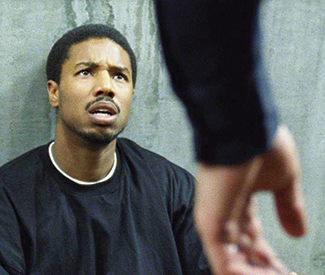
The Best Man Holiday is bourgie worlds away from Spike Lee favorite Fruitvale Station. (One wonders if the acclaimed indie will serve as a model for Lee’s own Kickstarter-fueled Trayvon Martin project.) Filling out the many shades of his protagonist’s story, and leading with cell phone footage of the fatal shooting, director Ryan Coogler never overplays the naturalistic narrative centered on Oscar Grant, so often writ larger than life all over Oakland in posters and street art. Though it was released at height of Martin-related outrage, the film keeps sensation and sentimentality at bay, apart from a foreboding scene of a stray dog’s sudden death. Like that hound on the run, Michael B. Jordan’s Grant is a driving, hustling, partying study in movement. Fully immersed in a multicultural Bay Area where racism operates in subtler and more complex ways than ever before, he, like any other restless rider, is just trying to get home.

Whitaker threw his weight behind Fruitvale Station as a producer — but his Gaines and The Butler seem wildly different on their stiff, sad surfaces. So much is simmering within Whitaker’s stocky form, his steadfast servant with access to power that he’s forbidden to use, and those blank looks. “We got two faces: ours and the ones that we got to show the white folks. Now to get up in the world, we have to make them feel non-threatened,” mentor Maynard (Clarence Williams III of The Mod Squad) offers. Surrounded by Daniels players like Mariah Carey and Lenny Kravitz, Gaines has one leg in a horrifying sharecropper past and another in upwardly mobile mid-century America, which filmmaker Daniels emphasizes by juxtaposing lynched black men with the stars and stripes at The Butler’s start.

The director goes on to unfurl his showiest stylistic flourishes in a series of jump cuts aimed at the spectacle of hypocrisy perpetually unfolding in the White House, as a table is carefully laid for a excruciating formal state dinner, and the Freedom Riders — Gaines’ son among them — are humiliated while staging a stoic sit-in at a Southern lunch counter. Passive resistance, in all its many forms, is the locus of both tragedy and heroism in The Butler.

Nature, with its dripping moss, strange sunsets, and even Biblical pestilence, provides brief snatches of beauty in 12 Years a Slave, as McQueen foregrounds the mechanistic business of slavery in the tools used for cutting cane, the wheels of a river boat. Free-born violinist Northup is beaten into a kind of tool after he’s kidnapped and sold into slavery. His body, nude and exposed to traffickers and buyers, is transformed into a commodity that doesn’t belong to him. His talents are also forced into new uses, as when he fiddles frantically while a mother is torn from her children in a horror-show of a salesroom floor — and later, during a torturous, late-night dance staged by Michael Fassbender’s damaged, sadistic slave owner. The effect of seeing familiar white actors (like Fassbender, and the stars who play The Butler’s various commanders in chief) reel by in a parade of status quo perpetrators, not saviors. In both 12 Years and The Butler, it’s disorienting — as if everyone in Hollywood is also aching to “make black film.”

12 years a slave

Lupita Nyong’o in 12 Years a Slave

Bridging McQueen’s explorations of physical and psychological abjection, Hans Zimmer’s slow-burning, string-laden score picks up where it left off in McQueen’s 2011 Shame, about Fassbender’s sex addict enchained to his confused desires. In terms of desire, it’s all too clear where Ejiofor’s Northup stands (“I don’t want to survive — I want to live!” he declares), and to his credit, McQueen makes his nightmarish 172-year-old descent all too relevant, especially at a time when the Obama administration addresses the persistent crime of human trafficking. It’s just a small leap of imagination to think of one’s story, name, and legal status blotted out and turned around by force and a gnawing “you’re nothing but a Georgia runaway” counter-narrative, reminding the viewer that no one is truly free when others are enslaved. *


KIMBERLY CHUN’S US-DOMINATED 10 FOR ’13 


 (in alphabetical order)

Best second time around: 12 Years a Slave (Steve McQueen, US/UK)

Luxe clucks: The Bling Ring (Sofia Coppola, US/UK/France/Germany/Japan)

Best off-base SF-by-way-of-Jersey: Blue Jasmine (Woody Allen, US)

Finest funny-sad threesome: Enough Said (Nicole Holofcener, US)

Bay pride: Fruitvale Station (Ryan Coogler, US)

Best flouting of the laws of physics: Gravity (Alfonso Cuarón, US)

Best use of entire songs: Inside Llewyn Davis (Ethan and Joel Coen, US/France)

Best tortured threesome: The Past (Asghar Farhadi, France/Italy)

Inspired grills and thrills: Spring Breakers (Harmony Korine, US) Rapturous apocalypse: This Is the End (Evan Goldberg and Seth Rogen, US)

Clean Power SF still moving forward

10

news@sfbg.com 

Dec. 19 marked the 100th anniversary of the Raker Act, federal legislation that specifically called for San Francisco to directly distribute the water and electricity generated by the O’Shaughnessy Dam to its residents and for their benefit. The city does so with the water, through the San Francisco Public Utilities Commission, but Pacific Gas & Electric used its power and connections to take control of the electricity and keep it, corrupting the political system for nearly a century in the process.

“The result: San Francisco has paid through the nose to PG&E for its power and the city loses about $30 million a year in profits it would get from a public system,” journalist J.B. Neilands wrote in the March 27, 1969 issue of the Bay Guardian, the first of dozens of stories we’ve written on the topic, spanning many unsuccessful public power campaigns, each one dominated by millions of dollars in PG&E spending.

Meanwhile, San Francisco’s longstanding effort to develop a municipal renewable energy program has been stymied by politics, but certain aspects of the plan are advancing nevertheless.

At a Dec. 13 meeting of the Local Agency Formation Commission (LAFCo), a committee comprised of members of the Board of Supervisors that has been working to develop CleanPowerSF for years, Sup. London Breed called for putting out a Request for Proposals to develop a concrete plan for building out local renewable energy infrastructure. LAFCo adopted the motion.

With plans for solar panel arrays or wind power facilities that would generate hundreds of megawatts of electricity for the municipal energy program, the build-out is a key aspect of the plan that could lead to job creation and stable electricity rates in the long term.

Earlier this year, members of the San Francisco Public Utilities Commission, a body composed of mayoral appointees, refused to approve a not-to-exceed rate for the program, effectively obstructing any forward progress.

“This does not get around the political problem we have,” said Eric Brooks, a longtime advocate of CleanPowerSF. “On Aug. 13, from [the SFPUC’s] standpoint, they put the program on hold.” Nevertheless, “the idea is to work on all the other things, and get those things done.”

Project proponents plan to bring on a consultant to hash out more tangible goals with regard to job creation, and then use those shovel-ready plans to bring trade unions on board.

The political pressure against CleanPowerSF, fueled by groups associated with PG&E in political alignment with Mayor Ed Lee, is formidable. Yet Breed and others remain undeterred. “We want labor to be a partner on this,” Breed told the Bay Guardian. “We want to make sure that it’s clear, and more importantly, we want it to be a strong proposal. … My goal is to make it difficult for them to oppose it.”

Lee: Prioritize Affordable Housing

13

joe@sfbg.com 

Mayor Ed Lee announced an executive directive on Dec. 18 for all San Francisco government departments with a hand in housing development, to prioritize construction of affordable units.

The Department of Building Inspection, Mayor’s Office of Housing, Planning Department and others have all been directed to tailor their activities to the directive — a stark indicator of just how potent this issue has become after months of high-profile evictions and progressive organizing and demonstrations.

“It isn’t always on the private sector, we’ve got to have a stake in the action as well,” Lee told reporters. “(San Francisco) is expensive. But we don’t have to accept it. We can do something.”

With the tech-fueled housing crisis pricing out San Franciscans left and right, and Ellis Act evictions surging 170 percent in the last three years, the city is in dire need of housing help. But as progressives have noted before, you can’t simply build your way out of this crisis, as Lee acknowledged.

“The other part of this directive is to also get the other departments to work with me and the private sector to build more housing in all the different spectrums, and middle class housing,” Lee said.

Peter Cohen, co-director of the Council of Community Housing Organizations, said Lee’s plan sounded like a step in the right direction. “The proof’s in the pudding, of course,” he said. “It’s the kind of directive that I wish, honestly, would come out a year ago. The answer has been, let’s keep building and hope it fixes itself.”

Lee made his announcement at the nearly finished Natoma Family Apartments, a new affordable housing development. The building will have 60 units, and will open in January. The number of San Franciscans who applied to live there? 2,806.

Dutch show how SF cycling could grow

16


By Dara Colwell

OPINION During rush hour, seeing the intersection at Weesperzijde and Meester Treublaan in Amsterdam would make a San Franciscan gasp. As cars move forward, cyclists continually pedal past, undisturbed by traffic—20, 30, or 40 at a time, in both directions—onto the narrow Weesperzijde, which runs along the Amstel River.

For the Dutch, this is the norm. In the Netherlands, the average person takes 300 bike rides per year covering roughly 560 miles. Cycling deaths remain the lowest in the world.

If only this were true elsewhere. In San Francisco, four people were hit and killed while biking in and around SoMa in 2013. As of Nov. 14, the fifth person in nine days was killed cycling on London’s roads. On both sides of the Atlantic, the issue raised by such tragedies remains the same: as long as roads favor cars, cyclists are at a dangerous disadvantage.

As a former San Franciscan now living in Amsterdam, I am continually impressed by the comprehensive infrastructure that allows me to bike everywhere safely. But it didn’t come out of nowhere.

The Dutch had their love affair with cars, too. In rebuilding itself after World War II, the country became prosperous, and with more money flooding in, people ditched their bikes for cars. Because Dutch cities are small, densely populated, and hemmed in by canals, there wasn’t a great deal of room to expand. As cars piled onto the streets, traffic-related deaths soared. In 1971 alone, cars killed more than 3,000 people, 450 of which were children. The public, outraged that this was too high a price to pay, started demonstrating.

In 1973, the international oil crisis hit, heightening concerns about oil dependency. This also pushed the Dutch to invest in the cycling infrastructure we see today—where every major street contains separate bike lanes and traffic lights.

Cycling here looks very different from San Francisco: couples hold hands, mothers willingly cart their children from A to B and people hold conversations as they ride along bike paths separated from the road. Legally, too, Dutch cyclists have the right of way on the road. According to the ANWB, the Dutch tourism and car owners’ association, car drivers are liable for accidents unless they can prove they were overpowered by circumstances beyond their control.

Having lived in Amsterdam several years now, I am convinced that recreating the Dutch system elsewhere will take more than better bike lanes. In the Netherlands, cycling regularly (and not just for sport) has been ingrained for generations. Dutch children learn the importance, relevance, and necessity of cycling at an early age, and they learn how to do it well and therefore, safely.

In Dutch schools, cycling proficiency lessons are compulsory. Children have to pass two tests—one, an exam on road rules; the second, cycling through traffic— to earn a bike diploma. When these children cycle along bike paths, they are cycling next to drivers who have also cycled most of their lives, and are looking out for them.

In the USA, getting drivers to think about cyclists sharing the roads is going to be a gradual process. When cycling in San Francisco a decade ago, I was once sideswiped by a driver too busy looking left at oncoming traffic to notice I was on his right side. As he turned right and knocked me over, thank god at only 5 mph, I was so shocked I apologized. But he was at fault. A friend of my mother’s once joked I should be careful “because people like me never look out for cyclists.” Cycling deaths constantly prove this is really no joke.

While it is more challenging to build cycling infrastructure in America as there are greater distances to cover, with no infrastructure, nothing happens. Build it, and yes, the cyclists will come—but then you have to remind everyone else that cyclists are there. Do it repeatedly and years from now, we can boast it really works, just as it does in Holland.