Volume 47 [2012–13]

Still the fairest

1

arts@sfbg.com

FILM One of the few upbeat by-products of the increasing infantilization of popular movies is that the same impulse to dumb down live action for permanently adolescent tastes also raises the bar for animation, which no longer has to target grade schoolers as its primary audience. Even not-so-special 2012 had more sophisticated and interesting animated features than you’d find in any given year a couple decades or more ago. Wreck-It Ralph won’t win the Best Picture Oscar. But it will almost certainly be better than whatever movie does.

The notion that adults actually want to see full-length cartoons, however, seemed preposterous to myriad soon-to-be-crow-eating people 75 years ago. That was when Walt Disney unleashed Snow White and the Seven Dwarfs on the public — to an enormous success no one had predicted. In fact, all bets were placed on “Disney’s folly” sinking the studio that had foolishly invested all its resources (and a lot of borrowed money) in a venture whose cost overruns and dim prospects had been the talk of Hollywood. (No doubt a few studio heads were happily anticipating hiring Walt’s newly at-liberty talent at cut rates for their own animation divisions.)

http://www.youtube.com/watch?v=5kWr9e4JN5I

Of course, the naysayers were proven wrong — opening up the floodgates to more cartoon features, then Disney live-action films, nature documentaries, TV series, theme parks … a whole empire of “brand” that for better and worse has shaped American culture (and its perception abroad) ever since. The double-disc 2009 DVD release of Snow White features, among its extras, one latter-day observer calling the film “one of the great American success stories of all time.” (The official Disney history offered up in such self promotional products is relentlessly hyperbolic. The same package also offers an “all-new music video” rendition of “Someday My Prince Will Come” by one Tiffany Thornton that is so horrifyingly kitsch you can be sure it will be erased from the official Disney history forthwith.) Snow White would set a record for being the highest-grossing film of all time — but not for long, since a little thing called Gone with the Wind came out in 1939 and stole that title for another quarter-century.

I doubt Mr. Disney could have imagined the world in which his Snow White — which plays the Castro in a newly restored digital print this week, by the way — would be celebrating that septuagenarian anniversary. One in which prevailing tastes decreed two big-budget live-action spins on that same Bavarian fairy tale would be among 2012’s major releases for grown-ups; a mass murder of his target demographic would dominate year-end news; and the unions he famously opposed would be popularly vilified.

That ripple effect is more than this movie should have to bear — let alone that it was apparently Hitler’s favorite. Because Snow White is still a charmer, gorgeous in the depth and detail of its backgrounds, seamless in traversing the bridge between score and song, and timelessly adorable (to use the heroine’s favorite adjective).

It seems less dated than just about any other movie from 1937, even if Snow White herself remains an insipid blank with the voice of Betty Boop doing operetta. (Subsequent Disney cartoon heroines would be feistier, though heroes would remain problematic — Walt’s animators found Snow’s Prince Charming so difficult to depict they wound up simply cutting his screen time to the bone.) The most one can say for her is that she seems to have majored in Home Ec, though the evil queen hooked on being “fairest of them all” kick-started a fine legacy of excellent Disney villains. (Notably absent were such grisly original fairy-tale details as the step mum’s death from dancing in red-hot iron shoes at Snow’s wedding.)

You can blame Snow White for cementing Disney’s transition from the rambunctious to the harmless. But 75 years later that formula still works — in this instance, at least. The art itself remains near-timeless, even if the subsequent Pinocchio (1940) and Bambi (1942) are arguably much better films. Few movies had anywhere near the same impact, on the medium’s development or life in general.

It had a more direct impact on the Radio City Music Hall, whose seats had to be replaced after a record-breaking run because children kept wetting themselves during the scarier sequences. Adorable! 

SNOW WHITE AND THE SEVEN DWARFS

Wed/2-Sun/6, 1:30, 3:45, 6, and 8:15pm

Castro Theatre

429 Castro, SF

www.castrotheatre.com


Bigger than Bigelow

2

cheryl@sfbg.com

FILM There was hella hoopla over Kathryn Bigelow being the first woman to win an Oscar for Best Director, for 2010’s The Hurt Locker. It’s a good possibility she’ll soon be the first woman to win two directing Oscars, if Zero Dark Thirty‘s remarkable haul of critical kudos continues into statuette season.

But even if Zero (more on that below) doesn’t claim cinema’s top prize, Bigelow will probably win another Best Directing Oscar before another woman anyway. She’s just about the only female director making films that work Oscar’s magic formula: critically praised, culturally significant, headline-grabbing, and popularly loved (with box-office hauls to match). Women may be making inroads on the screenwriting end of things (and you’ll find lauded female names among documentary, foreign-language, and film-producing credits), but the most successful post-millennial female directors — Sofia Coppola (a Best Original Screenplay winner for 2003’s Lost in Translation), Catherine Hardwicke, Andrea Arnold, Debra Granick, Lisa Cholodenko, Lynn Shelton, Kelly Reichardt, and Sarah Polley, to name a few — haven’t been able to tick enough of those golden boxes.

Whether or not a film wins an Oscar is hardly a measure of its true worth. But hoisting a Best Directing Oscar does count for something important, particularly in an industry that largely runs on male power. Bigelow’s success is particularly notable because she does not make so-called “women’s pictures,” whatever that may mean (she did make a vampire flick long before Hardwicke, though, as fans of 1987’s Near Dark will recall). With the exception of 2000’s little-seen The Weight of Water and 1989’s Blue Steel (would anyone remember that movie, if not for Derek Zoolander?) — with honorable mention for Angela Bassett’s formidable supporting turn in 1995’s Strange Days — Bigelow’s films tend to be, uh, “men’s pictures.”

http://www.youtube.com/watch?v=cAtWcvCxPhc

The surfing, skydiving, bank-robbin’ three-punch of Point Break (1991) allowed Keanu Reeves to set a course for action-hero superstardom (without it, he’d never have been cast in 1994’s Speed); though the film features a traditional romantic subplot, it’s mostly about the bromance between Reeves’ undercover FBI agent and Patrick Swayze’s New Age macho man. K-19: The Widowmaker (2002) was Bigelow’s first foray into a military milieu; its tale of trouble aboard a Soviet nuclear submarine, circa 1961, was couched in a $100 million production that neither earned back its budget nor convinced anyone of Harrison Ford’s ability to do a Russian accent. (Interestingly, the film’s Rotten Tomatoes summary foreshadows the reception to date of Zero Dark Thirty: “A gripping drama even though the filmmakers have taken liberties with the facts.”)

Bigelow rebounded with The Hurt Locker (2008) — scooping up her accolades in front of ex-husband and former film-production partner James Cameron, whose 2008 Avatar grossed billions but didn’t win over Academy voters. Set during the Iraq War, The Hurt Locker follows the high-stakes, high-tension routine of a three-man bomb disposal team. It launched actor Jeremy Renner to stardom, and earned a screenwriting Oscar for Mark Boal, a journalist who’d been embedded with a US Army bomb squad. Along with the 2008 HBO mini-series Generation Kill (based on a book written by a journalist embedded with the Marines at almost the same time as Boal), The Hurt Locker — a tense, gritty thriller shot using hand-held cameras — was one of the first large-scale docu-dramas based on the months immediately following the 2003 invasion.

After the Oscars, rumor had it that Bigelow and Boal’s next film would be a South American “drug parable,” with big names like Tom Hanks and Johnny Depp floated as possible stars. Clearly, a more exciting project took precedence — one that’s already raked in critic’s association prizes, and raised the ire of government types, including Sen. Dianne Feinstein, who insist that it has “taken liberties with the facts.”

Front-loaded with equal parts acclaim and controversy, Zero Dark Thirty moves into wider release this week, and larger audiences will be able to make up their own minds about it. It’s certainly edgier than another 2012 film about CIA heroics. (There’s no waterboarding in Argo.) “What I want you to know is that Zero Dark Thirty is a dramatization, not a realistic portrayal of the facts,” CIA Acting Director Michael Morell explained in a recent statement, taking issue not just with the depiction of “enhanced interrogation techniques” (that’s “torture” to you and me), but also the way the film singles out one character as masterminding the operation to take down Osama bin Laden.

“The point was to immerse the audience in this landscape, not to pretend to debate policy,” Bigelow responded in an interview with entertainment site the Wrap. “Was it difficult to shoot? Yes. Do I wish [torture] was not part of that history? Yes, but it was.”

The extent to which torture was actually used in the hunt for bin Laden may never be known, though popular opinion will surely be shaped by this film, as it’s produced with the same kind of “realness” that made The Hurt Locker so potent. Zero Dark Thirty incorporates torture early in its chronology — which begins in 2003, after a brief opening that captures the terror of September 11, 2001 using only 911 phone calls — but the practice is discarded after 2008, a sea-change year marked by the sight of Obama on TV insisting that “America does not torture.” (The “any more” goes unspoken.)

Most of Zero Dark Thirty is set in Pakistan and/or “CIA black sites” in undisclosed locations; it’s a suspenseful procedural that manages to make well-documented events (the July 2005 London bombings; the September 2008 Islamabad Marriott Hotel bombing; the December 2009 bombing of Camp Chapman in Afghanistan) seem shocking and unexpected. Even the raid on bin Laden’s HQ is nail-bitingly intense. The film immerses the viewer in the clandestine world, tossing out abbreviations (“KSM” for al-Qaeda bigwig Khalid Sheikh Mohammed) and jargon (“tradecraft”) without pausing for a breath. It is thrilling, emotional, engrossing — the smartest, most tightly-constructed action film of the year.

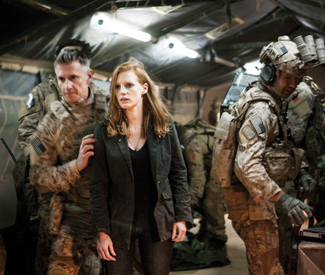
At the center of it all: a character allegedly based on a real person whose actual identity is kept top-secret by necessity. She’s interpreted here in the form of a steely CIA operative named Maya, played to likely Oscar-winning perfection by Jessica Chastain. No matter the film’s divisive subject matter, there’s no denying that this is a powerful performance. Maya is the perfect Bigelow lead; she succeeds in a male-dominated world by focusing solely on her job and her ultimate goal, sexism and gender politics be damned. “Washington says she’s a killer,” a character remarks after meeting this seemingly delicate creature, and he’s proven right long before bin Laden goes down.

Some critics have argued that the character is underdeveloped, but anyone who says that isn’t watching closely enough. Maya may not be given a traditional back story (all we know is she was recruited into the agency after high school), or any outside life to speak of (even Renner’s unhinged Hurt Locker vet is shown going home to a wife and kid), or the desire to distract herself with romance (“I’m not the girl who fucks … it’s unbecoming” she explains at one point, dismissing a colleague’s inquiry into her social life). But there’s plenty of interior life there, and it comes through in quick, vulnerable flashes — leading up to the payoff of the film’s devastating final shot.


ZERO DARK THIRTY opens Fri/4 in Bay Area theaters.

Lamebows 2013

0

marke@sfbg.com

POODLES ON PARADE Marriage, the military, nudity bans, Bravo TV: queople, why must we torture ourselves! It’s true that we are everywhere, lurking even in the aeries of stupid-headedness. But queen, please, put down that can of mentally challenged and back slowly away in your new cha-cha heels. Here I am once again to call my people out for their foibles of faggotry with the annual Lamebow Awards. Even in a banner year for LGBT wins, we still clutched a Gucci full of dumb.

The cliches write themselves: My Dearest Scott Wiener, I write this not as someone who disagrees profoundly with your “moderate” politics or your collection of Banana Republic v-neck sweaters. I write this because, this year, a supervisor named Wiener, representing the Castro, got so obsessed with a few naked guys that he rammed through a nudity ban (oh, and a bunch of other awful stuff, too) that made national news. I have to talk to my relatives back East about all this. My great-aunt-in-law almost choked to death on her turkey from laughter. Please stop.

Not helping: Mountain-out-of-molehill blogger Michael Petrelis in turn became obsessed with Wiener’s penis, attempting to snap a pic of the Supes’ member at a City Hall urinal. Not making this up. Nor this: it took too long for Petrelis’ camera from the ’90s to warm up, so he only managed a shot of Wiener brushing his teeth, post-pee. Petrelis is being sued by Wiener.

Seriously not helping though: In August, 28-year-old Floyd Corkins II, a former LGBT center volunteer, attempted to storm the Washington, DC headquarters of the Family Research Council (recently and correctly categorized as a hate group by the Southern Poverty Law Center), shooting a security guard.

You just helped, actually: We never knew we should be boycotting Sodastream products because they are manufactured in illegal Israeli settlements on Palestinian land. But thanks to a widely viewed YouTube video — in which it appears a peaceful Code Pink protest inside Sodastream-carrying Cliff’s Variety in the Castro is violently broken up by hysterically screaming Cliff’s employees — we know! Troll is successful.

The fact is, you’re late: “The fact is, I’m gay,” Anderson Cooper wrote to blogger Andrew Sullivan by way of coming out. Anderson Cooper is the Clay Aiken of our generation.

The fact is you’re veeery late: As her 50th birthday approached, Kristy McNichol came out. “She hopes that coming out can help kids who need support,” said her publicist. There are no kids who know who Kristy McNichol is.

And you’re just trapped in a closet full of spray-on hair forever now: Many, many of John Travolta‘s male masseurs “opened up” about his happy endings. His response? A horrifying Christmas album reunion with Olivia Newton John full of the most awkward sexual metaphors ever. Greased lightning!

Freedom to fly, to fail: Director Lena Wachowski came out beautifully, vocally, and powerfully as a transgender person with deep thoughts about the nature of sexual identity. Too bad Cloud Atlas had me rolling my eyes to the high heavens.

Hide your buns, hide your wings: Reviving his meme career somewhat, Antoine Dodson said she was gonna eat Chik-fil-A anyway. Well-played.

I’m sorry: Castigating Log Cabin Republicans is easier than finding Anderson Cooper on Grindr, but watching them bend over backwards to justify supporting the Tea Party party when even our president had “evolved” on gay marriage was a real hoot. Especially because they had to say “fiscal” so many times.

All of us: While we were all arguing over gay shit (as usual), a young musical genius named Frank Ocean quietly erased the goalposts and went public with his generation’s sublime, amorphous “meh” about sexual labels. Let’s catch up.


More school security? Maybe not.

9

OPINION I pretty much live in schools. Almost every morning, I get my three-year-old ready for pre-school, my seven-year-old ready for first grade, and myself ready for high school, where I teach English. Almost everyday, I’m in at least three schools. But never before had I thought so thoroughly about school security until Monday, Dec. 17, when I drove my daughters, and then myself, to school for the first time after the shootings in Newtown.

My first stop is my daughter’s public elementary school in San Francisco. Because I often have an 8am class and am pressed for time, I almost never walk her into school. I pull up along a curb, where fifth graders clad in fluorescent vests open the back door of my car to escort my daughter out. From there, she walks alone into a side door and then out onto an outdoor basketball court, where the whole school gathers every morning. Her teacher then takes my daughter to her classroom, which is, incidentally, closest to the front door to the school, which is always open during the day. A potential shooter would have no problem entering, and with enough ammunition and a deadly enough gun, he could kill at will.

I asked for the first time that day: would it be better to close off the campus?

The next stop is my three-year-old daughter’s pre-school. There, I park my car, get her out, and walk to the front entrance, where an administrative assistant buzzes me in upon recognition. Because it’s busy in the mornings, I often hold the door for other parents trying to get in. Of course, it would be very easy for a killer to force his way in behind one of us, or he could simply shoot the glass if he was determined enough.

Again, the questions arise: should the director have a gun in her office? Should we put up metal doors? Should the school hire a security guard monitoring cameras before letting parents and children into the school?

Finally, I arrive at my high school, which is a rather affluent independent school. I park on the street and walk right in. Often the receptionist doesn’t even notice me. We have a completely open campus, with many doors into which someone could enter with no resistance whatsoever. We have security guards, but they are unarmed and more concerned with directing traffic around the school than with a potential intruder. All of our students have off-campus privileges. Should we keep students on campus? Should we bar all the doors? Place an armed security guard at every entry point into the school?

The answer I’ve come to is no.

The question of school security gets at the very nature of what schools are. Schools both are and are not of the world. On the one hand, schools are a place that prepares our youth for the world. They’re also a place where young people can learn to take risks, where they can make mistakes before they go out into the “real” world. On the other hand, however, schools reflect our neighborhoods, our counties, our cities, our states, our country, and our world.

If we bar our schools off from the outside world, the message that we’re sending to our children is that the world is a place to be feared, a place where calculus won’t do you any good — but where a gun will. To “secure” our schools is to admit our collective failure at making the outside world safe. It is to admit that one of the fundamental values of any society, and in particular our American society—trust—has been broken.

I would hope instead that we work now to change the world enough to communicate to our children that the world is, in fact, a place that is not just safe but that they are invited into, a place where they can thrive and find happiness rather than a place to fear and hide from. Our responsibility is not to gate schools off from the world but to take the need for gates down altogether.

Scott Laughlin teaches English at University High School.

No headbutting?

0

tredmond@sfbg.com

LIT/FILM The folding travel toothbrush is a central element in every Jack Reacher novel. It’s his only possession, the only thing the wandering ex-military cop takes with him when he throws away his old clothes and buys new ones, the only thing that ties him directly to his old life in the U.S. Army. It’s part of the Reacher formula, one that consistently works through 17 books by Lee Child.

It’s not in the Jack Reacher movie.

That was the first sign that one of the best trash-lit characters to come on the scene since John D. MacDonald invented Travis McGee hasn’t translated so well to the big screen. (McGee never did, either; the only McGee movies ever made were disasters, and MacDonald hated all of them.)

But the esoteric musings of McGee, on everything from Florida real-estate development to the demise of San Francisco, were the charm that held those modest plots together. Child, who has a background in television production, offers more action-packed stories with all the elements that ought to make a great movie.

Like MacDonald, though, Child goes a bit deeper than the traditional trashy thriller writer. His books have themes of violence and redemption, of freedom and responsibility, of wanderlust and homesickness that can’t just be shoehorned into a fast-paced screenplay with Tom Cruise. This may not be Shakespearean literature, but it isn’t Mission Impossible, either.

To make it more challenging, there are long periods of silence in the Reacher book, and those don’t work will in today’s mainstream cinema — but without them, the pacing is all wrong.

I showed up at the movie ready to be let down. The diminutive and emotional Cruise seemed all wrong as the tall, taciturn Reacher; I was hoping for a more Daniel Craig approach. Child, on the other hand, was totally down with the casting, so I was ready to give it a shot. (Or, as the book title from whence this flick emerged put it, One Shot.)

The book is a classic of the Reacher oevre, with a tiny bit of 2007’s Shooter mixed in. There’s a former Army sniper named James Barr (Joseph Sikora) who gets charged with an apparently random killing spree; the evidence is overwhelming, the cops have him nailed, and the execution-mad district attorney tells him if he doesn’t confess, he’s going to get the death penalty.

Barr refuses to talk; he just takes a legal pad and writes “Get Jack Reacher.” Which turns out to be tricky; Reacher has no address, no credit cards, no car, no driver’s license … nothing to pin him down. He’s almost impossible to find.

But he shows up on his own — not to help save Barr but to tell the cops that the guy once murdered a bunch of civilian contractors in Iraq. Reacher had him nailed, but the Army, for political reasons, let the case go. He’s ready to send the guy to the chair, if he doesn’t kill him with his own hands first.

But then the DA’s daughter, Helen Rodin (Rosamund Pike), who is representing Barr, convinces Reacher to take another look, and together they discover a fiendish plot involving an 80-year-old mob capo from the old Soviet Gulag.

Nice movie plot. And the film version doesn’t take too many liberties with the general idea of the book.

But there’s no headbutting, which is Reacher’s trademark fighting technique. And he never has sex with the female protagonist, which is disappointing.

That and the fact that the movie’s about 20 minutes too long — and the car chase scene alone is about five minutes too long (and car chases are not part of the Reacher mix) and there’s an embarassing scene where Cruise takes his shirt off just so we can see him with his shirt off left me wondering: did Lee Child really sign off on this screenplay?

So that’s the bad news. The good news is that the film is entertaining, Cruise does the best he can under the circumstances, and he delivers the key lines nicely. Pike does a fine job of being sexy without being movie-star beautiful. The fight scenes are lively and fun and not too overdone.

And Werner Herzog is just spectacular as the evil Zec, a man so tough that he chewed his fingers off in prison to avoid getting gangrene. Watching Herzog sneer and be scary, horrible, and fascinating at the same time is worth the price of admission.

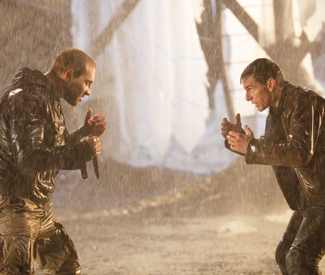
No nudity. Five people beaten near death. Three cops cars destroyed. Sniper porn. Fight to the death in the pouring rain. Not a great tribute to a great character, but I’ll take it. *

JACK REACHER is now playing in Bay Area theaters.

White men behaving (very) badly

69

Could it be — the worst year ever?

I keep asking. And every time the Offies come around, I find myself boggled yet again. Our awards for the very worst — the dumbest, the most tasteless, the most truly offensive acts of the year past — keep sinking lower and lower.

But what can we do? There are still Republicans, and this year a lot of them ran for high office, and every single one made a fool of himself. There are still politicians who think you can run for San Francisco supervisor even if you live in Walnut Creek, and elected leaders who find the courage deep in themselves to prevent a bunch of old men from walking around with their sagging asses and limp dicks out.

There are still entertainers who punch psychics, and gun nuts who blame mass murder on TV sex, and … well, a whole lot of people who have made this a banner year for the Offies.


SUPPORT OUR BRAVE, HEROIC TROOPS! (EXCEPT THE MEN WHO FUCK MEN)

The audience at a Republican presidential primary debate booed a gay solider who called in from Iraq with a question about don’t ask, don’t tell.


FROM A GUY WHO HAD TO BUY OXYCONTINS AND VIAGRA ON THE STREET, THIS SORT OF THING IS AN OBVIOUS CONCERN

Rush Limbaugh attacked law student Sandra Fluke, calling her a “slut” and a “prostitute” because she testified that health-care plans should cover contraceptives.


THERE ARE MEN SO BRILLIANT THAT WE STAND IN AWE OF THEIR INTELLECT

Mitt Romney said he really liked Michigan because the trees were all the right height.


GIVING NEW MEANING TO THE 1 PERCENT

Herman Cain proclaimed that for every woman who claimed he sexually harassed her, there were a thousand others who didn’t.


IF WE WANTED A DRESS CODE ON AIRLINES, WE’D START WITH THOSE DREARY PILOT UNIFORMS

An American Airlines pilot kicked a woman off a flight for wearing a shirt that said “if I wanted the government in my womb I’d fuck a senator.”


PROBLEM IS, BUSH MADE THAT ONE A CABINET-LEVEL POSITION

Rick Perry proclaimed in a debate that he was going to do away with three agencies of the federal government, but after listing Commerce and Education, he couldn’t remember what the third one was, identifying it only as “oops.”


FOR SOMEONE WHOSE NAME MEANS ASS-CUM JUICE, THAT’S A REALLY PRETTY PICTURE

Rick Santorum said that he’d listened to John F. Kennedy’s speech on the separation of church and state and it made him want to throw up.


LOOK! UP AT THE RAMPARTS! THE MAN WITH THE HAIR!

Donald Trump, mistakenly believing Romney won the popular vote but lost the election, called the election “a sham and travesty” and called for “revolution.”


BUT HE COULD HELP THEM OUT WITH A FEW BINDERS FULL OF WOMEN

Romney insulted the British by saying the nation didn’t appear ready to host the Olympics.


FINE, JUST TAKE RICK PERRY WITH YOU

More than 50 thousand people signed a White House petition asking for permission for Texas to secede.


GUNS DON’T KILL PEOPLE, ATHEISM AND OVERSTIMULATED GLANDS DO. HAPPY FRIDAY, SHOOTERS!

On the same day that a gunman opened fire at a showing of the Dark Knight movie in Colorado, the National Rifle Association’s magazine sent out a tweet that read: “Good morning, shooters! Happy Friday.”

A Congressman from Texas, Louie Gohmert, argued that the Dark Knight shootings happened because of “ongoing attacks on Judeo-Christian beliefs.”

Mike Huckabee blamed the massacre in Newtown, CT on atheism. “We ask why there is violence in our schools, but we have systematically removed God from our schools,” Huckabee said on Fox News. “Should we be so surprised that schools would become a place of carnage?”

Timothy Bordnow at Tea Party nation said the shooting was caused by too much sexual stimulation in the media . “There is a reason why young people commit these sorts of crimes, and sex plays no small part. Their passions are eternally inflamed, and they wander the Earth with no outlet for their overstimulated glands.”

Megan McArdle, the Daily Beast writer, urged the victims of mass shootings to gang-rush the shooter so he wouldn’t kill as many people.

The head of the National Rifle Association said the only way to stop mass murders of school children is to post armed guards in every school.


WOW — THE DISTRICT 8 SUPERVISOR HAS BEEN OVERWHELMED BY A COUPLE OF OLD MEN’S FLACCID DICKS

Sup. Scott Wiener promoted a ban on public nudity in San Francisco.


WHEN YOU’RE A MAJOR LOSER, EVEN MONEY CAN’T BUY YOU LOVE

Michael Breyer, who has never been elected to anything, spent roughly $1 million trying to win a state Assembly seat as the candidate of “traditional San Francisco values,” and lost badly.


AND THESE PEOPLE ARE COOPERATING WITH HOMELAND SECURITY?

Confetti thrown in the Giants parade turned out to be lightly shredded internal police documents that included home addresses and social security numbers of officers.


GUESS IT’S OKAY TO PERJURE YOURSELF IF YOU’RE THE MAYOR

Mayor Ed Lee testified under oath that he’d never discussed the Ross Mirkarimi case with members of the board of Supervisors, although friends of Sup. Christina Olague said she’d been open about her talks with the mayor on the topic.


NOW, WHICH ONES ARE THE IRON MONSTERS OF DEATH?

A San Francisco bicyclist who was allegedly trying to beat a speed record crashed into and killed a 71-year-old man in the Castro.


UNFORTUNATELY, THERE’S NO MALPRACTICE STATUTE GOVERNING THAT AUGUST PROFESSION

Political consultant Enrique Pearce oversaw perhaps the worst district election campaign in history, helping Olague become the first incumbent ever to lose in ranked-choice voting in SF.


SOMEHOW, REPRESENTING WALNUT CREEK AT CITY HALL DIDN’T SEEM LIKE SUCH A GOOD IDEA

Union official Leon Chow dropped his challenge to Sup. John Avalos when the SF Appeal revealed that he didn’t live in District 11, or even in San Francisco.


WHEN MEN ARE JUST TOTAL DICKS: THE GOP REDEFINES RAPE

1. Divine providence rape (Rick Santorum): “The right approach is to accept this horribly created .. gift of life, accept what God is giving to you.”

2. Honest Rape (Ron Paul): “If it was an honest rape, that individual should go immediately to the emergency room.”

3. Forcible Rape (Paul Ryan): Federal law should prevent abortion except in the case of “forcible rape.”

4. Emergency Rape (Linda McMahon): “It was really an issue about a Catholic Church being forced to issue those pills if a person came in with an emergency rape.”

5. Legitimate Rape: (Todd Akin): “If it was a legitimate rape, the female body has ways to try to shut that whole thing down.”


CALL IT BIEBER RAGE; IT’S DANGEROUS SHIT

After a Justin Bieber concert, Lindsay Lohan punched a psychic in the face at a New York nightclub, then threw her personal assistant out of the car.


YEP, AND IT DOESN’T LOOK ANY BETTER THE SECOND TIME

Romney’s campaign manager said that his candidate would change his right-wing positions for the fall campaign: “It’s almost like an Etch-A-Sketch. You can kind of shake it up and we start all over again.”


AND IF HE GOES WITH THEM, IT WILL ALL BE WORTH WHILE

Newt Gingrich proposed sending 13,000 Americans to the Moon and creating a new state there.


AND WE ALL WONDER WHY THE MEDIA IS DOING SO SMASHINGLY WELL THESE DAYS

After Gabby Douglas became the first black woman to win the Olympic gold medal in all-around gymnastics, the news media reported on problems with her hair.


AND YOUR VIEW OF THE WORLD IS OVER, OVER, OVER, OVER

Justice Antonin Scalia, in defending his argument that sodomy is legally equivalent to murder, told law students at Princeton that the Constitution is not a living document, it’s “dead, dead, dead, dead.”


MAKES YOU WONDER ABOUT THE POOR SOUL WHO CAME IN AT 99

Kim Kardashian fell 90 places, to 98, on AskMen Magazine’s list of the worlds 100 most desirable women.


SADLY, “GOTTA CATCH ‘EM ALL” DOESN’T MAKE SUCH A GREAT CAMPAIGN SLOGAN

Herman Cain said his life’s philosophy came from a Pokemon song.


WE’RE GLAD THAT HIS FAITH HAS GIVEN HIM SUCH AN UPLIFTING ATTITUDE

Romney said he’s “not concerned about the very poor.”


HE WAS PROBABLY SHITFACED, TOO, BUT SINCE HE DOESN’T DRINK HE CAN’T REMEMBER THAT EITHER

Romney said he didn’t remember beating up a gay student at his prep school and cutting off his long hair.


IT’S A GOOD THING MONDAY NIGHT FOOTBALL ISN’T LOOKING FOR ANOTHER JOHN MADDEN

A full 78 percent of Americans thought Ryan Seacrest was doing a good job broadcasting from the Olympics, although most of them couldn’t figure out what he was actually doing.


HE ALSO TOLD US THAT TAX CUTS AND DEREGULATION WOULD IMPROVE THE ECONOMY, SO HE’S GOT A WINNING RECORD HERE

Karl Rove on election night kept insisting the Romney still had a chance to win.


TALK ABOUT A BLOWN COVER

David Petraus resigned as CIA director after an affair with a woman who was threatening another woman who might have had a thing for him.


TOO BAD — HE MIGHT HAVE HAD TO SEEK ASYLUM IN THE NEW REPUBLIC OF TEXAS

A petition to allow every American to punch Grover Norquist in the dick was removed from the White House website.


WE’RE WITH THE GOVERNMENT OF BELIZE; THIS MAN IS “BONKERS”

One-time software mogul John McAfee fled Belize claiming the cops would persecute him after he was sought for questioning in the shooting death of his neighbor — using a body double, faking a heart attack, pretending he was crazy, and winding up in Miami.


IT SUCKS TO BE STINKING RICH AND OWN FOUR HOUSES AND HAVE TO LIVE WITH REJECTION

Ann Romney was deeply depressed that her husband didn’t win the election, telling friends she though it was their fate to move into the White House.


AND WHEN ASKED IF SOMEONE THAT MORONIC COULD ACTUALLY RUN FOR PRESIDENT, HE SAID “I’M A REPUBLICAN, MAN”

Marco Rubio, when asked about the age of the Earth, said “I’m not a scientist, man.”


EASY — THE ONES WHO ARE GETTING PAID ARE THE ONES PRETENDING TO BE INTERESTED IN NASTY OLD FRENCHMEN

After Dominique Strauss-Kahn was held overnight in Lille to be questioned about possible connections between a prostitution ring and orgies he attended in Paris and Washington, his lawyer said: “I challenge you to distinguish a naked prostitute from any other woman.”


DUDE — THAT’S THE TERRITORY OF SERIOUS LOSERS

Vice-presidential candidate Paul Ryan lied about his time in the marathon.


GO AHEAD, CLINT — MAKE OUR DAY

Surprise guest speaker Clint Eastwood addressed GOP convention delegates for 12 minutes, during which he carried on an imagined dialogue with an empty chair he identified as President Obama.


AND YES, HE DID GET A FAIR AMOUNT OF THE STUPIDITY VOTE

Santorum told a gathering of conservatives in Washington, “We will never have the elite, smart people on our side.”


The next board president

9

EDITORIAL The president of the Board of Supervisors does more than bang the gavel at meetings, tell people to put their clothes back on, and run for higher office. It’s a powerful position largely because the president makes appointments — to the Planning Commission, the Police Commission — and unilaterally decides who serves on which board committees.

Two years ago, Sup. David Chiu, who won the top post in 2009 with progressive support, wanted re-election, and the left wasn’t siding with him anymore. So he cut a deal with the conservative members, appointing the right-wing of the board to plum committee posts — and making life harder for progressives who wanted to pass Legislation or prevent bad developments from happening.

He clearly likes the job and would love to hold it for a third term. But that won’t be easy — Sup. Scott Wiener, who is to the right of Chiu on many issues, is also interested, as is Sup. Jane Kim, who has always been close to Chiu, and Sup. David Campos, who is one of the leading progressives. None of the candidates can count to six right now, so somebody’s going to have to back down or make a deal.

And before that happens, the candidates ought to tell us something about what they plan to do.

Chiu’s 2011 committee appointments were a bit of a shocker, although, in retrospect, the horse trading shouldn’t have surprised anyone. In fact, after he made his decisions, and put Carmen Chu, one of the most conservative supervisors, in charge of the Budget and Finance Committee and put the conservative Scott Wiener and the moderate Malia Cohen on Land Use and Economic Development, and put conservative Sean Elsbernd in charge of two committees, he told us that he felt he had no choice. If the progressives had voted for him, he wouldn’t have had to reward the conservatives.

This time around, with two new supervisors taking office (a more centrist Norman Yee replacing Elsbernd and a more moderate London Breed replacing Christina Olague) everything is up in the air. The progressives still have a solid three votes, and can sometimes count on Jane Kim and Chiu. That’s not enough to elect a president, but it’s coming pretty close.

Based on experience, skills, and temperament, our first choice for board president is Campos, who would be fair to everyone, approachable, and a voice for open government and community participation. But if Campos can’t get six votes, he and his progressive colleagues should ask anyone who want their support to be open about what he or she plans to do.

Who will be on the budget committee? Rules? Land Use? Where will he or she look for candidates for commissions? We know it would look unsightly if, say, Chiu named in advance his preferences for key committees — and then those people voted for him. But the reality is, those discussions are happening anyway, those deals being cut — and it’s happening behind closed doors, where the public (and the other supervisors) can’t watch.

Let’s bring all of the discussions into the sunshine, and have an open debate about the next board president.


We go together

0

APPETITE A celebratory or comforting drink is just what we crave at this time of year. When it comes with an excellent bite, even better. Here are a few of the most noteworthy drinks, winter cocktail menus, and dishes in SF as 2012 passes into 2013.


AME

It’s not a cocktail, and its blowfish base has long been known as dangerous… but in skilled hands, is entirely safe. Ame Restaurant in The St. Regis serves this fugu (blowfish) fin sake, the most adventurous drink on order this winter. Yes, it’s infused with an actual toasted fugu fin resting in the bottom of a ceramic mug ($15 for 6 oz.), filled with warm Honjozo-style “Karatamba” sake from Japan’s Hyogo prefecture. In Japan, this torafugu is considered to be of the highest quality, the fins traditionally roasted and steeped in warm sake. I couldn’t miss a chance to taste the rarity when it came on the menu a few weeks ago — and it will be available through February 2013. On a brisk, clear winter’s night, it warmed me from within with rich, layered, funky, even umami notes.

Eat with: Sit at Ame’s small bar with a mug of blowfish fin sake accompanied by Ame’s now classic Lissa’s Staff Meal ($16.50), an artful bowl of cuttlefish noodles, appropriate soft and muscled, tossed with brightly fresh sea urchin and quail egg in soy and wasabi.

In the St. Regis Hotel, 689 Mission, SF. (415) 284-4040, www.amerestaurant.com


BLACKBIRD

Launched on December 17, Blackbird’s winter menu offers the most sophisticated, satisfying cocktails in the Castro. Owner Shawn Vergara has been filling this needed niche on Market Street since opening Blackbird in 2009. This brand-new menu features some of Blackbird’s best drinks yet. I adore Italy’s sexy, sparkling red wine, Lambrusco. Here it’s a vibrant aperitif with pear-infused gin in the Poached Pear ($8), balanced by honey and lemon. Crimson King ($9) is another rosy, cool sipper of hibiscus-infused brandy, house pistachio orgeat, cranberry, and lemon. My tops on the new menu just might be Harvest Moon ($10). It’s a Bols Genever and Nocino (green walnut liqueur) base, sweetened with maple and pumpkin butter, balanced by lemon and Angostura bitters, softened with egg whites.

Eat with: Blackbird’s six different bar jars smeared on crispy crackers make for playful snacks, whether you opt for the smoked trout or deviled ham jars. I lean towards the pimento cheese jar laden with piquillo peppers and cheddar.

2124 Market, SF. (415) 503-0630, www.blackbirdbar.com


15 ROMOLO

Running through the first week of January, 15 Romolo’s Sherry Christmas! explores the wonders of sherry in cocktails that don’t taste merely of sherry. The impressive range is no surprise from what has consistently remained one of the best cocktail menus in San Francisco — with damn great food, too. The menu features all sherry styles from fino to oloroso, which act as shining stars or subtle unifiers. Manzanilla sherry subtly backs gin in Gardner’s Delight ($10) next to celery bitters, Dolin blanc vermouth, lemon, and a house thyme shrub — a lively “delight”. White Elephant ($9) illumines white port, sherry vinegar. and spiced liqueur with manzanilla sherry, a dash of absinthe tying this refresher together. Typically when I see rye whiskey, Cynar, and amontillado sherry together, I expect a musky, fall-spiced drink. In the case of a Solstice Sour ($10), these elements are mixed with a light hand, touched with lemon and cinnamon syrup, a cocktail that manages to capture winter in an almost spring-like way. Here’s hoping these sherry beauties stay on past January.

Eat with: Chef Justin Deering added on a few Spanish inspired dishes to accompany sherry cocktails or half bottles of sherry, like gambas a la plancha (shrimp in garlic and lemon), juicy albondigas (beef-pork meatballs), and sherried mushrooms ($5-8).

5 Romolo Place, SF. (415) 398-1359, www.15romolo.com


JASPER’S CORNER TAP

Bar manager Kevin Diedrich and crew produced another all-star cocktail menu this season at Jasper’s Corner Tap. One of the most unusual, savory drinks you’ll run into anywhere is Diedrich’s Genki ($13), inspired by a dish he recently had at Makoto in DC. With a base of Del Maguey Vida mezcal balanced by Partida Blanco tequila and Combier orange liqueur, Diedrich adds Togarashi syrup, lime, egg white and Matcha salt. Genki is simultaneously spicy, perky, refreshing.

Though there’s many a joy (don’t miss the creamy-but-light, floral Rum Shaker, seamlessly mixing Bacardi 8 Rum, Shipyard Pumpkin Ale, lime, pumpkin syrup, cream, egg white, orange flower water), one of the most playful drinks is a bottled Here Comes the Fuzz! ($11). Charred peach is infused in Jasper’s house bourbon, bottled with Manzanilla sherry (sherry dominates this season!), honey, lemon, pomegranate molasses, peach bitters and Angostura Bitters. Fizzy and vivacious, charred peaches and sherry imbue a gorgeous, nutty hue.

Eat with: With the invigorating drinks above, a trio of deviled eggs ($8 or $4 each) is appropriately light but satisfying. Though deviled eggs seem to be everywhere the last couple years, this trio stays fun with heirloom tomato caprese, “Caesar salad”, chipotle-romesco.

401 Taylor, SF. (415) 775-7979, www.jasperscornertap.com

Subscribe to Virgina’s twice-monthly newsletter, The Perfect Spot, www.theperfectspotsf.com


Gentle mosh

0

TOFU AND WHISKEY Vetiver and Howlin Rain have both been haunting around the Bay for the better part of a decade. Sonically split, playing tender Americana folk and 1970s-tinged psychedelic rock, respectively, the bands share a common thread of superior musicanship and drive — each releasing a landmark album in the past year or so (Howlin Rain’s The Russian Wilds and Vetiver’s The Errant Charm). The other link? Mutual admiration.

The two bands will play a series of three concerts together this weekend (Fri/28, Sat/ 29, Mon/31, 9pm, $20–$35, Cafe Du Nord, 2170 Market, SF. www.cafedunord.com). In anticipation of those, we did a sort of round-robin of interviews. I asked the musicians — Vetiver band leader and chief songwriter Andy Cabic and Howlin Rain’s Ethan Miller — a few general questions, then they took their conversation adrift, discussing literary influences, favorite Bay Area bands, and “the softest mosh pit in history.” Here are some hearty pieces of the conversation. There’ll be more up on SFBG.com/Noise.

SFBG What compelled you to create music in San Francisco, initially? What keeps you here?

AC I was playing music before I moved here and just gradually found folks to play with here in SF. Bands like Thinking Fellers Union and Caroliner were an initial inspiration. I’ve been here a while and have an apartment with reasonable rent, so that along with the weather, food, community and landscape of the city keeps me here.

EM Initially I moved up from that haunted little paradise that is Santa Cruz to be with my band at the time, Comets On Fire. The rest of the guys had all started migrating to the city and I was finishing up school there, I knew I needed to be with the band and San Francisco had a real buzz of excitement and electricity in the air for us at that time, we were moving toward a dark magic both in the atmosphere of San Francisco and the creative work that was ahead of us.

I actually live in Oakland. I love it here. I stay for my bands, the culture, access to the art museums, the food, the music, the airports, the architecture, the weather, the outlying and incorporated nature, the people, my friends, the work opportunities — I could go on and on, I really don’t have any incentive to leave. After 10 years of living in the metropolitan Bay Area I think my romance with these cities and all they have to offer is stronger than ever and my engagement with their mythologies is increasing daily.

AC [Ethan,]I know you are a voracious reader, and someone who is a fan of epic and oftentimes challenging works of fiction, like Valis, Gravity’s Rainbow, and War and Peace. What is the attraction to committing to a lengthy or monumental work, and how does this impact your songwriting?

EM I started to get into some pretty dark head places when we were making the last record The Russian Wilds. As it dragged into year three, I realized I really needed some highly focused activities outside of music in my life to dismantle stress/anger/exasperation/despair etc. I began jogging religiously to beat these emotions out of my body on the pavement and I took on some heavy books to beat them out of my mind. Moby Dick and War and Peace were the two big ones that began to clear the mental air for me.

Even though we’d finished the album and life moved on to a different kind of pace and substance, I loved the challenge and grandiosity of those works and continued on with the epics. I read Gravity’s Rainbow this year while on the road near the end of our tour cycle and loved it. It is a work that has taunted, haunted, and eluded me for years and now I can say it’s one of my all time favorites; it just took some relatively hard work and time to begin to engage properly with it. It is a true and singular masterpiece but it plays by a different set of rules than most of us are used to dealing with in literature.

AC Can you talk a little bit about your relationship with Tim Green and his role in the recording process of ‘The Russian Wilds’?

EM Tim worked for months and months, perhaps dedicated half his year to The Russian Wilds. I can’t say enough about his focus and enthusiasm for the making of that album. Tim and I have been working together on records for 13 years now and we have a pretty telepathic level of communication at this point. I always learn from him, a true professional and an incredible mix of artist and scientist and a great friend. The songs that you hear on that album were chosen and shaped by Rick in their basic forms but the sounds and the “album” that you hear is Tim Green. That’s his blood, sweat, and tears along with ours.

EM Stylistically, perhaps the thing Vetiver is most famous for is your “hushed”/”understated” delivery. Your singing, phrasing, and various levels of serene projection really are the mechanism that delivers Vetiver’s artistic manifesto. When you first began to sing, was what we now know as your style already there by intention or default? Was there a conscious decision to build that style?

AC I think I’ve always sung in a soft way. I had a band in college where I tried yelling and shouting and in that context it worked alright, but never quite clicked for me. I was usually hoarse by the end of those songs. I have a predilection for jangly, poppy sounds and melodic singing, and having never been trained or really taught how to sing correctly, I don’t sing with a very strong voice.

Getting an acoustic guitar and learning to fingerpick allowed me to bring the volume of the performance in line with my voice, and helped me develop a songwriting style that felt easier and more natural.

EM I’m keen to know what kind of literary influences move your musical mind…favorite books or authors that you go back to for musical inspiration year after year? Do you often cross-pollinate influences for songwriting inspiration? Cinema, poetry, visual art?

AC I worked for some years as a buyer for a used bookstore (Aardvark Books on Church at Market…the best!), and though it was one of my favorite jobs, it kind of ruined my ability to stick to one book at a time, hence my reading taste is a bit divided. I read a lot of non-fiction, history, and biographies.

As far as fiction goes, I’m a fan of authors who imbue their writing with their own personal voice. Charles Portis, Robert Walser, Eric Ambler, Paul (and Jane) Bowles, Donald Barthelme and Gertrude Stein are a few of my favorite authors. I’m inspired by economy of language and simplicity, when a lot is communicated with just a few well-chosen words. Conviction of conception is important to me. Bold ideas executed with modesty. The artwork and lived life of Wallace Berman and Marcel Duchamp is a big inspiration for me as well.

EM When we were backstage at a show a while back you told me about a mosh pit that broke out at a Vetiver gig last year. You or someone in the conversation described it as one of the softest mosh pits in history…

AC This was earlier this year, at Pitzer College, during their Kohoutek Festival. It was a blow-out for the students at the end of their term, and we were asked to play last, which is unusual as Vetiver’s sound isn’t exactly of a climactic nature, let’s say. Kids were definitely tripping balls and the prior electronic pop acts had raised the bar to where everyone was ready to go.

A significant portion of the people up front were mesmerized by the dancer twirling her LED hula hoop. That kind of thing. And basically when we began, some folks started pushing around and trying to make it more than it probably was. Some loose student with large pupils got on stage and strained inanities into the microphone between songs, and we were told after a few tunes that the police had arrived and asked to turn ourselves down. We’re probably the only band that has no problem turning down.

EM There are great rolling layers of ambience beneath the more attention grabbing pop and rock elements of ‘The Errant Charm.’ It’s almost as if another dimension has slipped into the world we know and casts a dream state on the listener. A subtle overthrow of pop consciousness. What is that ambient world? Is it of a Machiavellian nature? And why or how is it there flowing effortlessly and breeze-like in and out of a more familiar pop world?

AC This ambient world is a reflective space for me. The Errant Charm may have more of this as the album began with myself and Thom Monahan building layers of keyboards and effects as a substrate for the tunes. I love catchy melodies as well as slow moving ambiences and tried to create opportunities for both to coexist.

AC What’s your favorite underrated Bay Area band of all time and why?

EM Man, this is a tough one between Icky Boyfriends and Monoshock. Probably Icky Boyfriends. Their reunion gig at the Hemlock this year was really something else. I’ve been super into the Public Nuisance record that just got reissued, but they are a lost group from Sacramento and that may be a little too far out from the Bay. Still worth checking out!


Respect your elders

1

By Sara Maria Vizcarrondo

arts@sfbg.com

YEAR IN FILM Before Bruce Willis saved Bonnie Bedelia at Nakatomi Plaza, he was David Addison, detective-agency foil to Cybill Shepherd on Moonlighting. Then, after some multi-genre foreplay (1987’s high pedigree rom-com Blind Date, an iffy pop album), Willis charmed the pants off America in 1988’s Die Hard, sliding — gritty and glistening — down an air duct to escape the film’s fiery climax.

It’s been a hero’s journey ever since, so appropriately enough, the 57-year-old co-stars in next year’s G.I. Joe: Retaliation. According to the trailer, he’ll mow down villains triumphantly, then annoy some hottie with TMI about the pains of aging. Maybe Willis’ action-hero persona has come full circle, but the movies haven’t exactly evolved with him. With the exception of the mercifully MIA Steven Seagal, the 1980s’ biggest action stars spent 2012 doing the shtick they perfected long before latter-day idols like The Amazing Spider-Man star Andrew Garfield and The Avengers star Chris Hemsworth (both born in 1983, which makes them one year older than The Terminator and one year younger than First Blood) entered the third grade.

>>Read more from our Year in Film 2012 issue here.

But unlike more spandex-y saviors, the leathery hunks who’ve been making films for a generation aren’t asking us to grow with them; instead, they’re growing old in front of us. (In The Dark Knight Rises, Christian Bale’s Batman is just pushing 40, but he spents half the movie in post-injury, old-man wobble mode.) If we wanna watch these guys be badasses, we’d better mind our touchy-feely instincts, because aging is rougher than a hailstorm of bullets and nowhere near as pretty. At least the flashy shit happens quickly.

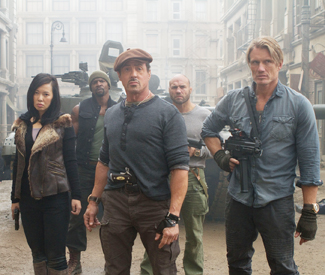
Usually, an actor demonstrating frailty provokes viewers to confront their own weaknesses — the goal there is identification, poignancy. So what are we to make of the unstoppable Expendables series? The movies are as one-note as the best glossy shoot-’em-ups, which is relevant because Sylvester Stallone couldn’t have cast Willis, Dolph Lundgren, or Arnold Schwarzenegger as the cockroaches of the mercenary world without their stone-cold legacies. This epic Viagra ad of a franchise is built on the same single-mission structure of the classics that made its stars famous in the first place. The Expendables 2 pads its cast with Chuck Norris and Jean-Claude Van Damme (as a villain named “Vilain”) — but adds a “kid” (Liam Hemsworth) and a woman (Yu Nan) to the mix. Of course, the film atones for these updates making a plutonium mine the center of the film. (Also, it’s set in an old Russian military base — ah, sweet memories!)

But Stallone, Willis, and co. aren’t the only geezers attached to the aging-heroes trend. Think of Liam Neeson, sizzling anew at age 60 thanks to the Taken films. His career has only gotten hotter as he’s aged and started embracing lower-brow roles — does anyone look more fierce fighting wolves than Neeson? Tom Cruise, who turned 50 this year, doesn’t need a career reboot, even after Rock of Ages; his action-man streak continues apace with the upcoming Jack Reacher, plus 2013’s Oblivion and an inevitable fifth Mission: Impossible film.

James Bond may have shagged half of Europe, but he’s a lone wolf (no cubs) by design, and when the character turned 50 (current Bond Daniel Craig is 44), the plight of post-middle age was all his 23rd movie could talk about. Skyfall, a.k.a. The Best Explosive Marigold Hotel, features a Bond that fights for Britain and his own relevance at the same time — while the series does the same, making the bad guy a hacker and aiming for poignancy with a back story the 1960s Bond would have been too busy sexing around the globe to indulge.

According to the rules of the cowboy — speaking of, is Clint Eastwood still out there somewhere, talking to that empty chair? — the silver star goes to the next in line. But these cowboys ain’t going nowhere, no matter how many Channing Tatum clones start lurking around the box office. The Expendables 3 has already been announced (two words, casting directors: Nic Cage). No word if Willis is in that cast, but he does have G.I. Joe: Retaliation, Red 2 (another series about “retired, extremely dangerous” operatives), and A Good Day to Die Hard on the docket. Terrorists, Cobra Commanders, JCVD, wolves: 2012’s mature action heroes fear not these things. Their only true adversary is time. And possibly gravity.

They see me rollin’

0

arts@sfbg.com

YEAR IN FILM Two of 2012’s finest, most philosophical, and most frustrating movies share a setting of sorts. Although one film takes place in New York, the other in Paris, both films’ protagonists spend a lot of time in their white stretch limousines. The limo: an ostentatious symbol of status and wealth, a home away from home.

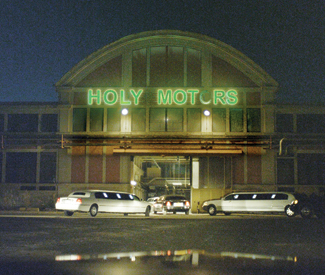
In David Cronenberg’s unsettling Don DeLillo adaptation Cosmopolis, it’s superwealthy magnate Eric Packer (a defanged Robert Pattinson) who eats, fucks, and talks business in a limo, trapped in ever-worsening NYC traffic. For Monsieur Oscar (Denis Lavant) in Leos Carax’s Holy Motors, the limousine is also place of business. When I first saw Holy Motors, I noted the “limo-as-liminal-space” — Oscar’s limousine is his dressing room, a place of transformation for the chameleonic arch-performer.

>>Read more from our Year in Film 2012 issue here.

This common factor, though coincidental, is not accidental. The limousine as symbol and space is crucial to the structure of both films, which I’ve taken half-facetiously to calling “limo operas.” In both, white stretch limos are distinctive cells in the secret circulatory system of late capitalist society. Their passengers have a privileged viewpoint — they can see out, but others can’t see in. When the camera joins the passengers inside the limo, the city becomes an almost unreal backdrop for the private activities within.

In Cosmopolis, there’s an ongoing, ambivalent dialogue about the dispersal of all things into data; everything is getting smaller, faster, swept away by the flow of “cyber-capital.” But Eric Packer, whose vast wealth is about to collapse due to minute changes in the value of the yuan, is obsessed with large, worldly purchases. He has two private elevators with specialized soundtracks, and a Soviet bomber plane that he keeps in a hangar. He’s insistent that he wants to buy the Rothko Chapel, despite its nature as a public artwork. And he describes his limo as a car sawed in half and expanded. He’s had his limo “Prousted” — lined with soundproof cork like Marcel Proust’s bedroom — which he describes as “a gesture … a thing a man does.” The soundproofing doesn’t work, though. His limousine is a performance of his ego, and of its futility.

It’s also an object in the movie’s central dialogue about systems that operate beyond perception. Much like units of encrypted economic information, limos push through the city announcing the self-importance of their passengers. They might be carrying a president or a celebrity, but one of Packer’s employees reminds him that limos also connote “kids on prom night, or some dumb wedding.” And then they go away. Packer asks, “Where do all these limos go at night?” and he finally gets an answer from his limo driver — there are underground garages — they slumber beneath the city. Even his driver’s description of the garages reinforces the weird information-value of the vehicle — “a marketplace of limos.”

Oscar’s limo in Holy Motors is perhaps less of a grand statement to the public, but it’s still a sort of grandiose contradiction on wheels. Oscar is an actor who fulfills “appointments” — enigmatic, prearranged convergences with other lives, where he transmutes into elaborately conceived new beings, for an audience of no one and everyone. When another strange figure, the critic to Oscar’s artist, appears in the limo, Oscar explains his less convincing performances as a result of technological progress: “I miss the cameras. They used to be heavier than us. Then they became smaller than our heads. Now you can’t see them at all.” And so he prepares for his appointments in an eminently visible, garishly substantial machine. In the world of Holy Motors, white stretch limos are apparently markers of Oscar’s trade — when his limo collides with another, it is coincidentally also carrying a performer, his old flame, en route to her own appointment.

In contrast to Cosmopolis, Carax’s film gives a glimpse inside the occluded space of the garage where limos sleep — literally. In its amusing and crucial final scene, Holy Motors returns to the titular motor pool, and eavesdrops on the after-hours gossiping of an entire fleet of sentient limousines. One laments that they’ll soon all be junked, and another agrees: “Men don’t want visible machines anymore.” But visible machines are precisely what Oscar wants, so he makes his office in a limo.

Both Packer and Oscar are aging, battling obsolescence while stubbornly clinging to old operating procedures. In these two films, deeply entrenched in commenting on the withering progress of postmodern life, the stretch limo is a loud, defiant holdout. You might even call it a relic — it is, after all, a holy motor. *


Read more from Sam Stander at hellascreen.blogspot.com


SAM STANDER’S TOP 15 OF 2012


1. Margaret (Kenneth Lonergan, US, 2011)

2. The Turin Horse (Béla Tarr and Ágnes Hranitzky, Hungary/France/Germany/Switzerland/US, 2011)

3. Cosmopolis (David Cronenberg, Canada/France/Portugal/Italy)

4. Moonrise Kingdom (Wes Anderson, US)

5-6. [tie] Cabin in the Woods (Drew Goddard, US, 2011)/The Avengers (Joss Whedon, US)

7-8. [tie] Haywire (Steven Soderbergh, US/Ireland, 2011)/Magic Mike (Steven Soderbergh, US)

9. Whores’ Glory (Michael Glawogger, Germany/Austria, 2011)

10. Holy Motors (Leos Carax, France/Germany)

11. Pina (Wim Wenders, Germany/France/UK, 2011)

12. The Master (Paul Thomas Anderson, US)

13. The Color Wheel (Alex Ross Perry, US, 2011) 14. This Is Not A Film (Jafar Panahi, Iran, 2011) 15. Kill List (Ben Wheatley, UK, 2011)

Chick it out

0

arts@sfbg.com

YEAR IN FILM Cluck as you may, it was only a matter of time before the chicks started rewriting those chick flicks. Tina Fey, Kristen Wiig, and their peers represent the girls — how politically incorrect — in all their messy, sexy, oozy, frizzy-haired, fallible, flabby, and unflappable glory. And this year saw a major meeting in the ladies room, films out real soon, that poked fun at women’s work, relationships, identities, and insecurities.

The pedestal that history’s most notorious auteur-patriarch was so quick to place his icy blondes upon, rhapsodized in the nostalgia-laced Hitchcock, was toppled in feminist Pygmalion revamp Ruby Sparks, penned by lead actress Zoe Kazan. Meanwhile, Rashida Jones took a revisionist tact and rethought the second-wave myth of the woman who can have it all by writing and playing the lovable power bitch who nevertheless kicks her slacker soul mate to the curb in Celeste and Jesse Forever.

>>Read more from our Year in Film issue here.

In a more clearly chick-flicky vein, writer-star Lauren Miller amped up the sexual side of the rom-com with For a Good Time, Call…, whereas Julie Delpy reveled in an old-world/new-urban interracial culture clash while writing, directing, and starring in 2 Days in New York. Zoe Lister Jones got the second-banana gal-pal’s revenge by writing herself all the best lines in the unsettlingly girlie Lola Versus, a movie that seemed designed to test the patience of men, critics (especially male ones) by wallowing in one girl’s mournful sexual shenanigans.

Why take on the notoriously powerless role of screenwriter? “A pretty dreary lot of hacks,” Raymond Chandler once put it. “On billboards, in newspaper advertisements, [the writer’s] name will be smaller than that of the most insignificant bit-player who achieves what is known as billing.” It’s a critical step in deconstructing the tropes, disassembling the lines, and unpacking the baggage so many so-called women’s films have been supplying for years. No wonder female actor-writers so often seem to be in a race for the bottom with the guys, writing themselves roles that make themselves look more morally ambiguous, sexually conflicted, taste-testingly lurid, and simply screwed-up. Born in Flames (1983), these movies aren’t.

Instead, dub them the natural byproduct of a DIY video-making movement or simply a pendulum swing away from 2011, when it seemed like all the blockbuster roles for women lay in servant’s quarters of The Help and females were protagonists of only 11 percent of all films, in contrast to 2002’s 16 percent (according to a report by the Center for the Study of Women in Television and Film at San Diego State University).

Chalk it up to the afterglow of Wiig’s Bridesmaids (2011), spinning off the comedy that won over audiences with its flurry of frenemy backstabbing, scatological humor, and extremely close attention to women’s bizarro rites of passage. Or attribute it to the seismic activity set off by Lena Dunham, who satirized the YouTube generation in 2010’s Tiny Furniture, a comedy she herself shot on a Canon 5D digital camera. Dunham’s HBO hit, Girls, only added fuel to a blogosphere backlash that seemed less about Dunham (her looks, her privileged background) and more about hipster-culture smugness, an entire generation’s perceived sense of entitlement, and good ol’ jealousy.

That kind of outcry is a risk that women are increasingly willing to take, as they wrote themselves onto the big screen and told their own stories. They spun tales about their perhaps petty, perhaps big-deal concerns, and went there — to the not so deep, but sort of dirty little secrets in the Hidden World of Girls, to crib the title of that Fey-hosted NPR series.

And however you felt about her genre-defining rom-coms, there was a certain sad poetry to the fact that writer-director Nora Ephron quietly passed away amid this year’s girlquake. She spent less time in front of the camera than many of these actress-writers do, but you know the woman who directed and co-wrote 1992’s This Is My Life — the film that inspired Dunham to make movies — would have been eager to pass the baton.


KIMBERLY CHUN’S TOP 10 SHOTS IN THE DARK OF 2012


Attenberg (Athina Rachel Tsangari, Greece, 2010)

Crazy Horse (Frederick Wiseman, USA/France, 2011)

The Deep Blue Sea (Terence Davies, UK, 2011)

Django Unchained (Quentin Tarantino, US)

Elena (Andrey Zvyagintsev, Russia)

Gerhard Richter Painting (Corinna Belz, Germany, 2011)

Gimme the Loot (Adam Leon, US)

I Wish (Hirokazu Kore-eda, Japan, 2011) Marina Abramovich: The Artist Is Present (Matthew Akers, Jeff Dupre, US) Searching for Sugar Man (Malik Bendjelloul, Sweden/UK)

This ain’t a wrap

0

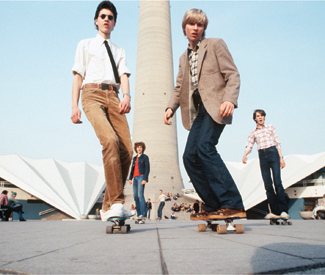
YEAR IN FILM Perhaps the backlash was inevitable. Any film that so flawlessly wows its initial audience in turn begins to receive a lot more scrutiny down the line, and there are definitely things about This Ain’t California to scrutinize. Billed as a documentary, yet centered around a character who may not actually exist, This Ain’t California details the unlikely rise of a rebellious East German skateboarding scene hidden from view behind the Iron Curtain.

An exuberant mischung of archival and new video footage, a brash and punkish soundtrack, animated sequences, and compelling, little-explored subject matter, the film made irreverence its watchword, from storyline to storyboard. And although the sheer scale of this irreverent approach, including the filmmakers’ unorthodox methods of framing their story, raised serious questions about This Ain’t California‘s self-definition as documentary, what was undeniable was the movie’s greatest success — its flawless capture of a zeitgeist, not just of a specific place and time, but of the irrepressible vitality of youth cultures everywhere.

>>Read more from our Year in Film 2012 issue here.

Screened first at the 2012 Berlinale in February (and in San Francisco at the Berlin and Beyond Film Festival in October), This Ain’t California won the coveted “Dialogue en Perspective” prize for young filmmakers, an award given with this statement that foreshadowed the controversy to come: “We’ve rarely been so splendidly manipulated.” While the jury in Berlin was referring to the dynamic editing job spearheaded by 23-year-old Maxine Gödecke, as the film won more awards around the festival circuit — including “Best Documentary” at the Cannes Independent Film Festival — details about its unconventional creation began to emerge in the press. That much of the so-called “archival” video footage was recreated by a slew of modern-day skaters disguised in touchingly hilarious GDR-era hairdos and aggressively mismatched stripes. That all of the footage of the central character Denis “Panik” Paraceck was actually that of Berlin-based skater-model, Kai Hillebrandt. That Denis Paraceck (who, according to the film, died in Afghanistan in 2011) might actually never have existed, let alone been the impetus behind the film’s modern-day reunion of the now-adult skaters (and at least a couple of hired actors, including David Nathan and Tina Bartel).

German news weekly Der Spiegel condemned it as a glorified advertisement for skate culture, bloggers such as Berlin-based Joseph Pearson of The Needle decried the dangerous folly of Germans rewriting their own history, and the filmmakers themselves have been cagey about admitting to the extent of their subterfuge.

“[It’s] so much more fun to keep that secret,” director Martin Persiel explains to me via email when asked to comment.

But lest the naysayers condemn the film as pure hoax, it should be noted that there most definitely was an underground skate scene in East Germany, in addition to other outlaw scenes, including break dancers, punk rockers, and heavy metal bands. Plenty of the film’s old-school skate rats are verifiable as such, and some of the most frankly unbelievable details of the film, such as a compatriot with a Finnish passport being tapped to smuggle boards in from the West, appear to be corroborated independently by academic Kai Reinhart, who has been researching sports history and GDR funsportart since 2005.

“As a filmmaker there is a huge responsibility to truthful depiction of your subject,” Persiel insists. “[And] as far as feedback from the skaters from the East goes, we did do justice to their story.”

On the controversy over allowing a partially fictitious film win awards in the documentary category (against presumably less colorful and more rigorously fact-based films), Persiel remains silent, though he does theorize that the definition of “documentary” is expanding and evolving all the time.

“I call This Ain’t California a ‘documentary tale’,” he explicates, adding his own micro-category. It’s an explanation that probably won’t placate his detractors, but whatever side of the definition of “documentary” the film winds up being relegated to, the definition of “best” will still apply. No matter what, it’s a movie well worth seeing, and controversies aside, a movie well worth having been made — for truly we have been splendidly manipulated. *


2012’S TOP SELF-CURATED DOUBLE FEATURES (A.K.A. TWO-DOLLAR WEDNESDAY AT LOST WEEKEND IS MY JAM)


More in common than you’d expect Delicatessen (Marc Caro and Jean-Pierre Jeunet, France, 1991) and Deliverance (John Boorman, US, 1972)

William H. Macy is underrated Edmond (Stuart Gordon, US, 2005) and The Cooler (Wayne Kramer, US, 2003)

All about men A Single Man (Tom Ford, US, 2009) and A Serious Man (Ethan Coen and Joel Coen, US/UK/France, 2009)

Post-Prometheus Ridley Scott-a-thon Blade Runner (Ridley Scott, US/Hong Kong/UK, 1982) and Alien (Ridley Scott, US/UK, 1979)

Noomi vs. Rooney The Girl with the Dragon Tattoo (David Fincher, US/Sweden/Norway, 2011) and The Girl with the

Dragon Tattoo (Niels Arden Oplev, Sweden/Denmark/Germany/Norway, 2009)

Please kill me Dancer in the Dark (Lars von Trier, various, 2000) and Black Swan (Darren Aronofsky, US, 2010)

Gay follies Paris is Burning (Jennie Livingston, US, 1990) and The Birdcage (Mike Nichols, US, 1996)

Dark days Capturing the Friedmans (Andrew Jarecki, US, 2003) and Deliver Us from Evil (Amy Berg, US, 2006)

The masochism tango The Piano Teacher (Michael Haneke, Austria/France/Germany, 2001) and Secretary (Steven Shainberg, US, 2002) Let’s get physical Boogie Nights (Paul Thomas Anderson, US, 1997) and Magic Mike (Steven Soderbergh, US, 2012)

Harvey’s list

0

DENNIS HARVEY’S TOP 25 NARRATIVE FILMS OF 2012


Beasts of the Southern Wild (Benh Zeitlin, US)

Bernie (Richard Linklater, US, 2011)

The Eye of the Storm (Fred Schepisi, Australia)

Fat Kid Rules the World (Matthew Lillard, US)

Footnote (Joseph Cedar, Israel, 2011)

Girl Walk//All Day (Jacob Krupnick, US)

Hermano (Marcel Rasquin, Venezuela, 2010)

Holy Motors (Leos Carax, France/Germany)

The Hunter (David Nettheim, Australia, 2011)

In Darkness (Agnieszka Holland, Poland/Germany/Canada, 2011)

Keep the Lights On (Ira Sachs, US)

Klown (Mikkel Norgaard, Denmark, 2010)

Life of Pi (Ang Lee, US/China)

Lincoln (Steven Spielberg, US/India)

The Master (Paul Thomas Anderson, US)

Michael (Markus Schleinzer, Austria, 2011)

Moonrise Kingdom (Wes Anderson, US)

Natural Selection (Robbie Pickering, US, 2011)

Oslo, August 31st (Joachim Trier, Norway, 2011)

Safety Not Guaranteed (Colin Trevorrow, US)

Silver Linings Playbook (David O. Russell, US)

Sister (Ursula Meier, France/Switzerland)

Skyfall (Sam Mendes, UK/US)

21 Jump Street (Phil Lord and Chris Miller, US)

Wreck-It Ralph (Rich Moore, US)


DENNIS HARVEY’S TOP 10 DOCUMENTARIES OF 2012


Gypsy Davy (Rachel Leah Jones, Israel/US/Spain, 2011)

The House I Live In (Eugene Jarecki, various)

How to Survive a Plague (David France, US)

Informant (Jamie Meltzer, US)
The Invisible War (Kirby Dick, US)
The Queen of Versailles (Lauren Greenfield, US/Netherlands/UK/Denmark)
Pink Ribbons, Inc. (Léa Pool, Canada, 2011)
Room 237 (Rodney Ascher, US)
Searching for Sugar Man (Malik Bendjelloul, Sweden/U.K.)
Surviving Progress (Mathieu Roy and Harold Crooks, Canada, 2011)
The Waiting Room (Peter Nicks, US)

Ficks’ picks

0

1. Cosmopolis (David Cronenberg, Canada/France/Portugal/Italy) During the five times I watched this brilliantly slow-burning, transcendental flick, I saw dozens of audience members fall asleep, walk out early, and complain all the way down the corridor of the Embarcadero Center Cinema hallways. I had to watch it that many times (plus read the book and have countless late-night discussions) just to try and wrap my brain around this era-defining exploration of what it means to be a (hu)man in the Y2Ks. Robert Pattinson proved he’s a truly spectacular actor, Paul Giamatti has never been better, and David Cronenberg is only getting better as he gets older.

2. In the Family  (Patrick Wang, US, 2011) Self-distributed due to its length (169 minutes), this is a stunningly haunting and devastating work. Viewers with the patience to stick with it are rewarded with a genuinely achieved emotional volcano that I can only relate to John Cassavetes’ greatest films. A truly landmark film, in both style and content.

3. The Master  (Paul Thomas Anderson, US) Of all the films that Anderson has boldly attempted, audaciously experimented with, and (perhaps most importantly) been critically embraced for, The Master is a balanced period piece that combines both poetic and historical elements with a couple of truly profound performances by Joaquin Phoenix and Philip Seymour Hoffman. This is not a film only about Scientology, or about just one master. This is a film that asks many questions, but supplies few answers.

4. The Comedy (Rick Alverson, US) Perhaps containing the most mean-spirited characters of the decade, this harrowingly insightful satire of the hipster generation’s compulsion to heap irony upon irony inspired many an audience member to exit mid-film. But the many who dared to remain (including fans of the film’s lead actor, Tim Heidecker, from Tim and Eric Awesome Show, Great Job!) may have found themselves forced to question their own heartless (and even sociopath) tendencies.

Director Rick Alverson’s perceptive use of a contemporary antihero is quite comparable to the counterculture characters of the 1970s: Robert De Niro in Taxi Driver (1976), Peter Falk in Husbands (1970), and Jack Nicholson in Five Easy Pieces (1970). And since The Comedy was not necessarily made to be enjoyed, it will probably, sadly, take 20 years for people to recognize that there is no finer film to define this generation.

5. Florentina Hubaldo CTE (Lav Diaz, Philippines) With this six-hour film, Lav Diaz has created yet another minimalist masterpiece that few will even attempt to watch — 20 people started out in the Yerba Buena Center for the Arts’ screening, and only 10 finished it. Diaz has a monumental goal in mind for his character, and his film’s length is a major part of achieving it. I am not sure if there will ever be a time when six-hour character studies will be all the rage, but until then, Diaz is paving an uncharted road for others to follow.

6. Shanghai (Dibakar Banerjee, India) This Hindi remake of Costa-Gavras’ monumental political thriller Z (1969) may not have French New Wave cinematographer Raoul Coutard behind the camera, but Shanghai‘s director of photography Nikos Andritsakis adds his own brand of raw intensity. For his part, writer-director Banerjee creates an even more complicated look at the state of politics in the age of the modern terrorist. Seemingly inspired by fellow director Ram Gopal Varma’s career of gritty political dramas, Banerjee is an international director to watch.

7. Holy Motors (Leos Carax, France) The perfect companion to David Cronenberg’s Cosmopolis, this film contains a tour de force performance by the almighty Denis Lavant (of Claire Denis’ 1999 Beau Travail), with Michel Piccoli, Eva Mendes, Édith Scob, and Kylie Minogue in supporting roles. Unique, surreal, and completely inspired, this day-in-the-life journey will make you want to watch it again as soon as it ends.

8. The Grey  (Joe Carnahan, US) The best existential “animal attacking human” flick since David Mamet’s 1997 cult classic The Edge. It’s a film that showcases Liam Neeson as he tapes glass to his fists to battle a pack of giant wolves — and manages to be emotionally stirring at the same time. Make sure to keep watching all the way through the credits.

9a. Your Sister’s Sister (Lynn Shelton, US, 2011) Lynn Shelton’s follow-up to her genre-defining bromance Humpday (2009) is a pitch-perfect indie that attempts to dig deep within its dark and confused characters. Depressed and confused thirtysomething Jack (played by Mark Duplass, master of casual awkwardness) heads off to a remote island to figure out his life. The only trouble: his best friend (a mesmerizing Emily Blunt) also has a lesbian sister (Rosemarie DeWitt) who is already there doing her own soul searching. With this contemplative, honest, and hilarious film, Shelton is turning out to be quite a splendid voice for our current generation of progressive pitfallers.

9b. Jeff, Who Lives At Home (Jay Duplass and Mark Dupass, US) They’ve done it again! With Jeff, the mumblecore masters (2005’s The Puffy Chair; 2010’s Cyrus) construct a stoner comedy-existential trip for the man-child generation. While inspiring outstanding performances from Jason Segal and Ed Helms (both the best they’ve ever been), playing brothers, a poignantly performance by Susan Sarandon as their mother raises this wonderfully earned sentimental indie flick to the ranks of family dramas like Jodie Foster’s Home for the Holidays (1995) and her most recent overlooked gem, The Beaver (2011).

10. Lotus Community Workshop (Harmony Korine, US) His next film, Spring Breakers (due out next year), is poised to become Harmony Korine’s most accessible film to date; it’s a T&A-filled exploitation film, led by James Franco as a grimy, gold-grilled-grinning, dreadlocked drug dealer who lives to prey on bikini-clad young girls. But 30-minute meta-masterpiece Lotus Community Workshop, which played the San Francisco International Film Festival earlier this year (as part of omnibus film The Fourth Dimension), is maybe Korine’s greatest film to date. The almighty Val Kilmer plays a dirt bike-riding, fanny-pack wearing, roller-rink guru named Val Kilmer — and yep, it’s as mind-blowing as it sounds.

11. ParaNorman  (Chris Butler and Sam Fell, US) This stop-motion animated film surprised parents who felt its PG rating should have been PG-13 — and it inspired gasps and even yells (from adults!) in every screening I attended. Daringly shot on a Canon 5D Mark II DSLR Camera and released in a fully utilized 3D, this ode to midnight movies is a kids’ film that will stand the test of time and should rank right alongside Shaun of the Dead (2004) and Army of Darkness (1992): horror parodies that transcended their own self-awareness and become classics themselves.

12-14 [tie]. A Simple Life (Ann Hui, Hong Kong, 2011), Amour (Michael Haneke, Austria/France/Germany), The Turin Horse (Béla Tarr and Ágnes Hranitzky, Hungary/France/Germany/Switzerland/US, 2011) Ann Hui’s simple, straightforward tale of a woman’s choice to check herself into a retirement home after suffering a stroke will probably get overshadowed by Michael Haneke’s wonderfully minimalist approach to an elderly couple’s decline after one of them experiences the same ailment. Meanwhile, Béla Tarr’s final film is for acquired tastes only; it’s a cyclical journey with a rural couple, who eat potatoes, are isolated in a stormy darkness, and care for their horse. All three films lay out a terrifyingly realistic blueprint of old age.

15. Compliance  (Craig Zobel, US) No film at the 2012 Sundance Film Festival encountered as much controversy as Compliance. At the first public screening, an all-out shouting match erupted, with one audience member yelling “Sundance can do better!” You can’t buy that kind of publicity. Every screening that followed was jam-packed with people hoping to experience the most shocking film at the fest. And it doesn’t disappoint: Zobel unleashes an uncomfortable psychological mindfuck on the viewer all the way through to the stunning final 15 minutes, which are even more shocking than all the twists and turns that came before.

16. The Kid With a Bike (Jean-Pierre Dardenne and Luc Dardenne, Belgium/France/Italy, 2011) Can these Belgian brothers make a bad film? Seriously? Like their Palme D’Or winners Rosetta (1999), The Son (2002), and L’enfant (2005), Kid is yet another hypnotic, neo-realist portrait of modern-day youth. Every character makes unexpected yet inevitable decisions. No moment is false. The Dardennes create movies that make life feel more real.

17. Beasts of the Southern Wild ( Benh Zeitlin, US) Fantastical special effects created by 31 students at San Francisco’s own Academy of Art University (yes, I am biased), plus star Quvenzhané Wallis as Hushpuppy, a precocious six-year-old searching to understand a world post-Katrina, post-race, and more importantly post-childhood. Combining David Gordon Green’s George Washington (2001), Spike Jonze’s Where the Wild Things Are (2008) and perhaps even Julie Dash’s Daughters of the Dust (1991), Zeitlin has created a haunting enigma for modern audiences that deserves multiple viewings. But even though it won multiple prizes at the 2012 Sundance Film Festival, will it get the Oscar attention it deserves?

18. Universal Soldier: Day of Reckoning (John Hyams, US) When Jean-Claude Van Damme started this franchise back in 1992, it was a nice little combo of First Blood (1982), The Terminator (1984) and Robocop (1987). Twenty years later, the series’ fourth entry is co-written, co-edited, and directed by John Hyams, the son of Peter Hyams, who directed JCVD classics Timecop (1994) and Sudden Death (1995) — and man oh man does he deliver a tough and gritty little action sci-fi film. Van Damme takes on an even darker role than his scene-stealing turn in Expendables 2; with a cleverly subversive script, eloquently choreographed fight scenes (one of which gives Dolph Lundgren some pretty priceless moments), and a denouement that has to be seen to be believed, you may be rooting for this VOD released genre film as much as I am — not to mention Indiewire, which called it “One of the Best Action Movies of the Year!”

19. John Carter (Andrew Stanton, US) With a budget of $250 million, this epic based on Edgar Rice Burroughs stories brought the Walt Disney company to its knees by only making $73 million back. If you saw the film in 3D, you might be confused as to why no one bothered to see it. In my opinion (having watched it twice), John Carter achieves everything James Cameron’s Avatar (2009) did, as far as sci-fi extravaganzas go, but it also has an inspired story and a charming cast: Taylor Kitsch, Lynn Collins, Samantha Morton, and Willem Dafoe. This is possibly this generation’s Ishtar (1987), and like Elaine May’s infamous still-unavailable bomb, John Carter is actually enjoyable; it’ll need a decade or two for audiences to find it as one of the most enjoyable CGI spectacles in recent years.

20. The Dark Knight Rises (Christopher Nolan, US) [SPOILER ALERT!] I found The Dark Knight Rises hard to dismiss as just another money-making super-hero adaptation. After multiple viewings, I’ve come to think of the conclusion to the trilogy as the finest of the three. I’ve also had time to puzzle over the film’s intricate plot.

While many fellow critics seemed to find the film’s political handlings of Bane’s Occupy/French Revolution movement to be flimsy and even irresponsible, I would argue that the film works in a more complicated way toward politics. If Bane’s misguided revolution fell flat, then it would be important to look at Catwoman’s anarchist ways. And about that — did she put her selfishness aside to start over with a broke Bruce Wayne, or is the closing sequence just Alfred’s fantasy? (And if the latter is true, did Batman actually blow himself up in the end?)

And then there’s Blake, who bests the pathetic Deputy Commissioner, then turns his back on the well-meaning yet lying-to-the-people Commissioner Gordon. Though Blake knows he has to quit the police force amid such corruption, he can’t dismiss his urge to help the helpless and downtrodden — after all, he’s an orphan from the streets — and Robin is born. He’s alone (no butlers down in that cave anymore …), and will need to figure out what to do in Gotham City — a town that’s always wild at heart and weird on top.

(Note: list compiled prior to viewing Zero Dark Thirty or Les Misérables.)

Best Actor of 2012
Matthew McConaughey for Bernie (Richard Linklater, US, 2011), Killer Joe (William Friedkin, US, 2011), Magic Mike (Steven Soderbergh, US, 2011), and The Paperboy (Lee Daniels, US)

Best Unreleased Films of 2012

The Act of Killing (Joshua Oppenheimer, Christine Cynn, and Anonymous, Denmark/Norway/UK)

Black Rock (Katie Aselton, USA)

Berberian Sound Studio (Peter Strickland, UK)

Pilgrim Song (Martha Stephens, US)

The Lords of Salem (Rob Zombie, US)

Jesse Hawthorne Ficks programs the Midnites for Maniacs series, which emphasizes dismissed, underrated, and overlooked films. He is the Film History Coordinator at Academy of Art University.

Putting transit first

268

By Stuart Cohen, Leah Shahum, Rob Boden, and Elizabeth Stampe

OPINION Every day, San Franciscans pay the price of an underfunded transportation system. We have all experienced painfully overcrowded bus rides … or, worse yet, the bus that never shows up. Now, Muni is reducing service during Christmas week, as it is faced with a $7 million deficit this fiscal year.

Today, we are finally facing up to the reality that our declining transportation system hurts us all. It hurts our economy and it hurts people all along the economic spectrum. San Francisco is a world-class city in many ways, but we have a long way to go to have a world-class transportation system.

San Franciscans want better transit options: reliable, fast, comfortable buses, and safe and pleasant streets for walking and biking. San Franciscans support the city’s official transit-first policy, but lacking political will, the city hasn’t delivered on it.

By failing to make the tough decisions to fund our transit system, our leaders have put the burden on those who depend on affordable transportation options most. Transportation is one of the top expenses for people living in the Bay Area, after housing, and an exponentially greater burden for those with lower incomes.

Who will be hurt most by Muni’s skeletal service this holiday week? Working families.

That is why our organizations are proud to have joined together recently to support a proposal to update the Transit-Impact Development Fee (TIDF), which would have ensured that major developments pay their fair share into the city’s transit system. This would have included large nonprofits like Kaiser and the Exploratorium, when they build major new developments that generate thousands of new trips. The fee, probably about 1 percent of costs, would have paralleled the existing development fees for water, sewer, parks, and even art, that nonprofits already pay. It would not have included small nonprofits, and of course most nonprofits never build developments at all.

It would have helped visitors to large institutions have more dependable transit to get there, and helped the whole transportation system work better for everyone.

But it didn’t pass, and last week’s opinion piece (“The Muni vs. housing clash,” 12/18/12) mischaracterized the issue, suggesting a trade-off between basic services and transportation. But good, reliable, safe transportation is a basic service. Just like housing and health care, it’s something everyone should have access to, and something our city has declared a priority with its transit-first policy.

Unsafe streets are inequitable streets; low-income people and people of color are more likely to be hit by cars while walking. Underfunded transit is inequitable; low-income people have fewer options aside from walking or taking the bus, and the stakes are higher when the bus is late or doesn’t arrive.

Funding transit is a core progressive value. Great public transit — and being able to get around the city under your own power, by walking and bicycling — are great equalizers in a city like ours.

We should be investing more and expecting more from our transit system. Our organizations are proud to be doing just that. It’s time to help San Francisco finally live up to its transit-first policy — because that means putting people first.

Stuart Cohen works with TransForm, Leah Shahum with the San Francisco Bicycle Coalition, Rob Boden with the San Francisco Transit Riders Union, and Elizabeth Stampe with Walk San Francisco.

More recycling fallout

84

The unintended consequences of closing the Haight Ashbury’s only recycling center are about to ripple through small businesses in the neighborhood. As the recycling center’s final days loom, merchants are gearing up to face new fees — as much as $100 a day.

But they may get a reprieve sooner than they think.

State law requires stores that sell beverages in cans and bottles to take them back for recycling — unless there’s a functioning recycling center within a half-mile radius.

With the Haight-Ashbury Neighborhood Council recycling center gone, Whole Foods supermarket, the largest purveyor of beverages on Haight Street, will be faced with a decision — provide bottle and can buy-back services, or pay a $100 a day fee instead. If Whole Foods decides to pay the fee and not provide recycling in the area, small businesses in the Haight will be forced to make the same choice — only they won’t be able to afford the $36,500 a year fee.

San Francisco’s Department of the Environment doesn’t enforce those fees, but does provide oversight on recycling in San Francisco. Guillermo Rodriguez, spokesperson for the department, said that his office is in the planning stages of creating a mobile recycling center, which could roll out in early 2013.

“Certainly it’s not in our interest to have those businesses pack up and move out,” Rodriguez said. The mobile recycling center gives the neighborhood a new option.

If a recycling center serves the Haight neighborhood, the small businesses in the area could avoid paying the steep fees, and from having to go through the trouble of seeking exemption.

“Its similar to food trucks,” Rodriguez said. “After they finish for the day, they leave. But they’d set up at a usual time in a usual spot.”

San Francisco Supervisor Christina Olague, whose district includes the Haight Ashbury, said she was working on a way for HANC to turn into a mobile recycling center. Though she said that those talks had since stalled, Rodriguez said that if HANC wanted to be a partner in the new mobile center, the Department of the Environment would be open to it.

Why does the state of California expect small businesses to provide a can and bottle buy-back program on site, or face fees in the first place?

Rodriguez explained that the laws weren’t necessarily made with San Francisco in mind.

“When the rules were drafted, San Francisco was the exception, as we are for a lot of things,” Rodriguez told us. “The law was written for the suburbs, where small businesses generally have parking lots where recycling can easily be handled.”

The San Francisco Recreation and Parks department has long pushed for the Haight recycling center’s ouster. Sarah Ballard, spokesperson for the department, said the recycling fees and regulations that will hit local businesses aren’t Rec-Park’s problem.

“HANC has been on a month to month lease for over a decade,” she said. “The Parks Department have never sought to stop them from seeking non-park property to continue to run their business.”

Basically, HANC can operate wherever it wants to — just not in Golden Gate Park. And there aren’t a whole lot of other low-cost open spaces where the center can set up shop.

Small businesses we’ve talked to say they don’t have the space, staff, or ability to handle buying back recyclables. Fred Kazzouh, owner of “Fred’s New Lite Supermarket” on Haight and Masonic streets, doubted he’d get a reprieve from the fee.

“I mean if we all apply for an exemption, there’ll be half a mile radius without a recycling center,” Kazzouh said. “I saw recycling centers on Safeway on Webster (street) and I don’t see why Whole Foods can’t do it.”

Kazzouh’s store has been in the Haight neighborhood since 1995. The Haight has long been known as a place that draws alternative people, he said. And that’s the way he likes it.

“I don’t like to be in the clean neighborhood with the white picket fence and suits and ties,” Kazzouh said. “That’s not a real life. Its a very fake life.”

Even some of the ritzier stores along Haight St. aren’t bothered by the homeless population there. Firras Zawaideh, owner of Liquid Experience on Haight, sells high end (expensive) alcohol that few homeless people can afford.

He said he thinks only the transplants and new folks to San Francisco are bothered by them.

“I’m a native San Franciscan, from the Sunset [district],” Zawaideh said. “We’re the ones who don’t hate the homeless. Its all the transplants from New York and the midwest who complain about it.”

Zawaideh already handles bottle and can buy-back through his store, though he said that no one has ever taken advantage of it. But with HANC closing, he dreads the idea of people bringing cans and bottles en masse to his store.

“Say on a busy Friday night someone comes in with a cart full of recyclables,” he said. “Then what? I have to help them out too?”

The mobile recycling center would exempt Zawaideh of that responsibility. But if neighbors of HANC complained about the homeless population, would the same customers cause a problem for the mobile center as well?

Rodriguez said he wouldn’t speculate on if the homeless population that now uses the Haight recycling center would follow the food trucks around as well.

“I think we’ll have to take it as it comes,” Rodriguez said. Though he wanted this to be clear: “Not everyone that participates, frankly, is a homeless person.”

Fred Kazzouh was dubious that the homeless population would go away with HANC’s closure. “If HANC goes away, the homeless won’t go with them,” Kazzouh said. “The homeless will just have less people fighting for them.”

Reports from the end of the world

6

TULUM, MEXICO — Sometimes you need to just listen to the universe and the many ways she conspires to set your path. That seems particularly true while visiting the Yucatan to cover the end of the Mayan calendar, the galactic alignment, and the winter solstice. Things at the grand festival that was supposed to be happening did not go according to plan — to say the least.

I was supposed to be Chichen Itza, attending the Synthesis 2012 Festival and perhaps the Ascendance party. But several factors lined up to keep us in Tulum, miles away from the Mayan pyramid where the much-awaited festivities were to take place.

For one thing, there was my sweetie’s bout with bad ceviche. But there was also the general disorganization of an event that was supposed to bring thousands of people, many of them Americans, to a part of the world not exactly set up for mass tourism.

The shuttle service from Tulum to the festival essentially fell apart. Our hotel room at the festival also disappeared, along with rooms offered to performers at the festival by organizers who overbooked and overpromised, apparently too optimistic in this moment’s power to provide.

They also seemed to have a little too much confidence in the welcome they would receive from locals: The sound system delivery crew was turned away and threatened with violence. The show eventually went on after organizers found a sound system provided by a local vendor — but the scene was chaotic.

I tried to get more information about the sound system truck, but the festival organizers ignored my request for a copy of the email describing the incident that was sent to performers. Musician Jeff Scroggins told me he’d been informed that the truck was pulled over by locals, who told the crew to go away and said they’d be shot if they returned.

My press contact minimized the incident, which left the festival without amplified sound for its first day. But the incident does seem to get at an inherent tension between local life in a small Mexican town and the hopes and ambitions of outsiders who came to layer a big festival onto this sacred moment.

Festival organizers seemed pretty overwhelmed by the fact that, as one musician taking a break from the madness told us, “everything that could go wrong did go wrong.” Or as media spokesperson Candice Holdorf told me, “It’s kind of like radical self-reliance,” borrowing a phrase from Burning Man.

On the other hand, the Mayans that I’ve talked to about the end of their Long Count calendar on this trip, like my cab driver yesterday in Tulum and someone we met a few days ago in Playa del Carmen, mostly just shrug when I ask about 12/21.

Perhaps we’re all projecting lots of our first-world hopes and desires onto this occasion. When I interviewed Peter Mancina — a cultural anthropologist who studies Maya culture (and who works as a board aide to Sup. David Campos) — he emphasized to the modern Mayan people are still plentiful and have diverse viewpoints on the world. Similarly, author John Major Jenkins told me that he didn’t want to see the Mayan people and their needs get lost in this moment.

It’s been amazing to watch the rapid transformations of space taking place all around us as this once-pristine beachfront develops ever-more amenities for the visiting tourists.

The Yogashala hotel across the road from our Pico Beach cabanas had a new roadside room and sign added over the last two days. Next door, an Italian couple opened a roadside juice bar two weeks ago. On the other side of that, Jaguar Restaurante was staffed mostly by people who have been here for weeks, months tops. And as I write these words, a new beach is being rapidly built right before my eyes.

But tourism is still tourism, and there is certainly a reverence and respect for the Mayan culture being expressed by all the festival goers that I’ve talked to, even if this may be one in a series of culture moments that are part of this age of transformation and the creation of values that are different than the ones we’ve inherited from older generations.

As astrologer Rob Breszny told me, people are emotional beings, and there’s something about transformation festivals that mark a moment and allow us to build on it, from the days of Woodstock through the annual exercise in community building that is Burning Man. And with this log thrown onto the fire, perhaps those interested in transformation will burn a little brighter.

Tulum is still pretty close to paradise, with its white sands beaches, warm clean seas, chill happy people, and wonderful off-the-grid abundance. Here, it’s easy to commune with the natural world, which seems to be what this day calls for. Whether its the symbols in the sky created by the outlines of unfamiliar birds, or the dots of bioluminous organism on the beach as we celebrated the arrival of Dec. 21, they all seem portentous of something better.

Preaching that the end is near

0

Rev. Billy Talen started off as a trickster, a performance artist, and a political activist appropriating the role of the evangelical preacher (a la Jerry Farwell or Jimmy Swaggert). He was the pastor of the Church of Stop Shopping, standing in front of the Disney Store in Times Square railing against the evils of sweatshops and consumerism.

That was more than 10 years ago, and Talen, his choir, and his flock have grown and evolved since then, although they retained their core tactic of invading the citadels of commerce to engage in performance art and civil disobedience. They renamed themselves the Church of Life After Shopping, wrote books and made a movie called What Would Jesus Buy?, and then became the Church of Earthalujah five years ago when their focus switched to climate change and environmental justice issues.

Along the way, their issues and concerns became more dire, the threats they were addressing elevated to matters of survival rather than social justice. So with the Dec. 21, 2012 date approaching, Talen returned to Times Square — this time fitting right in with its doomsday preachers — and wrote a new book called The End of the World, which he’ll release in Times Square on that auspicious date.

“I’ll be back with a science-based Armageddon,” Talen told me. “Now I’m looping all the way around the tracks back to Times Square where I started. But Hurricane Sandy makes this not so tongue-in-cheek.”

When Hurricane Sandy slammed into New York City and the surrounding coastline with the rare strength of superstorm that climatologists say will be more common in our warming world, Talen said it was a wake-up call for those insulated by that urban environment.

“New York doesn’t have climate, we have culture,” Talen said, but Sandy changed that perspective and brought the reality of climate change home, right into the heart of capitalism. “The idea that nature is beyond the city limits, that may be over now.”

Talen said there’s “ecosystem collapse going on everyday. Earth is a total ecosystem and Earth has a tipping point, just like local ecosystems have tipping points.” His latest book leans heavily on the research of Barnosky and his team, which Talen said dovetails perfectly with the Mayan prophecies and the hopes that the galactic alignment will spark a shift in global consciousness that wakes us up to pressing problems that demand immediate action.

“It allows us to have a stage for the question, a frame for the question. We have to ask very basic questions about our survival,” Talen said. “We have this uncanny mythic, prophetic calendar, this 5,000-year calendar ending and beginning. And we have the scientists saying the same thing, so where does that leave you?”