Volume 46 [2011–12]

International movement

0

arts@sfbg.com

DANCE How do you keep a performance festival alive in a city known for its fractured arts community? A place where officialdom is not exactly ready to jump on the bandwagon, especially when belt-tightening by cutting the arts has become a national sport? Simple. You enlist the people who have always been the arts’ biggest supporters — the artists themselves. They know how to work with limited resources; they are risk-takers and have accepted that what they love to do will never make them rich.

The approach seems to work. “This year, we have had the biggest advance ticket sales ever,” says Andrew Wood, executive director of the San Francisco International Arts Festival. What Wood has done since 2003 is develop his own version of “think globally, act locally.”

The British-born impresario has programmed discoveries from around the world that often erase traditional boundaries between theater and dance. They bring a whiff of global artistic trade winds and broaden our sometimes narrow perspectives. In 2009 it was South Korea’s stunning Cho-In Theatre, which performed The Angel and the Woodcutter without speaking a single word. Last year, Polish import Teatr Zar’s multi-venue performance of The Gospels of Childhood Triptych seared itself into memory. Sometimes, glimpses into non-American cultural productions can look eerily prescient, as with 2006’s The Solitary — an exchange between a prisoner and his jailer — by Syria’s Al-Khareef Theatre Troupe.

Engagements by international companies are only possible because they bring a lot of their own funding, either from their own governments or cultural organizations in this country. Sasha Waltz and Guests’ 2009 Travelogue I, for instance, would not have been possible without the Goethe-Institut’s support.

“Most people [abroad] don’t realize how under-resourced we are in this country,” Wood explains. In terms of performance fees he tells the artists that “this is what I can offer if we get the money, otherwise I’ll pay you what I can.”

One of Wood’s biggest challenges, besides patching together the money for the companies he wants to present, is getting them here at all. The State Department has its own ideas of who should be seen by Bay Area audiences. Last year an Iraqi group’s engagement fell short when only two of its company members received visas. This year the “permission slips” for Cuba’s Raices Profundas, SFIAF’s opening act, came through at the last minute.

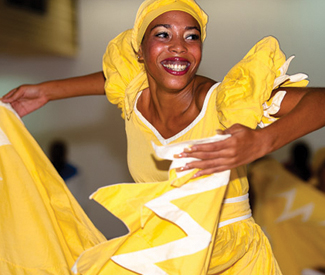
Raices’ mixed program will offer a perspective on Afro-Cuban dance grounded in both its ritualistic and popular social dance traditions. While he greatly admires the breath and depth of their artistry, bringing this company to the fest “is as much a political act as any thing else,” Wood says. “We have to maintain the human connection [with these artists]. They are in such difficult positions, and they work so hard living in a kind of netherworld where rules don’t work.”

One of the festival’s hallmarks has become the shared programs between local and guest dancers. One can only image the backstage cross-cultural fertilizations that must take place between artists that previously may have known very little of each other.

This year the Swiss company Cie 7273’s Listen and Watch is sharing an evening with Thieves by Oakland’s Dance Elixir. Both works are based on the intimate relationships with music performed live on stage. Two first US showings and a world premiere (created in Tallinn, Estonia; San Francisco; and Helsinki) are on a triple bill with Cid Pearlman Performance Project, Post: Ballet’s Robert Dekkers, and Susanna Leinonen Company.

A welcome opportunity to see two previously shown pieces will come from AXIS Dance Company’s astounding 2011 collaboration with Marc Brew Company, Full of Words. Brew will also dance the American premiere of his solo Remember When. In 2010, inkBoat’s The Crazy Cloud Collection, named after a 15th century Zen monk — the purported subject of this astounding collaboration with Butoh artist Ko Murobushi — looked anarchic, maddeningly obscure, and totally mesmerizing. I’ll attend this encore performance for sure. *

SAN FRANCISCO INTERNATIONAL ARTS FESTIVAL

May 2-20, free-$70

Various venues, SF

www.sfiaf.org


Check it out! With John C. Reilly

0

MUSIC He’s an actor so versatile he can handle serious drama (2011’s Carnage and We Need to Talk About Kevin) and screamingly hilarious comedy (especially, but not necessarily, when paired with Will Ferrell). But John C. Reilly is also an accomplished musician, a talent he’s turned into a flourishing side gig that’s now on tour. Read on for Reilly’s best (so far!) musical moments to date.


Feel My Heat,” Boogie Nights (1997) With a candy apple red leather get-up and an iconic Flying V guitar resting casually on his sturdy thigh, Reilly (as porn star-budding musician Reed Rothchild) matches wits and near notes with Mark Wahlberg’s well-endowed aspiring coke head Dirk Diggler on their own ’80s power ballad creation, “Feel My Heat.” The result is shaky at best. But Reilly’s character feels it’s good enough to print and asks the recording engineer if he was “rolling on that rehearsal.”

Mr. Cellophane,” Chicago (2002) This is where Reilly’s perfectly sculpted, rounded-scoops-of-sherbet cheeks get to shine. They’re buffed up with rosy pink as a dusty clown of a man — poor Amos — makes his way to the spotlight with some downtrodden vaudeville jazz. It’s one of the few slower paced songs in the production — that is, until that fantastic orchestral swell at the climax, Reilly’s voice rising “never even know I’m there…” Not true. Chicago, the musical-turned-movie-turned musical, is likely when mainstream audiences first recognized his true vocal ability.

Walk Hard: The Dewey Cox Story (2007) The whole movie really is Reilly performing music, lampooning dramatic biopics (with particular relish in sending up 2005’s Walk the Line). He does so with humorous aplomb, letting his greasy curled pomp shake vigorously with each Elvis-esque guitar-and-hips swing. The star was even nominated for a Grammy for his performance of the titular song, “Walk Hard.” The lampooner becomes the lampoonee. In an interesting coincidence, songwriter Marshall Crenshaw, who was nominated for a Golden Globe for Best Original Song for writing the “Walk Hard” track — and who years before portrayed Buddy Holly in 1987’s La Bamba — is also in town this week, at Yoshi’s SF Mon/30.

79th Annual Academy Awards, with Jack Black and Will Ferrell (2007) Opening with the tinkling of piano and frequent Reilly co-star Ferrell (holding a rose) crooning “A comedian at the Oscars/is the saddest man of all” alongside Jack Black. More sad clown. Then from the crowd, in a low octave, Reilly sweetly sings back, “You can have your cake and eat it too. Just look at my career!”

Prop 8 — The Musical (2008) Reilly portrays a slick-haired Bible-thumper (“Sodomyyyyy!”) in Marc Shaiman’s mini-musical, a star-studded protest posted to Funny Or Die after the passage of Proposition 8.

Step Brothers (2008) “Boats n’ hos!” Also, don’t you dare touch his drum set.

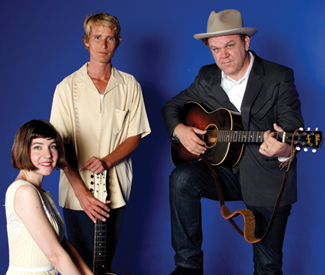
John C. Reilly and Friends Despite all the jests and subtle winks, the man can sing. And with his John C. Reilly and Friends group, including Tom Brosseau and Becky Stark (a.k.a. Lavender Diamond), he harmonizes on lovely old-timey country folk. As a true-blue artist, Reilly recently released a few Third Man singles — produced by entrepreneurial troubadour Jack White — including a plucky duet with Brosseau (a cover of the Delmore Brothers’ “Gonna Lay Down My Old Guitar”) and a satisfying match-up with Stark on “I’ll Be There If You Ever Want.” So sweet and twangy, it goes down like cool spiked lemonade on a sticky summer afternoon.

http://www.youtube.com/watch?v=d6uuFVOD5gg

JOHN C. REILLY AND FRIENDS

Sat/28, 9pm, $20

Bimbo’s 365 Club

1025 Columbus, SF www.bimbos365club.com

Soul to solo

1

DANCE David Zambrano: never heard of him? That just means you’re not a member of the international dance community, where he is a superstar. Accolades, particularly about his teaching, flood the internet; phrases like “genius,” “not to be missed,” and “has changed my life” abound. The only complaint I could find was from a disgruntled student who said “the class was so full that I could barely see the teacher.”

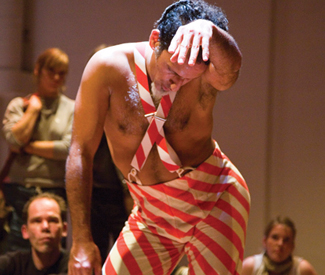
So who is this Venezuelan-born, Amsterdam-based, globe-trotting dancer-choreographer-teacher who engenders such enthusiasm and yet is so little-known in this country? Starting this weekend, Zambrano (re)introduces himself with the West Coast premiere of Soul Project, a series of solos, each one based on an American blues song. They will be performed — in a sequence to be determined just before each show — to an audience seeking out the dancers.

Zambrano is best known for re-thinking improvisation as a tool to freshly connect dancers to the physics of their bodies — and its relationship to the environment. In the process, he developed a technique he calls “flying low,” which examines dance’s unavoidable partner, the floor, in order to find efficient ways for giving into and rebounding from the ground. Fundamental questions Zambrano asks revolve around essential concepts: how do two dancing bodies change the space on a stage? What is the relationship between intimacy and community? How can movement be best used as a means of transmitting information?

If these topics sound esoteric and theoretical to most of us, to dancers they embody the core of what they do. One admirer is San Francisco dancer-choreographer Keith Hennessy, himself no slouch in the thinking-about-the-fundamentals-of-performance department. He first took a workshop with Zambrano at Dancers’ Group in the mid-1990s and has watched his work ever since.

“I’m a huge fan of his teaching,” says Hennessy. “His classes are a kind of inspirational ritual. He teaches dancers to circulate energy with the earth and the other dancers, through their own bodies and then through space.”

He appreciates Zambrano as a performer “who loves dancing, moving, flying. He travels through space quickly, with the fastest of small precise steps — running and running, before diving or sliding into rolling on the floor, and always spiraling up and down and around.”

Hennessey, who has seen a fair amount of Zambrano’s work, including four improvised duets in 2010 which he describes as “truly joyful,” is looking forward to the upcoming performances because “I haven’t seen him do anything like this before.”

One who has already seen Soul Project is choreographer Ralph Lemon, who remembers Zambrano as a major force in New York’s Downtown improvisation scene until his move to Amsterdam in 2000.

“I hadn’t seen his work for years,” Lemon explains. “I saw Soul Project in 2008 at a summer dance festival outside Paris. I saw a lot of work at the time, yet this is the one that made me want to dance. I was so moved by the project because this is music I grew up with.”

He adds, “For me as a black American this was curious, particularly since there were no black Americans in the cast. There was only one American — and she was a white woman who had moved to Brussels.”

So when, in 2010, New York’s Dancespace asked Lemon to organize their first dance platform (i.e., artist-curated program), he immediately thought of Soul Project.

“It is such an American work,” he says, “and I knew that in terms of its cultural implications it was important that it come to the states. Audiences here will see it so differently from those in other places.”

So how was it? “It was fantastic, but also frustrating, because you want to dance. But David makes it clear that he knows that we want to dance, but we can’t because ‘the dancing is for us.’ It creates a very nice tension: you feel the dance internally but the dancing is happening with his performers.”

DAVID ZAMBRANO’S SOUL PROJECT

Fri/27-Sat/28, 8pm, $20

Yerba Buena Center for the Arts

701 Mission, SF

(415) 978-2787

www.ybca.org


May 3, noon, 6pm, 9pm (Stanford students only), free (advance reservations required)

Cantor Arts Center

328 Lomita, Stanford

(650) 725-2787

livelyarts.stanford.edu

A dog’s life

1

arts@sfbg.com

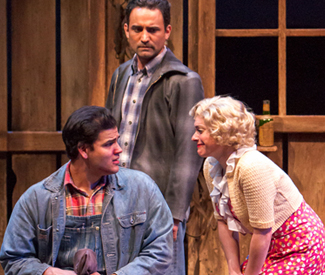
THEATER There’s a clipped Spanish twang in the roughhewn but lucid English of George Milton (Jos Viramontes) and Lennie Small (A.J. Meijer), the iconic bindlestiff protagonists in Of Mice and Men. It’s the only obvious bit of updating in TheatreWorks’ and artistic director Robert Kelley’s generally faithful rendering of the 1937 John Steinbeck classic (a stage adaptation penned by the author himself for a Broadway premiere the same year).

Shoehorning two Latin ranch hands (whose ethnic identity is not remarked upon) into so casually racist an environment naturally demands a little lenience in terms of verisimilitude. But it’s a worthy nod to the overwhelmingly Latino population of migrant farm laborers otherwise crowded out of this tragic if colorful drama of working lives set in the Depression-era Salinas Valley. And it also sets a subtle present-minded tone for a play that, for all its unfashionably heavy dramatic underscoring, probably resonates more strongly with the general plight of working people than at any time since the 1930s.

George and Lennie, social realist cousins of Vladimir and Estragon, are on a migrants’ trail that leads nowhere, while pining for salvation just out of reach: a plot of land to call their own. Their dream is the only respite they’ll get from a desperate system of labor that chews up the bodies it needs and in most cases leaves nothing behind.

An appealing Viramontes plays George, the brains of the pair, as a man a bit too intelligent and proud to stomach this lot easily, but whose world-weariness is kept in check by a compassionate regard for his charge, the overgrown man-child Lennie, imbued by Meijer with the proper balance of childish timidity and wild enthusiasm. Playing ego to Lennie’s id, George uses the tenderly embellished dream of a proper home (with, famously, a rabbit hutch for Lennie to tend) to temper his volatile sidekick, whose innocent propensity to let his sensual appetites run away with him already has them on the run from trouble at their last job in Weed.

Scenic designer Tom Langguth’s silhouette of low rolling hills against a fuchsia sky, fronted by a field of tall grass burned a golden brown by the California sun, provides an initial atmosphere of possibility and, just vaguely, of desolation (the later gently heightened by Jeff Mockus’s spare and spacious sound design). The stage evokes a near Eden, such that we can easily imagine the stream George and Lennie scoop their palms into, just off the lip of the stage, as they prepare to camp for the night in the warm open air. That scene transitions a moment later to the rugged timber construction of the sleeping quarters on a working ranch near Soledad, where George and Lennie join up with a crew of characters lovingly drawn and expertly realized by a fine ensemble cast.

This dip back into society from the trail vexes George and Lennie almost immediately, as the owner’s pugnacious son Curley (Harold Pierce) vies for dominance over the newcomers and everyone else, while chasing endlessly after his desperately lonely new bride (Lena Hart). Even without the threat posed by the local bully — or his wife’s dangerously familiar manner and unstoppable need to find someone to talk to — the men living and working here too readily submit to an everyday pettiness, racism, and sexism that divides natural allies in an exploitative system.

Steinbeck the onetime migrant and journalist informs Steinbeck the artist as a brutish reality becomes a knowing drama — still affecting in its details, if finally watery in its contrived, loudly broadcasted tragedy. Significantly, George and Lennie’s partnership immediately arouses suspicion among the other hired hands. Even for Slim (a sure and compelling Chad Deverman), the ranch’s gracious cowboy hero, two men traveling together is at the very least a source of wonder, so unexpected is the show of mutual support along the otherwise solitary, competitive labor circuit.

But when aging and maimed worker Candy (an excellent Gary Martinez) accepts the mercy killing of his beloved old dog, he and we know the operative social compact isn’t much better: those who have only their usefulness to sell have no foothold when its gone. Candy accordingly latches onto George and Lennie’s scheme, followed soon by another desperate outsider, African American worker Crooks (a wonderfully measured Charles Branklyn). It may prove a pipe dream, but the lure of escape from hopeless drudgery produces a powerful impetus to solidarity that is the play’s enduring hope. 


OF MICE AND MEN

Wed/25, 7:30pm; Thu/26-Sat/28, 8pm (also Sat/28, 2pm); Sun/29, 2pm, $19-$69

Mountain View Center for the Performing Arts

500 Castro, Mtn. View

(650) 463-1960

www.theatreworks.org

The (latest) battle of KPFA

2

yael@sfbg.com

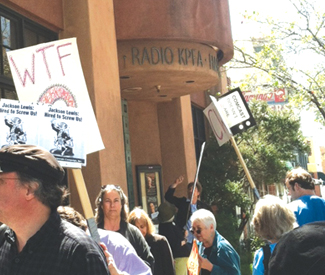
If you’re a member of KPFA, the progressive Berkeley radio station, you’ll be receiving a ballot in the mail shortly with one issue at hand: the recall of Tracy Rosenberg. She’s an elected member of the Local Station Board, and her critics want her removed from office.

Rosenberg is also the former chair of the Finance Committee at Pacifica Network, the nonprofit that owns KPFA. And she has become the face of a conflict at KPFA that is about issues much bigger than Rosenberg herself. The petition to recall Rosenberg accuses her of stealing an email list of KPFA supporters, of election fraud in a 2011 Local Station Board election, and of orchestrating the cancellation of the station’s beloved Morning Show. But there’s a deeper issue here: How should the famously fractious KPFA handle a downturn in financial support — and should the station rely more on volunteer programming and less on paid professional staff? How will the station, which is an essential part of the Bay Area left, face a changing media landscape?

As the staff at KPFA—administrative and broadcaster, paid and unpaid, union and non-union—try to answer these questions, most of them with a real commitment to progressive radio, they are also mired in a political dispute that’s been draining for everyone involved.

KPFA has a long history of providing news and critique that supports progressive efforts and questions the status quo. But, like most businesses, it took a hit in the 2008 financial crisis.

That came a decade after some dramatic governance changes. In July 1999, Pacifica put all the local staff on administrative leave and brought in staff from Houston affiliate KPFT to run the station. In response, hundreds protested in the streets, and the establishment of a detailed democratic governing structure came out of the dispute. Soon after, listener donations took off—parties on both sides attribute this to an increased demand for progressive content in the wake of 9/11 and the war on Iraq. But around 2007, KPFA started to use up the last of its reserves.

According to data provided by the station, listener contributions peaked at more than $4 million during fiscal year 2005, and then began to level off. By 2010, donation income was back below $3 million —still more than 2001 levels. As donations dropped significantly during those five years, salaries and related personnel expenses continued a slow and steady increase, and KPFA managed to avoid outright staff and programming cuts.

That is, until September 2008, when the hosts and producers of the Morning Show were laid off and the show cancelled.

According to the recall campaign, the lay offs were retaliatory (the Morning Show staff had criticized Pacifica management on the air). According to defenders, canceling the Morning Show was a necessary budget decision. The recall campaign argues that the dire financial situation has stabilized after the Morning Show was cancelled; the recall people say that the local board had already balanced it through buyouts. The recall crowd says donations have gone down; the other crowd, they’ve shifted, but remain about the same. According to Brian Edwards-Tiekert, one of the forces behind the recall effort, “At the start of the dispute were these retaliatory firings a year and a half ago. It became a recall because of how they dealt with it.”

The Pacifica Foundation has partnered with KPFA since they were both founded out of anti-war movements in the late 1940s, but their relationship has evolved over the years. As it stands, KPFA and Pacifica’s four other member stations pay yearly dues to the foundation; Pacifica, in turn, provides program that is syndicated over many stations such Free Speech Radio News and Democracy Now!

The Save KPFA campaign website makes the case that Pacifica “uses KPFA as a cash cow,” and notes money KPFA loaned to Pacifica around 2000, from which Pacifica apparently still owes KPFA $1.4 million.

As a staff-elected representative on KPFA’s Local Station Board, Edwards-Tiekert pushed back on attempts by Pacifica to seize station funds. The Morning Show invited Pacifica’s executives onto to the airwaves and “challenged them about how much they were taking from KPFA, and about Pacifica’s spending priorities,” the site reads.

“All of those charges are somewhat overstated. There’s a certain percentage of KPFA’s budget that goes to overall expenses,” Rosenberg told us. In fact, according to Rosenberg’s allies, the situation was reversed; KPFA had run out of funds and was threatening to bankrupt Pacifica. In response to budget shortfalls, Pacifica’s executive director Arlene Engleheart “asked all five Pacifica stations to cut down on paid staff 2-3 years ago, as the only way to meet escalating deficits, KPFA’s 4 “sister” Pacifica stations have already done this. Only KPFA continued to employ more paid staff than it can afford.”

According to the website of a campaign against the recall, Support KPFA, in the fall of 2010, KPFA owed Pacifica more than $100,000 in unpaid dues. “At that time I was the representative from KPFA at the national Finance Committee, which does the budget from KPFA after it comes back from the local level,” said Rosenberg. She claims that the budget that the board came up with came short of meeting expenses.

“So as a board member I went to the station and said, where’s the budget? So I pushed for a couple of meetings saying look, a budget has to come up here that makes sense and is balanced. I told the executive director it was her responsively to make sure a plan for a balanced budget went forward. I would say that I put some pressure on the executive director to make some hard decisions.”

Communication Workers of America Local 9415, a union that represents KPFA’s paid workers, brought the issue to the National Labor Relations Board in late 2011, and the federal agency dismissed five charges of retaliation and layoffs out of the seniority order. Edwards-Tiekert, however, was reinstated as the result of a successful union grievance.

The other charges on the recall petition include putting forward two motions to overturn Jan 2011 local station board elections under fraudulent auspices and for specious reasons and misappropriating a list of KPFA members’ personal email addresses.

The election fraud charge refers to a motion Rosenberg brought disqualify Dan Siegel, an attorney who was elected to the Local Station Board, from holding his seat, based on Pacifica policy barring individuals who hold a public office from serving on the board.

“I pointed out that this seemed to be a violation of the bylaws. That’s all I did,” she said.

But the incident turned into a court battle, and a judge eventually issued an injunction reinstating Siegel.

The email theft charge refers to an email blast that Rosenberg sent out concerning the Morning Mix, the Morning Show’s replacement.

The Morning Show provided an in-depth look at stories from around the Bay Area. It had, and still has, a large following. “The corporate media doesn’t cover real issues as they really affect people,” said Sasha Futran, a listener member of the Local Station Board. With its cancellation, she said, “I want to know what’s going on. I want intelligent analysis.”

Democracy Now!—the foremost example of professional progressive journalism in the country—is now KPFA’s highest donation-generating show. And in style and content, the Morning Mix is distinctly not a Bay Area version of Democracy Now!

Instead, it is a show with rotating hosts Dennis Bernstein, Davey D Cook, JR Valrey, Andres Soto, Anita Johnson, Peter Phillips and Mickey Huff. The content and approach varies depending on the host.

Henry Norr, a listener and elected member of the Local Station Board, is pleased with the format, and thinks it might represent a good path for KPFA. “The station should be more community-oriented. We should have a diversity of voices, and lots of people on who aren’t skilled or paid but represent progressive voices and active movements,” said Norr. The new show has increased coverage of Richmond politics and has provided a forum for Valrey and Cook to talk about left-wing politics from an African-American perspective.

But cutting the Morning Show had its financial implications: The old format brought in significantly more donations than the Morning Mix. According to KPFA documents, donations have increased in other time slots that air more traditional-sounding journalism, including during Letters and Politics, Flashpoints, and the Evening News.

So the recall is about the Morning Show, but it’s also about the future: Should KPFA seek to retain a traditional structure, with paid staff who can earn a decent living and focus on making news programs whose quality compares to that of more mainstream outlets? Or should the station solve its budget woes by relying on more community volunteers with more wide-ranging content?

And should the people who work at KPFA have the right to discuss the station’s finances, policies and future openly, on the air, without fear of retaliation?

Rosenberg or not, those issues aren’t going away.


For your further consideration

0

More reviews of films playing during the San Francisco Internation Film Festival. For more SFIFF coverage, click here.

WED/25

Last Screening (Laurent Achard, France, 2011) A bit of an odd duck, 30-ish, nondescript Sylvain (Pascal Cervo) is in denial over the imminent closure of the small French repertory cinema he’s operated and lived in for years. But that’s hardly his most alarming mental hang-up: in his spare time he frequently goes around stalking and killing random women for a grisly purpose that has to do (of course) with his dear, departed, thoroughly demented mother. The only horror item in this year’s slim SFIFF “Late Show” section, Laurent Achard’s pulseless genre homage tips hat to 1960’s Peeping Tom and other, less obvious cineastic objets d’amour — most conspicuously, Renoir’s 1954 French Can Can, which is playing at Sylvain’s theater — but doesn’t seem interested in suspense, or psychology, or even style. It’s coldly unpleasant yet dull. Wed/25, 9:30pm, FSC. Sat/28, 10pm, Kabuki. (Dennis Harvey)


THU/26

Rebellion (Mathieu Kassovitz, France, 2011) The latest polemical film from the director of La Haine (1995) presents National Gendarmerie Intervention Group Captain Philippe Lejorus’ account of his experiences during the 1988 New Caledonia hostage crisis. It’s an election year in France, so all bets are off as to how the unfortunate fiasco will resolve. Striking camerawork distinguishes this tense, morally complex drama, which features Kassovitz as Lejorus, a humane negotiator in the midst of a politically charged battle for hearts, minds, and civil rights. The film is edited to embody its political context, with distancing effects such as voiceover and suddenly reframed shots that emphasize the two sides of a disagreement. Thu/26, 6pm; Tue/1, 9:45pm; May 3, 4:30pm, Kabuki. (Sam Stander)


FRI/27

Pierre Rissient: Man of Cinema (Todd McCarthy, U.S., 2007) Legendary French film publicist, programmer, director, and movie junkie Pierre Rissient gets his own filmic homage in this documentary from Hollywood Reporter critic Todd McCarthy (1992’s Visions of Light). Rissient, who will receive the Mel Novikoff Award at this year’s festival, is certainly a character — the round-faced septuagenarian oozes a puppy-dog cuddliness cut with a formidable intellect and a hint of tart, old-man pervy-ness. But this collection of talking heads interspersed with classic film clips is unfortunately a bit of a snooze. Considering said talking heads include cinematic firebrands like Werner Herzog and the late Claude Chabrol, and with a character passionate as Rissient at its center, that’s surprising. “No one in the world of cinema can tell you what he does,” Chabrol remarks. After watching the film you probably won’t be able to figure it out either. Fri/27, 4pm, FSC. Mon/30, 6:30pm, PFA. (Michelle Devereaux)


SAT/28

Somebody Up There Likes Me (Bob Byington, U.S., 2012) A textbook illustration of what’s so frequently right and wrong with Amerindie comedies today, Bob Byington’s feature starts out near-brilliantly in a familiar, heightened Napoleon Dynamite-type milieu of ostensibly normal people as self-absorbed, socially hapless satellites revolving around an existential hole at the center in the universe. The three main ones meet working at a suburban steakhouse: Emotionally nerve-deadened youth Max (Keith Poulson), the even more crassly insensitive Sal (Nick Offerman), and nice but still weird Lyla (Teeth‘s estimable Jess Weixler). All is well until the film starts skipping ahead five years at a time, growing more smugly misanthropic and pointless as time and some drastic shifts in fortune do nothing to change (or deepen) the characters. Still, the performers are intermittently hilarious throughout. Sat/28, 6:45pm, Kabuki. Sun/29, 9:15pm, FSC. Tue/1, 6:15pm, Kabuki. (Harvey)


TUE/1

Hysteria (Tanya Wexler, U.S./England, 2011) Tanya Wexler’s period romantic comedy gleefully depicts the genesis of the world’s most popular sex toy out of the inchoate murk of Victorian quackishness. In this dulcet version of events, real-life vibrator inventor Mortimer Granville (Hugh Dancy) is a handsome young London doctor with such progressive convictions as a belief in the existence of germs. He is, however, a man of his times and thus swallows unblinking the umbrella diagnosis of women with symptoms like anxiety, frustration, and restlessness as victims of a plague-like uterine disorder known as hysteria. Landing a job in the high-end practice of Dr. Robert Dalrymple (Jonathan Pryce), whose clientele consists entirely of dissatisfied housewives seeking treatments of “medicinal massage” and subsequent “parosysm,” Granville becomes acquainted with Dalrymple’s two daughters, the decorous Emily (Felicity Jones) and the first-wave feminist Charlotte (Maggie Gyllenhaal). A subsequent bout of RSI offers empirical evidence for the adage about necessity being the mother of invention, with the ever-underused Rupert Everett playing Edmund St. John-Smythe, Granville’s aristocratic friend and partner in electrical engineering. Tue/1, 9:30pm, Kabuki. May 3, 6pm, FSC. (Lynn Rapoport)


MAY 3

Don’t Stop Believin’: Everyman’s Journey (Ramona S. Diaz, U.S.) The director of 2003’s Imelda returns with this portrait of a way more sympathetic Filipino celebrity: Arnel Pineda, plucked from obscurity via YouTube after Journey’s Neil Schon spotted him singing with a Manila-based cover band. Don’t Stop Believin‘ follows Pineda, who openly admits past struggles with homelessness and addiction, from audition to 20,000-seat arena success as Journey’s charismatic new front man (he faces insta-success with an endearing combination of nervousness and fanboy thrill). He’s also honest about feeling homesick, and the pressures that come with replacing one of the most famous voices in rock (Steve Perry doesn’t appear in the film, other than in vintage footage). Especially fun to see is how Pineda invigorates the rest of Journey; as the tour progresses, all involved — even the band’s veteran members, who’ve no doubt played “Open Arms” ten million times — radiate with excitement. Thu/3, 7pm, Castro. (Cheryl Eddy)

The San Francisco International Film Festival runs through May 3; most shows $13. Venues: Castro Theatre, 429 Castro, SF; Pacific Film Archive, 2575 Bancroft, Berk.; SF Film Society Cinema, 1746 Post, SF; and Sundance Kabuki Cinema, 1881 Post, SF. More info at www.sffs.org.

Address of the beast

2

SUPER EGO Is San Francisco experiencing a douche drain? Suddenly a heck of a lot of, er, “upscale” clubs are mediating their bottle service images with creative, musically forward parties. I can’t think they’ve run out of Appletini orderers, or that the real nightlife money is in importing obscure Crosstown Rebels label DJs — although maybe all the bachelorettes really have fled to Castro gay bars and the stiff-collar dudes are glued to their Girls Around Me app? I’m loving finally feeling comfortable (and digging the quality sound systems) at some of these shiny joints. I’m also tickled by the occasional accidental crash collision of crowds, as when a bleach-blond klatch of stilettoed, squealing singles found their meat market had been occupied by lumbering gay techno bears, but stayed to dance anyway.

The trend kicked off three years ago when 1015 Folsom rebranded its “underground” basement as 103 Harriet, then Holy Cow roped in Honey Soundsystem Sundays and Vessel launched techno-riffic Base Thursdays. Now a number of clubs, including Monroe in North Beach on weekend mornings and Otis on Sunday nights, have joined in. The kooky part is how some of these clubs have been surreptitiously changing their names to their addresses in promotions when they get a little “alternative.” Besides 103 Harriet, Harlot is “46 Minna,” Icon Ultra Lounge is “1192 Folsom,” Ruby Skye’s former VIP room is “4Fourteen” (Mason). This is so hilariously shady and bland at the same time! Yet it tickles. Just please don’t call it pop-up nightlife — call it a stealth takeover, darling.


JUANITA’S FUNKY CHICKEN

What better thigh to gnaw on than a drag queen’s? Hostess with the hot plate Juanita More pitches in for the Dining Out for Life AIDS fundraiser (www.diningoutforlife.com) with her traditional menu of chicken covered in honey goo, blue cheese salad, corn muffin, and red velvet cupcake. Plus old school soul from the Hard French DJs and a crowd of gorging gorgeousness. Eat it, ladies!

Thu/26, 6-9pm, $22. Mars Bar, 798 Brannan, SF. For reservation info, see www.juanitamore.com.


GREG WILSON

I admire a ton of DJs, but Greg is one that I actually love. His tailor-made funk and soul re-edits, many from the darker reaches of the vaults, hit me just right. And when this UK veteran (almost 40 years of experience! The first DJ to scratch on British TV!) mixes them all together and throws in some unexpected singalongs and sound effects, it’s party heaven.

Fri/27, 9pm, $20. Monarch, 101 Sixth St., SF. www.monarchsf.com


PUBLIC ACCESS

Party promoter wunderkind Marco de la Vega is filling several fun voids in our nightlife with his audio edge-play productions. And he’s upping our intellectual ante, too: “Club culture is inherently performative. Public Access is an experiment in the nature of that performance. A feedback loop of spectacle and spectator,” he says of his latest extravaganza of Technicolor darkness, featuring lo-fi nihilists Hype Williams, dream-rave duo Teengirl Fantasy, lurid discothequers Gatekeeper, and Zebra Katz, whose filthy “Ima Read” track is spring’s official club anthem thus far.

Fri/27, 9pm-3am, $15-20. Public Works, 161 Erie, SF. www.publicsf.com


CLAUDE YOUNG

He lives in Tokyo now, but second generation Detroit techno man of many talents Claude Young honors his roots on the decks — mostly by slaying crowds with his signature jazzy-tech flair and insane manual dexterity (let’s just say the man can mix with his chin). A perfect complement to the jawdropper that was fellow Detroiter Jeff Mills’ set at Public Works last week, and a rare opportunity to hear Young on these shores. For $5!

Sun/29, 9pm, $5. Holy Cow, 1535 Folsom, SF. www.tinyurl.com/claudeyoung

Something to chew on

1

caitlin@sfbg.com

FOOD Veganism isn’t just for rich people. It’s okay to care about what you eat. It doesn’t diminish your commitment to social issues — in fact, it is one.

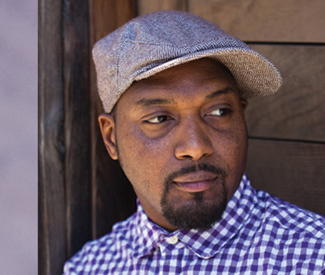
He just wrote a cookbook that I love, but in his modest home in hills above Fruitvale, food activist and vegan chef Bryant Terry is telling me about class struggle.

“So often, I think that the stories that are told are from young, privileged white kids,” says Terry.

He’s not a young white kid, but he is the epitome of health. Terry’s clean house smells like incense and when I rolled up to the front yard he was gardening in cargo shorts in raised beds of greens. He tells me his beds started a trend — indeed, many of the houses on the block now have a similar vegetal presence.

“Part of my goal is to shed light on other communities that haven’t had much of a voice,” he tells me. If broadening the appeal of healthful cooking is Terry’s goal, then his new book The Inspired Vegan (Da Capo Lifelong Books, 240 pp, $19) is a step in the right direction. Each chapter holds a complete menu with a social justice-related theme. Informative introductions teach about the plant-based, whole food recipes, but the most exciting features are complimentary play lists and reading suggestions that go along with each chapter’s theme. The Inspired Vegan advises you on a lifestyle, not just a shopping list.

Weeks after meeting Terry, I helped host a dinner through the Urban Eating League, a social sustainability project started within the folds of the hyper-educated, environmentally-geared Wigg Party group in the Western Addition. Hosts serve locally-harvested meals, and choose themes to help eaters remember them when it comes time to vote on winners of various honors.

We decided to base the dinner around Terry’s suggestion, his “Detroit Harvest” menu. The recipes pulled their flavor cues from the work of a Motor City nonprofit, Detroit Summer, which started connecting high school students with senior citizens in the early 1990s, young helping old grow produce in their gardens.

My co-hosts and I played the recommended tracks during our meal: Detroit classics like J Dilla, Motown sounds, Aaliyah (yeah, she’s from there). We chatted with the other participants about where they learned about sustainable food systems, what they thought needed to be done to strengthen the good food movement. Few mentioned poor and minority families, but all staunchly believed that the way we eat today will play a big role in what our future will look like tomorrow.

Terry learned about food from his family, from a grandpa whose rows covered a sideyard so large that Terry is reluctant to call it a garden — maybe farm would be a better term for it. He learned early on that growing food could be the basis of independence for African Americans. “Once they decide to stop feeding you, you’re going to starve,” he says simply. He quibbles with the definition of food deserts, saying oftentimes they overlook the DIY kitchen gardening tradition in minority communities.

After going to cooking school “with the express goals of starting a project to help young people,” Terry started b-healthy!, a New York City program that taught kids in poor neighborhoods about healthy eating habits. He counts Edible Schoolyard founder and Chez Panisse icon Alice Waters as a role model. Like Waters, he’s become a national figure, drawing decent crowds across the country to events.

Terry is a realist — he doesn’t believe that everybody needs to be vegan, or a raw foodist, or follow any one nutritional track necessarily. “I’m not that guy. This is someone who understands that we have diverse nutrition needs. To just say that fixing food is going to help resolve issues in these communities — it’s not looking at the bigger picture. If we do have access to healthful foods, that would address a lot of other issues, but we can’t look at food to fix everything.”

It’s not like those raised beds in the front yard are going to save the world. But as far as the sustainable food movement goes, it could do worse than have a mind like Terry’s at its forefront.

All together now

0

virgnia@sfbg.com

APPETITE Incredible burgers in a bowling alley, SF’s deaf community gathering over Neapolitan pizzas, brothers serving food from their hometown of Nice in a tiny restaurant, dining around a U-shaped counter off a FiDi alley… each of the restaurants below opened within the last 6 months, providing a unique communal experience (and, most important, fine food to go with) that makes one feel like actually engaging with, rather than ignoring, fellow diners.


MISSION BOWLING CLUB

Mission Bowling Club (MBC) is one badass bowling alley. Squeaky clean hipster all the way: there’s no funky smell or dated dinginess in this brand new space. Open and industrial, it boasts a front patio, separate dining room downstairs and one upstairs overseeing six lanes and a wood-lined bar area. Cheer on bowlers from comfy couches while sipping a cocktail (solid, though not noteworthy drinks) and filling up on French onion casserole.

As soon as I heard chef Anthony Myint, Mission Chinese Food and Mission Street Food wunderkind, would oversee the menu, it was easy to guess MBC was going to boast exceptional food. The beloved Mission Burger ($15, $10 during happy hour) is back. I missed the rich, granulated patty, lathered in caper aioli. An avowed carnivore, I was shocked to find the vegan burger ($10) is almost as exciting. A fried chickpea, kale, shitake fritter is brightened up with sambal (Indian chili sauce), guacamole, and fennel slaw. A juicy sausage corn dog ($7) arrives upright in molecular fashion, standing watch over a dollop of habanero crema. Only a hard, small “everything pretzel” ($5) disappointed. Not bad for a bowling alley.

3176 17th St., SF. (415) 863-2695, www.missionbowlingclub.com


CASTAGNA

Brothers Jerome and Stephane Meloni from Nice infuse their Italian heritage and French upbringing in Italian and Niçoise dishes. I enjoyed Stephane’s cooking at their former Restaurant Cassis, a far roomier Pac Heights space, but their tiny new Castagna lends itself to connection. Stephane cooks within full view, Jerome interacts with diners, and I found myself in conversation with tables next to me. On a good night, it exudes that neighborhood conviviality found in similar-sized restaurants around Europe. Decor isn’t particularly memorable, though red walls always bring a space to life.

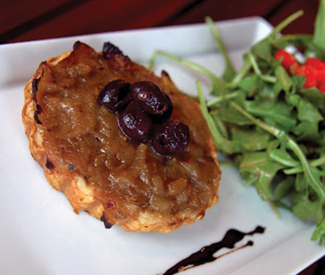
Sticking closer to tradition is the best way to navigate Castagna’s menu. Stephane’s classic Niçoise caramelized onion tart ($7.50) is the best dish, silky with caramelized onions in a flaky crust, with (the good stuff) white anchovies on the side, which they explained neighborhood diners weren’t quite ready for — I say place them on top and let diners sort it out. I found the steak in my steak frites ($18) too well done (medium rare, please) despite a lush green peppercorn sauce. I’d opt instead for French-style campagnarde pizza ($15), in the spirit of flammkuchen (Alsatian flatbread), covered in potato sauce, bacon, crème fraîche and raclette.

2015 Chestnut, SF. (415) 440-4290, www.castagnasf.com


MOZZERIA

The communal award could easily go to the Mission’s Mozzeria. Maybe we didn’t need an umpteenth Neapolitan pizza place, but there’s none quite like this, run by a deaf couple and staff. San Francisco’s deaf community gathers en masse at a hangout where speaking with your eyes and hands is as important as speaking verbally. Of course, verbal processors are welcome, too.

The dining bar is my preferred perch, particularly to engage with chef Russell Stein (who co-owns Mozzeria with wife Melody). He’s hilarious and reads lips like a master, joking with diners as he spreads ingredients over wheels of dough before popping them into a wood-burning oven. His heartwarming Neapolitan pizzas ($12-18) are topped with the likes of caramelized onion, pancetta, mozzarella or goat cheese and eggplant. I must admit, my favorite item, Mozzeria bar ($8), isn’t the most gourmet, but hearkens back to my Jersey youth. Let’s call it what it is: a fried mozzerella cheese log doused in pomodoro sauce and basil. Sheer comfort.

3228 16th St., SF. (415) 489-0963, www.mozzeria.com


CLAUDINE

Claudine’s chic cafe charms. Big picture windows and corner space on an alley up a half flight of stairs appeal, while a u-shaped bar creates a convivial dining experience, the bar is so small so you can’t help but exchange good will with neighboring patrons. You can dine at a table, but the bar is far more fun, and works for a casual meal all day.

Much has been made of the meatball, kale, and fregola soup ($7/10), and rightly so. It is an unexpected culinary delight: olive oil-laced broth, laden with Parmesan, onions, carrots. I can be bored by broth soups at times, but this one holds my interest with plump veal-pork-beef meatballs and pleasantly soggy kale. Roasted mussels ($12 and $17) arrive aromatic with fennel sausage in lemon and white wine, while even avocado toast ($12) delights topped with dill gravlax, Spanish black radish, and lemon. Leave room at the end for Claudine favorite s’mores ($7) baked in a glass bowl with layers of marshmallow and chocolate on graham cracker crust. My meals at dinner have been more satisfying than at lunch, but each visit improves my opinion.

8 Claude Lane, SF. (415) 362-1988, www.myclaudine.com *

Subscribe to Virgina’s twice-monthly newsletter, The Perfect Spot, www.theperfectspotsf.com


Tiger woods

0

arts@sfbg.com

FILM The Tasmanian tiger wasn’t a cat at all, but a pouched marsupial resembling a ring-tailed dog, with the most fearsome steel-trap jaws imaginable. It was hunted out of existence as a menace to domestic livestock; the last one died in captivity in 1936. Nonetheless, alleged sightings persist. Like Bigfoot and the Loch Ness Monster, the tiger is kept alive at least in the imagination by the fervency of stubborn believers.

The search to prove something now-mythological to be true and extant is always a good hook for fiction. Julia Leigh’s 1999 novel The Hunter is a cool, precise yet ambiguous story — the kind that you’d classify as a “thriller” if it weren’t so pointedly detached — about a lone-gun mercenary of sorts hired by a biotech conglomerate for a top-secret mission. He’s to stalk, kill, and extract DNA of potential great pharmacological value from a last Tasmanian tiger which, purportedly, has duly been sighted.

The chimera of the tiger and its moral weight as yet another sacrifice to corporate greed interests Leigh less than the enigmatic hunter himself, a damaged soul whose past is off-limits (even to the reader), and who’s long since walled himself off by a highly efficient, methodical guardedness both professional and emotional. The current job is his exclusive focus; if someone has to be killed to ensure its completion, he won’t revel in the task, but neither will he hesitate.

His focus is disrupted, however, not just by the hostility of local loggers who assume he’s one of the tree-hugging “greenies” who obstruct their employment, but by the very messy circumstances of the household he’s forced to bunk in between outback treks. Eventually the latter demands his engagement beyond the call of duty, a lowering of self-protective reserve. But Leigh is much less comfortable with that humanizing material; her novel is most at home alone in the wilderness, suiting a protagonist who’d rather avoid contact with others of his species if he can help it.

Leigh is an interesting talent. But on the basis of that first novel, her second, Disquiet, and last year’s debut film Sleeping Beauty — which stirred controversy at Cannes because it centered on a woman who lets men have sex with her when she’s drugged unconscious — or was it because there was disagreement whether the film was more shocking than it was cold and boring? — it’s a good thing she didn’t write or direct the Hunter movie. Daniel Nettheim did both, and he’s been faithful to the source while ultimately creating a much more involving, powerful experience. Like its hero, this Hunter does what Leigh couldn’t, or wouldn’t: it realizes the value of compassion.

Willem Dafoe’s Martin — in the book he doesn’t even have a name — travels incognito to a remote area, posing as an academic researching Tasmanian devils. (That large rodent-like animal is still very much alive, albeit endangered.) Expecting ordinary accommodations, instead he finds himself staying at the hippie-ish abode of a family in crisis. The husband was an actual environmental researcher who disappeared in the woods a year ago, quite possibly killed by those antagonistic loggers. Since then his wife Lucy (Frances O’Connor) has been in a medicated stupor of grief, rarely getting out of bed, leaving their young children — assertive Sass (Morgana Davies) and apparently mute-by-choice Bike (Finn Woodlock) — to fend for themselves. Against all his instincts and professional ethics, Martin finds himself pulled into their obvious neediness.

Nothing else about The Hunter is obvious, though. Some may find it too short on back story, mystery resolution, or genre definition. (Like the book, it’s almost an action thriller.) But from the story’s spare bones Nettheim has built a narrative about overcoming isolation and adversity that is aptly chilly for a while yet finally very moving. The actors, also including Sam Neill as a local of uncertain loyalties, are economically perfect. The diverse Tasmanian scenery is both spectacular and somber in Robert Humphreys’ widescreen photography. The only element too conventional at times is the musical scoring, although it suits the final turn in emotional urgency beautifully.

Confusingly, this Hunter arrives not long after an Iranian film with the same title, one also having much to do with alienation and wild landscapes. That film was very good, but this one might be indelible.


THE HUNTER opens Fri/27 in Bay Area theaters.

Guardian endorsements for June 5 election

34

>>OUR ONE-PAGE “CLEAN SLATE” PRINTOUT GUIDE IS HERE. 

As usual, California is irrelevant to the presidential primaries, except as a cash machine. The Republican Party has long since chosen its nominee; the Democratic outcome was never in doubt. So the state holds a June 5 primary that, on a national level, matters to nobody.

It’s no surprise that pundits expect turnout will be abysmally low. Except in the few Congressional districts where a high-profile primary is underway, there’s almost no news media coverage of the election.

But that doesn’t mean there aren’t some important races and issues (including the future of San Francisco’s Democratic Party) — and the lower the turnout, the more likely the outcome will lean conservative. The ballot isn’t long; it only takes a few minutes to vote. Don’t stay home June 5.

Our recommendations follow.

PRESIDENT

BARACK OBAMA

Sigh. Remember the hope? Remember the joy? Remember the dancing in the streets of the Mission as a happy city realized that the era of George Bush and The Gang was over? Remember the end of the war, and health-care reform, and fair economic policies?

Yeah, we remember, too. And we remember coming back to our senses when we realized that the first people at the table for the health-policy talks were the insurance industry lobbyists. And when more and more drones killed more and more civilian in Afghanistan, and the wars didn’t end and the country got deeper and deeper into debt.

Oh, and when Obama bailed out Wall Street — and refused to spend enough money to help the rest of us. And when his U.S. attorney decided to crack down on medical marijuana.

We could go on.

There’s no question: The first term of President Barack Obama has been a deep disappointment. And while we wish that his new pledge to tax the millionaires represented a change in outlook, the reality is that it’s most likely an election-year response to the popularity of the Occupy movement.

Last fall, when a few of the most progressive Democrats began talking about the need to challenge Obama in a primary, we had the same quick emotional reaction as many San Franciscans: Time to hold the guy accountable. Some prominent left types have vowed not to give money to the Obama campaign.

But let’s get back to reality. The last time a liberal group challenged an incumbent in a Democratic presidential primary, Senator Ted Kennedy wounded President Jimmy Carter enough to ensure the election of Ronald Reagan — and the begin of the horrible decline in the economy of the United States. We’re mad at Obama, too — but we’re realists enough to know that there is a difference between moderate and terrible, and that’s the choice we’re facing today.

The Republican Party is now entirely the party of the far right, so out of touch with reality that even Reagan would be shunned as too liberal. Mitt Romney, once the relatively centrist governor of Massachusetts, has been driven by Newt Gingrich and Rick Santorum so deeply into crazyland that he’s never coming back. We appreciate Ron Paul’s attacks on military spending and the war on drugs, but he also opposes Medicare and Social Security and says that people who don’t have private health insurance should be allowed to die for lack of medical care.

No, this one’s easy. Obama has no opposition in the Democratic Primary, but for all our concerns about his policies, we have to start supporting his re-election now.

U.S. SENATE

DIANNE FEINSTEIN

The Republicans in Washington didn’t even bother to field a serious candidate against the immensely well-funded Feinstein, who is seeking a fourth term. She’s a moderate Democrat, at best, was weak-to-terrible on the war, is hawkish on Pentagon spending (particularly Star Wars and the B-1 bomber), has supported more North Coast logging, and attempts to meddle in local politics with ridiculous ideas like promoting unknown Michael Breyer for District Five supervisor. She supported the Obama health-care bill but isn’t a fan of single-payer, referring to supporters of Medicare for all as “the far left.”

But she’s strong on choice and is embarrassing the GOP with her push for reauthorization of an expanded Violence Against Women Act. She’ll win handily against two token Republicans.

U.S. CONGRESS, DISTRICT 2

NORMAN SOLOMON

The Second District is a sprawling region stretching from the Oregon border to the Golden Gate Bridge, from the coast in as far as Trinity County. It’s home to the Marin suburbs, Sonoma and Mendocino wine country, the rough and rural Del Norte and the emerald triangle. There’s little doubt that a Democrat will represent the overwhelmingly liberal area that was for almost three decades the province of Lynn Woolsey, one of the most progressive members in Congress. The top two contenders are Norman Solomon, an author, columnist and media advocate, and Jared Huffman, a moderate member of the state Assembly from Marin.

Solomon’s not just a decent candidate — he represents a new approach to politics. He’s an antiwar crusader, journalist, and outsider who has never held elective office — but knows more about the (often corrupt) workings of Washington and the policy issues facing the nation than many Beltway experts. He’s talking about taxing Wall Street to create jobs on Main Street, about downsizing the Pentagon and promoting universal health care. He’s a worthy successor to Woolsey, and he deserves the support of every independent and progressive voter in the district.

U.S. CONGRESS, DISTRICT 12

NANCY PELOSI

Nancy Pelosi long ago stopped representing San Francisco (see: same-sex marriage) and began representing the national Democratic party and her colleagues in the House. She will never live down the privatization of the Presidio or her early support for the Iraq war, but she’s become a decent ally for Obama and if the Democrats retake the House, she’ll be setting the agenda for his second term. If the GOP stays in control, this may well be her last term.

Green Party member Barry Hermanson is challenging her, and in the old system, he’d be on the November ballot as the Green candidate. With open primaries (which are a bad idea for a lot of reasons) Hermanson needs support to finish second and keep Pelosi on her toes as we head into the fall.

U.S. CONGRESS, DISTRICT 12

BARBARA LEE

This Berkeley and Oakland district is among the most left-leaning in the country, and its representative, Barbara Lee, is well suited to the job. Unlike Pelosi, Lee speaks for the voters of her district; she was the lone voice against the Middle East wars in the early days, and remains a staunch critic of these costly, bloody, open-ended foreign military entanglements. We’re happy to endorse her for another term.

U.S. CONGRESS, DISTRICT 13

JACKIE SPEIER

Speier’s more of a Peninsula moderate than a San Francisco progressive, but she’s been strong on consumer privacy and veterans issues and has taken the lead on tightening federal rules on gas pipelines after Pacific Gas and Electric Company killed eight of her constituents. She has no credible opposition.

STATE SENATE, DISTRICT 11

MARK LENO

Mark Leno started his political career as a moderate member of the Board of Supervisors from 1998 to 2002. His high-profile legislative races — against Harry Britt for the Assembly in 2002 and against Carole Migden for the Senate in 2008 — were some of the most bitterly contested in recent history. And we often disagree with his election time endorsements, which tend toward more downtown-friendly candidates.

But Leno has won us over, time and again, with his bold progressive leadership in Sacramento and with his trailblazing approach to public policy. He is an inspiring leader who has consistently made us proud during his time in the Legislature. Leno was an early leader on the same-sex marriage issue, twice getting the Legislature to legalize same-sex unions (vetoed both times by former Gov. Arnold Schwarzenegger). He has consistently supported a single-payer health care system and laid important groundwork that could eventually break the grip that insurance companies have on our health care system. And he has been a staunch defender of the medical marijuana patients and has repeatedly pushed to overturn the ban on industrial hemp production, work that could lead to an important new industry and further relaxation of this country wasteful war on drugs. We’re happy to endorse him for another term.

STATE ASSEMBLY, DISTRICT 17

TOM AMMIANO

Ammiano is a legendary San Francisco politician with solid progressive values, unmatched courage and integrity, and a history of diligently and diplomatically working through tough issues to create ground-breaking legislation. We not only offer him our most enthusiastic endorsement — we wish that we could clone him and run him for a variety of public offices. Since his early days as an ally of Harvey Milk on gay rights issues to his creation of San Francisco’s universal health care system as a supervisor to his latest efforts to defend the rights of medical marijuana users, prison inmates, and undocumented immigrants, Ammiano has been a tireless advocate for those who lack political and economic power. As chair of Assembly Public Safety Committee, Ammiano has blocked many of the most reactionary tough-on-crime measures that have pushed our prison system to the breaking point, creating a more enlightened approach to criminal justice issues. We’re happy to have Ammiano expressing San Francisco’s values in the Capitol.

STATE ASSEMBLY, DISTRICT 19

PHIL TING

Once it became abundantly clear that Assessor-Recorder Phil Ting wasn’t going to get elected mayor, he started to set his eyes on the state Assembly. It’s an unusual choice in some ways — Ting makes a nice salary in a job that he’s doing well and that’s essentially his for life. Why would he want to make half as much money up in Sacramento in a job that he’ll be forced by term limits to leave after six years?

Ting’s answer: he’s ready for something new. We fear that a vacancy in his office would allow Mayor Ed Lee to appoint someone with less interest in tax equity (prior to Ting, the city suffered mightily under a string of political appointees in the Assessor’s Office), but we’re pleased to endorse him for the District 19 slot.

Ting has gone beyond the traditional bureaucratic, make-no-waves approach of some of his predecessors. He’s aggressively sought to collect property taxes from big institutions that are trying to escape paying (the Catholic Church, for example) and has taken a lead role in fighting foreclosures. He commissioned, on his own initiative, a report showing that a large percentage of the foreclosures in San Francisco involved some degree of fraud or improper paperwork, and while the district attorney is so far sitting on his hands, other city officials are moving to address the issue.

His big issue is tax reform, and he’s been one the very few assessors in the state to talk openly about the need to replace Prop. 13 with a split-role system that prevents the owners of commercial property from paying an ever-declining share of the tax burden. He wants to change the way the Legislature interprets Prop. 13 to close some of the egregious loopholes. It’s one of the most important issues facing the state, and Ting will arrive in Sacramento already an expert.

Ting’s only (mildly) serious opponent is Michael Breyer, son of Supreme Court Justice Breyer and a newcomer to local politics. Breyer’s only visible support is from the Building Owners and Managers Association, which dislikes Ting’s position on Prop. 13. Vote for Ting.

DEMOCRATIC COUNTY CENTRAL COMMITTEE

You can say a lot of things about Aaron Peskin, the former supervisor and retiring chair of the city’s Democratic Party, but the guy was an organizer. Four years ago, he put together a slate of candidates that wrenched control of the local party from the folks who call themselves “moderates” but who, on critical economic issues, are really better defined as conservative. Since then, the County Central Committee, which sets policy for the local party, has given its powerful endorsement mostly to progressive candidates and has taken progressive stands on almost all the ballot issues.

But the conservatives are fighting back — and with Peskin not seeking another term and a strong slate put together by the mayor’s allies seeking revenge, it’s entirely possible that the left will lose the party this year.

But there’s hope — in part because, as his parting gift, Peskin helped change state law to make the committee better reflect the Democratic voting population of the city. This year, 14 candidates will be elected from the East side of town, and 10 from the West.

We’ve chosen to endorse a full slate in each Assembly district. Although there are some candidates on the slate who aren’t as reliable as we might like, 24 will be elected, and we’re picking the 24 best.

DISTRICT 17 (EAST SIDE)

John Avalos

David Campos

David Chiu

Petra DeJesus

Matt Dorsey

Chris Gembinsky

Gabriel Robert Haaland

Leslie Katz

Rafael Mandelman

Carole Migden

Justin Morgan

Leah Pimentel

Alix Rosenthal

Jamie Rafaela Wolfe


DISTRICT 19 (WEST SIDE)

Mike Alonso

Wendy Aragon

Kevin Bard

Chuck Chan

Kelly Dwyer

Peter Lauterborn

Hene Kelly

Eric Mar

Trevor McNeil

Arlo Hale Smith

State ballot measures

PROPOSITION 28

YES

LEGISLATIVE TERM LIMITS

Let us begin with a stipulation: We have always opposed legislative term limits, at every level of government. Term limits shift power to the executive branch, and, more insidiously, the lobbyists, who know the issues and the processes better than inexperienced legislators. The current system of term limits is a joke — a member of the state Assembly can serve only six years, which is barely enough time to learn the job, much less to handle the immense complexity of the state budget. Short-termers are more likely to seek quick fixes than structural reform. It’s one reason the state Legislatures is such a mess.

Prop. 28 won’t solve the problem entirely, but it’s a reasonable step. The measure would allow a legislator to serve a total of 12 years in office — in either the Assembly, the Senate, or a combination. So an Assembly member could serve six terms, a state Senator three terms. No more serving a stint in one house and then jumping to the other, since the term limits are cumulative, which is imperfect: A lot of members of the Assembly have gone on to notable Senate careers, and that shouldn’t be cut off.

Still, 12 years in the Assembly is enough time to become a professional at the job — and that’s a good thing. We don’t seek part-time brain surgeons and inexperienced airline pilots. Running California is complicated, and there’s nothing wrong with having people around who aren’t constantly learning on the job. Besides, these legislators still have to face elections; the voters can impose their own term limits, at any time.

Most of the good-government groups are supporting Prop. 28. Vote yes.

PROPOSITION 29

YES

CIGARETTE TAX FOR CANCER RESEARCH

Seriously: Can you walk into the ballot box and oppose higher taxes on cigarettes to fund cancer research? Of course not. All of the leading medical groups, cancer-research groups, cancer-treatment groups and smoking-cessation groups in the state support Prop. 29, which was written by the American Cancer Society and the American Heart Association.

We support it, too.

Yes, it’s a regressive tax — most smokers are in the lower-income brackets. Yes, it’s going to create a huge state fund making grants for research, and it will be hard to administer without some issues. But the barrage of ads opposing this are entirely funded by tobacco companies, which are worried about losing customers, particularly kids. A buck a pack may not dissuade adults who really want to smoke, but it’s enough to price a few more teens out of the market — and that’s only good news.

Don’t believe the big-tobacco hype. Vote yes on 29.

San Francisco ballot measures

PROPOSITION A

YES

GARBAGE CONTRACT

A tough one: Recology’s monopoly control over all aspects of San Francisco’s waste disposal system should have been put out to competitive bid a long time ago. That’s the only way for the city to ensure customers are getting the best possible rates and that the company is paying a fair franchise fee to the city. But the solution before us, Proposition A, is badly flawed public policy.

The measure would amend the 1932 ordinance that gave Recology’s predecessor companies — which were bought up and consolidated into a single behemoth corporation — indefinite control over the city’s $220 million waste stream. Residential rates are set by a Rate Board controlled mostly by the mayor, commercial rates are unregulated, and the company doesn’t even have a contract with the city.

Last year, when Recology won the city’s landfill contract — which was put out to bid as the current contract with Waste Management Inc. and its Altamont landfill was expiring — Recology completed its local monopoly. At the time, Budget Analyst Harvey Rose, Sup. David Campos, and other officials and activists called for updating the ordinance and putting the various contracts out to competitive bid.

That effort was stalled and nearly scuttled, at least in part because of the teams of lobbyists Recology hired to put pressure on City Hall, leading activists Tony Kelley and retired Judge Quentin Kopp to write this measure. They deserve credit for taking on the issue when nobody else would and for forcing everyone in the city to wake up and take notice of a scandalous 70-year-old deal.

We freely admit that the measure has some significant flaws that could hurt the city’s trash collection and recycling efforts. It would split waste collection up into five contracts, an inefficient approach that could put more garbage trucks on the roads. No single company could control all five contracts. Each of those contracts would be for just five years, which makes the complicated bidding process far too frequent, costing city resources and hindering the companies’ ability to make long-term infrastructure investments.

It would require Recology to sell its transfer station, potentially moving the waste-sorting facility to Port property along the Bay. Putting the transfer station in public hands makes sense; moving it to the waterfront might not.

On the scale of corrupt monopolies, Recology isn’t Pacific Gas and Electric Co. It’s a worker-owned company and has been willing to work in partnership with the city to create one of the best recycling and waste diversion programs in the country. For better or worse, Recology controls a well-developed waste management infrastructure that this city relies on, functioning almost like a city department.

Still, it’s unacceptable to have a single outfit, however laudatory, control such a massive part of the city’s infrastructure without a competitive bid, a franchise fee, or so much as a contract. In theory, the company could simply stop collecting trash in some parts of the city, and San Francisco could do nothing about it.

As a matter of public policy, Prop. A could have been better written and certainly could, and should, have been discussed with a much-wider group, including labor. As a matter of real politics, it’s a messy proposal that at least raises the critical question: Should Recology have a no-bid, no contract monopoly? The answer to that is no.

Prop. A will almost certainly go down to defeat; Kopp and Kelly are all alone, have no real campaign or committee and just about everyone else in town opposes it. Our endorsement is a matter of principle, a signal that this longtime garbage deal has to end. If Recology will work with the city to come up with a contract and a bid process, then Prop. A will have done its job. If not, something better will be on the ballot in the future.

For now, vote yes on A.

PROPOSITION B

YES

COIT TOWER POLICY

In theory, city department heads ought to be given fair leeway to allocate resources and run their operations. In practice, San Francisco’s Department of Recreation and Parks has been on a privatization spree, looking for ways to sell or rent public open space and facilities as a way to balance an admittedly tight budget. Prop. B seeks to slow that down a bit, by establishing as city policy the premise that Coit Tower shouldn’t be used as a cash cow to host private parties.

The tower is one of the city’s most important landmarks and a link to its radical history — murals painted during the Depression, under the Works Progress Administration, depict local labor struggles. They’re in a bit of disrepair –but that hasn’t stopped Rec-Park from trying to bring in money by renting out the place for high-end events. In fact, the tower has been closed down to the public in the past year to allow wealthy patrons to host private parties. And the city has more of that in mind.

If the mayor and his department heads were acting in good faith to preserve the city’s public spaces — by raising taxes on big business and wealthy individuals to pay for the commons, instead of raising fees on the rest of us to use what our tax dollars have already paid for — this sort of ballot measure wouldn’t be necessary.

As it is, Prop. B is a policy statement, not an ordinance or Charter amendment. It’s written fairly broadly and won’t prevent the occasional private party at Coit Tower or prevent Rec-Park from managing its budget. Vote yes.


 

Destination unknown

0

arts@sfbg.com

MUSIC From classically trained conservatory graduates and seasoned performers to self-taught beginners, the musicians that play throughout the city’s transit stations claim it’s one of the best places to earn a living busking.

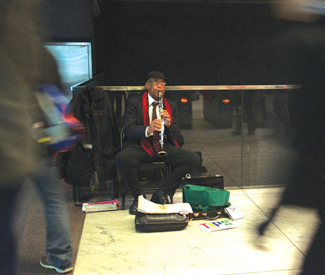
“The people here really cherish music,” said longtime jazz musician Don Cunningham, who played in several other cities before settling in San Francisco over three decades ago. Now a recognized faced within the BART music scene, Cunningham has regulars who look forward to hearing him play familiar tunes on his clarinet, even if only for a brief moment on the way to work.

While the stage might not be glamorous, many underground performers are talented musicians. And with oftentimes uninterested audiences and unsteady pay, they’re taking a risky shot at doing what they love.

Making minimum wage can take several months, said violinist Christa Schmid, who has played in San Francisco for about four years. “When I first started playing in the city people tried to kick me around because I was new and younger,” she said. “I get a certain amount of respect now — people know me.”

Like Schmid, all underground musicians — whether busking for a living, supplementing their income, or simply playing for publicity — must learn how to operate in a system full of unspoken rules.

Every morning and afternoon during rush hour, musicians must race to secure a corner or hallway in the busiest downtown BART stations. While some attempt to stake out the same spot every day, others prefer mixing it up — and sometimes they don’t have a choice either way. The most important rule is setting up far enough from another musician.

On average, most musicians play for two to three hours per day in one location, as anything more is disrespectful to others vying for a spot. But just like the musicians themselves, theories vary on what times and which spots are the most lucrative.

Cunningham said the trick is finding a stable location so that “people know where to find you.” On most days, he can be found playing in the same spot at the Embarcadero station.

Newcomers, Cunningham added, tend to head straight to the Powell BART station because it’s teeming with tourists and constantly busy. “I started out there — everyone does,” he said. “But you learn after a while that quieter spots can be better for making money.”

While the musicians might be as transient as the crowd at Powell, there are a few that claim the station is their sweet spot. Schmid, for example, is “guaranteed at least $50 a day” at the busy station, where she has been playing for a year.

Playing in BART stations has some obvious advantages, such as shelter from the rain and cold and a somewhat captive audience. According to several musicians, the biggest draw is the underground’s great acoustics.

There are some restrictions on equipment and noise levels, and musicians are allowed only in the stations’ non-paid areas. All performers also are supposed to carry a free expressive activities permit, but enforcement is rare and it seems many don’t even realize it exists.

On the other hand, playing in the BART arena can be dangerous, as many musicians have to fend off aggressive beggars. As a woman playing alone, Schmit said she’s particularly vulnerable.

If successful at navigating the system, the payoff can be huge. “I can’t remember the last time I was this happy,” said young violinist Danica Hill, who quit her nine-to-five to give full-time busking a real shot six months ago.

Hill used to be terrified of playing in public by herself and took to BART to overcome her stage fright. Playing in the underground “can give you a bit of anonymity,” she said, adding that her confidence as a musician has grown tremendously and she has even landed a few gigs.

Utopia, mon amour

0

marke@sfbg.com

VISUAL ARTS With Occupy gearing up again and a fresh round of election hell full upon us, another cycle of protest — and the urge to engage with the problems of the world while somehow escaping them — is in the air. The Oakland Museum’s current “1968 Exhibit” (through August 19) offers a family-friendly, multimedia trip through the Bay Area’s most famous political and cultural upheaval. But here are three ongoing shows that look closely at individual creators from the past whose work transcends nostalgia, transmits a fair amount of beauty, and drums up some idealistic lessons for the present.


“ARTHUR TRESS: SAN FRANCISCO 1964”

A miracle to inspire cafe artists everywhere. In 1964, 23-year-old NYC photographer Arthur Tress winged through San Francisco for a season, shooting the populace at a particularly turbulent time: the Republican National Convention, the Beatles’ first North American tour, auto worker protests along Van Ness, the passage of the Civil Rights Act. He developed the negatives in the communal darkroom off Duboce Park, had an unremarkable show in the back of a cafe, packed the photos up at his sister’s, and moved on. After his sister died, he found them in a box of her effects, and realized their significance.

And what a find: Forget Mad Men, this is the real 1964, perched on the edge of a cultural unraveling, its existential beehive slowly loosening into flower child ideals. The 70 photographs on show at the de Young, curated by James Ganz, expertly play with composition to bring rough social patches to artful life. A distorted shot of a George Romney presidential campaign poster delivers Orwellian chills. Screaming girls hoisting “Ringo for President” banners intimate repressed political hysteria. Dashing union workers form impressive phalanxes. Patrons at a Fifth and Market diner embody an microcosm of economic disillusionment. A transgender woman suns her hairy legs on the Embarcadero, a plaid-shirted boy holds up a hand-drawn hammer and sickle.

All of it coated with the glamour of deconstructed nostalgia, in which one can indulge and critique at once. But there’s more: “You have throw into the mix a heavy dose of social commentary and criticism — the idea that the photograph can be a vehicle for social change,” Tress tells an interviewer in the show’s handsome if carelessly annotated catalogue. “You photographed street demonstrations, you photographed protests … it was a way of becoming part of the movement.”

Through June 3. De Young Museum, 50 Hagiwara Tea Garden Dr., deyoung.famsf.org

“THE UTOPIAN IMPULSE: BUCKMINSTER FULLER AND THE BAY AREA”

Inside the great Henry Ford automotive museum just outside of Detroit, you can tour an actual Dymaxion House, designed by preternaturally productive designer, philosopher, and dissembler R. Buckminster Fuller. It’s as perfect a realtime experience of walking around in someone’s 1940s sci-fi Utopian dream as one can ever have. A polished aluminum mushroom cap subdivided into tiny rooms bursting with ingenious “squee!”-worthy gadgetry to handle all of life’s projected needs, the Dymaxion House never took off as vernacular American architecture, despite its supposed ease of construction, light weight, and good intentions to house an expanding population. (Among its bland nemeses: rain, expense, and snarky architecture critics.)

But while it’s particularly poignant to see this polished dream deferred nestled among the many wheeled ones populating Henry Ford’s shrine to the former glories of the Motor City — and even though geodesic monument Spaceship Earth at Disney’s Epcot, another eerie graveyard of sleek Utopian ideals, remains Bucky Fuller’s only famous American architectural manifestation — the Dymaxion concept, and several other Bucky wonders, have had a profoundly positive and energizing effect on the Bay Area, as this visionary show at the SFMOMA reveals.

Curator Jennifer Dunlop Fletcher forewarned, “To be clear, it’s not so much a show about Fuller.” Indeed, but in the first rooms prepare to be blown away by gorgeous blow-ups of Massachusetts-born Bucky’s hyper-geometric blueprints, which will surely provide several indie electro bands with album cover inspiration for years to come, and a wall of insanely detailed notecards from “Everything I Know,” his late-life video-recorded brain dump.

Then the real magic of the show kicks in, as it opens up into displays of Bay Area movements and products directly traceable to Fuller, from glorious hippie artifacts like the Ant Farm architecture collective, the Whole Earth Catalog scene, and the iconic North Face “Oval Intention” dome-shaped tent (really!) to contemporary tech initiatives, like bright neon specimens from the “One Laptop One Child” campaign and the utterly transfixing “Local Code” by UC Berkeley Assistant Professor Nicholas de Monchaux, which digitally renders the transformation of all the unused public space in SF into “a common ecological infrastucture.”

Beyond reviving interest in Fuller, the ambitious project of SFMOMA here is to showcase the deep connection between the Bay Area’s brilliant tech legacy and its transcendental communal one, an audacious, successful synthesis that would bring Bucky joy — and one that only a full-size recreation of Steve Wozniak’s garage could probably best.

Through July 29. SFMOMA, 151 Third St., SF. www.sfmoma.org

“RADICALLY GAY: THE LIFE OF HARRY HAY”

Harry Hay seemed to drop almost effortlessly into so many essential 20th century ideal-driven environments — Hollywood, unions, the Communist Party, gay rights, naturism, really the list goes on. That this modest show at the SF Main Library, curated by Joey Cain, not only clearly distills Hay’s timeline and influence, but also manages to illuminate new corners of his life and sometimes bring on a few tears, is rather a sensation.

Seriously, the man was multitude. Hay is best known as the founder of one of the first gay rights organizations, the Mattachine Society — here revealed through documents, org charts, and touching photos to have been a sort of Moose Lodge for “homophiles.” In one of the show’s most astounding touches, the exquisite Edwardian tea set used by his mother Margaret to caffeinate the early Mattachine meetings is displayed in full.

But of course there was more for this Mad Hatter, including pleading the Fifth before the House Un-American Activities Committee in the 1950s for his Communist party membership and Marxist musicology studies, his 1930s radicalizing tryst with actor and union supporter Will Geer, a.k.a. Grandpa from The Waltons, the “Circle of Loving Friends” desert commune, the national campaign to stop the damming of the Rio Grande — all laced through with references to underground SF gay clubs and arts happenings. (Some things, like his controversial early support for NAMBLA, which could benefit from some honest contextualization, seem glossed over, perhaps due to space concerns.)

Hay’s creation in the 1970s of the Radical Faeries, a collective whose anti-assimilationist, Pagan aesthetic continue to influence and inform Bay Area style, is well-represented here, as is perhaps Hay’s most stable pursuit: his loving 40-year relationship with John Burnside. Two seemingly politically contradictory Utopian ideals, embodied in one mercurial spirit, revealed beautifully.

Through July 29. SF Main Library, 100 Larkin, SF. www.sfpl.org

We had a party

2

caitlin@sfbg.com

HERBWISE As excited as I was for our Guardian Stoned Soul Picnic 420 party, not everyone in our office was convinced the afternoon at El Rio on Friday, April 20 would pass without incident.

“I’m a little bit worried about getting raided,” said my publisher Bruce Brugmann, towering over my cubicle earlier that day.

Well we weren’t, although swirling rumors of federal agents in the crowd did culminate in slight rudeness directed towards the buzzcutted and be-khakied among us. We celebrated 420 with a free, public party, no one got arrested, and we raised over a thousand dollars for marijuana patient advocacy — $1,092, drummed up through a raffle featuring prizes from all kind of local businesses and El Rio’s generous bar charity. Owner Dawn Richardson says the total was the most money for charity ever generated in the bar during that particular time period.

>>STAY TUNED FOR A STONED SOUL PICNIC PHOTO GALLERY SHOT BY NARK MAGAZINE

This had to be the weirdest party ever — reggae and soul music both, from Mr. Lucky of I&I Vibrations and Carnita of Hard French, respectively. Then there was the pickled apples and bacon lovingly stacked in Hot Bike’s grilled cheese sandwiches. The boys from Roughneck Skateboards self-started to create a limbo game made out of paper mache joints. And four stand-up comedians bravely assumed the stage towards the end of the afternoon. We even had free pastries.

There were old folks in motorized wheelchairs, tough guy stoners on the side, a ton of pretty people that showed up just to dance and be stoned on a sunny patio in 70-degree weather. If ere there was an advertisement for the broad swath of San Franciscans that support medical marijuana, this was it. And we did good — look Bruce, no handcuffs!

3 spring cocktail trends

3

Spring imparts new life and lush green after winter rains. It also ushers in a glut of new cocktail menus, emphasizing the best produce of the season and exciting new trends.

BOTTLED COCKTAILS

These are sprouting up everywhere, including at the newest addition to the Bourbon & Branch family, the 1950s-styled Local Edition (691 Market, SF. www.localeditionsf.com), which opened April 12. There is no carbonation in these blends, just sophisticated, straightforward bottlings that utilize house syrups to drive flavor profile. Instead of individual-sized bottles, bar manager Ian Scalzo opts for 750-milliliter bottles that he corks and seals in-house. Order a large bottle of rum infused with house made yerba maté syrup — some come with a shot of sparkling wine, or soda — or avail yourself to tableside decanter service as you enjoy live music in this spacious, underground bar.

At Harry Denton’s Starlight Room (450 Powell, SF. (415) 395-8595, www.harrydenton.com) bar manager Joel Teitelbaum created a carbonated line-up at $12 per bottle, with even more in the works. Clear spirits dominate this bottled cocktail menu, which just launched April 10, but don’t be surprised if brown liqueur shows up too. Teitelbaum is already working on a Bulleit Rye cocktail for bottling. Try a carbonated Negroni made lively with Campari, Plymouth gin, and sweet vermouth, or a Phizzed Phosphate daiquiri of white rum perked up with cane sugar, phosphate, citric acid, and distilled lime juice.

You read that right, distilled juice. Citrus can easily turn bitter and pungent during distillation, but with lots of experimentation (and failed batches) using various juices, Teitelbaum has cornered a subtle lime aroma that blends seamlessly into his bottled daiquiri, mojito, and Brokers gin-based gin and tonic — my favorite of the bunch. His homemade tonic is a light brown, a natural result from leaving in the cinchona bark filtered out of most tonics. The drink gives off a floral, cardamom aroma, and the distilled lime juice tastes here of kaffir lime. Cutting-edge bars like The Aviary in Chicago are also experimenting with high concept bottled cocktails, but Teitelbaum is going for approachable, crowd-pleasing classics — with a twist.

PIMM’S CUP REVIVAL

Pimm’s Cups are on the rise. For those unfamiliar, the English brand Pimm’s has a full lineup of spirits, but its most-popular Pimm’s No. 1 is a gin-based, rosy red liqueur with notes of citrus and spice. In addition to Pimm’s, the famous cocktail made from the spirit can include lemon and cucumber, even gin, ginger ale, 7-Up, soda water, or mint. It’s a boozy cucumber lemonade for grown-ups that typically comes generously garnished — a drink that is as visually pleasing as it is to taste.

Pimm’s Cups are staples in London, even offered as a morning imbibement at farmers markets. In New Orleans, the drink is a tradition at 1700s bar Napoleon House (even if the version served is less than exemplary), a welcome treat in muggy Nola heat.

I wouldn’t mind seeing more Pimm’s traditions in our own city, but it seems we’re on our way. I’ve long gotten my Pimm’s Cup fix at 15 Romolo (15 Romolo, SF. (415) 398-1359, www.15romolo.com), which makes a lovely version with your choice of liquor (“anything but scotch,” reads the menu), plus Pimm’s, cucumber, mint, lemon, house ginger syrup, bitters, and soda water. Get the from-scratch treatment at Heaven’s Dog (1148 Mission, SF. (415) 863-6008, www.heavensdog.com) next month when new bar manager Trevor Easter makes a fresh batch of gin-based, housemade Pimm’s liqueur from bar director Erik Adkins’ recipe. With this base, the two craft a gorgeous drink, lively with cucumber and lemon.

Jasper’s Corner Tap (401 Taylor, SF. (415) 775-7979, www.jasperscornertap.com) bar manager Kevin Diedrich just started bottling his own Pimm’s Cup. A vivid orange, it goes down bright and bold with cucumber, ginger, lemon, Pimm’s, soda, and the no-longer-secret ingredient: a hint of fresh strawberry. Diedrich’s little bottled beauties border on addictive. I wish I could stock them at home.

WINE COCKTAILS

Sampling through spring menus I’ve noticed this old trend getting fresh life. At Wo Hing (584 Valencia, SF. (415) 552-2510, www.wohinggeneralstore.com), bar manager Brooke Arthur’s new spring cocktails include a Cynar spritzer made from the Italian artichoke liqueur and Plymouth Gin, alongside Punt e Mes vermouth, cava, orange bitters, lemon peel, and a pinch of salt. This dark, earthy, red refresher is blissfully bitter, bright, and invigorating. The salt enhances flavors, the bubbles impart texture.

Kevin Diedrich at Jasper’s Corner Tap created a St. Helena fizz served tall in a Collins glass. This wine-based cocktail is blessedly light on the alcohol — perfect for a mid-day imbibing. It uses Newton Chardonnay, St. Germain elderflower, Benedictine, Peychaud’s bitters, Bitter Truth grapefruit bitters, and soda. It’s like a mini-escape to wine country.

Kate Bolton of Maven (598 Haight, SF. (415) 829-7982, www.maven-sf.com) created a unique wine aperitif in Global Warming. Dry riesling features, but also sake, even a splash of Ransom’s Old Tom gin. Tart with lemon, a little scoop of absinthe sorbet permeates the drink as it melts. Who says vino and hard alcohol don’t mix?

7 vegan and gluten-free indulgences

0

True, at first glance a vegan and gluten-free lifestyle sounds like a joke from Portlandia‘s Allergy Pride Parade. Wave those flags high, besmirched friends. But here’s a non-snarky thought: for some people, it’s just life. They have actual allergies to gluten and/or dairy.

Or, there are those who simply eat delectable vegan meals for personal reasons and have best friends, family, or partners with high risks of Celiac disease. Either way, any way, whatever way, with all the delicious, forward-thinking offerings in the Bay Area, it ain’t so bad. In fact, it’s really, really good. Don’t hate, just taste. 

QUESADILLAS DE CALABAZA AT GRACIAS MADRE

This quesadilla is the antitheses of the greasy pocket you’re used to. It’s a folded upright pillow, weighted lightly in the base with mouth-watering folds of whipped butternut squash and carmelized onions. While the presentation — which reimagines the quesadilla with a classic samosa shape — is worth it alone, the dish comes slathered in Gracias Madre’s signature spicy cashew cheese and a nutty pumpkin seed salsa. It defies logic, and sets gentle fire to the tongue.

2211 Mission, SF (415) 683-1346, www.gracias-madre.com

FRESH SPINACH LEAVES APPETIZER AT ANGKOR BOREI

When you listen close enough, people in bars are having conversations about food all over San Francisco. Angkor Borei Cambodian Cuisine is a word of mouth restaurant, passed from vegan to vegan, bar patron to bar patron. While there are other yummy choices here (try the pumpkin curry with tofu, served in half a pumpkin piece), perhaps the most surprising, most exemplary idea of what you can do without wheat and dairy is the deceptively simple vegetarian fresh spinach leaves app. It’s a circle of little glass bowls, each with one ingredient: ginger cubes, peanuts, coconut, lime wedges, and the titular fresh spinach leaves. Scoop up a leaf, pile on the accoutrement with tiny spoons then spread the dipping sauce atop; the combined pop of zesty flavor is a delicious experiment.

3471 Mission, SF (415) 550-8417, www.cambodiankitchen.com

VEGAN CHARCUTERIE AT GATHER

It’s an elegant, inspired dish, there’s no debate. Loved by both vegans and omnivores alike. It won Best of the Bay in 2010, made Food & Wine’s 10 Best Dishes of 2010, and earned countless, breathless reviews on local and visiting vegan blogs. But it also should be noted that the vegan charcuterie at Gather — a sturdy board dotted with the most imaginative vegan offerings imaginable, from smoky watermelon to unrecognizable trios of mushrooms — is also gluten-free (save for the hunk of unnecessary Acme bread on the side). Dip your fork tenderly into the offerings, for each is a piece of tasty art.

2200 Oxford, Berk. (510) 809-0400, www.gatherrestaurant.com

PISTACHIO AND CORNMEAL-CRUSTED TEMPEH QUINOA AT THE PLANT CAFE

This tempeh provides a mouthful of dancing flavors. The large pistachio and cornmeal-crusted triangles meet rich, fluffy quinoa covered in a spicy cucumber sauce. Pow. The zing. The Plant is another spot that has many delicious vegan options, and some wheat-free choices, but this is one of few meals that encompass both. Make sure to check the menu — true to its cause, the Plant’s dishes are seasonal, though the crusted tempeh itself seems to be a frequent option (previous incarnations have come dressed up with pumpkin seeds and served over coconut mashed yams).

Pier 3, Ste 103, SF (415) 984-1973, www.theplantcafe.com

GREEN PAPAYA SALAD AT HERBIVORE

Let’s get to the most salient question: yes, this salad is big enough to fill you up on its own. Its tangy shreds cover the whole plate and rises in a crunchy mound in the center. Next, let’s discuss the unfairness of most green papaya salad itself: yes, the Thai custom is to make dish with dried shrimp, and we’re not trying to change tradition here, however, it’s a shame such a tantalizing dish isn’t more often served vegan, when it’s just one ingredient that offends. Herbivore’s version has crispy shreds of tomato, green beans, red cabbage, carrots, onions, tofu, peanut, and mint, all with a spot-on ginger-tamarind dressing. No shrimp needed.

531 Divisadero, SF (415) 885-7133, www.herbivorerestaurant.com

FRIED OKRA AT SOULEY VEGAN

Just thinking about these tiny fried balls of perfection makes me long for a warm afternoon perched on the outdoor benches next door at Beer Revolution, chomping okra and scarfing vegan mashed potatoes. Everything at Souley Vegan is rich and delicious. But there’s something about that spicy fried okra that makes the meal super-special. Twist the lemon slice offered atop, pop one in, then share among friends on the benches. Or keep them all to yourself. No one will judge you.

301 Broadway, Oakl. (510) 922-1615, www.souleyvegan.com

SAHA SAMPLER AT SAHA

Saha has the goods: creamy hummus, smokey baba ganoush perfection, fire-roasted eggplant and tomato spread, and a colorful mix of Mediterranean olives. All of these come in one dish, naturally, the Saha sampler. The cherry on the sampler is the offering of gluten-free pita wedges, every bit as hearty as the kind with wheat, and just as perfect for scooping all that good Middle East-inspired spread.

1075 Sutter, SF (415) 345-9547, www.sahasf.com

The private bus problem

84

If you’re used to riding to work on a crowded, lurching Muni bus that arrives late and costs too much, consider this: Some San Franciscans commute on 50-foot luxury coaches with cushioned seats, wifi, air conditioning and mini television screens. The state-of-the-art vehicles arrive on time — and the service is free.

The buses aren’t regulated by the city and pay nothing for the use of public streets. But these giant private beasts freely and without penalty stop in the Muni zones, clogging traffic, and sometimes preventing the city’s buses from loading and discharging passengers. They barely fit through narrow corridors in neighborhoods like Noe Valley and Glen Park.

City officials agree the fleets of private commuter buses have created a problem — but so far, they’ve done nothing about it.

And most people don’t realize that some of these luxury bus lines are, in effect, open to the public.

The buses primarily serve the city’s growing status as a Silicon Valley bedroom community, carrying commuters to and from the corporate campuses of places like Genentech and Google.

Private shuttle buses have been booming in San Francisco. Genentech has more than 6,000 employees registered in commute programs on 56 routes. Google’s Gbus service transports more than 3,500 daily riders on more than 25 routes, with about 300 scheduled departures. Then there’s Zynga, Gap, California College of Arts, Apple, Google, Yahoo!, and Academy of Art. And the University of California, San Francisco has its own fleet of 50 shuttles.

The good news is that the buses take cars off the road, giving tech workers a much less environmentally damaging way to get to work. Google’s transportation manager, Kevin Mathy, noted in the GoogleBlog that “The Google shuttles have the cleanest diesel engines ever built and run on 5 percent bio-diesel, so they’re partly powered by renewable resources that help reduce our carbon footprint.” He continued, “In fact, we’re the first and largest company with a corporate transportation fleet using engines that meet the Environmental Protection Agency’s 2010 emission standards.”

But nobody at City Hall has any idea how many total buses are running on the San Francisco streets.

Jesse Koehler, a planner at the city’s transportation authority, conducted a study on shuttles that identified a number of problems, most linked to a lack of local regulation.

Requested by then-Supervisor Bevan Dufty, the study, completed in 2011, found that, while shuttles play a valuable role in the overall San Francisco transportation system, there’s little policy guidance or management. In fact, there’s no local oversight, the study found: Shuttle operators are licensed by the state, but the California Public Utilities Commission is mostly concerned with the safety of the equipment and the licensing of the drivers. Local concerns aren’t under the agency’s purview.

And there are plenty of reasons for local concern. Under city law, only Muni buses are allowed to pull over and use the designated bus stops — but Koehler reported, “Shuttles are generally also using these Muni bus spots. Some cases prevent Muni buses from entering the Muni bus zone and having the passengers board late.”

The study notes that “the large majority (approximately 90 percent) of shuttle stops occur at Muni bus zones.” The shuttles take much longer to load and unload than Muni buses (because of their size and the lack of a rear door) and often force the public buses to wait, delaying routes, or to pick up and discharge passengers outside of the bus zone, creating a safety problem.

Shuttle carnage

Local residents surveyed had their own complaints. The study quotes critics saying that “the shuttles can be noisy, especially at night when there isn’t much other traffic or when they are the kind with diesel engines” and “large coach shuttles are noisy on small neighborhood streets.”

Muni routes are designed with the city’s neighborhoods in mind; you don’t see the extra-long articulated coaches that ply Mission Street and Geary Boulevard cramming themselves into the much-tighter and more residential streets of Potrero Hill, Noe Valley, Glen Park and the Castro. That’s not a concern for the giant corporate shuttles; they go where they want.

That can cause problems for pedestrians, bicyclists and drivers who aren’t used to seeing these long, tall buses, which at times take up both lanes, squeezing through turns with barely an inch to spare.

And while Muni drivers are far from perfect, the shuttle safety records are even more of a concern. In November of 2010, a UCSF shuttle bus struck and killed 65-year-old Nu Ha Dam as she was crossing Geary Street at Leavenworth Street. Not even a year later, another UCSF shuttle was involved in a collision, killing Dr. Kevin Allen Mack and injuring four other passengers. A witness confirmed that the shuttle ran a red light.

On February 14, a pedestrian crossing Eddy Street at Leavenworth in the Tenderloin was run over by a paratransit van. The victim was pinned under the shuttle for 20 minutes until he was finally rescued. The victim lived, but suffered several broken bones.

Carli Paine, transportation demand management project manager of the SFMTA, told us that shuttles are a growing component of the San Francisco transportation network and overall, support San Francisco’s greenhouse gas emission goals.

But, she noted, “Because they are relatively new, and a growing one at that, there is really a need to work together between the city and shuttle providers to make sure that our policy framework is supporting shuttles and also working to avoid conflict with shuttles and transit, pedestrians, and bikes.”

Paine noted: “What we’ve heard is that there are places where shuttles do have conflict with other uses and then there are places that work really well, so one of the things we want to find out in those areas where spaces are being shared successfully, is what’s happening.”

Elizabeth Fernandez, press officer at UCSF, said the city doesn’t have any specific rules regarding transit systems like UCSF’s. “With the proliferation of corporate services throughout the city, there are several studies that are ongoing,” she said. “These studies are an attempt to manage the growth of these kinds of shuttle services in regards to volume as well as routing, staging, and parking.”

Tony Kelly, a Potrero Hill community activist, said the root of the problem is the consistent cut in Muni service over the past 20 years. “Potrero Hill is going to double population in the next 15 years,” he said. “People and new housing units are doubling.

“When all the shuttles are in our bus stops, everyone is wondering why we can’t ride these things,” he said. “Why can’t they take it when there is so much unused capacity?”

Hitching a ride

Actually, I rode several UCSF shuttles around the city, and nobody ever asked for identification.

I was picked up at the Muni stop on Sutter St. at the UCSF Mt. Zion Campus (yes, the shuttle pulled — illegally — into the Muni stop to pick up passengers). Fernandez told me the school’s official policy states that “Riding UCSF shuttles is restricted for use by Campus faculty, staff, students, patients and patient family members, and formal guests.” But when I boarded, the driver made no attempt to verify if I was associated with UCSF. I did a full trip, passing through the UCSF Laurel Heights Campus, and then back to Mt Zion. There were no more than seven people on the shuttle, and about 20 seats available for riders. There are also handrails for standing if the bus ever gets too crowded.

I also hopped a Genebus at Glen Park BART and rode to company headquarters in South San Francisco. Again, nobody asked for ID; in fact, Genentech spokesperson Nadine O’Campo said the company is happy to let others who work in the area hitch a ride on the cush coaches.

For information on the Genenbus routes and schedules for the Millbrae bus line, go to www.caltrain.com and look under “schedules.” UCSF also provides shuttle schedules and route maps at www.campuslifeservices.ucsf.edu under transportation. For general information on shuttle providers that provide service from and to BART, visit www.transit.511.org and go to Transit Provider Info.

Riding on these shuttles is an entirely different experience than riding on the Muni. People are friendlier, the buses are clean, the seats were nicer, and the transportation is a lot faster.
A UCSF student on the shuttle, commutes using the BART from South San Francisco to 16th and Mission to take a shuttle to UCSF. She said it’s far better (and cheaper) than driving — and while Muni costs $2, the shuttles are free.

The downside of that, of course, is that some of the shuttles are bleeding off Muni patrons, and riders of other public systems, in effect stealing customers, and thus robbing the transit system of fares. They’re also another example of the privatization of what were once public services. Instead of working with the city and the region to improve transit for everyone, these tech firms have decided to create a private system of their own..

And that may be the most disturbing trend of all.

Gourmet fresh (and cheap)

1

virginia@sfbg.com

APPETITE Trekking around the Bay for what is not at all elusive — excellent food — is ever a pleasure. Finding it on the cheap? Options are endless. Sandwiches stand as one of the easiest ways to fill up for less, making the continued glut of sandwich openings unsurprising. (Check out the Richmond’s new Chomp n’ Swig — hard to top the Bacon Butter Crunch sandwich: white cheddar, tomato, bits of bacon, guacamole. Or in the Mission, the Galley inside Clooney’s Pub at 1401 Valencia serves a meaty French Onion sandwich, yes, like the soup and oh so good.) Beyond mere sandwiches, here are some other affordable delights.


MARKET AND RYE


West Portal is lucky to claim new Market and Rye, from Top Chef alum Ryan Scott. What could be just another sandwich shop is instead an airy, high-ceilinged cafe in yellows and whites under skylights. Salted rye bread is made specifically for the spot by North Beach’s classic Italian French Baking Company (IFBC’s sourdough and wheat bread choices are also available).

Sandwiches ($8.50–9) offer enough playful touches to keep them unique, like Funyuns on roast beef or Cool Ranch Doritos adding crunch to chicken salad layered with avocado spread and pepper jack. I took to the Reuben chicken meatball sandwich on salted rye, its generous contents falling out all over the place, overflowing with 1000 Island dressing, sauerkraut, Swiss cheese, red cabbage caraway slaw, and house chicken meatballs. I almost didn’t miss the corned beef.

Build-your-own-salads offer healthy alternatives, while above average sides ($4 per scoop, $7.50 2 scoops, $10.50 3 scoops) are generous helpings of the likes of roasted zucchini tossed with cherry tomatoes and boccaccini (mini mozzarella balls), enlivened by mint vinaigrette. The side that didn’t work for me was grilled broccoli. It appeared green and verdant, dotted with ricotta and walnuts in red wine dressing, but was so cold, its flavor was stunted.

Housemade root beer float “Twinkies” ($3.50) are a fun finish, though Twinkie-lovers be aware: these are dense, dark cakes filled with a dreamy root beer float cream, neither fluffy nor spongy.

68 West Portal Ave., SF. (415) 564-5950


ALL GOOD PIZZA

A jaunt to Jerrold and Third Street leads to a food truck parked in a Bayview oasis: a parking lot filled with picnic tables, potted cacti, and herbs used for cooking. All Good Pizza — open weekdays only: 10am-2pm — just launched this month from neighborhood locals desiring healthy food and “good, sincere pizza,” with a real commitment to the area (check out the site’s community page).

The lot invites lingering over cracker-thin pizzas (a steal at $7), from a basic Margherita to a spicy pie dotted with peppers, fennel, mozzarella, and Louisiana hot links smoked on site. The trailer houses a 650 degree gas-fired oven. These aren’t game-changing pies but there’s nothing like it in the ‘hood — nor are there many healthy salads, like a kale, radicchio, sweet potato crisps, Parmesan, balsamic reserva combo. There are also panini sandwiches ($7) such as a pig-heavy, super salty Nola Muffaletta: Genoa salami, smoked ham, olive salad, fior di latte mozzarella, and provolone cheese.

Italian sodas ($2.50) are all made on premises, like a candy sweet coconut soda evoking coconut oil, beaches and vacation. All this in a Bayview parking lot.

1605 Jerrold Ave., SF. (415) 846-6960, www.allgoodpizza.com


ANDA PIROSHKI

A close childhood pal is Russian and her mother and grandmother often home-baked us unforgettable treats as kids, from blintzes to piroshkis, those little baked buns stuffed with goodness. I still dream of them — a rarity in this town. Not even in Chicago or NY have I tasted any piroshkis as fresh as those at Anda Piroshki, a stall in the tiny but idyllic 331 Cortland marketplace housing a few take-out food purveyors. I’ve eaten Anda at SF Street Food Fest, but the ideal is to arrive at 331 soon after it opens when piroshkis are pulled from the oven piping hot.

The dough is airy yet dense, ever-so-subtly sweet, like a glorified Hawaiian roll. No skimping on fillings — one piroshki ($3.75–4.50) fills me up. Sustainable meats and local ingredients make them relatively guilt-free. Try a button mushroom piroshki overflowing with fresh spinach, or one of ground beef, rice and Swiss, oozing comfort. My favorite is Atlantic smoked salmon and cream cheese accented by black pepper and dill. It makes a savory, creamy breakfast.

The one downside has been a straight-faced, disinterested server who could not be bothered as I asked a question about Russian sodas (like Kvass, a fermented rye soda — pleasing rye notes if too saccharine) and acted the same when I returned a second time… a stark contrast to the friendliness I encounter at every other 331 business. But momentary coldness is still worth those warm piroshkis.

331 Cortland Ave., SF. (415) 271-9055, www.andapiroshki.com

Subscribe to Virgina’s twice-monthly newsletter, The Perfect Spot, www.theperfectspotsf.com


Playing Joe Cool

0

le.chicken.farmer@gmail.com

CHEAP EATS Last Straw Sullenger and me were walking. Just strolling around the corner, to Community Thrift, to see if they had some things. My list was long. But I was telling her, as we walked, about my football team — the “here” one — and how, after just three seasons, it was starting to come together for us. Two straight wins…

How a lot of our players who had never played football before are starting to really get it and kick ass, especially our quarterback.

“Great. That’s great. Great,” she was saying, and I looked up and saw Joe Montana walking toward us.

Now, I’m not one to generally even notice the presence of celebrity, let alone be moved by it; but in this case, I peed my pants.

Joe Montana, for you young, sports historyless ‘uns, is not celebrity. He’s Joe Montana. In the Mission, on the phone, jeans and a T-shirt, less balding and yes taller than I’d have figured, the oceanic eyes and that dimpled chin. In other words: swoon.

And .. . boom, he was past us, just like that, except Last Straw had to practically carry me the rest of the way to the thrift store.

Which isn’t to say I shopped.

I mean, I did. I bought a strainer. But my needs were so much more. So much more than that.

Seeing Joe Montana in the Mission is addictive, turns out. All I could think about while we were looking at desks was getting back outside and possibly — who knows — seeing him again.

We did!! Joe Montana! Again! Ten minutes later, still talking on the phone, just standing there next to a telephone poll outside the barber shop on 18th and Valencia, where Circus McGirkus used to work. Iss.

And we walked on by, trying to act casual while fainting and peeing our pants and shit. Anyway, I was. I’m not sure Last Straw is quite the historical (to say nothing of hysterical) 49ers fan that I am. I was in high school when Joe Montana started his career, changing everything. Seriously: seeing him, seeing us going from last place to first in two seasons, it changed the way I played football. And it changed the way I lived life.

As for him, he just wanted a haircut, probably. Anyway, as we were passing, he got off the phone and walked into the barber shop.

“You should get his autograph,” Last Straw said.

“On what? On my strainer?” I said.

I hate to bother people, let alone celebrities, let alone Joe Montana. But no one else was! Maybe no one else in the Mission is old enough or sporty enough to even know what Joe Montana looks like.

“Probably he’d get a kick out of it,” Last Straw said. “His age.”

I doubted this. But I said goodbye to her at her car, then ran to my apartment, changed my pants, swapped my strainer for a football and a Sharpie, and ran back out.

I had a better idea, I thought. I wouldn’t ask for his autograph. I would ask him to throw me a pass. I would tell him I play wide receiver for a women’s football team, imply that I had six months (or less) to live, and show him on my hand what I was going to do: Past the bus stop, fake left, and cut right toward the building. I’d look over my right shoulder as I made my turn, and the ball would be waiting for me.

I knew it would be there, having seen him play, many times, on TV and in person. It would be waiting for me. I would pull it in, and then, maybe, he would offer to sign it. Either way, I would live the rest of my life with a sense of having caught a pass from Joe Montana.

And, yeah, that would be enough.

Problem: He was gone. If it was a haircut he was after, his was the fastest one ever.

Ever since, I’m saying, I’ve been spending more time than usual on Valencia, with a football and a Sharpie in my bag. Did you notice that New Yorker Buffalo Wings is closed, and that signs on the windows point you toward Pizzeria, a few doors down? Earl Butter and I tried them. Meh.

But next week I’ve got a great wings place to tell you about, don’t worry.

PIZZERIA

Tue.-Thu., Sun. 3:30-10:30pm; Wed.-Thu., Sun: 11am-10pm; Fri.-Sat.: 3:30-11:30pm.

659 Valencia St., SF.

(415) 701-7492

MC,V

No alcohol 


Items

0

marke@sfbg.com

SUPER EGO So many things I want to write about this week, if only my delicate, exquisite hands could stop doing these fluttery bird-like motions in front of my gorgeous face. Girls, I’ve got a serious case of the Vogues, which along with Perma-Nod, Fist Pump, “Woo!”-itis, Twirlfoot, Strobe-eye, and Record Bag Shoulder will soon flood hospital wards and special care facilities nationwide with my rapidly aging (mid-20s) club generation.

That’s why universal healthcare is so very important! Have we learned nothing from disco’s untreated polyester scars, the shaken sacroiliacs of funk, Rave Damage, Swing Elbow, Goth Pout, the horrible social stigma of Breakdancer’s Breath? Shit staaank. Don’t laugh, teenage Post-Millennials, it’s coming for you. One day you’ll be holding your phone up to record that underground light show, when you’ll realized with horror that no one uses phones as cameras anymore, not even you. You’ll only be holding your phone up in your mind. And then you’ll catch Skrillexatosis.

What am I even talking about? The things I most want to tell you are these. 1) Mimosas and house dancing on Sunday mornings 6am-2pm at Monroe in North Beach are rad, especially the second and third Sundays of each month, hosted by the Pressure! and Forward crews respectively. 2) The Entertainment Commission is actually considering the use of mimes to help control rowdy nighttime crowds, for realz. (Read more on SFBG.com’s Noise blog.) 3) Flaunting its global fan base, amazing weekly Honey Soundsystem is now simulcasting its Sunday night parties at www.mixlr.com /hnysndsystm — so you can kiki out while doing your dishes at home. 4) I just about died when rap prodigy Azaelia Banks broke into the Prodigy’s “Firestarter” at Coachella, did you see it? More please.


THE TUBESTEAK CONNECTION 8-YEAR ANNIVERSARY

Have you noticed we may be going through another heavy period of gentrification? DJ Bus Station John started his weekly Thursday night club in reaction to the last tech boom’s more blanding effects, drawing upon underground queer ’70s culture to keep the gay ’00s freaky, slutty, and disco-lickingly funky (also cell-phone free: don’t Tweet in this room, love, keep it between us.) “A reliable source of good music and fresh meat delivered w/love (& refreshingly w/o irony) by a 50-something bear qween,” is how BSJ himself describes it. “You won’t believe what you just 8!” is how I do.

Thu/19 and every Thursday, 10pm, $5-7. Aunt Charlie’s, 133 Turk, SF.


ROCK IT SCIENCE LABORATORIES DOUBLE ANNIVERSARY

Seven years of parties, two years as a record label, and always keepin’ it ravey-styley — local player Eric Sharp started off throwing Afterglow undergrounds at the storied Infinite Kaos venue and has become a bedrock of the Bay Area dance music (and an early handlebar mustache pioneer), now celebrating with DJ Fame, Eric Reilly, and his RISL (www.rislabs.com) family, which is us, of course. Expect craziness.

Fri/20, 10pm-late, $5 before 11pm. Public Works, 161 Erie, SF. www.publicsf.com


JEFF MILLS

As “The Wizard” on Detroit’s WJLB FM in the ’80s, the genius Mills cut ‘n scratched electro, hip-hop, house, and techno into breathtaking, highly influential conflagrations of party-starting awe. Now he not only beams genius slices of intelligent techno down from the Mothership — he basically is the Mothership, often on multiple turntables, and will deliciously demolish Public Works, along with beloved Detroit house legend Terrance Parker, LA heavy technoist Drumcell, our own Icee Hot DJs, Mossmoss, and more. Sat/21, $15–25. Public Works, 161 Erie, SF. www.publicsf.com

Summer camp on wheels

1

emilysavage@sfbg.com

MUSIC While Rupa Marya of Rupa & the April Fishes and Gabe Dominguez of Shake Your Peace are crossing their fingers for cloudless, sunny days ahead during their joint week-long bicycle trek around the Bay Area, in some ways, they were brought together by a storm.

It was a storm both physical and figurative: the scattered downpours during their first encounter at the now-dispersed Occupy SF campsite at Justin Herman Plaza last November (11.11.11) during the Occupy Music Festival — where both bands played — and, the subsequent storm of ideas that lead to the bike tour agreement.

“So it was kind of like the perfect storm,” says Dominguez, sitting next to Marya in the Nervous Dog Coffee cafe on Mission Street in early April. “It was an auspicious day,” Marya later adds. “Oh my god, what a day.”

The fruit of that brainstorm, the Bay Rising Tour, will kick off tomorrow at Stanford University, with the ragtag bicycle caravan of around 15 core riders heading counterclockwise around the Bay, stopping in nine cities over 10 days, playing both conventional music venues and guerillas art spaces. The musicians on bikes piled high with gear will turn their final corner on to Divisadero to play the Independent April 28.

Marya and Dominguez had walked into the Nervous Dog that afternoon smiling, bubbling with expectations of the impending tour. The two are clearly platonically smitten with another other’s passion for social justice, global music, and good old-fashioned bike fun.

As Marya nibbles an empanada from the cafe, Dominguez continues their story. “We made the connection that both of our bands make multicultural dance rebel music, rock music for the ecotopian revolution. Bicycles, bioregionalism, now being the time — it all just coalesced.”

One key difference that’s soon to evaporate: Shake Your Peace has done many bike tours, but this will be Rupa & the April Fishes’ first (though they’ve done some trial runs in preparation).

Along with leading Shake Your Peace, and playing in Tiny Home with his girlfriend, Sonya Cotton, Dominguez is a co-founder of the yearly Bicycle Music Festival (since 2007) with Paul Freedman, who too plays a role in the Bay Rising Tour.

Freedman’s company is Rock the Bike, which built the pedal-powered audio system the groups will use in the open space and outdoor venues — San Jose Bike Party, Fremont Earth Day Grounds, Keller Beach Park.

Along with those mentioned, the tour will roll to A Place for Sustainable Living in Oakland for an Earth Day party (with food cooked by Marya’s urban farmer brother), a Beaver Liberation show in Martinez, and a Glen Cove ceremony by Ohlone Leaders in Vallejo.

Out on the road between venues, the caravan has three transportation strategies: people carrying their own instruments on bicycles, those packing larger instruments like guitars on Xtracycles — an Oakland company that sells an extension for the back of the bike — and lastly, a few riders on electric-hybrid bikes carrying six-to-eight foot trailers.

They also are encouraging other cyclists and Bay Area residents to come along for the day rides between shows — to help map out the flattest routes. There’s a real community effort feel to the plan.

“In the wake of where we find ourselves right now, economically, sociopolitically, we can’t wait for someone to hand us the reality we want. We have to build it, we have to create it. And that’s what’s so exciting about this way of touring,” Marya says.

She adds, “it’s not asking for permission, it’s just doing what you do as a musician, which is to mobilize yourselves…bring people on your journey, have a chance to interact with them in another way, which is so different than get on the tour bus, be isolated, be backstage. We’re going to create the stage, we’re going to create the experience.”

Both bands make the kind of music that invites interaction and discussion, so an interactive tour, flipping the tradition of a clear separation between artist and audience, seems the right direction.

Rupa & the April Fishes — now wrapping up their third studio album, Build — have long been fixtures on the global music scene, a Bossa nova bumping mix of Brazilian, Indian, Latin, and French influences, sung in three languages. While based out of San Francisco, they’re often out exploring the world, most recently Chiapas, Mexico; Amsterdam; and Athens, Greece.

Shake Your Peace started out in New York as folk trio, but now “Shake Your Peace 2.0” makes a style of music that Dominguez has dubbed “whup” — a melding of Afro-Latin beats with bluegrass instruments such as fiddle, and gospel harmonies.

“W-H-U-P, it’s a celebratory spirit with a philosophy, a political approach,” Dominguez explains excitedly. “We’re not just fighting for better wages, we’re fighting for life. It’s the spirit of your heart kicking. The scream when you come out of the womb. Life, yaow!”

He appears equally amped on the Bay Rising tour itself, adding again that others should join the rides with the bands — “they’re welcome to experience this rolling summer camp with us.” And they’ll both be Tweeting their locations along the way for the day rides.

As the effusive conversation in Nervous Dog comes to a close, Dominguez and Marya are still talking about the logistics of the trip, including where they’ll crash at night, and the importance of gathering tarps to cover all their gear, just in case of bad weather. 

BAY RISING TOUR

With Rupa & the April Fishes, Shake Your Peace

Thu/19-Sat/28

Various venues, Bay Area

www.theaprilfishes.com