Volume 48 [2013–14]

Pumping up awareness

7

Warning! This is just a friendly reminder that your petroleum habit is hurting us all.

Berkeley’s Community Environmental Advisory Commission recently approved the concept of stickers to be placed on gas pump handles that warn drivers that greenhouse gases such as those emitted from automobile tailpipes contribute to global warming. If it makes sense to warn that cigarette smoking increases the likelihood of developing lung cancer, then hey, why not remind drivers that by using fossil fuels, they’re increasing the planet’s temperature and volatility.

The campaign is led by 350 Bay Area, a grassroots environmental organization affiliated with 350.org, a global climate movement. The name reflects its main goal: follow scientists’ warnings to reduce the amount of C02 in the atmosphere from its current level of 392 parts per million to below 350 ppm, a crucial threshold of climate instability.

While Berkeley has gained the most political traction for 350 Bay Area’s “Beyond the Pump” campaign, 350 Bay Area is also working on getting San Francisco to adopt the gas pump stickers and other planet-saving tactics.

Since last year, advocates with 350 Bay Area worked in collaboration with Sup. John Avalos on a 10-Point Climate Action Work Plan that was officially adopted in April. This plan commits the Bay Area Air Quality Management District to reducing greenhouse gas emissions to 80 percent of 1990 levels by 2050. The group has also been in contact with Avalos and his legislative aide Jeremy Pollack about sponsoring an ordinance to place the warning stickers on gas pumps in San Francisco.

“I think it’s great. We need reminders about the impact of fossil fuels on an individual basis,” Avalos told the Guardian. “We have choices, and this is a great way to build awareness of those choices.”

Avalos said that his office has already started looking into the idea of putting stickers on gas pumps. Right now, he’s still waiting on enough research to ensure the stickers can pass legal muster against any challenges by the petroleum industry.

“Hopefully it will work out. The City Attorney is looking into it, and we’re waiting to see what happens with Berkeley,” Pollack told the Guardian. “We tried something similar with warnings about cell phone radiations, but the court struck it down.”

He’s referring to the nearly three years of legal battles with the mobile phone industry group CTIA over a San Francisco law passed in 2011 that had required every store selling cell phones in the city to display the specific absorption rate of radiation expected from each phone model.

CTIA took San Francisco all the way to the 9th Circuit US Court of Appeals, saying the law interfered with their free speech rights. And, it won. Finally, last May, San Francisco gave in and killed the warning law. Those legal battles are not something San Francisco is likely to forget, no matter what environment-happy warning labels come along.

Yet the San Francisco public might not mind a gentle push. According to a recent poll by the Yale Project on Climate Change Communication, 77 percent of San Franciscans think that residents should be doing more to address climate change. The stickers could serve as a gentle push in that direction, and though Avalos is confident his city will get stickers eventually, it looks like Berkeley residents will get their warnings first.

“We’re not going to stop at Berkeley,” Jack Lucero Fleck, 350 Bay Area Steering Committee member, told us. “Right now, there’s no clues in gas stations that fossil fuels might be a problem. But advertising works. That’s why corporations spend billions on it. The human mind can’t ignore it.”

The campaign — the only one in the country with political fraction — is parallel to a Toronto campaign called Our Horizon. But unlike the stark, graphic warnings in Canada, 350 Bay Area takes heed from failed attempts by the US Food and Drug Administration to pursue graphic cigarette warning labels.

Right now, thanks to tobacco advocates who’ve aggressively protected their free speech rights, warnings on US cigarette packaging are tame. But if you go to Canada for a smoke, you’ll find packaging that reads, “This is what dying of lung cancer looks like,” followed by the image of an emancipated, corpse-like body. The least graphic image is of a gentle crib, but even that’s followed by information about the connection between smoking and Sudden Infant Death Syndrome.

Berkeley could opt for similar, hardcore carbon emission warning graphics (picture it now: baby polar bears balancing on ice, fish washed up on shores, massive dust clouds about to drown villages), but 350 Bay Area is more mindful of the legal fallout that would likely follow.

Instead, the Berkeley warning sticker samplers are downright peppy. In hot pink, the sticker shouts, “Global warming alert!” followed by a pastel blue that informs drivers, with the gentle nudge of a concerned parent, “Burning gasoline emits C02. The City of Berkeley cares about global warming.” Then there’s a picture of a cute little car emitting a cloud of murky C02.

“We wanted the language to be careful and the facts noncontroversial,” 350 Bay Area Campaign Manager Jamie Brooks told us. “We have to be as gentle as possible. It’s tough love.”

One sticker sampler reads, “The State of California has determined that global warming caused by C02 emissions poses a serious threat to the economic well-being, public health, natural resources, and the environment of California.”

You can’t really argue with that, it’s even enshrined in California law. Plus, the stickers aren’t anywhere near the gruesome Canadian samples that show famine in deserts and unhappy kids suffering from smog-induced asthma.

Berkeley City Council member Kriss Worthington, who sponsored the council item in support of the stickers, said, “We made sure we had language that wasn’t questionable and that it wasn’t pre-emptive to state or federal law. The language in the stickers is language already law in the state of California.”

Sure enough, the California Global Warming Solutions Act, adopted in 2006 as Assembly Bill 32, already states that emissions are harmful to humans and the environment.

Yet Western States Petroleum Association’s President Catherine H. Reheis-Boyd isn’t pleased. She issued what Brooks called a “love letter” to the advisory committee. Just as tobacco lobbyists argued that cigarette warnings are forced — and therefore not free — speech, Rheis-Boyd ignores the global warming debate and instead focuses on the US Constitution.

“Far less restrictive means exist to disseminate this information to the general public without imposing onerous restrictions on businesses and forcing unwanted speech in violation of the First Amendment,” she wrote.

Reheis-Boyd goes on to appeal to Berkeley’s history in the Free Speech Movement: “Perhaps no city in our nation has as rich a tradition in the exercise of the First Amendment right to freedom of speech as the City of Berkeley.” She also accuses 350 Bay Area of advancing messages that are not “purely factual” but a “policy determination by the State of California.”

This is true; the stickers do reflect policy determination from AB 32, which mandates the state to reduce greenhouse gas emissions, and that’s why they’re likely to stick.

Besides, the stickers will likely only appeal to global warning believers; they’re meant to remind drivers that there are ways to curb their appetite for gas, such as by choosing public transit or other alternatives modes of transportation. The campaign’s technical advisor, Dr. Kirk R. Smith, said, “The cigarette analogy isn’t perfect, because gas is only one factor in climate change. But individual decisions are important.”

The question is whether or not such peppy stickers can get drivers thinking about the implications of their transportation choices.

The campaign in Berkeley isn’t done yet. After the Energy Commission votes in July, the sticker proposal will head to the Berkeley City Council in September. And from there, 350 Bay Area will see if those in San Francisco might like some friendly warning stickers on their gas pumps.

Don’t weaken protections against chain stores

5

EDITORIAL As we reported two weeks ago (“Breaking the chains,” June 17), the San Francisco Planning Commission will soon consider rival measures to modify the city’s decade-old policies regulating chain stores (aka formula retail businesses) and giving neighborhoods the ability to reject them. This should be viewed as a chance to strengthen protections, not to weaken them at a time when small businesses need all the help they can get.

There are a number of important reforms in both the formula retail proposal by Sup. Eric Mar and the one developed by the Planning Department in coordination with the Mayor’s Office. Both expand on the types of businesses covered by the regulations, they close key loopholes, and they require more detailed economic studies to give the public and policymakers more information on how chain stores impact neighborhood commercial districts.

But in exchange for those protections, the Planning Department measure also makes concessions that are unacceptable and inconsistent with the formula retail standards that voters adopted through Prop. G in 2006. Specifically, planners are making the dubious claim that they have the authority to increase the threshold of what’s considered a chain from 11 stores now up to 20 stores, unilaterally rejecting a compromise number negotiated at the time between progressive leaders and the business community.

The logic offered for that change is equally questionable. The planners and backers of the change in the Mayor’s Office and business community say local businesses that grow beyond 11 outlets — such as Philz Coffee, Lee’s Deli, and San Francisco Soup Company — shouldn’t be “punished for their success” by enduring a lengthy and expensive conditional use permit process.

But gathering information and letting the community have a voice isn’t punishment. Larger businesses have more resources to go through the approval process, and the city rarely rejects formula retail applications anyway. Planners argue that the conditional use process is onerous and can take six months or more — but that’s an argument for reforming the process, not bypassing it. The Mayor’s Office should devote more resources to hiring more Planning Department staff to speed up this process, raising the fees on applicants to do so if necessary.

The Planning Department proposal also makes no effort to determine who owns the business that want to open here, allowing corporations to create endless subsidiaries and spinoffs to bypass the formula retail controls, something the city already has seen with the controversial Jack Spade application in the Mission District and other projects.

Corporations can be wily and predatory as the seek to endlessly expand into new markets, and if San Francisco’s nationally recognized controls are to have any relevance, they’ll need to adapt to changing circumstances. That means we need to strengthen and not weaken them.

It’s a trap

10

joe@sfbg.com

As City College of San Francisco struggles to loosen the noose around its neck, this week its accreditors are slated to offer the college a new way out. But some skeptics are sounding the alarm: it’s a trap.

The Accrediting Commission of Community and Junior Colleges is scheduled to vote on and announce a newly revised version of its “restoration policy,” which some journalists have called City College’s salvation.

Huge CCSF Win: College Won’t Close,” one San Francisco Chronicle headline read. Bay Area TV stations and others echoed the jubilant headline, saying City College was saved. Chancellor Art Tyler told the Chronicle he would “absolutely” apply for restoration status. But many are calling the restoration policy a poor choice for the college’s future.

“Rumors of City College being saved are premature,” Alisa Messer, political director for the American Federation of Teachers Local 2121, told us.

The college’s faculty union isn’t the only one worried. A report released this month by the California State Auditor shows ACCJC has operated against its own bylaws and without full transparency in threatening CCSF’s accreditation.

“To allow community colleges flexibility in choosing an accreditor,” the state auditor’s report wrote, “the chancellor’s office should remove language from its regulations naming the commission as the sole accreditor of California community colleges while maintaining the requirement that community colleges be accredited.”

In the staid and stuffy bureaucratic language, the auditor essentially wrote the accreditor group was so dysfunctional it should be closed. The 75-plus page report scathingly tears down ACCJC staff, board selection, decisions, and policies. There are few areas in which they did not find fault.

“The report draws conclusions about accreditation without the necessary context and facts related to institutional evaluations,” ACCJC President Barbara Beno told the Guardian via email. “ACCJC is reviewed and approved by the United States Department of Education and its recognition was renewed in January 2014. That is the appropriate body to review the ACCJC’s practices.”

The DOE found many faults with the accreditors as well, but the scope of its review was limited to complaints made by the unions. The auditor viewed the accreditors in a fuller context, alleging the ACCJC decided to terminate CCSF’s accreditation “after allowing only one year to come into compliance,” while simultaneously allowing 15 other colleges two years and another six institutions to up to five years to reach compliance.

Such accusations of bias are also alleged in City Attorney Dennis Herrera’s lawsuit against ACCJC, charging CCSF was targeted with harsher penalties due to its political views.

Meanwhile, a closer look at restoration status shows it’s less like a lifeline and more like a tightrope suspended over flames.

The policy would give CCSF two years to come into compliance with all of the so-called “defects” ACCJC identified. If the college addresses these issues in two years, the commission would rescind the notice to terminate the college’s accreditation.

But buried in the legalese is a frightening clause noting that if CCSF isn’t found to comply with everything, “the termination implementation will be reactivated and the effective date will be immediate,” with “no further right to request a review or appeal in this matter.”

Beno said she heard the college community’s concerns around these clauses, during a two-week public comment period regarding the proposed policy that ended June 25.

“The Commission received a good deal of feedback,” she wrote, saying a revised “final version” of the restoration policy has been sent to the commissioners, who will vote remotely over the next week. “If it is approved, the ACCJC will post the final policy on its web page, the policy will be effective immediately.”

But the auditor found Beno hasn’t followed existing bylaws. This has long been an open secret in the community college world that’s referenced to in a 2010 public letter from the former California Community College Chancellor Jack Scott to the Department of Education. His immediate successor, Brice Harris (who also served on the ACCJC as a commissioner for seven years), did not heed this knowledge. He trusted Beno.

He met her for coffee, he talked to her on the phone. These interactions led him to believe replacing the college’s leadership would appease Beno, he said in his declaration (under penalty of perjury) in Herrera’s lawsuit against the ACCJC.

So on July 3, 2013, Harris released a video announcing he stripped the college’s elected Board of Trustees of all of its powers and promoted Special Trustee Bob Agrella to take its place. The college community was in an uproar, but Harris maintained publicly it was the right thing to do.

Privately, he received an email from Beno. “Dear Brice, Beautiful job,” she wrote to him, about his decision to whack the board. “The college may survive, with the right leadership.”

Harris wrote in his declaration: “Based on this email, which was consistent with all my prior interactions with Dr. Beno, I believed that City College could maintain its accreditation… if City College took extraordinary steps to comply with the ACCJC’s recommendations.”

But the accreditors did just the opposite. Just this month, it denied CCSF’s accreditation appeal, telling the college they it not review any evidence of progress it made after they voted to terminate its accreditation. This took Harris by surprise.

“If I had known on July 8, 2013, that the rules of the commission were later going to be interpreted to preclude any progress made by City College after June 2013,” he wrote in his declaration, “I would not have asked the Board of Governors to take the extraordinary step of setting aside the locally elected Board of Trustees.”

Harris was burned by the ACCJC. Now City College faces the choice to trust Beno and the accreditors again.


Above, California Community Colleges Chancellor Brice Harris explains why he pushed state entities to remove the City College’s Board of Trustees and replace them with Special Trustee Bob Agrella. Should City College of San Francisco trust the ACCJC?

Painting with more colors

6

joe@sfbg.com

Not many plays feature an all-Latino cast, let alone all El Salvadoran. But Paul Flores’ Placas placed brown actors and a brown experience center stage. The 2012 production explored a father and ex-gang member’s struggle, leading his son out of a hard life of drugs, violence, and perhaps death.

The play garnered favorable but mixed reviews from critics, but among Salvadorans, it was a huge hit.

“You had older generations coming to see the play right alongside their grandkids,” Flores told the Guardian. The play’s premiere venue packed its 500-seat capacity, and sold out seven out of its eight nights in San Francisco. “We tapped a community thirsty to hear its stories told.”

Placas is the kind of creative work not being funded often enough by the city’s largest arts grant organization, critics are saying. At a contentious San Francisco Board of Supervisors Budget and Finance Committee hearing on June 20, artists told supervisors that programs serving diverse communities were severely underfunded, and alleged the city’s major arts funder, Grants for the Arts, awards money disproportionately to art forms favored by white audiences.

Spurred by public outcry and city studies, Sups. Eric Mar and London Breed recommended the transfer of $400,000 in unused funding from GFTA to another city arts funder, the Cultural Equity Grants (which funded Placas), to direct arts money to people of color.

The transfer won’t be approved until it goes before the full Board of Supervisors next month. But as San Francisco studio and housing rents soar, Mar said this was vital to keeping diverse artists in the city.

“I think the crisis for arts groups now is many of them are being displaced,” he told the Guardian. “How can the city subsidize groups with low rent or free rent, and how could we support small groups [to prevent them from] being displaced?”

"Arts inequity": San Francisco Budget and Legislative Analyst Report by Joe Fitzgerald Rodriguez

Above is a PDF of the Budget Legislative Analyst’s report, as it breaks down lack of funding to diverse programs. The report has relevant sections highlighted.

The Guardian reached out to City Administrator Naomi Kelly for comment (her office ultimately directs arts grants funding). She was unavailable for an interview before we went to press, but her spokesperson Bill Barnes told us, “I don’t think we should be in a position of having governments regulate artistic content.”

But in a way, the government already does. The GFTA funding is made up of city dollars, and for decades its funding priorities have scarcely changed, favoring many of the largest mainstream organizations.

GFTA funds many arts organizations, but a recent report by the Budget and Legislative Analyst’s Office found it awarded about 70 percent of grants to organizations with mostly white artists who mostly cater to white audiences. The San Francisco Symphony, San Francisco Ballet, San Francisco Opera, City Arts, the Exploratorium, the Museum of Modern Art, and the American Conservatory Theater received over one-third of GFTA funding over the past five years, the report found.

“The Bay [Area] will soon be 70 percent people of color,” Andrew Wood, director of the SF International Arts Festival, told the Guardian. “Why invest so heavily in organizations that are such a minority of the population?”

Taken on its face, the findings show a stark divide between funding for smaller, struggling minority arts groups and large, independently funded arts groups with predominantly white patrons. The report divided the diversity of GFTA arts funding into three categories: people of color (Asians, African Americans, and Latinos), ethnic minorities (Arab/Middle Eastern/Jewish), and LGBT organizations. The funding for these categories remained steady at about 20, 2, and 5 percent of arts funding, respectively, since 1989.

The lack of funding is one thing, but critics say the pattern indicates an outright dismissal of the broader community. In a mass email entitled “The State of the Arts in San Francisco” sent to the arts community from a group calling itself Arts Town Hall Organizing Committee said the outcry against critiques of GFTA’s diversity funding was “advanced by fringe members of the arts community.”

Realizing it called Black, Asian, and Latino artists a “fringe community,” the San Francisco Arts Alliance (a signatory to the email comprised of San Francisco’s symphony, opera, and other GFTA funded organizations) quickly backpedaled. It said the email was sent on their behalf by the public relations firm Barnes Mosher Whitehurst Lauter & Partners, a group that often runs astroturf campaigns for mainstream organizations.

One reason for GFTA’s inability to fund diverse arts groups may be a lack of trying: The BLA found the GFTA “does not have a definition or criteria for granting funds to people of color organizations.”

This color blindness is a problem, Wood told us. “[The money] the city invests in the War Memorial Opera House compared to the Bayview Opera House, also city owned, is completely out of whack,” he said. The Bayview Opera House was one among six “cultural institutions” to receive a portion of a $400,000 GFTA award, according to the organization’s 2013/14 annual report. Conversely, GFTA awarded the San Francisco Opera $653,000 the same year.

“They’re two different universes,” Wood said.

Allocating more funding for the Cultural Equity Grants was an oft-mentioned method for better supporting disadvantaged artists, the report found, even though GFTA and CEG share many of the same grantees.

Some say the report’s numbers don’t add up. San Francisco Arts Commission Director of Cultural Affairs Tom DeCaigny, a longtime local artist, disagreed with how the BLA defined which groups were white, ethnic, or otherwise.

“The methodology in the report assigns people an identity, and I know some of our grantees were referred to as white when they’re not,” DeCaigny told the Guardian. “We would want to see organizations self identify.”

Those faults undermine the value of the BLA’s findings, although he said, “I’m hesitant to comment on the value of that report.”

But some in the arts community felt DeCaigny’s opinion aligns suspiciously closely to the mayor’s priorities: funding the preferred arts organizations of his wealthy donors (like the symphony). We reached out to the San Francisco Symphony for comment but its representatives told us it would be unable to respond before our deadline.

DeCaigny defended the symphony, noting its annual Lunar New Year and Day of the Dead concerts serve diverse audiences. For the economically disadvantaged, he said, the symphony offers free concerts open to the public in Dolores Park, and that the symphony’s “artists are very diverse.”

DeCaigny pointed out the San Francisco Symphony Orchestra’s youth programs (shown above) are notably very diverse.

The donors are mostly white, he said, “but that’s true in other sectors as well. It has more to do with how wealth is distributed in our society.”

But Flores, Placas’ director, explained the need for ethnically diverse art was not just about who consumes it, but what message the art is sending to the audience. Nothing revealed this more, he said, then when he took Placas on tour across the United States. While in New York City, he conducted an informal poll.

“I asked ‘when I say San Francisco, what do you think of?’ They said the 49ers, the San Francisco Giants, the Golden Gate Bridge. They didn’t think gangs, pupusa, cumbia,” he said. That’s why Placas, which told the story of gang life among San Francisco Salvadorans, had such impact in the city and even beyond its borders.

“I love telling stories about San Francisco,” Flores told us. “The symphony doesn’t do that, the opera doesn’t do that. What does that? Locally generated art.”

The Board of Supervisors Budget and Finance committee is tentatively slated to hold a hearing on allegations made in the BLA report on July 16.  

Jasper Scherer contributed to this report.

Stamps of approval

0

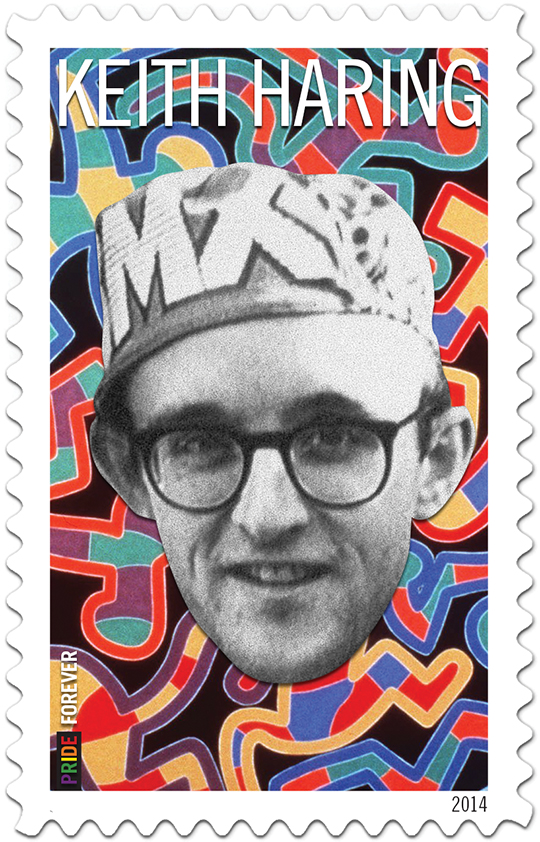
On May 22, the US Postal Service released the groundbreaking Harvey Milk stamp. Earlier this month we asked our readers, “Which US queer icon should next appear on a postage stamp?” We received a flood of answers, and while we have our own dream mail models — Sylvia Rivera, Barbara Gittings, Jose “Empress I” Sarria, Thom Gunn, Vicki Marlane — we chose the most popular readers’ picks for a little “Forever” fantasy fulfillment. (Maybe some of these won’t end up as fantasies after all!)

ID, please

0

QUEER ISSUE “One night my wife and I were having a conversation with our friend from Brazil about the bear community, and she had no idea what we were talking about. She said there are no words for identities like bears, cubs, or otters in Brazil — and I realized that the queer community has all of these amazing identities that don’t fall within the traditional LGBT umbrella. I got the idea to photograph my community and share with the world who they are and how they identify. I want to destroy the traditional understanding of what LGBT looks like. The Bay Area is a kick ass place to do just that.”

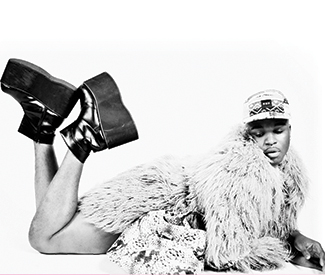
Since Sarah Deragon launched the Identity Project (www.identityprojectsf.com) in January of this year — using funds she raised on IndieGoGo — she’s captured dozens of community members in vibrant, sharply focused black-and-white protraits. Each portrait is labeled with an “identity,” expressed in the the subject’s own terms. It’s a heady mix of the familiar and the unique, containing lovely twists like “Three Spirit,” “Sober Celibate Daddy-Father Punk,” and “Xicanita y Cubanita.”

A portraitist by trade (www.portraitstothepeople.com), Deragon will be taking the Identity Project on the road this summer to Portland, Chicago, Columbus, New York, Austin — prospective participants can apply at the Identity Project site.

“I am totally inspired by the ways in which folks choose to identify and how they engage with and take care of their communities,” Deragon says. “I am out in my photography business and that means the world to me. I can be my full self in the Bay Area and I know how lucky I am to say that. It is pretty amazing that a portrait photography business can support two people in San Francisco with the rents as crazy as they are.”

As a self-identified queer femme, Deragon says her own community plays a crucial role. “Most of all, I want to give a shout out to the femme community because they have everything to do with the person that I am today!”


The Guardian Hot Pink List 2014

0

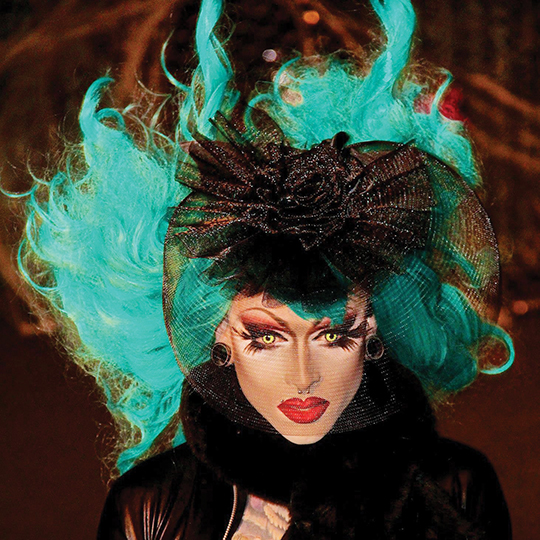
Every year, we single out members of the LGBT community for special appreciation — activists, performers, artists, or just plain cool peeps who rocked out socks off.

CHECK OUT OUR 2014 HOT PINK LIST HERE.

Pride on fire!

0

 There is way too much to do this year, as always. Don’t be scared! Dive right into the party and performance bounty that is Pride.

CLICK HERE TO SEE OUR FULL PRIDE GUIDE.

On the hoof

0

culture@sfbg.com

THE WEEKNIGHTER Roughly a decade ago a guy named Ken came into the restaurant I was working at in North Beach. He was new to SF so I convinced him to buy my zine Broke-Ass Stuart’s Guide to Living Cheaply in San Francisco. Thinking it was a good idea, he tried to drink at every bar in the zine in a single night. That was, in fact, a terrible idea and he ended up blacking out and getting kicked out of a few of them. But what he woke up with the next day, besides a horrific hangover, was a brilliant idea: the Broke-Ass Stuart Pub Crawl. And it was through this act of genius that Ken and I became good friends.

The idea was simple; get a big vehicle, fill it with lots of rowdy, drunk people, and cruise around SF descending on bars like a Mongol horde. Ken and his peeps worked at the corporate offices of multibillion dollar companies so they could afford one of those boozy trollies that you see around. Considering no one I knew had any money, I rented a big yellow school bus and filled it with my fellow broke folk, then the trolley and the bus caravanned around town causing mayhem.

As you can tell already, Ken is a man of vision and he said to me at one of our drunken stops, “There’s something I need to do. You know The Black Horse London Pub (1514 Union, SF. 415-928-2414)? It’s the smallest bar in San Francisco. I want to break the record for how many people have fit in there at one time. This is important shit, man.” I could tell Ken was serious, but there was no way both the bus people and the trolley people could all fit into the Black Horse. We decided it was best if the trolley people did Ken’s mission from god by themselves. Afterwards they would meet us at the next stop.

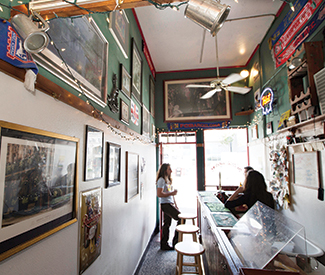
The Black Horse London Pub really is the smallest bar in San Francisco. It’s only 136 square feet, so all it has room for is seven seats, a little bit of standing room, a bar, and a bathtub full of beer. In fact, all it serves is beer. It also has “ten commandments” that include things like women having priority over the seating, kisses being the only thing allowed to be thrown in the bar, and not using your phone. It’s a good place for a party of two — and a terrible place for a party trolley.

“We did it!” Ken told me as he met us at the next bar, “We broke the record!” Honestly, I don’t know if there even was a record before that night, but there certainly was now. Ken was beaming and I was proud of him. He set out to achieve something and he accomplished it with flying colors. Fucking tenacity…or at least, fucking booznacity.

Since then we’ve done the pub crawl six times and Ken has even managed to beat his previous record. Of course nobody is ever sober enough to remember what the record is. Maybe I’ll pop into The Black Horse, ask the owner James if he knows the record, and tell him I’m thinking about planning another pub crawl soon. Hopefully he won’t make an 11th commandment forbidding them.

Stuart Schuffman aka Broke-Ass Stuart is a travel writer, poet, and TV host. You can find his online shenanigans at www.brokeassstuart.com


Summer spins

0

BORIS

NOISE

(SARGENT HOUSE)

Boris have been dabbling so much in pop lately it’s tempting to look at the band’s latest album, Noise, as a return to their sludge-metal glory days. There are only eight songs, its title is appropriately hostile, and the dark gray cover looks formidable compared to the white-hued, glamorous art on the last few Boris records. But remember: This album is called Noise. Not Metal, not Amps Up To 11. Not even Heavy Rocks, the name given to two of Boris’s most metallic albums. Noise.

And noise is what it offers. These songs are loud, but not in a metallic way — the guitars don’t confront or cut into the red, preferring to simply churn away in the background. Yet this is the only thing really connecting these songs. Noise veers from J-pop to shoegaze to something fairly close to metal, charting a path that ends up sounding more like overly ambitious hardcore punk. Accordingly, it suffers from an identity crisis. As another chapter in the capricious experimental period the band’s been stuck in for the last half-decade, Noise is an interesting curiosity. But if you choose to view it as a return to form, you’re likely to come out of your listening experience very depressed.


LANA DEL REY

ULTRAVIOLENCE

(INTERSCOPE/POLYDOR)

Lana Del Rey embodies the trashiest, most cartoonish version of American iconography. Her music reeks of Gatsby, guns, Hollywood, star-spangled banners, Marilyn Monroe, and just about every other cartoon of superficial American glamour. It thus makes sense on paper that she should pair up with producer Dan Auerbach for her second album, Ultraviolence; his band the Black Keys excavates a different patch of the same oilfield, dredging up Route 66 rock reveries rather than Pepsi-Cola pop mythology.

But their respective worlds don’t collide as often as they should on this album. When Auerbach’s bluesy licks bubble up from the background, it’s intensely satisfying, putting Del Rey’s mythology in the context of his own and casting her as another great American cliché: a rock star. But for the most part, Auerbach leaves Del Rey to languish in a bath of reverb. There’s no subtlety to this production: It’s as if Auerbach cranked up a crude GarageBand “reverb” setting on all the master tracks and declared them finished. Del Rey’s persona is as monolithic as the Empire State Building — but obscured behind all the production fog, you might as well be looking at Big Ben.


WHITE LUNG

DEEP FANTASY

(DOMINO)

Mish Way has a lot of good things to say. She’s one of America’s most engaging music critics, incorporating her personal experience into her pieces without making them too subjective to interest readers. Much of her writing is filtered through a feminist lens, something far too rare in rock criticism — especially as the misogyny of yesteryear’s rock becomes increasingly stale and obvious. She extends a lot of these sentiments to her gig as the singer of punk band White Lung, whose third album Deep Fantasy addresses sexual assault, body image, and abusive relationships. Apparently. You’d have a hard time doing much more than guessing what these songs were about without the help of a lyric sheet, because most of Way’s lyrics are incomprehensible. I’d be okay with this if not for how pristine everything else sounds. The guitars and drums are punchy and full, but Way’s vocals are so quiet in the mix that her shouting seems less of a deluge of expression as a desperate attempt just to be heard. This music should confront the listener — but ultimately, the listener ends up having to confront the music just to understand what Way is on about.

Dirty, sweet, and far from down low

0

esilvers@sfbg.com

LEFT OF THE DIAL/QUEER ISSUE Take the sexual braggadocio of Lil Kim, the rapid-fire flow of Twista, and a fashion sense that combines Nicki Minaj with, depending on the day, Bjork, Ma$e, or, say, the board game Candyland, and you have a close approximation of Cakes da Killa. The Brooklyn-based, baby-faced musician is both a rising star and, unfortunately, something of an oddity, just by virtue of being a gay man and a rapper.

His participation in one of the most homophobic quadrants of pop culture as an out gay guy aside, however, Cakes — born Rashard Bradshaw — doesn’t see what’s so shocking about some of his lyrics, even when he’s rapping matter-of-factly about how he’s going to fuck your boyfriend (actual song title: “Fuck Ya Boifriend”).

After making a name for himself with two mix tapes in 2011 and 2013 (Easy Bake Oven and The Eulogy, respectively, with the latter receiving a positive mention from Pitchfork), his latest EP, Hunger Pangs, reveals a darker, harder sound. He’s still X-rated and super funny, but he also sounds like he’s ready to fight.

We caught up over the phone ahead of Cakes’ appearance at Public Works Sat/28, as part of the club’s “House of Babes” Dyke March after-party.

SF Bay Guardian You grew up in Jersey. How did you start rapping?

Cakes da Killa I always wrote when I was young, whether it was poetry or something else. But I started rapping as a joke in high school, because I saw a bunch of straight guys doing it and getting lots of attention. And me being an attention whore, it was “I can do that.” In college I started making videos of me rapping over instrumentals on YouTube, and after people saw those videos I started getting asked to record on projects.

SFBG How did the straight guys respond to it when you were younger? Did you get any backlash for being an out gay kid, trying to get into something that’s so associated with straight, heteronormative culture, or did they just notice how good you were? 

CK You know, they noticed. I came out in the third grade, and I’ve always been the gay boy that was so comfortable in myself I didn’t make straight people insecure or uncomfortable. I think I’m still that way.

SFBG The mixtape before this, when you started getting noticed, was called The Eulogy. Why’s that?

CK Honestly, I thought it was going to be my last project. I just didn’t see the longevity in rapping — it’s weird to think of yourself as a rapper, because I’m so not that. Not even just because I’m gay, but also I don’t have a rapper’s ego.

SFBG I think maybe the ego comes after you make a ton of money? 

CK Yeah, but then my friends would all hate me. I just want to do it until it’s not fun anymore. So far, though, it’s still fun.

SFBG You’re so young, though. You’re, what, 22? Didn’t you just graduate from college? 

CK I’m 23. And in gay years. We age like dinosaurs, so I’m basically a fossil. I graduated last May, and I moved out of my mother’s house. I’m living in Bushwick now; I’m a fully realized member of society.

SFBG You have a pretty big fan base in Europe. Where have you toured? How are audiences over there different from stateside? 

CK I’ve been to Europe three times on kind of mini-tours. Mostly Berlin, Paris. I’ve been to Australia twice too. I think I have a bigger fan base overseas because it’s just harder to break [out] in the States; the way the music business works, it’s just harder to get attention here.

When I do a show overseas, I think the main difference is Europeans think, “If we’re gonna pay five euros to see you, you better be on stage for two hours.” In the States we pay way more to see someone for a few minutes, then it’s back to the bar, or a DJ or something…we have ADD here. When I tour overseas, I have to some cardio before the show.

SFBG You’re known for some pretty filthy lyrics. Does that come naturally to you? 

CK You know, I didn’t realize the fact of me being filthy until people started saying that — it’s just that the things I talk about aren’t talked about. I grew up with my mom, and I came out in the third grade; we talked about sex pretty openly in my house. When I make a song about giving blowjobs, I’m not thinking “Let’s make a song about giving blowjobs.” This isn’t breaking news. Everyone likes blowjobs. It’s just not really filthy to me; people have sex. I am conscious now though of, you know, not becoming “the blowjob rapper.”

SFBG Do you see homophobia in the rap world getting better? What is it going to take for the culture to change? 

CK I think it’s going to take an openly gay person who can really sell in the black media, do a world tour. But people that run black media right now clearly don’t see it as a marketable thing. And it’s all about money. That’s the fucked up thing about the situation, it’s not about how talented the person is, it’s ‘How can we sell this situation?’ And if you’re not marketable and a bunch of people can’t make money off you, you’re just gonna be, you know, living in Bushwick.

SFBG Musically, do you see yourself heading in any particular direction with Hunger Pangs?

CK Yeah, if I compare myself to the boy who was rapping in high school in the cafeteria, I’m definitely not the same person. I make music off of touring, experiencing things. I’m having a butch moment right now. And for my next project, I think I’m making more depressing songs.

SFBG Did that come out of anything in particular? 

CK Living life. Dealing with dumb boys. Instead of being all sad about it, I’m like, let’s write an album about it. At least make some money!

CAKES DA KILLA

With Junglepussy and Lisa Delux

The House of Babes Presents the Dyke March After-Party

Public Works

161 Erie, SF

www.publicsf.com

Vortex room

1

cheryl@sfbg.com

FILM Coherence begins with an important phone conversation that’s cut off by a crappy connection — just as the phone’s owner, Em (Emily Foxler), realizes its screen has spontaneously cracked. It’s the first eerie moment in a film set at a seemingly normal dinner party among four couples: insecure ballet dancer Em and boyfriend Kevin (Maury Sterling), who are teetering on the verge of either taking the next step in their relationship, or breaking up; new-agey older married couple Beth (Elizabeth Gracen) and Hugh (Hugo Armstrong); the casually dating Amir (Alex Manugian) and Laurie (Lauren Maher); and hosts Lee (Lorene Scafaria), a techie, and her actor husband, Mike (Nicholas Brendon).

About five minutes into the movie, chatter turns to the comet that’s about to pass overhead — a casual conversation topic that soon becomes an invasive presence. Phones don’t work, and the power shuts off — except for that one house a few blocks over that’s mysteriously illuminated. Tension among the group spikes as various members go to investigate and discover that the comet has some serious fucking-with-reality powers. Spooky, pleasingly mind-bending, and highly creative (the whole thing takes place almost entirely within a single room), Coherence only gets more satisfying with multiple viewings. It’s the directorial debut of James Ward Byrkit, a Hollywood veteran who wrote Oscar-winning animated film Rango (2011) and worked on multiple Pirates of the Caribbean movies. Once my brain had time to untangle a bit, we talked Coherence.

SF Bay Guardian You’re known for your work on Rango and the Pirates movies. What drew you to Coherence, which is a completely different type of film?

James Ward Byrkit I actually have a background of working on much more intimate projects — but all these years, because of my drawing abilities, I ended up working on these huge blockbuster films, which I love, and I love those directors, and I love big crews. But I was really craving getting back to the purity of working closely with actors, and concentrating on storytelling and characters. Especially after Rango — which was super-fun, but it was years of manipulating every pixel of every frame — I wanted to get back into something much more improvisational and grounded in bare-bones filmmaking.

SFBG How did you cast your actors?

JWB They were friends of mine — I knew them all, but they didn’t know each other. I cast people that felt like they would be friends, or partners. They met each other for the first time five minutes before we started shooting, and they had to jump right into it. The whole thing was an improvisational experiment.

I’ve always wanted to try something that did not rely on a script, because everything in Hollywood is all about the script, and that’s the only priority; that’s one way to do it, but it’s not the only way to do it. I wanted to get rid of the script so I could get those naturalistic performances. I wanted eight people talking, and overlapping, and having natural speech patterns. The only way you can do that, really, is to get rid of the script and allow them to be in the moment.

SFBG The dialogue may be improvised, but the story is intricately plotted. How did you approach that without a script?

JWB It took a year of just pounding out the story — the twist and turns and the puzzle of it all, figuring out the clues and the structure. I had a very clear, very solid outline that was just for me, though I made it with my co-writer, Alex Manugian, who plays Amir in the film.

When we actually shot it, before they would show up each day, I gave each actor a note card of their character’s motivations, or back story. Little bits and pieces that they could use that night. But they wouldn’t know what any other character got, so it was all a surprise to them how everybody else reacted. And none of them knew how it was going to end.

SFBG Did the actors help create their characters?

JWB I kind of gave them a general background of what their character was, and what their history was, and what their problems were. Basically everybody is in secret conflict with themselves, or with each other. That’s the whole movie: These people who, in the first 10 minutes, they just look like they’re having a party — but there’s all this unspoken conflict going on either between each other or with themselves.

SFBG Can you talk about the unusual editing choice you made, to have scenes abruptly cutting to black?

JWB Part of it was a rhythmic theme, and part of it was a clue. For the people who watch the film multiple times, there’s definitely a pattern of cutting to black that starts to inform what’s going on, which I’m not going to give away [laughs]. Going into black is such an important theme. The lights go out, they’re plunged into blackness. There’s an even darker space when they go outside. And then, the blackness between characters. So when we tried it as an editorial thing, it was so effective that we committed to it and it ended up being something that took many, many, many weeks to perfect. And it still baffles some people, obviously, because it’s so jarring.

SFBG Coherence is a relationship drama, but it’s also a sci-fi film. What inspired you to include those elements?

JWB Well, we basically didn’t have any money [laughs]. I had a camera, some actors that I knew, and a living room — and that’s it. So how do we make a living room more interesting? It got us thinking about Twilight Zone episodes, and how those are often set in very mundane, normal places, and yet there’s this bigger feeling to them because there’s a cosmic story, or a slightly supernatural element that has permeated their reality. And that got me really excited, to think of a fractured reality, and therefore the living room became much bigger.

SFBG Sci-fi without special effects is kind of a genre on the rise.

JWB I love it. My biggest hope is that someday [Coherence] could be on a double or triple feature with Primer (2004) or Timecrimes (2007), or another super low-budget homemade movie. It’s a really exciting realm to be in. I think people went down the wrong road when they started assuming science fiction meant only big visual effects.

SFBG And wait, did you say you filmed it in your living room?

JWB Yeah! We didn’t have any money to rent another house. It was very challenging because my wife was nine months pregnant and she was planning on having a home birth. She said, “You’re gonna have a film shoot in our house weeks before I’m due? That’s the craziest thing I’ve ever heard!” I said, “I’m sorry, honey, but if I don’t do it now, we can’t really do it after the baby comes.” And she said, “All right. You have five nights.” We shot five nights, and then a week later, Emily [Foxler] came back to do some pickups around my house, walking around the neighborhood in the darkness. We ended that shoot at one o’clock in the morning; two hours later my wife went into labor. *

COHERENCE opens Fri/27 at the Presidio. For additional theaters, check http://coherencethemovie.com.

Proud of the whistleblowers

3

rebecca@sfbg.com

A lot has happened since June 2013, when famed Pentagon Papers whistleblower Daniel Ellsberg, then 82, donned a pink feather boa to lead an energized San Francisco Pride Parade contingent on behalf of US Army private Bradley Manning, who couldn’t attend due to being held in federal custody.

Manning, a whistleblower who stood accused of leaking classified US documents, was celebrated as a queer hero by the more than 1,000 parade participants. They hailed the young private’s courageous decision to share US military secrets with WikiLeaks in a bid to expose human rights atrocities committed during the Iraq War.

The Bradley Manning Contingent had been ignited by the drama following Manning’s nomination as a grand marshal for Pride, then crowned grand marshal in an erroneous public statement, an announcement that was then emphatically revoked by the San Francisco Pride Board of Directors.

The messy, embarrassing incident made international headlines and sent a torrent of criticism raining down upon Pride. Progressives sharply condemned the board as spineless for being afraid to stand with a celebrated queer whistleblower whose act of self-sacrifice could alter the course of history.

In late August 2013, Manning announced that she identified as female and would be known as Chelsea Manning from that day forward. The announcement was concurrent with her sentencing to 35 years in prison for leaking classified US government documents.

The whistleblower’s name and gender identity aren’t the only things to change since last year: Chelsea Manning has been named an honorary grand marshal for the 2014 Pride celebration.

“The 2013 SF Pride Board’s controversial decision to revoke her status as Grand Marshal fueled an international controversy and created intense strife within the local LGBT and progressive communities,” a statement on Pride’s website explains. “In January, in the spirit of community healing, and at the behest of SF Pride’s membership, the newly elected SF Pride Board of Directors reinstated Manning’s status as an honorary Grand Marshal for the 2014 Celebration and Parade.”

The other game-changing subplot of this continuing whistleblower saga, of course, began to unfold just weeks before the 2013 Pride celebration, when former National Security Agency contractor Edward Snowden came forward to explain that he’d leaked secret NSA documents to expose a sweeping dragnet surveillance program intercepting millions of Americans’ digital communications, because he believed it posed a threat to democracy and personal freedom.

Snowden first unmasked himself as an NSA whistleblower in a statement filmed in a hotel room in Hong Kong; he’s now in Russia, where he’s been temporarily granted asylum. Ellsberg recently joined an advisory board to the newly formed, Berlin-based Courage Foundation, which has set up a legal defense fund for Snowden. Manning continues to serve out her prison sentence, while Julian Assange, founder and publisher of WikiLeaks (which exposed Manning’s leaks to a global audience) marked his second anniversary of being confined within the walls of the Ecuadoran Embassy in London on June 19.

Meanwhile Glenn Greenwald, whom Snowden selected as the recipient of his revelatory NSA files, has just embarked on a US book tour.

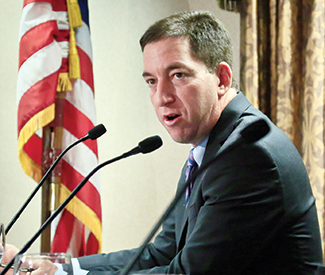
“The last year has been a bit intense,” Greenwald told a sold-out audience at San Francisco’s Nourse Theater on June 18, shortly after his arrival onstage was greeted with a standing ovation. His newly released book, No Place To Hide, provides an overview of what’s transpired in the movement against government surveillance since Snowden first approached him with leaked NSA documents.

“The surveillance state is aimed not at terrorists,” Greenwald said, “but at entire citizenries, without any shred of evidence of wrongdoing. The debate that has been triggered is about more than just surveillance,” he added, spurring dialogue on several overarching issues, “including the value of privacy.”

Greenwald named two troubling outcomes to emerge from the exposure of government secrets: First, the whistleblowers had been tarnished in the press as freakish or crazy as a way to diminish the gravity of the information they’ve revealed; secondly, the government’s practice of conducting massive electronic surveillance raises questions about how far press freedom can possibly extend in the digital age.

The author and constitutional lawyer then engaged in some myth-busting against the narratives that had been put forward concerning Snowden — claims that the security analyst is “a fame-seeking narcissist” or a spy.

“When I asked him over and over again why [he did it] … He told me it was the pain of having to live the rest of his life knowing he’d done nothing about this,” Greenwald said.

He added that he found the actions of those who sought to condemn Snowden to be very telling. “It is not simply a bunch of hacks or loyalists. The people who have decided that there must be some hidden secret motive … are doing that because they really can’t believe that a person can take an action … out of political conviction,” he said. “There’s a belief by the people who are soulless and have no convictions that everyone else is playing by the same rules.”

Nor was this treatment of being raked over the coals unique to Snowden. Manning was maligned in the press as suffering from a “gender disorder,” Greenwald pointed out, rather than being accepted as a transgender person.

And in the case of Assange, Greenwald shared an illuminating anecdote: “The Iraq War logs showed extreme atrocities,” he pointed out, but The New York Times granted this story just as prominent front-page treatment as “a profile of the quirky personality attributes of Julian Assange.” This article painted the WikiLeaks founder as bizarre and freakish, Greenwald explained, containing the “shocking revelation that Julian Assange’s socks were actually dirty.”

Meanwhile, on the morning of Greenwald’s San Francisco speech, Assange made a virtual public appearance in his own right. In a conference call with the Bay Guardian and other media outlets held from within the walls of the Ecuadorian embassy in London, the WikiLeaks publisher discussed his bizarre situation and took questions from the press.

Assange has been granted asylum in Ecuador and is staying in an apartment inside the Ecuadoran Embassy in London, but if he sets foot outside the building, he will be immediately taken into custody by British security forces. More than $10 million has reportedly been spent on having officers stand guard outside the embassy, where they harass his guests as they come and go — but the British security apparatus is only one of several complicated problems facing Assange. His other adversaries include the governments of Sweden and the United States, both of which want to put him on trial.

In Sweden, prosecutors are waiting to try him on allegations of sexual misconduct — but “If he goes to Sweden, it will more than likely mean a one-way ticket to the United States,” his attorney Michael Ratner made plain in the press call.

In the US, WikiLeaks continues to be the subject of a criminal investigation by the Justice Department, which Assange described as the longest ever directed against a publisher.

“It is against the stated principles of the US, and I believe the values of its people, to have a four-year criminal investigation against a publisher,” Assange said. He added that the government’s targeting of WikiLeaks for publishing classified documents could have ramifications for any members of the press who seek to dig deeper than just reporting “the contents of a press conference,” as he put it. And with the rise of digital media, “All publishers will shortly be Internet-based publishers,” he added.

Journalists peppered Assange with questions, and evidently some couldn’t resist the temptation of infotainment. Had he been tuning into the World Cup? One wanted to know.

“I have been watching the World Cup,” Assange replied, “although the reception in this building is quite difficult.”

And who, pray tell, is he rooting for? “Ecuador undoubtedly deserves to win,” Assange said. “But I think there’s such prestige riding on the issue for Brazil that they are the most likely victors.”

Spotlight on transgender issues

0

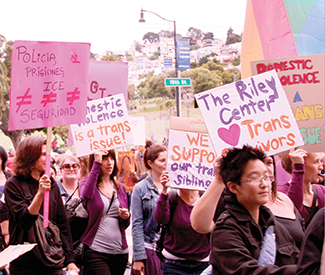
Trans March, SF’s largest transgender pride event, is happening Fri/27, starting in Dolores Park. This year’s march will kick off with a Youth and Elder Brunch starting at noon and a stage show 3-6pm before beginning the march. It will conclude at the 100 block of Turk Street, where a San Francisco street will finally be named after a trans: pioneering drag performer and trans woman Vicki Marlane. The afterparty will benefit the Transgender Gender Variant, Intersex Justice Project.

To celebrate Trans March’s success in its 11th year, we spoke with SF Trans March Co-Chair Jamie Rafaela Wolfe to find out how Trans March, trans issues, and trans rights have changed since the march began in 2004.

Although the Trans March website states that it originated from an anonymous email regarding the murder and trial of Gwen Araujo, Wolfe informed us that the march mostly started when a group of activists decided they needed to be heard. That first march was only a few hundred people. This year, they’re expecting around 7,000.

Just as the march has grown, awareness of trans issues has also grown. Wolfe told us that “11 years ago, you never heard the word ‘transgender,'” and when one did, it was often used in discriminatory ways. But now, trans people have more opportunities and discrimination has subsided. As proof of the changing views toward trans issues and people, Miss Major — the SF Pride Grand Marshal — is a well-known author and Orange is the New Black’s trans actress Laverne Cox was featured on the cover of the June 9 issue of Time magazine next to the headline: “The Transgender Tipping Point: America’s next civil rights frontier.”

Although a lot has changed for the better in the last 11 years, there’s always more that can be done. Wolfe suggests that the most important thing to work on now is workforce development. “We need people to get jobs. We need people to get education.” As a part of education, Wolfe stresses working with trans youth to get them in safe environments where they can be their “authentic selves.”

Pride and prejudice

7

joe@sfbg.com

As Pride celebrations across the country unfurl their rainbow flags this month, teacher tenure in California suffered a stunning blow from a Los Angeles Superior Court, undermining protections that have shielded the LGBT community from discrimination.

Although the decision will likely be appealed, Judge Rolf M. Treu’s ruling galvanized teachers unions and evoked memories of conservative attacks on gay teachers in the 1970s, including the unsuccessful Briggs Initiative that was a rallying point for then-Sup. Harvey Milk and a new generation of LGBT political leaders.

“To jeopardize any of the protections we have now, it’s a thinly veiled attempt to demoralize teachers, and it’s an attack on public education,” Assemblymember Tom Ammiano, the San Francisco Democrat who began his political career as an openly gay teacher campaigning against the Briggs Initiative, told the Guardian.

LGBT rights and teacher tenure may seem to have little in common, but a peek at the movers and shakers in the LGBT and teachers’ rights movements show an interconnected relationship of protections and the players who fight for them. Loss of tenure can threaten the protection of minority groups, academic freedom, and unpopular political speech, despite employment rights gained in recent years.

“We’ve beaten back that thinking,” Ammiano said, “but it’s still lurking.”

In California, K-12 teachers are shielded by legal protections often referred to commonly as tenure. Permanent status is the backbone of these protections, offering an arbitration process for teachers who administrators intend to fire. Also struck down by the judge was the First In, First Out law, which protects veteran teachers from layoffs by letting go of recent hires first.

In his ruling, Treu said these policies created an environment where students were burdened by ineffective teachers who were difficult to fire, disproportionately detracting from minority students’ education quality in the most troubled schools.

“The evidence is compelling,” the judge wrote in his ruling, “indeed, it shocks the conscience.”

Many education advocates vehemently disagreed with that ruling, and the veracity of the evidence will be further weighed in upcoming appeals. But along the way to pursuing equality for students, the equality of teachers may find itself eroded by an unlikely new hero of the LGBT movement: A conservative attorney who fought against marriage discrimination, but also litigated against the legacy of an LGBT legend.


HERO OF MARRIAGE EQUALITY

The morning last year when the US Supreme Court ruled to overturn California’s ban on same-sex marriage, Proposition 8, San Franciscans gathered inside City Hall by the grand staircase. Men held men, women held women, and families held the their children tight.

When the court’s decision finally hit the news, the outcry of happiness and surprise at City Hall was deafening. The expressions on the faces of those there was that of joy with many understandably streaked by tears. Attorney Theodore Olson helped litigate against Prop. 8 and won, and as he fought for gay rights, his face was often streaked with tears as well, LGBT rights activist Cleve Jones told us.

“There was a part of that trial when the plaintiffs Kris Perry and Sandy Stier described their love for each other,” Jones said. “I was sitting with their family in [US District Court Judge] Vaughn Walker’s court. When we broke, Ted Olson went to embrace them and there were tears on his face.”

But Olson is not a poster child for most politics considered the realm of liberals and Democrats. Olson and fellow Prop. 8 litigator Attorney David Boies were on opposing sides of the Bush v. Gore case that Olson won, handing George W. Bush the presidency in 2000. Olson was then appointed solicitor general of the United States, often leading conservative causes.


Olson and Boies will talk about their new book Redeeming the Dream: The Case for Marriage Equality at the LGBT center on June 25 (joined by Supervisor Scott Wiener), but Olson gave us a glimmer of those motivations.

Olson, a Los Altos native who attended UC Berkeley School of Law, told the Guardian in a phone interview that his stand on gay rights was based on conservative principles: “I think of conservatives as including people who are libertarians and respect individual liberty.”


A trailer for “The Case Against 8,” which features Ted Olson heavily.

He said the right to marry the person of one’s choosing should be an individual right that government has no business banning. That belief in individual liberty is at the core of his political principles. “It affects me in absolutely the deepest personal way,” he told us.

Whatever his ideological motivations, Olson became a hero in the LGBT community. But this year, he was one of the attorneys who convinced Judge Treu of the evils of teacher tenure. In the trial, Olson claimed one Oakland teacher was harming elementary students’ educational outcomes: “The principal couldn’t remove that teacher. These stories are so awful, sometimes you feel people are exaggerating.”

Yet the problems afflicting Oakland schools and its children, the unions argued, are not due to teacher tenure. In a city with high violence rates, students’ broken homes, low teacher pay, and difficult working conditions, critics say Olson oversimplified and misrepresented a complex problem.

“We all know there are problems in our schools,” Jones, who works with unions, told us. “But there’s never of course discussion about poverty, or students growing up in single families, or class sizes.”

These were all arguments the union made against Olson, unsuccessfully. The decision to remove protections for teachers may send ripples into other states and spur increased attacks on teacher protections.

And unlike California, which has strong anti-discrimination protections, that campaign may allow teachers of other states to be fired or dismissed for coming out of the closet, an issue that helped elevate Harvey Milk into such an iconic leader.


ECHOES OF BRIGGS

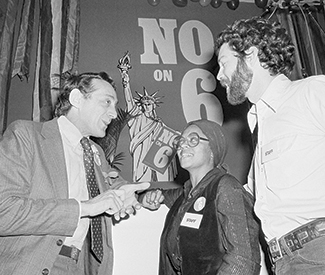
Jones and Ammiano fought alongside Milk against Proposition 6 in 1978, known as the Briggs Initiative, which would have made it illegal for openly gay people to teach. Then-Sen. John Briggs and his allies associated gay teachers with child molesters and frequently said they may influence children to become gay.

“I was born of heterosexual parents, taught by heterosexual teachers in a fiercely heterosexual society,” Milk said in a speech at the time. “Then why am I homosexual if I’m affected by role models? I should’ve been a heterosexual. And no offense meant, but if teachers are going to affect you as role models, there’d be a lot of nuns running around the streets today.”

This fight may be history, but Ammiano said such biases are still with us today, such as with how some see the transgender community. “We’re holding people at bay around LGB issues, but the T part now is the crossroads for the right wing [activists] who are rolling back protections,” he said.

Only 30 US states offer employment protections for sexual orientation, and some of those only cover government employees, according to a study by Center for American Progress. Only 23 states protect against firing for gender identity.

Vulnerable teachers lacking protections granted by tenure or equal employment laws are still being fired in California and across the country. In April, a transgender Texas substitute teacher was fired for making children “uncomfortable,” according to news reports. In Glendora, California, a teacher was fired from a religious private school after a photo of he and his husband kissing on their wedding day made the local newspaper.

This month, President Barack Obama announced an Executive Order mandating federal contractors enact policies protecting workers from dismissal due to sexual orientation or gender identity. Many speculate this was announced to press Congress to pass the Employment Non-Discrimination Act, which would protect private employees from discrimination based on gender or sexual orientation.

briggs

“This is only round one,” stated Senator John Briggs to the press about the defeat of Proposition 6, Nov. 7, 1978, at a Costa Mesa hotel. Proposition 6, called the Briggs Initiative, prohibits gay teachers from working in California public schools. AP file photo by Doug Pizac

But ENDA has stalled for years, despite the best efforts of advocacy groups nationwide. And as the country awaits equality, many teachers’ last hope against unlawful dismissal is tenure. In fact, tenure laws were first drafted after the Red Scare and Sen. Joseph McCarthy’s witch-hunt for communists, California Federation of Teachers spokesperson Fred Glass told us.

Yet Olson recoils at linking LGBT rights to teacher protections. “I support wholly protections for people for who they are, for heaven’s sakes,” he told us, mentioning that Milk “was very much an inspiration and very important to us.”

And Jones still thinks of Olson as a hero, saying that life and politics are complex.

“Irony abounds,” Jones said. “I don’t square it. You can’t square it. It’s there. But my respect for Ted Olson is based on his very genuine support for our community on the issue of marriage. For LGBT people to win equalit,y it’s important there’s a national consensus, it can’t just be from the left. Ted Olson was incredibly important with that effort and will be remembered generations for now. You don’t have to like everything about Ted Olson or President Obama to acknowledge they had a profound effect.”

Trying to have hope

44

OPINION I get it, as Harvey Milk famously said: “You gotta give them hope.” But how do you do that when the LGBT community you love so much is being priced and evicted out of the city?

When immigrants, people of color, artists, the poor and working-class, people with AIDS, seniors, persons with disabilities, and so many others are being pushed out — like you, Harvey, were forced out of your camera store and apartment on Castro Street when your rent was tripled. Just before an assassin’s bullet took you from us, you were preparing an anti-speculation tax to deal with the rising rents and displacement caused by speculators and real estate investors.

We tried to curb their dirty work via a state bill limiting use of the Ellis Act, but Democrats buckled in to pressure from the real estate industry that owns them. Shame on Democratic House Speaker Toni Atkins from San Diego, an out lesbian, whose inaction on the bill helped kill it.

Our only hope is the anti-speculation tax on the November ballot. Brian Basinger of the AIDS Housing Alliance is calling it the Harvey Milk Anti-Speculation Tax.

The stakes are high right now. Our housing crisis is destroying our community. According to the Anti-Eviction Mapping Project, which tracks displacement throughout the city, District 8 (which includes the Castro) has the highest rate of Ellis Act and Owner Move-In evictions, almost 2,000 units emptied since 1997. That doesn’t include buyouts and threats of evictions, de facto evictions that have pushed out many more, most of them tenants with AIDS. Far too many people with AIDS are homeless in a city that used to be called the “model of caring.”

The motive for these evictions is obvious. A two-bedroom across the street from my Castro apartment rents for $4,200. An apartment above the new Whole Foods at Sanchez and Market can cost you as much as $8,000. A month! I don’t want to upset you, Harvey, so I won’t tell you how high commercial rents are, and how poorly neighborhood businesses are faring these days.

The economic disparity has never been greater. Two Williams Institute studies show that our community is as poor as, and in some instances poorer than, other communities. In our city’s latest homeless count, 29 percent of respondents identified as LGBT and an additional 3 percent as transgender. Other reports say that 40 percent of the city’s homeless youth are queer.

Forget Altoona, that homeless queer kid in the Haight or Castro needs a sense of hope. We have a sit/lie law similar to the one you opposed that prevents these kids from getting subsidized housing if they have an unpaid citation. They sleep in the park because they’re not safe in the shelters. Sadly, Human Rights Campaign and Equality California have never made them — or the poor — a priority.

Cranes and rainbow flags may be all the rage in Upper Market these days, but what’s being built will not be affordable to homeless, poor, or working class (even some middle-class) people. The Castro has only one affordable housing project in the pipeline: 110 units for LGBT seniors at 55 Laguna. Our D8 supervisor and City Hall have let us down big time.

Harvey, I want to think that 10 years from now, our community will still have the Castro as a refuge. I want to believe that poverty, homelessness, and hunger will be greatly reduced. That we can stop the evictions. That we can give young people a piece of the dream. That we can provide seniors a secure place to spend their final days. That we can have elected officials who truly represent us, as you did.

I really want to have hope.

Tommi Avicolli Mecca, a longtime queer and housing rights activist (and an organizer of the first Philadelphia Pride march in 1972), is a grand marshal of this year’s Pride Parade.

Sex behind bars

7

Kink.com’s pre-Pride party “Pride at the Armory: Prison of Love” on Sat/28 promises to create the “world’s largest megaclub prison yard” as a backdrop for the festivities. However, this party is doing more than raising the roof — it’s raising concerns about incarceration rates and prison assaults of LGBTQ peoples. Critics argue that the party fetishizes sexual assault in prisons.

The argument is that the Prison of Love theme is turning sexual assault in prisons into a commodity. With tickets ranging from $50 to $175, there’s definitely something being sold. Since the party can be seen as selling BDSM and prison fantasies, critics worry that it condones prison rape and makes it seem sexy. That’s causing an uproar in the LGBTQ community, especially since statistics show that being LGBTQ is a main risk factor of prison rape.

According to the National Center for Transgender Equality, transgender adult inmates are sexually abused 13 times more often than other inmates and nearly 1 in 6 transgender people have been incarcerated at some point in their lives. The US Department of Justice reports that juvenile LGBTQ prisoners report sexual assault 12 times more often than straight youths. And that’s just what’s reported.

The BoycottSFPride letter posted on Tumblr criticizes the party’s theme and states that one of the main issues with the party is the way it’s marketed. The letter argues that “the party…fetishizes prison sexual assault, a form of violence that primarily affects low-income people of color, particularly LGBTQ people.” But what about sexual fetishes and preferences on a personal level? “While it is certainly appropriate for individuals to participate in scenes, or even larger events that explore prison fetishes, throwing a major event billed as the city’s largest Pride party is inappropriate.”

The Transgender Gender Variant, Intersex Justice Project also posted an open letter in response to the event. The letter is, most notably, signed by this year’s SF Pride Grand Marshal, Miss Major. The letter states that it’s not the kinkiness of the party that’s an issue — it’s the theme. “It’s not that we don’t love sex, sex parties, sex workers, and kink. It’s that we love it as much as we love justice, and are appalled by the casual use of the Prison Industrial Complex.”

(A protest march to the Armory during the party is planned by Gay Shame and others, Sat/28, 10pm, starting from the 16th St. BART station. More details at www.gayshamesf.org.)

Kink.com CEO Peter Acworth told the Guardian that his company tries to draw the line between reality and fantasy, sexual justice issues and sexual fantasies. He points out the structural differences between fantasy and reality and, in our interview, pointed out that BDSM has parameters to ensure that it’s consensual: “The notion of consent is central in BDSM—that is, no one is held against their will, everything must be negotiated, there are safe words. None of that exists in actual prison.”

In regards to the marketing issue, Acworth said that Kink is contractually bound to the theme and it’s too late to order new costumes, sets, and props. The closest Acworth gets to saying whether or not the theme is appropriate is this statement: “Had I thought that a prison fantasy party would detract from the very serious issue of the prison industrial complex in this country, I would have insisted on another theme.”

Acworth said that he was particularly chagrined by the protest because “the LGBTQ communities are strongly represented and cherished at the core of Kink.com.” That point was echoed by Andrew Harvill, the main coordinator of the party. Not only does Harvill identify with the LGBTQ community, he worked with prisoners and Death Row inmates as a missionary in Georgia. When asked about his feelings on the theme, Harvill described the prison as a backdrop to the party, as scenery that’s no different from that of the Netflix series Orange is the New Black or gay bars such as Cell Block in Pennsylvania. Harvill also stressed that there are two parts to the theme: “Our detractors skip over the whole love part of the theme. Everyone just wants to talk about one part of a two-part theme.”

We talked to Courtney Trouble, a local indie pornographer, about sexual fantasies involving transgressive realms such as rape, which she said can be useful and enjoyable. Trouble points out that “millions of people in this world are survivors of abuse, and those of them with kinks or fetishes may find solace in their BDSM practice.”

She said an abuse survivor could queer something that happened to them in order to gain control of the situation, but sexual fantasies aren’t limited to victims. “It may be that the person is attracted to the edge, pushing their own boundaries into unsafe space in order to disconnect from the real world and heighten their focus on sexual pleasure.”

So how can the issues with the theme be fixed? Acworth promises that Kink is changing the invitation to add links to highlight the political issue and remove words like “incarceration” and “arrested.” Regarding the economic aspects of the event, Acworth says that Kink is “happy to talk with any groups about ways we can help support them.” Trouble suggests creating a space that allows attendees to define the surroundings themselves. “That way, those queers with prison fantasies could play out their desires in a safe space, while also making space for people who may actually be quite triggered by sexual prison fantasy, but still want to participate in a kinky pride play space. “

Although the party’s theme is controversial, it’s at least opening the discussion around the incarceration rate and prison-related violence toward LGBTQ people. The BoycottSFPride letter provides great facts about sexual assault in prisons and the party invitation will soon help educate as well. Harvill stated that “the point of the party is to have fun, more than it is intended to raise consciousness of a political issue.”

Now, maybe it will do both.

Who moved my cheese?

2

culture@sfbg.com

THE WEEKNIGHTER Weekends are for amateurs. Weeknights are for pros. That’s why each week Broke-Ass Stuart (www.brokeassstuart.com) will be exploring a different San Francisco bar, bringing you stories about the places and people who make San Francisco one of the most phenomenal cities in the world. Who wants a drink?

I think it was SF writer Brock Keeling who told me The Lion Pub (2062 Divisdero St, SF. 415-567-6565) used to be a gay bar. Well, I mean he didn’t tell me, I read it on his old site SFist, but you get the point. There was some reference to “remembering when the Lion Pub was a gay bar” and I thought, actually I don’t remember that at all. To me the Lion Pub had always been that place that had the cheese spread and that acted as the Normandy in the Marina’s D-Day-like onslaught of Divisidero. It was the first place over the hill where the waves of guys in collared shirts and gals in uncomfortable shoes had landed before slowly, intrepidly, marching south.

It’s hard to be nostalgic for a something you never experienced, but you can sure as hell romanticize it… not that I’m really doing either. As a straight guy I don’t imagine myself trekking all the way over to Lower Pac Heights to frequent a gay bar, especially when I live close to so many on Folsom Street. But Pete Kane’s recent article in SF Weekly about the death of gay culture in SF got me thinking about the peculiarities of The Lion Pub’s transformation. When the bar switched teams in the early 2000s it must’ve been jarring for the regular patrons. What had been a gay bar since 1971 (according to the Gay Bar History Log on The Cinch’s website) was suddenly being filled with the kind of people who still called their friends “fags” when they were busting their balls.

This was the early 2000s after all, way before Ellen or Michael Sam, and not long after Matthew Shepard. Now I’m not saying for sure that shitty things happened, because I want to believe this is/was the San Francisco we all think it is/was. But what I am saying is that the switch from a gay bar to a Marina bar must’ve been mind-boggling.

But I wouldn’t know. I wasn’t there. [Ed Note: It was weird, but OK. —Ye Olde Marke B.] The first time I visited The Lion Bar was probably in 2006 and I was incredibly impressed. It felt somewhere between a fern bar (its hidden gay legacy peeking through) and a Victorian parlor, it had a disco ball, and most importantly it had free food. I was researching the “free food” section for my book Broke-Ass Stuart’s Guide to Living Cheaply in San Francisco, and someone had tipped me off to the Lion Pub. Rumor was they put out a big cheese spread and even did free sushi on some nights.

So of course I had to go investigate. Walking in that first night I could smell the fresh fruit juice and could spy attractive people milling around. It was bigger than I expected and it wasn’t till I walked around a bit that I found what I was looking for: cheese and crackers! When I asked the barkeep how often they did this, he just kinda shrugged his shoulders and said, “Pretty much whenever they feel like it,” and let it at that.

I haven’t been back to the Lion’s Pub in years but rumor has it that the luminous cheese spread is no more, which bums me out. But maybe next time I’m in the area I’ll pop in anyways for one of its notorious greyhounds — and I’ll try to imagine what it was like back before everything got so straight. I’ll bring my own cheese spread just for old times’ sake.

Stuart Schuffman aka Broke-Ass Stuart is a travel writer, poet, and TV host. You can find his online shenanigans at www.brokeassstuart.com


A heart in San Francisco

5

arts@sfbg.com

THEATER This week, at New Conservatory Theatre Center, San Francisco’s Evan Johnson remounts his popular 2013 solo play, Pansy. It’s the story of a disaffected twentysomething gay man who discovers a cache of videocassettes in the basement of his SF apartment building — made by someone who could be considered his doppelganger, a club kid long since felled by AIDS. The play functions in part as a communion between a younger generation of queer San Franciscans and the early era of the AIDS crisis.

Of course, there are those who, in their lives as well as work, continue to bridge the two eras, maintaining a vital link to this fraught but fecund period in SF’s queer/queered history. One of them is the inimitable Justin Vivian Bond. Mx. Bond has long since been based in New York, and yet v (to apply the preferred prefix and pronoun to someone who has gracefully sidestepped the dominant gender binary) grew into an artist here, and has returned to SF many times over the years, including for packed performances produced by Marc Huestis at the Castro Theatre.

Although maybe still most often identified with the cabaret sensation Kiki and Herb — a Tony-nominated, long-running duet with Kenny Mellman, in which Bond excelled as the perennially sloshed Kiki Durane — Bond’s career has hardly slowed since K&H were put to rest more than five years ago. In fact, the output for this internationally acclaimed artist, actor, performer, and singer-songwriter has been impressive: In addition to innumerable musical performances, there are two fine albums, a spunky and poignant memoir about growing up as a trans kid in suburban 1970s Maryland, and a recent turn as the Widow Begbick (singing original songs by Duncan Sheik) in a New York production of Bertolt Brecht’s A Man’s a Man.

A powerfully soulful and charismatic performer, Bond brings Love Is Crazy!, an evening of songs about love in all its aspects, to Feinstein’s at the Nikko this weekend.

SF Bay Guardian In the late 1980s and early ’90s, AIDS made SF a dark place, but it was also a time of exceptional artistic, intellectual, and political ferment. How did that affect the development of your career?

Justin Vivian Bond I majored in theater in college, but I couldn’t really see a place for myself in mainstream theater. At my freshman evaluation they told me I had to butch up; I had to be able to pass as a straight man in order to make a living in the theater. Fortunately, I’ve been able to prove them wrong! But that was sort of a frustrating and unappealing way to live my life.

So I moved to San Francisco. I was going to probably go back to college and get a degree in art history and teach. But instead, I found Theatre Rhinoceros and queer performance and Queer Nation. It was a time when there was a tremendous amount of activism around HIV and AIDS. I worked at A Different Light bookstore, so I was exposed to the greatest queer minds of the day, brilliant writers and artists that would come in there. It was also, looking back now, the golden age of queer publishing. It was when Mike Warner published Fear of a Queer Planet. It was an intellectual and creative surge for queer people. Rick Jacobsen was still alive, and he did the Kiki Gallery [1993–1995]. I worked with him on a show that was written by Christian Huygen called Waiting for Godet, which appropriated Waiting for Godot and made it about two drag queens. It was so much fun, and really exciting. And I was in Hidden: A Gender with Kate Bornstein at Theater Rhinoceros. We toured that around the country — that was my New York stage debut.

I was at the Alice B. Theatre in Seattle when the NEA Four were defunded. Three of the four were at that festival. That was when I decided that I was going to devote my life to queer performance and to having the voices of queer people heard in as many places as possible. That propelled me to stay in the role of Kiki longer than I might have liked to, because it eventually brought me to Carnegie Hall and a Tony nomination on Broadway. [After that] I thought, OK, now I can really start honoring my own creativity, aside from making political statements. Fortunately for me, once I gave up that character and started performing as myself, I feel like things have been going pretty well. And it all started for me in San Francisco, which is why I love it so much.

SFBG Was there always a political dimension to your work?

JVB Having my art spring from a political place — exposed to the queer politics, really the life-or-death politics, that were happening back then — really justified my impulse to be an artist. I’m not saying that everything I’ve ever done has been politically astute or important, but there is a political perspective behind everything I do. That helps me justify asking a bunch of people to pay attention to me. If I didn’t feel like I was actually saying something, I’d probably be embarrassed to be on the stage, really.

SFBG What are the origins of Love Is Crazy!? You took it first to Paris. Was it a show you made specifically for that city?

JVB It kind of evolved. When I was last in San Francisco, actually, I was getting ready to host a benefit for the Lambda Legal Defense [and Education] Fund. Sometimes I’ll just pick a word and put it on my iPod, then let all the songs with that word in them play. That particular day, I had recently become single, so I hit “love,” and this list of songs played. I thought, “I should just write down this list and that could be my next show.” And that’s what I did for a show here in New York called “Mx. Bond’s Summer Camp.” I liked that show but over time I sort of finessed it. Now, not all the songs have the word love in them. Some are songs from both of my records. I was going to Paris, and I decided I wanted to do this Valentine’s Day show in front of the Eiffel Tower. I had a really wonderful time with it, so I decided to tour that show this year. So that’s what it is, craaazy love. And it’s got some good anecdotes in it.

SFBG I’m curious about the origins of your distinctive singing voice.

JVB For Kiki, I sang with a character voice. I started performing Kiki when I was like 28 or 29. I was just coming into my own voice at that time, and I kind of sang in that voice for 15 years. In San Francisco, during the last run of Kiki and Herb, I met this person who I fell in love with, and went on the road with, from San Francisco up to Canada. I kind of got back in touch with my queer roots, and I started writing my own songs, because I needed to find my own voice. It really helped me to get myself into the mindset of what I wanted to say, as opposed to what I wanted to say as this character.

I wrote several songs that were on my record Dendrophile. And I started singing songs that really resonated with me, including “The Golden Age of Hustlers,” which is a song by Bambi Lake and Jonathan Basil, who lives in the Bay Area. It’s about San Francisco and Polk Street. It’s an elemental song for me. And that’s how I started to rediscover my own voice. I had also just been in London; I went to Central Saint Martins College for my MA in scenography, which is like performance installation. One of my teachers was talking about Nina Simone, and how when you hear her sing you hear the life that she’s lived. I set out to try and make my voice reflective of my experience, so that when people hear my singing voice, they’ll sort of know what my life has been like and the world that I inhabit through it. That was my goal. And it really is a very satisfying thing, I have to say.

SFBG To be concentrating on your voice?

JVB And my life, and what my voice can say. 

JUSTIN VIVIAN BOND

Sat/21-Sun/22, $35-$50

Feinstein’s at the Nikko

222 Mason, SF

www.feinsteinssf.com