Volume 46 [2011–12]

Chem Dawg to the rescue

17

caitlin@sfbg.com

HERBWISE The Kings of Destruction, more popularly known as KOD, were an hour and a half late for our interview. Being that the hip-hop-graff-clothing-medical-marijuana-advocacy collective is from the East Bay and we had arranged to meet at the Guardian Potrero Hill office, I figured I’d better look for them.

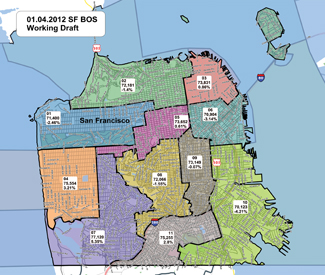
I didn’t have to go far: all five of the group’s members who had stopped by were sitting amid SF political activists in the Guardian conference room, mistakenly ensconced in a discussion of the new supervisoral district lines. They’d introduced themselves along with everyone else, but then faltered when the meeting’s facilitator asked to what he owed the pleasure of having Oakland residents at the table.

All good. Soon enough I have Dogz One, Lil’ Zane, Josh, Tase 1, and Don Juan assembled on the roof standing around a picnic table and talking about marijuana. They’ve brought some of their products for show ‘n’ tell; t-shirts emblazoned with characters culled from local marijuana strains. They’ve brought Grape Ape, a gorilla pulling on a joint with a purple berry-emblazoned baseball hat. Another shirt features Chem Dawg, a husky that figures in an upcoming KOD comic book in which the character (Dogz One is his alter-ego) will fight the government’s attempts to keep marijuana from the people. Pending designs include Girl Scouts Cookies, which will feature a woman wearing a midriff-bearing scout uniform in honor of the SF-specific strain rumored to smell of pastries (those buds available locally at the Green Door dispensary).

Kings of Destruction started out as a graffiti crew, and though members still throw up pieces on walls occasionally (“go down around the train tracks, you’ll see some things,” counsels Don Juan) now its focus is on — state — legal activities: music, clothing, and the catalyst for this interview, advocating for medical marijuana. Though I’m unable to hear samples of the tracks before press time, the group tells me members have been in the studio laying down tracks about their medicine, and they hope to join this spring’s Prohibition Tour (www.prohibitiontour.com), a California college event series that plans to raise awareness among students this spring with lectures and musical performances.

“Oakland has been on the forefront of the medical marijuana movement, so we’re trying to keep everything alive so that everyone can keep their medicine,” says Don Juan. Many in the group are patients and growers themselves who naturally find themselves in the activist role around friends and family who don’t use weed.

KOD sees marijuana as a healthy alternative to pharmaceuticals — many of which have adversely affected friends’ lives in their East Bay community. A prime example is bo, as the promethazine-codeine cough syrup that figures prominently in Bay Area hip-hop these days is popularly called. Compared to the dangers of that kind of drug, KOD members say, the federal government’s resistance to legalizing marijuana seems foolish. Not that there aren’t side effects of marijuana: “You might get a little hungry, might go to sleep,” says Don Juan. “You might just lay back instead of getting mad when somebody cusses you out,” adds Tase 1.

In closing, I ask KOD to tell me a story about the group and marijuana. They give each other looks and chuckle. Finally Tase 1 steps up to the plate. “One time, we were going to do something bad. And then we smoked some weed.” 

Find KOD clothing at www.kronicoverdose.com


Wall played

0

Also in this issue, Guardian writer Matt Sussman on who got the hype — and who earned it — in the galleries at Art Basel Miami 2011

VISUAL ART The popular face of Miami is made of aqua blue views and chrome rims, but the parts of Wynwood that haven’t been covered by murals yet look more like asphalt and the muted tones of low-cost rentals. Since the 1950s it’s been largely a Puerto Rican neighborhood. It’s also where many African Americans moved when they got priced out of the Overtown neighborhood to the south, where they were originally relegated by Jim Crow laws.

But, in a high-low art tornado last month, Wynwood is also where I learn that the popular legend labeling the Mission District the neighborhood with the most densely-packed street art in the world is total bunk.

Wynwood’s main drag Second Avenue is Clarion Alley on acid. Having come straight from Miami International Airport, my rental car barely inches down the strip, so omnipresent are the weaving, goggling packs of urban art voyeurs in oversized silk shirt-dresses and vertiginous wedge heels or where’d-you-get-’em sneakers. The only sign of the neighborhood’s year-round residents are the sporadic flaggers in self-bought orange vests waving cars into parking spots.

Angry sharks, Persian cat-women, color-washed streetcars, and owls sitting shotgun in convertibles — sometimes layered on top of each other — grace walls here. Designs pour off walls and onto the sidewalk. Here, the fairytale nymphs and walking houses of Os Gemeos on a fancy restaurant; there, a massive black-and-white photo wheatpaste by JR of bulging, watching eyes that echo the look of passers-by. I nearly break my neck on Mexico City artists Sego and Saner’s horned beetle-men, who clutch amulets and wear fanged leopard masks on the backs of their heads. Absolut Vodka has occupied a parking lot with a temporary open-air club, dotting it with human-sized aerosol cans and fencing it off with chainlink. It’s enough to make any street art fan lose their shit, or at least the rental car.

I’ve parachuted into the middle of Miami’s yearly art inferno, a.k.a. the week that the Art Basel art fair comes to town. Since 2002, this Swedish import has filled Miami Beach Convention Center with astronomically-priced works from over 260 international galleries. Umpteen ancillary art and design fairs populate deco hotel-land and its surrounds during this time — the city becomes one largely, loudly turned-out gallery opening.

Wynwood, with its surplus of 80-foot blank walls, hosts many an art collection — but it’s most visible contribution to the scene is its dense network of murals. Of these, the undisputed center is a compound of buildings grouped around a courtyard of marquee works dubbed Wynwood Walls. The properties were purchased by (in)famous neighborhood rejuvenator Tony Goldman in 2004. Many hold Goldman responsible for the gentrification of Soho, South Beach, and city center Philadelphia.

Wynwood Walls is his carefully orchestrated attempt to use the allure of street art to change the area’s economic fortune. Shortly before Art Basel 2011, Goldman produced a series of YouTube shorts dubbed “Here Comes the Neighborhood,” in which longtime graffiti photographer Martha Cooper cheerfully opines “Now we’ve got something [street art] that people are calling the biggest art movement in history of the world. And it just might be.”

The night of my arrival, the amount of in-progress murals at which the crawling traffic gives one an opportunity to gawk is striking. At least a dozen artists labor within a four-block radius, greeting fans, drinking beers and staring up at their half-finished creations contemplatively.

Such was the mood in which I find Buenos Aires street artist Ever, who along with an assistant is completing a massive wall featuring two disembodied heads emitting his signature riotously colorful cognitive mapping hives, which in the past he’s painted emerging from the brains of Mao Tse-Tung and his own younger brother. Ever was flown up by a community-based Atlanta street art festival, Living Walls, to paint a Second Avenue parking lot wall as part of the festival’s first project outside of Georgia.

It’s not his first international street art festival, but Ever is among the artists under-impressed with the Basel-time scene in Wynwood.

“It’s like the alcohol. I hate the shit — but one drink more!” We talk when the dust of Basel has long settled; Ever, fellow street and gallery artist Apex, and I perched around Apex’s studio in a Market and Sixth Street garment factory building.

Apex, who has been to Miami during Basel week four times, and twice to paint the crystallized, color-saturated “super burner” murals he is known for, explains that for him, the problem is exploitation. Street artists typically paint walls for a pittance or for free, in a neighborhood where businesses are making boatloads of money off spectators that come to marvel.

“You have, like, Tony Goldman, he gives a certain amount of money, property owners make money, but artists, a few make money,” Apex explains. “The rest, no. Artists get caught in the excitement of it. But who is getting paid off of it?”

“Who wins,” Ever adds.

“If someone is making money off of it, you should know who that is,” concludes Apex.

But the two artists agree that Art Basel week is an excellent education in the workings of the high art world for aspiring professionals, and that the camaraderie that flourishes between street artists can be important, inspirational.

And of course, the parties. Basel is known for them — 2011 featured everything from the $200-a-ticket “Fuck Me I’m Famous” David Guetta show to surprise kudos for the partykids from Pharrell onstage at Yelawolf’s Saturday night gig at a castle-shaped outdoor club in Wynwood. On my first night in town, the whole Living Walls gang — organizers, artists, errant alternative journalist from San Francisco — pile into cars and hit the Design District to check out the opening of the group show of Primary Flight, a local collective that got its start commissioning murals wall-by-wall in Wynwood.

“We started noticing we weren’t the breadwinners of the galleries,” Primary Flight founder Books Bischof tells me in a phone interview. “It was like fuck you, we’re going to take to the streets. We’re all curators in a sense, so we might as well get up and be seen.” Bischof logged time connecting with local graffiti crews and Wynwood’s homeless population to make sure he had community support for bringing the art crowd into the neighborhood during Basel week. He somewhat resents Goldman’s “just buy it” approach. “When we learned about [his Wynwood building purchases] we were like, well that’s kind of fucked.” (Though officially the two camps exist amicably, Goldman told me he upon arriving in the neighborhood he found Primary Flight’s piecemeal approach to its murals “helter-skelter.”)

But along with Wynwood’s art scene, Primary Flight has grown. In addition to its mural program — through which Apex painted his 2011 Miami wall — attendees at the collective’s gallery space could take in traditional paintings and sculptures, but also Mira Kum’s “I Pig, Therefore I Am” installation featuring the artist in the nude, living with two pigs in a small enclosure for 104 hours. “We represent artists with a street art, fuck you swagger,” comments Bischof.

Things are much more established now in Wynwood, which by most counts serves as Miami’s arts district year-round. There are expensive coffeeshops and bars, fine restaurants, precious florists, and blocks of galleries selling accessible art. (During Art Basel week, one of these is given over to an artist who specializes in kawaii food art printed onto affordable decals and posters. An entire wall is covered in swirly-topped ice cream cones in a hundred color options.)

Though professional street art certainly existed prior to his engagement, this upscaling can largely be attributed to Goldman’s speculative interest. Goldman’s PR agency sends me press materials dubbing Wynwood “the next great discovery in the Goldman Properties portfolio.” His company’s general methodology is to buy up historic buildings in socioeconomically depressed neighborhoods and fill them with upscale businesses that attract more pedestrian traffic.

There is little doubt that Goldman envisions the future of Wynwood as a place where housing units rent for far more than many of its current residents can afford. His team has spent considerable time and effort working with Miami’s city council on creating live-work zoning in Wynwood (not unsimilar to the type of zoning that loaded San Francisco’s SoMa with high cost condos). After the Basel hangover has dissipated, I get a chance to talk with him.

“When I went to Wynwood and I had boxy warehouse buildings, it was a much different challenge for me,” says Goldman during our decorous phone interview. “Now I could be free. Some people would look at ugly buildings and empty parking lots and loading zones — what I saw was an international outdoor street art museum. Huge canvas opportunities.” He bought six of those buildings in the center of the neighborhood, two of which now house spendy restaurants run by his son and daughter.

Goldman is not completely without street art cred. Since 1984, he has owned a massive wall on Manhattan’s Bowery and Houston Streets that has hosted murals from Keith Haring, Barry McGee, and Shepard Fairey. “[Street art] is freer in a lot of ways than walking in a museum, which a lot of street artists consider graveyards,” he says. “Not that I agree with them, not that I disagree with them either. I think Wynwood Walls is one place that has validated the art form as an important contribution to contemporary art.”

But Wynwood Walls also serves as the main attraction to an area in which Goldman Properties has monetarily invested. “It [is] a center place that the arts district really didn’t have, a town square, a centerpiece that was defined architecturally,” reflects Goldman. “It served its purpose.”

But perhaps this use of street art as tool of gentrification is not so incongruous. After all, most if not all professional street artists are able to create murals only by selling gallery-ready pieces. Ever tells of painting a mural for Coca-Cola with studiomate Jaz, only to use his paycheck to create three more public walls. “The reality of art is you always need a rich person,” he says.

Which is, more or less, to say that even in Wynwood, professional street art is not entirely soulless. Take for example one of Ever’s favorite Wynwood pieces, done by Spanish artist Escif. The wall was so popular, in fact, it merited a cameo in a “Here Comes the Neighborhood” episode. And not for its bright colors or revolutionary design; it’s just black capital letters on a flat white background.

But it does have a pretty direct message for good-intentioned folks in Wynwood. It says: “Remember, u’re not doing it for the money.”

What recession?

0

Also in this issue: Guardian culture editor Caitlin Donohue on Art Basel Miami 2011’s street art scene

VISUAL ART Now in its 10th year, Art Basel Miami Beach (ABMB)— the art world’s annual “spring beak” during which power brokers, status-seekers, and a curious public descend on Miami Beach over the first weekend in December — makes for an easy target, engorging South Beach’s already cartoonish version of “living large” by bringing its own cold strains of entitlement, status, and exclusivity.

Perhaps this is what advertising mogul and mega-collector Charles Saatchi decried (somewhat sanctimoniously) as “the hideousness of the art world” in an op-ed piece for the UK Guardian, conveniently published during the fair’s run. Those who liked to show off certainly did: luxury SUVs continually clogged the viaducts across Biscayne Bay; I counted more blue-chip handbags and heels than in the September issue of Vogue; and there was always buzz of a party or dinner you weren’t on the list for. (Party-crashing is ABMB’s unofficial blood sport).

“I just stopped Tweeting,” remarked a social media manager for a San Francisco museum, as we shared a bleary-eyed ride to the airport on Monday night. “I mean, how many jokes can you make about the money?”

My van-mate’s fatigue was understandable. The fair itself is exhausting, having grown to include some 260 international exhibitors that transform the Miami Beach Convention Center into a warren of aisles and booths, as well as programs of outdoor sculpture, video, and a series of panel discussions and Q&As. And this isn’t even including the aforementioned endless circuit of afterhours soirées.

But his bafflement also pointed towards the way business is done at Art Basel, bringing to mind Marx’s characterization of capital as a kind of magic act. Most of the transactions happened offstage, with a majority of pieces selling before the fair had even opened. As a curator friend jokingly asked, echoing sentiments she has been hearing all weekend from gallery associates: “Where’s the recession?”

There certainly wasn’t much in the way of finger-pointing on the convention center floor. Threats of an Occupy-style protest remained just that. Danish collective Superflex’s giant flags emblazoned with logos of bankrupt banks (at Peter Blum Gallery) attempted to reveal the elephant in the room. They might have been overpowered, however, by the flash of Barbara Kruger’s riotous wall texts at Mary Boone, which proclaimed “Money makes money” and “Plenty should be enough.” The ripest visual metaphor for wasteful abundance was certainly Paulo Nazareth’s “Banana Market/Art Market,” a green Volkswagen van filled with real bananas that spilled out onto the convention floor.

Even though the writing was on the wall, visitors seemed more keen on getting their pictures taken with some of the single-artist installations that were part of the”Ark Kabinett” program. Ai Weiwei’s barren tree made from pieces of dead tree trunks collected in Southern China had almost as long of a queue as Elmgreen and Dragset’s marble sculpture of a neoclassical male nude hooked up to an IV, the centerpiece of Amigos, the un-ambiguously gay duo’s deconstructed bathhouse that took over Galeria Helga de Alvear’s booths.

There were a few welcome surprises: new LA-based artist Melodie Mousset’s mixed-media piece “On Stoning and Unstoning” (at Vielmetter) offered a politically astute and formally bold tonic to the generally conservative, painting-heavy selection, as did older sexually and politically frank pieces by second-wave feminist artists such as Martha Rosler and Joan Semmel.

However, the most exciting art could be found outside the convention center, mainly in the rapidly-gentrifying Wynwood neighborhood which now boasts more than 40 galleries (nearly quadruple the number from eight years ago). Many of Miami’s biggest collectors have followed suit, setting up warehouses in the adjacent Design District where their collections are on view to the public.

“Frames and Documents,” the Ella Fontanalas-Cisneros Collection’s sensitively curated selection of Conceptualist art from the 1960s to the late ’80s— which juxtaposed the work of Central and South American artists with that of their American and European contemporaries — was brimful with lush aesthetic rewards delivered with the barest of means.

I renewed too many loves that afternoon (and found some new ones, as well) to list in full, but another institutional stand-out was the Miami Art Museum’s “American People, Black Light,” a retrospective of Faith Ringgold’s early paintings from the ’60s that capture with unflinching clarity the anguish, ambivalence and rage of the Civil Rights era. Given Ringgold’s profile, it’s shocking that they’ve never been the subject of their own exhibition until now.

Much has been made of the “trickle down” effect ABMB has had on the cultural revitalization of Miami. (Wynwood is the most frequently cited example). The most hopeful and lasting sign I saw of any such change was a few blocks down from the Cisneros collection, at the small gallery Wet Heat Project. For the group show “A Piece of Me” pairs of art students from local high schools had been matched with four mid-career alumni from Miami’s New World School of the Arts. Each student team then conceived, developed, and produced a video installation in response to a piece by their alumni mentor, with both the final video pieces and those works that inspired them on display in the gallery.

What could’ve been a gimmicky set-up resulted in some truly inventive, thoughtful, and original work on the part of the students. Moreover, “A Piece of Me” offers one portable model for bridging the community at large and the art community. As Max Gonzalez, one of the participating students who was on hand, said of his installation, “It was go big or go home for us.”

Next to that vote of confidence, the Miami Beach Convention Center floor — littered with big names and bigger baubles destined for law firm lobbies and penthouse living rooms — seemed that many more miles away.

Matt Sussman writes the Guardian’s biweekly Hairy Eyeball column.

Exporting our brains

0

By Gary Brechin

The chancellor was absent as University of California police, kitted out in battle gear, vigorously beat and arrested students and professors at on the Berkeley campus. Called to account by the academic senate two weeks later, Robert Birgeneau explained that he had been on a trip through Asia at the time. The trip, he said, concluded with a “phenomenally successful,” though unspecified, mission to Shanghai, so he did not hear how badly things went at home until the following day.

What Chancellor Birgeneau and the dean of Berkeley’s College of Engineering did on the trip was sign an agreement to open a 50,000-square-foot building in Shanghai’s Zhangjiang High-Tech Park two days after clubs fell on Cal students agitated by what they perceive as the progressive privatization and commercialization of their university. According to The New York Times, the new branch will give U.C. an Asian beachhead by opening “a large research and teaching facility as part of a broader plan to bolster its presence in China.” Other premier American universities such as Duke, NYU, and Stanford are, for a price, establishing similar “partnerships” that China “hope[s] will form the base of a modern high-tech economy.”

As U.S. funding dries up, college administrators hope that such collaborations will “support fundraising efforts that target wealthy Chinese alumni” — not to mention attracting their children, who are more able to pay ever-rising tuition than American students.

California’s business elite until recently oversaw the establishment and growth of a prestigious 12-campus system that was meant to do for the Golden State what the university now will do for China.

The promise of a virtually free and high quality education for Californians worked well to that end until 1978 when voters overwhelmingly passed Proposition 13 to cut their taxes.

Starved of funding, California’s public schools plummeted from the best to near worst — but many believed that the University of California’s crucial role in the state’s and the nation’s economy would immunize it from the rot consuming the rest of the Golden State’s educational apparatus. But as California piled up multi-billion dollar deficits, U.C inevitably joined the rest of the public sector on the dream factory’s cutting room floor.

As with any organism fighting for its life, available money has moved like blood from regions the university administration considers expendable to those regarded as vital profit centers — like business, biotechnology, sports, and online learning initiatives — as well as lavish executive pay packages.

Last year, for example, the university’s flagship campus at Berkeley quietly divested itself of its outstanding Water Resource Center Archives to save the cost of four clerical positions and thus free space for the expanding College of Engineering. At UC San Diego, three specialty libraries closed altogether while a fourth — the largest oceanographic library in the world — will close in 2012.

Advanced communications and information technology will be among the first areas of research undertaken by the College of Engineering’s new partnership with Chinese industries seeking to overtake California’s fabled Silicon Valley.

For centuries, city states and nations jealously guarded their home industries to the point of sending assassins to dispatch those trading secrets with rivals. Decades of neoliberalism have encouraged today’s elites to do the opposite. Availing themselves of the deregulation and lowered trade barriers for which they paid and the communications technology they developed, they exported their industries and jobs to wherever labor costs are lowest and environmental constraints absent. Derelict factories, ruined towns, failing infrastructure, and prisons now pock those countries still imagining themselves members of the First World.

The screams of students belabored for asking where their university is going and for whom raises the question whether intelligence will be our last export, or whether it was among our first.

Gray Brechin is a three-time U.C. Berkeley alumnus and visiting scholar in the UBC Department of Geography. He is the author of Imperial San Francisco: Urban Power, Earthly Ruin. A version of this piece ran first in the Anderson Valley Advertiser.

Editor’s notes

0

tredmond@sfbg.com

When I was working on my college paper, the vice-president for academic affairs, a rather serious man named William Brennan, delivered a lecture on some obscure topic to a group of, I think, economic majors, and somehow, a Wesleyan Argus reporter was there to cover it. The young journalist gave a fair rendition of the event, and the headline an editor wrote was about the most accurate thing I’ve ever seen in a newspaper. It read:

“Brennan bores small crowd.”

The New York Times, which never runs headlines like that, is having an internal debate over — seriously — whether its reporters should be free to tell the truth.

That’s right: The Public Editor, Arthur S. Brisbane, asked in his Jan. 12 column whether “reporters should challenge ‘facts’ that are asserted by newsmakers they write about.”

In other words, if the president tells an obvious, outright lie, should the Times point that out — or just repeat his inaccurate statement as fact, since in fact the president said it?

Should newspaper reporters be reporters, or stenographers?

It’s so silly, but it reminds me of what’s always annoyed me about the skilled, highly trained and often brilliant staff people at the Times: They’re not allowed to tell the truth.

After just about every press conference on the War in Iraq, for example, I would have written:

“President Bush lied to the public again today, noting — in direct contrast to the evidence on the ground — that the war is going well and that the invasion had nothing to do with oil.”

I know the Times would never go that far, but Brisbane actually had to ask:

“On the campaign trail, Mitt Romney often says President Obama has made speeches ‘apologizing for America,’ a phrase to which Paul Krugman objected in a Dec. 23 column, arguing that politics has advanced to the ‘post-truth’ stage.

“As an Op-Ed columnist, Mr. Krugman clearly has the freedom to call out what he thinks is a lie. My question for readers is: should news reporters do the same?”

Huh? Should reporters be able to report that the likely Republican candidate for president is making stuff up that he knows or ought to know has no basis in factual reality? Is that something the voters need to know?

And the big papers wonder why they’re losing readers.

Occupy Nation

15

news@sfbg.com

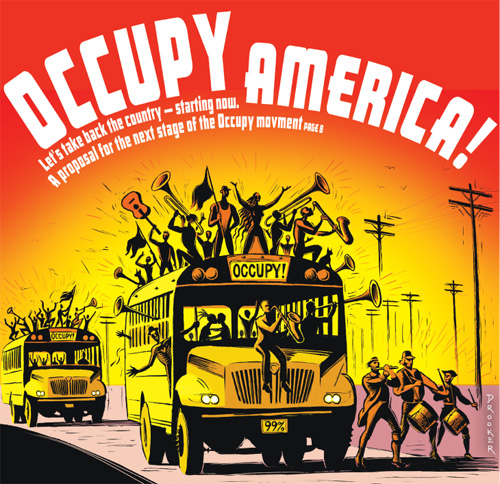
The Occupy movement that spread across the country last fall has already changed the national discussion: It’s brought attention to the serious, systemic problem of gross inequities of wealth and power and the mass hardships that have resulted from that imbalance.

Occupy put a new paradigm in the political debate — the 1 percent is exploiting the 99 percent — and it’s tapping the energy and imagination of a new generation of activists.

When Adbusters magazine first proposed the idea of occupying Wall Street last summer, kicking off on Sept. 17, it called for a focus on how money was corrupting the political system. “Democracy not Corporatocracy,” the magazine declared — but that focus quickly broadened to encompass related issues ranging from foreclosures and the housing crisis to self-dealing financiers and industrialists who take ever more profits but provide fewer jobs to the ways that poor and disenfranchised people suffer disproportionately in this economic system.

It was a primal scream, sounded most strongly by young people who decided it was time to fight for their future. The participants have used the prompt to create a movement that drew from all walks of life: recent college graduates and the homeless, labor leaders and anarchists, communities of colors and old hippies, returning soldiers and business people. They’re voicing a wide variety of concerns and issues, but they share a common interest in empowering the average person, challenging the status quo, and demanding economic justice.

We chronicled and actively supported the Occupy movement from its early days through its repeated expulsions from public plazas by police, particularly in San Francisco, Oakland, and Berkeley. We supported the right of the protesters to remain — even as we understood they couldn’t and shouldn’t simply stay forever. Occupy needed to evolve if it was to hold the public’s interest. The movement would ultimately morph into something else.

That time has come. This spring, Occupy is poised to return as a mass movement — and there’s no shortage of energy or ideas about what comes next. Countless activists have proposed occupying foreclosed homes, shutting down ports and blocking business in bank lobbies. Those all have merit. But if the movement is going to challenge the hegemony of the 1 percent, it will involve moving onto a larger stage and coming together around bold ideas — like a national convention in Washington, D.C. to write new rules for the nation’s political and economic systems.

Imagine thousands of Occupy activists spending the spring drafting Constitutional amendments — for example, to end corporate personhood and repeal the Citizens United decision that gave corporations unlimited ability to influence elections — and a broader platform for deep and lasting change in the United States.

Imagine a broad-based discussion — in meetings and on the web — to develop a platform for economic justice, a set of ideas that could range from self-sustaining community economics to profound changes in the way America is governed.

Imagine thousands of activists crossing the country in caravans, occupying public space in cities along the way, and winding up with a convention in Washington, D.C.

Imagine organizing a week of activities — not just political meetings but parties and cultural events — to make Occupy the center of the nation’s attention and an inspiring example for an international audience.

Imagine ending with a massive mobilization that brings hundreds of thousands of people to the nation’s capitol — and into the movement.

Occupy activists are already having discussions about some of these concepts (see sidebar). Thousands of activists are already converging on D.C. right now for the Occupy Congress, one of many projects that the movement can build on.


DEFINING MOMENTS

Mass social movements of the 20th Century often had defining moments — the S.F. General Strike of 1934; the Bonus Army’s occupation of Washington D.C.; the Freedom Rides, bus boycotts and Rev. Martin Luther King Jr.’s March on Washington; Earth Day 1970; the Vietnam War teach-ins and moratoriums. None of those movements were politically monolithic; all of them had internal conflicts over tactics and strategies.

But they came together in ways that made a political statement, created long-term organizing efforts, and led to significant reforms. Occupy can do the same — and more. At a time of historic inequities in wealth and power, when the rich and the right wing are stealing the future of generations of Americans, the potential for real change is enormous.

If something’s going to happen this spring and summer, the planning should get under way now.

A convention could begin in late June, in Washington D.C. — with the goal of ratifying on the Fourth of July a platform document that presents the movement’s positions, principles, and demands. Occupy groups from around the country would endorse the idea in their General Assemblies, according to procedures that they have already established and refined through the fall, and make it their own.

This winter and spring, activists would develop and hone the various proposals that would be considered at the convention and the procedures for adopting them. They could develop regional working groups or use online tools to broadly crowd-source solutions, like the people of Iceland did last year when they wrote a new constitution for that country. They would build support for ideas to meet the convention’s high-bar for its platform, probably the 90 percent threshold that many Occupy groups have adopted for taking action.

Whatever form that document takes, the exercise would unite the movement around a specific, achievable goal and give it something that it has lacked so far: an agenda and set of demands on the existing system — and a set of alternative approaches to politics.

While it might contain a multitude of issues and solutions to the complicated problems we face, it would represent the simple premise our nation was founded on: the people’s right to create a government of their choosing.

There’s already an Occupy group planning a convention in Philadelphia that weekend, and there’s a lot of symbolic value to the day. After all, on another July 4th long ago, a group of people met in Philly to draft a document called the Declaration of Independence that said, among other things, that “governments … deriv[e] their just powers from the consent of the governed … [and] whenever any Form of Government becomes destructive of these ends, it is the Right of the People to alter or to abolish it, and to institute new Government, laying its foundation on such principles and organizing its powers in such form, as to them shall seem most likely to effect their Safety and Happiness.”


ON THE ROAD

If the date is right and the organizing effort is effective, there’s no reason that Occupy couldn’t get close to a million people into the nation’s capital for an economic justice march and rally.

That, combined with teach-ins, events and days of action across the country, could kick off a new stage of a movement that has the greatest potential in a generation or more to change the direction of American politics.

Creating a platform for constitutional and political reform is perhaps even more important than the final product. In other words, the journey is even more important than the destination — and when we say journey, we mean that literally.

Occupy groups from around the country could travel together in zig-zagging paths to the Capitol, stopping and rallying in — indeed, Occupying! — every major city in the country along the way.

It could begin a week or more before the conference, along the coasts and the northern and southern borders: San Francisco and Savannah, Los Angeles and New York City, Seattle and Miami, Chicago and El Paso, Billings and New Orleans — Portland, Oregon and Portland, Maine.

At each stop, participants would gather in that city’s central plaza or another significant area with their tents and supplies, stage a rally and general assembly, and peacefully occupy for a night. Then they would break camp in the morning, travel to the next city, and do it all over again.

Along the way, the movement would attract international media attention and new participants. The caravans could also begin the work of writing the convention platform, dividing the many tasks up into regional working groups that could work on solutions and new structures in the encampments or on the road.

At each stop, the caravan would assert the right to assemble for the night at the place of its choosing, without seeking permits or submitting to any higher authorities. And at the end of that journey, the various caravans could converge on the National Mall in Washington D.C., set up a massive tent city with infrastructure needed to maintain it for a week or so, and assert the right to stay there until the job was done.

The final document would probably need to be hammered out in a convention hall with delegates from each of the participating cities, and those delegates could confer with their constituencies according to whatever procedures they prescribe. This and many of the details — from how to respond to police crackdowns to consulting of experts to the specific scope and procedures of this democratic exercise — would need to be developed over the spring.

But the Occupy movement has already started this conversation and developed the mechanisms for self-governance. It may be messy and contentious and probably even seem doomed at times, but that’s always the case with grassroots organizations that lack top-down structures.

Proposals will range from the eminently reasonable (asking Congress to end corporate personhood) to the seemingly crazy (rewriting the entire U.S. Constitution). But an Occupy platform will have value no matter what it says. We’re not fond of quoting Milton Friedman, the late right-wing economist, but he had a remarkable statement about the value of bold ideas:

“It is worth discussing radical changes, not in the expectation that they will be adopted promptly, but for two other reasons. One is to construct an ideal goal, so that incremental changes can be judged by whether they move the institutional structure toward or away from that ideal. The other reason is very different. It is so that if a crisis requiring or facilitating radical change does arrive, alternatives will be available that have been carefully developed and fully explored.”

After the delegates in the convention hall have approved the document, they could present it to the larger encampment — and use it as the basis for a massive rally on the final day. Then the occupiers can go back home — where the real work will begin.

Because Occupy will wind up spawning dozens, hundreds of local and national organizations — small and large, working on urban issues and state issues and national and international issues.


WASHINGTON’S BEEN OCCUPIED BEFORE

The history of social movements in this country offers some important lessons for Occupy.

The notion of direct action — of in-your-face demonstrations designed to force injustice onto the national stage, sometimes involving occupying public space — has long been a part of protest politics in this country. In fact, in the depth of the Great Depression, more than 40,000 former soldiers occupied a marsh on the edge of Washington D.C., created a self-sustaining campground, and demanded that bonus money promised at the end of World War I be paid out immediately.

The so-called Bonus Army attracted tremendous national attention before General Douglas Macarthur, assisted by Major George Patton and Major Dwight Eisenhower, used active-duty troops to roust the occupiers.

The Freedom Rides of the early 1960s showed the spirit of independence and democratic direct action. Raymond Arsenault, a professor at the University of South Florida, brilliantly outlines the story of the early civil rights actions in a 2007 Oxford University Press book (Freedom Rides: 1961 and the Struggle for Racial Justice) that became a national phenomenon when Oprah Winfrey devoted a show and a substantial online exhibition to it.

Arsenault notes that the rides were not popular with what was then the mainstream of the civil rights movement — no less a leader than Thurgood Marshall thought the idea of a mixed group of black and white people riding buses together through the deep south was dangerous and could lead to a political backlash. The riders were denounced as “agitators” and initially were isolated.

The first freedom ride, in May, 1961, left Washington D.C. but never reached its destination of New Orleans; the bus was surrounded by angry mobs in Birmingham, Alabama, and the drivers refused to continue.

But soon other rides rose up spontaneously, and in the end there were more than 60, with 430 riders. Writes Arsenault:

“Deliberately provoking a crisis of authority, the Riders challenged Federal officials to enforce the law and uphold the constitutional right to travel without being subjected to degrading and humiliating racial restrictions … None of the obstacles placed in their path—not widespread censure, not political and financial pressure, not arrest and imprisonment, not even the threat of death—seemed to weaken their commitment to nonviolent struggle. On the contrary, the hardships and suffering imposed upon them appeared to stiffen their resolve.”

The Occupy movement has already shown similar resolve — and the police batons, tear gas, pepper spray, and rubber bullets have only given the movement more energy and determination.

David S. Meyer, a professor at U.C. Irvine and an expert on the history of political movements, notes that the civil rights movement went in different directions after the freedom rides and the March on Washington. Some wanted to continue direct action; some wanted to continue the fight in the court system and push Congress to adopt civil rights laws; some thought the best tactic was to work to elect African Americans to local, state and federal office.

Actually, all of those things were necessary — and Occupy will need to work on a multitude of levels, too, and with a diversity of tactics.

Single-day events have had an impact, too. Earth Day, 1970, was probably the largest single demonstration of the era — in part because it was so decentralized. A national organization designed events in some cities — but hundreds of other environmentalists took the opportunity to do their own actions, some involving disrupting the operations of polluters. The outcome wasn’t a national platform but the birth of dozens of new organizations, some of which are still around today.

There’s an unavoidable dilemma here for this wonderfully anarchic movement: The larger it gets, the more it develops the ability to demand and win reforms, the more it will need structure and organization. And the more that happens, the further Occupy will move from its original leaderless experiment in true grassroots democracy.

But these are the problems a movement wants to have — dealing with growth and expanding influence is a lot more pleasant than realizing (as a lot of traditional progressive political groups have) that you aren’t getting anywhere.

All of the discussions around the next step for Occupy are taking place in the context of a presidential election that will also likely change the makeup of Congress. That’s an opportunity — and a challenge. As Meyer notes, “social movements often dissipate in election years, when money and energy goes into electoral campaigns.” At the same time, Occupy has already influenced the national debate — and that can continue through the election season, even if (as is likely) neither of the major party candidates is talking seriously about economic justice.

That’s why a formal platform could be so useful — candidates from President Obama to members or Congress can be presented with the proposals, and judged on their response.

Some of the Occupy groups are talking about creating a third political party — a daunting task, but certainly worth discussion.

But the important thing is to let this genie out of the bottle, to move Occupy into the next level of politics, to use a convention, rally, and national event to reassert the power of the people to control our political and economic institutions — and to change or abolish them as we see fit.

OCCUPY AMERICA IS ALREADY UNDERWAY

All across the country, Occupy organizers are developing and implementing creative ways to connect and come together, many of which we drew from for our proposal. We hope all of these people will build on each other’s ideas, work together, and harness their power.

From invading the halls of Congress to “occutripping” road trips to ballot initiatives, here is a list of groups already working on ways to Occupy America:


OCCUPY CONGRESS

Occupy Congress is an effort to bring people from around the country — and, in many cases, from around the world — to Washington DC on Jan. 17. The idea is to “bring the message of Occupy to the doorstep of the capital.” The day’s planned events include a “multi-occupation general assembly,” as well as teach-ins, idea sharing, open mics, and a protest in front of the Capitol building.

A huge network of transportation sharing was formed around Occupy Congress, with a busy Ridebuzz ridesharing online bulletin board, and several Occupy camps organizing buses all around the country, as well as in Montreal and Quebec.

There are still two Occupy tent cities in DC, the Occupy DC encampment at McPherson Square and an occupation called Freedom Plaza, just blocks from the White House. Both will be accepting hundreds of new occupiers for the event, although a poster on the Occupy Congress website warns that “the McPherson Square Park Service will be enforcing a 500 person limit.”

www.occupyyourcongress.info


OCCUPY BUS

The Occupy Bus service was set up for Occupy Congress, but organizers say if the idea works out, it can grow and repeat for other national Occupy calls to action. They have set up buses leaving from 60 cities in 28 U.S. states as well as Canada’s Quebec province. The buses are free to those who can’t afford to pay, and for those who pay, all profits will be donated to Occupy DC camps.

If all goes to plan, buses will be packed with passengers, their gear, and bigger donations for the event, as the “undercarriages of a bus are voluminous.” What gear do they expect each occupier to bring? “One large bag, one small bag, and a tent.”

congress.occupybus.com


DENVER OCCUTRIP

Many occupations have put together car and busloads of people to road trip to other occupations, hoping to learn, teach, network, and connect the movement across geographic barriers. One example is the Denver Occutrip, in which a handful of protesters toured West Coast occupations. The tenacious Occupy Denver recently made headlines when, rather than allow police to easily dismantle their encampment, a couple of occupiers set the camp on fire. It sent delegates to Occupations in Las Vegas, Los Angeles, Long Beach, Oakland, San Francisco, Berkeley, and Sacramento.

Sean Valdez, one of the participants, said the trip was important to “get the full story. What I’d been told by the media was that Occupy Oakland was pretty much dead, but we got there and saw there are still tons of dedicated, organized people working on it. It was important to see it with our own eyes, and gave a lot of hope for Occupy.”

Like lots of road-tripping Occupiers, they made it to Oakland for the Dec. 12 West Coast Port Shutdown action there. In fact, “occutrippers” from all around the country have flocked to Bay Area occupations in general, and especially the uniquely radical Occupy Oakland.

www.occupydenver.org/denver-occutrip-road-trip/


OCCUPY THE CONSTITUTION

An Occupy Wall Street offshoot — Constitution Working Group, Occupy the Constitution — argues that many of the Occupy movements concerns stem from violations of the constitution. They hope to address this with several petitions on issues such as corporate bailouts, war powers, public education, and the Federal Reserve bank. The group hopes to get signatures from 3-5 percent of the United States population before the list of petitions is “formally served to the appropriate elected officials.”

www.givemeliberty.org/occupy


THE 99% DECLARATION

This is a super-patriotic take on the Occupy movement, described on its website as an “effort run solely by the energy of volunteers who care about our great country and want to bring it back to its GLORY.” The group’s detailed plan includes holding nationwide elections on the weekend of March 30 to choose two delegates from “each of the 435 congressional districts plus Washington, D.C. and the U.S. Territories.”

These delegates would write up lists of grievances with the help of their Occupy constituents, then convene on July 4, 2012 in Philadelphia for a National General Assembly. They plan to present a unified list of grievances to Congress, the President, and the Supreme Court. If the grievances are not addressed, they would “reconvene to organize a new grassroots campaign for political candidates who publicly pledge to redress the grievances. These candidates will seek election for all open Congressional seats in the mid-term election of 2014 and in the elections of 2016 and 2018.”

www.the-99-declaration.org/


MOVE TO AMEND/OCCUPY THE COURTS

Move to Amend is a coalition focusing on one of the Occupy movement’s main concerns: corporate personhood. The group hopes to overturn the Citizens United vs. Federal Elections Commission ruling and “amend our Constitution to firmly establish that money is not speech, and that human beings, not corporations, are persons entitled to constitutional rights.”

The group has drafted a petition, signed so far by more than 150,000 people, and established chapters across the country. Its next big step is a national day of action called Occupy the Courts on Jan. 20. On the anniversary of the Citizens United ruling, the group plans to “Occupy the US Supreme Court” and hold solidarity occupations in federal courts around the country.

www.movetoamend.org/


THE OCCUPY CARAVAN

The Occupy Caravan idea originated at Occupy Wall Street, but the group has been coordinating with occupations across the country. If all goes according to plan, a caravan of RVs, cars, and buses will leave Los Angeles in April and take a trip through the South to 16 different Occupations before ending up in Washington DC.

Buddy, one of the organizers, tells us that the group already has “a commitment right now of 10 to 11 RVs, scores of vehicles, and a bio-diesel green machine bus. This caravan will visit cities, encircle city halls, and visit the local Occupy groups to assert their presence, and move on to the next, not stopping for long in each destination.”

This caravan is all about the journey, calling itself a “civil rights vacation with friends and family” and planning to gather “more RVs, more cars, more supporters…and more LOVE” along the way.

occupycaravan.webs.com

OCCUPY WALL STREET WEST

The Occupy movement in San Francisco has been relatively quiet for the past few weeks, but it’s planning to reemerge with a bang on Jan. 20, with an all-day, multi-event rally and march that aims to shut down the Financial District.

The protest is an effort to bring attention to banks’ complicity in the housing crisis plaguing the United States, and how that process manifests itself here in San Francisco.

At least 20 events are planned, centered in the Financial District. The plans range from teach-ins at banks to “occupy the Civic Center playground” for kids to a planned building takeover where hundreds are expected to risk arrest. A list of planned events can be found at www.occupywallstwest.org/wordpress/?page_id=74.

The day is presented by the Occupy SF Housing Coalition, which includes 10 housing rights and homeless advocacy groups. Dozens of other organizations will be involved in demonstrations throughout the day. “We’re asking the banks to start doing the right thing,” said Gene Doherty, a media spokesperson for the Occupy SF Housing Coalition. “No more foreclosures and evictions for profits. On the 20th, we will bring this message to the headquarters of those banks.”




How to celebrate MLK Jr. Day in the Bay

0

Use your national day of service wisely —  jump in one of of the day’s volunteering fairs, take in a black history flick, catch some awe-inspiring youth spoken word, learn about colleges 

“In the Name of Love” MLK musical tribute

Mavis Staples, the Oakland Interfaith Gospel Choir, Youth Speaks (that group’s going to be busy! See below), and Oakland’s Children’s Community Choir occupy the deco wonderland of the Paramount for this stirring tribute to the great man’s work. Hyped as the only non-denominational musical tribute to MLK Jr. in Oakland, the program also features the presentation of humanitarian awards. 

Sun/15 7 p.m., $18 

Paramount Theatre

2025 Broadway, Oakl.

www.livingjazz.org


Freedom Trains

Planning on spending your MLK Day in the city? Every year, the Martin Luther King Jr. Association of Santa Clara sponsors the Freedom Trains so that everyone can afford to make it to the celebrations. Instead of paying $17.50 for a round-trip ticket on Caltrain, today it’s just $10 – and you’ll be treated to in-route presentations on the importance of the civil rights movement in our lives. 

Mon/16, $10

Departs San Jose 9:30 a.m., arrives in San Francisco 10:55 a.m. (see website for stops in-between)

Rod Diridon train station

65 Cahill, San Jose

www.scvmlk.org


“Renewing the Dream” MLK Jr. birthday celebration

A health fair, a civil rights film festival, children’s reading celebration, interfaith commemoration, special presentations, and free entry to the Contemporary Jewish Museum, Museum of the African Diaspora, and Children’s Creativity Museum give you and yours plenty to do if you feel like spending your Monday in San Francisco’s (greener, sorry Union Square) living room. Down to attend? Check your local transportation agency for possible discounts to the event.

Mon/16 11 a.m.-5 p.m., free

Yerba Buena Gardens

Mission between Third and Fourth Sts., SF

www.norcalmlk.com


“What is Your Dream?” MLK Jr. day of service

Soak in the spirit of the day by spending it at MoAD. The regular museum offerings (currently featuring “Collected: Stories of Acquisition and Reclamation,” about the contributions of people of African descent to the American zeitgeist) will be free to the public, there will be screenings of MLK films and a documentary on a barber who turned into a civil rights leader during the 2008 elections, chalk drawings outside on the sidewalk, and vision boarding galore. But the day’s not just for remembering and dreaming – the Historically Black Colleges and Universities Fair will be providing concrete information on education for tomorrow’s march-leaders and soul-freers. 

Mon/16 11 a.m.-5 p.m., free

Museum of the African Diaspora

685 Mission, SF

(415) 358-7200

www.moadsf.org


Parks Conservancy’s MLK Jr. day of service

Let the Parks Conservancy plug you into a wildlife restoration project – you’re too late to sign up for restoring the gardens on Alcatraz, but there’s still time to help out at Crissy Field, Fort Baker, Muir Woods, Ocean Beach, and the Presidio. Contact volunteer@parksconservancy.org to reserve your spot. 

Mon/16 various times, free

Various locations, SF

(415) 561-3077

www.parksconservancy.org


MLK Jr. Day service fair

Spend your day off work (if you have it off work) with your family making a difference in the Bay Area. Organizers of this event have made it easy for you: choose from over 25 different projects from serving food at shelters, planting trees – even making toys and biscuits for homeless puppies and kitties. All ages welcome. 

Mon/16 7:30 a.m.-4 p.m., free

Oshman Family Jewish Community Center

3921 Fabian Way, Palo Alto

www.paloaltojcc.org


Piedmont’s annual MLK Jr. Day celebration

First: eating. All comers are invited to bring a dish that reflects their own cultural heritage to this lunchtime potluck at the Piedmont Community Center. Once those pressing matters have been tended: music. Oaktown Jazz will provide some lilting melodies, and Piedmont students will make presentations on the significance of the day. Capping off the festivities, the 1993 movie At the River I Stand, which revolves around the 1968 Memphis sanitation workers’ strike and concurrent assasination of King. 

Mon/16 noon-3 p.m.

Piedmont Community Center

777 Highland, Piedmont

(510) 420-1534

loiscorrin@gmail.com


“Bringing the Noise for Dr. Martin Luther King, Jr.” 

If you haven’t been to a Youth Speaks spoken word event, pack tissues and your future-seeing 3-D goggles – the young people that the organization gives an opportunity to perform are the truth. On no other day of the year should this be more evident, because these kids are all about having a dream. Today’s event brings performers to the stage who have worked up pieces on what they’d like the future to bring, imbued as ever with the fire of Youth Speaks performances. Could there be a more relevant forum to attend on today’s holiday?

Mon/16 7 p.m., $16

Herbst Theatre

401 Van Ness, SF

(415) 621-6600

www.youthspeaks.org


“Martin Luther King Jr. Day Double Feature”

“All of us have something to say, but some are never heard” — Richard Pryor, Wattstax (1973). MLK Jr. Day calls into question how we remember the past. The Wattstax concert is sometimes recalled derivatively as “the black Woodstock.” But while soul music may have been the response, the event was put on by Stax Records to commemorate and come to terms with the seventh anniversary of the Watts Riots in LA, which challenged the limits of MLK Jr.’s nonviolent philosophy. As a double feature the Wattstax documentary will be shown with The Black Power Mixtape 1967-1975 (2011), a revelatory look at a movement’s era that sadly took the distance of continent and a few decades to make. 

Wattstax 3, 7p.m.; The Black Power Mixtape 4:55, 8:55 p.m., $7.50–$10

Castro Theatre

429 Castro, SF

(415) 621-6120

www.castrotheatre.com


Martin Luther

It’s the second coming! Not really, no relation actually. But this R&B-funk crooner spins out tunes appropriately uplifting for this day of rememberance and looking forward. Bliss out, eyes closed, mind on the change you want to make, at this smoothed-out groovefest. 

Mon/16 8-9:30 p.m., $15

Yoshi’s

510 Embarcadero, Oakl.

(510) 238-9200

www.yoshis.com

Obstructions of justice

4

The uneasy relationship between OccupyOakland and the Oakland Police Department has resulted in a troubling spate of controversial arrests recently.

At a press conference last month, Police Chief Howard Jordan stated, “The plaza area outside of City Hall is a public area. We do not have any legal right to remove you if you’re standing there, at any time during the day, if you’re exercising you’re First Amendment rights. If you’re not breaking the laws, we’re not concerned about your presence.”

But now, Oakland police have arrested dozens of people who were doing little more than “standing there, exercising their First Amendment rights” — and one man even faces life in prison for it.

There have been 40 arrests in the last couple weeks, including two incidents at Frank Ogawa/Oscar Grant Plaza. In each episode, police say they were just doing their job, enforcing laws surrounding permit violations. But many supporters and lawyers associated with OccupyOakland say that police have created a targeted and discriminatory campaign to wipe out the movement.


VIGIL TURNS VIOLENT

About 100 protesters were present at a permitted vigil on Dec. 30. An OccupyOakland participant had been issued a permit for a teepee and one table, but police showed up at noon to explain that they were in violation of that permit, claiming people were sleeping, eating, bringing in trash cans, and storing belongings in the teepee

Protesters say they were cleaning up the plaza when police started making arrests; police say they refused to comply. But both parties say that the scene turned violent.

“Who instigates the violence? I don’t know,” Matt Perry, a movement supporter, told us. “A cop tells you to back up and you don’t back up, he’s gonna use his baton on you.”

But many of the arrests and citations had nothing to do with assault. Carly says she was arrested for “having a yoga mat under her arm.” She was later charged with obstruction of justice. In an even more puzzling case, 23-year-old Tiffany Tran was arrested and charged with “lynching.”

“The taking by means of a riot of any person from the lawful custody of any peace officer is a lynching,” reads California Penal Code 405a, a felony charge punishable by two to four years in prison.

The law attempts to prevent white mobs from forcibly taking African Americans from police custody to kill them, but police have a history of using it against protesters, stating that anyone trying to stop an arrest is guilty of lynching.

Tran says she was held in a pitch-dark police van for seven hours before she was booked at Santa Rita Jail, where she was held in 22-hour daily lockdown due to overcrowding. She was held for four days without being told why.

On the fourth day, she was finally arraigned, but prosecutors opted not to file charges and she was released. But Tran said the tactic left her uneasy because prosecutors said charges could still be filed until the statute of limitations expires in a year. As she told us, “Now I feel I can’t go out and express myself as I should be able to.”


ON THE GROUND

When I arrived at 10pm on Jan. 4 to investigate the situation at the vigil, the scene was calm. About 40 people sat and talked, a few worked on computers.

“Some of the people here were arrested mainly for contempt of cop, or being against the government. And then charges of lynching or obstruction of justice were brought after the fact to substantiate an unlawful arrest, to allow the wheels of so-called justice to turn a few more times,” Svend La Rose, an ordained minister and member of OccupyOakland’s tactical action committee, said of the Dec. 30 arrests.

Suddenly, the cry of “riot police!” rang out.

Police cars had pulled up on 14th street, and a line of police exited. In unison, they started advancing, brandishing batons. Many who were at the scene grabbed their possessions and fled. Most just backed away as the cops advanced. A handful stood in front of the teepee, and were arrested on the spot.

Twelve were arrested, including La Rose. Also arrested was Adam Katz, a photographer from the media committee who was documenting events. Katz said that police told him to back up, and when he complied and backed up “probably 50-60 feet,” he was still arrested.

“I took one picture and I was told to back up,” he said. “I repeatedly asked ‘Back up to where?’ as an army of police pushed me out of the plaza. They said, ‘Back up behind the line.’ I kept saying, ‘What line? I don’t see a line.'”

Then there’s Chris, another occupier arrested Jan. 4. According to Katz and other witnesses, Chris had already left the plaza and gone across the street when he was arrested for somehow delaying the police who were trying to clear the plaza.


DISCRETION

On Jan. 7, OccupyOakland held an “anti-repression march,” claiming that recent arrests are an overt attempt to repress the movement. The National Lawyers Guild issued a statement demanding an end to the “ongoing violence, harassment, and unconstitutional arrests of Occupy Oakland protesters.”

“There is evidence that would go to show that they were targeting people based on First Amendment activity, and not for illegal activity,” said attorney Mike Flynn, president of the NLG-SF. “Police charged into the plaza and grabbed whoever they could, and also targeted selective people who withdrew and didn’t even linger there.”

But OPD spokesperson Johnna Watson told us these arrests were perfectly legal. “The law allows us to use our discretion,” she said.

A person’s history with the movement is factored into this discretion. Many of those Perry deems “regulars” are, according to the police, “repeat offenders.” As Watson said, “There may be knowledge of a past history, like a repeat offender. If an officer has knowledge that a crime is occurring, has occurred, or is about to occur, we have the right to issue a citation or arrest. If we have someone constantly continuing to break the law, we may not issue a citation.”

In other words, involvement with this political movement can get people arrested who might otherwise not be.

“That police have escalated their attacks on people is pretty disturbing. It looks like they really think they can drive this movement out of Oakland with violence and repression,” said Dan Siegel, a former legal advisor to Mayor Jean Quan who resigned over her handling of OccupyOakland.

Siegel is now representing Marcel Johnson, aka Khali, one of the several protesters arrested Dec. 30, who faces life in prison. A homeless man who became an OccupyOakland regular, Khali was arrested when he tried to hold on to his blanket, which police wanted to throw away, saying that it was unpermitted property.

While in jail, he was charged with felony assault on a police officer, his third strike. A protester called Black Angel who knows Khali said he was transformed by the movement. “He came here and found a family,” he said. “He was like, I’m going to protect this. It gave me some sense of myself.”

But now, Siegel said, “He faces life in prison because of his status of being poor, homeless, and with mental health issues.”

Juries may decide whether OccupyOakland defendants are guilty, but Siegel said the arrests aren’t just: “You still have to ask yourself, why are the police doing this when we have 100 unsolved murders in Oakland?”

Let him entertain you

0

FILM The most famous and honored Hollywood directors have always been easily identifiable by style, genre, emotional tenor, or all the above. There’s Hitchcock with his wryly misanthropic suspense, and John Ford’s outdoor archetypes of masculinity. Even Steven Spielberg, who’s made just about every kind of narrative, has a telltale penchant for sweep and sentimentality running through everything from Jaws (1975) to The Adventures of Tintin (2011).

But the director probably responsible for more popularly embraced classics than any other during the industry’s golden age remains less familiar by name than many inferior talents, and his was the classic case of a lifetime achievement Oscar offered as thinly veiled apology for being ignored by the Academy over a long, conspicuous career haul. Howard Hawks could be said to bring all this upon himself: while far from modest, he was never much interested in self-promotion, or publicity in general. Nor did his films provide the obvious auteur identification points of a recognizable visual style, or consistent interest in particular genres or story elements.

They’re immaculately crafted, with some thematic similarities one can poke an analytic stick at after extended scrutiny. Yet as much as Hawks fought for creative freedom, often exasperating studio executives with his stubborn independence, he had few pretensions (or tolerance) toward art, pretty much measuring his movies’ value by their box-office performance. As has been noted elsewhere, that wasn’t because he was a bottom-line-focused hack, but because for decades his personal taste really did seem precisely in synch with the majority public’s.

The Pacific Film Archive’s “Howard Hawks: The Measure of Man” offers plenty of opportunity to weigh that discriminating yet popular appeal via a retrospective that’s thorough if not quite exhaustive. It reaches from his earliest extant feature (1926 comedy Fig Leaves) to his penultimate (’67 John Wayne horse opera El Dorado).

Between, there’s an almost staggering array of gems, more than any one life’s work should encompass: the seminal gangster flick (1932’s Scarface); deathless screwball classics Twentieth Century (1934), Bringing Up Baby (1938), His Girl Friday (1940), and Ball of Fire (1941); war epics (1930’s The Dawn Patrol, 1941’s Sergeant York); Western totems Red River (1948) and Rio Bravo (1959); setting the standard for cinematic sexual cool via the invention of Bogart and Bacall (1944’s To Have and Have Not, 1945’s The Big Sleep). Hawks wasn’t particularly attracted to musicals or sci-fi. Yet he made one of the all-time most enduring titles in each category, Gentlemen Prefer Blondes (1953) and The Thing from Another World (1951, with “official” directing credit going to Christian Nyby).

Hawks came from Gentile gentry, which lent him an air of entitlement he didn’t mind using to intimidate the largely Jewish, working-class backgrounded studio chiefs he infuriated by running way over budget and schedule. The motion picture business was an odd, borderline-disreputable choice for his like just post-World War I. Yet its wooliness (not to mention the never-ending wellspring of pretty girls) struck his fancy, and he worked in numerous capacities before getting to direct a first feature in 1923.

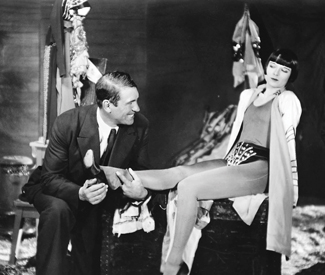
Later he’d dismiss his silent-era films as apprenticeship, though the few that survive have their points — 1928’s A Girl in Every Port introduces an ongoing motif of jokily tough-loving male camaraderie and finds a quintessential Hawksian woman in coltish flapper legend Louise Brooks, while the same year’s hunk of “Arab sheik” exotica Fazil has some unusually vivid (for Hawks) depictions of sexual desire.

With sound, however, Hawks was immediately in his element: snappy patter and hardboiled realism (or something like) were more to his liking than the pictorial emotionalism of the silent screen, even if as a director he remained close-lipped toward cast and crew to a “sphinx-like” degree. (The many superficially contradictory comments about his on-set demeanor gleaned from collaborators in Todd McCarthy’s definitive biography Howard Hawks: The Grey Fox of Hollywood reveal a technique that liberated some and frustrated others.)

Scarface, which prompted his first of many censorship battles, came out as the gangster vogue was considered kaput. Yet it was a sensation, and remains the only such film from that era still shockingly violent, sexual, and modern. It’s arguable that the Hawksian template wasn’t fully formed until 1939’s Only Angels Have Wings. Its loose, episodic script suited his essential disinterest in narrative (which would become a problem in the 1960s), allowing all the greater focus on a tight group of wisecracking, poker-faced men in daily peril (as mail-delivering pilots in the remotest tropics), while Jean Arthur’s dogged pursuit of a seemingly disinterested Cary Grant posited women as an infrequently worthy adversary-companion on rare occasions invited into the boys’ club. (In the screwball comedies, however, berserk woman often simply torments man into submission.)

Allergic to mush stuff, Hawks liked slim, sporty, husky-voiced women — ones an ever-decreasing fraction of his age as time passed, both on and off screen. (Though Gentlemen made her, he professed zero understanding of bodacious Marilyn Monroe’s appeal.) Yet as with his three marriages, he seldom stuck with one for long, almost never casting leading ladies twice while working recurrently with Grant, Wayne, Gary Cooper, and numerous behind-the-camera personnel.

After a long, nearly unbroken string of hits, his touch began slipping in the mid-1950s; like many old-school Hollywood greats, he seemed quite out of synch with the times a decade later. By then Hollywood was probably relieved to be rid of a filmmaker who’d always used his success as leverage in getting maximum paydays (though as a compulsive gambler he was forever in debt), as well as against studio interference. He avoided long-term contracts whenever possible, acting like an independent agent long before seismic industry changes essentially dismantled the contract system for everyone. His politics were conservative, but seldom flexed — he had little use for politicking unless it helped him get more freedom (and money).

Hawks could be arrogant personally, yet was nothing if not unpretentious about his art, at one late point insisting “I never made a ‘statement.’ Our job is to make entertainment.” An unproduced screenplay from his twilight years describes central characters in terms one imagines he’d readily apply to himself: “Tough, resourceful, cheerfully ruthless but always within limits, deeply loyal to a friend but never sentimental, equally needing women, adventure, and a spice of danger to make life worth living.”

“HOWARD HAWKS: THE MEASURE OF MAN”

Jan. 13-April 17, $5.50-$9.50

Pacific Film Archive

2757 Bancroft, Berk.

(510) 642-5249

bampfa.berkeley.edu

Bike lane runway

2

WINTER LOOKS I spend a lot of time convincing my friends that we should ride our bikes places, and the main pushback I get is due to the fact that they don’t want to look like they just got off a bike.

It’s faulty reasoning. Leaving aside how attractive environmental awareness is, anyone who has ever checked out the Vélo Vogue style blog or the global family of Copenhagen Chic websites knows that a bike can make an already-stylish outfit look sexy in a precarious, fly-by-night way. Think about watching someone run gracefully in heels.

Honestly, I don’t think you need a special wardrobe to be bangin’ on a bike. A tip that I do tend to pay mind to: high-waisted pants are your friends. A man once stopped me when my thong had risen above my denim horizon to ask me if I had no modesty. A cretin, yes — but his brand of stick-up-assery is easily mitigated by a kicky pair of retro mom jeans. Also, fear not the high heel, but rather the boot or flat with little heel-arch delineation — unless you have toe cages, in which case you can wear nearly any footwear you like as long as the cages are tight enough, even flip-flops.

Of course, if you are wearing flip-flops in San Francisco you have larger style issues, ones that may not be resolved by reading about bike brands that are crafting clothes that are at once sturdy enough to brave the biting winds and occasional damp of winter months, yet are still exciting and stylish. For the rest of us, such is the list that follows. 

RAPHA CYCLE COMPANY

This Italian bike brand’s Marina café-store could be the perfect spot to begin your quest for cold weather gear. First of all: coffee. Four Barrel percolates in a cafe tucked away in the corner of the sales floor — which is mainly occupied by a long communal table where riders mingle on their way out to the foggy Marin hills or the grocery store. Clothing-wise, the selection isn’t huge, but Rapha’s urban wear is well-made and classy. Straight-leg men’s jeans are made with a blend of nylon, cotton, and elastane yarn, with a waist cut higher in the back, and shiny stuff inside for when you roll up them cuffs.

2198 Filbert, SF. (415) 896-4671, www.rapha.cc

IVA JEAN

I’ve yet to see a more versatile option for biking in the rain than this Seattle brand’s silver-gray cape. There’s a front pouch to keep your keys in, and ample ruching options to allow onlookers a glimpse at what you’ve got going on underneath. It’s like a blanket, a sexy, functional, water-repellant blanket.

www.ivajean.com

MASH TRANSIT

Perhaps you’ll stop by this bike shop nook in Duboce Triangle for a special edition Unicanitor-Barry McGee saddle — just don’t forget to check out what’s on offer that’ll make your morning commute drier. Histogram arm warmers promise extra sleeve coverage, there’s henleys and rain trenches for the taking, and Bay Area-made Inside Line Equipment water-proof backpacks will set you apart from the omnipresent Chrome crowd.

733 14th St., SF. (415) 448-6611, www.mashsf.com

OUTLIER

This label from Brooklyn makes subdued designs functional enough that “they” won’t blink an eye if you have to follow that polished dismount with a day at work, and then with a night tramping around town. I’m a particular fan of the women’s daily riding pant, made of doubleweave twill. The fabric is smooth enough to shred the city streets, and comes in fetching blues and gray that’ll last you through spring.

www.outlier.cc

B.SPOKE TAILOR

But perhaps none of these items are quite what you are looking for. Sweets, if that’s the case — and if you’re the type to buy signature pieces that last you for years, cuz these pricetags are no joke — you should go to Oakland’s Nan Eastep. Her B.Spoke Tailor line births custom-made biking raincoats with extra-long sleeves that don’t make coat-backs pull across shoulderblades. Or try her capes. Why not, you now qualify as a fashion superhero.

(510) 435-3890, www.bspoketailor.com


Create and destroy

0

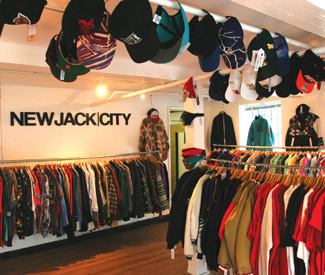
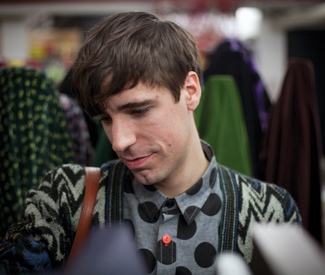
WINTER LOOKS You might have spotted Collin Weber running through the Mission on the way to the Knockout, frantic, with a bag full of satin bows to complete a trio of Sailor Moon costumes. Or perhaps you’ve seen his handy-work elsewhere, in the colorful capes and pointed hats Shannon and the Clams wear in their video for “Sleep Talk” or the sixties striped shifts the Dirty Cupcakes sport in “I Want It (Your Love).”

Weber, a library aid by day and seamster by night, has been creating costumed frocks for an incestuous batch of Bay Area garage rockers for the past two years — Dirty Cupcakes, Shannon and the Clams, Hunx and His Punx, Human Waste — and is open to taking on more acts. ” I think there’s a lot more payoff when you do something and it’s up on stage and out on tour and tons of people see it, and it’s in a music video,” he says leaning against an rack of cloth at Fabric Outlet, “not that I wouldn’t just want to make thing for people to wear. But the costumes are the fun project for me.”

Some of those projects include dinosaur hats, American flag bell-bottoms, gold fake snakeskin skirt and vest combos, and once, for Human Waste, he created full face-masking bodysuits. “The theme they gave me was prisoners on the moon in the future,” Weber laughs. “There’s a whole story behind it, but that’s what I had to go on.”

He created flesh-covering suits, with shiny knee pads and strips of mesh across the mouth and eyes. (Mesh so the band could still see its instruments.) “It’s pretty creepy. The first time I tried it on I was a little scared of my own reflection in the mirror. I think that was a sign that it was going in the right direction.”

I ask if he has his own signature design fixture, something that’s uniquely Weber, and he explains that it can be difficult because he’s often catering to bands’ specific visions, keeping with their imagined themes. Though he says, “one thing that shows up though — and I’ve always been kind of obsessed with — is futuristic, but circa 1960. Special effects, when people tried to guess what people would be wearing in 2012. Shiny, still really mod, but futuristic.” He smiles sheepishly, Queen’s “We Are The Champions” comes pumping through Fabric Outlet’s speakers.

Weber’s style is also influenced by David Bowie circa Ziggy Stardust era, and the designer of those costumes, Kansai Yamamoto. He drops references to the broader glam and loud statement pieces, along with interesting menswear, specifically Comme des Garçons which he describes as “crazy stuff for men that’s just barely wearable.”

His interest in sewing came from a bout of post-college, pre-work boredom while living in Milwaukee. While roommates with Dirty Cupcakes drummer Laura Gravander in the Midwest he learned how to use her sewing machine and begin deconstructing thrifted clothes, doing alterations, and eventually creating his own pieces. He’s all self-taught, and learned through both trial-and-error and diligent YouTube viewing.

Now living in San Francisco (though he moved first with Gravander from Milwaukee to the East Bay), he works shelving books at two library jobs, an aid at the Central Library in Berkeley and a page at the Main Library at Civic Center in SF. He awaits an open librarian position and has kept up the sewing and costume-making as a creative outlet.

Weber mentions that he likes making costumes for bands specifically because there’s a definite deadline: the night of the show. Do or die. He may have been known to run down the street trailing thread, or sew up a piece as the band is about to step on stage, but he also understands the great responsibility of outfitting hard rocking musicians — certain areas must be reinforced, seams must be sturdy because of fierce movement.

And with that comes the punk fate of it all, in sewing costumes for bands, he’s essentially creating what will likely be destroyed. “When you put a lot of work into something, it’s sad to see it get trashed, or blood on it,” says Weber, “but it’s just something you have to take into consideration, whether something just looks nice or whether it’s going to last through rock ‘n’ roll.”

Capitalizing on the Auld Mug

0

news@sfbg.com

The latest America’s Cup controversy arose with a complaint filed in state court in New York City on Dec. 12, alleging that the Golden Gate Yacht Club (GGYC), defender of the coveted sailing trophy and orchestrator of the prestigious international regatta in San Francisco, unfairly rejected an African American sailing team’s bid to compete as a defender candidate.

In a move that piqued the interest of close observers in the sailing world, the suit also takes things a step farther by challenging the legitimacy of including lucrative waterfront development deals into GGYC’s December 2010 agreement to host the 34th America’s Cup in San Francisco.

The suit invokes a 159-year-old document, the America’s Cup Deed of Gift, drafted after the schooner America won the treasured Cup — affectionately known as the Auld Mug — in a match off the coast of England in 1851. Executed under the laws of New York since the schooner sailed under the New York Yacht Club, the deed establishes the America’s Cup trust, and sets out guidelines that every recipient of the cup must abide by. The suit holds that accepting the cup made GGYC a trustee under the deed, and “each club holds the Cup as ‘trustee for the benefit of all potential challengers.'”

Because GGYC set up its own America’s Cup Event Authority, which stands to profit from San Francisco real-estate development deals without sharing surplus revenue among competitors, the lawsuit charges that the yacht club violated its fiduciary duties as trustee.

“It is clear that GGYC is strictly forbidden from using its possession of the Cup and its attendant duties as trustee … in a manner that directly benefits itself, any of its members, or any third party,” asserts the complaint, filed by Madison Avenue law firm McDermott Will & Emery LLP. “The law strictly prohibits self-dealing by a trustee.”


BLACK SAILING CREW

The lawsuit was filed on behalf of African Dispora Maritime (ADM), a North Carolina nonprofit organization founded by sea captain Charles Kithcart, who developed his skills as a mariner under former America’s Cup sailors and continues to pursue an ambitious dream.

Kithcart says he’s convened a sailing team to compete in the America’s Cup that includes African American Olympian sailors, and held discussions with a prominent Rhode Island yacht designer, David Pedrick, about constructing a qualifying vessel for his team. Pedrick, who’s designed America’s Cup racing yachts before, confirmed to the Guardian that he was willing to work with ADM.

GGYC accepted and later refunded ADM’s $25,000 application fee, but rejected the nonprofit’s proposal to enter the race, saying it wasn’t satisfied Kithcart’s team would have the necessary resources to compete. Kithcart claims to have a fundraising strategy for his America’s Cup bid ready to go, but his anticipated support appears to hinge upon being accepted as an America’s Cup competitor.

“You create a groundswell with the public,” he said. “This is the essence of our organization: It’s going to excite people’s imagination. Money can be generated, and there are people who will fund things.”

Kithcart’s vision extends beyond just racing in the elitist tournament, since that alone “doesn’t fulfill any of the social needs that are not only apparent, but glaring.”

ADM’s mission, he explained, is to train African American youth as competitive sailors, cultivate youth interest in math and science as it applies to nautical skills, and make a splash on the world stage by breaking into a predominantly white sport with a black-led team, á la the Jamaican bobsledders from the film Cool Runnings.

“We can really create inspired minds,” Kithcart said, enthusiastically describing field trips through church youth groups or Boys & Girls Clubs that would educate kids about the history of black mariners and offer the empowering experience of learning to helm a ship. “Our future is the youth.” Moreover, a yacht-building team would be a job-creation engine in tough economic times, he asserted.

The once-debt-plagued GGYC — which rocketed to sailing stardom after billionaire Oracle CEO Larry Ellison joined up, installed his crew members on the board, and clinched the 33rd America’s Cup with his Team Oracle Racing off the coast of Valencia, Spain in 2010 — has approved competitors from France, Spain, Italy, New Zealand, Sweden, China, and Korea for the 34th America’s Cup. The main event, a one-on-one match following all preliminary rounds, is to be held in San Francisco in the summer of 2013.

The foreign teams are known as challengers, but ADM applied to sail as a defender candidate — a U.S. team that would race against Team Oracle in a Defender Series in a bid to represent the U.S. in the 34th America’s Cup.

Under the race protocol drafted by the winners of the 33rd America’s Cup and an Italian team that has since withdrawn as the challenger of record, GGYC stated that it would consider applications from defender candidates. However, it would only accept “those it is satisfied have the necessary resources … and experience to have a reasonable chance of winning the America’s Cup Defender Series.”

Had GGYC accepted ADM’s application to compete, Kithcart’s African American led team would have sailed against Ellison’s Team Oracle crew — a spectacle Kithcart imagines would make fine fodder for national television broadcasts. He remains optimistic that it can happen. “We’re definitely going to get into the America’s Cup,” he told the Guardian in a recent telephone conversation.

That same confidence is conveyed in ADM’s lawsuit. “Indeed, ADM’s application showed that its proposed team quite obviously could beat Team Oracle Racing,” the complaint claims, “and certainly stood a ‘reasonable chance’ of doing so.”

The lawsuit alleges that GGYC ignored Kithcart’s repeated requests to be considered for entry into the competition almost until the deadline last spring, then rejected ADM on an arbitrary and unequal basis compared with its treatment of other competitors.

Three other teams that were accepted as competitors — including Club Nautico di Roma, the challenger of record — have since withdrawn, citing financial problems. The suit suggests these economically troubled teams were accepted as competitors without question even while ADM was rejected, and charges that GGYC made no attempt to determine the status of ADM’s team or fundraising plan.

What it all adds up to, according to ADM’s claim, is breach of contract and a failure to deal in good faith as a trustee. Nor is ADM shy about making demands. The lawsuit asks the court to compel GGYC to accept ADM’s application, reschedule all the planned races in order to hold a Defender Series, cancel the development rights afforded to the Event Authority, and pay ADM in excess of $1 million to compensate for the delay in building its yacht.


SO MUCH MONEY

John Rousmaniere, an America’s Cup historian who has authored several books about the sailing competition, regarded ADM’s case with skepticism. He seemed doubtful that GGYC could be forced to accept an application from a U.S. team.

“Golden Gate could invite other U.S. yacht clubs to compete for the right to defend, but it has chosen not to do that. Instead, it’s developing its own boat and crew. This is their right under the Deed of Gift,” he said. “The Deed of Gift is very clear — there is no obligation for another American boat to sail.”

He’s also dubious of the charge that GGYC breached its fiduciary duties as trustee by engaging in self-dealing, an argument that could have far greater consequences for Ellison in the long run. A similar dispute arose when the sailing tournament was held in New Zealand about a decade ago, he said, and the exact meaning of “trust” in the Deed of Gift has been debated before in similar arguments. “I don’t think it’s ever been resolved,” he added.

The lawsuit argues that the cup is held in trust for the benefit of all competitors, and that GGYC violated its duties as a trustee when it set up a real-estate deal benefiting its own interests without sharing the wealth. Under the terms of the Host City Agreement, the America’s Cup Event Authority (ACEA) has the potential to lock in leases and long-term development rights for up to nine piers along the city’s waterfront for 66 years, with properties ranging from as far south as Pier 80 at Islais Creek to as far north as Pier 29, home of the popular dinner theater Teatro ZinZanni.

The Event Authority is a California LLC, whose agent for service of process is listed as ACEA board chairman Richard Worth of Lawrence Investments LLC — a technology and biotechnology private equity investment firm controlled by Ellison.

Under the protocol and in keeping with America’s Cup tradition, competitors will share in any “net surplus revenue” earned by the America’s Cup trust. However, this excludes the commercial and real estate rights granted to ACEA, the private entity controlled by Ellison, which is separate from the America’s Cup trust.

“For the first time in America’s Cup history, it appears that valuable rights generated by a trustee as a result of holding the America’s Cup are being explicitly excluded from the Cup’s net surplus revenue and … being held elsewhere, to the detriment of the competitors,” ADM’s suit alleges.

Rousmaniere says this isn’t the first time a legal argument invoking the Deed of Gift has found its way into court amid an America’s Cup power struggle, and that the issue remains a point of debate. Part from the problem, he believes, stems from the fact that a 21st Century event is governed by a rather vague 18th century document.

“The defender really runs the thing,” he said, referring to GGYC and by extension, the powerful Ellison. The question is, “How much authority is he going to give the challengers?”

“These people have a lot of lawyers working for them,” Rousmaniere observed, referring to GGYC and Ellison’s Team Oracle Racing, which are closely related. “People are taking a big risk here, and they want to be protected. The stakes are so high because there’s so much money involved.”

America’s Cup spokesperson Stephanie Martin referred Guardian inquiries to Tom Ehman, Vice Commodore of GGYC, who communicated with Kithcart about ADM’s application to compete. Ehman, who was taking a holiday in Spain, did not return an email request for comment and could not be reached by phone. However, a statement attributed to GGYC appeared on the blog Sailing Anarchy, which published a report about ADM’s suit.

“GGYC was served today with a complaint filed in the Supreme Court, County of New York, alleging breach of fiduciary duty, among other baseless claims,” the statement noted. “We believe the lawsuit is utterly without merit and that GGYC will prevail.”

Kithcart, meanwhile, is keeping his eye on the prize. “We need to excite our youth and then stand back and get out of the way and see what they create,” he said. “I’m betting they’ll make a movie about this. I’m betting there’ll be books about this. I’m betting this is history. We’re going to be a story.”

Redrawing the map

43

tredmond@sfbg.com, steve@sfbg.com

The most important political change of 2012 may not be the appointment of a new District 5 supervisor or the inauguration of a new mayor and sheriff. A process moving slowly through a little-known city task force could wind up profoundly shifting the makeup, and balance of power, on the Board of Supervisors — and hardly anyone is paying attention, yet.

The Redistricting Task Force is in the process of drawing new lines for the supervisorial districts, as mandated every 10 years when new census data is available. The nine-member body is made up of three appointees each by the board, the mayor and the Elections Commission. While mandated to draw equal-sized districts that maintain “communities of interest,” the board has almost unchecked authority to decide which voters are in which districts.

While it’s difficult to draw 11 bad districts in San Francisco, it’s entirely possible to shift the lines to make it more difficult to elect progressives — something many groups out there are anxious to do.

VIEW THE CURRENT WORKING DRAFT MAP HERE


CONSOLIDATING THE LEFT

Downtown and pro-landlord groups are circulating their own draft maps, attempting to influence the outcome. Their goal is hardly a secret: If progressive voters can be concentrated in a small number of districts — say, districts 5, 6, and 9 — it’s more likely that a majority of the board will be moderates and conservatives.

The task force has looked at 10 “visualizations” prepared by a consultant, and each of them had some alarming aspects. For example, the visualizations mostly pushed such conservative areas as Seacliff and Presidio Heights into District 1, which is represented by progressive Sup. Eric Mar.

On Jan. 4, those drafts were replaced by a single working draft map, which is now on the task force’s hard-to-find website (www.sfgov2.org/index.aspx?page=2622) — and it’s not as bad as the earlier versions. The working draft keeps Seacliff and Presidio Terrace in District 2 — which share similar demographics.

“The working families in the Richmond don’t belong in the same community of interest as the millionaires with homes overlooking the ocean,” Mar told us.

But there are other changes that some may find alarming. The more conservative Portola neighborhood, which is now in District 9, would be included in District 11, while D9 would pick up the more liberal north Mission. That would make D9 an even safer progressive district — but make D11 harder for a progressive like the incumbent, John Avalos, to win.

The task force has been holding hearings on each of the districts — but there’s been little discussion about how the new lines will affect the makeup of the board, and the politics and policy of the city, as a whole.


POPULATION CHANGES

The driving force behind the changes in the districts is the rather dramatic population shift on the east side of the city. Most of the districts, census data show, have been relatively stable. But since 2000, 24,591 more people have moved into D6 — a nearly 30 percent increase — while 5,465 have moved into D10 (a 7.5 percent increase) and 5,414 into D11 (8.7 percent). D9 saw the biggest population decrease, losing 7,530 voters or 10.3 percent.

The huge growth in D6 has been the result of a boom in new high-end condos in the Rincon Hill and SoMa neighborhoods, and it’s changed the demographics of that district and forced the city to rethink how all of the surrounding districts are drawn.

No matter what scenario you look at, D6 has to become geographically smaller. Most of the maps circulating around suggest that the north Mission be shifted into D9 and parts of the Tenderloin move into districts 3 and 5. But those moves will make D6 less progressive, and create a challenge: The residents of the Tenderloin don’t have a lot in common with the millionaires in their high-rise condos.

As progressive political consultant David Looman noted, “The question is, how do you accommodate both the interests and concerns of San Francisco’s oldest and poorest population and San Francisco’s youngest, hippest, and very prosperous population?”

The working map is far from final. By law, the population of every district has to be within 1 percent of the median district population, or up to 5 percent if needed to prevent dividing or diluting the voting power of minority groups and/or keeping established neighborhoods together.

Under the current draft, eight of the 11 districts are out of compliance with the 1 percent standard, and District 7 has 5.35 percent more residents than the mean, so it will need to change. But task force Chair Eric McDonnell told the Guardian that he expects the current map to be adopted with only slight modifications following a series of public meetings over the next couple months.

“The tweaks will be about how we satisfy the population equalization, while trying to satisfy communities of interest,” McDonnell said, noting that this balancing act won’t be easy. “I anticipate everyone will be disappointed at some level.”


OUTSIDE INFLUENCES?

Some progressives have been concerned that downtown groups have been trying to influence the final map, noting that the San Francisco Board of Realtors, downtown-oriented political consultants David Latterman and Chris Bowman, and others have all created and submitted their own maps to the task force.

McDonnell said the task force considered solutions proposed by the various maps, but he said, “We won’t adopt wholesale anyone’s maps, but we think about what problem they were trying to solve.”

For example, some progressive analysts told us that many of the proposals from downtown make D9 more progressive, even though it is already a solidly progressive seat, while making D8 more conservative, whereas now it is still a contestable district even though moderates have held it for the last decade.

“It would be nice to see the Mission in one district, but it makes D8 considerably more conservative, so it’s a balancing act,” said Tom Radulovich, a progressive activist who ran for D8 supervisor in 2002.

Latterman told us he has a hard time believing the final map will be substantially similar to the current draft. “Once that gets circulated to the neighborhoods, I find that hard to believe it won’t change,” he said. “A lot of the deviations are big and they will have to change.”

He said that he approached the process of making a map as a statistician trying to solve a puzzle, and that begins with figuring out what to do with D6. “I fall back on my technician skills more than the political,” Latterman, who teaches political science at the University of San Francisco, said. “It’s a big puzzle.”

Latterman also disputed concerns that he or others have tried to diminish progressive voting power, saying that’s difficult to do without a drastic remaking of the map, something that few people are advocating.

“It’s hard to make major political changes with the other constraints we have to meet,” he said. “Unless you’re willing to scrap everything we have, it’ll be hard to make major political changes.”

Once the task force approves a final map in April, there’s little that can be done to change it. The map will go to both the Elections Commission and the Board of Supervisors, but neither can alter the boundaries.

“We are the final say,” McDonnell said. That is, unless it is challenged with a lawsuit, which is entirely possible given the stakes.

Easy honors

0

virginia@sfbg.com

APPETITE It’s true: the East Bay cocktail scene is growing by leaps and bounds lately, with a slew of new bars (many opened by San Francisco bar stars) popping up from Albany to Alameda. Two comfortable new hangouts just debuted Jan. 3, serving cocktails for the geek and casual imbiber alike. Both claim noteworthy bartenders covering various shifts. I spent an evening tasting through their menus. Here’s an early peek at cocktail stand-outs at these two. For more exciting drink destinations in the East Bay, click here


HONOR BAR

Situated in its own building — with parking lot — not far from Emeryville’s shopping center madness (and E-ville’s other shining bar beacon, Prizefighter, www.prizefighterbar.com, which opened at the end of 2011), Honor Bar serves gourmet pub food in a room glowing with vintage signs, a Creature from the Black Lagoon pinball machine, and granite red bar at the center of it all. After passing through an entrance lined with cigar signs, records, even a stuffed owl, grab a beer from a tub of ice. It’s all on the honor system, so ask a bartender to add it to your tab. (No surprise: this is already garnering early buzz).

Cocktail menu quality was pretty much guaranteed under bar manager Alex Smith who came from SF’s Gitane. I’ve written about his exquisite drinks at Gitane few times, and was unsurprised to find his offerings at Honor Bar more casual but nonetheless sophisticated, easily exhibiting promise at this early date to be among the best cocktails in the East Bay.

While slurping oysters with St. Germain herb mignonette or dipping Kennebec fries ($3.50) in salt and vinegar aioli or Serrano ham jelly, select from cocktails (all $10) grouped under “stirred” (spirituous) or “shaken” (mixed with other ingredients). I was immediately won over by gently smoky, spicy, bright layers of the Porfiriato. Tequila, guajillo pepper-infused mezcal, Cocchi di Torino, Licor 43, and cinnamon bitters meld in a complex yet drinkable whole.

The spirit of tiki hovers over but does not overwhelm the bourbon-based Bleeding Monarch. Passion fruit lends a tropical air, orgeat adds texture, balsamico amaro and Campari finish with deliciously bitter undertones. Black Sabbath is as badass as it sounds: Laphroiag Scotch dominates with a rough and tumble, smoky presence, given nuance by Averna, absinthe, and orange bitters.

Smith’s established skill with sherry shows in Jenkins’ Ear, highlighting oloroso sherry with aged rum, Angostura bitters and cardamom-spice properties of Hum liqueur — no element out of balance. Dessert with a savory essence can be had in a Winter Flip. Whole egg softens brandy and tawny port, while Smith’s housemade Indian pudding is a cream base (rather than a thick pudding) for layers of spice.

1411 Powell, Emeryville, (510) 653-8667, www.honorbar.com


THE NEW EASY

In Oakland’s Grand Lake district, Easy Lounge closed, transforming into the New Easy. Big Easy inspiration is evident in upcoming Nola Sundays with BBQ, punch bowls (proceeds go to charities), and New Orleans tunes. The space is funky, eclectic, charming, with boozy quotes etched into one wall, stars painted on another, white lights draped over individual picnic tables. The small back patio is warmed by heat lamps and a skeleton gazing over cactus plants.

The welcoming neighborhood joint focuses on farmers market ingredients. Each Saturday a new menu of cocktails is created using ingredients from the big Grand Lake Farmers Market a block away.

Summer-Jane Bell not only created the menu but was hands-on with space design elements, painting stars as she crafted the menu. Her winning bartender team includes Yael Amyra (Circolo, Burritt Room), Ian Adams (15 Romolo, Orson), David Ruiz (Mr. Smith), and Morgan Schick (Nopa, Michael Mina).

Bell’s menu is decidedly playful, reminiscent of American childhood… but with booze. The festive theme starts as you receive Chinese take-out boxes of fresh-popped popcorn, while bites of mini sliders and grilled cheese sandwiches are passed around. I had the most fun with Mad Hatter ($10). Sailor Jerry rum and a spicy ginger soda are obvious mates, but the bright orange, creamy drink surprises with golden raisin puree and carrot juice. Bright and healthy, spice and sweetness (but not too much) make it a delightful alternative to an orange creamsicle.

Gift Horse ($9) was probably the most balanced, making fine use of Hayman’s Old Tom gin, which I haven’t seen much on cocktail menus in awhile. Dolin Blanc vermouth and Bell’s winter bitters made with a tequila base, unfold in floral, dry layers with notes of cranberry and fennel from the bitters.

Winter Sideshow ($11) offers the most spectacle, even if I prefer the former two drinks. The drink will change with the seasons, a base of Beefeater gin and Pür Spiced Blood Orange liqueur the backdrop for Angostura-flambeed kumquats, lit before you.

3255 Lakeshore Ave., Oakl., 510-338-4911, www.easy510.com 

Subscribe to Virgina’s twice-monthly newsletter, The Perfect Spot, www.theperfectspotsf.com


Brighter Days

0

le.chicken.farmer@gmail.com

CHEAP EATS Kayday, she doesn’t so much like it in Seattle, and this comes as no surprise to me. Or her. Or you, probably, if you’ve ever been there. If not, just go to weather.com and sample a 10-day forecast, any 10 days, this time of year. That’ll give you some idea what she’s up against. It’s a beautiful city with good coffee and, traditionally, strong music, but that doesn’t make it any kind of long-term livable for a sunny-dispositioned nature such as Kayday’s.

This bodes well for the eventual re-existence of our band, which (to be fair) has been not only Seattled but New Orleansed into a pretty perpetual state of discontinuation.

We’ll have our day.

Meanwhile, Kayday keeps coming down for the weekend. One time it was Thanksgiving. Just a day or two beforehand we were talking or texting and I said, not meaning much by it, "What are you doing for the holiday?"

"Oh, I don’t know," she said. "You?"

"Smoking a big fat turkey," I said. "In Berkeley." Then, though it seemed like a long shot: "Wanna come down and eat with us?"

She did! Which impressed me, considering how hard it is to get city-side folks to cross the bridge for dinner.

Kayday came back again just a few weeks after, in the meat of December, by which time the planet was so dang tilted folks up there had mold in their ears. Many had forgotten what daylight even looks like.

It’s dark when she goes to work in the morning, Kayday said, and dark again by the time she comes home.

"That sounds downright Germanic," I said. "What are you doing by way of anti-depressant?"

"Plotting to move back to San Francisco," she said.

When she’s here, she goes for long runs in Golden Gate Park, which is known to fog over, too — but apparently it’s a different, more cheerful quality of fog.

I believe it. Anyway, we went to LCX for dinner: me, her, and Hedgehog. LCX stands for Le Cheval um … used to be. I guess.

Because that’s the situation here. What used to be Le Cheval in downtown Oakland is now Le Cheval a.k.a. LCX in downtown Oakland. Only a block away from where it was.

What happened: about a year ago, after fifteen years at Clay and (I think) 10th, Le Cheval got evicted. Boo. Hiss.

But, in the spirit of showmustgoonmanpersonship — hooray — they opened LCX, which is run by the old owner’s son. There are still Le Chevals in Berkeley and Walnut Creek, but the downtown Oakland one is now this: this … wine bar. With food.

I can’t tell if it’s the same, because I hadn’t been to the old Le Cheval in a long time, before they closed, but my sense is no.

Yes.

Maybe.

Well, the only thing I recognized on our table was fried calamari, which was every bit as tender and delicious as I remembered from the old place. It came with a little bowl of salty peppery lemony dipping juice, which it didn’t really even need. Just a little.

Perhaps not coincidentally, I also ordered bo luc lac, chunks of grilled tenderloin steak with green beans. And that came with the same salt-pepper-lemon dip. With or without which, the dish was fantastic: the meat was tender, rare, and garlicky, and the beans had real snap to them.

Alas, my buds were not so lucky in their ordering. Kayday was OK with her beef with vegetables, but Hedgehog did not like her lemon grass beef. And I agree it was lame — neither lemony nor grassy. I blame her misfortune on Lotus Garden, in the Mission, for making such an event out of their lemon grass chicken. Remember? It was so good that Hedgehog can’t stop ordering lemon grass this and that, even when she’s not at Lotus Garden.

I know how that is.

LCX

Mon.-Thu. 11 a.m.-10 p.m.; Fri. and Sat. 11 a.m.-9:30 p.m.; Sun. 4p.m.-9 p.m.

1019 Clay, Oakl.

(510) 763-8495

AE,D,MC,V

Full bar

Look sharp!

0

Yes yes, we know it’s been unseasonably balmy of late in our city by the bay. But mark our words, fashionistas — winter, it comes. And the mark of an impeccably-styled gent or lady is their preparedness for any situation; cloudy, sunny, rainy — or more likely when speaking of San Francisco, anything in between. To that end: our Winter Looks issue. It’s chockful of everything you need to look luxe in low temps, from magnificent menswear, to bike outfits you can pedal and preen in. We even enlisted the help of some of the Bay’s most fashionable folks to show off what they wear in cold and rainy climes. Best of all: most of it can be found right here in the Bay Area. Shopping bags away! 

>>WINTER LOOKS: A stylist, a blogger, and a boutique show us their hot haute

>>BIKE LANE RUNWAY: Higher-in-the-back waistlines, water-resistant capes — bike shops and labels that’ll help you dodge puddles while looking delish

>>FIX UP, LOOK SHARP: Update your menswear at seven hip new shops from around the city

>>CREATE AND DESTROY: A profile of Collin Weber, designer to the (garage rock) stars

So long, farewell

0

arts@sfbg.com

FILM When Ingrid Eggers announced that 2012 would mark her last German Gems film festival, the news came as a bittersweet reminder that nothing lasts forever.

Perhaps not coincidentally, this theme is perfectly summed up by the quintet of films that comprise German Gems’ final line-up. From the scandal-inducing, incestuous love affair (and its slow-burning aftermath) between artistic siblings Georg and Margarethe Trackl in Christoph Stark’s Taboo: The Soul is a Stranger on Earth, to the rejection of childhood dreams portrayed in Robert Thalheim’s Westwind, this year’s festival deals overwhelmingly with the impacts and lingering reverberations of loss. Whether Eggers planned it this way — to help us work through our grief at losing her curatorial prowess — isn’t clear, but in any event, the selection does prepare the viewer emotionally to accept her graceful auf Wiedersehen.

An understated portrait of Germany’s relationship with nuclear power, Under Control is a quietly compelling observational documentary. Crafted simply from footage taken inside nuclear power plants across Germany and Austria, along with interviews with various plant operators and nuclear energy experts regarding each particular plant’s focus and future, Under Control offers an intriguing look at a side of nuclear power we’re not normally privy to: the somewhat banal day-to-day operations which go into its generation.

These glimpses include stark imagery of long, sterile white corridors; retro-futuristic control rooms filled with panels and flashing monitors; plant employees being scanned for radiation; steam curling above bucolic countryside from the giant mouths of cooling towers; a subterranean bunker where contaminated washrags go to be buried; and a tense emergency-preparedness training session during which a reactor shutdown is simulated.

By the film’s end an unexpected realization becomes apparent: the almost foregone conclusion that Germany’s nuclear age is drawing to an end. As filmmakers Volker Sattel and Stefan Stefanescu are given a tour of the remains of what was once the Kalkar nuclear facility, completed in 1985 but never taken "online," their guide mourns the loss of jobs, and more importantly, of the billions of Deutschmarks used to fund the construction of a doomed power plant.

"Chernobyl broke our backs," he asserts almost wistfully, while astonishing footage of a modern-day carnival ride built inside the shell of the old cooling tower spirals onscreen.

A film dealing more directly with loss of the utterly human variety, Jan Schomburg’s Above Us Only Sky follows Martha (Sandra Hüller), a soft-spoken schoolteacher married to PhD student Paul (Felix Schmidt-Knopp), with whom she plans to move to Marseilles after he accepts a job offer at a hospital there. Or so she thinks. In a series of brief, clipped scenes, she discovers that the man she has been living with for years has been leading a secret life she’s known nothing about.

Struggling to regain her bearings, she meets Alexander (Georg Friedrich), a charismatic, tattooed professor at Paul’s former university, and in a series of awkwardly-engineered moments, initiates a relationship with him. As their attachment grows, their pairing begins to resemble Martha’s previous relationship — right down to a discussion about moving to Marseilles. The main attraction of this film is Hüller’s nuanced performance, and her disarming veneer of almost girlish delicacy and neurotic sexuality concealing an iron will. Her previous tragedy informing her actions, she keeps her motivations to herself, revealing as little as possible for as long as possible, a stubborn survivalist strategy which finally unravels just enough for Alexander to be able to reveal his own hidden past.

A first feature for Schomburg, the deceptively simple Above Us Only Sky doesn’t waste a frame while tracing the subtle contours of a paradise lost, and one regained.


GERMAN GEMS

Sat/14, $8-$10

Castro Theatre

429 Market, SF

Sun/15, $8-$10

Arena Theatre

214 Main, Point Arena
www.germangems.com

Thriller

0

emilysavage@sfbg.com

MUSIC There are so many extravagant things you could say about the late King of Pop, our holy father of stage theatrics and sequined gloves, Michael Jackson. The moon-walking man, the storied myth, the embattled legend.

If you want to get at the core of his power, the lifelong devotion of his millions of followers, try to envision a scenario that took place decades ago; look back at a then-12-year-old choreographer named Laurie Sposit, mimicking dance moves in her bedroom plastered with Michael Jackson posters. “I also wanted the red [Thriller] jacket but my dad wouldn’t get it for me, I was traumatized,” says Sposit from a brief stop in Phoenix, Ariz.

Now grown, Sposit has toured the world with the likes of Madonna, Beyonce, and Janet Jackson, but never had the chance to dance on stage with Michael. As of October, she’s been traveling as dance master for Cirque Du Soleil’s newest grand-scale production Michael Jackson: The Immortal World Tour. Says Sposit, “it feels like it came full-circle for me.”

A vibrant, eye-popping mixture of remixed videos, pyrotechnics, elaborate costumery, pulsating live music, breakdancers, high-flying acrobats, and a wealth of that classic Michael choreography (including one routine that appears to be performed in a pair of human-sized black loafers and white socks), The Immortal World Tour reflects, expands, and magnifies the classic Michael Jackson live show — with the expected Cirque flair.

Cirque produced something similarly spectacular with the Beatles catalogue (Love), but this one seems to lend itself even more to the format given the sheer drama of Michael-the-star. Written and directed by Jamie King, the production kicked off Oct. 2 in Montreal and is in the midst of a massive tour, with an eventual, inevitable home in Las Vegas. It incorporates the grand span of Michael’s career; there’s even an accompanying remix album which has been charting since its release in November. It’s all there in the production: Jackson 5 hits, “Billie Jean,” “Black or White,” “Dangerous,” “Thriller” — even “Scream,” the hit duet with Janet. The nearly three hour, approximately $60 million production includes more than 60 performers each night.

One of the production’s youngest performers is 20-year-old Holland-based breakdancer Pom Arnold. In the show, Arnold performs in 10 different numbers and after shows, he says, the dancers often keep moving. They go back to their hotels, order pizza, and dance in their rooms together. “Like breathing for you, is dancing for us,” he says.

A breakdancer since age 10, this is Arnold’s first international production — and by the far the biggest. “I think for many of the dancers this has been one of the biggest productions. It’s Michael. You can’t go bigger, I think, unless you’re working with the man himself.”

The intensity of that comes through in his performance. When Arnold was rehearsing the routine for “Smooth Criminal” with the backing band for the first time, surrounded by other dancers, he was unprepared for the sudden wave of emotion rushing through him. “I got goosebumps on the stage. And that never happened to me before, dancing and getting goosebumps,” he says in a phone call from tour.

Sposit too has felt the connection. As dance master, her responsibilities include overseeing the choreography to help maintain the integrity of the production. During the first two months of the tour, she cried every time the curtain went up, just as she did when she caught Michael’s tour as a tween. It’s a visceral response to seeing the music enlivened once more. “And I also watch the audience,” Sposit says of her nightly routine, “I’ve seen many people cry. It kind of takes them on an emotional journey.” *

MICHAEL JACKSON: THE IMMORTAL WORLD TOUR

Fri/13-Sat/14, 8 p.m.; Sun/15, 4 p.m., $50–<\d>$250

HP Pavilion

525 West Santa Clara, San Jose

Jan. 17-18, 8 p.m., $50–<\d>$250

Oracle Arena

7000 Coliseum Way, Oakl.

www.cirquedusoleil.com/MichaelJackson

Sanitized insanity

0

TRASH The term “Hollywood” has become a many-splendored pejorative, applicable to anything trite, vulgar, politically liberal, morally lax, and so on and so forth. Yet as much as they might like to think they’re so-not That, what red-corpuscled Americans with an electrical socket in their dwelling — or simply senses to absorb stray bits of popular culture when they venture outside — aren’t influenced by if not downright addicted to some facets of the entertainment industry?

It takes enormous effort to approach purity in this regard: a combination of home-schooling, mainstream-society-shunning, self-sustaining, off-grid living that pretty much requires the clock be turned back to pioneer days, before oughty-mobiles and other fancy products of modernity. Certain radical polygamist sects of recent notoriety might be the closest anyone in the Lower 48 gets these days to unhooking more than one stubborn individual or three off the infinitely tentacled monster of pop media.

Of course those people are weirdos whom mainstream Mormons prefer not to be associated with, especially when they’re running for President. To be a regular LDS Church member means having a looser, somewhat disapproving yet tolerant attitude toward Hollywood products. It means, for instance, deeming MTV too racy for basic cable. (Think of the children!) It means wanting your cake, but eating it with less decadent icing. However, many a chef chafes at a consumer scraping the offending spices, toppings, and toplessnesses from his or her labored-over creations just because said consumer is on some special diet. From the consumer’s POV, of course, the issue is different: they paid for the item; why shouldn’t they doctor it as stomach and conscience decrees?

That debate, acted out in the heart of Mormonlandia, is at the crux of Andrew James and Joshua Ligari’s documentary Cleanflix. Its eventually very twisty tale starts out with the simple arrival of a supply to meet a demand — in this case, “cleaned up” versions of Hollywood movies offered for rental or purchase in a handful of Utah stores starting around the turn of the millennium.

Handily removing “sex, nudity, profanity, and gory violence” — pretty much in precisely that descending order of importance — from commercial movies for home viewing, Ray Lines’ original CleanFlicks identified a community need and filled it. This success did not pass unnoticed. In fact even as CleanFlicks sold its stores and moved into online distribution, competitors were multiplying like plygs (children of polygamous families), each one howling as the next invaded their territory.

There are many things you can’t do, or at least are strongly discouraged from doing, in the Mormon-dominated state of Utah. But practicing cutthroat capitalism is not one of them — quite the opposite. Money corrupts just like power, however, and Cleanflix veers in unexpected directions as one of its principal characters, a seemingly affable and earnest man of faith, turns out to be a purported fornicating stoner pornmonger whose only spirituality was spelled with a $. The heat gets such that he has to flee the state, briefly landing in Gomorrah itself, Hollywood.

Even as it stumbles upon such lurid human interest, Cleanflix keeps an eye on the bigger picture, notably the question: who has the right to alter a copyrighted work? Some “clean” video shops clung to the notion that since they purchased and tweaked each and every DVD themselves, they were free to do what they wanted with them. Besides, don’t the big studios often create censored versions of their own films for airplane screenings and such?

The industry begged to differ, eventually winning court victories that shut down most (if not all) of the independent “content filtering” businesses. We hear from directors like Steven Soderbergh and Neil LaBute (the latter an ex Mormon), who bristle at the hubris behind “changing something that doesn’t belong to you,” saying that it’s naive at best to think in taking a few bricks out of an artistic house you won’t cause the whole structure to collapse. Then of course there’s the worry that such tampering “cultivates a tolerance for censorship” and uses legitimizes “a shamefulness toward sexuality,” no matter what the artist’s original intention might have been.

Ye olden American hypocrisy in matters of sex vs. violence — so opposite the attitudes flaunted by our socialistic European brethren — is glimpsed in “cleansed” movies like 1996’s Fargo that many patrons find permissible with all its extreme bloodletting intact (remember that wood chipper?), but one mention of the word “penis” tastefully excised. The mind reels at some successfully censored cinema noted here, like 1999’s The Matrix with all its umpteen non-graphic killings removed, or even sacrosanct Schindler’s List (1993) minus any concentration camp details unsuitable for the entire family.

Some movies, however, resist all taming. Ray Lines admits there was no point trying to scrub up 1990’s seemingly harmless Pretty Woman (whose Cinderella is a streetwalker). As for 2005’s Brokeback Mountain, well … “We didn’t do that one on principle,” a CleanFlicks editor says. Just as the monkey at the typewriter will sooner or later write Hamlet, so in the infinite diversity of human experience, once in a great while homophobia is going to be good news for homosexuals.


CLEANFLIX

Sun/15-Tues/17, 7 and 9 p.m. (also Sun/15, 2 p.m.)

Roxie Theater

3117 16th St., SF

(415) 863-1087

www.roxie.com

Winter looks

0

Once upon a time, it was not 2012 and global warming had not amped up its breakneck pace towards tsunami apocalypse, earth crust melt, and vacuum-suck hurtling into the skies. (See ya, fundamentalists!)

In remembrance of these times, and recognizing that we are a long way yet from Indian summer, we asked a stylist (Leah Perloff, who also drops and pops on the decks for glitter-glued dance-down Stay Gold), a blogger (Erin Hagstrom, creator of the quietly ravishing and eminently resourceful Calivintage), and a boutique (urban-Western flannel-wrangler hotspot Welcome Stranger, represented by store manager Justin Hagar) to put together looks you can work in whipping winds and/or gentle, dewy showers.

The resulting outfits — which ace photog Matthew Reamer captured in his Mission District studio — utilized pieces from local boutiques like Mira Mira and Mission Statement. That means you can cop a lot of it for yourself. Which you should, because the thing about the end of the world is that no one’s going to care about your credit score anymore.

We hope.

>>LEAH PERLOFF: Lush layers

>>ERIN HAGSTROM: Stylin’ in the rain

>>WELCOME STRANGER: Warm, warm on the range