Volume 46 [2011–12]

From prison bars to classroom stars

2

culture@sfbg.com

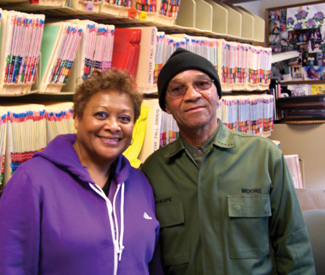
CAREERS AND EDUCATION Wearing a neatly-pressed army uniform in his office at City College of San Francisco Charles Moore, tells a Guardian reporter that he is a warrior for education.

Moore is the recruiter and outreach developer for the college’s Extended Opportunity Program and Services (EOPS) ex-offender counseling program, Second Chance. His team struggles with the fate of underserved refugees from an expanding state prison population (at last count, comprised of 132,887 adults) and the budget cuts that have dug deep into universities and community colleges across California.

Their battle? On a minuscule budget of $150,000 program staff must find a way to help ex-offenders break the incarceration cycle and get a college degree.

And by most counts, they’re winning. Second Chance is fueled by a surprising mix of personal experience, stretched resources, and a steadfast dedication to an underserved student population. It is one of very few such endeavors in the nation.

Moore says one of the recurring problems that ex-offenders face in the school system are Rip Van Winkel moments, inevitable occurrences after years of incarceration. The most minute-seeming technological changes in the world — an automatic-flush toilet for instance, or unfamiliar crosswalk signage — have shaken advisees, sometimes enough to prompt drop-outs.

This kind of culture shock is precisely what Second Chance works to combat, in addition to more traditional academic concerns. Staff wear a number of hats, answering students’ questions about financial aid and programs of study. Peer counselors are also crucial to the program, students who have themselves matriculated with the help of Second Chance and are available to assist those with questions.

“This is a community college,” says Moore. “And we need to be in touch with our community.”

“Second Chance and EOPS really set up a model for similar programs throughout the state and the country,” says Juanita Gray, the program secretary. She has worked from its beginnings as Project Scorpio to the program’s 1981 refashioning under EOPS’ then-director Bill Chin.

Gray remembers the days when inmates would file off the Sheriff Department’s bus and into EOPS, get their handcuffs unlocked, and complete student applications. Nowadays Second Chance, which boasted 120 students last year, sees ex-offenders arrive of their own accord, having already received essential information about the program in prison.

Moore works within Bay Area neighborhoods to spread the word, but more often than not, prospective students seek him out.

“The majority of our referrals come from word of mouth, from within the state’s prison system. People move to the Bay Area for Second Chance,” he says.

Many of the program’s small staff have made it through both a prison sentence and a degree at City College. As Second Chance students they, like their current advisees, received book vouchers, Muni passes, a basic meal plan, priority registration, and advisory support on their journey towards a college degree.

Moore is one of these graduates.

“Those who work in the program are often ‘been there, done that,’ — we understand the struggle of stepping onto a college campus after 25 years in prison,” says Moore.

Like several of his colleagues, Moore passed through California’s penal system multiple times. After one stint, he remembers, “I began to take a serious look at myself. I always had to start over again with nothing once I was released. Things had not changed in my environment.”

But then he found Second Chance. Moore sees the program in stark terms: “education as an alternative to incarceration.”

The program’s staff and tutors say adjusting to a school environment is a major obstacle for ex-offender-students. Jeffrey Masko, who volunteers with eight Second Chance participants each week, tutoring them in English and math, describes the basic challenges for students who are coming from prison time.

“[Second Chance students] sometimes only have one shot, an hour at a library computer, to do their work,” says Masko. “For a lot of these students, there is no ‘later’ — they have to do the work before they get on the bus home, or [maybe if] they have an hour before class [they can do it then].”

If the program’s longevity alone is not enough to prove its effectiveness, statistics help. In the fall 2010 semester, more than 80 percent of students in Second Chance were in good academic standing, according to a 2011 article by program director Ray Fong. Also in that year, students bent on further study transferred to San Francisco State University, University of California at Berkeley, and Mills College.

Second Chancers have gone on to work as drug counselors, social workers, and activists.

“There’s definitely a strange phenomenon [within the Second Chance student body] of giving back,” explains Masko. “Even though they may have spent 10 years in the penitentiary, they look for fields that they can make a contribution within.”

Alumnus Jason Bell heads San Francisco State’s Project Rebound, a similar program geared towards helping the ex-incarcerated towards college degrees. Rudy Corpuz Jr., another graduate, founded United Playaz in 1994 to combat youth violence.

In 2010, students earned certificates in violence intervention, emergency medicine, administration of justice, trauma prevention, and case management skills.

“I haven’t had one person in my office say they didn’t want to give back,” says Moore, “They say it each and every time. And I’m coming up on 15 years.”


Free to be you and me

0

caitlin@sfbg.com

FREE UNIVERSITY OF SAN FRANCISCO

Like many progressive organization, this year-old network of unpaid teachers and unpaying students has found new energy in Occupy’s protests. Unlike many, it’s not stumbling when it comes to the next step in the movement. FUSF has teamed with Occupiers to develop its upcoming round of five-week classes, which will start in February. At press time, courses included “Introduction to Political Economy,” a class on subversive writers, and Chuck Sperry’s “Occupy Art” guide to bringing down the system with propaganda design.

Spring term: Feb. 5-March 4. 10 a.m.-5:30 p.m. Viracocha, 998 Valencia, SF. www.freeuniversitysf.org

IMPACT BAY AREA

Some education strengthens your mind — some education strengthens your soul. Into the latter category falls self defense non-profit Impact Bay Area’s free-to-the-public “Introduction to Personal Safety” classes. Open to ages 12 and up at Sports Basements across the Bay Area, the course teaches you how to keep your eyes open when walking the neighborhoods, with the end goal of living life with less fear and more fun.

Next class: Feb. 8, 6-8 p.m. Register at www.eventbrite.com/event/2704831223. Sports Basement, 1590 Bryant, SF. www.impactbayarea.org

EAST BAY FREE SKOOL

Not to state the obvious, but we live in the Bay Area. Henceforth, we can stop looking at learning the Spanish language as an extracurricular activity, and more as something that we can do to bring our community closer together. That’s exactly the motivation behind the East Bay Free Skool’s Spanish-English Collective, an educational meet-up which unites bilingual teachers and students for some real pragmatic, communication-based learning. Free Skool is big on knowledge that brings the 99 percent together — check its website for other amazing free classes, from anti-gentrification workshops to herbal medicine primers.

Various venues, Bay Area. tiny.cc/ebfreeskool

CITY COLLEGE OF SAN FRANCISCO

At many of CCSF’s 10-plus campuses across the city, you can take courses absolutely free of charge — and sign up for them at any point in the semester. What can you learn? GED prep, introductory construction skills, economics, US contemporary writers, and tai chi, to name but a few of the offerings. How has this vast resource network escaped the chopping block in California’s beleaguered public school system? We almost don’t want to press the issues — let’s just sign up while these courses still exist.

Various campuses, SF. www.ccsf.edu

CW ANALYTICAL

You’ve planted your own garden, gotten your card, and are committed to heightening endocannabinoid levels in your medical marijuana patient family and friends — but do you really know what you’re doing making weed edibles? This marijuana laboratory offers intermittent classes for the cannabis food newbie or vet that teach about quality control, presentation, and applicable regulations.

Next class: “Labeling Your Medical Edible,” Jan. 19, noon. RSVP to reserve class space and to emily@cwanalytical.com. (510) 545-6984, www.cwanalytical.com


Looks good off paper

0

culture@sfbg.com

CAREERS AND EDUCATION According to the Princeton Review, that bicep-straining tome of college rankings responsible for many a young adult’s breakdown, most of the perennially popular majors (psychology, economics, communications, political science) are still alive and kicking. But plenty of alternative, even radical fields of study are blossoming that meld academic inquiry with tangible work towards change. From crafting tables for an Oakland school library to restoring native California plants, many students around the Bay are getting academic credit for innovative contributions towards a sustainable future. 

CHILD AND ADOLESCENT DEVELOPMENT WITH A CONCENTRATION IN YOUTH WORK AND OUT OF SCHOOL TIME

Ah, to be young… kind of. The adolescent years are rarely anyone’s favorites, which makes SFSU’s Youth Work and Out of School Time concentration in its child and adolescent development bachelor’s degree all the more important. Its students learn to directly address the needs of young people in trouble. Internship-heavy and based on first-hand experience, the program trains students to work with youth in after school programs, the justice system, social services, and beyond.

San Francisco State University, 1600 Holloway, SF. (415) 338-1111, www.sfsu.edu

NUTRITIONAL SCIENCE AND TOXICOLOGY

The Bay Area is not only a gourmand’s nirvana, it’s also at the forefront of food-based activism. Cal’s nutrition-oriented bachelor’s program offers three degrees (physiology and metabolism, dietetics, and molecular toxicology) in addition to courses in “pesticide chemistry and toxicology,” “nutrition in the community,” and “human food practices.” We hope the studies will enable the next generation of food scholars to make a tangibly tasty difference.

UC Berkeley, 103 Sproul Hall, Berk. (510) 624-3175, www.berkeley.edu

AMERICAN SIGN LANGUAGE

A degree in ASL is perfect for those gunning for a career as an interpreter for the hearing-impaired, and this associate’s degree or certificate from Berkeley City College is a great place to get started. Classes provide both practical and theory-based knowledge opportunities for intrepid future signers. Courses in the history and culture of deaf people in the United States augment the study of the language itself.

Berkeley City College, 2050 Center St., Berk. (510) 981-2800, www.berkeleycitycollege.edu

WOMEN’S STUDIES

One of the first such programs in the county, City College’s Women’s Studies department has been feminist-ing since 1971. It schools students in sexual violence prevention, HIV and STI outreach, and the complexities and politics of domestic relationships. Students can study for an associate’s degree, but the sexual health educator certificate programs also a notable thing to walk away with.

San Francisco City College, Ocean Campus, 50 Phelan, SF. (415) 239-3000, www.ccsf.edu

COMMUNITY ARTS

Calling all activist-artists, California College of the Arts’ community arts program is comprised of classes that study and build upon the relationships that creative types forge with their community. Students work aggressively for social change through community interaction. Past projects have revolved around designing furniture for an Oakland school and crafting nesting modules for roosting coastal birds.

California College of the Arts, 1111 Eighth St., SF. (415) 703-9523, www.cca.edu

POLITICAL, LEGAL, AND ECONOMIC ANALYSIS

Fittingly, considering that Mills College is home to less than 1,000 undergrads (all female), students in this popular bachelor’s program can rely on lots of individual attention. Students can choose to concentrate on a political, international, or economic focus, prepping themselves, for instance, for future work in public policy or crusading against the death penalty.

Mills College, 5000 MacArthur Blvd., Oakl. (510) 430-2255, www.mills.edu

ENVIRONMENTAL STEWARDSHIP

Crikey. De Anza’s restoration-geared associate’s degree program trains future stewards in wildlife tracking, ecological management, and conservation work. Less alligator wrestling as much as bird-tagging (in Bay Area, anyway), this major arms eco-warriors with courses with names like “Blueprint for Sustainability” and “Community-Based Coalitions and Stakeholders,” and pushes students to spend quality time out in the field.

De Anza College, 21250 Stevens Creek Blvd., Cupertino. (408) 864-5400, www.deanza.edu

Bikes and sailboats

8

OPINION I’m not much of a sailor. In fact, I’ve been known to turn more than a little green when venturing out on the bay under sail. So it may seem a little odd that I am excited about the America’s Cup regatta coming to San Francisco. This high-profile international yacht race has the potential to accomplish even more impressive feats on land than on water, ultimately leaving a legacy of safer streets and more accessible neighborhoods.

An anticipated five million spectators will put the city’s transportation infrastructure to the test. It starts this summer with the qualifying races, then ramps up in summer, 2013, when upward of a half million people are expected to travel to the waterfront on peak race days.

There’s no possible way to move all of these people around this tightly packed city in cars. For proof, talk to anyone who’s been near the waterfront during Fleet Week, a traffic nightmare at a fraction of the size of the America’s Cup.

The Mayor’s Office plan for the America’s Cup wisely puts bicycle transportation front and center. Event planners and politicians know that traffic and parking constraints will preclude many from driving, and transit capacity can be stretched only so far so fast.

Event organizers propose investing in a robust bike share program, park-and-ride lots where visitors can ditch their cars on the edge of the city and pedal the last few miles, and plenty of secure valet bike parking lots.

The most important component is ensuring that the city also invests in safe, comfortable routes welcoming the wide diversity of people who will be trying out two wheels — people who are likely to continue biking long after the events if they have a good experience.

A top priority must be the Embarcadero. Already an enormously popular — and overcrowded — bike route for locals and visitors, the Embarcadero should be made more welcoming to the huge numbers of people who will be drawn there on bikes and by foot.

On big event days, the plan calls for temporarily designating an existing travel lane as bicycle-only space and freeing up the pathway for walking — a more comfortable set-up for everyone.

I urge city leaders to take advantage of this opportunity to pilot a permanent, dedicated bikeway on the waterside of the roadway — the EmBIKEadero. It’s a low-cost, easy way to reconnect people with the waterfront and offer an unparalleled biking experience.

Imagine riding on a mini-version of Sunday Streets on the Embarcadero any day of the week. Imagine a New York City-style high line for S.F.’s waterfront, from Mission Bay to the Golden Gate Bridge. Imagine a way to connect diverse neighborhoods and draw people to local businesses…long after the yachts have left the bay.

The city should also use the momentum behind the America’s Cup to test other opportunities for safe, more welcoming streets, including Polk Street, a major connector to the northern waterfront and already an important route for the growing number of people biking in San Francisco.

Market Street should continue to be a site for innovation. Recent pilot programs prioritizing biking, walking, and transit are already proving to save bus riders time and the Muni system big dollars.

The America’s Cup is our opportunity not only to stage a world-class event, but to build toward a world-class bicycling city.

Leah Shahum is executive director of the San Francisco Bicycle Coalition. To learn more about the San Francisco Bicycle Coalition’s vision for the EmBIKEadero, see connectingthecity.org

Editor’s notes

0

tredmond@sfbg.com

It’s hard for California cities to raise taxes. Almost anything that amounts to a tax hike has to go before the voters, and most of the time, it requires a two-thirds vote.

But in a year when the local legislators are also up for election — and six of the supervisorial districts are up this fall — the voters can pass taxes with a simple majority.

That’s one reason that 2012 is a perfect year for tax reform in San Francisco. The other is the spirit of Occupy.

The tent-city protests changed the political dynamics all over the country, putting the message of economic injustice on the agenda and on the front pages. That’s even more true in this city, which was one of the epicenters of the national movement.

Mayor Ed Lee announced in his inauguration speech that he’s going to be the mayor “of the 100 percent,” an effort to preach the message that we’re all good pals and we all love each other here in this great city of ours, but the truth is we aren’t, and we don’t. The very rich in San Francisco not only have little in common with the rest of us; for the most part, they like it that way. The biggest corporations and wealthiest individuals have an interest in preserving economic injustice, and they’ve shown repeatedly that they will go to great lengths to prevent progressive change.

San Francisco needs to change the way it raises revenue, and one of the key elements of that is the local business tax. Right now it’s a flat tax on payroll, and a lot of people (including me) don’t like it. So there’s movement for a new type of tax, maybe on gross receipts.

That’s fine — but it has to be more than a shift in how taxes are determined. San Francisco desperately needs more money — probably at least $250 million a year — to balance the budget without further cuts and to make up for what the state and federal government have taken away. And a new business tax needs to be progressive — to hit the biggest and the richest harder than the small and struggling.

I fear the mayor is not going to be pushing that kind of agenda, so someone on the board has to do it. This is the year that a “tax the one percent” measure can win. But we need to get started now.

8 Mile blues

0

There have been a number of documentaries lately reflecting a fascination with Detroit as a ruined giant, our very own (barely) living Pompeii. Local residents have made films lamenting the extreme poverty and the bungled public-corporate policies that largely created it. Non-locals, particularly those state-funded Europeans, have made others whimsically extolling the environ’s pockets of reversion to agrarian culture — seeing utopian futurism there rather than a grimly comic last resort. Or they’ve exploited its accidental status as the world’s largest open-air gallery for the aesthetics of extreme urban decay.

James R. Petix’s It Came From Detroit is like none of the above. In fact the movie it most resembles in some ways is Doug Pray’s 1996 Hype!, which documented the still-fresh boom and bust of grunge — a phenom you may have thought about recently given the, er, hype attendant around Nevermind‘s 20th anniversary. About a decade after Seattle flew the flannel flag high, Detroit too had a musical moment that conquered the nation … or at least was supposed to.

Motor City’s answer to grunge — as framed by a media finally certain it had found the ever-elusive "next Seattle" — was garage, a term that had already gained some new traction from the 1980s Paisley Underground and related ’60s revivalist movements. Sporting chops barely above the Shaggs level when they started out, turbulent trio the Gories’ willfully primitive abandon triggered something, igniting a DIY scene that would eventually encompass such stellar acts as the Wildbunch, the Hentchmen, the Go, Detroit Cobras, the Dirtbombs, Electric Six, and more.

The scene was primed to explode, and when the White Stripes became Cover Boy and Girl on music mags ’round the world, their improbable success seemed sure to spread. A publicity frenzy peaked in 2003, when the Stripes vs. Von Bondies "feud" reached maximum impact via Jack White’s fist on Jason Stollsteimer’s face. But the rough-edged, rootsy focus of Detroit’s disparate new music stalled short of making further commercial inroads; while their sounds ranged from punk blues to goth bluegrass and beyond, nearly all the bands had the kind of live dynamic that can only be muted in the recording studio.

The label-signing frenzy fast over, for most it was back to the drag queen bars, bowling alleys, and coffee shops that had served as Gories venues early on, back to the lowly dayjobs (when found) and sleeping in cars when even rock bottom rent is too much. But the myriad interviewees in It Came don’t seem particularly disillusioned. As more than one points out, when you’re from Detroit you keep your expectations low and make music for love, because nobody’s gonna become a star. Almost nobody, that is.

IT CAME FROM DETROIT

Thurs/5, 7:30 and 9:30 p.m., $6.50-$10

Roxie Theater

3117 16th St., SF

www.roxie.com

Current events

0

arts@sfbg.com

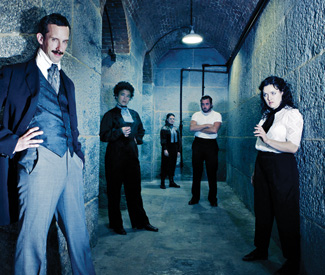
THEATER In early December, Christopher W. White, artistic director of Bay Area ensemble theater company Mugwumpin, showed me around the cool, slightly fusty basement rooms of San Francisco’s Old Mint. Used apparently for storage now, this large subterranean area beneath the Doric columns and Greco-Roman grandeur of “the Granite Lady” was where, beginning in the latter 19th century, the action really happened: the white-hot smelting of money, in one of the most active U.S. mints in its day. You wouldn’t know it now to look around at the gutted rooms with their odd detritus, dim walls, and sunken cement chambers, but in the 1930s one-third of the country’s gold was housed here. It’s a kind of catacomb of local and national history, and especially the history of money power.

Theater, by contrast, is not a moneymaking enterprise, generally speaking. For that matter, neither is free wireless energy from the air — one of the grandest ideas to motivate the stunningly brilliant and influential mind of Nikola Tesla, the little remembered Serbian-American inventor, Thomas Edison rival, and father of alternating current (AC). But the two come together quite naturally here, underground, where the spirits of industrial wealth and labor commingle so forcefully.

This weekend, which marks the anniversary of Nikola Tesla’s death in 1943, also marks the opening of Future Motive Power, an original ensemble-driven work that culminates a year of research and experimentation by one of the Bay Area’s foremost practitioners of devised theater. Mugwumpin’s production takes place in a section of this very basement, where audiences will alternately sit in and wander around a site-specific piece built from the ground up, with painstaking fidelity to historical details — and a commitment to reaching toward aesthetic and dramatic possibilities in concert with one of the most imaginative minds of the modern age.

His approach to science, like many a great innovator, had much in common with an artistic impulse. Exhibiting a transcendent creative ability, he worked with blueprints in his head, visualizing an idea for a new machine in unfathomable detail. He worked obsessively, often going with little or no sleep. His wide-ranging imagination was prodded by a consistent desire to serve humanity, but he had few close relationships and found everyday forms of physical contact unbearable. He’d probably merit a few psycho-clinical acronyms today, but let’s just say he was eccentric. Tesla’s brilliance, under-appreciated influence, idiosyncrasies, and sad fate have made him a compelling figure to artists and writers for years, even as his achievements remain historically obscured by, among other things, the legacy of savvy self-promoter Edison.

Alternately supported and bounded by the capitalist forces represented in these serious granite walls under the Old Mint, Tesla had a mind and heart remarkably free of the normal limits. His amazing career — balancing tenuously the forces of nature, social idealism, and the capitalist marketplace — speaks to some of the weightiest themes confronting the world today.

But those come later. Chris White — who plays the thin, fastidious inventor with a primly sympathetic mien, his eager certainty chastened by the half-lost alertness of the outsider — says the idea for the piece simply began with a song he couldn’t get out of his head: “Tesla’s Hotel Room,” by neo-country act the Handsome Family.


“In the last days of wonder

When spirits still flew

Where we sat holding hands

In half-darkened rooms

Nikola Tesla in the Hotel New Yorker

Nursing sick pigeons in the half-open window”


The song’s particular brilliance lies partly in connecting Tesla’s scientific genius with a spiritualist age, when science, philosophy, and religious mysticism commingled lustily in séances, theosophy, Swedenborgianism, and the like. It churns tragedy and prophesy in the tradition of the American ballad, channeling that “old weird America” Greil Marcus writes about. That deep stream of popular culture (as opposed to top-down manufactured mass culture) has inspired great things from Mugwumpin before (Frankie Done It 291 Ways, for instance, whose wildly disparate theatrical riffs on the “Frankie and Johnny” ballad was a highlight of the 2006 season.) This is Mugwumpin territory par excellence.

In keeping with Mugwumpin’s modus operandi, the yearlong process for Future Motive Power involved research and input from each member of the ensemble (Misti Boettiger, Joseph Estlack, Natalie Greene, Rami Margron, and White). By the time final rehearsals began inside the Mint, the piece contained a purposefully anti-linear, fragmented set of scenes very much in the vein of Mugwumpin’s past work — a kind of archeological approach to storytelling in which an intricately choreographed and physically dynamic set of vignettes and movement-designs extrapolate freely from certain evocative material fragments.

“At one point the J.P. Morgan character [I play] was just a table and tablecloth with my head sticking out of the top,” notes founding company member Estlack. “I’d move around everywhere with this table. I liked that a lot, but we can’t keep everything.”

The piece also has a director — something not every Mugwumpin production has used. Susannah Martin, an accomplished local director making her company debut, has come onboard to help guide the shaping of the piece, though she happily admits it’s not a typical gig working with such a highly collaborative, anti-hierarchical ensemble. Much initial time was spent, she says, “figuring out how I can be of best use to everybody. [Unlike productions with other companies,] it’s not my responsibility to hold the vision of this piece — it’s all our responsibility.”

It is rare to see so much discussion among all parties during a rehearsal, but it seems to contribute to the unusual dynamism of the results. To watch the actors rehearse, it’s as if the fluid staging aspired to Tesla’s own poetical, mercurial mind — represented here, aptly enough, not just by White but by three female characters (Boettiger, Greene, and Margron) personifying not muses so much as the willful, vaguely unhinged creative forces working with and through him.

Rehearsal continues with these three characters pulling a long electric cord into a square, as Tesla’s tussle with rival radio-technology pioneer Guglielmo Marconi (Estlack, who incarnates all Tesla’s principal antagonists including Edison) becomes a rumble inside a boxing ring. A moment later the boxing ring has morphed again into an image of Tesla raising Wardenclyffe, the wireless energy tower he partly erected on Long Island with Morgan’s money — that is, until Morgan discovered it was power to the people Tesla had in mind, and pulled the plug.

FUTURE MOTIVE POWER

Through Jan. 29

Previews Fri/6-Sat/7, 8 p.m.; opens Sun/8, 8 p.m.

Runs Fri.-Sun., 8 p.m., $15-$30 (previews, pay what you can)

Old Mint

88 Fifth St., SF www.mugwumpin.org

Time is now

0

emilysavage@sfbg.com

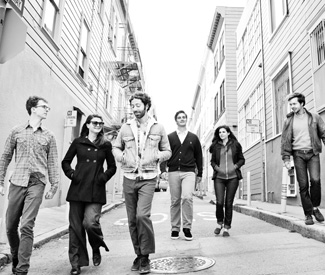
Music Last spring there was no end in sight. The future seemed bleak for what was once a promising project — the chance of a lifetime for Bay Area septet the 21st Century. Now, a full year after its intended release, the colorful debut album, The City, will see the light of day.

The struggle for The City began in 2010 with Kickstarter. Well, technically it began with an idea. Multi-instrumentalist Bevan Herbekian had been bouncing around the world since graduating from U.C. Santa Cruz. He’d come to San Francisco, the city closest to his Northern California-born heart, then promptly traveled to Europe, back to SF, next out to the Middle East — Israel, Egypt, Jordan — a quick stop in New Orleans and he was again back to the Bay. During those years, he was collecting sound. A guitarist, bassist, pianist and singer-songwriter since age 12, he fiddled with mandolin and banjo. In Jerusalem, he was gifted a small guitar and ended up busking a few times at a local shuk.

Upon Herbekian’s return to San Francisco, he decided to create the band of his dreams, an expansive folk-pop act with intricate arrangements, multi-part harmonies, and plenty of acoustic instruments. He gathered up friends, former bandmates, and a few Craigslisters, and created the 21st Century. The band now includes a lead guitarist, rhythm guitarist, bassist, drummer, keyboardists, a trumpet player, a set of musical sisters, and the occasional live saxophonist.

Herbekian then worked on a set of creamy folk-pop tunes with abstract lyrics touching on the darkness and ebullient light of moving to a new city, specifically San Francisco (though he now resides in Berkeley). Sitting in the eternally packed Mission Pie, Herbekian recounts crafting the songs for The City, while he was living just down the street from the restaurant, near 25th and Bryant. “[the song] ‘We Are Waiters’ has some specifics about living in San Francisco, in the Mission,” he pauses, taking a moment to collect his thoughts, “[it’s] about being young, living in this city, and going back and forth between feeling exuberant and like you don’t know how to reconcile that with adulthood.” A common refrain in this adult-kid city of ours.

He recounts the battle to release The City. “It honestly felt like this project was fated to never be completed. There was always some catch, some snag.” In the summer of 2010 the band met a producer who wanted to record and promote the album. Void of funds enough to travel and record, the 21st Century turned to Kickstarter and brought in $11,000, which Herbekian describes as “nuts” and “truly amazing.”

With funding in place, the band flew to Texas, recorded the album, then returned home to await mixing. Something got lost in translation however, and the mixes, which was returned to them months after recording (in spring of 2011) were “way off the mark.”

“[Our music] is relatively pop-based, but I like to think that there’s a sense of artistry to it. We really pay attention to the details and do all these big arrangements, but the mixes just sounded like glossy top 40 pop,” explains Herbekian. He wanted more Brian Wilson, less Justin Bieber. He next made the difficult decision to part ways with the producer, gather the loose tracks, and find another way to finish the album. A few band members left at this point, and Herbekian felt the pressure weighing down.

“Four weeks after that decision was made we were left with a fraction of our musical family, still in debt, and no relationship with the person who we were hoping was going to be our ticket to something — and all these sessions we had no idea what to do with.” Herbekian had worked on home recording projects, but nothing of this scale.

By chance, one of the band members was pals with Ben Tanner, a touring musician and producer who works at Fame Studios in Muscle Shoals, Alabama. “I had him take a shot at the song that I thought was the absolute worst and he resurrected it.” Tanner continued to resurrect the album, piece by piece, working closely with Herbekian. The two wrote tireless emails and many late night phone calls transpired; they were sending mixes back and forth for months. “I’ve never met him in person but he’s a saint to me,” Herbekian enthuses.

The hard work has paid off, and Herbekian beams as he finally holds the completed album in his hands. The City‘s release party is this weekend at Red Devil Lounge and he can hardly believe it. At this point the process has taken so long that the band already has a batch of new songs, two full albums-worth. For this one, Herbekian says, “We might just go back to recording it ourselves.” *


The 21st Century

With the Blank Tapes, Mark David Ashworth, and Muralismo

Fri/6, 8 p.m., $10

Red Devil Lounge

1695 Polk, SF

(415) 921-1695

www.reddevillounge.com

Lights, Jolie, action

0

arts@sfbg.com

FILM The grudging, occasionally outright hostile tone some critics, culture vultures, and fan types have taken toward In the Land of Blood and Honey points toward a fundamental problem most of them have, though few admit it: the belief that Angelina Jolie is just too damn famous, too much a figure of public speculation and private fantasy, to be taken seriously — let alone to make a movie about rape and genocide during the War in the Balkans.

That bleak historical chapter occurred about the same time that Jolie was a Beverly Hills goth teen into knife play, too many recreational drugs, and her brother (eww), with a fledgling professional resume consisting of modeling gigs, music videos, and an inglorious starring role in 1993’s Cyborg 2. Since then she has grown up a lot, and in ways that count (adopting children as well as bearing them, actually working at her “humanitarian causes” rather than using them as photo ops), is sort of a model world citizen as far as ginormous movie stars go. She also paired off with another such example, Brad Pitt — World’s Sexiest Woman, meet World’s Sexiest Man, cue celestial chorus — and while it may be a coincidence, shortly after that event he started consistently behaving onscreen like a real actor and less like an International Male model.

Jolie, too, can act, but since becoming a big star (circa 2001’s Lara Croft: Tomb Raider), it’s been disappointing how seldom she’s been called upon to do so — as opposed to bringing the near-cartoonish va-voom and ass-whup in movies like 2003’s Lara Croft Tomb Raider: The Cradle of Life, 2005’s Mr. & Mrs. Smith, 2008’s Wanted, and 2010’s Salt. Truth be told, when she has gotten a serious part in a serious film such as 2008’s Changeling or 2007’s A Mighty Heart, the stubborn glare of celebrity hobbles our ability to let her disappear into the role. It’s not fair, but there ya go. Those are highly competent, versatile performances that nonetheless might be more effective if delivered by someone whose first name alone seems to call for an exclamation point.

This is all beside the point when it comes to In the Land of Blood and Honey, or ought to be. But the fact is, her narrative debut as writer and director (she’s also credited with a little-seen 2007 documentary, A Place in Time) would probably be getting reviews in the respectable-to-rave range if created by anyone else. It’s certainly gotten some of those, but you’d be hard-pressed not to glimpse a certain “Who does she think she is?” resentment behind others who see the film as heavy-handed do-gooderism from a chick who should leave cinematic commentary about profoundly tragic historical events to people who are less … er, sexy.

Not that Blood and Honey doesn’t have its genuine faults. There’s contrivance in the way that young Muslim painter Ajla (Zana Marjanovic) and Serb cop Danijel (Goran Kostic) have a first date just as the war reaches 1992 Sarajevo — we never do find out how they met or how well they already know each other — then intersect again when she’s a POW and he’s an officer in the Serbian Army. This allows him to save her from the regular rapes other women prisoners suffer at the hands of guards, and eventually to set her up as his protected mistress, a breach of code that is unwelcome news to the ears of his powerful father General Nobosjsa (Rade Serbedzija), a fanatical “ethnic cleanser.” This premise is typical movie exceptionalism, even if it’s still a good step above the usual device of casting a Western character-star as our guide in unpleasant foreign affairs (see: Christian Bale in Zhang Yimou’s new Rape of Nanking drama The Flowers of War). The queasy but passionate love under impossible circumstances between Danijel and Ajla is compelling, but never as powerful as several instances of madness and cruelty that befall subsidiary characters, like the brutalization of a young woman who volunteers her sewing services, or an infant’s thoughtless fate simply for crying. The shocking senselessness of war atrocities depicted in scenes like these have some of the gut-punch impact of similar bits in Schindler’s List (1993). Keeping herself off camera (unlike many an actor turned director), Jolie also keeps stylistic flourishes likewise; Blood and Honey isn’t impersonal, but eschews any vestige of auteurist “personality.” (Comparisons may be odious, but it’s worth noting the seriousness Jolie achieves this way is the diametrical opposite of the superficial showiness displayed by Madonna’s directorial calisthenics to date.) It’s immaculately crafted, though, and the assurance with which the director tempers her own screenplay’s potential for excess suggests a refined intelligence beyond what can be condescendingly explained away by having the funds and ability to hire first-rate collaborators.

While not a great movie, Blood and Honey is a very good one; an honorable achievement, not just a vehicle for honorable intentions. Of course the point is nothing more complicated than “War is hell,” but how often do movies actually punch that across, as opposed to pouting a bit while making war look exciting?

Don’t hate her movie because she’s beautiful, rich, freaky, not Jennifer Aniston, or anything else related to the larger-than-lifeness of being Angelina Jolie. If someone else made In the Land of Blood and Honey, there would be little question about admiring its stark effectiveness. Of course, if someone else had made it, you probably wouldn’t be interested in seeing it, or even able to — the one positive her celebrity brings to bear here.

IN THE LAND OF BLOOD AND HONEY opens Fri/5 in San Francisco.

Shining season

0

virginia@sfbg.com

APPETITE In its opening weeks, AQ in SoMa* reminds me of lauded Commonwealth and Sons and Daughters. At all three restaurants, precision marries inventiveness — at a reasonable cost. AQ’s starters are $9 or $13, while entrees are $24. After dining in cities the world and country over, I can vouch that it is rare to see this level of skill and creativity at this price.

Seasonal menus are a dime a dozen here, but how often do you see seasonal trees and plants with seasonal bar glassware, and a seasonally changing bar top? As AQ’s bar morphs from copper to Italian marble for the winter and fall leaves enliven, the space exudes celebratory beauty. There’s exposed brick, funky whisk lighting, open kitchen, and a ridiculously cool basement lounge with mid-century lamps and couches viewable from a mini-bridge walkway at the restaurant’s entrance.

Then there’s the food. Owner-executive chef Mark Liberman combines New York and San Francisco sensibilities with Mediterranean and French influences. But when it comes to style and ingredients, he’s decidedly Californian. (Liberman has cooked on both coasts, as well as in France and Napa, and with Daniel Boulud and Joël Robuchon in Vegas). Nuance prevails without getting mired in overwrought fussiness. Starters are small, but entrees are as filling as they are complex.

All this comes into focus when you taste Monterey squid and charred avocado ($9). Parsnips and grapefruit add brightness, while black sesame char over silky avocado ushers in a dish rich, earthy, unusual. A delicate starter, it is rife with flavor.

I adore boudin noir (blood sausage or black pudding, depending on if you’re from the US or UK-Ireland) and Liberman’s version is a thrill. A warm, spiced pile of tender meat (not in a sausage casing) is companion to chestnuts done three ways ($9): raw, confit, and as a cream sauce. With quince and sorrel, the dish pops. At this point, I’m catching my breath at the level of detail and sapidity, recalling countless basic salads or sandwiches I’ve had for the same price.

Not as revelatory as the charred avocado or boudin noir, a toasted barley and Dungeness crab dish ($13) tossed with mushrooms and Douglas fir, still pleased, as did the cauliflower ($9) in various iterations from charred to raw, doused in vadouvan spices with golden raisins. In the Autumn spirit, roasted pumpkin ($10) sits alongside carrots, ancho cress greens, with a heaping scoop of mascarpone cream. Even a little gem salad in buttermilk dressing ($10) fends off typicality with poppy seeds, watermelon radish, and cured sardines.

On the entree front, one witnesses Liberman’s range in a juicy, utterly satisfying slow-cooked veal breast (all entrees $24), subtly candied in orange, accompanied by unfried, plump sweetbreads and broccoli. He does not leave vegetarians in the shadows with Kohlrabi “Bourguignon.” Kohlrabi, a brawny German turnip, stands stoically in the center of the plate, a root sprouting from the dish with flair. Notes of horseradish and star anise peek out, but it’s the red wine sauce that must be lapped up.

Desserts ($8) are equally expert in detail but didn’t wholly captivate. I enjoyed ginger cake with Asian pear and salted toffee, cooked in Amaro Montenegro, and a devil’s chocolate cake dusted in coffee and smoked streusel, with shavings of roasted white chocolate — although I could have used more smoked streusel to bring out the earthiness of the cake.

A winning team of talented bartenders, helmed by Timothy Zohn, is worth a visit alone and should be a new go-to for cocktailians. (All menu cocktails are $10.) Winter’s chill diminishes when sipping a New Amsterdam # 1: raisin-infused Bols Genever, maple syrup, Old Fashion bitters, and a splash of apple cider. Head south with Mexican Piano: Espolon blanco tequila, huckleberry syrup, lime, and tarragon, topped with a torched bay leaf. The menu contains lovely aperitif and digestif cocktails, many amaro based, with a section of classics given seasonal treatment, like a sazerac of date-infused Russell’s Reserve Rye, sugar, and Peychaud’s winter bitters. (The vintage glassware is gorgeous)

Already, AQ feels like “the whole package.”

AQ

Mon.-Sun. 5:30 p.m.-11 p.m., Sunday brunch 11 a.m.-2 p.m.,

1085 Mission, SF.

(415) 341-9000

www.aq-sf.com

MC/Visa

Full bar

Subscribe to Virgina’s twice-monthly newsletter, The Perfect Spot, www.theperfectspotsf.com

*Due to an editing error, AQ’s location was misstated in the paper as being in the Mission. Since the time of this review, AQ has since discontinued the lunch service referred to in the paper edition. 


Holeyness

0

le.chicken.farmer@gmail.com

CHEAP EATS Remember when we used to go out to Ocean Beach on New Years Eve nights and burn Christmas trees? I want to do that again. I think you can still have a bonfire, right — at the end of the park?

Maybe next year.

Over the last couple holiday seasons I have been gradually feeling my way back into the spirit of things — last year by visiting Joshua Tree and hacking a chicken’s head off, and this year via the good ol’ American tradition of watching football on TV and eating potato chips and geese.

That was Christmas Eve. I even got some presents for people!

At this rate, by 2013 I will be a good Christian. Until then though, and with due respect to Georgie Bundle’s avocado-smoked goose (out of this world), I think my favorite Christmas Day tradition is how the Jews do: Chinese food and a movie.

There were two shows we would have preferred, but for the occasion it seemed like a good idea to choose a chosen person’s: Woody Allen’s Midnight in Paris, which was by Christmas only still playing in Berkeley.

Now, I know it’s unpopular to like Woody Allen, but I can’t help it, I still do. He repeats himself, he’s predictable, he has a favorite type font, and all the other old problems … but: still fucking funny, and in this case even sweet, to boot.

But I’m not a movie reviewer.

Hi. My new favorite insecticide is Orange Guard®, because it works. And smells good. As part of my re-entrification into religiousness program, I have been practicing genocide. On ants, of which Oakland has several.

In fact, I’m pretty sure Woody Allen played an ant in an animated movie once, in case you’re looking for a tie-in.

Just so you know though, I’m not. I’m trying to find my way — via the scenic route, as usual — to Chinatown.

Oakland’s.

Christmas morning, late morning, before the movie. And as it happens there was a line of ants marching in under our cottage door while we were marching out, so I got the Orange Guard®, sprayed the franks and beans out of them, and then slipped on the mess my massacre made and almost broke my leg.

Restaurantwise, as usual Hedgehog had done her homework, and mine too. We went to Gum Kuo, because they open early and have Chinese donuts. It was the kind of place where we were the only whiteys in the place. The waitressperson seemed to want to ignore us, which gave us time to study the donuts before ordering them.

They are sliced crullerlike thangs that you’re supposed to dunk into rice porridge, or jook. But I’m honestly not very much interested in porridge, or jook. No. I’ll dip my own personal Chinese donuts in a steaming bowl of roast duck won ton noodle soup, thank you. And they were delicious, drowned suchwise, but unnecessary, because roast duck won ton noodle soup is a big enough breakfast for me any day of the week — Christmas included.

And that wasn’t even everything. We also had fried chicken wings, which were weak, and some barbecued pork and cilantro rice rolls, which were strong. Hedgehog wasn’t convinced, but I loved them. They’re chopped up pieces of pork with tons and tons of cilantro, wrapped in a gooey rice dough and drenched with something soy saucy.

Admittedly, the rice wrapper was overdone and gloopy, but the insides were so good I was almost thankful for the flaw. Otherwise, my head might have unscrewed and shot through the ceiling. Which would have been embarrassing.

The soup was not out of this world, but the duck part was excellent, and the won tons had discernible shrimps in them, and the noodles tasted homemade, and, hey, maybe it was a little out of this world.

In any case, we had a good time. By the time we left there was a line out the door of the place. And then it was like that after the movie, too. This leads me to believe that Hedgehog and me are ahead of our time.

Although: there are other possible interpretations.

GUM KUO

Sun.-Thu. 7:30 a.m.-10 p.m.; Fri. & Sat. 7:30 a.m.-midnight

388 9th St., Ste. 182, Oakl.

(510) 268-1288

Cash only

No alcohol

King of the beach

0

emilysavage@sfbg.com

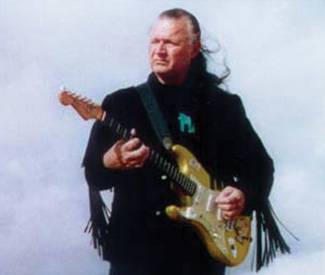
Music In the beginning, the ocean was quiet. And before Dick Dale, the chords were thin, flat, and sweet. A young surfer growing up in picturesque 1950s Southern California, Dale changed the course of rock’n’roll with the thick, wet reverberating sound of Middle Eastern-influenced surf guitar and a little song called “Misirlou.”

On that same album, 1962’s Surfer’s Choice (Deltone), he released crashing waves of perma-hits, from the similarly instrumental first hit “Let’s Go Trippin'” with its walking guitar line, to juicy-hippie pop track “Peppermint Man.” In the decades that followed, Dale influenced an expanding scope of musicians with innovative style, new amp sounds created with the help of pal Leo Fender, and his own signature guitars. He’s lead a paradoxical life, the eccentric icon keeping exotic animals (most notably, a pet jaguar), but also a ’60s-famous rocker who never touched a drug in his life. Thanks to healthy living and strong values, he’s in a continuous prime despite lifelong illnesses; he keeps playing, keeps touring, and has hopes to get back to the beach soon.

I spoke with the maestro on the phone days before the holidays in anticipation of his Oakland show this weekend; in a friendly, frank, and meandering conversation he openly discussed his storied past, his eternal love for the water, and a surprising favorite instrument:

San Francisco Bay Guardian You’re about to go back out on tour?

Dick Dale We just finished another tour — 20 concerts on the East Coast where I was born. And now I’m going up to Washington and back. I go to Solana Beach, San Jose, and Oakland at the Uptown. We play all over the world though. In Europe we play to 490,000 people outdoors, then we go play fairs. But I like the club circuit, I’ve been doing it so many years. It’s good because it’s a personal thing. I’ve been dealing with cancer for the last five years and diabetes on top of that, and when they see me on stage, it’s like a big club [atmosphere], and they say ‘how can he do that without taking drugs?’

I’ve never had a drug in my body in all my life. I don’t take pain pills, never had alcohol in my body in my life. Your body is your temple. I’ve been a vegetarian for many years, never ate anything with a face. That’s what gave me the strength to fight the cancer. The people, they see me performing and say ‘wow, how do you keep doing that?’

When I was 20 they gave me three months to live from rectal cancer. I’m still here at 74, doing 30 concerts in a row. When I get to performing I just don’t leave. I get at the doorway with my wife Lana and I talk with the people and sign until everybody leaves.

SFBG Where’s your home base now?

DD I live near Twentynine Palms, actually Wonder Valley above Palm Springs. I still have my boats in Balboa in Newport Beach though, I came there in 1955. I came first to Southwest LA then to Balboa where I created what I created in the Rendezvous Ballroom — [it was] where all the big bands played in the late ’50s.

I created the first power amplifiers with Leo Fender, we put transformers and big 15-inch speakers. That’s why they call me not only the King of the Surf Guitar — ’cause I was surfing everyday — but also the Father of Heavy Metal because I played on 60-gauge guitar strings, and strings are normally small, thin, but mine, they called ’em telephone cables, because I wanted a big, fat sound.

SFBG When did you first discover an interest in music?

DD When I was a kid back in Boston. I’m self-taught. Never took a lesson. Piano being my favorite. And I always played trumpet, sax, accordions, and harmonicas — you name it! I was just inducted into the Musicians Hall of Fame & Museum in Nashville. That’s the real deal, that’s where you’re voted upon by over a hundred thousand players, musicians.

SFBG And how’d that feel? It must’ve been exciting.

DD That was the real thing! That other [rock history museum], that’s just governed by a dozen people around a table. I really never paid attention to any of these though really, I’ve always been a rebel in the business. The big agencies and recording companies, they don’t like me, haven’t liked me since I was a beginner in this business because I knew what they were doing when they had these kids sign — they were taking away all their royalties. I tell the kids now, don’t sign with a big company, the minute you sign, you sign over your rights.

SFBG Do you meet a lot of younger bands? Do you see your influence on their music?

DD Yeah, they all open up for me. It’s been going on and on though. I found Jimi Hendrix when he was playing bass for Little Richard in a bar in Pasadena for 20 people. Stevie Ray Vaughan, his first records he learned on were Dick Dale records. I’m the guy who created the first power amplifiers with Leo Fender. In fact, I just got through doing one of the songs on the album for Glen Campbell’s last album. Glen played backup guitar in my recording sessions back at Capitol [in the 1960s].

http://www.youtube.com/watch?v=KCCJtR-RjHg&feature=fvst

SFBG Do you ever think about releasing new material?

DD My son, Jimmy [who’s 19], he matches me note to note, but I also taught him drums like Gene Krupa. Jimmy and I, we do dueling guitars. We just created two new guitars. Jimmy has one called the Jimmy Dale Signature Kingman guitar, and I have the Dick Dale Signature Malibu guitar. And my guitar is about three-quarters size so you can put it in a car and play it. It’s something I’ve been screaming about for 20 years, nobody would listen. Finally Fender wanted to me to do something and I said I won’t do it unless you make this guitar.

On acoustic guitars it’s usually six-to-eight inches deep to make a big sound, but they don’t realize its unnatural for the average human to put their arm over the top of the guitar and start strumming, you get a cramp in your back, the older you get, the quicker that comes. I’ve always said ‘why can’t I just drop my arm straight down?’ Instead of eight inches deep, make it three inches. They all said ‘you’re not going to get the sound.’

When you have molecules for mahogany, they’re a certain shape, you strike a note with a string, it’ll go ‘BING!’ The note wants to travel like a tsunami wave, a continuation, so it travels through the back, up the side, but when it goes to the top base with a different wood, it’s like somebody changed the recipe for your soup. You’re going to hear the string, but you’ll never hear the color of the sound, the pureness, undisturbed.

I tried to explain that to them using one wood so it’ll be all the same molecules. I convinced them to do that, they made that guitar then I had them put on two pick guards, one on top, so you save the face of the guitar, then I had them put on a tuner. Then I had them strum it and those techs, their jaws just dropped. I said, ‘see? The world is no longer flat, fellas.’

The last tour we did, was only just Jimmy and I doing dueling guitars. We sat in two chairs like the Smothers Brothers, picking on each other, father and son. Now we’re doing the tour with my band, and now he’s doing drums for me.

SFBG I saw that you were inducted into the Surfing Walk of Fame in Huntington Beach.

DD Yeah, everybody can walk all over me now. No, I’m just joking, I make fun of everything. I used to surf the pier all the time. I’ll be back in the water again, it’s just that we’ve been on such a hellacious schedule that I don’t even have time. When I go back, I’ll be back in the water. To me that’s the greatest healer.


Dick Dale

With The Bitter Honeys, and the Dirty Hand Family Band

Sat/7, 10 p.m., $20

Uptown

1928 Telegraph, Oakl.

(510) 451-8100

www.uptownnightclub.com

By the roots

0

caitlin@sfbg.com

HERBWISE Where (besides this column, of course) do you get the latest on marijuana? When it comes to distributing accurate information about buds, Steph Sherer, executive director of medical cannabis advocacy group Americans for Safe Access (ASA), makes no bones about her organization’s role. “Most of our members depend on us for news,” she told the Guardian in a recent phone interview.

Even when clashes between marijuana proponents and the government are brought to light — not always a given in this political climate — Sherer finds the one note handling of cannabis issues by the mainstream media troubling. “[Cannabis] gets thrown on [journalists covering] judicial beats instead of getting picked up by the human interest, or the health and science side of things,” she said.

ASA’s response to this dearth of useful reporting on cannabis was to develop a free iPhone application that serves as a media catch-all for medical marijuana advocates. At no cost, anyone concerned with losing their right to access their medicine safely — or who wants to learn the latest about the sticky green — can now download an interface that pulls together news updates, alerts for upcoming political actions, and materials that can add to one’s activism repertoire; things like phone numbers for legal counsel and advocacy training videos.

For Sherer, the app has the potential to empower the people in the crossfire of the ongoing clashes between the federal government and state-legal growing and retail facilities: patients. “We are creating a platform that empowers people to be their own advocate. The people who can advocate for this the best are the people who are affected.” 

ASA EXECUTIVE DIRECTOR STEPH SHERER’S TOP 6 CANNABIS STORIES YOU MIGHT HAVE MISSED IN 2011

1. In March, the National Cancer Institute recognized marijuana’s medical benefit, classifying it as a “complementary alternative medicine.” Days later, the reference was diluted on its website, per the recommendation of the National Institutes on Drug Abuse.

2. After Obama’s Justice Department fought their appeal, Californian breast cancer survivor Dr. Mollie Frye and her husband were sent to prison in April for five years because of their state-legal growing operation.

3. In October, California patient advocates sued the Obama Administration for violating the 10th Amendment by coercing and obstructing local and state officials, preventing them from implementing medical marijuana laws.

4. The governors of Washington State and Rhode Island petitioned the federal government to reschedule cannabis to allow for medical use.

5. In Connecticut and New Jersey, governors continue to move forward with cannabis access legislation despite threats from US Attorneys.

6. 63-year old Norman Smith uses cannabis to mitigate the symptoms of his inoperable liver cancer. Smith is being denied a transplant from Los Angeles’ Cedar Sinai Medical Center until he agrees to stop using cannabis.


An open letter to Ed Lee

76

OPINION Dear Mr. Mayor,

During the next week you will be appointing the a supervisor for District 5, an area of the city that has been historically considered the most progressive part of one of the most progressive cities in the country. It will be a signature decision for you in the next year, and will reveal the tone of your administration. Will you be a consensus mayor — or will you carry on your predecessor’s fight with progressives?

You have many qualified choices, but there is probably only one on your list that a majority of progressives would consider a clear progressive choice: Christina Olague, president of the Planning Commission. There are some who have hesitations about her, but ironically those hesitations are based on her relationship to you and her support for your candidacy for mayor. I have to admit, as a supporter of progressive Supervisor John Avalos for mayor, I shared some disappointment that she didn’t support John.

I’m sure there’s intense pressure on you to choose a more moderate choice, and I’m sure there are from your perspective some valid points to that argument. That said, District 5 deserves progressive representation.

I am a Haight resident, and I ran for Supervisor in District 5 in 2004. Supervisor Ross Mirkarimi came in first, I came in second, and Lisa Feldstein came in third. Both Lisa and I have spoken repeatedly about whether we would run next year, and we have even discussed running as a slate. Most political analysts think one of us would have a decent shot at winning — but I think both of us would support Christina, assuming that her votes continue to reflect her commitment to the progressive values of the district.

Christina not only supported you, she also supported Mirkarimi in 2004, and Matt Gonzalez when he ran for supervisor in 2000. She was appointed to the Planning Commission by Gonzalez and has been reappointed repeatedly by progressive supervisors to that commission. While her votes have not been perfect, by and large, her record is excellent; she has never succumbed to pressure, has listened well to all sides, and has ultimately done what she thought was right.

For example, she stood up for tenants’ rights when the landlord from Park Merced came to the Planning Commission to ask that 1,500 apartments be demolished, all of which were subject to the city’s rent control ordinance. She recognized the flaws in the landlord’s argument that a side agreement (negotiated without the local tenant groups involved) would prevent rent hikes and evictions. Olague was on the right side of history on the Park Merced deal, and has a long record of building tenant and senior tenant power. That’s the kind of leadership we need for District 5, an area comprised of primarily renters. I believe Olague will be a supervisor tenants can trust.

I can’t guarantee that all progressives will stand down if Olague gets the seat. The ego game is what it is. You have learned that from politics, I’m sure. But I think most progressive institutions and progressive activists will see her appointment as a victory and will support her candidacy for Supervisor next fall, as they should if she shows that her votes reflect the trends and values of District 5.

With Christina Olague, you have a win-win. You appoint a supervisor who reflects the progressive values of the district and who is also electable in November. 

Gabriel Haaland is an elected member of the San Francisco Democratic County Central Committee and an LGBT labor and tenant activist.

OFFIES 2011

0

It was the year of the Rapture (oh, wait, maybe not), the year of the great Republican resurgence (oh wait, maybe not), the year of Anthony Weiner’s penis and Gerard Depardeiu’s piss, the year of the Kardashians and Charlie Sheen … and the Offies in-basket overflows. Here are our favorite choice moments of 2011.


ACTUALLY, HIS THUMBS ON THE PHONE WERE THE ONES DOING DAMAGE

Anthony Weiner, in a sexting conversation with a middle-aged Nevada Democratic volunteer, described his penis as “ready to do some damage.”


AT LEAST SOMEBODY’S DOING SOMETHING ABOUT THE UNEMPLOYMENT RATE

Hustler publisher Larry Flynt offered Weiner a job


GOOD THING EXPERTISE IN THE ENGLISH LANGUAGE HAS NEVER BEEN A PREREQUISITE OF THE JOB

Presidential candidate Herman Cain, in an interview, said he didn’t know the name of the president of Uzbekistan, which he called UBEKE BEKI KEIE BAH BAH STAND O BAN STAN SO WHAT WHAT?


CERTAINLY NOT THE KIND OF FOOD FOR A MIGHTY MAN WHO SEXUALLY HARASSES HIS SUBORDINATES

Cain said that too many vegetable toppings make a “sissy pizza.”


BECAUSE AN ELECTRIFIED CARTOON MOUSE IS AN INSPIRATION TO US ALL

Cain blamed “elites” for derailing his campaign, then quoted from the Pokemon theme song.


NICE TO SEE HERMAN CAIN HAS COMPANY IN THE DEPARTMENT OF QUALITY POLITICAL CANDIDATES

Joe the Plumber announced he would run for Congress


COULD IT BE — THE STUPIDEST REPUBLICAN CANDIDATE EVER?

Rick Perry couldn’t remember which federal agencies he wanted to shut down.


EXCEPT THAT THE ALMIGHTY HASN’T BEEN ABLE TO TELL US WHICH DEPARTMENTS HE WOULD CUT, EITHER

Michelle Bachman said that the East Coast earthquake and hurricane were signs that God thought the country was spending too much money on government services.


IT APPEARS THE CHRISTIAN RIGHT CAN’T GET ITS STORIES STRAIGHT

Rush Limbaugh said that the power of Hurricane Irene, which caused 53 deaths and $15 billion in property damage, was blown out of proportion to promote “the leftist agenda.”


HMMM… SINCE HERS MAKES A BUSINESS OF “CONVERTING” GAY PEOPLE, WE HAVE TO WONDER WHAT HE TELLS HER TO DO

Bachman said wives should be obedient to their husbands


BUT HEY — THOSE GUYS ALL LOOK ALIKE

Bachman praised Waterloo, Iowa as the home of John Wayne, when it’s actually the home of serial killer John Wayne Gacy


AN EXCEPTIONAL NEW INTERPRETATION OF THE INTELLECTUAL ROOTS OF THE SECOND AMENDMENT

Sarah Palin insisted that Paul Revere “warned the British that they weren’t going to be taking away our arms, by ringing those bells.”


UM, RICK, THE SCHOOLS ARE CLOSED ON CHRISTMAS

A Rick Perry campaign ad said that “something’s wrong with America” because “gays can serve openly in the military but our kids can’t openly celebrate Christmas or pray in school.”


DAMN — THAT MEANS HE REALLY IS A DUMB AS HE LOOKS

Perry insisted he wasn’t drunk when he delivered a rambling speech in New Hampshire


OR MAYBE A LITTLE LIKE FINDING OUT THAT SHE WAS JUST USING YOU ALL ALONG

Sup. David Chiu said meeting Mayor Lee — who he helped put in office — after he broke his promise not to run was “a little like meeting an ex-girlfriend after a breakup.”


AND TALK ABOUT BEING USED

Ed Lee said he didn’t want to run for mayor, but he had trouble saying no to Rose Pak and Willie Brown


IT DOESN’T MATTER — AS THE GREAT RONALD REAGAN ONCE SAID, “FACTS ARE STUPID THINGS.”

Sen. John Kyle announced that 90 percent of Planned Parenthood’s business was abortions, and when it turned out he was wrong by a factor of 30, he said his allegation “wasn’t meant to be factual.”


THE U.S. HAS DEPOSED PEOPLE FOR LESS THAN THAT. OH, WAIT …

Moammar Gadafi said his political opponents were on LSD and kept a stash of photos of Condoleeza Rice.


OH WELL, YOU KNOW HOW GOD IS; HE FLAKES OUT ON DATES ALL THE TIME

Oakland radio minister Harold Camping announced that the end of the world would come Oct. 21.


TOO BAD THAT WILL ONLY COVER THE FIRST SESSION OF THE POOR KID’S THERAPY

A woman who created a media frenzy when she said that she had given her young daughter botox admitted she made the story up so a tabloid would pay her $200.


WHEREAS, OBAMA HAS NEVER DEMANDED THAT TRUMP SHOW HIS REAL HAIR

Donald Trump demanded that Barack Obama show his birth certificate.


IF THE JAPANESE WOULD ONLY CUT GOVERNMENT SPENDING SOME MORE, THIS SORT OF THING WOULDN’T HAPPEN

Rush Limbaugh made fun of Japanese people after the earthquake and tsunami, saying “where Gaia blew up is right where they make all these electric cars.”


THE SCHOOL’S ESTEEMED NAMESAKE, ON THE OTHER HAND, HAD 27 WIVES, SOME AS YOUNG AS 15, AND AT LEAST 64 CHILDREN, SO HE WOULD NEVER HAVE APPROVED OF SUCH A THING

Brigham Young University suspended basketball star Brandon Davies because he sex with his girlfriend.


IT’S AWFUL, THE SACRIFICES OUR POLITICAL LEADERS HAVE TO MAKE IN THE NAME OF THE COUNTRY

Newt Gingrich told the Christian Broadcasting Network that he’d cheated on his wife because he loved America so much.


ON THE OTHER HAND, IF YOU WEREN’T SO FULL OF SHIT THE PLUMBING MIGHT FUNCTION A BIT BETTER

Sen. Rand Paul complained to an energy department official that he didn’t like appliance efficiency standards because “we have to flush the toilet 10 times before it works.”


NATURALLY — CLEANLINESS IS NEXT TO GODLINESS. SORT OF LIKE MARITAL FIDELITY

Gingrich told Occupy protesters to take a bath.


WHAT — HE DOESN’T CONSIDER HIMSELF A “FROTHY MIX OF FECAL MATTER AND LUBE THAT IS SOMETIMES THE BYPRODUCT OF ANAL SEX?”

Former Senator and presidential candidate Rick Santorum complained about what turns up when you put his name in a Google search.


AND NEXT, WE’LL REDEFINE “POOR” AND ELIMINATE FOOD STAMPS

House Republicans tried to redefine “rape” to eliminate funding for abortions


OH WELL, THERE GOES THE SEASON

Stanford University stopped giving student athletes special lists of easy classes


DONALD — YOU’RE FIRED

Donald Trump tried to host a presidential debate but gave up when nobody wanted to be there.


THIS FROM A MAN WITH “INVENTED” INTEGRITY

Gingrich called the Palestinians an “invented” people.


GOOD THING ABOUT THE CRACK — THAT SHIT FUCKS UP YOUR BRAIN

Charlie Sheen opened his Violent Torpedo of Truth Tour in Detroit, where he burned a Two and A Half Men T-shirt, told the crowd that he was “finally here to identify and train the Vatican assassin locked inside each and every one of you,” demanded “freedom from monkey-eyed&ldots;sweat-eating whores,” and said he doesn’t do crack anymore.


AT LEAST HE’S GOT ONE THING GOING FOR HIM: HE JOGS WITH A GUN AND SO FAR HASN’T SHOT HIS OWN BALLS OFF

Rick Perry told the Associated Press that he shot a coyote that had threatened him on his morning jog.


KILL ‘EM ALL AND LET GOD SORT ‘EM OUT

The crowd at a Republican debate cheered after moderator Brian Williams noted that Rick Perry had overseen 234 executions.


ANOTHER GREAT MOMENT IN THE ANNALS OF LAW ENFORCEMENT

A Davis police officer pepper sprayed a group of peaceful protesters who were sitting on the ground.


SINCE THERE’S NO NEWS IN THE WORLD OF THE 1 PERCENT

The New York Post investigated sex at Occupy Wall Street


GOOD THING IT DIDN’T WORK — THE WATER FROM HEAVEN WOULD HAVE MADE THE BUNS ALL SOGGY

Perry held a religious rally to pray for rain at Reliant Stadium in Houston, and urged people to fast, although the concession stands sold hot dogs.


BUT WAIT — IF WE SHUT DOWN THE GOVERNMENT, AREN’T WE … OH, NEVER MIND

Michelle Bachman said she opposes same-sex marriage because “the family is the fundamental unit of the government.”


THE FACT THAT WE’RE EVEN WRITING ABOUT A TEENAGER WHO CALLS HER TITS “SNOWBALLS” IS A SIGN OF THE END OF CIVILIZATION

Child bride Courtney Stodden was kicked out of a pumpkin patch for dressing in daisy dukes and making out with her 53-year old husband, Doug Hutchinson, and she madly tweets things like “Squeezing my snowballs inside of a seasonal sexy little lingerie as I begin to swing around the Christmas tree to hot rock ‘n roll hits!”


IT SELLS, BABY, IT’S SELLS

Kim Kardashian made $12 million for doing essentially nothing.


A NEW DEFINITION OF TERROR: WATCHING A 63-YEAR-OLD MAN WHIP OUT HIS DICK

Gerard Depardieu pissed on the floor of an Air France jet after flight attendants told him he’d have to wait to use the bathroom.


WE’RE GOING TO TAKE A BUNCH OF STEROIDS AND THEN LIE ABOUT IT AND MAYBE WE CAN SPEND A MONTH THERE, TOO

The U.S. Justice Department spent millions of dollars and eight years to convince a judge to sentence Barry Bonds to spend a month at his Beverly Hills estate.

Editor’s notes

0

tredmond@sfbg.com

My gut response to the America’s Cup was always like this: I love a party. I love a big party, and a party that brings lots of visitors and money into San Francisco is a great thing. But you have to remember that at some point the party will be over, and somebody’s got to clean up the mess and pay for the damage.

And right now, in San Francisco, when the party’s over, the big winner will be a multibillionaire named Larry Ellison, and the rest of us will be paying for it.

That said, the party’s going to happen. There may be a little bluster about the Environmental Impact Report, but the 34th America’s Cup race will take place in the waters of the San Francisco Bay, and a whole lot of people will be coming into town to see it.

So we better be ready, and I’m not sure we are.

I read the draft EIR section dealing with transportation and traffic, and it’s kind of crazy. The planners are projecting about 25,000 new vehicle trips a day — and that’s just into San Francisco. Sausalito and the East Bay cities will have their own issues. There are pictures of projected parking areas along the waterfront, including Crissy Field. There are plans to close the Embarcadero, but only the northbound lanes.

Additional Muni service will be able to handle about 1,200 riders a day. That’s way less than five percent of the number of people who are projected to be getting around by car.

So maybe San Francisco should try something radical that would last way beyond the sailing event. Why don’t we see what it would look like if we banned cars from the entire waterfront, closed all the streets and created a real transit-first city — at a time when the whole world will be watching?

No cars at all. Buses for seniors and people with disabilities. Everyone else walks, bikes, or takes a pedicab (that’s a whole lot of jobs, by the way, particularly for young people who can pedal). Could one of the most environmentally conscious cities in the world pull that off? It’s worth a try.

City Hall’s 2012 agenda

16

EDITORIAL There’s so much on the to-do list for San Francisco in 2012 that it’s hard to know where to start. This is a city in serious trouble, with unstable finances, a severe housing crisis, increased poverty and extreme wealth, a shrinking middle class, crumbling and unreliable infrastructure, a transportation system that’s a mess, no coherent energy policy — and a history of political stalemate from mayors who have refused to work with progressives on the Board of Supervisors.

Now that Ed Lee has won a four-year term, he and the supervisors need to start taking on some of the major issues — and if the mayor wants to be successful, he needs to realize that he can’t be another Gavin Newsom, someone who is an obstacle to real reform.

Here are just a few of the things the mayor and the board should put on the agenda for 2012:

• Fill Sup. Ross Mirkarimi’s seat with an economic progressive. This will be one of the first and most telling moves of the new Lee administration — and it’s critical that the mayor appoint a District 5 supervisor who is a credible progressive, someone who supports higher taxes on the rich and better city services for the needy and is independent of Lee’s more dubious political allies.

• Make the local tax code more fair — and bring in some new revenue. Everybody’s talking about changing the payroll tax, which makes sense: Only a small fraction of city businesses even pay the tax (which is not a “job killer” but is far too limited). Sup. David Chiu had a good proposal last year that he abandoned; it called for a gross receipts tax combined with a commercial rent tax — a way to get big landlords and companies (like law firms) that pay no business tax at all to contribute their fair share. That’s a good starting point — but in the end, the city needs more money, and the new system should be set up to bring in at least $100 million more a year.

• Create a linkage between affordable and market-rate housing. This has to be one of the key priorities for the next year: San Francisco’s housing stock is way out of balance, and it’s getting worse. The city’s own General Plan mandates that 60 percent of all new housing should be available at below-market-rate prices; the best San Francisco ever gets from the developers of condos for the rich is 20 percent. The supervisors need to enact legislation tying the construction of new market-rate housing to an acceptable minimum level of affordable housing to keep the city from becoming a place where only the very rich can live.

• Demand a good community-benefits agreement from CPMC. The California Pacific Medical Center has a massive new hospital project planned for Van Ness Avenue — and so far, CPMC officials are refusing to provide the housing, transportation and public health mitigations that the city is asking for. This will be a key test of the new Lee administration — the mayor has to demonstrate that he’s willing to play hardball, and refuse to allow the project to move forward unless hospital officials reach agreement with community activists on an acceptable benefits agreement.

• Make CleanEnergySF work. A recent study by the website Energy Self-Reliant States shows that by 2017 — in just five years — the cost of solar energy in San Francisco will drop below the cost of Pacific Gas and Electric Company’s fossil-fuel and nuclear mix. So the city’s new electricity program, CleanEnergySF, needs to be planning now to build out both a large-scale solar infrastructure system and small-scale distributed generation facilities on residential and commercial roofs and set the agenda of offering clean, cheaper energy to everyone in the city. The money from the city’s generation can be used to purchase distribution facilities to phase out PG&E altogether.

• Don’t let Oracle Corp. take over even more of the waterfront. The America’s Cup continues to move forward — but at every step of the way, multibillionaire Oracle CEO Larry Ellison is trying to squeeze the city for more. Mayor Lee has to make it clear: We’ve given one of the richest people in the world vast amounts of valuable real estate already. He doesn’t need a giant TV screen in the Bay or more land swaps or more city benefits. Enough is enough.

There’s plenty more, but even completing part of this list would put the city on the right road forward. Happy new year.

Battling big box

1

news@sfbg.com   

In neighborhood commercial districts, national chains and other formula retail stores such as PETCO, Target, Subway, Walmart, and Starbucks are hot button issues for residents who don’t want to see San Francisco turn into a strip mall or have local money pulled from the community.

Sup. Eric Mar and other city officials want to make sure local small businesses aren’t being unnecessarily hurt by competition from national chains, which is why he called a hearing on Dec. 5 to discuss big box retailers and their impacts on San Francisco’s small businesses, neighborhoods, workers, and economy.

“There is no vehicle to see the impacts of big business on the city,” Mar told us, saying he is contemplating legislation to do just that.

Mar was part of city efforts to keep formula pet stores from locating in the Richmond area, working with a coalition of pet food small businesses concerned about PETCO and Pet Food Express trying to move into the area. But it isn’t just pet stores.

“There is a perception that Walmart might make a move into the city since we already have stores like Fresh n’ Easy,” Mar’s Legislative Aide Nick Pagoulatos told us.

The city doesn’t have a comprehensive analysis on how these companies impact San Francisco. Mar says he wants to “have a clear scale of their influence and see what we need to do to protect small business in San Francisco.”

History of wariness

In 2004, the Board of Supervisors adopted the first Formula Retail Use Control legislation, an ordinance that “prohibited Formula Retail in one district; required Conditional Use Authorization in another; and established notification requirements in all neighborhood commercial districts.”

The Planning Code changed again after a voter ballot initiative in 2007, Proposition G, required any formula retail use in neighborhood commercial districts to obtain a conditional use permit, which gave neighboring businesses a chance to weigh in during a public hearing.

Mar said the intent wasn’t to bar big box retail from entering the city, but to simply give neighborhoods a voice. But now, he said the city needs to take a more comprehensive look at what’s coming and how they will impact the city.

Small Business Commissioner Kathleen Dooley echoed the concern, which extends even beyond city limits. “I’ve heard through the rumor mill that Lowe’s in South San Francisco is going to close and

Walmart is looking to take that space since they know they’d never get into the city,” she told us. “It’s bad enough that Target is opening stores [in San Francisco]. They are the quintessential big box because they sell everything.”

Target is in the process of opening a massive store inside the Metreon in SoMa, and another store at Geary and Masonic. Mar isn’t diametrically opposed to the big box industry, but he thinks those companies should be appropriately situated.

“I’ve seen that people in Richmond are positive toward big box like Target coming into the district, but some are nervous that it will take down business,” he told us. “There are some property spaces that are supposed to be for big box, like the property at Geary and Masonic where the old Sears and Toys”R”Us used to be.”

But it’s not easy to figure out what other big box stores have their sights set on the city. The Planning Department’s list of projects in the pipeline aren’t always filed under the name of the business, making it difficult to stay vigilant.

For example, while application #3710017 at 350 Mission Street describes the project as a “95,000 sq. ft. building of office, retail and accessory uses,” it isn’t clear what businesses are actually setting up shop. And these days, some big box stores are coming in smaller boxes.

Prototype stores such as Unleashed by PETCO are specifically designed to squeeze into smaller property spaces so they can get into neighbor corridors that are typically reserved for small businesses.

More help needed

During the Dec. 5 hearing before the Land Use and Economic Development Committee, Sup. Scott Wiener echoed Mar concerns, commenting that he wants to see how the Planning Commission could “improve the Conditional Use process since we see a pushback of strong neighborhood activity.”

Dooley recalled an issue from 2009 when the Small Business Commission formally asked the Planning Commission not to authorize a PETCO in the Richmond because “the surrounding area was already well served by pet stores.” The board ultimately stopped PETCO, but Pet Food Express did locate a store nearby, which Dooley said has already taken a toll on the locally owned pet food suppliers.

“Big box stores carry a huge number of products that impact other stores,” she said. “Big box is a category killer in the neighborhood…the Planning Commission needs new criteria for formula retail because there are several different types.”

Some superstores require parking lots, taking up additional land, and increasing traffic in certain neighborhoods. Yet one trait that most chain stores have in common is that they extract more money from San Francisco than locally owned businesses, whose revenues tend to circulate locally.

“With every dollar spent at local stores, 65 cents will go back into the community, while only a quarter will be returned from a big box.” Rick Karp, owner of the 50-year-old Cole Hardware, said at the hearing, citing various studies on the issue.

Small business owners are asking for economic impact reports to be included in project applications from chain stores to see just how they measure up to their locally owned counterparts.

When Lowe’s entered his district, Karp says he lost 18 percent of his business and was forced to eliminate six full-time jobs. He appealed to city officials to “keep big box out of San Francisco because it impacts the efficacy of neighborhood shopping.”

Once chain stores puts the locals out of business, the consumer is stuck with set prices and reduced variety. But critics say it isn’t just consumers and small business owners who suffer, but workers as well. They singled out Walmart as notorious for union-busting and poor labor standards.

“We can use our land use ordinances and powers to set a basic minimum labor standard. Big box must abide by that and also include health care if implemented in local government [legislation],” Mar said.

But Steven Pitts, a labor policy specialist at UC Berkeley, told us there is a connection between low prices and low wages.

“People who work at Walmart are poorer than those who shop there,” he told us. “Therefore, if prices were raised to increase wages for employees, the burden wouldn’t be on people of lower income.”
Opposing Walmart

To illustrate how Walmart would adversely affect San Francisco’s workforce, the hearing included two employees of Walmart, Barbara Collins and Ronald Phillips from Placerville, who helped create Organization United for Respect at Walmart (OURWalmart) to push for better benefits and labor standards.

“We want to hold Walmart accountable,” said Collins, whose last annual income from Walmart was $15,000 annually, a salary she realized couldn’t support her four children. “Walmart says they pay living wages. No, they don’t.”

Phillips said that Walmart has “a tendency to fire people for any reason and then does not have to pay for the benefits… I was one of these people, but I was rehired.”

For the past three months, Phillips says she has worked at least six days and 40 hours per week, but that she still qualified for welfare assistance.

Also at the hearing, SF Locally Owned Merchants Alliance unveiled a study showing that formula retail costs nearly as many jobs as it creates. A domino effect occurs when stores close because fewer customers circulate to other nearby stores.

But the group noted that consumer habits are probably even more important than city regulations. The SFLOMA study found that if 10 percent of San Franciscans shifted their spending to locally owned small businesses, consumers would create 1,300 jobs and $190 million in the city.

And that would be good for everyone: owners, consumers, and workers. Steven Cornell, owner of Brownie’s Hardware, said that small business pays good wages, typically above the minimum wage, as well as sick leave, health coverage, and other benefits. As he told the hearing, “Local businesses have been doing this for 20 to 30 years since we are already invested in the community.”

What the new year brings

0

caitlin@sfbg.com

HERBWISE 2011 was a harsh year for medical marijuana. During its first half, the number of California dispensaries burgeoned. But a federal crackdown in September has left much of the industry shaking in its buds. By bombarding landlords with cease-and-desist letters threatening 40 years of jail time if they continue to let marijuana be sold on their property, the Department of Justice has effectively closed down walk-up operations for many smaller dispensaries.

But as we head into the year of the Mayan overhaul, one thing seems certain: advocates for safe and available access to medical cannabis aren’t going anywhere. How can they? Since Proposition 215 made it legal in 1996, 200,000 Californians have gotten physician recommendations to alleviate health concerns with marijuana. People use it for chronic pain, to make it through chemotherapy, for multiple sclerosis, severe anxiety.

“We can’t wait for the federal government to do the right thing in California,” said the state director of Americans for Safe Access Don Duncan. “As the state of California gets its marijuana house in order there will be less incentive for the feds to come in.”

Duncan and his organization were co-authors of the Medical Marijuana Regulation, Control, and Taxation Act — a unified voter initiative that was turned in to the California Secretary of State’s office last Wednesday, Dec. 21. Other contributors include NORML, the California Cannabis Association, the Humboldt Growers Associations, and the United Food and Commercial Workers — the union that now represents workers across the state, including Oaksterdam University employees.

“We’re hoping that this policy will reassure people that we can have a rational system,” continued Duncan in a phone interview with the Guardian. Duncan is convinced that the recent aggression by the Obama administration can be traced to people’s discomfort with the industry’s wild growth, and that a good faith effort to institute a comprehensive regulation system will assuage people’s confusion and fears about marijuana.

His initiative calls for the establishment of a centralized bureau of medical marijuana enforcement, to be comprised of 21 members from various state government offices, patients, advocates, a physician, a nurse, individuals from the marijuana research and policy fields and six people with experience in dispensary operations.

The bureau would be in charge of cannabis registration, industry regulations, and the use of funds that are generated by administrative fees. The initiative also calls for a sales tax of 2.5 percent on medical marijuana retail sales and states that cities — unless voters approve other guidelines — must follow a minimum zoning restriction of a dispensary for every 50,000 people.

In January, a campaign supporting the initiative will begin to drum up awareness. Backers are hoping that by instituting stricter and more consistent controls of dispensaries and growing operations, 2012 will look a lot brighter for the 200,000 Californians that have relied on their marijuana prescription to live their lives.

“I think this is really going to resonate with voters,” said Duncan. “We just need for officials to be able to step outside the controversy of it all.” It’s a hopeful stance. Let’s see how it holds up in the roiling of the upcoming election year.

Crazy, sexy (?), movies

0

arts@sfbg.com

YEAR IN FILM We ask depressingly little of our romantic comedies, particularly considering that they’re meant, one guesses, to cheer us up. While genres like the action thriller and the disaster film engage in an arms race of catastrophe that, while riddled with clichés, requires some amount of ingenuity to orchestrate, when it comes to the rom-com, the studios display fierce loyalty to a formula of marquee names, charming emotional baggage, foolish misunderstandings, and final-boarding-call epiphanies.

You could say that our relationship with the genre is going nowhere, like the one the perky, anal-retentive heroine is perpetually on the brink of settling for with some handsome, amiable cardboard cutout, too afraid to take a chance on surly, diamond-in-the-rough Mr. Right. You could say that watching these films is an empty transaction, like those the gleaming-toothed protagonist enters into with a parade of leggy, blank-faced bar pickups before recognizing eureka!-style that the best friend who tolerates his slutty superficiality is clearly a soul mate.

We don’t quite buy it, any of it, but back and back and back we go — if often lining up in numbers sustaining the briefest of theater runs, or going no further than the Netflix queue. Which perhaps explains, though just barely, how we (by which, of course, I mean I) happened to be in the theater this year for Just Go with It, staring wearily screenward at the companionable but chemistry-free pairing of Adam Sandler and Jennifer Aniston; for the tortured, slightly icky mismatch of Natalie Portman and Ashton Kutcher in No Strings Attached; and even for New Year’s Eve, wherein an ungodly hodgepodge of Hollywood brands are desperately flung at the screen in the hopes that something will stick.

Generally compiled from interchangeable parts, the romantic comedy has been manufactured so many times that the players seem exhausted by the effort to find a fresh configuration, something unattempted and captivating. The ghosts of long-ago lighthearted pictures from the golden era of madcap romance, like It Happened One Night (1934) and The Philadelphia Story (1940), hang over the proceedings, sparking wistful visions of some magical cinematic equation that, when X is solved, will result in old-fashioned sensations like a warmed heart and toasty goodwill toward the lip-locked pair over whom the credits are rolling.

On the flip side, suffering near-continuous abuse at the hands of the studios leaves a person highly susceptible to trace amounts of handcraft and invention. Perhaps only in this spirit could I embrace Friends with Benefits, which brashly arms its hero and heroine (Justin Timberlake and Mila Kunis) to take potshots at the formula while largely hewing to it. Still, as the two swear on an iPhone Bible app to uphold a vow of friendship previous to taking all their clothes off, and as they skate along on the fine, funny writing and frank talk and roll around in bed, it does seem like something better than usual has been accomplished.

Better by far is Crazy, Stupid, Love., which makes the case that a carefully woven ensemble piece need not jerk you from subplot to subplot, seeking famous-people sightings like an L.A. tourist with a star map. Steve Carell and Julianne Moore’s marriage in quiet paralysis is jarred by infidelity, triggering a badly needed upheaval and bringing one unhappy man (Carell) into the bracing orbit of another (Ryan Gosling). The creepy third-generation subplot involving a kid and his babysitter is hard to forgive, but Gosling and love interest Emma Stone, plus an intelligent script, gamely play with the conventions of the heartless womanizer and the girl who’s too much in her head.

And lastly, Bridesmaids, starring and cowritten by Kristen Wiig, arguably sidesteps both the formula and the genre itself, shifting the focus from “boy meets girl” to “woman’s life spirals wildly downward as she attempts to be happy about her best friend’s engagement.” It’s the kind of funny that makes you sink into your seat in horrified anticipation — and the kind of romance where you find yourself rooting for the inevitable rather than just resigned to it.

On nostalgia

0

arts@sfbg.com

YEAR IN FILM I haven’t laughed so hard or so deeply in a movie theater as I did watching The Muppets after a languorous Thanksgiving dinner. Perhaps it was as much due to the tryptophan, sugar, and booze coursing through my system as to the welcomely familiar zaniness transpiring onscreen, but more and more my chuckling was subtended by the throaty chokes that presage a good, deep cry. And when I caught the pointedly placed photo of Jim Henson in the background of an interior shot, it finally hit me: that warm lump in my chest was nostalgia.

For a movie as universally praised as The Muppets has been (and let it be said, its 97 percent approval rating on Rotten Tomatoes is totally deserved), most of the nitpicking I’ve noticed has centered around whether the film pours on the sentiment too thickly, spoiling the fun with too much maudlin self-awareness about the Muppets’ past. “Nostalgia and reverence are anti-Muppet,” wrote one reviewer. But I don’t know if Jason Segal — who, aside from co-writing and starring in the film, was also the project’s greatest proselytizer — could have made The Muppets any other way.

For starters, the Muppets, for all their “let’s put on a show” tenacity and plain old absurdity, are like many professional entertainers, a vulnerable bunch. Think of Gonzo or Fozzie’s frequent moments of self-doubt, or Kermit’s periodic disillusionment with his role as ringmaster. The crestfallen wistfulness he displays at the start of The Muppets isn’t too far removed from the mid-career crisis he underwent in The Muppets Take Manhattan (1984). After all, it’s not easy being green.

The Muppets is also startlingly self-reflexive about the disjuncture between the Muppets’ status as Disney-owned intellectual property (acquired from Henson’s family in 2004) and their legacy as beloved cultural icons. The movie’s climax dramatizes this situation, effectively condensing the entire operation of emotional rescue that the film is premised on: having failed to raise enough money through their spirited telethon to buy back the rights to their name, Kermit and company nevertheless exit the old Muppet theater to an adoring public who, like much of the audience watching the film, never forgot them in the first place.

The drama at heart of the Muppets, what gives their wacky antics such emotional heft, and what necessarily makes The Muppets a reconnaissance mission and not just another franchise reboot, is this: becoming aware of one’s vulnerability is a huge and unavoidable part of growing up. Life can’t always be fun or fair. Eventually, we put away our stuffed animals and frayed blankets and take bigger risks, only to return to those objects as adults when we want to retreat from putting ourselves on the line again and again. But we can’t go back; not really. We can only move forward. The show must go on.

The brawn identity

0

arts@sfbg.com

YEAR IN FILM How did the tiger get its stripes? Or, more pertinently, how did the superman get his tights? This has been the thrust of most big-budget superhero movies since the genre’s big boom a decade ago — a strict adherence to monomythic convention, with modern action movie trappings to make the material accessible to newcomers.

But these titans from Marvel and DC’s pages weren’t born yesterday. Indeed, many are inextricable from the historical contexts that birthed them. Recent adaptations often seek contemporary relevance or fresh spins on old characters. Sure, some of these superfolks need an upgrade, but when new interpretations have the integrity to treat the source comics as stories worth telling on their own terms, the results can far surpass convoluted attempts to “improve” upon the originals.

The heroes finally returned to their roots in 2011, with two major productions taking up specific historical periods. Matthew Vaughn’s sleek if slightly smarmy X-Men: First Class flashes back to the merry mutants’ rise during the swingin’ sixties, while Joe Johnston forges a thrilling wartime adventure in Captain America: The First Avenger. But not all period superhero movies are created equal.

First Class is, for all its potential, a mishmash of sub-Mad Men costuming and mortifyingly ham-fisted social messages. Inspired casting doesn’t salvage the film from its central flaw: it’s a standard-issue superhero blockbuster masquerading as something savvier. It plays fast and loose with genre but never to its advantage, and mishandles the source material’s anti-prejudice themes. It also warps real history, revising the Cuban Missile Crisis in order to force a historical context. But its mawkish civil rights rhetoric and Cold War paranoia can’t conceal the fact that the film feels essentially contemporary.

Captain America, conversely, hits all the right beats. Others have noted that Johnston previously helmed 1991’s The Rocketeer, so it’s no surprise he knows how to put on a good pulpy show. But the movie blends Nazi occult weirdness with a grounded, convincing patriotism that reinforces the World War II setting. It has its problems as a historical film — for one thing, it never directly treats the Holocaust. But it doesn’t feel like the same origin story we’ve repeatedly seen; instead it feels like a superhero movie successfully taking on a different genre. It’s just this sort of adventurousness we can hope for as the studios continue to mine the funnybooks for ideas — comics have a rich history, so why not explore it instead of update it?