Volume 46 [2011–12]

Zero for conduct

1

arts@sfbg.com

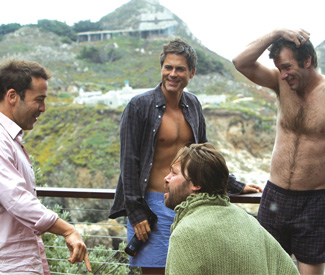
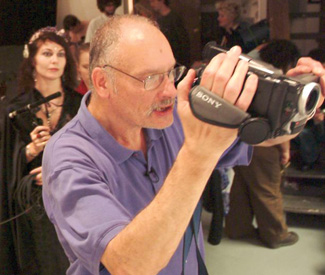
YEAR IN FILM American cinema lost several of its troubadours this past year: genuine independents like Robert Breer, Owen Land, Adolfas Mekas, Richard Leacock, Jordan Belson, and George Kuchar. Critical appraisal of these sui generis filmmakers tends to rest upon masterpieces and technique, but several were also influential as teachers.

Mekas founded the film department at Bard College, which today boasts a remarkable faculty including Peter Hutton and Kelly Reichardt. German filmmaker Helga Fanderl dedicated her San Francisco Cinematheque show earlier this fall to Breer, her mentor at Cooper Union. Leacock used his post at MIT in the 1970s to develop relatively affordable video systems for student filmmaking. Kuchar brought several generations of San Francisco Art Institute kids into moviemaking laboratories flying under banners like “AC/DC Psychotronic Teleplays” and “Electro-graphic Sinema.” After Kuchar’s passing SFAI professor and administrator Jeannene Przyblyski wrote, “I will very much miss waking up at night worrying about what might be going on in Studio 8.”

Teaching remains an underappreciated aspect of the whole adventure of avant-garde filmmaking. The late 2010 release Radical Light: Alternative Film and Video in the San Francisco Bay Area, 1945–2000 (University of California Press) lovingly detailed the instructional incubators that have contributed to a long-flourishing Bay Area avant-garde, but one still hungers for more particular chronicles along the lines of “Professor Ken,” Michael Zryd’s contribution to Optic Antics: The Cinema of Ken Jacobs (Oxford University Press). Zryd persuasively links Jacobs’ intensive teaching style at SUNY Binghamton to his thrilling feature-length frame analysis, Tom, Tom, the Piper’s Son (1969). The story of the American avant-garde’s alliance with the academy has everything to do with the mid-century college boom and the rise of theory, but this general view doesn’t take into account those outlying autodidact instructors who reoriented the teacher-student exchange in much the same way that they called upon a different kind of spectatorship.

Among the many treasures in the SFAI archive’s George Kuchar file are a couple of his syllabuses: “In this workshop atmosphere we all embark on making a moving picture using the equipment at school and … whatever else falls into our hands.” Class participation is what the class was. It’s also discretionary: “Come as frequently as you wish so that we can showcase your unique talents or specialty acts and help us try to solve the many technical and creative problems involved in making moving pictures.” Asked about his unorthodox teaching materials, Kuchar responded, “Am I going to show the students Potemkin and then talk about our class movies? With the kind of words I use and my accent? It’ll be like sacrilege or something … It’s stupid anyway. Renting movies is expensive as hell, and you can put that money into making a movie.”

Kuchar’s creativity took a liberating form in the classroom. Elsewhere in the SFAI file, the filmmaker reflects upon having to rescue terrible class productions in the editing room. One laughs at first and then is touched that he considered these real movies, imperfect but necessary to see through.


RAY OF LIGHT, RAY OF DARKNESS


One of the year’s most significant film restorations originated in a comparable workshop environment. Nicholas Ray arrived at SUNY Binghamton in 1971 not having directed since 55 Days at Peking (1963). As in Kuchar’s workshops, he took his students as collaborators: everyone rotated production jobs and worked toward the common ends of We Can’t Go Home Again, an unspooled picture of dissolution spanning the election years of 1968 and 1972. The workshop process became central to the psychodrama itself. As in other films of the era by John Cassavetes, Robert Kramer, and Shirley Clarke, the filmmaking style dives deep into breakdown narratives: he and four students charting out self-destructing versions of themselves.

In Leo Tolstoy’s prescriptive essay “Are the Peasant Children to Learn to Write from Us, or Are We to Learn from the Peasant Children?”, the great Russian author dramatizes his teaching experience to show how an attuned instructor can enrich a student’s intrinsic sense of harmony. Ray evinces a similar degree of trust in his pupils, but towards the ends of drawing out their intrinsic disharmony (this was Nixon time, after all). The composition of the drama and the drama itself bleed into one another; performance is inescapable, the film grasping how the phrase “the personal is political” was reversing itself.

We Can’t Go Home Again — which plays in a restored and reconstructed version along with Susan Ray’s contextualizing documentary Don’t Expect Too Much at Yerba Buena Center for the Arts in January 2012 — was long thought unsalvageable for both technical and artistic reasons. Ray conceived the film as a multi-projector performance, with several streams of narration playing simultaneously and various 16 mm/Super 8 mm frames affecting a kind of cinematic Guernica. The limitations of the novice crew are readily apparent, though the amateur acting likely plays differently in our present media environment. Ray continued to tinker long after presenting a version at the 1973 Cannes Film Festival, and the present reconstruction doesn’t claim to be definitive. It does, however, make Ray’s vision a feasible if still challenging theatrical proposition.

As always in the director’s work, the characters’ emotions are primary and sharply defined in space. Vulnerable figures reach across their loneliness; improvised family units emerge from the ashes of corruption and betrayal. The thin veneer of middle-class reality that gives 1955’s Rebel Without a Cause and 1956’s Bigger Than Life their magnificent tension is gone, leaving only the characters’ own psychological mirrors and Ray himself clad in James Dean’s red jacket. Student Tom Farrell is the last of Ray’s boy angels, a bewildered innocent suffering moral estrangement from his policeman father (whom he loves). The agonizing close-up in which he shears his beard in front of both a mirror and Ray’s camera is both visceral and symbolically telling, the beating heart of the film.

Though deeply marked by shame and pain, We Can’t Go Home Again also has a comic streak. The counterculture dream is pictured as eating raw cauliflower without any pants on. As he prepares to act out his suicide Ray mutters to himself, “I made ten goddamned westerns, and I can’t even tie a noose.” Of course this kind of flaunted martyrdom requires its own vanity, which might lead one to wonder about the lasting impact of Ray’s teaching — that is, whether his ferocious movie might have superseded the students’ learning.

His colleague Ken Jacobs certainly thought so: “I had the dumb idea that he would balance the little department, teaching from his narrative/Hollywood experience but he was self-aggrandizing BS throughout, with tantalizing glimpses of a former self.” Don’t Expect Too Much justifiably avoids department politics to focus on the film itself, but knowing this acrimonious background colors Ray’s former students’ awed remembrances of the Great Artist. There’s a lot of talk about the director working by instinct, exactly the kind of mystification Jacobs targets when he draws a distinction between “living through the cinema” and “using film to enrich your engagement with life and the real world”: “One is an experience that dominates while the other condemns you to be free.” The irony is that it’s hard to imagine a public university giving either man so much freedom today — if they even hired them at all.
Hey girl

0

arts@sfbg.com

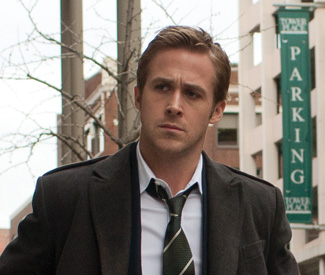
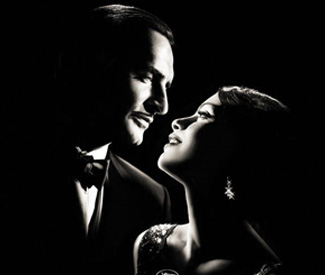
YEAR IN FILM Picture this dreamy, steamy “Fuck Yeah! Ryan Gosling” Tumblr thought bubble: “Hey girl, sorry my shirt fell off, but at least I’m one of those new EGOTs (i.e., Emmy, Grammy, Oscar, Tony quadruple threats).” You know, the type that’s got actorly chops, talent, personality, and/or good works to boot — plus a chiseled chest that looks “totally Photoshopped.” Yes, we’re talking award-fielding hotties à la Michael Fassbender, Ryan Gosling, and Brad Pitt, the kinds of golden boys who can easily pass for Oscar, only with full heads of hair and more soulful glances.

This year’s awards-show heartthrob mob comes to you seemingly straight outta the heated imaginations of Sex and the City-fiending hetero ladies and gay connoisseurs of acute cinematic cutie-pie-ness (witness the many, many YouTube re-edits of X-Men: First Class that pump up the erotic undercurrent between Fassbender’s Magneto and James McAvoy’s Charles Xavier). The crowded field of studly talents is sure to be diverting during the inevitable lagging segments of Oscars, Golden Globes, and so forth. (“Reader, I drooled over reaction shots of Mr. Rochester during the technical awards.”)

But hasn’t Hollywood always served up heapin’ platters of hunky man meat? Sure, but you’ll probably have to go back as far as Paul Newman and Robert Redford’s ’70s heyday to find the current crop’s particular combo of art and pulchritude. Ushering in this dear ab-by generation was Brad Pitt, the pretty boy unafraid to spoof vain self-absorption, as a brainless gym-bunny in 2008’s Burn After Reading. Around the same time he bounced on a treadmill for the Coens, Pitt began to consistently hook his star to more ambitious projects than your average loutish, laddish Lautner-esque chisel-head, stretching the skill set while doing his part to further the art and working with Alejandro González Iñárritu, David Fincher, and Quentin Tarantino. None of their Pitt-centric projects were the directors’ best, and that goes double for Bennett Miller’s Moneyball and Terrence Malick’s The Tree of Life (Happy Feet Two, you’re two too much).

Nevertheless, Tree of Life, despite its lack of shirtlessness, proved the least commercial and most ambitious widely released feature film of 2011 (in part thanks to co-producer Pitt), and his punishing pater familias was one of the best things about it, grounding Malick’s inner-outer space opera, earth mama twirls, and dinosaur tricks down to earth with his against-type alpha-male hard glances — likely the most demanding performance Pitt has grappled with to date.

Shades darker, with a side of honest abs, Ryan Gosling added oft-wordless fashion-plate soul to ’11: take a page from his Notebook, up-and-coming chestys, because whether you’re crate-digging old footage of the young Mickey Mouse Club kid warbling in floppy PJs alongside Justin Timberlake on YouTube or marveling over his viral snippet of street-fighting men intervention, you know Gosling’s loved. It’s tough to choose between Gosling’s George Clooney impression and cheese-eating Dirty Dancing (1987) tribute in Crazy, Stupid, Love.; his vintage Steve McQueen-James Dean style in Drive (that scorpion jacket launched a jillion Halloween costumes); and his quickly-devolving presidential campaign manager in The Ides of March.

In Ides, Gosling’s silky, feline, almost femme-y smoothness hardens into a chilly “Blue Steel,” threatening to plunge into nuttiness, as the film progresses. As with these other award-snagging hunks, he’s an adult caught in the cogs of a terrible, soul-shattering machine, and as Drive‘s romantic wheelman, Gosling’s ready to run off the median into an off-roading wilderness of ultraviolence. Of course, the deadliest mechanism lies within, for the driver driven to kill, the ladykiller breaking down the angles, and the political player who grabs his revenge after having his ideals destroyed (and bromantic boss-crush on Clooney’s candidate quashed).

The abs — and twinkling, then blistering, peepers — that truly seemed to be everywhere this year belonged to Michael Fassbender, who soft-opened the year in an archetypal romantic part, Mr. Rochester, in Jane Eyre. Fassbender went on to add a dose of real class to X-Men: First Class with his vengeance-seeking metalhead Magneto — oh, Jane, his emotional investment in the comic-book creation was the best thing about the reboot.

The latter part of 2011 ended with a seismic splash of wish fulfillment for Fassbender fans as his Carl Jung deconstructed — and entangled himself in — sex and the psyche in A Dangerous Method, and as Shame‘s corporate hot-shot by day, sex addict by night. His character, Brandon, attempts to lose himself in naked abandon, unable to sustain intimacy with anyone, including his boundary-less sister (see recurring support gal/fan stand-in Carey Mulligan). Shame director Steve McQueen, not be confused with Drive‘s inspiration, wisely lets his camera rest, unsettled and ambivalent, on Fassbender’s face at the end of one night of hopeless coitus, after a close brush with a real relationship gets clipped short by flaccidity.

Caught in mid-rut, Brandon’s orgasm face is an anguished rictus of painful pleasure, half horrifying tragedy mask, half laughable comedy mask. It’s all there, the sexual fantasy-turned-nightmare, the tears behind the dazzling smiles, pecs, and full-frontal shots, conveying in one look the perils of manhood and the forces these foxes can — and can’t — control.

Reel, reel good

0

DENNIS HARVEY’S FAVORITE DOCUMENTARIES OF 2011:

American Teacher (Vanessa Roth and Brian McGinn, U.S.)

The Arbor (Clio Barnard, U.K.)

Buck (Cindy Meehl, U.S.)

The Last Lions (Dereck Joubert, U.S./Botswana)

My Perestroika (Robin Hessman, U.S./U.K./Russia)

Nostalgia for the Light (Patricio Guzmán, France/Germany/Chile)

Pianomania (Robert Cibis and Lilian Franck, Austria/Germany)

Pina (Wim Wenders, Germany/France/U.K.)

Shut Up Little Man! An Audio Misadventure (Matthew Bate, Australia)

Vigilante Vigilante: The Battle for Expression (Max Good, U.S.)

We Were Here (David Weissman and Bill Weber, U.S.)


DENNIS HARVEY’S FAVORITE NARRATIVE FEATURES OF 2011:

The Artist (Michel Hazanavicius, France/Belgium)

Ceremony (Max Winkler, U.S.)

Certified Copy (Abbas Kiarostami, France/Italy/Belgium)

The Descendants (Alexander Payne, U.S.)

Drive (Nicolas Winding Refn, U.S.)

Happy, Happy (Anne Sewitsky, Norway)

Hugo (Martin Scorsese, U.S.)

I’m Glad My Mother Is Alive (Claude Miller and Nathan Miller, France)

Incendies (Denis Villeneuve, Canada/France)

Machotaildrop (Corey Adams and Alex Craig, U.S./Canada)

The Mill and the Cross (Lech Majewski, Sweden/Poland)

The Names of Love (Michel Leclerc, France)

Oka! (Lavinia Currier, U.S.)

Rango (Gore Verbinski, U.S.)

A Separation (Asghar Farhadi, Iran)

The Strange Case of Angelica (Manoel de Oliveira, Portugal/Spain/France/Brazil)

Tucker and Dale vs. Evil (Eli Craig, U.S./Canada)

Uncle Boonmee Who Can Recall His Past Lives (Apichatpong Weerasethakul, Thailand/U.K./France/Germany/Spain/Netherlands)

Weekend (Andrew Haigh, U.K.)

Young Adult (Jason Reitman, U.S.)


CHERYL EDDY’S TOP 11 OF 2011

1. The Artist (Michel Hazanavicius, France/Belgium)

2. Young Adult (Jason Reitman, U.S.)

3. Tinker Tailor Soldier Spy (Tomas Alfredson, France/U.K./Germany)

4. Drive (Nicolas Winding Refn, U.S.)

5. Melancholia (Lars von Trier, Denmark/Sweden/France/Germany)

6. The Descendants (Alexander Payne, U.S.)

7. Shame (Steve McQueen, U.K.)

8. The Trip (Michael Winterbottom, U.K.)

9. Cave of Forgotten Dreams (Werner Herzog, Canada/U.S./France/Germany/U.K.)

10. TrollHunter (André Øvredal, Norway)

11. The Tree of Life (Terrence Malick, U.S.)


KIMBERLY CHUN’S TOP 10 FILM “LIKES” OF 2011

(ALPHABETICAL)

Please don’t speak: The Artist (Michel Hazanavicius, France/Belgium)

Scrappy apocalypse: Attack the Block (Joe Cornish, U.K./France)

Scraps of footage refashioned: The Black Power Mixtape 1967-1975 (Goran Olsson, Sweden)

Best long-form music video: Drive (Nicolas Winding Refn, U.S.)

Personal apocalypse: The Future (Miranda July, Germany/U.S.)

The lives of others: Margin Call (J.C. Chandor, U.S.)

Feel-good apocalypse: Melancholia (Lars von Trier,

Denmark/Sweden/France/Germany)

Body Con: Shame (Steve McQueen, U.K.)

Body Con 2: The Skin I Live In (Pedro Almodóvar, Spain)

Two-state evolution: The Time That Remains (Elia Suleiman, U.K./Italy/Belgium/France)


RYAN LATTANZIO’S TOP 11 OF 2011

1. Melancholia (Lars von Trier, Denmark/Sweden/France/Germany)

2. Uncle Boonmee Who Can Recall His Past Lives (Apichatpong Weerasethakul, Thailand/U.K./France/Germany/Spain/Netherlands)

3. We Need to Talk About Kevin (Lynne Ramsay, U.K./U.S.)

4. Drive (Nicolas Winding Refn, U.S.)

5. Certified Copy (Abbas Kiarostami, France/Italy/Belgium)

6. A Separation (Asghar Farhadi, Iran)

7. Into the Abyss: A Tale of Death, a Tale of Life (Werner Herzog, Germany/Canada)

8. Weekend (Andrew Haigh, U.K.)

9. Shame (Steve McQueen, U.K.)

10. Meek’s Cutoff (Kelly Reichardt, U.S.)

11. The Future (Miranda July, Germany/U.S.)


JESSE HAWTHORNE FICKS’ PICKS FOR 2011

(FOLLOWED BY THE AMOUNT OF TIMES HE’S SEEN EACH FILM, IF MORE THAN ONCE)

(Updated from the print version)

1. (tie) Meek’s Cutoff (Kelly Reichardt, U.S.)

Even though this was on my list last year, it was released officially this year. Minimalist, transcendental, and more dramatic than any other action film this year. (4)

1. (tie) Attack the Block (Joe Cornish, U.K./France)

Subversive, prophetic, and totally addictive! This is one best films of the decade! Believe, bruv! (6)

2. Midnight in Paris (Woody Allen, Spain/U.S.)

Just because this is a crowd pleaser should not detract from Allen’s complicated script, shining as bright as ever. Re-watch and be stunned that the ending is much more profound than you may have first noticed. (7)

3. Season two of Louie (FX Network)

Louis C.K. transcended his own brilliant comedy and created 13 genuine existential classics.

4. The Trip (Michael Winterbottom, U.K.)

Steve Coogan finally achieved his art house goal with this pitch-perfect exploration of a man and his own worst enemy. Winterbottom’s six-part mini-series for British television was great, but the edited-down feature film is downright life affirming. (5)

5. We Need to Talk About Kevin (Lynne Ramsay, U.K./U.S.)

Director Ramsay (our modern-day Orson Welles, anyone?) and editor Joe Bini have created an hypnotic ride of poetic cinema. Do we really have to wait 10 more years before her Ramsay’s next show stopper, like we did after 2002’s Morvern Callar?

6. (tie) Hanna (Joe Wright, U.S./U.K./Germany)

A flawless reworking of La Femme Nikita (1991) with crisp dialogue that was light years ahead of anything else this year.

6. (tie) The Woman (Lucky McKee, U.S.)

Audiences were running for the doors at Sundance. This high-concept allegory is one of the most disturbing explorations of misogyny ever put on film. (3)

6. (tie) Sucker Punch (Zack Snyder, U.S./Canada)

This fast and furious pseudo-“feminist” flick seemed to be unfairly treated and totally misunderstood by audiences and critics alike. Get the 127-minute director’s cut on Blu-ray, stop letting fanboy nonsense bully you, and revel in Emily Browning’s tour de force performance. (2)

7. Young Adult (Jason Reitman, U.S.)

Diablo Cody’s script is near-perfect in this look at a 37-year-old who has to reassess where her “determination” has led her. (2)

8. Beginners (Mike Mills, U.S.)

Who wants their heart broken? A man confronts the death of his father and realizes his romantic choices might be leading him to no man’s land. Gulp. (3)

9. Heartbeats (Xavier Dolan, Canada)

This 22-year-old writer-director-star’s mash-up of My Own Private Idaho (1991) and In the Mood for Love (1999) captures our era’s hipster insecurities so flawlessly that it’ll take a decade for people to recognize how important this film actually is. (3)

10. The Artist (Michel Hazanavicius, France/Belgium)
This accessible masterpiece proves silent movies are futuristic! Perfect for the whole family and part of the second Golden Age for cinema from the 1920s.

11. The Beaver (Jodie Foster, U.S./United Arab Emirates)
I don’t care what he does offscreen, Mel Gibson is a damn fine actor! And Jodie Foster’s dark and deeply personal directing deserves the mensch of the year award!

12. (tie) Take Shelter (Jeff Nichols, U.S.)

Michael Shannon’s performance (as a father who will stop at nothing to “protect” his family) is creepy. Nichols’ ending is even creepier.

12. (tie) Melancholia (Lars von Trier, Denmark/Sweden/France/Germany)

Von Trier’s “nicest” film is genuine therapy for a neurotic soul.

13. One Day (Lone Scherfig, U.S./U.K.)

Stop telling me the book was so much better! With a Same Time, Next Year (1978) structure, this film’s deep emotions (courtesy of Anne Hathaway) shook me to the core.

14. Certified Copy (Abbas Kiarostami, France/Italy/Belgium)

This unofficial remake of Roberto Rossellini’s Journey to Italy (1954) still kept me guessing; it also features another jaw-dropping performance by Juliette Binoche.

15. The Tree of Life (Terrence Malick, U.S.)

This audacious exploration of a 1950s family is absolutely universal and profound. (2)

16. Tyrannosaur (Paddy Considine, U.K.)

Who wants their stomach punched, ripped open, torn out, and then presented to you? Then check out this love story.

17. (tie) Hugo (Martin Scorsese, U.S.)

Who says 3D isn’t art? Did studios really allow Scorsese to show multiple Georges Méliès’ films in 3D? Plus, Sacha Baron Cohen gives a truly Oscar-worthy supporting performance.

17. (tie) Drive Angry (Patrick Lussier, U.S.)

Lussier, director of 2009’s absolutely brilliant My Bloody Valentine remake, facilitated a priceless Nicolas Cage performance — he drinks from a freakin’ human skull, in 3D — but keeps things so frenetic, I had to sit in the theater for a second viewing as soon as it was over! (2)

17. (tie) Final Destination 5 (Steven Quale, U.S.)

In which the entire franchise of entitled 20-somethings dying gruesome deaths comes full circle by concluding with every single grisly death from all five films in glorious 3D.

18. The Mill and the Cross (Lech Majewski, Sweden/Poland)

Rutger Hauer + 143 Digital layers = monumental experimental art for the ages!

19. Rakhta Charitra and Rakhta Charitra 2 (Ram Gopal Varma, India)

Ram Gopal Varma’s films should compete at Cannes. (2)

20. Bill Cunningham New York (Richard Press, U.S./France)

This doc’s inspiring message: do what you love every day of your life, and don’t ever slow down.


Actor of the Year: Andy Serkis (Rise of the Planet of the Apes, The Adventures of Tintin)

Actress of the Year: Melissa McCarthy (Bridesmaids)

Best Future Midnite Movie: The Catechism Cataclysm (Todd Rohal, U.S.)

Shot in less than a week, this abstract, train of thought buddy road trip has the immediacy of sheer brilliance!

Jesse Hawthorne Ficks teaches film history at the Academy of Art University and curates and hosts Midnites for Maniacs, a film series emphasizing dismissed, underrated, and overlooked films.


LYNN RAPOPORT’S TOP 8 FILMS OF 2011

1. The Artist (Michel Hazanavicius, France/Belgium)

2. Beginners (Mike Mills, U.S.)

3. Tomboy (Céline Sciamma, France)

4. Dirty Girl (Abe Sylvia, U.S.)

5. Bridesmaids (Paul Feig, U.S.)

6. Pariah (Dee Rees, U.S.)

7. Young Adult (Jason Reitman, U.S.)

8. Crazy, Stupid, Love. (Glenn Ficarra and John Requa, U.S.)


SAM STANDER’S TOP 10 FILMS OF 2011

1. Uncle Boonmee Who Can Recall His Past Lives (Apichatpong Weerasethakul, Thailand/U.K./France/Germany/Spain/Netherlands)

2. Meek’s Cutoff (Kelly Reichardt, U.S.)

3. Drive (Nicolas Winding Refn, U.S.)

4. Midnight in Paris (Woody Allen, Spain/U.S.)

5. Certified Copy (Abbas Kiarostami, France/Italy/Belgium)

6. The Tree of Life (Terrence Malick, U.S.)

7. Essential Killing (Jerzy Skolimowski, Poland/Norway/Iceland/Hungary)

8. The Future (Miranda July, U.S.)

9. Bridesmaids (Paul Feig, U.S.)

10. Captain America: The First Avenger (Joe Johnston, U.S.)


MAX GOLDBERG’S TOP 10 FILMS OF 2011 (SAN FRANCISCO OPENINGS)

The Arbor (Clio Barnard, U.K.)

Attenberg (Athina Rachel Tsangari, Greece)

Get Out of the Car (Thom Andersen, U.S.)

The Kid with a Bike (Jean-Pierre Dardenne and Luc Dardenne, Belgium/France/Italy)

Mysteries of Lisbon (Raúl Ruiz, Portugal)

Of Gods and Men (Xavier Beauvois, France)

Oki’s Movie (Hong Sang-soo, South Korea)

Road to Nowhere (Monte Hellman, U.S.)

Terri (Azazel Jacobs, U.S.)

Señora con Flores/ Woman with Flowers (Chick Strand, U.S./Mexico)


Pop your cork

0

Below are our picks to ring in the new. Events are listed alphabetically. Parties end at 2 a..m. except where noted. For more New Year’s parties, see This Week’s Picks. For New Year’s Day parties, click here. Lampshade hats not included.


1984

Light on the Orwellian totalitarianism and heavy on ceaselessly pumping ’80s music, longtime favorite retro night 1984 takes you back to the future once again. And it is free!

9 p.m.-2 a.m., free. Mighty, 119 Utah, SF. www.mighty119.com


ALL DAY PUNK ROCK NEW YEAR’S

Considering we’re about to embark upon another year full of economic gloom and doom, the band names from Eli’s lineup — World of Shit, Short Changed, Society Dog — aren’t too uplifting. But at least they’ll help you rage through.

2 p.m.–12:30 a.m., $10. Eli’s Mile High Club, 3629 Martin Luther King Jr. Blvd., Oakl. www.elismilehigh.com


BEARRACUDA

What could possibly say New Year more than a hunky mass of sweaty, hairy gay bears getting down until the wee hours? You in the middle! DJs Craig Gaibler and Brian Maier keep it steamy.

8 p.m.-3a.m., $25. Club 8, 1151 Folsom, SF. www.bearracuda.com


BOBB SAGGETH

Elbo Room’s NYE spectacular includes the West Coast’s greatest Black Sabbath cover band* Bobb Saggeth, featuring members of Saviours, Citay, 3 Leafs, Sean Smith. Plus, it’s dark metal lords Black Cobra’s homecoming show. *Note: the “greatest Black Sabbath cover band” descriptor is self-inflicted though accurate. With Black Cobra.

9 p.m., $20. Elbo Room, 647 Valencia, SF. www.elbo.com


BOOTIE

Mashup mayhem galore at the original bastard pop party, whose special NYE installment includes mashup band Smash-Up Derby performing live and DJs Adrian and Mysterious D., Mykill, and Dada. Plus: ballon drop!

9 p.m.-3 a.m., $25–$50. Mezzanine, 444 Jessie, SF. www.mezzaninesf.com


CALIFORNIA HONEYDROPS

With raucous group efforts towards blues, gospel, New Orleans jazz, and R&B, California Honeydrops tend bring the sonic party wherever they play — why should NYE be any different? Admission price gets you live Americana music and a drink of your choosing.

11 p.m., $40. Pizzaiolo, 5008 Telegraph, Oakl. (510) 652-4888, www.pizzaiolooakland.com


ECLECTIC FEVER

A glowing, global party to dive into, with the effervescent Zap Mama, plus Sila, Non Stop Bhangra, Sambaxe Dance, and DJs J-Boogie, Jimmy Love, DJ Jeremiah, and Matt Haze. A real ear-opener for 2012.

8:30-4 a.m., $65. 1290 Fillmore, SF. zapmama.eventbrite.com


EL SUPERRITMO!

We have a soft spot for this weekly throwdown of tuneful styles from Latin America — cumbia, baile funk, reggaeton, and more. This promises be a wild installment with residents El Kool Kyle and DJ Roger Más joined by Ricky Garay, aka Señor Mucho Musica.

9 p.m., $20. Makeout Room, 3225 22nd St., SF. www.makeoutroom.com


FOREVERLAND

The show stars 14-piece Michael Jackson tribute band Foreverland, but there also will be the frisky Kitty Kitty Bang Bang Burlesque, an appearance by “the girl in the fishbowl” (a vintage Bimbo’s tradition), complimentary bubbly, party favors, and a traditional balloon drop at countdown. With Slim Jenkins, the Cottontails.

8 p.m., $65. Bimbo’s, 1025 Columbus, SF. www.bimbos365club.com


GO BANG!

This awesome, mixed-crowd monthly disco party has zero attitude but all the glamour. It’s like a Studio 54 you can actually get into. Atlanta’s DJ Osmose will bring his scratching turntable technique to bear on some rare disco tracks this NYE, along with Doc Sleep, Eddie House, and hosts Sergio and Steve Fabus. Good times!

9 p.m.-late, $10. Deco Lounge, 510 Larkin, SF. wwwdecosf.com


KINK

The colorful boys behind two of the Bay’s most vital party machines — Honey Soundsystem and Pacific Sound (Sunset) — join forces to bring in hot and heavy Bulgarian techno hero KiNK. He’ll be playing live, with a few melted minds sure to follow. Eight other DJs on two floors will help it all out.

9 p.m.-5 a.m., $15-$30. Public Works, 161 Erie, SF. www.publicsf.com


KREAYSHAWN

Yep. The controversial, anti-Gucci mini-rapper in thick black frames is back, playing her biggest SF venue to date. The show is all ages and the event is titled “Never Coming Down.” With Wallpaper, Roach Gigz, Starting Six, DJ Amen.

9pm, $38. , Regency Ballroom, 1300 Van Ness, SF. www.theregencyballroom.com


LEA DELARIA

The much-lauded Broadway star, swingin’ jazz musician, and fabulously blue comedian is back in the town to ring in the new year with peals of laughter. Latest show “Last Butch Standing” promises to be a full-on entertaining eve, topped with some outrageous New Year’s surprises, of course.

7 p.m. and 9 p.m., $30–$35, Victoria Theatre, 2961 16th St., SF. www.therhino.org


LEXINGTON NYE BLACKOUT

If you can’t remember who you kissed at midnight, does it really count? Find out at SF’s favorite lesbian bar, when rockin’ DJs Andre and Jenna Riot and host Sara Goodman turn out your lights — and turn on the craziness. Oblivion awaits!

9 p.m., free. Lexington Club, 3464 19th St., SF. www.lexingtonclub.com


MAGIC LEAVES

Presented by Seaweed Sway, Loving Cup Presents, and Song Bird, the show boasts a glut of crunchy local freak-folk and a singular midnight champagne toast. Should be a delightfully analog evening. With Little Wings, Range of Light Wilderness, Au Dunes.

9 p.m., $15–$20. Amnesia, 853 Valencia, SF. www.amnesiathebar.com


MIDNIGHT NYE 2012

Get ready for a blast of warm tropicalia and clouds of fun, as Club Six rocks steady to reggae, dancehall, and global bass sounds, courtesy of the Daddy Rolo, Spicey, Dee Cee Shakedown crews. With DJs Shawn Reynaldo, Jah Warrior Shelter Hi-Fi, Pam the Funkstress, and many more on two floors.

8 p.m.-4 a.m., $20–$30. Club Six, 66 Sixth St., SF. www.clubsix1.com


“NEW YEAR’S EVE SHAKE”

This party is all about the shimmy-n-shake, soul, surf, and all other 1960s rock’n’roll sounds. There’ll be live music courtesy of the Barbary Coasters, the Ogres, and the TomorrowMen, along with go-go dancing by the Mini Skirt Mob (which features members of the Devile-Ettes. And of course, the requisite champagne and balloons.

9:30 p.m., $10–$15. Starry Plough, 3101 Shattuck, Berk. www.starryploughpub.com.


NEW YEAR’S FIREWORKS SHOW

The damp, strength-sapping chill of midnight on the Embarcadero is still worth the 15 minutes of promised pyrotechnic glory. Thousands of San Franciscans huddled together under the sky = magic.

12 a.m., free. Pier 14, Embarcadero, SF.


NYE CONFIDENCE STARTER 2012

A nice little bash on the edge of the Tenderloin with some quality local peeps. DJ Ed Dee Pee will play “down tempo, New neo-soultronica imports, and broken beat-ish styles.”

9 p.m.-3 a.m., $10. Siete Potencias Africanas Gallery, 777 O’Farrell, SF.


OLDIES NIGHT’S NASTY ASS LATE NEW YEAR’S EVE PARTY

The title is a mouthful, but it should be a good one. There’ll be a live performance by the Cuts along with Oldies Night regulars DJ Primo and Daniel spinning that twist-worthy doo-wop, one hit wonders, soul, and scratchy seven-inch rock ‘n roll.

9 p.m.-4 a.m., $10. Knockout, 3223 Mission, SF. www.theknockoutsf.com


OPEL NYE

The spiritually minded, breaks-oriented underground collective rises to the 2012 occasion with and a mad, possibly fire-twirling free-for-all with the UK’s Lee Coombs, plus members of the Strategik and Ambient Mafia crews.

9 p.m.-4 a.m., $25–$40. Mission Rock, 817 Terry Francois, SF. opelnye.eventbrite.com


SWEATERFUNK

Fuzzy local weekly party Sweaterfunk has kept the lights on for soulful boogie — and its more contemporary twists and turns — in this city for a wonderful while. For NYE, special Swedish future-funker guests Opolopo and Amalia should really turn you inside out.

9 p.m.-3 a.m., $20–$30. SOM, 2925 16th St., SF. www.som-bar.com


THE ITALIAN JOB

Get a little swanky at North Beach’s lovely Monroe club, with some pumpin’ house from Italy’s Rufus plus a “family” of DJs, including Stef “The Baron,” Francesco Signorile, and Carol.

10 p.m., $20–$25. Monroe, 473 Broadway, SF. www.monroesf.com


THIS MUST BE THE PLACE

This festive affair gives you a number of reasons to welcome 2012 into Oakland, among them a bang-up lineup of techno and house DJs from the Space Cowboys crew and an awesome onslaught of funk and hip-hop from the likes of Sake One, Platurn, and Joe Quixx. What up, East Bay!

9 p.m., $25–$85. Oakland Metro, 630 Third St., SF. stayeastbay.eventbrite.com


TRANNYSHACK NYE

Queens, queens, and more queens — they’ll be gushing out like a waterfall at this annual drag hoo-haw, with performances by Heklina, Suppositori Spelling, Holy McGrail, Honey Mahogany, Matthew Martin and a million more.

9:30 p.m.-3 a.m., $25–$39. DNA Lounge, 375 11th St., SF. www.trannyshack.com


VELVET TEEN

This is your twee, feel-good option, the soaring-sweet vocals and sharp riffs of perennial Bay Area indie rock favorites Velvet Teen will assure a night of arms slung around waists and peachy full body sways. With Happy Body Slow Brain, Fake Your Own Death.

10 p.m., $17. Bottom of the Hill, 1233 17th St., SF. www.bottomofthehill.com


WAX IDOLS AND TERRY MALTS

And then there are the new local favorites, Wax Idols and Terry Malts — both bands are part of an exciting, classic garage punk rock surge in the Bay Area music scene. And if punks indeed have no future, celebrate the end of times at the Hemlock. The show also includes champagne toast at midnight.

9 p.m., $10. Hemlock Tavern, 1131 Polk, SF. www.hemlocktavern.com

Chip-chip-hooray

0

CHEAP EATS What’d I say 50 weeks ago? “More fun in one-one,” or something, and, well, I had it!

But I earned and deserved this, dear reader, after the shit show that was one-oh. This year, my Favorite Year Ever, started on a choo-choo across the country, and ended with a chocolate chip cookie. In between, I re-rocked Boston and took NOLA by storm (January), fell in love with the prickliest li’l softest-centered dyke that ever strapped on a strap-on (February), befriended yet another awesome little baby (March), was carried off a football field on some shoulders (April), turned forty-fucking-eight (May), restormed NOLA (June), co-chicken-farmed France (July), remembered how to write in Mexico (August), drove across the country (September) … and so on and also forth — until that cookie I was trying to tell you about.

What was so special about this chocolate chip cookie, late December, 2011 (my Favorite Year Ever), was that it didn’t have any chocolate chips in it.

I know, right?

What seemed like chocolate chips turned out to be raisins; except then what appeared to be raisins turned out to be dried cranberries. Only they weren’t; they were dried cherries. Give or take the ones that weren’t dried cherries either but chocolate covered pretzels — some of which, upon closer examination were butterscotch chips that were really white chocolate chips.

In other words, I don’t know what the hell was in them, just that they were the magickest chocolate chip cookies I ever ate, and there’s one left.

I’m in love with Hedgehog’s best friend Jellybean over these cookies. The sweetie pie, she let us stay at her apartment while she was out of town, and left a little box of homemade cookies on the kitchen table. When I grow up, I would like to be that thoughtful.

Not to mention substitutive (shall we say) with my cookie ingredients. But so long as we’re on the subject of chocolate chip cookies without chocolate chips in them, let me also direct your attention to a strange Mexican restaurant’s turned up last year or so like a hole in the head of my very own neighborhood (that I won’t be living in for another six months): the Mission.

I’m talking about Reaction, where once I ate with Hedgehog, Coach, and Papa before going out somewheres. The thing to remember about Reaction is: happy hour. Between 5 and 7 you can get five tacos for $5, or a free taco with your fancy-pants drink.

Hedgehog got that. Neverminding the drink, the papas taco came with it did not float her boat — although she admits to holding potato tacos to an unreasonably high standard set by Taqueria El Atacor #11 in Los Angeles.

Coach got something vegetarian, because that’s the way she is, and both me and our center, Papa, being the other way inclined, got five-for-fives.

Strangely — since they open at five and we’d showed up at six — they were out of some of the things on the menu.

There was one waiter, and he had two tables. The rest of the restaurant was empty. Just us, sitting in the front window, quietly discussing relationships and pass blocking, and, in the back of the room, in the opposite corner, as far away from our party as it was possible to be, a table full of loud dudes, hooting and drinking and laughing.

Two more divergent groups would be possible to imagine, and — as it happened — imagination was not our waiterguyperson’s weak suit. Anyway, he somehow kept confusing our order with theirs, bringing the wrong things to the wrong table, and whatnot.

For which I loved him, but … I mean, even I have to admit: come on. The food at my new favorite restaurant was just OK. Super cheap, though. Thanks to the happiness of the hour, all four of us ate for under thirty, so … hard to complain.

Happy New Year, m’dears.

You see? Our 49ers are going to the playoffs for the first time in 10 years! Woo-hoo for one-two. 

REACTION

Mon.-Sat.: 5 p.m.-midnight; closed Sunday

2183 Mission, SF

(415) 552-8200

AE/D/MC/V

Full Bar


Dishes for a winter’s night

0

APPETITE As we arrive at the end of 2011, here are a few dishes of soothing comfort for a winter’s night from four under-the-radar places.

EGG NOODLES IN A JAPANTOWN CULINARY RESPITE

Bushi-Tei (1638 Post, SF. 415-440-4959, www.bushi-tei.com) has long been one of my underrated restaurant picks. There’s much to love in the two-tiered space lined in rugged Japanese woods, with 18-foot communal table, and ever-sure conversation starter: Japanese toilets in the bathrooms (air dryers and seat warmers!)

When I heard new chef Michael Hung Jardiniere and pastry chef Yuko Fujii of Fifth Floor were coming aboard, I hoped the refined French Japanese cuisine would remain intact. I was delighted after a couple visits to see Hung has married comfort and intricacy, inventiveness and tradition. Tasting menus are $55, or $8-18 starters, $17-27 main courses.

Tak and Keiko Matsuba thankfully still run the restaurant: they’re among the most adorable husband-wife teams I’ve met. They bring a gentle passion to each aspect of the place, including Tak’s thoughtful wine pairings, like an Alsace Riesling with fish or sake with noodles.

There’s a Sunday brunch offering elegant bowls of egg noodles in Sonoma duck ragout or Haiga rice porridge laced with salt-roasted albacore tuna and a poached farm egg. A small serving of grilled Monterey calamari ($8) in a ginger bourride (a stew made with egg yolk and garlic) impresses with nuanced sauce and juicy squid.

Memorable dinner dishes include tataki of Hawaiian albacore ($12), a delicate, sashimi-style starter over black sesame aioli. Handmade egg noodles ($17) steal the show from worthy entrees like roasted Kurobuta pork Nabemono (Japanese stew). Hung makes his egg noodles with egg and soda, and at a recent dinner tossed them in brown butter cauliflower and hatcho miso, a miso from South Central Japan.

Fujii shows her skills in a unique dessert of Kabocha squash and matcha mochi dotting a coconut tapioca broth. Dense and warm, it is thankfully unsweet and richly satisfying, its three lush bean pastes — red bean, green tea, squash — the shining finish.

Post-dinner, Tak offers a pour of Denshin “Yuki” Junmai Ginjo sake brewed by Ippongi Kubohonten Co. He spoke of its cowboy boot, kimono-wearing sake maker whose area of Japan, Fukui, was hit hard by the recent earthquake. Matsuba loves to support such producers, welcoming them when they are in the States. We’re lucky to have this haven of pristine East-West cuisine in our city.

EGG YOLK AND RICOTTA RAVIOLI AT A COZY NOB HILL SPOT

Seven Hills (1550 Hyde, SF. 415-775-1550, www.sevenhillssf.com) is one of those neighborhood favorites many outside the ‘hood aren’t aware of. An Italian spot run by French natives(?), it’s a mellow respite for conversation with caring service. I enjoy the pasta most, especially in the form of a signature ravioli uovo ($9.50) filled with ricotta, spinach, and oozing Full Belly Farm egg yolk. In a light pool of brown butter and white truffle oil, it flirts with decadence. Spaghetti ($9.50/$19) is a heartwarming bowl (conveniently in two sizes) dotted with French Grandpa George’s recipe of plump fennel sausage, caramelized onions, and bell peppers in tomato sauce.

CHESTNUT SOUP IN A TINY FRENCH BISTRO

Bouche (603 Bush, SF. 415-956-0396 www.bouchesf.com) has only been open a couple weeks and thus is too new to comment in-depth upon. On a recent visit, I suffered tiny pangs of nostalgia, wishing Bar Crudo, since moved to the Panhandle, was still in this tiny, charming space. But the one dish out of a number of Bouche’s small plates ($6-18) that began to assuage those pangs was a creamy chestnut soup ($6). Its aroma evokes a winter panorama, the soup dotted with sage leaves fried in butter (which I could smell downstairs before the dish arrived to my table upstairs), with a side of crispy root vegetable chips to place on top.

HEALTHY “UNFRIED” CHICKEN IN PALO ALTO

Call it healthy “fast food” for the Peninsula set: LYFE Kitchen (167 Hamilton Ave., Palo Alto. 650-325-5933, www.lyfekitchen.com) is a bustling, new eatery in downtown Palo Alto. Draft beers, wines, smoothies, and juices flow, while vegan, vegetarian, and organic foods encourage guilt-free eating. This sort of place would take off in downtown SF: its healthful approach doesn’t leave taste behind, while its connection to celebrity chef Art Smith is a point of interest for foodies.

Alhough not everything worked (I’m afraid fries are ultimately better — and less soggy — when actually fried), two stand-outs are Art’s unfried chicken ($11.99) and a roasted beets and farro salad ($7.79). Chicken is a dish I often brush past for more enticing options, but this tender, “unfried” chicken is pounded flat, textural with breaded crust, on a heartwarming bed of roasted squash, brussels sprouts, dried cranberries, tied together by a drizzle of cashew cream and Dijon vinaigrette. The salad is loaded with roasted red beets over whole-grain farro and field greens, with a melange of fennel, walnuts, dried cranberries, oranges, red onion, and basil in maple-sherry vinaigrette. Every bite packs a flavor punch. Here one can fill up with a clear conscience. *

Subscribe to Virgina’s twice-monthly newsletter, The Perfect Spot, www.theperfectspotsf.com


Doom lens

0

cheryl@sfbg.com

YEAR IN FILM As everyone and John Cusack knows, 2012 is it. And not in a “billboard-buying Alameda radio preacher Harold Camping’s bungled Rapture predictions” kind of way. This is an all-in situation. The Mesoamerican Long Count calendar, a complicated and ancient system most enthusiastically explained by conspiracy theorists, winds up its 13th 144,000 day cycle on December 21, 2012. TL; DR: we’re toast.

Though pesky, facts-knowing Latin American archaeology scholars have suggested that this doesn’t actually mean the end of the world is nigh, good luck dissuading zillions of bloggers, survivalists, religious fanatics, super-volcano watchers, and people who lie awake at night, biting their fingernails over the Large Hadron Collider. Imminent catastrophe awaits! Are you ready?

Enter Hollywood, which in its 100-plus year history has never had any qualms about exploiting society’s extant feelings of fear and dread. In 2009, 2012 prophesized global destruction (“Mankind’s earliest civilization warned us this day would come!”) as only a film with a lavish special effects budget could. Yet it offered last-act hope, a preferred tactic of master of disaster Roland Emmerich — who, having ice-aged, Godzilla’d, and alien-invaded the planet in a succession of go-boom films over the past 15 years, switched gears in 2011 with Shakespeare mystery Anonymous. (Last-ditch artistic atonement, perhaps?)

The apocalyptic films of 2011 took a different approach, opting to emphasize existential terror instead of fireballs, with no happy endings in sight. Lars von Trier’s Melancholia inspects the one percent by peering into the lives of two privileged sisters: depressed Justine (Kirsten Dunst) and anxious Claire (Charlotte Gainsbourg). The film’s first half unfolds at Justine’s lavish wedding reception — held at Claire’s horsy estate — which devolves into a mini-disaster movie of its own. The stretch limo carrying the newlyweds is too bulky to navigate the property’s narrow, curving driveway, until the bride slides behind the wheel and gets the tires pointed in the right direction. It’s Justine’s last moment of glee, as her marriage-jinxing erratic behavior soon gives way to crippling malaise.

As it turns out, a newly-discovered planet, conveniently named Melancholia, is heading toward earth. A collision course is not guaranteed, but it’s pretty obvious where things are heading, and this is not the kind of movie that sends Bruce Willis into space with drilling equipment to save the day. As Claire whips herself into a panic, clicking through fear mongering websites (Melancholia‘s only evidence of a world beyond the mansion’s well-manicured grounds), Justine accepts the impending apocalypse with cool detachment. “The earth is evil,” she tells her sister. “We don’t need to grieve for it.”

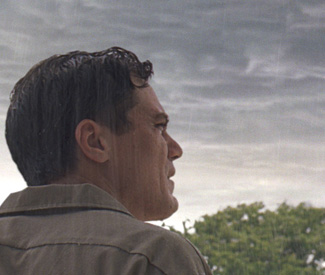
Though there’s no looming threat from outer space, the sky looks plenty ominous to Curtis (Michael Shannon), troubled protagonist of Jeff Nichols’ Take Shelter. Nightmares of the I-wake-up-screaming variety have become a regular thing, and though Curtis desperately needs the health insurance provided by his construction job — his daughter (Tova Stewart) is about to get an operation to restore her hearing — he’s become obsessed with upgrading the storm shelter in his backyard. Friends and neighbors, initially supportive, become angry and confused. A public meltdown is inevitable: “There is a STORM coming like nothing you have ever seen, and not A ONE OF YOU is prepared for it!” he bellows at a community dinner, spewing fire like a small-town Cassandra.

There’s more: Curtis’ mother is schizophrenic. Is history repeating, or are his visions actually prophetic? Is Nichols hinting at Biblical themes, or is he making a statement about mental illness, or the destruction of the American dream? The film’s provocative finale could be interpreted a variety of ways; though there’s no Melancholia-style conclusion, Take Shelter‘s message remains memorably unsettling.

But even if the world doesn’t actually take a buy-out in 2012, it’ll get there someday — as Terrence Malick’s dreamy Tree of Life, which is more or less the story of everything that has ever and will ever happen, points out. For film fans, the signs of a dying planet are all too clear. Just take a look at the top-grossing movies of 2011: all of them are either sequels or part of a series. Transformers: Dark of the Moon relieved ticket buyers of over $352 million, even though previous installment Transformers: Revenge of the Fallen (2009) was scientifically proven to have sucked the soul out of anyone who watched it. (True story.)

With the crap economy making even gigant-o-stars nostalgic for their $20 million paydays, the Hollywood-industrial complex concentrated on proven moneymakers, with a few notable exceptions (bless you, Bridesmaids). In 2011, all bets were off. No cult property was too sacred to remake, no “reboot” deemed unnecessary, no superhero with the word “green” in his name unworthy of an entire feature film, no use of 3D too gratuitous. Original ideas were placed on the endangered species list, unless you counted the very small handful of smarter films that somehow managed to break through (look hard; most of them came out in December). Though there’s always a chance that entertainment aimed at the masses will have a brain (2012’s The Dark Knight Rises looks promising), that’s all there is. A chance.

Worse yet: recent news that major film studios plan to stop releasing 35mm prints from their archives. Rep houses will be forced to show films either digitally or not at all. It’s a cost-cutting measure that will deny future generations the irreplaceable delight of watching a movie projected from film, as was intended by the artist who made it. (Somewhere, Stanley Kubrick is seething.) Why bother going to see an old movie at all, if you’re just gonna be watching the equivalent of blown-up DVD? Might as well stay home and watch the Kardashians shop for shoes that cost more than your rent.

Man, maybe I am ready for 2012 after all. At least there’s an alternative end-times scenario to look forward to: the adaptation of Max Brooks’ excellent novel World War Z, about a world rebuilding itself after a zombie holocaust. Its not-so-coincidental release date? December 21, 2012. You’ve been warned. 

www.thepetitionsite.com/1/fight-for-35mm/


All backed up

0

news@sfbg.com

In February 2004, San Francisco saw an usually strong winter storm. More than an inch and a half of rain fell within 30 minutes, too much to handle for the wastewater system, which in parts of the city is more than 100 years old. In the Mission and Bayview, some homes were flooded with rainwater and raw sewage.

Before adjourning for the year, the Board of Supervisors on Dec. 13 approved payments settling a lawsuit filed in January 2005 by some of the residents affected by the storm. The main plaintiffs in the case were Jane Martin and David Baker, whose home in the Mission district were flooded.

More than 40 individuals and businesses joined the lawsuit as plaintiffs, with San Francisco and its San Francisco Public Utilities Commission (PUC) as the sole defendant in the case. The plaintiffs sued for dangerous conditions of public property, failure to maintain public property, negligence, nuisance, and the trespass of water and sewage onto the plaintiff’s properties.

The settlement totaled $624,930 in compensation for property damage, including $50,000 for Martin and Baker, and many of the other plaintiffs getting around $25,000 each.

“Simply put, the city wasn’t doing proactive maintenance,” Baker told us.

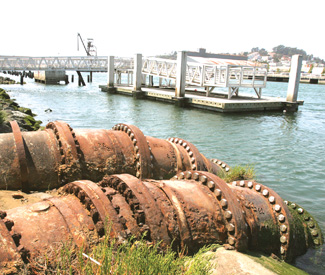
Representatives of the SFPUC are trying to change that. There are currently several projects in the works to address issues with the city’s sewers, including flooding. These include Model Block improvement programs, such as green streetscaping meant to soak up rainfall, and a Sewer System Improvement Program that is in its early stages.

According to SFPUC spokesperson Jean Walsh, the SSIP is meant to tackle a number of issues with the sewer system, including flooding. She listed “seismic reliability issues” and a projected increase in major storms due to climate change as pressing reasons for the plan.

Besides the ancient pipes, the city’s network of storage transport boxes is routinely overloaded. These boxes are underground containers that catch water and hold it until it can be processed through the system and through to water treatment plants. Walsh says that they “surround the city like a moat… When those boxes fill up and all our capacity is full, the system overflows.”

This can cause flooding, especially in low-lying areas of the city and natural creek beds. Precita Creek, which once flowed freely along what is now Cesar Chavez Street, has been a site of overflows and flooding since it was first incorporated into the city’s sewer system in 1878. Nearby Islais Creek has also been diverted into sewers in the flooding-prone area.

The SSIP will have a particular focus on green technology. “One way that we’re going to address the flooding issue is by using low-impact design,” Walsh said. “We’re looking at permeable paving, bio-retention swales, and rainwater harvesting as ways to reuse the rainwater.”

Walsh says that the Model Block program has been a pilot for the SSIP. In May, the city and the Environmental Protective Agency unveiled a new green “streetscape,” part of the Model Block program, on the 1700 block of Newcomb Avenue. Areas of the sidewalk were replaced with permeable pavement, trees and gardens, meant to improve beauty and calm traffic as well as soak up rainwater so that it does not flow directly into the sewer system. In 2010, a similar project was completed on Leland Avenue between Bayshore Boulevard and Cora Street.

Neighborhoods in San Francisco’s southeast, particularly the Mission and Bayview, have been disproportionately affected by problems with the sewer system. Olin Webb, a lifelong Bayview resident and member of the group Bayview Hunters Point Community Advocates, says that sewer improvements are long overdue.

“Whenever it storms, there’s an overflow here,” Webb said. “Every time it rains, you can smell the raw sewage.”

Bayview community organizations have been campaigning for improvement to the sewer system for decades. Webb said some progress has been made in the past few years, including the installation of a pathway at Yosemite Slough Park, part of an effort to restore the wetlands in the area and turn it into a pleasant community space.

Webb was ambivalent about recent improvements. Bayview Hunters Point, like most of San Francisco, has lost much of its African American population during a recent surge in out-migration. According to a 2010 census, San Francisco’s black population has declined by 22.6 percent in the last decade.

“This took too long,” Webb said of the sewer improvement. “I’ve been here 60-something years, my mother worked on this before me. It’s like a joke to me that now everything’s getting fixed up and most of the people can’t enjoy it.”

Residents may still have a to wait for SSIP projects to begin construction. The program will likely span 15-20 years, and is currently in its early stages. “The project is still in design and planning stages,” Walsh said. “It needs to be validated and budgeted. We know it’s going to cost multiple billions of dollars”

Yet Walsh is optimistic that the project will make real change in a sewer system that’s been inadequate for decades. “It’s going to be an impactful project,” she said. “People are going to notice it happening.”

Occupy and the hostile media

8

OPINION Every progressive movement in U.S. history was portrayed negatively by mainstream media at the time it was happening. It’s no surprise that the media portray the Occupy Wall Street movement in the same light.

During the Montgomery bus boycott, mainstream media outlets interviewed black folks who were against it and talked about how the boycott was misguided and hurt the local economy. The day after the boycott started, the Montgomery Advertiser ran a story featuring the manager of the bus lines saying that bus drivers were being shot at and rocks were being thrown at them.

During the rest of the civil rights movement, protesters who were fire-hosed and otherwise brutalized were called “violent protesters” in the mainstream media, which again featured interviews with people saying that the protests were wrongheaded.

During the Anti-Vietnam War movement, the mainstream media portrayed protesters as out of touch, violent, and dirty. There was a picture in the San Francisco Chronicle of a guy who was throwing back a tear gas canister that had been shot at the peaceful crowd. This was shown as proof of protesters being wild, out of touch, and violent. The Black Panther Party had free breakfast programs and was beloved worldwide — but every mainstream media outlet that covered it, covered it negatively.

There has never been any strike, work stoppage, or union action that was supported by the mainstream media at the time that it was happening.

The mainstream press didn’t support the Anti-Apartheid movement and doesn’t support the boycott, disinvestment and sanctions movement for Palestine.

The mainstream press is always on the wrong side of history because it’s always on the side of the status quo, which is capitalist exploitation and oppression.

Here’s an example: Every article about the port shutdown featured a trucker speaking against the shutdown. However, the Occupy movement received and circulated a letter from an organization representing hundreds of port truckers which thanked us all for this action in support of their struggle. None of those folks were interviewed by media.

Another example: In any movement we will make in the U.S. that is multi-racial, there will be real problems to fix around race. These are good problems, because they come from the fact that a lot of different groups of people who normally wouldn’t work together are doing so now.

But the article in the Chronicle that supposedly showed that Occupy Oakland doesn’t connect with black folks was poor and unethical journalism. The paper quoted only two black folks; one said the answer is to tell other Black folks to “Stop The Violence.” Okay. But the Chron didn’t interview any of the folks in the neighborhood around Gayla Newsome who was put back into her foreclosed home. They didn’t interview anyone from the neighborhood around 10th and Mandela, where the Tactical Action Committee has made a foreclosed Fannie Mae home into a community center with workshops for the community. They didn’t interview anyone involved with Occupy Oakland’s November 19th march, which was 2,000 strong and focused on school closures. They didn’t interview any of the many black union members who have worked with us. They didn’t interview anyone in the People Of Color Caucus, or anyone else who is black and works with Occupy Oakland.

Don’t be surprised at the media’s negative portrayal of our movement. It’s happening because we are growing, we are effective, and we are right. *

Boots Riley is a musician and activist.

Money and values

0

steve@sfbg.com

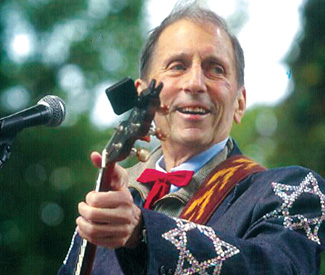
Warren Hellman left a hole in the heart of San Francisco when he died on Dec. 18 at the age of 77. That’s where he existed, right in the city’s heart, keeping the lifeblood of money and values flowing when nobody else seemed up to that task. But as the outpouring of affection and appreciation that followed his death attests, he set an example for others to follow…and maybe they will.

Hellman was born into one of San Francisco’s premier wealthy families, a status he maintained by becoming a rich and famous investment banker. His great-grandfather founded Well Fargo, as well as the Congregation Emanu-El, the spectacular temple where Hellman’s memorial service was held Dec. 21, attended by a huge crowd ranging from Gov. Jerry Brown to young country music fans.

Hellman was more than just a philanthropist who funded key institutions such as the San Francisco Free Clinic, the Bay Citizen newsroom, and a variety of programs and bond measures benefiting local public schools. He was more than the go-to guy for mediating sticky political problems such as this year’s pension reform struggle.

Hellman was the conscience of San Francisco, reminding his rich friends of their obligations to fair play and the common good. And he was the rhythm of the city, single-handedly creating and funding the Hardly Strictly Bluegrass Festival, perhaps the greatest free music festival in the country. And he was so much more.

“What do banjos, garages, Levis, 50- and 100-mile runs, ride and tie, investment banking, public policy, ballot measures, free medical clinics, and a zest for women,” U.S. Sen. Dianne Feinstein said at his service, causing the room to erupt in laughter at the misstated last item, “for winning — correction, a zest for winning — have in common? The answer, of course, is simple: Warren Hellman.”

It was a gaffe that Hellman probably would have appreciated as much as anyone. Speaker after speaker attested to his marvelous, and often risqué, sense of humor. It was a theme that ran through the testimonials almost as strongly as two of his other key qualities: his competitiveness and his compassion.

For a charter member the 1 percent, Hellman had a deep appreciation for the average person of goodwill, and he found those people as often on the bottom of the socioeconomic ladder as he did on the top. While most of his contemporaries in San Francisco’s uber-wealthy class, such as Don Fisher and Walter Shorenstein, often used their money to wage class warfare on the 99 percent, Hellman used his wealth and influence to bridge the divide.

He generously gave to good causes and advocated for higher taxes on the wealthy to lessen the need for such charity. Hellman understood that we all help make San Francisco great, and that perspective animated his love of bluegrass music, which he called “the conscience of our country.”

As he told me in 2007, “A big passion of mine is to try to help — and people have defined it too narrowly — the kinds of music that I think have a hell of a lot to do with the good parts of our society.”

Hellman may have started the Hardly Strictly Bluegrass Festival because it was music he loved and played, but he turned it into such a major spectacle — booking some of the biggest acts from around the country, going as big as the city and space would allow — because he thought it was important to the soul of his city.

“I’m glad that we have first-rate opera, but it’s equally important that we foster the kind of music, lyrics, etc., that support all this,” Hellman told me. And by “all this,” he was talking about the grand social bargain, the fact that we’re all sharing this planet and we’ve got to understand and nurture one another.

At the memorial service, that attitude came through most strongly in the words — spoken with a country twang — of musician Ron Thomason, who became good friends with Hellman through their shared loves of bluegrass music and horseback riding, including the endurance rides in which they each competed.

“I know I’m amongst all good folks,” Thomason told the packed synagogue. “The plain truth is Warren didn’t tolerate the other kind.”

That was true. No matter your perspective or station in life, Hellman wanted to know and appreciate you if had a good heart and curious mind. And if not, he would let you know — or cut you off, as he did with the political group he helped start, SFSOS, after its director Wade Randlett launched nasty attacks on progressive politicians and advocates.

Thomason joked about how ridiculous much of this country has become. “It’s hard to believe that only half the people are dumber than average,” he said. “But I don’t think anyone ever saw Warren Hellman talk down to anybody.”

He told the story of meeting Hellman backstage at Hardly Strictly. Thomason knew Hellman from equestrian events and didn’t know that he was a wealthy banker or that he created and funded the festival. And Hellman didn’t immediately offer that information, telling his friend that he was just backstage because he knew someone in management.

“He knew everyone in management, and he expected them to do right,” Thomason said, later adding, “In his mind, there should not be any disenfranchised.”

It was a perspective that was echoed by people from all parts of Hellman’s life, from his family members to his business partners.

“He taught us to respect people from all walks of life,” said Philip Hammarskjold, the CEO of Hellman & Friedman and Hellman’s business partner of 17 years, describing how Hellman was as engaged with and curious about the firm’s low-level support staff as he was its top executives, an attitude that infected those around him. “His culture is now our culture. His values are now our values.”

“Money meant noting to Warren,” said his sister, Nancy Bechtle. “But in business, money was the marker that you won and Warren always wanted to win.”

He was a competitive athlete and an investment banker who wanted to give companies the resources they needed to succeed, rather than slicing and dicing them for personal gain. And he used the wealth he accrued in the process to make San Francisco a better place.

“He treated San Francisco as if it were part of his family, nurturing its health and education,” said his granddaughter, Laurel Hellman.

Personally, he was an iconoclast with a lively sense of play.

“He never worried about the things that most parents worried about,” said Frances Hellman, the eldest of Warren’s four children. Rather than getting good grades and staying out of trouble, Hellman wanted his children to be happy, hard-working, respectful of people, and always curious about the world.

She told stories about taking Hellman to his first Burning Man in 2006 (along with Rabbi Sydney Mintz, who led the service), an event he loved and returned to the next two years, and watching his childlike pleasure at leaving his painted footprints on a sail that was headed around the world, or with just sitting on the playa, picking his banjo, watching all the colorful people go by.

“I love him and I miss him more than I can express,” she said.

As Hellman told me in 2007, he just loved people and was genuinely curious about their perspectives.

“I’m so grateful for the friendship of Warren, to know this incredible man,” singer Emmylou Harris — one of Hellman’s favorite musicians — said before singing for a crowd of others who felt just the same way.

PG&E’s system fails — again

2

EDITORIAL There’s no question that officials from Santa Clara — thrilled to have finalized financing for a new 49ers stadium — were taking full political advantage of the Dec. 19 blackouts at Candlestick Park. There’s no question that the event Mayor Ed Lee called a “national embarrassment” helped guarantee that the team will leave San Francisco after one more season.

But this is about more than football — and the mayor and the supervisors ought to using this latest PG&E screw-up to take a serious look at the company’s reliability and its impact on the city.

This is hardly the first embarrassing PG&E blackout in San Francisco. For the past few years, the private utility’s aging infrastructure has been failing, leaving businesses and residents in the dark. And while PG&E officials are trying to blame the city for the latest snafu, everyone admits that the problem started when a PG&E power line snapped.

Snapping power lines are a dangerous prospect — in this case, nobody was hurt and the arcing electricity didn’t start any fires. But that was largely a matter of luck — the jolt from the broken line lit up TV screens all over the country and if it had happened close to some flammable object (or, worse, some live person), the damage could have been serious.

As it was, millions of people watched San Francisco’s football stadium go dark — twice. The electricians at Candlestick patched things together and the game went on, but the message was clear: PG&E can’t be trusted to keep its equipment in safe, operating condition.

The city of San Bruno is still trying to recover from the natural gas explosion that killed eight people and leveled a neighborhood. And while local and state officials are giving increased scrutiny to PG&E’s underground gas pipes, the electricity system isn’t in much better shape.

Blackouts are more than an embarrassment — they cost the city and its businesses money. And, as the almost certain loss of the 49ers shows, unreliable infrastructure doesn’t help the local business climate. As Santa Clara Mayor Jamie Matthews told the Bay Citizen: “The reason they moved to Santa Clara is the reliability of our services. We have reliability in our electricity system that is unparalleled.”

One reason: Santa Clara has its own municipal power system. Rates are lower, blackouts are unheard of and the equipment is well maintained. Compare that to PG&E, where company executives diverted gas line maintenance money to pay themselves bonuses, and you see why San Francisco, which relies on the private monopoly, has a problem.

The supervisors ought to take this opportunity to hold hearings on the reliability of PG&E’s electric and gas system in the city — looking not just at the Candlestick problem but at the maintenance records, the age of crucial equipment, the company’s replacement plans and the economic impact of a shoddy electrical system. That should be part of Mayor Lee’s investigation, too.

At some point, San Francisco residents are going to have to pay to rebuild this system. They can pay through higher PG&E rates when the utility finally gets around to it — or they can begin the process of creating a municipal utility, which can do the job right, bring down rates and improve the business climate that the mayor so loves to discuss.

Editor’s notes

4

Tredmond@sfbg.com

I’m not good at holidays. When your world is made of deadlines, the holidays are just one more — gotta get the kids presents, gotta get the tree, gotta make plans, gotta do dinner … one more set of hassles. Bah humbug.

And I’ve never been a big fan of New Year’s Eve. Too many people acting like they’ve never been drunk before and will never be drunk again, and everything costs too much. I drink every day; I can miss New Year’s Eve. Party pooper.

So I don’t do my own new year’s resolutions; I do them for other people. This is what I would like everyone else to do in 2012:

I would like the Occupy organizers to put together a massive day of teach-ins and a march on Washington in the spring, to keep the movement alive and bring in a lot more people.

I would like my fellow dog owners to pick up the shit off the sidewalks.

I would like the Department of Parking and Traffic to put up No Left Turn signs on 16th Street at Potrero and Bryant.

I would like Visconti to lower the price on that really cool lava fountain pen.

I would like the transportation whizzes at City Hall to figure out how to put bike lanes on Oak Street so I can ride back from Golden Gate Park as safely as I can ride to the park.

I would like the supervisors to change the rules for Question Time so the mayor doesn’t get all the questions in advance and there’s a chance for real discussion that isn’t stupid and boring.

I would like middle school English teachers in San Francisco to explain to their students that homeless people are not “hobos.”

I would like the Obama Administration to quit hassling pot dispensaries.

I would like the airlines to start serving cocktails before takeoff.

I would like the thriller writers of America to learn how to write decent sex scenes.

I would like Jerry Brown to endorse the initiative to outlaw the death penalty.

I would like everyone in politics to stop saying the words “together” and “shared” since we aren’t together and I don’t want to share with the rich.

Anything else? Happy New Year.

10 places to eat and drink on Christmas Day

3

Because you and yours might be itching for something other than ham, sweet potatoes, and intense family time, we here present a list of restaurants that will be open Christmas Day providing non-holiday-oriented dinners and desserts. Relish in the savory bite-sized flavors of dim sum, or skip the solid food entirely and head to a downtown lounge for a cocktail with friends or solo.


Chouchou

Now this French restaurant is just plain cute. Perfect for dinner, or if you just want to grab a glass of wine and a chocolate pear tart while everyone else is doing the presents thing. Start off with an organic salad of mixed greens, red chard, tomatoes, goat cheese, apples, and pistachios. Then, enjoy the spot’s infamous homemade French onion soup. Still hungry? Request the Camembert apple tart, caramelized with honey.

Open Sun/25 5:30 p.m.-9:30 p.m.

400 Dewey, SF

(415) 242-0960

www.chouchoubistro.com


Mangia Tutti Ristorante

For over a decade Mangia Tutti Ristorante has been a local favorite offering a comfortable, casual atmosphere for inexpensive homestyle Italian food. Located in the Financial District, Mangia Tutti Ristorante serves garlic pastas with Italian sausage and prawns, homemade ravioli, and spaghetti. Even the bread is too good for words. And of course there are a wide variety of red wines to choose from — how else are you suppose to enjoy Italian food?

Open Sun/25 5:00-9:30 p.m.

635 Clay, SF

(415) 788-2088

www.mangiatuttisf.com


PPQ Dungeness Island

Although its often very busy for dinner, the cuisine here is worth the wait. Garlic noodles, peppercorn crab, and crab-fried rice are just a few of this Vietnamese restaurant’s mouth-watering selections. Its prices are very reasonable, and after all that holiday shopping you did it will be nice to eat on a budget.

Open Sun/25 1:00 a.m.-10:00 p.m.

2332 Clement, SF

(415) 386-8266


Top of the Mark

Feeling fancy? Feeling romantic? Take your love to Top of the Mark for that breathtaking view and fawning service. Top of the Mark has been a San Francisco landmark since the late 1930s, when the 19th floor penthouse apartment of the Mark Hopkins Hotel was converted into a cocktail lounge. With over 100 cocktails to choose from you can get a little holiday buzz and wonder at the gorgeous views of downtown San Francisco.

Open Sun/25 10:00 a.m.-1:00 p.m.

Mark Hopkins San Francisco

1 Nob Hill, SF

(415) 616-6916

www.topofthemark.com


Boboquivari’s

Yes, there is a restaurant in the city where there is free valet service. After handing over your keys you can bite into a savory steak and a twice-baked baked potato. Boboquivari’s has been mentioned in over a dozen “top restaurants in San Francisco” lists, so you should definitely treat yourself to a wonderful Christmas Day dinner. Wash down your filet mignon with its Basil Hayden’s bourbon martini, the “bohattan,” because an unconventional Christmas meal calls for a cocktail. 

Open Sun/25 5:00 p.m.-10:00 p.m.

1450 Lombard, SF.

(415) 441-8880

www.boboquivaris.com


M’s Café

It’s Christmas Day and you’re in a pickle. You shouldn’t have taken those last shots of tequila the night before at the Christmas Eve party and now you’re in desperate need of a cure-my-hangover-quick breakfast before heading to Mom and Dad’s house. When it comes to breakfast and brunch, M’s Café has got you covered. Try its corned beef hash (to die for!), its French toast (amazing!), and its black and white pudding (yum!). Mom will never know of the debauchery that took place the night before.

Open Sun/25 7:00 a.m.-4:00 p.m.

1376 Ninth Ave., SF

(415) 665-1821


Chabaa Thai Cuisine

Celebrate Christmas Day with the rich flavors of the Far East. Its colorful curries and Thai spices make its feasts succulent and tender. You have the option of spicy or veggie dishes, red, yellow, and green curry, and of course panaeng. This Outer Sunset restaurant will even deliver to your home, so if you really can’t step away from that basketball or football game before halftime, no worries, just order online.

Open Sun/25 11:00 a.m.-1:00 a.m.

2123 Irving, SF

(415) 753-3347

420 Geary, SF

(415) 346-3121

www.chabaathaicuisine.com 


Great Eastern Restaurant

What’s better than dim sum on a Sunday? Dim sum on Christmas Day. Located in the heart of Chinatown, this Chinese restaurant’s food will make you want to return every Christmas just for their Peking spareribs, clams with black bean sauce, and variety of dumplings. Invite the gang to a filling and tasty meal (for cheap).

Open Sun/25 9:00 a.m.-nidnight

649 Jackson, SF

(415) 986-2500


Waterfront Restaurant

Pier 7 houses an elegant seafood restaurant perfect for groups on this holiday. With dishes like crab mashed potatoes and lobster risotto, everyone’s tastebuds will be pleased. If you have relatives visiting from out-of-town they will love the beautiful view of the Bay Bridge through the restaurant windows. For dessert, order the sticky pudding with caramel ice cream that has a perfect cake-to-ice cream ratio.

Open Sun/25 11:30 a.m.-10: 00 p.m.

Pier 7, SF

(415) 391-2696

www.waterfrontsf.com


Aslam’s Rasoi

Probably one of the best Pakistani and Indian restaurants in the city, Aslam’s is open every day, every holiday. This Mission spot has a staff that is friendly and engaging, so don’t be afraid to ask questions or for recommendations. Its most popular dishes are the goat cheese naan, lamb korma, and chicken tikka masala. With a broad palette of Pakistani flavors, the chef and owner — Aslam himself — blends cuisines for a healthy dining meal.

Open Sun/25 5-11 p.m.

1037 Valencia, SF

(415) 695-0599

www.aslamsrasoi.com

Occupying the future

0

p { margin-bottom: 0.08in; }

It was a funny feeling, seeing so many faces from Occupy San Francisco and Occupy Oakland in the bright, clean “Gold Room” of San Francisco’s Commonwealth Club, particularly after spending so many nights camping with them and covering the movement.

But they were there on Dec. 15, just up Market Street from their old campsites, along with a couple hundred supporters and interested community members, attending a forum on “Occupy: What now? What’s next?” Facilitator Caroline Moriarty Sacks announced that she “expected a civic conversation.” What she got was a very Occupy answer to the question of the evening which, in typical style, redefined the very concept of “civic” conversation.

The forum involved voices from many different parts of the left. Jean Quan, the Oakland mayor with a progressive activist past. George Lakoff, an outspoken liberal professor of linguistics at UC Berkeley. In the audience, dozens of people who support or are interested in Occupy, the mostly leftist San Francisco political milieu. And, of course, representing most of the panel and a good chunk of the audience were the active occupiers: anarchists, peace activists, labor organizers, and everything in between.

During the panels, their perspectives clashed. Yet Occupy strives to be a coalition of everyone, and all of these voices will be important as it progresses. Sacks had planned a 90-minute forum, featuring a panel to answer both moderator and audience questions, a break-out session, and summary reports back.

In their quest to practice participatory democracy, Occupy protesters have become used to long meetings that strive for non-hierarchical structure and a platform to hear the voice of anyone who would like to speak. If there’s one thing they can all agree upon, it’s that they’re a little tired of waiting patiently for their voices to be heard.

During the panel discussion, a few Occupiers started a Peoples Mic, interrupting Mayor Quan. They were escorted out. This fazed no one, and by the time she left the panel, chants demanding her recall rang in the hall. At each disruption, some Occupy-involved folks would object, “Listen to her! I want to hear all viewpoints!”

The tone was rowdy, but not aggressive. Minutes after disrupting the forum, protesters were back on schedule, sitting in small groups engaged in dialogue with other audience members. Even Quan was fine with it; she told the Oakland Tribune, “It was a chance to talk and have dialogue…We fostered a debate.”

This event was a microcosm of the thorny but crucial way that Occupy is uniting the left. The people in the room had something in common: belief in the visions and goals of Occupy. They just disagreed on how to get there.

Discussing, debating, and creatively bridging these differences has been one of the movement’s greatest struggles. But the more Occupy succeeds on the thorny path to unity, the more its strength builds.

Misrepresenting anarchism

Civil disobedience, peace, non-violence—all of these are critical concepts for the Occupy movement, and wrestling with them frankly has been part of the long road towards unification.

This has been done through the application of what’s originally an anarchist concept: embracing a diversity of tactics.

This is what the Occupy protesters did at the Commonwealth Club Forum. Some disapproved of disruptions, others thought them necessary. Individuals acted as they felt was right.

The Occupy supporters who turned their backs on Quan and interrupted her didn’t do it because they are inexplicably rude. They gave their reasons, including still being hurt and angry after Quan unleashed police using tear gas, rubber bullets, and aggression to break up their encampment on Oct. 25.

Quan also was displeased about that night’s events, saying that “No one is happy about what happened around the tear gas and mutual aid.”

The second reason for the reactions was what an Occupy Oakland protester who mic-checked Quan called her “misrepresentation of anarchism.” This has been dismissed and mocked by many press outlets, as if to say: What’s the point of bothering to understand anarchism?

Many people who identify with anarchist principles and tactics are involved with Occupy groups. This has contributed to the growth and development of autonomous communities at camps, as many anarchists have extensive knowledge and practice in building alternative communities based on horizontalism and collective management of resources. Occupy’s anarchist roots go deep.

This has also created controversy when tactics like property destruction and the black bloc, both associated with anarchism, become a part of Occupy. One example was the bank windows smashed and vacant building occupied during Occupy Oakland’s General Strike on Nov. 2, and riot police again responded with tear gas that night. The next day, 700 attended a General Assembly meeting to focus on discussing violence, its nature, and the ethics surrounding it.

Many have been quick to characterize this ongoing debate as a division in the movement. But if unity is to be achieved, these tough conversations are necessary.

Bringing it home

Occupy has been criticized for its lack of leaders, but that has left it open to exciting possibilities. To start a new Occupy project, you just have to convince some people to help you out—you must gain approval from no one. Some have described the organization as a “do-ocracy.” Don’t ask for permission, they say, just do it.

As such, the ideas for moving forward span from handfuls of people on street corners to millions converging on Washington.

Lakoff presented one of these concepts to the group at the Commonwealth Club, what he called “Occupy Elections.” Lakoff said, “Join Democratic clubs, and insist on supporting those people with your general moral principles. If you join Democratic clubs soon, you decide who gets to run. This is how the Tea Party took over.”

Like most ideas floating around in Occupy, there’s already something similar underway. Berkeley resident Joshua Green started the Occupy the Congress initiative, which hopes to organize and fund efforts for candidates “who support the declaration of the occupation of Wall Street.” Congressional candidates such as Elizabeth Warren in Massachusetts and Norman Solomon here in California have expressed support for and goals similar to the Occupy movement.

Occupy Washington DC has taken the message to Congress in other ways. In an open forum with supporters and renowned economists, they developed their Budget Proposal for the 99 Percent and are coordinating with Occupy groups throughout the country to call for a National Occupation of Washington DC starting March 30.

A call to action like that has a chance of being huge. With the West Coast Port Shutdown on Dec. 12, Occupy has demonstrated an ability to coordinate nationally. Those actions also showed Occupy’s growing unity with labor groups, as ILWU members worked closely with Occupy to plan those actions.

On Dec. 6, Occupy demonstrated its dedication to yet another new frontier—occupying foreclosed homes. That was a national day of action called by Occupy Our Homes and Occupy groups in over two dozen cities participated, defending homeowners threatened with eviction and moving the homeless into empty properties.

Hibernation

By the time moderator Melissa Griffin asked her final question to the panel, it was clear that the “civic conversation” had not gone as planned. Two Occupy protesters had been escorted out for interrupting Jean Quan. A handful of others had stood and turned their backs when she spoke. The crowd was restless for their own chance to grill the panelists, and there were only a few minutes left. With a faint look of dismay and hopelessness, Griffin asked the question that had no chance of being quickly answered: What’s next for occupy?

She quoted Kalle Lasn, co-founder of Adbusters, the “culture-jamming” organization credited with prompting Occupy Wall Street. In a recent interview with NPR, Lasn said: “I think that we should hibernate for the winter. We should brainstorm with each other. We should network with each other and then come out swinging next spring.” Griffin asked the panelists if they agreed with that statement.

Of course, some did and some didn’t. In fact, some form of “hibernation” is what many plan to do. In San Francisco, Occupy reading groups, workshops, and educational circles are on the rise. Small actions happen almost daily, ranging from workshops to meetings to marches to pop-up occupations.

Occupiers who were kicked out of camps are sleeping in networks of squats, safe-houses, and what one long-time camper described as “little homeless encampments around the city. We don’t put up an Occupy banner, and police don’t arrest us.”

The forum was a microcosm of the debates and plans brewing within Occupy, and it ended like most Occupy events. New connections had been made. Most people trickled out while several Occupy campers stayed to help stack chairs and clean up from the event. They all eventually exited the warm building, with its empty lobby that could have slept at least 50 people. OccupySF and Oakland activists chatted and advised each other on where to go.

Occupy is a resurgence in the spirit and power of protest and peoples movements, a recognition that the personal is political, that individuals losing their jobs and their homes can have more power in numbers. Organizing and protest has become a lifestyle.

As the Occupiers left the Commonwealth Club building, the future seemed thrilling, although many still needed a place to sleep for the night while those possibilities continue to percolate.

Last-minute gift guide

0

HOLIDAY GUIDE Look at it this way: you’re not a procrastinator, you’ve just been resisting the pull of the holiday commercial machine.. until you’re on the way to spin the dreidel — or it’s dusk, Saturday, and the thought of tomorrow’s Christmas festivities with your clan is giving you sweaty palms. Will your lack of giftage imply a cold heart? If you lose your anti-consumerist stubborn, last minute shopping that a. supports your local businesses and b. won’t make you look like you left it all for the last minute is available to you. Here’s our list, complete with the final hour the shop is open on Christmas Eve (which doesn’t mean these stores won’t serve just as well for Chanukers, Kwanzelles, and Festiv-ites).

Z. CIOCCOLATO

Every once in awhile you come across a future giftee like a brick wall. Maybe you don’t know the person all that well (boyfriend’s as-yet un-met mom), you’re having issues getting them something they don’t have already (your too-cool tech-glich neighbor). May we suggest candy? This North Beach sweet spot is open really late on Saturday and stocks the finest in fudge, caramel popcorn, and retro throwbacks. Abba Zabba? Indeed.

Open until midnight, 474 Columbus, SF. (415) 395-9116, www.zcioccolato.com

COLLAGE GALLERY

A store full of knick-knacks is a great bet for finding unique gifts for your loved ones. From loose typewriter keys and scrabble pieces to jewelry by local artists and vintage purses, this Potrero Hill shop is a super stop when you’ve got a femme artistic type in mind. Have a friend who is decorating their new apartment? Sis just had a baby? Collage Gallery is known for having the most eclectic collections of vintage wall letters, numbers, and clocks. So tick-tock, get over there.

Open until 5 p.m., 1345 18th St., SF. (415) 282-4401, www.collage-gallery.com

AMOEBA MUSIC

This music store is godsend on Christmas Eve. With a large selection of new and used CDs, 45s, concert posters, and out-of-print albums, you already know Amoeba Music is a music lover’s dream. You can buy gifts for the whole family: a Grateful Dead album for Dad, Common’s just-released The Dreamer, the Believer for your brother and something vinyl for your “we’ve only been dating a few months, what the hell do I buy them?” partner. Treat yourself to the new Snoop Dogg-Wiz Khalifa collab album when your list is all checked off.

Open until 7:30 p.m., 2455 Telegraph, Berk. (510) 549-1125, www.amoeba.com

GG’S

The place to last-minute shop for mom is clearly GG’s, although you can probably find gifts for just about anyone in this West Portal shop. GG’s is a specialty store with a product selection that traverses from the creative to the elegant to the witty. Selling jewelry, candles, lotions, perfumes, and soaps, pretty little things will catch your eye, almost guaranteed. And GG’s does do giftwrap — a Christmas lifesaver.

Open until 6 p.m., 11 West Portal, SF. (415) 731-1108

THE FRUIT GUYS

For the super-last minute, nothing beats a solid online purchase. The Fruit Guys is a local farm delivery service that was started out of South San Francisco. It’s burgeoned dramatically and now has centers in Phoenix, Philadelphia, and Chicago — so if you have relatives in the Mid-West and East Coast that “don’t get” the whole local food thing, give ’em a little goose. Fruit boxes run as little as $26 per month, and you can cease delivery whenever you wish. (Note: If your rels don’t live in one of those cities, the food might come from a little further away, but the Fruit Guys try to utilize local farms wherever they can.)

(877) 378-4863, www.fruitguys.com


>>STORES ALSO OPEN LATE ON CHRISTMAS EVE:

FOOD

Shufat Market Open until 2 a.m., 3807 24th St., SF. (415) 826-6207

17th and Noe Groceteria Open until 11 p.m., 3900 17th St., SF. (415) 863-6337

ART/BOOKSTORES

Green Apple Books Open until 11:30 p.m., 506 Clement, SF. (415) 387-2272, www.greenapplebooks.com

SF MOMA Museum Store Open until 6:30 p.m., 151 Third St., SF. (415) 357-4000, www.sfmoma.org/museumstore

Alexander Book Company Open until 5 p.m., 50 Second St., SF. (415) 495-2992, www.alexanderbook.com

TOY/HOBBY STORES

The Ark Toy Store Open until 5 p.m., 3845 24th St., SF. (415) 821-1257, www.thearktoys.com

Jeffrey’s Toys Open until 6 p.m., 685 Market, SF. (415) 243-8697

Mission Skateboards Open until 5 p.m., 3045 24th St., SF. (415) 647-7888, www.missionsk8boards.com

CLOTHING/ACCESSORIES

Gravel and Gold Open until 4 p.m., 3266 21st St., SF. (415) 552-0112, www.gravelandgold.com

Therapy Open until 7:30 p.m., 545 Valencia, SF. (415) 865-0981, www.shopattherapy.com

Unionmade Open until 4:30 p.m., 493 Sanchez, SF. (415) 861-3373, www.unionmadegoods.com

FLORAL SHOPS

Verde SF Open until 6 p.m., 1265 Fell, SF. (415) 796-3890, www.verdesf.com

Utsuwa Floral Design Open until 7 p.m., 1339 Polk, SF. (415) 447-8476, www.utsuwafd.com


The reluctant soloist

0

MUSIC Michael Beach is not the conventional — or, cliché — singer-songwriter. Granted, he writes stripped down folk rock, but he’s not locked in the style. He can swallow the comparisons to Nick Drake or Mason Jennings, but he hasn’t modeled himself after those (or any other) singer-songwriters really. “I think that I would get bored if that’s all I listened to,” he says. It explains why there’s more to his bare bones sound — the dude simply doesn’t fit the mold.

“It’s not like I sit at home and read Greek mythology,” Beach tells me over the phone. Yet, in answer to a question about his newest record, Mountains + Valleys, released on Spectacular Commodity/Twin Lake Records, he evokes narratives and characters from biblical text and classical myths.

“You take something,” he explains, “a character from a myth, a religious tradition, or a historical figure and that symbolizes an idea. And then you manipulate those ideas by explaining it through the characters.”

“So you make it your own in other words,” I counter.

“I mean I’m certainly not under the impression that nothing like this has ever been done before.”

Beach is quick to pass on credit to others, whether it’s his predecessors or the musicians who’ve lent him a hand in the studio. It makes you think he’s still vaguely uncomfortable as a solo artist. First and foremost, Beach is the guitarist and lead singer of Electric Jellyfish, a rock band based out of Melbourne, Australia. Beach, who’s from Merced, attended La Trobe University in the suburbs of Melbourne and formed the band with Peter Warden and Adam Camilleri roughly seven years back.

It was when Electric Jellyfish took a short break that Beach started recording on his own. “I didn’t want to be idle, so I recorded an album.” It was as simple as that — Blood Courses was released in 2008. However, two years later, Beach’s visa expired. He was forced back to the states and made his home in San Francisco.

Now the members of Jellyfish take turns touring their respective countries. They have a forthcoming seven-inch entitled Trouble Coming Down, and are on the bill to play Austin, Texas’ SXSW in March. In the meantime, Beach is left to his own devices.

Mountains + Valleys shares similarities with Beach’s previous album, but with some notable differences. “[Blood Courses] was really, really sparse and brittle; purposefully one guitar track and one vocal track. I wanted to stretch my legs a little bit and incorporate some other instruments for a whole band sound. But I still wanted to keep things sparse and basic.”

Mountains + Valleys is sparse. However, as the title indicates, it ascends in dramatic directions too. Beach may hold back at times, but he can yank those chains off and embrace a devil-may-care attitude. It’s painstaking calculation as much as pure impulse. If Beach is fairly abstruse with his words, he’s clearly vulnerable in his vocal delivery. If “So Said the Birds” has elements you might ascribe to folk, “Straight Spines” gushes with enough drive to call straight indie-rock.

Interspersed throughout the album are brief instrumentals that vary from the electric rock collage of “Central San Joaquin” to the more subtle and dissonant “Shasta.” Beach says the inspiration for the instrumentals was Chris Smith’s Bad Orchestra, which wasn’t widely released outside of Australia.

“I think [the instrumentals] made me less one-dimensional, less like ‘I’m a guy who writes songs and strums my guitar.’ There’s more than one way of conveying meaning in music.”

MICHAEL BEACH

Wed/21

With Brian Smith, and the Same

9 p.m., $6

Hemlock Tavern

1131 Polk, SF

(415) 596-7777

www.hemlocktavern.com


Are we green yet?

2

rebeccab@sfbg.com

A contract agreement for San Francisco’s innovative clean energy program, CleanPowerSF, could be approved by the San Francisco Board of Supervisors as soon as January, representing a major milestone for efforts to put the city in the retail electricity business.

CleanPowerSF, which stands out as one of California’s most ambitious community choice aggregation (CCA) municipal energy programs, would offer San Francisco customers the option of powering their homes with 100 percent renewable energy instead of the standard mix of predominantly gas and nuclear-generated power supplied by PG&E.

According to a draft contract introduced at the board, energy would be purchased on the open market by Shell Energy North America and delivered to residential customers, who would pay a modest premium for the service. The first phase would target a narrow customer base, with plans for expansion.

In the long run, the San Francisco Public Utilities Commission (SFPUC) has committed to constructing city-owned wind farms, solar arrays, and combined-heat-and-power systems to generate green power locally, which would ultimately lock in lower electricity rates — but this remains in an early assessment phase. Energy consultant Paul Fenn of Local Power Inc. is conducting the study.


HURRY UP AND WAIT?

The fact that a draft contract agreement is under consideration signifies a breakthrough for a program that for years crept along at a snail’s pace, as tension simmered between SFPUC officials and members of the Local Agency Formation Commission (LAFCo), the body overseeing CleanPowerSF implementation.

“We have been waiting for this for so many years,” remarked Sup. David Campos, who chairs LAFCo. “We pushed the [SFPUC] really hard.”

Yet longtime advocates of San Francisco’s CCA, like Eric Brooks and other environmentalists affiliated with the Local Clean Energy Alliance, worry that CleanPowerSF will never hit its stride because it won’t be accessible to customers who want to go green but can’t afford the higher price tag. In an ironic twist, he and others who previously excoriated the SFPUC for its sluggish progress are now urging the lead agency to pause instead of steamrolling ahead.

“We did not want things to go the way they did,” Brooks said. “We’re saying, you should not finalize the contract with Shell until we have the build-out information. It enables us to get better rates,” he added. With detailed, shovel-ready plans in place, Brooks said, arrangements with Shell could hinge on plans for city-owned generation.

Early plans for city-generated power call for enough projects and retrofits to account for 360 megawatts of efficient and renewable energy capacity, including 31 MW of solar panels and 150 MW from a wind farm, plus a combination of weatherization and other efficiency measures. The Local Clean Energy Alliance estimates that more than 1,000 jobs associated with these projects could be created within the first three years.

SFPUC officials and Campos remain unconvinced that it’s a good idea to hold off on finalizing the Shell contract.

“We’re all kind of moving toward the same goal,” SFPUC spokesperson Charles Sheehan said. “If we wait a year or two years, you don’t know what’s going to happen in the future. We have to seize the moment.”

Campos and Sheehan both said advocates’ concerns would be addressed by a contract provision allowing the city to swap green power purchased by Shell with green power produced locally, once the electricity becomes available. The SFPUC also agreed to a provision committing to the build-out program, on a separate track from the Shell contract.

“We’re not going to be able to [start building] unless we have the customer base to begin with,” Campos pointed out. “I have a different perspective in terms of why it’s important to move forward,” he acknowledged, but said he was looking forward to a “healthy debate” at the board.

For all its complications, CleanPowerSF is a quintessential example of that progressive adage “think globally, act locally.” In early November, the International Energy Agency issued a warning calling for dramatic changes in power generation. With so many coal-fired power plants under construction worldwide, the agency noted, the opportunity to avert the worst impacts of global climate change will have passed completely by 2017.


ULTRA GREEN, FOR A FEE

San Franciscans will be able to reduce personal energy usage and perhaps shed some consumer guilt by participating in the CCA program. Under the plan, Shell will purchase electricity from carbon-free sources and sell it to the SFPUC for distribution to CleanPowerSF customers. The shift will green the power mix on the grid while sending market signals that the demand for renewable power is on the rise.

At the start of the program, which the SFPUC pegs as July or August of 2012, up to 270,000 residential customers will be automatically enrolled. Targeted customers will also receive notices asking them to choose whether to stay with the program, or opt out and continue receiving power from PG&E.

Exact rates won’t be hammered down until February or March of 2012, but preliminary estimates suggest most customers will pay roughly $7 a month more for the green power, though a few (those who use a lot of electricity) could wind up paying as much as $50 more.

The price tag could prove to be a tough sell, even in affluent San Francisco. “We’ve done extensive market research,” explained Sheehan. “And we have taken into account PG&E’s opposition campaign,” an all-but-guaranteed response to the program which the utility giant unleashed in full force when neighboring Marin County undertook its own CCA.

Based on the research, “We are forecasting a two-thirds opt-out rate,” Sheehan explained. Initially, this means only around 10 percent of San Francisco residents — a population likely limited to those in higher income brackets — are expected to enroll. From there, new rounds of enrollment and opt-out noticing would follow.

The draft contract includes a $19.5 million appropriation, which includes operating reserves plus a $15 million escrow account. That’s the maximum payout Shell could receive if the city terminated the contract before the agreed-upon date and left the company stuck with unused power.

“It’s one way of showing we have some skin in the game,” Sheehan explained. Shell would only be eligible for $15 million at the start of the 4.5 year contract, he added, and even then it would only take effect if Shell was forced to sell the excess power at a lower price than it paid.

The Shell contract cannot go into effect until several steps have been accomplished. First, the board must give its stamp of approval for the contract and the $19.5 million appropriation. The SFPUC must then finalize program rates.

The SFPUC is also awaiting a ruling from the California Public Utilities Commission (CPUC) determining a bond amount required for all CCA programs. The bond is “kind of a mechanism to make PG&E whole, if in the very unlikely circumstance, this program would cease,” and PG&E had to absorb all CCA customers immediately, Sheehan explained. He said a ruling is expected in February.

The plan to offer ultra green power at a higher price is a departure from the original program goals, which were to offer greener-than-average power at or below PG&E electricity rates. That concept was jettisoned after SFPUC staff determined the objective wouldn’t pencil out in the short term.

Whether or not the supervisors will sign off on the contract as it stands remains to be seen, though Sheehan was optimistic. Campos said it would be important to educate members of the board of supervisors and the public about the program. “It’s going to be investment that’s going to pay for itself,” he said, “many years down the road.”

The unlikely sheriff

1

Michael Hennessey has served as San Francisco’s sheriff for half of his life, the longest such career in California history — and by all accounts the most progressive. Since taking office in 1980, Hennessey has been an island of liberal enlightenment in a political climate and law enforcement culture where tough-talking conservatism has been ascendant.

Yet in that era, Hennessey pioneered the creation of innovative programs to compassionately deal with drug abuse, violence, recidivism, and lack of education among jail inmates. He proactively brought unprecedented numbers of minorities, women, LGBT employees, and ex-convicts onto his staff. And he sometimes resisted carrying out evictions or honoring federal immigration hold orders, bold and risky social-justice stands.

His stances drew scorn from the local law enforcement community, which never endorsed him in contested elections, and criticism from political moderates and national media outlets. But San Francisco voters reelected him again and again, until he finally decided to retire as his current term ends next month.

He credits his success and longevity to the people of San Francisco, who have also bucked the harsh national attitude toward criminals and the poor. “San Francisco is still largely a liberal voting town,” he told us in his well-worn office at City Hall, “and not many liberals run for sheriff.”

That logic held up in this year’s election when progressive Sup. Ross Mirkarimi — Hennessey’s hand-picked successor — was elected to the post. Mirkarimi, who led a tribute to Hennessey at the Dec. 13 Board of Supervisors meeting, said he’s honored to be able to continue the legacy of someone he called “the most innovative sheriff in the United States.”


LONG RECORD

Hennessey was a 32-year-old Prisoner Legal Services attorney for the Sheriff’s Department in 1979 as he watched then-Sheriff Eugene Brown letting go of reform-minded staffers and ending his predecessor Dick Hongisto’s early experiment with a school in the jail. So Hennessey quit his job and focused on running for the office.

“I said to myself that I’m not sure if I’ll be a good sheriff or not, but I know I’m better than anyone else running,” he told us, later adding, “I certainly never expected to be sheriff for 32 years.”

Rank-and-file deputies — with whom Hennessey has periodically clashed throughout his career — always preferred one of their own in the job. “As seen in this election, they would like to see someone coming from their ranks,” said Hennessey, even though he notes that at this point, he has hired all but three of the department’s nearly 1,000 employees.

But Hennessey’s outsider status allowed him to deal with the inmate population in a way that the average San Franciscan appreciated, even if the average cop didn’t. “When you’re in law enforcement, all you see are criminals, victims, and people in law enforcement. But I would talk to all kinds of people in the community,” Hennessey said, noting that his experience as a jailhouse attorney gave him a holistic view of his job. “I worked in the jail and I got to know prisoners as people.”

They were people who had certain needs and problems, such as substance abuse, a common problem among criminals. And they were people who would be returning to society at some point, as Hennessey constantly reminded those who expected prisoners to be treated harshly or simply warehoused.

So he broke down the wall between the jail and the community, bringing the city’s social service providers and educators to work programs in the jails, and developing anti-recidivism and vocational programs that allowed ex-offenders to re-engage with the local community.

“Take the bold step of inviting the public in, not all the public, but those who can provide services and help address people’s problems,” Hennessey said. “Then we took the same concept and applied it to violent offenders, which is a little riskier.”

But it was a risk that has paid off as recidivism rates among jail inmates has dropped, and it’s been without any serious cases of inmates harming outsiders. Hennessey is particularly proud of the high school he created in the jail, which will graduate its next class on Jan. 3.

He said the school can truly transform those who end up behind bars. “It gives them a leg up and it’s like a booster shot,” Hennessey said. “They’re at the lowest point in their lives when the come to jail, and then they’re given an opportunity to accomplish something they haven’t been able to on the outside.”

One of many controversial moves during Hennessey’s storied career was his decision to allow female inmates to leave the jails and perform in theaters around San Francisco with the Medea Project, which was created by Rhodessa Jones and the Culture Odyssey art collective to turn the stories of female inmates into plays.

“Rhodessa is a very persuasive person who talked me into letting these women out of jail to perform,” Hennessey said, smiling at the memory. “It was very controversial.”


HIRING REFORMERS

Hennessey’s mentor in the Sheriff’s Department — the man who hired him, ran his first campaign, and then became his longtime chief-of-staff — was the late Ray Towbis, a tough activist whose social justice stands on behalf of tenants, prisoners, and other marginalized members of society would sometimes put Hennessey into difficult positions.

“Ray caused me aggravation many times,” said Hennessey, who nonetheless kept a life-sized cutout photo of Towbis in his office long after he was gone, a reminder to fight for the values he believed in.

There was the time when Towbis angrily flipped over a table and cursed at a panel of parole commissioners after failing to win the release of a model inmate, triggering a demand from the presiding judge that Hennessey fire Towbis, which the sheriff ignored.

Later, Towbis adopted a compassionate approach to the evictions that sheriff’s deputies are forced to perform, allowing deputies to spare tenants who were disabled or elderly and personally calling journalists to help publicize cases in which the parties bringing the eviction action might back off. That sensitivity stays with Hennessey today.

“That’s one of the tough spots I’m in is doing these foreclosure evictions,” Hennessey said, clearly troubled by his duty but also aware that it is one that he is required to perform, despite pressure from progressive groups urging him to refuse to carry them out.

As a lawyer, Hennessey said he must respect court orders and avoid being held in contempt of court, as Hongisto was in the mid-1970s for refusing to carry out evictions against tenants in the International Hotel.

Hennessey and his staff have always been willing to help tenants resist eviction. His office has an eviction assistance program, and Towbis would sometimes tip off the media to publicize certain unjust evictions. One time, Hennessey said Towbis even called hotel magnate Leona Helmsley and talked her out of allowing her company to evict an elderly ParkMerced resident. Instead, Helmsley allowed the woman to live rent-free for the rest of her life, an unlikely gesture of kindness from the “queen of mean” that Towbis helped publicize.

Hennessey draws the line at outright refusal to carry out a judge’s eviction order. “The sheriff shouldn’t be a law-breaker,” he says. Yet Hennessey’s lawyerly approach to complex issues also resulted in his recent policy of not honoring federal detention holds on undocumented immigrants in the jail, after discovering that the holds are administrative — different than arrest warrants — so defying them isn’t a crime.

The policy Hennessey created last year was to ignore ICE requests for prisoners who aren’t charged with felonies or domestic violence charges, noting that the latter charges are often brought but eventually dropped against people who are the victims of domestic violence.

Hennessey tapped federal and foundation grant money to fund his new treatment and educational programs, hiring an ex-convict to write his grant proposals, something that particularly irked many of his deputies.

But Hennessey believed that ex-offenders had something to offer the department so he didn’t back down in hiring them, going so far as to elevate Michael Marcum, who had gone to prison for killing his own abusive father, to the top position of undersheriff in 1993.

Police groups were outraged, but Hennessey said he had known Marcum for many years and valued his counsel and perspective on the criminal justice system. “It wasn’t hard because I knew him and I know of his integrity and loyalty,” Hennessey said.

Hennessy also irked conservative cop culture for aggressive efforts to make the department more diverse. “We wanted more minorities, we wanted more women, and we wanted gay people,” said Hennessey, who initiated outreach efforts to each of those communities.

In 1984, when he approved of an outreach event in Chaps, a gay leather bar in the Castro — complete with flyers around the Castro publicizing the event — it generated a furor that made headlines not just locally in the San Francisco Chronicle, but the National Enquirer tabloid as well.

Yet Hennessey was able to ride out each of the controversies, many of which happened to fall years away from his next reelection campaign. “Those are good times to make dramatic changes,” Hennessey said.

And because he also saw to some neglected basics in the Sheriff’s Department — such as improving training and the jails’ physical structures to prevent escapes and instituting policies to reduce violence between inmates and guards — Hennessey endured and became a beloved sheriff.


VICTORY OF PERSISTENCE

“I’ve always felt somewhat isolated in these beliefs,” said Hennessey, who said that the biggest failure of his career was not proselytizing those beliefs to a statewide and national audience more aggressively. Instead, he has focused on San Francisco, quietly turning the city into a national model for a different kind of policing.

Despite his progressive record, Hennessey has won plaudits and respect from across the political spectrum. In the last election, even the cops who sought to replace him and to undermine his endorsement of Mirkarimi — Chris Cunnie, Paul Miyamoto, and David Wong — all praised Hennessey and promised to continue his programs.

During the Dec. 13 board meeting, Sup. Mark Farrell — consistently one of the most conservative votes on the board — said he has known Hennessey almost his entire life (the sheriff and Farrell’s dad were law school classmates). “I cannot think of anyone with more integrity, a more trustworthy and honest person, than I’ve ever know in my life,” Farrell said.

Sup. David Campos said the immigrant community owes Hennessey a tremendous debt of gratitude. “You have been a tremendous champion for civil rights,” Campos said. “For that, history will judge you very kindly.”

It is a history that Mirkarimi pledges to continue. “Who’s going to fill his shoes? It’s impossible,” Mirkarimi said at the board meeting. “But we certainly have an incredible standard to try to live up to.”

As for Hennessey, he has a fairly clear idea of what he plans to do now that his long and unlikely run as one of the city’s top cops is over: “I’m going to goof around.” *

Top flight

0

arts@sfbg.com

YEAR IN DANCE If you are a trend spotter, you will have noticed two changes within the local dance ecology that probably will influence how we see dance in the foreseeable future.

First, not only have dancers been foregoing the proscenium theater — after all, there aren’t that many around here — but they’ve also been sidestepping theaters altogether. They find spaces in museums, bars, parks, and streets, even former newspaper offices. Or they perform in studios which become informal community gatherings where audiences, in addition to seeing work, get a sense of participating in something being created. Dancers’ Group and CounterPULSE’s “2nd Sundays,” the RAWDance’s “CONCEPT Series,” and Kunst-Stoff Arts are among the most prominent examples of this.

The second change relates to funding. No need to spell out how dire the financial picture has become for big organizations that have infrastructures to support. But for the small and medium-sized companies, it’s been just about catastrophic. So how to get the cash to put on a show or take advantage of a touring opportunity? In the commercial world it’s called “direct marketing.” Dancers are nothing if not entrepreneurial. They are taking to the internet, asking for small donations and keeping people informed about the progress of the “campaign.”

Trying to rethink the past 12 months of dance viewing is mind-boggling; coming up with a “best-of list” is no less so. Take the following ten as one observer’s bouquet to all the dancers who have enriched our lives in 2011. They are listed chronologically by the date of when they were seen.

In its third program (Feb. 24, War Memorial Opera House), San Francisco Ballet showcased the classical language as infinitely pliable and capable of contemporary expressiveness. Yet Yuri Possokhov and William Forsythe could not have done it more differently. Possokhov’s 2010 small-scaled Classical Symphony — three couples and a corps of eight — seduced with its speed, wit, and exuberance. Forsythe’s 1984 tour de force Artifact Suite challenged a huge ensemble with gale-force attacks, imploding unisons, and ever-changing designs. In this context even Helgi Tomasson’s 1993 Nanna’s Lied looked decent.

Spanning 55 years of work, the Merce Cunningham Company (Feb. 3, Cal Performances/Zellerbach Hall) bid its farewell with three pieces that beautifully showcased the late choreographer’s extraordinary range. Antic Meet (1958) showed him young and clever; in the lyrical Pond Way (1998) we saw Cunningham’s affinity for the natural world, and in Sounddance (1975) the backdrop swallowed his dancers one by one. It was a good-bye from artist who had the guts to pull the curtain on himself.

Zaccho Dance Theatre‘s The Monkey and the Devil (April 17, Novellus Theater) didn’t pull any punches about the persistence of racism. A tough show to watch, it was low on “entertainment” values but chock-full of convincingly painful confrontations in which two couples, one white, one black, mirrored each others’ anguish and anger.

In 1979, audiences were taken aback by Lucinda ChildsDance (April 28, San Francisco Performances/Novellus Theater) which incorporated a film by Sol LeWitt and a score by Philip Glass. Its rigor, aesthetic purity, and pedestrian vocabulary alienated many. Yet Dance is a gorgeous piece of choreographic architecture. How fun it was to watch, in 2011, dancers doing the exact same steps so differently as those caught on the film more than 30 years ago.

The Polish Teatr Zar‘s stunningly original and impeccably realized The Gospels of Childhood Triptych, (May 25, St. Gregory’s Episcopal Church and Potrero Hill Neighborhood House) is one of the reasons that the San Francisco International Arts Festival has to exist. With its ritualistic pacing and its fusion of music, movement, and language (“Zar” means “funeral song”), Gospels attempted to suggest something approaching the divine and the restrictions of the self.

Pooling resources is today’s mantra. But few go to the depth of intellectual and emotional sharing that Janice Garrett and Charles Moulton do. They co-choreographed the exhilarating The Experience of Flight in Dreams (June 9, ODC Theater) and came up with a soloists-ensemble format rarely seen in modern dance. To have such a unified and well-realized perspective from such different artists was thrilling.

Science, or writers such Maxine Hong Kingston or Gary Snyder, often inspire Kathryn Roszak‘s work. The reprise of the fine Pensive Spring (Sept. 25, Hertz Hall, UC Berkeley), based on the works by Emily Dickinson, proved to be a thoroughly intelligent and finely crafted dance theater piece that illuminated a great creative mind through music, dance, and language.

AXIS Dance Company (Oct. 7, Malonga Casquelourd Theater) commissioned the Australian choreographer Marc Brew to give the company its first story-ballet. Taking a bow to dance history and soap operas, Brew’s slyly voyeuristic Full of Words moved through knotted entanglements with insight, humor, and compassion. It was a fine vehicle for the company and should be around for a long time.

José Limón is a giant of early modern dance, yet few practitioners have ever seen his work live. So for tiny San Jose’s sjDANCEco (Oct. 15, California Theatre, San Jose) to attempt Missa Brevis, a major Limon choreography, just about amounted to hubris. But former Limón dancer and sjDANCEco’s artistic director, Gary Masters, scoured the community and trained the dancers — some of them college and high school students — in the requisite combination of strength and restraint. The performance of this jewel of modernism became a minor miracle.

Finally, Deborah Slater and Julie Hébert‘s Night Falls (Oct. 21, ODC Theater) looked at the process of aging from a “three ages of man” perspective, except that this was a woman’s life crisis. Most intriguing was the way language and dance — much of it gestural — bounced off each other, creating the vibrant environment in which the performers could fully extend themselves.

Toasts with the most

0

virginia@sfbg.com

APPETITE We seek wine recommends the year ’round, but never more than the during the holiday season. Here’s some affordable sipping assistance for ringing in the new year or decking the halls with friends. (Key local shops like K&L Wine Merchants, Jug Shop, Arlequin, Bi-Rite, or SF Wine Trading Co., may stock these bottles or can likely get them for you).


GOING BUBBLY

Nothing says New Year’s Eve like champagne, and at a recent Bubble Lounge industry tasting my palate was piqued by a few. I cannot afford Armand de Brignac champagne, but if you can splurge, by all means, be my guest. Offered in elaborate, hand-carved bottles marked by pewter labels, attention to detail is paramount. Thankfully, the champagne is as elevated as the package. The Blanc de Blanc is buttery with oak, balanced by a chardonnay crispness; the Rose is a gently flushed beauty; Brut Gold is a showcase blend of Pinot Noir, Chardonnay, and Pinot Menuier. I may never be able to stock my wine cabinet with a bottle — it’s often priced at more than $300 a bottle — but I anticipate the joy of tasting it again.

However, at a ridiculously reasonable $7.99 per bottle, Spain’s Jaume Serra Cristalino Brut earned my kudos with earthy, citrus notes and bone-dry finish. The Cristalino Rose was also lovely, redolent of mushroom and tart cherry, made with Pinot Noir and the less common Trepat grape.

Cloverhill Sparkling from Tasmania, priced around $30, is bready and crisp, balanced with honey. Zardetto Rose Raboso Veronese and Zeta Prosecco are both real values: the Rose is laden with strawberry and vanilla cream, while the acidic Prosecco is food friendly. (Both around $15).


CIDER SIPPING

With a long American history, cider is low in alcohol and a happy food companion… a welcome change of pace from wine and champagne. I received a few samples this fall, my pick being an upstate New York duo. Newton Pippin Original Sin Cider, is made from single heirloom Pippin varietals, known as “the prince of apples”. Uber dry and crisp, it pairs well with a wide range of foods (I rather like it with pretzels and mustard). Cherry Tree Original Sin Cider is a winning combo of tart cherries combined with crisp heirloom apples. (Both come at around $12 per bottle.)


VALUE WINES

A few recent favorites that won’t break your bank:

Lasseter Enjoué, Sonoma — This $24 rose from the just-opened Lasseter Family Winery (you may know John Lasseter as Pixar-Disney’s CFO and director of films like Toy Story) is a dry Rhone-style rose, whispering with Mediterranean breezes and flower gardens. It’s a Syrah, Mourvedre, and Grenache blend, (enjoué, means “joyful, playful”). Although winter might not seem ideal, I’d sip this softly acidic beauty for a winter escape or hold onto it until the days lengthen … my favorite of the four wines at the elegantly understated winery. John, his wife Nancy, and winemaker Julia Iantosca have a love of Bordeaux and Rhone wines, apparent in their blended wines representing varietals from both regions. Purchase online at www.lasseterfamilywinery.com or at the winery (tastings by appointment).

Gerard Bertrand Chateau L’Hospitalet, France — 2007 Gerard Bertrand Chateau L’Hospitalet Reserve is one of the better French bargain reds. At a mere $8.99 per bottle, this wine from the La Clape region of the Languedoc is fruit-forward, begging to partner with a hearty cassoulet or coq au vin. A blend of 30 percent Grenache, 40 percent Syrah, and percent Mourvedre, its soft spice is balanced by minerality and subtle oak.

Landmark 2009 Grand Detour Pinot Noir, Sonoma — At $40, this is Landmark winery’s lower-priced Pinot which I actually prefer to its $65 Kanzler Pinot. It’s robust for a Pinot with earthy cherry and minimal oak, but offers enough acidity to be food friendly, unfolding as it sits. This casual, comfortable winery (with bocce ball and small lake) offers tastings and bottles to purchase or online at www.landmarkwine.com.

Mapema Sauvignon Blanc and Malbec, Argentina — Mapema’s 2011 Sauvignon Blanc ($14) and 2009 Malbec ($19) are both affordable winners. The Sauv Blanc claims 90 percent stainless steel fermentation (10 percent aged in new French oak), allowing the grape’s zesty, acidic properties to dominate. Lemongrass hints and a well-rounded finish go nicely with seafood. The Malbec offers hints of cherry and cocoa, with solid tannins from 50 percent new and 50 percent one-year French oak, pairing well with pork, lamb, or hearty grains.

Huge Bear Sauvignon Blanc, Sonoma — The name Huge Bear might not be poetic (though I dig the old world, Wild West California label), but the 2009 Sauvignon Blanc ($25) offers floral melon and citrus notes, soothing with Asian take-out. The 2009 Chardonnay ($40) is pricey but showcases crisp apple, pear and mineral notes, followed by a butter cream finish. These are small production at merely 150 cases each, fine local retailers at www.hugebearwines.com

Kracher’s Cuvee Beernauslese (pronounced bear-en-ow-SCHLAY-zuh) — I adore Austrian wines and this $27 blend of Chardonnay and Welschriesling grapes is much more than a sweet finish to a meal. It’s a layered, acidic dessert wine, dripping with vanilla honey balanced by mineral pineapple and lemon zest.

Subscribe to Virgina’s twice-monthly newsletter, The Perfect Spot, at www.theperfectspotsf.com


Tough mustard

2

le.chicken.farmer@gmail.com

CHEAP EATS Zeni said she’d been cooking for three days. But the shopping was the hardest part. She had to go all over town, she said, to get the right sausages and other meat … things.

Such as knuckles.

I have a new favorite butcher shop, but first I have to tell you about Zeni’s feijoada. Her man Nutmeg, who plays soccer with me and Alice Shaw the Person (and some other people) has been talking up Zeni’s feijoada for many, many seasons. Most often after the game, when all of us are hungry. But since our team conducts its games in Portuguese, a language I don’t understand, it’s all pretty much feijoada to me.

There’s always all this hollering on the field: feijoada, feijoada.

"I’m trying," I say, whenever it seems like they might be talking to me.

Generally speaking, we win.

But now Nutmeg and Zeni are moving back to Brazil, and as soon as we learned this our post-game chatter shifted from feijoada to feijoada-with-a-sense-of-urgency.

Then the next thing I knew I had died and gone to heaven. Which I readily identified by the smell of it, and then by this steaming plate of rice and black beans with sausage, pork, and everything but the chicken sink. The dish was sided by finely chopped collard greens, or couve, garnished with orange slices, and sprinkled with farofa — which is cassava flour toasted with butter and bacon.

Jesus, Mary and Joseph, I could have gone straight from that meal to the firing squad, uncomplainingly, but as it was I got to go to Berkeley, instead, and make some kitchen noodle soup with Crawdad’s kids.

Now, my friend Papa is learning to be a butcher, which is about as admirable and honest a line of work as is out there, to my way of thinking. So every time I saw her I would ask about her career and she would say, among other things, "Steak sandwich!" with the same kind of reverence with which Brazilians say feijoada.

I pictured raw, sawed beef on a roll, which made me happy. Then one day, eventually, we climbed that hill to Avedano’s, on Cortland St. in Bernal. Or Holly Park. In any case, Avedano’s is a butcherer of local grass-fed beef and other responsibly-raised animals, and they don’t only just saw and hack them for you to take home; they’ll also make you a nice (and entirely cooked) samwich. If you want.

Hedgehog had the Tuscan pork sandwich, with pickled onions and tomato. I got the steak with pecorino, arugula, and pickled tomatoes.

And these things did we eat on a bench. Outside. There, in the sunlight and warmth of mid-day, San Francisco, my love and I got in a huge fight over mustard. I won’t bore you with the details, cause I don’t remember them. But suffice to say that I loved my sandwich, and Hedgehog loved hers.

I’m not a very experienced sandwich eater, though. With my first bite, I lost a big juicy piece of steak to the sidewalk. It landed right between my feet, where other people’s dogs sit on their asses, between other people’s feet, and stare at other people’s sandwiches, panting and trying to make just the right face.

"Pick it up and eat it," Hedgehog said.

So I did.

I might have pushed the limit of the five-second rule, but it’s the spirit of the rule that matters.

And the steak was that good, I’m saying. Slightly rare, succulent … I couldn’t let some dumbass Bernal dog come and lap it up. It was mine!

And it was delicious, even with residual sidewalk all over it. Anyway, I didn’t get any dog ass cooties, or other exotic diseases. That I know of. Yet.

Although: a big dumb dog did come along, only moments later, and sniff and lick a little at the spot, before it’s owner tugged him away. "Ha," I said.

I am not, as you know, a dog lover.

AVEDANO’S

Mon.-Fri. 11 a.m.-8 p.m.; Sat. 9 a.m.-8 p.m; Sun. 11 a.m.-6 p.m.

235 Cortland, SF.

(415) 285-6328

AE/D/MC/V

No alcohol

The unbearable triteness of being

0

arts@sfbg.com

FILM A lamentation frequently heard is that men don’t know how to express their feelings. At least not the theoretically less "manly" ones of vulnerability, self-doubt, weepiness, affection, "do these board shorts make me look fat?," etc. Every once in a while, however, there comes an entertainment that makes you think: better to keep those feelings unexpressed, bud.

"Entertainment" is a term pretty loosely applied to I Melt With You, which careens drunkenly between the obnoxious, embarrassing, and unintentionally hilarious before really jumping off a cliff of unearned, fatal self importance. Seldom has a potential camp classic induced such strong desire to plug in the slapping machine and subject all its principal participants to some aversion therapy.

Amusingly programmed for year-end release well after its heavily hooted Sundance Film Festival premiere — did Magnolia really think it might figure in top ten lists or award races? — its largest potential audience might be snark-seeking Occupy-sympathetic feminists who could treat it as their very own Showgirls (1995). Apart, of course, from ex-golden boys in the upper income percentiles who have "everything" and feel an existential nothing. They will likely be the only folks to grok I Melt as intended, as a mirror held up to My Pain, My Self. The rest of us will be experiencing quite a different sort of pain, in a different location.

Richard (Thomas Jane) is a once-promising novelist whose printed output stalled short of the sophomore slump, and who’s now reduced to teaching actual sophomores. Jonathan (Rob Lowe) has blown his marriage, child custody, and Hippocratic Oath playing Dr. Feelgood to prescription-addicted socialites. Ron (Jeremy Piven) is a symptom of high-flying Wall Street corruption whose lush life is about to collapse under a hailstorm of federal fraud investigation. Tim (Christian McKay) is depressed — hey, somebody has to be fourth-billed and most expendable plot-wise.

They’re gathering at shared age 44 — the horror — for their annual week long bacchanal at an impressive cliffside Monterey manse. They do the conversational equivalent of extended ball-scratching, as well as a whole lotta booze, coke, weed, and miscellaneous pills provided by walking pharmacy Jon. Eventually they invite over some local youth, baiting the dudes with old-fart slurrings of "You don’t know anything!", slo-mo moshing, and sad sex-having with the chicks (including actual porn star Sasha Grey — membership really does have its privileges!)

The sole woman here who’s roughly their age is, naturally, way off the sexual radar. That would be Carla Gugino, stuck with possibly the year’s most thankless female part as a local cop who notices these asshole interlopers and, rather than keeping a nose-pinching distance, becomes increasingly concerned that something bad is about to happen to them.

Of course she’s right. Because it turns out these big swinging dicks made a pact when they were 18 that if adult life didn’t turn out to be as exciting and limitless and whatnot as it seemed then, they’d … well, make like Ian Curtis or Sid Vicious or any other punk-rock flameout they trivialize with their self-pitying, worshipful sense of personal identification. (The soundtrack is packed with punk and New Wave oldies meant to affirm that our protagonists remain rebels — but then, every mid-80s frat boy thought liking the Clash made them cool, too.)

Faced with the unbearable triteness of their being, these quixotically arrogant self-loathers implode in terms just as meaningful as you’d expect from four reasonably privileged grown white men whose primary source of angst is the fact that life didn’t turn out to be as easy or fun as imagined in their freshman dorm.

Credit is due to director Mark Pellington (1999’s Arlington Road) and first-time (possibly last-time) scenarist Glenn Porter for their resolute belief that such crybaby bathos merits tragic grandeur. They take the term "epic fail" seriously, making I Melt the Götterdämmerung of male menopause movies. Seldom has a vanity project (right down to producer Jane’s incessant showcasing of furry abs) backfired so badly, so personally on everyone involved. Because every scorching revelation here falls into the category of stereotypical rich-people’s-problems most Hollywood success stories are smart enough to bare only on their analyst’s couch.

Said therapist is well-paid to at least pretend empathy. That Pellington and co. actually expect us to pay cash money for the privilege of watching them bellow like the arrow-felled Last Buffalo is about as ridiculously far as the Peter Pan syndrome can possibly stretch.


I MELT WITH YOU opens Fri/23 in Bay Area theaters.