Volume 46 [2011–12]

It’s not what you get, it’s what you keep

0

caitlin@sfbg.com

LIT In Redefining Black Power (City Lights Books, 206pp, $16.95), Joanne Griffith’s assemblage of her interviews with black thought leaders, Obama is not the focus, but his presidency is the frame. Journalists, activists, an economist, a theologist who wrote speeches for Martin Luther King, Jr. — each chapter of the book is a dialogue faithfully transcribed from Griffith’s well-informed questionings, reminding readers that the fight for expanded democracy in the United States didn’t end when the brand-new First Family took the stage that night in Chicago’s Grant Park.

Because when it comes to the fight for equal rights in this country — as economist Julienne Malveaux quotes from Lauryn Hill in her Redefining Black Power interview — “it’s not what you get, it’s what you keep.”

Griffith wants to make sure that the words of black leaders are kept in history’s permanent ledger. The Redefining Black Power project was born after she visited KPFK in Los Angeles, where the Pacifica Radio Archives are kept. The archives, a repository for interviews with African American leaders going back for decades, inspired her role as a modern day chronologist. With the help of Brian DeShazor, director of the Archives, Griffith has been airing one historical interview a week on her BBC Radio 5 Sunday evening show.

She also started conducting interviews herself. This edition of Redefining Black Power (she hopes there will be more) is structured as a look at the state of black America since President Obama ascended to the Oval Office, public fist bumps, and dolorous battles over health care.

The book is important, more readable than you’d think interview transcripts would be, and includes seldom-heard perspectives like those of an activist who refuses to vote and calls President Obama “crack” for African Americans, and a Ghana-born New York journalist who asserts we must never forget what it meant when Malia Obama wears her hair in twists.

Griffith acts as the conduit of information, rarely the pontificator herself. That’s why we tapped her for a Guardian interview via email last month, eager to hear what she’s learned about black power today.

SFBG: Explain where the interviews in the book came from. How did you become acquainted with the Pacifica Radio Archives and why are they important?

JG: The idea for the Redefining Black Power Project, of which the book is part, was born out of the historic audio held in the Pacifica Radio Archives, a national treasure trove of material charting America’s history from a progressive perspective dating back to 1949. But it was one recording of Fannie Lou Hamer addressing the 1964 Democratic national convention that sparked the idea for Redefining Black Power. Brian DeShazor heard the tape and wanted to find a permanent way to preserve and share the voices held in the Archives with a wider audience, and what better way than through the written word? Brian approached City Lights Books with the idea, and this book is the result, drawing on the voices of history to link us to the election of Barack Obama, one of the most significant moments in the social and political history of the United States. Through this project, we hope to preserve the voices, opinions and perspectives of African-Americans in this so called ‘Age of Obama’ for historians to digest and explore in years to come.

How did I get involved? As a complete audio nut, I always make a point of visiting local radio stations wherever I travel in the world. Back in 2007, I was in Los Angeles, called KPFK to arrange a visit and was introduced to the Pacifica Radio Archives. Because of this work and the extensive list of people I have interviewed over the years, Brian invited me to do the interviews for the Redefining Black Power project. Through this book, we delve into the role of the activist from different perspectives; the legal system, the media, religion, the economy, green politics and emotional justice.

SFBG: Was there an interview from the book in which your subject’s answers deeply surprised you? 

Joanne Griffith: It was Dr Vincent Harding, the man behind Dr. Martin Luther King Jr.’s “Beyond Vietnam” speech that surprised me the most. A true veteran of the civil rights movement, he made the point that the election of President Obama was never the goal of the movement; instead he prefers to call the work “the movement for the expansion and deepening of democracy in America.” Put this way, it made me realize more than ever, that the work we do today is not in isolation, but part of a wider movement, stretching back all the way to slavery. And the work isn’t over.

SFBG: Who should read this book? How should it be used? 

JG: Use it as a conversation starter to discuss issues in your own community. Parents, use it as a way to engage your children in history. Students, use it as a resource for papers on race and the Obama presidency. Most importantly, everyone, share your thoughts at www.redefiningblackpower.com. This book is not the end of the project; we’re only getting started.
 

The poetry of poverty

0

Editors note: POOR Magazine‘s 5th Annual Poetry/Music Battle of ALL the Sexes was held on Valentine’s Day. This years battle, POOR’s Lisa Gray-Garcia tells us, “honored ancestors Uncle Al Robles, Mama Dee and all ancestors that have been victims of po’lice terror, racism and poverty.”

I love POOR Mag and all the radical poverty activists there and about do, and as a show of support, I’m happy to run the winners here.

FIRST PLACE

Birth Out Mother Earth

By Trina Brigham a.k.a Realness

I was formed from dust and chillzed out the wound of my mother.

I’m mother’s earth first born…

When her water bag broke …

She baptized me in many bodies of waters…

She washed me in her oceans…

She showered me in crimsomed tides…

We are compatiable genetically incline…

My soil is fertitle i reproduce as well as mulitiply…

Not only did i recieve my mother’s blessings…

I also inherited her earthy treasures…

I birth out diamonds minerals and exotic stones out my wound…

I bleed symphonies of oils and fossil fuel…

Not only do I have evidence I’m living proof…

I help sutain life beyound measure…

I reproduce jewels as well as treasures…

I craddle civilzation man’s roots are as acient as me…

The garden of Eden she lives here with me…

The first tree grown rose up out the dirt from me…

Which is why I question why are my people living in poverty?

I reproduce the highest quality of natural resources from within me…

There are more than enough to feed every part of me…

God gave me the ability to reproduce and do so abundantly…

So why must my peole parish from stavation and poverty?

My people are a choosen generation….

Their generational seeds are implanted through me….

With provision came decision ….

I have always been whole…

A whole continent …

A whole nation…

A whole country….

A whole people…

I’m birth out of Mother Earth

I’m Africa and Africa is me!!!


SECOND PLACE

El Machete

By Muteado Silencio

From sun up to sun down, rain or shine,

365 days with machete in hand,

cutting or chopping the harvest to live another day,

to live for my family,

for my wife for my children, with humanity with

mother earth.

to stay alive,

to survive to see tomorrows sun rise.

365 days with machete in hand to defend the future

of my family, my wife

my children the future of humanity of mother earth.

365 days with machete in hand to stand against the

unjustice against the against

the ones who can not defend themselves

Against the raping of mother earth 365 days

with machete in hand to defend mother

earth.

Lee and the foreclosure crisis

1

EDITORIAL More than 1000 homes in San Francisco are either in foreclosure or at the start of the process. Some 16,000 homeowners are underwater, and as many as 12,000 may face foreclosure in the next 12 months. A report by the Alliance of Californians for Community Empowerment shows that the city could lose $115 million from the reduced property taxes and the costs of carrying out evictions.

That’s a crisis — and while the mayor has no direct control over home foreclosures, he ought to be speaking out and joining the protesters who are fighting this cascade of often-fraudulent bank actions.

The problems are legion: An audit released in February by Assessor Phil Ting shows that more than 80 percent of the foreclosure notices filed in San Francisco contain at least one legal irregularity, and many contain multiple. Banks back-date documents, use faulty information, and in some cases clearly and directly break the law when they move to seize property — often because of bad-faith loans that were more the fault of the banks than the homeowners.

A group from Occupy Bernal, the well-organized, sophisticated operation that’s been intervening in foreclosures and evictions in the Southeast neighborhoods, visited us recently, and the stories we heard were alarming. Some told of bankers who promised to make loan modifications — then went ahead with foreclosure anyway. Some people spend weeks just trying to figure out who actually owns the mortgage — and while the financial institutions are ducking calls and hiding from responsibility, they’re moving forward to toss people out of their homes.

ACCE and Occupy Bernal have had some successes — they slowed down foreclosure actions, forced banks to come to the table and in some cases saved homes. But the activists are up against big corporations and big numbers — too many homes on the block, too many financial institutions, and not enough people and money.

The Ting report showed enough violations of law that we’ve already urged the city attorney and the district attorney to start taking action.

But we’ve heard little beyond silence from the office of Mayor Ed Lee.

Lee’s the city’s chief executive, the person who has to handle the financial fallout of the foreclosure crisis as well as the human impacts — families evicted from their homes have a high chance of winding up on the streets, putting additional pressure on already-stressed social services.

Besides, this is a tragedy — and a lot of the problem is simply unaccountable, unreachable financial institutions. If Occupy Bernal and ACCE, through volunteer organizing and community pressure, can prevent a fair number of evictions, thing what the mayor of San Francisco could do — just by speaking out.

Lee ought to show up at some of the Occupy Bernal actions, but that may be too much to ask. But it’s not too much to suggest that he publicly support the foreclosure fighters and call on the banks to work with local homeowners.

The city keeps its multibillion-dollar short-term cash accounts in institutions like Bank of America, which is responsible for more than 10 percent of all foreclosures in the city. Wells Fargo, with its headquarters right here in town, is responsible for 22 percent of the local foreclosures. Lee ought to let the banks know the city won’t keep doing business with bad actors.

With a little visibility, the mayor could help save hundreds, maybe thousands of families from facing homelessness. This crisis calls for leadership; where’s the mayor?

TV gone wild

0

TRASH History does not record whether the evening of January 23, 1974 struck anyone immediately as a momentous occasion. Probably not: perhaps distracted by Watergate, porn chic, rising gas prices, the Exorcist phenomenon, and passage (one day earlier) of Roe vs. Wade, any television viewers straying over from CBS’s Sonny and Cher Comedy Hour to ABC at 8:30 p.m. could hardly have fully understood the significance of what they were about to experience.

Today, we can only wonder at the supreme cool of an era in which a summit of titans — William Shatner, Andy Griffith, Robert “Mr. Brady Bunch” Reed, and Marjoe Gortner, the latter recently profiled in these pages — might be shrugged off as another night’s disposable entertainment. Or another week’s, this being an “ABC Movie of the Week” in the variously taboo-breaking, trashtastic, and forgettable lineage of gay drama That Certain Summer (1972), Karen Black-a-thon Trilogy of Terror (1975), and self-explanatory Gidget Gets Married (1972). Perhaps those who stuck it out, stunned into a dislocative state by the unexpected impact of primetime existential bleakness, chose to forget the experience and go on living their lives as best they could. (It can surely be no coincidence that, in a general sense, everything’s gone to hell since.)

You, of course, can approach forewarned at the Vortex Room when Pray for the Wildcats finishes off a bill celebrating the still alarmingly active Shatner’s 81st birthday. What, pray tell, is Wildcats? It is seriously sick shit directed by Robert Michael Lewis and written by Jack Turley, two nondescript network hacks hitherto and henceforth never so guilty by association. Their Mount Rushmore of broadcast comfort-food stars — the wild card being Gortner, a self-exposed evangelical con man just starting to turn his notoriety into an acting career — play business types on a guys-only holiday in Baja.

Except Gortner ain’t the weird one here, despite his contrasting youth and Godspell ‘fro. Instead, that’s erstwhile Mayberry sheriff Griffith, making the “old country boy” folksiness curdle on his tongue as Sam Farragut, a tractor tycoon who basically blackmails the other three into going on the trip lest their advertising agency lose his million-dollar account. They reluctantly leave their spouses (notably a bitchy Angie Dickinson) behind to pretend they’re having fun with this weaselly, wealthy hick.

Trouble is, Farragut turns out to be a full-on psychopath whose notion of kicks fast grows unpleasant. This proves particularly unfortunate for a hippie couple whose supple young flesh attracts Uncle Andy’s leering attention. But it leaves no one unscarred — as if we didn’t already get the cynical point from prior caustic references to “the rat race” and the American dream, Wildcats ends with one character saying “I want a divorce,” another announcing her recent abortion (topical!), and a third sighing an all-purpose “God help ya.”

This midnight walk on the daaaark side will be preceded by a program of Shatner rarities, including his very special 1972 guest appearance on Mission: Impossible, as an evil playboy in an episode titled “Cocaine.” 

“DEEP SHAT”

Thurs/22, William Shatner rarities, 9 p.m.; Pray for the Wildcats, midnight, $7

Vortex Room

1082 Howard, SF

www.myspace.com/thevortexroom

Black Power and OWS

2

OPINION Since its inception in September of 2011, The Occupy Wall Street movement has come to mean many things to many people. For some it’s a movement to end skyrocketing tuition at State Colleges and Universities. For others its a platform to stop and bring attention to unfair and illegal foreclosures. Still others see the Occupy as a movement that’s going to bring back unions and level the playing field for workers.

But one of the nagging critiques of OWS has been that it’s a movement for white middle-class youth who were late to the social justice arena — where many who are poorer and darker had been struggling for years. While economic disparities on the surface appear to be universal, the challenge has been recognizing how many who are white and part of the 99 percent have been used strategically by those in power as a sort of buffer to keep black and brown folks at an economic disadvantage. Many have brought into the narrative that underachievement by blacks is the result of individuals not applying themselves hard enough.

The economic downturn in the white communities is now viewed as systemic, with a call to arms and a move to confront the system. What’s been missed is that for decades folks in the hood have been challenging the system, trying to survive and barely holding on. Only now are you starting to see deeper discussions between OWS and black and brown community members about how this economic system has uniquely impacted them.

Because we’ve seen former black panthers and leaders within black liberation struggles like Angela Davis, Elaine Brown, Bobby Seal, Mumia and Dave Hilliard work with or show support address OWS, the question of how OWS relates to the Black Power Movement has emerged.

Like OWS, Black Power means many things to many people, from economic empowerment to political empowerment. If we go back to what Student Nonviolent Coordinating Committee leaders Stokley Carmichael (Kwame Toure) and Willie Ricks (Mukasa Dada) meant when they first coined the phrase in 1966, it was a call for solidarity and challenging racism and the systems giving it light..

Black Power leaders back then weren’t about trying to reform the system and its institutions, but dismantle it and rebuild. That approach, and the militancy that came along with it, caused a split in the Civil Rights Movement. It was break from Dr. King and the nonviolent approach by the so-called Big 5 civil rights organizations.

Today, many of the aforementioned leaders, along with others, have evolved in their definition and understanding of what it means when we say Black Power. Not to short change or misspeak for anyone (keep in mind entire courses are devoted to the topic), today we see that Black Power has expanded on its critique of capitalism. That, of course, has been echoed in many sectors of OWS. In fact, that’s what’s attracted many from the old guard to it.

Today we see many in the Black Power movements dealing with issues like the Prison Industrial Complex, the mass incarceration of black folks, and tactics like stop and frisk, gang injunctions, war on drugs etc. Any conversation about economic disparity inevitably leads back to discussions on the prison system in the black community.

While we hear within OWS calls to rebuild the system and harsh critiques of capitalism, we haven’t always seen an emphatic call to arms to deal with the PIC and issues related to police terror — even as OWS members are frequent victims themselves.

In places like Occupy Oakland, we see those bridges being built in meaningful ways. We’ve seen the forming of Occupy the Hood, which frequently addresses those issues — but talk to OTH organizers in various cities and they’ll tell you it’s still a struggle to get folks on board and make this an intuitive part of their day to day outlook.

The good news is we see conversations taking place and folks trying to work it out..

And while OWS deals with building bridges into communities of color, in our own ranks we have the challenge of class divisions. We have folks who are black, and have means, who won’t even give lip service to these issues.

But then again, mass movements even during the hey day of Dr. King always had those who spoke out, got in the way and took up space for real change. With spring coming, there’s a lot of hope that things will pick up.

The legacy of racism

5

steve@sfbg.com

The legacy of brutal racism in this country, particularly against African Americans, shapes the events of today. That’s a notion that much of white America resists accepting, particularly conservatives. But actions create reactions, hatred begets hatred, and those cycles can roll forward endlessly and manifest in unpredictable ways.

That’s one of the most compelling lessons in local journalist Thomas Peele’s gripping and insightful new book, Killing the Messenger: A Story of Radical Faith, Racism’s Backlash, and the Assassination of a Journalist (2012, Crown), which grew out of covering the aftermath of the 2007 murder of Oakland journalist Chauncey Bailey by members of Your Black Muslim Bakery.

Bailey was killed to prevent him from writing a story in the Oakland Post about the violence and financial crimes perpetrated by followers of the late Yusuf Bey and his sons, including Yusuf Bey IV (aka Fourth). Peele and other local journalists and media outlets (including the Bay Guardian) formed the Chauncey Bailey Project to build on the work Bailey began and investigate his murder, which Fourth was convicted last year of ordering.

“The free press on which the public depends to keep it informed had been attacked,” Peele wrote. While such murders are rare in the U.S. — the last was a Mafia hit on a reporter from Arizona in 1976 — Peele and his brethren considered it important to send the message that, “A story could not be killed by killing a journalist.”

But the story that emerges from Peele’s years-long investigation goes well beyond Bailey’s murder, its flawed investigation by the Oakland Police Department, the violence and hypocrisy of the Your Black Muslim Bakery “cult,” or its long and complex relationship with Oakland’s political and community leaders.

Peele delves deeply into the 80-plus-year history of the Nation of Islam and Black Muslim ideology, dissecting its turbulent evolution and belief system that white people are “devils,” created by a mad scientist named Big-Headed Yakub, who use “tricknology” to hide the truth that African Americans are superior beings who will be spared during a coming Armageddon inflicted by a spaceship that has long circled the earth — a belief system that Malcolm X rejected after taking a hajj to Mecca and shortly before his assassination.

Peele dismisses the entire religion — which has very little in common with true Islam — as a deceptive scam from its inception, devised by the “con man” W.D. Fard and promoted by Elijah Muhammad simply to enrich its leaders by manipulating poor African Americans. Similarly, Yusuf Bey spoke the language of black empowerment in founding his own breakaway Black Muslim sect in North Oakland then used it as cover for criminal enterprises and raping the women under his control over a period of decades.

But to understand the appeal of Black Muslims preaching hatred of white devils, you have to look at the African American experience and horrible racism and violence that black people have endured in this country, as Peele does. He starts in Depression-era Detroit, where Fard and Muhammad met amid the virulent racism against Southern blacks who migrated north to work in Henry Ford’s automobile factories.

“This is the question of the psychology of race,” legendary attorney Clarence Darrow said during the Detroit murder trial of blacks defending their home against an attacking white mob, which Peele uses to great effect. “Of how everything known to a race affects its actions. What we learn as children we remember — it gets fastened to the mind. I would not claim that the people outside the Sweet house were bad. But they would do to Negroes something they would not do to whites. It’s their race psychology.”

We see Joseph Stephens (who would later become Yusuf Bey) growing up with tales of brutal lynchings in his hometown of Greenville, Texas, and later as a Santa Barbara hairdresser who discovered the Nation of Islam in 1962 after the Los Angeles Police Department had shot up its mosque and Stephens found his calling in the resolute words of Malcolm X and the Honorable Elijah Muhammad.

African American history made Bailey want to become a journalist focused on covering and empowering his community. And this same legacy — mixed with hopelessness, poverty, and broken homes during an upbringing in San Francisco and Richmond — animated Devaughndre Broussard, who fired three shotgun blasts into Bailey on a sunny morning in downtown Oakland.

“His life was no accident. Neither was his faith,” Peele wrote of Fourth in the last chapter. “The society that now worked through its flawed laws and imperfect courts to put him in prison for life had only itself to blame for the terror that Fourth and his fellow believers had inflicted upon it. The backlash against centuries of enslavement of Africans and the subhuman treatment of their descendants had seen to that. The stick figure hanging from a loose that Elijah Muhammad had ordered displayed in all the Nation of Islam mosques, the symbol of the boyhood lynching of his friend Albert Hamilton, showed that some could never forget, or forgive. Neither could Yusef Bey forget the stories of cotton fields his parents brought west from East Texas along with the story of a Negro burned to death as white people gathered in the square of a horrible place called Greenville and cheered. Some wounds are too deep to heal.”

But Americans have short memories for even our recent history, coupled with a growing sense that society’s have-nots somehow deserve to be that way and a lack of understanding of the many ways that racism and its legacy still affects this country.

“I don’t think white America understands it at all. White America has this attitude of: get over it,” Peele told me when I asked about that “racism’s backlash” theme. “How long can you oppress people and treat them like utter garbage before there is a rebellion?”

Gauged by poverty or incarceration rates, or by the poor quality of many of its schools, much of black America still faces tough struggles. It wrestles with a lack of opportunities and an understandable sense of hopelessness that can easily breed resentment or even violence. One example that Peele includes were the Death Angels (aka the “Zebra murders”), in which a small group of militant black ex-convicts randomly shot dozens of white people in San Francisco and Oakland in the early 1970s.

Peele closes the book with a chilling suggestion that Broussard, who is serving a fixed 25-year prison sentence because of his cooperation in the prosecution of Fourth and co-defendant Antoine Mackey, is studying to become a spiritual leader and may follow familiar patterns. “Look at where he came from? Have things changed that much?” Peele said of the lack of opportunities that Broussard faced growing up, and will face again when he gets out of prison in his mid-40s.

Peele has long been an award-winning investigative reporter rooted in deep research, which he combines with a colorful and dramatic narrative style. Yet he sometimes oversimplifies and harshly judges events and people, even Bailey, who Peele deems a lazy journalist and bad writer.

“The truth speaks for itself,” Peele told me. But the truth is often a matter of perspective, and Peele can’t escape the fact that he’s a white guy who has worked out of Contra Costa and Alameda counties since 2000. Perhaps that’s why he’s so quick to label poor urban areas with substantial African American populations as “ghettos.” Or, sometimes even more dramatically, as a “sagging, blood-splattered ghetto,” a phrase that a Los Angeles Times reviewer singled out as an example of how “Peele’s prose occasionally overreaches.”

I was repeatedly struck by the same thought, almost physically cringing when Peele labeled San Francisco’s Western Addition, my old neighborhood, as a violent ghetto. Or when he wrote, “Richmond is one of the most hopeless and violent cities in America, an oil-refinery town of 103,000 people, littered with shanties where shipyard workers lived during World War II ,” as if it were a cross between an Appalachian coal town and Third World hovel rather than a clean, modern Bay Area city well-served by public transit and a Green Party mayor.

Peele got defensive when I asked him about the labels, telling me, ” I stand by characterizations,” although he admitted that maybe Western Addition isn’t really a ghetto. “I think you’re nitpicking,” he told me.

Perhaps, and I do think that Peele’s flair for the dramatic is one of the things that makes Killing the Messenger such a page-turner, in the tradition of great true-crime novels such as Truman Capote’s In Cold Blood. But in a book that bravely takes on the complexities of racism and its backlash, I think this is more than a trivial “nit.”

It’s tempting for white America to dismiss such details, treat racism is a thing of the past, and malign racial sensitivity as political correctness. But as Peele and his book remind us, the wounds of not-so-distant indignities can run deep. And the collapsing opportunities for social and economic advancement in this country will create a backlash if we try to ignore it.

Interviewing Anonymous

3

yael@sfbg.com, steve@sfbg.com

There have always been journalists and activists devoted to safeguarding the free flow of information, but the age of the Internet has brought a new set of opportunities and challenges — and a new generation of loosely affiliated online enforcers collectively known as Anonymous.

This network of so-called “hacktivists” from around the world organize operations ranging from physical protests to cyber attacks on corporate websites, involving anything from small groups carrying out someone’s idea to large groups using downloaded software to launch sophisticated attacks on high-profile villains or in defense of embattled heroes.

“We are Anonymous. We are Legion. We do not forgive. We do not forget. Expect us,” is a common tagline members of the group use in announcing its campaigns, often through YouTube videos and accompanied by imagery of a suit with a question mark for a head or someone wearing the Guy Fawkes mask popularized by the film V for Vendetta, with its theme of the masses rising up against injustice, driven by the power of basic ideas about justice (see “Remember, remember the 5th of November,” 11/1/11).

The idea of the online community rising up in collective action under the banner of Anonymous first appeared around 2003, but it really caught on and went viral in the last few years, first when Anonymous organized global protests outside Church of Scientology offices in 2008 and again at the end of 2010 when Anonymous defended Wikileaks’ release of secret diplomatic cables, shutting down the websites of Visa, Amazon, PayPal, and other companies that cooperated with the U.S. government in trying to freeze Wikileaks’ assets.

Here in San Francisco, Anonymous helped organize and coordinate the waves of protests directed at BART in August 2011 after the agency shut down cell phone service to try to disrupt a protest of the latest fatal shooting by a BART police officer. It was through those protests that some of the earliest organizers of Occupy San Francisco say they met and began working together, and Anonymous has shown strong support for the Occupy movement.

So, for this year’s FOI Issue, we decided to chat up an Anonymous member who is active in the group’s discussions on its Internet Relay Chat (IRC) channels, which are hard to find and prone to being shut down whenever someone fears security has been breached. The following are excerpts from that interview:

SFBG Is there a philosophy behind the work Anonymous does?

ANON You should really ask the hive mind. We are all Anon, not just a single person. But I will answer you. There are a few things that bind all of Anon together: Justice, freedom, personal joy. We just want to live our lives normally and happily, and we believe there is a power stopping us from doing so, so we decided to band together and do something about it.

SFBG We’ve written a lot about Occupy and it’s the same thing: Everyone can only represent themselves.

ANON Occupy is the next step, I believe. But that’s just me. Occupy is the forum where people gather transferred into the real world. It’s just one manifestation of the hive mind in reality. There may be another one in the future.

SFBG How is organizing with Anonymous different from organizing in the real world?

ANON Safer I suppose. Convenience. We are only at the mercy of what’s out there in cyberspace. We aren’t going to be beat down by a cop who has gotten drunk on power. In the real world, it’s dangerous to gather in numbers. It’s come to a point where even a little dissent under the First Amendment can turn you into an “enemy” of a country you love so much.

Anon, we are people. We come together. We feel like doing something, we do it. We separate; it’s not always the same people. There is very, very, very little organization.

SFBG How does Anonymous tend to organize? Are raids the most common form of political protest?

ANON Raids can be and cannot be, depends on your mood. Sometimes it is, sometimes it’s not. I have personal views on raids as a protest. But all I can say to that effect is, it is simply one means of a protest. There is no damage. Just an online sit-in.

SFBG Can you describe how that process works, in which some ideas turn into action and some just remain ideas?

ANON People just agree on it, or talk about which is a good idea and which is a bad one. You see it every day on the IRC channel, for example. The bad ones we disagree on. We all input into one another’s conversation. Even if our idea is wrong and we see truth in another, there is no judgment for being wrong.

SFBG What about people who aren’t great with computers or would have no idea how to find this chatroom. Would they be helpful? Would you want them to get involved?

ANON There are Anons everywhere. They talk to people and show them how to get here. I’ve showed people and others in this room have showed people. And this is just one congregation. There are many. Yes we want more people involved. We want the average Joe to be involved. You don’t need computer skills to be a part of anonymous. Just ideas, or questions. Just wanting to search for the truth of the world.

SFBG Does Anonymous have ideas and faith everyone in the group believes in?

ANON No. There are some ideas, but no faith. Faith, I believe, is really personal. But ideas, yes, we have many. And everyone ideas are important, whether they are brilliant or stupid, because they are another person. I guess respect and appreciation for other people for who they are is something we all agree on.

SFBG Websites targetted for recent raids have included those of the Vatican, AIPAC. How would you describe the pattern or category that most targets fit into?

ANON I guess I could say, corrupt. And there is proof of corruption. We don’t ever move without proof. But other than that, I am not at liberty to say.

SFBG It’s not based on corporate greed or crimes?

ANON I am really not at liberty to say. Anons come from all walks. We attack what we think is wrong, as a collective. It doesn’t always have to be corporate greed. It has to be crime. Personally I don’t care how greedy a company is. But when they do something wrong, I react. I’m sure there are some like minds in Anon, but I can’t speak for everyone.

A good example is back when PayPal, Mastercard, and Visa refused to release funds to Wikileaks. The money belonged to Wikileaks and the middle men would not release it. The money was donated, and they refused to release it…We saw it as wrong. It also hurt the free flow of information, of revealing what’s going on behind closed government doors. Who are they to decide those things should be kept secret? The people want to know and they should know. I suppose this brings us to another of Anon’s ideas that we mostly believe in, transparency.

SFBG Is there anything that should be kept secret?

ANON When it comes to governments, no. When it comes to personal life, yes.

SFBG What about personal lives of government officials?

ANON Of course that should be kept private. But when it involves the rest of the country, we are at an impasse. If they want certain details kept private, fine by me. But if they want to make back door deals, that is wrong. People should know what the government is doing. The only place where secrecy can be defended that I see at this moment is military defense, but even that can be easily corrupted. So we want to know.

SFBG What about Bradley Manning’s alleged leaks? Those were about the military.

ANON Personally, I think there is a danger. But as a whole, we want to know. Because secrets left in the hands of a few can become corrupt. We should all understand one another.

It sounds like an ideal, but universal brotherhood, why is it so far off a thought? Why can’t we all just understand one another instead of going out and fighting? A lot of wars in the past have had many secrets, many back door dealings, many deaths that could have been avoided. If people just knew everything that happens all the time, if people just knew the truth, wouldn’t we care more?

SFBG Care more about what?

ANON About others. We are human, we laugh, we love, we share joy, we stand by and help people. This type of society is separating us, the Internet unites us. It’s what being a human being is about. We are a whole as a species, not an individual,

SFBG A sense of community is an important part of it?

ANON I don’t know, but I suppose it does hit our need for belonging. It’s just one place we belong. A community is the side effect I think of just coming together and sharing ideas. Not a bad side effect, but a side effect nonetheless

SFBG How does the concept of diversity factor into this? It could be all old white men in Anon and no one would know, but that could still affect what ideas come out.

ANON Well, because personally I am not old or white — as to my gender, I’ll keep that anonymous — and I am a part of it. I share ideas. I couldn’t care less. It’s the ideas that unite me to other Anons. Some ideas do separate me from some, but there is middle ground everywhere. And true news and an open mind, I believe, can help people find middle ground.

Moment of Zen

0

arts@sfbg.com

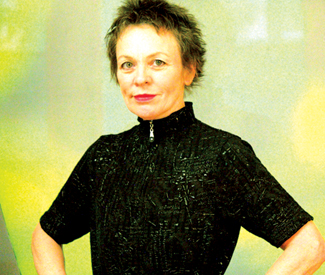
MUSIC When I spoke with art legend-cult hero Laurie Anderson — known for her experimental music involving invented instruments and poetry — her soothing manner caught me off guard. She’s critical, yet positive; accomplished, yet humble. She’s also somewhat of a Zen goddess (although she’d probably dislike that tag).

The lasting impression of her visit to Hope Cottage, a retreat tucked into the pastoral hills of the Green Gulch Farm Zen Center in Marin County, will bring Anderson to the 142 Throckmorton Theater this week for a conversation with San Francisco Zen Center’s senior dharma teacher, Tenshin Reb Anderson. The event directly benefits the restoration of Hope Cottage — a Bay Area refuge that has recently fallen into fiscally prohibitive disrepair.

San Francisco Bay Guardian: What drew you to the Hope Cottage restoration project?

Laurie Anderson: Hope Cottage itself. It’s such a beautiful place. I went there with my dog, and it was sort of an experiment to see if I could learn to communicate with her better. I heard dogs could understand 500 words, and I thought, ‘I wonder if I go to an isolated place and spend a lot of time with her, we can learn to talk?” It was a lot of fun.

SFBG: How did Buddhism become an important part of your life?

LA: I first started doing meditation in the ’70s, and it was just a way to train my mind to not be so crazy. I realized a lot of painful experiences are stored in the body in a coded and interesting way and that when you meditate, you can find those places. I found that really fascinating and helpful.

SFBG: Do you have any advice for people interested in getting into Buddhism? I’ve tried to meditate, but I can’t sit still for long enough.

LA: It’s very difficult to do. Then you realize if you try and break it down into smaller pieces, it becomes a little bit more possible. We live in a culture that’s so obsessively dedicated to getting stuff done. The last time I was out at dinner, I realized, we were all reading our emails! I said, ‘Read [your] last two emails. Let’s see what we’re spending this time doing.’ We did, and they were idiotic. I thought, ‘Whoa, this is what I’m giving up human contact for?’ You have to be really careful about that stuff. It can eat you alive.

SFBG: What have you been up to artistically?

LA: Right now, I’m interested in painting — something I hadn’t done in a very long time. I started just making a lot of music and films. One of the reasons I came back to [painting] is because of scale. It’s really fun to work with physical things that don’t necessarily fit on your computer screen because we pretty much live in a world of screens, and you think, ‘If I’ve seen it there, I really understand it.’ And that’s not true in the world of painting.

SFBG: What made you transition from fine art to performance art in the first place?

LA: I like stories, so I was trying to record things and put them into talking sculpture boxes or something, and I thought, ‘Wait a second. Why don’t I just say them?’ One of the great things about the so-called multimedia artist is that you can do a lot of different kinds of things and no one can say, ‘You’re a painter, you shouldn’t be writing a novel!’ So, it gives you a little more freedom to stay out of your box because, you know, artists just get put into boxes and are supposed to stay in them.

SFBG: It seems like you’ve completely transcended that.

LA: Well, I don’t know that I have because it’s difficult to move from one thing to another. You can try, but here come the art police saying, ‘Stop doing that! Why are you painting? You’re a filmmaker! Where’s your sense of propriety?’ You’d think when you live the life of an artist, you live the life of freedom, but it’s not quite like that.

SFBG: So, what projects do you have in the works?

LA: I’m working on a book of stories, an exhibition of paintings, a new show — a bunch of different things. It’s fun to work on them all at once.

SFBG: And you recently performed a show in Taiwan? How was that?

LA: I can’t say I speak Mandarin at all, but I found it really exciting to work with a translator. You know, English is such a complicated language that you can write one thing and it means five things, so when it’s translated into another language, particularly Mandarin, you have to choose which one of those things you really want to have emphasized.

Spending this last week in Taiwan, I realized how completely different their culture is from ours. But, if you can make a joke in Mandarin and people laugh, then it is sort of one world, you know?<0x00A0><cs:5>2<cs:>

AN EVENING WITH LAURIE ANDERSON AND TENSHIN REB ANDERSON

Benefiting Green Gulch Farm’s Hope Cottage

Thurs/15, 7 p.m., $50

142 Throckmorton Theater, Mill Valley

50years.sfzc.org


Power puff

0

HERBWISE I remember the first time I saw photographer Robyn Twomey‘s work — talk about simpatico. It was a huge print of a photo of an elderly woman sitting in front of a piano and a mirror with an immense Persian cat, lighting a joint firmly held between her lips. I’d never seen anything like it — documented in a gallery, that is.

In some version of my future life, I’d like to make a nest inside Twomey’s photographer bag and travel the country with her. Not that she’d need my services. Her shots speak loudly, from her descriptive portraits of T.I., Bill Gates, Rosie O’Donnell, to Attorney General Kamala Harris.

Small wonder that the smoke-filled photos of Harborside Health Center’s women patients (originally shot for a Fortune Magazine feature) are part of the Mission Cultural Center for Latino Arts’ new group exhibition “Solo Esas Mujeres”, which opens March 17. The show assembles the work of 14 female artists in an effort to reaffirm feminine power through its documentation.

So of all the females that Twomey’s captured throughout her career, why use the shots of these cannabis smokers for this particular exhibition? Perhaps these females — all of whom use the stuff for real serious medical conditions — have the most need of documentation. Easy access to medical marijuana is important, oh federal government of ours. Hey Robyn, any chance of getting Harris out to the Mission for the opening reception? I can help host.

“Solo Esas Mujeres” March 17 through May 5. Opening reception March 21, 6:30 p.m.-9:30 p.m., free. Mission Cultural Center for Latino Arts, 2868 Mission, SF. (415) 643-2785, www.missionculturalcenter.org


Just longing for sameness

0

[An earlier version of this article incorrectly identified Paul Robeson as Renee Gibbons’ lover, when in fact it was William Marshall. We regret the error]

caitlin@sfbg.com

IRISH Yesterday she and her husband received notice that it would soon be converted into a condo. But for the moment, it is still hers. We are sitting in Irish author Renee Gibbons’ rent-controlled North Beach apartment of 31 years and she is telling me about the time she saw Van Morrison walking down Columbus Street in the 1970s.

“I was looking pretty foxy,” she remembers. Gibbons still recalls what she was wearing: a woven Irish sweater, hippie skirt, and knee-length camel-colored boots.

Morrison had always been one of those celebrities who she knows — she just knows — would fall in love with her if only they knew each other. So imagine the scene: a pretty girl and a boy pass each other, walk on, and then turn with their entire bodies to look at the other. Only then he resumed his journey and the moment was over.

Not that Gibbons hasn’t had enough torrid love affairs to fill a book. In fact, she’s done just that with Longing For Elsewhere: My Irish Voyage Through Hunger, History, and High Times (self-published, 250pp, $16.95). And though she took William Marshall for a lover at the age of 19, and was a fashion model in Paris, Longing‘s short folk stories revolve around places, not people. It’s her first book, though she did write a column in the Irish Herald for 13 years.

An inveterate traveler, Gibbons and husband, 84-year old retired radical longshoreman Lew, have made their home in the North Beach neighborhood, which to Gibbons has the feel of a small village. But the evictions are rampant on their block, and the day before our interview the daughter of Gibbons’ landlord sent her a letter stating their intention to convert the building into condos. The couple pays $1200 a month for their space. The letter said they could buy their unit for $2 million.

Steering from that painful subject, I ask Gibbons where — since this is the St. Patrick’s Day issue of the Guardian after all — people should go to see the real (read: not green beer) Irish community of San Francisco.

She recommends bars, primarily. Irelands 32 and the Plough and the Stars in the Richmond, Berkeley’s Starry Plough, where she and her daughter used to sing (a natural talent, her daughter now tours with Prince), O’Reilly’s down the street from her home. The Irish Castle Gift Shop is also a hub, a place where the San Francisco Irish can shop for Barry’s Irish tea, fishermen’s sweaters, Irish baked beans, and “the real” kind of Cadbury’s chocolate, and travelers can dip in for some Éire hospitality. “They take the time to chat and all that,” Gibbons says.

Longing is a self-narrated look at the life of a radical bohemian, a woman who came from poverty unheard of in this country (she calls this part of the book “Angela’s Ashes without the dead babies.”) to become an adventurer. Gibbons and Lew once traveled from Santiago, Chile to Dublin — without flying on an airplane. The journey took them to Argentina, Africa, Istanbul, and they did it in two months.

So she doesn’t limit her community to the Irish and Irish Americans in town, relating more to the activist set. She and Lew been occupying with the best of them (“I have a photograph of Lew on his cane giving the cops in riot gear the whatfor,” she tells me. “They were trying to stop him from protesting in front of the docks where he used to work!”) When the two alit on San Francisco, the city fit them like a glove.

She’s prepared to fight for her right to stay in North Beach, where every morning she does tai chi in Washington Square, where she celebrated Nelson Mandela’s release from prison with her daughter, and where she can always depend on the local green grocer for the block’s gossip.

“But we’re not going quietly,” she says. “I told the landlord the only way we’re leaving here is in urns or pine coffins.” Gibbons doesn’t drive, and honestly has no desire to live anywhere in the United States besides San Francisco. Maybe she’ll go back to Ireland, she says. They take care of their elderly there better than we do.

“North Beach is known as a bohemian community. There’s hardly any poets or artists left in the neighborhood.” It may just be that the San Francisco she loves is in its last days. Maybe it’s always in its last days, making it doubly important that all its remaining freaks and artist-types get record of their lives on paper. 

LONGING FOR ELSEWHERE: RENEE GIBBONS AUTHOR READING

Fri/16 7 p.m., free

Books Inc.

601 Van Ness, SF

www.renee-gibbons.com


Pamalot

0

cheryl@sfbg.com

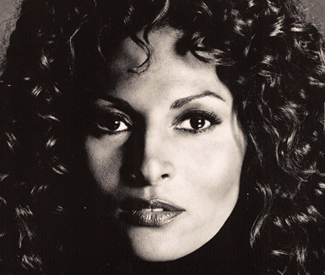
FILM Say the name “Pam Grier” and certain things come to mind: the iconic poster for her 1973 breakout, Coffy, about a nurse turned vigilante (“the baddest one-chick hit squad that ever hit town!”); or her cool-as-ice, career-reviving turn in 1997’s Jackie Brown.

What you don’t think of, probably, is blaxploitation’s most gorgeous badass puttering around on a Colorado farm. Make no mistake, Grier is a badass (onscreen and off), but this was the first thing she said, over the phone, after a breathless greeting: “I was just stacking some hay!” With that image lodged in my brain, I chatted with Grier about her upcoming event in San Francisco with Peaches Christ.

SFBG The Castro is screening films that span your career: Coffy and Jackie Brown. Did you realize, at the time, that Coffy would have such an impact?

Pam Grier I knew that Coffy was representing the women’s liberation movement. But it was also representing my mother — as we were all trying to survive the Jim Crow era, she was the nurse in our community — and my grandfather, who was the first feminist in my life. He required the girls to learn as much as the boys, and to be self-sufficient. He said, “Men will respect you when you can do something.” And I brought that to film. It was about literally giving women across the world a voice. I didn’t invent it — I just happened to be the one who could show it onscreen. I think women [realized] “Yes! We’ve always had that freedom. Why haven’t we utilized it?” It was a real revolutionary movement.

SFBG What was it like working with director Jack Hill?

PG He was great. He and Roger [Corman] were very much into authenticity, and they wanted their actors to be as raw as possible. It was great that they didn’t want to overly polish me and cover me in blue eyeshadow.

SFBG You first encountered Jackie Brown director Quentin Tarantino when he was casting 1994’s Pulp Fiction. What was that initial meeting like?

PG I walked into his office and all of my posters were on his wall. Very impressive. I said, “Did you put them up because I was coming?” He said, “No, I was gonna take them down, so I didn’t seem like a stalker!” He is so enamored with film — how could you not respect someone with such a great appreciation of cinema and art?

I remember I was watching Reservoir Dogs in New York City, and the characters talked about “Pam Grier, that badass chick.” My friends around me started screaming and pointing at me! I said, “He gave me an homage! Amazing!” You never know when you’ll impress other people by just being yourself.

SFBG Aside from being a film star — with roles in multiple upcoming films, including the RZA’s directorial debut, The Man With the Iron Fists — you are also a huge film fan as well.

PG I love the cinema, and I have respect for all films whether I like them or not. I love good storytelling. [My career is] always an adventure. It’s always interesting. I’m never bored! *

“PAM GRIER IS LIVE AND IN-PERSON!”

Sat/17, 8 p.m., $10-$55

Castro Theatre

429 Castro, SF

www.peacheschrist.com

Where there’s a Will

0

arts@sfbg.com

FILM You gotta love a guy who is willing to poke fun at his man handles. But the consistency with which Will Ferrell is willing to drop trou has had even Terry Gross wondering, what’s with the vast expanses of exposed carne asada, dude?

Ferrell’s new Casa de mi Padre — a Spanish-language jab at telenovelas, spaghetti-burrito westerns, and just plain low-budget moviemaking, circa the early 1970s — is no exception. It, er, climaxes with a sweet, sweet love scene, complete with close-ups on rumps.

“Well, that was always in the script — that was literally written in the stage direction: lots of butts. Way too many butts. And that made me laugh, if that was going to be our big crescendo lovemaking scene,” Ferrell says gamely. “Of course, lit beautifully with soft lenses and elegant tracking shots and dissolves.”

Tanned, gold-tressed, and outfitted in a gingham shirt and khakis, the actor resembles the tall, well-groomed human incarnation of a Steiff teddy bear. He also comes off as one of the nicest every-guy movie stars around — the kind that justifies the response you get when you tell someone you’re interviewing Will Ferrell (inevitably: “Omigod, I love him!”)

Maybe that appeal has to do with a willingness to embrace the painfully awkward. Anything to heighten the comedy of the moment, he explains, but also, “I think we’re so body- and image-conscious in this culture, and there’s so much emphasis on staying in shape, looking good, plastic surgery, this, that, and the other, that it’s just kind of my protest against all of that. It’s just, that’s what real bodies look like, and if mine happens to look funny, then that’s good, too.”

The latest challenge in a long line of actorly exercises and comic gestures — from his legendary stint on Saturday Night Live and his Funny or Die videos, to his long list of comedies probing the last gasps of American masculinity, and such serious forays as Stranger Than Fiction (2006) — is Casa de mi Padre. Here Ferrell tackles an almost entirely Spanish script (with only meager high school and college language courses under his belt) alongside Mexican superstars Gael García Bernal and Diego Luna and telenovela veteran Genesis Rodriguez.

The entire project, directed by Matt Piedmont and written by Andrew Steele, sprang from Farrell’s noggin. “I had this idea for the longest time, just from watching telenovelas,” he recounts. “It’s one of those things where you’re cruising around the dial, and you stop, and you watch it for four or five minutes, and it’s like, my god. It’s way over the top, but it was so funny to put myself in that world. I’ve never seen that before and I thought, wow, it would be a unique opportunity to take someone from American comedy and have them commit to speaking Spanish. That could be a cool movie.”

So Ferrell worked with Patrick Pérez, who translated the script from English to Spanish, before the shoot and then during the production, driving to and from the set every day, going over lines and working on pronunciation. “It was a little bit crazy — a lot crazy,” Ferrell confesses. “But it was so much fun. I don’t know if I’ve ever had a more fun yet stressful experience.”

All of which led to almost zero improvisation on the actor’s part; plenty of meta, Machete-like spoofs; and a new twist in the world of Ferrell’s films, which seem to all share a glee at poking holes in American masculinity. Yes, Casa punctures padre-informed transmissions of Latin machismo, but it equally ridicules the idea of a gringo actor riding in and superimposing himself, badly or otherwise, over another country’s culture.

“That theme of the macho Americans, ‘USA! We’re number one!’ has been so fascinating and such a great thing to make fun of. That we think we’re the best,” Ferrell observes. “I’ve always been fascinated with that level of ego.” 

CASA DE MI PADRE opens Fri/16 in Bay Area theaters.

The great unknown

0

arts@sfbg.com

DANCE The United States Bicentennial, 1976, was also the middle of what some have called the Golden Age of American dance. Balanchine premiered Union Jack; Twyla Tharp turned ballet inside out with Baryshnikov in Push Comes to Shove; the Philip Glass-Robert Wilson-Lucinda Childs team had a monster hit with Einstein at the Beach (side note: Berkeley’s Cal Performances presents it in October); and the Merce Cunningham Dance Company was invited to the prestigious Avignon Festival for the first time.

At the Performing Garage, Manhattan’s dumpiest theater in not-yet-chic SoHo, two small, skinny, New York-based Japanese dancers — just back from Europe where they had soaked up what had remained of German Expressionism — premiered White Dance. They were Eiko and Koma. An excerpt from that early work will close their two-week residency at Yerba Buena Center for the Arts.

Eiko and Koma have changed dance the way few others have. They have redefined theatrical time and space, the body as an instrument, and concepts surrounding expressivity. With but a few exceptions, they have always created on themselves. One man, one woman — and the universe. Most remarkably, to this day they have no imitators. They are truly unique.

While they sometimes paint their bodies white and have learned from Butoh’s glacial sense of time — they were early, though for a short time only, students of Butoh founder Tatsumi Hijikata — their works have none of that art’s existential emptiness; neither its twist of anarchy and despair, nor its dark sense of humor. Eiko and Koma see themselves connected to something larger than ourselves. They call their pieces Tree, Breath, River, Echo, Land, Wind. Their latest work is Naked.

David Harrington, founder and first violinist of the Kronos Quartet, has known the duo for close to 20 years. Speaking from Toronto, where the musicians are on tour, he describes what these dancers do as “traveling through time, memory, and experience to find something that, perhaps, we didn’t know existed.”

Watching Naked, he says, “I totally understood nakedness and the reason for it. There was something so honest and revealing and personal, and it was dangerous as well. They are about my age, and there they were offering themselves to the universe in such an incredible way. My feeling at the moment was that all of us, no matter how old we get, were very, very young. The flesh takes on different forms of age, but still we almost become like babies. Age no long had any meaning because I thought they were communicating with the universe in this incredible way.”

Drawing on this experience encouraged Harrington to commit to the four-hour Fragile, a collaborative installation between Kronos and Eiko and Koma this coming weekend. Harrington remembers that the duo had told him of three events that had formed their creativity and outlook: the dropping of the atomic bomb that happened before their birth; the 1967-68 student riots in Tokyo in which they participated, and the recent tsunami. So he composed Fragile‘s score from documentary material and music from Kronos’ repertoire plus — a first for Kronos — by Richard Wagner.

The following weekend’s Regeneration will offer Raven, Night Tide, and an excerpt from White Dance. At pre-performance event March 24, kindred spirit Shinichi Iova-Koga of inkBoat will interview the two artists about their working method and other topics.

“What I remember about their work is the images,” Iova-Koga explains. (He has seen their three local performances.) “Besides any particular beauty, these images were long enough to burn themselves into my memory. Years and years later I can still recall them. Part of Eiko and Koma’s power comes from all of this time of making pieces on a one-on-one relationship: two bodies relating to each other.” *

EIKO AND KOMA

Fragile with Kronos Quartet

Thurs/15-Fri/16, 5-9 p.m.; Sat/17, 3-7 p.m., $10

Regeneration: Raven (2010), Night Tide (1984), and White Dance (1976)

March 22-24, 8 p.m., $25

Yerba Buena Center for the Arts

701 Mission, SF

www.ybca.org

St. Patrick’s Day events

0

culture@sfbg.com

“THE HISTORY OF THE IRISH COFFEE” PRESENTATION

If you’re already weary of the beer-overkill this weekend entails, celebrate St. Patrick’s with a different type of festive drink — the Irish coffee. The Buena Vista Cafe holds a collection of clippings and photographs that track the beginnings of Irish coffee in San Francisco from as far back as the 1960s. Luckily, the drink is still around to salvage everyone’s hangover this weekend. Presented as part of the Crossroads Irish American Festival.

Wed/14, 5:30 p.m.-7:30 p.m., free. California Historical Society, 678 Mission, SF. (415) 357-1848, www.irishamericancrossroads.org


IRISH WHISKEY COMPETITION

Bartenders from Txoko, 15 Romolo, Campanula, and Bottle Cap (all fine North Beach establishments) will be whipping up their most innovative cocktail made with Michael Collins Irish whiskey. Celebrate Ireland’s fine contribution to the mixology scene, and sample all four concoctions.

Wed/14 6 p.m., $5–$10. Bottle Cap, 1707 Powell, SF. www.bottlecapsf.com


THE HOOKS

Club Six’s new indie rock room gets a rowdy opening concert with this punk group, originally from County Sligo. The Hooks weave traditional Irish rawkus with good old agit-punk — just the way to kick off your week of celebrations.

With The California Celts. Wed/14, 9 p.m.-2 a.m., $5. RKRL, 52 Sixth St., SF. www.clubsix1.com


ST. PATRICK’S NIGHTLIFE

Cal Academy’s yearly tribute to the Irish gets grounded by the presence of SF’s Érie arbiters, the United Irish Cultural Center (it’ll have a booth), and maintains its scientifical presence with step dancing in the Africa room, planetarium shows, and a lecture on the biological significance of the four-leaf clover.

Thu/15, 6 p.m.-10 p.m., $12. California Academy of Sciences, 55 Music Concourse, SF. 1-888-670-4433, www.calacademy.org


“AMID A SPACE BETWEEN: IRISH ARTISTS IN AMERICA” ART EXHIBIT

This exhibit features six Irish artists living in America who fuse their multifaceted Irish identities and cross-cultural exchanges in to their creative work.

Through April 19. Gallery hours Tues.-Sat. 11:30 a.m.-5:30 p.m., free to members; $18 regular museum admission; $11 for students; half-price admission Thursday evenings. SFMOMA Artist Gallery at Fort Mason, Buchanan at Marina, SF. (415) 441-4777, www.sfmoma.org


CROSSROADS FESTIVAL IRISH AMERICAN WRITING AWARD CEREMONY AND OPEN MIC

Brooklyn writer Kathleen Donohoe already won this year’s top honors for her short story, “You Were Forever.” But anyone from the Irish diaspora is encouraged to have his or her five minutes of fame during the open mic. RSVP to secure a time slot.

Thu/15, 7 p.m.-9p.m., free. University of San Francisco, Fromm Hall, 2130 Fulton, SF. (415) 810-3774, www.irishamericancrossroads.org


PRE-ST. PATRICK’S DAY ALLEYS AND BLOCK PARTY

With thousands predicted to show up at FiDi’s annual block party, every nook and cranny will be shamrock-filled at this tavern’s fourth annual shindig. Arrive hungry as there will be food trucks, and thirsty as your first beer is free before 6:30 p.m.

Fri/16, 5 p.m.-10 p.m., free with RSVP. Taverna Aventine, 582 Washington, SF. (415) 981-1500, www.aventinesf.com


SHAMROCK BALL

For a staid, grown-people St. Patrick’s Day, cruise over to this casino event, sponsored by the California Irish-American Alliance. Why would a group committed to preserving Irish heritage in the Golden State produce a casino night with a partially hosted bar, gambling, and dancing for St. Patty’s Day? Because the Californian Irish have a history of having a real good time, that’s why.

Fri/16 7 p.m.-midnight, $85. Marines’ Memorial Club and Hotel, 609 Sutter, SF. (415) 713-6341, www.shamrockball.com


FARLEY’S COFFEE BIRTHDAY BAGPIPES

The Guardian’s staff respirates to the beat of our cups of joe from our neighbor up Potrero Hill, so we are pleased as punch to announce that our fave cafe is turning 23 — and as always, it’s having a green-themed birthday party. To whit, live bagpipers will accompany your morning scone and paper. The pipers will play in the morning, other Irish tunes in the afternoon.

Sat/17 7:30 a.m.-9:30 p.m., free. Farley’s, 1315 18th St., SF. (415) 648-1545, www.farleyscoffee.com


ST. PATRICK’S DAY PARADE AND FESTIVAL

Watch our city turn a shade greener as Irish dance troupes, marching bands, and hundred of floats make their way around West Coast’s largest Patty’s Day event. Celebrate Irish culture and history in an alcohol-free, yet still fun way — we’re talking ponies, mechanical rides, and finger-lickin’ Irish food.

Sat/ 17 Parade: 11:30 a.m., free. Starts at Market and Second Street; Festival: 11 a.m.-5 p.m., free.

Civic Center Plaza, SF. (415) 203-1027, www.sresproductions.com


FINANCIAL DISTRICT’S BLOCK PARTY AND LIVE MUSIC

Between this and yesterday’s street party, the Financial District has two chances to take off its usual gray suit for a “Kiss Me I’m Irish” tee and a pair of shamrock glasses.

Sat/17 9 a.m.- midnight, free. Irish Bank, 10 Mark, SF. (415) 788-7152, www.theirishbank.com


HABITOT MUSEUM’S SHAMROCK DAY

Getting drunk seems to be the St. Patrick’s Day highlight for many in San Francisco, but for kids the high point is usually pinching buddies for not wearing green and finding little emerald men in the clover field. At least at this event. Embrace your inner leprechaun and find gold at the end of the rainbow.

Sat/17 9:30 a.m.-12:30 p.m., $9 museum admission. Habitot Children’s Museum, 2065 Kittredge, Berk. (510) 647-1111, www.habitot.org


IRISH BRUNCH, BLOCK PARTY, AND LIVE MUSIC

Bands like Blue on Green and the Whelan Academy of Irish Dance will accompany your boxty pancakes and Irish car bombs. Fifth round’s the charm, right?

Sat/ 17, Brunch 8 a.m.-12:30 p.m.; block party 1 p.m.-11 p.m., $10 for block party. O’Riley’s, 622 Green, SF. (415) 989-6222, www.sforileys.com


UNITED IRISH CULTURAL CENTER CORNED BEEF AND CABBAGE DINNER

For perhaps the most traditional celebration in San Francisco, head to this Outer Sunset hub of Irish culture. Load up on calories in the dining room with the center’s ladies auxiliary-sponsored traditional Irish eats, then work them off to the live Irish bands that’ll be keeping it lively.

Sat/17, dinner seating starts at 3:30 p.m., no reservations necessary. United Irish Cultural Center, 2700 45th Ave., SF. (415) 661-2700, www.irishcentersf.org


CULANN’S HOUNDS

In Irish folklore, a great hero was named Cuchulainn — a moniker which translates to “hound of Culann” — after defeating a savage beast in self-defense. This SF-based Irish folk band channels the authentic, legendary spirit in a high-energy, 21st century kind of way.

Sat/17 9 p.m., $20. Slim’s, 333 11th St., SF. (415) 255-0333, www.slims-sf.com


QUIN AND THE PAT O’DONNELL BAND LIVE PERFORMANCE

Catch SF-based Celtic folk-indie band (sham)rocking out in this laidback bar of great Guinness and Kilkenny — the Richmond’s got most of SF’s best Irish bars, so a cruise in this direction is a great bet this weekend.

Sat/17, 9 p.m., $6. The Plough and Stars, 116 Clement, SF. (415) 751-1122, www.theploughandstars.com


ST. PATRICK’S DAY CELEBRATION WITH LUCIA COMNES

Comnes takes traditional Irish folk music and layers it with Indian tabla, Turkish rhythms, and Motown grooves. Pair this melodic stew with a $4 pint of Murphy’s Irish stout, and get ready for a night of banjos, jigs, and polkas.

Sat/ 17, 9 p.m., $20. Cafe Du Nord, 2170 Market, SF. (415) 861-5016, www.cafedunord.com


BOOTIE ST. PATRICK’S DAY

With emcee O’Kingfish setting the mood and wacky blenderized beats served by DJ Tripp and DJ Ajazx, don’t think that this is just another regular party looking to cash in on St. Patty’s blarney with a few shamrocks stuck on the walls. Burly Q’s of Hubba Hubba Revue will be performing a very special Irish-themed burlesque program.

Sat/17 9 p.m.-late night, $10-$20. DNA Lounge, 375 11th St., SF. www.dnalounge.com


PADDY’S DAY WITH THE DOCSTEADY SOUNDSYSTEM

Enjoy $4 Jameson shots and Guinness pints with SF’s favorite half Irish-half Filipino sound guy, DJ Doc Fu. He’ll be spinning rebel music, fight songs, and hip-hop for your sláinte, along with PK and Cutz on Demand.

Sat/17 10 p.m., free. Showdown, 10 Sixth St., SF. (415) 503-0684, www.showdownsf.com


GREEN FEST BLOCK PARTY

Java Beach’s zoo-side location hosts this family-friendly outdoor event, just outside the United Irish Cultural Center. Irish music and dancing is promised, as is face painting for the wee ones, and that most Irish of all traditions: the bouncy castle.

Sun/18 11 a.m.-4 p.m., free. 45th Ave. and Sloat, SF. www.javabeachsf.com

Lunch hour

0

virginia@sfbg.com

APPETITE Lunch-hour quality advances around town with a slew of notable openings or recently launched lunch menus. In a two part series (click here for part two), here are some of the best new mid-day meals.

NOMBE

Nombe faced a bit of a struggle recovering from uber-talented chef Nick Balla’s departure to Bar Tartine. The Mission izakaya now boasts of new executive chef Noriyuki Sugie, who has cooked in NY, Chicago, France, Sydney and the like. With Sugie’s cooking, Nombe proves to be as much a gem as it ever was. An excellent sake list and caring service set it apart, but wait till you try Sugie’s ramen (thankfully just added to the dinner menu in addition to lunch). There’s a lot of great ramen out there, but I tend to be one of the unconverted who registers ramen’s comfort factor but can often find the taste bland. I realize once I finally fulfill my dream of traveling to Japan, I may change my mind, particularly if ramen tastes like Sugie’s.

Order: Ramen noodles are house made, subtly chewy, with accompanying meat. While I enjoy options like oxtail, my favorite is a heaping bowl of beef cheek ramen ($13). The tender meat is savory and robust… and, oh, the broth! No blandness here — it’s layered with flavor. Scallions, mushrooms, umami foam, and soy-marinated egg add extra dimension. If not ordering sake, try the matcha ice milk or lavender oolong ice tea ($4 each) to drink.

2491 Mission, SF. (415) 681-7150, www.nombesf.com

903

Laid-back Bernal Heights claims one of the best new lunch spots in town. 903 just opened weeks ago from owners of nearby Sandbox Bakery. As with Sandbox, Asian influences enliven American food. The former Maggie Mudd’s space was dim and unmemorable, but they’ve transformed it with soothing colors, flowers, a communal table, and bench dotted with pillows. There are bento boxes of chicken tsukune or miso salmon, while the bulk of the daytime-only menu is sandwiches and a few breakfast items.

Order: Crispy shrimp balls in a challah hot dog bun ($8.50) may not jump off the menu, but juicy shrimp lightly fried in three crispy balls in a bun are delightful, particularly with garlic aioli, Sriracha, and sweet and sour plum sauce. The one vegetarian sandwich is no afterthought. Baked tofu ($7.50) has more texture and flavor than is typical on a “burger bun” made entirely of rice (which is also available with the Japanese karaage fried chicken sandwich). Pickled carrots, soy tahini, baby greens, and a layer of nori complete the sandwich.

903 Cortland, SF.

SWEET WOODRUFF

The TenderNob has a new destination café in Sweet Woodruff, the casual second space opened by owners of upscale Sons and Daughters. With an open kitchen, high ceilings, muted gray-blue walls, and stools lining rustic wood counter tops, the place feels completely San Francisco, with expected gourmet elevation of sandwiches and casual dishes. Takeout is ideal for nearby workers, but giant, corner windows make it a welcome place downtown to linger.

Order: Pheasant hot pocket ($7) is the most playful of early offerings. A flaky phyllo pastry stuffed with peas, carrots, and, of course, pheasant is warm and comforting. Cream of parsley root soup ($6) nurtures, set apart with green garlic, pine nuts and a welcome tinge of sweetness from golden raisins. A suckling pig sandwich ($9.50) is appropriately tender, contrasted by pickles, though with ghost pepper aioli I expected serious heat (not so). For dessert, a peanut and sweet soy tart ($4).

798 Sutter, SF. (415) 292-9090, www.sweetwoodruffsf.com

SOUTHIE

While I enjoyed Rockridge’s Wood Tavern from the first time I visited years ago, I didn’t exactly rush out after hearing about its sandwich offshoot last year on the same block, Southie. Do we really need another pork sandwich spot in the Bay? But I was pleasantly surprised to find Southie’s sandwiches among the better I’ve had all year. Wine on tap makes lingering at high tables in the narrow space a pleasant lunch respite.

Order: A Dungeness crab roll ($18) trumps most crab sandwiches. On a buttery brioche, it explodes with succulent crab meat. Celery root remoulade and Meyer lemon brown butter elevate it to near perfection. An expensive sandwich to be sure, but there was no skimping on the crab. “Spicy Hog” ($10) is the popular pulled pork sandwich on an Acme roll. Again, it seems everyone is doing a Southern-influenced pork sandwich these days, but Southie’s is strong, loaded with coleslaw, pickled jalapeno, and lime aioli.

6311 College, Oakl. (510) 654-0100, www.southieoakland.com 

Subscribe to Virgina’s twice-monthly newsletter, The Perfect Spot, www.theperfectspotsf.com


Punk rock Robin Hoods

0

MUSIC In today’s modern music world, when iTunes and MP3s have dominated the mainstream market, and digital distribution is now the norm, a lot of vinyl aficionados wax nostalgic about the thrill of buying a new record, pulling out the disc, checking out the gatefold art, reading the liner notes, and enjoying a multifaceted musical experience.

Although vinyl records obviously never really went away, the quality of releases declined steadily over the years as consumer demand waned and the number of manufacturers around the world dwindled. But that void has been filled by — among other indie labels — local imprint Pirates Press Records. The independent manufacturer and record label has been reissuing Cock Sparrer’s older records; it also released a live LP/DVD, Back In SF, recorded in 2009 at the Pirates Press fifth anniversary party at Great American Music Hall.

Eric Mueller, 31, started Pirates Press in 2004 out of a love for vinyl, after he grew disillusioned with the way he saw another manufacturer he was working for treating their clients and employees.

“I decided to take my business and hard work and put it elsewhere, and did it with people who were of like-minded motivations,” says Mueller in his office in Potrero Hill, surrounded by an array of records and posters that Pirates Press made. He added, “We’re all super big vinyl nerds — it’s fun to make records, and we enjoy collecting the products that we make.”

That mindset, that a record doesn’t have to simply be a medium by which one listens to music, is palpable when browsing through the company’s releases. Brightly colored vinyl, picture discs, and even specially-shaped records — designed locally, and manufactured at a special pressing plant in the Czech Republic — display the label’s rich artistry and imaginative outlook on the industry.

“We’ve developed a lot of new products and technologies — we have proprietary software and hardware that allows us to cut records in a completely unique way from every other manufacturer,” says Mueller.

Another example of the company’s innovation is its current focus on flexis — thin, flexible discs that were popular inserts in magazines and other publications in the past, but have mostly ceased to be made. Thanks to three years worth of work by Pirate Matt Jones, 29, advances in materials and manufacturing have helped Pirates Press make flexis that sound far superior to those of the past — the company is even starting to make paper postcards with grooves that play music.

The label, which pressed nearly 1.75 million records last year, has certainly grown since it began as a bedroom operation, but the initial goals remain the same: try to make the process as easy as possible for all involved — something Mueller proudly stands behind.

Mueller is also proud of the artists that Pirates Press Records is releasing: punk icons such as Cock Sparrer along with up-and-coming local bands.

“It’s like ‘punk rock Robin Hood’ in a sense,” Mueller says. “I can make money pressing records for everybody under the sun, big label, small label — and turn around and take some of our profits and reinvest them into music that everybody in the office stands behind.”

www.piratespress.com

Cock Sparrer is mates first

0

arts@sfbg.com

MUSIC While it may not be a household name in the mainstream music world, Cock Sparrer has been one of the most beloved and influential bands in punk rock for four decades and counting.

Hailing from the East End of London, childhood friends Colin McFaull, Mick Beaufoy, Steve Burgess and Steve Bruce — who all remain members of the group today, along with Daryl Smith, who joined in 1992 — formed the band in 1972.

I first encountered Cock Sparrer blasting out of a stereo at a friend’s house in high school during the mid-1990s, and became an immediate fan of its powerful, sing-along anthems propelled by simple, yet infectiously catchy and memorable melodies and hooks. This is all with lyrics that — while written about growing up working class in England — anybody who grew up in a similar environment could relate to regardless of geography.

A few years after I was bitten by the Sparrer bug, it was announced that the band would be coming to the United States to play a few shows, something it had never done before. One of those gigs in 2000 was at the Great American Music Hall in San Francisco, so I made the trek up the coast from Santa Cruz with a big group of friends, and we were not disappointed — it was an amazing experience, a huge sing-along that felt more like a giant party than paid concert.

Two return shows in 2009 in the city delivered the same adrenaline and endorphin rush, as did the one I flew to Las Vegas for last year. Local fans can rejoice again, as Cock Sparrer will be gracing us with its presence at two special 40th anniversary shows at the Warfield, co-headlining with Rancid, which will be marking its 20th year.

“We wanted to celebrate our 40th birthday with some special shows and when the opportunity came up to return to San Francisco, we jumped at the chance,” singer Colin McFaull told me from his home in England. “The city holds a special place in the history of Cock Sparrer and we love playing there.”

McFaull points to the fact that band was born out of a group of friends, and that they all remain close, as one of the main reasons that Cock Sparrer has managed to survive for so long, and outlast many of its punk contemporaries.

“We’ve always maintained that we are mates first and band second. We tend to do things at our pace and on our terms. Someone once described us as ‘the biggest little band you’ve never heard of’ and we like that.”

Forty years ago, when the group first got together, this frame of mind was in place — it informed the naming of the band. “We wanted to have a name that was synonymous with where we came from — it’s just an old East London term of affection and means ‘friend.'”

Despite the fact that Cock Sparrer has influenced generations of streetpunk and Oi bands, and the group plays to sold-out crowds when it does venture out to perform live, all the band members still have regular jobs back at home in England — which McFaull says he is perfectly fine with.

“It would be possible to earn more from the band but that’s not really what we’re about — we’ve never taken ourselves too seriously, there are no egos in Cock Sparrer, we wouldn’t allow it. We don’t believe in putting on rock star airs and graces.”

“We’re the sort of band that you’ll find in the bar of the venues we play chatting to fans and on the odd occasion even buying the beers.” 

COCK SPARRER

With Rancid and Factory Minds

March 23-24, 8 p.m., $30 (March 23 sold out)

Warfield

982 Market, SF

www.thewarfieldtheatre.com

Freeing the information

0

news@sfbg.com

The Society of Professional Journalists, Northern California chapter, will honor champions of the First Amendment at the 27th annual James Madison Awards Banquet on Thursday, March 15, at the City Club of San Francisco.

William Bennett Turner, who has spent his career defending the First Amendment and civil rights, as well as 25 years teaching new generations of journalists and attorneys, is to receive this year’s Norwin Yoffie Award for Career Achievement from the Society of Professional Journalists, Northern California Chapter.

Turner heads a list of a dozen recipients of the James Madison Awards that SPJ NorCal presents annually to champions of the First Amendment and freedom of information.

In his legendary career, Turner has argued three cases before the U.S. Supreme Court, two on First Amendment rights, published more than 40 law review articles and taught First Amendment law at the University of California, Berkeley, for 25 years. He was instrumental in overhauling conditions in the Texas prison system and in 2011 he published the critically-acclaimed book, Figures of Speech: First Amendment Heroes and Villains.

The Yoffie award is named for one of the founders of SPJ NorCal’s Freedom of Information Committee, who as an editor and publisher of the then-family-owned Marin Independent-Journal was a vigorous advocate for transparency and accountability in the public-services sector. Other honorees are:

– Roger Woo, a teacher at Tokay High School in Lodi, California, has forged a strong reputation for quality teaching over decades of instruction. He has seen the work of his students recognized hundreds of times for stories, photos and layout. And in the words of a former student, now a newspaper publisher, Woo taught ethics, pride, and professionalism. Woo will be honored with the Beverly Kees Educator Award, named for a late, former SPJ NorCal president who was an educator and nationally recognized journalist.

– Attorney Cindy Cohn, legal director of the Electronic Frontier Foundation, will receive the Legal Counsel award for her litigation and oversight of countless significant First Amendment and open government cases. She is currently challenging the National Security Agency for alleged spying on the communications of Americans.

– Erin Siegal is being honored in the Author category for her investigation of human rights abuses in Guatemala’s adoption industry, as well as the U.S. government’s role, in which children have been stolen, sold, and offered as orphans to well-intentioned Western parents. Her book, Finding Fernanda, has received wide acclaim.

– The Hercules Patch, the local news site operated by America Online, receives the News Media award for its dogged tracking of the questionable financial management practices in the East Bay city of Hercules. Patch produced more than 13 investigative stories and 100 daily stories, and created 20 databases to follow the money.

– The San Francisco Chronicle, also will be honored in the News Media category for keeping a spotlight on the aftermath of the deadly PG&E natural gas line explosion and fire in San Bruno. The Chronicle’s persistence on the story kept readers abreast of the political fallout, the bureaucratic failings, and reform measures meant to prevent another such disaster.

– Tim Redmond, executive editor of The San Francisco Bay Guardian, receives the Professional Journalist award for his investigation of state agencies’ legally questionable acquisitions of a drug used for lethal injections that is no longer produced in the United States.

– Patrick Monette-Shaw, this year’s Advocacy award recipient, spent nearly two years following a crooked money trail to expose mishandling of millions of dollars at San Francisco’s Laguna Honda Hospital. The scandal he reported in the Westside Observer and his examiner.com articles led to an investigation of the city controller’s Whistleblower program.

– Susie Cagle, a cartoonist and journalist, has earned this year’s Cartoonist Award for her dedicated reporting on Occupy Oakland and for portraying the confrontation through her art. Additionally, she stood up for the rights of all journalists after being arrested at an Occupy Oakland rally that turned violent.

– Citireport.com, produced by Larry Bush, gets the accolade in the Community Media category for shining a bright light not only on San Francisco government but also on the city’s Byzantine political world. Bush, as editor and publisher, has spent nearly 30 years fighting to keep city government publicly accountable.

– Allen Grossman is the recipient of this year’s Citizen award for his efforts over the past several years to advance open government at San Francisco City Hall, whether by prodding the city’s Sunshine Ordinance Task Force to hold agencies and public officials accountable or by prying loose disclosable records that Ethics Commission staff aides wanted to withhold.

– The Bay Citizen, which put campaign finance data to good use, is to receive the Computer-Assisted Reporting award for its detailed political database on the San Francisco mayor’s race in 2011. The Bay Citizen made it easy to track contributions of every stripe. In addition, The Bay Citizen’s use of police records and public input has produced a highly interactive chart of bicycle accidents, letting riders pinpoint the most dangerous routes in the city.

The James Madison Freedom of Information Awards is named for the creative force behind the First Amendment and honors local journalists, organizations, public officials, and private citizens who have fought for public access to government meetings and records and promoted the public’s right to know and freedom of expression. Award winners are selected by SPJ NorCal’s Freedom of Information Committee.

JAMES MADISON AWARDS BANQUET

Thu/15 reception at 5:30 p.m., dinner and awards ceremony at 6:30 p.m., $50 SPJ members and students/$70 general admission

City Club of San Francisco

155 Sansome, SF

www.spjnorcal.org

Domestic violence is not a private matter

3

EDITORIAL The legal case against Sheriff Ross Mirkarmi has been essentially settled, with the sheriff pleading guilty to false imprisonment and avoiding a trial on domestic violence charges, but the political case is just beginning.

Already, there are calls for Mirkarimi to step down. And Mayor Ed Lee announced March 12 that he’s Mirkarimi’s plea to “a very serious charge that had introduce a new set of legal issues” merits a thorough review.

That could lead to an explosive scenario where the Board of Supervisors, in an election year, would have to vote on whether to remove a sheriff who many of the supervisors have worked with and supported over allegations that are in effect political poison. Anyone who wasn’t ready to throw the sheriff out of office could be accused of coddling a wife-beater.

Mirkarimi’s friends and allies say the sheriff didn’t want to plead guilty to anything. But the questionnaires that potential jurors had filled out showed that virtually everyone who might sit in judgment had read the sensational media coverage of the case, and Judge Garrett Wong had refused to move the trial elsewhere. The judge also rejected every significant motion Mirkarimi’s attorney, Lidia Stiglich, made, and allowed into evidence material that the sheriff’s team didn’t think should be admissible. So the situation looked bleak, and Mirkarimi took a deal.

Mirkarimi maintains his innocence, and says he has no intention of stepping down. He agreed to plead guilty to a crime that had very little to do with what happened New Year’s Eve, when the District Attorney’s Office said he got into a physical altercation with his wife that left her with a bruise on her arm. False imprisonment was never one of the original charges; as is often the case in criminal cases, both sides accepted a less-serious charge in the name of getting the deal done.

Why Mayor Lee sees that as “a new set of legal issues” is baffling; the issues are exactly the same as they were before the plea bargain. None of this is to say that the original charges, backed up by well-publicized (although never fully examined in court) evidence, aren’t serious. Domestic violence, as we’ve said repeatedly, is not a private matter, is not a minor crime, and has far too often been ignored by the courts, police, and prosecutors, sometimes with deadly consequences.

But the way this could play out will open Lee to charges of political opportunism. The mayor would need to charge Mirkarimi with “official misconduct,” which is defined in the City Charter:

“Official misconduct means any wrongful behavior by a public officer in relation to the duties of his or her office, willful in its character, including any failure, refusal or neglect of an officer to perform any duty enjoined on him or her by law, or conduct that falls below the standard of decency, good faith and right action impliedly required of all public officers and including any violation of a specific conflict of interest or governmental ethics law.”

Other than the “standard of decency” statute, which is pretty vague, there’s not much in there for Lee to go on. Unless you say that because Mirkarimi pleaded guilty to a crime with “imprisonment” in the name he’s somehow a threat to the inmates at the county jail, which is a huge stretch, it’s hard to call this “official misconduct.” (There is, on the other hand, the argument that Mirkarimi will be on probation, and thus part of the criminal justice system he oversees, and that it’s an inherent conflict of interest. That, however, would mean any sheriff who was on probation for anything would be ineligible to serve, which again is a stretch.)

If the mayor files official misconduct charges, and the Ethics Commission, by a supermajority, agrees, then the Board of Supervisors would serve in effect as a trial body, much as the U.S. Senate does in an impeachment case. Nine of the 11 supervisors would have to vote to permanently remove the sheriff from office.

If Lee takes that path, he’ll be setting in motion a political process that was designed in the Charter for highly unusual situations and has only been used once in the past 40 years. (And in that case, involving Airport Commission member Joe Mazzola, a court later ruled that the charges, involving his role in plumbers’ strike, didn’t rise to the standard of official misconduct.) You have to ask: Is this case, and this misdemeanor charge, worthy of the exercise of what is, by any standard, an extraordinary power vested in the city’s chief executive? Is it worth the political circus that would result from a trial by the supervisors (some of whom might well be asked to recuse themselves because of their prior relationships with Mirkarimi, making it almost impossible to reach the magic number of nine anyway)?

If the voters of San Francisco think the sheriff needs to go, there’s the right of recall — and it will be available the first week in July, when Mirkarimi will have served six months. If there’s not enough organized opposition to make that happen, he’ll be facing the electorate again in three years (and trust us, he will be opposed and every details of these charges will be part of the campaign). He’s going to pay for this far beyond his court-ordered probation and fine.

Whatever the plea deal, Mirkarimi was clearly involved in a bad conflict with his wife that turned physical. Unless the evidence we’ve seen so far is completely misleading, it’s clear that he left her with a bruise — and that he was at the very least nasty and more likely emotionally abusive to her. Now that the legal case is over, he needs to come clean and tell the public exactly what happened that day, at which point we can all decide if we believe him, if he’s shown that he’s changed, and if the public is willing to give him a chance at redemption.

But Lee should think very seriously before he escalates this by filing misconduct charges. Since the ones who have the most to lose from that are the progressives on the board who are often Lee’s foes, it will have the stench of political maneuvering — and at this point, nobody needs that. The mayor says he’s a unifier; this would be the most divisive thing he could do.