Volume 46 [2011–12]

Past, present, future

0

arts@sfbg.com

DANCE This weekend choreographers Robert Moses and Sean Dorsey present new dances. Moses’ Helen, inspired by the myth of the beautiful Greek whose face launched a thousand ships, is at Yerba Buena Center for the Arts; Dorsey’s The Secret History of Love, based on how LGBT people used to meet, plays Dance Mission Theater. Both choreographers started dancing in their hometowns — Philadelphia for Moses, Vancouver for Dorsey — and began choreographing professionally in San Francisco. They recently talked to the Guardian about how they came to be where they are now.

SFBG Do you remember how dance entered your life?

Robert Moses We danced the way kids do. My sister and family members all danced. As teenagers we would get together in clubs where you showed your steps, and you had a contest. You couldn’t just jump around a little bit. You had to be the very best dancer that you could be.

Sean Dorsey My first memory is spinning round the living room in a leotard to “Free to Be … You and Me.” There was a lot of music in my house, lots of artists in my family, and there was a lot of space and encouragement for that kind of activity.

SFBG How did your formal training in dance start?

RM In my last semester in high school, I ended up in a dance class when another class was cancelled. At university, I started training in West African, Haitian, ballet, contemporary, tap, and musical theater. I did all of it because I knew that’s what I wanted to do.

SD My big childhood hero was Carol Burnett; my dream was to go into comedy. I was in graduate school in Community Development when I was invited to audition for the dance department. So I started to study dance at 25. It was going to be recreational, but I found that it was my deepest love.

SFBG We all bring our cultural background and life experiences to our work. If and in what way does that influence what you do?

RM Of course, it influences what you do; there is no way that it couldn’t. You are a member of group but you are also an individual who is changing and maturing. Sure, I have put perspectives on American, African American, and displacement issues. The thing to remember is what you do is not who you are.

SD As a transgendered person, a queer person, and an immigrant person, an outsider’s consciousness charges my art-making, and I hope that brings a heightened awareness and sensitivity to the kind of themes that I explore in my work such as family, love, or searching for a place in the world.

SFBG How does the process of making a new piece start?

RM It’s different each time. Sometimes it starts with a topic; sometimes with just a movement. A work might also tell me to lean more on the music or talk more about a subject. I also consider how a piece will be presented within a particular frame. The movement itself is created in the studio by the dancers and myself.

SD My process feels ridiculously long. All my pieces are accompanied by a sound score of narration and music. It takes four to six hours in the studio to make one minute. It’s always music, music, music and words, words, words. Once that is finished, I take the draft to the dancers and we make the movement together.

SFBG What would you like us to know about the upcoming premieres?

RM We are talking about the Greek Helen and the notion of an idealized woman, but also about the way people are the playthings of the gods. I am a fan of Carl Hancock Rux’s spoken word and music; he alludes to the Iliad but I am really interested in how women react to the situations they are in.

SD The show is based on archival research and features the real-life stories and voices of eight LGBT elders, from 1920s speakeasies to wartime love affairs, and the really repressive 1950s.

ROBERT MOSES’ KIN

Fri/30-Sun/1, 8 p.m., $25-$45

Novellus Theater

Yerba Buena Center for the Arts

700 Howard, SF

www.robertmoseskin.org

SEAN DORSEY DANCE

Thurs/28-Sun/1, 8 p.m. (also Sat/31-Sun/1, 4 p.m.), $10-$25

Dance Mission Theater

3316 24th St., SF

www.brownpapertickets.com

www.seandorseydance.com

Sis hop

0

marke@sfbg.com

SUPER EGO Like many of the great, oldish-school Bay Area hip-hop party collectives, the Sisterz of the Underground core crew has skedaddled — founder Sarah Smalls to LA, creative director Traci P. and organizer Crykit to Las Vegas — following their fortunes to other, perhaps fresher climes. But just like those spectacular b-girl (and -boy) cypher dance circles that have been popping up on finer San Francisco floors of late, the Sisterz are returning, hopefully bringing more of that fly feeling back with them.

A huge Sisterz of the Underground 10th Anniversary Celebration on Sat/31 (sisterzunderground.eventbrite.com) includes not just a dazzling nighttime party at Public Works with music by Kid Sister, DJ Shortee, Butterscotch, La Femme Deadly Venoms, Jeanine Da Feen, Green B, Pony P, and more, plus a gallery show of all-female artists, nail art, vendor fair, live painting, and a one-on-one female all-styles dance battle — but also afternoon production tech and dance workshops and a panel discussion about female empowerment and multiculturalism at CellSpace. The Bay is going to get some phenomenal femme in its face, and not a moment too soon OK?

Talking with the Sisterz is a trip — see my full interview on our SFBG Noise blog — with nostalgic name-drops like storied rap and turntablism venue Justice League, the Extra Credit Kru dance battlers (still in effect), graffiti artist Arouz, emcee Inchant, and Def Ed, the incredible education and empowerment program the Sisterz started that reached schools in six counties in the Bay Area before it was disbanded a couple years ago. The general Sisterz network itself is still slamming, with chapters up and down the West Coast, as well as in New Mexico and Brazil.

http://www.youtube.com/watch?v=zOgLK4t-Rts

And the Sisterz still aren’t shy about expressing themselves. When asked about the state of hip-hop, Traci P says, perhaps with a certain super-hyped Bay Area MC in mind, “There is less and less attention paid to substance and more to image and look. Half of these girls can’t even perform live and are in a sense disposable because they have no stage presence. Just a pretty face with flashy clothes and jewelry. At a time when everything seems so fabricated, it’s essential that people be exposed to the roots of the music and the culture.” Werrrd.


SUBB-AN

I caught this UK house wunderkind last year in Berlin at the awesome Tresor club — he played a pumping, expansive set that eventually set off for deeper currents, intricate grooves ride over each other for long periods and innovative technology put into the service of the steamy atmosphere rather than just being “showy.” And he’s cute.

http://www.youtube.com/watch?v=ewt5hS3todw

Thu/29, 10pm, $10. Vessel, 85 Campton Pl., www.vesselsf.com


FORWARD 10TH ANNIVERSARY

Another 10-year banger — this one for adorably talented Adnan Sharif’s Forward tech-house collective, bringing in an absolutely bonkers lineup to move us into the next. Deep and wiggy Clockwork from Milan co-headlines with Seattle smart-techno fave Pezzner, plus Nikola Baytala, the No Way Back crew, and a Silent Disco space out side with Star Kommand and more.

Fri/30, 10pm-5am, $10-20. Mighty, 119 Utah, SF. www.forwardsf.com


LEXINGTON 15TH ANNIVERSARY

Time flies when you’re a flaming hot lesbian! Can it be 15 years already since the proudly dive-y Lex threw open its doors to the gorgeously rough-and-tumble dykes of the Mission and their humble admirers (like yours truly)? Oh hell yes. Congratulate owner Lila and crew on keeping one of the few lesbars in homocity open, with filthy music, smokin’ go-gos, kinky quinceanera shenanigans, and lipstick-obliterating drink specials.

Sat/31, 9pm, free. Lexington Club, 3464 19th St., SF. www.lexingtonclub.com

Two incidents

0

caitlin@sfbg.com

UPDATE: The District Attorney’s office has retracted the memo detailed in this article, and told the Guardian that D.A. George Gascon “unequivocally supports medical marijuana.” Full story here

HERBWISE “If they can successfully take out San Francisco, then medical marijuana is gone,” said spokesperson of SF’s Medical Cannabis Task Force Stephanie Tucker. I had given Tucker a call because I was trying to salvage some meaning from last week.

It was a confusing one for followers of local cannabis news. News broke of the district attorney’s memo calling marijuana sales illegal (more on this later). They canceled Discovery Channel’s Weed Wars reality TV show. Thieves dressed as ninjas robbed a cannabis deliveryperson in West Covina, Calif. Anti-cannabis driving laws were proposed by Chino Assemblymember Norma Torres. In a long-awaited KQED interview with US Attorney Melinda Haag, Haag pegged the blame for the threatening letters she’s sent to the landlords of cannabis dispensaries on unsubstantiated crime spates such businesses invite to their communities. News reports circulated that Florida teen Trayvon Martin had been suspended from school for petty cannabis possession, as if that explained his murder at the hands of a racist crank. In the middle of it all, SF’s Department of Public Health launched a campaign against the sale of hash and medicated edibles — but only for nine hours.

Well then, that’s something. Of this last incident, at least, Tucker could offer some small clarification. On Tuesday, March 20, someone at the DPH sent out a memo outlining steps that could be taken to reduce the unspecified “potential hazards” of cannabis edibles. One of these counseled against selling products that “required concentrating cannabis active ingredients” — products like hash or kief, which is composed of sifted cannabis trichomes.

“Immediately after the advisory was issued, activists were alerted,” Tucker said. The curtailing of concentrated products and edibles especially worried patient advocates because many can’t — or choose not to — ingest marijuana by smoking it. After informal dialogue with the Department, the matter was squashed, the memo’s message retracted by the agency.

That responsiveness is heartening for those concerned with safe and easy cannabis access, though the thought that a city agency would harsh on medical marijuana particularly now, at a time of heightened scrutiny by the federal government, is disquieting. Or perhaps the agency saw the memo as a way to patrol commercialization and increased branding of edible products. In recent years, everything from chocolate-covered waffle tacos to peanut butter energy bars have been infused with cannabis for commercial sale. Ironically, this kind of increased professionalization has also led to tighter quality control testing in analytical labs around the Bay Area — hypothetically making those products safer.

At any rate, cannabis patients won that office memo battle. The same has yet to be determined in regards to another recent threat to patient rights: a 14-page review that district attorney George Gascon’s office produced this month calling out the “marijuana mega-myth.” Stoners will be surprised to learn Gascon used the colorful term (he also employs the use of “semantogenic shell game” to describe efforts to normalize sales, vivid!) in reference to the belief that dispensary sales of cannabis are legal.

What will this mean for the future of SF dispensaries? Without a doubt there will be many more angry phone calls from patients. But it’s already having legal ramifications. The memo was a response to an objection from a dispensary’s attorney who was perturbed by an incident in which the collective’s delivery driver was arrested by law enforcement en route to making a delivery. Gascon’s assertion that the entire business was illegal was surely not the reaction the attorney had hoped for.

Marathon of sound

1

emilysavage@sfbg.com

MUSIC There is just no easy way to define longtime Oakland band, Faun Fables. But here goes: send a classically-trained dark folk duo into the brush and bramble of a snow-tipped forest as part of a nefarious fairy tale, then ask them to sing for their supper. See? It’s difficult.

That’s precisely why the band (Dawn McCarthy and Sleepytime Gorilla Museum’s Nils Frykdahl) was chosen as one of the headliners for the fifth annual Switchboard Music Festival — the eight-hour-long marathon of fearless composers and bands making music that doesn’t fit neatly anywhere elsewhere in the Bay. “The idea with the programming is that a lot of this music doesn’t really have a home because it doesn’t fall easily into one genre or another, so Switchboard is trying to be that home for these groups,” explains co-organizer Ryan Brown.

The day will include 13 dizzying sets: some at just 15 minutes, most at 30 minutes, and two headliners at 45 minutes. Along with Faun Fables, the other headliner is Volti, an a capella chamber choir. “They do this incredible modern music for choir with all these extended vocal techniques and different sounds from around the world,” says Brown. “We’ll have them together on stage [with Faun Fables] for a song or two as well — that’s what I’m really looking forward to.”

Other acts this year include Dominique Leon, Cornelius Boots, Ramon and Jessica, Mercury Falls, Jeff Anderle, Beep, the Hurd Ensemble, and Grains. The SF Conservatory Guitar Ensemble will play a piece composed by Brown on six classical guitars, electric guitar, electric bass, and percussion.

“The sets are short enough that… you hear things back to back and you can sort of start to make these connections between different genres and styles that you might not otherwise make if you were exploring on your own,” says Brown.

Now completing their PhDs in music composition at Princeton, Brown and pal Jonathan Russell first came up with the Switchboard concept shortly after receiving their masters from the San Francisco Conservatory of Music. The two hung around the school after graduating — teaching and working in the box office — and routinely ate lunch together, which is where they discussed a desire to showcase the musicians they’d met. Jeff Anderle, a clarinetist at the school, came in to the discussion and the three came up with Switchboard.

“We wanted to do something that brought together all the amazing musicians, different scenes, and genre-blending zeitgeist that that seemed to be happening in the city,” says Brown. “Genre lines were being deliberately broken down, things were being mixed in strange ways.”

That first year the three organizers just made a list of people they knew who were breaking down those barriers and programmed the event. The first three years the event was held at the Dance Mission Theater, capacity 135, and last year it jumped to Brava Theater, which can house around 350 people. “The sound there is incredible, it’s just a really cool space and size,” Brown says.

And in that space there will be nearly 100 musicians milling about, both in the proper concert room where bands will be playing, and out in the lobby, where there will be merch, food and drink, and a projection of the live music. Attendees will be given wristbands, so they may also mill about during the eight-hour stretch.

As in years past, nearly every band playing the festival is from the Bay Area. It’s been a deliberate choice, as Brown and his co-organizers feel the region doesn’t get the attention it deserves for having such an innovative music scene. And, they feel like they’re filling a niche in that scene.

“There are other festivals here that are doing what they do really well,” says Brown. “Outside Lands, showcasing a certain type of rock music, Other Minds, showcasing a certain type of contemporary music, the jazz festival — but what about the music that doesn’t fit into any of these distinctions?” 

SWITCHBOARD MUSIC FESTIVAL

Sun/1, 2-10 p.m., $15

Brava Theater

2781 24 St., SF

(415) 641-7657

www.switchboardmusic.com


End the healthcare scam

7

OPINION Last year, after receiving data from San Francisco, the Wall Street Journal reported on an investigation into the use of health reimbursement accounts by several local restaurants. It showed a group of employers evading the city’s health care law while charging their customers a “Healthy San Francisco” surcharge that is never actually spent on employees’ health care.

Rather than providing health coverage to their workers, as customers are led to believe, the restaurants are allocating funds for HRAs — and taking back the funds before they can be used.

The numbers speak for themselves: Of the $62 million that was set aside for health care accounts in 2010, more than $50 million was kept by employers.

Workers spoke about never being notified about the accounts; being forced to jump through numerous, often onerous hoops to receive reimbursements or never receiving reimbursements; facing severe restrictions on use of the funds; and fearing retaliation for seeking to access the funds. It was clear that as long as employers can take back unspent funds they have a large incentive to restrict workers’ access.

In response, Supervisor Campos drafted an amendment to the Health Care Security Ordinance (known as Healthy San Francisco) that would have closed this loophole, which was being exploited by a small number of employers. The Chamber of Commerce, accompanied by the San Francisco Chronicle, made hysterical claims about impending job loss and business closures, and after the Board of Supervisors approved the legislation on a 6-5 vote, Mayor Ed Lee vetoed it.

Supervisors Malia Cohen and David Chiu then authored “compromise” legislation that actually didn’t address the problem. Their version merely allowed employers to take back workers’ health care dollars after two years instead of one. This cosmetic change did, however, provide enough window dressing to please the Chamber, so the supervisors approved it and Mayor Lee signed it into law.

Now, just a few months later, an article in the Public Press showed exactly why we opposed the Cohen/Chiu amendment in the first place: It doesn’t really close the loophole. Employers can still take money back from the HRAs. This creates a clear incentive to choose HRAs over insurance — the worst option for workers. Furthermore, the loophole leaves responsible businesses that provide health coverage to employees through insurance or HSF competing against employers that exploit it by paying less into HRAs.

When the landmark Healthy San Francisco legislation passed five years ago, it never occurred to us that some businesses would be so obvious in their attempts to game the system. We find it unconscionable that there are businesses charging customers a healthcare surcharge and then keeping the money for profit. What is more unconscionable is that City Hall passed an amendment that continues to let it happen.

The Department of Labor Standards Enforcement compliance data for 2011 will be available next month — and if that continues to show abuse of the HRA provision, then it’s time for the Board of Supervisors to end the charade and truly close the loophole once and for all. Healthy San Francisco is about providing healthcare for workers — not creating additional profit for businesses.

Assemblymember Tom Ammiano represents the 13th District. Supervisor David Campos represents District 9.

Elevating the issue

17

The Mirkarimi saga and the troubling prevalence of domestic violence are disturbing. But if there’s a bright side, it’s that advocacy groups, including La Casa de Las Madres, the San Francisco Domestic Violence Consortium, and SF National Organization of Women (NOW) have been able to use the incident to raise awareness about domestic violence. Now, they may be affecting city policy.

Upset by Mirkarimi’s infamous comment that the incident was a “private matter, a family matter,” La Casa de Las Madres has funded several billboards in English and Spanish declaring that “domestic violence is NEVER a private matter” and directing the public to domestic violence response services.

For some, the next step is to permanently codify a zero-tolerance policy for domestic violence by law enforcement officers.

In 2003, the International Association of Chiefs of Police wrote a model policy on this topic that has been adopted in some California counties. NOW SF Chair Mona Lisa Wallace told us that several feminist and anti-domestic violence nonprofits are currently in talks with the mayor and SFPD about adopting it in San Francisco.

“We want domestic violence victims to trust that the officers in blue are on their side,” said Wallace.

The policy states that “Any officer convicted through criminal proceedings of a domestic violence crime shall be terminated from the department.”

Had the policy been in place already, Mirkarimi likely would not have pled guilty, since it would have automatically cost him his job. It also states: “If the facts of the case indicate that domestic violence has occurred or any department policies have been violated, administrative action shall be taken independent of any criminal proceedings as soon as practicable. “

That clause would involve the discretion of police chiefs, commissioners, and the sheriff. It would be hard to apply it to the sheriff, who is an elected official who reports to nobody.

The policy also makes clear that “Any officer determined through an administrative investigation to have committed domestic violence shall be terminated from the department.”

When police are charged with crimes, they go through administrative hearing investigation. They are first “tried” by the police chief, and then, if need be, the Police Commission. These administrative investigations can lead to dismissal, though they don’t in the majority of cases.

If the policy was in place, and an administrative investigation found that a police officer had engaged in domestic violence, the commission members would have no discretion: they would be obliged to terminate the officer.

In Mirkarimi’s case, an “administration investigation,” as required under the policy, would likely look very much like the procedure he is already undergoing. It’s unlikely that it would have made the process any less drawn-out or consuming of public money, attention, and resources. But, if adopted, the policy would represent a broader city stance on domestic violence beyond terminating Mirkarimi. It includes procedures for screening police candidates with histories of abuse and working with police to prevent them from committing violent crimes.

Extra points

0

emilysavage@sfbg.com

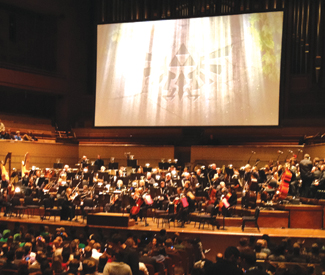
MUSIC If the triumphant theme to 1986-released video game The Legend of Zelda sends a knowing shiver down your spine; if you’ve ever spent hours obsessively clicking homemade remixes and covers of the soundtrack on Youtube (oh hey Deadmau5); there’s finally a highbrow spot for you among the upper crust: “The Legend of Zelda™: Symphony of the Goddesses Tour” is making its exultant, geeked out way to Davies Symphony Hall this week.

It features two hours of the theme from that first game — originally created by legendary Nintendo composer Koji Kondo — and themes from subsequent games in the Zelda franchise, up through 2011’s Skyward Sword for Wii, in a complete four-movement symphony, orchestrated and arranged by Chad Seiter.

Back to lowbrow YouTube for a moment. This comment on Zelda perfectly sums it up: “There is only ONE tune,? ONE game that unites all other gamers together and defines who we are. Here we have the pinnacle version of that tune.” Hyperbolic? Certainly, but you get the point. People freak out about the music of Zelda.

The inspiration for this momentous high-low culture mashup sprang from the 25th anniversary of the Zelda franchise and a longtime gamer/producer. Jason Michael Paul had been producing video game-inspired concerts since the early Aughts, including “Dear Friends — Music from Final Fantasy” in 2004, and “Play! A Video Game Symphony” in 2006.

Nintendo, for its part, was planning some unique releases to coincide with both the anniversary and the Skyward Sword release — anniversary concerts and a symphonic CD.

Music director Seiter took the short motifs and expanded the themes for the orchestra. Throughout the symphony, video projections of Princess Zelda and Link flash behind the classical musicians, matching up with key orchestral moments and providing the full live Zelda experience. Fans should be jumping in their seats.

“THE LEGEND OF ZELDA™: SYMPHONY OF THE GODDESSES TOUR”

Weds/28, 8 p.m., $45–$125

Davies Symphony Hall

201 Van Ness , SF

www.zelda-symphony.com

www.sfwmpac.org

Sorting through scandal

22

news@sfbg.com

>>Read the Guardian Op-Ed by Eliana Lopez’s friend Myrna Melgar here.

On March 20, Mayor Ed Lee announced his decision to suspend and seek the removal of Sheriff Ross Mirkarimi, taking the city into complex and uncharted legal and political territory. He did so with little explanation in a statement lasting two minutes. Then he went and hid.

Over the past week, the mayor has refused to expound on the reasoning behind his decision, won’t answer questions from reporters, and has held no public events where he might face the news media.

But he’s set off the political equivalent of a nuclear bomb, forcing the supervisors to take on a no-win situation in an election year and leaving the City Attorney’s Office, the Ethics Commission, and Mirkarimi’s lawyers scrambling to figure out how this will all play out.

At issue is whether Mirkarimi’s guilty plea to a misdemeanor false imprisonment charge — and his actions since the New Year’s Eve conflict with his wife, Eliana Lopez, that led to the three domestic violence charges that he originally faced — warrant his immediate removal from office without pay pending hearings that could take months. Mirkarimi, the mayor alleges, violated official misconduct standards written into the City Charter with little discussion in 1995, broad language that has yet to be interpreted by a court.

Mirkarimi and his new attorney, David Waggoner, responded March 27 by filing a court petition challenging that language — “conduct that falls below the standard of decency, good faith and right action impliedly required of all public officers” — as unconstitutionally vague and arguing Lee abused his mayoral discretion in suspending Mirkarimi and violated his due process rights by taking away his livelihood without a hearing. They are asking the court to order Mirkarimi’s reinstatement, or at least the restoration of his salary, until the long city process determines his fate.

“It makes it more difficult for the sheriff to fight these charges when he’s suspended without pay,” Waggoner told us.

To those who have been calling for Mirkarimi’s removal for the last few months, the case seems simple: Mirkarimi grabbed Lopez’s arm with enough force to leave a bruise, police and prosecutors got a video the neighbor made of the wife tearfully telling the story, and Mirkarimi tried to quell the controversy by calling it a “private matter” — infuriating anti-domestic-violence advocates who have spent decades trying to explain that DV is a crime, not a family issue. The sheriff ended up pleading guilty to a related charge.

That, many say, is plenty of reason to remove him from office: How can a top law-enforcement official do his job when he’s been convicted of a crime for which advocates say there should be zero tolerance? How can a man who runs the jails have any credibility when he’s pled guilty to false imprisonment?

“He has chosen not to resign and now I must act,” Lee said at a press conference he held shortly after the 24-hour deadline he gave Mirkarimi to resign or be removed.

But like everything in this politically fractured and passionate city, it’s a lot more complicated.

WHAT REALLY HAPPENED

Lopez and her attorneys have consistently maintained that Mirkarimi was not abusive, that the video was created solely in case their deteriorating marriage devolved into a child custody battle, and that it was not an accurate description of what happened that day, suggesting the former Venezuelan soap opera star was telling a particular kind of story.

The Guardian and the San Francisco Chronicle (“Mirkarimi’s argument with wife detailed,” March 25) have pieced together some of what happened. Sources say the couple argued in the car on the way to lunch at Delfina Pizzeria about whether Lopez would take their nearly three-year-old son, who was sitting in the backseat, with her to Venezuela.

The couple had been having marital problems and Mirkarimi, worried that she might not return or that their son could be kidnapped for ransom, got angry. As the argument escalated, Mirkarimi decided to take the family home. On the way, Mirkarimi told her that he had spoken to a lawyer and learned that she needed written permission from him to take their son out of the country and that he wouldn’t do so.

That made Lopez angry and she got out of the car and tried to unfasten their son to leave when Mirkarimi grabbed her right arm, leaving a bruise that was clear in the videotape but which wasn’t visible a week later when she wore a sleeveless dress to Mirkarimi’s swearing in ceremony for sheriff.

That’s the couple’s version of events, anyway. There are no witnesses who can verify or dispute it.

Lee never called Lopez or her attorney to hear this story before deciding to remove him from office. But in the official charges he filed against Mirkarimi, Lee alleges “acts of verbal and physical abuse against his wife” and that he “restrained Ms. Lopez and violated her personal liberty,” plus unproven allegations that he was never charged with, including encouraging neighbors to destroy evidence, and of hurting morale in the Sheriff’s Department (based on a newspaper quote from a political opponent).

You don’t have to defend Mirkarimi’s conduct or belittle the serious crime of domestic violence — in fact, you don’t have to believe anything the sheriff or his wife have said — to ask a few basic questions. Is this extraordinary executive power warranted in this case? What harm would come from waiting for a recall election, the usual method of removing elected officials after a scandal? Why did Lee give Mirkarimi 24 hours to resign and did he offer anything as incentive (sources tell us he offered another city job)? Will he release the City Attorney’s Office advice memo, and if not, why?

The Guardian submitted those and many other questions to Mayoral Press Secretary Christine Falvey, who said she would answer them by March 23, but then sent us this message at the end of that day before going on vacation: “After looking at your questions, it seems Mayor Lee addressed much of this in his comments on Tuesday. After Sheriff Mirkarimi pleaded guilty to a crime of false imprisonment, Mayor Lee made a thorough review of the facts, reviewed his duties under the Charter and gave the Sheriff an opportunity to resign. When that did not happen, he moved to suspend the Sheriff.”

Very few progressives have stood up publicly and taken Mirkarimi’s side. One of them is Debra Walker, a longtime activist and city commissioner.

“This is about McCarthyism at this point, and not domestic violence,” Walker told us. “Instead of helping [Lopez], they have succeeded in breaking this family apart. It’s just bullying. It was always aimed at Ross stepping down and removing him as sheriff.”

THE LEGAL MESS

So what happens next? It is, to say the least, unclear.

The last time a public official was charged with misconduct was in the 1970s, when Joe Mazzola, an official with the Plumbers Union, was removed from the Airport Commission because he refused to order striking plumbers back to work. The state Court of Appeal later overturned that decision, ruling that “official misconduct” had to be narrowly construed to be conduct directly related to the performance of official duties (a case Waggoner relies on in his petition).

But the City Charter has changed since then, and now allows removal for the vague charge of “conduct that falls below the standard of decency and good faith and right action impliedly required by all public officers.” That phrase gives extraordinary power to the mayor — and, given some of the conduct we’ve seen at City Hall over the years, could have been used to remove a long list of city officials.

The Charter states that Mirkarimi, as the accused, will get a hearing before the Ethics Commission, and that he can be represented by counsel. It’s silent on the question of what form that hearing will take, what the rules of evidence will be, what witnesses will be allowed, and what rights the defendant will have.

Four of the five Ethics Commission members are practicing attorneys, and before they can call a hearing, they’ll have to hold a meeting to discuss the rules.

In the case of former Sup. Ed Jew, who was accused of falsifying his address, Ethics was prepared to take only written testimony (Jew resigned before any hearing, partially to deal with more serious federal charges of shaking down constituents for bribes). But that’s not a hard and fast rule — this time, the panel could decide to allow both sides to present witnesses.

If the commission decides to allow evidence, someone will have to rule on what evidence can be presented and what can’t. Will that be the commission chair, Benjamin Hur, or the commission as a whole?

The answer is: Nobody knows for sure. Hur told us he couldn’t comment on anything related to the case; the City Attorney’s Office won’t comment, either, since the office is representing both the mayor (on the prosecution side) and the supervisors and the Ethics Commission, and the board and the commission haven’t made any decisions on rules yet.

Then it gets even trickier. The Board of Supervisors has to vote on whether to remove the sheriff, and it takes nine votes to do that. So if three supervisors vote no, Mirkarimi is automatically back in office.

There are no rules in the Charter for how the board will proceed; in theory, the supervisors could simply accept the recommendation of the Ethics Commission and vote without any further hearings. They could rely on the record of the Ethics proceedings — or they could hold the equivalent of a second trial, with their own witnesses and procedures.

To add another layer of confusion, Mirkarimi, as sheriff, is classified under state law as a peace officer — and the Peace Officers’ Bill of Rights sets entirely different standards for administrative and disciplinary hearings. Among other things, Mirkarimi could assert the right to have the Ethics Commission hearing closed to the public and the records sealed.

State law also mandates that a peace officer facing suspension without pay has the right to a hearing and adjudication within 90 days. That’s not in the City Charter; under the Charter, the city can wait as long as it wants to decide the issue.

Nobody knows for sure whether the Peace Officers Bill of Rights trumps the City Charter.

It’s clear that Mirkarimi, like anyone accused of a crime or facing an administrative hearing, has the right to due process — but not necessarily the same rights as he would have in a court proceeding. It’s also clear that the supervisors will be sitting in a quasi-judicial role — and thus can’t take into account anything that isn’t part of the official record of the case.

They probably can’t, for example, hold a public hearing on the issue — and judges in a case are theoretically supposed to ignore the hundreds of calls and emails that are now flooding in to the board offices on all sides.

The political implications are equally complex. Lee would have been in a dangerous situation if he declined to file charges — if Mirkarimi ever did anything else this disturbing, some would say it was Lee’s fault for leaving him in office.

It’s a safe bet that none of the supervisors are happy about having to vote on Mirkarimi’s job, but it’s particularly tough for the progressives. Anyone on the left who votes against removal will be subject to a barrage of attack ads — and since the balance of power on the board will be decided in November, when David Chiu, John Avalos, Eric Mar, David Campos, and Christina Olague, all more or less part of the progressive bloc, will all be up for re-election, the pressure on them will be immense.

That, in and of itself, ought to be reason for the sheriff to step down, some progressives say: Is preserving Mirkarimi in the Sheriff’s Office worth potentially destroying the progressive majority on the board? It’s a good question — and one that Lee’s advisors were well aware of, too.

50/50

0

arts@sfbg.com

DANCE Strange how being “of a certain age” can bring so much uncertainty along with it. In the installment of Berlin-based choreographer Silke Z.’s “Just Between Us — The Generation Project” making its US premiere at CounterPULSE this weekend, two guys, at least, will move boldly forward into the middle ages.

A coproduction of Silke Z./resistdance and Jess Curtis/Gravity, Jess Meets Angus is a duet between San Francisco’s Jess Curtis and renowned Scottish choreographer Angus Balbernie, both accomplished artists now in their 50s (Curtis just barely), meeting on stage over the subject of being men and dancers in maturing bodies.

“We’re the 50-year-old guys in this larger concept that now has six generations of duets,” explains Curtis via Skype from UC Davis, where he is completing a doctorate in performance studies. (Following the CounterPULSE shows, Jess Meets Angus will have performances in Davis as well.) Silke Z. had begun the project with an encounter between two 30-somethings named Felix, hence titled Felix Meets Felix, which Curtis saw in Berlin (where he’s divided his time for over a decade now).

In asking Curtis and Balbernie — the latter her own teacher at Dartington College of Arts; he was also the bridgehead for Steve Paxton and the spread of contact improvisation in Europe in the 1970s–80s — Silke Z. is also bringing together two related but distinct traditions of postmodern dance. But the piece, which has already premiered in Germany and Lithuania with more stops ahead in Montreal and Poland, is designed to speak readily to a general audience, through text and movement, about a universal theme.

That said, traveling with the show has brought to light a sense of the social, cultural, and environmental specificity in concepts and experiences of aging. Curtis says the piece surprised, not to say freaked out people in Lithuania, for instance. One audience member explained to him that there, where the health of the male population as a whole is poorer, men in their 50s are generally “about to die,” not merely midway through life. The forthcoming dialogue from the stage was also a shock.

“The fact that we said anything about our personal lives — they didn’t even know what to do with that. I felt that people were really excited about [the work], but it is such a different vision of maleness, it’s a little confusing and challenging.”

Even Curtis admits putting himself onstage to discuss aging wasn’t entirely easy. “I had some little bits of resistance,” he says. “When I began working on the piece I was still 49, and Silke kept calling it ‘the 50-year-old guys,’ and I was like, ‘Look, I’m not 50 yet. We can call it guys around 50, or something.’ I don’t want to be rushed into that. But otherwise it made sense to me. It’s some of the first performing that I’ve done in a while. That was kind of relaxing.”

He adds, “In terms of the material, it felt quite interesting to engage with. I was simultaneously working on Dances for Non/Fictional Bodies [which premiered locally at YBCA in February 2011], so there was [connection with] those issues: yeah, this is the body I have. What are the stories in it? My father was also ill, and I was watching him age and watching things getting [physically] more difficult for him. Some of that poignancy was there too, as I was asking, ‘OK, what is the dance to make right now?'”

The honesty in the process does not necessarily imply literal truth in the text, cautions Curtis. “Yes, there’s a big autobiographical dimension, but not everything is true. We’re Jess and Angus and we mine a lot of our histories. But there were things that came up as we were improvising and trading back and forth that kind of stretched; that worked theatrically and are a deeper truth, but are not necessarily facts about our lives.”

As for how much he and Balbernie discovered they had in common when it came to the theme, Curtis is intriguingly vague: “Enough similarity and enough difference to be interesting.”

JESS MEETS ANGUS

Thurs/29-Sun/1, 8 p.m., $15-$20

CounterPULSE

1310 Mission, SF

www.counterpulse.org


Lost at sea

3

cheryl@sfbg.com

AMERICA’S CUP Clear your mind, if you can, of brawls over San Francisco piers and other obscenely expensive parcels of waterfront real estate. Focus solely on the inevitability of the 34th annual America’s Cup.

Summer 2013, it’ll rip into town, offering self-described “adrenaline sailing at its best” to jet-setting yachting enthusiasts. In 2010, the 33rd contest was won in Spanish waters by Oracle Racing, headed up by billionaire Larry Ellison. In 2013, Ellison plans to defend his trophy as the competition (ironically, dealing with its own financial struggles; the San Francisco Business Times reported March 23 that America’s Cup officials laid off half their staff) makes its San Francisco Bay debut.

Of course, average San Franciscans — often found ransacking their couch cushions to scare up burrito funds — couldn’t give a rat’s ass about an event blatantly catering to the one percent. But they should, and here’s why: unless we want to see all those Top-Siders stride directly to wine country after each day of racing concludes, we need to give the visitors (estimates vary on the numbers: 10,000? 200,000?) a reason to hang out in SF, visit its neighborhoods, and spend money locally.

One idea: organize an arts festival with programming complementary to the America’s Cup races. Such an event would potentially offer a huge boost to the local arts scene.

The most passionate supporter of an America’s Cup arts festival has got to be Andrew Wood, executive director of the San Francisco International Arts Festival. Last fall, he announced the 2013 SFIAF would shift its dates from May, when it usually takes place, to July through September. That way, SFIAF could coincide with the race — and be a component in what he envisions as a much larger, citywide event.

“We first contacted the America’s Cup about including an arts component before they even confirmed San Francisco as the venue,” Wood remembers. “They’ve never really had a strong arts component to the America’s Cup before, but they’ve never tried to do anything like they’re trying to do here.”

He’s referring to this particular race’s unique appeal for “a land-based audience.” Geographically speaking, some America’s Cup races are viewable only to television audiences and anyone who happens to have a boat hanging out within sight of the course; the San Francisco Bay obviously offers far more viewing opportunities for landlubbers.

“If you do either of the two largest sporting events in the world — the Olympics and the World Cup — an arts festival is mandatory. You can’t even bid on the Olympics unless you have a festival that’s going to run alongside it,” Wood explains. “[The event will then] appeal to more people. People will stay in the locale longer and spend more money — [especially important for] the America’s Cup, where there’s only racing for an hour a day.”

Money is always a factor when planning for an arts festival of any size, particularly something large enough to entertain 200,000-ish people.

“We can raise a lot of our own money, but what we need is some type of agreement that says we can go out and raise it as the name ‘America’s Cup’,” Wood says, noting that he’s already broached the subject of fundraising with some of the consulates representing countries with boats entered in the race. He’d like to bring artists from all of the participating countries (so far: Italy, Spain, France, South Korea, New Zealand, China, and Sweden) to San Francisco to perform alongside Bay Area arts groups. His grand vision includes theme weeks for each country revolving around the various holidays that happen to fall within the race dates — for example, France’s Bastille Day, July 14.


AN IMPOSSIBLE DREAM?

Wood was optimistic after his first meeting with Mark Bullingham, then the America’s Cup director of marketing, in April 2011.

“Then I jumped into SFIAF in May,” Wood remembers. “When I came back in June or July, he’d resigned. We were never able to get traction with the America’s Cup after that.”

As time for fundraising grows short — and the America’s Cup deal shrinks and evolves as development plans are tinkered with; the latest incarnation was presented to the San Francisco Board of Supervisors March 27 — Wood holds out hope that an arts festival will be included in the deal. A little bit of hope.

“If they let the deal be signed without including an arts component — or even just mentioning ‘Well, we’ll have a future conversation around this’ — then Larry Ellison can do what he wants. Oracle can have some entertainment if they wish, or they can cut the entertainment if they wish,” he says. “The way the actual America’s Cup legislation is written at the moment, the city is going to let the America’s Cup Event Authority escape without having to commit to any type of arts program whatsoever.”

From the city’s point of view, that’s not entirely true. San Francisco’s Office of Economic and Workforce Development acknowledged the importance of having an arts component in a memo titled “America’s Cup Neighborhood Engagement Strategy” presented to the Board of Supervisors February 22, 2012 — though so far, that’s been the only official word on the subject.

“We’re still trying to get our approvals here so we haven’t really moved much beyond [what’s in the memo],” says the OEWD’s Jane Sullivan, Communications Director for the America’s Cup project. “I think what we in the mayor’s office are concentrating on is trying to make sure the economic benefits spread across the city, and probably using the neighborhoods as a focus of how to do that. But certainly that would include the arts component in the neighborhoods and maybe beyond.”

One promising idea outlined in the memo is to use a smart phone app to help alert visitors to neighborhood activities, including arts events.

“There’s an app that exists right now called Sfarts.org that is a project between the [San Francisco] Arts Commission and Grants for the Arts,” Sullivan explains, noting that working with the San Francisco Travel Association would be a way to market the app to visitors.

Though discussions are “ongoing,” Sullivan says the city is focused on “coordination and promotion, and then helping to develop or further develop a robust technology platform to support that.”

When asked if she thinks an official, large-scale arts festival would make its way into the America’s Cup deal, she’s straightforward: “I do not think that’s going to happen.”


X GAMES 2.0

Tony Kelly — facilities manager at Bindlestiff Studio, and a longtime participant in San Francisco’s arts and political scenes — believes that arts events are “the only way to save the America’s Cup” in terms of reaping any of the event’s promised neighborhood economic impact.

“It’s not just having arts events, it’s putting them in places to draw people to the neighborhoods,” he says. “If people go to the races in the afternoon, then you draw them out into the neighborhoods for arts events in the evening, then they actually stay in the city longer. They go to restaurants, bars, hotels, and merchants.”

However, he cautions, “If you think this many people are showing up, you better have things for them to do. If you don’t think this many people are showing up, you better create things so that people do show up. Either way.”

He’s concerned about the city’s strategy of promoting existing arts events without offering additional support to arts groups.

“If the city pretends that we have this ongoing international arts festival any weekend of the year, and therefore we’ll just promote what we already have, and that’ll be our festival during the America’s Cup, that essentially works as a budget cut,” Kelly says. “There’s a certain amount of funding that dribbles down to the arts right now. It is what it is. And then they’re like, ‘We’re gonna add this whole other thing, and we hope you guys can add capacity to handle this stuff, because here come all these people. But no, we’re not going to support it at all.’ That’s a classic unfunded mandate. ‘Oh, you can take this on too.'”

Kelly, Wood, and other members of the arts community have brainstormed a hypothetical list of festival events: an America’s Cup-themed parade, allowing Sunday Streets on Market Street throughout the weeks of racing, outdoor musical performances, an art walk along the Embarcadero, and more, tapping into publicly-owned venues around the city. A sample budget was also drafted.

“It is definitely an example of what could be done fairly quickly and efficiently in this year’s budget, if anyone at City Hall chose to do so,” Kelly says.

Unsurprisingly, Wood shares Kelly’s frustration with the city’s let’s-promote-what’s-in-place plan. “San Francisco has this enormous arts infrastructure that it isn’t using properly,” he says. “Why not hotwire the system to create a program of events that would also complement [arts events which are] already going on? There’s been no real effort to try and corral what’s going on and figure out how it fits together, so that’s what we’ve been trying to do.”

Kelly remains skeptical that the America’s Cup will even draw the promised crowds; he suspects its actual impact on the city will more resemble the X Games — which San Francisco hosted in 1999 and 2000 — than an event “as big as multiple Super Bowls.”

He also views the city’s reluctance to support an arts festival as part of a larger, long-standing problem.

“San Francisco is this great, hip, fun, creative city — why is that? It’s because of the artists. But housing prices keep going up, so more artists have to leave,” he says. “However, when there’s an event that’s counting on us to actually deliver this stuff to the neighborhoods, there’s no support for it. Push is coming to shove and has for a number of years now, and this is just one more obvious, obvious example of it.”

Barbed wire love

0

TRASH In 1968, Pretty Poison, which plays the Castro Theatre this Thursday in a new 35mm print, arrived a bit early. The next year Easy Rider would suddenly make young American directors seem like “the future” of an industry then hobbling on the same now-arthritic legs that had supported its Golden Age decades earlier. By 1970 and for several years afterward small, idiosyncratic, independent (both within and outside studio funding) films would flourish, in number and frequent quality if not commercially.

But 1968 was the year of Belle de Jour, 2001: A Space Odyssey, Rosemary’s Baby, Petulia, two Ingmar Bergmans, and three Jean-Luc Godards — all “foreign films” in fact or stance. Stage or TV-trained not-quite-newbies like Arthur Penn or Mike Nichols aside, the perception was that U.S. cinema needed new voices yet unfound.

Certainly 20th Century Fox had no great expectations from Poison, which seemed eminently disposable: A small-town thriller with medium-watt stars, a first-time director (Noel Black had only done Skaterdater, a prize-winning ’65 short about suburban boarders), and a TV scenarist (Lorenzo Semple Jr., just off the Batman series). Expecting to dump it into drive-ins and second run houses, they opened in one New York City theater without a press screening, then were taken aback when Pauline Kael and Newsweek sought it out and praised it to the skies.

http://www.youtube.com/watch?v=cJovJY-1f8c

We first meet Dennis Pitt (Anthony Perkins) being released from a lockup institution of some sort, his probation officer advising him to stay in touch and keep his “fantasies” in check. Relocating to a sleepy mill town for drone work at a chemical plant, Dennis quickly abandons both those principles. He’s convinced he’s under surveillance, because he’s onto a conspiracy to poison the water supply. Or is that absurd intrigue just a ruse to beguile the high school honor student he’s ogled on the football field in her miniskirt?

Sue Ann Stepenek (Tuesday Weld) is the golden all-American ingénue in Blondie’s “Sunday Girl:” “cold as ice cream but still as sweet.” She responds to Dennis’ crazy overtures with Girl Scout enthusiasm; looking for adventure, she’s willing to play along with his secret-agent delusions. It takes us a while to realize what’s really happening — that Dennis is not the bigger freak here. When we meet Sue Ann’s hectoring single mother (Beverly Garland), we begin to glean she might be using the older man to get out of her own domestic lockup. Later it occurs that she is Mother Version 2.0, with twice the chrome and venom. Weld doesn’t channel deception as most actors might — her Sue Ann doesn’t let us see the act’s seams any more than Dennis does. The depth of her performance is only revealed in a full-circle tag scene at that unlikely hub for criminal genius, the hot dog stand.

Weld was supposed to be our great actress of the 1970s, but that didn’t happen. Was the teen-pinup image impossible for audiences to overcome? Was she too “difficult”? Was she just not that interested? A few roles like this one make her career seem tragically under-realized. Director Black’s, not so much — the two movies he made (1970’s Cover Me Babe, 1971’s Jennifer On My Mind) on Poison‘s promise were nadirs of New Hollywood flailing that sentenced him to TV work and B genre flicks. But for a moment, Pretty Poison made it seem like anything was possible for them both.

PRETTY POISON

Thurs/29, 7 p.m., $7.50-$10

Castro Theatre

429 Castro, SF

www.castrotheatre.com

Black Power, then and now

17

“We’re not ever to be caught up in the intellectual masturbation of the question of Black Power. That’s a function of people who are advertisers that call themselves reporters.”

That’s how the radical student and civil rights leader Stokely Carmichael opened a speech about Black Power — a term he helped popularize — at UC Berkeley in 1966. But the ideas and concepts behind Black Power proved to be an enduring ones that are enjoying a resurgence today.

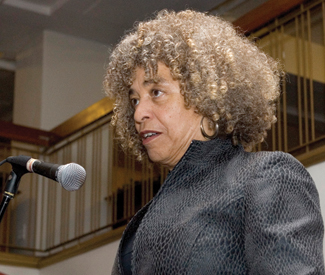
Angela Davis epitomized the Black Power movement to many observers. The author, scholar, and professor was a Black Panther Party member who then joined the Communist Party USA and brought a class analysis to issues of race, building on the movement that began in the ’60s for decades to come.

In recent months, as the Occupy Wall Street movement began to focus the country’s attention on economic and social inequities, Davis has spoken out regularly in support of the movement and drawn connections back to her early activism. She has embraced the “99 percent” paradigm, and the connections between various issues that Occupy activists have sought to highlight.

“Our demands for justice lead us toward demands for prison abolition. And our demands for prison abolition lead us to demands for free, quality education. And our demands for free quality healthcare, and housing, and an end to racism, an end to sexism, an end to homophobia,” Davis said March 1 in Oakland at a benefit for Occupy 4 Prisoners, a coalition of Occupy protesters and prison justice advocates.

Consciousness surrounding those connections can be largely attributed to efforts from Black Power organizers.

“When I listen to the way young people so easily talk about the connectedness of race, gender, and sexual issues, and I remember how we groped our way towards an understanding of those connections, it makes me really proud,” Davis said in a January interview with Independent Lens.

And as Davis said at the March 1 event: “One of the most exciting accomplishments of the Occupy movement has been to force us to engage in conversation, explicit conversation about capitalism, for the first time since the 1930s.”

The movement’s economic message also seemed useful to Kiilu Nyasha, a San Francisco-based journalist and former member of the New Haven Black Panther Party.

“Globalization has already happened. It’s not happening, it’s happened. One percent, internationally, owns and controls 80 percent of the world’s resources. People are dying all over the world of every complexion which you can think of” Nyahsa said March 14 at a panel discussion called Reboot the Rainbow.

The original Rainbow Coalition- the topic of the March 14 panel- included the Black Panther Party, the Puerto Rican Young Lords, and the poor white Young Patriots organization, and was committed to a Black Power concept: organize your own, fight together. Building coalition is more important now than ever.

“It’s not Black Power right now,” says Terry Collins, president of KPOO radio, a black-owned station long focused on community empowerment. “It’s people power. It’s power unto the people who are in need: all the people out there who are out of their homes, students who owe so much that they’re like indentured servants.”

Occupy the Hood is a national effort to encourage participation of people of color in Occupy Wall Street. In its mission statement the group writes, “It is imperative that the voice of people of color is heard at this moment!”

The focus of San Francisco’s Occupy the Hood chapter is “three-fold,” according to organizer Mesha Irizarry: “The cop-watching in neighborhoods that are criminalized, especially poor neighborhood of color. It’s freedom fighters against foreclosures. It’s also bank transfers.”

Occupy the Hood showed up March 16, when a group known as the Foreclosure Fighters- organized and supported Alliance of Californians for Community Empowerment, Homes Not Jails, and related groups—occupied their latest foreclosed home. “We’re liberating this house. We’re taking it out of the hands of the oppressor,” said Archbishop Franzo King of the African Orthodox Church.

“Jesus Christ was an uncompromising revolutionary. He spoke truth to power. Then they killed him for it,” added King in a nod to the radical religious leaders who have influenced liberation movements throughout the years.

Black Power was concerned with self-determination, with organizing within community. That legacy is still strong as San Francisco’s African American communities experience an out-migration and continuing police harassment and violence.

“Black sailors and black army personnel built the shipyard,” said Jameel Patterson, a founder of the Bayview-Hunters Point-based community organization Black Star Liner Incorporated. “Hunters Point, West Point, Harbor Road—they’re all military names. The soldiers stayed there with their families. The area has a rich African American legacy going back to the ’40s. Now it’s fading…we want to make sure that community’s still here 20 years from now.”

Patterson remembers being a child in the ’70s when, on the tail of an era brimming with black liberation efforts. “There were more community events,” he said, but now, “People don’t have connections with each other. That’s what we’re building.”

The group does regular events where they serve free home-cooked meals to residents, reminiscent of the Black Panther Party’s free breakfast program. “With every plate, you get information,” often Know Your Rights reminders for encounters with police, said Tracey Bell-Borden of Black Star Liner.

They have also spent countless hours in City Hall meetings advocating for their community and reporting back on city policies that affect it. “We occupy the Police Commission meeting,” said Bell-Borden.

Police are a central and tricky question for the Black Power movement of the ’60s, as well as organizing efforts today. Black Panther Party members spent years serving free breakfast to children, writing and selling newspapers, and even running election campaigns, but they are often remembered for carrying guns and efforts to “police the police.” So many leaders were arrested that energy that could have gone into feeding or education was often channeled into freeing prisoners.

“I was in the second chapter of the Black Panther Party,” Nyasha said at the March 14 event, “which basically existed to get the first chapter out of jail.”

Recent police crackdowns have fed indignation not just about policing protesters, but about the role police play in poor communities of color. “One thing Occupy has done is address the issue of policing in communities of color, to the extent that some aftermath of what we’re seeing at Occupy is shedding light on how police can sometimes treat people,” said Kimberley Thomas Rapp, executive director of the Lawyers’ Committee for Civil Rights of the Bay Area.

“In black neighborhoods, police should be community partners, not come in and exert more force than necessary. And at protests, they should be there to ensure safety, not just to arrest people unnecessarily or use excessive force,” Rapp said.

Police crackdowns on Occupy are the first exposure many white protesters of the younger generation have had to excessive police force, an issue that was central to the story of the Black Power. Sadly, for many black and other protesters of color, excessive police force is nothing new.

“It’s absolutely the case that police brutality shown towards many Occupy protesters has brought to the forefront the issue of police violence and led to an awakening among many white folks of the day to day reality of police violence that many people of color have lived with now for many years,” Michelle Alexander, author of The New Jim Crow, told the Guardian.

Enraged at police beatings (see “OPD spies on and beats protesters,” Feb. 14) both Occupy Oakland and Occupy San Francisco have held “fuck the police” marches. March 18, after a six-month commemoration celebration brought 3,000 to Zuccotti Park in New York City, followed by 200 arrests and rampant police violence, Occupy Wall Street protesters followed suit, holding their first anti-police brutality march.

Occupy Wall Street has reanimated concepts that burned through the ’60s, such as violence vs. nonviolence, the systemic causes of personal economic woes, and the peoples’ relationship to police. With the consciousness created by Black Power activists, today’s organizers have a foundation on which to build their own answers to these questions, across issues and generations.

National Occupy the Hood has called for action concerning Trayvon Martin, the unarmed black 17-year-old who was shot Feb. 26 and whose confessed killer has yet to be arrested. Taking up high-profile cases of injustice and working more closely with organizers to respond to the needs of local African American communities could bring more power and truth to the rage for justice currently galvanizing a new generation.

“It’s about black re-empowerment,” Archbishop King said. “It’s like the torch, the light of freedom and justice, has actually gone out. And we’re trying to relight that. That’s why I’m so excited about the Occupy movement; it ties into the Black Power struggle. And I think it’s waking up some of us old revolutionaries to stand up.”

Feeding time

0

emilysavage@sfbg.com

MUSIC In San Antonio last week, waking up on a living room floor with assorted Burger Records crew members and friends, record label and brick-and-mortar record shop owner Sean Bohrman, 30, was already thinking three steps ahead.

The next morning at 11 a.m., the traveling Burger pen would play a pre-South By Southwest Burger blowout. Then it was off to Austin for the official SXSW showcases. A few more shows along the way, and now shattered fragments of the unofficial posse will hit the impressively titled Burger Boogaloo fest in San Francisco this weekend.

The three-day affair, which takes place at Thee Parkside — with pre-parties Wed/21 at Bottom of the Hill and Thurs/22 at the Knockout — boasts a motley, pizza-and-burger loving pack of noisy garage rockers, fuzzed out post-punkers, and sleazy generally genre-less local and national acts such as King Tuff, Audacity, Dukes of Hamburg, Heavy Cream, Dominant Legs, White Mystery, Thee Oh Sees, Strange Boys, Burnt Ones, Tough Shits, and a whole lot more.

It’s a mix of Burger bands and acts that play the fall SF festival, Total Trash Fest (some are one in the same). The Boogaloo began when Total Trash organizer Marc Ribak contacted Burger last year with the idea and it snowballed organically from there, says Bohrman.

It’s no huge surprise that Ribak, who is also a member of Rock N Roll Adventure Kids, and the Burger dudes hooked up — they have similar styles and lots of crossover acts.

“Music in general is a huge web — everyone is connected. That is my favorite part — who produced what, who recorded what, what bands everyone was in before,” Bohrman says. “To just be following the web, to be creating our own web, has been really amazing and awesome.”

Burger began as a way for Bohrman and longtime pal Lee “Noise” Rickard to put out their own music, Thee Makeout Party — a bedroom rock band formed in Anaheim in 2001. The label really started in 2007 when Bohrman and Rickard were cruising around in nearby Fullerton, Calif. one day talking about putting out a record for another friend’s band, Audacity. They decided to put it out, and thus an indie label was born. Burger has since dispersed 50,000 cassette tapes from more than 200 bands, and released over 15 LPS.

In 2009 Bohrman was hoping to tour with Thee Makeout Party but his job wouldn’t let him go. He quit, cashed out his 401k and funneled it back into the label, also purchasing a storefront in Fullerton with Brian “Burger” Flores, which would become the Burger Records store. It’s naturally the buzzing hub of the empire.

Whenever Vermont-born, LA-based King Tuff (aka Kyle Thomas, also of Happy Birthday) visits the store, he says he essentially walks away with a new record collection. “They’ve created a family — I go down to the record store and just hang out. It’s really like we’re all part of something.”

While King Tuff is officially signed to Sub Pop — which he also describes as having a familial atmosphere — he also is a part of the greasy outstretched arms of Burger (it put out his limited, personalized LP Was Dead). While the acts may be loosely tied together as friends, there’s no set of rules dictating what makes a Burger band.

“We’ve been successful by putting out stuff we really love, not beholden to any genre. This is our life. We can do whatever we want. There’s no ceiling above us. We can do anything, even if it seems impossible,” says the endlessly upbeat Bohrman.

His voice slightly raising, he adds, “The music means something to us. When we hear music it’s not ‘are we going to be able to sell this in a commercial’ or something. It’s about people making awesome music, not selling the songs for a Pepsi commercial.”

That’s how King Tuff grew up making music as well, without the predetermined rules of industry. He recalls his dad bringing home a guitar one day when he was in fifth grade, picking it up, and learning to play. “I was never interested in learning covers, and I never took lessons.” That improvisational spirit shows in his brief, freaky jams with surf-tinged psychedelic guitar and nasally intonations; it’s waves of stringy hair and rattling bones, jittery lyrics like those in “Bad Thing” off his upcoming self-titled release, “when I play my Stratocaster/I feel like an innocent kid/But when I’m looking in the mirror/Remember the bad things I did”

You can hear some of these same freaky-jittery qualities in the heaping mess of acts playing the Boogaloo in SF this week, and for that matter, Burgerama, another like-minded, Burger Records-endorsed fest happening concurrently down south. On top of all the fests, Bohrman and Co. are still producing cassettes (“Cassettes are handy, they’re like little business cards, they’re durable and cheap to make and buy.”) and running a successful little shop.

“It’s been a dream come true, but it’s still so much work. We just keep piling it on for ourselves,” Bohrman sighs. “It’s hard building a legacy.”

BURGER BOOGALOO

Fri/23-Sun/25, individual shows $7–$12, weekend pass $35

Thee Parkside

1600 17th St., SF

(415) 252-1330

Facebook: Burger Boogaloo 2012

Lunch hour, part 2

0

virginia@sfbg.com

APPETITE Last week we covered four notable new lunch spots. This week, we round off the list with four more.


WISE SONS DELI

I said it a year ago when Wise Sons Deli was merely a pop-up and Ferry Plaza outpost: it is refreshing to have this quality level of Jewish food in San Francisco. Lines still run out the door in the brand new brick and mortar location — good luck finding many “off” hours to drop in. But how can I not be delighted to have fresh-baked loaves of rye bread, corned beef hash, and matzo brei available six days a week? (Don’t worry, you can still catch the Sons on your Tuesday commute at Ferry Plaza Farmers Market.)

Order: Chocolate babka bread ($3.50 per hefty slice; sometimes available as a bread pudding) is dreamy. Earthy-sweet chocolate and a crunchy crust weave together in a bread that is better than coffee cake. Chopped liver ($7) is appealing even to those skittish about liver. Challah French toast ($9) is fluffy and sweetened with orange butter and maple syrup. House-baked bialy fills a bagel void, layered with cream cheese ($3) and seasonal smoked fish like salmon or smoked trout ($8/$11). The Sons address my craving for whitefish salad with smoked trout salad ($9), wisely using a more sustainable fish choice. Don’t forget hand-sliced pastrami or corned beef and an egg cream soda. One can only hope the meaty, pastrami bread pudding I sampled at an opening party shows up on the specials board.

3150 24th St., SF. (415) 787-3354, www.wisesonsdeli.com


SQUARE MEALS AND BATTER BAKERY

Square Meals is just what Polk Street needed: a friendly neighborhood café with eat-in, delivery, or take-out foods and dinners, delectable baked goods and sweets from Batter Bakery, (www.batterbakery.com) — the two enterprises share cafe space — Ritual coffee, a wine happy hour, and board games to play in a mellow setting. Offerings include cool, subtle soba noodles with crab, mint, chili, and escarole, plus lasagna, pork schnitzel, flank steak, falafel patties.

Order: The lunch highlight is a daily sandwich special, such as tender halibut enlivened with strips of bacon and silky caramelized onions ($13). Don’t miss Batter Bakery’s sand angel cookie, a glorified, denser snickerdoodle.

2127 Polk, SF. (415) 674-1069, www.squaremealssf.com


SEOUL PATCH

Rocketfish (www.rocketfishsf.com) is a happening Potrero Hill sushi restaurant. But by day, it is transformed into Korean fusion (yes, I used the dread “f” word) pop-up Seoul Patch. A few menu items rotate, with a couple more traditional Korean dishes in the mix. Eat in at Rocketfish’s bar top or roomy booths.

Order: A fried chicken sandwich ($10) with daikon slaw has been an early favorite, and with good reason. The chicken is blessed with subtle Asian spices, crispy breading giving way to juicy meat within. The sandwiches can suffer from not enough sauce or contrast, translating to dryness, as in the case of a Korean BBQ pork sando ($8.50) with avocado, tempura onion ring, and a pickle. Though the spicy pork was well-prepared, the sandwich needed a sauce to tie it together. Traditional Korean dishes like bibimbap ($11 for this rice bowl with bulgogi beef and fried egg) are better elsewhere. I prefer a green onion pancake ($5.50) that recalls Japanese okonomiyaki: chewy and moist, it’s dotted with bacon and kimchi, drizzled in kewpie (Japanese mayo with vinegar) and oko sauce, both typically used on okonomiyaki.

1469 18th St., SF. (415) 282-9666, seoulpatchsf.tumblr.com


NEW ENGLAND LOBSTER

Industrial South San Francisco roads near SFO are certainly not the place most of us would head for lunch, and certainly not for lobster. But look for the new, bright red truck off Mitchell Avenue, right outside seafood-shellfish source New England Lobster. The best lobster rolls I’ve had have been from the East Coast — the divine, overflowing rolls at Pearl’s Oyster Bar in New York’s Greenwich Village have been excellent for years. But despite the New England moniker, this lobster is not the most flavorful nor is the bread that dreamy, buttery brioche used in the best lobster rolls. Nonetheless, they are satisfying sandwiches, particularly if you ask for drawn butter to drizzle over them.

Order: Lobster corn chowder ($5) is essentially a creamy bisque dotted with corn and chunks of lobster. It’s decadent with a lobster roll. The only other option is a crab roll. If you happen to be nearby or on need lunch before a flight, this is a fun, unusual option.

170 Mitchell, South San Francisco. (650) 873-9000, www.newenglandlobster.net

Subscribe to Virgina’s twice-monthly newsletter, The Perfect Spot, www.theperfectspotsf.com


Texas highlights

1

>>View Mirissa’s complete SXSW 2012 diary here.

MUSIC To be at SXSW is to know you’re missing out on a lot of good music. Fortunately the music you do see makes up for the difference, and very often it’s the unexpected showcases, the things that weren’t on your radar until that very moment, that end up being the highlights of your experience. That said, here are some of my impressions from this year’s slate:


WEDNESDAY, MARCH 14

On the way to the ZZ Ward show I stumbled upon Grupo Canalon playing on a street corner. Incidentally, a friend from SF had recommended it as an act that shouldn’t be missed. The group hails from the town of Timbiqui in Cauca and plays traditional Afro-Colombian roots music, with lots of percussion, a marimba, and a capella vocals. Even the hipsters on Sixth Street couldn’t resist dancing.

Amid an extended sound check plagued by feedback, a frustrated ZZ Ward assured the Bat Bar audience that her performance would be worth the wait. The words seemed cocky in the moment but she and her band delivered. Based in LA, the chanteuse’s “dirty blues with beats” sound has gathered its fair share of buzz and she seems to have the poise and the chops to become a star.

As I walked through the heart of Sixth Street not only was every venue overflowing with showcases but it was hard to swing a stick without hitting an “unofficial” street showcase. I snapped photos of two guys furiously strumming acoustic guitars in front of the Ritz Theater. When asked what their band’s name was, the taller one replied “Well I’m Mike and he’s Gabe… that’s as far as we’ve gotten.”


THURSDAY, MARCH 15

In the afternoon I wandered downtown only to run into Andy and Christian of San Franpsycho. They had a rack of clothes and a mobile screenprinting setup — representing SF style deep in the heart of Texas. As we commiserated about the craziness that is SXSW, SF local Danny Lannon of The Frail happened by.

Then it was off to catch a few songs by the White Eyes at the Taiwan music showcase. Frontperson Gau Xiao-gao was festooned in a nude leotard with fabric streamers while she led her band through the punk and straight-forward rock paces.

Later on I went to Spinlet’s All Africa party at Copa. After some confusion about the schedule, Kenya’s Sauti Sol took the stage. The first thing to notice about Sauti Sol was the band’s incredible clothing. The musicians were all wearing these beautifully tailored kanga-print jackets with beaded epaulets. En masse it kind of resembled an East African Sgt. Pepper’s Lonely Hearts Club Band. The second thing to notice was the great music. It navigated effortlessly from rocking out to singing soaring harmonies, all the while spontaneously breaking into lockstep dancing. The crowd ate it up.


FRIDAY, MARCH 16

At the big SPIN blowout Santigold‘s rhythm section entered the stage wearing Max Headroom-esque caps, her backup singers came out in outfits that were a spin on matador chic, then Santigold herself finally came out donning a crown. While her big hits like “L.E.S. Artistes” sent the crowd into frenzied sing-a-longs, her new material was received almost as enthusiastically, boding well for her album release come April.

At the globalFEST showcase the crowd was enjoying the sounds of Janka Nabay and the Bubu Gang, M.A.K.U SoundSystem, and Chicha Libre. Boston’s Debo Band closed the night with its take on retro Ethiopian pop music. I first caught the band a little over a year ago and since then its live act has grown by leaps and bounds. The band has been working with producer Thomas “Tommy T” Gobena of Gogol Bordello and it seems it learned a few things from the Gogol performance playbook. Keep an eye out for its release later this summer.


SATURDAY, MARCH 17

As I crossed the threshold into Empire Auto’s warehouse space I was enveloped in a complete sensory overload. The room was bathed in a light that made it feel like the crowd was hanging in suspension, and dubstep producer Starkey had that crowd feeling his beats. Literally. The bass was so pounding that it rattled my organs. A few minutes later the bass cut out completely, leaving the crowd adrift as Starkey protested over the PA “Yo, I wasn’t even in the red! Is anyone out there even working?”

The production manager told me that the bass was so heavy that it had knocked Starkey’s laptop off his table, and they were trying to get him to take it down a notch. Yet the thing the manager was even more worried about was that Daedelus was returning to the venue later that evening. Apparently two nights before his bass was so relentless that it had blown two woofers, cracked two windows, and fried the hard drive of the computer delivering the club’s visuals. Hopefully that night didn’t go out with too much of a bang.

Over at the Nat Geo showcase Israeli culture-clasher Balkan Beat Box was rocking songs from its newly released album Give. One track that had particular traction was “Enemy in Economy,” which details leader Tomer Yosef’s experience being taken for a terrorist on an Alaska Airlines flight. The crowd couldn’t get enough of the song’s hook “Welcome to the USA/we hope you have a wonderful day.”

Meanwhile Nigerian-German singer Nneka was inside playing her beautiful blend of politically conscious music. My SXSW experience closed out with Jimmy Cliff‘s set on the patio stage. By kicking things off with “You Can Get It If You Really Want” he wasted no time in giving the capacity crowd what they really wanted. As the patio tent got progressively more hazy it seemed the perfect moment to bid adieu to the festival and make my way home.

Revealing the future

0

DANCE A stiff breeze is blowing through the venerable Alvin Ailey American Dance Theater, though not enough to ruffle feathers among Ailey aficionados (of which there are millions). The troupe is not dancing better, just differently. For that, they and the audiences have to thank new artistic director Robert Battle, who has been watching and choreographing for Ailey for years, though he was never a company member. Coming to the job as both an insider and an outsider, he knew exactly what to do.

Ailey has two major assets: one of the great pieces of 20th century dance, Revelations, and an ensemble that invests whatever you give them with extraordinary skill, fervent commitment, and a deep sense of humanity. What they lacked, for the most part, was a repertoire that honored those gifts.

So Battle switched gears. He opened the door to choreography unlike what we are used to seeing from Ailey. Yet did it gently. None of the works, whose local company premieres were offered during performances at UC Berkeley’s Zellerbach Hall March 13-18, are intellectually complex. Battle kept the entertainment values strong; nothing wrong with that.

The commission to Rennie Harris, the hip-hop artist who opened doors of his own by bringing street and club dancing inside the theater, resulted in the affective Home, a tribute to Ailey, who died of AIDS in 1989. Here Matthew Rushing left a tightly bunched-up group of dancers — somewhat similar to the opening of Revelations — and found an abode in a place where “the DJ turns down the light.”

Conceptually and structurally (and particularly in its circularity), it was a very simple tribute to the outsider who has to find a place for himself. Perhaps it was also the choreographer commenting on the Ailey company.

Harris created a dense, appealing fabric from duets and trios of club and hip-hop moves that vibrated with scintillating energy. The pleasure came from watching these dancers dive into material that encouraged so much individualized interpretation.

Choreographer Ohad Naharin called his line-up of excerpts from works created between 1992 and 2005 Minus 16. The Ailey dancers performed it superbly. The first section had the ensemble, clad in Hasidic outfits, sitting in a half -circle and engaging in a series of “waves” which made the last man fall off his chair. Gradually the performers threw their clothes into the center. Whether this signified a comment on Israeli values or, as some have suggested, a tribute to the Holocaust, I have no idea.

After a diorama-like passing of “souls” and a stunning duet in which dancers Ghrai DeVore and Kirven James Boyd seemed about to devour each other, Naharin pulled a masterstroke. He sent his black-suited dancers scouting for “victims” in the audience to join them on stage. It’s a cheap trick I know, and I have great difficulties with Naharin’s oppressive unisons, but I laughed to the point of tears. Bravo for Berkeley audiences.

The second program offered Battle’s previously-seen, all-male Hunt; it subtly explored pain, mourning, and vulnerability hidden by super-macho manhood. Paul Taylor’s Arden Court, one of the choreographer’s perennial audience favorites, received an honorable performance. The Ailey dancers have yet to absorb Taylor’s joyful ease and weighty elegance into their own bodies. Of the three couples, Alicia Graf Mack and Antonio Douthit came the closest.

Gratefully, this is a differently-dancing Ailey company; one of the changes also being brought about by nine new dancers who altered the company’s look in terms of physical size and skin color. No doubt the changes will continue, all the while preserving the best of Ailey’s own heritage.

What has not changed is Revelations. The mastery and presence that these dancers bring to a work that they perform year after year remains a wonder. Rushing in “I Wanna Be Ready” and Linda Celeste Sims and Glenn Allen Sims in “Fix me, Jesus” — the work’s most movingly intimate choreography — were stunning to behold. The audience started clapping at the sound of the first note and wouldn’t stop until they got their encore of “Rocka My Soul.” That was Ailey, as ever, at Zellerbach.

Black Power now

28

More than 50 years after the Black Panthers started policing the police in Oakland, where does Black Power stand today? This week’s issue takes a look at the question through music, books, and political thought. 

>>BLACK POWER THEN AND NOW: How political struggle and concepts from the ’60s are animating a new generation. And what does Angela Davis have to say about the movement today?

>>THE LEGACY OF RACISM: Killing the Messenger explores Black Muslim ideology and the cycles of brutality

>>BLACK POWER AND OWS: The two movements have it in them to merge, but it’s going to take some work. An editorial by Davey D Cook

>>IT’S NOT WHAT YOU GET, IT’S WHAT YOU KEEP: BBC journalist gathers black voices for posterity, links them to a civil rights timeline

>>PANTHER CRY: Listen Whitey! A new Bay anthology plays the sounds of black power

You have the right to remain weird

0

arts@sfbg.com

FILM It’s not easy being a repertory cinema these days, even when you’re the coolest (or only, or both) one in town. Hoping that this town is big enough for more than just one, at least for a few days, the Roxie this weekend is hosting a kind of cult cinema smackdown between itself and two more of the nation’s finest such emporiums. Under the blanket title “Cinemadness!,” the three-day marathon of rarities, oddities, and unbilled surprises challenges you to look away, or stay away — either way, your sanity will surely be shakier come Monday.

Cinefamily kicks things off, road-tripping up from L.A.’s Silent Movie House. More than just film programmers, the collective also contrives relevant ring tones (intrigue your fellow Muni riders with the “Death Wish II-O-Rama”!), multimedia shows, curated archival wonders online, and live events like the “Jean Harlow Pajama Party.”

The party may be in your pants as well as onscreen Friday, March 23, as Cinefamily brings “100 Most Outrageous Fucks,” a clip compilation of the most tasteless, ridiculous, over-acted, and anatomically unlikely sex scenes yet found by people with an inordinate interest in such things. Expect mainstream Hollywood, exploitation cinema, and le porn to be fully representing.

This will be followed by a real obscurity. Dirkie a.k.a. Lost in the Desert was a 1970 endeavor by the late South African writer-director-producer-actor Jamie Uys, who would later have a fluke international smash with 1980’s The Gods Must Be Crazy. (And end his career 16 years later with barely-noticed The Gods Must Be Crazy V.) The Apartheid-era racial attitudes that drew criticism to some of his other works are absent from Dirkie, a film nonetheless distinguished as one of the most traumatizing and sadistic “family movies” ever made.

The titular eight-year-old (Uys’ own offspring Wynand) is sent for his “weak chest” to the country. Unfortunately a plane crash strands Dirkie and terrier Lolly (played by “Lady Frolic of Belvedale,” whose performance is indeed splendid) alone in the Kalahari Desert. As Dad (Uys) frantically oversees search efforts from Johannesburg, our wee asthmatic hero is attacked by a viciously persistent hyena; scorpion-stung; blinded by snake venom; fed Lolly’s cooked remains (or so he thinks); etc. Preceding by one year Nicolas Roeg’s better-known Walkabout, Dirkie is an equally spectacular survival adventure saga that’s less arty but even less suitable for young viewers.

http://www.youtube.com/watch?v=QTCJWVLfAYo

The Alamo Drafthouse — jewel of Austin, that oasis of civilization in Texas — takes up Roxie residence Saturday, March 24, with two of 1987’s finest sci-fi-horror-action black comedies. A sleeper hit then that’s underappreciated now, The Hidden has pre-Twin Peaks Kyle MacLachlan as a mysterious “FBI agent” (OK, he’s from outer space) tracking an interplanetary homicidal maniac who quite enjoys Earth — especially its loud crap pop music, Ferraris, and automatic weapons. This mayhem-spreading tourist fears no physical peril because it can always abandon one human (or canine) host body for another. Typical of the script’s over-the-top glee is a stretch when said thingie “possesses” a stripper, taking rather more pleasure in her bodacious form than any slimy, tentacled whatsit ought to.

It’s followed by Street Trash, to date the only feature film directed by J. Michael Munro (still a busy cameraman), who incredibly was just 20 when he made it. This last word in low-budget Escape From New York-Road Warrior knockoffs finds a depressed city’s ginormous Skid Row population winnowed by (among other things) cheap Mad Dog-type wine with a flesh-melting-acid bouquet. Incredibly crass (typical banter: “You fuckworm!”), gross (see: severed-penis-as-Frisbee set piece) and energetic, it’s the guiltiest, most pleasurable of guilty pleasures.

The Roxie wrestles its own back Sunday, March 25 with three big attractions. First up is George Kuchar: Comedy of the Underground, an ultra-rare 1982 documentary about San Francisco’s beloved, recently deceased DIY auteur that was unavailable for preview. Then there’s Robert Altman’s 1984 Secret Honor, with Philip Baker Hall as the craziest faux Richard Nixon on record.

That is nothing, however, compared to the brain-warping experience that is Elvis Found Alive. An alleged two-hour-plus interview with the King himself (shot in silhouette), whom filmmaker Joel Gilbert located with stunning ease thanks to poorly-redacted paperwork obtained via Freedom of Information Act, this … documentary? re-enactment? mock-doc fantasia? … bares many a shocking revelation.

To wit: secret FBI agent Presley faked his own death because the Weathermen, Black Panthers, and Mafia had joined forces to assassinate him. Believe me, that is just the tip of the ice cube in this video cocktail. It all makes more sense if you know Gilbert is himself a professional impersonator of Bob Dylan (whom Elvis confides “dumped that awful Joan Baez when she tried to push him into leftist politics”) and has also made such direct-to-your fallout-shelter opuses as Paul Is Really Dead and Atomic Jihad. Does “Elvis” have an opinion about President Obama? Ohhh yeah, and that “socialist thug” best not mess with Memphis. America forever! *

“CINEMADNESS!”

Fri/23-Sun/25, $6.50-$10

Roxie Theater

3117 16th St., SF

www.roxie.com

Who’s afraid of Jesse Michaels

0

arts@sfbg.com

MUSIC East Bay ska-punk band Operation Ivy was arguably one of the most influential underground bands of all time. Not only was it a major influencing force behind the ska-punk boom of the 1990s, but lead singer Jesse Michaels’ angry yet intelligent, politically minded lyrics resonated with thousands of frustrated teenagers for years to come. Yet, the band never achieved much in the way of success until after it broke up in 1989.

“I never expected it to make any impact, but it did, which creates a different view of the past than what actually happened,” says Michaels. “We just played a little music and attracted a modest amount of attention. Everything that happened afterward — influence, the sense of history — it all feels kind of like a movie that people are making up.”

Operation Ivy guitarist Tim Armstrong and bassist Matt Freeman would eventually form the hugely successful punk band Rancid. Michaels would spend the next couple decades occasionally emerging with different bands such as Big Rig and Common Rider.

It wasn’t until 2008, when he formed Classics of Love, that he finally fronted a group with as much immediacy and chemistry as Operation Ivy. His bandmates — Morgan Herrell, Mike Huguenor and Max Feshbach, also known as San Jose post-punk trio, Hard Girls — offset Michaels’ ’80s hardcore-style songwriting with warm guitar tones, indie-rock sensibilities, and a musical virtuosity Operation Ivy never knew.

“From the first note we played together it worked. I had never experienced that before,” Michaels says.

The foursome got together thanks to Mike Park from Asian Man Records. Michaels was looking for musicians to play on his solo album that Asian Man was planning to release. Park recommended Hard Girls.

Huguenor didn’t know what to expect before meeting Michaels. “I was really nervous because when you think of his lyrics, you think of someone who is really concerned about social issues. There aren’t many songs he’s written that have a lot of humor in them,” he says. “It turned out he was down with jokes about weird stuff that would make Freud puke, so it was OK.”

This musical and interpersonal chemistry led Michaels to scrap the whole solo record idea and instead form a group with Hard Girls. Michaels brought in blueprints for songs, but the group worked together as a whole to arrange the songs.

Classics of Love released its self-titled debut full-length on Feb 14. The album rides a line of old and new punk rock — it showcases subtly complex instrumentation that still manages to sound raw.

The record’s engineer Jack Shirley, who is also the guitarist for Comadre, helped give the album its unique sound quality. Working with one of his musical heroes, Shirley was also relieved to learn that Michaels was down-to-earth. “You can tell he understands the importance of Op Ivy, but he’s not the least bit arrogant about it,” Shirley says.

Michaels is not only modest about the impact he’s had on so many people, he at times is downright uncomfortable with it.

“I am very wary of fame and notoriety because it paints an inaccurate picture of people. It doesn’t just distort people’s views of the person, it also can distort people’s views of themselves,” Michaels says.

More than two decades after Operation Ivy split, Michaels continues to write exceptional punk songs and finds simple joy expressing himself through music. Of course, it helps that he found those like-minded bandmates.

“Jesse is a weirdo and Morgan, Max and I are weirdos. We hang out and say horrible things that mostly don’t make sense. That’s how you get through life,” Huguenor says.

CLASSICS OF LOVE

With Joyce Manor, Gnarboots., and Kill the Bats

Sat/24, 8:30 p.m., $9

Bottom of the Hill

1233 17th St., SF

(415) 861-1615

www.bottomofthehill.com


Panther cry

0

culture@sfbg.com

LIT Over a five-year period in Oakland, California, archivist Pat Thomas befriended key leaders of the Black Power movement, dug through Huey Newton’s archives at Stanford University, spent countless hours and thousands of dollars on eBay, and talked to rank and file Black Panther Party members. He uncovered dozens of obscure albums, singles, and stray tapes. Along the way, he began to piece together a time period (1967-1974) when revolutionaries were seen as pop culture icons.

The result of Thomas’ discoveries is Listen Whitey!: The Sounds of Black Power 1967-1974 (Fantagraphics, 224pp, $39.99), a 70,000-word hardcover book with 200 full-color images of obscure recordings and ephemera, and an accompanying CD that traces the vast cultural output of the black power movement.

Besides being a visually stunning collection of photographs and album covers, Thomas’ book shines as a concise, clear-sighted history of the Black Panther movement and the ascendance of black power in American life. “While I can’t claim to know what happened, much less what it felt like to participate,” he says in the introduction, “it’s my hope that readers will find the personalities and music inspiring as I did. Dig deep; blood is thicker than mud.”

Done with a reverence of the times and people, Thomas distinguishes the Panthers from black nationalist movements like Karenga’s US and Amiri Baraka’s Black Arts by focusing on the diversity of the contributors and supporters. Listen, Whitey! steps outside of the boundaries established by other books covering the culture of the movement by showing black power as an engine that generated a multi-cultural global resistance.

This Black-Powered cross-cultural revolution is Bob Dylan’s album Highway 61 Re-visited in the hands of black radical imagination. A transformative album for Jimi Hendrix, the song “Ballad of a Thin Man” was on Huey Newton’s heavy rotation list during the early drafts of the Panther doctrine. Dylan later reciprocated with an elegy to “George Jackson”, an homage to Ruben “Hurricane” Carter, and other songs in service to the movement. The most curious inclusion on the CD, in fact, is white folk singer Roy Harper’s “I Hate The White Man,” a track that — to this day — is as enigmatic as it is honest.

Known musicians like Gil-Scott Heron and John Lennon mix with under-appreciated or unknown talent like Gene McDaniels and the marvelous Marlena Shaw. From the humorous seriousness of the Watts Prophets’ “Dem Niggas Ain’t Playing” to the serious humor of Dick Gregory, and on to the sublime sounds of struggle from Elaine Brown, the music is full and beautiful. The omission of any of any New Thing jazz and Jimi Hendrix (though Thomas sees Hendrix as disengaged, if not apathetic to the riots, “Look At The Sky” from Electric Ladyland opens the dialogue even further beyond the typical), makes the CD function more as a primer to the genre than a definitive review. But when all is said and done, this honky wrote a great black book. *

PAT THOMAS AUTHOR READINGS:

April 10 7 p.m., free

The Booksmith

1644 Haight, SF

(415) 863-8688

www.booksmith.com


April 11 7 p.m., free

Pegasus Books

2349 Shattuck, Berk.

(510) 649-1320

www.pegasusbookstore.com

Spring fairs and festivals

1

culture@sfbg.com

MARCH

SF Flower and Garden Show, San Mateo Event Center, 495 S. Delaware, San Mateo. (415) 684-7278, www.sfgardenshow.com. March 21-25, 10am-6pm, $15–$65, free for 16 and under. This year’s theme is “Gardens for a Green Earth,” and features a display garden demonstrating conservation practices and green design. Plant yourself here for thriving leafy greens, food, and fun in the sun.

The Art of Aging Gracefully Resource Fair, Jewish Community Center of San Francisco, 3200 California, SF. (415) 292-1200, www.jccsf.org. March 22, 9:30am-2:45pm, free. Treat yourself kindly with presentations by UCSF Medical Center professionals on healthy living, sample classes, health screenings, massages, giveaways and raffles.

California’s Artisan Cheese Festival, Sheraton Sonoma County, 745 Sherwood, Petaluma. (707) 283-2888, www.artisancheesefestival.com. March 23-25, $20–$135. Finally, a weekend given over to the celebration of cultures: semi-soft, blue, goat, and cave-aged. More than a dozen award-winning cheesemakers will provide hors d’oeuvres and educational seminars.

15th Annual Rhone Rangers Grand Tasting, Fort Mason Festival Pavilion, Buchanan and Marina, SF. (800) 467-0163, www.rhonerangers.org. March 24-25, $45–$185. The largest American Rhone wine event in the country, with over 2,000 attendees tasting 500 of the best Rhones from its 100 US member wineries.

Whiskies of the World Expo, Hornblower Yacht, Pier 3, SF. (408) 225-0446, www.whiskiesoftheworld.com. March 31, 6pm-9pm, $120–$150. The expo attracts over 1400 guests intent on sampling spirits on a yacht and meeting important personages from this fine whiskey world of ours.

Bay Area Anarchist Book Fair, SF County Fair Building’s Hall of Flowers, Golden Gate Park, SF. (415) 431-8355, bayareaanarchistbookfair.wordpress.com. March 31-April 1, free. This political book fair brings together radical booksellers, distributors, independent presses, and political groups from around the world.

Monterey Jazz Festival’s Next Generation Festival Monterey Conference Center, One Portola Plaza, Monterey. (831) 373-3366, www.montereyjazzfestival.org. March 30-April 1, free. 1200 student-musicians from schools located everywhere from California to Japan compete for the chance to perform at the big-daddy Monterey Jazz Festival. Free to the public, come to cheer on the 47 California ensembles who will be playing, or pick an away team favorite.

APRIL

Argentine Tango Festival, San Francisco Airport Marriot Hotel, 1800 Old Bayshore Highway, Burlingame. www.argentinetangousa.com. April 5-8, $157–$357. Grip that rose tightly with your molars — it’s time to take the chance to dance in one of 28 workshops, with a live tango orchestra, and tango DJs. The USA Tango championship is also taking place here.

Salsa Festival, The Westin Market Street, 50 Third St., SF. (415) 974-6400. www.sfsalsafestival.com. April 5-7, $75–$125. Three nights of world-class performances, dancing, competition and workshops with top salsa instructors.

Union Street Spring Celebration and Easter Parade, Union between Gough and Fillmore, SF. (800) 310-6563, April 8, 10am-5pm, parade at 2pm, free. www.sresproductions.com/union_street_easter. A family festival with kids rides and games, a petting zoo, and music.

45th Annual Northern California Cherry Blossom Festival, Japan Center, Post and Buchanan, SF. (415) 567-4573, www.sfjapantown.org. April 14-15 and 21-22, parade April 22, free. Spotlighting the rich heritage and traditional customs of California’s Japanese-Americans. Costumed performers, taiko drums, martial arts, and koto music bring the East out West.

Bay One Acts Festival, Boxcar Theatre, 505 Natoma, SF. www.bayoneacts.org. April 22 — May 12, 2012, $25–$45 at the door or online. Showcasing the best of SF indie theater, with new works by Bay Area playwrights.

Earth Day, Civic Center Plaza, SF. (415) 571-9895, www.earthdaysf.org. April 22, free. A landmark day for the “Greenest City in North America,” featuring an eco-village, organic chef demos, a holistic health zone, and live music.

Wedding and Celebration Show, Parc 55 Wyndham, 55 Cyril Magnin, SF. (925) 594-2969, www.bayareaweddingfairs.com. April 28, 10:00am-5:00pm. Exhibitors in a “Boutique Mall” display every style of product and service a bride may need to help plan his or her wedding.

San Francisco International Beer Festival, Fort Mason Center, Festival Pavilion, SF. www.sfbeerfest.com. April 28, 7pm-10pm, $65. The price of admission gets you a bottomless taster mug for hundreds of craft beers, which you can pair with a side of food from local restaurants.

Pacific Coast Dream Machines Show, Half Moon Bay Airport, 9850 Cabrillo Highway North, Half Moon Bay. www.miramarevents.com/dreammachines. April 28-29, 9am-4pm, $20 for adults, kids under 10 free. The annual celebration of mechanical ingenuity, an outdoor museum featuring 2,000 driving, flying and working machines from the past 200 years.

May:

San Francisco International Arts Festival Various venues. (415) 399-9554, www.sfiaf.org. May 2-20, prices vary. Celebrate the arts, both local and international, at this multimedia extravaganza.

Cinco de Mayo Festival, Dolores Park, Dolores and 19th St, SF. www.sfcincodemayo.com. May 5, 10am-6pm, free. Enjoy live performances by San Francisco Bay Area artists, including mariachis, dancers, salsa ensembles, food and crafts booths. Big party.

A La Carte and Art, Castro St. between Church and Evelyn, Mountain View. May 5-6, 10am-6pm, free. With vendors selling handmade crafts, micro-brewed beers, fresh foods, a farmers market, and even a fun zone for kids, there’s little you won’t find at this all-in-one fun fair.

Young at Art Festival, De Young Museum, 50 Hagiwara Tea Garden Drive, SF. (415) 695-2441. www.youngatartsf.com. May 12-20, regular museum hours, $11. An eight-day celebration of student creativity in visual, literary, media, and performing arts.

Asian Heritage Street Celebration Larkin and McAllister, SF. www.asianfairsf.com. May 19, 11am-6pm, free. Featuring a Muay Thai kickboxing ring, DJs, and the latest in Asian pop culture, as well as great festival food.

Uncorked! San Francisco Wine Festival, Ghirardelli Square, 900 North Point, SF. (415) 775-5500, www.ghirardellisq.com. May 19, 1pm-6pm, $50 for tastings; proceeds benefit Save the Bay. A bit of Napa in the city, with tastings, cooking demonstrations, and a wine 101 class for the philistines among us.

Maker Fair, San Mateo Event Center, San Mateo. www.makerfaire.com. May 19-20, $8–$40. Make Magazine’s annual showcase of all things DIY is a tribute to human craftiness. This is where the making minds meet.

Castroville Artichoke Festival, Castroville. (831) 633-2465 www.artichoke-festival.com. May 19-20, 10am-5pm, $10. Pay homage to the only vegetable with a heart. This fest does just that, with music, parades, and camping.

Bay to Breakers, Begins at the Embarcadero, ends at Ocean Beach, SF. www.zazzlebaytobreakers.com. May 20, 7am-noon, free to watch, $57 to participate. This wacky San Francisco tradition is officially the largest footrace in the world, with a costume contest that awards $1,000 for first place. Just remember, Port-A-Potties are your friends.

Freestone Fermentation Festival Salmon Creek School, 1935 Bohemian Hwy, Sonoma. (707) 479-3557, www.freestonefermentationfestival.com. May 21, Noon-5pm, $12. Answer all the questions you were afraid to ask about kombucha, kefir, sauerkraut, yogurt, and beer. This funky fest is awash in hands-on demonstrations, tastings, and exhibits.

San Francisco Carnaval Harrison and 23rd St., SF. www.sfcarnaval.org. May 26-27, 10am-6pm, free. Parade on May 27, 9:30pm, starting from 24th St. and Bryant. The theme of this year’s showcase of Latin and Caribbean culture is “Spanning Borders: Bridging Cultures”. Fans of sequins, rejoice.

June:

Union Street Eco-Urban Festival Union Street between Gough and Steiner, SF. (800) 310-6563, www.unionstreetfestival.com. June 2-3, 10am-6pm, free. See arts and crafts created with recycled and sustainable materials and eco-friendly exhibits, along with two stages of live entertainment and bistro-style cafes.

Haight Ashbury Street Fair, Haight between Stanyan and Ashbury, SF. www.haightashburystreetfair.org. June Date TBD, 11am-5:30pm, free. Celebrating the cultural history and diversity of one of San Francisco’s most internationally celebrated neighborhoods, the annual street fair features arts and crafts, food booths, three musical stages, and a children’s zone.

San Mateo County Fair, San Mateo County Fairgrounds, 2495 S. Delaware, San Mateo. www.sanmateocountyfair.com. June 9-17, 11am-10pm, $6–$30. Competitive exhibits from farmers, foodies, and even technological developers, deep-fried snacks, games — but most importantly, there will be pig races.

Queer Women of Color Film Festival Yerba Buena Center for the Arts, 701 Mission, SF. (415) 752-0868, www.qwocmap.org. June 8-10 times vary, free. Three days of screenings from up-and-coming filmmakers with unique stories to tell.

Harmony Festival, Sonoma County Fairgrounds, 1350 Bennett Valley, Santa Rosa. www.harmonyfestival.com. Date TBA. One of the Bay Area’s best camping music festivals and a celebration of progressive lifestyle, with its usual strong and eclectic lineup of talent.

North Beach Festival, Washington Square Park, SF. (415) 989-2220, www.northbeachchamber.com. June 16-17, free. This year will feature over 150 art, crafts, and gourmet food booths, three stages, Italian street painting, beverage gardens and the blessing of the animals.

Marin Art Festival, Marin Civic Center, 3501 Civic Center Drive, San Rafael. (415) 388-0151, www.marinartfestival.com. June 16-17, 10am-6pm, $10, kids under 14 free. Over 250 fine artists in the spectacular Marin Civic Center, designed by Frank Lloyd Wright. Enjoy the Great Marin Oyster Feast while you’re there.

Sierra Nevada World Music Festival, Mendocino County Fairgrounds Booneville. (916) 777-5550, www.snwmf.com. June 22-24, $160. A reggae music Mecca, with Jimmy Cliff, Luciano, and Israel Vibration (among others) spreading a message of peace, love, and understanding.

Gay Pride Weekend Civic Center Plaza, SF; Parade starts at Market and Beale. (415) 864-FREE, www.sfpride.org. June 23-24, Parade starts at 10:30am, free. Everyone in San Francisco waits all year for this fierce celebration of diversity, love, and being fabulous.

Summer SAILstice, Encinal Yacht Club, 1251 Pacific Marina, Alameda. 415-412-6961, www.summersailstice.com. June 23-24, 8am-8pm, free. A global holiday celebrating sailing on the weekend closest to the summer solstice, these are the longest sailing days of the year. Celebrate it in the Bay Area with boat building, sailboat rides, sailing seminars and music.

Stern Grove Festival, Stern Grove, 19th Ave. and Sloat, SF. (415) 252-6252, www.sterngrove.org. June 24-August 26, free. This will be the 75th season of this admission-free music, dance, and theater performance series.

July:

4th of July on the Waterfront, Pier 39, Beach and Embarcadero, SF. www.pier39.com 12pm-9pm, free. Fireworks and festivities, live music — in other words fun for the whole, red-white-and-blue family.

High Sierra Music Festival, Plumas-Sierra Fairgrounds, Lee and Mill Creek, Quincy. www.highsierramusic.com. July 5-8, gates open 8am on the 5th, $185 for a four-day pass. Set in the pristine mountain town of Quincy, this year’s fest features Ben Harper, Built To Spill, Papodosio, and more.

Oakland A’s Beer Festival and BBQ Championship, (510) 563-2336, www.oakland.athletics.mlb.com. July 7, 7pm, game tickets $12–$200. A baseball-themed celebration of all that makes a good tailgate party: grilled meat and fermented hops.

Fillmore Street Jazz Festival, Fillmore between Jackson and Eddy, SF. (800) 310-6563, www.fillmorejazzfestival.com. July 7-8, 10am-6pm, free. The largest free jazz festival on the Left Coast, this celebration tends to draw enormous crowds to listen to innovative Latin and fusion performers on multiple stages.

Midsummer Mozart Festival, Herbst Theater, 401 Van Ness, SF (also other venues in the Bay Area). (415) 627-9141, www.midsummermozart.org. July 19-29, $50. A Bay Area institution since 1974, this remains the only music festival in North America dedicated exclusively to Mozart.

Renegade Craft Fair, Fort Mason Center, Buchanan and Marina, SF. (415) 561-4323, www.renegadecraft.com. July 21-22, free. Twee handmade dandies of all kinds will be for sale at this DIY and indie-crafting Mecca. Like Etsy in the flesh!

Connoisseur’s Marketplace, Santa Cruz and El Camino Real, Menlo Park. July 21-22, free. This huge outdoor event expects to see 65,000 people, who will come for the art, live food demos, an antique car show, and booths of every kind.

The San Francisco Shakespeare Festival, locations TBA, SF. (415) 558-0888, www.sfshakes.org. July 23-August 28, free. Shakespeare takes over San Francisco’s public parks in this annual highbrow event. Grab your gang and pack a picnic for fine, cultured fun.

Gilroy Garlic Festival, Christmas Hill Park, Miller and Uvas, Gilroy. (408) 842-1625, www.gilroygarlicfestival.com. July 27-29, $17 per day, children under six free. Known as the “Ultimate Summer Food Fair,” this tasty celebration of the potent bulb lasts all weekend.

27th Annual Berkeley Kite Festival & West Coast Kite Championship, Cesar E. Chavez Park at the Berkeley Marina, Berk. (510) 235-5483, www.highlinekites.com July 28-29, 10am-5pm, free. Fancy, elaborate kite-flying for grown-ups takes center stage at this celebration of aerial grace. Free kite-making and a candy drop for the kiddies, too.

Up Your Alley Fair, Dore between Howard and Folsom, SF. (415) 777-3247, www.folsomstreetfair.org. July 29, 11am-6pm, free with suggested donation of $7. A leather and fetish fair with vendors, dancing, and thousands of people decked out in their kinkiest regalia, this is the local’s version of the fall’s Folsom Street Fair mega-event.


In the SXSW green room

0

culture@sfbg.com

HERBWISE DIY pop star Lisa Dank doesn’t smoke marijuana to help with her art — smoking weed is her art. The Seattle singer-producer — known for her florid, handmade costumes and gonzo stage presence — crafts odes to cannabis (check out her aural fixation at www.soundcloud.com/lisa-dank), and has a day job at 4Evergreen Group, a patient network that supplies legal and educational resources to its members, as well as physician recommendations for medical marijuana.

Dank was headed down to South By Southwest to do shows at house parties and on the street with the aide of a PA system jacked into her car, but she managed to snag an artist wristband and also logged in hours in the green room chatting with performers about weed culture today. She’ll be publishing her findings in 4Evergreen Group’s new bi-monthly lifestyle magazine — but first, we got her to share her favorite snippets from South By.


TOP 11 MEDICAL MOMENTS FROM A POTSTAR AT SXSW

1. My Omicron hash oil vaporizer pen. Didn’t leave my side. Not even on the airplane. ‘Nuff said.

2. Austin loves pot. Especially at the Wells Fargo. Every time I went to withdraw cash, the point was brought up that I work in the medical marijuana industry. These boys couldn’t get enough! They sang the praise of medical pot (literally — shouting and fist-pumping.) They even brought out their camera-phones to show me the NORML cop car rolling around town.

3. MPP (Most Popular Piece): Quartz glass pieces are popular amongst locals and musicians for their affordability, cleanliness, and durability. Local glass pieces were a close second. Note: My all-star award goes to the editor of UC Berkeley’s student newspaper, who pulled out a gorgeous hand-blown, sandblasted Sherlock similar to the work of glass artist Snic. The editor had bought it at the smokeshop across the street from campus on Bancroft Way. We loaded bowl after bowl of Sour Diesel and Grape Ape six feet from Diplo in the VIP section of Speakeasy’s rooftop patio all Tuesday night, as Teki Latex and the Sound Pelligrino team did their thing.

4. Let’s just say Talib Kweli and his crew are fortunate that I have such a good weed connect in Texas.

5. Chali 2na smokes joints! Hemp extra-long! He had his own stash but took my number just in case. You can never have enough weed connects in Austin. He’s also a sweetheart because he let me use one of his papers.

6. Shiny Toy Guns does not smoke pot.

7. Bands on the run: Brick and Mortar (from New Jersey), Fox and the Law (Seattle), and The Sundresses (Cincinnati) stocked up on buds at home and drove slow all the way down to Austin.

8. Sub-pop recording artists Spoek Mathambo and Thee Satisfaction enjoyed the relief brought forth by the herb after a long walk and checking out Sub Pop’s great showcase at Red 7 on Friday night.

9. Strain trend: Sour Diesel. My guy had it. When he was out, the pedi-cab that I tried to buy from told me he had Sour Diesel too. Just hours later on the official SXSW artist’s deck-lounge at the Austin Convention Center, some locals pulled out two grams of S.D. to roll up in our blunt.

10. Underground future-super-producer Dubbel Dutch had a quandary for me: “I can’t smoke weed anymore! I used to smoke weed every day when I was younger, but now I take one hit and I’m done!”

I explained to him the brain schematics of cannabis, how we have cannabinoid receptors built into our brain but don’t produce cannabinoids endogenously. I hypothesized that his adult brain’s super-sensitivity to THC was due to his excess smoking during the formative years of his brain’s development. I told him he’d trained his brain to be extra-receptive to cannabinoids.

11. Smoking joints throughout my house party set. And for that I thank you, kids of Wilson House.