

Trying to fathom the arcane and somewhat frustrating demeanor that shrouds a Bay Area noisenik is like cross-examining Walt Disney on LSD. I’ve been at the mercy of Rubber O Cement’s Bonnie Banks for the past week, meticulously querying the mumbo jumbo he (or she, as Banks likes to be referred to) sends in response to interview questions while nagging him for answers to my more dogged inquiries. One e-mail reply might yield a pensive thought, only to be followed by a farrago of chaotic imagery — swarms of schizo babble about vocal chord mulch, mosquito broccoli, and rabid zombie snowmen. When asked what people can expect from the impending Brutal Sound Effects Festival, Banks answers that performers “will present the sound of a stuffed horse and cat calliope skidded via hydroplane base into a volcano of semi-liquid thorium pellets.” In another e-mail he writes that he hopes people will come to the event “adorning their larger-than-life scramble nightmare Bosch slip-and-slide mask.”
Though put off at first by Banks’s excursive, seemingly psychotomimetic rants, I soon realize this is his world. What I mistook as some puerile screwball who’s simply fucking with me — I’m still convinced he’s doing that to a degree — is actually the eccentric, visionary heart of the Bay Area noise scene.
Since the early 1980s, Banks has exhaustively chiseled San Francisco into the West Coast hub for underground noise by playing in prominent acts such as Caroliner, bringing up young bands (his musical influence has extended from Wolf Eyes to Deerhoof), and encouraging others to engage in the scene. In 1995 he established the Brutal Sound Effects Festival — a musical community of misfits who, according to Hans Grusel of Hans Grusel’s Krankenkabinet, “didn’t fit in anywhere else.” Shortly afterward, Banks founded an online BSFX message board where people could discuss noise acts, events, and other bizarre topics.
Now in its 40th incarnation — Banks is said to organize four to five events a year — the forthcoming BSFX Festival includes some of the Bay Area’s renowned noise addicts: Xome provides power noise onslaughts, and Nautical Almanac’s James “Twig” Harper indulges in electronic cannibalism. Other notable acts include Anti Ear and Bran (…) pos of Beandip Troubadours, Skozey Fetisch, and Joseph Hammer of the Los Angeles Free Music Society in Psicologicos Trama, offering “a fun way to sample experimental sound,” says Joel Shepard, film curator at Yerba Buena Center for the Arts, which is hosting the event for the first time. Each act will integrate improvised film and video clips into a short performance, creating what Shepard describes as “a real multimedia sensory overload event.” If something seems boring, he adds, there will be another performance in minutes.
“I’ve been really impressed with what he’s been doing,” Shepard says, referring to the industrious Banks. “I find what he’s doing to be a very important part of the art and cultural scene in San Francisco, and I want to show my support.”
The freaks and geeks of BSFX push performance art to its limits, playing under unpronounceable aliases and often incorporating elaborate costumes and scenery unlike anything you see at conventional concerts. Musicians execute a medley of odd sounds using home-wired equipment and analog gadgets at warehouses like the Clit Stop and Pubis Noir. Blistering resonance is one element at these shows. Relying heavily on feedback and distortion, artists such as Xome, Randy Yau, and Tralphaz create a getting-sucked-through-a-vacuum effect by hooking up 20 guitar pedals and feeding them into each other. But don’t be fooled — not all noise acts use volume as an instrument. The Spider Compass Good Crime Band, a duo that will play the upcoming BSFX show, is described by its members as “giant vultures who play instrumental music based around a keyboard.” Their YouTube video is just as outlandish: two costumed performers (one dressed as a giraffelike character, the other as a flamingo) dance and fiddle with samplers; the chamber-driven organs and rubber-sounding belches resemble industrial surf pop.
It’s easy to get sucked into the abstract, visual noise. Costumes range from the cuckoo-clock masks of Hans Grusel to the moss-covered floor crouching of Ecomorti. “Some performers will move an entire set of scenery into a show, which takes two to three hours to set up, and then play a 15-minute set,” Grusel says over the phone. “That shows the dedication people have to this sort of thing.”<\!s>
BRUTAL SOUND EFFECTS FESTIVAL
Fri/8, 7:30 p.m.
Yerba Buena Center for the Arts
701 Mission, SF
$6–<\d>$8
(415) 978-2787
www.ybca.org
Volume 41 [2006–07]
Wholly noise
The Lowell lessons
EDITORIAL When someone — quite possibly a faculty member or administrator — poured pink paint on a gay teacher’s computer at Lowell High School and left a racist, homophobic note, the administration tried to keep it quiet. Teachers say they were told not to discuss the hate crime with students. Other than a tiny notice in the San Francisco Chronicle — and whatever rumors may have been swirling around campus — the students at the city’s premier public high school had no idea what was going on.
That was terrible judgment on the part of the interim principal, Amy Hansen. When this sort of thing happens on a school campus — particularly a school like Lowell in a city like San Francisco — the administration should immediately go public, make an announcement to faculty, students, parents, and the larger school community, arrange for discussions in smaller groups, and make it clear that intolerance won’t be tolerated.
Instead, the incident was allowed to fester — until the student paper, the Lowell, defied administration wishes and did a story.
The report was fair and accurate, and it gave everyone on campus some insight into what had happened.
The hate crime report was one of several scoops that got the students in hot water this year. Earlier, a Lowell reporter had learned the identity of a student who slashed a teacher’s tires and reported why the student did it — but refused to reveal the offender’s name to the administration. Reporters, the student journos said, are not agents of the police, and they have every legal and ethical right to protect confidential sources.
Hansen was unhappy about those stories (and several others) and required the Lowell’s staffers to meet with her while she expounded on ethics. Fortunately, neither the Lowell staff nor their faculty advisers backed down an inch.
There are two important lessons here. The first is that student journalists have the same rights as professionals and that school administrators ought to respect those rights and not try to intimidate the campus press.
The other is that student newspapers are an essential part of any high school community.
In the past few years, with money short all over, the San Francisco Unified School District has taken a lackadaisical attitude toward campus papers. Today only eight of the city’s 21 high schools have active papers. The hate crime incident at Lowell demonstrates exactly why that’s unacceptable.
Student papers are obviously a wonderful teaching tool. They get kids to think about writing in a different way; they open up opportunities and stimulate debate. But they also serve a community purpose: the students know (often better than anyone else) what’s really going on in a high school and with proper support and guidance can hold administrators and teachers accountable, prevent the spread of misinformation and rumor, and make the school a better place.
Student papers don’t have to be expensive items. Printing isn’t free, but with a bit of prodding, we suspect the dailies in town might be willing to do the work at a steep discount. And Web publishing is practically free. Giving one teacher the time to serve as an adviser isn’t going to break anyone’s budget.
The school board ought to establish a policy that every local high school have a functioning campus newspaper — and ought to tell the administrators to refrain from trying to censor the student press.
TUESDAY
Dec. 5
Music
Little Ones
If there could be a band that captured the euphoria of playtime, pillow fights, and recess, it would be the Little Ones. The band’s brand of melodious psychedelic power pop puts a smile on the face of even the most cynical music snob. With an abundance of las, optimistic oohs, and no shortage of hand claps, the Little Ones bring happiness back in a big way. (Hayley Elisabeth Kaufman)
With Small Sins and Pants Pants Pants
9 p.m.
Bottom of the Hill
1233 17th St., SF
$10
(415) 621-4455
www.bottomofthehill.com
www.wearethelittleones.com
Music
… And You Will Know Us by the Trail of Dead
I saw Trail of Dead open for the Sex Pistols at a reunion show in England. The audience – primarily 40-year-old balding ex-punk rockers – was in no mood to watch any band other than the Pistols, so they booed Trail of Dead unmercifully. After two songs, singer Conrad Keeley said, “OK, this is a punk rock show, and we’re going to play it like a punk rock show. Fuck you, fuck the Sex Pistols, we’re all going to fucking die!” They then proceeded to launch into the most hardcore set I’ve ever seen. They’re appearing with the Blood Brothers, a band I used to play really loud whenever a hippie drum circle happened outside my window in college. Got them to move and get jobs within five minutes. (Aaron Sankin)
With the Blood Brothers and Celebration
8 p.m.
Fillmore
1805 Geary, SF
$20
(415) 346-6000
www.livenation.com
www.trailofdead.com
www.thebloodbrothers.com
MONDAY
Dec. 4
Music
“A John Waters Christmas”
Celluloid sleaze merchant extraordinaire John Waters, director of such trash-culture gems as Pink Flamingos, will once again smear his delightfully irreverent brand of holiday cheer across the city. Waters also promises an evening of hip-shaking abandon, thanks to special guest Wanda Jackson, the Queen of Rockabilly. Having first toured with Elvis in 1955 and still tearing it up with incendiary country, gospel, and old-fashioned rock ’n’ roll, Jackson will surely keep the winter night warm and toasty. (Todd Lavoie)
8 p.m.
Fillmore
1805 Geary, SF
$40
www.livenation.com
Film
Beyond the Call
Ed Artis, Jim Laws, and Walt Ratterman had finished their tours in the Army and settled into comfortable careers in banking, medicine, and construction respectively – when duty called again. These middle-aged average joes traveled the world offering food, money, clothing, and medicine to refugee communities and schools in war-torn Afghanistan, Cambodia, Rwanda, and any other nation seeking their self-financed goodwill. Director Adrian Belic (Genghis Blues) treats thesee subjects with a neutrality that seems as ironic as their humanitarianism is saintly, and it’s this complexity that really makes Beyond the Call meaningful. (Sara Schieron)
In Bay Area theaters
SUNDAY
Dec. 3
Performance
“Project Rungay”
It’s make-it-work time, people, as 10-plus queer performance groups debut never-seen-in-the-Bay Area material for “Project Rungay,” a night of cabaret MCed by Jake Danger. Toes will twinkle and two-step in the Butch Ballet’s cowboy quadrille performed to Ennio Morricone’s music for The Good, the Bad, and the Ugly. Drag troupe Hogwarts Express will take a magical trip to the homoerotic world of Harry Potter. Everyone will surely go weak in the knees when dreamy drag king squad the Transformers perform an old-school boy band number. (Deborah Giattina)
9 p.m.
Bench and Bar
2111 Franklin, Oakl.
$7
(510) 444-2266
www.projectrungay.blogspot.com
Event
Bowl for LGBT families
Join kids with gay parents in helping raise money for COLAGE (Children of Lesbians and Gays Everywhere) at a bowlathon. Raise $50 in pledges or donate at the door. (Giattina)
1-4 p.m.
Yerba Buena Bowling Center
750 Folsom, SF
www.skatebowl.com, colage.kintera.org/bowl
SATURDAY
Dec. 2
Music
Norfolk and Western
Having featured paintings of Civil War soldiers and dusty old pianos on their album covers, Portland’s Norfolk and Western play rustic folk that evokes a slower epoch. Favoring a gentler, casual, front porchy orchestration organized around mandolin, banjo, dulcimer, violin, accordion, and similar less decibel-centric instruments, songwriters Adam Selzer and Rachel Blumberg and their troupe of bygone-era nostalgists beguile the listener with intimately recalled tales resembling pages from a scrapbook found in the attic. (Todd Lavoie)
With Corrina Repp and Victor Krummenacher
9 p.m.
Hotel Utah Saloon
500 Fourth St., SF
$8
(415) 546-6300
www.thehotelutahsaloon.com
www.norfolkandwestern.org
Event/Music/Visual Art/Film
“An Evening of Art, Fashion, Film, and Music”
Having trouble figuring out what gift to give the guy or girl who has everything? Look no further! Chillin’ Productions’ “An Evening of Art, Fashion, Film, and Music” will instantly lift you out of the pesky present-buying rut with inspirational ideas from innovative local talent. The incredible lineup boasts 60 fashion designers, 80 painters and photographers, 60 filmmakers, and six DJs to bring the noise, making your gift scouting more eventful. (Hayley Elisabeth Kaufman)
8 p.m.
Mezzanine
444 Jessie, SF
$6
(415) 625-8880
www.mezzanine.com
www.chillinproductions.com
FRIDAY
Dec. 1
Visual Art
“American Carnival Portraits”
The definition of serendipity is when an artist like Linda Kramer walks into a place like the Lucky Ju Ju Pinball Gallery in Alameda – just about the ideal setting for her vivid, often night-draped photographs of people who go to or work at carnivals. According to Lucky Ju Ju’s Michael Scheiss, the gallery’s colorful machines lured Kramer, who came in looking for a present for her parents and ended up booking a show. At least equal to recent work by established names such as Lauren Greenfield, SF State grad Kramer’s burgeoning series “American Carnival Portraits” is a social documentary project that’s certain to yield a great monograph. (Johnny Ray Huston)
6 p.m.-midnight reception; show continues through Jan. 2, 2007
Lucky Ju Ju Pinball Art Gallery
713 Santa Clara, Alameda
Free
(510) 205-9793
www.ujuju.com
www.lindakramerportraits.com
Visual Art
“Wrap It Up: Creative Growth Holiday Exhibition and Sale”
Judith Scott’s awe-inspiring fiber art and William Scott’s visionary paintings and sculptures have been shown at CCA Wattis and other sites. Their home base is Creative Growth in Oakland, where they’re two of many people making art about pop culture, love, the streets, and life. Reproductions can’t compare to an actual piece of art – the holiday exhibition and sale “Wrap It Up” gives you an opportunity to purchase one. (Huston)
5 p.m. reception; show continues through Jan. 4, 2007
Creative Growth Gallery
355 24th St., Oakl.
Free
(510) 836-2340
www.creativegrowth.org
THURSDAY
Nov. 30
Visual Art
“Post-Postcard 10”
There was a Postcard label: recordings by two of its best groups, Josef K and Orange Juice, just got reissued. And in Detroit there is a master postcard artist: Michael Segal, who has been making magical Magic Marker work for two decades. Here in San Francisco, the Lab’s annual “Post-Postcard” exhibition is turning 10 this week, and the nonprofit artists-run gallery has received submissions from all over the United States as well as Helsinki, Finland, and elsewhere. (Johnny Ray Huston)
6-9 p.m. reception; Fri/1, 1-8 p.m., and Sat/2-Sun/3, 11 a.m.-6 p.m.
Lab
2948 16th St., SF
Free
(415) 864-8855
www.thelab.org
Music
Dan the Automator
The sought-after producer, remixer, and hip-hop innovator has put his stamp on popular and underground music from cult classics like Kool Keith’s alter ego Dr. Octagon and Del Tha Funkee Homosapien’s side project Deltron 3030 to Handsome Boy Modeling School, his collaboration with Prince Paul, and the ubiquitous cartoon hitmakers Gorillaz. Known for his genre-defying sound, Dan the Automator brings mind-blowing beats home to San Francisco along with a live band. (Hayley Elisabeth Kaufman)
With Chali 2na, Casual, and A.G. of D.I.T.C
9 p.m.
Mezzanine
444 Jessie, SF
$15
(415) 625-8880
www.mezzaninesf.com
www.myspace.com/dantheautomator
WEDNESDAY
Nov. 29
Music
Melvins
No one hits harder than Dale Crover. The longtime Melvins drummer, who also served a stint in Nirvana, has had the force of his descending drumstick measured at 6,000 pounds per square inch, or roughly three times the bite force of an adult pit bull. Which means Coady Willis, former skins pounder for the Murder City Devils and current member of Big Business, has his work cut out for him. Willis and bandmate bassist Jared Warren will be performing with Melvins mainstays Crover and Buzz “King Buzzo” Osbourne at the Great American Music Hall. (Duncan Scott Davidson)
With Big Business, Altamont, and Porn
8 p.m.
Great American Music Hall
859 O’Farrell, SF
$15
(415) 885-0750
www.musichallsf.com
www.melvins.com
www.bigbigbusiness.com
Comedy
Lewis Black
You probably know Lewis Black as the guy on The Daily Show who gets so aggravated by the state of the world that he looks seconds away from an anger-induced aneurism. But what you probably don’t know about him is that he’s written more than 100 one-act plays, a musical called The Czar of Rock and Roll, and a book titled Nothing’s Sacred. I also bet you didn’t know that he’s from Maryland and that his first film role was in Hannah and Her Sisters. There’s a lot about Black you don’t know, but if you head over to the Herbst Theatre, that might change considerably. (Aaron Sankin)
In conversation with Paul Lancour
8 p.m.
Herbst Theatre
401 Van Ness, SF
$25
(415) 621-6600
www.sfsketchfest.com
www.lewisblack.net
Talk to the hand
› superego@sfbg.com
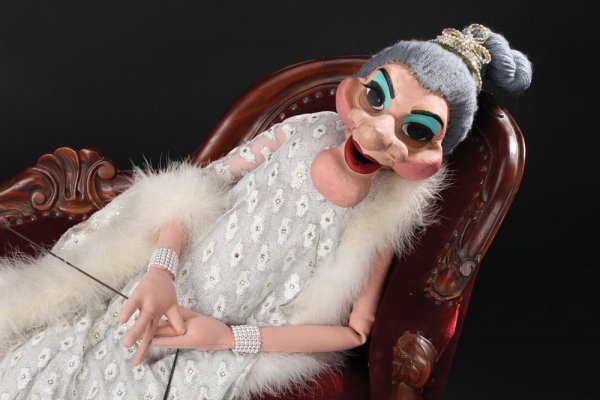
SUPER EGO You may remember Madame, the giddy grande dame of this glorious puppet show we call life — or at least gay life in the ’70s. Chanteuse, raconteuse, free booze — the legendary Madame does it all. When I heard she was out of retirement and performing onstage again, I leaped at the chance to grill this delightful morsel about her recent whereabouts. How could I resist? We have so much in common. She’s a sasspot. I’m a sasspot. Her new show is “It’s Madame with an E!” I’m Marke with an “e.” She only comes alive when a man sticks his arm up her behind. I’m at the midpoint of my once ambitious writing career, interviewing a sexagenarian marionette. It’s kismet!
SUPER EGO: Madame, I love you. My memories and dreams have forever been haunted by your exquisite form, which first appeared to my young gay eyes as a frequent guest on TV’s Laugh In, then as a presenter on Solid Gold, and also as the center square on Hollywood Squares. How does it feel to be such a cultural icon?
MADAME: Me? A cultural icon? My word, darlin’ … all this cheap flattery will get you everywhere. I do adore anything cheap. Cheap flattery, cheap booze, you … I’ve spent so many years giving and giving, and now that I’m a few years wiser, I’m ready to receive. Honey, I’ll take it three times a night if I can get it.
SE: You’ve won two Emmys, untold accolades, and even — along with your former partner, Wayland Flowers — a Sebastian International Fabulous Imagery Award, presented by Bette Davis in 1982. The worth of your career merchandise on eBay is priceless. But you’re also a survivor. Since Wayland passed on many years ago, you’ve been pining away in self-imposed exile, only leaving your box for the occasional dry martini and foot massage. And here’s the big comeback, with you emerging from your emotional cocoon on the arm of a handsome new man. Why now? Is Madame out to change the world again?
MADAME: I am thrilled to death to be treading the boards once again, with my new right-hand man, Joe Kovacs. I could never give up entertaining. Even though I was out of the spotlight for far too many years, I did not completely stop, um, performing. Unfortunately, every time the cops would show up, I’d have to hide behind a bush until the coast was clear. But certainly, at my advanced age, I am not out to change the world … just my Depends.
SE: What can we expect to see in your new show — a personal journey? Songs of redemption? Alcoholics Anonymous testimonials?
MADAME: My new show has a little bit of something for everyone. Something old, something new, something borrowed, and something oh-so-very blue. Just like my new vibrator. So leave the little ones at home … or I guess you could crack the window and leave them in the car.
SE: As a woman of a certain age, how do you stay so well preserved? What’s your secret?
MADAME: Good, hard living. Plus the occasional application of Murphy’s Oil Soap and a light buffing.
SE: Any inspirational words of wisdom you’d like to share with the young people of today?
MADAME: Honey, when it all seems too dark and everything’s closing in on ya, get out of the back room and hit the dance floor! Just reach out and touch someone other than yourself for once. And for God’s sake, laugh, dammit, laugh!
IT’S MADAME WITH AN E! Thu/30–Sat/2, 8 p.m. York Hotel, Empire Plush Room 940 Sutter, SF $30 1-866-468-3399 www.empireplushroom.com
HELP IS ON THE WAY FOR THE HOLIDAYS VIII With Madame and Nancy Sinatra Sun/3, 5:30 p.m. Herbst Theatre 401 Van Ness, SF $45–$150 (415) 273-1620 www.helpisontheway.org www.madameandme.com
Stunted growth?
(Activision; Xbox 360, PlayStation2)
GAMER The latest incarnation of the greatest skateboard video game series ever is here, and it’s a mixed bag. Wait, have any skateboard video games besides this one made it past part one? Anyway, the Xbox 360 version will both please and infuriate fans of the series, just like life. Players who are new to the game will be better off picking up an old copy of Tony Hawk’s Pro Skater 3 or 4, because that’s when this franchise peaked.
One of the major differences between the early Tony Hawk games and the newer ones is that there’s an involved story now. The early versions were more focused on digital shredding, while the new versions have a bunch of silly dialogue and some variation of a rags-to-riches story. The story this time: Tony Hawk is assembling a skate team that will be eight skaters deep. He’s searching for the top skaters to fill the spots. You start out ranked 200th and have to skate hard to make the top eight. When you get there, a skateboard shoots out of the Xbox 360 disc drive. It’s incredible and dangerous.
The controls, as always with this franchise, are consistent and responsive. Fans of the Hawk games will feel right at home and will be ripping immediately. Players new to the game won’t have trouble figuring out which button makes you ollie and which makes you grind. There is, however, one glaring update to the control scheme, and that is how a manual is performed. Ever since the manual was introduced in THPS2, players have had to quickly tap down-up or up-down to get into a wheelie position. Now all you have to do is press a button, and voilà — you’re manualing. The old up-down still works, but the automatic manual button takes the fun out of the combo game. Manuals, reverts, and spine transfers link tricks together for huge points and enjoyable challenges. Now you don’t even have to revert out of a transition to initiate or continue a combo. Curses. This single development in the game will make THPS fans want to break the disk in two, and you should too. But if you decide not to break it, you’ll be rewarded with some amusing junk.
Progression through the game is achieved by the completion of challenges. All the usual suspects are present — grind hella far, launch hella high, do hella tough tricks — but there’s one new sexy challenge: Nail the Trick. To do this you must click the analog sticks, at which point the camera zooms in on your board and time slows way down. Each stick controls a foot, and you have to do lots of incredible tricks. It’s kinda neat. It looks similar to the intro of Girl skate video Yeah Right.
As you’d expect on a next-generation system, the graphics are solid. But who cares — graphics have looked amazing since the Dreamcast came out in 1999. Until we’re controlling what appear to be real humans, games all have about the same level of niceness when it comes to looks. New bail animations and sound effects do make a great update.
Lots of guests are incorporated, such as skaters Bob Burnquist, Paul Rodriguez Jr., Ryan Sheckler, and leading man Jason Lee. Lee, of My Name Is Earl fame, was once a pro skateboarder and a great one at that. If you don’t believe me, go buy Spike Jonze’s 1991 short, Video Days, and buckle up for brain-exploding skating. The guests love talking about tricks and sometimes pass along tips to help you progress though the game. They are pretty nice guys.
The Xbox Live online experience is hella amazing. You play online with people, which is nice when you don’t feel like playing against computers or when you don’t feel like actually going outside and skating. But just go outside and skate, for goodness’ sake. (Nate Denver)
Our lady of the ivories
› a&eletters@sfbg.com
One part an electric Venus in Furs and one part shipwrecking siren, the woman swirling around the stage has a three-ring circus in her head. There is no doubt about it. Imogen Heap does something to a room.
Captivating presence aside, it’s her musicianship that leaves even the most adept of multi-instrumentalists unhinged in disbelief. The 28-year-old songwriter is classically trained on piano, cello, and clarinet; has honed her chops on the drums and guitar; and has even mastered the mbira, Zimbabwe’s thumb piano.
Perhaps most notably, the lady plays a mean Mac. While the rest of us were fiddling around with Oregon Trail in our pubescence, Heap was already hip to manipuutf8g a computer for music’s sake. Since then, she has proven that riding technology’s cutting edge is a viable — and lucrative — mode of transport. Regularly holding open auditions for her tour support via MySpace, the artist has listened to hundred of bands and plucked a few from the confines of Internet oblivion. These social networking niceties mean that when you pay for a show, you will get your money’s worth the entire night.
LEFT HER HEART
Before the sound check for last week’s Nashville gig, Heap explained why San Francisco holds a special place in her heart. Aside from inspiring a bout of underage drinking on Heap’s first roll through, the city was also the site of her first attempt to perform solo.
The memory of her Bimbo’s 365 Club show haunts her to this day. “The label decided not to bring my band out,” she says. “I was petrified. I couldn’t hide behind anyone. If I made a mistake, I’d have to talk my way through it. I got over my fear that night.”
With a tour bus full of musicians in tow, including San Francisco’s favorite beatboxer, Kid Beyond, she’ll be in good company this time around. “I just had my fingers crossed that we’d get along,” she admits. “Then we had a bonding night in New Orleans …”
So what does a bonding night in New Orleans consist of?
“These drinks called Hurricanes. They help the bonding.”
SHE’S EVERYWHERE
Heap was signed to Alamo Sounds at the tender age of 17, before she and producer-songwriter Guy Sigsworth started the UK electronic duo Frou Frou. After a decade as a working musician, she says she’s still having “a whale of a time” on tour: “I’m so happy with the level I’m at now. Sold-out shows. Intimate venues. A great band. It’s reasonably low-key, and the people that come to the shows are real fans. We all feel like it’s a special night every night.”
Ever since the 2002 Frou Frou track “Let Go” was featured in Zach Braff’s film Garden State (propelling the defunct band to new heights of notoriety), Heap has had her finger on the pulse of the soundtrack sect.
“I am eternally grateful for Zach,” the songwriter says. “He opened up a wide audience for me.” At the time, Heap was busy fleshing out what was to be her second solo album. Swearing off major labels, she decided to put her home on the chopping block to fund the new project. What resulted was 2005’s Speak for Yourself (Megaphonic) — a vertigo-disco menagerie signed, sealed, and delivered by the artist herself. By plucking the ordinary out of her natural London soundscape, Heap discovered what every prolific musician before her has banked on: there are songs everywhere — it just takes a little wrangling and a load of persistence to find them.
At first listen, the obvious question will be “Where the hell have I heard this before?” The short answer is, again, everywhere. From spots on The O.C. to CSI, Six Feet Under to The Chronicles of Narnia: The Lion, the Witch, and the Wardrobe, Heap’s music has been rapidly seeping into the collective consciousness. In fact, she is currently scoring the entirety of a Disney film about flamingos — a task that will involve her traipsing about the wilds of Tanzania.
While most musicians are content to rap on the doors of radio and MTV execs to reach new ears, this artist couldn’t be more tickled by her unorthodox formula for success. “I prefer it!” Heap says. “It means when people hear my music, they have a personal relationship with it. They go online and search for it. It’s exciting to find music in that way. The fans are working a little harder — that means you get them for longer!”
Instead of finding herself a niche, the woman has carved a canyon, one that her talents will without a doubt overflow. But for the time being, hell, keep your ears open. SFBG
IMOGEN HEAP
With Kid Beyond
Sun/3, 8 p.m.
Warfield
982 Market, SF
$25
(415) 775-7722
Failure, so thrive
› a&eletters@sfbg.com
“Ever heard of Wisconsin Death Trip?” Jacob Heule asks. Ettrick’s alto sax–playing half and I are in my living room discussing the rigors of life in the Midwest as they pertain to the metal-listening youth of today. Heule, a Wisconsin native, has jokingly — or maybe not so jokingly — cited Michael Lesy’s book about the disintegration of the 19th-century town Black River Falls as we make loose connections between freezing cold weather, insanity, and locales that death metal and its fans call home. He’s certain of one thing: “Black metal is the perfect stuff when you don’t feel like a human anymore. When I was a receptionist at a medical center, I got really into it because I just felt terrible about certain things. It was a dehumanizing job. Cold, bleak black metal — I could relate to it.”
Ettrick are indeed a black metal duo, and their music harbors the telltale signs: ferocious blast-beats, gargantuan expanses of pitch-black noise, and drums like a self-propelled howitzer gone berserk. They also happen to be a free-jazz pairing as well, in which Heule and partner Jay Korber, both drummers and saxophonists, rotate between the two instruments to create a grueling improvisational skronk. A well-circulated YouTube video featuring their collaboration with Weasel Walter reveals a dimly lit scene of busted drum kits with the bleating screams of Korber’s tenor sax piercing the deafening cloud of beats raining down from the stage. For all its grandiose chaos, however, the players never lose track of each other in the din. Heule credits this to time spent practicing. “It’s difficult to improvise, but it’s a skill that you can work on,” he says. “We have developed certain patterns that we call on sometimes, but we don’t really discuss things ahead of time. We realized that it sounds a lot better if we don’t.”
ART BRUTAL
Ettrick’s beginnings hark back to 2004, when Heule was looking to sublet his practice space and Korber answered his ad. Korber — a Pittsburgh native who shares his bandmate’s love of brutal music and calls Immortal’s Battles in the North “one of the best black metal albums ever made” — had coincidentally been playing sax for a few years as well. (Heule has played the instrument since age 10.) As it turned out, they were even recording Ettrick-style music independent of one another. “We both had recordings that we had made of ourselves, overdubbing all the instruments onto each other, drums and sax, but we were doing it all ourselves,” Heule explains with a laugh. “So then we found the ‘other guy.’ We could play live now!”
A year and a half later, Ettrick recorded their first self-released album, Infinite Horned Abomination, in their practice space. Though starkly minimalist (doom-laden atmospherics are largely restricted to the first track), Infinite Horned Abomination hints at the separate yet intertwined paths Heule and Korber have forged. Their second disc, Sudden Arrhythmic Death (American Grizzly, 2006), is an absolute must-have, a 15-minute live session recorded in Portland, Ore., that begins as an achingly radiant saxophone duet before it explodes into a maniacal barrage of beats that push the eardrum till white noise is the only sense the brain can make. It concludes with Ettrick’s signature: bloodcurdling screams and the sound of drum kits being destroyed.
THE SOUND OF MAYHEM
Heule muses on the carnage during their recent tour: “The last show in LA was pretty destructive. I broke my snare stand in half. I dropped my kick drum. I wasn’t really thinking about what it would break if I just picked it up and dropped it.”
Korber amassed similar injuries, breaking both heads on his snare drum. He confesses that his sax is “a piece of shit to begin with” and is sure that his other band, Sergio Iglesias and the Latin Love Machine, isn’t helping matters: “Last time [Sergio played] I rolled over it a couple times.”
The improv community in the Bay Area is a tightly intermingled mass of weeds that entangles every act in its path. Ettrick are no exception, having collaborated not only with the aforementioned Weasel Walter but also with Moe! Staiano (Moe!kestra!, Sleepytime Gorilla Museum), Mike Guarino of Oaxacan, and most recently, Tralphaz, a one-person pedal feedback assault.
Tralphaz embodies what Heule enjoys most about their chosen genre. “One of my favorite things seeing improvisers play is when things just start going totally wrong, and they bring it back,” says the saxophonist. “I’ve seen Tralphaz do that a couple of times.”
Ettrick follow that lead, constantly pushing their black cloud of noise into failure’s clutches. They hope to tempt even more sonic dissolution with their forthcoming album, Feeders of Ravens (Not Not Fun), which will be released on vinyl in early 2007. Korber is matter-of-fact about the strategy. “There’s always a chance that it’s going to fail,” he confesses.
Heule nods. “That’s one of the best reasons to do it.” SFBG
ETTRICK
With darph/nader and Ant Lion
Thurs/30
Luggage Store
1007 Market, SF
Call for time and price
(415) 255-9171
www.luggagestoregallery.org
IN THE RED
It’s being released to coincide with World AIDS Day, but Thom Fitzgerald’s 3 Needles isn’t so much about AIDS as it is blood — human hemoglobin seems to pour from every frame. Part Holy Communion, part arsenic-laced Syrah, it’s constantly being wielded by the film’s characters as a weapon in their desperate struggles to survive both the disease and its political and social ramifications.
The movie’s sweeping triptych of stories spans three continents. The first tale, which takes place in China, features Lucy Liu as a very pregnant woman bound to a man dying of AIDS who illegally collects and runs blood out of her dilapidated VW bus. The second (coyly titled “The Passion of the Christ”) follows a poor, HIV-positive Montreal porn actor (Shawn Ashmore) and his Quebecois waitress mother (Stockard Channing), who purposely infects herself with the virus so she can sell her life insurance for a huge profit. Finally, in coastal South Africa two missionary nuns (Sandra Oh, Olympia Dukakis) and a nun in training (Chloe Sevigny) care for dying AIDS victims in the midst of white plantation owners exploiting HIV-infected employees who are so ignorant about the disease they believe they can be cured by passing it on to virgins (i.e., children).
So it’s not exactly Happy Feet. But compared to those sad sacks in Babel, Alejandro Gonzalez Inarritu’s exercise in sadistic anguish, 3 Needles’ characters handle their various afflictions with aplomb and ingenuity. The fight may be futile, but it’ll still be fought — complete with a few sacri-licious jabs at the Big Man himself. It’s doubtful that bisexual Irish Catholic provocateur Fitzgerald (The Hanging Garden) is calling for an Elton John–style outright ban on religion, but his piercing words and images offer a visceral inoculation against the complacency of the church, the worldwide government, and the free market itself.
It all adds up to a wet, crimson slap in the face of global apathy — and a desperately needed one at that. After all, breaking through the polite rhetoric should only take a little prick. (Michelle Devereaux)
3 NEEDLES
Opens Fri/1 in Bay Area theaters
See Movie Clock at www.sfbg.com
www.3-needles.com
Mexico City, mi amor
› johnny@sfbg.com
If you live in the city and you’ve been blessed, you’ve had the experience of meeting a lover on a favorite street corner, in an open square, or by a favorite vista or shadowy and partially hidden place. The opening scenes of Julián Hernández’s Broken Sky tap precisely into this hide-and-seek game for grown-ups — and the heightened expectations and disappointments it can create. Plaintive college student Gerardo (Miguel Ángel Hoppe) has the rare type of exaggeratedly masculine-feminine features — eyes wide and almost crossed — that are made for melodrama. As he waits over and over in different settings for the arrival of his boyfriend, Jonas (Fernando Arroyo), a variety of excited emotions flutter across his rapt face.
This dance of expectation and eventual pleasure is just one of the urban pas des deux within Hernández’s second feature. Broken Sky might very well be a four-way chain of pas de deux pieces, tracing the gradual breakup of a first love. At its very best, the movie creates something hauntingly, intuitively perceptive from these portraits of everyday urban movement. Near the end of the film, when Hernández and cinematographer Alejandro Cantú return to one such repeated pattern — Gerardo’s movement around an apartment bed that once had a magnetic force for Jonas and him but now only seems to repel them from each other — the effect is heartbreaking.
But who will have the patience to reach that moment? At nearly two and a half hours, Broken Sky would have benefited from a rigorous edit that not only reduced its run time by 40 to 60 minutes but also removed the voice-over passages that provide virtually its only dialogue. (This suggestion is from someone who can comprehend, let alone appreciate, the languid rhythms and unconfined eros of Tsai Ming-liang and Apichatpong Weerasethakul — in other words, it isn’t the conservative miscomprehension of a New Times–era Village Voice.) By even occasionally imposing heavy-handed and pseudopoetic narration on the proceedings, Hernández seems to doubt his core instinct that the words of pop songs, the semiotics of T-shirts, and the looks on Gerardo’s and Jonas’s faces are — aside from a classroom lecture on Aristophanes — all that is needed to tell their story.
That’s a shame, especially because the director has an extraordinary collaborator in Cantú. Together their camerawork charts, colors, and most of all cruises Mexico City with a flamboyant fluidity equal to that of Diego Martínez Vignatti’s cinematography for Carlos Reygadas’s Battle in Heaven — another recent movie from Mexico that (along with Ricardo Benet’s News from Afar and Fernando Eimbcke’s Duck Season) trumps the efforts of better-known contemporaries who’ve ventured to Hollywood. Like Battle in Heaven, Broken Sky contains enough 360-degree pans to make even Brian de Palma spin-dizzy. However, compared to Reygadas’s baroque nationalist allegory (or the urbane sensuality of Night Watch, Edgardo Cozarinsky’s recent hustler’s-eye view of Buenos Aires society), its young love narrative seems trite. Strip away the potent combination of Hoppe’s puppy dog pathos and Arroyo’s pout, and the message seems to be that you should never wreck your relationship for a dude with a tacky rat-tail hairdo.
Had Hernández’s presentation remained mute save for the lyricism of ballads and Dvorak-or-disco-beat instrumental passages, Gerardo’s and Jonas’s archetypal qualities might be as convincing and layered as their embodiment of — and struggles against — the callow surfaces of contemporary gay life. That latter friction took on black-and-white overt outsider form in the director’s first full-length film (after almost a decade of shorts), 2003’s Jean Cocteau–influenced A Thousand Clouds of Peace. Shot in color, Broken Sky resides closer to gay mainstream consumerist codes, while still critiquing them via a defiant romanticism. In a sense, its extended length could be seen as a direct antithesis to the increasing length of gay porn movies in the DVD age, with each protracted chapter straining toward a skipped heartbeat instead of an orgasm.
Quoting Marguerite Duras at the outset, semisuccessfully treating a twink’s misbegotten nightclub hookup as the stuff of epic tragedy, and taking even more time than Duras might to tell a simple story (not to mention one that involves characters she would’ve found silly), Hernández can’t be accused of lacking audacity. He knows how to ravish the viewer — an excellent quality in a director who loves to choreograph love. The fact that Broken Sky’s title credit doesn’t arrive until nearly an hour into its action — or stasis — more than hints he’s influenced by Apichatpong’s revelatory Blissfully Yours, but unlike that innovative director, he’s still working, conflictedly, within the framework of contemporary gay identity and its attendant commercialism. He and João Pedro Rodrigues (O Fantasma; Two Drifters) are the standout moviemakers in this restrictive realm, but as of now, lacking Rodrigues’s devil-may-care imagination, Hernández will have to settle for number two — with a Bullitt T-shirt. SFBG
BROKEN SKY
Dec. 1 and Dec. 3–7
Castro Theatre
429 Castro, SF
(415) 621-6120
Saxed
› kimberly@sfbg.com
SONIC REDUCER By now the Tofurky has been gummed into submission. The turducken has been turned inside out, its monstrous mutant flesh masticated into extinction. And the stuffing has filled your squirrelly cheeks just in time for winter — you know, the ones that you settle back on as you belch, change the channel, sigh, then weep at the sight of still more food on the fattest of Thursdays.
At this point Thanksgiving is ancient history — memories have been wiped away by post-pig-out screenings of Fast Food Nation and Black Monday’s stampede-inducing specials.
Still, I gave thanks that I spent the evening gobbling dark gobbler meat on autogorge, watching old Robot Chicken episodes, and marveling at the PlayStation 3 consoles going for $10,000 on eBay. “The day it went on sale I clicked through one that was up to $700,” turkey-roasting chum Gary Hull told me. “It turned out to be some guy on his laptop, selling his spot in line in front of a store in Colorado.” Hope that sale had a “happy ending.” (Take another quaff of cranberry-tini each time that phrase recurs on Robot Chicken.)
And when everyone feels obligated to descend into group gluttony, I celebrate humble differences: a preference for sweet potato rather than pumpkin pie, for Gentlemen’s Techno rather than rude boys’ elbows to the knockers. I also get gooey over the Stooges, particularly their second album, Funhouse (Elektra, 1970). Hence, when I got the chance to chat with Steve MacKay, who played bleeding tenor sax on the title track and was in the Stooges for six months back in the day, I got all warm and cinnamon-scented inside.
The Pacifica saxophonist had just returned from working on the new Stooges album in Chicago with engineer Steve Albini and, of course, Iggy Pop, Ron and Scott Asheton, and Mike Watt.
“It’s got a lot of different feels to it,” the genial MacKay said of the disc, due this spring. “Some of it is Pop singing, in the beautiful baritone ballad style as Pop is known to do. Some shrieking Pop and midrange Pop. Really interesting sentiments and politics. Otherwise, I’m sworn to secrecy!” South by Southwest could be next.
“I still got my gig,” he added. The reunited Stooges have played all manner of festivals, though never any in the Bay Area. “Pop is a great guy to work for. He really takes an interest in everyone, especially me, and I’m the sax player. I’m not an essential part of this. We’ve always been good friends, even when he fired me.”
Pop gave MacKay the heave-ho in November 1970, after initially plucking MacKay from the band Carnal Kitchen. But then, the saxophonist understands the ever-shifting status of his instrument in pop. “I guess my mission in life is to go where no sax has ever gone before,” he quipped.
When the 57-year-old first started playing, the tenor sax was all over ’50s radio. Pimply pals began begging him to join their groups as the British Invasion swept in, though MacKay still had to fight for the sax: “One day we were going to rehearsal, and then I heard one of the guys in the band in the basement saying, ‘We don’t want a sax in a band! No one has else has a sax in band — it’s not cool.’ And then another voice said, ‘We can’t kick him out of the band. He’s the only one who can play a lead!’”
Since then, despite rumors of his death (“Is that why the phone isn’t ringing?” MacKay joked), the sax player has found ways to work his influential skree into the mix: he hooked up with the Violent Femmes for The Blind Leading the Naked after their first SF appearance in ’83 at the I-Beam (“They ran through the first sound check song, and I was sold.”) and has performed with Andre Williams, Smegma, Snakefinger, and Clubfoot Orchestra. He moved to San Francisco in ’77 — “Ann Arbor has gone all fern bar on us,” the Grand Rapids, Mich., native says — and began playing with his fellow transplants in Commander Cody, later picking up a trade as an electrician. Now firmly attached to the improv-oriented Radon, which has a new CD, Tunnel Diner, MacKay is looking forward to getting some long-awaited attention from rags like Wire. “I’ve been crawling around in old Victorians for years in San Francisco,” he said. “But I haven’t had to bend any conduit for a while.”
NIGHT OF THE HUNTER Houston singer-songwriter Jana Hunter makes music that taps into a whole other kind of electricity — spooked and resonant, as if she were channeling a damaged, Depression-era dust bowl damsel. After hearing this year’s Blank Unstaring Heirs of Doom, one might even consider her the spiritual kin of Devendra Banhart, who decided with Vetiver’s Andy Cabic to put out the record as the first on their Gnomonsong label. Hunter has just finished her new second album for them, but she’s still haunted by the heirs of her debut’s title. “That was a funny but dark description of a group of my friends,” she told me from Houston. “They are people who are prone to disaster and obsessed with horror movies and kind of follow this process of creating things through self-destruction or finding entertainment or fulfillment in the process of destroying things. I was definitely like that at the time.”
She was enlisted to play various maniacs in several of her friends’ homemade homicidal-freak flicks: one of the movies will be included on an enhanced CD with Hunter’s dark-camp rock band, Jracula. “I didn’t know anything about horror movies till they made me watch a bunch of them,” she explained. “We watched them and made horror movies and drank ourselves sick several nights a week for a couple years. It was pretty fantastic.” Killer. SFBG
STEVE MACKAY AND THE RADON ENSEMBLE
Wed/29, 9:30 p.m.
Hemlock Tavern
1131 Polk, SF
$7
www.hemlocktavern.com
JANA HUNTER
Sat/2, 8 p.m.
Space 180
180 Capp, SF
$6
myspace.com/clubsandwichsf
Full noodle frontity
› le_chicken_farmer@yahoo.com
CHEAP EATS THE CHICKEN FARMER IS HOT. It took several tries to get the big block letters to stick, but finally I had stated my case — in homemade egg noodles inside the lid of an egg carton, where normally you might expect to read nutritional facts about eggs.
Where normally the eggs would go, I put 12 pretty stones.
The Chicken Farmer is not normal. One of her favorite things to do is to lie face down in the fog for hours at Sonoma beaches, the ones with tiny stones instead of sand, and sift through the pretty colors, taking home a handful of favorites. I’ve been doing this for years and years. Now I have someone sort of odd to give some to.
I was coming to the city to play soccer, and then I had a date with this new Nancy Drew I’ve been trying to tell you about. Instead of an apple or flower or poem or butt of a burrito, I was going to present her with this … piece? Well, Saturday morning arts and crafts project. Well … egg carton.
She would think they were eggs, because that’s what I usually give people instead of flowers, and then she would notice it was too light and kind of rattly, like beans or something, and with a quizzically delicious smile forming on her lips — it was all mapped out in my mind — she would slowly open the carton, know that I was hot, and have to take my clothes off.
I sure do love dating! You can go into a thing with no real expectations, in fact knowing — knowing — with like 99.9 percent accuracy, that that’s not going to happen, not tonight, no way. And yet still you will bathe more carefully, shave more closely, fantasize more prayerfully, and put on your prettiest panties, which you washed in the sink and dried over the wood stove just for the …
Uh-oh … or is this just me?
Anyway, for now I carefully load in to the passenger seat of my pick-up truck this precious cargo, this key to my new improved love life and future nudity, making a mental note not to drive as hard as usual. I consider buckling the carton in and even go so far as to wish I had a child’s safety seat for it.
Already running late for soccer, I linger, close the lid and open it. No damage — the homemade letters will hang on for the ride, I think. THE CHICKEN FARMER IS HOT.
Then, wait …
The chicken farmer is hot? The chicken farmer?
In the movie version of my life (starring Penelope Cruz or OK, Holly Hunter or OK, OK, Crispen Glover in drag), the soundtrack screeches to a stop and all of a sudden everything is wrong. It’s basics! It’s Dating 101! You can’t give someone something saying, explicitly, that you’re hot. It has to say that they’re hot.
She knows I’m hot. She already said so weeks ago when she first found out I made my own pasta. “That’s so hot,” she said. It’s like I was answering, albeit in fettucini, with, “You’re so right. I’m hot.” Instead of “Baby, you. You’re hot! I’m just Crispen Glover. In drag.”
In real life I ran back into my shack and fumbled for the phone. There was no time for a revision, and the actual eggs in the actual carton tangled with my cleats in the back of the truck were already earmarked for another friend whose birthday was on Sunday. “Pick up pick up be home be home,” I chanted into the receiver.
“Hello?” said Moonpie, my oldest girlfriend in the world and most trusted romantic adviser.
In 10 seconds and 1,250 words I stated (or spat) the dilemma of my nature (or vice versa) and asked more slowly, in conclusion, “Can I give this egg carton to her? What do you think?”
“I think it’s funny,” she said.
“Yes.” Right: funny. I knew that and took a breath. “But,” I asked, “at my expense?”
“Well, yeah.”
“Excellent,” I said, and I gave it to her. I did.
Well … back to the drawing board, or rolling pin, for the chicken farmer. Nobody took any clothes off, let alone mine, but it was a wonderful date! Sean Dorsey’s Outsider Chronicles was one of the most beautiful things I ever saw. (He dances for the most part to words!) And, oh yeah, Ms. Drew and I have a new favorite restaurant. SFBG
WEIRD FISH
Sun.–Thurs., 9 a.m.–10 p.m.; Fri.–Sat., 9 a.m.–midnight
2193 Mission, SF
(415) 863-4744
Takeout available
No alcohol
D/MC/V
Quiet
Wheelchair accessible
Over easy
› paulr@sfbg.com
Changing public consciousness is an inglorious task that seems to involve a great deal of repetition. There is an art to repetition, to saying the same thing over and over without boring or infuriating people or losing one’s patience at their benightedness and resorting to jeremiads. But observation suggests that this branch of the suasive arts is, in our drink-Bud-or-we’ll-kill-you culture, at least slightly in eclipse.
Still, despite the rather dismal state of the art and the basic human resistance to change — our preferred mode of advance is evolutionary not revolutionary, as science instructs us — change does appear, sometimes with notable swiftness. The imperilment of the world’s fish, for instance, is a matter lately ascendant in the global consciousness. (Yes, I know I have mentioned this glum subject before — artfully, I hope.) In Honolulu on Nov. 10, I picked up a copy of the local paper, the Advertiser, to find that the op-ed page carried both an editorial calling for “aggressive management” by Hawaii’s Department of Land and Natural Resources of the state’s marine life — in particular, for enhanced protection of the bottom-dwelling and vulnerable species opakapaka and onaga — and an opinion piece (by Bruce Anderson, president of the Oceanic Institute) arguing that aquaculture, if responsibly practiced, can ease human pressure on the seas as a source of food. Research and innovation are critical here.
I was pleased, though not surprised, to find major Hawaiian media paying serious attention to the plight of fisheries locally and around the world. I was also pleased — and surprised — to find that awareness of the issue has seeped to deeper levels. While on a brief visit to a friend recovering from surgery at the Towers (the continuum-of-care facility on Cathedral Hill), I glanced at a menu in one of the dining rooms and saw on offer mahimahi, ling cod, and swordfish — all line-caught, the first and last in Hawaiian waters. There are some questions with all of these fish, and I would not give the menu a perfect ecoscore, since apart from everything else, “line-caught” is ambiguous. Some lines are better than others. Still, it was evident that even in some institutional kitchens, care is now being taken that might not have been taken five years ago. There must be more than a few people in the Towers asking an artful question or two about the food they’re being served.
The final frontier
› paulr@sfbg.com
Regrets? I’ve had a few. At the top of the list is that, due to circumstances beyond our control, I will never get to see Beethoven play the piano — unless we have misunderstood the time-space continuum. This seems more likely than not, given the reliable arrogance of human science, and I do retain a shred of hope.
The also-rans run well behind. I do not expect my idea for a sport-tuned, high-performance Prius — the Priapus, a Prius for men! — to make it onto a Toyota production line any time soon, alas and alack. And I am sorry I can’t remember what many areas of the city looked like a decade ago, before the Great Bulldozing. What was it like to sail down the Third Street corridor? I remember doing it at least once, in the middle 1990s, on a mission to take some moribund computer equipment to a recycling facility near the foot of 23rd Street. There was a certain ominous, video-game facelessness to the buildings, and I was glad when the errand was over.
As for restaurants: once you’d passed south of 16th Street, where 42° sat at the back of the rather dingy Esprit Center (since demolished), you were in a different world. You had passed through border control, a kind of Checkpoint Charlie of culture, and you were on your own. But … change was not far off. Soon the development tide would flow south: there would be a new baseball park, a new UCSF campus, a new Muni light-rail line. And the neighborhood’s obvious virtues — nearness to the city center and the bay, flat streets, warm weather, gorgeous old industrial buildings (many of brick), sweeping views — would begin to be noticed.
Today, Third Street is lined with new live-work and other lofty-looking buildings, and people must be living and working in them (or working nearby), because if you step into the New Spot, a new spot serving Mexican and Salvadoran food, you are likely to run into a wall of these people, at least if it’s around lunchtime on a weekday. They all look to be about 30 years old, give or take, and are dressed with that studied scruffiness I associate with the late, great dot-com boom. Are we now surfing some wave in the space-time continuum back to 1999? Certainly, the traffic and parking situations are horrendous in the area, as they were elsewhere in the city at the close of the last millennium — and the crush is all the more shocking in what I had long thought to be a kind of ghost town, a deserted neighborhood that was fun to bike through on a hot autumn Saturday.
The New Spot is to Salvadoran and Mexican cooking what Chutney (on lower Nob Hill) is to Indian and Pakistani cooking. The look is minimalist clean, prices are low, and the food is fresh and meticulously prepared. My only cavil on freshness concerns the chips, which twice seemed stale to me, though the spicy-smooth red salsa ($1.40 for a half pint, if you want or need that much) covered up much of the weariness. The guacamole ($2.25) is good too, though I would have liked bigger avocado chunks and maybe a bit less lime juice.
The Salvadoran-style dishes dominate the menu and include those old standbys, pupusas (just $1.60 each, but you have to order at least two). These are disks like small pita breads, and they can be stuffed in a variety of meaty and meatless ways. We found the queso con frijoles version — with a good packing of refried beans and oozy queso blanco — to do very nicely, especially with some pico de gallo and shredded, pickled cabbage (curtido) on the side.
Pasteles ($5.50 for a plate of three) turned out to be lightly deep-fried corn pies filled with more queso. (I’d ordered chicken but was pleased with the cheese.) Generally, I stay out of the deep-fried end of the pool, but these pasteles were of a delicate crispness that made me think of golden clouds. The menu lists chile relleno ($7.50) — a fire-roasted poblano stuffed with cheese (or choice of meat) and served with salsa, beans, and rice — as a Salvadoran specialty, and perhaps that’s because it isn’t dipped in batter and fried, as in the more typical preparation you find in Mexican restaurants around town.
The fish tacos ($3.15) are exemplary. I always try a place’s fish tacos, since the range of possible outcomes is so great. Good ones are unforgettable; bad ones are … forgettable. Bland, usually. The New Spot’s menu doesn’t say what kind of fish is used — some kind of cod or pollack, I would guess, or possibly tilapia, judging from the bits of soft, white flesh — but the grill imparts some appealing smoke, and the crispy tacos are filled out with shredded lettuce (instead of the more usual shredded cabbage), diced tomato, refrijoles, salsa, and guacamole. Like a regular taco, really, and the better for it.
The food, it must be said, doesn’t exactly fly out of the kitchen, in part because the dishes are made to order and also because the crunch-time crowds are thick. At the moment, alternatives in the neighborhood are few. But the New Spot is flanked by signs of yesterday and tomorrow; on one side is a faded old-school Chinese restaurant on its way out, while on the other is a café, Sundance Coffee, that could easily be associated with a museum of modern art. The times, they are a-changin’. SFBG
NEW SPOT
Mon.–Fri., 6 a.m.–7 p.m.; Sat., 7 a.m.–5 p.m.
632 20th St., SF
(415) 558-0556
No alcohol
AE/MC/V
Noisy if busy
Wheelchair accessible
Crap of the future
› annalee@techsploitation.com
TECHSPLOITATION Because I write about technology and science for a living, a peculiar burden falls on my shoulders every holiday season. I’m expected to make pronouncements about what stupid gadgets people should buy for the holidays. I’ve already been asked repeatedly if I’d rather buy a Wii or a PlayStation 3. I’ll admit I found it vaguely glamorous that people were shooting and rioting in line while waiting to buy the PlayStation — it gave me that retro concert-trampling-frenzy feeling. But it didn’t make me want to own one.
However, I reserve the right to do another thing that tech-sci writers are supposed to do: predict the future. So instead of bitching about the stupid holiday gadgets of today, allow me to predict what kinds of lameass holiday crap I’ll be bitching about in the future.
1. Peer-to-peer brain distribution client: Everybody is uploading and downloading their brains via the Internet. It’s certainly the best way to travel — just upload your brain in San Francisco and download it into another body in France. The problem is bandwidth. With everybody uploading and downloading their brains around the holidays, the network gets awfully slow. That’s why Yahoo! BitTorrent has introduced the P2P brain distribution client, which allows you to store several copies of your consciousness on multiple computers across the network. Downloading goes a lot faster because you grab segments of your consciousness from different computers at the same time, assembling it piecemeal at your destination. The problem is that sometimes the pieces arrive out of order, so you spend half an hour thinking the Star Wars series has gotten better over time. Also, people often mislabel copies of your consciousness. You think you’re downloading your mind, but actually you’ve gotten Cher’s childhood or somebody’s false memory of being abducted by aliens.
2. DNA DRM: The latest solution to the problem of media copying is a digital rights management (DRM) scheme that relies on identifying the DNA of the consumer. When you purchase a piece of media, your licensed copy is encoded with 13 unique sequences of nucleotides from your genome. Each time you hit the power button on your new DNA DRM Zune media player, a hair-thin needle painlessly pierces your flesh and feeds a drop of blood into an embedded genome sequencer. If you are the registered owner of the media, you are permitted to play it. If you aren’t, the media is deleted from your device and a record of your transgression is reported to the central media certification authority. You will be forced to pay an extra “unlicensed play penalty tax” to license it next time. The only thing good about this system is that biohackers can take the DNA DRM Zune apart, remove the embedded sequencer, and use it to figure out if they have cancer.
3. Animal mashup maker: A home biology kit for kids, the mashup maker lets you create new animals by combining the best of all your favorite pets’ genomes. What could go wrong? The dats and cogs are great, but when you start getting into fish-frogs or bird-fish or snails combined with anything, cleaning the litter box really gets kinky. Also the product tie-ins suck. I’m going to spit if I see another one of those cutsey, knitted lizard-pig holsters.
4. Retinas-B-Gone: While I sympathize with the political project that inspired the invention of this device, I’m not sure the means justify the ends. Retinas-B-Gone temporarily burns out people’s retinas to stop those annoying in-eye ads. But this extreme adbusting technique feels too much like poking out your eyes to spite your own ubiquitous mediascape. Plus, people could get hurt. What if unscrupulous users start burning out everybody’s retinas in traffic? And what if there are people who want to see the price of toothpaste flashed into their eyes as they pass the Walmart-Google store? I don’t like seeing those tiny ads marching up the side of my vision either, but sometimes it’s worth it to see a free movie. At least the damn things are relevant, though admittedly it’s weird to see plugs for cheap funerals when you’re watching the death scene in Romeo and Juliet. Instead of tearing your retinas out and feeding your blood to the Zune this holiday, why not learn how to build a potato launcher or a Tesla coil instead? Or go write some free porn for asstr.org, fer chrissake. This is the season for giving! SFBG
Annalee Newitz is a surly media nerd who will be celebrating the holidays by eating your brain.
Elsbernd’s bad police plan
As if the San Francisco Police Department didn’t have enough trouble with discipline, Sup. Sean Elsbernd has introduced a charter amendment that would allow the police chief to suspend officers for as long as 45 days. That doesn’t sound so bad, but it’s a terrible idea, and the supervisors should kill it.
Let’s start with a dose of reality here: in a lot of jurisdictions police officers don’t get suspended for 45 days. They don’t run amok and wind up with months-long unpaid vacations. They get fired.
That’s not surprising: people with a license to carry a gun and shoot to kill — with the legal right on the basis of their own judgment to take another person’s life — don’t have the right to mess around with the rules.
We’re not talking about tiny, inoffensive infractions here: the stuff that merits a long suspension in this city isn’t minor offenses like rude conduct or bad language. It’s clear, unequivocal abuse of authority, excessive force, brutality, lying to cover up illegal conduct. In many cases the officers who are found guilty of these crimes — and they are crimes — shouldn’t be carrying guns and badges any more.
But it’s damn hard to fire a police officer in San Francisco, so people who have no business on the force cling to their jobs after disciplinary actions that amount to stiff fines.
Right now the chief can suspend a cop for as long as 10 days. That requires no formal action by the civilian Police Commission, no public record, no chance for community input. The idea is that fairly minor offenses should be taken care of quickly and that the head of the department should be empowered to handle them. Beyond 10 days, the case goes to the commission — and it should.
In the wake of the state Supreme Court decision known as Copley, the public has only very limited access to information about police disciplinary cases. In November three members of the Police Commission tried to keep the process as open as possible, and David Campos, Theresa Sparks, and Petra DeJesus deserve thanks for the effort. But with Joe Alioto Veronese — who made a grievous policy error — as the swing vote, the attempt went down, 4–3. So now, most of what cops do to get in trouble and most of what the city does to try to keep them in line will happen behind closed doors.
But at least the commission is a civilian agency, and at least some of the members have demonstrated a commitment to real oversight, and at least there’s a chance that cops who commit heinous offenses will face more than a quiet slap on the wrist and a clandestine pat on the back and a wink and a nod and a message that the rules don’t really apply to San Francisco’s finest.
It’s crazy that policy makers are even having this argument. But if San Francisco is going to continue to allow cops who ought to be back in civvies to stay on the force, an accountable civilian panel ought to be making that decision. SFBG