Volumes

Ex-pat

1

emilysavage@sfbg.com

TOFU AND WHISKEY The moody “drag-pop” songs on Alexis Blair Penney‘s debut album, Window, were written with an ex-boyfriend in mind — Seth Bogart, aka Hunx — yet in a cruel twist of fate, they’ll come to memorialize the death of another man, a best friend, collaborator, and roommate.

Known for his prolific appearances at club nights across San Francisco, including his own High Fantasy night with Myles Cooper, Penney moved to New York in the middle of the record-making progress, in part to live with Grant Martin, of the band Icewater, who also contributed all the guitar lines to Penney’s record. Martin, age 26, unexpectedly passed away on July 26, two weeks before the release of Window (Aug. 6, Ecstasy Records).

Penney’s first single from the album, emotion-packed dance track, “Your Eyes,” came with a stunning video, which premiered last Friday on Spin.com, showing Penney and friends at home, in the dressing room, in the mirror, and out on the dancefloor as the synth beats wobble and Penney soulfully coos. And there on the floor is a glimpse of Martin with his band, followed by the final thought: the video is “for Grant.” Truly heartbreaking stuff for the tender, creatively bursting artist.

“It’s this really crazy time because it’s like, I’m here, I’m in our house that we shared together, and I’m promoting this record he worked on with me, but he’s no longer here,” Penney says during a phone call from Brooklyn. “I’m in this manic post-grief moment, where I’m just going forward, charging ahead. I don’t know what else to do.”

“I’m going to miss this person for the rest of my life, but I can’t dwell on that now.”

Penney began working on Window, the record (there’s also a debut book called Window, which comes out on Peradam Press on Sept. 6), in the spring of 2011, while living in a Mission District apartment. He moved to Brooklyn in April 2012, but before that he converged on LA with collaborators singer-songwriter Jamie Crewe of Poisonous Relationship and Teengirl Fantasy’s Nick Weiss to write the bulk of the record.

The idea for the book came about later, when he met publisher Elizabeth Jaeger of Peradam. Penney had a mess of stories, and mentioned so while making small talk with Jaeger at a party. She loved his ideas and paired him with editor Michael Zelenko, who’s also from San Francisco.

They finished up the final manuscript for the book around the same time he was wrapping up the mixing of the record, at the start of this year. “I definitely didn’t plan for them to be companion pieces but they evolved that way. The main narrative arc of the book is this relationship, the dissolution of which is what this record is about,” he says.

That relationship, later revealed to be the one with Hunx’s Bogart, is what brought Penney originally to San Francisco from his home town, a suburb outside of Kansas City. He’d initially met Bogart when he was touring with SSION and they opened for Gravy Train!!! He and Bogart dated long distance, then Bogart moved Penney to the Bay Area, where they dated for a few more years before breaking up. “I’m actually going to see his band tonight, they’re in town,” Penney mentions. (Hunx, a fellow former SF-er who now lives in LA, was in New York on a tour promoting his newest release, Street Punk, described as “Darby Crash on helium,” which he’ll bring back to the Bay Oct. 21.)

“[Seth] read the book and was like, ‘oh it makes me seem so mean,’ and I was like, ‘you were mean, but it also makes me seem crazy, so…'”

“Its kind of all about me being accountable for how crazy I was.”

Some of the craziness he experienced while in SF can be chalked up to excessive drinking and other drugs — from which Penney now abstains. He’s stopped drinking, and says he sees life much more clearly now. And being able to write books and songs about it all has been a part of that process, airing all his dirty laundry. He interviewed Traci Lords last year for V Magazine, and she ingrained this mantra: nobody can say anything about me that I haven’t already put out there. He plans to come back to SF for a few shows in September, including a guest spot at High Fantasy. “That will be my first time back since I quit drinking, I’m excited to see it all with the newfound clarity that I have.”

His New York life seems slightly different from his known SF persona, mainly as he’s doing a lot less drag, and focusing more on these newer projects. “[Weeklies I’ve done here] just didn’t have the same kind of magic as High Fantasy. There’s something special about Aunt Charlie’s. It’s kind of really hard to compare to that.” He also hosted the Hot Boxxx Girls drag weekly at the Tenderloin’s Aunt Charlie’s, after Vicki Marlane passed away.

But he does have a new crew out there in NY, a kind of drag, multidisciplinary girl-group (drag En Vogue is the inspo), doing monthly reviews, called the House of Chez Deep. They feature heavily in that video for “Your Eyes.” The performers shown in the video alongside Penney are his two crews out there, the House of Chez Deep, and the band Icewater. “I have like, four drag queens on one side, then four — now three — incredible, super sweet straight guys who are musicians on the other side.”

“That’s where I’ve always been in between,” he says, “These super outré artists and these super intense music people. I hope my music resonates like that, this weird moment between all these different slices of culture.”

His personal sound influencers are just as broad. When he first started working on Windows, he was really into house music and poppy ’90s club tracks, but he also is long-inspired by late ’70s and early ’80s new wave and experimental albums like Marianne Faithfull Broken English, and Grace Jones’ Nightclubbing, along with the works of David Bowie, Yoko Ono, Massive Attack, even Madonna’s Ray of Light. “I really like these genre-blending anachronistic figures that make people want to draw a line in the sand.”

Ray of Light seems to be particularly close to Penney’s heart. He was given the record in his Easter basket as a the child by his music-loving and religious parents. His dad is a classical pianist, and his mom was a theater major and is a singer who liked Ella Fitzgerald, Joni Mitchell, and Heart. It was a “’70s-meets-old Hollywood aesthetic in a suburban home,” as Penney describes it.

He also discovered more weirdo music through religion, though tangentially. A kid brought Cibo Matto’s Viva! La Woman to his youth group one day. “I was really into anime then,” he says, “[Cibo Matto] kind of just felt like this Japanese export, anime soundtrack, but also just this so-crazy, in-your-face, and also really pretty sound too.” He found the song where Le Tigre name-checks Cibo Matto (“Hot Topic”) on the Internet, and that opened him up to Kathleen Hanna. “That was like this landslide into this whole crazy world of punk and these women making it, all of it.” He fell into electroclash and joined an “ill-fated electro-rap group in high school.”

But despite his voracious intake of music, he didn’t start singing live until a few years into his stay in SF, and says he didn’t really have anything to write about until the demise of his relationship with Bogart, which eventually grew into Window.

Penney’s looking forward to people hearing the record, especially since many crowds seem only to have heard his earlier single, “Lonely Sea” (2011). He says he’s been heckled in the past while performing songs from the then-unreleased Window, but crowds perk up at the dancey notes of “Lonely Sea.” “I don’t really know who my audience is. Because it’s not this trendy college audience that’s like, only listening to gay hip-hop, but I do get really cool opportunities to play for more band-centric music crowds.”

“[With Windows] I’m trying to bridge that gap as well because, on some level, these are experiences everyone can relate to. Everyone has lost someone,” he notes. “It’s weird because the album is about losing a boyfriend and a love, but now it’s taken on this whole other dimension for me where it’s about losing my best friend as well.”

Reel to real

1

arts@sfbg.com

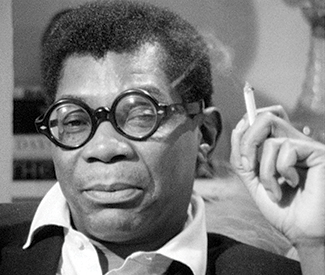
FILM At a moment when gay people and gay rights have never been more prominent — from the escalating numbers of states and countries permitting gay marriage to the controversy over Olympics-hosting Russia’s murky new anti-gay legislation — it’s hard to imagine the climate in which Portrait of Jason premiered in late 1967. The “new permissiveness” was just beginning to impact American cinema; soon there would be a small vogue of mainstream films addressing homosexuality in one way or another. But they would mostly be condescending, tragic, hostile and/or grotesquely comedic — you could argue there wasn’t a truly sympathetic Hollywood feature about a non-stereotypical gay relationship until 1982’s Making Love. (Which flopped, despite all publicity, and encouraged no imitations.)

Today it’s a common complaint that them perverts are too damn omnipresent in the news, on TV, everywhere — their heightened public profile somehow violating the “rights” of others to ignore or hate on them. But nearly half a century ago, Shirley Clarke’s documentary “portrait” of one rather flaming real-life personality — not just gay, but African American, too — seemed unprecedentedly exotic. No less than then-Supreme God of All Cinema (and supremely heterosexual) Ingmar Bergman called it “the most extraordinary film I’ve ever seen in my life … absolutely fascinating.” He probably found mankind’s first moon landing two years later less startling.

The latest in Milestone Films’ “Project Shirley” series of restored Clarke re-releases, Portrait of Jason can’t be experienced that way now. Any surviving exoticism is now related to the subject’s defining a certain pre-Stonewall camp persona, and the movie’s reflecting a 1960s cinema vérité style of which its director was a major proponent. Perhaps influenced by fellow New Yorker Andy Warhol’s early films, the setup couldn’t be simpler: instead of staring at the Empire State Building or somebody sleeping for X number of hours, we spend 12 hours in the company of Jason Holliday, née Aaron Payne. (He explains someone named Sabu in San Francisco during his “three, four, five years” there “was changing people’s names to suit their personality,” adding “San Francisco is a place to be created, believe me.”)

Or rather Clarke and her then-partner, actor Carl Lee, spend those hours — from 9 pm to 9 am — with Jason, while we get a 107-minute distillation. Nattily attired, waving a cigarette around while downing an epic lineup of cocktails, Jason is a natural performer who relishes this filmic showcase as “my moment.” No matter what, he says, he will now “have one beautiful something that is my own.”

At first Clarke and Lee simply let him riff, prompting him to speak calculated outrages they’ve probably already heard. (“What do you do for a living, Jason?” “I’m a … I’m a stone whore. And I’m not ashamed of it.”) He seems to be trying out material for a nightclub act that’s part Lenny Bruce, part snap diva. “I guess I’m a male bitch, because I have a tendency to go around and unglue people. I’ve spent so much of my time bein’ sexy I haven’t gotten anything else done. I’ve been balling from Maine to Mexico.” He shares anecdotes of working as a “houseboy” for rich white women during his in SF; he dons ladies’ hats and a feather boa to do imitations of Scarlett O’Hara, Miss Prissy, Katharine Hepburn, and Carmen Jones.

He’s indeed the life of his own party — increasingly smashed as wee hours encroach in Clarke’s Chelsea Hotel room — but there’s a certain desperation to this act that she and particularly Lee eventually pounce on. The exact nature of the two men’s relationship intrigues once Lee starts goading Jason to cut the “bullshit” and pony up some truths. “We know you’re a big con artist and you don’t really give a shit about nothin’ and nobody,” the off-camera Lee barks, later referencing some “dirty lies” Jason had allegedly spread about him.

By the time the former is calling the latter a “fuckin’ nasty bitch,” the film has become a queasy mix of exploitation and collusion. “Nervous and guilty and simple as I am,” Jason has a braggadocio that camouflages a self-loathing he’s just as willing to expose. When actual tears-of-a-clown are shed, the filmmakers seem cruel. Still, the “portrait” is incomplete — Clarke and Lee don’t press their subject to explicate the past spousal abuse, suicide attempt, and “nuthouse” and jail stays he drops into conversation as casually as he mentions a friendship with Miles Davis.

Two years later Yoko Ono and John Lennon would film the extremely disturbing Rape — 77 minutes of a camera crew silently, aggressively following an increasingly bewildered and panicked young woman around Manhattan, reducing her to a whimpering wreck. It was a human experiment in the name of art as striking as it was sadistic. While less traumatic, Portrait of Jason also stretches a very 1960s notion of cinema-as-angry-analyst’s-couch to uncomfortable lengths.

Clarke, who died in 1997 — one year before Jason — remains a fascinating, underappreciated figure who suffered all the consequences of being a stubbornly individual filmmaker in an era when women directors were rare and little-respected. (Not that that’s changed greatly since.) Switching from dance to movies in the ’50s, she earned an Oscar nomination for a 1960 short, then won one outright for a 1963 documentary about poet Robert Frost. Yet her career was constantly stymied, finally forcing her into academia. French director Agnès Varda’s 1969 curio Lions Love has her playing herself, a matter-of-fact New Yorker baffled equally by the Hollywood industry she’s trying to enter and by the upscale hippie ménage à trois antics of her hosts, Warhol star Viva and Hair co-creators Gerome Ragni and James Rado.


PORTRAIT OF JASON opens Fri/16 at the Roxie.

Midsummer mayhem

3

cheryl@sfbg.com

FILM It’s been a zzz summer at the multiplex. The number one movie of the year is Iron Man 3, a highly unmemorable blockbuster. (Quick: Who played the villain? Had to think about it for a second, didn’t you?) With the exception of The Heat and The Conjuring, most everything that’s grossed a crap-ton of dollars recently is either a sequel or based on some well-worn property.

Fear not, genre fans. This weekend, a quartet of films lurks just below the surface, lacking big-budget hype yet worthy of your attention. Among them are a chilly sci-fi epic, a high-octane cop thriller, a classic slab of Italian sleaze, and an eerily relatable (um, if you’re me) documentary about VHS fanatics.

Directed by Ecuador’s Sebastián Cordero (2004’s Crónicas), deep-space tale Europa Report benefits from its interesting international cast, including Michael Nyqvist (Mikael Blomkvist in the Swedish Girl With a Dragon Tattoo series); Romanian Anamaria Marinca (2007’s 4 Months, 3 Weeks and 2 Days); Bay Area-born Daniel Wu, who’s a megastar in Hong Kong; and South African Sharlto Copley, also in concurrent sci-fi release Elysium. Together, they comprise the bulk of a crew crammed into an elegant ship bound for Europa, a moon of Jupiter that may have water — and therefore, life — beneath its icy surface.

These journeys never end well, do they? As we’re told by grim-faced Dr. Unger (Embeth Davidtz), what we’re watching has been pieced together from “recently declassified footage” — and yes, that makes Europa Report yet another “found-footage” movie. By now, it’s a stale way to tell a story, though it’s mostly plausible in this case; time-stamped scenes are cut together from cameras mounted aboard the spacecraft. From the start, we know the mission is doomed. But even if its conclusion is a little abrupt and dissatisfying, at least Europa Report heaps on the claustrophobic atmosphere while rocketing toward the inevitable.

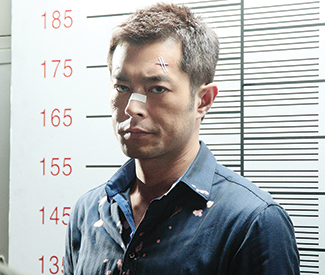
Far more unpredictable is the sleek, gloomy Drug War, the latest from Hong Kong’s Johnnie To — a director who needs no introduction for fans of his prolific output (2001’s Fulltime Killer, 2005’s Election, 2006’s Exiled, 2009’s Vengeance). Unlike To’s previous crime dramas, Drug War was shot in mainland China, where heavy-handed censors rule. According to the film’s press notes, To decided “nobody will disagree with the idea of arresting drug dealers,” particularly in a country fond of imposing death sentences for drug-related offenses. The tactic appears to have worked, since this thing’s dripping with vicious shootouts — even as it subtly points out China’s surveillance-state abundance of CCTV cameras, and examines how just far criminals will go to avoid those draconian punishments.

Timmy Choi (Louis Koo), for one, is terrified of execution. Busted for manufacturing meth after his factory explodes, Timmy runs up against Captain Zhang (Sun Honglei), a no-nonsense drug cop who reluctantly takes on a new informant with the goal of busting a kingpin higher up the cartel’s chain of command. Timmy’s a slippery character whose motivations remain murky right up until the last act; it’s all Zhang can do to keep up, which he does for the most part.

In one incredible sequence, the cop pretends to be Chang, a taciturn junkie with important connections, accompanying Timmy for a meeting with the flashy “Haha,” named for his booming, staccato laugh. With a quick wardrobe change and seconds to spare, Zhang then morphs into Haha to meet with the real Chang. In the process, tiny cameras are deployed, drugs are snorted, and loyalties are stretched razor-thin. It’s a tour de force — yet remarkably unforced — moment for both actor and director.

Back to censors for a minute, since their kind used notoriously brutal shears on the works of Italian horror legend Dario Argento during his late 1970s-early 80s heyday. With the advent of special-edition DVDs and the like, films like 1982’s Tenebre have finally been seen in all their glory. But how often do you get a chance to see Tenebre on 35mm? Thanks to Los Angeles’ Cinefamily, the film — more erotic-thriller giallo than standard spook show — will unfurl for one night only at the Roxie.

The movie follows the nightmarish exploits of American author Peter Neal (Tony Franciosa), who visits Rome to promote Tenebre, his latest murder mystery. It’s not long before a Neal-obsessed maniac starts dropping bodies (weapon of choice: straight razor; victims of choice: scantily clad women). Along the way, there’s a pulse-pounding Goblin soundtrack; a sultry supporting turn by Veronica Lario (as Peter Neal’s ex-wife — in real life, she’s in the process of divorcing Silvio Berlusconi); B-movie sensation John Saxon (as Neal’s agent) looking natty in a fedora; and all the spurting gore and bad dubbing Argento fans demand.

Argento isn’t explicitly mentioned by the subjects of Adjust Your Tracking: The Untold Story of the VHS Collector, opening Friday at the Balboa Theatre, but it’s a sure bet they appreciate his work. Dan M. Kinem and Levi Peretic’s documentary peeks into the tidy lairs of borderline hoarders (all horror and genre fans) who oversee their massive VHS collections with a mixture of pride, good-natured defensiveness, and culty spirit.

A few celebrities drop by (Troma’s Lloyd Kaufman admits he prefers DVDs “because of the extras”), but this is mostly regular-dude turf, with a home-video history lesson (“Blockbuster ruined it for everybody”) mixed into the nostalgia. High points include extended discussions of “VHS covers that lie to you,” as in, when box artwork promises wonders that aren’t actually in the film; and of Tales from the Quadead Zone, a (terrible) film so exquisitely rare it sparked an eBay bidding war and inspired at least one tattoo. *

EUROPA REPORT, DRUG WAR, and ADJUST YOUR TRACKING: THE UNTOLD STORY OF THE VHS COLLECTOR open Fri/16 in Bay Area theaters. TENEBRE screens Fri/16 at the Roxie.

Walmart fires Bay Area workers after strike

1

After working for nearly two years at Walmart in San Leandro, Dominic Ware said he’d witnessed too many co-workers struggle to make ends meet, and had felt disrespected for long enough. A co-worker recruited him to join Organization United for Respect at Walmart, or OURWalmart, a national group of Walmart associates organizing for better workplace conditions and pay.

“She couldn’t even pass the pen fast enough,” said Ware. Last October, he participated in the first mass-strike of American workers in Walmart’s history.

In May, Ware joined a hundred others in the longest Walmart workers’ strike yet, lasting from May 29 through June 8, to demand protection for strikes, livable wages, the option for full-time shifts, and respect in the workplace. After two weeks of striking, a legally protected activity for all workers, Ware went back to work. Things were normal at first. But in mid-July, he was fired.

Raymond Bravo, a maintenance associate at the Richmond Walmart, also joined Ware and other OURWalmart members on a caravan of striking workers to demonstrate outside Walmart’s corporate headquarters in Bentonville, Arkansas in May.

“I saw the lack of respect and favoritism,” said Bravo. “I wanted to join because I had no voice at Walmart, and I believe we should stand together.” Like Ware, Bravo returned to the job after Arkansas with little fuss.

“My next scheduled day was June 12, and nothing happened,” said Bravo. But two weeks down the line, Walmart began coaching associates for absences, and changing his schedule.

“I knew my days were numbered,” said Bravo. “I had already been disciplined for striking last year, and I’d heard from other associates that their hours were cut. That was kind of fishy.”

Roughly two weeks after returning, Bravo was fired. It appears that Ware and Bravo’s terminations weren’t isolated incidents. Around 60 Walmart associates across the country were disciplined or terminated after participating in the strike, according to OURWalmart. Since termination in retaliation for striking activity is illegal under the National Labor Relations Act, both Ware and Bravo plan to embark in legal battles to get their jobs back.

Walmart may rightfully fire an individual employee after he violates the company’s absence policy by missing work, Walmart spokesman Dan Fogleman told the Guardian. In Bravo’s case, “the decision has nothing to do with a specific protest or activity of that nature,” said Fogleman. “We have a strict policy against retaliation.”

Fogelman claims the OURWalmart demonstrations were not legitimate strikes, but “made for TV” publicity stunts for the union that has leant support for OURWalmart, the United Food and Commercial Workers. Walmart made a similar claim in response to the October 2012 strikes. The nation’s largest private employer, Walmart employs roughly 1.4 million American workers, all non-unionized.

“Walmart didn’t want to recognize a strike as a strike,” said Ware. “But they are playing with people’s lives. Those who are working 45 hours a week, that’s not a lot, but that’s all they have, and if you take that away, they’ll lose everything they have.”

Shareable, smearable

25

After writing critically about problems in the business models of so-called “shareable economy” companies in last week’s issue — including our cover story on Airbnb and other companies that facilitate short-term home rentals (“Into thin air“) and a story on the rideshare company Lyft (“Driven to take risks“) — the topic continued to dominate the sfbg.com Politics blog, with fresh posts and lots of reader comments:

AIRBNB PILE-ON

The excellent bilingual newspaper El Tecolote covered some of the same ground we did in its Aug. 1 cover story, “Unregulated Rental Business Takes Over Housing,” focused on how Airbnb is contributing to gentrification and displacement in the Mission District.

Reporter Jackson Ly found a couple that turned a rent-controlled apartment on 24th St. into a $249 per month de facto hotel room, booking it for 24 nights in August and making $5,976 in just one month, on top of the $3,069 they’re making in August renting out the guest room in the apartment where they actually live for $99 per night.

“It’s cheating the people that pay taxes,” Maria, who lives in the unit below this couple’s investment apartment and is tired of the rotating stream of tourists in her building, told the newspaper.

I got ahold of El Tecolote Managing Editor Iñaki Fdez. de Retana, who said that housing issues like this one are extremely important to the Latino community that lives in the Mission, and he’s been surprised that Mayor Ed Lee has been unwilling to address the impacts of Airbnb and other tech community contributors to the problem.

“It is very important,” he told us, noting that visiting European tourists are changing the character of the neighborhood. “In particular on 24th Street, which was once seen as the heart of the Mission, it’s changing overnight and [Airbnb and other housing rental websites] is a big part of that.” (Steven T. Jones)


UBER UGLY CRASH

Uber’s policy on insuring its drivers will soon be taken for a test drive, as the company that runs the mobile app-based ride requesting service and a driver were served with a court summons last week from a woman severely injured after a crash near a San Francisco intersection.

Those insurance policies were said to meet brand new regulatory requirements on rideshare services introduced by the California Public Utilities Commission on July 30, which was meant to solve the longtime regulatory battle between rideshare services and local governments.

The plaintiff in the suit, Claire Farhbach, was a bystander, not a customer, and that unique twist in the injury suit has experts from the taxi industry waiting to see if Uber will step up to the plate to pay for Farhbach’s injuries, or if Uber will leave driver Djamol Gafurov on the hook for the bill.

Fahrbach was walking up Divisadero street near Hayes at quarter of midnight March 12 when Gafurov’s black town car, operating as a private taxi, collided with another car on Divisadero while turning left. One of the cars then collided with a fire hydrant, and in the words of the civil suit, “this impact caused the fire hydrant to be violently sheared from its base and propelled through the air a number of feet northbound…when the fire hydrant struck (Farhbach) with a tremendous amount of force.”

Gafurov’s private taxi was operating as a “partner” of Uber, which is how the company defines its relationship to the network of drivers on its website. No private taxis or drivers are considered to be employees of Uber, as the company has repeatedly maintained, claiming that the drivers, and their actions, are not its responsibility.

Uber spokesperson Andrew Noyes told us repeatedly that drivers are not employees of the rideshare company: “Our legal team took a look at the files you sent. This is not an ‘Uber’ driver, they’re not employed by us. They’re employed by their licensed and insured limousine company.” (Joe Fitzgerald)


MAKING CABS BETTER

For all the (justified) grumbling about the business models of ridesharing services like Lyft and Uber, the so-called ridesharing revolution may prove to be a catalyst for a taxi industry overhaul.

“We’re adding hundreds more taxis, and our board has approved regulations for each vehicle to provide real-time locational information,” San Francisco Municipal Transportation Agency spokesperson Paul Rose told us.

“One of our goals is to move forward with making the data available to our customers to hail a cab with an app,” Rose added, referencing a plan unveiled by the transit agency several weeks ago. Faced with stiff competition from random vehicles adorned with garish pink mustaches, the taxi industry is taking a stab at evolution, or at least imitation.

To be a cab driver right now, paying off the pricey medallion they must purchase in order to operate while oblivious new transplants rake in the cash without following the same set of rules, must be infuriating.

At the same time, let’s be honest here: There’s a reason people are ditching conventional cabs and climbing into cars with random strangers who may be beckoned with the tap of a smartphone. And it has nothing to do with passengers’ sentiments about government regulation or newly minted tech millionaires.

The taxi industry lags far behind the lightning-speed reality many Bay Area residents have come to inhabit, but if it weren’t for the competition, they might not have any incentive to change.

Rideshare services might be your quintessential rogue tech companies backed by nauseating sums of venture capital, but at the end of the day, people also want taxi service that does not suck. (Rebecca Bowe)

Compromises deliver results

5

OPINION When Guardian Editor Steven T. Jones asked me to respond to his recent columns (“Chiu becomes City Hall’s go-to guy for solving tough problems“, 7/23/13; “Chiu: Centrist Compromiser, Effective Legislator, or Both,” 7/30/13), I reflected on how our Board of Supervisors’ 2013 accomplishments exemplifies the lessons and rewards of working together.

After several decades of intense fights between TIC owners and tenants, I asked both sides to sit down, share perspectives, and brainstorm beyond the impasse. To our surprise, when TIC owners shared their struggles and offered to pay a fee to condo convert, tenant advocates agreed to finally support conversions as long as their core principle of preventing evictions — which I strongly shared — was addressed.

After a decade of failed CEQA reform attempts, the pundits predicted an epic battle between developers and neighbors this year. The breakthrough for unanimous support occurred when both sides acknowledged to me that real neighborhood input and predictability in the planning process are not mutually exclusive, and progressive leaders wanted to ensure that pedestrian, bike, affordable housing, and public projects are not delayed.

After years of controversy, CPMC/Sutter and the coalition of dozens of community-based organizations deadlocked over how to rebuild the Cathedral Hill and St. Luke’s hospital campuses. After exposing financial documents challenging the original proposal, I worked with colleagues for six months at a mediation table that refashioned a CPMC plan to rebuild those 21st century hospitals the right way.

While each story is unique, what all of these accomplishments — along with recently balanced budgets, business tax reform, and pension reform — have in common is hard work and extreme patience by dedicated San Franciscans seeking creative solutions.

As Board President, my job is to build consensus among our diverse supervisors and deliver results. When I first came to City Hall, I asked my colleagues to move beyond past politics that had magnified differences. I am proud that today’s Board has the highest approval ratings in a decade, as we do more together working through our differences.

At the negotiation table, it’s essential to stand firm on core values. My vision for San Francisco has been of a city that protects tenants and families; creates good jobs across the economic spectrum; offers high quality public services with Muni, our schools, and our parks; and embraces our diversity, our immigrants, our seniors, and those who have been historically disenfranchised.

When we can’t always find creative win-wins, it’s still important to fight for what’s right. I’ve taken my political lumps championing the right of noncitizen parents to vote in school board elections, standing up for workers requesting family-friendly workplaces, and taking on a Yellow Pages industry dumping millions of phone books on our streets.

When I hear criticisms of “compromise,” I reflect that the most important federal legislation in recent years — from the Civil Rights Act to the Affordable Care Act, Wall Street reform to comprehensive immigration reform — were also criticized as “compromises.” Critics often forget the big picture: by incorporating different views, reforms actually get done, and if we wait forever for the perfect policy, people will suffer.

San Franciscans are at our best when we unite around shared values — from marriage equality to universal health care to environmental protections. We still have plenty of challenges: housing affordability, struggling workforces, family flight, public transit.

Let’s continue to work together to show the rest of the country how our city can govern.

David Chiu, who represents District 3 (North Beach, Chinatown, Nob Hill), is serving his second term as president of the Board of Supervisors.

Dream deferred

3

news@sfbg.com

Nearly 50 years ago, hundreds of thousands of people marched at our nation’s capital to demand racial equality and respect. And half a century later, people are still fighting for that same cause.

In July, when George Zimmerman was found not guilty of any crimes for fatally shooting 17-year-old Trayvon Martin, racial tensions flared in the Bay Area and abroad. Martin’s death brought the issue of racial profiling to the surface, energizing a new generation of activists just in time for Aug. 28, the 50th anniversary of the Great March on Washington and Martin Luther King Jr.’s “I Have a Dream” speech.

Rev. Arnold Townsend, vice president of San Francisco’s chapter of the National Association for the Advancement of Colored People, is a veteran of the Civil Rights Movement. Townsend told the Guardian that Martin’s death triggered memories of Emmett Till, a 14-year-old African-American who was lynched in 1955 for flirting with a white woman.

Townsend was 12 when Till was murdered, and he says seeing the pictures of Till’s disfigured body in a casket posted in Jet magazine was what inspired him to be actively involved in the movement for racial justice.

“What happens in the world finds ways of bringing people together. What happened to Trayvon Martin isn’t so different from what happened to Emmett Till,” Townsend told us. “I knew that people could come for my father, my uncle, but from this I learned that they could come for me.”

The Zimmerman verdict resulted in large demonstrations of anger and outrage all across the country, including Oakland and San Francisco. The verdict inspired Zack Aslanian-Williams, a 24-year-old San Francisco resident, and others to join the NAACP and become activists.

“There is something about the Trayvon Martin case that definitely impacted my willingness to get involved,” Aslanian-Williams told us. “The case caught fire, and I have a sense of urgency to get involved in any way I can.”

In the wake of the verdict, many new and veteran activists targeted National Night Out, a neighborhood watch program event that African American activists fear fosters the kind of racist vigilantism they say motivated Zimmerman to kill Martin.

Jesse Strauss and more than a dozen other Oakland residents fanned out all over Oakland during the Aug. 6 event, visiting dozens block parties in an attempt to educate people as to why they should be wary of police and wannabe cops.

“We’re doing this to build community and talk to people about real safety,” Strauss said. “I think that the way that police function has been steady, and from that we have so many black and brown people locked up. This is a reflection of the struggles that have been going on and this shows that racism has not stopped at all.”

Rev. Amos Brown, president of the San Francisco NAACP chapter, said he wants to see people come together around racial equality and he fears the targeting of neighborhood watch programs may hinder that goal.

“We don’t need extreme provocateurs,” Brown said of anti-police activists. “The movement is like an airplane, and if one wing is too heavy, the whole thing goes down”

But Brown is just as critical of police, saying the 52 hours of sensitivity training that all personnel at San Francisco Police Department have to undergo isn’t enough.

“If relations were good between them, we would not have numerous calls coming in from people who were profiled by police, immediately being asked if they were on parole when they were approached,” Brown said.

Many San Franciscans are sensitive to the racial profiling issue. Last year, when Mayor Ed Lee proposed a stop-and-frisk policy to combat the proliferation of guns — despite studies showing a similar policy in New York City disproportionately targets African Americans — the community rose up and forced Lee to abandon the idea.

“Being a person of color who has been racially profiled, I couldn’t stand back and let this happen,” says Theo Ellington, president of Black Young Democrats of San Francisco, which organized people against the idea.

But activists say it’s not enough to play good defense. Fifty years after the strong show of support for racial justice, there is still much progress to be made.

“We need to keep pushing forward,” Townsend said. “Success is not measured by what you have done, it’s measured by what you’re going to do next.”

On Aug. 24, the San Francisco chapter of the NAACP plans to head over to Mosswood Park in Oakland for a rally commemorating the march put on by the Coalition of Black Trade Unionists.

The University of San Francisco will also be hosting an event on Aug. 20 to discuss the progress and setbacks in the march toward racial equality since the 1960s. Speakers at the event will include Clarence B. Jones, Martin Luther King Jr.’s former lawyer and adviser, and Mayor Ed Lee.

“It’s important to pause and see what’s happened in the past 50 years. It is the 50th anniversary of the dream and it is important to recognize that there’s been some unraveling of the dream,” USF Vice Provost Mary Wardell-Ghiraduzzi said.

Ellington said he’s still waiting for his own generation’s Great March on Washington. “The death of Trayvon Martin was a wakeup call. It proved that my life, as a person of color, is not as valuable as my counterparts,” Ellington said. “We have to be the ones to turn the tide. There’s still a lot more work to do to fulfill Martin Luther King Jr.’s dream. We are still fighting the same social ills we faced 50 years ago.”

The time is now to fix Muni

11

EDITORIAL San Franciscans love to bash Muni, but this city would be a gridlocked nightmare without it. Despite its many flaws, Muni does a pretty good job at getting people around the city, particularly for a system that has been plagued by chronic underfunding and which is at capacity during peak hours.

Yet in a growing city that has ambitions to grow even faster — pushed by regional motivators such as Plan Bay Area and pulled by the grand designs of powerful capitalists and their neoliberal political enablers — Muni is well on the way to earning all the scorn that critics can heap on it and becoming the self-fulfilling prophecy of dystopian dysfunction.

Into this critical moment comes the city’s Transit Effectiveness Project and its promise to reduce travel times by 20 percent on busy corridors and to improve reliability and service to underserved areas such as the Excelsior. The TEP’s 793-page environmental impact report dropped on the city with a barely noticed thud last month, and it will be the subject of an informational hearing at the Planning Commission this week (Thu/15) and a series of community hearings in the weeks that follow, with public comments due into the Planning Department by Sept. 17.

So now is the time to get serious about addressing long-simmering conflicts between the Muni’s needs and the desires of private automobile drivers, which are often in conflict on roadways where they’re forced to share space. And on a deeper level, this city must resolve the conflict between the need to substantially increase investment in vital public infrastructure and the destructive fantasies of anti-government ideologues who want a functional city but don’t want to pay for it or be inconvenienced.

Only then can we really delve into the devilish details of the TEP, with tough-to-resolve conflicts between reducing stops to speed service and the needs of the elderly and disabled, whether to limit cycling in certain stretches, how to slow traffic and limit parking without triggering motorist backlash, and how to quickly expand capacity again after you’ve improved the system and encouraged more people to use it.

But these are solvable problems if San Franciscans of all stripes acknowledge the realities of a growing city with a finite capacity to accommodate cars and an infinite need to improve Muni and the safety of pedestrians, laudable goals of the TEP and its new EIR, which is designed to smooth the way for many transit improvement projects to come.

We won’t get there by pandering to people who are pissed off about efforts to regulate street parking in their neighborhoods (and we certainly won’t get there if certain supervisors now making rumblings about taking parking regulation back from the SFMTA get their way). It’s time to truly become the transit-first city we claim to be, and that process starts now.


Grow some more brain wrinkles at these cool campuses

2


BEYOND BOOKISH

For anyone who interpreted Amazon’s Kindle as a harbinger of doom, a nonprofit celebrating the production, artistry, and importance of books in an increasingly digital world might be just the support group you need. There’s something for everybody at the San Francisco Center for the Book, which offers 300 classes annually ranging from the basic, such as Introduction to Letterpress Printing, to the obscure, like Miniature Variations on Exposed-Spine Sewings. Take a single-session workshop or enroll in one of two certificate programs offered in printing and bookbinding.

San Francisco Center for the Book, 375 Rhode Island Street, SF. Dates and prices vary. www.sfcb.org


SCHOOL, CURRICULUM-FREE

The Public School, originally launched in LA, is an online platform where anyone can propose a class topic, connect with interested locals, and organize the curriculum, meeting times, and location. This year Bay Area activists and scholars opened up a space in 2141 Broadway, Oakl., for Public School classes and working groups. Classes are free and open to all, and some convene outside of the Oakland space. Recent classes include readings of Spinoza, Hegel, Plato’s Symposium, and the Bible, plus cinema, contemporary art, philosophy, radical politics, queer feminism, romance languages, and yoga.

Runs seven days a week, free. Bay Area Public School, 2141 Broadway, Oakl. www.thepublicschool.org


HEY, POINDEXTER

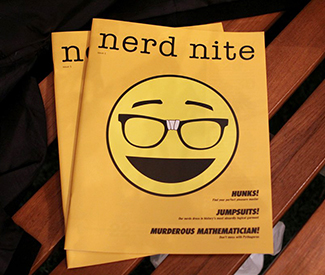
Nerd Nite is held the third Wednesday of every month at Rickshaw Stop in San Francisco. Organizers describe it as being “like the Discovery Channel … with beer!” Throughout the night, speakers deliver brief, fun-yet-informative presentations across all disciplines, which may involve bands, acrobats, trivia, and other shenanigans. Nerd Nite No. 39 will cover “the secret lives of jock brains” and other highly scientific-sounding talks. You might learn a lot from the geeks at Nerd Nite, whose slogan is “be there and be square.”

Third Wednesdays. Doors at 7pm, show at 8pm. Rickshaw Stop, 155 Fell, SF. $8, sf.nerdnite.com.


EGGS HARD-TO-EASY

If you thought you already knew how to cook an egg, think again. Among the many classes offered by foodie education hub 18 Reasons is “Eggs: Elegant + Economical.” Learn to poach, emulsify, bake, braise and revel in the full spectrum of hard-to-easy (in terms of runniness and difficulty level) scrambling and frying techniques. This class is on the pricier end but 18 Reasons, a self-described community food space, occasionally hosts more affordable courses and also operates a free six-week cooking class series for low-income families.

Mondays through August 26, 6-9pm. 18 Reasons, 3674 18th St., SF. $75, www.18reasons.org


FROM TAROT TO TIBETAN HEALING

Depending on your feelings about new-age style spirituality, you just might find the workshops on offer at the California Institute for Integral Studies to be intriguing. The wisdom of the tarot as it relates to the psychological implications of symbols? Psychological wellness through the mastery of “timelessness”? Tibetan sound healing? Vedic chants? Practicing the path of yoga in daily life? The workshops range from free to a few hundred dollars, but if cultivating a deep sense of inner peace is your thing, consider giving it all a spin.

Dates, times, and prices vary. CIIS, 1453 Mission, SF. www.ciis.edu>.

Boxes in space

38

rebecca@sfbg.com

On a recent weeknight, a group of volunteers met up at a warehouse space in SoMa to hash out plans for The Learning Shelter, a project that has attracted hefty donations and enthusiastic volunteers but lacks a permanent home base. The brainchild of Marc Roth, a maker-movement enthusiast, the idea is to give homeless people a boost toward a brighter future by teaching them how to make things with 3D printers, and other useful skills.

Eight large shipping containers, on loan from supportive organizations, are currently sitting in a gated lot adjacent to the 14,000-square-foot warehouse, which housed a community-based project called [freespace] in June and July.

Roth and his core group of volunteers have plans to retrofit each container to be a “shop in a box” — a mobile classroom, outfitted with whiteboards and enough juice to power the Cubes (a brand name for 3-D printers), CNC routers, laser cutters, and other maker toys. The vision is to use those retrofitted shipping containers to lead three-month intensives in technical skill instruction for up to 30 adult students without homes at a time.

Roth is currently working at a laser company startup, but it wasn’t long ago that he was among his project’s target population. He moved to San Francisco from Las Vegas in September of 2011 and slept in his car (which was “part of the plan,” he explained) while struggling to piece together a new life in the Bay Area.

After one job opportunity fell through, he landed a gig cooking pizzas on Treasure Island. But the long shifts kept him on his feet all day, and aggravated a health condition that causes nerve damage. With few options and a disability sending his health into a downward spiral, it was only a matter of months before he hit rock bottom and checked into a homeless shelter run by the St. Vincent de Paul Society.

It was near 5th and Bryant streets in SoMa. Just a few blocks away, Roth discovered TechShop, a do-it-yourself community workshop that describes itself as being “on a mission to democratize access to the tools of innovation.” An atypical member of the homeless population, Roth had worked as a programmer in the past, and had an itch to learn laser cutting. So he shelled out some of his last dollars for a TechShop membership.

At first, he was grateful just to have found a place where he could tinker for about 10 hours a day while sitting down, since his health problems were still sapping his energy. “I’d never heard of any of these machines,” Roth said. But soon, he was voraciously teaching himself to use them. “When they showed me what a water jet was and what it could do, the hair on the back of my neck stood up,” he said of the device that uses high-pressure water for cutting. “This was Disneyland, multiplied.”

Today, Roth is housed (for now, but he’s still seeking a permanent place to rent) and teaches multiple workshops at TechShop. Yet he’s acutely aware that there are others who were under the roof of St. Vincent with him who still wake up every day to a harsh and destitute life on the streets.

During his time there, he said he befriended several people and got a sense of their innate curiosity and creativity. “I was dragging people with me to the TechShop,” Roth recalled. “In my little group of five to six people, we had a couple ideas for inventions.” With the skills that could be mastered at the community workshop, “they could actually go out and get a part-time job.”


DIY BOOTSTRAPS

Of course, there are obvious barriers preventing the vast majority of San Francisco’s homeless population from following Roth’s example of just going out there and doing-it-yourself.

People who lack income generally cannot afford training programs to learn new skills. Nor is shelter ever a sure bet: Homeless advocates have reported that it can take eight hours of waiting around in line just to reserve a shelter bed through the lottery system, making it difficult even for would-be job hunters to devote time to much else — let alone the challenges presented by addiction, behavioral health problems, or a lack of access to nutritious food or bathing facilities.

Roth’s vision is to combine temporary housing with a 90-day training program, so that up to 30 individuals can participate in intensive trainings in how to use maker tools. His plan is to partner with homeless service providers who already offer basic computer-training courses, and enlist their help in screening for candidates who’ve demonstrated an interest in technical skills and stand to benefit the most.

To date, Roth has collected several Cubes donated by 3D Systems, eight shipping containers loaned by ReAllocate and Ekology, and struck a partnership with a similar project that seeks to convert retired Muni buses to bathing facilities for the homeless.

But things are still coming together, and the looming question (“the elephant in the room,” as one meeting participant put it) is location. The use of shipping containers as the basis for classroom design is intentional and a key element of the plan, Roth said, because the only surefire guarantee for viability in astronomically pricey San Francisco is to build something that can be taken apart and transported somewhere else if necessary. When economic barriers prevent cash-poor idealists from carving out a physical space, they find ways to adapt.

High on Roth’s wish list is finding a church to partner with, since he believes religious establishments can more easily gain residential permitting. And it almost goes without saying that there is a crowd-funding video pitch in his future.

“When I moved into the homeless shelter,” Roth said, “I thought it would be my secret until I died.”

Now, in a city where the idea of harnessing a powerful narrative to fuel crowd-funding campaigns is practically a way of life in some circles, he’s relating that experience to anyone willing to listen. Venture Beat, a magazine that chronicles tech culture, profiled Roth in an article that ran earlier this year (“Homeless to Hacker,” May 16, 2013).

Ilana Lipsett, an organizer who helped launch [freespace], read about Roth’s project and sent the article around to her co-conspirators, saying it seemed to complement their endeavor perfectly. Soon Roth was dubbed a “[freespace] fellow,” his shipping containers had found a home in the lot next door, and one of [freespace]’s final acts before its lease ran out at the end of July was to host a hackathon for The Learning Shelter.


BIG TECH, LITTLE TECH

The buzzy word hackathon is sometimes used to refer to different things; in this case, it was an extended brainstorming session organized over the Internet. Some 40 volunteers attended that event one July weekend, and wound up forming committees dedicated to tasks like promotion, workshop instruction, or soliciting donations.

The foundational reason for [freespace]’s existence was to host a series of hackathons under the umbrella theme “civic hacking,” to inspire a kind of extended collaboration-fest that would produce projects to benefit civic life in some way.

Its doors were open to all, “and you had people who had lived on the street interacting with people who worked in tech companies,” Lipsett recalled of some events hosted at the 14,000-square-foot warehouse space.

Can something with staying power emerge from this short-lived experiment? The concept behind [freespace] was to show what could be accomplished if a dedicated space was provided, and permission granted, for the civic hackers to run wild with their ideas. Emerging from the 60-day experiment was a community garden, a bike-sharing project, a plethora of visual art and a core of volunteers committed to making The Learning Shelter a reality.

[Freespace] came about when the landlords who own the spacious warehouse, a former sewing factory, agreed to rent it to the core group of volunteers for $1 during the month of June. (For the month of July, the tenants crowd-funded $24,000 and used $10,000 of it to pay the rent.) But now, [freespace] is technically homeless, because the space isn’t really free. In fact, the 14,000-square-foot SoMa warehouse is downright unaffordable to the group of makers and idealists who fervently believe they can better the lives of homeless people by teaching them skills that are in demand in the Bay Area’s changing economy. Lipsett says [freespace] will continue in some form, and Roth is still looking for collaborators to help elevate The Learning Shelter, but it’s struggle in a city where the economic forces unleashed by big tech is making things harder for little tech.

Drawn together

1

marke@sfbg.com

CAREERS AND ED Longtime Bay Area comics superhero Justin Hall basically wrote the textbook on LGBT comics-as-artform (No Straight Lines: Four Decades of Queer Comics, Fantagraphics, 2011) and just came back from a trip to Southeast Asia, where he taught Buddhist monks to express themselves via comic strips.

So when the California College of the Arts launched its new MFA program in comics, Hall was a natural pick to be among the first professors to teach the art, craft, and history of graphic storytelling on a graduate level. The two-year (with summer sessions) 60-student, low-residency program features classes, workshops, talks, and mentorship opportunities designed to immerse students in comics and begin to build an academic base for their study. It looks really cool.

SFBG How do you form a teaching curriculum for something like comics? 

Justin Hall I teach the History and Cultural Impact class during the program’s first summer session. It’s a pretty intense class; for three hours a day I give lectures on the artistic and political history and cultural diversity of the art form, and hold critical discussions on selected readings.

We cover everything from the remarkable rise of the comic strip in the early American newspapers; to the explosion of manga in post-WWII Japan; to the Comics Code Authority and how it wiped out the majority of American romance, horror, and crime comics in the 1950s; to the reimagining of the superhero in the Silver Age; to the development of the competing “clean line” and “comic dynamic” styles in Franco-Belgian comics; to the outrageous work of the underground comix creators, many of them who based here in San Francisco.

I’ve taught some great undergraduate comics classes over the years, but the graduate students are engaged on a different level. I can lecture for hours on the subversive aspects of Wonder Woman, the influences of Japanese woodblocks on Tintin comics, and the artistic legacy of Little Nemo in Slumberland, and their brains don’t melt. They just ask for more. I love it! It’s a slice of geek heaven.

SFBG What’s the homework like? 

JH Over the course of the two years and three Julys, the students will have the majority of work finished on a book-length graphic novel or comics collection, which they can then self-publish on the web or in print, or take to publishers. That’s in addition to individual workshop and online assignments.

SFBG What kind of career opportunities are there for graduates who aren’t immediately contracted to Marvel? 

JH We certainly hope that our graduates find success as creators of comics and graphic novels. There is an exciting expansion of material happening right now in North America, moving beyond the traditional superhero stories and into every genre. While comics are certainly no get-rich-quick scheme, they can allow creators to develop their story ideas with complete control, which can result in a property like The Walking Dead.

Outside of the traditional comic book market, book publishers are now interested in graphic novels, as evinced by the success of works like Alison Bechdel’s bestselling Fun Home. The internet is opening up new territories of creative and professional expansion;

we’re also going to see comics academia snowball, and our graduates will be poised to get those teaching jobs. Comics classes prove extremely popular across the board at high schools, community centers, colleges, and universities, and I have no doubt we’ll see more programs like CCA’s pop up.

Finally, the skills developed at the MFA in Comics don’t just apply to comics themselves; after all, comics require a complex toolbox of writing, illustration, design, calligraphy, color theory, etc. Ultimately, what we’re teaching is how to develop narrative in both verbal and visual ways, and those skills will prove extremely useful in a world that increasingly blends the two. I imagine many of our graduates will wind up in related fields such as animation, advertising, book art, and design, but with a unique perspective on storytelling and communication.

Our plan ends, of course, with comics conquering the world!

For more info, see www.cca.edu/academics/graduate/comics


Tales from the tracks

83

news@sfbg.com

BART’s trains will keep running, for now, after a San Francisco Superior Court judge ordered the 60-day cooling-off period that Gov. Jerry Brown was angling for last week to address BART’s labor contract impasse. The injunction is in effect until Oct. 10, blocking any strike or lockout until then.

A report by the Bay Area Council said that the four-day strike in early July cost the Bay Area $73 million a day. That estimate was also a conservative one, according to a report put together by a special investigative board convened by Brown to look into the brinkmanship between BART workers and management.

“All parties agree that the major issues of the negotiations remain unresolved, including wages, health benefits, pensions contributions, and workplace safety,” the Aug. 8 report said.

Aside from the nitty gritty of the contracts, the two parties can’t even agree on math. The report found that the “parties do not agree on the magnitude of the gap in their respective economic proposals,” and that they are between $56 and $62 million apart on their forecasts of district finances for the next three years.

Management’s biggest concerns are still capital investments. Last year, BART approved a contract for 410 new cars, at a cost of about $2.2 million per car. The union’s proposals leave little room for capital improvements, BART management said at the Aug. 8 investigatory hearing.

But the unions say that BART is financially healthy and can offer a decent contract to workers. Out of a budget of $1.5 billion, union officials say payroll for their members totals about $200 million.

The unions and management will now have two months to cool off. But will that help along their negotiations? SEIU Local 1021, which represents engineers and custodial workers, doesn’t seem to think so.

“We have bargained unsuccessfully with this employer from May 13 to June 30, 2013 with no true indication from the district that it intended to reach an agreement,” the unions wrote in a letter to the investigative board. “We have no reason to believe that if a 60 day cooling off period were created, we would not be standing then on the precipice of another work stoppage without an agreement.”

Meanwhile, to put a human face on a labor standoff that has provoked sometimes nasty reactions from the public, we ran a couple profiles of BART workers on the SFBG.com Politics blog last week. The response was so passionate and overwhelming, we decided to run them in the paper as well:


ROBERT BRIGHT

First we met Robert Earl Bright, a 47-year-old transit vehicle mechanic at the Hayward yards, where he’s been for three years. BART trains seem tame compared to the machines he used to work with, starting out as an Air Force mechanic working on cargo planes.

It’s that experience he draws from when he said BART’s policies are becoming increasingly dangerous.

Bright is tall but soft-spoken, and while we sat at a bench in a courtyard at Lake Merritt BART station, he talked about the shortcuts BART has taken lately, and how overtime and consolidation are bad practices for everyone involved.

There used to be specific workers called Power & Way controllers who looked out for workers on the train tracks and made sure they were safe, he said, but those responsibilities were consolidated into a separate train controller position. Since then, Bright saw the death of a colleague, a mechanic who switched from a graveyard shift to a day shift and was hit by an oncoming train.

Only after the death did BART take steps to ensure parts of the track where there was less clearance safe from trains were marked, he said.

“The problem is BART seems to wait until someone gets killed until they want to do something about it,” he said.

Bright is a new grandfather. He helps support his daughter and her two toddlers, and he supports his older brother who suffers from dementia. Bright has a home that his fiancée bought, but is “upside-down,” as he says, because of a predatory loan.

He’s one of the lucky ones though, as the military pays for his health care, and the negotiations don’t impact him as far as that goes. But he does worry about his pension, and thinks he may have to cut back on supporting his elderly brother and his grandchildren. Even with those cutbacks in his life, he’ll likely have to look for a part-time job as a car mechanic, he said.

While contemplating that future, his four-hour daily commute, and the new expectations BART asked of his crew to repair more cars in less time, he started to develop an ulcer.

“They’re short on people, and it’s cheaper for the managers to pay for overtime than to pay for another person,” he said. The stress pressed on him and one day at work he grew dizzy and collapsed. That’s when he started to be a little more Zen about what BART asked of him. But he still said it’s not right.

“Our shop is a mod [modification] shop, but we got tasked with doing preventive maintenance. Our shop isn’t set up for that,” he said. And that means workers who aren’t trained for that particular job are pushed to fix up cars when normally they’re doing an entirely different job. That can be dangerous, he said.

“We have to make sure that those trains not only run, we also have to make sure they’re safe,” Bright said. “Something could happen, like a panel popping off. It touches the third rail, it could catch on fire. If we could miss something… it could cause a derailment.”

As far as Bright goes, he said he’s seeing more people working overtime at the request of managers, working longer hours that could lead to unsafe conditions — not just for the mechanics, but for the people who ride BART every day.


PHYLLIS ALEXANDER

Phyllis Alexander has been with BART for 16 years in systems service, which she said basically means, “cleaning, cleaning, cleaning.”

“Wherever they need me, that’s what I do,” she said.

Alexander often starts her days cleaning the elevators and escalators at Powell Street Station, and if you’ve been reading the news lately, you know what that means.

She doesn’t mince words about it: “I clean the urine and the feces out of the elevators and make sure it’s clean and smelling good for the patrons.”

But Alexander doesn’t hold it against the homeless. When she first started at BART, she had little contact with them. But over the years, she’s made good friends out of some of the homeless at Powell and 16th Street stations, and the latter is where she sat and told her story.

“As the years passed, it got worse. People living in their cars on the streets, in their doorways. I’ve met a lot of wonderful homeless people, wonderful people,” she said. And as the years went by, it got harder for the cleaning crew, too. She’s one of two systems service folk who take care of Powell Street Station at any one time.

“Sometimes it can be tough, it can get hectic, but we get it done. It’s hecka huge, and there’s only two of us, but we have to do the best we can do.”

But she keeps with it for herself and her daughter.

Her daughter just finished medical school and is still living with her. Alexander makes about $52,000 a year, she said, and couldn’t figure out major cuts she’d make in her lifestyle to make room for paying more into her pension or health care.

“It would hurt me,” she said. She said that though people in the Bay Area demonize BART workers for wanting a raise, she feels it’s simply been too long since they’ve had one.

“I think I haven’t gotten a raise in two contracts. It’s been like seven or eight years,” she said.

Devoutly religious, ultimately she keeps faith that the workers will prevail in negotiations.

“(God) is going to bring this through,” she said. “This thing with management, it’s going to be all right.”


For the Record: Clearing up misinformation about BART workers


HEALTHCARE

BART workers pay only $92 a month into their health care. Right? Wrong. “That doesn’t tell the full story,” said Vincent Harrington, a lawyer representing the unions at the negotiating table. “These workers contributed 1.627 percent of their wages into a fund to cover not only the ongoing health care of active employees, but also the retirees.”

That brings the total to about $180 per person, he said, with a caveat. Some time ago, employer-provided health care was capped. “Additional (healthcare) costs beyond that cap would be on the workers and their families, not on BART,” he said.


PENSIONS

It’s true that BART workers don’t contribute to their pensions, but the entity responsible for that is BART management. In 1980, BART made the proposal to pay employee contributions to pensions in exchange for wage concessions from BART workers. The unions recently proposed to contribute 7 percent of their pension benefits, with wage increases of 6.5 percent to offset that. BART management said they’d agree, if the wage increase was lowered to 0.5 percent instead.


WAGES VERSUS COST

A database constructed by the San Jose Mercury News lists a BART employee’s full cost to the taxpayer — often at around $100,000. This is their “cost” to BART, not the wages they take home, a common mistake regularly made by angry online commenters. All employees everywhere, private or public sector, have a cost to their employer past their base salary.

According to Intuit.com, a web resource for small businesses, business owners should consider that each employee they hire will cost twice the amount of their wages. This is normal stuff, people. It’s wrong, and not factually significant, to demonize BART workers for costing more than their salaries.


OVERTIME

BART employees have also been villainized for working overtime. But these employees don’t necessarily want to work overtime at all, and often do it at the urging of managers who have slashed so many workers in the past decade that the only way the trains will run is if everyone puts in extra work. A worker at the Aug. 7 BART hearing said, “I go to work before my daughter wakes up, and I’m home from work when my daughter goes to sleep.”

Some mechanics we talked to said that working overtime can also lead to more injuries, and a higher possibility of mistakes that could cost riders their lives.


SAFETY

Since 2010, 1,099 BART customers reported being physically attacked, and so were 99 BART employees. Those station agents often work alone at night and just before dawn, the only staff in the entire station. They want extra staffing to help meet OSHA recommendations that employees work in pairs. They also want better worker’s compensation coverage. Saul Almanza, a BART representative from SEIU Local 1021 and a 17-year railroader, said “The area where [BART mechanic] Mr. [Robert] Rhodes was killed was very dark, and remains that way today. Look at the picture to the left, and that’s where Mr. Rhodes was standing as the southbound train proceeded through the interlock. It was dark and loud, and that’s where he was struck as he stood there with no place to go.”


BATHROOMS

One of the underreported asks at the bargaining table is unlocked bathrooms. Since the terrorist attacks of 9/11/01, many of the bathrooms at most BART’s stations have been locked. This prevents customers and workers alike from doing as nature intended. It’s a matter of respect and dignity to be able to do use a bathroom while at your workplace, said one BART worker, Jon Kozlosky, at the hearing. THE TRAINS DRIVE THEMSELVES One of the accusations we see on our comment board with every article is that since the trains drive themselves, the workers must have little expertise. But the drivers still carry out many functions of the trains. Besides, most BART workers toil behind the scenes: 920 of BART workers are drivers and station agents, but about 1,450 employees are in mechanical maintenance, clerical, and other jobs (like sanitation).


Season’s greetings

2

ODC/Dance’s 2013 “Summer Sampler” was a smash. The theater was completely packed, and it looked like the entire staff was present to greet audience members on the way to their seats, glasses in hand without spilling a drop. You couldn’t even get mad at latecomers, because theater director Christy Bolingbroke accomodated them so graciously. This was a party before the first performer even set foot on the Marley floor.

But it was dance that made this evening memorable. The short, tightly run program offered three smart, excellently chosen pieces, including a world premiere.

Does Kimi Okada’s wildly applauded Two if by Sea reference Paul Revere’s lanterns? Perhaps. The fact is that Okada, one of ODC’s three co-founders (she also runs the ODC School), has given the company a delicious morsel of intricate give-and-take pair dancing. Jeremy Smith and Vanessa Thiessen, the latter in her final performance before retiring, engaged each other in a duet in which being a jock, a snob, and a lover are all part of a contentious relationship.

Okada clearly has one foot in vaudeville, and how welcome that gift is. Two started with fiery tap dancing as Smith and Thiessen went at each other like boxers in the ring. Donning soft slippers, they extended their repartees into a whole body language, throwing out challenges and teases with their hips and wildly slashing arms. Though there’s no question that Two needs some tightening — even at the price of cutting some of Teiji Ito and Steve Reich’s rich percussion scores — the work also reminded us that humor in pure dance is very rare, because it is so difficult to pull off.

I didn’t see Kate Weare’s 2008 The Light Has Not the Arms to Carry Us when her own dancers performed it at ODC’s Walking Distance Dance Festival at the end of May. As set on ODC’s dancers, it confirms Weare as an intellectually challenging and fearless dance maker who repeatedly pushes her work nearly over the edge without letting it fall.

Light‘s two parts, a solo danced by an astounding Anne Zivolich, and a bravely rendered duet from Dennis Adams and Justin Andrews, don’t connect — except, perhaps in our heads. On stage, they simply follow each other, letting us hang in uncertainty.

Alone on stage, Zivolich seemed in a relationship with the parallel rectangles of light that became like characters, imposing their presence before slipping away from her. The fierce and nuanced Zivolich portrayed somebody (or something) haunted, terrified, and finally overcome. As she kneeled, a simple bob of her head traveled down her spine into backwards crawls and slides, leaps and headstands. When she spread her legs, the slit in her white dress revealed a dark crotch only to be covered up again. This was powerful stuff, with not a wrong move to be seen.

Looking at Adams and Andrews’ big, steady unisons, you search and find small differences. But when they start enacting partnering sequences, you want to see them go somewhere. They don’t seem to, but you sure end up smelling the dancers’ sweat.

Though it debuted in March at Yerba Buena Center for the Arts, ODC’s splendid Triangulating Euclid, choreographed by Weare, Brenda Way, and KT Nelson, looked almost brand new. It’s not just that the ODC Theater is more intimate than YBCA’s Lam Research Theater; it’s also that the Mission District venue has a steep rake so that you look down at (instead of more or less straight at) the dancers. Upstage activities, for instance, acquired more prominence. Nuances and facial expressions became more visible. However, not having wing space impinged on the entrances and exits’ effectiveness. The second viewing also clarified the interlocking of Triangulation’s two parts, much the way the dancers’ transparent white blouses, donned in the latter part of the program, still allowed us to see the initial section’s black leotards and tights.

The piece opened with Yayoi Kambara’s expansively exploring solo set to a voice-over by Karen Zukor, who restored the book on Euclid’s Elements of Geometry and to whom the piece is dedicated. The dancers stepped in to give us choreographic images of Euclid’s concepts, forming themselves into squares, triangles, diagonals, and parallels. This was living geometry that moved through its patterns with the inevitability and serendipity of a kaleidoscope.

When Kambara’s single, huge ronds de jambe smudged Maggie Stack’s carefully “drawn” chalk lines, the dance exploded into a series of highly individualized duets: lush and sensuous for Stack and Corey Brady; volatile and athletic for Adams and Kambara; and, particularly intriguing, one for Zivolich and Smith in which he seemed blind to her pleading. The number two was of primary importance to Euclid; it also is for dance. And what better way to explore its ramifications than to Schubert compositions.


Hello Sailor

0

SUPER EGO A “yacht” sounds like something I spit up after huffing too much Air Wick Crisp Linen Room Freshener, but apparently it’s that boat from the Duran Duran “Rio” video? And America’s Cup isn’t a Simon Cowell-produced fantasy half-naked athletic protectivewear “talent” contest? Harumph. Well, at least we get a party out of it. In all the boat-race branding hysteria, the people at PUMA are pulling together two months of neato, free, and yuppie-free lineups of daytime and evening parties at its America’s Cup PUMA Yard temporary space at Pier 27. Hip-hop queen Jeanine Da Feen on Thu/8, Dub Mission‘s J-Boogie and Sep on Sat/10, Sweater Funk on Sun/11, etc. — all the way through September. Check this thing out: www.pumayardsf.com.


‘CUBIC LUST’

You know, us nightlife folks aren’t just stunningly pretty faces, here for you to pump full of drugs and good music and then have your way with us, please! Some of us also write books. (Those are like blogs without Google AdSense). Revered DJ Gavin Hardkiss has written a steamy erotic volume about partying in Hong Kong entitled Cubic Lust, and will be reading from it and spinning records at the long-running Qoöl Happy Hour, now at Harlot.

Wed/7, 6pm-10pm, free. Harlot, 46 Minna, SF. www.cubiclust.com


SKRATCHPAD 10-YEAR ANNIVERSARY BATTLE

Hot hip-hop vinyl on the decks, four nimble-fingered finalists from up and down the West Coast, a slew of nice gear to the winner, and enough turntable pyrotechnics to heat your summer — hey, all that scratching is making me itch. Johnny Krush hosts, with special guests Teeko, Derrick D, Genie G, DJ Pone, and more.

Thu/8, 9pm-1am, free. Neck of the Woods, 406 Clement, SF. www.skratchpadworldwide.com


METRO AREA

Brooklyn-based duo Morgan Geist and Darshan Jesrani, known as Metro Area, traffic in recombinant house textures and live improvisation, building new grooves out of the classic, funky dance floor samples, sounds, and feelings rattling around in the back of your mind. Opening: Christina Chatfield, one of our most exciting techno talents, also performing live.

Fri/9, 9pm-4am, $10–$20. Mighty, 119 Utah, SF. www.mighty119.com


DANNY KRIVIT

One of the true masters — and one of my all-time faves, natch. You probably know Mr. Krivit as one-third of the NYC Body and Soul consortium, a DJ unafraid to indulge in the deep-jazz side of house, providing a colorful canvas for complex footwork. Disco and Latin grooves are on the palette, too, as well as some surprising applications of Detroit techno.

Sat/10, 10pm-4am, $10. Mighty, 119 Utah, SF. www.mighty119.com


DICK SLAP

A gaggle of freaky-sexy gays — a gaygle, even — will descend upon the Eagle (fast becoming a nightlife go-to beyond its legendary Sunday Beer Bust and Thursday Night Live) for a night of frenzied, furry fun. It’s all courtesy of Seattle’s cute DJ Nark and his raucous Dick Slap crew, but local DJs P-Play and Robert Jeffrey will hit you upside, too.

Sat/10, 9pm, $5. SF Eagle, 398 12th St., SF. dickslaplyfe.tumblr.com


SUNSET BOAT PARTY

All aboard for this Sunset party crew annual tradition — this time featuring Toronto’s awesome Stuart Li, aka Basic Soul Unit, who’ll rock us with sparkling house grooves, with jackmaster Sean Hernandez, aka Chicago Skyway, warming up.

Sun/11, 5pm-11pm, $55. San Francisco Spirit, Pier 3, SF. www.tinyurl.com/sunsetboat2013


It takes a village

1

emilysavage@sfbg.com

TOFU AND WHISKEY Paige & the Thousand is the new solo project from singer-songwriter Lindsay Paige Garfield. Or wait, she has also gone by just Lindsay Garfield professionally, as with her former seven-piece indie-folk group Or, the Whale. But what’s in a name?

“I kind of didn’t realize how confusing it was going to be when I decided to name my band after my middle name. But I just thought it sounded better than Lindsay & the Thousand,” Garfield says. “And I really wanted to use ‘& the Thousand.’ She cheerfully adds that I may call her whatever I like.

The thousand part of the band name is a literary reference from one of her favorite books, Watership Down, a 1972 adventure novel about rabbits forced from their farm because their farmer is trying to kill them, and the journey they undertake. (It’s an allegory about struggle against tyranny and the corporate state.) For her part, Garfield says she doesn’t personally identify with that narrative but for her, it brings to mind her Jewish vaudeville ancestors and relatives who emigrated to the States from Eastern Europe. And she wanted to honor their memory and struggles with her new music.

The sound she’s been working on as Paige & the Thousand has roots similar to Or, the Whale but also travels to different offshoots of twangy folk, country, and Americana, even dipping into Celtic traditions, and shows similar chord progressions to her own rich history of Jewish music, which she long ago sang in synagogue choir as a child.

That “& the Thousand” also refers to “all the people that guided me along my musical path, believed in me, supported me.”

Garfield, who lives in Pacific Heights after half a decade in the Mission, tapped into that support for her debut EP, We Are Now The Times, which she self-released late last year. She wrote the songs for it solo, usually coming up with lyrics based on literary or cinematic references, made-up tales, or true-to-life villains, but recorded the EP in a highly collaborative, two-part process. While working on the basic tracks at Magnolia Records in Novato with engineer Jeremy D’Antonio, she enlisted friends from Or, the Whale to come in and layer additional instrumental sparkle. That included bassist Sean Barnett, and Dan Luehring who played drums, along with a handful more.

She then sent the tracks down to LA’s Zeitgeist Studios, to her cousin Mike Feingold, who is also in Erika Badu’s band. Long working with R&B artists, Feingold’s first Americana record was Garfield’s EP. “I sang at his Bar Mitzvah, that’s the last time we worked together,” she says.

Feingold’s fingerprints are all over We Are Now The Times, with production, and with a variety of instruments including baritone guitar and tuba. And he solicited the help of his friends Blake Mills (Band of Horses, Norah Jones) and pianist Patrick Warren (Bob Dylan), along with a musician in New Orleans playing pedal steel, and another friend from Boston on banjo and mandolin.

So the recording of this four-song EP was indeed a national group effort, but the songs at the core of it began with Garfield, alone in her room.

The album closer, twinkling piano ballad “Let’s Descend,” with which you picture barefoot dancing in the dewy summer grass at midnight, was written about a German film called Wings of Desire. It’s one of Garfield’s favorite flicks, which is in turn based on the poetry of Peter Handke. It seems the album title, We Are Now The Times, is also taken from dialogue in Wings of Desire. And she even got permission from the director’s publishing company in Germany to license some dialogue from the film in the song.

So she’s inspired by films and novels, but also the story-song custom inherit in classic folk music. “I’m not a traditionalist, but I do like the idea of telling stories,” she says.

The best example of that on the EP is the made-up story of “Billy’s Blues,” a travelin’ country-hooked blues ditty. “I just wanted to write like, a Bobbie Gentry, ’60s rhythm and blues kind of song, because I really love that stuff,” adding, “I’m definitely working on a bunch of songs that are in that vein now.”

The album opener, “Baby It’s Time,” is a more personal tale about a breakup, a relationship gone sour. On the upbeat countrified track, Garfield sings oh-so-sweetly, “Baby, baby, it’s time/time for you to say you’re mine/baby, baby it’s time/say you want me/and if you don’t just let me go.”

The backstory on plucky “Play the Martyr” most surprised me, and then required a fresh-eared listening. It’s about a cocaine-addicted former boss in the restaurant industry (an industry in which Garfield still happily works, without the asshole). He was a sadistic megalomaniac — a “complete monster” she says — who chased her down and singled her out with his rage. One day she’d had it and quit, so affected by the entire experience that she wrote a song about it. Now go back and listen to that track again.

Music is clearly her release. The Boston native has been writing songs since grade school, but got serious about it in college, while in the music program at the University of Miami. She was endlessly inspired by all the music geeks surrounding her there. Though she eventually moved out to San Francisco in 2002, with the hopes of working in the music industry here, but quickly realized she’d rather be playing the music. So she started a band and began playing little coffeehouse shows. “It taught me about how to treat people [in bands], being good to people who are inspired enough to play my music with me.” She collected experiences, got better, and formed new acts.

She met Alex Robins from Or, the Whale in the mid-aughts through Craigslist. “At that point I was really ready to do something more collaborative,” she says. The seven-piece country collective eventually saw midlevel success, playing shows with groups like Fleet Foxes, the Dodos, and Two Gallants, and performing on Good Morning America. But with seven people, comes seven different needs and ideas. People needed to agree on songs, which made it difficult. And eventually, members wanted to move on, have children, expand.

So all those experiences led Garfield to where she is now: Paige & the Thousand. “Creatively, I wanted it to have fewer boundaries, I wanted to be able to play songs I liked and not have anyone tell me that I couldn’t.”

Paige & the Thousand plays Awaken Café this weekend with fellow ampersand-lovers Robb Benson & the Shelk, EarlyBizrd & the Bees. Fri/9, 8pm, $7. Awaken Café, 1429 Broadway, Oakl. www.awakencafe.com.


ICKY BOYFRIENDS

Ew, gross, Icky Boyfriends are back. JK, each successive grave-rise from the trashy ’90s-born Bay Area “noisefuck” band is worth mentioning because the local band is just that entertaining live. To get the full lo-fi freakout inherent in the Icky Boyfriends experience, listen to 2005’s 61-track career retrospective A Love Obscene, which features tracks such as “Burrito,” “Passion Assassin,” “Kids in Fresno,” and “King of Zeitgeist.” You might also note the band features current Hemlock booker/guitarist-singer of Hank IV, Anthony Bedard, on drums. Also, I’ve recently uncovered the fact that Bedard and burlesque legend Dixie Evans once went on the talk show Maury, for the episode “My Sexy Lover Is My Complete Opposite.” YouTube it, immediately.

With Wet Illustrated, Violent Change. Thu/8, 9pm, $8. Eagle Tavern, 3981 12th St., SF. www.sf-eagle.com.

Rotfest IV with 3 Stoned Men, Cameltoe, UKE Band. Sat/10, 5pm, $10. Hemlock Tavern, 1131 Polk, SF. www.hemlocktavern.com.


SAN CISCO

Too-cute Australian quartet San Cisco is riding on a wave of bubblegum indie-pop and garage guitar hooks, with comparisons to Vampire Weekend, new Bible of Teendom single “Awkward” off its self-titled debut LP, and a cover of Daft Punk’s “Get Lucky.” And then there’s swinging pop track “Fred Astaire” outfitted with the cherry red-lipped and pompadoured retro dance hall video you might expect. Abandon hope of true grit all ye who enter here, because this particular track is pure Velveeta cheese, and it tastes great between two slices of soda bread. With Smallpools.

Mon/12, 8pm, $15. Slim’s, 333 11th St., SF. www.slimspresents.com.


Catch a falling star

0

arts@sfbg.com

FILM Now that “train wreck” is an official celebrity category popular media ignores at its peril, certain people and projects are deemed doomed automatically. Lindsay Lohan can’t redeem herself — she’d lose her entertainment value by regaining any respect. Ergo, The Canyons — the first theatrical feature she’s starred in since 2007, the year of triple A-bombs Georgia Rule, Chapter 27, and I Know Who Killed Me — was earmarked as a disaster from the outset.

How could it be otherwise, with the now-disgraced former Disney luminary co-starring opposite porn superstar James Deen in an envelope-pushing screenplay from literary bad boy Bret Eaton Ellis (Less Than Zero, American Psycho)? Its apparent rejection from the Sundance and SXSW festivals, plus Lohan’s widely reported difficulty on set — not to mention Ellis’ dissatisfaction with the “langorous” final results — only heightened a sense that The Canyons would be a pretentious, full-frontal crapfest. Even US distributor IFC has been highly reluctant to let anyone see the film more than a week in advance of its opening dates, as if assuming any reviews would be damning ones.

We live in a reality-TV-dominated world of sharply divided winners and losers now. Now that she’s typecast as an off screen fuckup, Lohan’s professional endeavors must follow suit. They have to be bad, because we enjoy her failing so much.

But The Canyons isn’t exactly bad, despite the gloatingly negative publicity rained on it. (And despite the fact that we do, eventually, catch a glimpse of Deen’s famous johnson.) Instead, it’s a middling exercise in upscale erotic-thrillerdom, beautifully crafted (on a Kickstarter dime), clever yet superficial in terms of psychological depth. Its indictment of jaded LA life centers on glamorous couple Tara (Lohan) and Christian (Deen). The latter is a producer slash trust-fund brat who’s pushed an “open relationship” credo onto his trophy spouse, yet turns pathologically jealous once it’s clear she’s cheating with wannabe actor Ryan (Nolan Funk), the boyfriend of his former assistant Gina (Amanda Brooks).

This isn’t headed anywhere pleasant. Ellis trades on his usual themes of corrosive privilege, sex, and violence to deliver a rather simplistic if sardonic lesson in Hollywood amorality that director Paul Schrader angles toward credibility. His sleek feature is the latest for an important American filmmaker who wrote the scripts for Scorsese milestones Taxi Driver (1976), Raging Bull (1980), and The Last Temptation of Christ (1988), as well as writing-directing such less generally heralded yet admired titles as Blue Collar (1978), Hardcore (1979), American Gigolo (1980), and Affliction (1997).

No one would call the serious-minded Schrader a sexploitationist. Yet many of his films cast sexuality in a queasy, predatory light — the runaway daughter sucked into porn in Hardcore, TV star Bob Crane’s sex addiction in Auto Focus (2002), those murderous-when-aroused Cat People (1982), and the decadent wealthy couples preying on younger specimens in both The Comfort of Strangers (1990) and The Canyons. Schrader turns the latter into a stern, chilly, minimalist exercise in psychological suspense. A little underwhelming at first (in part because Lohan’s performance is little wobbly, Deen’s a tad one-note), it actually improves with repeat viewings.

I caught up with Schrader in a recent phone interview. He said the project came about because funding for another Ellis screenplay he was going to direct fell through. “I said, ‘What you do, Bret, writing about beautiful people doing bad things in nice rooms, is something we can do for much less money.'”

So they funded it themselves (with Kickstarter donors). Originally contacted to make a cameo appearance, Lohan wanted in as both lead and co-producer once she’d read the script. Deen was Ellis’ idea, prevailing despite Schrader’s initial skepticism. “These two boldfaced names from porn and celebrity culture — it just became irresistible. You’ve got to find a way to make some noise on a microbudget film like this,” he says, and that casting turned out to be a publicity godsend.

Asked if it was a difficult shoot, he says, “Every shoot is difficult. Sometimes you run out of money, sometimes the weather turns against you. And sometimes you have high-strung performers. Lindsay needs to live in a world of crisis. It’s unnecessary — but that’s what she needs.”

When it’s suggested that The Canyons is like American Gigolo with women now the primary sexual commercial properties, Schrader corrects: “It’s with smart phones as the primary sexual commercial property.” The characters’ obsessive use of social media — they spend dinners barely maintaining conversation as they stare at their phones, and use Grindr-like apps for casual hookups — is one aspect of their alienated state.

Another is that they work in a film business when “the whole notion of theatrical cinema is changing. That was the concept from the beginning: making cinema for the post-theatrical era.” (The Canyons, already available in streaming formats, opens with a montage of shuttered Los Angeles movie houses.) “This was designed to be distributed through the Internet and cable. I saw these kids as not really caring about movies. I told the cast this was about some twentysomething Angelenos who went to see a movie, but the theater closed. And they stayed in line because they had nowhere else to go.” 

THE CANYONS opens Fri/9 at the Roxie.

The killer inside me

18

cheryl@sfbg.com

FILM What does Anwar Congo — a man who has brutally strangled hundreds of people with piano wire — dream about?

As Joshua Oppenheimer’s Indonesia-set documentary The Act of Killing discovers, there’s a thin line between a guilty conscience and a haunted psyche, especially for an admitted killer who’s never been held accountable for anything. In fact, Congo has lived as a hero in North Sumatra for decades — along with hundreds of others who participated in the country’s ruthless anti-communist purge in the mid-1960s.

In order to capture this surreal state of affairs, Oppenheimer zeroes in on a few subjects — like the cheerful Congo, fond of flashy clothes, and the theatrical Herman Koto — and a method, spelled out by The Act of Killing‘s title card: “The killers proudly told us stories about what they did. To understand why, we asked them to create scenes in whatever ways they wished.” Because Congo and company are huge movie buffs, they chose to re-create their crimes with silver-screen flourish.

There are garish costumes and gory makeup. Koto cross-dresses as a Wild West damsel in distress. There are props: a stuffed tiger, a dummy torso with a detachable head. There are dancing girls. And there are mental consequences, primarily for Congo, whose emotional fragility escalates as the filming continues.

The Act of Killing is, to be succinct, mind-blowing. It’s overwhelming and shocking. The unseen Oppenheimer — who openly converses with his subjects from behind the camera — is the film’s main director, with assists from co-directors Christine Cynn and “Anonymous;” given the subject matter, it’s not surprising that many Indonesian crew members are credited that way.

To understand how The Act of Killing came to be, I tracked down Oppenheimer, who’s been giving a steady stream of interviews with the film’s release. Initially, he says, he went with Cynn to Indonesia to interview plantation workers who were being poisoned by herbicides. Though the workers were in desperate need of a union, it soon became apparent that “the biggest problem they had in organizing was fear. Their parents or grandparents had been in a strong plantation workers’ union until 1965 — when they were put in concentration camps by the army because they were accused of being communist sympathizers. Many were [eventually] killed by local death squads. So the workers were afraid this could happen again.”

Oppenheimer and Cynn soon returned to make “a film about what had happened in 1965 — the horrors that this community had lived through, and also the regime of fear and corruption that was based on what had happened.” But the task proved more difficult than they’d planned.

“It turned out that survivors had been officially designated ‘unclean’ by the military and by the government, and were under surveillance. They weren’t allowed access to decent jobs. They even had to get special permission to get married,” Oppenheimer says. “So when we filmed the survivors, we would invariably be stopped by the police. They would take our tapes and our cameras, and detain us. It was very difficult to get anything done. And it was frightening, especially for the survivors.”

Along the way, Oppenheimer began visiting neighbors — “initially, quite cautiously” — whom survivors suspected of being involved in the disappearances of their loved ones. “The perpetrators would invite me in, and I would ask them about their pasts, and what they did for a living,” he recalls. “Immediately they would start talking about their role in the killings. Horrible stories, told in a boastful register, often in front of their children, grandchildren, or wives. Then they would invite me to the places where they killed and show me how they went about it. They’d launch into these spontaneous demonstrations. I was horrified.”

He was also intrigued. Before going any further, he went to Jakarta to speak with human rights organizations — making sure it wouldn’t be “too dangerous or too sensitive” to make the documentary he envisioned. “The human rights advocates said, ‘You must continue. You’re on to something terribly important. Nobody has talked to the perpetrators before,'” he says. “And the survivors told us to continue, because [a film like this] will point out something that everybody knows is true, but has been too afraid to say.”

So Oppenheimer returned to North Sumatra, filming every perpetrator he could find. (They were all boastful, he says.) “My questions started to shift from what happened in 1965 — to what on earth is going on now? Are they trying to keep everybody afraid by telling these terrible stories? Are they trying to convince themselves that what they did was justified? Or is it both at once?”

Because the men where so open with Oppenheimer, he felt comfortable asking more pointed questions about their actions. The method of the film, he says, evolved organically as a result. “I said, ‘You participated in one of the biggest killings in human history. Your whole society’s based on it. Your life has been shaped by it. I want to understand what it means, so show me what you’ve done, however you want. I will film the process and the reenactments. I will put this together and try and understand what this means, and how you want to be seen, and how you see yourself.'”

He met Anwar Congo during the course of these interviews. “He was the 41st perpetrator I filmed,” Oppenheimer remembers. “I think I lingered on him because somehow his pain was close to the surface. The past was present for him. That really upset me. And when he danced on the roof [where he’d committed multiple murders], I realized that this was at once a grotesque and horrific allegory for their impunity.”

Congo, whose gangster career began as a movie-ticket scalper, proved a fascinating and troubling main subject. “Anwar would watch the reenactments [of the killings he participated in] and suggest these embellishments. He would feel something was wrong with them,” Oppenheimer says. “But what he felt was wrong with them, but he couldn’t voice consciously, was that what he did was wrong. He didn’t dare say that, because he’s never been forced to admit what he did was wrong. As [another perpetrator says], ‘Killing is the worst thing you can do. But if you’re paid well enough, go ahead and do it, but make up a good excuse so you can live with yourself.’ Well, the government provided a good excuse in the form of propaganda, and Anwar has clung to that ever since. It’s not a surprise that at the end of the film, the reenactments become the prism through which he sees the horror of what he’s done.”

He continues. “People ask me, does Anwar feel remorse at the end of the film? I would say no, because remorse implies a kind of conscious, resolved awareness. Does he regret what he’s done? I would say, categorically, yes. He has nightmares. He is tormented.”

Though The Act of Killing, which is executive-produced by Errol Morris and Werner Herzog, is opening across America, its target audience in Indonesia will have more limited access. Still, Oppenheimer maintains, there’s hope; human-rights organizations have been screening the film for locals, including survivors and journalists. Those who have seen it, he says, have embraced it.

“The film has allowed Indonesians to say, ‘We have to address gangsterism and corruption in the government, and we have to address the fact that this whole system has been built on mass graves.’ It has enabled people to talk, without fear, about what they know to be true about their country. But there is a long way to go.” 

THE ACT OF KILLING opens Fri/9 in Bay Area theaters.