Volume 48 [2013–14]

The Milkman delivers

1

esilvers@sfbg.com

LEFT OF THE DIAL It’s a question most musicians are all too familiar with. If you tell someone at a party that you’re a working musician, that person is inevitably going to ask — after a few polite questions about your hardcore band/classical jazz quartet/street-corner performance art where you alternate reading Blake passages with playing the accordion — “So, you have a day job?”

In a city like San Francisco, especially, the answer is almost always “yes.” And there’s no shame in that! Bartender, barista, Whole Foods cashier, teacher, graphic designer, marijuana dispensary employee — I’ve heard all of these in just the last month or so of musician interviews. A person’s gotta eat.

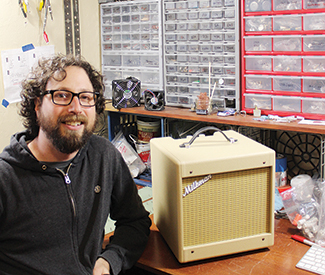
And then there’s Tim Marcus. On a recent, rainy Tuesday afternoon, the guitarist was hunkered down in a small bedroom-turned-electrical engineering workshop in the Lower Haight apartment he shares with his girlfriend. Marcus, 35, is one of the most sought after steel guitar players in the Bay Area. He spent the latter half of the aughts with the now-defunct (but much loved) San Francisco Americana band Or, the Whale. A few hours after this interview, he’ll be playing Amnesia with alt-country rocker Tom Rhodes; two days later he’s heading out on the road for a three-week East Coast tour with San Francisco folk songstress Kelly McFarling. But right now he’s at his day job: Flanked by stacks of glass tubes, fuses, and various tiny metal parts whose purpose we can only guess at, he’s building an amplifier. And not just any amplifier. An amplifier of pedal steel dreams.

amp

As the founder, owner, and sole employee of Milkman Sound, Marcus has created a living from building toys — and he’s the first to call them that — for musicians who are just as choosy as he is.

“I started playing guitar when I was 10, and played in bands all through middle school, high school, college,” says Marcus. “I started doing it professionally in the early 2000s. And there just wasn’t what I’d consider to be a boutique option [for amplifiers] for pedal steel guitars. If you drive a car, most people buy a Ford or a Subaru, but you have the option to buy a Ferrari. As a pedal steel player, in particular, you really wound up shoehorned into buying Fords and Chevrolets, things that are made for [regular] guitar players.”

He gained the technical know-how required to build amplifiers from a couple places. Back East, he worked for a company that did repairs on audio-visual equipment, where he’d hand off old or unused parts to a friend who built amps in exchange for his tutelage. After moving out to San Francisco, Marcus went to work for BBI Engineering, an SF company that installs AV and theatrical systems for museums “and other places that use automated amps, where you walk in, push a button and everything happens,” he says. “I learned a lot about making things that work well, that aren’t going to break if they’re subjected to kids poking at them day, in day out.”

Frustrated at being unable to get the clarity and quality of sound he wanted out of his guitar, Marcus started small, ordering the best parts he could find — some vintage, some new, with a priority on materials made in America — to build one amplifier for himself. He still has it (it’s sitting in a custom Milkman slipcover in the corner of the workshop, which, Marcus notes, is more easily navigated than usual — he just shipped out a bunch of amps) but he’s revamped that first one more times than he can count.

He’s an admitted perfectionist as well as a workaholic, he says, but it runs in the family: the name “Milkman” is a nod to his longstanding family business in Connecticut, starting with a small dairy farm his great-grandfather bought and built out. “The spirit of my great-grandfather was like ‘I’m going to sell something that I make,’ and my family’s always continued that,” says Marcus. “That definitely plays a role in my work ethic.”

Since he built that first amp four years ago, he’s been crafting custom amps for guitar and steel players all over the country. He does every part of production himself — friends have asked to help so they can learn, but he’s “crazy OCD about doing everything” with his own hands — and he builds each amp to a customer’s specifications, one at a time. He’s branched out into amplifiers for regular guitarists, and for bass players. Each amp takes him a couple of days to build, and then he tests it meticulously by (someone’s gotta do it) playing guitar through it lots of different ways.

Marcus still buys parts from small US-based companies where possible, including many in California, which he says is expensive but worth it for the quality. They don’t manufacture the glass tubes that go into amplifiers in the US at all, anymore, he explains, which is a shame, because the ones produced here in the ’50s and ’60s were great — they played an unsung role in creating what we think of as the early American rock ‘n’ roll sound. (Marcus can and will explain the history of amplifiers to you, as well as the differences between every iteration of each part that goes into them, at the drop of a hat.) The majority of his cabinets come from a revered one-man shop in Nashville, though Marcus has just begun working with a family business in Oakland to try to make the operation even more local.

amp

The price for all this care and OCD-level handiwork? Milkman amps run from $900 for a five-watt “half pint” amp to $3000 for the more powerful models. But for the musicians Marcus is catering to, that’s well worth it — last year, he sold 40 amplifiers; this year, by the end of March, he’d already shipped 20. Milkman amps have been out on tour in Eric Clapton’s band, thanks to acclaimed steel player and producer Greg Leisz taking a liking to Marcus’ simple, vintage rock ‘n’ roll aesthetic and careful technical work; they can also be heard on the most recent Daft Punk and Norah Jones records.

Maybe most impressively: Marcus seems to have cracked a code. He’s surviving in San Francisco by doing something he loves — and something that allows him to stay here as a working musician. He stopped working for his old audio-visual company about a year ago.

“I know I’m extraordinarily lucky that I’ve figured out a way to have music be something I can make a living off of,” he says. “I mean, I don’t get rich playing pedal steel. I wouldn’t be able to pay my rent playing pedal steel. If I lived in Nashville, or even LA, maybe; not here.

“But there’s also pride in that,” he says. “That’s why it says ‘Made in San Francisco, USA’ on the front. It’s not easy to do things in San Francisco, so when you do I think it’s just that much more awesome. I kind of got into the pirate ship mentality, and working for myself is great. I get up early — but I haven’t set an alarm clock in a long time.”

The hunger

0

cheryl@sfbg.com

FILM At the moment, Scarlett Johansson is playing a superhero in the world’s top blockbuster. Her concurrent role in Jonathan Glazer’s Under the Skin — the gorgeously crafted tale of an alien who comes to earth to capture men, but goes rogue once her curiosity about the human world gets the better of her — could not be more different in story or scope. There’s also the matter of its edgy presentation of its usually glamorous star.

“My first instinct was to cast an unknown. Somebody who nobody was familiar with,” Glazer (2000’s Sexy Beast) admits on a recent visit to San Francisco. But once he decided to film the alien’s “pick-up” scenes — in which Johansson’s unnamed character cruises around Glasgow in a nondescript van, prowling for prey — using hidden cameras and real people off the street, he changed his mind. Casting a famous face became a subversive choice that perfectly serves Under the Skin‘s disconcerting tone. “With that methodology of shooting, the surveillance with [Johansson in] disguise, and filming in the world as it was — the idea of Scarlett at the center of that, like an insect on the wrong continent, was a perfect storm of ingredients. We were well aware of how striking that would be.”

Her camouflage, which includes a dark wig, thickly-applied lipstick, and a fur jacket that immediately feels iconic, was carefully calibrated. “We didn’t want her to be too conspicuous. She needed to be just the right kind of conspicuous. It couldn’t be too overt,” Glazer explains. “The costume designer came up with what I thought was a very clever idea, which was [to clothe Johansson] like someone who’s immigrated recently to a new country and hasn’t quite learned the nuances of the way people dress. So everything was just very slightly off. And obviously we were trying to de-familiarize Scarlett. Very simply, the hair color was something that was very un-Scarlett. The makeup was very film noir-ish. It was a kind of a uniform.”

Johansson was so unfamiliar-looking that she was rarely recognized. Glazer and his crew kept their distance whenever she interacted with strangers, but they had to act fast once the “scene” ended. “Let’s say for instance she was going to go talk to that girl in the purple hoodie,” Glazer says, gesturing toward a woman nearby. “And we were filming it, covertly, and then Scarlett leaves. We’d have to then go up to the girl and say, ‘We’ve just been filming you. Can we get your permission [to use it]?’ She might already be outside and getting into a taxi, so you’d have production assistants running after people sometimes.”

Only a few of Johansson’s targets declined to participate once the setup was revealed. And though it’s easy to tell which men were pre-cast (hint: the naked ones), the scripted and improvised scenes flow together seamlessly. “We worked very hard to get the unity of those ingredients right and make the texture feel like the real world,” Glazer says.

Johansson’s character also gets naked, in scenes that will likely be among the film’s most talked-about moments. (“Seeing Scarlett Johansson Naked Got Under My Skin,” worried a blogger for Elle — a glossy mag that’s featured the star in uber-primped mode in its pages. The reason? Johansson’s unclothed body is remarkably, well, normal-looking.) “We certainly talked about the nudity in the film, but I wasn’t overly concerned about it,” Glazer insists. “What was important was that nothing in the film could be coy. We couldn’t be shy of anything. [Johansson’s] bravery as an actress needed to match the bravery of the character. It was all in the service of that — and she’s very fearless in it. The camera doesn’t get excited by her physicality, her sensuality. It’s very anatomical. In a way, I think she reclaims her image in this film.”

Under the Skin is very loosely based on the novel by Michel Farber. The film’s “feeding” scenes, in particular, are far more abstract than as written in the book. After the alien seduces a victim, he’s lured into what looks like a run-down house. The setting changes into a dark room that seems to represent an otherworldly void, with composer Mica Levi’s spine-tingling score — one of the film’s most potent takeaways — exponentially enhancing the dread.

“The book and the film are really unrelated. They’re very, very different,” Glazer says. “The idea of this film was to make something alien to tell a story about an alien. At the end of the film, I wanted her to remain as inscrutable at the end as she was at the beginning. Part of that is not to feel like you are looking at the tropes of science fiction when you go into these alien realm scenes — alien technology and engineering, and all of the stuff that you see in sci-fi films. Here, it just didn’t feel relevant to the way we were telling the story.”

So instead of a spaceship, the alien’s lair is a black screen which is actually part of the alien itself. “The alien is the absence of light, the absence of form. It’s a force, nothing more,” Glazer says.

But as the alien spends more time among humans — ducking through a night club, witnessing a tragedy on a beach, meeting a man with a deformed face, meeting another man who’s kind to her when she needs help — she begins to mistakenly believe that her fleshy, temporary form is her own.

“She’s deluded into thinking this identity is real,” Glazer says. “It’s like an ‘it’ becoming ‘she.’ It sees what’s reflected and it believes ‘That must be what I am now,’ and she goes and indulges that.”

Her confusion inspires her to abandon her mission and ditch the mysterious, motorcycle-riding figure who tracks her movements and, if needed, cleans up her messes. She leaves her kidnapper van by the side of the road and trudges into the Scottish countryside.

“Her main targets are men — so [initially] it’s important to be in a city and be around human beings. And then she flies away from that. It’s an escape, really,” Glazer says. “She ends up in the wilderness and we end up there with her. It’s important to tell the story alongside her, so we experience things with her. We’re in step with her.”

Eventually, the alien comes to understand the most human trait of all — vulnerability — in a chilling, visceral climax that evokes the body horror of early Cronenberg, a visual reference that dovetails well with the film’s clinical, Kubrickian opening scenes. That said, Glazer had neither filmmaker in mind while he was working.

“You’re trying to make an alien film that should stand apart from everything else,” he says. “It should stand alone. So for that reason, the last thing you want to do is reference other films or make it feel like it’s familiar. It’s familiar right at the beginning [of the film], before we see the shot of [Johansson’s eye]. Once we realize it’s an eye, then it becomes intentionally unfamiliar.” *


UNDER THE SKIN opens Fri/11 in Bay Area theaters.

Queen freak

0

marke@sfbg.com

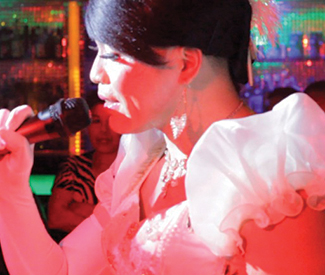
SUPER EGO Who celebrates her 50th birthday by wallowing in a 40-gallon kiddie pool of chocolate pudding at the city’s oldest gay bar? Who grew so enthusiastic during a drag number at Trannyshack in 2003 that she bent all the way backward and broke her spine? Who flits so deliciously through the spectrum of sexuality and gender that I last heard her identify herself as an MTFTM Nearsighted Bi-Polar Bear With Vampiric Tendencies?

Who is one of our last remaining links to SF’s gloriously weird club past? Phatima Rude, that’s who. The perennial ghoulish go-go and beautiful creature is living history. After moving here in the late ’80s and flirting with the Imperial Court drag dynasty, she dived into the underground — looking, at 300-plus pounds in a blond wig, “like Divine by way of Barbra Streisand” — starting at the legendary Club Uranus among such luminaries as Jerome Caja, Michael Blue, DJ Lewis, and Michael Angelo.

“I walked into that place and knew I had found my family, I had finally found my freaks,” she told me about Uranus. “The wonderful thing about drag is you can be someone else. I never was in the closet — I never knew what that was. But in drag, I no longer had to be Kevin from Minnesota.” Her first drag number, at one of the first Trannyshacks, involved dressing in clothing from dead or dying friends, and stripping each piece off one by one.

Phatima’s also a prime example of what it takes to hold on as an artist in this town. Ladies and Gentlemen: Phatima Rude, a short film by ethnographer Paul King premiering at Peaches Christ’s essential Underground Film Festival, documents the months last year that she spent living in a van on disability insurance, after she had to leave her shared artists’ co-op.

“It was actually a good experience,” Phatima, who’s now happy to have a place in a downtown SRO, said. “It humbled and stabilized me. You become very aware of where you are in the universe when you live on the street. When my mother and I first moved here and were staying in a shelter, I remember the pastor in charge saying, ‘The hardest step is from the gutter to the curb.’ And I never forgot that.”

Now Phatima has hit another creative peak, appearing in challenging Leigh-Bowery-in-a-blender outfits at parties like future-gothy monthly Dark Room at the Stud, and making music with her band The Unicorns R Dying, or T.U.R.D. What has she learned from her journey so far? “Life is tenuous, we’re all so blessed to be here, and drag is the gateway to the world!”

LADIES AND GENTLEMAN: PHATIMA RUDE featuring an all-star drag performance tribute to Phatima, Sat/12, 9:30pm, $15 ($20 for Underground Film Festival pass). Victoria Theatre, 2961 16th St, SF. www.peacheschrist.com

AFTER BIRTH: OFFICIAL UNDERGROUND FILM FESTIVAL AFTERPARTY Sat/12, 10:30pm, $5. Rebel, 1760 Market, SF. www.tinyurl.com/phatimaafterbirth


AEROPLANE

Sometimes you just want some engaging, melodic nu-disco house that will make you sweat without tearing out your brain. Like fellow earworm heartthrob the Magician, Italian-Belgian cutie Vito de Luca delivers in spades.

Thu/10, 9pm-late, $10–$15. Mezzanine, 444 Jessie, SF. www.mezzaninesf.com


RONE

Smart, fantastical bass-laden soundscapes from this French producer with an excellent ear. (Check new EP Apache and his ace Electronic Beats on Air mix.) With Branchez.

Thu/10, 9pm, free with RSVP at www.1015.com. 1015 Folsom, SF.


DENNIS FERRER

When this Chicago afro-centric house master was booted off the decks by idiots in Miami a couple years ago, it pointed up the strange polarity of dance music today. Luckily Ferrer’s deep beat goes on.

Fri/11, 9:30pm-late, $15–$20. Monarch, 101 Sixth St., SF. www.monarchsf.com


KINK

The celebrated Bulgarian sage of handmade acid grooves returns — towing crazy new machines, sing-along drum patterns, and balls-out beats, we’re sure. With Matrixxman and Jason Kendig at the fast-growing Isis party.

Fri/11, 9:30-3:30pm, $10–$15. Public Works, 161 Erie, SF. www.publicsf.com


DERRICK CARTER

Last weekend was alive with music, celebrating the life of Frankie Knuckles. Beloved Chicago boogie-house wiz Derrick, one of Frankie’s direct heirs, will bring even more of Frankie’s spirit down. With UK ’90s fetishist duo Bicep.

Sat/12, 9pm-5am, $15–$20. Mighty, 119 Utah, www.mighty119.com


Icon and on

0

arts@sfbg.com

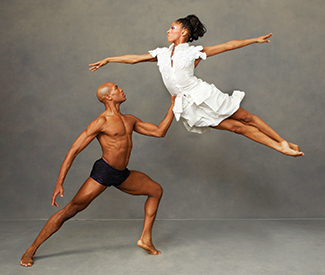
DANCE Alvin Ailey American Dance Theater is the country’s most financially successful dance enterprise. Apparently, it regularly ends with a surplus, something most everyone else can only sigh over. But the success comes with a price: it tours like no one else. That makes it hard to keep performances fresh, a repertoire fluid, and dancers focused. And yet, the dancers showed little wear and tear on this 14th stop of their current 23-city US tour.

Two reasons account for the dancers’ success. They have one of the great masterpieces of 20th century art in their repertoire, and they never hit the road without it: Alvin Ailey’s 1960 Revelations. Audiences around the world want it. Again, and again, and again. There are times when I am tempted to skip it. I never do, and I never regret it. The only piece of choreography I feel similarly about is Giselle (and that music is not half as good).

Ailey dancers are also an extraordinarily beautiful lot — fierce technicians, with immaculate ensemble work, the women as strong as the men. For speed, attack, sense of space, and range of motion, they have little competition. Most of them stay with the company until they quit dancing, so an audience feels like it gets to know them over the years.

But Ailey dancers also look like they come out of one mold — the Ailey mold. One of the issues that has plagued the company for years is the rest of the repertoire. Bringing in new choreography has been a hit-and-miss affair. Robert Battle, artistic director for the last three years, has made valiant efforts to cast his net wider. Judging from the company’s opening night at UC Berkeley’s Zellerbach Hall this year, it still is something of a hit-and-miss affair.

Aszure Barton’s LIFT and Ronald K. Brown’s Four Corners are Battle commissions from 2013. Watching these two works — the first of which clocked in at 26 minutes, the second at 24 minutes — offered radically different experiences of time passing. LIFT flattened out thin ideas long beyond their welcome, and despite Curtis Macdonald’s assertive beat, the work began to drag quickly. Four Corners spun its sturdy gossamer web to the point where you didn’t want to let it go.

Barton, whose own company performed somewhat more successfully as part of San Francisco Performances in February, appears to have looked at the Ailey dancers and decided on the kind of suit that she wanted to tailor for them. While it fit them physically, it constrained their expressivity. LIFT’s vocabulary is somewhat reminiscent of African traditions — wide stances, articulated shoulders and hips, strong flat-footed stepping, and arms that fly away when not engaged in body-clapping. But Barton didn’t succeed in pulling these elements into a coherent statement.

A prominent male trio, with powerful Jermaine Terry as its leader, appeared to search the ground for something. Often the dancers performed with their backs to us. Men and women moved in and out of the shadows, arms often flailing, feet fussily engaged when not stomping.

Two duets were oddest of all. Matthew Rushing — still dancing fabulously — and Hope Boykin engaged each other in a hysterically laughing and screaming match. Ghrai DeVore’s lips became a suction cup against Marcus Jarrell Willis’ chest, turning the two of them in a four-legged creature of uncertain origin. Is that what those male searchers were trying to escape from?

Brown’s Four Corners, apparently, is inspired by the apocalypse’s four horsemen. I didn’t see it except when some unseen forces, perhaps launched by a divine spirit, perhaps just a strong wind, appeared to animate and propel the performers on some kind of journey toward ecstasy. Brown’s vocabulary has integrated modern dance and African influences like no other choreographer whom I can think of; it has become a language that starts inside and ripples out so that every part of the body seems to sing. The dancers open their torsos in every direction, giving in to the momentum, with their flexible arms turned into wings that keep them buoyed. Yet periodically, like birds alighting, they fold them on their backs and focus on the ground ahead of them.

Rushing is the leader on the lookout for his group of congregants; eventually, he leads them in a single-file procession toward who knows where. He is joined by the regal Linda Celeste Sims and the astounding Belen Pereyra, in an earth-colored outfit that lets you see every tremor, every shift of weight, and every searching glance.

Revelations is what it is, or perhaps not. This was the first time that I remember seeing a white dancer in this quintessential tribute to African American culture. The finale of the piece once again turned into a competition between the audience and the dancers. The audience won. “Rocka My Soul” got a repeat. *

From brushes to bytes

0

joe@sfbg.com

CAREERS AND ED Matt Burdette is a video game environment artist, crafting expansive alien vistas by tapping out ones and zeroes the way a painter flourishes a brush. But unlike paint on canvas, Burdette’s vistas are meant to be explored by video game avatars hunting computerized enemies.

He’s crafted trees and bushes, and paid loving attention to every stem and every leaf, but his proudest project was not nearly so serene. While employed at LucasArts he worked on a later-cancelled project: Star Wars 1313.

Burdette was tasked with blowing up a spaceship.

“They said to me, ‘This needs to look photoreal,'” he told me. “I was all, ‘Hell yeah, let’s do that.'” The video game trailer that played at the 2013 Electronic Entertainment Expo featured a laser toting hero jumping through a burning spaceship. It was hailed by the national press as the most impressive looking new video games on the horizon.

But Burdette was not always a digital craftsman. At one point, he was a pencil and paper artist.

For artists facing hard times in a dwindling San Francisco art scene, the Bay Area’s burgeoning video game industry is rife with possibility. About 100 video game studios call the Bay Area home, according to Game Job Hunter, from Electronic Arts to Zynga. And many of these studios need artists and composers. Burdette made the digital leap from traditional art by studying film visual effects at Savannah College, in Georgia.

Above is the E3 trailer for Star Wars: 1313. 


“To bring a more artistic sensibility to what is maybe a technical, rigid kind of space is valuable and a lot of fun,” Burdette, 28, said.

Disney later bought LucasArts and laid off many of its staff, and Burdette found a new job at Visceral games crafting environments for Battlefield 4. But despite the video game industry reputation for grueling work hours, he still manages to find time for personal art.

Lately he’s slowly built a virtual island, like a hobbyist building a model ship during off hours.

“It was nice to come home and think, ‘I’ll make a tuft of grass today,'” he said. He then plugged his island into a new virtual reality device known as Oculus Rift, VR goggles that show the player a 3D world that looks eerily real, sensing the player’s head movements and portraying a sense of depth.

“I put on the Oculus and thought I was going to cry. You are there,” he said. “I walked up to a bush and felt physically uncomfortable, like this is impugning on my personal space.”

Burdette may get to play inside virtual worlds some artists haven’t dreamed of, but his reality is the same: Business can be tough.

He noted that many video game designers and artists are laid off after projects are complete, a standard industry practice. Most industry workers, he said, “are very much more mercenaries now.”

Some opt out of the boom and bust system altogether. Liz Ryerson, 26, is an independent game designer, visual artist, and music composer. She’s had hard times, crashing on couches and bordering on homelessness, but found a new way to raise money for her work. She now solicits support on Patreon, a Kickstarter for artists.

Thanks to contributions from fans, she has a spiffy new place by downtown Berkeley where she crafts her indie games.

“Indie game” is a nebulous phrase, of course. But if the multi-million-dollar video game Halo is comparable to the blockbuster film Avatar, Ryerson’s version of indie is closer to the DIY digital videographers of the local Artists’ Television Access. She makes video games for expression’s sake, not necessarily for profit.

Not to say Ryerson isn’t successful. She composed music for the immensely popular Dys4ia, a flash game detailing the lead designer’s gender transition. Ryerson’s own game, Problem Attic, tackles her own personal demons.

Floating crosses pursue the avatar, a stick figure, across a 2D plane. The game world resembles an 8-bit rendering of a brain merged with a nightmare, and the player must traverse frightening but intentional digital glitches. In an industry filled with shoot-’em-up games, it’s esoteric and strange, and that’s how Ryerson likes it.

“The game is definitely David Lynch-inspired, without a doubt,” she said. “Things that are more indefinable, with more of a sensibility to them. That’s what I respond to.”

A trailer for Liz Ryerson’s game, Problem Attic.


She’s mostly self-taught, sometimes building games in flash, and scoring the games using computer software like Reason. Though her design ethos couldn’t be further from Burdette’s blockbuster Star Wars games, they share a common bond: They were artists before they were game makers.

“I used to record songs and play guitar,” Ryerson said. “That was one of the biggest things I wanted to do, was be a pop musician.”

Eventually she started remixing video game compositions and posting them to the web via video game music website OCRemix. She studied film in school and made a documentary. The music from a Gus Van Sant film, the visual presentation of comic books, and the movement inherent in a game controller — all of these concepts inspire her work.

“That’s what you can do with video games, you can create these abstract, very different worlds,” she said. “You can do this more easily with video games than you can represent reality.”

Consumers spent over $20 billion on video games in 2012, according to the Entertainment Software Association. But for artists looking for an easy transition to an industry flush with cash, Ryerson and Burdette made one thing abundantly clear: The video game industry is extremely competitive.

“It’s hard to make games,” Burdette said. “You’ve got to want it real bad.”


Get action

4

cheryl@sfbg.com

CAREERS AND ED Ah, the bright lights of Hollywood — so close, and yet thankfully far enough away to allow Bay Area filmmakers to develop their own identities. The SF scene thrives thanks to an abundance of prolific talent (exhibit A: have you noticed how many film festivals we have?), and continues to grow, with a raft of local programs dedicated to teaching aspiring Spielbergs — or better yet, aspiring Kuchars — the ins and outs of the biz.

San Francisco’s big art schools all have film programs. California College of the Arts offers both a BFA and an MFA in film, with an eye toward keeping students trained not just in cinema’s latest technological advancements, but its ever-changing approaches to distribution and exhibition. One look at the staff roster and it’s not hard to see why CCA’s program is so highly-acclaimed, with two-time Oscar winner Rob Epstein (1985’s The Times of Harvey Milk; 1995’s The Celluloid Closet; 2013’s Lovelace); indie-film pioneer Cheryl Dunye (1996’s The Watermelon Woman; 2001’s The Stranger Inside); and noted experimental artist Jeanne C. Finley, among others. www.cca.edu

The Art Institute of California has a Media Arts department that offers a whole slew of programs, including BS degrees in digital filmmaking and video production, digital photography, and media arts and animation, as well as an MFA in Computer Animation. The school, which offers a number of online courses, is affiliated with the for-profit Argosy University system and aims for “career-focused education.” www.artinstitutes.edu/san-francisco/

The San Francisco Art Institute has this to say about its programs: “The distinguished filmmaker Sidney Peterson initiated filmmaking courses at SFAI in 1947, and the work made during that period helped develop “underground” film. From the 1950s to the early 1970s, filmmakers at the school such as Bruce Conner, Robert Nelson, Stan Brakhage, and Gunvor Nelson brought forth the American avant-garde movement. Our current faculty is internationally renowned in genres including experimental film, documentary, and narrative forms.” The school has embraced new technology and offers extensive digital resources, but it also supports artists who prefer working with celluloid. 16mm and Super 8 filmmaking lives! www.sfai.edu/film

The Academy of Art University may be largely known around SF for the number of buildings it owns downtown, but it does have a School of Motion Pictures and Television that offers AA, BFA, and MFA diplomas, augmented by an extensive online program. Its executive director is Diane Baker, eternal pop-culture icon for her role in 1991’s Silence of the Lambs (“Take this thing back to Baltimore!”) Other faculty members include acclaimed choreographer Anne Bluethenthal. Students can also take classes from Guardian contributor Jesse Hawthorne Ficks, who programs the popular “Midnites for Maniacs” series at the Castro Theatre and is the school’s film history coordinator.

“I teach 11 different theory classes, including the evolution of horror, Westerns, melodramas, musicals, and ‘otherly’ world cinema, as well as a close-up on Alfred Hitchcock,” Ficks says. “But bar none, the History of Female Filmmakers class seems to create the biggest debates. Some find it sexist to emphasize gender — as artists, why can’t we transcend that concept? Except why have the majority of textbooks forgotten, ignored, or even re-written these women out of history? If the argument is that female filmmakers just aren’t good enough to be ranked alongside their male counterparts, how about watching more than one film by Alice Guy, Lois Weber, Frances Marion, Dorothy Arzner, Maya Deren, Ida Lupino, or Agnes Varda? And that’s just the first six weeks of class.” www.academyart.edu

The eventual fate of the City College of San Francisco is still being decided, but for now, its cinema department offers students a mix of hands-on (classes in cinematography, editing, sound, etc.) and theory (film theory, film history, genre studies, etc.) classes. The spring 2014 course catalog included such diverse offerings as “Focus on Film Noir,” “The Documentary Tradition,” “Pre-Production Planning,” and “Digital Media Skills.” Since 2000, the department has showcased outstanding student work in the City Shorts Film Festival, which last year screened both on-campus and at the Roxie Theater. www.ccsf.edu

Tucked into the city’s foggiest corner is San Francisco State University, whose cinema department remains strongly tied to the school’s “core values of equity and social justice,” according to its website, with a special focus on experimental and documentary films. The faculty includes acclaimed filmmakers Larry Clark and Greta Snider, and students can earn a BFA, an MFA, or an MA (fun fact: like I did!) www.cinema.sfsu.edu

On the newer end of the spectrum is the eight-year-old Berkeley Digital Film Institute, which offers “weekend intensives” to smaller groups of students. Dean Patrick Kriwanek says the school teaches “LA-style,” or commercial-style, filmmaking. “Our teachers all come from the American Film Institute or have worked on features,” he says. “We’re trying to train our kids to produce the same level of work that you’d see out of UCLA or USC grad schools — excellent work that’s thoughtful.”

The school also takes the practical side of entertainment into account. “I always joke that we try to be 51 percent art school and 49 percent business school, but it’s really true,” he adds. “You really have to be a business person if you want to succeed.” www.berkeleydigital.com

On this side of the bay, at Mission and Fifth streets to be precise, there’s the San Francisco School of Digital Filmmaking, which aims to “create filmmakers with careers in the entertainment industry.” Faculty members include Frazer Bradshaw, director of the acclaimed indie drama Everything Strange and New (2009) and screenwriter Pamela Gray (1999’s A Walk on the Moon). In addition to months-long programs, the school offers workshops like a crowd funding how-to (an essential area of expertise for any independent artist these days) and a single-day “boot camp-style” intro to digital filmmaking. www.filmschoolsf.com *


Spread your wings

0


ABSOLUTE BEGINNING TAIKO WORKSHOP

Dance Mission Theater has kept itself going by offering some of the most cutting-edge and exciting classes around. (Even the cast of The Real World dropped in recently for some schooling on how to vogue.) Here, instructor Bruce “Mui” Ghent of the Maikaze Daiko dojo will teach you how to bang your own beat out — on very, very large drums. The rigorously physical class (dress to sweat) introduces the basics of the ancient Japanese musical art form, taught with martial arts etiquette and discipline.

April 13- May 18, Sundays, 10:30am-noon, $99. Mission Dance Theater, 3316 24th St, SF. www.dancemission.com


METHOD WRITING

Be the Brando of poets, as Alexandra Kostoulas — student of famed Method Writing sage Jack Grapes — “strips away the artifice of writing, the baggage that keeps us from the most essential building block of any writing: the Deep Voice.” The class is based on journal entries which are transformed using Method Writing techniques into stories and poems. Help your writing to leap from the page and roar with fire! Or at least try something passionate and different.

April 29-June 17, Tuesdays, 6:30-9:30pm, $395. Emerald Tablet, 80 Fresno, SF. Also April 30-June 18, Wednesdays, 6:30-9:30, $395. Wework Building, 25 Taylor, SF. www.methodwritingsf.com


INTERACTIVE AUDIO

Give your music 3D expression — and a big boost of digital career potential — at this intensive course at Ex’pression Digital College. Students get an earful of learnin’: music production, electronic music and beat production, audio and visual composition, live performance engineering, audio engineering, recording and mixing, audio and music programming, and video game audio creation and integration. You get to make shapes with your sounds, very cool.

Classes start May 19 in Emeryville and San Jose. See www.expression.edu for more information


STENCILING 1.0

Downtown SF street art nexus 1:AM, aka First Ammendment (winner of a Guardian Best of the Bay Award) offers this supercool class with artist Strider. “Learn to make your ‘mark’ on the world” by designing, cutting, and spraying intricate stencils — including on your own T-shirts. Ages 14+ are welcome: This class is great for budding protesters, free spirits, and guerilla artists.

June 28, 12:30-3:30pm, $55. 1:AM, 1000 Howard, SF. www.1amsf.com


NATURAL CHEF

Have you heard about this whole slow food movement thingie? Nonprofit Bauman College has spent the last 25 years teaching health and wellness through holistic nutrition and culinary arts. This 450-hour course is the whole megilla — kitchen basics, farm-to-table sourcing, world cuisine, client services, therapeutic applications, and more. Everyone’s gotta eat, so the field continues to grow. Graduates can go on to work as personal chefs or start their own delicious business.

Classes start in September and are offered in Berkeley and Santa Cruz, See www.baumancollege.org for more information.


DRAMA THERAPY

No, this program doesn’t consist of screaming at your ex. A graduate program at the California Institute for Integral Studies, regionally accredited and approved by the North American Drama Therapy Association, drama therapy draws on dramatic play, theater, role-play, psychodrama, and dramatic ritual, to free the mind and bring healing to others. “Freedom and possibility are two key words that begin to describe the essence of drama therapy. Life is finite; there are only so many experiences we can have. But in drama, the opportunities and options are endless.”

Register for fall 2014 semester by July 10. See www.ciis.edu for more information.


Brains, robots, and their evolution

1

rebecca@sfbg.com

The Bay Area is fully engaged with the technology industry, triggering political flare-ups over Google Glass, tech buses, and larger debates over how the tech industry is morphing the Bay Area’s social and economic landscape. Meanwhile, university researchers are busily putting technology to use in service of their studies, or carefully examining how technology is shaping people’s lives.

A pair of recent events in San Francisco and Berkeley illuminate how web-based technology has become deeply embedded in everyday life, helping to shape human realms as personal and unique as emotions, brain health, and behavior.

Medical researchers at the University of California San Francisco have devised a tool they hope will advance our understanding of neuroscience and brain disease. On April 8, UCSF researchers launched a new project called the Brain Health Registry, which uses the Internet to recruit volunteer research subjects who play online brain games as part of the enrollment.

Across the bay at UC Berkeley’s Center for New Media, a recent symposium explored the implications of living in a world increasingly populated with robots and “smart” technologies that are designed to anticipate and respond to human behavior and dynamic environments. The April 4 event, called Robots and New Media, highlighted some thorny and intriguing questions about how robots “play a critical new role as extensions of ourselves,” according to the event description.

With discussion from cognitive neuroscientists about what happens to the human brain during interactions with robots, the talk also dived into questions about how much trust people should be willing to lend to emerging technologies.


BRAIN TRUST

Michael Weiner often wonders whether swimming in the San Francisco Bay can be credited with sharpening the mind. “I can tell you this: It sure makes you feel good,” said Weiner, who frequently plunges into the frigid bay waters as a member of the Dolphin Club.

For Weiner, a professor of radiology at the University of San Francisco who specializes in Alzheimer’s research, the curiosity goes beyond idle speculation. He’d like to conduct a clinical study to explore the impact that swimming in cold water has on mental functioning. But at the moment, he and a team of UCSF researchers are focused on a much bigger project.

Weiner is the founder of UCSF’s Brain Health Registry, designed to answer these brain impact questions by making it easier to do clinical studies. Realizing that the high cost of recruiting volunteers can slow down cognitive research, he’s turned to the Internet to build a database of volunteer subjects.

“The idea is to collect tens of thousands of people into a registry and then use it to select subjects for clinical trial,” he explained. To enroll, participants provide their names and other personal information, and answer questions about their patterns around sleep, mood, exercise, medications, use of alcohol, and other behaviors. They also take online cognitive tests provided by Lumosity, a brain-game company.

Their test results and personal information are then entered into the registry, which can be used to aid research in several ways. It can be analyzed to detect trends — for example, are there patterns suggesting a linkage between sleep disorders and poor cognitive functioning? It could be used to help researchers detect people with very early Alzheimer’s, Weiner noted. And UCSF researchers can contact registry volunteers to invite them in for clinical studies.

“I want 50,000 people of all ages within the San Francisco Bay Area,” Weiner said of his initial goal. By the end of 2017, the recruitment goal is 100,000. So far, 2,000 have signed up as volunteer subjects.

The Brain Health Registry could turn out to be a tool for facilitating long-term goals like finding a cure for Alzheimer’s. But having this giant database filled with sensitive personal information brings up at least one important question: What if there’s a data breach?

“I’ve been doing research for a long time, and never has there been a loss of data,” Weiner responded, vouching for the system’s ability to keep data safe. “I’m in there, my two children are in there.”


LIKABLE ROBOTS

Carla Diana spoke at Berkeley’s Center for New Media symposium on April 4. A designer whose work involves playing around with the expressive elements of technology, she helped create a robot called Simon with a team of researchers at the Georgia Institute of Technology.

She said the purpose of designing Simon was “to study how we can interact with the machine in the most natural way possible.”

Simon is cute and looks like a doll. With an all-white head and torso designed by Meka Robotics, a San Francisco-based robotics company that was recently acquired by Google, Simon has expressive droopy eyes outfitted with cameras, light-up ears that flop up and down, and mechanical hands that grip things.

He (it?) is programmed to track people as they interact with him, understand spoken sentences, and respond with expressive sound and movement that mimics human social behavior. Diana said the robot was designed with diminutive features on purpose, as a way of conveying that he has a lot to learn.

Diana is a fellow at Smart Design, where she oversees the Smart Interaction Lab. Her work isn’t just about making machines — it’s also about studying how people interact with smart technologies, and thinking carefully about things like how the “personality” of a machine can excite people, motivate them, or push their buttons, so to speak, by designing for a sensory experience.

Asked during the question-and-answer period about the ethical implications of designing machines meant to reach people on an emotional level, Diana acknowledged that this is precisely what smart technology designers are up to.

“It’s the responsibility of the designer to realize that we are doing that,” she replied. “We are creating entities that have the ability to manipulate humans’ emotions. And that’s that.”


WELCOME TO THE MACHINE

Mireille Hildebrandt, a lawyer, researcher, philosopher, and professor who flew in from the Netherlands to speak at the symposium, offered a big-picture view of what it means for people to interact with “smart” technologies or robotic machines, and she threw out questions about the overarching implications.

“We’re moving toward something called ubiquitous computing,” she explained. “The environment starts to adapt to your assumed, preferred preferences.”

Common examples of this adaptable technology abound on the Internet: Targeted advertising is based on individuals’ unique preferences. Google search tries to guess what you’re looking for before you finish typing.

What happens when this kind of “smart,” predictive tech goes beyond the computer screen? In some cases, that’s already happening: Think facial recognition technology that can scan an environment to detect a specific person. A less creepy example is smart appliances such as thermostats or robotic vacuum cleaners.

Bringing it up a notch, Hildebrant asked the audience to imagine that everyone had a personal robot. “What if your robot does some A/B design, testing your moods, susceptibility to spending, voting, and other behaviors?” she asked. “What if your robot is online with its peers, sharing your behaviors to improve the user experience? … However smart they are, they aren’t human. They have no consciousness, let alone self-consciousness.”

In a robotic environment, she said, “You can be calculated. When I, as a robot, act like this, then [a person’s] behavior will likely be like that. … We would have to realize that they are continuously anticipating us.”

To live in this kind of souped-up environment brings up big questions, Hildebrant said: “Who’s in control? What’s the business model? And how will it affect our privacy?”

Privatization of public housing

14

news@sfbg.com

Like so many San Franciscans, Sabrina Carter is getting evicted.

The mother of three says that if she loses her home in the Western Addition, she’ll have nowhere to go. It’s been a tough, four-year battle against her landlord — a St. Louis-based development company called McCormack Baron — and its law firm, Bornstein & Bornstein. That’s the same law firm that gained notoriety for holding an “eviction boot camp” last November to teach landlords how to do Ellis Act evictions and sweep tenants out of rent-controlled housing.

But Carter’s story isn’t your typical Ellis eviction. Plaza East, where she lives, is a public housing project. Public housing residents throughout the country are subject to the “one-strike and you’re out” rule. If residents get one strike — any misdemeanor or felony arrest — they get an eviction notice. In Carter’s case, her 16-year-old was arrested. He was cleared of all charges — but Carter says McCormack Baron still wouldn’t accept her rent payment and wouldn’t respond to her questions.

“I was never informed of my status,” she said.

That is, until her son was arrested again, and Carter found herself going up against Bornstein & Bornstein. She agreed to sign a document stipulating that her eviction would be called off unless her son entered Plaza East property (he did). It was that or homelessness, said Carter, who also has two younger sons.

“They criminalized my son so they could evict my family,” Carter said.

McCormack Baron and Bornstein & Bornstein both declined to comment.

On March 12, Carter and a band of supporters were singing as they ascended City Hall’s grand staircase to Mayor Ed Lee’s office.

“We’re asking the mayor to call this eviction off. Another black family cannot be forced out of this city,” Lisa “Tiny” Gray-Garcia, co-founder of Poor Magazine, said at the protest.

Nearly half of San Francisco’s public housing residents are African American, according to a 2009 census from the city’s African American Out-Migration Task Force. These public housing residents represent a significant portion of San Francisco’s remaining African American population, roughly 65 percent.

Carter’s eviction was postponed, but it raises an important question: Why is a public housing resident facing off with private real estate developers and lawyers in the first place?


PUBLIC HOUSING, PRIVATE INTERESTS

Plaza East is one of five San Francisco public housing properties that was privatized under HOPE VI, a federal program that administers grants to demolish and rebuild physically distressed public housing.

The modernized buildings often have fewer public housing units than the ones they replaced, with private developers becoming their managers. San Francisco’s take on HOPE VI, called HOPE SF, is demolishing, rebuilding, and privatizing eight public housing sites with a similar process.

US Department Housing and Urban Development is rolling out a new program to privatize public housing. The San Francisco Housing Authority is one of 340 housing projects in the nation to be chosen for the competitive program. The city is now starting to implement the Rental Assistance Demonstration program. When it’s done, 75 percent of the city’s public housing properties will be privatized.

Under RAD, developers will team up with nonprofits and architectural firms to take over managing public housing from the Housing Authority. RAD is a federal program meant to address a nationwide crisis in public housing funding. Locally, the effort to implement the program has been spurred by the Mayor’s Office of Housing and Community Development.

MOHCD Director Olson Lee has described RAD in a report as “a game-changer for San Francisco’s public-housing residents and for [Mayor] Lee’s re-envisioning plan for public housing.” Later, Lee told us, “We have 10,000 residents in these buildings and they deserve better housing. It’s putting nearly $200 million in repairs into these buildings, which the housing authority doesn’t have. They have $5 million a year to make repairs.”

Funding is sorely needed, and this won’t be enough to address problems like the perpetually broken elevators at the 13-story Clementina Towers senior housing high-rises or SFHA’s $270 million backlog in deferred maintenance costs.

But RAD is more than a new source of cash. It will “transform public housing properties into financially sustainable real estate assets,” as SFHA literature puts it.

RAD changes the type of funding that supports public housing. Nationally, federal dollars for public housing have been drying up since the late ’70s. But a different federal subsidy, the housing choice voucher program that includes Section 8 rent subsidies, has been better funded by Congress.

Under RAD, the majority of the city’s public housing will be sustained through these voucher funds. In the process, the Housing Authority will also hand over responsibility for managing, maintaining, and effectively owning public housing to teams of developers and nonprofits. Technically, the Housing Authority will still own the public housing. But it will transfer the property through 99-year ground leases to limited partnerships established by the developers.

The RAD plan comes on the heels of an era marked by turmoil and mismanagement at the Housing Authority. The agency’s last director, Henry Alvarez, was at the center of a scandal involving alleged racial discrimination. He was fired in April 2013.

In December 2012, HUD declared SFHA “troubled,” the lowest possible classification before being placed under federal receivership. A performance audit of the agency, first submitted in April 2013 by the city’s Budget and Legislative Analyst, determined that “SFHA is expecting to have no remaining cash to pay its bills sometime between May and July of 2013.”

Six of the seven members of the Housing Authority Commission were asked to resign in February 2013, and were replaced with mayoral appointees.

Joyce Armstrong is not a member of this commission, but she sits on the dais with them at meetings, and gives official statements and comments alongside the commissioners. Armstrong is the president of the citywide Public Housing Tenants Association, and she talked about RAD at a March 27 meeting, conveying tenants’ apprehension toward the expansion of private managers in public housing.

“Staff in HOPE VI developments are very condescending,” Armstrong said. “We’re not pleased. We’re being demeaned, beat up on, and talked to in a way I don’t feel is appropriate.”


NONPROFITIZATION

When RAD is implemented, it won’t just be development companies interacting with public housing residents. San Francisco’s approach to RAD is unique in that it will rely heavily on nonprofit involvement. Each “development team” that is taking over at public housing projects includes a nonprofit organization. Contracts haven’t been signed yet, but the Housing Authority has announced the teams they’re negotiating with.

“We call it the nonprofitization of public housing,” said Sara Shortt, executive director of the Housing Rights Committee.

The developers are a list of the usual players in San Francisco’s affordable housing market, including the John Stewart Company, Bridge Housing Corporation, and Tenderloin Neighborhood Development Corporation.

Community-based organizations that are involved include the Mission Economic Development Agency, the Japanese American Religious Federation, Ridgepoint Nonprofit Corporation, Glide Community Housing, Bernal Heights Housing Corporation, and the Chinatown Community Development Center.

On March 13, when the Housing Authority Commission announced who would be on these teams, the meeting was packed with concerned members of the public. Two overflow rooms were set up. One group with a strong turnout was SEIU Local 1021, which represents public housing staff.

Alysabeth Alexander, vice president of politics for SEIU 1021, said that 120 workers represented by the union could be laid off as management transfers to development teams, and 80 other unionized jobs are also on the line.

“They’re talking about eliminating 200 middle-class jobs,” Alexander said.

She also noted that SEIU 1021 wasn’t made aware of the possible layoffs — it only found out because of public records requests. (Another downside of privatization is that certain information may no longer be publicly accessible.)

“We’re concerned about these jobs,” Alexander said. “But we’re also concerned about the residents.”


RESIDENTS’ RIGHTS

HUD protects some residents’ rights in its 200-page RAD notice. These include the right to return for residents displaced by renovations and other key protections, but rights not covered in the document — some of which were secured under the current system only after lengthy campaigns — are less clear. In particular, rights relating to house rules or screening criteria for new tenants aren’t included.

Negotiations with development teams are just beginning. Lee said tenants’ rights not included in the RAD language would be discussed as part of that process.

“It will be a function of what is best practice,” Lee said.

But developers have already expressed some ideas about public housing policies they want to tweak when they take over. At one point, the city was considering developers’ requests to divide the citywide public housing wait-list into a series of site-specific lists. Lee says that this option is no longer on the table.

But as developers’ interests interact with local, state, and federal tenant regulations, things could get messy. James Grow, deputy director of the National Housing Law Project, says that whatever standard is the most protective of residents’ rights should apply.

Still, Grow said, “There’s going to be inconsistencies and gray areas.”

Grow said that inevitably some residents’ rights will be decided “on a case-by-case basis, in litigations between the tenant and the landlord…They’ll be duking it out in court.”

This will be true nationwide, as each RAD rollout will be different. But at least in San Francisco, “Most of the tenant protections in public housing will remain,” said Shortt. “We are trying to tie up any holes locally to make sure that there is no weakening of rights.”

Grow’s and Shortt’s organizations are also involved in San Francisco’s RAD plan. The National Housing Law Project, along with the Housing Rights Committee and Enterprise Community Partners, have contracts to perform education and outreach to public housing residents and development teams.


UNCERTAIN FUTURE

Just how much money will go to RAD is still under negotiation. The RAD funding itself, derived from the voucher program, will surpass the $32 million the city collected last year in HUD operating subsidies. But its big bucks promise is the $180 million in tax credit equity that the privatization model is expected to bring in.

The city will also be contributing money to the program, but how much is unclear.

“The only budget I have right now is the $8 million,” Lee said, money that is going to the development teams for “pre-development.”

Lee added that funding requests would also be considered; those requests could total $30-50 million per year from the city’s housing trust fund, according to Shortt.

To access that $180 million in low-income housing tax credits, development teams will need to create limited partnerships and work with private investors. The city wants to set up an “investor pool,” a central source which would loan to every development team.

It’s a complicated patchwork of money involving many private interests, some of whom don’t have the best reputations.

Jackson Consultancy was named as a potential partner in the application for the development team that will take over management at Westbrook Apartments and Hunters Point East-West. That firm is headed by Keith Jackson, the consultant arrested in a FBI string in late March on charges of murder-for-hire in connection with the scandal that ensnared Sen. Leland Yee and Chinatown crime figure Raymond “Shrimp Boy” Chow.

Presumably, Jackson is no longer in the running, although the entire transformation is rife with uncertainties.

Residents often feel blindsided when management or rules change at public housing properties. And RAD will be one of the biggest changes in San Francisco’s public housing in at least a decade.

“People are concerned about their homes. When they take over the Housing Authority property, what’s going to happen? They keep telling us that it’s going to stay the same, nothing is going to change,” said Martha Hollins, president of the Plaza East Tenants Association.

Hollins has been part of Carter’s support network in her eviction case.

“They’re always talking about self-sufficient, be self-sufficient,” Hollins said. “How can we be self-sufficient when our children are growing up and being criminalized?”

Public housing has many complex problems that need radical solutions. But some say RAD isn’t the right one. After seeing developers gain from public housing while generational poverty persists within them, Gray-Garcia says that her organization is working with public housing residents to look into ways to give people power over their homes. They are considering suing for equity for public housing residents.

“‘These people can’t manage their own stuff and we need to do it for them.’ It’s that lie, that narrative, that is the excuse to eradicate communities of color,” Gray-Garcia said. “We want to change the conversation.”

Rising tide of plutocracy

21

EDITORIAL The pace of life under late capitalism seems to be speeding up these days, and so too have the bad news developments and warnings of impending doom come at a more rapid clip, at least according to the headlines over the last couple weeks.

First it was a report from the US Commerce Department showing that corporate profits are at the highest level in 85 years while employee compensation is at its lower level in 65 years. After-tax corporate profits are now 10 percent of gross domestic product (a record high) as a result of the effective corporate tax rate (figuring in loopholes) of 20.5 percent, the lowest tax rates since 1929, not coincidentally when the Great Depression began.

Then came the latest report from the Intergovernmental Panel on Climate Change, striking a more urgent tone than the four preceding reports as it documents the threats already unfolding and the major social upheaval to come. And then we were hit with the US Supreme Court’s 5-4 McCutcheon vs FEC decision, which “eviscerates our nation’s campaign finance laws,” as Justice Stephen Breyer wrote in his dissent, striking down aggregate contribution caps and giving even more political power to those with the most economic power.

So wealthy individuals and corporations are hoarding more of the nation’s resources than ever before, and now they’ll be able to spend even more of it to influence and corrupt our already broken political system, weakening its ability to take on big challenges such as addressing global warming because the solutions — including slowing down economic activity (we’ll have more on that in next week’s issue) and helping poor countries deal with rising seas and social instability — require resources from the greedy rich. Call it self-perpetuating plutocracy, with life as we know it on planet Earth at stake.

Meanwhile, on the local front, a Tenants Together study of the economic displacement now underway in San Francisco found it is mostly real estate speculators who are evicting renters using the Ellis Act, a state law ostensibly designed for letting property owners eventually get out of the rental business. Instead, the report’s analysis of eviction data since the Ellis Act was adopted in 1985 showed that 51 percent of Ellis evictions occurred within a year of the property changing hands, 68 percent within five years of new ownership, and 30 percent of Ellis evictions came from serial evictors — all told, displacing 10,000 San Francisco tenants, mostly from rent-controlled housing.

Prohibiting Ellis evictions for the first five years — which is part of Sen. Mark Leno’s SB 1439, which had its first hearing this week — is a good idea that will help. But it also feels a bit like sticking a finger in the hole of a crumbling dike, when what we really need is a strong, new, progressive seawall to protect us against the rising tide of plutocracy, or rule by the rich, and its myriad ravages.

Clocktails!

1

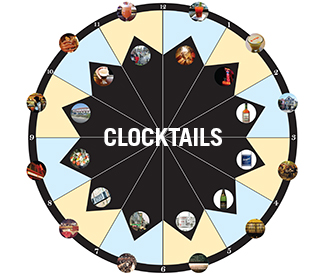
Look, we know how it is. Sometimes you just need to get out there — at whatever time it is — and grab a dang drink. Fret no more: Here’s our handy guide to getting a little tipsy on, round-the-clock.

View the Clocktails chart it in full and print it out (PDF) here.

NOON: The Ramp Huge, killer Bloody Marys and a heaping plate of fried calamari on the waterfront — that’s how to welcome in the afternoon, especially if you’re on your way to a ballgame. 855 Terry Francois Blvd, SF. www.theramprestaurant.com

1PM: La Mar perfectly made Peruvian Pisco sours, sipped by the seaside — well, bayside — please. If you’re feeling especially adult, dive into a tangy, whiskey-like capitan cocktail. Pier 1.5, Embarcadero, SF. www.lamarsf.com

2PM: Wild Side West The sun goddesses are usually on your side, whisking away the Bernal Heights clouds and allowing you an afternoon basking on the patio here with a tall glass of cider. 424 Cortland, SF. www.wildsidewest.com

3PM: Biergarten: Wednesday-Sunday, grab a glass of Hacker-Pschorr, Schneider Weisse, or Almdudler and enjoy a (hopefully) sunny Hayes Valley late afternoon. Sometimes, there’s even oompa-pah. 424 Octavia, www.biergartensf.com

4PM: Yield Nothing better in the late afternoon than a great glass of sustainable vino — say, an Urban Legend pinot — and a little downtime with charm at this Dogpatch wine bar. 2490 Third St, SF. www.yieldandpause.com

5PM: Hopwater Dash to this too-cool spot right after work to beat the crush: 31 taps of delicious California brews — try Altamont’s Scarcity IIIPA for a quick buzz — and a singles scene that will keep you busy into the night. 850 Bush, SF. www.hopwatersf.com

6PM: Hi Tops This surprisingly diverse gay sports bar in the Castro boasts the city’s yummiest Michelada, the “Big Unit” tequila cocktail, awesome vintage décor, and 25-cent buffalo wings on Mondays. 2247 Market, SF. www.hitopssf.com

7PM: Top of the Mark Perch atop the Mark Hopkins hotel for a perfectly made Cosmopolitan — sip it slow (it’s $14) and enjoy a near-panoramic view of San Francisco as the sun sets. 999 California, SF. www.topofthemark.com

8PM: Tosca Cocktail time with classic, date-friendly flair: The recently rejuvenated North Beach fave can still make a fat lady sing with a sharp Casino Bar Negroni 1919 or fruity Zamboanga. 242 Columbus Ave, SF. www.toscacafesf.com

9PM: Virgil’s Sea Room Get naughtical at the hippest recent addition to the bar scene, with a cute patio, Mission-scruffy crowd, and drinks named after beloved locals like the slinky, vodka-licious Vicki Marlene. 3152 Mission, SF. www.virgilssf.com

10PM: Martuni’s Show tunes + martinis = Martuni’s, and you’ll be singing your heart out at the piano with a jovial crowd of musical-lovers after a couple dirty ones, guaranteed. 4 Valencia, SF. martunis.ypguides.net

11PM: Li Po If you would like your mind erased with a raucous, fun-loving Chinatown crowd, order the magical Chinese Mai Tai here and hold on for dear life. 916 Grant, SF. www.lipolounge.com

MIDNIGHT Nihon Whiskey Bar Slip out of the club and into something silky and sophisticated at this beautiful Japanese hot spot. Great for conversation, especially when sipping a smoky Bunnahabbain Toiteach. 1779 Folsom, SF. www.dajanigroup.net

1AM: 500 Club Drink in some true old school Mission atmosphere — we’re gonna recommend sticking with Fernet shots and Trumer back here, since by this point your taste buds are shot. 500 Guerrero, SF. www.500clubsf.com

2AM: Sidewalk sale: Our fascistic 2am closing time? It’s 3am, really, if you count the socializing crowds cast out on the sidewalk, flasks flashing. Locally bottled Cyrus Noble bourbon is really good from a flask.

3AM: The after party: “Back to mine” shouts the lucky lady with accommodating neighbors, and off you go. Don’t settle for Smirnoff-chugging: our own Hangar One vodka, made from grapes, will win the night.

4AM: The after-after party: Nothing is better (or more romantic) than a bottle of Roederer Estate brut downed between swingset rides at Alamo Square Park — watch you don’t get a ticket, though.

5AM: The morning cap: Slip on those shades as the sun slips up — it’s time for a fizzy pick-me-up. Some Alameda-made St. George gin with a splash of sparkling grapefruit will get you up and at ’em.

6AM: Gino and Carlo: Morning shots! This North Beach classic — since 1942 — sports good old-fashioned Italian moxie, a ton of tipsy Beat history, and strong enough pours to wake you right up. 548 Green, SF. www.ginoandcarlo.com

7AM: Ace’s Budweiser for breakfast? Hey, you’ve come this far. Sink deep into the couches of this proud, dimly lit Nob Hill dive, and clink cans with your fellow “morning people.” 998 Sutter, SF. www.acesbarsf.com

8AM: Bechelli’s Flower Market Café A well-kept secret: the Flower Market Fizz, with orange juice, gin, and egg whites, is one of the best wake up calls around. Nice breakfast too, if you’re into that. 698 Brannan, SF. www.flowermarketcafe.com

9AM: Beach Chalet Nothing beats a refreshing peach Bellini after your morning run along Ocean Beach (or to steel you for a day of sightseeing with guests). You can get these by the pitcher here! 1000 Great Highway, SF. www.beachchalet.com

10AM: Buena Vista Café Was the contemporary Irish Coffee really invented here in 1952? Who cares, this is the perfect time to down a couple delicious ones — before the Fisherman’s Wharf tourists rush in. 2765 Hyde, SF. www.thebuenavista.com

11AM: Cafe Flore Mornings on Flore’s spacious patio are a quiet, sunny Castro treatany kind of margarita you want in a European atmosphere, brimming with gorgeous people, of course. 2298 Market, SF. www.cafeflor.com


SF’s culture of corruption

12

EDITORIAL The extent of the charges in the criminal complaint against Sen. Leland Yee, political consultant Keith Jackson, and others are shocking and sensational: international arms trafficking, drug dealing, money laundering, cavorting with organized crime figures, murder for hire. But the basic allegation that Yee and Jackson practiced a corrupt, transactional kind of politics wasn’t surprising to anyone who knew how they operated.

What’s worse, they were simply a more extreme — and now, thanks to FBI wiretaps and undercover agents, a better documented — example of the political corruption that is endemic to San Francisco and some other high-stakes American cities. The city of St. Francis gets sold out to the highest bidders everyday, by politicians who value wealthy constituents over the vast majority of us who are just trying to get by — and over the interests of city finances and governance.

Part of the problem is inherent in our money-driven political system, in which politicians are constantly hustling for cash from people who want things from them. Politicians deny they take actions with political contributions in mind, but well-heeled capital and labor interests don’t spend millions of dollars on contributions out of the goodness of their hearts. These are business transactions.

We wholeheartedly support the call Senate President Darrell Steinberg made for fundamental political reform during the March 28 vote to suspend Yee and two of his allegedly corrupt colleagues. These cases aren’t aberrations, they are indicative of how power get wielded when it’s based on wealth. That’s the reality that has gotten even uglier since the Citizens United decision equated money with political speech and upped the ante for would-be public servants.

But much of the problem is particular to San Francisco, where cozy relationships between politicians and corporate interests are often feted in plain view. Former Mayor Willie Brown — a lawyer and unregistered lobbyist who won’t reveal his huge corporate client list despite having an influential weekly column in the San Francisco Chronicle — helped install his longtime City Hall functionary Ed Lee into Room 200 to guard against anyone asking too much of the rich and powerful. Yee and Lee represented rival Chinatown economic factions, both wanting to use the power of the Mayor’s Office for their interests.

In his March 22 column, Brown once again repeated a joke he’s used before, that the “e” in email stands for “evidence,” which is really only funny in a sick political culture that celebrates slick rule-breakers. And it was from Brown that Lee learned it was acceptable to brazenly give tax breaks and regulatory passes to the tech companies that his top fundraiser, venture capitalist Ron Conway, are invested in.

Megadeveloper Lennar Urban used its wealth and political connections to take control of San Francisco’s biggest tracts of undeveloped and underdeveloped land, including Hunters and Candlestick points and Treasure Island, paying off community groups and hiring Jackson and other political henchmen to get the job done.

In fact, the FBI complaint says Jackson was working on behalf of that project when he approached accused Chinatown gangster Raymond “Shrimp Boy” Chow for support, leading to their alleged involvement in a string of wild criminal conspiracies. Meanwhile, Chow was getting public commendations from San Francisco-based politicians including Lee, Yee, Gavin Newsom, Dianne Feinstein, Fiona Ma, and even Tom Ammiano. Chow courted political legitimacy the same way politicians seek cash, and mainstream media outlets were happy to play along.

Throughout his political career, Yee has carried water for Pacific Gas & Electric, perhaps the most corrupting contributor to political campaigns in the city’s history. PG&E’s influence at City Hall had thankfully waned in recent years as a result of overreach and deadly criminal negligence, until Lee and his appointees last year killed CleanPowerSF (see “Challenge Mayor Lee and his lies,” 9/17/13) on a pretext so thin it could only be gift to PG&E.

In many ways, San Francisco hasn’t changed. It’s still the old Barbary Coast, ruled by capitalist thugs and corrupt politicians, only with glossy modern spin created by armies of well-paid political consultants. But we all deserve better.

Yee and Jackson should go to prison if there’s even a slice of truth to the allegations against them. And maybe they’ll cut deals and take other political figures down with them, giving us more of a peek behind the curtain of political power. But it’s up to all of us to break the close ties between economic and political power and begin to restore the democratic power of everyday people.

Tapping back

0

culture@sfbg.com

THE WEEKNIGHTER Weekends are for amateurs. Weeknights are for pros. That’s why each week Broke-Ass Stuart (www.brokeassstuart.com) will be exploring a different San Francisco bar, bringing you stories about the places and people who make San Francisco one of the most phenomenal cities in the world. Who wants a drink?

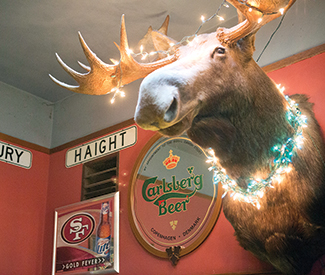
Sometimes I wish I could become unstuck in time — you know, in a Vonnegutian sense — and pop back into my own body at different times of my life. I’d love to once again see and feel who I was when I first visited the Gold Cane (1569 Haight, SF. 415-626-1112), back when I was 21, back when I was new to San Francisco, back when San Francisco was, well, different than it is now. They say Virginia is for lovers. Back then San Francisco was for freaks and weirdos. And I felt like I was both.

If I could pop into my own body that night when I was first visiting the Gold Cane, it would be 2002 and I’d be 21. My bed at the time was an air mattress and I slept in a living room that I shared with my friend Mani in a two-bedroom flat at Haight and Central. My hair was three different colors, my pants hung to my ass, and I wore an absurdly long hemp belt that dangled past my knees.

Walking in that night, I saw a barroom split in half: the right side was where the bar was and the left was full of tables. Beer signs and Giants paraphernalia littered the walls, as did old photos and art. Some mean fucker was running the pool table in the back and drunk people were doing drunk people things. It was perfect, and is pretty much exactly the same way today.

That night I met a pretty blond girl whose name I’ll never remember. We flirted for awhile, and I got her number, and when I left I imaged myself and the pretty blonde girl having a sweet summer fling and her letting me sometimes use her Internet to check my email. The place I was staying didn’t have Internet, and in 2002 W-Fi didn’t exist. I never ended up seeing the pretty blonde girl again because the next week I met my first love on the 71 bus.

If I could become unstuck in time I’d pop back into myself on the twentysomething-ish time I visited the Gold Cane. It was my first SantaCon and I’d turned 29 the night before. I’d somehow managed to lose everyone in my group and met some new friends at The Page. We got some food at The Little Chihuahua and then meandered up to the Gold Cane because it felt like the right thing to do. Walking in that night I saw an Irishman with white hair behind the bar, a jukebox playing impeccable tunes, and drunk people doing drunk people things. It was perfect and is pretty much exactly the same way today.

That night I met a pretty brown-haired girl. We drank and talked and laughed and spilled shit all over our Santa costumes. San Francisco was still full of freak and weirdos and we were of that ilk. The pretty brown-haired girl and I hit it off, but I had a girlfriend so I smartly dipped before I did something stupid. I’m not gonna say that being drunk in the Gold Cane makes you do stupid things, but it certainly doesn’t stop you from doing them either.

I dream about time travel a lot, both throughout the centuries and throughout my own life. If I’m time traveling within the Gold Cane I can do both, considering the bar has been around since 1926. I know the Gold Cane has some really cool history but I’m always too drunk to find out what it is, so I just tell my own stories instead.

Stuart Schuffman aka Broke-Ass Stuart is a travel writer, poet, and TV host. You can find his online shenanigans at www.brokeassstuart.com


Sweet, psyched-out, and dirty

2

esilvers@sfbg.com

LEFT OF THE DIAL Setting aside the darkly ear-wormy melodies, haunting vocals, and refreshingly crisp grunge-pop that goes into Everyone Is Dirty‘s sound, it’s singer Sivan Gur-Arieh’s violin — slicing sweetly above the chaos of a final chorus, adding a heightened sense of gothic romance to a bridge — that sets the Oakland art-rock quartet apart from the current fuzzy, grungey masses.

Good thing Gur-Arieh’s come to peace with the fact that she plays it.

“I’ve had a love-hate relationship with my violin since I was a kid,” says the singer, an Oakland native whose father taught her play when she was in elementary school. “I mean, growing up, you don’t always want to be staying home standing in front of a music stand, playing scales for two hours at a time. I’ve definitely put my violin under the bed and not played it…but it always came back out.

“I’m at a point where I realize it’s a tool, and it’s a tool I know how to use, and you don’t always get to choose that,” she says, earnestly, like someone speaking about a handicap. “Now, I’m just at, I play the violin. Whether it’s a nerdy instrument or not, I do it and it’s a part of me.”

It’s also a big part of the band’s charisma, an invitingness coming through music that technically should feel cold — sure, Gur-Arieh’s distinctive whisper-wail would be at home providing the soundtrack to an artsy vampire flick, but you also trust her, and the weirdness, in the same way you trust the Pixies‘ or Sonic Youth‘s weirdness; it doesn’t seem to be an affectation.

Then there’s a very ’90s sensibility about pop’s borders, reminiscent of SF’s own Imperial Teen, maybe Sleater-Kinney, and I want to say a more jagged Veruca Salt but maybe I’m just ridiculously excited that they’re reuniting so I’m hearing them everywhere? Regardless: Add in psyched-out guitar riffs from Christopher Daddio, a super warm, strong rhythm section courtesy of Tony Sales on drums and Tyler English on bass, and you start to understand why the four-piece, at just a year and a few months old, has earned serious devotees around the Bay Area as well as highly coveted free studio time at Different Fur via Converse’s Rubber Tracks pop-up — all before releasing a full-length record.

That’s in the works, Gur-Arieh assures me. This January marked both the band’s one-year anniversary (its first show as a four-piece rocked Cafe Du Nord, sigh) and another major milestone: They signed with Breakup Records, the husband-and-wife-run label, formerly out of Oakland (now out of Portland but with a heavy bias toward bands from their former hometown); the label will be producing EID’s first full-length at the end of May.

In the meantime, the band has been releasing teasers of what we can expect, like “California” — a full psych-rock sprint that gets undeniably reminiscent of the Dead Kennedys‘ “California Uber Alles” in its chorus, when the layers of sci-fi guitar drop out for Gur-Arieh to admonish “California, put your pants on/you’ve had too much to drink.” They just re-recorded that one for the full-length, at Daddio’s home studio, where they do most of their recording. “He’s an engineer, and he’s a perfectionist,” says the singer. “The fact that he’s able to make everything sound so good just using mic placement…it’s incredible to me.” On “Mama, No!!!” things take a turn for the Nirvana-esque, though the band keeps it dynamic by playing expertly with contrasts — the sing-song of Gur-Arieh’s voice with unrestrained drum crashes, the urgent peal of violin over fuzzed-out guitar.

She and Daddio, who met when Gur-Arieh was in film school in Chicago and New York (he did sound design for her thesis film), share primary songwriting duties; when the singer moved back to the Bay Area, they started seeking out the band’s rhythm section. Film still plays a big part in how the singer thinks about music, she says. “I make our videos for the most part,” she says. “They’re very connected to me. I’ve always been a musician, but I’ve also always been painting, writing poetry&ldots;film is kind of an extension of music, to me.”

Everyone Is Dirty will be sharing a bill on April 5 with a pair of similarly dramatic, cinematic, female-fronted bands: Rich Girls, the new(ish) gothy garage project from Luisa Black (formerly of The Blacks) opens, and Happy Fangs, whose contrasting male-female vocal dynamic, courtesy of Rebecca Bortman and Mike Cobra, has just been supplemented by the addition of Sacramento drummer Jess Gowrie. It’s the kind of lineup that has the potential to kick your ass, then wrap it up and hand it back to you with a sweet smile as an experimental art project. I mean this in an entirely positive way.

“I’ve been really into this violin player from Chicago named Leroy Jenkins lately,” says Gur-Arieh, when asked what she’s been listening to. “If you look him up on YouTube, his playing was so weird and messy and imperfect, and that’s super inspirational to me. That’s unique especially for violin players, because they tend to be so focused on perfection, on playing other peoples’ music perfectly, and he was an emotional player — not afraid to make the violin sound piercing,” she says, “and dirty.”

Happy Fangs w/ Everyone Is Dirty and Rich Girls
Sat/5, 8pm, $10
Bottom of the Hill
1233 17th St, SF
www.bottomofthehill.com


While we’re riding high on the female-fronted band kick, a few other kick-ass ladies to look out for this month:

Given the current classic funk-soul revival — see Sharon Jones‘ sold-out stint at the Fillmore last week — there’s just no good reason why Wicked Mercies hasn’t blown up yet. Fronted by three seriously talented female vocalists, with a brass section that culls from the best of the old-school San Francisco soul scene, the band – which bills itself as “working class talent” that brings “the sound of San Francisco street soul to the people” — has been a dance party-starting staple at funk-friendly venues like the Boom Boom Room for a few years now, so there’s little doubt that a room as small as Amnesia is going to get sweaty very quickly. Remember to drink water.

Wicked Mercies
With the Go Ahead
Sat/5, 9pm, $8-$10
Amnesia
853 Valencia, SF
www.amnesiathebar.com

Forming a band when you’re in middle school that actually goes on to critical praise and some commercial success before you’ve graduated from high school means a few things. For The She’s, which the Bay Guardian ever-so-aptly identified as a band On the Rise in 2013, one thing it means is giving interviews about your upcoming second EP that involves quotes like this one, from singer-guitarist Hannah Valente in a recent Bay Bridged interview: “It’s going to sound a lot different. On our first album, there are songs that we wrote in eighth grade.”

All good-natured (and, let’s be real, envious) ribbing aside, there’s no question that The She’s have pretty much won the hearts of any red-blooded San Franciscan with an affinity for summery dream-pop; they’re also entering a stage of band-life reserved for artists who achieve a certain level of success while so young that their age becomes part of the shtick. This next stage is when they’re going to have to prove that they’re talented songwriters and performers, period, as opposed to being really, really good for a band made up of high school kids. For the record, I think the former is true, but their sophomore EP, Dreamers, due out April 15, will have to do the talking. Catch ’em for free at Amoeba on April 12, or the official (all ages!) release show at the Rickshaw Stop.

The She’s
With TV Girl, Lemme Adams, and Cocktails
April 18, 9pm, $10-$12
Rickshaw Stop
155 Fell, SF
www.rickshawstop.com

All (really, all) are welcome

0

By Whitney Phaneuf

arts@sfbg.com

Mark Growden had a passion for jazz and classical music from a young age, growing up in the small northeast California mountain town of Westwood. So he set out to be a composer. He only learned to sing as an adult — out of necessity, when his instruments were stolen — and only then did his rich baritone vocals become a way to book gigs and get his music heard.

Now he’s teaching others to sing — often, amateurs who have never sung before — and writing original songs for them to perform. His Calling All Choir, now in its second season, is a 150-person choir made up of singers who, for the most part, have never taken the stage before in their lives.

Growden has always found inspiration in unexpected places. His take on American roots music blends his love of jazz with influences as varied as Appalachian folk, cabaret, and prison work songs from the old South. He started out composing for local dance companies, mainly on saxophone, before learning to play more folk-oriented instruments such as banjo and accordion. He’s spent the last 20-some years nomadically touring the country as a one-man band and in ensembles. In between shows, he’d stick around a city long enough to hold a singing workshop, which was as much about technique as it was about playful exercises that opened people up to music. Soon, Growden was known for both his songwriting and teaching abilities.

“The people in SF [in particular] kept coming back to the workshop,” said Growden, now an Oakland resident. “They asked ‘why do we have to stop for two months while you go on tour?’ I had it in my mind that I had to be on the road to make money.”

In September of last year, having just moved back to Oakland to settle down, Growden told his San Francisco workshop members, “Let’s try it.” He studied the community choir model, in which members pay dues to compensate the director, and started designing a program around his original compositions. He knew from the beginning that there would be no auditions; to reinforce its inclusive nature, he called it The Calling All Choir.

Growden spread the word online and through his previous workshop attendees, forming chapters in Sonoma and the East Bay, in addition to San Francisco. He set the dues on a sliding scale, ranging from $0 to $500 per person for the 18-week season. The inaugural season last year kicked off with about 40 members in each location. The three groups rehearsed separately — once a week for two hours a night — before coming together in January for dress rehearsals and final performances at The Sebastopol Center for the Arts and The Crucible in Oakland. The choir also performs at local hospitals and retirement homes.

First season member Gianna Smart had never heard Growden’s music before joining, but it ended up being part of the appeal.

“I imagined I’d find a Christmas choir in a church basement somewhere, and was okay with that, but when I met Mark and discovered that he wrote all of his own original compositions, I was really excited,” said Smart, who lives in Healdsburg. “The choir is a safe place to explore your own voice and be a part of a bigger sound. You don’t have to hit all the notes because you’re supported — someone always has your back.”

The second season is already five weeks under way, with 150 members. They’re set to perform four compositions by Growden in the coming weeks, plus a 1936 cantata by Ralph Vaughan Williams called “Dona nobis pacem.”

“It’s a classic round that the older generations know,” Growden said. “It’s important to keep those rounds alive in our culture.” So how do amateurs go from zero experience to singing in Latin? Growden said it usually comes down to practice: “There were people who couldn’t match pitch, but I kept having them come in early to work with them one-on-one or with a buddy,” he said. “People who I thought absolutely couldn’t sing, end up being able to sing.”

During a recent rehearsal, his patience seemed endless and his energy infectious. When the choir formed a circle grouped by vocal ranges — sopranos, altos, tenors, and basses — Growden sprinted from section to section, signaling with his arms and voice when and how to sing. He encouraged them “to lean” into their next notes, reminded them not to bury their heads in their black binders filled with sheet music, and even stopped them when they sounded flat. Sure, there were a few off-key, cringe-worthy moments.

But there was also something beautiful in those imperfections. “I don’t like to use the word spiritual – it’s way overused – but there is something sacred in people singing together. Even if they’re just drinking together,” Growden said later by phone.

Each rehearsal begins with vocal exercises, many of which Growden borrowed from theater, and usually some form of dancing to encourage people to use their entire body as an instrument. The rehearsals also end with a dance party, for which Growden lowers the lights and blasts everything from hip-hop to ABBA. For the rehearsal he let us sit in on, it happened to be James Brown.

The second season will culminate with a finale June 20, at a venue TBD, and the third season will begin in September 2014. The choir accepts members within the first three weeks of the season, though Growden said he makes exceptions for experienced singers who know how to read music.

“When you’re writing for amateurs, it’s harder. I’ve got to set them up for success,” he said. “But as a composer, I am really lucky. Vivaldi was a music teacher at an all-girls orphanage, Duke Ellington had his band…I mean, do you know how hard it is for composers to have their music made?”

For upcoming shows and more information: www.callingallchoir.org

Brawl opera

0

cheryl@sfbg.com

FILM There are action films. And then there’s The Raid 2. One need not have seen 2011’s The Raid: Redemption to appreciate this latest collaboration between Welsh director Gareth Evans and Indonesian actor, martial artist, and fight choreographer Iko Uwais — it’s recommended, of course, but the sequel stands alone on its own merits.

Overstuffed with gloriously brutal, cleverly staged fight scenes, The Raid 2 — sometimes written with the subtitle “Berendal,” which means “thugs” — picks up immediately after the events of the first film. Quick recap of part one: a special-forces team invades an apartment tower controlled by gangsters. Among the cops is idealistic Rama (Uwais). Seemingly bulletproof and fleet of fists and feet, Rama battles his way floor-by-floor, encountering machete-toting heavies and a wild-eyed maniac appropriately named Mad Dog (Yayan Ruhian), as well as his own older brother, who’s a high-up in the organized crime world. Rama also realizes he’s been unwittingly working for a corrupt police lieutenant, who’s got a personal beef with the bad guys. The Raid‘s gritty, unadorned approach (streamlined location and cast, gasp-inducing fights) resonated with thrill seeking audiences weary of CG overload.

“Before we’d screened the first movie anywhere, we watched it to do a tech check on it. After we finished, we thought, ‘Ok. We have … something,'” Evans recalled on a recent visit to San Francisco with Uwais. “But we just kept kind of focusing on, ‘There’s pixellation here, the picture’s not great there.’ We were looking at all the problems that you do when you’re deep into production on something. Then, when [the 2011 Toronto International Film Festival] happened, it was like, ‘Holy shit!’ We had no idea it was going to get received like that. And it kept growing! For us, it was this weird experience where something that we’d made within our own little creative vacuum was suddenly being accepted by people.”

A second Raid film was inevitable, especially since Evans — who became interested in Indonesian martial arts, or pencak silat, while working on 2007 doc The Mystic Art of Indonesia — already had its story in mind: Rama goes undercover in the underworld, a ploy that necessitates he do a prison stint to gain the trust of a local kingpin. Naturally, not much goes according to plan, and blood is shed along the way, as multiple power-crazed villains set their sinister plans into motion. Evans originally wanted to film it after making 2009’s Merantau, his first action film with Uwais, but it proved too costly for the then-unproven team.

“For two years, we were looking for financing, but were not able to get it. So we did the first Raid because it was lower budget. It was like a plan B,” Evans said. “After that, our investor was willing to help finance the second one. It bought us better equipment, more time to shoot, better sets. All of that stuff that we spent extra money on went up on the screen.”

With a fan base established by the first film, Evans — himself a lifelong action movie lover — knew expectations were high. Somehow, he’d have to top The Raid. “It couldn’t be The Raid 2, except now it’s a bigger building,” he joked. “So, what can we do differently? Expand the universe, and expand the characters. Explore different territory and be able to try different action beats: Car chase! Prison riot! And using weapons that we hadn’t introduced before, like the curved blades. It’s one of the weapons in silat. So it’s like, ‘Ok, this thing exists. Why haven’t we used it yet?’ We kind of hinted at it in Merantau — but we never really used it. Indonesian fans of that movie complained, but I was like, ‘Hold tight. We will use it.’ It’s such a violent, aggressive weapon that it wouldn’t have felt right in Merantau. But in The Raid 2, it felt right.”

Evans was also concerned that the “element of surprise” would be lost for audiences who had seen the first film. When asked to elaborate — because Uwais’ character is a mild-mannered nice guy who, surprise, is also an explosive killing machine? — he broke it down.

“[In the first film, audiences] got a taste for our choreography. We try to differentiate ourselves from other martial artists and filmmakers that do this type of stuff. Not in a way of like, ‘What we do is better.’ It’s more a case of, everyone packages their films differently,” he said. “We’re big fans of what Tony Jaa has done, and Sammo Hung, Donnie Yen, and Jackie Chan. But we have certain rules that we just don’t break. We never do a replay of anything when it comes to a stunt or an action sequence. It’s all one flow, and it never breaks rhythm — it keeps going until the thing is finished. In terms of slo-mo, we only ever use it to tell something dramatically within a fight sequence. We never use it to show off a movement. Which segues into, no acrobatics. Because as soon as you do that, you’ve got a stunt guy waiting to get hit. And that takes you out of the scene straightaway.”

Presenting the fight scenes as realistically benefits more than just the audience. “On TV in Indonesia, silat is represented in the most bullshit way possible: people jump into the sky and fly, and turn into jaguars, and shoot fireballs out of their eyes. I’m not exaggerating! When we first went to gather money for Merantau, we’d say, ‘We’re gonna make a silat film!’ and people would be like, ‘Aw, silat? That’s that stupid thing on TV,'” Evans recalled. “But I’d met Iko, and his gurus and teachers, and silat is such an integral part of their lives. [It was important to me that] if we made films about this martial art, we had to do it in a way that reclaims it from what had been done before. We wanted it to be real, and true to what they study.”

Though the actual fighting is realistic, the settings were carefully chosen for cinematic impact. Both of those ante-upping “action beats” Evans mentioned — the car chase, in which Uwais’ character batters his opponents inside of a moving vehicle, and the prison riot, which is muddy, bloody mayhem — are standouts.

“A lot of people responded to the idea of claustrophobia in the first one, because of all the enclosed spaces,” Evans said. “I wanted to find a way to still have these tight moments in the second one, even though the scope was much wider. Even within a car chase, we could dive right inside and have this super claustrophobic fight in the back seat.”

Uwais estimated that each fight scene required three or four months of practice — and even more for the car stunt. “Standing and fighting is very different than sitting and fighting,” he pointed out.

The collaborators, who have an easygoing rapport, have conflicting memories when it comes to filming the sloppy prison brawl — though they agree it was far and away the least fun scene to shoot. (Evans: “We shot that for eight days straight.” Uwais: “Eight days? It was 10 days.” Evans: “The guys were caked in mud all day.” Uwais: “From 6am to 5pm.” Evans: “More like, 4pm.” Uwais: “5pm!” Evans: “Ok, 5pm!”)

As The Raid 2 prepares to open wide, Evans is ramping up plans for the third film in the trilogy. “Whereas The Raid 2 starts like two hours after The Raid finishes, The Raid 3 starts three hours before The Raid 2 finishes,” he revealed. “So there’s a scene toward the end where a certain group makes a decision on something, and part three’s gonna follow the consequences of those actions. The Raid 3 is going to be way more streamlined than part two [which runs 148 minutes], and it’s going to be an homage to certain styles of cinema that I love that I really want to try and play with.”

And yes, there’s an American Raid remake in the works. When asked “Whyyyy?”, Evans was ready with an answer. “I’ve been a huge fan of Asian cinema ever since I was a kid, and I used to have that same feeling: ‘Oh my god, they can’t remake that!’ But in this case, nothing takes the original away. If anything, people who see the remake might get introduced to the original now, because they didn’t know it existed before.”

THE RAID 2 opened Fri/4 in Bay Area theaters.

Freedom of expression

0

arts@sfbg.com

FILM The 1960s were a liberating period for movies almost everywhere, not least behind the Iron Curtain and particularly in Czechoslovakia, a country created (from the Austro-Hungarian Empire) in the wake of world war and dissolved (into two nations) by the official end of the Cold War. The “Czechoslovak New Wave” was a moment of considerable international interest at the time — notably winning Best Foreign Language Film Oscars for 1965’s The Shop on Main Street and Closely Watched Trains two years later, along with umpteen festival awards — that attained immediate poignancy by being so short-lived. When Soviet tanks rolled in to aggressively squelch the liberal reforms of “Prague Spring” in August 1968, the reassertion of censorious state control put a chokehold on filmmakers as much as any other “subversive” group.

Some talent fled to the West, achieving variable success, most notably future double Oscar winner Milos Forman (1975’s One Flew Over the Cuckoo’s Nest, 1984’s Amadeus), and Ivan Passer of cult faves Cutter’s Way (1981) and Creator (1985). Some, unwilling or unable to get out, were prevented from working again in the government-controlled film industry for so long that by the time such blacklists no longer existed, they’d lost interest or died. Others, like the recently deceased Vera Chytilová (1966’s Daisies), Jirí Menzel (the aforementioned Trains), Jaromil Jires (1970’s Valerie and Her Week of Wonders), and animator Jan Svankmajer (1988’s Alice), stayed and managed to build substantial bodies of work despite occasionally finding themselves on the wrong end of the political stick.

What virtually all these directors have in common is that some of their films were banned, whether before or after the Soviet invasion: Jires and Menzel had exceptional features (respectively 1969’s The Joke and 1990’s Larks on a String) no one saw until decades later. Chytilová had to direct commercials under her husband’s name before falling back into official favor, while in 1972 Svankmajer was barred from working at all for several years. What would they and myriad lesser-known artists have created if Prague Spring had never ended?

That question looms particularly large over the career of Jan Nemec, alleged enfant terrible of the Czech New Wave. He’s nearing 80 now, and still active — back in the Czech Republic, which he returned to some years ago after a couple fugitive decades abroad — yet his original output from 1964 to 1968 still overshadows the sporadic projects he’s been allowed to realize since. That period’s burst of youthful energy and inspiration remains somewhat dazzling, all the more so because in many ways we never got to see his talent fully mature. The traveling retrospective stopping at Berkeley’s Pacific Film Archive over the next two weeks offers a necessarily spotty portrait of an artist whose expressions have been more than usually subject to cruel fate.

His 1960 graduation short A Loaf of Bread — a terse miniature in which starving concentration camp prisoners toward the end of World War II try to steal sustenance from Nazi guards — could serve as a prelude to his first feature four years later. Diamonds of the Night (1964) begins with frantic handheld camera as two young men stagger uphill from gunfire into the countryside, having fled a prison train probably headed to the camps. The woods are a strange and forbidding landscape, its danger heightened by these city boys’ extreme hunger and exhaustion. Occasionally flashing back to their lives before capture, the film’s woozy disorientation prevents our being sure if the pursued, panicky protagonists are witnessing grotesque sights and committing violence, or simply hallucinating it all.

Barely over an hour, this black-and-white jolt of mixed realism and surrealism (drawn, like Bread, from a story by Czech camp survivor Arnost Lustig) announced a major new talent. While its historical indictment of a persecuting foreign power kept it safe from official criticism, the 28-year-old Nemec wasted little time before pushing the envelope much further. A Report on the Party and the Guests (1966) is an absurdist allegory with unmistakable political overtones. Its protagonists are a group of drunken bourgeoisie picnickers who fall in with other, larger, vaguely sinister parties in the woods, culminating in a vast al fresco banquet in which a good time is had by all — so long as they adhere to the increasingly arbitrary rules of conformity. If not, the fade out suggests, they will be — like Diamonds’ Jewish lads — hunted down with rifles and dogs, like game.

This blunt provocation did not go unnoticed by the right wrongdoing people: It was immediately “banned forever” by the Czech government. Fortunately, Nemec had already begun his next film. Martyrs of Love (1967) is a three-part homage to silent comedy in which there’s almost no dialogue, plenty of slapstick, and a brief cameo by Daisies‘ anarchic female duo. Also tipping hat to Jacques Tati, it was a delight whose elements of social satire could offend no one. Yet it did very little to balm the rancor that Party stirred. After his short documentary about the Soviet occupation, 1968’s Oratorio for Prague was banned — yet footage from it used by news services around the world — he was persona non grata at home, eventually given the choice of exile or prison.

His work over the next couple decades is scant and elusive; it’s represented at the PFA only by a 1975 German TV adaptation of Metamorphosis by Nemec’s hero, Kafka. When he resurfaced with a couple post-perestroika features (notably 1990’s In the Light of Love, from Czech literary avant-gardist Ladislav Klima’s absurdist 1928 novel), they were poorly received and remain hard to find. More recently he’s turned toward collage-style video essays like 2001’s autobiographical Late Night Talks with Mother and 2005’s Toyen (about the Czech surrealist painter). They’re complex intellectual and aesthetic explorations — but they still leave you wondering about the filmmaker he might have become if 1968 hadn’t come in like a lamb and gone out like a sacrificial one. *

DIAMONDS OF THE NIGHT: JAN NEMEC

April 6-23, $5.50-$9.50

Pacific Film Archive

2572 Bancroft, Berk.

bampfa.berkeley.edu


Cinemagic

0

cheryl@sfbg.com

FILM It’s Crossroads time again — the annual San Francisco Cinematheque festival of experimental, avant-garde, abstract, and otherwise difficult-to-easily-categorize works carefully curated for adventurous, open-minded filmgoers.

In other words, if you’re counting down to the next Transformers flick, this may not be your jam. But there’s an eager Bay Area audience for the other end of the cinematic spectrum, as evidenced by the fact that Crossroads’ “Nathaniel Dorsky: Three Premieres” program, which is being presented twice at Yerba Buena Center for the Arts, is already sold out.

Fortunately, there are eight other programs, two of which focus on Ben Rivers and Ben Russell’s A Spell to Ward Off the Darkness, which makes its Bay Area premiere after receiving much buzz on the international festival circuit. Robert A.A. Lowe (also known as Lichens, he’s a solo musician who performs with local doom droners Om on occasion) plays the film’s central character, a nameless wanderer who drifts through its three segments in pursuit of some mysterious ideal. First, he’s a commune dweller — no context is given, but its residents are clearly international, with varying accents and languages, and the directors have said it’s set on an Estonian island.

It’s an idyllic place: leafy, creative, and harmonious, populated by a group that’s more back-to-the-land intellectual than hippie. There are newborn babies, towheaded children with painted faces, adults-only group saunas, and a geodesic dome. “This whole process is unpredictable. It’s important to keep in mind, the visions and ideas are just guidelines,” one man reflects; he’s referring to the group’s pursuit of what one woman calls “utopian architecture,” but he could also be giving viewing instructions for this film.

It’s useful advice, especially when Spell shifts settings. Lowe’s quiet observer is now a man roaming solo through the Finnish woods; the camera gazes into the landscape from afar as he climbs up and down trails, up and down through the frame. Occasionally, he stops by a small house, seemingly abandoned but still containing certain odd objects (needlepoint pictures, stacks of tabloids, floral curtains). Nature fascinates the camera — including, yes, multiple long shots of lichens — but so does Lowe, specifically his eyes, which are held in close-up after he’s shown dabbing white makeup on his face. Suddenly, we see the house engulfed in flames, there’s a cut to black, and then we hear the exact right music to show after an inferno: black metal, that most deliberately lo-fi and ear-shredding of heavy musical subgenres.

For metal fans, this sequence could prove the most controversial — there aren’t any Scandinavians in the mix, and one of the dudes is from Liturgy. (Like, do they even burn churches in Brooklyn, man?) But even music snobs will have a hard time resisting Spell‘s spell, or giving kudos for the film’s title treatment — a slightly more readable interpretation of the spidery font favored by extreme musicians, encasing words that echo the film’s surprisingly optimistic undercurrent.

Co-director Rivers appears in person at the film’s Fri/4 screening; Sat/5, he’ll give an artist’s talk, moderated by SF Cinematheque’s Steve Polta, at the Kadist Art Foundation, where the film will be exhibited as a “three-part spatialized architectural video installation.”

The rest of Crossroads is given over to shorts programs, assembled with characteristic creativity (Program 3 “is focused on abstract animation-graphic cinema, environmentalism, and crack pot exploration,” according to Polta), with co-producing credits given to Cinema Arts at the Exploratorium and the San Francisco Dance Film Festival on selected nights. There will also be a “live cinema” program (with live experimental music), and works by notable locals, including recent Guardian GOLDIE award winners Malic Amalya and Paul Clipson. *

CROSSROADS 2014

Thu/3-Sun/6, $5-10

Victoria Theatre

2961 16th St, SF

Kadist Art Foundation

3295 20th St, SF

www.sfcinematheque.org

Peep peep

0

marke@sfbg.com

SUPER EGO Three signs that our nightlife spring has sprung, sure as the annual return of the swallows to Blow Buddies: the Sunset season opener party, Hard French’s outdoor re-emergence, and the star-studly LGBT Center gala Soiree.

Our queer old-school soul treasure Hard French (Sat/5, 2pm-8pm, $8. El Rio, 3158 Mission, SF. www.elriosf.com) will pack El Rio’s patio every first Saturday here on out with the joyous sounds of frugging and jiving. Later, all the drag, queer, and club luminaries will brighten up Soiree (Sat/5, 6:30pm-midnight, $95. City View, 135 Fourth St, SF. sflgbtcenter.eventbrite.com) — the proceeds go for job and economic skills training for LGBT youth, many of them homeless. This year’s theme is “A jazz tribute to the Beat generation,” so don’t forget your beret and bongos. Performances galore.

Sunset (Sun/6, 11am-7pm, $5–$120. Stafford Lake Park, Novato, www.tinyurl.com/sunsetopener2014) is one of our most storied party crews — this is its 20th anniversary. And the huge, yearly season opener blast is like one big, very big, family picnic. There are rave babies, and their own rave babies! And thousands of smiles. And of course special surprise guests and a raging afterparty back in the city. Bring your picnic basket.

PS My column went to press just as I was hearing the sad news of DJ Frankie Knuckles’ passing. Here’s a list of parties this weekend that will be truly great tributes to his spirit and legacy.


ANTHONY PARASOLE

Good ol’ four-on-the-floor house, with a bit of ethereal heft behind it, from this prominent, hunky New York DJ. With the UK’s Leon Vynehall, whose glorious “Step or Stone (Breath or Bone)” was one of the best tracks of last year.

Fri/4, 10pm-3am, $10–$15. Public Works, 161 Erie, SF. www.publicsf.com


DICK SLAP

High and dirty times at the Eagle whenever this fantastic party from Seattle comes to town courtesy of force of nature DJ Nark. Get into it with DJs Chip Mint and Guy Ruben, towering drag hosteses Jem Jehova and VivvyAnne ForeverMore, “camera in her wig” videographer Drewnicorn, and a dance floor packed with hot scruffs.

Sat/5, 9pm, $7. The Eagle,  398 12th St, SF. dickslaplyfe.tumblr.com


VIN SOL

One of our own, coming up fast with his Sooo Wavey label and housey Sade edits. He’s at one of our sweetest (and least expensive!) parties, Push the Feeling, with local player Cherushii, whose excellent recent Queen of Cups EP can get anyone moving.

Sat/5, 9pm, free before 10pm with RSVP online, $6. Underground SF, 424 Haight, SF. www.do415.com/pushthefeeling


MARTIN BUTTRICH

Caught this hugely popular German (now based in LA) cat a couple times in the past few years, and he really delivers on that deliciously deep, if now a bit retro, post-minimal Berlin-Ibiza sound. It’s all in his perfect control. With beloved Doc Martin and Francesa Lombardo.

Sat/5, 10pm-4am, $17–$25. Public Works, 161 Erie, SF. www.publicsf.com


TRIBUTE TO JOSH EZELLE

One of SF’s foundational house DJs, Josh Ezelle, passed away last month suddenly in Thailand, leaving behind a newborn son and oceans of friends. This tribute fundraiser brings together many of our best players to celebrate his life in music and dance: Jeno, Garth, Markie, Charlotte the Baroness, Toph One, M3, and others.

Sat/5, 9pm-4am, $15–$20. Monarch, 101 Sixth St., SF. www.monarchsf.com


SERGE GAINSBOURG DANCE PARTY

Oui, oui, the fab enfants terribles of Bardot A Go Go are back — with a shagadelic shindig featuring the naughty, existentialist, oh-so-cool tunes of Serge and other mod icons of his ilk. Zip up your thigh high boots and get le groovy.

Sat/5, 9pm, $10, all ages. Rickshaw Stop, 155 Fell, SF. www.rickshawstop.com


WORLDLY

The Worldly parties have brought a, well, worldly electronic music flavor to the SF scene for more than a decade — this live extravaganza and CD release party will electrify anyone into cutting edge global grooves. With Dub Kirtan Allstars, Janaka Selekta, DJ Dragonfly, and tons more.

Sat/5, 9pm-3am, $15. F8, 1192 Folsom, SF. www.tinyurl.com/worldlysf2014


TRENTEMOLLER

Moody Danish techno: it’s catchier than you think. Andres Trentemoller crossed over from the dance floor long ago, pairing with an array of vocalists to create a lilting indie atmosphere with electronic movement around the edges. And he actually makes it work.

Sun/6, 8:30pm, $25. Mezzanine, 444 Jessie, SF. www.mezzaninesf.com


Talk it through

0

arts@sfbg.com

DANCE

“She started right away on the collaborative process. I have this wonderful image of the Bryant Street studio. There was no real mirror, only one leaning against the wall. I remember Margy sitting with her back against it — I was afraid that it might fall on her — and her saying, ‘I have so many ideas in my head that I am afraid I can’t all get them out.’ What I really liked was that she also was interested in the ideas in my head, and she wasn’t going to impose her ideas, and this was going to be a conversation.” — Ginny Matthews, Margaret Jenkins Dance Company, 1974-1980

That’s how one of the country’s most remarkably individual companies was born. After moving back to her hometown in 1970 at a time when San Francisco was barely a dot on the map in terms of modern and postmodern dance, Margaret Jenkins has created over 75 works. Now 70, she has just renewed the lease on her spacious Margaret Jenkins Dance Lab studio on Eighth Street for another five years. CHIME, Jenkins’ mentorship program for professional dancers, is a wild success locally and in Los Angeles.

In 2006, she took her conversation global, collaborating with India’s Tansuree Shankar Dance Company on A Slipping Glance; in 2009, she created Other Suns with China’s Guangdong Modern Dance Company. And she is still at it, intrigued by questions that pop up in discussions with her again and again: “Wouldn’t be interesting if…”

As the light streams in through the studio’s floor-to-ceiling windows on this March afternoon, Jenkins is watching 15 dancers, seven of her own and eight from the Jerusalem-based Kolben Dance Company. They have just taken a break from rehearsing The Gate of Winds, which came about after Jenkins traveled to Jerusalem, a city she had always wanted to visit. “Having been raised in a progressive Jewish family, and as an atheist, I was curious what it would feel like putting my feet on the ground,” she observed.

She is aware that she and Kolben’s artistic director, Amir Kolben, have quite different approaches to the creative process. But working with his dancers in Jerusalem, she found them “fierce and wonderful movers.” Kolben, who had never worked with a collaborator before, was intrigued “more with the way we think than with how we create,” he explains.

Jenkins seems pleased with what she has just witnessed: two beautifully trained groups of performers who are stretching themselves emotionally and physically in exploring paths that they may not even know to have existed.

“Margy is very brave. She has an intellectual honesty about her that I really appreciated and [that she] communicated with me. I was doing solo work, and it was a very difficult time for me, and I learned to trust myself. [Being with the company] buoyed me up in so many different ways. Besides, it was nice to be on stage with others.” — Rinde Eckert, MJDC, 1987-1995

Still, Jenkins seems to have just a touch of melancholy about her when she looks forward and backward. Will she renew her lease again five years? “All too often, I ask myself whether there will be any money,” she sighs. “Every year, I start from absolute zero.”

Perhaps it was some of those thoughts that gave rise to the second piece on this 40th anniversary bill. For Times Bones, which premiered at the University of Maryland last September, Jenkins took a look at her past repertoire — at least the 68 pieces of which video exists — to see whether there were “untold stories” in them. She was struck by “how little contact the dancers had with each other. Now they partner each other. I have no idea why that’s the case.” This became another “wouldn’t it be interesting…” question. She had her present company learn fragments of pieces she had chosen, and then told the dancers to have their own conversations with them.

“I found her democratic process, her way of giving everyone voice in the process, to be infuriating and enlightening all at the same time. I hated the idea that she didn’t tell us what to do. It wasn’t enough to make movement that got you from here to there; it had to be thoroughly investigated. We were constantly throwing out anything that felt familiar or ‘already been done before.’ And the enlightening part was her willingness to let divergent types of material exist together. I still use this idea of colliding materials together, in an effort to surprise my original conception of things.” — Joe Goode, MJDC, 1980-1984 *

MARGARET JENKINS DANCE COMPANY

Thu/3-Sat/5, 7:30pm; Sun/6, 3pm, $30-35

Yerba Buena Center for the Arts

701 Mission, SF

www.ybca.org