Volume 47 [2012–13]

Live to tell

1

arts@sfbg.com

FILM The most popular feel-good documentary last year was Searching for Sugar Man, Malik Bendjelloul’s film about the somewhat mysterious Rodriguez — a talented singer-songwriter who recorded two major-label albums in the early 1970s, attracted no notice whatsoever, then disappeared from any public view. Unbeknownst to him (or to his bank account, since the royalties seem to have vanished more completely than he did), the records were a big hit in South Africa, where fans eventually tracked him down and informed him that he was, well, a star. So, decades after falling into obscurity, he was playing before large audiences he’d never known he had, and (via the film) getting new ones.

Sugar Man made you wonder how many other such stories might be waiting to be excavated. We’ve probably all seen or heard acts that deserved some commercial success, but never got close to it. More than ever, the musical mainstream seems more about marketing a package than promoting genuine, idiosyncratic talent. And examples of the latter slip through the cracks all the time, hopefully getting re-discovered later — for instance Nick Drake, sainted godhead of sensitive singer-songwriters, was barely a blip on the public-awareness horizon during his life. It was only after he’d died that the cult, and record sales, began to swell.

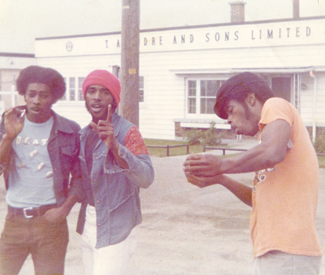
A Band Called Death is a similar story of recognition delayed so long that the principal vindicated character was no longer alive to enjoy it. Sons of a Detroit Baptist minister, David, Dannis, and Bobby Hackney were enamored with rock music from the time the family sat down to watch the Beatles play The Ed Sullivan Show in 1964. By 1971 they were calling themselves Rock Fire Funk Express — but exposure to live hard-rock acts like the Who and Alice Cooper convinced them to ditch the funk part completely. Their father’s tragic death (he was killed by a drunk driver while taking an injured coworker to the hospital) hit all of them hard, but especially guitarist David, who had a spiritual awakening of sorts and insisted their band be named after what he now considered “the ultimate trip:” Death.

It seemed a career-killing moniker if ever there was one. (Though by 1983 Orlando’s death metal pioneers would have no trouble using the same name.) Nor did the trio’s loud, fast, heavy sound — their rehearsals drove the neighbors nuts — make sense for an African American outfit in a city where Motown ruled. Though their parents had always encouraged them, nearly everyone else took a “Why are you playing that white boy music?” stance. Nonetheless, they found a supporter at local studio-music publisher Groovesville Records, recorded some tracks, and shopped them around to every imaginable label here and abroad. After innumerable rejections, they seemingly hit the jackpot with Columbia Records prez Clive Davis, who was eager to sign them … if they’d just change that name. As the band’s “visionary,” however, David Hackney was unwilling to budge on his total “concept.” The offer was withdrawn.

Defeated and exasperated, the brothers accepted a relative’s invite to stay with him in Burlington, Vt., and wound up relocating there — but when they put up Death posters around town, the unamused local cops assumed this was some sort of gang-activity threat. That was the last straw; Dave reluctantly agreed on a name change, to the 4th Movement. In that form they played some gigs and recorded a couple albums — but their new, more overtly spiritual emphasis didn’t play well with rock audiences who really didn’t want to flick their Bics to lyrics about Jesus Christ.

A man with a plan — but no backup plan — Dave eventually slunk back to Detroit, and was dismayed when his brothers moved on musically, experiencing some success with a reggae band called Lambsbread. Death wasn’t just forgotten; it had never really been noticed. Its only material issue was a self-distributed 1974 single of “Politicians in My Eyes” b/w “Keep on Knockin'” that had scored just token local radio play. But three decades later some of its 500 pressings started surfacing on underground DJ’s turntables, rare-record collectors’ wish lists, and on eBay (at $800 a pop). What could be a more fascinating enigma and find than an unknown African American group making music that was precociously protopunk (with some psych influences) well before even the Ramones’ first album in ’76?

Eventually the surviving members saw their ancient masters released at last, and toured clubs as a reformed Death with Lambsbread’s guitarist taking cancer-felled Dave’s place. It was all made sweeter by the fact that three of Bobby’s sons now had their own band, named Rough Francis after their late uncle’s last recording pseudonym.

A bit overlong, the documentary nonetheless ingratiates with its surprising wealth of home-movie footage, commentary from the very genial Hackney clan, and testimony from latter-day fans like Henry Rollins, Jello Biafra, Kid Rock, and Questlove.


A BAND CALLED DEATH opens Fri/5 at the Roxie Theater.

Get trashed

3

emilysavage@sfbg.com

MUSIC During high school one day in a sleepy Marin County enclave, Tina “Boom Boom” Lucchesi went to a local record shop where Erik Meade of Jackson Saints and the Pukes worked, and he put on a Redd Kross album. “Total obsession,” Lucchesi says now, a few decades later, from her punky, vintage-filled Peewee’s Playhouse home in Oakland. “He was playing the Teen Babes from Monsanto record, and I was like, I’m going to buy that — and I did.”

This week, Lucchesi’s early 1990s-born wild surf-punk group the Trashwomen will play alongside Redd Kross for the first time ever, during the two-day slackfest Burger Boogaloo (Sat/6-Sun/7, noon-9pm, $25/day. Mosswood Park, 3612 Webster, Oakl., www.burgerboogaloo.com). The Boogaloo, a yearly collaboration between Orange County, Calif. label and shop Burger Records, and East Bay promoters Total Trash Booking, is known for bringing an eclectic, sometimes manic mix of surf, punk, garage, doo-wop, and retro rock’n’roll acts commonly associated with both organizers.

This year, for the first time, it’s all outdoors, and the headliners are impressive: Redd Kross, Jonathan Richman, the Zeroes, the Oblivions, Fuzz, the Trashwomen. The rest of the lineup is too, including Audacity, Mean Jeans, Shannon and the Clams, Mikal Cronin, Guantanamo Baywatch, and more.

The Trashwomen immediately stuck out in the stellar lineup, mostly because the other groups are all active bands. The Trashwomen haven’t played together in four years (during a brief reunion for Budget Rock in ’08), and before that, they’d been broken up since ’97. So why now?

For Total Trash’s Marc Ribak, the choice was obvious. “In the Total Trash babe bible, Trashwomen rank number one!”

But for said babes, it was all about Redd Kross. “Redd Kross is playing! We’re all big fans, so we were like,’we’ve got to do it!'” says drummer Lucchesi, sitting on a teal patterned couch in her home next to bassist Danielle “Lead Pedal” Pimm, and guitarist Elka “Kitten Kaboodle” Zolot.

Though they also mention getting stoked to see Mexican punk legends the Zeros, and Portland, Ore. sloppy surf-rock group Guantanamo Baywatch.

“We’ve gotten a lot of offers, but we all have busy lives. There was a time when we were doing it but then you know, it kind of fizzled out,” she adds. “In the early ’90s, when the garage thing was so great in San Francisco, we played with the Mummies, the Phantom Surfers, Supercharger, we all played together. And then it just kind of died out, and we did get sick of it, and each other. But it’s fun, I like getting together and playing with these guys once in awhile.”

While their initial run ended in ’97, the group left a lasting impression on future generations of San Francisco garage groups, particularly girl groups, which has surprised Zolot. “I have my Instagram, and a lot of young bands that are still in high school [post on there] like ‘oh I look up to you,’ ‘you inspire me to write music and be a girl on guitar,’ and I’m like, how did you even hear about us? It’s cool, but sometimes it shocks me that young people know who we are.”

It’s a combination of sound, style, and era that carries on the Trashwomen torch. Likely the Internet accessibility of music had a hand in it too. The music itself, on albums like debut ’93 record Spend the Night with the Trashwomen (Estrus), is a raucous jumble of raunchy original garage anthems (“Cum on Baby,” “I’m Trash”), syrupy rock’n’roll numbers (“Daddy Love”), and surf-punk covers of rare ’60s gems like the Fender Four’s “Mar Guya” and Starfire’s “Space Needle.”

The aesthetic was based in high camp and cheap glamour — also seen on the cover of Spend the Night with the Trashwomen, the trio lounging in bed together, dolled up and looking tough in leopard print bras, red lace crop tops, and black babydoll dresses.

“It came from a lot of pin-up stuff and ’60s go-go girls. We wanted to have a weird persona, I think, like Russ Meyer bad girls,” Lucchesi says.

The group was known to play live in matching outfits, often trashy lingerie. “I don’t know if you’ll see us wearing lingerie on stage again though,” Zolot says.

Though Lucchesi and Pimm do mysteriously mention possible planned outfits for Burger Boogaloo, noting that they’re working on a little something.

“There may be just a little flair,” Pimm says with a laugh.

“No bikinis though!” Zolot again reminds everyone.

The three have an easy rapport, which Pimm says took only about 22 years to master. Each time they get back together in Lucchesi’s garage, it’s like starting over fresh, but the songs eventually come rumbling back to them, she says. They’ve been practicing for about two months this time around, going back through the classic tracks, with no intention of writing new ones. “I get disappointed when I see an older band and they don’t play much of their stuff that we all grow up with,” Zolot says. Everyone nods in agreement.

The group originally came together fresh out of high school. Lucchesi and Pimm had gone to school together in Corte Madera and both moved to San Francisco at age 18, where they met Elka. She’d grown up in Los Angeles, and moved to SF, forming the psychobilly group Eightball Scratch.

The Trashwomen were supposed to be a one-off Trashmen cover band for a New Year’s party at a long-gone venue called the Chameleon, kicking off 1992 in surf garage style. The idea was masterminded by Mike Lucas from the Phantom Surfers, then a popular local surf band.

For NYE, they learned a handful of Trashmen songs, got drunk, and played the set twice.

“After that, people kept calling, so we realized, we better write a bunch of songs,” Zolot says.

Since she’d been in Eightball Scratch, she’d already been playing punk and rockabilly guitar parts, so she continued to do so in the Trashwomen, adding even more surfy reverb.

She’s been playing music since before she can remember, and as a teenager was influenced by the Go-Go’s. “I’d listen to the Go-Go’s and pretend I was on stage.”

“I think every girl did that when that album came out,” says Lucchesi, who since the Trashwomen has gone on to front a dozen bands, including the Bobbyteens. “The Ramones definitely got me more into guitar. Every day after work I would just come home and play to the tape.”

Their personal influences all seem to overlap with those creepy-sexy goth punks, the Cramps. “All the great punk stuff, and new wave, all that stuff was happening. We were lucky we got to see it,” Lucchesi says. Putting on a mock cranky-old-lady accent she adds, “Kids today, they don’t kno-ow.”

In the early days of the Trashwomen, the threesome often played the Chameleon (in the space formerly known as Chatterbox and which is now Amnesia), and also the Purple Onion, frequently popping up at lesbian nights at clubs, warehouse parties, or underground house shows. They once wore bras scrawled with the word “Feminist” to the Faster Pussycat lesbian night at FireHouse 7 in Oakland. Often, fights would break out at their shows at the Purple Onion, just the high drama of the scene.

They also once played Bimbo’s, opening up for Nina Hagen, and they flew to New York to play CBGBs, which was monumental for all three. The day after the show, they went to Coney Island, ate hot dogs, and rode the Cyclone — on which Zolot severely injured her back; she has yet to go on a rollercoaster since. They were also heckled along the boardwalk, Pimm says. “Some of the girls at Coney Island, they were like, ‘excuse me, B-52s!'”

The band also toured Europe and Japan briefly, playing alongside its Japanese equivalent, the 5.6.7.8’s.

“The Germany shows were weird,” Pimm says. “We played somewhere in East Berlin, and all these metalheads walked in and we were like, ‘this is our audience? They’re going to hate us!’ The crowd ended up not letting the Trashwomen leave the stage, standing up front with folded arms, begging them to play more.

From all the stories, it seems like an aggressive, wildly exciting time for the band, but it’s easy to see why it eventually fizzled. Lucchesi has gone on to form acts like the aforementioned Bobbyteens, and is also currently in two-person garage-punk band Cyclops with her boyfriend Jonny Cat, and Midnite Snaxxx, with former Bay Guardian staffer Dulcinea Gonzalez. She also runs Down at Lulu’s a little vintage shop and hair salon in Oakland she opened seven years back with Seth Bogart, a.k.a. Hunx, and now runs solo.

Pimm too opened a salon, Marquee, last year in Oakland, near 1-2-3-4 Go! Records.

Zolot works in catering at wineries in the Napa area, dressing like a pin-up girl and shucking oysters with a mobile oyster bar, and also does photography. She’s not currently in another band, but says she has some secret music projects in the works.

“We didn’t even know that!” Lucchesi says when Zolot reveals this.

“It’s not the same style as people would expect, so I don’t talk about it much,” Zolot says.

“I want to know — is it hip-hop?” Lucchesi jokes.

“No! That’s for Tasha, she’s got that covered,” Zolot says, speaking of her daughter, Natassia Zolot, a.k.a rapper Kreayshawn. (Kreay can be heard at age five screaming the lead on the Trashwomen single “Boys Are Toys.”)

“That’s for the younger generation,” Pimm says.

New Zealand’s Cup

7

news@sfbg.com

A few weeks ago I was walking down the dock in the marina where I live, in Wellington, New Zealand, when I passed a woman and a young boy. I’d never seen them before, which is uncommon here in this municipal marina — about 100 boats — in a small suburb of the country’s capital.

The boy was walking from berth to berth pointing out certain rig and hull features and expounding on them as only a future aficionado can. “Lots of different boats, huh?” I asked as I passed.

“Different than America,” he confirmed in an accent the same as mine.

The kid is sharp, I thought, or maybe it’s just obvious, even to an eight-year-old from Chicago. The New Zealand sailing scene is vastly different than its American counterpart, which is not to say there’s no comparing — they’re not exactly navigating carved logs with gunnysack sails down here.

But the boats in my marina are, in fact, mostly homebuilt from steel, cement, aluminum, and wood. They appear a motley crew compared to the cookie-cutter production fiberglass Beneteaus, Catalinas, and Hunters, with their identical pacific blue sail covers lined up in San Francisco’s South Beach Marina.

In New Zealand, a boat is rarely a status symbol — it’s part of the middle-class way of life, the home base for holidays and weekend fishing trips and lots and lots of competitive racing. If I’ve noticed one thing since I arrived in this country (aboard a sailboat, after leaving San Francisco and my job as a Bay Guardian staff writer), it’s that every little harbor town has a yacht club and an awful lot of Kiwis own boats — and they sail the shit out of them.

Which is part of the reason why the New Zealand government is willing to invest NZ$36 million (US$27 million) to compete in the 34th America’s Cup against some of the richest men in the world in a race that has become so elite there’s barely any competition.

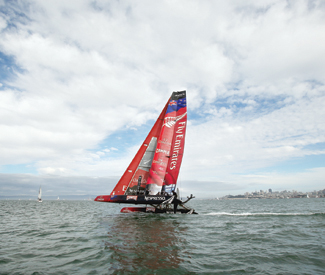
Small as the field is, Emirates Team New Zealand (ETNZ) is quickly shaping up to be the team to beat if you’re on a high-speed, air-catching AC72 catamaran. If they succeed, it will show that developing an America’s Cup team doesn’t have to come from having deep pockets in your Nantucket Red pants — it comes from having the sport ingrained in your culture, filtered through affordable local boat clubs, city-run facilities, volunteer programs, publicly accessible shorefronts, and an innovative marine industry.

In fact, without New Zealand’s maritime way of life, Larry Ellison wouldn’t have much of a team: of the 27 sailors and management crew aboard Oracle, a third are Kiwis. Another third are Australians. If you count Ellison, there are only three Americans aboard. Just one of them — tactician and grinder John Kostecki — grew up sailing on San Francisco Bay.

Ellison’s boat is mostly a Kiwi production, too — the fixed-wing sails and structural components for Oracle’s two AC72s were made in New Zealand, as were the boats, sails, and rigs for ETNZ and Luna Rossa. The only other syndicate competing, Sweden’s Artemis, in the wind since the death of crewmember Andrew Simpson, is the outlier, but they still have eight New Zealanders on board.

America’s Cup is looking more and more like it owes a lot to New Zealand. Is the Cup doing as much for San Francisco as it is for this little island nation, with a population just a tenth of California’s?

“If it wasn’t called Team New Zealand, we wouldn’t get a lot out of it,” says Sven Pannell, a competitive dinghy racer and employee of the economic development agency Grow Wellington. “The numbers of boat builders, carbon fabricators, sail makers, yacht designers coming out of New Zealand are the reason we’re still at the top of the global game. If we can bring the Cup home that means a lot for our country.”

It may also save America’s Cup from becoming even more out of touch with reality.


IT’S THE CULTURE, STUPID

It’s June 8, summer in San Francisco but winter in Wellington. The first race of the 2013 Winter Series at Evans Bay Boat Club hits hypothermic seas beneath steely overcast skies and 20-30 knots of wind — “perfect conditions,” one sailor enthuses. Tame, actually, for Wellington. A week ago, wind blew out the fifth story windows of a building downtown.

Sven Pannell has just finished racing a 12-foot skiff, a super lightweight, often homebuilt boat that probably originated in Australia and is almost exclusively raced in the Southern Hemisphere, though an 18-foot version will be showcased in San Francisco this September alongside the America’s Cup finals. Weighing about 100 pounds, with no class restrictions on sail area, they rooster-tail around Wellington harbor, bow high, barely in the water. They seem to require a similar caliber of nerve as the AC72s.

Which Pannell, who won today, evidently has. He grew up sailing as a kid, as did his crew, Craig Anderson. Neither of them can think of anyone who didn’t get into sailing as a child.

“A lot of people around the world think yachting is a well-heeled sport, but not in New Zealand,” he says. “There’s a reason that half those [America’s Cup] boats are full of Kiwis and Aussies. Go out and see the number of eight-year-olds in Optis in all kinds of weather here. A high number of people sailing at that age creates a deep pool of sailors in demand.”

“America’s Cup is about stretching the limits, but it starts here, when you’re eight years old,” he adds.

Eager to get out of the icy Antarctic wind, I enter the boat club where about 35 people are gathered at the bar, buzzing from adrenalin, barefoot and wet from spray or capsizes, gripping ginger beers and green bottles of Steinlager, the Budweiser of New Zealand. It’s a humble looking crowd — no flash gear or cashmere.

I’m introduced to Mike Rhodes, 26, wearing a blue sweatshirt and camo pants. He’d love to race an America’s Cup boat, but he also satisfies himself with a 12-foot skiff, which he stripped and rebuilt, fashioning the stainless steel fittings himself — he’s a sheet metal worker.

“New Zealand sailing is all about learning and moving forward,” he says. “The boats we’re sailing are always changing. We have set rules for weight, width, and length. After that it’s wide open. You can put up as much rig as you can handle. We went out in 50 knots last weekend. It was insane. We probably had boat speeds of 30 knots.”

The speed and innovations are what appeal to Rhodes and also connect to the America’s Cup, which has been an historic proving ground for leaps forward in boat design. “Who thought New Zealand could make the boat fly first?” he says of ETNZ’s proficiency at foiling the AC72 — going so fast the hull actually lifts off the water.

We’re soon joined by Laura Hutton, a 30-year-old from Cape Cod. She’s raced dinghies, coached and taught sailing for years. Now a speech therapist, she moved to New Zealand three months ago and immediately hooked into the local yachting scene. It’s palpably different than what she’s used to in the States. Here, she says, “It’s a lot more laid back. It’s more inclusive than exclusive. I used to go to events at New York Yacht Club in Newport and I felt so uncomfortable there. It’s the most elite, snobby place.”

“You can’t get coaching in the US unless you’re part of a yacht club or go to a school with a racing team,” she adds, and there’s often a huge cost to enter the sport. “Here, I can join the local yacht club for $35 a month,” she deadpans.

I spend more money riding the bus, I tell her, but I wouldn’t in San Francisco, where it’s cheap to catch a bus but where most people rarely board boats.

The American yacht club tradition has a certain “if you have to ask how much it costs, you can’t afford it” attitude. Ellison is one of 300 members of Golden Gate Yacht Club, official host for the Cup. Its neighbor, St. Francis Yacht Club, 2,300 strong, also has a role in the festivities. Both are exclusive, members-only clubs and neither would tell me what their members pay for the club’s privileges.

However, they’re officially nonprofit organizations and filings with the IRS show St. Francis made nearly $13 million in 2011. Golden Gate Yacht Club took home $660,000 the same year. Ironically, both clubs are on public lands, leased from San Francisco’s Recreation and Parks Department for $231,125 and $64,000 annually respectively.

Both clubs run learn-to-sail programs for kids — $350 for St. Francis and $200 for GGYC — which seem affordable, but what’s the next step? Joining the club, but apparently it’s too rude to query the price.

By contrast, Wellington’s Evans Bay Boat Club charges NZ$281 (US$210) to join and Royal Port Nicholson Yacht Club, which is a sister club to St. Francis, costs NZ$160 (US $120). The Bay Area is lucky — Berkeley and Treasure Island both have affordable clubs, however one could argue that if St. Francis and GGYC are on public lands, they should be paying more in dues to the city.

If there’s a posh club in Auckland, it’s ETNZ’s home — the Royal New Zealand Yacht Squadron. “But it’s a Kiwi version of posh, nothing like some of the yacht clubs I have been to in places like England, where women aren’t allowed to order drinks at the bar,” says Ben Gladwell, a journalist for Boating New Zealand who will be racing an 18 foot skiff in San Francisco in a regatta concurrent with the Cup finals. “At the Squaddy, there are obviously rules, like no cell phones, and dress codes and such like, but the fees are still only a few hundred dollars per year and it is much more inclusive than other yacht clubs around the world.”

Gladwell explored the health of New Zealand’s sailing culture in a story called “State of the Racing Nation” for Boating New Zealand. He found that although there is a drop-off in interest during university years, many yacht clubs have created partnerships to keep kids in the sport, there are mobile learn-to-sail units roaming the country, and lots of accessible city-run programs for kids. Couple that with low lifetime fees to stay in the sport and you see healthy clubs like Evans Bay, where people of all ages are out racing every weekend, all year round.

“Having so many people involved in sailing is a major reason we are successful,” he says. “Children are introduced to it at such a young age…by the time they come to competing at youth international regattas, they are hugely experienced and winning becomes a habit.”


“AMERICA’S CUP IS NOW NEW ZEALAND’S CUP”

In 1995, when Black Magic smoked Dennis Connor’s Stars and Stripes in a five-race shut-out, commentator Peter Montgomery famously quipped “America’s Cup is now New Zealand’s cup,” a line that’s gone down in Kiwi history like the “I have a dream” speech.

For the first time, the Auld Mug would be defended in New Zealand. Back then, Auckland’s Viaduct Harbor probably looked a lot like parts of San Francisco’s waterfront does today — dilapidated piers and old industrial buildings crumbling on their pilings. It would cost of NZ$58 million (US$29 million at the time) to dredge the harbor and spruce up the waterfront for the Cup.

The city made its money back. Hosting for two years, in 2000 and 2003, brought NZ$1 billion (US$500 million, at the time) in economic benefits to the country, about 85 percent of that going to Auckland’s local businesses, mostly from visiting megayachts and the services required for the nine syndicates that competed — twice as many as are in San Francisco today.

And Auckland made a lot less than the US$900 million predicted for San Francisco, already trimmed from the US$1.4 billion initially estimated. What the city actually gains from the $22.5 million investment they’ve been forced to make remains to be seen. Meanwhile, Auckland continues to benefit from the race.

It’s been estimated that the four Cup contenders have collectively spent half a billion on their campaigns and a decent chunk of that has been in Auckland, particularly during the AC72 design, build, and testing phases. Already, taxes paid by ETNZ employees amount to NZ$22.4 million (US$16.5 million). That doesn’t include the employee payroll taxes of all the businesses doing Cup-related activity, like the boat builders, riggers, and sailmakers.

ETNZ CEO Grant Dalton has netted sponsorships from more than 100 companies and argues that the Cup efforts have kept many marine businesses afloat that would have otherwise shuttered. Kiwis have not been immune to the world financial situation: the high New Zealand dollar hurting exports and the NZ$30 billion (US$22.5 billion) price tag for the February 2011 Christchurch earthquake have stressed the country’s coffers.

Because of that, funding ETNZ has been as contentious here as hosting Ellison’s party has been to San Franciscans. The agreement was signed in 2007 by a Labour Party-led government and when National Party’s John Key won the Prime Minister’s seat in 2008, he looked into breaking the contract, a move supported by other parties. “Funding the America’s Cup is surely a ‘nice to have’, rather than essential spending, in the current economic climate,” said Green Party co-leader Metiria Turei at the time.

The government was advised they’d still be legally on the hook for the money if they broke the contract, so ETNZ proceeded, but proof of economic return was a contingency and Dalton has taken pains to keep the public good in the conversation, a sharp contrast to Ellison’s attitude toward San Francisco. Dalton has said if New Zealand wins, the world should expect a sharp scaling back of costs. “We stand for nationality rule and we stand for real budget numbers that real people can raise,” he has said.

There’s definitely a sense that this could be New Zealand’s last chance to bring the Auld Mug home. If they don’t, the America’s Cup also loses. Who else will save it from American-style exclusiveness?

The Guardian is dead, long live the Guardian

8

EDITORIAL First of all, we at the Bay Guardian want to thank our community for its support since the abrupt departure of our beloved leader, longtime Guardian Editor Tim Redmond, on June 13. It was a shock to us and the larger community, and the outpouring of concern and support is a testament to the important role the Redmond and the Guardian have played in San Francisco.

We’ve all been wondering where we go from here, vacillating between emotional extremes. So we want to take this opportunity to start a conversation with our readers in the hopes that our next steps can be constructive and deliberate, hopefully leading to a renewal of an important media institution that has sadly been in a period of decline for far too long. Moments of crisis can also be important opportunities, and it is our intention for that to be the case here.

It is ironic that the seeds of Redmond’s departure were sown on June 12, just as he was leaving to moderate an inspiring community forum on Plan Bay Area and the future of San Francisco, which he organized. Owner Todd Vogt and newly named Guardian Publisher Stephen Buel were there as well, and they share the view of longtime Guardian staffers that the energy in that room represented an important moment of potential progressive resurgence that shows the Guardian is more vital and relevant than ever.

Yet Vogt and Buel also believe that the Guardian isn’t resonating with either our readers or advertisers like we should, and those of us who remain want to achieve that resonance once again. We believe in the mission of the Guardian, to raise hell and be forum for progressive change in San Francisco, and we want to reinvigorate that mission with the new generation of Guardianistas who now find ourselves at the helm of this venerable old publication.

So we want to hear from you, our readers and advertisers, about what you want from the Guardian. We want you to help us formulate the plan for achieving greater journalistic relevance and economic sustainability. This is the transition point where the Guardian charts its future or fades into the past.

We have enormous respect for the people who made the Guardian what it is, particularly Redmond, Bruce Brugmann, and Jean Dibble — and we appreciate our new owners’ efforts to keep the Guardian going. But we’re also ready to help formulate a new progressive vision for the Bay Area and to find new ways of speaking to residents who may not have been engaged with the Guardian or the movements that it has chronicled and advocated, without neglecting those who have stuck with us over the years.

In the coming weeks, we plan to announce another community forum focused on the future of journalism and the progressive movement in San Francisco, and to provide other avenues for you to get involved and shape the new Guardian. Come offer constructive advice — or tell us whatever you’re feeling now, whatever ideas you have: we want to hear them.

Let’s make a plan and have you hold us to it, and in turn, we ask for your support. The Guardian is dead, long live the Guardian.

HOT PINK LIST 2013: Faetopians

0

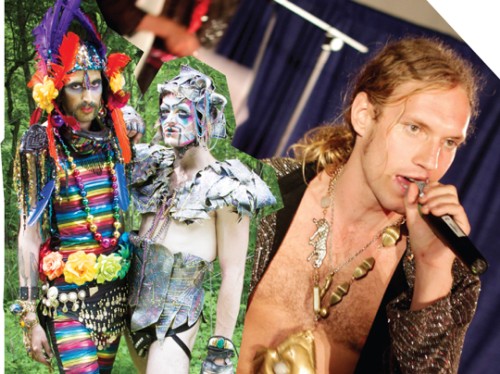
Once a year, a mystical gathering of artists, musicians, cultural visionaries, political agitators, sexual explorers, spiritual travelers, and just plain magickal beings gathers to share knowledge and intertwine in giant spontaneous puppy piles at Faetopia (www.faetopia.org). A collaboration between the radical faerie Feyboy Collective, the Sisters of Perpetual Indulgence, the Calamus Fellowship, Comfort and Joy Burning Man Camp, and more, the week-long extravaganza, now through Fri/28) presents everything from ritual drum circles and wild, neon-lit dance performances to workshops devoted to the history of gay porn and “Hastening the Post-Capitalist Post-Patriarchy through Post-Monogamous Practice.” Its a wonderfully woolly queer freak happening, a necessary complement to Pride’s relatively straight-laced affairs.

Some Faetopians: Pinkfeather, Dino, Kyle DeVries, Ian MacKinnon, Jon Ginoli, Javier Rocabado artwork, Miss Rahni, Justin Morrison


HOT PINK LIST 2013: COMICS GEEKS

0

It’s been a big year for queer comics. A movie based on a lesbian comic book, Blue is the Warmest Color, swept the top prizes at Cannes. The first textbook history of queer comics No Straight Lines was released by local hero Justin Hall, and snagged the Lambda Literary Award for Best Anthology. Heck, even Green Lantern went queer in “Earth Two,” and there was a gay wedding in Archie’s hometown, Riverdale. Here in the Bay, of course, comics have been queer for decades: from the pioneering work of Mary Wings and Lee Marrs in the 1970s to a lively slew of young upstarts, eager to expand the genre. Take, for example, this year’s packed “Batman on Robin” show, curated by Hall and Rick Worley, which imagined the Dynamic Duo in comic contortions that had many saying, “Shazam!”

Comics Geeks: Cartoonists: Agnes Czaja, Beth Dean, Christine Smith, Diego Gomez, Ed Luce, Jon Macy, Justin Hall, MariNaomi, Paige Braddock, Rick Worley.

(Photo of Diego Gomez by Sloan Kanter)

BONUS! Legendary groundbreaker Lee Marrs just sent her picture to us, and it may be our favorite yet:


HOT PINK LIST 2013: BOOT BLACKS

0

Midway through Folsom Street’s dark Powerhouse leather bar, you’ll find the bootblack, toiling away with a kit of rags and polish — break out your Stompers for a sublime shine. “What I’ve learned is that for me, bootblacking is religion,” says seven-year bootblacker Ms. V. “What I do is simple, slow, and uncluttered — and it reveres the authenticity of the boot and shoe above all.” She was first introduced to bootblacking seven years ago at Folsom Street Fair. “What a mystical experience seeing this polish-smeared wizard at work,” she recalls. “I wondered if I could do this with a female sensibility.” Bootblacking has long been the purview of males, but Ms. V embarked on her journey to learn the craft from leather community members and old school shoeshine experts anyway. She picked up a protege, Luna, with whom she teams up to keep leather footwear in prime condition. It’s a business transaction, driven by passion, power, and polish. “There is a dance that goes on between the customer and me,” says Ms. V.

Bootblacks Ms. V, International Ms. Bootblack 2007, and Luna, International Community Bootblack 2011  

HOT PINK LIST 2013: DRAG PHANTASMS

1

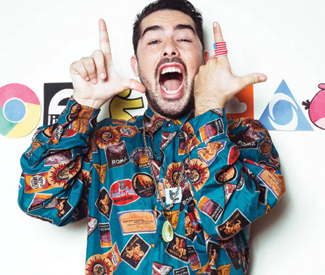
Hip-hop swagger meets goth-electro darkness, with the specters of legendary club disturber Leigh Bowery and e-art wunderkind Ryan Trecartin shimmering over the proceedings. But why stop there? Add in agitating performance art hijinks and a fundamental decontextualization of drag practices rooted in the shivery, negative emotions that the Internet pukes up on our screens. The new drag generation isn’t interested in conventional beauty or humor; instead it’s guided by hyperreal thrills, out-of-body chills, and post-Tumblr spills. SF’s most prominent phantasmagorian, boychild, is now hopping the globe as a fashion and video sensation, while seminal Dia Dear is blazing a performance “happening” trail in established venues, and godmother VivvyAnne ForeverMore is rising in art circles. Phantasmic supergroup Daddies Plastik and Persia produced sardonic anti-gentrification anthem “Google Google Apps Apps.” Spooky.

Phantasms: boychild, Daddies Plastik, Dick Van Dick, Rheal’Tea, Persia, Jem Jehova, VivvyAnne Forevermore, Julez Hale Mary, Amoania, Dia Dear, Craig Calderwood

HOT PINK LIST 2013: HIP-HOP NATION

0

If anything will tip the scale when it comes to mainstream hip-hop’s acceptance of pansexual twerking in its midst (hi, Frank Ocean and Mykki Blanco), it will be the simple fact that this new class of queers just bnrings the game better: pops ass more profoundly, wears the shit out of some Hood By Air, and can channel Aaliyah, Slick Rick, and Le1f on the same track. In the Bay (site of many early LGBT hip-hop pioneers), queer rap shines: Monthly El Rio twerkfest Swagger Like Us and new party-on-the-block R U That Somebody spin vogue circles with 2 Chainz, and strong female rappers like Raw-G, Aima the Dreamer, and Micah Tron bang out sharp lyrics and catchy hooks. Those looking for more theoretical grounding found power this year at La Peña Cultural Cultural Center’s Hip Hop Beyond Gender event series, where intersectionalities of class, race, and gender joined in unstoppable flow.

Hip-Hop Nation: Aima the Dreamer, HOTTUB, Hawa Arsala, Yetunde Olagbaju, Tonia Beglari, DJ Jaqi Sparrow, Sky Madden, Raw G, Marco de la Vega, Kelly Lovemonster, DJ Boyfriend, davO, Matrixxman.

Photos by: Angela Dawn, Debbie Smith, Hawa Arsala/Browntourage, Aubrie Pick, Polaroid SF, Brian Moran, Shot in the City, Hannah Cairns, Robbie Sweeney, Molly Decoudreaux.

Mood music

0

arts@sfbg.com

MUSIC It’s amazing what a difference two years makes. In June of 2011, I packed into a sweaty club in Silver Lake to see an up-and-coming glitch producer by the name of Baths (né Will Wiesenfeld) perform a triumphant home-town gig. Preceded by similarly buzzy beatsmiths like Shlohmo and Groundislava, Wiesenfeld spent the hour-long set hiding behind a table full of laptops and sequencers, pairing aggressive, wildly vacillating beats with heady melodies and his Sigur Rós-ian falsetto. While the show was a viscerally arresting experience, it was severely lacking in personality — painting its young architect as a musician much more interested in crafting a unique sonic aesthetic than baring his soul.

Fast forward almost two years, and Wiesenfeld has released an intimate, crushingly personal second album. Obsidian is a harrowing journey into the fractured psyche of an naked young artist, a complete 180 from his beat-driven, somewhat opaque debut, Cerulean. Though there were signs that he was moving in a new direction — notably the brilliant “Pop Song” from his 2011 odds-and-ends LP, Pop Music/False B-Sides — it is a brave, unexpected step forward for the 24-year-old. The Tarzana, Calif.-native strips back the eclectic, maximalist sound of his early work in favor of down-tempo, sparse, vocal-driven numbers.

The confessional lyrics come thick and fast, beginning with the bleak, shadowy, “Worsening.” “Where is God when you hate him most? / When the coughs in the earth come to bite at my robes,” emotes the stricken singer-songwriter, after admitting that he “might try to die.” During the time he was supposed to be working on Obsidian, Wiesenfeld was struck down by a vicious bout of E. Coli. His struggle with the debilitating disease is chronicled throughout the album, no more so than on its opener.

Lyrically, much of Obsidian is explosive, cathartic, and sometimes frankly uncomfortable, and they aren’t just related to his illness. The stand-out third track, “Ironworks,” is a beautiful song of denied love. Driven by a glorious string line and a cascade of piano — which recalls Ryuichi Sakamoto at times — Wiesenfeld tells the story of a man (presumably, him) falling in love with a married man, who denies his love and returns to the comfort of his wife after their relationship. Alone in the end, Wiesenfeld cries, “I am sweet swine. / And no man is ever mine.”

Throughout the album, he touches on anonymous sex, abuse, nihilism, and everything in between — often playing the role of perpetrator. Lyrics like, “And I never see your face, but I just might be okay with that. / Because I have no eyes, I have no love, I have no hope. / And it is not a matter of if you mean it. / But it is only a matter of come and fuck me.” At early listens, it’s difficult to imagine such a bubbly, gregarious character saying these salacious things. Trent Reznor, Kanye West, sure. A chubby, bespectacled kid from the Valley, not so much.

And though there is a lot of darkness on Obsidian, it’s not all sour times. Compositionally, the classically-trained pianist is capable of crafting mellifluous, lush arraignments and soaring vocal melodies. He also loves to cake on layers of woozy percussive droplets, giving his tracks a propulsive, cinematic quality. Though much of the album is of the down-tempo variety, he freshens things up with a few curve-balls, namely on the aggressive, industrial-influenced, “Earth Death,” and the Postal Service churn of “Ossuary.”

Wiesenfeld will be debuting much of this material this to the Bay Area this week, when his tour with buzzy, Chicago-based duo, Houses rolls into the Great American Music Hall. His choice of opening acts reflects his musical shift, as Houses craft reflective, affecting mood music — quite a bit different than the hip-hop/dance stylings of the artists who flanked him two years ago. While the laptop is likely to make an appearance, there will be plenty of live instrumentation on show with Wiesenfeld spending time on the keyboards and bandmate Morgan Greenwood taking on a few different instruments. It will be fascinating to see how he handles his new direction, but you can guarantee that the effusive, passionate performer will be pouring his heart into his show, the same way he poured it into Obsidian.

BATHS

With Houses, D33J

Sat/29, 9pm, $16

Great American Music Hall

859 O’Farrell, SF

(415) 885-0750

www.slimspresents.com


Still beating

27

cheryl@sfbg.com

FILM/LIT A few weeks before our scheduled interview, Laura Albert mails me copies of 2000’s Sarah and 2001’s The Heart is Deceitful Above All Things. Inscribed on Heart‘s title page is a note: “Thanks for being available to revelation.” The volumes are signed “Yours, LA and JT” — the latter, of course, referring to JT LeRoy, the identity under which Albert penned both books.

That secret’s been out since late 2005, and has been dissected over and over. It even inspired a Law and Order episode. LeRoy, and his fantastically tragic back story (just out of his teens, he’d survived drugs, homelessness, and prostitution en route to becoming the lit world’s hottest wunderkind), were Albert’s creations. She was the true author behind the best-sellers listed above, plus 2004’s Harold’s End, dozens of magazine articles, an early script for Gus Van Sant’s Elephant (2003), and numerous other works. (Meanwhile, the androgynous “JT” that had been appearing in public was actually the half-sister of Albert’s then-partner; she wrote her own tell-all in 2008.) On Albert’s website, there are tabs marked “Who is Laura Albert?” and “Who is JT LeRoy?” Both link to Albert’s biography.

Years have passed since l’affaire LeRoy, and Albert has moved through the experience in her own way. (Her business card lists her as “literary outlaw.”) Later this summer, Sarah will be reissued as an ebook, with a fairy tale-inspired cover by artist Matt Pipes. Albert also is working on her memoirs (though she doesn’t like to use the word “memoirs”), and tells me there’s a documentary forthcoming from Jeff Feuerzeig, who made 2005’s critically-acclaimed The Devil and Daniel Johnston. This weekend, Asia Argento’s 2004 adaptation of The Heart is Deceitful Above All Things screens as part of the Clay Theatre’s midnight-movie series, with Albert and producer Chris Hanley in person, plus Argento via Skype.

Sitting in her San Francisco kitchen, Albert eyes my tape recorder and admits she’d rather focus on the film, not JT — though it’s a topic that inevitably arises. Argento, Albert says, encountered Heart the way many LeRoy readers did, via word-of-mouth recommendation.

“She read the book and she didn’t know anything about JT. At the same time, a small publisher was putting out the book [in Italy], and they wanted to bring JT over,” Albert recalls. “It was a weird coincidence. They were putting on an event, and they wanted to get someone to read. They had contacted Asia, and she already knew about the book, and she wanted not only to do this event, but to make the movie. It’s funny because I thought Sarah would be the first [to become a film], because it was already optioned by Gus [Van Sant]. But Asia moved really fast. We went over to meet her, and I had turned down a lot of people. My feeling was, it’s my baby and I’m giving it up for adoption, and I saw that this was someone I could give my baby to.”

Argento, the daughter of famed Italian horror director Dario Argento, is best-known stateside as an actor; previous to Heart, her directing experience was limited to short films and 2000’s flamboyant Scarlet Diva. Once she decided to helm the movie, her decision to star as the free-spirited, needy, sometimes-cruel single mother of the story’s young protagonist was an obvious choice.

“I had concerns about that, how much she would take on the role, how much it would become her. It’s ironic, because I had given myself over completely to Jeremy, to JT, to Jeremiah,” Albert says. She pauses. “Did you see that French film, about the guy who assumes different characters?”

Holy Motors?”

“Yeah! It really was transformative to me. There’s a scene where someone asks [the main character], ‘Why are you still doing this?’, and he makes reference to the act of giving yourself over completely. And that was it. I gave myself over completely. I did not break character. You know how, in that movie, he’ll do anything? He’ll kill someone! He’s in it. Most people don’t know what that’s like. And that was it. I will never apologize,” she says, firmly. “We’re talking about art. Nobody was harmed in this, really. I didn’t really scribble that far outside the lines. Everything was labeled ‘fiction.'”

At her mention of an apology, I have to ask: does she feel like people demanded one?

“People like to give themselves a lot of credit for how vanguard they are. I can’t tell you how many people I’ve had tell me, ‘Warhol would have loved it!’ — including people who were close with Warhol,” she says. “I think it revealed more about other people and what they could accommodate, and what they put on the work, than it does about me. If you have a personal relationship with JT, then that’s a conversation between you and me. I put my email [in the books], and I really did have a connection with the fans because I grew up in the punk scene, and I wasn’t into hero worship. The problem was — psychologically — I wasn’t able to do that. It wasn’t like [adopts goofy voice], ‘Gee, how do I burst forth onto the literary scene? I know! I’ll create a little boy!’ No. It wasn’t like that.”

As we talk, Albert makes references to her own troubled youth: surviving abuse, living in a group home, being institutionalized. Amid the tumult of her teenage life, she would “call hotlines — I don’t know what I would talk about, but it was the only time I could feel. I would give myself over to another being, and it was always a boy. So when I hear people say, ‘I’m gonna do what you did,’ it’s like, good luck. For me it was created the way an oyster creates a pearl: out of irritation and suffering. It was an attempt to try to heal something. And it actually worked, and it did so for a lot of other people. The amazing thing is, now I can be available to people.”

We’re delving more into her work (“I didn’t do anything new — writers have always been using combinations of pseudonyms and identities,” she points out) when the doorbell rings; it’s a Comcast technician here to see about Albert’s Internet connection. We move to her office, which features a wall collaged with photos and several filing cabinets full of archives — material she’s letting Feuerzeig use in his documentary.

But it’s not a room completely given over to the past. It’s also where Albert works on her new projects (besides her memoirs, she’s writing screenplays — building off her experiences working on Deadwood with David Milch), and stashes new mementos, including a program from a recent Brazilian rock opera entitled JT, A Punk Rock Fairy Tale.

Before I leave, she gives me a copy of a New York Times article from 2010 entitled “Life, In the Way of Art;” its subjects include Joaquin Phoenix, still smarting from the backlash after his faux breakdown in I’m Still Here. The director of that film, Casey Affleck, cites a line from a Picasso quote that Albert emails to me in full the day after we speak: “We all know that art is not truth. Art is a lie that makes us realize truth, at least the truth that is given us to understand. The artist must know the manner whereby to convince others of the truthfulness of his lies.”

She’s just as frank over email as she is in person. “It’s OK with me if someone doesn’t like my writing. But they shouldn’t try to tell me how I’m obliged to present my work,” she writes. “When I talk about my personal background, I’m not attempting to somehow bestow legitimacy to what I’ve written — anyone should be able to do what I did. My life history doesn’t matter and isn’t being offered as any kind of excuse.”

I think back to something she said in her kitchen — a simple, powerful summation of a story that will never not be complicated. “JT was my lifeboat. You loved him? Well, I loved him more.” 

THE HEART IS DECEITFUL ABOVE ALL THINGS

Fri/28, midnight, $10

Clay

2261 Fillmore, SF

www.landmarktheatres.com


Flagging

0

cheryl@sfbg.com

FILM Ah, the mid-1990s: a time when two big-budget movies on the same subject were regularly released within months of each other (1997’s Volcano and Dante’s Peak; 1998’s Armageddon and Deep Impact). When a director named Roland Emmerich ascended into the blockbuster pantheon with Independence Day (1996), a film that’s best-remembered for transforming Will Smith into an action star — and for that iconic shot of the White House exploding under alien death rays.

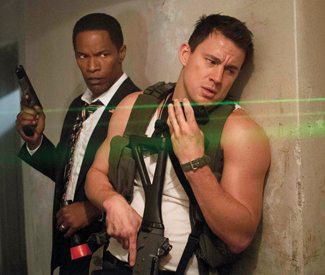
The intervening years have seen Emmerich plunge ever-deeper into various flavors of disaster: giant lizard (1998’s Godzilla); Mel Gibson (2000’s The Patriot); global warming (2004’s The Day After Tomorrow); the apocalypse (2009’s 2012). White House Down — which reignites that ’90s copycat-rivalry thing by riding the fumes of March’s Olympus Has Fallen — finds its boogeyman in terrorism. Specifically, domestic terrorism, with another 1996 classic, Michael Bay’s The Rock, offering certain inspiration in the villain department. Ex-military goons with axes to grind storming a national landmark? Right this way, please.

It’s a triumphant day for President James Sawyer (Jamie Foxx), who has just ordered all US troops removed from the Middle East. While ID4‘s President Bill Pullman was a Gulf War veteran, Sawyer is portrayed as more of an anti-violence, increase-the-peace type. But wait! Who are those shifty-eyed fellows skulking around the White House theater room, tinkering with the First Lady’s prized surround-sound system? They don’t look ready to make nice.

Into this mix must enter an Everyman. Beefy nugget Channing Tatum plays John Cale, wannabe Secret Service agent. Trouble is, his former college classmate (and fling? It’s never certain, but every woman Cale interacts with seems to have slept with him), high-ranking Agent Finnerty (Maggie Gyllenhaal), doesn’t think he has what it takes. According to the deep truths of his personnel file, Cale — a Capitol policeman tasked with guarding the Speaker of the House (Richard Jenkins) — “has a problem with authority,” despite his seemingly sincere desire to become an astronaut … er, wait, that was Will Smith’s cocky pilot in ID4.

At any rate, there is (as always) a family to impress; in Cale’s case, it’s a plucky daughter (Joey King), always on the lookout for new fodder for her YouTube channel. What better way to win over a kid who blurts out “Wikileaks” with as much excitement as other 11-year-olds say “One Direction” than to take her on a tour of the White House?

That’s the set-up. The remainder of the film encompasses Cale’s sweaty, sardonic one-man-army maneuverings (in John McClane’s undershirt, no less), to keep both Sawyer — a POTUS so cool he pauses mid-ambush to change into Air Jordans — and Li’l Miss Citizen Journalist safe. Meanwhile, rockets are launched; there’s a high-speed limo chase across the White House lawn; we learn the truth about Marilyn and JFK; The Wire‘s Lance Reddick shows up to turn his McNulty-honed glare onto Gyllenhaal; some high-ranking government dudes reveal their sinister true colors; and thanks to evil genius Skip Tyler (Jimmi Simpson), “the greatest hack the world has ever seen” is about to unleash World War III.

Yep, that’s right: 17 years after Independence Day‘s Jeff Goldblum broke into the alien mainframe, thereby saving the White House-less planet, Emmerich has decided that hackers are actually bad guys. It goes with White House Down‘s warning that the enemy is no longer an external threat, but something lurking right under your nose. Better start working out, America — and working on your one-liners.

WHITE HOUSE DOWN opens Fri/28 in Bay Area theaters.

Devil may care

0

emilysavage@sfbg.com

TOFU AND WHISKEY Unlike most anticipated albums these days, Austra‘s sophomore LP, Olympia (June 18, Domino Records), came out in gleaming little drops. There were no leaked full downloads — at least, nothing massively widespread. But the sparkly bits that did trickle out, namely first single “Home” and its follow-up, “Painful Like,” were enough to build interest.

The Canadian synth-pop six-piece already had a built-in audience, thanks to 2011’s Feel It Break, mostly created by darkly operatic lead vocalist Katie Stelmanis, former Trust vocalist Maya Postepski on drums, and bassist Dorian Wolf, and made almost exclusively on a computer. Now a more fully realized unit using live instrumentation, the group, which also includes keyboardist Ryan Wonsiak and supernatural twin backing vocalists Sari and Romy Lightman, created the lush, full-bodied second record together in a studio. And it shows: there’s a richness to the sound. There’s a steady dance beat throughout the record, with the addition of sounds like cowbells and even more barreling percussion underneath all those moody vocals wailings and subtle piano keys.

“We have so much percussion on the album, I had days where I would just play all day,” Postepski says from Switzerland, on the group’s brief tour through Europe. “I think it added to the richness to it, and the realness of the sound. As much as it is an electronic record, we wanted it to have a balance with real instruments.”

That first released track “Home” seduced critics earlier this spring with a more upbeat style than typical of Austra, yet the lyrics are again deeply personal for Stelmanis, about someone not coming home at night because they’re out getting wasted, and the desperate feeling of waiting for that person to return.

Sonically, second single, “Painful Like” gets more to the core of what the group does best, meshing gothy dancefloor-ready beats and bubbly synth with crashing drums and Stelmanis’ otherworldly vocals on display.

The lyrics were inspired by “the disillusionment of growing up gay in a small town and finding solace in the arms of a lover.”

Stelmis told Spinner in 2011, “Indie music is funny. It’s really not as queer positive as you would think. In a lot of ways, it’s very centered around white men, basically. I just want there to be space for gays.”

She seems to have taken that to heart on Olympia, including even more of herself than on Feel it Break.

“The lyrics on the new album are personal, intimate reflections of what Stelmanis is going through,” Postepski says.

The new record contains hints of other moody synth-based projects like former tourmate Grimes, the Knife, and Zola Jesus, though Postepski says she almost exclusively listens to music made before 1995, specifically Grace Jones and David Bowie. She does make an exception for British techno producer Andy Stott. “That’s where all the super low bassy stuff comes from,” she explains.

While many of the tracks follow the same formula, Olympia is packed with emotional dancefloor moments. It’s the kind of record that could soundtrack a crying fit in a dark club bathroom, mascara bleeding down the face, strangers surrounding the mirror, all of the drama inherent in nightlife, then follow the main character triumphantly back out onto the floor.

“As much as it is a serious album, there’s a lot of playfulness as well,” Postepski says. “I think we struck a good balance.”

Austra, which has toured internationally with groups like the XX, Grimes, and the Gossip will test the balance on a quick jaunt through the States, only stopping in a few major cities. One lucky enclave is San Francisco — the group plays here this week (Wed/26, 8pm, sold out. Independent, 628 Divisadero, SF). Noted for its creative use of stage layout and synchronized twin dance movements (“they’re kind of like our cheerleaders!”), Austra has a lot to live up to at its live shows. Postepski tells me this very short tour includes a massive, beautiful new backdrop, rented from the Chinese Opera Group in Toronto.

“People are having fun at the shows. I just want it to be a dance party, you know?” Postepski says.

There’s another group traveling to San Francisco this week that also will likely be filling up the dancefloor — and, coincidentally, also has toured with the Gossip — Magic Mouth. To get a taste of the explosive energy Magic Mouth exudes, check the YouTube video “MAGIC MOUTH LIVE: MISSISSIPPI STUDIOS,” it’s like watching James Brown front a garage-punk band. The lively Portland, Ore. queer soul-punk quartet will play Hard French Hearts Los Homos (an event described by DJ Carnita as “an intergalactic Pride Party for all the gayliens who love to dance in outer space”).

Magic Mouth will open for fellow Northwesterners, Seattle’s THEESatisfaction at the event hosted by Lil Miss Hot Mess (Sun/30, 4-11pm, $20. Roccapulco, 3140 Mission, SF; hardfrenchpride2013.eventbrite.com). This will be the band’s second time in SF, after stopping by El Rio last fall. But other tours have taken the group around the country opening for the Gossip, and JD Sampson’s MEN.

Magic Mouth has a glut of reasons to be keyed up for the SF show.

“I’m really looking forward to playing with THEESatisfaction. We’ve been admirers of theirs from afar for a minute and in kind of the same music community,” says frontperson Chanticleer Trü. “And also to celebrate at Hard French, because we love what they do.”

Guitarist Peter Condra adds, “And I’m excited to play a party that’s dedicated to a political cause, which is Bradley Manning. With what went down in San Francisco Pride, I think that fueled the organizers’ enthusiasm about the topic and I want to help them create awareness in any way we can as a band. I think it’s cool they took a stance on that.”

A crash course on those events: The LGBTQ community was torn apart when the SF Pride Board rescinded the election of Wikileaker Bradley Manning to the position of Community Grand Marshal at this year’s Pride celebration. There are planned actions and marches in support of Manning (see pTK) at the Pride parade, June 30.

So yes, Magic Mouth comes to us on a mission of both solidarity and fun. And likely, to gain new fans.

The group’s electric Believer EP saw release in 2012, and now it’s in the process of finishing up another, Devil May Care, which was funded with $10,000 raised through Kickstarter. The foursome worked on the record with Nathan Howdeshell and Hannah Blilie of the Gossip, who walked the band through the process, gave feedback, and connected Magic Mouth with a producer. Devil May Care will be released on vinyl in late summer.

“I’m really proud of this record,” Trü says.

Drummer Ana Briseño says, “Yeah, I think it’s taking us into the next level, a little more grownup, of taking this band seriously. The quality of the recording, and getting to put it out on vinyl, and being able to be involved in the artwork — I think we’re really lucky and not a lot of bands make it to that point.”

“In comparison to our first EP, which we recorded like, between two of our friends’ bedroom studios,” Trü says. “It’s definitely been an evolution, and this time around I feel like we really captured the type of energy we bring to a live performance.”

The band formed in 2010 when Briseño and guitarist Peter Condra met and started talking about music — Nina Simone being the uniting interest. Briseño and Condra started playing garage rock versions of Simone songs, and eventually created their own, which brought them to Trü and bassist Brendan Scott (Condra and Scott had played together before in a cover band). “And Trü was definitely feeling the Nina Simone thing we were channeling,” Condra says.

The group says it’s now actualizing its influences. The band members have already played with one influence in the Gossip and is about to play with another in THEESatisfaction, but future goal spots would be alongside Erykah Badu or Blood Orange. I mishear Trü, thinking he mentioned Beyonce also, so ask for clarification. He laughs and says, “no, but you must be reading my mind.”


THE WHITE BARONS/WILD EYES

Some background: local Southern fried rock group (“by way of Atlanta, Jakarta, and two Midwest podunk towns”) the White Barons includes members of Thee Merry Widows, Winter Teeth, and Whiskey Dick Darryls, and SF’s Wild Eyes recently opened for King Khan and BBQ Show at Slim’s. This Bender’s show is a party for a few things: it’s the birthday of Bender’s doorperson and Subliminal SF booker Mikey Madfes, it’s a split seven-inch release celebration for the White Barons and Wild Eyes, and lastly, there’s a band vs. band chili cookoff (if you buy a record, you’ll get a chili sample). So you know it’s going to be a messy mix of raucous rock’n’roll and tender cooked meats.

Sat/29, 10pm, $5. Bender’s Bar and Grill, 806 S. Van Ness, SF; www.bendersbar.com.


‘A’ for effort?

0

culture@sfbg.com

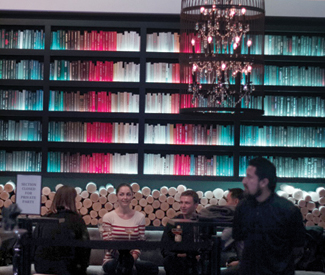
COCKTAILS Novela, the new literary-themed lounge in SoMa, is undoubtedly beautiful: plenty of window light pours in during the evening, highlighting tall black shelves packed full of color-coordinated books. The space, a collaboration between acclaimed bar stars Alex Smith and Kate Bolton, is littered with huge, cozy reading chairs as well as low comfy couches.

But my friend and I just somehow felt out of place.

Perhaps this was a case of misplaced expectations: this wasn’t the bar atmosphere I envisioned at all. With dance music (“Is this MGMT?” my friend asked as we sat down) blaring at around 7pm on a Tuesday, and an all-female service staff dressed in tight black clothing with gold jewelry accents and very high heels, it’s fair to say this place lacked the unshowy intimacy I associate with reading.

Despite our unease in the party environment, we decided to stay and give the libations a try. Novela has several “Cocktails with Character” on its menu, named for famous literary figures (duh). But it prides itself in its punches — six on tap, all made with fresh seasonal ingredients. Since the cognac punch was unavailable, I settled for a glass of the “Tequilla” (as spelled on the menu) punch while my friend, Michelle, tasted the gin one. Both weren’t anything to write home about. Tequilla was just not my cup of tea — the tequila, mezcal, hibiscus, grapefruit, and lime failed to gel — while I don’t remember much about the gin punch. Maybe it had too much rhubarb. Michelle and I pondered the thought of a book-themed bar having a typo on the menu, however deliberate, and realized that it perfectly encapsulated our thoughts of the place so far.

Once the after-work crowd poured out, we settled into some reading chairs near the back of the bar and ordered more drinks. This is when we found ourselves in the middle of a light show — the lights behind the book-filled walls started flashing, as did those along glass and metal liquor shelves. Disco time!

And with that, I suddenly felt like Novela was the one out of place. I can appreciate wanting to expand the notion of the “library bar,” of which our city has many examples, from the library at Bourbon and Branch to Two Sisters in Hayes Valley. But with Novela, I just plain could not see the purpose. San Francisco is a city rich with culture and character, and none of that is reflected here. It felt artificial: all flash and no substance, right down to the cocktail menu (every high school sophomore knows a drink named after Jay Gatsby should be based on gin, not bourbon) and the forced sorority-esque look of the staff.

Back to the drinks: Michelle ordered the Atticus Finch with bourbon, earl grey honey, and bitters — she originally ordered the pisco-based Sherlock Holmes but the birch beer was too overwhelming — while I ordered that Jay Gatsby, with bourbon, scotch, amaretto, calisaya, and nocino. They were both nice but, again, didn’t quite make the grade. In the end, Michelle and I walked out into the night with more questions than answers — a mark of great literature, perhaps, but not of great bars.

NOVELA 662 Mission, SF. (415) 896-6500, www.novelasf.com


On pins and needles

3

steve@sfbg.com

[UPDATE: The Supreme Court has overturned DOMA and dismissed the Prop 8 case. Read our full coverage here.]

As San Francisco’s LGBT community and its supporters prepared for Pride Weekend, the whole city was anxiously awaiting the imminent US Supreme Court ruling on same-sex marriage. That case began here more than nine years ago when then-Mayor Gavin Newsom decided to let gay men and lesbians marry and the City Attorney’s Office launched a long and torturous legal battle.

The synchronous timing of the two events couldn’t be better. (Well, it could have been better for the Bay Guardian‘s deadline if the ruling has come out June 25, instead of when this issue will be hitting the streets on June 26, but you can read our full, live coverage here at sfbg.com tomorrow.)

LGBT activists are planning a massive rally at Castro and Market streets starting at 6:30pm on June 26, along with another performance stage at Market and 19th streets featuring Donna Sachet emceeing performances ranging from DJs to drag and other live performances, like an early start to an already packed Pride Weekend. (For more info, see www.dayofdecision.org.)

Of course, at press time it was still unclear whether we’ll see a joyous springboard for a raucous Pride that many are hoping for, with total victory and marriage equality becoming the law of the land; a bitter repudiation of LGBT rights reminiscent of Nov. 4, 2008, when the street celebrations over President Barack Obama’s election victory were tempered by frustration over voters approving Prop. 8 and banning same-sex marriage; or something in between.

The ruling will cap a see-sawing legal and political battle for which the City Attorney’s Office calculates it has written more than a half-million pages of legal briefings for more than 50 judges at various levels, including four trips before the California Supreme Court in four separate but related cases before making arguments to the US Supreme Court in March.

If the ruling doesn’t legalize same-sex marriage in California, activists say they’ll immediately return the struggle back into the political arena and use the momentum of the ruling (and the three states that legalized same-sex marriage this year, bringing the total to 12) to win at the ballot box (it would take a popular vote to undo Prop. 8).

If that happens, look for our own Sen. Mark Leno — who got the California Legislature to approve his legislation legalizing same-sex marriage, twice, only to have it vetoed by then-Gov. Arnold Schwarzenegger — to play a lead role.

“The only option is to re-amend the constitution to eliminate the discriminatory Prop. 8,” Leno told us. That measure could be placed on the 2014 ballot by either the Legislature or an initiative, which Leno said will be decision for the coalition of same-sex marriage supporters.

There are benefits and drawbacks to both options. Gathering signatures for an initiative is expensive, but that effort would also help launch the campaign to win over California voters. In the Legislature, four supportive Democrats will likely move to other offices this year, including a Senator and Assemblymember who are each joining the Los Angeles City Council, but Leno is still confident.

“We stand prepared with legislation already drafted to move forward with a bill if that’s what the coalition decides,” Leno said. “And we are confident we have the 27 votes we need [in the Senate], maybe even 28.”

City Attorney’s Office Press Secretary Matt Dorsey has been doing regular email briefings for journalists who are here from around the world, ready to report from the place where it all began as soon as the ruling comes down.

City Attorney Dennis Herrera, Chief Deputy City Attorney Terry Stewart, and their team are prepared to analyze the ruling as soon as it is released just after 7am (Pacific time) and to deliver the first press briefing on the steps of City Hall at 7:30-8am. Mayor Ed Lee, Newsom, and other officials will host a live viewing of the ruling at 7am in City Hall, following by their own press conference.

Dissecting the ruling could be a tricky task given that there at least four major scenarios that the ruling could trigger, each of those with lots of sub-scenarios that depend on the scope and details of the ruling. Everything for legalizing same-sex marriage across the country to a technical ruling that kicks it all back to a lower court are possible.

“In 10 years [working for the City Attorney’s Office], I’m never seen an outcome that could go in so many different directions,” Dorsey told us.

If the ruling invalidates Prop. 8, that decision would be formalized in about a month, then returning jurisdiction over the case to the Ninth Circuit Court of Appeal, which will then issue a formal notice of decision that gives it the force of law, according to a June 11 memo the City Attorney’s Office wrote for other city officials.

It notes, “Depending on how the Supreme Court decides the case, marriages could resume as soon as mid-to-late July.”

What’s hot in Siberia

0

arts@sfbg.com

THEATER Emerald green rooftops and gold domes enliven the skyline of Omsk, a provincial city and former Soviet industrial hub of roughly one million people, located at the intersection of two Siberian rivers: the wide, island-populated Irtysh and the smaller, swifter Om. The latter gave its name to the town, which grew from a fort established at the meeting point of the rivers in 1716, back when this was the disputed frontier of the expanding Russian empire.

But now it’s the last week of May 2013. The fort is long gone. In its place stands the Lighthouse, a large white hotel-cum–shopping mall festively crowned with neon Cyrillic lettering. Rounded at one end and peaked with towers, it drolly resembles a cruise ship in port. The sun is still out at 10 p.m., and a gusty wind rolling off the plains churns the warm air pleasantly.

Sleepy though this town seems by comparison with St. Petersburg, Moscow, or even Yekaterinburg — the three other stops on a four-city tour I joined last month, in conjunction with a US-Russia theater dialogue developed by the Center for International Theatre Development — Omsk turns out to be not so remote in many ways. For one thing, it’s a hotbed of theatrical activity at the moment, with the biennial Young Theaters of Russia Festival in full swing. Nor is the Russian empire entirely a thing of the past, as tonight’s provocation by a troupe from the former Yugoslav republic of Slovenia makes plain enough.

Damned be the Traitor of His Homeland! — a production of Ljubljana’s internationally renowned experimental company, Mladinsko Theatre — is a no-holds-barred attack on jingoism, xenophobia, and the false allegiances they promote, as well as on complacency in the face of recent history, government corruption, and social decay. Taking its title from the last verse of the former Yugoslav national anthem, it gleefully lobs profanity, insult, accusation, nudity, a flurry of gunshots, and lots of local dirt (dug up for the occasion) at its unsuspecting audience — who frequently find themselves unnaturally exposed and singled out under merciless house lights.

It begins quietly enough: its ten cast members onstage, reclining on the floor and clutching musical instruments, looking like a freshly slaughtered marching band — until the sound of breathing through a tuba begins a general stirring that quickly escalates into an instrumental movement titled, “Won’t Go Against My Brother.” Next, the cast introduces itself with ribald, pointed, self-effacing humor through their own imagined obituaries — each of which makes explicit reference to an imaginary production of “Hey, Slavs!” (in fact, the title of the Yugoslav anthem) directed by acclaimed Bosnian Croatian bad-boy director Oliver Frljic (in fact, the production’s own director).

Cycling through various loosely related scenes, all built from improvisations, Damned delivers its pleas and gibes with a potent combination of muscular staging, lively wit, intrepid honesty, and moments of wrenching beauty. It produced some walkouts the night we saw it — many more the night before, reportedly — but its themes were undeniably urgent and its manner both raw and sure. This was all before Edward Snowden went public with details of the NSA’s PRISM program or had arrived in Moscow from Hong Kong en route to some hoped-for political asylum abroad. But there was no denying the implications for any Americans in the audience as well.

Omsk has nine large municipally funded or federally funded theaters, leaving far behind most American cities of a comparable or even much larger size. And in short it, and the Festival, had much more to offer beyond this one highlight, even if not as explicitly provocative or political in nature. (Those curious to learn more should know that Chris White, artistic director of Mugwumpin and the other San Franciscan on the tour, has written a series of reports on HowlRound with many further details).

Highlights in Moscow included an exquisite production from leading director Dimitry Kymov (whose collaboration with Mikhail Baryshnikov, In Paris, came to Berkeley Rep last year). Based (like In Paris) on the work of famed Russian short story writer Ivan Bunin, Katya, Sonya, Polya, Galya, Vera, Olya, Tanya … is an original production crafting a series of oddball, sometimes grim love stories into a kind of high art twist on Grand Guignol.

Also utterly memorable was the best production of Hamlet I’d ever seen —staged in a ramshackle venue whose lobby was stuffed with a vaguely foul-smelling array of garage sale toys, Soviet kitsch, and other odds and ends, and whose stage was a small, low-ceilinged black box packed into the aisles with what appeared to be mainly teens. The theater and the production belong to famed Russian director and playwright Nikolay Kolyada. Somewhat infamous after his endorsement of Putin in the last elections (which points to one way in which Russian theater, offstage, can be nothing if not political), Kolyada delivers a decisive reading of Shakespeare’s play as a bald, barbaric parable of power — in an incredibly meticulous, distinct, and forceful style whose macabre wit brought to mind some weird admixture of Richard Foreman, Tim Burton, and Terry Gilliam. Whatever else it demonstrated, it showed the Bard’s play as utterly, repulsively, and compellingly contemporary — something too rarely accomplished in any language. *