News

Dear United States: #Jessicastux discrimination shows SF inequality

41

Dear United States,

Yes,  you’ve found San Francisco out. You’ve got us. Our city is not the bastion of equality we claim it to be. 

It’s something most San Franciscans know, but now you, the country, are getting a peek at how discriminatory our local institutions can actually be.

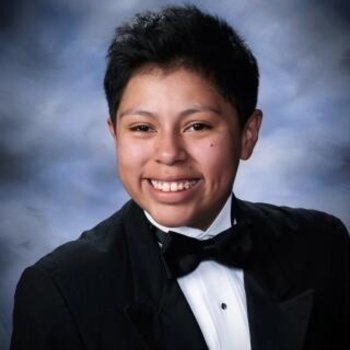
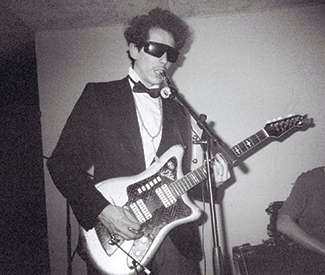
Just last week, the news of Sacred Heart Cathedral Prep’s discrimination against young Jessica Urbina went viral. Urbina just wanted to wear a tuxedo in her yearbook photo, and the Catholic school, Sacred Heart, said it would not print her photo in a yearbook because she wasn’t in a dress.

The resulting social media firestorm blew up in national media, propelled by the hashtag #jessicastux. Today Sacred Heart issued an apology, offering to work on its policies moving forward.

“On Friday, May 16, the school communicated that it will change its policy regarding senior portraits. We agree with our students who showed solidarity with their classmate that the current policy regarding senior portraits is not adequate to meet the needs of our families or our mission. We will involve our students, families, and Board in crafting the updated policy.

Many people suggest that the past few days have been deeply revealing about our school community. We agree. We are an imperfect community that can and does fail. We are a community that is open to self-reflection, and to the constructive criticism and leadership of its students, as well as to the criticism from members of our broader community. We are a community that strives to grow, improve and do what is right. We are a community that sees, in all situations, an opportunity to learn.”

But before we let Sacred Heart be crucified in the court of public opinion, let’s remember an old religious maxim: let ye who is without sin cast the first stone. And when it comes to inequality, San Francisco has many sinners.

Yes, dear country, you spent the last week utterly aghast that San Francisco, the champion of marriage equality, could discriminate against an LGBT teen.

You really don’t know the half of it. 

Take our public schools. Even as we celebrate the 60th anniversary of Brown vs. the Board of Education, an investigative report by the San Francisco Public Press revealed massive inequality in San Francisco public elementary schools. Though the SFUSD suffered funding cuts totalling $113 million in the 2009-10 school year (after numerous annual state cuts), some public schools managed to stave off layoffs and provide excellent facilities for their children. The catch? Only the elementary schools attended by rich families survived, bouyed by nearly $3 million in PTSA fundraising in 11 elementary schools.

But 35 of SFUSD’s elementary schools raised no money at all. These schools are not surprisingly attended mostly by the city’s poorest families, and their schools were met with brutal cuts.

The SFUSD is only now allowing students to wear hats (including some religious headgear), and is only now considering raising its minimum wage to San Francisco’s minimum of $10.24 an hour (as a state entity, it only has to pay $8 an hour).

And lest we pick on the schools too much, the explosive tech industry has had its impacts on San Francisco equality too. As taxi drivers flock to rideshare companies like Uber, Lyft and Sidecar, there are fewer drivers to drive wheelchair-accessible taxis. Those rideshare companies don’t yet have a plan to offer service to our city’s many persons with disabilities. Even our beloved regional transit system, BART, has new proposed “trains of the future” offering less space for electric wheelchairs to move around as well.  

San Francisco has also seen massive numbers of folks displaced by the tech boom, symbolized (and even exacerberated) by our city’s most hated/loved/over-discussed behemoths, the Google buses.  

We’ve even got the second highest inequality in the United States, fast headed for number one. Go us.

And though Bill O’Reilly at Fox News loves to make funny videos about San Francisco’s homeless while he talks up our love of hippies, he’s got it all wrong (unfortunately). The city issues numerous citations against homeless youth for the act of sitting down in the Haight Ashbury district (the birthplace of the Summer of Love), and has struggled with policies to help the homeless for over 10 years running. 

Also, did we mention one in four San Franciscans are food insecure? That means about 200,000 San Franciscans don’t have enough money to eat healthily, and many are near starvation. 

Yes, dear country, San Francisco espouses many loving principles, and we do have an innate sense of justice to help immigrants, the poor, and the marginalized.

But we still have a long, long way to go. 

Best,

A San Franciscan. 


KUSF’s axe-man, Father Privett, stepping down

40

The University of San Francisco president who sold off beloved community radio station KUSF in 2011 is stepping down in August, the university recently announced. Father Stephen Privett is known by elected officials and higher-education folks as a strong, stalwart 14-year leader of San Francisco’s oldest university. But to local artists and music lovers, Privett was and will always be the axe-man of KUSF.

And no, we don’t mean he shredded on the guitar.

KUSF continues to rock on as San Francisco Community Radio, but in 2011 its spot on the terrestial dial was sold and closed.

The day it went down, KUSF radio’s employees and volunteers were unexpectedly tossed out of their studio, the locks were changed, and they learned then and there that the station was sold. The signal went dark, radios went silent. The USF-hosted radio station long broadcasted renegade tunes on 90.3 FM, with programming in a variety of languages few other stations replicated.

Privett brought the hatchet down on the beloved radio station, silently. The backroom deal to sell KUSF’s spot on the dial to a Southern California classic music radio station was brewed largely in the dark, with only two KUSF employees told before the day the station was shuttered. Both were silenced under non-disclosure agreements, according to news reports at the time. 

In his farewell interview with USF’s campus magazine, Privett touched on his controversial decision. 

“KUSF was originally student run and operated, and a valuable learning laboratory. It morphed over time into a community enterprise where only 10 percent of the workers were USF students, while USF remained 100 percent responsible for its operation and costs.

Our mission is to educate in the Jesuit Catholic tradition, not to provide opportunities largely for non-students. I am obligated to spend tuition dollars to support student learning, and that’s how the proceeds were used: to fund scholarships and academic programs.

USF continues to offer students solid learning opportunities at KUSF.org, which is entirely student-staffed and streamed live on the Internet.”

It’s safe to say former KUSF DJs and volunteers aren’t sad to see him go. 

“Sadly, a black cloud continues to linger over Father Privett’s legacy, due to his shady and dishonest actions in killing one of the largest and most vital community radio stations in San Francisco,” former KUSF Music Director (and DJ) Irwin Swirnoff told the Guardian. “With all the drastic changes the city has gone through since the sale of the station, the loss of KUSF is extra devastating as the need for a spot on the terrestrial dial for artists, activists, musicians, and underrepresented communities.”

Privett has led San Francisco’s oldest university for 14 years, and this will be his last semester presiding over the Jesuit institution. This weekend, May 16-17, Privett will send off a graduating USF class for the last time. Meanwhile, the fate of the former KUSF-in-Exile, now SFCR, is still in limbo.

The staff and volunteers of KUSF filed an appeal of the sale of the station with the Federal Communications Commission back in 2012, former KUSF DJ Damin Esper told the Guardian. The appeal has neither been ruled on nor dismissed.

SFCR also filed with the FCC for a new spot on the dial, 102.5 FM. The frequency is known as Low Power FM, which has a variable broadcast strength. On its blog, SFCR says the broadcast range of 102.5 FM is as of yet unclear. 

But what is clear is that no matter what his accomplishments at USF, Privett will long be remembered in San Francisco as the man who shut down KUSF. 

“The station was gutted and demolished; dorms now stand in its place,” former DJ Andre Torrez told the Guardian. “He did what he felt he had to do in order to make his instant millions. Our vast vinyl library was handed over to the Prometheus archive, with no option for the Save KUSF volunteer/ activist group, which still broadcasts online only, to purchase or access the collection.” 

“We were major. We had Nirvana, The Ramones, Metallica, Iggy, Green Day, and more recently Ty Segall all as live in-studio guests when they were emerging artists or on the brink of breaking through. Father Privett probably wasn’t fully aware of how important KUSF was, but we certainly would have let him know how we felt had he cared or asked.”

“He has been instrumental in killing community terrestrial radio in San Francisco,” Torrez said, “and for that, he should be ashamed.”

Swimming solo

2

esilvers@sfbg.com

LEFT OF THE DIAL As rock ‘n’ roll narratives go, it’s a rather familiar one: Singer and bandleader who has achieved moderate success with one full-band sound announces that he’s been repressing his true musical instincts for far too long, decides to go solo, and puts out an album that’s a sonic 180 from what fans are used to. History tells us that this is either the moment when stars are born (Michael Jackson, Lou Reed), or the moment when everyone goes, “Oh, maybe the other band members are responsible for way more of the stuff I like than I previously realized?” (Hall, without Oates).

Birds & Batteries frontman Mike Sempert doesn’t seem overly concerned about this fork in the road. For one, when the singer-songwriter began teasing new songs out into the world last month in anticipation of releasing his first solo effort, Mid Dream (out May 6 on Blue Velvet), it became clear that longtime fans of his old band — a San Francisco staple of the last five years that blended Sempert’s husky vocals and Americana influences with an indie electro-pop danceability (aka plenty of synth) — weren’t going to be upset. Far from it: While the album is a clear departure from the heady, airy detachment of Birds & Batteries’ oeuvre, the element that brought those songs down to earth — the understated soulfulness of Sempert’s vocals and songwriting — has emerged in full force on Mid Dream.


A richly introspective album written and recorded in the months before Sempert left the Bay Area for LA last year (to be with his now-wife — SF music scene doomsdayers, calm down), Mid Dream is equal parts wistfulness and hope, uncertainty and a surprised sort of satisfaction about growing up; in other words, it sounds exactly like those rare, heightened moments when you can actually feel one chapter of your life coming to an end and another beginning. Stripped bare of synthesizers and most other electronic elements and loaded up on melody, wall-of-feeling choruses, and ocean imagery, the album also serves as a kind of coming-out party for Sempert’s love of ’70s folk-rockers like Tom Petty, Harry Nilsson, and Randy Newman. Sempert will play these songs for the first time on home turf at the Rickshaw Stop May 14.

“I always had two personalities that I was exploring with Birds & Batteries. Initially it was this merging of the folk-Americana-singer-songwriter thing with the synthy art-pop stuff,” says Sempert. “But I’d gotten to a point where I wanted to zero in more on a sound, and instead of taking my singer-songwriter stuff and trying to adapt it, I just started putting those songs to the side…so I’ve had this stack of songs I wanted to try developing for a while.”

After a few years in a row of hustling full-time in B&B, the timing felt right last year to take a breather and consider the pile, he says. “That’s a hard-working band, and we had a lot of good times and successes, but frankly I got pretty burned out…especially with the kind of ‘take over the world’ thing we were trying to do. I got married, I moved to LA; it just felt like time to focus on making music for the right reasons and from the heart, without a big agenda.”

To be clear, that shouldn’t be read as a dig at his old bandmates — two of whom, drummer Colin Fahrner and bassist Jill Heinke, he invited to make up his current rhythm section. Sempert emphasizes that the entire record is a family affair of sorts, with regulars from the Bay Area folk scene and many an Oakland friend-band — including Sonya Cotton, Kacey Johansing, Emily Ritz, Andrew Maguire, Anton and Lewis Patzner, and more — adding backup vocals, strings, percussion; the list goes on. Sempert gives an extra-special nod to TaughtMe songwriter-engineer Blake Henderson, who helped him shape his vision for the record.

“I had so much help, so many supportive people around me in the songwriter community in the Bay Area,” he says. “Honestly, at the beginning of deciding to make [the album], I was just thinking ‘I bet my friends will like this.’ And for this one, the idea of just getting to share it with them — that was enough.”

Mike Sempert (CD release)
With Farallons and Kacey Johansing
Wed/14, 8pm, $20
The Rickshaw Stop
155 Fell, SF
www.rickshawstop.com


What kind of person looks at a massively expensive three-day music festival whose inaugural year was widely considered an organizational failure and public relations nightmare, not to mention one that cost the city in which it took place thousands of dollars, and says “Hey — I want to be in charge of that next year”?

Dave Graham, it turns out. As the CEO of the brand-new BottleRock Napa Valley — a festival now in its second year, spanning May 30 to June 1, with headliners OutKast and The Cure, but, as Graham emphasizes, one owned and run by entirely different people than those responsible for last summer’s debacle — Graham has gotten used to answering the question: Why the hell would you want to take this on?

“For one, I had an amazing time last year,” says Graham, a Napa native and entrepreneur. “I was born and raised here, this was just the coolest thing that I’d ever experienced, and I couldn’t believe it was going on in my own backyard.” He noted what mistakes had been made, he said, and when the chance arose to invest in a partnership for 2014, he saw an opportunity to make something great. The only problem(s)? A boatload of debt, and the task of trying to find investors for this year’s festival in a community of merchants still stinging from 2013. Then there was the fact that, at the time of signing on in January, Graham and his partners had less than three months to book a lineup.

“It’s been challenging, to say the least,” says Graham. “Once we bought the rights to the name BottleRock, it was difficult, and understandably so, for people in the music industry, creditors, and just the general population to understand that we had zero to do with the mess that was created last year, and that we had no obligation to make a bad situation better…but we’re committed to doing just that. The main thing was, we just wanted to keep it local.”

Time will tell whether or not Graham and his team succeed in winning back the hearts of Napa residents and business owners. Given the time period they had for booking, the lineup they pulled off is pretty impressive on its own — if a little ’90s-tastic, stacked with alt-rock staples like Cracker, Weezer, Third Eye Blind, and Blues Traveler. But hey, if your idea of a good festival is getting super nostalgic with a slightly older set over a nice glass or two of pinot noir (note: nothin’ wrong with that) and you have the dough to spare (single day: $149), it’d probably be worth your while to see what else the new guys can pull off.

BottleRock Napa ValleyMay 30 – June 1
$149 and up (way up)
www.bottlerocknapavalley.com
 

Two other shows you should probably go to this week: San Francisco’s Cool Ghouls, who make some of most unpretentiously happy, jangly, beach-brat garage pop you’ve ever heard, are headlining The Chapel Thursday/15. And A Minor Forest, SF math rock veterans who made lots of people very happy when they got back together last year, will be there Saturday/17.

In case you hadn’t noticed, The Chapel’s bookers are killing it lately. And despite lots of angry internet buzz about noise complaints from The Chapel’s neighbors — let’s be real, our reaction over here was something like “If you rent an apartment next to a music venue on Valencia and then complain that there’s music coming out of it, you are everything that is wrong with everything, please leave,” — a representative from the venue says there’s really no news, nothing to get up in arms about.

“The Chapel had the normal, required Planning Commission ‘look back’ hearing [May 8] where they make sure the business is in compliance with Planning conditions,” Patricia Dedekian, a manager at The Chapel, told us. “There was only one neighbor who has done 99 percent of the complaining and he appeared at the hearing. We passed the hearing with flying colors, with unanimous support from the Planning Commissioners.” Still, you know. Support your local venues. It’s not hard to do when they’re putting on several rad shows a week.

Income gap

4

news@sfbg.com

It seems like San Francisco may surpass itself as the city with the highest minimum wage in the country, as labor activists and business groups are each pitching their own fall ballot measures to raise wages for the lowest paid workers.

The city’s current minimum wage of $10.74 is the highest in the country, but that still isn’t enough, according the labor activists, not in the city with the most expensive rent in the US and one of the largest income gaps.

“We have the highest growing gap between the rich and the poor, and the economic disparity is so high right now,” said José Argüelles of Young Workers United. He said the raising the minimum wage “isn’t the whole solution, but it’s part of it. Folks working full time in San Francisco should be able to afford to live in San Francisco.”

But sometimes even working full time in San Francisco isn’t enough to live here. A 2012 study by the San Francisco Department of Health found that even in the most inexpensive neighborhoods of the city, one would have to work 3.4 full-time minimum wage jobs to afford rent in a two-bedroom market rate apartment. In the priciest neighborhoods, one would have to work up to eight full-time jobs to afford rent.

All of this is occurring at a time when minimum wage debates are taking place across the country. President Obama has suggested raising the federal minimum wage from the current $7.25/hour to $10.10/hour, although Congress has been less receptive. Here in California, the state minimum wage of $8/hour will rise to $9/hour this July, and $10/hour by 2016.

The San Francisco ballot measure favored by labor activists is an initiative to raise the hourly minimum wage to $15 by 2017, with a sliding time frame depending on the size of the business. Proponents of the measure, dubbed the Minimum Wage Act of 2014, are just beginning to collect the necessary 9,702 signatures to qualify for the November ballot, and a recent poll found that 59 percent of likely voters supported the increase, while only 36 percent were opposed.

Business groups are usually the first ones to object to higher wages, but the San Francisco Chamber of Commerce and other small business-leaders are working with Mayor Ed Lee to craft their own, albeit more watered-down, ballot measure to increase pay. Despite their efforts, the $15/hour initiative took them by surprise and they are “outraged,” according to a statement released by the Chamber.

“This initiative is nothing more than a thinly veiled attempt to influence the outcome of the consensus-building process that will begin this week under the leadership of Mayor Ed Lee,” Chamber President Bob Linscheid said in the statement.

But many small businesses actually want to see the minimum wage increased, said John Eller of Alliance of Californians for Community Empowerment, one of the labor groups sponsoring the $15/hour initiative.

“What we heard when we talked to small businesses was that big money is coming in to buy up properties, that prices are getting jacked up, and that they are getting displaced, just like the residents of San Francisco,” Eller said. “But genuine interest in San Francisco, supporting young people, getting people out of poverty, and dealing with displacement were the themes that kept coming up.”

The business community wants to see the higher minimum wage phased in over a longer period of time and supports a more “moderate” wage, although an exact rate has not been decided, according to an email sent by Henry Karnilowicz, president of the San Francisco Council of District Merchants Associations. Other concessions that business leaders ask for include a separate, lower minimum wage for tipped servers and new hires in-training.

Raising the minimum wage “is about being fair and being reasonable,” said Karnilowicz. “It’s not true that small businesses are making a fortune, and I’d hate to see a big Walmart or Target coming into town to take their place.”

But Argüelles says that including special exceptions and a piecemeal law is a step in the wrong direction.

“In the past, San Francisco has led the way [with fair labor laws],” he said. “I think we can set a higher standard than that.”

Opponents to raising the minimum wage often claim that doing so hurts jobs and the economy, but a study from economists at UC Berkeley says otherwise. Unemployment in San Francisco has dropped since the last major minimum wage increase, and businesses absorb the extra labor costs through reduced employee turnover and improved efficiency.

The study also found that affected workers are largely adults and disproportionately women and people of color, two groups for whom the income gap is especially vast.

A measure qualifies for the ballot in one of two ways: either by garnering enough signatures through the initiative process, or being placed on the ballot directly by the mayor or a group of four or more supervisors. As of now, it seems plausible that San Franciscans will have two minimum wage measures to choose from this year, one from signatures and another from Mayor Lee.

On May 7, the Chamber released a press release stating that it’s seeking a single, consensus measure rather than two competing ordinances. Labor activists also hope to see one measure, Argüelles said.

There are no details yet on what Lee’s minimum wage ordinance would look like, if he sponsors one. There’s potential for a compromise between labor activists and business leaders, meaning one ballot measure with wide support. Otherwise, it will likely be one measure pitted against the other.

The deadline for Lee to submit his ordinance to the Department of Elections is June 17.

Stored power

0

rebecca@sfbg.com

BASED ON EARTH

For this second installment of our environmental news column, we’re looking at climate change from wildly different perspectives. We’ll explore whether local green-tech manufacturing firms can help wean California off fossil fuels, highlight some key data from the National Climate Assessment, and hear from an Amazonian shaman who’s fed up with white people making a mess of the planet and his home territory.


STASHING ELECTRONS

A new green technology sector in the Bay Area could help find the missing puzzle piece needed to establish a sustainable clean-energy mix for the state’s future.

Californians continue to rely on a majority of electricity sources that are environmentally unfriendly: natural gas, nuclear power, and even coal. Generating electricity by burning fossil fuels contributes to air pollution, consumes vast quantities of freshwater, and releases greenhouse-gas emissions, exacerbating global climate change.

But this is all starting to change. Since California requires utilities to convert one-third of their energy mix to renewable sources by 2020, there’s incentive for investment in carbon-free alternatives, such as wind and solar. Meanwhile, procurement decisions at the California Public Utilities Commission have pushed utilities to purchase more renewable power.

“Solar is succeeding beyond people’s expectations around the world,” because pricing has come down, said Julie Blunden, a consultant and energy-sector expert who formerly served as vice president at SunPower. “California set itself up to say, ‘we’re for changes to our power sector.'”

But renewables have an inherent problem — the power they produce can’t always be tapped just when it’s needed. Without some way to store the electricity generated by a wind or solar array, to be kept on hand for when demand hits a peak, wind and solar are unreliable for primary energy generation because they’re subject to fluctuations in wind and natural light. This is where energy storage comes in.

Throughout the Bay Area, companies specializing in battery manufacturing are starting to gain traction, with 11 regional battery manufacturers enrolling in CalCharge, an accelerator program for energy storage created with help from the U.S. Department of Energy and the California Clean Energy Fund.

CalCharge gives regional energy-storage companies access to national laboratories such as Lawrence Berkeley National Lab, facilities described by DOE renewables expert David Danielson as “science and engineering powerhouses at the forefront of clean energy innovation.”

One of the first grid-scale energy storage firms to join CalCharge is EnerVault, a flow battery manufacturer that’s working on a major installation in Turlock that will be co-located with a tracking solar system and an electric irrigation pump.

“The little dark secret about solar is that it’s intermittent,” explained Tom Steipen, CEO of Primus Power, a flow battery manufacturing firm based in Hayward that recently joined CalCharge.

On cloudy days, solar arrays won’t produce as much power. Wind presents similar challenges: “Wind in North America is stronger at night — but we don’t need it at night, we need it in the afternoon. So anything you can do to de-couple the instantaneous supply from demand is good for the environment, good for the economy, and that’s what energy storage does. … I like to describe it as a warehouse of electrons.”

Primus makes energy pods — an array of batteries that stand about six feet tall, placed in two rows within a shipping container — fed by renewable power arrays and tied in with the grid.

The pods can be stacked in Lego-like fashion, enabling more energy storage. They are then positioned beside a second shipping container, outfitted with equipment to convert stored DC power to AC power that can be sent over transmission lines.

Primus Power plans to make one of its first energy pod shipments to Miramar, the site of a marine base near San Diego where the movie Top Gun was filmed. The base is powered with its own contained micro-grid, but it was impacted by brownouts a couple years ago. With this project, Primus faces a test for its energy pods, which are estimated to last up to 20 years: Can the flow batteries, in combination with solar, produce reliable electricity for three full days?

If the pods can supply a smooth power supply, Primus wins — but more importantly, it will be a vote of confidence for carbon-free energy sources as significant sources of electricity generation.


“MONEY WON’T SAVE THE WORLD”

Davi Kopenawa is sometimes called the “Dalai Lama of the Rainforest.” He’s a shaman, activist, and spokesperson for his Yanomami tribe, the largest relatively isolated tribe in South America, which lives according to traditional indigenous ways in territory located within the Brazilian Amazon.

After years of battling the Brazilian government, Kopenawa and his people won a successful campaign for demarcation of the Yanomami territory in 1992. He co-wrote a book, The Falling Sky, with French anthropologist Bruce Albert, recently published by the Harvard University Press.

Today, the Yanomami are facing new pressures. Mining speculators are encroaching into their indigenous territory, causing fears of displacement, environmental destruction, and disease. In the past, exposure to disease brought dire consequences, resulting in widespread fatalities.

Kopenawa recently made a rare visit to San Francisco, giving talks at the Presidio Trust, UC Berkeley, and City Lights Books — and we got the chance to interview him while he was here.

Speaking via translation provided by Fiona Watson, research director of the human rights organization Survival International, Kopenawa talked about the Yanomami’s looming worries of environmental destruction and displacement that could be ushered in by mining companies.

“People are returning, invading it again, and repeating exactly what happened 20 years ago,” he told us. “These people are mainly gold miners who are looking for the riches of the Earth … They’re looking for oil, diamonds, and other precious materials, which is what white people want.”

He travels in part to seek support from the international community. “The majority of Yanomami have never left their land — they haven’t come out like I have,” he said. “So they don’t really see at close quarters how we are fighting against the politicians. However, the Yanomami and I, we continue to fight.”

Kopenawa had a lot to say about climate change and what has been done so far to address it: “All of you, the governments, the white people, need to listen to us, if you want to control the rich people who are always there … seeking raw materials from the earth, cutting down the forests, destroying the rivers.”

Indigenous leaders have spoken out internationally on the issue of climate change, he added, but the message has fallen on deaf ears. “They had the big UN climate meeting in Copenhagen,” he said. “But that didn’t result in anything. They only wasted money. They made us think that the city people would resolve things, but they couldn’t. The problem is the governments don’t listen. … The problem really is about capitalism, that’s at the root of the problem.”

Kopenawa’s perspective as a shaman in an indigenous culture is radically different from the world of government and politics, and he shakes his head at what he sees as utter complacency when it comes to implementing meaningful change.

“They’re only interested in the Internet, in paper, building more roads, stripping out the riches of the earth, destroying the trees,” he said. “We are different. We see the dangers, and we see that they are getting nearer. The cities are growing, the population is growing, and so the pollution is growing. There’s a lot of money in the world…But money won’t save the world.”

He advocates a new way of thinking about human progress.

“People have to stop thinking about ‘progress,’ which is pulling out the riches of the earth, and negotiating and doing business and having money all the time,” he said. “This is the error of the city people. I’ve tried to tell the city people, you need to minimize this problem of the climate, or else it will stop raining. And it will keep getting hotter.”


MORE WILDFIRES, LESS WATER

The Obama Administration unveiled the third National Climate Assessment on May 6, a hefty document detailing climate change impacts facing every region of the U.S.

Unsurprisingly, California’s own climate-related woes stem from water scarcity. Here are some details:

More money needed for drinking water. “Climate change will increase the cost of maintaining and improving drinking water infrastructure [estimated at $4.6 billion annually as things stand], because expanded wastewater treatment and desalinating water for drinking are among the key strategies for supplementing water supplies.”

Market impacts on delicious agricultural products. “California produces about 95 percent of U.S. apricots, almonds, artichokes, figs, kiwis, raisins, olives, cling peaches, dried plums, persimmons, pistachios, olives, and walnuts, in addition to other high-value crops. Drought and extreme weather affect the market value of fruits and vegetables more than other crops because they have high water content.”

More wildfires. “Numerous fire models project more wildfire as climate change continues. Models project … up to a 74 percent increase in burned area in California, with northern California potentially experiencing a doubling under a high emissions scenario toward the end of the century.”

Based on Earth is a monthly column by Guardian News Editor Rebecca Bowe.

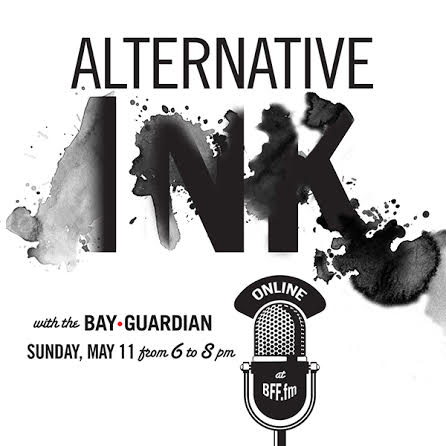
Tune in to Alternative Ink, the Guardian’s radio show LISTEN NOW

8

Greetings, Guardianistas, we’re making the leap from your eyeballs to your earholes with Alternative Ink, our new radio show on BFF.fm, San Francisco’s best Internet radio station. Tune in this Sunday, May 11, from 6-8pm for a blend of music, talk, and random musings that is uniquely Guardian. [UPDATE: You can listen to last night’s show by clicking here.”]

Actually, our first show was two weeks ago, but we decided to call it a soft launch while we found our voice and learned how all knobs and buttons work. But we quickly found our groove and now we’re ready to get into some trouble with a larger audience.

This week’s crew includes Editor-in-Chief Steven T. Jones, Music Editor Emma Silvers, News Editor Rebecca Bowe, Reporter Joe Fitzgerald Rodriguez, and a special guest appearance by Street Fight columnist Jason Henderson. Art Director Brooke Ginnard says she’s sitting this one out after producing our first show, but you never know.  

We’ll be talking about bikes, buses, and the implications of how people get around; our new BayLeaks encrypted tip system and the city scandals it’s exposing; Kink.com and controversial threats it faces; promising new clean energy technologies and related issues from the upcoming Based on Earth column; and the local music scene, from a solo street trumpteer to the hottest up-and-coming local bands. And if we get drunk enough, we might even dish on the evolving situation with our corporate overlords, who knows?

You can hear Alternative Ink every other week as we tag-team this time slot with our colleagues down the hall at SF Weekly, but trust us, ours is the one you wanna hear. So tune in Sunday. 

Marcus Books of San Francisco evicted

For months, we’ve been covering the story of Marcus Books, the nation’s oldest continuously operating black-owned, black-themed bookstore located in San Francisco’s Fillmore District. Facing eviction from the purple Victorian where the bookstore had operated since 1981, the family that owns it had launched an ambitious fundraising campaign in an effort to remain in place.

Widespread community support for the culturally significant bookstore even led to the Board of Supervisors granting landmark status for the bookstore’s Fillmore Street address, on account of “its long-term association with Marcus Books … and for its association with Jimbo’s Bop City, one of the City’s most famous, innovative and progressive jazz clubs.”    

But as the Bay Guardian has just learned, the bookstore was evicted on May 6. Now it seems the family is in the process of packing up the books and determining what the next step is.

In the meantime, here’s an open letter sent to supporters via email by bookstore co-owners Tamiko, Greg, and Karen Johnson.

Dear Supporters: 
It was difficult to know what to tell you about our struggle to stay in our building, its winding path of lawyers and judges and protests and promises, hopes and gravities made it difficult to report our status on a curved road. But the current property owner has changed the locks to the door of 1712 Fillmore Street.

Marcus Books missed a couple of rent payments (not such a rare thing considering that at the same time the largest US banks and even our government asked taxpayers to give them hundreds of billions of dollars of assistance). However, the mortgage holder, PLM Lender, foreclosed on the building that housed Marcus Books of San Francisco since 1981. It was sold to the Sweis family (realtors and owners of Royal Taxi in San Francisco). The Johnson family (co-owners of Marcus Books of San Francisco) has been trying to buy the building back for a year and half.   

The Sweis’ bought this building in a bankruptcy “auction” (apparently, they were the only bidder) for $1.6 million. The Johnsons offered $1.8 million; the Sweis set their price at $3.20 million, hoping to double their purchase price after a few months ownership. After some public outrage resulting in public protests against the Sweis, a negotiation brought their asking price down to $2.6 million, adding a million dollar profit to their purchase without adding any improvements to the property and adding a stipulation that the entire $2.6 million be raised within 90 days.

Marcus Books supporters, including the local chapter of the NAACP; ACCE (Alliance of Californians for Community Empowerment; Japantown activists; Westside Community Services; Julian Davis, our fearless legal council; Carlos Levexier’s “Keep It Lit” campaign committee; local literary community including writers and other bookstores; people from all over the world: friends, family, customers, churches and unions took a stand against the bulldozing of community. Individuals, unions, and churches donated $25,000. The Community Land Trust of San Francisco garnered loan pledges of $200,000 and Westside Community Services offered a loan of $1.60 million. Though by any standards that would have been more than enough for a down payment, the Sweiss’ refused the $1.85 million start and filed for eviction.

Concurrently, the San Francisco Board of Supervisors unanimously passed a resolution requiring every division of city government make it a priority that they each use their “powers” to help Marcus Books stay in its location. In addition, and after 5 years of efforts by John Templeton (the leader in Black California history), and Greg Johnson (co-owner of Marcus Books of San Francisco), London Breed and Malia Cohen, two San Francisco Supervisors, initiated the Board of Supervisors’ unanimous vote granting landmark status.

With the numerous speeches of San Francisco Mayor Ed Lee stating his commitment to righting the wrongs of the San Francisco Redevelopment Agency’s slaughter of the thriving African American Fillmore District, we at Marcus Books believed the City would take some affirmative action on our behalf, since Marcus Books is the only surviving Black business since the Redevelopment devastation. Maybe that support is around the next bend? Well the locks have been changed, the cavalry is not in sight, and it’s time to pack up the books and store them till we find another space.

You might ask yourself, why bother? Materialism rules the day. That is not news. More often than not, we take it for granted that the “bottom line” is the only line worth respecting, though it respects no one. This is a common conception, but not right. Right is the vertical line that runs through all levels: from its spiritual top to its earthly roots. This verticality is manifested only by integrity. Integrity defies gravity in its perpetual longing for truth. Millions of people have been put out of their homes by bottom-line-feeders. It’s common, but it’s not okay, now or at any other time. Sometimes you just have to take a stand. Integrity is a verb.

In 1970, I had a vision bout rebirth. A segment of that vision informs this struggle. In this particular scene, the spirit is climbing the Tree of Humanity, being lifted higher and higher by those entwined in The Tree. The spirit never steps on anyone’s face or heart. It just carries their dreams up with it. Because it is growing towards rebirth, it gets younger with each step up. Though there are thousands of supporters at the bottom of The Tree, there are fewer at the top and the helping hands are fewer and far between. At the top of The Tree, at the stratum of the clouds, quantity has morphed in into quality. Here a storm of wind and rain rages, lightning strikes and a mad dog spirals up The Tree, snapping at the heels of the now, infant spirit. Teetering on a limb, the spirit sees a man face down in the mud at the bottom of The Tree. Seems he got there from letting go of his faith in The Tree. The surrounding clouds urge the spirit fall.
 
“Cross Section”
The rumors, that were whispered,
            Here, the silence screams,
            And branches battle shadows
            To defend their dreams.
 
            Where Black is cut in pieces,
            Can’t hold myself together.
            Time cuts me down,
            Life me brought up,
            But lead me to this weather.
 
            The Time says, ‘Fall
            To soulless ease.
            To struggle is disgrace.
            The gravity will grant you peace,
            And hide your shameful face.’
 
            But I am born of honor:
            Descendent from above.
            My Father’s name is Wisdom
            And my Mother’s name is Love.
            And I have strength of purpose.
            That’s what my climb’s about.
            As I’m cut off,
            I will hold ON
            And trustingly Black-out.”
 
(Copyright 1997, Karen Johnson)
 
 For the hundreds of people who have lent their time, money, and prayers, we are truly grateful.
 
–Tamiko, Greg, and Karen Johnson, co-owners Marcus Books of San Francisco
 
 . . . to be continued

Carmageddon cometh

42

news@sfbg.com

STREET FIGHT

San Francisco — already overwhelmed with private automobiles — faces a grim future of gridlock unless there is a radical change in how we think about city streets, parking, and regional transportation.

The facts are clear. Every day there are 1.7 million private car trips to, from, or within the city, according to the city’s transportation plan. Coupled with almost 10,000 vehicles registered per square mile, San Francisco today has one of the densest concentrations of cars on the planet, more than any peer city in the United States. In the business-as-usual scenario, the streets are forecast to absorb another half-million car trips. By 2040 there will be 2.2 million car trips on the exact same street grid we have today.

This is madness and it is dysfunctional for everyone. If you think Muni is unreliable now, it will be useless in 2040 as it stalls in the morass of 2.2 million car trips jammed onto city streets. Pedestrian injuries and deaths will rise with another 160 cars hitting pedestrians annually, simply due to oversaturation of automobiles. Cyclists might be able to weave around the stalled traffic, but it will be an ugly scene that fouls the air. Motorists will be stuck in their own gridlock, evermore impatient, distracted, honking, lurching through blocked intersections, sneaking through yellow lights, blocking crosswalks, double parking, and irritated with fellow drivers and everyone around. No one will be happy

This does not have to be. The city’s transportation agency hopes to reduce car trips from 1.7 to 1.6 million by 2018, a modest goal but barely holding the line. Reducing existing car trips by 100,000 while also adding thousands upon thousands of housing units and jobs, most coming with more parking, will quickly undo this humble ambition. The city can do more and the data shows us that there are many opportunities.

Consider that 68 percent of car trips within San Francisco are less than three miles. That’s 650,000 car trips per day that are generally pretty short — with a bicycle it’s less than a half-hour ride on relatively even terrain. If the city were able to get half of those car trips to switch to bicycle trips, it would be well on its way to averting carmageddon.

A more ambitious goal, increasing cycling to 20 percent of all trips, is the official city policy adopted by the Board of Supervisors. That’s 500,000-600,000 trips by bicycle every day, most of which can take place within that three-mile range, especially if cleverly arranged “wiggles” (level routes circumventing steeper hills) are laid out on the most logical corridors. But to carry that many cyclists, real space has to be allocated for them.

Out at San Francisco State University, where I teach a new Bicycle Geographies course that aims to increase cycling to the campus, there is tremendous opportunity to shift these kinds of short trips to bicycling. For students, faculty, and staff, bicycling is compatible with rapid transit, particularly for the “last mile” segments, such as between BART and SF State.

Bicycling is also a way to relieve local bus and light rail transit crowding — the 28 bus line on 19th Avenue, for example, is often jam packed and the city has only modest goals to improve that key line. Unlike transit or highways, bicycles do not require costly, long-term capital investment or operating funds and so can be deployed much more quickly.

It will be decades and cost hundreds of millions to improve the M-line, only now in the planning phase. We can lay down cycletracks much more quickly. Bicycling is also among the most equitable forms of urban transportation because it is affordable and accessible to almost everyone. This is obviously relevant to working-class students at SF State.

SF State has a memorandum of understanding with the city that obliges the university to reduce drive-alone automobile trips to campus, and the campus will not build any more car parking. With 4 percent of commute trips to SF State by bicycle (and only 2 percent among faculty) there is potential to increase the mode-share of bicycling as a path to reducing greenhouse gas emissions and auto trips.

The spatial proximity to Daly City and Balboa Park BART stations, as well as the Excelsior and Sunset, all under three miles from campus, means that the bicycle is well-suited to be a substitute for many short-range automobile trips and help the campus meet its goals. Yet what my students have found this semester is that it is all but impossible to bike safely to and from SF State, and the southwestern quadrant of San Francisco is largely left out of current bicycle planning in the city.

Taking multiple bicycle field trips over the past few months, we surveyed the opportunities for making safe routes to campus and envisioned what it would take to increase cycling to 20 percent of trips to and from SF State. Starting with the Balboa Park station, which is next to a deplorable tangle of freeway ramps, we ask what it would look like if fully-separated cycletracks were built on Geneva or Ocean avenues. These could connect City College and the Excelsior, and by way of a westward and southward jog, to a bicycle boulevard on Holloway Avenue, enabling a safe and convenient, 1.7-mile, 15-minute bike ride to SF State. Expanding the nascent Bay Area Bike Share to connect SF State and Balboa Park BART would create even more opportunity for cycling.

To the south of SF State, Daly City BART is a 1.4-mile, 10-minute bike ride that is daunting and poorly signed. It could be made safe and inviting with bicycle boulevards on streets parallel to traffic-clogged 19th Avenue and Junipero Serra. Borrowing from signature bicycle and pedestrian bridges in Pleasant Hill and Berkeley, perhaps there is an opportunity to build a bridge across Brotherhood Way toward the BART station, leveling an otherwise steep climb that discourages cycling.

To the north of campus, describing the designated 20th Avenue bicycle route as “a bit of a challenge” is an understatement. Cyclists must thread a cluttered shopping mall parking lot and overbuilt wide streets, and then confront a median blockading the way across Sloat Boulevard. While the megaproject to improve the M-line could include a cycletrack on this stretch of 19th Avenue, we should not wait a generation to increase cycling between SF State and the Sunset. The 20th Avenue route can be made welcoming now, with a fully-separated cycletrack and fixes on the Sloat intersection.

SF State, probably one of the most diverse campuses in the nation, has highly motivated students seeking real solutions to the huge problems society faces. The students are coming of age under extreme pressure of economic inequity and ecological duress, but they also see ways out of the mess created by the wasteful car culture and its linkages to ecological and social problems. They want to act now, and unlike past generations, they are shunning driving and many of them desire to reside in livable cities that offer choices for how they get around.

But what we have found this semester is that the campus is extremely isolated, difficult to access by bicycle, and walled-off by car sewers. Older, uninviting bicycle lanes are fragmented, disjointed, and seem to be an afterthought. With imagination, ingenuity, and political will, this can be remedied with bicycle improvements that cost far less than adding more car lanes and parking to the campus or surrounding area. And this would go much further at improving quality of life for neighbors who now have to put up with campus-generated traffic. Keeping the status quo, which means even more car trips but within the same space, is a dead end.


TRANSBAY DREAMS

Speaking of dead ends, San Francisco seems to specialize in dead-end train projects. The Central Subway, which is experiencing cost overruns and possible mismanagement, is one of these dead ends. There is no current option to have trains exiting to Geary or onto Columbus and possibly running on Lombard into the Marina, and that is a shame. Having the subway exit to the surface is probably the only way to make this project worthwhile.

There’s another dead end train project at the Transbay Terminal in downtown San Francisco. Yet unlike the Central Subway quagmire, I am impressed with the scale and possibilities for the Transbay Terminal project and there is opportunity to fix this dead end. Going back to the city’s business-as-usual traffic forecast, in 2040 car trips into the city from the Bay Bridge would increase 18 percent, and by 21 percent from San Mateo County. Aside from scratching my head wondering where exactly all of these cars are supposed to go, we simply need to stop this onslaught before the city becomes too dumb to move.

BART cannot solve it alone, as it will probably approach half a million riders per day by 2016, placing many downtown stations at or near capacity. BART also does not run all the way down the peninsula. Sometimes there are back-of-the envelope proposals to build a second BART tunnel under the bay, but this idea should be weighed against another idea. Rather than build a second BART tunnel to Oakland, how about a joint Amtrak California/Caltrain tunnel under the bay, and creating a true Grand Central Station of the West at Transbay? Let’s punch through the dead end currently planned for the east end of the Transbay Terminal “train box” and truly connect Northern California by rail.

This does not need to be high-speed rail, but rather the conventional, off-the-shelf electric rail already planned for Caltrain, of the variety that operates in the Northeastern US and much of Europe — efficient, high capacity trains that can travel 100-120 mile per hour comfortably and safely. In conjunction with a new transbay rail tunnel, the Capitol Corridor should be electrified and right of way captured from the freight railroads. One could take an electrified “baby bullet” from San Jose, through San Francisco, and continue to the East Bay and Sacramento. As Caltrain is electrified to the south, let’s also electrify the Altamonte Commuter Express trains, bring them across a rebuilt Dumbarton Bridge, and run high-frequency rail service into the new Transbay Terminal.

Understanding that this will take time to build, in the short term the Bay Bridge should be reconfigured to have bus-only lanes (and a bicycle lane on the bottom deck of the west span) and a greatly expanded AC Transit service that can relieve the looming BART crowding to the East Bay.

How to pay for these transbay dreams? A transbay rail project could get funding from Amtrak and other federal sources, requiring our congressional delegation to work for it. The state gasoline tax or eventual carbon taxes, and revenue from tolling Bay Area freeways, should be in the mix. The 101 and 280 should be tolled as well as the Caldecott Tunnel and I-80 in the East Bay, with revenue directed at electric rail in the long term and regional buses short term. And while people are talking about reforming Proposition 13 to end the artificially low property taxes on commercial land, let’s remember that transit — whether Muni, BART, or Caltrain — brings massive value to commercial property owners. They should be realistically expecting to pay in. In short, there are possibilities and ways to do this.

Here’s one small additional idea for raising seed money: In the wake of the Google bus controversy, the SFCTA, SFMTA, SF Planning Department, and City Attorney’s Office should assemble a crack team of California Environmental Quality Act experts and send them (on Caltrain and bike share!) down to comment on every large-scale suburban office project proposed in Silicon Valley. For example, Mountain View, where Google has its campus, is effectively displacing part of its transportation and housing responsibility to San Francisco.

As part of the CEQA mitigation for these suburban office projects, San Francisco ought to be demanding that Google/ Mountain View contribute to paying for the Transbay Terminal and electrifying Caltrain (a separate fund would be directed to affordable housing as mitigation for displacement). This is a similar line of reasoning to the May 1 lawsuit against the Google bus pilot, but it draws in those responsible for the poor planning in suburban sprawl. Regardless, the city ought to take a look at a CEQA mitigation angle for addressing the impacts these suburban decisions are having on the city.


PRAYING FOR ENLIGHTENMENT

One last point about transit finance: I sure hope Mayor Ed Lee, his political advisors, and all those religious ministers who complained about paying for metered parking on Sundays (see “Politics over policy,” April 22) have a plan to advocate for the November ballot proposals to help finance Muni.

They sold out sustainable transit advocates, their biggest ally on the November ballot initiatives, and have offered no rational explanation for their strategy, just an emotional hunch that somehow some people can’t cope with Sunday metering, and that making it free again will convince them to support increased public transit funding.

I imagine there is a well-thought-out campaign strategy, whereby every Sunday between now and November, the mayor is visiting all the churches in the city, and cajoling the ministers to use their pulpits to enthusiastically preach the merits of increasing the vehicle license fee (as well as approving a related general obligation bond).

After all, the VLF is a progressive tax — the more expensive your car, the more you pay. The older and cheaper your car, the less you pay. And bringing in $73 million annually would contribute to making God’s green earth cleaner, and help transport God’s children safely to work and on their errands. Praise the Lord and free parking on Sunday! Amen.

Street Fight is a monthly column by Jason Henderson, a geography professor at SF State and the author of Street Fight: The Politics of Mobility in San Francisco.


Ownership in Guardian’s parent company may shift

18

Greetings, Guardianistas. Almost a year ago, when we went through a management struggle here the newspaper, I promised to let readers know if we encountered any threats to our editorial independence from our San Francisco Print Media Co. owners.

Frankly, we haven’t. We’re still calling events as we see them, bringing you the best emerging artists, and making endorsements from the same independently progressive perspective that we’ve been operating from since we were founded in 1966.

Principal owner Todd Vogt has kept his word and let us handle editorial content while he helps improve our revenues and grow the paper. Both have been on the upswing in recent months, and we’re grateful for his role in keeping the Guardian alive and thriving.

But as our colleagues down the hall reported last night, Vogt may be on his way out. This week, he informed the staff of the three San Francisco Print Media newspapers — the Bay Guardian, San Francisco Examiner, and SF Weekly — that he will be parting ways with his partners at Black Press Ltd., which also owns Oahu Press, Inc., by the end of the month.

Vogt has been talking to potential investment partners around San Francisco about exercising his option to take full ownership control of San Francisco Print Media Co. in the next couple weeks, but he said that he considers it unlikely given the high cost of buying out his partners.

Representatives from Black Press and Oahu Press were in the office yesterday and they told us they will be conducting a search for a new president of the company over the next few months, and they don’t expect to make any major changes in the operations of the Guardian or the other two papers before then.

Don Kendall with Black Press, who will be assessing the operations of all three papers during the search for a new president, called the papers “editorially solid.” A long-planned move by the three papers into new office space — into the top floor of the Westfield Mall, in a former SFSU Downtown Campus space — will also proceed as scheduled next month.

Spirits here at the Guardian are strong, we appreciate the role that Vogt has played in helping the Guardian mount a comeback after some tough financial times, and we’re hopeful that the new ownership team will appreciate the Guardian’s history and role it plays in the city — and that it will see us through our 50th anniversary and beyond.

And most of all, we appreciate the support of our readers and community, without whom we wouldn’t be able to do what we do. So thanks, and keep reading.  


P.S. We’ll be continuing the soft-launch of our new radio show, Alternative Ink, this Sunday from 6-8pm on bff.fm. The Guardian alternates Sundays with the SF Weekly, with both papers featuring music and talk. This week, we’ll have some great audio clips for the week’s news events, music from local bands, and we might even get into the topic of this post and let some secrets slip, so don’t miss it.   

Dress with less

0

arts@sfbg.com

THEATER In the 1940s and ’50s, Sophiatown was a poor and rough but exceptionally vibrant black suburb of Johannesburg. Its destruction under apartheid, which entailed the forced removal of residents in 1955, remains a painful emblem of South Africa’s racist system. It also forms the suggestive backdrop to a small domestic tale of infidelity in Théâtre des Bouffes du Nord’s touring production of The Suit — directed and co-adapted from the famous Can Themba short story by legendary maestro Peter Brook, and now making its Bay Area debut at American Conservatory Theater — which turns the personal lives of its protagonists into an existential rumination and a subtle but resonant political allegory.

But in Brook’s hands — and those of his principal collaborators, translator and co-adaptor Marie-Hélène Estienne and composer Franck Krawczyk, working with the stage adaptation by Mothobi Mutloatse and Barney Simon — the story and its themes are inseparable from a pure theatrical experience. With a few choice properties, a fine trio of actors, a smattering of evocative songs, and three protean musicians (who add a rich soundscape to the proceedings as well as good-naturedly people scenes when necessary), The Suit unfolds as a deceptively simple, wistful, and whimsical communion with its audience, a shared space for dreaming the world as it really is and as it might be.

To this end, the stage comes dressed with little more than a handful of brightly colored wooden chairs and a couple of empty rolling coat racks, the latter serving variously as closet, wall, entry way, or bus shelter. Each of the three actors helps to narrate the story, which centers on Philomen (played by the impressive Ugandan-born London-based actor Ivanno Jeremiah) and his beautiful young wife, Matilda (radiant South African actor and singer Nonhlanhla Kheswa).

The third actor (charismatic New York actor Jordan Barbour) acts as principal narrator, describing early 1950s Sophiatown as the setting for the story, while also winningly playing Philomen’s best friend and other incidental parts. The three musicians (guitarist Arthur Astier, pianist Mark Christine, and trumpet player Mark Kavuma) meanwhile engage with the action in various ways, as accompanists, as fellow players, and silent witnesses.

Philomen, deeply in love with Matilda, is devastated when, en route to work one day, he learns from his friend that she may be having an affair. He heads home instead and discovers her in bed with a young man who promptly runs out of the house, leaving behind his suit. He decides the suit will be the basis of Matilda’s punishment. She will have to care for it as an honored guest in their house, to the point of feeding it meals and taking it along for the couple’s strolls around the neighborhood. This humiliation takes a heavy toll on Matilda, but she is powerless to change Philomen’s mind on the matter. For his part, he acknowledges that he has lost his former self, that some “mechanism” that was his life has broken down and now functions perversely. It is finally his best friend who, in a quietly poignant moment of contact, convinces him to forgive and forget, but by then it is too late.

The domestic world and its promise of bliss are thus distorted and starved, and come to resemble instead something more like a cage, while mirroring a larger system of oppression outside — especially as news comes of the forced relocation of Sophiatown’s residents and the resistance movement it sparks.

But in its deft, joyful staging and gorgeous musicality, the production never lets go of the sense of what is being denied, namely a profound harmony and a depth of feeling, making their loss in the story all the more affecting. Moreover, the music itself (mingling traditional African songs with one by Nina Simone, as well as a raw and stirring rendition of Abel Meeropol’s “Strange Fruit”) reveals a consonance with histories, legacies, and unsung stories much closer to home. *


THE SUIT

Through May 18, $20-$120

ACT’s Geary Theater

415 Geary, SF

www.act-sf.org

The shaman, the oracle, and the engineer

0

arts@sfbg.com

MUSIC Two bra-clad figures peek through a shroud of fog onstage that’s every bit as thick as the shrieking white noise at Oakland’s Night Light. The sound is a perfect accompaniment for the sadomasochistic display before the audience. One woman’s lips press against another’s flesh, but if you lower your glance, you’ll notice among the chaos that one is slicing a blade across the other’s stomach like a ritualistic-looking sacrifice. Blood is drawn, even though they seem to be intimately embraced.

This was how Replicant, the live music/performance/visual art series with a penchant for the weird, chose to kick off the new year at their January showcase; Bad News, an industrial duo consisting of Sarah Bernat and Alex Lukas from Los Angeles and San Francisco, respectively, headlined. On this night, they had also invited experimental conspirators Greer McGettrick (formerly of The Mallard) and Shannon Madden (Chasms) to join them during the performance. Madden said just a day before this gig that her relationship with Bernat had ended.

So was this arousal, anguish, or both? The audience, mostly in frozen silence by this point, was left to their own devices and had to interpret the definitive sensory overload for themselves. “We were bouncing a lot of ideas off each other, like ‘What can you do besides karaoke to your own music; make it transformative?'” said Madden, referring to conversations with Bernat, during a recent interview.

Bernat writes lyrics and plays guitar in her band and is usually tethered by her instrument, but she seemed possessed enough to become unleashed during this set. Somehow she maintained a straight-faced gaze throughout the cutting, even if she trembled a bit.

“It was totally emotional. We both knew that the only way to say goodbye was to do it on stage. I think there’s a reason why Chasms and Bad News are connected and I think it has something to do with suffering.”

pMadden said this was her last real interaction with her ex, but the two bands (who are on the same labels) will share a bill May 10 at Thee Parkside when Sleep Genius, the independent record label “born of the San Francisco fog” throws a showcase of its acts: Five mostly-local bands will give their own intimate and brooding examples of how new music is emerging from the underground — and what they’re doing to manifest a new direction.

There was nothing subtle about the bodies on stage that night in Oakland, nor the heavily-processed sound that came with it. Along with her collaborator, Jess Labrador, Chasms has a new LP, Subtle Bodies, due this June. Their live show is taking on a slightly different direction, sounding more blown-out and less concerned with pop-song sensibility time constraints. They’ve upped the ante on noise elements and are beefing up on drone.

“I’m using Alex [Lukas]’s gear. There’s a reason,” Madden said. “Alex is my shaman, oracle, and engineer.” She explained that the pedals she’s been using are not meant for her bass guitar. “It’s the first time Jess has ever kept a live take of mine and not edited it.” Labrador is the songwriter, vocalist, guitarist, and sometime drum programmer in this dark duo. “I could never do any of that without experiencing Alex or Sarah.”

Alongside a DX7ii synthesizer and other assorted gear, we’re huddled — Lukas, Madden, and I — inside his tidy Bayview District trailer. Other like-minded artists reside on the property, but his studio hasn’t been completely set up since he was priced out of his old 18th and Mission space, after his landlord raised the rent by 40 percent.

“The cost of living here is so high. People funnel so much of their money into rent,” he said. Having weathered two tech booms as an artist in the Bay Area — he’s been here since 1998 — Lukas knows what it’s like to sell CDs at Amoeba for “a brick of cheese.”

His dwelling is, nevertheless, a cozy hideaway, well-stocked with cassettes and a pretty chill black cat. We chat about how his ties with Madden run deeper than just his influence over how she plays. For one, they spent much of 2013 together at the helm of The Lab, a long-standing visual and performance art space near 16th & Mission that has seen many incarnations over the years.

“There aren’t a lot of spaces like [The Lab] in San Francisco anymore. When Sarah and then [Shannon] kept it active with shows and performances, it sort of compromised The Lab’s role as a venue for visual art, but made it more important than ever as a performance space,” he said.

Under their collective watch, The Lab hosted a variety of underground or emerging acts, like Wreck & Reference, Some Ember, Austin Cesear, Marshstepper, Disappearing People, and Dorian Wood.

Madden claimed the types of shows she was booking weren’t “artsy enough” for a visual arts space to be left alone by the city’s Entertainment Commission. Finding a platform for these types of acts is, she says, the bigger concern in the current “cultural economy” in San Francisco.

“People work high-paying jobs that require their brain. When they get off work, they wanna get shitfaced and hear Toro Y Moi. They don’t wanna go deep in some experimental avant, industrial shit. They want their brains to be massaged and they want to go to sleep, wake up, do it again and eat some fuckin’ food-truck food.”

She notes Oakland is sustaining as an impressive platform for the underbelly of electronic music. “They have a fortified interest in outsider stuff.” She hopes the culture in San Francisco shifts underground again, but in the meantime is happy to book at more traditional venues including Brick & Mortar, The Night Light and Elbo Room.

“It’s not about the space, even as intimate as it was. I want to give the local bands the best deal that I can and not risk it getting broken up. Lots of rad shit’s going to have to happen in a bar space.”

Sleep Genius Presents: Ringo Deathstarr with Sleep Genius artists Bad News, Chasms, Never Knows, and Cry

May 10, 9pm, $10-12

Thee Parkside

1600 17th St, SF

www.theeparkside.com

Big batch of SF archival films new on YouTube, featuring ‘Hello Girls’ of Chinatown, bay swimming ‘Frog Man’, city-stopping strikes, and more!

0

Media company British Pathé uploaded thousands of archival films to its Youtube channel, and in the batch are hundreds of vintage newsreels showcasing San Francisco history as far back as the 1906 earthquake.

The films cover milestones in Baghdad by the Bay’s history, but more obscure films like “Hello Girls” of Chinatown (1929) and Frog Man Swims Under Golden Gate Bridge (1954) offer a look at quirky San Franciscans of the past. 

The news-radio style announcers on film vary from droll and monotone to Kentucky Derby levels of excitement: 

“San Francisco’s rail commerce is at a virtual stand still, warehouses are full!” 

“San Francisco’s ever smoldering railway war breaks out anew. Twenty-seven department store operators have united to squelch union demands for a 35 hour week!”

“After five years of work the San Francisco Golden Gate Bridge is completed.”

“San Francisco lies under a blanket of snow, its heaviest in 75 years.”

“Alcatraz… it doesn’t seem possible that they’d close it down.”

A nod to Curbed for the great find. Below we’ve embedded some of our favorites, but there are hundreds more at British Pathé’s YouTube channel, here

San Francisco Cable Cars Threatened (1954)
San Francisco Strike(1938)
Golden Gate Bridge Open (1937)
Fine Arts Palace Demolished (1964)
Frog Man Swims Under Golden Gate Bridge (1954)
“Hello Girls” Of Chinatown (1929)
San Francisco Earthquake (1906)
Alcatraz – Everybody Out! (1963)

The future of Piers 30-32

5

EDITORIAL

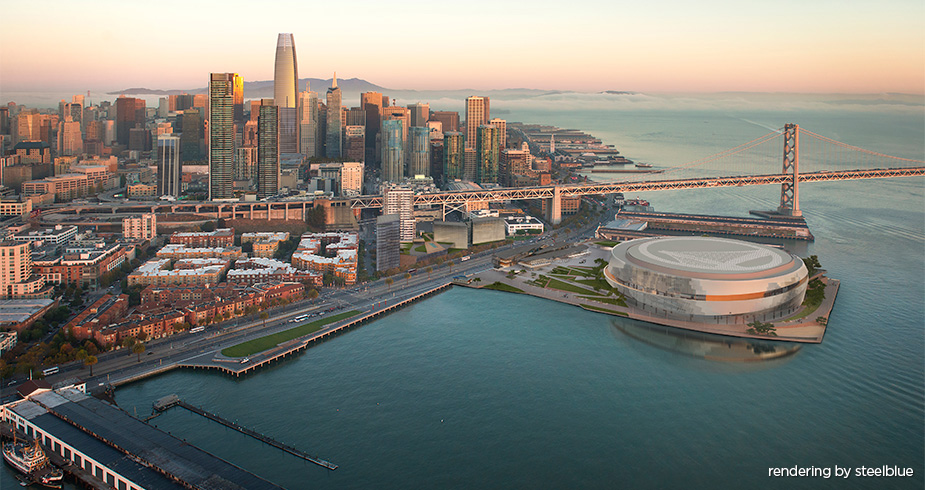
It was good news for San Francisco when the Golden State Warriors withdrew a proposal to build a new arena on Piers 30-32 and to instead build it on private land in Mission Bay, sparing city residents a costly and divisive fight sullied by millions of dollars in political advocacy and propaganda.

The new location near the intersection of 16th and Third streets is still close enough to the water to provide picturesque images for network television, but without sparking concerns about the city’s stewardship of coastal land held in trust for the people of California. The new site will have better public access once the Central Subway is completed, and it could help encourage the teardown of Interstate 280 and its conversion into a multi-modal boulevard like Octavia, a good idea the city is now studying.

Best of all, this provides a golden opportunity for the city and the Port of San Francisco to launch a truly public process for how to use Pier 30-32, the largest remaining open stretch of the central waterfront, as well as the adjacent Seawall Lot 330. Rather than simply reacting to big ideas hatched behind closed doors, the public could take part in a truly democratic process to proactively shape this high-profile public property.

Admittedly, there are challenges to overcome, starting with the high cost of demolishing these aging piers, so it’s likely that the valuable Seawall Lot 330 will be part of the equation, with its pure profit potential used to help pay for whatever happens to the piers. But how that balancing act is done would be for the public to decide.

Should we open up that stretch of waterfront by not replacing the piers, or replacing it with a much smaller pier? Could it become an artificial wetland that is both pretty and ecologically beneficial in an era of rising seas? Would we accept a luxury condo tower on the seawall lot to help pay for this new open space? Or maybe the city would want to float a bond and seek grants to help remove this bay fill and keep the seawall lot to a more limited and public-interest use?

These are the kinds of honest and direct questions San Francisco should be asking its citizens. The waterfront is an invaluable resource, and it shouldn’t be treated as merely a liability because the Port needs money. The same goes for Seawall Lot 351 that was part of the 8 Washington project that voters rejected, as well as Seawall Lot 337 that is part of the Giants proposal at Pier 48.

The views of the people of San Francisco shouldn’t be afterthought to be avoided, as opponents of Proposition B seem to believe, but a creative resource that could help shape the San Francisco of tomorrow.


New coalition opposes Chiu’s Airbnb legislation UPDATED

28

An unlikely coalition has formed to oppose legislation sponsored by Board of Supervisors President David Chiu that would legalize and regulate short-term apartment rentals facilitated by Airbnb and other online companies, which are now illegal in San Francisco.

[UPDATE: Some of those same opponents are also now threatening to place a rival measure on the fall ballot, the San Francisco Chronicle just reported. It reportedly shares some aspects with the Chiu legislation, such as a registration system, but it limits rentals to only commercial areas and includes rewards for those who turn in violators to the authorities].

The coalition includes landlord and tenant activists, as well as organized labor and neighborhood groups. It will square off against Airbnb and its hosts, which have pledged to lobby against limits created by the Chiu legislation — all of which could elevate this to the biggest fight of the summer at City Hall. Tomorrow [Tues/28], the coalition of opponents will rally outside City Hall at 10am, while Airbnb supporter will hold a “Speak Up for Home Sharing” rally at 12:30pm.

As we’ve been reporting, it took Chiu more than a year of negotiations with Airbnb, the San Francisco Tenants Union, affected city agencies, and other interested parties to arrive at legislation that requires hosts to register with the city, finally pay the city’s transient occupany tax, and limits stays to 90 nights per year.

But after more than two years of Airbnb’s defying city law and refusing to pay its taxes — scofflaw behavior tacitly supported by Mayor Ed Lee, who share a financial benefactor for the company in venture capitalist Ron Conway — several city constituencies pledged to oppose legislation that would now legalize its activities.

In particular, some longtime affordable housing and neighborhood activists say the legislation irresponsibly legalizes the conversion of residential apartments into tourist hotels throughout the city, creating neighborhood safety concerns and overturning decades of work to protect rent-controlled housing.

Meanwhile, Chiu’s opponent in the race for the Assembly District 17, David Campos, has been highlighting lobbying reports showing 61 contacts between representatives of Airbnb — including formers City Hall insiders David Owen and Alex Tourk — and Chiu’s office.

“Do you think tenant and neighborhood groups met with David Chiu 61 times?” Campos said during his endorsement interview with the Guardian last week, accusing Chiu of letting Airbnb write its own regulations without regard to neighborhood concerns.

Chiu didn’t immediately return our phone calls, but we’ll update this post if and when we hear back. [UPDATE: Chiu legislative aide Judson True just called and disputed how the legislation is being characterized by its opponents and rejecting calls to withdraw the legislation: “Everyone is entitled to a position on Sup. Chiu’s legislation, but we would hope they would engage in the legislative process and not just toss hand grenades. This is a serious policy issue that requires thoughtful dialogue and to simply call for the withdrawal of the legislation is irresponsible.”

True also said the legislation only legalized short term rentals “under very narrow circumstance and that legalization allows enforcement against the most egregious actors.” He also noted how Chiu has consistently opposed converting apartments to tourist uses and called for Airbnb to pay its taxes, calling the legislation a difficult balancing act: “We know that Airbnb has issues with the legislation. They didn’t write the legislation, period.”]

In the meantime, here’s the full text of the press release issued today by the new coalition, which will be holding a press conference at 10am tomorrow on the steps of City Hall:    

For Immediate Release: 
Monday, April 28, 2014

NEWS RELEASE

SAN FRANCISCO CITYWIDE COALITION SAYS NO 
TO PROPOSED CHIU LEGISLATION

Board of Supervisors trying to convert residential housing to 
short-term rentals

Press conference Tuesday April 29, 2014 Steps of City Hall at 10:00 am

San Francisco — Organizations representing usually divergent interests ranging from tenants to landlords, and from hotel workers to the hospitality industry have joined forces with neighborhood and homeowner associations to oppose legislation introduced by Supervisor David Chiu to legalize the short term rentals of residential property throughout San Francisco.

“In the face of an unprecedented housing crisis, Supervisor Chiu’s legislation to legalize the short term rentals of residential property will only exacerbate the housing crisis. This practice is detrimental to our rent-controlled housing stock”, said Janan New, Executive Director of the San Francisco Apartment Association.

“Our studies have shown that with over 10,000 units of housing being rented out over Airbnb, HomeAway and other websites this practice is having a negative impact on hotel workers and San Francisco’s hospitality industry”, said Mike Casey, President of UNITE HERE Local 2.

“The proposed legislation would rezone the entire city from residential zoning to commercial zoning in one fell swoop. We hear complaints from almost every neighborhood about the detrimental effects of short term rentals on the quality of life of tenants and residents”, said John Bardis, former President of the Coalition for San Francisco Neighborhoods and former San Francisco Supervisor.

“Supervisors Chiu’s legislation would repeal hard won controls on Single Resident Occupancy housing, threatens current affordable housing provisions for over 30,000 permanently affordable units, would transform newly approved “in-law units” into high priced motel rooms and make “below market rate” units lifetime luxury hotels. It is the single biggest threat to affordable housing ever proposed by a San Francisco Supervisor” stated longtime affordable housing advocate Calvin Welch.

“Airbnb and other hosting platforms owe the City millions of dollars in unpaid hotel taxes. It is high time that the City collect these taxes which pay for the arts and vital city services and programs. The proposed legislation does not clearly hold Airbnb and similar organizations responsible for collecting and remitting the hotel tax”, said former Supervisor Aaron Peskin.

All of these organizations are calling for Supervisor Chiu to withdraw his legislation at a press conference on Tuesday April 29 on the steps of City Hall at 10:00 am.

Psychic Dream Astrology: April 23 – 29, 2014

0

April 23-29, 2014

ARIES

March 21-April 19

If you slack off this week you’ll find that things get overwhelming pretty quickly. This can be a time of meaningful beginnings as long as you stay true to your vision for the future you want to create. Stay on course even if the road is bumpy or longer than you think it should be.

TAURUS

April 20-May 20

How can you hear your gut instincts with all that chatter in your noggin, Taurus? You’re not doing yourself any favors by arriving at your destination early but frazzled. If you want things to be different you need to be different. Prioritize the cultivation of calm so that your intuition is easier to align with.

GEMINI

May 21-June 21

You are getting ready to birth a whole new part of yourself, Twin Star, and it’s a lot all at once. Manage your fears by obsessing on what you’re grateful for instead of what you’re scared of. You may need to slow down your pace so that your practical twin can catch up with the one who’s ready for action.

CANCER

June 22-July 22

If you could have whatever you want, what would it be? You need a plan, so instead of wringing your hands you can mobilize. You are capable of carving out your desires but it will require you to step up to some of your biggest fears and confront them. Invent a way out so that if you need it, you’ve got it.

LEO

July 23-Aug. 22

Ambition is a good thing but being too willful may kick up more resistance than you intend it to this week. If people feel pushed around by you, no matter how innocent your intentions, you’ll find them putting up a fight or digging in their heels. Work with others and not against them, Leo.

VIRGO

Aug. 23-Sept. 22

You’re not supposed to know the answers. The Universe wants you to act for the love of acting, or at least because you believe in what you’re doing. Have clear intentions but don’t be so attached to them that you are closed to the wide world of possibility outside of your head. Don’t fear the unknown, Virgo.

LIBRA

Sept. 23-Oct. 22

You can’t control anything, but that’s old news, Libra. While your head may be swimming with ‘what ifs’ you need to keep your actions trained on what you’ve already chosen. Follow through on your commitments, even the ones you’ve made to yourself, and the rest will reveal itself in it’s own sweet time.

SCORPIO

Oct. 23-Nov. 21

Acting ‘nice’ can get you into a world of trouble, so be in integrity with your actions this week. Make sure you’re not enabling people or situations by acting all nicey-nice when the truth is much less pleasant than all that. True kindness doesn’t need to feel good but it nurtures the giver and the recipient.

SAGITTARIUS

Nov. 22-Dec. 21

You have some serious decisions to make. If you run around like a chicken with its head cut off you’re likely to achieve nothing good this week. Make a plan, Sag. In order to choose things you need to turn away from others. Clarify what’s most important to you and act as single-minded as you can.

CAPRICORN

Dec. 22-Jan. 19

Don’t confuse your feelings with your situation — or you’ll self-sabotage out of some sort of anxious knee jerk reaction to your fears. Keep your thoughts trained on your hopes and your heart open to having its wishes fulfilled. Be grateful for what you’ve got on your path to what you want.

AQUARIUS

Jan. 20-Feb. 18

You need to decide how much of other peoples’ drama you’re going to take on, Water Bearer. There’s hecka fuss in your sphere and you’d be wise to call your boundaries. Don’t wait for other people to behave as you’d prefer them to; be the change you wish to see in your life and the rest will follow.

PISCES

Feb. 19-March 20

Look at your life, Pisces, and take stock of all you have. Be grateful for the goodness you’re surrounded by, whether your cup is overflowing or there’s only a few drops for you to soak in. This week you can build on your successes but it requires that you first own them with pride and joy.

Want more in-depth, intuitive or astrological advice from Jessica? Schedule a one-on-one reading that can be done in person or by phone. Visit www.lovelanyadoo.com


Love rumbles

0

arts@sfbg.com

MUSIC Like some bastard love child of Link Wray and Johnny Thunders, Berlin-by-way-of-Israel rock ‘n’ roller Charlie Megira has mastered the art of blending 1950s-style rock guitar and spooky, blood-curdling howls. In his newest incarnation (though not as new as it may seem, but we’ll get to that later), the Bet She’an Valley Hillbillies, he takes those building blocks and adds a vroom-vroom rockabilly twang.

It’s a sound he describes in a typically poetic — and esoteric — word dump: “The beginning of the end of music…dealing with the local in an exotic manner. It don’t mean a thang if it ain’t got that twang…Rings of Fire that burn like love.” Got it.

Bigger news: After a long battle to obtain the proper visa, Megira will head to the United States for his first ever stateside tour, beginning Mon/28 at Vacation SF, then Tue/29 at the Nightlight in Oakland. In a travel loop, he’ll stop by the Austin Psych Festival in Texas and head back to the Bay for a pop in at the Makeout Room on May 14. During the tour, Megira and the Bet She’an Valley Hillbillies will be selling a cassette called The End of Teenage (Guitars and Bongos), a mix of original rockabilly and surf.

That Bet She’an Valley Hillbillies name is a nod to his childhood. He was born and raised in the northern Bet She’an region of Israel, obsessed with Algerian and Moroccan music like Salim Halali and Joe Amar. There was also the excellent record collection of his father, who once upon a time was a musician as well. “They told me that my father used to have a trumpet when he was a kid. I guess he didn’t stick with it,” says Megira. “But he used to play a number on family occasions like weddings. It was great.” Through his father’s vinyl stash, Megira absorbed the likes of Elvis, James Brown, Santana, and 1960s Israeli folk-pop star Esther Ofarim.

Later, a cousin introduced him to “popular music like Rod Stewart,” and hair metal legends White Snake.

“I used to ask him while watching the [White Snake] videos, ‘why are they wearing ripped clothes and torn jeans?’ I thought that they were poor or something,” he says.

He began a succession of his own bands, including perhaps the most well known, at least in Israel: The Modern Dance Club. Before MDC there was the Schneck, Naarey Hahefker, Oley Hagardom, Los Tigres, The Wall of Death, No Hay Banda, The Tralalala Boys; the list goes on.

I first caught on to the Modern Dance Club through its cheeky, perfectly ’60s-aping beach-blanket-bingo encapsulated video for “Dynamite Rock,” off second full-length Rock-n-Roll Fragments. (It was originally released in 2002 and rereleased on Birdman Records in 2009.) The song sounds like a fuzzier, Israeli “Teenager in Love.” It was hard to believe Megira was a modern-day musician, as the Modern Dance Club name hinted at and a quick Google search confirmed. He looked and sounded of another era, a toothy, pompadoured rocker with western motif style and hip-shaking guitar lines. Rock-n-Roll Fragments also contains a song called “Bet She’an Valley Hillbillies,” which informed his next act.

Years later, I learned of Modern Dance Club’s connection to Bay Area-based record label, Guitars and Bongos (Greg Ashley, Dancer), which released its double LP Love Police. It was the small Oakland label’s very first release after forming in 2011. More recently Guitars and Bongos released that tour tape, The End of Teenage.

“I read about [Megira] in an Israeli newspaper and heard him on Israeli radio,” says Guitars and Bongos co-founder Eran Yarkon, who lived in Israel for a year before moving to Oakland. “I never thought I would have a label. But of course I was a big fan, and so is my friend Julie Cohen, so we thought of ways to put out Charlie’s music in the US on vinyl. Julie came out with the name of the label, which is based on a Lou Christie song.”

Others might have found Megira through Israeli filmmaker Ari Folman’s follow-up to his wildly popular (and Oscar-nominated) film Waltz with Bashir (2008). The film, sci-fi epic The Congress (2013), included music by Megira and also an animated version of the rocker. “It was great seeing my cartoon character alongside Elvis and Yoko Ono.”

Folman had heard Love Police and tracked Megira down to be in his film. In it, Megira’s cartoon performs his own original song — haunting, slow-burning “Tomorrow’s Gone,” off an early releaseand also plays guitar on covers of Bob Dylan’s “Forever Young” and Leonard Cohen’s “If It Be Your Will,” sung by actress Robin Wright in the film.

Appearing in Folman’s film was a coup, no doubt, but the move from Israel to Berlin with his wife and young son a few years back was an even bigger milestone, an epic journey north leading to a prime creativity peak. “It all felt a bit like The Flight Into Egypt theme you find in Gothic paintings. Germany is now our Egypt.”

In Berlin, he revived a sound he first visited in his Rock-n-Roll Fragments days and formed a band by the same name as that aforementioned track: Bet She’an Valley Hillbillies, with a bassist who goes by the Dead Girl (also a member of the Modern Dance Club) and bongo player named Corso, whom Megira met while doing integration classes at a college in Berlin.

For the Bet She’an Valley Hillbillies US tour, however, Michael Beach (Electric Jellyfish, Michael Beach, Shovels) and Alexa Pantalone (Pang, Penny Machine) will back Megira. No matter, he’s long been the songwriter and main driving force behind his bands, fronting with cool abandonment and a sweltering connection to vintage rockers of yore.

Like his sonic ancestors, moody rockers with greasy pomps and snarling attitude, he seems to be on the rebellious, rock ‘n’ roll trip — roaring with fuzzed-out ’50s riffs that still pummel like Link Wray, growling like Johnny Thunders — yet bound to family, home life, and even self-improvement.

However serious, Megira claims, “I want to finally learn how to sing and dance like a serious entertainer and to communicate with people like a normal person. Maybe I should take some courses or something.” But then he’d be a so-called normal person, and what fun is that?

Charlie Megira

With Dancer

Mon/28, 9pm, free

Vacation

651 Larkin, SF

www.vacation-sf.com


With Andy Human, Dancer, Big Tits

Tue/29, 9pm, $7

Night Light

311 Broadway, Oakl

www.thenightlightoakland.com

Reel-ality

3

cheryl@sfbg.com

SFIFF “I’m the wrong kind of person to be really big and famous,” Elliott Smith admits in Heaven Adores You, Nickolas Rossi’s moving portrait of the late indie musician, who went from regional star to superstar after his Oscar nomination for 1997’s Good Will Hunting. “It was fun … for a day,” Smith reflects — and anyone who saw Smith’s hushed Academy Awards performance, on a night that also included Celine Dion’s chest-thumping rendition of “My Heart Will Go On,” has likely never forgotten it.

But Heaven isn’t overly concerned with Smith’s sudden celebrity and mysterious end (in 2003, he was found with two apparently self-inflicted stab wounds to the chest, but his death was ruled “undetermined,” rather than a suicide). Instead, it’s an artfully crafted study of a unique talent, avoiding music doc clichés in favor of more creative choices, like illustrating college-radio interviews — far more revealing than anything Smith would share with journos seeking Oscar sound bites — with gorgeously composed shots of Smith’s beloved Portland, Ore. Heaven widens to contextualize Smith’s importance within the 1990s Portland scene, with former members of his pre-solo band, Heatmiser, and fellow musician and longtime girlfriend Joanna Bolme among the interviewees. (Unfortunately absent: Hunting director Gus Van Sant.) But Smith’s soulful, eerily timeless songs (described here as “little pictures made of words”) remain Heaven‘s focus — appropriate, since they were always Smith’s focus, too.

A less-tragic tale of reluctant fame unfolds in Jody Shapiro’s Burt’s Buzz, which opens as its subject, Burt’s Bees co-founder Burt Shavitz, arrives in Taiwan to what can only be described as a hero’s welcome. Given the fact that Burt’s Bees products crowd drugstore shelves as ubiquitously as Neutrogena and Cover Girl, you’d be forgiven for assuming THE Burt lives the lavish life of a lip-balm magnate. Which is not the case, since the aging Shavitz prefers an exceedingly spartan life in rural Maine, with a woodstove providing heat and a begrudging acceptance of running water. “A good day is when no one shows up, and you don’t have to go anywhere,” Shavitz opines.

Not that he has any choice. When Burt’s Bees went from homespun to corporate, all the dough went to Shavitz’s former business (and romantic) partner Roxanne Quimby, who’d bought him out when their relationship went sour; most of Shavitz’s income seems to stem from making personal appearances for a company he no longer has much else to do with. (Quimby’s upbeat son is interviewed in her stead, though we do glimpse her in excerpts from a TV program entitled How I Made My Millions.) Still, Shavitz — knowing that Burt’s Bees is stuck with him forever, since his name and bearded visage decorate the brand’s folksy packaging — remains remarkably blasé about his financial situation. He’s not into material possessions, though he’s comfortable enough to have a “majordomo” help him with his affairs, and is enough of a diva to demand rice milk rather than the soy milk proffered by his eager-to-please Taiwanese hosts.

Shapiro’s documentary is a bit overlong (do we really need to see ol’ Burt Skyping with his dog?), but it wisely highlights the most interesting element of Shavitz’s story, which is not “Did he get ripped off?” or “Look at this crazy hippie!” but “Is this guy more self-aware than he’s letting on?” Though his assistant insists “He’s like Colonel Sanders, and he simply does not understand that,” it’s never entirely clear — though Shavitz’s own assertion that “No one has ever accused me of being ambitious” certainly has the ring of truth, rather than bitterness, to it.

Elsewhere in SFIFF’s documentary programming, two films take contrasting approaches to the artistic process. Of local interest, Jeremy Ambers’ Impossible Light, a close-up look at the Bay Lights — the high-tech art installation that illuminates the western span of the Bay Bridge — smartly runs a lean 71 minutes. First, we meet project founder Ben Davis, who had a brain wave one sunny day while idly staring at the bridge, which he’d always appreciated despite its ugly-stepsister status next to the glamorous Golden Gate. After artist and LED wizard Leo Villareal joins up, the ball really gets rolling, and Light tags along as a dedicated group of big thinkers form alliances with Caltrans engineers and other hands-on types who believe in Davis’ “impossible idea.” Nobody who sees this film about what became a truly collaborative process — Bridge workers scale the towers, tinkering with laptops! Creative types scramble to raise eight million bucks from private donors! — will ever take the intricately twinkling end result for granted.

The opposite of straightforward: The Seventh Walk, inspired by the nature-themed art of Indian painter Paramjit Singh. Director Amit Dutta brings Singh’s work to life with his questing camera, floating through the Kangra Valley’s leafy forests and across streams as water rushes, birds squawk, and insects hiss on the soundtrack. We also see Singh himself, dabbing his textured, abstract work onto canvases as the movie around him becomes more surreal. Occasional poetry fragments appear on screen to make the waking-dream vibe even more immersive: “Deep in the forest, the musk deer frantically pursues its own fragrance: laughter!”

Despite its title, it takes awhile for laughter to enter Happiness, Thomas Balmès’ tale of Peyangki, a restless nine-year-old monk living in remote Bhutan — the last pocket of the country, which prizes its “gross national happiness,” to get electricity. Stunningly composed shots (those mountains!) showcase a simple, deeply traditional lifestyle that’s about to completely change, for better and probably worse — ominously, everyone’s conversations already revolve around television. When Peyangki gets the chance to travel to the capital city, he’s fascinated by everything: mannequins, crutches, packaged snacks, aquarium fish, and, at last, TV, where the first thing he glimpses is Wrestlemania (and he’s on to it immediately: “Is it real?”), and you can practically see the innocence melting away.

http://www.youtube.com/watch?v=HA7FKRygwLc

A more conventionally-structured doc comes from Stanley Nelson, no stranger to powerful material with previous films like 2011’s Freedom Riders, 2006’s Jonestown: The Life and Death of People’s Temple, and 2003’s The Murder of Emmett Till. Nelson returns to the civil rights movement for Freedom Summer, which mixes archival material and contemporary interviews to detail the youth-propelled African American voter drive amid menacing intolerance in 1964 Mississippi.

News reports about the disappearances of workers James Chaney, Andrew Goodman, and Michael Schwerner — “Mickey” to wife Rita, as eloquent and composed today as she is in 1964 footage — weave throughout the film, with the discovery of their bodies recalled by folk legend Pete Seeger, who learned about it while performing on a Mississippi stage. While the events detailed in Freedom Summer have been covered by numerous other documentaries, Nelson’s impressive array of talking heads (not identified by name, though many are recognizable) brings a personal, eyewitness touch to this history lesson. *


The 57th San Francisco International Film Festival runs April 24-May 8. Screening venues include the Castro Theatre, 429 Castro, SF; New People Cinema, 1746 Post, SF; Pacific Film Archive, 2575 Bancroft, Berk; and Sundance Kabuki Cinemas, 1881 Post, SF. For tickets (most shows $15) and complete schedule, visit festival.sffs.org.

Where there’s smoke

0

news@sfbg.com

It was April 20 in Golden Gate Park, the fabled 4/20 in the parlance of pot smokers, and we found Nick and Chris standing under the shade of a tree with a cluster of friends, including Geoff, the proud owner of a five-foot bong.

Nick had done several hits through the supersized smoking device that day. Beside him, Chris took hits from his own handheld bong. “I’m feeling good,” Nick reported. “But I’m also kinda hungry. I could go for some Chinese food. Ohh, and some Sapporo!”

Administering a hit of marijuana through such unwieldy paraphernalia is quite the operation, requiring one person to stand and hold one end, another to light the marijuana once it’s packed into the bowl, and a third to inhale the five-foot column of milky smoke that rises through the chamber. The smokers on the receiving end contorted their faces as they inhaled, inevitably coughing and laughing as they breathed out, seemingly amazed by the experience. The college-age friends were in 420-induced bliss.

The annual 420 celebration in Golden Gate Park is unpermitted, with no official organizers, yet thousands of festivalgoers nevertheless flock to it year after year. It’s a quintessentially San Francisco experience: Young and old congregate for a collective daylong smoke-out, bringing drums, dogs, grills, shade structures, hand-blown glass, tie-dyed tapestries, Hacky Sacks, sound systems, and other picnic paraphernalia along with them.

The area around Hippie Hill — at the eastern end of the park, near Kezar Stadium — was a jumble of humanity crammed elbow to elbow, reeking of pot smoke. The crowd reflected a wide range of ethnicities and brought out many displaying an outlandish sense of fashion, sporting shiny plastic marijuana-leaf necklaces, sleeve tattoos, piercings, face paint, and piles upon piles of dreadlocked hair.

San Francisco maintains an iconic status as a weed-friendly city. While 420 in Golden Gate Park is a lighthearted scene that’s also proved irksome for city agencies plagued by leftover trash and traffic jams, serious year-round marijuana advocacy efforts continue to mark the Bay Area as a hotbed for drug policy reform and thriving, legitimate pot-based entrepreneurship.


GREEN BEACON

The movement to legalize marijuana for medical purposes started in San Francisco, the lovechild of the city’s hippie movement and its caregiving response to the AIDS epidemic. It was Dennis Peron and other activists here who wrote Proposition 215, the statewide legalization measure that California voters approved in 1996.

A decade ago, the San Francisco Board of Supervisors approved a comprehensive set of regulations for its two dozen or so medical marijuana dispensaries, guidelines that have proven to work well and be a model for other jurisdictions to follow, elevating pot purveyors into accepted members of the business community (see “Marijuana goes mainstream,” 1/27/10).

Some have even begun to regard the Bay Area as a model for how to implement a sensible approach to regulating marijuana. On April 16, US Rep. Dina Titus (D-Las Vegas) traveled to San Francisco on a fact-finding mission after Clark County, Nevada legalized medical marijuana, with Las Vegas and other Nevada cities expected to follow shortly.

“I want the state to learn from someone who’s done it right,” Titus told the Guardian as she toured The Apothecarium on Market Street, an elegant dispensary reputed to be one of San Francisco’s finest.

In addition to helping guide Nevada’s implementation of medical marijuana legalization, Titus said she’s working on federal legislation that would better protect small businesses involved with a marijuana industry that is growing rapidly in the US, thanks to Colorado and Washington taking the next step and legalizing even recreational uses of marijuana.

For example, Titus wants to make sure marijuana businesses have full access to banking services, something that the US Department of Justice has occasionally interfered with. As Titus told us, “The federal government shouldn’t be wasting time and going after people who are abiding their state laws.”


BLISS AND BOUNDARIES

Back at 420 on Hippie Hill, Amber and Charlie lounged on a blanket with Gizmo, an affectionate pooch they’d adopted from “this guy who lives in a tree house” in Santa Cruz. The young couple, ages 18 and 20 respectively, had hitchhiked to California from Washington. Yes, “we may have done some weed,” Charlie said before letting out a peal of laughter.

“It’s been pretty awesome,” Amber said. “Literally, there was smoke coming from everywhere,” the moment 4:20pm arrived. As far as the eye could see, she said, the scene was nothing but “people smoking weed. It was crazy.”

Lilian was at the park with a friend, wearing a crown of daisies she’d woven with flowers plucked from nearby the park entrance. “All day we’ve been doing joints and blunts and pipes,” she explained. “We haven’t had any bong hits yet, but we had a couple vape hits, because they were like giving free test trials here at the park. So we were like, alright, why not?”

Lilian exulted the “positive vibes” of the event, but it wasn’t all weed and roses. A short while later, reports of gunfire sent police cars racing into the park with sirens wailing. While police later reported that they never found evidence of anyone actually discharging a weapon, two different individuals were arrested on charges of possessing a firearm.

Emergency personnel responded to four medical calls, police reported the following day, including one person who had a seizure, someone who suffered an abrasion at Haight and Ashbury streets, and two underaged individuals who experienced problems after becoming overly intoxicated. For a crowd of thousands pushed the boundaries of indulgence, quite a small number suffered harm.

Eight other arrests stemmed from charges of selling marijuana or possessing it for sale, possession or sale of opiates, one warrant arrest, and another on charges of “malicious mischief,” according to police.

A few days before the unpermitted gathering, city officials held a press conference announcing a “comprehensive plan” to crack down on the anticipated debauchery, which included not only the Golden Gate Park marijuana celebration but the “Hunky Jesus” competition, a countercultural hallmark held annually on Easter Sunday in Dolores Park.

“Last year we had a lot of challenges,” said Sup. London Breed, whose District 5 encompasses Golden Gate Park. “We need to make the city and streets safe this year. We want people to come and enjoy San Francisco, but we also want them to respect San Francisco.”

Thus, city agencies ramped up deployment of both plainclothes and uniformed police officers, and sent out more parking and traffic control officers.

The previous year, when massive amounts of debris had been left strewn throughout the park, it took 25 city employees over 12 hours to clean up five tons of trash left by intoxicated visitors, said Phil Ginsburg, general manager of the city’s Recreation and Parks Department. The Department of Public Works’ tab for cleanup exceeded $10,000.

But the main draw of the event, in true San Francisco fashion, was behavior Police Chief Greg Suhr hinted in advance would essentially be tolerated. “The sale of marijuana is still a felony,” Suhr emphasized, “but I don’t think [the SFPD is] naive enough to believe that we can stop people from smoking on 4/20.”


CANNABIS AS MEDICINE

Advocates for legalizing even recreational use of marijuana had hoped to make the November ballot this year, but the campaign’s signature-gathering effort has sputtered out.

Sponsored by the California Cannabis Hemp Initiative, the legalization measure was named for Jack Herer, a renowned cannabis advocate who passed away in 2010. The campaign is now ramping up for another try in 2016, when some advocates hope the presidential election will drive younger voters to the polls.

But while efforts to legalize weed in California for recreational use falter for now, the legitimate use of cannabis for medicinal purposes has giving rise to healthy businesses and research on health benefits. At the April 16 event at the Apothecarium, Titus had lots of questions for Allie Butler, an expert in marijuana who has a master’s degree in public health and told Titus, “I want to do cannabis research for the rest of my life.”

Butler introduced Titus to the various strains of marijuana, explaining what ailments each is good for. The CaliWidow can be a cure for headaches, she explained, and Blue Dream is “good for nausea. We prescribe that for cancer patients all day.” She indicated another strain, saying, “this is the Jack Herer, it’s my mom’s favorite.” Fancy, knowledgeable, and above ground, this isn’t your mom’s marijuana business anymore.

SFBG Wrap, April 16-23

0

BART FINED FOR WORKERS’ DEATHS

The California Occupational Safety and Health Administration has fined Bay Area Rapid Transit for three “willful/serious” safety violations in connection with the death of two transit workers last October, saying BART is at fault due to a lack of safety measures.

“Safety standards are designed to save lives,” acting Cal/OSHA chief Juliann Sum said in a statement, “and they were not followed.”

The transit workers were killed in the final days of the BART strike. The accident claimed the lives of Christopher Sheppard, a BART manager and member of the AFSCME union, and Larry Daniels, a contractor, who had been inspecting a “dip in the rail” before they were hit by an oncoming train.

The workers were required to go through what’s called a Simple Approval process to get permission to work on the track, but the OSHA citation seized on that process as a dangerous underlying factor in the fatal accident.

“Employer’s control method, namely the ‘Simple Approval’ procedure, does not safeguard personnel working on tracks during railcar movement,” the citation reads. “The employer allowed workers to conduct work on the railway tracks where trains were traveling. The employees had no warning that a train moving at more than 65 miles-per-hour was … approaching the location where they were working.”

BART General Manager Grace Crunican quickly issued a statement. “Passenger and employee safety is our top priority at BART,” Crunican said. “BART has fundamentally upgraded its safety procedures with the implementation of an enhanced wayside safety program and a proposed budget investment of over $5 million.” She added that Cal/OSHA considered the safety violations to be “abated” in light of these changes, “meaning that none … pose continuing safety hazards.”

Simple Approval has since been terminated, BART spokesperson Alicia Trost told the Guardian. “BART permanently eliminated Simple Approval immediately following the tragic deaths,” she said. “We are also implementing the extra layers of protection for track workers.”

Notably, the two workers were killed during BART management’s attempt to train managers to operate trains during the strike, according to the National Transportation Safety Board, which continues to investigate the incident. (Joe Fitzgerald Rodriguez)

SORRY STATE OF PUBLIC HOUSING

Sup. London Breed has proposed setting aside city funding to renovate vacant and dilapidated public housing units, in an effort to quickly make housing available for homeless families in the face of a dire shortage.

At the April 15 Board of Supervisor’s meeting, Breed cited an anticipated budget surplus and called for the Controller and City Attorney to begin drafting a supplemental budgetary appropriation of $2.6 million, for renovating 172 San Francisco Housing Authority units sitting vacant.

“There are over 40 public housing developments in San Francisco, and given the decades of mismanagement and financial neglect that public housing has endured, many units are currently not available for San Franciscans to live in,” Breed said. “As we grapple with an unprecedented affordability crisis and an acute shortage of housing, particularly affordable housing, these fallow public housing units represent one of our best and cheapest opportunities to make housing available now.” Breed, who represents District 5, previously lived in San Francisco public housing.

The Housing Authority receives its funding through the federal government, but spokesperson Rose Marie Dennis said those federal dollars don’t stretch far enough for the agency to perform routine restoration of vacant units. “We have to work with the resources that we have,” she said.

According to an analysis by Budget & Legislative Analyst Harvey Rose, the city has lost $6.3 million in rent that could have been collected had its empty public housing units been occupied.

The day after Breed floated her proposal for a budgetary supplemental, tragedy struck at Sunnydale, the Housing Authority’s largest housing development, when a deadly fire claimed the lives of a 32-year-old resident and her 3-year-old son. The cause of the fire is under investigation, but a San Francisco Chronicle report noted that the Housing Authority had planned to rebuild Sunnydale for years due to its poor condition.

The following day, April 17, Mayor Ed Lee announced that emergency funding of $5.4 million had been identified through the Mayor’s Office of Housing and Community Development, to address serious deferred maintenance needs — such as busted elevators in apartment complexes where disabled seniors rely on wheelchairs and canes to get around. (Rebecca Bowe)

SUPES OUTFOX LANDLORDS

When the San Francisco Board of Supervisors gave final approval April 15 for legislation to substantially increase landlord payments to tenants in the case of Ellis Act evictions, it reflected a key change designed to counter a recent eviction push by landlords.

Winning approval on a 9-2 vote, with Sups. Mark Farrell and Katy Tang opposed, the legislation increases the current required relocation payments of $5,265 per person or $15,795 per unit (plus an additional $3,510 for those with disabilities or over age 62) up to the equivalent of two years’ rent for a comparable unit. That translates to tens of thousands of dollars.

For example, the Controller’s Office calculates that a family evicted from a two-bedroom apartment in the Mission District rented at $909 per month would be entitled to $44,833 in relocation payment.

The legislation was originally scheduled to go into effect 120 days after passage, in order to give city officials enough time to implement it. But when sponsoring Sup. David Campos heard landlords were rushing to evict tenants prior to the fee increase, he checked in with the City Attorney’s Office and other departments to see whether they could be ready sooner. After getting the green light, Campos amended the measure to go into effect 30 days after it’s enacted into law.

The question now is whether Mayor Ed Lee, who has not taken a position on the legislation, will act quickly to sign it. He was initially given 10 days to decide. Since a veto-proof majority approved the legislation, the mayor’s decision is to either grant approval or stall the inevitable, triggering more evictions at lower levels of relocation assistance. (Steven T. Jones)

POLICE TAPES BROUGHT TO LIGHT

Police radio dispatch records from March 21, the night 28-year-old Alejandro Nieto was gunned down in Bernal Heights Park by San Francisco Police Department officers, had been impossible to obtain despite requests from journalists, attorneys, and community members who had ties to Nieto.

Then, incredibly — thanks to a combination of tenacious reporting and the website Broadcastify.com — the radio dispatch audio popped up in a news report on KQED’s website.

Originally captured in real-time by a website works like an automatic police scanner and preserves all files, the recordings offer a rare, behind-the-scenes glimpse of what occurred in the moments leading up to the highly controversial officer-involved shooting.

The SFPD’s account of the incident is that officers opened fire in defense of their own lives because Nieto pointed a Taser at them, causing them to believe he was tracking them with a firearm.

But the audio files that have now surfaced reflect no mention of a suspect brandishing a weapon.

The first mention of a “221” — police code for person with a gun — is to relate a 911 caller’s description of a Latino male suspect, who has “got a gun on his hip, and is pacing back and forth on the north side of the park near a chain-linked fence.” Just before the shooting, a voice can be heard saying over the radio, “There’s a guy in a red shirt, way up the hill, walking toward you guys.” Several seconds later, another voice calmly states, “I got a guy right here.”

Twenty-six seconds after that, a person can be heard shouting, “Shots fired! Shots fired!”

“What’s very telling is that none of the people are saying, the guy had a gun, he pointed it at us,” said attorney Adante Pointer of the law office of John Burris, which is preparing to file a complaint on behalf of Nieto’s family against the SFPD. “It begs the question, did [Nieto] do what they said he did?”

“If this was a righteous shooting,” Pointer added, “then [SFPD] … shouldn’t have any fear of public scrutiny.”

Friends and supporters of Nieto have led marches to protest the shooting and set up a website for ongoing events, justice4alexnieto.org. (Rebecca Bowe)


Waterfront height-limit proponents praise Warriors arena move

46

In another waterfront win, the Golden State Warriors have backed off their original arena site to another spot by the bay. 

Multiple news outlets are reporting the proposed Warriors arena is moving from its contentious and hotly debated waterfront location at Piers 30-32 to what is now the home of Salesforce, in Mission Bay, a move praised by opponents of height-exceeding waterfront devleopment.

The story was first reported by Joe Eskenazi of the SF Weekly, and within the hour the Chronicle and San Francisco Business Times reported the move as well. 

The Warriors’ original proposed arena site drew almost as much fire as the 8 Washington luxury condo waterfront project, which was overwhelmingly rejected by voters last November. Those against 8 Washington, and against the original Warriors site, argued that voters should have the right to weigh in on projects that exceed height limits on the waterfront.

Advocates against both waterfront projects praised the Warriors’ move.

“The Warriors have shifted to a smarter alternative because the people, not just the politicians, became involved in the process,” said former mayor Art Agnos, in a press statement. “Passing Prop. B is the next step to ensure that every other waterfront developer understands that the voice of the voters matters.”

Becky Evans, Sierra Club Bay Chapter Chair, evoked the imagery used to garner opposition to 8 Washington in her praise of the move. “We thank the Warriors,” she said, “for abandoning their wall on the waterfront.”

Yet the bid to protect the public’s views the bay doesn’t end at the Warriors’ arena

Yes on B is a June ballot initiative which would require waterfront projects exceeding height limits to seek voter approval. And importantly, the Warriors’ arena is only one of three height-limit exceeding properties currently proposed for the waterfront. Two additional projects are a large housing and retail site proposed by the San Francisco Giants at Pier 48/Seawall Lot 337 and a mixed use office, residential, and retail project by Forest City at Pier 70. 

The reasons behind the Warriors’ arena move are still as of yet unclear, and we were unable to reach Warriors spokespeople before press time. Sources close to the project however indicated the motivation behind the move is likely the obvious one: they didn’t want to deal with the headache of fighting the opposition.

Salesforce recently announced a move to the new Transbay Tower in 2017, potentially leaving their site in Mission Bay vacant. The Warriors’ arena move to the old Salesforce site represents a compromise it appears Mayor Ed Lee is happy to accept.

I couldn’t be more thrilled to welcome the Golden State Warriors back home to San Francisco with a brand-new, privately-financed arena in Mission Bay,” Lee wrote in a statement earlier today. “The new Mission Bay arena will generate new jobs and millions of dollars in new tax revenue for our City.”

Jon Golinger, Campaign Co-Chair of No Wall on the Waterfront, viewed the news as a victory.

“When the public gets involved with deciding the future of our waterfront we get better results,” he wrote in a press statement. “Passing Prop B is the only way to be sure that other crazy Port Commission schemes like the Giants’ plans to build 380 foot tall towers for luxury condos on waterfront open space, zoned for a public park, also gets the public scrutiny needed to turn them into sensible projects worthy of our unique waterfront.”