Development

War of the waterfront

40

tredmond@sfbg.com

There’s a blocky, unattractive building near the corner of Howard and Steuart streets, right off the Embarcadero, that’s used for the unappealing activity of parking cars. Nobody’s paid much attention to it for years, although weekend shoppers at the Ferry Building Farmers Market appreciate the fact that they can park their cars for just $6 on Saturday and Sunday mornings.

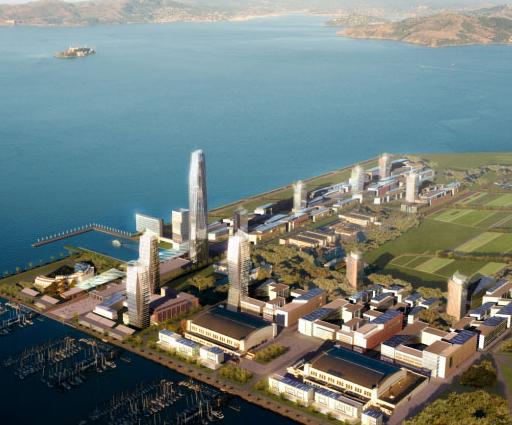
But now a developer has big plans for the 75 Howard Street site — and it’s about to become a critical front in a huge battle over the future of San Francisco’s waterfront.

Paramount Partners, a New York-based real-estate firm that also owns One Market Plaza, wants to tear down the eight-story garage and replace it with a 350-foot highrise tower that will hold 186 high-end condominiums. The new building would have ground-floor retail and restaurant space and a public plaza.

It would also exceed the current height limit in the area by 150 feet and could be the second luxury housing project along the Embarcadero that defies the city’s longtime policy of strictly limiting the height of buildings on the waterfront.

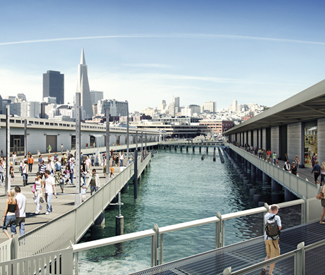
It comes at a time when the Golden State Warriors are seeking permission to build a sports arena on Piers 30 and 32, just a few hundred feet from 75 Howard.

Between the proposed 8 Washington condo project, the arena, and 75 Howard, the skyline and use of the central waterfront could change dramatically in the next few years. Add to that a $100 million makeover for Pier 70, the new Exploratorium building on Pier 15, and a new cruise ship terminal at Pier 27 — and that’s more development along the Bay than San Francisco has seen in decades.

And much of it is happening without a coherent overall plan.

There’s no city planning document that calls for radically upzoning the waterfront for luxury housing. There’s nothing that talks about large-scale sports facilities. These projects are driven by developers, not city planners — and when you put them all together, the cumulative impacts could be profound, and in some cases, alarming.

“There hasn’t been a comprehensive vision for the future of the waterfront,” Sup. David Chiu told me. “”I think we need to take a step back and look at what we really want to do.”

Or as Tom Radulovich, director of the advocacy group Livable City, put it, “We need to stop planning the waterfront one project at a time.”


Some of the first big development wars in San Francisco history involved tall buildings on the waterfront. After the Fontana Towers were built in 1965, walling off the end of the Van Ness corridor in a nasty replica of a Miami Beach hotel complex, residents of the northern part of the city began to rebel. A plan to put a 550-foot US Steel headquarters building on the waterfront galvanized the first anti-highrise campaigns, with dressmaker Alvin Duskin buying newspaper ads that warned, “Don’t let them bury your skyline under a wall of tombstones.”

Ultimately, the highrise revolt forced the city to downzone the waterfront area, where most buildings can’t exceed 60 or 80 feet. But repeatedly, developers have eyed this valuable turf and tried to get around the rules.

“It’s a generational battle,” former Sup. Aaron Peskin noted. “Every time the developers think another generation of San Franciscans has forgotten the past, they try to raise the height limit along the Embarcadero.”

The 8 Washington project was the latest attempt. Developer Simon Snellgrove wants to build 134 of the most expensive condominiums in San Francisco history on a slice of land owned in part by the Port of San Francisco, not far from the Ferry Building. The tallest of the structures would rise 136 feet, far above the 84-foot zoning limit for the site. Opponents argued that the city has no pressing need for ultra-luxury housing and that the proposal would create a “wall on the waterfront.”

Although the supervisors approved it on a 8-3 vote, foes gathered enough signatures to force a referendum, so the development can’t go forward until the voters have a chance to weigh in this coming November.

Meanwhile, the Paramount Group has filed plans for a much taller project at 75 Howard. It’s on the edge of downtown, but also along the Embarcadero south of Market, where many of the buildings are only a few stories high.

The project already faces opposition. “The serious concerns I had with 8 Washington are very similar with 75 Howard,” Chiu said. But the issues are much larger now that the Warriors have proposed an arena just across the street and a few blocks south.

“Because of the increase in traffic and other issues around the arena, I think 75 Howard has a higher bar to jump,” Sup. Jane Kim, who represents South of Market, told me.

Kim said she’s not opposed to the Warriors’ proposal and is still open to considering the highrise condos. But she, too, is concerned that all of this development is taking place without a coherent plan.

“It’s a good question to be asking,” she said. “We want some development along the waterfront, but the question is how much.”

Alex Clemens, who runs Barbary Coast Consulting, is representing the developer at 75 Howard. He argues that the current parking garage is neither environmentally appropriate nor the best use of space downtown.

“Paramount Group purchased the garage as part of a larger portfolio in 2007,” he told me by email. “Like any other downtown garage, it is very profitable — but Paramount believes an eight-story cube of parking facing the Embarcadero is not the best use of this incredible location.”

He added: “We believe removing eight above-ground layers of parked cars from the site, reducing traffic congestion, enlivening street life, and improving the pedestrian corridor are all benefits to the community that fit well with the city’s overall goals. (Of course, these are in addition to the myriad fees and tax revenues associated with the project.)”

But that, of course, assumes that the city wants, and needs, more luxury condominiums (see sidebar).


Among the biggest problems of this rush of waterfront development is the lack of public transit. The 75 Howard project is fairly close to the Embarcadero BART station, but when you take into account the Exploratorium, the arena, and Pier 70 — where a popular renovation project is slated to create new office, retail, and restaurant space — the potential for transit overload is serious.

The waterfront at this point is served primary by Muni’s F line — which, Radulovich points out, “is crowded, expensive, low-capacity, and not [Americans with Disabilities Act]-compliant.”

The T line brings in passengers from the southeast but, Radulovich said, “if you think we can serve all this new development with the existing transit, it’s not going to happen.”

Then there are the cars. The Embarcadero is practically a highway, and all the auto traffic makes it unsafe for bicycles. The Warriors arena will have to involve some parking (if nothing else, it will need a few hundred spaces for players, staff, and executives — and it’s highly unlikely people who buy million-dollar luxury boxes are going to take transit to the arena, so there will have to be parking for them, too. That’s hundreds of spaces and new cars — assuming not a single fan drives.

The 75 Howard project will eliminate parking spaces, but not vehicle traffic — there will still be close to 200 parking spaces.

And all of this is happening at the foot of the Bay Bridge, the constantly clogged artery to the East Bay. “Oh, and there’s a new community of 20,000 people planned right in the center of the bridge, on Treasure Island,” Peskin pointed out.

Is it possible to handle all of the people coming and going to the waterfront (particularly on days where there’s also a Giants game a few hundred yards south) entirely with mass transit? Maybe — “that’s the kind of problem we’d like to have to solve,” Radulovich said. Of course, the developers would have to kick in major resources to fund transit — “and,” he said, “we don’t even know what the bill would be, and we don’t have the political will to stick it to the developers.”

But a transit-only option for the waterfront is not going to happen — at the very least, thousands of Warriors fans are going to drive.

The overall problem here is that nobody has asked the hard questions: What do we want to do with San Francisco’s waterfront? The Port, which owns much of the land, is in a terrible bind — the City Charter defines the Port as an enterprise department, which has to pay for itself with revenue from its operations, which made sense when it was a working seaport.

But now the only assets are real estate — and developing that land, for good or for ill, seems the only way to address hundreds of millions of dollars in deferred maintenance and operating costs on the waterfront’s crumbling piers. And the City Planning Department, which oversees the land on the other side of the Embarcadero, is utterly driven by the desires of developers, who routinely get exemptions from the existing zoning. “There is no rule of law in the planning environment we live in,” Radulovich said. So the result is a series of projects, each considered on its own, that together threaten to turn this priceless civic asset into a wall of concrete.

Disappearing poles

5

steve@sfbg.com

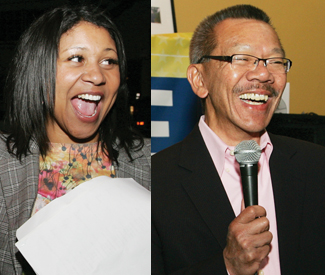
Political dynamics on the Board of Supervisors moved into uncertain new territory this week with the inauguration of two new members -– London Breed and Norman Yee –- who break the mold in representing districts that have long been predictable embodiments of opposite ideological poles.

Breed and Yee are both native San Franciscans with deep roots in their respective districts, which they tapped to win hotly contested races against challengers who seemed more closely aligned with the progressive politics of Dist. 5 and the fiscally conservative bent of Dist. 7. Both tell the Guardian that they represent a new approach to politics that is less about ideology and more about compromise and representing the varied concerns of their diverse constituencies.

“I don’t see everything as a compromise, but I want to be sure we find compromises where we can and don’t let personalities get in the way,” said Yee, whose background working in education and facilitating deals as a school board member belies District 7’s history of being represented by firebrand opponents of the progressive movement.

Some of the strongest champions of the pro-tenant, anti-corporate progressive agenda have come from the Haight and Dist. 5, a role that Breed has no intention of playing. “When you talk about the progressives of San Francisco, I don’t know that I fit in that category,” Breed told us. “I’m a consensus builder. I want to get along with people to get what I want.”

Yet what Breed says she wants are housing policies that protect renters and prevent the exodus of African-Americans, and development standards that preserve the traditional character of neighborhoods against corporate homogenization. “I don’t see the difference between my causes and progressive causes,” she said, claiming a strong independence from some of the monied interests that supported her campaign.

We spoke a few days before the Jan. 8 vote for board president (which was scheduled after Guardian press time, and which you can read about at the SFBG.com Politics blog). Neither Yee nor Breed would tip their hands about who they planned to support -– the first potential indication of their willingness to buck their districts’ ideological leanings.

Breed had raised some progressive eyebrows by telling the Guardian and others that she admired moderate Sup. Scott Wiener and would support him for president, but she had backtracked on that by the time we spoke on Jan. 5, telling us, “I’m going into this with an open mind.

“I’m waiting on my colleagues to decide who has the most votes,” Breed said, ing a candid take on valuing compromise over conflict. “I really would like to see us walk into this all together.”

Yee had similar comments. “They’re all competent people and can be leaders, it just depends on where they want to lead us,” he said. “I value people who can work with anyone and see themselves as facilitators more than as dictators.”

Both Breed and Yee come from humble roots that they say give them a good understanding of the needs of the city’s have-nots. Breed was raised in the public housing projects of the Western Addition, an experience that makes her want to solve the current dysfunction in the San Francisco Housing Authority.

“I can’t tell you what needs to be done, but I can tell you something is wrong,” Breed told us. “My goal is to get to the bottom of it and be extremely aggressive about it.”

Yee grew up in Chinatown, his father an immigrant who worked as a janitor, his mother a garment worker. They later lived in the Sunset and the Richmond, and Yee moved into his district’s Westwood Park neighborhood 26 years ago.

When Yee was eight years old, the family saved enough money to open a grocery store at 15th and Noe, and he said that he basically ran the store in his teen years while his father continued working another job.

That was where Yee developed his deep appreciation for the role that small, neighborhood-serving businesses play in San Francisco. In an era before credit cards, he would offer credit lines to local customers struggling to make ends meet; that experience showed him how stores like his family’s were essential parts of the city’s social and economic fabric.

“That’s why I value small businesses,” Yee said, calling that his top focus as a supervisor. “They’re going to have a bigger voice now.”

Yee draws a clear distinction between the interests of small business and that of the larger corporations that dominate the powerful San Francisco Chamber of Commerce. Asked where he might have placed on the Chamber’s recent scorecard ranking supervisors’ votes — where Yee’s predecessor, Sean Elsbernd, got the highest marks — Yee said, “Probably not on their A list. They are just one entity in San Francisco and I’m not going to be judged just by them.”

At 63 years old, Yee is by far the oldest member of the youngest Board of Supervisors in recent memory, while Breed, at 38, is closer to the current average. Yee hopes his age and experience will help him forge compromises among all the supervisors.

“People draw their lines, but I try to listen to people and see where their lines are,” Yee said. “It’s a balancing act, but at the same time, there’s things I’ve been working on all my life, like education and safety net issues, and this district does care about those things. At the same time, they care about their homes. Are these issues in conflict? I don’t think they have to be.”

“Weren’t they all circus shots?” Weegee’s crime scene photography

1

In a slight departure from his job as founder of the Noir City film festival (coming up at the Castro Theater Jan. 25-Feb. 3), Eddie Muller pays homage to a dark auteur of a different medium with a talk at the Contemporary Jewish Museum on Thu/10. The object of Muller’s affection is famed crime scene photographer Arthur Fellig, a.k.a. Weegee. Weegee introduced artistry — often by way of extra-journalistic manipulation — into the documentation of extra-legal happenings during the 1930s and ’40s, so perhaps Muller’s fascination with the subject should come as no surprise. We caught up with Muller via the Interwebs to find out more about why he wants to draw upon Weegee’s dark arts in this week’s presentation.

San Francisco Bay Guardian: Why Weegee? What initially drew you into his work?

Eddie Muller: It’s about time I paid some public lip service to the guy. I’ve been fascinated by his images and the man himself since I was in high school and first saw his work — about the same time I became interested in film noir. The initial attraction to his photos is their grotesque aspect, the death, and the despair. But when you wise up a little and look deeper into the images, you see the incredible humanity … and the humor. And for many years unseen work would surface, so he’s remained fascinating. 

“Their First Murder” by Weegee

SFBG: How were his shots different from those of other crime scene photographers at the time?

EM: He was a storyteller. Other shooters were just looking for the cold facts, a documentary record of an event. Weegee was on the prowl for stories, ones you could grasp in a glance — and of course he wasn’t above manufacturing a news photo to get the story he wanted. There is a lot of editorializing in his work, so he wasn’t lying when he described himself as an artist. I love that bit in The Public Eye — in which Joe Pesci essentially plays Weegee in a film noir version of his career — he’s shooting a murder victim and he tells the cop “put the guy’s hat in picture. People like to see the dead guy’s hat.” He was a newspaper photographer whose singular style brought out the deeper meaning in his images. That was his art. What’s curious is that when he quit journalism to focus exclusively on his art, the work became less interesting, less humane.

“The Critic” by Weegee

SFBG: What about his circus shots? How would you characterize the kinds of themes that Weegee worked with?

EM: Weren’t they all circus shots? His nocturnal images of Manhattan are evidence of high-wire acts gone wrong. Not a bad description of life in the big city at 3am. I think his theme, if you want to call it that, was capturing the dread and danger lurking right below the surface of everyday life — but his genius was focusing as often on the people around the murder, the suicide, the tenement fire. The observers, the survivors. That’s where you see the courage, the determination, and the humor in “Weegee’s People.”

SFBG: Do you think he’s had a lasting impact on photography? How so?

EM: Absolutely! More than practically any photographer I can think of. Weegee was doing irony way ahead of that curve. He wasn’t only influencing news photography, he was influencing movie cinematography. I believe his vision of the big city after dark has a direct impact on the development of film noir in Hollywood. And not just on the camerawork, but on writers. He influenced the way other artists looked at the city, and the people in it. And he brought an entirely new attitude along with the good eye. He was a poor street kid who didn’t trust the rich and wanted to rub their noses in all the stuff they’d find impolite and inappropriate for public consumption. I think his attitude, the acceptance of humor and grace and grit amongst the horror and despair has been a huge cultural influence, as much on writing as on any other medium. Weegee was a writer, of sorts. Here’s a thumbnail of how he’d work: he wanted the perfect photo of street drunk, so he’d always be on the lookout for guys passed out in the gutters. But it had to be perfect! One night he finds a guy, flat on his back, under the awning for a funeral home. He gets the shot, and of course titles it: Dead Drunk. That’s not a news photographer at work. That’s not an artist with a camera—the picture isn’t even that good. That’s a writer—one who uses a camera, not a pen.

“Eddie Muller on the Art and Legacy of Weegee”

Thu/10, 6:30pm, $5 museum admission

Contemporary Jewish Museum

736 Mission, SF

www.thecjm.org

Still the fairest

1

arts@sfbg.com

FILM One of the few upbeat by-products of the increasing infantilization of popular movies is that the same impulse to dumb down live action for permanently adolescent tastes also raises the bar for animation, which no longer has to target grade schoolers as its primary audience. Even not-so-special 2012 had more sophisticated and interesting animated features than you’d find in any given year a couple decades or more ago. Wreck-It Ralph won’t win the Best Picture Oscar. But it will almost certainly be better than whatever movie does.

The notion that adults actually want to see full-length cartoons, however, seemed preposterous to myriad soon-to-be-crow-eating people 75 years ago. That was when Walt Disney unleashed Snow White and the Seven Dwarfs on the public — to an enormous success no one had predicted. In fact, all bets were placed on “Disney’s folly” sinking the studio that had foolishly invested all its resources (and a lot of borrowed money) in a venture whose cost overruns and dim prospects had been the talk of Hollywood. (No doubt a few studio heads were happily anticipating hiring Walt’s newly at-liberty talent at cut rates for their own animation divisions.)

http://www.youtube.com/watch?v=5kWr9e4JN5I

Of course, the naysayers were proven wrong — opening up the floodgates to more cartoon features, then Disney live-action films, nature documentaries, TV series, theme parks … a whole empire of “brand” that for better and worse has shaped American culture (and its perception abroad) ever since. The double-disc 2009 DVD release of Snow White features, among its extras, one latter-day observer calling the film “one of the great American success stories of all time.” (The official Disney history offered up in such self promotional products is relentlessly hyperbolic. The same package also offers an “all-new music video” rendition of “Someday My Prince Will Come” by one Tiffany Thornton that is so horrifyingly kitsch you can be sure it will be erased from the official Disney history forthwith.) Snow White would set a record for being the highest-grossing film of all time — but not for long, since a little thing called Gone with the Wind came out in 1939 and stole that title for another quarter-century.

I doubt Mr. Disney could have imagined the world in which his Snow White — which plays the Castro in a newly restored digital print this week, by the way — would be celebrating that septuagenarian anniversary. One in which prevailing tastes decreed two big-budget live-action spins on that same Bavarian fairy tale would be among 2012’s major releases for grown-ups; a mass murder of his target demographic would dominate year-end news; and the unions he famously opposed would be popularly vilified.

That ripple effect is more than this movie should have to bear — let alone that it was apparently Hitler’s favorite. Because Snow White is still a charmer, gorgeous in the depth and detail of its backgrounds, seamless in traversing the bridge between score and song, and timelessly adorable (to use the heroine’s favorite adjective).

It seems less dated than just about any other movie from 1937, even if Snow White herself remains an insipid blank with the voice of Betty Boop doing operetta. (Subsequent Disney cartoon heroines would be feistier, though heroes would remain problematic — Walt’s animators found Snow’s Prince Charming so difficult to depict they wound up simply cutting his screen time to the bone.) The most one can say for her is that she seems to have majored in Home Ec, though the evil queen hooked on being “fairest of them all” kick-started a fine legacy of excellent Disney villains. (Notably absent were such grisly original fairy-tale details as the step mum’s death from dancing in red-hot iron shoes at Snow’s wedding.)

You can blame Snow White for cementing Disney’s transition from the rambunctious to the harmless. But 75 years later that formula still works — in this instance, at least. The art itself remains near-timeless, even if the subsequent Pinocchio (1940) and Bambi (1942) are arguably much better films. Few movies had anywhere near the same impact, on the medium’s development or life in general.

It had a more direct impact on the Radio City Music Hall, whose seats had to be replaced after a record-breaking run because children kept wetting themselves during the scarier sequences. Adorable! 

SNOW WHITE AND THE SEVEN DWARFS

Wed/2-Sun/6, 1:30, 3:45, 6, and 8:15pm

Castro Theatre

429 Castro, SF

www.castrotheatre.com


Psychic Dream Astrology: January 2-8, 2013

0

January 2-8, 2013

ARIES

March 21-April 19

When you’re stretched too thin, it’s hard to take full responsibility for everything you’ve committed to. This week you should strive to be accountable to your word; make certain that you are living up to what you’ve promised. Own your limitations as a way to take responsibility for the whole of what you intend to do.

TAURUS

April 20-May 20

Love and kindness make all things in life better and even makes the crappy stuff easier to bear. Don’t let your ego inhibit you from sharing your feelings and needs with others this week, Taurus. You are meant to be undergoing an emotional transformation, make sure it’s a healthy and happy-making shift.

GEMINI

May 21-June 21

Make decisions and stick by them this week, Twin Star. You are in the perfect place to start something new, but it will require some single-mindedness that is not completely organic for you. Know what you want and trust that if you take the proper steps you’ll totally make it happen.

CANCER

June 22-July 22

You are meant to move through the deep inner workings of your fears this week, Cancer. Don’t let your fears of vulnerability or of being hurt get in the way of developing the relationships you want. Be the person you want to be in the here and now! Don’t wait for your fears to pass, find the courage to act in spite of them.

LEO

July 23-Aug. 22

Fretting over the future will do no good in helping you shape it, Leo. Instead of seeing where you are helpless in directing your life, look to what is possible to change within it to make it more awesome. Your personal world is maturing, so you’d better strive to mature along with it. Make sure your goals match your needs, pal.

VIRGO

Aug. 23-Sept. 22

Follow play, love, and laughter and feel how it changes your life, Virgo. Looking for the light inclines you to actually seeing it, and this week you’ll find it’s all around you, helping you on your way. Use this time of feeling good to improve your life. Set goals and look for creative solutions to the things you’ve been putting off.

LIBRA

Sept. 23-Oct. 22

When it’s too much it’s too much, Libra. You need to know when you’ve hit your limit and can no longer be reasonable in your thinking ’cause you’re feeling too burdened and reactive. Slow things down so you can calmly catch up with your feelings instead of trying to rush in and fix things this week.

SCORPIO

Oct. 23-Nov. 21

Your relationships need your care and attention. Distinguish the difference between false friends and true, and kindness versus enabling, Scorpio. Be courageous as you stand up for love, but don’t confuse that for an invitation to needlessly step into power struggles; pick your battles wisely this week.

SAGITTARIUS

Nov. 22-Dec. 21

We all want things to turn out OK, and we all worry what will happen if it doesn’t. You can’t control the future and what others will or won’t do, Sag, but you can prepare yourself. Cultivate strength enough that you are able to handle whatever comes your way. Have faith in yourself this week.

CAPRICORN

Dec. 22-Jan. 19

Make lemonade, Capricorn. Not some sour juice with the seeds all in it, instead make artisan agave and lavender infused lemonade, nectar of the Gods. In other words, don’t just make due with what you’ve got, find a way to get inspired and make fabulous with it. There is opportunity in everything, even bitter fruit.

AQUARIUS

Jan. 20-Feb. 18

Where will worry get you, Aquarius? Just harried and scared and to the exact same place you were going anyways. This week you should strive to manage your feelings before you project them onto your circumstances. Just ’cause you feel crappy doesn’t mean that you have to let it drag you and your situations down.

PISCES

Feb. 19-March 20

Patience, Pisces, patience! You are at the helm of a whole new phase of development and nothing needs to be perfect yet. Let this week be one of gathering tools and setting expectations. If you clarify your approach you’ll get where you wanna be in the right time, even if it’s later than you’d prefer.

Jessica Lanyadoo has been a Psychic Dreamer for 18 years. Check out her website at www.lovelanyadoo.com to contact her for an astrology or intuitive reading.


No headbutting?

0

tredmond@sfbg.com

LIT/FILM The folding travel toothbrush is a central element in every Jack Reacher novel. It’s his only possession, the only thing the wandering ex-military cop takes with him when he throws away his old clothes and buys new ones, the only thing that ties him directly to his old life in the U.S. Army. It’s part of the Reacher formula, one that consistently works through 17 books by Lee Child.

It’s not in the Jack Reacher movie.

That was the first sign that one of the best trash-lit characters to come on the scene since John D. MacDonald invented Travis McGee hasn’t translated so well to the big screen. (McGee never did, either; the only McGee movies ever made were disasters, and MacDonald hated all of them.)

But the esoteric musings of McGee, on everything from Florida real-estate development to the demise of San Francisco, were the charm that held those modest plots together. Child, who has a background in television production, offers more action-packed stories with all the elements that ought to make a great movie.

Like MacDonald, though, Child goes a bit deeper than the traditional trashy thriller writer. His books have themes of violence and redemption, of freedom and responsibility, of wanderlust and homesickness that can’t just be shoehorned into a fast-paced screenplay with Tom Cruise. This may not be Shakespearean literature, but it isn’t Mission Impossible, either.

To make it more challenging, there are long periods of silence in the Reacher book, and those don’t work will in today’s mainstream cinema — but without them, the pacing is all wrong.

I showed up at the movie ready to be let down. The diminutive and emotional Cruise seemed all wrong as the tall, taciturn Reacher; I was hoping for a more Daniel Craig approach. Child, on the other hand, was totally down with the casting, so I was ready to give it a shot. (Or, as the book title from whence this flick emerged put it, One Shot.)

The book is a classic of the Reacher oevre, with a tiny bit of 2007’s Shooter mixed in. There’s a former Army sniper named James Barr (Joseph Sikora) who gets charged with an apparently random killing spree; the evidence is overwhelming, the cops have him nailed, and the execution-mad district attorney tells him if he doesn’t confess, he’s going to get the death penalty.

Barr refuses to talk; he just takes a legal pad and writes “Get Jack Reacher.” Which turns out to be tricky; Reacher has no address, no credit cards, no car, no driver’s license … nothing to pin him down. He’s almost impossible to find.

But he shows up on his own — not to help save Barr but to tell the cops that the guy once murdered a bunch of civilian contractors in Iraq. Reacher had him nailed, but the Army, for political reasons, let the case go. He’s ready to send the guy to the chair, if he doesn’t kill him with his own hands first.

But then the DA’s daughter, Helen Rodin (Rosamund Pike), who is representing Barr, convinces Reacher to take another look, and together they discover a fiendish plot involving an 80-year-old mob capo from the old Soviet Gulag.

Nice movie plot. And the film version doesn’t take too many liberties with the general idea of the book.

But there’s no headbutting, which is Reacher’s trademark fighting technique. And he never has sex with the female protagonist, which is disappointing.

That and the fact that the movie’s about 20 minutes too long — and the car chase scene alone is about five minutes too long (and car chases are not part of the Reacher mix) and there’s an embarassing scene where Cruise takes his shirt off just so we can see him with his shirt off left me wondering: did Lee Child really sign off on this screenplay?

So that’s the bad news. The good news is that the film is entertaining, Cruise does the best he can under the circumstances, and he delivers the key lines nicely. Pike does a fine job of being sexy without being movie-star beautiful. The fight scenes are lively and fun and not too overdone.

And Werner Herzog is just spectacular as the evil Zec, a man so tough that he chewed his fingers off in prison to avoid getting gangrene. Watching Herzog sneer and be scary, horrible, and fascinating at the same time is worth the price of admission.

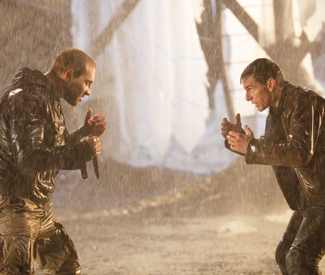
No nudity. Five people beaten near death. Three cops cars destroyed. Sniper porn. Fight to the death in the pouring rain. Not a great tribute to a great character, but I’ll take it. *

JACK REACHER is now playing in Bay Area theaters.

The next board president

9

EDITORIAL The president of the Board of Supervisors does more than bang the gavel at meetings, tell people to put their clothes back on, and run for higher office. It’s a powerful position largely because the president makes appointments — to the Planning Commission, the Police Commission — and unilaterally decides who serves on which board committees.

Two years ago, Sup. David Chiu, who won the top post in 2009 with progressive support, wanted re-election, and the left wasn’t siding with him anymore. So he cut a deal with the conservative members, appointing the right-wing of the board to plum committee posts — and making life harder for progressives who wanted to pass Legislation or prevent bad developments from happening.

He clearly likes the job and would love to hold it for a third term. But that won’t be easy — Sup. Scott Wiener, who is to the right of Chiu on many issues, is also interested, as is Sup. Jane Kim, who has always been close to Chiu, and Sup. David Campos, who is one of the leading progressives. None of the candidates can count to six right now, so somebody’s going to have to back down or make a deal.

And before that happens, the candidates ought to tell us something about what they plan to do.

Chiu’s 2011 committee appointments were a bit of a shocker, although, in retrospect, the horse trading shouldn’t have surprised anyone. In fact, after he made his decisions, and put Carmen Chu, one of the most conservative supervisors, in charge of the Budget and Finance Committee and put the conservative Scott Wiener and the moderate Malia Cohen on Land Use and Economic Development, and put conservative Sean Elsbernd in charge of two committees, he told us that he felt he had no choice. If the progressives had voted for him, he wouldn’t have had to reward the conservatives.

This time around, with two new supervisors taking office (a more centrist Norman Yee replacing Elsbernd and a more moderate London Breed replacing Christina Olague) everything is up in the air. The progressives still have a solid three votes, and can sometimes count on Jane Kim and Chiu. That’s not enough to elect a president, but it’s coming pretty close.

Based on experience, skills, and temperament, our first choice for board president is Campos, who would be fair to everyone, approachable, and a voice for open government and community participation. But if Campos can’t get six votes, he and his progressive colleagues should ask anyone who want their support to be open about what he or she plans to do.

Who will be on the budget committee? Rules? Land Use? Where will he or she look for candidates for commissions? We know it would look unsightly if, say, Chiu named in advance his preferences for key committees — and then those people voted for him. But the reality is, those discussions are happening anyway, those deals being cut — and it’s happening behind closed doors, where the public (and the other supervisors) can’t watch.

Let’s bring all of the discussions into the sunshine, and have an open debate about the next board president.


Help Bliss Dance stay on Treasure Island

1

Bliss Dance, the 40-foot-tall sculpture of nude woman built to dance at Burning Man in 2010, became a beloved, iconic local art installation when it was placed on Treasure Island later that year. What was meant to be a temporary placement has been repeatedly extended by the Treasure Island Development Authority and artist Marco Cochrane’s crew.

But she was never meant to dance in these foggy elements for such a long song. So if she’s going to remain there for the extra year that TIDA has authorized, she’s going to need some help in the form for a rust-proof protective coating and an overhaul of her lighting system.

And that’s where we all come in — at least those of us who want to see her continue dancing there, framed against the San Francisco waterfront and skyline. Cochrane and his crew have started a Kickstarter campaign to raise the $16,000 they need by Jan. 10.

At this point, they’re more than halfway to the goal, so take some of that extra cash that grandma sent you for the holidays and apply it to a worthy cause: supporting local art and artists, and ensuring this place remains a hub of creativity. Or if that’s not good enough, do it for nude dancing women everywhere. 

Manhattanization forgotten, Transbay Tower moves without the trains

101

Times in San Francisco have changed since the battles in the ‘80s against increased high-rise development and the “Manhattanization of San Francisco,” which peaked in 1986 with the passage of Prop. M placing limits on the rapid development pushed by then-Mayor Dianne Feinstein and her downtown allies.

Now, in 2012, the tallest building on the West Coast — Transbay Tower, the first in a series of new high-rises envisioned for downtown — gathered its final approvals with only scattered opposition (such as Quentin Kopp, the former judge and legislator, who derides the project as nothing but a “real estate scheme” involving lucrative publicly owned land being turned over private developers).

Whether we were all too distracted by a year of political scandals real and contrived, or whether it was the project proponents’ savvy marriage of the real estate deal to the high-speed rail project and Caltrain extension that environmentalists want to see become a reality, this behemoth building is now all but a done-deal.

Yet despite the slick and compelling interactive videos and project descriptions on the Transit Joint Powers Authority website, San Franciscans aren’t really on the verge of realizing this utopian urban vision of 21st century high-speed rail burrowing its way into SoMa over the next few years.

“The projection of that is less clear now. The delays with the high-speed rail have created some challenges for us,” said Adam Alberti of the high-powered communications firm Singer Associates, which represents the TJPA. Contributing to the delay and uncertainty is the indefinitely delayed plan for the electricification of Caltrain tracks that would be a precursor to bringing the trains downtown.

Now, even though the current Transbay Terminal rebuild (scheduled for completion in 2017) includes a “train box,” funding hasn’t yet been identified for the tunneling to get the trains there. That depends on federal allocations and the New Starts program administered by the Metropolitan Transportation Commission.

“Those things take awhile. It’s a long process,” Alberti said.

But the 930-foot Transbay Tower has its approvals, with the property scheduled to be formally transferred to the Hines/Boston Properties building team in the next couple months, followed in the coming years by other parcels in the area for more high-rises.

“The other parcels will be metered out and put out when we get maximum return for taxpayers,” Alberti said. “The transit center itself is on schedule and on budget, so it’s moving forward.”

That’s great, even if it’s just going to be a glorified bus station for the foreseeable future as the high-rises that are being built as part of this trade-off for trains help inch San Francisco a bit closer to Manhattanization

Putting transit first

268

By Stuart Cohen, Leah Shahum, Rob Boden, and Elizabeth Stampe

OPINION Every day, San Franciscans pay the price of an underfunded transportation system. We have all experienced painfully overcrowded bus rides … or, worse yet, the bus that never shows up. Now, Muni is reducing service during Christmas week, as it is faced with a $7 million deficit this fiscal year.

Today, we are finally facing up to the reality that our declining transportation system hurts us all. It hurts our economy and it hurts people all along the economic spectrum. San Francisco is a world-class city in many ways, but we have a long way to go to have a world-class transportation system.

San Franciscans want better transit options: reliable, fast, comfortable buses, and safe and pleasant streets for walking and biking. San Franciscans support the city’s official transit-first policy, but lacking political will, the city hasn’t delivered on it.

By failing to make the tough decisions to fund our transit system, our leaders have put the burden on those who depend on affordable transportation options most. Transportation is one of the top expenses for people living in the Bay Area, after housing, and an exponentially greater burden for those with lower incomes.

Who will be hurt most by Muni’s skeletal service this holiday week? Working families.

That is why our organizations are proud to have joined together recently to support a proposal to update the Transit-Impact Development Fee (TIDF), which would have ensured that major developments pay their fair share into the city’s transit system. This would have included large nonprofits like Kaiser and the Exploratorium, when they build major new developments that generate thousands of new trips. The fee, probably about 1 percent of costs, would have paralleled the existing development fees for water, sewer, parks, and even art, that nonprofits already pay. It would not have included small nonprofits, and of course most nonprofits never build developments at all.

It would have helped visitors to large institutions have more dependable transit to get there, and helped the whole transportation system work better for everyone.

But it didn’t pass, and last week’s opinion piece (“The Muni vs. housing clash,” 12/18/12) mischaracterized the issue, suggesting a trade-off between basic services and transportation. But good, reliable, safe transportation is a basic service. Just like housing and health care, it’s something everyone should have access to, and something our city has declared a priority with its transit-first policy.

Unsafe streets are inequitable streets; low-income people and people of color are more likely to be hit by cars while walking. Underfunded transit is inequitable; low-income people have fewer options aside from walking or taking the bus, and the stakes are higher when the bus is late or doesn’t arrive.

Funding transit is a core progressive value. Great public transit — and being able to get around the city under your own power, by walking and bicycling — are great equalizers in a city like ours.

We should be investing more and expecting more from our transit system. Our organizations are proud to be doing just that. It’s time to help San Francisco finally live up to its transit-first policy — because that means putting people first.

Stuart Cohen works with TransForm, Leah Shahum with the San Francisco Bicycle Coalition, Rob Boden with the San Francisco Transit Riders Union, and Elizabeth Stampe with Walk San Francisco.

A moratorium on progress

30

My friend Johnny, who lives in Seattle, tells the story of the day years ago when he saw an older woman standing on a hillside near his house, watching while bulldozers knocked down trees and tore up part of the hill to put in a freeway extension. He was pretty new to town, so he asked the woman what was going on.

She shook her head, and with a bitter smile, said: “Progress.”

If you want to look at the environmental history of the United States, you can pretty much define most of our problems as an obsession with that sort of “progress.” In the postwar Bay Area, “progess” meant turning farmland and open space into suburban housing developments, building more freeways to connect the commuters to downtown San Francisco, and erecting tall buildings in the city to fill with workers from the burbs.

At the time, those crazy people who opposed that vision were told they were opponents of progress. Now, we celebrate what they’ve saved.

In other words, not all change is good, not all development is progress, and the march of capitalism doesn’t always take us in the right direction

So please, Chuck Nevius: You can oppose a one-year moratorium on Valencia Street restaurants if you want, but don’t give me crap like this:

The same transition seems to be happening along Valencia Street. My guess is they will learn the same lesson as Noe – you can’t put a moratorium on progress.

Is it progress to turn a diverse shopping district into a monocrop of one type of business? Or is it prudent to do what we pay city planners to do, and … plan? The restaurant limit in Noe Valley worked when it was instituted, a long time ago, when people who lived there wanted to keep shoe repair places and other community-serving merchants on 24th Street. When it was no longer needed or effective, it was repealed. All we’re talking about on Valencia is ONE YEAR, to give people a chance to think about the future of their neighborhood.

Progress. Bah humbug.


http://www.sfgate.com/bayarea/nevius/article/Valencia-restaurant-ban-not-the-answer-4133529.php

Was it a great year?

149

At noon Dec. 19, a group of about 50 housing activists led by the Housing Rights Committee gathered at 18th and Castro, next to the giant Shopping Season Tree, to discuss the wave of evictions tenants are facing at the end of 2012. Tommi Avicolli Mecca held up a list of 26 buildings that are currently being clear of tenants under the Ellis Act, a state law that allows landlords to evict all their tenants and sell the property as a single-family home or tenancies in common. With him was a long line of tenants who are facing holiday homelessness thanks to landlord greed.

“There are too many tenants being evicted to fit in front of the tree,” he said.

We heard story after story: A man living with AIDS facing the loss of his home after 17 years. A family being forced out after 18 years. Seniors, kids, disabled people … all of them almost certainly displaced from San Francisco.

“San Francisco is becoming a city of the rich, and we are being pushed aside,” said Lisa Thornton, who works at Rainbow Grocery and is losing her home.

“This,” Mecca said, “is an epidemic of evictions.”

And we all know why: As the second tech boom roars in to San Francisco, high-paid young workers are able to afford to buy TICs or single-family homes, and long-term rent-control-protected tenants simply can’t compete. It’s not a pretty pciture.

So I almost barfed when I say Randy Shaw’s glowing paen to Mayor Ed Lee. “San Francisco had one of its greatest years in 2012, as the city’s job growth and vibrancy outpaced nearly everywhere else,” he wrote.

Oh, gee, he says, there are some problems:

Few want San Francisco to become a city where only the rich and subsidized poor can live. But these same fears were felt in the 1980’s. When I was moving to San Francisco in 1979, the lines for vacant apartments were just as long and the competition for vacant units as fierce as what we read about in 2012. We couldn’t believe we had to pay $375 for a Mission one bedroom apartment, a rate that is less than half the cost of an SRO room without private bathroom today. San Francisco has long been an expensive city that keeps getting pricier.

So what — because we were worried about displacement in the 1980s means we shouldn’t be worried today? Those worries were real — gentrification of San Francisco neighborhoods has been rampant for decades. It’s changed the city, for the worse.

In the 1980s, Shaw was part of a broad coalition that fought to get rent control laws and eviction protections and limits on condo conversions. Now he’s acting as if none of that was worth the fight, as if protecting affordable housing wasn’t, and isn’t, the most critical issue in the city today.

A great year? Fantastic vibrancy and job growth? Not if you’re one of the growing numbers of people who are losing their homes to Ed Lee’s vision of economic development.


The end of the world as we know it

7

steve@sfbg.com

It’s easy to dismiss all the hype surrounding the auspicious date of December 21, 2012. There’s the far-out talk of Mayan prophecy and the galactic alignment. There’s the pop-culture lens that envisions the apocalypse. There are the extraterrestrials, about to return.

But even the true believers in Mayan folklore and its New Age interpretations say there’s no end of the world in sight. Time doesn’t end when the Mayan cycle concludes; it’s actually a new beginning.

And even some of the most spiritually inclined on the 12/21 circuit agree that it’s highly unlikely that anything of great moment will happen during this particular 24-hour period in history. The sun will rise and set; the winter solstice will pass; we’ll all be around to see tomorrow.

In fact, instead of doomsday, the most optimistic see this as a signpost or trigger in the transformation of human consciousness and intentions. Their message — and it isn’t at all weird or spacey or mystical — is that the world badly needs to change. And if all the attention that gets paid to this 12/21 phenomenon reminds people of what we have to do to save the planet and each other, well — that’s worth getting excited about.

Check out the news, if you can bear it: Global warming, mass extinctions, fiscal cliffs, social unrest. Now stop and turn the channel, because we’re also writing another story — technological innovation, community empowerment, spiritual yearning, social exploration, and global communication.

Both ancient and modern traditions treat the days surrounding the solstice is a time for reflection and setting our intentions for the lengthening, brightening days to come. And if we take this moment to ponder the course we’re on, maybe the end of the world as we know it might not be such a bad thing.

THE LONG VIEW

The ancient Mayans — who created a remarkably advanced civilization — had an expansive view of time, represented by their Long Count Calendar, which ends this week after 5,125 years. Like many of our pre-colonial ancestors whose reality was formed by watching the slow procession of stars and planets, the Mayans took the long view, thinking in terms of ages and eons.

The Long Count calendar is broken down into 13 baktuns, each one 144,000 days, so the final baktun that is now ending began in the year 1618. That’s an unfathomable amount of time for most of us living in a country that isn’t even one baktun old yet. We live in an instantaneous world with hourly weather forecasts, daily horoscopes, and quarterly business cycles. Even the rising ocean levels that we’ll see in our lifetimes seem too far in the future to rouse most of us to serious action.

So it’s even more mind blowing to try to get our heads around the span of 26,000 years, which was the last time that Earth, the sun, and the dark center of the Milky Way came into alignment on the winter solstice — the so-called “galactic alignment” anticipated by astrologists who see this as a moment (one that lasts around 25-35 years, peaking right about now) of great energetic power and possibility. The Aztecs and Toltecs, who inherited the Mayan’s calendar and sky-watching tradition, also saw a new era dawning around now, which they called the Fifth Sun, or the fifth major stage of human development. For the Hindus, there are the four “yugas,” long eras after which life is destroyed and recreated. Ancient Greece and early Egyptians also understood long cycles of time clocked by the movement of the cosmos.

Fueled by insights derived from mushroom-fueled shamanic vision quests in Latin America, writer and ethnobotanist Terence McKenna developed his “timewave” theories about expanding human consciousness, using the I Ching to divine the date of Dec. 21, 2012 as the beginning of expanded human consciousness and connection. And for good measure, the Chinese zodiac’s transition from dragon to snake also supposedly portends big changes.

In countries with strong beliefs in myth and mystical thinking, there’s genuine anxiety about the Dec. 21 date. A Dec. 1 front page story in The New York Times reported that many Russians are so panicked about Armageddon that the government put out a statement claiming “methods of monitoring what is occurring on planet Earth” and stating the world won’t end in December.

Here in the US, the National Aeronautics and Space Administration was also concerned enough about mass hysteria surrounding the galactic alignment and Mayan calendar that it set up a “Beyond 2012: Why the World Won’t End” website and has issued press statements to address people’s eschatological concerns.

So what’s going to happen? There are authors, scholars, and researchers who have devoted big chunks of their lives to the topic. Two of the most prominent are Daniel Pinchbeck, author of 2012: The Return of Quetzacoatl and star of the documentary film 2012: A Time for Change and John Major Jenkins, who has written nearly a dozen books on 2012 and Mayan cosmology over the last 25 years.

“I never proposed anything specific was going to happen on that date. I think of it as a hinge-point on the shift,” Pinchbeck told me.

But there are those who hope and believe that the end of 2012 marks an auspicious moment in human evolution — or at least that it represents a significant step in the transformation process — and they seem fairly patient and open-minded in their perspectives on the subject.

“The debunking type isn’t some rational skeptic. They are true believers in the opposite,” Jenkins said. “We don’t know what’s going to happen. We’ve been filtering 2012 through some kind of Nostradomus filter.”

Jenkins and others like him have been clear in stating that they aren’t expecting the apocalypse. Instead, they emphasize the view by the Mayans and other ancient thinkers that this is a time for renewal and transformation, the dawning of a new era of cooperation.

“I think the Maya understood that there are cycles of time,” Jenkins said. “2012 was selected by the Maya to target this rare procession of the equinoxes.”

If the ancients had a message for modern people, it was to learn from our observations about what’s going on all around us. As Jenkins said, “They recognized their connection to the natural world and the connection of all things.

ACHIEVING SYNTHESIS

Many Bay Area residents are now headed down to Chichen Itza, Mexico, where the classic Mayans built the Pyramid Kukulkan with 365 faces to honor the passing of time — and where the Synthesis 2012 Festival will mark the end of the Mayan calendar with ceremonies and celebrations.

“It’s probably one of the most pointed to and significant times ever,” Synthesis Executive Producer Michael DiMartino told me, noting that his life’s work has been building to this moment. “As a producer, I’m very focused on the idea of spiritual unity and events with intention.”

DiMartino told me he believes in the significance of the galactic alignment and the ending of the Mayan calendar, but he sees the strength of the event as bringing together people with a wide variety of perspectives to connect with each other.

“We’re at a crossroads in human history, and the crossroads are self-preservation or self-destruction,” he said. “Synthesis 2012 is the forum to bring people together into a power place.”

Debra Giusti, who is co-producing Synthesis, started the Bay Area’s popular Harmony Festival in 1978, and co-wrote the book Transforming Through 2012. “Obviously, the planet has been getting out of balance and there is a need to go back to basics,” Giusti told me.

They are reaching out to people around the world who are doing similar gatherings on Dec. 21, urging them to register with their World Unity 2012 website and livestream their events for all to see. “We are launching this whole global social network to help develop solutions,” DiMartino said. (You can also follow my posts from Chichen Itza on the sfbg.com Politics blog).

Two of the keynote speakers at Synthesis 2012 are a little skeptical of the significance of the Mayan calendar and the galactic alignment, yet they are people with spiritual practices who have been working toward the shift in global consciousness they say we need.

“It’s more of a marker along the way,” Joe Marshalla, an author, psychologist, and researcher, told me. “We’ve been in this transition for almost 30 years.”

Marshalla said his speech at the festival will be about using certain memes to focus people’s energy on creating change, starting with letting go of the thoughts and structures that divide us from each other and the planet and replacing them with a new sense of connection.

“Everyone is waking up to the deeply held knowledge of the one-ness of all the planet, that we are in this together,” Marshalla said. “I think the world is waking up to the fact there are 7 billion of us and there are a couple hundred thousand that are running everything.”

Caroline Casey, host of KPFA’s “Visionary Activist Show” and a keynote speaker at the Synthesis Festival, takes a skeptical view of the Mayan prophecies and how New Age thinkers have latched onto them. “Everything should be satirized and there will be plenty of opportunities for that down there,” she said, embracing the trickster spirit as a tool for transformation.

But the goal of creating a new world is one she shares. “Yes, let’s have empire collapse and a big part of that is domination and ending the subjugation of nature,” she said. Rob Brezsny, the San Rafael resident whose down-to-earth Free Will Astrology column has been printed in alt-weeklies throughout the country for decades, agrees that this is an important moment in human evolution, but he doesn’t think it has much to do with the Mayans.

“My perspective on the Mayan stuff tends to be skeptical. It might do more harm than good,” Brezsny told me. “It goes against everything I know, that it’s slow and gradual and it takes a lot of willpower to do this work.”

READING THE STARS

The ancient Maya based their calendar and much of their science and spirituality on observations of the night sky. Over generations, they watched the constellations slowly but steadily drifting across the horizon, learning about a process we now know as precession, the slight wobble of the Earth as it spins on its axis.

Linea Van Horn, president of the San Francisco Astrological Society, said there is something simple and powerful about observing natural cycles to tap into our history and spirituality. “All myth is based in the sky, and one of the most powerful markers of myth is precession,” she said.

DiMartino said it wasn’t just the Maya, but ancient cultures around the world that saw a long era ending around now. “They each talk about the ending and beginning of new cycles,” he said. “Prophecies are only road signs to warn humanity about the impacts of certain behaviors.”

Casey’s a bit more down-to-Earth. “This has nothing to do with the galactic center,” Casey said, decrying the “faux-hucksterism” of such magical thinking, as opposed to the real work of building our relationships and circulating important ideas in order to raise our collective consciousness.

Van Horn has been focused on this galactic alignment and its significance for years, giving regular presentations on it since 2004. “The earth is being flooded with energies from the galactic center,” she said.

Issac Shivvers, an astrophysics graduate student and instructor at UC Berkeley, confirmed the basic facts of the alignment with the galactic center and its rarity, but he doesn’t believe it will have any effect on humans.

“The effect of the center region of the galaxy on us is negligible,” he said, doubting the view that cosmic energies play on people in unseen ways that science can’t measure. In fact, Shivvers said he is “completely dismissive” of astrology and its belief that alignments of stars and planets effect humans.

Yet many people do believe in astrology and unseen energies. A 2009 poll by the Pew Research Center’s Forum on Religion & Public Life found that 25 percent of Americans believe in astrology. A similar percentage also sees yoga as a spiritual practice and believes that spiritual energy is located in physical things, such as temples or mountains.

This moment is really about energy more than anything else. It’s about the perception of energies showering down from the cosmos and up through the earth and human history. It’s about the energy we have to do the hard work of transforming our world and the vibrational energy we put out into the world and feel from would-be partners in the process ahead.

“If you’re a liberal person without a spiritual grounding, it does look pretty bleak,” Pinchback said, noting the importance of doing the inner work as the necessary first step to our political transformation.

And both Casey and Brezsny believe in rituals. “Humans have been honoring the winter solstice for 26,000 years,” she said. “Every winter solstice is a chance to say what is our guiding story that we want to illuminate.”

GLOBAL TIPPING POINT

The world is probably not going to end on Dec. 21 — but it could end in the not-too-distant future for much of life as we know it if we don’t change our ways. Humans are on a collision course with the natural world, something we’ve known for decades.

In the last 20 years, the scientific community and most people have come to realize that industrialization and over-reliance on fossil fuels have irreversibly changed the planet’s climate and that right now we’re just trying to minimize sea level rise and other byproducts — and not even with any real commitment or sense of urgency.

The latest scientific research is even more alarming. Scientists have long understood that individual ecosystems reach tipping points, after which the life forms within them spiral downward into death and decay. But a report released in June by the Berkeley Initiative in Global Change Biology has found that Earth itself has a tipping point that we’re rapidly moving toward.

“Earth’s life-support system may change more in the next few decades than it has since humans became a species,” said the report’s lead author, Anthony Barnosky, a professor of integrative biology at UC Berkeley.

While the Earth has experienced five mass extinctions and other major global tipping points before, the last one 11,700 years ago at the end of the last ice age, Barnoksy said, “today is very different because humans are actually causing the changes that could lead to a planetary state shift.”

The main problem is that humans simply have too big a footprint on the planet, with each of us disturbing an average of 2.27 acres of the planet surface, affecting the natural world around us in numerous ways. The impact will intensify with population growth, triggering a loss of biodiversity and other problems.

“The big concern is that we could see famines, wars, and so on triggered by the biological instabilities that would occur as our life-support system crosses the critical threshold towards a planetary-state change,” Barnosky said. “The problem with critical transitions is that once you shift to a new state, you can’t simply shift into reverse and go back. What’s gone is gone for good, because you’ve moved into a ‘new normal.'”

Barnoksy said he’s not sure if the trend can be reversed, but to minimize its chances, humans must improve our balance with nature and avoid crossing the threshold of transforming 50 percent of the planet’s surface (he calculates that we’ll hit that level in 2025, and reach 55 percent by 2045). That would require reducing population growth and per-capita resource use, speeding the transition away from fossil fuels, increasing the efficiency of food production and distribution, better protection and stewardship of natural areas, and “global cooperation to solve a solve global problem.”

His conclusion: “Humanity is at a critical crossroads: we have to decide if we want to guide the planet in a sustainable way, or just let things happen.”

Perhaps it’s not merely a coincidence that our knowledge of the need for a new age is peaking in 2012. “It’s not surprising the world is in a crisis as we approach this date,” Jenkins said. “I don’t know how it works, but there is a strange parallel with what the ancient Maya foresaw.”

But the change that we need to make isn’t about just buying a Prius, composting our dinner scraps, and contributing to charities. It requires a rethinking of an economic system that requires steady growth and consumption, cheap labor, unlimited natural resources, and the free flow of capital.

“Basically, we are going to have to have a rapid shift in global consciousness,” Pinchbeck said. “You would not be able to create a sustainable economy with the current monetary system. It’s just not possible.”

Yet to even contemplate that fundamental flip first requires a change in our consciousness because, as Pinchbeck said, “We have created a stunted adult population that isn’t able to think in terms of collective responsibility.”

Brezsny said humanity shouldn’t need a galactic alignment or Mayan prophecy to feel the compelling need to take collective action: “I can’t think of any bigger wake-up call than to know that we’re in the middle of the biggest mass extinction since the dinosaur age.”

What comes next is really about how humans use and guide their energies, or as DiMartino said, “We, through our actions and intentions, create the world and take the path that we are creating.”

CATASTROPHISM HAS LIMITS

It may be the end of the world as we know it, but sounding that warning may not be the best way to motivate people to action, according to a new book, Catastrophism: The Apocalyptic Politics of Collapse and Rebirth.

Two of the book’s authors — Sasha Lilley, a writer and host of KPFA’s “Against the Grain,” and Eddie Yuen, an Urban Studies instructor at the San Francisco Art Institute — recently spoke about the limits of catastrophism as a catalyst for political change at Green Arcade bookstore.

Christian conservatives have long sounded the apocalyptic belief that Jesus will return any day now. Yet Lilley said those on the left have had a long and intensifying connection to catastrophism — “seen as a great cleansing from which a new society is born” — based mostly around the belief that capitalism is a doomed economic system and the view that global warming and other ecological problems are reaching tipping points.

As committed progressives, Lilley and Yuen share these basic beliefs. “Capitalism is an insane system,” Lilley said, while Yuen said climate change and loss of biodiversity really are catastrophes: “We are living in an absolutely catastrophic moment in the history of the planet.”

Yet they also think it’s a fallacy to assume capitalism will collapse under its own weight or that people will suddenly — on Dec. 21 or at any other single moment — decide to support drastic reductions in our carbon emissions. These changes require the long, difficult work of political organizing — which has been underway for a long time — whereas Lilley called catastrophism “the result of political despair and lack of faith in our ability to take mass radical action.”

It’s tempting to believe that capitalism is one crisis away from collapse, or that people will be ripe for revolution as economic conditions inevitably get worse, but Lilley said that history proves otherwise. “Capitalism renews itself through crisis,” she said, whether it was the collapse of the banking system in 2008 or weathering the anti-globalization and Occupy Wall Street protests.

Sounding the alarm that capitalism and climate change will devastate communities doesn’t motivate people to action.

“It focuses on fear as a motivating force, but I think it really backfires on the left,” Lilley said. “It’s really immobilizes people…It’s paralyzing and deeply problematic.”

In fact, she said, “It’s important that we don’t succumb to what’s been called the left’s Rapture.”

DEATH AND REBIRTH

So what if the sky doesn’t fall Dec. 21 — and solutions don’t fall from the sky either? Are we are just going to die?

Yes, we are, at least in old forms, a process that can be cause for celebration and empowerment.

“Really, what’s happening is a psychological death, an identity death of what it means to be human on the planet,” Marshalla said.

He compared it to the five stages of grief identified by author Elizabeth Kubler-Ross: denial, anger, bargaining, depression, and then finally acceptance. Marshalla thinks humans are in the depression stage, verging on accepting that our old way of life is dying.

Part of that acceptance involves embracing new self-conceptions. When humans developed the prefrontal lobe in our brains, it allowed us to not only climb to the top of the food chain, but to achieve unprecedented control over the natural world.

But at this point, we’ve become too smart for our good, rationalizing behavior that our heart knows is out of balance, causing us to forget essential truths that we once knew, such as our power to create our reality and the humility to live in harmony with the natural world.

We learn apathy and competitiveness the same way we can learn empowerment and cooperation. “The goal is to bring on that peaceful, loving state of mind where we see all of us as equal,” Marshalla said, noting that it doesn’t really matter whether that’s achieved through traditional religion, meditation, political organizing, or belief in ancient prophecies and energies showering down from the galactic center.

“It’s less about being right than finding any way to lift us up, so whatever thoughts take us there,” he said. “It’s whatever causes us to realize that shift is upon us.”

Whether the universe and mythology have anything to do with it, the hold they have on human imagination, belief, and intention is still a powerful force — and maybe it can create self-fulfilling prophecies that a new age of global consciousness and cooperation is dawning.

“That’s the best thing the Dec. 21 date can be, a ritual of acknowledging that we’re in the midst of a fundamental transformation,” Brezsny said. “The activists believe this may be a good moment, a good excuse to have a transformative ritual and to take advantage of that. We need transformative rituals.”

The ancient Mayans and the energies of the galactic center may not deliver the solutions we need, although I’m certainly willing to wait a few days — or even a few years — to receive this moment with an open heart and open mind. Why not? Let’s all bring our own visions and prophets, mix them into the cauldron, and watch what bubbles up.


The Muni vs. housing clash

73

OPINION Two votes at the Board of Supervisors and the Municipal Transportation Agency Dec. 4 laid out a stark contrast between two different approaches to transportation advocacy — one based on a sense of justice and the idea that public transit is an issue of equity, and another based on the self interest and transactional politics of a cash-strapped transportation agency and its dedicated allies.

After years of work, organizing transit riders and talking to policy makers from the local to the regional levels, a scrappy group of transit justice advocates, many of them young, most of them people of color, got the Municipal Transportation Agency board to approve a $1.6 million plan to fund free Muni passes for low-income youth. It sent a strong message that a new kind of transportation advocacy has arrived, one that puts race, class, and environment at the center.

Meanwhile, a separate vote was taking place at the Board of Supervisors that seemed to pit community organizations, nonprofit service providers, and affordable housing developers on opposite sides of the fence from what has become a mainstream transportation and bicycle advocacy community.

We should have been on the same side. But a last-minute maneuver by Sup. Scott Wiener to add to the MTA’s strained budget (a worthy goal) by expanding the 30-year Transportation Impact Development Fee (TIDF) to include nonprofits that provide critical services in our neighborhoods backfired and sent his amendments out the door in a 9-2 vote.

Many transportation and bicycle advocates seemed incredulous that the rest of the world did not accept their arguments.

I consider many of these transportation advocates friends and acquaintances whom I have known and worked with for years. But rather than seeing themselves as part of a greater social justice movement rooted in the communities who are most affected, some of these advocates have become increasingly narrow in their scope, single-minded in their pursuit of funding for bike lanes and bulbouts, as well as rapid transit projects serving downtown commuters.

Real-world politics requires that activists, organizers, and policy advocates be flexible and willing to figure out how to work with others very unlike themselves. Recently an organization I work for was able to work in a broad coalition, convened by the mayor, to develop and campaign for a Housing Trust Fund to create a permanent source of funding for affordable housing, as a direct response to the State of California taking away the city’s housing budget when it dissolved the redevelopment agencies. We walked into the room knowing that we would have to make tough decisions, and have to take those back to our allies in the progressive movement.

But we also walked in with non-negotiables. We were not going to entertain any attempt at weakening rent control by tying the Housing Trust Fund to lifting the condo conversion lottery. We would not support a set-aside without increasing city revenue to support not just our housing trust fund but also critical health and social services. We do not screw over our broader movement for pure self-interest.

We stand at a crossroads, and we could very well end up with two different transportation advocacy communities, both talking about the same thing, but with very little to say to each other. As the old mineworker’s song used to say, it’s time to decide: “Which side are you on?”

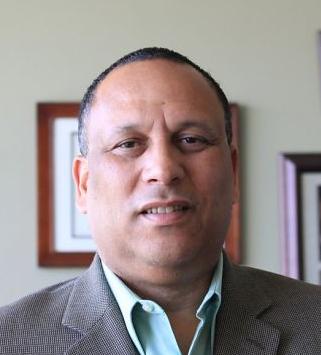
Fernando Martí works at the San Francisco Information Clearinghouse

Zombies FTW

6

arts@sfbg.com

YEAR IN GAMER It was a good year for gaming. You may not have realized it, with fewer marquee titles than last year’s three-mageddon of Resistance 3, Gears of War 3, Battlefield 3, and Modern Warfare 3 in a span of two months, and with no sign of the long-rumored and eagerly-anticipated new PlayStation and Xbox consoles. But this year was actually an embarrassment of riches for gamers who were willing to buck the franchise bug and try something new, suggesting that developing games for a generation of flagging consoles doesn’t have to be an exercise in repetition and sequel-itis. Instead, it provides an incentive for developers to get a little creative.

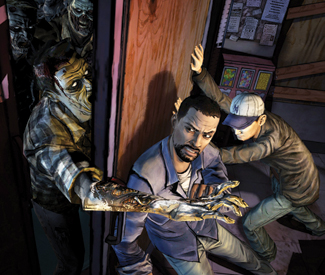
Tell me a story The surprise success of 2012 was The Walking Dead (Telltale Games), a game that’s a series of shorter “episodes” in which you play as Lee, an escaped convict in a zombie-occupied Atlanta. But the real heart of the experience is in developing who Lee is for yourself. Sure, the game often decides what your character does and where he goes, but you are given the tools that shape his motivations for why.

In my play-through, Lee made many decisions I would describe as “good,” but the options were never black or white. I helped form a back story that had Lee helping others to survive the zombie apocalypse in order to alleviate guilt for his wrongdoings. Each choice you make, no matter how superficial or comparatively insignificant, strengthens your attachment to your character. The real challenge of The Walking Dead is in reminding yourself not to focus on making the “right” decision because there never is one.

Look at what they ask of you! Most gamers play to have fun; it’s cathartic to blow off steam after work by shooting some computer-generated bad guys. Spec Ops: The Line (Yager Development/2K Games) is not content to offer target practice without also asking you to question why you blindly accept the tenets of this structure. On the surface Spec Ops looks a lot like a military third-person shooter — and it plays competently as one if that’s all you’re looking for. But Spec Ops is also a secret art game, a shooter that wants gamers to take a harsh look at the atrocities they commit in these war shooters, and ask why they enjoy playing them anyway.

In direct contrast to The Walking Dead, Spec Ops experiments in neglecting player choice. For instance, there’s a sequence where you have no choice but to deploy the deadly chemical white phosphorous upon a group of enemy troops in order to survive, only to learn that your actions resulted in the deaths of civilians, many of them women and children.

It’s debatable whether Spec Ops fully succeeds in balancing art project and fun; there are times when it’s clear you are not meant to be enjoying the game. But that there’s a shooter on the market attempting to be more than mindless about its murder makes it worth a look.

A new IP isn’t a death sentence Savvy gamers are beginning to recognize that they are being sold the same experiences year after year. Call of Duty and Mario Bros. continue to sell well, but highly iterative franchises like these are causing increasingly apathetic gamers to lash out in interesting ways, such as the now annual Metacritic bombing of Call of Duty.

It’s hard to blame publishers; making a non-sequel, non-franchised game is risky. Each month more and more small companies are shuttering their doors, and the future doesn’t look great for middlemen like THQ either, who are currently dangling on the verge of bankruptcy. So it’s kind of amazing we’re able to celebrate the successes of a good number of smaller titles this year.

Kiss kiss Lollipop Chainsaw did fairly well for Japanese auteur Suda 51, although it may have been the zombies and cheerleader on the cover that gave the game a bit of a boost in the young male demographic. A tongue-in-cheek hack ‘n’ slash game with English dialogue written by indie filmmaker James Gunn, Chainsaw is laugh-out-loud funny in enough places to make up for a little repetitive gameplay.

Bang bang More unlikely successes this year were Square Enix’s Hong Kong sandbox shooter Sleeping Dogs and Bethesda’s first-person stealth game Dishonored, both of which are happily finding themselves on more than a few Top Ten lists. Either one could have been easily overlooked in stores, but it seems more and more consumers are looking at the shelf and saying, “Show me something new!” *


San Francisco, Third World country

87

The model is pretty well established, and has proven exceptionally lucrative  for big US corporations like Bechtel and big US banks — and has been an utter disaster for dozens of developing countries: US banks loan money to countries that need infrastructure development — and that money comes right back to US corporations that charge phenomenal prices to build roads, dams, mining operations, whatever, with a nice cut off the top to whatever powerful people need to be bribed (all tax-deductable, of course). And the country that could never afford the loan to begin with impoverishes its people paying the note.

That’s how economic development worked for decades, with the International Monetary Fund and the World Bank leading the way.

Now the world has flipped — and the Chinese national development bank is loaning the money for a project in San Francisco, that will be constructed by China’s equivalent of Bechtel.

Yes, the Chinese Railway Construction Co. will have to adhere to San Francisco’s local-hire law and some of the construction jobs will go to San Franciscans. Obviously, the company will be under immense pressure to hire union workers and pay unions scale. But the profits will go right out of the country — and I bet the contractor will try to pre-fab as much as possible in China, where labor costs are far lower, and use Chinese nationals at deflated wages for as much of the construction as legally allowable.

What does all of this say? On a macro level, it says that the US is slipping as an economic power, which is no big news. But it also suggests that the Treasure Island and Bayview Hutners Point development projects are screwed up enough (and Lennar Corp. is screwed up enough) that no US lending institution wants anything to do with them. The only way these projects work for an investor is if the money comes right back as profits from a builder with close ties to the investor.

Doesn’t give you a whole lot of confidence.


The Housing Authority mess

22

Mayor Ed Lee seems to think that the controversy over Housing Authority Director Henry Alvarez is just going to blow over, but he’s wrong. There’s too much here. And it’s not just about the lawsuits employees have filed or the sizable list of unhappy workers.

But before we get into any of that, I have to say: You can’t beat Willie Brown for putting it all in perspective. The former mayor announced in his Chron column Dec. 9 that the Housing Authority (including during his mayoral administration) has always been fundamentally screwed up:

What no one says publicly is that the tenants in public housing are never happy and that the Housing Authority workers usually aren’t all that interested in working. But as long as everyone gets something out of the deal, be it a public-housing unit for a relative or an absence of on-the-job oversight, everyone stays quiet.

So it’s basically structural corruption, all the time. Oh, and what a lovely thing to say about a large group of city employees who have the unenviable job of trying to keep substandard housing units in an underfunded agency somewhat habitable. Guess the problems aren’t at the top; it’s all lazy workers and uppity tenants.

The back story here has been well reported by Larry Bush as Citireport, who over the past year has outlined in detail how Alvarez tried to use his political clout to defund the Housing Rights Commitee, a nonprofit that helps public housing tenants. Turns out the HRC has been a bit of a pain for Alvarez because its staff is agressive about demanding that repairs are made on time and basic maintenance is done.

Alvarez went so far as to contact (presumably on city time) the Tides Foundation, which acts as HRC’s fiscal sponsor, demanding documents that aren’t public record (but that Tides provided anyway). In emails to the mayor’s housing advisor, Doug Shoemaker, Alvarez made clear that he wanted the city to cut of the $90,000 that HRC gets for code-enforcement work.

On April 7, Alvarez sent a rapid-fire series of questions and requests to Shoemaker at the Mayor’s Office of Housing, all apparently intended to uncover problems with the nonprofit and provide grounds for ending city funding. Shoemaker complied with the document requests while trying to cajole Alvarez away from a confrontation with HRC. “I realize that you don’t think I’m doing enough to keep HRC out of your hair,” Shoemaker wrote to Alvarez on April 7, “so I spent part of my evening last night getting the records request (from HRC) rescinded.”

So: The Housing Authority director thinks a widely-respected tenant rights group is “in his hair” and wants to cut off the group’s money because it’s doing its job of helping tenants deal with the HA bureacracy.

Oh, and it’s not as if HRC is making up the problems. Willie Brown can complain all he wants that the tenants are just annoying malcontents, but the record shows there are serious problems with the Housing Authority:

Hundreds of San Francisco families continue to live in tax-payer subsidized housing that fails minimum standards for health, safety, and sanitary conditions, according to recent inspections by the U.S. Department of Housing and Urban Development (HUD). San Francisco’s response is to defer compliance with housing codes “until replacement housing can be found.”

You want an idea of how serious? Check this out.

I’m glad Sup David Campos as asked for a compliance audit on the agency, because in the end, this is really about the tenants.

Oh, and just in case anyone has forgotten, this was the guy Willie Brown had running the Housing Authority.


Left-right punch knocks out increased development fees for Muni

148

A new and unusual coalition of nonprofit, religious, and corporate interests today killed a legislative effort to get more money for Muni through the Transit Impact Development Fee, which was going through its process of being reauthorized every five years and came to the Board of Supervisors today.

The San Francisco Municipal Transportation Agency was hoping to get millions of dollars more per year from the fee to help cover the increasing costs of Muni service, so the city last year commissioned a study establishing a nexus between new development projects and their impact on the public transit system as a way to set the fees developers would pay.

Using that study, Sup. Scott Wiener sponsored legislation that increased the cost per square foot of development for some business types – mostly notably hospitals, big retail and entertainment complexes, and Cultural/Institution/Education facilities – and ended the categorical exemption for nonprofit organizations.

Those who could be impacted by the increased fees banded together into an organization calling itself NOTT (Non-profits Opposed to the Transit Tax), a group that included the city’s major health care providers, religious institutions, and influential nonprofits such as Council of Community Housing Organizations and Chinatown Community Development Center.

“We are gravely concerned that elements of the forthcoming Transportation Sustainability Program (TSP), especially elimination of the non-profit fee exemption, have been selectively imbedded in the TIDF update legislation. Elimination of the non-profit exemption has not been considered through a thorough and transparent process and is not good public policy,” SF Chamber of Commerce President Steve Falk wrote in Nov. 27 letter to supervisors on behalf of the organization.

In the face of opposition from both downtown and progressive groups, and hoping to get SFMTA more money for its next budget cycle, Wiener appealed for support to sustainable transportation activists, who had mixed feelings on the legislation for reasons ranging from its exemption of parking garages and development in Mission Bay to its inclusion of organizations serving low-income communities.

So Sup. Sean Elsbernd – who spoke on behalf of Catholic schools and churches – was able to amend the legislation back to the status quo on a 9-2 vote, with only Wiener and Sup. Carmen Chu opposed (Sup. Christina Olague, who co-sponsored the measure with Wiener, even failed to support it in the end).

While that ends this effort for now, it is really only the first round of efforts that are just getting underway to find more funding for Muni, which is underfunded and at capacity on many lines, and implement the TSP when it is unveiled next year.

Ethics Commission wants to hide its own flaws

3

The Ethics Commission has serious problems. A detailed report by Board of Supervisors Budget Analyst Harvey Rose, comparing SF’s ethics rules and enfocement to that of Los Angeles, found a long list of ways that this city is falling short. The supervisors asked the commission to have a robust discussion of the findings and propose reforms.

Now Friends of Ethics, made up of a number of former commissioners, activists, and campaign-finance watchdogs, says that the commission is trying to hold a quick hearing that will gloss over much of the criticism of the Rose report. The group wants the hearing delayed until there’s a lot more time to bring a lot more people into the process.

Here’s the letter FOE sent over:

To the Ethics Commission and Staff:

Friends of Ethics is writing with objections and protests regarding the upcoming “Interested Persons” meetings scheduled for December 4 and 10, 2012.

The Commission notified “Candidates, Treasurers and Interested Persons” of meetings “to discuss recommendations of the Budget Analyst report (also known as the Harvey Rose report) comparing programs of the San Francisco Ethics Commission with those of the Los Angeles Ethics Commission.”

The notice was dated November 28, providing only three business days before the first meeting will take place.

The Friends of Ethics bases its protest and objections on the following facts, and by this memo, formally requests that Ethics postpone these meetings until February.

     The proposed Interested Persons meetings do not mention inclusion of a representative from the Board Budget Analyst office to present their report and to discuss its findings. Without their direct involvement, as well as the invited presence of Supervisor Campos who requested the Rose report, the Interested Persons meeting will have only the staff’s views of the report as a basis for discussion. We believe this fails to provide the direct interaction and communication that should be part of this process.

    Ethics was requested by the Board of Supervisors to conduct robust and inclusive outreach to all participants in San Francisco’s political life. Ethics provided Friends of Ethics with the list used to contact Interested Persons about this meeting. We believe the list provided is not an adequate outreach, includes no community-based organizations active in electoral politics, any of the chartered Democratic clubs or other partisan political organizations, or special focus organizations active in San Francisco elections. We believe the lack of an inclusive outreach as evidenced by this list denies the Commission of a full discussion of the issues and is weighted toward the regulated community. We are puzzled by the fact that many people who do receive the Interested Persons notices are not on the list provided by Ethics, and seek a clarification on whether additional lists were used that were not disclosed to us. We also note that the late Joe Lynn, while the Campaign Finance Officer for Ethics, not only conducted extensive outreaches for IP meetings, including contacting past treasurers and press and posting notices on local political blogs and chat boards, but also later informed Director St. Croix in writing about those practices for the purpose of encouraging the continuation of such outreach.

    Ethics provided insufficient time for a review and analysis of recommendations that are significant and meaningful for the operation and success of the Ethics Commission mission. We believe that Ethics has done the bare minimum of notice of a public meeting and failed to take a serious approach to this important issue. Providing notice three days before the meeting, particularly in the holiday period between Thanksgiving and the first of December, means that no organization has an opportunity to place this issue on their agenda for a discussion or to endorse comments to be provided to the Ethics Commission.

    Ethics prepared an agenda that omitted significant and critically important comparisons between the Los Angeles and San Francisco Ethics Commissions that were included in the Rose report. While Ethics did list specific recommendations from the Rose report, the report itself detailed a number of additional differences that are significant to the San Francisco political community as we know it, and that should be part of a discussion of the Rose report.

Among the omitted points are:

    Los Angeles has a private right of action for citizens to act when Ethics does not; in Los Angeles this can include penalties under a civil action. San Francisco has no such provision. We believe this is essential to meaningfully empower citizens to directly seek compliance with our laws.

    Los Angeles requires disclosure of contributors of $100 or more to groups making “third party” expenditures. San Francisco does not require public disclosure of this money stream. Disclosure of donors to third party committees would add transparency, particularly if this has become a strategy to allow city contractors to influence elections.

    Los Angeles prohibits contributions from those seeking permits, while San Francisco does not. Friends of Ethics has determined that over 90 percent of all City Hall lobbying involves permit decisions.

    Los Angeles prohibits commissioners from fundraising for candidates, while San Francisco does not. This is the heart of pay-to-play politics that infects city appointments as commissioners are often the first stop for fundraising on behalf of city elected officials. We note a recent case where a city commissioner hosted a fundraiser that included contributions from city employees from the same department. The candidate returned the contributions, recognizing that commissioners are prohibited from seeking contributions from city employees. However, this demonstrates the potential abuse and underscores that Los Angeles’ policy is a stronger and more easily enforced prohibition. We recommend it.

    Los Angeles prohibits fundraising from city contractors and those seeking city actions. San Francisco allows contractors to fundraise and serve on candidate finance committees, although they may not contribute their own funds. Currently San Francisco also does not require candidates to disclose the names of their Finance Committee members. However, we strongly prefer closing the loophole, as Los Angeles has done, by prohibiting city contractors and permit seekers from fundraising.

    Los Angeles requires a more robust disclosure of “paid by” notification on telephone messages when 200 or more people are called. San Francisco sets the threshold at 500 people. Therefore, “paid by” calls to members of political clubs during the endorsement process would be missed under San Francisco’s standard but included under LA’s standard.

    Los Angeles provides a “Guide for Contributors” that educates donors and reduces confusion on such issues as aggregate contribution limits, prohibitions on officers of organizations receiving city funds, and so forth. This is done at minimal cost and made available on the Internet with no printing or mailing costs. San Francisco does not provide a Guide. Instead, the Ethics staff has recommended that the Commission rewrite the law to overturn specific prohibitions, stating that contributors are confused about the rules. The best approach is Los Angeles, where an educational outreach to contributors is part of their program. We note that San Francisco provides guides and outreach to most others involved in political activities, including committee treasurers, candidates and others but does not include an educational outreach to donors.

    Los Angeles prohibits political contributions from being made at City Hall or other city offices, including offices rented with city funds. San Francisco allows contributions to take place in the mayor’s own office, supervisor’s offices, at Redevelopment, Planning, Port or other offices – in short, anywhere that a donor chooses to make a contribution. We believe allowing contributions to be made in the workplace of city officials undermines public confidence and is inconsistent with other restrictions on the use of city resources for political purposes.

    Los Angeles has a more robust view of what constitutes lobbying and includes attorneys who offer strategic advice even if they do not directly contact a city official. San Francisco does not require registering or disclosing clients from such attorneys involved in orchestrating a favorable result for a paying client. Attorneys who serve as committee treasurers also do not face the same level of public disclosure as lobbyists.

We believe this list of omitted topics, coupled with the unacceptable short timeframe provided for analysis and review by the political community, and the failure to provide adequate outreach, raises serious concerns that Ethics is not engaged in a serious effort to obtain the public’s views on its operations and policies based on the Harvey Rose report.

We further note that Ethics has not provided a public schedule of when it will complete a summary of the Interested Persons meeting and comments, or a schedule for consideration by the full Commission of any recommendations.

In addition, Friends of Ethics requests that the San Francisco Ethics Commission audio record the IP meetings regarding the Rose report and post the recordings on its website, as is done by the Los Angeles City Ethics Commission.  In the past, the San Francisco Ethics Commission made audio recordings of its IP meetings, though they were not posted online.  The Commission’s Directors later discontinued the audio recording altogether, which may have been motivated by valuing the privacy of attendees over public transparency.  Given that the Rose report IP meetings are about comparing San Francisco’s good government laws with Los Angeles’ to consider adopting improvements offered by Los Angeles, Friends of Ethics believes that the first improvement that San Francisco should adopt is the Los Angele set of standard practices for conducting IP meetings.  When it comes to the development of good government law and policy, the public’s right to know is paramount.  Therefore, Friends of Ethics requests that all future IP meetings held by the San Francisco Ethics Commission be audio recorded and the recordings promptly posted online.”

Our reasons for requesting a specific timetable for next steps is based on our observation of lengthy delays in staff action on issues even when raised by the Commission itself. We believe the political community will be unlikely to participate in a process that has no specific and public timetable for action but that could take more than a year to reappear.

For example:

    In July 2011, the Ethics Commission requested that staff draft proposals to close the loophole that allows committees seeking to draft a candidate to fall outside the normal reporting and disclosure requirements. However, staff did not produce a proposal until November 2012, 16 months later, and did so without an Interested Persons meeting to discuss their proposal.

    Also at the July 2011 meeting, the Ethics Commission requested that staff examine the loophole that prevented the Commission from acting in cases of Official Misconduct by a commissioner. Ethics staff still has not produced a proposal to close that loophole.

    Also in 2011, a Superior Court judge suggested that San Francisco adopt a policy prohibiting commissioners from recommending a specific lobbyist to parties seeking a contract or other decision from that commission. Ethics has not prepared any response to that suggestion.

    In June 2012, Rules Committee Chair Jane Kim requested that the Ethics Commission provide some information on the city’s Ethics laws in languages other than English, noting that the rules are as important to donors and committees as they are to the public. The Ethics Commission has taken no steps, including in the election just concluded.

Given this record, we believe that any public process to examine the Harvey Rose Report and build new recommendations must include proposed timelines for action if there is to be public confidence that this process is meaningful.

We also strongly recommend that the Ethics Commission set aside time to allow a full discussion before the Commission itself. We believe that such a discussion should not place a two-minute limit on public members making comments.

For the above reasons and cited facts, Friends of Ethics requests that the Interested Persons meeting on the Harvey Rose Report be postponed until February when the political community will have an opportunity to evaluate the proposals and endorse changes, that the Commission immediately engage in a more robust outreach effort that extends beyond the list provided by Ethics to us, that the conversation be broadened to include all topics of comparison between Los Angeles and San Francisco, and that a proposed timeline for a record of the Interested Persons meeting and action by the Commission be provided.

We submit this protest respectfully and with support for the work of the Commission and specifically for the thorough review of any steps that can improve the Commission and public confidence in our political process.

Signed:

Eileen Hansen, former Ethics Commissioner
Bob Planthold, former Ethics Commissioner
Paul Melbostad, former Ethics Commissioner
Sharyn Saslafsky, former Ethics Commissioner
Bob Dockendorff, former Ethics Commissioner
Joe Julian, former Ethics Commissioner
Oliver Luby, former Ethics Commission staffer
Aaron Peskin, past President, Board of Supervisors
Charles Marsteller, former SF Coordinator, Common Cause
Karen Babbitt, community advocate
Marc Saloman, community advocate
Larry Bush, Publisher, CitiReport


Chopping spree

2

cheryl@sfbg.com

FILM Unlike the San Francisco Independent Film Festival’s flagship event and its popular DocFest, which more or less put roots down at the Roxie, genre fest Another Hole in the Head spreads its horror, sci-fi, and just plain weird wealth around to various venues. Yeah, the Roxie’s still on its list, but HoleHead also hosts events down 16th Street at the Victoria Theater, and at SOMA’s Terra Gallery and the Vortex Room — the latter an inspired addition, given the Vortex’s reputation as a haven for mondo cinema.

This year, HoleHead opens with a screening of Richard Elfman’s 1982 cult musical Forbidden Zone, presented in — holy Tyrrell! — remastered and colorized form. Elfman will be on hand to answer all your Sixth Dimensional questions, and a party (complete with Oingo Boingo cover band) follows.

Closing night looks to be a decidedly less festive affair, with Austrian director Michal Kosakowski’s unsettling Zero Killed — a feature film spun from his video installation and short film project, Fortynine. From 1996 to 2006, Kosakowski interviewed people about their murder fantasies, then used the tales (suicide bombings, school shootings, dog attacks, dinner-party poisonings, stabbings, shoving people into traffic or letting them slip off cliffs, etc.) as short-film inspiration, starring the storyteller as either perpetrator or victim.

A haunting musical score ups the creep factor, as Kosakowski tracks down each participant (many, but not all, are actors by trade) to interview them about their specific fantasies and other troubling topics, like revenge, torture, and “What is evil?” Zero Killed is a uniquely disturbing mix of fiction and documentary, cutting between horrific, blood-soaked vignettes and clinical talking-head interviews — often featuring the same subject.

There’s plenty of blood gushing forth in slick British standout Axed (listed as “Fangoria presents Axed” on the HoleHead schedule, so that right there should assure you of its splatter cred). When a businessman is, uh, axed from the corporate gig that turned him into an uptight prick long ago, he goes all Jack Torrance on his wife and teenage kids. As you might guess, the titular implement figures prominently in his plans, and Ryan Lee Driscoll’s film spirals from satirical to sadistic as each new body drops.

Changing gears, from in-your-face to perhaps too subtle: posting recently to his Observations on Film Art blog, scholar David Bordwell scrutinized what he called “discovered footage” horror films, with a focus on the Paranormal Activity series. Bordwell took particularly interest in the “rewards and risks” of the genre’s “narrow set of stylistic choices.” In these films, the camera itself occupies a heightened presence within the story. By now, everyone knows the psychological effect that’s supposed to have: if we’re aware of the camera, and it seems like an actual person is filming what we see, the images appear more real — and hopefully, “the reward” translates to genuine shrieks in the dark.

But for every Paranormal Activity sequel that’s seen by millions and rakes in hundreds of millions, there are dozens of copycats. And why not? Found-footage horror is non-traditional filmmaking at its most democratic. It can be made on the cheap, and wobbly production values are de rigueur. Unfortunately, it’s a lot easier to get ahold of a camera than to come up with an original idea, much less one that yields actual moments of fright.

With that said, The Garlock Incident does make an effort to tread new, albeit Blair Witch-y, ground. The set-up is that a group of Los Angeles actors — appealing 20-somethings all — are en route to Vegas for a movie shoot. Also in the van is ambitious director Lily (Ana Lily Amirpour), who obsessively films everything. After taking a spontaneous detour to visit a ghost town with a sinister back story, they discover a couple of maybe-abandoned shacks — and soon realize that getting off the main road was a bad idea. Oh, kids. It’s always a bad idea, especially for city slickers who can’t function without cell service.

Garlock‘s frustrating ending, which I wouldn’t dare spoil even if I fully understood it (even after watching it several times), is a letdown. Until its last act, though, Garlock is actually a pretty interesting look at how quickly relationships can break down when circumstances slide from uncertain to dire. But once you start puzzling over the ending, other doubts surface — like, by what logic would the actors’ audition footage be neatly edited into this roughly-shot, “found” chronicle of wilderness terror?

Speaking of wilderness terror and, alas, unsatisfying finales, retro-styled sci-fi adventure The 25th Reich screeches to a halt with a “to be continued” cliffhanger, just when shit is starting to get mind-blowingly insane. Argh! Fortunately, for the most part, the film — about a group of World War II soldiers who time-travel back and forth, squabbling among themselves as they pursue UFOs and Nazis — works just fine as a stand-alone, though its gleeful reliance on stereotypes (the Jew, the Italian, the Southern redneck, etc.) feels less like a nod to classic war films than a way to avoid actual character development.

The best gimmick centers on Captain O’ Brien, an erstwhile matinee idol not above reciting cornball lines from his own films at crucial moments. That he’s played by Jim Knobeloch — who also appeared in 2012’s other Nazi sci-fi flick, Iron Sky — is a perfect bit of obscure-genre synergy.

It wouldn’t be HoleHead without zombies. Comic The Living Corpse gets the (re-)animated treatment in The Amazing Adventures of the Living Corpse, which follows the titular beastie’s existential crisis after he — oops! — rips apart almost his entire family. Spared is a young son who is sent to a creepy boarding school for orphans, though he’s soon plucked from its halls to apprentice under a mad scientist. Meanwhile, the guilt-ridden corpse — real name: John Romero; memo to creative types: naming anyone “Romero” in your zombie-related whatnot is no longer a novel idea — roams the underworld and the land of the living, meting out occasional supernatural ass-kickings but mostly searching for his long-lost offspring.

The haunted-school scenes (complete with a kids vs. demons showdown) are clever, and the catchy soundtrack has punky flair, but the sheer number of plot threads nearly overwhelms the 82-minute film — maybe cool for fans of the comic, but viewers new to the material might wonder why, say, the “Spectral Protection Society” is elaborately introduced and then discarded. The overall effect is not nearly as fun (or “amazing”) as it should be.

Amazing, however, is one of many gushing adjectives I might use to describe my top pick of the festival: Mike Malloy’s Eurocrime! The Italian Cop and Gangster Films That Ruled the ’70s — a jazzy, lovingly-compiled homage to some of the trashiest, most mean-spirited films ever made. Everyone’s heard of Spaghetti Westerns, but poliziotteschi movies have yet to make a true cult breakthrough (or be remade by Quentin Tarantino, but I’m sure he’ll get there eventually). A groovy-sleazy score and endless clips, posters, and still shots set the tone for Eurocrime!, which gathers some of the genre’s biggest stars (laid-back John Saxon; gracious Franco Nero; bratty Antonio Sabàto) to look back at their years chasing each other across rooftops, brawling in junkyards, and working with directors like Umberto Lenzi (“the screaming-est director I ever met in my life,” according to actor Henry Silva).

The doc, a tad long at 137 minutes, also explores why the films became so popular, despite the fact that their scripts were often ripped wholesale from American “angry cop” films (and, later, from each other) — and why that popularity didn’t last (possible culprits: laughable dubbing, distracting mustaches, brutal violence against women). Newcomers won’t believe that such a world of insane film exists, longtime aficionados will dig the nostalgia, and both camps will enjoy Eurocrime!‘s high-energy appreciation of a genre long overdue for this kind of treatment. 

ANOTHER HOLE IN THE HEAD

Nov. 28-Dec.9, $10-$12

Various venues, SF

www.sfindie.com

Sharing the sun

1

news@sfbg.com

Dan Rosen, the co-founder of Solar Mosaic, told us there was an ironic note to the devastation that Hurricane Sandy recently brought to New York City. The same power grid that helps create such fierce hurricanes through the burning of fossil fuels was unable to distribute power to thousands of homes, in mostly low-income neighborhoods, for weeks in the wake of storm.

Sandy brought to the forefront a huge energy challenge: how to move over to renewable energy fast enough to avoid catastrophic climate change and the killer storms in generates, build more efficient and reliable grids, and ensure that everyone can equitably participate in the new renewable energy economy. Bay Area energy entrepreneurs such as Rosen are working on innovative energy models that address those issues.

So far, the solar debate has mostly been between proponents of personal solar projects such as residential rooftop installations, also known as distributed generation, and those who back industrial-scale projects in far away plains and deserts.

But Rosen and other entrepreneurs are championing a middle route: They propose vastly increasing the prevalence of large solar power arrays and other renewable power plants close to where the energy is consumed, and opening up creative new ways for more people to buy into those projects.

This kind of approach to energy has the potential to democratize power production, avoid costly and environmentally unsound transmissions lines, and prevent utilities from monopolizing renewable energy.


CROWD FUNDING SOLAR

One of the barriers to the proliferation of solar is the relatively high upfront cost of purchasing and installing the panels. But with the rising costs of fossil fuel and the government incentives around renewable energy, investments in solar infrastructure can pay off big.

Bloomberg New Energy Finance crunched the numbers and according to a report that came out in June, large solar projects may soon pay a 5-9 percent return on investment. Big financial institutions and other corporate players have taken note of these figures and potential for profit they represent.

For example, Google has invested almost $1 billion in renewable energy that it plans to sell into the grid, including opening a $75 million fund for residential rooftop solar this past September. The problem is that big lenders are only looking for large-scale solar deals in order to cover their costs.

Enter Rosen and Solar Mosaic, who are coming up with a way to harness the power of crowds to fund the local and decentralized projects that big financial institutions tend to overlook. Solar Mosaic specializes in raising seed capital for solar projects by collecting many small investments into one pool.

That idea won Solar Mosaic a $2 million grant from the Department of Energy’s SunShot Initiative, and attracted $3.5 million in venture capital.

“Our job — not just as Mosaic, but as society — is to make sure that the next energy economy has participation and ownership from millions of people and communities around the world,” Rosen said. “Crowd funding is really the beginning of a broader movement to democratize and distribute capital — enabling people to invest in projects they otherwise wouldn’t have had access to.”

This vision proved itself initially with a successful Kickstarter-like crowd funding platform that facilitated the development of five solar projects with the participation of more than 400 small investors and over $350,000 raised. The money went to fund solar panel installations on the roofs of community organizations in California and Arizona, including People’s Grocery in Oakland.

But there’s a catch. As the law currently stands, Solar Mosaic, or any company engaged in crowd funding, cannot offer any interest on the money invested by small online contributors. Since there is only a limited pool of people who believe in an energy revolution enough to shell out money for free, these examples are not entirely replicable. “We chose to start with those ones because they have very strong constituencies and we were using more a philanthropic model,” Rosen said.

The new model the company is developing is “getting people who are not necessarily just environmentalists invested in the clean energy economy,” Rosen said. “I want people who are like, ‘Oh, cool, I can make [a decent return] if I invest in this,’ and that gets more stakeholders than Sierra Club members. Let’s have millions of stakeholders with skin in the game.”

So how to move forward? The controversial federal Jumpstart Our Business Startups (JOBS) Act passed in April by Congress included a much-trumpeted crowd funding provision. The bill charged the Securities and Exchange Commission with the responsibility of putting meat on the legislation’s skeleton.

The SEC has until the Dec. 31 deadline to come up a set of rules allowing start-ups to gather small investments from ordinary people online while still offering provisions to protect the public from fraud. Many are skeptical that the SEC will complete the rule-writing process by the end of year.

Impatient to wait for the SEC and unsure whether the provisions will be practical for their purposes, Solar Mosaic is following a different path. It is using the funds raised already to pay for a lengthy and expensive filing with the SEC to upgrade its financial status.

Rosen said he couldn’t discuss details, but he said the new status should grant Solar Mosaic some leeway on offering financial returns to a wider variety of investors.


ENERGY IN THE CLOUD

Investment opportunities in local solar projects may be a good way to get people financially involved in clean energy but what about Californians who simply wish to purchase renewable energy for their homes or business?

California leads the country in rooftop solar installation, much to the credit of two programs: rebates that offset the cost of the panels through the California Solar Initiative and a program that allows those who own a rooftop with solar panels to offset their utility bills with credit from the energy they produce. California Public Utilities Commission statistics indicate these programs are largely responsible for some 1,379 megawatts of solar that have been installed in California at 131,874 different sites; about as much energy as one large nuclear reactor.

There has been record growth in adoption of solar by homeowners in the past two years, according to the CPUC, including a 364 percent jump in low income areas in since 2007. Yet that’s a far shot from the goal of 12,000 megawatts of local clean energy by 2020 called for by Gov. Jerry Brown in July.

Californians who do not have savings or a high credit score or who have shaded roofs usually can’t participate in the state’s renewable energy programs. But the most significant obstacle to increased participation is that only homeowners are eligible, while renters must contend with whatever power they can get from their utility. In a city like San Francisco, where almost two-third of residents rents, that is the overwhelming majority of citizens.

One solution that would circumvent the property-owning restrictions is allowing people to subscribe to solar gardens and other renewable energy facilities in their area and receive the same credit on their utility bill for their share of energy delivered to the grid. Decoupling where energy is made from who is able to buy it “allows everyone to participate, it makes it so it doesn’t matter if you are rich or poor, the only thing that matters that you have a utility bill,” said Tom Price of CleanPath, a solar project investment firm.

California Senate Bill 843, introduced by Sen. Lois Wolk (D-Davis) and coauthored by Price, attempted to create the legal framework for this kind of virtual transaction. Over the summer, it died in the Assembly Committee on Utilities and Commerce as result of late session lobbying by Pacific Gas & Electric and Southern California Edison. Notably, the state’s other largest utility, San Diego Gas and Electric, supported SB843. Also supporting the bill was a wide and diverse coalition ranging from the US Department of Defense to the Ella Baker Center for Human Rights. Wolk plans to reintroduce SB843 in the next legislative session.

Price and other supporters see the bill’s eventual passage as inevitability: “In an age when so many transaction are virtual [and] we can put so many parts of our lives in the cloud, why can’t we put energy in the cloud and let people virtually subscribe to it? From the grid’s perspective, there is no difference.”


COOPERATIVE ENERGY

Democratizing the green energy industry is about allowing everyone to participate easily, but it is also about empowering those who are typically left out of the conversation.

Low-income and marginalized communities are often the ones most impacted by the environmental and health effects of burning fossils fuels. As the green energy revolution expands, those same communities will potentially be last in line to benefit from or exert influence over the transformation.

Considering that solar can be small scale and still financially sound in the long term, “there is an opportunity to rebuild the energy infrastructure…from the grassroots,” said Shiva Patel who co-founded Energy Solidarity Cooperative. Patel and his partner Dave Ron want to set up multi-stakeholder cooperatives that promote ownership and decision-making by consumers.

In a low-income neighborhood, residents are most likely tenants with little leverage and no eligibility for California’s renewable energy incentives. The cooperative model suggests residents can pool space, financial resources, and labor to become players in small-scale power production.

Normally, consumers considered downstream along the energy supply chain do not have the financial or political means to make decisions about the energy their communities use. “We are flipping that on its head,” said Ron “We want those people to be upstream. We are taking a very horizontal approach.

The nuts and bolts of the coop’s structure may be new, but the distinction between those who own and control the community power project and those who finance it is important. There are three types of members in the cooperative: consumers, workers, and community investors. The consumers initiate the community power project and then maintain ownership of it. They contribute labor and money toward the project according to their ability. The workers are a group of energy experts organized into a collective that provide support and advice for the project. Decisions about the coop and its projects are left to the consumers and workers. Community investors are drawn to the project by crowd funding, but financial support does not buy them a decision making role. Once the upfront costs of the project are paid back to the community investors, consumers can keep the revenue or use it to foster more community power projects.

One source of inspiration for the duo is Co-op Power based in Boston, which has more than 150 full-time green jobs with living wages, spawning 10 businesses in the decade since its founding.

“We had a large number of people trying to solve the puzzle of how communities could come together and create sustainable energy models,” said President and CEO Lynn Benander. “It’s the brain child of many people.”