Development

High-rise risk

The fate of 8 Washington, a luxury high-rise project planned for San Francisco’s northern waterfront, remains uncertain after landing at the center of a political firestorm last year. Yet a whopping $42 million, invested by the California State Teachers Retirement System (CalSTRS), is currently tied up in the project.

Months from now, in the November 2013 election, San Franciscans will vote on a building height-limit variance crafted for this particular development. If the variance goes down, the luxury development – in spite of winning entitlements last June with an 8-3 vote of the Board of Supervisors – will be toast. That outcome could jeopardize CalSTRS’ $42 million contribution, and some retired teachers are beginning to ask questions.

“We have been watching with particular concern what appears to be an incredibly risky investment by CalSTRS,” four retired CalSTRS members from San Francisco wrote in a letter to the pension fund’s investment committee last October, requesting information about how project developer Pacific Waterfront Partners had made use of the funds.

Investment amount increased 

In response to the teachers’ request for information, CalSTRS indicated that the investment committee had actually increased its contribution up from $31.7 million last March, when final project approval seemed imminent.

The CalSTRS investment committee added the project to its investment portfolio in 2006 with an initial $26.7 million commitment. Prior to that, the pension fund had partnered with Pacific Waterfront Partners in a different venture to refurbish San Francisco Piers 1 ½, 3 and 5. That development was well received by the community, and since CalSTRS earned a healthy return on investment, the 8 Washington project seemed like a safe bet at the time.

But now that it’s frozen for months and faces possible reversal, pressure is mounting on the CalSTRS investment committee.

Earlier this week, a Change.org petition created to ask the CalSTRS board to reconsider its investment garnered 150 online signatures in the first 24 hours. The online petition website lists the initiator as “Lorraine Honig, Retired Teacher,” but could just as easily read No Wall on the Waterfront, the name of the opposition campaign created last year to amass signatures for a voter referendum on 8 Washington. Honig and several retired teachers initially queried the pension fund’s investment committee in league with Jon Golinger, a key driver behind No Wall on the Waterfront and chairman of the Telegraph Hill Dwellers, a neighborhood organization.

Honig, who is actually a retired social worker, explained that she used to be a member of the Golden Gateway Tennis and Swim Club, a community fitness center that would be razed to make way for 8 Washington. She’s since moved away from the neighborhood, but feels the planned 8 Washington waterfront housing complex is the wrong kind of development for San Francisco.

“The thing I object to is, it’s high end luxury housing,” she said. “There’s nothing that’s going to cost under a million. A lot of it is going to be absentee owners.” As for the CalSTRS investment, Honig said she felt worried: “I’m concerned that our money will be used to influence the voting.”

Funding used to counter signature gathering campaign

CalSTRS’ response letter also revealed that project developer Pacific Waterfront Partners had used nearly $31,000 to counter No Wall on the Waterfront’s efforts to gather enough signatures to qualify for a referendum. An expense roster showed that funds were used to cover graphic design, flyer printing, legal and compliance advice and “outreach personnel” costs.

A flurry of news reports from last July, however, indicated that some “outreach personnel” did no more than stand on the streets and physically block signature gatherers from asking passersby to sign the petition against 8 Washington. According to one account, when a signature gatherer approached project principal Simon Snellgrove to complain about this behavior, he responded: “That’s their job.”

At the end of the day, Pacific Waterfront Partners’ $31,000 expenditure to try and derail No Wall on the Waterfront’s bid for the ballot is decimal dust compared with the full investment in a building that has not been constructed, and may never be.

CalSTRS spokesperson Michael Sicilia declined to offer comment to the Guardian, instead pointing to the CalSTRS letter of response to its members. That letter stated in part: “CalSTRS is optimistic that the successful development of the underutilized space along the San Francisco waterfront will provide benefits to CalSTRS members in the form of investment income, as well as many direct benefits to the neighboring community and the city.”

So far, CalSTRS has not provided documents in response to a public records request submitted by the Guardian seeking more information about the investment. And neither CalSTRS nor Pacific Waterfront Partners has answered questions about just what would become of that significant investment if the project were ultimately killed. When we put this question Pacific Waterfront Partners spokesperson PJ Johnston, he responded: “I certainly would not speculate on what happens after the outcome of the election.”

How is the money being spent?

All of this leaves some open questions. Will that investment be washed away if voters effectively reject the project? Is the rest of the money still sitting in Pacific Waterfront Partners’ accounts, or was it eaten up by pre-construction costs? Is Snellgrove’s firm biding its time until November, when some of the funding can be tapped as a war chest to respond to No Wall on the Waterfront’s ballot referendum with an oppositional blitzkrieg?

“I don’t have a breakdown of their investment costs,” Johnston told the Guardian when posed with questions about how the funds had been used. “All pre-development phases require funding,” he added, referencing environmental impact studies, permitting, and other pre-construction hurdles that major developments must clear. “This process was drawn out over a number of years.”

Johnston also criticized the No Wall on the Waterfront campaign, saying, “A small band of corporate and really, really rich neighbors have put this on the ballot.”

And the project opponents who have deep pockets know a thing or two about investment, Golinger suggested in a letter to CalSTRS. He wrote, “The supporters of No Wall on the Waterfront who have experience with institutional investing warn that some money managers resist learning from their mistakes and, instead, double down on them, trying to prove they were right all along. The beneficiaries of the funds with which you are entrusted are sensitive to warning signs … that may be happening here.”

CalSTRS is the nation’s second largest pension fund and a source of financial support for retired educators throughout the state. About 70 percent of the money used to provide benefits is derived from investment income, and the $152.1 billion pension fund had $21.8 billion invested in real estate as of July 2, 2012. The Sacramento Bee reported earlier this week that the pension fund faces a $64 billion deficit, and would need $4.5 billion per year to become fully solvent.

Uncertain outlook

With the fate of 8 Washington now hitched to the unpredictable forces of San Francisco politics and voter sentiment, this luxury high-rise investment looks far riskier than it likely did when Pacific Waterfront Partners approached CalSTRS’ investment committee years ago.

On a broader scale, there are signs that higher-risk investments are becoming problematic for pension funds across the board. An academic study released by researchers from Yale University and Maastricht Univeristy in the Netherlands tracked public pension systems in the U.S. and elsewhere, and determined that major U.S. funds like CalSTRS are trending toward higher risk investments.

“Gradually, U.S. public funds have become the biggest risk-takers among pension funds around the globe,” the authors concluded. “A major worry is that their increased risk-taking is reckless and could lead to substantial future costs to taxpayers or public entities if their more volatile risky investments fail to meet the expected rates of return.” 

At this stage of the game, it’s too soon to say whether CalSTRS’ investment in 8 Washington will ultimately become a statistic backing up that worrisome finding. Early polling results from David Binder Research showed that voters would likely reject the height-limit increase by 56 percent. But November is still many months away.

Pot hearing cancelled — but why?

1

The state Senate Business, Professions, and Economic Development Committee was slated to hold a hearing Feb. 11 on Assemblymember Tom Ammiano’s efforts to create a regulatory framework for medical marijuana. That’s a fairly common practice when a new set of professional regulations is proposed; it’s called a “sunrise” hearing, and the idea is to get all the players in the room and see what kinds of concerns they have. A bill Ammiano introduced last year, AB 2312, would have put the authority to set state regs under the Department of Consumer Affairs; it died in the state Senate, but it will come back in some form or another.

So the committee chair, Sen. Curren D. Price, a Los Angeles Democrat, set the hearing, and committee staff went about rounding up witnesses — and then five days before the gavel dropped, the whole thing was called off.

What happened? Couple of things.

For starters, the office of Gov. Jerry Brown officially doesn’t like marijuana. And the DCA is part of the governor’s office. And the attorney general, Kamala Harris, has been awfully careful about getting into the medical marijuana fray. And the feds — or at least, the US attorney for Northern California — officially hates anything to do with the devil weed.

And all of those people should have been part of the regulatory discussion, except that somehow, they couldn’t quite make it to the hearing. “We had difficulty getting representatives of the administration and the attorney general to come,” Committee Consultant G. V. Ayers told me.

Then there’s the fact that Price is running for Los Angeles City Council (funny — in San Francisco, the supervisors want to be in the state Legislature. In LA, the state legislators want to be on the City Council. Possibly because there are no term limits, and there’s a huge city budget). And the election is in March. And anything Price (who has supported medical marijuana in the past) said or did that suggested he loves loco weed might get slung at him in the waning days of a long, expensive campaign.

So in 2013, everyone’s still afraid of pot. “What’s up with marijuana?” Ammiano asked me. “You can’t even have a hearing?”

Apparently not.

On the Cheap Listings

0

Submit items for the listings at listings@sfbg.com. For further information on how to submit items for listings, see Picks.

WEDNESDAY 6

Urban dance at the library Merced Branch Library, 155 Winston, SF. www.sfpl.org. 4:30, free. For ages seven to 18. In celebration of Black History Month, Sergio Suarez of the All the Way Live Foundation will share his knowledge of street dance history — covering everything from the Memphis jook to Oakland TURF to LA crump. Children and teens will also have a chance to watch acclaimed Bay Area dancers Beatz n Pieces, Agatron, Fluidgirl, and Too Wet.

THURSDAY 7

“Bacon, Babes and Bingo” El Rio, 3158 Mission, SF. www.baconbabesandbingo.com. 7-11pm, $10. With endless ways to win prizes — from donning superlative pig-related accessories to spinning the “squeal wheel” — tonight is a shining night for bacon. To keep up with the theme, vendor BaconBacon will be serving up a variety of pork-related goodies. If all this isn’t compelling enough, there will also be burlesque, music, and free snacks courtesy of Rock Candy Snack Shop.

FRIDAY 8

Gray Loft Gallery’s second annual Love Show Gray Loft Gallery, 2889 Ford, third floor, Oakl. Through February 23. www.greyloftgallery.com. Opening reception: 6-9pm, free. Photographs, paintings, collages, sculptures, jewelry, textiles, and handmade cards, all exploring themes of love will be on display tonight in this unconventional work-live warehouse and gallery in Oakland’s Jingletown district.

“On The Edge” erotic photography exhibition Gallery 4N5, 683 Mission, SF. www.eroticartevents.com. 4-10pm. $5. Also open Sat/9, 1-10pm and Sun/10, noon-5pm. Free on Sunday. If the thought of a teddy-bear-and-Hallmark-card kind of Valentines Day puts you straight to sleep, this exhibit might be what you’ve been looking for. Featuring 400 pieces of fine nude art and extreme erotica photographs by 20 photographers, this event is sure spice up your holiday. Mingle with some of the photographers and stay for the leather fashion show at 7:30pm.

“Mortified’s Doomed Valentine’s Show” DNA Lounge, 375 11th St., SF. www.dnalounge.com. Doors open at 6:30pm. Show starts at 7:30pm, $14-21. Sat/8, 7:30pm at the Uptown, 1928 Telegraph, Oakl. “Mortified” is a nationally-loved, comic excavation of the artifacts of teenage angst (i.e. journals, home movies, letters, poems, etc.) shared by the original authors. Complete with a house band, these stories cover topics such as worst hand job, first puff, and Bible camp. Some of these stories may make you cringe with sheer awkwardness but they might make your high school experience seem slightly less tragic.

SF Beer Week Various Bay Area locations. www.sfbeerweek.org. Through Feb. 17. Every year this celebration of the Bay’s burgeoning microbrew macroculture exceeds our expectations and in 2013 we’ll be raising our steins yet again. Check the website for info on tastings, food-beer pairing dinners, educational offerings, and what special brew your favorite bar will be pouring on what night.

SATURDAY 9

“My Perverted Sucky Valentine Puts Out!” Center for Sex and Culture, 1349 Mission, SF. 8pm, $10-25 donation suggested. If you’ve fallen victim to a romantic rejection or two, you should know you’re not alone. In fact, tonight is a spoken word extravaganza focusing on topics such as: hot heartbreak, lust gone wrong, and ill-advised hookups. And let’s hear it for sponsoring sex-positive culture: your donations go to help the Center for Sex and Culture and St. James Infirmary continue those institutions’ rad, empowering programming.

Rare Device Valentine’s Trunk Show Rare Device, 600 Divisadero, SF. www.raredevice.net. Noon-6pm, free. Treat your Valentine (or yourself) with some awesome, locally-crafted goodies this afternoon. Between Zelma Rose’s cross stitched accessories, Jen Hewett’s lively prints, Emily McDowell’s inspirational illustrations, and Karrie Bakes’ gluten-free treats you are sure to walk away with something sweet.

Cupid’s Undie Run The Republic, 3213 Scott, SF. www.cupidsundierun.com. Pre-festivities start at noon, run begins at 2:30pm, $30. Register online. Strip down and sweat up for this mile long run around the Marina and Lombard Street. While your best lingerie gets all sweaty, you’ll also be helping to raise funds to benefit the Children’s Tumor Foundation. Warm up at the Republic before and afterwards with pre and post-run festivities.

SUNDAY 10

SPCA’s Be MineValentine’s Adopt-a-thon 201 Alabama, SF. www.sfspca.org. 10am-6pm, free. Nothing says “I love you” more than a puppy. Join the SF SPCA this weekend for its annual adoption extravaganza. Head over Friday night for a cocktail party, Saturday afternoon for dog and cat behavior seminars, or today for a puppy kissing booth, foster care bake sale, and prize wheel. All adoption fees are waived this weekend for animals from SF SPCA, SF Animal Care and Control, Muttville Senior Dog Rescue, and Family Dog Rescued.

MONDAY 11

“Edible Valentine Workshop” Autumn Express, 2071 Mission, SF. www.autumnexpress.com. 5-6pm. $10 if you register before Feb. 8, $15 at the door. Whether you’re still in school or not, passing out Valentine’s Day cards is fun. Head over to sustainability-oriented print shop Autumn Express to decorate some cookies and chocolate bars with icing and candies and whip up some cards for your big-kid class.

THURSDAY 14

One Billion Rising performance ritual First Presbyterian Church, 2619 Broadway, Oakl. www.bayarearising.org. 7-8:30pm, $10-100 donation suggested. Free for youth under 17. Purchase tickets online. Put your Valentines Day towards a good cause this year at a fundraiser for International Development Exchange (IDEX), an organization working to empower impoverished women across the globe. The evening will be a mix of spirituality, politics, and performances from local groups such as Youth Speaks and Mission Dance Brigade.

Dogpatch Wine Works date night Dogpatch Wine Works, 2455 Third St., SF. www.dogpatchwineworks.com. 6-8pm, $40. Few things spell out romance quite like wine and chocolate. Stroll around Dogpatch Wine Works’ tasting room sipping on some vino and snacking on locally-crafted Recchiuti chocolate. After your palette is satisfied you can tour the 15,000 square foot working winery.

“Returning Cupid’s Fire” Cartoon Art Museum, 655 Mission, SF. www.cartoonart.org. 7-9pm, $10. If you are Valentine-less and planning on having a night in with Ben and Jerry, it’s time to change your plans. San Francisco comedians Ivan Hernandez, Colleen Watson, and Mike Capozzola feel your pain and will be performing anti-Valentine’s Day themed stand-up routines tonight. Refreshments will be served.

Tout Sweet Pâtisserie tasting Tout Sweet Pâtisserie in Macy’s Union Square, 170 O’Farrell, third floor, SF. (415) 385-1679, www.toutsweetsf.com. 7-8:30pm, $55 per person. Reservations recommended. Yigit Pura, chef and owner of this sweet shop, is now offering tastings at Tout Sweet, which for our purposes means a three-course dessert menu featuring a rotating selection of seasonal offerings, each paired with local artisanal wine and beer. If you already have some sweet Valentine’s Day plans don’t fret, Pura has more tastings scheduled for March 14 and April 11.

Hella Vegan Eats V-Day pop up dinner Dear Mom, 2700 16th St., SF. www.dearmomsf.com. 5pm-midnight, free. The Oakland–based traveling food vendor will be in the city to once again take over Mission bar Dear Mom. We are hoping their doughnut burger with secret sauce will be on tonight’s menu.

Valentine’s Day at the Armory Club The Armory, 1800 Mission, SF. tickets.armorystudios.com. 7:30 and 9:30, $55. Start the evening off on the upper floor of the historic Armory then head to a workshop led by porn starlet Rain DeGrey that focuses on teaching couples how to make fantasies reality. Afterward, enjoy specialty cocktails and aphrodisiac-themed appetizers at the luxe Armory Club across the street.


Out of place

414

news@sfbg.com 

In his State of the City address last week, Mayor Ed Lee cheerfully characterized San Francisco as “the new gravitational center of Silicon Valley.” He touted tech-sector job creation. “We have truly become the innovation capital of the world,” Lee said, “home to 1,800 tech companies with more than 42,000 employees — and growing every day.”

From a purely economic standpoint, San Francisco is on a steady climb. But not all residents share the mayor’s rosy outlook. Shortly after Lee’s speech, renowned local author Rebecca Solnit published her own view of San Francisco’s condition in the London Review of Books. Zeroing in on the Google Bus as a symbol of the city’s housing affordability crisis, she linked the influx of high-salaried tech workers to soaring housing costs. With rents trending skyward, she pointed out, the dearth of affordable housing is escalating a shift in the city’s cultural fabric.

“All this is changing the character of what was once a great city of refuge for dissidents, queers, pacifists and experimentalists,” Solnit wrote. “It has become increasingly unaffordable over the past quarter-century, but still has a host of writers, artists, activists, environmentalists, eccentrics and others who don’t work sixty-hour weeks for corporations — though we may be a relic population.”

LIMITED OPTIONS

The issue of housing in San Francisco is highly emotional, and there is perhaps no greater flashpoint in the charged debate than Ellis Act evictions.

When the housing market bounces upward, Ellis Act evictions tend to hit long-term tenants whose monthly payments, protected by rent control, are a comparative bargain. Even if they’ve submitted every payment on time and upheld every lease obligation for 20 years, these renters can find themselves in the bind of being forced out.

And they don’t just lose their homes; often they lose their community. San Francisco has become so expensive that many Ellis Act victims are tossed out of this city for good.

Enacted in 1986, the state law allows a landlord to stop renting units, evict all tenants, and sell the building for another purpose. Originally construed as a way for landlords to “go out of business” and move into their properties, the Ellis Act instead gained notoriety as a driving force behind a wave of evictions that slammed San Francisco during the tech boom of the late 90s. Between 1986 and 1995, just 29 Ellis evictions were filed with the San Francisco Rent Board; in the 1999-2000 fiscal year alone, that number ballooned to a staggering 440.

Under the current tech heyday, there are indications that Ellis Act evictions are gaining fresh momentum. The San Francisco Rent Board recorded 81 this past fiscal year, more than double that of the previous year, and there appears to be an upward trend.

TIC CONTROVERSY

Buildings cleared via the Ellis Act are typically repackaged as tenancies-in-common (TIC), where several buyers jointly purchase a multi-unit residence and each occupy one unit. Realtors often market TICs as a path to homeownership for moderate-income individuals, creating an incentive for buyers to enter into risky, high-interest shared mortgages in hopes of later converting to condos with more attractive financing.

The divide between TIC owners and renters came into sharp focus at a contentious Jan. 28 hearing, when a Board of Supervisors committee met to consider legislation that would allow some 2,000 TIC units to immediately convert to condos without having to wait their turn in a requisite lottery system.

One TIC owner said he was financially burdened, but had only entered into the arrangement because “I wanted to stay here and raise my family, but we couldn’t afford a single family home.” Yet tenants brought their own set of concerns to the table, saying the temptation to create TICs was putting a major dent in the city’s finite stock of rent-controlled units — the single greatest source of affordable housing in San Francisco.

“My feeling is, let’s stop doing TICs,” Tommi Avicolli Mecca, a tenants right activist with the Housing Rights Committee, told the Guardian following the hearing. “The city has to just start making sure that the condos that are built are the kind of thing [TIC buyers] can afford. Instead, we cannibalize our rental stock? That’s a reasonable way? You evict one group of people to house another: How does that make sense?”

The grueling five-hour hearing illustrated the sad fact that San Franciscans in a slightly better economic position were being pitted against economically disadvantaged renters. The two groups were bitterly divided, and all seemed weary, furious, and frustrated by their housing situations.

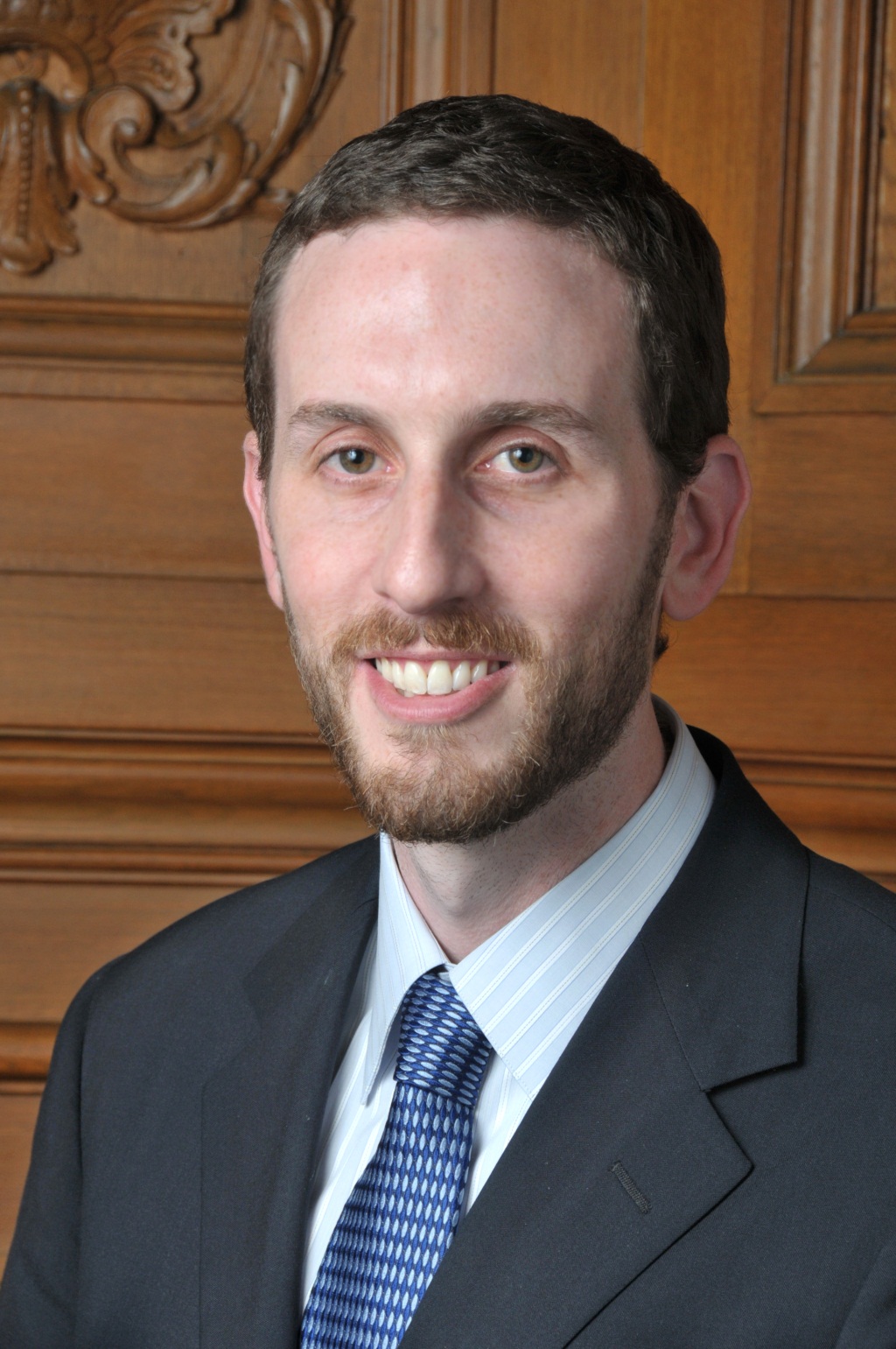
The condo-conversion legislation, co-sponsored by Sups. Scott Wiener and Mark Farrell, did not move forward that day. Instead, Board President David Chiu made a motion to table the discussion until Feb. 25, to provide time for “an intensive negotiation process.” Chiu, who rents his home, added: “While I myself would like to become a homeowner someday … I do not support the legislation in its current form.”

Sup. Jane Kim sought to appeal to the tenants as well as the TIC owners. “It’s very tragic that we have set up a situation where [TICs and renters] are pitted against one another,” she said. She hinted at what a possible alternative to might look like. “We should be looking at a ban of scale,” she said. “If we allow 1,800 potential units to go thru this year, are we willing to do a freeze for the next 8 to 10 years?”

It’s unclear what will happen in the next few weeks, but if this legislation makes it back to the full board in some form, the swing votes are expected to be Sups. London Breed, Malia Cohen and Norman Yee.

CASH OR EVICTION?

New protections were enacted following the late-90s frenzy to discourage real-estate speculators from using the Ellis Act to turn a profit on the backs of vulnerable seniors or disabled tenants. Yet a new wave of investors has discovered they can persuade tenants to leave voluntarily, simply by offering buyouts while simultaneously wielding the threat of an Ellis Act eviction. “The process got more sophisticated,” explains San Francisco Rent Board Deputy Director Robert Collins.

Once a tenant has accepted a check in lieu of eviction, rent-controlled units can be converted to market rate, or refurbished and sold as pricey condos, without the legal hindrances of an eviction blemish. Buyouts aren’t recorded with the Rent Board, and the agency has no real guidance for residents faced with this particular dilemma. “We don’t have the true number on buyouts,” says Mecca. “We don’t know how many people have left due to intimidation.”

Identity-wise, renters impacted by the Ellis Act defy categorization. A contingent of monolingual Chinese residents rallied outside City Hall recently to oppose legislation they believed would give rise to evictions; in the Mission, many targeted tenants are Latinos who primarily speak Spanish. From working immigrants, to aging queer activists, to disabled seniors, to idealists banding together in collective houses, the affected tenants do have one thing in common. When landlords or real-estate speculators perceive that their homes are more valuable unoccupied, their lives are susceptible to being upended by forces beyond their control.

The upshot of San Francisco’s affordability crisis is a cultural blow for a city traditionally regarded as tolerant, forward thinking, and progressive. In the words of Rose Eger, a musician who faces an Ellis Act eviction from her apartment of 19 years, “it changes the face of who San Francisco is.

Out of the Castro

By Tim Redmond

You can’t get much more Castro than Jeremy Mykaels. The 62-year old moved to the neighborhood in the early 1970s, fleeing raids at gay bars in Denver. He played in a rock band, worked at the old Jaguar Books, watched the rise of Harvey Milk, saw the neighborhood transform and made it his home.

He’s lived in a modest apartment on Noe Street for 17 years, and for the past 11 has been living with AIDS. Rent control has made it possible for Mykaels, who survives on disability payments, to remain in this city, in his community, close to the doctors at Davis Hospital who, he believes, have saved his life.

And now he’s going to have to leave.

In the spring of 2011, his longtime landlords sold the building to a real-estate investment group based in Union City — and the new owners immediately sought to get rid of all the tenants. Two renters fled, knowing what was coming; Mykaels stuck around. In September of 2012, he was served with an eviction notice, filed under the state’s Ellis Act.

He’s a senior, he’s disabled, his friends are mostly dead and his life is in his community — but none of that matters. The Ellis Act has no exceptions.

Mykaels spent a fair amount of his life savings fixing up his place. The walls are beige, decorated with nice art. Dickens the cat, who is chocolate brown but looks black, wanders in and out of the small bedroom. Mykaels has been happy there and never wanted to leave; “this,” he told me, “is where I thought I would live the rest of my life.”

There’s no place in the Castro, or even the rest of the city, where he can afford to move. Small studios start at $2,500 a month, which would eat up all of his income. There is, quite literally, nowhere left for him to go.

“A lot of my friends have died, or moved to Palm Springs,” he said. “But this is where my doctors are and where I’m comfortable. I’m not going to find a support system like this anywhere else in the world.”

Mykaels is the face of San Francisco, 2013, a resident who is not part of the mayor’s grand vision for bringing development and high-paying jobs into the city. As far as City Hall is concerned, he’s collateral damage, someone whose life will have to be upended in the name of progress.

But Mykaels isn’t going easily. The former web designer has created a site — ellishurtsseniors.org — that lists not only his address (460 Noe) and the names of the new owners (Cuong Mai, William H. Young and John H. Du) but the addresses of dozens of other properties that are facing Ellis Act evictions. His message to potential buyers: Boycott.

“Do not buy properties where seniors or the disabled have been evicted for profit by real estate speculators using the Ellis Act,” the website states.

Mykaels is a demon researcher — his site is a guide to 31 properties with 94 units where seniors or disabled people are being evicted under the Ellis Act. In some cases, individuals or couples are filing the eviction papers, but at least 14 properties are owned by corporations or trusts.

Mai told me that he knew a disabled senior was living in the building when he and his two partners bought it, but he said his plan all along was to evict all the tenants and turn the three-unit place into a single-family house. He said he hasn’t decided yet whether to sell building; “I might decide to live there myself.” (Of course, if he wanted to live there himself, he wouldn’t need the Ellis Act.)

Mai said he “felt bad about the whole situation,” and he had offered to buy Mykaels out. The offer, however, wouldn’t have covered more than a few months of market rent anyplace else in the Castro.

By law, Mykaels can stay in his apartment until September. If he can’t stave off the eviction by then, San Francisco will lose another longtime member of the city community.


Dark days in the Inner Sunset

By Rebecca Bowe

The living room in Rose and Willie Eger’s Inner Sunset apartment is where Rose composes her songs and Willie unwinds after playing baseball in Golden Gate Park. Faded Beatles memorabilia and 45 records adorn the walls, and a prominently displayed poster of Jimi Hendrix looms above a row of guitar cases and an expansive record collection.

It’s a little worn and drafty, but the couple has called this 10th Ave. apartment home for 19 years. Now their lives are about to change. On Jan. 5, all the tenants in their eight-unit building received notice that an Ellis Act eviction proceeding had been filed against them.

“The music that I do is about social and political things,” explains Rose, dressed from head-to-toe in hot pink with a gray braid swinging down her back. Determined to derive inspiration from this whole eviction nightmare, she’s composing a song that plays with the phrase “tenants-in-common.”

Cindy Huff, the Egers’ upstairs neighbor, says she began worrying about the prospect of eviction when the property changed hands last summer. Realtor Elba Borgen, described as a “serial evictor” in online news stories because she’s used the Ellis Act to clear several other properties, purchased the apartment building last August, through a limited liability corporation. The notice of eviction landed in the mailbox less than six months later. (Borgen did not return Guardian calls seeking comment.)

“With the [average] rent being three times what most of us pay, there’s no way we can stay in the city,” Huff says. “The only option we would have is to move out of San Francisco.” She retired last year following a 33-year stint with UCSF’s human resources department. Now, facing the prospect of moving when she and her partner are on fixed incomes, she’s scouring job listings for part-time work.

The initial notice stated that every tenant had to vacate within 120 days, but several residents are working with advocates from the Housing Rights Committee in hopes of qualifying for extensions. Huff and the Egers are all in their fifties, but some tenants are seniors—including a 90-year-old Cuban woman who lives with her daughter, and has Alzheimer’s disease.

Willie works two days a week, and Rose is doing her best to get by with earnings from musical gigs. Both originally from New York City, they’ve lived in the city 35 years. When they first moved to the Sunset, it resembled something more like a working-class neighborhood, where families could raise kids. The recent tech boom has ushered in a transformation, one that Rose believes “changes the face of who San Francisco is.” Willie doesn’t mince words about the mess this eviction has landed them in. “I call it ‘Scam-Francisco,'” he says.

The trio recently joined tenant advocates in visiting Sup. Norman Yee, their district supervisor, to tell their stories. Yee, who is expected to be one of the swing votes on an upcoming debate about condo-conversion legislation vehemently opposed by tenant activists, reportedly listened politely but didn’t say much.

As for what the next few months have in store for the Egers? “I can’t really visualize the outcome,” Rose says. “I can only visualize the day-to-day fight. And that’s scary.”


Fighting for a home in the Mission

By Tim Redmond

Eleven years ago, Olga Pizarro fell in love with Ocean Beach. A native of Peru who was living in Canada, she visited the Bay Area, saw the water and decided she would never leave.

Fast forward to today and she’s built a home in the Mission, renting a small room in a basement flat on Folsom Street. The 55-year-old has lived in the building for eight years; polio has left her wearing a leg brace and she can’t climb stairs very well, but she still rides her bike to work at the Golden Gate Regional Center. She’s a sociologist by training; the walls in her room are lined with bookshelves, with hundreds of books in Spanish and English.

The place isn’t fancy, and it needs work, but it’s hard to find a ground-floor apartment in the Mission that’s affordable on a nonprofit worker’s salary. Since 2011, when she moved in, she and her three housemates have been protected by rent control. And Pizarro’s been happy; “I love the neighborhood,” she told me.

The letter warning of a pending eviction arrived Jan. 16. A new owner of the building wants to turn the place into tenancies in common and is prepared to throw everyone out under the Ellis Act. There’s no place else in town for Pizarro to go.

“I’ve looked and looked,” she said. “The cheapest places are $2,500 a month or more. Maybe I’ll have to move out of the city.”

Pizarro’s building is owned by Wai Ahead, LLC, a San Francisco partnership registered to Carol Wai and Sean Lundy. I couldn’t reach Wai or Lundy, but their attorney, Robert Sheppard, had plenty to say. “San Francisco is going the way of New York,” he told me. “Manhattan is full of co-ops that used to be rentals, and lower-income people are moving to Brooklyn and Queens. That’s happening here with Oakland and further out.” He argued that TICs, like co-ops, provide home-ownership opportunities for former renters.

Sheppard, who for years represented tenants in eviction cases, said the Ellis Act is law, and America is a capitalist country, and “as long as there is a private housing market, there will be shifts of people as the housing market shifts.” He agreed that it’s not good for lower-income people to lose their homes, but “the poor will always be hurt by a changing economy. It’s called evolution.”

Pizarro told me she’s shocked at how expensive housing has become in the Mission. “It’s gotten so gentrified,” she said. “People show up in their BMWs. It’s starting to feel very isolated.”

She’s fighting the eviction. “I didn’t intend it to be this way,” she explained. “I just want to live here.” Lacking any family in the area, the Mission has become her community — “and I’m frustrated by the violence of how expensive it is.”


Affordability goes out of style

By Rebecca Bowe

Hester Michael is a fashion designer, and her home doubles as a project space for creating patterns, sewing custom clothing, weaving cloth, and painting. She’s lived in her Outer Sunset two-bedroom unit for almost two decades, but now she faces an Ellis Act eviction. Michael says she initially received notice last June. The timing was awful -– that same month, her husband passed away after a long battle with terminal illness.

“I’ve been here 25 years. My friends are here, and my business. I don’t know where else to go, or what else to do,” she says. “I just couldn’t picture myself anywhere else.”

Michael rents the upstairs unit of a split single-family home, a kind of residence that normally isn’t protected by rent control. Yet she leased the property in 1994, getting in under the wire before that exemption took effect. Since she pays below-market-rate rent in a home that could be sold vacant for top dollar, a target was essentially inscribed on her back when the property changed hands in 2004. That’s about when her long battle with the landlords began, she says.

From the get-go, her landlords indicated that she should look for a new place, Michael says, yet she chose to remain. The years that followed brought things falling into disrepair, she says, and a string of events that caused her feel intimidated and to fear eviction. Finally, she consulted with tenant advocates and hired an attorney. A complaint filed in superior court alleges that the property owners “harassed and retaliated [Michael] when she complained about the defective and dangerous conditions …telling [her] to move out of the property if she did not like the dangerous conditions thereat … repeatedly making improper entries into [the] property, and wrongfully accusing [her] of causing problems.”

Records show that Angela Ng serves as attorney in fact for the property owner, Ringo Chung Wai Lee. Steven Adair MacDonald, an attorney who represents both landlords and tenants in San Francisco housing disputes, represents the owners. “An owner of a single family home where the rent is controlled and a fraction of market has virtually no other choice but to terminate the tenancy,” MacDonald said when the Guardian reached him by phone. “They’ve got to empty it, and the only way to empty it is the Ellis Act.”

While Michael received an extension that allows her to remain until June 5, she fears her custom sewing business, Hester’s Designs, will suffer if she has to move. There’s the issue of space. “I have so much stuff in this house,” she says. And most of her clients are currently located close by, so she doesn’t know where her business would come from if she had to relocate. “A lot of my clients don’t have cars,” she says, “so if I live in some suburb in the East Bay, forget it. I’ll lose my business.”

The prospect of eviction has created a major dilemma for Michael, who first moved to San Francisco in 1987. While moving to the East Bay seems untenable, she says renting in San Francisco feels out of reach. “People are renting out small, tiny bedrooms for the same price as I pay here,” she says. With a wry laugh, she adds: “I don’t think there’s any vacant apartments in San Francisco -– unless you’re a tech dude and make seven grand a month.”

Trail to historic gay Boy Scouts vote started in the Bay Area

23

This Wednesday, the Boy Scouts of America’s (BSA) Executive Board will consider removing the controversial ban on gay members and allow each individual troop to adopt its own policy on gay scouts. The board publicly reaffirmed the anti-gay policy just last summer, but recent pressure from gay rights groups, corporate sponsors, and Bay Area troops has forced the governing body to revisit the blanket prohibition on gay members.  

Opposition to the Boy Scout’s ban first surfaced in Northern California in the late 1980s when Tim Curran, an Eagle Scout and aspiring scoutmaster, sued the Mount Diablo Boy Scout Council for discrimination after being denied the position. Curran took the suit to the Supreme Court and lost. The court’s landmark decision in Curran v. Mount Diablo Council of the Boy Scouts of America continues to provide the legal justification for the BSA’s anti-gay policies.

Since the ruling, the San Francisco Bay Area has emerged as a key battleground in the struggle for gay membership in the scouts. Local troops often clash with the national organization over the ban and many local scout leaders publicly denounce the policy as discriminatory and hateful.

In October, openly gay East Bay scout Ryan Andresen was denied his Eagle Scout badge by the Mt. Diablo-Silverado Council due to his sexual orientation. Although officials with the council voiced reservations about denying Andresen, they are bound by BSA national policy that has long maintained homosexuality is inconsistent with the scouts oath to be “morally straight.”  

Andresen’s father resigned his position as an assistant scoutmaster, and Andresen’s mother organized an online petition which collected nearly half a million signatures protesting her son’s expulsion. The incident is sparking a widespread public debate about the Scout’s discrimination policy. Andresen appeared on national TV, and his petition garnered high profile support from California politicians like Lt. Gov. Gavin Newsom and US Sen. Barbara Boxer.

Andresen’s national profile and the publicity surrounding his case inspired outrage among local scouts and adult leaders. Steve Tennant, committee chair of Palo Alto Troop 57, said the parents and volunteers in his troop felt compelled to act. “We were all outraged and we immediately started thinking about how we could go about changing this policy,” he told the Guardian.

The controversy quickly galvanized parents and scouts throughout the Bay Area to more openly challenge the gay ban. From San Francisco to Palo Alto, parents and scouts penned public letters of protest decrying the policy and and urging the local Mt. Diablo-Silverado Council to reconsider Andresen.

Parents in Tennant’s Troop 57, located just a few miles from Andresen’s troop, unanimously adopted a non-discrimination policy both to voice solidarity with Anderson and to avoid potential discrimination in their own troop.

“It was just a matter of time until a kid in our troop faced the same situation as Ryan. I would rather resign my position than kick a kid out of the Scouts for being gay,” Tennant, whose two sons are currently scouts, told the Guardian. “Seeing the reaction of our parents and seeing the support for Ryan convinced me personally to stay involved with the Scouts,” he added.  

Eagle Scouts from Andresen’s district also mobilized against the ban. Trevor Wallace, an Eagle Scout from the nearby Troop 57, helped to organize meetings to pressure the Mt. Diablo-Silverado Council to allow Andresen to earn his badge. “My troop has been completely outraged by what happened to Ryan,” Wallace told the Guardian. “I got my Eagle Scout badge the same time Ryan was supposed to get his… discriminating against him like this is old fashioned and wrong.”

Michael and Andrew Dotson, a father-son scoutmaster duo who lead San Francisco’s Troop 88, echoed the concerns of Wallace and Tennant. “I want the boys to feel safe and be able to be open,” Michael Dotson told the Guardian. “Troop 88 would be very accepting of gay members once the ban is removed. And I hope it is.”

Andrew Dotson, a recent Eagle Scout who now works as his father’s assistant scoutmaster also opposes the ban. Growing up in San Francisco, he encountered plenty of gay scouts. But because of the national policy, the boys in his troop had to stay formally in the closet or risk expulsion. “I just don’t think that’s right,” he told the Guardian. “Scouting should be open to everybody.

Andresen’s case and the outpouring of support from other Bay Area scouts drew the attention of Zack Wahls, founder of Scouts for Equality, a national organization founded last summer to pressure the BSA Executive Board d to revisit the gay-ban.  

Wahls credits Andresen and his supporters with providing the necessary grassroots pressure to potentially change the national policy.

“It’s important to remember that only seven months ago, the Scouts were adamant that this policy was not going to change,” Wahls told the Guardian. “What happened in those seven months was that we harnessed online tools and worked with people like Ryan to highlight the negative impact this ban has on the local level.”

Wahl and Boy Scouts for Equality also targeted corporations and sympathetic members of the BSA board.  Over the summer, board members Randall Stephenson, CEO of AT&T, and James Turley, CEO of Ernst & Young, announced publicly their opposition to the ban. Since September, several major corporate sponsors, including Intel and UPS, announced that they would rescind financial support for the BSA until the national organization lifted the ban.  

Ahead of the board meeting, BSA officials reiterated that lifting the ban would not force any individual troops to change their own membership policies. “The Boy Scouts would not, under any circumstances, dictate a position to units, members, or parents,” BSA spokesperson Deron Smith told the New York Times. “This would mean there would no longer be any national policy regarding sexual orientation.

For many scouts in the Bay Area, however, removing the national ban is just the beginning. The end goal is the adoption of a national non-discrimination policy. But given the Boy Scouts history of strident opposition to gay rights, reconsidering the ban is significant development. “I think a national policy will take time,” reflected Michael Dotson of Troop 88, “but this is a good first step.”


America’s new Progressive Era?

13

By Jeffrey D. Sachs
Jeffrey D. Sachs is Professor of Sustainable Development, Professor of Health Policy and Management, and Director of the Earth Institute at Columbia University. He is also Special Adviser to the United Nations Secretary-General on the Millennium Development Goals.

NEW YORK – In 1981, US President Ronald Reagan came to office famously declaring that, “Government is not the solution to our problem. Government is the problem.” Thirty-two years and four presidents later, Barack Obama’s recent inaugural address, with its ringing endorsement of a larger role for government in addressing America’s – and the world’s – most urgent challenges, looks like it may bring down the curtain on that era.

Reagan’s statement in 1981 was extraordinary. It signaled that America’s new president was less interested in using government to solve society’s problems than he was in cutting taxes, mainly for the benefit of the wealthy. More important, his presidency began a “revolution” from the political right – against the poor, the environment, and science and technology – that lasted for three decades, its tenets upheld, more or less, by all who followed him: George H. W. Bush, Bill Clinton, George W. Bush, and, in some respects, by Obama in his first term.

The “Reagan Revolution” had four main components: tax cuts for the rich; spending cuts on education, infrastructure, energy, climate change, and job training; massive growth in the defense budget; and economic deregulation, including privatization of core government functions, like operating military bases and prisons. Billed as a “free-market” revolution, because it promised to reduce the role of government, in practice it was the beginning of an assault on the middle class and the poor by wealthy special interests.

These special interests included Wall Street, Big Oil, the big health insurers, and arms manufacturers. They demanded tax cuts, and got them; they demanded a rollback of environmental protection, and got it; they demanded, and received, the right to attack unions; and they demanded lucrative government contracts, even for paramilitary operations, and got those, too.

For more than three decades, no one really challenged the consequences of turning political power over to the highest bidders. In the meantime, America went from being a middle-class society to one increasingly divided between rich and poor. CEOs who were once paid around 30 times what their average workers earned now make around 230 times that amount. Once a world leader in the fight against environmental degradation, America was the last major economy to acknowledge the reality of climate change. Financial deregulation enriched Wall Street, but ended up creating a global economic crisis through fraud, excessive risk-taking, incompetence, and insider dealing.

Maybe, just maybe, Obama’s recent address marks not only the end of this destructive agenda, but also the start of a new era. Indeed, he devoted almost the entire speech to the positive role of government in providing education, fighting climate change, rebuilding infrastructure, taking care of the poor and disabled, and generally investing in the future. It was the first inaugural address of its kind since Reagan turned America away from government in 1981.

If Obama’s speech turns out to mark the start of a new era of progressive politics in America, it would fit a pattern explored by one of America’s great historians, Arthur Schlesinger, Jr., who documented roughly 30-year intervals between periods of what he called “private interest” and “public purpose.”

In the late 1800’s, America had its Gilded Age, with the creation of large new industries by the era’s “robber barons” accompanied by massive inequality and corruption. The subsequent Progressive Era was followed by a temporary return to plutocracy in the 1920’s.

Then came the Great Depression, Franklin Roosevelt’s New Deal, and another 30 years of progressive politics, from the 1930’s to the 1960’s. The 1970’s were a transition period to the Age of Reagan – 30 years of conservative politics led by powerful corporate interests.

It is certainly time for a rebirth of public purpose and government leadership in the US to fight climate change, help the poor, promote sustainable technologies, and modernize America’s infrastructure. If America realizes these bold steps through purposeful public policies, as Obama outlined, the innovative science, new technology, and powerful demonstration effects that result will benefit countries around the world.

It is certainly too early to declare a new Progressive Era in America. Vested interests remain powerful, certainly in Congress – and even within the White House. These wealthy groups and individuals gave billions of dollars to the candidates in the recent election campaign, and they expect their contributions to yield benefits. Moreover, 30 years of tax cutting has left the US government without the financial resources needed to carry out effective programs in key areas such as the transition to low-carbon energy.

Still, Obama has wisely thrown down the gauntlet, calling for a new era of government activism. He is right to do so, because many of today’s crucial challenges – saving the planet from our own excesses; ensuring that technological advances benefit all members of society; and building the new infrastructure that we need nationally and globally for a sustainable future – demand collective solutions.

Implementation of public policy is just as important to good governance as the vision that underlies it. So the next task is to design wise, innovative, and cost-effective programs to address these challenges. Unfortunately, when it comes to bold and innovative programs to meet critical human needs, America is out of practice. It is time to begin anew, and Obama’s full-throated defense of a progressive vision points the US in the right direction.


Jeffrey D. Sachs is Professor of Sustainable Development, Professor of Health Policy and Management, and Director of the Earth Institute at Columbia University. He is also Special Adviser to the United Nations Secretary-General on the Millennium Development Goals.

Copyright: Project Syndicate, 2013.
www.project-syndicate.org

Condo conversion legislation on hold for now

Following a contentious five-hour hearing, a committee of the Board of Supervisors postponed voting on a controversial housing proposal, and agreed to revisit the issue on Feb. 25. Over the next few weeks, opposing sides are expected to negotiate a possible alternative.

Authored by Sups. Scott Wiener and Mark Farrell, the proposed condo conversion impact fee would have allowed as many as 2,000 tenancy-in-common (TIC) units to be immediately converted to condos for a fee, allowing owners to bypass a housing lottery system that places an annual cap on conversions.

While TIC owners voiced frustration about the backlogged lottery system, tenants expressed fears that the legislation could give rise to a wave of Ellis Act evictions if landlords or speculators interpreted it as a signal that lucrative condo conversion would be easier to achieve.

Prior to the hearing, a group of tenants gathered in front of City Hall in a show of opposition to the condo-conversion legislation, waving signs that read, “Stop the Attack on Rent Control.”

“The reality is, if this legislation passes, there will be more evictions in San Francisco,” said Tommi Avicolli Mecca of the Housing Rights Committee, who spoke at the rally.

Tenant advocates worry that the legislation would result in a permanent loss of affordable, rent-controlled units from the city’s housing stock, at a time when rents are soaring. When landlords rent out their condos or TICs in San Francisco, there’s a key difference: TICs are covered by rent control, but condos are exempt.

“I’ve been evicted three times,” one woman said while addressing members of the Land Use & Economic Development Committee. “I know so many people who have gotten evicted. I don’t know anyone who’s won their case against eviction.”

During the hearing, Farrell adopted a defensive tone against critics who’d described the proposal as an attack on rent control. “The tactics that these opponents have deployed is out of line,” he said. To assuage concerns, he noted that he and Wiener had included a provision guaranteeing lifetime leases for existing tenants in units that qualified for condo conversion under the program.

But Sup. Jane Kim drilled down on this detail, questioning whether such an agreement would be legally enforceable in the long run. In response, a representative from the City Attorney’s office said he thought the provision was on solid legal ground, but noted that the specific matter “has not been litigated before,” meaning there is still a question as to whether it could withstand a court challenge. When Kim asked if any funding was set aside to enforce these lifetime leases, the response was “no.”

Board President David Chiu proposed holding off on a vote for several weeks. “I do not support the legislation in its current form,” he said. If the current generation of TIC owners were allowed to convert this time, he explained, the next generation’s frustrations with the housing lottery would only “lead us back to an identical debate in a short period of time.”

Kim echoed this point. “My concern was that … folks were looking at this legislation as an ice-break for more condo conversion,” she said just after a public comment session that lasted several hours. And she acknowledged that there is a larger problem to consider. “It’s very tragic that we have set up a situation where [TICs and renters] are pitted against one another,” she said.

Norman Solomon: Dear progressives

21

A Letter I Wish Progressive Groups Would Send to Their Members

By Norman Solomon

Norman Solomon is co-founder of RootsAction.org and founding director of the Institute for Public Accuracy. He co-chairs the Healthcare Not Warfare campaign organized by Progressive Democrats of America. His books include “War Made Easy: How Presidents and Pundits Keep Spinning Us to Death.” He writes the Political Culture 2013 column. b3

Dear Progressives,

With President Obama’s second term underway and huge decisions looming on Capitol Hill, consider this statement from Howard Zinn: “When a social movement adopts the compromises of legislators, it has forgotten its role, which is to push and challenge the politicians, not to fall in meekly behind them.”

With so much at stake, we can’t afford to forget our role. For starters, it must include public clarity.

Let’s face it: despite often nice-sounding rhetoric from the president, this administration has continued with a wide range of policies antithetical to progressive values.

Corporate power, climate change and perpetual war are running amok while civil liberties and economic fairness take a beating. President Obama has even put Social Security and Medicare on the table for cuts.

Last fall, the vast majority of progressives voted for Obama to prevent the presidency from going to a Republican Party replete with racism, misogyny, anti-gay bigotry and xenophobia. Defeating the right wing was cause for celebration. And now is the time to fight for genuine progressive policies.

But let’s be real about our current situation. Obama has led the Democratic Party — including, at the end of the legislative day, almost every Democrat on Capitol Hill — deeper into an abyss of corporate-driven austerity, huge military outlays, normalization of civil-liberties abuses and absence of significant action on climate change. Leverage from the Oval Office is acting as a brake on many — in Congress and in progressive constituency groups — who would prefer to be moving legislation in a progressive direction.

Hopefully we’ve learned by now that progressive oratory is no substitute for progressive policies. The soaring rhetoric in Obama’s inaugural address this week offered inspiring words about a compassionate society where everyone is respected and we look out for each other. Unfortunately and routinely, the president’s lofty words have allowed him to slide by many progressives despite policies that often amount to a modern version of “social liberalism, fiscal conservatism.”

The New York Times headline over its front-page coverage, “Obama Offers a Liberal Vision in Inaugural Address,” served up the current presidential recipe: a spoonful of rhetorical sugar to help the worsening austerity go down. But no amount of verbal sweetness can make up for assorted policies aligned with Wall Street and the wealthy at the expense of the rest of us.

“At their inaugurals,” independent journalist I.F. Stone noted long ago, our presidents “make us the dupes of our hopes.”

Unlike four years ago, Obama has a presidential record — and its contrasts with Monday’s oratorical performance are stark. A president seeking minimally fair economic policies, for instance, would not compound the disaster of four years of Timothy Geithner as Secretary of the Treasury by replacing him with Jack Lew — arguably even more of a corporate flack.

On foreign policy, it was notably disingenuous for Obama to proclaim in his second inaugural speech that “enduring security and lasting peace do not require perpetual war” — minutes after completing a first term when his administration launched more than 20,000 air strikes, sharply escalated the use of weaponized drones and did so much else to make war perpetual.

Meanwhile, the media hype on the inaugural speech’s passage about climate change has lacked any indication that the White House is ready to push for steps commensurate with the magnitude of the real climate crisis.

The founder of the Sustainable Energy and Economy Network, Daphne Wysham, points out that the inaugural words “will be meaningless unless a) the Obama administration rejects the Keystone XL tar sands pipeline; b) Obama selects a new EPA administrator who is willing to take action under the Clean Air Act to rein in CO2 emissions from all sources; c) he stops pushing for dangerous energy development deep offshore in the Gulf, in the Arctic and via continued fracking for oil and gas; d) he pursues a renewable energy standard for the entire country; and e) he directs our publicly financed development banks and export credit agencies to get out of fossil fuels entirely.”

The leadership we need is certainly not coming from the White House or Congress. “A genuine leader is not a searcher for consensus but a molder of consensus,” Martin Luther King Jr. observed. The leadership we need has to come, first and foremost, from us.

Some members of Congress — maybe dozens — have shown commitment to a progressive agenda, and a larger number claim a progressive mantle. In any event, their role is not our role. They adhere to dotted lines that we should cross. They engage in Hill-speak euphemisms that we should bypass. Routinely, they decline to directly confront wrong-headed Obama administration policies. And we must confront those policies.

If certain members of Congress resent being pushed by progressives to challenge the White House, they lack an appreciation for the crucial potential of grassroots social movements. On the other hand, those in Congress who “get” progressive social change will appreciate our efforts to push them and their colleagues to stand progressive ground.

When we’re mere supplicants to members of Congress, the doors that open on Capitol Hill won’t lead very much of anywhere. Superficial “access” has scant impact. The kind of empowered access we need will come from mobilizing grassroots power.

We need to show that we’ll back up members of Congress who are intrepid for our values — and we can defeat others, including self-described “progressives,” who aren’t. Building electoral muscle should be part of building a progressive movement.

We’re in this for the long haul, but we’re not willing to mimic the verbiage or echo the silences from members of Congress who fail to challenge egregious realities of this administration’s policies. As Howard Zinn said, our role is to challenge, not fall in line.

Norman Solomon is co-founder of RootsAction.org and founding director of the Institute for Public Accuracy.  He co-chairs the Healthcare Not Warfare campaign organized by Progressive Democrats of America. His books include “War Made Easy: How Presidents and Pundits Keep Spinning Us to Death.” He writes the Political Culture 2013 column. b3


________________________________________


Why Mission Bay isn’t a train wreck

55

Now that the city planning director is comparing neighborhood activists to war mongers and meanies, it’s worth a moment to look back at how the city wound up with what the Chron is now calling a vibrant success of a medical-tech development at Mission Bay.

That site used to be a Southern Pacific railroad yard, but in the early 1980s, the old robber barons realized that a lot of their property had more value as real estate than as railroads. So SP decided to develop Mission Bay, eventually spinning off Catellus Corp. as the developer. The first plan was a disaster, a mix of highrise office buildings, hotels and a little bit of housing. Then-Mayor Art Agnos got it toned down a little, but the proposal he and Catellus put forward in the late 1980s was still a mess — more office space than housing, nowhere near enough in the way of community amenities, something an old-school builder with no concern for public process might have gotten away with in another city, but it wasn’t going to fly here. Of course, Catellus and the mayor both argued that this was the best deal the city could possibly get; more housing or different uses just wouldn’t pencil out.

Those same darn crazy activists that the planning director hates forced a public vote on the plan — and it was overwhelmingly rejected.The next day, Catellus came back to the table — and offered dramatic improvements in housing and amenities. In the end, UC decided to move into the site, building what I consider a hideously ugly campus with not a single decent piece of architecture — but without giant highrises and with at least some open space and community facilities. There’s actually a chance that this could become a viable neighborhood — thanks not to the developer, the mayor, or city planning, but to meddlesome neighborhood people.

Funny how that works.


Proposal to raze I-280 linked to train and real estate deals

61

It’s a bold idea, discussed for years behind closed doors and recently announced in a strangely understated and pro-growth way: Tear down the last mile of Interstate 280 and replace it with an wide boulevard – reminiscent of the removal of the Central and Embarcadero freeways – in order to facilitate the extension of electrified Caltrain and high-speed rail tracks into the Transbay Terminal.

For almost three years, city planners have been discussing the idea and drawing up closely guarded plans to tear down the freeway, discussions sparked by the state’s Environmental Impact Reports on electrifying the Caltrain tracks and bringing high-speed trains into town. With an increasing number of trains traveling those tracks, access to the rapidly growing Mission Bay area from the west on 16th Street would turn into a traffic nightmare, either with long waits for an at-grade train crossing or the creation of ugly and uninviting underpasses for cars and bikes.

Mayor Ed Lee and other top politicians have long sought to bring those trains downtown in Transbay Terminal through a still-unfunded tunnel, rather than having them stop at the existing Caltrain station at 4th and King streets. But the existence of the I-280 pilings made it structurally impossible to send the train underground before it got to 16th street.

So the idea was raised to raze the elevated 280 freeway and better integrate Mission Bay and the Potrero Hill/Showplace Square area, where Kaiser plans to build a huge new medical facility, creating a bike- and pedestrian-friendly corridor without the shadow of an antiquated freeway overhead.

“If you get the freeway out of the way, it’s a ton of space,” said Greg Riessen, the city planner who developed and studied the idea. “The whole corridor of the freeway is blocking the ability to do anything else.”

But it wasn’t until the political class and their capitalist partners also realized the enormous development potential of the idea – raising money that could be used to fund the train tunnel – that it was finally floated as a public trial balloon for the first time this week. The Chron’s Matier & Ross led their Sunday column with a short item on the idea, apparently tipped off to its quiet debut a couple weeks earlier.

The city’s Transportation Policy Director Gillian Gillett unveiled the idea in a Jan. 7 letter to the Municipal Transportation Commission, repeating it Jan. 10 at a forum on high-speed rail held at the San Francisco Planning and Urban Research Association. The letter was a response to the MTC’s request for information on “San Francisco’s policy goals and objectives regarding the much-needed electrification of Caltrain.”

Yet rather than deal directly with that issue, the letter said the answer “must be broadened to address the need for growth in the downtown and South of Market areas,” which it said requires funding to bring the trains into Transbay Terminal and to then let developers have at the 21 acres of land surrounding the existing Caltrain station, where transportation officials planned to store the trains.

“We need to create a faster and cheaper DTX [Downtown Extension project] alignment, realize the full value of the 4th & King Streets Railyard site, and eliminate the intrusiveness of I-280 in Mission Bay by terminating it at 16th Street and replacing it with a boulevard, based on the lessons learned from the removal of the Embarcadero Freeway to create a new Rincon Hill neighborhood, and the Central Freeway to create the new Market-Octavia neighborhood. Reenvisioning Caltrain electrification and the DTX could increase ridership, reduce costs considerably and create additional real estate value that would, in turn, provide for both more jobs to create revenue for both Caltrain and DTX and attract investment,” Gillett wrote.

She calls current plans to electrify Caltrain “shortsighted because it reduces the City’s ability to meet its regional job growth allocations, because more than 20 acres are covered with trains, and it eliminates an important opportunity to create real estate value which can be used to fund transit and Caltrain investments,” she wrote.

The letter doesn’t address where the increasing number of trains coming into San Francisco would be stored if the railyard is turned into luxury condos and commercial spaces, which has long been a goal of SPUR and other pro-development cheerleaders. High-speed rail officials have suggested Brisbane, but sources say city officials there have balked at the idea. Although Gillett hasn’t returned our calls with follow-up questions, the Mayor’s Office seems to see such logistical questions as secondary to this cash-cow idea.

So a staff-level proposal to solve a transportation challenge with an elegant multi-modal solution that follows in the city’s tradition of tearing down freeways has morphed into a real estate deal. Quentin Kopp, the father of high-speed rail in California, has already derided the Transbay Terminal project (which is funded by the sale of state land surrounding the site to office tower developers) as little more than a real estate deal, and now the city is apparently seeking to extend that deal further into Mission Bay.

Former Mayor Art Agnos, who worked on both the Embarcadero and Central freeway tear-downs, told us, “In general, I really support the concept of demolishing freeways that bisect the city.”

Yet he said there are many key details and questions that need to be addressed, particularly given the Mayor’s Office support for the new Warriors arena on the Central Waterfront, a project whose unaddressed traffic impacts would be exacerbated by an intensification of development at the Caltrain station, into Mission Bay, and further south.

“It could drown the city, this tsunami of cars, particularly with all the development planned all the way down to Hunters Point,” Agnos said. “I like the idea, but we need a serious discussion of the details, particularly with all these development proposals.”


Planning director insults neighborhood activists

153

John Rahaim, the director of city planning, is the featured speaker at a SPUR forum Jan. 29, and he’s got a very special title for his talk. It’s called “The Meanies and the War Mongers: Recent planning lessons from SF.” Here’s the description:

Land use planning in San Francisco is sometimes called a blood sport. John Rahaim, planning director, will discuss the last five years of planning in San Francisco during his tenure, and why that phrase is too weak. Rahaim will look at the accomplishments of planning in the city, the impacts from the last decade of neighborhood plans and the lessons from the war that will guide the Planning Department into the next decade.

Holy shit: Sounds to me like this guy, who gets very well compensated off the taxpayers’ dime, has just directly insulted generations of activists who have fought some really dumb development ideas and made this a more livable city. “War mongers?” “Meanies?”Is that the term he uses for people who try to get involved in the planning process? Here’s what he told me:

The purpose of the title was to be provocative.  I find it curious that you would make that assumption.  For now I will say that in my experience in SF, there are people on all sides of the development debates who would fit these descriptions.  Other than that, I invite you to the talk.

Okay, provocative is good, but seriously: He’s sounding as if these aren’t real issues that affect people’s lives, that land-use planning isn’t central to what we are as a city, and that people who don’t just shut up and go along with what he wants are troublemakers. Or as former Sup. Aaron Peskin, who has spent years as a neighborhood activists, notes: “He doesn’t want to admit that the best planning in this city is done by those neighborhood organizations and those activists who
challenge and shape literally every piece of planning that comes out of his office.”

Rahaim is supposed to be the guy who balances the various interest groups and tries to create acceptable solutions. “Whoever he’s referring to, it’s demeaning and unprofessional,” Peskin notes.

You can show up and ask Mr. Rahaim what he was talking about Tuesday, Jan. 29 at 6pm at the SPUR Center, 654 Mission. It’s free for SPUR members and costs $10 for everyone else. Worth every penny of it.


The battle of Brotherhood Way

24

Brotherhood Way is a creature of another era. Tucked between the San Francisco Golf Club and ParkMerced, it was long known as Stanley Way. But in 1958, under Mayor George Christopher, the city, which owned all of the land on the south side of the street, turned that property over to a long list of religious institutions and renamed the street to reflect its role as a place for houses of worship. It’s now home to six churches or synagogues and nine religious schools. It has its own (religious) neighborhood association.

And this quiet little corner of the city has been the scene of a pitched battle over a plan to build 182 housing units on an empty patch of land on the north side of the street.

Opponents of the project say the area was set aside for educational and religious uses, not housing — and they argue that the expansion of ParkMerced will add too much congestion to the area. Supporters say the west side of town needs to acept more housing and more density.

It’s gotten ugly: At one point, the Archbishop himself ordered the pastor of St. Thomas More Catholic Church to quit agitating against the development. Sean Elsbernd, who represented the district for eight years, infuriated neighbors when he supported the project, and later apologized for his insensitivity to their concerns.

And seven years after the Planning Commission and the supervisors gave the project a green light, it still hasn’t broken ground.
Now the developers are ready to go — and the churches, aided by retired Judge Quentin Kopp, are trying once again to shut it down.

Kopp’s been arguing for some time now that the project needs to go back for a new permit because too much time has passed and nothing has happened. But he’s got another argument, too, and he brought it to the Board of Appeals Jan. 9. See, the original deal had a problem with transit access, since there isn’t enough Muni capacity along Brotherhood to handle 300 or so new residents. So the developer agreed to build two pedestrian walkways from the project up to Font Blvd. in Park Merced. But according to Kopp’s appeal, ParkMerced management never agreed to the easements that would be necessary to build a path through its property.

Instead, in 2008, Zoning Administrator Larry Badiner unilaterally changed the requirement, allowing for one footpath to the edge of Park Merced — with some vague agreement that later there might be an extension to the Muni stop. That, Kopp argues, should have triggered a new Conditional Use application and a new hearing. Oh, and in the meantime, ParkMerced has just moved to greatly expand the size of its complex, so maybe that should be considered, too.

The Board of Appeals rejected Kopp’s arguments, but he’s petitioning for a rehearing, in part because the board chair wasn’t present for meeting. Kopp argues that this is a quasi-judicial board — “and you don’t go before the Supreme Court with only eight of the nine members present.” Under city rules, though, four out of five is a quorum and able to hear the matter.

Kopp has another argument, too — one that’s unusual, perhaps unique: He claims none of the board members actually read his original appeal brief.

Kopp, see, asked during the hearing if all of the members had read the papers he submitted, and none of them responded affirmatively. “It is appearent and inferable that no members of the short-handed Board of Appeals had read Appelants’ brief before the hearing, or at all,” the motion for rehearing states. “The manifest failure of the four members present to real Appellants’ carefully-prepared brief constitute extraordinary circumstances and injustice.”

I’ve been able to reach two of the board members, Frank Fung and Darryl Honda, and both insist they read the brief. “I read every case in its entirely,” Fung said, “and so does everyone on this panel.” Honda, who is new to the board, also said he read the documents. “I bust out the highlighter pen and go through all of the briefs in every case,” he said.

So why didn’t they answer Kopp’s question? Well, Fung says, it took them all by surprise: “I don’t think any one has every asked that before.”

I’ll let you know if the petition for rehearing is accepted.

Sea-level rise and development in SF

25

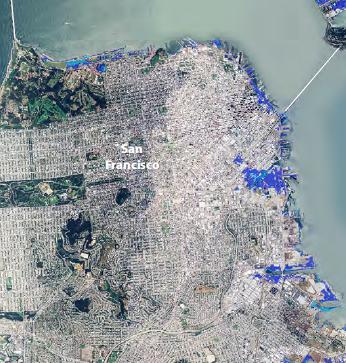
It’s good the Chronicle is taking on climate chance and sea-level rise. It’s good that Carolyn Lochhead is writing about the reality that storms like Hurricane Sandy are part of our future and that all types of coastal development are now at risk. It’s scary:

Naval bases, power plants, ports, highways – trillions of dollars of investment – sit on U.S. coasts because it once made sense to put them there. As people flocked to the shores, tiny beach towns became cities. Congress is hardly maintaining roads and bridges; its appetite for giant new sea walls around New York Harbor has yet to be tested. “You may be able to have the government rebuild New Orleans, and maybe you could have the government rebuild from Sandy,” said John Englander, author of “High Tide on Main Street,” a book on how rising seas will affect the coasts. “But as sea level rises and reclaims shoreline all around the United States and all over the world, governments can’t afford to reimburse that. It’s not just Miami, it’s Charleston, it’s downtown Seattle, it’s Sacramento, it’s every coastal city and city on rivers.”

 Oh yes — and it’s San Francisco, where sea-level rise doesn’t seem to be an issue in the city’s plan for massive real-estate development on the waterfront.

 The Chron has a map of what the Bay Area might look like after a two-foot increase in sea levels and a six-foot increase. It looks like this.

Of course, it might be okay because we can build super-tech levee that will create artificial waterfalls and protect us all from living on islands.

(You could argue that climate change isn’t about new technology, but that would be no fun — and would require actual political leadership.)

Anyway, here’s the problem with the Chron’s map: It makes San Francisco look just fine. The entire city is in white, safe from that pesky inundation that will ruin lesser parts of the bay.

Thing is, the Bay Conservation and Development Commission has spent a ton of time on sea-level rise, and has its own map, that’s a bit more accurate, or at least more detailed — and that shows some major-league problems for this city.

Check out the areas in blue: It’s most of the northen and eastern waterfront. That includes not only Mission Bay, where the city is pinning its hopes for a biotech boom, but also the site of the Warriors Arena, 8 Washington, and 75 Howard. In other words, the plan to make the waterfront into a heavily developed entertainment and residential neighborhood isn’t going to work for very long — unless everyone gives up his or her car and buys a boat. Or unless we, the taxpayers of San Francisco, spend billions protecting all this development that doesn’t make sense in the first place.

Oh, Treasure Island’s going to be a much smaller island, too.

It’s entirely possible — and likely — that state, federal, and local tax money will go to protect some essential, vulnerable coastal areas. It makes no sense to try to move both the San Francisco and Oakland airports; we’re going to build barriers to protect them. But how are we going to protect an arena that’s built out over the water when the water starts to lap up to the doors? Who’s paying for that?

The Chron has done a good job asking the questions at the national level — but, just as we so often see with economic inequality and tax policy, nobody wants to bring the message home.

The inauguration and the economic divide

112

Second inaugration speeches are hard; you have to be political without sounding partisan, inspiring without being divisive — and promise change and progress even if you haven’t accomplished what you wanted in the first term. The Obama address surprised me: He went left, making clear that he wants economic and social equality to be his final legacy. It’s getting rave reviews in the lib-blogosphere, where it’s been described as the speech liberals have been begging him to give for years. You can’t argue with the content — he mentions gay rights, global climate change, equal pay, protecting social security, economic inequality, the need for collective effort … he even talks about reforming the tax code.

So now comes the hard part: The struggle for economic justice has to go beyond a compromise plan that limits higher tax rates to people earning more than $400,000 a year.

In fact, the best thing I read this weekend was a NY Times piece by Nobel-Prize-winning economist Joseph Stiglitz, who argues forcefully that continued economic inequality is prolonging the recession. It’s also destroying the nation’s future:

Our skyrocketing inequality — so contrary to our meritocratic ideal of America as a place where anyone with hard work and talent can “make it” — means that those who are born to parents of limited means are likely never to live up to their potential. Children in other rich countries like Canada, France, Germany and Sweden have a better chance of doing better than their parents did than American kids have. More than a fifth of our children live in poverty — the second worst of all the advanced economies, putting us behind countries like Bulgaria, Latvia and Greece. Our society is squandering its most valuable resource: our young.

Stiglitz says what few in Washington want to admit: We can’t get the economy going again without rebuilding the middle class, and we can’t do that without higher taxes on the rich and a lot more public investment in education. Oh, and all this talk of how it’s out of our control is bullshit:

There are all kinds of excuses for inequality. Some say it’s beyond our control, pointing to market forces like globalization, trade liberalization, the technological revolution, the “rise of the rest.” Others assert that doing anything about it would make us all worse off, by stifling our already sputtering economic engine. These are self-serving, ignorant falsehoods. Market forces don’t exist in a vacuum — we shape them. Other countries, like fast-growing Brazil, have shaped them in ways that have lowered inequality while creating more opportunity and higher growth. Countries far poorer than ours have decided that all young people should have access to food, education and health care so they can fulfill their aspirations.

Makes me think about some of what I hear out of San Francisco City Hall. Oh, we can’t do anything about economic inequality; that’s a national issue. Or maybe it’s a state issue. I bet there’s not an elected official in town today who woudn’t proclaim complete agreement with everything Obama just said — and there are very few of them who are trying to bring that message back home.

In San Francisco, we give tax breaks for businesses that create high-end jobs that drive poor people out of town. We happily seek development without considering the impact it will have on existing vulnerable populations. We even struggle over free Muni for low-income youth. We do nothing — nothing — to reclaim wealth from the 1 percent and put it into local housing, public education, and job-training that could make a dent in our local economic inequality.

Mr. Mayor: Are you even paying attention?


The (bad) Warriors deal, by the numbers

36

Rudy Nothenberg, who ran Muni and the city’s water system, was chief administrative officer, negotiated the deal for the Giants ballpark, and served under six San Francisco mayors, stopped by the office last week to talk to us about the Warriors Arena. We’ve had our fights with Nothenberg (as we would with anyone who was that close to Willie Brown and Dianne Feinstein) but the guy knows more about City Hall, public works, private development, and infrastructure finance than almost anyone alive. So we were happy to hear what he had to say.

Let’s be clear, here: Nothenberg lives near where the arena is slated to be built, and, as he was quick to tell us, he doesn’t want it in his backyard. But he also presented a compelling case that San Francisco is getting ripped off. And he had a few pointed things to say about the lack of negotiating skills among the members of Mayor Ed Lee’s administration.

Back when Nothenberg was talking to the Giants about a stadium at Third and King — at that point a district of dilapidated and underused warehouses — always kept a card in his back pocket. “I always knew that if things didn’t work out and we didn’t build the stadium, that would be okay too,” he said. In other words: You can’t get a good deal if you’re not prepared to walk away. And when it comes to the Warriors proposal, the mayor has made it so clear that this is his legacy that the team knows the city will never walk away. So one side of the talks can demand pretty much anything, and the other side has no leverage.

Oh, and it doesn’t hurt that just about every development lawyer, political consultant, and lobbyist in town is already working on the project. “They have co-opted everyone,” Nothenberg — no stranger to the dark side of politics — told us.

The exact terms of the deal are still not public, which is a bit odd since the city has already started its environmental review. (Can you really do an environmental impact report on a project when you don’t know what the project actually is? Two difference state courts have come to opposite conclusions, so for now the answer is: maybe.)

But there’s enough information out there for Nothenberg to give us a basic rundown on the financing — and it doesn’t look good. “The Port is really not getting anything out of the deal,” he said. The city will get some increased sales and business taxes, and the Warriors will have to pay housing and transit fees. But there won’t be a lot of new property tax revenue, since that will all go to pay for the arena.

Here’s how Nothenberg laid out his analysis:

The Warriors have to spend $120 million to replace Piers 30-32. (Costs a lot to build such a huge structure over the water.) To make the team whole, the city will sell the Warriors a seawall lot on the other side of the Embarcadero for $30 million, then give the $30 million right back to the team. Then the city will set up an Infrastructure Finance District — the 2013 equivalent of a redevelopment agency — use the future tax increments to fund a $50 million bond. The Warriors get the bond money; the city pays it back. Oh, and then the city gives the team $30 million worth of rent credits, meaning the Warriors will probably never pay any rent at all for the use of that public property. And to make it sweeter, San Francisco will pay the Warriors 13 percent interest on the rent-credit money.

Meanwhile, the local taxpayers will have to come up with a huge amount of money to increase Muni capacity, since the existing transit can’t possibly handle the load of the new arena. Yes, the Warriors, like any developer, will have to pay a modest transit impact fee — “but it’s laughable to thing that this will ever cover the capital and operating costs,” Nothenberg said.

To summarize: The wealthy owners of a professional sports team will get free waterfront land to build an immensely valuable new arena. The city will pay to bring the fans there and get them home, deal with the traffic impacts — and get almost nothing in return.

Good one, Mr. Mayor.

LAnce Armstrong and the SF financier

1

According to the Chron, the owner of the bicycle team that employed Lance Armstrong has been subpoenaed as part of the federal investigation into Lance Armstrong’s alleged doping. (Why is this a federal issue? Um, because some US Attorney wants to make headlines. And because the US Postal Service, which sponsored the team, was involved.)

Thomas Weisel, a legend of Silicon Valley, hasn’t said much publicly about the whole situation, although the Center for Investigative Reporting cites a lawsuit suggesting that he knew at least something nasty:

According to the Center for Investigative Reporting, testimony in an earlier arbitration case involving a dispute over Armstrong’s bonuses suggest Weisel was made aware by team members and doctors of doping concerns on three occasions, beginning in 1996 (before Armstrong joined the USPS team), all to no avail. After publicly expressing concerns about Armstrong in 2001, former team member Greg LeMond said he was told by Weisel, according to the arbitration documents, “What you’re saying about Lance isn’t good for you. You be careful.”

But Weisel was happy to talk to the San Francisco Business Times, which just posted a summary or an earlier interview. You have to be a subscriber to read the whole thing (and you know what? I pay for a subscription every year because there’s stuff in the BT that you never see anywhere else, particularly if you’re watching development issues). Here the gist:

Wiesel denies everything.

“I never had one discussion with one coach or one rider about doping,” he said. “And to my knowledge, the guys that were running my program – Mark Gorski (Postal general manager) and (operations director) Dan Osipow – they did not either. People say ‘Jesus, you had to know this was going on because everyone was doing it,’” Weisel said. “That’s not true. I never thought it was. I don’t think many cycling teams were deploying that practice. And we certainly had part of our rider contract where if a person tested positive, they were off the team. We were very explicit there.”

Okay then.

Bicycling is a lot more harsh than baseball — Barry Bonds might not get into the Hall of Fame (although if he does, so should Pete Rose), but he hasn’t been stripped of any of his batting titles and nobody’s talking about changing his stats. It all reminds me of a friend who played for the University of Miami back in the 1980s, when Suntan U won national football titles. “Everyone juiced,” he told me. “Everyone. You want to play, you juice. You want to get the the NFL, you juice.”

Cheating — except that everyone was doing it. Horribly unhealthy, but so is playing football at that level. When the rewards are so high, and the competition so intense, and winning is all that matters, people cheat. (See: Wall Street, where Weisel plays. See: Corporate America.)

Lance Armstrong is reportedly worth about $100 million. Bonds, about the same. Would they do it the same way again — or retire in a more relative obscurity with a lot less money?

And why are those the choices?


New steps

0

arts@sfbg.com

THEATER/DANCE Choreographer Mary Armentrout’s itinerant, site-specific performance installation, reveries and elegies, passed through CounterPULSE last weekend. A post-solstice meditation on dislocation and flux, it was also the harbinger of a striking new season at the SOMA performance incubator. In fact, reveries and elegies, true to its theme of displacement, can be considered the odd one out among programming whose defining structure is the duet.

A broad range of interpretation and subversion of that basic form comprises CounterPULSE’s Queer Series, running January through March and showcasing new work from artists as diverse and far-flung as New York’s Faye Driscoll, the Minneapolis-based BodyCartography Project, San Francisco’s Annie Danger, Berlin-based American Jeremy Wade, and conjoined local choreographic dynamo Jarry (aka Jesse Hewit and Laura Arrington).

If you’ve followed the vicissitudes of programming at CounterPULSE even intermittently, a glance at this year’s calendar prompts a double take for the careful concentration of work and the thematic consistency it evinces, in addition to its impressive international lineup. The rigorous queering of the duet structure underlined by the series, for instance, comes further elaborated through complimentary work like DavEnd’s well-received 2012 debut, F.A.G.G.O.T.S.: the Musical! (which turns on a duet of sorts with a wall mirror) as well as some rich auxiliary events.

The latter include a talk on gender by Judith Butler (on February 16) and, on February 28 (the eve of Danger’s genuflection to sexual healing and empowerment, The Great Church of the Holy Fuck), a screening of Community Action Center (2010), the aesthetically and politically astute, 69-minute, queer, trans, women-centered celebration/subversion of 1970s porn by A.K. Burns and A.L. Steiner. (That program includes a post-screening Q&A with Steiner, whose film was recently acquired by the Museum of Modern Art).

The duet form (and the act of reimagining it) is an apt metaphor for the programming model behind the season too, which represents something of a departure from business as usual.

CounterPULSE’s Julie Phelps, central in the development of the season and currently serving as interim artistic and executive director for Jessica Robinson Love (who is on sabbatical), explained that the Queer Series and the season as a whole had emerged from some serious rethinking at the organizational level.

“We were sort of primed to embark on this new season, which [comes directly] after our strategic planning process, where we really identified who we are, how we do what we do, and what limits we still have on our impact.”

Phelps says one limit they identified was a single-minded commitment to the bottom line that was keeping certain kinds of work almost permanently out of reach — for example, much work by touring artists from out of the state or country, for which there is relatively little foundational money available for tapping.

“We’re actually, financially, a very conservative organization,” says Phelps, “which has brought with it a lot of stability — very important especially in the young years of an organization, but ultimately stopping us from taking risk on vision. We were always on a break-even model. Either it needs to be some mix of foundation support or some other kind of funding with some tickets sales. The bottom line always has to equal zero. So we’ve been pushing ourselves to think bigger about the types of risks that we can take.”

That’s far from inviting recklessness, Phelps stresses, but it does mean modifying notions of financial success and failure, bringing them in line with an artistic spirit of experimentation and what might be thought of as the useful flop.

“Actually, failure is just as valid a result as success,” says Phelps. “When we had been building failure out of every income model we had, we’d also been building out risk from some of the artistic selections, and from the way we were making artistic selections. We’ve really only just recently moved into curating in the first place. Before we were like, we have a space, if you want to do a show, come ask us and we’ll work it out. [In this] season, every artist was someone we approached and worked with, found out ways that they could intersect with CounterPULSE, what was financially viable for us and for them, what was artistically interesting for us and for them — actually build something from the inside out, instead of the outside in.”

Despite the considerate design in the program, Phelps calls it more art than science and insists it’s all “still a very organic process,” noting that the queer label is at least partly one of sheer convenience.

“I mean, ‘queer’ is basically the only banner that you could fly over that season, and only because it is so indistinct — because actually each of these works is hugely different. So there’s still a patchwork element to it, but it’s a little bit more deliberate [than usual],” she explains, laughing at the metaphor carrying her away. “At least the patches were picked out, and the fabric was cut to shape before they were added to the quilt this time.” *

www.counterpulse.org


Chiu’s committee assignments keep the moderates in charge

42

A week after engineering his unanimous re-election to an unprecedented third consecutive term as president of the Board of Supervisors, David Chiu today announced his assignments to board committees, placing fiscal conservatives into two of the most powerful posts and making himself a key swing vote on the Land Use Committee.

“I believe these committee assignments reflect a balanced approach and the diverse interests and talent of the supervisors,” Chiu said just after 4pm during the Roll Call portion of today’s meeting.

But some progressive activists were immediately grousing about some of the selections, which seem to reflect Chiu’s neoliberal approach to governance, preventing progressives from doing much to challenge development interests or the appointment of Establishment insiders to city commissions.

The Land Use Committee is perhaps the most powerful and impactful, particularly as the Warriors arena and other controversial waterfront developments and the CPMC hospital deal come to the board. Scott Wiener – a moderate who is already perhaps the most prolific supervisor – gains far more power as he is named to chair that committee. It is balanced out by Chiu and Sup. Jane Kim, both of whom have some progressive impulses on land use issues but also personal ambitions and a penchant for cutting deals. Developers have to be happy about this lineup.

Sup. Mark Farrell was named chair of the Budget Committee, succeeding Sup. Carmen Chu – a pair that are indisputably the most conservative supervisors on the board. While progressive Sups. Eric Mar and John Avalos will help balance out the permanent committee, their influence will be offset by the temporary members added during budget season: Sups. London Breed and Wiener.

That roster essentially puts Breed in the swing vote role, which should immediately give her some clout. Chiu’s defenders note that Budget’s balance of power is essentially status quo (with Breed now in the same swing vote role that Sup. Malia Cohen played) – and that the committee’s work last year was supported by labor and business interests alike.

Chiu is proposing to combine the Public Safety and City Operations & Neighborhood Services committees, naming Sup. David Campos as chair, Mar as vice-chair, and new Sup. Norman Yee as its third member. Yee, who nominated Chiu for president last week, was also rewarded with a chair on the Rules Committee – controlling appointments, it arguably the board’s third most influential committee after Land Use and Budget – with that committee filled out by Breed and Sup. Malia Cohen.

Speculation that Cohen and Kim would be rewarded for withdrawing their nominations as president before the vote last week don’t seem to have materialized in these appointments. Cohen was also named to the Government Operations Committee, along with Campos, which Sup. Carmen Chu will chair. That doesn’t give Cohen, who told us that she wanted to be on Land Use, much power.

Similarly, Kim was named chair of the City & School District Committee – nice, but not exactly a political launching pad – and Kim’s only real power on Land Use will come when Chiu is opposing some project, as he did with the controversial 8 Washington project that Kim and seven of her colleagues supported.

Aaron Peskin, Chiu’s predecessor as board president, said that he vaguely saw some semblance of Chiu’s claimed strategy of having conservative committee chairs balanced out by liberal majorities (although even that depends on how you define your terms). Yet Peskin questions that approach, and sees committees unlikely to really gel around good decisions or policies.

“It’s a recipe for dysfunction,” Peskin told us. “But it certainly will be fun to watch.”

The Chamber of Commerce becomes even more irrelevant

19

It’s been years since anyone really took the San Francisco Chamber of Commerce seriously as a political force. The verdict from the techies came in long ago; they do their own thing with their own money. Small business never got much out of the Chamber, and most of those folks have their own organizations. Even the big-business agenda was taken over for a while by the Commitee on JOBS. Then there’s SFSOS, Plan C and a bunch of other pro-business and anti-regulation groups. Rose Pak and her allies have their own Chamber of Commerce. You rarely hear anyone at City Hall worried about what the Old Chamber says or is doing.

Steve Falk, the current director, has softened the Chamber’s image a bit and tried to be somewhat diplomatic. But now this organization is about to go backwards.

If what Matier and Ross report is accurate, a former City Hall aide, former failed candidate for supervisor, and current director of the Golden Gate Restaurant Association may be the new chamber director. Rob Black seems to have a line at the top job after Wade Rose, an executive with Catholic Healthcare West, dropped out of the running:

We’re told some of the chamber’s big dogs – like the brokerage house Charles Schwab and Pacific Gas and Electric Co. – weren’t all that enamored of the soft-glove approach that Rose was promising to bring to his dealings with the San Francisco Board of Supervisors.

That jobes with what I’ve been hearing from local politicos, who’ve been saying that there were two candidates for the job — one very good and one very bad. Looks like the very good candidate (good by Chamber standards, anyway) is gone.

I don’t know Rose, but I do know that even this more moderate board of supes isn’t likely to take direction from what many see as an antidiluvean organization, a moribund old white men’s club with a ridiculous out-of-date agenda. Putting a person in charge who actually sought to build bridges (and who, by the way, might not have gone all-out for the new CPMC hospital) might have edged the Chamber back toward some sort of relevance.

But no: If Black gets the job, prepare for the Chamber to stick to its old ways, whine about everything the board does that’s even remotely progressive, issue report cards that nobody cares about — and waste its members dues. Great move.


Discord at City College as accreditation cliff nears

48

More than 300 City College of San Francisco (CCSF) faculty and supporters protested their chancellor’s “state of the school” address at CCSF’s Diego Rivera Theater on Friday (Jan.11) morning as the clock continues to tick down to March 15 — when the community college accrediting commission will decide the future of City College.

Teachers and administrators are now battling over the right way to meet the challenge of staying accredited. The administrators are trying desperately to “cut the fat,” and the teachers contend the baby is being thrown out with the bathwater.

As we’ve reported previously, CCSF’s new divide is over the use of the $14 million a year generated by the parcel tax voters created through Proposition A in November. The school’s administration still wants faculty to take an 8.8 percent pay cut, and already has over 70 faculty and staff “not being rehired” next semester. The school plans to use the money to shore up their fiscal reserves, one of the many sticking points the accrediting commission wanted them to adhere to in order to stay accredited and open.

The teachers see it differently. They volunteered and worked long hours, rallying and passing out flyers about Prop. A for months leading up to the election, with little to no financial support from administrators and the college’s Board of Trustees. They contend that Prop A’s language, which you can read online, specifically outlines that the money should be used to prevent layoffs — which the school has decided to do anyway.

The teachers, understandably, are upset.

“A lot of our teachers work really hard, and this is a slap in the face, frankly,” Greg Keech, the English as Second Language Department chair, said to faculty the day of the rally, outside the college’s Diego Rivera Theater.

The theater houses a giant, elaborate fresco, Diego Rivera’s World War II era mural “Pan-American Unity,” which depicts the 1940s working class laboring toward a common goal, a stark contrast to the college’s divisions. As the cries of the marchers echoed from just outside the door, CCSF’s chancellor Thelma Scott-Skillman stood at the theater’s main stage defending City College’s faculty pay cuts and recent layoffs.

“Over the years, CCSF has managed to serve far more students than they had resources available, a very laudable goal,” Scott-Skillman said to her audience of mostly faculty and staff. “However, harsher austerity measures unfortunately are being implemented to address this imbalance.”

The San Francisco Chronicle seems to think Scott-Skillman has a point, writing an editorial siding with the administration. If the Chronicle and the college’s leadership had their way, the teachers would just shut-up and take their medicine.

“I think the protest today was an unproductive response to a house that’s burning down,” Steve Ngo, the newly re-elected college trustee, told us. “We’re trying to put out the fire, and [faculty] are arguing about the drapes.”

But teachers have good reason to be worried. When a commission with the power to close your school holds a gun to your head and essentially says, “You have one year to implement drastic reforms at your college that will last years, or we’ll close you down,” yeah, of course teachers are going to be worried about the lasting affects on their careers and their students.

Some of those changes are happening already, teachers told us.

“People without academic expertise, who don’t know the field, will lead the departments,” said Kristina Whalen, the director of the speech department at CCSF. “Academic reorganization will have automotive and child development under the same dean — those fields aren’t related.”

The previous model had teachers elected from within their own departments who represented those departments, leading to at least 60 department chairs at CCSF. The college has since consolidated those positions, and is moving to hire a smaller number of deans to handle the same jobs. Faculty who have worked under deans at other colleges didn’t have many kind things to say about the experience.

“I’ve worked at other schools where you reported to a dean,” art teacher Andrew Leone told us as rally-goers marched and yelled behind around him. He’s worked at San Francisco State University, and USF, among other schools, he said.  “The dean has so many responsibilities, there’s no way they can deal with them all.”

The chairpersons at City College were more efficient at taking care of teachers’ needs, he said. Now, “they’re giving us a top down corporate model. They’re turning us into Wal-mart.”

Meanwhile, the tally of concessions made to keep the college open keeps piling up. More than 160 teachers have left the school due to retirement and attrition without being replaced, and more than 50 faculty members and 30 staff have been reported as being let go so far, according to data from the teacher’s union, AFT 2121. The union won’t know the full number of faculty not rehired until early March, and the total amount of “not rehired teachers,” can be hard to track. Additionally, three school sites, Castro, Presidio and Fort Mason, will close soon.

Despite the drastic measures being taken, Interim-Chancellor Scott-Skillman made the case that arguing about them is a moot point.

“This college represents a promise to the surrounding communities that this is a place of quality and opportunity to acquire higher education, “Scott-Skillman said. “Reality check:  unfortunately, we can no longer keep that promise for everyone.”

Trustee Ngo took it a step further, saying that the protest could hurt the school’s chances at keeping its accreditation, especially in light of CCSF asking the state for an extension to the March 15 deadline for accreditation.

“These protests are hurting our chance for an extension,” Ngo said. “If [the accrediting commission] sees protests of our interim chancellor, they’ll think that, chances are, these people aren’t ready for change.”

Ngo could be right. Notably, the accreditation commission’s evaluation report of the college, which is the guiding document of what the college has to fix, called out the school’s divisions: “Despite the unified commitment to the college mission, there exists a veil of distrust among the governance groups that manifests itself as an indirect resistance to board and administrative decision-making authority.”

Beyond just the teachers, at least one person was happy to see the protest. CCSF student Kitty Lui , 26, is a a few units shy of transferring to San Francisco State, and sees the cuts at City College as a threat to her education, she said.

“We need good jobs, especially here in SF, so we’re not living paycheck to paycheck,” Lui said. “It’s inspiring to see so many teachers here — it gives me hope.”

Feds downgrade troubled Housing Authority

9

The federal government has declared the San Francisco Housing Authority a “troubled” agency and dispatched agents to review the agency’s finances and management failures.

The team of experts from the Department of Housing and Urban Development arrived Jan. 7 and has begun poring over the SFHA’s books.

The federal decision came in an October 31 letter to the city’s Housing Authority Board, with a copy to Mayor Ed Lee.

“The Board of Commissioners of the San Francisco Housing Authority should take immediate action to identify the sources of the performance deficiencies and develop and implement a plan to recover” at an “acceptable level of performance,” wrote HUD in its letter.

The troubled ranking is further bad news for Executive Director Henry Alvarez, who was hired in 2008 to help steady the agency’s management. He has since faced allegations of mistreatment and discrimination by some of his top staff, including the agency’s lawyer. He is the target of three lawsuits by his staff.

In addition to the “troubled” status for public housing, SFHA already faced stepped up monitoring if its Section 8 program that provides rental assistance for program participants in privately owned units. The agency scored zero points in its section 8 program because it failed to submit its report.

San Francisco’s “troubled” status was due to low scores for management of the agency and its finances. On financials, SFHA scored five points out of a possible 30, and on management it scored 12 points out of a possible 25. On physical conditions, SFHA squeaked above the cut-off with 27 out of 40 points. The agency’s total score was 54 out of a possible 100.

The score was a drop from score of 75 the prior year. The SFHA explains the change as new scoring criteria by HUD. The looming issue is the lack of effective management at the agency’s top level.

The arrival of a HUD team this week for a week-long examination of the Housing Authority will produce a plan for the agency to correct its management and financial practices with a set of deadlines and specific actions. Failure to implement the plan can bring new consequences with even tighter oversight.

“HUD is at SFHA offices starting today,” said Bill Ford, SFHA attorney speaking for the agency on Monday. “They are reviewing the situation related to the Troubled status. That’s why they are here. They will help develop a plan to pull the agency out of Troubled status.”

The agency had managed to stay off the troubled list — a designation for those scoring under 60 out of 100 points–for the previous two years. A troubled status can make San Francisco ineligible to compete for special funding beyond what it receives by formula.

HUD scoring lags by several months after the agency’s year-end as local officials and federal officials go through appeals and responses before settling on a final outcome. The current troubled status is for the SFHA year that ended September 30, 2011.

SFHA scores for the year ending September 30, 2012 are tentatively estimated also to be in the troubled category or possibly a point or two higher to earn it a “substandard” ranking. Those results are expected shortly to be followed by additional appeals and reviews.

Some one out of 10 San Francisco households receive some form of federal housing aid, not including those who benefit from lower mortgage interest rates under FHA and other federal homeownership mortgage programs.

SFHA earned high marks in the credit market for its HOPESF program that aims to replace decrepit public housing and expand the number if units. That process involves to outside managers to develop and operate and does not rely on SFHA management.

Do we need more luxury condos?

0

There’s no shortage of high-end housing in San Francisco. If you can afford to pay $6,000 a month for your rent or mortgage, you’re going to find a nice place to live. And there’s no study anywhere in any corner of the City Planning Department suggesting that current San Francisco residents really want new luxury condos downtown.

In fact, all evidence suggests the contrary — the market for high-end downtown housing is new residents, people who are moving here to take tech jobs, empty nesters moving from the suburbs, or world travelers looking for a pied-a-terre in one of the greatest cities on Earth.

But when the City Planning Department analyzes a project like 75 Howard, that’s not part of the discussion.

The Dec. 12 preliminary environmental study on the “market-rate” (read: $1 million and up for waterfront views) project never addresses the question of what value this type of housing would bring to the city. Instead, it talks about projections from the Association of Bay Area Governments, which says that San Francisco will grow by 52,000 households by 2030.

So a project that’s creating fewer than 200 housing units, and creating a net of 77 jobs, isn’t big enough to be a factor in the future of either jobs or housing.

But in the process, the study makes a remarkable statement, one that underlines everything wrong with city planning policy. Buried on page 48 of a 151-page preliminary study is the following: “In addition, the demand for housing by the net increase in number of employees would be more than offset by the dwelling units that would be constructed on site under the proposed project or its variants.”

That sounds like bureaucratise, and it is, so allow me to translate: The project will create 186 housing units and 77 jobs. More housing than jobs; what’s there to worry about?

Well: The 77 employees at 75 Howard will work in the restaurants and stores, or in the garage under the building, or in maintenance. Not one of them will make even remotely enough money to afford to buy one of the condo units in the building.

So the project — like so much of the development that happens in San Francisco — will create jobs for people who can’t afford to live here, and housing for people who don’t currently work here. That imbalance is utterly unsustainable, spells disaster for the future of the city — and is pretty much hard-wired into current planning and housing policy.