Hear from female innovators in media 111 Minna, SF. Event open to those 21 and older. 6pm drinks, 7pm presentations, free. Facebook: Her Girl Friday. Her Girl Friday, a Brooklyn-based group that produces events with concrete takeaways for women in journalism, hosts four dynamic speakers: Ann Friedman, former executive editor of GOOD magazine; Martina Castro, co-founder of Radio Ambulante, a new podcast which aims to tell the compelling and diverse stories of Latin America in Spanish; Katy Newton, a multimedia journalist, and Mimi Chakarova, a photographer and filmmaker covering global issues examining conflict, corruption and the sex trade. Music by DJ Mirissa Neff.
FRIDAY 8
Forum: Fight coal exports in the west 518 Valencia, SF. Escobar.jack@gmail.com. 6:30-9:30pm, $5-20 sliding scale. Across the Northwest, a coalition of environmentalists and landowners have come together to fight back and stop the development of Big Coal’s vital infrastructure. This forum and fundraiser for the Coal Export Action will include a report-back and panel on Western coal exports, video screenings, snacks and booze. Hosted by Rising Tide North America.
TUESDAY 12
Meeting: Transgender month of action LGBT Center, 1800 Market Street, SF. tinyurl.com/trans312. 7pm, free. Throughout March, organizations including Pride at Work, the SEIU Lavender Caucus, the National Center for Transgender Equality, and the Transgender Law Center will partner in asking unions, labor councils and state federations to pledge to bargain for trans-inclusive health benefits, and to sign a Trans Health Benefits Bargaining pledge form. This event, co-sponsored by the Harvey Milk LGBT Democratic Club, the Trans March, TGSF, and SEIU 1021 Lavender Caucus, will feature a host of speakers and elected representatives who will all come together to discuss trans health benefits.
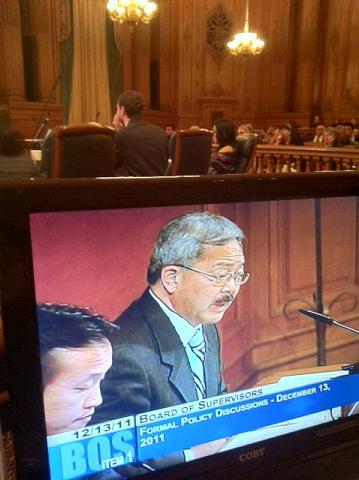
When Mayor Ed Lee came to the Board of Supervisors for his monthly “question time” appearance Feb. 12, Sup. David Chiu tried to get some sense of where the mayor stood on a controversial piece of legislation that would allow more condominium conversions.
Chiu explained the complexities and implications of an issue where the two sides have dug in and appear to have little common ground, and he asked the mayor for some guidance.
“What is your position on this pending legislation?” he asked. “What protections would you support to prevent the loss of rent-controlled housing in our increasingly unaffordable city? How would you address the concern that if we allow the current generation of tenancy in common owners to convert, we will replace then with a new generation of TIC owners and additional real estate investments that will lead us right back to an identical debate within a short time?”
But if Chiu and other board members were looking for leadership, direction or a clue of where the mayor might stand, they didn’t get it. Lee said he understood both sides of the issue and hoped they could reach a consensus solution — without offering any hints what they might look like or how to achieve it. “I can’t say that I have a magic solution to this issue that will make everyone happy,” the city’s chief executive explained.
Asked by the Guardian afterward why he didn’t take a position and whether he might be more specific about how he’d like to see this conflict resolved, he replied, “I actually did take a position, even though it didn’t sound like it, because I actually believe they have good points on both sides.”
That’s a typical answer for a mayor who rose to power preaching the virtues of civility and compromise and striving to replace political conflict with consensus. But now several major, seemingly intractable issues are facing the city — and insiders say Lee’s refusal to take a strong stand is undermining any chance for successful.
The lack of mayoral leadership has been maddening to both sides involved in the negotiations over the condo-conversion legislation. Tenant advocates say the mayor’s waffling hardened the positions on both sides and emboldened the group Plan C and its allies in the real estate industry to reject the compromises offered by supervisors and tenant advocates.
“It’s very unhelpful,” San Francisco Tenants Union head Ted Gullicksen said of Lee’s refusal to take a stand. “Someone needs to kick the realtors in the butt, and that’s not happening. They have no impetus at all to compromise.”
Then there’s the case of California Pacific Medical Center’s proposed new hospital, a billion-dollar project that would transform the Cathedral Hill neighborhood and have lasting impacts on health care in San Francisco.
The mayor’s eagerness to get the deal done — even if it wasn’t the best deal for the city — led to a proposal that fell apart last year under scrutiny by the Board of Supervisors. That project has now been in mediation for months — and sources tell us they’re getting close to a deal that has little resemblance to the anything offered by the Mayor’s Office.
California Nurses Association Director of Public Policy Michael Lighty, who has been involved with the CPMC negotiations, said Lee’s unwillingness to take a strong and clear stand, or to help mediate the dispute once the deal blew up, is why this negotiation has been so difficult and protracted.
“If he had engaged stakeholders and the supervisors, we wouldn’t have had to go to the brink last summer,” he said. “You’ve got to have clear objectives and be willing to fight for those, and that means saying no…If you’re willing to accept any deal and just put political spin on it, this is what you get.”
ADMINISTRATOR-IN-CHIEF
Neither Lighty nor others involved in the CPMC negotiations would discuss details of the pending deal, as per the instructions of mediator Lou Giraudo. But they did talk to the Guardian about the political shortcomings that led to such a protracted mediation process on a project that has been in the works for many years and involving a looming state deadline to replace the seismically unsafe St. Luke’s Hospital.
Lighty called Lee’s conciliatory approach to CPMC “an administrative orientation and not a political one,” noting that what worked during Lee’s long career as a city administrator may not be working well now that he’s in the Mayor’s Office dealing with issues where consensus isn’t always possible.
“I don’t think it’s a very sophisticated view and I don’t think it’s one that produces the best results,” Lighty said.
Lighty did say the negotiations were getting close to resolution. “What comes before the board is going to be vastly superior to what the mayor and CPMC proposed,” he said. “I think what you’ll find whenever this comes out is it will repudiate the mayor’s approach.”
He contrasted Lee’s style to that of his predecessor, Gavin Newsom, who took positions on most controversial issues and would often get involved with forcing his allies to cut deals. For example, shortly after taking office on 2004, Newsom demanded that his allies in the hospitality industry end their lockout of hotel workers, and when they refused he turned on them and even famously joined workers on the picket line, pressuring the hotels to soon end the lockout.
“Why did you need to bring in an outside mediator for CPMC? Why didn’t the mayor do that?” Lighty asked, noting that Lee has stayed away from the current negotiations.
Ken Rich from the Mayor’s Office of Economic and Workforce Development has been in those meetings but didn’t return our call. Mayoral Press Secretary Christine Falvey has also ignored repeated messages seeking comment on the issues raised in this story.
Rudy Nothenberg, who negotiated big deals on behalf of five successive mayors before Lee and who has been critical of the Warriors Arena deal that the Mayor’s Office has negotiated, said Lee’s unwillingness to take strong stands with developers is hurting the city.
“I was able to say I’m going to get the best deal I can for the city,” Nothenberg told us, saying he approached all negotiations, including the construction of AT&T Park, with the understanding from the mayors he worked for that he could simply say no to bad deals. “You need to bargain for the city as if these guys walked away, well, then that’s okay too.”
Sup. David Campos, who has been trying to get CPMC to strengthen its commitment to keeping St. Luke’s open as a full-service hospital, agreed that, “There have to be times when you’re willing to say no.” And on the CPMC project, Campos said that fell to the supervisors when the Mayor’s Office wasn’t willing to. “It was clear that the board was not going to approve it,” Campos said, “and sometimes you have to do that to get to a result you can live with,”
UCSF Political Science Professor Corey Cook said the problem is less with Lee’s overall philosophy than with what is strategically smart on individual issues.
“The mayor’s strength is in trying to come up with consensus measures,” Cook told us, calling the approach “generally a good one” and saying “the decider isn’t always who you want, then you get George W. [Bush].” Yet Cook also said intractable problems like the condo conversion debate may require a different approach. “Sometimes you do need to stake out clear ground to limit the terms of the debate.”
CHIU’S CENTRAL ROLE
Chiu has at least been willing to put his energies behind his belief in compromise, taking an active role in the CPMC and condo negotiations, as well as complicated current negotiations involving how to legalize but limit Airbnb’s shared housing business in San Francisco, which involves landlord-tenant-neighbor dynamics, regulation of private leases, and complex land use and taxation issues.
“It’s been a very long month. I’ve been going around the clock on several challenging negotiations,” Chiu told the Guardian. “The most important things to work on are often the ones that are the most difficult to get done.”
Chiu was reluctant to discuss the negotiations, calling it a sensitive moment for each of them. But he did admit that he was disappointed in Lee’s non-answer to his publicly posed question. “I had hoped for a little more direction,” Chiu said. And while these negotiations haven’t shaken his faith in compromise, he did say, “It depends on the substance of the issue whether there are common ground solutions that are superior to two warring sides.”
But all involved in the condo debate say it appears we’ll be stuck with the latter. “The two sides are so far apart that I don’t know what a compromise that both sides would live with would even look like,” Campos said. “There are certain issues where I don’t think compromise or consensus is possible.”
On this one, tenant advocates are trying to protect a finite supply of rent-controlled housing and real estate interests want to convert that same housing into condos. “If the issue was just existing TIC owners, we would come to an agreement,” Gullicksen said. “But clearly the agenda of Plan C and the realtors is they just want more condos.”
Plan C board member Kat Anderson told us, “I have a simple approach to this: Home ownership is important to me.”
She was undeterred by arguments that thousands of new condos are now being built in San Francisco, but there’s a steadily dwindling number of rent-controlled apartments in a city where two-thirds of San Franciscans are renters.
Anderson made it clear that she wants to not only allow the backlog of condo applicants to be approved, but she doesn’t want to slow the flow of condo conversions for a few years thereafter or place TICs themselves under the cap, compromises offered by Gullicksen. “The worry is that if you change the system, it will never come back and we’ll lose our tiny toehold of 200 units [that the lottery allows to be converted to condos annually],” Anderson said. And so we end up with the very thing Lee sought to avoid: a big, nasty, divisive public fight that will probably end up being decided by big money and deceptive campaign mailers rather than a civil, deliberative political process. And the mayor has nobody to blame but himself.
Aireez Taylor, a 15-year-old Mission High School student and a resident of the Alice Griffith public housing project in Bayview, was shot seven times on Dec. 29.
It happened around 6:30 p.m. She was with several friends at a house just a few blocks from her home in Alice Griffith, also known as Double Rock. They were standing on the porch talking, her mother, Marissa, told the Guardian. Then two men armed with guns hopped out of a parked car. One of Aireez’s friends, a 17-year-old boy who lived at the house with his family, saw them coming. He ran for the door and was shot once in the foot. Aireez, fleeing after him, was shot seven times.
Residents of Alice Griffith interviewed by the Guardian described an intensification in the violent crime at and around their community in recent months. Several attributed the violence to a conflict between African American and Samoan gang members. Whatever the cause, the shooting of a 15-year-old girl stands as evidence of the ongoing danger in San Francisco’s public housing developments. Aireez’s father, Roger Blalark, said that his daughter wasn’t the intended target of the shooting. She was in the wrong place at the wrong time, he said.
But for Aireez, who survived the attack, the wrong place at the wrong time is her home in Alice Griffith. Her parents have applied for emergency relocation with the San Francisco Housing Authority, but after two months—and amid the recent scandal surrounding Director Henry Alvarez and federal reports that have rated the agency as one of the worst in California—they are still waiting for the agency to locate and repair a unit in a new housing development. In the meantime, Roger and Marissa continue to fear for their daughter’s life. “What if they find the guy and ask her to testify?” asked Roger.
Aireez made a steady recovery from the gunshot wounds inflicted upon her in the December attack. But the trauma of the event has not been as easily healed. She spent three weeks at San Francisco General Hospital. During that time, an unknown intruder tried to snap a photo of her as she lay in her hospital bed, Roger said. Later, a man claiming to be her father came to inquire about her, while Roger himself was at her bedside.
A police officer met with Roger and Marissa on the Monday following the attack. Aireez reportedly had not seen the shooters. An investigation is underway, though no arrests have been made and the police have no suspects, according to SFPD spokesperson Gordon Shyy.
The journey home from the hospital was a return to the place where she had nearly been killed, a community where the shooters presumably were still at large. “She gets shakes, every time she comes home,” said Roger. “She has to come by the corner where she got shot.”
SFPD Bayview District Captain Robert O’Sullivan said that relocation is an important part of protecting the victims of violent crimes. Ultimately, the choice to relocate a tenant rests with the Housing Authority. “There needs to be an assessment done when something like a shooting occurs in public housing,” said O’Sullivan. Alice Griffith, he pointed out, has a significant number of people in a relatively small space.
“It’s always something that is in the front of people’s mind, anyone that has a stake in this, in investigating or assisting—is this going to be a risk for this person or their family in continuing to stay here?” O’Sullivan said.
Marissa and Roger applied for an emergency transfer on Jan. 2. There was paperwork to fill out, then the Housing Authority had to search for a vacant unit that could accommodate a family of their size. Housing Authority spokesperson Rose Marie Dennis said that she could not give out confidential information regarding specific tenants, but confirmed that the majority of the Housing Authority’s holdings are studios, one-, or two-bedroom apartments.
Roger and Marissa needed something bigger. A unit that could accommodate their family was finally located in another housing development by the third week of January. Marissa was initially told that the unit would be ready in two weeks. But two weeks turned into five, and now six, and Marissa still doesn’t know the status of the unit or when it will be ready for move in.
Dennis told us the Housing Authority tries to accommodate all requests for relocation, and prioritizes tenants with emergencies. Victims of a violent crime that request a transfer are moved as soon as possible, she said. But the process of relocating a victim is often hindered by a variety of factors, including Housing Authority’s ability to allocate resources toward fixing up vacant units. The length of the wait is a matter of resources and cooperation between all the parties involved in preparing the new unit. Once a suitable place has been found, teams of custodians and craftsmen and women must work to clear, clean, and repair the unit. Preparing a unit for move in costs on average $12,000, she said.
The problem is not that there aren’t empty units. According to Dennis, vacant housing stock is in a constant state of flux, with the current occupancy rate estimated to be 96.3 percent. Since the Housing Authority manages a total of 6,476 units over 45 development projects, that would indicate that as many as 240 units now lie empty. Dennis said that some units are kept vacant by the Housing Authority for a variety of reasons, while many others are only made available as the agency finishes the repairs and renovations necessary to make the units livable by the U.S. Department of Housing and Urban Development’s (HUD) strict standards.
Roger and Marissa’s experiences would appear to dovetail with recent media scrutiny that suggests the Housing Authority has reached a critical state of dysfunction. The agency made the U.S. Department of Housing and Urban Development’s list of troubled agencies after it received a 54 out of 100 on their latest evaluation. Scandal has dogged the agency’s leadership—three lawsuits alleging discrimination and retaliation were recently filed against Alvarez, who was also accused in a lawsuit of steering contracts to political allies. And it’s long-term capital outlook is looking increasingly bleak, as buildings accumulate decades of wear and tear and infrastructure becomes obsolescent. Stuck with a federal budget that remains constant, the Housing Authority is put in the position of maintaining outdated infrastructure that would, in the long run, be more cost effective to replace, said Dennis.
But Dennis nevertheless assured the Guardian that the agency addresses emergencies as quickly as possible—irrespective of larger, structural financial deficits. “We get bogged down in anecdotes that aren’t reflective of what’s ahead of us,” said Dennis. “We don’t have time for politics, that really doesn’t add up to positive change.”
So what is positive change for the residents of San Francisco’s public housing? With Alvarez on leave, Mayor Ed Lee has stated his intention to revamp the agency’s leadership and has appointed five new commissioners to oversee the city’s public housing. “Being on a constant treadmill of troubled lists and repair backlogs that are structurally underfunded is not working for our residents or our City,” Lee said in a press release.
Lee spoke of a “better model” through HOPE SF, a massive redevelopment plan that began under former Mayor Gavin Newsom and which hinges on public-private partnerships. Alice Griffith is one among several sites that is being rebuilt as part of HOPE SF, with construction scheduled to begin in 2014. The plan is to create mixed-income neighborhoods where 256 new affordable rental units are interspersed in a larger community of market-rate homes.
But in the meantime, the day-to-day reality of the violence and dysfunction faced by tenants continues. “It’s not about tearing down the projects, you got to revitalize what’s already here,” said Roger.
Roger knows that a relocation won’t necessarily solve their problems. He worries about the persisting presence of gang members at the new housing development, about the fact that he will be trying to protect his family in a community that he is much less familiar with. At Alice Griffith, Roger has connections within the community. He helps direct the Run, Ball & Learn Program, which provides basketball and tutoring programs for community youth. So they wait.
“They’re gonna have their own process,” says Marissa. “In the meantime we’re still sitting here.”
The massive development projects being proposed along San Francisco’s central waterfront – from the proposed Warriors Arena at Pier 30 through the Giants’ housing/retail project at Pier 48 down to Forest City’s sprawling proposal around Pier 70 – will create huge challenges for the city’s already overtaxed transportation system.
Nobody is more aware of that issue than Warriors President Rick Welts as he seeks approval to build a 17,500-seat arena with just a smattering of parking spaces. “We’re investing a billion dollars in this property, and if people aren’t comfortable getting to it and leaving it, we have a problem,” Welts told a gathering of the California Music and Culture Association on Tuesday night, responding to a local resident who raised the concern. “We have to get that right, it’s at the top of our list.”
With Muni and BART already at capacity during peak hours, and thousands of new housing units being built in the coming years both along the waterfront and from nearby SoMa down through the Eastern Neighborhoods Plan area, city transportation planners are trying to get ahead of potential problems created by the development boom.
“We’re now taking a step back and looking at the long-term needs from the Exploratorium down to Pier 70,” says San Francisco Municipal Transportation Agency planner Peter Albert, who is leading a comprehensive waterfront transportation study that will inform the environmental studies done for each of these projects. “What we get is an environmental review that is much smarter because we have all this advanced planning….EIRs are important, but they aren’t really planning.”
Albert is looking at everything from working with various transportation agencies to beef up bus, train, and ferry services to the area; using these projects to complete the ambitious but underfunded and long-stalled Blue-Greenway bicycle path along the waterfront; accelerating capital projects that are already in the SFMTA’s queue; and exploring a dozen or so new ideas.
“What’s also coming out of this are new ideas we’re coming up with, things we weren’t even thinking of that may make sense,” Albert told us, noting that he’ll be doing his first presentation of some of these ideas to the SFMTA Board of Directors on March 5.
They include extending new streetcar service along the Embarcadero to the Caltrain station at 4th and King or possibly all the way out to the Anchor Steam Brewing-anchored project at Pier 48 (which would probably involve construction of new streetcar turn-arounds); better integrating the Central Subway project into Mission Bay and the Embarcadero with new bus and rail connections around 20th and 3rd streets; and expansion of the Embarcadero BART station to increase its peak capacity.
Welts said BART will be an important connector to the new Warriors Arena, noting that the walking distance from Pier 30 to the Embarcadero station is actually about the same distance as the Coliseum BART station is from the entrance to the Warriors’ current arena. He said that he’s excited about Albert’s work and wants to cooperate with helping the city meet its transportation needs: “We have a lot of process to go through and we’re embracing that process.”
Funding the needed improvements will be a challenge, particularly because new development projects generally don’t pay for their full impacts to the transportation system, as SFMTA head Ed Reiskin and Sup. Scott Wiener have told the Guardian. On Monday, Wiener amended the Western SoMa Community Plan to increase how much developers would pay in transportation impact fees.
Albert said funding for the needed improvements to the area’s transportation system would come from a combination of mitigation fees from the developers, reprioritizing the SFMTA’s existing capital budget, and securing state and federal transportation grants by developing impactful projects that are shovel-ready, thanks to this advanced planning effort.
These three waterfront development projects alone could have huge impacts. The Warriors Arena would host more than 200 concerts and sporting events per year, drawing anywhere from a few thousand to more than 17,500 people. The Giants’ Pier 48 proposal involves 27 acres of new development, including retail, office, Anchor Brewing, and about 1,500 homes. And Forest City’s proposal for Pier 70 involves about 1,000 homes, 2.2 million square feet of office space, and 275,000 square feet of retail and light manufacturing.
Addressing the waterfront’s transportation challenges, Board of Supervisors President David Chiu told the Guardian, “It is possibly the most difficult and important question surrounding the Warriors project, and I’ve encouraged all parties to make sure they get it right.”
Chuck Nevius is big into gentrification these days. He thinks it’s a dandy thing and “no longer a dirty word,” says the even longtime residents of the Mission love it, and has a nice photo of a person walking in Dogpatch, where two really cool dive bars just shut down — thanks to the gentrication that’s such a great thing.
Nevius quotes Randy Shaw, who has a bizarre statement:
In the ’70s and ’80s there was massive displacement of residents in the Haight, Noe Valley and the Castro,” says Randy Shaw, executive director of the Tenderloin Housing Clinic. “But now you are seeing a massive influx of upper-income people into previously unoccupied areas.”
What? “Previously unoccupied?” Like the Mission and Soma and Dogpatch? Unoccupied by the wealthy, maybe, but there are people living in almost every square inch of San Francisco, and in some parts of town, they are low-income people, and richer people force them out. That’s happening on the same scale today that it did in the 1980s, except worse: In the 80s, if you werer priced out of the Haight or Noe Valley or the Castro you could move to the Western Addition or the Mission or Soma. Now prices are so high everywhere in town that your only move is out of San Francisco altogether.
And while ol’ Chuck does admit there are downsides, he seems to think that somehow you can move wealthier people and more upscale establishments into existing lower-income areas without anything bad happening, as long as you respect “the delicate balancing act.”
But it isn’t a balancing act at all — it’s a zero-sum game. There’s finite space in this city, and when when something or someone comes in, something or someone has to leave. (Yes, you could build a lot more housing, but nobody’s building housing for working-class people.) But you can’t build more storefronts on Valencia or Mission; force out the existing community serving businesses and they have noplace else to go.
San Francisco has failed spectacularly at the fundamental challenge facing a city under this kind of pressure. First, before you allow more development, more upscaling, more of what C.W. Nevius loves, you have to protect existing vulnerable populations. That’s not a balancing act; that’s a mandate. If you don’t do it, you lose the character of the city and San Francisco becomes another sterile, corporate community.
Jesus. Why is this so hard to understand? I’ve lived through it several times, these booms that people like Mayor Lee and Nevius always celebrate, and every time, the pattern has been the same, the city has been damaged, and community institutions have been lost. I’m not one of those preservationists opposed to all change, but again: First protect existing vulnerable populations.
STREET SEENAs the author of a style column, I spend time trawling the city for innovative new local designers. Clothes that are made here, cute ones. Let me hear about them, I’ll put it in print, swear down.
But there’s not… that much of them. Speaking historically, of course. In the heyday of garment manufacturing, San Francisco churned out mountains of readywear — more than any other city in the country besides New York and Los Angeles.
Then we started to export our business overseas. You’ve heard about how Levi-Strauss used to have a factory on Valencia Street — not just the artsy pop-up shop they opened in 2010? Your jeans aren’t made here anymore guys, unless you’re copping from newbie “Kickstarter brand” Gustin (www.weargustin.com), Holy Stitch (www.juliandash.com), Self Edge (www.selfedge.com), or one of the other small local lines that have popped up in the denim giant’s wake.
These companies cater to locavore customers who “expect their clothing labels to read like restaurant menus,” as Modern Luxury put it in a 2011 article about the state of the SF garment industry. Making clothes locally means less turnaround time, less environmental impact — not to mention the sweet San Francisco cache that locally made palazzo pants hold.
Problem is, the garment factories that the industry needs have been greatly reduced in number.
In a Hayes Valley cafe, Gail Baugh sits at her laptop, shutting it with a morning-time, capable air when I sit at her table. Her outfit says boardroom, accented with exceptions. A beautifully-patterned scarf, and large brooch-like earrings suit this no-nonsense type with a degree in chemistry of textiles, 35 years of experience in the garment industry, and a byline on the book on fashion. Really, Baugh’s The Fashion Designer’s Textile Directory is a best-seller in its particular category on Amazon, she tells me.
She is the president and one of five founding members of PeopleWearSF (www.peoplewearsf.org), a Bay Area garment industry trade association that was formed in 2011 to fill the vacuum left by SF Fashion Industries, which played the role for 75 years before the garment industry collapse. PeopleWearSF’s members flip up to $25 million in yearly sales volume, though it also includes rank beginners in the clothes game.
“If you want a vibrant economy, you have to make stuff,” Baugh tells me matter-of-factly. Her organization — and SFMade (www.sfmade.org), the no-fee membership group who represents local producers and whose cheery stickers adorn a host of local retailers’ windows and product labels here in the city — provide networking opportunities to their members. These include 40-some brands, including outdoor label Triple Aught, longtime Mission District purveyor of pretty Weston Wear, and Babette, the flowing line of neutral-toned women’s wear based out of an Oakland warehouse. Those three manufacture locally, but not all PeopleWearSF members do.
Both trade associations work with public policy — specifically, through the Mayor’s FashionSF Economic Development Initiative — to provide more resources to the garment factories that were once much more prevalent in San Francisco. Efforts to keep the sew-shops open have to operate through a multi-pronged approach. It’s not just soaring rents that close the factories’ doors, but a dwindling high-skilled workforce pool that’s willing to work for the wages typically offered by the factories.
“Sharing resources, communicating issues — it’s a good business policy,” says Steven Pinksy, whose wife started Babette in 1968 and who was also a founding member of PeopleWearSF. Joiners, in other words, are welcome.
Those looking to jumpstart their Bay fashion career could do worse than attend tonight’s Renaissance Entrepreneurship Center’s panel discussion on starting small in fashion, featuring experts from PeopleWearSF, Apparel Wiz, Sheila Moon Apparel, and CBU Productions.
“Manufacturing Micro” Wed/27, 6-9pm, $20. Renaissance Entrepreneurship Center, 275 Fifth St., SF. tinyurl.com/manufacturingmicro
What sets San Francisco apart from Los Angeles? When it comes to city agencies that are supposed to keep politicians, lobbyists and campaign financiers honest, there are evidently some key differences.
Last year, San Francisco’s Budget & Legislative Analyst, Harvey Rose, drafted a report at the behest of Sup. David Campos comparing the San Francisco Ethics Commission to that of LA. It was meant as a precursor for moving forward with a package of tougher Ethics regulations governing areas like campaign finance, but so far little has happened on that front.
Some of Rose’s findings are intriguing. For example, the report notes that in LA, investigations into possible ethics violations result in more findings of merit and, ultimately, significantly higher fines on average. Whereas the LA Ethics Commission dismisses just 19 percent of its cases, the vast majority of ethical investigations here in San Francisco – 76 percent – die off with findings of no merit, or “case dismissed.”
Do San Franciscans have a tendency to file more complaints lacking in substance, or does this reflect the modus operandi of the Ethics Commission – an agency that has long been painted as a sleeping watchdog by good-government wonks?
“I think that could be a fascinating figure to get more detail about,” says Eileen Hansen, a former member of the San Francisco Ethics Commission who served for six years. “LA heard more [cases], but we dismissed more,” she added.
Hansen is part of an ad hoc group, Friends of Ethics, that’s gearing up for an informational hearing scheduled for tomorrow, Feb. 27, to take a deeper look at the Rose report and consider what lessons San Francisco’s Ethics Commission might learn from its counterpart in LA, where government accountability rules are regarded by lawyers and government transparency activists as a gold standard. Those who attend the “interested persons” meeting will enjoy a rare perk: The ability to address a commission without having to adhere to the two-minute time limit normally imposed at public hearings.
“Those who are on the commission’s list – consultants, political treasurers, political lawyers, all the usual suspects – are the ones who have weighed in so far,” an email circulated by Friends of Ethics points out. “For ten years the rules have been written by those special interests, and we are insisting that they be written for the public interest.”
What’s LA got that San Francisco doesn’t? For one thing, the city bans political contributions from registered lobbyists. This means, for instance, that if a registered lobbyist is trying to sway an elected official who’s up for reelection on, say, a major development project, that lobbyist is legally barred from writing a big fat juicy check to support said politician’s campaign. In San Francisco, there is no such rule.
Hansen says there are other measures that could improve government accountability in San Francisco. “We ban contributions from city contractors, but we have a huge loophole,” she explains, “of not including people seeking development projects. That’s 90 percent. Development drives politics in this town,” she added, noting that closing the loophole could be a possible reform.
“LA is doing some great things. Our hope is that we get the public to take the Rose report seriously,” Hansen said. “It could inform the beginning of a reform package that we would love to see the Ethics Commission take seriously.”
The Ethics Commission hearing will be held on Feb. 27 at 3 p.m. in San Francisco City Hall, Room 400.
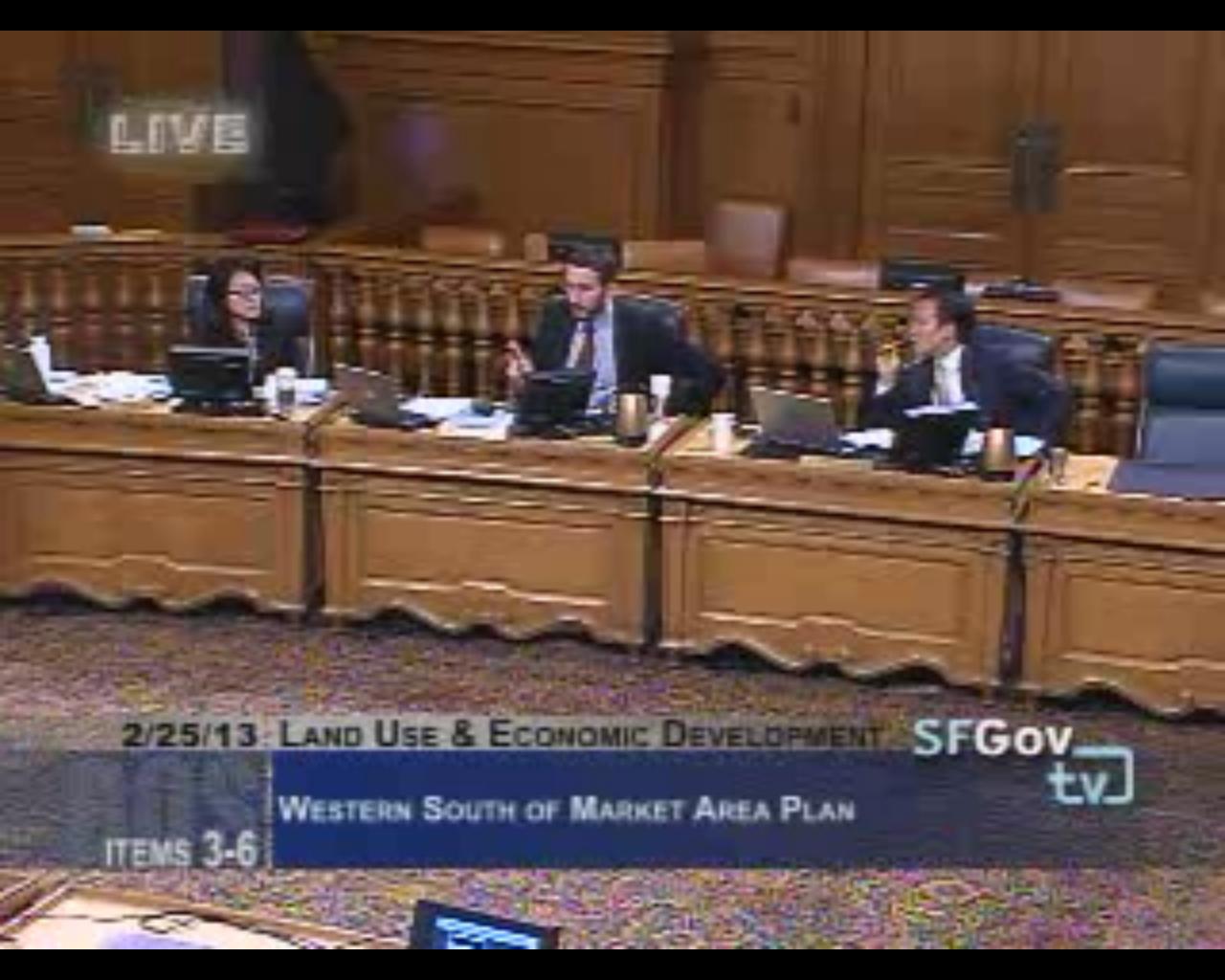
The Western SoMa Community Plan had its first hearing before the Board of Supervisors Land Use and Economic Development Committee today, with dozens of speakers praising the eight-year citizen-based planning effort that developed it but with much of the testimony criticizing the plan’s emphasis on facilitating housing development to the exclusion of other goals.
As we’ve reported, the nightlife community has in recent months been pushing for changes to the plan that would better protect nightclubs from complaints and pressure from nearby residents, particularly along 11th Street. Area Sup. Jane Kim has supported that effort and those concerns were echoed by Sup. Scott Wiener, the committee chair and a strong nightlife advocate.
“I have had significant concerns about this plan…and I’m hoping we can address them over the course of this hearing,” Wiener said.
Wiener also opened another front of attack on the plan by noting that it doesn’t adequately pay for the impact that thousands of new housing units would have on Muni and other aspects of the transportation system. In particular, he criticized a policy in the plan that would let 13 large properties get increased density in exchange for higher affordable housing fees that would be offset by lower transit and other impact fees paid to the city.
“What are we doing to make sure our transportation system keeps pace?” Wiener asked of Planning Department staff, later asking again, “Where would we get the money to improve transit for these increased residents?” Wiener didn’t get back any answers that seemed to satisfy him, so he asked for a more detailed report when the plan returns next week for a second hearing. That concern was echoed by the third committee member, Board President David Chiu, who said, “Building housing without money for transit will lead to long-term problems.”
The concern seemed to revive a losing fight that Wiener led in December over expanding who pays the city’s Transit Impact Development Fee, which pitted transportation advocates against affordable housing activists. Fernando Marti of the Council of Community Housing Organizing rued the revival of that conflict. “We’ve been here before, pitting [transportation against affordable housing needs] as if it were a zero sum game,” Marti told the committee, noting the importance of policies to balance out market rate housing and calling it a “plan for stability in a neighborhood facing large-scale gentrification.”
Marti’s COCHO colleague Peter Cohen, who was closely involved with the plan’s creation, also urged the committee not to tweak the housing policies or the revenues it creates for affordable housing. “This is a major upzoning,” Cohen said. “In 20 years, perhaps all the market rate stock [of housing in the plan area] will be gentrified.”
But the issue raised most often during more than two hours of public testimony involved nightlife and the need to strike a better balance between housing development and entertainment, much of the input stirred up by the California Music and Culture Association, a industry-backed trade group that formed largely in response to crackdowns on clubs in SoMa.
“It’s often said San Francisco can plan more for fun, and this is a great opportunity to do that,” said Guy Carson, a CMAC founder who owns Cafe du Nord. Longtime nightlife advocate Terrence Alan took part in the Western SoMa Task Force for four years before resigning in frustration, and he told the committee, “We are bringing up issues we felt marginalized in bringing up earlier.”
But several people involved with the task force, as well as speakers representing development interests, urged supervisors to pass the place without significant modifications. “There are dozens or hundreds of compromises in this plan,” Cohen said, urging supervisors not to upset that careful balance.
Task Force Chair Jim Meko – whose leadership was widely praised in the testimony – detailed the extensive outreach and detailed work that went into the plan, and offered a simple plea to the committee: “Please pass this plan so we can get on with our lives.”
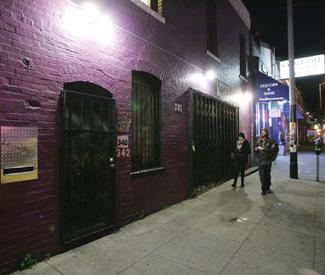
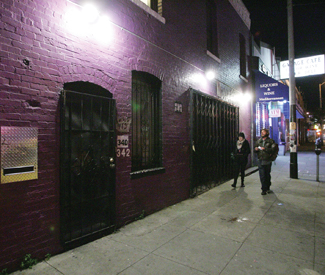
The committee unanimously voted to support the change made to the plan by the Planning Commission to ban new residential development on the raucous 300-block of 11th Street, but to reverse the commission’s decision to grandfather in one final 24-home residential project on that block, in the so-called “purple building” at 340 11th Street. A number of other small changes to the plan were also unanimously approved.
But Kim objected to Wiener’s motion to eliminate the plan provision that would reduce the transit and open space fees and raise the affordable housing fees that developers of those 13 large parcels would pay. “I don’t think it’s good policy to reduce transit impact fees when we’re increasing population,” Wiener said.
“This has gone through an extensive community process,” Kim countered, adding that, “I hate that we’re always having this discussion about transit versus affordable housing.”
But Chiu sided with Wiener and the amendment was approved on a 2-1 vote with Kim in dissent. Yet Chiu held open the possibility of changing his mind next week when the plan returns to committee for a final vote – the delay prompted by the other revisions in the plan – when Planning staff will provide more information on the fee structure and its impacts.
If the committee gives final approval to the plan next Monday, it could be before the full board for approval the next day.
The fate of the “purple building” – which has become caught up in the clash between nightlife and residential interests on the clubgoer-saturated 300-block of 11th Street – remains undecided as the Western SoMa Community Plan heads into its first hearing before the Board of Supervisors Land Use and Economic Development Committee on Monday.
As we reported in this week’s paper, a unique citizen-based task force has spent the last eight years developing the plan, which will allow thousands of units of new housing – most of it along Folsom Street – to move forward once the plan gets final approval from the board. But the California Music & Culture Association and other nightlife advocates successfully amended the plan to ban new housing on that 11th Street block as the Planning Commission approved it in December.
Yet the commission also decided to grandfather in a 24-home project at 340 11th Street, the so-called purple building, which nightlife advocates say would put those new residents on a collision course with Slim’s, DNA Lounge, and other big nightclubs on that busy block. As we went to press, both sides and District 6 Sup. Jane Kim were all hopeful that a compromise was imminent, likely involving switching from residential to office.
But with just days to go before that hearing, building owner Tony Lo still hasn’t decided whether to make the change or fight it out in front of the supervisors. His architect John Goldman – whose residential design for the site was placed on hold by the city since shortly after he submitted it in 2005 – had hoped to hear by now but he’s still waiting for Lo to make the call.
“Based on my analysis, it looks feasible to change to offices if you want to do it, and I mean feasible financially and architecturally and planning-wise,” Goldman today told the Guardian, referring to what he told Lo.
Meanwhile, Western SoMa Task Force Chair Jim Meko – who has not been supportive of tweaking the plan after all the work he oversaw – yesterday sent out an email blast to stakeholders and supporters urging them to attend Monday’s hearing and show support for the plan.
“You don’t often get a chance to participate in making decisions about your own neighborhood from start to finish. Some special interest groups are expected to come out of the woodwork to take pot shots at the Plan so the hundreds of participants in this process need to make their voices heard. Your testimony at the hearing next week will make all the difference,” Meko wrote.
The hearing starts at 10am in board chambers in City Hall. This item might have been heard later in the day considering the agenda opens with a continuation of the controversial condo lottery bypass legislation, on which Board President David Chiu and others have been trying to forge a compromise between tenant advocates and homeowner groups. But committee Chair Scott Wiener just told us that item “will be continued. No compromise yet.”
The phenomenal house DJ and experimental musicmaker on mainstream visibility, transgender globalism, Bay Area queer culture, and the “shopping mall diversity” of the current dance music scene.
Techno has always had room for theorists and intellectuals, from Derrick May to the Mille Plateaux label roster, and social activists, like Moodymann and Underground Resistance. Most of that discourse usually takes place musically, however, with concepts emerging from the vinyl itself. The celebrated DJ Sprinkles, a.k.a. Terre Thaemlitz, the American head of Japan-based label Comatonse, tops all that by making intellectually grounded music glimmering with poetic touches and expounding in interviews and writing on such heady, heated topics as essentialism, gender idenitity, surveillance, and authenticity. She leads workshops, goes on speaking engagements, and isn’t afraid to let loose in interviews. (For example — see below — rather than “born this way” platitudes, she considers her queer identity “beat this way.”)
It’s a beautiful thing, especially in the rare context of controversial truth and radical opinion pouring from the mouth and keyboard of an outspoken transgender major player on the stubbornly homogenous global house-techno DJ scene. Of course, it all comes down to the music — we’ll get a treat when Sprinkles (who chose the name because he wanted something that sounded “totally pussy” in opposition to macho DJ culture, to buck the testosteronal scene) performs Sun/24 at Honey Soundsystem — and Sprinkles certainly has the goods. He’s released umpteen pieces in an astoundng breadth of genres under multiple pseudonyms over the past 20 years. Masterpiece deep house album “Midtown 120 Blues” siezed the top of several best of 2009 charts and was, typically, followed by Soulnessless, a 30-hour “mp3 album” of music and video. Because why the hell not?
I got a chance to exchange emails with Sprinkles before her appearance here. It’ll be an interesting return to the Bay Area, where she lived for several years before decamping to Japan. Here’s all she had to say.
http://www.youtube.com/watch?v=UY79cyv8pH8
SFBGIt’s been 13 years since you lived in Oakland, is that correct? Can you tell me why you decided to leave and what it was like to live here then, with regards to the music, political, and queer scene?
DJ SPRINKLES Yes, it’s been a long time. I used to live across the street from a hotel where the Unabomber once stayed. Honestly, I can’t say I miss California. I never really connected with any queer or transgendered communities in SF or Oakland. Whenever I tried, they seemed immersed in West Coast spiritualism and zodiac bullshit, which I found completely alienating. Most of the transgendered people I met there were prone to metaphysics — by which I mean they were ideologically (and economically and medically) invested in defining their transgenderism in relation to a perceived split between their “physical bodies” and their “true inner selves.” I’m an anti-essentialist, non-op, materialist, anti-spiritualist… so that clearly wasn’t a match with my own transgendered identity.
There was also a weird conservatism in SF’s queer scenes that I associated with the fact a lot of people in SF had been raised in conservative Midwestern towns, so they were in SF to “live the life.” I felt there was a lot of unacknowledged parody and role play going on — people trying to overcome a life of repression and closets by wrapping themselves in rainbow flag culture. Yet, when going to buy groceries or such, I still found myself being harassed as a “fag” on the street like in any other town in the US. I felt my four years there was all quite standard. I don’t really think of the Bay Area as a “special place” for being queer and transgendered.
US identity politics have a particularly inextricable link to the concept of the ghetto — not only as a place of economic strife and forced communal ostracization from a “white middle-class mainstream,” but also as a self-invested “safe space” for non-mainstream social movements. This is part of migrant culture. For example, after my grandparents passed through Ellis Island, they immediately moved to a place where people spoke the same language as their homeland, etc. The Castro, New York’s West Village, Little Italy, China Town… these are all migrant-based communities formed by people seeking safety in numbers in the face of not being welcome elsewhere — these two dynamics of “safety” and “alienation” are inseparable to most US identity politics. So these communal zones all display the problems and contradictions of cultural identification that plague mainstream US culture as an “immigrant nation” that is simultaneously “anti-immigrant” – because the “immigrant” is a brutal reminder that there are no “real Americans” beyond Native Americans, which the majority are not. And of course, the fact that recent generations of immigrants are primarily people of color does not jibe with conventional black/white US race discourse, which continues to be largely devoid of other browns, as well as the concept of the person of color as a willing immigrant (as opposed to the descendant of a slave). This history and context is peculiar to the US social landscape, and it creates a lot of weird identity essentialisms and hostilities around gender, sexuality, race, ethnicity, class…
Not to say other countries don’t have their own fucked up ways of causing and dealing with social problems, but moving to Japan and realizing that pretty much the entirety of Western identity politics did not function here was a big life experience. It was like leaving the Earth’s gravitational pull — it didn’t mean gravity no longer existed, but almost everything I had internalized and believed I understood about my relationship to gravity was no longer helpful in understanding the dynamics of dominations at work in this other context. I wasn’t freed of gravity, but lost in weightlessness. I had to learn to feel weight in a completely different way. This is why so many of my projects dealing with my own immigration and cultural issues consistently invoke the rather limited and problematic US language of black/white race relations. It is a critical gesture intended to highlight the limitations of my having been raised amidst that US language and social conditioning, yet now living within a non-US context with few tools to work with.
Because music’s value is so often tied to an essentialist concept of racial authenticity, it becomes difficult and risky to ask an audience to question their relationships to the very value systems through which they likely purchased the album – but that is also why I choose to work with audio. Not because of its possibilities, but its all-too-clear limitations. Since I am unable to believe in the authenticity or purity of identities of any kind, when I invoke “identifiable” sounds (a “queer” sound, a “black” sound, etc.) I am doing so to question the social relationships around their construction, proliferation, and distribution. The moment we become lazy about our use of those “identifiable” sounds — the minute we take it for granted that the essentialist associations they have come to carry are unquestionable and real reflections of material social experiences — everything becomes one-dimensional and shallow. This is why almost all music is one-dimensional and shallow! [Laughs.] For example, if I can beat a dead horse, my problem with Madonna’s “Vogue” is not that it was “inauthentic,” but that its terms of discourse misrepresented its relationship to vogueing by actively erasing the very contexts of Latina and African-American transgendered culture that inspired it (via lyrics about “It makes no difference if you’re black or white, a boy or a girl”… it TOTALLY made a difference, and THAT SOCIAL REALITY is where any real discussion on vogueing BEGINS.). So I’m interested in these other directions of audio discourse that cannot even occur if one is preoccupied with conflated essentializations of identity and sound. There is never a true point of origin for anything. It’s all referential and contextual. In my opinion, there is no point in discussions focussing on identifying the source of a sound or style — that is a hopelessly futile exercise, although it is the dominant exercise! It’s a distraction from the real discussions needing to be held, and those are discussions on relations of domination.
As a DJ in the late ’80s and early ’90s, there were a lot of drag queens asking me to play Madonna’s “Vogue” when it first came out. I refused, but I could understand their requests. We all have very complicit and complex relationships to dominations, and a perverse desire to celebrate our visibility within the dominant mainstream, no matter how unfamiliar or distorted that reflection may be… often because we are conditioned to feel so unhappy with what we see in the mirror to begin with. Mainstream visibility is like getting approval of the Father. It’s a mental and abusive process. It is also totally standard. So I get it… But there is also that which remains unrepresented and invisible to most. That which existed, and may have already been lost, but did so without seeking approval of the Father. And again, this is generally not a freed or liberated space, but a space of intense hatred for the Father. These are difficult things to speak of and represent, because any act of representation has the potential to be a violation of the cultural site it wishes to speak of. So to speak of them requires obfuscating or complicating the usual functions of language – not through vague poetry, but unexpected flashes of clarity coming from unexpected vectors.
http://www.youtube.com/watch?v=R2iKF_11WbY
SFBGYou left during the first Internet boom I believe, and now SF is in the middle of a second one (although a bit different than the first — the first wave seemed to have much more geeks and freaks in it, while this one seems much more regimented and Ivy League, even while many longtime residents are still feeling the results of “global recession”). When was the last time you were back here? And what are some of your recent thoughts on how house music is being affected by economic circumstances?
DJ SPRINKLES I was only back once about 10 years ago, visiting friends for a few days. When I moved away at the end of 2000, internet and web development had already undergone a rigid formalization. Years earlier, a web designer did a bit of everything. By 2000, developers were already split into specific teams focussing on interface, coding, page flow, etc… all processes were specialized, departmentalized, corporatized. I hadn’t heard about the “second internet boom” there, but the way you describe it doesn’t surprise me since it would surely be an extension of that regimentation that took place in the first boom.
And in a way, the same can be said of this “second boom” (third?) around house music. In the same way almost all websites have taken on the same continuity and feel, so has electronic dance music. You buy an album, and all the tracks sound similar — as opposed to the old days when an electronic dance track like Donna Summer’s “I Feel Love” was tacked on to the end of an otherwise standard soul-band album that didn’t sonically match it at all. Today’s music consumer experience is much more streamlined and organized, which affects how people produce an album as well. Younger generations — 20-somethings — grew up amidst this homogenization, so I am fairly sure they do not feel what I am speaking of… although they may recognize it as a historical process.
I try to play with discontinuity and mixing things up, like in my K-S.H.E album, “Routes not Roots,” which had monologues and ambient tracks interspersed between house cuts. But I once made the mistake of reading people’s blog comments, and they really seemed upset about this kind of thing. “Way to ruin the mix,” or “Why the fuck didn’t you put that monologue at the end of the album?” They have no patience for non-homogeneity. The same goes for my Comatonse Recordings website itself — people seem utterly confused and helpless. If one doesn’t do everything completely standard and at the same level, people get disoriented. It’s a kind of cultural compression going on, similar to audio compression, where everything has to be “punched up” to the same intensity or people feel lost. What the fuck is so wrong with being lost? Why would you expect — let alone insist — your interactions with non-mainstream media to be completely mainstream in process?
http://www.youtube.com/watch?v=B8iF7JQiz50
SFBGI’ve been hanging out recently with the new, young generation of ACT-UP activists who are transcending mere ’90s revival and undertaking a lot of energizing political discourse and action. Were you involved in the queer activist movement back then — or now? Would you characterize your musical project as a form of activism, especially in its more intellectual and challenging aspects?
DJ SPRINKLES That’s nice to hear. Although you use the term “action,” I assume the real interesting stuff has little to do with demos and “direct actions,” and more to do with communal education initiatives, etc.? My direct action days were mostly during the late ’80s and early ’90s, while living in New York. Most of those activities were in conjunction with various caucuses in ACT-UP, and WHAM! (Women’s Health Action & Mobilization).
I do consider my audio and other projects “political” — in theme, and also in their attempts to (dis)engage with standard industry practices. But clearly this is something different than direct action “activism” or community outreach, because my main social engagements are with people working for labels, distributors, music festivals, museums, and other culture industries. Maybe “culture jamming” is a better way to put this kind of political activity. Personally, I found myself distanced from direct action groups because the terms of identification they cultivated out of strategic necessity so often folded back into essentialisms that excluded me on a personal level. So I was always advocating for the recognition and acceptance of something other than myself (like the way “born this way” ideologies take over discussions of LGBT rights… I consider myself more “beat this way,” my queer identity being primarily informed by material ostracism and harassment than by some mythological self-actualization and pride). That, combined with the mid-’90s move away from direct action toward CBO’s (Community Based Organizations) — largely because the tactics of direct action had been so thoroughly coopted by mainstream media – was pretty much the end of my serious direct action involvements. Over the years, enunciating this process has become the core political act of my projects and activities. I do not do this to discourage people from forms of direct action, but as a simultaneous form of critical analysis that hopefully contributes in other ways to our various attempts to react to dominations.
SFBGDo you feel that, as the means of production and distribution have been more and more democratized in the past decade, house and techno music-making and DJing have been living up to their potential as a form of resistance to mainstream capitalism and culture, or do you feel they’ve become more homogenized and/or annexed by neoliberal, bourgeois culture?
DJ SPRINKLES I do not believe the means of production and distribution have become more democratized. I take issue with the way people always confuse “commercial accessibility” with “democratization.” The breadth and variation of today’s music production strategies is no more than a shopping mall diversity. We are all working with similar software on similar platforms. Mac, Windows, Unix… Banana Republic, Abercrombie & Fitch, The Gap… Having said that, if these musics had a potential, I believe it was lost back in the ’90s when anti-sampling legislation (mostly focusing on hip-hop) laid the groundwork for today’s electronic music. It basically reinvigorated house with “musicianship,” “authorship,” and all that crap which used to play far less of a role in this genre’s early days. And the younger generation – basically, today’s 20-somethings who grew up after the whole sampling debates — really don’t seem to understand how record label legal departments work.
So they list up all the samples they recognize in a track in the comment fields of music websites, which is putting the producers they wish to support at risk. There is no sense of how we can cultivate — let alone protect — “underground” media and information in this online era. Everything is about “sharing,” when in fact we need to be developing a parallel discourse around meaningful information distribution patterns, including strategically withholding information from the web. The cliché idea of making “everything accessible for everyone” is not only naîve, but negates the social and cultural specificities that give certain forms of media their alternative values, in particular collage and sampling. Anyone who has used a random image taken from a Google image search on their blog page, and then gotten an email from Getty Images’ legal department asking for back royalties, knows what I’m talking about. Treating subcultural musics as though they are meant for “everyone” — whether this is being done by fans, or the labels and online distributors themselves — is the biggest sign of people not understanding the media they are dealing with. And since all of that is SOP these days, it’s pretty much a sign that the sample-based genres of house is dead. Is talking about house’s political potential in 2013 really all that different than the trend of talking about the radical politics of ’60s rock during the ’80s?
http://www.youtube.com/watch?v=v4M3-t9lw7o
SFBGI feel like, with parties like Honey Soundsystem, there is a huge resurgence of interest in an underground queer dance music culture — a kind of new underground opposed to corporate or low-quality dance music (yet still taking place in corporate spaces). Is this phenomenon occurring in Japan as well? Do you feel there are specific possibilities with this, not just in terms of opportunity for queer DJs to travel but of transformation of queer discourse and politically actualizing a new generation?
DJ SPRINKLES Hey, low-quality is where it’s at. It’s what it’s all about. What was Chicago house if not low quality? It’s important to place value within the “low” in order to counter conventional associations between the terms “good,” “high quality” and “upper class.” I’m not talking about celebrating kitsch, or that kind of petit-bourgeois trivialization of the “low.” I’m talking about finding other values in the “low” that cannot find expression within a language developed to express everything in terms of “low vs. high.” This is ultimately about the identification of other values amidst class struggle.
I don’t think house resonates as a queer medium anymore. Those days are over. Today it is primarily a white, heterosexual, European phenomenon. That was the case early on. I mean, how many Americans became aware of house music in the ’80s by buying Chicago house sold back to us on UK compilations? The US has always treated its own history of electronic music like utter shit… The US is such a fucking rock’n’roll shithole. So I think for people to appreciate house music’s queer roots, and to actively invest in those themes today, requires people becoming deliberate and explicit about those interests. But whether that deliberate action would focus on “queer visibility” or not is another issue. It doesn’t have to focus on “visibility” — especially since visibility has become such an oppressive aspect of dominant LGBT movements. Explicitness can also be about closets. Not only the usual closets born of heterosexism, but less considered closets around sexuality and gender that have been formed by the actions of the “born this way” LGBT mainstream. Well, that’s the direction I try to take it… reflecting on, and constructing, queer and transgendered histories that are as skeptical of Pride[TM] as they are angry about violence. And I do believe, globally speaking, queer and transgendered experiences are much more informed by violence than pride. So this should be reflected in how and where we make noise. In my opinion, music that functions in completely standard ways – socially and economically – does not have much potential for reflecting queer or transgendered contexts in politically precise, helpful or meaningful ways. You end up with essentialist, humanist shit like Lady Gaga’s, “Born This Way.” She is not somebody I would consider an ally.
You know, American media is so fixated on the idea that sexuality and gender must either be biologically predetermined, or a personal choice. The “it’s not a choice” argument is a common theme in television shows, etc. Both of these options revolve around a fiction of free will. Like, if it’s not a choice, then the only other possibility must be some supra-social, biological reason that cannot be questioned. Both of these conclusions preserve the status quo brutality of how culture forces gender and sexual binaries upon us. The thought that our absence of choice might be rooted in social tyrannies – not biological predispositions – remains unthinkable. The mainstream has it half right when they say, “it’s not a choice,” but it’s a half-truth that has been twisted into a decoy from the real issues at hand – the inescapability of the hetero/homo and female/male paradigms. We are given no other choices through which to understand our genders and sexualities. Sexuality is far greater than two or three. The same goes for gender — and yes, I’m speaking biologically, human bodies are way more diverse than A or B. To argue that the reason you deserve rights under a humanist democratic system is because of genetics is a retreat into feudalist logic. It’s the same as an aristocrat arguing that their rights and privileges were deserved because of their family blood-line and DNA. “Born this way” is antithetical to any democratic argument for rights rooted in a social capacity for understanding and transformation. It is astounding that the majority of people cannot comprehend that any “born this way” argument is a complete obliteration of their social agency. “I can’t help it, so give me the same rights as you…” Fuck that. We shouldn’t be asking to participate in the rights and privileges of those who have oppressed us. We should be trying to divest those groups of privileges. That is the best way to help ourselves and minimize the violence we enact on others.
Humanist legislative practices are still rooted in feudal ideologies, and I am convinced the long-term repercussions of this is a cultural entrenchment that makes any democratic project (including US-brand democracy, socialism or communism) an impossibility. We can already see how the post-Cold War world is retreating into clan-based, privatized, anti-state organization structures. Capitalism is increasingly liberated of democratic agendas because — surprise! — capitalism works better with slavery. Capitalism is not about the distribution of wealth, and everyone’s equal chance to partake in a petit-bourgois lifestyle. It is about the isolation of wealth. There is no doubt in my mind that today’s moral insistence that all people must work at whatever job society throws them, and the accompanying presumption that all lower-class unemployed people are “lazy” (which is perpetuated by many lower-class peoples themselves), is an argument for slavery: forced labor in return for base subsistence at best. How is that not the reality of poverty under globalized capitalism?
…and that’s why I hate Lady Gaga. [Laughs.]
http://www.youtube.com/watch?v=y-JtoRxqK8s
SFBGYou have some fascinatingly poetic thoughts about the intersection of transgender issues and immigration, the idea of “living as a ghost” in politicized and police-monitored spaces. Do you have any current thoughts on how globalization continues to affect transgender issues?
DJ SPRINKLES I think the fact that the world’s two largest economies around gender transitioning are in Thailand and Iran, yet the aesthetics of those economies follow largely western models of beauty and body, says a lot about how globalization affects transgendered issues. Thailand’s dominant transgendered culture revolves around the “Ladyboy” — a very essentialist transgendered model that is rooted in heterosexism and the cultural/ideological necessity for some men to “unbecome-man” in order for “straight men” to have sex with other men. Western transgendered discourses love to fetishize the “Ladyboy” as some kind of locally celebrated and accepted third-world transgendered native other, but this is patent orientalism. It refuses to envision how the strict regimentation of social codes for those transgendered people can be oppressive, or how the mythical “transgendered native’s special place at the edge of the village, possibly as a shaman” is a form of segregation. People also never address how such cultures are invariably patriarchies, and their models for transgenderism almost exclusively revolve around the MTF paradigm. And far as I know, Thailand has still not lifted their government prohibition on homosexual government employees, which is relatively new legislation passed just a few years back. This is all part of that context of transgendered production.
Meanwhile, Iran is a country where Islamic law prohibits homosexuality by fatwah. Since the ’70s, gender transitioning has been promoted as a way for men who have sex with men to avoid the death penalty, although many transitioned people still face the possibility of being murdered by their families or local communities. The cost of their procedures is partially subsidized by the Iranian government itself. While some Westerners have attempted to portray that as “progressive,” clearly it is the opposite. Many post-op transsexuals find themselves ghettoized, unemployed and cut off from the family structures that play such important roles in Iran’s social structure.
In both Thailand and Iran one can see how the global growth of gender-transitioning economies is connected to heterosexism and homophobia — something current Western gender analyses attempt to separate from gender transitioning through clear ideological divisions between gender and sexuality. While I believe these divisions between gender and sexuality are important and do have social value in the West, it is clear that the West is not the world. And the West has surely not overcome its heterosexism and homophobia, either. I believe it is more than coincidence that the global proliferation of gender transitioning technologies is happening parallel to medical industries’ attempts to divest of their previously blatant attempts to cure homosexuality, due to such methods falling out of cultural favor in the West and elsewhere. I also believe it is more than coincidence that today’s inescapable “born this way” arguments serve and justify today’s medical agendas so well.
For sure, my stance on medical transitioning has always been that I support peoples’ abilities to transform their bodies as they see necessary. Considering how few options for gender identification are offered to us, I can understand how a person can become no longer able to live within one’s body as it has been defined and shaped by social gender constraints. But, for obvious reasons, I am unable to believe those medical systems which propagated today’s gender binary are capable or willing to offer us a way out of our gender crises. Those industries move us further and further away from cultural environments that enable transgendered people to build medically unmediated relationships to our bodies. I just can’t accept that the medical industry’s methods for mediating our suffering are the only way. It really angers me… particularly since so many transgendered people are impoverished and without health care…
Hmm, you’re probably getting an idea as to why I am never invited to perform my more thematic projects in the US — just to DJ some house and go back home to Japan. [Laughs.]
SFBG Speaking of essentialism, ha: Any food or restaurants you miss from living here?
DJ SPRINKLES Mexican food…! It’s shockingly absent in Japan… and when you do find some, you generally wish you hadn’t. But what a weak note upon which to end this interview. [Laughs.]
Not so much the disease itself — although the rate of HIV infections has been rising again in young gay men, according to a report last year by the Centers for Disease Control and Prevention, and African Americans continue to be the hardest hit population in the US. And California, especially the Internet of California, has been gripped by another paroxysm of debate about barebacking porn, one that reached all the way to the ballot box in November with the passage of Measure B in Los Angeles, requiring all porn actors to wear condoms when filming in the city.
However, it’s the vibrant culture that grew up in resistance to the disease in the 1980s and ’90s that’s capturing the attention of a new generation, sparking a revival of interest that goes beyond typical retro-cycle nostalgia. For many young queers and allies frustrated by HIV discrimination, evictions, predatory pharmaceutical companies, sex-work criminalization, and immigration policy failures, it’s a newfound inspiration.
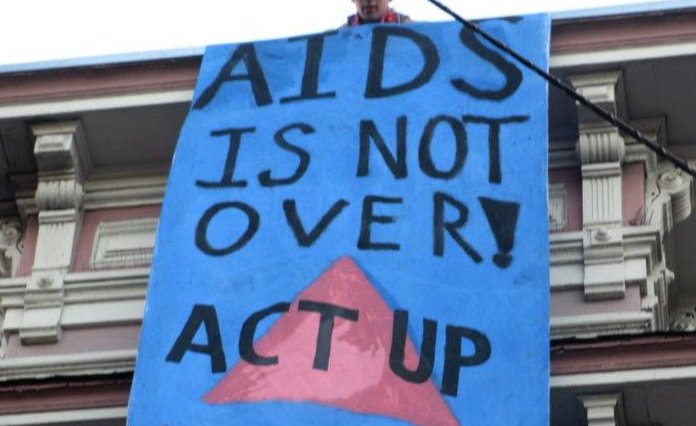
Rowdy AIDS resistance, defined by the loud-mouthed, street-closing, bridge-blocking, cathedral-occupying international AIDS Coalition to Unleash Power activist network, has been thrust back in the cultural spotlight after being overshadowed by more recent, conservative fights for marriage equality and military service rights. Initiated by NYC rabblerouser Larry Kramer in 1987, ACT UP defined queer politics for almost a decade and successfully changed the way government policy and the medical industry approached AIDS. (There would be no life-sustaining HIV drug combination therapy without ACT UP’s in-your-face civil disobedience.)
In San Francisco, the homegrown AIDS Action Pledge organization, started in 1985, laid the foundation for nonviolent yet radically confrontational AIDS activism, before partnering with ACT UP/New York and changing its name to ACT UP/San Francisco, helping to create a coast-to-coast juggernaut of information- and strategy-sharing. In its early ’90s heyday, thousands of virile ACT UPpers (and participants in related groups like Queer Nation, Gran Fury, and Boy With Arms Akimbo) from Kansas City to Copenhagen took to the streets, scaled walls, pilloried politicians, got arrested, and yes, got laid, too — it was a heady, cruisey time.
https://www.youtube.com/watch?v=wwhFS1mUaVY
During the past two years four documentaries about the period have been released to critical acclaim — How to Survive a Plague, nominated for a 2013 Academy Award, which documents the enormous influence ACT UP and its offshoot Treatment Action Group had on the development of life-saving combination drug therapies by major pharmaceutical companies; United in Anger, director Jim Hubbard’s eye-opening ode to the diverse membership, complex infrastructure, and social issue agenda of ACT UP in New York, which draws on the immense ACT UP Oral History Project archives Hubbard started 10 years ago with writer Sarah Schulman; Vito, an HBO documentary about outspoken AIDS activist and Celluloid Closet author Vito Russo; and We Were Hereby director David Weissman (currently being Ellis Act evicted from his Castro apartment), which focuses on San Francisco at the very beginning of the epidemic leading up to ACT UP’s founding, and the development here of innovative treatments.
Kramer’s own polemical, overwhelming 1985 play about the dawn of the disease in New York, The Normal Heart, was revived on Broadway in 2011 (it played here at A.C.T. last year), snagged three top Tony Awards, and is being made into a movie with Mark Ruffalo, Alec Baldwin, and possibly Julia Roberts. The artwork of hyperkinetic grafitti artist Keith Haring, who designed some of the most recognizable anti-AIDS iconography before succumbing to the disease in 1990, was everywhere in 2012, from Google Doodles and iPhone cases to collectible sex toys and a retrospective at the Brooklyn Academy of Music. Dangly pink triangle earrings and “Silence = Death” t-shirts and buttons, emblems of ACT UP, are popping up on hipsters all over.
And, um, Justin Bieber wore an ACT UP T-shirt to the 2012 CMT Country Music Awards?
FANNING THE FLAMES
Last year, a 28-year-old sex worker and activist named Cyd Nova, along with others who had been involved with the Occupy movement, started contacting ACT UP veterans about the upcoming 25th anniversary of ACT UP that March.
“My friend Kentaro and I had developed a common obsession with ACT UP because we saw it as reflection of what is missing in our community,” he told me. Nova had discovered ACT UP when he was 17, as he made an attempt to “understand who I was in the world I was living in.” When he began researching the ACT UP Oral History Project online and watching New Queer Cinema classics like the 1993 HIV-themed musical Zero Patience he “found it all incredible.”
“The emergence of ACT UP represented to us this time when queers stood together when faced with a genocide of indifference, devoting their lives to fighting for the those of their friends, lovers, family and themselves. This stands in contrast to gay and lesbian culture of the 2000s — the focus on marriage and class climbing. For people of color, sex workers, drug users, and transgender people HIV still exists. I wanted to get involved in some deeper way.”
Kentaro updated ACT UP graphics with a new “Act the Fuck Up” design, and there was enough traction about the anniversary idea among curious young people and elders to plan a “NOT OVER: 25 Years of ACT UP” panel at the Women’s Building in March, followed by a march in April through the Castro and Mission protesting the evictions of people living with HIV/AIDS, condoms being used as evidence to prosecute sex workers, and the Catholic Church’s homophobic and sex-phobic policies.
Both the panel and the march were well-attended, and another panel — this time featuring ACT UP veteran Sarah Schulman reading from The Gentrification of the Mind, her impassioned memoir of how queer rebellion to the AIDS crisis vanished into conservatism and consumerism, — overflowed its Luggage Gallery setting. Several of the attendees decided to start holding regular meetings and full-on reactivate the movement, reviving the name ACT UP/San Francisco.
The new ACT UP/SF joining with OccuPride at the 2012 Pride Parade. Photo by Liz Highleyman
These events were followed by more old school-style ACT UP actions: slogan-bearing banner drops at Pink Saturday in the Castro, guerilla street art bombs, a “Cumdumpsters of the GOP” condom toss at Folsom Street Fair. A nexus of affiliation emerged among fellow radical queer groups like OccuPride, Homonomixxx, and active ACT UP chapters in other cities. In December, a small group managed to enter Bay Area-based pharmaceutical giant Gilead’s headquarters to protest the exorbitant pricing — $28,500 per year — of its new, more convenient HIV drug Stribild. An action is planned for February 25 to deliver letters protesting Stribild’s price to Gilead, and another for ACT UP’s 26th anniversary in March.
One of the less-emphasized aspects of ACT UP was its reverence for procedure and attention to order, its organization into multiple affinity groups and action committees: a trick learned from classical anarchism and the Civil Rights Movement. The young ACT UP/SF members I’ve met — there are about 25-30 core members — seem to have absorbed these techniques: they speak calmly and deliberately but candidly, seeking out consensus but unafraid to disagree. Their actions, too, seem deliberately organized and calmly executed.
The delicately butch-featured Nova joined me at Church Street Cafe, along with fellow ACT UP/San Francisco revivalists Mayra Lopez, 24, a poised yet vivacious nonprofit worker with striking red lips, and Alan Guttirez, 23, the kind of soft-voiced, sharply intelligent sex worker who somehow survives Dennis Cooper novels.
“I was 18 and taking a summer sociology class at SF State with this flaming faggot professor,” Guttirez told me. “Usually queer teachers like to talk about themselves a lot, and at some point he mentioned ACT UP. No one knew what he was talking about, that there was this whole radical movement here that had been almost completely buried. I was immediately curious about the possibilities.”
Lopez told me, “I grew up in Sonoma — for half my life, HIV wasn’t even on my radar. You never talked about sex in the Latino community I’m from, nevermind queer issues or HIV. Then, in high school, I watched a documentary about HIV and wanted to do a history of the disease for a project. I picked up a book of posters, included ones from ACT UP, that’s how I found out about it. From there I went to work for a nonprofit — but nonprofits have a problem with being able to address issues about migrant workers and HIV, which is my focus. They have to be so P.C. I feel like ACT UP is a tool to address those issues openly.”
A 2012 ACT UP/SF die-in outside Mission Dolores Basilica, protesting the Catholic Church’s homophobic and sexphobic policies. Photo by Liz Highleyman
Is any of the motivation for the ACT UP renewal a matter of trendy nostalgia? “We’re too busy for nostalgia,” Guttirez says. “We wish the people wearing ACT UP things or looking back at the ’90s would dig deeper into the meanings to know what those things stood for, that we’re still fighting against the same shit. Categorizing people on hookup sites as ‘clean’ or ‘dirty’ according to their HIV status or making fun of poor people is just perpetuating behaviors that were once used against us, and killed us.”
A BROADER AGENDA
One of the original ACT UP’s main goals was access to life-sustaining drugs. What’s the agenda of a new ACT UP? Besides addressing the prohibitively high costs of AIDS meds — something most HIV-positive people with insurance may take for granted, a lack of awareness that drug companies can take advantage of by price gouging or delaying more cost-effective treatments, and leaving uninsured people scrambling and dangerously stressed as public programs are increasingly cut — and the lack of an HIV safety net for many immigrants, the new ACT UP/SF also gives priority to sex worker and housing issues.
ACT UP/SF joined a coalition of local organizations, including Nova’s employer St. James Infirmary, to successfully demand that the San Francisco Police Department ban the use of condoms found on someone suspected of prostitution from being used evidence against them. (On January 14, however, Police Chief Greg Suhr announced that the ban would remain “temporary” for 90 days.)
And ACT UP/SF is also agitating around a provision in the $15 billion, George W. Bush-initiated PEPFAR international AIDS relief program, which forces organizations to pledge to oppose prostitution in order to receive funds. The US Supreme Court has agreed to hear a case against the provision this year.
A more local, immediate concern, however, one that ACT UP/SF places at the top of its list, is the skyrocketing cost of rent in San Francisco and the increasing numbers of evictions and stressful threat of evictions that many people living with HIV/AIDS face today.
“Evictions are killing us, they’re murder,” Lopez said, as Guttirez and Nova voiced their agreement. “People think medication is the number one priority for people with HIV — but it’s not, it’s housing. SROs are being pushed out, affordable housing stock is shrinking, people are being forced to leave. Without stability, it’s very hard to comply with your drug regimen, which is already complicated enough.
“I hear people all the time say, well if you can’t afford it here, then just move. They don’t understand that San Francisco is still one of the few places where queer people feel safe, that there’s a network of services here with proven results that you can’t find anywhere else, especially places many people living with HIV can afford to live. And there are support networks here, too, that aren’t available anywhere else.”
In fact, one of the most valuable things ACT UP/SF may be doing right now is offering a community for people, especially young people, with HIV to connect beyond the isolation of computer screens, to share information, enter into a positive dialogue, and receive support in a sympathetic environment geared toward changing the status quo.
Guttirez sums it up: “We’re for people who realize an angry Facebook post isn’t enough.”
BACK IN THE DAY
Have any old-guard feathers been ruffled by the ACT UP revival?
“The only real resistance we’ve had is to the name ACT UP/San Francisco — our intention is to reclaim the name from the mess that happened in the past,” Cyd told me. He’s referring to perhaps the most acrimonious legacy of local queer history. In 1990, after a phenomenally successful year of protest and media attention, several people left ACT UP/San Francisco to form ACT UP Golden Gate, intending to focus specifically on advocating for drug development and treatment, rather than address broader social issues like economic justice and gay equality.
The split was amenable at first, until things got really weird. Two men, David Pasquarelli and Michael Bellefountaine, moved here from Florida in 1993 and took over Act Up San Francisco. They quickly went from questioning the wisdom of poisoning one’s body with chemicals from the medical industry to flat out denying that HIV was the cause of AIDS, telling HIV-positive followers to forego medications altogether, saying that’s what was really killing them. Many panicked young people were swept into the new ACT UP/SF’s cultlike atmosphere, and to their doom.
“They were whackadoos!” old school ACT UP member Waiyde Palmer exclaimed when I brought up Pasquarelli and Bellefountiane. “They killed hundreds of people — and now they’re dead. Of AIDS. But the bitterness still lingers.”
I met the svelte and sassy Palmer, contributing editor of the Castro Biscuit news website and longtime survivor of AIDS, at Church Street Cafe, along with other ACT UP veterans Dean Ouellette, bushy-bearded gardener and musician, and respected journalist and activist Liz Highleyman. The three formed an uncanny, silver-haired mirror image of their younger counterparts I’d met with earlier.
A lively conversation careened among several milestones of queer radical AIDS activist history. The major early, roof-climbing takeover of pharmaceutical giant Burroughs Wellcome’s Burlingame office in 1987. The packed week of successful demonstrations around the sixth International AIDS Conference in 1990. Protesting a 1989 episode of NBC program “Midnight Caller,” which featured a murderous bisexual HIV-positive character. The 1989 day that Stop AIDS Now or Else blockaded the Golden Gate Bridge, two weeks after members of ACT UP/SF chained themselves to the Pacific Stock Exchange.
Juicy tidbits dropped: owner Marty Blecman of Megatone Records, Sylvester’s label, bankrolled ACT UP until he died in 1991; a fresh-faced Rachel Maddow, member of the AIDS Legal Referral Panel in 1994, stole some other cute dyke’s look. We tried to pin down a timeline of everything, but memories were fuzzy, exact dates had faded.
“I’m pleased to be a part of what’s happening, and I’m glad that it’s so intergenerational,” said Palmer (all three are active in the new ACT UP/SF) “but we need to maintain a momentum, and the motivation is different than when people were dying around you every day. Back then, the movement had members from every walk of life — yuppies, deadheads, people I never would have dreamed of associating with as a punk — united by this life-threatening illness.”
Highleyman agreed. “HIV has been taken over by the medical industry, we’re narcotized. A lot of ACT UP was based on exchanging information on these bewildering scientific things. Now people just ask their doctor what medicine to take. But who’s monitoring the doctors or watching the drug companies?”
“And the economics of the city have changed so much,” she continued. “I wonder if there are the resources anymore to support a protest movement. It’s just so expensive to live here, who has time to organize and follow through? The fact that these kids are taking it on is incredible and rare.”
“Back then we all worked three jobs, too” Palmer said. “But our rent was only $300 dollars — and if you had to leave one job to go to a protest, something else would pop up. I’m not sure if that can happen now.”
TIME PASSAGES
What happened to ACT UP? Leafing through the mesmerizing ACT UP Golden Gate files in the GLBT Historical Society archives in SoMa (especially those of its young star activist, Edward Zold, who succumbed to AIDS in 2009 at 38), a blizzard of drug names zips past: liposomal, foscarnet, fluconzole, sp-pg, TNP470, D4t, clarithromycin, AZT, Deovythymidine, xylocaine.
Every week it seemed, a new hope rose with a new drug name, only to be quashed when that drug failed. As several of the recent AIDS movies posit, the overwhelming amount of death just became too much, people couldn’t handle it anymore. Activists began turning on each other, the movement faded, and activist queer culture sank into despair. Until 1997, that is, when everyone began to realize the new anti-retroviral drug therapies would actually work. They were going to live, and then it was the best Folsom Street Fair ever.
Maybe more importantly, whatever happened to radical queer activism in general? I met with writer K.M. Soehnlein, who’s working on a novel based on his experiences of the ACT UP period — he was there from the very beginning in New York. He’s featured in United in Anger, and Queer Nation, an ACT UP offshoot formed to combat gay-bashing and promote queer visibility through renegade tactics, began in his living room in 1990.
“Occupy was a blip on the everyday gay person’s radar screen — and the police response to it was enormously more brutal and scary than when we protested in the ’90s and police usually worked with us,” he said. “But honestly, most gay people now are happy to see their president onscreen saying the word ‘gay’ before the word ‘marriage’ and that’s good enough for them.”
Soehnlein also has thoughts about why ACT UP may be resonating again. “There’s been talk about AIDS PTSD, and it really was a war. ACT UP felt like the only thing you could do to stay sane. Many people had to shut themselves off from that time in order to move on, and activism may be included in that.
“But 20, 25 years is a long time. It could just be a matter of waking people back up.”
ACT UP/SF meets at 7pm every first, third, and fifth Thursday — including Thu/21 at Alley Cat Books, 3036 24th St., SF. www.facebook.com/ACTUPSF
Stage listings are compiled by Guardian staff. Performance times may change; call venues to confirm. Reviewers are Robert Avila, Rita Felciano, and Nicole Gluckstern. Submit items for the listings at listings@sfbg.com. For further information on how to submit items for the listings, see Picks.
THEATER
OPENING
The Lisbon Traviata New Conservatory Theatre Center, 25 Van Ness, SF; www.nctcsf.org. $25. Opens Fri/22, 8pm. Runs Wed-Sat, 8pm; Sun, 2pm. Through March 24. New Conservatory Theatre Center performs Terrence McNally’s play, a mix of comedy and tragedy, about the relationship between two opera fanatics.
Steve Seabrook: Better Than You Marsh San Francisco, 1062 Valencia, SF; www.themarsh.org. $15-50. Opens Fri/22, 8pm. Runs Fri, 8pm; Sat, 8:30pm. Through March 22. Kurt Bodden’s San Francisco Best of Fringe-winning show takes a satirical look at motivational speakers.
BAY AREA
Dostoevsky’s The Grand Inquisitor Berkeley City Club, 2315 Durant, Berk; www.centralworks.org. $15-28. Previews Thu/21-Fri/22, 8pm. Opens Sat/23, 8pm. Runs Thu-Sat, 8pm; Sun, 5pm. Through March 31. Central Works performs Gary Graves’ adaptation of the story-within-a-story from The Brothers Karamazov.
My Recollect Time South Berkeley Community Church, 1802 Fairview, Berk; (510) 788-6415. $12-25. Opens Fri/22, 9pm. Runs Sat/23-Sun/24, Feb 28, March 2, 7, and 9, 8pm; March 1, 8, 9pm; March 3, 5pm. Through March 9. Inferno Theater performs Jamie Greenblatt’s play about the life of former slave Mary Fields.
ONGOING
Dear Harvey New Conservatory Theatre Center, 25 Van Ness, SF; www.nctcsf.org. $25-45. Wed/20-Sat/23, 8pm; Sun/24, 2pm. There’s always room in San Francisco for milk — Harvey Milk, that is, our very own out-and-proud crusader for equal rights for all, whose election as city supervisor in 1977 and assassination in 1978 galvanized the LGBT movement on a national level. Part history lesson, part memorial tribute, the Patricia Loughrey-penned Dear Harvey offers details of the extent of his influence, mostly in the realm of the political, collected from interviews with over 30 of Milk’s associates and friends. Interspersing testimonials with Bay Area Reporter headlines, fan mail, and projections of Daniel Nicoletta’s candid photos of the era, each member of the ensemble cast assumes multiple roles throughout the piece including Harvey’s activist nephew Stuart Milk, the "Queen Mother of the Americas" Nicole Murray-Ramirez, openly-gay politician Tom Ammiano, former youthful aide and prominent AIDS activist Cleve Jones, Milk’s spitfire campaign manager Anne Kronenberg, and even Milk himself. At its core, Dear Harvey plays out mainly like a talking head-style documentary, the disparate strands of monologue woven together providing a composite image of a single character. But as endearing in many ways that character is, it’s not enough to sustain the overall piece, which never develops its other, often fascinating, characters enough for the audience to feel much of a connection to the stage, no matter how much, personally, they might feel a connection to Milk himself. (Gluckstern)
Foodies! The Musical Shelton Theater, 533 Sutter, SF; www.foodiesthemusical.com. $30-34. Fri-Sat, 8pm. Open-ended. AWAT Productions presents Morris Bobrow’s musical comedy revue all about food.
God of Carnage Shelton Theater, 533 Sutter, SF; www.sheltontheater.org. $38. Thu-Sat, 8pm. Through March 30. Shelton Theater presents Yasmina Reza’s Tony-winning comedy about upper-middle-class parents clashing over an act of playground violence between their children.
Hedwig and the Angry Inch Boxcar Playhouse, 505 Natoma, SF; www.boxcartheatre.org. $25-40. Wed-Sat, 8pm (also Sat, 5pm). Through March 2. Hold onto your hairpiece, Boxcar Theatre is reprising their all-too short summer run of Hedwig and the Angry Inch, and just in case you think you saw it already, be forewarned — you ain’t seen nothing yet. Recast, redesigned, and re-vamped, this outcast-rock musical familiarly follows the misadventures of one Hedwig Robinson (né Hansel Schmidt) with glam, guts, and glitter. But unlike the movie version penned by and starring John Cameron Mitchell as the titular chanteuse, or other staged versions, director Nick A. Olivero splits the larger-than-life, would-be rock sensation into eight different characters, who are each given a solo turn as well as plenty of ensemble harmonizing during the course of the two hour-plus performance. The effect is often electric, and just as frequently hilarious, as when the four female actors playing the role stomp across the stage swinging imaginary dicks in the air to the lyric "six inches forward and five inches back, I got a, I got an angry inch!" Supported by a tight quartet of rock musicians led by Rachel Robinson, and the phenomenal Amy Lizardo as Hedwig’s beleaguered "man Friday" Yitzhak, Hedwig keeps on extending for what appears to be an indefinite run, employing the time-honored Thrillpeddlers’ tradition of rotating cast members and comeback performances, which means you could theoretically go multiple times and never see quite the same show twice. I certainly plan to. (Gluckstern)
Jurassic Ark Exit Theatre, 156 Eddy, SF; www.theexit.org. $15-25. Fri-Sat, 8pm. Through March 16. Writer-performer David Caggiano’s zany, well-executed solo play centers on a Christian televangelist who is unwaveringly bent on making a big-budget movie about a cowboy-like Biblical Noah, his Ark, and the largely lovable dinosaurs callously left out of the story — a project he sees delivering a decisive blow to the Darwinians, while turning cineplexes across the land into celluloid cathedrals. Brother Dallas and his proselytizing pitch eventually find receptive ears in a trinity of movie-industry heavies, whose collective business acumen demands a few changes to the script. Meanwhile, the intoxicating power of it all leads to a lapse in Brother Dallas’s righteousness and a scandal reminiscent of Hugh Grant’s career. Dallas rebounds from this bout with the Devil and sees his movie made — but surely only he is unaware that the Devil keeps a Hollywood address. Smartly directed by Mark Kenward, this low-frills production relies almost exclusively on Caggiano’s sturdy ability with quick-change characterizations (couched in Dylan West’s modest lighting design and a suggestive soundscape by sound editor–musician John Mazzei). The fitful satire trades in pretty orthodox caricature and, in Brother Dallas, lacks a very compelling or sympathetic central figure; but it unfolds with a very cinematic imagination that, while formulaic, is itself one hell of a movie pitch. (Avila)
The Little Foxes Tides Theatre, 533 Sutter, SF; www.tidestheatre.org. $20-38. Wed/20-Sat/23, 8pm. Tides Theatre Company performs a modern take on the Lillian Hellman classic.
The Motherfucker with the Hat San Francisco Playhouse, 450 Post, SF; www.sfplayhouse.org. $30-70. Tue-Thu, 7pm; Fri-Sat, 8pm (also Sat, 3pm). Through March 16. A fine cast makes the most of Stephen Adly Guirgis’s deceptively coarse, often amusing little play, The Motherfucker with the Hat, which receives its local premiere in a sure and rowdy production from SF Playhouse. Director and designer Bill English’s striking two-tier set almost belies the intimate nature of the quirky story, which concerns a hapless parolee and recovering alcoholic named Jackie (a winningly frazzled, bumptious Gabriel Marin) who retreats to his AA sponsor’s apartment to pine and plot revenge after he discovers a stranger’s hat in the bedroom of his longtime Puerto Rican girlfriend, Veronica (played vividly by an at once edgy and vulnerable Isabelle Ortega). But Ralph, his suave and persuasive sponsor (played with unctuous charm gilded by just a hint of ineptitude by an excellent Carl Lumbly), may not be the guy he wants in his corner. Not that Jackie can see that — he’s got a man-crush on Ralph that dwarfs his already ambivalent affection for much put-upon but stalwart cousin Julio (a sharply funny Rudy Guerrero) and blinds him to the warning signals from Ralph’s own disgruntled wife (a coolly disgusted Margo Hall). Throughout, these working-class New York borough dwellers display their wit and shield their soft underbellies with a rapid-fire barrage of creative swearing. English and cast display a real comfort with this kind of material (this is SF Playhouse’s fourth Girguis play), which drapes its soft heart in the intimations of violence more than the real thing. If the heat and imaginative cursing also seem to cover up for a play with little dramatic purpose beyond a gentle and somewhat pat exploration of loyalty, maturity, and trust, there’s pleasure to be had in the unfolding. (Avila)
Not a Genuine Black Man Marsh San Francisco, 1062 Valencia, SF; www.themarsh.org. $25-50. Fri/22, 8pm; Sat/23, 5pm. What, the unapologetically middle-class Brian Copeland asks, is the real meaning behind the phrase "a genuine black man"? By way of an answer, the stand-up comic and KGO radio host offers up a simultaneously funny and disarmingly frank story about growing up African American in the racist suburb that was San Leandro in the early 1970s. Letting his narrative bounce back and forth between his boyhood memories and a period of depression that overtook him as a parent in 1999 — and interlacing the autobiography with verbatim utterances from both sides of the fight his family joined to desegregate the city — Copeland brings admirable chops as a comedian to bear on some difficult and disturbing, if ultimately hopeful, material. Note: review from an earlier run of the same show. (Avila)
Sex and the City: LIVE! Rebel, 1760 Market, SF; trannyshack.com/sexandthecity. $25. Wed, 7 and 9pm. Open-ended. Lady Bear, Trixie Carr, Heklina, and D’Arcy Drollinger star in this drag tribute to the long-running HBO show.
The World’s Funniest Bubble Show Marsh San Francisco, 1062 Valencia, SF; www.themarsh.org. $8-50. Sun, 11am. Extended through March 17. The Amazing Bubble Man (a.k.a. Louis Pearl) continues his family-friendly bubble extravaganza.
You Know When the Men Are Gone Z Space, 450 Florida, SF; www.zspace.org. $30-55. Wed/20-Thu/21, 7pm; Fri/22-Sat/23, 8pm; Sun/24, 3pm. Word for Word mounts two related short stories from the titular collection by Siobhan Fallon about the home-front impact of warfare on the families of an American army base. In The Last Stand, an injured soldier (Chad Deverman) returns home to his young wife (Roselyn Hallett) to find she has decided to leave him. In Gold Star, a wife (Arwen Anderson) learns of her soldier husband’s (Ryan Tasker) death — the officer who died saving the life of the young soldier in the first story. Reeling from grief, she innocently hangs on the words of the young soldier (Deverman) as he comes to visit her. Beautifully designed — with shrewd use of Z Space’s large, potentially engulfing stage by Jacqueline Scott (set), Drew Yerys (lighting, sound), Delia McDougall (costume, props), and Andrea Weber (choreography) — directors Joel Mullennix (Last Stand) and Amy Kossow (Gold Star) show an imaginative command of the material that has made the company’s trademark verbatim staging of literature a viable theatrical undertaking in its own right, with much to admire and ponder in the juxtaposition of words, blocking, characterization, and imagery. Moreover, the ensemble (rounded out by Marilet Martinez and Armando McClain) is very strong, with standout turns from the mutually sympathetic but achingly at-odds characters played by Deverman and Hallett in the first half, and by Anderson’s shattered, erratic, yet highly attuned new widow in the second. As for the stories themselves, certain details of base life (such as the prime parking spaces eerily and crassly allotted widows of soldiers killed in combat) reveal the author’s firsthand knowledge as the wife of an active-duty soldier, adding a sense of authenticity to these intimate, heartfelt, and movingly told stories. Their essentially everyday tragedies, however, remain tightly focused on the subtleties of grief rather than any larger contextualizing of the immediate political and moral dimensions of the American imperial machine in which all characters ultimately serve. That leaves largely intact and unexamined the usual allusions to sacrifice, service, nationhood, duty, and traditional modes of male and female heroism in war, which is perhaps the most distressing thing about these otherwise quietly troubled stories. (Avila)
BAY AREA
The Fourth Messenger Ashby Stage, 1901 Ashby, Berk; www.thefourthmessenger.com. $23-40. Wed-Thu, 7pm (no show Wed/20); Fri-Sat, 8pm; Sun, 2pm. Through March 10. It’s been some time since a work by local playwright Tanya Shaffer last graced our stages, not since 2005 to be precise, and in keeping with her penchant for multicultural themes, her latest piece, The Fourth Messenger, is a reimagining of the Siddhartha story, written as a musical in collaboration with composer Vienna Teng. Raina (Anna Ishida), a "hungry" journalism intern with a secret agenda, pitches her first scoop — the debunking of a beatific guru named Mama Sid (Annemaria Rajala) — and embeds herself in a meditation retreat where she can get close to the famously private teacher and uncover her past. Neither as humorous or as merciless as Jesus Christ Superstar or as exuberant as Godspell (though the excellent song "Monkey Mind" crackles with wit and trenchant observation, and the tender "Human Experience" genuinely uplifts), Messenger does offer a fairly solid primer to the path of spiritual enlightenment including its all-too-human fallout and sacrifices. The white-on-wood set design by Joe Ragey frames the action in a deceptively delicate layer of gauze and mystery, and the capable ensemble inhabit their multiple roles with ease — from jaded newsies to loyal disciples. Which makes it doubly unfortunate that the jazzy, piano-driven score seems pitched just outside of most of the actor’s ranges, even those of the notably skilled Ishida and Rajala, an admitted distraction for the monkey-minded, which is to say most of us. (Gluckstern)
Our Practical Heaven Aurora Theatre, 2081 Addison, Berk; www.auroratheatre.org. $32-60. Tue and Sun, 7pm (also Sun, 2pm); Wed-Sat, 8pm. Through March 3. Anthony Clarvoe’s new play receives its world premiere as a 2011 prizewinner in Aurora’s Global Age Project (GAP), which cultivates new work addressing life in the 21st century. In the case of this labored and dull effort, the young century and its anxious outlook come refracted through three generations of women who gather for holidays at a seaside home whose own future is threatened by, first, financial and, ultimately, climatic conditions. Neurotic, self-absorbed Sasha (Anne Darragh) and capable businesswoman Willa (Julia Brothers) are middle-aged best friends forever who grew up in the home of Sasha’s mother (Joy Carlin) and late father. Joining Sasha’s two daughters by separate husbands, Suze (Blythe Foster) and Leez (Adrienne Walters), is Willa’s daughter, Magz (Lauren Spencer), who suffers from a debilitating disease. Despite many personal and generational differences — and a rising conflict over the house — all six women share in a traditional bout of bird watching in this fragile nature "refuge" for bird and human alike. While bird watching supplies the play’s operative metaphors, however, it does little to actually bring these characters together in any compelling or convincing way. In fact, respective backstories are pretty sketchy in general, dialogue strained and broadcasting, and performances correspondingly patchy. The three stage veterans in director Allen McKelvey’s cast — Brothers, Carlin, and Darragh — go furthest toward making Clarvoe’s leaden exposition somewhat buoyant, but the momentary pleasure they provide can’t stem the overall tide. (Avila)
PERFORMANCE/DANCE
"Analog: New Work by Katharine Hawthorne" Joe Goode Annex, 401 Alabama, SF; analogdance.eventbrite.com. Fri/22-Sat/23, 8pm. $15-25. A full evening of choreography inspired by the intersection of art and science.
BATS Improv Bayfront Theater, Fort Mason Center, Marina at Laguna, SF; www.improv.org. Sat/23, 8pm. $20. The company performs "Warp Speed: An Improvised Trek!"
"Comedy Night at the Presidio" Presidio Café and Golf Course, 300 Finley, SF; www.presidiocafe.com. Thu/21, 8pm. $10. With Will Durst, Andrew Holmgren, and host Justin Gomes.
"Dance and Diaspora" ODC Theater, 3153 17th St, SF; www.odctheater.org. Fri/22-Sat/23, 8pm. $25-30. Featuring the work of belly dance artist Jill Parker and Afro-Brazilian choreographer Tania Santiago.
"Fabulous Artistic Guys Get Overtly Traumatized Sometimes: The Musical!" CounterPULSE, 1310 Mission, SF; www.counterpulse.org. Thu/21-Sun/24, 8pm. $20-25. DavEnd’s performance extravaganza promises "singing pink cakes, dancing mirrors, and couture genitalia."
"Killing Me Softly With Jazz Hands" Stage Werx Theatre, 446 Valencia, SF; (415) 517-3581. Wed/20, 8pm. $10. Comedian Becky Pedigo performs.
"Megillah 3.0" Intersection for the Arts, 925 Mission, SF; www.killingmylobster.com. Sat/23, 7pm, $20. Killing My Lobster launches its online collection of original videos, music, and performance with a Purim carnival, featuring live sketch shows, KML comedy videos, and more.
"Our Voices, Our Stories Play Reading Festival" San Francisco Playhouse, 450 Post, SF; www.sfplayhouse.org. Mon/25, 7:30pm. Free. Readings of in-development works Without and Opportunity for Defense and Obeah.
"San Francisco Magic Parlor" Chancellor Hotel Union Square, 433 Powell, SF; www.sfmagicparlor.com. Thu-Sat, 8pm. Ongoing. $40. Magic vignettes with conjurer and storyteller Walt Anthony.
"Smack Dab" Magnet, 4122 18th St, SF; www.magnetsf.org. Wed/20, 8pm. Free. Open mic featuring Randy Alford.
"Solo Sundays: Family Blend, the Sweet and the Bitter" Stage Werx Theatre, 433 Valencia, SF; www.brownpapertickets.com. Sun/24, 7pm. $12. With Susan Ito, Lisa Marie Rollins, and Zahra Noorbakhsh.
Tanya Bello’s Project. B. and Karen Reedy Dance ODC Dance Commons, 351 Shotwell, SF; www.odcdance.org. Sat/23, 8pm; Sun/24, 7pm. $22. Featuring the world premiere of Bello’s Games We Play(ed).
BAY AREA
"One-Off Wednesdays (or sometimes Two-Off)" Marsh Berkeley, 2120 Allston, Berk; www.themarsh.org. Wed/20, 8pm. $15-50. This week: Wayne Harris in The Letter: Martin Luther King at the Crossroads.
The Western South of Market area is ground zero for the city’s War on Fun, a place where nightlife often comes into conflict with residential expectations, particularly on the raucous 300 block of 11th Street and, to a lesser degree, Folsom Street’s old “miracle mile” of predominantly gay bars.
As the city’s Planning Department and its development community looks to accommodate another 4,000 homes for 10,000 new residents on less than 300 acres of Western SoMa — most of it along Folsom Street between 7th and 13th streets — that potential for conflict could grow in the coming years as funky old buildings give way to shiny new stacks of expensive condos.
And efforts to sort it out may hinge on the future of a 105-year old purple building.
After nearly eight years of work by a unique citizen-led task force, the Western SoMa Community Plan is now before the Board of Supervisors, with the Land Use Committee set to hold its first hearing on Feb. 25. Despite dozens of task force meetings seeking to strike the right balance between residential and entertainment interests, the plan is still being tweaked.
When the Planning Commission approved the plan and some related projects on Dec. 6, it followed King Solomon’s approach of cutting the 11th Street baby in half. The commission heeded the recent recommendation of the nightlife community and District 6 Sup. Jane Kim to modify the plan to prohibit new residential development on the 11th Street block where tipsy visitors to Slim’s, DNA Lounge, and other big clubs clog the sidewalks every weekend. But it also voted to grandfather in a 24-unit residential project at 340 11th Street, which everyone now involved in closed-door negotiations simply calls “the purple building,” a two-story masonry structure built in 1907 that is awaiting demolition.
The building houses light industrial businesses and is the former home of Universal Electric, whose owner, Tony Lo, wants to develop the property. Along with architect John Goldman, Lo submitted a residential project application in 2005, only to have it placed on hold pending adoption of the Western SoMa Community Plan.
“It was well along when the Planning Department put the project on hold,” Goldman told us.
City officials and even many of the nightlife advocates say they sympathize with the long wait that Lo and Goldman have endured, even if many oppose housing on the site and have been urging Lo to find another use for the site, such as an office building.
“They would have no idea what they’re getting into until that first Saturday night,” nightlife advocate Terrance Alan said of the would-be residents of the building, envisioning a young couple who had only visited during daytime hours trying push a baby stroller past the throngs of club-goers. Alan took part in recent meetings Kim facilitated with Lo and Goldman, and Alan told us, “There was, for the first time, a very frank discussion about the problems that owners would experience and the pressure they would put on clubs in the area.”
For example, just one neighbor of Slim’s — a popular live music venue on the block owned by singer Boz Scaggs — has waged a relentless campaign that has forced temporary shutdowns and cost the club more than $750,000 in mediation costs, Alan said, despite the club’s sound buffering and general compliance with local codes.
Alan said that it’s simply unthinkable to add more than two dozen new homeowners to that busy block in a condominium building that only allows access on 11th Street. Alan is hopeful for a negotiated compromise with Lo, something that Kim told us she also thinks is likely.
“I’m hoping we can come to a consensus of the property owners and business owners on 11th street, including the purple building,” Kim said, echoing Alan’s point that, “Just one resident can really shut down a business and hurt its financing.”
Goldman said he understands the concern and “my client is considering alternatives to housing.” While he was a little frustrated that it wasn’t until November that they first heard about a proposal to ban residential projects on the block, “We’ve definitely heard the concerns of the nightlife entertainment folks…No decision has been made yet, but it’s the goal of my client to decide fairly soon.”
A ban on housing is just one of the changes that Alan and other members of the California Music And Culture Association (CMAC) are pushing the supervisors to make to the plan, provisions he was unable to get into the plan as a member of the Western SoMa Task Force for four years before resigning in frustration.
“The task force was made up of people primarily interested in residential development,” Alan told us. “The plan is pretty much about protecting residential.”
That perspective irritates task force chair Jim Meko, who said he held about 60 meetings on entertainment and nightlife issues and bent over backward to accommodate that community. “Overall, the Western SoMa Plan is very friendly to the entertainment industry,” Meko said, noting that the plan grandfathers in all existing nightclubs, even after a building is demolished, and requires new residential construction to buffer against street noise. “They’re never satisfied.”
But Meko does concede that accommodating existing residents and new residential development was central to the task force’s work, as it was charged with doing by the Planning Department. “The most important thing was to do no harm to anyone,” Meko said was the guiding philosophy behind the task force’s approach. “We’re the real test case for a mixed use community in the city.”
While Folsom Street has more bars that 11th street, and those bars will be protected under the plan, Meko said the idea was to keep them limited in scale and prevent the proliferation of large clubs that operate into the wee hours.
“Folsom Street is where the residential growth will go,” Meko said. “That’s the area where we want to add the most residential growth and it seems dumb to add more nightclubs there.”
But he also doesn’t think it makes economic sense for many clubs to open there anyway. With allowable height limits in that corridor being increased from 50 feet now up to 65 feet, and with the plan’s approval allowing development projects to move forward, many of what he called the “old junky buildings” where clubs could find cheap rent will likely be demolished.
“With the height increases, those buildings are going to be history in five years,” Meko said.
Kim said she is supportive of both nightlife and the plan’s facilitation of residential development.
“It’s transit-first and a good place to be able to handle the density that’s close to downtown,” Kim said, noting that she’s supportive of even the massive residential project proposed for 801 Brannan Street, mostly because it includes units with up to two and three bedrooms and an elegant design by architect David Baker.
That project would have 432 housing units with a total of 606 bedrooms, 22,124 square feet of retail, and a 422-car parking garage on a site of just over four acres. In many ways, it is typical of the housing density that will begin to crowd into Western SoMa.
Meko was critical of how the entertainment community was able to make changes to the plan after all the hard work of the task force, and he told us, “It was a choice Jane Kim had to make, and she will have to answer to her constituents in the future.”
But Kim said the change on 11th Street made sense and that it’s important to strike a balance. “Entertainment is clearly an important part of Western SoMa and 11th Street is unique in showcasing that community,” Kim said.
Alan and Glendon Hyde — an LGBT activist who, like Meko, ran against Kim for D6 supervisor two years ago — are also pushing for other changes in the rules governing nightlife in SoMa, including who can get the limited live music permits that the city issues and extending the 10pm curfew in those permits.
“I think small businesses throughout the district should be able to use the limited live music permits, and they’re available only on Folsom Street under the plan,” Hyde told us, noting that otherwise he thinks nightlife fares well until the plan, particularly after Kim’s intervention on 11th Street.
Kim said that she in reluctant to start tweaking too many provisions of the plan, which she characterized as a separate discussion that doesn’t have to happen now: “I’m open to further discussions after we get the plan passed.”
The Western SoMa Plan was broken off from the larger Eastern Neighborhoods Plan by then-Sup. Chris Daly in 2005 to let a citizen-based effort tackle this area’s unique challenges, and Kim said the plan is a testament to the diligent efforts of Meko and a diverse set of members.
“I think it was a really good process with lots of stakeholders involved,” Kim said. “I like the balance. I’m happy.”
Do livability and gentrification go hand-in-hand? In other words, as you improve a neighborhood like the Valencia Street corridor with bike lanes, wide sidewalks, parklets, and other improvements that are part of the so-called “livability agenda,” does that necessarily drive up rents and force out the working class?
That was a contention made to me recently by owner of nightclubs and small business advocate Michael O’Connor, who has been critical of the Valencia Street improvement project and other initiatives supported by the group Livable City and its Executive Director Tom Radulovich. And it’s part of a larger discussion about whether neighborhoods pay a price for their own success.
O’Connor says the toll taken by livability projects is just too high in the form of rising rents and lost diversity, which is why he’s focused on Oakland for his latest business ventures. Radulovich understands the concern, but he says that safety measures like pedestrian-friendly design and lighting improvements shouldn’t be avoided simply because they make a neighborhood more attractive, and that the answer is making sure social justice and equity remain part of these political conversations.
Frankly, as a resident of the Mission, I had to admit O’Connor’s point that the Valencia Street Improvement Project – in combination with condo conversions, the latest dot-com boom (those dreaded Google-busers), and other upward pressures on cost of living – had the the effect of sterilizing and gentrifying that once-vibrant corridor.
Now, those who want to open cool new businesses in the area have turned to Mission Street, where the commercial rents are still reasonable but also rising, and there are some people wringing their hands about that now too. It’s sort of an economic development domino theory in reverse.
The Mission Local blog last month ran a post that mentioned my friend Illy McMahan’s groovy new store on Mission near 20th Street: Carousel SF, a consignment store featuring the stylishly re-purposed furniture, golden flea market finds, and the works of local artists (many from the Burning Man world, where McMahan met her business partner Kelley Wehman among the indie circus freaks of the Red Nose District).
The article presented that and other more upscale new Mission Street businesses – including Hi-Lo BBQ and Mission Oyster Bar – as spilling over from their “saturation” of Valencia Street, and some comments denigrated the “yuppie real estate developers” behind the trend and said, “Will the last Latino left in the Mission please turn off the lights on the way out.”
I understand the sentiment, but I’m still troubled by it in the same way that I am with O’Connor’s belief that livability improvements should be abandoned because they can gentrify an area. As I’ve argued before, it’s up to San Francisco’s political class to find a way to maintain the city’s affordability and diversity and balance that against its relentless economic development promotion.
After all, McMahan is a single mother of modest means, and the fact that she has an opportunity to start a business based on her sense of style and network of contacts with artists should be a good thing for San Francisco. She and Weham went through The Women’s Initiative training program to learn about operating a small business, getting a loan to open through its Working Solutions affiliate.
“Since 1988, Women’s Initiative has been assisting high-potential low-income women who dream of business ownership,” reads a description on its website, noting that 99 percent of participants are low-income women and 78 percent are women of color. Combine that with McMahan and Wehman’s artistic roots in the Burning Man world — and the need for artists to have outlets to sell their works here — and it’s hard to imagine a business that is more quintessentially San Francisco than this one.
“This store represents our take on aesthetics and our mutual love for all things previous and peculiar. It also gives us the opportunity to showcase the incredibly talented artist communities we’re fortunate to be a part of, while keep the pricing at an affordable level throughout the store,” McMahan says in a press release announcing the recent opening of Carousel SF.
Will this cool new business attract other ones near it? I’m sure they hope so. Will that begin to cause Mission Street to go the way of that parallel universe a block away on Valencia, with rising rents and the calls for livability improvements that inevitably follow? I sure hope not. But our challenge now is to facilitate the dreams of low-income women who strive to be small business owners while ensuring that they can remain welcome and stable in the neighborhoods that they’re helping to improve.
Forward on Climate, an event billed as the largest climate rally in history, will have a presence in San Francisco on Feb. 17. With most activity centered in Washington, D.C., organizers of the nationwide mobilization hope to convince President Barack Obama to reject the development of the Keystone XL pipeline, an extension of a tar-sand oil pipeline that connects Alberta, Canada and multiple Midwest cities.
In San Francisco, protesters plan to surround the U.S. State Department building at One Market Plaza to demonstrate opposition the pipeline project. “Since the pipeline crosses the international boundary with Canada, the State Department has to approve the permit, so symbolically that’s why we chose it,” explained Taylor Hawke of 350 Bay Area.
More than 70 organizations are partnering to promote the event, including 350.org, the Sierra Club, the National Resources Defense Council, CREDO Action and others. Sup. John Avalos will join student groups, indigenous organization Idle No More, and others in speaking at the rally. Organizers expect a turnout of more than 2,000 with participants traveling to San Francisco from Chico, Sacramento, Santa Cruz and University of California campuses at Davis and Merced.
Jessica Dervin-Ackerman of 350 Bay Area says activists “intend to send a strong message to President Obama that immediate action is needed to stop climate disruption and to protect current and future generations,” and that “the U.S. needs to be an international leader in the diplomacy of cutting greenhouse-gas emissions.” A recent HSBC report underscored the role of national governments in fighting climate change, noting that 90 percent of the world’s oil and gas is held by governments or state-owned oil companies.
Some climate activists aren’t waiting until Feb. 17 to get their message across. Protestors from 350.org and the Sierra Club, along with many other organizations, sat outside the gates of the White House Feb. 13 in an act of civil disobedience meant to raise awareness about the Keystone XL pipeline extension. Many were arrested, including actress Daryl Hannah, and released the following day.
Bill McKibben, co-founder of 350.org, touched on Obama’s apparent contradiction on climate change in a recent Rolling Stones article. While the President has made promises to work on wind and solar energy, McKibben said, he’s also emphasized a goal of “producing more oil and gas here at home.” The pipeline would financially benefit the Canadian government, which is anxious to export its most lucrative commodity. The tar sands in Alberta contain as much as 240 gigatons of carbon, representing half the amount carbon scientists say can be “safely” burned by 2050.
Big oil companies stand to lose the most if the Forward on Climate movement succeeds. Oil reserves represent corporate assets that lay buried underground, and that’s where organizations like 350.org want them to stay. “The key to everything is this,” Hawke said: “From the latest science, we now know that the climate crisis is the greatest moral issue of our time.”
TransCanada, the pipeline developer, claims the project would provide tens of thousands of jobs, but the U.S. State Department estimates that it would be closer to five or six thousand temporary construction jobs. A more sustainable approach, says Frances Aubrey of 350.org, would be to create new jobs by investing in renewable energy. The only ones who will benefit from fossil fuels, she added, are the oil companies and the politicians whose campaigns they fund. “Oil companies are willing to change the planet beyond what people can survive,” says Aubrey, “to make a profit.”
SF Playhouse’s Sandbox Series puts play back into playwriting
It’s getting harder each year to determine when exactly the “off-season” is in terms of things to do in the City, considering that this past, random weekend in February alone saw collisions of three major festivals — SF Sketchfest, SF Indie Fest, and SF Beer Week — on top of all the usual openings and closings and goings on. In fact, it’s been so hectic (albeit muy divertido) that the Performant is going to break protocol and look ahead to an event lingering just on the horizon, to ensure it doesn’t get lost in the onslaught of events to come.
Founded in 2010, SF Playhouse’s Sandbox Series is a play series (beginning Feb. 27) that inhabits a region somewhere between staged reading and full production — offering new plays a full run and technical support, without breaking the bank on design and promotion.
Past playwrights have included William Bivins (“The Apotheosis of Pig Husbandry”), Daniel Heath (“Seven Days”), and Kenn Rabin (“Reunion”). This year, the ladies will take centerstage with Inevitable, penned by SF Playhouse’s own Literary Manager, Jordan Puckett, and the next play in the series a commissioned piece from Lauren Gunderson on the life of artist Rudolf Bauer.
I caught up with SF Playhouse artistic director Bill English and artistic associate Lauren English to get the scoop on playing in the “Sandbox.”
SFBGWhen you founded the Sandbox Series in 2010 did you anticipate it having this kind of staying power?
SF Playhouse (Initially) we were worried we were taking on too much by starting an alternate season of World Premieres, but this is our fourth year and the funding has miraculously kept up with our needs. SFBGWhat’s the selection process for plays like?
SFP We started by soliciting scripts from the outside and three of our Sandbox plays were commissions of Playground—a new play incubator—that provided part of their funding. Now we are trying to feed our own commissions into the Sandbox, while still accepting scripts from outside SF Playhouse
SFBGIt appears that these productions straddle a line between staged reading and full production, care to break down the dynamic a bit.
SFP The gulf between readings and full productions is an area where not many theatres dare to tread, but one where there is a great need. Sandbox offers a unique experience for both the playwright and the audience. It’s not a full production nor is it a staged reading, it’s in that gorgeous “in-between” phase of play development that is not often seen by the public. We look to create simple design gestures to support the story, while keeping the focus on the story itself. We try to stick with scripts that have five or less actors and fairly simple technical demands.
SFBGHave any of these plays gone on to fully staged productions at SF Playhouse or elsewhere? What is the future for a Sandbox series play?
SFP Not yet, but we are still working on some of them and our aim is to have Sandbox plays track to the mainstage or productions at other theatres. We always meet with the playwrights after run closes to do a post mortem and make recommendations.
SFBGAnything you’d like to add?
SFP If theater is to continue to be a part of our culture and thrive into the future, it is essential to develop new voices. Playwrights are the prophets of our culture, with sensitive antennae poised to see, hear, and feel the essentials of being alive in our time and to translate those insights into stories that give us much needed perspective on our lives. We need them and our Sandbox program is our commitment to nurture these voices.
SF Playhouse Sandbox Series previews begin Feb 27, $20 Unscripted Theatre 533 Sutter, SF (415) 677-9596 www.sfplayhouse.org
If I hear another journalist ask anyone involved in hip-hop incredulously, reverently, portentously about Frank Ocean and that Tumblr post someone may lose their digital recorder. Frank I love you, I love your ambiguous Internet warblings, your endearingly awful Grammy performances — and kudos on Willy Carter, damn — but obvs you’re not the first queer person to be involved with your musical genre.
The Bay Area knows this — in 2007 the PeaceOUT World Homo Hop Festival, already six years old at that point, took over deFremery Park with Oakland’s Deep Dickollective and co. And like, Cazwell? Hey.
This list goes on — but this post is more about future, specifically the Hip-Hop: Beyond Gender event series that kicks off at La Peña Cultural Center on Fri/15 with “Here Me Roar”, a lineup of queer and feminist spoken word MCs set to wrecking speed. I caught up with a couple of the artists to talk about how hip-hop came to them, and where they want it to go.
Hopefully, their events in the La Peña series — which include concerts, panel discussions, and breakdance battles — will advance the conversation about hip-hop and gender-sexuality inclusivity that Le1f, Freedia, Nicky, Mykki, Double Duchess, Syd, YES Frank Ocean, and a bajillion other awesome artists are helping to create.
A child of Oakland, this playwright, poet, and author of Girls With Hips will perform at “Hear Me Roar” at La Peña on Fri/15.
First hip-hop album: The Roots, Illadelph Halflife. Up until that point, I’d just stolen hip-hop music from my parents. The first album of any genre that I learned all of the words to was Arrested Development’s debut, 3 Years, 5 Months & 2 Days in the Life Of…
First hip hop concert/party: Tough. Hmmm. There’s an MC out of Oakland, originally from Queens, named Rico Pabon. When I was in high school, Rico was probably my favorite act. He used to headline a series of all-ages shows at La Peña called “Collective Soul”, alongside Company of Prophets, Lunar Heights, a bunch of the indie staples in hip-hop at the time. I think those were probably my first parties. Glad to see we’re coming full circle, and I’ll get to rock the stage at La Peña this Friday — I used to beg mom to let me attend back in the day.
First time I thought about what gender meant in hip-hop: Listening to Digable Planets. Everyone used to refer to Ladybug Mecca as “the girl” in the group. I saw that trope carry over as I listened to Blunted on Reality, the Fugees’ first album. To me, sonically, I just identified Ladybug and Lauryn as the best of the three. It wasn’t until older male relatives and friends pointed out gender that I first started to note and notice differences.
One question I’d like to see addressed “Hip-Hop: Beyond Gender”: I’d like to see us address the issue of why female-identified emcees are consistently asked to talk about gender and sex — both onstage and off — when our male identified counterparts are not.
In addition to having their own music label — Emergence Media — this Michigan MC is active with Detroit Summer, an intergenational inner-city group that links up community members in projects to change the future of their neighborhood. Invincible’s organizing the “Event Horizon” night on March 15, which promises “transcending the gender binary and entering parallel multiverses of holistic complex identities.” Ooo.
First hip-hop album: First vinyl, Paid In Full (Eric B and Rakim). First tape, Check The Rhime (maxi single!) followed by Low End Theory (A Tribe Called Quest). First CD (in the tall cardboard package): Sleeping With The Enemy (Paris).
First hip hop concert/party: When I was 15 I had a secret knock at the back door of a few local clubs where bouncers got me in to watch shows and get on the open mic. I got caught one too many times so that led to the first show I threw, which was at an abandoned hotel that me and my first DJ transformed into an all-ages venue, ’til the cops broke it up at our second event. I think the first time I actually bought a ticket was for Xzibit and Big Pun but that show sadly got shot up and shut down too soon.
First time I thought about what gender meant in hip-hop: I remember when “Ladies First” by [Queen] Latifah came out. It made an impression on me, but I was too young to understand the power of it. I first fully saw the role gender justice plays in reviving hip-hop when I met and joined the anti-misogyny all-elements hip hop collective ANOMOLIES. They made me reflect on all the hardships i had witnessed and experienced, and realize how important it is to support each other as people whose voices are marginalized in this culture.
One question I’d like to see addressed “Hip-Hop: Beyond Gender”: How do we create space for more transgender and gender non-conforming hip-hop artists to develop skills, bring new perspectives, and be heard? How can gender justice in this music and culture benefit all marginalized voices in hip-hop?
Tru Bloo started performing hip-hop when they were 11, played Angela Davis’ induction into the La Peña hall of fame in 2011, and has dabbled in classical guitar and piano among a million other projects. They’re curating the May 10 “Wo(MB) Manifest” night of breakdancing, graffiti, and performance at La Peña.
First hip-hop album: I found a 2 Live Crew rap tape on my school bus in fourth grade and memorized the entire album. Also danced a lot to Rob Base & DJ E-Z Rock.
First hip hop concert/party: MC Hammer
First time I thought about what gender meant in hip-hop: When groups like TLC, Salt ‘N Pepa and Queen Latifah’s U.N.I.T.Y. anthem came out in late ’80s/early ’90s, I realized women had a different story to tell via hip-hop.
One question I’d like to see addressed “Hip-Hop: Beyond Gender”: Do female, trans, and gender non-conforming hip-hop artists have the power to change the social discourse around patriarchy, misogyny, homophobia, and transphobia within our communities and mainstream pop culture, if given a voice?
Submit items for the listings at listings@sfbg.com. For further information on how to submit items for listings, see Picks.
WEDNESDAY 13
“Art, Money Politics: Making it as an Artist” Pro Arts, 150 Frank H. Ogawa Plaza, Oakl. www.proartsgallery.org. 6pm, free. Supporting yourself as an artist can be hard. Head over to this panel discussion and get some advice from digital artist Camille Utterback, multimedia artist and designer Favianna Rodriguez, and muralist Eduardo Pineda. They’ll share tips on how to make a living in a creative field, bring your hope, dreams, and of course, questions.
“Waypost: Unconventional Travel Stories” Stanza Coffee Bar, 3126 16th St., SF. www.meetup.com/traveltalks. 7-8:30pm, free. A blacked-out Vegas weekend can be a good time but if you’re looking to go somewhere that stimulates a… different side of your spirit on your next vacation you might find the inspiration you’ve been looking for at this series of storytellers reflecting on the meaningful swirls of journeys they’ve taken. If you can’t make it to the event in person, no sweat — you can still participate via Google Hangout.
THURSDAY 14
One Billion Rising performance ritual Presbyterian Church, 2619 Broadway, Oakl. www.bayarearising.org. 7-8:30pm, $10-100 donation suggested. Free for youth under 17. Dedicate your Valentine’s Day to a good cause this year at this fundraiser for International Development Exchange (IDEX), an organization working to empower impoverished women across the globe. The evening will be a mix of spirituality, politics, and performances (flash mob, anyone?) from local groups such as Youth Speaks and Mission Dance Brigade.
Dogpatch Wine Works date night Dogpatch Wine Works, 2455 Third St., SF. www.dogpatchwineworks.com. 6-8pm, $40. Few things spell out romance quite like wine and chocolate. Stroll around Dogpatch Wine Works’ tasting room sipping on some vino and snacking on locally-crafted Recchiuti chocolate. After your palette is satisfied you can tour the 15,000-square foot working winery.
“Returning Cupid’s Fire” Cartoon Art Museum, 655 Mission, SF. www.cartoonart.org. 7-9pm, $10. Valentine-less and planning on having a night in with Ben and Jerry? Change of plans. San Francisco comedians Ivan Hernandez, Colleen Watson, and Mike Capozzola feel your pain and will be performing anti-Valentine’s Day themed stand-up routines tonight. Refreshments will be served.
Tout Sweet Pâtisserie tasting Tout Sweet Pâtisserie in Macy’s Union Square, 170 O’Farrell, third floor, SF. (415) 385-1679, www.toutsweetsf.com. 7-8:30pm, $55 per person. Reservations recommended. Yigit Pura, chef and owner of this sweet shop, is celebrating V-Day with a three-course dessert menu featuring a rotating selection of seasonal offerings, each paired with local artisanal wine and beer. If you already have some sweet Valentine’s Day plans don’t fret, Pura has more tastings scheduled for March 14 and April 11.
Hella Vegan Eats V-Day pop-up dinner Dear Mom, 2700 16th St., SF. www.dearmomsf.com. 5pm-midnight, free. The Oakland–based traveling food vendor will be in the city to once again take over Mission bar Dear Mom. We are hoping their doughnut burger with secret sauce will be on tonight’s menu <3 <3
Valentine’s Day at the Armory The Armory, 1800 Mission, SF. tickets.armorystudios.com. 7:30 and 9:30, $55. Start the evening off on the upper floor of the Kink.com porn palace, then head to a workshop led by porn starlet Rain DeGrey that focuses on teaching couples how to make fantasies reality. Afterward, enjoy specialty cocktails and aphrodisiac-themed appetizers at the luxe Armory Club across the street.
FRIDAY 15
SFIndieFest Roller Disco Party Women’s Building, 3543 18th St., SF. www.sfindie.com. 8pm-midnight, $10. Grab your striped socks and short-shorts because the ’70s are back tonight at this fundraiser for film festival organization SF IndieFest. If your skating skills are rusty, don’t sweat. Prizes will be awarded for best costumes, not for slickest moves.
46th California International Antiquarian Book Fair Concourse Exhibition Center, 635 Eighth St., SF. www.sfbookfair.com. Through February 17. 3-8pm, $25 for a weekend pass, $15 for a Saturday and Sunday pass. The world’s largest rare book fair returns to San Francisco this weekend. You will find one-of-a-kind pieces such as sketches by John Lennon, the first edition of the Federalist Papers, and a Mark Twain autographed manuscript. Before you try to snatch up a John Lennon original, be warned — treasures as fine as these can cost you a pretty penny (up to $362,000 to be exact).
SATURDAY 16
“Opera on Tap” Café Royale, 800 Post, SF. www.caferoyale-sf.com. 8pm, free. Nonprofit organization Opera on Tap wants to prove that opera can be awesome — and not just for those who can afford the cushiony box seats. In Café Royale’s intimate and relaxed space, this group will bust out some popular and some more esoteric pieces for an all-new kind of operatic experience.
Family Lunar New Year Celebration San Francisco Botanical Garden, SF. www.sfbotanicalgarden.org. 9-11:30am, free. In celebration of the Year of the Snake and the abundance of magnolias blooming in the gardens, lion and folk dancers will be performing today. While watching the SF Sunset Recreation Center Dance Troupe bust some moves you can pot a plant or make lanterns using magnolia petals.
SUNDAY 17
Urban bicycling workshop San Francisco Jewish Community Center, 3200 California, SF. www.sfbike.org. 10am-2pm, free. RSVP required. The San Francisco Bike Collation wants you to bike and bike safe — which is why it offers a range of course on everything from urban cycling to how to bike safely with your family. Today’s topic: traffic 101. Beginners welcome, and participants don’t need to bring a bike (though one may be helpful after the class when it comes to putting your newfound knowledge into action.)
TUESDAY 19
Literary salon with Rosie Schaap and Robin Ekiss Tosca Café, 242 Columbus, SF. www.toscacafesf.com. 7-8pm, $5-10 donation suggested. In Rosie Schaap’s memoir Drinking with Men she shares her unending quest for the perfect local haunt, which took her everywhere from LA to Dublin to Manhattan. Robin Ekiss writes the “Drink” column for the NY Times, and is the founder of the Ladies Liquor Union, the first fully female intemperance league for ladies who love books and booze. If you too consider yourself a cocktail connoisseur with a literary edge, head over Tosca Café to hear what the two have to say at this Litquake event.
OPINION Pretend that you and your best friends are entrusted — temporarily — with responsibility to run a big city. The energy of its people, the diversity of its residential neighborhoods, and its natural beauty have made this a successful city. The centerpiece of its natural beauty is its front yard, a body of sparking water called “The Bay.” You are entrusted with keeping the Bay accessible and visible to the people — all of whom own it.
One day developers come along and say that they want to build an entertainment complex on public property, right on this Bay. It will be a big, 14-story structure. It will bring in some 2 million patrons for more than 200 entertainment events each year. And, the developers go on, it will be in the middle of a residential community, mess up traffic and block physical and visual access to the Bay. Furthermore they tell you, we will need you to violate all the controls you have painfully placed on building heights and uses on the waterfront. And, by the way, they will need a subsidy of $120 million in public money.
Lastly they tell you, they will play 41 professional basketball games in the building. This will double or triple the value of their franchise — but unfortunately requires that they significantly increase the ticket price for their fans.
As a good manager you might ask what the landlord, the Port — which holds the land as a public trust — will get in return for its $120 million subsidy and for the use of public property. You are astonished to learn that, for the next many decades, the Port receives not a penny. Knowing the environmental damages, the impact on transportation in your city and being concerned about maintaining livable neighborhoods, you might then say: “Hold on — this is a bad deal. Is there not a better, less costly, less destructive, less divisive location in our city?”
You might say that — but SF’s city management has not. There has been no effort whatsoever to find a more appropriate location, one less destructive to San Francisco’s environmental values, that would require less than a $120 million subsidy.
And time has virtually run out to ask the basic question of whether the proposed site on Pier 30/32 is an appropriate site for this entertainment complex. The city is rushing headlong into making this deal. The Board of Supervisors does have final authority, but when it gets there, so much time and effort will have been spent that the likelihood of it being stopped is virtually zero.
You, the pretend manager, would surely call a time out. You would put together city officials and representatives of the city’s neighborhoods with the developer and require that they, together, come up with a site that all could gladly support. That might be what you’d do -– but it is not what is happening in the real world of City Hall.
It’s time for people like you, and others like you, to demand that the real city officials call a temporary halt to their juggernaut and provide a process that would first answer the basic question of whether Pier 30/32 is an appropriate site for this entertainment complex or whether alternative sites would not better serve the city and its Bay.
Rudy Nothenberg has held senior positions in the administrations of six San Francisco mayors.
EDITORS NOTES This is how dysfunctional the San Francisco housing market has become:
The Chron reported in late January that young people who are just arriving in San Francisco are paying exorbitant rents for tiny spaces — $500 for a laundry room, $600 for an upper bunk — and often living in substandard conditions.
And on Feb. 11, The New York Times reported that a significant number of high-end condos in that city were vacant almost all the time, owned by the uber-rich who used them as pieds a terre — something that’s going on increasingly in San Francisco.
The Times notes:
“The higher up you go in price, the higher the concentration is likely to be of owners who spend only a few months, a few weeks or even just a few days each year in their apartments. This very costly form of desolation means that some of the city’s most expensive residential buildings stand mostly dark, lonesome and empty on the inside.”
I called Brad Paul, a former deputy mayor for housing and a longtime expert on development in San Francisco and read him that quote. “As my nine-year-old son would say, ‘You think?'” he said. My kids would be shorter: “Duh.”
The more housing you build that only multimillionaires can afford, the more likely your serving a population that has three or four other houses and just wants this one for the couple of weeks a year that they jet into San Francisco.
Planning Commission member Katherine Moore has mused about the problem in public, noting that in her Nob Hill neighborhood, there are more and more dark apartments.
Who cares? Everyone should — for a couple of reasons. For one, empty neighborhoods are no good for small businesses. They’re also not as safe. And it just seems so ass-backward: A city that can’t provide decent affordable housing for current residents, much less for the next generation of immigrants who keep the place lively, is giving up valuable land to build housing for people who aren’t going to live here at all.
That’s what the fight over the new condo projects on the waterfront, 8 Washington and 75 Howard, ought to be about.
At the very least, the city ought to get some data here. It’s not that hard — just check property records against the tax documents filed for homeownership exemptions. As Sup. David Chiu told me, “It would be good for us to know if San Francisco’s high-end condos are actually being used.”
Maybe we should find that out before we build any more. You think?
UPDATED When Mayor Ed Lee appears before the Board of Supervisors this afternoon (Tues/12) for the voter-mandated monthly “Formal Policy Discussions” (aka Question Time), he will be asked a couple of good, relevant questions with no easy answers. This is exactly what voters and progressive supervisors intended, a serious policy discussion, rather than sterile, hollow ritual that our current crop of politicians have turned it into.
The first question is by Sup. Eric Mar, who asks, “The Municipal Transportation Agency recently released its Draft Bicycle Strategy, which lays out an aggressive plan to upgrade San Francisco’s bicycle facilities. It supports biking for everyone, including seniors, families, and persons with disabilities. However, I am hearing growing concerns both in my district and city-wide about the mismatch between verbal commitments to better bicycling and budget realities. Currently, bicycle projects account for just 0.46 percent of all MTA capital. This is not enough to get us to the goals laid out in the Bicycle Strategy. How will you fund the Bicycle Strategy to make San Francisco a national leader in bicycling safety and use?”
Great question! This report, which came out in December, has the modest, realistic goal of increasing the share of vehicle trips taken by bike from 3.5 percent last year up to 8-10 percent by 2018. That already seems to abandon the official city goal – heavily touted by Lee and Board President David Chiu – of 20 percent by 2020. But even this new plan isn’t fully funded, so the question is simply asking the mayor whether he will put his money where his mouth is.
The second question comes from Chiu, who is trying to find a way to mediate the very real and challenging dispute between the city’s renters and those trying to convert more apartments into condos. Understanding where Lee stands on the issue is important to solving this problem, and Chiu’s question seems to genuinely seek guidance from the chief executive.
He asks, “Mr. Mayor, the Board of Supervisors is considering legislation to allow existing owners of Tenancies in Common (TICs) to bypass the condominium conversion lottery and be converted after the payment of a fee. I recently asked supporters of the legislation and tenant advocates to engage in negotiations, which Supervisor Farrell and I are hosting.
“What is your position on this pending legislation? What protections would you support to prevent the loss of rent-controlled housing in our increasingly unaffordable city? How would you address the concern that if we allow the current generation of TIC owners to convert, we will replace then with a new generation of TIC owners and additional real estate investments that will lead us right back to an identical debate within a short time?”
Again, excellent questions that go right to heart of one of the central struggles facing this city: Who gets to live here? And given Lee’s role in relentlessly promoting taxpayer-subsidized economic development strategies that are gentrifying the city and fueling this clash, one could argue that he has a moral obligation to help find a solution to this problem, or at the very least to say where he stands so voters can judge him accordingly.
Mayor Lee received these questions last week, so he and his staff have had plenty of time to think about them and prepare real, substantive answers. Will we get real answers or just the normal political platitudes that kick the can down the road in dealing with these pressing problems? We’ll see. Tune in at 2 pm to SFGOVTV to watch yourself, or check back here later and I’ll tell you what Mayor Lee said.
4PM UPDATE: And the winner is…meaningless political platitudes, misleading data, and shameless fence-sitting.
“I can’t say that I have a magic solution to this issue that will make everyone happy,” was how Mayor Lee answered Chiu’s question about the condo lottery bypass legislation, after saying he understood the positions of TIC owners who want to convert to condos and tenant groups concerned about the loss of what he called “the precious few rent-controlled units.”
Lee said he hopes that the two sides can find a “consensus solution” to the problem, which seems to indicate that he does indeed believe in magic considering the diametrically opposed viewpoints of the two sides and the zero sum game this issue represents. Afterward, I told the mayor that he didn’t seem to take a position on the issue and asked him to elaborate on what should be done, and he maintained that, “I actually did take a position, even though it didn’t sound like it, because I actually believe they have good points on both sides.”
Yet when KCBS reporter Barbara Taylor tried to help discern what that position may be, asking whether we could at least say that Lee didn’t support the legislation in its current form, he wouldn’t even agree to that weak stance. No, his position was that both sides have good points, even though they’re opposing points, and he’s hoping for the best. Next question.
Lee didn’t provide a clear or responsive answer on the bike question either. He reiterated his support for cycling improvements and said, “SFMTA’s prime responsibility is to ensure the streets are safe for all San Franciscans, and that includes bicyclists.” And he tried to dispute Mar’s point about how less than a half of 1 percent of the agency’s capital budget goes to bicycling improvements.
“To look at the percentage might not tell the whole story,” Lee said, citing how the SFMTA and the Transbay Joint Powers Authority are now seeking about $40 million in state and federal grants for transportation projects that would include cycling infrastructure improvements.
And that might have seemed like a somewhat responsive answer to the casual listener who isn’t aware that the price tag for improvements identified in the SFMTA Bicycle Strategy total about $200 million, of which the agency has only identified about $30 million in available funding. So the question of “How will you fund the Bicycle Strategy?” remains unanswered.
Perhaps it was too much to expect straight answers from a politician.
Norman Solomon is co-founder of RootsAction.org and founding director of the Institute for Public Accuracy. His books include “War Made Easy: How Presidents and Pundits Keep Spinning Us to Death.” He writes the Political Culture 2013 column
With the tenth anniversary of the Iraq invasion coming up next month, we can expect a surge of explanations for what made that catastrophe possible. An axiom from Orwell — “who controls the past controls the future” — underscores the importance of such narratives.
I encountered a disturbing version last week while debating Col. Lawrence Wilkerson, former chief of staff to Secretary of State Colin Powell. Largely, Wilkerson blamed deplorable war policies on a “bubble” that surrounds top officials. That’s not just faulty history; it also offers us very misleading guidance in the present day.
During our debate on Democracy Now, Wilkerson said: “What’s happening with drone strikes around the world right now is, in my opinion, as bad a development as many of the things we now condemn so readily, with 20/20 hindsight, in the George W. Bush administration. We are creating more enemies than we’re killing. We are doing things that violate international law. We are even killing American citizens without due process. . .”
But why does this happen?
“These things are happening because of that bubble that you just described,” Colonel Wilkerson told host Amy Goodman. “You can’t get through that bubble” to top foreign-policy officials, “penetrate that bubble and say, ‘Do you understand what you’re doing, both to American civil liberties and to the rest of the world’s appreciation of America, with these increased drone strikes that seem to have an endless vista for future?’”
Wilkerson went on: “This is incredible. And yet, I know how these things happen. I know how these bubbles create themselves around the president and cease and stop any kind of information getting through that would alleviate or change the situation, make the discussion more fundamental about what we’re doing in the world.”
Such a “bubble” narrative encourages people to believe that reaching the powerful war-makers with information and moral suasion is key — perhaps the key — to ending terrible policies. This storyline lets those war-makers off the hook — for the past, present and future.
Hours after my debate with Wilkerson, I received an email from Fernando Andres Torres, a California-based journalist and former political prisoner in Chile under the dictatorship of General Augusto Pinochet. Referring to Wilkerson as “that bubble guy,” the email said: “Who they think they are? No accountability? Or do they think the government bubble gives them immunity for all the atrocities they commit? Not in the people’s memory.”
Later in the day, Torres sent me another note: “Not sure if we can call it a bubble, ’cause a bubble is easy to break; they were in a lead bunker from where the bloody consequences of their action can pass unnoticed.”
Wilkerson’s use of the bubble concept is “a tautology, a contradiction implicit,” wrote the co-editor of DissidentVoice.org, Kim Petersen, in an article analyzing the debate. “Often people escape culpability through being outside the loop. After all, how can one be blamed for what one does not know because one was not privy to the information. Can one credibly twist this situation as a defense? Wilkerson and other Bush administration officials were in the loop — privy to information that other people are denied — and yet Wilkerson, in a strong sense, claims to be a victim of being in a bubble.”
In that case, the onus is shared by those inside and outside the bubble. Wilkerson said as much when I mentioned that a decade ago, during many months before the invasion, my colleagues and I at the Institute for Public Accuracy helped to document — with large numbers of news releases and public reports — that the Bush administration’s claims about Iraqi weapons of mass destruction were full of holes.
From there, our debate swiftly went down a rabbit hole, as Wilkerson took me to task for not getting through the bubble that surrounded him as chief of staff for Secretary of State Powell. “I didn’t see a single one of your reports,” Wilkerson said. “So, nobody called me from your group. Nobody tried to get in — nobody tried to get into my office and talk to me from your group. Other groups did, but your group never got into my office, never called me on the phone — never talked to me. Other groups did. Why didn’t you?. . . You didn’t call. . . You didn’t call. . . You did not call.”
Non-apology apologies have been a forte of former impresarios of the Iraq war. It speaks volumes that Col. Wilkerson has been more apologetic than most of them. The scarcity of genuine public remorse is in sync with the absence of legal accountability or political culpability.
The partway apologies are tethered to notable narcissism. It’s still mainly about them, the seasoned ones who have worked in top echelons of government, whose self-focus is enduring. At the same time, scarcely a whisper can be heard about renouncing the prerogative to launch aggressive war.
So, when faced with occasional media questions about Powell’s WMD speech to the U.N. Security Council six weeks before the Iraq invasion, both Wilkerson and Powell routinely revert to the same careful phrasing about their own life sagas. Interviewed by CNN in 2005, after his three years as Secretary of State Powell’s chief of staff, Wilkerson described his key role in preparing that speech as “the lowest point in my life.” Last week, in our debate, he called the U.N. presentation “the lowest point in my professional and personal life.”
As for Colin Powell, guess what? That U.N. speech was “a low point in my otherwise remarkable career,” he told AARP’s magazine in 2006. Yet the U.N. speech gave powerful propaganda support for the invasion that began the Iraq war — a war that was also part of Powell’s “otherwise remarkable career.”
So, too, a dozen years earlier, was the Gulf War that Powell presided over as chairman of the Joint Chiefs of Staff in early 1991. On the same day that the Associated Press cited estimates from Pentagon sources that the six-week war had killed 100,000 Iraqi people, Powell told an interviewer: “It’s really not a number I’m terribly interested in.”
The illustrious and sturdy bow on the entire political package is immunity — a reassuring comfort to retired and present war leaders alike. Former Bush officials and current Obama officials have scant reason to worry that their conduct of war might one day put them in a courtroom dock. They’ve turned their noses up at international law, lowered curtains on transparency and put some precious civil liberties in a garbage compactor with the president’s hand on the switch.
Normalizing silence and complicity is essential fuel for endless war. With top officials relying on their own exculpatory status, a grim feedback loop keeps spinning as the increasingly powerful warfare state runs roughshod over the principle of consent of the governed. Top officials dodge responsibility — and pay no penalty — for lying the country into, and into continuing, horrendous wars and other interventions.
Without an honest reckoning of what did and didn’t happen in the lead-up to the Iraq war, a pernicious message comes across from Wilkerson, Powell and many others: of course we stuck it out and followed orders, we had private doubts but fulfilled our responsibilities to maintain public support for the war.
It’s a kind of role modeling that further corrodes the political zeitgeist. The upshot is that people at the top of the U.S. government — whether in 2003 or 2013 — have nothing to lose by going along with the program for war. In a word: impunity.
Norman Solomon is co-founder of RootsAction.org and founding director of the Institute for Public Accuracy. His books include “War Made Easy: How Presidents and Pundits Keep Spinning Us to Death.” He writes the Political Culture 2013 column.
Gov. Jerry Brown has finally done what the state Legislature refused for six years to do: He’s eliminating the requirement that household furniture and children’s cribs, car seats, and strollers be treated with toxic flame-retardant chemicals.
State Sen. Mark Leno has been working on this since 2006, and has introduced four different bills that were aimed at the chemicals that are known to cause serious health problems and are prevalent in coaches, chairs and other furniture. At one point, he simply sought to protect kids; he later gave up on banning the chemicals and sought simply to allow manufacturers to use other, less toxic forms of fire retardants. But the chemical industry launched a high-powered lobbying effort to protect the mandates, and all of his bills were defeated.
The standards that California uses were written 40 years ago, when state officials were worried about the danger of furniture fires, primarily started by smokers leaving lit cigarettes on a coach or chair. They’ve become a de facto national standard, since nobody wants to build furniture that can’t be sold in the nation’s biggest market.
But there’s now abundant evidence that the chlorinated and brominated chemicals used to treat polyurethane foam, which is prevalent in upholstery, are linked to cancer, reproductive problems and learning disabilities.
Alternatives to those chemicals are available — and, along with the emergence of self-extinguishing cigarettes and the widespread use of smoke detectors, the old rules have become obsolete.
Now Brown’s Department of Consumer Affairs has rewritten the regulations, allowing for a more effective standard that can be met without dangerous chemicals. The new regs are complicated (try reading this and making sense of it) but what they say, in essence, is that products designed for children no longer have to meet the old standards — and adult furnishing can meet a more modern standard that doesn’t require the use of chlorides and bromides.
“This is a landmark day,” Leno told us. “This will not only change the way California deals with fire safety; it will impact the rest of the country.”
Leno said that as soon as the new rules take effect, he will try to get the Legislature to adopt them as law, so a future governor can’t go backward.
The chemical industry tried to derail the governor’s effort, too — and enlisted the help of Leno’s colleague, state Sen. Leland Yee.
A Jan. 9th letter signed by 20 state Legislators urges Brown not to change the existing standards. Reading like a handout from the chemical industry, it refers to the “alleged chemical risks” and suggests that the governor instead have those chemicals further studied — a process that could delay any changes for some time.
That’s crazy: “Endless scientific studies (including a recently released report that makes a connection between exposure to flame retardants and reduced IQ and higher rates of autism) and every environmental advocacy group that these chemicals are known to be toxic and harmful to human health and development,” Leno said.
Yee is among the mostly conservative, pro-industry signatories.
We contacted Yee for comment more than a week ago, but he hasn’t called. His chief of staff, Adam Keigwin, told us the letter “it is consistent with his position that all chemicals should go through Green Chemistry Council to leave the conflicting science to the experts rather than politicians. In addition, it is consistent with the position of the all the major burn centers and doctors, including those in San Francisco, who believe this fire retardant is necessary to save lives.”
Actually, the science isn’t “conflicting” at all; it’s entirely consistent. And the state regulators have concluded that alternatives to toxic substances can provide even greater fire safety.
In fact, Andrew McGuire, one of the pre-eminent burn specialists in the country, told us Yee’s statement was off the mark. “I know that’s not what the doctors at San Francisco General think, and that’s where my office is,” he said. “The top burn doctors belong to the American Burn Association, and that group’s position is not in support of toxic flame retardants.”
The BART Board of Directors will next week consider rival private development proposals for property it owns adjacent to BART’s Millbrae station, the latest step in a long and potentially lucrative process that has been highly politicized and marred by accusations of unethical behavior.
As we reported in November, BART Director James Fang was criticized for his close ties to developer Lawrence Lui and his Justin Development Corp., whose hotel and office building proposal for the site Fang had lobbied the Millbrae City Council to support without fully disclosing his relationship with Lui or the existence of another proposal for the site that BART is still considering.
The rival proposal by Republic Urban Properties is a housing and office project with some high-profile backers, including BART Director Joel Keller, that have been leading an aggressive legal and public relations effort coordinated by Singer Associates, which is insisting that the board’s discussion of the item on Feb. 14 be done in open session.
“We think an open session is vital to the transparency of this project given its history,” Singer’s Adam Alberti told the Guardian. He claims the Republic Urban proposal is a “transit-oriented project” that is best suited to the site and more lucrative to BART than the hotel-based proposal. “We hope they consider the project on its merits.”
Because the project involves real estate negotiations, the board is allowed under state law to consider the matter in closed session, and it has been placed on the agenda in both open and closed session. Board President Tom Radulovich told us, “At least some part of it will be open, and there is an interest in having as much of it open as possible.”
Keller also said that he will push for a full open discussion of the project merits. “I think the discussion of the proposal should be done in public, in open session, and there’s nothing that requires it to be in closed session,” Keller told us, adding that while he has long-supported Republican Urban project, he is keeping an open mind. “Whichever way the discussion goes, the public will be well-served.”
BART staff hasn’t prepared recommendations or a staff report for the board to consider, and part of the problem so far is that they have been too deferential to Fang and Keller, both longtime directors. Radulovich is critical of how BART staff has handled this project.
“Staff did everything they could to make this as political and non-fact-based as possible,” Radulovich said. “It’s just a really corrupt process and the people who are going to lose on this is the public….They’ve turned this into a lobbying contest because BART let them do that.”
While Republic Urban may have the inside track on that lobbying contest with the BART board, Lui’s team might have recently pulled ahead with the Millbrae City Council, which would ultimately have to approve any project at the site.
In a Jan. 30 letter to Radulovich signed by four of the five council members, including Mayor Gina Papan, Millbrae officials say they want a hotel and retail outlets at the site. “In moving forward, the Council agrees that the most beneficial use of BART Sites 5 and 6 is a mixed-use development which includes a hotel element. This type of project is ideal for this location and our city,” they wrote, noting that it is a key transportation hub. “A mixed-use development including hotel will bring much needed revenue to our city and BART, and establish Millbrae as a destination to do business, eat, shop, recreate, or stay and sleep. This is an exciting opportunity for everyone.”
Yet the letter also reiterates the city’s position that it is not willing to share transient occupancy tax revenues with BART, which Fang and Lui had previous said was a possibility and which could be key to making that project pencil out for BART, which uses long-term leases of its properties to subsidize it operating revenues.
Neither Fang — who previously told us he’s done nothing wrong and blamed Urban Republic for politicizing the process — nor a BART spokesperson returned our calls for comment. Keller said that the Republic Urban project seems to be better for BART, but he said, “If I can be persuaded the hotel project is better for BART, I’m open to it.”
The Millbrae BART station connects with Caltrain and other San Mateo County public transit systems, and it could become an even more important station once the California High-Speed Rail Project gets built, making Millbrae station the first access point to the greater Bay Area via BART for riders coming from Southern California.