Development

No golden years for LGBT seniors

139

According to studies, queer seniors are poorer than their straight counterparts. They’re half as likely to have health insurance, and two-thirds as likely to live alone. Not to mention facing discrimination in medical and social services, retirement homes, and nursing care facilities. So much for the “golden years.”
Here in San Francisco, LGBT seniors face another grave threat: evictions. Many of our elderly live in rent-controlled apartments that are targeted by real-estate speculators and investors out to make big bucks turning them into tenancies-in-common.

With median rents close to $3,000 a month and vacancy rates low, the odds are pretty good that an evicted senior won’t find an affordable place in the city. For a senior with AIDS, an eviction is especially threatening since our city offers the best treatment and services. Studies show that people with AIDS who lose their apartments tend to die sooner, especially if they become homeless. 

The only LGBT organization that actually addresses the housing needs of queer seniors is Open House. Its 110 units at 55 Laguna will be the first affordable queer senior housing development in the city. I hope it’s not the last. As for seniors with AIDS, there’s only one AIDS organization in the vast list of groups and services — the AIDS Housing Alliance — that actually finds housing for its clients. It was started by Brian Basinger, a gay man with AIDS, after he was evicted and his apartment was sold as a TIC.

No one knows how many LGBT seniors have been, and are being, evicted. Ditto for how many seniors with AIDS end up on the streets. We also don’t have stats on how many transgender seniors are victims of real estate greed or live in absolute terror of losing their homes. 

The Rent Board doesn’t break down its eviction stats by sexual orientation or even age. The city’s homeless count doesn’t mention if someone’s queer or transgender. There is no way to determine how many LGBT seniors live in SROs or with life-threatening conditions such as mold or lack of heat. Or how many live in homes that have been — or are being — foreclosed.

That’s why the housing subcommittee of the city’s LGBT Aging Policy Task Force is holding a hearing into the housing needs and concerns of queer seniors. Information is power.

All LGBT seniors — housed and homeless — are invited to come testify about their housing issues. Whether they live in an SRO or a home that they own, whether they sleep in a shelter or a rent-controlled apartment, whether they’re in a subsidized unit or an illegal in-law, the subcommittee wants to hear from them about their concerns and needs.

The subcommittee will ultimately be making recommendations that will be included in a task force report on what the city can do to address LGBT issues.
LGBT seniors deserve their golden years.

The hearing is Monday, April 1, 9am to 12 noon, room 416, City Hall. Written testimony accepted. For more info, call Tommi at 415-703-8634.
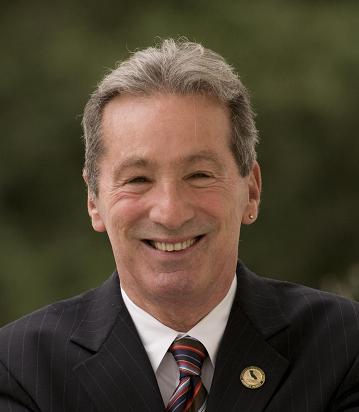
Tommi Avicolli Mecca is a longtime queer and tenants rights/affordable housing activist who works for Housing Rights Committee. He is a member of the LGBT Aging Policy Task Force.

LGBT youth law, ignored

Thirteen years ago, the San Francisco Board of Supervisors enacted an ordinance designed to make city services more accessible to lesbian, gay, bisexual and transgender youth. Under Chapter 12N of the San Francisco Administrative Code, city departments must provide LGBT sensitivity training “to any employee or volunteer who has direct contact with youth.” It also applies to any collaborative youth service providers who receive $50,000 or more in city funding.

Fueled with great intentions, 12N is the letter of the law in a city known for its tolerance and forward-thinking, progressive values. “San Francisco is committed to ensuring that LGBTQ youth receive the same level of dignity and respect as granted to all residents when encountering city services and programs,” a statement on the Human Rights Commission website reads.

There’s only one problem. With the exception of one department, 12N has never actually been implemented.

Last week, Paul Monge-Rodriguez, a 23-year-old appointee to the San Francisco Youth Commission, approached the Harvey Milk LGBT Democratic Club to point out that 12N has never been put into practice.

“To this day, there’s only one city department in compliance, and that’s the Department of Public Health,” Monge-Rodriguez explained in an interview with the Guardian. Other major service providers include the Human Services Agency, the Department of Children Youth & their Families, and the Office of Economic and Workforce Development.

An effort to push implementation, led by the Youth Commission, the Human Rights Commission and LYRIC — a nonprofit organization addressing issues facing LGBT youth — is gaining traction. Sup. John Avalos called for a hearing; following Monge-Rodriguez’s presentation, the Milk Club voted to formally support the effort.

“We pass these laws, but then when it comes to putting it in action, we don’t always live up to the legislation,” Avalos told the Guardian. “Basically, the city hasn’t implemented the program in terms of providing training for city staff.”

Jodi Schwartz, executive director of LYRIC, argues that 12N implementation should involve collection of sexual orientation and transgender identity data so as to better inform agencies about the populations they serve. The San Francisco Unified School District is the only district nationwide that collects sexual orientation and gender identity data when studying risk behavior for middle and high school students — and the results of a 2011 SFUSD anonymous survey revealed an alarming number of suicide attempts reported among queer youth.

According to SFUSD’s suicide indicators analysis, more than a third of high school students and nearly half of middle school students who self-identified as transgender reported having attempted suicide at some point; meanwhile, about a third of middle school students and about 17 percent of high school students who identified as lesbian, gay or bisexual also reported having attempted suicide.

The data is based on extrapolations and assumes no overlap between transgender and LGB populations, and concrete data in this realm is generally difficult to obtain. But based on the SFUSD data, LYRIC estimated that more than 1,000 LGBT students in middle and high school had reported attempting suicide. It’s a disturbing figure to say the least. If other agencies begin collecting such data, Schwartz argues, “they’ll use it to inform their priorities as an institution.”

Youth Commissioner Mia Tu Mutch, 22, helped create a training video that was shown to city staff at the Department of Public Health as part of a pilot program to initiate the sensitivity training mandated under 12N.

“Some of the stories talked about trans people feeling unsafe or unwelcome by service providers,” she explained when asked about the video, which was not made publicly available. “One featured a gender-queer young person who felt more comfortable using gender-neutral terms, but the intake person went out of their way to use the wrong pronoun.”

Tu Mutch worked with LYRIC to create a Tumblr site, entitled 12N Now or Never, featuring photographs of queer youth holding up signs asking for immediate 12N implementation. Her own sign reads, “I need 12N because youth shouldn’t have to educate adults.” Another message, posted by a young person named Vincent, reads, “I need 12N because I don’t want my kids to be judged like I was.”

“I think it just speaks to the bureaucratic process,” David Miree, spokesperson for the Human Rights Commission, responded when asked about the long delay. “The great intentions were there to put it into an ordinance. But what had to happen was, there had to be someone, or some community, or some agency” to step in and make it happen.

Schwartz takes a different view on why so little has been done. “There’s a lack of political will,” she says, “to invest the resources to do the transformation that’s necessary.”

Stage listings

0

Stage listings are compiled by Guardian staff. Performance times may change; call venues to confirm. Reviewers are Robert Avila, Rita Felciano, and Nicole Gluckstern. Submit items for the listings at listings@sfbg.com. For further information on how to submit items for the listings, see Picks.

THEATER

OPENING

The Bus New Conservatory Theatre Center, 25 Van Ness, SF; www.nctcsf.org. $32-45. Previews Wed/27-Fri/29, 8pm. Opens Sat/30, 8pm. Runs Wed-Sat, 8pm; Sun, 2pm. Through April 28. NCTC performs James Lantz’s tale of two young men whose meeting place for their secret relationship is a church bus.

The Happy Ones Magic Theatre, Fort Mason Center, Bldg D, Third Flr, SF; www.magictheatre.org. $22-62. Previews Wed/27-Sat/30, 8pm; Sun/31, 2:30pm; Tue/2, 7pm. Opens April 3, 8pm. Runs Wed-Sat, 8pm (also Sat, 2:30pm; no matinee April 20); Sun, 2:30pm; Tue, 7pm. Through April 21. An Orange County appliance store owner finds his life turned upside down in Julie Marie Myatt’s drama at Magic Theatre.

reasons to be pretty San Francisco Playhouse, 450 Post, Second Flr, SF; www.sfplayhouse.org. $30-100. Previews Wed/27-Fri/29, 8pm. Opens Sat/30, 8pm. Runs Tue-Thu, 7pm; Fri-Sat, 8pm (also Sat, 3pm). Through May 11. San Francisco Playhouse’s tenth season continues with Neil LaBute’s romantic drama.

Tinsel Tarts in a Hot Coma: The Next Cockettes Musical Hypnodrome, 575 10th St, SF; www.thrillpeddlers.com. $30-35. Previews Thu/28-Sat/30, 8pm. Opens April 4, 8pm. Runs Thu-Sat, 8pm. Through June 1. Thrillpeddlers’ sixth annual Theatre of the Ridiculous Revival presents a restored version of the Cockettes’ 1971 Art Deco-inspired musical extravaganza.

BAY AREA

The Whipping Man Marin Theatre Center, 397 Miller, Mill Valley; www.marintheatre.org. $36-57. Previews Thu/28-Sat/30, 8pm; Sun/31, 7pm. Opens Tue/2, 8pm. Runs Tue-Sat, 8pm (also April 6 and 20, 2pm; April 11, 1pm); Wed, 7:30pm; Sun, 2 and 7pm. Through April 21. Marin Theatre Company performs the Bay Area premiere of Matthew Lopez’s Civil War drama.

ONGOING

Assistance NOHspace, 2840 Mariposa, SF; www.opentabproductions.com. $20. Thu/28-Sat/30, 8pm. Over the past three years, things we’ve come to expect from plucky OpenTab Productions — whose annual offerings deal in aggressively contemporary themes such as media spin, business fraud, and job (in)security — include tight ensemble acting, minimal tech, and snappy direction, and in all these regards, Assistance does not disappoint. A crew of desperate office drones whose lives basically revolve around the abuse dished out by their unseen employer, Daniel Weisinger (who may or may not resemble playwright Leslye Headland’s old boss, Harvey Weinstein), hold down their airless fort, fielding calls at 11 p.m. and shirking responsibility whenever possible. Though Headland doesn’t do much to make her emotionally and professionally stunted characters palatable, the capable cast and director Ben Euphrat do manage to wring something resembling humanity out of them. From Nick (Tristan Rholl,) the frustrated slacker supervisor, to Nora (Melissa Keith), the-new-girl-turned-cynical-old-hand, to Justin (Nathan Tucker), the unctuous winner of the title of "last man standing," to Jenny (Michelle Drexler) a pragmatic yet annoyingly bubbly Brit, what stands out in each performance are the perfectly captured quirky nuances and barely-concealed neuroses of people caught in the process of losing their souls. Nothing about Assistance is likely to change your view of the business world, but if you’ve yet to experience the frenetic fun of an OpenTab show, it’s a perfect primer to the madness behind their method. (Gluckstern)

The Chairs Exit on Taylor, 277 Taylor, SF; www.cuttingball.com. $20-45. Thu, 7:30pm; Fri-Sat, 8pm (also Sat, 2pm); Sun, 5pm. Extended through April 7. In Rob Melrose’s new translation of Eugene Ionesco’s The Chairs, an elderly couple sit in the austere parlor of their lonely lighthouse, chortling over a spate of private wordplay and reminiscing of sprightlier times, until their initially frantic and disjointed dialogue settles into a smooth flow, well-polished by decades of endearments and gentle bickering. Possibly the last two survivors of a not entirely explained apocalypse, the isolated nonagenarians (magnificently played by David Sinaiko and Tamar Cohn) nevertheless make it known that important guests are expected to arrive at any moment in order to hear a hired orator (Derek Fischer) deliver the Old Man’s "message," which he has spent a lifetime honing. As the doorbell begins to ring, a jarring squall, and invisible guests and dozens of mismatched chairs begin to crowd their peaceable empire in claustrophobia-inducing numbers, their companionable seclusion is shattered for good. Director Annie Elias manages to coax both gravitas and decorum out of this little-produced, yet influential absurdist relic, imbuing her protagonists with a depth of character that belies their farcical circumstances, while Theodore J.H. Hulsker’s murmuring sound design of crashing waves, angry winds, and the strident doorbell could almost be another character in the play, so thoroughly does it set the tone in ways that Ionesco might not have approved of, but is all the better for. (Gluckstern)

The Couch Tides Theatre, 533 Sutter, Second Flr, SF; www.3girlstheatre.org. $30. Thu-Sat, 8pm; Sun/31, 4pm; April 7, 2pm. Extended through April 7. As the centerpiece of its second annual festival of plays in honor of Women’s History Month, 3Girls Theatre, devoted to Bay Area women playwrights, revives Lynne Kaufman’s fitful but enjoyable 1985 dramatic comedy about the inception of the famous sexual and psychiatric triangle between Carl Jung (Peter Ruocco), wife Emma Jung (Courtney Walsh), and his mistress and analysand Toni Wolff (Maggie Mason). In this, her first play, Kaufman (whose most recent play, Acid Test, explores the life of Ram Dass) folds in Carl’s critical 1912 break with mentor Sigmund Freud (Louis Parnell) for an action-packed day Chez Jung. (Also on the scene is the Jung’s precocious daughter Katherine, played by a sure and animated Hattie Rose Allen Bellino). Amy Glazer directs a solid cast who convincingly blends the farcical aspects of the dialogue with its meatier and more dramatic ones, as new ties and power dynamics are sometimes roughly, other times genteelly negotiated. The former is usually the stuff of high comedy, as when Freud goes apoplectic upon learning Jung is not necessarily the disciple and "son" he had thought him to be. And Jung’s (proto-) New Agey leanings only add fuel to the fire: When Carl turns to the I Ching to decide on the best course of action for his career going forward, Freud erupts, "You idiot! You’re playing tiddlywinks with the human race!" But it is ultimately the politics of love and the household that take center stage, with Walsh’s vulnerable yet ever dignified Emma emerging as, if not the greatest psychiatrist, perhaps the greatest strategist of them all. (Avila)

Eurydice Gough Street Playhouse, 1622 Gough, SF; www.custommade.org. $25-30. Thu-Sat, 8pm (no shows Thu/28-Fri/29); Sun, 7pm. Through April 14. Custom Made Theatre Co. performs Sarah Ruhl’s inventive take on the Orpheus and Eurydice myth, exploring the story through the heroine’s eyes.

Foodies! The Musical Shelton Theater, 533 Sutter, SF; www.foodiesthemusical.com. $30-34. Fri-Sat, 8pm. Open-ended. AWAT Productions presents Morris Bobrow’s musical comedy revue all about food.

God of Carnage Shelton Theater, 533 Sutter, SF; www.sheltontheater.org. $38. Thu/28-Sat/30, 8pm. Shelton Theater presents Yasmina Reza’s Tony-winning comedy about upper-middle-class parents clashing over an act of playground violence between their children.

Just One More Game Exit Theatre, 156 Eddy, SF; www.tripleshotprodutions.org. $25. Thu/28-Sat/30, 8pm. With the rise of the programmer as pop culture hero, it was probably inevitable that we’d start writing plays about them too. In local playwright Dan Wilson’s Just One More Game our programmer protagonist is Kent (Christopher DeJong) whose mission is to find love, and his co-player is Marjorie (Linda-Ruth Cardozo), who wields her own geek credentials like a Mortal Kombat wrath hammer. Where Wilson’s comedy excels is in the witty gamer banter that defines much of their attraction and commonality — references to Zork, Oregon Trail, Dungeons and Dragons, and The Secret of Monkey Island abound, while a series of meticulous video game animations (also Wilson’s) lend colorful counterpoint to the action on the stage. DeJong plays his role of emotionally-inhibited loner with a degree of laconic detachment that unfortunately eliminates all traces of chemistry between him and Cardozo, who is especially good at capturing the cheerfully aggressive awkward of a woman accustomed to being "one of the boys" because there was nothing about "the girls" she could relate to. Both the comedy and pace flag by the time the first NPCs (non-player characters) enter the room, broadly clichéd parents yammering for grandchildren and obnoxious college buddies armed with too many baby photos, who conspire to stunt the growth of Kent and Marjorie’s relationship and wind up stunting the growth of the play. If the quest for love is a game, as the title suggests, it’s one that could use a little more back-end development, and a much greater degree of playfulness. (Gluckstern)

Sex and the City: LIVE! Rebel, 1760 Market, SF; trannyshack.com/sexandthecity. $25. Wed, 7 and 9pm. Open-ended. It seems a no-brainer. Not just the HBO series itself — that’s definitely missing some gray matter — but putting it onstage as a drag show. Mais naturellement! Why was Sex and the City not conceived of as a drag show in the first place? Making the sordid not exactly palatable but somehow, I don’t know, friendlier (and the canned a little cannier), Velvet Rage Productions mounts two verbatim episodes from the widely adored cable show, with Trannyshack’s Heklina in a smashing portrayal of SJP’s Carrie; D’Arcy Drollinger stealing much of the show as ever-randy Samantha (already more or less a gay man trapped in a woman’s body); Lady Bear as an endearingly out-to-lunch Miranda; and ever assured, quick-witted Trixxie Carr as pent-up Charlotte. There’s also a solid and enjoyable supporting cast courtesy of Cookie Dough, Jordan Wheeler, and Leigh Crow (as Mr. Big). That’s some heavyweight talent trodding the straining boards of bar Rebel’s tiny stage. The show’s still two-dimensional, even in 3D, but noticeably bigger than your 50" plasma flat panel. (Avila)

Steve Seabrook: Better Than You Marsh San Francisco, 1062 Valencia, SF; www.themarsh.org. $15-50. Fri/29, 8pm; Sat/30, 8:30pm. Starting April 4, runs Thu, 8pm; Sat, 8:30pm. Extended through May 18.

Self-awareness, self-actualization, self-aggrandizement — for these things we turn to the professionals: the self-empowerment coaches, the self-help authors and motivational speakers. What’s the good of having a "self" unless someone shows you how to use it? Writer-performer Kurt Bodden’s Steve Seabrook wants to sell you on a better you, but his "Better Than You" weekend seminar (and tie-in book series, assorted CDs, and other paraphernalia) belies a certain divided loyalty in its own self-flattering title. The bitter fruit of the personal growth industry may sound overly ripe for the picking, but Bodden’s deftly executed "seminar" and its behind-the-scenes reveals, directed by Mark Kenward, explore the terrain with panache, cool wit, and shrewd characterization. As both writer and performer, Bodden keeps his Steve Seabrook just this side of overly sensational or maudlin, a believable figure, finally, whose all-too-ordinary life ends up something of a modest model of its own. (Avila)

The Voice: One Man’s Journey Into Sex Addition and Recovery Stage Werx Theater, 446 Valencia, SF; thevoice.brownpapertickets.com. $10-18. Fri-Sat, 8pm. Through April 6. Ticket sales for David Kleinberg’s autobiographical solo show benefit 12-step sex addiction recovery programs and other non-profits.

The Waiting Period Marsh San Francisco, 1062 Valencia, SF; www.themarsh.org. $25-50. Fri/29, 8pm; Sat/30, 5pm. Brian Copeland (comedian, TV and radio personality, and creator-performer of the long-running solo play Not a Genuine Black Man) returns to the Marsh with a new solo, this one based on more recent and messier events` in Copeland’s life. The play concerns an episode of severe depression in which he considered suicide, going so far as to purchase a handgun — the title coming from the legally mandatory 10-day period between purchasing and picking up the weapon, which leaves time for reflections and circumstances that ultimately prevent Copeland from pulling the trigger. A grim subject, but Copeland (with co-developer and director David Ford) ensures there’s plenty of humor as well as frank sentiment along the way. The actor peoples the opening scene in the gun store with a comically if somewhat stereotypically rugged representative of the Second Amendment, for instance, as well as an equally familiar "doood" dude at the service counter. Afterward, we follow Copeland, a just barely coping dad, home to the house recently abandoned by his wife, and through the ordinary routines that become unbearable to the clinically depressed. Copeland also recreates interviews he’s made with other survivors of suicidal depression. Telling someone about such things is vital to preventing their worst outcomes, says Copeland, and telling his own story is meant to encourage others. It’s a worthy aim but only a fitfully engaging piece, since as drama it remains thin, standing at perhaps too respectful a distance from the convoluted torment and alienation at its center. Note: review from an earlier run of the same production. (Avila)

BAY AREA

The Coast of Utopia: Voyage & Shipwreck Ashby Stage, 1901 Ashby, Berk; www.shotgunplayers.org. $20-35. Shipwreck previews Wed/27-Thu/28, 7pm; Fri/29, 8pm. Opens Sat/30, 8pm. Runs Wed-Thu, 7pm; Fri-Sat, 8pm; Sun, 5pm. Through May 5. Voyage previews Wed/27, 7pm. Opens April 3, 3pm. Runs April 13, 20, 27, and May 4, 3pm. Shotgun Players perform the first two parts of Tom Stoppard’s revolutionary trilogy.

Dostoevsky’s The Grand Inquisitor Berkeley City Club, 2315 Durant, Berk; www.centralworks.org. $15-28. Thu/28-Sat/30, 8pm; Sun/31, 5pm. Central Works performs Gary Graves’ adaptation of the story-within-a-story from The Brothers Karamazov.

Fallaci Berkeley Repertory Theatre, 2015 Addison, Berk; www.berkeleyrep.org. $29-89. Tue, Thu-Sat, 8pm (also Sat, 2pm); Wed and Sun, 7pm (also Sun, 2pm). Through April 21. Berkeley Rep performs Pulitzer-winning journalist Lawrence Wright’s new play about Italian journalist Oriana Fallaci.

The Mountaintop Lucie Stern Theatre, 1305 Middlefield, Palo Alto; www.theatreworks.org. $23-75. Wed/27, 7:30pm; Thu/28-Sat/30, 8pm (also Sat/30, 2pm); Sun/31, 2pm. Starting April 3, runs Wed-Thu, 11am (also Thu, 8pm); Sat, 8pm; Sun, 2pm. Through April 7. TheatreWorks performs Katori Hall’s play that re-imagines the events on the night before Dr. Martin Luther King, Jr.’s assassination.

The Real Americans Marsh Berkeley, 2120 Allston, Berk; www.themarsh.org. $25-50. Fri, 8pm; Sat, 5pm. Through April 6. Dan Hoyle shifts his popular show about small-town America to the Marsh’s Berkeley outpost.

PERFORMANCE/DANCE

BATS Improv Bayfront Theater, Fort Mason Center, Marina at Laguna, SF; www.improv.org. $20. "Theatresports," Fri/29, 8pm. "Double Feature," Sat/30, 8pm.

"Dream Queens Revue" Aunt Charlie’s Lounge, 133 Turk, SF; www.dreamqueensrevue.com. Wed/27, 9:30pm. Free (reservations suggested: dreamqueensrevue@gmail.com). Fab drag with Colette LeGrande, Diva LaFever, and more.

"Madame Ho" Commonwealth Club of San Francisco, 595 Market, Second Flr, SF; www.commonwealthclub.org. Mon/1, 6pm. Free. Magic Theatre’s 2013 Martha Heasley Cox Virgin Play Series concludes with this staged reading of Eugenie Chan’s Barbary Coast drama.

"Mission Position Live" Cinecave, 1034 Valencia, SF; www.missionpositionlive.com. Thu, 8pm. Ongoing. $10. Stand-up comedy with rotating performers.

"New Works by Artists in Residence" CounterPULSE, 1310 Mission, SF; www.counterpulse.org. Thu/28-Sun/31, 8pm. $20-30. With richien (Rowena Richie and Jennifer Chien) performing Twindependent, and Sense Object (Miriam Wolodarksi) performing Of Limb and Language.

"The News: Out of the Box with Bernadette Bohan of the Box Factory" SOMArts Cultural Center, 934 Brannan, SF; www.thenewsperformance.eventbrite.com. Tue/2, 7:30pm. $5. SOMArts wraps up its experimental performance series.

"A Night of Utopian Gestures" Yerba Buena Center for the Arts, 701 Mission, SF; www.ybca.org. Sat/30, 7-10pm. Free. Interactive celebration of exhibit "Without Reality There Is No Utopia," featuring Israeli artist Dana Yahalomi, Futurefarmers’ Michael Swaine, live music, and more.

"Picklewater Clown Cabaret Benefit for Judy Finelli" Stage Werx, 446 Valencia, SF; www.brownpapertickets.com. Mon/1, 8pm. $15. Clowning for a good cause: SF School for Circus Arts co-founder Finelli, who has multiple sclerosis.

"The Romaine Event Comedy Show: Eight Year Anniversary Show" Make-Out Room, 3225 22nd St, SF; www.pacoromane.com. Wed/27, 8-10pm. $10. Celebrate with Ngaio Bealum, Paco Romane, Kaseem Bentley, David Gborie, and Anna Serengina, plus music by DJ Specific.

"San Francisco Magic Parlor" Chancellor Hotel Union Square, 433 Powell, SF; www.sfmagicparlor.com. Thu-Sat, 8pm. Ongoing. $40. Magic vignettes with conjurer and storyteller Walt Anthony.

"The Secret History of Love" Dance Mission Theater, 3316 16th St, SF; www.seandorseydance.com. Thu/28-Sun/31, 8pm (also Sat/30-Sun/31, 4pm). $10-25. Sean Dorsey Dance makes a local stop on the company’s 20-city national tour with this performance inspired by Dorsey’s work on the National LGBT Elders Oral History Project.

"Sing-Along Jesus Christ Superstar" Victoria Theatre, 2961 16th St, SF; www.brownpapertickets.com. Fri/29, 7pm. $15-35. The Sisters of Perpetual Indulgence ring in the Sisters’ Annual Easter Weekend with this festive sing-along, plus the debut of the Chunky Jesus Contest.

BAY AREA

"The Divine Game" Ashby Stage, 1901 Ashby, Berk; www.shotgunplayers.org. Mon/1, April 15, and 29, 8pm. $20. First Person Singular and Shotgun Cabaret present this dramatic re-enactment of Nabokov teaching at Cornell in the 1950s.

Do we care?

77

steve@sfbg.com

Teresa Molina faced abusive, belittling treatment on the job.

The 52-year-old immigrant from Sinaloa, Mexico, says she was paid $500 a month to provide 24-hour, live-in care to a girl in a wheelchair and her family. She wasn’t allowed regular breaks. She couldn’t eat what she wanted. Even her sleep was disrupted.

“I spoke up a couple times, but when I did, my employer told me I was dumb and good for nothing,” Molina, speaking Spanish through a translator, told us. “She would ask my immigration status, and I said that was not important, but she used that as a threat.”

Molina is a domestic worker — one of the only two professions (the other being farm work) exempt from federal labor standards.

Her experience, a common one among immigrant women in California, prompted Molina to get involved in last year’s California Domestic Worker Bill of Rights campaign, part of national effort that resulted in the first-ever protections being signed into law in New York in 2010.

Gov. Jerry Brown vetoed the California version of the bill late on the night of Sept. 30, 2012, the deadline for signing legislation, citing the paternalistic concern that better pay and working conditions might translate into fewer jobs or fewer hours for domestic workers.

“I was offended by how he did it, in the middle of the night on the last day, and he basically trivialized it,” Assembly member Tom Ammiano (D-SF), who sponsored the measure, told us. “Here in California, it’s a major workforce, but there’s no rules and there’s a documented history of abuses.”

But if anything, Brown’s veto has energized local activists, who say the battle for domestic worker rights is part of a much larger issue that women, children, immigrants, and their supporters are struggling against as they try to get society to value one of the most basic of social and economic functions: caring and caregiving.

Those in the caregiving professions are used to such defeats, but this one seems to be galvanizing and uniting several parallel movements — most of which have a strong presence here in the Bay Area — that want to apply human values and needs to an economic system that has never counted them.

It is, economists and policy experts say, a profoundly different way to measure economic output — and if the domestic workers and their allies succeed, it could have long-term implications for national, state, and local policy.


CARING DOESN’T COUNT

There are endless examples of how society undervalues caring and caregiving and other labor that has long been deemed “women’s work.” They range from nurses fighting for fair contracts to in-home support service workers fighting for their jobs. Many are jobs that have traditionally been done in the home — and in some cases, not counted at all as part of the Gross Domestic Product.

Social work, teaching, administrative support, caring for children or seniors, community organizing, and other jobs held predominantly by women and people of color are consistently among the lowest paid professions.

But the demand for those jobs is increasing — and the price of under-investing in education, caregiving, and child development is decreased productivity and increased crime and other costs for decades to come — so activists say they are critical to the nation’s future.

“It’s a different perspective. Caregiving isn’t transactional the way we think about other jobs,” said Alicia Garza, executive director of People Organized to Win Employment Rights (POWER), which has joined with other organizations nationwide for a Caring Across Generations campaign. “We’re a nation that has a growing aging population with no plan for how we’re going to take care of these people.”

In California today, caregivers find themselves under attack. Despite playing an important role in electing Brown as governor and in keeping Kaiser Hospital in Oakland and CPMC’s St. Luke’s Hospital in San Francisco open to the low-income residents they serve, the California Nurses Association is still stuck in a years-long contract impasse with those huge hospital corporations.

“We don’t think of ourselves first, we think of others first,” says Zenei Cortez, a CNA co-president who has been a registered nurse for 33 years, noting that patient care and advocacy standards have been key sticking points in their negotiations.

During each year with a budget shortfall, in-home support services for the sick, elderly, and disabled have been placed on the budgetary chopping block in California and many of its counties — including San Francisco, which has about 21,000 such workers — saved only by political organizing efforts and a longstanding lawsuit against the state (which was just settled on March 20 and will result in an 8 percent across-the-board cut in services).

“This program has been under assault for a full decade,” says Paul Kumar, a public policy and political consultant for the National Union of Healthcare Workers, calling that attack short-sighted, in both fiscal and human terms. “People get better care in a home setting.”


UNDERVALUED, ACROSS THE BOARD

If people generally act in their financial self interest, as economic theory holds, Oakland resident Lil Milagro Martinez would oppose the Domestic Workers Bill of Rights and its requirement that she pay her nanny at least minimum wage and allow for breaks and sick days.

After all, Milagro and her family are barely scraping by, with her husband working four jobs as she balances care for their infant son with coursework as a theology graduate student. Instead, Milagro said, she offers their nanny a living wage, benefits, and good working conditions.

“I wanted to feel that we were affirming her rights, so she would pass on that level of respect to my son,” Milagro told us. “If I can do this, and there are companies out there saying they can’t afford to do the right thing, that angers me.”

She was also angry when Brown vetoed the Domestic Workers Bill of Rights. She’s been working with a domestic worker employer group called Hand in Hand, a part of the larger National Domestic Worker Coalition.

“Our goal is to bring people together to create the kinds of worker relationships they want with people in their homes,” Danielle Feris, the national director of Hand in Hand, told us. “There will just be more and more people that need care in the home, so this touches all families.”

Milagro and other domestic worker employers say their stand is about much more than enlightened self-interest. They say this is an important step toward recognizing the important contributions that women and minority groups make to society and creating an economy focused on addressing human needs.

“Care, we can say, is undervalued across the board,” Feris said.

In addition to reintroducing the bill in Sacramento this year, the coalition is pushing similar legislation in Massachusetts and Illinois.

“I think the domestic workers have done a fantastic job at organizing across the country,” Ammiano said. “Making a movement of something isn’t easy, but once it gets traction then it’s tough to ignore.”

Like Milagro and Ammiano, Molina said she was bitterly disappointed by Brown’s veto, although all say it only strengthened their resolve to win the fight this year. “I felt very sad, depressed, and betrayed,” Molina said. “But we will win this…And I think the movement for women, workers, and immigrants will only grow from us winning.”

Domestic Workers Coalition campaign coordinator Katie Joaquin noted that the campaign is about triggering a cultural shift as much as it’s about winning legal protections, as important as they may be. “Once this bill passes and we have basic protections doesn’t mean the abuses will stop,” she said, noting that this is really about valuing care work.

“It’s bringing people together around the care we need,” Joaquin said. “These are conversations that are breaking new ground. The bill is really something that gets the ball rolling.”

Once some household work gets recognized, it’s not a big step toward a conversation about valuing all kinds of caring work and including that in our measures of economic progress.

“We definitely support the idea of valuing all care work, both paid and unpaid,” Feris said. “We all have something to gain by valuing each other.”


THE REAL WEALTH OF NATIONS

Author and researcher Riane Eisler has been a leading thinker and advocate for creating a more caring economy for decades, work that resulted in her seminal 1988 book The Chalice and the Blade, which sold half a million copies and was lauded as a groundbreaking analysis of the gender roles in ancient and modern history. She followed that with The Real Wealth of Nations in 2007, and the creation of the Center for Partnership Studies (CPS) and the Caring Economy Campaign.

Eisler takes issue with what most people call “the economy,” a wasteful and incomplete system that doesn’t actually economize in connecting what we have to what we need. She persuasively argues that it makes sense in both human and fiscal terms to value caring and caregiving, for one another and the natural world, providing myriad examples of countries, cultures, and companies that have benefited from that approach.

“In a way, the concepts are very simple. What could be more simple than saying the real wealth of nations isn’t financial? It consists of the contributions of people and nature,” Eisler told us by phone from her home in Monterey.

On March 20, Eisler gave a Congressional Briefing (attended by members and staffers in the Rayburn House Office Building) entitled “The Economic Return From Investing in Care Work & Early Childhood Education,” presenting a report on the issue that CPS and the Urban Institute released in December: “National Indicators and Social Wealth.”

“I think this is extremely timely,” Eisler told us, noting that the Republican Party’s currently aggressive fiscal conservatism must be countered with evidence that meeting people’s real needs is better economic policy than simply catering to Wall Street’s interests.

Her address to Congress followed ones that Eisler has given to the United Nations General Assembly and other important civic organizations around the world, and it was followed the next day by an address she gave to the State Department entitled: “What’s Good for Women is Good for World: Foundations of a Caring Economy.”

While Eisler said “there are people who are very excited about it,” she admits that her ideas have made little progress with the public even as the global economy increasingly displays many of the shortcomings she’s long warned against. “This is still very much on the margins.”

But that could be changing, particularly given the political organizing work that has been done in recent years around the rights of domestic workers and immigrants and on behalf of the interests of children and the poor, some of it drawing on the work of liberal economists such as Paul Krugman and Joseph Stiglitz.

“The Gross Domestic Product is a very poor measure of economic health,” she told us, noting that it perversely counts excessive healthcare spending, rapid resource depletion, and the cleanups of major oil spills as positive economic activity.

Erwin de Leon, a Washington DC policy researcher, opens “National Indicators and Social Wealth” with a quote from a speech that Robert F. Kennedy gave in 1968 criticizing GDP as a bad measure of progress: “It measures neither our wit nor our courage, neither our wisdom nor our learning, neither our compassion nor devotion to our country, it measures everything, in short, except that which makes life worthwhile.”

De Leon then writes: “An urgent need met by measuring a nation’s social wealth is identifying the attributes of a society that make it possible to create and support the development of the full capacities of every individual through the human life span. Social wealth indicators identify these drivers, with special focus on the economic value of caring for and educating children and the contributions of women and communities of color.”

The carefully documented report makes an economic argument that investment in caregiving and early childhood development more than pays for itself over the long run in terms of increased productivity and decreased costs from crime and other social ills, creating a happier and more egalitarian society in the process.

“Nobody talks about the work that immigrant women do and how it contributes to productivity. They free us up to do other things, but we don’t count it,” De Leon told us in a phone interview. “We put lots of value on numbers and the views of economists. The problem with the numbers is it’s an economic number that just values production.”

Eisler’s approach is neither liberal nor conservative, and she takes equal issue with capitalism and socialism as they’ve been practiced, labeling them both “domination-based” systems (as opposed to the “partnership-based” systems she advocates) that devalue caregiving and real human needs.

In fact, she seems to be even harder on progressives than those on the other end of the ideological spectrum, given the Left’s stated concern for women and communities of color. It was a point that Ammiano echoed: “There’s a lot of liberal guilt, but the follow-through has yet to happen.”

“What this entails is re-examining everything,” Eisler told us. “It starts with examining the underlying beliefs and values.”


INSTITUTIONAL SEXISM

Even in supposedly enlightened San Francisco, things are getting worse. On March 26, following a battle with SEIU Local 1021 that began last fall, the city’s Department of Human Resources submitted to a labor mediator its proposal to lower the salaries for new hires in 43 job categories, including vocational nurses, social workers, and secretaries.

The rationale: Those workers were paid more than market rates based on a survey of other counties. But it’s also true that those positions are disproportionately held by women and minorities. In the 1980s, San Francisco made a policy decision to raise the pay of what were traditionally female-dominated professions, part of a nationwide campaign to erase decades of pay inequity.

“The city is rolling back decades of historic work on pay equity in this city,” SEIU Political Director Chris Daly told us. “We were concerned about equal treatment of workers who were disproportionately women and people of color.”

DHS spokesperson Susan Gard told us, “The city is committed to that principal, equal pay for equal work, and we don’t think our proposal erodes that.” But she couldn’t explain why that was true. In reality, the move will lower the salaries for women that come to work for the city.

Those involved in the Domestic Workers Bill of Rights campaign mince no words when it comes to seeing the long history of sexism in political and economic institutions as one of the main obstacles they face.

“In so many ways, domestic work is women’s work, and women’s work has always been undervalued and underpaid,” Milagro said.

She even saw it growing up as child when she accompanied her father when he did housekeeping work, when he was treated “as nonentity, not human,” abuse and mistreatment that was exacerbated by the twin facts that he was an immigrant doing women’s work.

“Sexism has undervalued care work,” Feris said.

Ammiano likened the current struggle to the gay rights movement, and he said that when he started as a teacher back in the 1970s and wanted to teach in the early primary grades, he was told that was for women.

“It’s the feminization of labor,” Ammiano said. “When you have institutional sexism, you have to peel it back layer by layer.”

Eisler is equally direct: “We’ve all been taught to marginalize anything connected to the feminine,” she said.

She noted the vastly disproportionate global poverty rates of women compared to men and said “it’s because most are full or part-time caregivers,” work that isn’t often compensated.

Eisler said the current economic system “marginalizes and dehumanizes half the population,” asking how that could ever be considered ethical or equitable. She dismisses arguments that we can’t afford to value caregiving or work done in the home, noting that “there’s always money for the masculine values” of war and economic expansion.

Ammiano said the cultural blinders that prevent people from seeing how society discriminates against women and the work they do makes the problem more insidious and tougher to solve.

“If they’re doing it deliberately, it’s almost better because you can sink you teeth into it, but if it’s not deliberate then it’s tougher to corral,” he said.

Yet there could be subtle but important changes underway in how people value the roles of men and women in society.

There are indications that substantial majorities of people increasingly see men and masculine values as a big part of the problems the people of the world are facing. Author John Gerzema, whose forthcoming book is entitled Athena Doctrine: How Women (And the Men Who Think Like Them) Will Rule the Future, revealed some of the extensive polling research behind his book in a recent TED Talk.

Much of it points to what he called a “global referendum on men,” with strong majorities in countries around the world — with Canada the only exception — agreeing with the statements “I’m dissatisfied with the conduct of men in my country” and “The world could be better if men thought more like women.”

He and his research partners also had the tens of thousands of people they surveyed rate a list of traits as either masculine or feminine, and then later he had respondents state the traits they most wanted to see in their political leaders, finding that people around the world have begun to strongly prefer feminine traits to male ones in their leaders.

His conclusion: “Femininity is the operating system of 21st Century progress.”


THE SILVER TSUNAMI

The “silver tsunami” — Baby Boomers reaching old age and about to need more care — is about to break.

POWER, Senior Action Network, and many other San Francisco-based organizations in the Caring Across Generations campaign are part of a national push to increase access to and investment in caregiving, from early childhood development through care for those with disabilities to elder care.

“The caregiver industry is something we should invest in,” said POWER’s Garza. “We believe in a society that values care and we want to value that work.”

Yet with short-term, bottom-line thinking guiding the decisions, that requires a bold paradigm shift. Instead, the popular state In-Home Support Services program — which provides some compensation for caregivers of those with disabilities — is now facing an 8 percent cut as part of the recent settlement to lawsuits filed to prevent the 20 percent cut that then-Gov. Arnold Schwarzenegger had proposed.

The SF-based lawyer who filed the lawsuit, Stacey Leyton, told us this was the best settlement possible given the current political climate and the risk of deeper cuts if the Ninth Circuit Court of Appeals ruled in the state’s favor. But she thinks any IHHS cuts are short-sighted: “Any cuts to home care may balance the budget ledger now, but they can cause more costs later in the form of nursing home care and emergency room visits.”

James Chionsini, a community organizer with the Senior and Disability Action (SDA, formerly Senior Action Network), tells us that in addition to the sheer size of the “silver tsunami” coming through — which will require a huge influx of caregivers — efforts by the federal and state governments to contain medical costs could hurt the “upper-poor,” who are required to somehow pay a share of their MediCal health care costs.

That’s one reason why SDA, POWER, and other groups are supporting several campaigns aimed at creating a more caring society, from the Domestic Workers Bill of Rights to Caring Across Generations to basic, bread-and-butter political organizing efforts.

“Organizing is so important,” Garza said, while Chionsini said, “It’s about raising the profile of people who are providing care.”

Milagro said that if the immigrant women who do domestic work score a major victory, that could empower other marginalized groups. “It’s about a change in consciousness,” she said. “This can show a path for other movements to build, strengthen, and work together.”

Garza agrees that important, foundational changes are already underway, even though they will require lots of hard organizing work to bring them to fruition.

“There is a groundswell. This is happening,” she said, noting that it revolves around asking important questions. “How do you look at an economy not rooted in patriarchy? What would it look like if we had to compensate mothers?”

Next week: Part II, Do we care about the natural world?

Willie Brown and Ammiano’s pot bill

35

Assemblymember Tom Ammiano’s new medical marijuana bill seems pretty straightforward. Almost everyone in the medpot biz thinks there ought to be some sort of statewide regulations for a growing industry that operates in a mish-mash of local jurisdictions with no overall rules. If nothing else, consumer-protection policies ought to be in place. And, of course, the more the dispensaries accept, and follow, reasonable regs, the easier it is to win the mainstream political support necessary to get the feds off all of our backs and ultimately follow Colorado and Washington.

All good, right?

So Ammiano, who has been on this issue for years, is proposing that the state’s Department of Alcoholic Beverage Control — which for all its problems has experience regulating mind-altering substances — draft and oversee medpot rules.

But the industry that makes a lot of money off the legalization of medicinal weed is famously fractured — and the politics of Sacramento are often nasty. Add in former San Francisco Mayor Willie Brown — who has his fingers in all sorts of business opportunities these days — and the story turns downright weird.
Ammiano’s been talking about Califonria and pot for years. He proposed legalization before the other states did, but frankly, this current state Legislature’s never going to have that kind of courage.

But he continues on with the effort. Last year, he tried to put pot under the Department of Consumer Affairs, which clearly didn’t want it; his bill died in the state Senate.

Normally, when new regulations are proposed for an industry, the Legislature holds what’s called a Sunrise Hearing, to bring all the stakeholders into a room and talk about what issues ought to be addressed. So Ammiano a few months back asked for a hearing in the Senate Business, Professions, and Economic Development Committee. No problem, said the chair, Curren Price, a Los Angeles Democrat.

But in February, five days before the hearing was set, Curran called the whole thing off. Turns out that the Governor’s Office and the Attorney General’s Office wanted no part of it, so it was hard to round up the essential players. Also, Curran was running for an open LA City Council seat and probably didn’t want the publicity. As Ammiano said at the time, “What’s up with marijuana? You can’t even have a hearing?”

Even without a hearing, he’s moving a new bill, AB 473, which would create under ABC a Division of Medical Cannabis Regulation and Enforcement. The bill is modeled on a successful effort in Colorado that has kept the feds at bay. Washington is also putting marijuana regulation under its liquor control authority.
“We’ve had not one federal intervention,” in Colorado, Matt Cook, a consultant who help write the rules in that state, said.

But just as Ammiano was preparing to line up support for his measure, another bill mysteriously appeared, in the state Senate. A “spot bill” with no actual content, the measure was set as a medical marijuana regulation placeholder. The authors: Senate President Darrell Steinberg and San Francisco’s Mark Leno.

Now: Leno’s been a big supporter of medical pot for years — but the bill wasn’t his idea. “Darrell told me he was going to do something about marijuana regulations, and he asked me if I would join him,” Leno told us.

What Leno didn’t know: Steinberg had been approached and asked to carry a bill by Willie Brown. Brown contacted the Senate president, sources tell us, and said that Ammiano was the wrong person to carry pot legislation.

Why? Who knows. Brown wouldn’t return my calls. But I can tell you with absolute certainty that Brown has been looking for ways to discredit Ammiano since 1999, when the then-supervisor challenged the mayor’s re-election in a legendary write-in campaign that galvanized the city’s left and created the momentum for the complete rejection of Brown’s politics and endorsed candidates a year later, in the first district elections.

And yes: Willie Brown carries a grudge. So it’s possible that he would go out of his way to make sure that Ammiano didn’t get credit for leading the way on what will evenutally be a huge sea chance in how California handles pot.

Now: This sort of thing isn’t viewed very highly in the hallowed halls of the state Leg, where people take their bills — and their history on issues — very seriously. Ammiano was furious, and talked to Steinberg, who (properly) apologized for stepping on his toes. Leno told us he had no intention of undermining his San Francisco colleague, that he had immense respect for Ammiano and all of his efforts, and that he wouldn’t move forward with any bill that didn’t have Ammiano’s input and support.

But it raises the question: Why is Brown even involved in medical marijuana? The only answer I can come up with is that he’s making money off it. Not as a dispensary owner or a grower, but as, in effect, a lobbyist.

When I heard Brown was messing around with the industry, I called Steve DeAngelo, who runs Harborside Health Center, the $22 million a year dispensary in Oakland. DeAngelo’s a promient leader on medical marijuana issues, and has built a respected business that pays taxes to Oakland, provides quality product, and is in many ways a model for what a dispensary should look like.

We talked for a while about Ammiano’s bill, and DeAngelo said he wants to be sure there’s community consensus. “The most important thing is that whatever passes addresses the issues and has broad supoprt in the industry,” he said. He agreed that regulation is needed, but stopped short of endorsing Ammiano’s bill, saying “there still needs to be further discussion.”

Then I asked him if he knew why Brown was talking to the state Senate president, and he told me:

“Willie Brown has been a political advisor to Harborside.”

I asked him if Harborside was paying Brown for his advice. He refused to say.

Okay then. But Brown doesn’t have much of a history of working on this issue pro bono, and is not known for serving as a “political advisor” (or doing much of anything else in the way of work) for free.

What does Brown think about the Ammiano bill? “He thinks,” DeAngelo said, “that it’s important it have a broad base of support.”

Willie Brown is not popular with the voters of California. His history of questionable (at best) ethics was among the reasons the voters approved terms limits for the Legislature. Hardly anyone on the left trusts him. A medical marijuana regulatory bill that has his fingerprints isn’t going to do much for “consensus” or “broad-based support.”

So maybe the best thing Brown could do for his client is stay the hell out of Sacramento.

Spare change, Larry?

Tensions flared over the America’s Cup last week as critics called for billionaire yacht owner Larry Ellison to cover the looming city deficit out of his own deep pockets.

It’s evidently a popular idea: A petition asking Ellison to pony up had collected 1,663 signatures as of Wednesday morning.

The language in the petition, started by former Sup. Aaron Peskin, cuts straight to the point: “Your net worth is $43 billion,” it states. “Covering the America’s Cup debt would be equivalent to a person who has $40,000 donating $13.95. Is that too much to ask?”

At a hearing March 13, Sup. John Avalos asked why the city’s General Fund was on the hook to help cover costs for the yachting event, despite earlier assurances that the city would be reimbursed for tournament-related expenses.

The prestigious international yacht race will be held on the San Francisco Bay starting in July. A host and venue agreement hashed out between the city and race organizers provided that the America’s Cup Organizing Committee, the tournament’s fundraising arm, would “endeavor” to solicit donations from private donors to reimburse the city for expenses incurred, originally pegged at $32 million. Total city costs are now estimated to hover around $22 million, but so far ACOC has sent less than $7 million in reimbursement, city agency representatives reported at the hearing.

The fundraising committee has mostly come up dry on the rest — and now Avalos is irked because the city agency that negotiated the deal appears to be “moving the buoys,” as he characterized it, by counting a projected tax revenue boost instead of actual reimbursement dollars as adequate compensation for city spending.

Mike Martin, tasked with leading the city’s involvement in the America’s Cup under the Office of Economic and Workforce Development, showed a slide at the hearing suggesting that ACOC’s “remaining fundraising need” was just $2.6 million, since a projected $13 million in increased tax revenues would bring the city to a break-even point. That projection was based on expected increases in sales, payroll and hotel taxes during the yachting event.

The presentation seemed to reframe the premise that the city would be made whole for tournament-related expenditures, as well as reap the benefits of a tax boost, in exchange for agreeing to host the sailing events. Yet Martin called this notion a “mischaracterization” in a phone interview.

“I don’t disagree that there are people who think that this is not what they understood to be the deal,” Martin said, clearly reacting to Avalos. But “this was part of the policy dialogue at all steps of the conversation.”

Reached by phone after the hearing, Avalos did not sound satisfied with the responses he’d heard. “It seems that the commitments that were made to the Board in 2010 … are not being taken seriously,” he said. “Now that they’re coming up short on fundraising efforts, they’re trying to say the General Fund should be subsidizing the cost of the race.”

Martin pointed to a report prepared by Budget and Legislative Analyst Harvey Rose in December of 2010, before the contract between the city and race organizers was finalized. The report included a break-even analysis that factored in tax revenues, and Martin stressed that this consideration had been part of the dialogue since the outset.

But that same report also contained a key recommendation: Rose advised the supervisors to amend the proposed agreement to “require that the America’s Cup Organizing Committee pay the City and County of San Francisco $32 million, or final estimated city costs.”

No such ironclad requirement was ever included; instead, the fine print in the final agreement wound up containing watered-down language: “The Authority and the City acknowledge and agree that they are not relying in any manner on any current or future commitment … or any statements, representation, or actions of, any … agent of [ACOC].”

Nick Magel, who works for Causes.com, told us that Peskin’s online petition calling on Ellison to cover the fundraising shortfall was gaining more momentum than most online campaigns taken up via the website. “The campaign is performing well, considering it’s less than a day old,” he said March 15. “The most impressive indicator is that over 95 percent of the signatories are from the Bay Area. Seems the campaign is striking a chord with local residents.”

Stage listings

0

Stage listings are compiled by Guardian staff. Performance times may change; call venues to confirm. Reviewers are Robert Avila, Rita Felciano, and Nicole Gluckstern. Submit items for the listings at listings@sfbg.com. For further information on how to submit items for the listings, see Picks.

THEATER

OPENING

BAY AREA

The Coast of Utopia: Voyage & Shipwreck Ashby Stage, 1901 Ashby, Berk; www.shotgunplayers.org. $20-35. Shipwreck previews Fri/22-Sat/23 and March 29, 8pm; March 27-28, 7pm; Sun/24, 5pm. Opens March 30, 8pm. Runs Wed-Thu, 7pm; Fri-Sat, 8pm; Sun, 5pm. Through May 5. Voyage previews March 27, 7pm. Opens April 3, 3pm. Runs April 13, 20, 27, and May 4, 3pm. Shotgun Players perform the first two parts of Tom Stoppard’s revolutionary trilogy.

ONGOING

Assistance NOHspace, 2840 Mariposa, SF; www.opentabproductions.com. $20. Thu-Sat, 8pm; Sun, 6pm. Through March 30. Over the past three years, things we’ve come to expect from plucky OpenTab Productions — whose annual offerings deal in aggressively contemporary themes such as media spin, business fraud, and job (in)security — include tight ensemble acting, minimal tech, and snappy direction, and in all these regards, Assistance does not disappoint. A crew of desperate office drones whose lives basically revolve around the abuse dished out by their unseen employer, Daniel Weisinger (who may or may not resemble playwright Leslye Headland’s old boss, Harvey Weinstein), hold down their airless fort, fielding calls at 11 p.m. and shirking responsibility whenever possible. Though Headland doesn’t do much to make her emotionally and professionally stunted characters palatable, the capable cast and director Ben Euphrat do manage to wring something resembling humanity out of them. From Nick (Tristan Rholl,) the frustrated slacker supervisor, to Nora (Melissa Keith), the-new-girl-turned-cynical-old-hand, to Justin (Nathan Tucker), the unctuous winner of the title of "last man standing," to Jenny (Michelle Drexler) a pragmatic yet annoyingly bubbly Brit, what stands out in each performance are the perfectly captured quirky nuances and barely-concealed neuroses of people caught in the process of losing their souls. Nothing about Assistance is likely to change your view of the business world, but if you’ve yet to experience the frenetic fun of an OpenTab show, it’s a perfect primer to the madness behind their method. (Gluckstern)

The Chairs Exit on Taylor, 277 Taylor, SF; www.cuttingball.com. $20-45. Thu, 7:30pm; Fri-Sat, 8pm (also Sat, 2pm); Sun, 5pm. Extended through April 7. In Rob Melrose’s new translation of Eugene Ionesco’s The Chairs, an elderly couple sit in the austere parlor of their lonely lighthouse, chortling over a spate of private wordplay and reminiscing of sprightlier times, until their initially frantic and disjointed dialogue settles into a smooth flow, well-polished by decades of endearments and gentle bickering. Possibly the last two survivors of a not entirely explained apocalypse, the isolated nonagenarians (magnificently played by David Sinaiko and Tamar Cohn) nevertheless make it known that important guests are expected to arrive at any moment in order to hear a hired orator (Derek Fischer) deliver the Old Man’s "message," which he has spent a lifetime honing. As the doorbell begins to ring, a jarring squall, and invisible guests and dozens of mismatched chairs begin to crowd their peaceable empire in claustrophobia-inducing numbers, their companionable seclusion is shattered for good. Director Annie Elias manages to coax both gravitas and decorum out of this little-produced, yet influential absurdist relic, imbuing her protagonists with a depth of character that belies their farcical circumstances, while Theodore J.H. Hulsker’s murmuring sound design of crashing waves, angry winds, and the strident doorbell could almost be another character in the play, so thoroughly does it set the tone in ways that Ionesco might not have approved of, but is all the better for. (Gluckstern)

Dead Metaphor ACT’s Geary Theater, 415 Geary, SF; www.act-sf.org. $20-95. Wed/20-Sat/23, 8pm (also Sat/23, 2pm); Sun/24, 2 and 7pm. American Conservatory Theater performs George F. Walker’s dark comedy about postwar living.

Foodies! The Musical Shelton Theater, 533 Sutter, SF; www.foodiesthemusical.com. $30-34. Fri-Sat, 8pm. Open-ended. AWAT Productions presents Morris Bobrow’s musical comedy revue all about food.

The Great Big Also Z Space, 450 Florida, SF; www.zspace.org. $15-30. Thu/21-Sat/23, 8pm; Sun/24, 5pm. The Rift is coming, and when it does, you’ll have to decide for yourself, will you stay or will you go? But stay for what? Go where? These are just a couple of the big questions underlying Mugwumpin’s latest devised occurrence The Great Big Also, a tour de prophétie, on the conundrum that is survival. Split up from the outset, each audience member must undergo a sort of personal journey through the play, sequestered in a kind of labyrinth of inter-locking white walls (cunningly designed by Sean Riley) that lead equally nowhere, and subjected to the roving attentions of the eight ensemble members, who chatter amiably about their individual pasts and the history of their tenuous confederation — the New Settlers. Punctuated by bursts of exposition coming from above, and the cacophonous underpinnings of Theodore Hulsker’s dramatic sound design, their spirited discourse creates more questions than answers, and random snatches of eavesdropped-upon conversation gleaned from other rooms in the labyrinth only serves to muddle their objectives even more. As the tightly-knit, New Settler community becomes increasingly stretched and frayed, the physical walls of the set stretch too and eventually collapse, (once the audience is seated, somewhat more traditionally in a ring of folding chairs that encircle the wide parameter of the Z Space stage). Interesting resonances abound with FoolsFURY’s production of Doug Dorst’s futuristic Monster in the Dark and Banana Bag and Bodice’s neo-sci-fi melodrama The Sewers, yet Mugwumpin’s exploration of a possibly brave, possibly new world, manages to be both maddeningly cryptic and exuberantly profound all on its own. (Gluckstern)

God of Carnage Shelton Theater, 533 Sutter, SF; www.sheltontheater.org. $38. Thu-Sat, 8pm. Through March 30. Shelton Theater presents Yasmina Reza’s Tony-winning comedy about upper-middle-class parents clashing over an act of playground violence between their children.

Inevitable SF Playhouse, 533 Sutter, SF; www.sfplayhouse.org. $20. Thu/21-Sat/23, 8pm. SF Playhouse’s "Sandbox Series," enabling new and established playwrights to stage new works, kicks off its third season with Jordan Puckett’s drama about a woman trying to make sense of her life.

Just One More Game Exit Theatre, 156 Eddy, SF; www.tripleshotprodutions.org. $25. Thu-Sat, 8pm. Through March 30. With the rise of the programmer as pop culture hero, it was probably inevitable that we’d start writing plays about them too. In local playwright Dan Wilson’s Just One More Game our programmer protagonist is Kent (Christopher DeJong) whose mission is to find love, and his co-player is Marjorie (Linda-Ruth Cardozo), who wields her own geek credentials like a Mortal Kombat wrath hammer. Where Wilson’s comedy excels is in the witty gamer banter that defines much of their attraction and commonality — references to Zork, Oregon Trail, Dungeons and Dragons, and The Secret of Monkey Island abound, while a series of meticulous video game animations (also Wilson’s) lend colorful counterpoint to the action on the stage. DeJong plays his role of emotionally-inhibited loner with a degree of laconic detachment that unfortunately eliminates all traces of chemistry between him and Cardozo, who is especially good at capturing the cheerfully aggressive awkward of a woman accustomed to being "one of the boys" because there was nothing about "the girls" she could relate to. Both the comedy and pace flag by the time the first NPCs (non-player characters) enter the room, broadly clichéd parents yammering for grandchildren and obnoxious college buddies armed with too many baby photos, who conspire to stunt the growth of Kent and Marjorie’s relationship and wind up stunting the growth of the play. If the quest for love is a game, as the title suggests, it’s one that could use a little more back-end development, and a much greater degree of playfulness. (Gluckstern)

A Lady and a Woman Eureka Theatre, 215 Jackson, SF; www.therhino.org. $15-30. Wed/20-Sat/23, 8pm; Sun/24, 3pm. Life wasn’t easy in the South of the 1890s, particularly for single black women, but in Shirlene Holmes’ A Lady and a Woman the focus is emphatically on rising above circumstance. When itinerant hog-cutter Biddie Higgins (Dawn L. Troupe) swaggers into the village inn run by Miss Flora Devine (Velina Brown) and demands a room, sparks fly almost instantaneously, as the two pragmatic and independent women become drawn to the strength they see in the other. A healer and midwife as well as an innkeeper, Miss Flora has endured enough abuse at the hands of men in her life to make her grateful to be able to live without one around, while Biddie, the only daughter in a household of fourteen, has become accustomed to a life of manual labor and clandestine trysts with willing women, never sticking around one place long enough to run out of either, declaring "it’s been easier to live a hard life then a lie." Both Brown and Troupe embody their multi-dimensional characters with grace and backbone, never striking a false note as their tender courtship unfolds and they discover that the greatest strength of all is the ability to love freely. (Gluckstern)

The Lisbon Traviata New Conservatory Theatre Center, 25 Van Ness, SF; www.nctcsf.org. $25. Wed/20-Sat/23, 8pm; Sun/24, 2pm. New Conservatory Theatre Center performs Terrence McNally’s play, a mix of comedy and tragedy, about the relationship between two opera fanatics.

Sex and the City: LIVE! Rebel, 1760 Market, SF; trannyshack.com/sexandthecity. $25. Wed, 7 and 9pm. Open-ended. It seems a no-brainer. Not just the HBO series itself — that’s definitely missing some gray matter — but putting it onstage as a drag show. Mais naturellement! Why was Sex and the City not conceived of as a drag show in the first place? Making the sordid not exactly palatable but somehow, I don’t know, friendlier (and the canned a little cannier), Velvet Rage Productions mounts two verbatim episodes from the widely adored cable show, with Trannyshack’s Heklina in a smashing portrayal of SJP’s Carrie; D’Arcy Drollinger stealing much of the show as ever-randy Samantha (already more or less a gay man trapped in a woman’s body); Lady Bear as an endearingly out-to-lunch Miranda; and ever assured, quick-witted Trixxie Carr as pent-up Charlotte. There’s also a solid and enjoyable supporting cast courtesy of Cookie Dough, Jordan Wheeler, and Leigh Crow (as Mr. Big). That’s some heavyweight talent trodding the straining boards of bar Rebel’s tiny stage. The show’s still two-dimensional, even in 3D, but noticeably bigger than your 50" plasma flat panel. (Avila)

Steve Seabrook: Better Than You Marsh San Francisco, 1062 Valencia, SF; www.themarsh.org. $15-50. Fri, 8pm; Sat, 8:30pm, through March 30. Starting April 4, runs Thu, 8pm; Sat, 8:30pm. Extended through May 18.

Self-awareness, self-actualization, self-aggrandizement — for these things we turn to the professionals: the self-empowerment coaches, the self-help authors and motivational speakers. What’s the good of having a "self" unless someone shows you how to use it? Writer-performer Kurt Bodden’s Steve Seabrook wants to sell you on a better you, but his "Better Than You" weekend seminar (and tie-in book series, assorted CDs, and other paraphernalia) belies a certain divided loyalty in its own self-flattering title. The bitter fruit of the personal growth industry may sound overly ripe for the picking, but Bodden’s deftly executed "seminar" and its behind-the-scenes reveals, directed by Mark Kenward, explore the terrain with panache, cool wit, and shrewd characterization. As both writer and performer, Bodden keeps his Steve Seabrook just this side of overly sensational or maudlin, a believable figure, finally, whose all-too-ordinary life ends up something of a modest model of its own. (Avila)

The Voice: One Man’s Journey Into Sex Addition and Recovery Stage Werx Theater, 446 Valencia, SF; thevoice.brownpapertickets.com. $10-18. Fri-Sat, 8pm. Through April 6. Ticket sales for David Kleinberg’s autobiographical solo show benefit 12-step sex addiction recovery programs and other non-profits.

The Waiting Period Marsh San Francisco, 1062 Valencia, SF; www.themarsh.org. $25-50. Fri, 8pm; Sat, 5pm. Through March 30. Brian Copeland (comedian, TV and radio personality, and creator-performer of the long-running solo play Not a Genuine Black Man) returns to the Marsh with a new solo, this one based on more recent and messier events` in Copeland’s life. The play concerns an episode of severe depression in which he considered suicide, going so far as to purchase a handgun — the title coming from the legally mandatory 10-day period between purchasing and picking up the weapon, which leaves time for reflections and circumstances that ultimately prevent Copeland from pulling the trigger. A grim subject, but Copeland (with co-developer and director David Ford) ensures there’s plenty of humor as well as frank sentiment along the way. The actor peoples the opening scene in the gun store with a comically if somewhat stereotypically rugged representative of the Second Amendment, for instance, as well as an equally familiar "doood" dude at the service counter. Afterward, we follow Copeland, a just barely coping dad, home to the house recently abandoned by his wife, and through the ordinary routines that become unbearable to the clinically depressed. Copeland also recreates interviews he’s made with other survivors of suicidal depression. Telling someone about such things is vital to preventing their worst outcomes, says Copeland, and telling his own story is meant to encourage others. It’s a worthy aim but only a fitfully engaging piece, since as drama it remains thin, standing at perhaps too respectful a distance from the convoluted torment and alienation at its center. Note: review from an earlier run of the same production. (Avila)

BAY AREA

Dostoevsky’s The Grand Inquisitor Berkeley City Club, 2315 Durant, Berk; www.centralworks.org. $15-28. Thu-Sat, 8pm; Sun, 5pm. Through March 31. Central Works performs Gary Graves’ adaptation of the story-within-a-story from The Brothers Karamazov.

Fallaci Berkeley Repertory Theatre, 2015 Addison, Berk; www.berkeleyrep.org. $29-89. Tue, Thu-Sat, 8pm (also Sat, 2pm); Wed and Sun, 7pm (also Sun, 2pm). Through April 21. Berkeley Rep performs Pulitzer-winning journalist Lawrence Wright’s new play about Italian journalist Oriana Fallaci.

The Mountaintop Lucie Stern Theatre, 1305 Middlefield, Palo Alto; www.theatreworks.org. $23-75. Tue-Wed, 7:30pm; Thu-Sat, 8pm (also Sat, 2pm), through March 31. Starting April 3, runs Wed-Thu, 11am (also Thu, 8pm); Sat, 8pm; Sun, 2pm. Through April 7. TheatreWorks performs Katori Hall’s play that re-imagines the events on the night before Dr. Martin Luther King, Jr.’s assassination.

The Real Americans Marsh Berkeley, 2120 Allston, Berk; www.themarsh.org. $25-50. Fri, 8pm; Sat, 5pm. Through April 6. Dan Hoyle shifts his popular show about small-town America to the Marsh’s Berkeley outpost.

PERFORMANCE/DANCE

BATS Improv Bayfront Theater, Fort Mason Center, Marina at Laguna, SF; www.improv.org. $20. "Theatresports," Fri, 8pm. Through March 29. "Double Feature," Sat, 8pm. Through March 30.

"The Buddy Club Children’s Shows" Randall Museum Theater, 199 Museum Wy, SF; www.thebuddyclub.com. Sun/24, 11am-noon. $8 (under two years old, free). Comedy magician Robert Strong performs.

Caroline Lugo and Carolé Acuña’s Ballet Flamenco Peña Pachamama, 1630 Powell, SF; www.carolinalugo.com. Sun/24, 6:15pm. $15-19. Flamenco performance by the mother-daughter dance company, featuring live musicians.

"Mission Position Live" Cinecave, 1034 Valencia, SF; www.missionpositionlive.com. Thu, 8pm. Ongoing. $10. Stand-up comedy with rotating performers.

"New Works by Artists in Residence" CounterPULSE, 1310 Mission, SF; www.counterpulse.org. Thu-Sun, 8pm. Through March 31. $20-30. With richien (Rowena Richie and Jennifer Chien) performing Twindependent, and Sense Object (Miriam Wolodarksi) performing Of Limb and Language.

"Ninth Annual Conceptual Public Art Performance: Dance Anywhere" Various locations, SF; www.danceanywhere.org. Fri/22, noon. Free. This worldwide movement presents simultaneous performance art in over 45 countries; check the website for local events and to connect with other participants.

"ODC/Dance Downtown 2013" Yerba Buena Center for the Arts Theater, 700 Howard, SF; www.odcdance.org. Wed/20-Thu/21, 7:30pm; Fri/22-Sat/23, 8pm; Sun/24, 4pm. $20-75. The company celebrates its 42nd season with three world premieres from Brenda Way and KT Nelson.

"ODC Pilot 62: Kinetoscope…This Time With Pictures" ODC Theater, 3153 17th St, SF; www.odctheater.org. Fri/22-Sat/23, 8pm. $15. Rising dance film artists present dance films and live, multimedia performances.

"San Francisco Magic Parlor" Chancellor Hotel Union Square, 433 Powell, SF; www.sfmagicparlor.com. Thu-Sat, 8pm. Ongoing. $40. Magic vignettes with conjurer and storyteller Walt Anthony.

"Shen Wei Dance Arts: Undivided Divided" Yerba Buena Center for the Arts, 701 Mission, SF; www.ybca.org. Thu/21-Sat/23, 8pm (also Sat/23, 5pm); Sun/24, 2 and 5pm. $10-30. The choreographer for the 2008 Beijing Olympics opening ceremony, Shen Wei, also heads up China’s first contemporary dance company; this performance is an installation featuring 18 dancers and multimedia elements.

"Snow White and Her Merry Men" Davies Symphony Hall, 201 Van Ness, SF; www.sfgmc.org. Mon/25-Tue/26, 8pm. $15-75. The San Francisco Gay Men’s Chorus and Steve Silver’s Beach Blanket Babylon come together for this special joint concert.

"2013 Rhino Benefit Celebration" Eureka Theatre, 215 Jackson, SF; www.therhino.org. Sun/24, 7:30pm. $25. Theatre Rhinoceros celebrates 35 years of queer theater with this benefit bash, featuring Connie Champagne, Dave Dobrusky, Mike Finn, Casey Ley, Matthew Martin, and more.

Back to life?

0

arts@sfbg.com

GAMER There’s no single trick to staying relevant in today’s game market. The past month has seen three overt attempts to kick-start flagging franchises, and the different approaches developers have taken to boost sales demonstrate just how wily this second Wild West has become for the industry.

SOCIALIZE

Last week’s release of God of War: Ascension, a prequel to the superlatively successful — and single-player-only — God of War trilogy, arrived in stores with meager details about its twisting, soapy take on ancient Greece, but we knew plenty about the action title’s new multiplayer mode. With publishers like Electronic Arts and Crytek nobly prophesying the death of the single-player experience, multiplayer and other online services have become the go-to additions to franchises that are otherwise at odds with any sort of social interaction.

Fast-paced and frenetic, the multiplayer fills a niche that was lacking in the action-combat field, but it remains a mode no one really asked for. And it’s the single-player experience that suffers as a result. With no coherent sense of purpose for the oft-spurned demigod Kratos, and hampered by outmoded game design, it’s a shame that when it came time to reestablish the franchise developer Santa Monica Studio were afraid to truly color outside the lines.

SPIN-OFF

The Metal Gear franchise has been a dependable stealth series for decades, but the extended wait between releases has forced Solid Snake to pass the mic to newer sneaky heroes like Sam Fisher and all those hooded guys in Assassin’s Creed. Which is why Metal Gear Rising: Revengeance is a brilliant method of enriching that legacy and attracting new fans at the same time.

Konami outsourced Revengeance‘s development to Platinum Games, developers of the over-the-top Bayonetta series, and allowed some of Japan’s most outrageous game creators to twist the Metal Gear formula in a refreshing way. Rather than the stealth combat that drives the main series, Revengeance is a ruthless action game, built on linking combos and a thrilling kinetic conversation of offensive and defensive movement. Focusing on bit character (and cybernetic ninja) Raiden invigorates the franchise without messing with canon and speaks to a range of people who wouldn’t normally be interested in a Metal Gear game.

REBOOT

When all else fails, reboot. Tomb Raider‘s Lara Croft has become a punch line in her old age: an iconic pedigree ultimately overshadowed by a pair of Angelina Jolie movies and a controversial PC mod that allows you to play in the polygonal buff. Developer Crystal Dynamics recently attempted to rejuvenate the series with cooperative play in the spin-off The Guardian of Light, but it needed — and failed to provide — something stylish enough to draw in a generation of gamers who were already getting a solid archeology fix from the Uncharted series.

Approachable and slick, Tomb Raider (2013) has a gruesome sense of physicality, as young Lara is pushed to her limit for the first time on an unforgiving island off the coast of Japan. Ditching the cheeky humor and prehistoric dinosaurs and focusing on an origin story that humanizes a character that was a hair’s breadth from becoming a caricature, this new Lara Croft earns a second life and proves there’s still an audience seeking deep single-player experiences.

Of course, Tomb Raider also has a multiplayer mode. Always hedge your bets, I suppose.

The real CPMC story

10

OPINION The recently announced terms for the development of California Pacific Medical Center’s hospitals at Cathedral Hill and St. Luke’s generated front-page and lead stories in the local news media. But nearly without exception, only part of the story was reported. Missing from most accounts of the terms of the new deal, which dramatically changed last year’s failed draft development agreement negotiated by Mayor Ed Lee, was the decisive role played by a community/labor coalition, San Franciscans for Healthcare, Housing, Jobs and Justice.

Key details of the agreement have yet to be finalized, and provisions of the terms announced on March 5th need to be improved. But the new agreement, in virtually all respects, is an improvement over the old one. And on the same day the terms of the new deal was announced one of the union members of the coalition, the National Union of Healthcare Workers signed a contact with CPMC that protected union organizing rights, job security at Cathedral Hill and full employer paid health care — issues that had been unresolved over the last few years. Still missing is an ageement between Sutter and its nurses, a critical component of labor peace.

The basic structure of the current terms mirror almost exactly the positions outlined by the SFHHJJ over the last year, including a requirement for labor peace with all unions at CPMC. This was no accident; it was the result of the efforts of the community/labor coalition. When the old deal was stalled at the Board of Supervisors in early 2013 and it was clear that the Mayors Office had no idea how to proceed, the members of the coalition came up with a framework to get discussions going again. The key ingredient was the involvement of a skilled an knowledgeable mediator, mutually respected by all parties and the participation of Sutter Corp. in Sacramento — the real party able to make actual binding corporate commitments, not the subsidiary the mayor had dealt with.

The second step was to agree to a framework of issues that would form the substance of negotiations — and the coalition’s own comprehensive set of positions served as that framework.

The next step was to get a critical mass of supervisors to agree to participate in the negotiations. Two Supervisors, David Chiu and David Campos, agreed to the coalition’s framework and the use of a third-party mediator. They added a third supervisor, Mark Farrell, to their group in order to assure buy-in from the full board.

Finally, the mediator had to be found and in that the coalition (and the rest of the city) simply were lucky that Lou Girardo was willing and able to provide his own special skills and credibility.

The SFHHJJ is not the first community/labor coalition in San Francisco history. Such coalitions were present in both the District 1 and District 5 supervisors races last year with mixed success, and in 2008 a community/labor coalition fought for revenue measures, again with mixed success but real unity. A new labor/community coalition has emerged to oppose Scott Wiener’s ill-advised weakening of our local California Environmental Policy Act procedures.

As the Democratic Party transforms itself into ever greater political irrelevancy by becoming the home of moderate Republicanism at all levels of government, community and labor co-operation seems to be growing over an increasing number of issues, showing a level of political vibrancy impossible to ignore.

Calvin Welch is a longtime community organizer in San Francisco and is a member of the SFHHJJ CPMC Negotiating Committee

CPMC deal gets warm welcome despite some shortcomings

9

Even though the Board of Supervisors unanimously approved the term sheet for the California Pacific Medical Center’s hospital deal this week, comments from the supervisors and the general public indicated there are still a few outstanding issues before the project returns to the board for final approval, probably in July.

As the Guardian recently reported, CPMC’s longstanding contract impasse with the California Nurses Association remains the biggest sticking point even for many labor-community coalition members who helped hammer out the deal that was announced last week. James Tracy of the Community Housing Partnership told the supervisors that he was almost ready to uncork the champagne and celebrate, “but I’m holding off until there is labor peace with the nurses.”

New District 5 Sup. London Breed went on extended tirade ripping into the hard-won compromise plan, voicing support for the nurses, wanting more specifics on how affordable housing money will be used, calling for more money for job training to support the plan’s local hiring standards (“I need to know how this is going to transfer into support for Western Addition residents,” and concluding that she’s generally supportive of the deal but “I will reserve final judgment.”

Calvin Welch of the Council of Community Housing Organizations echoed Breed’s concern that the $36.5 million in affordable housing funds will be paid into the Mayor’s Office of Housing’s general pot rather than be set aside for specific projects. “We are very concerned with how this multi-faceted program will unfold,” Welch said, asking that COCHO be included in decisions about how the money from CPMC gets used.

Sup. Scott Wiener decried how the new deal’s $14 million in transportation impact fees is 30 percent less than the ill-fated previous deal – the result of a significantly smaller footprint of the Cathedral Hill Hospital – saying, “Once again transit comes out on the short end.”

The change called for by more supervisors than any other is an increase in job training funds to support the guarantee that 30 percent of construction jobs and 40 percent of permanent entry level jobs go to San Franciscans. Even though job training funds were doubled to $4 million under the new agreement, some supervisors and activists say that’s not enough.

“That’s a big improvement, but it’s still not enough, given the type of training needed for low-income San Franciscans to be able to work in the hospitals,” Gordon Mar of San Franciscans For Healthcare, Housing, Jobs and Justice told the Guardian.

Yet even with all these gripes and picking of nits, which will play out as the development agreement is prepared and goes through the Planning Commission approval process starting in May, the consensus across the ideological spectrum seems to be that this is a good deal for the city that is likely to be approved if CPMC can reach a contract with CNA

And all hailed it as a vast improvement over the deal CPMC cut last year with the Mayor’s Office, offering a lesson for city officials who are now negotiating other big deals, such as the Warriors Arena proposal. As Sup. John Avalos said at the hearing, “I remember a statement form the Mayor’s Office last year that this is the best we can get. I think we always need to challenge that.”

SEIU 1021 employees authorize strike as its clash with the city goes to arbitration

40

[UPDATE: The two sides reportedly reached a tenative agreement over the weekend]. Service Employees International Union Local 1021, which represents most city employees in San Francisco, continues to fight both internal and external challenges, with its own staff employees overwhelmingly authorizing a strike just as the union battles the city over pay equity issues.

As we reported last month, SEIU Local 1021 organizers, researchers, negotiators, and other professional staff, represented by Communication Workers of America Local 9404, have been without a contract since last fall and they’re resisting concessions to their pensions and health care benefits that President Roxanne Sanchez and her leadership team are seeking.

After several cancelled negotiating sessions between the two sides (which haven’t met since our story was published), CWA last week called for a strike authorization vote that was approved by 94 percent of voting members. CWA Area Director Libby Sayre and Nick Peraino, a CWA shop steward at Local 1021, say the vote repudiates Sanchez’s characterization that it is a small but vocal group that is unhappy with management.

“We’re very much united in our position and our willingness to do what it takes to get a decent contract,” Peraino told us. Sayre told the Guardian, “There is widespread sentiment they’re being low-balled by management.”

The two sides are scheduled to meet tomorrow (Fri/15), and Sayre told us the likelihood of a strike “depends on what management’s attitude is tomorrow.”

Sanchez and her core leadership team, including Vice President of Politics Alysabeth Alexander (both she and Sanchez are on leave from their jobs at Tenderloin Housing Clinic) and Larry Bradshaw, the vice president for the San Francisco region, last week won decisive re-election victories, indicating they have strong support from members.

Sanchez didn’t return a phone call seeking comment, but Local 1021 Political Director Chris Daly told us that he expects the dispute with employees to be resolved without a strike. “We have reason to believe it’s a tactic before they come to settle,” he said. He also questioned how many people voted in the election, and Sayre hasn’t returned our call with that follow-up question.

Meanwhile, Sup. John Avalos last week held a hearing before the Land Use and Economic Development Committee on Local 1021’s dispute with the city over a proposal by the Department of Human Resources to unilaterally lower the salaries on new hires in 43 job categories. Such changes were allowed in hard-won contract that the union negotiated with the city last year.

City officials say the salaries are too high based on a survey of similar positions in other Bay Area cities and counties, but the union has cast it as a pay equity issue, noting that the jobs are disproportionally held by women and minorities and they were deliberately increased in the ’80s and ’90s to offset historical institutional sexism and racism.

But pay equity provisions were removed from the City Charter during its 1997 revision, and Avalos has indicated he may sponsor legislation to address the issue. But in the meantime, Daly said appeals to Mayor Ed Lee to weigh in have been ignored and DHR officially submitted its pay reduction proposal to the arbitrator in the dispute on Monday.

So stay tuned, folks, San Francisco’s biggest labor union has a lot of the table right now and we’ll let you know how it turns out.

Tough questions asked on America’s Cup fundraising shortfall

At a March 13 subcommittee hearing called by Sup. John Avalos, representatives from the city’s Office of Economic and Workforce Development (OEWD), the America’s Cup Organizing Committee (ACOC) and others were called upon to explain why coordinators of the prestigious yacht race have failed to reach projected fundraising targets to defray city costs. If the fundraising goals aren’t reached, the city’s General Fund could weather a $13 million hit to cover costs for the sailing event.

San Francisco struck an agreement to host the sailing competition in 2010, following negotiations initiated under former Mayor Gavin Newsom with entities associated with Oracle Racing Team, owned by billionaire Larry Ellison. The events will culminate with a sailing match on the San Francisco Bay this coming summer.

Mark Buell, who chairs the board of ACOC, told supervisors original projections had pegged total event revenue at $300 million, with eight to twelve vessels competing in the race. Those projections have decreased dramatically, with only a handful of teams entering and other “unknowns” amounting to the fact that “revenues are not what we had hoped,” Buell explained. Yet he tried to put a good face on it, saying, “All told, I believe that the city will come out whole.”

Kyri McClellan, who became CEO of ACOC just after helping negotiate the deal to bring the America’s Cup to San Francisco at her previous job with OEWD, told supervisors that ACOC had hired a fundraising expert and launched an initiative called ONESF to kick up the fundraising efforts.

She added that Mayor Ed Lee was helping to secure funding commitments for the race, by “holding breakfasts with CEOs” and asking them to commit funding. Lee is “putting in an incredible amount of energy behind this,” McClellan said, “and people are responding.” She said Sen. Dianne Feinstein had also been involved in helping to secure funding for the sailing competition.

San Francisco Controller Ben Rosenfield provided a breakdown of the funding shortfall so far. An economic analysis conducted a year ago found that ACOC had $12 million cash in hand, he said, less than half the $32 million initially projected as what was needed to defray city costs. Only $13.9 million in pledges and documented cash can be accounted for thus far, Rosenfield added, and the committee has raised around $10 million less than it originally planned for at this stage of the game. “We found they’ve fallen short,” he explained. 

McClellan reported that an additional $1.1 million would be coming in, “from donors and pledges, between now and January of 2014.”

Mike Martin, tasked with leading the city’s involvement in the America’s Cup on behalf of OEWD, displayed a slide that seemed to paint a much rosier picture of the fundraising shortfall than the $20 million cited in recent media reports.

The total city budget projection for covering costs of the race is actually closer to $22 million, lower than the initially projected $32 million, according to his slide. So far the city has been reimbursed for $6.8 million of that, he said. But the next line on Martin’s slide subtracted “projected event-related tax revenues” pegged at around $13 million, apparently suggesting that the city would be made whole by increased tax revenue rather than by receiving an actual reimbursement payment to defray city costs. According to OEWD’s calculation, that makes the “remaining fundraising need” only about $2.67 million, according to Martin’s presentation.

“I don’t think it’s been the intent to say, let’s stop there,” Martin explained. “We have a few months to capitalize on the growing awareness and excitement about the event.”

Reached after the hearing, Sup. Avalos did not sound very excited by what he had heard in response to his inquiries. “It seems that the commitments that were made to the board in 2010 … are not being taken seriously,” Avalos said. “Now that they’re coming up short on fundraising efforts, they’re trying to say the General Fund should be subsidizing the cost of the race.”

Angels in Budapest

0

arts@sfbg.com

THEATER On two old VHS tapes in the collection of San Francisco’s Museum of Performance and Design you can watch the Eureka Theater’s 1991 world premiere of Tony Kushner’s Angels in America, a response to the AIDS epidemic and the reactionary politics of the Reagan era. It’s a low-fi document, with poor sound quality, but it’s completely riveting. Something more than the play’s words and images, as striking as they are, cling to that worn magnetic tape: there’s the electric excitement of a work of art cracking open its historical moment.

A similar frisson passed through the main auditorium of the National Theatre of Budapest last week, where I joined a group of international guests and a local audience for Romanian-born American director Andrei Serban’s production of Angels in America, starring as Prior Walter the National’s celebrated yet politically embattled artistic director, Robert Alföldi, an award-winning international director in his own right and one of the country’s most famous actors.

The production was the capstone of an impressive weeklong festival featuring some of the best work in contemporary Hungarian independent and state-sponsored repertory theater. Presented by the Hungarian Critics Association, in international partnership with Philip Arnoult’s Center for International Theatre Development and the Trust for Mutual Understanding, the Hungarian Showcase (March 2–9) encompassed a revelatory range of styles and talents. It also highlighted a theater actively responding to a rising tide of reactionary politics — reminiscent (especially in its overt anti-Semitism, homophobia, and anti-Roma racism) of the ultra-nationalism of the 1930s — even as the arts in general and theater in particular reel under the economic strain of the conservative government’s neoliberal agenda and attempted curbs on free expression.

The National’s production of Angels is just one instance of theater’s critical role in public dialogue in Hungary today, but in many ways it was the most poignant instance encountered. That’s in large part owed to Alföldi’s powerhouse performance in the lead — a muscular, charismatic performance, extremely witty and wrenching by turns — and simultaneously to his history as artistic director over the last five years. Since Alföldi’s government appointment in 2008, something extraordinary has been underway at the country’s premier stage. Previously, Budapest’s National Theatre had been better known for its kitschy postmodern edifice (opened in 2002 and made to resemble a rather gaudy ship aimed vaguely at the nearby Danube) than for the unexceptional productions on display inside. Under Alföldi’s brilliant and maverick leadership, the theater has come to be widely regarded as one of the best — if not the best — in the country, and attendance has grown dramatically, including among younger audiences.

Alföldi’s attempts to make the theater a place of inclusion and dialogue, meanwhile, as well as his lively and provocative interpretations of classic Hungarian nationalist texts like The Tragedy of Man and John the Valliant, have earned the disfavor of rightwing politicians — including members of the ultra nationalist Jobbik party, who were not above demonstrating noisily outside the theater to demand his ouster, and slandering Alföldi on the floor of the Parliament. Alföldi, popular and unprecedentedly successful in the post, has managed to stay on for his five-year term, but the government denied his application for a second term in favor of a well-known director with conservative political opinions.

In Serban’s considerably pared down version, Millennium Approaches and Perestroika together come in at just under four hours, separated by a short intermission. There are naturally some sacrifices entailed. The subplot involving Roy Cohn (played by the National’s brilliant János Kulka), for example, takes a big hit in terms of stage time. But whatever the faults of the production, the exuberant, ironical tone feels aptly knowing, as does the rotating stage set up like a cross between a dance floor and a merry-go-round.

In just one example of the production’s winking conversation with the audience, an announcement over the PA system at the outset of Part II reminds patrons in this former Soviet bloc country that the play is set in a far off land bearing little resemblance to anything close by — only to be followed by the familiar twang of an electric guitar as the Beatles’ “Back in the USSR” creates a musical bridge to a speech by the Oldest Living Bolshevik. Like Prior’s heavenly counselors, the Bolshevik urges a halt to history. The significance of the theme is unlikely to be lost on an audience facing the atavistic return to authoritarian models of the past.

While this isn’t the first time a Hungarian theater has essayed Kushner’s play, enough has changed politically in Hungary in the last few years to make this production, in which Alföldi assumes the role of the play’s cross-dressing openly gay hero, an act of brazen defiance as well as solidarity with all “outsiders” in the right wing’s narrow compass of nationhood.

“The world only spins forward. We will be citizens. The time has come,” says Alföldi as Prior. “The great work begins.” In its own call for “more life,” the National’s production captures something of the original life of the play all over again — defining the nation and its theater as a place of empathy and inclusion, of harmony in difference.

Meanwhile, tickets for Angels in America, widely seen as Alföldi’s farewell bow, are completely sold out.


Stage Listings

0

Stage listings are compiled by Guardian staff. Performance times may change; call venues to confirm. Reviewers are Robert Avila, Rita Felciano, and Nicole Gluckstern. Submit items for the listings at listings@sfbg.com. For further information on how to submit items for the listings, see Picks.

THEATER

ONGOING

Assistance NOHspace, 2840 Mariposa, SF; www.opentabproductions.com. $20. Thu-Sat, 8pm; Sun, 6pm. Through March 30. Over the past three years, things we’ve come to expect from plucky OpenTab Productions — whose annual offerings deal in aggressively contemporary themes such as media spin, business fraud, and job (in)security — include tight ensemble acting, minimal tech, and snappy direction, and in all these regards, Assistance does not disappoint. A crew of desperate office drones whose lives basically revolve around the abuse dished out by their unseen employer, Daniel Weisinger (who may or may not resemble playwright Leslye Headland’s old boss, Harvey Weinstein), hold down their airless fort, fielding calls at 11 p.m. and shirking responsibility whenever possible. Though Headland doesn’t do much to make her emotionally and professionally stunted characters palatable, the capable cast and director Ben Euphrat do manage to wring something resembling humanity out of them. From Nick (Tristan Rholl,) the frustrated slacker supervisor, to Nora (Melissa Keith), the-new-girl-turned-cynical-old-hand, to Justin (Nathan Tucker), the unctuous winner of the title of “last man standing,” to Jenny (Michelle Drexler) a pragmatic yet annoyingly bubbly Brit, what stands out in each performance are the perfectly captured quirky nuances and barely-concealed neuroses of people caught in the process of losing their souls. Nothing about Assistance is likely to change your view of the business world, but if you’ve yet to experience the frenetic fun of an OpenTab show, it’s a perfect primer to the madness behind their method. (Gluckstern)

The Chairs Exit on Taylor, 277 Taylor, SF; www.cuttingball.com. $20-45. Thu, 7:30pm; Fri-Sat, 8pm (also Sat, 2pm); Sun, 5pm. Through March 31. Cutting Ball Theater performs Rob Melrose’s new Eugene Ionesco translation.

Dead Metaphor ACT’s Geary Theater, 415 Geary, SF; www.act-sf.org. $20-95. Tue-Sat, 8pm (also Sat, 2pm); Sun, 2 and 7pm. Through March 24. American Conservatory Theater performs George F. Walker’s dark comedy about postwar living.

Foodies! The Musical Shelton Theater, 533 Sutter, SF; www.foodiesthemusical.com. $30-34. Fri-Sat, 8pm. Open-ended. AWAT Productions presents Morris Bobrow’s musical comedy revue all about food.

The Great Big Also Z Space, 450 Florida, SF; www.zspace.org. $15-30. Thu-Sat, 8pm; Sun, 5pm. Through March 24. Mugwumpin performs a world premiere about creating a new world.

God of Carnage Shelton Theater, 533 Sutter, SF; www.sheltontheater.org. $38. Thu-Sat, 8pm. Through March 30. Shelton Theater presents Yasmina Reza’s Tony-winning comedy about upper-middle-class parents clashing over an act of playground violence between their children.

Inevitable SF Playhouse, 533 Sutter, SF; www.sfplayhouse.org. $20. Thu-Sat, 8pm. Through March 23. SF Playhouse’s “Sandbox Series,” enabling new and established playwrights to stage new works, kicks off its third season with Jordan Puckett’s drama about a woman trying to make sense of her life.

Jurassic Ark Exit Theatre, 156 Eddy, SF; www.theexit.org. $15-25. Fri/16-Sat/16, 8pm. Writer-performer David Caggiano’s zany, well-executed solo play centers on a Christian televangelist who is unwaveringly bent on making a big-budget movie about a cowboy-like Biblical Noah, his Ark, and the largely lovable dinosaurs callously left out of the story — a project he sees delivering a decisive blow to the Darwinians, while turning cineplexes across the land into celluloid cathedrals. Brother Dallas and his proselytizing pitch eventually find receptive ears in a trinity of movie-industry heavies, whose collective business acumen demands a few changes to the script. Meanwhile, the intoxicating power of it all leads to a lapse in Brother Dallas’s righteousness and a scandal reminiscent of Hugh Grant’s career. Dallas rebounds from this bout with the Devil and sees his movie made — but surely only he is unaware that the Devil keeps a Hollywood address. Smartly directed by Mark Kenward, this low-frills production relies almost exclusively on Caggiano’s sturdy ability with quick-change characterizations (couched in Dylan West’s modest lighting design and a suggestive soundscape by sound editor–musician John Mazzei). The fitful satire trades in pretty orthodox caricature and, in Brother Dallas, lacks a very compelling or sympathetic central figure; but it unfolds with a very cinematic imagination that, while formulaic, is itself one hell of a movie pitch. (Avila)

Just One More Game Exit Theatre, 156 Eddy, SF; www.tripleshotprodutions.org. $25. Thu-Sat, 8pm; Sun/17, 2pm. Through March 30. With the rise of the programmer as pop culture hero, it was probably inevitable that we’d start writing plays about them too. In local playwright Dan Wilson’s Just One More Game our programmer protagonist is Kent (Christopher DeJong) whose mission is to find love, and his co-player is Marjorie (Linda-Ruth Cardozo), who wields her own geek credentials like a Mortal Kombat wrath hammer. Where Wilson’s comedy excels is in the witty gamer banter that defines much of their attraction and commonality — references to Zork, Oregon Trail, Dungeons and Dragons, and The Secret of Monkey Island abound, while a series of meticulous video game animations (also Wilson’s) lend colorful counterpoint to the action on the stage. DeJong plays his role of emotionally-inhibited loner with a degree of laconic detachment that unfortunately eliminates all traces of chemistry between him and Cardozo, who is especially good at capturing the cheerfully aggressive awkward of a woman accustomed to being “one of the boys” because there was nothing about “the girls” she could relate to. Both the comedy and pace flag by the time the first NPCs (non-player characters) enter the room, broadly clichéd parents yammering for grandchildren and obnoxious college buddies armed with too many baby photos, who conspire to stunt the growth of Kent and Marjorie’s relationship and wind up stunting the growth of the play. If the quest for love is a game, as the title suggests, it’s one that could use a little more back-end development, and a much greater degree of playfulness. (Gluckstern)

A Lady and a Woman Eureka Theatre, 215 Jackson, SF; www.therhino.org. $15-30. Wed-Sat, 8pm; Sun, 3pm. Through March 24. Life wasn’t easy in the South of the 1890s, particularly for single black women, but in Shirlene Holmes’ A Lady and a Woman the focus is emphatically on rising above circumstance. When itinerant hog-cutter Biddie Higgins (Dawn L. Troupe) swaggers into the village inn run by Miss Flora Devine (Velina Brown) and demands a room, sparks fly almost instantaneously, as the two pragmatic and independent women become drawn to the strength they see in the other. A healer and midwife as well as an innkeeper, Miss Flora has endured enough abuse at the hands of men in her life to make her grateful to be able to live without one around, while Biddie, the only daughter in a household of fourteen, has become accustomed to a life of manual labor and clandestine trysts with willing women, never sticking around one place long enough to run out of either, declaring “it’s been easier to live a hard life then a lie.” Both Brown and Troupe embody their multi-dimensional characters with grace and backbone, never striking a false note as their tender courtship unfolds and they discover that the greatest strength of all is the ability to love freely. (Gluckstern)

The Lisbon Traviata New Conservatory Theatre Center, 25 Van Ness, SF; www.nctcsf.org. $25. Wed-Sat, 8pm; Sun, 2pm. Through March 24. New Conservatory Theatre Center performs Terrence McNally’s play, a mix of comedy and tragedy, about the relationship between two opera fanatics.

The Motherfucker with the Hat San Francisco Playhouse, 450 Post, SF; www.sfplayhouse.org. $30-70. Wed/13-Thu/14, 7pm; Fri/15-Sat/16, 8pm (also Sat/16, 3pm). A fine cast makes the most of Stephen Adly Guirgis’s deceptively coarse, often amusing little play, The Motherfucker with the Hat, which receives its local premiere in a sure and rowdy production from SF Playhouse. Director and designer Bill English’s striking two-tier set almost belies the intimate nature of the quirky story, which concerns a hapless parolee and recovering alcoholic named Jackie (a winningly frazzled, bumptious Gabriel Marin) who retreats to his AA sponsor’s apartment to pine and plot revenge after he discovers a stranger’s hat in the bedroom of his longtime Puerto Rican girlfriend, Veronica (played vividly by an at once edgy and vulnerable Isabelle Ortega). But Ralph, his suave and persuasive sponsor (played with unctuous charm gilded by just a hint of ineptitude by an excellent Carl Lumbly), may not be the guy he wants in his corner. Not that Jackie can see that — he’s got a man-crush on Ralph that dwarfs his already ambivalent affection for much put-upon but stalwart cousin Julio (a sharply funny Rudy Guerrero) and blinds him to the warning signals from Ralph’s own disgruntled wife (a coolly disgusted Margo Hall). Throughout, these working-class New York borough dwellers display their wit and shield their soft underbellies with a rapid-fire barrage of creative swearing. English and cast display a real comfort with this kind of material (this is SF Playhouse’s fourth Girguis play), which drapes its soft heart in the intimations of violence more than the real thing. If the heat and imaginative cursing also seem to cover up for a play with little dramatic purpose beyond a gentle and somewhat pat exploration of loyalty, maturity, and trust, there’s pleasure to be had in the unfolding. (Avila)

Sex and the City: LIVE! Rebel, 1760 Market, SF; trannyshack.com/sexandthecity. $25. Wed, 7 and 9pm. Open-ended. It seems a no-brainer. Not just the HBO series itself — that’s definitely missing some gray matter — but putting it onstage as a drag show. Mais naturellement! Why was Sex and the City not conceived of as a drag show in the first place? Making the sordid not exactly palatable but somehow, I don’t know, friendlier (and the canned a little cannier), Velvet Rage Productions mounts two verbatim episodes from the widely adored cable show, with Trannyshack’s Heklina in a smashing portrayal of SJP’s Carrie; D’Arcy Drollinger stealing much of the show as ever-randy Samantha (already more or less a gay man trapped in a woman’s body); Lady Bear as an endearingly out-to-lunch Miranda; and ever assured, quick-witted Trixxie Carr as pent-up Charlotte. There’s also a solid and enjoyable supporting cast courtesy of Cookie Dough, Jordan Wheeler, and Leigh Crow (as Mr. Big). That’s some heavyweight talent trodding the straining boards of bar Rebel’s tiny stage. The show’s still two-dimensional, even in 3D, but noticeably bigger than your 50″ plasma flat panel. (Avila)

Steve Seabrook: Better Than You Marsh San Francisco, 1062 Valencia, SF; www.themarsh.org. $15-50. Fri, 8pm; Sat, 8:30pm. Through March 22. Kurt Bodden’s San Francisco Best of Fringe-winning show takes a satirical look at motivational speakers.

The Voice: One Man’s Journey Into Sex Addition and Recovery Stage Werx Theater, 446 Valencia, SF; thevoice.brownpapertickets.com. $10-18. Fri-Sat, 8pm. Through April 6. Ticket sales for David Kleinberg’s autobiographical solo show benefit 12-step sex addiction recovery programs and other non-profits.

The Waiting Period Marsh San Francisco, 1062 Valencia, SF; www.themarsh.org. $25-50. Fri, 8pm; Sat, 5pm. Through March 30. Brian Copeland (comedian, TV and radio personality, and creator-performer of the long-running solo play Not a Genuine Black Man) returns to the Marsh with a new solo, this one based on more recent and messier events` in Copeland’s life. The play concerns an episode of severe depression in which he considered suicide, going so far as to purchase a handgun — the title coming from the legally mandatory 10-day period between purchasing and picking up the weapon, which leaves time for reflections and circumstances that ultimately prevent Copeland from pulling the trigger. A grim subject, but Copeland (with co-developer and director David Ford) ensures there’s plenty of humor as well as frank sentiment along the way. The actor peoples the opening scene in the gun store with a comically if somewhat stereotypically rugged representative of the Second Amendment, for instance, as well as an equally familiar “doood” dude at the service counter. Afterward, we follow Copeland, a just barely coping dad, home to the house recently abandoned by his wife, and through the ordinary routines that become unbearable to the clinically depressed. Copeland also recreates interviews he’s made with other survivors of suicidal depression. Telling someone about such things is vital to preventing their worst outcomes, says Copeland, and telling his own story is meant to encourage others. It’s a worthy aim but only a fitfully engaging piece, since as drama it remains thin, standing at perhaps too respectful a distance from the convoluted torment and alienation at its center. Note: review from an earlier run of the same production. (Avila)

The World’s Funniest Bubble Show Marsh San Francisco, 1062 Valencia, SF; www.themarsh.org. $8-50. Sun/17, 11am. The Amazing Bubble Man (a.k.a. Louis Pearl) continues his family-friendly bubble extravaganza.

BAY AREA

Dostoevsky’s The Grand Inquisitor Berkeley City Club, 2315 Durant, Berk; www.centralworks.org. $15-28. Thu-Sat, 8pm; Sun, 5pm. Through March 31. Central Works performs Gary Graves’ adaptation of the story-within-a-story from The Brothers Karamazov.

Fallaci Berkeley Repertory Theatre, 2015 Addison, Berk; www.berkeleyrep.org. $29-89. Opens Wed/13, 8pm. Runs Tue, Thu-Sat, 8pm (also Sat, 2pm); Wed and Sun, 7pm (also Sun, 2pm). Through April 21. Berkeley Rep performs Pulitzer-winning journalist Lawrence Wright’s new play about Italian journalist Oriana Fallaci.

The Mountaintop Lucie Stern Theatre, 1305 Middlefield, Palo Alto; www.theatreworks.org. $23-75. Tue-Wed, 7:30pm; Thu-Sat, 8pm (also Sat, 2pm), through March 31. Starting April 3, runs Wed-Thu, 11am (also Thu, 8pm); Sat, 8pm; Sun, 2pm. Through April 7. TheatreWorks performs Katori Hall’s play that re-imagines the events on the night before Dr. Martin Luther King, Jr.’s assassination.

The Real Americans Marsh Berkeley, 2120 Allston, Berk; www.themarsh.org. $25-50. Fri, 8pm; Sat, 5pm. Through April 6. Dan Hoyle shifts his popular show about small-town America to the Marsh’s Berkeley outpost.

PERFORMANCE/DANCE

“Adventures of a Black Girl: Traveling While Black” Brava Theater Center, 2781 24th St, SF; www.brava.org. Fri/15-Sat/16, 8pm; Sun/17, 3pm. $15. Edris Cooper-Anifowoshe performs the second part of her “Adventures of a Black Girl” trilogy, this time taking a look at the impact of African migration on the black diaspora.

BATS Improv Bayfront Theater, Fort Mason Center, Marina at Laguna, SF; www.improv.org. $20. “Theatresports,” Fri, 8pm. Through March 29. “Double Feature,” Sat, 8pm. Through March 30.

Caroline Lugo and Carolé Acuña’s Ballet Flamenco Peña Pachamama, 1630 Powell, SF; www.carolinalugo.com. Sat/16 and March 24, 6:15pm. $15-19. Flamenco performance by the mother-daughter dance company, featuring live musicians.

“Dream Queens Revue” Aunt Charlie’s Lounge, 133 Turk, SF; dreamqueensrevue@gmail.com (reservations suggested). Wed/13, 9:30pm. Free. Groovy drag with Colette LeGrande, Diva LaFever, Sophilya Leggz, and more.

“Ham Pants Productions presents Sketch Comedy and More!” Stage Werx Theatre, 446 Valencia, SF; www.hampantsproductions.com. Tue/19, 8pm. $10. Sketch comedy, music, and “general chicanery.”

Labayen Dance Dance Mission Theater, 3316 24th St, SF; www.dancemission.com. Fri/15-Sat/16, 8pm; Sun/17, 7:30pm. $25. The company, which blends classical and modern dance with Philippine arts, celebrates its 18th anniversary spring season with the US premiere of Enrico Labayen’s Rites of Spring.

“Laughs at the Lookout” Lookout, 3600 16th St, SF; www.lookoutsf.com. Thu/14, 10pm. $10. Comedy with host Valerie Branch and performers Charlie Ballard, Ronn Vigh, Natasha Muse, and more.

“Mission Position Live” Cinecave, 1034 Valencia, SF; www.missionpositionlive.com. Thu, 8pm. Ongoing. $10. Stand-up comedy with rotating performers.

“The Next Generation of Comedy Tour” Palace of Fine Arts, 3301 Lyon, SF; www.ngoctour.com. Sat/16, 8pm. $25-65. With Ahmed Ahmed (TBS’s Sullivan and Son), Assad Motavasseli, Raj Sharma, Fahim Anwar, and more. “ODC/Dance Downtown 2013” Yerba Buena Center for the Arts Theater, 700 Howard, SF; www.odcdance.org. Thu/14-Sat/16 and March 22-23, 8pm; Sun/17 and March 24, 4pm; March 20-21, 7:30pm. $20. The company celebrates its 42nd season with three world premieres from Brenda Way and KT Nelson.

“Push Dance March Benefit Performance and Party” Terra Gallery and Event Venue, 511 Harrison, SF; marchbenefit.eventbrite.com. Fri/15, 7pm. $25-50. Dance performances plus a silent auction, culinary delights, and a DJ party.

“San Francisco Magic Parlor” Chancellor Hotel Union Square, 433 Powell, SF; www.sfmagicparlor.com. Thu-Sat, 8pm. Ongoing. $40. Magic vignettes with conjurer and storyteller Walt Anthony.

“Unturtled” CounterPULSE, 1310 Mission, SF; www.counterpulse.org. Fri/15-Sat/16, 8pm. $15. The Goethe-Institut presents a conceptual performance by choreographer Isabelle Schad and visual artist Laurent Goldring. (Artist talk Wed/13, 8pm, free.)

Steven Wright Regency Ballroom, 1300 Van Ness, SF; www.theregencyballroom.com. Fri/15, 9pm. $32-47. The deadpan comedian performs.

BAY AREA

“Incarnating for the Evening with the X-plicit Players” East Bay Media Center Performance Space, 1939 Addison, Berk; www.xplicitplayers.com. Fri/15, 8pm. $8-15. Clothing-optional event with an enactment of audience-participatory performance “Group Body,” plus excerpts from the new DVD, Incarnating for an Afternoon: The Ninth Annual Nude and Breast Freedom Parade.

Unexplored terrain

0

arts@sfbg.com

MUSIC From David Bowie and Brian Eno’s forays into ambience, to the unrelenting pulse of trance and house, minimalist icon Steve Reich’s propulsive compositions have irreversibly shaped the pop world’s development since the 1970s. Now, four decades into his career, Reich is reversing the formula with “Radio Rewrite:” a new piece adapted from and inspired by the recordings of alt-rock institution Radiohead.

This Saturday, Stanford University is set to host the US premiere of “Radio Rewrite,” performed by acclaimed new-music ensemble Alarm Will Sound, in a program comprised entirely of Reich’s works.

Credited alongside Philip Glass, Terry Riley, and LaMonte Young for introducing minimalism to classical music, Reich is often cited as the most influential living composer. After moving west from his native NYC to study composition at Mills College in Oakland, and finding his voice with a series of groundbreaking, spoken-word tape loops (’65’s “It’s Gonna Rain” ’66’s “Come Out,”), he headed back east to form his own large ensemble: Steve Reich and Musicians.

The sound Reich achieved with this group was refreshing and unprecedented, combining pianos, strings and mallet instruments to create glassy, resonant textures, and mechanical rhythms that mirrored NYC’s industrial, caffeinated soul. His flagship composition, “Music for 18 Musicians,” (1976) showed a remarkable ability to breathe life into rigid structures, resulting in, arguably, the richest, lushest, most approachable recording of the Minimalist era.

Reich is noted for cutting against the grain of classical traditionalism. The percussive drive of his music reflects his beginnings as a bebop drummer, as well his time spent studying West African percussion and Indonesian gamelan. “Music for 18 Musicians” was released in ’76 by ECM, the esteemed jazz label, earning him cultural capital far beyond the confines of the so-called “new-music ghetto.” And, in 2008, Reich premiered “2×5,” his first piece written for rock-band instrumentation, electric guitars and all. Though Reich might be classified as a classical composer, he remains a musical omnivore.

Similarly, guitarist and composer Jonny Greenwood has built a reputation over the past decade as Radiohead’s experimenter-in-chief, by employing exotic instruments (Ondes Martenot, anyone?) and imaginative guitar techniques, as well as delving into the classical world with compositions of his own. After testing the waters with “Popcorn Superhet Receiver” in 2006, and penning the acclaimed score to Paul Thomas Anderson’s There Will Be Blood, (2007) Greenwood flew to Krakow, Poland in 2011 to take part in Sacrum Profanum: a festival dedicated to Reich’s music, where the two musicians would first meet.

Before Greenwood caught his ear with a solo rendition of 1987’s “Electric Counterpoint,” (a piece written for 14 guitarists), Reich had been unaware of Radiohead. “It was a great performance and we began talking,” Reich told the Independent (UK) recently, in anticipation of “Radio Rewrite”‘s world premiere in London.

“I found his background as a violinist and his present active role as a composer extremely interesting when added to his major role in such an important and innovative rock group,” Reich continues in the Independent article. “When I returned home I made it a point to go online and listen to Radiohead, and the songs ‘Everything in its Right Place’ and ‘Jigsaw Falling into Place’ stuck in my mind.”

In an interview with the Herald Scotland, Reich described his affinity for the two pieces, explaining, “‘Everything’ is a very rich song. It’s very simple and very complex at the same time. What does it mean? Maybe it’s about a relationship, maybe I should ask (Radiohead bandleader) Thom Yorke, but he wouldn’t tell me, I wouldn’t get anywhere with that… For ‘Jigsaw,’ it’s the harmonic jumps of the piece, it’s a beautiful tune.”

Two years later, Reich has re-interpreted both songs as the foundation for “Radio Rewrite.” The five-movement piece takes significant creative liberties, barely resembling the source material at times, Reich explains.

“It was not my intention to make anything like ‘variations’ on these songs, but rather to draw on their harmonies and sometimes melodic fragments and work them into my own piece. This is what I have done. As to whether you actually hear the original songs, the truth is — sometimes you hear them and sometimes you don’t.”

Instrumentation for “Radio Rewrite” consists of flute, clarinet, two vibes, two pianos, electric bass, and a string quartet. Other works included in the all-Reich program are “Clapping Music,” (featuring Mr. Reich, himself) “Piano Counterpoint,” (1985) “City Life,” (1995), “Four Genesis Settings from The Cave,” (1993) and “New York Counterpoint.” (1985)

Debuting the piece is NYC’s Alarm Will Sound, one of the most aggressively modern classical ensembles currently working. Having performed works by Aphex Twin, and collaborated with Dirty Projectors, the 20-piece seems aptly chosen to tackle “Radio Rewrite”‘s inherent genre-ambiguity.

Considering Reich’s enormous influence, the opportunity to witness him approach a younger generation’s music for the first time is a significant one. Implied within “Radio Rewrite” is a collision between two musical worlds, and the exploration of new, unpredictable terrain. Live music rarely seems so promising.

MUSIC BY STEVE REICH

Performed by Alarm Will Sound

Sat/16, 8pm, $25–$60

Bing Concert Hall

327 Lausen, Stanford

650) 725-2787

live.stanford.edu

Supervisors approve Western SoMa Plan, rejecting expanded office development

145

The Board of Supervisors today approved the Western South of Market Community Plan, the first step to ending a development moratorium that has been in place since the citizen-based planning process that developed the plan began in 2005, but not before some supervisors made a last-ditch effort to allow more office development and nightlife.

“I have real concerns over the plan,” Sup. Scott Wiener said as the plan came before the full board for the first time, continuing an effort to modify the plan that he began a few weeks ago when it was before the Land Use and Economic Development Committee.

While some of Wiener’s colleagues echoed his concerns and those raised by the business and entertainment communities, most decided to defer to the area’s Sup. Jane Kim and the Western SoMa Task Force that developed the plan. It was approved on a 10-1 vote, with Wiener in dissent. It will guide development and set land use rules for the Western SoMa area after being approved on second reading by the board next week.

Wiener led the critique of the plan’s restrictions on office development in most of the plan area, particularly around the transit hub of 4th and King streets, concerns that were echoed by Sups. London Breed and Malia Cohen, likely indicating that the business community has been lobbying supervisors on the issue.

But Kim said she is concerned about the area’s artists, nonprofits, and light industrial businesses – dubbed Production Distribution and Repair (PDR) in the city planning code – being squeezed out if the area is opened up to more office development.

“Office space is hot right now and it’s pushing out PDR uses,” Kim said. “Zoning is an importance tool, otherwise everything will turn into offices in South of Market.”

Wiener, Breed, and other supervisors also sounded their support for the entertainment community that has lobbied for changes in the plan, winning greater protections for nightlife at earlier hearings – including a ban on residential development on the raucous 300 block of 11th Street and persuading owners of “the purple building” to switch from residential to office – pushing for removal of more of the plan’s restrictions on attaining limited live music permits.

“I also have some real concerns with how the plan treats nightlife and entertainment,” Wiener said, while Breed said, “As a big supporter of the arts, I’m concerned there are limited live performances in the plan.”

Kim noted that the plan tried to strike a balance in the conflict between nightlife and housing, and she said that expanding the ability business in areas zoned Regional Commercial District (RCD) shouldn’t be done in just in a part of town where there conflicts have often been difficult to resolve.

“If you’re going to permit it in the RCD areas, it should be citywide rather than just in Western SoMa,” Kim said, noting that she’s open to futher discussions after the plan is approved.

Sup. David Campos and other supervisors urged their colleagues not to tinker with the compromises and hard-won balance in the plan. “I’m not 100 percent happy with every aspect of the plan, but I do think some deference should be given to the district supervisor,” Campos said.

Wiener agreed that deference to the desires of district supervisors is an important consideration, “but there are times when this board does not vote the same as their supervisors,” citing as an example the board’s approval of the controversial 8 Washington luxury condo project over the objections of Board President David Chiu.

Afterward, Terrence Alan of the California Music and Culture Association, which had lobbied for expanded protections of nightlife, told us, “Entertainment as a whole fared well.” But he said that they would continue pushing for greater citywide nightlife protections, including supporting Wiener’s proposal to expand the limited live music permits to include DJs.

VOWS’ Luke Sweeney on marinating songs, foot prayers, and the gospel of Al Green

3

San Francisco’s VOWS has come a long way from its beginning in 2007. As with many creative enterprises, the band — which plays the Rickshaw Stop Wed/13 — formed out of the ashes of some good old-fashioned turmoil.

Guitarist Luke Sweeney and drummer Scott Tomio Noda, pals since high school, had just broken up with their band, and bassist Jitsun Sandoval, a friend with whom they sometimes played music, had just split with his wife. The three formed a band whose name signaled the start of restored commitment.

Arriving at a cafe on a bike whose tires had deflated with disuse, Sweeney reminisces about the old days of the band. The early period included near-weekly bike collisions and other kinds of upheavals. He recalled sleeping just feet away from Noda in the one bedroom apartment that they shared, as well as the “hippy circus speakeasy space” where Sandoval lived. “That was the first couple years of VOWS,” he tells me. “We were either homeless or living in squalor.”

Since ’07, the trio moved on from the squalor. Sweeney has a seven-month-old baby at home and several musical endeavors underway throughout the Bay Area; Noda and Sandoval have settled down in Los Angeles. But VOWS continues to develop.

https://www.youtube.com/watch?v=Il4AND6Y5v0

When we meet a week before both a VOWS show at the Rickshaw Stop and the band beginning to record its third full-length album (due to drop some time next fall), Sweeney projects an easy confidence as he describes his band.

VOWS has no need to grasp at a formula or a manifesto; its members’ chemistry and experience produce a breed of rock that feels effortless. Part California psych-rock, part pop, and with a bit of something reminiscent of country, its tunes invite head-nodding and that strange sensation of beginning to sing along until you realize you don’t know the words.

Get a better sense of VOWS before its Rickshaw show as Sweeney discusses the band’s development, VOWS’  principles of genre, and the gospel of Al Green:

San Francisco Bay Guardian How have you changed as a band over the past six years?

Luke Sweeney We’ve honed our sound and we’re very comfortable playing with each other. We’ve always been a band that will take a song and play with the arrangement of it. We like to do that a lot for live shows – change things around, keep things exciting. But more than as a band musically, I think it’s about growing as people….I think we’re a little more mature, and I think it’s reflected in our songs.

SFBG What are you working on for the third album?

LS We have a constant problem of having way more music than we could possibly record or keep track of or realistically promote and share with everybody, so we’re actually trying to play catch-up right now. The songs that we’re going to be recording next week are mostly two years old….I mean, it’s a delightful dilemma. With the first two albums, as soon as they were ready, we popped them in the oven  – or maybe we took them out of the oven too fast; they weren’t as developed. These ones have been sitting around for a little while marinating. They’ll be more developed.

SFBG The band is often described as having a “California sound.” Does this fit?
LS I feel like our sound is not just Californian; it’s almost aesthetic-less in a way. In terms of what’s going on now with a lot of music, you have two ends of the spectrum – either this whole  retro-folk scene…or you have this ’80s-referencing chillwave, synth, future-wave. We don’t really have any of that. Our music is based more on packing in as much  melody and lyrics and instrumentation, the three basic colors of music. We try to apply those with a simple palette and don’t try to wash over them with any aesthetic. Although we do dress up ridiculously at our shows.

SFBG Do you have costumes planned for the Rickshaw Stop show?

LS Scott is often our wardrobe coordinator. I don’t know what he’s got in mind yet but he’ll definitely have something special and surprising. It’s all ages, though, so it’ll be tasteful.

SFBG How do you break up responsibility with writing? How does that process look?

LS It’s very collaborative. It’s mostly Jitsun or myself writing a song or a few pieces of a song and then all of us coming together on it….We don’t force anything. I never sit down and say, I have to finish a song. They all come from real moments of feeling, whether that feeling is agony or ecstasy, or just hungover. Everything’s pretty natural as it comes together. I can’t recall any time where we’ve had problems bringing a song into fruition. There might be a couple times where a song is super simple starting out, and it just takes some time to sit with the song and develop melodies. I don’t think I would be able to spend so much time on music if it wasn’t a natural thing.

SFBG Where does the new music video for ‘Temptation?’ come from?

LS At the end of the video are a couple of pictures that Scott took from that same tour. Earlier in that tour, we happened to be playing in Memphis on a Sunday night. It was serendipitous because a couple of days before, we were in Lawrence, Kansas, and a really cool musician we met figured out we were going [to Memphis] on a Sunday and said, ‘get there early so you can go attend Al Green’s Sunday gospel church. ‘ And so we did.

We drove all night from St. Louis. Our first stop in Memphis was at the hospital because I had to get a shot and get my foot cleaned up from a shoe that cut me up [and from not being able to shower for a couple days]. And then right after the hospital we prayed for my foot’s healing and sang along with all the incredible music that was at Al Green’s gospel. It‘s probably the greatest show I’ve ever seen. 

SFBG Did your foot heal?

LS It was healed up enough within the next 48 hours for me to jump off a roof into a swimming pool when we got to Denton, Texas. [Al Green] performs miracles.

VOWS
With Standard Poodle, Goldenhearts
Wed/13, 8pm, $10
Rickshaw Stop
155 Fell, SF
(415) 861-2011
www.rickshawstop.com

Next, the Treasure Island sellout

82

Now that he’s done such a bang-up job negotiating a deal for the CMPC hospital, leaving the supervisors to clean up the mess, does anyone think that the hurry-up-and-finish-in-time-for-a-China-trip talks with Rose Pak and Willie Brown (who has his own interests here, too) will have a good outcome for San Francisco?

Because I don’t.

Nothing the mayor has directly negotiated with private interests has been anything but a disaster for the city. America’s Cup, the Warriors arena, CPMC … the guy just can’t seem to say No. And you really don’t want someone who gives away the story to be representing the city when there are billions of dollars and the future of a huge new neighborhood (on a sinking island in the middle of a rising bay) at stake.

I still don’t see how intense residential and commercial development works on TI, when there’s only one overcrowded artery on and off the island. In New York, people who live on Staten Island are used to using the (free, heavily subsidized)  ferry — 60,000 a day take the boats into Manhattan. That’s going to be a huge stretch for people who live on TI, where there will be limited shopping (even for things like groceries) — and at this point, I don’t see the developer, or the city, purchasing and paying for enough cheap ferry service to make it an effective form of transportation.

That said, if we can make it work as a transit-first community, I have no problem with developing Treasure Island — but I don’t see Lee getting the level of civic benefits out of Lennar and the China Development Corporation that San Francisco needs to make this pencil out. Hasn’t happened yet. 


Workers underpaid by firms renovating fancy mid-Market offices

Union members from San Francisco Carpenters Local 22 were distributing flyers outside a developer’s Bush Street headquarters this week, upset that the company hired contractors who don’t pay union scale wages. “Hurting workers!” The bright orange flyers screamed. “Shame on them!”

The developer is Group I, headed by Joy Ou. In addition to being the CEO of the development firm, Ou is also listed on state licensing records as the principal officer of Construction Studios, Inc., one of the general contracting firms singled out on the flyer. Ou did not return Guardian calls seeking comment.

Group I is conducting office renovations at 988 Market Street, a 1920s-era building located at Sixth and Market streets adjacent to the Warfield Theater. Group I purchased the Warfield office building from David Addington. It is a prominent location: when Mayor Ed Lee ran for election in 2011, his campaign office was headquartered there. The building is also included among mid-Market properties eligible for payroll tax exclusion under a program hashed out in 2011 to revitalize the central Market corridor.

Of the multiple floors under renovation, two will house Benchmark Capital, a venture capital firm that invests in tech startups. Tech startup companies are poised to move in just below. It’s unclear whether these businesses will apply for the payroll tax break.

According to Bill Gerber of Tico Construction Co., a contractor tapped to conduct some of the renovations, the workers he’s hired actually are earning union-scale wages. “Tico is running it as a union job,” he said. “We are paying area wages.”

But Scott Littlehale, a spokesperson for the carpenters’ union, told the Guardian that Gerber never responded when the union asked him if Tico pays area standard wages on all jobs. “What we believe is that the developer in this case, Group I, has not required its contractors to pay area wages all the time on all its jobs,” Littlehale said. “This is a labor market that extends beyond a single job site.”

Under California law, workers employed on city-funded projects must pay the prevailing wage, which is $38.50 an hour for carpenters before benefits are factored in, according to the Department of Industrial Relations. Since 988 Market is not a publicly funded project, it’s not bound to this requirement.

Nevertheless, the idea that construction crews are working for less than the area standard in San Francisco’s burgeoning economic climate – to renovate space for a venture-capital firm that will qualify for a payroll-tax exclusion – raises questions about whether this kind of development is actually helping struggling workers recover from the economic hit of the last several years. Group I stands to make top dollar by renting its office spaces out to tenants heavily invested in the booming tech industry. Meanwhile, San Francisco is becoming increasingly unaffordable for skilled laborers.

Construction gigs are temporary by nature, and Littlehale said many union members earn less than the area median income. “Construction work had been a pathway to fairly stable middle class standards, and that’s under threat,” Littlehale said. “The big picture is: We’re going to hold the folks up the food chain accountable.”

Condo conversion compromise in the works despite Realtors’ resistance

180

[UPDATED BELOW] Negotiations between tenant advocates and real estate interests (including the political advocacy group Plan C) over the controversial condo lottery bypass legislation haven’t gone well or found common ground. But sources tell the Guardian that Sup. Jane Kim and Board President David Chiu, who has been mediating the dispute, are preparing to introduce compromise amendments that have the support of the San Francisco Tenants Union and other tenant advocates if a deal can’t be worked out with real estate interests.

Details are still being hammered out with advocates and the City Attorney’s Office, so the hearing scheduled for this Monday at the Land Use and Economic Development Committee will likely be postponed until March 25. But the basic deal is to allow the roughly 2,000 tenancies-in-common now seeking to convert into condos to do so in exchange for a long moratorium on new condo conversions, possibly indexed to construction of new affordable housing for the renters who comprise nearly two-thirds of San Franciscans.

The original legislation by Sups. Mark Farrell and Scott Wiener is being strongly backed by both current TIC owners who want the ability to refinance and Plan C and other real estate interests that want to continue converting ever more rent-controlled apartments into condos, rather than abiding the city’s current limit of 200 per year, awarded through a lottery system. The SFTU has strenuously resisted opening up those flood gates, but it’s open to clearing out the backlog in exchange to shutting the gates for awhile (see my story in this week’s Guardian for more on the political dynamics surrounding this issue).

“We’re hopeful that a majority of the board will support amendments which will significantly protect tenants and which will allow a version of the Wiener-Farrell legislation to be approved,” SFTU head Ted Gullicksen told us.

Progressives on the board oppose the legislation as currently written, and the swing votes are thought to be Sups. London Breed (which Plan C supported in the last election in exchange for what it says was her promise to support more condo conversions, an assurance she denies making), Norman Yee (who was brought into the Chiu-mediated negotiations), and Malia Cohen, with just one of them needed to force changes to the legislation.

But the real estate interests – including Plan C, the Association of Realtors (whose government affairs director we left a message for and are waiting to hear back from, and we’ll update below if/when we do), San Francisco Apartment Association, and other downtown-based groups – who are pushing for more condo conversions are likely to strongly resist the amendments. They simply want more rent-controlled apartments turned into condos they can sell, period.

Their perspective is reflected in SF Apartment Magazine, put out by the San Francisco Apartment Association, which every month offers advice to real estate investors and apartment building owners on various ways to buy apartment buildings, evict tenants or increase their rents, and convert the buildings to TICs or condos.

It runs a regular column called “TIC Corner” with the latest tricks for financing acquisitions and getting rid of those pesky tenants. In the November 2012 issue, for example, attorney D. Andrew Sirkin wrote excitedly about a new Securities and Exchange Commission rule that will now allow owners to advertise the sale of apartment buildings as TIC/condo investments, which he said “will dramatically ease the regulatory burden for real estate entrepreneurs wishing to raise money for apartment acquisitions and make it much easier to find investors.”

Another feature story in the magazine, “The ABCs of OMIs,” teaches these investors all the tricks for evicting tenants from their buildings, while “Roommate Roulette” offers advice to owners of rent-controlled buildings for keeping new roommates of existing tenants off the lease so they can charge market rate rents as soon as possible.

And, of course, the magazine is filled with ads for San Francisco apartment buildings that are for sale and just waiting to be cleared of tenants and turned into amazing real estate investment opportunities. Gullicksen says it is this mentality, applied to what even Mayor Ed Lee has called the city’s “precious few rent-controlled apartments,” that has animated the opposition to the Wiener-Farrell legislation. SFTU had planned a rally for Monday called “Stop Rent Control Attack,” which has now been postponed until March 25.

UPDATE 3/11: Sup. Wiener got back to us and said, “I hope we can move to a compromise and I don’t want to prejudge that compromise.” Asked about the concept of approving TICs in the pipeline in exchange for halting on all condo conversions for some number of years, he said, “It’s definitely something to explore, a pause in the lottery, and I’m open to that. But the devil is in the details.”

#OpenData just got a teeny bit more open

We were disheartened when, after submitting some fairly innocuous questions to the Mayor’s Chief Innovation Officer, Jay Nath, we received zero answers. By the time the Guardian’s annual Freedom of Information issue hit stands yesterday, we were still out in the cold. (Shameless plug: Pick up a print edition of this week’s paper for our flow chart on how to file Sunshine requests, designed by our illustrious Art Director Brooke Robertson.)

Nath, who helped start the city’s Open Data program, responded to our emails and tweets (apologetically) by saying he was awaiting the green light from the Mayor’s Office of Communications. Which begs the question: In a city so outwardly committed to transparency, why can’t the Mayor’s Office of Communications entrust a program expert to share information about information-sharing software?

Anyway, the day after we ran our story, Nath did respond in an email. The first objective of Open Data is to “increase transparency,” he told us.

Other goals are to “drive economic development” and “foster the creation of new services and analysis by our community.” The inspiration behind it came from President Barack Obama, who on his first day in office “issued a memo on open government that heralded their open data program Data.gov,” Nath explained. “With this precedent, the city recognized an opportunity to share local data with the public.” 

Head over to the city’s Open Data Portal and you can poke around for info on everything from real-estate development, to restaurant health inspection scores, to city salary ranges by job classification.

As Nath pointed out, there are also over 30 datasets around campaign finance. That’s a good thing – but there’s still room for improvement. Last year, after attending a city hackathon where transparency advocates hoped to spur creation of an app to track lobbying, campaign contributions and real-estate development, Adriel Hampton of the San Francisco Technology Democrats noted that this was impossible due to a lack of information. “Despite millions in spending on … online transparency measures, access to data in these areas is woefully lacking,” Hampton wrote.

Nath said the annual cost is $40,000 per year for software. He also shared his vision for future expansion. “In terms of new services, I see applications that mash up data from multiple public and private sources to create a seamless experience,” he said. “For example, imagine a tourism app that helps you navigate the city via public transit, taxis, car / bike sharing, biking, walking, etc.”

So how does Open Data affect public records requests under the San Francisco Sunshine Ordinance? “Government can use open data to reduce costs by pro-actively providing information that is often requested through FOIA,” Nath told us, referring to the Freedom of Information Act. “For example, by releasing real-time transit data, transit riders have dozens of ways to know when their next bus is coming. This new and immediate access to information has resulted in 21.7% fewer SF 311 calls – and at $2 per call – that yielded a savings of over $1 million a year.”

An interesting thing about data is that it can be totally neutral until it’s harnessed for a particular purpose, with clever visualization and presentation. Just ask the producer of this video on wealth distribution, which has been making the rounds.

SF approaches 1 million residents

167

So the Association of Bay Area Governments, which plays an outsized role in local planning by making all sorts of projections, based on whatever economists and demographers use to make projections, that are supposed to guide how cities in the region make land-use decisions, says San Francisco should be prepared to see its population grow to 964,000 people by 2035.If you figure that’s only an estimate, and probably off by at least five percent, we could be talking about a million people in this city just 20 years down the road.

Now: Some of those people will be coming here for jobs that are being created. Many will be coming here as immigrants from other countries. Many more will be coming because, well, California is growing, and, as the official motto of the old Redevelopment Agency put it, “Omnes Volunt Habitare in Urbe San Francisco.” Everybody wants to live in the city of San Francisco.

ABAG says we’re going to need to build homes and create jobs for all of those people, and the Chron talks about the new private-sector development that’s going on, and the zoning plans the city has adopted to increase density, particularly on the Eastern and Southeastern side of town. (Yes, it’s crazy, but John Rahaim, the planning director, freely admits that 80 percent of all new development is going into 20 percent of the city.)

Before we decide that this is our fate and our future, though, it’s worth considering a few points.

1. San Francisco is already one of the densest urban areas in the US. Last time I check the data, this city was number three on the list, behind Manhattan and Union City, New Jersey. Clearly, urban areas are going to have to get more dense as population increases in this state; the only other option is suburban sprawl, which works for nobody. But I wonder: Should San Francisco take this much more density when Berkeley (for example) doesn’t want it and won’t take it? Should it all go on the East Side when the more suburban-style areas on the West Side don’t want it?

Is there a way to do density that looks more like North Beach — one of the densest neighborhoods in town, and a really great place to live, work, and visit — and less like the highrise forests of Soma, which are unappealing at ground level, discourage neighborhood interaction, and are lacking in human scale?

I don’t want to live in Manhattan. I don’t want Soma to turn into Manhattan. Downtown is bad enough.

2. Nowhere in the Chron article, or in the comments attributed to Rahaim, is there any mention of affordable housing. That’s crazy. The urban planning train wreck that we’re heading for is all about the balance between jobs and the cost of housing. The vast majority of the jobs in San Francisco today do not pay enough to cover the cost of renting or buying a market-rate home. That’s not going to change radically; tourism and government are, and will be, the city’s major industries, even as tech, which pays better, increases.
If the housing that gets built is not in synch with the needs of the workforce, then the workers will be forced to live futher and further away, which leads to exactly the kind of sprawl and transportation problems that this “infill” and increased density is supposed to prevent.In other words: Affordable housing for the workforce prevents sprawl. Market-rate housing for people who live here and commute to work on the Peninsula is not environmentally sound.

3. Density — both in housing and in commercial development — has huge impacts on existing populations, particularly low-income communities. That’s not part of the planning discussion at all, and it really ought to be the starting point.

I know my trolls — I know you well — and I know you’re all going to say that growth and change is inevitable. Sure. But I think of a city first and foremost as a community, as a place where a diverse group of people live. Protecting that is just as important as giving developers and businesses a chance to make money.

Oh, and Rahaim’s comment —  “This (growth) is going to happen whether we plan for it or not” — is wrong. If we don’t build office space and room for new jobs, if we don’t build housing, the growth isn’t going to happen. San Francisco gets to decide what happens on land in San Francisco. Not saying we want to stop (all) growth, but Rahaim is a planner, and he should know: Growth happens when you encourage it and allow it. Growth doesn’t happen in places where you don’t allow it.

There is no growth in Bolinas, because the people who live there don’t want it. There’s less growth in Berkeley, because the people who live there want less. Again: Not the model I want to use. I don’t want to live in Bolinas any more than I want to live in Manhattan. But San Francisco does control our own fate, and we should never forget that.