News and Politics | San Francisco Bay Guardian

News & Opinion

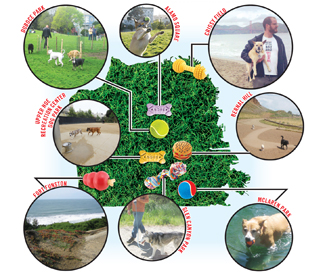
Where the wild dogs are

1

San Francisco has more dogs than children, which might be a comment on the price of housing — even the largest canine companion doesn’t need a bedroom. But with all of those furry beasts seeking exercise in a dense urban area, the city’s made a point of finding places for dogs to run, romp, and play — with some success, and some … well, not such great success.

We’ve taken on the task of finding some of the best dog parks, and offer this opinionated guide. Remember, not all dog parks are created equal. Some are great if you just want open space to toss a ball; others are better for the dog that likes to wander around and explore. Some are perfect for the social animal that loves lots of canine company; some serve the more solitary types.

Our ratings reflect the level of cleanliness (will I be constantly stepping over, or in, poo?), friendliness (are the park-goers, human and canine, nice to be around and welcoming, or is there a cliquishness or conflicts between different types of users?) and dog-fun terrain (Just dirt? Lots of trees and bushes? Gophers to chase? Water to drink — and play in?)

Results below.

BERNAL HILL 

Legal status: City park, off-leash allowed

Cleanliness: 2 paws

Friendliness: 4 paws

Terrain: 3 paws

Lots of room on this often-windy hilltop. Hiking trails offer spectacular city views; paved roads are nice for jogging. Amazing rock formations surround a couple of open flat areas for romping and ball-chasing. Dog and human water fountains. Very friendly; everyone who uses the place is used to off-leash dogs. Sadly, some take the vegetation and rocky hillsides as an excuse not to clean up; if you’re off trail, watch where you step. Entrances at the top of Bernal Heights Boulevard and at Folsom and Ripley.

GLEN CANYON PARK

Legal status: City park, on-leash rules are not tightly enforced

Cleanliness: 3 paws

Friendliness: 3 paws

Terrain: 4 paws

You can walk a few hundred yards into Glen Canyon and feel miles away from the city. The canyon floor, with a creek (mud! exciting!) running through it, is cool and shady with trees, thickets, and blackberries. The hillsides are grassy, steep, and sometimes attract rock climbers. Most days, there are off-leash dogs walking and playing — but there are also picnic areas, ball fields, and a (fenced) kids’ playground where it’s best not to allow dogs to roam freely, and sensitive habitat restoration areas where off-leash dogs can wreak havoc. Sometimes users complain about off-leash dogs; if you keep poochie on leash, it’s still a great hiking area. Absolutely do not let your dog wander off in the deeper parts of the canyon, where coyotes have made a home; it’s best for all parties if they are undisturbed.

The south side of the park is undergoing renovations right now, but you can enter at Diamond Heights and Sussex (watch the traffic, there’s no crosswalk) or at the end of Bosworth.

McLAREN PARK

Legal status: City park, off-leash areas

Cleanliness: 3 paws

Friendliness: 3 paws

Terrain: 3 paws

The second-largest park in the city is often overlooked, but it’s got some nice wooded trails — and the only pond in the city where dogs are actually allowed to go swimming. It’s not a nasty, slimy-covered puddle, either; the water’s clear and there’s a (concrete) doggie beach where your canine can ease into a dip. It’s shallow enough near shore for those with short legs and deep enough and long enough for the big dogs to have a nice refreshing swim or practice their water-retrieval skills. There’s some misinformation on the web about how to find the dog-swim area. You don’t want McNabb Lake, on the east side of the park; that’s a playground and picnic area with a nice duck pond where dogs are not terribly welcome. The parking lot for the dog area is off the westernmost part of the John F. Shelley loop, near the big blue water tower. You can see the pond from the road, and it’s a very short walk down. Bring a towel and be prepared to get wet; humans can’t swim there, but the beach is small and wet doggies love to shake.

John F. Shelley Drive.

DUBOCE PARK

Legal status: City park, off-leash area

cleanliness: 2 paws

Friendliness: 2 paws

Terrain: 2 paws

This popular spot used to be called “dog shit park.” It’s the place where Harvey Milk famously announced his legislation mandating that people pick up their canine companions’ stinky piles. It’s a lot better now — in fact, this is a rare place where the interaction between dogs and children is well-managed and everyone seems happy. The kids are fenced off in the upper area, the dogs run free in the lower area, and people just out for some sun sit in between. Still: watch where you walk. The ghost of Harvey’s soiled shoe remains.

The dogs here tend to be a bit rambunctious, perhaps because of the limited space, so don’t be surprised if a few more aggressive ones bound up to you as you enter, which can intimidate the more skittish of both species. The (human) regulars tend to know each other. McKinley School’s Dog Fest turns the place into a grand celebration of the canine spirit every spring.

Duboce Avenue and Noe.

FORT FUNSTON

Legal status: National park, off-leash areas (for now)

Cleanliness: 3 paws

Friendliness: 3 paws

Terrain: 4 paws

The walkable trails — surrounded by lush trees, non-native plants, and flora — that lead down to sandy dunes, cliffs, and Ocean Beach itself make up Fort Funston, a former military base, and current highly traveled dog park. In fact, it’s one of the Bay Area’s most popular mixed-use canine-friendly sites, usually sweeping the Bay Woof’s Beast of the Bay awards, this year winning “Best Hiking Trail” and a runner-up for best overall dog park. There are multiple pathways to explore, great views, and a few doggie amenities along the way. On the rare warm weekend (always with a breeze), there might be dozens of pups lapping up the cooling dribble of water from one of the small water fountains. It gets crowded (some dog owners say it’s too crowded) on the weekends, but is less congested during the week. The off-leash factor is also currently up for review, so those in charge caution owners to pick up after and keep a close eye on their pets. It’s part of the Golden Gate National Recreation Area and is operated under the authority of the National Park Service.

Park in the lot off Skyline Boulevard.

ALAMO SQUARE DOG PARK

Legal status: City park, west half is off-leash.

Cleanliness: 4 paws

Friendliness: 3 paws

Terrain: 2 paws

The dogs atop the sloping west side of Alamo Square Park like to play — and they do so in the rather small dirt-and-grass area allotted for off-leash fun. It’s typically a hyper bunch of small pups, chasing, fetching, leaping after frisbees, and entwining regulars in the old twisted leash dance on the vertical pull up the hill. Thankfully, the typically business and/or tech-veering dog owners in Alamo Square are usually quite friendly, pick up after their pets, and won’t give you side-eye if your darling drools on another’s chew toy. There’s also a water fountain for thirsty pups and a give one/take one plastic doo-doo bag stand at the base of the hill. But be forewarned, the other side of that hill is the one with the classic SF view of the Painted Ladies, so it’s where tour buses dump the masses for photos ops. Fido is less than welcome there without a leash, and it can get scary for less sociable pups. Plus, just below, the park dips directly into the busy intersection.

Hayes and Scott.

CRISSY FIELD

Legal status: National park, off-leash areas (excluding the Crissy Field Tidal Marsh and Lagoon)

Cleanliness: 3 paws

Friendliness: 4 paws

Terrain: 4 paws

With boardwalk walkways, grassy play areas, a bombshell view of the Golden Gate Bridge, and long stretches of California coast, Crissy Field, part of the Golden Gate National Recreation Area, is a frisky pup’s beachy playland. There are even small outdoor showers, specifically for washing the sand off paws, not human feet. The regulars know where to avoid walking without a leash, and will kindly tell you so on arrival. And there’s plenty of room for running, fetching, and playing (canine) or catching up (human). Plus, check out interesting wave formations due to sand bars, and the marshy areas of the former Army airfield, first opened to the public in 2001. There’s also enough sanded open space to keep a distance from other pets, if you’re dog’s the less-than-cordial type.

Beach and Mason, in the Presidio.

UPPER NOE RECREATION CENTER DOG PARK

Legal status: City park, off-leash

Cleanliness: 2 paws

Friendliness: 2 paws

Terrain: 1 paws

This relatively diminutive fenced enclosure is more typical of suburban neighborhoods — a very pre-planned park feel. Connected to the Noe Valley Recreation Center, it’s helpful that this dog run is in the heart of the city, fully gated, and easy for humans to access, for a quick game of fetch or poop jaunt. The entirely fenced in park is great for new dog owners and those with easily spooked puppies. Weirdly, this kind of enclosure seems a rarity in the city. But other than convenience and safety (both considerably important in the pup playtime world) it offers little amenities to the average pup or companion. Also, there is sometimes a slight urine odor, likely due to the closed in nature, and while friendly, the crowd often seems more focused on getting in and out, quickly.

299 Day.

Sneaky surveillance

19

steve@sfbg.com

After public outrage stopped the San Francisco Police Department from instituting controversial — and unconstitutional, say civil libertarians — new video surveillance requirements in bars and clubs more than two years ago, the department quietly began inserting that same requirement into new liquor licenses, a move met with concern at City Hall last week.

In late 2010, the SFPD proposed a draconian set of new security requirements for drinking establishments in the city, including requirements that they do video surveillance and take an image of all patrons’ identification cards and make them available to police upon request, without a warrant or any other controls (see “Going to a club — or boarding an airplane?,” 12/7/10).

That proposal ran into a wall of opposition from the American Civil Liberties Union, California Music and Culture Association, progressives on the Board of Supervisors, and others, who said such a blanket policy violates privacy protections in the California Constitution. The Entertainment Commission held a hearing on the proposal in April of 2011 and voted unanimously to reject the proposals.

At that point, they seemed to just disappear, but they didn’t. Instead, SFPD internally decided at that time to begin asking the California Department of Alcoholic Beverage Control to insert a video surveillance requirement in most new liquor licenses in San Francisco, which escaped public notice until Sup. Scott Wiener raised the issue at the April 2 Board of Supervisors meeting.

“If you have an establishment that perhaps has a track record of bad things happening, that’s one thing. But absent that, I don’t believe that this is justified,” Wiener said as he voted against the requirement in a pair of new liquor licenses. Although Wiener was alone in opposing those applications, Sup. David Campos said he shared Wiener’s concern and the pair called an upcoming hearing on the new policy.

Two days later, at the board’s Neighborhood Services and Safety Committee meeting, Wiener again raised the issue and sought to have the new requirement removed from a pair of proposed liquor licenses: Cesar’s Ballroom on 26th and 3rd streets, the latest project of veteran local club owner Cesar Ascarrunz, and Nosa Ria, a market in Hayes Valley that will import gourmet food and wine from Spain.

“It’s the exact opposite of some kind of rowdy bar or nightclub where people are going in and getting drunk and really bad things are happening,” Wiener said of Nosa Ria, for which he persuaded fellow Sups. Eric Mar and Norman Yee to vote to remove the video surveillance condition before approving the application.

That condition stated: “The petitioner shall utilize electronic surveillance and recording equipment that is able to view the outside of the premises, including all entrances and exits, and that is actively monitored and recorded. The electronic surveillance shall be utilized during operating hours. Said electronic recording shall be kept at least 30 days and shall be made available to the Department or Police Department upon demand.”

Mar said he agreed with Wiener that “a broad discussion of electronic surveillance requirements would be important for this committee,” but Mar then voted against removing that condition from the Cesar’s Ballroom application, saying, “I think we need surveillance in certain spots on a case-by-case basis, and I think this is an area that needs surveillance.”

SFPD IS WATCHING

When SFPD first sought new video surveillance tools — back in 2005, when the department asked for 71 video cameras at high-crime intersections around the city — it was rigorously debated in public hearings for months. And when they were finally approved by the Board of Supervisors, they included an extensive set of controls on when SFPD could request footage — the department wasn’t even allowed to control the cameras directly — how it could be used and when it must be erased.

The legislation also required a follow-up study of their effectiveness in deterring and prosecuting crimes. Conducted by the University of California’s Center for Information Technology Research in the Interest of Society (CITRIS) in 2008, the report found the cameras had no impact on violent crime rates but a small deterrent impact on property crimes in the filmed areas.

As a tool for prosecuting crimes after the fact, “There has been limited success with the cameras acting as a ‘silent witness,’ with footage standing in for witness testimony; some anecdotal evidence suggests that the existence of CSC program footage can actually deter witnesses from cooperating under the assumption that the cameras have caught all necessary evidence,” the report said, also noting that twice in the 120 police requests made by 2008, footage resulted in charges being dropped or downgraded.

But today, SFPD apparently believes that times have changed, and that the rigorous oversight and evaluation of video surveillance tactics and their implications on people’s privacy rights — or even the need to notify the public that SFPD is seeking new ways to watch citizens — are no longer necessary.

“Over the last few years, we’ve increased the number of recommendations for video surveillance, for a few reasons,” SFPD spokesperson Gordon Shyy told the Guardian, citing how cheap and ubiquitous the technology has become and the role that video footage can play in solving crimes.

Yet attorney Michael Rischer with the ACLU of Northern California, who actively opposed the SFPD’s proposal in 2011 and was dismayed to hear the department secretly and unilaterally expanded its video surveillance reach after its proposal was rejected, said that reasoning is exactly why there are legal controls on the expanding police state.

“Both of those justifications are exceedingly troubling and they demonstrate why the San Francisco Police Department should not be doing this in some room sealed off from the public,” Rischer said. “The police have this totally backward. The ease and cost of doing this is a reason why these protections are in place.”

PRIVACY PROTECTIONS

Unlike under federal law, Californians have an explicit constitutional privacy guarantee and a body of case law defining that right in great detail. But the SFPD doesn’t seem to be aware of the nuances of that case law, such as the distinction it makes between people’s expectation of privacy on public streets versus in private businesses.

“When you enter a bar or restaurant, you don’t have an expectation of privacy,” Shyy told us.

But Rischer said that just isn’t true under the law. He noted that people do indeed have a reasonable expectation that they can enter a gay bar without being outed, for example, or that police won’t be able to demand video from a gathering in a bar where subversive political ideas are being discussed. And those concerns are exacerbated by SFPD’s policy that bar owners must simply turn over footage “upon demand.”

“The notion that the government is requiring a business to conduct surveillance of its patrons and to turn it over to the Police Department without any judicial oversight or even rules is deeply troubling and probably unconstitutional,” Rischer said.

Shyy said SFPD will “only request them when a crime has been committed,” but he also admitted that the conditions it is requesting on liquor licenses don’t set that limit and the policy hasn’t been reviewed by the Police Commission or other local oversight bodies.

ABC spokesperson John Carr told us his department doesn’t have a position on video surveillance and hasn’t tracked whether other jurisdictions are seeking the condition. As for whether it routinely includes SFPD’s recommended conditions, he said, “ABC reviews each application on a case by case basis.”

There are indications that SFPD sometimes resorts to bullying bar owners into turning over video surveillance without legal authority to do so. Jamie Zawinski with DNA Lounge last month blogged about Officer Simon Chan telling the club that it was required to keep video footage and turn it over upon request, which club operators informed the SFPD wasn’t true. “It’s just another sneaky, backdoor regulation that ABC and SFPD have been foisting on everyone without any kind of judicial oversight, in flagrant violation of the Fourth Amendment,” Zawinski wrote.

Regarding that incident, Shyy would only confirm that most bars aren’t yet required to keep and turn over video footage. And he said SFPD will cooperate with the hearing Campos and Wiener have called. “At this point, we don’t believe we’re violating people’s constitutional rights, but we’re willing to have that discussion,” Shyy said.

Wiener said that on April 3, he discussed the issue with Police Chief Greg Suhr, who indicated a willingness to cooperate with public hearings on the policy. But Wiener said he’s bothered by the fact that SFPD seems to have put this new policy in place right after being unsuccessful in doing this through a public process in 2011.

“I and others expressed opposition to this and I and others thought the Police Department had backed away from it,” Wiener said at the April 4 hearing, noting that “I’m not philosophically opposed to surveillance,” only with how SFPD instituted it. “I have an issue with the Police Department deciding to insert this on its own without a broader policy discussion.”

Alerts

0

WEDNESDAY 10

Artwork and tales from Zapatistas and Black Panthers In the Works and Rincon, 3265 17th St, SF. www.chiapas-support.org, cezmat@igc.org. 7pm, $5–$20. Last year, artist and former Black Panther Party Minister of Culture Emory Douglas traveled to Chiapas, Mexico to collaborate with Zapatista artists. Join Douglas and Portuguese San Francisco muralist Rigo 23 for a presentation of art, photography, and storytelling about the Zapantera Negra project. All proceeds support Zapatista communities.

March for immigration reform 1 Post, SF. caasf.org. 3pm, free. This rally outside Sen. Dianne Feinstein’s office will be followed by a march along Market Street to finish at Civic Center for a 5pm rally, led by the San Francisco Bay Coalition for Immigrant Justice. Activists are calling for a road to citizenship for all to keep families united, protect workers’ rights and end deportations. Participants will carry hundreds of paper flowers to symbolize hundreds of daily deportations. The events will coincide with a mass rally for immigration reform in Washington, D.C.

THURSDAY 11

Peace activist Jeff Halper on “Globalizing Palestine” 315 Wheeler Hall, Bancroft Way, UC Berkeley, Berk. 5pm, free. Dr. Jeff Halper is cofounder of the Israeli Committee Against House Demolitions, a professor of anthropology and a lifelong peace and justice activist. In this talk, Halper will discuss the core security policies of Israel as it relates to the Israeli-Palestinian conflict. Followed by a reception in 330 Wheeler Hall.

MONDAY 15

San Francisco living wage karaoke fundraiser El Rio, 3158 Mission, SF. livingwage-sf.org, sflivingwage@riseup.net. 8pm, $5–$10. This benefit will feature KJ Eileen Murphy, one of San Francisco’s first female KJs. All proceeds will benefit the San Francisco Living Wage Coalition, a grassroots movement of low-wage workers and their allies in the fight for economic justice.

The truth conquers all

33

I was standing in front of what looked like a semi-vacant office building. I re-checked my maps app — it looked like I had the correct address for the Planned Parenthood clinic. If only this woman would stop shouting about killing babies, maybe I could think.

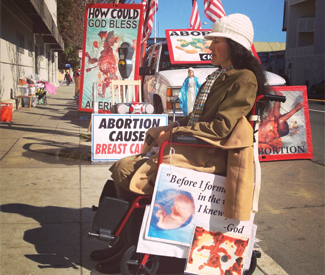
“Don’t kill your baby! If it could talk it would say ‘Mommy, don’t judge me,'” I turned back to look at career abortion clinic protester Erika Hathaway, and was embarrassed to realize that her wheelchair was parked right in front of the clinic’s door. I had missed it entirely in my zeal to document her interaction with a typical visitor, and had walked right past the door in the chaos.

And I wasn’t even there for a reproductive health appointment. I shivered at the thought of dealing with her while concerned about the results of an HIV test or a weird bump on my labia, much less a tortured decision to end a pregnancy.

I brushed past Hathaway’s exhortations to “ask for the ultrasound!”, a command that echoed around the clinic’s small, otherwise calm waiting room as I closed the door. A young patient looked up with me with tired eyes, shaking her head at the activist’s audacity.

Up for a lecture on respecting life from a guy who has multiple restraining orders from medical clinics?

“I compare it to the offensive foul rule in basketball,” Adrienne Verrilli, director of Planned Parenthood communications, tells me moments later. “You have to have your feet already set to avoid getting the call.” Verrilli’s clinic has been dealing with these protesters for years.

The activists tout bloody posters of aborted babies and bump Christmas music year-round “to remind people that Christ was a baby once,” as Hathaway tells me. They’ve made patients cry, make staff who love their jobs at the clinic want to leave by the back entrance every day.

Recently, a protester actually entered the clinic and woke up a napping patient to tell her why abortion is murder. Only two percent of the visitors to Planned Parenthood come for an abortion.

Hathaway’s setup

Supervisor David Campos, who represents the Mission, has proposed an extension of the current eight-foot “bubble zone,” which Hathaway and her ilk circumvent by pre-stationing themselves in a wheelchair. With their “feet set,” they have no need to approach patients. Verrilli says her staff regularly see Hathaway leave the chair to walk up to Burger King for refreshments. Rumors fly that she has a “day job” as a dogwalker in Belmont, Calif.

Campos wants to extend the no-fly zone to 25 feet from the door and bar protesters from entering, period. I looked at the van that Hathaway’s uncle — a 20-year vet of abortion protesting who has had multiple restraining orders placed against him by the Bay Area abortion clinics he splits his time between — has plastered with violent imagery. It’s parked in the middle of the specially-designated loading zone in front of the clinic, shielded by the handicapped tags that Verrilli says all pro-life protesters seem to have. Given the obvious determination of the anti-choice activists, I hope that the proposed change will be enough to ameliorate their aggression towards vulnerable patients.

Verrilli showed me a letter dropped off at the clinic by a Bernal Heights neighborhood mom of a seven-year-old who was “visibly disturbed” by the protesters’ signs. Unwilling to let me leave on an entirely negative note, she told me about AB 154, a proposed state bill that would allow advanced nurse practitioners to perform first trimester abortions, making family planning services even more available. The fight for reproductive justice continues, despite dedicated opponents.

Her hope lingering in my ears, I braced myself to go back outside and hang with the protesters.

I asked Hathaway why she spends her days in front of reproductive health clinics. “The truth conquers all, as Shakespeare’s Hamlet said,” she said, conquering any adherence to literary fidelity. “Eventually, we will win.”

She told me that Steve Jobs was adopted. “What would the world have been like without him?”

So many babies are being aborted in the United States, she said, that there won’t be enough workers to fund Social Security when it comes time for she and I to retire. This underpopulation theory is a new one for me.

The truth will set you free, right? “Do you need that wheelchair to get around?” I asked her.

“I have arthritis,” she told me. “It’s not a wheelchair, it’s a transport chair.”

A young man wearing a baseball hat exited the clinic and Hathaway shouts, “the Virgin does not want you to abort that baby!” I think about the two percent chance that he’s there to support someone getting an abortion, and the million other reasons why he could have paid the clinic a visit that day.

“It’s her choice,” he replied, and continued on his way.

Planned Parenthood 1650 Valencia, SF. (415) 821-1282, www.plannedparenthood.org

Tech Bubble 2.0

58

OPINION We all remember the first dot-com bubble, right? Web technology start-ups flocked to San Francisco in the late 1990s. Thousands of would-be entrepreneurs and techies filled up the city. Gentrification of Central City neighborhoods accelerated sharply. Apartment rents jumped, followed by the condo boom. Demand for commercial office space, especially South of Market, quickly grew red-hot. Rents zoomed, and office developers rushed dozens of proposed new projects forward.

The leaders of Mayor Willie Brown’s gutless Planning Department rubber-stamped all they could, and decried the annual limit imposed on their approvals by the 1986 community-activist-sponsored Proposition M ballot measure.

The activists and the mayor put two competing measures on the November 2000 ballot in response. Both lost, but the progressive slate for the Board of Supervisors swept that election, defeating most of the mayor’s candidates.

And then Tech Bubble 1.0 popped. The peak year was 2000. The big dot-com bust, 9/11, and finally the Great Recession all followed.

The city’s office market crashed. Some new office buildings were foreclosed by their lenders. Many approved office developments went unbuilt. Overall office market vacancies approached 20 percent by 2010.

Ah, but here we go again — Tech Bubble 2.0! A new wave of recent technology industry start-ups — like Twitter and Yelp — are joining the growing survivors of Bubble Number 1 — like Salesforce. And San Francisco has become a premiere national media venue for the tech industry.

Thousands of would-be entrepreneurs and techies are again filling up the city. Apartment rents are going through the roof. Gentrification of Central City neighborhoods is accelerating even faster. Demand for commercial office space, still in SoMa, is red-hot again.

But by 2011 so much vacant space was on the market, and so many approved buildings were waiting for anchor tenants to start construction, that there has been room for them all so far. Several new buildings got underway. Mayor Ed Lee strategically took advantage of this market boom to target economic expansion to the Central Market District, the last disinvested zone of San Francisco’s Downtown.

Even today though, city office vacancies still exceed 5 percent. And according to the most recent Planning Department report, more than a dozen already-approved new buildings, totaling more than 4.5 million square feet, are waiting to start construction in the Transbay Transit District, South of Market, and Mission Bay. Another 5 million feet of office space is proposed for more than a dozen more pipeline projects for those areas. Plus another 2.5 million feet is planned for projects on Port property — including the San Francisco Giant’s huge project — that are not even on the Planning Department’s list yet!

How does this total of 12 million square feet of pending new San Francisco office buildings compare to historic demand? Going back to 1986, the amount of new office space actually built — true long-term market demand through the boom/bust business cycles — averages out to about only 750,000 square feet a year. The city’s old-school corporate headquarters dramatically downsized or even moved out of San Francisco — like Chevron and Bank of America — and that’s still ongoing. The new tech industry is mostly replacing them. So these 30+ identifiable current projects would provide a 16-year supply of office space at historic rates.

But even in the face of this evident market glut of future office buildings, the usual civic development hypsters are once again muttering about gutting Proposition M, and radically upzoning Soma for even greater office expansion. Is that who City Hall will listen to this time too?

Bubble? What Bubble? [Pop!]

John Elberling is executive director of the Tenants and Owners Development Corporation.

Time to enforce the law

83

EDITORIAL The new tech companies that are making waves in San Francisco — Airbnb in the short-term rental business and Lyft and Uber in the taxi industry — may describe themselves as innovative and disruptive, and they may be appealing to investors.

But there’s a more accurate word that describes their relationship to the city:

Cheaters.

The way these companies are luring customers isn’t really about high-tech applications or brilliant business models. They’ve just found a way to get around the rules that everyone else has to obey.

Some city officials are talking about hearings and new legislation, all of which is fine. But in the rest of the business community, when someone flagrantly, openly violates the regulations, the City Attorney’s Office cracks down. That’s what needs to happen here, and soon.

Airbnb has a slick and appealing promise: You can rent out your house or apartment on the Internet to someone who wants to stay in the city for a few days, but is looking for an alternative to a traditional hotel. The homeowner or tenant gets some extra bucks; the visitor gets to stay in a cool neighborhood at a bargain price. What’s not to like?

Well, for one thing, most leases in San Francisco bar unauthorized sublets, so renters who offer their places on Airbnb face problems with their landlords, including possibly eviction. City laws also bar the use of residential property for commercial purposes. And, as we’ve pointed out repeatedly, Airbnb isn’t collecting the transient occupancy tax that every other hotel operator in the city has to pay. The total tab: At least $1.8 million a year.

Lyft and Uber say they’re using creative apps to offer an alternative to the screwed-up taxi system. Drivers offer rides to people who can “volunteer” to pay at the end — but if nobody pays, the whole business model fails and the venture capitalists who put up the money lose. So everyone knows that these are pay-for-hire taxis.

Except that San Francisco requires every taxi driver to have a permit, called a medallion — and drivers have to go through training, background checks, and carry extensive insurance. If a driver overcharges or refuses a fare, a customer can complain to the city, and get recourse. The startups don’t follow the same rules.

There are reasons the city regulates cabs and charges hotel taxes. Cab drivers are ferrying people, some of them vulnerable; it’s only a matter of time before a rogue driver who sneaks into the new unregulated startups winds up in a horrible crash or criminally preying on riders.

Driving a cab without a medallion is illegal. Failing to pay city taxes is, too. City Hall can debate and dither and try to avoid offending the mayor (who, unfortunately, is trying to help Airbnb slide). But this is a clear-cut case of businesses flouting city law. Herrera needs to put an end to it.


Dirty war over clean power

10

tredmond@sfbg.com

It was supposed to be part of Ed Harrington’s legacy, and the chief of the city’s Public Utilities Commission delayed his retirement to make sure it happened.

But six months after the Board of Supervisors voted 8-3 to move forward with CleanPowerSF, the plan is under attack from all sides. Pacific Gas & Electric Company’s house union is spending big chunks of money to shoot it down. The press is loaded with accounts of how expensive it’s going to be for customers. Advocates on the left are blasting it as too limited.

Critics say Harrington’s replacement, Harlan Kelly, is far less interested in making a program work that clearly lacks the support of a PG&E-friendly mayor.

That’s left Sup. David Campos, City Hall’s chief proponent for CleanPowerSF, trying to move forward with a program that, for all its flaws, is the city’s best chance to put a crack in PG&E’s monopoly.

CleanPowerSF will offer San Franciscans a greener alternative to PG&E power, most of which comes from nonrenewable sources. The city will buy renewable power in bulk, through Shell Energy, and distribute it to customers along PG&E’s lines.

A similar system is working well in Marin County, and communities all over the state are looking to see if a city the size of San Francisco — where PG&E has kept out any hint of competition for a century — can pull it off.

Clean power is more expensive right now, and that’s one sticking point: City officials recognize that not all San Franciscans will be willing to pay a premium (of perhaps $10 to $20 a month) for the option. An SFPUC survey released March 25 showed that about 45 percent of the city’s customers would pay extra for clean power and stick with the new program. Earlier studies suggested that 90,000 customers will remain with CleanPowerSF — enough to make the system financially viable.

(Interestingly, the areas most likely to pay extra to avoid fossil fuels are not the wealthiest parts of town. Most of the customers would be on the Eastside, in communities like the Mission, Potrero Hill, the Haight, and Noe Valley.)

The bigger problem with the current debate is that advocates and city officials can’t agree how much money the city ought to spend, on what schedule, to build its own renewable generation system, which would eventually replace much of the power purchased by Shell.

“In the past we would have figures and claims from all sides, and Ed Harrington would look at the numbers and figure it all out, and everybody trusted him,” Campos said. “But we don’t have Ed any more, and Kelly doesn’t seem to be as strongly behind this.”

Building a green-power infrastructure was always a critical part of the CleanPowerSF plan. And once the city has a system up and running, it can use the revenue stream to float bonds to pay for building solar, wind, and cogeneration facilities.

Over time, the locally generated power would be far cheaper than what anyone can offer today, meaning rates would come down.

“We agreed to move the sales agreement forward to get the system started, then keep working on the build-out,” Campos explained.

But a campaign by International Brotherhood of Electrical Workers Local 1245, which represents PG&E employees and is historically allied with the company’s political goals, is trying to scare customers away with claims of high rates. And in fact, the first rate proposals were above what Campos and others were hoping for.

So the Local Agency Formation Commission, which oversees CleanPowerSF for the supervisors, and the SFPUC, have send staff back to try to find ways to cut rates.

Meanwhile, Kelly wants to de-couple the public build-out from the Shell agreement, in essence launching the program with the most expensive elements in place — and potentially undermining the future of a publicly owned energy infrastructure.

That has some clean-energy advocates furious — and they’ve threatened to withdraw their support for the program.

“Ever since Harlan Kelly took over, the PUC staff has been less supportive of a robust build-out,” Eric Brooks, who works with Our City has been a longtime supporter of CleanPowerSF, told us. “We’re not saying the city should stop moving forward with the Shell deal, but the city has to continue the planning work for the build-out. It can’t be a piecemeal thing.”

The SFPUC hired a Marin-based outfit called Local Power, led by longtime clean-energy advocate Paul Fenn, to do some preliminary work on how a build-out could proceed. Fenn’s conclusion: The city could create 1,500 to 3,000 jobs and build enough renewable energy to power much of the city, over a seven-year period — at a cost of about $1 billion.

That’s a huge tab — and almost certainly more ambitious than this SFPUC and Board of Supervisors could accept.

Fenn told us that his economic analysis, presented to the SFPUC’s Rate Fairness Board Feb. 18, indicates that the city’s cash flow from CleanPowerSF with a renewable build-out would more than cover the payments on the bonds. But he also agreed that he’s suggesting the best possible alternative — and he expects the city would go for a much smaller piece.

“The Board of Supervisors hasn’t made the decision to spend that kind of money,” he said.

Fenn’s contract expired April 1, and the SFPUC hasn’t renewed it. Instead, another consultant will review Local Power’s work, Campos said.

Part of the political challenge is that Local Power has proposed that much of the build-out include what’s known as “distributed generation” — small-scale solar, wind, and cogen projects on private houses and buildings.

Those installations would be “behind the meter” — that is, they would allow households and businesses to generate their own power without buying it through PG&E’s distribution system.

The build-out proposals that the SFPUC staff have discussed are primarily larger solar arrays, some on land the city owns in the East Bay.

“That’s the most expensive way to do this, and it allows PG&E to still control the transmission and distribution,” Brooks said.

[TK-SFPUC comment Monday.]

Meanwhile, PG&E is preparing to roll out its own competing “green energy” plan — while IBEW ramps up it assault on CleanPowerSF.

The IBEW campaign includes robo-calls, mailers, and advertising, all aimed at convincing customers to opt out of the city program.

And now, with advocates from the Sierra Club to Our City criticizing the program on the left, and IBEW trying to undermine it before it gets going, there’s a real chance that a plan more than 10 years in the making could be in trouble.

That concerns Campos. “All I’m hearing from the advocates is negative,” he said. “I want more build-out, too, but unless we move forward with the program, we won’t be able to do that.”

In fact, he said, “you could wind up killing it and have nothing to show for it at all.”

That, of course, would be PG&E’s preferred alternative.

Do we care?

77

steve@sfbg.com

Teresa Molina faced abusive, belittling treatment on the job.

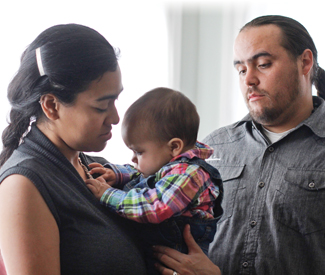
The 52-year-old immigrant from Sinaloa, Mexico, says she was paid $500 a month to provide 24-hour, live-in care to a girl in a wheelchair and her family. She wasn’t allowed regular breaks. She couldn’t eat what she wanted. Even her sleep was disrupted.

“I spoke up a couple times, but when I did, my employer told me I was dumb and good for nothing,” Molina, speaking Spanish through a translator, told us. “She would ask my immigration status, and I said that was not important, but she used that as a threat.”

Molina is a domestic worker — one of the only two professions (the other being farm work) exempt from federal labor standards.

Her experience, a common one among immigrant women in California, prompted Molina to get involved in last year’s California Domestic Worker Bill of Rights campaign, part of national effort that resulted in the first-ever protections being signed into law in New York in 2010.

Gov. Jerry Brown vetoed the California version of the bill late on the night of Sept. 30, 2012, the deadline for signing legislation, citing the paternalistic concern that better pay and working conditions might translate into fewer jobs or fewer hours for domestic workers.

“I was offended by how he did it, in the middle of the night on the last day, and he basically trivialized it,” Assembly member Tom Ammiano (D-SF), who sponsored the measure, told us. “Here in California, it’s a major workforce, but there’s no rules and there’s a documented history of abuses.”

But if anything, Brown’s veto has energized local activists, who say the battle for domestic worker rights is part of a much larger issue that women, children, immigrants, and their supporters are struggling against as they try to get society to value one of the most basic of social and economic functions: caring and caregiving.

Those in the caregiving professions are used to such defeats, but this one seems to be galvanizing and uniting several parallel movements — most of which have a strong presence here in the Bay Area — that want to apply human values and needs to an economic system that has never counted them.

It is, economists and policy experts say, a profoundly different way to measure economic output — and if the domestic workers and their allies succeed, it could have long-term implications for national, state, and local policy.


CARING DOESN’T COUNT

There are endless examples of how society undervalues caring and caregiving and other labor that has long been deemed “women’s work.” They range from nurses fighting for fair contracts to in-home support service workers fighting for their jobs. Many are jobs that have traditionally been done in the home — and in some cases, not counted at all as part of the Gross Domestic Product.

Social work, teaching, administrative support, caring for children or seniors, community organizing, and other jobs held predominantly by women and people of color are consistently among the lowest paid professions.

But the demand for those jobs is increasing — and the price of under-investing in education, caregiving, and child development is decreased productivity and increased crime and other costs for decades to come — so activists say they are critical to the nation’s future.

“It’s a different perspective. Caregiving isn’t transactional the way we think about other jobs,” said Alicia Garza, executive director of People Organized to Win Employment Rights (POWER), which has joined with other organizations nationwide for a Caring Across Generations campaign. “We’re a nation that has a growing aging population with no plan for how we’re going to take care of these people.”

In California today, caregivers find themselves under attack. Despite playing an important role in electing Brown as governor and in keeping Kaiser Hospital in Oakland and CPMC’s St. Luke’s Hospital in San Francisco open to the low-income residents they serve, the California Nurses Association is still stuck in a years-long contract impasse with those huge hospital corporations.

“We don’t think of ourselves first, we think of others first,” says Zenei Cortez, a CNA co-president who has been a registered nurse for 33 years, noting that patient care and advocacy standards have been key sticking points in their negotiations.

During each year with a budget shortfall, in-home support services for the sick, elderly, and disabled have been placed on the budgetary chopping block in California and many of its counties — including San Francisco, which has about 21,000 such workers — saved only by political organizing efforts and a longstanding lawsuit against the state (which was just settled on March 20 and will result in an 8 percent across-the-board cut in services).

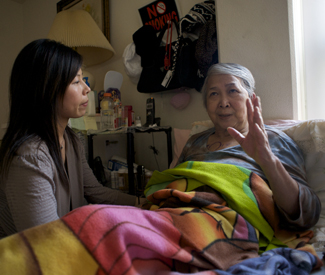
“This program has been under assault for a full decade,” says Paul Kumar, a public policy and political consultant for the National Union of Healthcare Workers, calling that attack short-sighted, in both fiscal and human terms. “People get better care in a home setting.”


UNDERVALUED, ACROSS THE BOARD

If people generally act in their financial self interest, as economic theory holds, Oakland resident Lil Milagro Martinez would oppose the Domestic Workers Bill of Rights and its requirement that she pay her nanny at least minimum wage and allow for breaks and sick days.

After all, Milagro and her family are barely scraping by, with her husband working four jobs as she balances care for their infant son with coursework as a theology graduate student. Instead, Milagro said, she offers their nanny a living wage, benefits, and good working conditions.

“I wanted to feel that we were affirming her rights, so she would pass on that level of respect to my son,” Milagro told us. “If I can do this, and there are companies out there saying they can’t afford to do the right thing, that angers me.”

She was also angry when Brown vetoed the Domestic Workers Bill of Rights. She’s been working with a domestic worker employer group called Hand in Hand, a part of the larger National Domestic Worker Coalition.

“Our goal is to bring people together to create the kinds of worker relationships they want with people in their homes,” Danielle Feris, the national director of Hand in Hand, told us. “There will just be more and more people that need care in the home, so this touches all families.”

Milagro and other domestic worker employers say their stand is about much more than enlightened self-interest. They say this is an important step toward recognizing the important contributions that women and minority groups make to society and creating an economy focused on addressing human needs.

“Care, we can say, is undervalued across the board,” Feris said.

In addition to reintroducing the bill in Sacramento this year, the coalition is pushing similar legislation in Massachusetts and Illinois.

“I think the domestic workers have done a fantastic job at organizing across the country,” Ammiano said. “Making a movement of something isn’t easy, but once it gets traction then it’s tough to ignore.”

Like Milagro and Ammiano, Molina said she was bitterly disappointed by Brown’s veto, although all say it only strengthened their resolve to win the fight this year. “I felt very sad, depressed, and betrayed,” Molina said. “But we will win this…And I think the movement for women, workers, and immigrants will only grow from us winning.”

Domestic Workers Coalition campaign coordinator Katie Joaquin noted that the campaign is about triggering a cultural shift as much as it’s about winning legal protections, as important as they may be. “Once this bill passes and we have basic protections doesn’t mean the abuses will stop,” she said, noting that this is really about valuing care work.

“It’s bringing people together around the care we need,” Joaquin said. “These are conversations that are breaking new ground. The bill is really something that gets the ball rolling.”

Once some household work gets recognized, it’s not a big step toward a conversation about valuing all kinds of caring work and including that in our measures of economic progress.

“We definitely support the idea of valuing all care work, both paid and unpaid,” Feris said. “We all have something to gain by valuing each other.”


THE REAL WEALTH OF NATIONS

Author and researcher Riane Eisler has been a leading thinker and advocate for creating a more caring economy for decades, work that resulted in her seminal 1988 book The Chalice and the Blade, which sold half a million copies and was lauded as a groundbreaking analysis of the gender roles in ancient and modern history. She followed that with The Real Wealth of Nations in 2007, and the creation of the Center for Partnership Studies (CPS) and the Caring Economy Campaign.

Eisler takes issue with what most people call “the economy,” a wasteful and incomplete system that doesn’t actually economize in connecting what we have to what we need. She persuasively argues that it makes sense in both human and fiscal terms to value caring and caregiving, for one another and the natural world, providing myriad examples of countries, cultures, and companies that have benefited from that approach.

“In a way, the concepts are very simple. What could be more simple than saying the real wealth of nations isn’t financial? It consists of the contributions of people and nature,” Eisler told us by phone from her home in Monterey.

On March 20, Eisler gave a Congressional Briefing (attended by members and staffers in the Rayburn House Office Building) entitled “The Economic Return From Investing in Care Work & Early Childhood Education,” presenting a report on the issue that CPS and the Urban Institute released in December: “National Indicators and Social Wealth.”

“I think this is extremely timely,” Eisler told us, noting that the Republican Party’s currently aggressive fiscal conservatism must be countered with evidence that meeting people’s real needs is better economic policy than simply catering to Wall Street’s interests.

Her address to Congress followed ones that Eisler has given to the United Nations General Assembly and other important civic organizations around the world, and it was followed the next day by an address she gave to the State Department entitled: “What’s Good for Women is Good for World: Foundations of a Caring Economy.”

While Eisler said “there are people who are very excited about it,” she admits that her ideas have made little progress with the public even as the global economy increasingly displays many of the shortcomings she’s long warned against. “This is still very much on the margins.”

But that could be changing, particularly given the political organizing work that has been done in recent years around the rights of domestic workers and immigrants and on behalf of the interests of children and the poor, some of it drawing on the work of liberal economists such as Paul Krugman and Joseph Stiglitz.

“The Gross Domestic Product is a very poor measure of economic health,” she told us, noting that it perversely counts excessive healthcare spending, rapid resource depletion, and the cleanups of major oil spills as positive economic activity.

Erwin de Leon, a Washington DC policy researcher, opens “National Indicators and Social Wealth” with a quote from a speech that Robert F. Kennedy gave in 1968 criticizing GDP as a bad measure of progress: “It measures neither our wit nor our courage, neither our wisdom nor our learning, neither our compassion nor devotion to our country, it measures everything, in short, except that which makes life worthwhile.”

De Leon then writes: “An urgent need met by measuring a nation’s social wealth is identifying the attributes of a society that make it possible to create and support the development of the full capacities of every individual through the human life span. Social wealth indicators identify these drivers, with special focus on the economic value of caring for and educating children and the contributions of women and communities of color.”

The carefully documented report makes an economic argument that investment in caregiving and early childhood development more than pays for itself over the long run in terms of increased productivity and decreased costs from crime and other social ills, creating a happier and more egalitarian society in the process.

“Nobody talks about the work that immigrant women do and how it contributes to productivity. They free us up to do other things, but we don’t count it,” De Leon told us in a phone interview. “We put lots of value on numbers and the views of economists. The problem with the numbers is it’s an economic number that just values production.”

Eisler’s approach is neither liberal nor conservative, and she takes equal issue with capitalism and socialism as they’ve been practiced, labeling them both “domination-based” systems (as opposed to the “partnership-based” systems she advocates) that devalue caregiving and real human needs.

In fact, she seems to be even harder on progressives than those on the other end of the ideological spectrum, given the Left’s stated concern for women and communities of color. It was a point that Ammiano echoed: “There’s a lot of liberal guilt, but the follow-through has yet to happen.”

“What this entails is re-examining everything,” Eisler told us. “It starts with examining the underlying beliefs and values.”


INSTITUTIONAL SEXISM

Even in supposedly enlightened San Francisco, things are getting worse. On March 26, following a battle with SEIU Local 1021 that began last fall, the city’s Department of Human Resources submitted to a labor mediator its proposal to lower the salaries for new hires in 43 job categories, including vocational nurses, social workers, and secretaries.

The rationale: Those workers were paid more than market rates based on a survey of other counties. But it’s also true that those positions are disproportionately held by women and minorities. In the 1980s, San Francisco made a policy decision to raise the pay of what were traditionally female-dominated professions, part of a nationwide campaign to erase decades of pay inequity.

“The city is rolling back decades of historic work on pay equity in this city,” SEIU Political Director Chris Daly told us. “We were concerned about equal treatment of workers who were disproportionately women and people of color.”

DHS spokesperson Susan Gard told us, “The city is committed to that principal, equal pay for equal work, and we don’t think our proposal erodes that.” But she couldn’t explain why that was true. In reality, the move will lower the salaries for women that come to work for the city.

Those involved in the Domestic Workers Bill of Rights campaign mince no words when it comes to seeing the long history of sexism in political and economic institutions as one of the main obstacles they face.

“In so many ways, domestic work is women’s work, and women’s work has always been undervalued and underpaid,” Milagro said.

She even saw it growing up as child when she accompanied her father when he did housekeeping work, when he was treated “as nonentity, not human,” abuse and mistreatment that was exacerbated by the twin facts that he was an immigrant doing women’s work.

“Sexism has undervalued care work,” Feris said.

Ammiano likened the current struggle to the gay rights movement, and he said that when he started as a teacher back in the 1970s and wanted to teach in the early primary grades, he was told that was for women.

“It’s the feminization of labor,” Ammiano said. “When you have institutional sexism, you have to peel it back layer by layer.”

Eisler is equally direct: “We’ve all been taught to marginalize anything connected to the feminine,” she said.

She noted the vastly disproportionate global poverty rates of women compared to men and said “it’s because most are full or part-time caregivers,” work that isn’t often compensated.

Eisler said the current economic system “marginalizes and dehumanizes half the population,” asking how that could ever be considered ethical or equitable. She dismisses arguments that we can’t afford to value caregiving or work done in the home, noting that “there’s always money for the masculine values” of war and economic expansion.

Ammiano said the cultural blinders that prevent people from seeing how society discriminates against women and the work they do makes the problem more insidious and tougher to solve.

“If they’re doing it deliberately, it’s almost better because you can sink you teeth into it, but if it’s not deliberate then it’s tougher to corral,” he said.

Yet there could be subtle but important changes underway in how people value the roles of men and women in society.

There are indications that substantial majorities of people increasingly see men and masculine values as a big part of the problems the people of the world are facing. Author John Gerzema, whose forthcoming book is entitled Athena Doctrine: How Women (And the Men Who Think Like Them) Will Rule the Future, revealed some of the extensive polling research behind his book in a recent TED Talk.

Much of it points to what he called a “global referendum on men,” with strong majorities in countries around the world — with Canada the only exception — agreeing with the statements “I’m dissatisfied with the conduct of men in my country” and “The world could be better if men thought more like women.”

He and his research partners also had the tens of thousands of people they surveyed rate a list of traits as either masculine or feminine, and then later he had respondents state the traits they most wanted to see in their political leaders, finding that people around the world have begun to strongly prefer feminine traits to male ones in their leaders.

His conclusion: “Femininity is the operating system of 21st Century progress.”


THE SILVER TSUNAMI

The “silver tsunami” — Baby Boomers reaching old age and about to need more care — is about to break.

POWER, Senior Action Network, and many other San Francisco-based organizations in the Caring Across Generations campaign are part of a national push to increase access to and investment in caregiving, from early childhood development through care for those with disabilities to elder care.

“The caregiver industry is something we should invest in,” said POWER’s Garza. “We believe in a society that values care and we want to value that work.”

Yet with short-term, bottom-line thinking guiding the decisions, that requires a bold paradigm shift. Instead, the popular state In-Home Support Services program — which provides some compensation for caregivers of those with disabilities — is now facing an 8 percent cut as part of the recent settlement to lawsuits filed to prevent the 20 percent cut that then-Gov. Arnold Schwarzenegger had proposed.

The SF-based lawyer who filed the lawsuit, Stacey Leyton, told us this was the best settlement possible given the current political climate and the risk of deeper cuts if the Ninth Circuit Court of Appeals ruled in the state’s favor. But she thinks any IHHS cuts are short-sighted: “Any cuts to home care may balance the budget ledger now, but they can cause more costs later in the form of nursing home care and emergency room visits.”

James Chionsini, a community organizer with the Senior and Disability Action (SDA, formerly Senior Action Network), tells us that in addition to the sheer size of the “silver tsunami” coming through — which will require a huge influx of caregivers — efforts by the federal and state governments to contain medical costs could hurt the “upper-poor,” who are required to somehow pay a share of their MediCal health care costs.

That’s one reason why SDA, POWER, and other groups are supporting several campaigns aimed at creating a more caring society, from the Domestic Workers Bill of Rights to Caring Across Generations to basic, bread-and-butter political organizing efforts.

“Organizing is so important,” Garza said, while Chionsini said, “It’s about raising the profile of people who are providing care.”

Milagro said that if the immigrant women who do domestic work score a major victory, that could empower other marginalized groups. “It’s about a change in consciousness,” she said. “This can show a path for other movements to build, strengthen, and work together.”

Garza agrees that important, foundational changes are already underway, even though they will require lots of hard organizing work to bring them to fruition.

“There is a groundswell. This is happening,” she said, noting that it revolves around asking important questions. “How do you look at an economy not rooted in patriarchy? What would it look like if we had to compensate mothers?”

Next week: Part II, Do we care about the natural world?

Caring: The Shanti project

0

In 1974, Charles Garfield was working in the acute care facility of the newly founded UCSF Cancer Center. A psychologist, Garfield had a patient named Jim Dees who had been diagnosed with Guillain Barré Syndrome. Dees’ body was rapidly deteriorating, and his prognosis was uncertain.

Garfield met with Dees for an evaluation. He quickly realized that Dees had no pathologies, no phobias — nothing for a mental-health professional to treat. He was simply “an extraordinarily aware man facing an ugly death,” Garfield later wrote.

Instead of leaving his care to physicians and nurses, Garfield ontinued to meet with Dees — not so much as a trained psychologist, but as a peer. He became someone Dees could talk to and share his fears, someone he could rely on for practical support after he was discharged from the hospital.

Dees was the first client of what Garfield would call the Shanti Project, and the basis for the sort of peer-to-peer, volunteer caregiving that has become a model for an estimated 600 organizations all over the world. It’s an organization that’s been a crucial thread in the fabric of San Francisco’s history. When the AIDS epidemic struck in the 1980s, the city asked Shanti to step in. In the early years of the epidemic, basically every person with AIDS had some form of contact with Shanti, Garfield estimates.

“If you had taken what we did away, I have no idea what many of those folks would have done,” says Garfield. “The catastrophe would have been unimaginable.”

Kaushik Roy, a former volunteer who is now the organization’s executive director, notes: “We do for our clients what you or I might do if one of our family or close friends got sick. It’s the difference between having one person there for you, or none at all.”

The Pope’s political sins

1

news@sfbg.com

OPINION I still remember when I was removed from solitary confinement into the general inmate population of Tres Alamos — one of the infamous concentration camps of Chilean dictator Augusto Pinochet -– and the special welcome given to us 30 or so freshly arrived detainees by the commander of the camp, Conrado Pacheco.

He was dressed in his best military attire. I will never forget the clattering of his black shiny boots, his watery eyes, his mouth salivating like a predator before a feast.

The bloody military rule was in full swing. It was the end of 1975, a time when one of the fiercest repressions was unleashed against the left, the supporters of the ousted Salvador Allende’s government — and the progressive wing of the Catholic church, lead mostly by Jesuit priests.

Next to me was a tall dirty man with a somber yet authoritative look behind his glasses. A bold lawyer who later became president of Amnesty International, Jose Zalaquett’s unclenched look made Conrado Pacheco uneasy. The curas buenos — the good priests Patricio Gajardo and US citizen Daniel Panchot — were also standing in the line.

The roughed up lawyer and priests were from the Comité Pro Paz. Created a few months after the military coup of 1973 the Committee for Peace was the only organization that, under the protection of a sector of the Catholic Church, was defending and giving sanctuary to the thousands of victims of human rights violations.

The welcoming speech of the commander waxed Nazi-like verbose about nationalism, order, communist evil, Che Guevara, and sarcastic references about God. “Mister lawyer here,” I remember him saying while looking at Zalaquett, “since he should be outside and not inside … I’m not sure what he can do to defend you all.” And pointing at the priests, the scoundrel said, “since we have two distinguished representatives of God, you all now know where to go in case you have some pending debts with the Lord, you all fucking sinners!”

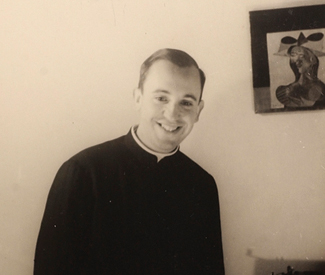
All these memories flooded back to me when I learned about the ascent of Jorge Mario Bergoglio as Pope Francis I, and the stories dripping out of Argentina about his collusion with the military during the guerra sucia, dirty war.

Horacio Verbinsky, an Argentinean investigative journalist who has written extensively about the church and the military, wrote in his 1995 book, The Silence, that Bergoglio gave information to the Argentinean secret police about the activities of the Jesuit priests Francisco Jalics and Orlando Yorio, after they refused to stop working with the poor in Buenos Aires’ shanty towns. Bergoglio dropped their protection, a sort of immunity offered to the Jesuit society by the military, which eventually lead to their arrest. Both were brutally tortured and dumped drugged and naked on a wasteland.

Bergoglio also befriended General Emilio Massera, a member of the Argentinean military junta, who was later accused of crimes against humanity and of stealing the babies of disappeared political prisoners to be raised by military families.

Jalics, Yorio, and those two fathers I came to know in prison, Gajardo and Panchot, were among those priests who followed to the letter the teachings of Christ to protect the helpless, to feed and be with the needy and did not capitulate in silence.

The Vatican has recognized that Bergoglio asked “a request for forgiveness of the Church in Argentina for not having done enough at the time of the dictatorship …” But the statement, read by Vatican spokesman Father Federico Lombardi March 15, falls short.

The Sumo Pontífice, the Pope Francis l, the one who will lead more than 1.1 billion people, must come clean and respond to all the testimony that is fogging his character. He must side with truth and justice; the only door that can lead us to reconciliation. After all, forgiveness, after the truth comes out, has always been an option in the Catholic Church.

Fernando Andrés Torres is a San Francisco writer

Fighting for patients, beyond the bedside

1

It’s no coincidence that the California Nurses Association has been the most active and effective union in fighting for a broad social and economic justice agenda, one that seeks to give greater value to caring and caregiving. Unlike many unions that fight mostly for their members’ interests, CNA is an extension of the nursing ethos itself.

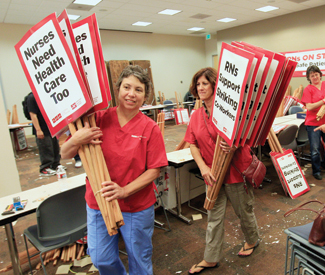
“It’s not enough to advocate for patients at the bedside. We take it out into the streets and the community. That’s what nursing is,” Zenei Cortez, an RN of 33 years and co-president of CNA, told us. The CNA agenda has included support for increasing taxes on the wealthy to restore cuts to social services, advocacy for a single-payer healthcare system, affordable housing, and some of the best and sharpest opposition to the gubernatorial ambitions of Meg Whitman, who proposed deep cuts to state spending on education and other essential programs.

“We have a health care system that only cares about profits and nothing else,” said Chuck Idelson, who heads the communications staff that works for the nurses, “which is why you need people who value care over profit.”

And that’s the nurses, who have been growing in both numbers and political strength just as the healthcare profession has increasingly fallen under the sway of Wall Street and its values, making CNA an important political force.

“When I first started in nursing, we had a lot of time with our patients at the bedside,” Cortez told us. “But now, that human factor has disappeared.”

Nurses first began to flex their power early in Cortez’s career when “nurses were thought to be the handmaidens of doctors. But we were able to change that mentality,” one that was rooted in sexism and old domination-based models.

After the doctors, the nurses stood up to the healthcare corporations, winning statewide minimum patient care staffing ratios and contracts for themselves that gave them a stronger voice in patient care. As the Occupy Wall Street movement took root two years ago, CNA and its larger National Nurses United launched its Main Street Campaign to push people’s interests over those of the wealthiest 1 percent of Americans. “We have to have partnerships with our patients,” Cortez said. “The companies only care about the bottom line…We are not afraid to fight, particularly because we know it’s not for our own jobs, but for the good of our communities.”

Alerts

0

Submit political events to be listed in Alerts at alert@sfbg.com or tweet us @SFBG_alerts.

WEDNESDAY 3

Protest Obama fundraiser outside the Getty mansion 2870 Broadway, SF. tinyurl.com/c2mkope. 5:30pm, free. Environmentalists opposing the Keystone XL oil pipeline will protest in San Francisco’s wealthy Pacific Heights neighborhood, where President Barack Obama will dine with the city’s upper crust for a Democratic Party fundraiser. Credo Action – the advocacy arm of telecom Credo Mobile – is mobilizing the protest in tandem with the Sierra Club, 350.org and Friends of the Earth.

Community meeting to save City College Pitcher Room, City College Southeast Campus, 1800 Oakdale, SF. info@saveccsf.org. 6pm, free. Students and community supporters who are engaged in the ongoing fight to save City College of San Francisco as an affordable and accessible educational resource are planning major actions in coming weeks. Join them for this informational and strategy session to preserve this important institution.

THURSDAY 4

Public forum with David Graeber Namaste Hall, California Institute for Integral Studies, 1453 Mission, SF. 7pm, free. An anthropologist from the University of London, author David Graeber is credited with helping to lay the intellectual framework underlying the Occupy Wall Street movement. His work includes Debt: The First 5000 Years, a tome exploring wealth inequality through the ages. Graeber’s talk will be on “Austerity and its Discontents.”

FRIDAY 5

Panel talk on global affirmative action Room 132, UC Berkeley School of Law, 215 Boalt Hall, Berk. tinyurl.com/ckc6qdu. 4-6pm, free. RSVP. Many fear that an upcoming Supreme Court ruling will spell the end of affirmative action admission programs for public colleges and universities. This panel will discuss global affirmative action law, with presenters from the European Commission, the University of Sydney School of Law, and Berkeley Law.

Forum with Dr. Ignacio Chapela Niebyl Proctor Library, 6501 Telegraph Ave, Oakl. SpeakOut-Now.org. 7pm, $3 donation. Dr. Ignacio Chapela, Associate Professor of Microbial Ecology at UC Berkeley, has been studying the impact of genetically modified plants and the misuse of science and its impact on our planet. Join this Speak Out Now forum to hear Chapela’s vision for how science could be used for more positive ends.

SUNDAY 7

Book talk: Beyond Walls and Cages Modern Times Bookstore Collective, 2919 24th St, SF. www.occupyu.org. 6pm, free. As part of Modern Times’ ongoing Occupy U workshop series, this book discussion will explore how prisons, criminalization and militarization facilitate wealth and power inequalities. Join editors Jenna M. Loyd, Matt Mitchelson, and Andrew Burridge in discussion of their book, Beyond Walls And Cages: Prisons, Borders, and Global Crisis.


The real CPMC story

10

OPINION The recently announced terms for the development of California Pacific Medical Center’s hospitals at Cathedral Hill and St. Luke’s generated front-page and lead stories in the local news media. But nearly without exception, only part of the story was reported. Missing from most accounts of the terms of the new deal, which dramatically changed last year’s failed draft development agreement negotiated by Mayor Ed Lee, was the decisive role played by a community/labor coalition, San Franciscans for Healthcare, Housing, Jobs and Justice.

Key details of the agreement have yet to be finalized, and provisions of the terms announced on March 5th need to be improved. But the new agreement, in virtually all respects, is an improvement over the old one. And on the same day the terms of the new deal was announced one of the union members of the coalition, the National Union of Healthcare Workers signed a contact with CPMC that protected union organizing rights, job security at Cathedral Hill and full employer paid health care — issues that had been unresolved over the last few years. Still missing is an ageement between Sutter and its nurses, a critical component of labor peace.

The basic structure of the current terms mirror almost exactly the positions outlined by the SFHHJJ over the last year, including a requirement for labor peace with all unions at CPMC. This was no accident; it was the result of the efforts of the community/labor coalition. When the old deal was stalled at the Board of Supervisors in early 2013 and it was clear that the Mayors Office had no idea how to proceed, the members of the coalition came up with a framework to get discussions going again. The key ingredient was the involvement of a skilled an knowledgeable mediator, mutually respected by all parties and the participation of Sutter Corp. in Sacramento — the real party able to make actual binding corporate commitments, not the subsidiary the mayor had dealt with.

The second step was to agree to a framework of issues that would form the substance of negotiations — and the coalition’s own comprehensive set of positions served as that framework.

The next step was to get a critical mass of supervisors to agree to participate in the negotiations. Two Supervisors, David Chiu and David Campos, agreed to the coalition’s framework and the use of a third-party mediator. They added a third supervisor, Mark Farrell, to their group in order to assure buy-in from the full board.

Finally, the mediator had to be found and in that the coalition (and the rest of the city) simply were lucky that Lou Girardo was willing and able to provide his own special skills and credibility.

The SFHHJJ is not the first community/labor coalition in San Francisco history. Such coalitions were present in both the District 1 and District 5 supervisors races last year with mixed success, and in 2008 a community/labor coalition fought for revenue measures, again with mixed success but real unity. A new labor/community coalition has emerged to oppose Scott Wiener’s ill-advised weakening of our local California Environmental Policy Act procedures.

As the Democratic Party transforms itself into ever greater political irrelevancy by becoming the home of moderate Republicanism at all levels of government, community and labor co-operation seems to be growing over an increasing number of issues, showing a level of political vibrancy impossible to ignore.

Calvin Welch is a longtime community organizer in San Francisco and is a member of the SFHHJJ CPMC Negotiating Committee

Who gets hit by Muni switchbacks?

20

rebecca@sfbg.com

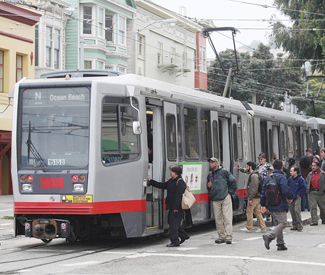
Muni switchbacks — that annoying practice where trains force all the passengers off well before the end of the line — have been in the news lately, with new Supervisor Katy Tang making switchbacks her first political priority.

But when you zero in on who bears the brunt of these service disruptions, it becomes clear that not all transit passengers are created equal. In fact, Muni data shows that the vast majority of switchbacks were concentrated in just three locations this past January.

San Francisco Municipal Transportation Agency reports shows that the top three stations hit by switchbacks in January were the T Third stop at Third Street and Carroll Avenue; the N Judah stop at Judah Street and Sunset Boulevard; and the J Church stop at Glen Park Station, in that order. While the January data provides only a snapshot, annual figures show that the T and J lines each averaged around 36 switchbacks per month since February of 2012, while the N averaged 49.

View MUNI Switchbacks in a larger map

This map displays the top five locations where switchbacks occurred in January 2013.

Muni defends the switchbacks, saying that trains sometimes have to be rerouted to fill service gaps elsewhere. But for passengers, it’s a huge inconvenience — they’re left with little choice but to sit tight until the next train arrives, which in some cases can be as long as 30 minutes.

Switchbacks can happen in foul weather, and at night. They can impact elderly transit riders with few other transportation options. For weary Muni customers headed to the outskirts of the city after a long workday — or trying to get to a job or child-care responsibilities on time — a switchback can be the proverbial last straw.

The SFMTA data was included in a February memo to Sup. Carmen Chu, predecessor to newly minted District 4 Sup. Tang, who did not return Guardian calls seeking comment.

Some view switchbacks as a social justice issue. In the case of riders traveling to the end of the T line in the Bayview, the disruptions disproportionately affect riders who have longer trips to begin with — it takes 40 minutes to get from Van Ness Station to the end of the T line during normal weekday hours, compared with 28 minutes to the end of the N line and 26 minutes to the end of the J line. And those traveling to the city’s lower income, southeastern sector are less likely to have alternative means of transportation.

The 39 switchbacks that left southbound passengers waiting at the T Third Carroll stop, near Armstrong Ave, accounted for almost a third of all switchbacks recorded in January. Since they happen more frequently during off-peak hours, passengers are more likely to be left standing out on the platforms at night, when there are longer gaps between train arrivals.

That’s a public-safety issue: Police Department data accessed on San Francisco’s Open Data Portal shows multiple car break-ins, a robbery with force, and a meth possession charge all occurring nearby that train stop over the past three months.

According to the SFMTA memo, “Vehicle maintenance issues and automatic train control system issues accounted for most delays in which switchbacks were used to rebalance and restore scheduled service.” There were more disruptions on the K/T and N lines, Transit Director John Haley wrote, because they are “longer than the other lines and, as a result, have more opportunity to fall behind schedule.” The memo added that upgrades are underway to improve reliability and reduce breakdowns.

“SFMTA needs to prioritize providing reliable transit service to all San Franciscans,” Sup. Malia Cohen, who represents the Bayview, told us. “While I understand that systems need to be flexible to adjust to accidents or other issues, the data tells us that there is a pattern of these switchbacks in our outer neighborhoods in District 10 and District 4, disproportionately impacting low income transit riders, seniors and families.”

San Francisco’s Transit First policy, which appears in the City Charter, states: “The primary objective of the transportation system must be the safe and efficient movement of people and goods.” But Muni regularly boots three specific groups of train passengers off the trains, even though they have the farthest to travel. They’re left out on the platforms during off-peak hours, sometimes after dark, when there are longer wait times between trains. Does anyone actually believe that’s safe and efficient?

Editor’s Notes

5

tredmond@sfbg.com

EDITORS NOTES Ten years ago, we shut San Francisco down.

When George W. Bush gave the order to launch the invasion of Iraq, so many protesters hit the streets that it was impossible to do business. Market Street was closed. Tens of thousands of people didn’t go to work. Some 2,300 people were arrested, held in warehouses at the piers because there was no way to fit them in the county jail.

It was an exhilarating week (although I spent much of it trying to get my reporters out of the clink; the SFPD wasn’t paying much attention to press passes in the massive sweeps). It was a statement of how overwhelmingly this city was opposed to Bush’s War. It was repeated in smaller versions all over the country.

And it didn’t matter. Rep. Nancy Pelosi not only missed the antiwar rallies, she criticized us for costing the city money. A virtually unanimous Congress sides with Bush. Anyone who disputed the government line was branded as un-American.

And now we know the truth. It’s hard to find a single credible person who argues that the Iraq War was a good idea. After nearly $2 trillion dollars wasted, 4,300 US soldiers dead, and at least 100,000 Iraqi civilians killed, nothing of value has been achieved. The new Iraq is not a reliable US ally in the Middle East. That nation is not stabilized; in fact, it’s headed for civil war. There were no weapons of mass destruction.

Even if you want to be a pro-imperialist, US-interests-above-all type, you’re still going to be disappointed — American companies don’t control Iraq’s oil supply.

Ten years later, Bush is nowhere to be seen. He’s hiding out, painting pictures of himself, living comfortably. His kids didn’t die in the desert or come home with PTSD. He’s not going to be on the hook for the debt.

And none of the leaders of the pro-war march is apologizing — or even kinda, sorta admitting that they were terribly wrong. It’s hard to find any major news media accounts saying that the protesters — the ones who shut down San Francisco — were absolutely right.

Paul Krugman, one of the few mainstream news media voices who recognized the folly of the war from the start, put it this way in his March 18, 2013 column:

“What we should have learned from the Iraq debacle was that you should always be skeptical and that you should never rely on supposed authority. If you hear that ‘everyone’ supports a policy, whether it’s a war of choice or fiscal austerity, you should ask whether ‘everyone’ has been defined to exclude anyone expressing a different opinion.”

So let’s just take a moment now to reflect — not only on the horrible human tragedy but the political lessons. Because we were right, and they were wrong — and I just wish that for once, they’d admit it.

The right to transgender health care

23

OPINION When I first came out as a transgender man in the mid 1990s, I quickly realized that I would have to pay out-of-pocket for the health care I needed.

Nearly every insurance plan has outdated exclusions that bar transgender people from receiving medically necessary health care. Everything from cancer screenings to the care related to gender transition is commonly excluded, despite being provided without exclusion to non-transgender health insurance customers.

For working people everywhere, including members of the LGBT community, accessible, affordable, quality healthcare is critical. And for union members like myself, healthcare equity is part of a basic and broader vision for equality for all people.

In recognition of this vision, Pride at Work, the SEIU National Lavender Caucus, National Center for Transgender Equality, the Transgender Law Center, and Basic Rights Oregon have partnered for the very first Transgender Month of Action, aimed at lifting the healthcare inequities that face our community.

I began to gender transition in 1996, starting with hormone therapy, a process that required walking through countless hoops. I will forever be thankful to the Tom Wadell Clinic and Lyon Martin Clinic for making hormone therapy accessible to low-income and uninsured trans people like myself, but I know I was one of the lucky ones. A few years later, when I was insured, I began to feel as if insurance companies were the gatekeepers of my body.

I knew that I needed to get chest surgery and that it wouldn’t be covered by my insurance, so I held a rent party and told my friends and loved ones that I needed help. It took a lot of vulnerability to do that. Like everyone else, transgender people need acute care when they are sick and preventative care to keep us from becoming ill, including services that are traditionally considered to be gender specific — such as Pap smears, prostate exams, and mammograms.

But insurers frequently expand discriminatory exclusions in a way that denies transgender people coverage for basic services. Take the outrageous example of a transgender woman in New Jersey who was denied coverage for a mammogram on the basis that it fell under her plan’s sweeping exclusion for all treatments “related to changing sex.”

Sometimes, trans people are denied care completely. In the late 1990s, I went to a gynecologist, but the doctor refused to treat me. Over the next 10 years, likes so many other trans people, I did not get an exam, too embarrassed and outraged to seek treatment.

In 2001, I worked with the a group of transgender healthcare activists to remove discriminatory exclusions for trans employees. When the Board of Supervisors voted to remove these exclusions, it was a huge and historic victory. Since that decision over a decade ago, San Francisco has proudly provided inclusive health care to city employees — and there’s been no cost increase to the overall plan.

Pride at Work, the organization that brings together LGBT union members and their allies, has a sign in the office that states: An injury to one is an injury to all. That’s the premise that underscores the labor movement’s commitment to LGBT equality, including trans-inclusive healthcare.

And it’s why Pride at Work is organizing local and national efforts to educate LGBT people and labor unions about the importance of ensuring access to basic healthcare for transgender people and providing coverage of medically-necessary transition-related care in health insurance. This first-of-its-kind effort is inspired by the belief that all workers deserve to have all medically-necessary care covered by health insurance, including transgender people whose healthcare needs are not being met.

Gabriel Haaland is co-vice president of Pride at Work.

Editor’s Notes

7

tredmond@sfbg.com

EDITOR’S NOTES I wasn’t invited to the meeting where Mayor Ed Lee (and Willie Brown and Rose Pak) sat down with representatives of Lennar Corp. and a Chinese investment consortium to try to finalize a deal for Treasure Island. But I can tell you with near-absolute certainty that what comes out will not be good for San Francisco.

I can tell you that because every major project the mayor has negotiated has been bad for the city.

The way the California Pacific Medical Center project came down is a perfect example. The mayor worked directly with Sutter Corp., which owns CPMC, last spring, and in March, came out with a proposal that he and his allies presented as the best the city and the hospital giant could do.

It was awful.

CPMC would pay nowhere near enough in housing money to offset the new jobs it was creating. St. Luke’s, the critical public health link in the Mission, would be cut to 80 beds, below what it needed to be sustainable. Only about five percent of the 1,500 new jobs would go to existing San Francisco residents.

It was also pretty much dead on arrival at the Board of Supervisors, where a broad-based group of community activists pushed for big changes — and won. Sups. David Campos, David Chiu, and Mark Farrell stepped into the void created by a lack of mayoral leadership and forced Sutter to accept a much better deal, with St. Luke’s at 120 beds, vastly increased charity care, a guarantee that 40 percent of the new jobs will go to San Franciscans, and a much-better housing and transit component.

The mayor got rolled; he was ready to accept what everyone with any sense knew was better for Sutter than for his constituents. He clearly didn’t know how to say what the supervisors said: This won’t work, and we’d rather walk away from the whole deal than accept a crappy outcome.

That’s exactly what’s going on with the Warriors’ arena — the mayor is giving away the store. And he, with Brown and Pak at his side, will do the same at Treasure Island.

The balance of power in the city is moving to the board. And for good reason — the supervisors seem to be able to get things done.

Alerts

0

THURSDAY 14

Building momentum around prison activism 518 Valencia, SF. 7pm, free. Hear from former prisoners, activists and organizers who were engaged in the prisoners’ hunger strike at Pelican Bay. This event, Build to Resist, seeks to promote movement building with a focus on prisoners. Speakers will include Linda Evans of prisoner advocacy alliance All of Us or None, Azadeh Zohrabi of the Hunger Strike Coalition, and others.

SATURDAY 16

Anarchist Book Fair The Armory Community Center, 1800 Mission St, SF. www.bayareaanarchistbookfair.wordpress.com, abookfair@yahoo.com. 10am-6pm, Sat/16 and Sun/17, free. The annual Bay Area Anarchist Book Fair, presented by Bound Together Books, brings together more than 75 radical booksellers, independent presses, and political groups from around the world. Speakers will include George Katsiaficas, author of “Asia’s Unknown Uprisings;” Eddie Yuen and Jim Davis, co-authors of The Apocalyptic Politics of Collapse and Rebirth; Terry Bisson of the Beehive Design Collective, and more. Visit the website for more events happening that weekend.

SUNDAY 17

Bayard Rustin Birthday Celebration Orbit Room Café, 1900 Market, SF. www.bayardrustincoalition.com. 5-7:30pm, $5–$10 suggested donation. The Bayard Rustin LGBT Coalition will celebrate the life and legacy of openly gay African American community organizer Bayard Rustin with this fundraiser, featuring food and a no-host bar. Rustin is widely remembered for organizing the Great March on Washington for Jobs and Freedom 50 years ago. A teaser for the event reads: “What would Bayard do? Get to work. Get to organizing. Get to making history. Get to creating change. .. and he would party hearty on his birthday along the way.”

Editor’s notes

5

EDITOR’S NOTES Way back in the early 1980s, when I had a lot more hair and it wasn’t so grey, I got a tip that the San Francisco school district had a serious problem with asbestos contamination. My colleague Jim Balderston and I checked it out, and yes indeed — the toxic stuff was in so many classrooms that thousands of students were at risk.

After we broke that news, and the district started scrambling to clean up the mess, we asked ourselves: How were things allowed to get to that point? Who screwed up? Who let it happen?

We knew there was a paper trail, and we were all set to put together a detailed request under the Public Records Act, which would have taken months to process. But first we met with the recently hired school superintendent, Ray Cortines, and asked him how much he knew about the past few years of school maintenance.

“Very little,” he said. “But I know where you can find out.”

He took us to a huge room, filled with maybe 50 filing cabinets. “All of the building history and maintenance records are in here,” he said. “If you need to use the copy machine, just let me know.”

And that was that. No scrutiny from a district lawyer, no redactions, no documents withheld for shadowy reasons … just two reporters with full access to public records. He literally told us to turn out the lights whenever we were done.

We got some amazing stories. I’d like to think we hastened a lagging asbestos abatement program and revealed who was at fault .. but nothing bad happened. I guarantee that the district could have found a way, maybe even an arguably legal way, to keep us from seeing half the records we reviewed — but as Cortines saw it, what would have been the point?

And guess what? It was 1987. There wasn’t any fancy software program or nifty, expensive app. Just an open door.

That’s how a public agency should think about public records.

Now its 2013, and San Francisco is the epicenter of the Information Revolution. And as we note in this issue, it’s harder than ever to get the folks at City Hall — who love the tech world and all it offers — to turn over basic information about how they’re running the city.

That’s about as crazy as it gets.