Arts & Culture

Arts & Culture

SF Stories: Benjamin Bac Sierra

5

46TH ANNIVERSARY SPECIAL 

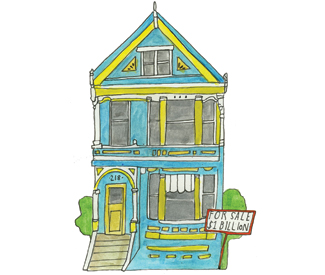
Puro San Fran: These words have inspired me to somewhere beyond my city and to someone beyond myself. Puro San Fran, I have howled into our smashed streets, into the lush jungles of Okinawa, death deserts of Saudi Arabia, the overly intellectual classrooms at U.C. Berkeley — into barrios worldwide.

Puro San Fran can be literally translated into Pure San Francisco, but what exactly is so pure about this Golden Gated city is the subject for this musing.

As an adolescent homeboy from our Mission district, I shouted Puro San Fran with anger, as a demand to combat. In different evolutions, though, St. Francis blessed me with different powers that forced me to confront profound paradoxes, within myself and my home.

Puro San Fran is more than a battle-cry; it is a meditation, a mantra that has soothed me and granted me an identity that has fueled my consciousness. I like to pride myself as a Missionero and Cortlandero before gentrification of those gritty hoods, but it is idealistic impurity to tell the tale that the Mission district is all I knew. I liked to claim those territories as if I, we, owned those streets, but those streets were only half my story.

A veteran Muni bus rider by age 11, I would graffiti tag my name and the name of our break dance crew all over every neighborhood — the Haight, Noe Valley, Soma (back when all that existed there were dull warehouses), the Sunset, Excelsior, etc. At 14 years old, we, brown skinned, would blow white angel-dust smoke halos into San Francisco’s spitting seashore at Ocean Beach. During the crack-era 1980s, we would drink and fight at rat-infested Union Square, a home for black-bearded bums who we would share our Mad-Dog 20/20 wine with. Parading our poverty on 30th street after our many 49ers Superbowl victories, we proclaimed the streets as ours, not knowing or understanding that the actual tar and cement would be “rehabilitated” (gentrified) before we would be, so that now almost all of my former San Franeros have vanished outside its borders.

Except for very brief stints in backyard cities, I did not truly explore outside of San Francisco until I was seventeen and joined the Marine Corps. Before then, I had never even heard of other major Bay Area cities called Santa Rosa, Richmond, Berkeley, or Menlo Park. My world, my life was Puro San Fran, but it was that spirit that also charged me forward, so that now I have trumpeted our unique city everywhere I have traveled. With San Fran spirit, I thrust myself into becoming a student, a writer, a professor, a father, a sinner, and a fuller human being.

San Francisco is changing, as it has always been changing, but we are at our roots Native American hippie Missionary 49er Giant locos. Thanks to our counterculture tradition, we believe in peace and diversity as an essence, yet we contradict ourselves by also being hedonistic kings and queens who wear the golden crown of capitalism on the West Coast. What goes on in Vegas may stay in Vegas, but what goes on here in San Fran becomes a permanent tattoo on our souls, and we like to believe we have them, that stuff of souls. We live in the moment trusting it is forever. Go to AT&T Park during the Giants playoffs; you will feel the forever, and you will fall in love with it. Puro San Fran, therefore, is a hopeless romantic nostalgia for something that never really existed but that always is possible. With that purity, that hopeless possibility, that profound paradox, I write and represent us all. Con Safos.

Benjamin Bac Siera is a San Francisco City College English composition and literature professor and author of Barrio Bushido, an ode to Mission District vato locos.

SF Stories: John Ross

0

46TH ANNIVERSARY SPECIAL Coming out of the underground

On the BART escalator,

The Mission sky

Is washed by Autumn,

The old men and their garbage bags

Are clustered in the battered plaza

We once named for Cesar Augusto Sandino.

Behind me down below

In the throat of the Earth

A rough bracero sings

Of his comings and goings

In a voice as ronco y dulce

As the mountains of Michoacan and Jalisco

For the white zombies

Careening downtown

To the dot coms.

They are trying to kick us

Out of here

Again

They are trying to drain

This neighborhood of color

Of color

Again.

This time we are not moving on.

We are going to stick to this barrio

Like the posters so fiercely pasted

To the walls of La Mision With iron glue

That they will have to take them down

Brick by brick

To make us go away

And even then our ghosts

Will come home

And turn those bricks

Into weapons

And take back our streets

Brick by brick

And song by song

Ronco y dulce

As Jalisco and Michaocan

Managua, Manila, Ramallah Pine Ridge, Vietnam, and Africa.

As my compa QR say

We’re here now motherfuckers

Tell the Klan and the Nazis

And the Real Estate vampires

To catch the next BART out of here

For Hell.

John Ross (1938-2011) was a street poet, shit disturber, author, and for some 20 years, the Bay Guardian’s Mexico City correspondent

SF Stories: Tiny

3

46TH ANNIVERSARY SPECIAL I have a Vision..(Too!)

of poor people-led revolutions and clan mothers wit solutions including the many colored, many spirited, humble people who still remain in San Francisco even though we are systematically incarcerated, profiled, shot or just hated Used by akkkademic institutions, Nonprofiteering, complex over-funded government collusions — From gang ijunctions to sit-lie laws —

Arresting poor folks of color for no just cause

From Ambassador security guards to Stop ‘ n’ Frisk-

using code words like”cleaning up streets”

so frisko is only for the white ‘ n’ Rich The Afrikan population Out-migration caused by Negro Removal, Redlining, Re-Devil-opment and Lennar displacement La Raza en la mission replaced, displaced by condominiums and Eastern Neighborhood Plans, making room for wheatgrass juice and gourmet coffe stands-

And then let’s go back to the Original removal — !st Peoples of the Ohlone Nation — rarely remembered, considered, spoken about or even named..

Caring for Pachamama, mother Earth in a good way, by the teachings of our ancestors every day

So where does this leave us folx who refuse to be cleaned out, incarcerated, profiled or Wheat-grasserated…

We still here, aqui estamos y no nos vamos —

You can’t Frisk, me, Injunct me or incarcerate me cuz let me be clear.

I am staying in my hood, on my corner

and gonna stay seated in my newly gentrifuked park

.. and to Google buses, condominium, devil-opers and un-conscous new-comers,

we will be a thorn in your side for life and up-end your corporate, money-driven hustle

with our feet, our love, our actions …and our ancestors at our side…

“Where we supposed to go, us po’ folks born here, raised here?” said Vietnam vet, disabled, poverty skola and panhandler reporter at POOR magazine, Papa Bear, arrested three times in one day under Sit-lie. “Going to Hell,” thats my vision (of the city) — when they killed the black community — the soul of this city was gone,” said Tony Robles, PNN co-editor, poet, author and organizer and revolutionary son of San Francisco natives of Manilatown. “I don’t care if I’m the last Mexican in the Mission,” said Sandra Sez, indigenous warrior mama and organizer born and raised in the Mission District.

I was born in the back seat of a car, dealt with houselessness and criminalization since I was 11. Ended up in the Bay Area when I was 14. Can’t say San Francisco is my town. But I have had the blessing of meeting and being in family with some of the most powerful revolutionaries from both sides of this beautiful bay. From the I-Hotel resistance to Mission Anti-displacement Coalition to HOMIES to PODER, from The Bay View Newspaper, Idriss Stelley Foundation to the Coalition on Homelessness. Me and my houseless mama along with other landless revolutionaries launched revolutionary projects, POOR Magazine/Prensa POBRE, PeopleSkool, the Po Poets/Poetas POBRE’s , the welfareQUEENs and Theatre of the POOR, to name a few.

I have also been houseless, incarcerated, evicted, profiled, poverty-pimped, gentriFUKed and welfare deformed in the Bay. I have seen beauty and felt resistance in this place in ways I don’t believe would have been possible anywhere else. And yet now it seems like the struggle is just to remain.

Should one fight to stay in a party that no longer includes most of your friends? Neighborhoods filled with people you don’t know and don’t want to know. Schools stripped of their color and cultures. Corporate streets filled with shiney white buses for people who can’t put their deliecate feet on a public bus. Bike lanes filled with $3,000 bicycles and coffee shops that only sell $4 cups of coffee and $3 vegan donuts.

My humble vision for SF includes reparations for black peoples in the Bay View, giving back stolen vacant land to Original Peoples, makng the more than 30,000 empty units in San Francisco available for poor, houseless, and foreclosed on peoples to live in. For landlords to rent at least one apartment per building to families in poverty at reduced or no rent, for doctors and dentists to see at least three patients per practice for a sliding scale starting at $0 — and for people to not question “where their money is going” when they give 50 cents to a panhandler/street newspaper vendor while never questioning where their tax dollars go to politricksters and CEOs of corporations. For the SFPD to arrest, profile, and harass drunken white people who spill out of Bay to Breakers and Golden Gate Park concerts with the same voracity that they do poor youth of color — cause then maybe it would actually have to stop.

And finally for all racist, classist laws that target us poor folks, like sit-lie, gang injunctions and stop and frisk be repealed for their flagrant and disgusting unconstitutionality so that public space will remain truly public and people might truly be free.

Tiny, aka Lisa Gray-Garcia, is a founder of POOR Magazine.

Happy hunting

0

cheryl@sfbg.com

TV Stainless steel appliances. Hardwood floors. Walk-in closets. The House Hunters drinking game, which lovingly mocks the HGTV program’s predictability, will have even a seasoned lush drunk before the first commercial break. “But there’s nowhere for my man cave!” DRINK.

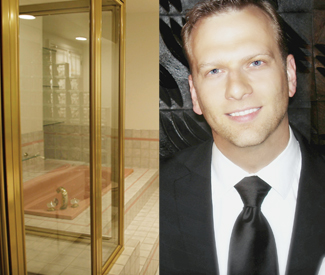
Brian Balthazar, who is HGTV’s Director of Programming, has a sense of humor about the drinking game (“If I ever played it, I’d be hammered, because I watch a lot of House Hunters!”), and also about some recent online muckraking that revealed that what you see on House Hunters isn’t one hundred percent real. “We’re making a television show, so we manage certain production and time constraints, while honoring the home-buying process,” he explained in a statement to Entertainment Weekly this summer. “To maximize production time, we seek out families who are pretty far along in the process. Often everything moves much more quickly than we can anticipate, so we go back and revisit some of the homes that the family has already seen and we capture their authentic reactions.”

Wait, so reality TV isn’t actually real? Shut the custom-painted front door! “Mostly I was happy that people cared that much about House Hunters,” Balthazar says of the controversy. He’s currently promoting the latest House Hunters spin-off, House Hunters Renovation, which follows buyers as they pursue remodeling projects in their just-purchased homes. The next new episode airs Oct. 21 at 11pm; it follows a couple whose “dream house” (DRINK) contains a pink-and-gold nightmare of a bathroom.

“On this show, we see them buying the homes, and then making all these changes to them. So it’s exciting to be able to show that,” Balthazar says. “But I’m always excited that people are talking about House Hunters and that it has had such longevity. It’s nearing its 1,000th episode this year. That’s more than Law and Order!”

And like Law and Order, every episode of House Hunters is basically the same. “The concept is very clear. You know what’s going to happen on the show,” Balthazar says. “They’re going to see three homes, and we’ll see which one they choose. But what is always different are the homeowners and the homes. That voyeuristic, play-along quality of the show changes every time, which I love. We have some really interesting characters that come along, and everyone has a different reaction to different aspects of a home. I think that’s what makes it such a guilty pleasure among people who love to spy on the real estate process.”

House Hunters International follows the same basic formula, with an obvious difference: instead of a new construction in Indianapolis with a three-car garage (DRINK), the buyer (or renter) is seeking an apartment in a slightly more exotic locale. Like, say, Cambodia. Or Serbia. Or the Arctic Circle.

“I’m amazed at some of the stories the production company we work with on International finds. They’ve developed relationships with real estate agencies all over the world,” Balthazar says. “For a long time we didn’t go to some countries simply because it was too complicated. In some countries, you can’t actually buy a home if you’re not a resident. In others, you have to pay cash completely up front, in full. That was really a daunting thing for us to tackle. And now that the show’s been around for so long a lot of people write in to be on the show. It’s like this grassroots effort in some regards.”

Of course, being so popular has a slight downside. “Everyone that I run into, whether I’m on an airplane or at a party, if I say I work on House Hunters or House Hunters International, inevitably there will be someone saying they want to be on,” Balthazar says. “I actually love that! Though I will admit that occasionally when someone asks me what I do, I just say I’m a writer. [Laughs.] But I’m ultimately so grateful that people want to be on the show.”

Balthazar’s main distraction from an endless parade of buyers seeking open-concept floor plans (DRINK) is his pop-culture website, popgoestheweek.com. He’ll be melding his two interests on a special he’s hosting on HGTV in December.

“It’s called I Bought a Famous House. I go around to homes in Hollywood that were once owned by celebrities,” he says. “It’s interesting see what [the non-famous new owners have] done with them since. In one case, someone kept the house exactly the same as it was when the celebrity owned it. And in another case, with Madonna’s former house in the Hollywood Hills, a guy came in and literally changed almost everything, with the exception of the kitchen. But I think when you buy a seven million dollar house, you probably aren’t as concerned about the kitchen as the rest of the house, because you aren’t doing your own cooking when you have that kind of money!”

Of course, Madonna’s kitchen probably already had granite countertops. DRINK!

www.hgtv.com


Overkill

0

Resident Evil 6

(Capcom)

Xbox 360, PS3, PC

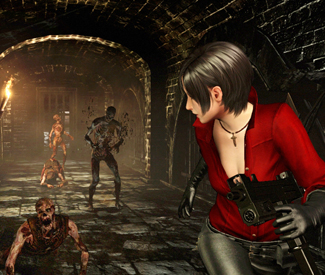
GAMER Capcom really wants you to like Resident Evil 6. The Japanese developer has been turning out entries since 1996 in the survival horror franchise that has spawned countless films, games, books, and theme park attractions, and with each success came an increase in fans. Resident Evil 6 suggests Capcom has listened to each and every one of its fans, and instead of using fan feedback to make an informed decision about what type of game players want, they simply shrugged and stuffed four games into one.

Resident Evil 6 offers four separate story campaigns, each designed to appeal to a different kind of player. For fans of the original games, fan favorite Leon Kennedy gets top billing in a campaign with a tense atmosphere and sense of exploration. Resident Evil 5‘s Chris Redfield heads a combat-heavy campaign focusing on action and gunplay. New character Jake Muller takes on a story that plays like a mixture of the first two, and the unlockable final campaign stars a bizarrely deracialized Ada Wong as she solves puzzles.

Booting up the Leon campaign reveals mechanics and pacing that are baffling. Levels are designed to be played with a partner, but there are moments when one player performs a task while the other stands around with nothing to do. Quicktime events exist solely to make players jam on the sticks and buttons at inopportune times and lead mostly to cheap deaths. Melee combat is so overpowered it makes more sense to kick zombies to death rather than waste ammunition lining up a shot from a pistol. And the game is relentless with explosions and breakneck action sequences.

The schizophrenic design decisions start to fall into place when you begin Chris’ war-shooter themed campaign. The focus on guns, overpowered melee moves, and arena levels are specifically designed to enhance an action experience but have been applied across the board to campaigns that don’t support the play style. Understandably, it’s impossible to change the fundamental design of each campaign without ballooning the developers’ budget, but my response to that would be not to make four different campaigns. Longtime fans of the series were never going to accept Resident Evil 6. It makes the controversially action-packed fifth entry look like Citizen Kane and it’s a far cry from the slow, solitary experiences that made the franchise a hit. But even separating the game from its baggage, the game stumbles in simple mechanics, pacing, and level design. When a single failed release can sink a development company it may seem justifiable to want to focus-group your game, but in dividing their resources Capcom really just made four different bad games. 

Parsley, sage, rosemary, and timewarp

0

marke@sfbg.com

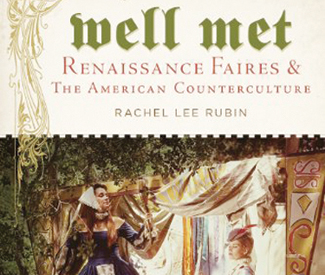
CULTURE For any of you (guilty!) who have a kneejerk gag-reflex reaction upon hearing the words “Renaissance Faire,” but can’t quite pinpoint the source of your disdain, author Rachel Lee Rubin breaks it down for you three ways: fear of men in tights, fear of voluptuous women squeezed into revealing outfits, and fear of being engulfed by nerd culture. That third category of Renaiphobia includes my own personal terror, being approached by a merry fool and loudly addressed in “castle talk,” that peculiar grammatical melange which embodieth the thithermost in Faire-y frippery. (I would also add another fear: that of hepatitis A, which my husband’s high school friend contracted from a woefully undercooked giant turkey leg.)

“Part of Renaissance Faire culture is inextricably intertwined with this adjacent culture of Renaissance Faire haters,” Rubin told me over the phone from her office in Cambridge, Mass. “I spent so much time among the trolls on Internet message boards, it really hurt my feelings!”

The fascinating, forthcoming Well-Met: Renaissance Faires and the American Counterculture (NYU Press, release date November 19), a study of the phenomenon and its political and cultural echoes by Rubin — a professor of American Studies at the University of Massachusetts, Boston — just might temper any Renaissance indigestion. Its deep and compelling tale of the Faire’s reach, much of it emanating from a specifically Californian aesthetic of soft-golden attitudes and ecstatic liberal expression, certainly had me revisiting some of my own preconceptions, even yearning to be part of the revelry. Somebody polish me a codpiece!

Next year will mark the 50th anniversary of the Faire. (This year’s monthlong Northern California Renaissance Faire in Hollister winds down Sat/13-Sun/14). Amazingly, Well-Met is the first comprehensive historical and anthropological study of the festival, although an official 50th jubilee commemorative album is set to be published next year (www.rpf50book.com).

The Faire’s tale begins with a young Laurel Canyon teacher’s quest to teach her charges at the local community center the history of theater, including the Italian Renaissance form of commedia dell’arte, the rowdy, harlequin-speckled, lute-sountracked populist traveling-theater tradition, a mixed-up version of which the Faire would soon become most identified with. But Phyllis Patterson’s idea of putting on a community festival, dubbed the Renaissance Pleasure Faire, soon became a flashpoint for several cultural and political currents of the time, not least the blacklisting of Hollywood professionals by the House Un-American Activities Committee (with all that out-of-work talent, the first Ren Faire served as both a showbiz bonanza and a backlash to Communist witch hunts); a turning away from mass-produced goods and the harmful effects of global commercialism (with an emphasis on handmade crafts and local community); and the incubation stage of the hippie, including the Faire’s soft-focus, wild-and-free English pastoral style of clothing, soon found donned by top pop minstrels, from the Byrds and the Monkees to the Beatles and the Isley Brothers.

“Even now, the spectre of the long-haired hippie looms in many older conservative minds. And he — it is always a he — belongs to the aesthetic of the Renaissance Faire, guitar in one hand, flower in the other,” Rubin told me.

Also involved in the Faire’s history was the reinvention of theater — the New Vaudeville, including such bigtimers as Firesign Theater, the Flying Karamazov Brothers, Pickle Family Circus, and Bill Irwin — plus the explosion of public community radio (LA’s KPFK and our own KPFA owe much of their golden years to the Faire), and a revisionist historical movement in education. Rubin traces the New Left political movement’s break with the Old Left to the Faire’s liberating effect. But mostly the Faire operated as America’s freak magnet, the most visible manifestation of the counterculture emerging from the conformist 1950s — and a safe space for outsiders of all types.

“Again and again, people told me how the Faire made them feel safe,” Rubin said. “Vietnam veterans told me it was only at Faire that they felt welcome back in the country. There was a huge gay and lesbian presence from the beginning, and the bawdiness encouraged there attracted different sexual expressions. Class difference, too, could be left behind. The costuming echoed that of the masquerade, where a certain amount of anonymity — a shedding of the self at the gates, which is a very important ritual at the Faire — opened up new possibilities.

“The central paradox of the Faire is that it allows you to be more yourself while being someone else.”

Another paradox is the overwhelming anachronism of the Faire — starting with those emblematic turkey legs and continuing through the revealing custom-made chain mail “wench wear” that’s lately become all the rage among female Faire regulars (“playtrons” in castle talk). Somehow, reimagining the historical past makes the Faire more authentic.

“The inspiration to write this book actually came when I took an English friend to one of the fairs,” Rubin said with a laugh. “He was horrified: ‘what have you done to my country’s history?’ And yes, it’s called the Renaissance Faire, but it’s really the idealization of probably 10 years of the whole historical period, in England, and only very select parts of that. But the central notion of the festival is play — even a play on the meaning of ‘renaissance’ itself. It’s almost like steampunk’s relationship with the Victorian era. Except that steampunk starts with one historical period and imagines the future, whereas the Renaissance Faire imagines the past.”

And of course the one constant of every historical endeavor is change. The Faire is now a national institution with a broader appeal than ever. After functioning as an artistic haven in the 1960s and a working class escape in the late ’70s and ’80s (the titillating “freakfest” alternative to Six Flags’ “redneck Disneyland”), it’s lately settled into the role of suburban theme party and gamer-nerd paradise. But that’s changing as well.

“The video game role-players are still there, but the faire doesn’t seem to resonate as much with the current tech crowd, which may be more attracted to material gain than fantasy escapism,” Rubin said. And many regular playtrons are dismayed at what they see as the Disneyfication of the Faire. “Even as a suburban and working class phenomenon, the Faire always functioned as an alternative narrative to everyday life. But now we’re seeing more ‘handmade crafts’ manufactured in China and attempts to corporatize the Faire on larger levels. There has always been an argument about authenticity among playtrons, but now there are more contemporary forces affecting the Faire.”

Yet the original spirit of transformation and togetherness persists. For Well-Met, Rubin visited dozens of Faires across the country, not only documenting several intriguing regional differences but also talking to dedicated playtrons about their personal experiences at the Faire. What emerges is a candid family portrait, full of self-aware whimsy, goofy charm, and awkward situations. (Rubin speaks with playtrons of color about the faire’s often ethnically challenged demographics and writes about the widening of the Faire’s aesthetics to include Islamic World elements, in acknowledgment of the actual Renaissance’s roots.)

Also persistent: the wilder, bawdy side, especially on the last day of many Faires, when parents are warned and much of the self-censorship vanishes, like mead from a sterling goblet gripped by hairy Hobbit knuckles. Profane insults and hilariously vulgarish displays fill the fairgrounds. Will that be the case on Sun/14 at the NorCal Ren Faire? Squeeze yourself into corset and tights and come findeth out.

NORTHERN CALIFORNIA RENAISSANCE FAIRE

Sat/13- Sun/14, $25–$35 (Kids under 12 free), 10am-6pm

Casa de Fruita

10031 Pacheco Pass Hwy, Hollister

www.norcalrenfaire.com

Keep digging

0

arts@sfbg.com

DANCE Once you have learned to ride a bike or tie your shoes, your body will recall the movements and their sequential logic for the rest of your life. It’s called muscle memory and dancers are fantastic at it.

Before videotape and dance notation, it was not uncommon to ask, say, former Martha Graham dancers about an old piece — only to hear them respond that they couldn’t recall it. But if you put them into a studio together, one of them would demonstrate a half-remembered gesture, another would place or correct it, and a third would bring up a sequence or antecedent. Four hours later, these women would have drawn out of their bodies a pretty good approximation of what had been thought to be a forgotten piece of choreography.

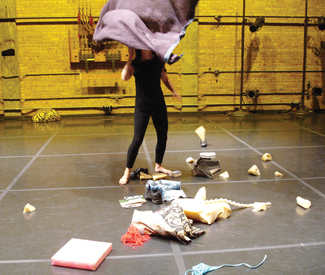
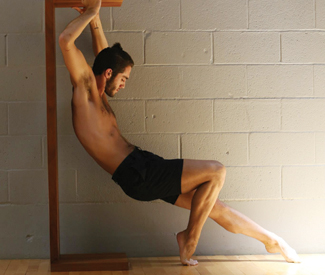
Morgan Thorson’s oddly titled and deeply flawed Spaceholder Festival (Oct. 5-7, ODC Theater) took a stab at examining the residue that life imprints on our bodies. Comparing the process of uncovering what is hidden to archeologists’ trying to make sense of what they unearth, Thorson partook in an actual dig and used that experience in her choreography. When it came to evaluating the results, she apparently felt that assigning artifacts to the highest bidder was an accurate reflection of reality. So the work’s middle section also included two dancers as auctioneers.

Spaceholder opened on a quasi-abstract note, evolved into a messy theatricality only to circle back on itself. Screeching machine sounds accompanied uniform dancers being spit out onto the stage as if by an assembly line. They dutifully followed each other, stepping into two against three or horizontal movement patterns. Strangest were their blank faces. They looked as if they were being pulled by something, perhaps an urge to catch what was just out of their reach.

Spreading across the stage, they moved in and out of sync with each other. Many small phrases — a scratch on a leg, a knee opening and closing, a skipping step — held promises that never were fulfilled. Some were clearly dance-derived; a fourth position and jetés, hip rolls, and toe walks were recognizable. But what to make of a wafting hand that approached like a butterfly trying to land? A woman resting on the floor on her side looked like an Odalisque, her smile an invitation to the rest of the group to join her. A finger pointing section, the result of a counting maneuver, evolved into a wheel with the arms being the spokes. Gestures might connect to each other with no apparent logic. With its neutral tone and the dance’s accompanying sense of accumulation for its own sake, it became about as involving as watching falling snow after a while. Yet simultaneously fascinating and frustrating was the clarity that these dancers brought to their tasks.

At one point, the dancers coalesced into a tight group with arms stretched up as they reached for each other’s fingers. That section later returned, except with the dancers passing pieces of foam around. One of them tried to press them into a single shape. The idea of retroactively deciphering meaning may avoid an obvious linear development, but it makes entering a piece very difficult — perhaps impossible, unless seeing it several times.

Part two opened with a promising twist. A dancer was ceremoniously carried in on a blanket and started to throw rubbish — old shoes, cans, rags, paper — around the stage as if the items were a goddess’ precious gifts. The stuff got kicked around, swept away, and finally ended up on a table, being sorted into what probably was meant to suggest legible patterns. The gathering and examination of this detritus and using some of it as props may have had its comic elements, but if so most of the humor escaped me. The remembered physicality of the table’s effect on the dancers, however, was a lovely touch.

Perhaps the evening’s most intriguing element came with Max Wirsing, the company’s lone male dancer, who donned silver sandals and paraded around while covered by a tablecloth. Later he repeated the gesture of closing the clasp around his ankle. It was clearly a movement that had entered his body. As for me, I was grateful when the last of this unearthed material — a single dancer — was blanketed by the dark falling onto the stage.

The rescuer

1

cheryl@sfbg.com

FILM A decade or so ago, Ben Affleck was drowning in Bennifer mania and starring in schlock like Daredevil (2003) and Gigli (2003). Rumors percolated that Affleck and Matt Damon hadn’t really written that Oscar-winning script for 1997’s Good Will Hunting — though Damon’s career was bearing more fruit at the time (see: 2002’s The Bourne Identity), the “Jenny From the Block” video was nauseating enough to make anyone question the authenticity of anything Affleck-associated up to that point.

But in 2012, it’s clear the guy who was able to balance being a Kevin Smith muse with getting pumped up to star in Armageddon (1998) was all along plotting the oldest show biz career trajectory in the book: he really wanted to direct. And thank goodness for that.

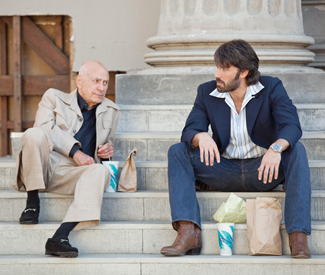
Argo opens with a vintage Warner Bros. logo and offers a quick history lesson via storyboards and old news footage. If you don’t know the particulars of the 1979 Iranian Revolution, you won’t be an expert after Argo, but the film does a good job of capturing America’s fearful reaction to the events that followed it — particularly the hostage crisis at the US embassy in Tehran. Argo zeroes in on the fate of six embassy staffers who managed to flee to the home of the sympathetic Canadian ambassador (Victor Garber).

Back in Washington, short-tempered CIA agents (including a top-notch Bryan Cranston) cast about for ways to rescue them. Most of the standby “exfil” tactics (give ’em fake identities as English teachers!) are out of the question given the political climate in Iran. Crazier ideas begin to surface. Could the staffers, uh, ride bikes to the Turkish border, maybe? Three hundred miles…in the winter?

Enter Tony Mendez (Affleck), exfil specialist and father to a youngster wrapped up in the era’s sci-fi craze (21st century Jedi will weep at the boy’s mint-condition toy collection). It’s while watching 1973’s Battle for the Planet of the Apes on TV that Tony comes up with what Cranston’s character calls “the best bad idea we have:” the CIA will fund a phony Canadian movie production (corny, intergalactic, and titled Argo) and pretend the six are part of the crew, visiting Iran for a few days on a location shoot. Tony will sneak in, deliver the necessary fake-ID documents, and escort them out. Neither his superiors, nor the six in hiding, have much faith in the idea. (“Is this the part where we say, ‘It’s so crazy it just might work?'” someone asks, beating the cliché to the punch.)

Argo never lets you forget that lives are at stake; we see the Ayatollah’s men scrambling to piece together the identities of the embassy workers even as Tony arrives in Tehran, where he observes a victim of mob justice swinging from a noose over a main street. Every painstakingly forged form, every bluff past a checkpoint official, the anxiety increases, to the point of being laid on a bit thick by the end.

The film has the benefit of being both timely (with US-Iran relations stormy as ever) and entertaining, and though it’s not a masterpiece, it’s Affleck’s best directorial effort to date. He’s capable with the secret-agent suspense stuff, and is careful not to make generalizations about the Iranians depicted in the film. But, appropriately enough given the source, Argo comes alive in its Hollywood scenes. As show-biz veterans who mull over Tony’s plan with a mix of Tinseltown cynicism and patriotic duty, John Goodman and Alan Arkin practically burst with in-joke brio. I could have watched an entire movie just about those two.

Argo is Affleck’s third film — the first not set in Boston, and the second that Affleck himself stars in. Though he cast his brother, Casey Affleck, in 2007’s Gone Baby Gone, he gave himself the lead in 2010’s The Town, a decision that ended up being one of the film’s weak links. (“Oh look,” my movie going companion pointed out during The Town‘s forced-soulful denouement. “He escaped to Beardlandia!”) But his turn in Argo is, refreshingly, more or less vanity-free — just one gratuitous shirtless scene! — a hopeful sign that Affleck the actor may finally be giving Affleck the director the upper hand.


ARGO opens Fri/12 in Bay Area theaters.

The big show

1

cheryl@sfbg.com

FILM/LIT Any horror fan can tell you that John Carpenter directed and co-wrote 1978’s Halloween. But it would require a slightly more credits-obsessed moviegoer to recognize the name of behind-the-scenes maestro Irwin Yablans.

In addition to being Halloween‘s producer, Yablans was also responsible for cult classics like Tourist Trap (1979), Roller Boogie (1979), and Hell Night (1981). His new autobiography, The Man Who Created Halloween: How a Bit of Desperation and Inspiration Gave Birth to the Movie That Changed Hollywood (self-published, 259 pp., $16.95), traces his path from Brooklyn childhood to Hollywood player. Along the way, he served in the army, met the love of his life, feuded with his brother (fellow film producer Frank Yablans), and — on a flight from London to Los Angeles — had a brilliant brainwave about babysitters being stalked by a killer on the scariest night of the year. I spoke with Yablans, who turned 78 this year, over the phone from Southern California.

San Francisco Bay Guardian What inspired you to write a memoir? 

Irwin Yablans I kind of kept quiet about all this stuff through the years because I was only involved in the first three [Halloween films]. I was really not able to gauge the public’s insatiable appetite for Michael Myers! And I got tired of it after awhile. I wanted to do other things. But I came back into the picture because there was a lot of misinformation and revisionist history floating around, and I thought it was time I talked about it. Then, I decided to write a book about my life.

And Halloween is going out into 1,000 theaters on Halloween this year — that’s amazing! When I came up with the little idea on an airplane 35 years ago, little did I know. [Laughs.] There’s a lesson to be learned from that: never underestimate the possibilities of a good idea. Don’t ever assume that because you thought of it, it might not be good. You have to believe in yourself.

[Pauses.] Before I go any further, I have to make a confession: I am a Giants fan. And I have been since 1947, because I was a Giants fan in New York. I was at the Polo Grounds in 1951 and watched Bobby Thomson hit that home run — in case you don’t know what that is, it’s the most famous moment in baseball history. I still watch the Giants every day. And I’ll tell you, they look pretty good this year!

SFBG Why did you decide to go the self-publishing route?

IY Well, I’d never written a book before. I’d always done a little writing for the movies, but about seven or eight years ago I thought I’d sit down with my computer and peck away. The first word I wrote was “cockroaches.” [Laughs.] I wanted to write for my family — I thought I’d leave behind some musings about my life that might be interesting for my kids and my grandchildren. About 50 or 60 pages in, I showed it to some people I respect and they said, “You ought to think about publishing this.”

When I got close to the end, I submitted it to a couple of publishers. I’d never been part of that world before — [and I realized it] was just like how I got into my independent film company. I found a publisher who wanted to publish it, but I found out that if I went with them, not only would they get a large portion of the receipts, but they don’t put any money up, or do any publicity or advertising.

So I said to myself, “Why do I need them?” [I found] CreateSpace on the internet, and I’ve had the most amazing experience. Independence is sort of in my blood. I like doing things myself, [even] my own public relations. You read in the book why we chose Jamie Lee Curtis [for Halloween] — when I met Jamie, I knew she was a fine actress, but I had this vision of getting a photo of her mother, Janet Leigh, and putting Jamie in a similar pose, and submitting it to AP and UPI. We got worldwide publication of that. And that’s the kind of thing I did all the way through with Halloween. You just have to take every opportunity to publicize the picture. Of course, John Carpenter made a very good movie.

SFBG I have to ask about Roller Boogie. It’s a midnight-movie favorite in San Francisco.

IY No kidding! [Laughs.] You know what’s great about that movie? The music! Earth, Wind, and Fire … it’s just a delightful little movie. Just great fun. I think I had more fun making that movie than any other movie I made, because it was so uplifting and so bright — I was on roller skates with my whole family during the shoot. I love the “Boogie Wonderland” number, and Linda Blair was such a charmer.

I tell you, the ’70s and ’80s were a lot of fun for me. I was so busy, making movies, distributing movies, and running all over the world. It was a great experience. I really loved every moment of it.

www.irwinyablans.com


Medical marijuana is over

4

caitlin@sfbg.com

HERBWISE Hey potheads, welcome to what figures to be the last Herbwise column for the time being.

But we’ve had some good sessions together, no? Over the course of a very eventful year in marijuana, we spoke with Roseanne Barr, Black Panthers, oncologists, tax attorneys, Coral Reefer. Snoop Dogg, Fiona Apple, Pat Robertson, the president of Uruguay, and an actress from the Blair Witch Project all made our news call. They all do the weed, or support such things, and that list alone should serve as proof that cannabis has irrevocably entered the mainstream.

We went around the world to see how pot was faring in other corners. Seattle’s medical marijuana champion-DIY pop star Lisa Dank reported back from South By Southwest. I chatted with the author of medical marijuana legislation in Washington, DC, dropped in on a Berlin head shop employee, and took a walk with a small town politician up in the Marin County hills of Fairfax.

Honestly, I didn’t want to write about politics at all when we started the column. Boring! Fake! Politricks! Etcetera. But then last September, the IRS intensified its hounding of several major Bay Area dispensaries, cheating them out of perfectly reasonable tax exemptions. Then, at an October 7 press conference in Sacramento, US Attorneys let us know they were going to start being a bummer.

A year later, we’re short a whole bunch of places to get marijuana, including no less than two of the clubs I personally depended on. Hiss. Against my best intentions, current events necessitated that Herbwise focus on law and order, from time to time.

But there’s been good moments (the week I wrote Herbwise high as hell in my cubicle on Amoré, the cannabis aphrodisiac shot), just like the especially-bad moments (the week I bore the tidings that major credit card companies would no longer process sale of marijuana and that beloved local dispensary Vapor Room was closing due to threatening letters from federal agencies. That week I wrote about Lady Gaga.) I’m privileged to have been able to weigh in on a year that will surely change the future of cannabis, for better or worse.

Some words on words: I got told 800 times to not call it “pot” or “weed.” One person wrote to say “flower” was better terminology. Please don’t mix us up with the recreational users, some card carrying marijuana users told me. You’re hurting our quest to be taken seriously.

But I need my synonyms. Nah, more importantly, I think this not-mixing is the problem. Focusing the movement for increased access to cannabis on the medical marijuana industry isn’t working. Drop the pretense, I say. The notion that weed can only be prescribed by a medical professional is not just dumb, it’s also not gonna get us anywhere. The longer we stigmatize recreational users, the longer people (and by people I mean young men of color, because that’s who our racist prison system is filled with) are going to be sent to jail for a stupid reason. And less people will feel connected enough to the movement to create the kind of buzz that will eventually change public opinion. And prisonmakers and anti-drug warriors will continue to get the money that should be going to our schools and to our public library flag burning sessions where everyone is handed a pink thong to wear at the outset and ordered to chant baby-killing nursery rhymes in Spanish. Broadcast on PBS.

Obviously, I’m not saying that cannabis doesn’t have medical usages. Studies have recently emerged that suggest it stops the spread of cancer in the body, and any patient that has AIDS or another wasting, awful, strength-sapping disease can tell you that cannabis can be a literal life saver when it comes to stimulating appetite and general pain management.

But the ways in which people use cannabis are multitudinous, and the only reason it’s regulated differently than tobacco, wine, liquor, McDonald’s, and the thousand other things you can abuse out of moderation is because of government and corporate control. You smoke to relax after a hard day, you smoke to bond with friends, you smoke to have fun.

Herbwise bids you adieu. We’ll still be covering cannabis in the Guardian, of course, and like a phoenix, I’ll be rising from this spent bowl with Street Seen, a new column focusing on all the rad things happening in street art, and fashion, and other founts of alternative Bay Area culture.

Thanks for being there. Stay high.

Psychic Dream Astrology: October 10-16, 2012

0

Oct. 10-16, 2012

ARIES

March 21-April 19

This is not the time to figure your life out or to ruminate on how things came to be. Look for potential and opportunity all around you instead of wasting energy on wallowing in the past or trying to predict the future. There is much more possible than you are seeing this week, so open up your viewfinder.

TAURUS

April 20-May 20

I would never tell you to risk it all, but this week it’s a good idea to put at least a little bit on the line. Strive to be careful without being overprotective, Taurus. Your life is ready for some heartfelt action, and to pull this off you’re gonna need to be able to act in spite of your fears, no matter how pragmatic they are.

GEMINI

May 21-June 21

The secret to your success this week is in going with the flow. You are meant to put your plans aside and to affix your attention in the direction that your life is pointing you. Be willing to meet your circumstances, relationships or even health where they’re at, instead of trying to force them into someplace “better”.

CANCER

June 22-July 22

Sometimes it’s the stuff that feels like your biggest problems that turn out to be your greatest assets, Cancer. If you can get some perspective on what’s troubling you it’s likely that you’ll see opportunity developing right in front of your eyes. Don’t confuse feeling stuck with actually being trapped this week.

LEO

July 23-Aug. 22

Practice living in the moment this week, Leo. Nothing is permanent, and whether that’s good news or bad, you are meant to stop fiddling with things and just be where you’re at. Don’t let your present circumstances define you; learn from whatever you have going on, and be open to what comes next revealing itself to you.

VIRGO

Aug. 23-Sept. 22

You have to go through it to get to it. Strive to meet your demons head-on, because otherwise they will chase you down, Virgo. You’ll go farther by dealing honestly and directly with your life than by digging your heels in or throwing blame around. Get your hands dirty this week for best results.

LIBRA

Sept. 23-Oct. 22

You have to wrestle with your fears and pin them to the ground, Libra, there’s no way around it. Decide to take control of the part of your life that feels the most chaotic this week. You are capable of change but it won’t happen without a little elbow grease and a whole lot of willingness.

SCORPIO

Oct. 23-Nov. 21

No matter how engaging your relationships are and no matter what you’ve got going on, you need some downtime, Scorpio. Watch out for feeling that creepy crawly feeling that compels you to look for evidence of your life being crappy. Accept your feelings and support yourself through them this week.

SAGITTARIUS

Nov. 22-Dec. 21

Do not try to control, contain or commit to anything new this week, Sagittarius. If you are overwhelmed, the best course to take is to slow down and get a better assessment of what’s happening. If you know the nuances of where you’re at you, you will be better poised to avoid useless drama and pain.

CAPRICORN

Dec. 22-Jan. 19

Lucky you, Capricorn! This week you get to stare the things you’re oh-so-very scared of in the eyes and make them bow down to you. OK, not so much that, but you can make great headway if you deal directly with your troubles. Let your fears point you towards where you need to embody the most courage.

AQUARIUS

Jan. 20-Feb. 18

You should strive to understand what you need instead of expecting others to read your mind, or for the Universe to provide that insight, pal. Look at the places inside of yourself that you feel disconnected from your wants and intentions, Aquarius. Embody your truth without apologies this week.

PISCES

Feb. 19-March 20

Don’t panic! There’s a world of possibility and limitless options, Pisces. You should not try to fix or even make sense of things while you’re feeling anxious this week. Try to sit in whatever you’re feeling, even if it sucks. There is no escaping things, so deal with them only when you can, so you do it smartly.

Jessica Lanyadoo has been a Psychic Dreamer for 18 years. Check out her website at www.lovelanyadoo.com to contact her for an astrology or intuitive reading.


Dog eat dog

0

arts@sfbg.com

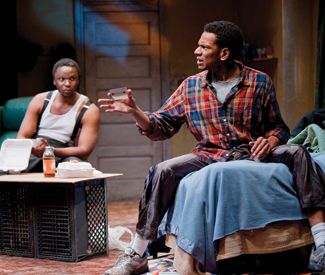
THEATER Audiences arriving at Marin Theatre Company for director Timothy Douglas’ current, beautifully staged revival of Suzan-Lori Parks’ 2001 Pulitzer Prize–winning play, Topdog/Underdog, take in a shabby, dilapidated low-rent studio apartment with its meager and seedy furnishings. But looming overhead the whole time are the red-white-and-blue bunting of some half-forgotten political rally, depending from the flies amid three long strips sheared from the stars and stripes, hung equidistantly across the stage. These thin flags have tightened their belts, and look a bit dingy too, almost sepia-toned, and floating above the impoverished scene below somehow bring to mind that flag behind Ella Watson, the African American cleaning woman in Gordon Parks’ iconic Depression-era photograph, American Gothic, Washington, D.C.

If there’s thus a certain election-year ring to Mikiko Uesugi’s careful scenic design — present before the action even starts — it’s a sonorous and dissonant one, echoing back across a political past with a strange and disorienting nostalgia, a contaminated euphoria. What could be more appropriate?

http://www.youtube.com/watch?v=F0Xll3eZJ8Y

At a time when mainstream political reality seems feverishly bizarre, almost surreal, Parks’ drama endures as a shrewd poetical remix of American history, an elucidating fever dream in a realistic mode: two African American brothers respectively named Lincoln (Bowman Wright) and Booth (Biko Eisen-Martin) by a runaway father who apparently found it funny, share a precarious perch and a tainted patrimony in a poor part of a nameless city — where they act out an overlapping series of fated roles. These mix race, class, sex, family, and money as equal facets of a brutally antisocial system — a racket, in fact, high above (but qualitatively the same as) the Three-card Monte scheme at center of the story.

But in the brothers’ tragic and absurd destinies, half-grasped at best by the protagonists themselves, the play plumbs a deeper understanding too, a historical current churning and moving below everything — and in that understanding opens a sense of possibility.

The apartment is younger brother Booth’s roost, but Linc, as he’s called, is bringing home the bacon (or Chinese food) in exchange for crashing on the La-Z-Boy. Linc has been kicked out by now ex-wife Cookie (an offstage character symbolizing perhaps a kind of standard “fortune” for a married man without economic prospects, something akin to the ambiguous forecast Linc gets with his Chinese takeout: “Your luck will change”). Booth’s offstage love interest is named, with even more symbolic resonance, Grace. Early on, it’s clear she’s pretty much unattainable.

Booth wants knowledge from his brother, more than anything else. Linc was once famous on the streets as a master of the Three-card Monte hustle — which itself has nothing to do with luck — but has given up the cards in the wake of a guilt-ridden incident. Eager brother Booth (played by Eisen-Martin with a nicely coiled energy, dangerous and comically hapless at once) is dying to become a hustler himself, but his efforts to learn the ropes meet with resistance from his jaded, wary older brother (whom Wright imbues with a perfect combination of wistful compassion and alpha-male contempt).

For his part, Linc’s guilty conscience finds a kind of half-bitter contentment in his current job: impersonating his namesake at a carnival sideshow, where he daydreams as sitting duck in white-face Honest Abe drag, before a ready line of customer-assassins. Indeed, Linc’s first appearance onstage comes in the Lincoln get-up, an eerily comic site that already loads the naturalistic performances with dreamy intensity.

If Parks’ drama (which premiered off-Broadway in the summer of 2001) preceded everything from 9/11, the wars on Iraq and Afghanistan, Katrina, the financial crisis, worldwide protest movements against global capitalism and empire, and the advent of the country’s first African American president, MTC’s apt revival shows it more than keeps pace with the times as a gritty and gripping allegory of endemic, convoluted civil wars.

TOPDOG/UNDERDOG

Through Oct. 21, $36-$57

Marin Theatre Company

397 Miller, Mill Valley

www.marintheatre.org


On the cheap

0

Listings compiled by George McIntire. Submit items for the listings at listings@sfbg.com. For further information on how to submit items for the listings, see Picks.

WEDNESDAY 10

“Seeing is Not Believing”: The Art of Barren Storey Room 140, CCSF Ocean Campus, 50 Phelan, SF. (415) 239-3580. 6:30-8:30pm, free. Renowned artist Barren Storey, most famous for his cover design for the 1980 reissue of Lord of the Flies, lectures today at an event hosted by CCSF’s graphic communications department and its concert and lecture series.

THURSDAY 11

“Day of the Dead and Beyond” Mini Bar, 837 Divisadero, SF. (415) 525-3565. 7pm-1am, free. Nopa’s Mini Bar will be hosting a Day of the Dead-themed showcase featuring work from local artists like Gaytha Watley, James McPhee, Janette Lopez, and Neil Motteram.

“My Heart is an Idiot”: Found Magazine’s anniversary celebration Space Lounge at Saturn Café, 2175 Allston, Berk. (510) 845-8505, www.spacelounge.saturncafe.com. 7pm, $5. Davy and Peter Rothbart invite you to celebrate the 10th anniversary of Found Magazine this Thursday. The function will also double as a book release party for Davy’s new book of personal essays My Heart is an Idiot that has garnered significant praise from the likes of Dave Eggers and Elizabeth Gilbert (Eat, Pray, Love).

FRIDAY 12

Adrian Tomine: New York Drawings Pegasus Bookstore, 2349 Shattuck, Berk. (510) 649-1320, www.pegasusbookstore.com. 7:30pm, free. Noted for his cartoons in The New Yorker, cartoonist and illustrator Adrian Tomine will be on hand at Pegasus Bookstore for a presentation of the new collection of his works from that esteemed publication and elsewhere — an ode to an adopted home from an original West Coaster.

“Original Navigations/Navegações Originais” Village Market, 4555 California, SF. (415) 221-0445, www.tinyurl.com/originalnavigations. 6-8pm, free. Billed as San Francisco’s first ever Luso American by those eager to see more Portuguese diaspora events in the Bay, this event will be hosted by Brazilian American and Portuguese American writers, delving into experiences pertaining to their distinct heritage.

SATURDAY 13

Day of the Dead Exhibition SOMArts Cultural Center, 934 Brannan, SF. (415) 863-1414, www.somarts.org. Through Nov.10. Opening reception: 11am-5pm, free. In a rather intimate setting, over 80 local artists continue the tradition of honoring those who have passed. The event, which features altars commemorating dear friends, natural disasters, and deaths that affected society, is curated by father-son artists Rene and Rio Yañez, with the help of architect Nick Gomez.

Life is Living Defremery Park, 1651 Adeline, Oakl. www.lifeisliving.org. 10am-6pm, free. It’s going to be quite the shindig in West Oakland this Saturday. The urban-centric block party will feature everything from a Talib Kweli DJ set to the Hood Games skate competition to a petting zoo. The fest — which looks to unite black communities across the country with the sustainability movement — will also will be balancing out the fun with an assortment of educational activities such an open mic read in and a food first teach-in.

Fall Gallery Walk Various SF locations. www.yerbabuena.org. 4-7pm, free. In a group effort orchestrated through the Yerba Buena Gardens, 15 art galleries in the surrounding SoMa neighborhood will be opening their doors to all comers. 111 Minna, Gallery 4n5, and the Society of California Pioneers are all featured. Plus, get stamps each time you visit a gallery — the more you collect, the better chance you have of winning a prize at the end of the night.

50th Anniversary of a Wrinkle in Time Koret Auditorium, SF Main Library, 100 Larkin, SF. www.sfpl.org. 2pm, free. In conjunction with Litquake, the San Francisco Public Library will be celebrating the 50th anniversary of Madeleine L’Engle much-adored classic A Wrinkle in Time by having writers such as Rebecca Stead, Hope Larson, and Lewis Buzbee discuss how the book served as a muse for them and their writing careers.

SUNDAY 14

Sunday Streets Berkeley Shattuck between Haste and Rose, Berk. www.sundaystreetsberkeley.com. 11am-4pm, free. Everybody’s favorite Sunday car-free block party will be making its way across the Bay, planting itself in North Berkeley this upcoming Sunday. The 17-block festival will be awash with all the fanfare that you’ve been accustomed to such as yoga classes, dodgeball, and a bike rodeo for kiddos.


Stage Listings

0

Stage listings are compiled by Guardian staff. Performance times may change; call venues to confirm. Reviewers are Robert Avila, Rita Felciano, and Nicole Gluckstern. Submit items for the listings at listings@sfbg.com. For further information on how to submit items for the listings, see Picks.

THEATER

OPENING

Love in the Time of Zombies Café Royale, 800 Post, SF; sftheaterpub.wordpress.com. Free ($5 donation suggested). Opens Mon/15, 8pm. Runs Mon-Tue, 8pm. Through Oct 30. San Francisco Theater Pub performs Kirk Shimano’s “rom-zom-com.”

The Scotland Company Exit Theatre, 156 Eddy, SF; www.thunderbirdtheatre.com. $15-25. Opens Thu/12, 8pm. Runs Thu-Sat, 8pm; Sun, 3pm. Through Oct 27. Thunderbird Theatre Company performs Jake Rosenberg’s new comedy.

“Strindberg Cycle: The Chamber Plays in Rep” Exit on Taylor, 277 Taylor, SF; www.cuttingball.com. $10-50 (festival pass, $75). Previews Fri/12-Sat/13, 8pm; Sun/14, 5pm (part one); Oct 25, 7:30pm and Oct 26, 8pm (part two); Nov 1, 7:30pm and Nov 2, 8pm (part three). Opens Oct 18, 7:30pm (part one); Oct 27, 8pm (part two); and Nov 3, 8pm (part three). Runs Thu, 7:30pm; Fri-Sat, 8pm (also Sat, 2pm); Sun, 5pm. Through Nov 18. Cutting Ball performs a festival of August Strindberg in three parts: The Ghost Sonata, The Pelican and The Black Glove, and Storm and Burned House.

BAY AREA

An Iliad Berkeley Repertory Theatre, Roda Theatre, 2015 Addison, Berk; www.berkeleyrep.org. $14.50-77. Previews Fri/12-Sat/13 and Tue/16, 8pm; Sun/14, 7pm. Opens Oct 17, 8pm. Runs Tue and Thu-Sat, 8pm (also Sat, 2pm); Wed and Sun, 7pm (also Sun, 2pm). Through Nov 11. Berkeley Rep performs Lisa Peterson and Denis O’Hare’s Homer-inspired tale.

Richard the First: Part One, Part Two, Part Three Berkeley City Club, 2315 Durant, Berk; www.centralworks.org. $14-25. Previews Fri/12, 8pm (part one); Sat/13, 8pm (part two); and Sun/14, 5pm (part three). Opens Oct 18, 8pm (part one); Oct 19, 8pm (part two); and Oct 20, 8pm (part three). Runs Thu-Sat, 8pm; Sun, 5pm (three-part marathon Sundays, Nov 11 and 18, 2, 5, 8pm). Through Nov 18. This Central Works Method Trilogy presents a rotating schedule of three plays by Gary Graves about the king known as “the Lionheart.”

ONGOING

Elect to Laugh Marsh San Francisco, 1062 Valencia, SF; www.themarsh.org. Tue, 8pm. Through Nov 6. $15-50. Veteran political comedian Will Durst emphasizes he’s watching the news and keeping track of the presidential race “so you don’t have to.” No kidding, it sounds like brutal work for anyone other than a professional comedian — for whom alone it must be Willy Wonka’s edible Eden of delicious material. Durst deserves thanks for ingesting this material and converting it into funny, but between the ingesting and out-jesting there’s the risk of turning too palatable what amounts to a deeply offensive excuse for a democratic process, as we once again hurtle and are herded toward another election-year November, with its attendant massive anticlimax and hangover already so close you can touch them. Durst knows his politics and comedy backwards and forwards, and the evolving show, which pops up at the Marsh every Tuesday in the run-up to election night, offers consistent laughs born on his breezy, infectious delivery. One just wishes there were some alternative political universe that also made itself known alongside the deft two-party sportscasting. (Avila)

Family Programming: An Evening of Short Comedic Plays Shelton Theater, 533 Sutter, SF; www.brownpapertickets.com. $20. Thu/11-Sat/13, 8pm. Left Coast Theatre Company performs short plays about gay and alternative families.

The Fifth Element: Live! Dark Room Theater, 2263 Mission, SF; www.darkroomsf.com. Fri-Sat, 8pm. Through Oct 27. Comedic adaptation of the 1997 Luc Besson sci-fi epic.

Foodies! The Musical Shelton Theater, 533 Sutter, SF; www.foodiesthemusical.com. $30-34. Fri-Sat, 8pm (no show Nov 17). Open-ended. AWAT Productions presents Morris Bobrow’s musical comedy revue all about food.

Geezer Marsh San Francisco, 1062 Valencia, SF; www.themarsh.org. $30-100. Sat, 8pm; Sun, 7pm. Through Nov 18. Geoff Hoyle’s popular solo show about aging returns.

Of Thee I Sing Eureka Theatre, 215 Jackson, SF; www.42ndstmoon.org. $25-75. Wed, 7pm; Thu-Fri, 8pm; Sat, 6pm (also Sat/13, 1pm); Sun, 3pm. Through Oct 21. 42nd Street Moon performs George and Ira Gershwin’s classic political satire.

The Play About the Baby Gough Street Playhouse, 1620 Gough, SF; www.custommade.org. $30. Thu/11-Sat/13, 8pm; Sun/14, 7pm. Custom Made Theatre presents Edward Albee’s devilishly funny 1998 play, an intriguing and gleefully idiosyncratic work about the brutality to which innocence is invariably subjected in this world. In a formal and thematic reshuffling of the Albee deck (from which he drew earlier gems like Who’s Afraid of Virginia Woolf? or The American Dream), the play offers two couples: Boy (Shane Rhoades) and Girl (Anya Kazimierski) — two innocents in the blush of first love who have just had a baby — and Man (Richard Aiello) and Woman (Linda Ayres-Frederick), a quippy, slightly sinister pair who intrude on the younger couple for initially undisclosed reasons. As much propositions as people (albeit lively ones), the characters move around a stage backed by a wall-full of assorted chairs (in Sarah Phykitt’s somewhat enigmatic scenic design) addressing each other and the audience by turns, the older ones prone to digressive monologues, the younger to ingenuous rapture, confusion, and finally (as their predicament becomes clear) anguish. The play’s oddball dialogue and intentional repetition demand a lot from a cast, however, and director Brian Katz gets uneven results from his. While Kazimierski offers a sure, buoyant performance as Girl, Rhodes wavers in his delivery, proving only occasionally convincing as Boy. Ayres-Frederickson exudes a nice, saucy, indomitable air as Woman, and Aiello is a pretty good match for her, despite a somewhat stilted start. But the effect overall is a little too erratic to avoid turning the play’s intentional repetitions into a slow-growing tedium. (Avila)

The Real Americans Marsh San Francisco, 1062 Valencia, SF; www.themarsh.org. $25-50. Fri, 8pm; Sat, 8:30pm. Extended through Oct 27. Dan Hoyle’s hit show, inspired by the people and places he encountered during his 100-day road trip across America in 2009, continues.

Roseanne: Live! Rebel, 1760 Market, SF; www.brownpapertickets.com. $25. Wed, 7 and 9pm (no shows Oct 31). Through Nov 14. Lady Bear, Heklina, D’Arcy Drollinger, and more star in this tribute to the long-running sitcom.

Shocktoberfest 13: The Bride of Death Hypnodrome, 575 10th St, SF; www.thrillpeddlers.com. $25-35. Thu-Sat, 8pm. Through Nov 17. Thrillpeddlers’ annual Halloween horror extravaganza features a classic Grand Guignol one-act and two world premiere one-acts, plus a blackout spook show finale.

The Strange Case of Citizen de la Cruz Bindlestiff Studio, 185 Sixth St, SF; www.bindlestiffstudio.org. Thu/11-Sat/13, 8pm. Bindlestiff Studio presents Luis Francia’s political thriller.

Twelfth Night San Francisco Maritime National Historic Park, Hyde Street Pier, 2905 Hyde, SF; www.weplayers.org. $30-80. Sat/13, 5:30pm. After spending the summer on Angel Island with their epic-scale production of The Odyssey, the We Players have scaled back with a lo-key rendition of Shakespeare’s Twelfth Night on Hyde Street Pier. Of course when it comes to the We Players, “scaled-back” still means a two-and-a-half hour long participatory jaunt taking place mainly along the length of the pier and aboard the historic ferryboat, the Eureka, which serves primarily as the residence of the grieving Illyrian Countess, Olivia (Clara Kamunde) around whose favors much of the plot revolves. Highlights of the experience include the opportunity to visit historic Hyde Street Pier, a gypsy-jazzy score directed by Charlie Gurke (who also plays the lovelorn Duke Orsino), and the rascally quartet of the prankish Maria (Caroline Parsons), jocular drunk Toby Belch (Dhira Rauch), clueless doofus Andrew Augecheek (Benjamin Stowe), and wise fool Feste (John Hadden). But as We Players productions go, this one feels less inspired in its staging, and much of the action merely shuffles back and forth on the Eureka without incorporating many of the intriguing nooks and views the Hyde Street Pier offers, despite a promising opening scene involving a beach and a rowboat. Also, uncharacteristically for We, the comic timing seemed to be off the evening I saw it, although both Stowe and Hadden ably conveyed their wit without a flaw. Dress warmly, carry a big flask, and you’ll be fine. (Gluckstern)

The Waiting Period Marsh San Francisco, 1062 Valencia, SF; www.themarsh.org. $15-50. Thu-Fri, 8pm; Sat, 5pm. Extended through Oct 27. Brian Copeland (comedian, TV and radio personality, and creator-performer of the long-running solo play Not a Genuine Black Man) returns to the Marsh with a new solo, this one based on more recent and messier events` in Copeland’s life. The play concerns an episode of severe depression in which he considered suicide, going so far as to purchase a handgun — the title coming from the legally mandatory 10-day period between purchasing and picking up the weapon, which leaves time for reflections and circumstances that ultimately prevent Copeland from pulling the trigger. A grim subject, but Copeland (with co-developer and director David Ford) ensures there’s plenty of humor as well as frank sentiment along the way. The actor peoples the opening scene in the gun store with a comically if somewhat stereotypically rugged representative of the Second Amendment, for instance, as well as an equally familiar “doood” dude at the service counter. Afterward, we follow Copeland, a just barely coping dad, home to the house recently abandoned by his wife, and through the ordinary routines that become unbearable to the clinically depressed. Copeland also recreates interviews he’s made with other survivors of suicidal depression. Telling someone about such things is vital to preventing their worst outcomes, says Copeland, and telling his own story is meant to encourage others. It’s a worthy aim but only a fitfully engaging piece, since as drama it remains thin, standing at perhaps too respectful a distance from the convoluted torment and alienation at its center. (Avila)

BAY AREA

Acid Test: The Many Incarnations of Ram Dass Marsh Berkeley, 2120 Allston, Berk; www.themarsh.org. $15-50. Thu-Fri, 8pm; Sat, 5pm. Through Nov 24. Lynne Kaufman’s new play stars Warren David Keith as the noted spiritual figure.

Assassins Ashby Stage, 1901 Ashby, Berk; www.shotgunplayers.org. $20-30. Wed-Thu, 7pm; Fri-Sat, 8pm; Sun, 5pm. Through Nov 11. Shotgun Players performs the Sondheim musical about John Wilkes Booth, Lee Harvey Oswald, and other famous Presidential killers (and would-be killers).

Hamlet Bruns Amphitheater, 100 California Shakespeare Theater Way, Orinda; www.calshakes.org. $35-71. Wed/10-Thu/11, 7:30pm; Fri/12-Sat/13, 8pm; Sun/14, 4pm. Liesl Tommy directs this season closer for Cal Shakes, a decidedly uneven and overall surprisingly bland production of one of Shakespeare’s most fascinating, affecting, and endlessly rich works. The best part of Tommy’s less-than-inspired hodgepodge production (summed up by the dry and cluttered swimming-pool set, albeit very nicely designed by Clint Ramos) is lead Leroy McClain, whose Hamlet is a vibrantly intelligent and charismatic force most of the time. He gets some fine support from Dan Hiatt as a comically pedantic but still sympathetically paternal Polonius, but there is precious little chemistry with either Ophelia (a nonetheless striking Zainab Jah) or faithless queen mother Gertrude (Julie Eccles). The rest of the cast is rarely more than dutiful. Meanwhile, the staging comes laden with some awkward and/or tired conceits: a small fish tank-like landscape inset into the back wall for an unraveling Ophelia; a gore-covered zombie-esque ghost (a flat Adrian Roberts, who also plays Claudius); or guards sporting submachine guns, which always looks ridiculous. Moreover, the language comes awkwardly modernized in places —substituting “dagger” for “bodkin” in a rather famous soliloquy, for example, seems unnecessary and is definitely distracting. Why not “submachine gun”? (Avila)

The Kipling Hotel: True Misadventures of the Electric Pink ’80s Marsh Berkeley, 2120 Allston, Berk; www.themarsh.org. $20-50. Sat/13, 8:30pm; Sun/14, 7pm. This new autobiographical solo show by Don Reed, writer-performer of the fine and long-running East 14th, is another slice of the artist’s journey from 1970s Oakland ghetto to comedy-circuit respectability — here via a partial debate-scholarship to UCLA. The titular Los Angeles residency hotel was where Reed lived and worked for a time in the 1980s while attending university. It’s also a rich mine of memory and material for this physically protean and charismatic comic actor, who sails through two acts of often hilarious, sometimes touching vignettes loosely structured around his time on the hotel’s young wait staff, which catered to the needs of elderly patrons who might need conversation as much as breakfast. On opening night, the episodic narrative seemed to pass through several endings before settling on one whose tidy moral was delivered with too heavy a hand, but if the piece runs a little long, it’s only the last 20 minutes that noticeably meanders. And even with some awkward bumps along the way, it’s never a dull thing watching Reed work. (Avila)

Sex, Slugs and Accordion Marsh Berkeley, 2120 Allston, Berk; www.themarsh.org. $10. Wed, 8pm. Through Nov 14. Jetty Swart, a.k.a. Jet Black Pearl, stars in this “wild and exotic evening of song.”

33 Variations TheatreWorks at the Mountain View Center for the Performing Arts, 500 Castro, Mtn View; www.theatreworks.org. $23-73. Tue-Wed, 7:30pm; Thu-Sat, 8pm (also Sat, 2pm); Sun, 2 and 7pm. Through Oct 28. TheatreWorks performs Moisés Kaufman’s drama about a contemporary musicologist struggling to solve one of Beethoven’s greatest mysteries, and a connecting story about the composer himself.

Topdog/Underdog Marin Theatre Company, 397 Miller, Mill Valley; www.marintheatre.org. $36-57. Tue and Thu-Sat, 8pm (also Thu/11, 1pm; Oct 20, 2pm); Wed, 7:30pm; Sun, 2 and 7pm. Through Oct 21. Marin Theatre Company performs Suzan-Lori Parks’ Pulitzer Prize winner about a contentious pair of brothers.

The World’s Funniest Bubble Show Marsh Berkeley, 2120 Allston, Berk; www.themarsh.org. $8-50. Sun, 11am; Nov 23-25, 11am. Through Nov 25. Louis “The Amazing Bubble Man” Pearl brings his lighter-than-air show back to the Marsh.

PERFORMANCE/DANCE

“Bi Curious Comedy Night” Deco Lounge, 510 Larkin, SF; www.decosf.com. Sun/14, 8pm. $10. With Nick Leonard, Kate Willet, Nicole Calasich, and more.

“Comedy Bodega” Esta Noche Nightclub, 3079 16th St, SF; www.comedybodega.com. Thu, 8pm. Ongoing. No cover (one drink minumum). This week: the San Francisco Comedy Burrito Festival.

“Gravity (and other large things)” NOHspace, 2840 Mariposa, SF; www.performancelab.org. Wed/10, Fri/12-Sat/13, and Oct 19-20, 8pm; Sun/14 and Oct 21, 4pm. $12-25. Right Brain Performancelab present this evening-length dance-theater piece.

“A New Anthropology of Asian-Black Relations” Garage, 715 Bryant, SF; www.brownpapertickets.com. Wed-Thu, 8pm. $10-20. Mash-up poetry installation, plus performance, by Kevin Simmonds.

Smuin Ballet Palace of Fine Arts Theatre, 3301 Lyon, SF; www.smuinballet.org. Thu/11-Sat/13, 8pm (also Sat/13, 2pm); Sun/14, 2pm. $25-65. The company performs its fall program, including West Coast premiere Cold Virtues.

“The Spooky Cabaret” Stage Werx, 446 Valencia, SF; www.wilywestproductions.com. Wed/10, 7:30pm. $10. ‘Tis the season for this fest of three full-length and five one-act plays with horror themes.

“Theatecture on UN Plaza” Civic Center, UN Plaza, Seventh St at Market, SF; www.ftloose.org. Tue/16, noon-2pm. Free. Outdoor performance of Mary Alice Fry’s Honeycomb Zone as part of the “24 Days of Central Market Arts Festival.”

Shake, rattle, and read

1

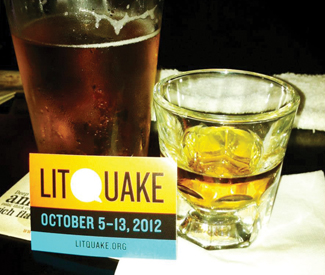
LIT What do you get when you bring together a horde of ravenous bibliophiles in a city that’s known for the possibility of a future catastrophic event? No, not the zombie-nerd apocalypse: Litquake, the largest annual independent literary festival on the West Coast. This year’s nine-day festival runs from Fri/5 through Sat/13, ending with Lit Crawl, the infamous booklovers pub-crawl that words up the Mission. The festival’s venues are as diverse as its writers, ranging from theaters, coffee houses, bars to a barbershop, a bee-keeping supply store, even a parklet. The jam-packed program is expected to bring even more attendees than last year (a whopping 16,581), and features 850 authors in 163 events including hundreds of readings and a multitudinous array of panels and cross-media events.

Originally dubbed Litstock, the festival was conjured up by Jane Ganahl and Jack Boulware at the Edinburgh Castle pub in San Francisco, a watering hole where local authors had been doing readings of their work. Ganahl and Boulware’s idea was simple: get a bunch of writers together to read their work in Golden Gate Park, and see what happens. With the help of Phil Bronstein, then editor of the San Francisco Examiner, they got $300 for a sound system, and on July 16, 1999, Litstock was born. Twenty-five writers read from their work, and to the surprise of Ganahl and Boulware, 300 people came to hear them. In 2002, the festival acquired its new, quintessentially San Francisco moniker, Litquake, and has been growing exponentially — more than 3,650 authors have presented to more than 83,500 people.

(About this year’s installment, Boulware tells the Guardian, “”This year, the festival feels like the programming has more depth than in previous years. We’re including more events at museums, more events outside the city, in particular the Berkeley Ramble, more tributes to noteworthy authors — Lenore Kandel, Woody Guthrie, and Juan Rulfo — and much more diversity in our expanded Lit Crawl schedule. We’re overjoyed to help cement the Bay Area’s rightful place on the national and international literary map.”)

As the story goes, the renaming of the festival in 2002 was partly inspired by an article in USA Today reporting that San Franciscans spend more money on books and alcohol than the residents of any other major city in the nation, according to the Bureau of Labor Statistics. Added to the festival in 2004, Lit Crawl has becoming the living, breathing embodiment of San Francisco’s happy marriage of books and booze — more than 6000 scribes and fans take part in venues in the Mission. San Francisco’s Lit Crawl (this year on Sat/13) has been so successful that there are now Lit Crawls in New York, Austin, Brooklyn and, soon, Seattle.

As neighborhoods go, the Mission is the perfect setting for the event, given its noteworthy independent bookstores and Dave Eggers’s brainchild, 826 Valencia. Like North Beach and the Haight, the city’s former literary hotspots, the Mission has an inherited bohemian spirit (some would call it Beat) that gives life to the idea of literary community.

This year’s Liquake roster of readers is a hefty one, spanning various genres and including such notable participants as Christopher Coake and Daniel Alarcón, both among Granta’s Best of Young American Novelists, along with local legends like US Poet Laureate Robert Hass and poet D.A. Powell. A bound-to-be-popular panel featuring cartoonist Daniel Clowes and Eggers himself will surely to draw a crowd, as the two discuss everything from the creative process to their favorite comics, books, and movies.

And for history buffs, there will be panels on little-known and formerly censored poetry of Beat poet Kandel and a tribute to Jane Austen featuring Karen Joy Fowler, author of bestseller book The Jane Austen Book Club.

It’s a fitting testament to San Francisco’s rich intellectual heritage that, in a city known for its ballooning tech industry (the oft-feared culprit behind literature’s “imminent demise”), San Franciscans’ literary love affair shows no signs of waning. Our lust for books still causes the city to tremble.

LITQUAKE

Fri/5-Sat/13

Various times, venues, and prices, SF.

www.litquake.org


Film Listings

0

Film listings are edited by Cheryl Eddy. Reviewers are Kimberly Chun, Dennis Harvey, and Lynn Rapoport. For rep house showtimes, see Rep Clock.

MILL VALLEY FILM FESTIVAL

The 35th Mill Valley Film Festival runs Oct. 4-14 at the Christopher B. Smith Rafael Film Center, 1118 Fourth St, San Rafael; Cinéarts@Sequoia, 25 Throckmorton, Mill Valley; and 142 Throckmorton Theatre, Mill Valley. For additional venues, full schedule, and tickets (most shows $13.50), visit www.mvff.com. For commentary, see Film.

OPENING

Bitter Seeds Just what we all needed: more incontrovertible evidence of the bald-faced evil of Monsanto. This documentary on destitute Indian cotton farmers follows an 18-year-old girl named Manjusha, a budding journalist who investigates the vast numbers of farmer suicides since the introduction (and market stranglehold) of "BT" cotton — which uses the corporation’s proprietary GMO technology — in the region of Vidarbha. Before BT took over in 2004, these cotton farmers relied on cheap heritage seed fertilized only by cow dung, but the largely illiterate population fell prey to Monsanto’s marketing blitz and false claims, purchasing biotech seed that resulted in pesticide reliance, failing crops, and spiraling debt. It’s a truly heartbreaking and infuriating story, but much of the action feels stagy and false. Should Indian formality be blamed? Considering the same fate befell Micha X. Peled’s 2005 documentary China Blue, probably not. Still, eff Monsanto. (1:28) Roxie. (Michelle Devereaux)

Butter Jennifer Garner, Olivia Wilde, and Hugh Jackman star in this Iowa-set satirical comedy about competitive butter carving. (1:32)

Frankenweenie Wee Victor Frankenstein brings his dog back from the dead in Tim Burton’s black-and-white, 3D animated tale. (1:27) Presidio.

The Mystical Laws As The Master gathers Oscar buzz for its Scientology-inspired tale, another movie based on the teachings of a similarly-named religion, Japanese fringe sect Happy Science, opens this weekend. But that analogy is incorrect, for The Mystical Laws way more resembles 2000’s Battlefield Earth, demonstrating and preaching its source material’s tenants rather than questioning them. Visit Happy Science’s website and you’ll find a New Age mix of Christianity and Buddhism, with woo-woo about truth and love. Its founder, Ryuho Okawa, claims to the reincarnation of "El Cantare," sort of an über-god who controls all spiritual activity on Earth. Anyway, now there’s an anime flick based on one of Okawa’s hundreds of books; it’s about an evil overlord with planet-ruling aspirations who gets smacked down by the powerful combo of aliens, a guy who realizes he’s humanity’s "light of hope" (basically a Jesus-Buddha combo, with psychic powers to boot), and an eight-headed flying dragon. There is Nazi iconography; there are Star Wars-inspired plot points. At one point, the hero preaches directly to the camera. It’s all very heavy-handed. A far more amusing use of your time would be to go to Happy Science’s website and click the tab marked "Astonishing Facts" to learn the spiritual fates of historical figures: "Currently Beethoven lives in the lower area of the Bodhisattva Realm of the 7th dimension in the Spirit world, and aims to transcend the sadness evident in parts of his music and become an expert in the music of joy," while proponent o’ evolution Darwin "is now serving a penance in Abysmal Hell." Hey, wait a minute! Isn’t science supposed to be "happy?" (2:00) New People, 1746 Post, SF; www.newpeopleworld.com. (Eddy)

The Oranges In director Julian Farino’s tale of two families, the Wallings and the Ostroffs are neighbors and close friends living in the affluent New Jersey township of West Orange. We meet David Walling (Hugh Laurie), his wife Paige (Catherine Keener), his best friend Terry Ostroff (Oliver Platt), and Terry’s wife, Carol (Allison Janney), during a period of domestic malaise for both couples — four unhappy people who enjoy spending time together — that is destined to be exponentially magnified over the Thanksgiving and Christmas festivities. We learn much of this in voice-over courtesy of stalled-out 24-year-old design school grad Vanessa (Alia Shawkat), a second-generation Walling whose narrative subjectivity the film makes plain. No one will fault Vanessa for editorializing, however, when her Ostroff counterpart, onetime BFF and present-day nemesis Nina (Leighton Meester), returns home after a five-year absence and, amid maternal pressure to date Vanessa’s visiting brother, Toby (Adam Brody), instead embarks on an affair with their father. The ick factor is large, particularly because it takes a while to keep straight all the spouses, offspring, and houses they belong in. But Farino works to convince us that the romantic spark between David and Nina should be judged on its merits rather than with a gut-level revulsion, a reaction we can leave to the film’s principals. To the extent that this is possible, it’s possible to enjoy The Oranges‘ intelligent writing and fine cast, whose sympathetic characters (perhaps excluding Nina, whose heedlessness regarding the feelings of others verges on sociopathic) we wish the best of luck in surviving the holidays. (1:30) Albany, Clay. (Rapoport)

The Paperboy Lee Daniels scored big with Precious (2009), but this follow-up is so off-kilter in tone and story it will likely polarize critics and confuse audiences, despite its A-list cast. I happened to enjoy the hell out of this tacky, sweat-drenched, gator-gutting, and generally overwrought adaptation of Peter Dexter’s novel (Dexter and Daniels co-wrote the screenplay); it’s kind of a Wild Things-The Help-A Time to Kill mash-up, with the ubiquitous Matthew McConaughey starring as Ward Jansen, a Florida newspaper reporter investigating what he thinks is the wrongful murder conviction of Hillary Van Wetter (a repulsively greasy John Cusack). But the movie’s not really about that. Set in 1969 and narrated by Macy Gray, who plays the veteran housekeeper for the Jansens — a clan that also includes college dropout Jack (Zac Efron) — The Paperboy is neither mystery nor thriller. It’s more of a swamp cocktail, with some odd directorial choices (random split-screen here, random zoom there) that maybe seem like exploitation movie homages. As a Southern floozy turned on by "prison cock" (but not, to his chagrin, by the oft-shirtless Jack), Nicole Kidman turns in her trashiest performance since 1995’s To Die For. (1:46) Embarcadero. (Eddy)

V/H/S See "Gruesome Discovery." (1:55) Bridge, Shattuck.

Taken 2 It’s kidnapping season again, and Liam Neeson is pissed. (1:31) Marina.

ONGOING

Arbitrage As Arbitrage opens, its slick protagonist, Robert Miller (Richard Gere), is trying to close the sale of his life, on his 60th birthday: the purchase of his company by a banking goliath. The trick is completing the deal before his fraud, involving hundreds of millions of dollars, is uncovered, though the whip-smart daughter who works for him (Brit Marling) might soon be onto him. Meanwhile, Miller’s gaming his personal affairs as well, juggling time between a model wife (Susan Sarandon) and a Gallic gallerist mistress (Laetitia Casta), when sudden-death circumstances threaten to destroy everything, and the power broker’s livelihood — and very existence — ends up in the hands of a young man (Nate Parker) with ambitions of his own. It’s a realm that filmmaker Nicholas Jarecki is all too familiar with. Though like brothers Andrew (2003’s Capturing the Friedmans) and Eugene (2005’s Why We Fight), Jarecki’s first love is documentaries (his first film, 2006’s The Outsider, covered auteur James Toback), his family is steeped in the business world. Both his parents were commodities traders, and Jarecki once owned his own web development firm and internet access provider, among other ventures. When he started writing Arbitrage‘s script in 2008, he drew some inspiration from Bernard Madoff — but ultimately, the film is about a good man who became corrupted along the way, to the point of believing in his own invincibility. (1:40) Metreon, Presidio, Smith Rafael, Shattuck. (Chun)

Backwards Athletic disappointment is not a new feeling for Abi (Sarah Megan Thomas, who also wrote the script), who has just learned she’s been named the alternate for the Olympic crew team — a bench warming role she was also relegated to in the last Olympics. But after she quits the team in a huff and moves home, it’s not long before she realizes that her life off the water is pretty depressing, too. Enter former boyfriend Geoff (James Van Der Beek), now the athletic director at the high school where Abi honed her rowing talents, who gives her a job coaching the talented but undisciplined girls who make up the current team. Will this new venture help Abi finally grow up and regain her self-confidence? Will she re-ignite her spark with Geoff? Will there be a last-act conflict involving yet another chance at the Olympics? Will there be multiple training montages? As directed by Ben Hickernell, Backwards hits all of the expected themes about following one’s heart and Doing the Right Thing. Thomas, a former rower herself, has an ordinary-girl appeal, but even Backwards’ attention to authenticity can’t elevate what’s essentially a very predictable sports drama. (1:29) Sundance Kabuki. (Eddy)

Beasts of the Southern Wild Six months after winning the Grand Jury Prize at Sundance (and a Cannes Camera d’Or), Beasts of the Southern Wild proves capable of enduring a second or third viewing with its originality and strangeness fully intact. Magical realism is a primarily literary device that isn’t attempted very often in U.S. cinema, and succeeds very rarely. But this intersection between Faulkner and fairy tale, a fable about — improbably — Hurricane Katrina, is mysterious and unruly and enchanting. Benh Zeitlin’s film is wildly cinematic from the outset, as voiceover narration from six-year-old Hushpuppy (Quvenzhané Wallis) offers simple commentary on her rather fantastical life. She abides in the Bathtub, an imaginary chunk of bayou country south of New Orleans whose residents live closer to nature, amid the detritus of civilization. Seemingly everything is some alchemical combination of scrap heap, flesh, and soil. But not all is well: when "the storm" floods the land, the holdouts are forced at federal gunpoint to evacuate. With its elements of magic, mythological exodus, and evolutionary biology, Beasts goes way out on a conceptual limb; you could argue it achieves many (if not more) of the same goals Terrence Malick’s 2011 The Tree of Life did at a fraction of that film’s cost and length. (1:31) Four Star, Shattuck, Smith Rafael. (Harvey)

Beauty is Embarrassing You may not recognize the name Wayne White offhand, but you will know his work: he designed and operated many of the puppets on Pee-Wee’s Playhouse, including Randy (the blockheaded bully) and Dirty Dog (the canine jazzbo). Neil Berkeley’s Beauty Is Embarrassing — named for a mural White painted on the side of a Miami building for Art Basel 2009 — charts the life of an artist whose motto is both "I want to try everything I can!" and "Fuck you!" The Southern-born oddball, who came of age in the early-1980s East Village scene, is currently styling himself as a visual artist (his métier: painting non-sequitur phrases into landscapes bought from thrift stores), but Beauty offers a complex portrait of creativity balanced between the need to be subversive and the desire to entertain. (1:27) Roxie. (Eddy)

The Bourne Legacy Settle down, Matt Damon fans — the original Bourne appears in The Bourne Legacy only in dialogue ("Jason Bourne is in New York!") and photograph form. Stepping in as lead badass is Jeremy Renner, whose twin powers of strength and intelligence come courtesy of an experimental-drug program overseen by sinister government types (including Edward Norton in an utterly generic role) and administered by lab workers doing it "for the science!," according to Dr. Rachel Weisz. Legacy‘s timeline roughly matches up with the last Damon film, The Bourne Ultimatum, which came out five years ago and is referenced here like we’re supposed to be on a first-name basis with its long-forgotten plot twists. Anyway, thanks to ol’ Jason and a few other factors involving Albert Finney and YouTube, the drug program is shut down, and all guinea-pig agents and high-security-clearance doctors are offed. Except guess which two, who manage to flee across the globe to get more WMDs for Renner’s DNA. Essentially one long chase scene, The Bourne Legacy spends way too much of its time either in Norton’s "crisis suite," watching characters bark orders and stare at computer screens, or trying to explain the genetic tinkering that’s made Renner a super-duper-superspy. Remember when Damon killed that guy with a rolled-up magazine in 2004’s The Bourne Supremacy? Absolutely nothing so rad in this imagination-free enterprise. (2:15) 1000 Van Ness, SF Center. (Eddy)

The Campaign (1:25) 1000 Van Ness.

Celeste and Jesse Forever Married your best friend, realized you love but can’t be in love with each other, and don’t want to let all those great in-jokes wither away? Such is the premise of Celeste and Jesse Forever, the latest in what a recent wave of meaty, girl-centric comedies penned by actresses — here Rashida Jones working with real-life ex Will McCormack; there, Zoe Kazan (Ruby Sparks), Zoe Lister Jones (Lola Versus), and Lena Dunham (Girls) — who have gone the DIY route and whipped up their own juicy roles. There’s no mistaking theirs for your average big-screen rom-com: they dare to wallow harder, skew smarter, and in the case of Celeste, tackle the thorny, tough-to-resolve relationship dilemma that stubbornly refuses to conform to your copy-and-paste story arc. Nor do their female protagonists come off as uniformly likable: in this case, Celeste (Jones) is a bit of an aspiring LA powerbitch. Her Achilles heel is artist Jesse (Andy Samberg), the slacker high school sweetheart she wed and separated from because he doesn’t share her goals (e.g., he doesn’t have a car or a job). Yet the two continue to spend all their waking hours together and share an undeniable rapport, extending from Jesse’s encampment in her backyard apartment to their jokey simulated coitus featuring phallic-shaped lip balm. Throwing a wrench in the works: the fact that they’re still kind of in love with each other, which all their pals, like Jesse’s pot-dealer bud Skillz (McCormack), can clearly see. It’s an shaggy, everyday breakup yarn, writ glamorous by its appealing leads, that we too rarely witness, and barring the at-times nausea-inducing shaky-cam under the direction of Lee Toland Krieger, it’s rendered compelling and at times very funny — there’s no neat and tidy way to say good-bye, and Jones and McCormack do their best to capture but not encapsulate the severance and inevitable healing process. It also helps that the chemistry practically vibrates between the boyish if somewhat one-note Samberg and the soulful Jones, who fully, intelligently rises to the occasion, bringing on the heartbreak. (1:31) Shattuck. (Chun)

The Dark Knight Rises Early reviews that called out The Dark Knight Rises‘ flaws were greeted with the kind of vicious rage that only anonymous internet commentators can dish out. And maybe this is yet another critic-proof movie, albeit not one based on a best-selling YA book series. Of course, it is based on a comic book, though Christopher Nolan’s sophisticated filmmaking and Christian Bale’s tortured lead performance tend to make that easy to forget. In this third and "final" installment in Nolan’s trilogy, Bruce Wayne has gone into seclusion, skulking around his mansion and bemoaning his broken body and shattered reputation. He’s lured back into the Batcave after a series of unfortunate events, during which The Dark Knight Rises takes some jabs at contemporary class warfare (with problematic mixed results), introduces a villain with pecs of steel and an at-times distractingly muffled voice (Tom Hardy), and unveils a potentially dangerous device that produces sustainable energy (paging Tony Stark). Make no mistake: this is an exciting, appropriately moody conclusion to a superior superhero series, with some nice turns by supporting players Gary Oldman and Joseph Gordon-Levitt. But in trying to cram in so many characters and plot threads and themes (so many prisons in this thing, literal and figural), The Dark Knight Rises is ultimately done in by its sprawl. Without a focal point — like Heath Ledger’s menacing, iconic Joker in 2008’s The Dark Knight — the stakes aren’t as high, and the end result feels more like a superior summer blockbuster than one for the ages. (2:44) Metreon. (Eddy)

Detropia Those of us from Detroit, once-glamorous capital of American manufacturing and symbol of the triumph of capitalism, often feel like we were born with the history of the city in our bones. Another common feeling is that of dread upon hearing that yet another arty documentary (or brow-furrowing article, or glossy photo book) is coming down the pipe. The narrative arc of such things is usually this: remember Motown? Cars were amazing. Then there were scary riots, probably out of thin air. Then the jobs left. Isn’t Detroit sad now? Look how spooky this abandoned train station from the 1930s is! America is over. Wait! Some hipsters are starting a farm downtown! There may be hope after all. But who knows? Detropia, directed by Heidi Ewing, who grew up near Detroit, and Rachel Grady, doesn’t exactly deconstruct that crusty storyline (non-spoiler alert: the hipster-farmers become performance artists). But this important and beautiful film shows how much more of the Detroit tale takes on meaning and shape when told through the voices of people who actually live there, with a cinematic eye that doesn’t shy away from reality, even as it bends it to narrative ends. (1:30) Elmwood, Roxie, Smith Rafael. (Marke B.)

Diana Vreeland: The Eye Has to Travel The life of legendary fashion editor Diana Vreeland is colorfully recounted in Diana Vreeland: The Eye Has to Travel, a doc directed by her granddaughter-in-law, Lisa Immordino Vreeland. The family connection meant seemingly unlimited access to material featuring the unconventionally glamorous (and highly quotable) Vreeland herself, plus the striking images that remain from her work at Harper’s Bazaar, Vogue, and the Costume Institute of the Metropolitan Museum of Art. "Narrated" from interview transcripts by an actor approximating the late Vreeland’s husky, posh tones, the film allows for some criticism (her employees often trembled at the sight of her; her sons felt neglected; her grasp of historical accuracy while working at the museum was sometimes lacking) among the praise, which is lavish and delivered by A-listers like Anjelica Huston, who remembers "She had a taste for the extraordinary and the extreme," and Manolo Blahnik, who squeals, "She had the vision!" (1:26) Embarcadero, Shattuck. (Eddy)

Dredd 3D Cartoonishly, gleefully gruesome violence abounds in Dredd 3D, a pretty enjoyable comic-book adaptation thanks to star Karl Urban’s deadpan zingers. This is not a remake of the 1995 Sly Stallone flop Judge Dredd, by the way, though it might as well be a remake of 2011 Indonesian import The Raid: Redemption. The stories are identical. Like, lawsuit material-identical: supercop infiltrates (and then becomes trapped in, and must battle his way out of) a high-rise apartment tower run by a ruthless crime boss. Key difference is that Dredd has futuristic weapons, and The Raid had badass martial arts. Also Dredd‘s villain is played by Lena "Cersei Lannister" Headey, so there’s that. (1:38) Metreon, 1000 Van Ness. (Eddy)

End of Watch Buddy cop movies tend to go one of two ways: the action-comedy route (see: the Rush Hour series) or the action-drama route. End of Watch is firmly in the latter camp, despite some witty shit-talking between partners Taylor (a chrome-domed Jake Gyllenhaal) and Zavala (Michael Peña from 2004’s Crash) as they patrol the mean streets of Los Angeles. Writer-director David Ayer, who wrote 2001’s Training Day, aims for authenticity by piecing together much of (but, incongruously, not all of) the story through dashboard cameras, surveillance footage, and Officer Taylor’s own ever-present camera, which he claims to be carrying for a school project, though we never once see him attending classes or mentioning school otherwise. Gyllenhaal and Peña have an appealing rapport, but End of Watch‘s adrenaline-seeking plot stretches credulity at times, with the duo stumbling across the same group of gangsters multiple times in a city of three million people. Natalie Martinez and Anna Kendrick do what they can in underwritten cop-wife roles, but End of Watch is ultimately too familiar (but not lawsuit-material familiar) to leave any lasting impression. Case in point: in the year 2012, do we really need yet another love scene set to Mazzy Star’s "Fade Into You"? (1:49) Marina, 1000 Van Ness, SF Center. (Eddy)

Finding Nemo 3D (1:40) 1000 Van Ness, SF Center.

For a Good Time, Call&ldots; Suffering the modern-day dilemmas of elapsed rent control and boyfriend douchebaggery, sworn enemies Katie (Ari Graynor) and Lauren (Lauren Miller) find themselves shacking up in Katie’s highly covetable Manhattan apartment, brought together on a stale cloud of resentment by mutual bestie Jesse (Justin Long, gamely delivering a believable version of your standard-issue young hipster NYC gay boy). The domestic glacier begins to melt somewhere around the time that Lauren discovers Katie is working a phone-sex hotline from her bedroom; equipped with a good head for business, she offers to help her go freelance for a cut of the proceeds. Major profitability ensues, as does a friendship evoking the pair bonding at the center of your garden-variety romantic comedy, as Katie trains Lauren to be a phone-sex operator and the two share everything from pinkie swears and matching pink touch-tone phones to intimate secrets and the occasional hotline threesome. Directed by Jamie Travis and adapted from a screenplay by Miller and Katie Anne Naylon, the film is a welcome response to the bromance genre, and with any luck it may also introduce linguistic felicities like "phone-banging" and "let’s get this fuckshow started" into the larger culture. The raunchy telephonic interludes include cameos by Kevin Smith and Seth Rogen (Miller’s husband) as customers calling from such unfurtive locations as a public bathroom stall and the front seat of a taxicab. But the two roomies supply plenty of dirty as Katie, an abashed wearer of velour and denim pantsuits, helps the more restrained Lauren discover the joys of setting free her inner potty mouth. (1:25) SF Center. (Rapoport)

Hotel Transylvania (1:32) Metreon, 1000 Van Ness, Shattuck.

House At the End of the Street Tight T-shirts, a creepy cul-de-sac, couples in cars on lonely lanes, and the cute but weird loner kid — all the stuff of classic drive-in horror fare, revisited in this ambitious tribute of sorts. Don’t mistake House at the End of the Street for genre-reviving efforts by super fans like Eli Roth and Rob Zombie; Mark Tonderai’s mash up of Psycho (1960) and Last House on the Left (1972) lacks the rock ‘n’ roll brio and jet-black humor of, say, Cabin Fever (2002) or The Devil’s Rejects (2005). Instead House reads like an earnest effort to add a thin veneer of psychological realism and even girl power sincerity to a blood-spattered back catalog. Teenage musician Elissa (Jennifer Lawrence) and her overwhelmed mom Sarah (Elisabeth Shue) have found themselves quite a deal of a new rental home — a bit too good, since their next door neighbors were both brutally killed by their brain-damaged offspring who was obviously afflicted with the same greasy hair issues as the ghoulish gal in The Ring. Ryan (Bay Area native Max Thieriot), the boy who continues to live in the house where his parents were murdered, is ostracized, attractive, and much like his home, a fixer — making him mighty attractive to Elissa. A hearty, artistic soul who likes to venture where others fear to tread, she’s drawn to him despite the fact that she feels like she’s being watched from the woods that separate their homes. Switching back and forth between various perspectives — like that of a sputtering, spasmodically edited psychopath-cam and the steady, thoughtful gaze of a rebellious yet empathetic girl — House manages to effectively throw a few curveballs your way, while toying with genre conventions and upsetting your expectations. Shoring up its efforts is a talented cast, headed up by Lawrence’s feisty heroine and Shue’s sad-eyed struggling mom. (1:43) Metreon, 1000 Van Ness. (Chun)

Lawless Lawless has got to be the most pretentiously humorless movie ever made about moonshiners — a criminal subset whose adventures onscreen have almost always been rambunctious and breezy, even when violent. Not here, bub. Adapting Matt Bondurant’s fact-inspired novel The Wettest County in the World about his family’s very colorful times a couple generations back, director John Hillcoat and scenarist (as well as, natch, composer) Nick Cave have made one of those films in which the characters are presented to you as if already immortalized on Mount Rushmore — monumental, legendary, a bit stony. They’ve got a crackling story about war between hillbilly booze suppliers and corrupt lawmen during Prohibition, and while the results aren’t dull (they’re too bloody for that, anyway), they’d be a whole lot better if the entire enterprise didn’t take itself so gosh darned seriously. The Bondurant brothers of Franklin County, Va. are considered "legends" when we meet them in 1931, having defied all and sundry as well as survived a few bullets: mack-truck-built Forrest (Tom Hardy); eldest Howard (Jason Clarke), who tipples and smiles a lot; and "runt of the litter" Jack (Shia LeBeouf), who has a chip on his shoulder. The local law looks the other way so long as their palms are greased, but the Feds send sneering Special Deputy Charlie Rakes (Guy Pearce), it’s an eye for an eye for an eye, etc. The revenge-laden action in Lawless is engaging, but the filmmakers are trying so hard to make it all resonant and folkloric and meta-cinematic, any fun you have is in spite of their efforts. (1:55) 1000 Van Ness, SF Center. (Harvey)

Liberal Arts Against his better judgment, 35-year-old Jesse (How I Met Your Mother‘s Josh Radnor, who also wrote and directed) falls for 19-year-old Zibby (Elizabeth Olsen), a student at the leafy Ohio university he graduated from years before (never named, but filmed at Kenyon College, Radnor’s own alma matter). The two meet when Jesse, now a jaded Brooklynite, visits to celebrate the retirement of Professor Hoberg (Richard Jenkins). Letter-writing, classical-music appreciation, a supremely awkward follow-up visit, and much white-boy angst follows. Liberal Arts is at its best when delineating a specific type of collegiate experience — as safe, privileged bubble where, as Jesse explains, you can announce "I’m a poet!" without anyone punching you in the face. It can also be an oppressive space, as illustrated by a cranky prof who feels trapped by academia (a razor-sharp Lucinda Janney), and a morose classmate of Zibby’s who identifies a little too closely with David Foster Wallace. And it’s stuff like the Wallace references (again, never named — just identified via heavily dropped hints, for all the cool viewers to pick up on) that’re ultimately Liberal Arts‘ undoing. Radnor explores some interesting themes, but the film is full of indie-comedy tropes — the friendly stoner (Zac Efron) who randomly appears to dispense life lessons; an anti-Twilight rant that’s a bit too pleased with itself; the unusually attractive character who appears in the first act and is obviously destined for inclusion in the inevitable happy ending. (1:37) Shattuck. (Eddy)

Looper It’s 2044 and, thanks to a lengthy bout of exposition by our protagonist, Joe (Joseph Gordon-Levitt), here’s what we know: Time travel, an invention 30 years away, will be used by criminals to transport their soon-to-be homicide victims backward, where a class of gunmen called loopers, Joe among them, are employed to "do the necessaries." More deftly revealed in Brick writer-director Rian Johnson’s new film is the joylessness of the world in which Joe amorally makes his way, where gangsters from the future control the present (under the supervision of Jeff Daniels), their hit men live large but badly (Joe is addicted to some eyeball-administered narcotic), and the remainder of the urban populace suffers below-subsistence-level poverty. The latest downside for guys like Joe is that a new crime boss has begun sending back a steady stream of aging loopers for termination, or "closing the loop"; soon enough, Joe is staring down a gun barrel at himself plus 30 years. Being played by Bruce Willis, old Joe is not one to peaceably abide by a death warrant, and young Joe must set off in search of himself so that—with the help of a woman named Sara (Emily Blunt) and her creepy-cute son Cid (Pierce Gagnon)—he can blow his own (future) head off. Having seen the evocatively horrific fate of another escaped looper, we can’t totally blame him. Parsing the daft mechanics of time travel as envisioned here is rough going, but the film’s brisk pacing and talented cast distract, and as one Joe tersely explains to another, if they start talking about it, "we’re gonna be here all day making diagrams with straws" —in other words, some loops just weren’t meant to be closed. (1:58) Four Star, 1000 Van Ness, Piedmont, Presidio, SF Center, Sundance Kabuki. (Rapoport)

The Master Paul Thomas Anderson’s much-hyped likely Best Picture contender lives up: it’s easily the best film of 2012 so far. Philip Seymour Hoffman stars as Lancaster Dodd, the L. Ron Hubbard-ish head of a Scientology-esque movement. "The Cause" attracts Freddie Quell (Joaquin Phoenix, in a welcome return from the faux-deep end), less for its pseudo-religious psychobabble and bizarre personal-growth exercises, and more because it supplies the aimless, alcoholic veteran — a drifter in every sense of the word — with a sense of community he yearns for, yet resists submitting to. As with There Will Be Blood (2007), Anderson focuses on the tension between the two main characters: an older, established figure and his upstart challenger. But there’s less cut-and-dried antagonism here; while their relationship is complex, and it does lead to dark, troubled places, there are also moments of levity and weird hilarity — which might have something to do with Freddie’s paint-thinner moonshine. (2:17) Albany, Embarcadero, 1000 Van Ness, Presidio, Sundance Kabuki. (Eddy)

Moonrise Kingdom Does Wes Anderson’s new film mark a live-action return to form after 2007’s disappointingly wan Darjeeling Limited? More or less. Does it tick all the Andersonian style and content boxes? Indubitably. In the most obvious deviation Anderson has taken with Moonrise, he gives us his first period piece, a romance set in 1965 on a fictional island off the New England coast. After a chance encounter at a church play, pre-teen Khaki Scout Sam (newcomer Jared Gilman) instantly falls for the raven-suited, sable-haired Suzy Bishop (Kara Hayward, ditto). The two become pen pals, and quickly bond over the shared misery of being misunderstood by both authority figures and fellow kids. The bespectacled Sam is an orphan, ostracized by his foster parents and scout troop (much to the dismay of its straight-arrow leader Edward Norton). Suzy despises her clueless attorney parents, played with gusto by Bill Murray and Frances McDormand in some of the film’s funniest and best scenes. When the two kids run off together, the whole thing begins to resemble a kind of tween version of Godard’s 1965 lovers-on the-lam fantasia Pierrot le Fou. But like most of Anderson’s stuff, it has a gauzy sentimentality more akin to Truffaut than Godard. Imagine if the sequence in 2001’s The Royal Tenenbaums where Margot and Richie run away to the Museum of Natural History had been given the feature treatment: it’s a simple yet inspired idea, and it becomes a charming little tale of the perils of growing up and selling out the fantasy. But it doesn’t feel remotely risky. It’s simply too damn tame. (1:37) Shattuck. (Michelle Devereaux)

ParaNorman (1:32) Metreon.

The Perks of Being a Wallflower Move over, Diary of a Wimpy Kid series — there’s a new shrinking-violet social outcast in town. These days, life might not suck quite so hard for 90-pound weaklings in every age category, what with so many films and TV shows exposing, and sometimes even celebrating, the many miseries of childhood and adolescence for all to see. In this case, Perks author Stephen Chbosky takes on the directorial duties — both a good and bad thing, much like the teen years. Smart, shy Charlie is starting high school with a host of issues: he’s painfully awkward and very alone in the brutal throng, his only friend just committed suicide, and his only simpatico family member was killed in a car accident. Charlie’s English teacher Mr. Andersen (Paul Rudd) appears to be his only connection, until the freshman strikes up a conversation with feline, charismatic, shop-class jester Patrick (Ezra Miller) and his magnetic, music- and fun-loving stepsister Sam (Emma Watson). Who needs the popular kids? The witty duo head up their gang of coolly uncool outcasts their own, the Wallflowers (not to be confused with the deeply uncool Jakob Dylan combo), and with them, Charlie appears to have found his tribe. Only a few small secrets put a damper on matters: Patrick happens to be gay and involved with football player Brad (Johnny Simmons), who’s saddled with a violently conservative father, and Charlie is in love with the already-hooked-up Sam and is frightened that his fragile equilibrium will be destroyed when his new besties graduate and slip out of his life. Displaying empathy and a devotion to emotional truth, Chbosky takes good care of his characters, preserving the complexity and ungainly quirks of their not-so-cartoonish suburbia, though his limitations as a director come to the fore in the murkiness and choppily handled climax that reveals how damaged Charlie truly is. (1:43) Albany, California, Embarcadero, Sundance Kabuki. (Chun)

Pitch Perfect As an all-female college a cappella group known as the Barden Bellas launches into Ace of Base’s "The Sign" during the prologue of Pitch Perfect, you can hear the Glee-meets-Bring It On elevator pitch. Which is fine, since Bring It On-meets-anything is clearly worth a shot. In this attempt, Anna Kendrick stars as withdrawn and disaffected college freshman Beca, who dreams of producing music in L.A. but is begrudgingly getting a free ride at Barden University via her comp lit professor father. Clearly his goal is not making sure she receives a liberal arts education, as Barden’s academic jungle extends to the edges of the campus’s competitive a cappella scene, and the closest thing to an intellectual challenge occurs during a "riff-off" between a cappella gangs at the bottom of a mysteriously drained swimming pool. When Beca reluctantly joins the Bellas, she finds herself caring enough about the group’s fate to push for an Ace of Base moratorium and radical steps like performing mashups. Much as 2000’s Bring It On coined terms like "cheerocracy" and "having cheer-sex," Pitch Perfect gives us the infinitely applicable prefix "a ca-" and descriptives like "getting Treble-boned," a reference to forbidden sexual relations with the Bellas’ cocky rivals, the Treblemakers. The gags get funnier, dirtier, and weirder, arguably reaching their climax in projectile-vomit snow angels, with Elizabeth Banks and John Michael Higgins as grin-panning competition commentators offering a string of loopily inappropriate observations. (1:52) Metreon. (Rapoport)

The Possession (1:31) Metreon.

Resident Evil: Retribution (1:35) Metreon, 1000 Van Ness.

Samsara Samsara is the latest sumptuous, wordless offering from director Ron Fricke, who helped develop this style of dialogue- and context-free travelogue with Koyaanisqatsi (1982) and Baraka (1992). Spanning five years and shooting on 70mm film to capture glimmers of life in 25 countries on five continents, Samsara, which spins off the Sanskrit word for the "ever-turning wheel of life," is nothing if not good-looking, aspiring to be a kind of visual symphony boosted by music by the Dead Can Dance’s Lisa Gerrard and composers Michael Stearns and Marcello De Francisci. Images of natural beauty, baptisms, and an African woman and her babe give way to the madness of modern civilization — from jam-packed subways to the horrors of mechanized factory farming to a bizarre montage of go-go dancers, sex dolls, trash, toxic discarded technology, guns, and at least one gun-shaped coffin. After such dread, the opening and closing scenes of Buddhist spirituality seem almost like afterthoughts. The unmistakable overriding message is: humanity, you dazzle in all your glorious and inglorious dimensions — even at your most inhumane. Sullying this hand wringing, selective meditation is Fricke’s reliance on easy stereotypes: the predictable connections the filmmaker makes between Africa and an innocent, earthy naturalism, and Asia and a vaguely threatening, mechanistic efficiency, come off as facile and naive, while his sonic overlay of robot sounds over, for instance, an Asian woman blinking her eyes comes off as simply offensive. At such points, Fricke’s global leap-frogging begins to eclipse the beauty of his images and foregrounds his own biases. (1:39) Opera Plaza, Shattuck. (Chun)

Searching for Sugar Man The tale of the lost, and increasingly found, artist known as Rodriguez seems to have it all: the mystery and drama of myth, beginning with the singer-songwriter’s stunning 1970 debut, Cold Fact, a neglected folk rock-psychedelic masterwork. (The record never sold in the states, but somehow became a beloved, canonical LP in South Africa.) The story goes on to parse the cold, hard facts of vanished hopes and unpaid royalties, all too familiar in pop tragedies. In Searching for Sugar Man, Swedish documentarian Malik Bendjelloul lays out the ballad of Rodriguez as a rock’n’roll detective story, with two South African music lovers in hot pursuit of the elusive musician — long-rumored to have died onstage by either self-immolation or gunshot, and whose music spoke to a generation of white activists struggling to overturn apartheid. By the time Rodriguez himself enters the narrative, the film has taken on a fairy-tale trajectory; the end result speaks volumes about the power and longevity of great songwriting. (1:25) Opera Plaza. (Chun)

Sleepwalk with Me Every year lots of movies get made by actors and comedians who want to showcase themselves, usually writing and often directing in addition to starring. Most of these are pretty bad, and after a couple of festival appearances disappear, unremembered by anyone save the credit card companies that vastly benefited from its creation. Mike Birbiglia’s first feature is an exception — maybe not an entirely surprising one (since it’s based on his highly praised Off-Broadway solo show and best-seller), but still odds-bucking. Particularly as it’s an autobiographical feeling story about an aspiring stand-up comic (Mike as Matt) who unfortunately doesn’t seem to have much natural talent in that direction, but nonetheless obsessively perseveres. This pursuit of seemingly fore destined failure might be causing his sleep disorder, or it might be a means of avoiding taking the martial next step with long-term girlfriend (Lauren Ambrose, making something special out of a conventional reactive role) everyone else agrees is the best thing in his life. Yep, it’s another commitment-phobic man-boy/funny guy who regularly talks to the camera, trying to find himself while quirky friends and family stand around like trampoline spotters watching a determined clod. If all of these sounds derivative and indulgent, well, it ought to. But Sleepwalk turns a host of familiar, hardly foolproof ideas into astute, deftly performed, consistently amusing comedy with just enough seriousness for ballast. Additional points for "I zinged him" being the unlikely most gut-busting line here. (1:30) Opera Plaza, Piedmont, Shattuck. (Harvey)

Solomon Kane Conceived by Conan the Barbarian creator Robert E. Howard, this 16th-century hero is cut from the same sword-and-sorcery cloth, being a brawny brute of slippery but generally sorta-kinda upright morals. Solomon (James Purefoy) is slaughtering his way to a North African treasure trove when demons swallow up his likewise greedy, conscience-free cohorts and damn his soul for a lifetime of bad deeds. Suddenly committed to the greater good, he returns homeward to cold gray England, where Jason Flemyng’s evil sorcerer soon imperils both our protagonist and the Puritan family (complete with love interest) he’s befriended. This movie has been around a while — since 2009, to be exact, yet barely beating director Michael J. Bassett’s new Silent Hill: Revelation 3D to U.S. theaters — and is a good illustration of what can happen when you make a fairly expensive ($45 million) fantasy-action adventure without major stars nor any marketable novelty. Which is to say: not much. There is absolutely nothing wrong with the good-looking, watchable but generic-feeling Solomon Kane, save that nothing about it feels remotely original or inspired. It’s the perfectly okay, like-a-thousand-others mall flick you’ll forget you saw by Thanksgiving, despite being peopled with such normally interesting actors as Max Von Sydow, Alice Krige, and the late Pete Postlethwaite. (1:54) Metreon. (Harvey)

Somewhere Between Five years ago, when filmmaker Linda Goldstein Knowlton adopted a baby girl from China, she was inspired to make Somewhere Between, a doc about the experiences of other Chinese adoptees. The film profiles four teenage girls, including Berkeley resident Fang "Jenni" Lee, whose American lives couldn’t be more different (one girl has two moms and attends a fancy prep school; another, raised by devout Christians, dreams of playing her violin at the Grand Ole Opry) but who share similar feelings about their respective adoptions. The film follows the girls on trips to London (as part of an organized meeting of fellow adoptees), Spain (to chat with people interested in adopting Chinese babies, and where the question "What does it feel like to be abandoned?" is handled with astonishing composure), and China (including one teen’s determined quest to track down her birth family). Highly emotional at times, Somewhere Between benefits from its remarkably mature and articulate subjects, all of whom have much to say about identity and personal history. (1:28) Shattuck. (Eddy)

"Stars In Shorts" Outside of the festival circuit, it’s an uncommon feat for shorts to make it to the big screen, so it can’t hurt to make name recognition a prerequisite for selection. In writer-director Rupert Friend’s Steve, Keira Knightley plays an embattled Londoner under siege by her lonely, pathologically odd neighbor (Colin Firth). Written by Neil LaBute, Jacob Chase’s After School Special sets up a semi-flirtation between two strangers (Sarah Paulson and Wes Bentley) at a playground, only to deliver the kind of gut-level punch you might expect from the writer-director of 1998’s Your Friends and Neighbors. LaBute’s own Sexting is an entertaining exercise in stream-of-consciousness monologuing by Julia Stiles. As with most shorts programs, "Stars" is a mixed bag. Robert Festinger’s The Procession, in which Lily Tomlin and Modern Family‘s Jesse Tyler Ferguson play reluctant participants in a funeral procession, sounds promising, but the conversation palls during the 10-plus minutes we’re stuck in the car with them. Benjamin Grayson’s sci-fi thriller Prodigal, starring Kenneth Branagh, reaches its predictable crisis points several minutes after the viewer has arrived. More successful are Jay Kamen’s musical comedy Not Your Time, starring Seinfeld‘s Jason Alexander as an old Hollywood hand whose writing career has stalled out, and Chris Foggin’s Friend Request Pending, which treats viewers to the sight of Dame Judi Dench gamely wading into the social network in search of a date. (1:53) Opera Plaza. (Rapoport)

Trouble with the Curve Baseball scout Gus (Clint Eastwood) relies on his senses to sign players to the Atlanta Braves, and his roster of greats is highly regarded by everyone — save a sniveling climber named Sanderson (Matthew Lillard), who insists his score-keeping software can replace any scout. Gus’ skill in his field are preternatural, but with his senses dwindling, his longtime-friend Pete (a brilliant John Goodman) begs Gus’ daughter Mickey (Amy Adams) to go with him — to see how bad the situation is and maybe drive him around. Ultimately, the film’s about the rift between career woman Mickey, and distant dad Gus, with some small intrusions from Justin Timberlake as Mickey’s romantic interest. Trouble with the Curve is a phrase used to describe batters who can’t hit a breaking ball and it’s a nuance — if an incontrovertible one — unobservable to the untrained eye. While Mickey and Gus stumble messily toward a better relationship (with a reasonable amount of compromise), Curve begins to look a bit like The Blind Side (2009), trading the church and charity for therapy and baggage. But what it offers is sweet and worthwhile, if you’re tolerant of the sanitized psychology and personality-free aesthetics. But it’s a movie about love and compromise — and if you love baseball you won’t have trouble forgiving some triteness, especially when Timberlake, the erstwhile Boo-Boo, gets to make a Yogi Berra joke. (1:51) Metreon, 1000 Van Ness, Sundance Kabuki. (Sara Vizcarrondo)

Vulgaria (1:32) Metreon.

Won’t Back Down If talk of introducing charter schools into the public education mix tends to give you collective-bargaining-related hives, Daniel Barnz’s Won’t Back Down is unlikely to appeal, unless perhaps as the object of a boycott or a picket line. Two embattled mothers, Jamie Fitzpatrick (Maggie Gyllenhaal) and Nona Alberts (Viola Davis), both with children at a failing Pittsburgh elementary school and the latter a teacher there, join forces to change the institutional culture by leading a parent-teacher takeover, with the goal of creating a charter school. As the bureaucratic process for doing so is described by a school district employee, it should take them three to five years to discover that they’ve been hurling themselves at a brick wall; Jamie, an efficient combination of fireball and pit bull, is determined to pulverize the wall in about two months. Watching her and Nona try to secure more than a third-rate, treading-water education for their kids, it’s hard not to root for the possibility of a transformation, and even an upper-level teachers’ union staffer played by Holly Hunter finds herself climbing the fence. The details of what lies on the other side (and inside Jamie and Nona’s 400-page proposal) stay fairly fuzzy, though. And while Barnz lets his warring factions—desperate mothers and educators, a union boss (Ned Eisenberg) watching the deterioration of the labor movement, a pro-union teacher (Oscar Isaac) ambivalently engaged in the chartering project—impassionedly debate their way through the film, a little more wonkiness might have clarified the arguments of those done waiting for Superman. (2:00) Metreon, 1000 Van Ness, Sundance Kabuki. (Rapoport)

The Words We meet novelist Rory Jansen (Bradley Cooper) as he’s making his way from a posh building to a cab in the rain; it’s important the shot obscures his generally shiny exterior, because we’re meant to believe this guy’s a sincere and struggling novelist. Jeremy Irons, aged with flappy eye makeup, watches him vengefully. Seems Rory fell upon the unpublished novel Irons’ character wrote in sadness and loss — and feeling himself incapable of penning such prose, transcribed the whole thing. When his lady friend (Zoe Saldana) encourages him to sell it, he becomes the next great American writer. He’s living the dream on another man’s sweat. But that’s not the tragedy, exactly, because The Words isn’t so concerned with the work of being a writer — it’s concerned with the look and insecurity of it. Bradley and Irons aren’t "real," they’re characters in a story read by Clay Hammond (Dennis Quaid) while the opportunistic, suggestive Daniella (Olivia Wilde) comes onto him. She can tell you everything about Clay, yet she hasn’t read the book that’s made him the toast of the town — The Words, which is all about a young plagiarist and the elderly writer he steals from. "I don’t know how things happen!", the slimy, cowering writers each exclaim. So, how do you sell a book? Publish a book? Make a living from a book? How much wine does it take to bed Olivia Wilde? Sure, they don’t know how things happen; they only know what it looks like to finish reading Hemingway at a café or watch the sun rise over a typewriter. Rarely has a movie done such a trite job of depicting the process of what it’s like to be a writer — though if you found nothing suspect about, say, Owen Wilson casually re-editing his 400-page book in one afternoon in last year’s Midnight in Paris, perhaps you won’t be so offended by The Words, either. (1:36) SF Center. (Vizcarrondo)

Tetris of awesome

3

MUSIC “We’ve done the ISAM show in venues as big as the Sydney Opera House and as small as a local rock venue, but we’re basically holding our breaths every time. Someone could plug in their iPhone charger and blow the whole thing. In Coachella, the act on the field opposite had the idea of turning on floodlights for half their set, which washed us out for a good part with the ambient light.”

Brazilian electronic music legend Amon Tobin is on the phone, recounting some of the mundane worries that come with operating one of the most brilliant stage concepts in years, ISAM Live. The show is a marvel of cutting-edge technology that bathes a towering tetrominal assemblage of stacked cubes in digital projections, while — like the pilot of a Tetris spaceship, clad in his trademark baseball cap, hoodie, and jeans, ensconced in one of the glowing cubes — Tobin performs tracks from ISAM, his seventh studio album, and several other sonic treats. The tour is now in its second, completely revamped conceptual leg, ISAM Live 2.0, coming to Berkeley’s Greek Theatre on Fri/5. Tobin promises that ISAM 2.0 is “totally different … not connected to the album as much at all” from the first version, which played at the Warfield last year. Perhaps he’ll be wearing a spacesuit this time, too:

The visual illusions conjured up by Tobin and collaborators and mapped on the sculpture, made real with the help of a crack team of production designers headed up by Alex Lazarus of local art-tech collective Blasthaus, recall everything from early 20th century Constructivist art and colorform animation to tomorrow’s Xbox 360 game. Some of the effects are absolutely lovely, as when the structure “shatters” to crystalline pieces or a flood of winged creatures take flight across the stage. Some are vertigo-inducing, as when the whole thing acts as a flight simulator, or a slightly different version of the structure is projected onto the structure itself, and then begins revolving: meta! It’s all a sort of hyperreal 3-D, as shapeshifting as Tobin’s ever-elegant and booming compositions. (The music on ISAM itself is typical technopoetic Tobin — what makes the album standout is really how much the rest of the music world has caught up to his signature style, which contains elements of moody ambient, classic drum and bass, squonky electro, and crunchy dubstep without ever falling wholly into any of those genres.)

“What drove me to this idea was trying to find my way around the universal problem of presenting electronic music,” Tobin told me. “How do I make an engaging experience out of an album when I’m really just pushing buttons and twisting dials — it’s what we all do as electronic musicians. I don’t make dance music — I don’t think I even can — so the challenge becomes the concert presentation. And then the unusual situation becomes how to integrate myself into the proceedings. I didn’t just want to go out there and hang about.”

The waving hands and bobbing heads at the Warfield last year may prove that “I don’t make dance music” remark incorrect, but the show certainly succeeds at bridging the rapt audience vs. some arty dude’s knob-twisting divide. Tobin’s projects have lately been as much about technological expression as producing music — although one could argue, especially in his case, that these are one and the same at this point in history. Previous album Foley Room was a mosaic of found sounds recorded on the street (“from neighbours singing in the bath to ants eating grass”), that was accompanied by a gorgeous interactive website called “Field Recording” that featured morphological subaquatic creatures and a night-goggle feel.

This time around, Tobin’s technological adventurousness is helping to pique new interests. The crowd at the Warfield was not composed of the typical intelligent dance music, underground glitch, and scruffy turntablism fans I know from previous Amon Tobin shows. Rather, the “oohs,” “aahs,” and “this is fucking amazings” were coming from what looked to be a distinctly tech crowd. With Industrial Light and Magic, Pixar, and countless other digital animation studios located in the Bay Area, is ISAM Live introducing a new wave on enthusiasts to somewhat challenging electronic music through geek-candy visual technology?

“Well, electronic music is inherently tech-y to begin with,” Tobin says, “but even when I was just starting out, I was never interested in scenes. I’m too wrapped up in what I’m trying to do. I’m just hoping people will be into it, no matter who they are or how they got there.”

Tobin’s known for being laidback almost to the point of reclusivity, and his recent relocation to the Bay Area — “I live a little north of San Francisco, in the middle of the woods: I can walk around or go for a drive and do what I like” — has helped contribute to to both his secluded genius image and access to tech opportunity. Once he had the inspiration for ISAM Live, it wasn’t like he put an ad out on Craisglist to find designers, he told me. But a serendipitous encounter with Lazarus and the ease of putting together an adventurous, California-based design team got things going pretty easily. It’s also helped him firm up connections with local musicians he admires like SF’s Kronos Quartet, who were featured on Foley Room and will open for his concert at the Greek, and incredible live-sample collagist Eskmo, who opened for him early in the ISAM tour.

But the mind of Amon Tobin is ever-restless, and ISAM has been around for more than as year — despite the 2.0 relaunch, our conversation perks up when we begin to talk about his new release as Two Fingers called Stunt Rhythms, a beats and bass album that also belies his claim not to make dance music.

Stunt Rhythms is a tribute to the amazing electro and breakdance music that actually saved me, growing up in a shitty town called Hastings in England. Things like Cybotron’s ‘Clear’ or Man Parrish, JVC Force’s ‘Strong Island.’ My relationship to that sound is so deep. It’s music that keeps me pushing for something further off, pushing me through drum and bass, and making my own persona.

“It’s working my way toward that thing just over the horizon that keeps me going.”

AMON TOBIN: ISAM LIVE 2.0

with Kronos Quartet and Holy Other

Fri/5, 8pm, $39.50

Greek Theatre

2001 Gayley Way, Berk.

www.ticketmaster.com

Reborn on the Bayou

0

Tofu and whiskey is music editor Emily Savage’s new weekly music column.

emilysavage@sfbg.com

Tofu and Whiskey There are loud grinding noises and those cinematic electric sparks shooting from a machine below a church pew-like balcony. It’s musky and filled with dark bordello wood. The arched main room, the one you see when you walk in the front door of 777 Valencia Street and turn a quick corner, is outlined in bright, bloody red, and there’s a stage.

Despite this transitional state a few weeks back, this stage at brand new Mission venue, Preservation Hall West at the Chapel — named after the jazzy New Orleans venue that inspired it — will hold star-powered spillover from Hardly Strictly Bluegrass (www.hardlystrictlybluegrass.com) this week, beginning Thu/4; the fest itself is Fri/5 through Sun/7. The Preservation Hall Jazz Band of New Orleans will perform each night of the long weekend with double-dipping special guests including Elvis Costello, Robert Earl Keen, Justin Townes Earl, and Steve Earle. Maybe this means we’ll see a bespectacled Costello riding a bicycle from Golden Gate Park to the Mission, with a guitar slung on his back? One can dream.

Back to reality: “There’s no shame in construction,” said Tracey Buck of Slim’s, who, along with Britt Govea of (((folkYEAH!))) and certainly others in the future, will be doing consulting and programming at the new all-ages venue. The building, now owned by Jack Knowles, was built in 1914, formerly housed the New College, and before that was a mortuary — which gives it a sort of macabre back story. The idea for the Chapel came from Knowles’ friend Ben Jaffe, creative director for the beloved New Orleans venue, Preservation Hall, and leader of the Preservation Hall Jazz Band.

In early 2013, the West Coast sister venue will have a full restaurant attached serving fare with elements of New Orleans cuisine. But for now, there will just be concerts, including the aforementioned HSB-linked shows and upcoming visits from the likes of Woods, White Fence, and Here We Go Magic — but not to worry, the Chapel does have its liquor license now, and the bar should be ready to serve.

I pushed for fears about the venuenot being ready in time for its rapidly approaching opening date, anxiety about the relatively short distance between that morning two weeks back and the first show this week, but got back little more than nervous laughter. “It’s crunch time, but everyone knows what needs to be done,” said Buck, diplomatically.

It’s no surprise. First of all, if you live in the neighborhood, or have been near it recently, you’ve undoubtedly poked your head in and have seen what I saw — constant work. Secondly, as rabid HGTVers know, programs like Love It Or List It and their ilk show designers and construction workers whipping out brand new pads in a matter of weeks. Buck even referenced the show Restaurant: Impossible, where they quickly turn around a doomed eatery. So, it can be done.

There was also some less literal rebuilding at the actual Hardly Strictly Bluegrass festival in 2012. After the death late last year of the fest’s founder, head cheerleader, and billionaire backer, Warren Hellman, the crew had some personal reconstruction to work on.

Buck has been working the festival since it began 12 years back, and felt the loss personally. “It’s been tough, and I realize it more and more every day. But his spirit is there.”

Sheri Sternberg, technical director for the Hardly Strictly Bluegrass festival, also ruminated on Hellman’s passing, “There was something really great about having our first meeting with Warren each year…how excited he got about all the bands. If it was up to him, we would keep adding stages and days.”

The lineup this year is interesting, it’s a bit smaller — no more Thursday shows — but heavy on seriously disparate musicians such as Dwight Yoakam and Jenny Lewis and actor-bluegrass enthusiast John Reilly, and Cowboy Junkies, along with Giant Giant Sand (Howe Gelb’s hour-long opera) and a handful of younger acts such as Beachwood Sparks, the Civil Wars, and the Head and the Heart, along with the fest pillars like Emmylou Harris, Guy Clark, and Steve Earle. Sternberg says Gary West is gathering a “greatest hits” of the festival to pay tribute to Hellman, Earl Scruggs, and Doc Watson, all of whom died last year, in a set called “The Founding Fathers.” It’s kind of the theme of this year as well. That tribute will likely be kicked off with the Preservation Hall Jazz Band doing a second line.

I asked Buck if it was hard to nab artists from Hardly Strictly to play an unknown, nearly unfinished venue like the Chapel and she claims it was the opposite: “They were really eager. I think it’s just exciting to finally have a venue opening — rather than closing.”


LAURA MARLING

While bone-rattling noise has its very important place in my heart, there’s something to be said for warm cooing and surreal lyrics. For that, you can crawl up the grand staircase of the Swedish American and opera clap for English folk plucker Laura Marling. Her honest lilt and fluttering riffs have gained her comparisons to Joni Mitchell, but she has a distinctly British affect to these American ears. She played Grace Cathedral earlier this year and returns this week on her “Working Holiday Tour” to play from her most recent album A Creature I Don’t Know (Ribbon Music, 2011) at this far more intimate venue.

Wed/3, 8pm, $25. Swedish American Hall, 2174 Market, SF; www.cafedunord.com.


NOM DE GUERRE

Best band name of the week goes to members of San Francisco’s Butt Problems: Fuck You Cop, You Fucking Cop opens for Street Justice at the Knockout.

Thu/4, 10pm, $7. 3223 Mission, SF. www.theknockoutsf.com.


TOYS THAT KILL

Here’s to Recess Records — the independent punk label formed in 1989 and thriving in the current web-and-micro record shop musical landscape — and its friendly kingpin, Todd Congelliere. The snot-nosed singer-guitarist-label owner, who also fronted F.Y.P. and Underground Railroad to Candyland, returned this year to his early Aughts punk outfit, Toys That Kill. Todd and the Toys That Kill gang released its first new album in six years — the energetic and well-received Fambly 42 (Recess Records, 2012) — earlier this summer and have sparingly journeyed up the coast from their mythic Sunken City homebase of San Pedro, Calif. to play it live. Fambly 42 might have taken so long to get here because Todd (jokingly?) told me that good bands only put out three albums then quit to form new ones. With Pins of Light, Elephant Rifle.

Fri/5, 9:30pm, $10. Hemlock Tavern, 1131 Polk, SF; www.hemlocktavern.com.