Volumes

SF needs healthy housing

My greatest frustration as a tenants’ rights and affordable-housing advocate in San Francisco is that, despite all the good efforts by a lot of good people, we never address the root cause of our housing crisis. We routinely enact laws and ballot initiatives, organize endless demonstrations and elect progressive politicians, but in the final analysis, these efforts are just a Band Aid on a bad system that leaves a lot of people without a roof over their heads.

A few years ago, Brian Basinger of the AIDS Housing Alliance and I pushed “no fast pass to eviction” legislation to stop the eviction of seniors and people with AIDS and other disabilities through the state Ellis Act.

Ellis allows a landlord to override just-cause eviction protections and evict all of the tenants in a building. It’s often used by speculators to flip properties — that is, buy them, evict the tenants, and create a tenancy-in-common (where there’s the same number of owners as there are apartments). The new owners apply for condo conversion so that, instead of sharing a percentage in the building, they actually own their own units.

No Fast Pass says that if someone uses Ellis to evict tenants, then the building can’t convert to condos for ten years. If any of those tenants are seniors or disabled, it can never be converted. The legislation helped. There was a drop in Ellis evictions. Unfortunately, landlords and speculators now employ intimidation, harassment and buy-outs to get rid of tenants, so that they don’t have to Ellis.

It’s time to get beyond Band-Aids. Housing should be a human right, guaranteed for all, as healthcare is in other nations.

When former Supervisor Tom Ammiano realized that 65,000 San Franciscans (15% of the population) were without health coverage, he (not former Mayor Gavin Newsom, who takes credit for it) introduced legislation to create what is now “Healthy San Francisco,” our city’s version of universal healthcare. It’s not perfect, but it tackles the problem the way it should be tackled: by making healthcare a human right and not a luxury.

The same needs to be done for housing.

As long as housing is a commodity, affordable only to those who have the dough, there will always be people left out in the cold — literally. Our city has more than 10,000 homeless people, not to mention scores of others living (through no choice of their own) in deplorable conditions. The city builds more market-rate housing than it needs, while units for those below 50 percent of the city’s median income fall far short of the demand.

A mandate to house everyone in the city has never been tried. I don’t have an exact plan, but a “Housing SF” (like Healthy SF) might be created by pooling together all of our housing resources and aggressively working to pull in more. If the proposed Housing Trust Fund happens, it should be initially used only for those who need it most — the homeless and the poor, remembering that shelters are not housing, even if they’re considered such under Care Not Cash.

Put a moratorium on market-rate housing. Turn all abandoned properties (both city and privately owned) into affordable units. Raise money by letting the big businesses (including the tech companies) cough up some dough. Use land trusts as much as possible to keep the new places affordable into perpetuity.

It’s time to dream big.

Tommi Avicolli Mecca, editor of Smash the Church, Smash the State: The Early Years of Gay Liberation, is a longtime affordable housing advocate.

Our 2012 Small Business Awards

5

WOMEN IN BUSINESS

KELLY MALONE, WORKSHOP AND INDIE MART

In a tech-obsessed society, our hands navigate today’s gleaming gadgets more often than those of yesteryear: a sewing machine, say, or a manual drill. DIY goddess Kelly Malone has spent years trying to change that — and in so doing has created a business that serves as a cultural touchstone for the budding Divisadero Street corridor.

Malone’s brick-and-mortar shop is named Workshop (1798 McAllister, SF. 415-874-9186. www.workshopsf.org), and it’s a place where aspiring crafters receive hours of instruction in oft-neglected skills like sewing, knitting, and terrarium-making — all while drinking Pabst Blue Ribbon and meeting new friends. After receiving an enthusiastic response from her Indie Mart (www.indie-mart.com), a handmade craft fair she started six years ago in the backyard of her Mission digs, Malone saw a need for a hub for would-be crafters.

“I wanted to create a space that was super ‘hit it and quit it,'” she says. “Where you could come in and take a class, but you didn’t necessarily need to become some expert knitter. A place for people to sit down and get their hands dirty, learn to make something, and get inspired.”

Malone started Workshop on scant funding. Instead of relying on bank loans, she looked to her immediate community for investors. “I’ve started every business without money, which has forced me to really put myself out there and grow my businesses by meeting people and being super-passionate about what I do,” she says.

Malone says having a big budget to open her businesses would have been fun, but saving her pennies and having flea markets and garage sales to pay for sewing machines gives her more street cred, DIY all the way.

And like our favorite kind of businesspeople, Malone hardly sees her enterprises as a sterile way to make a quick buck. “I’m never going to get rich off these businesses, but if I get to the point where I can have a couple people on staff like I do now, and have enough to pay bills and go get some beers, hey, that’s good enough for me.” (Mia Sullivan)

CHAIN ALTERNATIVE

SPORTS BASEMENT

Although based locally, Sports Basement (www.sportsbasement.com) is technically a chain, as it now boasts four locations: an 80,000 square-foot building at the old commissary in the Presidio, SoMa’s brick-and-wood location, a store in Sunnyvale that once mimicked the inside of a computer (look for the remaining “ESC” keyboard sign), and another nearing Mount Diablo in Walnut Creek. But beyond the fact that it offers the only real alternative to national conglomerates when it comes to one-stop athletic and outdoor gear, the retail company is fiercely dedicated to its Bay Area community. Plus, its cozy, with hand-painted cardboard signs detailing specials, comfy couches, and super-friendly staff.

Founder Eric Prosnitz came up with the Sports Basement idea in an effort to create a more personalized experience in an off-price retail outlet, something tailored more closely to Northern California’s environment. Products change every week, discounts rule, and employees are encouraged to treat customers as individuals with a continuum of outdoor lifestyle needs. And the Basement recognizes that it’s an expansive company with the power to affect various neighborhoods. Last year, its locations hosted more than 2,000 community groups at 7,000 events, averaging around four events per store per day. Ten-15% of the retail space serves as free community space. Examples: Walnut Creek holds a fundraiser in the form of a kid apparel fashion show, Sunnyvale hosts ASHA for India, an organization dedicated to providing education for underprivileged children in India; Bryant St. houses the AIDS Lifecycle organization, and Presidio is the meeting spot for Golden Gate Mother’s Group — just to mention a few.

Aaron Schweifler, Director of Operations at Sports Basement, says the staff is encouraged to be creatively autonomous, and hopes each store will provide a shopping experience that can “wow” local residents. We are wowed! (Soojin Chang)

TENANT ADVOCATE

GREG MARKOULIS, AMERICAN INDUSTRIAL CENTER

In 1975, Greg Markoulis of American Industrial Center (2345 Third St., SF. www.aicproperties.com) was scouring San Francisco to find a new home for his family’s 25-year-old shoe manufacturing company. When American Can Company, one of the city’s oldest and busiest industrial complexes, offered an attractive deal on a vacant Third Street building, Markoulis gladly took them up. The new abode reinvigorated the company, transforming it from a street corner location to a community space housing more than 285 businesses — now including graphic designers, commercial photographers, architects, light industrial manufacturers, a winery, a yoga center, a martial arts studio, and a medley of Web-based companies and art collectives. That expansive spirit soon spread, helping to reinvigorate the entire Dogpatch area, which had suffered a lengthy period of industrial decline.

Thirty-seven years later, AIC still keeps the family ethos alive. When making executive decisions, Greg Makoulis says the company’s priorities align much more with how relatives interact with one another rather than those of a typical business. “The ideas of the oldest generation with the most experience are considered first,” says Markoulis.

As this side of town is rapidly undergoing gentrification, he could very well have sold the building to a corporation. But he sees his tenants as valuable community members, not just paychecks. Markoulis thrives on finding working solutions to accommodate his tenants, and respects the fact that people’s needs are ever-changing. Markoulis describes AIC’s priority to be “giving everyone a stable place to operate in.”

In Markoulis’ experience, one of the biggest challenges that AIC has faced over the years has to do with the cost and time for newly opening businesses to acquire permits. He hopes to see changes in San Francisco’s building and planning department, because he thinks a faster turnaround would help foster employment opportunities. (Soojin Chang)

CULTURE CHAMPION

DON ALAN, HEMLOCK TAVERN AND CASANOVA LOUNGE

“I think the challenge for San Francisco is to take care of the venues that its got,” says Don Alan of the ever-shrinking live music scene here. Alan has contributed enormously to the preservation of live rock in the City by the Bay with his raucous Hemlock Tavern space in Polk Gulch (1131 Polk, SF. 415-923-0923, www.hemlocktavernsf.com) on the site of former gay bar the Giraffe. He’s also a preservationist of dive bar ambiance, opening Mission District favorite Casanova Lounge, full to the brim of attractive indie young ‘uns on the make.

Alan got his rock start in the on community radio in Madison, WI, soon coming to SF and opening storied live bluegrass and jazz cafe Radio Valencia. “We opened the Casanova while we still had Radio Valencia and we realized that a bar format would work better for live entertainment than a cafe format,” Alan says. “We opened the Hemlock in 2001 after we closed Radio Valencia. I was really excited about having a space like this. I was very interested in having a kind of old Wisconsin tavern feel because that’s where I grew up. It was perfect for me, finding a space that had a small venue so we didn’t have to be concerned about getting 200 people in every night, so we could book the kind of music that we wanted and to have a big enough bar to support that.”

“But basically this is a subsidized entertainment operation. The money is made at the Hemlock’s bar and the culture happens in the back room with the shows. The culture wouldn’t happen without this up here.” So go buy a beer or eight, already, and then take in one of those rarer-and-rarer raging shows. (Mirissa Neff)

EMPLOYEE-OWNED BUSINESS AWARD

MANDELA FOODS COOPERATIVE

“In high school, all I wanted was there to be a place to find fruits and vegetables,” says Mandela Foods Cooperative (1430 Seventh St., Oakl. 510-452-1133, www.mandelafoods.com) worker-owner James Berk. “I never thought I’d be the one that could provide that. It’s an interesting place to be in.”

Before the store opened, Berk’s native West Oakland was a food dessert. A dependence on convenience stores for nutrition was leading to rampant bad health in his community, so when the opportunity arose to be a part of a for-profit, organic-heavy grocery store in Mandela Marketplace, he took it. Responding to the neighborhood’s request, the shop employs and is owned by community residents. These worker-owners make all the shop’s decisions in group meetings, aiming for consensus when it comes to many essential issues.

Now, nearly three years after opening its doors, Mandela Foods Cooperative is a neighborhood staple. The majority of customers live within a radius of a few blocks and come to snap up bestselling items like orange juice, coconut water, and kale (a vegetable Berk said he had never heard of before working at the store.)

Ready-made food is also popular, from full plate meals to sandwiches that neighbors drop in to buy, despite a Subway next door. Though the shop’s focus continues to be on organic, naturally-produced foods, worker-owners see a need for a greater diversity of products: cheap staples alternating with more spendy products geared towards sustainable foodies. Business is stronger than ever right now, too — Berk says the small shop is on pace to break even this year.

So how is it banding with your neighbors to bring the rest of the block ingredients for a healthy diet? About as positive as you’d imagine it to be. “There’s a unity here that I’m not accustomed to,” says Berk. (Caitlin Donohue)

ARTHUR JACKSON DIVERSITY IN SMALL BUSINESS AWARD

CHERYL BURR, PINKIE’S BAKERY AND CITIZEN’S BAND

Cheryl Burr has no idea why her first bakery boss left her 16-year old self in charge of the pastries. “I would never have let a teenager do that at my business!” she chuckles. But really, the guy was showing prescience — Burr and business partner Chris Beerman, who originally shared space in a bakery-bento retail window in Potrero Hill, opened the doors of their Pinkie’s Bakery (1196 Folsom, SF. 415-556-4900, www.pinkiesbakerysf.com) in SoMa nearly three years ago and have been tickling sweet teeth with their skills there ever since.

“I’ve always been a super-strong personality,” Burr tells us, sitting in the sunny table area of Pinkie’s. Though the Asian American breadsmith built a respectable career in high-class kitchens around the city, there came a moment when she wanted to be able to execute her own vision. “I’ve gotten to this point in my career where I didn’t want to answer to anybody.”

So she took control of her own trajectory, renting space in a commercial kitchen, starting her own hustle. Burr supplied pies to wholesale accounts, mainly friends of friends she’d met through her years in the restaurant business. Her commercial space is part of a culinary reinvigoration of the neighborhood around Seventh Street and Folsom. Pinkie’s is a stone’s throw from Bloodhound Bar, Sightglass Coffee, Radius restaurant, Terroir wine bar and more. “There is definitely a sense of community and partnership around here,” says Burr, who will sometimes refer to the strip as “Folsoma.”

Pinkie’s is also a room away from Citizen’s Band, Beerman and Burr’s freshly-sourced diner. The same customers that come for Burr’s famous levain bread and apple butter morning buns can now also order a dinner of poutine with wild mushroom gravy and crispy pork belly right next door.

“We want to continue to refine what we’re doing here,” Burr says when asked about her future business plans. Did that young woman on her first baking job envision the success of her own bread basket? She smiles. “I’m not entirely sure what I envisioned, but it’s different.” (Caitlin Donohue)

GOLDEN SURVIVOR AWARD

PHIL’S ELECTRIC

During World War II, Phil Sidari was commissioned to make artificial limbs for disabled US veterans returning home. The shortage of finished goods during wartime also prompted Sidari to begin constructing small appliances out of spare parts. Thus, 61 years ago, Phil’s Electric (2701 Lombard, SF. 415-921-3776, www.philselectric.com) was born.

Sidari passed away at the ripe old age of 103, but his friends Vicki and Bob Evans took the reins in the 1970s when Phil decided to retire. Vicki says the store has gone through quite a few changes over the years, including a relocation 28 years ago from Fillmore Street to a quiet corner near the gates of the Presidio.

The shop is intimate, homey, and entirely a family affair. Bob and Vicki’s sons Tom and Ken help their parents run the business and provide excellent customer service to their patrons. Phil’s Electric specializes in the repair of vacuums and lamps but also sells coffee makers, blenders, vacuums, razors, and a host of other small electronic items.

Yet the rise of cheap, disposable electronics has made it difficult a business that’s founded on, well, fixing things. “In the past, almost everything got repaired, but that’s changing,” says Vicki. “For example, you can buy a Cuisinart coffeemaker that, after its warranty, there are no parts for it. So you throw it out. Whereas, say 12 years ago, we would have had a part for that and fixed it for you.”

Phil’s Electric also faces stiff competition from the Internet and larger stores. But it does have some advantages. “Internet companies are working out of a warehouse somewhere, so they don’t really have any commitment to the neighborhood or the city or the community,” Vicki says. And the unique thing about San Franciscans, according to Vicki, is our interest in supporting neighborhood businesses. “If we moved this to a suburban area, I don’t know if we’d have that many loyal customers.”

Vicki’s favorite part about the business? The human aspect and her autonomy. “You can interact with your customers and really try to be flexible and meet people’s needs.” (Mia Sullivan)

SMALL BUSINESS ADVOCATE

CALIFORNIA MUSIC AND CULTURE ASSOCIATION

Two years ago, during the climax of the police and regulatory crackdown on San Francisco nightlife that we dubbed the “War of Fun,” the California Music and Culture Association (www.cmacsf.org) was formed to advocate for all the club owners, promoters, DJs, and other creatures of the night who create our urban soundtrack and culture.

Since then, CMAC has become powerful advocate on behalf of nightlife, demonstrating an influence on Mayor Ed Lee and other city leaders and promoting an understanding at City Hall of the important role played by nightlife, which a recent Controller’s Office report found accounts for $4.2 billion in annual economic activity.

“As the recent Controller’s report demonstrated, the small businesses that make up the nightlife economy have a huge impact on the overall economy, and we’re happy the city is starting to realize this,” Alix Rosenthal, co-chair of the CMAC board, told us.

Now, with the help of newly hired Executive Director Laura Hahn, CMAC hopes to move from playing defense against crackdowns and punitive legislation to playing offense by expanding its membership and developing a proactive agenda that will help nightlife and its purveyors flourish.

“Now that we don’t have our back against the wall, we’re trying to expand,” Hahn told us. “We want to bring it to even smaller business owners like individual DJs, promoters, and individual musicians — the backbone of nightlife in San Francisco.”

But not matter what new realms CMAC gets into, small business advocacy will always be at the core of its mission. As Hahn said, “We want to focus on standing up for the little guys who don’t have people fighting for them in City Hall.” CMAC will host the 2012 San Francisco Nightlife Awards, Thursday, May 31 at Mezzanine, doing even more to bring local nightlife to the fore. (Steve Jones)

GOOD NEIGHBOR

SHANNON AMITIN, FARM:TABLE

“People always ask me if I ever consider expanding,” Shannon Amitin, owner of farm:table (754 Post, SF. 415-292-7089, www.farmtablesf.com) says over the phone, although I swear I can hear his eyes twinkling. “I usually laugh and say, ‘Yes, but only if I can find a much smaller space.'”

The joke — or rather the good fortune — here is that Amitin’s bustling Tenderloin cafe and restaurant squeaks just shy of 265 square feet, with a large communal table for sharing some of the best gourmet dishes in the area. Those dishes are delectably evanescent: the three-year-old resto’s changing daily menu is Tweeted each morning for your rising and shining appetite. Featured as I write this: polenta cake + yukon potato hash + soft egg, asiago + rooftop herb frittata.

“Rooftop”? Yep, farm:table harvests most of its herbs and many greens from its roof, adding a bit of green to the neighborhood. Coming soon, another bit of green in the form of a farm:table parklet, whose funding was secured via, what else, Kickstarter. Farm:table itself has become a community hub for nightlife characters, nonprofit advocates, and office workers.

And yes, there is delicious coffee. Amitin cut his teeth dripping cups of Blue Bottle behind the original’s counter, but became disillusioned when Blue Bottle tipped from a friendly experiment into a chain-aspirational juggernaut. “I saw what I didn’t want to do,” he says. “That’s what led me to something small and personal. I have really good people working for me, in a vibrant area, with a crowd that’s open to new flavors. I want to keep that magic.” (Marke B.)

READERS’ CHOICE

PINK BUNNY

It’s been open less than a year, yet Marina luxury erotic goods boutique Pink Bunny (1772 Union, SF. 415-441-7399, www.pinkbunny.biz) has hopped into our readers’ hearts — and possibly other parts as well. Founder and CEO Serene Martinez showcases quality adult toys from the likes of Jimmyjane and gorgeous lingerie in a lovely, well-curated space. Union Street, get kinky!


Challenging the duopoly

4

By Adam Morris

news@sfbg.com

On May 12, the Green Party held a presidential debate between Massachusetts physician and longtime progressive activist Jill Stein and comedian turned TV star turned macadamia nut farmer Roseanne Barr. The debate was moderated by Rose Aguilar, host of KALW’s Your Call, and took place at San Francisco’s historic Victoria Theater.

Outside the theater before the event, a battalion of senior-citizen canvassers collected signatures to petition Gov. Jerry Brown to take up single-payer health care. Inside, the audience steadily grew to about 100 people, nearly filling the Victoria, but still was a grim turnout for what was once the Valhalla of progressive politics in America.

The audience was primarily gray; notably absent were the 20- and 30-something Occupiers, indebted students, and underemployed ranks of America’s youth, a political class actively courted by the Green Party and its candidates.

Barr read her opening remarks straight from her laptop computer, in a hurried monotone that nevertheless reached a crescendo as she called for “an end to the system of slavery, war, and usury” in America, and pledged to “make getting food to the hungry our final cause.” Ending hunger resurfaced later in the debate, when Barr observed that the military could be used to distribute food. She also claimed that “there would be no global warming” if humans chose to get their protein from nuts rather than eating animals. This would only happen, she charged, by getting Monsanto “off the necks of small farmers.”

Cribbing lines by turn from JFK and Jesus (via Lincoln), Barr continued, “I beseech the debt creators to ask not what this country can do for them, but what they can do for this country,” and asked America to give the 1 percent a chance to be our partners and not our adversaries, “for a house divided against itself cannot stand.”

Stein’s opening statement indicted the Obama administration for adopting the policies of the Bush administration and called for a Green New Deal to reform transportation, health care, and environmental standards. Throughout the night, Stein repeatedly invoked the power of grassroots social movements witnessed across the globe, asking the audience to help her and the Greens “go viral” with their message of environmental and social reform.

Both candidates demanded vengeance on Wall Street, with Stein calling for a breakup of the banks and the establishment of public banks. Barr said that current laws allowed for the prosecuting of what she called “the biggest heist in history,” which is how she referred to the “transfer of wealth upward” of the last decade. “Everything filthy and disgusting originates right there on Wall Street,” she said, “and we want our money back.”

On the military, Stein vowed to “bring our dollars home to stop being the exploiter of the world,” and to turn the bomber factories into windmill factories for green jobs. Barr warned against the militarization of the police and the dangers of what she called the “prison-military-industrial complex,” which she said will be “holding a gun on your neighbor while your neighbor does free labor for a corporation.” Barr’s condemnation of the prison complex continued into the debate on legalization of marijuana, which Barr said would thrust the “tip of the spear into the beast” of the incarceration industry.

Stein echoed Barr’s support of legalization, leaning on her authority as a physician to proclaim that “marijuana is dangerous because it is illegal, not illegal because it is dangerous.” As a doctor, Stein also called for a real health care system involving bikeable cities and reform of the FDA to replace the current “sick-care” system favored by the major parties. Barr said that she too would “lift the curse on single payer universal health care.”

The candidates also came out strong in their support of labor reform, slamming NAFTA and suppression of workers’ rights. Stein called for “fair trade” over “free trade,” faulting the Obama administration for its recent free trade deal with a “union-destroying country” like Colombia. Barr choked up when she told the audience that she is able to “represent the people from whom I came,” quickly adding “and I’ll fight hard too—I’ve got balls bigger than anybody.” Women’s rights also drew fiery proclamations from the candidates, with Stein vowing to “resurrect the Equal Rights Amendment,” and Barr stating flatly that “patriarchy needs to go.”

The signature issue of the Green Party—the environment—was a minor if constantly underlying thread to the discussion, emerging as a topic only later in the debate. While Stein repeated Barr’s jabs at Monsanto and pledged to “deny the Keystone Pipeline on Day 1,” Barr grew solemn, acknowledging the possibility that it might be too late to save the environment from impending catastrophes. We would need to learn, she said, to create “a new system that is not money dependent.”

Both candidates broke debate protocol on time limits and turns of speech, but the atmosphere was collegial and supportive, with Barr chiming in “yeahs” to many of Stein’s remarks. Each woman repeatedly said she “agreed completely” with what the other said. “Our greatest weapon,” Barr said, is to “resist the fear they force-feed us,” linking her remarks to Stein’s claim that “the politics of fear has brought us everything we were afraid of.”

Stein railed against a mainstream press that has effectively sequestered discussion of political alternatives. “We do not have a functioning press,” she told the audience, “We have an o-press. We have a re-press.” She repeated her call for Greens to mobilize online to get the word out about alternative party movements. Barr said that she was being very careful not to bring any discredit to the Green Party. Though biting and at times sarcastic, Barr said she her campaign was “dead serious. And the message is dead serious too.”

Obama: gay OK, pot not

0

steve@sfbg.com

HERBWISE President Barack Obama made big news last week when he became the first U.S. president to state his support for same-sex marriage, taking a states’ rights position on the issue and telling supporters “where states enact same-sex marriage, no federal act should invalidate them.” So why is his administration so aggressively going after medical marijuana providers that are fully compliant with state law?

As a presidential candidate, Obama said that his administration wouldn’t go after medical marijuana patients or suppliers that were in compliance with the laws in the 19 states where medical marijuana is legal or decriminalized, a position that his Department of Justice reinforced with a 2009 memo restating that position.

But then last year, the administration reversed course and began a multi-agency attack on the medical marijuana industry in California and other states, with the Drug Enforcement Administration raiding growers, dispensaries, and even Oaksterdam University; the Department of Justice and U.S. Attorneys’ Offices threatening owners of properties involved in medical marijuana with asset seizure; and the Internal Revenue Service adopting punitive policies aimed at shutting down dispensaries that are otherwise paying taxes and operating legally under state law.

Recently, Obama tried to explain his evolving stance on medical marijuana in a Rolling Stone interview: “What I specifically said was that we were not going to prioritize prosecutions of persons who are using medical marijuana. I never made a commitment that somehow we were going to give carte blanche to large-scale producers and operators of marijuana — and the reason is, because it’s against federal law. I can’t nullify congressional law.”

Yet statements like that only reinforce the idea that Obama has a double standard. After all, same-sex marriage is also against federal law, specifically the Defense of Marriage Act that President Bill Clinton signed in 1996. The Obama Administration last year refused to continue defending DOMA in the courts, whereas it has proactively and aggressively expanded enforcement of federal laws against pot.

When I asked Obama’s Press Office to address the contradiction, they referred to the Rolling Stone interview, provided a transcript of a press briefing from last week, and refused further comment.

Press Secretary Jay Carney spent much of that briefing discussing Obama’s “evolving” position on same-sex marriage, and said the president has always been supporter of states’ rights. “He vehemently disagrees with those who would act to deny Americans’ rights or act to take away rights that have been established in states. And that has been his position for quite a long time,” Carney said.

Assembly member Tom Ammiano, who has sponsored legislation to improve protections for those in the medical marijuana industry and criticized Obama’s crackdown on cannabis, said he was happy to hear Obama’s new stance on same-sex marriage. But he said that position of federal non-intervention in state and local jurisdictions isn’t being following with medical marijuana, or on immigration issues, where the federal government has circumvented local sanctuary city policies with its Secure Communities program targeting undocumented immigrants.

“Good move, Mr. President, now let’s work on that states rights issue,” Ammiano told us. “I don’t want to water down the significance of this, but I do want to treat it holistically.”

Ammiano praised House Minority Leader Nancy Pelosi for her May 3 public statement criticizing the federal raids on medical marijuana patients and suppliers, but he said federal leaders should act to remove marijuana from the list of Schedule 1 narcotics, a classification of dangerous drugs with no medical value.

“Pelosi was good to put that statement out, but now we need the next step of changing federal law,” Ammiano said.

David Goldman, a representative of Americans for Safe Access patient advocacy group who serves on the city’s Medical Cannabis Task Force, called Obama’s double-standard hypocritical: “If Obama is affirming federalism and states rights, then he’s inconsistent with state-regulated medical marijuana.”

But Goldman also said, “Why should we be surprised that politicians take contradictory positions on issues?”


Sonic attack on the poor

3

news@sfbg.com

It was 11pm on Thursday, May 3, and the ballet was just letting out. Affluently dressed dance enthusiasts streamed arm in arm down Grove street towards the Civic Center BART station chatting about the evening performance. That night’s show of Don Quixote at War Memorial and Performing Arts Center was likely excellent judging by the theatergoers’ exuberance.

As they passed by the Bill Graham Civic Auditorium, a half-dozen homeless people seated along the route begged the procession for change. Across the street and a block down Grove, a few homeless individuals had bedded down for the night in front of the Main Library.

It is these encounters, normal to urban life, that are at the center of a controversial strategy by Another Planet Entertainment, which leases the auditorium from the city, to drive the homeless away. They hope that by blasting a late night sampling of industrial noise through the venue’s sound system between the hours of 11pm and 7am, making sleep nearly impossible, that the homeless will be discouraged from congregating there.

A women selling the Street Sheet newspaper on the corner sums up the social tension that invoked the strategy. “They’re doing it to keep the homeless from sleeping there. All these people don’t want to see the homeless when they come through here,” she said, gesturing to the now thin stream from the ballet.

She had heard the noise over the past few nights and described it as deafening. “The first time I heard it I thought the building was under construction, then I thought a motorcycle gang was coming through. It is so bad it makes the windows of the building shake.”

Another Planet had no comment on the racket and would not say if the strategy would continue. But in an interview with the San Francisco Chronicle, company founder Gregg Perloff said the venue has had “an enormous amount of complaints” from their patrons about the homeless.

Late at night, police are powerless to respond to such complaints. The city’s carefully crafted sit-lie ordinance, which bars people from assuming either of those postures on city sidewalks during the day, is lifted between the hours of 11pm and 7am to satisfy constitutional concerns that have overturned similar ordinances in other cities.

“This it the first time I’ve heard of a strategy like this used against the homeless,” Bob Offer-Westort, civil rights organizer with the Coalition on Homelessness, said of the noise. “It is really problematic for a business to say that people on public property not breaking the law are a public nuance. It is a intrusion of a private company on public space.”

Standing in front of the building late on a foggy night, it’s easy to see why the homeless would gravitate to here. The building’s huge awning, covering much of the broad sidewalk, must be the easiest place to stay dry outdoors for many blocks. And since the demolition of the city’s old central bus terminal last year, it is perhaps the largest dry public space in the city’s core.

But is this sonic attack even legal? That’s a question that the Mayor’s Office and the San Francisco Police Department, neither of which answered our repeated inquiries, don’t seem to want to address.

San Francisco’s noise ordinance is a weighty document. Most cities suffice with a paragraph or two to regulate noise, while San Francisco’s ordinance runs nine pages. Noise, or rather the relative lack of it, seems of great importance to the city. There is even a city committee on noise.

The reason for the seriousness the city gives the issue of controlling excess noise is expressed in the very first paragraph of the noise ordinance: “Persistent exposure to elevated levels of community noise is responsible for public health problems including, but not limited to: compromised speech, persistent annoyance, sleep disturbance, physiological and psychological stress, heart disease, high blood pressure, colitis, ulcers, depression, and feelings of helplessness.”

Many of the cities homeless already suffer acutely from conditions on this list. Asked how an already vulnerable population could be affected by random industrial noise known to (and in this case intended to) cause agitation, Offer-Westort said, “It’s crazy to try to create these conditions, they are quite literally trying to create a civil disturbance, and not on their own property, but in a public space.”

With the adverse effects of noise pollution well-outlined, the ordinance goes on to state, “In order to protect public health, it is hereby declared to be the policy of San Francisco to prohibit unwanted, excessive, and avoidable noise.”

The ordinance pays particularly attention to licensed entertainment venues like the Bill Graham auditorium: “No noise or music associated with a licensed Place of Entertainment shall exceed the low frequency ambient noise level defined in Section 2901(f) by more than 8 dBC.”

As a matter of comparison the difference between a whisper and a quiet conversation is roughly an eight decibel increase, a relatively narrow margin. It seems reasonable that if you’re standing outside a venue, and the music coming from inside sounds louder than the person talking next to you, the city’s noise ordinance has been exceeded.

So motorcycles, saws, and other industrial sounds that were described at the auditorium late at night would range around 100 decibels without being amplified. Amplify it enough to shake the window in the building, one can assume it’s louder than a power tool, louder by far than the noise ordinance permits.

Everyone who has ever held a loud late night event in the city know the consequences of breaking the noise ordinance. A knock on the door by the SFPD that comes with a ticket and the end of your gathering. Do it again in a year and the fines doubles.

The strategy at the auditorium seems to be having some effect, but where the homeless will be shuffled off to is anybody’s guess. The reality of the homelessness crisis is there is no place for the homeless to simply move off too. With their numbers in the thousands, only bold political action on behalf of the city’s leadership can solve the problem.

“The root of the problem is that people can’t afford rent. Everyone who rents in San Francisco knows that it is way too expensive to live in this city,” says Offer-Westort. “We stopped creating public housing. Housing has become a commodity, an investment rather then a home, and that has driven up prices.”

Passing back through the area later at night, the building was quiet for the moment. A tow truck was loading a car out front with a beeping alarm, a motorcycle roars by, a boombox is playing across Civic Center Plaza, a man is yelling around the corner only to be drown out by a broken wheeled shopping cart clanking by. If this is the normal late night quiet of the streets, it’s a wonder the homeless get a moments sleep at all. But the building itself remains quiet right now.

A lone homeless man has bedded down in front but has not yet fallen asleep. Young and dreadlocked, he tells me that he has been in town only two days and is unaware of the controversial blasts of noise.

“God I hope they don’t do that,” he said from his sleeping bag. “It’s supposed to rain tonight. Why would they do that? As long as you are up before sunrise and move on, who are you bothering?”

And here in front of the auditorium in the middle of the night, with the concert patrons at home getting a comfortable night’s sleep, the question seemed valid. “It’s mean spirited. I think that we as society agree noise should be maintained at a reasonable level to not bother your neighbors,” said Offer-Westort. “The fact that their neighbors are homeless doesn’t mean they are not part of society.”

Tax equity

3

steve@sfbg.com, yael@sfbg.com

A broad consensus in San Francisco supports reforming the city’s business-tax structure by replacing the payroll tax with a gross receipts tax through a November ballot measure. But the devil is in the details of how individual tax bills are affected, which has divided the business community and given a coalition of labor and progressives the opportunity to overcome the insistence by Mayor Ed Lee and other pro-business moderates that any change be revenue-neutral.

Service Employees International Union Local 1021, San Francisco’s biggest city employee union, last month launched a campaign demanding that the measure increase city revenue, setting a goal of at least $50 million, which represents the amount the city has lost annually since 2001 when 52 large downtown corporations sued to overturn the last gross receipts tax. The union is threatening to place a rival measure on the fall ballot.

“This call for it to be revenue-neutral didn’t make a lot of sense given all the reductions in city services in recent years,” said Chris Daly, the union’s interim political director. “It’s fair to at least get the money back that we lost in 2001.”

The union and the city recently agreed on a new contract that avoids more of the salary cuts that SEIU members have taken in recent years, but workers could still face layoffs under a new city budget that Lee is scheduled to introduce June 1. Lee, Board of Supervisors President David Chiu, and business leaders working on the tax-reform proposal have until June 12 to introduce their ballot measure.

But they don’t yet have an agreement on what the measure should look like — largely because the technology sector (led by billionaire venture capitalist Ron Conway, the biggest fundraiser for Lee’s mayoral campaign last year), the traditional businesses represented by the San Francisco Chamber of Commerce, and the small business community are pushing different interests and priorities.

“The technology industry has to realize they have a tax obligation like any member of the business community does,” Jim Lazarus, the Chamber’s vice president for public policy, told us.

Conway is reportedly using his influence on Lee to push for a model that keeps taxes low for tech companies — even if that comes at the expense of other economic sectors, such as commercial real estate and big construction firms, which will likely see their tax obligations increase. Yet some Chamber counter-proposals could end up costing small businesses more money, creating a puzzle that has yet to be worked out.

But one thing is clear: The business leaders don’t want to see overall city revenue increase. “If there’s anything that is unifying in the business community is that it’s revenue neutral,” small business advocate Scott Hauge told us. “We’re not going to increase revenues, that’s just a given, so if we have to do battle then so be it.”

SEIU and other members of progressive revenue coalition that has been strategizing in recent weeks are hoping to exploit the divisions in the business community and arrive at a compromise that increases revenue, and if not then they say they’re willing to go to the ballot with a rival measure.

“We’re working on trying to recover what we lost in the 2001 settlement and then some,” Sup. John Avalos, who has been working with the progressive coalition, told us. “We have to have something going to the ballot that is revenue generating.”


LABOR’S CAMPAIGN

For labor and progressives, this is an equity issue. Workers have been asked to give back money, year after year, despite the fact that big corporations have been doing well in recent years but haven’t contributed any of that wealth to the cash-strapped city. Labor leaders say that after they supported last year’s pension-reform measure, it’s time for the business community to support city services.

“When we talked about Prop C, we said if our members are doing this with our pensions now, we’ll see next year what businesses do with business tax,” said Larry Bradshaw, vice president of SEIU Local 1021. “Then we read about secret meetings where the labor movement was excluded from those talks.”

Anger over the “secret meetings” of business leaders that Lee assembled to craft the tax reform measure — meetings at which no labor leaders were included — helped inspire the fierce protest campaign that defined the SEIU’s recent contract negotiations.

In the first weeks of negotiations, workers were already up in arms. Protest marches at SF General Hospital and Laguna Honda Hospital brought hundreds of hospital workers to the streets. These hospitals serve some of the city’s poorest populations: Laguna Honda patients are mostly seniors on Medi-Cal and General is the main public hospital serving the city’s poor.

On April 5, city workers got creative with a street theater protest that involved six-story projections on the iconic Hobart Building. Protesters dressed as rich CEOs and handed out thank-you cards to commuters at the Montgomery transit station. SEIU’s “The City We Need, Not Downtown Greed” campaign included a website (www.neednotgreed.org), slick video, and direct mailers portraying CEOs as panhandlers on the street asking city residents, “Can you spare a tax break?”

The most dramatic civil disobedience came on April 18, when more than 1,000 workers rallied outside City Hall — along with several progressive supervisors — and then marched to Van Ness and Market. Protesters blocked the street, resulting in 23 arrests. At that point, increases in health care cuts and pay cuts to city workers were still on the table.

That was followed the next week by hundreds of workers staging noisy demonstrations in City Hall, and then again on May Day when SEIU workers were well represented in actions that took over parts of the Financial District.

In the end, the demands of union representatives were met in the contract agreement. Health care cost increases and pay cuts were eliminated, and a 3 percent pay raise will kick in during the two-year contract’s second year, a deal overwhelmingly approved by union members. Labor leaders hope to use that momentum to force a deal with the Mayor’s Office on the tax reform measure — which some sources say is possible. Otherwise, they say the campaign will continue.

“We may end up on the streets gathering signatures soon,” Daly said. “We need to figure it out in the next few weeks.”


THOSE DEVILISH DETAILS

The Controller’s Office released a report on May 10 that made the case for switching to a gross receipts tax and summed up the business community’s meetings, and the report was the subject of a joint statement put out by Lee and Chiu. “After months of thorough analysis, economic modeling and inclusive outreach to our City’s diverse business community, the City Controller and City Economist have produced a report that evaluates a gross receipts tax, a promising alternative to our current payroll tax, which punishes companies for growing and creating new jobs in our City'” the statement said. “Unlike our current payroll tax, a gross receipts tax would deliver stable and growing revenue to fund vital city services, while promoting job growth and continued economic recovery for San Francisco.”

Daly and Avalos say progressives agree that a gross receipts tax would probably be better than the payroll tax, and they say the controller’s report lays out a good analysis and framework for the discussions to come. But despite its detailed look at who the winners and losers in the tax reform might be, Daly said, “We haven’t seen an actual proposal yet.”

Lazarus made a similar statement: “Nobody likes the payroll tax, but the devil is in the details.”

But it’s clear some businesses those with high gross receipts but low payrolls — would pay more taxes. For example, the finance, insurance, and real estate sector now pays about 16 percent of the $410 million the city collects in payroll taxes. That would go up to about 21 percent under a gross receipts tax.

“Several industries that could face higher taxes under the proposal, such as commercial real estate, large retailers, and large construction firms, felt the increase was too sharp,” the report said under the heading of “Policy Issues Arising From Meetings with Businesses.”

The report highlighted how the change would broaden the tax base. Only about 7,500 businesses now pay the payroll tax (others are either too small or are exempt from local taxation, such as banks), whereas 33,500 companies would pay the gross receipts tax, which the report identified as another issue to be resolved.

“While some businesses appreciated the base-broadening aspect of the gross receipts proposal, others felt that too many small businesses were being brought into the Gross Receipts tax,” the report said. Hauge also told us that he fears a tax increase on commercial real estate firms could be passed on to small businesses in the form of higher rents. “I don’t want to see the business community split,” Hauge said, although it’s beginning to look like that might be unavoidable. The big question now is whether progressives and labor can find any allies in this messy situation, and whether they’ll be able to agree on a compromise measure that all sides say is preferable to competing measures.

Undercover Sabbath

0

emilysavage@sfbg.com

MUSIC It’s pouring outside and the roads are slick with rain. In a warm red room bordered by the soundproof walls of Faultline Studios, a musician stands at a microphone, arching his back and throat singing for a background track to be incorporated in an exhaustive 16-minute cover of “Electric Funeral” off Black Sabbath’s magnum opus, Paranoid (1970).

This weekend at the Independent, that musician — bass clarinetist and composer Cornelius Boots — will perform the song live with his band Sabbaticus Rex & the Axe-Wielders of Chaos, just once, then the group will be shooed off the stage so another act can perform the next track on the album.

This is “Black Sabbath’s Paranoid,” co-produced by Faultline Studios and UnderCover Presents, and co-announced by KALX. There will be eight local bands containing a total of 50 musicians, correspondingly heavy visuals, heavy metal sandwiches, and one classic, influential heavy metal album that battled the Vietnam War and the status quo with doomy despair and Ozzy’s bottomless pit screams.

The covers are almost shockingly disparate, especially taken one after the other on the preview sampler — the complete album, recorded and mixed at Faultline, will be included in the $20 door price of the show. On it, brassy horns explode in the intro to Extra Action Marching Band’s “War Pigs,” buzzy synth and otherworldly bleeps and pings tangle in Uriah Duffy’s “Paranoid” tribute, Charming Hostess plunks out those memorable opening notes of “Iron Man” on airy wood blocks, and Surplus 1980 shreds through a noisy “Rat Salad.”

“We really wanted a lineup that reflected the Bay Area music community as a whole, and didn’t cater to just one dynamic” says organizer Lyz Luke, of UnderCover Presents.

Now in its fourth go around at the one album-one show concept, UnderCover has its system down. During its 2010 beginning — The Velvet Underground and Nico at Coda (now Brick and Mortar)the live show was recorded on the spot then sold online after it was mixed. For two of the four album cover shows — the Pixies’ Doolittle and now Paranoid — the songs have been prerecorded at Faultline with engineer-producer Yosh!, who is now an official co-organizer of the events.

Yosh!, who also owns Faultline, has spent countless hours recording and mixing these tracks so they’d available in time for the show. He estimates 200 hours over 30 days dedicated to the patchwork remaking of Paranoid. Luke has been busily organizing every minor detail, down to pacing rapid set changes between songs (there’ll be a backline) and ushering bands to the studio the month before.

“Yosh! and I donate a lot of our time,” says Luke, sitting on a couch behind Yosh!’s mixing board. She’s quick to point out the sacrifices of the artists and the venues as well. “I think we’re all trying to break even on this project. It’s more about the spirit of it, and the doors it opens afterwords.” Along with UnderCover and managing local band DRMS, Luke just signed on as director of performance programming at the Red Poppy Arthouse.

In the recording room — having spent the day doing textured throat singing and playing the shakuhachi flute with a trio for more tracks on “Electric Funeral” — Boots says he was as surprised as anyone that he’s been an ongoing participant in this project.

“I don’t like wasting my time these days, playing gigs — if I’m only going to make $20 over four rehearsals and one show and pay for tolls and parking, that’s like, .20 cents an hour or something,” he says. “But after I did the first one, I was like wow, this really has a feeling of an intensive, unified, collaborative, artistic event.”

Paranoid will be his third UnderCover event, and this time he signed on as guest music director — hell, he’s even the one who chose the album, after spending a year mostly listening to only Black Sabbath. For his epic, 16-minute cover, he augmented one of his regular bands Sabbaticus Rex (the other being Edmund Welles), to include the aforementioned shakuhachi flute trio, and gongs. He slowed down the tempo, adding to the doom of the song about nuclear destruction and drug escapism, and had Gene Jun of Sleepytime Gorilla Museum predecessor Idiot Flesh sing in a higher range and build to a thrashing guitar solo. At Faultline, Jun sits behind Yosh!, forever tinkering with an electric, wailing guitar line.

As guest music director, Boots was also in the studio for most of the other recordings; he played clarinet on psychedelic “Planet Caravan” and did the arrangement for Extra Action Marching Band’s “War Pigs” on brass. That song, the rather monumental single that opens the album and hence, the show, has some added bells and whistles. In recording, it was one of the most difficult to capture. “Lots of player and lots of layers,” says Yosh!, “after the first full day of recording I wasn’t sure it was going to work. Then suddenly…it held together and sounded like the group I knew from their shows. It was sort of like the difference between two people clapping and a full room of applause.”

It includes drums, bells, trumpets, trombones, tuba, vocals, and bull horn, along with marching cymbals for “that iconic hi hat pattern.” The modified bull horn comes into play when Mateo uses it to read transcripts of the Collateral Murder Wikileaks video. Coincidentally, Bradley Manning got a hearing the week they finished the song. “For me, it really made the whole project hit home,” Yosh! says. “These songs were written 30 years ago and are still relevant today.” 

BLACK SABBATH’S PARANOID

Sat/19, 9pm, $20

Independent

628 Divisadero, SF

(415) 771-1421

www.theindependentsf.com


Comforts of the flesh

0

virginia@sfbg.com

APPETITE Oxtail three ways, a hammy biscuit, gourmet meatloaf… comfort comes in each of these forms at new spots (or in the case of Presidio Social Club, with a new chef) in meat dishes for breakfast, lunch and dinner.


BREAKFAST: HAM HEAVEN

Prather Ranch is to be commended for raising sustainable, humanely-reared meats with a whole-animal (let no part go to waste) sales model. I’ve long enjoyed sausages and quality meats from the Ferry Building butcher. A few months ago, Prather opened American Eatery, providing meats to go in drool-worthy dishes like Chuck Wagon chili ($6.50), a mixture of pork, pinquito beans, sharp cheddar, scallions and sour cream, or Munich-style white brockwurst sausage ($7) with whole grain mustard sauce and sauerkraut.

American Eatery executive chef Erica Holland-Toll came from the former ACME Chop House and Lark Creek Inn. Long using Prather Ranch meats at her restaurants, she was well-qualified to oversee the Ferry Building menu. Breakfast is playful with unusual offerings like braised pork scrapple ($8), a traditional Pennsylvania Dutch mix of pork trimmings, cornmeal, flour, and spices in a sort of panfried loaf. Burgers tempt, even at breakfast, particularly The Stonebreaker ($12), laden with cheese curds and meat gravy.

I go for maple-smoked ham. Try it on an Acme Torpedo roll ($10) joined by avocado and Eatwell Farms egg, perfected with basil and cheese curds. I’m particularly smitten with the maple-smoked ham and cheese biscuit ($8). The thick biscuit cushions Prather Ranch’s thinly shaved slabs of ham, San Joaquin Gold cheese, a fried egg and red eye gravy mayo. Biscuit Bender’s flaky buttermilk biscuit is the right choice. A local baker whose biscuits can also be found at Mission Cheese and Hollow, Bender wisely makes larded and non-larded versions. Ah, lard! Kudos for keeping tradition alive. I devour the sandwich with a Blue Bottle cappuccino, then sigh with contentment.

AMERICAN EATERY Ferry Building, SF. 415-391-0420 www.prmeatco.com/american-eatery


LUNCH: OXTAIL THREE WAYS

The Civic Center’s O3 Bistro and Lounge opened in January in the former, transformed California Pizza Kitchen. The sleek, open space in tones of black, silver, and purple exudes an Asian cosmopolitan feel with open windows offering a view of busy Van Ness Ave., not an obvious foodie stretch. While there’s a range of small plates ($7-12), including hoisin-glazed short ribs and ahi tuna crudo, dinner adds on pricier ($18-28) entrees such as seared scallops with lobster garlic noodles.

It’s fall-apart tender braised oxtail that calls out to me. At lunch there’s oxtail hash ($13), a mixture of caramelized onions, roasted red bell pepper, and russet potatoes over kimchi dirty rice, topped with bacon dust and a fried egg. At both lunch and dinner, find it in wonton shell tacos ($8-10) with jicama slaw. Does it get much more comforting? At a recent lunch I indulged in an oxtail grilled cheese sandwich on thick, rustic slabs of bread, sweetly glorified with five spice raisin jam. Braised oxtail any which way? Bring it on.

O3 524 Van Ness Ave., SF. 415-934-9800, www.o3restaurant.com


DINNER: (SORTA) LIKE MOM WOULD MAKE

Possessing one of the more beautiful, unique SF dining rooms, Presidio Social Club is set in a 1903 military barracks like a sunny, white, 1940s clubhouse with hints of red and chrome. Grabbing a bar stool for an Anejo Sour or Aviation from bar manager Tim Stookey and crew is a timeless respite. The rotating barrel-aged menu pleases, particularly the Aged Reasons Rye: rye, Punt e Mes vermouth, Cointreau, orange bitters.

New chef Wes Shaw hails from Texas, working with longtime chef-owner Ray Tang on a new menu that doesn’t neglect PSC classics like a Dungeness crab Louis sandwich ($18) or above-average mac n’ cheese ($10). But he also adds vitality with TX nods, like 8-hour smoked brisket on Tuesdays or marinated calamari, kicked up with butter beans and chiles. Fresh Monterey sardines ($10) come flaky over chickpea puree, shrouded in celery, while cracked Dungeness crab or a platter of oysters (Thursdays are $1 oysters, 4-7pm) remain ideally suited eats in PSC’s crisp space.

Surprisingly, two vegetable sides ($6) are among my favorite menu items, both deftly prepared, as fresh and healthy as they are palate-satisfying. Broccoli di ciccio is tossed in lemon with garlic and chiles, while smashed peas in mint oil are brightly seductive. How about that meat? One of the best dishes on the menu remains classic meatloaf ($17), infused with new life — a seemingly bigger slice than I remember in years past. Like mom would make if mom was a gourmand, the juicy, meaty loaf rests atop a sea of mashed potatoes, crowned with slivered carrots and fried shallots for a pseudo-light finish.

PRESIDIO SOCIAL CLUB 563 Ruger, SF. 415-885-1888, www.presidiosocialclub.com

Subscribe to Virgina’s twice-monthly newsletter, The Perfect Spot, www.theperfectspotsf.com 

Light meter

1

art@sfbg.com

FILM San Francisco Cinematheque artistic director Steve Polta balances familiar names with lesser known for the third annual “Crossroads” festival at the Victoria Theater, though Ken Jacobs’ Occupy-strength Seeking the Monkey King (2011) promises to unseat the image of a mellowing old master.

The festival’s only solo program, besides a tribute to Canyon Cinema co-founder Chick Strand (her 1979 film Soft Fiction is rarely screened and highly recommended), belongs to Laida Lertxundi. A former CalArts student with a sure handle on 16mm as a philosophical instrument, Lertxundi was recently featured in the Whitney Biennial. Where Strand made some of her most beautiful work far from Southern California, Bilbao-born Lertxundi brings an outsider’s eye and sharply turned cadence to the shifting landscape of Los Angeles: one has the sense of desert reclaiming city watching her short films.

A Lax Riddle Unit (2011) opens on the curled lip of James Carr’s soul number “Love Attack” and a cragged landscape view. The long take floods with softening light, but then a terrifically decisive cut deposits us in the flat light of an apartment. The sudden switch bears the imprint of both insight and displacement. Leafy potted plants reach for the natural light framed in a window, and Carr’s wail gives way to Robert Wyatt’s impressionism: a different emotional architecture entirely. The camera turns slow pirouettes through the apartment, passing over an amplifier (always this confusion about the relationship between sight and sound), a woman kneeling to play a keyboard, some records, and then catching up with her again sprawled in bed.

As is often the case in Lertxundi’s films, the composition does not settle on the human form in the usual way. The residue of the apartment, oddly reminiscent of Jean-Luc Godard’s Contempt (1963), develops until a few shots later we end with a bleeding red dusk spreading across Los Angeles — an image pitched on the edge of surrender.

My Tears are Dry (2009) is even more minimalist in its riddling structure. Lertxundi cuts between an image of a woman’s torso on a bed, playing and rewinding the same snip of Hoagy Lands’ title ballad, and another woman sitting on a couch strumming a dissonant chord. Out of this frustrated syntax comes blessed continuity. The song breaks through and sets in motion a weightless daydream borrowed from Bruce Baillie’s 1966 single-shot film, All My Life (included on the same program along with other antecedents by Hollis Frampton and Morgan Fisher): in place of his horizontal pan across flowers, Lertxundi tilts her camera up past palms towards the same pale blue sky. Poignant without object, the film delivers a gentle spiritual plea for persistence.

Several other “Crossroads” films successfully hone in on resonances specific to film stock. Curious Light (2011), Charlotte Pryce’s hand-processed illumination of Lewis Carroll’s Alice in Wonderland, provides a tactile 16mm equivalent to the absorption of reading. Scott Stark’s brilliant collage, One Way to Find Out (2012), stretches Hollywood ‘Scope images of desire like so much taffy. Rei Hayama’s A Child Burying Dead Insects (2009) decelerates a short fragment of film (a girl jogs into a leafy frame, tosses up a ball, kneels for the burial, and exits the frame) until the film itself begins to rebel in the frame. The Lumière-like simplicity of the action and swirling soundtrack music opens up a spry meditation on film’s still-startling capacity for reincarnation.

Ben Russell foregoes his “Trypps” film-series tag for River Rites (2011), but the concept of a single-roll invocation of ritual and trance remains. Curving cultural anthropology into the experience of time, Russell generates ontological fireworks and in situ reflection on filming other people. Ben Rivers builds on the fictive anthropology mode last seen in I Know Where I’m Going (2009) for his ambitious Slow Action (2010). His camera picks over “the ruins of ruins” of four island sites elaborated by voiceover narration (written by novelist and critic Mark von Schlegell) rich in invented ethnographic detail and philosophical speculation as to the true nature of utopia. The two Bens have collaborated on the forthcoming A Spell to Ward off Darkness, a film shot in Norway starring the musician Rob Lowe. Fingers crossed it’s ready for the next “Crossroads.” *

“CROSSROADS 2012”

Fri/18-Sun/20, $10 (festival pass, $50)

Victoria Theatre

2961 16th St., SF

www.sfcinematheque.org


Turn up the dark

1

FILM So far, 2012 has been a year of mixed blessings for Hollywood, contrasting mega-hits like The Hunger Games and The Avengers with one of the biggest mega-flops of all time, John Carter. But summer’s really when show-biz turns deadly serious. Each week, there’s a new wannabe blockbuster — pasteurized, processed, film-like products so huge they have the ability to make or break entire movie studios — hoping for returns big enough to make all involved even richer, and insure sequels and spin-offs for summers to come.

Of course, living in the Bay Area, we have access to plenty of movie grub beyond the mainstream; from June to October, there are festivals a-plenty, including the San Francisco International LGBT Film Festival, the Silent Film Festival, the San Francisco Jewish Film Festival, and the Mill Valley Film Festival. Plus, there’s always something cooking at art houses and alternative venues like the Pacific Film Archive, any of the Landmark Theatres, the Yerba Buena Center for the Arts, the Vortex Room, and the Roxie.

But to truly do summer-movie season correctly, you must witness at least one blockbuster, preferably in 3D, preferably clutching the largest package of Sour Patch Kids that money can buy. Get your schedule in order with this handy-dandy, overtly opinionated list of the most-anticipated upcoming flicks. (Dates subject to change, as always.)

May 16: The Dictator. Sacha Baron Cohen may never top Borat (2006), but this has gotta be more clever than Brüno (2009).

May 25: Men in Black 3. Now with time travel! Also, Will Smith, Comedian > Will Smith, Serious Actor.

June 1: Wes Anderson’s latest, Moonrise Kingdom, does battle with Piranha 3DD. Smart money’s on the one with the sharpest teeth.

June 8: Prometheus. I’m so excited for Ridley Scott’s new sci-fi thriller I cut myself off from watching any of the recent, spoiler-y trailers.

June 15: Tom Cruise sings (in Rock of Ages) and Adam Sandler plays Andy Samberg’s dad (in That’s My Boy). Which one will be funnier?

June 22: Pixar unleashes a kick-ass female protagonist in Brave. +1000 for making her a redhead.

June 29: It’s a Channing Tatum two-fer, with G.I. Joe: Retaliation boasting far less intrigue than the Soderbergh-directed Magic Mike, about Tatum’s not-so-secret past as a male stripper.

July 3: The Amazing Spider-Man. TOO SOON!

July 20: The Dark Knight Rises. With a new villain (Tom Hardy as Bane) and a new Catwoman (Anne Hathaway). C-Bale will prob stick to his trusty sotto voice thing, though.

Aug. 3: Reboot city! Jeremy Renner displaces Matt Damon in The Bourne Legacy, while Colin Farrell takes on the Schwarzenegger role in Total Recall.

Aug. 10: Will Ferrell (with John Edwards-style coif) and Zach Galifianakis (with walrus ‘stache) play rival Southern politicians in The Campaign.

Aug. 24: Michael Shannon and Joseph Gordon-Levitt team up for what might be the first bike-messenger thriller since Quicksilver (1986), Premium Rush.

And since you can never plan too far ahead, key fall-holiday movies include: Andrew Dominik’s Killing Them Softly, a re-teaming with The Assassination of Jesse James by the Coward Robert Ford (2007) star Brad Pitt; Rian Johnson’s Looper, a re-teaming with Brick (2005) star Gordon-Levitt; Paul Thomas Anderson’s “I Can’t Believe It’s Not Scientology” drama, The Master; a beer-chugging James Bond in Skyfall; Quentin Tarantino’s Django Unchained; Baz Luhrmann’s “I Can’t Believe He Made It In 3D” The Great Gatsby; and a little something from Peter Jackson entitled The Hobbit: An Unexpected Journey.

2012 Summer Fairs and Festivals

0


Through May 20

San Francisco International Arts Festival Various venues. (415) 399-9554,www.sfiaf.org. Check website for prices and times. Celebrate the arts, both local and international, at this multimedia extravaganza.


May 19

Asian Heritage Street Celebration Larkin and McAllister, SF. www.asianfairsf.com. 11am-6pm, free. Featuring a Muay Thai kickboxing ring, DJs, and the latest in Asian pop culture, as well as great festival food.

Uncorked! San Francisco Wine Festival Ghirardelli Square, 900 North Point, SF. (415) 775-5500,www.ghirardellisq.com. 1-6pm, $50 for tastings; proceeds benefit Save the Bay. A bit of Napa in the city, with tastings, cooking demonstrations, and a wine 101 class for the philistines among us.

May 19-20

Maker Faire San Mateo Event Center, San Mateo, www.makerfaire.com. $8–$40. Make Magazine’s annual showcase of all things DIY is a tribute to human craftiness. This is where the making minds meet.

Castroville Artichoke Festival Castroville. (831) 633-2465 www.artichoke-festival.com. 10am-5pm, $10. Pay homage to the only vegetable with a heart. This fest does just that, with music, parades, and camping.


May 20

Bay to Breakers Begins at the Embarcadero, ends at Ocean Beach, SF, www.zazzlebaytobreakers.com 7am-noon, free to watch, $57 to participate. This wacky San Francisco tradition is officially the largest footrace in the world, with a costume contest that awards $1,000 for first place. Just remember, Port-A-Potties are your friends.


May 21

Freestone Fermentation Festival Salmon Creek School, 1935 Bohemian Hwy, Sonoma. (707) 479-3557, www.freestonefermentationfestival.com. Noon-5pm, $12. Answer all the questions you were afraid to ask about kombucha, kefir, sauerkraut, yogurt, and beer. This funky fest is awash in hands-on demonstrations, tastings, and exhibits.


May 26-27

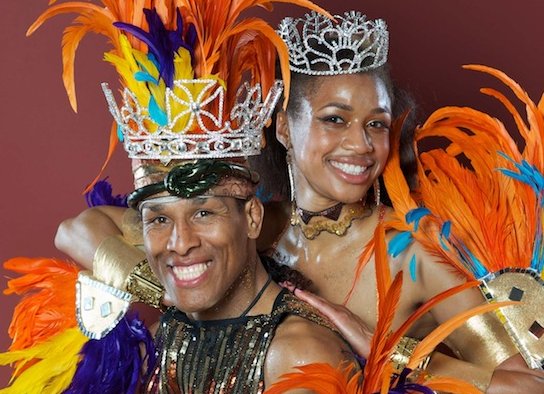
San Francisco Carnaval Harrison and 23rd St., SF. www.sfcarnaval.org. 10am-6pm, free. Parade on May 27, 9:30am, starting from 24th St. and Bryant. The theme of this year’s showcase of Latin and Caribbean culture is “Spanning Borders: Bridging Cultures.” Fans of sequins, rejoice.


June 2-3

Union Street Eco-Urban Festival Union Street between Gough and Steiner, SF. (800) 310-6563, www.unionstreetfestival.com. 10am-6pm, free. See arts and crafts created with recycled and sustainable materials and eco-friendly exhibits, along with two stages of live entertainment and bistro-style cafes.


June 9-17

San Mateo County Fair San Mateo County Fairgrounds, 2495 S. Delaware, San Mateo, www.sanmateocountyfair.com. 11am-10pm, $6–$30. Competitive exhibits from farmers, foodies, and even technological developers, deep-fried snacks, games — but most important, there will be pig races.


June 8-10

Queer Women of Color Film Festival Yerba Buena Center for the Arts, 701 Mission, SF. (415) 752-0868,www.qwocmap.org. Times vary, free. Three days of screenings from up-and-coming filmmakers with unique stories to tell.


June 10

Haight Ashbury Street Fair Haight between Stanyan and Ashbury, SF, www.haightashburystreetfair.org. 11am-5:30pm, free. Celebrating the cultural history and diversity of one of San Francisco’s most internationally celebrated neighborhoods, the annual street fair features arts and crafts, food booths, three musical stages, and a children’s zone.

June 10-12

Harmony Festival, Sonoma County Fairgrounds, 1350 Bennett Valley, Santa Rosa, www.harmonyfestival.com. One of the Bay Area’s best camping music festivals and a celebration of progressive lifestyle, with its usual strong and eclectic lineup of talent.


June 16-17

North Beach Festival, Washington Square Park, SF. (415) 989-2220, www.northbeachchamber.com. free. This year will feature more than 150 art, crafts, and gourmet food booths, three stages, Italian street painting, beverage gardens and the blessing of the animals.

Marin Art Festival, Marin Civic Center, 3501 Civic Center Drive, San Rafael. (415) 388-0151, www.marinartfestival.com. 10am-6pm, $10, kids under 14 free. Over 250 fine artists in the spectacular Marin Civic Center, designed by Frank Lloyd Wright. Enjoy the Great Marin Oyster Feast while you’re there.


June 22-24

Sierra Nevada World Music Festival, Mendocino County Fairgrounds Booneville. (916) 777-5550, www.snwmf.com. $160. A reggae music Mecca, with Jimmy Cliff, Luciano, and Israel Vibration (among others) spreading a message of peace, love, and understanding.


June 23-24

Gay Pride Weekend Civic Center Plaza, SF; Parade starts at Market and Beale. (415) 864-FREE, www.sfpride.org. Parade starts at 10:30am, free. Everyone in San Francisco waits all year for this fierce celebration of diversity, love, and being fabulous.

Summer SAILstice, Encinal Yacht Club, 1251 Pacific Marina, Alameda. 415-412-6961, www.summersailstice.com. 8am-8pm, free. A global holiday celebrating sailing on the weekend closest to the summer solstice, these are the longest sailing days of the year. Celebrate it in the Bay Area with boat building, sailboat rides, sailing seminars and music.


June 24-August 26

Stern Grove Festival, Stern Grove, 19th Ave. and Sloat, SF. (415) 252-6252,www.sterngrove.org, free. This will be the 75th season of this admission-free music, dance, and theater performance series.

July 4

4th of July on the Waterfront, Pier 39, Beach and Embarcadero, SF.www.pier39.com 12pm-9pm, free. Fireworks and festivities, live music — in other words fun for the whole, red-white-and-blue family.

July 5-8

High Sierra Music Festival, Plumas-Sierra Fairgrounds, Lee and Mill Creek, Quincy. www.highsierramusic.com. Gates open 8am on the 5th, $185 for a four-day pass. Set in the pristine mountain town of Quincy, this year’s fest features Ben Harper, Built To Spill, Papodosio, and more.


July 7

Oakland A’s Beer Festival and BBQ Championship, (510) 563-2336, oakland.athletics.mlb.com. 7pm, game tickets $12–$200. A baseball-themed celebration of all that makes a good tailgate party: grilled meat and fermented hops.


July 7-8

Fillmore Street Jazz Festival, Fillmore between Jackson and Eddy, SF. (800) 310-6563, www.fillmorejazzfestival.com.10am-6pm, free. The largest free jazz festival on the Left Coast, this celebration tends to draw enormous crowds to listen to innovative Latin and fusion performers on multiple stages.

July 19-29

Midsummer Mozart Festival, Herbst Theater, 401 Van Ness, SF (also other venues in the Bay Area). (415) 627-9141,www.midsummermozart.org. $50. A Bay Area institution since 1974, this remains the only music festival in North America dedicated exclusively to Mozart.


July 21-22

Renegade Craft Fair, Fort Mason Center, Buchanan and Marina, SF. (415) 561-4323, www.renegadecraft.com. Free. Twee handmade dandies of all kinds will be for sale at this DIY and indie-crafting hullabaloo. Like Etsy in the flesh!


July 21-22

Connoisseur’s Marketplace, Santa Cruz and El Camino Real, Menlo Park. Free. This huge outdoor event expects to see 65,000 people, who will come for the art, live food demos, an antique car show, and booths of every kind.

July 23-August 28

The San Francisco Shakespeare Festival, Various locations, SF. (415) 558-0888, www.sfshakes.org. Free. Shakespeare takes over San Francisco’s public parks in this annual highbrow event. Grab your gang and pack a picnic for fine, cultured fun.

July 27-29

Gilroy Garlic Festival, Christmas Hill Park, Miller and Uvas, Gilroy. (408) 842-1625,www.gilroygarlicfestival.com. $17 per day, children under six free. Known as the “Ultimate Summer Food Fair,” this tasty celebration of the potent bulb lasts all weekend.


July 28-29

27th Annual Berkeley Kite Festival & West Coast Kite Championship, Cesar E. Chavez Park at the Berkeley Marina, Berk. (510) 235-5483, www.highlinekites.com. 10am-5pm, free. Fancy, elaborate kite-flying for grown-ups takes center stage at this celebration of aerial grace. Free kite-making and a candy drop for the kiddies, too.

July 29

Up Your Alley Fair, Dore between Howard and Folsom, SF. (415) 777-3247,www.folsomstreetfair.org., 11am-6pm, free with suggested donation of $7. A leather and fetish fair with vendors, dancing, and thousands of people decked out in their kinkiest regalia, this is the local’s version of the fall’s Folsom Street Fair mega-event.


July 30-August 5

SF Chefs Food and Wine Festival, Union Square, SF. (415) 781-5348, www.sfchefsfoodwine.com. Various times and prices. Taste buds have ADD too. Let them spiral deliciously out of control during this culinary fair representing over 200 restaurants, bars, distilleries, and breweries.


August 4-5

Aloha Festival, San Mateo Event Center, 1346 Saratoga, San Mateo. (415) 281-0221, www.pica-org.org. 10am-5pm, free. You may not be going to Hawaii this summer, but this two-day festival of crafts, island cuisine, Polynesian dance workshops, and music performances might just do the trick.

Art and Soul Oakland, Frank Ogawa Plaza, 14th and Broadway, Oakl. www.artandsouloakland.com. $10 adv.; $15 at door. Sample delectable treats, joyfully scream through a carnival ride, get a purple unicorn painted on your forehead — all while rocking out to live jazz, R&B, acoustic, and gospel performances.

Nihonmachi Street Fair, Post between Laguna and Fillmore, SF. www.nihonmachistreetfair.org. 10am-6pm, free. Community outreach infuses every aspect of this Japantown tradition — meaning those perfect garlic fries, handmade earrings, and live performances you enjoy will also be benefitting a number of great nonprofit organizations.


August 5

Jerry Day 2012, Jerry Garcia Amphitheater, 40 John F. Shelley, SF. (415) 272-2012, www.jerryday.org. 11am, free; donate to reserve seats. Founded in 2002 when a dilapidated playground in the Excelsior was being transformed to what is now Jerry Garcia Amphitheater, Jerry Day continues as an art and music event brimming with local San Franciscan roots.


August 10-12

Outside Lands Music Festival Golden Gate Park, SF. www.sfoutsidelands.com. $225 regular 3-day ticket. Musical demi-gods like Stevie Wonder and Neil Young are headlining this year, and the rest of the jaw-dropping lineup makes us wish it were 2035 already so we can clone ourselves and be at opposite sides of the park at once.


August 11

Festa Coloniale Italiana, Stockton between Union and Filbert, SF. (415) 440-0800, www.sfiacfesta.com. 11am-6pm, free. When the moon hits your eye, like a big pizza pie, that’s amore. When you dance down North Beach, visiting every food truck you encounter, you’re in love.


August 18

Russian River Beer Revival and BBQ Cookoff, Stumptown Brewery, 15045 River, Guerneville. (707) 869-0705, www.stumptown.com. Noon-6pm, $55. You can’t really go wrong attending a festival with a name like this one. Entry fee includes live music, beer, cider, BBQ tastings, and your resurrection.

San Francisco Street Food Festival, Folsom from 20th to 26th St.; 25th St. from Treat to Shotwell, SF. (415) 824-2729, www.sfstreetfoodfest.com. 11am-7pm, free. You may think there is nothing quite as good your own mother’s cooking, but the vendors at La Cocina’s food fair are up for the challenge.


August 25

The Farm Series: Late Summer Harvest, Oak Hill Farm, 15101 California 12, Glen Ellen. (415) 568-2710, www.18reasons.org. 9am-5pm, $50. Head to Sonoma with Bi-Rite’s head farmer and produce buyer to check out Family Farm and Oak Hill Farm. Lunch is included in the ticket price and carpool drivers will be reimbursed for gas.


August 25-26

Bodega Seafood Art and Wine Festival, 16855 Bodega, Bodega. (707) 824-8717, www.winecountryfestivals.com. $12 advance, $15 at gate. The seaweed is usually greener on somebody else’s lake — but not this weekend. Have your crab cake and eat it too during this crustaceous celebration of food, wine, beer, and art.


September 8-9

Ghirardelli Chocolate Festival, Ghiradelli Square, 900 North Point, SF. (800) 877-9338, www.ghiradelli.com. Noon-5pm, $20. It’s finally time to put your at-home ice cream noshing skills to the test. For two-days only, chocolate lovers unite to celebrate all that is good in life — and by that we mean eating contests, chef demonstrations, and local dessert samplings.


September 9

EcoFair Marin 2012, Marin County Fairgrounds and Lagoon Park, Civic Center, San Rafael. (415) 499-6800, www.ecofairmarin.org. 10am-6pm, $5. This sustainability event brings together speaker presentations, exhibitions by energy reducing and conserving business leaders, and tasty raw and vegan food vendors, as a community effort to help bring about a healthier planet.


September 14-16

Ceramics Annual of America: Exhibition and Art Fair, Festival Hall, Fort Mason, Buchanan at Marina, SF. (877) 459-9222, www.ceramicsannual.org. $10. Contemporary ceramics from Korea, China, Mexico, Australia, and Italy, as well as top American artists’ works, will be showcased in this one-of-a-kind art show. Tours and discussions regarding the clay medium will be provided as a way to foster knowledge regarding the clay medium.


September 16

Comedy Day, Sharon Meadow, Golden Gate Park, SF. (415) 820-1570, www.comedyday.com. Noon-5pm, free. There are two secret cures for depression: sunlight and laughter. Comedy Day brings the two antidotes together for a cheery day of priceless (literally, it’s free) entertainment.


September 21-23

Eat Real Festival, Jack London Square, Oakl. (510) 250-7811, www.eatrealfest.com. Free. Processed foods really do have a bunch of weird named ingredients that trigger horrific thoughts in one’s imagination. At Eat Real, suspicion is taken out of the eating experience, as everything is handmade, fresh, and local — so you can just eat.


September 22

Superhero Street Fair, Islais Creek Promenade, Caesar Chavez at Indiana, SF. www.superherosf.com. 2pm-midnight, $10-20 suggested donation. Fantasy and reality merge through live music performances, a climbing wall, sideshows, interactive games, and a cobblestone walkway of art. The festival hopes to set the World Record for the largest number of superheroes in one location — or at least put Nick Fury to shame.


September 23

Folsom Street Fair, Folsom between Seventh and 12th Streets, SF. (415) 777-3247, www.folsomstreetfair.com. 11am-6pm, free. Time to get out that spiked collar and latex gloves once again. Don’t forget your nipple clamps or the vibrating magic wand, either! Might as well bring out the leather whip and chains too — not that you’ve been anticipating this huge fetish extravaganza all year or anything.


September 29-30

Polk Street Blues Festival, Polk between Jackson and California, SF. (800) 310-6563, www.polkstreetbluesfestival.com. 10am-6pm, free. The blues festival will feature two stages, a marketplace of crafts and food booths, and enough saxophones and harmonicas to get you rollin’ and tumblin’.


September 30

Petaluma’s Fall Antique Faire, Fourth Street and Kentucky from B Street to Washington, Petaluma. (707) 762-9348, www.petalumadowntown.com. 8am-4pm, free. Watch as downtown Petaluma transforms in to an antique marketplace of estate jewelry, furniture, art, and collectables from over 180 dealers.


October 4-14

Mill Valley Film Festival, California Film Institute, 1001 Lootens, San Rafael. (415) 383-5256, www.mvff.com. $13.50 per screening. The 11-day festival presents international features, documentaries, shorts, and children’s films, as well as workshops and seminars dedicated to the art of film-making.


October 5-7

Hardly Strictly Bluegrass, Golden Gate Park, John F. Kennedy at Marx Meadow, SF. www.strictlybluegrass.com. Free. Warren Hellman has left us in February, but the bluegrass music festival he gifted to San Francisco goes on in memory of its esteemed founder.


October 6

Steampunk Oktoberfest Ball, Masonic Lodge of San Mateo, 100 North Ellsworth, San Mateo. (650) 348-9725, www.peers.org/steampunk.html. 8pm, $15 adv.; $20 at door. Steampunk is a combination of modern technology and Victorian fashion tastes. Think steam-powered airships and breathable corsets. Nineteenth century waltzes, mazurkas, and polkas set the soundtrack to this year’s revelry of costumes, dancing, and anachronistic inventions.


October 7

Castro Street Fair, Castro at Market, SF. (415) 841-1824, www.castrostreetfair.org. 11am-6pm, donations collected at entry. Founded by Harvey Milk in 1974, this community street festival joins hundreds of craft vendors, various stages of live entertainment, and an impressive array of outfits and wigs as a celebration of the Castro’s ever-growing diversity.


October 13-14

Treasure Island Music Festival, Treasure Island, SF. www.treasureislandfestival.com. $69.50 for single day tickets; $125 for regular 2-day tickets. For those who are normally discouraged by large music festivals because of the usual mobs of people, this is the event for you. The festival always sports a great bill of performers, all of which you can enjoy while having a relaxing a picnic on the grass, watching the sunset fall over the Golden Gate Bridge. The lineup will be revealed later this summer.


October 15

Noe Valley Harvest Festival, 24th St. between Church and Sanchez, SF. (415) 519-0093, www.noevalleyharvestfestival.com. 10am-5pm, free. Fall into autumn’s welcoming leaves — there will be circus performers, dog costume contests, jack-o-lantern decorating booths, and a pumpkin patch to make you forget all about your fleeting summer crush.


October 26-28

International Vintage Poster Fair, Fort Mason Center, SF. (800) 856-8069, www.posterfair.com. $15. This is the only show in the world that offers over 15,000 original vintage posters. Throw out your duplicate copy, and run here now.


Teese and thank you

1

STAGE With a seductive and sexy nod to the past, modern pin-up and burlesque queen Dita Von Teese has been at the forefront of reviving a once nearly lost art form for two decades.

Bringing back the sense of classic style and glamour of the golden days of Hollywood and meshing it with the tantalizing teasing of the old-time burlesque circuit, Von Teese comes to the city this week with her new “Strip Strip Hooray!” show, a 90-minute revue featuring not only her own titillating talents, but a host of other performers as well, including Dirty Martini, Catherine D’Lish, Selene Luna, Lada, Monsieur Romeo, and Perle Noire.

Von Teese — born Heather Sweet, a naturally blond Midwestern girl — first developed an interest in vintage clothing, pin-up art, and classic burlesque after moving to Southern California, where she started working at a lingerie store as a teenager.

“I fell in love with the imagery of women in the 1940s and ’50s, and that [style of] lingerie, and started looking at the history of women’s underpinnings, and that kind of interested me in pin-up art. By the time I was 17 or 18, I started developing and refining my look, and dressing in vintage clothes,” Von Teese says over the phone from Orange County, where she’s preparing for the tour.

After getting involved in the LA’s underground dance music scene in the early ’90s, Von Teese was taken to a local strip club by a friend, where she was exposed to a slightly different style of performing.

“It actually wasn’t a real strip club — it was like a bikini club — so I went there, and thought, wow these girls are doing kind of the same thing I do, but they get paid a lot more money,” Von Teese laughs.

“So as an experiment I started working there with a fake ID, and I became really interested in the history of strip clubs. I started learning more about the art of striptease, and that led me to burlesque. Most of the pin-up models from the 1930s and ’40s were burlesque dancers; if you opened up a men’s magazine from that time, there were a lot of the famous burlesque dancers in them. I kind of just started putting all of these parallels together, and thinking about what I could do to bring this idea back.”

When she first started out, she received some criticisms from people she met that worked in the industry, most notably for her dyed hair and retro look.

“I knew a lot of people that were shooting for Playboy and Penthouse at the time, and they were like, ‘You can’t have white skin and black hair and wear all these clothes. Playboy and all these people want to see a beautiful California blond!’ But I believed there was a niche waiting to be filled, so that’s how I got my start.”

Fast forward past 20 years of hard work and determination, and Von Teese is the top artist at what she does — which is an incredibly diverse array of work, including not only her live burlesque shows, but also a huge portfolio of pin-up and fashion photo spreads, several books on beauty and the art of striptease, and multiple lines of lingerie and make-up.

Although Von Teese has performed all over the world, and is extremely well known in Europe, “Strip Strip Hooray!” is her first headlining tour of the United States — and something she has been wanting to do for some time.

“Sometimes in America I can feel the whisperings of ‘What does she do, anyways?’ Some people think I just dress up in vintage clothes and drive around vintage cars and watch old movies. Or they’ll say ‘Oh, she’s just a stripper.’ With these shows that I make, I’m the producer, director, financer, choreographer — everything.”

Von Teese wanted to make these shows accessible to most any fan that wants to come see her live — promises nothing short of an amazing show.

“I’ve re-invented it for this tour, with a whole new costume, new music, and a new martini glass prop that’s covered entirely in Swarovksi crystals,” says Von Teese. “I’m just doing what I think is the very best.”

“BURLESQUE: STRIP STRIP HOORAY!”

Mon/21-Tue/22, 7pm, $35

Fillmore

1805 Geary, SF

(415) 371-5500

www.thefillmore.com

The heart in art

2

arts@sfbg.com

VISUAL ART As the old saying goes, a picture can be worth a thousand words. But a local gallery has united two separate artists stemming from Jewish and Islamic backgrounds to convey only one: peace.

In “Shalom/Salaam,” a joint exhibit running through May 26 at the Mishin Fine Arts gallery, self-proclaimed activist artist Tom Block and Afghan refugee Shokoor Khusrawy demonstrate that art can be more than a commodity, and rather a tool to dismantle cultural barriers and inspire change.

Although very distinct in their approaches, both artists hope their paintings will help foster a shared emotional experience among viewers that will ultimately lead to understanding across different peoples and beliefs.

Growing up in war-torn Afghanistan, Khusrawy’s childhood was marred by violence and destruction. Art supplies were costly and difficult to find, and a bad hip injury confined him to paint on the ground. Yet as bombs rained down outside his window, his desire to create beautiful images remained strong.

From a bustling street market scene to a shepherd herding his goats in the countryside, Khusrawy’s soft, impressionist-style paintings offer an insider’s view into everyday life of a country that usually evokes images of conflict and hardship.

“He shows the hope and beauty that can be found in the world — not the destruction,” says gallery owner Larisa Mishina. “He expresses a desire to live in peace.”

Block’s work, on the other hand, aims to ignite that desire in others. In modern portraits made of acrylic, ink, and collage on canvas, Block depicts some of the most influential mystics of medieval times — from both Jewish and Islamic traditions — that have inspired and borrowed from each other throughout the ages.

Among Block’s “Shalom/Salaam” pieces are an interpretation of Abu Hamid al-Ghazali, a Sufi whose work was found quoted repeatedly in Jewish writings; it sits alongside a painting of Rabbi Israel ben Eliezer, the founder of Hasidism, whose practice was heavily influenced by Sufi doctrine.

Through his portraits, and an accompanying book, Block aims to tell a positive story in a narrative that is almost entirely negative, and reveal that at the core, these ancient, warring religions are very similar. “I want people to see timeless ideas in a fresh way in the hopes that there will be a change in the heart of viewers,” Block explains.

Accordingly, much of Block’s work goes beyond the gallery. By using art projects to bring awareness of global and local issues, Block has been able to raise money for nonprofit organizations and led several events, such as the first ever Amnesty International Human Rights Art Festival, which brought together 400 artist from around the world and got the attention of several hundred more. A collection of his other work is also on display at the Mishin Gallery in “Working toward Beauty.”

The exhibits are Block’s first in a commercial gallery and Khusrawy’s first in the US. Both artists have only been able to present at universities, libraries, and nonprofit organizations. “Galleries have always told me to leave my ideas at the door,” Block says.

But the exhibits are also a first for Mishin Fine Arts, which boasts a collection of 30 contemporary artists from all over the world, including Italy, Spain, and Russia. Although the artists in the gallery’s existing collection all have “profound messages,” Mishina says Block and Khusrawy’s exhibits are her first real step toward creating a space for more meaningful art.

“They are both raw talents, they are very sincere in what they do, and people feel it,” Mishina notes. “This brings true value to the gallery, which we want to share with art collectors.”

Block hopes the exhibits will open the eyes of art collectors to new, profound ideas of art and what it can do. “There’s a whole movement just waiting to be galvanized,” he says. *

“SHALOM/SALAAM” AND “WORKING TOWARD BEAUTY”

Through May 26

Mishin Fine Arts

445A Sutter, SF

(415) 391-6100

www.mishingallery.com


Deutch maneuver

0

le.chicken.farmer@gmail.com

CHEAP EATS “Berlin is awesome,” Kayday writes me, from Berlin. “We should all live here.”

Amazingly, I answer her in German. “Genau,” I write.

Berlin is awesome, true. But it’s one thing May through September, and something very much else the rest of the time. Is my opinion.

Kayday lives in Seattle, and complains about the weather there from September through July.

She doesn’t want to live in Germany, I feel certain.

When she was here, just a few weeks ago, she wanted to eat at Schmidt’s, maybe for practice. So we did. No complaints from me. Schmidt’s has the best wild boar sausage in all of San Francisco.

We also ate at my new favorite Chinese restaurant, in the Richmond, but I’m not going to tell you yet about that. Maybe next week. If you’re good.

Wild boar sausage, I’m pretty sure I already told you about. There’s Rice Broker though, in the Mission, which is another place where Kayday and me ciao’d down.

“Hi,” I said.

“Hello.”

“Hola.”

And she tried to answer — probably in German — but couldn’t, because something had gone down the wrong pipe. Maybe, I’m thinking, a sesame seed. Or a teeny tiny speck of almond?

Both things were in her rice bowl, which was the two skewers of lemongrass beef one, with whole orange slices, string beans, and, yeah, almonds and sesame seeds.

Now, I’ve seen people choking in restaurants before. I’ve even been the person choking in restaurants. It’s no big thing. You cough, you turn red, you hold up your finger to let your dining companions know that, no, in fact you don’t need the Heimlich. Yet. And then you drink some water, cough some more, tear up a little, feel like an idiot, and continue eating.

So happens, the wrong-pipe problem is a recurring theme for me, in life. I have lots and lots of sympathy and patience, and too am ready — if necessary — to spring into action. Ever the nanny, I am trained in CPR and so forth.

“Hello?” I said again. “Are you quite sure you don’t need the Heimlich?”

“I’m OK,” Kayday said. “I just need to go for a walk.” And she excused herself. “Be right back.” And left.

This was a first.

I digged into my own bowl, which was rice porridge with pork-and-ginger meatballs, bok choy, and cilantro. It was excellent, and went down very smoothly.

While I ate, though, I couldn’t take my eyes off of Kayday’s bowl, which was beautiful. The meat, as yet untouched, glistened on its skewers. The orange slices shone forth, like little sunsets. The beans — it was just a beautiful bowl of food. Calling to me.

Kayday is a dear and good friend. She’s an important part of my band. It occurred to me she could choke and die outside on the sidewalk. Still, I decided not to eat her food. When she came back, I would ask. And she would share.

Then, the hell with it, I reached across the table and tried a piece of meat from her skewer. Tough city, go figure!

But, like I says, mine was very good. The meatballs were almost as smooth as the porridge, and good and gingery. And I loved my edamame snack bowl, with dandelion and cane vinegar.

Come to think of it, she’d had a snack bowl appetizer too. Pickled daikon and carrots. And I can’t remember now if I even tasted it, but it sounds pretty good, no?

Of course, this isn’t Kentucky Fried Chicken. But to its credit it isn’t Spork either. And even though it choked my friend, I like that Rice Broker is there. Here in the hood.

And anyway, she survived. She came back.

“Hello,” I said.

She said, “Hi.”

RICE BOWL

Wed-Sun 6-10pm

1058 Valencia, SF.

(415) 643-5000

Cash only

Beer and wine


Hard to be a filmmaker

0

arts@sfbg.com

FILM In 1987, Soviet critics were polled to create a list of the nation’s greatest films. Landing on top was a movie still little-known abroad, whose maker has completed just five features in 45 years — one of which he doesn’t even consider truly his own work.

My Friend Ivan Lapshin (1984) likely wouldn’t have gotten near that exalted status if original, party-line-towing critics had had their way. After its well-received first screening, Aleksei Guerman’s own studio Lenfilm launched a broadside of attacks and demanded half his film be re-shot, though ultimately (more to spare additional costs than anything else) it remained unchanged.

Three years following a belated release, Ivan Lapshin was officially the “best Russian movie ever.” It was a remarkable turnabout for a director whose efforts had been — and in different ways would continue to be — perpetually thwarted, sometimes banned outright. In personal demeanor Guerman has been called “almost comically grim,” doubtless the result of so much uphill struggle. Yet that dour affect runs counter to the tenor of his most striking films, which are anarchic and borderline surreal, couching tragedy in absurdist humor and messy high spirits.

Yerba Buena Center for the Arts’ two-week series “War and Remembrance: The Films of Aleksei Guerman” brings to SF all of this slim oeuvre, little of which has been seen outside Russia save in festival appearances, cut form, or poor transfers that diminish the director’s mastery of complicated traveling shots in moody black and white.

Guerman (sometimes translated as “German”) was raised in Leningrad as the son of Yuri Guerman, a celebrated author who managed never to fall out of Stalin’s favor. Aiming to be a doctor, he hit cinema instead — first as a student and assistant, then co-directing 1967’s The Seventh Companion with the more established Grigori Aronov. The two fought throughout production of this sober drama about a Tsarist military officer converting to Socialist ideals, and Guerman has disavowed the end product.

He had sole credit on 1971’s Trial on the Road, another redemption tale — former Nazi collaborator surrenders to the Red Army, then re-infiltrates Axis forces to destroy an ammunitions train — but one judged insufficiently “heroic” by the government. It went unseen until 1986, when Gorbachev’s perestroika era liberated numerous long-banned films. A second World War II tale, Twenty Days Without War (1976), managed to escape censure with its melancholy portrait of a soldier on hometown furlough. It hinted at the looser, anecdotal, community-as-protagonist approach to come.

Still, Ivan Lapshin was a surprise leap toward humor, incident over conventional narrative, childhood memory as warm, boisterous yet melancholy blur á la Amarcord (1973) or Mon oncle Antoine (1971). (Though no sensibility could be more purely Russian than Guerman’s.) Based on stories by the director’s father, its main event is one that hasn’t happened yet when the film begins — Stalin’s first “Great Purge,” which would sweep away many of the moderately criminal or just eccentric figures portrayed in this fictive 1935 provincial town. Everyone here is a little mad, driven to distraction by the chaos of a grand collectivist experiment, spinning wild as if anticipating the cold smack down they were about to suffer. The amorphous structure some initially found off-putting now seems Ivan Lapshin‘s boldest, defining trait, the thing that keeps it floating in midair.

Despite that precedent, beleaguered Khrustalyov, My Car! — production dogged this time not by Soviet watchdogs, but by unreliable international funders — was greeted with walkouts and “disaster” judgments at its 1998 Cannes bow. Yet many of the same critics, overwhelmed at first by its wholesale abandonment of realism and coherence for phantasmagoria, pronounced it a masterpiece after second or third viewings. Framed like Ivan Lapshin as a child’s memory of (later) Stalinist life, its 150 minutes lunge still further toward a Fellini-like grotesque-carnival clutter of excesses, from the hospital where “unauthorized death [is] prohibited!” to the delivery truck in which our macho surgeon protagonist is shockingly assaulted in a spontaneous gay orgy. He’s ordered resuscitate the already dead Stalin, an impossible task capping an insane rule; the film’s last words (the director’s own?) are a voiced-over “Fuck it all!” Khrustalyov is a monumental clutter of energy and invention, so jerry-built that the fear it might collapse at any moment is part of its indelible rush.

Guerman is, logically enough, headed next to outer space — his adaptation of Soviet sci-fi classic Hard To Be a God took five years (starting in 2000!) to shoot, and is still being edited, thwarting hopes for Cannes premiere this month. Adversity may not have invaded his career by invitation, but one gets the sense that by now, at age 75, it is his most trusted collaborator.

WAR AND REMEMBRANCE: THE FILMS OF ALEKSEI GUERMAN

May 17-31, $6-$8

Yerba Buena Center for the Arts

701 Mission, SF

www.ybca.org


The capital of cannabis?

4

HERBWISE A few days after House Minority Leader Nancy Pelosi finally voiced her displeasure that federal agencies were making moves to curtail medical marijuana access, I was touring the hallway outside her offices in Washington DC.

“Access to medicinal marijuana for individuals who are ill or enduring difficult and painful therapies is both a medical and a states’ rights issue,” said Pelosi in a statement released on May 2.

And though Pelosi was surely spurred to speak on behalf of her federally-beleaguered California, she gets good reminders of cannabis’ import in her adopted home in Washington. Here, the fight for medical marijuana is finally coming to a head: six cultivation centers have been given final approval and four preliminary approval to open.

“It seems likely that patients will have access to medicinal marijuana later this fall,” said DC councilperson David Catania. Catania is a primary figure responsible for penning DC’s cannabis regulations. He is also — in the words of one local cannabis activist who shall remain nameless — “a gay, Republican-leaning Independent corporate lawyer-type. He is both bright and brash, bordering on arrogant. He is so adamantly anti-California medical cannabis laws that most of the tight restrictions here are driven by his stark dislike for what California’s laws have become.”

Well! Since I was darting about our nation’s capital anyway, an interview seemed to be in order so that councilperson Catania could let us know just how DC regulations worked — and what is was like working on marijuana issues in an office situated less than a mile from the Capitol Building and a block or two from the White House. I spoke to him via email last week.

SFBG You played an integral role in setting up cannabis rules and regulations in DC. Were you drawing on things that work or didn’t work in any specific areas of the United States?

David Catania We set out to implement a well-regulated system that was still accessible for those who need the medication. As we are the nation’s capital, we knew the spotlight would be on the program. We set out to create a system that worked for patients in need and I believe we are well on our way to accomplishing that goal.

SFBG What would you like to see happen with dispensaries in DC?

DC The four dispensaries that have been given preliminary approval are in various neighborhoods throughout the District, each with its own needs and concerns. The District Department of Health is doing extensive community outreach and work to involve residents nearby both dispensaries and cultivation centers, to educate them on the program and ensure open lines of dialogue between cultivation center and dispensary owners and their neighbors. Ensuring that positive relationship between the various parties is going to be a vital component of the program’s success. [note: in DC, dispensaries have been regulated as separate from cultivation centers, which are allowed up to 95 plants per location, an amount which was designated as to avoid harsher punishment in the case of federal action.]

SFBG What is it like setting up regulations regarding a federally illegal substance here in the shadow of the White House?

DC It’s interesting. We were very intentional in how we established the program, as we realized we needed to be extra-sensitive to the fact that we are the home of the federal government.

Steady WATERS

0

MUSIC Van Pierszalowski’s story writes itself: musician finds love in picturesque European city, swims in fjords, writes a fuzzy grunge-inflected record about it and his travels, and calls the band WATERS (appearing Thu/10 at the Fillmore). “I met a girl,” he says from the road. “And I just wanted to get back over there. It was a place to work on songs, refocus.”

Even his story before the present wrote itself: young man travels to Alaska to fish with his father and creates chilly, acoustic folk soundscapes, names the band Port O’Brien after an Alaskan Bay.

This all happened. Only life isn’t all one big linear story, and Pierszalowski isn’t nearly so precious as implied within these tales. He never stopped writing songs between the break-up of Port O’Brien and formation of WATERS. He was bouncing back and forth between Oslo and San Francisco for two years, with stops here and there in New York and Alaska, also Dallas in spring of 2011 to record a full-length with producer John Congleton (St. Vincent, Bill Callahan).

His first and latest album for WATERS — Out in the Light — came out last September to a flurry of positive reviews, tales of rebirth, etc. The record produced anthemic “For the One” (and its trippy dreamcatcher-based video), which kicks off with a slow buzz breaking into a chainsaw pop guitar line, and Pierszalowski pleading, “Oh my god I thought I was a free man out on road,” later in chorus, “when I wake up/and I take you with me/I’ve seen too much of old/And I’m not waiting.”

So what happens after the initial burst of new-band hype? Pierszalowski is still in love, and touring much of the year. When home in the Bay Area for brief snippets of time, he and the girl — Marte Solbakken — live together, and frequent Dynamo Donuts for sustenance. “I live up there on Potrero Hill. Everything’s there, that’s our home.”

While Pierszalowski is ringleader and songwriter, the current incarnation of the band — drummer Nicholas Wolch and bassist Alexander Margitich, both from Santa Rosa, guitarist Aaron Bradshaw, and Solbakken on keys and singing — has been touring the States together for some time.

This summer they’ll be back in Oslo briefly, and before that, more tours, including an opening slot for Delta Spirit, which brings the band to the Fillmore this week. Following that, there’s another tour with Nada Surf in June.

They’ll traverse the wide-open plains and rather familiar coasts of the U.S. — when not fishing in Alaska, Pierszalowski was raised in tiny coastal Cambria, just south of the Hearst Castle.

He wasn’t a surfer like many of the locals, so he found solace in music, taking inspiration from a long line of iconic guitarists and singers, starting with Billie Joe Armstrong in junior high, moving up to Joey Ramone, Thom Yorke, Neil Young, Will Oldham, and his most consistant inspiration, Kurt Cobain.

“I’ve always gone on record as saying In Utero is my favorite record of all time,” he says. Nirvana was an influence on Port O’Brien’s sound and a huge influence on WATERS.

So what’s next? Pierszalowski is feeling the pressure to start creating new music again, has written a few songs on the sly, and is already fantasizing about the next record — he’s hoping to get back in the studio at the end of the year. It’s his life on the road with the one that he loves, but it’s not just a simple fairytale. There are donuts involved.

WATERS

With Delta Spirit

Thu/10, 8pm, $20

Fillmore

1805 Fillmore, SF

www.thefillmore.com

The tender line

2

arts@sfbg.com

THEATER A couple of days after the opening of the Cutting Ball’s documentary play, Tenderloin, I spotted independent filmmaker Rob Nilsson crossing the street at Taylor and Eddy, less than a block from the theater. Drawn to the neighborhood and its residents for decades, Nilsson is one of the more prominent artists who have found inspiration, collaboration and a kind of authenticity in the Tenderloin, long among San Francisco’s poorest and liveliest districts.

Director-writer Annie Elias and her Tenderloin team continue this tradition, with a clear concern to do right by their subjects (among whom happens to be Nilsson himself, played by actor Tristan Cunningham). The action emerges from an opening tableau of street life, featuring the colorful sights and harrying sounds of a rowdy inner-city intersection (nicely augmented by sound designer Matt Stines). Upstage rises scenic designer Michael Locher’s ceiling-high mound of furniture and bric-a-brac, which is fronted by two rows of hanging photographs, loving portraits of local people and places whose panels double as projection screens establishing context for each of the scenes that follow.

The play presents a spectrum of Tenderloin denizens whose stories reflect the dire straits normally associated with this congested low-income slice of downtown, but also the sense of freedom and community some have found there. We hear from the desperate and lonely but even more often from people who have grown to prefer the Tenderloin to more stifling environs.

That positive note lands too forcefully at times, especially when it comes from relatively privileged members of the commuting class (the plugging of the neighborhood by some middle-class patrons at the Nite Cap bar, for instance, begins to sound a little like an ad from the visitors bureau), or professional advocates like Reverend Karen Oliveto (played by Leigh Shaw) at Glide Memorial Church.

By contrast, the play excels when the voices are both genuinely local and agenda-free, as is the case with the story by a man from Sixth Street who haplessly agrees to accept responsibility for a newborn baby from an acquaintance on her way to jail (a story as charming and resonant as a well-crafted short story, and beautifully recreated by actor Michael Kelly).

A set of discrete interviews naturally runs the risk of becoming an aimless narrative, especially without a single dramatic episode or storyline at the center (as is the case with the better-known works in the docudrama genre, such as Tectonic Theater’s The Laramie Project). Elias sets out to mitigate this problem in several ways, first of all by casting well — in terms of both the selection of interview subjects and the delicate portrayals marshaled by her exceptional ensemble of actor-documentarians (aided by additional writing from David Westley Skillman).

In addition to Michael Kelly’s standout performance throughout, Rebecca Frank does particularly subtle work with a number of memorable personalities, including Leroy B. Looper, the (recently deceased) owner of the Cadillac Hotel, who appears here with wife and longtime business partner Kathy (played gracefully by David Sinaiko). (Siobhan Doherty rounds out the production’s admirable ensemble.)

Elias also relies on dynamic staging, often setting a couple of interviews in alternating tension with one another, a technique that generally serves the production well — as in a sly point-counterpoint between former Tenderloin police captain Gary Jimenez (Kelly) and a homeless person (Cunningham) — even if some scenes prove unnecessarily busy.

But the narrative that emerges, which lays a heavy emphasis on “stripping back the layers” and revealing the truth of the much-maligned district, suffers from the accumulation of a familiar liberal slant toward tolerance and understanding. To the extent it undercuts outrage at a larger system of extreme and degrading inequality, such a slant obscures as much as it reveals. *

TENDERLOIN

Through May 27

Thu, 7:30pm; Fri-Sat, 8pm (also Sat, 2pm); Sun, 5pm, $10-$50

Exit on Taylor

277 Taylor, SF

(415) 525-1205

www.cuttingball.com


Regenerate me

0

emilysavage@sfbg.com

MUSIC Burning Brides guitarist Dimitri Coats was in Keith Morris’ tip-of-Los Feliz living room one afternoon when he turned to Morris — Black Flag co-founder and longtime Circle Jerks vocalist — and asked: “Keith, if you were going to start a new band, who would you play with?”

It was a pretty short list. Bassist? Keith wanted Steven McDonald of Redd Kross. And for drums he listed former pro skater Mario Rubalcaba of Hot Snakes, Earthless, and Rocket From The Crypt fame. All the men were game, and, thus, a supergroup was born. Since its late 2009 formation the band, OFF!, has slowly spawned a reputation for an aggressive punk return to form and wildly entertaining, chaotic live shows.

Of course, having four viable and seasoned musicians stuffed in a band has its share of complications. When Morris peeks at the tour schedule grid many of the dates are blacked out due to other commitments, such as children and concurrent bands. Like, say, if Rubalcaba has to be whisked away to Australia to play with Earthless for a week.

“I want to be mad and angry but he’s a drummer, and any great drummer is not going to be in one band,” explains Morris diplomatically. It’s these other life obligations that have sped up OFF’s process. Their time is condensed.

Two weeks after that living room conversation they were already rehearsing — ” just banging and clashing and thumping and making loud sounds” — and it was sounding good, only it wasn’t the sound Morris had envisioned, he says. He’d wanted it to sound like Black Flag.

But he had an epiphany in the car ride home from the rehearsal space after, “you’re playing with these great players — nobody told Jimi Hendrix what to play, nobody told Greg Ginn what to play,” Morris recalls. “It’s like, you’ve done this long enough, continue doing what you’re doing.”

Soon after that first rehearsal, the group began releasing blistering seven-inches, which were then assembled into the First Four EPs vinyl box set and CD comp.

Last year, OFF! was at LA’s Kingsize Soundlabs, recording a raw, frantic self-titled full-length for VICE Records over a three day period. Morris claims they did it in even less time, thanks to the realities of life. “We tell everybody three days, it wasn’t really three days. You need a break to go to the bathroom, you need a break to go smoke a cigarette, you know you’re going to eat a couple of meals and I mean good meals, you don’t eat like, Taco Bell,” says the diabetic vocalist.

In the end, the album — which was released this month — actually does have some powerful elements of early Black Flag — all rapid tempos, heavy power chords, and Morris’ thick, instantly recognizable holler. Single “Wiped Out” could be a rare, cleaned up B-side to Nervous Breakdown, salt-watered, anxiety-driven punk pandemonium, which leads to one to wonder if Morris is perhaps messing with journalists today?

Back in that edge of Los Feliz living room — in a house not too far from the homes of rapper Bronx Style Bob, Gwen Stefani and family, and one of the three musical Haden triplets — the 56-year-old punk singer is pacing on the phone thanks to another of his five to seven interviews of the day. He’s just glad he doesn’t have to do mundane chores at the moment like take a bath, or figure out what to eat for breakfast. And he’s optimistic about the future of this new band.

He may not see the precise Black Flag impact on the music, but he says the vibe of OFF! is very similar to his first band at the start, the pioneering act that began 30 years back in surf punk haven Hermosa Beach.

“It was me going all the way back to the very beginning, when I was in Black Flag, when we didn’t know what we were doing. It was just ‘we’re going to do this, and we’re going to have fun. We’re going to go wherever this can take us,'” Morris says. “I think that’s what applies here, it’s something I’ve had in my heart, and carried around with me all of these years — just play it by ear.”

Later, in the same eerily recognizable, nasal-intoned voice he adds, “Not only am I excited, but I’m happy being in this band.”


OFF!

With Fidlar, Spider Fever

Fri/11, 9pm, $15

Slim’s

333 11th St., SF

(415) 255-0333

www.slimspresents.com