Volume 48 [2013–14]

3-2-1 contact

0

arts@sfbg.com

FILM El Cajon — between balmy coastal San Diego and arid desert mountains to the east — is just the sort of place where the dream of California living came true for a lot of industrious working-class people in the post-World War II boom years. It’s also where their boomer children and generation-next grandkids are currently seeing that dream slowly expire.

It exploded in the original golden age of suburban planning, by 1960 going from podunk burg to major ‘burb with 25 times the population it had had two decades earlier. Such rapid growth is seldom pretty, and today El Cajon mostly looks like a rusty old conglomeration of strip malls, ranch-style homes, and motel-like apartment complexes that probably were a little tacky to begin with. It’s certainly not the first place that might come to mind when pondering where groundwork might be laid for the coming landing of space vessels from the 32 worlds of the Interplanetary Confederation, who will arrive at last to save we holdout “Eartheans” from our endless cycles of self-destruction.

But that is exactly what El Cajon has been for nearly a half century, since Norman and Ruth Norman settled upon this place to headquarter their Unarius Academy of Science. While the Normans are long gone — from this crude mortal plane of existence, at least — their philosophy (or “UFO religion,” as some put it) lives on in a center that still ministers to and teaches an increasingly elderly community of devotees.

It also attracts a certain number of gawkers, as Unarius (Universal Articulate Interdimensional Understanding of Science) has accidentally generated its own spin-off “cult” of worshippers at the altar of camp. In the 1980s, public access stations across the nation began airing the nonprofit organization’s self-produced films and videos portraying aspects of their mythology, notably the many past incarnations of Uriel née Ruth Norman — female, male, and otherwise. (These include myriad famed emperors, prophets, geniuses, and the Statue of Liberty.) Enacted by Unarius “students” in elaborate costumes with fanciful sets and FX, these are among the most flabbergastingly wonderful “home movies” ever made — crazy narratives with the aging Ruth decked out in enough wigs, chiffon, costume jewelry, and miscellaneous spangles to float an entire convention of drag queens. If you visit the El Cajon facility, expect its keepers to be polite but wary: They’re happy to spread the gospel, but know you’re probably there for the kitsch value.

Everybody can be happy with Bill Perrine’s Children of the Stars, the centerpiece of Other Cinema’s latest “Incredibly Strange Religion” program at Artists’ Television Access this Saturday. It has scads of footage from such Unarius superproductions as A Visit to the Underground City of Mars, which if you haven’t seen such before will make you want to immediately track down their complete original versions. But it also cannily limits itself almost exclusively to interviews only with the remaining faithful. They unfailingly seem very nice, ordinary, good-humored, and not prone to hyperbole (let alone insanity), even as they testify to the occasional outlandish doctrine or personal experience.

Born at the turn of the last century, Ruth Nields was a restless, lively soul who went through a number of professions (and several husbands) before 1954, when she met electrical engineer Ernest Norman, whose past lives apparently included that of Jesus Christ. He passed away in 1971, at which point the church these “two great beings of celestial consciousness” had established started heading in (even) more fanciful directions, to the dismay of some earlier converts but the delight of many new ones. Ruth assumed the primary identity of Uriel, “Queen of Archangels,” a fourth dimension channeler who’d already materialized on as Yuda of Yu, Poseid of Atlantis, Peter the Great, Quetzalcoatl, Zoroaster, King Arthur, and JFK.

Several such lives, and prophesies of imminent extraterrestrial arrivals, were elaborately portrayed in such sci-fi spectaculars as The Arrival and Roots of the Earthmen. There were also historical epics, including one in which Norman — as a Scarlett O’Hara-like belle of the Old South — cavorts on a plantation, surrounded by what appear to be many enthusiastic young white gay men in blackface drag gushing about how beautiful and kind she is. These extravaganzas endeared Unarius to a larger audience via cable airings, though eventually shrinking inspiration or funding curtailed their production.

Unarius hardly lacked drama in its daily operations. A student turned “sub-channeler” named Louis Spiegel was cast as official “fallen angel,” a Lucifer whose bitchy ways and power plays irked many until Uriel pronounced him “totally healed” in 1984, at which point he abruptly turned into “the sweetest man.” Others jostled for the Queen’s favor, recalling their envy and arrogance now as lingering repercussions of past lives in which some presided over Uriel’s beheading in ancient Egypt or led Jews to Nazi gas chambers. Everyone was woven into the ever-evolving narrative, which sometimes closely resembled popular fantasy series like Star Trek or Star Wars. (Perrine cleverly uses old sci-fi clips to illustrate Unarius concepts.)

Ruth Norman died in 1993. The last announced date for the “Space Brothers” to visit, 2001, came and went because clearly Eartheans weren’t ready in the wake of 9/11. But Unarius survives, despite its mythology of negative energy phenomena over millennia remaining a small beacon of utopian benevolence in a world of gloating religious apocalypticists. El Cajon may turn out to be the very portal to paradise yet. *

CHILDREN OF THE STARS

Sat/14, 8:30pm, $6.66

Artists’ Television Access

To have and to hold

1

arts@sfbg.com

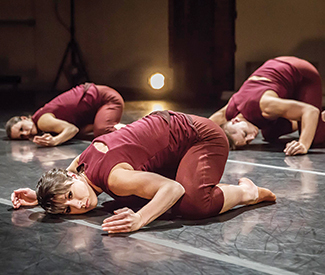
DANCE RAWdance packed enough movement material into its new Mine to tempt lesser choreographers to dilute it into a much longer work than this quintet’s 55 minutes. But that’s not who Wendy Rein and Ryan T. Smith are. Here joined by Kerre Demme, Aaron Perlstein, and Laura Sharp, the duo created choreography pared down to its essence where every head turn, every lurch, every stabbing leg counts. The work has nothing to with excavating minerals; it has everything to do with possession — what we have or want control over, be it property, physical space, or other people.

Pre-performance images suggested a bunch of people tied up in hanging ropes. Thankfully, none of that materialized. Instead of ropes — they did enter as one of very few props — scenic designer Sean Riley used strands of string for what looked like a three-dimensional map in which multiple roads coalesced into a single point. They reminded me a little of those air routes maps you look at in in-flight magazines when you have run of others things to do. Hanging from the Joe Goode Annex’s high ceiling, Riley’s rope sculpture was airy and light, yet thanks to the weights attached had a downward pull.

Mine turned out to be an intricately structured, excellently performed essay on some of our less noble instincts. Slowly, it began to appear that the idea of “mine” dehumanizes us instead of enriching us. The work started on a pure dance level with images gradually emerging to become more explicit, until a final one was so literal that I wasn’t sure whether it had not gone over the top.

As the audience walked in, Perlstein found a spot for himself. Ever so slowly the other dancers joined him in a pedestrian lineup that quickly scattered into similar but individual expressions. But common moves began to look less innocent as people moved into each other’s space. Did Sharp stumble over a prone Perlstein or did she kick him because he was in her way? A push-up position for two became one for four until the dancers waddled along like some multi-limbed creature. Sinewy and so tightly focused on each other that they looked like one evolving organism, Rein and Smith in a duet looked both delicate and unbreakable. Yet they also had the shifting wariness of boxers about them.

Anxiousness and indifference seeped into Mine like dripping fog. At one point the dancers pounced to the floor and recovered, opening their arms and looking upward as if expecting some relief. At another, like soldiers going to battle, they walked bent over but fiercely yanked their knees to their chests as if to protect them. Holding flashlights in the dark, the men impassively observed the women writhing in some kind of agony. Then it was their turn to watch Perlstein’s simple touch trying to calm a fiercely shaking Smith; it elicited rage. This was one of the few spots in Mine when you could sense a gesture emanating from personal motivation. Perlstein, previously, had shaped a piece of rope into a circle around Smith’s solo. I couldn’t decide whether he was trying to expand or limit a space for the dance.

When three wire baskets descended from the ceiling to encase dancers’ heads, I thought of those dreadful headgears that slaves were forced to wear. Here they turned the dancers into automatons, who on each quarter turn executed identical patterns of small steps. Joel St. Julien’s score — excellent throughout — began to sound as if coming from below water.

In Mines fiercest section, dancers hurled themselves against the theater’s wall, where they stayed as if glued until an intruder yanked or scraped them off, forcing him or herself into the space. It was brutal because it looked so impersonal; it seemed just something that was. Sort of like Lord of the Flies for grown-ups.

But perhaps my favorite moment was also one of its simplest. Sharp danced a limb-slashing solo center space. Her colleagues watched from the corner of the square. Slowly, almost ceremoniously they moved in, shrinking Sharp’s space with every step they took. You could just feel the air constricting around her.

So what about that last image? It did involve a rope; it also reminded me of a Roman chariot. *

MINE

Wed/11-Sun/15, 8pm, $21-25

Joe Goode Annex

401 Alabama, SF

www.rawdance.org


Investors needed to save Marcus Books

4

Marcus Book Store continues to be threatened with the loss of its Fillmore Street location — but if an ambitious campaign to raise $1 million by Feb. 28 succeeds, the institution can stay where it is.

At a Dec. 5 press conference, attorney Julian Davis announced that the bookstore proprietors and the San Francisco Community Land Trust had reached an agreement with the current property owners, Nishan and Suhaila Sweis, enabling the land trust to purchase the property for $2.6 million.

If the money is raised, the property will be transferred to the trust, which will preserve the bookstore as a permanent tenant while preserving the upstairs flats as affordable housing. “This is an opportunity,” Davis told reporters. If the campaign succeeds, “That is going to be a rare victory for retaining cultural diversity in San Francisco.”

Marcus Book Store has been facing eviction since earlier this year, when the building was sold to the Sweis family in a bankruptcy sale. But after a wide range of community supporters mobilized to halt the eviction, “We felt that the best solution was really to just come to the table. We saw that their property meant so much,” Sweis said.

Raising $1 million in less than three months is a tall order, but the land trust is driving the campaign with a new, web-based fundraising tool.

Called FundRise, it’s similar to a real-estate investment version of the microloan website Kiva.org. It offers some intriguing potential for re-shaping the way real-estate investment happens in practice.

Taking advantage of new federal financial regulations, it opens the doors for a broader subset of individuals to invest, creating new opportunities for community residents to pool resources toward ownership of significant buildings or critical housing.

“The idea that you could invest in a Japanese company but you can’t invest across the street made no sense,” said Ben Miller, who started FundRise three years ago with his brother, Daniel, in Washington, D.C. “I think it’s a revolution in how a city can develop.”

In the campaign to save Marcus Books, any “accredited investor” may provide a loan in the amount they choose and expect an annual return of four percent.

“We are the first nonprofit affordable housing developer to use this platform,” said Tracy Parent of the Land Trust, adding that the plan is to look to “investors across San Francisco and the nation to achieve this fundraising goal.”

Under federal guidelines, investors are considered “accredited” if they have assets totaling more than $1 million, or an annual income of $200,000 a year or higher. Nevertheless, said Parent, the Land Trust is exploring ways to incorporate contributions from anyone who wants to donate.

Ever since the prospect of losing Marcus Bookstore surfaced this past spring, neighbors and supporters from the surrounding community have pitched in to help preserve the cultural institution. It is the oldest African American owned bookstore in the nation, housed in an historic building where, decades ago when it was Jimbo’s Bop City jazz club, luminaries from Dizzy Gillespie to Charlie Parker held late-night jam sessions.

Karen Johnson, a co-owner of the bookstore, remembers when her parents, Raye and Julian Richardson first discovered the building, which had been sitting vacant. “When I found out it was the Bop City building, I figured it was waiting for us,” she said.

Karen Kai is a community member who helped round up supporters for the months long campaign to save the bookstore. When news that the store could be evicted started to spread, “there was such an outpouring,” she said. “People said, we can’t lose this. Because if we lose this, we lose a little piece of our soul.”

Oakland fast food workers fight for $15

2

It was a bad day for Big Macs, but a good day for workers.

Joining a nationwide day of action, a wave of over 100 protesters crowded into an Oakland McDonald’s on Jackson Street, urging fast food workers to join in the strike. Four employees participated, while others briefly joined the march outside.

Similar strikes were held in 100 cities nationwide, with workers in Detroit, New York City and more rallying to demand a livable wage of $15 an hour.

The national actions were led by labor unions, including Service Employees International Union, but locally it was led by men like Jose Martinez, a KFC worker who led a strike at that fast food establishment some time back. “It’s a movement for all fast food workers to come together and fight for our rights,” he said.

Oakland rapper, performer and music producer Boots Riley turned out in support of the fast food workers’ movement. “Fighting to raise wages of anyone helps everyone. A high tide raises all boats,” he told the Guardian. “You help make that profit, your labor is worth more than minimum wage.”

Inside, the fast food joint was bursting at the seams. “Markeisha! Markeisha! Markeisha!” the protesters screamed, bursting into cheers as the five-foot tall girl hobbled around the counter to join the strike. Markeisha, who did not want her last name used, said she tore her ACL a week ago tripping over one of her children’s toys. She can’t afford not to be at work though, and worked the register from a chair.

We asked if she was afraid to be on strike. “Afraid? Kind of,” she said. If she lost her job, “I wouldn’t have a way to pay my bills and support her family.” She felt it was an important thing to do, because she isn’t earning a living wage. After three years of employment, she’s finally making 50 cents more per hour because she’s training to be a shift manager, and can now expect an hourly wage of $8.50.

A statement on McDonald’s website noted, “Our owner-operators are committed to providing our employees with opportunities to succeed. We offer employees advancement opportunities, competitive pay and benefits.”

One worker the Bay Guardian interviewed described having to visit food banks to get enough food, despite working full time.

McDonald’s’ official statement also noted: “The events taking place are not strikes. Outside groups are traveling to McDonald’s and other outlets to stage rallies.” But four workers did join the Oakland McDonald’s protesters to participate in the nationwide strike, and together they poured into the adjoining parking lot, dancing and chanting.

The protest was organized as a coalition between a number of groups, including the ReFund & ReBuild Oakland Community-Labor Coalition, ACCE, EBASE, the East Bay Organizing Committee, UNITE-HERE Local 2850, OUR WALMART, SEIU 1021, and SEIU ULTCW.

Mandela’s greatest legacy

2


By Roni Krouzman

Since my teenage years, I have looked to the anti-apartheid movement as clear evidence that humanity — when it comes together and stands bravely and prays with its heart and sings with its soul — can overcome the greatest oppression. This alone would be reason enough to revere, mourn and celebrate one of this liberation struggle’s great leaders, the late Nelson Mandela.

But there was something even more remarkable about Mandela, and that was his capacity to stand for justice with such clarity and strength, while also holding so firmly that retribution against those who did him and his people wrong was not the answer.

Even when he gained the upper hand, this man who had been imprisoned for so long, leading a people who had been brutalized for so long, stood as strongly for peace as he did for freedom and justice.

As apartheid fell, South Africa could easily have slipped into civil war. But it did not. Instead of pursuing vengeance against their former oppressors, under Mandela’s leadership and other brave leaders like him, the country instituted ground breaking Truth and Reconciliation Commissions that had those responsible for apartheid and its enforcement own up to their wrong doings without being brutalized in return.

For Mandela, this choice grew from a deeply personal revelation: “As I walked out the door toward the gate that would lead to my freedom, I knew if I didn’t leave my bitterness and hatred behind, I’d still be in prison,” the great freedom fighter famously said upon his release.

In its report on Mandela just hours after he passed, the BBC quoted F.W. de Klerk, South Africa’s last white president, as saying Mandela had “a remarkable lack of bitterness.” Mandela’s greatest legacy, de Klerk said, “is that we are basically at peace with each other notwithstanding our great diversity.”

Justice without vengeance. What a poignant and at one point unimaginable legacy to leave his nation and all of humanity. And it is the paradigm shift we so desperately need and I hope will one day soon learn to embody: how to stand strongly, fiercely even, for what is right — to defend without wavering against those who would attack people and the Earth — and at the same time to see the humanity in all people and to welcome everyone back into the village, even when they have done wrong.

It takes a great, great heart to do that. And only that can bring the deep and lasting healing and transformation we need.

Thank you and blessings Madiba, you have shown us what is possible for humanity. We will miss you.

Roni Krouzman is a consultant who coaches workplace leaders in fostering healthy relationships with colleagues and employees. His articles and essays on social movements have appeared in numerous print and online publications, as well as four anthologies.


Laboring for better health care

2

Gardening, plumbing, construction, janitorial work and washing dishes: the jobs day laborers perform for San Franciscans are done with their bodies. Their physical fitness is their gateway to work.

It’s that physicality they risk on the job every day. Undocumented Latino laborers have a hard time reaching options for medical care though, even in a sanctuary city like San Francisco.

To be clear, San Francisco has gone far and beyond many cities to provide medical care. The city’s Healthy San Francisco program, UCSF, and a smattering of nonprofits all provide medical care to undocumented immigrants, which often includes day laborers.

The problem is not a matter of options, but a matter of trust.

James Quesada, an anthropology professor at San Francisco State University who studied health care options for day laborers, said even when options are available, many day laborers actively avoid them.

The specter of deportation is always lurking, he said, stopping many from seeking clinics in the first place.

“Despite the fact that we’re a sanctuary city, there’s always that fear and threat that someone could come at any time,” Quesada said. “There are do-gooding public health services for them, public health contracted satellite clinics and the like. But one of the hardest things is to really convince them that they’re not in peril by going.”

At the U-Haul rental facility near Bryant street, laborers stand in pairs waiting for potential customers to drive by. When a customer comes into sight, they’ll start toward the passing car in huffing sprints. Their work is unpredictable and never guaranteed.

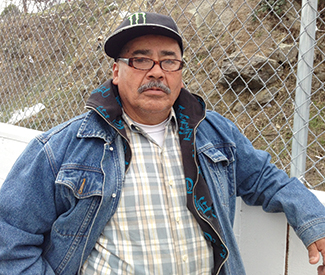
One man the Guardian spoke to, Gonzalo Moran, 62, cited one health care center as a timely godsend: the Mission Neighborhood Health Clinic. The wait there is only half an hour, he said, and in an emergency they make referrals to SF General Hospital.

But heading to SF General for care can carry a high price tag in both time and money, and results are not guaranteed.

“One day I had a toothache, I went to the emergency [room], was there from about four o’clock in the morning to four o’clock in the afternoon,” Moran said. “I told them I was homeless, that I didn’t have no income, I have no immigration papers or nothing. A nurse came to check on me, my tooth. They just gave me a prescription for Tylenol, but then a month later they sent me a bill for $300. For Tylenol.”

Moran isn’t necessarily out on the streets, but crashes regularly at different places. Whenever he tried to get a credit score the bill would come up in searches.

The hit wasn’t only monetary. The day he spent at the hospital was a day he could have worked.

Moran’s story reflects findings made by Quesada in his research. Though many providers claim to help the undocumented, the level of service can depend on just which doctor or nurse you happen to get that day. Service and safety are uneven, and there’s no way to keep track of it all.

“It’s a patch quilt, a moving target,” he said.

Moran told his story with strong English skills gained through City College classes, but he’s had the time to learn — the El Salvador native landed in the United States in 1976 to earn money for his family. Others Quesada talked to were not as lucky.

In his research on undocumented day laborers and health care, he found many who avoided clinics and hospitals for fear of being deported. Quesada found the laborers in the streets, and spent time in clinics and hospitals to find what kept them away from medical care. What he found was fear.

Some men would jump even at the sight of a rent-a-cop security guard, he said.

In an academic paper he published on the subject, Quesada related the story of Juan, a day laborer in his 50s who suffered terrible tooth pain. He refused to seek help.

“Look Jim, if I show up at the clinic [nearby public clinic] I cannot be sure I won’t be arrested and taken away. You know, it is more dangerous now. I can never be sure when it is safe to go [get medical attention]. But, you know what it is, I do not want to be like those others [Latinos] who have “no shame” [sin verguenzas] and want what they want for nothing. If I can I will pay my way, and if I can’t, I can’t. I’ll withstand the pain and take care of it myself, even if I have to pull them [his teeth] out myself. “

Juan would medicate the gaps in his teeth with Tequila soaked cotton balls, and aspirin.

Quesada tried to get him help, but Juan had to cancel dental appointments repeatedly when jobs became available. Day laborers never know when the next opportunity may drive up to them.

This is what pushes Quesada and others to push for a merging of social work and health care. Some facilities in San Francisco have already moved that way, as hospitals like UCSF visit churches and community centers on weekends to reach out to undocumented people in need of medical attention. Still, there’s room for change.

“Doctors shouldn’t have be social workers, but social workers should be there in the room,” Quesada said, saying that would go a long way towards helping undocumented workers find the help they need. But despite a lack of options, they carry on.

“They’re valiantly making a go of it, and don’t want to dwell on the negative,” he said. “They don’t want to be seen as fighting for basic human rights, as not fully human.”

The man we met outside the U-Haul on Bryant, Gonzalo Moran, has three trade school certificates, one of them in floor tiling. But he longed for one thing: time to attend school so he could get ahead.

“I go to school all the time, you know, if I have it,” he said. “But it’s hard, we’re always getting a lower wage.” And it’s a barrier. A barrier to health, a barrier to education, and a barrier to a better life.


On the migrant trail

0

P>From 2007 to 2010, Salvadoran journalist Óscar Martínez made six different excursions on The Beast, a rusted freight train that carries Central American migrants throughout Mexico on their journey to the Southern U.S. border. His vivid, eye-opening account is now available in English, in a recently published edition titled The Beast: Riding the Rails and Dodging Narcos on the Migrant Trail, by Verso Books.

The Beast documents the lives and stories of some of the thousands of migrants who make the perilous trip annually. Whether they are heading north to flee violence in their home countries, or simply in pursuit of una vida mejor (a better life), the migrants who embark on this journey expose themselves to untold risk. The trail leads them isolated Mexican territories where the rule of law holds little sway, and bandits affiliated with drug cartels lie in wait of vulnerable targets.

Some of the figures are appalling: An estimated 20,000 of the quarter million Central Americans who journey along the migrant trail annually are kidnapped along the way. Rape is so commonplace in some areas that coyotes aiding women who venture north frequently give them condoms, with instructions to tell their attackers to use them. “They tell them, trying to fight isn’t an option. Not in that jungle,” Martínez said during a recent book reading at Modern Times, relating what he’d learned from migrants while riding The Beast.

Even more alarming is that the everyday violence afflicted against migrants received scant press attention until Martínez highlighted it. And there are dishearteningly few examples of prosecution targeting those who prey on migrants.

More impressive than the considerable risk Martínez took on to get the story was the level of depth and understanding with which he portrayed the migrants he encountered. He did this by getting to know them, spending hours in their presence, and relating to them by learning the slang used on the migrant trail.

Sometimes he would invent a character in order to slip past gatekeepers who sought to keep journalists out. He pretended to be a john when venturing into a brothel in Chiapas, to get the stories of the women profiled in a chapter titled “The Invisible Slaves.”

“Sometimes, you drink a beer and have a conversation, not an interview,” Martínez said during a book reading at San Francisco’s Modern Times Bookstore Collective. “The migrants, they are very kind to talk to me,” he added. “If you’re on the most dangerous trip of your life, why are you going to talk to a guy who asks you stupid questions for hours?”

Martínez produced the series for El Faro, an online publication based in El Salvador that seeks to produce in-depth, long form reporting.

He initially published a compilation of his experiences dodging narcos and killers on the train in a book titled Los migrantes que no importan [The migrants who don’t matter] in 2010. The Beast was named one of the best books of 2013 by the Financial Times, and has earned praise from the New Yorker.

“We spent a lot of time with the migrants beforehand,” he explained when asked how he gained the trust of the people he wrote about. “The project allowed us to do that. We had the time. That’s impossible to do with the rhythms of conventional journalism.”

Since El Faro is funded through private contributions and grants from foundations, it’s geared toward generating the sort of in-depth, well-researched, carefully crafted journalism that has the power to bring about real change.

“To understand, you need time,” Martínez said. It was only after six harrowing journeys, he said, before “I understood the train.”

Now he is working on a project with El Faro called Sala Negra, investigating gang-related violence in Central America. It’s a dangerous occupation, but Martínez believes he is fulfilling his obligation as a member of the press by bearing witness to the violence taking place in Central America. “Not talking about organized crime is not an option,” he said. “Organized crime is a part of the society.” 


All together now

2

news@sfbg.com

The latest attempt to legalize marijuana in California took one step forward last week when a group of advocates filed a ballot initiative with the office of the Secretary of State.

Titled California’s Marijuana Control, Legalization and Revenue Act of 2014 (MCLR), the new marijuana legalization proposal is being floated by Americans for Policy Reform (AFPR). For the past year, the organization has made the draft initiative open to the public as an editable Google Doc for anyone to read, comment on, and even modify.

The next step is for the Secretary of State to evaluate the initiative and compose a title and summary. Only after that process, which could take up to two months, will the AFPR be free to begin collecting the 500,000 signatures it must amass in order to get the marijuana legalization act on the 2014 ballot.

Such a task may sound daunting, but AFPR members have already done some of the heavy lifting, having spent the past year soliciting thousands of individual Californians’ input and support. The policy reform group even postponed an earlier submission target date to allow time for a statewide tour to gauge public opinion one last time before formally filing the proposed legislation. The initiative began as a grassroots, “open source” document to legalize cannabis for medical, industrial and adult social use.

“About a year ago, we held a cannabis conference in San Jose where we presented a document that was two paragraphs long and basically said, ‘Marijuana should be legal and nobody should be sent to jail,'” recounts AFPR member Dave Hodges. “Then we put that document into a Google Doc and just started promoting it, telling everybody, ‘If there’s anything in it that you don’t like, get in there — and change it yourself.'”

Hodges opened San Jose’s first medical cannabis club in 2009, but wasn’t drawn to the forefront in the fight for legalization until the death of a good friend a year and a half ago. His friend suffered from a condition caused by daily consumption of alcohol.

“About two weeks before he passed away, we were smoking a joint and the fucker had the balls to tell me: ‘If this shit were legal, I would have never drank alcohol.’ This is something I’ve believed in a lot, in general — but that was probably the thing that made me really get into it and not let go.”

The AFPR has gone to great lengths to garner broad support and lay the groundwork for a strong coalition once the signature gathering process begins. In the past year, the policy reform group has reached out to attorneys, activists, and other members of the community, trying to include as many Californians as possible in shaping the MCLR initiative. They’ve also issued press releases and blasted the word out on social media.

The editable Google Doc upon which the proposal is based has been circulated to thousands of people, via e-mail lists. When someone posted a link to the document on the popular website Boing Boing, more than 1,000 people logged into it within 48 hours.

Hodges has personally sat down to meet face-to-face with more than 100 different people. Over time, the two-paragraph long Google Doc grew to a length of 24 pages.

“The process of creating it was a little bit of a nightmare,” Hodges chuckles. “I’ve probably read that 24 pages a thousand times,” a feat he admits could not have been accomplished without copious amounts of marijuana.

Nonetheless, he agrees with fellow proponent Bob Bowerman, who said, “This is the best cannabis initiative ever put together for California. It follows federal guidelines and regulates cannabis in a way that makes sense.” Bowerman added, “It corrects the other legal mistakes.”

The open-source style in which MCLR was created might have been headache inducing, but its proponents believe it will prove to be the key to the initiative’s success on the 2014 ballot — in contrast with previous failed efforts at legalization.

As Hodges states, “In the case of Prop 19 in 2010, the message that was circulating — and the reason that it failed — was that everybody was saying, ‘It’s a bad law, but vote for it anyways,’ because everybody just wanted to see legalization happen. In 2012, we had nine different initiatives all competing to be on the ballot, because everybody had their own view of how this had to happen and nobody was really trying to get everybody to work together. And then none of them ended up on the ballot.”

These defeats in 2010 and 2012 led Hodges and his associates to the conclusion that the essential problem with legalization efforts was internal division across the movement, caused by respective groups disagreeing on language and prioritizing different aspects of the issue.

“When you do this process and combine so many perspectives, you see a lot of things that you wouldn’t otherwise,” Hodges explains. “And if there are any critics who come out and say this is a bad law, well, we’ve taken over a year to reach out to everybody. Anybody who hasn’t responded doesn’t really have an excuse at this point.”

While the original document put forth by the AFPR a year ago stated simply that Californians should be free to smoke marijuana, its final form is a detailed set of regulations on how the drug ought to be sold, provided, and regulated. It also outlines new protections against issues, such as federal regulation, still complicating the movement toward legalization. The need for such a precise, comprehensive initiative was underscored by a recent California Supreme Court ruling, determining that individual cities are allowed to ban medical marijuana dispensaries, despite provisions established by Prop 215 in 1996 and reinforced by SB-420 in 2003 clearing the way for their operation.

“There were a lot of lessons to be learned from that Supreme Court ruling,” Hodges says. “We learned that if we want this structured properly, we need to spell it out in very fine detail, to make sure that legally the courts can’t come back and do something like this again.”

He went on to explain the essence of the MCLR initiative. “The core of what we’ve done is create a bipartisan, independent cannabis commission that’s going to regulate this, set up further detailed regulations, and adjust for anything in the future,” he said. “Everything else is more basic structures around protections and limitations for businesses that could exist, and protections for the people who are currently using it.”

Some of those “basic structures” proved especially important to the co-collaborators. They include enforcing laws against driving under the influence by testing a driver’s impairment rather than testing the amount of THC in their bloodstream; prohibiting employers from firing employees simply for testing positive for marijuana; disregarding, in custody battles, whether one of the parents smokes; and establishing independent financial and insurance cooperatives for the cannabis and hemp industries, so that banking and insurance transactions may be done apart from the federal framework.

“Those are the little things that we would not have thought of, unless we’d been reaching out to individuals,” Hodges states. “So it really is a much stronger document because we’ve been so open about it.”

Once the document had been collaboratively shaped and vetted, AFPR took it to an attorney, who drafted it as legislation in preparation for submission to the Secretary of State.

As the final, amended version of the MCLR initiative undergoes evaluation by the office of the Secretary of State, the greatest obstacle now facing AFPR is the task of raising the $2 million needed to gather signatures for the petition. Without that funding, the measure won’t appear on the 2014 ballot, regardless of all the effort and collaboration already invested. The organization has been cultivating relationships with prospective sponsors, but collecting that large of a sum will not be easy.

Still, the initiative’s proponents remain confident. According to the most recent survey data released by AFPR, 64 percent of California voters want to legalize marijuana in 2014. This support follows a broader trend: Results of a recent Gallup poll show that for the first time since Americans were first polled on their attitudes toward marijuana in 1969, a clear majority of Americans — 58 percent — say it should be legalized.

“The time is now,” declared John Lee, another proponent. “The voters are ready, and we can get it done.”

What getting it done will ultimately mean, in practice, is anyone’s guess.

“We’re talking about a lot of saved money as far as people going to jail, better use of resources, and a new stream of revenue for the state,” Hodges predicts. “There’s obviously gonna be some sort of liquor-store type models. But I’ve heard of everything from marijuana-friendly bed and breakfasts, to high-end bars that will have girls going around like cigarette girls used to, but with different types of pre-rolled joints.”

Taking it all in, he concluded, “The possibilities are pretty endless. But if this initiative passes, we will set a standard for the rest of the country.”


Fieldwork

4

marke@sfbg.com

After two more hours of hiking, we stop in a dry creek. One of the younger men enlists help pulling large cactus spines from one of his legs. We sit in a circle sharing food. The tastes link us to loved ones and Oaxaca…

After we have hiked again through blisters for many miles and I have shared all my ibuprofren with the others, we stop to rest. We fall asleep, using torn-open plastic trash bags as blankets. Our coyote leaves to talk to his contact on a nearby Native American reservation about giving us a ride past the second boarder checkpoint to Phoenix….

Suddenly, our guide runs back, speaking quickly in Triqui. Two Border Patrol agents — one black and one white — appear running through the trees, jump down in our creek bed, and point guns at us.

— Seth M. Holmes, Fresh Fruit, Broken Bodies

According to the US Public Health Service, there are, on average, an estimated 3.5 million migrant farmworkers in the United States, the majority of whom are undocumented immigrants. At harvest season, most of them perform the backbreaking work of picking our fruits and vegetables for an average $12,500 annually; at other times, they share slum-like apartments or live out of cars looking for odd jobs — 68 percent of them wondering if they should return home to Mexico and risk another border crossing to the US when picking time rolls around again. Only 5 percent of migrant workers have health insurance, and what happens to the rest if they get injured or fall ill doing the work the rest of us won’t is an eye-opening American tragedy.

To many Americans, this cheap, legally and socially vulnerable population is a faceless brown mass in the fields somewhere, maybe receiving a noble thought at Cesar Chavez Day or inducing the occasional twinge of guilt in the produce aisle, if thought of at all. But a provocative, important new book by UC Berkeley Assistant Professor of Public Health and Medical Anthropology Seth M. Holmes, Fresh Fruit, Broken Bodies: Migrant Farmworkers in the United States (University of California Press), which is picking up awards and has been featured on mainstream news outlets, is helping to re-personalize migrant farmworkers and move their health care situation into the media spotlight.

As the US finally addresses the facts that it spends the most money on health care for the worst outcomes, that a huge chunk of its population has no health care at all (and is severely underpaid for its work), and that we’re dependent on undocumented immigrants to harvest our produce and keep food costs down, we’re only just starting to realize the irony in giving the people who devastate their bodies to provide our healthiest foods perhaps the lousiest health care deal of all.


COMPLEX VOICES

Part heart-pounding adventure tale, part deep ethnograhic study, part urgent plea for reform, Fresh Fruit starts off with Holmes embedded in an ill-fated group of border-crossers from the mountains of Oaxaca: he gets arrested, they get deported after a harrowing stay in a detention center. Holmes then writes about his 18 months spent picking fruit alongside hundreds of others at a large family-owned farm in Skagit Valley, Wash., living in a closet with a dozen farmworkers in a rundown apartment while they look for work on the off-season, returning to Mexico to spend time with workers and their families, and shadowing the medical professionals in the publicly and privately funded clinics that serve migrant populations. Throughout, Holmes saw people “give premature birth, develop injured knees and backs, suffer from extreme stress, experience symptoms of pesticide poisoning, and even have farm trucks run over and crush their legs,” as he told Farmworker Justice magazine.

Holmes, a medical doctor as well as a doctor of anthropology — the book resulted from his thesis work — brings an enlightening complexity to the issue of migrant workers. (Including the label “migrant worker” itself, which, he notes piercingly at the end of the book, has been ossified with classist and racial overtones. If this group of people were flying over every summer from Europe or Hong Kong to secure investments on Wall Street, they would be called “international businesspeople.”)

He’s especially concerned not just with the grueling minutae of trying to receive treatment for the aches and pains that come with stooping to pick strawberries 12 hours a day, struggling to meet ambitious quotas in order to get paid very little, but also the larger, physically devastating effects of the structural violence visited upon a whole population by neoliberal economic policies that continue to widen the global income gap and entrench the wealthy in power. His “participant observation” method of studying migrant farmworkers means he writes about his own experiences in the field, and he brings his sophisticated anthropological knowledge to bear on the way contemporary society ensures that migrant farmworkers stay on the bottom rung of the economic ladder, building on the work of Pierre Bordieu, Philippe Bourgois, and others who’ve studied power relationships and structural violence in terms of workers’ health.

But, although there are scholarly footnotes and personal interjections, Holmes avoids an icky “anthropological tourism” vibe by providing the workers themselves with room to tell their histories, talk about their bodies, and react to the way they’re treated. People like Abelino, who falls victim to a series of misunderstandings over his severely injured knee, or Crescencio, who suffers acute headaches whenever he’s called racist names or ordered around degradingly, but is labeled a potential domestic abuser by one caregiver and resorts to drinking up to 24 beers per night to soothe his pain. We also hear from Marcelina, who talks to a Skagit Valley community gathering about low wages and high quotas.

And Holmes lets the owners and operators on all levels of Skagit’s Tanaka Brothers Farm — a pseudonym to protect his sources — speak as well, about the need for cheap labor in an increasingly competitive global agribusiness environment, among other concerns. (One especially interesting tidbit: organic distributors pressured Tanaka Brothers Farms to sign a machine-pick contract, which relegates farmworkers to the pesticide-ridden fields, despite the growing market for organic produce.) The Japanese-descended Tanaka family is deeply embedded in the Skagit Valley community, with roots stretching back before the Japanese internment period. The farm has seen different waves of migrant workers from poor white to Asian to Mexican. The Valley community itself has a fascinating relationship with the migrant community, emerging from it while reacting to it, developing its own social hierarchy as each generation “graduates” from farmworker to resident.


ANOTHER GENERATION

A lot has changed from Chavez’s day. For one thing, the previous generation of field workers, mostly from Guadalajara and northern Mexico or from Central America, has gained a toehold on American society — like the Asian workers that preceded them, many Hispanic workers’ children, placed in American schools, have grown up, providing their parents with a path to citizenship or work visas that allow them access to better jobs.

Today, a lot of workers are not mestizo Mexican, but of indigenous Mixtec descent, from increasingly violent mountain villages of Oaxaca in southern Mexico like San Miguel and San Pedro. Bloody land disputes, ethnic tension, the collapse of the local agriculture market that was exacerbated by the North American Free Trade Agreement in the 1990s and continued through the recent global recession, and the rowdy and malevolent presence of US-funded anti-drug military forces (strange since no major drug cartels operate there) have isolated this area, forcing its men, women, and children to look for work in America.

Triqui, not Spanish, is their native language — just one of the major hurdles when it comes to delivering healthcare to this population. Another hurdle comes with the specific cultural record of Triqui and general Mexican healthcare. Many Triqui workers rely on native healers, even in American farmworker camps, whose methods of consulting cards and drawing evil spirits from bodies using oils surely provide some psychosomatic respite. But reliance on native healers — out of a combination of tradition, availability, and fear of discovery or of health institutions in general — often prevents workers with deeper problems from receiving a wider range of appropriate treatments. Self-medication through alcohol is common (Holmes observed no drug use), and in one case a man named Bernardo took to the habit mashing his abdomen with soda bottles to ease a chronic stomache ache.

The migratory nature of these workers — and their shifting relationship to the law — all but insures disruptions in preventative and prescriptive care, lack of access to medications, frustratingly spotty medical records, and the inability to form a valuable personal bond with a trusted physician. But the major hurdle is that the system put in place by the government to serve migrant populations hasn’t been revisited since 1962, when a wave of media concern spotlighted the plight of migrant workers — most of whom, at that time, were white Oakies descended from the great Dustbowl diaspora of the ’30s and ’40s. The system has been only slightly adapted and enlarged since then, with dozens of clinics and organizations competing for limited grants, and nonprofits charging as little as they can (often still a steep fee on a farmworkers’ wage).

The picture Holmes paints of the clinics he visits and the doctors, nurses, and caseworkers he encounters is a mostly warm one — most health workers are hard-working and well-intentioned, stymied by cultural and linguistic differences, lack of funds and proper medical records, and racist attitudes from the surrounding communities. Some are prone to misinterpretation, and there are a couple outbursts of frustration that borders on stereotyping.

Still, most migrant worker health care providers are dedicated to their patients’ welfare. As one doctor, a mountaineer who serves the Tanaka Brothers Farm workers, put it: “It’s a very difficult problem. We have a bad situation where citizens cannot really afford health care. And the migrant workers, I truly believe they should have at least the same access as the others. I mean, this work that they are doing is something that nobody else is willing to do. That’s the truth. That’s probably the only reason why we are able to go to the supermarket and buy fruit for a fair price. So this is a group of people that really deserves our attention.”

That group will most likely be left out of the Affordable Care Act’s initial implementation, with possible implications for other, growing fields of migrant work, like software coding or childcare. Holmes’ book will hopefully inspire other investigations into this critical area of the nation’s health care gap — and concerted action to bridge it.

Tech leaders must engage their critics

33

EDITORIAL It’s time for San Franciscans to have a public conversation about who we are, what we value, and where we’re headed. In the increasingly charged and polarized political climate surrounding economic displacement, the rising populist furor needs to be honestly and seriously addressed by this city’s major stakeholders.

Whether or not the technology industry that is overheating the city’s economy is to blame for the current eviction crisis and hyper-gentrification, it’s undeniable that industry and it’s leaders need to help solve this problem. They are rolling in money in right now, including tens of millions of dollars in city tax breaks, and they need to offer more than token gestures to help offset their impacts.

As we were finalizing stories for this issue on Dec. 9, the Guardian newsroom was roiled by our rollercoaster coverage of a protest blockade against a Google bus, which has become a symbol for the insulated and out-of-touch nouveau-riche techies in the emerging narrative of two San Franciscos.

Our video of an apparent Google-buser shouting at protesters “if you can’t afford it, it’s time for you to leave” went viral and burned up the Internet (and our servers) even as we discovered and reported that he was actually a protester doing some impromptu street theater.

But there was a reason why his comments resonated, and it’s the same reason why The New York Times and other major media outlets have been doing a series of stories on San Francisco and the problems we’re having balancing economic development with economic security, diversity, infrastructure needs, and other urban imperatives.

Rents have increased more than 20 percent this year, the glut of new housing coming online now is mostly unaffordable to current residents, even that new construction has done little to slow real estate speculators from cannibalizing rent-controlled apartments, and the only end in sight to this trend is a bursting of the dot-com bubble, which would cause its own hardships.

We need this city’s political leaders to convene a summit meeting on this problem, and Mayor Ed Lee and his neoliberal allies need to bring tech leaders to the table and impress upon them that they must engage with their critics in a meaningful way and be prepared to share some of their wealth with San Franciscans. Not only is the future of the city at stake, so is its present, because the housing justice movement won’t be ignored any longer. The good news is that San Francisco has a golden opportunity to test whether democracy can help solve the worst aspects of modern capitalism, offering an example to others if we succeed. But if our political leaders don’t create good faith avenues for meaningful reforms, San Francisco may offer a far messier and more contentious lesson.

Eat your heart out

0

arts@sfbg.com

THEATER Crowd-pleasing can sometimes sound like a put-down — hey, sometimes it is — but it becomes a virtue in Kneehigh’s Tristan & Yseult. The Cornwall-based company (already known locally for Brief Encounter at ACT in 2009 and The Wild Bride at Berkeley Rep last winter) has returned to Berkeley Rep with a remounting of its 2003 hit. And it proves as accomplished and intelligent as it is shamelessly entertaining.

Adapted and directed by Kneehigh’s joint artistic director Emma Rice from the triangular love story of Tristan, Yseult, and Mark (a medieval courtly love tale that may well have been the inspiration for the fraught triangle of Lancelot, Guinevere, and Arthur as well as numerous works of art on down, including one of Wagner’s operas), this rousing and continually resourceful production (written by Carl Grose and Anna Maria Murphy) uses the multiple versions of the legend as an excuse for a music-fueled formal mélange of influences and references that plumb the wider seas of love in all its forms.

The basic storyline is as follows: Cornwall’s wise King Mark (Kneehigh’s founder and joint artistic director Mike Shepherd) defeats an invasion by Irish interloper Morholt (Craig Johnson) with the help of a mysterious French-speaking knight, Tristan (a dashing Andrew Durand). Charmed by the young man, Mark sends Tristan to find Morholt’s sister, Yseult (a smoldering, violin-wielding Patrycja Kujawska), so that the king might marry her and make amends with Ireland. But Tristan has sustained critical wounds in the battle that leave him fading away on a faraway shore, until he is nursed back to health by a smitten healer — the aforementioned Yseult, naturally. Their mutual attraction turns to discord when Yseult learns she’s just fallen for the man who murdered her beloved brother. But a little love potion, and equal parts sweet wine, solve that issue soon enough.

No longer a virgin, however, Yseult must substitute on the royal wedding night her hymen-ready servant Brangian (Craig Johnson again, hilarious and surprisingly sympathetic in drab drag and sparkling comic timing). The ruse works, and Mark remains happily ignorant of Tristan and Yseult’s liaison until the king’s obsequious servant, Frocin (Giles King), offers proof of the lovers’ deceit and Mark has them (and the nosey, needy Frocin) banished. Too in love with both of them to have them killed yet still too hurt to forgive them, Mark leaves his dagger near where he finds the lovers sleeping in the forest. They awake soon after and reflect on the hurt they’ve caused. They decide to part ways, Tristan taking to the sea and Yseult returning to Mark, whom she has grown to love (if in a mellower way). But the lovers promise to be there for each other when needed.

Years later, as Tristan lies dying from his old wound beside his unloved wife — significantly, also named Yseult but known to the chorus as Whitehands, our mysterious narrator (Carly Bawden) — he asks if the ship sailing into port has a white or black sail (the former means Yseult is aboard, the latter that she is not coming). Consumed with hurt and jealousy, the second Yseult answers negatively, with tragic consequences all around.

That may sound like too much information, but the joy of the production rests in the telling (and the deft performances doing the telling) more than in the tale itself. This is best left a surprise. Suffice to say that the production, set on Berkeley Rep’s large Roda stage with full use of the aisles and other parts of the house, takes supreme advantage of an open aesthetic in which the presence of the audience and the mechanics of the staging are both readily acknowledged and built upon.

Indeed, Rice’s direction is so skillful and subtle that objects, characters, and actions can seem to pop out of nowhere despite an aesthetic that largely does away with hidden stagecraft, preferring to revel in what it reveals — as when, for example, the two lovers down their love potion and sweet wine and drink themselves silly, literally feet-off-the-floor high, dangling from aerial bands hoisted by members of the chorus of the unloved. (The latter is a comical Python-esque troupe of “lovespotters” dressed as proverbial birdwatchers or trainspotters in matching rain ponchos and wool headgear). Meanwhile, a live band (under musical director Ian Ross) casts a deliciously forlorn nightclub atmosphere throughout, including pre-curtain and entr’acte.

That sad-sack chorus, and various supporting characters who get their due here, also flags the thematic breadth of the play: Tristan & Yseult is about love in all its elusiveness and inconstant variety; love that alternately supports and belies the romantic ideal represented by the title characters. At the same time, the serious charm offensive underway points to another, complimentary end: the successful wooing of an audience through the sheer bliss of theatrical virtuosity. *

TRISTAN & YSEULT

Through Jan 6, $17.50-$81

Berkeley Rep’s Roda Theatre

2025 Addison, Berk

www.berkeleyrep.org

Reassemblage

0

arts@sfbg.com

MUSIC Fans of the Dismemberment Plan may have found initial listens to Uncanney Valley (Partisan Records), the group’s new post-breakup album and first original material in a dozen years, a little jarring. For a band that built its reputation upon jittery post-punk freakouts and raw, cathartic lyrical output, the more streamlined approach could take a little getting used to.

But from the nervous angst of 1999’s Emergency & I, to the more somber and reflective comedown of 2001’s Change, the four-piece has always managed to hold a mirror to the time and place its members were in at the time. Now, they’re in (or approaching) their 40s, and are spread all over the East Coast with marriages and full-time jobs occupying their time. The new material is a flawed but ultimately rewarding reflection of the Dismemberment Plan, now.

Formed in 1993 and steeped in the Washington, DC post-hardcore and art-punk traditions of bands like Fugazi and Jawbox, the Dismemberment Plan’s success came slowly but surely over the following decade. The band’s signatures — including its inventive rhythm section (propelled by the manic drumming of Joe Easley), injection of synthesizers, and erratically sharp vocals of frontperson Travis Morrison — came into perfect alignment on Emergency & I, one of the finest indie rock albums of the 1990s. When the band called it quits soon after touring to support its follow-up, Change, it all felt a little premature — though there certainly weren’t any expectations by fans or the band itself for an eventual reunion. That all changed in 2010, when the group got back together for a brief tour to commemorate Barsuk Record’s reissue of Emergency & I.

Though the band had previously reunited for a couple of one-off shows in 2007, something about the lead-up and aftermath of this tour was different.

“In rehearsals we started jamming more and more, and we really liked what we were coming up with,” Morrison said. “That led us to continue getting together to play when we didn’t have any shows booked, where we’d have to be rehearsing old songs, making sure we know them and stuff like that. So that was the impetus.”

That this led not only to more touring, but also to an album full of new material was extra surprising, considering Morrison, after a couple of post-Plan solo albums, claimed to have “retired” from music in 2009. With a move to New York City, a full-time gig at the Huffington Post, the co-founding of a music start-up (called Shoutabl), and a marriage all coming within the past five or so years, some time off from music definitely made sense, though Morrison has obviously since backed off of the finality that retirement represents.

“I just wanted to take a year off after moving to New York where I didn’t have any shows, didn’t have any bands, no records coming out … I just wanted to live,” he said. “I wanted a sabbatical — but ‘retired’ is so much more fun to say than sabbatical.”

For all of its shimmery pop leanings and at times perhaps overly-comfortable grooves, Uncanney Valley isn’t without many of the strengths and idiosyncrasies that make the Dismemberment Plan the Dismemberment Plan. Synths are expertly layered throughout, Easley’s drumming and Eric Axelson’s bass playing are as locked in as ever, and Morrison can still surprise you with odd little one-liners that wind up rattling around in your head for days. Lyrically, the album is all over the map and ventures into a lot of uncharted territory for the band: the sacrifices of fatherhood (“Daddy Was A Real Good Dancer”); the comfort found in long-term, post-infatuation relationships (“Lookin'”); the anxiety and loneliness of moving to a new city (“Invisible”). This is grown-up shit, being explored admirably. Still, you have to wonder how this will juxtapose in a live setting with all the older material, which feels like a lifetime away from where the band is now. Morrison for one, isn’t worried.

“There aren’t too many of our older songs that are solely based on adolescence or adolescent issues,” he said. “There are very few songs where we accused someone of not understanding us, which is a very young thing to do. I think there’s a lot of philosophical distance or perspective, where when I sing those songs now, I think, ‘Wow, we must have been little old men when we were like 23.’ The fact that there aren’t many accusatory songs makes it easier to convey the older stuff now at 40 years old.”

Whether Uncanney Valley represents an official final chapter in the Dismemberment Plan’s career or the first in a series of new band happenings remains to be seen. The group is taking it all one day at a time, and Morrison certainly wouldn’t want it any other way.

“Someone told me once that Bill Murray tells everyone that he’s retired, but then just comes out of retirement whenever there’s something exciting or interesting to do and I really like that attitude,” he said. “So whatever Bill Murray does, I do.” *

DISMEMBERMENT PLAN

Tue/10, 8pm, $28

Fillmore

1805 Geary, SF

www.thefillmore.com

Pros and cons(oles)

2

arts@sfbg.com

GAMER The next generation of game consoles is officially in stores and consumers demand to know — definitively — which is the superior console. Is it the PlayStation 4 or the Xbox One?

Unfortunately, the comparison isn’t that simple. Although both are sleek, state-of-the-art devices that play video games, we’re talking about two machines with different aims. Sony hopes the PS4 will lure back gamers that it disenfranchised with the expensive, non-intuitive and difficult-to-love PlayStation 3 by making things simple, fun, and focused on playing and sharing games. Microsoft is high on the success of the Xbox 360 and looking to dominate home media on all fronts, creating in the Xbox One an all-in-one device that allows you to control your TV, movies, and other digital downloads.

Strictly speaking, if you want to just play games and have an experience that is the same but prettier, Sony has your interests at heart. It’s the more powerful machine, current games look a bit better, and navigating the PS4 generally is an all-around smooth experience. Upon booting the system up, you’re greeted with soothing music and a fairly straightforward, simple interface. I was able to find all my games, apps, and settings within seconds, rather than minutes. The new DualShock 4 controller has a touch pad and a light bar for motion gaming (provided you have a PlayStation camera) and it performs these new functions with a minimum of hassle.

The most “next gen” aspect of the PS4 is the share button. A new button on the DualShock 4 is dedicated to sharing your experiences with friends, whether what’s being shared is video clips or actual streams of gameplay that can be viewed on another PlayStation, computer, or phone. Game streams and Let’s Plays have become their own genre on YouTube, and, by giving people that experience on day one (Xbox One’s streaming services are set to launch next year), Sony has a real upper hand on conquering the online gaming community that enjoys watching other people play games.

The PS4 is a machine that plays games, plain and simple, and right now the games it plays are only so-so. You’ve got a new Killzone, Shadow Fall; first-party beat ’em up Knack; and a few multi-platform — and cross-generationtitles that are likely to do well, but the must-have next-gen gaming experience just isn’t here yet.

The Xbox One is not nearly as intuitive as the PS4 and your first few hours with the machine will require patience and a bit of learning. Applications and settings are hidden in sub-menus and the revelatory Kinect voice commands are exhilarating when they work and aggravating when they inevitably do not. Growing pains were inevitable; Microsoft is attempting things that have never been done on a gaming machine before — like the ability to route your cable box into the Xbox One and change channels with your voice — and, if their history of iteration is to be trusted, it’s likely that the issues with organization and un-matched voice commands will melt away sooner rather than later.

Xbox’s launch games are favorable only in comparison with the PS4’s meager lineup. Forza Motorsport 5 is a wonderful showcase for what the Xbox One is capable of, and the best buy on either console so far, but the other exclusives are essentially limited to Dead Rising 3 and Ryse: Son of Rome, which are fun in spurts but offer nothing you haven’t hacked or slashed before.

Which leaves the question, what do you want from your “next-gen” console? If you’re in the market for a new device, you’re not wrong to expect improved graphics or increased resolution and frame rate. You want games to look better. And that’s at least partially there if you want it, but it doesn’t seem to be the current focus for either machine. Even on the PS4, the visual leap we’re seeing right now isn’t worth the $400 asking price, and the lower-spec’d Xbox One is tagged at a whopping $500 for a system bundled with Kinect.

In spite of all the internet furor spouted by gamers in the past few months about sub-standard resolution and graphics, perhaps Microsoft and Sony both realize the real coup is getting people who aren’t gamers to buy these consoles. In that area, Xbox One’s ambition to do more than play games is a risky pursuit, but one that could make all the difference for consumers who have only a passing interest in traditional gaming.

Time will tell which console resonates more with the public and some day financial reports aplenty will give us a definitive resolution on which console is more successful. But calling this a “console war” is more than a little sensational. Both the PlayStation 4 and the Xbox One currently offer incrementally better experiences than their previous-gen counterparts, and the world of popular consumer electronics has proven a little better is often just enough. *


Riot acts

0

arts@sfbg.com

FILM It was strange when Kathleen Hanna — riot grrrl activist, iconic Bikini Kill battle cry leader, electro-popping Le Tigre singer — went silent.

Though she was not entirely absent from the public eye, she did not make any new music or tour for nearly a decade. Beat down by a mysterious illness, she seemingly tumbled into hardcore self-preservation mode, contributing her personal files of zines, show flyers, and lyrics to the “Riot Grrrl Collection” at New York University’s Fales Library.

This archival material would prove key to Sini Anderson’s new documentary about Hanna, The Punk Singer. The film includes many lesser-seen clips from the early days of Bikini Kill, the band’s tours through Europe, and rare early moments with Hanna’s husband, Beastie Boy Adam Horovitz.

“There’s some unfortunate and there’s some fortunate in this,” says Anderson, speaking to me in a hotel in San Francisco ahead of the film’s Bay Area premiere at the Oakland Underground Film Festival in September. “The unfortunate is that Kathleen started getting incredibly sick, and she was getting worse and worse. [But then] she decided to pull all her materials together and start archiving them. So she had a few interns and for a couple of years they just pulled all this stuff from all over the place, so by the time we started the film project, a lot of this was in one place.”

Anderson is a Portland, Ore.-based feminist artist who co-founded Sister Spit while living in SF and has worked in film for a decade, though this is her first documentary. She suggested the idea to Hanna while Le Tigre was making 2011 doc Who Took The Bomp? Le Tigre on Tour. While Hanna became the reluctant face of the riot grrrl movement in the ’90s, she’d never granted the media access to her whole story, at least partially because she didn’t want to be misunderstood.

“She had been out of music for six years at that point, and in [the realms of feminism and politics], there just didn’t seem to be any kind of action going on. Things seemed complacent,” Anderson says. “I said, ‘Kathleen, people need to hear your story, and they need to hear it now.'”

Using archival footage and present-day interviews, the doc covers Hanna’s childhood, the beginning of the riot grrrl movement, Le Tigre, and the resurrection of her post-Bikini Kill solo project, the Julie Ruin. Anderson interviewed Hanna in a series of intimate, enlightening sit-downs at her lake house, which are delicately spliced throughout the film between older clips and interviews with Hanna’s contemporaries: Bikini Kill’s Tobi Vail, Billy Karren, and Kathi Wilcox (now of the Julie Ruin); Kim Gordon; Joan Jett; Carrie Brownstein and Corin Tucker; and teenage Rookie Magazine editor Tavi Gevinson, who wears the colorful “Feminist” sweater gifted to her by Hanna.

The main bulk of filming was done over the course of a year — and it was a momentous one. Countless doctors had misdiagnosed Hanna by the time Anderson began filming, without an end in sight. Halfway through filming, she finally had a name for her illness: late-stage neurological Lyme disease. When she began treatments, filmmaker and subject decided not to shy away from the vulnerability of moments like Hanna taking her meds and experiencing their uncomfortable after-effects.

“Once she started treatment, it was a roller coaster — she got worse, and then she got better, then she got worse. We had to plan the interviews around when she was up for it,” — explains Anderson, who, incredibly, was also diagnosed with Lyme disease during filming, from an unrelated incident. “I really believe there’s so much power and strength in that vulnerability. It really is important for other women to see that we can tell our truth, we can let people see what’s going on — that doesn’t make us weak, that makes us stronger.” Anderson is now working on another documentary specifically about Lyme disease.

During filming for The Punk Singer, Hanna decided to put together the Julie Ruin, her first new musical act since the end of Le Tigre. This year, the band released its full-length, Run Fast, on Dischord Records.

“She says it really eloquently in the film: when she realized that she may never again be able to do this thing she loves, she realized she wanted it more than ever,” Anderson says.

For the director, one of the biggest moments during filming came from this realization. Hanna sits by her fireplace, surprising herself as she talks about why she quit music — why it was easier to just say she’d already said everything she’d needed to sing. She didn’t want to admit to anyone, including herself, that she was quitting because she was sick. In the doc, Hanna seems taken aback and tears up a bit, but gives the go-ahead to keep filming.

The Punk Singer‘s other epiphany comes at the very end, on the last day of filming, in what became the last scene of the film. Hanna asks, “What is my story? I have no idea,” and begins mentioning moments from her life. “I thought, who is going to believe me? Other women will believe me.”

Says Anderson, “It was about being believed, and being heard, and having her truth be validated. That’s [her] story.” *


THE PUNK SINGER opens Fri/6 in San Francisco.

School gaze

0

cheryl@sfbg.com

FILM At Berkeley, the latest documentary from the great Frederick Wiseman, runs 244 minutes — a time commitment intimidating enough to deter any casual viewer. But viewers intrigued by Wiseman’s long tradition of filming institutions (a small sampling: 1968’s High School; 1973’s Juvenile Court; 1985’s Racetrack; 2011’s Crazy Horse — the latter about a Parisian nude-dancing establishment) with fly-on-the-wall curiosity will want to carve out an afternoon for At Berkeley, as will those interested in 21st century educational issues, California’s financial crisis, and the care and maintenance of UC Berkeley’s free-spirited image, among other topics.

UC Berkeley students and grads also seem like a built-in audience, which means the film’s local screenings are likely to be more populated than they would be elsewhere. Folks who attended while Wiseman was filming (he shot 250 hours of footage over 12 weeks in what appears to be mid- to late-2011) might even catch a glimpse of themselves in crowd scenes and shots of casual moments on campus, which comprise the smallest portion of At Berkeley‘s divided interests. But the local-color moments do much to flesh out what’s not seen in the classroom and administrative-meeting sequences: the fading-hippie glow of Telegraph Avenue; two men with impressive yo-yo skills; a student tussling with his bicycle; a couple napping on a grassy expanse.

http://www.youtube.com/watch?v=3L2_yLBrQsM

We’re also shown what goes into the maintenance of that postcard-perfect campus. Berkeley’s landscaping starts looking especially impressive when — during a retreat of school bigwigs that Wiseman had apparent free rein to shoot — one administrator points out that budget cuts mean the school employs just one person to mow all of its lawns. “Well, he’s doing a good job!” interjects Robert J. Birgeneau, chancellor of the school 2004-2013. At the time of filming, UC Berkeley was weathering a series of painful fee increases, staff furloughs and layoffs, and widespread budget cutbacks, with Birgeneau serving as its pragmatic, stern-yet-sympathetic eye of the storm.

Birgeneau, like everyone else in the film (including probably the most recognizable figure: former Clinton cabinet member Robert Reich, now a Berkeley prof), is never identified by name. At first, this feels disorienting; most docs strive to hook the viewer with first-act exposition, but At Berkeley simply plunges in with a woman (a teacher? a student?) regaling (a class? an extracurricular club?) with a myth about Berkeley’s origins (spoiler alert: it wasn’t founded by gamblers) that leads into a broader rumination on what the school represents. “A sense of imagination, of diversity,” she says. “An ideal.”

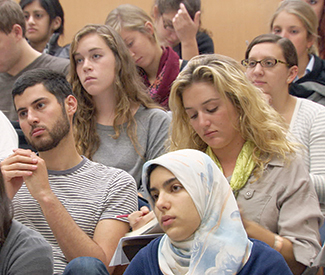
Before long, it’s obvious that we don’t need to know the back stories of everyone who appears in the film. This portrait of UC Berkeley — as a complex place, not without unrest, but also not without spontaneous a capella performances — emerges with all of its subjects sharing equal footing, their experiences and points of view presented with equal interest. Some of the most compelling scenes take place in classrooms, with remarkably articulate students (though, yes, Wiseman’s camera does catch a few looking sleepy and bored) discussing subjects as wildly diverse as poverty in America, advancements in robotics, Thoreau, and racism. There are also fascinating snippets of lectures, including an amusing, anecdote-heavy treatise from Reich on the importance of self-evaluation.

“The film has to work on both a literal level and a metaphoric, or abstract, level,” Wiseman writes in his At Berkeley director’s note. Filmgoers grasping for a through line will pick up on the financial stress that permeates every corner of the school. A student who describes herself as middle-class weeps at the financial burden she’s imposing on her parents. A professor advises a pair of eager students that their engineering dreams will require raising funds from government entities. Another professor expresses her concerns that increasing student fees will encourage new grads to seek out big paychecks to pay off their debts, rather than lower-paying jobs that might be more socially conscious.

The unrest percolating throughout the film culminates in coverage of a late-2011 Occupy Cal demonstration, in which the main campus library is overtaken by passionate protestors. The focus shifts away from the chanting students to UC Berkeley’s behind-the-scenes response, or rather, the phone calls and meetings that decide what the response should be (a “generic acknowledgement” is met by jeers from the protestors; a heavy police presence is suggested, but not visually documented).

In the library, a young man grasps the bullhorn and advises his fellow students that they need to organize their guiding principles more efficiently — an observation echoed later by Birgeneau. Unlike the headline-grabbing demonstrations that fill UC Berkeley’s storied past — its rabble-rousing legacy gets surprisingly few mentions here — there’s no underlying philosophy, he points out. A few moments later, we’re in a classroom, listening to students grumble about how the protests disrupted their midterms.

As its fourth hour draws to a close, At Berkeley‘s final sequence leaps from a discussion of one of John Donne’s sexier poems into a science class discussing interplanetary space travel. Sure, it’s possible, the affably geeky instructor says — but the practical concerns (like building a vessel with incredibly robust power sources that could sustain life for generations upon generations) tend to get in the way of one’s brilliant ideas and imagination. Here Wiseman’s affection for metaphor is made abundantly clear. *


AT BERKELEY opens Fri/6 in Bay Area theaters.

Suspending judgment

40

joe@sfbg.com

The Guardian is publishing only the first names of minors and their relatives named in this story, to protect their privacy.

In San Francisco public schools students can be sent home for talking back to a teacher, wearing a hat indoors, or sporting sagging pants. These infractions sound like the daily life of a kid, but the state calls them “willful defiance,” a category of suspensions that are nebulous to define at best.

Like the old saying about pornography, teachers say they know it when they see it, but students and parents alike are now calling foul on the practice.

The suspensions are so abundant in the San Francisco Unified School District that a movement has risen up against it. Sending kids home not only is an ineffective punishment, opponents say, it also can lead youth into the criminal justice system.

Now San Francisco Board of Education Commissioner Matt Haney is proposing a resolution that would ban willful defiance suspensions in San Francisco schools altogether.

“There will still be situations where we need to send a student home, but willful defiance will not be one of those reasons,” he told the Guardian. “Change is hard, complicated, and messy. But we can no longer deal with discipline or interactions with our students in that sort of way.”

He plans to introduce the resolution at the Dec. 10 Board of Education meeting, and if it passes, he said full implementation may take until the next school year.

There’s a fight to ban willful defiance suspensions statewide as well, but so far it’s been stymied. Just last month, Gov. Jerry Brown vetoed Assembly Bill 420, a bill mirroring aspects of Haney’s proposal. Those advocating for such a ban say it’s an issue of racial justice.

San Francisco’s African American and Latino students together suffer 80 percent of willful defiance suspensions, according to SFUSD data. The nonprofit student group Coleman Advocates for Children and Youth decried this statistic as an injustice, supporting the ban.

The San Francisco Board of Education took tentative steps to reduce suspensions as a whole in 2010, voting to introduce a new disciplinary system called Restorative Practices district wide. It’s complex, but basically asks students to talk things out in what are called “restorative circles” that include everyone involved in an incident, like a fight.

It’s also about changing the culture around discipline. It encourages teachers and students to establish a rapport, turning around the way some schools have practiced authority for decades.

At the time, there was hope. Fast forward three years, and that hope has dwindled.

Early evidence shows that Restorative Practices work better than suspensions, and prevent behavioral problems down the road, too. But out of SFUSD’s more than 100 schools, less than half of them started to implement the new reform.

Few schools have fully integrated the change, officials told us. Haney’s resolution addresses this with a mandate: SFUSD must implement Restorative Practices throughout the San Francisco school district.

The program is important, proponents say, because the majority of the 55,000 students a year moving through San Francisco schools still face school discipline that can set them way back in school and later may lead to incarceration. And suspensions can be levied for the smallest of infractions.

Cupcakes and justice

Xochitl is a 15-year-old SFUSD sophomore with long brown hair. She watches the TV show Supernatural (Dean is cuter than Sam) and yearns to one day live with her relatives in Nicaragua. Years ago on her middle school playground, she once faced a hungry child’s ultimate temptation: Free cupcakes.

The baked goods sat in a box on the cement by the playground, unattended. The frosting sat un-licked, the wrappers unwrapped.

She and her friend looked around, searching for a possible pastry owner nearby. Runners circled around the track in the distance, but no one else was around. The cupcakes met a satisfying fate inside Xochitl’s belly. The next morning went decidedly downhill.

As she walked into school, the counselor told her to go home: she was suspended.

“The cupcakes belonged to this girl because it was her birthday,” Xochitl said, something she found out only once she was being punished. “They went straight to suspension, they didn’t even let me speak.”

Restorative practices would have sat her with the birthday girl to explain her mistake and apologize. Maybe she would’ve bought the girl new cupcakes. That wasn’t what happened.

Suspended, Xochitl spent the day at her grandparents’ house. Not every suspended student has a safe place to go. Some turn to the streets.

stats

In October a group of mostly black young students marched to the Board of Education to protest willful defiance suspensions. The group, 100 Percent College Prep Institute, formed in the ashes of violence.

“I drive a school bus for a living, and I had a boy on my bus who was not bad, but not good,” said 100 Percent College Prep Institute co-founder Jackie Cohen, speaking with the Guardian as she marched with her students. “When we got back from Christmas break, he wasn’t back on the bus. Turns out he decided to ‘live that life.’ Three days later, I found he was shot and killed.”

In some communities the jaws of crime and drugs are forever nipping at their children’s heels. A child inside school is safe. Suspensions throw the most vulnerable students into the wild.

“Preventing crime in San Francisco begins with keeping children in the classroom,” SFPD Chief Greg Suhr wrote in a letter to the SF Examiner last year. “Proactive policies, such as the ‘restorative practices’ implemented by the SFUSD, emphasize the importance of building positive relationships while holding kids accountable for their actions.”

Black students make up about 10 percent of SFUSD’s population, but they represented 46 percent of SFUSD’s total suspensions in 2012, according to SFUSD data. Latino students represented about 30 percent of suspensions.

The racial disparity of suspensions mirror the disparity of incarceration. A study by nonprofit group The Advancement Project found that in 2002, African American youths made up 16 percent of the juvenile population but were 43 percent of juvenile arrests.

Xochitl sees that with her own eyes every day.

“Some kids turn to the streets, you know. I’ve seen people younger than me go to jail,” Xochitl said. “I was on Instagram and saw a friend locked up. I knew that girl, she’s in my PE class.”

It’s one of our country’s many shameful open secrets. Nearly half of all adult men in the United States serving life sentences are African Americans, and one in six is Latino, according to data from the nonprofit group the Sentencing Project.

Fathers and sons, mothers and daughters, all trapped in a cycle of poverty to prisons that for some starts at school.

“As a school district, when that’s staring us in the face, we can’t not do something about it,” Haney said.

Sometimes it begins when students are still learning their ABC’s.

Bruises inside and out

Restorative Practices are implemented from kindergarten to high school.

“If [students] don’t have a sense of belonging… that’s going to prevent schools from addressing behavior,” Kerry Berkowitz, the district’s program administrator of Restorative Practices, told us. The seeds of mistrust are planted when students are young.

Desamuel could not yet spell the world “police” when he first met them.

He was five years old, and as kindergartners sometimes do, he threw a temper tantrum. In the school’s desperation to contain him, officials called the SFPD.

“The police only came one time,” Desamuel, now seven, told the Guardian. Sitting in his San Francisco home with his uncle Lionel, Desamuel sounded ashamed. “But I didn’t go to jail because they only put kids in jail for being bad, like kids taking guns to school.”

The memory angers Desamuel’s uncle, who feels restorative practices would have prevented the misunderstanding. His home is a testament to bridge building.

Lionel, his brothers and mother all pitch in to take care of Desamuel while the boy’s father makes what he calls “a transition.” The home is large by San Francisco standards. Drawings of Spiderman and Batman line the wall, equal in number only to the portraits of their family, most of whom live in the city. There’s a lot of care in Desamuel’s life. That hasn’t stopped his tantrums, though.

The family tried to get him therapy, psychological analysis, anything to help. But as any parent can tell you, sometimes a child just needs love.

Lionel struggled with the school’s administration, and asked them to try less punitive ways of handling his nephew. “I told them to just hug the boy. Their response was ‘it’s hard to hug someone swinging at you.'”

The last time Desamuel fought a student he was tackled to the ground by a school security guard. The now-second grader came home with a bruise on his face.

“When I was bad I hurted the children. I wasn’t supposed to get up, and couldn’t get up off the ground. He took me by the arms and legs,” Desamuel said.

The problem with outsize use of suspensions and punitive action, Berkowitz said, is that it breeds a fear of school that shouldn’t exist. Desamuel is no different.

“I got sent to the office and I had to go to the principal’s office and they talked about me being bad,” Desamuel said. “I think because I make too much trouble I have a lot of problems and they don’t want me to be there.”

Cat Reyes is a history teacher who is now a Restorative Practices coach at Mission High School. She said transformation in behavior is the whole point.

She told the Guardian about a student recorded a fight on film. The two fighting teenagers tried to let the incident go, but with the video online for all to see their pride came between them. If the school suspended the girl who recorded the fight there may never have been resolution. The wounds would fester.

But now the girl will join a restorative circle and explain her actions to those involved in the fight, and their parents. That’s far more daunting to kids than simply going home for a day, Reyes said. It doesn’t just stop at the talk though. “On one end she has to say sorry,” Reyes said. “But now she may go to the media center and create a [movie] about it on our closed circuit TV. The consequence fits the crime.”

As students talk out their differences enemies can become friends, she said. After all, the goal is to correct bad behavior and break destructive cycles. Yet less than half of the schools in SFUSD are employing Restorative Practices.

Slowly but surely

One of the biggest critiques of Restorative Practices is that it removes consequences. That’s the wrong way to look at it, Berkowitz said: “When people say consequences, they mean punishment. We want to work with students to find root causes.”

The numbers back her up: 2,700 SFUSD staff members have trained in Restorative Practices, according to data provided by the district. This consequently led to a strong reduction in suspensions, the district says, from more than 3,000 in 2009 to about 1,800 last year.

SFUSD recognized a good thing when it saw it, growing the Restorative Practices budget from $650,000 in 2009 to $900,000 in 2013.

But only about 25 schools started measurable implementation, Berkowitz said. She put it plainly, saying the program is in its infancy. “Are they ‘there’ yet?” she said. “No.”

“Our team is pretty maxed out,” she said. “To really bring this to scale and implement Restorative Practices, there’d need to be a lot of discussions around that.”

Asked how much she’d need to fully fund the program across all schools, she was evasive. Haney was more direct. When asked if his resolution tied funding to the mandate of implementing Restorative Practices district-wide, he admitted that a funding source hadn’t yet been identified.

“Mostly we hear there needs to be more: more support, more social workers, more people in schools to make this functional,” he said. “It’s a longer term challenge.”

That solution may emerge as the resolution goes through the approval process, but the program faces other problems besides funding.

Teachers have depended on suspensions as a tool for years. Money is one thing, but changing educators’ minds about discipline is another.

The “R” word

Martin Luther King Jr. fought for the integration of schools, but in a speech about Vietnam he said something that could apply to the SFUSD today.

“Life and history give eloquent testimony to the fact that conflicts are never resolved without trustful give and take on both sides,” the southern preacher said in one of his last speeches before his death.

There is one issue simmering under this entire debate, festering, unspoken. Why are black and Latino students suspended more than other groups? Is this system inherently racist?

It’s a tough question. Teachers are notoriously underpaid, overworked, under supported, and asked to enforce the newest policies at the drop of a hat. The teachers the Guardian spoke to all described a packed year filled with new methods to learn, all with a common purpose — a love of their profession and a love of their students.

“There’s a hesitancy to talk about race with this,” said Kevin Boggess, civic engagement leader for Coleman Advocates, the group leading the charge for the willful defiance ban.

Nevertheless the question of racism permeates the discussion. Xochitl felt persecuted as one of the few Latinas in a mostly Asian middle school.

In the case of Desamuel, the young black child who had the police called on him at age five, his uncle stressed the need for culturally aware teaching. Lionel said Desamuel was well-behaved when he had an authoritative, elderly black female teacher, but acted up in the hands of substitutes who weren’t black and whom he characterized as “young and new” to teaching. Then again, the principal who called the police to handle Desamuel was herself black.

Norm “Math” Mattox is a former James Lick Middle School math and science teacher, and he said from his perspective as an African American he’s seen the issues Haney’s resolution addresses clear as day.

“My sense is that teachers might be blowing the alarm a little bit too soon as far as their brown and black students are concerned, especially the boys. They don’t know how to manage them,” he said. In his experience, misbehaving children are sent out of the room too soon.

In the short term, suspensions are an expedient tool, but punishment without communication does long lasting damage. “The dynamic between teacher and student did not get resolved inside of the class,” he said.

One SFUSD school tackled the specter of racism head on. Mission High School is at the vanguard of what its principal calls “anti-racist teaching.”

Mission High has a higher African American student college placement rate than many SFUSD schools, a group that struggles to perform elsewhere. And as a designated “newcomer pathway” for new immigrants, the school has 40 percent English language learners.

Mission High’s principal, Eric Guthertz, is energized by the challenge. He revamped the way the school teaches to address race and ethnicity directly.

The geometry teachers use Bayview district planning data to illustrate mathematical lessons, and teachers look at grades by ethnicity and address disparities directly.

Guthertz credited Restorative Practices with lowering the school’s suspensions. SFUSD data shows Mission High’s steady suspension decline, with a 14 percent suspension rate in 2009, before the program started, and down to a 0.4 percent suspension rate by 2012.

missionprincipal

Mission High School Principal Eric Guthertz. Guardian photo by Brittany M. Powell

“We’ve deeply embraced Restorative Practices,” he said.

Next week San Francisco will see if the Board of Education will take the same leap Gutherz did. As he is quick to point out, shifting the culture at Mission High School took years.

The Guardian contacted members of the school board, but did not hear back from them before press time to see how they may vote.

Either way, it’s time for SFUSD to change its ways, Haney said. But no matter what side of the matter you fall on, he said, it’s important to remember one thing.

“Everyone involved in this conversation wants to do better by these students,” he said.

The San Francisco Board of Education will vote on the ban of willful defiance suspensions and full implementation of Restorative Practices at their Dec. 10 meeting.


Development must protect the arts

139

By Stephanie Weisman

OPINION Recently, the Bay Guardian ran an article critical of The Marsh theater’s position on the condo development proposed for 1050 Valencia St. (see “Street Fight: Driving us crazy,” 11/12). It incorrectly claimed that we oppose the project. Thank you, Guardian, for now giving us the opportunity to set the record straight.

The Marsh does not oppose a proposal to develop condominiums and commercial space next door to us at 1050 Valencia St. Rather, we are trying to get conditions attached to the project’s building permit — for both during and after construction — that reflect that this developer chose to build up against a world-renowned, community-based theater. We believe it is reasonable to expect the developer to be a good neighbor.

For almost 25 years, The Marsh has developed solo performances, presenting nearly 700 performances annually with 400 in our Mission location alone. We also offer solo performance workshops and year-round after-school classes and camps for youth where no child — toddler through teen — is turned away because of lack of money. We foster risk-taking and diverse artists from novices to those with worldwide acclaim, giving voice to the vital stories of our times.

The construction plans for 1050 Valencia directly affect our theater space and our ability to continue to host live performance. As currently designed, the plans for both construction and occupancy could mean noise that would drown out unamplified solo performance. The project will also reduce theater lighting and ventilation.

We’ve seen the history of new affluent residents in fancy SoMa live/work lofts who didn’t like living next to the loud music and milling crowds they chose to move near. These wealthy newcomers could afford to hire lawyers and fight expensive legal battles, and they successfully closed down entertainment venues that had defined SoMa for decades. We seek conditions to prevent this from happening to us.

We are requesting the large open deck adjacent to our building be moved behind a sound barrier. We are concerned that when residents have a party or open their windows with music blaring, the sound will disrupt our performances. This endangers our existence. We are also asking for conditions prohibiting the commercial space next to us from having live entertainment that would impact our performances.

Without specific legally enforceable conditions attached to the permits, we have no recourse if the developer or subsequent property owners lack good faith. To date, based on developer Mark Rutherford’s treatment of us, we have no reason to believe in his good faith. San Francisco’s development history shows that only legally enforceable conditions really protect the public interest over the “lifetime” of a building’s construction and use.

The Marsh is a metaphor for the current displacement of people and culture in the Mission District. Miraculously, we were able to purchase our building in 1996, a market low, with the support of our artists, patrons, board, and forward-looking foundation and nonprofit and commercial loan entities. Otherwise, The Marsh would not exist today. We would never have been able to afford today’s market-rate rent.

We are now a safe house for artists to develop their work at our space, for the children who take our affordable classes, and the audiences who attend our critically-acclaimed shows. But we are not indestructible. If protective conditions are not written into the building permit, and we end up with disrupted programs and performances, we will not survive artistically or financially.

Will The Marsh go the way of our neighbors? Will we be developed into a bunch of two-bedroom condos selling for $1.75-2.25 million, like the ones at 19th and Valencia? With maybe two below-market rate units set aside, as planned for 1050 Valencia, where “below market” could mean $1 million. But where will the artists go? Where will young aspiring performers go? The audiences?

Please join us and stand up for The Marsh at the Board of Appeals Hearing, City Hall, Dec. 11, 5pm.

Stephanie Weisman is the founder and artistic director of The Marsh


A new holiday tradition: workers’ rights

9

The holiday season has officially started, and if you’re any kind of American, you know what that means. Hordes of wild-eyed shoppers have descended upon us.

If early morning stampedes at chain retailers and other hallmarks of the Black Friday phenomenon seem like a peculiar tradition, recent offshoots of the trend may prove even more bizarre. One is business’ attempt to claim other Thanksgiving week calendar slots as holiday-shopping bonanzas in their own right. Cyber Monday is the busiest online shopping day of the year, we’re told, while a growing number of intrepid early-birds skipped out on Turkey Day altogether to go bargain hunting on the woefully titled “Brown Thursday.”

Then there are the growing ranks of cynics who’ve found creative ways to critique in-your-face consumerism as a cultural deficiency, a sort of anti-Black Friday tradition. There’s Buy Nothing Day, an alt standby appealing to the conscience of the thoughtful consumer.

The web-based Black Friday Death Count (www.blackfridaydeathcount.com), documenting six years of violent incidents stemming from holiday shopping frenzies, reads like a stark condemnation of petty greed. Viral YouTube videos of squabbling gift buyers, meanwhile, suggest that a mass audience of Internet viewers is reaching for the popcorn and taking it all in, perhaps with the glee of blood-sport spectators.

Yet a different aspect of Black Friday 2013 deserves a second look. This year, low-wage employees who generally make Black Friday profits possible got louder in their demands for better working conditions.

Look at Walmart. It’s the nation’s largest employer, but its employees earn notoriously low wages — a fact highlighted by Black Friday protests staged outside Walmart stores nationwide, including in the Bay Area. For low-wage retail workers who can barely make ends meet let alone leave gift-wrapped digital devices under the tree, momentum seems to be building. The National Labor Relations Board recently announced its intention to pursue complaints against Walmart for illegally threatening and firing employees who participated in last year’s Black Friday protests.

Further up the supply chain, the Port of Oakland saw a work stoppage from a group of truckers last week who have fallen into dire straits financially. Classified as owner-operators instead of employees and therefore unable to unionize, many face potential job loss because they can’t afford engine retrofits needed to comply with new environmental regulations. The timing of their quasi-strike, just as container ships were coming into port with cargo destined for Black Friday sales shelves, was no coincidence.

All of which begs the question: If Black Friday, Cyber Monday, and Buy Nothing Day can all be incorporated as modern American traditions that directly follow Thanksgiving, why not claim a slice of the pie as well for workers putting themselves at risk in the name of better conditions? If these struggles are effective, it will be one more thing to give thanks for.


Last stand at the Bulb

8

news@sfbg.com

As the squatter residents of Albany Bulb make one final push against being evicted from their home in a former landfill, the city of Albany is pushing forward with its plan to change the untamed space into a waterfront state park (see “Battle of the bulb,” Sept. 24).

The first signs of the transition came on Nov. 22, when a temporary shelter was set up for residents whose camps would be cleared. The shelter came after a disappointing week in court left the 50 to 60 residents of the Bulb without the stay-away order their advocates had sought, which they intended to use to keep the city and police at bay during the winter.

On Nov. 18, the residents and their attorneys received word that the stay-away order was denied by U.S. District Judge Charles Breyer. After the decision and an Albany City Council meeting later that evening, campers and area activists set up a permanent settlement against the eviction after marching through the streets of Albany.

Barricades made of rocks were set up at the Bulb to resist police getting into the camps. However, the rain that followed for a few nights inhibited their efforts, according to activists involved in the action. And the police, using a backhoe, destroyed the rock barricades. The city of Albany, according to a press release, is calling the transition “ACT” which includes, “Assistance to homeless, including housing-centered outreach, transitional services, support, and shelter; Cleanup and maintenance of the Bulb; and Transfer of the Bulb to McLaughlin Eastshore State Park.” “As part of the City Council’s Strategic Planning Process conducted in 2012, the City Council identified key goals for the City,” Albany City Clerk Nicole Almaguer wrote in an email to the Guardian. “One of which is to ‘Maximize Park and Open Space’ including developing a plan to transition the Bulb into Eastshore State Park, and to improve accessibility for general public use of all of the Albany Bulb as a waterfront park.” Almaguer stated that part of the plan included a temporary shelter and support services, which started this summer and is headed by Berkeley Food and Housing Project. The BFHP also provides case management for the Albany campers interested in securing housing outside of the Bulb.

While the city has provided a housing subsidy program to help Bulb residents with rent, a portion of it will also need to be covered by the tenant. Many of the Bulb residents are only supported through government programs such as SSI, and cannot afford housing costs.

In addition, most residents, and their attorney Osha Neumann, who is also a longtime contributor to art at the Bulb, say that the city does not have any affordable housing in which the residents can transition into. Managed by Operation Dignity, a nonprofit designed to help homeless veterans, the transitional shelter is set up by Golden Gate Fields racetrack near the entryway into the Bulb.

“I was out… talking to people and was overwhelmed by the fragility and vulnerability of many of them, as well as their strengths,” Neumann said of the residents in an email to the Guardian. “The portables are awful. You look at the Bulb and all the life and beauty that’s out there, and then you look at those anonymous utilitarian boxes, and really you expect it all to be stuffed into those containers? 22 men in one, eight women in the other? It’s all really appalling.” According to the shelter’s posted rules, the doors for the shelter open at 5:30pm and close at 8:30am. Showers may be taken 8:30-9:30pm, and breakfast is served 7-8am. The sexes are separated, and pets must stay in kennels outside of the shelter. There are also no “in and out privileges” and if a person doesn’t return by 8pm they are not admitted into the shelter. No one stayed in the shelter the first three nights it was available, according to city reports. Amber Lynn Whitson, a Bulb resident, said that access to the shelter is difficult for people, and doesn’t address the need for people with disabilities to access a bed during the day. “At least two individuals were turned away at the door to the shelter, due to their names not being on ‘the list’, she said in an email. “Both were told that they could stay in the shelter, despite their names not currently being on ‘the list,’ but only after getting ‘a voucher’ from BFHP.” The transitional shelter came to the residents’ lives after Breyer rejected the campers’ request for an injunction to block the eviction with a temporary restraining order. A lawsuit also filed by the residents against the eviction remains open, according to Neumann.

Based on information obtained in court documents, $570,000 was allocated to remove the Bulb residents, based on a Albany City Council decision made on Oct. 21, with $171,000 spent on the cleanup of the campsites and the remainder spent on the two portable trailers with bunk beds to serve as transitional housing for six months. As of now, the shelter’s efficacy to get the campers off the Bulb, as well as the residents’ efforts to resist the transition, remains unclear.


BULB ART TO BE CLEARED

The Albany Bulb, a wild shoreline space near Golden Gate Fields and a former landfill for BART construction and other industries, is well known for its art. Now that a transitional shelter looms over the entrance as part of the city’s plan to remove the residents from the Bulb, campers, activists, and artists came together this past weekend for a festival of resistance against the eviction.

The rubble and sculpture filled space will soon be transformed into part of the Eastshore State Park system. The event drew around 60 people, according to resident Amber Whitson. She led an art walk on Nov. 29, giving the history of the art at the Bulb and explaining why it’s important to preserve it as a cultural resource.

“Some things should remain sacred, and Sniff paintings are out on the Albany Bulb,” she said, referencing works by a group of Oakland-based artists.

Other prominent Bulb artists, such as Osha Neumann and Jason DeAntonis, who built massive sculptures made of found wood and parts along the shoreline, were on hand to speak about their contributions and the personal significance the Bulb holds for them.

While residents have come and gone throughout the years, the art has remained a constant draw. Graffiti artists practice their craft, and sculptors work undisturbed, using debris that is scattered around. Even some of the campers’ shelters, makeshift shanties of concrete, wood and tarp, could be considered artistic.

Once the transition of the Bulb from untamed outcrop to a state park of well-kept trails is further along, the city plans to remove most of the art currently installed there.

The campers and activists organized the art walk as part of a three-day festival of trainings, workshops, and music, to enjoy the space, but also to educate residents and others about how the space could be kept in its current state. “I know that organizing is continuing, and again, the shape it takes will depend on how the city goes about the planned evictions,” said Neumann in an email to the Guardian.

For now though, the art stands, in between garbage, rubble, trees and shrubs, a constant reminder that artists and Bulb dwellers are still around.