Volume 48 [2013–14]

Masterpiece theater

0

cheryl@sfbg.com

FILM “I’m not a painter,” admits Tim Jenison at the start of Tim’s Vermeer. He is, however, an inventor, a technology whiz specializing in video engineering, a self-made multimillionaire, and possessed of astonishing amounts of determination and focus. Add a bone-dry sense of humor and he’s the perfect documentary subject for magicians and noted skeptics Penn & Teller (longtime Jenison pal Penn “hosts,” while Teller directs), who capture his multi-year quest to “paint a Vermeer.”

What now? Yep, you read that right: Inspired by artist David Hockney’s book Secret Knowledge: Rediscovering the Lost Techniques of the Old Masters, Jenison became interested in the theory that 17th century painters used lenses and mirrors, or a camera obscura (a device familiar to anyone who’s ever been to San Francisco’s Cliff House), to help create their remarkably realistic works. He was especially taken with Vermeer, famous for works like Girl with a Pearl Earring (1665), feeling a “geek kinship” with someone who was able to apply paint to canvas and make it look like a video image. It took some trial-and-error (and one great bathtub “Eureka!” moment), but Jenison soon figured out a way that would allow him — someone who barely knew how to hold a brush — to transform an old photograph into a strikingly Vermeer-like oil painting.

From the film’s early moments, it’s apparent that Jenison, who can fix anything and is obsessed with knowing how things work, is of the “go big or go home” school of thought. Witness his comically giant pipe organ — constructed of organs scavenged from multiple churches — which he plays using self-taught skills gleaned from careful study of a player piano he restored during his Iowa childhood. So when he decides to paint a Vermeer, specifically The Music Lesson (1662-65), he refuses to half step in any way, declaring that he’ll only use materials Vermeer would have had access to. He’ll grind his own pigments and glass lenses, and construct an exact replica of the room in Vermeer’s house where the painting was made.

A trip to Delft, Netherlands, is arranged, with time spent studying the light, architecture, layout of Vermeer’s studio, period-appropriate furniture and pottery, and Dutch (he eventually learns to read Dutch). He also jaunts to London to discuss the project with Hockney (“It’s very clever!” the esteemed painter chuckles over Jenison’s technique), and catch a glimpse of the original painting, concealed from public eyes deep within Buckingham Palace.

Back in the San Antonio warehouse he plans to transform into Vermeer 2.0, he chats with Philip Steadman, like-minded author of Vermeer’s Camera: Uncovering the Truth Behind the Masterpieces, a book Steadman says caused “great anguish” among historians. It was controversial, he notes, to suggest that Vermeer didn’t just grab a brush and paint what he saw; this “alternate history” challenges the common perception of how an Old Master worked. But technology creeps into every aspect of Jenison’s project, with both uber-modern sophistication (3D computer modeling to make sure the proportions of his “music room” exactly match the original painting) and 1600s flair, as Jenison stares into the humble mirror that allows him to replicate his subject on canvas.

Jenison’s attention to detail is staggering; a montage compresses the 200-plus days spent assembling each piece of the room by hand. When the actual painting finally begins, the movie is two-thirds over — a smart filmmaking choice, since as Jenison, ever the jokester, admits, “This project is a lot like watching paint dry.” In many of these scenes, Jenison films himself laboring over the work’s many tiny, precise details, including individual stitches on a rug.

Slow moments aside, Tim’s Vermeer is otherwise briskly propelled by the insatiable curiosity of the man at its center. Jenison’s finished work offers more proof than any theory ever could about how 17th century artists were able to “paint with light” so realistically, but it avoids concluding that Vermeer was more machine than artist. Instead, it offers a clear challenge to anyone who subscribes to the modern notion that “art and technology should never meet.” Why shouldn’t they, when the end results are so sublime? *


TIM’S VERMEER opens Fri/14 in San Francisco.

England made him

0

arts@sfbg.com

FILM Swinging London had a brief, faddish life in movies in terms of actual representation, far more fleeting than its influences on music or fashion. But the general cultural shift it signaled did bring some lasting changes to English cinema, notably a new kind of leading man — the period’s celebration of youth and dandyism made it OK for men onscreen to be coltish, vulnerable, androgynously attractive. The prime specimen was Michael York, unabashedly pretty and a bit of a toff — certainly no working-class rough like Angry Young Men Albert Finney or Michael Caine.

The Oxford grad joined Olivier’s National Theatre in 1965, getting cast in a production directed by Franco Zeffirelli, who then put him in his filmed hits The Taming of the Shrew (1967) and Romeo and Juliet (1968). But it wasn’t until 1972 that he was seen by everyone as the Christopher Isherwood figure in Bob Fosse’s exceptionally sharp Cabaret, the Broadway musical drawn from that author’s fictionalized memoir. Never mind that he (nor Liza Minnelli, for that matter) would never really be a box-office star; as a name, he was made.

York had a good run through the 1970s. He was D’Artagnan in Richard Lester’s Musketeer films (1973 and ’74), the titular tunic-wearer in 1976’s Logan’s Run, among the stars committing Murder on the Orient Express (1974), John the Baptist in Zeffirelli’s 1977 TV miniseries Jesus of Nazareth, and straight man in both The Last Remake of Beau Geste and the hardly-last Island of Dr. Moreau remake (both 1977).

But the favorite film he’s chosen for his in-person tribute this Saturday at SF’s Mostly British Film Festival is comparatively little-remembered. You could view 1973’s England Made Me as riding the coattails of Cabaret — after all, here he is again as another affable, genteel but cash-poor temporary English émigré to Germany just as the Weimer era is getting tramped by the stormtrooper boots of National Socialism. But the Graham Greene source material (first published in 1935) is strong stuff, intelligently handled by director and co-adaptor Peter Duffell.

York’s Tony Farrant is a pleasant, callow young failure, hopeless at any endeavor that might pay the bills. Having lost yet another job (this time in the Far East), he blows into Berlin to visit Kate (Hildegard Neil), the sister whose queasily inappropriate affections he’s oblivious enough not to have recognized as such, yet. She’s ensconced herself as mistress and second-in-command to Krogh (Peter Finch), international financial titan skating on thin ice amid Hitler’s increasingly nationalistic economic policies.

Once again in need of employment, Tony looks to get fixed up by big sis — in fact, his pleasing, sociable English manners could be quite useful to a man as brilliant yet uneasy with people as Krogh. Then again, his gabby naiveté could also jinx matters much bigger than he grasps. It’s inevitable in Greene’s universe that cruel fate should choose the least guilty party in a web of corrupt intrigue to fall upon, like an anvil from a rooftop.

The role could hardly fall more squarely in York’s comfort zone. Yet it would be a mistake to take the seeming ease with which he delivers Tony’s very easy personality as anything less than very deft work. No wonder it’s a personal favorite — you can sense his engagement in a hundred fresh, surprising, perfectly in-character touches.

After his Seventies peak, York remained busy. But his type began working against him — an ingenue’s worst enemy (even a male one’s) is the onslaught of age — and he didn’t transition as well as some peers to character roles. He slid down the ranks via such odd stints as a short run on Dynasty knockoff Knots Landing and playing Dario Argento’s Phantom of Death in 1988 (the director saving the word “opera” for a later movie). Eventually he was seldom used save to personify old-school Englishness as a joke or fossil, whether visibly (as Basil Exposition in the Austin Powers series) or as a voice actor (as a Transformer, in Star Wars and Batman cartoons, video games, audio books, etc.) In recent years he’s also written several well-received memoirs and lectured extensively on acting Shakespeare.

England Made Me is not the only older film in Mostly British this year, though it’s the only one that comes with a living star in person. No one will be resuscitating the recently decreased Peter O’Toole, memorialized with a screening of 1982’s My Favorite Year; nor will there be any thawing for Richard Burton as The Spy Who Came in From the Cold, 1965’s faithfully bleak adaptation of John le Carré’s breakthrough novel. The latter film plays a “British noir night” with Stephen Frears’ bizarre and rather brilliant 1984 The Hit.

Otherwise the focus, as usual, is on new (or new-ish) films from the UK and beyond. Some have already played theatrically here, like Neil Jordan’s middling vampire opus Byzantium (2012), Beatles-related documentary Good Ol’ Freda (2013), and Michael Winterbottom’s biopic about the UK’s sultan of 1960s and ’70s smut, The Look of Love (2013).

Coming soon to theaters — sooner still if you catch them as part of the festival — are director Roger Michell and writer Hanif Kureishi’s excellent seriocomedy Le Week-End, as well as Mumbai-set The Lunchbox. Speaking of the colonies, outback thriller Mystery Road and kidnapping drama Last Dance represent Australia.

If you appreciated Will Forte’s turn in Nebraska (2013), it’s worth seeing Run & Jump, in which he’s equally effective as an American doctor whose emotions unfreeze while doing research in Ireland — also the setting for Stay, a drearier piece distinguished by Aidan Quinn’s fine take on the stereotypical Irish rascally charmer. What Richard Did is a quietly intriguing melodrama about middle-class teenagers shaken by the aftermath of a fight outside a house party. Farther down the socioeconomic scale, Clio Barnard’s The Selfish Giant offers a portrait of children involved in petty crimes that’s as potent as the best of Ken Loach or the Dardennes. *

MOSTLY BRITISH FILM FESTIVAL

Feb. 13-20

Vogue Theatre

3290 Sacramento, SF

www.mostlybritish.org


The layout

0

SUPER EGO “A man, a plan, a gram: anal canal!” Why some queen just shrieked this quasi-palindrome in my earhole at 5am outside the 7-Eleven — not the Castro one, I have my pride — absolutely no idea. But the poor, bedraggled dear has a point: BE PREPARED.

Next week is the Guardian’s fab annual Goldies issue, a wall-to-wall celebration of up-and-coming artists. And there’s no room in it for your beloved Super Ego (old). So here’s looking ahead to the next hot fortnight’s-worth of shindigs. Of course, the biggest hoot of all will be the Guardian 25th Annual Goldies party (Fri/21, 8-11pm, $10. Folsom Street Foundry, 1425 Folsom, SF.) DJs Primo and Wam Bam Ashleyanne will do a special soul-groove “golden oldies” set — and it’s $10 for all the beer you can drink. Plus, duh, the coolest people. Stick it in your calendar, already.


QBERT

Last week’s SFBG cover star, scratch legend Qbert, joins with Dan The Automator, Del The Funky Homosapien, and more local hip-hop/turntable heroes for a wild time, in support of his crowdsource campaign for his new album, Extraterrestria/Galaxxxian (www.djqbert.com).

Thu/13, 9pm, $10 advance. Mezzanine, 444 Jessie, SF. wwww.mezzaninesf.com


SLOW HANDS

Talk about heartthrobs, yum. This cutie brought major sexy back to dance floors when he slowed tempos down to a crawl and let everyone stretch out. Now he’s all about crooning live and steaming things up with Tom Croose as the Worst Friends duo — also appearing at this As You Like It lovefest.

Fri/14, 10pm-4am, $10–$20. Beatbox, 314 11th St, SF. www.ayli-sf.com


JOHN TALABOT

That thing where a DJ is also a magician, creating a whole new psychedelic-ecstatic universe out of common sounds, rearranging how you hear music forever. He’s also Spanish and wears a lot of tinfoil over his face for photos. At the Icee Hot party.

Sat/15, 10pm-4am, $10 advance. Public Works, 161 Erie, SF. www.publicsf.com


DISCO DADDY

There is a thing called Bear Weekend with a long and dramatic history (let’s not get into it) — and here’s this year’s fun-furry climax: DJ Bus Station John turns the Eagle leather biker bar into a glorious old school gay disco evening t-dance. Bring your own chic towel, but no Schick razors, please. “Endorsed by the Tamale Lady,” fyi.

Sun/16, 7pm-midnight, $5. SF Eagle, 398 12th St, SF. www.sf-eagle.com


HONEY SOUNSYSTEM PRESIDENTS EVE

Celebrate the presidents with Honey’s lovely residents: P-Play, Kendig, Josh Cheon, and Robot Hustle give the cute queer boys, girls, and others steamy techno all night long. (Hot straight people also eligible.)

Sun/23,10pm-4am, $10 advance. Beatbox, 314 11th St, SF. www.beatboxsf.com


GILLES PETERSON

“Rare groove” would be nothing without this absolutely incredible, omnivorous DJ. And neither would Diplo. Experience a Whole Earth Catalog of sounds in his mindblowing sets. I love him.

Fri/21, 10pm-3am, $20. Mighty, 119 Utah, SF. www.mighty119.com


CARL CRAIG + FRANCOIS K

If you know anything about dance music, you have probably just wet yourself. If not, let’s be clear: One of Detroit techno’s most poetic innovators and one of the best disco, house, and dub producers of all time will be on the decks, as part of Red Bull Music Academy Bass Camp 2014.

Sat/22, 9:30pm-3:30am, $15–$20. Public Works, 161 Erie, SF. www.publicsf.com


KEVIN SAUNDERSON

Happy eighth birthday to the Lights Down Low party. And happier birthday to us dancers! LDL’s bringing in this true legend, basically one of three guys who invented techno — from Detroit, duh — and changed the world forever.

Sat/22, 9pm-3am, $15–$20. Monarch, 101 Sixth St, SF. www.monarchsf.com


PUT ON THE BREAKS

I’ve been wondering when this would happen. A breakbeat revival has been hitting the underground rave and techno connoisseur scene for a couple years. Now there’s an official dedicated party. Noice. With Kapt N Kirk, Tamo, Nerd Nate, and more.

Sat/22, 10pm-3am, free before midnight (RSVP at www.mighty119.com). Mighty, 119 Utah, SF.


HONEY DIJON

Beloved and classic DJ Nikita is headed off to London. But first he’s counting down eight monthly London Calling parties with incredible special guests, like NYC banging house royalty Honey Dijon and Tedd Patterson.

Sun/23, 2pm-2am, $10 advance. Audio, 316 11th St, SF. www.audiosf.com


Charting the flow

46

arts@sfbg.com

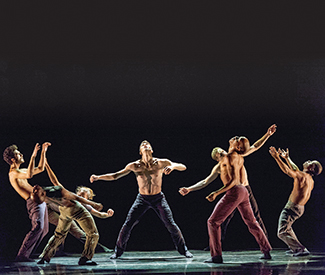
DANCE Though I missed the beginning of Aszure Barton’s gently appealing Awáa — I have trouble with 7:30pm curtains — it was easy to be drawn into her fluidly changing world, in which invisible currents propelled dancers to either give into or work against them. It’s an intimate work, rich with evocative details, fabulously danced by six men and Lara Barclay. Much appreciated were Barton’s touches of humor, but after a time I longed for a stronger underpinning for all this danced lushness.

In Awáa, water is an element that gives life to the planet — but also, in the form of the female of the species, births its inhabitants. You see primitive creatures slithering at the bottom of the sea, and a minute later a human face stares at you from inside a “womb.” Most ingeniously Barton shows water as a force that affects and shapes the body much the way wind alters vegetation.

Burke Brown’s ingenious lighting and stage design place the dancers in semidarkness, where visibility often is poor yet periodically penetrated by a beam of light. In a gorgeous sunlit solo, William Briscoe has rivulets of movement run through his impressively sculptured torso until he reaches for what could be a tear, plays with it, and gently lets it go.

Awáa also seemed to explore self-definition within an unstable environment. Some of the most intriguing dancing took place close to the floor. Something pulled dancers to the bottom where they let go of each other and appeared to melt back into the earth. Upright, they tried to find balance, were yanked sideways, or sucked into deep pliés. Their knees gave out, and they scooted on their bottoms like babies not yet able to walk. The finely boned Thomas House tried to dive upward; others buoyantly walked on the tips of their toes like would-be ballerinas in a pool.

Unisons provided a sense of stability. A body-slapping Africanist trio swelled and waned. A circle of stretching arms suggested prayer until gravity pulled the torsos backward.

In perhaps Awáa‘s most intricate segment, a separation duet, Barclay and Tobin Del Cuore crawled over each other, desperately trying to stay together. As the eternal mother she had a lot of hugging, carrying, and embracing to do. But Barton’s lightened the concept with a hilarious centipede’s procession of progressively advanced pregnancies. In a tit-for-tat comedy act Barclay asserted herself over two obstreperous “toddlers,” who scooted on their toes like windup toys. Grown up, they grabbed, threw, and dragged her to their hearts content.


CHOOSE YOUR OWN ADVENTURE

At the Garage, fertile ground for much new dance, Hilary Palanza showed Close, a fascinating, well-performed collection of six multiple-choice choreographies. Included were duets, a solo, and two quartets. Before intermission, the pieces — some of them quite short but very different from each other — were performed in silence. After each one, the audience chose what kind of version of this work they would like to see again.

Watching a dance, you always wonder about what you are seeing. What’s happening? Where is this going? How do these people relate to each other? These questions become particularly acute when no helpful clues such as costumes, set, music, lighting are provided.

In this program, intermission was tallying time after which the “winners” returned. What we saw was exactly the same choreography performed to music, indirectly chosen by the audience. Music has this wonderful ability to stand on its own against (or if you like, in conjunction with) dance. The simple idea of adding sound to movement illuminated what we had seen before in sometimes quite unexpected ways.

In two duets, its partners revolving back-to-back, one of the dancers got ceremoniously stripped of layers of clothing while the other tried to put them back on. It could have been foreplay, an act of aggression, or mechanical dolls gone awry. The exuberant marching band score with its regular beat turned the whole thing into a comedy act.

In her solo, a black-clad Angela Mazziotta looked like a widow in mourning who finally had to step away. The sound score of a rainstorm didn’t counteract the dancer’s inner turmoil, but added a potent metaphor that enhanced the choreography.

Not everything worked as well. Two different kinds of athleticisms by Eric Garcia and Colin Epstein elicited a fairly predictable stadium crowd’s cheering. But what if the audience’s choice instead of “athletic” had been “religious, intense” or “outer space, heady?”

Perhaps the most illuminating was a mysterious duet between the eclectically trained Garcia and the ballet-modern dancer Nina Saraceno. She would walk away from him but yet pursue him. What was going on? Johnny Cash’s “Hurt” had one answer. Instead of “honest” we could have chosen “airy, ethereal.” Also performing were Caitlin Hafer and Barb Lankamp. Close will be part of Summer Performance Festival 7, July 16-20 at ODC Theater — perhaps looking and sounding quite differently. *


Staying power

68

rebecca@sfbg.com

Despite the rain on Feb. 8, organizers of a citywide tenants’ convention at San Francisco’s Tenderloin Elementary School wound up having to turn people away at the door. The meeting was filled to capacity, even though it had been moved at the last minute to accommodate a larger crowd than initially anticipated.

“Oh. My. God. Look at how many of you there are!” organizer Sara Shortt, executive director of the Housing Rights Committee, called out as she greeted the hundreds in attendance. “Tenants in San Francisco, presente!”

The multiracial crowd was representative of neighborhoods from across the city, from elderly folks with canes to parents with small children in tow. Translators had been brought in to accommodate Chinese and Spanish-speaking participants.

Six members of the San Francisco Board of Supervisors also made an appearance: Sups. John Avalos, David Campos, Eric Mar, Malia Cohen, Jane Kim, and Board President David Chiu.

In recent weeks, the convention organizers had convened a series of smaller neighborhood gatherings to solicit ideas for new policy measures to stem the tide of evictions and displacement, a problem that has steadily risen to the level of the defining issue of our times in San Francisco.

tenants1

Ana Godina, an organizer with the SEIU, went to the convention with her daughter Ella, 5. Godina drove from Sacramento to support her colleagues. Three of her fellow union members have been evicted recently, all of them Tenderloin and Mission residents. Guardian photo by Amanda Rhoades

While several legislative proposals are on track to move forward at the Board of Supervisors, the meetings were called to directly involve impacted communities and give them an opportunity to shape the legislative agenda on their own terms, according to various organizers.

Addressing the crowd, Shortt recalled what she termed “some amazing jiu jitsu” during last year’s tenant campaigns, which resulted in a 10-year moratorium on condo conversions rather than simply allowing a mass bypass of the condo lottery, as originally proposed.

That measure, which won approval at the Board of Supervisors last June, was designed to discourage real estate speculators from evicting tenants to convert buildings to tenancies-in-common, a shared housing arrangement that’s often a precursor to converting rent-controlled apartments into condos.

That effort brought together the founding members of the Anti Displacement Coalition, and momentum has been building ever since. “This is the beginning of a movement today,” Gen Fujioka of the Chinatown Community Development Center, one of the key organizations involved, told the gathering. “We are shaking things up in our city.”


MAINTAINING DIVERSITY

Around 160 participants attended the first in a series of neighborhood tenant conventions in the Castro on Jan. 10. The one in the Richmond a week later drew so many participants that organizers had to turn people away to appease the fire marshal.

“The idea of the neighborhood conventions was to solicit ideas,” explained Ted Gullicksen, head of the San Francisco Tenants Union. “The idea of this event is to review existing ideas and ultimately rank them.” From there, the campaign will pursue a ballot initiative or legislative approval at the Board of Supervisors.

tenants2

Ted Gullicksen, director of the San Francisco Tenants Union, and his dog Falcor. Guardian photo by Amanda Rhoades

But first, a few speakers shared their stories. Gum Gee Lee spoke about being evicted from her Chinatown apartment last year along with her husband and disabled adult daughter, an event that touched off a media frenzy about the affordable housing crisis taking root in San Francisco.

“There were times that were very stressful for me. I would call places only for the owner to say, ‘I’ll get back to you,’ but they never did,” she said of that ordeal.

“To see everyone here, all kinds of people, it makes me really happy,” she later told the Bay Guardian through a translator. “I just hope they don’t get evicted.”

Mike Casey, president of UNITE-HERE Local 2 and an executive committee member of the San Francisco Labor Council, also made a few comments at the forum.

“Having the ability to live and vote in this city makes a difference,” he pointed out, saying workers who have to commute long distances for political actions because they’ve been displaced from San Francisco are less likely to get involved.

“The struggle of our time is the widening gap between the rich and the poor,” Casey added. “That is exactly what this struggle is about: to maintain that diversity. What we need to move forward on is bold, effective, measurable change that makes sure we are able to protect the fabric of this community.”

Maria Zamudio, an organizer with Causa Justa/Just Cause, emphasized the idea that the problem of evictions in San Francisco is less of a market-based problem and more of a threat to the city’s existing, interwoven communities.

“Those are our neighborhoods and our communities,” Zamudio said. “We’re fighting for the heart of San Francisco. Fighting for strong tenant protections is a necessary struggle if we are going to keep working class San Franciscans in their homes.”


ELLIS ACT UNDER FIRE

As Gullicksen noted at the start of the convention, San Francisco rents have ballooned in recent years, rising 72 percent since 2011.

“We are seeing the most evictions we have seen in a long, long, long, long time,” Gullicksen said. “Most Ellis evictions are being done by one of 12 real estate speculators — evicting us and selling our apartments, mostly to the tech workers.”

Even though median market-rate rents now hover at around $3,400 per month in San Francisco, low-income tenants can avoid being frozen out by sudden rental spikes because rent-control laws limit the amount rents may be increased annually.

But that protection only applies to a finite number of rental units, those built before 1979. That’s why tenant advocates speak of the city’s “rent-controlled housing stock” as a precious resource in decline. Long-term tenants with rent control — in the worst cases, elderly or disabled residents who might be homeless if not for the low rent — are often the ones on the receiving end of eviction notices.

From 2012 to 2013, according to data compiled by the Anti Eviction Mapping Project, the use of the Ellis Act increased 175 percent in comparison with the previous year. That law allows landlords to evict tenants even if they’ve never violated lease terms. Advocates say real estate speculators frequently abuse Ellis by buying up properties and immediately clearing all tenants.

Concurrently with local efforts agitating for new renter protections, organizers from throughout California are pushing to reform the Ellis Act in Sacramento.

Assemblymember Tom Ammiano has promised to introduce a proposal by the Feb. 21 deadline for submitting new legislation, and Sen. Mark Leno is working in tandem with San Francisco Mayor Ed Lee on a parallel track to pursue some legislative tweaks aimed at softening the blow from the Ellis Act.

“Our goal is to change the conversation in Sacramento, where tenants’ concerns are routinely ignored,” said Dean Preston, director of Tenants Together, a statewide organization based in San Francisco.

tenants3

Those who didn’t speak English were given head sets so they could listen to each of the speakers comments, which were translated into either Spanish or Chinese. Guardian photo by Amanda Rhoades

On Feb. 18, busloads of protesters will caravan to Sacramento from San Francisco, Oakland, and Fresno for a rally. Preston said they’ve got three demands: reform the Ellis Act, restore a $191 million fund that provides financial assistance for low-income and senior renters, and pass Senate Bill 391, which would provide new funding for the construction of affordable housing.

Even though the law is technically intended to allow property owners to “go out of the business” of being a landlord, Ellis Act evictions in San Francisco are most often carried out by speculators who purchase real estate already occupied by tenants, Gullicksen said.

“Our focus is on the most immediate problem, which is the misuse of the Ellis Act by real estate speculators,” Preston said. “It’s urgent to address that specific use. That’s what Ammiano and Leno are looking at, is ‘what’s the best way to stop speculative use?'”


LOCAL POLICY CHANGES SOUGHT

Tyler McMillan of the Eviction Defense Collaborative said his group is often the last resort for tenants threatened with the loss of their rental units. “Too often, we face a losing fight at court,” he said. “We need to write better laws that work better to keep people in their homes.”

The legislative proposals moving forward at the local level seek to attack the problem of evictions and displacement from several angles. On Feb. 3, Sup. David Campos introduced legislation to require landlords who invoke the Ellis Act to pay a higher relocation fee to displaced tenants, equaling two years’ worth of the difference between the tenants’ rent and what would have been considered market rate for that same unit.

“It is time that we recognize that tenants must receive assistance that is commensurate with market increases in rent if we are to truly address our affordability crisis and check the rampant growth of Ellis Act evictions,” Campos said.

As things stand, relocation assistance payments are around $5,261 per tenant, and are capped at $15,783 per unit, with higher payments required for elderly or disabled tenants. But at current market rates, a tenant would not last more than a few months in the city relying solely on the relocation fee to cover rental payments.

Surveying the strong turnout at the tenant convention, Campos said, “There is a movement that’s happening in San Francisco to take our city back, and to make it affordable for all of us.” Yet he noted that he is concerned there will be major pushback from the San Francisco Apartment Association and the real estate industry, formidable interests that oppose the relocation fee increase.

Meanwhile, Sup. Mar has proposed an ordinance that would require the city to track the conversion of rental units to tenancies-in-common, a housing arrangement where multiple parties own shares of a building through a common mortgage. Speculators who buy up properties and immediately evict under the Ellis Act often angle for windfall profits by immediately converting those units to TICs.

Campos is also working on legislation that would regulate landlords’ practice of offering tenants a buyout in lieu of an eviction, a trend advocates say has resulted in far greater displacement than Ellis Act evictions without the same kind of public transparency.

Peter Cohen of the Council on Community Housing Organizations said there’s “no silver bullet” to remedy San Francisco’s affordable housing crisis. “This process is going to come up with another bundle of things,” he said. “All of that is also complimentary to the state campaign. You could have five, six, or seven policy measures going forward — and all of them winnable.”

An idea Cohen said has received traction is the idea of imposing an anti-speculation tax to discourage real estate brokers who abuse the Ellis Act by buying up properties and evicting all tenants soon thereafter (see “Seeking solutions,” for details).

During a breakout session at the tenant convention, longtime LGBT activist Cleve Jones piped up to say, “Harvey Milk proposed the anti-speculation tax back in 1979.”

It wasn’t successful at that time, but Cohen said that given the current level of concern about housing in San Francisco, it’s being talked about in some circles as the most winnable ballot initiative idea.


TENANTS FIGHTING BACK

At the Feb. 8 convention, tenants shared stories of challenging orders to vacate their rental properties. “The most important thing that has brought us to the victories we’ve had so far is that tenants have stayed in their homes,” Shortt said. “Tenants have fought, tenants have sought help, tenants have organized.”

Tenants from a North Beach building owned by real estate broker Urban Green shared their story of banding together and successfully challenging an Ellis Act eviction. Chandra Redack, a nine-year resident of 1049 Market St., where tenants continue battling with owners who submitted eviction notices last fall, described to the Bay Guardian how her small group of tenants has continued to organize in the face of ongoing pressure, including the owners’ recent refusal to accept rent checks.

“Our organizations only can support tenants when they stand up and fight,” said Fujioka. “The tenants’ resistance themselves is part of the strategy. If we don’t have rights, we are going to create them.”

Paula Tejeda, a longtime resident of the Mission District originally from Chile, told the Bay Guardian that she’d been threatened with an eviction from her home of 17 years, a Victorian flat on San Carlos Street.

“I thought I was dealing with an Ellis Act, now he’s trying his best for a buyout,” she explained.

Living in that rent-controlled unit made it financially feasible for her to contribute to the Mission community as a small business owner, as well as a poet, author, and active member of the arts community, she said. Tejeda is the proprietor of Chile Lindo, an empanada shop at 16th and Van Ness streets.

“Having the rent control made it possible for me to build Chile Lindo, go back to college and get my MBA,” she said. That in turn gave her the resources to employ one full-time and three part-time staff members, she said.

When she was initially faced with the prospect of moving out, “I wanted to shut down and leave, and go back to Chile,” she said. “We are suffocated, as a society that cares only about the bottom line.”

But surveying the hordes of tenants milling about at the convention, she seemed a bit more optimistic. “The fact that this is happening to everyone at the same time,” she reflected, “is kind of like a mixed blessing.”

tenants4

Free lunch, had some vegan options. Guardian photo by Amanda Rhoades

Seeking solutions

A number of policy ideas emerged from the neighborhood tenant conventions, which were held by the San Francisco Anti Displacement Coalition in the Mission, Chinatown, Haight/Richmond, Castro, SoMa, and the Tenderloin.

Here’s a list of what tenants came up with at those forums, which attendees ranked in ballots collected at the event. The ideas will most likely result in a November ballot initiative and one or more legislative proposals, which organizers plan to announce in the near future.

Anti-speculation tax: One idea is to impose a tax on windfall profits garnered by speculators who buy up housing and then sell it off without maintaining ownership for at least six years. The tax would be structured in such a way that the quicker the “flip,” the higher the tax. This would require voter approval.

Eviction moratorium: This proposal is to put a yearlong freeze on certain kinds of “no-fault evictions,” instances where a tenant is ousted regardless of compliance with lease terms. State law would prohibit it from applying to Ellis Act evictions. It might potentially require voter approval.

Department of Rent Control Enforcement and Compliance: This new department, which could be done by local legislation, would create a new city department with the mission and mandate to enforce existing tenant-protection laws and conduct research on eviction trends.

Relocation assistance: While Sup. David Campos is working on legislation to upgrade relocation assistance payments to displaced tenants who face eviction under the Ellis Act, this proposal would do the same for all other forms of “no-fault” evictions. This would require voter approval.

“Excessive rents” tax: While the Costa-Hawkins state law does not allow for cities to control rents in vacant units, this proposal would create a tax on new rental agreements where rents exceed an affordability threshold.

Housing balance requirement: This proposal would make it so that approval of new market-rate housing would be restricted based on whether affordable housing goals were being met. It would create new incentives to build affordable.

Legalize illegal units: This would provide a way to legalize the city’s “illegal” housing units that nevertheless provide a safe and decent source of affordable housing. (Board President David Chiu has already introduced a version of this proposal.)


Sugar fix

0

A resolution to place a sugary beverage tax on the November ballot was introduced at the Feb. 4 Board of Supervisors meeting.

The two-cents-per-ounce tax would be levied at the point of distribution, with the ultimate goal of reducing the consumption of sodas and other sugary drinks to combat obesity in San Francisco. The tax, sponsored by Supervisors Scott Wiener, Eric Mar, Malia Cohen, John Avalos, and David Chiu, is similar to a resolution made two years ago in Richmond.

But Richmond voters ultimately voted it down by 66 percent, so how’s San Francisco any different?

In 2012, the American Beverage Association hired Chuck Finnie of San Francisco public relations group BMWL and Partners. The association funded the Community Coalition Against Beverage Taxes, which reached out to Latino communities and others, saying it was a tax on the poor.

Now Finnie is back as spokesperson for Stop Unfair Beverage Taxes — Coalition for an Affordable City, here in San Francisco.

“It’s a shallow argument, that it’s a regressive tax on poor people,” said Cohen, a sponsor of the ordinance. “What is it costing poor people? Literally it’s costing them their lives.”

Jeff Ritterman, a cardiologist and former Richmond City Council member, was a lead proponent of the Measure N campaign in 2012. He’s another actor from that campaign who’s back now too, helping the supervisors craft their new strategy.

Last time around they were outspent, Ritterman admits. But campaign money is only one way San Francisco is taking a different tack in the upcoming sugar battle.

The supervisors are also proposing to dedicate the estimated $30 million in revenue that the tax will generate to a specific purpose. The funding would be divided between the SFUSD, the Department of Public Health, and the Recreation and Park Department for a mix of outdoor activities and nutrition education. In contrast, Measure N left allocation of new funding open-ended.

In Richmond, “they told people on the telephone I’d use it for trips around the world. It got as crazy as that,” Ritterman said. “You get more support when you show you’ll use it for children’s health and physical activity.”

Since the use of tax funds collected was a major concern for Finnie’s group last time around, now that it’s been addressed he should be happy, right?

“No,” Finnie told the Guardian, flatly. “We disagree that singling out sugar sweetened beverages for special taxation has any merit whatsoever.” 

Students suffer from ‘invisible suspensions’

4

At the Board of Education meeting on Feb. 4, students rallied against suspensions they see as unfair. Advocates negotiated rule changes. San Francisco Unified School District Board of Education commissioners shook their fists at injustice.

The uproar concerned “willful defiance” suspensions, cited nationwide as problematic because of their subjective nature. Wearing a backwards cap, having a bad day, talking back, all fall under the umbrella of willful defiance.

The suspension ban is monumental, SFUSD Superintendent Richard Carranza told the board.

But new data shows that a different form of punishment, which was previously unrecorded, may cause almost as much harm.

Ever been sent to the principal’s office? That’s known as a referral, and in California it’s enshrined in state education code. Students can be sent to a counselor, principal, or even another classroom. But President Sandra Lee Fewer said the numbers of referrals are getting out of hand, and must be addressed.

Fewer amended the controversial resolution to ban suspensions, calling for it to also require a reduction of in-school referrals.

The punishment, she said, deprives students of needed classroom time — and is ineffective.

“We can’t pass a resolution like this without including referrals,” Fewer said. “These are in the thousands. Some schools have three times the amount of black children with referrals.”

She called them “invisible suspensions,” because this school year is the first time they’ve been thoroughly tracked, thanks to a new system called the Counselor Online Referral Form.

The new data shows thousands of middle school students (high school data is still being collected), mostly black and Latino, were sent out of the classroom for “non-compliance” referrals since the last school semester alone. “Non-compliance” referrals are nebulous, advocates allege, a subjective catch-all category for bad behavior. 

Fight for higher minimum wage resumes

0

An event at the San Francisco Women’s Building on Feb. 6 marked the 10-year anniversary of San Francisco’s minimum wage ordinance, passed by voters in 2003 with Proposition L. The landmark initiative not only raised the minimum wage in San Francisco to $8.50 per hour, but stipulated that the amount would rise every year to reflect inflation. Thanks to Prop. L, San Francisco now boasts the highest minimum wage in the nation, at $10.74.

But in pricey San Francisco, it still isn’t enough.

“Who thinks living in San Francisco is really expensive?” asked one of the event organizers and staff member of the Chinese Progressive Association, Shaw San Liu. All hands in the room shot up before the Spanish and Mandarin translators even had a chance to repeat the question.

Raising the minimum wage in San Francisco has been a hot topic recently, and Mayor Ed Lee even endorsed a significant increase back in December. While a wage of $15 per hour has been floated, nothing has been set in stone.

In addition to celebrating the 10-year anniversary of the minimum wage ordinance, Thursday’s event was also the official launch of the Campaign for a Fair Economy, a push to support the city’s lowest-paid workers and close the ever-growing wealth gap.

Raising the minimum wage is only part of the campaign, and advocates are also fighting for accountability from large chain businesses, stricter enforcement of existing labor standards, and expanding access to jobs for disadvantaged workers.

“San Francisco has led the way for employment policies in the past,” said Kung Feng, lead organizer for Jobs With Justice, which is helping to lead the campaign. “We need to continue that.”

Despite San Francisco’s long legacy of championing workers’ rights, there is still a tough battle ahead. Currently, the minimum wage in the city automatically goes up every year to match inflation (on Jan. 1, 2014, it rose from $10.55 to $10.74). Any further increase requires voter approval.

While it seems a higher minimum wage does have strong support and has already been endorsed by major political figures, there’s still a powerful lobby against it from some businesses and restaurant associations.

Granny slap

0

Lisa Gray-Garcia, aka “Tiny,” led a press conference outside the San Francisco Hall of Justice on Feb. 5 to announce that she and fellow activists were filing elder abuse charges against San Francisco landlords.

Flanked by activists and senior citizens who were facing eviction or had lost housing in San Francisco, the Poor News Network founder condemned landlords who’ve invoked the Ellis Act as “dangerous criminals.”

Gray-Garcia said criminal charges were being filed against the landlords in accordance with California Penal Code 368, which creates a special category for crimes — such as infliction of pain, injury, or endangerment — committed against elders and dependent adults.

The theory is that carrying out an Ellis Act eviction against a senior citizen qualifies as a criminal act under that law, since an elder can suffer physical harm as a result of being turned out of his or her home.

“Seniors who live in houses that they’ve lived in for a really long time are being evicted,” said Erin McElroy, who joined the rally. “That could mean homelessness, that could mean poverty, that could mean death, that could mean losing your access to health care.”

“The real criminals are the ones who use paper, and money, and lawyers to evict us,” Gray-Garcia said. “We at POOR Magazine get five to 10 calls a week from elders — 70, 80, 90 years old — at the point where they’re actually going to be evicted,” she added. “In the elder abuse law, if you willfully or unwillfully cause harm or inflict harm on a body of an elder, you actually can do one year jail time or pay a $6,000 fine.”

The targeted landlords were taken from a list compiled by the San Francisco Anti Eviction Mapping Project, a volunteer-led group that published names, property ownership, and identifying information of 12 landlords who had repeatedly invoked the Ellis Act in San Francisco. Garcia read out their names as part of the press event.

Beyond that, however, the announcement was short on specifics. Gray-Garcia told the Bay Guardian she did not want to share the names of the affected seniors because she did not feel comfortable exposing the elderly tenants to potential backlash.

Joining the group of activists was an 82-year-old woman who used a walker and declined to share her name. She told the Bay Guardian she had lived in her Richmond District flat for more than 30 years, and had recently received a verbal warning from her landlord that if she did not move out, he would invoke the Ellis Act.

When Gray-Garcia and others filed into the San Francisco District Attorney George Gascon’s office inside the Hall of Justice, however, Chief Assistant of Operations Sharon Woo discouraged them from filing the charges.

“We don’t actually initiate investigations,” Woo told the activists, but when attorney Anthony Prince, who had accompanied the activists, pushed back on that point, she responded, “We could, potentially.”

However, she urged them to first “go to the normal channels, which is a law enforcement investigation,” then scheduled a follow-up meeting at a later date to discuss the issue further. She discouraged the activists from bringing a large group to the meeting. “There’s a 98-year-old woman being forced out of her home in April and she has nowhere to go,” McElroy told Woo during that interaction. “And we’re filing criminal charges against the people who are forcing her out.”

Farewell to an ally and union brother

1

Pete Seeger played a critical role for labor and all working people. As a labor troubadour, he traveled the world singing out for labor. That is why he came to ILWU [International Longshore and Warehouse Union] Local 10 in the Bay Area in 1941. The US government had tried four times to deport Harry Bridges, the Australian-born leader of the ILWU, in an effort to destroy the union. Together, Seeger and Woody Guthrie sang out to the union’s rank and file strike committee a song called a “Ballad To Harry Bridges.”

The government was unsuccessful in its efforts to deport Bridges, but unfortunately most of the left unions like the Marine Cooks and Stewards were eventually destroyed by the hysterical witch-hunts launched by the government — some with the active support of not only bosses but some union officials. Regardless, affiliations and actions like Seeger’s 1941 appearance in San Francisco were the reason Seeger was brought before the House UnAmerican Activities Committee in 1955, and eventually sentenced to two years in prison. From the HUAC transcript:

Mr. Tavenner: The Committee has information obtained in part from the Daily Worker indicating that, over a period of time, especially since December of 1945, you took part in numerous entertainment features. I have before me a photo static copy of the June 20, 1947, issue of the Daily Worker. In a column entitled “What’s On” appears this advertisement: “Tonight — Bronx, hear Peter Seeger and his guitar, at Allerton Section housewarming.” May I ask you whether or not the Allerton Section was a section of the Communist Party?

Mr. Seeger: Sir, I refuse to answer that question, whether it was a quote from the New York Times or the Vegetarian Journal.

Seeger was accused of singing for functions of the Communist party, and for McCarthy and company, this was a deadly crime. Seeger also fought for integration, and against the segregated workplace, in conjunction with the left-wing unions — like the Marine Cooks and Stewards and even the Painter’s Local 4 in San Francisco, led by Dow Wilson — that were fighting segregation. Ships in the port of San Francisco were prevented by the members of the Marine Cooks and Stewards from sailing until their crews were integrated. This direct action of workers on the waterfront was a very real threat to big business, which wanted to destroy labor power and continue segregation as a tool of the bosses.

ILWU longshore leader Bridges also won the support of the black community by promising them that if they supported the strike, they would get union jobs on the waterfront, and he kept his word; today, ILWU 10 still has a large percentage of African Americans. Racism, as Seeger knew, played a virulent role in US history, and his songs were a powerful cultural counterpoint to the reigning ideology and racism of the time.

This is why he was prevented from going on national television during the blacklist period after the Communist witch-hunts. The corporate-controlled media in the United States had an ax to grind, and keeping Seeger, Paul Robeson, and other singers and intellectuals like Noam Chomsky off the airwaves is something that continues today. It is not surprising that in many network TV depictions of Seeger’s life, they conspicuously fail to point out that these same networks banned his voice from the airwaves for decades. Of course the power of Pete Seeger, his songs, music, and personal magnetism could not be banned, and they broke through despite the government and corporate efforts.

Working people of San Francisco, the Bay Area, and the world have lost a great ally and union brother, but his words will ring out for eons.

This coming year’s LaborFest will commemorate the 80th anniversary of the San Francisco General Strike, bringing this history and culture back for the working people today who face similar attacks on their rights to a union, decent health and safety conditions, and a future for themselves and their families.

Steve Zeltzer is the host of KPFA WorkWeek Radio and a member of the LaborFest organizing committee.

Higher wages and tenants’ rights, for the win

10

As we document in this week’s cover story, a citywide coalition has sprung up to fight for tenants’ rights in the face of mounting evictions and soaring rents, and momentum on this issue is steadily growing.

But that isn’t the only sign of a newly invigorated movement that’s beginning to count its victories and advance forward on behalf of tenants, workers, and thousands of San Franciscans who are less focused on turning a quick profit and more concerned with bringing about positive change. Last week brought several high notes on this front.

Citywide legislation that will limit discriminatory practices by employers and housing providers by reforming background check policies won initial approval at the Feb. 4 San Francisco Board of Supervisors meeting.

Introduced by Sup. Jane Kim, the Fair Chance Act is part of a “ban the box” movement, backed by local grassroots organizations that came together to champion the rights of individuals who’ve encountered barriers to improving their lives due to past convictions that have left them with a permanent stigma.

At the meeting, Kim mentioned a woman who’d been told she “need not apply” for a job working as a cook — because of a simple shoplifting conviction from when she was in high school. The ordinance will require certain employers and housing providers to refrain from criminal history checks until after an initial job interview, and would make certain kinds of information off-limits, such as arrests that never resulted in a conviction.

Meanwhile, an initiative to curb height limits on waterfront development amassed enough signatures last week to qualify for the June ballot. That effort grew out of a successful referendum last November against the 8 Washington project, a key pushback where San Francisco voters rejected luxury condominiums at the ballot.

The Chinese Progressive Association and Jobs With Justice held a celebration last week to commemorate the 10-year anniversary of the passage of the city’s minimum wage ordinance.

While it remains the highest in the nation, San Francisco’s 2014 minimum wage of $10.74 an hour still isn’t enough to make ends meet, so allies of low-wage workers are launching the Campaign for a Fair Economy to push for a higher minimum wage at the ballot and to implement a higher wage standard for major retailers and chain stores.

There remains much to rail against, to be sure. A Craigslist ad for a $10,500-per-month two-bedroom apartment in the Mission generated a barrage of angry commentary from those who read it as doomsday for the historically Latino area, especially since the tone-deaf author used the word caliente to describe the neighborhood.

But the start of 2014 has already delivered some promising victories for progressives, and many have their sights set on even greater horizons.


The trouble with compromise

44

“It takes no compromise to give people their rights… It takes no money to respect the individual. It takes no political deal to give people freedom. It takes no survey to remove repression.” — Harvey Milk

OPINION As I sat in the audience at the Jan. 23 San Francisco Young Democrats meeting and watched the first debate between David Campos and David Chiu in their race to represent San Francisco’s 17th Assembly District, I was disturbed to hear the words “compromise” and “consensus” come out of David Chiu’s mouth more often than the words “eviction” and “displacement.”

During the debate, a line in the sand was drawn by the two candidates: Campos was on the side of the underdog, a voice to the voiceless; and Chiu, by his own admission, was all about compromise and “getting things done.”

Don’t get me wrong. True compromise can be a good thing. Unfortunately, what has been coming out of City Hall, from both President Chiu’s Board of Supervisors chamber and the Mayor’s Office, hasn’t been real compromise. It’s been a wholesale selling of our city to the highest bidder. The only thing that our leadership’s compromises have yielded is a compromised San Francisco.

Compromise gave corporations millions of dollars in tax breaks and it has forced nonprofits and small businesses out of our neighborhoods. Compromise has not resulted in any substantive action to curb Ellis Act evictions, instead serving to green light the building of luxury condo towers throughout the city. Compromise has allowed queer youth shelters and our parks to be closed to the people who need them as a last resort, as our bus stops have been opened up to billionaires for little more than pennies.

Chiu’s compromises have cost this city dearly. His compromise with developers on Parkmerced will lead to the demolition of 1,500 units of rent-controlled housing. His compromise on Healthy San Francisco allowed restaurant owners to continue to defraud consumers and to pocket money that should have gone to health care for their employees. His compromise on Muni killed a much-needed ballot initiative that would have resulted in an additional $40 million for the agency — a ballot initiative that he originally co-authored.

Please forgive me if I am fed up with compromise and am demanding actual leadership from my representatives.

Now is the time to stand with people of color, with members of the LGBTQ community, with our youth and elders, with artists and with small businesses, all of whom are being forced out of our city.

Thankfully, we have another choice. Sup. David Campos has shown that real change comes not from compromising your values but standing up for your principles. His legislative accomplishments include providing free Muni for low-income youth, protecting women’s right to choose at the Planned Parenthood Clinic, and preventing teacher layoffs at our public schools.

Campos has demonstrated that he, not Chiu, is the right choice to follow Tom Ammiano’s footsteps to Sacramento. Ammiano, who had 13 of his 13 bills signed into law this past year, is the perfect example of the success that can come from leading with your principles and not compromising your integrity.

San Francisco needs a leader representing us in the capital. Successful victories in reforming the Ellis Act and closing the Prop. 13 tax loophole will take a leader who can stand up to landlords and corporations, not a compromiser who will sit down at the table in a backroom with them.

That is why I will give my all to make sure that David Campos is our next representative in Sacramento. Pardon me if I refuse to compromise.

Tom Temprano is president of the Harvey Milk LGBT Democratic Club.

Q up

10

MUSIC “I always wanted to know how music sounded in outer space. And with certain types of crystals you can supposedly tune into different frequencies, receive other transmissions. Often I meditate with crystals, go to sleep, and dream about music from outer space. Then I wake up, make stuff like that on the turntables, and take it from there.”

That’s a lot of there to take it from, but DJ Qbert is no stranger to mixing the cosmic with the underground. A legendary emissary of scratch who became the international representative of turntable culture in the 1990s along with his “band” Invisibl Skratch Piklz, Q has always mixed a heavy dose of Bay Area flavor into his masterly sets — which aren’t typical DJ sets by any means, but untethered, jazz-like flights during which a set of turntables and a crossfader, manipulated lightning-fast, become their own kind of spaceship. His polyrhythmic scratch concertos summon white noise, radio interference, oceanic undertow, Looney Tunes quick cuts, vintage advertising jingles, embryonic hip-hop, Big Brother menace, and fiendish, childlike glee. Great beauty, too, especially when you think of them as pure sonic expression, floating free of time and space. Not that you can’t dance your ass off to most of it, mind you.

We were talking about his new album Extraterrestria, dropping in March on the Thud Rumble label and backed by a huge Kickstarter campaign that aims not just to fund the disc, a marketing campaign and a tour, but also typical Qbert innovations like amazing touch-sensitive digital album packaging that simulates DJ controller equipment. (More details at www.djqbert.com)

“The album is actually two albums in one, two different discs,” Qbert, looking tight in a buttondown shirt and track pants, told me. “Extraterrestria is music from another galaxy, hip-hop beats from other planets, collected by the Galactic Scratch Federation. It’s as bizarre and unique as I could make it, a collection of weird noises and different time signatures with as much scratching as possible. The second disc is called Galaxxxian, which is hip-hop from earth beamed into space: raw, primitive. It features a bunch of MCs — Kool Keith, Del Tha Funky Homosapien, Mr. Lif, Soul Khan, Bambu — doing their thing, which a lot of time, you know, means going for the sex, drugs, and hip-hop and roll. We’re not quite on the extraterrestrial level, yet.”

Other biggies like Dan the Automator, Chad Hugo of the Neptunes, cellist-trombonist Dana Leong, and rapper El-P (here a producer) also contributed. “What with the recession and everything, a lot of us have been trading with each other, so we can continue collaborating. Like I’ll do a beat for your album if you do a verse on mine. Something where the money’s phased out, a barter thing. It’s put us back in touch with what’s real,” Qbert said.


TWIST THE FORCE

As we talked on the second floor of the California Academy of Sciences, the first floor was rapidly filling up for the Academy’s weekly Nightlife party, this week a launch celebration and fundraiser for Extraterrestria — and a reunion of sorts for turntablism heads, albeit one bursting with fresh young faces. As b-boys and fly girls made their way through exotic landscapes, whale skeletons, stuffed giraffes, a butterfly-flooded rainforest dome, and aquarium displays including live stingrays, giant octopi, frisky penguins, Claude the albino alligator, and phosphorescent jellyfish, I couldn’t help but be reminded of the deliciously loopy, phantasmagorical animated movie version of Qbert’s era-defining previous album Wave Twisters, released 16 years ago.

That’s a long time between official releases, but it wasn’t like Qbert had been kidnapped by aliens. Although his live performance schedule was less-than-usual bonkers, he still made regular appearances, by himself or as part of his extended Bay Area scratch crew family. He popularized turntable techniques in a series of instructional videos and launched online educational community Qbert Skratch University, in 2009. He also went all in on the equipment tip, putting out his own brand of turntable cartridges and needles, an Invisibl Skratch Piklz-branded mixer, “and of course our own vinyl to scratch with — which is really vinyl on one side and a digital interface on the other, for use with DJ software like Traktor.”

Fifteen years has also seen the rise of social media and a more user-friendly Internet. Has that changed the way he produces beats or performs at all? “Of course it’s been great for finding new sounds to use,” Qbert said. “If I want to hear, say, a tarantula farting, I can look it up instantly and hear that. On the other hand, most of my old sets are up there now, with all their mistakes, and a lot of times I’m cringing and say in a small voice, ‘Please, please let them delete that.’ It keeps me on my toes now, knowing everything can be recorded in all its glory. But because I’ve actually been working on this album for seven years, all that’s been incorporated — it’s not like a shock. I use what I can use.

“But I try not to be trapped in the present. I often think back to the past, to cats like Sun Ra, Miles Davis, Louis Armstrong. That timeless, improvisational jazz feeling where you practice and practice, but when the time comes you’re just an instrument connecting with the god-force, channeling the sound through you, swinging through that ocean of feeling. When you’re in that zone, that’s the most wonderful thing. It’s a meditation, a spiritual thing. We’re all spirits, so we have to connect to other spirits and the most high, whatever you want to call it — God, Allah — connect to that creator source and use it because it’s yours to use. Like how some writers just flow and do that automatic writing, they’re just instruments. We’re just instruments you know, it all flows through us.”


SKRATCHING ROOTS

When Qbert, raised in SF’s Excelsior neighborhood, astonished the DJ world by winning its spun-out version of the Olympics, the DMC World Championships, not once (solo, 1991) but three more times in a row after that (as part of Rocksteady DJs with Mixmaster Mike and Apollo) it was an unparalleled triumph not just for local scratch and hip-hop community, but for Bay Area Filipino American culture as well.

http://www.youtube.com/watch?v=u2ZFsQjaOTI

As music critic and Guardian contributor Oliver Wang details meticulously in his forthcoming book Legions of Boom: Mobility, Identity and Filipino American Disc Jockeys in the San Francisco Bay Area (Duke University Press), a vibrant scene of Filipino mobile DJ crews — independent groups of teenage sound and lighting specialists hired to provide entertainment for weddings, graduations, and parties — thrived here since the 1970s. When hip-hop eclipsed disco on the request lists in the 1980s, the mobile crews defined streetwise Bay Area Filipino youth culture and provided a fertile training ground (and sometimes needed cash) for young DJ up-and-comers.

Qbert’s domination of the DJ world could be read as the apex of that scene, which faded in the 1990s with the rise of digital technology. And of course Qbert went on to create his own crew of fellow Filipino DJs: The Invisibl Skratch Piklz, with Shortkut, Apollo, Mix Master Mike, and several others. The Piklz went on to become insanely popular, establishing scratching and other turntable manipulations as a form of art and a highly marketable genre — turntablism — that changed the sound of hip-hop and dance music. Mix Master Mike went on to become, in essence, the fourth Beastie Boy; one early ISP member was A-Trak, current turntable-wielding heartthrob of the superstar EDM crowd.

In fact, the current popularity of turntable-rooted DJs like A-Trak and the burgeoning trip-hop and late ’90s revival makes the timing of Qbert’s return auspicious. “A-Trak runs a dance music scene and I think it’s great that he brings the scratching into it, he’s really unique in that field — so more power to him for turning on a different crowd to the sound. But for me it’s never really gone away, pure scratching. There’s a zillion underground cats who are genius at what they do — Quest, Deeandroid and Ceslkii, Disk, tons more. And maybe the widespread recognition isn’t there, maybe it isn’t in your face like it once was, but they’re all around. It’s like the guys who still do yo-yo tricks. They don’t know things have moved on. They keep practicing and practicing and doing incredible things, regardless of how many people are following. They’re always battling, always progressing. Never put down your yo-yo, man,” he laughs.

As for connecting to a new generation, working with (gasp!) turntables and (double gasp!) vinyl at this stage of DJ history is a deliberate artistic choice. Even with a resurgence of interest in analog techniques — a specific reaction to digital overload — does Qbert fear that scratching will be seen as merely a retro novelty?

“I think no one can deny that, whether you’re old or young, using a turntable to make a scratch sound — well, you can’t deny that it sounds really bugged out. How else are you going to make that sound unless you’re actually moving the sound with your own hand? Just to hold the sound and grab it, move it back and forth — that’s unique and fascinating to people. It’s like a sci-fi movie in real life, a sound that people have heard since maybe they were little kids, but one that also points to a future where man meets machine. It’s a real manipulation, a sound design in itself. What other instrument can do that?”


The return of Pyno Man

1

LEFT OF THE DIAL As legend has it, there was a time when you couldn’t walk the streets of Berkeley without running into him. He accosted you from posters adorning bar bathroom doors; he lurked around corners, plastered to telephone poles. He was mischievous, sometimes foul-mouthed, usually up to no good, but he always meant well. He wanted you to rock out. He was Pyno Man, and he was everywhere.

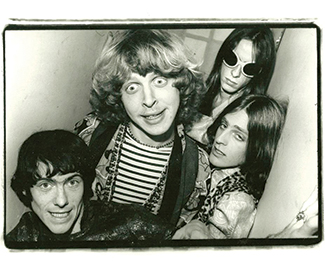
“Pyno Man was basically just the dream anybody has of being great, but instead of working a regular job and having fantasies about doing crazy rockstar things, he’s actually trying it all the time and failing. So he’s out there on the street acting like a rockstar, but everyone just thinks he’s crazy,” explains John Seabury, artist, creator of Pyno Man, and bass player for the relatively short-lived but locally legendary East Bay garage-punk outfit Psycotic Pineapple, for which the wild-eyed, mohawked, anthropomorphized pineapple served as mascot. “To me, that was logical.”

A staple of the East Bay punk club scene of the late ’70s, Psycotic Pineapple held court at the Keystone in Berkeley, sometimes playing SF’s fabled Mabuhay Gardens with friend bands, like the (underrated) power-pop maestros the Rubinoos. PP songs were about youth and drugs and sex, and you could count on them for an insane live show. But something in the band’s demeanor set them apart from the prevailing punk attitudes of the time: There wasn’t much they took seriously — least of all themselves.

“We didn’t really call them punks at that time, because that just wasn’t what we would call people who played music like them. They were just outlaws in a way, because they brought this sort of pop aesthetic to punk music. They were thumbing their nose at it and wrapping their arms around it at the same time,” says John Cuniberti, a producer, mastering engineer, and longtime friend of the band who helped the guys finally re-issue Psycotic Pineapple’s sole album, Where’s the Party?, on CD in 2012 — something that led to the band playing its first live show in more than two decades, which inspired Cuniberti to make a documentary about the band in the process.

There was something determinedly fun about Psycotic Pineapple, says Cuniberti. “I was working with the Dead Kennedys at the same time [’70s], and it was political, straight-up social commentary, songs about death and war and all these things. These guys played pop songs about relationships — really well-written pop songs, the songwriting was always very compelling to me — but they were rowdy, and they did it with an ‘I don’t care if you like us or not’ kind of attitude. There was an outrageousness to it.”

The band put out its lone record 1980, packed with 11 gleefully irreverent tracks that ran just over 25 minutes altogether. In 1981, something happened that no one could have predicted: Guitar player Henricus Holtman suffered a brain aneurysm, hindering his dexterity on his right side. The band stopped playing live. While most members remained involved in the local music scene — Seabury’s art adorns posters and t-shirts for a ton of other bands — Psycotic Pineapple mostly became the stuff of Bay Area folklore. But the fans were still out there. More than 30 years after PP disbanded, about a year after the band’s official reunion show at Bottom of the Hill, the music somehow doesn’t sound dated at all. They’ll headline the Gilman this week for the first time, with Pinole’s own Bobby Joe Ebola and the Children MacNuggits (whom could be said to follow in PP’s footsteps in terms of ethos, if not sound) opening.

“I don’t think the music feels old, but I’ve always thought that,” says Seabury, whose art fills a booklet that accompanies the re-issue CD. “By the time we broke up a lot of bands were starting to imitate that kind of attitude — Camper Van Beethoven, some others. I think we would have fit right into the alternative rock scene. We were kind of like these New Wave clowns making fun of punkers&ldots;which, as far as bands we gigged with go, their fans didn’t really like it. I remember opening for 999 and the Dickies, and both of their fans just hated us. They were booing us already, so we decided to close the set with ‘We’re an American Band,’ and that’s when the bottles started flying.”

They haven’t gotten to play together too often since the official reunion — for one, keyboard player Alexi Karlinski lives in Eastern Europe for most of the year. But while he’s back in the Bay for this stint, the guys plan to record a few new songs.

Maybe don’t call it a comeback just yet, says Cuniberti. But “I think they’re worth listening to, and there’s a lot of music being made that I can’t say that about. The songwriting is so good, and it’s timely, it still sounds fresh. You can hear in this record that they really love what they’re doing.”

While we’re immersed in the warm glow of East Bay punk history: 1-2-3-4 Go! Records, the independent record store, label, and all-ages venue housed in a deceptively small couple of rooms on 40th Street in Oakland, is expanding into the recently vacated space next door. From their crowdfunding campaign:

“A few weeks ago we were told our next door neighbors would be leaving and we could take a section of their space for an expansion. The catch is that we need to take the space by February 1st or it would go to someone else. As a small business with employees to take care of and regular bills to pay we don’t tend to have a lot of extra expansion capital on hand, especially on short notice. So we come to you, the good people who have supported us all these years and ask for you to join us in bringing the store to this next level and to continue to offer the great music and art we have been in our venue space.

In order to complete this expansion we need to do the following;

Knock out the adjoining wall.

Paint the interior and exterior to match our existing space

All new lighting that will stretch the length of both spaces.

Build additional custom fixtures; record bins, shelving etc.

Purchase new product; Records, books, supplies, turntables etc.

Purchase new Mic’s, Cords and Stands for the venue.

Close the store for 7 to 14 days (oof!)

Our plan is to have our Grand Re-Opening on March 15th to coincide with our 6th anniversary. We will have a sale during the day and a private event from 7pm to 10pm with food, drinks and music for supporters who come in at the $50 and above level who RSVP.”

As of this writing they have just under a week to go and still need to raise about $7,000. Want your as-of-yet unborn kids to know what actual record stores are? You know what to do: 1234gorecords.com.

Back here on this side of the Bay, A Million Billion Dying Suns — the psych-rock project of busy guitar virtuoso Nate Mercereau, who tours with Sheila E., among others (last week he was backing Dave Chappelle at the SFJazz Center) — have embarked on a mini-residency of sorts at the Knockout, starting with a Feb. 11 show. They recently had a song featured in a GoPro commercial, accompanying Shaun White as he blasts through snow-covered hills, but the band’s had my attention for about a year now, especially since the arrival last November’s Strawberry EP, with its slow-building, expertly crafted wall of spaced-out guitar fuzz, particularly on “Strawberry Letter 23,” a cover/homage to Shuggie Otis.

“I record a lot of stuff by myself, and Shuggie Otis has been a huge inspiration in that respect,” says Mercereau, who recently moved to LA, though he finds himself back in SF “every two weeks or so” — the band’s studio is still here. “Though it was also for our friend [manager and friend to many an SF musician] Steve Brodsky, who passed away last year. He really loved that song, and it felt like a way to do something for him.”

The Knockout feels a little small for the seriously powerful five-piece, Mercereau will acknowledge, but he wanted a residency at “a place our friends can walk to, a down-home punk rock spot that’s in the neighborhood.” If all goes well, he says, AMBDS will have another few shows here shortly, regardless of his new home base. “It’s easier than you might think,” he says. “We just live on Highway 5.”

PSYCOTIC PINEAPPLE
With Rock N’ Roll Adventure Kids, Bobby Joe Ebola and the Children MacNuggits, and the Gregors
Friday, Feb. 7, 7:30pm, $10
924 Gilman Street
924 Gilman, Berkeley
www.924gilman.org

A MILLION BILLION DYING SUNS
With What Fun Life Was and Lemme Adams
Tuesday, Feb. 11, 8:30pm, $6
Knockout
3223 Mission, SF
www.theknockout.com

Ennui the people

0

cheryl@sfbg.com

FILM San Francisco IndieFest celebrates its Super Sweet 16 with multiple films presenting an appropriately teenage outlook on humanity: Most of the time, people suck. They suck in ways you expect, ways you don’t expect, and ways you should have expected but chose not to, for your own sucky reasons.

Fortunately, not all of these lessons in disappointment come packaged in depressing movies — though at least one, Bluebird, does. In snowy Maine, an otherwise kind and responsible school bus driver (Amy Morton) screws up the head count at the end of her route, and a child is left behind on a long, cold night. The small town reacts as you’d expect, with stares and whispered gossip. But as it turns out, most of the characters affected by this tragic mistake are already in a pretty bad place, and must now face hitting a floor even lower than they’d imagined was possible.

Chief among them is the bus driver’s weary husband (Mad Men‘s John Slattery, playing nicely against type except for one very Roger Sterling-ish scene), who’s just found out he’ll soon be unemployed, and the neglected boy’s troubled mother (Louisa Krause), who adds this incident to her running list of personal demons. Writer-director Lance Edmands edited Lena Dunham’s 2010 breakthrough Tiny Furniture (blink and you’ll miss Girls‘ Adam Driver in a handful of Bluebird scenes); his first feature as writer-director is very much in the classic American indie mode, with ordinary people’s lives intersecting in an ordinary town, extreme feelings of loneliness and unfulfilled dreams lurking just below the surface. Frankly, it can get morose, though Emily Meade (who resembles a younger Emma Stone) brings some spark as a high-schooler dealing with sucky boy drama on top of sucky everything else.

Less earnest, thank goodness, is the latest short from San Francisco filmmaker Vincent Gargiulo (2011’s The Muppetless Movie), which screens as part of IndieFest’s “#feelings” program. Filmed on location in Minnesota, Duluth is Horrible follows a handful of oddballs working through heartbreak via Reddit posts, awkward blind dates, and karaoke. Gargiulo — who told me during last year’s IndieFest that the idea for Duluth came to him in a dream — wields his own brand of bizarre humor with complete confidence. Here’s hoping he channels that into a feature film next.

Two of IndieFest’s genre standouts also hinge on human shortcomings. Joe Begos’ Almost Human follows a trio of friends dealing with the aftereffects when one is, uh, abducted by aliens, then returns a few years later acting mighty strange. The man’s left-behind former fiancée and best friend have just enough time to come to grips with their guilt and paranoia before they have to start fending off creepy offers of “Join me and be reborn!” Yeah, this is a wall-to-wall John Carpenter homage — the lead character appears to have stepped right off the set of 1982’s The Thing — but it’s done exactly right, with some spectacular, blessedly CG-free gore effects to boot.

Also a must-see for horror fans: Zack Parker’s Proxy, a Hitchcockian mindfuck of a movie that offers up so many plot twists it’d be nearly impossible to relay a spoiler-free plot summary — though as soon as you hear the pregnant woman’s last name is Woodhouse, as in Rosemary, it’s made pretty clear that this grieving-mother tale ain’t gonna be what it seems. If you can make it through the brutal attack that happens in Proxy‘s first five minutes (close your eyes if you must), you’ll be richly rewarded.

It feels almost wrong to lump Hank: Five Years From the Brink into this roll-call of sinister neighbors and emotional vampires, but there are certainly many who’d call former Treasury Secretary and Goldman Sachs CEO Hank Paulson worse names. This latest doc from Joe Berlinger (the Paradise Lost trilogy) follows the template favored by Errol Morris in films like 2003’s The Fog of War and last year’s The Unknown Known, surrounding an extended sit-down interview with news footage and home movies reflecting on a political subject’s career.

In Paulson’s case, he walks us through the 2008 financial crisis (Jon Stewart referred to him as “Baron Von Moneypants”) with the benefit of hindsight, and a certain amount of self-effacing humor. Whether or not you agree with the guy’s actions, he’s actually pretty likeable, and Berlinger’s decision to include interviews with Paulson’s no-nonsense wife, Wendy, adds a human angle to the decisions behind the “too big to fail” fiasco.

I hear you sighing. You demand uplift, dammit! Where are the happy movies? Though it’s not without moments of relationship angst, Mexican filmmaker Fernando Frias’ Rezeta just might be the festival’s feel-good breakout. Largely improvised and filmed using handheld cameras and a cast of first-time actors (how do you say “mumblecore” in Spanish?), Rezeta follows a year or so in the life of Albanian model Rezeta (Rezeta Veliu), who arrives in Mexico with a good grasp of English but little knowledge of the local culture.

On her first job, she meets Alex (Roger Mendoza), a metalhead whose friendship becomes the one constant in her breezy life. As they slowly become a couple — the passage of time is marked out by Alex’s changing facial hair and Rezeta’s developing Spanish-language skills — the places where their personalities don’t quite mesh become increasingly apparent. Rezeta picked up a special jury award at the recent Slamdance Film Festival, and it’s not hard to see why; the characters feel so real. Don’t we all know that sweet girl who turns into a catty pain when she’s drunk, or that guy who’s too cool to get excited about anything, or that couple who’s fun to be around — until they start screaming at each other on the sidewalk outside the bar? Ah, youth.

Also worth mentioning: wonderful centerpiece pick Teenage, a collage film by Matt Wolf (2008’s Wild Combination: A Portrait of Arthur Russell) that’s based on Jon Savage’s Teenage: The Creation of Youth Culture, spanning the adolescent experience from 1875-1945. First-person narrators (voiced by Jena Malone and Ben Whishaw, among others) reflect on the lives of teens from the US, the UK, and Germany, emphasizing both current events (World Wars I and II) as well as dance and music fads.

Finally, I’d be remiss for not calling your attention to A Field in England, easily the single weirdest pick of IndieFest 2014. Fans of Ben Wheatley, a fest vet and one of the most exciting directors to come out of England in years (2011’s Kill List, 2012’s Sightseers), already know what’s up; everyone else, step boldly into this black-and-white slab of insanity set amid a handful of deserters scuttling away from their posts during the English civil war. And then the cape-wearing necromancer shows up, because of course he does. “I think I’ve worked out what God is punishing us for,” one hapless character gasps. “Everything!” *

SAN FRANCISCO INDIEFEST

Feb. 6-20, most shows $12

Various venues, SF and Oakl.

www.sfindie.com


Mann up

2

arts@sfbg.com

FILM Anthony Mann was one of those directors only really appreciated in retrospect — during his life he was considered a solid journeyman rather than an artist. It didn’t help that when he finally graduated to big-budget “prestige” films at the dawn of the 1960s, he was unlucky. He left 1960’s Spartacus after clashing with producer-star Kirk Douglas. (Stanley Kubrick famously replaced him.) He left the 1960 Western epic Cimarron mid-shoot after an argument with its producer, though its poor result was still credited to him, as was A Dandy in Aspic, a 1968 spy drama completed by star Laurence Harvey after Mann died of a heart attack very early on.

He had done very well indeed with 1961’s El Cid, a smash considered one of the few truly good movies resulting from Hollywood’s then-obsession with lavish historical spectaculars. The same judgment is now granted 1964’s The Fall of the Roman Empire, to a more qualified degree. But that film was so titanically expensive it would have stood as the decade’s monument to money-losing excess had 1963’s Cleopatra not already claimed that crown.

Today Mann is probably best regarded for the series of Westerns he made in the 1950s, many starring a more tormented, less aw-shucksy James Stewart. They’ve tended to overshadow the film noirs that in turn preceded them. The Pacific Film Archive is doing its bit to correct that imbalance with “Against the Law: The Crime Films of Anthony Mann,” a three-week retrospective spanning a brief but busy period from 1946 to 1950.

Surprisingly for a talent associated more with action than talk, the San Diego-born Mann first made a modest name for himself as a New York stage director and actor. In 1938 he was invited by Gone With the Wind (1939) producer David O. Selznick to come to Hollywood as a casting scout, then moved up to assistant directing at Paramount (including for Preston Sturges). He was soon deemed fit to direct low-budget features, starting in 1942 — cranking out cheap musicals like Moonlight in Havana (1942) and melodramas like Strangers in the Night (1944) for the bottom half of double bills. His craftsmanship was already strong even if the scripts were weak. To compensate, he began early to concentrate on evocative visual storytelling whose impact could cover the flaws of corny dialogue and situations.

Strangers and first PFA title Strange Impersonation (1946) were proto-noirs that allowed him to up his game. But what really altered his career course was the founding of a new company, Eagle-Lion, that he started working for the following year. There, budgets remained “Poverty Row” low, but more creative freedom was allowed — and he gained a key collaborator in now-revered cinematographer John Alton, who famously said “It’s not what you light, it’s what you don’t light.”

Alton’s often highly stylized, chiaroscuro images lent rich atmosphere and suspense to what were then considered “semi-documentary” shoot-’em-ups. Their first collaboration, 1947’s T-Men, was a highly influential sleeper hit that took its realism seriously enough to start with an audience address from an actual former Treasury Department law enforcement official. The “composite case” ensuing has Dennis O’Keefe and Alfred Ryder as undercover feds who infiltrate a counterfeiting ring in Detroit — one losing his life in the process.

O’Keefe returned on the other side of the law for the following year’s Raw Deal, playing an escaped con determined to avenge himself on the crime boss (future Ironside Raymond Burr) who betrayed him. He travels with two women, one adoring (Claire Trevor), one unwilling (Marsha Hunt) … at least at first she is. This is the rare noir narrated by a moll, as Trevor’s faithful doormat comes to terms with losing the man she’s always loved to the “nice girl” he’s taken hostage. There’s a bitter romantic fatalism to her perspective that’s as masochistic as it is hard-boiled.

The PFA offers two features from 1949. Even more “documentary” in its procedural focus than T-Men, He Walked by Night (officially credited to Alfred Werker, though Mann directed most of it) “stars” the LAPD as its personnel hunt a sociopath clever enough to disguise his tracks as he goes on a murder spree. Focusing on the minutiae of investigative procedure (“Police work is not all glamour and excitement and glory!” our narrator gushes), yet full of visual atmosphere, it was widely considered the uncredited inspiration for the subsequent radio and TV serial Dragnet. (Jack Webb even plays a forensics expert.) The then-inventive location work culminates in a deadly chase through LA storm drain tunnels. Border Incident, unavailable for preview, anticipated the Native American rights-centered Devil’s Doorway (1950) in its forward-thinking treatment of racial minorities — here Mexicans caught between smugglers, bandits, and US immigration agents. It was originally entitled Wetbacks, a moniker that would have ensured lasting notoriety, albeit at the cost of obscuring the film’s anti-discriminatory theme.

Director and DP soon parted ways, alas. Their third 1949 collaboration (the next year’s Doorway would be their last) is not in the PFA retrospective, although it ought to be: Reign of Terror, aka The Black Book, is set during the French Revolution, yet it’s as thoroughly, baroquely noir as any movie involving powdered wigs could possibly manage. *

AGAINST THE LAW: THE CRIME FILMS OF ANTHONY MANN

Feb. 7-28, $5.50-$9.50

Pacific Film Archive

2575 Bancroft, Berk.

bampfa.berkeley.edu


Strings of life

0

marke@sfbg.com

SUPER EGO Every year or so the plucky Kronos Quartet — our audacious yet user-friendly 40-year-old vanguard of the musical avant-garde — pops back on the scene to wow us. Last time I saw them, they opened for electronic pioneer Amon Tobin’s spectacular 3-D projection ISAM tour at the Greek Theatre, and if you don’t think a string quartet can garner deafening cheers at a giant rave, you need to hear Kronos. Before that, the foursome was at YBCA, bowing electrified fences and simulating multiple water wheels. This week the string quartet will be launching the fifth installment of its composers-under-30 showcase with an intense work by Bay Area native Mary Kouyoumdjian called Bombs of Beirut (Feb 6-9, 8pm, $20–$25. Z Space, 450 Florida, SF. www.zspace.org).

“I want to create a feeling of chaos and nostalgia,” Armenian American wiz Kouyoumdjian says of her piece, which attempts to reflect the day-to-day situation of life during the 1980s Lebanese Civil War, and which includes haunting ambient recordings taken from a balcony during the conflict. (Kouyoumdjian’s family lived through it.) She also wants to put a complex human face on ongoing Middle East conflicts — and hey, possibly remind us of that whole endless war thing still perpetuating. Maybe we want to try to stop that soon?


ONEOHTRIX POINT NEVER

Stop everything; look up this ambitious, electro-drone-based Brooklynite’s video for “Boring Angel.” Then watch cerebral local opener Holly Herndon’s astounding vid for her new “Chorus” track. Yeah, that kind of incredible “life on a parallel Internet planet” stuff.

Thu/6, 10pm-3am, $17.50–$20. 1015 Folsom, SF. www.1015.com


SCUBA + DJ HELL

Brilliant producer Scuba swings from drowned-flute downtempo to punishing dub techno (although his often-confusing sexual politics turn some people off). The real news for me, though, at this Lights Down Low party is DJ Hell, who’s been slaying dance floors for three decades with his edgy, driving beats — and always has interesting hair.

Thu/6, 9pm, $18. Mezzanine, 444 Jessie, SF. www.mezzaninesf.com


HOUSE SHOES

Detroit’s phenomenal Michael Buchanan, a.k.a. House Shoes, heads up a big tribute to J. Dilla — the quintessential hypnotic-soulful beats producer whose influence can be heard in pretty much every dope hip-hop track to drop in the past decade. (Dilla died in 2006 at 32.) Also on tap: Shortkut, Mr. E and Haylow, Fran Boogie.

Fri/7, 9pm, free before midnight with RSVP at www.mighty119.com. Mighty, 119 Utah, SF.


REBOLLEDO

I love the off-kilter sense of humor this Pachanga Boy from Mexico gives off — he’ll take us on a trip to the outer reaches with a wink and smile. With catchy NYC duo Blondes and cute “screw house” dude Axel Borman at the As You Like It party.

Fri/7, 9pm-4am, $15 advance. Public Works, 161 Erie, SF. www.publicsf.com


NONSTOP BHANGRA

The incredible chnagra club celebrates 100 colorful salutes to banging underground Indian dance music with a special appearance by London’s revered Punjabi MC — oh, and the dholrhythms dance troupe, live drumming and painting, the Curry Up Now truck, and DJ Jimmy Love on decks.

Sat/8, 9pm, $15 advance. Public Works, 161 Erie, SF. www.publicsf.com


SKIN

An amazing-sounding new monthly from Oakland heroes Candi and DJ Cecil featuring music and rhythms of the Latin and African diasporas, kicking off with live drumming from the awesome Sistahs of the Drum, Cuban salsa lessons, and one of my absolute favorite deep house DJs Carlos Mena.

Sat/8, 8pm, $5–$10. Venue Oakland, 420 14th St, Oakl. skintones.eventbrite.com


ANGELS OF BASS

Hometown lowdown hero Ana Sia returns to shake the walls, in her initimable minimal-meets-hardcore style, with the Angels of Bass crew Jess, Tamo, Viajay, and LMCG.

Sat/8, 9pm, $15–$20. Monarch, 101 Sixth St., SF. www.monarchsf.com


KELE OKEREKE

The indie god Bloc Party frontman has been heavily invested in electronic sounds for ages. Now you can hear his selections on deck at the Isis party, one of the true success stories of the past year in terms of wicked good times and a too-cute crowd.

Sat/8, 9:30pm-3:30am, $12–$15 advance. Public Works, 161 Erie, SF. www.publicsf.com


POOLSIDE

So happy for this SF-LA duo’s continued success bringing gorgeous, sun-drenched house tunes to the masses. Jeffrey Paradise and Filip Nikolic hit town again in big style, all night at Mezzanine. Bring your inflatables.

Sat/8, 9pm, $18.50. Mezzanine, 444 Jessie, SF. www.mezaninesf.com


Momentum moment

1

arts@sfbg.com

DANCE For its 10th anniversary, the Black Choreographers Festival: Here & Now won’t start with its customary lineup of performances, but with a ritual so ingrained that many dancers continue it even after they have retired from the stage. Dancers are obsessed with taking classes. Classes are why they scrape money together. If you’re part of a company, classes are a part of your daily routine. If you aren’t, you’re on your own — and at around $10 or $15 a session, that can quickly add up to a serious amount of cash.

So how about 10 cents a class? At this year’s BCF, you can pay 50 cents for an all-day pass, good for up to five classes at Yerba Buena Center for the Arts’ Forum, taught by Robert Moses, Nora Chipaumire, Marc Bamuthi Joseph, and Rashad Pridgen. A showcase by the next generation of dancers — Dimensions Extensions Performance Ensemble, Destiny Arts, and the Village Dancers — is included in this bargain price.

BCF arose from the ashes of the renowned but collapsing festival known as Black Choreographers Moving Toward the 21st Century. At the festival’s final concert in 1995, financial constraints prevented it from inviting out-of-town artists, so it was an all-Bay Area show. That’s where the seed for BCF was planted. Laura Elaine Ellis, who had just started to choreograph, danced that night.

“I was so honored to be included,” she recalls. “After the performance, all of us realized that this was the first time ever that we all had shared a stage together. It felt so good.”

Kendra Barnes didn’t perform that evening — she was still a San Francisco State student — but “I had attended every concert, and I had just started my own company.” The two women realized that they, and many of their colleagues, would have to self-produce. The African and African American Performing Arts Coalition was a first, short-lived attempt.

But it was when Ellis and Barnes had one of those “what if we…” moments that BCF was born. “We wanted to create a community where we could come together and see each others’ work,” Barnes says.

From the beginning BCF turned a wide-angle lens on African American choreography. It aimed to showcase the whole range of ages and experiences, with beginning and experienced choreographers, plus youth dancers. The emphasis has always been on the “here and now” of its name, although that doesn’t mean, Ellis explains, “that folks who are rooted in traditional forms and rethink them are excluded.” The festival developed a format of showing one weekend in the East Bay (at Laney College) and in San Francisco (at Dance Mission Theater) with both established artists and what the BCF calls “Next Wave Choreographers.”

A lesser-known yet important part of the festival offers training opportunities for a handful of pre- and post-college students who are interested in theater management, tech, and other backstage responsibilities. Several of them, says Ellis, have been able to enter those fields professionally after completing the program.

For this anniversary season, BCF created its most ambitious schedule yet: four weekends of performances by an impressively diverse group of African American dance artists. A partnership with YBCA enabled the organizers to bring Zimbabwe-born Nora Chipaumire for the Bay Area premiere (Feb. 13-15 at YBCA) of Miriam, a work inspired by singer Miriam Makeba and the Virgin Mary, among others. “Nora has gone on to an international career, yet she started in the Bay Area,” Ellis points out.

On the penultimate weekend (Feb. 28-March 1 at Laney College), former Lines Ballet dancer-choreographer Gregory Dawson has created birdseye view, a sextet set to an original jazz score performed live by the Richard Howell Quintet. Zaccho Dance Theatre will present the Oakland premiere of Joanna Haigood’s haunting Dying While Black and Brown; it looks at the effect of incarceration on the human spirit. Joining the lineup will be a work in progress by Barnes (Feb. 28 only), Haitian Dancer Portsha Jefferson, and spoken-word artist Joseph.

Financial constraints prevented the programming of an accompanying film component this year, though the bitter pill was sweetened by a last-minute arrival: UPAJ, Hoku Uchiyama’s film about the partnership between Kathak artist Chitresh Das and tap dancer Jason Samuels Smith, will screen Feb. 28 at 6:30pm before that evening’s performance.

Looking back, Ellis figures that over the last decade they have presented almost 80 choreographers. So for this year’s special “Next Wave” program (Feb. 21-23 at Dance Mission), they sent out a call to “alumni.” It’s a homecoming for the 21 artists who accepted, and it should be heady mix, running (alphabetically) from Ramón Ramos Alayo to Jamie Wright.

For the ODC Theater finale (March 6-8), Robert Moses has curated an intriguing and somewhat mysterious evening, which includes a premiere of his own, Bliss Kohlmeyer and Dawson choreographing on his company, and Moses acting as a “host” to various choreographers. So far Raissa Simpson, Byb Chanel Bibene, and Antoine Hunter are confirmed, with more to come. *

BLACK CHOREOGRAPHERS FESTIVAL: HERE AND NOW

Feb 9-March 8, 50 cents-$35

Various venues, SF and Oakl.

www.bcfhereandnow.com


…And horror for all

2

arts@sfbg.com

CULTURE Like a mad scientist who has decided to open up his secret laboratory and show off his work to select guests, Metallica guitarist Kirk Hammett hosts “Fear FestEvil,” a convention bringing together the worlds of horror and heavy metal. Hammett has long been a horror film aficionado, and has amassed an extensive movie memorabilia collection of original props, costumes, posters, toys, and more over the years — an obsession that dates back to his childhood growing up in San Francisco.

“I first got into horror movies as a young kid — I think I was five years old when I saw my first horror movie, The Day of the Triffids, and totally loved it,” remembers Hammett. “I used to go to San Francisco Comic Book Company, which was one of the very first comic book stores in the country, at 23rd and Mission, and that was my repository for buying comic books and magazines. I just got into it and never got out of it.”

The idea for the festival — er, festevil — grew out of Hammett’s desire to share his extensive horror-movie collection with fans; it’s the same urge that first inspired his 2012 book, Too Much Horror Business, stuffed with color photos of his creepy cache. Following the success of that tome, he set up “Kirk’s Crypt,” an exhibit at Metallica’s Orion festival in 2012 and 2013 where fans could catch a glimpse of his collection in person. The next logical step, as Hammett saw it, was to create a mini-convention in his hometown.

“It was so fun, and such a big hit at the festival, I thought, why can’t I keep on doing this, but do it here in the Bay Area, and make it bigger and better, with more stuff, more guests, and with some bands that would fit in music-wise,” says Hammett.

“It’s my way of taking my collection and sharing it and turning it into a more giving process, because for years and years I collected — and collectors to a certain extent are selfish, you know, they collect things for themselves. After a while, I got tired of that feeling, so I decided that I would share it with like-minded people.”

Scheduled guests include several luminaries in the horror and sci-fi genres, such as makeup and special effects innovator Tom Savini, Night of the Living Dead (1968) co-writer John A. Russo, and A Nightmare on Elm Street series star Heather Langenkamp. There will also be some actors whose faces might not be familiar to the public, but are fan-beloved for portraying iconic movie monsters: Kane Hodder, who slaughtered countless camp counselors as Jason Voorhees in four of the Friday The 13th films, and Haruo Nakajima, aka the man who donned Godzilla’s iconic rubber suit in 12 movies, including the original 1954 classic.

“I’ve known Tom Savini for a while now, but for the most part, I don’t really know these people, and for me to be able to have them appear at the festival, and for me to get to meet them, is fantastic. That’s another reason this festival is happening — so I can meet these people for myself! It means as much to me as it does to the person who buys a ticket and comes to the convention.”

The descendents of three of horror’s high royalty — Bela Lugosi, Boris Karloff, and Lon Chaney — will also be in the (haunted) house. “It’s incredible that I have a relationship with the Karloff, Lugosi, and Chaney families,” Hammett enthuses. “It’s a really, really big thrill.”

Adding a dimension to the event that hasn’t been widely seen before in the world of conventions, Hammett wanted to add metal music to the horror genre mix. “To me, it’s such an obvious thing. One of the reasons I embraced heavy metal was because of the imagery, and because the feelings I felt when I listened to heavy metal were very similar to those when I was watching horror movies.”

In addition to bands performing on Friday and Saturday nights — including Carcass, Exodus, and Death Angel — the fest also features music-minded guests who have ventured into horror-film production, such as Scott Ian and Slash, and those who have had a long history of using horror imagery in their artwork and lyrics, like guitar player Doyle of the Misfits. Hammett hero Count Dracula, noted fan of music made by “children of the night,” would surely approve. *


KIRK VON HAMMETT’S FEAR FESTEVIL

Thu/6, 7pm-midnight (preview); Fri/7, noon-midnight; Sat/8 11am-midnight, $37.50–$175

Regency Ballroom

1300 Van Ness, SF

www.fearfestevil.com