Volume 47 [2012–13]

Cantonese country cousin

8

caitlin@sfbg.com

FEAST “Comfort food for the working man,” is how longtime Sunset Magazine food writer and Hakka Chinese daughter Linda Lau Anusasananan describes the food she grew up watching her grandmother prepare. Anusasananan spent years penning articles on everyone else’s soul foods in her professional career, and finally decided that the earthy — yet at times incredibly complex — eats that have been developed by the diaspora sprung from her nomadic ancestors deserved a cookbook of their own.

She traveled to Hakka hotspots in China, Malaysia, Toronto, Peru, and the Richmond District to explore the various permutations of the plates (and basins) of her ancestors. The result is her appropriately-titled The Hakka Cookbook (University of California Press, $39.95, 293pp), and a long overdue collection of the unique cuisine with hale roots in country eating. We caught up with her via email to learn more about the roots of Hakka cooking, and the path that led Anusasananan — who makes an appearance this week at Omnivore Books — to her most personal project to date.

>>GO HERE FOR A VEGAN RECIPE FROM THE COOKBOOK PERFECT FOR FALL IN THE BAY AREA

SFBG: In the book, there’s an incredibly elaborate recipe for a Hakka basin feast. Where did the basin feast originate?

LLA: There are several stories about how this dish was invented. Basically it is a multi-course banquet layered in a metal wash basin. Diners gather around the big pan and eat their way from top to bottom. This dish is popular in the New Territories of Hong Kong. One story is that when Emperor Bing of Song moved south during the Mongolian invasion, there weren’t enough dishes to hold food for his entire entourage. Inventive villagers filled their wash basins with the army’s banquet. Another story is that when the Qianlong emperor visited Guangdong, he liked to eat the villagers’ banquet leftovers.

SFBG: Where do you go for decent Hakka food in the Bay?

LLA: There are two SF Hakka restaurants mentioned in the book, Ton Kiang (5821 Geary, SF. (415) 387-8273, www.tonkiang.net) and Hakka Restaurant (4401 Cabrillo, SF. (415) 876-6898, www.hakkarestaurantsanfrancisco.com). Both menus also include other types of Chinese cuisine, and the owners of both are Hakka. At the Hakka Restaurant I love chef Jin Hua Li’s Chinese bacon with preserved greens and the chicken with preserved Greens. I also love the Chinese broccoli with rice wine. At Ton Kiang, they serve a fine salt-steamed chicken, it is moist and smooth.

SFBG: What characteristics of the Hakka people are reflected in their food?

LLA: Migration and adaptation. For example: the Hakka originally came from the north. When they arrived in the south, they wanted to make the dumplings they ate in the north. However, they could not find the wheat to make the flour used to make the dumpling wrappers, so they adapted to the available ingredients and stuffed the pork filling into chunks of tofu, creating a Hakka classic, stuffed tofu.

SFBG: What are the most emblematic ingredients in Hakka food?

LLA: Preserved vegetables, cured meats, soy sauce, rice wine and its by-products.

SFBG: What led you to write The Hakka Cookbook?

LLA: To discover my own Hakka identity through what I know best, food. When I was a child, my grandmother, who we called Popo, always told us, “you should be proud you are Hakka.” She would give us Chinese lessons, and sometimes cooks us dinners. Growing up in a small town where we were the only Chinese, we weren’t interested in learning how to be more unique. We just wanted to fit in. So much of her Chinese lessons were lost on us. Decades later, her words haunted me and I decided to research the meaning of those words after I left Sunset Magazine.

SFBG: In your previous food writing career, how did it feel to have limited access to writing about the food you grew up with?

LLA: In the 1970s and ’80s, we were allowed great freedom to explore. In fact, Sunset Magazine sent me on my first trip to China in 1987 to write about the food there. China had just opened up. A photographer and I spent two weeks scouting the food scene and came back with one of the first stories written about home cooking in China.

I wrote about all kinds of food. When I wrote about ethnic food I had to keep in mind that I was writing for a Western audience. So I would choose dishes and ingredients that might appeal to more mainstream tastes. As advertising and issues shrank, it was more difficult to write about ethnic foods because there were far fewer pages. Those few pages needed to appeal to the largest audience. That’s the reality of publishing.

This book is my own personal journey to write what I wanted. It is not a mainstream subject, so it took me a long time to find a publisher. But I feel, it is waste of time to write a book chasing a trend, you should write about what you think is important. Then hope enough people will also be interested enough to read it.

THE HAKKA COOKBOOK READING

Wed/24 6-8pm, free

Omnivore Books

3885A Cesar Chavez, SF

www.omnivorebooks.com


Claws for consideration

0

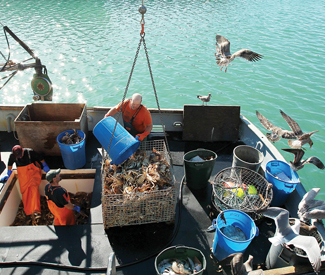
FEAST 2012 This year, Dungeness crab season starts on November 3 — commercial fishing begins in earnest on November 15 — and soon, if the undersea crab nebula hasn’t been environmentally disturbed, we’ll see vast trawler hauls of legs and claws spilling over onto the piers and into local eateries. Get yours at Alioto-Lazio (www.crabonline.com) on Fisherman’s Wharf or New England Lobster Co. (www.newenglandlobster.net) in Burlingame. There’s plenty of time to prepare yourself a traditional San Francisco Thanksgiving feast, so ready that melted lemon butter for dipping.

If you really want to get in the swing of things, and have the means to make the trek, head up to Tomales Bay for the lively Nick’s Cove Crab Catch (November 11, 10am, $40 to participate in crab-catching competition, $45 for cooking demo and lunch. Nick’s Cove and Cottages, 23240 Highway One, Marshall. crabcatch.eventbrite.com), with prizes, crablebrities chefs and hosts, and Nick’s legendary crab mac and cheese.

I think one of my favorite things about Dungeness is that it’s so far failed to fall into the foodie trap — no one gets too snooty about it, although even in the dingiest tourist traps it’s respected enough to get special treatment and presentation. Here are a few of my favorite crab treats. 

PPQ DUNGENESS ISLAND

Hey it’s right there in the name. This is a nice yet unfrilly old school Vietnamese family joint: you can get your whole crab five different ways (peppercorn FTW) but don’t forget the famous garlic noodles as a side!

2332 Clement, SF. www.ppqcrab.com

CRAB HOUSE AT PIER 39

Brave the crowds at Fisherman’s Wharf for a spot at this bright, bustling favorite: great service and good portions elevate it above generic neighbors. The trademark Killer Crab menu offers several feast options, and the Crabby Mood cocktail with vodka, peach schnapps, and cranberry is a great kick-off.

203 Pier 39 Concourse, SF. www.crabhouse39.com

NETTIE’S CRAB SHACK

Such a cute little spot in the Marina with a large patio — charm alone won me over, but then, bam, Dungeness deviled eggs with housemade Old Bay seasoning, an East Coast meets West Coast treat for the ages.

2032 Union, SF. www.nettiescrabshack.com

OLD CLAM HOUSE

The recently renovated San Francisco treasure wows with its authentic, slightly steampunk, interior and a hot iron skillet menu to die for, including the “Lotsa Crab” — three pounds with starters for two to share, $49.95.

299 Bayshore Blvd, SF. www.theoldclamhousesf.com

SOUTHIE

If you’ve got $18 to spare on an amazing sandwich that will fill you up all day, hit up this chill shop in Oakland for its seasonal Dungeness crab roll on brioche, with celery root remoulade and Meyer lemon brown butter. (Check website for availability though!)

6311 College Ave., Oakl. www.southieoakland.com

WOODHOUSE FISH CO.

Or for $12, you can get a yummy Dungeness crab melt at either location of this laidback favorite — piping hot on a toasted roll, served with fries and slaw.

2073 Market and 1914 Fillmore, SF. www.woodhousefish.com

Truffle tour

1

virginia@sfbg.com

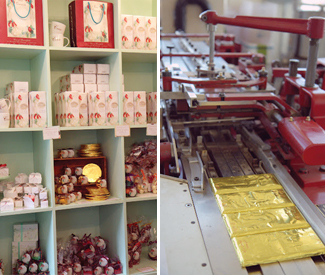
FEAST 2012 Clearly, we can’t get enough chocolate. As chocolatiers continue to proliferate around the country, we are blessed with an endless wealth of fine sweets to choose from. Tirelessly sampling chocolates in every city and country I travel in, I’ve found standouts of all kinds. Some chocolatiers have perfected a certain truffle, others a pure bean-to-bar process. Many local greats produce treats in the city, like SF classic Recchiuti, single-minded Hooker’s Sweet Treats, playful Poco Dolce, and forward-thinking TCHO. Here are a few more, plus my notes on favorites, worldwide.

SAN FRANCISCO SHOPS

With a new Victorian-era mercantile on Haight Street, Buyer’s Best Friend has among the best gourmet food selections in the city in many categories – and it is slated to open its second shop in North Beach on October 26 (450 Columbus, SF). When it comes to chocolate, the shop often has samples from rarely-seen small chocolatiers from around the globe, for many of which they are the sole distributor. Start asking questions and you’ll discover a whole world of chocolates you never knew existed.

1740 Haight, SF. (415) 745-2130, www.bbfdirect.com

Eccentric and delightful, Noe Valley’s Chocolate Covered has long been the premier chocolate shop of SF, with a rare and varied selection. I lived directly across the street from it for six years — in dangerously close proximity.

4069 24th St., SF. (415) 641-8123, www.chocolatecoveredsf.com

Tiny but well-curated, Russian Hill’s shiny Candy Store has long been a source for rare and old fashioned chocolates and candies.

1507 Vallejo, SF. (415) 921-8000, www.thecandystoresf.com

BAY AREA CHOCOLATIERS

There’s chocolate and then there’s bean-to-bar chocolate. Whereas most chocolatiers start with already fermented cacao beans (yes, cacao beans go through fermentation), few oversee the entire process from sourcing to processing. Dandelion Chocolates was launched right here in SF by chocolate lovers whose experimentation with bean-to-bar as a hobby turned into a business. Purity of the cacao is their passion, so Dandelion makes chocolate with only bean and sugar, no cocoa butter.

Tasting their bars side-by-side is like sampling wines or coffee, with different nuances and terroir apparent in each. There’s the lush, malty notes of Rio Caribe, Venezuela (my favorite bar), bright citrus-strawberry expression in the Ambanja, Madagascar bar, and earthy, tannic notes from Elvesia, Dominican Republic. Already, Dandelion is easily one of the superior chocolates you’ll find in the Bay.

Visiting the company’s Dogpatch factory last month, I witnessed Dandelion’s entire process: roasting, cracking, sorting, winnowing, grinding, conching, tempering, molding, and packaging, all happening in one small space. Dandelion is moving to its new Mission location on Valencia (though it will keep its Dogpatch space), slated to be factory, tasting room, shop, and cafe all in one. Opening this month, it’s sure to be a hit. It’s inspiring to see passion lead to success — especially when your sweet tooth reaps the benefits.

740 Valencia, SF. (415) 349-0942, www.dandelionchocolate.com

Many artisan chocolatiers boast a couple of exceptional truffles, but none I’ve tried have the volume of Feve Artisan Chocolatier, formerly Au Coeur Des Chocolats, available in shops like Bi-Rite and on the company’s website. Owners Shawn and Kathryn Williams have traveled Europe extensively, visiting many of the world’s best chocolate makers. Besides artful, elegant, precise presentation, Shawn’s truffles succeed first and foremost in flavor.

Many chocolatiers promise flavors like curry or lemongrass or other excitement in their truffles, but often the flavor of truffles (at the standard, expensive $1.50–$3 a piece) is barely discernible or bland, leaving me disappointed, wishing I’d stuck with a straightforward piece of chocolate. Not so in Feve’s line of truffles, in which I struggle to name my favorite overall. There’s cherry-vanilla (dark chocolate and lemon ganache layered with cherry vanilla gelée), cardamom punchy with Scotch, sesame-vanilla crispy with praline, dreamy banana-caramel, pistachio-rosemary caramel with pistachio praline, and vivid passionfruit or yuzu. Each is exquisitely lush.

www.fevechocolates.com

MORE LOCAL FAVORITES

Chocolatier Blue’s truffles, served in its Berkeley shops are fresh and creative. Try the Ants on a Log, filled with celery seed, peanut butter, and currant, or the tart caramel apple or peanut brittle crunch with caramelized banana and creamy peanut butter.

www.chocolatierblue.com

Saratoga Chocolates’ Caramel Cin, a heart-shaped treat of dark chocolate oozing decadent cinnamon caramel.

www.saratogachocolates.com

Sixth Course Artisan Confections’ aromatic caramels, like rosemary, or sage and brown butter.

www.sixthcourse.com

Wine Country Chocolates’ Elvis truffle of peanut butter and banana ganache rules, while the cinnamon and clover honey oozes honey goodness.

www.winecountrychocolates.com

Maison Bouche’s Fleur de Sel is one of the Oakland producer’s elegant, French-spirited bars, a standout made using Brittany salt.

www.maisonbouche.com

NATIONAL FINDS

Alma Chocolates in Portland, Ore. makes an insanely good Thai peanut butter cup with ginger, Thai chile, lime, even red volcanic sea salt varieties. You can usually find it at Portland chocolate haven Cacao.

www.almachocolate.com

Antidote is a quality raw, NY-based bean-to-bar line made in Ecuador. It produces dark chocolate bars in flavors like banana-cayenne, lavender red salt, and almond fennel. Expect subtlety and a earth-like taste in each. Available locally at Buyer’s Best Friend.

www.antidotechoco.com

Chocolat Modern is a longtime New York favorite, making square “bistro bars” that are dark and filled with the tastes like banana and Cognac, pumpkin praline, apricot and Bas Armagnac, and zesty grapefruit. There’s a rotating selection available locally at The Candy Store.

store.chocolatmoderne.com

Responsible for some of the best local chocolates I’ve had from Los Angeles, Compartes creates dark chocolate truffles and bars, including the apricot and shichimi seven-spice chocolate bar ($8), and various truffles. Some of my favorites of these include smoked salt, peanut butter, and the pink peppercorn and Raspberry.

www.compartes.com

Fine & Raw is a Brooklyn-based raw chocolatier that creates treats with high dark chocolate content and cacao butter, managing to maintain creamy texture and flavor all the while. Its most interesting bars are its cacao and coconut, along with the lucuma and vanilla. Buy it in town at Buyer’s Best Friend.

www.fineandraw.com

Though I fear the healthy superfood label when it comes to pleasures like chocolate, Boise, Idaho-based Good Cacao creates “lemon ginger immunity” and coconut omega-3 bars that taste like a tropical vacation. Find it at Buyer’s Best Friend.

www.goodcacao.com

MarieBelle‘s elegant banana chocolate bar shines. The company is a New York favorite, with a Soho tea salon and cacao bar.

www.mariebelle.com

INTERNATIONAL TREATS

Dublin’s Cocoa Atelier makes the best chocolate I had in Ireland. It’s a chic outpost stocking drinking chocolate and elegant truffles that creates its delicacies using local specialties like pot still Irish whiskey.

www.cocoaatelier.ie

Coco Chocolate is my Edinburgh favorite, a darling shop focusing on handmade bars like its rose and black pepper, pink peppercorn and nutmeg, and a tropical-inflected lime and coconut. Coco creates invigorating flavors, embedded in dark chocolate.

www.cocochocolate.co.uk

Kopali Organics is marketed as vegan health food made by passionate founders who live off the grid in Costa Rica. Its fair trade dark chocolate-covered banana bites taste vivid and fresh, nothing at all like some dried, chocolate-covered fruits. Find it in San Francisco at Buyer’s Best Friend.

www.kopali.net

When in Bordeaux, don’t miss charming La Maison Darricau. The romantic shop sells chocolate and creative truffles made fresh daily, infused with flavors like wine-filled Médoc, basil, Szechuan pepper, curry-date, and an excellent blend of prune, almond paste, and Armagnac.

www.darricau.com

In London’s Borough Market, Rabot Estate is a rustic-hip shop with staff pouring cups of free dark hot chocolate and bars like chili with a lush Santa Lucia-grown dark chocolate.

www.rabotestate.com

Among the best chocolates I’ve had in the world are from Paul A. Young, one of the world’s best chocolatiers whose three London shops stock supreme examples of what fresh truffles and exotic bars should be. Go funky with Marmite truffles, or his herbaceous peppermint leaf. Whatever you do, when in London, don’t miss it. Young penned Adventures with Chocolate, a visually striking book that explores the ins and outs of chocolate making from the art of combining beans to yield the best flavor profiles, to making the perfect ganache. Primarily, it is a cookbook, utilizing chocolate in recipes from boozy drinks or teas to savory dishes and desserts.

www.paulayoung.co.uk

Subscribe to Virgina’s twice-monthly newsletter, The Perfect Spot, www.theperfectspotsf.com


\

Wedge issues

0

caitlin@sfbg.com

FEAST 2012 It is a trip ill-suited for vegans and anyone with a phobia of fossil fuel. But no one said that the Sonoma Marin Cheese Trail was an endeavor for everyone. Certainly not the faint of belly — even our truncated voyage of five cheesemakers and 61 miles in a day is a lot, lactophilia notwithstanding.

To navigate the trail, we cut off a slice off the map of 27 cheeseries put together by kindly Marin and Sonoma curdmakers. (Check out www.cheesetrail.org for a SMCT map of your own.) Cheese trailing is the perfect excuse to traverse the backroads up north of the Bay Area. And with many producers within forty five minutes of the Golden Gate Bridge, it wasn’t long until we were filling our bellies with goat, sheep, cow, even water buffalo-made wheels.

Cheaply, too! Most producers on the map do tastings, and buying directly from the farm means you cut out the middle man price (Monterey) jack.

Tips before you begin: split samples with your co-pilots. Yes, that generous slice of pesto jack will look sensible when the day is young, but by the road’s end you won’t be able to countenance another slab — devastating.

Truck along a cooler for the ride. We will never forget the 80-degree day that saw us refusing Marin French Cheese Company’s two pounds of brie for $5 deal, for fear of curdle-skunk wafting from our Zipcar’s trunk.

And please: multiple cheeseheads told us that trail pioneers have the tendency to be free food hounds. Settle children, and ask nicely to be fed if samples aren’t forthcoming.

You may well arrive on a foggy morning at this easy-to-miss, munch-sized tasting room in the rolling hills of Marin County. All the better — Nicasio Valley Cheese Company (5300 Nicasio Valley Road, Nicasio. (415) 662-6200, www.nicasiocheese.com) earns rave reviews for its the spreadable, fresh Foggy Morning cheese. It is blessed with versatility (suggested serving methodologies include balsamic-dressed salads, sandwiches, even a baking pan full of pasta shells) and tang. The Swiss family’s cheeses are made from the organic milk of its organic Holsteins, whose herd it has been cultivating for 30 years.

The side yard at Marin French Cheese Company (7500 Red Hill Road, Petaluma. (707) 762-6001, www.marinfrenchcheese.com) is archetypal picnic territory. In the middle of yellowed fields of Marin farmland, its patch of green oasis has a lake, a lush lawn dotted with wooden tables, squawking Canadian geese.

Luckily, inside MFCC’s charming country store you have all the makings of a ur-nosh. Of course, there’s cheese — triple cream bries made on premise (although tours were paused for renovations when we visited, we could still peep hairnetted workers stacking and packing wheels through glass windows at the back of the store.) There are pre-made sandwiches, breads, and a wall of preserves from pineapple to jalapeño and back again. It is here we first learned of the magic of quark, or fresh, soft cheese made from curds that this shop stocks in flavors like strawberry

After sampling a pungent schloss cheese (made on-site since 1901), we were intrigued by the air-pocketed breakfast cheese, one of the first quesos to make its way to the City By the Bay. Marin French’s small wine cellar provides another glimpse into history, its glass case filled with sexy cheesemaker photos from the company’s 147-years.

Drive to Spring Hill Cheese (711 Western, Petaluma. (707) 762-9038, www.springhillcheese.com) and you will see lots of cows. This is a given on the cheese trail — between every sentence in this article there should be one that says “and then we saw cows,” for accuracy’s sake. The road also stocks a glimpse of downtown Petaluma, one of the Main Street-type towns that dot Sonoma County, and is blessed with big, tall trees lining quiet residential streets.

Spring Hill caters to wholesome tastes — in addition to a block of its veggie or pesto jack cheeses or a bag of the spicy Mike’s Firehouse curd, you can grab a slice of Spring Hill-topped pizza, or an icecream cone. We went for a vanilla blend studded with pink Mother’s animal cookies, which we’ve had as a fixin’ before, but mixed in the icecream itself? Revolutionary! And cheap. Our kid’s cup and a bottle of water ran a cool $2.50.

We sat outside the creamery contemplating Spring Hill’s grim-looking mascot cow suspended over its factory across the street, before making a quick stop at Alphabet Shop Thrift Store (217 Western, Petaluma) on our way out of town.

Don’t get to used to Americana simplicity on the trail, because after Petaluma — we go past more cows and a little bit of prefab homeland and — arrive in the town of Sonoma, upper class wine country hub anchored by historic barracks and Spanish mission on a graceful, green center square. Sonoma’s also home to a bakery that caters exclusively to dogs (www.threedog.com).

Here, Vella Cheese (315 Second St. East, Sonoma. (707) 938-3232, www.vellacheese.com) sits in a stone building, tucked away on a block that also hosts familial Sonoma houses and a dashing pair of Clydesdale horses. The edifice was built in 1904 to house a brewery that was unable to withstand Prohibition, for all its sturdy design. Gaetano “Tom” Vella moved in circa 1931. Today, Vella Cheese will sample you a flight of progressively-aged jack cheeses, proof that Gaetano’s cheesemaking spirit still infuses the place.

We flipped for Vella’s mezzo secco jack, pocketing a triangle while visions of red wine in the Sonoma heat traipsed through our dairy-crazed minds. Special kudos to the wink-cute design of the California Daisy cheddar for having the most adorable cheese packaging, ever.

Vella no longer offers tours of the cheesemaking floor, but cheery store staff will instruct you to spy on factory workers through the screen door off the parking lot.

We walked through Sonoma’s shady plaza park to our last stop on the cheese trail: Epicurean Connection (122 West Napa, Sonoma. (707) 935-7960, www.sheanadavis.com). Proprietor Sheana Davis has created a general store worthy of her gourmand town, with cheesemaking classes on second Saturdays and Saturday morning bacon waffle breakfasts. Though the walls are lined with (mostly) locally-made foodstuffs like Rancho Gordo beans, you’ll gravitate towards the refrigerator cases full of cheese and microbrews.

Davis herself makes a soft Delice de la Vallee spread made of goat’s milk and triple cream cow milk. She also coordinated a stellar beer-cheese pairing dinner we attended at this year’s SF Beer Week, so it came as no surprise that the suds offerings at her shop were superb.

What is also superlative is the lunchy dine-in menu at EC. To beat the heat, we made a perfect meal of a watermelon tomato gazpacho (served in a cute lil’ jar) and a tomato-greens salad with a burrata cheese that made us crazy. In a good way.

Bonus points for the doorside stack of Culture magazines (“the word on cheese”) we were able to browse as we ate, contemplating the end of the day’s trail — and the ample dinner options that lay in every direction from Epicurean Connection’s front door.

Twin stars

0

arts@sfbg.com

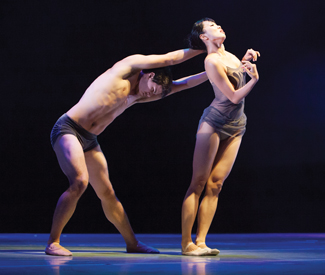
DANCE It doesn’t happen often, but when it does, it makes you wish that it could go on forever. Such was the case of a heartbreaking pas de deux toward the end of Alonzo King’s newest work, Constellation. Created by and for LINES Ballet’s senior ballerina Meredith Webster and Ricardo Zayas, and set to Handel’s plangent “Verdi prati,” the two dancers encircled each other, locked limbs, and pulled apart only to be drawn into each others’ spheres again. They struggled with each other and within themselves only to separate in the end. I kept thinking of Aristophanes’ definition of love as the attempt by the two halves of the original human, after having been split apart by a jealous God, to become one again.

Though this extraordinary duet was the high point of the evening-length work celebrating the company’s 30th anniversary, Constellation is a major achievement of King’s distinguished career of imaginative, thoughtful, and skilled dance making. The work abounds with mesmerizing small ensembles and rich imagery though the unisons for everyone are still problematic.

As is his want, King drew out of his dancers small-scale but resonating encounters that don’t necessarily add up — except in the way that a collector’s decisions impose coherence on treasures, whether they be Monets, pebbles, or martini shakers. Constellation, however, has more of a through line than I remember seeing in other King choreographies. Weaving through the piece was the figure of Webster, apparently on a search. She first appeared out of the dark, stepping through Jim Campbell’s curtain of light bulbs. Sitting on Ricardo Zayas’ foot, she valiantly tried to pull herself up on his leg; then, she broke up a duet between David Harvey and Michael Montgomery. In between she was carried and variously supported. Yet at the end, she was spent one, left on the floor. If Webster had a counterpart, it would be in the underused Keelan Whitmore, who often appeared an outside observer.

King plugged deeply into the individuality of these so different dancers who yet looked as if poured from one mold. The trio of Montgomery (who seems to have something of a comedian inside him), Zachary Tang, and Whitmore attacked a storm of staccato phrases as if they had hot coals under their feet. Though propelled by an impetus that seemed to suck Courtney Henry, Ashley Jackson, Yujin Kim, and Caroline Rocher upstage, their responses to the thrust could not have been more different.

In a hugely effective solo, Henry, dressed in a simple black leotard, stepped out of billowing fog (courtesy of lighting design Axel Morgenthaler), folding and stretching her limbs to the ends of the universe, until she gradually pulled the other dancers from the wings. In the many duets, the dancers seemed to morph into creatures sometimes outside themselves. At one point, I was pretty sure I had seen a multi-limbed something out of Hieronymus Bosch.

The first act ended with another stunner, a duet for LINES’ newest dancers, Kim and Tang. The exquisite Kim, long-limbed yet with a voracious appetite for space, slithered around Tang — muscular, yet highly expressive — and into his arms in what looked like a lover’s spat, perhaps inspired by Vivaldi’s “Sposa son disprezzata.”

Constellation is one of King’s most musically astute works. The collage of Baroque arias, Eastern chants, and original compositions worked exceptionally well. However, how Arvo Pärt’s over-exposed Für Alina made it into this distinguished selection remains something a puzzlement.

To have mezzo-soprano Maya Lahyani — in one of Colleen Quen’s theatrical concoctions and accompanied by her sensitive pianist Hadley McCarroll — perform was a special gift not just for the audience but also for the dancers, who responded with such hunger to the live music.

Constellation was inspired by Jim Campbell’s light sculpture Exploded Views, in which hundreds of flickering LED lights create a sense of stasis as well as life. Fascinating, it looked like television snow being animated by moving silhouettes. Unfortunately, Campbell’s translation of the concept to the stage didn’t quite work: black shapes, perhaps fluttering birds, behind the light curtain; rolling lit balls; light boards; and Wheelan wrapped in Joseph’s dreamcoat (of light bulbs). *

ALONZO KING LINES BALLET

Wed/24-Thu/25, 7:30pm; Fri/26-Sat/27, 8pm; Sun/28, 5pm, $30-65

Yerba Buena Center for the Arts Theater

700 Howard, SF

www.ybca.org


Avast ye

3

CHEAP EATS Crawdad called me on speakerphone, like she does: in the car, with the childerns. “Will you tell us the story of Moby Dick?” she said.

“Moby Dick,” I said, about as meaningfully as one can say, into an Android, Moby Dick. As it happens, I had just hung up with my dad, who (as it further happens) is an actual, dyed-in-the-whale Melville scholar. Me, no. Not so much. I’ve read it, of course, but . . .

“Dang, is traffic that bad over there?” I asked.

“No. We’re going to get ice cream,” she said. As if that explained everything.

“OK,” I said. “Ice cream.”

I said, “Kids . . . listen up: Moby Dick.”

And while clearing the dishes I proceeded to abridge one of the substantialest-ever works of American literature into four sentences:

“This guy Ahab goes out in a boat to get some whales, and in particular this big old one name a Moby Dick. But Moby Dick is so big and so old that he outsmarts Ahab. Anyway, he outsizes him. He busts up Ahab’s boat and most if not all of his crew, The End.”

I forgot to mention Queemquack, or whatever his name was, but — no worries — I’m de la Cootersitting tomorrow, so I’ll have all day to bring them up to speed.

Poor kids. Even without any knowledge of Queemquack, they were speechless.

“Why did people fish for whales?” Crawdad asked.

“I think maybe they made lamp oil out of their fat, or something,” I said, rendering the kids even speechlesser.

“You have to understand, Chunks,” I added, “this was before the age of light bulbs. People couldn’t just flip a switch and see things; they had to go out and kill giant whales and split their heads open. There was this oil in there that they needed for their lamps, so they could stay up late and read Moby Dick.”

Without which — a century and a half later — my father would never have been able to feed his family. Which reminds me: I would love to tell you about the not-great hashbrowns and sold out “Millionaire’s bacon” at my new favorite restaurant in the Tenderloin, but after all I’m on strike, so …

CHEAP SPORTS

by Hedgehog

It’s been hard to rally any interest in the Giants lately in the Chicken Farmer and Hedgehog household, I’ll admit. It’s not that we wouldn’t be thrilled to hug and high five strangers on the street should they go All The Way, but it seems we left our baseball hearts in Oakland this season — somewhere under the cheap seats in the Coliseum.

It’s been looking like the Giants lost theirs somewhere other than San Francisco, too. Maybe in St. Louis? We went out tonight in search of a TV screen with 49ers on it, and at Hogs and Rocks on 19th they had two screens: one for the 49ers and one for the Giants.

By way of play-by-play, I eavesdropped on a conversation between a father and his small son, sitting across from us.

“The Giants have given up,” declared Father.

“What do you mean?” asked Son in an innocent little voice.

“They’re playing like a team that’s lost its heart,” Father said.

“There’s still time to win I know,” said Son (bottom of the seventh, Giants trailing 8-1). “I have never gaven up in baseball. Ever. I can steal home, it’s so easy. It’s how I make runs!”

I think maybe this kid has figured something out that grown-assed men who get paid way too much to play games haven’t. At least on this side of the bay.

Cheap Eats continued…

Yes, my dear, I just hope your cute little eavesdropee doesn’t grow up to be a whaler. Because in life as in Moby Dick, sometimes it is better to give up than to fight. Call me chicken.

No …

Call me Chicken Farmer.

TAYLOR STREET COFFEE HOUSE

Daily: 7am-2pm

375 Taylor St., SF

(415) 567-4031

MC,V

No alcohol


Japanese within reach

0

virginia@sfbg.com

APPETITE The nuances and clean lines of Japanese cuisine have long intrigued me. I grew up on the East Coast with my lifelong best friend, who is of Japanese descent, discovering authentic cuisine in her home and around New York City. I fondly recall the first time I had sushi, okonomiyaki, sake, and shabu-shabu. San Francisco boasts one of few Japantowns in the US — the oldest and largest Japantown in the country, in fact — one of the reasons to love living here. Sushi is one of my greatest cravings, and the izakaya pub-bar food wave seems to hit SF every few years, with a slew of openings.

Outside of these two dominant categories, we’re blessed with Kappou Gomi’s memorable small plates (buttered scallops, tempura crusted in macadamias and almonds), Kare-Ken and Muracci’s Japanese curry, intimate Minako for organic, unusual dishes, Macha Cafe and YakiniQ Cafe for matcha tea and sweet potato lattes, Kitchen Kura for an okonomiyaki menu, Delica for Japanese deli goods… the list goes on. These three younger Japanese restaurants offer comforting food at a reasonable cost.

CAMP BBQ

Opened this summer, Camp BBQ’s Japanese grilling takes its cues from Korea. The long space is lined in rustic Japanese woods, roomy tables surrounding individual grills. Like Korean BBQ, mini-bowls of dipping sauces such as house miso arrive, then platters of vegetables, including a “rainbow mix” ($6) of carrots, bok choy, onions, and garlic cloves wrapped in foil, ready for the grill. Scallops soak in garlic butter ($7), tender and buttery in foil. When it comes to meats, there are many options, sliced thin, generally tender — only the pork cheek, though juicy, was a little tough to bite. Kobe-style Kalbi chuck short rib ($13 for 3.5 ounces) and ox tongue ($8) are two worthy beef options, though I find the cheaper, savory qualities of spicy pork ($4) and pork cheek ($5) even more appealing. Portions are small enough to mix-and-match while sipping sake, Japanese beer, even pineapple or watermelon slushies. Moving away from the grill, cheese pockets ($5), essentially wontons supposedly filled with cream cheese and shrimp, are disappointingly empty. The setting is mellow with families and friends grilling and singing along to somehow appropriate dance pop tunes as backdrop.

4014 Geary, SF. (415) 387-1378, www.campbbqsf.com

SHABUWAY

Hot pot stylings of shabu-shabu are the basis for Shabuway, the first SF location of a local Bay Area chain that began in 2004 in San Mateo, growing to locations in Mountain View, San Jose, Union City, Santa Clara. Eiichi Mochizuki launched Shabuway using meats from animals fed on an all-vegetarian diet: Angus Prime, American Kobe, Niman Ranch lamb, Kurobuta Berkshire pork. The result translates into a fresher-than-average shabu experience. In keeping with the meaning of shabu-shabu (“swish-swish”), one selects thinly-sliced meat of choice, chooses spicy miso or seaweed broths, then swishes raw meats in boiling broth until done. Vegetables (cabbage, carrots, enoki mushrooms, etc.) and mini-bowls of soy and crave-inducing gomadare (an almost creamy sesame sauce) arrive, filled when running low, with add-ons like udon or ramen noodles a mere $1–$1.75. When you’re finished cooking the meats and veggies, flavor-rich broth is poured over rice, eaten soup-like as a finish. There is little besides shabu-shabu on the menu, an appreciated focus — but a special I’d recommend if you see it is takoyaki ($4.50), octopus dumpling balls topped in benito flakes, essentially okonomiyaki (the fantastic Japanese “pancake”) in bread-y ball form, dotted with customary mayo and savory-sweet okonomiyaki sauce.

5120 Geary, SF. (415) 668-6080, www.shabuway.com

KIRIMACHI RAMEN

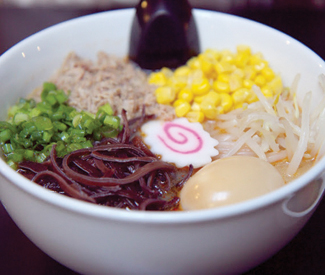
Ramen is akin to pho in Vietnamese food or other filling soups in Asian cuisine. Maybe it’s my craving for bold, pronounced flavors that have made me not so much averse to basic broth soups as just bored by them. I typically prefer udon or soba noodles when it comes to Japanese soups for more texture and emphasis on the noodles and may never be obsessed with ramen, pho, or the like. But Kirimachi Ramen, a month’s old spot tucked away in North Beach with 1950s diner chairs and laid back vibe, does well by the genre. All bowls are hefty at $10, with veggie, pork, or chicken as a base. The staff told me they haven’t found a reliable organic pork source yet, but use Marin Sun Farms chicken, focusing on fresh ingredients. I took to Sapporo-style miso ramen with chopped pork, Chinese chives, bean sprouts, corn, with additional toppings ($1) including kikurage mushroom, fish cake, and soft-boiled egg.

450 Broadway St., 415-335-5865, www.kirimachi.com

Subscribe to Virgina’s twice-monthly newsletter, The Perfect Spot, www.theperfectspotsf.com

Intimate company

1

arts@sfbg.com

THEATER With the exception of an occasional Miss Julie, the plays of August Strindberg (and there are more than 60 of them) rarely find productions anymore. Yet the iconoclastic and prolific Swedish writer’s influence on modern drama — including such American playwrights as Eugene O’Neill, Tennessee Williams, and Edward Albee — is considered a given. This year marks 100 years since Strindberg’s death, and San Francisco’s Cutting Ball Theater has gone all out in satisfying a yen for a centennial embrace of this monumental (and definitely temperamental) artist who helped define the terms and concerns of modernism.

Capping a year of readings and discussions of the work and the man, Cutting Ball last week began an audacious program of five late “chamber plays,” to run in repertory through November 18. The project includes five new translations by Yale professor (and former American Conservatory Theater dramaturg) Paul Walsh, and the simultaneous publication of all five in a single volume by Exit Press.

Last week, The Ghost Sonata (1908) began stalking the stage of the Exit on Taylor as the opening gambit in Cutting Ball’s Strindberg Cycle. Its original premiere took place on a stage not too unlike this one, as artistic director Rob Melrose explains in a program note, being written (along with the other plays in the Cycle: Storm, Burned House, The Pelican, and The Black Glove) especially for the opening of Strindberg’s new Intimate Theater in Stockholm. This makes the chamber plays an especially apt choice for Cutting Ball’s stage. A pioneer of the chamber play form, Strindberg meant to foster an immersive experience for his audience with these deeply strange, poetical, dreamlike little plays he modeled on chamber music. The emphasis was thus on coziness, small casts in small houses, without the need for elaborate mise-en-scène. Moreover, a level of invention would dominate in these plays in which form would follow theme, rather than the other way around.

The Ghost Sonata is perhaps the best-known example among the playwright’s chamber works. It concerns a heroic and ambitious young poet named Arkenholz (Carl Holvick-Thomas) who, after saving some people from a burning building, finds himself seduced into the good graces of a fancy upper-class household of an aristo Colonel (Robert Parsons) by the machinations of a mysterious wheelchair-bound old man, Director Hummel (the formidable James Carpenter).

Hummel’s real motives become clearer as the play progresses through three short acts (the entire play runs only about 80 minutes without intermission). But the unfolding of all is like a dream, wherein Arkenholz confers unwittingly with the ghost of a Milkmaid (Ponder Goddard) that Hummel can’t see; pines for the beautiful girl (Caitlyn Louchard) in the fancy apartment building, confined to a sweet-smelling Hyacinth Room; and eventually finds his way into the social circle of the girl’s family, stunned old richies who are variously mad, morose, and generally not what they seem.

There’s an almost hilarious amount of exposition packed into the plot and its several reversals and revelations. But the chamber plays are works of a new era, and for a new era, and The Ghost Sonata — not unlike the naturalistic drama Ghosts by Strindberg’s hated contemporary and countryman Henrik Ibsen — seeks to cast a coruscating light on an older generation and its world, to expose and ridicule its corruption, bemoan its stultifying influence on the young, and generally bleed it out like a pus-filled old sore. As darkly shadowed as The Ghost Sonata is, its formal invention is full of air and light to remake the stage and the age.

That doesn’t mean it’s triumphal, or terribly optimistic. The uncertainties, ambiguities, and pitfalls of patrimony, a deep theme for Strindberg, snake through the surreal story like fissures in a crumbling wall. The Ghost Sonata has a quiet anguish running throughout — even in its touch of sardonic humor, as exemplified by the haughty butler, Bengtsson (played a little too broadly by David Sinaiko) — and it rages under all the delicate and sinister weirdness of its setting and action.

This trembling, contorted energy becomes incarnate, and altogether palpable, in Carpenter’s finely hewn and sensitive performance as Hummel, who even as a central demonic force is ultimately pathetic and even pitiable when his own reversal of fortune finally lands.

Carpenter is the best thing about this uneven if worthwhile production. If the play’s historical influence is one thing, its life on the stage is another, at least here. It does look very striking in the meticulous and persuasive design work of Michael Locher (set), York Kennedy (lighting), and Anna Oliver (costumes). The production also features a pervasive, ethereal score and soundscape by longtime Cutting Ball artistic associate Cliff Caruthers. The stage may be small, for instance, but Locher expertly creates a sense of a marble-cool expanse in which the play’s public street and inner chambers are seamlessly, miraculously evoked. A set of mobile dark-wood closets form a central edifice, first the outside wall of the apartment and then its inner parlor, with graceful economy. Oliver’s fine period costuming adds luxuriously to the dreamy world of the play, as does the vaguely macabre makeup on several characters.

Melrose, moreover, who helms each of the plays in the cycle, has assembled a strong cast, several of whom must carry the play with little or no dialogue and only minute gestures. But while individual performances show flashes of depth and charm, his actors rarely connect forcefully or convincingly. The ensemble may cohere further as the production continues in repertory. But it was plain enough on opening night that this vital element of so intimate and intense a play as this hovers somewhere just out of reach. *


“Strindberg Cycle: The Chamber Plays in Rep”

Through Nov. 18, $10-50 (festival pass, $75)

Exit on Taylor

277 Taylor, SF

www.cuttingball.com

CELLSpace becomes Inner Mission

1

steve@sfbg.com

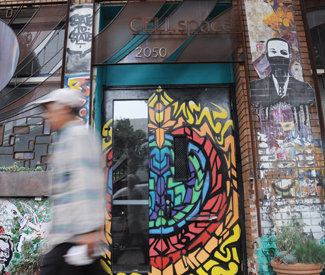
For the last 17 years, CELLspace has been a hub for unique cultural, artistic, and community events in the heart of the Mission. The bad news is that CELLspace is losing its lease, but the good news is it’s being taken over by creative, resourceful people from its community who plan maintain and expand its mission.

In the process, CELLspace is undergoing a renovation and, beginning in early December, getting a new name: Inner Mission.

"We’re calling it an evolution, and we’re trying to hold to that because the CELLspace has an important history and community," says Eric Reid, one of the four new owners. "We’re drawing from a well that we didn’t dig, so we’re trying to keep the neighborhood involved."

So Inner Mission will continue to offer community-based classes such as tango, Aztec dance, and yoga; and evening gatherings by community groups. But along with its recently upgraded sound and lighting systems and well-done new bar, Inner Mission will draw from the creative projects of its new owners and become a nightclub available to host events by outside promoters.

Reid (who sometimes dons clown makeup as his alter ego Manaze) runs Mad Cap Productions, while co-owner Adrian Zelkski runs New Earth Music, co-owner Zach Carson directs the Sustainable Living Road Show, and co-owner Mike Gaines heads the Vau de Vire Society (see "Cue the clowns," 12/3/08), which has been rehearsing and performing at CELLspace in recent years.

"We want to be a constantly throbbing venue as far as the art is concerned, a place for people to explore their creativity," Gaines told us. "We’ve always had the intention of opening up a venue for ourselves, and we want to really accommodate the community as well."

They plan to activate the space for longer hours, including more active curation of the art gallery space in the front of the venue and adding a daytime smoothie and kombucha bar, while also making the overall venue a better nightclub with more regular events — including experimental dinner theater that Reid is excited about producing — rather than the isolated special events that CELLspace has generally done.

While Inner Mission won’t have the nonprofit designation that CELLspace does, the new owners have incorporated as a Certified B Corporation, or Benefit Corporation, a new designation that carries the expectation of greater environmental sustainability, stronger worker protections, and returning more profits and benefits to the community.

"We are going to be the first B Corporation nightclub in the country," Reid said. "We think this is the way things are going."

Gaines also cited the work that Carson does with Sustainable Living Road Show — entertainers and educators in an "old timey carnival road show" that tour in renewable fuel vehicles to teach sustainability — as a key part of their new ethos.

The stated mission of CELLspace is "to provide a safe and supportive public environment for the exploration of art, education, performance and community building. Through cooperative relationships, CELLspace encourages the celebration of intergenerational, cross-cultural collaborations and the promotion of social justice."

Reid and Gaines say they are committed to that same mission even as they seek to make the space more vibrant and accessible, and with a greater focus on the emerging new global consciousness.
Sup. David Campos, who represents the Mission, said CELLspace is an important community institution and he’s happy to hear the new owners plan to continue its current programming. "It sounds like it’s a positive thing, we’ll reach out to them and get more specifics and see how we can work with them."

Life-and-death decision

7

news@sfbg.com

Proposition 34, the initiative to end the death penalty in California, is trailing in the polls, but proponents are focusing on a surprisingly large voting block that could still put it over the top: undecided voters.

“Anything can happen on Election Day,” said Natasha Minsker, campaign manager for Yes on 34. “I think what this election comes down to is who’s able to reach the undecided voter.”

The Los Angeles Times reports the race is 38-51 against the measure, while the Field Poll survey has it at 42-45 against. Both polls report that 11-13 percent of voters were undecided, and a more recent poll conducted by SurveyUSA shows the undecided vote may have grown to 20 percent.

Those large numbers, with less than two weeks until the election, raise an interesting and troubling question: on a decision as serious as whether we allow the state to kill someone in our name — a practice that is as costly to state finances as it may be to our very souls — why have so many voters failed to form an opinion?

REACHING VOTERS

Leading the charge to win over these ambivalent voters is a coalition of justice organizations, supported by prominent individuals and groups such as the American Civil Liberties Union (ACLU) and Amnesty International.

The campaign has raised more than $6 million in less than a year, outspending the opposition 35-to-1. Minsker told us the campaign is focusing hard on undecided minority voters, devoting most of its resources to an area they believe will help them win.

“We have more of a focus on young Latino, Asian, and African American voters, specifically in LA County,” she said. “These are voters who, once they hear about the facts of the proposition, they vote for it.”

Prop. 34 would replace California’s death penalty with a maximum sentence of life in prison with no chance of parole. The proposition would also make convicted felons work to pay restitution to their victims’ families.

The Field Poll reports that of all the regions surveyed, Los Angeles County contains the highest percentage of undecided voters, at 17 percent. Once voters learn that executions don’t prevent murders (numerous studies show it doesn’t act as a deterrent to crime) or save money (life-in-prison is cheaper than housing someone on Death Row and hearing legal appeals), support for capital punishment falls.

The Field Poll reports that 15 percent of voters aged18-39 are undecided, while minority voters (Latino, Asian and African American) contain even higher rates of undecided voters, ranging from 16-19 percent, higher than undecided white voters, at 11 percent.

Unlike on many liberal-leaning campaigns, this one also has strong support from the Catholic Church.

“The energy the Catholic community has brought to the initiative has been fantastic,” Minsker said. “It is certainly one of the few issues to bring together the ACLU and the Catholic Church, but it’s just wonderful to see.”

But in order for the proposition to pass, undecided voters must decide soon.

Field Poll Director Mark Dicamillo said that at this stage in the contest, the team that is leading in the polls usually wins.

“In our experience, with [two] weeks left, undecided voters usually vote no, if they haven’t figured out where they stand yet,” he said.

But Jeanne Woodford, executive director of Death Penalty Focus, a nonprofit group dedicated to educating the public about capital punishment, says these undecided voters are taking their time to get the facts straight before they decide.

“I think that [undecided voters] are very thoughtful voters who are not going to vote on this issue from a moral perspective,” she said. “Those are voters who are going to want to know the facts.”

DECIDING ISSUES

With the election just around the corner, why are so many “thoughtful voters” still undecided about ending the death penalty?

UC Berkeley Public Policy Professor Bruce Cain attributes the undecided electorate to the state’s inconsistency toward capital punishment.

“Historically, the state of California has flipped on its [death penalty] policy,” he said. “My guess is that it is a little bit hard for voters to navigate through now.”

But at a time when California is in a fiscal crisis and federal judges have ordered the state to substantially reduce the population in its overcrowded prison system, Prop. 34 proponents have been making fiscal arguments more than moral ones.

According to the state’s Legislative Analyst’s Office, ending the Death Penalty would save taxpayers $130 million a year, and set aside a $100 million annual fund for law enforcement agencies to use in solving homicide and rape cases.

Prop 36, reform of the harsh Three Strikes and You’re Out law, is the other big sentencing reform initiative on the ballot. Prop 36 would save taxpayers about $100 million a year, yet it is a 3-1 favorite in the polls, a stark contrast to Prop 34.

“The death penalty has been overshadowed by the Three Strikes prop, and that’s possibly another aspect of the undecided voters,” Cain said. “But remember people that are undecided at the end are the people that only get information from their TV.”

That’s something that Yes on 34 is well aware of and about to address.

The campaign has reported spending more than $3 million since July producing television and cable ads, which are launching this week.

“You’ll be seeing TV and radio which will provide much more information to the public, and when they have that information, the facts speak for themselves,” Woodford said.

But No of 34 campaign has fear and emotional arguments on its side. Spokesperson Peter Demarco told us, “Prop 34 isn’t about saving money. It’s the centerpiece of the liberal ACLU’s agenda to weaken California’s public safety laws.”

Cain thinks Prop 34 has a chance, but the real test is yet to come.

“If indeed the no people plan to throw money into this and really land some hard-hitting emotional ads, then you could see voters being moved dramatically,” he said. “If people see these emotional ads and don’t move, then that tells you that the electorate has changed.”

LONG ROAD

Executions in California go back to its earliest settlements, and it was first authorized in the state’s penal code in 1872.

In 1972, the California Supreme Court ruled the death penalty cruel and unusual punishment in violation of the state’s constitution, commuting more than 100 death sentences to life in the prison without the possibility of parole.

Cain says that during the 1970s and ’80s, when California’s rising crime rate was making big news, the public began to embrace capital punishment.

“There were more violent murders, there was crack cocaine, there was a sense that people were going way over the line, and it was very much a moral issue,” he said.

In 1977, the California Legislature re-enacted the death penalty in first-degree murders only. In 1978, California voters broadened the number of crimes eligible for the death penalty. But polls show the pendulum swinging back.

“We haven’t seen a vote like this to abolish the death penalty in about 40 years,” said Richard Dieter, executive director of Death Penalty Information Center. “Just the fact that it’s happening is indicative to the growing skepticism toward the death penalty.”

The number of countries that have abolished the death penalty has doubled to more than 120 the past 25 years. In the US, Connecticut recently became the 17th state to abolish the death penalty, not including the District of Columbia. Will California be next?

“Ten years ago, it was 70-30 against ending the death penalty in California, but that’s changed and it’s closer now. The information is going to make a difference for undecided voters,” said Dieter.

Among that information, Minsker said, is the fact that “with the death penalty, we sometimes sentence innocent people.”

The University of Michigan Law School and the Center on Wrongful Convictions at Northwestern University School of Law reports that in the last 23 years, more than 2,000 people convicted of serious crimes were exonerated in the US.

The Innocence Project, which assists prisoners using DNA testing, found that 18 people previously sentenced to death in the US have been exonerated.

“We have learned that innocent people have been sentenced to death,” said Innocence Project Policy Director Stephen Saloom. “States are increasingly abolishing the death penalty because it’s just not worth it.” According to the Death Penalty Information Center, since 1978 California has executed 13 out of 725 death row inmates, costing California taxpayers $4 billion. “It’s not worth keeping this lengthy, costly process any longer,” Saloom said, “and I think people are more likely to see that it’s not a very good government program.”

Another look at Olague

22

OPINION As Election Day nears, the chaotic contest for supervisor in District 5 represents a critical decision for progressive voters in the district — and for activists across the city.

The campaign for Julian Davis, the original first choice of many left/liberal activists, has imploded and is now in free-fall. The repercussions of the board’s vote on Sheriff Ross Mirkarimi continues to reverberate, nowhere more than in District 5. And respected progressive advocates who had worked together for decades are now estranged, even as our city faces urgent challenges of great complexity.

I don’t know Davis or the other candidates in District 5, but I sat down with Supervisor Christina Olague last month after she received the endorsement of the San Francisco Labor Council. It was our first meeting, and as I rode the Metro to Civic Center I was, frankly, not expecting much. Like many San Franciscans, I could not help but be skeptical of anyone appointed by Mayor Ed Lee. I had heard of decisions made and votes cast by Olague that troubled me. I was not expecting to like her, but friends of mine in the labor movement encouraged me to speak with her directly and I’m glad I did.

I started to like Olague as we walked from her office to find some lunch. Before we got to a restaurant I was already asking her questions about some of the tougher choices she’s made. We didn’t agree on everything, of course, but I was struck by her candor, her common sense, and pragmatic progressive values.

Christina Olague grew up in a migrant labor community in the Central Valley. She survived the often-brutal working conditions and poverty that define the lives of some of the most cruelly exploited workers in the United States. She became active in politics early in life, put herself through school, and moved to San Francisco, where she became a familiar figure in the city’s grassroots community.

As a Latina, and as a member of the LGBT community, Olague’s life experiences shaped her politics and basic values. Her candidacy is important in a city that seems every day more destined to become an enclave reserved exclusively for only the very wealthy and most privileged.

I endorsed Olague several weeks before she cast her vote on the struggle between Lee and Mirkarimi. I would have continued to support her regardless of her vote that day. But the bitterness of that controversy, and the nature of the scandal now surrounding Davis, underscore the need for progressives to heal, to repair our alliances and to demonstrate political leadership grounded in respect for all our communities.

The UNITE HERE International Union represents hotel, restaurant, casino, food service and laundry workers throughout the US and Canada. The majority of our members — the people I work for — are immigrant women. In our union we stand together: LGBT and straight, brown and black and white, immigrant and native-born. In all our actions we seek to build power for working people and to strengthen the broader movement for peace and social justice.

San Francisco has seen many changes in the 40 years since I first hitchhiked here as a youth from Arizona. While the political landscape has certainly altered, I reject the notion that the city’s voters have moved irrevocably to the right. I do believe that progressive activists must do better in communicating our values and our vision for this beautiful and unique city we all love. I think Olague could be an important part of that process.

On behalf of the members of UNITE HERE Local 2, and as a longtime organizer for LGBT and worker rights, I ask my many friends in District 5 to take another look at Christina Olague and to consider casting your vote for her on November 6.

Cleve Jones is a longtime activist and the founder of the NAMES Project AIDS Memorial Quilt

Men behaving badly

10

The fiasco that was the candidacy of Julian Davis for Supervisor has shed a spotlight on the long simmering sexist underside of progressive San Francisco politics. For years, men have dominated elections and institutions; the lack of women in progressive leadership has been obvious, but too often unaddressed.

San Francisco has a long history of electing women to high office — Dianne Feinstein, Nancy Pelosi, Louise Renne, Kamala Harris … it’s not as if politics in general is controlled by men. But most of those women have been from the more moderate (in some cases, conservative) side. The elected officials who are leaders in the progressive movement have, for most of the past decade or more, been overwhelmingly male.

And it’s hard to ignore the obvious questions: How could so many progressives get behind a candidate with such a history of poor treatment of women? Why did it take so long for the truth to come out? When did attitudes on the left devolve to the point where groping was considered a minor detail?

More important, where are we going from here? How is the progressive movement going to encourage a new generation of women leaders? How are we going to address the perception, and sometimes the reality, that the politics of the San Francisco left is not a welcoming place for women?

It’s going to take a while to talk all of this out, but this week, we want to start the conversation.

>>A NEW FEMINISM FOR SAN FRANCISCO: Community activists on a guide to compassion, redemption, and accountability

>>THE “HEIGHTENED SENSITIVITY” BLUES: Hey progressives, why don’t you stop being such idiots? (An angertorial)

A new feminism for San Francisco

34

OPINION Accountability is one of the hardest things that we have to do. Being accountable stretches us to our very limits as human beings. Blame and deflection is a function of shame, and more often than not, when we make a mistake, it’s more common to point the finger at someone else than it is to acknowledge our mistake and work towards a different practice. The story time and time again is how it never happened — and then when the water gets too hot, there’s generally a soft acknowledgment that something did happen, but by then, the damage is done and trust is broken.

As feminists working in the progressive community for social justice, we are calling for a new type of accountability — one that’s not about demonization or polarization, but instead consists of checking ourselves, checking each other, supporting each other when we are brave, and having the courage and integrity to acknowledge our mistakes and work towards making whole what has been damaged.

Progressives need to take a look at ourselves and come together so that we can advance our vision for San Francisco. We aim to build a progressive movement in San Francisco that is rooted in compassion and love, that acknowledges our contradictions and works to create bridges across class, race, and gender that are so often the typical pitfalls that keep us from accomplishing what we really want and need. Checking ourselves is an act of love for ourselves and for our communities.

The last few weeks in San Francisco have not just been about men behaving badly; it’s also been about women treating each other badly. White feminists in San Francisco came together to “save” Eliana Lopez, an immigrant woman of color, but never actually included her in the conversation — and then treated her like she had Stockholm syndrome. Women who supported Sheriff Ross Mirkarimi were suddenly not feminists anymore. Survivors of domestic violence who supported Mirkarimi and supported redemption were shunned by a large portion of the domestic violence community.

We recognize that there are important reasons why domestic violence law allows charges to brought without the consent of the survivor; however, in this case, these laws were misused. How demoralizing to see a largely white, second-wave feminist advocate community come together around a woman they failed to include in the conversation about what she felt was best for herself and her family. Are we still in the 1950s?

The attempt to remove Mirkarimi from office was a political attack. It does a disservice to the cause of domestic violence to use it as a political tool to unseat a politician. At the same time, it was also regrettable that many progressives supporting the sheriff did not take the domestic violence charges against him seriously enough — both in the initial outcry that surrounded the charges and by being disrespectful towards the domestic violence advocates who testified at City Hall.

On the other hand, following close on the heels of the Mirkarimi situation, District 5 candidate Julian Davis was accused of a troubling history of inappropriate and nonconsensual groping by more than one woman. We have to take into account that there is an unacceptable cultural reality that people are likely to believe accusations against men of color by white women that are untrue, but that is not what has happened with the accusations brought forward about Davis.

In this scenario many in the progressive community knew about this history and were complicit in silencing any real conversation about it. It was only when Davis started intimidating one of the women that brought accusations against him with threats of legal action that a real conversation opened up.

Our goal is not to rehash Davis’s past behavior; everyone deserves redemption. However, it would make it easier for those of us who want to work with him going forward if he could take responsibility for his past instead seeking to silence his accusers.

Many have stood up to support the woman who came forward, but sadly others have not. For women and feminists in our movement it was exceedingly demoralizing to watch people who call themselves progressives attack a woman who came forward or dismiss her allegations because of political allegiances. One blog even went so far as to try and discredit her by alleging that she had been in a pornography film, as if somehow this would cast doubt on her allegations.

We seek a kind of feminism that supports and empowers women to make informed choices about their lives, not the type that falls into the same pattern of erasing the voices of women of color and immigrant women. We are calling for a cutting-edge feminist movement that includes men in our strategy of ending violence against women, and a feminist movement that walks away from this tired dualism between “victims and perpetrators,” when we all know that these so-called perpetrators are often victims of violence themselves.

We are calling for restorative justice that bridges the divides of class and race and gender and makes us stronger to achieve the lives that we want and need. We seek a feminist movement that sees housing and economic justice and racial justice and gender justice as all part of the same movement.

The truth of the matter is that in our progressive movement here in San Francisco, there is still a prominence of straight white men who continue to believe that they are the sole arbitrators of what is or is not progressive in this city, who go after women of color in leadership with a ferocity that they do not for our progressive male counterparts, and who continue to excuse problematic behavior in ways that undermine us all.

So much has happened so quickly that it has been hard to orient ourselves and keep fighting for our rights and our communities. After the election, we call for a public conversation around what it means to be a third- or even fourth-wave feminist progressive that we can build our work around — where men are feminist and women of color leaders can actually get some support from the progressive left. Gabriel Haaland is a queer, transgender Labor feminist and domestic violence survivor. Jane Martin and Alicia Garza are queer, feminist community organizers in San Francisco’s working-class communities of color

The ‘heightened sensitivity’ blues

74

OPINION 

“No one can deny that there is presently a particular sensitivity around domestic violence issues, and this may have been a contributing factor in their decision in this instance. I want to emphasize that I respect this heightened sensitivity and I will not criticize those allies of mine that have chosen to withdraw support.”

– Oct. 17 press statement from District 5 candidate Julian Davis

This is not a Julian Davis hit piece. Just as much as any young progressive in this town, I know the guy. He’s not a bad guy.

He can be a boor. But to be fair, he’s only doing what he’s been taught to do in this era of the San Francisco City Hall progressive scene.

Lemme take it back to my first assignment covering politics for the Bay Guardian (indulge me.) I was a culture intern.

I was assigned to the Democratic County Central Committee election-night party at the Great American Music Hall. I had the early shift, because those hours of the evening are boring enough to entrust to an intern with little background knowledge of the San Francisco political scene. While I was there, gamely interviewing the only person I recognized from the newspapers (a man who I’ve been told ad nauseum is a leader of the San Francisco progressive movement), a shrill -– to appropriate a term usually coded for women and gays –- elderly, straight male blogger approached us and inquired loudly if I was the politician’s escort.

Now, I am pro-sex worker. But as a young woman who was performing an important task for the first time, when a dinosaur implies that you are at a stone-dull political happening to solicit sexual favors for money -– well I’m sorry, brothers and sisters, but I was there to interview people for a newspaper. I don’t think this man’s query, shouted as it was over the crowd, implied a high degree of sex-positivity.

The progressive leader seemed unfazed. Who knows, maybe it happens all the time. He briefly made introductions and ninja-moved into the social melée, leaving me with old blogger, who commenced interrogating me rudely, on camera, from a distance close enough that I could smell him. It wasn’t a superlative scent.

Perhaps Kay Vasilyeva felt similarly six years ago when she went to Bill Barnes, who was serving as campaign manager for Chris Daly, the San Francisco progressive deity at whose campaign event she says the most egregious incident with Davis took place.

Davis groped her, she told Barnes. He told her she could report the incident to the police, and when questioned about the incident by Fog City Journal last week, he said “my memories that are most clear about that campaign were the political side of what was going on, not about the interpersonal issues.”

I’ve told my election night story a couple times over the last week since it stands out clearly as the moment I knew, for sure, I would never get involved in San Francisco politics.

More than one of my friends told me I was asking for this humiliation, what with having identified myself as a Guardian reporter. I’ll admit, that perhaps I could have expected such diminutive behavior. The paper’s, like, “controversial.” All the same, I told those friends, as respectfully as possible, to fuck off.

In the wake of the Ross Mirkarimi and Julian Davis debacles, and in the wake of reaction to said debacles (decidedly the more catastrophic happenings, even compared with the acts themselves), many are realizing that the dominant face of SF progressivism is that of a self-absorbed, hierarchy-enforcing man.

Perhaps some are making the cognitive leap to wonder about why we’re not exactly overwhelmed with progressive females in elected office.

Could it be that through sloppily coded language like that used in Davis’s email, the Barnes response, and my election night incident, an environment is systematically being created that no intelligent young women would ever sanely choose to take part in?

Tell me I’m too soft for politics. Sure you’re right. Tell me it’s equal opportunity assholery. Probs. Tell me that’s just how it is.

I’ll tell you this: being progressive is about more than voting in favor of rent control and raising teacher’s wages. Being pro-choice is not the end of one’s involvement in women’s issues. You can have all the right politics on paper, but if you make those who are different from you feel like shit when you’re two cocktails into election night, take a seat, wrench your eyes from their tits, and let someone else take the lead, because you’re the reason why the progressive movement, the labor movement, et. al., are stale and worn.

Convince all the young women and other people who are not the face of power in this country that they have no place and they will find a different place, and your slate will be all the dumber for it.

Beware, boorish men, when you blame the current spate of sexual abuse unmaskings on “political climate” or “interpersonal issues.” Denigrate actual justice as a “trend” or “gossip” and you will most certainly find yourself fighting for something that you really, really don’t want — the increased infirmity of the movement you claim to hold so dear.

“Heightened sensitivity” getting you down? Hit up a pharmacy, I bet they have a cream for that.

Move on, Mr. Mayor

21

EDITORIAL San Francisco politics hasn’t been this tense in years — and it’s not just because of the upcoming election. The battle over Mayor Lee’s attempt to oust Sheriff Ross Mirkarimi has left bitter divisions at City Hall and in communities all over town. And the mayor is only making things worse.

In an odd way — and we say odd because it was so expensive and a misuse of mayoral power — the system worked. Mirkarimi, who had a physical altercation with his wife that left a bruise on her arm, took responsibility and pled guilty to a misdemeanor; he’s now on probation and undergoing counseling.

After the mayor decided to invoke a rarely used Charter provision and suspend Mirkarimi without pay, the Ethics Commission held hearings, conducted and extensive inquiry and voted to uphold the charges, with the chair, Benjamin Hur, strongly dissenting. Every one of the commissioners raised thoughtful points; several poked big holes in the mayor’s case.

Then the Board of Supervisors met — and again, the members carefully considered Mirkarimi’s actions, the language and history of the City Charter, the prevailing law, and the facts of the case. There was remarkably little political grandstanding; we listened to the entire meeting, lasting more than seven hours, and were left with the impression that the supervisors took their job seriously, weighed the case, forced the City Attorney’s Office, representing the mayor, and Mirkarimi’s defense team, to justify their arguments, and rendered a ruling.

Nine votes were needed to remove the sheriff; that’s appropriate for such a profound sanction. Only seven supervisors sided with the mayor, and the four who rejected the charges had excellent, well-stated and credible reasons.

That’s the way the Charter outlined this process playing out, and in the end, the mayor lacked the overwhelming consensus he would have needed to use his executive authority to remove from office someone duly chosen by the voters. It’s done; it’s over. Most of the city would like to move on.

That’s not to say that Mirkarimi should be celebrating. He did an inexcusable thing. Domestic violence advocates have every right to be unhappy with his actions — and nobody, nobody in town should condone his behavior. He’s not denying it, either; he accepted the criminal consequences and will now have to demonstrate that he’s able to do his job.

But the mayor won’t move on. Mirkarimi sent him a note asking for a meeting, and Lee hasn’t responded. That shows a lack of leadership — and a lack of the civility that the mayor promised us when he took office. Ed Lee started this political process, and now that it’s over, he should be leading the effort to pull the city back together, to recognize that there were valid arguments on both sides of this case and his didn’t prevail — and to stop the demonization of people who didn’t agree with him.

Crucial sounds

0

MUSIC Can the declining sales from physical albums ever be replaced by digital music apps and services? Can an independent artist make a decent living from services such as Pandora radio, BAMM.TV, or SoundCloud? Will the starving musician finally get a good meal?

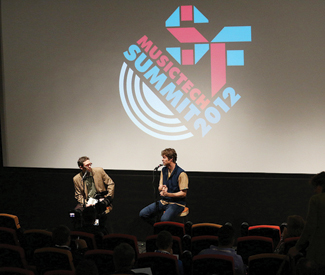
These questions may be answerless for now, but they maintained a heavy presence at the SF Musictech Summit hosted by the Hotel Kabuki — a semiannual conference dedicated to establishing a network among entrepreneurs, developers, record industry figures, and musicians in order to promote digital music business and find solutions for the issues plaguing the modern music industry.

Last week’s installment of the summit featured five talks — in panels with labels like “How Technology Destroyed the Music Industry” and “Artist Revenue Streams.”

It also brought some star power. Actor-musician Jared Leto’s interest with this budding industry brought him to the summit too. And despite the formal nature of the occasion, the 30 Seconds to Mars front person was besieged by attendees eager to get his take on the event, and his autograph. He told me that he’s “curious as to what solutions are being presented.”

But as the summit carried on, it became very became apparent that there are perhaps too many of these solutions being offered. In one of the early morning talks entitled “Artist Tools” moderator Hisham Dahud from Hypebot and Fame House kicked off the conversation by mentioning many of the new ways bands can distribute and promote their music and interact with their fans but also opined that “with new tools comes new responsibilities.”

http://www.youtube.com/watch?v=f7EaMxpKZZU

These new tools were well represented by David Dufresne of Bandzoogle, which designs web pages for bands, Matt Mason of file distributor BitTorrent, and David Haynes of the online audio platform SoundCloud. CEO of Global Digital Impact Taynah Reis and music industry veteran and Incubus manager Steve Rennie rounded out the panel.

During the discussion, Rennie’s stance was welcoming of the technological development, but later, when I asked him if the new digital music business could provide substantial income for the artist, he said, “I sure hope so. The fact is that more people are listening to music than ever but they are doing it different ways, including listening without buying…as people move to other formats like digital downloads and streaming services, we need more people to get comfortable with the idea that music has value and is worth paying for…We need to convince people that their favorite music is worth buying just as much as the beer they’ll spend $10 on at a concert or sporting event.”

The motivation and excitement to transform nearly every aspect of the music business was palpable at the summit. Elevator pitches were as ubiquitous as iPhones and Macbooks. However the fresh idealism was notably absent at the “Artist Revenue Streams” talk where musician Erin McKeown took center stage detailing the sobering situation independent musicians face, explaining that some obvious solutions aren’t so great

“Everyone keeps telling me to tour but the reality is that live performance revenue gets mostly eaten up by the costs and not to mention it’s also extremely taxing on my health”

But more importantly, McKeown emphatically addressed the one crucial issue that was sorely lacking attention throughout the conference: how are musicians suppose to keep up with and derive income from the rapidly evolving environment of music technology? Others on the panel brought up the fact that a lot of artists are unaware of nonprofits such as SoundExchange — an organization with the main goal of compensating artists for their royalties.

The Internet has been lauded as the great democratizer of this generation, and the adage was especially poignant for this specific realm of the digital world. Cellist and composer Zoë Keating, who spoke at the “Artists, Entrepreneurs & Technology,” panel expressed that digital music business caused her to be optimistic and it’s a more level playing field that’s “better for indie artists.” Keating has posted her 2011 income streams on her Tumblr to give her fans a glimpse of the financial situation her and other independent artists are grappling with.

No one seemed more interested in seeing the old music business vanquished than TuneCore founder (and former CEO) Jeff Price, who emphatically declared, “Artists never made any fucking money! What fucking world are you living in?!…The music industry is not collapsing, the traditional music industry is collapsing!” *


SF Stories: Mattilda Sycamore Bernstein

1

San Francisco was where I first learned to gasp and grasp at the possibilities of radical queer self-invention and communal care. This was 1992. I was 19: childhood meant suffocation, college was pointless shit. All around me, people were dying of AIDS and drug addiction and suicide, but finally I was finding other queer incest survivors, whores, vegans, runaways, anarchists, dropouts, drug addicts, sluts, activists and freaks trying not to disappear. We were scarred and broken and brutalized but determined to create something else, something we could live with, something we could call home or healing or even just help, I need help here, can you help?

Of course, we were not the first wave of queer migration to San Francisco in search of ways to cope and hope, visions of lust and love not bounded by convention, brazen challenges to the violence of status quo normalcy. But learning how to dream is always a difficult process. It’s what we needed one another for.

And yet, there is a certain kind of smugness in queer San Francisco, this sense that we have arrived, that we’ve done our work, that we’ve created something beyond the twin traps of gay assimilation and straight normalcy. The problem is that often a sophisticated rhetoric camouflages the same tired patterns of abuse and neglect, and this hurts more when it comes from those you believe in, right? I know that it has hurt me more.
Let me tell you about the friend who will always be there, no matter what. We met when I was 19: we held one another and broke apart walls. We tried to share everything about our lives, and then when we ran out of things to disclose we dug deeper. This relationship lasted for 16 years, but I lost it all when I told this friend he was the most important person in my life. I told him I felt confident about the longevity of our relationship, about our intimacy and our trust, but I never felt secure because of the five-year period when he lied about everything due to a disastrous alcoholism, a five-year period he kept telling me he’d gotten past. It’s true that he wasn’t drinking anymore. When I told him I still didn’t feel secure, I thought he would ask me what he could do, but instead he became enraged, and our relationship was over.

This is just one example of the gap between rhetoric and reality; there are too many. When I arrived in San Francisco in 1992, the city sheltered outsider queer cultures unimaginable in most places. Twenty years of gentrification, homogenization, and assimilation later, and yes, these cultures still exist in some form, even if they have been decimated in both density and imagination. Perhaps what’s changed the most for me is that now I need to live elsewhere in order to dream.

Mattilda Bernstein Sycamore (mattildabernsteinsycamore.com) is most recently the editor of Why Are Faggots So Afraid of Faggots?: Flaming Challenges to Masculinity, Objectification, and the Desire to Conform. Mattilda’s next book, The End of San Francisco, will be out in April 2013 from City Lights—it might break your heart.

Living the dream of the 1840s

0

MUSIC There’s no better time for local composer Jake Heggie’s 2010 opera Moby-Dick to wash up on our shores, especially in terms of men’s fashion. Seriously — peacoats galore, henleys-and-suspenders perfection, button-up trousers, glorious galoshes, and perfectly nor’easter-tousled haircuts, not to mention a stubbly wealth of seafarin’ beards. The whole cast, outfitted by ace costume designer Jane Greenwood, might have dropped onto the stage from this fall’s All Saints Spitalfields lookbook. Forget the neoprene hoodies and double-breasted suitcoats of America’s Cup, here lies the real echo of San Francisco’s nautical past.

That echo emanates from Herman Melville’s water-logged epic of 1851, a massive compendium of American Romantic sensibility, arcane sea lore, fiery pagan-ecclesiastical poetry, and the archetypal thrashings of mad Ahab, captain of the Pequod, as he obsessively hunts his nemesis, the “great white fish” who nipped away with his left leg years ago, Moby-Dick. The book is also a full-throated exaltation of the culture of the North Atlantic whale trade, at its peak in the 1840s, and a furrowed-brow examination of humanity’s spooky morality, not to mention a rip-roaring, man’s-man adventure tale (complete enough homoerotic subtext to float a sperm whale).

Boiling all this down into an evening’s entertainment, even one as splashy and spectacle-drenched as opera can provide, is a bit like chasing a white whale itself. Fortunately, Heggie — who triumphed with 2002’s Dead Man Walking — and librettist Gene Scheer, along with a more-than-game San Francisco Opera cast and crew, dive right in.

Moby-Dick immediately grabs attention and grounds itself in the Bay Area (the production debuted at the Dallas Opera) with an eye-popping display of one of our native crafts, digital sorcery. Projection designer Eliane J. McCarthy’s gorgeous 3-D renderings of star-maps and ships’ masts engulf the curtain as Heggie’s roiling, swooning overture guides us into the story. The rest of the production and staging throughout this two-and-a-half hour work, directed by Leonard Foglia with set design by Robert Brill, is equally jaw-dropping, with mobile scrims doublings as sail, a web of rigging filling the stage, and ingenious use of a humongous hull-shaped wall.

Another of Moby-Dick‘s riveting special effects: the SF Opera chorus, in fine and lusty voice, vocally painting in the details of the story. That story contrasts the touching friendship of greenhorn whaler Ishmael and harpooner Queequeg, cannibal prince of fictional South Sea isle Kokovoko, with the contentious relationship between the driven Ahab and his first mate, Starbuck, a homesick family man and devout Quaker who sees the Devil’s work in Ahab’s doomed quest. One of the most affecting characters is Pip, the impetuous and mentally unformed ship’s mascot, whose unhinged ramblings after he’s saved from drowning serve as warped prophecy as the opera progresses.

There’s so many meaty possibilities for a composer in this story, but if you’re expecting “yo-ho-ho and a bottle of rum” performed by full orchestra you’re barking up the wrong mizzenmast. To be sure, Heggie’s cinematic, neo-Romantic instincts — he prefers the term “theatrical,” and sometimes we do drift into Les Miz territory — make hay with sea storms, crashing waves, drunken brawls, and the melancholy feel of life adrift on the ocean. (A goofy-cute waltz comes on when the ship’s tipsy crew realize they’ll just have to partner up if they want to party, one of the few funny bits.) Heggie’s white whale is a shimmering arabesque, breaching a swirl of strings and cresting horns, at one momentous climax exploding into an off-kilter samba.

The score is mostly atmospheric, however, its foreboding drama cranked up to eleven throughout, with little standout melody or tonal attenuation to help the characters’ souls drop anchor. Despite a few memorable moments of soaring vocal lines — a duet in praise of Kokovoko’s Edenic promise by Queequeg (Jonathan Lemalu, imposing) and Ishmael (Stephen Costello, cubbishly adorable), sung from neighboring masts ; Starbuck’s ode to homelife back in Nantucket (performed by wonderfully powerful baritone Morgan Smith); the occasional cryptic outbursts of Pip (spry soprano Talise Trevigne, who does a bit of magic with a tambourine) — you’ll have to cling to the singers’ voices and acting technique if you want to keep emotionally afloat.

This becomes a problem with Jay Hunter Morris in the Ahab role. Although strongly voiced and valiantly game, he didn’t connect with me as a man who was truly obsessed, yet who retained enough charisma and cunning to draw the rest of the crew into his singular madness. His role struck me more as “friends’ crazy Tea Party dad” than “scarily fascinating apocalyptic cult leader.”

This could be a wrinkle of the libretto, which retains some of the original’s poetry and blasphemy — a pagan hymn here, an anti-religion diatribe there — but strains to convey an engaging dramatic arc for the characters. (It barely registers when all is lost for the Pequod.) In its earnest bluster, this presentation of the opera also skims over Melville’s haunting metaphysics, the eerie pull of nihilistic depths, the ecstatic fog of moral derangement, that preternatural whistle in fate’s vast gale. I disembarked from the rousing Moby-Dick dazzled and exhausted, though neither questing nor blubbering.

MOBY-DICK through Nov. 2, various times, $10–$340. War Memorial Opera House, 301 Van Ness, SF. www.sfopera.com


Bat-hurt

10

le.chicken.farmer@gmail.com

CHEAP EATS After the game we went to the Pilsner Inn to drink with the other team and watch the 49ers. Who, btw, ended up winning that Sunday by twice as much as we did.

Our relatively new li’l football team, like the big ol’ San Francisco one, is developing an identity as a defensive powerhouse. I like this. It was the talk of the opposition, down the bar: how we had befuddled the bejesus out of them, to the tune of four interceptions, two returned by Stringbean for touchdowns, and a fumble recovery.

Their quarterback, who sat next to me at the bar with a gigantic oozing turfburn on her leg, revisited these frustrations smilingly, and with compliments all-around. I doubt the Bills were so gracious, bellying up to the bar with the Niners later that afternoon, but I imagine they oozed too. Football is a tough sport, even when you play it with flags.

But baseball hurts more.

How I know is the next day I was at the Mission Playground with Hedgehog playing one-on-one baseball on the basketball court, and she lined one off my arm, then another one into my stomach, and then a third off the top of my knee.

Now that she’s been cleared to swing a bat, she just won’t leave me alone. She’s making up for lost time, baseballwise. But gets bored easily with soft toss, which is a shame, because really that’s the safest way to perfect your swing in an outdoor basketball court.

So now I am blacker and bluer than ever. And I am soaking in the tub with a package of frozen edamame on my knee, listening to postseason baseball and reading Great Expectations. Re-reading. Technically, if you must know: re-re-re-re-reading.

CHEAP SPORTS

by Hedgehog

I missed Chicken Farmer’s FMOIBWFIOBPFFL (female, male, or otherwise-identified bio-women and female-identified other-bodied persons flag football league) game on Sunday because I had a pre-production meeting with Pork Chop Sal, my right hand gal (Chicken Farmer gets the left because she broke it. And because I’m left-handed so, you know…) We’re in pre-production on the next short movie.

Yes: already.

And no, you’re not working on it.

Why not? You really should be. Chicken Farmer caters, I boss people around … It’s just like any other day in the Chicken Farmer/Hedgehog household except there’s a camera rolling and Earl Butter sits on our couch more, often with the Maze, cracking wise.

Anyways, Sugoi Sushi popped up at Hill and Valencia back in July-uary, around about the same time we popped back into town. Like us, they decided to stay. Which is good because it took us a while to get there. It took us until Monday, when the sushi mood struck. And then again on Wednesday, because Bikkets and her mister were in town and the sushi mood struck them, too.

I’m no food writer but both times the sushi was fresh, the ramen was firm, the waitstaff was friendly, and they brought little treats to the table. For free! Can’t get cheaper than free. The things with prices attached aren’t overly pricey, either. It’s Chicken Farmer’s new favorite restaurant. But be warned: spicy doesn’t mean the same thing to Sugoi as it does to the rest of the world. So don’t expect much heat out of the spicy sausage.

It’s more like smoky, teeny kielbasa.

Cheap Eats continued

But delicious nonetheless. It reminded me a little of longanisa, those little Filipino sausages I so love.

It was the treats I took issue with. A mayonnaise-having dynamite roll one night, and mushrooms the other. And if there are two things that start with m that I don’t like, those are them.

But Hedgehog is right: You can’t argue with free.

As for her over-acronymization of the SFWFFL, I can argue … but won’t.

SUGOI SUSHI

Mon-Thu 5:30-10:30pm; Fri-Sat 5:30-11pm; Sun 5-9:30pm

1058 Valencia, SF

(415) 401-8442

AE,D,MC,V

Beer & wine


SF Stories: About the illustrator

0

For the special issue marking the 46th anniversary of the Guardian, we gathered stories about the city from some of the its best writers. To illuminate the text, we asked ace San Francisco fine artist and illustrator Lisa Congdon to paint a series of images representing contemporary San Francisco iconography. Lisa is best known for her colorful paintings and collages, and her vast catalog of work includes illustrations for Chronicle Books, Harper Collins Publishing, and Simon and Schuster, among others. She’s also known for her hand-lettering and pattern design, and keeps a daily blog of her work called “Today is Going to be Awesome.” She lives in the Mission District of San Francisco with her partner, chihuahua, and two cats. 


Boozy shakes

1

virginia@sfbg.com

APPETITE A wave of old fashioned soda fountains serving alcoholic and non-alcoholic treats alongside quality food is hitting various parts of the country, with two notables in San Francisco.

I’ve already written about the incredible, one-of-a-kind Ice Cream Bar (815 Cole, SF. 415-742-4932, www.theicecreambarsf.com). Reviving the lactart, phosphate, and traditional sassafras root beer, it reaches past the 1950s all the way back to the 1890s. Recent changes at the family friendly shop include the launch of a food menu of comfortable diner fare and the gain of a beer and wine license.

An egg salad sandwich — made with slices of thick, house-baked brioche and served with a pickle and roasted vegetable salad or house-made sweet potato chips, as with all sandwiches here — is soft and lively, with chives, arugula, and the clincher: pimento cheese. My favorite, the tuna melt, evokes childhood, elevated by Gruyere cheese, organic tomatoes, and arugula.

There’s one “must” on the new alcoholic section of the soda fountain menu: a classic Angostura phosphate. Fizzy with acid phosphate, gum foam and soda, a heavy pour of Angostura Bitters makes for a spiced beauty, conjuring fall and winter simultaneously. Can’t Stop is a notable dessert of butterscotch syrup, whole egg and cream, effervescent with Drakes Bay Hefeweizen (adding notes of grain and hay), topped with a musky Carpano Antica vermouth float.

Joining Ice Cream Bar in the fountain revival is the new Corner Store (5 Masonic Ave., 415-359-1800, www.thecornerstore-sf.com), in the old Hukilau space, from 330 Ritch business partners Miles Palliser and Ezra Berman. Old-fashioned in ethos, contemporary in style, this all-day restaurant and fountain serves sodas, candy, beer, wine, and gourmet food. The airy space and outdoor sidewalk patio nod to an era gone by. The menu seems straightforward, but dishes become more intriguing at second glance.

Chef Nick Adams (Salt House, Town Hall) elevates the umpteenth roasted beets plate ($8) with Greek yogurt, candied almonds, purslane, and radicchio in honey vinaigrette: it’s sweet, nutty, earthy, and creamy. Likewise, house smoked salmon ($10) goes well beyond the usual piece of salmon with potato pancake. An herb-laden egg salad flanks a crisp potato pancake, multiple slices of silky, fresh salmon, and mound of lettuce.

Whether a burger ($12) laden with aged cheddar, pickled red onions, pickles and bacon jam, or a fried green tomato sandwich ($9) with burrata and avocado at lunch, items between bread are done right here. Thoughtful $16 entrees are a steal compared to similar dishes at greater cost elsewhere in town, like Snake River pork loin ($16), co-mingling with fennel, marble potatoes, and pancetta, invigorated with shishito peppers and a zippy nectarine mostarda. A side of house brioche dinner rolls ($3) with honey butter and sea salt makes it homey.

Hans Hinrichs (25 Lusk, Foreign Cinema) helms a soda fountain menu of cocktails ($10), boozy shakes ($10), and sodas ($8), using local or American craft spirits whenever possible. Though not the journey through soda fountain history you’ll find at Ice Cream Bar, Hinrichs creates drinks that make you feel like a kid again… with booze.

The Muir Trail is a tribute to local nature, both in name and the use of St. George Terroir Gin, the Bay Area’s native gin. Hinrichs allows the gin to shine alongside tart huckleberry puree (huckleberry juice is infused with a sachet of spices, thinning it out with port wine reduction), dry vermouth, lemon, and bitters. Sans alcohol, Lone Mountain Egg Cream is dulce de leche and sea salt, creamy with milk, perky with seltzer, plus a number of bottled classic sodas like Cheerwine and Dang! Butterscotch Beer ($4).

Spirits-laden shakes induce cravings. 50/50 — spiced rum, orange marmalade, vanilla ice cream — is textured and rich with rum and marmalade, accented by strips of candied orange peel. My youthful favorite, a Grasshopper, is a minty dream with Tempus Fugit’s unparalleled Creme de Menthe and Creme de Cacao, vanilla ice cream, and a hint La Sorciere absinthe to perk up the mint.

Probably my favorite of all three boozy shakes is the Manhattan. Tasting like a real Manhattan, punchy with bourbon, sweet vermouth, cherry syrup, creamy with vanilla ice cream, bourbon shines though Hinrichs uses no more than one ounce of base spirit plus half-to-one ounce of any other liqueur in any given shake. It’s a perfect combination.


SF Stories: Alejandro Murguia

0


46TH ANNIVERSARY SPECIAL I saw Jack Micheline reciting Skinny Dynamite

on the corner of 16th & Valencia

and he was angry

and the next day he was dead on the last BART train to Concord

and maybe that’s why he was angry

I met Harold Norse shuffling around in a beaten world

his pockets stuffed with poems only hipsters read

It’s a cesspool out here he sighed

before retreating to his room in the Albion Hotel

where angels honeycomb the walls with dreams

and the rent is paid with angry poems

I heard Oscar Zeta Acosta’s brown buffalo footsteps

pounding the Valencia Corridor

and he was shouting poetry at the sick junkies

nodding with their wasted whores

in the lobby of the Hotel Royan “The Mission’s finest”

and even the furniture was angry

I joined the waiters at the bus stop

the waitresses the norteños trios the flowers sellers

the blind guitarist wailing boleros at a purple sky

the shirtless vagrant vagabond ranting at a parking meter

the spray paint visionary setting fire to the word

and I knew this was the last call

We were tired of living from the scraps of others

We were tired of dying for our own chunk of nothing

And I saw this barrio as a freight train

a crazy Mexican bus careening out of control

a mutiny aboard a battleship 

and every porthole filled with anger

And we were going to stay angry

And we were not leaving

Not ever leaving

El corazón del corazón de La Misión

El Camino Real ends here