Cheryl Eddy

GOLDIES 2012: Jamie Meltzer

1

GOLDIES He may be a filmmaker, but the inspiration for Jamie Meltzer’s first feature-length documentary came while he was flipping through the bins at a record store.

“I found this song-poem compilation,” Meltzer remembers. At the time, he was a San Francisco State University MFA student. “It was such an amazing, undiscovered-to-me subculture that I started making the film that day. It took me two years to go around and meet all of these song poets and musicians, but it really started in the record store.”

The end result morphed from thesis film into 2003’s Off the Charts: The Song-Poem Story, which aired on PBS and earned a cult following. It also opened professional doors for Meltzer; after thanking one of his undergrad professors in the film’s credits, he learned that his alma matter, Vassar College, was hiring in its film department. In 2007, he transitioned to his current teaching gig, at Stanford’s prestigious MFA program in Documentary Film and Video.

“I was happy to come back to San Francisco, of course, but I was also really happy to step into the documentary-centric environment at Stanford,” Meltzer says. “It’s almost like a documentary lab — between the students and other professors, we’re all thinking about documentary films, talking about them, studying them, making them.”

His follow-up to Off the Charts, 2007’s Welcome to Nollywood, takes on another “Who knew?” subject: Nigeria’s vibrant film industry.

“Nollywood is the third-largest film industry in the world, and they have this independent film model that makes a lot more sense than even what we have in the US. That just kind of blew my mind,” Meltzer says.

“But beyond just being a portrait of an industry, the film ended up being a complex story. There’s all sorts of questions of, are these quote-unquote good films, or is the value that they’re being made and consumed as kind of a self-representation? To me, Nollywood and Off the Charts were similar in that way: different people passionately making art, but not sure how well it will be received. The character of the dreamer against all odds, that outsized ambition — I think that’s a big parallel with independent filmmaking in general. You always believe in what you’re doing, but you’re not really expecting other people to believe in what you’re doing.”

Meltzer’s current film, Informant, premiered at the 2012 San Francisco International Film Festival, and has since been on a nonstop festival tour. The doc explores the strange life of Brandon Darby, a lefty activist turned FBI informant who helped send two 2008 Republican National Convention protestors to jail. He’s a polarizing guy, but the film, which is anchored by an extensive interview with Darby, invites the audience to draw their own conclusions. Complexity is once again an important theme.

“The main thing was to try to respect the complexity of Brandon, as a subject, as a person, because he has all these different facets,” Meltzer says. “His story’s very intense, and he was very sincere and conflicted in ways that I found really compelling. It brought up a lot of interesting moral territory and all these moral issues. Then you’d go and talk to Brandon’s activist nemesis, and he had a totally different take, and you’d find yourself agreeing with his story. So, to have that kind of character who can be seen from such different perspectives — that’s totally astounding. I really wanted to get that across in the film.”

Informant, which avoids making any tidy conclusions, reflects Meltzer’s own philosophy on documentary making.

“Some audiences have this idea that documentaries have to make very clear and usually politically-based arguments. And that’s the thing that I set out not to do. I think it’s great that the film creates a dialogue over, ‘What is documentary?’ People question my point of view, they question the point of view of Brandon and the other characters,” he says. “Hopefully they will start questioning other documentaries, too, and the notion of objectivity. Documentary filmmakers know that documentaries aren’t objective in the least. But I think audiences still aren’t entirely clear on that.”

Meltzer credits both the Bay Area filmmaking community (particularly Frazer Bradshaw, Informant‘s director of photography) and his Stanford colleagues (including numerous former students) for helping him make the film. “San Francisco has a lot of people who are committed to working on things that they believe in for little or no money, out of passion. That can’t be overstated,” he says.

So what’s next? Making Informant was so difficult, Meltzer confesses, that he thought it would be his last film. But then he heard about a group of exonerated men in Texas who’ve formed a detective agency to help other innocent people behind bars. “You can’t pass up those kind of ideas,” the filmmaker says. “You have to grab them when they come.”

No doubt it won’t end up being a simple story — but Meltzer will weave all of its threads into a captivating tale.


Presidents, secret agents, and true stories galore: new movies!

0

The election is over and, thank Zeus, good defeated evil. So you can stop making snarky Romney gifs and turn your attentions to more important matters — like seeing Lincoln (yeah, he was a Republican, but as Spielberg’s movie makes abundantly clear, Democrats were actually the bigger assholes back in the day). Or, you could see what ol’ James Bond is up to in his 4785th film, Skyfall (just kidding — it’s his 23rd, so Godzilla still has him beat). Reviews for both below the jump.

Elsewhere, DocFest opens tonight and runs through Nov. 21; check out my take on this year’s programming (spoiler alert: lots o’ good stuff) here; and read Dennis Harvey’s review of a very strange movie starring a very strangely coiffed Sean Penn, This Must Be the Place.

And … as if that would be everything going on in San Francisco’s film scene this week? Are you new in town? There’s also the San Francisco Film Society’s local showcase Cinema By the Bay (my overview here) and New Italian Cinema programs; the always-popular (and now 10th annual!) San Francisco Transgender Film Festival; and Marc Huestis’ multi-film tribute to the late, great Natalie Wood at the Castro.

PLUS more short takes, including the good word on Ursula Meier’s acclaimed Sister, below.

Dangerous Liaisons John Malkovich and Sarah Michelle Gellar may have already starred in pop culture’s favorite adaptations of this classic French novel, but since pretty people scheming never gets old, here’s a Chinese take on Les Liaisons dangereuses, complete with big-name cast and all the visual allure of 1930s Shanghai. “You are such a cad!” a woman shrieks at Xie Yifan (Jang Dong-gun) in the first scene, and indeed he is — though his heart belongs to “Miss Mo” (Cecilia Cheung). The malicious wager (if you seduce her and then horribly dump her, I’ll let you sleep with me … plus: incidental affairs along the way) is struck and things proceed on schedule, until Yifan finds himself actually falling for virtuous widow Fenyu (Zhang Ziyi). You know how it ends. Gorgeous costumes and mise-en-scène add visual interest to the familiar story, which also adds a little political flair in the form of Chinese students protesting the early days of Japanese occupation. (1:45) (Cheryl Eddy)

The Details One of the hardest hurdles to clear in watching Jacob Aaron Estes’s The Details might be the sight of Tobey Maguire, erstwhile boy-man and Spider-Man, inelegantly proposing to Elizabeth Banks (playing his character’s wife) that they put their small child to bed and F-U-C-K. On paper, or perhaps under the right mood lighting, that could work, but it’s not a sexy sight here, and it’s almost a relief when she turns him down. Far less appetizing intimacies lie ahead, though, as Maguire’s gynecologist and family man Jeffrey Lang triggers a sticky, unsalutary domino effect involving marauding raccoons, marital infidelity, enabling friends (Kerry Washington), unstable neighbors (Laura Linney), planning codes, pesticides, and kidney disease. Like Estes’s 2004 film Mean Creek, which he also wrote and directed, The Details shows us what can happen when baser human impulses meet unforeseen circumstances. There, it was children making painfully bad decisions. Here, we squeamishly watch Lang get caught, but the drama has a glossy, dark-comedy finish to it that prevents us from suffering too much as we witness his domestic life imploding. Dennis Haysbert plays a pickup basketball buddy/better human being drawn inexorably into the mess our protagonist has made; Ray Liotta, a husband made irate by Lang’s misjudgments. (1:31) (Lynn Rapoport)

Lincoln Distinguished subject matter and an A+ production team (Steven Spielberg directing, Daniel Day-Lewis starring, Tony Kushner adapting Doris Kearns Goodwin, John Williams scoring every emotion juuust so) mean Lincoln delivers about what you’d expect: a compelling (if verbose), emotionally resonant (and somehow suspenseful) dramatization of President Lincoln’s push to get the 13th amendment passed before the start of his second term. America’s neck-deep in the Civil War, and Congress, though now without Southern representation, is profoundly divided on the issue of abolition. Spielberg recreates 1865 Washington as a vibrant, exciting place, albeit one filled with so many recognizable stars it’s almost distracting wondering who’ll pop up in the next scene: Jared Harris as Ulysses S. Grant! Joseph Gordon-Levitt as Robert Lincoln! Lena Dunham’s shirtless boyfriend on Girls (Adam Driver) as a soldier! Most notable among the huge cast are John Hawkes, Tim Blake Nelson, and a daffy James Spader as a trio of lobbyists; Sally Field as the troubled First Lady; and likely Oscar contenders Tommy Lee Jones (as winningly cranky Rep. Thaddeus Stevens) and Day-Lewis, who does a reliably great job of disappearing into his iconic role. (2:30) (Cheryl Eddy)

Sister Twelve-year-old Simon (Kacey Mottet Klein) looks like any other kid vacationing with a family on the slopes of a Swiss ski resort. That’s a big plus, because he’s not one of them — he’s a local living “downhill” in an anonymous high-rise apartment block, sustaining himself and his pretty but irresponsible older sister Louise (Léa Seydoux) by stealing expensive sports equipment and clothes from the oblivious guests. He has no guilt about what he does, but then why should he? Those people are rich, he’s not, and sis’ short attention span toward jobs and boyfriends isn’t going to pay the rent. Ursula Meier’s French-language second feature isn’t heavily plot-driven, though it doesn’t feel like a second is wasted. The casual, somewhat furtive relationships that develop between Simon and stray adults who glean enough to worry about him — a seasonal restaurant worker (Martin Compston), a maternal resort guest (Gillian Anderson), Louise’s better-than-usual new beau (Yann Tregouet) — come and go but are toeholds on stability for him. It’s the contrast between Simon’s aggressively take-charge premature adulthood and his unaddressed needs as a child that ultimately make Sister rather devastating. It’s been aptly compared to the Dardenne Brothers’ similar dramas, but Meier lets her film’s heart beat a little more in open empathy with its protagonist while aping those Belgians’ brisk surface objectivity. (1:37) (Dennis Harvey)

Skyfall Top marks to Adele, who delivers a magnificent title song to cap off Skyfall‘s thrilling pre-credits chase scene. Unfortunate, then, that the film that follows squanders its initial promise. After a bomb attack on MI6, the clock is running out for Bond (Daniel Craig) and M (Judi Dench), accused of Cold War irrelevancy in a 21st century full of malevolent, stateless computer hackers. The audience, too, will yearn for a return to simpler times; dialogue about “firewalls” and “obfuscated code” never fails to sound faintly ridiculous, despite the efforts Ben Whishaw as the youthful new head of Q branch. Javier Bardem is creative and creepy as keyboard-tapping villain Raoul Silva, but would have done better with a megalomaniac scheme to take over the world. Instead, a small-potatoes revenge plot limps to a dull conclusion in the middle of nowhere. Skyfall never decides whether it prefers action, bon mots, and in-jokes to ponderous mythologizing and ripped-from-the-headlines speechifying – the result is a unsatisfying, uneven mixture. (2:23) (Ben Richardson)

This much is true

0

cheryl@sfbg.com

FILM The San Francisco Documentary Film Festival returns for its 11th year with a typically strong program — whether you like your docs quirky, political, musical, experimental, or just plain strange, DocFest has you covered. Plus, there’s an “80s New Wave Sing-a-Long,” because who doesn’t love screaming Spandau Ballet with a few hundred pals? Read on for more recommendations.

Sorry, recent San Francisco transplants, but you’ll never get to experience the Jejune Institute, an alternate reality game that started attracting players in 2008 and closed up shop in 2011. Participants, lured by flyers or word-of-mouth, began by visiting an office on California Street, where they’d watch a video imparting new age philosophy; they’d then be given instructions for a sort of scavenger hunt in nearby Chinatown. They learned of a missing girl named Eva, and of new meanings for the words “elsewhere” and “nonchalance.”

Was it real? Was it fake? Whatever the truth, it was definitely fun for dedicated players, for whom the narrative continued and got more complicated; there were spontaneous dance parties, a subterranean rescue mission, and a culminating seminar on “socio-reengineering.” The genius of Spencer McCall’s The Institute  is its tone. Some interviewees are clearly in character, while others — including creator Jeff Hull, who cites Oakland’s Children’s Fairyland as an inspiration — proffer both straight talk and ambiguity, keeping some of the mystery of this fake-cult-that-earned-a-cult-following alive.

Another locally-made film, Sam Banning’s thoughtful Cruel and Unusual, takes a look at the negative effects of California’s Three Strikes Law (and by the time DocFest starts, you’ll know if Proposition 36, aimed at reforming the law, has passed). The film charts several cases, including the ordeal of Kelly Turner, sentenced to life for the decidedly non-violent crime of forging a check. Her story has a happy ending, but as the film shows, she’s one among thousands who’ve received similarly harsh sentences for proportionally minor crimes.

Broadway stardom has always been an elusive prize, but it’s become an even tougher pursuit now that many musicals compete for ticket buyers by casting high-profile film and TV actors. Stephanie Riggs’ The Standbys  goes behind the scenes with three professional understudies. Even if you’re not a musical-theater fan, it’s not hard to sympathize with these folks — “Gotta dance!” types who suffer the psychological strain of always being ready to not perform. (And on the rare occasion they get to step in, they inevitably face a cranky, disappointed audience: “Who’s this clown? Where’s Nathan Lane?”) The lifestyle fosters more offstage drama than on, as when the affable Ben Crawford finally ascends to leading-man status in Shrek the Musical — a triumph after all those hours spent sitting backstage in elaborate greenface — only to be set adrift when the show closes.

As careers go, show biz is brutal, but politics may be worse, and Ann Richards’ Texas is probably the most inspiring yet depressing film in DocFest. That’s not the fault of filmmakers Keith Patterson and Jack Lofton, but rather history itself: the feisty, big-haired Texas liberal was knocked out of office by George W. Bush, her opponent in the 1995 gubernatorial race. But just because Texas has gone the way of Bush and (ugh) Rick Perry shouldn’t take away from Richards’ considerable accomplishments — like her prison-reform work, among the good turns detailed here — or diminish her personality, which was as towering as her coiffure.

Though numerous famous friends and admirers (Dolly Parton, Bill Clinton) chime in with words of praise, the footage of Richards just being Richards (at press conferences, on talk shows, and giving speeches — particularly her instantly legendary appearance at the 1988 Democratic National Convention) speaks for itself. If only Richards, who died in 2006, was still around; there’d be no one better suited to rip into the current crop of women-hating Republicans.

Shot like a thriller, Thymaya Payne’s Stolen Seas is an eye-opening exploration of Somali piracy, with re-enactments (using actual audio recordings) of tense ransom negotiations between a Danish shipping company executive and a man retained by pirates to act as their translator. The film also delves into Somalia’s troubled history and recent past, exposing the origins of the piracy epidemic — surprise, surprise: the United States has a hand in it — and the purely business reasons why it will likely continue more or less unchecked.

Though it’s an East Coast tale, Bay Area activists may spot kindred spirits in the subjects of Suki Hawley and Michael Galinsky’s Battle for Brooklyn, about community members and business owners who organized against a fat-cat developer’s plan to construct the Brooklyn Nets’ new arena in their neighborhood. The central figure is Daniel Goldstein, a graphic designer turned rabble-rouser whose home is located within the project’s footprint. Filmed over seven years, Battle for Brooklyn offers a well-articulated takedown of the shady politics surrounding the deal, with the happy added bonus of seeing Goldstein marry a fellow activist and father a daughter as the fight progresses.

Two more to add to your list: Eating Alabama, filmmaker Andrew Beck Grace’s chronicle of his year-long quest to dine only on food grown by Alabama farmers (yeah, it sounds like a blog instead of a doc, but Grace’s adventures in local foodie-ism, which give way to broader insights, are thought-provoking); and Nisha Pahuja’s The World Before Her (also a recent selection at the 3rd I South Asian Film Festival), which reveals some startling contrasts and similarities between Miss India pageant contestants and girls who are being indoctrinated into the country’s Hindu fundamentalist movement.

SAN FRANCISCO DOCUMENTARY FILM FESTIVAL

Nov 8-21, most films $10-$12

Brava Theater

2781 24th St., SF

Roxie Theater

3117 16th St., SF

Shattuck Cinema

2230 Shattuck, Berk.

www.sfindie.com


Locally grown

0

cheryl@sfbg.com

FILM First and foremost, make it your business to see Jason Becker: Not Dead Yet, which is playing the San Francisco Film Society’s “Cinema By the Bay” series and the San Francisco Documentary Film Festival, both of which open this week. (See DocFest article elsewhere in this issue.)

Director Jesse Vile’s film shares some themes with The Sessions, in that its subject is a fiercely talented person who manages to be wildly alive despite being almost completely paralyzed. Hailing from Richmond in the East Bay, Jason Becker got his first guitar at age five as a Christmas present; it wasn’t long before his family realized he was a genuine riff-slingin’ musical prodigy. Home movies and MTV-style videos capture the teenage metalhead’s ascension from school talent shows to jam-packed arenas, and his delight at being hired for a highly sought-after gig in David Lee Roth’s post-Van Halen band.

He was just 20 — big-haired, wide-eyed, and fond of saying “Daaaang!” whenever anything took him by surprise — when he sought medical treatment for what he thought was a pinched nerve but what turned out to be ALS, or Lou Gehrig’s disease. Though his body deteriorated rapidly, his remarkably supportive family invented a way for him to communicate using only his eyes. Today, he can no longer play his beloved instrument, but he still makes music — and takes delight in embarrassing whoever’s “translating” for him by cracking off-color jokes.

Closing night selection CXL (from first-time feature director Sean Gillane and writers Theo Miller and Katherine Bruens) follows perpetually bummed-out writer Nolan (Cole Smith), whose Mission District existence is so realistic (oy, that awkward hipster house party) the film could only have been made by a local. Though he still pines for his ex, he falls for Cassie (Lisa Greyson), whose penchant for zany behavior lurches her dangerously close to Manic Pixie Dream Girl status: “I open random doors!” she exclaims when Nolan asks her what she does for fun. Groan.

But wait! Thankfully, CXL changes course before morphing into Ruby Sparks 2 — a dark plot twist ushers in a cheerfully surreal second half, as Nolan’s book, hilariously titled Dehydrated Tears, becomes an unexpected success, and his relationship with Cassie (and with reality) evolves in ways I won’t spoil here. A recurring sight gag has a pack of Nolans trailing behind the real one — suggesting that maybe there are parallel realities at play, or just a guy with a hell of a lot of personal baggage.

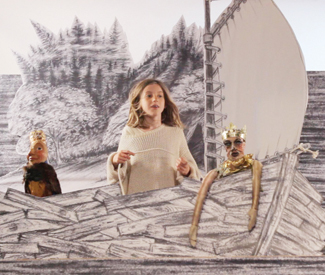
Finally, film fans will remember photographer Lucy Gray for “Big Tilda,” a piece that projected huge digital collages of actor (and San Francisco International Film Festival favorite) Tilda Swinton onto SF’s City Hall as part of SFIFF 2006. “A Conversation with Lucy Gray” includes a screening of her short film debut, Genevieve Goes Boating, about a playwright who pens a whimsical story about a girl who sets sail on a homemade boat — narrated by Swinton, of course. *


“CINEMA BY THE BAY”

Fri/9-Sun/11, $12–<\d>$25

New People Cinema

1746 Post, SF

www.sffs.org

Rep Clock

0

Schedules are for Wed/7-Tue/13 except where noted. Director and year are given when available. Double and triple features marked with a •. All times pm unless otherwise specified.

ARTISTS’ TELEVISION ACCESS 992 Valencia, SF; www.atasite.org. $6-10. “Bruised Jewels: Films and Slide Works by Luther Price,” Thu, 7:30. With Price in person; presented by SF Cinematheque. “Bright Mirror: An Evening of Sound and Image,” with Jeff Surak, Sylvia Schedelbauer, Jefre Cantu-Ledesma, and Paul Clipson, Fri, 8. “Other Cinema:” “Live A/V” with works by Lori Varga, Kerry Laitala, Anne McGuire, and more, Sat, 8:30. “Small Press Traffic: A Reading and Conversation with kathryn l. pringle, Erin Moure, and Andrea Rexilius,” Sun, 5. “Alain LeTourneau and Pam Minty: Empty Quarter,” Sun, 7:30. With LeTourneau and Minty in person; presented by SF Cinematheque.

BALBOA 3630 Balboa, SF; www.cinemasf.com. $10. The Doors: Live at the Bowl ’68, Thu, 8.

CASTRO 429 Castro, SF; (415) 621-6120, www.castrotheatre.com. $8.50-11. •The Game (Fincher, 1997), Wed, 1:30, 7, and Zodiac (Fincher, 2007), Wed, 4, 9:25. “An Evening with Ken Burns:” The Dust Bowl (2012), Thu, 7:30. Advance tickets ($12-18) at www.cityboxoffice.com. “Forever Natalie Wood:” •Rebel Without a Cause (Ray, 1955), Fri, 2:30, 7, and This Property is Condemned (Pollack, 1966), Fri, 4:45, 9:15; •Gypsy (LeRoy, 1962), Sat, noon, and Love With the Proper Stranger (Mulligan, 1963), Sat, 3; Splendor in the Grass (Kazan, 1961), centerpiece event with Natalie Wood’s sister, Lana Wood, in person, Sat, 7:30; West Side Story (Robbins and Wise, 1961), presented sing-along style (this event, $10-15), Sun, 2; •Bob & Carol & Ted & Alice (Mazursky, 1969), Sun, 7, and Inside Daisy Clover (Mulligan, 1965), Sun, 9:05. •Lawless (Hillcoat, 2012), Tue, 7, and Killer Joe (Friedkin, 2011), Tue, 9:10.

CHRISTOPHER B. SMITH RAFAEL FILM CENTER 1118 Fourth St, San Rafael; (415) 454-1222, www.cafilm.org. $6.75-$10.25. All Together (Robelin, 2011), Wed-Thu, call for times. A Liar’s Autobiography: The Untrue Story of Monty Python’s Graham Chapman (Jones, Simpson, and Timlett, 2012), call for dates and times. The Other Son (Lévy, 2012), call for dates and times. “Johnny Legend’s TV in Acidland, Thu, 7 and Sun, 2. A Late Quartet (Zilberman, 2012), Nov 9-15, call for times. Sister (Meier, 2012), Nov 9-15, call for times. The Welcome (McMillan, 2011), Sun, 7. With Bill McMillan in person.

COUNTERPULSE 1310 Mission, SF; www.sftff.org. $12-15. San Francisco Transgender Film Festival: “Performance Extravaganza,” Thu, 8; films, Fri-Sat, 8; Sun, 7.

EMBARCADERO One Embarcadero Center, SF; www.sffs.org. $12-25. “New Italian Cinema:” “An Evening with Valeria Golino,” Sun, 5:30; Texas (Paravidino, 2005), Sun, 9; A Tale of Love (Maselli, 1986), Mon, 6:15; Respiro (Crialese, 2002); The Greatest of Them All (Virzi, 2011), Tue, 6:15; Kryptonite! (Cotroneo, 2011), Tue, 9. Series continues through Nov. 18.

FIRST UNITARIAN CHURCH OF SAN FRANCISCO 1187 Franklin, SF; www.billviola.com. $50-125. “Transformation from Within,” with video art pioneer Bill Viola and curator John Walsh, Fri, 7:30.

“NAPA VALLEY FILM FESTIVAL” Various North Bay venues; www.napavalleyfilmfest.org. First-run films and documentaries, plus tributes to Alan Cumming, James Marsden, and more, Wed-Sun.

NEW PEOPLE CINEMA 1746 Post, SF; www.sffs.org. $12-25. “Cinema By the Bay:” Trattoria (Wolos, 2012), Fri, 7 and 9:30; Casablanca mon amour (Slattery, 2012), Sat, 2:30; “Essential SF,” Sat, 5 (free admission); Jason Becker: Not Dead Yet (Vile, 2012), Sat, 7; Amity (Adams, 2012), Sat, 9:30; “Moving Image at the End of the World: Shorts from Headlands Center for the Arts,” Sun, 2; “A Conversation with Lucy Gray,” Sun, 4:15; The Revolutionary Optimists (Grainger-Monsen and Newnham, work in progress), Sun, 6; CXL (Gillane, 2011), Sun, 8:30.

PACIFIC FILM ARCHIVE 2575 Bancroft, Berk; (510) 642-5249, bampfa.berkeley.edu. $5.50-9.50. “Alternative Visions:” “The Films of John Smith,” Wed, 7. “Afterimage: The Films of Kidlat Tahimik, Indigenous:” Who Invented the Yoyo? Who Invented the Moon Buggy? (1979), Thu, 7; Perfumed Nightmare (1977), Tue, 7. “Grand Illusions: French Cinema Classics, 1928-1960:” Children of Paradise (Carné, 1945), Fri, 7; Grand Illusion (Renoir, 1937), Sat, 6:30; The Story of a Cheat (Guitry, 1936), Sat, 8:45; Toni (Renoir, 1934), Sun, 2. “Art for Human Rights: Ai Weiwei:” Ai Weiwei: Never Sorry (Klayman, 2012), Sun, 4:30.

ROXIE 3117 and 3125 16th St, SF; (415) 863-1087, www.roxie.com. $6.50-11. Bigfoot: The Lost Coast Tapes (Grant, 2012), Wed, 9:30; Thu, 9. Kiss Kiss Bang Bang (Black, 2005), Wed, 7:15. The Magnificent Pigtail Shadow (Cerio, 2012), Wed, 7:15. Miami Connection (Kim, 1986), Wed, 6:45. The Waiting Room (Nicks, 2012), Thu, 7. “City College’s Second Annual Festival of the Moving Image,” Thu, 7 and 9. San Francisco Documentary Film Festival, Nov 9-21. Visit www.sfindie.com for complete schedule.

VICTORIA 2961 16th St, SF; www.sfcult.org. $10. •Slaughter in San Francisco (Wei, 1974), Fri, 7, and The Warriors (Hill, 1979), Fri, 9.

YERBA BUENA CENTER FOR THE ARTS 701 Mission, SF; www.ybca.org. $10. “Animating Dark Dreams: The Films of Jan Svankmajer:” Alice (1989), Thu, 7:30; Lunacy (2006), Sun, 2; Little Otik (2000), Sun, 4:30. “Constancy of Change: Films of John Smith,” Fri, 7:30.

A sizzling tale

0

cheryl@sfbg.com

LIT Every San Franciscan has at least some knowledge of the city’s pre-1906 earthquake days (Gold Rush!), with the more curious able to rattle off a few more random tidbits (Emperor Norton!)

It’s possible, though, that no other San Franciscan hungers for historical facts like Robert Graysmith, a former San Francisco Chronicle journalist and cartoonist best-known for his true-crime classic Zodiac — the basis for the 2007 David Fincher film. He also wrote The Murder of Bob Crane, which was made into the 2002 film Auto Focus.

Graysmith’s latest is Black Fire: The True Story of the Original Tom Sawyer and of the Mysterious Fires that Baptized Gold Rush-Era San Francisco, which uncovers Mark Twain’s friendship with the real-life Sawyer — a colorful figure in the city’s early firefighting culture — and paints a detailed portrait of San Francisco, circa 1849-1866. It’s jam-packed with notable residents whose long-ago importance lingers in the city’s street names (Broderick, Brannan) — plus mustachioed hooligans and “The Lightkeeper,” an arsonist as mysterious as he was destructive. The book also spills over with highly unromantic descriptions of what day-to-day living must’ve been like: raucous, dangerous, and astonishingly muddy. I spoke with the longtime local about his latest tale.

San Francisco Bay Guardian How did you find out about the original Tom Sawyer?

Robert Graysmith Back in 1991, I saw this little article about “torch boys,” and I thought, “What’s this?” No names or anything. Basically, it was boy firefighters. Like with Zodiac, the Bob Crane book, and the Trailside Killer [in The Sleeping Lady: The Trailside Murders Above the Golden Gate], I always like to do the first book on a subject because you start from zero. You have to go to the actual records. You have to go live where the people did. You immerse yourself. You literally get to live what I call “the great adventure.”

So I decided I was going to write about these boy firefighters, because how could anyone not have written about them? A little bit later, I discovered there was an arsonist — the name I’ve given is a name I’d heard before, the Lightkeeper — who’d burned down all of San Francisco six times in 18 months. I thought, this is an even greater story! And then I came across the original Tom Sawyer, and I was going through these journals and diaries and things, and there’s Mark Twain, and they’re friends! Gradually it developed into the first biography of Tom Sawyer, and yet at heart it’s a true crime story about catching this arsonist, and the making of a great city.

But what I really came away with was, even without meeting Mark Twain, Tom Sawyer was a great man. He saved 90 lives at sea after an exploding steamboat tragedy, he fought for the rights of volunteer firemen, and who knows how many lives he saved during fires. As he said in interviews back in 1898, he’d been with the very first volunteer fire company in California. Every aspect of firefighting in San Francisco, Tom Sawyer encompassed that.

SFBG Even beyond Tom Sawyer, Black Fire talks quite a bit about firefighting history in San Francisco.

RG I love that. Isn’t that fascinating? [When I’m writing] I want to know every single thing. If a house is on fire, I want to know who lives there, who got out, how the fire started, the wind direction, the weather, the kind of food they ate. My goal is this: if Tom Sawyer came back today, he would say, “How did he know that?” I like to play that game with myself and I like to do that with the reader. I’d like the reader, at least once on every page, to say “I didn’t know that!”

But I hope I did a good job. I loved the book and I loved doing the drawings for it. [I had so much material that] the companion book, Black Water, is already done — it’s an incredible story, so I’m really counting on Black Fire doing well so we can bring it out. I can’t really tell you what it’s about, but there’s a lot of archaeology involved, and it’s the exact same time period, with a few of the same characters.

SFBG The characters in Black Fire are pretty memorable.

RG I love the characters, like “the ugliest man in San Francisco” — and maybe in the world, we weren’t sure! You’ve got a US senator, a gunfighter, boxing champs, con men. Incredibly bigger-than-life figures, and these are the guys who saved the city! In a city where everybody was terrible, these slightly bad guys were the heroes. They really were what held us together, pulling these water wagons up hills, fighting fires with tiny hoses. It was so overwhelming, the devastation — because we had paper houses, and they kept building the same houses over again. I love the fact that they fought against impossible odds and succeeded.

ROBERT GRAYSMITH

Nov. 15, 7pm, free

City Lights

261 Columbus, SF

www.citylights.com


True facts: there are at least 15 movies opening this week

0

Pack up the leftover Halloween candy and head to the movies this weekend — what better way to escape election-related craziness and/or rest your liver after all that LET’S GO GIANTS damage you just did?

Your options are pretty spectacular, as well: intriguing Israeli doc The Flat, in which a Jewish filmmaker learns his grandparents counted a Nazi couple among their social circle (my interview with director Arnon Goldfinger here); bonkers 1987 rock ‘n’ roll taekwondo spectacular Miami Connection (Dennis Harvey’s take on this newly discovered instant cult classic here)

Plus, RZA’s The Man With The Iron Fists, an homage to chopsocky classics (with, I’m assuming, a much better soundtrack); Denzel Washington playing an airline pilot whose secret drinking problem comes to light only after he prevents a plane from crash landing in Flight; and Deep Dark Canyon, a NorCal-set thriller by former locals Silver Tree and Abe Levy starring Ted Levine.

And that’s not even the end of it! Read on for video game characters run amok, two found-footage horror flicks, a musically-inclined Pacific Film Archive program, tributes to Tony Bennett (speaking of the Giants) and Monty Python’s Graham Chapman, and, I kid you not … even more.

Amber Alert An audition tape for The Amazing Race quickly turns into an epic chase in this low-budget “found footage” drama. Arizona BFFs Nate (Chris Hill) and Sam (Summer Bellessa, wife of director Kerry Bellessa) — and Sam’s teenage brother, shaky-cam operator Caleb (Caleb Thompson) — notice they’re driving behind the very Honda that’s being sought by an Amber Alert. “Following at a safe distance,” as advised when they call the cops, leads to high-decibel arguments about how to handle the situation — and for the next hour-plus, the viewer is trapped in a car with two people communicating only in nails-on-chalkboard tones. Amber Alert‘s nonstop bickerfest is so tiresome that it’s actually a relief when the child molester character starts taking an active role in the story. Not a good sign. (1:20) (Cheryl Eddy)

http://www.youtube.com/watch?v=ctkkn1qSYKw

The Bay Top-quality (i.e., realistically repulsive) special effects highlight this otherwise unremarkable disaster movie that’s yet another “found footage” concoction, albeit maybe the first one from an Oscar-winning director. But it’s been a long time since 1988’s Rain Man, and the Baltimore-adjacent setting is the only Barry Levinson signature you’ll find here. Instead, parasites-gnaw-apart-a-coastal-town drama The Bay — positioned as a collection of suppressed material coming to light on “Govleaks.org” — is a relentlessly familiar affair, further hampered by a narrator (Kether Donohue) with a supremely grating voice. Rising star Christopher Denham (Argo) has a small part as an oceanographer whose warnings about the impending waterborne catastrophe are brushed aside by a mayor who is (spoiler alert!) more concerned with tourist dollars than safety. (1:25) (Cheryl Eddy)

“Don’t Shoot the Player Piano: The Music of Conlon Nancarrow” The late Texarkana-born composer’s birth centenary is celebrated in this two-part (Fri/2 and Sun/4) program of films examining his unique contribution to 20th century music. Frustrated early on by the inability of standard musicians to play his incredibly complicated scores, he turned to composing for player pianos, with their greatly heightened capacity for producing density of notes and rhythms. A member of the American Communist Party, he returned from fighting fascists in the Spanish Civil War to discover the U.S. government had revoked the passports of many citizens with similar political convictions. As a result, in 1940 he moved to Mexico, where he remained until his death 57 years later — his reputation remaining an underground musicologists’ secret until the early 1980s, in large part due to his disinterest in fame and dislike of crowds (he’d always avoided any gathering of over five people). But in his last years he became much more widely known, thanks in large part to fans like fellow composer Gyorgy Ligeti, who in one documentary here calls him “the most important composer of our time,” comparing him to Beethoven and saying “his work is completely, totally different from [his contemporaries].” Among the movies screening are Uli Aumuller and Hanne Kaisik’s 1993 German Music for 1,000 Fingers, in which the reclusive, elderly subject allows us into his studio to explain his (still somewhat inexplicable) methodologies. The brand-new, hour-long Conlon Nancarrow: Virtuoso of the Player Piano offers a posthumous appreciation of his life, music and influence. It’s a first film from James Greeson, a professor of music at the University of Arkansas who knew the man himself. Also featured are several international shorts that provide interpretive visual complements to Nancarrow pieces. His widow and daughter, as well as kinetic sculptor Trimpin and composer-former KPFA music director Charles Amirkhanian will appear at both PFA programs. Pacific Film Archive. (Dennis Harvey)

http://www.youtube.com/watch?v=vXFOYmsYCTA

A Late Quartet Philip Seymour Hoffman is fed up playing second fiddle — literally. He stars in this grown-up soap opera about the internal dramas of a world-class string quartet. While the group is preparing for its 25th season, the eldest member (Christopher Walken) is diagnosed with early stage Parkinson’s. As he’s the base note in the quartet, his retirement challenges the group’s future, not just his own. Hoffman’s second violinist sees the transition as an opportunity to challenge the first violin (Mark Ivanir) for an occasional Alpha role. When his wife, the quartet’s viola player (Catherine Keener), disagrees, it’s a slight (“You think I’m not good enough?”) and a betrayal because prior to their marriage, viola and first violin would ”duet” if you get my meaning. This becomes a grody aside when Hoffman and Keener’s violin prodigy daughter (Imogen Poots) falls for her mother’s old beau and Hoffman challenges their marriage with a flamenco dancer. These quiet people finds ways to use some loud instruments (a flamenco dancer, really?) and the music as well as the views of Manhattan create a deeply settled feeling of comfort in the cold —insulation can be a dangerous thing. When we see (real world) cellist Nina Lee play, and her full body interacts with a drama as big as vaudeville, we see what tension was left out of the playing and forced into the incestuous “family” conflicts. In A Late Quartet, pleasures are great and atmosphere, heavy. You couldn’t find a better advertisement for this symphonic season; I wanted to buy tickets immediately. And also vowed to stay away from musicians. (1:45) (Sara Vizcarrondo)

A Liar’s Autobiography: The Untrue Story of Monty Python’s Graham Chapman Blessed with recordings made by Monty Python member Graham Chapman (King Arthur in 1975’s Monty Python and the Holy Grail; Brian in 1979’s Life of Brian) before his death in 1989 from cancer, filmmakers Bill Jones, Jeff Simpson, and Ben Timlett recruited 14 different animation studios to piece together Chapman’s darkly humorous (and often just plain dark) life story. He was gay, he was an alcoholic, he co-wrote (with John Cleese) the legendary “Dead Parrot Sketch.” A Liar’s Autobiography starts slowly — even with fellow Monty Python members Cleese, Terry Jones, Terry Gilliam, and Michael Palin lending their voices, much of the bone-dry humor falls disappointingly flat. “This is not a Monty Python film,” the filmmakers insist, and viewers hoping for such will be disappointed. Stick with it, though, and the film eventually finds its footing as an offbeat biopic, with the pick-a-mix animation gimmick at its most effective when illustrating Chapman’s booze-fueled hallucinations. In addition to opening theatrically, the film also debuts Fri/2 on premium cable channel Epix. (1:22) (Cheryl Eddy)

http://www.youtube.com/watch?v=SIIMFHcC1Fc

The Loneliest Planet Travel broadens, they say — and has a way of foregrounding anxiety and desire. So the little tells take on a larger, much more loaded significance in The Loneliest Planet when contextualized by the devastatingly beautiful Caucasus Mountains in Georgia. In this film by Russian American director and video artist Julia Loktev, adventuring, engaged Westerners Nica (an ethereal Hani Furstenberg) and Alex (Gael García Bernal) hire a local guide and war veteran (Bidzina Gujabidze) to lead them on a camping trip through the wilderness. They’re globe-trotting blithe spirits, throwing themselves into new languages and new experiences, though the harsh, hazardous, and glorious Georgian peaks and crevasses have a way of making them seem even smaller while magnifying their weaknesses and naiveté. One small, critical stumble on their journey is all it takes for the pair to question their relationship, their roles, and the solid ground of their love. Working with minimal dialogue (and no handlebar subtitles) from a Tom Bissell short story, Loktev shows a deliberate hand and thoughtful eye in her use of the space, as well as her way of allowing the silences to speak louder than dialogue: she turns the outdoor expanses into a quietly awe-inspiring, albeit frightening mirror for the distances between, and emptiness within, her wanderers, uncertain about how to quite find their way home. (1:53) (Kimberly Chun)

The Other Son The plot of ABC Family’s Switched at Birth gets a politically-minded makeover in Lorraine Lévy’s The Other Son, in which the mixed-up teens represent both sides of the Israel-Palestine conflict. When mop-topped wannabe rocker Joseph (Jules Sitruk) dutifully signs up for Israeli military duty, the required blood test reveals he’s not the biological son of his parents. Understandably freaked out, his French-Israeli mother (Emmanuelle Devos) finds out that a hospital error during a Gulf War-era evacuation meant she and husband Alon (Pascal Elbé) went home with the wrong infant — and their child, aspiring doctor Yacine (Medhi Dehbi), was raised instead by a Palestinian couple (Areen Omari, Khalifia Natour). It’s a highly-charged situation on many levels (“Am I still Jewish?”, a tearful Joseph asks; “Have fun with the occupying forces?”, Yacine’s bitter brother inquires after his family visits Joseph in Tel Aviv), and potential for melodrama is sky-high. Fortunately, director and co-writer Levy handles the subject with admirable sensitivity, and the film is further buoyed by strong performances. (1:53) (Cheryl Eddy)

http://www.youtube.com/watch?v=OCD00LLZmys

A Simple Life When elderly Ah Tao (Deanie Ip), the housekeeper who’s served his family for decades, has a stroke, producer Roger (Andy Lau) pays for her to enter a nursing home. No longer tasked with caring for Roger, Ah Tao faces life in the cramped, often depressing facility with resigned calm, making friends with other residents (some of whom are played by nonprofessional actors) and enjoying Roger’s frequent visits. Based on Roger Lee’s story (inspired by his own life), Ann Hui’s film is well-served by its performances; Ip picked up multiple Best Actress awards for her role, Lau is reliably solid, and Anthony Wong pops up as the nursing home’s eye patch-wearing owner. Wong’s over-the-top cameo doesn’t quite fit in with the movie’s otherwise low-key vibe, but he’s a welcome distraction in a film that can be too quiet at times — a situation not helped by its washed-out palette of gray, beige, and more gray. (1:58) (Cheryl Eddy)

http://www.youtube.com/watch?v=87E6N7ToCxs

Wreck-It Ralph Wreck-It Ralph cribs directly from the Toy Story series: when the lights go off in the arcade, video game characters gather to eat, drink, and endure existential crises. John C. Reilly is likable and idiosyncratic as Ralph, the hulking, ham-fisted villain of a game called Fix-It-Felix. Fed up with being the bad guy, Ralph sneaks into gritty combat sim Hero’s Duty under the nose of Sergeant Calhoun (Jane Lynch), a blond space marine who mixes Mass Effect‘s Commander Shepard with a PG-rated R. Lee Ermey. Things go quickly awry, and soon Ralph is marooned in cart-racing candyland Sugar Rush, helping Vanellope Von Schweetz (a manic Sarah Silverman), with Calhoun and opposite number Felix (Jack McBrayer) hot on his heels. Though often aggressively childish, the humor will amuse kids, parents, and occasionally gamers, and the Disney-approved message about acceptance is moving without being maudlin. The animation, limber enough to portray 30 years of changing video game graphics, deserves special praise. (1:34) (Ben Richardson)

http://www.youtube.com/watch?v=bLxP8snjdGc

The Zen of Bennett Landing somewhere between a glorified album making-of and a more depthed exploration, this documentary about famed crooner Tony of “I Left My Heart in San Francisco” fame shows him recording last year’s all-standards Duets II disc. His vocal collaborators are an eclectic — to say the least — mix of mostly much younger artists including Norah Jones, John Mayer, Carrie Underwood, Willie Nelson, and Andrea Bocelli. Some pairings are clearly a matter of commerce over chemistry, while others surprise — Lady Gaga is better than you might expect, while Aretha Franklin is certainly worse. Most touching as well as disturbing is his session with the late Amy Winehouse, whose nervous, possibly hopped-up appearance occasions his most gentlemanly behavior, as well as genuine admiration for her talent. (Others on the record, including Mariah Carey and k.d. lang, do not appear here.) Unjoo Moon’s rather mannered direction includes little displays of temperament from the octogenarian star, and glimpses of his family life (which extends well into his work life, since they all seem to be on the payroll), but just enough to tease — not enough to provide actual insight. Still, fans will find this less than-definitive portrait quite satisfying enough on its own limited terms. (1:24) (Dennis Harvey)

Support the Roxie’s Kickstarter campaign!

1

Yeah, I know — at this point, you have your email set up to funnel any messages with the word “Kickstarter” in them to go directly to spam. But for every CD you never receive or artist who seems to misappropriate her crowd-sourced dollars, there’s an honest cause that’s well worth whatever support ($5 minumum) you can toss its way.

For example: the new campaign for San Francisco’s beloved Roxie Theater, the second-oldest theater in the world and the oldest continuously running theater in the US — though I’d venture a guess programming in 1909 looked a little different than it does today. (Speaking of which, check out Dennis Harvey’s review of the mind-blowing Miami Connection, luring Roxie audiences into its cult starting this Friday.) The Roxie‘s eclectic schedule always features a mix of first-run films, one-off special events, local-filmmaker showcases, and film festivals (DocFest starts next week!)

In 2009, after weathering a financial hit when a partnership with the bankrupt New College fell apart, the theater became a non-profit; several successful fundraisers later, it’s almost reached a landmark goal. From the press release:

“The Roxie is launching a Kickstarter campaign to raise $60,000 to support the final phase of its transition to becoming a sustainable 501c3 non-profit. The proceeds will be used to support our 2012-2013 theater programming, events, and institutional upgrades including a redesign of the Roxie website.
 
The Kickstarter campaign features weekly shorts by filmmakers whose work has been impacted by the Roxie’s commitment to supporting independent filmmakers who take risks with non-traditional and experimental projects. Contributing filmmakers include: John Waters, Barry Jenkins, Lynn Hershman Leeson, Valerie Soe, Hima B., IndiFest, Jane Reed, Zachary Booth, Everything is Terrible, Scarlett Shepard, Chip Lord, Mike Ott, Atsuko Okatsuka, and Michael Tully. Dave Eggers will lend words of Roxie support to the campaign as well.”

Bla-zam! Do your part, San Francisco film lover, and kick in some bucks in honor of this valuable local resource. There are some pretty cool premiums for donating, including getting your name painted into one of the Roxie’s lobby murals (!), so head to the Kickstarter page and give whatever you can.

Rep Clock

0

Schedules are for Wed/31-Tue/6 except where noted. Director and year are given when available. Double and triple features marked with a •. All times pm unless otherwise specified.

ARTISTS’ TELEVISION ACCESS 992 Valencia, SF; www.atasite.org. $5-10. "Openscreening," Thu, 8. Struggle (Hill, 2012), Fri, 8. "Small Press Traffic: A Reading and Conversation with Dana Ward, Julian Brolanski, and Cynthia Sailers," Sun, 5. "Other Cinema:" Informant (Meltzer, 2012), Sat, 8:30.

BALBOA 3630 Balboa, SF; www.cinemasf.com. $10. Halloween (Carpenter, 1978), Wed, 10pm. New HD transfer; screens with a short doc about the film’s impact.

CASTRO 429 Castro, SF; (415) 621-6120, www.castrotheatre.com. $8.50-11. •Broken Flowers (Jarmusch, 2005), Wed, 3, 7, and The Swimmer (Perry, 1968), Thu, 5, 9. "Midnites for Maniacs: Celebrate the End of Days:" •Terminator 2: Judgment Day (Cameron, 1991), Fri, 7; Inception (Nolan, 2010), Fri, 9:30; and Halloween 3: Season of the Witch (Wallace, 1982), Fri, 11:59. One or all three films, $13. "Scary Cow Short Film Festival," Sat, 3. This event, $10-25; advance tickets at www.scarycow.com. Escape to Witch Mountain (Hough, 1975), Sun, call for times. •Hollywood to Dollywood (Lavin, 2011), Sun, call for times, and Gayby (Lisecki, 2012), Sun, call for times.

CHRISTOPHER B. SMITH RAFAEL FILM CENTER 1118 Fourth St, San Rafael; (415) 454-1222, www.cafilm.org. $6.75-$10.25. All Together (Robelin, 2011), Wed-Thu, call for times. "World Ballet on the Big Screen:" Swan Lake, from the Royal Ballet, London, Sun, 10am and Tue, 6:30pm. This event, $15. A Liar’s Autobiography: The Untrue Story of Monty Python’s Graham Chapman (Jones, Simpson, and Timlett, 2012), Nov 2-8, call for times. The Other Son (Lévy, 2012), Nov 2-8, call for times.

COWELL THEATER Fort Mason Center, SF; www.absinthe-films.com. $10. Resonance (Hostynek, 2012), Fri, 8:30. Backcountry snowboarding documentary.

PACIFIC FILM ARCHIVE 2575 Bancroft, Berk; (510) 642-5249, bampfa.berkeley.edu. $5.50-9.50. "Alternative Visions:" "Avant-Garde Masters: A Decade of Preservation," Wed, 7. "Behind the Scenes: The Art and Craft of Cinema with Editor Sam Pollard:" Mo’ Better Blues (Lee, 1990), Thu, 7; Style Wars (Silver, 1984), Sat, 8:15. "Don’t Shoot the Player Piano: The Music of Conlon Nancarrow:" Conlon Nancarrow: Virtuoso of the Player Piano (Greeson, 2012), Fri, 7. "At Jetty’s End: A Tribute to Chris Marker, 1921-2012:" Sans soleil (1982), Fri, 9:20; Music for 1,000 Fingers: Conlon Nancarrow (Uli Aumüller and Hanne Kaisik, 1993), Sun, 4. "Grand Illusions: French Cinema Classics, 1928-1960:" L’étrange Monsieur Victor (Grémillion, 1938), Sat, 6; La bête humaine (Renoir, 1938), Sun, 2.

ROXIE 3117 and 3125 16th St, SF; (415) 863-1087, www.roxie.com. $6.50-11. "Not Necessarily Noir III:" Near Dark (Bigelow, 1987), Wed, 6, 10; From Dusk Till Dawn (Rodriguez, 1996), Wed, 8. Sleepwalk With Me (Birbiglia), Wed-Thu, 7, 9. Rare, Thu, 6. More info at www.rarefilm.org. "TGIF vs. SNICK," clips from classic TV shows, Fri-Sat, 8. Miami Connection (Kim, 1996), Fri-Sat, 10:45. Ornette: Made in America (1984/2012), Sat-Tue, 6:45 (also Sat-Sun, 3, 5).

YERBA BUENA CENTER FOR THE ARTS 701 Mission, SF; www.ybca.org. $10. El Velador (Almada, 2011), Thu, 7:30; Sun, 2.

Past lives

0

cheryl@sfbg.com

FILM When filmmaker Arnon Goldfinger’s grandmother, Gerda Tuchler, passed away at 98, she left behind a Tel Aviv apartment crammed with a life’s worth of objects. As The Flat begins, Goldfinger and his family — particularly his mother, Gerda’s daughter Hannah — have just started clearing out drawers and closets, sorting through the possessions of a woman who apparently never threw anything away. The discovery of several vintage fox-fur stoles, complete with faces and paws, elicits much mirth.

But it’s while flipping through Gerda’s papers that Goldfinger hits pay dirt: a copy of Der Angriff, the newspaper founded by Nazi Minister of Propaganda Joseph Goebbels. The headline: “A Nazi Travels to Palestine.” The Nazi was Leopold von Mildenstein, an SS officer with an interest in Zionism. In 1933, he made the trip with his wife and a German Jewish couple named Kurt and Gerda Tuchler — Goldfinger’s grandparents, who moved there permanently a few years later.

This shocking revelation propels Goldfinger’s fascinating documentary forward. It’s part family history, as Goldfinger learns for the first time the tragic fate of his great-grandmother, and part old-fashioned mystery, complete with digging for clues in dusty archives and basements.

“I somehow got this feeling that I needed to grab my camera and film it,” he remembers over the phone from Tel Aviv, thinking back to the family’s first day in the apartment after Gerda’s death. “When I realized there was so much stuff over there, I thought maybe I could make a short film out of it. The line was: what can you learn about people from the stuff they left behind?”

Of course, he soon realized that a short doc wasn’t going to be enough. The Flat really began to take shape after he placed a phone call to the von Mildenstein’s elderly daughter, Edda — incredibly, still living at the house outside Düsseldorf where her parents had spent most of their lives. “This call completely blew my mind,” he says. “That was the minute I knew, this is it.”

A visit to the friendly but guarded Edda came next, followed by a return trip with Goldfinger’s curious (but remarkably reserved) mother in tow. With its many twists and turns, The Flat is the rare documentary about history that’s also loaded with suspense.

“Speaking broadly, being a German Jew, we are the kind of people who like to plan ahead,” the filmmaker says. “Every time I went to shoot a scene, and I thought ‘This is what’s going to happen,’ almost every time the opposite happened. It’s like the story was showing me what to do during the journey of making it.”

Though The Flat focuses on the past, Goldfinger wanted to avoid using animation, re-enactments, or other techniques to illustrate what he couldn’t film. “One of the key things for me was to try, through the present, to tell the past. For me, the real emotions lie in the present and the perspectives of people toward the past,” he says. “We also really tried to edit it as close as possible to the way I experienced it, so the audience could view the events through my eyes.”

Letters, photos, and a necklace given to Edda as a girl indicate that — against what would seem to be all logic — the Tuchlers and the von Mildensteins renewed their friendship after World War II. Though he was baffled by this, Goldfinger was even more affected by another discovery.

“If somebody had told me before that one day I would make a film about my family and the Holocaust, I would never believe it,” he says. “For me this is the most shocking, even more than the Nazis and von Mildenstein and my grandparents. To think that I had a great-grandmother, and she was a [Holocaust] victim, and nobody talked about it. All of my family, my mother, we were under the impression that we had no connection to it.”

The Flat first screened locally at the 2012 San Francisco Jewish Film Festival, but it’s been enjoying successful runs in Israel and Germany for months. In Israel, Goldfinger says, the film has become “an event.”

“My aim was to take something that is very singular and personal and try to see the universal emotions and implications of the story — something that is deep enough that many people can share,” he says. “But I was very surprised. From the very first screenings, people said, ‘It’s exactly like in our family.’ And what they meant is that in their families, they also didn’t ask questions, or they don’t know enough about their parents’ pasts. I think it goes to show you that many people share these feelings, and that they really identified with what happened onscreen.”


THE FLAT opens Fri/2 in San Francisco.

‘Cloud Atlas’ and more new movies, plus one new-old movie (‘Wake in Fright’)

3

A couple of potential Oscar contenders open this week: The Sessions, which could earn a nomination for John Hawkes’ portrayal of a paralyzed man seeking to (finally) lose his virginity; and Cloud Atlas, an sprawling, interesting-yet-flawed epic from Tom Tykwer, Lana Wachowski, and Andy Wachowski that might win some technical notices, though probably won’t earn any acting nods (however, the Many Faces of Tom Hanks could sneak in there). Short reviews of both films below.

In this week’s Guardian, read up on unsettling 1971 Australian film Wake in Fright, finally hitting US theaters this week, and the San Francisco Film Society’s “French Cinema Now” series, including a film starring Jane Fonda as an American expat in France (speaking flawless French, and looking pretty flawless, too).

Other new movies this week: Gerard Butler battles big (Bay Area!) waves in Chasing Mavericks; a teen (Nickolodean starlet Victoria Justice) chases her rascally little brother from one end of Halloween night to the other in Fun Size; a king (Korean dreamboat Byung-hun Lee) hires a lookalike actor to body-double him in Korean hit Masquerade; and people … uh, run shrieking from spooky stuff in video-game sequel Silent Hill: Revelation 3D.

Cloud Atlas Cramming the six busy storylines of David Mitchell’s wildly ambitious novel into just three hours — the average reader might have thought at least 12 would be required — this impressive adaptation directed (in separate parts) by Tom Twyker (1998’s Run Lola Run) and Matrix siblings Lana and Andy Wachowski has a whole lot of narrative to get through, stretching around the globe and over centuries. In the mid 19th century, Jim Sturgess’ sickly American notory endures a long sea voyage as reluctant protector of a runaway-slave stowaway from the Chatham Islands (David Gyasi). In 1931 Belgium, a talented but criminally minded British musician (Ben Whishaw) wheedles his way into the household of a famous but long-inactive composer (Jim Broadbent). A chance encounter sets 1970s San Francisco journalist Luisa (Halle Berry) on the path of a massive cover-up conspiracy, swiftly putting her life in danger. Circa now, a reprobate London publisher’s (Broadbent) huge windfall turns into bad luck that gets even worse when he seeks help from his brother (Hugh Grant). In the not-so-distant future, a disposable “fabricant” server to the “consumer” classes (Doona Bae) finds herself plucked from her cog-like life for a rebellious higher purpose. Finally, in an indeterminately distant future after “the Fall,” an island tribesman (Tom Hanks) forms a highly ambivalent relationship toward a visitor (Berry) from a more advanced but dying civilization. Mitchell’s book was divided into huge novella-sized blocks, with each thread split in two; the film wastes very little time establishing its individual stories before beginning to rapidly intercut between them. That may result in a sense of information (and eventually action) overload, particularly for non-readers, even as it clarifies the connective tissues running throughout. Compression robs some episodes of the cumulative impact they had on the page; the starry multicasting (which in addition to the above mentioned finds many uses for Hugo Weaving, Keith David, James D’Arcy, and Susan Sarandon) can be a distraction; and there’s too much uplift forced on the six tales’ summation. Simply put, not everything here works; like the very different Watchmen, this is a rather brilliant “impossible adaptation” screenplay (by the directors) than nonetheless can’t help but be a bit too much. But so much does work — in alternating currents of satire, melodrama, pulp thriller, dystopian sci-fi, adventure, and so on — that Cloud Atlas must be forgiven for being imperfect. If it were perfect, it couldn’t possibly sprawl as imaginatively and challengingly as it does, and as mainstream movies very seldom do. (2:52) (Dennis Harvey)

http://www.youtube.com/watch?v=1zu8lX8BA2w

Nobody Walks In Ry Russo-Young’s LA-set film, from a screenplay co-written with Lena Dunham, an alluring young woman named Martine (Olivia Thirlby) is welcomed into the Silver Lake home of psychotherapist Julie (Rosemarie DeWitt) and sound engineer Peter (John Krasinski), who has agreed to help Martine with the soundtrack for her film, destined for a gallery installation back in New York. While Martine’s film constructs a fiction around the fevered activities of the insect world, Russo-Young’s drifts quietly through the lives of its human household, offering glimpses of the romantic preoccupations of a teenage daughter (India Ennenga) and Julie’s interactions with one of her patients (Justin Kirk), and revealing a series of relationships hovering tensely on the border of unsanctioned behavior. The uncomfortable centerpiece is the intimacy that develops between Peter and Martine; tracking their progress through the family’s sprawling home as the two collect sounds for her project, the camera zooms in toward the sources, making the spaces the pair inhabit seem ominously small. Their eventual collision is unsurprising, but Peter hardly comes across as a besieged, frustrated family man. He tells Martine that “marriage is complicated,” but against the warm, appealing backdrop of his and Julie’s home life, it sounds like a pretty flimsy excuse for kissing a pretty, proximal 23-year-old. As for Martine, she seems not to need any rationale. But even factoring out the callousness of youth (or at least the genre of youth presented here), the film offhandedly suggests that the tipping point away from domestic happiness is depressingly easy to reach. (1:22) (Lynn Rapoport)

http://www.youtube.com/watch?v=Ywxrqt7so9s

Pusher A pusher has been pushed to the limit — this time around in a charm-free, deal-driven London. This remake of the Nicolas Winding Refn’s 1996 Danish hit was given the seal of approval by the Drive (2011) auteur, who took a role here as an executive producer, with Luis Prieto in the director’s seat. Prieto does his best to keep the pressure on at all moments, as small-time heroin dealer Frank (Richard Coyle, resembling Dominic West in urban-hustler safari mode) undergoes the worst week of his life. He appears to have a tidy little existence with goofy, floppy-haired cohort Tony (Bronson Webb) by his side and delicately beautiful stripper Flo (Agyness Deyn) providing sexual healing and safe harbor for his dough. He has just hooked up drug mule Danaka (Daisy Lewis) to bring back a batch from Amsterdam when acquaintance Marlon (Neil Maskell) hits him up for a large order. Frank goes to his supplier Milo (Zlatko Buric, reprising his role in the original), an avuncular sort who pushes baklava in space sprinkled with wedding-cake-like gowns. Frank already owe him money and can’t cover the heroin’s cost, but this is a business built on trust, as fragile as it is, and Milo likes him, so he goes along, provided Frank returns the money immediately. Those tenuous ties of understanding are tested when cops bust Frank and Marlon and the former must dump the dope in a park pond. He refuses to give up his connections to the cops but finds that the loyalty of others is being tested when it comes to threats, cash, and even love. Prieto is a more self-consciously lyrical moviemaker than Refn, choosing to a vaguely Trainspotting-style cocktail of lite surrealism and slightly cheesy low-budg effects like vapor-trail headlights to replicate the highs and lows of Frank’s joyless clubland hustle. Still, he makes us feel Frank’s stress, amid the fatalistic undertow of the narrative, and his sense of betrayal when Pusher’s players turn, despite a smalltime pusher’s workman efforts to shore up against the odds. (1:29) (Kimberly Chun)

http://www.youtube.com/watch?v=0Qc2fwGNLv4

Question One Question One goes behind the scenes of the 2009 campaign concerning the referendum which reversed legislature granting same-sex couples the right to marry in Maine. The film investigates both sides of the story, including marriage dreams of queer families and confessions of regret from the appointed leader for the Yes on One Campaign, Marc Mutty. Though listening to preachers and activists devalue love between two men or two women might make you cringe, the inclusion of these moments creates an emotionally tense experience that will remind you how important it is to bounce back from defeat. It shows that the next step will have to be more than just rallying voters, it will require a change in ideology — an understanding that gays who wish to marry deserve equal rights, not religious salvation. As Darlene Huntress, the director of field operations for the No on One Campaign says, “I want to sit down and break bread with these people. I want to sit down and say get to know me — open your mind up enough to get to know me.” (1:53) (Molly Champlin)

http://www.youtube.com/watch?v=Fy2y7UIpgP4

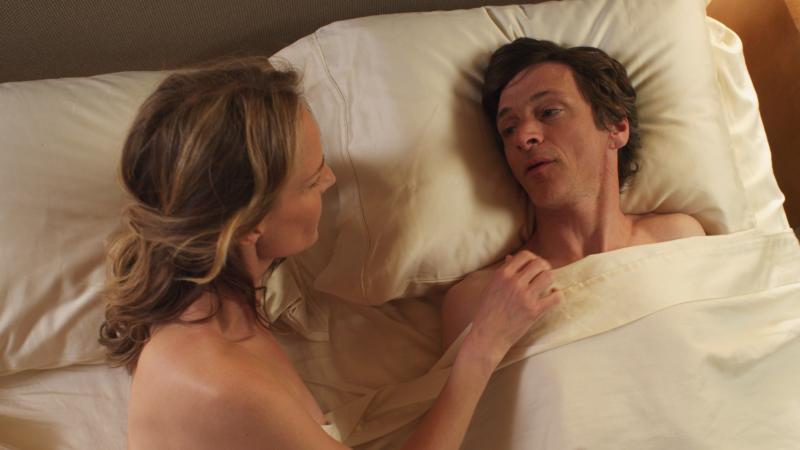
The Sessions Polio has long since paralyzed the body of Berkeley poet Mark O’Brien (John Hawkes) from the neck down. Of course his mind is free to roam — but it often roams south of the personal equator, where he hasn’t had the same opportunities as able-bodied people. Thus he enlists the services of Cheryl (Helen Hunt), a professional sex surrogate, to lose his virginity at last. Based on the real-life figures’ experiences, this drama by Australian polio survivor Ben Lewin was a big hit at Sundance this year (then titled The Surrogate), and it’s not hard to see why: this is one of those rare inspirational feel-good stories that doesn’t pander and earns its tears with honest emotional toil. Hawkes is always arresting, but Hunt hasn’t been this good in a long time, and William H. Macy is pure pleasure as a sympathetic priest put in numerous awkward positions with the Lord by Mark’s very down-to-earth questions and confessions. (1:35) (Dennis Harvey)

Who needs candy? Get your Halloween fix with creepy crafts!

0

Crafters! Ghouls! Two adorable books appeared in the mail recently: Chris Marks’ Horrorgami: 25 Creepy Creatures, Ghastly Ghouls, and Other Fiendish Paper Projects (Running Press, 128 pp., $13) and Hannah Simpson’s Knitmare on Elm Street: 20 Projects That Go Bump in the Night (Running Press, 127 pp., $17).

Horrorgami comes with a pack of papers to help you start “bending the normal folding techniques of origami to your evil will,” and begins with symbols that are used throughout the directions of the various projects. (I don’t recommend you skip these, no matter how awesome of a cootie-catcher maker you already are.) Each project is rated, or “rat-ed,” by degrees of difficulty, from one rat (“easy”) to four rats (“fiendish”).

Easy projects that even an all-thumbs type (like myself) can master include the “Friendly Ghost,” though the book quickly escalates in difficulty to trickier (trickier-or-treatier?) fold-ups resembling an “Evil Witch’s Cat” (pretty cute, actually); the “Hooded Grim Reaper” (with scythe); a “Ghastly Ghoul;” and a “Stupefying Spider.”

Some of the shapes require multiple sheets of paper, scissors, and glue sticks, so you may need to assemble additional materials beyond what’s included with the book. The instructions (complete with detailed diagrams) are easy to follow, though noobs will likely need practice before ascending to four-rat status.

Knitmare‘s beasties are far more dynamic than Horrorgami‘s (no offense to origami, but yarn allows for much more expressiveness than paper), but they’re also more complicated, and the book doesn’t come with any materials to get you going. “This book assumes a basic level of knitting skill,” warns author Simpson, who nonetheless includes a brief knitting 411 (“Basic Stitch Variations,” etc.), and explains each project with careful, cleverly-illustrated (are those witch hands holding those needles?) instructions.

And for those who know their knits from their purls, the stuff you can make from Knitmare is cuuuuute. But, like, spooky-cute: “Monkey With Miniature Cymbals” sculpture; “Necronomicon iPad Cozy;” the name-changed-to-prevent-copyright-issues-but-we-know-he-lives-on-Elm-Street-and-wears-a-striped-sweater “Ferdy Hand Puppet;” the truly “Creepy Clown Cushion Cover;” the LED-deploying “Light-up Ghost;” and the “Creature from the Black Lagoon Sleep Mask” — which, not to mingle my holidays too much, but if I had any knitting skills at all, that’d be the numero uno Christmas gift I’d give to all my spooky-minded buddies this year.

Points of no return

2

cheryl@sfbg.com

FILM Wake in Fright opens with a slow 360 degree pan across a dry, barren, isolated landscape. There are railroad tracks and two small structures, but the rest is filled with a whole lot of nothing.

This is Tiboonda, the tiny Australian town where Ted Kotcheff’s 1971 thriller begins. The descriptor “thriller” and the film’s title — not to mention its arrival in theaters under the genre-friendly Drafthouse Films banner — suggests that Wake in Fright is a horror movie, but if it’s Aussie Outback thrill-killing you seek, look elsewhere (starting with 2005’s Wolf Creek). Wake in Fright is more of a psychological thriller, of the escalating-dread-building-to-a-gut-ripping-climax variety. Not for nothing did chatty ol’ Martin Scorsese, a champion of the film since its 1971 Cannes debut, admit “It left me speechless.”

Pity poor teacher John Grant (Gary Bond), assigned to teach in Tiboonda’s one-room schoolhouse by the government he owes money to in return for his own education. Or don’t: Grant, primly dressed in coat and tie despite the scorching weather, can barely disguise his disgust over being plopped into such a backwater. When the six-week Christmas break rolls around, he’s on the first train out of town, heading for an overnight stop in mining town Bundanyabba before flying to Sydney, where cool waters and his sophisticated girlfriend await.

Of course, the best laid plans of desperate, sweaty men always go astray. Kotcheff — who is actually Canadian and whose best-known film is probably the first Rambo movie, 1982’s First Blood (or 1989’s Weekend at Bernie’s) — sets the tone early with that lonely 360 degree shot, but Grant’s misplacement becomes even more obvious once he starts encountering locals in “the Yabba.” Everyone, except for the odd woman working the front desk at his hotel (has anyone ever come so close to making out with an electric fan?), emits a strange combination of menacing and friendly.

First, there’s the cop (Chips Rafferty) who, five seconds after meeting him in the town’s raucous meeting hall, simply insists that Grant chug multiple beers with him. Boozing leads to a back-room gambling game — where, again, everybody acts like it’s no big deal that there’s an outsider, “the guy in the jacket,” in their midst. “One mere spin and you’re out of it,” reflects an oily man (Donald Pleasence) Grant meets in the chaos. Prescient words: when an unlucky coin toss means Grant’s lost all his money, he’s not only out of the game — he’s out of his Sydney trip, out of any other options, and on his way to going out of his mind.

But he doesn’t get there alone, and Wake in Fright amps up as Grant’s downward spiral begins. There’s beer — gallons and gallons of the stuff — off-roading at breakneck speeds, fistfights, further strange encounters with Pleasence’s character (who turns out to be the unabashedly alcoholic town doctor), and a grim-faced beauty (Sylvia Kay, married to Kotcheff at the time) who is not as out of place in the sticks as Grant first assumes. The film’s most brutal sequence involves kangaroo hunting — it’s so disturbing that it warrants a disclaimer as the end credits roll. But really, all of Wake in Fright is a nasty, grimy, hopeless misadventure, an exposing of the dark heart Grant didn’t realize he had, or was even capable of having. “I got involved,” is all he can say of the experience, though the audience might lean more toward “Uh, what the fuck just happened?”

Wake in Fright‘s return to theaters (and first-ever uncut appearance on US screens) after 41 years is the result of a negative-saved-at-the-last-minute miracle — the sort of tale that makes cinephiles both happy and nervous, wondering about all those films that didn’t get rescued before they went into the shredder. Anyway, be glad Wake in Fright is still with us; it competed at Cannes in 1971, and played there again in 2009 as a “Cannes Classic.” If you didn’t catch it at the 2010 San Francisco International Film Festival, here’s your chance to be freaked out by this newly-available classic.

ALL OUT OF BUBBLEGUM

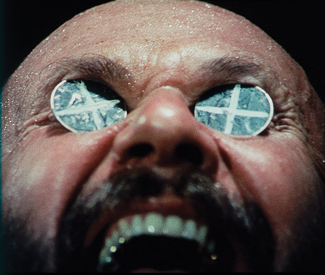
Horror fans will recognize the name of Wake in Fright star Donald Pleasence from John Carpenter’s 1978 Halloween — ’tis the season, after all, and that film happens to be screening at the Balboa Theatre Oct. 30-31. But the Carpenter movie du jour is 1988’s dystopian-future drama/true story They Live, which comes out on Blu-ray Nov. 6 — never before has Rowdy Piper’s mullet looked so crisply feathered, nor Meg Foster’s eyes so eerily seafoam, nor the black-and-white matte paintings depicting Los Angeles’ subliminally-enhanced landscape (“MARRY AND REPRODUCE”) so stark and startling.

There are some recycled extras, including Carpenter and Piper’s audio commentary, trailers, and a vintage press-kit reel featuring wrestling superstar Piper reflecting on his leading-man debut (“Ain’t a lot of difference between John Nada and Roddy Piper”). But there’s new stuff, too: separate interviews with Foster, Carpenter (who scoffs when he’s asked if he was tempted to edit down the film’s epic, legendary fight scene: “Fuck no!”), and co-star Keith David, who hilariously reminisces how he had to un-learn stage diction when he was hired for his first Carpenter film, 1982’s The Thing — and devotees of that film will want to rewind multiple times, just to hear David jokingly enunciate “You believe any of this voodoo bullshit, Blair?” in near-Shakespearean tones.

For behind-the-scenes junkies, there’s a featurette on the film’s “sights and sounds,” highlighted by an interview with veteran stunt coordinator Jeff Imada, who breaks down that iconic fight scene and reveals he played most of the aliens in the film (including the “What’s wrong, baby?” guy at the end). Just about the only thing missing from this Blu-ray package (kudos for the ridiculous cover art, Shout! Factory)? A pair of sunglasses. 

Wake in Fright opens Fri/26 in Bay Area theaters. Halloween screening info at www.cinemasf.com. They Live Blu-ray info at www.shoutfactory.com


Staunch characters

0

cheryl@sfbg.com

FILM Last year’s The Artist is still glowing months after its multi-Oscar triumph — its canine star just released a memoir, Uggie: My Story, and its human star, Jean Dujardin, will appear in Martin Scorsese’s 2013 The Wolf of Wall Street.

But The Artist had more in common with Hollywood — starting with its setting — than most contemporary French films, which don’t always receive stateside theatrical runs (unless Luc Besson is involved). As you bide your time until Leos Carax’s masterpiece of mindfuckery Holy Rollers arrives Nov. 16, hit the Embarcadero for the San Francisco Film Society’s fifth annual “French Cinema Now” series.

It opens with Noémie Lvovsky’s Camille Rewinds, about a fortysomething woman (Lvovsky, who also co-wrote) who gets a chance at a do-over when she inexplicably wakes up as her teenaged self in 1985. (Yes, it’s been called “the Gallic Peggy Sue Got Married.“) Closing night is Ursula Meier’s well-reviewed Sister, Switzerland’s Oscar entry for Best Foreign Language Film, which stars Léa Seydoux as a woman supported by the petty-thief habits of her 12-year-old brother; if you miss it here, it’ll be in theaters Nov. 9.

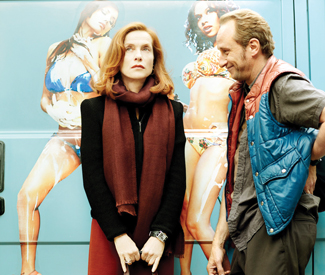
The series’ female-centric theme extends into My Worst Nightmare, which follows icy art curator Agathe (Isabelle Huppert) as her airless, tightly-controlled world begins to crumble — thanks in no small part to an exuberantly uncouth, down-on-his-luck Belgian contractor named Patrick (Benoît Poelvoorde), whose mere presence in Agathe’s orbit gives rise to the film’s title. Director and co-writer Anne Fontaine (2009’s Coco Before Chanel) injects plenty of offbeat, occasionally raunchy humor into what could’ve been a predictable personal-liberation tale — the sight of Huppert driving through a bikini car wash, for instance.

There’s no such mirth in Louise Wimmer, the first narrative feature for director and co-writer Cyril Mennegun, though the two films do share parallel stories of characters battling bureaucracy to secure public housing. In Louise Wimmer, it’s an increasingly anxious pursuit for the middle-aged title character (Corinne Masiero), who’s been living in her sputtering Volvo for months. She has a (crappy, part-time) job, but it’s not enough to pay her ever-increasing debts; what’s worse, the goodwill of those who’ve been helping her is starting to wear thin. Masiero’s believably weary performance suggests a woman clinging to the only things she has going for her — resourcefulness and an innate elegance, though both are fading by the day. On her car stereo, Nina Simone’s “Sinnerman” plays on a constant loop, a frantic, powerful tune that moves Louise to weep and, in her most desperate moment, flail around in a solo dance that’s equal parts cathartic and depressing.

Jane Fonda, in her first French film since 1972’s Tout Va Bien, plays a woman who conceals her cancer diagnosis from family and friends in Stéphane Robelin’s All Together (literal English translation, according to the subtitles: And If We All Lived Together?). It’s an ensemble film about a group of seventysomethings who decide to “go all hippie” and share a house — an arrangement that also rescues the less-robust among them (including a man with a weak heart, and one who’s increasingly forgetful) from being shunted into nursing homes. Some of All Together‘s plot points feel forced — as when a young anthropology student moves into the communal house to “study” its inhabitants — but Fonda is a standout as a woman who faces the end with remarkable reserves of cheer and dignity. In addition to its “French Cinema Now” appearances, the film also opens Oct. 26 at the Christopher B. Smith Rafael Film Center. 

FRENCH CINEMA NOW

Wed/24-Tue/30

Embarcadero Center Cinema

One Embarcadero Center, SF

www.sffs.org


Drunks, drugs, kung fu, and rock ‘n’ roll: just another week at the movies

0

This week, get thee to the Roxie for “Not Necessarily Noir III” (Dennis Harvey’s preview here), or the wind-whipped moors for Andrea Arnold’s brutal new Wuthering Heights (my chat with Arnold here). Other new stuff we haven’t reviewed yet: the not-screened-for-critics-because-let’s-face-it-these-movies-are-critic-proof Paranormal Activity 4, and Tyler Perry’s first Madea-free enterprise in some time, Alex Cross.

Read on for more new reviews!

Bel Borba Aqui “The People’s Picasso” and “Brazil’s Pied Piper of Street Art” are both apt descriptions of veteran artist Bel Borba, who has spent decades bringing color and imagination to the streets of Salvador — his seaside hometown, and a place already graced with the nickname “Brazil’s Capital of Happiness.” It’s not a stretch to imagine that Borba’s commitment to public art (a giant Christmas tree made of plastic Coke bottles, a rhinoceros sculpture crafted from old boat planks, hundreds of large-scale mosaics, even a painted airplane) has done its share to lift spirits. Bel Borba Aqui isn’t the sort of doc to delve into its mustachioed subject’s history or personal life (despite a few angry cell phone conversations randomly captured along the way); instead, it’s much like Borba himself — freewheeling and spontaneous, and most alive when it’s showing art being created. Great soundtrack, too. (1:34) Roxie. (Cheryl Eddy)

http://www.youtube.com/watch?v=d-SQ0pgjXm0

Fat Kid Rules the World It really does suck to be Troy (Jacob Wysocki from 2011’s Terri). An XXL-sized high schooler, he’s invisible to his peers, derided by his little brother (Dylan Arnold), and has lived in general domestic misery since the death of his beloved mother under the heavy-handed rule of his well-meaning but humorless ex-military dad (Billy Campbell). His only friends are online gamers, his only girlfriends the imaginary kind. But all that begins to change when chance throws him across the path of notorious local hellraiser Marcus (Matt O’Leary), who’s been expelled from school, has left the band he fronts, and is equal parts rebel hero to druggy, lyin’ mess. But he randomly decrees Troy is cool, and his new drummer. Even if he’s just being used, Troy’s world is headed for some big changes. Actor Matthew Lillard’s feature directorial debut, based on K.L. Going’s graphic novel, is familiar stuff in outline but a delight in execution, as it trades the usual teen-comedy crudities (a few gratuitous joke fantasy sequences aside) for something more heartfelt and restrained, while still funny. O’Leary from last year’s overlooked Natural Selection is flamboyantly terrific, while on the opposite end of the acting scale Campbell makes repressed emotion count for a lot — he has one wordless moment at a hospital that just might bring you to the tears his character refuses to spill. (1:38) (Dennis Harvey)

The House I Live In Much like he did in 2005’s Why We Fight, filmmaker Eugene Jarecki identifies a Big Issue (in that film, the Iraq War) and strips it down, tracing all of the history leading up to the current crisis point. Here, he takes on America’s “war on drugs,” which I put quotes around not just because it was a phrase spoken by Nixon and Reagan, but also because — as The House I Live In ruthlessly exposes — it’s been a failure, a sham, since its origins in the late 1960s. Framing his investigation with the personal story of his family’s housekeeper — whose dedication to the Jarecki family meant that she was absent when her own son turned to drugs — and enfolding a diverse array of interviews (a sympathetic prison guard, addicts and their families, The Wire‘s David Simon) and locations (New York City, Sioux City), Jarecki has created an eye-opening film. Particularly well-explained are segments on how drug laws correlate directly to race and class, and how the prison-industrial complex has played a part in making sure those laws remain as strict as possible. (1:48)  (Cheryl Eddy)

http://www.youtube.com/watch?v=i1vOw9ykpQk

Middle of Nowhere All the reasons why movie publicist turned filmmaker Ava DuVernay scored the best director award at the Sundance Film Festival are up here on the screen. Taking on the emotionally charged yet rarely attempted challenge of picturing the life of the loved one left behind by the incarcerated, DuVernay furthers the cause of telling African American stories — she founded AaFFRM (African-American Film Festival Releasing Movement) and made her directorial debut with 2008 LA hip-hop doc This Is The Life — with Middle of Nowhere. Medical student Ruby (the compelling Emayatzy Corinealdi) appears to have a bright future ahead of her, when her husband Derek (Omari Hardwick) makes some bad choices and is tossed into maximum security prison for eight long years. She swears she’ll wait for him, putting her dreams aside, making the long bus ride out to visit him regularly, and settling for any nursing shift she can. How will she scrape the money together to pay the lawyer for Derek’s parole hearing, cope with the grinding disapproval of her mother (Lorraine Toussaint), support the increasingly hardened and altered Derek, and most importantly, discover a new path for herself? All are handled with rare empathy and compassion by DuVernay, who is rewarded for her care by her cast’s powerful performances. Our reward might be found amid the everyday poetry of Ruby’s life, while she wraps her hair for bed, watches Ali: Fear Eats the Soul (1974), and fantasizes about love in a life interrupted. (1:41) (Kimberly Chun)

http://www.youtube.com/watch?v=80_L_LsOexE

Simon and the Oaks Despite being gripping or heartwarming at times, Simon and the Oaks, based on the novel by Marianne Fredricksson, fails to cohere, serving as another reminder of the perennial dilemma of converting literature to film. It tells the story of Simon (Bill Skarsgard — son of Stellan, younger brother of Alexander), a boy coming of age in World War II Sweden. He befriends Isak, son of a Jewish bookkeeper who fled Nazi Germany, and their families become close when Isak’s father nurtures Simon’s love of books and Isak begins to heal his emotional scars by diving into carpentry work with Simon’s father. The moments of true human compassion between the two families begin to falter as the story jumps around to follow Simon’s search for love and identity. More missteps: Simon’s discovery of classical music is conveyed via a series of “artsy” montages, and his brief affair with a fiery Auschwitz victim — problematic, to say the least. (2:02) (Molly Champlin)

http://www.youtube.com/watch?v=QtT1cKo4RX4

Smashed A heartbreaking lead performance from Mary Elizabeth Winstead drives this tale of a marriage tested when one partner decides to get sober. And it’s time: after an epic night of boozing, first-grade teacher Kate (Winstead) pukes in front of her class, then lies and says she’s pregnant, not anticipating the pushy delight of the school’s principal (Megan Mullally). Plus, Kate’s gotten into the habit of waking up in strange, unsafe places, not really remembering how she stumbled there in the first place. Husband Charlie (Breaking Bad‘s Aaron Paul) sees no reason to give up partying; he’s a music blogger whose “office” is the home his wealthy parents bought for the couple, and his problem isn’t quite as unmanageable as hers (at least, we never see him peeing in a convenience store). After Kate joins AA, she realizes she’ll have to face her problems rather than drinking them away — a potentially clichéd character arc that’s handled without flashy hysterics by director and co-writer (with Susan Burke) James Ponsoldt, and conveyed with grace and pain by Winstead —an actor probably best-known for playing Ramona Flowers in 2010’s Scott Pilgrim vs. the World, but just now revealing the scope of her talent. (1:25) (Cheryl Eddy)

http://www.youtube.com/watch?v=_LSX_UH0F9g

Tai Chi Zero A little boy dubbed “the Freak” for the curious, horn-like growth on his forehead grows up to be Lu Chan (Jaydan Yuan), who becomes a near-supernatural martial arts machine when the horn is punched, panic-button style. But activating the “Three Blossoms of the Crown,” as it’s called, takes a toll on the boy’s health, so he’s sent to the isolated Chen Village to learn their signature moves, though he’s repeatedly told “Chen-style kung fu is not taught to outsiders!” Stephen Fung’s lighthearted direction (characters are introduced with bios about the actors who play them, even the split-second cameos: “Andrew Lau, director of the Infernal Affairs trilogy”), affinity for steampunk and whimsy, engagement of Sammo Hung as action director, and embracing of the absurd (the film’s most-repeated line: “What the hell?”) all bring interest to this otherwise pretty predictable kung-fu tale, with its old-ways-versus-Western-ways conflict and misfit hero. Still, there’s something to be said for batshit insanity. (Be warned, though: Tai Chi Zero is the first in a series, which means one thing: it ends on a cliffhanger. Argh.) (1:34) (Cheryl Eddy)

http://www.youtube.com/watch?v=NWIAjsf9Xq0

The Waiting Room Twenty-four hours in the uneasy limbo of an ER waiting room sounds like a grueling, maddening experience, and that’s certainly a theme in this day-in-the-life film. But local documentarian Peter Nicks has crafted an absorbing portrait of emergency public health care, as experienced by patients and their families at Oakland’s Highland Hospital and as practiced by the staff there. Other themes: no insurance, no primary care physician, and an emergency room being used as a medical facility of first, last, and only resort. Nicks has found a rich array of subjects to tell this complicated story: An anxious, unemployed father sits at his little girl’s bedside. Staffers stare at a computer screen, tracking a flood of admissions and the scarce commodity of available beds. A doctor contemplates the ethics of discharging a homeless addict for the sake of freeing up one of them. And a humorous, ultra-competent triage nurse fields an endless queue of arrivals with humanity and steady nerves. (1:21) (Lynn Rapoport)

Gimme Moors

0

cheryl@sfbg.com

FILM Emily Brontë’s Wuthering Heights has inspired multiple films, as varied in quality as the 1939 Best Picture nominee starring Sir Laurence Olivier — and the 2003 made-for-MTV adaptation, in which “Heath” is a pouty, motorcycle-riding himbo. The source material may seem an odd choice for acclaimed British director Andrea Arnold, best-known for 2006’s Red Road and 2009’s Fish Tank, both gritty films about working-class people, unfussily shot using hand-held cameras.

Resisting the urge to contemporize a classic, or shoot it as a traditional costume drama, Arnold takes her version in a near-experimental direction; her Heights makes Cary Fukunaga’s edgy 2011 interpretation of Jane Eyre (starring Fish Tank‘s Michael Fassbender) look tame by comparison. I spoke with Arnold about her daring spin on the Gothic classic.

San Francisco Bay Guardian You’re known as such a contemporary director, in both subject and shooting style. What made you want to take on Wuthering Heights?

Andrea Arnold It’s an interesting question, because I don’t really know. I knew at the time that it was a sort of stupid idea, but I couldn’t help it. I just had to do it. I don’t know why I became so possessed, and I still don’t really know why. It was a book that I had a fascination with — I think a lot of people do. It’s a very troubling book, a very unsettling book, a book that I don’t think is easily understood.

But I seem to like trouble. I sort of realized this about myself, that I’m always pushing myself in ways, like, I’ve got no idea how it’s going to work out, but I’m going to learn. I do think I’m not afraid of going on a journey that I don’t know where it’s going to go. With this film and this whole project, that definitely was a very unnerving and strange decision.

SFBG How did you approach adapting a classic literary work that’s been made into so many films before?

AA I didn’t think like that, or worry about that. I mean, I knew that it had been remade an awful lot of times. I think I didn’t realize how many times. But I just thought about when I went to film school we were all given the same scripts, and 20 people all made something completely different. With such rich material, you can find your own way. And I think when you get attached to something and you have to do it, you’re not sensible anyway.

I’ve always said that once I’ve got an image and an idea about making something, that it chooses you. You don’t choose it. And this was exactly the same. I just got obsessed with the idea of doing it. It wasn’t like I thought very sensibly about what had gone before. I didn’t think about it being a career move in any way.

SFBG Watching the film, it was clear that you — like Emily Brontë — had been inspired by the setting. The landscape is practically a character in the film, and the imagery includes lots of close-ups of insects and plants.

AA I think the difficulty of the location really [influenced] the film, in terms of the way everyone was feeling — it was hard to get around, and [we were] genuinely cold and fed up with the mud. First of all, I tried to find somewhere near where Emily had written it, which was the moors near Haworth, where she lived. The moors near Haworth are a bit like being in the middle of the ocean. They’ve got this undulating, endless feel to them. It’s really beautiful in that way: you feel the moors are everything and there’s nothing else in the world when you’re in the middle of it.

But it’s not so isolated around that particular area anymore. We couldn’t find anywhere that you couldn’t see things on the horizon. So we had to go further. We went to the North York Moors. And there were very few buildings, real places — I always wanted a real location — that were truly isolated. It wasn’t like I had lots of choice.

But I really like that place [where we filmed]. It was a very difficult place to work, though, no doubt. Everyone who worked on it said it’s one of the hardest things they’ve ever done, just physically. We couldn’t get vehicles there so we had to carry all of the cameras up the hills.

SFBG The film has gotten some attention for your casting choices — black actors play Heathcliff at various ages, and race is a recurring theme in the film. What motivated those decisions?

AA When I looked at the book, and all the descriptions of Heathcliff, I really felt that he wasn’t white. I was really surprised, after looking closely at how he was described, why nobody has actually done that before. I think if you’re being really faithful and truthful to the descriptions, that he’s more Asian than he is African. The fact that he’s called a gypsy, the Romany gypsies of that time would have originally come from Asia, and they’re very dark-skinned.

But after sort of investigating a bit more, I thought what really matters is that he’s different. I began to realize that Heathcliff is really Emily Brontë, and that she felt different for being female. There’s something about the book that makes me think that’s a large part of what it’s about.

SFBG The material may be a change for you, but the film is still shot like your other films, using a hand-held camera. Why do you prefer this method?

AA I didn’t think about making it in any different way than I normally do. I like hand-held cameras because if I’m working with non-actors, and there were lots of non-actors in this one, I don’t like them to feel restricted. If you put cameras on tripods then it sort of harnesses things. You have to start telling people where to stand, and hit marks. That’s something that I don’t enjoy.

Also, I didn’t see any reason why a period film shouldn’t have hand-held camera. I thought, just because we’ve seen lots of period films where they’re all very respectful, that doesn’t mean that’s how I have to be. I didn’t feel that I had to follow any sort of traditions. I just felt like I was trying to see it in my own way, and I didn’t let myself be inhibited by what had gone before. *


WUTHERING HEIGHTS opens Fri/19 in Bay Area theaters.

Happy hunting

0

cheryl@sfbg.com

TV Stainless steel appliances. Hardwood floors. Walk-in closets. The House Hunters drinking game, which lovingly mocks the HGTV program’s predictability, will have even a seasoned lush drunk before the first commercial break. “But there’s nowhere for my man cave!” DRINK.

Brian Balthazar, who is HGTV’s Director of Programming, has a sense of humor about the drinking game (“If I ever played it, I’d be hammered, because I watch a lot of House Hunters!”), and also about some recent online muckraking that revealed that what you see on House Hunters isn’t one hundred percent real. “We’re making a television show, so we manage certain production and time constraints, while honoring the home-buying process,” he explained in a statement to Entertainment Weekly this summer. “To maximize production time, we seek out families who are pretty far along in the process. Often everything moves much more quickly than we can anticipate, so we go back and revisit some of the homes that the family has already seen and we capture their authentic reactions.”

Wait, so reality TV isn’t actually real? Shut the custom-painted front door! “Mostly I was happy that people cared that much about House Hunters,” Balthazar says of the controversy. He’s currently promoting the latest House Hunters spin-off, House Hunters Renovation, which follows buyers as they pursue remodeling projects in their just-purchased homes. The next new episode airs Oct. 21 at 11pm; it follows a couple whose “dream house” (DRINK) contains a pink-and-gold nightmare of a bathroom.

“On this show, we see them buying the homes, and then making all these changes to them. So it’s exciting to be able to show that,” Balthazar says. “But I’m always excited that people are talking about House Hunters and that it has had such longevity. It’s nearing its 1,000th episode this year. That’s more than Law and Order!”

And like Law and Order, every episode of House Hunters is basically the same. “The concept is very clear. You know what’s going to happen on the show,” Balthazar says. “They’re going to see three homes, and we’ll see which one they choose. But what is always different are the homeowners and the homes. That voyeuristic, play-along quality of the show changes every time, which I love. We have some really interesting characters that come along, and everyone has a different reaction to different aspects of a home. I think that’s what makes it such a guilty pleasure among people who love to spy on the real estate process.”

House Hunters International follows the same basic formula, with an obvious difference: instead of a new construction in Indianapolis with a three-car garage (DRINK), the buyer (or renter) is seeking an apartment in a slightly more exotic locale. Like, say, Cambodia. Or Serbia. Or the Arctic Circle.

“I’m amazed at some of the stories the production company we work with on International finds. They’ve developed relationships with real estate agencies all over the world,” Balthazar says. “For a long time we didn’t go to some countries simply because it was too complicated. In some countries, you can’t actually buy a home if you’re not a resident. In others, you have to pay cash completely up front, in full. That was really a daunting thing for us to tackle. And now that the show’s been around for so long a lot of people write in to be on the show. It’s like this grassroots effort in some regards.”

Of course, being so popular has a slight downside. “Everyone that I run into, whether I’m on an airplane or at a party, if I say I work on House Hunters or House Hunters International, inevitably there will be someone saying they want to be on,” Balthazar says. “I actually love that! Though I will admit that occasionally when someone asks me what I do, I just say I’m a writer. [Laughs.] But I’m ultimately so grateful that people want to be on the show.”

Balthazar’s main distraction from an endless parade of buyers seeking open-concept floor plans (DRINK) is his pop-culture website, popgoestheweek.com. He’ll be melding his two interests on a special he’s hosting on HGTV in December.

“It’s called I Bought a Famous House. I go around to homes in Hollywood that were once owned by celebrities,” he says. “It’s interesting see what [the non-famous new owners have] done with them since. In one case, someone kept the house exactly the same as it was when the celebrity owned it. And in another case, with Madonna’s former house in the Hollywood Hills, a guy came in and literally changed almost everything, with the exception of the kitchen. But I think when you buy a seven million dollar house, you probably aren’t as concerned about the kitchen as the rest of the house, because you aren’t doing your own cooking when you have that kind of money!”

Of course, Madonna’s kitchen probably already had granite countertops. DRINK!

www.hgtv.com


The rescuer

1

cheryl@sfbg.com

FILM A decade or so ago, Ben Affleck was drowning in Bennifer mania and starring in schlock like Daredevil (2003) and Gigli (2003). Rumors percolated that Affleck and Matt Damon hadn’t really written that Oscar-winning script for 1997’s Good Will Hunting — though Damon’s career was bearing more fruit at the time (see: 2002’s The Bourne Identity), the “Jenny From the Block” video was nauseating enough to make anyone question the authenticity of anything Affleck-associated up to that point.

But in 2012, it’s clear the guy who was able to balance being a Kevin Smith muse with getting pumped up to star in Armageddon (1998) was all along plotting the oldest show biz career trajectory in the book: he really wanted to direct. And thank goodness for that.

Argo opens with a vintage Warner Bros. logo and offers a quick history lesson via storyboards and old news footage. If you don’t know the particulars of the 1979 Iranian Revolution, you won’t be an expert after Argo, but the film does a good job of capturing America’s fearful reaction to the events that followed it — particularly the hostage crisis at the US embassy in Tehran. Argo zeroes in on the fate of six embassy staffers who managed to flee to the home of the sympathetic Canadian ambassador (Victor Garber).

Back in Washington, short-tempered CIA agents (including a top-notch Bryan Cranston) cast about for ways to rescue them. Most of the standby “exfil” tactics (give ’em fake identities as English teachers!) are out of the question given the political climate in Iran. Crazier ideas begin to surface. Could the staffers, uh, ride bikes to the Turkish border, maybe? Three hundred miles…in the winter?

Enter Tony Mendez (Affleck), exfil specialist and father to a youngster wrapped up in the era’s sci-fi craze (21st century Jedi will weep at the boy’s mint-condition toy collection). It’s while watching 1973’s Battle for the Planet of the Apes on TV that Tony comes up with what Cranston’s character calls “the best bad idea we have:” the CIA will fund a phony Canadian movie production (corny, intergalactic, and titled Argo) and pretend the six are part of the crew, visiting Iran for a few days on a location shoot. Tony will sneak in, deliver the necessary fake-ID documents, and escort them out. Neither his superiors, nor the six in hiding, have much faith in the idea. (“Is this the part where we say, ‘It’s so crazy it just might work?'” someone asks, beating the cliché to the punch.)

Argo never lets you forget that lives are at stake; we see the Ayatollah’s men scrambling to piece together the identities of the embassy workers even as Tony arrives in Tehran, where he observes a victim of mob justice swinging from a noose over a main street. Every painstakingly forged form, every bluff past a checkpoint official, the anxiety increases, to the point of being laid on a bit thick by the end.

The film has the benefit of being both timely (with US-Iran relations stormy as ever) and entertaining, and though it’s not a masterpiece, it’s Affleck’s best directorial effort to date. He’s capable with the secret-agent suspense stuff, and is careful not to make generalizations about the Iranians depicted in the film. But, appropriately enough given the source, Argo comes alive in its Hollywood scenes. As show-biz veterans who mull over Tony’s plan with a mix of Tinseltown cynicism and patriotic duty, John Goodman and Alan Arkin practically burst with in-joke brio. I could have watched an entire movie just about those two.

Argo is Affleck’s third film — the first not set in Boston, and the second that Affleck himself stars in. Though he cast his brother, Casey Affleck, in 2007’s Gone Baby Gone, he gave himself the lead in 2010’s The Town, a decision that ended up being one of the film’s weak links. (“Oh look,” my movie going companion pointed out during The Town‘s forced-soulful denouement. “He escaped to Beardlandia!”) But his turn in Argo is, refreshingly, more or less vanity-free — just one gratuitous shirtless scene! — a hopeful sign that Affleck the actor may finally be giving Affleck the director the upper hand.


ARGO opens Fri/12 in Bay Area theaters.

The big show

1

cheryl@sfbg.com

FILM/LIT Any horror fan can tell you that John Carpenter directed and co-wrote 1978’s Halloween. But it would require a slightly more credits-obsessed moviegoer to recognize the name of behind-the-scenes maestro Irwin Yablans.

In addition to being Halloween‘s producer, Yablans was also responsible for cult classics like Tourist Trap (1979), Roller Boogie (1979), and Hell Night (1981). His new autobiography, The Man Who Created Halloween: How a Bit of Desperation and Inspiration Gave Birth to the Movie That Changed Hollywood (self-published, 259 pp., $16.95), traces his path from Brooklyn childhood to Hollywood player. Along the way, he served in the army, met the love of his life, feuded with his brother (fellow film producer Frank Yablans), and — on a flight from London to Los Angeles — had a brilliant brainwave about babysitters being stalked by a killer on the scariest night of the year. I spoke with Yablans, who turned 78 this year, over the phone from Southern California.

San Francisco Bay Guardian What inspired you to write a memoir? 

Irwin Yablans I kind of kept quiet about all this stuff through the years because I was only involved in the first three [Halloween films]. I was really not able to gauge the public’s insatiable appetite for Michael Myers! And I got tired of it after awhile. I wanted to do other things. But I came back into the picture because there was a lot of misinformation and revisionist history floating around, and I thought it was time I talked about it. Then, I decided to write a book about my life.

And Halloween is going out into 1,000 theaters on Halloween this year — that’s amazing! When I came up with the little idea on an airplane 35 years ago, little did I know. [Laughs.] There’s a lesson to be learned from that: never underestimate the possibilities of a good idea. Don’t ever assume that because you thought of it, it might not be good. You have to believe in yourself.

[Pauses.] Before I go any further, I have to make a confession: I am a Giants fan. And I have been since 1947, because I was a Giants fan in New York. I was at the Polo Grounds in 1951 and watched Bobby Thomson hit that home run — in case you don’t know what that is, it’s the most famous moment in baseball history. I still watch the Giants every day. And I’ll tell you, they look pretty good this year!

SFBG Why did you decide to go the self-publishing route?

IY Well, I’d never written a book before. I’d always done a little writing for the movies, but about seven or eight years ago I thought I’d sit down with my computer and peck away. The first word I wrote was “cockroaches.” [Laughs.] I wanted to write for my family — I thought I’d leave behind some musings about my life that might be interesting for my kids and my grandchildren. About 50 or 60 pages in, I showed it to some people I respect and they said, “You ought to think about publishing this.”

When I got close to the end, I submitted it to a couple of publishers. I’d never been part of that world before — [and I realized it] was just like how I got into my independent film company. I found a publisher who wanted to publish it, but I found out that if I went with them, not only would they get a large portion of the receipts, but they don’t put any money up, or do any publicity or advertising.

So I said to myself, “Why do I need them?” [I found] CreateSpace on the internet, and I’ve had the most amazing experience. Independence is sort of in my blood. I like doing things myself, [even] my own public relations. You read in the book why we chose Jamie Lee Curtis [for Halloween] — when I met Jamie, I knew she was a fine actress, but I had this vision of getting a photo of her mother, Janet Leigh, and putting Jamie in a similar pose, and submitting it to AP and UPI. We got worldwide publication of that. And that’s the kind of thing I did all the way through with Halloween. You just have to take every opportunity to publicize the picture. Of course, John Carpenter made a very good movie.

SFBG I have to ask about Roller Boogie. It’s a midnight-movie favorite in San Francisco.

IY No kidding! [Laughs.] You know what’s great about that movie? The music! Earth, Wind, and Fire … it’s just a delightful little movie. Just great fun. I think I had more fun making that movie than any other movie I made, because it was so uplifting and so bright — I was on roller skates with my whole family during the shoot. I love the “Boogie Wonderland” number, and Linda Blair was such a charmer.

I tell you, the ’70s and ’80s were a lot of fun for me. I was so busy, making movies, distributing movies, and running all over the world. It was a great experience. I really loved every moment of it.

www.irwinyablans.com


Zombie dogs! Neeson! Southern-fried jail tales! And more, in this week’s new movies

1

It’s finally Halloweentime! (Though Walgreens would have you believe that season started in August.) Hollywood prepares appropriately with a few spookier picks (for kids, Frankenweenie, reviewed below; for older crowds, found-footage anthology V/H/S, discussed in my interview with some of the filmmakers here.) For good measure, you can check out my interview with Dee Wallace, star of some horror classics but making the press rounds for the 30th anniversary Blu-ray release of E.T. The Extraterrestrial.

Of local interest, the Mill Valley Film Festival is up and running, with some stellar picks noted here (HOLY MOTORS!) and an interview with indie pioneer Allison Anders, who debuts her new Strutter at the fest, here.

And, as always, there’s more. Read on for takes on films like The Paperboy and Taken 2, which each define “trashy entertainment” in their own special ways.

http://www.youtube.com/watch?v=QZtKB_KuASc

Bitter Seeds Just what we all needed: more incontrovertible evidence of the bald-faced evil of Monsanto. This documentary on destitute Indian cotton farmers follows an 18-year-old girl named Manjusha, a budding journalist who investigates the vast numbers of farmer suicides since the introduction (and market stranglehold) of “BT” cotton — which uses the corporation’s proprietary GMO technology — in the region of Vidarbha. Before BT took over in 2004, these cotton farmers relied on cheap heritage seed fertilized only by cow dung, but the largely illiterate population fell prey to Monsanto’s marketing blitz and false claims, purchasing biotech seed that resulted in pesticide reliance, failing crops, and spiraling debt. It’s a truly heartbreaking and infuriating story, but much of the action feels stagy and false. Should Indian formality be blamed? Considering the same fate befell Micha X. Peled’s 2005 documentary China Blue, probably not. Still, eff Monsanto. (1:28) Roxie. (Michelle Devereaux)

http://www.youtube.com/watch?v=qngB0vCmZV4

Frankenweenie Tim Burton’s feature-length Frankenweenie expands his 1984 short of the same name (canned by Disney back in the day for being too scary), and is the first black and white film to receive the 3D IMAX treatment. A stop-motion homage to every monster movie Burton ever loved, Frankenweenie is also a revival of the Frankenstein story cute-ified for kids; it takes the showy elements of Mary Shelley’s novel and morphs them to fit Burton’s hyperbolic aesthetic. Elementary-school science wiz Victor takes his disinterred dog from bull terrier to gentle abomination (when the thirsty Sparky drinks, he shoots water out of the seams holding his body parts together). Victor’s competitor in the school science fair, Edgar E. Gore, finds out about Sparky and ropes in classmates to scrape up their dead pets from the town’s eerily utilized pet cemetery and harness the town’s lightning surplus. The film’s answer to Boris Karloff (lisp intact) resurrects a mummified hamster, while a surrogate for Japanese Godzilla maker Ishiro Honda, revives his pet turtle Shelley (get it?) into Gamera. As these experiments aren’t borne of love, they don’t go as well at Victor’s. If you love Burton, Frankenweenie feels like the at-last presentation of a story he’s been dying to tell for years. If you don’t love him, you might wonder why it took him so long to get it out. When Victor’s science teacher leaves the school, he tells Victor an experiment conducted without love is different from one conducted with it: love, he implies, is a variable. If that’s the variable that separates 2003’s Big Fish (heartbreaking) from 2010’s Alice In Wonderland (atrocious), it’s a large one indeed. The love was there for 29 minutes in 1984, but I can’t say it endures when stretched to 87 minutes 22 years later. (1:27) Presidio. (Sara Vizcarrondo)

http://www.youtube.com/watch?v=LHoxzRt9yBI

The Mystical Laws As The Master gathers Oscar buzz for its Scientology-inspired tale, another movie based on the teachings of a similarly-named religion, Japanese fringe sect Happy Science, opens this weekend. But that analogy is incorrect, for The Mystical Laws way more resembles 2000’s Battlefield Earth, demonstrating and preaching its source material’s tenants rather than questioning them. Visit Happy Science’s website and you’ll find a New Age mix of Christianity and Buddhism, with woo-woo about truth and love. Its founder, Ryuho Okawa, claims to the reincarnation of “El Cantare,” sort of an über-god who controls all spiritual activity on Earth. Anyway, now there’s an anime flick based on one of Okawa’s hundreds of books; it’s about an evil overlord with planet-ruling aspirations who gets smacked down by the powerful combo of aliens, a guy who realizes he’s humanity’s “light of hope” (basically a Jesus-Buddha combo, with psychic powers to boot), and an eight-headed flying dragon. There is Nazi iconography; there are Star Wars-inspired plot points. At one point, the hero preaches directly to the camera. It’s all very heavy-handed. A far more amusing use of your time would be to go to Happy Science’s website and click the tab marked “Astonishing Facts” to learn the spiritual fates of historical figures: “Currently Beethoven lives in the lower area of the Bodhisattva Realm of the 7th dimension in the Spirit world, and aims to transcend the sadness evident in parts of his music and become an expert in the music of joy,” while proponent o’ evolution Darwin “is now serving a penance in Abysmal Hell.” Hey, wait a minute! Isn’t science supposed to be “happy?” (2:00) New People, 1746 Post, SF; www.newpeopleworld.com. (Cheryl Eddy)

http://www.youtube.com/watch?v=lEBknhHTe_I

The Oranges In director Julian Farino’s tale of two families, the Wallings and the Ostroffs are neighbors and close friends living in the affluent New Jersey township of West Orange. We meet David Walling (Hugh Laurie), his wife Paige (Catherine Keener), his best friend Terry Ostroff (Oliver Platt), and Terry’s wife, Carol (Allison Janney), during a period of domestic malaise for both couples — four unhappy people who enjoy spending time together — that is destined to be exponentially magnified over the Thanksgiving and Christmas festivities. We learn much of this in voice-over courtesy of stalled-out 24-year-old design school grad Vanessa (Alia Shawkat), a second-generation Walling whose narrative subjectivity the film makes plain. No one will fault Vanessa for editorializing, however, when her Ostroff counterpart, onetime BFF and present-day nemesis Nina (Leighton Meester), returns home after a five-year absence and, amid maternal pressure to date Vanessa’s visiting brother, Toby (Adam Brody), instead embarks on an affair with their father. The ick factor is large, particularly because it takes a while to keep straight all the spouses, offspring, and houses they belong in. But Farino works to convince us that the romantic spark between David and Nina should be judged on its merits rather than with a gut-level revulsion, a reaction we can leave to the film’s principals. To the extent that this is possible, it’s possible to enjoy The Oranges’ intelligent writing and fine cast, whose sympathetic characters (perhaps excluding Nina, whose heedlessness regarding the feelings of others verges on sociopathic) we wish the best of luck in surviving the holidays. (1:30) (Lynn Rapoport)

The Paperboy Lee Daniels scored big with Precious (2009), but this follow-up is so off-kilter in tone and story it will likely polarize critics and confuse audiences, despite its A-list cast. I happened to enjoy the hell out of this tacky, sweat-drenched, gator-gutting, and generally overwrought adaptation of Peter Dexter’s novel (Dexter and Daniels co-wrote the screenplay); it’s kind of a Wild ThingsThe HelpA Time to Kill mash-up, with the ubiquitous Matthew McConaughey starring as Ward Jansen, a Florida newspaper reporter investigating what he thinks is the wrongful murder conviction of Hillary Van Wetter (a repulsively greasy John Cusack). But the movie’s not really about that. Set in 1969 and narrated by Macy Gray, who plays the veteran housekeeper for the Jansens — a clan that also includes college dropout Jack (Zac Efron) — The Paperboy is neither mystery nor thriller. It’s more of a swamp cocktail, with some odd directorial choices (random split-screen here, random zoom there) that maybe seem like exploitation movie homages. As a Southern floozy turned on by “prison cock” (but not, to his chagrin, by the oft-shirtless Jack), Nicole Kidman turns in her trashiest performance since 1995’s To Die For. (1:46) (Cheryl Eddy)

Taken 2 Surprise hit Taken (2008) was a soap opera produced by French action master Luc Besson and designed for export. The divorced-dad-saves-daughter-from-sex-slavery plot may have nagged at some universal parenting anxieties, but it was a Movie of the Week melodrama made on a major movie budget. Taken 2 begins immediately after the last, with sweet teen Kim (Maggie Grace) talking about normalizing after she was drugged and bought for booty. Papa Neeson sees Kim’s mom (Famke Janssen) losing her grip on husband number two and invites them both to holiday in Istanbul following one of his high-stakes security gigs. When the assistant with the money slinks him a fat envelope, Neeson chuckles at his haul. This is the point when women in the audience choose which Neeson they’re watching: the understated super-provider or the warrior-dad whose sense of duty can meet no match. For family men, this is the breeziest bit of vicarious living available; Neeson’s character is a tireless daddy duelist, a man as diligent as he is organized. (This is guy who screams “Victory loves preparation!”) As head-splitting, disorienting, and generally exhausting as the action direction is, Neeson saves his ex-wife and the show in a stream of unclear shootouts. Taken 2 is best suited for the small screen, but whatever the size, no one can stop an international slave trade (or wolves, or Batman) like 21st century Liam. Swoon. (1:31) (Sara Vizcarrondo)