Cheryl Eddy

Gruesome discovery

0

cheryl@sfbg.com

FILM In the summer of 1999, horror fans hungered for something, anything, that wasn’t a Scream-inspired self-aware slasher.

Though it had no stars, a microscopic budget, and was filmed in nausea-inducing shaky-cam, The Blair Witch Project burst into cinemas with a novel set-up — filmmakers lost in the woods record supernatural goings-on before falling victim to evil themselves — and scares galore. Towering box-office receipts, a Time magazine cover, and legions of rip-offs ensued.

“We just wanted to scare people,” Blair Witch co-director Daniel Myrick told me when I interviewed him for the Guardian back in 1999. He couldn’t have known that Blair Witch‘s influence would still be felt over a decade later, in movies like the blockbuster Paranormal Activity series — and even outside the horror genre, where stories constructed from characters filming themselves have become commonplace.

Now there’s V/H/S, an energetically exploitative take on the trend that reaches past Blair Witch to high-five the granddaddy of them all, 1980’s legendarily nasty Cannibal Holocaust. V/H/S also nods to vintage horror’s fondness for the anthology format, setting up the action with a frame story, Tape 56: hooligans film themselves behaving badly, then prowl a house in search of a mysterious VHS tape.

The apparently abandoned dwelling is creepy enough, with a dead body just hangin’ out in the TV room. But each tape they watch contains material so shocking (a woman turns flesh-tearingly monstrous after a drunken hookup; a student Skyping with her boyfriend suspects her apartment is haunted; and a road trip, a camping trip, and a Halloween party all go very, very wrong) it unsettles even tough guys who, earlier in the day, were grabbing women on the street in service of their budding “reality porn” business.

http://www.youtube.com/watch?v=Iv6S3RGMGw8

Each “tape” is directed by a different filmmaker or filmmaking team, all of whom were directed to use the found-footage format. So yes, V/H/S is a movie about people filming themselves watching other people who are also filming themselves.

“With a found-footage anthology, you could make a found-footage movie about people finding footage, and that seemed like such an obvious idea,” explains Simon Barrett, who worked on both the wraparound and haunted-apartment tale The Sick Thing That Happened to Emily When She Was Younger. “A lot of found-footage [features] become ludicrous; after two hours, you run into all the clichés of characters screaming at each other to turn the camera off. But you can believe that someone would leave the camera on for, say, 14 minutes of something scary happening to them.”

Adds Adam Wingard, whose multiple V/H/S credits include directing Tape 56, “Found footage is the most modern, new way to tell stories that we’ve seen before. We’ve seen vampires and ghosts. It puts it in a whole new context and framework for modern audiences — it basically spices up the genre.”

The biggest name on V/H/S‘s roster is probably Ti West, who made cult hit The House of the Devil (2009) and last year’s The Innkeepers.

“Some of my favorite movies are documentaries, so documentary-style filmmaking isn’t something that I have a problem with,” West says. “It’s that mostly [these kinds of films are] really derivative of the ones that came before them, which is frustrating.”

West, whose V/H/S segment is styled like a vacation video, prefers to shoot his films traditionally, though “I don’t think found footage is going to go away,” he says. “All of us in our daily lives [consume] found footage. We’re so accustomed to recording videos like it’s no big deal, and seeing videos recorded by amateurs. We’re so conditioned by the news and reality TV. It’s now just part of us, and part of our media.”

He’s right, of course. And when the found-footage aspect is no longer the film’s biggest novelty, like it was in the Blair Witch era, there’s room for other themes to emerge. V/H/S is — to use a word that doesn’t exist — “bro-y.” There are multiple scenes of male characters pointing the camera at clothed women, naked women, naked women who don’t know they’re being filmed, women the men are trying to have sex with, etc. (All of the filmmakers were male, though some female producers did work behind the scenes.)

V/H/S played multiple festivals, including Sundance, ahead of its theatrical debut this week. “I’m very curious about how mainstream audiences are going to respond,” Barrett says. “I feel like in the festival world, audiences come at these films ready to find some kind of political subtext to them, which I think our film overall kind of lacks at times. And when they’re trying to find out what it might be, that’s when segments get accused of being misogynistic.

He adds, “I think it’s an instinctive reaction to a horror film that touches on these subjects but doesn’t stop to tell the audience that these things are wrong, which — by the way, I think that actually is sexist, feeling you have to stop and tell the audience that women are empowered. That’s actually pretty condescending. I would rather just make a movie that does those things and hope that people get it. Which, you know, happens about half the time.”

The theme of voyeurism that runs through the film was a coincidence, though Barrett thinks that once the other filmmakers saw the frame story — inspired, he says, by Romain-Gavra’s “Stress” video for the band Justice, Harmony Korine’s 2009 Trash Humpers, and “sharking” videos — they might have been inspired in that direction.

“It is interesting that four of the six shorts could be interpreted as having some kind of failed sex tape element to them,” he says. “But I think that also just kind of organically came up, because we realized that we had total creative freedom to address the things that most found footage movies normally have to avoid. I think this was an opportunity for us to touch on these serious subjects in a goofy way. Ultimately, we just wanted to make a fun horror movie.”

West, who had a tight window to make Second Honeymoon, was the first to finish his short, turning it in before Tape 56 was completed.

“[V/H/S] turned out to have this really intense, misogynistic theme that kind of just came out of nowhere. It wasn’t planned,” he says. “Since I was first, I wonder: if I had gone last, would I have made something different? It sounds really stupid to say we didn’t know [the theme] was going on, but really everyone was very removed from each other.”

Also, West points out, “The filmmakers are not like the people they depict. In a way, the movie is presenting these awful dudes and they’re getting their comeuppance. So it may seem misogynistic, but actually it’s kind of this feminist revenge thing. I don’t know why it happened. I didn’t realize it until Sundance, when I was watching it and going, ‘There are some weird threads going on in this movie.'”


V/H/S opens Fri/5 in Bay Area theaters.

Indie indeed

0

cheryl@sfbg.com

FILM The 35th Mill Valley Film Festival is a star-studded affair, with tributes to Dustin Hoffman and 1977’s Star Wars and celebrity guests (Ben Affleck! Ang Lee! Stevie Nicks!), but indie cinema fans won’t want to miss Strutter. It doesn’t have any movie stars, but it comes courtesy of indie heroes Allison Anders (1992’s Gas Food Lodging, 1993’s Mi vida loca) and Kurt Voss, Anders’ co-director and co-writer on 1987’s Border Radio and 1999’s Sugar Town.

Anders says she views Strutter — the tale of Brett, a rock’n’roller working through heartbreak and post-college angst — as a continuation of her other films with Voss, all of which are music-themed and set in Los Angeles.

“When Kurt and I did Sugar Town, we kind of realized it was a companion piece to Border Radio. I think it was Michael Des Barres who said Border Radio‘s musicians were trying to pay their rent, and Sugar Town‘s musicians were trying to meet their mortgage. They were on a different level, but their desperation was the same,” she says. “In Strutter, the characters are even more desperate; nobody has any real roots except the streets of Los Angeles and the desert. In all three, there’s the music angle — but it’s also the desperation of trying to keep a band going, and what that means to people, particularly in LA.”

Though they tell separate stories, the three films share certain actors — but most of Strutter‘s leads are making their feature debuts. “I teach one quarter a year at UC Santa Barbara, which is where I met Flannery Lunsford, [who plays Brett],” she says. “I introduced Flannery to Kurt and they started doing some projects together. Then, Kurt and I started talking to Flannery about doing that last piece of the Border Radio trilogy, because Flannery also had a band.”

The love triangle between Brett, fellow musician Damon (Dante Ailano White), and femme fatale Justine (much-discussed, but never seen onscreen), was inspired by a famous rock’n’roll rivalry.

“Both Kurt and I were very enamored with the Britpop triangle of Brett [Anderson] from Suede, Damon [Albarn] from Blur, and Justine [Frischmann] from Elastica,” she says. “While we didn’t want to do that story, it was a kind of muse for the film, and we named all the characters after them.”

Anders may be a film-biz veteran, but she’s embraced the 21st century idea of online fundraising: both Strutter and its score (by Dinosaur Jr.’s J Mascis) were funded via Kickstarter.

“Kurt still has a sheet of paper where I wrote down names of people who, if each of them just gave us a little bit of money, we could finish making Border Radio. Back then you didn’t have any kind of mechanism for making that happen, but that’s essentially what crowdfunding is,” she says. “The great thing is, now you get your friends and people you don’t know to contribute to your project. Then, nobody [else] owns your movie, or record, or whatever it is. You’re doing your work on your own terms. If you’ve got a movie like Strutter, and you don’t have stars, and you’re shooting in black and white — we were doing everything the way we wanted to do it. For me, it was the better way to do things.”

www.mvff.com

To be Dee

0

cheryl@sfbg.com

TRASH Scrolling through Steven Spielberg’s filmography and trying to pick which of his blockbusters should be dubbed “most beloved” is no small task, but even diehard Indiana Jones fans and Velociraptor devotees have to give it up for 1982’s E.T. The Extraterrestrial. In honor of its 30th anniversary, the family classic gets a sparkling Blu-ray upgrade, plus bells and whistles (some extras are recycled from earlier DVD releases, and there’s no commentary, but the behind-the-scenes footage unearthed for “The E.T. Journals” is pretty nifty).

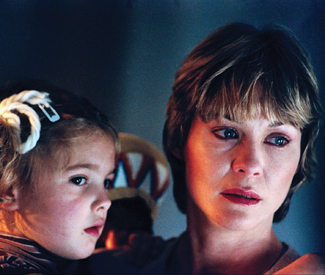
Dee Wallace, best-known for playing the matriarch of E.T.’s earth family — though she’s also a cult fave for her roles in horror flicks like 1981’s The Howling and 1986’s Critters — phoned for a quick chat on the eve of E.T.‘s Oct. 9 Blu-ray release.

San Francisco Bay Guardian Re-watching the movie, I was struck by how much of the film is really about a family in crisis.

Dee Wallace For me, the main theme of the film was the friendship between E.T. and Elliott, and that friendship was heightened because of the crisis of the family. Elliott really needed a friend. He needed somebody’s attention. [My character,] Mary, couldn’t give it to him — she was too busy making a living for everybody and raising three kids, you know? I think the family dynamic certainly catapults the film into people’s hearts, because they understand what it means to need somebody.

SFBG The family interactions seem very natural, and the extras on the Blu-ray go into how the kids were allowed to ad-lib some of their lines. What was that like for you?

DW I always looked at it as just being another one of the kids. I love to work that way, where I never know what’s going to happen. Steven would throw people lines and then he’d tell us, ‘Say this line but don’t tell them you’re gonna say it.’ We all were allowed to improv and bring our own ideas in, and then he would add things in to throw us all off. I love that because it keeps you in the moment all the time.

SFBG In telling the story from the kids’ point of view, Spielberg didn’t shoot any of the adult characters’ faces until well into the film’s third act — except yours. Did you have a sense of that at the time?

DW Oh yes. He explained to me that was his plan and that’s why I was cast, because he felt that my energy had a childlike quality to it. Which is true, even today! I’m still pretty childlike.

SFBG You’re also known for appearing in quite a few classic horror films. (I’m a big fan of 1977’s The Hills Have Eyes!) What drew you to those roles and how is acting in a horror film different than acting in a film like E.T.?

DW I don’t think it’s different — I just think you get to act more! [Laughs.] I think you get to use a wider range of emotions, a lot of times, in a horror film. Although in E.T., Mary was very emotional: she was angry, she was worried, she was joyful. I got to create a really beautiful emotional arc in E.T., and that’s what I look for.

SFBG You’ve appeared in some Rob Zombie movies, including his upcoming Lords of Salem, which features several horror vets in the cast.

DW Yes, Rob uses a lot of iconic horror actors in all of his stuff. I adore Rob. I love working with him. I think he’s brilliant. And he reminds me a lot of Steven: very in the moment, very loose, a real visionary, and open to people’s input and creativity.

‘LOOPER’ IS HERE! Plus: a boatload of other new movies

0

Wait, what are you doing reading this? Why aren’t you watching Looper, the best time-travel movie to come out of Hollywood in ages? Check out Lynn Rapoport’s review below, go see the damn thing (it’s gonna be huge, like Inception huge), and start planning your “Gat Man” Halloween costume this instant.

In this week’s film column, I check out the Northern California Action/Sports Film Festival (a new venture from SF IndieFest, which, by the way: just another month or so until DocFest!), let’s-talk-about-our-feelings indie Liberal Arts, and docs Diana Vreeland: The Eye Has to Travel and Peter Ford: A Little Prince

Marke B. takes on another doc, Detropia, and dubs this look at his hometown “important and beautiful;” full review here.

Two more from H-wood open this week (3D animated monster comedy Hotel Transylvania and YA young-angst tale The Perks of Being a Wallflower), as yet unreviewed — but there’s a bunch more short reviews, including Dennis Harvey’s take on the Vortex Room’s “Aerobicide” triple feature, after the jump.

http://www.youtube.com/watch?v=Y6G_AXzOJKY

“Aerobicide Sunday: A Marathon of Murder in Tights” Two things that made the 1980s taste great, slasher movies and aerobic exercise, were each too crassly, promiscuously commercial not to hook up a few times — even if the sub-sub-genre they created together is even less well remembered than the Lambada musical. Sun/30, however, it shall reign as king at the Vortex, where a triple bill of exer-psycho obscurities will really make you feel the burn. First up is 1987’s Aerobicide a.k.a. Killer Workout, in which the fitness emporium owned by Rhonda (Marcia Karrof of 1984’s Savage Streets) — as sour a grape as you’ll find in pastel spandex and pouf-shouldered Valley Girl dresses — experiences a rash of hard bodies being reduced to bloody pulp by an unknown killer wielding a large killer safety pin. Totally gross! We get many close-ups of overexposed thighs and over assisted cleavage gyrating to heinous dance tracks with inexplicable lyrics like “Hey baby! I’ve got your number! Red and juicy, warm and sweet” — plus some feathered-hair beefcake too — before the culprit turns out to be exactly who you think it is.

This was but an early effort among 32 features to date by writer-director David A. Prior, and based on the evidence present there’s a reason why you’ve never heard of any of them. Slightly slicker was 1990’s Death Spa (a.k.a. Witch Bitch), in which a computer automated gym goes all HAL-slash-The Shining, to the mortal danger of its highly toned staff and clientele. We’re talking death by blender, sauna paneling, and reanimated frozen fish products. The facility’s bitchy programmer is played by Merrick Butrick, who’d portrayed Captain Kirk’s son and a Square Peg earlier in the decade, and died of AIDS before this movie was released. Directed by Austrian Michael Fischa, it’s comparatively glossy but definitely senseless nonsense with a Eurotrash-genre feel. Lastly, in the same vein, and even slicker, there’s 1984’s Murder Rock: Dancing Death a.k.a. Giallo a Disco a.k.a. Slashdance (one of, incredibly, no less than three movies with that third name), a lesser exercise by that occasionally great horror director Lucio Fulci. Rather than a health club, the setting here is a dance school where choreography seems less indebted to Balanchine and Martha Graham than Jane Fonda and Shabba Doo. For that crime the punishment is, of course … death by hatpin? Whatever. If you survive this evening, you will be sore, winded, and desperate to sweat the toxins out of your system. Vortex Room. (Dennis Harvey)

http://www.youtube.com/watch?v=nrf8xoQJ5Ms

Backwards Athletic disappointment is not a new feeling for Abi (Sarah Megan Thomas, who also wrote the script), who has just learned she’s been named the alternate for the Olympic crew team — a bench warming role she was also relegated to in the last Olympics. But after she quits the team in a huff and moves home, it’s not long before she realizes that her life off the water is pretty depressing, too. Enter former boyfriend Geoff (James Van Der Beek), now the athletic director at the high school where Abi honed her rowing talents, who gives her a job coaching the talented but undisciplined girls who make up the current team. Will this new venture help Abi finally grow up and regain her self-confidence? Will she re-ignite her spark with Geoff? Will there be a last-act conflict involving yet another chance at the Olympics? Will there be multiple training montages? As directed by Ben Hickernell, Backwards hits all of the expected themes about following one’s heart and Doing the Right Thing. Thomas, a former rower herself, has an ordinary-girl appeal, but even Backwards‘ attention to authenticity can’t elevate what’s essentially a very predictable sports drama. (1:29) Sundance Kabuki. (Cheryl Eddy)

http://www.youtube.com/watch?v=eI3ju17W070

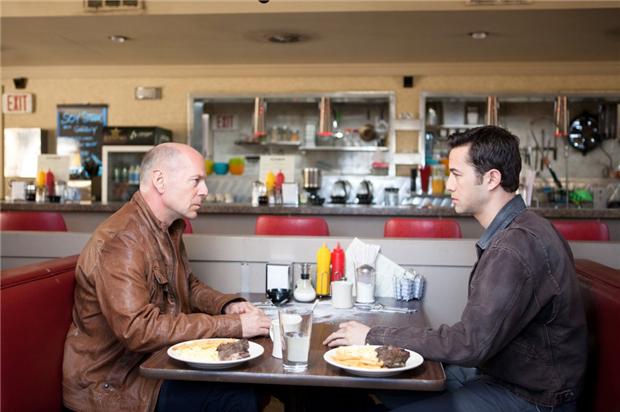
Looper It’s 2044 and, thanks to a lengthy bout of exposition by our protagonist, Joe (Joseph Gordon-Levitt), here’s what we know: time travel, an invention 30 years away, will be used by criminals to transport their soon-to-be homicide victims backward, where a class of gunmen called loopers, Joe among them, are employed to “do the necessaries.” More deftly revealed in Brick (2005) writer-director Rian Johnson’s new film is the joylessness of the world in which Joe amorally makes his way, where gangsters from the future control the present (under the supervision of Jeff Daniels), their hit men live large but badly (Joe is addicted to some eyeball-administered narcotic), and the remainder of the urban populace suffers below-subsistence-level poverty. The latest downside for guys like Joe is that a new crime boss has begun sending back a steady stream of aging loopers for termination, or “closing the loop”; soon enough, Joe is staring down a gun barrel at himself plus 30 years.

Being played by Bruce Willis, old Joe is not one to peaceably abide by a death warrant, and young Joe must set off in search of himself so that — with the help of a woman named Sara (Emily Blunt) and her creepy-cute son Cid (Pierce Gagnon) — he can blow his own (future) head off. Having seen the evocatively horrific fate of another escaped looper, we can’t totally blame him. Parsing the daft mechanics of time travel as envisioned here is rough going, but the film’s brisk pacing and talented cast distract, and as one Joe tersely explains to another, if they start talking about it, “we’re gonna be here all day making diagrams with straws” — in other words, some loops just weren’t meant to be closed. (1:58) (Lynn Rapoport)

http://www.youtube.com/watch?v=siEHekc-1oE

Pitch Perfect As an all-female college a cappella group known as the Barden Bellas launches into Ace of Base’s “The Sign” during the prologue of Pitch Perfect, you can hear the Glee-meets-Bring It On elevator pitch. Which is fine, since Bring It On-meets-anything is clearly worth a shot. In this attempt, Anna Kendrick stars as withdrawn and disaffected college freshman Beca, who dreams of producing music in L.A. but is begrudgingly getting a free ride at Barden University via her comp lit professor father. Clearly his goal is not making sure she receives a liberal arts education, as Barden’s academic jungle extends to the edges of the campus’s competitive a cappella scene, and the closest thing to an intellectual challenge occurs during a “riff-off” between a cappella gangs at the bottom of a mysteriously drained swimming pool. When Beca reluctantly joins the Bellas, she finds herself caring enough about the group’s fate to push for an Ace of Base moratorium and radical steps like performing mashups. Much as 2000’s Bring It On coined terms like “cheerocracy” and “having cheer-sex,” Pitch Perfect gives us the infinitely applicable prefix “a ca-” and descriptives like “getting Treble-boned,” a reference to forbidden sexual relations with the Bellas’ cocky rivals, the Treblemakers. The gags get funnier, dirtier, and weirder, arguably reaching their climax in projectile-vomit snow angels, with Elizabeth Banks and John Michael Higgins as grin-panning competition commentators offering a string of loopily inappropriate observations. (1:52) (Lynn Rapoport)

http://www.youtube.com/watch?v=XSDZNHYLDOY

Solomon Kane Conceived by Conan the Barbarian creator Robert E. Howard, this 16th-century hero is cut from the same sword-and-sorcery cloth, being a brawny brute of slippery but generally sorta-kinda upright morals. Solomon (James Purefoy) is slaughtering his way to a North African treasure trove when demons swallow up his likewise greedy, conscience-free cohorts and damn his soul for a lifetime of bad deeds. Suddenly committed to the greater good, he returns homeward to cold gray England, where Jason Flemyng’s evil sorcerer soon imperils both our protagonist and the Puritan family (complete with love interest) he’s befriended. This movie has been around a while — since 2009, to be exact, yet barely beating director Michael J. Bassett’s new Silent Hill: Revelation 3D to U.S. theaters — and is a good illustration of what can happen when you make a fairly expensive ($45 million) fantasy-action adventure without major stars nor any marketable novelty. Which is to say: not much. There is absolutely nothing wrong with the good-looking, watchable but generic-feeling Solomon Kane, save that nothing about it feels remotely original or inspired. It’s the perfectly okay, like-a-thousand-others mall flick you’ll forget you saw by Thanksgiving, despite being peopled with such normally interesting actors as Max Von Sydow, Alice Krige, and the late Pete Postlethwaite. (1:54) (Dennis Harvey)

http://www.youtube.com/watch?v=4mZIwD4K544

“Stars In Shorts” Outside of the festival circuit, it’s an uncommon feat for shorts to make it to the big screen, so it can’t hurt to make name recognition a prerequisite for selection. In writer-director Rupert Friend’s Steve, Keira Knightley plays an embattled Londoner under siege by her lonely, pathologically odd neighbor (Colin Firth). Written by Neil LaBute, Jacob Chase’s After School Special sets up a semi-flirtation between two strangers (Sarah Paulson and Wes Bentley) at a playground, only to deliver the kind of gut-level punch you might expect from the writer-director of 1998’s Your Friends and Neighbors. LaBute’s own Sexting is an entertaining exercise in stream-of-consciousness monologuing by Julia Stiles. As with most shorts programs, “Stars” is a mixed bag. Robert Festinger’s The Procession, in which Lily Tomlin and Modern Family’s Jesse Tyler Ferguson play reluctant participants in a funeral procession, sounds promising, but the conversation palls during the 10-plus minutes we’re stuck in the car with them. Benjamin Grayson’s sci-fi thriller Prodigal, starring Kenneth Branagh, reaches its predictable crisis points several minutes after the viewer has arrived. More successful are Jay Kamen’s musical comedy Not Your Time, starring Seinfeld’s Jason Alexander as an old Hollywood hand whose writing career has stalled out, and Chris Foggin’s Friend Request Pending, which treats viewers to the sight of Dame Judi Dench gamely wading into the social network in search of a date. (1:53) (Lynn Rapoport)

Won’t Back Down If talk of introducing charter schools into the public education mix tends to give you collective-bargaining-related hives, Daniel Barnz’s Won’t Back Down is unlikely to appeal, unless perhaps as the object of a boycott or a picket line. Two embattled mothers, Jamie Fitzpatrick (Maggie Gyllenhaal) and Nona Alberts (Viola Davis), both with children at a failing Pittsburgh elementary school and the latter a teacher there, join forces to change the institutional culture by leading a parent-teacher takeover, with the goal of creating a charter school. As the bureaucratic process for doing so is described by a school district employee, it should take them three to five years to discover that they’ve been hurling themselves at a brick wall; Jamie, an efficient combination of fireball and pit bull, is determined to pulverize the wall in about two months.

Watching her and Nona try to secure more than a third-rate, treading-water education for their kids, it’s hard not to root for the possibility of a transformation, and even an upper-level teachers’ union staffer played by Holly Hunter finds herself climbing the fence. The details of what lies on the other side (and inside Jamie and Nona’s 400-page proposal) stay fairly fuzzy, though. And while Barnz lets his warring factions — desperate mothers and educators, a union boss (Ned Eisenberg) watching the deterioration of the labor movement, a pro-union teacher (Oscar Isaac) ambivalently engaged in the chartering project — impassionedly debate their way through the film, a little more wonkiness might have clarified the arguments of those done waiting for Superman. (2:00) (Lynn Rapoport)

Chronic youth

1

cheryl@sfbg.com

FILM It can’t be a coincidence that within a week, a pair of films have been released about 35-year-olds who contemplate hooking up with 19-year-olds. That 16-year age gap — with an immature or other otherwise emotionally stunted thirtysomething on one end, and a precocious millennial on the other — is narrow enough to be plausible, but just wide enough to be awkward.

Now in theaters, Hello I Must Be Going traces the existential flailings of Amy (Melanie Lynskey), so discombobulated post-divorce that she moves back home and takes up with Jeremy (Christopher Abbott), the son of one of her father’s potential clients. Despite their chic Connecticut lifestyle, Mom (Blythe Danner) and Dad (John Rubinstein) have been hit by the recession; Amy’s self-pitying second adolescence only makes the household tension worse. Meanwhile, her hot, clandestine fling with Jeremy, an uninhibited actor, is tested less by their age difference than by his connection to the lucrative account that Amy’s father is desperately trying to land. Of course, there is a cringe-worthy scene where Amy crashes a party, looking for Jeremy, and the bleary-eyed youth who answers the door announces “Someone’s mom is here!”

This week’s Liberal Arts reverses the genders of the controversial couple, with Jesse (How I Met Your Mother‘s Josh Radnor, who also wrote and directed) falling for Zibby (Elizabeth Olsen), a student at the leafy Ohio university he graduated from years before (never named, but filmed at Kenyon College, Radnor’s own alma matter). The two meet when Jesse, now a jaded Brooklynite, visits to celebrate the retirement of Professor Hoberg (Richard Jenkins); unlike Hello‘s Amy and Jeremy, who waste no time knocking boots, the question of whether to consummate the relationship becomes a major plot point.

Liberal Arts is at its best when delineating a specific type of collegiate experience — as safe, privileged bubble where, as Jesse explains, you can announce “I’m a poet!” without anyone punching you in the face. It can also be an oppressive space, as illustrated by a cranky prof who feels trapped by academia (a razor-sharp Lucinda Janney), and a morose classmate of Zibby’s who identifies a little too closely with David Foster Wallace.

And it’s stuff like the Wallace references (again, never named — just identified via heavily dropped hints, for all the cool viewers to catch) that’re ultimately Liberal Arts‘ undoing. Radnor explores some interesting themes, but the film is full of indie-comedy tropes — the friendly stoner (Zac Efron) who randomly appears to dispense life lessons; an anti-Twilight rant that’s a bit too pleased with itself; the unusually attractive character who appears in the first act and is obviously destined for inclusion in the inevitable happy ending.

By contrast, “airless” and “predictable” are not words anyone would use to describe the life of legendary fashion editor Diana Vreeland, colorfully recounted in Diana Vreeland: The Eye Has to Travel, a doc directed by her granddaughter-in-law, Lisa Immordino Vreeland. The family connection meant seemingly unlimited access to material featuring the unconventionally glamorous (and highly quotable) Vreeland herself, plus the striking images that remain from her work at Harper’s Bazaar, Vogue, and the Costume Institute of the Metropolitan Museum of Art.

“Narrated” from interview transcripts by an actor approximating the late Vreeland’s husky, posh tones, the film allows for some criticism (her employees often trembled at the sight of her; her sons felt neglected; her grasp of historical accuracy while working at the museum was sometimes lacking) among the praise, which is lavish and delivered by A-listers like Anjelica Huston, who remembers “She had a taste for the extraordinary and the extreme,” and Manolo Blahnik, who squeals, “She had the vision!”

Glamour also factors into Peter Ford: A Little Prince, a 40-minute documentary directed by Alexander Roman, who’ll attend both Sun/30 screenings with film subject Peter Ford. “My whole life has been defined by being Glenn Ford’s son,” the sixtysomething Peter says. (For all the Jeremys and Zibbys out there, Glenn Ford was a Hollywood superstar in the 1950s.) Home movies and snapshots depicting a blissful domestic life contrast with Peter’s rambling interview, which spans the length of the film and reveals that all those happy scenes were staged for publicity purposes. Less a bio of Glenn, Peter, or Peter’s mother, dancer Eleanor Powell, A Little Prince is more a peek into the psyche of someone who’s spent his life in the shadow of a legend. “Being a movie star’s child is the hardest job in the world,” Peter says — hyperbole clearly wrought from a lifelong identity crisis.

And it wouldn’t be a week in San Francisco without a film festival (or two: check out Nicole Gluckstern’s take on the Berlin and Beyond Film Festival elsewhere in this issue). The folks at SF IndieFest — who already program their flagship fest, plus DocFest and genre showcase Another Hole in the Head — add another to the rolls with the Northern California Action/Sports Film Festival.

Aimed at athletes rather than typical film-fest types (evidence: movies screen at Sports Basement locations, where you can gear up for your next adventure on the way out the door), this three-day event contains the expected array of skiing, skateboarding, and surfing flicks — check out Manufacturing Stoke, which takes a look at how the surf industry has been transformed by a recent trend toward using environmentally-friendly materials to build boards — but also films focusing on more specialized pursuits like bouldering and slacklining.

Fans of Into Thin Air won’t want to miss 40 Days at Base Camp. The base camp in question is the bustling, ever-shifting village — filled with an international population of guides, climbers both soulful and breezy, Sherpas, volunteer medics, and assorted support staff — perched beneath Mount Everest. As personal triumphs mingle with day-to-day activities (and grimmer tasks, like clearing away long-dead bodies that have worked their way up through the ice), one observer accurately dubs the scene “a fascinating microcosm.” *

Liberal Arts and Diana Vreeland: The Eye Has to Travel open Fri/28 in Bay Area theaters.

Peter Ford: A Little Prince screens Sun/30, 11am and 3pm, at Delancey Street, 600 Embarcadero, SF. For tickets ($8) and more information, visit www.alittleprince.net.

Northern California Action/Sports Film Festival runs Fri/28-Sun/30 with films screening simultaneously at Sports Basement locations in SF, Walnut Creek, and Sunnyvale, and Mission Cliffs, 2295 Harrison, SF. For tickets ($5; festival pass, $25) and schedule, visit www.sfindie.com.

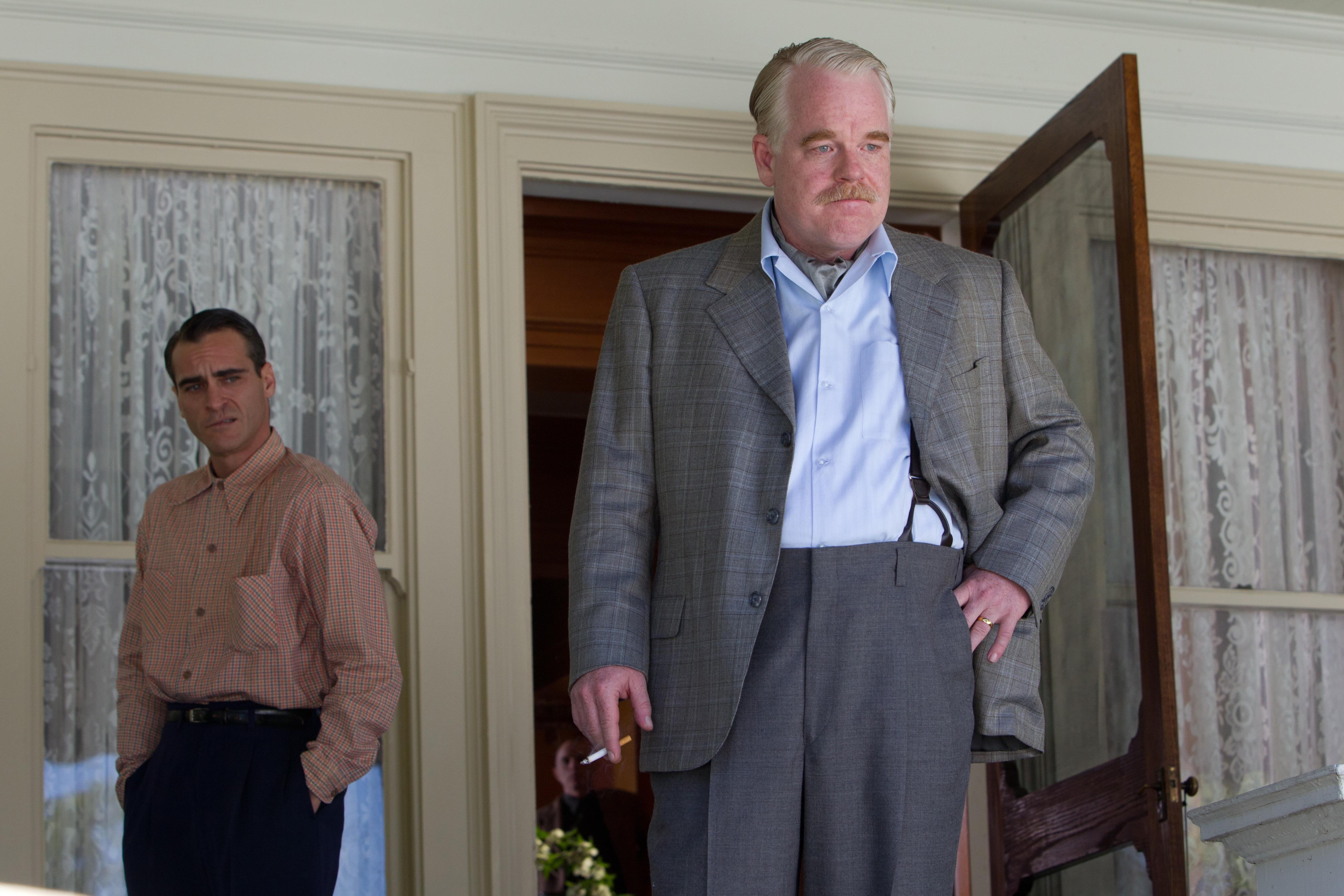
Frenemies in this life, enemies in the next: ‘The Master’ and other new films

0

It’s here at last! Clear your mind and join the Cause!

Yep, The Master opens today, along with a pair of cop movies (one set in gritty LA, the other set in an even grittier megacity of the future). Already in progress is the 3rd i’s San Francisco International South Asian Film Festival. Check out my take on all of the above right herre.

The most excellent Caitlin Donohue takes on Stephen Elliott’s porn-themed About Cherry (screening at the Castro tonight!) here.

As-yet unreviewed due to various reasons (two being: aversions to PG-13 horror flicks, and Channing Tatum overload … seriously, guy, take a vacation!), but most certainly opening today, are House At the End of the Street (alas, not the House Hunters suspense thriller we’ve all been waiting for) and high-school reunion comedy 10 Years. I didn’t make it to my 10-year reunion but I feel confident saying that NOBODY in my class (go Tigers!) showed up with Magic Mike-style abs.

But wait, there’s more! Read on for the rest of the best (and meh-st) of the week.

Hello I Must Be Going Blindsided by her recent divorce, 35-year-old Amy (Melanie Lynskey) flees New York City for quaint Westport, Conn., where she nurses her wounds, mostly by sleeping and watching Marx Brothers movies. Amy’s protracted moping rankles her perfectionist mother (Blythe Danner, bringing nuance to what could have been a clichéd character) and concerns her workaholic father (John Rubenstein). Dad’s trying to land a big client so he can “make back some of the money we lost in the market” — a subtle aside in Sarah Koskoff’s script that suggests Amy’s parents aren’t as well-heeled as they used to be, despite the ongoing renovations to their swanky home, catered dinners, and expensive art purchases. Money woes are just one of Amy’s many concerns, though, and when a distraction presents itself in the form of 19-year-old Jeremy (Girls‘ Christopher Abbott), she finds herself sneaking out at night, making out in her mom’s car, smoking weed, and basically behaving like a teenager herself. As directed by indie actor turned director Todd Louiso (2002’s Love Liza), Hello I Must Be Going is a nicely contained, relatable (self-loathing: we’ve all been there) character study — and props for casting the endearing Lynskey, so often seen in supporting roles, as the film’s messy, complex lead. (1:35) (Cheryl Eddy)

http://www.youtube.com/watch?v=LQbM4bb6Zpk

How to Survive a Plague David France’s documentary chronicles the unprecedented impact political activism had on the course of AIDS in the US — drastically curtailing its death toll within a few years despite considerable institutional indifference and downright hostility. As the epidemic here first surfaced in, and decimated, the gay male community, much of Reagan America (particularly in religious quarters) figured the death sentence was deserved. The President himself infamously refrained from even saying the word “AIDS” publicly until his final year of office, after thousands had died. Both terrified and outraged, the gay community took it upon themselves to demand treatment, education, and research. Most of this urgent 1980s overview is concerned with the rise of ACT-UP, whose angry young men successfully lobbied and shamed corporate, academic, medical, and pharmaceutical bodies into action, with the result that by the mid-90s new drugs existed that made this dreaded diagnosis no longer a necessarily terminal one. France is a journalist who’s been covering AIDS practically since day one, and his first feature (made with the help of numerous first-rate collaborators) is authoritative and engrossing. Just don’t expect much (or really any) attention paid to the contributions made by SF or other activist hotspots — like many a gay documentary, this one hardly notices there’s a world (or gay community) outside Manhattan. (1:49) (Dennis Harvey)

Somewhere Between Five years ago, when filmmaker Linda Goldstein Knowlton adopted a baby girl from China, she was inspired to make Somewhere Between, a doc about the experiences of other Chinese adoptees. The film profiles four teenage girls, including Berkeley resident Fang “Jenni” Lee, whose American lives couldn’t be more different (one girl has two moms and attends a fancy prep school; another, raised by devout Christians, dreams of playing her violin at the Grand Ole Opry) but who share similar feelings about their respective adoptions. The film follows the girls on trips to London (as part of an organized meeting of fellow adoptees), Spain (to chat with people interested in adopting Chinese babies, and where the question “What does it feel like to be abandoned?” is handled with astonishing composure), and China (including one teen’s determined quest to track down her birth family). Highly emotional at times, Somewhere Between benefits from its remarkably mature and articulate subjects, all of whom have much to say about identity and personal history. Lee and filmmaker Goldstein Knowlton will appear in person at select opening shows; visit www.landmarktheatres.com for more information. (1:28) (Cheryl Eddy)

Trouble with the Curve Baseball scout Gus (Clint Eastwood) relies on his senses to sign players to the Atlanta Braves, and his roster of greats is highly regarded by everyone — save a sniveling climber named Sanderson (Matthew Lillard), who insists his score-keeping software can replace any scout. Gus’ skill in his field are preternatural, but with his senses dwindling, his longtime-friend Pete (a brilliant John Goodman) begs Gus’ daughter Mickey (Amy Adams) to go with him — to see how bad the situation is and maybe drive him around. Ultimately, the film’s about the rift between career woman Mickey, and distant dad Gus, with some small intrusions from Justin Timberlake as Mickey’s romantic interest. Trouble with the Curve is a phrase used to describe batters who can’t hit a breaking ball and it’s a nuance — if an incontrovertible one — unobservable to the untrained eye. While Mickey and Gus stumble messily toward a better relationship (with a reasonable amount of compromise), Curve begins to look a bit like The Blind Side (2009), trading the church and charity for therapy and baggage. But what it offers is sweet and worthwhile, if you’re tolerant of the sanitized psychology and personality-free aesthetics. But it’s a movie about love and compromise — and if you love baseball you won’t have trouble forgiving some triteness, especially when Timberlake, the erstwhile Boo-Boo, gets to make a Yogi Berra joke. (1:51) (Sara Vizcarrondo)

Toads! Conniving one-percenters! And giant sharks! New movies

0

This week, check out the offerings at Cine+Mas, the San Francisco Latino Film Festival, plus reviews of quirky docs Beauty is Embarrassing and Cane Toads: The Conquest, in my overview here. Also, Los Angeles-based underground superstar Damon Packard visits Other Cinema Sat/15 with his latest, Foxfur; he chats about it here.

A pair of interview-reviews, as well: Dennis Harvey talks to Ira Sachs about dark relationship drama Keep the Lights On, and Kimberly Chun talks to Nicholas Jarecki about financial-world thriller Arbitrage. Harvey also writes up doc Girl Model, a devastating look at the global modeling industry.

http://www.youtube.com/watch?v=4HitH8qJxCg

Oh, and Hollywood? They’re banking on you wanting to go under the sea (again) with Finding Nemo 3D. Shaaaaaark!

Symptom of the universe

0

cheryl@sfbg.com

TRASH Get ready, Damon Packard fans — the mad genius behind underground cult sensations Reflections of Evil (2002) and SpaceDisco One (2007) unfurls his latest, Foxfur, at Other Cinema’s fall season kickoff (also on the bill: Marcy Saude with a slideshow on ufologist George Van Tassel, free champagne and VHS tapes, and more). I spoke with the Los Angeles-based Packard, who hopes to attend in person, ahead of the event.

San Francisco Bay Guardian How long did it take you to make Foxfur?

Damon Packard A little less than two years. I mean, it should have taken a week, because there were so few shooting days. It just took that long because it’s so difficult when you’re working with no money. I was adding little bits right up to the last minute [before the film’s July 21 premiere in SoCal]. Shots of cats, stuff like that.

SFBG Is that why you have something like six different women playing the lead role?

DP Yes. There were always these short windows of time when we had to shoot, and I had to get whoever was available. It became an experiment in the end, with the multiple actresses.

SFBG When people ask you what Foxfur is about, how do you explain it?

DP It’s difficult to sum it up. I would say it’s a UFO sci-fi fantasy, mostly about the Billy Meier Pleiadian contacts of the 1970s. That was the inspiration.

SFBG Many of your previous films made use of non-original footage, like Carpenters videos and old commercials, but Foxfur is all original, isn’t it?

DP Well, I do use music from Tangerine Dream scores: Firestarter, Wavelength (both 1984), things like that. Also some ambient tracks by Steve Roach and Michael Stearns.

SFBG In addition to Foxfur‘s Billy Meier references, the film also has actors portraying David Icke and Bob Lazar. Why conspiracy theorists?

DP Well, they’re part of the Foxfur universe — I like taking real-life characters and incorporating them into a story. Foxfur is obsessed with New Age elements — crystals, dolphins, the Pleiadians — which includes people like David Icke and Richard Hoagland. She’s an avid Coast to Coast AM listener. So yeah, it was supposed to be about her disillusionment. She’s so devastated when she discovers that it’s not real.

SFBG There’s a line in Foxfur about how “everyone is operating in their own vacuum of reality,” and scenes depicting people zoned out on their phones, unhelpful store clerks, and so on. Were those your 21st century frustrations coming out?

DP It happens a lot in real life — everywhere you go, you sort of run into that. Nobody knows anything about anything and nobody wants to help anyone. It’s a kind of apathetic, clueless, state of mind. Or if you need to call your bank, for example, you’re gonna get transferred to all these different worthless departments where people won’t be able to help you. There are always problems, errors, computer systems going down. You can’t get any answers to anything.

SFBG You’ve said in the past that you’re anti-CGI, and Foxfur (which contains the line “I hate Peter Jackson!”) suggests you still feel this way.

DP I do think there’s room for a good balance between practical and digital effects — there’s no reason not to use modern technology. For the most part, though, I hate it. It usually looks awful. I don’t know why other filmmakers, including veteran filmmakers, don’t see that.

I think practical effects are better and always will be, but there aren’t any companies set up to do practical effects anymore. It’s incredibly difficult to do and there aren’t any filmmakers pushing for it. But real explosions, real pyro, always looks better than any kind of digital explosion.

SFBG Is there any hope for the future of film? Or — since Foxfur takes place on the eve of the apocalypse — of humanity?

DP One of the themes of Foxfur is about the “dead zone” — in the film, it’s the time we’re in now, where everything is revolving in circles. It’s a time that wasn’t meant to exist. We’re in the end of the world already.

To me, it feels like music, fashion, it’s all reaching to the past. There’s no new movements going on. It’s a strange time. And movies feel that way too; it seems like everything’s been done already. Everything is an updated variation. I wanted Foxfur to be really pressing in that sense: that there’s no hope, there’s no point in anything. I can’t imagine there’s any future to cinema, or what movies will be like in even five to ten years from now. Are we going to see reboots of reboots? How many reboots can they keep going on with? If it’s not a reboot or a sequel, it’s a reboot or a sequel in disguise.

OTHER CINEMA

Sat/15, 8:30pm (reception at 8pm), $6

Artists’ Television Access

992 Valencia, SF

www.othercinema.com

Rep Clock

0

Schedules are for Wed/12-Tue/18 except where noted. Director and year are given when available. Double and triple features marked with a •. All times pm unless otherwise specified.

ARTISTS’ TELEVISION ACCESS 992 Valencia, SF; www.othercinema.com. $6. "Other Cinema:" works by Damon Packard, Marcy Saude, and more, Sat, 8:30.

BRIDGE 3010 Geary, SF; www.landmarktheatres.com. $8-10.50. "Studio Ghibli Animation Retrospective:" Ponyo (Miyazaki, 2008), Wed, 2:45, 7, English language version; The Cat Returns (Morita, 2002), Wed, 5:10, 9:25, in Japanese with English subtitles; Howl’s Moving Castle (Miyazaki, 2004), Thu, 2, 7, English language version; My Neighbors the Yamadas (Takahata, 1999), Thu, 4:30, 9:35, in Japanese with English subtitles.

CALIFORNIA 2113 Kittredge St, SF; www.landmarktheatres.com. $8-10.50. Nausicaä of the Valley of the Wind (Miyazaki, 1984), Fri-Sat, 1:50, 4:25, 7, 9:35; Kiki’s Delivery Service (Miyazaki, 1989), Sun-Mon, 1:55, 7; Castle in the Sky (Miyazaki, 1986), Sun-Mon, 4:15, 9; Porco Rosso (Miyazaki, 1992), Tue, 2:50, 7; The Cat Returns (Morita, 2002), Tue, 5, 9:10. All films in Japanese with English subtitles.

CASTRO 429 Castro, SF; (415) 621-6120, www.castrotheatre.com. $8.50-11. •The Breakfast Club (Hughes, 1985), Wed, 7, and Animal House (Landis, 1978), Wed, 8:55. •Bad Day at Black Rock (Sturges, 1955), Thu, 2:30, 7, and The Wild Bunch (Peckinpah, 1969), Thu, 4:10, 8:35. "Midnights for Maniacs: Trix Are For Kids" •The Iron Giant (Bird, 1999), Fri, 7:30; Labyrinth (Henson, 1986), Fri, 9:20; Phenomena: Unrated Director’s Cut (Argento, 1985), Fri, 11:30. One or all three films, $13. Sutro’s: The Palace at Lands End (Wyrsch, 2011), Sat, 2. Remembering Playland At the Beach (Wyrsch, 2010), Sat, 3:30. Kill Bill: Vol. 1 (Tarantino, 2003), Sat, 7. Kill Bill: Vol. 2 (Tarantino, 2004), Sat, 9:10. Willy Wonka and the Chocolate Factory (Stuart, 1971), Sun, 2. Punch-Drunk Love (Anderson, 2002), Sun, 5, 8:45. Death Proof (Tarantino, 2007), Sun, 7. Moonrise Kingdom (Anderson, 2012), Mon-Tue, 7, 9:05 (also Tue, 2:30, 4:45).

CHRISTOPHER B. SMITH RAFAEL FILM CENTER 1118 Fourth St, San Rafael; (415) 454-1222, www.cafilm.org. $6.75-$10.25. Ai Weiwei: Never Sorry (Klayman, 2012), call for dates and times. Beasts of the Southern Wild (Zeitlin, 2012), call for dates and times. The Queen of Versailles (Greenfield, 2012), call for dates and times. 2 Days in New York (Delpy, 2012), call for dates and times. Arbitrage (Jarecki, 2012), Sept 14-20, call for times. Cane Toads: The Conquest 3D (Lewis, 2012), Sept 14-20, call for times. This event, $10-12.

"CINE + MAS SAN FRANCISCO LATINO FILM FESTIVAL" Various Bay Area locations; www.sflatinofilmfestival.com. Most shows $12. Forty features, documentaries, and shorts from Latin America, Spain, and the United States. Sept 13-28.

"FILM NIGHT IN THE PARK" This week: Dolores Park, 19th Ave and Dolores, SF; www.filmnight.org. Donations accepted. The Graduate (Nichols, 1967), Sat, 8.

GOETHE-INSTITUT SAN FRANCISCO 530 Bush, SF; (415) 263-8760. $5 suggested donation. "Homage to Romy Schneider:" The Swimming Pool (Dery, 1969), Wed, 7:30.

MANDELA VILLAGE ARTS CENTER 1357 Fifth St, Oakl; www.ticketweb.com. $10. Brainwash Drive-In/Bike-In/Walk-In Movie Festival, Sat and Sept 21-22, 9. Outdoor screenings with live music and food trucks.

PACIFIC FILM ARCHIVE 2575 Bancroft, Berk; (510) 642-5249, bampfa.berkeley.edu. $5.50-9.50. "Alternative Visions:" "Nights and Days: A Decade of Lebanese Short Films," Wed, 7. "LA Rebellion: Creating a New Black Cinema:" Bush Mama (Gerima, 1975), Thu, 7. "Grand Illusions: French Cinema Classics, 1928-1960:" La jour se lève (Carné, 1939), Fri, 7; Casque d’or (Becker, 1952), Fri, 8:50; Hôtel du Nord (Carné, 1938), Sat, 8:20. "Life is Short: Nikkatsu Studios at 100:" Hometown (Mizoguchi, 1930), Sat, 6:30. "A Theater Near You:" Once Upon a Time in Anatolia (Bilge Ceylan, 2011), Sun, 5.

ROXIE 3117 and 3125 16th St, SF; (415) 863-1087, www.roxie.com. $6.50-10. Kumaré (Gandhi, 2011), Wed, 6:45, 8:45. Red Hook Summer (Lee, 2012), Wed, 6:45, 9. Freedom House: Street Saviors (Starzenski, 2009), Thu, 7:30. "Projector Magazine Screening," Thu, 8. Beauty is Embarrassing (Berkeley, 2012), Sept 14-20, 7, 8:45 (also Sun, 3:15, 5).

SIBLEY AUDITORIUM Bechtel Engineering Center, UC Berkeley, Berk; nature.berkeley.edu. Free (limited seating). California Forever: The Future of Our State Parks (Vassar, 2012), Thu, 5:30. Followed by a panel discussion with filmmakers and environmentalists.

TANNERY 708 Gilman, Berk; berkeleyundergroundfilms.blogspot.com. Donations accepted. "Berkeley Underground Film Society:" Sixteen Candles (Hughes, 1984), Sun, 7:30.

2969 MISSION 2969 Mission, SF; www.answersf.org. $5-10. Attica (Firestone, 1974), Wed, 7.

YERBA BUENA CENTER FOR THE ARTS 701 Mission, SF; www.ybca.org. $8-10. "Femina Potens’ Askew Film and Performance Festival:" "Intersections: LOVE:SEX:PORN:ART: Our Intimate Identity," Thu, 7; "The Birth of Something New: Explorations of Queer Home, Family, and Community," Fri, 7; "In/Visible: Women fighting for visibility and survival in a world that doesn’t always celebrate difference," Sat, 7. Guest-curated by Madison Young of Femina Potens Gallery. *

Single ladies, fake gurus, ponderous authors, and more: new flicks!

0

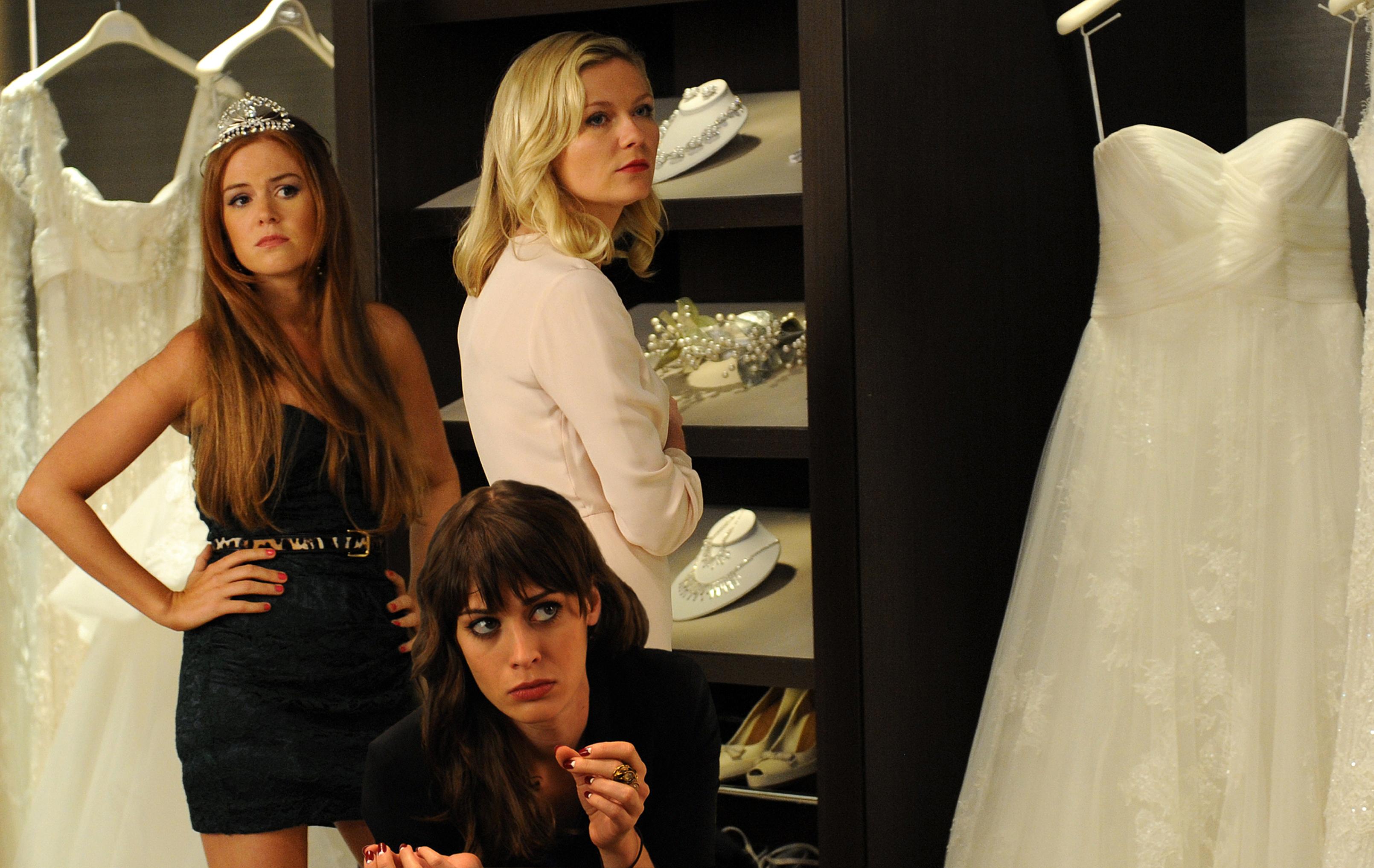
Bachelorette A movie called Bachelorette is inevitably going to be accused of riding Bridesmaids‘ coattails, even if — as it happens — Bachelorette‘s source-material play was written years before the 2011 comedy hit theaters. (That said, there are inevitable similarities, what with the shared wedding themes and all.) Playwright turned scriptwriter-director Leslye Headland does a good job of portraying women who are repulsive in realistic ways: a decade ago, Regan (Kirsten Dunst), Gena (Lizzy Caplan), Katie (Isla Fisher) were the popular “B-Faces” at their high school and haven’t matured much since. Competitive Regan is a Type A blonde; Gena’s the queen of one-night stands; and Katie’s a self-destructive party girl.

http://www.youtube.com/watch?v=X4U_kt2h-Sc

All of them are pushing 30, and though Regan’s the most functional among them, she’s the hardest-hit when she learns that Becky (Bridesmaids‘ Rebel Wilson), always treated as a second-tier B-Face by virtue of being plus-sized, is engaged. “I was supposed to be first,” Regan wails via three-way cell call to Gena and Katie, who’re sympathetic to this sense of entitlement. The wedding is a fancy New York City affair, so the B-Faces reunite for what they think will be a bachelorette party for the ages. Most of the film takes place during that single night, a madcap, coke-fueled, mean-spirited spiral into chaos. It’s raunchy and funny, but every character is utterly unlikable, which becomes more of a problem and less of an amusement as the movie trundles onward toward the expected happy ending. Bachelorette would’ve been better served by sticking with its rallying cry — “Fuck everyone!” — to the bitter end.  (1:34) (Cheryl Eddy)

Chicken With Plums Steeped in whimsy — and a longing for love, beauty, and home — this latest effort from brilliant Persian-French cartoonist-filmmaker Marjane Satrapi and director Vincent Paronnaud flaunts the odd contours of its eccentric narrative, enchants with its imaginative tangents, sprawls like an unincapsulated life, and then takes off on aching, campy romantic reverie—a magical realistic vision of one Iranian artist’s doomed trajectory. Master violinist Nasser Ali Khan (Mathieu Amalric) is seeking the ineffable — a replacement for his destroyed instrument — and otherwise he’s determined to die. We trace the mystery of his passing, backward, with wanders through the life of his family and loved one along the way in this playful, bittersweet feast. Despite Amalric’s glazed-eyed mugging, which almost spoils the dish, Satrapi’s wonderfully arch yet lyrical visual sensibility and resonant characters — embodied by Maria de Medeiros, Jamel Debbouze, Golshifteh Farahani, and Isabella Rossellini, among others — satisfy, serving up so much more than chicken with plums. (1:31) (Kimberly Chun)

http://www.youtube.com/watch?v=OXUzG6YKuvo

Kumaré Just as there was a certain bullying pride of snark that made Bill Maher and Larry Charles’ Religulous (2008) more mean-spirited than necessary, Kumaré leaves a sour, smug aftertaste. Raised in New Jersey by a first-generation immigrant family of Hindus, Vikram Gandhi proclaims himself a skeptic who started out wanting to make a documentary about the opportunistic charlatans one can find passing as spiritually enlightened gurus in both India and around the booming US yoga industry. “I wanted to prove to others looking for answers that no one is more spiritual than anyone, that spiritual leaders are just illusions,” he tells us. A noble impulse. Yet somehow this took the form of growing his hair and beard out, wearing saffron robes, and posing as Sri Kumaré, a fresh-off-the-boat guru who arrives in Phoenix, Ariz. to open up shop as a one-stop spiritual guide for the gullible. He asks “Could people find the same peace in a made-up religion that they would in a real one?” But too often the real question here seems to be “How silly can I make these chumps look while starring in my very own nonfiction version of The Love Guru?” The comedy Kumaré has been primarily compared to is 2006’s Borat, another Larry Charles joint. As unhappy as their portraiture in Borat made its duped participants, it was hard to feel sorry for them — given enough rope they gladly hung themselves expressing racism, homophobia, sexism, and sheer Ugly Americanism. But those who fall under Kumaré‘s farcical spell don’t deserve to be exposed and ridiculed; they’re just people with real-world issues — financial struggles, low self-esteem, empty-nest loneliness, etc. — looking for somebody to tell them what to do. (1:24) Roxie. (Dennis Harvey)

http://www.youtube.com/watch?v=P0xVp3N-M84

Samsara Samsara is the latest sumptuous, wordless offering from director Ron Fricke, who helped develop this style of dialogue- and context-free travelogue with Koyaanisqatsi (1982) and Baraka (1992). Spanning five years and shooting on 70mm film to capture glimmers of life in 25 countries on five continents, Samsara, which spins off the Sanskrit word for the “ever-turning wheel of life,” is nothing if not good-looking, aspiring to be a kind of visual symphony boosted by music by the Dead Can Dance’s Lisa Gerrard and composers Michael Stearns and Marcello De Francisci. Images of natural beauty and African women cradling their babies give way to the madness of modern civilization — from jam-packed subways to the horrors of mechanized factory farming to a bizarre montage of go-go dancers, sex dolls, trash, toxic discarded technology, guns, and at least one gun-shaped coffin. After such dread, the closing scenes of Jewish, Muslim, and Buddhist spirituality seem almost like afterthoughts. The unmistakable overriding message is: humanity, you dazzle in all your glorious and inglorious dimensions — even at your most inhumane. Sullying this handwringing, selective meditation is Fricke’s reliance on easy stereotypes: the predictable connections the filmmaker makes between Africa and an innocent, earthy naturalism, and Asia and a vaguely threatening, mechanistic efficiency, come off as facile and naive, while his sonic overlay of robot sounds over, for instance, an Asian woman blinking her eyes comes off as simply offensive. At such points, Fricke’s global leap-frogging begins to eclipse the beauty of his images and foregrounds his own biases. (1:39) (Kimberly Chun)

http://www.youtube.com/watch?v=gjmrDDD9o_k

The Words We meet novelist Rory Jansen (Bradley Cooper) as he’s making his way from a posh building to a cab in the rain; it’s important the shot obscures his generally shiny exterior, because we’re meant to believe this guy’s a sincere and struggling novelist. Jeremy Irons, aged with flappy eye makeup, watches him vengefully. Seems Rory fell upon the unpublished novel Irons’ character wrote in sadness and loss — and feeling himself incapable of penning such prose, transcribed the whole thing. When his lady friend (Zoe Saldana) encourages him to sell it, he becomes the next great American writer. He’s living the dream on another man’s sweat. But that’s not the tragedy, exactly, because The Words isn’t so concerned with the work of being a writer — it’s concerned with the look and insecurity of it. Bradley and Irons aren’t “real,” they’re characters in a story read by Clay Hammond (Dennis Quaid) while the opportunistic, suggestive Daniella (Olivia Wilde) comes onto him. She can tell you everything about Clay, yet she hasn’t read the book that’s made him the toast of the town — The Words, which is all about a young plagiarist and the elderly writer he steals from. “I don’t know how things happen!”, the slimy, cowering writers each exclaim. So, how do you sell a book? Publish a book? Make a living from a book? How much wine does it take to bed Olivia Wilde? Sure, they don’t know how things happen; they only know what it looks like to finish reading Hemingway at a café or watch the sun rise over a typewriter. Rarely has a movie done such a trite job of depicting the process of what it’s like to be a writer — though if you found nothing suspect about, say, Owen Wilson casually re-editing his 400-page book in one afternoon in last year’s Midnight in Paris, perhaps you won’t be so offended by The Words, either. (1:36) (Sara Vizcarrondo)

Goodbye to romance

1

cheryl@sfbg.com

FILM A movie called Bachelorette is inevitably going to be accused of riding Bridesmaids‘ coattails, even if — as it happens — Bachelorette‘s source-material play was written years before the 2011 comedy hit theaters.

A coincidence, to say the least, but also a hat tip to the zeitgeist. Bachelorette‘s title evokes not just Bridesmaids, but also TV’s wretchedly addicting The Bachelorette — as well as the wedding-industrial complex, which remains at frenzied heights, recession be damned (I blame Pinterest).

Bachelorette playwright turned scriptwriter-director Leslye Headland may also count herself among the current crop of female writers and directors who are bringing incisive, women-centric entertainment to pop culture’s forefront: Kristin Wiig and Annie Mumolo (Oscar nominees for penning Bridesmaids), Tina Fey, Diablo Cody, and Lena Dunham among them. The latter three’s Mean Girls (2004), Young Adult (2011), and HBO show Girls, respectively, share themes with Bachelorette, an imperfect film that nonetheless does a good job portraying women who are repulsive in realistic ways.

Imagine Young Adult‘s Mavis broken into three parts, stripped of her complexities but with her bad habits intact; you’d more or less have Regan (Kirsten Dunst), Gena (Lizzy Caplan), and Katie (Isla Fisher). A decade ago, they were the popular “B-Faces” at their high school and haven’t matured much since. Competitive Regan is a Type A blonde; Gena’s the queen of one-night stands; and Katie’s a self-destructive party girl. All of them are pushing 30, and though Regan’s the most functional among them, she’s the hardest-hit when she learns that Becky (Bridesmaids‘ Rebel Wilson), always treated as a second-tier B-Face by virtue of being plus-sized, is engaged. “I was supposed to be first,” Regan wails via three-way cell call to Gena and Katie, who’re sympathetic to this sense of entitlement.

The wedding is a fancy New York City affair, so the B-Faces reunite for what they think will be a bachelorette party for the ages. Most of the film takes place during that single night, a madcap, coke-fueled, mean-spirited spiral into chaos that puts Becky’s wedding dress in peril and sees Gena sparring with the high-school boyfriend (Adam Scott) she’s never forgiven or forgotten, Katie OD’ing, and Regan locking horns with the irritatingly hot best man, who also happens to be a complete douchebag (James Marsden). Nothing that transpires is as funny as the high points of The Hangover (2009), though Bachelorette is unafraid to match that film’s raunch factor.

That’s not to say the film lacks any laughs. The scenarios they get themselves into may be exaggerated, but the women themselves often feel unusually true to life. Headland’s dialogue sounds like real people talking (overlapping, snarking), and the script is loaded with 1990s pop-culture references, which makes sense, since the characters are nostalgic for their teenage glory days. Bachelorette also delves into thornier issues — eating disorders, unplanned pregnancies, drug abuse, raging jealousy — that groups of close female friends often grapple with.

However, it’s a problem for the audience when nearly every character is utterly unlikable. Headland’s play was written as part of a series on the deadly sins (Bachelorette was for “gluttony” — obviously reflected in Becky’s weight, but also Katie’s pill-gobbling, Gena’s sluttiness, etc.), and it’s one thing to see a satirical comedy play out onstage. The actors are there in front of your eyes: intermittently hateful, but living, breathing, and palpably human. Blown up to movie size, there’s nothing to temper the toxicity of the characters; even on the small screen, where Bachelorette proved to be a popular On Demand pick prior to its theatrical release, their awfulness can be agonizing.

Back to inevitable comparison point Bridesmaids: sure, Wiig’s hapless maid of honor was prone to cringe-inducing episodes (dear god, the airplane scene), but Bridesmaids took the time to explore the reasons behind her outrageous behavior. Her character was shaped by, not completely defined by, her failings, and through all her fuckups she remained sympathetic. Her sweet conclusion was cheesy, but she’d earned it.

Bachelorette‘s leading ladies are amusingly vile in the moment, but the movie’s so pleased with itself for being “edgy” that its own last-act attempt at sentiment rings jarringly false. Young Adult didn’t need a happy ending, and neither does Bachelorette, a film that would’ve been better served by sticking with its rallying cry: “Fuck everyone!” 


BACHELORETTE opens Fri/7 in San Francisco.

Rep Clock

0

Schedules are for Wed/5-Tue/11 except where noted. Director and year are given when available. Double and triple features marked with a •. All times pm unless otherwise specified.

ARBOR 4210 Telegraph, Oakl; www.shapeshifterscinema.com. Free. "Shapeshifters Cinema:" expanded cinema works by Kerry Laitala with John Davis and Neal Johnson, Thu, 8.

BRIDGE 3010 Geary, SF; www.landmarktheatres.com. $8-10.50. "Studio Ghibli Animation Retrospective:" Spirited Away (Miyazaki, 2001), Fri, 1:47, 7; Nausicaä of the Valley of the Wind (Miyazaki, 1984), Fri, 4:30, 9:40; My Neighbor Totoro (Miyazaki, 1988), English language version Sat, 3. 7; Japanese with English subtitles, Sat, 5, 9; Princess Mononoke (Miyazaki, 1997), Sun, 1:40, 7; Kiki’s Delivery Service (Miyazaki, 1989), Sun, 4:30, 9:50; Porco Rosso (Miyazaki, 1992), Mon, 2, 7; Only Yesterday (Takahata, 1991), Mon, 4:20, 9:10; Castle in the Sky (Miyazaki, 1986), Tue, 1:40, 4:20, 7, 9:40. All films in Japanese with English subtitles, except where noted with My Neighbor Totoro.

CASTRO 429 Castro, SF; (415) 621-6120, www.castrotheatre.com. $8.50-11. •Fast Times at Ridgemont High (Heckerling, 1982), Wed, 7, and Back to School (Metter, 1986), Wed, 8:45. •The Harder They Come (Henzell, 1972), Thurs, 7, and Marley (Macdonald, 2012), Thurs, 9. "QT & PT:" Reservoir Dogs (Tarantino, 1992), Fri, 7:30, and Sidney (Hard Eight) (Anderson, 1996), Fri, 9:30; •Pulp Fiction (Tarantino, 1994), Sat, 1, 7, and Boogie Nights (Anderson, 1997), Sat, 3:55, 9:55; •Magnolia (Anderson, 1999), Sun, 2:30, 8:50, and Jackie Brown (Tarantino, 1997), Sun, 6. Magic Mike (Soderbergh, 2012), Tue, 2, 4:30, 7, 9:20.

CHRISTOPHER B. SMITH RAFAEL FILM CENTER 1118 Fourth St, San Rafael; (415) 454-1222, www.cafilm.org. $6.75-$10.25. Ai Weiwei: Never Sorry (Klayman, 2012), call for dates and times. Beasts of the Southern Wild (Zeitlin, 2012), call for dates and times. Little White Lies (Canet, 2010), call for dates and times. The Queen of Versailles (Greenfield, 2012), call for dates and times. 2 Days in New York (Delpy, 2012), call for dates and times. California Forever (Vassar, 2012), Sun, 7. With filmmakers David Vassar and Sally Kaplan in person; this event, $12.

"FILM NIGHT IN THE PARK" This week: Old Mill Park, 300 block of Throckmorton, Mill Valley; www.filmnight.org. Donations accepted. Mamma Mia! (Lloyd, 2008), Fri, 8. China Camp, San Rafael. The Adventures of Tintin (Spielberg, 2011), Sat, 8.

GOETHE-INSTITUT SAN FRANCISCO 530 Bush, SF; (415) 263-8760. $5 suggested donation. "Homage to Romy Schneider:" Sissi (Marischka, 1955), Wed, 7:30.

GRAND LAKE 3200 Grand, Oakl; www.sf911truth.org. $7-10. 9/11 Truth Film Festival, a benefit for the Northern California 9/11 Truth Alliance, Tue, 2-11.

JACK LONDON SQUARE First Street at Broadway, Oakl; www.jacklondonsquare.com. Free. Fatal Attraction (Lyne, 1987), Thu, sundown.

PACIFIC FILM ARCHIVE 2575 Bancroft, Berk; (510) 642-5249, bampfa.berkeley.edu. $5.50-9.50. "Alternative Visions:" "The Nervous Films of Janie Geiser" (2002-12), Wed, 7. "LA Rebellion: Creating a New Black Cinema:" Daughters of the Dust (Dash, 1991), Thu, 7. "Life is Short: Nikkatsu Studios at 100:" Capricious Young Man (Itami, 1936), Fri, 7; The Warped Ones (Kurahara, 1960), Fri, 7; Season of the Sun (Furukawa, 1956), Sat, 6:30. "A Theater Near You:" The Graduate (Nichols, 1967), Sat, 8:20.

ROXIE 3117 and 3125 16th St, SF; (415) 863-1087, www.roxie.com. $6.50-10. San Francisco United Film Festival, local and global docs, features, and more, Wed-Thu. Tickets ($10) and more info at www.theunitedfest.com. The Ambassador (Brügger, 2012), Wed-Thu, 7, 9. Kumaré (Gandhi, 2011), Sept 7-13, 6:45, 8:45 (also Sat-Sun, 3, 4:45).

SAN FRANCISCO ART INSTITUTE 800 Chestnut, SF; www.iranianfilmfestival.org. $8-10 (festival pass, $80-100). Iranian Film Festival, short and feature films made by or about Iranians, with a tribute to composer Esfandiar Monfaredzade, Sat-Sun, 11am.

TANNERY 708 Gilman, Berk; berkeleyundergroundfilms.blogspot.com. Donations accepted. "Berkeley Underground Film Society:" The Last Picture Show (Bogdanovich, 1971), Sun, 7:30. *

Live by the sword

0

cheryl@sfbg.com

FILM The wuxia film is as integral to China’s cinema as the Western is to America’s — though the tradition of the “martial hero” in literature and other art forms dates back well before Clint Eastwood ever donned a serape. Still, the two genres have some notable similarities, a fact acknowledged by Tsui Hark’s Flying Swords of Dragon Gate, which adopts “the good, the bad, and the ugly” as a tagline in the splashy trailer for its American release.

Hardcore fans of flying swordsmen and their ilk will recognize the (ill-) fated locale of the title, previously seen in the 1962 King Hu classic Dragon Gate Inn and the 1992 Tsui-produced New Dragon Gate Inn. But don’t call Flying Swords a remake — it’s more fanboy tribute writ large.

“I hate to remake something when somebody already did a good job on it,” Tsui says from Hong Kong, where he’s filming his next project. “When I was a kid, Dragon Gate Inn was one of my favorite movies. When I started my career, I was lucky to collaborate with King Hu on [1990’s] The Swordsman. But during the preparation for The Swordsman, I spent so much time talking to him about Dragon Gate Inn, how he came up with the story and how he designed his shots.”

Pretty soon, I had the idea of writing a story [inspired by questions] that I saw as not having been answered by Dragon Gate Inn. He was laughing and said, if those are things that you feel like you can answer, that could be New Dragon Gate Inn. That film became a classic in the market in China. I wanted Flying Swords to be a continuation of the old story, with new characters: something you’re familiar with, but with a lot of new elements and people. I would say Flying Swords is a continuation. It’s not a remake or a part two.”

Dragon Gate Inn may be a familiar milieu, but Flying Swords marks the first time the dusty desert way station has been rendered in 3D IMAX. The climactic battle — between a ragtag gang of outlaws led by a mysterious wanderer, and power-mad government officials — goes down in an epic, churning sandstorm.

“It was something I wanted to try: 3D and IMAX at the same time,” Tsui says. “In my last film, [Detective Dee and the Mystery of the Phantom Flame], the investor wanted to make it into IMAX,” he remembers. But he didn’t want to blow up the film to IMAX size in post-production, so he held off until Flying Swords came along.

Likewise, he became interested in 3D while working on Phantom Flame. “I was looking around for the people who could tell me how to shoot a 3D movie. I [started] testing 3D with my cameraman and special effects people. When we saw Avatar, which was quite a cool experience, we invited their team to come give us advice [on Flying Swords].”

He learned so much while making Flying Swords, Tsui says, “I think it could be quite a good beginning for me to do something more fantastic, more crazy, next.”

Tsui, who also penned Flying Swords‘ screenplay, is by now an expert in the fantastic and crazy. He rocketed to infamy with 1983’s Zu Warriors from the Magic Mountain, a cult hit in America for its outrageously enjoyable combination of martial arts and special FX wizardry. Tsui, who honed his craft at UT Austin in the mid-1970s, has made nearly a film a year, and sometimes multiple films per year, for the past three decades. Some haven’t made it stateside, but the ones that have include the Jet Li-starring Once Upon a Time in China series; Jackie Chan’s Twin Dragons (1992); and Jean Claude Van Damme’s best (I guess) efforts, 1997’s Double Team (the one with Dennis Rodman) and 1998’s Knock Off (the one with Rob Schneider).

His 2000 Time and Tide (guns ‘n’ gangsters in modern-day Hong Kong) and 2007 Kurosawa-inspired Seven Swords were both excellent but under seen; Phantom Flame had a brief Bay Area run last year. Though it’s already a blockbuster in China, Flying Swords‘ local run is limited, touching down only in Emeryville and Santa Clara.

Just to put this in perspective, in 2000, Ang Lee picked up four Oscars for Crouching Tiger, Hidden Dragon, which layered an art-house patina over gravity-defying fight scenes — “wire fu” — the novelty of which astonished only viewers who’d never seen an episode of Kung Fu Theatre. (Crouching Tiger is still the highest-grossing foreign-language film ever released in America.) Wire fu is now a common component in mainstream action movies — maybe even a cliché at this point — but nobody uses it more effectively than Tsui, especially when paired with Jet Li.

“I missed him when he went to Hollywood, so I was waiting for the moment when he could come back to our country, our industry, and do movies like Flying Swords with me,” Tsui says, noting that Flying Swords marked a new kind of collaboration for the duo. “I think he became more mature, and also learned so much over the years making movies in different places. I’m expecting to work with him again, hopefully soon.”

The nimble Li (last seen wearily assuring Dolph Lundgren’s character that “you will find another minority” to make fun of, before excusing himself in act one of The Expendables 2) stars in Flying Swords as Zhao Huai’an, crusading fly in the ointment of powerful eunuchs who’ve injected mass corruption into Ming Dynasty-era China. Chief among them is Eunuch Yu (Chen Kun), a preening, eyeliner’d villain intent on capturing both Zhao and a pregnant maid (Mavis Fan) who’s escaped from palace clutches. The cast expands to include a taciturn woman in disguise (Zhou Xun, as butched up here as her Painted Skin: The Resurrection co-star Chen is camp-ified) and multiple ne’er-do-wells (sinister henchmen, heavy-drinking tribal warriors, a goofy rebel who bears a strange resemblance to Eunuch Yu), all of whom descend upon Dragon Gate Inn as the menacing “flying swirl dragon” looms on the horizon.

Alliances form (and are betrayed), schemes are launched (and botched), and the fight scenes — acrobatic and dynamic, with airborne tables, snapping chains, razor-sharp wires, and clashing swords — are mind- and eardrum-blowing. Through it all, Tsui’s trademark melding of classic story and fantastic special effects achieves innovative heights.

“I think audiences are always looking for new experiences in the theater,” Tsui says, who includes himself in that number. “The action genre was always something I watched as a kid. When I became a director, I was making movies for someone like me, [a viewer] who would really look for something challenging and to experience different things on the screen.”

THE FLYING SWORDS OF DRAGON GATE opens Fri/31 at the Bay Street 16 in Emeryville and the Mercado 20 in Santa Clara.


Sugar high

0

cheryl@sfbg.com

DEATH BEFORE DIET San Francisco has a hell of a sweet tooth, judging by all the dessert-themed trucks, artesinal chocolate shops, and curious ice cream flavors dribbling all over everything. For fans of sour and gummy candy who’d prefer a slightly more old-timey experience than the aisles of Walgreens can provide, we also have quite a few candy-focused shops. We sidestepped the prodigious chocolate offerings (for the most part) and tested treats at four of ’em.


Fiona’s Sweetshoppe Tucked into a teeny FiDi storefront, Fiona’s maximizes its snug space with four rows of shelves lined with candy-filled jars. The slogan here is “bewitching candy,” and the selection (much of it imported from Europe and the UK) doesn’t disappoint. Customers can browse a selection of UK candy bars (Cadbury purists rejoice), buy scoops in bulk, or pick up pre-made, ribbon-tied bags of the shop’s most popular wares.

We sampled: Australian Mango Licorice (Fiona’s has a large selection of licorice in different flavors and shapes; this variety is super-soft, chewy, and fruity — and vegan); Lemon Fizzballs (the favorite of the three: lemon drops with a powdery, sour-then-sweet coating); and, bending the chocolate rule a bit, Chocolate Limes (individually-wrapped, citrus hard candy with a dab of chocolate inside). 214 Sutter, SF; www.fionassweetshoppe.com


The Candy Store Russian Hill’s beacon of sugary goodness went national, briefly, thanks to a pop-up stint in Target stores earlier this year. Locals can still hit up the airy space for stylishly packaged indulgences (dark chocolate sea salt caramels are a favorite), lollipops (in sizes ranging from “oversized” to “Godzilla-sized”), nostalgic chocolate bars (Nut Goodies, Mallo Cups), and … ohhhh yeah … jars of sour and gummy goodness.

We tried: Sour Skulls (imported from Sweden, home of extreme metal and, apparently, extremely sour candy); Cinnamon Bears (more sweet than hot); Gummi Filled Whales (marshmallow-y and adorable); and one Gummi Fried Egg (a fruit-flavored conversation piece). 1507 Vallejo, SF; www.thecandystoresf.com


Miette Miette peddles its picture-perfect baked goods at San Francisco’s Ferry Building, Oakland’s Jack London Square, and Larkspur’s Marin County Mart. But candy fans taking a cake break should make a beeline to the Hayes Valley location (449 Octavia, SF). While the retro-styled space (with super-cute seasonal window displays) does feature a pastry case with Miette’s famed cupcakes, cakes, and macarons — the main attraction is pretty obvious: fancy chocolate bars, decadent malt balls, and jars upon jars of bite-sized sweets.

We tasted: Butter Waffles (waffle-shaped hard candy with a refined butterscotch flavor); Sour Apple Belts (a childhood classic); and Lemon Verbena Drops (is it weird to call a candy “sophisticated”? Because these are.) Various Bay Area locations, SF; www.miette.com Shaw’s San Francisco Just two Muni stops from the Castro is West Portal, with its Main Street USA vibe. Situated under a red-and-white awning, Shaw’s — around since 1931 — needs not try to emulate an old-school candy shop, since it already is one. No swish sweets here; in addition to ice cream, fudge, and chocolate truffles, Shaw’s stocks novelty items like Pop Rocks and mounds of sold-by-weight gummies and sour candy, including recognizable items like Swedish Fish and Sour Patch Kids. We inhaled: sour apples, cherries, peaches, and watermelon slices (all fresh, flavorful, soft, and chewy), with a few chocolate-covered gummy bears (a best-seller) for good measure. 122 West Portal, SF; www.shawssf.com

Film Listings

0

Film listings are edited by Cheryl Eddy. Reviewers are Kimberly Chun, Dennis Harvey, and Lynn Rapoport. For rep house showtimes, see Rep Clock.

OPENING

The Ambassador Mads Brügger’s Danish documentary might be considered a cross between Borat (2006) and Jackass — its subject impersonates a fictional character to interact with real people in a series of reckless stunts that could conceivably be fatal. But the journalist-filmmaker-protagonist is up to something considerably more serious, and dangerous, than showing Americans doing stupid pet tricks. He buys a (fake) international diplomatic credential from a European broker, then uses his status as an alleged ambassador representing Liberia to set up a gray-market trade smuggling blood diamonds under the thin cover of building a never-to-be matchstick factory in the Central African Republic. What surprises is not so much how corrupt officials make that possible at every step, but how confoundedly easy it is — even if Brügger might well be in mortal peril from time to time. Clearly, leeching money out of Africa into First World hands is everyday big business, with few questions asked and no risk of having to share the spoils with those invisible ordinary citizens whose toil (in, for instance, diamond mines) makes it all possible. All the above is filmed by hidden cameras, offering damning proof of a trade many know about but few will actually admit exists. This amusing, appalling expose is “controversial,” of course — the Liberian government and that purveyor of instant diplo-cred have already threatened legal action against Brügger for his “ethical violations” posing as someone he’s not to reveal their own very real ethical violations. Which underlines that truly corrupted people seldom have any sense of humor, or irony. (1:37) Roxie. (Harvey)

The Bullet Vanishes Veteran Hong Kong actor Lau Ching-wan stars as a Sherlock Holmes type in 1930s Shanghai, bumped up from prison-guard detail to homicide detective by top brass impressed with his talent, if not his unusual methods. Good timing, since there’s been a series of killings at the local munitions factory, an operation run by a Scooby Doo-ish villain — in cahoots with corrupt cops — who’s prone to snappy hats and checkered overcoats. Adding to the mystery: a tragic back story involving Russian roulette and blood-written graffiti promising “The phantom bullets will kill you all!” Helping solve the crimes is Nicholas Tse as “the fastest gun in Tiancheng,” no slouch of an investigator himself; together, the sleuths compile evidence and recreate scenes of murders, including one that seemingly transpired in a locked room with only one exit. The Bullet Vanishes contains more plot twists, slightly fewer steampunk flourishes, and way less slo-mo fist action than Guy Ritchie’s recent attempts at Holmes; though it’s no masterpiece, it’s a fun enough whodunit, with a reliably great and quirky performance from Lau. (2:00) Metreon. (Eddy)

Flying Swords of Dragon Gate See “Live By the Sword.” (2:01) Bay Street 16 Emeryville, Mercado 20 Santa Clara.

For a Good Time, Call&ldots; Suffering the modern-day dilemmas of elapsed rent control and boyfriend douchebaggery, sworn enemies Katie (Ari Graynor) and Lauren (Lauren Miller) find themselves shacking up in Katie’s highly covetable Manhattan apartment, brought together on a stale cloud of resentment by mutual bestie Jesse (Justin Long, gamely delivering a believable version of your standard-issue young hipster NYC gay boy). The domestic glacier begins to melt somewhere around the time that Lauren discovers Katie is working a phone-sex hotline from her bedroom; equipped with a good head for business, she offers to help her go freelance for a cut of the proceeds. Major profitability ensues, as does a friendship evoking the pair bonding at the center of your garden-variety romantic comedy, as Katie trains Lauren to be a phone-sex operator and the two share everything from pinkie swears and matching pink touch-tone phones to intimate secrets and the occasional hotline threesome. Directed by Jamie Travis and adapted from a screenplay by Miller and Katie Anne Naylon, the film is a welcome response to the bromance genre, and with any luck it may also introduce linguistic felicities like “phone-banging” and “let’s get this fuckshow started” into the larger culture. The raunchy telephonic interludes include cameos by Kevin Smith and Seth Rogen (Miller’s husband) as customers calling from such unfurtive locations as a public bathroom stall and the front seat of a taxicab. But the two roomies supply plenty of dirty as Katie, an abashed wearer of velour and denim pantsuits, helps the more restrained Lauren discover the joys of setting free her inner potty mouth. (1:25) (Rapoport)

Lawless See “Heavy Drinking.” (1:55) California, Four Star, Marina, Vogue.

Little White Lies In the wake of a serious accident that puts magnetic Ludo (Jean Dujardin, just briefly seen) in the hospital, his circle of closest friends go without him on their annual vacation at a beachfront summer home, courtesy of well-off restaurateur Max (Francois Cluzet) and wife Vero (Valerie Bonneton). But this year they’ve all got a lot of drama going on. Marie (Marion Cotillard) is suffering the uncomfortable consequences of all the lovers (male and female) she’s run out on when “commitment” reared its head. Similarly, the roving eye of actor Eric (Gilles Lellouche) threatens the stable relationship he’s finally sorta settled on. Hapless boy-man Antoine (Laurent Lafitte) obsesses over the longtime girlfriend who’s dumping him. And Vincent (Benoit Magimel) endangers his marriage to Isabelle (Pascale Arbillot) by privately proclaiming more-than-platonic love for best friend Max — whose discomfort manifests itself in hostile behaviors that threaten to ruin everyone’s stay. Actor Guillaume Canet’s third film as writer-director (following the 2006 hit thriller Tell No One) has been compared, even by himself, to 1983’s The Big Chill. But while that slick, somewhat glib seriocomedy’s characters had 1960s activist pasts and faded ideals to square with encroaching midlife, this slicker, glibber ensemble piece is about people who’ve never shared much more than good times and mutual self-absorption. Though Canet has worked with most of these actors before, and developed Lies in collaboration with them, the thinly amusing, often contrived results hardly tax anyone’s resources. (Nor are they equal-opportunity: star attraction Cotillard aside, he barely seems interested in the women here.) It takes two and a half hours for this overblown fluff to arrive at a group-hug freeze frame (ugh), aiming for emotional heft it still hasn’t earned. (2:34) Albany, Bridge, Smith Rafael. (Harvey)

The Oogieloves in the Big Balloon Adventure Strictly for kids and parents, this comedy starring costumed characters encourages audience members to sing and dance along with the action. (1:28)

The Possession What kind of an asshole sells an antique box filled with supernatural evil to a child at a yard sale? Ticked-off father Jeffrey Dean Morgan would like to have a word with you. (1:31) Shattuck.

Red Hook Summer It seems like lifetimes ago that Michelle and Barack found each other beneath the flicker of filmmaker Spike Lee’s Do the Right Thing (1989), so the director-cowriter’s cameo in his now-graying, still-pizza-delivering Mookie guise, in this hot, bothered return to Brooklyn, reverberates with meaning. Less polemical and now complicated by an acute, confused love and loathing for certain places and faces, Red Hook Summer takes a different tact — the Red Hook projects rather than the streets of Bedford-Stuyvesant — and narrows its focus on Flik Royale (Jules Brown), the reluctant young visitor to the humble home of his grandfather, Da Good Bishop Enoch Rouse (Clarke Peters from Treme and The Wire). A true child of his time and place, the introverted, rebellious Atlanta kid would rather hide behind his favorite screen, a.k.a. the iPad that he’s using to document his world, than engage with reality, even when it’s raging in his face by way of his grandfather’s fiery sermons or threats from the glowering rapper Box (Nate Parker). Only a charismatic girl his age, Chazz Morningstar (Toni Lysaith), seems to get through, despite the Bishop’s passionate efforts to bond with the boy. Alas, Lee himself doesn’t seem to quite get his youthful protagonist — one who’s predisposed to turn inward rather than turn a politicized lens outward — and instead casts about restlessly to the detriment of this supposed coming-of-age narrative. No shock that somehow Red Hook Summer gets caught in the undertow of the magnetic Peters, who will turn heads with his take on a tormented believer, eager to forgive and equally hopeful for forgiveness. (2:01) Metreon, Shattuck. (Chun)

Sleepwalk with Me Every year lots of movies get made by actors and comedians who want to showcase themselves, usually writing and often directing in addition to starring. Most of these are pretty bad, and after a couple of festival appearances disappear, unremembered by anyone save the credit card companies that vastly benefited from its creation. Mike Birbiglia’s first feature is an exception — maybe not an entirely surprising one (since it’s based on his highly praised Off-Broadway solo show and best-seller), but still odds-bucking. Particularly as it’s an autobiographical feeling story about an aspiring stand-up comic (Mike as Matt) who unfortunately doesn’t seem to have much natural talent in that direction, but nonetheless obsessively perseveres. This pursuit of seemingly fore destined failure might be causing his sleep disorder, or it might be a means of avoiding taking the martial next step with long-term girlfriend (Lauren Ambrose, making something special out of a conventional reactive role) everyone else agrees is the best thing in his life. Yep, it’s another commitment-phobic man-boy/funny guy who regularly talks to the camera, trying to find himself while quirky friends and family stand around like trampoline spotters watching a determined clod. If all of these sounds derivative and indulgent, well, it ought to. But Sleepwalk turns a host of familiar, hardly foolproof ideas into astute, deftly performed, consistently amusing comedy with just enough seriousness for ballast. Additional points for “I zinged him” being the unlikely most gut-busting line here. (1:30) Embarcadero, Shattuck. (Harvey)

ONGOING

Ai Weiwei: Never Sorry Unstoppable force meets immovable object — and indeed gets stopped — in Alison Klayman’s documentary about China’s most famous contemporary artist. A larger than life figure, Ai Weiwei’s bohemian rebel persona was honed during a long (1981-93) stint in the U.S., where he fit right into Manhattan’s avant-garde and gallery scenes. Returning to China when his father’s health went south, he continued to push the envelope with projects in various media, including architecture — he’s best known today for the 2008 Beijing Olympics’ “Bird’s Nest” stadium design. But despite the official approval implicit in such high-profile gigs, his incessant, obdurate criticism of China’s political repressive politics and censorship — a massive installation exposing the government-suppressed names of children killed by collapsing, poorly-built schools during the 2008 Sichuan earthquake being one prominent example — has tread dangerous ground. This scattershot but nonetheless absorbing portrait stretches its view to encompass the point at which the subject’s luck ran out: when the film was already in post-production, he was arrested, then held for two months without official charge before he was accused of alleged tax evasion. (He is now free, albeit barred from leaving China, and “suspected” of additional crimes including pornography and bigamy.) (1:31) Smith Rafael. (Harvey)

Alps Yorgos Lanthimos is well on his way to a reputation for sick yet oddly charming high-concept spectacles. Here, a group calling themselves Alps offers substitution services for the recently bereaved — that’s right, they’ll play your dead loved one to fill that hole in your life. Pitch-black comic moments abound, and the sensibility that made 2009’s Dogtooth so thrilling is distinctly present here, if not quite as fresh. Beyond the absurd logline, the plot is rather more conventional: things get out of hand when Alps member Anna (Aggeliki Papoulia, the eldest daughter from Dogtooth) gets too invested in one of her assignments, and the power structure of Alps turns on her. If Alps is not exactly a revelation, it’s still a promising entry in a quickly blossoming auteur’s body of work. (1:33) Roxie. (Sam Stander)

The Amazing Spider-Man A mere five years after Sam Raimi and Tobey Maguire’s Spider-Man 3 — forgettable on its own, sure, but 2002’s Spider-Man and especially 2004’s Spider-Man 2 still hold up — Marvel’s angsty web-slinger returns to the big screen, hoping to make its box-office mark before The Dark Knight Rises opens in a few weeks. Director Marc Webb (2009’s 500 Days of Summer) and likable stars Andrew Garfield (as the skateboard-toting hero) and Emma Stone (as his high-school squeeze) offer a competent reboot, but there’s no shaking the feeling that we’ve seen this movie before, with its familiar origin story and with-great-power themes. A little creativity, and I don’t mean in the special effects department, might’ve gone a long way to make moviegoers forget this Spidey do-over is, essentially, little more than a soulless cash grab. Not helping matters: the villain (Rhys Ifans as the Lizard) is a snooze. (2:18) Metreon. (Eddy)

The Apparition Does this horror flick stand a ghost of a chance against its predecessors? So many bodies, so many mysteriously slammed doors, so many girl ghouls — they all surface in this obviously low-budget cash-in on the coattails of the Paranormal Activity franchise. Look to the signs: the slow build of zero-CGI/bucks tension-building devices like flung-open doors that are supposed to be locked, scarily grainy, nausea-inducing handheld video footage and spastic editing, and screams in pitch blackness—with a dash of everything from 1979’s Phantasm to Fulci to J-Horror. Prefaced by the story of psychics’ attempts to rouse a spirit, then a flashback to a group of college students’ try at recreating the séance by magnifying their brainwaves, The Apparition opens on the cute, perfectly made-up, and way-too-glamorous-for-suburbia Kelly (Ashley Greene) and her boyfriend Ben (Sebastian Stan), who have just moved into a new faceless development in the middle of nowhere, into a house her family has bought as an investment. Turns out they aren’t the only ones playing house, as the building’s alarm is continually bypassed, mysterious mold appears, and the neighbor’s adorable pup whimpers at thin air and obligingly dies in their laundry room. Matters go from bad to worst, as some invisible force does in Kelly’s cactus, messes up her closet, and blows the lights — all of which also sounds like the antics of a lousy roommate. Add in choppy, continuity-destroying editing; throwaway dialogue; music that sounds like it came from Kelly’s favorite store, Costco; overt appropriations like a slithery, long-haired ghoul girl that slimes her way out of a cardboard box; and that important, indelibly spooky image that comes far too late to count — and you’ll find yourself rooting for the fiend to put these kids out of their misery. (1:22) Metreon, 1000 Van Ness. (Chun)

The Awakening In 1921 England Florence Cathcart (Rebecca Hall) is a best-selling author who specializes in exposing the legions of phony spiritualists exploiting a nation still grieving for its World War I dead. She’s rather rudely summoned to a country boys’ boarding school by gruff instructor Robert (Dominic West), who would be delighted if she could disprove the presence of a ghost there — preferably before it frightens more of his young charges to death. Borrowing tropes from the playbooks of recent Spanish and Japanese horror flicks, Nick Murphy’s period thriller is handsome and atmospheric, but disappointing in a familiar way — the buildup is effective enough, but it all unravels in pat logic and rote “Boo!” scares when the anticlimactic payoff finally arrives. The one interesting fillip is Florence’s elaborate, antiquated, meticulously detailed arsenal of equipment and ruses designed to measure (or debunk) possibly supernatural phenomena. (1:47) Sundance Kabuki. (Harvey)

Beasts of the Southern Wild Six months after winning the Grand Jury Prize at Sundance (and a Cannes Camera d’Or), Beasts of the Southern Wild proves capable of enduring a second or third viewing with its originality and strangeness fully intact. Magical realism is a primarily literary device that isn’t attempted very often in U.S. cinema, and succeeds very rarely. But this intersection between Faulkner and fairy tale, a fable about — improbably — Hurricane Katrina, is mysterious and unruly and enchanting. Benh Zeitlin’s film is wildly cinematic from the outset, as voiceover narration from six-year-old Hushpuppy (Quvenzhané Wallis) offers simple commentary on her rather fantastical life. She abides in the Bathtub, an imaginary chunk of bayou country south of New Orleans whose residents live closer to nature, amid the detritus of civilization. Seemingly everything is some alchemical combination of scrap heap, flesh, and soil. But not all is well: when “the storm” floods the land, the holdouts are forced at federal gunpoint to evacuate. With its elements of magic, mythological exodus, and evolutionary biology, Beasts goes way out on a conceptual limb; you could argue it achieves many (if not more) of the same goals Terrence Malick’s 2011 The Tree of Life did at a fraction of that film’s cost and length. (1:31) California, Embarcadero, Presidio, Smith Rafael. (Harvey)

The Bourne Legacy Settle down, Matt Damon fans — the original Bourne appears in The Bourne Legacy only in dialogue (“Jason Bourne is in New York!”) and photograph form. Stepping in as lead badass is Jeremy Renner, whose twin powers of strength and intelligence come courtesy of an experimental-drug program overseen by sinister government types (including Edward Norton in an utterly generic role) and administered by lab workers doing it “for the science!,” according to Dr. Rachel Weisz. Legacy‘s timeline roughly matches up with the last Damon film, The Bourne Ultimatum, which came out five years ago and is referenced here like we’re supposed to be on a first-name basis with its long-forgotten plot twists. Anyway, thanks to ol’ Jason and a few other factors involving Albert Finney and YouTube, the drug program is shut down, and all guinea-pig agents and high-security-clearance doctors are offed. Except guess which two, who manage to flee across the globe to get more WMDs for Renner’s DNA. Essentially one long chase scene, The Bourne Legacy spends way too much of its time either in Norton’s “crisis suite,” watching characters bark orders and stare at computer screens, or trying to explain the genetic tinkering that’s made Renner a super-duper-superspy. Remember when Damon killed that guy with a rolled-up magazine in 2004’s The Bourne Supremacy? Absolutely nothing so rad in this imagination-free enterprise. (2:15) 1000 Van Ness, Presidio, SF Center, Sundance Kabuki. (Eddy)

Brave Pixar’s latest is a surprisingly familiar fairy tale. Scottish princess Merida (voiced by Kelly Macdonald) would rather ride her horse and shoot arrows than become engaged, but it’s Aladdin-style law that she must marry the eldest son of one of three local clans. (Each boy is so exaggeratedly unappealing that her reluctance seems less tomboy rebellion than common sense.) Her mother (Emma Thompson) is displeased; when they quarrel, Merida decides to change her fate (Little Mermaid-style) by visiting the local spell-caster (a gentle, absent-minded soul that Ursula the Sea Witch would eat for brunch). Naturally, the spell goes awry, but only the youngest of movie viewers will fear that Merida and her mother won’t be able to make things right by the end. Girl power is great, but so are suspense and originality. How, exactly, is Brave different than a zillion other Disney movies about spunky princesses? Well, Merida’s fiery explosion of red curls, so detailed it must have had its own full-time team of animators working on it, is pretty fantastic. (1:33) Shattuck. (Eddy)

The Campaign (1:25) California, 1000 Van Ness, Presidio, SF Center.

Celeste and Jesse Forever Married your best friend, realized you love but can’t be in love with each other, and don’t want to let all those great in-jokes wither away? Such is the premise of Celeste and Jesse Forever, the latest in what a recent wave of meaty, girl-centric comedies penned by actresses — here Rashida Jones working with real-life ex Will McCormack; there, Zoe Kazan (Ruby Sparks), Zoe Lister Jones (Lola Versus), and Lena Dunham (Girls) — who have gone the DIY route and whipped up their own juicy roles. There’s no mistaking theirs for your average big-screen rom-com: they dare to wallow harder, skew smarter, and in the case of Celeste, tackle the thorny, tough-to-resolve relationship dilemma that stubbornly refuses to conform to your copy-and-paste story arc. Nor do their female protagonists come off as uniformly likable: in this case, Celeste (Jones) is a bit of an aspiring LA powerbitch. Her Achilles heel is artist Jesse (Andy Samberg), the slacker high school sweetheart she wed and separated from because he doesn’t share her goals (e.g., he doesn’t have a car or a job). Yet the two continue to spend all their waking hours together and share an undeniable rapport, extending from Jesse’s encampment in her backyard apartment to their jokey simulated coitus featuring phallic-shaped lip balm. Throwing a wrench in the works: the fact that they’re still kind of in love with each other, which all their pals, like Jesse’s pot-dealer bud Skillz (McCormack), can clearly see. It’s an shaggy, everyday breakup yarn, writ glamorous by its appealing leads, that we too rarely witness, and barring the at-times nausea-inducing shaky-cam under the direction of Lee Toland Krieger, it’s rendered compelling and at times very funny — there’s no neat and tidy way to say good-bye, and Jones and McCormack do their best to capture but not encapsulate the severance and inevitable healing process. It also helps that the chemistry practically vibrates between the boyish if somewhat one-note Samberg and the soulful Jones, who fully, intelligently rises to the occasion, bringing on the heartbreak. (1:31) Balboa, Marina, Metreon, Shattuck, Sundance Kabuki. (Chun)

Compliance No film at this year’s Sundance Film Festival encountered as much controversy as Craig Zobel’s Compliance. At the first public screening, an all-out shouting match erupted, with an audience member yelling “Sundance can do better!” You can’t buy that kind of publicity. Every screening that followed was jam-packed with people hoping to experience the most shocking film at Sundance, and the film did not disappoint. (Beware: every review I have happened upon has unnecessarily spoiled major plots in the film, which is based on true events.) What is so impressive about Zobel’s film is how it builds up a sense of ever-impending terror. In fact, I would go as far as to say that the film steps into Psycho (1960) terrain, as it boldly aims to confront a society filled with people who are trained to follow rules without questioning them. Magnolia Pictures, which previously collaborated with Zobel on his debut film Great World of Sound (which premiered at Sundance in 2007), picked up the film for theatrical release; if you dare to check it out, prepare to be traumatized as well as intellectualized. You’ll be screaming about one of the most audacious movies of 2012 — and that’s exactly why the film is so brilliant. For an interview with Zobel, visit www.sfbg.com/pixel_vision. (1:30) Lumiere. (Jesse Hawthorne Ficks)

Cosmopolis With end times nigh and the 99 percent battering the gates of the establishment, it’s little wonder David Cronenberg’s rendition of the Don DeLillo novel might rotate, with the stately rhythm of a royal funeral and deliciously tongue-in-cheek humor, around one of the most famed vampire heartthrobs at the cineplex. Sadly, a recent paparazzi scandal threatens to eclipse this latest, enjoyably blighted installment in the NYC urban nightmare genre. Robert Pattinson’s billionaire asset manager Eric Packer takes meetings with his new wife Elise (Sarah Gadon) and staffers like his monetary theorist Vija (Samantha Morton) in his moving office: a white, leather-bound stretch limo that materializes like a sleek, imposing extension of his pale frame. Seriously disassociated from reality on multiple levels, Eric is a 28-year-old boy in a bubble, speaking of himself in third person and willing to spend all day making his way across town to get a haircut at his father’s old barbershop, even though his head of security (Kevin Durand) warns him that at least one “credible threat” has designs on his life. The passing of his favorite Sufi rapper (K’Naan), a possible Rothko for sale, a mad pie-thrower, and an asymmetrical prostate all threaten to capsize those, as it turns out, not-so-humble plans. Warning: the brainier members of Team Edward might plan on finding their minds blown by this thoughtful and mordantly humorous meditation on this country’s cult of money, while Cronenberg watchers will be gratified to pluck out his recurring themes, here dealt with a lighter hand than usual. At this date, rather than telegraphing how one might feel about a scene by way of, say, music, the director is increasingly comfortable with the ambiguity — and the uneasy, pleasing mix of sneaking repulsion and gimlet-eyed humor, of these scenes and their language. Thus the autoerotic-car fetishism of Crash (1996) and hallucinatory culture grazing of Naked Lunch (1991) — and that fascination with how a body intersects sexually or otherwise with a machine or “other” — seems completely natural here. Or perhaps it’s a measure of how much Cronenberg’s preoccupations and cinematic language have made themselves at home in the vernacular. (1:49) Embarcadero, Shattuck. (Chun)

The Dark Knight Rises Early reviews that called out The Dark Knight Rises‘ flaws were greeted with the kind of vicious rage that only anonymous internet commentators can dish out. And maybe this is yet another critic-proof movie, albeit not one based on a best-selling YA book series. Of course, it is based on a comic book, though Christopher Nolan’s sophisticated filmmaking and Christian Bale’s tortured lead performance tend to make that easy to forget. In this third and “final” installment in Nolan’s trilogy, Bruce Wayne has gone into seclusion, skulking around his mansion and bemoaning his broken body and shattered reputation. He’s lured back into the Batcave after a series of unfortunate events, during which The Dark Knight Rises takes some jabs at contemporary class warfare (with problematic mixed results), introduces a villain with pecs of steel and an at-times distractingly muffled voice (Tom Hardy), and unveils a potentially dangerous device that produces sustainable energy (paging Tony Stark). Make no mistake: this is an exciting, appropriately moody conclusion to a superior superhero series, with some nice turns by supporting players Gary Oldman and Joseph Gordon-Levitt. But in trying to cram in so many characters and plot threads and themes (so many prisons in this thing, literal and figural), The Dark Knight Rises is ultimately done in by its sprawl. Without a focal point — like Heath Ledger’s menacing, iconic Joker in 2008’s The Dark Knight — the stakes aren’t as high, and the end result feels more like a superior summer blockbuster than one for the ages. (2:44) Metreon, 1000 Van Ness, Sundance Kabuki. (Eddy)

The Expendables 2 (1:43) Metreon, 1000 Van Ness.

Farewell, My Queen (Benoît Jacquot, France, 2012) Opening early on the morning of July 14, 1789, Farewell, My Queen depicts four days at the Palace of Versailles on the eve of the French Revolution, as witnessed by a young woman named Sidonie Laborde (Léa Seydoux) who serves as reader to Marie Antoinette (Diane Kruger). Sidonie displays a singular and romantic devotion to the queen, while the latter’s loyalties are split between a heedless amour propre and her grand passion for the Duchess de Polignac (Virginie Ledoyen). These domestic matters and other regal whims loom large in the tiny galaxy of the queen’s retinue, so that while elsewhere in the palace, in shadowy, candle-lit corridors, courtiers and their servants mingle to exchange news, rumor, panicky theories, and evacuation plans, in the queen’s quarters the task of embroidering a dahlia for a projected gown at times overshadows the storming of the Bastille and the much larger catastrophe on the horizon. (1:39) Opera Plaza, Shattuck. (Rapoport)

Hermano As a child, Julio (Eliu Armas) discovered foundling Daniel (Fernando Moreno) abandoned in a dumpster; taken in by the former’s mom (Marcela Giron), the two boys are raised as brothers. They’re close as can be, even if Julio is physically slight, shy, and straight-arrow, while strapping Daniel is a born leader and survivor quite willing to cross the legal line when it serves his purposes. One area in which they’re of the same mind is the soccer field, where both (especially Daniel) are talented players with hopes of going pro. But that seems a remote dream in their violence-ridden slum. Marcel Rasquin’s Venezuelan sports-crime drama is built on some hoary clichés — the “good” brother/”bad” brother dynamic, the tragedy that sparks revenge that sparks more tragedy, etc. — but is so unpretentious, energetic, sincere. and well-cast that skeptical resistance is futile. It’s a modest movie, but a true, satisfying pleasure. (1:37) Metreon. (Harvey)

Hit and Run Annie (Kristen Bell) has a Stanford doctorate but is treading in the academic backwaters until the prospect is raised of an ideal department-heading position at UCLA. She’s thrilled, but also conflicted, because live-in beau Charlie (Dax Shepard) is in the Federal Witness Protection program, and can’t leave the nowhere burg he lives in incognito — particularly for Los Angeles — without risking serious personal harm. However, for love he decides he’ll risk everything so she can take the job. Unfortunately, this fast attracts the attention of various people very much interested in halting this exodus, for various reasons: notably Charlie’s inept U.S. Marshall “protector” (Tom Arnold), Annie’s psycho ex (Smallville’s Michael Rosenbaum), and a guy with an even more serious grudge against Charlie (Bradley Cooper in a dreadlock wig). A whole lot of wacky chases and stunt driving ensues. The second feature Shepard’s co-directed (with David Palmer) and written, this aims for a cross between 1970s drive-in demolition derbies (1977’s Smokey and the Bandit, 1974’s Dirty Mary, Crazy Larry, etc.) and envelope-pushing comedy thrillers like 1993’s True Romance. There’s a lot of comic talent here, including some notable cameos, yet Hit and Run is one of those cases where the material is almost there, but not quite. It moves breezily enough but some of the characters are more annoying than funny; the dialogue is an awkward mix of bad taste and PC debates about bad taste; and some ideas that aim to be hilarious and subversive (naked old people, a long discussion about jailhouse rape) just sit there, painfully. Which makes this only the second-best Dax Shepard movie with incarceration rape jokes, after 2006’s Let’s Go to Prison. (1:38) Metreon, 1000 Van Ness. (Harvey)

Hope Springs Heading into her 32nd year of matrimony with aggressively oblivious Arnold (Tommy Lee Jones), desperate housewife Kay (Meryl Streep) sets aside her entrenched passivity in a last-ditch effort to put flesh back on the skeleton of a marriage. Stumbling upon the guidance of one Dr. Bernard Feld (Steve Carell) in the self-help section of a bookstore, Kay (barely) convinces Arnold to accompany her to a weeklong session at Feld’s Center for Intensive Couples Counseling, in Hope Springs, Maine. The scenes from a marriage leading up to their departure, as well as the incremental advances and crippling setbacks of their therapeutic sojourn, are poignant and distressing and possibly familiar. Some slow drift, long ago set in motion, though we don’t know by what, has settled them in concrete in their separate routines — and bedrooms. It’s the kind of thing that, if it were happening in real life — say, to you — might make you weep. But somehow, through the magic of cinema and the uncomfortable power of witnessing frankly depicted failures of intimacy, we laugh. This is by no means a wackiness-ensues sort of sexual comedy, though. Director David Frankel (2006’s The Devil Wears Prada and, unfortunately, 2008’s Marley & Me) and Jones and Streep, through the finely detailed particularities of their performances, won’t let it be, while Carell resists playing the therapeutic scenes for more than the gentlest pulses of humor. More often, his empathetic silences and carefully timed queries provide a place for these two unhappy, inarticulate, isolated people to fall and fumble and eventually make contact. (1:40) 1000 Van Ness, Piedmont, Presidio, SF Center, Shattuck, Sundance Kabuki. (Rapoport)

Ice Age: Continental Drift (1:27) Metreon.

The Imposter A family tragedy, an international thriller, a Southern-fried mystery, and a true story: The Imposter is all of these things. This unique documentary reveals the tale of Frédéric Bourdin, dubbed “the Chameleon” for his epic false-identity habit. His ballsiest accomplishment was also his most heinous con: in 1997, he claimed to be Nicholas Barclay, a San Antonio teen missing since 1994. Amazingly, the impersonation worked for a time, though Bourdin (early 20s, brown-eyed, speaks English with a French accent) hardly resembled Nicholas (who would have been 16, and had blue eyes). Using interviews — with Nicholas’ shell-shocked family, government types who unwittingly aided the charade, and Bourdin himself — and ingenious re-enactments that borrow more from crime dramas than America’s Most Wanted, director Bart Layton weaves a multi-layered chronicle of one man’s unbelievable deception. (1:39) Lumiere. (Eddy)

The Intouchables Cries of “racism” seem a bit out of hand when it comes to this likable albeit far-from-challenging French comedy loosely based on a real-life relationship between a wealthy white quadriplegic and his caretaker of color. The term “cliché” is more accurate. And where were these critics when 1989’s Driving Miss Daisy and 2011’s The Help — movies that seem designed to make nostalgic honkies feel good about those fraught relationships skewed to their advantage—were coming down the pike? (It also might be more interesting to look at how these films about race always hinge on economies in which whites must pay blacks to interact with/educate/enlighten them.) In any case, Omar Sy, portraying Senegalese immigrant Driss, threatens to upset all those pundits’ apple carts with his sheer life force, even when he’s shaking solo on the dance floor to sounds as effortlessly unprovocative, and old-school, as Earth, Wind, and Fire. In fact, everything about The Intouchables is as old school as 1982’s 48 Hrs., spinning off the still laugh-grabbing humor that comes with juxtaposing a hipper, more streetwise black guy with a hapless, moneyed chalky. The wheelchair-bound Philippe (Francois Cluzet) is more vulnerable than most, and he has a hard time getting along with any of his nurses, until he meets Driss, who only wants his signature for his social services papers. It’s not long before the cultured, classical music-loving Philippe’s defenses are broken down by Driss’ flip, somewhat honest take on the follies and pretensions of high culture — a bigger deal in France than in the new world, no doubt. Director-writer Olivier Nakache and Eric Toledano aren’t trying to innovate —they seem more set on crafting an effervescent blockbuster that out-blockbusters Hollywood — and the biggest compliment might be that the stateside remake is already rumored to be in the works. (1:52) Lumiere. (Chun)

Killer Joe William Friedkin made two enormously popular movies that have defined his career (1971’s The French Connection and 1973’s The Exorcist), but his resumé also contains an array of lesser films that are both hit-and-miss in critical and popular appeal. Most have their defenders. After a couple biggish action movies, it seemed a step down for him to be doing Bug in 2006; though it had its limits as a psychological quasi-horror, you could feel the cracking recognition of like minds between cast, director, and playwright Tracy Letts. Letts and Friedkin are back in Killer Joe, which was a significant off-Broadway success in 1998. In the short, violent, and bracing film version, Friedkin gets the ghoulish jet-black-comedic tone just right, and his actors let themselves get pushed way out on a limb to their great benefit — including Matthew McConaughey, playing the title character, who’s hired by the Smith clan of Texas to bump off a troublesome family member. Needless to say, almost nothing goes as planned, escalating mayhem to new heights of trailer-trash Grand Guignol. Things get fugly to the point where Killer Joe becomes one of those movies whose various abuses are shocking enough to court charges of gratuitous violence and misogyny; unlike the 2010 Killer Inside Me, for instance, it can’t really be justified as a commentary upon those very entertainment staples. (Letts is highly skilled, but those looking for a message here will have to think one up for themselves.) Still, Friedkin and his cast do such good work that Killer Joe‘s grimly humorous satisfaction in its worst possible scenarios seems quite enough. (1:43) Opera Plaza, Shattuck, Sundance Kabuki. (Harvey)

Moonrise Kingdom Does Wes Anderson’s new film mark a live-action return to form after 2007’s disappointingly wan Darjeeling Limited? More or less. Does it tick all the Andersonian style and content boxes? Indubitably. In the most obvious deviation Anderson has taken with Moonrise, he gives us his first period piece, a romance set in 1965 on a fictional island off the New England coast. After a chance encounter at a church play, pre-teen Khaki Scout Sam (newcomer Jared Gilman) instantly falls for the raven-suited, sable-haired Suzy Bishop (Kara Hayward, ditto). The two become pen pals, and quickly bond over the shared misery of being misunderstood by both authority figures and fellow kids. The bespectacled Sam is an orphan, ostracized by his foster parents and scout troop (much to the dismay of its straight-arrow leader Edward Norton). Suzy despises her clueless attorney parents, played with gusto by Bill Murray and Frances McDormand in some of the film’s funniest and best scenes. When the two kids run off together, the whole thing begins to resemble a kind of tween version of Godard’s 1965 lovers-on the-lam fantasia Pierrot le Fou. But like most of Anderson’s stuff, it has a gauzy sentimentality more akin to Truffaut than Godard. Imagine if the sequence in 2001’s The Royal Tenenbaums where Margot and Richie run away to the Museum of Natural History had been given the feature treatment: it’s a simple yet inspired idea, and it becomes a charming little tale of the perils of growing up and selling out the fantasy. But it doesn’t feel remotely risky. It’s simply too damn tame. (1:37) Four Star, Piedmont, SF Center, Shattuck, Sundance Kabuki. (Michelle Devereaux)

The Odd Life of Timothy Green (2:05) 1000 Van Ness, SF Center.

ParaNorman (1:32) Balboa, Metreon, 1000 Van Ness.

Premium Rush “Fixed gear. Steel frame. No brakes. Can’t stop … don’t want to.” Thus goes the gear breakdown and personal philosophy of New York City bike messenger Wilee (Joseph Gordon-Levitt), an aggro rider who uses his law school-refined brain to make split-second decisions regarding which way to dart through Midtown traffic. Though bike messengers had a pop culture moment in the 1990s, Premium Rush is set in the present day, with one of Wilee’s numerous voice-overs explaining the job’s continued importance even in the digital era. One such example: a certain envelope he’s tasked with ferrying across the city, given to him by the troubled roommate (Jamie Chung) of the pretty fellow messenger (Dania Ramirez) he’s romantically pursuing. The contents of the envelope, and the teeth-gnashingly evil-cop-with-a-gambling-problem (Michael Shannon, adding some weird flair to what’s essentially a stock villain) who would dearly love to get his mitts on it, are less crucial to Premium Rush than the film’s many, many chase scenes featuring Wilee outwitting all comers with his two-wheeled Frogger moves. Silly fun from director David Koepp (2008’s Ghost Town), but not essential unless you’re a fixie fanatic or a JGL completist. (1:31) Metreon, 1000 Van Ness. (Eddy)

The Queen of Versailles Lauren Greenfield’s obscenely entertaining The Queen of Versailles takes a long, turbulent look at the lifestyles lived by David and Jackie Siegel. He is the 70-something undisputed king of timeshares; she is his 40-something (third) wife, a former beauty queen with the requisite blonde locks and major rack, both probably not entirely Mother Nature-made. He’s so compulsive that he’s never saved, instead plowing every buck back into the business. When the recession hits, that means this billionaire is — in ready-cash as opposed to paper terms — suddenly sorta kinda broke, just as an enormous Las Vegas project is opening and the family’s stupefyingly large new “home” (yep, modeled after Versailles) is mid-construction. Plugs must be pulled, corners cut. Never having had to, the Siegels discover (once most of the servants have been let go) they have no idea how to run a household. Worse, they discover that in adversity they have a very hard time pulling together — in particular, David is revealed as a remote, cold, obsessively all-business person who has no use for getting or giving “emotional support;” not even for being a husband or father, much. What ultimately makes Queen poignantly more than a reality-TV style peek at the garishly wealthy is that Jackie, despite her incredibly vulgar veneer (she’s like a Jennifer Coolidge character, forever squeezed into loud animal prints), is at heart just a nice girl from hicksville who really, really wants to make this family work. (1:40) Opera Plaza, Smith Rafael. (Harvey)

Robot and Frank Imagine the all-too-placid deadpan of Hal from 2001: A Space Odyssey (1968) coming out of a home-healthcare worker, and you get just part of the appeal of this very likable comedy debut with a nonrobotic pulse directed by Jake Schreier. Sometime in the indeterminate near future, former jewel thief and second-story man Frank (Frank Langella) can be found quietly deteriorating in his isolated home, increasingly forgettable and unable to care for himself and assemble a decent bowl of Cap’n Crunch (though he can still steal fancy soaps from the village boutique). In an effort to cover his own busy rear, Frank’s distracted son (James Marsden) buys him a highly efficient robotic stand-in (voiced by Peter Sarsgaard), much to his father’s grim resistance (“That thing is going to murder me in my sleep”) and the dismay of crunchy sibling Madison (Liv Tyler). The robot, however, is smarter than it looks, as it bargains with Frank to eat better, get healthier, and generally reanimate: it’s willing to learn to pick locks, participate in a robbery, and even plan a jewel heist, provided, say, Frank agrees to a low-sodium diet. Frank flourishes, like the garden the robot nurtures in a vain attempt to interest his human charge, and even goes on a date with his librarian crush (Susan Sarandon), though can the self-indulgent idyll last forever? A tale about aging as much as it is about rediscovery, Robot tells an old story, but one that’s wise beyond its years and willing to dress itself up in some of the smooth, sleek surfaces of an iGeneration. (1:30) Albany, Embarcadero, Piedmont, Sundance Kabuki. (Chun)

Ruby Sparks Meta has rarely skewed as appealingly as with this indie rom-com spinning off a writerly version of the Pygmalion and Galatea tale, as penned by the object-of-desire herself: Zoe Kazan. Little Miss Sunshine (2006) directors Jonathan Dayton and Valerie Faris helm this heady fantasy about a crumpled, geeky novelist, Calvin (Paul Dano), who’s suffering from the sophomore slump — he can’t seem to break his rock-solid writers block and pen a follow-up to his hit debut. He’s a victim of his own success, especially when he finally begins to write, about a dream girl, a fun-loving, redheaded artist named Ruby (scriptwriter Kazan), who one day actually materializes. When he types that she speaks nothing but French, out comes a stream of the so-called language of diplomacy. Calvin soon discovers the limits and dangers of creation — say, the hazards of tweaking a manifestation when she doesn’t do what you desire, and the question of what to do when one’s baby Frankenstein grows bored and restless in the narrow circle of her creator’s imagination. Kazan — and Dayton and Faris — go to the absurd, even frightening, limits of the age-old Pygmalion conceit, giving it a feminist charge, while helped along by a cornucopia of colorful cameos by actors like Annette Bening and Antonio Banderas as Calvin’s boho mom and her furniture-building boyfriend. Dano is as adorably befuddled as ever and adds the crucial texture of every-guy reality, though ultimately this is Kazan’s show, whether she’s testing the boundaries of a genuinely codependent relationship or tugging at the puppeteer’s strings. (1:44) Four Star, Piedmont. (Chun)

Searching for Sugar Man The tale of the lost, and increasingly found, artist known as Rodriguez seems to have it all: the mystery and drama of myth, beginning with the singer-songwriter’s stunning 1970 debut, Cold Fact, a neglected folk rock-psychedelic masterwork. (The record never sold in the states, but somehow became a beloved, canonical LP in South Africa.) The story goes on to parse the cold, hard facts of vanished hopes and unpaid royalties, all too familiar in pop tragedies. In Searching for Sugar Man, Swedish documentarian Malik Bendjelloul lays out the ballad of Rodriguez as a rock’n’roll detective story, with two South African music lovers in hot pursuit of the elusive musician — long-rumored to have died onstage by either self-immolation or gunshot, and whose music spoke to a generation of white activists struggling to overturn apartheid. By the time Rodriguez himself enters the narrative, the film has taken on a fairy-tale trajectory; the end result speaks volumes about the power and longevity of great songwriting. (1:25) Clay. (Chun)

Sparkle What started as a vehicle for American Idol‘s Jordin Sparks will now forever be known as Whitney Houston’s Last Movie, with the fallen superstar playing a mother of three embittered by her experiences in the music biz. Her voice is hoarse, her face is puffy, and her big singing moment (“His Eye Is on the Sparrow” in a church scene) is poorly lip-synced — but dammit, she’s Whitney Houston, and she has more soul than everything else in Sparkle combined and squared. The tale of an aspiring girl group in late-60s Detroit, Sparkle‘s other notable points include flawless period outfits, hair, and make-up (especially the eyeliner), but the rest of the film is a pretty blah mix of melodrama and clichés: the sexpot older sister (Carmen Ejogo) marries the abusive guy and immediately starts snorting coke; the squeaky-clean youngest (Sparks, sweet but boring) is one of those only-in-the-movie songwriters who crafts intricate pop masterpieces from her diary scribblings. As far as Idol success stories go, Dreamgirls (2006) this ain’t; Houston fans would do better to revisit The Bodyguard (1992) and remember the diva in her prime. (1:56) Metreon, 1000 Van Ness. (Eddy)

Ted Ah, boys and their toys — and the imaginary friends that mirror back a forever-after land of perpetual Peter Pans. That’s the crux of the surprisingly smart, hilarious Ted, aimed at an audience comprising a wide range of classes, races, and cultures with its mix of South Park go-there yuks and rom-commie coming-of-age sentiment. Look at Ted as a pop-culture-obsessed nerd tweak on dream critter-spirit animal buddy efforts from Harvey (1950) to Donnie Darko (2001) to TV’s Wilfred. Of course, we all know that the really untamable creature here wobbles around on two legs, laden with big-time baggage about growing up and moving on from childhood loves. Young John doesn’t have many friends but he is fortunate enough to have his Christmas wish come true: his beloved new teddy bear, Ted (voice by director-writer Seth MacFarlane), begins to talk back and comes to life. With that miracle, too, comes Ted’s marginal existence as a D-list celebrity curiosity — still, he’s the loyal “Thunder Buddy” that’s always there for the now-grown John (Mark Wahlberg), ready with a bong and a broheim-y breed of empathy that involves too much TV, an obsession with bad B-movies, and mock fisticuffs, just the thing when storms move in and mundane reality rolls through. With his tendency to spew whatever profanity-laced thought comes into his head and his talents are a ladies’ bear, Ted is the id of a best friend that enables all of John’s most memorable, un-PC, Hangover-style shenanigans. Alas, John’s cool girlfriend Lori (Mila Kunis) threatens that tidy fantasy setup with her perfectly reasonable relationship demands. Juggling scary emotions and material that seems so specific that it can’t help but charm — you’ve got to love a shot-by-shot re-creation of a key Flash Gordon scene — MacFarlane sails over any resistance you, Lori, or your superego might harbor about this scenario with the ease of a man fully in touch with his inner Ted. (1:46) Metreon. (Chun)

To Rome with Love Woody Allen’s film legacy is not like anybody else’s. At present, however, he suffers from a sense that he’s been too prolific for too long. It’s been nearly two decades since a new Woody Allen was any kind of “event,” and the 19 features since Bullets Over Broadway (1994) have been hit and-miss. Still, there’s the hope that Allen is still capable of really surprising us — or that his audience might, as they did by somewhat inexplicably going nuts for 2011’s Midnight in Paris. It was Allen’s most popular film in eons, if not ever, probably helped by the fact that he wasn’t in it. Unfortunately, he’s up there again in the new To Rome With Love, familiar mannerisms not hiding the fact that Woody Allen the Nebbish has become just another Grumpy Old Man. There’s a doddering quality that isn’t intended, and is no longer within his control. But then To Rome With Love is a doddering picture — a postcard-pretty set of pictures with little more than “Have a nice day” scribbled on the back in script terms. Viewers expecting more of the travelogue pleasantness of Midnight in Paris may be forgiving, especially since it looks like a vacation, with Darius Khondji’s photography laying on the golden Italian light and making all the other colors confectionary as well. But if Paris at least had the kernel of a good idea, Rome has only several inexplicably bad ones; it’s a quartet of interwoven stories that have no substance, point, credibility, or even endearing wackiness. The shiny package can only distract so much from the fact that there’s absolutely nothing inside. (1:52) SF Center, Shattuck, Sundance Kabuki. (Harvey)

Total Recall Already the source material for Paul Verhoeven’s campy, quotable 1990 film (starring the campy, quotable Arnold Schwarzenegger), Philip K. Dick’s short story gets a Hollywood do-over, with meh results. The story, anyway, is a fine nugget of sci-fi paranoia: to escape his unsatisfying life, Quaid (Colin Farrell) visits a company capable of implanting exciting memories into his brain. When he chooses the “secret agent” option, it’s soon revealed he actually does have secret agent-type memories, suppressed via brain-fuckery by sinister government forces (led by Bryan Cranston) keeping him in the dark about his true identity. Shit immediately gets crazy, with high-flying chases and secret codes and fight scenes all over the place. The woman Quaid thinks is his wife (Kate Beckinsale) is actually a slithery killer; the woman he’s been seeing in his dreams (Jessica Biel) turns out to be his comrade in a secret rebel movement. Len Wiseman (writer and sometimes director of the Underworld films) lenses futuristic urban grime with a certain sleek panache, and Farrell is appealing enough to make highly generic hero Quaid someone worth rooting for — until the movie ends, and the entire enterprise (save perhaps the tri-boobed hooker, a holdover from the original) becomes instantly forgettable, no amnesia trickery required. (1:58) Metreon, 1000 Van Ness. (Eddy)

2 Days in New York Messy, attention-hungry, random, sweet, pathetic, and even adorable — such is the latest dispatch from Julie Delpy, here with her follow-up to 2007’s 2 Days in Paris. It’s also further proof that the rom-com as a genre can yet be saved by women who start with the autobiographical and spin off from there. Now separated from 2 Days in Paris‘s Jake and raising their son, artist Marion is happily cohabiting with boyfriend Mingus (Chris Rock), a radio host and sometime colleague at the Village Voice, and his daughter, while juggling her big, bouncing bundle of neuroses. Exacerbating her issues: a visit by her father Jeannot (Delpy’s real father Albert Delpy), who eschews baths and tries to smuggle an unseemly selection of sausages and cheeses into the country; her provocative sister Rose (Alexia Landeau), who’s given to nipple slips in yoga class and Marion and Mingus’ apartment; and Rose’s boyfriend Manu (Alexandre Nahon), who’s trouble all around. The gang’s in NYC for Marion’s one-woman show, in which she hopes to auction off her soul to the highest, and hopefully most benevolent, bidder. Rock, of course, brings the wisecracks to this charming, shambolic urban chamber comedy, as well as, surprisingly, a dose of gravitas, as Marion’s aggrieved squeeze — he’s uncertain whether these home invaders are intentionally racist, cultural clueless, or simply bonkers but he’s far too polite to blurt out those familiar Rock truths. The key, however, is Delpy — part Woody Allen, if the Woodman were a maturing, ever-metamorphosing French beauty — and part unique creature of her own making, given to questioning her identity, ideas of life and death, and the existence of the soul. 2 Days in New York is just a sliver of life, but buoyed by Delpy’s thoughtful, lightly madcap spirit. You’re drawn in, wanting to see what happens next after the days are done. (1:31) Embarcadero, Shattuck, Smith Rafael. (Chun)


“My shoe is bigger than this car!” New (and new-ish) movies

0

Of the several films I looked at this week, two must be mentioned up top: The Master and The Expendables 2. These films are notable not just because I spent my own hard-earned dollahs for entry (usually I see stuff for free, being a critic and whatnot), but also because I loved them both, despite one being a bound-for-Oscars effort by one of America’s most exciting filmmakers, and the other being a silly showcase for America’s most beloved aging action heroes. Only one, however, contained a scene with Arnold Schwarzenegger riding in a teeny Smart Car. Your guess which.

Mark your calendar using my guide to fall film happenings in the Bay Area and beyond in this week’s Guardian; and don’t miss Jesse Hawthorne Ficks’ interview with Compliance director Craig Zobel. Jesse’s Compliance review is below the jump, along with more short takes on other films opening (and rep events happening) this week. This week also heralds a pair of horror movies (and, well, Halloween candy has started making appearances in Walgreens aisles…): The Apparition (review below) and Sinister (not screened for critics).

http://www.youtube.com/watch?v=Hj2lR6Yp-gY

Alps Yorgos Lanthimos is well on his way to a reputation for sick yet oddly charming high-concept spectacles. Here, a group calling themselves Alps offers substitution services for the recently bereaved — that’s right, they’ll play your dead loved one to fill that hole in your life. Pitch-black comic moments abound, and the sensibility that made 2009’s Dogtooth so thrilling is distinctly present here, if not quite as fresh. Beyond the absurd logline, the plot is rather more conventional: things get out of hand when Alps member Anna (Aggeliki Papoulia, the eldest daughter from Dogtooth) gets too invested in one of her assignments, and the power structure of Alps turns on her. If Alps is not exactly a revelation, it’s still a promising entry in a quickly blossoming auteur’s body of work. (1:33) Roxie. (Sam Stander)

The Apparition Does this horror flick stand a ghost of a chance against its predecessors? So many bodies, so many mysteriously slammed doors, so many girl ghouls — they all surface in this obviously low-budget cash-in on the coattails of the Paranormal Activity franchise. Look to the signs: the slow build of zero-CGI/bucks tension-building devices like flung-open doors that are supposed to be locked, scarily grainy, nausea-inducing handheld video footage and spastic editing, and screams in pitch blackness—with a dash of everything from 1979’s Phantasm to Fulci to J-Horror. Prefaced by the story of psychics’ attempts to rouse a spirit, then a flashback to a group of college students’ try at recreating the séance by magnifying their brainwaves, The Apparition opens on the cute, perfectly made-up, and way-too-glamorous-for-suburbia Kelly (Ashley Greene) and her boyfriend Ben (Sebastian Stan), who have just moved into a new faceless development in the middle of nowhere, into a house her family has bought as an investment. Turns out they aren’t the only ones playing house, as the building’s alarm is continually bypassed, mysterious mold appears, and the neighbor’s adorable pup whimpers at thin air and obligingly dies in their laundry room. Matters go from bad to worst, as some invisible force does in Kelly’s cactus, messes up her closet, and blows the lights — all of which also sounds like the antics of a lousy roommate. Add in choppy, continuity-destroying editing; throwaway dialogue; music that sounds like it came from Kelly’s favorite store, Costco; overt appropriations like a slithery, long-haired ghoul girl that slimes her way out of a cardboard box; and that important, indelibly spooky image that comes far too late to count — and you’ll find yourself rooting for the fiend to put these kids out of their misery. (1:22) (Kimberly Chun)

http://www.youtube.com/watch?v=WdONydDX44I

Compliance No film at this year’s Sundance Film Festival encountered as much controversy as Craig Zobel’s Compliance. At the first public screening, an all-out shouting match erupted, with an audience member yelling “Sundance can do better!” You can’t buy that kind of publicity. Every screening (public and press) that followed was jam-packed with people hoping to experience the most shocking film at Sundance, and the film does not disappoint. (Beware: every review I have happened upon has unnecessarily spoiled major plots in the film, which is based on true events.) What is so impressive about Zobel’s film is how it builds up a sense of ever-impending terror. In fact, I would go as far as to say that the film steps into Psycho (1960) terrain, specifically in the final act of the film. Compliance aims to confront a society filled with people who are trained to follow rules without questioning them. Magnolia Pictures, which previously collaborated with Zobel on his debut film Great World of Sound (which premiered at Sundance in 2007), picked up the film for theatrical release; if you dare to check it out, prepare to be traumatized. You’ll be screaming about one of the most audacious movies of 2012 — and that’s exactly why the film is so brilliant. (1:30) (Jesse Hawthorne Ficks)

Cosmopolis With end times nigh and the 99 percent battering the gates of the establishment, it’s little wonder David Cronenberg’s rendition of the Don DeLillo novel might rotate, with the stately rhythm of a royal funeral and deliciously tongue-in-cheek humor, around one of the most famed vampire heartthrobs at the cineplex. Sadly, a recent paparazzi scandal threatens to eclipse this latest, enjoyably blighted installment in the NYC urban nightmare genre. Robert Pattinson’s billionaire asset manager Eric Packer takes meetings with his new wife Elise (Sarah Gadon) and staffers like his monetary theorist Vija (Samantha Morton) in his moving office: a white, leather-bound stretch limo that materializes like a sleek, imposing extension of his pale frame. Seriously disassociated from reality on multiple levels, Eric is a 28-year-old boy in a bubble, speaking of himself in third person and willing to spend all day making his way across town to get a haircut at his father’s old barbershop, even though his head of security (Kevin Durand) warns him that at least one “credible threat” has designs on his life. The passing of his favorite Sufi rapper (K’Naan), a possible Rothko for sale, a mad pie-thrower, and an asymmetrical prostate all threaten to capsize those, as it turns out, not-so-humble plans. Warning: the brainier members of Team Edward might plan on finding their minds blown by this thoughtful and mordantly humorous meditation on this country’s cult of money, while Cronenberg watchers will be gratified to pluck out his recurring themes, here dealt with a lighter hand than usual. At this date, rather than telegraphing how one might feel about a scene by way of, say, music, the director is increasingly comfortable with the ambiguity — and the uneasy, pleasing mix of sneaking repulsion and gimlet-eyed humor, of these scenes and their language. Thus the autoerotic-car fetishism of Crash (1996) and hallucinatory culture grazing of Naked Lunch (1991) — and that fascination with how a body intersects sexually or otherwise with a machine or “other” — seems completely natural here. Or perhaps it’s a measure of how much Cronenberg’s preoccupations and cinematic language have made themselves at home in the vernacular. (1:49) (Kimberly Chun)

http://www.youtube.com/watch?v=UwNMGdWyjcc

“Global Threats Film Series” The San Francisco Film Society’s “Global Threats” series continues with a double dose of stuff that’ll kill ya. Though separated by six decades, both features are remarkably similar for their matter-of-fact, location-shot, non-pulp treatment of a prime (if infrequently used) thriller topic: the desperate attempts by health officials to contain a deadly virus before it spreads to the whole population. While in some quarters it was criticized for being too docu-drama-esque and not “thriller” enough, Steven Soderbergh’s Contagion last year was admirably cool-headed in its depiction of various global, national, and local authorities (played by an all-star cast) frantically coping with an outbreak of something that yuppie slut Gwyneth Paltrow brought home from a business trip. A year before A Streetcar Named Desire (which was, contrastingly, almost entirely shot on studio soundstages), Elia Kazan ventured to the real New Orleans for Panic in the Streets (1950), in which another traveler imports an actual plague to the Big Easy. US Public Health Service physician Richard Widmark is tasked with tracking down the rapidly growing number of the infected, which is complicated by the fact that several of them (including Jack Palance and Zero Mostel) are criminal-underground types naturally averse to cooperating with the cops or any other governmental representative. If Contagion irked some for being a little too nuts-and-bolts procedural, the brilliantly black-and-white-shot Panic excited audiences and critics at the time for its unusual realism. That extends to the warmly credible marital relationship between workaholic Widmark (very appealing in one of his few nice-guy leads) and neglected but understanding spouse Barbara Bel Geddes. SF Film Society Cinema. (Dennis Harvey)

Hermano As a child, Julio (Eliu Armas) discovered foundling Daniel (Fernando Moreno) abandoned in a dumpster; taken in by the former’s mom (Marcela Giron), the two boys are raised as brothers. They’re close as can be, even if Julio is physically slight, shy, and straight-arrow, while strapping Daniel is a born leader and survivor quite willing to cross the legal line when it serves his purposes. One area in which they’re of the same mind is the soccer field, where both (especially Daniel) are talented players with hopes of going pro. But that seems a remote dream in their violence-ridden slum. Marcel Rasquin’s Venezuelan sports-crime drama is built on some hoary clichés — the “good” brother/”bad” brother dynamic, the tragedy that sparks revenge that sparks more tragedy, etc. — but is so unpretentious, energetic, sincere. and well-cast that skeptical resistance is futile. It’s a modest movie, but a true, satisfying pleasure. (1:37) (Dennis Harvey)

http://www.youtube.com/watch?v=6nZlXB5okeo

Hit and Run Annie (Kristen Bell) has a Stanford doctorate but is treading in the academic backwaters until the prospect is raised of an ideal department-heading position at UCLA. She’s thrilled, but also conflicted, because live-in beau Charlie (Dax Shepard) is in the Federal Witness Protection program, and can’t leave the nowhere burg he lives in incognito — particularly for Los Angeles — without risking serious personal harm. However, for love he decides he’ll risk everything so she can take the job. Unfortunately, this fast attracts the attention of various people very much interested in halting this exodus, for various reasons: notably Charlie’s inept U.S. Marshall “protector” (Tom Arnold), Annie’s psycho ex (Smallville‘s Michael Rosenbaum), and a guy with an even more serious grudge against Charlie (Bradley Cooper in a dreadlock wig). A whole lot of wacky chases and stunt driving ensues. The second feature Shepard’s co-directed (with David Palmer) and written, this aims for a cross between 1970s drive-in demolition derbies (1977’s Smokey and the Bandit, 1974’s Dirty Mary, Crazy Larry, etc.) and envelope-pushing comedy thrillers like 1993’s True Romance. There’s a lot of comic talent here, including some notable cameos, yet Hit and Run is one of those cases where the material is almost there, but not quite. It moves breezily enough but some of the characters are more annoying than funny; the dialogue is an awkward mix of bad taste and PC debates about bad taste; and some ideas that aim to be hilarious and subversive (naked old people, a long discussion about jailhouse rape) just sit there, painfully. Which makes this only the second-best Dax Shepard movie with incarceration rape jokes, after 2006’s Let’s Go to Prison. (1:38) (Dennis Harvey)

http://www.youtube.com/watch?v=Pn6ie1zCkZU

Premium Rush “Fixed gear. Steel frame. No brakes. Can’t stop … don’t want to.” Thus goes the gear breakdown and personal philosophy of New York City bike messenger Wilee (Joseph Gordon-Levitt), an aggro rider who uses his law school-refined brain to make split-second decisions regarding which way to dart through Midtown traffic. Though bike messengers had a pop culture moment in the 1990s, Premium Rush is set in the present day, with one of Wilee’s numerous voice-overs explaining the job’s continued importance even in the digital era. One such example: a certain envelope he’s tasked with ferrying across the city, given to him by the troubled roommate (Jamie Chung) of the pretty fellow messenger (Dania Ramirez) he’s romantically pursuing. The contents of the envelope, and the teeth-gnashingly evil-cop-with-a-gambling-problem (Michael Shannon, adding some weird flair to what’s essentially a stock villain) who would dearly love to get his mitts on it, are less crucial to Premium Rush than the film’s many, many chase scenes featuring Wilee outwitting all comers with his two-wheeled Frogger moves. Silly fun from director David Koepp (2008’s Ghost Town), but not essential unless you’re a fixie fanatic or a JGL completist. (1:31) (Cheryl Eddy)

http://www.youtube.com/watch?v=EiFqT5-6JQg

Robot and Frank Imagine the all-too-placid deadpan of Hal from 2001: A Space Odyssey (1968) coming out of a home-healthcare worker, and you get just part of the appeal of this very likable comedy debut with a nonrobotic pulse directed by Jake Schreier. Sometime in the indeterminate near future, former jewel thief and second-story man Frank (Frank Langella) can be found quietly deteriorating in his isolated home, increasingly forgettable and unable to care for himself and assemble a decent bowl of Cap’n Crunch (though he can still steal fancy soaps from the village boutique). In an effort to cover his own busy rear, Frank’s distracted son (James Marsden) buys him a highly efficient robotic stand-in (voiced by Peter Sarsgaard), much to his father’s grim resistance (“That thing is going to murder me in my sleep”) and the dismay of crunchy sibling Madison (Liv Tyler). The robot, however, is smarter than it looks, as it bargains with Frank to eat better, get healthier, and generally reanimate: it’s willing to learn to pick locks, participate in a robbery, and even plan a jewel heist, provided, say, Frank agrees to a low-sodium diet. Frank flourishes, like the garden the robot nurtures in a vain attempt to interest his human charge, and even goes on a date with his librarian crush (Susan Sarandon), though can the self-indulgent idyll last forever? A tale about aging as much as it is about rediscovery, Robot tells an old story, but one that’s wise beyond its years and willing to dress itself up in some of the smooth, sleek surfaces of an iGeneration. (1:30) (Kimberly Chun)

http://www.youtube.com/watch?v=d3CaXSIgi4o

$upercapitalist Greed is good … fodder for cinematic drama these days as all assembled struggle to get out from under the Great Recession and look to immerse themselves in the boardroom battlefields of films like 2011’s Margin Call. Spinning off his time working for CNN in Hong Kong in the halcyon mid-’00s, lead actor, writer, and producer Derek Ting stars as a bright, eager-to-please hedge fund trader from New York, transplanted in the wild, wild East, and forced to learn a lesson about unchecked, profit-driven gamesmanship. In Hong Kong, Conner (Ting) only looks as Chinese as the rest — otherwise he’s American through and through. Unlike, say, the old-fashioned family-run corporation he’s assigned to take down, Conner is estranged from his family and has few loyalties, apart from Quentin (Darren E. Scott), the fellow trader who shows him the ropes and gets him hooked on hand-tailored suits, flash cars, and attractive arm candy, and Natalie (Kathy Uyen), a publicist who’s as brainy as she is beautiful. Unfortunately the game Conner’s playing has real costs for the people around him — and he finds himself questioning his loyalties. Ting and director Simon Yin have the makings of a compelling thriller — nothing is more tempting than a peep behind the curtain of a closed world like Chinese big business — and though the overall narrative pulls you in, they get tripped up on the details, namely easy clichés like $upercapitalist’s pampered, playboy son of a business dynasty, or the rote devices like the middle-class family rigged to reveal that Conner does indeed have a soul. Much like their hero, Ting and company take a bit for granted, from the viewer’s patience with tired Hollywood conventions to the very system — capitalist, supercapitalist, or socialist market economy — that supports them. (1:36) (Kimberly Chun)