Cheryl Eddy

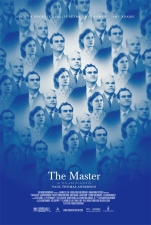
Benefit screening of ‘The Master’ (in 70mm!) tomorrow at the Castro!

0

This is not a drill, film fans: Paul Thomas Anderson’s highly anticipated new film, The Master, will be screening at the Castro tomorrow night. In 70mm. Not gonna lie: as soon as word of similar “surprise” screenings in other cities (Chicago, Los Angeles), I was crossing my fingers and toes that we’d get one here. Especially since not everyone can make it to the various film festivals where it’s been programmed (Venice, Toronto) … and The Master‘s theatrical release isn’t until Sept. 21 in the Bay Area.

Get thee to TicketWeb now and spend $10 (plus the expected fees and whatnot) to benefit the Film Foundation. The Castro is a huge theater, but film nerds are gonna be all over this one. Like me, for instance. There will be popcorn!

http://www.youtube.com/watch?v=fJ1O1vb9AUU

Tony Scott: a tribute in trailers

0

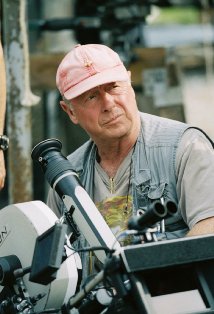
Director Tony Scott — the man who brought us fast cars and fighter planes piloted by Tom Cruise, runaway trains, vengeance (Denzel-style and Anthony Quinn-style), and magical spirit-guide Elvis in the bathroom mirror — died yesterday in an apparent suicide.

Though he never achieved the critical-darling status of his Oscar-nominated brother Ridley, Tony Scott’s contributions to that most entertaining of movie genres, the popcorn blockbuster, cannot be overstated (unsuprisingly, many of his films were produced by the like-minded Jerry Bruckheimer). Herewith, a tribute in trailers. Explosions ahoy!

The Hunger (1983): vampires David Bowie and Catherine Deneuve sink their fangs into ingenue Susan Sarandon. “A modern classic of perverse fear” (and sunglasses. So many sunglasses … so awesomely ’80s).

Top Gun (1986): Speaking of awesomely ’80s, do you feel the need … the need for speed?

Days of Thunder (1990): This is the movie where Tom Cruise (as a NASCAR driver named … Cole Trickle) met Nicole Kidman (playing … a brain surgeon). Plus, Robert Duvall as The Gruff Trainer/Coach Dude Who Makes All The Inspirational Speeches.

True Romance (1993): Scott directs hot new thang Quentin Tarantino’s gritty script about lovers on the run (Christian Slater and Patricia Arquette, never better), now a classic. A highly enjoyable, highly imitated example of edgy 1990s style, with a killer supporting cast. (Brad Pitt playing a couch-dwelling stoner at the height of his early hunk-dom = brilliant.)

Crimson Tide (1995): Speaking of QT, Scott’s hugely successful submarine thriller (starring Denzel Washington, who would go on to star in many more Scott films) featured uncredited script-doctoring by the then-hottest talent in Hollywood. Gene Hackman is the other lead. Also, nukes! Missile keys! Mutiny!

Enemy of the State (1998): Hackman returns in this Will Smith vehicle. Smith was post-Men in Black (yeah!) but pre-Wild Wild West (noooo!). Contains the ultimate action-movie line: “You’re either incredibly smart, or incredibly stupid.”

http://www.youtube.com/watch?v=9dvvLzNC3hE

Man on Fire (2004): Washington again, as bodyguard to precocious kidnap risk Dakota Fanning.

http://www.youtube.com/watch?v=6s_-O4HglGI

Deja Vu (2006): Washington yet again, in maybe Scott’s most mind-bendy movie. The government totally has time-travel technology, y’all.

The Taking of Pelham 1 2 3  (2009): Denzel returns, this time in a remake of the 1974 subway thriller, with John Travolta as the baddie.

http://www.youtube.com/watch?v=SIYGrhXg0aI

Unstoppable (2010): Scott’s last completed film stars, yes, Denzel, and Chris Pine as hero conductors tasked with stopping a runaway train (which is actually A MISSILE THE SIZE OF THE CHRYSLER BUILDING!)

Ok, and just for fun: 1991’s The Last Boy Scout (early-period Bruce Willis FTW) and 1987’s Beverly Hills Cop II. RIP Tony Scott.

http://www.youtube.com/watch?v=5LatLghA9Ig

Late-summer new movies: whole lotta eh (but T minus one month ’till ‘The Master’ opens!)

0

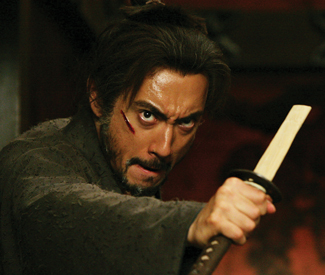
A pair of new Asian films about demons, real and figural, open today: Hara-Kiri: Death of a Samurai and Painted Skin: The Resurrection. Dual review here. The San Francisco Film Society screens 1953 Italian omnibus Love in the City; review here.

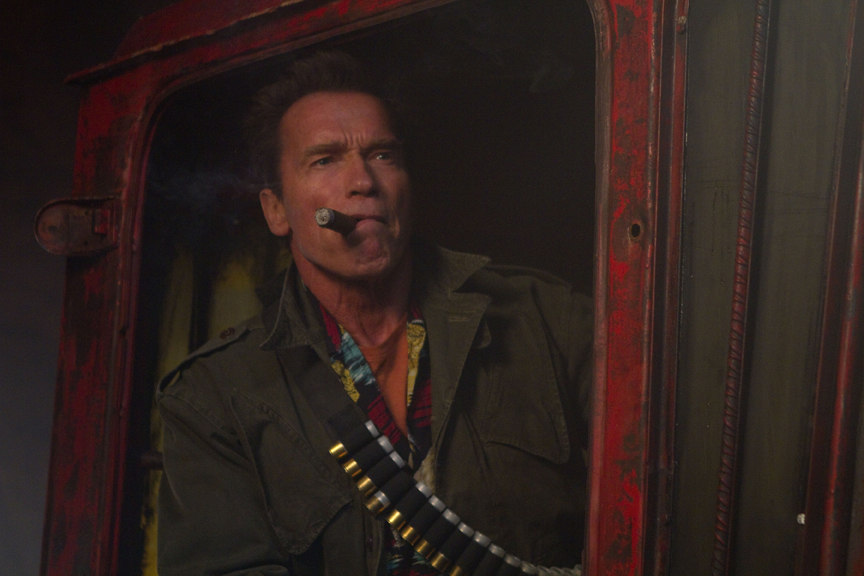
Hollywood urges you to spend your dollah dollah bills on creaky action heroes (The Expendables 2); mystical, twee garden-children (The Odd Life of Timothy Green); stop-motion kids who see dead people (ParaNorman); and girl-group melodrama (Sparkle; review and trailer below). A few more options, too, after the jump.

The Awakening In 1921 England Florence Cathcart (Rebecca Hall) is a best-selling author who specializes in exposing the legions of phony spiritualists exploiting a nation still grieving for its World War I dead. She’s rather rudely summoned to a country boys’ boarding school by gruff instructor Robert (Dominic West), who would be delighted if she could disprove the presence of a ghost there — preferably before it frightens more of his young charges to death. Borrowing tropes from the playbooks of recent Spanish and Japanese horror flicks, Nick Murphy’s period thriller is handsome and atmospheric, but disappointing in a familiar way — the buildup is effective enough, but it all unravels in pat logic and rote “Boo!” scares when the anticlimactic payoff finally arrives. The one interesting fillip is Florence’s elaborate, antiquated, meticulously detailed arsenal of equipment and ruses designed to measure (or debunk) possibly supernatural phenomena. (1:47) (Dennis Harvey)

Beloved There is a touch of Busby Berkeley to the first five or so minutes of Christophe Honoré’s Beloved — a fetishy, mid-’60s-set montage in which a series of enviably dressed Parisian women stride purposefully in and out of a shoe shop, trying on an endless array of covetable pumps. As for the rest, it’s a less delightful tale of two women, a mother and a daughter, and the unfathomable yet oft-repeated choices they make in their affairs of the heart. It helps very little that the mother is played by Ludivine Sagnier and then Catherine Deneuve — whose handsome Czech lover (Rasha Bukvic) is somewhat unkindly but perhaps deservedly transformed by the years into Milos Forman — or that the daughter, as an adult, is played by Deneuve’s real-life daughter, Chiara Mastroianni. And it helps even less that the film is a musical, wherein one character or another occasionally takes the opportunity, during a moment of inexplicable emotional duress, to burst into song and let poorly written pop lyrics muddy the waters even further. The men are sexist cads, or children, or both, and if they’re none of those, they’re gay. The women find these attributes to be charming and irresistible. None of it feels like a romance for the ages, but nonetheless the movie arcs through four interminable decades. When tragedy strikes, it’s almost a relief, until we realize that life goes on and so will the film. (2:15) (Lynn Rapoport)

Sparkle What started as a vehicle for American Idol‘s Jordin Sparks will now forever be known as Whitney Houston’s Last Movie, with the fallen superstar playing a mother of three embittered by her experiences in the music biz. Her voice is hoarse, her face is puffy, and her big singing moment (“His Eye Is on the Sparrow” in a church scene) is poorly lip-synced — but dammit, she’s Whitney Houston, and she has more soul than everything else in Sparkle combined and squared. The tale of an aspiring girl group in late-60s Detroit, Sparkle’s other notable points include flawless period outfits, hair, and make-up (especially the eyeliner), but the rest of the film is a pretty blah mix of melodrama and clichés: the sexpot older sister (Carmen Ejogo) marries the abusive guy and immediately starts snorting coke; the squeaky-clean youngest (Sparks, sweet but boring) is one of those only-in-the-movie songwriters who crafts intricate pop masterpieces from her diary scribblings. As far as Idol success stories go, Dreamgirls (2006) this ain’t; Houston fans would do better to revisit The Bodyguard (1992) and remember the diva in her prime. (1:56) (Cheryl Eddy)

http://www.youtube.com/watch?v=3kx1UK7ACmw

2 Days in New York Messy, attention-hungry, random, sweet, pathetic, and even adorable — such is the latest dispatch from Julie Delpy, here with her follow-up to 2007’s 2 Days in Paris. It’s also further proof that the rom-com as a genre can yet be saved by women who start with the autobiographical and spin off from there. Now separated from 2 Days in Paris’s Jake and raising their son, artist Marion is happily cohabiting with boyfriend Mingus (Chris Rock), a radio host and sometime colleague at the Village Voice, and his daughter, while juggling her big, bouncing bundle of neuroses. Exacerbating her issues: a visit by her father Jeannot (Delpy’s real father Albert Delpy), who eschews baths and tries to smuggle an unseemly selection of sausages and cheeses into the country; her provocative sister Rose (Alexia Landeau), who’s given to nipple slips in yoga class and Marion and Mingus’ apartment; and Rose’s boyfriend Manu (Alexandre Nahon), who’s trouble all around. The gang’s in NYC for Marion’s one-woman show, in which she hopes to auction off her soul to the highest, and hopefully most benevolent, bidder. Rock, of course, brings the wisecracks to this charming, shambolic urban chamber comedy, as well as, surprisingly, a dose of gravitas, as Marion’s aggrieved squeeze — he’s uncertain whether these home invaders are intentionally racist, cultural clueless, or simply bonkers but he’s far too polite to blurt out those familiar Rock truths. The key, however, is Delpy — part Woody Allen, if the Woodman were a maturing, ever-metamorphosing French beauty — and part unique creature of her own making, given to questioning her identity, ideas of life and death, and the existence of the soul. 2 Days in New York is just a sliver of life, but buoyed by Delpy’s thoughtful, lightly madcap spirit. You’re drawn in, wanting to see what happens next after the days are done. (1:31) (Kimberly Chun)  

The trouble with demons

0

cheryl@sfbg.com

FILM Suspended between the deluge of superhero flicks and awards-show fodder (speaking of, check back next week for the Guardian’s fall movie preview), mid-to-late August is an outstanding time to go to your local art house, rep theater, underground cinema, or movie night in the park.

You could also seek out a pair of new movies from Asia, both opening Friday, which offer viewing experiences only similar in that they’re entirely different than anything else out there right now — or ever, in the case of Painted Skin: The Resurrection, a sort-of sequel to 2008’s Painted Skin (which one need not have seen to enjoy Resurrection).

Starring two of China’s most glamorous leading ladies, Resurrection is a lavish fantasy following the adventures of fox demon Xiaowei (Xun Zhou), who can become human only if someone voluntarily offers up his or her heart (as in, the actual blood-pumping muscle). Though she’s been rampaging cross-country trying to find a suitable man-donor, she spots a likelier candidate in Princess Jing (Vicki Zhao), who wears a delicate gold mask to conceal her scarred face. Jing has fled her royal duties to confront her true love, General Huo (Chen Kun), who is a generally nice guy and most excellent archer, but not a huge fan of the messed-up face. But wait! Supernaturally pretty Xiaowei has just the solution, and it definitely involves swapping bodies (and all-important internal organs).

But Huo is secondary here. Less a love story than the tale of a toxic friendship, Resurrection adds levity with a subplot about a demon hunter (William Feng) who falls for Xiaowei’s bird-demon sidekick (Mini Yang), and has plenty of over-the-top flair, with abundantly obvious CG and Kris Phillips’ campy performance as an evil wizard. It was a huge hit in China but will probably only reach a small audience here, so don’t miss your chance.

A different type of demon — the mental, fucks-with-your-emotions kind — infiltrates Hara-Kiri: Death of a Samurai, the latest from prolific director Takashi Miike. The speed of his output is nearly as dizzying as the array of genres represented in his filmography, though for Hara-Kiri, he sticks with the samurai milieu of his hit 2010 epic, 13 Assassins. That said, despite its equally suggestive-of-gore title, Hara-Kiri — which takes place some 250 years earlier than Assassins — is no limb-lopping extravaganza. Rather, it’s a surprisingly somber drama, with violence used judiciously (albeit gruesomely).

Solemn samurai Hanshiro (Ebizo Ichikawa, an acclaimed kabuki theater actor) appears before a feudal lord, humbly asking permission to commit ritual suicide in the man’s courtyard. But in this house, skepticism reigns over honor, thanks to a recent rash of “suicide bluffs” — it’s not death these downtrodden men seek, but sympathy in the form of handouts or job offers. In fact, there was a suicide bluff recently, right there in the courtyard. A young man named Motome. It ended badly.

It’s soon clear that Hanshiro and Motome are connected, and the circumstances that motivate their extreme behavior are indeed tragic and deeply felt. Miike takes his time getting there, though, and fans seeking breakneck mayhem may be disappointed. Side note: for whatever reason, Miike filmed Hara-Kiri in 3D, but it’ll be screening in old-school 2D during its local run at the Four Star.


PAINTED SKIN: THE RESURRECTION and HARA-KIRI: DEATH OF A SAMURAI open Fri/17 in San Francisco.

“Bourne” again and other new movies!

1

Big news this week out of the San Francisco Film Society: the Executive Director post, empty since the January passing of Bingham Ray (himself a replacement for the late Graham Leggat), has been filled. According to the organization’s official press release:

“Ted Hope, one of the film industry’s most respected and prolific figures, has been named executive director of the San Francisco Film Society (SFFS), effective September 1, 2012. In a surprise move, the veteran film producer and one of the most influential individuals in independent film will embark upon a new chapter in his professional life, leaving New York City, where he produced independent films through his companies Good Machine, This is that corporation and Double Hope Films, to lead the Film Society into the future.”

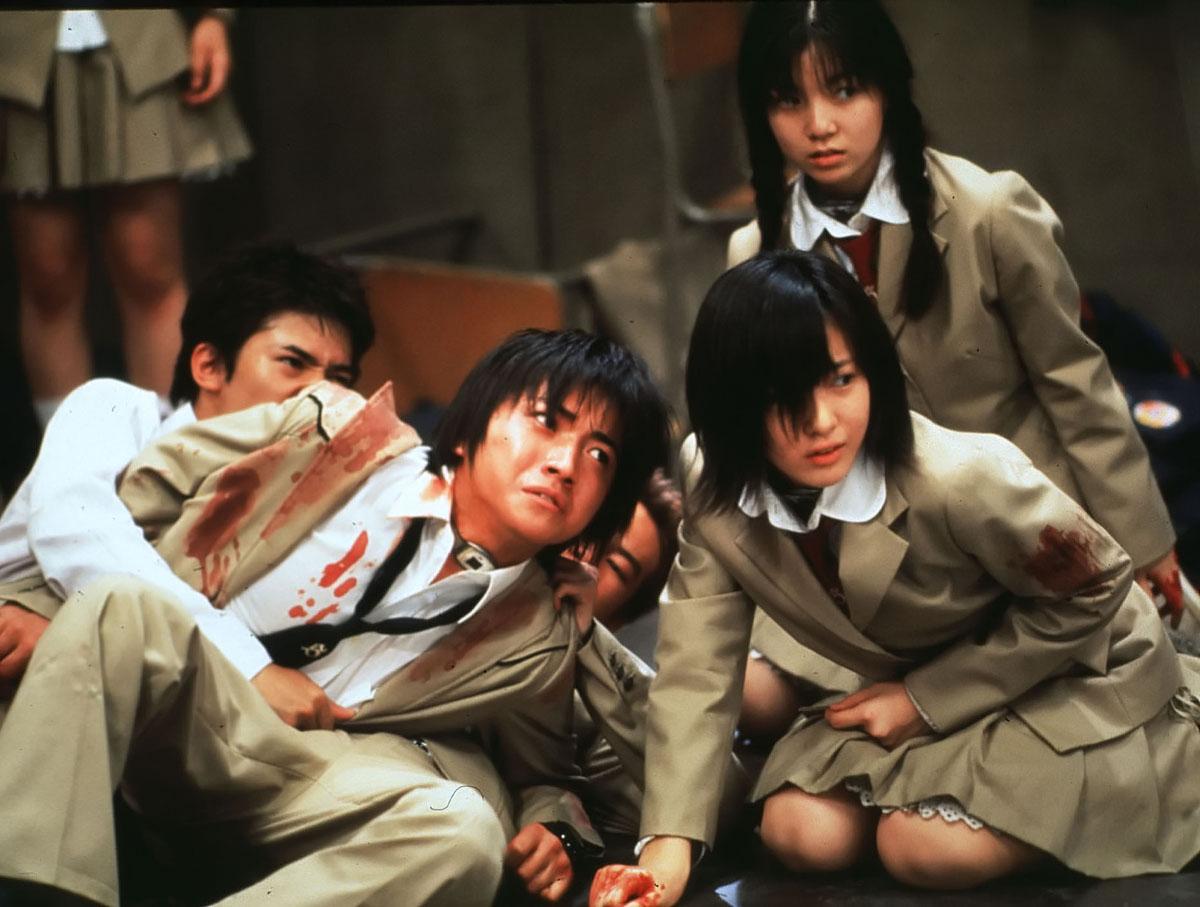
This happy announcement comes on the heels of two pretty depressing ones: longtime SFFS publicity head Hilary Hart, one of the most beloved film PR figures in San Francisco (or any film community, I’d wager), was let go; and the organization opted not to renew its SF Film Society Cinema lease at Japantown’s New People. However, “We’ll still have plenty of one-off screenings and events at various locations, and our Fall Season festival programming is completely unaffected,” says publicity manager Bill Proctor. (Speaking of, hot tip: killer-kid classic Battle Royale is up at SF Film Society Cinema through August 16.)

New movies? We got ’em. One more oldie-but-oh-so-goodie recommendation, plus, yeah, The Bourne Legacy and the rest, after the jump.

The Vortex Room: we love what they do ’cause they do it so well. A new series of Pop-art pictures is underway; check out Dennis Harvey’s take on the series (and some old-school porn posters, for good measure, here.) The unstoppable Mr. Harvey also reviews The Moth Diaries (another SF Film Society Cinema selection) and new French drama Unforgiveable.

Also new: The Campaign, about a smug incumbent (Will Ferrell) and a naïve newcomer (Zach Galifianakis) who battle over a North Carolina congressional seat; Celeste and Jesse Forever, an indie dramedy about a couple (Andy Samberg and co-writer Rashida Jones) who try to stay friends despite their impending divorce; and Nitro Circus the Movie 3D, starring the daredevil antics of the “action sports collective.”

But wait … THERE’S MORE!

http://www.youtube.com/watch?v=paVLyvA5S1g

The Bourne Legacy Settle down, Matt Damon fans — the original Bourne appears in The Bourne Legacy only in dialogue (“Jason Bourne is in New York!”) and photograph form. Stepping in as lead badass is Jeremy Renner, whose twin powers of strength and intelligence come courtesy of an experimental-drug program overseen by sinister government types (including Edward Norton in an utterly generic role) and administered by lab workers doing it “for the science!,” according to Dr. Rachel Weisz. Legacy’s timeline roughly matches up with the last Damon film, The Bourne Ultimatum, which came out five years ago and is referenced here like we’re supposed to be on a first-name basis with its long-forgotten plot twists. Anyway, thanks to ol’  Jason and a few other factors involving Albert Finney and YouTube, the drug program is shut down, and all guinea-pig agents and high-security-clearance doctors are offed. Except guess which two, who manage to flee across the globe to get more WMDs for Renner’s DNA. Essentially one long chase scene, The Bourne Legacy spends way too much of its time either in Norton’s “crisis suite,” watching characters bark orders and stare at computer screens, or trying to explain the genetic tinkering that’s made Renner a super-duper-superspy. Remember when Damon killed that guy with a rolled-up magazine in 2004’s The Bourne Supremacy? Absolutely nothing so rad in this imagination-free enterprise. (2:15) (Cheryl Eddy)

http://www.youtube.com/watch?v=4EYI2ro239s&list=PL96F1FB5F45240219&index=1&feature=plcp

Easy Money A title like that is bound to disprove itself, and it doesn’t take long to figure out that the only payday the lead characters are going to get in this hit 2010 Swedish thriller (from Jens Lapidus’ novel) is the kind measured in bloody catastrophe. Chilean Jorge (Matias Padin Varela), just escaped from prison, returns to Stockholm seeking one last big drug deal before he splits for good; JW (Joel Kinnaman from AMC series The Killing) is a economics student-slash-cabbie desperate for the serious cash needed to support his double life as a pseudo-swell running with the city’s rich young turks. At first reluctantly thrown together, they become friends working for JW’s taxi boss — or to be more specific, for that boss’ cocaine smuggling side business. Their competitors are a Serbian gang whose veteran enforcer Mrado (Dragomir Mrsic) is put in the awkward position of caring for his eight-year-old daughter (by a drug addicted ex-wife) just as “war” heats up between the two factions. But then everyone here has loved ones they want to protect from an escalating cycle of attacks and reprisals from which none are immune. Duly presented here by Martin Scorsese, Daniel Espinosa’s film has the hurtling pace, engrossing characters and complicated (sometimes confusing) plot mechanics of some good movies by that guy, like Casino (1995) or The Departed (2006). Wildly original it’s not, but this crackling good genre entertainment that make you cautiously look forward to its sequel — which is just about to open in Sweden. (1:59) (Dennis Harvey)

Hope Springs Heading into her 32nd year of matrimony with aggressively oblivious Arnold (Tommy Lee Jones), desperate housewife Kay (Meryl Streep) sets aside her entrenched passivity in a last-ditch effort to put flesh back on the skeleton of a marriage. Stumbling upon the guidance of one Dr. Bernard Feld (Steve Carell) in the self-help section of a bookstore, Kay (barely) convinces Arnold to accompany her to a weeklong session at Feld’s Center for Intensive Couples Counseling, in Hope Springs, Maine. The scenes from a marriage leading up to their departure, as well as the incremental advances and crippling setbacks of their therapeutic sojourn, are poignant and distressing and possibly familiar. Some slow drift, long ago set in motion, though we don’t know by what, has settled them in concrete in their separate routines — and bedrooms. It’s the kind of thing that, if it were happening in real life — say, to you — might make you weep. But somehow, through the magic of cinema and the uncomfortable power of witnessing frankly depicted failures of intimacy, we laugh. This is by no means a wackiness-ensues sort of sexual comedy, though. Director David Frankel (2006’s The Devil Wears Prada and, unfortunately, 2008’s Marley & Me) and Jones and Streep, through the finely detailed particularities of their performances, won’t let it be, while Carell resists playing the therapeutic scenes for more than the gentlest pulses of humor. More often, his empathetic silences and carefully timed queries provide a place for these two unhappy, inarticulate, isolated people to fall and fumble and eventually make contact. (1:40) (Lynn Rapoport)

http://www.youtube.com/watch?v=uwPB1I4aB7o

Nuit #1 Montreal director-writer Anne Émond bares more than her actor’s beautiful bodies: she’s eager to uncover their tenderized souls: hurt, unsavory, vulnerable, terrified, nihilistic, compulsive, and desperate. Nikolai (Dimitri Stroroge) and Clara (Catherine de Lean) are just two kids on the crowded dance floor, jumping up and down in slow motion to the tune of a torch song; before long, they’re in Nikolai’s shabby apartment, tearing off their clothes and making love as if their lives depended on it. But when Nikolai, laid out on his mattress on the floor like a grunge Jesus with a bad haircut, catches Clara sneaking out without saying good-bye, he sits her down for an earful of his reality. She returns the favor, revealing an unexpected double life, and the two embark on a psycho-tango that takes all night. It can seem like a long one to those impatient with the young, beautiful, and possibly damned’s doubts and self-flagellation, though Émond’s artful, coolly empathetic eye takes the proceedings to a higher level. She’s attempting to craft a simultaneously romantic and raw-boned song of self for a generation. (1:31) (Kimberly Chun)

360 A massive ensemble sprinkled with big-name stars, a sprawling yet interconnected story, and locations as far-flung as Phoenix and Bratislava: 360 is not achieving anything new with its structure (see also: 2011’s Contagion, 2006’s Babel, and so on). And some pieces of its sectioned-off narrative are less successful than others, as with the exploits of a posh, unfaithful duo played by Rachel Weisz (re-teaming with her Constant Gardener director Fernando Meirelles) and Jude Law. Fortunately, screenwriter Peter Morgan (2006’s The Queen) finds some drama (and a lot of melancholy) in less-familiar relationship scenarios. An airport interlude that interweaves a grieving father (Anthony Hopkins), a newly single Brazilian (Maria Flor), and a maybe-rehabilitated sex offender (Ben Foster) is riveting, as are the unexpectedly sweet and sour endpoints of tales spiraling off a Russian couple (Dinara Drukarova, Vladimir Vdovichenkov) who’ve drifted apart. (1:51) (Cheryl Eddy)

You, too, can win a gold medal in popcorn eating: new movies!

0

This weekend, it’s all about the Women’s Marathon at the London Olympics! If my calculations are correct, I will have to basically stay up all night Saturday to catch the race (11am London time is uggghhhh our time), or descend into a spoiler-free cave where no NBC-borne spoilers can find me before the highlight reel.

Anyone needing a break from gorging on Olympic track and field coverage, however, has an array of options at the movie theater, including two standout docs about mystery men (The Imposter and Searching for Sugar Man) and William Friedkin’s rip-roaring (and NC-17) latest, Killer Joe. Plus, Lovecraft!

Hollywood’s big money is on the Total Recall remake, which stars an agreeable Colin Farrell and is directed with reasonable amounts of style by Len Wiseman (of Underworld series fame; naturally, wife Kate Beckinsale has a juicy part). But if you really want to see Total Recall, stick with the 1990 Verhoeven-Schwarzenegger version. The do-over adds nothing and contains zero quotable lines on par with “Get your AHH-SS to Mars!”

Short takes on other notable releases this week (including a Bresson revival, ooh la la) after the jump.

Bill W. Even longtime AA members are unlikely to know half the organizational history revealed in this straightforward, chronological, fast-moving portrait of its late founder. Bill Wilson was a bright, personable aspiring businessman whose career was nonetheless perpetually upset by addiction to the alcohol that eased his social awkwardness but brought its own worse troubles. During one mid-1930s sanitarium visit, attempting to dry out, he experienced a spiritual awakening. From that moment slowly grew the idea of Alcoholics Anonymous, which he shaped with the help of several other recovering drunks, and saw become a national movement after a 1941 Saturday Evening Post article introduced it to the general public. Wilson had always hoped the “leaderless” organization would soon find its own feet and leave him to build a separate, sober new career. But gaining that distance was difficult; attempts to find other “cures” for his recurrent depression (including LSD therapy) laid him open to internal AA criticism; and he was never comfortable on the pedestal that grateful members insisted he stay on as the organization’s founder. Admittedly, he appointed himself its primary public spokesman, which rendered his own hopes for privacy somewhat self-canceling — though fortunately it also provides this documentary with plenty of extant lecture and interview material. He was a complicated man whose complicated life often butted against the role of savior, despite his endless dedication and generosity toward others in need. That thread of conflict makes for a movie that’s compelling beyond the light it sheds on an institution as impactful on individual lives and society as any other to emerge from 20th-century America. (1:43) Elmwood, Roxie. (Dennis Harvey)

Crazy and Thief Former S.F. resident Cory McAbee of the Billy Nayer Show, as well as cult film faves The American Astronaut (2001) and Stingray Sam (2009), returns for one night only in this multimedia event under the umbrella of his new enterprise “Captain Ahab’s Motorcycle Club.” The Vogue Theatre event will offer music and conversation after a screening of McAbee’s latest. Crazy and Thief stars his children, two-year-old Johnny and slightly senior Willa, in a 52-minute adventure that has them following a “star map” all by themselves around Brooklyn, then journeying out to the country via train. En route they improvise nonsense songs, cross paths with strange adults suspicious and helpful, ride a Mickey Mouse hobby horse, and so forth. A color effort that’s sort of an elaborate home movie compared to the director’s fancifully comic, black and white prior films, it nonetheless gets pretty far on the cuteness of toddlers and a soundtrack of original songs that find McAbee rocking like a five-year-old might — something that’s also pretty cute. (:52) Vogue. (Dennis Harvey)

http://www.youtube.com/watch?v=GPgA79KSpfU&feature=plcp

The Devil, Probably This seldom-revived 1977 feature from late French master Robert Bresson was his penultimate as well as most explicitly political work. Newspaper clips at the start betray where these 95 minutes will be heading: they introduce Parisian Charles (Antoine Monnier) as a casualty, a suicide at age 20. The reasons for that act are probed in the succeeding flashback, as we observe his last days drifting between friends and lovers, quitting student activist groups, and generally expressing his disillusionment with everything from politics to religion to human interaction. Then 70, Bresson expresses his own disenchantment in solidarity with the youthful characters by including documentary shots of pollution, clubbed baby seals, A-bomb explosions, and other dire signs of “an Earth that is ever more populated and ever less habitable.” That essential message makes The Devil, Probably more relevant than ever, but unfortunately it’s also one of the filmmaker’s driest, most didactic exercises. There are a few odd, almost farcical moments (as when the constant pondering of man’s fate extends to a spontaneous philosophical debate between passengers on a public bus), but the characters are too obviously mouthpieces with no inner lives of their own. In particular, Charles remains an unengaging blank in Monnier’s performance, which is all too faithful to the director’s usual call for “automatic,” uninflected line readings from his nonprofessional cast. Nothing Bresson did is without interest, but here his detached technique drains nearly all emotional impact from a film ostensibly about profound despair. (1:35) SF Film Society Cinema. (Dennis Harvey)

Girlfriend Boyfriend The onscreen title of this Taiwanese import is Gf*Bf, but don’t let the text-speak fool you: the bulk of the film is set in the 1980s and 90s, long before smart phones were around to complicate relationships. And the trio at the heart of Girlfriend Boyfriend is complicated enough as it is: sassy Mabel (Gwei Lun-Mei) openly pines for brooding Liam (Joseph Chang), who secretly pines for rebellious Aaron (Rhydian Vaughan), who chases Mabel until she gives in; as things often go in stories like this, nobody gets the happy ending they desire. Set against the backdrop of Taiwan’s student movement, this vibrant drama believably tracks its leads as they mature from impulsive youths to bitter adults who never let go of their deep bond — despite all the misery it causes, and a last-act turn into melodrama that’s hinted at by the film’s frame story featuring an older Liam and a pair of, um, sassy and rebellious twin girls he’s been raising as his own. (1:45) Metreon. (Cheryl Eddy)

Klown A spinoff from a long-running Danish TV show, with the same director (Mikkel Nørgaard) and co-writer/stars, this bad-taste comedy might duly prove hard to beat as “the funniest movie of the year” (a claim its advertising already boasts). Socially hapless Frank (Frank Hvam) discovers his live-in girlfriend Mia (Mia Lyhne) is pregnant, but she quite reasonably worries “you don’t have enough potential as a father.” To prove otherwise, he basically kidnaps 12-year-old nephew Bo (Marcuz Jess Petersen) and drags him along on a canoe trip with best friend Casper (Casper Christensen). Trouble is, Casper has already proclaimed this trip will be a “Tour de Pussy,” in which they — or at least he — will seize any and every opportunity to cheat on their unknowing spouses. Ergo, there’s an almost immediate clash between awkward attempts at quasi-parental bonding and activities most unsuited for juvenile eyes. Accusations of rape and pedophilia, some bad advice involving “pearl necklaces,” an upscale one-night-only bordello, reckless child endangerment, encouragement of teenage drinking, the consequences of tactical “man flirting,” and much more ensue. Make no mistake, Klown one-ups the Judd Apatow school of raunch (at least for the moment), but it’s good-natured enough to avoid any aura of crass Adam Sandler-type bottom-feeding. It’s also frequently, blissfully, very, very funny. (1:28) Roxie. (Dennis Harvey)

Foolin’

0

cheryl@sfbg.com

FILM A family tragedy, an international thriller, a Southern-fried mystery, and a true story: The Imposter is all of these things. This unique documentary reveals the tale of Frédéric Bourdin, dubbed “the Chameleon” for his epic false-identity habit. His ballsiest accomplishment was also his most heinous con: though his usual tactic was to invent a persona out of thin air, in 1997, he claimed to be Nicholas Barclay, a real San Antonio teen missing since 1994. Amazingly, the impersonation worked for a time, though Bourdin (early 20s, brown-eyed, speaks English with a French accent) hardly resembled Nicholas (who would have been 16, and had blue eyes).

Using interviews — with Nicholas’ shell-shocked family, government types who unwittingly aided the charade, and Bourdin himself — and ingenious re-enactments that borrow more from crime dramas than America’s Most Wanted, director Bart Layton weaves a multi-layered chronicle of one man’s unbelievable deception. I spoke with Layton and producer Dimitri Doganis on their recent visit to San Francisco.

San Francisco Bay Guardian How did you find out about Frédéric Bourdin, and at what point did you decide to make his story into a movie?

Bart Layton I read about him in a magazine in Spain. It didn’t talk about the Texas incident, but he had this reputation in France; he had traveled the length and breadth of Europe pretending to be an orphan or a damaged child.

That was immediately fascinating. And then I found information about this episode, where he’d stolen the identity of a missing child who looked nothing like him. As a documentary maker, to happen upon a story as extraordinary as that is quite unusual. We wanted to understand more about the kind of person who would be capable of going through with a con or a crime like that, and then obviously the kind of family that would be capable of falling victim to it.

Dimitri Doganis You could only tell the story as a documentary, because if you were to tell it as a scripted narrative film, [the audience] would just say, “There’s no way this could have happened.”

SFBG Bourdin seems to enjoy the attention of being filmed — but was it difficult getting access to Nicholas’ family?

BL They were certainly more hesitant. Also, for someone who’s not very trustworthy, [Bourdin is] not very trusting. I think that was one of the key things: realizing that when you engage with him, when you spend time with him, you are quickly on the receiving end of his manipulation. It’s part of what he does, and what he’s done to everyone.

That felt, to me, like a very crucial part of what this story was gonna be about. He is this very devious person, but how could anyone fail to know their own child? I think you have to allow the audience to experience him directly [and be] on the receiving end of the con man. He makes eye contact with you, and you willingly engage with his story.

So that felt like the starting point to what was going to be a very different kind of documentary. It wasn’t going to be an investigation into a factual series of events — it was going to be [more of an] emotional investigation.

The second part of that is talking to the family. They felt that they had had experiences in the media which were incredibly negative — but once they understood that we didn’t have a hidden agenda, they wanted to tell their side of the story. I think they’re really pleased they did.

SFBG Why did you decide to use re-enactments blended into the interviews?

BL In telling a past-tense story, particularly one as vivid as this — if you haven’t got masses of archives, like Capturing the Friedmans (2003) or Man on Wire (2008), you’re limited in what you can do with photographs or animation. Here, you’re experiencing a number of quite accomplished storytellers telling you this very extraordinary story, and I think that inevitably produces quite a visual experience. I wanted to recreate that movie that plays in your head when someone tells you a very compelling but very subjective story.

SFBG With a title like The Imposter, the audience knows the truth about Bourdin from the start — but the film is also able to suggest how his victims might have been fooled.

DD Over the course of the film, you spend a reasonable amount of time with this person who is lots of different things. He’s engaging. He pulls you in. He makes you complicit in this thing that he’s trying to achieve. And you kind of almost root for him, even though he’s trying to do something which seems not only wrong but impossible.

As the film goes on, you understand that he’s also a victim in some ways. He comes from this damaged place, and he’s looking for love and looking for a family. But he also does things which are inexcusable, and at points, I think, looks like a psychopath. When we were talking about making the film, someone asked whether it was the right thing to do, to give this guy a stage from which to hold forth. Here he is, a con man, a convicted felon, and he’s done terrible things to various people.

In a way it felt like allowing him that time wasn’t about being fair to him. It was actually about being fair to the family, or everyone who’s been conned. Because until you actually realize how charming and persuasive he can be, then you have no context for judging all of these people who were taken in by it, whether it’s family members, the FBI, or the American government.

BL Interacting with him is quite complex. It’s not just, “You’re creepy and weird,” it’s “You’re creepy, but now you’re kind of sympathetic. I feel like I need to look after you a little bit. Now I’m falling for your story and beginning to understand your logic.” Those are things we felt the audience needed to have some experience of directly.

DD The audience gets to go on this crazy journey — which is not dissimilar to the journey that we went on as filmmakers — and also follow the journeys that all of these individuals go on as their lives are impacted by these events. I hope the film presents a series of surprises that almost defy credibility — and are only redeemed by the fact that they’re true.


THE IMPOSTER opens Fri/3 in Bay Area theaters.

Queens, aliens, isles of wonder, and more: what to watch this week

0

My pick for movie of the week is The Queen of Versailles, a likely (I’m callin’ it in July) inclusion on my top 10 list for 2012. Seriously, this doc is revealing, timely, surprising, beautifully lensed (by photographer-turned-director Lauren Greenfield), and affords an insidery peek into the mysterious borderlands between extreme weath and excessive tackiness.

Hollywood would like you to see either an alien-invasion comedy with Ben Stiller or the fourth Step Up entry … you could do worse, but you could do better. Frankly, I’d pencil in The Queen of Versailles for your Saturday night, and settle in tonight for the 2012 Summer Olympics Opening Ceremony, which comes complete with the amusement park-ish title “Isles of Wonder.” All the buzz indicates that the extravaganza, directed by Danny Boyle (not known for his subtlety), will be one for the ages, or at least supply some juicy fodder for the meme generation.

Reviews of everything opening this week (spoiler: there’s a lot) below the jump.

http://www.youtube.com/watch?v=uoVRetUMub0

Ai Weiwei: Never Sorry Unstoppable force meets immovable object — and indeed gets stopped — in Alison Klayman’s documentary about China’s most famous contemporary artist. A larger than life figure, Ai Weiwei’s bohemian rebel persona was honed during a long (1981-93) stint in the U.S., where he fit right into Manhattan’s avant-garde and gallery scenes. Returning to China when his father’s health went south, he continued to push the envelope with projects in various media, including architecture — he’s best known today for the 2008 Beijing Olympics’ “Bird’s Nest” stadium design. But despite the official approval implicit in such high-profile gigs, his incessant, obdurate criticism of China’s political repressive politics and censorship — a massive installation exposing the government-suppressed names of children killed by collapsing, poorly-built schools during the 2008 Sichuan earthquake being one prominent example — has tread dangerous ground. This scattershot but nonetheless absorbing portrait stretches its view to encompass the point at which the subject’s luck ran out: when the film was already in post-production, he was arrested, then held for two months without official charge before he was accused of alleged tax evasion. (He is now free, albeit barred from leaving China, and “suspected” of additional crimes including pornography and bigamy.) (1:31) (Dennis Harvey)

The Queen of Versailles Lauren Greenfield’s obscenely entertaining The Queen of Versailles takes a long, turbulent look at the lifestyles lived by David and Jackie Siegel. He is the 70-something undisputed king of timeshares; she is his 40-something (third) wife, a former beauty queen with the requisite blonde locks and major rack, both probably not entirely Mother Nature-made. He’s so compulsive that he’s never saved, instead plowing every buck back into the business. When the recession hits, that means this billionaire is — in ready-cash as opposed to paper terms — suddenly sorta kinda broke, just as an enormous Las Vegas project is opening and the family’s stupefyingly large new “home” (yep, modeled after Versailles) is mid-construction. Plugs must be pulled, corners cut. Never having had to, the Siegels discover (once most of the servants have been let go) they have no idea how to run a household. Worse, they discover that in adversity they have a very hard time pulling together — in particular, David is revealed as a remote, cold, obsessively all-business person who has no use for getting or giving “emotional support;” not even for being a husband or father, much. What ultimately makes Queen poignantly more than a reality-TV style peek at the garishly wealthy is that Jackie, despite her incredibly vulgar veneer (she’s like a Jennifer Coolidge character, forever squeezed into loud animal prints), is at heart just a nice girl from hicksville who really, really wants to make this family work. (1:40) Smith Rafael. (Dennis Harvey)

Red Lights Skeptics and budding myth busters, get ready. Maybe. Director-writer Rodrigo Cortés blends the stuff of thrillers and horror in this slippery take on psychics and their debunkers. Psychologist Margaret Matheson (Sigourney Weaver) and her weirdly loyal assistant Tom (Cillian Murphy) investigate paranormal phenomena — faith healers, trance mediums, ghost hunters, and psychics — in order to peer behind the curtain and expose all Ozs great and small. Spoon-bending blind ESP master Simon Silver (Robert De Niro) is their biggest prize: he’s come out of retirement after the death of his most dogged critic. Has Silver learned to kill with his mind? And can we expect a brain-blowing finale on the same level as The Fury (1978)? Despite all the high-powered acting talent in the room, Red Lights never quite convinces us of the urgency of its mission — it’s hard to swallow that the debunking of paranormal phenomenon rates as international news in an online-driven 24/7 multiniched news cycle — and feels like a curious ‘70s throwback with its Three Days of the Condor-style investigative nail-biter arc, while supplying little of the visceral, camp showman panache of a De Palma. (1:53) (Kimberly Chun)

Ruby Sparks Meta has rarely skewed as appealingly as with this indie rom-com spinning off a writerly version of the Pygmalion and Galatea tale, as penned by the object-of-desire herself: Zoe Kazan. Little Miss Sunshine (2006) directors Jonathan Dayton and Valerie Faris helm this heady fantasy about a crumpled, geeky novelist, Calvin (Paul Dano), who’s suffering from the sophomore slump — he can’t seem to break his rock-solid writers block and pen a follow-up to his hit debut. He’s a victim of his own success, especially when he finally begins to write, about a dream girl, a fun-loving, redheaded artist named Ruby (scriptwriter Kazan), who one day actually materializes. When he types that she speaks nothing but French, out comes a stream of the so-called language of diplomacy. Calvin soon discovers the limits and dangers of creation — say, the hazards of tweaking a manifestation when she doesn’t do what you desire, and the question of what to do when one’s baby Frankenstein grows bored and restless in the narrow circle of her creator’s imagination. Kazan — and Dayton and Faris — go to the absurd, even frightening, limits of the age-old Pygmalion conceit, giving it a feminist charge, while helped along by a cornucopia of colorful cameos by actors like Annette Bening and Antonio Banderas as Calvin’s Big Sur-dwelling boho mom and her furniture-building boyfriend. Dano is as adorably befuddled as ever and adds the crucial texture of every-guy reality, though ultimately this is Kazan’s show, whether she’s testing the boundaries of a genuinely codependent relationship or tugging at the puppeteer’s strings. (1:44) (Kimberly Chun)

http://www.youtube.com/watch?v=AW1aAxBG_50

Sacrifice Power-mad General Tu’an (Wang Xueqi) engineers the slaughter of the entire Zhao clan — including the newborn son who’s the last of the line. But the baby’s been swapped with the child of the doctor, Cheng Ying (Ge You), who delivered him, and the deception train pretty much goes off the rails after that. Suffice to say the Zhao heir survives while Cheng Ying’s wife and infant do not, and Tu’an is none the wiser. Revenge seems the only logical move, so Cheng Ying patiently waits years for the boy to grow up and learn martial arts from Tu’an, plotting that he’ll reveal the truth when the (kinda bratty) child becomes capable of killing his beloved “godfather” — a.k.a. the guy who massacred his family (and the family of his adoptive father). If that sounds complicated, know that this epic from Chen Kaige (1993’s Farewell My Concubine) has over two hours to get through all those plot mechanics. Also, it’s gorgeously shot, mixing the classy trappings of a big-budget historical melodrama with thunderous battles and scenes of brutal violence. (2:10) SF Film Society Cinema. (Cheryl Eddy)

http://www.youtube.com/watch?v=nBw1PFjKnrs

Shit Year Santa Cruz artist Cam Archer’s 2006 debut feature Wild Tigers I Have Known was a texturally gorgeous but content-lite exercise that often seemed like an extended audition for the role of Next Gus Van Sant. (The real one was, in fact, its executive producer.) This sophomore effort strikes pretty much the same (im-) balance. Colleen West (Ellen Barkin) is a famous, now middle-aged actress who decides to retire — why, we don’t know, particularly since she only seems more brittle, dissatisfied, and hollow upon retreating to an isolated home in a woodsy area. (She doesn’t even seem to like nature.) There, she tolerates a sorta-friendship with an irritatingly chirpy neighbor (Melora Walters), endures a visit by the irritatingly uncomplicated, stable brother she was never close to (Rick Einstein), and recalls an unfulfilling affair with her much younger co-star in a play (Luke Grimes). She also imagines (?) appointments with a terse interrogator (Theresa Randle) offering some sort of futuristic experience-simulation service in an eerie all-white environ. While one questions whether there actually was one, per se, Archer’s fragmentary script alternates these flashbacks, surreal interludes, and present-tense expressions of existential ennui (“I’m surrounded by a world of nothing,” Colleen moans) into pretty formations. The film’s black and white photography (by Aaron Platt), editing, production design, musical choices, etc. are all impeccably mannered. But our protagonist’s bored self-absorbsion and self-pity, lacking any backgrounding psychology, is ultimately as vacuous a dead-end as it is when Vincent Gallo is baring his soul. Having a bitchy, platinum-haired Barkin do the job for Archer makes the effect a little campier, but no more resonant. That said, this movie would probably seem brilliant if watched on quaaludes. (1:35) Roxie. (Dennis Harvey)

Step Up Revolution The Step Up franchise makes a play for the Occupy brand, setting up its fourth installment’s Miami street crew, the Mob, as the warrior dance champions of the 99 percent — here represented by a vibrant lower-income neighborhood slated for redevelopment. Embodying the one percent is a hotel-chain mogul named Bill Anderson (Peter Gallagher), armed with a wrecking ball and sowing the seeds of a soulless luxury monoculture. Our hero, Mob leader Sean (Ryan Guzman), and heroine, Anderson progeny and aspiring professional dancer Emily (Kathryn McCormick), meet beachside; engage in a sandy, awkward interlude of grinding possibly meant to showcase their dance skills; and proceed to spark a romance and a revolution that feel equally fake (brace yourself for the climactic corporate tie-in). The Mob’s periodic choreographed invasions of the city’s public and private spaces are the movie’s sole source of oxygen. The dialogue, variously mumbled and slurred and possibly read off cue cards, drifts aimlessly from tepid to trite as the protagonists attempt to demonstrate sexual chemistry by breathily trading off phrases like “What we do is dangerous!” and “Enough with performance art — it’s time to make protest art!” Occasionally you may remember that you have 3D glasses on your face and wonder why, but the larger philosophical question (if one may speak of philosophy in relation to the dance-movie genre) concerns the Step Up films’ embrace of postproduction sleights of hand that distance viewers from whatever astonishing feats of physicality are actually being achieved in front of the camera. (1:20) (Lynn Rapoport)

http://www.youtube.com/watch?v=9G8rzHJsWpM

The Watch Directed by Lonely Island member Akiva Schaffer (famed for Saturday Night Live’s popular digital shorts, including “Dick in a Box”), The Watch is, appropriately enough, probably the most dick-focused alien-invasion movie of all time. When a security guard is mangled to death at Costco, store manager and uber-suburbanite Evan (Ben Stiller, doing a damn good Steve Carell impersonation) organizes a posse to keep an eye on the neighborhood — despite the fact that the other members (Vince Vaughn as the overprotective dad with the bitchin’ man cave; Jonah Hill as the creepy wannabe cop; and British comedian Richard Ayoade as the sweet pervert) would much rather drink beers and bro down. Much bumbling ensues, along with a thrown-together plot about unfriendly E.T.s. The Watch offers some laughs (yes, dick jokes are occasionally funny) but overall feels like a pretty minor effort considering its big-name cast. (1:38) (Cheryl Eddy)

http://www.youtube.com/watch?v=_5Z2zG6xMA0

The Well-Diggers Daughter Daniel Auteuil owes a debt of gratitude to Marcel Pagnol, courtesy of his breakthrough roles in the 1980s remakes of the writer and filmmaker’s Jean de Florette and Manon of the Spring. He returns the favor with his debut directorial work, reworking the 1940s film and crafting a loving, old-school tribute to Pagnol. The world is poised on the edge of World War I; Auteuil plays salt-of-the-earth Pascal Amoretti. The poor widower does the town’s dirty work (oh, the dangerous symbolism of hole-digging) and cares for his six daughters — his favorite, the eldest and the most beautiful, Patricia (Astrid Berges-Frisbey), has caught the eye of his assistant, Felipe (Kad Merad). The happy home — and tidy arrangement — is shattered, however, when Patricia meets an inconveniently dashing pilot Jacques Mazel (Nicolas Duvauchelle), who sweeps her away, in the worst way possible for a girl of her day. “You’ve sinned, and I thought you were an angel,” says the stunned father when he hears his beloved offspring is pregnant. “Angels don’t live on earth,” she responds. “I’m like any other girl.” Faced with the inevitable, Auteuil and company shine a sweet but, importantly, not saccharine light — one that’s as golden warm as the celebrated sunshine of rural Provence — on the proceedings. And equipped with Pagnol’s eloquent prose, as channeled through his love of the working folk, he restores this tale’s gently throwback emotional power, making it moving once more for an audience worlds away. (1:45) (Kimberly Chun)

Rep Clock

0

Schedules are for Wed/25-Tue/31 except where noted. Director and year are given when available. Double and triple features marked with a •. All times pm unless otherwise specified.

ARTISTS’ TELEVISION ACCESS 992 Valencia, SF; www.atasite.org. $6. Reconnect: A Film on Cell Phones and Health Effects (Kunze, 2012), Sat, 8.

CASTRO 429 Castro, SF; (415) 621-6120, www.castrotheatre.com. $8.50-11. San Francisco Jewish Film Festival, Wed-Thu. For tickets and more information, visit www.sfjff.org. •Spaceballs (Brooks, 1987), Fri, 7:30, and Blazing Saddles (Brooks, 1974), Fri, 9:25. “The Silence of the Trans:” The Silence of the Lambs (Demme, 1991), with pre-show starring Sharon Needles, Peaches Christ, and the Midnight Mass Players, Sat, 3, 8. Tickets for this event, $25-45; visit www.peacheschrist.com for info. Bearcity 2: The Proposal (Langway, 2012), Sun, 11:30am, 2:00, 4:30, 7:00, 9:25. This event, $10-12; visit bearcity2theproposal.ticketbud.com for info. •Purple Rain (Magnoli, 1984), Tue, 7:30, and Pink Floyd the Wall (Parker, 1982), Tue, 9:40.

CHRISTOPHER B. SMITH RAFAEL FILM CENTER 1118 Fourth St, San Rafael; (415) 454-1222, www.cafilm.org. $6.75-$10.25. Beasts of the Southern Wild (Zeitlin, 2012), call for dates and times. Bernie (Linklater, 2012), call for dates and times. Dark Horse (Solondz, 2011), call for dates and times. Take This Waltz (Polley, 2011), call for dates and times. The Queen of Versailles (Greenfield, 2012), July 27-Aug 2, call for times. Bill W. (Carracino and Hanlon, 2011), Sun, 7.

DAVIES SYMPHONY HALL 201 Van Ness, SF; www.sfsymphony.org. $25-75. The Wizard of Oz (Fleming, 1939), Thu-Fri, 7:30. Screening with live orchestral accompaniment. “Pixar in Concert,” Sat, 7:30; Sun, 2. Songs from Pixar films, with accompanying movie clips.

JACK LONDON SQUARE First Street at Broadway, Oakl; www.jacklondonsquare.com. Free. Ghostbusters (Reitman, 1984), Thu, sundown.

MECHANICS’ INSTITUTE 57 Post, SF; (415) 393-0100, rsvp@milibrary.org. $10. “CinemaLit Film Series: Fairytale Endings:” Excalibur (Boorman, 1981), Fri, 6.

PACIFIC FILM ARCHIVE 2575 Bancroft, Berk; (510) 642-5249, bampfa.berkeley.edu. $5.50-9.50. “Bellissima: Leading Ladies of the Italian Screen:” Open City (Rossellini, 1945), Wed, 7; Bellissima (Visconti, 1953), Sat, 5:30. “The Eternal Poet: Raj Kapoor and the Golden Age of Indian Cinema:” Boot Polish (Arora and Kapoor, 1954), Thu, 7; Awaara (Kapoor, 1951), Sat, 7:45. “Cool World:” Heathers (Lehmann, 1989), Fri, 7; Thunderbolt and Lightfoot (Cimino, 1974), Fri, 9:05. “Russian Inferno: The Films of Alexei Guerman:” The Seventh Companion (Guerman and Aronov, 1967), Sun, 5. “Always for Pleasure: The Films of Les Blank:” •ry cooder group ’88 santa cruz (1988) and Sworn to the Drum: A Tribute to Francisco Aguabella (1995), Sun, 7.

ROXIE 3117 and 3125 16th St, SF; (415) 863-1087, www.roxie.com. $6.50-10. Romantics Anonymous (Ameries, 2011), Wed-Thu, 7, 9. KQED presents: •A Brush With the Tenderloin (Bierma, 2011), and Stage Left: A Story of Theater in San Francisco (Forbord, 2010), Wed, free. Free screening, but RSVP recommended; visit trulyca.eventbrite.com. Kids of Today (De Missolz, 2011), Thu, 7. •Not a Memory (Burdenski, 2012), and Something Personal (Elsaesser, 2012), Thu, 9:15. This event, $5. “This Must Be the Place: Post-Punk Tribes 1978-1982:” La Brune et moi (Puicouyoul, 1979), Fri, 7:30; Rough Cut and Ready Dubbed (Shah and Shaw, 1982), Fri, 8:40; “special secret movie,” Fri, 9:40; The Slog Movie (Markey, 1982), Sat, 7:30; “I Can See It and I’m Part of It: San Francisco Punk Portraits 1978-82” (shorts program), Sat, 9; “Buzz or Howl Under the Influence” (live footage), Sat, 10:20; Debt Begins at 20 (Beroes, 1980), Sun, 7; Downtown 81 (Bertoglio, 1981), Sun, 8:15. Shit Year (Archer, 2010), July 27-Aug 2, 7. “Johnny Legend presents:” The Big TNT Show (Peerce, 1966), Mon, 8; Mondo Teeno: Teenage Rebellion (Herman and Visconti, 1967), Mon, 6:10, 9:45; Teenage Cruisers (Legend, 1977), Tue, 6, 9:45; One Million Years AC/DC (De Prieset, 1969), Tue, 8.

SF FILM SOCIETY CINEMA 1746 Post, SF. $10-11. A Burning Hot Summer (Garrel, 2011), Wed-Thu, 3, 5, 7, 9. Sacrifice (Chen, 2010), July 27-Aug 2, 1, 3:30, 6, 8:30.

TOP OF THE MARK InterContinental Mark Hopkins, One Nob Hill, SF; www.topofthemark.com. Free. “Summer Movie Nights:” It Happened One Night (Capra, 1934), Tue, 7:30. Wine tasting at 5:30.

YERBA BUENA CENTER FOR THE ARTS 701 Mission, SF; (415) 978-2787, www.ybca.org. $6-8. “Documentaries By Ai Weiwei:” One Recluse (2010), Sun, 2.

Free Shamu! ‘Death at SeaWorld’ event tomorrow

0

Just a reminder that Wed/25 is the date for author David Kirby’s local event to promote his new book, Death at SeaWorld: Shamu and the Dark Side of Killer Whales in Captivity. Check out my interview with Kirby in the July 11 Guardian here; his website features updates on SeaWorld’s battle with OSHA over allowing trainers to enter the water with killer whales after the much-publicized death of a trainer.

But there’s more, Kirby told me when we spoke:

“Death at SeaWorld also absolutely refers to all of the orcas who have died at SeaWorld, and continue to die at SeaWorld. To me, the whales are as important as any of the people in the book — Tilikum [the whale caused the trainer’s death] becomes a main character that you get to know. I used to tell people when I was writing the book, it’s like Jaws, only it’s non-fiction, more people die, and you actually care about the whale.”

Earth Island Institute’s International Marine Mammal Project and St. Martin’s Press will be hosting tomorrow’s event, which features Kirby in conversation with Mark Berman (seen in Keiko: The Untold Story) and Rose Aguilar of KALW’s Your Call.

Wed/25, 7pm, free (seating on a first-come, first-served basis)
The Hub
901 Mission, Ste 105, SF
www.deathatseaworld.com

Batman and beyond: new movies

1

Yep. It’s here.

But THERE IS MORE TO LIFE THAN THE LATEST BATMAN MOVIE, PEOPLE! (Especially when this entry ain’t even the best in the series. See my review below. And to those who would jump all over a critic for being a critic … why so serious?)

First of all, the very excellent San Francisco Jewish Film Festival begins tonight. Check out our takes here (docs) and here (music docs).

Todd Solondz has a new one. Dennis Harvey reviews Dark Horse right herrre.

And the Lumiere is screening a digitally-remastered Monty Python and the Holy Grail (1975), complete with all the lines you love to quote and featuring a new 12-minute short, Terry Gilliam’s Lost Animations.

Oh yeah, and this…

http://www.youtube.com/watch?v=q-Sktgm0aD8

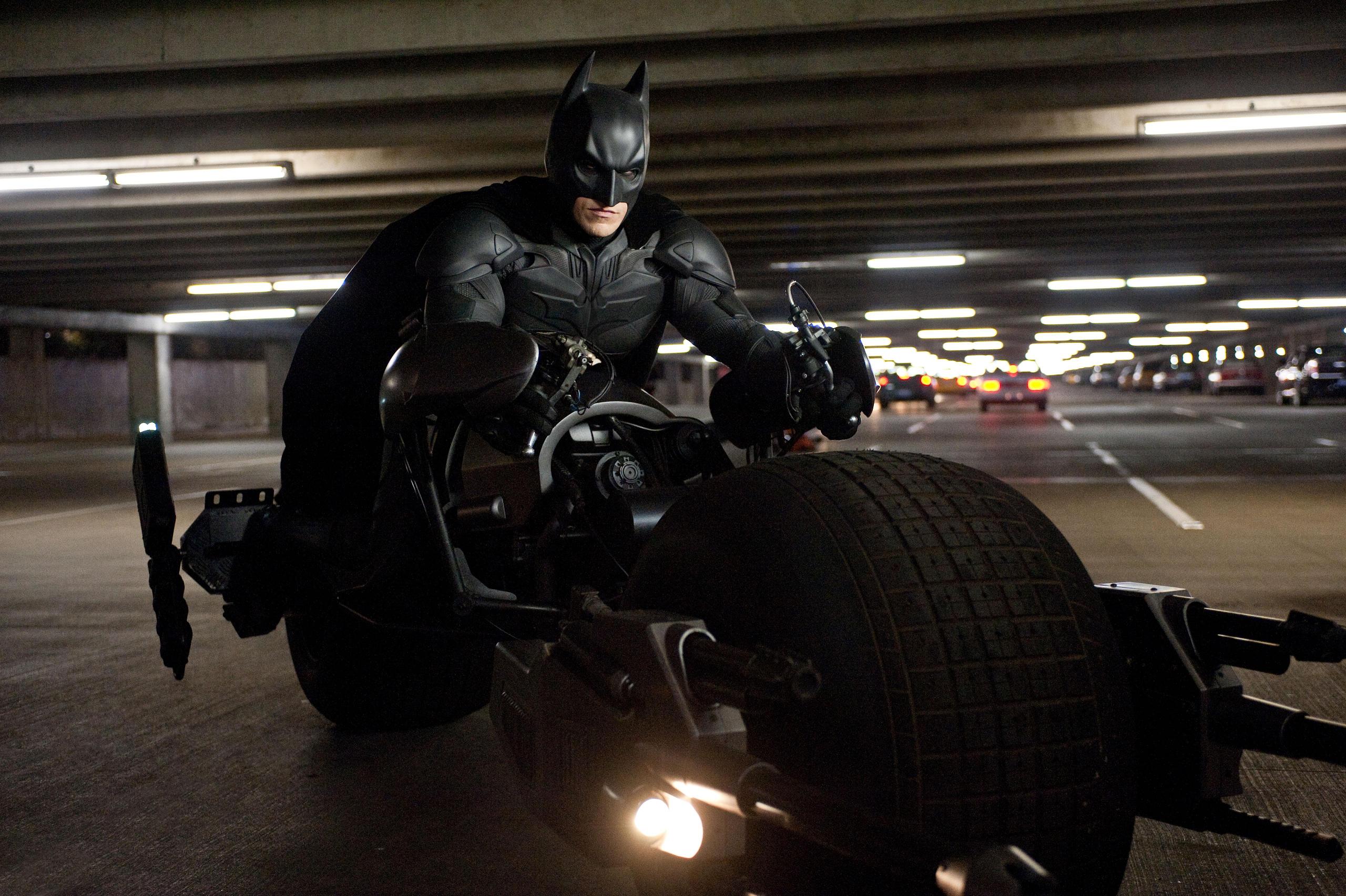
The Dark Knight Rises Early reviews that called out The Dark Knight Rises’ flaws were greeted with the kind of vicious rage that only anonymous internet commentators can dish out. And maybe this is yet another critic-proof movie, albeit not one based on a best-selling YA book series. Of course, it is based on a comic book, though Christopher Nolan’s sophisticated filmmaking and Christian Bale’s tortured lead performance tend to make that easy to forget. In this third and “final” installment in Nolan’s trilogy, Bruce Wayne has gone into seclusion, skulking around his mansion and bemoaning his broken body and shattered reputation. He’s lured back into the Batcave after a series of unfortunate events, during which The Dark Knight Rises takes some jabs at contemporary class warfare (with problematic mixed results), introduces a villain with pecs of steel and an at-times distractingly muffled voice (Tom Hardy), and unveils a potentially dangerous device that produces sustainable energy (paging Tony Stark). Make no mistake: this is an exciting, appropriately moody conclusion to a superior superhero series, with some nice turns by supporting players Gary Oldman and Joseph Gordon-Levitt. But in trying to cram in so many characters and plot threads and themes (so many prisons in this thing, literal and figural), The Dark Knight Rises is ultimately done in by its sprawl. Without a focal point — like Heath Ledger’s menacing, iconic Joker in 2008’s The Dark Knight — the stakes aren’t as high, and the end result feels more like a superior summer blockbuster than one for the ages. (2:44) (Cheryl Eddy)

http://www.youtube.com/watch?v=BKCWELGjpg8

Romantics Anonymous An awkward, bumbling Parisian chocolatier named Jean-Rene (Benoît Poelvoorde) falls for his gorgeous, equally awkward sales rep, Angélique (Isabelle Carré), while never missing an opportunity to say the wrong thing, surrender to shyness, or panic under pressure. It’s crucial for films involving such protracted awkwardness to give the audience something to cling to emotionally, but instead we’re handed a limp, formulaic story, sorely underdeveloped characters, and lazy writing in which the protagonists act uncharacteristically stupid/gullible/oblivious for the sake of plot-expedience. Amélie (2001) mined similar thematic territory, but its success lay in the depth of its characters; Romantics Anonymous is about little more than the idea of two hopeless romantics, and that’s simply not enough to hold interest. It’s beautifully scored, lovingly shot, and steeped in vintage French atmosphere — but that doesn’t compensate for sketchy characterization and weak, predictable storytelling. (1:20) Roxie. (Taylor Kaplan)

http://www.youtube.com/watch?v=7Iy6gPnPlks

30 Beats A sweltering summer day or two in the city ushers in a series of youthful good-lookers, unencumbered and less than dressed, together in kind of NYC-based mini-La Ronde that I’m surprised Woody Allen hasn’t yet attempted. Fresh young thing Julie (Condola Rashad) is off to pop her cherry with lady’s man Adam (Justin Kirk of Weeds), who’s more accustomed to chasing than being chased. Unsettled, he consults with sorceress Erika (Jennifer Tilly), who plies him with sexual magic and then finds herself chasing down her booty-call bud, bike messenger Diego (Jason Day), who’s besotted with the physically and emotionally scarred Laura (Paz de la Huerta). What goes around comes around in director-writer Alexis Lloyd’s debut feature, but alas, not till it’s contorted and triangulated itself in at least one ridiculously solemn BDSM scene. Matters get trickier when romance begins to creep into these urban one-offs. Nonetheless, those with short attention spans who like their people-watching with a healthy splash of big-city hookups, might find this adult indie as refreshing as a romp with a beautiful stranger they’ve briefly locked eyes with. (1:28) (Kimberly Chun)

http://www.youtube.com/watch?v=gdFiV9yDHG4

Trishna Ever difficult to pin down, director Michael Winterbottom continues his restless flipping between the light (2010’s The Trip), artily experimental (2004’s 9 Songs), pulpy (2010’s The Killer Inside Me), and the dead serious (2007’s A Mighty Heart). Trishna, loosely based on Thomas Hardy’s Tess of the d’Urbervilles and set in small-town and big-city modern-day India, lines up neatly on the bookshelf alongside Winterbottom’s other Hardy bodice-ripper, 1996’s Jude. By chance beautiful village girl Trishna (Freida Pinto) falls in with the handsome, thoroughly Westernized Jay (Riz Ahmed) and his laddish pals on holiday. A truck accident leaves her father unable to provide for their family, so she goes to work at the luxury hotel owned by Jay’s father and overseen by his privileged son. There she gently gives him language tips, accepts his offer to educate her in travel industry management, and enjoys his growing attentions, until one day when he rescues her from roving thugs only to seduce her. Though she flees to her family home and eventually has an abortion, Trishna still proves to be an innocent and consents to live in Mumbai with Jay, who is flirting with the film industry and increasingly effaces his trusting girlfriend as their sexual game-playing becomes increasingly complicated. The shadows of both Hardy and Bollywood flit around Trishna, and this cultural transplant nearly works — the hothouse erotic entanglement between its two principals almost but not quite convinces one that Trishna would be driven to desperate ends. Still, even as Trishna, like Tess, infuriates with her passivity, her story occasionally enthralls — the fruit of Pinto’s surprisingly brave, transparent performance. (1:53) (Kimberly Chun)

Personal detectives

0

cheryl@sfbg.com

SFJFF This year’s San Francisco Jewish Film Festival includes a trio of documentaries inspired by ephemera: hand-scrawled memoirs and journals, decades-old letters, fading photographs, and yellowing newspapers, long-forgotten and crumpled into attics and storage closets.

Dust be damned, for all three filmmakers — Arnon Goldfinger (The Flat), David Fisher (Six Million and One), and Daniel Edelstyn (How to Re-Establish a Vodka Empire) — become obsessed with these scraps from the past, and with piecing together their family histories, all of which were studded with tragedy and rarely discussed with younger generations. The task requires the kind of determination that can only be mined from a deeply personal place — and it results in some deeply personal films.

The docs are similar, especially when viewed in the short span of a festival, but Goldfinger’s The Flat is the standout. It begins as the filmmaker’s family descends upon the Tel Aviv apartment of his recently-deceased grandmother, “a bit of a hoarder” who lived to 95 and seemingly never got rid of anything. This includes, as Goldfinger discovers, copies of the Joseph Goebbels-founded newspaper Der Angriff, containing articles about “the Nazi who visited Palestine.” The Nazi was Leopold von Mildenstein, an SS officer with an interest in Zionism. Turns out he made the journey in 1933 with his wife and a Jewish couple named Kurt and Gerda Tuchler — Goldfinger’s grandparents.

Understandably intrigued and more than a little baffled, Goldfinger investigates, finding letters and diary entries that reveal the unlikely traveling companions were close friends, even after World War II. His mother, the Tuchler’s daughter, prefers to “keep the past out,” but curiosity (and the pursuit of a good documentary) presses Goldfinger forward; he visits von Mildenstein’s elderly daughter in Germany, digs through German archives, and unearths even more surprises about his family tree. Broader themes about guilt and denial emerge — post-traumatic coping mechanisms that echo through generations.

Family is a favorite subject for fellow Israeli David Fisher (2000’s Love Inventory). For Six Million and One, he rounds up his brothers and sister for a visit to the Austrian concentration camp where their late father was held as a teen. The elder Fisher recorded his thoughts in a memoir that only David can bear to read. As the siblings engage in the odd pursuit of being tourists in a place of brutality — the film illustrates the town’s changing landscape through eerie, before-and-after photos — their playful arguments escalate into legit psychodrama as the camera rolls and four raw nerves react to their intense emotions.

Interspersed with this journey is David Fisher’s visit with some American veterans who saw unimaginable horrors when they arrived to liberate the camps. It becomes clear that post-traumatic stress doesn’t just affect Jewish families grappling with the after effects of the Holocaust. When Fisher wistfully remarks that his father never spoke about his experiences, an elderly solder tells him, “Maybe you’re better off not having heard the stories.”

Lighter in tone, but with an equally serious back story, is Daniel Edelstyn’s How to Re-Establish a Vodka Empire, which follows the British filmmaker’s quest to import the vodka made at the Ukrainian factory once owned by his great-grandfather. The disheveled Edelstyn, who admits he has no business experience, pinballs between charming and exasperating as he fumbles through meetings with distributors and dodges hostile locals in his grandmother’s hometown. Despite the film’s title, Edelstyn’s adventures in booze are less compelling than the tale of that grandmother, whose remarkable life is re-enacted with sepia-toned silent film-style clips (starring Edelstyn’s wife, Hilary Powell, who’s also the film’s cinematographer), and miniature animations.


THE MORE YOU KNOW

There’s more for fans of non-narrative cinema, as SFJFF unspools several biopics that also delve into troubled pasts — with significant triumphs along the way. No one embodies this more than Roman Polanski, subject of Roman Polanski: A Film Memoir, directed by Laurent Bouzereau and structured as a sit-down conversation with longtime Polanski pal and producer Andrew Braunsberg. If you’re hoping for hardball questions or new information on Polanski’s colorful life, prepare for disappointment; the familiar pillars of the Polanski legend (traumatic childhood growing up as a Polish Jew during World War II; filmmaking success with films like 1968’s Rosemary’s Baby and 1974’s Chinatown; wife Sharon Tate’s gruesome death at the hands of Charles Manson’s followers; and that oh-so-inconvenient sexual assault charge, which came back to haunt him 30 years after the fact) are all covered.

If you’ve read Roman By Polanski, the director’s autobiography, or seen the 2008 doc about his struggle with scandal, Roman Polanski: Wanted and Desired, this is familiar turf. But to hear the celebrated director share his memories in his own voice, encouraged by an interviewer he trusts, is a unique experience.

You won’t hear the spoken voice of passionate, patriotic Yoni Netanyahu, the Israeli commando who died leading the 1976 hostage-rescue mission at Uganda’s Entebbe Airport, in Ari Daniel Pinchot and Jonathan Gruber’s Follow Me: The Yoni Netanyahu Story. But Netanyahu — adored older brother of Benjamin Netanyahu, Israel’s current Prime Minister — was prolific letter-writer, and his words (read by actor Marton Csokas) are an invaluable component of this affectionate portrait. But it’s not all heroic platitudes: Netanyahu, who also fought in the Six Day War and the Yom Kippur War, put the military above everything else, including his marriage.

“I don’t ever remember walking as a young person,” jokes sportscasting great Marty Glickman at the start of James Freedman’s upbeat Glickman. “I always ran. It was just my nature to run.” Though he’s referring to his extraordinary sprinting ability, which got him all the way to the 1936 Olympics (where he was denied the chance for certain glory for Hitler-related reasons), it’s also kind of how he lived his life, attacking bigotry and adversity with sunny side-up resilience. Glickman died in 2001, but his life was well-documented — when he wasn’t making sports history, he was doing the play-by-play for it. As an influential broadcaster (basketball fans: he was the first one to say “Swish!”), there’s no shortage of famous fans willing to weigh in: Bob Costas, Bill Bradley, Jerry Stiller, Jim Brown, and Larry King, who has supremely high praise for Glickman’s skills: “It was like his voice was attached to the ball.”

SAN FRANCISCO JEWISH FILM FESTIVAL

July 19-August 6, most shows $12

Various Bay Area venues

www.sfjff.org


Batman approacheth…but what to see THIS weekend?

0

You already have your tickets for The Dark Knight Rises (opens July 20) — if not, you might want to get on that — but there’s an entire week between then and now. Parental types are already locked into Ice Age: Continental Drift, which, in addition to Ray Romano and company, features teenage mammoths voiced by Nicki Minaj and Drake and a baboon pirate captain voiced by Peter Dinklage. So there’s that. Cineastes won’t want to miss the San Francisco Silent Film Festival (check out Dennis Harvey’s tribute to featured filmmaker William Beaudine here).

The best of the rest includes an eye-opening doc about teen athletes being groomed for MLB in the Dominican Republic; a doc about a rebellious Tibetan Buddhist; a lush Marie Antoinette drama; a family drama set against the backdrop of a kite festival in India; and an Australian import about a dog whose scruffy brio united a hardscrabble community. Which one made me sob like a tween Belieber? Hint: its star has four legs and very pointy ears.

Ballplayer: Pelotero With upbeat music, slick editing, and narration by John Leguizamo, Ballplayer: Pelotero is an entertaining, enlightening investigation into exactly why the Dominican Republic produces so many baseball stars. Comparisons to acclaimed sports doc Hoop Dreams (1994) are apt, as filmmakers Ross Finkel, Trevor Martin, and Jonathan Paley travel to the DR to follow a pair of teenage baseball players dreaming of big-league stardom (and big-league paychecks). But the Hoop Dreams kids weren’t being confronted by the shady, sinister, bottom-line-obsessed recruiters working for Major League Baseball, which maintains a pee-wee farm system of sorts in the country to train young prospects — the best of whom are snapped up at the magic age of 16 for bargain-basement (relatively speaking) prices. And in this environment, questions about numbers reign supreme: how much with each kid be signed for? And, more intriguingly, is either kid lying about his true age? (1:12) SF Film Society Cinema. (Cheryl Eddy)

Crazy Wisdom Not exactly your average Buddhist leader, Chogyam Trungpa was one part monk to two parts rock star. Recognized as a reincarnated master while still an infant, he left Tibet behind to flee Chinese government forces in 1960, eventually landing in the UK, where he founded its first Buddhist center. A decade later he’d move to the US, founding its first Buddhist university. Amidst all that achievement and enlightenment-spreading, however, he also found time to marry a 16-year-old upper-class Brit, have myriad affairs with students, partially paralyze himself driving a car into a shop front, frequently get drunk in public, and so forth — even though, incongruously, he frowned upon marijuana (and rock music). All this made sense in a tradition of Tibetan Buddhist “crazy wisdom” — or so his supporters would (and still) claim in his defense. Having left this life at age 48, his body exhausted by decades of hedonistic excess, he still has a powerful hold over diverse, multi-faith followers and acquaintances who recall his extraordinary spiritual-personal magnetism. Johanna Demetrakas’ entertaining documentary gathers up testimony from a gamut of them, including Ram Dass, Allen Ginsberg, Robert Thurman, and Anne Waldman. (1:26) Roxie. (Dennis Harvey)

http://www.youtube.com/watch?v=Hu95AAbj7bE

Farewell, My Queen (Benoît Jacquot, France, 2012) Opening early on the morning of July 14, 1789, Farewell, My Queen depicts four days at the Palace of Versailles on the eve of the French Revolution, as witnessed by a young woman named Sidonie Laborde (Léa Seydoux) who serves as reader to Marie Antoinette (Diane Kruger). Sidonie displays a singular and romantic devotion to the queen, while the latter’s loyalties are split between a heedless amour propre and her grand passion for the Duchess de Polignac (Virginie Ledoyen). These domestic matters and other regal whims loom large in the tiny galaxy of the queen’s retinue, so that while elsewhere in the palace, in shadowy, candle-lit corridors, courtiers and their servants mingle to exchange news, rumor, panicky theories, and evacuation plans, in the queen’s quarters the task of embroidering a dahlia for a projected gown at times overshadows the storming of the Bastille and the much larger catastrophe on the horizon. (1:39) (Lynn Rapoport)

http://www.youtube.com/watch?v=E8dH2BEj5Os

Patang (The Kite) Loving memories tethered to a place (Ahmedabad, India), moment (the city’s kite festival, the largest of its kind in the country), and season (according to the Hindu calendar, the event coincides with the day that wind direction shifts) beautifully suffuse this first feature film by director and co-writer Prashant Bhargava. Certainly Patang (The Kite) is the story of a family: Delhi businessman Jayesh (Mukund Shukla) has returned with his freewheeling, movie-camera-toting daughter Priya (Sugandha Garg) to his majestically ramshackle family home, where he supports his mother, sister-in-law (Seema Biswas of 1994’s Bandit Queen), and nephew Chakku (Nawazuddin Siddiqui). He’s come to indulge his childhood love of kite flying and to introduce Priya to Ahmedabad’s old-world sights and ways. Entangled among the strands of story are past resentments —harbored by Chakku against his paternalistic uncle — and new hopes, particularly in the form of a budding romance between Priya and Bobby (Aakash Maherya), the son of the kite shop owner. Above all — and as much a presence as any other — is the city, with its fleeting pleasures and memorable faces, captured with vérité verve and sensuous lyricism on small HD cameras by Bhargava and director of photography Shanker Raman. Their imagery imprints on a viewer like an early memory, darting to mind like those many bright kites dancing buoyantly in the city sky. (1:32) (Kimberly Chun)

Red Dog Already a monster hit in Australia, provenance of the Babe movies, this animal-centric charmer comes to the Bay Area as part of the Windrider Bay Area Film Forum in Atherton. It’s based on Louis de Bernières’ collection of tales (and tall tales) about a legendary canine that roamed the country’s Northwestern wilderness in the 1970s. Director Kriv Stenders centers his film in the mining burg that erected a statue to the animal after its death — an event that serves as the movie’s starting point, as the townspeople gather to toast Red Dog’s many contributions to the community (in addition to providing a much-needed source of amusement in a bleak, barren place, he also became a mascot for the local union, match-made multiple couples, prevented a suicide-by-shark attempt, and engaged in epic brawls with his arch-nemesis, Red Cat). It’s a shaggy, sentimental story elevated by some appealing human performances — Josh Lucas is the token American star, though Aussie film fans will recognize Noah Taylor and Keisha Castle-Hughes — and, of course, one very charismatic pooch. If you can’t make the trek down the peninsula for the screening, Red Dog will be available On Demand starting August 14; the DVD will be out September 4. (1:32) Menlo-Atherton Performing Arts Center. (Eddy)

Rep Clock

0

Schedules are for Wed/11-Tue/17 except where noted. Director and year are given when available. Double and triple features marked with a •. All times pm unless otherwise specified.

ARTISTS’ TELEVISION ACCESS 992 Valencia, SF; www.atasite.org. $10. “Orbit (film): A Program of Short Films About Our Solar System,” Sat, 8. “Collaborations: An Evening of Music and Image,” Tue, 8.

CASTRO 429 Castro, SF; (415) 621-6120, www.castrotheatre.com. $8.50-11. •Thief (Mann, 1981), Wed, 7, and Straight Time (Grosbard, 1978), Wed, 9:15. San Francisco Silent Film Festival: Wings (Wellman, 1927), Thu, 7; “Amazing Tales from the Archives: Into the Digital Frontier,” Fri, 10:30am; Little Toys (Sun, 1933), Fri, 1; The Loves of Pharaoh (Lubitsch, 1922), Fri, 4; Mantrap (Fleming, 1926), Fri, 7; The Wonderful Lie of Nina Petrovna (Schwarz, 1929), Fri, 9:15; “The Irrepressible Felix the Cat!”, Sat, 10am; The Spanish Dancer (Brenon, 1923), Sat, noon; The Canadian (Beaudine, 1926), Sat, 2:30; South (Hurley, 1919), Sat, 5; Pandora’s Box (Pabst, 1926), Sat, 7; The Overcoat (Kozintsev and Trauberg, 1926), Sat, 10; The Mark of Zorro (Niblo, 1920), Sun, 10am; The Docks of New York (von Sternberg, 1928), Sun, noon; Erotikon (Stiller, 1920), Sun, 2; Stella Dallas (King, 1925), Sun, 4:30; The Cameraman (Sedgwick and Keaton, 1928), Sun, 7:30. More info and advance tickets (free-$42) at www.silentfilm.org. Inforum Presents: “Chuck Palahniuk: The Monsters Within,” Mon, 7 (this event, $20-40); “Meghan McCain and Michael Ian Black: Two Slices of American Pie,” Tue, 7 (this event, $25-45).

CHRISTOPHER B. SMITH RAFAEL FILM CENTER 1118 Fourth St, San Rafael; (415) 454-1222, www.cafilm.org. $6.75-$10.25. Bel Ami (Donnellan and Ormerod, 2012), call for dates and times. Bernie (Linklater, 2012), call for dates and times. Peace, Love and Misunderstanding (Beresford, 2011), call for dates and times. Pink Ribbons, Inc. (Pool, 2011), call for dates and times. Take This Waltz (Polley, 2011), call for dates and times. Beasts of the Southern Wild (Zeitlin, 2012), July 13-19, call for times.

“FILM NIGHT IN THE PARK” This week: Creek Park, 451 Sir Francis Drake Blvd, San Anselmo; www.filmnight.org. Donations accepted. Across the Universe (Taymor, 2007), Fri, 8. Union Square, Geary at Powell, SF. The Artist (Hazanavicius, 2011), Sat, 8.

JACK LONDON SQUARE First Street at Broadway, Oakl; www.jacklondonsquare.com. Free. We Bought a Zoo (Crowe, 2011), Thu, sundown.

MECHANICS’ INSTITUTE 57 Post, SF; (415) 393-0100, rsvp@milibrary.org. $10. “CinemaLit Film Series: Music and Nostalgia:” Amélie (Jeunet, 2001), Fri, 6.

MENLO-ATHERTON PERFORMING ARTS CENTER 555 Middlefield, Atherton; www.windriderbayarea.org. $5-15. Windrider Bay Area Third Annual Independent Film Forum, with films from Africa, Australia, and North America, and stars and filmmakers in person, Thu-Sat.

PACIFIC FILM ARCHIVE 2575 Bancroft, Berk; (510) 642-5249, bampfa.berkeley.edu. $5.50-9.50. “Bellissima: Leading Ladies of the Italian Screen:” Nights of Cabiria (Fellini, 1956), Wed, 7; The Leopard (Visconti, 1963), Fri, 7; Juliet of the Spirits (Fellini, 1965), Sat, 6. “Cool World:” The Hustler (Rossen, 1961), Thu, 7; Ed Wood (Burton, 1994), Sat, 8:50. “A Theater Near You:” El velador (Almada, 2011), Sun, 5:30. “Always for Pleasure: The Films of Les Blank:” In Heaven There Is No Beer? (Blank and Gosling, 1984). Sun, 7.

ROXIE 3117 and 3125 16th St, SF; (415) 863-1087, www.roxie.com. $6.50-10. “Au Revoir Béla Tarr:” The Man From London (Tarr and Hranitzky, 2007), Wed, 6:30; The Turin Horse (Tarr and Hranitzky, 2011), Wed, 9:15. “Songs Along a Stony Road: Music Movies by Local Luminaries:” Songs Along a Stony Road (Csicsery and Teerink, 2011) with “Sprout Wings and Fly” (Blank, 1983), Thu, 7 and 9. Filmmakers George Csicsery and Les Blank in person. San Francisco Frozen Film Festival, animation, shorts, and documentaries, Fri-Sat. All-day festival pass, $20; more info at www.frozenfilmfestival.com. Crazy Wisdom (Demetrakas, 2011), July 13-19, 7, 8:45 (also Sat-Sun, 3:15, 5).

SF FILM SOCIETY CINEMA 1746 Post, SF. $10-11. The Story of Film: An Odyssey, Part Seven: New Boundaries: World Cinema in Africa, Asia, and Latin America and New American Independents and the Digital Revolution (Cousins, 2011), Sat, noon. British TV series; new episodes weekly through July 21. Ballplayer: Pelotero (Finkel, Martin, and Paley, 2011), Fri-Sat and Tue, 3, 7; Sun-Mon, and July 18, 5, 9; July 19, 1. Bonsái (Jiménez, 2011), Fri-Sat and Tue, 5, 9; Sun-Mon and July 18, 3, 7; July 19, 3. “Family Screening: The Storytellers Show,” Sat, 10am. Marina Abramovic: The Artist is Present (Akers, 2011), Wed-Thu, 2:45, 5, 7:15, 9:30.

VICTORIA 2961 16th St, SF; www.911expertsspeakout.org. $10. 9/11 Explosive Evidence: Experts Speak Out (Gage, 2012), Wed, 7. Filmmaker Richard Gage in person.

YERBA BUENA CENTER FOR THE ARTS 701 Mission, SF; (415) 978-2787, www.ybca.org. $6-8. “Documentaries By Ai Weiwei:” Disturbing the Peace (2009), Sun, 2. *


Black and white and red all over

3

cheryl@sfbg.com

LIT “Death at SeaWorld.” The phrase implies a gruesome demise, combining the man vs. beast connotations of Siegfried and Roy’s last show with the amusement-park horrors of Wikipedia’s “incidents at Disneyland” page. Death isn’t supposed to pop up in environments carefully choreographed for family fun. But as David Kirby’s eye-opening Death at SeaWorld: Shamu and the Dark Side of Killer Whales in Captivity (St. Martin’s Press, 469 pp., $26.99) discovers, the marine-themed attraction has hosted its share of tragedies, and not just of the human variety.

Its most high-profile loss was Orlando employee Dawn Brancheau, killed in 2010 by a 12,000-pound orca named Tilikum. Though SeaWorld has long been a target of animal-rights groups, Brancheau’s death set in motion a rigorous Occupational Safety and Health Administration (OSHA) investigation into whether or not trainers should be allowed to keep performing the spectacular aquatic stunts that SeaWorld has long been famous for. (As of this writing, the case is still in legal-wrangling mode.)

Kirby, a journalist whose previous books include Evidence of Harm and Animal Factory, found the OSHA inquiry — and the fact that it had been met with strong SeaWorld resistance — instantly compelling. He soon understood there was much more to the story.

“I started out to write a book about corporate malfeasance and obstructing a federal investigation,” he remembers. “[Killer whale] captivity had not ever struck me as an issue. But I realized that even though a lot of people were screaming about how safe it was to be in the water during performances, the much larger question was: do these animals belong in captivity at all?”

As a kid in SoCal, Kirby says, he visited SeaWorld and went on whale-watching trips. But until he started writing Death at SeaWorld, “I didn’t know that killer whales are dolphins, that they don’t kill people in the wild, how highly intelligent they are, or that they are so attached to their families,” he says. “When Dawn Brancheau died, I remember feeling very bad for her and her family, but I don’t remember feeling bad for the whale.”

His research made him rethink his ambivalence toward not just Tilikum, but all killer whales in captivity. Very few “display industry representatives” were willing to speak on the record, but Kirby connected with several “anti-cap” figures — including the Humane Society’s Dr. Naomi Rose, a whale expert who was involved in the campaign to return Keiko, star of 1993’s Free Willy, to his native Iceland.

“When you write narrative nonfiction, you really do need one character who is going to carry the reader through the whole story,” Kirby says. “[Rose] was the best person to do that because she started studying these animals in 1985. She spent years doing field research, and [later became] involved in organizing against the industry, starting anti-captivity campaigns, and trying to protect these whales through federal law. She was also involved with the OSHA investigation and the media.”

In addition, “I was so lucky to have ex-trainers who came forward after Dawn died. [They had] come to the same conclusion through different channels [than Rose]: captivity is bad for the whales. I felt super-fortunate to have first-person accounts of whales in nature and whales in captivity,” Kirby says. “I really wanted to bring readers to two different worlds that most people have never been to: the far Northern reaches of Vancouver Island, where these whales live — and then, backstage in Orlando. I felt that juxtaposing them would really show why captivity is inappropriate. I wanted the readers to get to know the whales in the wild, and to appreciate their life in the wild, in order to understand why captivity for this particular species is so wrong.”

Though Brancheau’s death was the impetus for Death at SeaWorld, it is not the book’s sole focus. The “death” referred to in the title has multiple meanings.

“Two people [Brancheau, plus an after-hours trespasser in 1999] have died in SeaWorld pools,” Kirby says. “Two other people have died because of SeaWorld whales: in British Columbia before Tilikum was bought by SeaWorld, and in the Canary Islands by a whale owned by SeaWorld.”

But while human deaths grab headlines, whale deaths are far more common. According to Rose and other experts, orcas live far fewer years in captivity than they would in the wild.

Death at SeaWorld also absolutely refers to all of the orcas who have died at SeaWorld, and continue to die at SeaWorld,” Kirby says. “To me, the whales are as important as any of the people in the book — Tilikum becomes a main character that you get to know. I used to tell people when I was writing the book, it’s like Jaws, only it’s non-fiction, more people die, and you actually care about the whale.”

DAVID KIRBY PRESENTATION AND BOOK SIGNING

July 25, 7pm, free

The Hub

901 Mission, Ste 105, SF

www.deathatseaworld.com

Beasts of the NorCal movie theaters: new flicks!

0

It’s finally here! And nope, I don’t mean The Amazing Spider-Meh Man, though you can check my unenthused review below the jump. (Seriously, it’s not a bad movie if you can get past the obligatory product placement, but it ain’t amazing, either. New countdown: two weeks ’til The Dark Knight Rises!) Nay, the hotly-anticipated title I’m referring to is Sundance hit with mainstream (and Oscars?) potential, Beasts of the Southern Wild; read Dennis Harvey’s admiring review here.

Another one for indie fans: Sarah Polley’s Take this Waltz, Michelle Williams’ latest why-did-I-get-married-again? weeper. This one has Seth Rogen instead of Ryan Gosling, so proceed accordingly.

Tonight, it’s your civic duty to pack all seats at the Roxie’s kung fu double feature. Seriously, you will have a killer time (what with all the high kicks, insane weaponry, spraying gore, krayzee wigs, and horrific dubbing), and the Roxie will be all, “Hey, kung fu is what the kids want!” and dedicate one of their screens to nightly screenings in Shawscope. DO IT. (But if kung fu isn’t your thing, Midnites for Maniacs is screening a triple-feature of 1995’s Clueless, 2004’s Mean Girls, and my personal favorite, 1994’s Heavenly Creatures, at the Castro. Not a bad alternate.)

http://www.youtube.com/watch?v=50P2mxW0-Tc

And the rest of the n00bs: Spidey (out since Tuesday), two docs about artists, a French neo-noir sleeper with Twin Peaks-esque quirks, and Oliver Stone’s new weed caper.

The Amazing Spider-Man A mere five years after Sam Raimi and Tobey Maguire’s Spider-Man 3 — forgettable on its own, sure, but 2002’s Spider-Man and especially 2004’s Spider-Man 2 still hold up — Marvel’s angsty web-slinger returns to the big screen, hoping to make its box-office mark before The Dark Knight Rises opens in a few weeks. Director Marc Webb (2009’s 500 Days of Summer) and likable stars Andrew Garfield (as the skateboard-toting hero) and Emma Stone (as his high-school squeeze) offer a competent reboot, but there’s no shaking the feeling that we’ve seen this movie before, with its familiar origin story and with-great-power themes. A little creativity, and I don’t mean in the special effects department, might’ve gone a long way to make moviegoers forget this Spidey do-over is, essentially, little more than a soulless cash grab. Not helping matters: the villain (Rhys Ifans as the Lizard) is a snooze. (2:18) (Cheryl Eddy)

Marina Abramović: The Artist is Present Matthew Akers’ sleek and telling doc explores the career and motivations of the legendary Serbian-born, New York-based performance artist on the occasion of 2010’s major retrospective and new work at the New York Museum of Modern Art. Abramović, self-styled the “grandmother of performance art” at an eye-catching 63, steels herself with rare energy — and a determination to gain equal status for performance in the world of fine art — for an incredibly demanding new piece, The Artist Is Present, a quasi-mystical encounter between herself and individual museum patrons that takes the form of a three-month marathon of silent one-on-one gazing. Meanwhile, 30 young artists re-perform pieces from her influential career. Akers gains intimate access throughout, including Abramović’s touching reunion with longtime love and artistic collaborator Ulay, while providing a steady pulse of suspense as the half-grueling, half-ecstatic performance gets underway. A natural charmer, Abramović’s charismatic presence at MoMA is no act but rather a focused state in which audiences are drawn into — and in turn shape — powerful rhythms of consciousness and desire. (1:45) SF Film Society Cinema. (Robert Avila)

Neil Young Journeys Interested in going back further with Neil Young, back beyond 1969’s Everybody Knows This Is Nowhere? With Neil Young: Heart of Gold (2006) and Neil Young Trunk Show (2009) under his belt, Jonathan Demme has clearly earned the trust of the singer-songwriter, who occasionally likes to flex his multi-hyphenate creative muscles as a director himself, working under the name Bernard Shakey. The music-loving filmmaker tails Young as he drives through his hometown of Omemee, Ontario, shares glimpses of his school, named after his newspaper-man father, his small-town streets, and his home, and then takes it back to the stage and performs at Toronto’s Massey Hall. The stories and sights will interest mostly Young fans — you definitely get a feel for Young’s roots, but the place and its tales won’t jump out dramatically; they merely visualize factoids one can cull from sources like James McDonough’s bio Shakey — but performance dominates this concert film. Playing solo on guitar, harmonica, and in at least one memorable instance, pipe organ (for a hammered-home “After the Gold Rush”), the songs range from the still-moving, sprawling “Ohio” to “Love and War” off 2010’s Le Noise. It’s all love here for the Young diehard, though for an insightful, passionate tour doc, one might look to Shakey’s own CSNY/Déjà Vu (2008) or, for the performer’s finest cinematic performances, to Rust Never Sleeps (1979) and The Last Waltz (1978). (1:27) (Kimberly Chun)

http://www.youtube.com/watch?v=h74N3cXZH3s

Nobody Else But You The Marilyn Monroe pop-culture resurgence continues with director and co-writer Gérald Hustache-Mathieu’s appealingly low-key mystery, which pays homage to the iconic blonde while borrowing liberally from a pair of noir Lauras: Vera Caspary’s back-from-the-dead heroine, and Twin Peaks‘ unfortunate Ms. Palmer. Fortunately, Nobody Else But You is original enough to remain both suspenseful and highly entertaining. David (Jean-Paul Rouve), a detective novelist with writer’s block, travels from Paris to a small village where a Monroe-esque local beauty named Candice (Sophie Quinton) has just been found dead in a snowdrift. The official word is suicide, but David suspects something more sinister. With the help of a local cop (Guillaume Gouix), the newly inspired author investigates, urged onward by Candice’s evocative diary entries. Though it tries a little hard at times (drinking game: keep track of how many times the number five appears onscreen), Nobody Else But You is well worth seeking out; it layers European flair (translation: lots of casual nudity) over a plot that wouldn’t be out of place in an American indie — but relocated, memorably, to “the coldest town in France.” (1:42) (Cheryl Eddy)

Savages If it’s true, as some say, that Oliver Stone had lost his way after 9/11 — when seemingly many of his worst fears (and conspiracy theories) came to pass — then perhaps this toothy noir marks his return: it definitely reads as his most emotionally present exercise in years. Not quite as nihilistic as 1994’s Natural Born Killers, yet much juicier than 2010’s Wall Street: Money Never Sleeps, this pulpy effort turns on a cultural clash between pleasure-seeking, honky Cali hedonists, who appear to believe in whatever feels good, and double-dealing Mexican mafia muscle, whose apparently ironclad moral code is also shifting like drifting SoCal sands. All are draped in the Stone’s favored vernacular of manly war games with a light veneer of Buddhistic higher-mindedness and, natch, at least one notable wig. Happy pot-growing nouveau-hippies Ben (Aaron Johnson), Chon (Taylor Kitsch), and O (Blake Lively) are living the good life beachside, cultivating plants coaxed from seeds hand-imported by seething Afghanistan war vet Chon and refined by botanist and business major Ben. Pretty, privileged sex toy O sleeps with both — she’s the key prize targeted by Baja drug mogul Elena (Salma Hayek) and her minions, the scary Lado (Benicio Del Toro) and the more well-heeled Alex (Demian Bichir), who want to get a piece of Ben and Chon’s high-THC product. Folks lose their heads — in classic Mexican drug cartel style — and even zen-goon do-gooder Ben becomes complicit when Chon brings the war home to a decidedly lawless Southland. The twists and turnarounds obviously tickle Stone, though don’t look much deeper than Savages‘ saturated, sun-swathed façade — the script based on Don Winslow’s novel shares the take-no-prisoners hardboiled bent of Jim Thompson while sidestepping the brainy, postmodernish light-hearted detachment of Quentin Tarantino’s “extreme” ‘90s shenanigans. Our only glimpse at weird, wild depths lie in the fathomless eyes of Hayek’s soulful, castrating matriarch and the quotable interludes (“Gimme my money, gimme my money!”) bounding from Del Toro’s psycho-mulleted, striving maniac. (1:57) (Kimberly Chun)

Rep Clock

0

Schedules are for Wed/4-Tue/10 except where noted. Director and year are given when available. Double and triple features marked with a •. All times pm unless otherwise specified.

CASTRO 429 Castro, SF; (415) 621-6120, www.castrotheatre.com. $8.50-11. Grease (Kleiser, 1978), Thu, 5, 7. Presented sing-along style; this event, $10-15. “Midnites for Maniacs: BFFs Triple Bill:” •Clueless (Heckerling, 1995), Fri, 7:30; Mean Girls (Waters, 2004), Fri, 9:45; Heavenly Creatures (Jackson, 1994), Fri, 11:45. This event, one or all three films for $13. “Scary Cow Short Film Festival,” Sat, 3. More info at www.scarycow.com. •The Muppet Movie (Frawley, 1979), Sun, noon, 3:15, 7, and Phantom of the Paradise (De Palma, 1974), Sun, 5:05, 8:50.

CHRISTOPHER B. SMITH RAFAEL FILM CENTER 1118 Fourth St, San Rafael; (415) 454-1222, www.cafilm.org. $6.75-$10.25. Bel Ami (Donnellan and Ormerod, 2012), call for dates and times. Bernie (Linklater, 2012), call for dates and times. Oslo, August 31st (Trier, 2011), call for dates and times. Peace, Love and Misunderstanding (Beresford, 2011), call for dates and times. Pink Ribbons, Inc. (Pool, 2011), call for dates and times. Take This Waltz (Polley, 2011), July 6-12, call for times.

PACIFIC FILM ARCHIVE 2575 Bancroft, Berk; (510) 642-5249, bampfa.berkeley.edu. $5.50-9.50. “Bellissima: Leading Ladies of the Italian Screen:” Le Amiche (Antonioni, 1955), Fri, 7; La strada (Fellini, 1954), Sat, 8:30. “A Theater Near You:” Weekend (Godard, 1967), Fri, 9:05; Gerhard Richter Painting (Belz, 2011), Sat, 6:30; This Is Not a Film (Mirtahmasb and Panahi, 2011), Sun, 5:15. “Always for Pleasure: The Films of Les Blank:” Always for Pleasure (Blank, 1978) with “Dry Wood” (Blank and Gosling, 1973) and “Running Around Like a Chicken With Its Head Cut Off” (Blank, Blank, and Van Deusen, 1960), Sun, 7.

ROXIE 3117 and 3125 16th St, SF; (415) 863-1087, www.roxie.com. $6.50-10. Beyond the Black Rainbow (Cosmatos, 2011), Wed-Thu, 7:15. 9:30. The Connection (Clarke, 1962), Wed-Thu, 7, 9:15. “Kung Fu Double Feature:” •Five Element Ninjas (a.k.a. Chinese Super Ninjas) (Chang, 1982), Fri, 7:30, and The Mystery of Chess Boxing (Kuo, 1979), Fri, 9:30. “Au Revoir Béla Tarr:” The Man From London (Tarr and Hranitzky, 2007), July 7-11, 6:30 (also Sat-Sun, 1); The Turin Horse (Tarr and Hranitzky, 2011), July 7-11, 9:15 (also Sat-Sun, 3:45).

SF FILM SOCIETY CINEMA 1746 Post, SF. $10-11. The Story of Film: An Odyssey, Part Six: The Arrival of Multiplexes and Asian Mainstream (1970s); Fight the Power: Protest in Films (1980s), (Cousins, 2011), Sat, noon. British TV series; new episodes weekly through July 21. Corpo Celeste (Rohrwacher, 2011), Wed-Thu, 2:30, 4:30, 6:30. Marina Abramovic: The Artist is Present (Akers, 2011), July 6-12, 2:45, 5, 7:15, 9:30.

SF STATE UNIVERSITY Coppola Theatre, 1600 Holloway, SF; www.legacyfilmfestivalonaging.org. $12. “Legacy Film Festival on Aging,” co-presented by the Osher Lifelong Learning Institute, Fri-Sun.

YERBA BUENA CENTER FOR THE ARTS 701 Mission, SF; (415) 978-2787, www.ybca.org. $6-8. “Documentaries By Ai Weiwei:” Fairytale (2008), Sun, 2.

Abs! Abs! Abs! And a few other new movies…

0

As a nation reacts with faux-surprise to the news of TomKat’s demise, one question remains: what movie to see this weekend to ease the faux-pain? You could ogle Magic Mike‘s ludicrously luscious abs (review below); guffaw in spite of yourself at Family Guy creator Seth MacFarlane’s big-screen leap, Ted; or suffer through Woody Allen’s latest, To Rome With Love (a big reason I won’t be seeing it: Dennis Harvey’s review).

You could get in line for The Amazing Spider-Man, which I have seen but am not allowed to whisper a word about until its opening Tuesday, July 3. Ahem.

Or, you could hit up the Roxie, which is opening both a strange nugget of sci-fi-ish weirdness and a Beat-gen classic (and while you’re there, pick up tickets for the theater’s July 6 kung-fu double feature). Also of note: Canadian Léa Pool’s eye-opening documentary about “breast cancer culture.” Reviews below.

OR, you could get a jump start on the holiday by watching the most patriotic movie of all time, probably screening on a basic cable channel as you read this. Welcome to Earth!

Magic Mike With conservatives continuing to hammer away at the reproductive rights that we all took for granted, just so they can reset the time machine for the Eisenhower age, it speaks volumes that red-blooded American women are so excited about this movie. Their desire-slash-gaze continues to be marginalized, while throwback pinups and chesty manscapers continue to shoot come-hither looks to the dudes, both straight and gay. That might be why director Steven Soderbergh harks directly to the then-new freedoms of the ‘70s with the opening shot of his male stripper opus: the boxy old Warner Bros. logo, which evokes the gritty, sexualized days of Burt Reynolds, Raquel Welch, and Joe Namath posing in pantyhose. Was that really the last time women, en masse, were welcome to ogle to their heart’s content, pre-AIDS, pre-teen abstinence? That might be the case considering the outburst of applause when a nude Channing Tatum rises after a hard night in a threesome, in Magic Mike’s first five minutes.

Ever the savvy film historian, Soderbergh toys with the conventions of the era, from the grimy quasi-redneck realism of Reynolds’ ‘70s movies to the hidebound framework of the period’s gay porn, almost for his own amusement, though the viewer might be initially confused about exactly what year they’re in. Veteran star stripper Mike (Tatum) is working construction, stripping to the approval of many raucous ladies and their stuffable dollar bills, and jumping in the sack with psych student Joanna (Olivia Munn). He decides to take college-dropout blank-slate hottie Adam (Alex Pettyfer) under his wing and ropes him into the strip club, owned by Dallas (Matthew McConaughey, whose formidable abs look waxily preserved) and show him the ropes of stripping and having a good time, much to the disapproval of Adam’s more straight-laced sister Brooke (Cody Horn, daughter of Warner Bros. president Alan Horn). Really, though, all Mike wants to do is become a furniture designer.

Boasting Foreigner’s “Feels like the First Time” as its theme of sorts and spot-on, hot choreography by Alison Faulk (who’s worked with Madonna and Britney Spears), Magic Mike takes off and can’t help but please the crowd when it turns to the stage, with Tatum and McConaughey filling out the none-too-challenging narrative and their sparsely sketched characters where they can. Unfortunately the dour, chemistry-free budding romance between Mike and Brooke sucks the air out of the proceedings every time it comes into view, which is way too often. The ladies in the audience will also be frustrated that this wasn’t, say, a male version of Frederick Wiseman’s, ahem, penetrating 2011 Crazy Horse and certainly less of the thrill ride they might have been promised. (1:50) (Kimberly Chun)

Beyond the Black Rainbow Sci-fi in feel and striking look even though it’s set in the past (1983, with a flashback to 1966), Canadian writer-director Cosmatos’ first feature defies any precise categorization — let alone attempts to make sense of its plot (such as there is). Arboria is a corporate “commune”-slash laboratory where customers are promised what everyone wants — happiness — even as “the world is in chaos.” Just how that is achieved, via chemicals or whatnot, goes unexplained. In any case, the process certainly doesn’t seem to be working on Elena (Eva Allan), a near-catatonic young woman who seems to be the prisoner as much as the patient of sinister Dr. Nyle (Michael Rogers). The barely-there narrative is so enigmatic at Arboria that when the film finally breaks out into the external world and briefly becomes a slasher flick, you can only shrug — if it had suddenly become a musical, that would have been just as (il-)logical. Black Rainbow is sure to frustrate some viewers, but it is visually arresting, and some with a taste for ambiguous, metaphysical inner-space sci-fi à la Solaris (1972) have found it mesmerizing and profound. As they are wont to remind us, half of its original audience found 1968’s 2001: A Space Odyssey boring, pointless and walk out-worthy, too. (1:50) Roxie. (Dennis Harvey)

http://www.youtube.com/watch?v=l5TDkXnycrk

The Connection The first re-release in a project to restore all of quintessential 1960s American independent director Shirley Clarke‘s features, this 1961 vérité-style drama was adapted from a controversial off-Broadway play by Jack Gelber. Set exclusively in a dingy Greenwich Village crash pad, it captures a little time in the lives of several junkies there — many off-duty jazz musicians — listlessly waiting for the return of their dealer, Cowboy. To mimic the stage version’s breaking of the fourth wall between actors and spectators, Clarke added the device of two fictive filmmakers who are trying to record this “shocking” junkie scene, yet grow frustrated at their subjects’ levels of cooperation and resistance. With actors often speaking directly to the camera, and all polished stage language and acting preserved, The Connection offers a curious, artificial realm that is nonetheless finally quite effective and striking. A prize-winner at Cannes, it nonetheless had a very hard time getting around the censors and into theaters back home. Hard-won achievement followed by frustration would be a frequent occurrence for the late Clarke, who would only complete one more feature (a documentary about Ornette Coleman) after 1964’s Cool World and 1967’s Portrait of Jason, before her 1997 demise. She was a pioneering female indie director — and her difficulty finding projects unfortunately also set a mold for many talented women to come. (1:50) Roxie. (Dennis Harvey)

Pink Ribbons, Inc. This enraging yet very entertaining documentary by Canadian Léa Pool, who’s better known for her fiction features (1986’s Anne Trister, etc.), takes an excoriating look at “breast cancer culture” — in particular the huge industry of charitable events whose funds raised often do very little to fight the cease, and whose corporate sponsors in more than a few cases actually manufacture carcinogenic products. It’s called “cause marketing,” the tactic of using alleged do gooderism to sell products to consumers who then feel good about themselves purchasing them. Even if said product and manufacturer is frequently doing less than jack-all to “fight for the cure.” The entertainment value here is in seeing the ludicrous range to which this hucksterism has been applied, selling everything from lingerie and makeup to wine and guns; meanwhile the march, walk, and “fun run” for breast cancer has extended to activities as extreme (and pricey) as sky-diving. Pool lets her experts and survivors critique misleading the official language of cancer, the vast sums raised that wind up funding very little prevention or cure research (as opposed to, say, lucrative new pharmaceuticals with only slight benefits), and the products shilled that themselves may well cause cancer. It’s a shocking picture of the dirt hidden behind “pink-washing,” whose siren call nonetheless continues to draw thousands and thousands of exuberant women to events each year. They’re always so happy to be doing something for the sisterhood’s good — although you might be doing something better (if a little painful) by dragging friends inclined toward such deeds to see this film, and in the future question more closely just whether the charity they sweat for is actually all that charitable, or is instead selling “comforting lies.” (1:38) (Dennis Harvey)

Rep Clock

0

Schedules are for Wed/27-Tue/3 except where noted. Director and year are given when available. Double features and marked with a •. All times pm unless otherwise specified.

CASTRO 429 Castro, SF; (415) 621-6120, www.castrotheatre.com. $8.50-11. •Pina (Wenders, 2011), Wed, 3:05, 7, and Cave of Forgotten Dreams (Herzog, 2010), Wed, 5:05, 9. •Barbarella (Vadim, 1968), Thu, 3:05, 7, and Cherry 2000 (De Jarnatt, 1987), Thu, 5, 8:55. Grease (Kleiser, 1978), June 29-July 5, 7 (also Sat-Sun, 2:30; no show July 4). Presented sing-along style; this event, $10-15.

CHRISTOPHER B. SMITH RAFAEL FILM CENTER 1118 Fourth St, San Rafael; (415) 454-1222, www.cafilm.org. $6.75-$10.25. Bel Ami (Donnellan and Ormerod, 2012), call for dates and times. Bernie (Linklater, 2012), call for dates and times. Oslo, August 31st (Trier, 2011), call for dates and times. Peace, Love and Misunderstanding (Beresford, 2011), call for dates and times. Pink Ribbons, Inc. (Pool, 2011), June 29-July 5, call for times.

LIFECROWD MOVIE THEATRE 356 Sixth St, SF; www.lifecrowd.com. Free (advance sign-up required). Dazed and Confused (Linklater, 1993), Thu, 7.

PACIFIC FILM ARCHIVE 2575 Bancroft, Berk; (510) 642-5249, bampfa.berkeley.edu. $5.50-9.50. "Gregory Peck: An Agreeable Gentleman:" Duel in the Sun (Vidor, 1969), Wed, 7; Arabesque (Donen, 1966), Fri, 7. "One-Two Punch: Pulp Writers Dorothy B. Hughes, Mickey Spillane, Elmore Leonard:" My Gun is Quick (White, 1957), Thu, 7; The Girl Hunters (Rowland, 1963), Thu, 8:50; Stick (Reynolds, 1985), Sat, 6:30; Valdez is Coming (Sherin, 1971), Sat, 8:40. "Three Czech New Wave Classics:" Valerie and Her Week of Wonders (Jires, 1969), Fri, 9.

ROXIE 3117 and 3125 16th St, SF; (415) 863-1087, www.roxie.com. $6.50-10. Gerhard Richter Painting (Belz, 2011), Thu, 6:30. Marley (Macdonald, 2012), Thu, 8:30. Ultrasonic (Rao, 2011), Wed-Thu, 7, 8:45. Arab Film Festival presents: The War Around Us (Omeish, 2012), Wed, 7:30. With director Abdallah Omeish in person. Beyond the Black Rainbow (Cosmatos, 2011), June 29-July 5, 7:15. 9:30 (also Sat-Sun, 2:30, 4:45). The Connection (Clarke, 1962), June 29-July 5, 7, 9:15 (also Sat-Sun, 2:30, 4:45).

SF FILM SOCIETY CINEMA 1746 Post, SF. $10-11. The Story of Film: An Odyssey, Part Five: American Cinema of the 70s and Movies to Change the World (Cousins, 2011), Sat, noon. British TV series; new episodes weekly through July 21. Found Memories (Murat, 2011), Wed-Thu, 2:30, 4:30, 6:30, 8:30. Corpo Celeste ( Rohrwacher, 2011), June 29-July 5, 2:30, 4:30, 6:30.