San Francisco

How SF politics (and journalism) really works

51

The internal report on SF Housing Authority management berates ousted director Henry Alvarez as a jerk and a bully, somone who made racist and homophobic comments and intimidated staff. But the report also shows exactly how the corrupt politics of San Francisco contracting works. You can’t read the whole Chronicle story because of the paywall, but I’ll excerpt the part that matters:

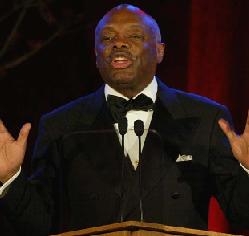
In another instance, Larsen said Alvarez had him resolicit bids three times for a contract to provide security at public housing projects. Alvarez later called Larsen into his office and said he had just returned from lunch with Chronicle columnist and former Mayor Willie Brown where he met Stan Teets, who runs the private security firm Personal Protective Services, which was not poised to win the contract, the report said.

“Larsen said that Alvarez told him, ‘You need to figure this out; you need to figure out a way to get PPS the work,’ ” according to the report. “Larsen said that his belief is that Alvarez saw Brown as an influential person, and that he (Alvarez) therefore needed to get Teets a contract or risk losing his job.”

After PPS failed to win the contract, Larsen said Alvarez told him to start the process over a fourth time, the report said.

Alvarez denied to investigators that ever happened.

Brown, when reached on his cell phone, said: “I can’t talk to you. I’m at a luncheon.”

Check that out: Brown — who works for the Chronicle as a columnist — said he can’t talk to a Chronicle reporter because he’s at a luncheon. BTW, he’s used the exact same excuse with me a bunch of times, including once at 4pm. He has a lot of luncheons. And they seem to last most of the day.

And let’s remember: in his columns, Brown has consistently made excuses for Alvarez and gone out of the way to tell his side of the story.

PPS has had serious problems with its work at the Housing Authority in the past, when Teets was hired by Brown’s hand-picked authority director, Ronnie Davis. Now Brown meets with Alvarez — who he defends in his column — and tries to get a contract for a firm with a shaky history that wasn’t the low bidder.

Is PPS one of Brown’s private law clients? We don’t know — the Chron doesn’t require him to disclose that information.

But we know this is fucking sleazy shit, and it’s exactly how the city worked every day when Brown was mayor — and apparently, it’s how things are working again, now that Brown’s pal Ed Lee is mayor. I give Lee credit for ousting Alvarez and shaking up the Housing Authority Commission, but by the time he did that, he really had no choice — the evidence and the mounting media pressure was overwhelming. And Willie clearly still has his hands in the operations of the city.

All this is happening at the same time that the Columbia Journalism Review has taken up the issue of Brown’s column and the truly shady ethics involved.

I had a lot of gripes with Mayor Gavin Newsom, as all of you know, but when he was mayor, this kind of pay-to-play overwhelming sleaze wasn’t the order of the day at City Hall. Now it’s back.

That’s how it works in San Francisco in 2013. How lovely.


The zero-sum future

74

tredmond@sfbg.com

It’s going to take longer, sometimes, to get from here to there. Acres of urban space are going to have to change form. Grocery shopping will be different. Streets may have to be torn up and redirected. The rules for the development of as many as 100,000 new housing units in San Francisco will have to be rewritten.

That’s the only way this city — and cities across the country — can meet the climate-change goals that just about everyone agrees are necessary.

Jason Henderson, a geography professor at San Francisco State University, lays out that case in a new book. He argues, persuasively, that the era of easy “automobility” — a time when people could just assume the ease and convenience of owning and using a private car as a primary means of transportation — has come to an end.

Henderson isn’t suggesting that all private vehicles go away; there are places where cars and trucks will remain the only way to move people and supplies around. But in the urban and suburban areas where most Americans live, the automobile as the default option simply has to end.

“In 10 years, there will be less automobility,” he told me in a recent interview. “It’s a simple limit to resources.”

And the sooner San Francisco starts preparing for that, the better off the city and its residents are going to be.


BIG NUMBERS

Henderson’s book, Street Fight: The Politics of Mobility in San Francisco, focuses largely on the Bay Area. But as he points out, the lessons apply all over. The numbers are daunting: Cities, Henderson reports, “use 75 percent of the world’s energy and produce 78 percent of global greenhouse gas emissions.” He adds: “Transportation is the fastest growing sector of energy use and [greenhouse gas] emissions, and this fact is in great measure owing to the expansion of automobility.”

And the United States is the biggest culprit. This nation has 4 percent of the world’s population — and 21 percent of the world’s cars.

To turn around the devastating impacts of climate change, “America will need not only to provide leadership, but also to decrease its appetite for excessive, on demand, high-speed automobility.”

And buying a lot of Priuses, or even electric cars, isn’t going to do the job. “Americans must undertake a considerable restructuring of how they organize cities, and that must include the rethinking of mobility and the allocation of street space.”

The Bay Area is about to enter into a long-term planning cycle that, according to groups like the Association of Bay Area Governments, will involve increased urban density. ABAG, according to its most recent projections, would like to see some 90,000 new housing units in San Francisco.

That’s got plenty of problems — particularly the likelihood of the displacement of existing residents. Henderson agrees that more density is going to be needed in the Bay Area — but he’s surprisingly bullish on the much-denigrated suburb.

“It’s actually quick and easy to retrofit suburbia,” he told me.

And like so much of what he discusses in his book, the primary solution is the old, venerable, human-powered contraption known as the bicycle.

“Existing communities like Walnut Creek are eminently bikeable,” Henderson told me. He suggests expanding development in three-mile circles around BART stations — after getting rid of all the parking. “We could easily get 20 to 30 percent of the trips by bike,” he noted.

In fact, he argues, it’s easier to put bicycle lanes and paths in the suburbs than in San Francisco. The streets tend to be wider, there’s more room in general — and it’s fairly simple to provide barriers from cars that make biking safe for everyone.

In fact, a lot of European cities are less dense than San Francisco — and have far fewer drivers. Even in California, the city of Davis is famous for its bike culture; “In Davis,” Henderson said, “There are all these children riding their bikes to school.”


ACRES OF PARKING

One of the most profound changes San Francisco is going to have to make involves coming to terms with the immense amount of scarce space that’s devoted to cars. Parking spaces may not seem that big — but when you combine the 300-square-foot typical space (larger than many bedrooms and offices) with the space needed for getting into and out of that space, it adds up.

“Parking for 130 cars amounts to about an acre, and the aggregate of all non-residential off-street parking is estimated to be equal in area to several New England states.”

Cars need more than a home parking space — they need someplace to park when they’re used. So in a city like San Francisco that has more than 350,000 cars, a vast amount of urban land must be devoted to parking. In fact, Henderson estimates that parking space in San Francisco amounts to about 79.4 million square feet — or about 79,400 two-bedroom apartments. Off-street parking alone takes up space that could house 67,000 two-bedroom units.

And it’s hella expensive. Building parking adds as much as 20 percent to the cost of a housing unit. He cites studies showing that 20 percent more San Franciscans could afford to buy a condo unit if it didn’t include parking.

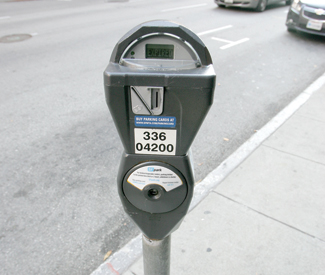
But the city still mandates off-street parking for all new residential construction — and while activists have managed to get the amount reduced from a minimum of one parking space per unit to a maximum of around eight spaces per 10 units, that’s still a whole lot of parking.

And if San Francisco is expected to absorb 90,000 more housing units, under current rules that’s 72,000 more cars — which means a demand for 72,000 more parking spaces near offices, shopping districts, and parks. Crazy.

So how do you get Americans, even San Franciscans, to give up what Henderson calls the “sense of entitlement that we can speed across town in a private car?” Some of it requires the classic planning measures of discouraging or banning parking in new development (AT&T Park works quite well as a facility that is primarily accessed by foot and transit). Some of it means putting in the resources to improve public transit.

And a lot of it involves shifting transportation modes to walking and bicycles.

San Francisco has had significant success increasing the use of bikes in the past few years. But there are limits to what you can do by tinkering around the edges, with a few more bike lanes here and there.

There are, for example, the hills. And there’s grocery shopping for a family. Those things need bigger shifts in the use of urban space.

San Francisco’s street grid, for example, sends travelers straight up some nearly impossible inclines. Young, healthy people in great physical condition can ride bikes up those hills, but children and older people simply can’t.

Henderson suggests that the city could install lifts in some areas, but there’s another, more radical (but less energy-intensive) solution: Reroute the grid.

If city streets wound around the sides of hills, instead of heading straight up, walking and biking would be far easier. That would involve major changes, particularly since there’s housing in the way of any real route changes — but in the long term, that sort of concept should, at least, be on the table.

Bikes with cargo trailers make a lot of sense for shopping, Henderson told me — and once big supermarkets get rid of all that parking, the price of food will come down.


THE POLITICS OF NEO-LIBERALS

The biggest challenge, though — and the heart of Henderson’s book — is political. Transportation, he argues, is inherently ideological: “It matters how you get from here to there.” And he notes that progressives, who are willing to think about social responsibility, not just individual rights, see the choices very differently than the neo-liberals, who in this city are often called “moderates.” If the neo-libs have their way, he says, the changes will be too little, too late, and mostly ineffective.

Because Americans are facing a series of choices — and there are no solutions that preserve the old way of life without sacrificing the future of the planet. It’s entirely a zero-sum game: We can slow global climate change, or we can keep driving cars. (Oh, and electric cars — which still require large amounts of power, mostly from fossil-fuel plants — aren’t going to solve the problem any time soon.)

We can shift to bicycles and transit as our primary ways to get around, or we can leave our kids an ecological disaster of unprecedented scope. We can overhaul the entire way we think about urban planning — to make streets friendly to bikes and buses — or we can go down a deadly path of no return.

We can accept the fact that moving around cities may be a little slower, particularly while we adapt. Or we can join the climate-change deniers. “There are a lot of neo-liberals out there who say we can’t start controlling automobility until we have a gold-plated transit system,” Henderson told me. “But this is not a chicken and egg problem. First you have to create the urban space. Then you can build a better system.”

Let it all out

0

VISUAL ART Dottie Guy had a difficult time in 2006. In addition to the death of her grandfather, she was recovering from surgery for an injury to her ankle and foot that she had sustained on duty in Iraq. She started taking pictures as motivation to walk around and to reclaim a sense of purpose.

This year, Guy is one of the artists participating in a one-night art exhibition presented by Shout!, an initiative to support female veterans in the Bay Area. Primary organizer Star Lara asked Guy to submit a photo to an event that, in its fifth year, will include several different media — photography, painting, sculpture, drawing, writing, and music — made by 22 vets. As a result of Lara’s outreach efforts, this year’s event has grown so much that she had to turn artists away.

Lara is the Women Veterans Coordinator at Swords to Plowshares, a nonprofit that helps veterans transition back to civilian life. Leaving the military in 2007 after serving on active duty for 12 years, she knows the hardships of adapting, particularly those that affect women. As more women enlist, she explains, the gender-specific problems become increasingly defined. Female veterans now represent the fastest growing homeless population, yet they seek help through Veteran Affairs at far lower rates than men do.

Issues also stem from public perception. People understand what it means when they see a man with a military pin, but Lara often hears the question, “Is your dad in the military?” Society resists the idea of a female veteran.

And when civilians do know about a woman’s military service, another problem arises: the tendency to reduce all aspects of her persona to her veteran identity. For Guy, the exhibition provides an opportunity to showcase another side of herself. Though her life revolves around veterans — she works at the VA — she is also a photographer, and her photography does not directly address military service.

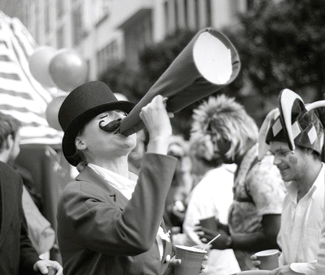
Guy snapped her Shout! photo at Bay to Breakers a couple of years ago when she stumbled across a woman in a top hat and fake moustache shouting into a bullhorn next to a man wearing a polar bear mask. It is a quirky image one could find in few places besides San Francisco. “I embrace the ridiculous stuff,” says Guy. “Being in the military, there’s not much room to celebrate that. You’d never see somebody walking around in a mask like that, unless it meant trouble.”

Another Shout! artist, JoAnn Martinez, has only recently begun to experiment with military subjects. For her second year in the show, she has submitted comics derived from dialogues she has heard within the female veteran community. By undertaking this new comedic mode of art, she hopes she can not only share a creation she’s proud of besides her family and work (she started the nonprofit Women Veterans Connect), but also communicate a digestible message to the non-veteran community. “Instead of complaining, let’s laugh about it,” she says.

Not only do Martinez’s comics convey a therapeutic levity, but they also contain an expressive subtext; they are printed on homemade paper created in response to the Combat Paper Project, in which workshops instruct veterans how to create paper pulp from their shredded military uniforms.

Extending the practice beyond Shout!, Martinez is seeking female veterans to submit stories about their uniforms for a Shotwell Paper Mill limited-edition book created using the same fabric-turned-paper method. So far, the stories range in tone, some reflecting a similar lightness to Martinez’s comics; one woman tells how after she painted her toenails, the Iraqi heat melted the polish and she had trouble removing her socks.

Lara has also participated in the project, an experience she found restorative in part because it involved breaking down and reclaiming an object laden with intense experiences, but primarily because of the work’s collectivity. After talking with fellow female veterans while their hands were busy cutting, she says, “It was no longer about the trauma that brought you to the table — it was about what you took from the table.” (The Combat Paper Project also inspired Lara’s contribution to this year’s Shout!, a piece that involved her “painting the shit out of” her last uniform.)

Though Lara does not consider herself a fine artist, Shout! presents an opportunity to share the voice of her small group within a greater context. In the Women’s Building, a hub of action in the Mission, the event will enact her idea that women veterans comprise a subset of larger existing communities and should be reached as such.

Lara says that without focusing on trauma, without involving policy, services, or outreach, Shout! offers a chance for artists like Guy and Martinez to declare, “I am a woman and a veteran, and here’s how I express myself.”

SHOUT!: ART BY WOMEN VETERANS

Wed/8, 6-9pm, free

San Francisco Women’s Building

3543 18th St, SF

swords-to-plowshares.org/shout


Unidentified filthy objects

0

caitlin@sfbg.com

SEX In an email interview in advance of her Fri/10 appearance at the Center for Sex and Culture, Suzie Silver told me that her interest in alien sex was spawned by a mix of her childhood fascination with Star Trek: The Original Series, NASA’s launch of the Kepler space observatory in 2009, and Isabella Rossellini’s “Green Porno” short film series on the sensual activities of insects and marine animals. Silver recently co-edited (along with Christopher Kardambikis and Jasdeep Khaira) Strange Attractors, a book-DVD project (www.extraterrestialsexuality.org) that explores the notions of extraterrestrial sexuality held by 70 artists, writers, and filmmakers. If that doesn’t inspire you to read the rest of this article, I give up on you.

San Francisco Bay Guardian Please explain your fascination with extraterrestrial sexuality.

Suzie Silver Strange Attractors  asks the participants and audience to try to imagine otherworldly and unknowable life-forms and sexualities. We are imagining sexual possibilities beyond gender, beyond genitalia. In my short story “Donkey Show,” one of the things I describe is a live sex show made up of shape shifting platonic solids that can create pleasurable and climactic responses from all audience members. I’m attempting to envision universal ecstasy and orgasm!

SFBG Have you noticed commonalities related in true-life alien sex experiences? 

SB I have read some accounts, mostly online. For the most part I find them rather unimaginative and not very interesting. The focus is usually on penetration. It all seems rather BDSM, which has its appeal, otherwise how to explain the success of all those 50 Shades books? Strange Attractors attempts a polymorphous perversity: sex outside of reproduction, for pleasure, communication, joy, connection, fun, more complicated power dynamics than dominance and submission. We imagine erogenous zones in, on, and outside of every part of the body and mind.

SFBG Which contributions to  Strange Attractors did you find particularly compelling?

SB I find all of the works truly amazing. Works that I’m particularly compelled by include Vanessa Roveto’s extraterrestrial dating profile where the being’s desirable qualities include “a body comprised mostly of healthy scrotal tissue, the ability to mimic my selves, an oral tolerance for liquid hand sanitizer, a traumatic childhood that will work in your erotic favor, and minimal bloating.” In Michael Mallis and Mikey McParlane’s “Love Puddles:” “In the golden fringe of a far off galaxy, an alien planet teems with exotic life. Twiggy creatures rush to an ominous volcano and rub their bodies against its glittering surface, enticing the volcano to awaken and spray its gooey chaos across the furry world.”

Strange Attractors video screening Fri/10, 7-10pm, $5-10 sliding scale. Center for Sex and Culture, 1349 Mission, SF. www.sexandculture.org


THIS WEEK’S SEXY EVENTS

Tricks and Chickenhawks reading Wed/8, 7:30pm, free. Booksmith, 1644 Haight, SF. www.booksmith.com. Sex worker literati — Madison Young, Kitty Stryker, Carol Queen, more — gather to read from a new anthology of sex worker and john experiences.

“How to Create an Effective Online Profile” Tue/14, 7-10pm, $20. Center for Sex and Culture, 1349 Mission, SF. www.sexandculture.org. Hear back from that babe on Scruff, FetLife, or Tinder after taking this one-off seminar.


Rep Clock

0

Schedules are for Wed/8-Tue/14 except where noted. Director and year are given when available. Double and triple features marked with a •. All times pm unless otherwise specified.

ANSWER COALITION 2969 Mission, SF; www.answersf.org. $5-10 (no one turned away for lack of funds). The Battle of Chile: The Power of the People (Guzmán), Wed, 7.

ARTISTS’ TELEVISION ACCESS 992 Valencia, SF; www.atasite.org. $6-10. "Revelcade Applause Night," shorts by Bay Area filmmakers, Fri, 8.

CASTRO 429 Castro, SF; (415) 621-6120, www.castrotheatre.com. $8.50-13. •Badlands (Malick, 1973), Wed, 7, and Electra Glide in Blue (Guercio, 1973), Wed, 8:50. San Francisco International Film Festival, Thu. See festival.sffs.org for schedule. •John Dies at the End (Coscarelli, 2012), Fri, 7, and The Rambler (Reeder, 2013), Fri, 8:55. "Marc Huestis presents: Mother’s Day with Mommie Dearest:" Mildred Pierce (Curtiz, 1945), Sat, 2; Mommie Dearest (Perry, 1981), Sat, 7:30. Evening event ($15; www.ticketfly.com) includes a live appearance by actress Rutanya Alda, with host Matthew Martin. •The Red Shoes (Powell and Pressburger, 1948), Sun, 2:55, 8, and The Life and Death of Colonel Blimp (Powell and Pressburger, 1943), Sun, 5. The Master (Anderson, 2012), Tue, 2, 5, 8.

CHRISTOPHER B. SMITH RAFAEL FILM CENTER 1118 Fourth St, San Rafael; (415) 454-1222, www.cafilm.org. $6.75-$10.25. The Angels’ Share (Loach, 2012), call for dates and times. Blancanieves (Berger, 2012), call for dates and times. In the House (Ozon, 2012), call for dates and times. The Reluctant Fundamentalist (Nair, 2012), call for dates and times. Renoir (Bourdos, 2012), call for dates and times.

GREAT WALL OF OAKLAND West Grand between Broadway and Valley, Oakl; www.oaklandcatvidfest.com. $10-75. "Oakland Internet Cat Video Festival," benefit for the East Bay SPCA with pre-screening events (cat-themed music, animal rescue groups, food trucks, and more), plus an appearance by special guest Dusty the Klepto Kitty, Sat, 3-10.

JEWISH COMMUNITY CENTER OF SAN FRANCISCO Kanbar Hall, 3200 California, SF; www.jccsf.org. $8-12. Under African Skies (Berlinger, 2012), Mon, 7.

MECHANICS’ INSTITUTE 57 Post, SF; (415) 393-0100, milibrary.org/events. $10 (reservations required as seating is limited). "CinemaLit Film Series: Paddy Chayefsky: Scenes from American Lives:" The Catered Affair (Brooks, 1956), Fri, 6.

NEW PARKWAY 474 24th St, Oakl; www.thenewparkway.com. $6-10. "New Parkway Classics:" Wild at Heart (Lynch, 1990), Thu, 9pm. "Thrillville:" Mothra (Honda, 1961), Sun, 6.

OAKLAND PUBLIC LIBRARY 1021 81st Ave, Oakl; www.oaklandlibrary.org. Free. Just a Piece of Cloth (Henze), Sat, 2.

"PLAYGROUND FILM FESTIVAL" Various Bay Area venues; playground-sf.org/filmfest. $10-25. Showcasing Bay Area filmmakers and writers and their short work. Through May 25.

PACIFIC FILM ARCHIVE 2575 Bancroft, Berk; (510) 642-5249, bampfa.berkeley.edu. $5.50-9.50. San Francisco International Film Festival, Wed-Thu. See festival.sffs.org for schedule. "Film and Video Makers at Cal: Works from the Eisner Prize Competition," Fri, 7. PFA closed through June 5.

ROXIE 3117 and 3125 16th St, SF; (415) 863-1087, www.roxie.com. $6.50-11. CXL (Gillane, 2012), Wed, 7:15. The Source Family (Demopoulos and Wille, 2012), Wed-Thu, 7, 9:30. Upstream Color (Carruth, 2013), Wed-Thu, 9. The Crumbles (Boch, 2012), Sat, 3, 5, 7, 9. "I Wake Up Dreaming 2013:" •I Wake Up Screaming (Humberstone, 1941), Fri, 6:15, 9:45, and Blues in the Night (Rossen, 1941), Fri, 8; •Under Age (Dmytryk, 1941), Sat, 2, 6:30; Johnny O’ Clock (Rossen, 1947), Sat, 3:15, 8; and The Monster and the Girl (Heisler, 1941), Sat, 5, 9:45; •Fall Guy (Le Borg, 1947), Sun, 1:30, 6:15; Night Has a Thousand Eyes (Farrow, 1948), Sun, 2:50, 7:45; •Club Havana (Ulmer, 1945), Mon, 6:40, 9:30, and Island of Doomed Men (Barton, 1940), Mon, 8; •Nightmare (Whelan, 1942), Tue, 6:15, 9:50, and All Through the Night (Sherman, 1942), Tue, 8.

VICTORIA THEATRE 2961 16th St, SF; www.peacheschrist.com. $30-35. "The Rocky Horror Show 40th Anniversary Concert Tribute," with Patricia "Magenta" Quinn performing live and other special guests, Fri-Sat, 8 (also Sat, 3).

YERBA BUENA CENTER FOR THE ARTS 701 Mission, SF; www.ybca.org. $8-10. "Girls! Guns! Ghosts! The Sensational Films of Shintoho:" Ghost Story of Yotsuya (Nakagawa, 1959), Thu, 7:30; Flesh Pier (Ishii, 1958), Sun, 2.

Stage listings

0

Stage listings are compiled by Guardian staff. Performance times may change; call venues to confirm. Reviewers are Robert Avila, Rita Felciano, and Nicole Gluckstern. Submit items for the listings at listings@sfbg.com.

THEATER

OPENING

Black Watch Drill Court, Armory Community Center, 333 14th St, SF; www.act-sf.org. $100. Previews Thu/9-Sat/11, 8pm. Opens Sun/12, 7pm. Runs Tue-Sat, 8pm (Tue/14, show at 7pm; also Wed and Sat, 2pm); Sun, 2pm. Through June 16. American Conservatory Theater presents the National Theatre of Scotland’s internationally acclaimed performance about Scottish soldiers serving in Iraq.

Vital Signs: The Pulse of an American Nurse Marsh San Francisco, 1062 Valencia, SF; www.themarsh.org. $15-50. Opens Sun/12, 7pm. Runs Sun, 7pm. Through June 16. Registered nurse Alison Whittaker returns to the Marsh with her behind-the-scenes show about working in a hospital.

ONGOING

Acid Test: The Many Incarnations of Ram Dass Marsh San Francisco, 1062 Valencia, SF; www.themarsh.org. $15-50. Fri, 8pm; Sat, 5pm (Sat/11, show at 8pm). Through May 18. Playwright Lynne Kaufman invites you to take a trip with Richard Alpert, a.k.a. Ram Dass (Warren David Keith), as he recounts times high and low in this thoughtful, funny, and sometimes unexpected biographical rumination on the quest for truth and meaning in a seemingly random life by one of the big wigs of the psychedelic revolution and (with his classic book, Be Here Now) contemporary Eastern-looking spirituality. Directed by Joel Mullennix, the narrative begins with Ram Dass today, in his Hawaiian home and partly paralyzed from a stroke, but Keith (one of the Bay Area’s best stage actors, who is predictably sure and engagingly multilayered in the role) soon shakes off the stiff arm and strained speech and springs to his feet to continue the narrative as the ideal self perhaps only transcendental consciousness and theater allow. Nevertheless, Kaufman’s fun-loving and extroverted Alpert is no saint and no model of perfection, which is the refreshing truth explored in the play, but rather a seeker still, ever imperfect and ever trying for greater perfection or at least the wisdom of acceptance. As the privileged queer child of a wealthy Jewish lawyer and industrialist, Alpert was both insider and outsider from the get-go, and that tension and ambiguity makes for an interesting angle on his life as well as the complexities of his relationships with a homophobic Leary, for instance, and his conservative but ultimately loving father. Perfection aside, the beauty in the subject and the play is the subtle, shrewd cherishing of what remains unfinished. (Avila)

Boomeraging: From LSD to OMG Marsh San Francisco, 1062 Valencia, SF; www.themarsh.org. $15-50. Tue, 8pm. Through May 28. Comedian Will Durst performs his brand-new solo show.

Dirty Dancing: Live! Dark Room, 2263 Mission, SF; dirtydancinglive-fbe.eventbrite.com. $20. Fri-Sat, 8pm. Through May 25. Watermelons will be carried, lifts will be attempted, eyes will be hungry, and nobody better put Baby in a corner.

Foodies! The Musical Shelton Theater, 533 Sutter, SF; www.foodiesthemusical.com. $30-34. Fri-Sat, 8pm. Open-ended. AWAT Productions presents Morris Bobrow’s musical comedy revue all about food.

Last Love Mojo Theatre, 2940 16th St, SF; www.mojotheatre.com. $17-30. Thu-Sun, 8pm. Through May 19. Will the apocalypse save us from ourselves? Mojo Theater again raises that question as it presents the second installment in director-playwright Peter Papadopoulos’ Love-Gone-Wrong-at-the-End-of-the-World trilogy, the follow-up to last season’s fertile and funny Lost Love. The story centers on a George and Martha-esque couple, Charles (Jonathan Bender) and Lucida (Kimberly Lester), who on the eve of their fifth wedding anniversary declare all-out war, lobbing younger lovers at each other only to find their new partners (played by an increasingly endearing Michael Saenz and an unexpectedly powerful Gloria McDonald) have a past together and unresolved issues of their own. The grimly romantic comedy returns to, without greatly elaborating on, a familiar fantasy: blowing away the haze of our fractious, insecure, and muddled love lives in the clarifying immediacy of disaster. That this may be more than pure fantasy — that the seemingly discrete realms of personal and political trauma may be in some subtle and profound way connected — is an animating dimension of the trilogy, but here in a more superficial and perfunctory fashion than in Lost Love. The strength of the production lies less in its premise than in the penetrating humor and emotional veracity in Papadopoulos’ sure, heightened dialogue, which is played generally well by the cast and exceptionally so by a vibrantly intelligent Lester, Mojo’s co–artistic director. The staging also benefits, albeit inconsistently, from a stylized approach that revels in self-conscious artifice (including a trio of stage managers from “Command Center Communications,” a video-backdrop by Micah Stieglitz, and some light choreography by Lester). These strengths lend a restless, occasionally inspired production a slow-burning charm, but leave one wondering what might be left when all the dust settles. (Avila)

Little Me Eureka Theatre, 215 Jackson, SF; www.42ndstreetmoon.org. $25-75. Wed, 7pm; Thu-Fri, 8pm; Sat, 6pm. Through May 19. 42nd Street Moon performs Neil Simon’s outrageous musical.

The Lost Folio: Shakespeare’s Musicals Un-Scripted Theater, 533 Sutter, Second Flr, SF; www.un-scripted.com. $10-20. Thu-Sat, 8pm. Through May 18. Un-Scripted Theater Company performs a fully-improvised, full-length musical inspired by Shakespeare.

The Merry Wives of Windsor Buriel Clay Theater, African American Art and Culture Complex, 762 Fulton, SF; www.african-americanshakes.org. $10-35. Sat, 8pm; Sun, 3pm. Through May 26. African-American Shakespeare Company performs a twist on the Shakespeare classic, set in an urban neighborhood in the 1950s.

“PlayGround Festival of New Works” Various venues, SF and Berk; www.playground-sf.org. $15-40. Through May 26. The 17th fest presented by “San Francisco’s incubator for a new generation of playwrights” includes the PlayGround Film Festival, staged readings of four new full-length plays, a fully-produced program of six short plays, panel discussions, and more.

reasons to be pretty San Francisco Playhouse, 450 Post, Second Flr, SF; www.sfplayhouse.org. $30-100. Wed/8-Thu/9, 7pm; Fri/10-Sat/11, 8pm (also Sat/11, 3pm). Completing a trilogy of plays about body awareness and self-image (along with The Shape of Things and Fat Pig), Neil LaBute’s reasons to be pretty begins with a misconstrued remark that quickly gathers enough weight and momentum to tear three sets of relationships apart in the span of a two-hour play. The SF Playhouse production begins with a bang, or rather an awesomely knock-down, blow-out breakup fight between a righteously pissed-off Steph (Lauren English) and her awkwardly passive boyfriend Greg (Craig Marker), who has inadvertently referred to her as “regular” in a conversation with his jerkish buddy Kent (Patrick Russell), which she takes to mean he finds her ugly. English’s Steph is at turns ferocious and fragile, and her comic timing as she eviscerates Greg’s looks in a mall food court zings, while the hyperkinetic Russell elevates the condition of noxiously irredeemable douchebag to an art form. But terrific acting and polished design can only make up so much for a script that feels not only flawed, barely scratching the surface of the whys and wherefores each character has internalized an unrealistic view of the importance of conventional beauty standards, but also already dated, with its circa-2008 pop culture references. Ultimately it gives the impression of being a rerun of a Lifetime television drama that wraps itself up into a too-neat package just in time for the final credits to roll to its admittedly kickass soundtrack (provided by Billie Cox). (Gluckstern)

Sam I Am: A Processional of Short Plays and Prose About Samuel Beckett Bindlestiff Studio, 185 Sixth St, SF; www.pustheatre.com. $10-20. Fri/10-Sat/11, 8pm. Performers Under Stress remounts and revamps its series of short plays and pieces by Samuel Beckett, this time staging it throughout the basement quarters of Bindlestiff Studio, where audiences are led around an economical maze of performance spaces. Opening weekend consisted of too much text and too little in way of staging ideas, especially with several spoken selections of Beckett prose (which have reportedly since been dropped from the program). The best of what remains (in a program of six short plays total) includes Valerie Fachman’s respectable performance as the disembodied “mouth” of the brilliant Not I; and James Udom and Geo Epsilany’s duet in Rough for Theatre I, in which a wheelchair-bound food-hoarder (a softly eccentric Epsilany) strikes up a doomed friendship with a blind beggar (a solid Udom) amid a colorless and barren landscape. The bucket of Beckett dreary gets less satisfying from there, though director Scott Baker’s wordless performance as the titular Joe in Eh Joe proves poised and the doubled voices in his head (by Melissa Clason and Allison Hunter Blackwell) both haunting and intriguing. (Avila)

Sex and the City: LIVE! Rebel, 1760 Market, SF; trannyshack.com/sexandthecity. $25. Wed, 7 and 9pm. Open-ended. It seems a no-brainer. Not just the HBO series itself — that’s definitely missing some gray matter — but putting it onstage as a drag show. Mais naturellement! Why was Sex and the City not conceived of as a drag show in the first place? Making the sordid not exactly palatable but somehow, I don’t know, friendlier (and the canned a little cannier), Velvet Rage Productions mounts two verbatim episodes from the widely adored cable show, with Trannyshack’s Heklina in a smashing portrayal of SJP’s Carrie; D’Arcy Drollinger stealing much of the show as ever-randy Samantha (already more or less a gay man trapped in a woman’s body); Lady Bear as an endearingly out-to-lunch Miranda; and ever assured, quick-witted Trixxie Carr as pent-up Charlotte. There’s also a solid and enjoyable supporting cast courtesy of Cookie Dough, Jordan Wheeler, and Leigh Crow (as Mr. Big). That’s some heavyweight talent trodding the straining boards of bar Rebel’s tiny stage. The show’s still two-dimensional, even in 3D, but noticeably bigger than your 50″ plasma flat panel. (Avila)

Steve Seabrook: Better Than You Marsh San Francisco, 1062 Valencia, SF; www.themarsh.org. $15-50. Thu, 8pm; Sat, 8:30pm. Extended through May 18. Self-awareness, self-actualization, self-aggrandizement — for these things we turn to the professionals: the self-empowerment coaches, the self-help authors and motivational speakers. What’s the good of having a “self” unless someone shows you how to use it? Writer-performer Kurt Bodden’s Steve Seabrook wants to sell you on a better you, but his “Better Than You” weekend seminar (and tie-in book series, assorted CDs, and other paraphernalia) belies a certain divided loyalty in its own self-flattering title. The bitter fruit of the personal growth industry may sound overly ripe for the picking, but Bodden’s deftly executed “seminar” and its behind-the-scenes reveals, directed by Mark Kenward, explore the terrain with panache, cool wit, and shrewd characterization. As both writer and performer, Bodden keeps his Steve Seabrook just this side of overly sensational or maudlin, a believable figure, finally, whose all-too-ordinary life ends up something of a modest model of its own. (Avila)

Talk Radio Actors Theatre of San Francisco, 855 Bush, SF; www.actorstheatresf.org. $26-38. Wed-Sat, 8pm. Through June 15. Actors Theatre of San Francisco performs Eric Bogosian’s breakthrough 1987 drama.

Tinsel Tarts in a Hot Coma: The Next Cockettes Musical Hypnodrome, 575 10th St, SF; www.thrillpeddlers.com. $30-35. Thu-Sat, 8pm. Through June 1. Thrillpeddlers and director Russell Blackwood continue their Theatre of the Ridiculous series with this 1971 musical from San Francisco’s famed glitter-bearded acid queens, the Cockettes, revamped with a slew of new musical material by original member Scrumbly Koldewyn, and a freshly re-minted book co-written by Koldewyn and “Sweet Pam” Tent — both of whom join the large rotating cast of Thrillpeddler favorites alongside a third original Cockette, Rumi Missabu (playing diner waitress Brenda Breakfast like a deliciously unhinged scramble of Lucille Ball and Bette Davis). This is Thrillpeddlers’ third Cockettes revival, a winning streak that started with Pearls Over Shanghai. While not quite as frisky or imaginative as the production of Pearls, it easily charms with its fine songs, nifty routines, exquisite costumes, steady flashes of wit, less consistent flashes of flesh, and de rigueur irreverence. The plot may not be very easy to follow, but then, except perhaps for the bubbly accounting of the notorious New York flop of the same show 42 years ago by Tent (as poisoned-pen gossip columnist Vedda Viper), it hardly matters. (Avila)

The Waiting Period Marsh San Francisco, 1062 Valencia, SF; www.themarsh.org. $25-50. Fri, 8pm; Sat, 5pm. Through May 18. Brian Copeland (comedian, TV and radio personality, and creator-performer of the long-running solo play Not a Genuine Black Man) returns to the Marsh with a new solo, this one based on more recent and messier events` in Copeland’s life. The play concerns an episode of severe depression in which he considered suicide, going so far as to purchase a handgun — the title coming from the legally mandatory 10-day period between purchasing and picking up the weapon, which leaves time for reflections and circumstances that ultimately prevent Copeland from pulling the trigger. A grim subject, but Copeland (with co-developer and director David Ford) ensures there’s plenty of humor as well as frank sentiment along the way. The actor peoples the opening scene in the gun store with a comically if somewhat stereotypically rugged representative of the Second Amendment, for instance, as well as an equally familiar “doood” dude at the service counter. Afterward, we follow Copeland, a just barely coping dad, home to the house recently abandoned by his wife, and through the ordinary routines that become unbearable to the clinically depressed. Copeland also recreates interviews he’s made with other survivors of suicidal depression. Telling someone about such things is vital to preventing their worst outcomes, says Copeland, and telling his own story is meant to encourage others. It’s a worthy aim but only a fitfully engaging piece, since as drama it remains thin, standing at perhaps too respectful a distance from the convoluted torment and alienation at its center. Note: review from an earlier run of the same production. (Avila)

The World’s Funniest Bubble Show Marsh San Francisco, 1062 Valencia, SF; www.themarsh.org. $8-50. Sun, 11am. Through July 21. Louis “The Amazing Bubble Man” Pearl returns after a month-long hiatus with his popular, kid-friendly bubble show.

BAY AREA

The Arsonists Aurora Theatre, 2081 Addison, Berk; www.auroratheatre.org. $35-60. Wed/8-Sat/11, 8pm; Sun/12, 2 and 7pm. There’s a lot of humor to be found in Alistair Beaton’s crackling translation of Max Frisch’s The Arsonists, playing now at the Aurora Theatre, but much of the laughter it elicits is of the nervous variety, as the play’s mostly protagonist, the effete, bourgeois Herr Biedermann (Dan Hiatt) inadvertently signs off on his own destruction when he invites an uncouth arsonist to come and stay in his attic (Michael Ray Wisely). “If we assume everyone is an arsonist, where does that get us?” becomes his standard deflection, as one arsonist becomes two (adding in the unctuous, nihilistic Tim Kniffin), and the empty attic a repository for giant drums of gasoline, a detonator, and fuse wire — arousing the suspicions of a chorus of firefighters (Kevin Clarke, Tristan Cunningham, Michael Uy Kelly), who act as the conscience and guardians of the township. Although on the surface the scenario is patently absurd, the message that passivity in the face of evil is like helping to measure out the fuse wire that will eventually claim your life, is relatively clear. “Not every fire is determined by fate,” point out the firefighters right in the first act. Hiatt, as Biedermann, strikes an admirable balance between loathsome and powerless, while Gwen Loeb shines as his socialite wife, Babette, as does Dina Percia as his agitated housemaid, Anna. (Gluckstern)

The Dead Girl Avant Garde, 1328 Fourth St, San Rafael; www.altertheater.org. $25. Wed, 7:30pm; Fri-Sat, 8pm; Sun, 3pm. Through May 19. AlterTheater performs 90-year-old playwright Ann Brebner’s new family drama.

A Killer Story Marsh Berkeley, 2120 Allston, Berk; www.themarsh.org. $20-50. Thu-Sat, 8pm (pre-show cabaret at 7:15pm). Through May 18. Dan Harder’s film noir-inspired detective tale premieres at the Marsh Berkeley.

Pericles, Prince of Tyre Berkeley Repertory Theatre, 2025 Addison, Berk; www.berkeleyrep.org. $29-77. Tue, Thu-Sat, 8pm (also Sat and May 23, 2pm; no show May 24); Wed and Sun, 7pm (also Sun, 2). Through May 26. Mark Wing-Davey directs Berkeley Rep’s take on the Bard.

PERFORMANCE/DANCE

“Bailout! Or can you picture this prophecy? The temperatures are too hot for me.” Dance Mission Theater, 3316 24th St, SF; www.brownpapertickets.com. Fri/10-Sun/12, 8pm. Pay what you can. Navarrete x Kajiyama Dance Theater perform a site-specific multidisciplinary performance inspired by environmental disasters.

“Bitch and Tell: A Real, Funny Show” Garage, 715 Bryant, SF; www.ftloose.org. Sat/11, 8pm. $8-10. Comedy with Tracy Shapiro, Carolé Acuña, Allison Mick, and more.

“Bob’s Burgers Live!” Nob Hill Masonic Auditorium, 1111 California, SF; http://bit.ly/bobssanfrancisco. Sat/11, 8pm. $32.50. The cast of the animated series performs.

“Bound for Glory” Marsh San Francisco, 1062 Valencia, SF; www.themarsh.org. Fri/10, 7:30pm; Sat/11, 2pm. $8-50. Marsh Youth Theater’s MainStage Performance Ensemble presents a musical (written by the ensemble with director Lisa Quoresimo) about a Dust Bowl-era family.

Caroline Lugo and Carolé Acuña’s Ballet Flamenco Peña Pachamama, 1630 Powell, SF; www.carolinalugo.com. Sun/12, 3 and 6:15pm. $29.95-49.95 (includes meal). Flamenco performance by the mother-daughter dance company, featuring live musicians.

“Comedy Returns to El Rio” El Rio, 3158 Mission, SF; www.elriosf.com. Mon/13, 8pm. $7-20. Fourth anniversary show with Frankie Quiñones, Dan St. Paul, Aundre the Wonderwoman, and more.

“The Fantasticks” Mission Dolores Academy Auditorium, 3371 16th St, SF; www.16thstreetplayers.org. Fri/10 and Sat, 7:30pm (also Sat/11, 3pm); Sun, 3pm. Through May 19. Free. The 16th Street Players perform the classic musical.

“I Am a Lie that Always Tells the Truth” Garage, 715 Bryant, SF; www.kingdomofnot.com. Fri/10, 8pm. $10-20. The Kingdom of Not (Dan Carbone and Andrew Goldfarb) perform “music, monologues, and emergency dispatches.”

“ImmigraNation” Punchline Comedy Club, 444 Battery, SF; www.punchlinecomedyclub.com. Tue/14, 8pm. $15. Comedy about the immigrant experience with Dhaya Lakshminarayanan, Samson Koletkar, and more.

“Mission Position Live” Cinecave, 1034 Valencia, SF; www.missionpositionlive.com. Thu, 8pm. Ongoing. $10. Stand-up comedy with rotating performers.

“Mortified” DNA Lounge, 373 11th St, SF; www.getmortified.com. Fri/10, 7:30pm. $21. Also Sat/11, 7:30pm, $20. Uptown, 1928 Telegraph, Oakl. The storytelling series, which specializes in all things embarassing, ups the ante with a Mother’s Day theme this month.

“Mutant Creatures and Unlikely Teachers: Short Plays by Short People” Koret Auditorium, De Young Museum, Golden Gate Park, SF; www.stagewright.org. Tue/14, 11am. Free (advance reservations required). Also May 16, 6:30pm ($10) and May 17, 7pm ($50; fundraiser for StageWright program), Brava Theater Center, 2781 24th St, SF; www.stagewright.org. StageWright presents plays by fifth graders at Starr King Elementary School, performed by professional actors and museums.

“Once in Love with Loesser” Eureka Theatre, 215 Jackson, SF; www.42ndstreetmoon.org. Mon/13-Tue/14, 7pm. $45-70. 42nd Street Moon presents Tony nominee Emily Skinner performing songs by Frank Loesser.

Red Hots Burlesque El Rio, 3158 Mission, SF; www.redhotsburlesque.com. Wed, 7:30-9pm. Ongoing. $5-10. Come for the burlesque show, stay for OMG! Karaoke starting at 8pm (no cover for karaoke).

San Francisco Ballet War Memorial Opera House, 301 Van Ness, SF; www.sfballet.org. Wed/8, 7:30pm; Thu/9-Sat/11, 8pm (also Sat/11, 2pm); Sun/12, 2pm. $45-250. Performing the US premiere of Christopher Wheeldon’s Cinderella.

“San Francisco Magic Parlor” Chancellor Hotel Union Square, 433 Powell, SF; www.sfmagicparlor.com. Thu-Sat, 8pm. Ongoing. $40. Magic vignettes with conjurer and storyteller Walt Anthony.

Smuin Ballet Yerba Buena Center for the Arts, 701 Mission, SF; www.smuinballet.org. Fri-Sat and May 16, 8pm (also Sat, 2pm); Sun, 2pm. Through May 19. $24-65. Also May 22-25, 8pm (also May 25, 2pm); May 26, 2pm. $52-68. Mountain View Center for the Performing Arts, 500 Castro, Mtn View. Also May 31-June 1, 8pm (also June 1, 2pm). $54-70. Lesher Center for the Arts, 1601 Civic, Walnut Creek. The company presents the West Coast premiere of Helen Pickett’s Petal and Darrell Grand Moultrie’s JAZZIN’, among other works.

“A Spaghetti Western” Stage Werx Theatre, 446 Valencia, SF; www.clownsnotbombs.com. Fri/10-Sat/11, 8pm (also Sat/11, 2pm). $15-20. ClownSnotBombs performs a circus adventure about pasta and the Wild West.

“Stretchmarks” Creativity Theater, Children’s Creativity Museum, 221 Fourth St, SF; www.themommadrama.com. Fri/10-Sat/11, 8pm. $25. The Momma Drama presents this play as part of a mom-centric event on Mother’s Day.

“Union Square Live” Union Square, between Post, Geary, Powell, and Stockton, SF; www.unionsquarelive.org. Through Oct 9. Free. Music, dance, circus arts, film, and more; dates and times vary, so check website for the latest.

“Yerba Buena Gardens Festival” Yerba Buena Gardens, Mission between 3rd and 4th Sts, SF; www.ybgfestival.org. Through Oct 15. Free. This week: “Asian Improv aRts: 25th Anniversary: Traditions in Transformation,” Sat/11, 1-3pm; “Taiwan in the Gardens,” Sun/12, 1-2:30pm.

BAY AREA

Company C Contemporary Ballet Lesher Center for the Arts, 1601 Civic, Walnut Creek; www.lesherartscenter.org. Thu/9-Sat/11, 8pm; Sun/12, 1pm. $23-45. The company’s spring program features Natoma, a world premiere by Company C dancer David von Ligon.

Eifman Ballet of St. Petersburg Zellerbach Hall, Bancroft at Telegraph, UC Berkeley, Berk; www.calperformances.org. Fri/10-Sat/11, 8pm; Sun/12, 3pm. $30-92. The company performs the Bay Area premiere of its latest ballet, Rodin.

“A History of the Body” Oakland Asian Cultural Center, 388 Ninth St, #290, Oakl; historyofbody.eventbrite.com. Sat/11, 7:30pm. $15-25. Work-in-progress performance of Aimee Suzara’s new play.

Oakland Ballet Malonga Casquelourd Center for the Arts, 1428 Alice, Oakl; www.oaklandballet.org. Fri/10-Sat/11, 8pm (also Sat, 2pm). $20-35. The company performs its spring season program, “Diaghilev Imagery.”

“The Shout: Life’s True Stories” Grand Lake Coffee House, 440 Grand, Oakl; www.theshoutstorytelling.com. Mon/13, 7:30pm. $5-20. Ten-minute tales from a variety of storytellers.

“Swearing in English: Tall Tales at Shotgun” Ashby Stage, 1901 Ashby, Berk; www.shotgunplayers.org. June 3 and 17, 8pm. $15. Shotgun Cabaret presents John Mercer in a series of three stranger-than-fiction dramatic readings.

Film listings

0

Film listings are edited by Cheryl Eddy. Reviewers are Kimberly Chun, Dennis Harvey, Lynn Rapoport, and Sara Maria Vizcarrondo. For rep house showtimes, see Rep Clock.

SAN FRANCISCO INTERNATIONAL FILM FESTIVAL

The San Francisco International Film Festival runs through Thu/9 at the Castro Theatre, 429 Castro, SF; New People Cinema, 1746 Post, SF; Pacific Film Archive, 2575 Bancroft, Berk; and Sundance Kabuki Cinemas 1881 Post, SF. For tickets (most shows $10-15) and complete schedule, visit festival.sffs.org.

OPENING

The Crumbles The awkward slackers and damaged hipsters of The Crumbles live in a sun-strafed, paved-over Los Angeles habitat of coffee shops, taco trucks, bookstores, budding filmmakers, and living room band practice. Darla (Katie Hipol) is slouching nowhere fast when her zany, charismatic cool-girl chum Elisa (Teresa Michelle Lee) enters the picture, looking for a place to crash. Elisa’s wacky, erratic, and unreliable, but she’s also capable of generating real excitement — and a mean little keytar hook — and the girls’ band, the Crumbles, gets off the couch and threatens to get all involved to bust out of their shells. Though director Akira Boch never quite dips into the deep background of his characters’ various dysfunctions — the threatened readings of Darla and Elisa’s psychic friend never quite sheds light — the first-time feature filmmaker has a real feel for the drifting, up-for-anything quality of Cali 20-somethings and an appreciation for their highs and lows that makes this familiar, loving, lets-put-on-show-kids update compelling. (1:13) Roxie. (Chun)

The Great Gatsby Baz Luhrmann reunites with his Romeo + Juliet (1996) star Leonardo DiCaprio for this long-awaited 3D adaptation of F. Scott Fitzgerald’s classic novel. (2:22) California, Four Star, Marina, Presidio, Vogue.

Kiss of the Damned This first feature by Xan Cassavetes isn’t remotely like the Method-y angstfests her late father John used to direct (although he did act in upscale genre movies like 1968’s Rosemary’s Baby and 1978’s The Fury). Instead, it’s an homage to the erotic European horror movies of the late 1960s through early ’80s, with further nods to Dario Argento, 1983’s The Hunger, and other fan-bait. Mysterious Djuna (Joséphine de La Baume) is immediately attracted to hunky screenwriter Paolo (Milo Ventimiglia), and vice versa. But she’s reluctant to follow through, and when he presses, she explains why: she’s a vampire, albeit the respectable kind who only "hunts" wild animals. When he decides that is a drawback he can deal with, they seem set to spend an undead eternity together. Unfortunately, they soon get an unwelcome guest in Djuna’s sister Mimi (Roxane Mesquida), a classic "bad girl" type who has no such compunctions about feasting on "stupid humans," and whose recklessness threatens the cover of any associated fellow vampire. Like its models, Kiss drags at times, and probably will seem too arty and slow to those attuned to mainstream current horror cinema. But if you’re a dweeb enough to know who the likes of Jean Rollin and Jess Franco are, this aesthetically slavish (on a faithfully low budget) salute to their sexy-bloody vintage schlock should amuse, with Steven Hufsteter’s original score an encyclopedia of vintage Eurotrash soundtrack tropes. (1:37) Shattuck. (Harvey)

Love is All You Need Copenhagen hairdresser Ida (Trine Dyrholm) has just finished her cancer treatments — with their success still undetermined — when she arrives home to find her longtime husband Leif (Kim Bodnia) boning a coworker on their couch. "I thought you were in chemo" is the closest he comes to an apology before walking out. Ida is determined to maintain a cheerful front when attending the Italian wedding of their daughter Astrid (Molly Blixt Egelind) — even after emotionally deaf Leif shows up with his new girlfriend in tow. Meanwhile brusque businessman and widower Philip (Pierce Brosnan), the groom’s father, is experiencing the discomfort of returning to the villa he once shared with his beloved late wife. This latest from Danish director Susanne Bier and writing partner Anders Thomas Jensen (2006’s After the Wedding, 2004’s Brothers, 2010’s In a Better World) is more conventionally escapist than their norm, with a general romantic-seriocomedy air reinforced by travel-poster-worthy views of the picturesque Italian coastline. They do try to insert greater depth and a more expansive story arc than you’d get in a Hollywood rom com. But all the relationships here are so prickly — between middle-aged leads we never quite believe would attract each other, between the clearly ill-matched aspiring newlyweds, between Paprika Steen’s overbearing sister in-law and everyone — that there’s very little to root for. It’s a romantic movie (as numerous soundtracked variations on "That’s Amore" constantly remind us) in which romance feels like the most contrived element. (1:50) Embarcadero. (Harvey)

Peeples Kerry Washington and Diahann Carroll star in this Tyler Perry-produced family drama set in the Hamptons. (1:35)

Scatter My Ashes at Bergdorf’s This glossy love letter to posh New York City department store Bergdorf Goodman — a place so expensive that shopping there is "an aspirational dream" for the grubby masses, according to one interviewee — would offend with its slobbering take on consumerism if it wasn’t so damn entertaining. The doc’s narrative of sorts is propelled by the small army assembled to create the store’s famed holiday windows; we watch as lavish scenes of upholstered polar bears and sea creatures covered in glittering mosaics (flanking, natch, couture gowns) take shape over the months leading up to the Christmas rush. Along the way, a cavalcade of top designers (Michael Kors, Vera Wang, Giorgio Armani, Jason Wu, Karl Lagerfeld) reminisce on how the store has impacted their respective careers, and longtime employees share anecdotes, the best of which is probably the tale of how John Lennon and Yoko Ono saved the season by buying over 70 fur coats one magical Christmas Eve. Though lip service is paid to the current economic downturn (the Madoff scandal precipitated a startling dropoff in personal-shopper clients), Scatter My Ashes is mostly just superficial fun. What do you expect from a store whose best-selling shoe is sparkly, teeteringly tall, and costs $6,000? (1:33) Clay, Shattuck. (Eddy)

ONGOING

The Angels’ Share The latest from British filmmaker Ken Loach (2006’s The Wind that Shakes the Barley) and frequent screenwriter collaborator Paul Leverty contains a fair amount of humor — though it’s still got plenty of their trademark grit and realism. Offered "one last opportunity" by both a legal system he’s frequently disregarded and his exasperated and heavily pregnant girlfriend, ne’er-do-well Glaswegian Robbie (Paul Brannigan) resolves to straighten out his life. But his troubled past proves a formidable roadblock to a brighter future — until he visits a whiskey distillery with the other misfits he’s been performing his court-ordered community service with, and the group hatches an elaborate heist that could bring hope for Robbie and his growing family … if his gang of "scruffs" can pull it off. Granted, there are some familiar elements here, but this 2012 Cannes jury prize winner (the fest’s de facto third-place award) is more enjoyable than predictable — thanks to some whiskey-tasting nerd-out scenes, likable performances by its cast of mostly newcomers, and lines like "Nobody ever bothers anybody wearing a kilt!" (not necessarily true, as it turns out). Thankfully, English subtitles help with the thick Scottish accents. (1:41) Opera Plaza, Smith Rafael. (Eddy)

At Any Price Growing up in rural Iowa very much in the shadow of his older brother, Dean Whipple (Zac Efron) cultivated a chip on his shoulder while dominating the figure 8 races at the local dirt track. When papa Henry (Dennis Quaid) — a keeping-up-appearances type, with secrets a-plenty lurking behind his good ol’ boy grin — realizes Dean is his best hope for keeping the family farm afloat, he launches a hail-mary attempt to salvage their relationship. This latest drama from acclaimed indie director Ramin Bahrani (2008’s Goodbye Solo) is his most ambitious to date, enfolding small-town family drama and stock-car scenes into a pointed commentary on modern agribusiness (Henry deals in GMO corn, and must grapple with the sinister corporate practices that go along with it). But the film never gels, particularly after an extreme, third-act plot twist is deployed to, um, hammer home the title — which refers to prices both monetary and spiritual. A solid supporting cast (Kim Dickens, Heather Graham, Clancy Brown, Red West, newcomer Maika Monroe) helps give the film some much-needed added weight as it veers toward melodrama. (1:45) SF Center. (Eddy)

The Big Wedding The wedding film has impacted our concepts of matrimony, fashion, and marital happiness more than all the textbooks in the world have affected our national testing average; but it’s with that margin of mediocrity I report from the theater trenches of The Big Wedding. With this, the wedding movie again peters to a crawl. Susan Sarandon (an actress I love with a loyalty beyond sense) is Bebe, the stepmother/caterer swept under the rug by the selfishness of her live in lover Don (De Niro), his ex-wife/baby momma Elle (Diane Keaton) and their racist wackjob future in-laws. When Don and Elle faced the end of their marriage, they tried to rekindle with a Columbian orphan. Cue Ben Barnes in brownface. Alejandro is set to wed Amanda Seyfried and when his mother ascends from Columbia for the wedding, he decides Don and Elle have to act like their marriage never ended &ldots; which makes Bebe a mistress. Surprise! A decade of caring selflessly for your lover’s kids has won you a super shitty wedding you still have to cater! To give you a sense of the conflict management on display, Bebe — the film’s graceful savior —drops a drink on Don before fleeing the scene in her Alfa Romeo; she’s the one character not determined to act out her more selfish urges in the style of an MTV reality show. Despite some less imaginative conflicts and degrading "solutions," this blended family still speaks some truth about the endearing embarrassment of the happy family. (1:29) 1000 Van Ness, SF Center. (Vizcarrondo)

Blancanieves If you saw the two crappy overblown Hollywood takes on Snow White last year, my condolences. This is probably its best cinematic incarnation ever not made by someone called Walt. Pablo Berger’s Blancanieves transplants the tale to 1920s Spain and told (à la 2011’s The Artist) in the dialogue-free B&W style of that era’s silent cinema. Here, Snow is the daughter of a famous bullfighter (a beautiful performance by Daniel Giménez Cacho) who’s paralyzed physically in the ring, then emotionally by the death of his flamenco star wife (Inma Cuesta) in childbirth. He can’t bring himself to see his daughter until a grandmother’s death brings little Carmencita (the marvelous Sofía Oria) to the isolated ranch he now shares with nurse-turned-second-wife Encarna — Maribel Verdú as a very Jazz Age evil stepmother. Once the girl matures (now played by the ingratiating, slightly androgynous Macarena García), Encarna senses a rival, and to save her life Carmen literally runs away with the circus — at which point the narrative slumps a bit. But only a bit. Where The Artist was essentially a cleverly sustained gimmick elevated by a wonderful central performance, Blancanieves transcends its ingenious retro trappings to offer something both charming and substantiative. Berger doesn’t treat the story template as a joke — he’s fully adapted it to a culture, place, and time, and treats its inherent pathos with great delicacy. (1:44) Opera Plaza, Shattuck, Smith Rafael. (Harvey)

The Company You Keep Robert Redford directs and stars as a fugitive former member of the Weather Underground, who goes on the run when another member (Susan Sarandon) is arrested and a newspaper reporter (Shia LaBeouf) connects him to a murder 30 years earlier during a Michigan bank robbery. Both the incident and the individuals in The Company You Keep are fictive, but a montage of archival footage at the start of the film is used to place them in the company of real-life radicals and events from the latter days of the 1960s-’70s antiwar movement. (The film’s timeline is a little hard to figure, as the action seems to be present day.) Living under an assumed name, Redford’s Nick Sloan is now a recently widowed public interest lawyer with a nine-year-old daughter, still fighting the good fight from the suburbs of Albany, NY — though some of his movement cohorts would probably argue that point. And as Nick heads cross-country on a hunt for one of them who’s still deep underground, and LaBeouf’s pesky reporter tussles with FBI agents (Terrance Howard and Anna Kendrick) and his besieged editor (Stanley Tucci) — mostly there to pass comment on print journalism’s precipitous decline — there’s plenty of contentious talk, none of it particularly trenchant or involving. Redford packs his earnest, well-intentioned film with stars delineating a constellation of attitudes about revolution, justice, and violent radical action — Julie Christie as an unrepentant radical and Nick’s former lover, Nick Nolte and Richard Jenkins as former movement members, Brendan Gleeson as a Michigan police detective involved in the original investigation, Chris Cooper as Nick’s estranged and disapproving younger brother. But their scrutiny, and the film’s, feels blurry and rote, while the plot’s one major twist seems random and is clumsily exposed. (2:05) Albany, SF Center. (Rapoport)

The Croods (1:38) Metreon, 1000 Van Ness.

Disconnect (1:55) 1000 Van Ness, Presidio, SF Center.

Evil Dead "Sacrilege!" you surely thought when hearing that Sam Raimi’s immortal 1983 classic was being remade. But as far as remakes go, this one from Uruguayan writer-director Fede Alvarez (who’d previously only made some acclaimed genre shorts) is pretty decent. Four youths gather at a former family cabin destination because a fifth (Jane Levy) has staged her own intervention — after a near-fatal OD, she needs her friends to help her go cold turkey. But as a prologue has already informed us, there is a history of witchcraft and demonic possession in this place. The discovery of something very nasty (and smelly) in the cellar, along with a book of demonic incantations that Lou Taylor Pucci is stupid enough to read aloud from, leads to … well, you know. The all-hell that breaks loose here is more sadistically squirm-inducing than the humorously over-the-top gore in Raimi’s original duo (elements of the sublime ’87 Evil Dead II are also deployed here), and the characters are taken much more seriously — without, however, becoming more interesting. Despite a number of déjà vu kamikaze tracking shots through the Michigan forest (though most of the film was actually shot in New Zealand), Raimi’s giddy high energy and black comedy are replaced here by a more earnest if admittedly mostly effective approach, with plenty of decent shocks. No one could replace Bruce Campbell, and perhaps it was wise not to even try. So: pretty good, gory, expertly crafted, very R-rated horror fun, even with too many "It’s not over yet!" false endings. But no one will be playing this version over and over and over again as they (and I) still do the ’80s films. (1:31) Metreon, 1000 Van Ness. (Harvey)

42 Broad and morally cautious, 42 is nonetheless an honorable addition to the small cannon of films about the late, great baseball player Jackie Robinson. When Dodgers owner Branch Rickey (Harrison Ford) declares that he wants a black player in the white major leagues because "The only real color is green!", it’s a cynical explanation that most people buy, and hate him for. It also starts the ball curving for a PR shitstorm. But money is an equal-opportunity leveling device: when Robinson (Chadwick Boseman) tries to use the bathroom at a small-town gas station, he’s denied and tells his manager they should "buy their 99 gallons of gas another place." Naturally the gas attendant concedes, and as 42 progresses, even those who reject Robinson at first turn into men who find out how good they are when they’re tested. Ford, swashbuckling well past his sell-by date, is a fantastic old coot here; his "been there, lived that" prowess makes you proud he once fled the path of a rolling bolder. His power moves here are even greater, but it’s ultimately Robinson’s show, and 42 finds a lot of ways to deliver on facts and still print the legend. (2:08) Metreon, 1000 Van Ness, Sundance Kabuki. (Vizcarrondo)

From Up on Poppy Hill Hayao (dad, who co-wrote) and Goro (son, who directed) Miyazaki collaborate on this tale of two high-school kids — Umi, who does all the cooking at her grandmother’s boarding house, and Shun, a rabble-rouser who runs the school newspaper — in idyllic seaside Yokohama. Plans for the 1964 Olympics earmark a beloved historic clubhouse for demolition, and the budding couple unites behind the cause. The building offers a symbolic nod to Japanese history, while rehabbing it speaks to hopes for a brighter post-war future. But the past keeps interfering: conflict arises when Shun’s memories are triggered by a photo of Umi’s father, presumed lost at sea in the Korean War. There are no whimsical talking animals in this Studio Ghibli release, which investigates some darker-than-usual themes, though the animation is vivid and sparkling per usual. Hollywood types lending their voices to the English-language version include Jamie Lee Curtis, Christina Hendricks, Ron Howard, and Gilllian Anderson. (1:31) Shattuck. (Eddy)

GI Joe: Retaliation The plot exists to justify the action, but any fan of badass-ness will forgive the skimpy storyline for the outlandish badassery in GI Joe: Retaliation. Inspired by action figures and tying loosely to the first flick, Retaliation starts with a game of "secure the defector," followed by "raise the flag," but as soon as the stakes aren’t real, the Joes outright suck. They don’t have "neutral," which is maybe why a mission to rescue and revive the Joes as a force is the most ferocious fight that ever pit metal against plastic. The set pieces are stunning: a mostly silent sequence with Snake Eyes (Ray Park) and Jinx (Elodie Yung) on a mountainside will leave the audience gaping in its high speed wake, and a prison break featuring covert explosives is nonstop amazing. You’ll notice an emphasis on chain link fences and puddles (terra nostra for action figures) and set pieces conceived as if by kids who don’t have a concept of basic irrefutable truths like gravity. It’s just that kind of imagination and ardor and limitlessness that makes this Joe incredible, memorable, and a reason to crack out your toys again. (1:50) Metreon. (Vizcarrondo)

In the House In François Ozon’s first feature since the whimsical 2010 Potiche, he returns somewhat to the playful suspense intrigue of 2003’s Swimming Pool, albeit with a very different tone and context. Fabrice Luchini plays a high school French literature teacher disillusioned by his students’ ever-shrinking articulacy. But he is intrigued by one boy’s surprisingly rich description of his stealth invasion into a classmate’s envied "perfect" family — with lusty interest directed at the "middle class curves" of the mother (Emmanuelle Seigner). As the boy Claude’s writings continue in their possibly fictive, possibly stalker-ish provocations, his teacher grows increasingly unsure whether he’s dealing with a precocious bourgeoisie satirist or a literate budding sociopath — and ambivalent about his (and spouse Kristin Scott Thomas’ stressed gallery-curator’s) growing addiction to these artfully lurid possible exposé s of people he knows. And it escalates from there. Ozon is an expert filmmaker in nimble if not absolute peak form here, no doubt considerably helped by Juan Mayorga’s source play. It’s a smart mainstream entertainment that, had it been Hollywood feature, would doubtless be proclaimed brilliant for its clever tricks and turns. (1:45) Albany, Embarcadero, Smith Rafael. (Harvey)

Iron Man 3 Neither a sinister terrorist dubbed "the Mandarin" (Ben Kingsley) nor a spray-tanned mad scientist (Guy Pearce) are as formidable an enemy to Tony Stark (Robert Downey, Jr.) as Tony Stark himself, the mega-rich playboy last seen in 2012’s Avengers donning his Iron Man suit and thwarting alien destruction. It’s been rough since his big New York minute; he’s been suffering panic attacks and burying himself in his workshop, shutting out his live-in love (Gwyneth Paltrow) in favor of tinkering on an ever-expanding array of manned and un-manned supersuits. But duty, and personal growth, beckon when the above-mentioned villains start behaving very badly. With some help (but not much) from Don Cheadle’s War Machine — now known as "Iron Patriot" thanks to a much-mocked PR campaign — Stark does his saving-the-world routine again. If the plot fails to hit many fresh beats (a few delicious twists aside), the 3D special effects are suitably dazzling, the direction (by series newcomer Shane Black) is appropriately snappy, and Downey, Jr. again makes Stark one of the most charismatic superheros to ever grace the big screen. For now, at least, the continuing Avengers spin-off extravaganza seems justified. (2:06) Marina, 1000 Van Ness, Presidio, Sundance Kabuki. (Eddy)

Jurassic Park 3D "Life finds a way," Jeff Goldblum’s leather-clad mathematician remarks, crystallizing the theme of this 1993 Spielberg classic, which at its core is more about human relationships than genetically manufactured terrors. Of course, it’s got plenty of those, and Jurassic Park doesn’t really need its (admittedly spiffy) 3D upgrade to remain a thoroughly entertaining thriller. The dinosaur effects — particularly the creepy Velociraptors and fan-fave T. rex — still dazzle. Only some early-90s computer references and Laura Dern’s mom jeans mark the film as dated. But a big-screen viewing of what’s become a cable TV staple allows for fresh appreciation of its less-iconic (but no less enjoyable) moments and performances: a pre-megafame Samuel L. Jackson as a weary systems tech; Bob Peck as the park’s skeptical, prodigiously thigh-muscled game warden. Try and forget the tepid sequels — including, dear gawd, 2014’s in-the-works fourth installment. This is all the Jurassic you will ever need. (2:07) 1000 Van Ness, SF Center, Shattuck. (Eddy)

Kon-Tiki In 1947 Norwegian explorer and anthropologist Thor Heyderdahl arranged an expedition on a homemade raft across the Pacific, recreating what he believed was a route by which South Americans traveled to Polynesia in pre-Columbian times. (Although this theory is now disputed.) The six-man crew (plus parrot) survived numerous perils to complete their 101-day, 4300-mile journey intact — winning enormous global attention, particularly through Heyderdahl’s subsequent book and documentary feature. Co-directors Joachim Roenning and Espen Sandberg’s dramatization is a big, impressive physical adventure most arresting for its handsome use of numerous far-flung locations. Where it’s less successful is in stirring much emotional involvement, with the character dynamics underwhelming despite a decent cast led by Pal Sverr Hagen as Thor (who, incredibly, was pretty much a non-swimmer). Nonetheless, this new Kon-Tiki offers all the pleasures of armchair travel, letting you vicariously experience a high-risk voyage few could ever hope (or want) to make in real life. (1:58) Embarcadero. (Harvey)

Mud (2:15) California, Metreon, 1000 Van Ness, Piedmont.

No Long before the Arab Spring, a people’s revolution went down in Chile when a 1988 referendum toppled the country’s dictator, Augusto Pinochet, thanks in part to an ad exec who dared to sell the dream to his countrymen and women — using the relentlessly upbeat, cheesy language of a Pepsi Generation. In No‘s dramatization of this true story, ad man Rene Saavedra (Gael Garcia Bernal) is approached by the opposition to Pinochet’s regime to help them on their campaign to encourage Chile’s people to vote "no" to eight more years under the brutal strongman. Rene’s well-aware of the horrors of the dictatorship; not only are the disappeared common knowledge, his activist ex (Antonia Zegers) has been beaten and jailed with seeming regularity. Going up against his boss (Alfredo Castro), who’s overseeing the Pinochet campaign, Rene takes the brilliant tact in the opposition’s TV programs of selling hope — sound familiar? — promising "Chile, happiness is coming!" amid corny mimes, dancers, and the like. Director-producer Pablo Larrain turns out to be just as genius, shooting with a grainy U-matic ’80s video camera to match his footage with 1988 archival imagery, including the original TV spots, in this invigorating spiritual kin of both 2012’s Argo and 1997’s Wag the Dog. (1:50) Shattuck. (Chun)

Oblivion Spoiler alert: the great alien invasion of 2017 does absolutely zilch to eliminate, or at least ameliorate, the problem of sci-fi movie plot holes. However, puny humans willing to shut down the logic-demanding portions of their brains just might enjoy Oblivion, which is set 60 years after that fateful date and imagines that Earth has been rendered uninhabitable by said invasion. Tom Cruise plays Jack, a repairman who zips down from his sterile housing pod (shared with comely companion Andrea Riseborough) to keep a fleet of drones — dispatched to guard the planet’s remaining resources from alien squatters — in working order. But Something is Not Quite Right; Jack’s been having nostalgia-drenched memories of a bustling, pre-war New York City, and the déjà vu gets worse when a beautiful astronaut (Olga Kurylenko) literally crash-lands into his life. After an inaugural gig helming 2010’s stinky Tron: Legacy, director Joseph Kosinski shows promise, if not perfection, bringing his original tale to the screen. (He does, however, borrow heavily from 1968’s 2001: A Space Odyssey, 1996’s Independence Day, and 2008’s Wall-E, among others.) Still, Oblivion boasts sleek production design, a certain creative flair, and some surprisingly effective plot twists — though also, alas, an overlong running time. (2:05) Metreon, 1000 Van Ness, Sundance Kabuki. (Eddy)

Oz: The Great and Powerful Providing a backstory for the man behind the curtain, director Sam Raimi gives us a prequel of sorts to 1939’s The Wizard of Oz. Herein we follow the adventures of a Depression-era Kansas circus magician named Oscar (James Franco) — Oz to his friends — as he cons, philanders, bickers with his behind-the-scenes assistant Frank (Zach Braff), and eventually sails away in a twister, bound for a Technicolor land of massively proportioned flora, talking fauna, and witches ranging from dazzlingly good to treacherously wicked. From one of them, Theodora (Mila Kunis), he learns that his arrival — in Oz, just to clarify — has set in motion the fulfillment of a prophecy: that a great wizard, also named Oz, will bring about the downfall of a malevolent witch (Rachel Weisz), saving the kingdom and its cheery, goodhearted inhabitants. Unfortunately for this deserving populace, Oz spent his last pre-twister moments with the Baum Bros. Circus (the name a tribute to L. Frank Baum, writer of the Oz children’s books) demonstrating a banged-up moral compass and an undependable streak and proclaiming that he would rather be a great man than a good man. Unfortunately for the rest of us, this theme is revisited ad nauseam as Oz and the oppressively beneficent witch Glinda (Michelle Williams) — whose magic appears to consist mainly of nice soft things like bubbles and fog — stand around debating whether he’s the right man for the task. When the fog clears, though, the view is undeniably pretty. While en route to and from the Emerald City, Oz and his companions — among them a non-evil flying monkey (voiced by Braff) and a rather adorable china doll (Joey King) — wander through a deliriously arresting, Fantasia-esque landscape whose intricate, inventive construction helps distract from the plodding, saccharine rhetoric and unappealing story line. (2:07) SF Center, Shattuck. (Rapoport)

Pain & Gain In mid-1995 members of what became known as the "Sun Gym Gang" — played here by Mark Wahlberg, Dwayne Johnson, and Anthony Mackie — were arrested for a series of crimes including kidnapping, extortion, and murder. Simply wanting to live large, they’d abducted one well-off man (Tony Shalhoub) months earlier, tortured him into signing over all his assets, and left him for dead — yet incredibly the Miami police thought the victim’s story was a tall tale, leaving the perps free until they’d burned through their moolah and sought other victims. Michael Bay’s cartoonish take on a pretty horrific saga repeatedly reminds us that it’s a true story, though the script plays fast and loose with many real-life details. (And strangely it downplays the role steroid abuse presumably played in a lot of very crazy behavior.) In a way, his bombastic style is well-suited to a grotesquely comic thriller about bungling bodybuilder criminals redundantly described here as "dumb stupid fucks." There have been worse Bay movies, even if that’s like saying "This gas isn’t as toxic as the last one." But despite the flirtations with satire of fitness culture, motivational gurus and so forth, his sense of humor stays on a loutish plane, complete with fag-bashing, a dwarf gag, and representation of Miami as basically one big siliconed titty bar. Nor can he pull off a turn toward black comedy that needs the superior intelligence of someone like the Coen Brothers or Soderbergh. As usual everything is overamped, the action sequences overblown, the whole thing overlong, and good actors made to overact. You’ve got to give cranky old Ed Harris credit: playing a private detective, he alone here refuses to be bullied into hamming it up. (2:00) Metreon, 1000 Van Ness, Shattuck. (Harvey)

The Place Beyond the Pines Powerful indie drama Blue Valentine (2010) marked director Derek Cianfrance as one worthy of attention, so it’s with no small amount of fanfare that this follow-up arrives. The Place Beyond the Pines‘ high profile is further enhanced by the presence of Bradley Cooper (currently enjoying a career ascension from Sexiest Man Alive to Oscar-nominated Serious Actor), cast opposite Valentine star Ryan Gosling, though they share just one scene. An overlong, occasionally contrived tale of three generations of fathers, father figures, and sons, Pines‘ initial focus is Gosling’s stunt-motorcycle rider, a character that would feel more exciting if it wasn’t so reminiscent of Gosling’s turn in Drive (2011), albeit with a blonde dye job and tattoos that look like they were applied by the same guy who inked James Franco in Spring Breakers. Robbing banks seems a reasonable way to raise cash for his infant son, as well as a way for Pines to draw in another whole set of characters, in the form of a cop (Cooper) who’s also a new father, and who — as the story shifts ahead 15 years — builds a political career off the case. Of course, fate and the convenience of movie scripts dictate that the mens’ sons will meet, the past will haunt the present and fuck up the future, etc. etc. Ultimately, Pines is an ambitious film that suffers from both its sprawl and some predictable choices (did Ray Liotta really need to play yet another dirty cop?) Halfway through the movie I couldn’t help thinking what might’ve happened if Cianfrance had dared to swap the casting of the main roles; Gosling could’ve been a great ambitious cop-turned-powerful prick, and Cooper could’ve done interesting things with the Evel Knievel-goes-Point Break part. Just sayin’. (2:20) Embarcadero, Four Star, 1000 Van Ness, Piedmont, Presidio, Shattuck, Sundance Kabuki. (Eddy)

The Reluctant Fundamentalist Based on Pakistani novelist Mohsin Hamid’s award-winning 2007 novel, and directed by the acclaimed Mira Nair (2001’s Monsoon Wedding, 2006’s The Namesake), The Reluctant Fundamentalist boasts an international cast (Kate Hudson, Martin Donovan, Kiefer Sutherland, Liev Schreiber, Om Puri) and nearly as many locations. British-Pakistani actor Riz Ahmed (2010’s Four Lions) stars as Changez Khan, a Princeton-educated professor who grants an interview with a reporter (Schreiber) after another prof at Lahore University — an American citizen — is taken hostage; their meeting grows more tense as the atmosphere around them becomes more charged. Most of the film unfolds as an extended flashback, as Changez recounts his years on Wall Street as a talented "soldier in [America’s] economic army," with a brunette Hudson playing Erica, a photographer who becomes his NYC love interest. After 9/11, he begins to lose his lust for star-spangled yuppie success, and soon returns to his homeland to pursue a more meaningful cause. Though it’s mostly an earnest, soul-searching character study, The Reluctant Fundamentalist suddenly decides it wants to be a full-throttle political thriller in its last act; ultimately, it offers only superficial insight into what might inspire someone’s conversion to fundamentalism (one guess: Erica’s embarrassingly bad art installation, which could make anyone hate America). Still, Ahmed is a compelling lead. (2:08) Embarcadero, Shattuck, Smith Rafael. (Eddy)

Renoir The gorgeous, sun-dappled French Riviera setting is the high point of this otherwise low-key drama about the temperamental women (Christa Theret) who was the final muse to elderly painter Auguste Renoir (Michel Bouquet), and who encouraged the filmmaking urges in his son, future cinema great Jean (Vincent Rottiers). Cinematographer Mark Ping Bin Lee (who’s worked with Hou Hsiao-hsein and Wong Kar Wai) lenses Renoir’s leafy, ramshackle estate to maximize its resemblance to the paintings it helped inspire; though her character, Dédée, could kindly be described as "conniving," Theret could not have been better physically cast, with tumbling red curls and pale skin she’s none too shy about showing off. Though the specter of World War I looms in the background, the biggest conflicts in Gilles Bourdos’ film are contained within the household, as Jean frets about his future, Dédée faces the reality of her precarious position in the household (which is staffed by aging models-turned-maids), and Auguste battles ill health by continuing to paint, though he’s in a wheelchair and must have his brushes taped to his hands. Though not much really happens, Renoir is a pleasant, easy-on-the-eyes experience. (1:51) Opera Plaza, Shattuck, Smith Rafael. (Eddy)

The Sapphires The civil rights injustices suffered by these dream girls may be unique to Aboriginal Australians, but they’ll strike a chord with viewers throughout the world — at right about the same spot stoked by the sweet soul music of Motown. Co-written by Tony Briggs, the son of a singer in a real-life Aboriginal girl group, this unrepentant feel-gooder aims to make the lessons of history go down with the good humor and up-from-the-underdog triumph of films like The Full Monty (1997) — the crucial difference in this fun if flawed comedy-romance is that it tells the story of women of color, finding their voices and discovering, yes, their groove. It’s all in the family for these would-be soul sisters, or rather country cousins, bred on Merle Haggard and folk tunes: there’s the charmless and tough Gail (Deborah Mailman), the soulful single mom Julie (Jessica Mauboy, an Australian Idol runner-up), the flirty Cynthia (Miranda Tapsell), and the pale-skinned Kay (Shari Sebbens), the latter passing as white after being forcibly "assimilated" by the government. Their dream is to get off the farm, even if that means entertaining the troops in Vietnam, and the person to help them realize that checkered goal is dissolute piano player Dave (Chris O’Dowd). And O’Dowd is the breakout star to watch here — he adds an loose, erratic energy to an otherwise heavily worked story arc. So when romance sparks for all Sapphires — and the racial tension simmering beneath the sequins rumbles to the surface — the easy pleasures generated by O’Dowd and the music (despite head-scratching inclusions like 1970’s "Run Through the Jungle" in this 1968-set yarn), along with the gently handled lessons in identity politics learned, obliterate any lingering questions left sucking Saigon dust as the narrative plunges forward. They keep you hanging on. (1:38) Opera Plaza, Piedmont, Shattuck. (Chun)

Scary Movie 5 (1:35) Metreon.

The Source Family Under the guidance of charismatic, luxuriously-bearded leader Father Yod (once named Jim Baker, later known as YaHoWha), the Source Family operated one of the country’s first health food restaurants. They lived in a Hollywood Hills mansion, wore flowing robes, assumed dreamy new names, meditated, and studied Father Yod’s custom blend of Eastern and Western philosophy and mysticism. As the home movies that comprise Maria Demopoulos and Jodi Wille’s documentary, The Source Family, suggest, there were golden moments aplenty, even as the mainstream began to view the group with suspicion (and an aging Father Yod’s decision to take multiple wives confused some members — particularly the woman he was already legally married to). Tapping into the group’s extensive film and psych-rock music archives, as well as interviews with surviving members, The Source Family offers a captivating look at what had to be the most earnest (and most photogenic) cult of the 1970s. (1:38) Roxie. (Eddy)

Trance Where did Danny Boyle drop his noir? Somewhere along the way from Shallow Grave (1994) to Slumdog Millionaire (2008)? Finding the thread he misplaced among the obfuscating reflections of London’s corporate-contempo architecture, Boyle strives to put his own character-centered spin on the genre in this collaboration with Grave and Trainspotting (1996) screenwriter John Hodge, though the final product feels distinctly off, despite its Hitchcockian aspirations toward a sort of modern-day Spellbound (1945). Untrustworthy narrator Simon (James McAvoy) is an auctioneer for a Sotheby’s-like house, tasked with protecting the multimillion-dollar artworks on the block, within reason. Then the splashily elaborate theft of Goya’s Witches’ Flight painting goes down on Simon’s watch, and for his trouble, the complicit staffer is concussed by heist leader Franck (Vincent Cassel). Where did those slippery witches fly to? Simon, mixed up with the thieves due to his gambling debts, cries amnesia — the truth appears to be locked in the opaque layers of his jostled brain, and it’s up to hypnotherapist Elizabeth (Rosario Dawson) to uncover the Goya’s resting place. Is she trying to help Simon extricate himself from his impossible situation, seduce Franck, or simply help herself? Boyle tries to transmit the mutable mind games on screen, via the lighting, glass, and watery reflections that are supposed to translate as sleek sophistication. But devices like speedy, back-and-forth edits and off-and-on fourth-wall-battering instances as when Simon locks eyes with the audience, read as dated and cheesy as a banking commercial. The seriously miscast actors also fail to sell Trance on various levels — believability, likeability, etc. — as the very unmesmerized viewer falls into a light coma and the movie twirls, flaming, into the ludicrous. (1:44) SF Center. (Chun)

Upstream Color A woman, a man, a pig, a worm, Walden — what? If you enter into Shane Carruth’s Upstream Color expecting things like a linear plot, exposition, and character development, you will exit baffled and distressed. Best to understand in advance that these elements are not part of Carruth’s master plan. In fact, based on my own experiences watching the film twice, I’m fairly certain that not really understanding what’s going on in Upstream Color is part of its loopy allure. Remember Carruth’s 2004 Primer? Did you try to puzzle out that film’s array of overlapping and jigsawed timelines, only to give up and concede that the mystery (and sheer bravado) of that film was part of its, uh, loopy allure? Yeah. Same idea, except writ a few dimensions larger, with more locations, zero tech-speak dialogue, and — yes! — a compelling female lead, played by Amy Seimetz, an indie producer and director in her own right. Enjoying (or even making it all the way through) Upstream Color requires patience and a willingness to forgive some of Carruth’s more pretentious noodlings; in the tradition of experimental filmmaking, it’s a work that’s more concerned with evoking emotions than hitting some kind of three-act structure. Most importantly, it manages to be both maddening and moving at the same time. (1:35) Roxie. (Eddy)

Music listings

0

Since club life is unpredictable, it’s a good idea to call ahead or check the venue’s website to confirm bookings and hours. Prices are listed when provided to us. Visit www.sfbg.com/venue-guide for venue information. Submit items for the listings at listings@sfbg.com. For further information on how to submit items for the listings, see Picks.

WEDNESDAY 8

ROCK/BLUES/HIP-HOP

Andy Cabic and Eric D. Johnson Band, Neal Casal, Bart Davenport Chapel. 9pm, $17.

Michael Barrett Johnny Foley’s Irish House. 10pm, free.

Born Ruffians, Moon Kings Slim’s. 8pm, $17.

Great American Cities, Kallisto, DJ Creepy B Elbo Room. 9pm, $8.

"Johnny Foley’s Dueling Pianos" Johnny Foley’s Irish House. 9pm. With Michael C. vs. Rags Tuttle.

Laura Stevenson Band, Field Mouse, Haunted Summer Bottom of the Hill. 9pm, $12.

Low Magic, Yellow Dress, Jaberi and Deutsch Rickshaw Stop. 8pm, $10.

Tom Odell, Cillie Barnes Café Du Nord. 9:30pm, $15.

Joshua Radin, My Name is You Great American Music Hall. 8pm, $41.

Teddy Riley and Blackstreet featuring Dave Hollister Yoshi’s San Francisco. 10pm, $39.

Two-Tone Steiny and the Cadillacs Biscuits and Blues. 8 and 10pm, $15.

Kurt Vile, Steve Gunn Independent. 8pm, $20.

JAZZ/NEW MUSIC

Dink Dink Dink, Gaucho, Eric Garland’s Jazz Session Amnesia. 7pm, free.

Hammond organ soul jazz blues party with Big Bones Royal Cuckoo, 3203 Mission, SF; www.royalcuckoo.com. 7:30-10:30pm, free.

Edward Schocker Meridian Gallery, 535 Powell, SF; www.meridiangallery.org. 7:30pm, $8-10.

Sophisticated Ladies Rite Spot Café, 2099 Folsom, SF; www.ritespotcafe.net. 9pm, free.

Terry Disley’s Rocking Jazz Trio Burritt Room, 417 Stockton, SF; www.mystichotel.com. 6-9pm, free.

FOLK/WORLD/COUNTRY

Daniel Seidel Plough and Stars. 9pm.

Curt Yagi and the People Standing Behind Me, Katie Garibaldi, Salet, Lauren Sturm Brick and Mortar Music Hall. 8pm, $8.

DANCE CLUBS

Debut DNA Lounge. 8pm, $5 suggested donation. SFEIC students showcase their work in a hair and make-up show, with DJ C-Lektra.

Timba Dance Party Bissip Baobab. 10pm, $5. Timba and salsa Cubana with DJ Walt Diggz.

THURSDAY 9

ROCK/BLUES/HIP-HOP

Allah-Las, Blank Tapes Chapel. 9pm, $17.

Chrysta Bell, Emily Jane White Bimbo’s 365 Club. 8pm, $20.

Brasil Couches, Old & Gray Amnesia. 9pm.

Cloud Cult, JBM Independent. 8pm, $17.

Paula Cole Yoshi’s San Francisco. 8pm, $32.

"An Evening with Chris Thile and Michael Daves" Great American Music Hall. 8pm, $19.

French Cassettes, Ash Reiter, yOya, Annie Girl and the Flight Bottom of the Hill. 9pm, $10.

Glitter Wizard, Carlton Melton, Joy Hemlock Tavern. 8:30pm, $8.

Gunshy Johnny Foley’s Irish House. 10pm, free.

"Johnny Foley’s Dueling Pianos" Johnny Foley’s Irish House. 9pm. With Nathan Temby vs. Michael C.

Machine Gun Kelly Regency Ballroom. 8pm, $28.

Rolando Morales Biscuits and Blues. 8 and 10pm, $16.

Picture Atlantic, Little Daylight, Finish Ticket Rickshaw Stop. 9:30pm, $10. Plus Popscene DJs.

Spanish Moss, Feeding People, Holy Wave, Mr. Elevator and the Brain Hotel Thee Parkside. 9pm, $5.

That1Guy, Captain Ahab’s Motorcycle Club Café Du Nord. 9pm, $15.

Zodiac Death Valley, Leopold and His Fiction, Sporting Life, Rusty Maples, DJ Neil Martinson Brick and Mortar Music Hall. 9pm, $10.

JAZZ/NEW MUSIC

Hammond organ soul jazz blues party with Chris Siebert Royal Cuckoo, 3203 Mission, SF; www.royalcuckoo.com. 7:30-10:30pm, free.

Tin Cup Serenade Rite Spot Café, 2099 Folsom, SF; www.ritespotcafe.net. 9pm, free.

FOLK/WORLD/COUNTRY

Haesemeyer Lost Church, 65 Capp, SF; www.thelostchurch.com. 8pm, $15.

Tipsy House Plough and Stars. 9pm.

DANCE CLUBS

Afrolicious Elbo Room. 9:30pm, $8-15. Six-year anniversary celebration with hosts Pleasuremaker and Señor Oz, plus the Afrolicious 12-piece band, DJ Smash, J Boogie, and Captain Planet.

DAMSF DNA Lounge. 10:30pm, $10-20. Hip-hop performance showcase.

DJ Kaos, Mozhgan, Jason Greer Monarch, 101 Sixth St, SF; monarchsf.ticketfly.com. 10pm, $10.

8bitSF DNA Lounge. 9pm, $11. Chiptunes with DJ Cutman, A_Rival, E.N. Cowell, and more.

Pa’lante! Bissip Baobab. 10pm, $5. Electro-cumbia, dancehall, and soca with DJs Juan G., El Kool Kyle, and Mr. Lucky.

FRIDAY 10

ROCK/BLUES/HIP-HOP

Acid Mothers Temple and the Melting Paraiso UFO, Tjutjuna, 3 Leafs Bottom of the Hill. 10pm, $12.

B.A.P. (Best.Absolute.Perfect.) Warfield. 7:30pm, $40-100.

Body and Soul Johnny Foley’s Irish House. 10pm, free.

Chris Duarte Group Biscuits and Blues. 8 and 10pm, $20.

Dead Winter Carpenters, Cody Canada and the Departed Great American Music Hall. 9pm, $16.

Justin Townes Earle Chapel. 9pm, $20-25.

Greyboy Allstars Independent. 9pm, $25.

"Johnny Foley’s Dueling Pianos" Johnny Foley’s Irish House. 9pm. With Greg Zema, Nathan Temby, and Michael C.

Pokey LaFarge, West Coast Ramblers Rickshaw Stop. 9pm, $13-15.

Of Montreal, Wild Moccasins Slim’s. 9pm, $21.

Paul Collins Beat, Courtney and the Crushers, the Cry Thee Parkside. 9pm, $10.

Lydia Pense and Cold Blood featuring Rick Stevens Yoshi’s San Francisco. 8 and 10pm, $19-26.

Secret Chiefs 3 Café Du Nord. 9:30pm, $20.

Technicolors, Fictionist DNA Lounge. 8pm, $12.

Thrive!, Dewey and the Peoples, Sono Vero, Da Mainland Brick and Mortar Music Hall. 9pm, $15.

Tomihara, Fox and the Law, Tokyo Raid Hemlock Tavern. 9:30pm, $8.

JAZZ/NEW MUSIC

Audium 1616 Bush, SF; www.audium.org. 8:30pm, $20. Theater of sound-sculptured space.

Mike Burns Rite Spot Café, 2099 Folsom, SF; www.ritespotcafe.net. 9pm, free.

Regina Carter, John Blake, Jr. SFJAZZ, 201 Franklin, SF; www.sfjazz.org. 7:30pm, $20-40.

Hammond organ soul jazz blues party Royal Cuckoo, 3203 Mission, SF; www.royalcuckoo.com. 7:30-10:30pm, free.

FOLK/WORLD/COUNTRY

Big Lion, Rich McCulley Plough and Stars. 9pm.

Underskore Orchestra, Sour Mash Hug Band Amnesia. 9pm, $5.

DANCE CLUBS

Afrolicious Elbo Room. 9:30pm, $8-15. Six-year anniversary celebration with hosts Pleasuremaker and Señor Oz, plus the Afrolicious 12-piece band and DJ Smash.

DJ What’s His Fuck Pop’s Bar, 2800 24th St, SF; (415) 401-7677. 9pm, free. Old-school punk and metal.

Indie Slash Amnesia. 10pm. With DJ Danny White.

Kitsune Club Night Mezzanine. 9pm, $17. With Fred Falke, Chrome Sparks, and Beni.

Makossa West Bissip Baobab. 10pm, $5. Classic salsa, funk, Afrobeat, reggae, and more with DJs Wonway Posibul and Joe Quixx.

That 90s Dance Party DNA Lounge. 10pm, $7-9. With DJs Devon, Netik, Sage, Starr, and Myster C.

TBMA, Syd Gris, DJ Icon, Ultraviolet Monarch, 101 Sixth St, SF; monarchsf.ticketfly.com. 10pm, $10.

SATURDAY 11

ROCK/BLUES/HIP-HOP

Big Blu Soul Revue Grant and Green. 9pm, free.

Blame Sally, Lia Rose Great American Music Hall. 9pm, $26-31.

Jay Brannan, Rin Tin Tiger, Plastic Arts Bottom of the Hill. 9pm, $14.

Bright Grey Wing, Rebecca Pronsky, Eight Belles Amnesia. 6:30pm, $7.

Fonseca Regency Ballroom. 8pm, $38.

Greyboy Allstars Independent. 9pm, $25.

Hanalei, Divided Heaven, Rob Carter, Keeley Valentino Thee Parkside. 3pm, free.

"Johnny Foley’s Dueling Pianos" Johnny Foley’s Irish House. 9pm. With Michael C., Greg Zema, and Nathan Temby.

K’Jon Yoshi’s San Francisco. 8 and 10pm, $24-28.

Kids on a Crime Spree, Number One Smash Hits, Manatee Hemlock Tavern. 9:30pm, $7.

Man or Astro-Man?, Terry Malts, Ogres Bimbo’s 365 Club. 9pm, $18.

Meat Sluts, Thee Merry Widows, Dirty Shakers Bender’s, 800 S. Van Ness, SF; www.bendersbar.com. 10pm, $5.

Kate Nash Chapel. 9pm, $18-20.

Rose Windows, Extra Classic, Zig Zags Thee Parkside. 9pm, $8.

Rustangs Riptide. 9:30pm, free.

Secret Chiefs 3 Café Du Nord. 9:30pm, $20.

"Slim’s Goes British: Revue #3" Slim’s. 8:30pm, $15. With RaveUps, Blondies, Haunted by Heroes, and Whitecliff Rangers with special guest Girl Named T. 8:30pm, $15.

Lavay Smith and Her Red Hot Skillet Lickers Biscuits and Blues. 8 and 10pm, $20.

2 Men Will Move You Amnesia. 9pm.

Wild Rumpus Salle Pianos, 1632 C Market, SF; www.wildrumpusmusic.org. 8pm, $15-25.

Wolf + Lamb, Soul Clap, Pillowtalk, Nick Monaco Mezzanine. 9pm, $10-20.

X-Static Johnny Foley’s Irish House. 10pm, free.

JAZZ/NEW MUSIC

Audium 1616 Bush, SF; www.audium.org. 8:30pm, $20. Theater of sound-sculptured space.

Regina Carter SFJAZZ, 201 Franklin, SF; www.sfjazz.org. 11am (family matinee), $5-15, and 7:30pm, $25-60.

Cottontails Rite Spot Café, 2099 Folsom, SF; www.ritespotcafe.net. 9pm, free.

FOLK/WORLD/COUNTRY

Flux Pavilion, Cookie Monsta, Funtcase, Brown and Gammon, Roksonix Warfield. 9pm, $42.

Fogo Na Roupa, DJs Ras Rican, Sake One, and Epic, live percusion by Quique Padilla Bissip Baobab. 10pm, $5. Fundraiser for Mission Girls Violence Prevention Program.

Lovebirds Plough and Stars. 9pm.

Mision Flamenca Bissip Baobab. 7:30pm, $15.

DANCE CLUBS

Bootie SF DNA Lounge. 9pm, $10-15. Mash-ups with A Plus D and others.

Cockblock Rickshaw Stop. 10pm, $10. Queer dance party with DJs Nuxx and Zax.

Dark Days Eagle. 3-6pm. Lady Bear and her Dark Dolls host this beer bust (tickets benefit the AIDS Emergency Fund) with beats from DJ Le Perv and guests.

Tormenta Tropical Elbo Room. 10pm, $5-10. With resident DJs Shawn Reynaldo and Oro11, and guest DJ Quality.

SUNDAY 12

ROCK/BLUES/HIP-HOP

Karina Denike and friends Rite Spot Café, 2099 Folsom, SF; www.ritespotcafe.net. 8:30pm, free.

Hydrophonic, My Victim, Bad Bones Bottom of the Hill. 9pm, $10.

Jamaican Queens, Maus Haus, Black Jeans Brick and Mortar Music Hall. 9pm, $7.

Merchants of Moonshine, DJ Quarterman Jack Champion Thee Parkside. 4pm, free.

Buddy Miller and Jim Lauderdale, Max Gomez Great American Music Hall. 8pm, $23.

Dave Moreno and friends Johnny Foley’s Irish House. 10pm, free.

Rotten Sound, Early Graves, Hellbeard, Aurgurs, Parasitic Explosion DNA Lounge. 7:30pm, $16.

JAZZ/NEW MUSIC

Regina Carter and Carolina Chocolate Drops SFJAZZ, 201 Franklin, SF; www.sfjazz.org. 3 and 7pm, $25-50.

Hammond organ soul jazz blues party with Lavay Smith Royal Cuckoo, 3203 Mission, SF; www.royalcuckoo.com. 7:30-10:30pm, free.

FOLK/WORLD/COUNTRY

Brazil and Beyond Bissip Baobab. 6:30pm, free.

Hipwaders Contemporary Jewish Museum, 736 Mission, SF; www.thecjm.org. Sun, 11am. $10-12 (kids under 18 free).

Junior Brown Yoshi’s San Francisco. 7pm, $25.

Darcy Noonan, Richard Mandel, Jack Gilder, and friends Plough and Stars. 9pm.

Thee Old Country Tupelo, 1337 Grant, SF; www.tupelosf.com. 4pm, free.

MONDAY 13

ROCK/BLUES/HIP-HOP

Damir Johnny Foley’s Irish House. 10pm, free.

Highlands, Orange Revival Brick and Mortar Music Hall. 9pm, $10.

Yngwie Malmsteen Regency Ballroom. 8pm, $32.

Collin Ludlow-Mattson and the Folks, Casual Dolphins, Air Surgeon, Catharsis for Cathedral Elbo Room. 9pm, $6.

Milk Carton Kids, Barefoot Movement Great American Music Hall. 8pm, $17-19.

Sweat Lodge, Photo Atlas, Father President Bottom of the Hill. 9pm, $8.

FOLK/WORLD/COUNTRY

Toshio Hirano Amnesia. 9pm, free.

"The Pick: Open Bluegrass Jam" Amnesia. 6pm.

DANCE CLUBS

Death Guild DNA Lounge. 9:30pm, $3-5. Gothic, industrial, and synthpop with Decay, Joe Radio, and Melting Girl.

TUESDAY 14

ROCK/BLUES/HIP-HOP

Buffalo Tooth, Joy, A Million Billion Dying Sons, Disappearing People, DJ Dahmer Brick and Mortar Music Hall. 9pm, $9.

Go Time, pseudotunesmith, Reliics Bottom of the Hill. 9pm, $8.

IAMX, Moto Boy Slim’s. 8pm, $20.

John Garcia Band Biscuits and Blues. 8 and 10pm, $15.

Kisses, Sister Crayon, Astronauts etc. Rickshaw Stop. 8pm, $10-12.

Laurels, Moonbeams, Fleeting Joys Hemlock Tavern. 8:30pm, $8.

Pow, Cold Beat, Cold Circuits, Daisy World, DJ Ack Ack Ack Knockout. 9:30pm, $6.

Stan Earhart Band Johnny Foley’s Irish House. 10pm, free.

Steve Adamyk Band, Needles // Pins, Primitive Hearts, Adam Widener Thee Parkside. 8pm, $7.

JAZZ/NEW MUSIC

Frisky Frolics Rite Spot Café, 2099 Folsom, SF; www.ritespotcafe.net. 8:30pm, free.

"sfSoundSalonSeries: Xenoglossia/Leishmania (Christopher Burns and Bill Hsu)" Center for New Music, 55 Taylor, SF; www.centerfornewmusic.com. 7:49pm, $10.

Terry Disley’s Rocking Jazz Trio Burritt Room, 417 Stockton, SF; www.mystichotel.com. 6-9pm, free.
DANCE CLUBS
’90s Hip-Hop Sample Night Double Dutch, 3192 16th St, SF; www.thedoubledutch.com. 9pm, free. With Mr. Murdock and DJ Haylow.


On the Cheap listings

0

For information on how to submit events for listing consideration, see the guidelines in Selector.

THURSDAY 9

Bike to work day Various SF locations. www.sfbike.org. 5:30am-7pm, free. Trade in a cramped morning Muni commute for an open-air bike ride today in honor of bike to work day. The SF Bicycle Coalition knows biking the hills of SF is not always an easy task, which is why it has set up 26 "energizer stations" all around the city to serve free snacks, beverages, and reusable, goodie-filled tote bags to use on your to-and-froms. Check the Coalition’s site to find a station along your regular route.

Thirsty Thursday Toga Party Atmosphere, 447 Broadway, SF. www.a3atmosphere.com. 9:30pm, free. RSVP required. Revive your Animal House-esque days with a toga party. Travelers, locals, au pairs, and international students will be decked out in the finest bed sheets around. Show up before 10pm and score a free bingo card with a $3 shot offered every time you check off a square.

Britweek Design Series San Francisco Design Center, 2 Henry Adams, SF. www.babcsf.org. 4:30-10pm, $20-25 advance. The British-American Business Council hosts this design-driven evening. The event will kick off with a panel of British and American architects and interior designers, followed by a second international panel of innovators working in product design and technology, finishing up with an after party at Project One Gallery, just down the street from the design center.

FRIDAY 10

Spirit: A Century of Queer Asian Activism Mission Cultural Center, 2868 Mission, SF. www.queerrebels.com. 8pm, $12-20. Queer Rebels’ organization for queer artists of color brings movers and shakers of the community together to celebrate 100 years of queer Asian activism. The two-day event begins tonight with performances by Eli-Coppola award winning poet Ryka Aoki, performance artist Genevieve Erin O’Brien, and more. The festivities will continue tomorrow night with a panel discussion and film screenings.

SATURDAY 11

Pet Week kick-off Little Marina Green, Marina and Baker, SF. www.marinatimes.com. 11am-3pm, free. Soak up some sun and get your puppy fix today at Pet Week’s kick-off event. Bring your favorite four-legged friend for free microchipping, watch police K-9s show off their detective skills, pick up some free goodies for Fido, and maybe even adopt a new friend. Pet adoption will be available from eight organizations including Pets Unlimited, Muttville, and Rocket Dog Rescue.

Bluegrass Pickin’ Picnic Dahlia Picnic Area, Golden Gate Park, SF. www.countryroundupsf.com. Noon-6pm, free. If you’re a fan of Golden Gate Park and bluegrass but the giant mobs of the Hardly Strictly festival bruise your gentle nerves, here is your second chance. Sponsored by the California Bluegrass Association, this afternoon is an open jam session for all who play or just like listening to bluegrass. Set up your picnic blanket early and score some free hamburgers and hot dogs while supplies last.

SUNDAY 12

Wanderlust Festival Marina Green. sf.wanderlustfestival.com. 12-5pm, free. Register online. If the daily grind of city life is taking its toll, head over to the Marina for a stress-relieving day of yoga and music. The day will begin with yoga sessions led by Pradeep Teotia and Susan Hauser, Lululemon 2012 ambassador. The evening will conclude with musical performances by DJ Drez and the fittingly named MC Yogi.

TUESDAY 14

Cakespy book signing Book Passage, 1 Ferry Building, SF. www.bookpassage.com. 6pm, free. Ever been stuffing your face with a red velvet cupcake or Girl Scout cookie and wondered where the recipe originated? Self proclaimed "dessert detective" Jessie Oleson Moore has these answers and more in her new book The Secret Lives of Baked Goods: Sweet Stories & Recipes from America’s Favorite Desserts. Head over to the Ferry Building to meet Moore and get a signed copy of this sweet literary treat.

"Ask a Scientist: Origins of the Universe" SoMa StrEat Food Park, 428 11th St., SF. www.askascientistsf.com. In this lecture hosted by UC Berkeley Professor Eliot Quataert science fanatics will learn how the universe evolved from its smooth beginnings to its current state. Quataert will focus on how gravity reigns supreme and builds up the planets, stars, and galaxies required for biological evolution. If digesting all this scientific chatter works up an appetite, fuel up at one of the ten gourmet food trucks at SoMa StrEat Food Park.

Secret San Francisco: Adventures in History Balboa Theatre, 3630 Balboa, SF. www.cinemasf.com/balboa. 6:30pm, $10. The history of the downtown neighborhoods of San Francisco are well photographed and documented, but head further west and things tend to get a bit foggy. That’s where the Western Neighborhood Projects comes in. The nonprofit has been documenting all things west of Stanyan Street since 1999. Head to the Balboa Theatre tonight for a dose of SF history — west and east — short films, archival TV footage, and other historic surprises.

Parking breaks

9

steve@sfbg.com

This was the moment these indignant motorists had been waiting for. The elected supervisors were finally going to get the unelected bureaucrats at the San Francisco Municipal Transportation Agency to back off of plans to manage street parking and install new parking meters in their Western SoMa, northeast Mission, Potrero Hill, and Dogpatch neighborhoods.

Anger and frustration over the parking program has been building for more than a year (see "Pay to park," 1/24/12), and when Sup. Mark Farrell called a May 2 hearing before the Neighborhood Services and Safety Committee, SFMTA’s critics put out the call and dozens showed up to voice their displeasure.

Farrell opened the hearing with a clear statement about where he stands on the issue: "I am very much against expanding parking meters into our residential neighborhoods." He also expressed opposition to the SFMTA’s extension of meter hours to evenings and Sundays and said that would be the subject of another upcoming hearing.

"I think we’re frankly on the wrong track," said Sup. Malia Cohen, who isn’t on the committee but showed up just to voice the frustrations of her District 10 constituents and to help grill SFMTA head Ed Reiskin. She repeated the populist criticisms of the SFMTA, calling its goals "unattainable" and its critics "reasonable," and accusing the agency of not having a comprehensive parking management plan.

"I look forward to you saying, ‘I quit, you win, no more parking meters,’" Cohen said to Reiskin, throwing red meat to the seething crowd, which erupted into loud, raucous, sustained applause and shouts of appreciation at the comment.

Those comments frame a defining problem in San Francisco: The city can’t get to its sustainability and climate-change goals without reducing car use (see "Zero-sum future, p. 12) — but even mild attempts to reduce parking create populist furor.

When Reiskin took the podium to deliver his presentation, he struck an even, diplomatic tone, saying that he understands people’s concerns about the issue. "Parking is a challenging, sensitive, and difficult issue. Parking matters to people," he said.

But then he went on to explain that voters and previous supervisors charged the SFMTA with managing the city’s entire transportation system — Muni, cars, bikes, cabs, pedestrians, and parking — in accordance with the city’s Transit-First policy, which calls for active promotion of alternatives to private automobile use in this dense and growing city.

Then he responded directly to Cohen’s challenge: "I would have to respectfully decline the suggestion that we don’t manage parking. We have an obligation under the Charter to do so."

BALANCING ACT


Reiskin rejects the frequent accusation that SFMTA is anti-car — and the suggestion that the agency should focus on improving Muni before it can realistically expect people to rely less on private automobiles. The reality, he said, is that the city can’t make Muni or bicycling more attractive without regulating automobiles in general and parking in particular.

He said drivers who circle the blocks looking for parking spots constitute 20-30 percent of traffic in this highly congested city, and they are the worst sorts of drivers to have on the roads. They clog traffic by stopping frequently or double-parking, they drive in bike lanes, they do dangerous U-turns, and they are often inattentive and distracted, presenting a danger to pedestrians and cyclists.

The agency’s SF Park program tries to alleviate some of that problem by using market-based pricing at meters and garages to promote turnover in high-demand areas and to ensure the availability of parking spots. But in Potrero Hill and the few other parts of the city that still have unregulated street parking, other issues arise, such as out-of-town commuters parking for free all day and limiting availability in a region slated for lots of new development in the coming years.

"Parking management matters," Reiskin said, adding that without it, "we won’t be able to achieve our goals of having an efficient transit system."

He cited policies in the Eastern Neighborhoods Plan that the supervisors approved that call for parking management and noted growth projections that could draw another 100,000 people into San Francisco in the next 20 years.

"The competition we feel today in the public right-of-way will only grow more intense," Reiskin said.

Farrell argued that families and many individuals need cars to get around: "The use of a car is simply necessary." Reiskin acknowledged that cars are still the top transportation choice in San Francisco and they will remain so for the foreseeable future. But he said that each person who opts to use a bike, Muni, or to walk is an important gain in the efficiency of the overall transportation system, given how much space cars take up, so eliminating free parking is an important incentive.

"There is a clear relationship between transportation choices and costs," Reiskin said. "If there is free parking, a lot more people will choose to drive."

Farrell then repeated the other big criticism that gets aimed at the SFMTA over its parking management program, that it’s simply a "revenue grab" that uses meter and parking citation revenue to make Muni and cycling improvements. But Reiskin said the $200 million in revenues from parking have been fairly consistent, with increases in meter revenue being offset by declining revenue from citations (which he attributed to longer meter hours and new payment options) and lowering the rates in city parking garages to make them more competitive with street parking.

"We’re lowering your rates as much as we’re raising them," Reiskin said after noting that, "We’d much rather get the revenue through the meter than through citations."

Finally, Farrell got down to the crux of the criticism from car owners: why can’t everything else wait until the SFMTA makes Muni more efficient and attractive? This is a car-dominant culture, and people won’t take the bus until it’s easy and reliable. Bike advocates make a similar argument, saying completion of a safe system of bike lanes is the only way to substantially increase cycling in the city. But Reiskin said the SFMTA has to do everything at once lest traffic congestion slow the entire system.

"I know it’s a challenge for you, but it’s a challenge for us with how to respond to it as well," Reiskin replied to Farrell. "I don’t think we have the luxury of putting one part on hold while we make up for decades of underinvestment in public transit."

Sup. David Campos said he understands the frustrations of his northeast Mission constituents and he thought the SFMTA was right to delay the implementation of parking management programs there (the revised plan comes out this summer). But he noted that many of his constituents can’t afford to own a car and they need SFMTA to actively promote other transportation options: "We do need to find a way to do everything and balance this out."

FRUSTRATION WITH SFMTA


No neighborhood epitomizes the tricky balancing act on parking polices more than the northeast Mission, with its tight mix of residential and production, distribution, and repair businesses in a neighborhood where growing parking demand will be exacerbated by plans to convert the parking lot at 17th and Folsom streets into a park.

That was where the anger at the SFMTA’s approach to parking reached a fever pitch last year, spawning opposition groups such as the Northeast Mission Coalition. Angela Sinicropi, who heads that group, is calling for new preferential parking permits for local residents and the PDR businesses in the area.

"It’s not a preference or a choice. Vehicles are a necessary part of these businesses," said Sinicropi, who owns a photography business called Syntax Studio. "We need long-term, all-day parking."

She said her members appreciate SFMTA staff working with residents, but they’re still frustrated by the agency’s reliance on parking meters as the main parking management tool. Others simply slammed the SFMTA — which was set up as an independent agency that would be somewhat immune from political pressures — as out-of-control.

"The problem with the MTA is their lack of transparency and accountability," Rob Francis said.

"MTA has lost its way. They shouldn’t be focused on parking. They should focus on transit," said Potrero Hill resident Jim Wilkins. "As taxpayers, we pay for the streets. We pay to maintain those streets. So we should be given priority on those streets."

"Keep things as they are and be respectful of taxpayers," said Walter Bass, a Potrero Hill property owner, blaming the "bike people" for skewing the agency’s priorities. "SFMTA has lost the privilege to manage parking in San Francisco."

Reiskin sat in the front row listening to angry tirades against him and his agency for more than an hour, yet he stuck by his position that managing parking is far from a privilege — it is a difficult duty and one he doesn’t intend to shirk, even as he tries to heed the public’s concerns.

In the end, the supervisors didn’t really chasten the SFMTA, as its critics had hoped for.

Farrell seemed content to declare, "There are no other plans to expand parking meters throughout San Francisco," after Reiskin said he’s not planning to go beyond the five parking management areas now being created.

"I hope MTA was listening to the public comments and concerns," Cohen offered, hoping the hearing will somehow alleviate the shitstorm from some of her car-driving constituents.

And Campos closed with perhaps the only real conclusion that could be drawn from this hearing: "This won’t be the last time we’ll be talking about this issue."

Behind the attacks on City College

17

OPINION Last year the Accrediting Commission for Community and Junior Colleges harshly sanctioned City College of San Francisco and gave us just nine months to shape up or face the consequences. This was pushed on the community even though the quality of education provided at City College was never in question.

Since then, CCSF has changed student assessment metrics and addressed the governance, institutional planning, and enrollment management issues cited. We have done so even as we have also documented disquieting information about the ACCJC’s damaging role at CCSF and at community colleges throughout California.

Our research into ACCJC found that the commission failed to respect the law and public policy of the state and violated federal common-law due process and California common-law fair procedure. Further, at CCSF and in districts around the state, the ACCJC often acts arbitrarily, capriciously, unfairly, and inconsistently in evaluating colleges, thereby harming the schools and their communities.

San Francisco has shown valiant support for City College despite the drumbeat of negative publicity around our accreditation status.

Recently, the San Francisco Board of Supervisors voted unanimously in support of preserving the quality and diversity of education at City College of San Francisco, of tackling the achievement gap and ensuring equitable opportunities for students, and of utilizing Proposition A funds as intended.

In the age of the 24-7 corporate news cycle, educators and unions are too often portrayed as the opposition in attempts to push austerity, undermine the public sector, and efface the important educational work we do for students. We will not apologize for resisting the downsizing of our students’ educations, for saving jobs, and for protecting educational programs that benefit our students—particularly our most vulnerable students. We will not apologize for attempting to sustain employees’ health, working conditions, and well-being.

When San Franciscans passed Proposition A overwhelmingly last November, it was a ray of light for those of us who have devoted our lives to City College and its students. Providing $15.2 million, the tax was designed to reverse the cuts to classes and employees in our starved public educational system, helping sustain our college for San Franciscans. Now the administration is diverting millions of these dollars and pumping additional money into consultants, lawyers, computers, and maintenance. Under the administration plan, next year less than a third of that money will go toward the educational purposes voters were promised.

Meanwhile, the race to downsize continues. At the negotiating table and in the press, the administration uses the need to retain the college’s accreditation—something all of us agree is crucial—as reason, excuse, and threat. It has shirked its duties at the bargaining table, imposing pay cuts and implementing premature and damaging layoffs of staff and faculty.

We face a host of other dramatic changes that cut into our ability to serve student needs, including a reorganization that pushes faculty expertise and voices further into the background and a shocking lack of substantive dialogue or transparent processes. Our trustees now preside over meetings that squelch public speech, restricting access to a too-small meeting room with the windows literally papered over so that no one can see in or out.

Thankfully, we are not alone in this fight. In Chicago, in Seattle, and in communities around the country afflicted with disingenuous “reforms” and diminished access, we are gathering strength and allies and standing up for the principles that inform our work as educators, responsible for defending and improving quality, accessible public education for the public good.

To join the fight to save our City College, email aft@aft2121.org

Alisa Messer is an English instructor at City College of San Francisco and president of AFT Local 2121, which represents instructors, counselors, and librarians at the college.


Editor’s notes

1

EDITORS NOTES It’s a good thing the Giants were at home Friday night, or I might have tried to drive across the Bay Bridge. Always a bad idea after work, always a worse idea on a Friday, when the backup starts somewhere around SF General Hospital. I spent almost two hours getting past Berkeley one Friday when I thought we could leave at 3:30 and beat the traffic. When the Giants are in town, it’s impossible.

It’s so crowded nobody drives there any more. Or something like that. I didn’t.

Instead, I got on my bike and rode to BART, took the Richmond train to North Berkeley, and rode a few blocks to a birthday party on University Avenue. Cost $7.70, I think, for the round trip. Took less than an hour each way, including biking home up Bernal Hill. The late train back was party central, with the bridge and tunnel crowd all decked out in club finery and a woman singing full-volume along with her phone.

“How was I?” she asked me. “Ready for American Idol,” I said.

I could have been stuck in traffic.

This is how life is going to have to be in the future, and it’s not a bad picture. One of the main reasons I like riding my bike in San Francisco, and I hate driving, is that I know exactly how long it’s going to take me to get somewhere on two wheels. On four, it could be 15 minutes, or it could be an hour.

The thing is, we’re so used to the idea that cars are the fastest way to get around — and in some places, sometimes they are. If we fixed up the city the way we should (which would mean changing not only the lane patterns but the directions of some streets) cars would almost always be the worst and slowest way to go most places.

Either way, in this Bike to Work Day issue, were explore the idea that speeding around town at 30 miles an hour in your personal can isn’t a natural right of all people. In fact, Jason Henderson, a professor at San Francisco state who I interviewed argues that the most environmentally sound thing we can do in urban areas might be to … slow down.

Hard to imagine, that. This city runs on speed: Tech speed, work speed, party speed, frenetic speed … I can’t imagine not being in a serious rush for a large part of my day. It’s nice, sometimes, to think about the alternative.

Bike hot spots

16

steve@sfbg.com

When a four-year-long court injunction against new bicycling improvement projects in San Francisco was finally lifted in 2010, there was great hope in the cycling community that the city would rapidly move forward on completing its long-planned network of bike lanes.

Feeding that optimism, Mayor Ed Lee, Board President David Chiu, and other top officials set ambitious goals to increase cycling, even though they did little to provide funding that was up to the task or overcome political opposition that inevitably arises to projects that take space from cars (see “20 percent by 2020,” 5/8/12).

San Francisco is still a long way from emerging into even double-digits in terms of the percentage of vehicle trips taken by bike, and a big part of that is many people don’t feel safe or comfortable fighting with cars for space on the roads. They want bike lanes throughout the city, ideally more of the physically separated cycletracks that debuted a few years ago on Market Street.

So, on Bike to Work Week 2013, we’re taking a look some of the cycling hot spots in the city, places where the San Francisco Bicycle Coalition and other advocates have been pushing for pivotal bike safety improvements, the opposition they’ve encountered, and the status on those improvements.

Polk Street: This has become the hottest of hot spots in recent weeks, with an SFMTA plan for cycletracks shot down by local residents and businesses who complained about the loss of parking spaces on this narrow and increasingly congested corridor. SFBC is organizing to restore the bike lanes, starting with a May 14 event at its office.

Masonic Boulevard: Cars turning left from Fell onto Masonic, which bisects the bike-friendly Panhandle, used to be one of the most dangerous spots in the city, a problem that was largely solved with a special bike-signal light. Next, the SFMTA is proposing to take a lane from cars on that fast-moving thoroughfare and install bikes lanes all the way to Geary, with important funding decisions on that project coming up this summer.

Fell and Oak Streets: There’s finally been some recent progress to this short but important east-west connection after years of delays and broken promises. Cycletracks on each busy street to connect the Wiggle to the Panhandle were approved in October, with an appeal denied the next month as Fell got new striping. But it was only in the last week that Oak finally got two blocks of temporary bike lanes, with parking spaces still standing in the way of the final block.

Second Street: After years of political haggling and community meetings, the SFMTA is finally on the verge of approving bicycle and pedestrian improvements on this dangerous car-clogged artery. The latest plans call for one-way cycletracks running next to the sidewalks on both sides of the street separated by a raised median with street trees separating riders from rows of parked and moving cars. Look for community meetings on the project in June.

Caesar Chavez Boulevard: This busy street got some much needed improvements earlier this year, with good bike lanes on the eastern portion, clearer signage for automobiles approaching the confusing maze as Chavez crosses I-280, and pedestrian safety improvements. Now the city just needs to continue what it started and complete the bike-lane link all the way to Valencia.

Market Street: Cyclist demand is causing mini Critical Masses everyday during the morning and evening commutes on mid-Market Street. Yet despite the fact that the last two mayors long ago called for private cars to be removed from this showplace thoroughfare, Market is a traffic mess and will probably remain so for awhile without fresh political will. The Better Market Street project has delayed improvements to 2017, and its planners this year offered the daffy idea of banning bikes from Market and forcing them over to Mission.

Mansell Street: Improving people’s ability to safely ride bikes to and through McLaren Park, the SFMTA has designed and approved a road diet along Mansell that includes a two-way cycletrack and pedestrian path from Brazil to University, after a series of multilingual community meetings.

Embarcadero: To help improve access to and views of the waterfront during this year’s America’s Cup, the SFBC is aggressively pushing for a pilot project with a two-way cycletrack along the bay side of the roadway. Meanwhile, the SFMTA is now doing a long-term transportation study that will inform approval of the Warriors Arena and the Giants/Anchor Stream development at Pier 48, which will hopefully fund the Blue-Greenway bike path along the waterfront.

Alerts

0

WEDNESDAY 8

Tales from the Mission District 518 Valencia, SF. www.shapingsf.org. 7:30pm, free. Adriana Camarena, a longtime Mission District resident famous for interviewing everyone in her midst, unveils her new multimedia work, “Unsettlers: Migrants, Homies, and Mammas in the Mission.” Join Shaping SF for an evening of storytelling featuring the Mission’s most precarious residents: Indigenous migrant workers from Mexico, day laborers, war veterans, and youth in gangs.

THURSDAY 9

Debate: Hack the Sky? Richard and Rhoda Goldman Theater, David Brower Center, 2150 Allston, Berkl. www.earthisland.org/events/skyhack. 7pm, $10. Join Earth Island Journal and Grist.org for an important debate about geoengineering: Controversial proposals to artificially reduce the amount of sunlight filtering through earth’s atmosphere, using technological fixes, to solve climate change. Atmospheric scientist Ken Caldeira and Australian professor of ethics Clive Hamilton will debate this timely, provocative issue.

SHOUT! Art by Women Veterans San Francisco Women’s Building, 3543 18th St, SF. www.swords-to-plowshares.org. 6-9pm, free. RSVP requested. Hosted by Swords to Plowshares, a San Francisco-based veteran service organization, the fifth annual SHOUT aims to engage with women veterans and bring about greater public awareness to the issues they face. The event, which began as an annual art show and celebration of women veterans, was inspired by the intersections of art, community, health, and healing.

FRIDAY 10

Jeremy Scahill Lecture on Dirty Wars First Congregational Church of Oakland, 2501 Harrison St, Oakl. 7:30pm, $12 advance / $15 door. 800-838-3006 www.kpfa.org/events. KPFA Radio hosts author and journalist Jeremy Scahill, author of the New York Times best-seller Blackwater. Scahill will discuss his latest book, Dirty Wars, tracing the consequences of the declaration that “the world is a battlefield.” From Afghanistan to Yemen, Somalia and beyond, Scahill reports from the frontlines of his high-stakes investigation.

SUNDAY 12

Conflict Kitchen: The two Koreas Headlands Center for the Arts, 944 Simmonds Rd, Sausalito. tinyurl.com/2koreas. 6:30pm, $35. RSVP requested. Artists Jon Rubin and Dawn Weleski bring their Pittsburgh-based project, Conflict Kitchen, to the Marin Headlands’ Mess Hall. Serving cuisine from countries with which the United States is in conflict, the artists present flavors from North and South Korea. Featuring three courses, as well as guided discussion on the culture, politics, and issues at stake within the two countries.

Pride Board statement: Manning “not local,” controversy “not our mission”

20

Here’s the official statement just issued by the Pride SF Board about the Bradley Manning grand marshal fiasco, “clarifying” its bizarre rules (“Under longstanding policy, the community grand marshal upon whom the Electoral College votes is defined as ‘a local hero (individual) not being a celebrity'”), and directing the electoral college to vote for one of “two, duly qualified nominees for the 2013 Community Grand Marshal: Bebe Sweetbriar and Associate Justice Jim Humes.”

(Poor singing drag queen BeBe Sweetbriardespite her incredible productivity, even Pride doesn’t think she’s a celebrity! We still love you, Beebs.)

The statement also engages in a gross bit of condescencion.

“Those that nominated Mr. Manning surely knew that he is not a local, Bay Area community member, and that he should not have been voted on by the Electoral College. His nomination is more appropriately debated and voted on by the public than by a small group, and it could be next year when nominations open…. Taking sides in the controversy concerning Mr. Manning’s conduct is not appropriate for the organization and falls outside its core mission. We apologize to Mr. Manning, knowing that he did not ask to be at the center of a community firestorm, and for any harsh words that may have been said about him.”

Because the core mission of Pride, of course, is not to take a side in any controversy ever. Except gays in the military. And whether the Altoids float should come before or after PFLAG. Tell us, SF Pride: does Bud Light taste great, or is it less filling? We’ll have to wait until the end of time for an answer.

I’ll be asking the Pride Board about this statement tonight at its public meeting (7pm at 30 Pearl St., Fourth Floor). Stay tuned.


“For the past four decades, SF Pride has stood firmly to advance its mission to educate the world about LGBT issues, commemorate LGBT heritage, celebrate LGBT culture, and liberate LGBT people.  It remains a considerable honor and utmost commitment to engage the community to recognize those persons who have positively advanced the LGBT liberation movement, representing the full spectrum of contributions to advance full equality for all.

Presenting various categories and criteria for annual parade grand marshal nominees offers SF Pride and the community a broad range of opportunities to recognize and honor a diverse range of individuals and organizations for their achievements on behalf of LGBT people. Grand Marshal Categories include Celebrity, Lifetime Achievement, Organizational, Community, Special Guests, and Pink Brick.

The SF Pride Board recognizes and regrets the recent error in the announcement of Mr. Bradley Manning as the Electoral College’s Community Grand Marshal.  The Electoral College was not the appropriate forum for his nomination. The longstanding Grand Marshal Policy provides that one community grand marshal shall be elected by an electoral college composed of Community Grand and Honorary Marshals elected or appointed since 1999. Grand Marshal/Pink Brick Policy, Sections 3.3 and 5.2.3.  Under that longstanding policy, the community grand marshal upon whom the Electoral College votes is defined as “a local hero (individual) not being a celebrity.” Grand Marshal/Pink Brick Policy, Section 5.2.3.

Because Mr. Manning is not local, by definition under the Grand Marshal policy, he may not be nominated or elected by the Electoral College as its community grand marshal. The SF Pride Board determined that because the nomination and election had been conducted in the incorrect forum, the election could not be upheld as valid. Mr. Manning might rightfully qualify as a nominee for Celebrity Grand Marshal or another community grand marshal spot, but not as the Electoral College’s nominee, as a matter of longstanding, written policy.

The integrity of the elections process and procedures are important to SF Pride and the community. Those that nominated Mr. Manning surely knew that he is not a local, Bay Area community member, and that he should not have been voted on by the Electoral College.  His nomination is more appropriately debated and voted on by the public than by a small group, and it could be next year when nominations open.

Taking sides in the controversy concerning Mr. Manning’s conduct is not appropriate for the organization and falls outside its core mission. We apologize to Mr. Manning, knowing that he did not ask to be at the center of a community firestorm, and for any harsh words that may have been said about him. In the end, SF Pride recognizes that becoming embroiled in the controversy concerning the merit of Mr. Manning’s conduct was an honest mistake. However, because the Grand Marshal/Pink Brick policy precludes Mr. Manning from being nominated for, or elected as a community grand marshal by the Electoral College, SF Pride stands by his disqualification on those unequivocal policy grounds.

Moving forward, in the spirit of fairness and to respectfully honor the contributions of qualified nominees, the SF Pride Board is re-opening the Electoral College’s voting process so that it may select a Community Grand Marshal from the remaining two, duly qualified nominees for the 2013 Community Grand Marshal: Bebe Sweetbriar and Associate Justice Jim Humes. Members of the Electoral College will have until May 16 to re-cast their vote. 

Starting on Wednesday, May 8, ballots will be sent to the Electoral College both by email and snail mail. Votes can be cast by either email or postal mail to the SF Pride offices at 1841 Market Street, 4th Floor, San Francisco, CA 94103; Att: Electoral Voting.  Votes must be cast by 5pm PST on Thursday, May 16.  The elected Grand Marshal will be announced by noon the following day, Friday, May 17.  The SF Pride Board of Directors appreciates the support of concerned members of the community. These matters have been sorted out towards a fair resolution.  We encourage all former Community and Honorary Grand Marshals in the Electoral College to participate in this extended opportunity to select a qualified Community Grand Marshal for the 2013 Parade and Celebration.

Shortly before this statement was released, SF Pride received a complaint filed against it at the San Francisco Human Rights Commission concerning Mr. Manning.  This statement is not a response to that complaint, and SF Pride will be responding to that complaint in the proper forum, not in the press and/or at board meetings.”

T-Third passengers unhappy about train service disruptions

Around 20 residents from San Francisco’s Bayview neighborhood lined up at the San Francisco Municipal Transportation Agency board meeting May 7 to voice complaints that all too often, the T-Third light rail transit vehicles leave passengers stranded on train platforms, taking rail cars out of service before the end of the line and leaving riders to wait for the next arrival.

Organized by People Organized to Win Employment Rights, an organization better known as POWER that has campaigned around Muni issues before, the riders asked the SFMTA board to address the T train turnarounds, and called on the transit agency to run all trains through to the end of the line in the city’s Southeast neighborhoods.

Muni service disruptions along the T-Third occur most frequently at 23rd and Third, Armstrong and Third, and Williams and Third, based on SFMTA data. The passengers expressed frustration that even though the T-Third technically runs all the way to Sunnydale, a Visitation Valley housing complex, it often stops short of the final destination and causes delays on an already lengthy commute. The topic of Muni “switchbacks” picked up momentum earlier this year after District 4 Sup. Katy Tang vowed to take up the issue of train turnarounds, which also impact transit passengers in the Sunset. 

Jackie Wysinger, who walks with a cane and resides at a senior center nearby Armstrong and Third streets, told SFMTA board members that she’s no longer able to drive and depends upon the T train to get around.

“We need better transportation,” Wysinger said. “The T train turns around right there, and they do it regularly,” leaving passengers with no choice but to walk or wait in discomfort. “It’s just bad on the senior citizens.”

Claudia Bustamante, a member of POWER who spoke in Spanish through a translator, related a story of traveling back to the Bayview on the T-third on Monday night. “We were on the T-train and there was a person in a wheelchair, and another woman crying,” she said. “But the driver said, ‘sorry, this is the last stop. Everybody has to get off.’ … They kicked us off. This happens not just to me, but to the members of the African American community in Bayview. And this needs to stop.”

Jim Hill, who told SFMTA board members that he’s lived in the Bayview for 51 years, said he’s experienced train service disruption at 23rd Street on a regular basis. “I don’t understand why a man would turn a train around that’s full of people,” he said. “I have experienced 45 minutes to an hour before another train comes.”

Hill added, “I don’t think a person should have to work all day, and have to stand up from the time they get off work, until they get home.”

Gloria Dean, a Bayview resident who penned an editorial in the San Francisco BayView newspaper in March, characterized the frequent disruptions to service in Bayview Hunters Point as “shameful racism” in her opinion piece. She recounted one evening when her commute from Oakland to Third and LaSalle took from 6:45pm until 9:08pm. Since her husband is battling health problems, “it’s important for me to get home” following her evening classes at Mills College in Oakland, Dean wrote.

Juana Teresa Tello, an organizer with POWER, stressed that while switchbacks are known to occur on other lines, Bayview residents tend to have fewer transportation options. “It’s the highest concentration of people in public housing,” Tello pointed out. “It’s people who need the transit system the most.”

There was no SFMTA agenda item on the topic of turnarounds on the T-Third line, so residents aired their grievances about the issue during public comment. Once they had all finished speaking, SFMTA board chair Tom Nolan indicated that the item should be added to the board meeting agenda “sometime in the near future.”

In response to a query submitted several weeks ago, SFMTA spokesperson Paul Rose sent the Bay Guardian a detailed response to questions about train turnarounds at the 23rd and Third stop.

“Trains going to 23rd Street on the T-Third are typically going to our maintenance yard located near 25th Street and Illinois at the end of their shift,” Rose explained in an email. “These trains are J, K, L, M, and N trains that travel in service as T-Third trains to the yard and accept passengers all the way to the last stop before the yard – 23rd Street. The alternative is to have the trains travel ‘not in service’ to the yard from the subway and accept no passengers.

“The vehicles returning to the yard and traveling from the subway only to 23rd Street add additional frequency between the subway and 23rd Street but are not scheduled full trips to Sunnydale,” Rose acknowledged.

The 23rd Street stop marks the end of a stretch of recently installed condominium complexes in San Francisco’s Dogpatch neighborhood, an increasingly popular residential area for Silicon Valley commuters who have easy access to the highway to travel south to tech campuses.

Finally, Rose stressed that “We minimize unscheduled train turnarounds as much as possible … Supervision is also told to only perform these turnarounds when there is another train within five minutes or less,” he added, “to minimize passenger inconvenience.”

The 8 Washington-Monterey connection

11

The guy who wants to build the most expensive condos in San Francisco history on the waterfront is facing a ballot measure that could derail his dreams — so he’s hiring a team of signature-gatherers to put a competing measure on the ballot. Which makes little sense to us, since when the voters are confused, then tend to vote against things, and there will be two measures (confusing) and all the opponents of the 8 Washington have to go is get people to vote No, which is easier than Yes.

But whatever.

What intrigued us is that the signature-gathering company that is about to launch Simon Snellgove’s pro-condo drive is also doing a petition drive a couple hours to the south — where environmentalists are facing off against a developer who wants to build a luxury horse-racing facility along with housing, two hotels, and an office complex on the old Fort Ord military base in Monterey.

The opponents, who want to preserve open space, are doing an initiative campaign to block it — and the developer is now doing his own counter-intiative.

According to a message on the petition company’s voice mail, signature gatherers are getting $1.60 a signature in Monterey. Don’t know yet what they’re getting in San Francisco.

And of course, the developers in Monterey are talking about jobs and recreation and parks — just as they are in San Francisco. Someone must have done a few focus groups on that.

If Monterey Downs gets built (and for the record, I am not an opponent of race tracks, horse racing, or gambling, and I love Golden Gate Fields and its $1 beers) it won’t be the kind of blue-collar cheapie place across the Bay. It will be a high-end equestrian center. “Maybe,” Jon Golinger, an 8 Washington foe, says, “that’s where the multimillionaires in the new condos will keep their horses.”

It’s an interesting political tactic — block an opposition intiative with one of your own — and it’s going to play out twice this fall in Northern California. If it works, the developers will have yet another tool. If it fails, that may be the end of it.


Condo bypass legislation now before the full board

196

Controversial condominium lottery bypass legislation — sponsored by Sups. Mark Farrell and Scott Wiener but substantially modified by tenant group that strongly opposed the original legislation, with the help of Sup. David Chiu, Jane Kim, and Norman Yee — is finally coming to the full Board of Supervisors today (Tues/7, starting at 2pm).

Those involved in the negotiations say the legislation will likely to be returned to the Land Use Committee because of amendments being introduced today that the City Attorney’s Office has deemed substantial enough to require another public hearing. [UPDATE: The board voted unanimously to send this back to committee, which will consider it on Monday the 13th].They include a provision pushed by tenant groups that would scuttle the lottery bypass if the 10-year lottery moratorium is challenged in court. 

That moratorium was pushed by tenants and their supporters as a tradeoff for letting a backlog of around 2,000 tenancy-in-common owners buy their way out of the city’s lottery for the annual allowed conversion of 200 TICs into condominiums, which are more valuable and easier to sell and finance than TICs.

Farrell told the Guardian late last week that he was still negotiating with both sides and hopeful that he might be able to support the legislation, despite the hostile amendments that Chiu made which were opposed by Farrell and Wiener in committee.

San Francisco Tenants Union head Ted Gullicksen told us that the tenants’ side was willing to accept a couple of the technical amendments that Farrell proposed during negotiations with them, including exempting from the bypass fee the 19 building that have awaited conversion the longest and allowing some owner-occupier changes as the bypass is phased in over six years.

He said Farrell also proposed that if less than 2,000 condos opt for the bypass, then the difference in numbers would be added to the allowable number of condos in the first year that the lottery is restored, which the tenants’ groups haven’t yet agreed to.

Farrell and Wiener are also expected to offer other amendments, but the tenant groups have said they’ve gone as far as they’re willing to in allowing any increase in condo conversions, and they seem to have six solid votes lined up on the board.

Yet it’s still an open question how new amendments might affect those political dynamics, how the real estate industry (which simply wants as many condo conversions as possible) will respond, whether Mayor Ed Lee (who has avoided taking a position on the legislation) will sign or veto whatever emerges, and whether whoever is left unsatisfied by this deal will try to go to the ballot.

In other words, there may be some tricky political maneuvering ahead, so stay tuned. 

Hospital union targets UC executive pensions [VIDEO]

An update to this story has been posted below.

An ongoing labor rift is intensifying between frontline University of California hospital employees and the UC medical center system. UC administrators have minimized employees’ stated concerns about eroding patient care due to staffing rollbacks, saying the real issue at the heart of the dispute is AFSCME’s “refusal to agree to UC’s pension reforms.”

But now the union is striking a different note on pension reform, most recently taking aim at UC executive pensions – or what AFSCME 3299 spokesperson Todd Stenhouse glibly refers to as the “golden handshake protection program.”

AFSCME 3299 represents 13,000 UC patient care and technical workers. The union is expected to announce the outcome of a strike authorization vote, stemming from a contract negotiation that has been at an impasse for months, any day now.

Meanwhile, the hospital workers’ union issued a statement on May 3 pointing out that top-ranking UC executives, particularly longtime administrators whose robust retirement benefits were grandfathered in from a more bountiful era, stand to receive pension payouts that dramatically exceed the reduced retirement benefits most public employees can now expect.

“Our point is simply this,” Stenhouse explains. “How can you even pretend to have pension reform when you’re not capping executives’?”

UC spokesperson Steve Montiel noted that UC restructured its pension program several years ago. He justified the higher payouts, saying, “That’s something we see as being necessary to attract the best people at all levels, and to compete with others for the very best people.”

This past January, sweeping pension reform legislation took effect after winning bipartisan support in Sacramento. The new limits cap pensionable salary levels at $110,000 for public employees who earn Social Security, and $130,000 for those who don’t.

Yet the leaner retirement regime does not apply to employees in the UC system, which operates under a separate pension structure. Under the UC framework, pensionable salary levels are capped at $250,000, or $375,000 for employees hired prior to 1994.

“The cap on compensation for the governor of California is $110,000,” Stenhouse points out. “They say they want pension reform. Well, we want real pension reform.”

AFSCME is targeting Mark Laret, CEO of UCSF Medical Center, in particular. Since he was hired early enough to benefit from the higher pensionable salary cap, the hospital director, whose total annual compensation exceeds $1 million, is expected to earn more than $309,000 per year in retirement benefits.

In 2010, Laret joined 35 other UC executives in threatening to sue the Board of Regents if pension caps, mandated by the Internal Revenue Service, were not lifted. The IRS had offered to grant an exemption to the UC system but Regents ultimately determined that the caps should remain in place, despite executives’ objections.

In this clip, AFSCME 3299 President Kathryn Lybarger and Pathology/Lab Technician Margaret Mann confront Laret during his onstage address at the UC Health Center for Health Quality and Innovation’s Spring Colloquium, held at Oakland Marriott City Center on May 3. Video courtesy AFSCME.

Had they succeeded in lifting the caps, Laret could have received more than twice as much in annual retirement benefits, according to AFSCME estimates. (The medical center CEO recently co-authored an Op Ed in the San Francisco Examiner admonishing AFSCME for resisting “modest reforms” on pension contributions proposed by hospital management.)

Montiel emphasized to the Bay Guardian that contract bargaining negotiations are the central issue, noting that executive pensions haven’t figured into that discussion. “They haven’t raised this at the bargaining table,” he said. “If they wanted to propose caps on pensions for their units, we would look at that, but what they’re talking about is beyond what’s being bargained right now.” A key issue, he added, is a proposal for employees to contribute 6.5 percent toward retirement savings, up from 5 percent.

AFSCME has estimated that the UC system could save $35 million annually if executives were held to the $110,000 pensionable salary cap now in effect for a majority of state, county and municipal employees.

“I haven’t looked at the math on that,” Montiel said when asked about this potential source of savings. “The medical centers are supported by medical center revenue, so there’s really no state funding that is going into salaries there. … There are lots of savings that could be made. These are all things that have been taken into consideration for years as compensation levels have been set and so forth, but this is not part of the negotiations with AFSCME.”

Sen. Leland Yee has introduced legislation, SB 8, to prohibit pay increases for top UC administrators within two years of a tuition hike or when budget allocations are not increased. According to a fact sheet prepared by Yee’s office, the bill is meant to address a trend where “the UC and the CSU systems have historically hiked executives’ pay while raising student fees and have given new administrators more than double digit pay hikes.” The legislation is working its way through the approval process, currently in committee.

On this latest debate, Yee sided with the union. “I don’t see why, when state workers are in a pinch and tuitions are at record highs, UC executives should be pulling down $300,000 a year on their pensions,” he said. “This shows yet again the profoundly backwards priorities in the UC system.”

UPDATE: We just got word that AFSCME 3299 members voted to authorize a strike with 97 percent support. The union can lawfully call a strike any day now, but dates and duration of a strike have not been finalized.

The right wing and armed revolution

29

Man, I’m getting old. When I was growing up, in the 1960s, and even when I was in college in the 1970s, and when I was first in San Francisco in the early 1980s, the only ones talking about “armed revolution” were the commies. The system was coming down, fast; the Black Panthers marched around with rifles. The RCP and the Weather Underground and a bunch of other offshoots and fringe groups talked about fighting in the streets. Mick Jagger once sang “hey, think the time is right for violent revolution,” tho Mick was living in a posh condo in Manhattan and dating supermodels and building the first band ever to gross a billion dollars in sales.

Now nobody on the left talks about revolution much any more; it’s the folks on the far right — and, alarmingly, nearly half of the Republicans in this country — who say that “armed revolution might be necessary in order to protect our liberties.” The poll is a bit scary — 18 percent of Democrats even agree that it’s going to be time to pull out the assault rifles and have at the Gummint.

I wonder how this breaks down by age, and how much of it is (not-so) subtle racism aimed at the first Black president. Probably most of it comes from the gun nuts who think Obama is going to take away their weapons. But Jeez: “Armed revolution?” That’s so 1968.


Dick Meister: We’ve suffered a great loss

0

She’s gone, Gerry, the love of my life, my dearly beloved wife for 57 years. It’s difficult at this time of deep mourning for me to think of Gerry except in the context of our long and extremely happy life together and great devotion to each other, difficult to think of Gerry as anything but a loving partner who shared my life for so long.

We met briefly while I was playing semi-professional baseball in Gerry’s hometown of Coquille on the Oregon coast in 1952, and again a few years later during a party at Stanford, where we were both students. I was introduced to her as someone who actually knew of Coquille.

Within two years, we were married. That came shortly after a lunch date at Tommy’s Joynt on Van Ness Avenue in San Francisco. We were earnestly discussing the merits of Presidential candidate Adlai Stevenson (remember him?} and savoring our beer and pastrami on rye when it suddenly popped into my head, and I blurted it out : “I think we ought to get married.” Gerry paused for just a moment. “Yes,” she said, “I think we should.”


But our relationship aside, let me don my journalist’s hat to objectively note that Gerry was long one of the key leaders in the often extraordinary efforts of active and retired teachers and other public employees to win, secure and expand their rights and benefits.

Gerry died in San Francisco on March 4 at 77 after a brief struggle with cancer.  She was most recently chair of the 900-member retired division of the local teachers’ union, the United Educators of San Francisco (UESF) and co-chair of the Protect Our Benefits Committee (POB) that advocates for retired teachers and retired public employees generally.

Gerry was particularly effective in advocating for the local Health Service System (HSS) and insisting that it provide workers the health care they required. It was a very difficult task to which she devoted most of her time after retiring in 2001 from the social studies teaching post she had held with distinction at San Francisco’s Washington High School for nearly 40 years. She had taught more than 7000 students and generously mentored scores of new teachers. She was an activist member of the Silver Eagles organization of retired Washington teachers and of several neighborhood organizations.

She  played a major role in passing the ballot initiative that defined the HSS as a separate and thus much more effective agency in 2004 and went on to become a valued advisor to each HSS director and to the many retirees who sought her help

Gerry also was a leader in political campaigns involving ballot initiatives. She led the way to victory for several important worker-friendly measures and to the defeat of several that she and her fellow activists and their allies thought harmful to the general public as well as to teachers, students and retirees.

Gerry, who modestly described her work as “doing what needs to be done,” was an exceptionally popular teacher and leader. Her death drew dozens of messages from students, her fellow teachers and others praising and thanking her for her life’s work and for leaving behind an invaluable legacy.

They described Gerry as overwhelmingly concerned about others, always giving, but never taking; loyal; highly competent and knowledgeable, tenacious, dynamic, brilliant, truly inspirational.

Gerry’s work, conducted with integrity, grace, warmth and compassion, made her a force for truth and justice throughout her lifetime  and an inspirational guide for those who follow. We are fortunate she lived among us, and I am especially fortunate that she lived her extraordinary life with me.

Memorial contributions may be sent to Protect Our Benefits Committee, P.O.
Box 320057, San Francisco 94132, or to Gerry Meister Scholarship Fund, UESF
Retired Division, 170 Topeka Ave., San Francisco 94124.

Red Bull Ride + Style

0

This Saturday, Red Bull Ride + Style returns to San Francisco for the third time, reuniting the world’s best fixed gear racers and freestyles together in Justin Herman Plaza.  The event also brings together four of the world’s top street artists – Risk (Los Angeles), Tristan Eaton (NYC), Insa (London), and Sam Flores (SF) – through collaborative art on both the race course and the freestyle ramps.  Check out the cool teaser video here.

Saturday, May 4 at 11am @ Justin Herman Plaza, SF

Why are the feds cracking down on pot again?

13

President Obama keeps saying that marijuana isn’t a big priority for his administration, and his rogue nutcase of a US Attorney in Northern California keeps making it a priority. Now the Drug Enforcement Administration, which also reports to the White House, is joining the action, going after licensed dispensaries in San Francisco and San Jose.

Maybe the feds are just trying to make sure everyone’s following the rules — except that the DEA has no jurisdiction over California law, and California laws says the dispensaries are just fine. So it’s hard to imagine that this is anything other than a heavy-handed attempt to drive more pot clubs out of business.

For what? For why? And why are our US Senators, Dianne Feinstein and Barbara Boxer, not making a stink about this?