San Francisco

Bay to Breakers will have video surveillance, license plate scans, and secret “FBI assets”

19

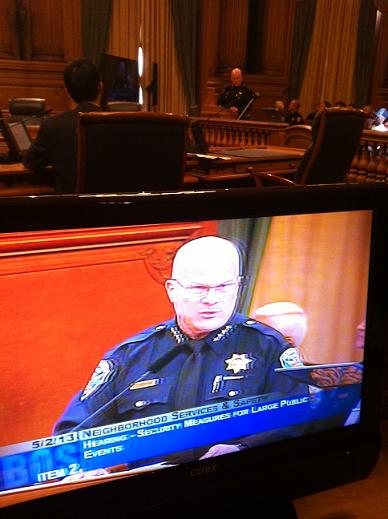
Police video surveillance was in the spotlight during yesterday’s City Hall hearing on security measures at large events, as supervisors voiced a desire to strike the right balance between security and civil liberties. And while they got some reassurance and small signs of restraint from the SFPD, they also learned about secretive new security measures that go beyond what the public was aware of.

San Francisco Police Chief Greg Suhr clarified misleading media reports (a Chronicle story then picked up by Associated Press) that he’s seeking real time video surveillance along Market Street. Right now, Suhr said he just wants an inventory of existing video cameras along Market and downtown that he can request footage from after a crime is committed and that he would make his case to the board if he ever wanted to go beyond that.

“Right now, we only look at footage in retrospect,” Suhr told the Neighborhood Services and Safety Committee hearing, adding that he has no objections to seeking a court warrant to obtain that footage because “we do want it to be admissible.”

Yet Suhr and Deputy Chief James Loftus also revealed that SFPD will be deploying an undisclosed number of temporary real-time video surveillance cameras atop long poles at the Bay to Breakers footrace on May 19, as it did last fall during the World Series and the big parade down Market Street celebrating the Giants victory.

“We always want more video,” Suhr told the Guardian, although he said that he also understands the civil liberties sensitivities of San Franciscans, which is why he isn’t now seeking a permanent increase in SFPD’s real time video surveillance capabilities. “I’m from San Francisco, I get it.”

Other security tools that the SFPD will be employing at Bay to Breakers and other large events are technology that uses video cameras on police cars to capture license plate numbers and run them through a DMV database, what Loftus vaguely described as “specialized resources from surrounding jurisdictions” (watch out for the drones, y’all), and unspecified “FBI assets [that] will be present and assisting in event security.”

When Sup. Eric Mar, who called the hearing, asked about those last two items, Loftus said he wouldn’t discuss them publicly, but “I could talk to you about it offline if you’d like.”

Sup. David Campos said that he doesn’t want San Francisco to be reactionary after incidents like the Boston Marathon bombing and that we should be a model city for balancing security with civil liberties: “I think that’s a very difficult balance to strike, but it anyone can strike that balance, I think San Francisco can.” He also expressed concerns about plans to ban backpacks at Bay to Breakers: “I don’t know if that’s going to address the problem.”

Loftus said the ban only applied to large backpacks (larger than 8.5x11x14 inches) and that runners and spectators will still be allowed to use small backpacks to hold water and changes of clothing. Yet for those concerned about the creeping police state, including several people who spoke during the public comment period, there was little consolation offered in the presentations, and the supervisors said this would be an important ongoing discussion.

“This is a discussion that goes beyond San Francisco,” Campos said. “We as a country need to have this discussion.”

Typhoid fever warning for Stonestown Nordstrom’s eaters

5

If you or someone you know ate at Nordstrom Cafe at Stonestown Galleria on April 16, 17, 18, 20, or 27, there is a risk of contracting typhoid fever — eek. A restaurant worker has been diagnosed with the infectious disease. Full press release and more info from the SF Department of Public Health below: 

Typhoid Fever in Restaurant Worker

Department of Public Health Issues Alert for Customers Who Ate at Nordstrom Café in Stonestown Galleria

San Francisco, CA—Officials at the San Francisco Department of Public
Health announced today that a local restaurant food handler was diagnosed
with typhoid fever.  The public health investigation is ongoing, but based
on current information, health officials believe the infectious disease was
acquired by the food handler during a trip outside of the United States.

Anyone who ate at the Nordstrom Cafe within the Nordstrom store in the
Stonestown Galleria in San Francisco on April 16, 17, 18, 20, or 27, 2013
may be at risk.  Health officials advise these individuals to see a
healthcare provider right away if they start to experience symptoms such as
fever, weakness, stomach pains, headache, nausea, vomiting, diarrhea, or
loss of appetite.  In some cases a rash of flat, rose-colored spots may
appear.  Symptoms usually begin within 8 to 14 days after exposure, but
could potentially appear for up to 30 days.

“Unfortunately, symptoms of typhoid fever can resemble other illnesses,”
said Tomás J. Aragón, MD, Health Officer for City & County of San
Francisco.  “Persons who are at risk because they dined at the Stonestown
Nordstrom Cafe on one of those dates should see a healthcare provider right
away if they are feeling unwell, and should tell their physician that they
may have been exposed to typhoid fever.  There is testing and effective
treatment available.  If you suspect you have typhoid fever, do not prepare
food or drink for anyone and do not care for young children, hospitalized
patients, or persons with weakened immune systems.”

Typhoid fever is an illness caused by the bacterium Salmonella enterica
serotype Typhi.  Although death is uncommon, typhoid fever can be severe
and life-threatening. In the United States, 300-400 cases of typhoid fever
occur each year, and most of those are acquired during international
travel. People are at risk of typhoid fever if they eat food or drink
beverages that have been handled by someone who has typhoid fever, or if
sewage contaminated with the bacteria gets into the water supply used for
drinking or food preparation. Typhoid fever is still common in the
developing world, where it affects about 22 million people and causes about
200,000 deaths.

The only way to know if an illness is typhoid fever is by testing samples
of stool, blood, and urine for the presence of Salmonella enterica serotype
Typhi.  Typhoid fever can be successfully treated with appropriate
antibiotics, and persons given antibiotics usually begin to feel better
within 2 to 3 days.  Although untreated typhoid can potentially be fatal,
deaths from typhoid fever are uncommon in the United States.  However,
persons with typhoid fever who do not get treatment can continue to have
fever and feel unwell for weeks or months. Even if their symptoms go away,
persons with typhoid fever may continue to pass typhoid bacteria to others,
and so they should not handle food or care for children, hospitalized
persons, or those with weakened immune systems until further testing proves
that typhoid bacteria are gone from the body.

Nordstrom at Stonestown Galleria is cooperating with the Department of
Public Health in the investigation to ensure that the public and their
workers are informed and protected.

For more information about typhoid fever, go to
http://www.cdc.gov/nczved/divisions/dfbmd/diseases/typhoid_fever/

‘Iron Man 3’ and everything else: new movies!

1

This week: the 56th San Francisco International Film Festival continues (our second week picks here); hippie cult doc The Source Family opens at the Roxie (my interview with the filmmakers, who were able to access vast amounts of archival footage shot by the group itself, here); and Iron Man 3 follows the exploits of Tony Stark, Lord of Winterfell. My review of that low-budget indie that you probably haven’t heard of below, plus more!
http://www.youtube.com/watch?v=JNMljhftcWY

At Any Price Growing up in rural Iowa very much in the shadow of his older brother, Dean Whipple (Zac Efron) cultivated a chip on his shoulder while dominating the figure 8 races at the local dirt track. When papa Henry (Dennis Quaid) — a keeping-up-appearances type, with secrets a-plenty lurking behind his good ol’ boy grin — realizes Dean is his best hope for keeping the family farm afloat, he launches a hail-mary attempt to salvage their relationship. This latest drama from acclaimed indie director Ramin Bahrani (2008’s Goodbye Solo) is his most ambitious to date, enfolding small-town family drama and stock-car scenes into a pointed commentary on modern agribusiness (Henry deals in GMO corn, and must grapple with the sinister corporate practices that go along with it). But the film never gels, particularly after an extreme, third-act plot twist is deployed to, um, hammer home the title — which refers to prices both monetary and spiritual. A solid supporting cast (Kim Dickens, Heather Graham, Clancy Brown, Red West, newcomer Maika Monroe) helps give the film some much-needed added weight as it veers toward melodrama. (1:45) (Cheryl Eddy)

Bert Stern: Original Mad Man Mad man, cad man: both describe photographer Bert Stern, famed for his groundbreaking vodka ads as well as his “Last Sitting” session with Marilyn Monroe (a series he recently re-created, rather regrettably, with Lindsay Lohan). Now in his 80s, he’s coaxed in front of the camera by longtime muse Shannah Laumeister; though their closeness (despite a 40-year age difference) means Bert Stern: Original Mad Man contains a few uncomfortably intimate moments, it also makes for some remarkably candid interviews. And what a life he’s had, melding his voracious appetite for women with a talent for capturing them in stunning, creatively innovative photographs. Though his parade of exes (including celebrated ballet dancer Allegra Kent) remember him with a certain amount of curled-lip disdain, his iconic work — 1959 documentary Jazz on a Summer’s Day, the poster for former co-worker Stanley Kubrick’s 1962 Lolita (those heart-shaped glasses? Stern’s idea) — speaks for itself. (1:50) (Cheryl Eddy)

Iron Man 3 Neither a sinister terrorist dubbed “the Mandarin” (Ben Kingsley) nor a spray-tanned mad scientist (Guy Pearce) are as formidable an enemy to Tony Stark (Robert Downey, Jr.) as Tony Stark himself, the mega-rich playboy last seen in 2012’s Avengers donning his Iron Man suit and thwarting alien destruction. It’s been rough since his big New York minute; he’s been suffering panic attacks and burying himself in his workshop, shutting out his live-in love (Gwyneth Paltrow) in favor of tinkering on an ever-expanding array of manned and un-manned supersuits. But duty, and personal growth, beckon when the above-mentioned villains start behaving very badly. With some help (but not much) from Don Cheadle’s War Machine — now known as “Iron Patriot” thanks to a much-mocked PR campaign — Stark does his saving-the-world routine again. If the plot fails to hit many fresh beats (a few delicious twists aside), the 3D special effects are suitably dazzling, the direction (by series newcomer Shane Black) is appropriately snappy, and Downey, Jr. again makes Stark one of the most charismatic superheros to ever grace the big screen. For now, at least, the continuing Avengers spin-off extravaganza seems justified. (2:06) (Cheryl Eddy)

Kon-Tiki This Best Foreign Language Film nominee from Norway dramatizes Thor Heyerdahl’s 1947 Kon-Tiki expedition. (1:58)

http://www.youtube.com/watch?v=7SQs2Y8drP8

The Reluctant Fundamentalist Based on Pakistani novelist Mohsin Hamid’s award-winning 2007 novel, and directed by the acclaimed Mira Nair (2001’s Monsoon Wedding, 2006’s The Namesake), The Reluctant Fundamentalist boasts an international cast (Kate Hudson, Martin Donovan, Kiefer Sutherland, Liev Schreiber, Om Puri) and nearly as many locations. British-Pakistani actor Riz Ahmed (2010’s Four Lions) stars as Changez Khan, a Princeton-educated professor who grants an interview with a reporter (Schreiber) after another prof at Lahore University — an American citizen — is taken hostage; their meeting grows more tense as the atmosphere around them becomes more charged. Most of the film unfolds as an extended flashback, as Changez recounts his years on Wall Street as a talented “soldier in [America’s] economic army,” with a brunette Hudson playing Erica, a photographer who becomes his NYC love interest. After 9/11, he begins to lose his lust for star-spangled yuppie success, and soon returns to his homeland to pursue a more meaningful cause. Though it’s mostly an earnest, soul-searching character study, The Reluctant Fundamentalist suddenly decides it wants to be a full-throttle political thriller in its last act; ultimately, it offers only superficial insight into what might inspire someone’s conversion to fundamentalism (one guess: Erica’s embarrassingly bad art installation, which could make anyone hate America). Still, Ahmed is a compelling lead. (2:08) (Cheryl Eddy)

Students celebrate SF resolution to divest from fossil fuels

Famed environmental writer and 350.org founder Bill McKibben wore a short-sleeved T-shirt as he stood on the steps of San Francisco City Hall this afternoon and addressed a crowd of energized student climate activists.

“It’s a pretty day here, but it’s a little warmer than it should be,” he remarked of the hot afternoon with temperatures creeping above 80 degrees F. “This is the hottest May 2 ever recorded in the city of San Francisco.”

McKibben was there to celebrate a recent victory for his organization’s fossil fuel divestment campaign, which came last week when the San Francisco Board of Supervisors voted to adopt a resolution by Sup. John Avalos urging the San Francisco Employee Retirement System to divest from companies that hold fossil fuel reserves.

McKibben’s organization, 350.org, has been urging colleges, universities and city governments across the country to enact similar measures. “This is pretty simple math. The math is, if you’re invested in the fossil fuel industry, then you are profiting from the wreckage of the climate,” McKibben said. You are making a bet that nothing will ever be done to stop or slow down climate change, because if anything ever is done, it will put those investments at risk. The perversity of that is stunning.”

Students across the country have organized campaigns to divest, borrowing a tactic from the anti-apartheid movement. Over the last couple days, “The students at the Rhode Island School of Design had gone and occupied their president’s office, because they were getting no attention to their demand for divestment,” McKibben noted. “And they dropped a banner out the window. And the banner said, ‘We may be art students, but we can still do the math.’”

He went on: “There’s no absolute guarantee that we’re going to win this fight. But I do know … that we’re at the very least going to fight. And fight hard.”

Sup. John Avalos also delivered comments at the rally. When he first contemplated introducing the resolution, “I thought, oh no, just another advisory measure that we’re going to do as a Board of Supervisors,” Avalos admitted, “but I also saw the real value of it. That if San Francisco could take a stand like this, it could have a real impact on all the other cities around the country.”

He added that the most compelling argument for divestment was that, “We know that we cannot take all of the fossil fuel out of the ground that those corporations are seeking. And eventually … they’ll be stranded assets that we’ll have no return on in the future.”

Asked after the rally whether he thought SFERS would indeed divest as a result of the nonbinding resolution, McKibben told the Bay Guardian, “I have no doubt that they will. … I think that that’s starting to happen all over the country, and I think people like Supervisor Avalos are serious about making sure that it’s for real. You know, in Washington we make rhetorical statements with nothing behind them, but hopefully in San Francisco,” things will turn out differently, he added.

Earlier in the day, Norm Nickels of SFERS noted that the resolution has not yet been added as an agenda item for the Retirement Board to take up, because it has not yet cleared the final hurdle for official Board of Supervisors approval.

The Performant: The real weekend warriors

Holding down the weekend of the weekend with the Dark Room Theatre’s “Ghostbusters: Live” and Har Mar Superstar

Among the true creatures of the night, Saturday Night has always been passé, amateur night if you will, when even the most accommodating of dive bars or clubs are suddenly jammed tight with lightweight dilettantes, whose allegiance to the night life is as superficial as it is truncated. But the real weekend has always begun on Thursday, straddling the line between Wednesday’s hump and Saturday’s slump, a connoisseur’s indulgence.

Though San Francisco is happily full of those who understand that Thursday is when the party starts, any number of theatres can still attest that packing the house on that particular evening can be a tricky prospect, a trend I can attest to from the personal experience of having attended many a Thursday show where the actors outnumbered the oddience. Awkward. Which made entering the oversold, packed to the rafters performance of “Ghostbusters: Live”! at the Dark Room Theatre that much more refreshing. This is one Mission Street outpost that has thus far ably resisted the siren song of gentrification and co-option, and remains a place where silly good fun can be had for the price of cheap, with an additional calendar of ten p.m. comedy shows that caters specifically to the committed night owl crowd.

“Ghostbusters: Live” was a perfect example of the Dark Room aesthetic from start to finish, one which other no-budget production companies would do well to take note of. Eschewing a set, which would really just impede the action on the tiny, 12’ x 8’ stage, but expending just enough effort on costuming, lights, and sound to support the storyline and bolster the humor, “Ghostbusters: Live!” opened with the three researchers (played by Adam Curry, Tim Kay, and Thomas Apley) looking for signs of a haunting in the public library, the best lines about great sponge migrations, family psychosis, and menstruation left intact. With clever puppetry standing in for any number of ghostly apparitions, and a strong supporting cast including Adam Vogel as a pitch-perfect Louis Tully, and Alexia Staniotes as the acerbic Janine Melnitz, “Ghostbusters: Live!” managed to capture both the essence of the movie it was sending up and the heady geist of a Thursday night out on the town, framing the possibilities for the rest of the weekend to come.

If Thursday Night is the prelude to the weekend, then Sunday night is its final salute, and the true testing ground of the dedicated denizens of the dark. Which made it perhaps the perfect day of the week for the rarified talent that is Har Mar Superstar to perform. True, the tough sell that is Sunday night kept the crowd at the Bottom of the Hill from swelling to the epic proportions you might expect for a performer of his caliber, but wasn’t that just more elbow room for the rest of us?

Often compared to the lovably schlubby porn star Ron Jeremy, the Bay Area celebrity Sean Tillmann most closely resembles is Josh Kornbluth, although Tillman’s a whole lot more exhibitionistic. His alter-ego’s double-entendre filled lyrics, funky dance moves, catchy hooks, and unabashed libido combine into a stage persona of pure sweaty id, while his true weapon, a silkily soulful croon, tongue-bathes the oddience in its liquid smooth. While a lot of his songs skew towards the humorous, including the trashy-pop “Tall Boy” and his boy-band ode to “the male camel-toe” “Almond Joy,” when Har Mar gets serious he wields an epic howl such as when he turns on the retro-soul for “Lady, You Shot Me” and further unleashes his formidable upper register on “Sunshine.”

And while there was some initial trepidation on the part of the crowd, perhaps fearful of the unpredictable intentions of the lascivious songster, by the end everyone was getting into the spirit of the moment, rubbing Tillman’s proudly bared belly for luck, swapping saliva, getting down. Rounding out the set with a literally stripped-down (to the briefs) acapella version of “It’s So Hard to Say Goodbye to Yesterday” provided the appropriate closure for the weekend’s last hurrah, and set the mood for all the weekends to come, the sunshine and the rain.    


Guest opinion: LGBT supporters of Bradley Manning

33

Editor’s note: At least 24 LGBT community leaders and activists have signed on to the following statement in support of Bradley Manning as a Pride grand marshal.

Recently, it was announced that PFC Bradley Manning would be a grand marshal of the 2013 San Francisco Pride Celebration. We felt this decision was a bold and uplifting choice, bestowing a great honor on a young whistleblower being persecuted for following his conscience.

Much to our disappointment, two days later SF Pride board president Lisa Williams issued a separate announcement that the SF Pride board would not be honoring PFC Manning as a grand marshal after all.  It appears the SF pride board’s reversal was affected by criticism from a recently formed gay military rights group. 

We want the world to know that the SF Pride board’s decision is not reflective of the LGBTQ community as a whole, and that many of us proudly celebrate PFC Manning as a member of our community.  Unfortunately, the statements by Williams, and the group which originally advocated against PFC Manning as grand marshal, continue to perpetuate certain factual inaccuracies with regards to the military prosecution against him. 

The first inaccuracy would be that PFC Manning did not advocate for gay rights.  In fact, while serving in the military, PFC Manning experienced harassment and physical assault because of his perceived sexuality.  He responded by marching against Don’t Ask Don’t Tell in the DC pride parade, where he spoke to reporters about his position, in addition to attending a fundraiser with Gavin Newsom and the Stonewall Democrats so he could discuss the issue of homophobia in the military.  He told a friend in February of 2009 that his experience living under DADT and experiencing the oppression that entailed helped increase his interest in politics more generally.

LGBTQ activists fought hard for years to win the right to live free from the fear that we could be targeted with violence deemed acceptable to society at large, simply for being who we are.  We members of the LGBTQ community would like to stand in solidarity with others around the world who still must live in fear of violence and oppression, simply for being born into a particular group.

Contrary to SF Pride Board president Lisa Williams’s claim, no evidence has been presented that PFC Manning’s actions endangered fellow soldiers or civilians. In fact, the military prosecution has successfully argued in court that it isn’t required to provide such evidence, and former State Department spokesperson P.J. Crowley continues to insist that the “Aiding the enemy” charge is unwarranted. 

In a February 28, 2013, court statement, PFC Manning detailed the due diligence he performed prior to releasing materials to ensure this lack of harm, in addition to explaining,

“I believed the detailed analysis of the [Iraq and Afghanistan war log] data over a long period of time by different sectors of society might cause society to reevaluate the need or even the desire to even to engage in counterterrorism and counterinsurgency operations that ignore the complex dynamics of the people living in the affected environment every day.”

The truth is that President Bush and VP Cheney’s aggressive wars in the Middle East endangered far more LGBTQ service members and civilians than any Army whistle-blower.  Unlike PFC Manning, however, they have never served prison time, and likely never will.

Millions of people around the world support Bradley for the personal risk he took in sharing realities of complicated U.S. foreign conflicts with the American people.  He is the only gay U.S. serviceperson to be nominated three times for the Nobel Peace Prize.  In joining the Army, soldiers take an oath to protect the U.S. Constitution, and we believe that by his actions PFC Manning strengthened our democracy, and fulfilled that oath to a greater degree than most enlisted.

We are proud to embrace PFC Bradley Manning as one of our icons, and intend to march for him in pride contingents across the country this year, as we have in years past.  We think Bradley Manning sets a high standard for what a U.S. serviceperson, gay or straight, can be.

Lt. Dan Choi, 2009 SF Pride Celebrity Grand Marshal, anti-DADT activist
Joey Cain, 2008 SF Pride Community Grand Marshal, former Board Member and President of SF Pride
Gary Virginia, 2012 SF Pride Community Grand Marshal
John Caldera, Commander, Bob Basker Post 315ED, American Legion, SF Veterans For Peace
Peter Tatchell, Peter Tatchell Foundation
Glenn Greenwald, award-winning journalist
Leslie Feinberg, transgender author and activist
Minnie Bruce Pratt, award-winning poet, activist and educator
Dossie Easton, Therapist and Author
Susie Bright, public speaker, educator, writer
Andy Thayer, co-founder, Gay Liberation Network
Becca von Behren, Staff Attorney, Swords to Plowshares Veterans Service Organization
Stephen Eagle Funk, Artistic Director, Veteran Artists
Liz Henry, poet and activist
Lori Selke, author and activist
Rainey Reitman, Steering Committee, Bradley Manning Support Network
Sergei Kostin, Codepink Art Director
Kit Yan, Queer & Trans Asian American Poet
Lori Hurlebaus, Civilian-Soldier Alliance, SF Chapter; Co-founder, Courage to Resist
Evan Greer, radical queer riotfolk musician
Pat Humphries, Emma’s Revolution
Sandy Opatow, Emma’s Revolution
Pamela Means, award-winning OUT musician
Malachy Kilbride, Coordinating Committee, National Campaign for Nonviolent Resistance
Oliver Shykles, Queer Friends of Bradley Manning
Gabriel Conaway, equality activist, Steering Committee of SAME
Adele Carpenter, Civilian-Soldier Alliance, SF Chapter

Aquarius rising

0

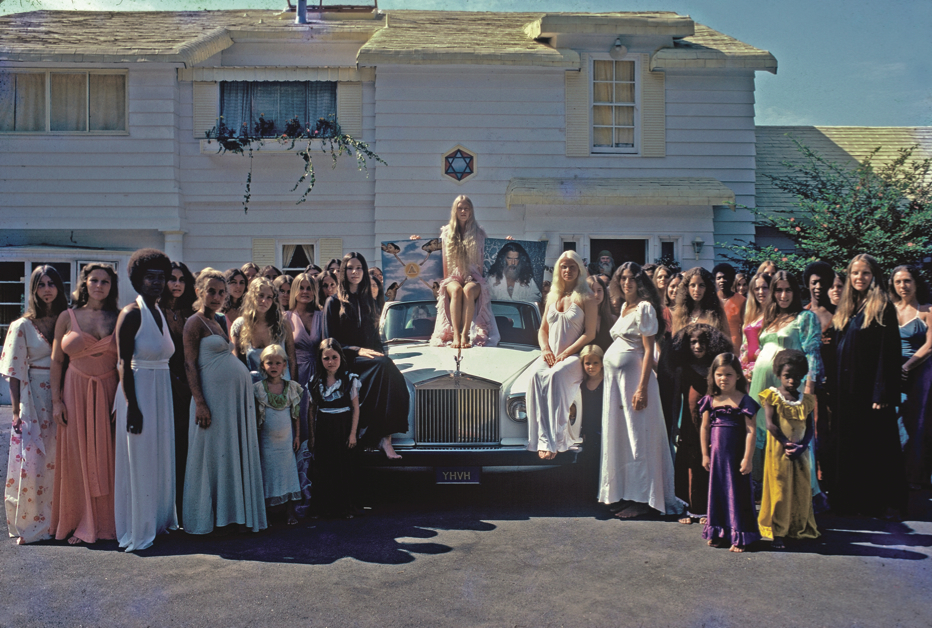
FILM Under the guidance of charismatic, luxuriously-bearded leader Father Yod (once named Jim Baker, later known as YaHoWha), the Source Family operated one of the country’s first health food restaurants. They lived in a Hollywood Hills mansion, wore flowing robes, assumed dreamy new names, meditated, and studied Father Yod’s custom blend of Eastern and Western philosophy and mysticism.

As the home movies that comprise Maria Demopoulos and Jodi Wille’s documentary, The Source Family, suggest, there were golden moments aplenty, even as the mainstream began to view the group with suspicion (and an aging Father Yod’s decision to take multiple wives confused some members — particularly the woman he was already legally married to). Tapping into the group’s extensive film and music archives, as well as interviews with surviving members, The Source Family (opening here with a big gala Thu/2 and running through May 9 at the Roxie) offers a captivating look at what had to be the most earnest (and most photogenic) cult of the 1970s. I spoke with Demopoulos and Wille to learn more.

San Francisco Bay Guardian When did you first hear about the Source Family, and how did you hook up with “Family historian” Isis Aquarian?

Jodi Wille In 1999, a friend showed me a CD box set with all nine of the original Family records. I’d been obsessed with cults, communes, and radical groups from the 1960s and ’70s for 20 years — but I’d never heard of the Source Family. I was shocked that this existed, and that they had this kind of musical output. Also, there were pictures of them looking very beautiful and stylish. But I went online and there was nothing there [about them].

One day, my then-husband, [Feral House publisher] Adam Parfrey, came home with a DVD he’d found at Amoeba Records: a very limited-release student film on the Source Family. We watched it, and I was struck by how thoughtful and charming the Family members were in the interviews.

I went online again, and this time there was a website. I’m a book publisher, too — I put out books on counterculture, sustainability, and things like that [on Process Media and Dilettante Press] — so I emailed, asking if they’d ever considered doing a book. Isis Aquarian wrote back and said [she and her Source Family brother Electricity] had been working on a book for seven years. So I started going through her massive archives with her; we worked to expand the book, which had been written for Family members, for the public. As we were doing that, we were filming interviews with other Family members. When Isis let me know about the film component to her archive, I realized that this was an extraordinary story that had all of the elements we would need for a great documentary.

At that point, I brought in Maria, a close friend of mine who had become a very talented commercial director. Before the book, [The Source: The Untold Story of Father Yod, Ya Ho Wa 13, and The Source Family], people were really private about their experiences, and I think some of them were uncomfortable about going public. But the book was received positively; it told the story from the believers’ point of view and I think that helped develop their trust. So we were very lucky to get incredible access.

SFBG You were friends with Isis, who’s credited as an associate producer, by the time you started working on the film — yet it offers a balanced portrait. How did you stay objective?

JW Isis has done an enormous amount of work helping us in many ways, but she was not involved creatively. That was really important to us, to have that freedom, and she agreed to that. But I became close to some Family members, so I think bringing Maria in was really essential to help with the balance.

Maria Demopoulos I think, objectivity aside, we just focused on letting the Family members speak for themselves, and trying to go for as much authenticity as possible, hearing all perspectives. We worked hard to represent as many Family members as possible and really tell the story from an insider’s point of view.

JW We tried to reflect the overall feelings that we were getting from Family members, because everyone had completely different experiences within the Family, and everybody had strong opinions about it.

And it’s not really about being objective — no filmmaker or documentary is ever truly objective. It’s just about being open and letting people come to their own conclusions.

SFBG Since you had access to all of that footage, what was the editing process like?

MD It was extremely difficult, but honestly, we hit the jackpot. It was just like an incredible gift and honor to go through the archive. We had a three-and-a-half-hour cut, and we just kept whittling it down. Often times, we just had to stay focused; even if we had some fantastic footage, if it didn’t absolutely serve the story, we had to pull it out. It was difficult, but that’s actually a great problem to have.

JW And I’d like to give credit to Isis Aquarian for preserving that archive. There were hundreds or maybe thousands of groups like this that existed. But most of them didn’t document themselves, or if they did, they didn’t hold on to the artifacts or preserve the documents. She’s a true documentarian, even now.

SFBG Did you encounter any resistance from former members, or anyone who thought the documentary shouldn’t be made?

MD From the Family members’ perspective, no. They were extremely cooperative. [On the other hand,] since the Source Family existed in Hollywood, they had many connection to celebrities. We approached a lot of celebrities who were around at that time, and we had a tough time getting access to them.

JW The Source Family members all knew about the book, and they knew that people in their 20s and 30s had become fans of the Family. So I think that made them a lot more open to talking to us. But as far as people like Warren Beatty and Donald Sutherland, who were actually friends with Father Yod, I don’t think they were aware of that phenomenon. They were still thinking about how the Source Family was perceived with a lot of controversy back in the ’70s. I think it’s possible that those people, besides being really busy, weren’t quite sure what we were doing with the material, or if they wanted to associate themselves with it.

SFBG Also, now that decades have passed, when people hear “Southern California cult” and “the Family,” they automatically think “Manson.”

JW For me, that was an important inspiration to make this film. Again, when you speak with the participants, or even with scholars, you find it’s a very different story. We have such a primitive understanding of what these radical, social, and spiritual experiments were really doing back in the 1960s and ’70s, and the kinds of effects that they were having on the participants’ lives.

Maria and I interviewed about 40 of them just for The Source Family, and I’ve gotten to know members of other groups over the years. I find that these groups, more often than not, were very important cultural incubators. A lot of progressive ideas came from them, including the slow food movement, the mind-body-spirit movement, the natural birthing movement. A lot of tech-industry people came from these experiments — San Francisco was a hotbed for them. And many of them were harmless. They didn’t create any major havoc. They were high-risk experiments, of course, but a lot of what people took away was deep and transformative.

SFBG Music plays a huge part in the film, and again, you had a lot of material to choose from. How did you decide which songs to match with the footage?

JW I knew the music really well, and then our editor, Jennifer Harrington, did an incredible job working with the music, and Maria pitched in, too. We did it by knowing the music and thinking about the mood, and just playing with stuff to see what fit.

MD We often chose songs that actually lyrically fit with what was happening in that particular scene. The music was incredibly well-suited to what was happening, because they’re basically singing their own story.

SFBG I missed The Source Family when it played the San Francisco International Film Festival last year, but I heard the Q&A got pretty colorful. How have screenings been going overall?

MD Response has been great. We’ve been selling out shows, and the Q&As have been very lively. A lot of people who participated in social experiments or lived in communes have been coming to the Q&As, but we’ve been getting a lot of younger kids as well. It’s been intergenerational.

JW That was the fun part in San Francisco, because there were two or three people in the audience who were in different communities who spoke up during the Q&A, and it became this really interesting group therapy session. And it’s not about us saying, “Oh, it was this way.” It’s us opening up new ideas so people can have new discussions about what was really going on back then.

SFBG What’s the opening event going to be like?

JW For the various premieres, we have Source Family members showing up to do Q&As in eight cities. We’ve got three in San Francisco: Isis, Electricity, and Galaxy — who was the fashion designer in the family. Also at the Roxie, we’re going to have food made from original Source Family recipes.

We’ll also have tribute bands in six cities. In San Francisco, after the screening, the Source Family tribute band is going to be playing at the Chapel [at 777 Valencia] — they’re called the Penetration Blues Band, with Michael Beach from Electric Jellyfish and Colossal Yes, Noel von Harmonson from Comets On Fire and Sic Alps, [and others]. It’s going to be a really fun night! *

THE SOURCE FAMILY

Opening event Thu/2, 7pm (complete experience with food, film, and concert, $40; film only, $10; concert only, $15)

Film runs May 3-9, 7:15 and 9:30pm (also Sat/4-Sun/5, 2:45pm), $6.50–$10

Roxie

3117 16th St., SF

www.roxie.com

May Day rally for immigration reform in SF

Hundreds gathered for a rally outside San Francisco City Hall on May 1, capping off a march that drew activists into the streets to commemorate International Workers Day. The events were organized by a broad coalition of immigrant rights advocates to call for improvements to the recently unveiled proposal for federal immigration reform, which will go before the Senate Judiciary Committee next week. [More photos after the jump]

Olga Miranda of SEIU Local 87, the San Francisco Janitors Union, addressed the crowd. “I want to be able to recognize sheet metal workers, carpenters, laborers, hospital workers, housekeepers, domestic workers,” she said. “We are a proud economy. … All we want is for workers to be able to come out of the dark. We want to make sure that we are not exploited for the color of our skin, that we are not pushed into the darkness. We are Chinese, we are Arabic, we are Filipino, we are gay, we are transgender. We are workers! And comprehensive immigration reform needs to be inclusive.”

Activists from Causa Justa / Just Cause led the crowd in a unity chant in five different languages.


Putri Siti, an undocumented student from Indonesia, shared the story of when she and her family thought they might face deportation. “I am more than just an illegal. I am more than just undocumented. I’m a student. I’m a dancer. It doesn’t matter what paper I have. And now, I am proud to say, that I am undocumented, unafraid, unashamed,”  she said.


SFMTA chief hopes to calm the parking meter furor at supervisorial hearing

64

San Francisco Municipal Transportation Agency director Ed Reiskin faces a tough challenge tomorrow (Thu/2) at the Board of Supervisors Neighborhood Services and Safety hearing that Sup. Mark Farrell has called on expanding parking meters into new neighborhoods, where Reiskin is expected to face a hornet’s nest of SFMTA critics stirred up by the loss of free street parking and perceptions that the agency is mismanaging public spaces and transit. [UPDATE: Read what happened here.]

Reiskin needs to quell some of the anger that is erupting in the northeast Mission District, Potrero Hill, and other areas slated for new meters enough to prevent increased supervisorial intervention into his independent agency and ensure a transit improvement bond measure planned for next year has a chance of passing – which the agency desperately needs to make improvements to Muni.

“We appreciate the opportunity to share information on how we’re trying to create more parking availability and ease congestion,” SFMTA spokesperson Paul Rose told us.

Jay Primus, who manages the SF Park variable price meter program for the SFMTA, told us he’s seen the presentation that Reiskin will be giving and finds it compelling, even though he knows better than anyone that, as Primus said, “Parking is always a difficult subject, particularly in an area as dense as San Francisco.”

It’s hard to imagine what might satisfy the SFMTA’s staunchest critics, who have created websites blasting and lampooning the agency’s every action and formed opposition groups that use militant rhetoric.

Mary Eliza is the spokesperson for Eastern Neighborhoods United Front, which has whipped up critics of the parking plans with calls to “FILL THE HALL. Raise your flag and wear your colors.” Speaking to the Guardian, she cited a litany of complaints and deep, conspiratorial suspicion of the SFMTA and its agenda, which is why she said critics have appealed to the supervisors.

“We’re not dealing much with the MTA anymore, we’re dealing with the supervisors because we think it’s our best chance to get anything accomplished,” Eliza told us.

They seem to have found a sympathetic audience with Farrell, a conservative from the westside, where pro-car ideologies are strongest. “Even as a transit first city, San Franciscans deserve to have reasonable parking situations in their neighborhoods. With plans under discussion to expand SFMTA’s number of parking meters citywide, every potentially affected neighborhood deserves to have extensive input into and thorough understanding of SFMTA’s upcoming plan,” Farrell wrote in calling for the hearing.

Primus said the SFMTA does try to be responsive to community concerns, noting that when its plans for new meters in the northeast Mission, Potrero Hill, and Mission Bay ran into strong community opposition in 2011, officials delayed the plans to gather more data and do more community outreach, separate the proposals, and remove them from the SF Park pilot program.

They are now finishing work on the Mission plan, which should come out this summer, after they do more work on solving issues raised by car repair and other light industrial businesses. But Primus said parking scarcity and good transit access in the area make it “an area where good parking management is all the more important.”

Then comes Potrero Hill, where the anti-meter furor appears to be strongest. But with increased development planned for the area, Primus noted that the community and Board of Supervisors have already called for more active parking management by the SFMTA: “All these parking policies were called for in the Eastern Neighborhoods plan, so it was already approved by the supervisors.”

Assembly committee OKs moratorium on fracking in California

Three bills seeking to impose moratoriums on fracking in California won approval at the California Assembly Natural Resources Committee in Sacramento on April 29, an important milestone for environmentalists who ultimately plan to push for a permanent ban on the practice.

Assembly Bill 1301, introduced by Assembly Member Richard Bloom (D-Santa Monica), is backed by a host of statewide environmental organizations including the Center for Biological Diversity, Food & Water Watch, and Clean Water Action. That bill and AB 1323, similar legislation sponsored by Holly Mitchell of Culver City, seek to halt the controversial oil-and-gas extraction method in California until possible health and environmental impacts have been adequately reviewed.

“It’s an important step,” notes Adam Scow, California campaigns director for Food & Water Watch in San Francisco. “In theory, the quickest timeline the bill could pass is [sometime] this year.” He added, “Gov. Jerry Brown has the power to issue a moratorium now,” but “Brown is repeating industry talking points that fracking can be done safely.”

A third bill, AB 649, would create moratoriums on fracking only nearby sensitive sites such as aquifers or agricultural lands, but that proposal received less support from fracking opponents who believe it should be subjected to a blanket moratorium and ultimately banned. All three bills won approval from the Natural Resources Committee, and are now headed for the Assembly Appropriations Committee.

Short for hydraulic fracturing, fracking is an oil and gas extraction method that utilizes high-pressure water and toxic chemicals to fracture shale deep underground. It’s prompted fierce opposition in New York, Pennsylvania and throughout western states, where fears about groundwater contamination and long-term ecological impacts are growing as the practice is more widely adopted.

“It uses huge amounts of water,” Wenonah Hauter, executive director of Food & Water Watch, told the Bay Guardian in an interview. “It pollutes the water with chemicals that don’t even have to be disclosed, and the wastewater either stays underground and we don’t really know what happens to it, or it has to be disposed of through injection wells that are associated with earthquakes.”

And yet, powerful momentum is building in the petroleum industry around oil extraction from the Monterey Shale, a geologic formation estimated to contain 15 billion barrels of oil that would have been inaccessible but for technological advancements in fracking. The Western States Petroleum Association, a powerful industry lobby, placed the vast California fossil fuel reserve in the crosshairs in a mid-March report, along with the outright giddy pronouncement that “this oil, if prudently and safely developed, could dramatically change our state’s energy security picture for decades to come and usher in an era of unprecedented prosperity.”

All of which amounts to stringent opposition to bills that would impose a moratorium until health and environmental impacts can be carefully evaluated. According to this article in High Country News, that industry association spent $8.5 million last year lobbying state government.

While things still hang in the balance in California as far as fracking is concerned, the mad dash for shale oil has already transformed vast swaths of rural landscape in North Dakota, where oil production has shot up dramatically in recent years. According to a study released by the Western Organization of Resource Councils, fracking and other oil and gas extraction practices result in the permanent removal of seven billion gallons of water from the hydrologic cycle each year in North Dakota, Montana, Wyoming, and Colorado.

Teachers try to dis-accredit accreditation group

14

The union representing teachers at San Francisco City College have fired back at the accreditation commission that’s threatened to shut the school down and forced dramatic changes in its mission. The California Federation of Teachers and AFT Local 2121 filed a legal complaint May 1 charging the Accrediting Commission for Community and Junior Colleges with violating its own rules and federal law — and the complaint asks the federal Department of Education to withdraw the accreditation of the accreditation commission.

The language of the 260-page complaint is harsh:

The Commission has violated nearly every Federal regulation which guides it, disregards its own policies, misrepresents
its actions or legal requirements, fails to respect the law and public policy of the State,violates Federal common law due process and California common law fir procedure, and acts arbitrarily, capaciously, unfairly and inconsistently in evaluating colleges and
districts throughout the State, thereby harming colleges, students, faculty and staff, boards of trustees and ultimately the People.

But in the end, union members on a conference call noted, the big issue is whether the ACCJC ought to be evaluating classroom instruction and offering constructive criticisms (which is what these panels have tended to do in the past) — or ought to be looking at overall college finances, including retirement costs and management structure.

For example, the ACCJC wants City College to pre-fund some of its retiree health-care benefits — diverting money that could be used right now in classrooms. “Accreditation agencies shouldn’t be looking at [those types of] finances,” union spokesperson Fred Glass said.

Alisa Messer, president of the Local 2121, said that the commission’s threat to withdraw accreditation from City College “has thrown the college into turmoil,” which is hardly news. Jim Mahler, president of the CFT Community College Council, took the broader view, saying that schools are now so afraid of the ACCJC that they’re spending disproportionate amounts of money and time just trying to please the agency.

CFT President Joshua Pechthalt said the goal of the legal filing was to get the ACCJC to withdraw its “show cause” order at City College — and the change the overall approach the accreditors are taking. “No other body operates like this,” he said. The Department of Education has to accredit the accreditors, and the ACCJC comes up for review this year — so in a sense, the unions want to put the oversight agency under the same type of scrutiny the schools are enduring.

So far, no response from ACCJC.

UPDATE: ACCJC posted the following on its website:

While we understand there is interest in obtaining information in this regard directly from the ACCJC,
the Commission will maintain its normal practice of reviewing third party comment and communicating
about that comment directly to the affected member institution. Further, complaints against the ACCJC
are treated formally, in accordance with policy; comment from the organization or its officers is limited
during this time.


Scenes from the struggle for economic justice

9

Hacking Oakland’s budget

Sporting trucker hats, nose rings, and in activist Shawn McDougal’s case, a white tee with “Revolutionary” printed across the front in simple black lettering, the young, energetic activists assembled at Sudo Room, an Oakland hacker space, come across as unlikely ballot-initiative proponents. Nevertheless, in a few short weeks, the all-volunteer Community Democracy Project crew intends to hit the pavement and begin collecting signatures for a measure to introduce “participatory budgeting” to Oakland city government.

Their objective is to set up a kind of direct democracy system for hashing out the city’s discretionary spending. The proposal would create a charter amendment and a new Oakland city department to reconfigure the politically contentious budget allocation process, by “shifting accountability in a way that more people are able to engage,” says organizer Sonya Rifkin.

The proposal envisions convening democratic “neighborhood assemblies,” each of which would represent roughly 4,000 Oaklanders. Any resident age 16 or older would be free to attend meetings and vote on NA proposals. The NA proposals would then be forwarded onto citywide committees and synthesized as proposals for the ballot, whereupon the electorate would have the final say.

For the Community Democracy Project organizers, who mostly became acquainted through Occupy Oakland, the radical concept is just as much about achieving equitable budget allocation as it is about stoking the embers of community building. To place it on Oakland’s city ballot, the ambitious campaigners hope to collect 40,000 signatures in the next six months.

It’s a tall order, yet the activists appear undaunted. It’s a movement, McDougal says, comprised of “regular people, realizing that they don’t have to be spectators. They can be participants.” (Rebecca Bowe)

Solidarity with Bangladeshi sweatshop workers

News of a Bangladesh factory collapse last week that killed hundreds of low-wage workers reached San Francisco just as labor organizers were preparing to rally for stronger safety measures in overseas sweatshops.

Last November, a fire broke out in the Tarzeen Fashions factory in Bangladesh, killing 112 employees who produced garments for Walmart and other retailers. Sumi Abedin, a 24-year-old garment worker who earned about $62 a month working 11-hour days, six days a week, survived the blaze.

Through a translator, Abedin told reporters, “We were trying to exit through the staircase, and then we saw a lot of burned bodies, injured bodies. And I jumped through a third floor window because I thought, instead of being burned alive, even if I die, my mother will get my body.”

Abedin was standing outside San Francisco’s Gap headquarters, flanked by Bay Area activists from Jobs with Justice, Unite HERE, Our Walmart, and others. They were there to call on the popular retailer to sign a fire-safety agreement to implement renovations, at an estimated cost of about 10 cents per garment. In a statement, Gap noted that it had implemented its own four-point plan “to improve fire safety at the selected factories that produce our products.”

Gap had no direct connection with the Tarzeen Fashions blaze that Abedin narrowly escaped. Yet Bangladesh Center for Worker Solidarity organizer Kalpona Akter explained that the campaign was targeting Gap because “they’re saying they have corporate social responsibility,” yet have refused to sign onto the worker-sanctioned, legally binding fire safety agreement endorsed by BCWS, which brands such as Tommy Hilfiger and German retailer Tchibo have committed to. “This is one appropriate thing Gap can do in this moment,” Akter said, “if they really wanted to prevent this death toll in other parts of the world.” (Bowe)

Making job-training programs actually work

The phrase “welfare” may conjure up the image of a couch potato catching up on daytime soaps while the checks roll in, but Karl Kramer of the San Francisco Living Wage Coalition says it’s simply not the case — some people are not only working to earn those meager checks, they’re faced with few options once their participation in such programs comes to an end.

In San Francisco, many recipients of public assistance are part of the local Community Jobs Program, designed to provide unemployed people with on-the-job experience to help them land on their feet after six months. In practice, however, “it’s not happening,” Kramer says. “They’re dead-end programs. People aren’t moving onto jobs, and at the end of the Community Jobs program, they’re cut off completely.”

Part of the problem is that few pathways exist to connect the workers with actual paid gigs once they’ve finished. So the Living Wage Coalition is pushing for legislation that would improve and expand upon the Community Jobs Program, by raising the wage rate from $11.03 to $12.43 per hour, giving participants the option of working 40 hours a week, extending the program from six months to one year to square with eligibility requirements for many job listings, and creating an advisory committee to facilitate entry-level job creation in city departments.

“There has not been political will to really make these programs successful,” Kramer notes. And in the meantime, “people don’t connect it with why there’s such a growth of homeless families” in San Francisco. (Bowe)

Basic rights for domestic workers

The California Domestic Workers Bill of Rights would apply basic federal labor protections (such as a minimum wage, the right to breaks, and basic workplace safety standards) to domestic workers. If it becomes law, credit will go in part to its author, Assemblymember Tom Ammiano, but also to the California Domestic Workers Coalition, which has been pushing the issue for years.

Supporters of the bill say it’s unconscionable that domestic workers — the people who care for our children and grandparents and tend our homes — are one of just two occupations exempt from the Fair Labor Standards Act of 1938, the other being farm workers (another profession with a well-documented history of labor abuses, and also one comprised largely of unpaid immigrants). “We need to have protections for the people who do really important work,” Katie Joaquin, campaign coordinator for the coalition, told the Guardian.

As we reported recently (“Do We Care?,” 3/26/13), Gov. Jerry Brown vetoed the measure last year after it was overwhelmingly approved by the Legislature, expressing the paternalistic concern that it may reduce wages or hours of domestic workers. But its supporters have come back stronger than ever this year. Now know as Assembly Bill 241, the measure cleared the Assembly Labor Committee on a 5-2 vote on April 24 and it now awaits action by the Assembly Appropriations Committee. They say this bill, which New York approved in 2010, is a key step toward valuing caregiving and other undervalued work traditionally performed by women. (Steven T. Jones)

Debt peons, unite!

49

rebecca@sfbg.com

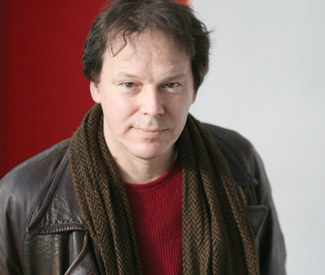
David Graeber is renowned among occupiers and idealists as an intellectual founder, or anti-leader as it were, of the Occupy Wall Street encampment that sprung up in Zucotti Park in the fall of 2011. He’s an organizer, an anarchist, a professor of anthropology and sociology at Goldsmiths University of London, a former instructor at Yale, and the author of several books, including Debt: The First 5,000 Years, a tome tracing the concept of debt back to the roots of Western civilization.

His latest book, The Democracy Project: A History, a Crisis, a Movement (Spiegel & Grau, 2013), chronicles the rise of Occupy, a leaderless economic justice movement Graeber unapologetically characterizes as a success. In honor of International Workers Day, May 1, the Bay Guardian caught up with him over coffee to talk about economic pressures facing today’s workers, particularly the young and marginalized.

Turns out, it’s not a pretty picture out there — but at least Graeber, who has a propensity to collapse into giggles between full throttle ruminations on the absurdity of global economic policy, has a sense of humor about it.

Below are some excerpts.

San Francisco Bay Guardian: Looking at the Occupy movement, the mainstream narrative seems to be that it was a short-lived, failed experiment and now it’s over. But in your book, you ask the question ‘why did it work?’

David Graeber: Let’s put it this way. When was the last time that the issue of social class was put at the center of American politics? Probably the 1930s. Social movements have been desperately trying to do this for 50, 60, 70 years and gotten nowhere. We managed to do it in three months. Um, that’s pretty impressive. … And I’m pretty sure that if it weren’t for us, we’d have a President Romney right now. That whole 47 percent thing? It would not have resonated had it not been for the 99 percent thing.

SFBG: Why do you think the idea of wealth inequality, of all issues, resonated so much?

DG: I think because there’s a basic change in the way capitalism works in America. It’s been going for some time, but it just became unmistakably apparent after 2008. People talk about the “financialization” of capitalism, and it sounds very abstract. Casino capitalism, speculation, they’re playing these games, they’re making money appear out of thin air, which is not entirely untrue. … It’s based on getting everybody into debt. The profits of Wall Street are — they now say a very small percentage is actually based on commerce — it’s now based on finance. But what does ‘based on finance’ actually mean? It means they go into your bank account and take your money.

I’ve been trying to figure out just what percentage of the average American’s income is simply extracted every month by the finance sector. …You count mortgages, you count credit card debt, loan debt, all the fees and penalties that you don’t notice… all that stuff put together comes to about 20 percent at least, and probably higher. For example, families that are in their early 30s, it’s often 40 percent. … I saw a poll the other day that said, for the first time since they’ve been taking statistics, a majority of Americans don’t consider themselves middle class. … And I think the reason for this is because it really never was an economic category. It has to do with how you feel you relate to basic institutions. What middle class first and foremost means is, if you see a policeman, do you feel safer, or do you feel less safe? … Then there’s more going on. For the first time, we found that there is incredible solidarity between students and workers, which have traditionally not been friends — go back to the 60s and it’s hard-hats beating up hippies. Now, the transit workers in New York are suing the police over taking their buses to arrest us [occupiers].

SFBG: How would you reflect on the economic condition that workers are facing, compared with how things were historically over the last several decades?

DG: It’s atrocious. One thing that’s happened is there’s been this disconnect between productivity and wages. This is kind of the deal they struck at the end of World War II in most of the North Atlantic countries: It used to be that you work harder, you produce more, you get a share of the profits. And that was worked out through mass unionization, it was worked out through negotiations, and it was tacit somewhat, but you know, it was understood.

Since the ’70s, that deal is off. So, productivity goes up, wages stay flat. So that’s why they say all profits have now gone to one percent of the population. So workers are working harder and harder, more and more hours, under more and more stress. …It’s all the more difficult because of education, because now it’s gotten to the point where if you don’t have a college degree, your chance of having any benefits at work is basically nil. If you want to have health care, you need to go to college. At the same time, if you want to go to college, you need to pay student loans. So you’re double damned. … You have all these people who are sort of trapped: I’d like to finish, I’m still going, I’ll take night classes — for five or ten years, while you have a working class job. So the line between the students and the proletariat blurs, and this is one of the reasons why the student loan issue actually spoke to people in unions.

And there’s also a shift in the type of work. Did you ever see the “We are the 99 percent” tumblr page? It was all these people talking about their jobs… their debts and difficult medical problems…. One of the things that fascinated me about that was that like 80 percent of the people on that page were women. …They were all doing something where the work was clearly to the benefit of someone else. And I think that those are the people who are the most screwed right now, ironically. The more obviously your work benefits other human beings, the less you’re paid.

SFBG: Going back to this idea of debt — your book [Debt: The First 5,000 Years] looks at debt through the ages of human history. I’m curious to hear your thoughts on debt as it relates to personal freedom.

DG: That’s one of the most pernicious things about the current debt regime in America. Being young is supposed to be a place where you can let your imagination run free and explore your sense of possibility. That’s what college used to be. In a sense, those students who are just out of college, I always call them post-students, they’re the kind of people who are activists, the kind of people who are thinking okay I’ll start a band, maybe I’ll be an artist. That’s where everything comes out of in a generation, where everything new and exciting emerges. What could be more stupid than taking all those people and turning them into debt peons? … I think of it like horror movies — what is it that’s so scary about monsters? It’s that they turn you into them, right? Vampires, werewolves. But you don’t get to be like the really cool super count vampire, you get to be a pathetic minion vampire, where you’re in debt for the rest of eternity, as a flunkie. In a way, that’s what’s scary about debt. It forces you to think like a capitalist, you have to think about money and profit all the time. But it’s even worse, because you’re a capitalist with no capital. It like totally destroys your ability to think of anything but money, and you don’t even have any money.

SFBG: Another thing we’re seeing increasingly is austerity measures and public sector spending cuts. What’s the root cause of these rollbacks, and what do you see as the most appropriate response from economic justice activists?

DG: I am in the peculiar situation at the moment that some members of the ruling class actually talk to me and even ask for my advice. Which, you know they’re in trouble if they’re talking to me, right? Part of the reason for that is that these guys are on a completely self-destructive course. I live in the UK most of the time. They’re going into a triple debt recession because of these austerity programs. Now what are you going to make of it? It has nothing to do with economics.

SFBG: So why is it happening?

DG: It’s moral. It’s political, and moral. Neoliberalism is not basically an economic ideology. It’s about politics … Always prioritize the political advantage over the economic advantage. Breaking unions, getting rid of job security, making people work more and more hours — that’s not economically efficient … So what does it do? Well, it’s the best thing you could possibly do if you want to depoliticize workers … The classic justifications for capitalism are harder and harder to maintain. … So what excuse do they have left? They can say, well, it’s the only thing that’s possible. Basically all they can do is hammer away at our imagination. The only alternative is this, or North Korea. And the amazing thing is that the only war they’ve won, is the war against the imagination.


A call to arms

38

OPINION No one can deny that the San Francisco of the new dot-com boom is a scary place to live. Rents are astronomical: $2,353 is the median rent for a one-bedroom in the Bayview, an area that has never had high rents. Ellis Act evictions are up 68 percent from last year, and buyouts and threats of Ellis (de facto evictions) are skyrocketing. Longterm rent-controlled tenants live in absolute dread that their buildings will be sold to a real-estate speculator who will decide, a month later, to “go out of the business of being a landlord.”

Neighborhoods are being transformed, and not for the better. The once immigrant Latino and working-class lesbian area of Valencia Street is now mostly white, straight and solidly upscale. The Castro has more baby strollers per square foot than a suburban mall, not to mention a high rate of evictions of people with AIDS. Along Third Street and in SOMA and other areas, people of color are being pushed out, and the working-class is being replaced by middle-income condo owners. The African American population of the city is down to 6 percent.

Small businesses, too, are being decimated, as landlords demand higher and higher rents and chain stores try and creep into every block. If the demographics of the city continue to change and become more moderate, many longstanding political gains could be lost.

Resistance is not futile.

During the Great Depression, the Communist Party in the Bronx and elsewhere successfully mobilized the working class to block doorways when the marshals arrived to evict tenants. In the 1970s here in San Francisco, the “redevelopment” of the Fillmore and the I-Hotel was met with widespread protests. Then-sheriff Richard Hongisto went to jail rather than evict the working-class Filipino tenants at the I-Hotel. In the late 1990s, organizing to fight the evictions and displacement happening in the wake of the first dot-com boom culminated in a progressive takeover of the Board of Supervisors.

These days, there’s no mass movement to fight the evictions and displacement. Occupy Bernal, ACCE and others have successfully stopped the auctions of foreclosed homes, and even twisted the arms of banks to renegotiate some mortgages. Tenant organizations have been holding back efforts to weaken rent control for years.

Where is the building-by-building organizing of renters? Where is the street outreach in every neighborhood? Where are the blocked doorways of those being forced out of their apartments by pure greed? Where are the direct actions against the speculators and investors who are turning our neighborhoods into a monopoly game? Where is the pressure on the Board of Supervisors to pass legislation to curb speculation and gentrification rather than approve tax breaks for dot-com companies? Where is the pressure on state legislators to repeal the Ellis Act and other state laws that prohibit our city from strengthening rent control and eviction protections?

Every moment we wait, more people are displaced from their homes, more neighborhoods become upscale, more small businesses are lost. Progressives wake up.

It’s time to take back what’s left of our city.

Tommi Avicolli Mecca is a longtime queer housing activist who works at the Housing Rights Committee. He is editor of Smash the Church, Smash the State: the early years of gay liberation (City Lights).


A win for the tenants

44

EDITORIAL In a stunning victory, tenant advocates have managed to derail a terrible piece of condo-conversion legislation — and replace it with a compromise that actually improves the current situation and could help slow the wave of speculative evictions.

The supervisors need to support the revised version of the bill — and if Mayor Lee wants to have any credibility at all with tenants, he needs to sign it.

For some 30 years, San Francisco has had a strict policy limiting the conversion of rental apartments to condominiums. Only 200 units a year get permission, through a lottery.

But thanks to the popularity of tenancies in common (a backdoor way around the limit) and the state’s Ellis Act, which allows landlords to evict all their tenants and sell the units as TICs, there’s now a long waiting list.

TIC owners say it’s unfair that they have to accept (somewhat) higher mortgage payments and reduced value on their homes because the wait for a conversion permit has grown to ten years or more. Real-estate speculators see huge profits in clearing buildings of long-term tenants with rent-controlled apartments and selling the places as TICs.

When Supervisors Scott Wiener and Mark Farrell first proposed allowing more than 2,000 tenancy-in-common units to bypass the lottery, tenant advocates began organizing to defeat the bill. Nobody thought a compromise was possible — particularly when the landlord-backed Plan C refused to negotiate in good faith and look for a solution everyone could accept.

But with the help of Supervisors Norman Yee, Jane Kim, and David Chiu, the tenants were able to craft a deal that clears up the backlog — and then prevents any further conversions for at least a decade. That’s fair: If the limit is 200 a year, and TIC owners want to clear up a backlog of 2,000 all at once, a ten-year moratorium makes sense. The tenant package also bars conversion of any buildings with more the five units and includes more protections for existing tenants.

If this proposal is really about helping TIC owners who face a long and uncertain time on the conversion list, then the compromise ought to be fine — and indeed, many TIC owners support it. The real-estate speculators who want to see evictions continue at a rapid pace hate it — this would make TICs less appealing and less valuable. But that’s fine: Buying a TIC has never been, and should never be, based on a future promise of condo conversion. And if this slows down the horrifying epidemic of evictions and displacement, it will be a very positive change.

Wiener and Farrell didn’t accept the compromise, but it was amended into their legislation anyway. The new version will come before the supervisors May 7. The supervisors should see this for what it is — greedy speculators against everyone else — and vote yes.

Short takes: SFIFF week two

0

Prince Avalanche (David Gordon Green, US, 2012) It has been somewhat hard to connect the dots between David Gordon Green the abstract-narrative indie poet (2000’s George Washington, 2003’s All the Real Girls) and DGG the mainstream Hollywood comedy director (2008’s Pineapple Express, yay; 2011’s Your Highness and The Sitter, nay nay nay). But here he brings those seemingly irreconcilable personas together, and they make very sweet music indeed. Paul Rudd and Emile Hirsch play two men — one a fussy, married grown-up, another a short-attention-spanned man child — spending the summer in near-total isolation, painting yellow divider lines on recently fire-damaged Texas roads. Their very different personalities clash, and at first the tone seems more conventionally broad than that of the 2011 Icelandic minimalist-comedy (Either Way) this revamp is derived from. But Green has a great deal up his sleeve — gorgeous wide screen imagery, some inspired wordless montages, and a well-earned eventual warmth — that makes the very rare US remake that improves upon its European predecessor. Wed/1, 4pm, and Fri/3, 6:30pm, Kabuki. (Dennis Harvey)

Fill the Void (Rama Burshtein, Israel, 2012) Respectfully rendered and beautifully shot in warm hues, Fill the Void admirably fills the absence on many screens of stories from what might be considered a closed world: the Orthodox Hasidic community in Israel, where a complex web of family ties, duty, and obligation entangles pretty, accordion-playing Shira (Hada Yaron). An obedient daughter, she’s about to agree to an arranged marriage to a young suitor when her much-loved sister (Renana Raz) dies in childbirth. When Shira’s mother (Irit Sheleg) learns the widower Yochay (Yiftach Klein) might marry a woman abroad and take her only grandchild far away, she starts to make noises about fixing Shira up with her son-in-law. The journey the two must take, in possibly going from in-laws to newlyweds, is one that’s simultaneously infuriating, understandable, and touching, made all the more intimate given director Rama Burshtein’s preference for searching close-ups. Her affinity for the Orthodox world is obvious with each loving shot, ultimately infusing her debut feature with a beating heart of humanity. Wed/1, 6:30pm, and Thu/2, 4pm, Kabuki. (Kimberly Chun)

The Strange Little Cat (Ramon Zürcher, Germany, 2013) There’s a strange music to this light-on-its-toes, rhythmic, and ultimately mesmerizing chamber piece by first-time feature director Ramon Zürcher — one seemingly informed by dance, Gerhard Richter, contemporary opera, and Jean-Luc Godard in a latter-day gimlet-eyed state. The arc of a banal yet odd day is traced, within mostly the close confines of a Berlin apartment, as family members enter, interact, and then retreat in a kind of call and response: the mother runs a kitchen machine, a girl cries out as if to mimic its roar, a cousin who looks as if he’s straight out of a Dutch master painting soberly surveys the scene, while the eponymous feline weaves in and out of the action. In fact, that pet is the most domesticated of the lot populating this riveting domestic scene, all of which makes you want to see what Zürcher cooks up next. Wed/1, 9pm; Sun/5, 7pm; and May 8, 4pm, Kabuki. (Chun)

Salma (Kim Longinotto, England/India, 2012) Kept like a prisoner in her in-laws’ house for more than two decades, Salma is more than the most famed woman poet writing in the Tamil language. She’s also an archetypal South Indian woman of her time and place: married as a teen despite her desire to read and write poetry, her body controlled by her husband and family, and her freedom constricted to the point where she was once forced to write on scraps of paper in the toilet and to smuggle her verse out to have it published. What follows is the stuff of fairy tales, as Salma evolves into a politician and heroine who speaks for those otherwise muffled by their burkas and smothered by circumstance. Documentarian Kim Longinotto keeps a close eye on the oppressive culture that once harbored the writer — and inspired her to express herself — yet also takes the time to notice Tamil Nadu’s many small instances of beauty, in mutable pink and purple skies, a gold-flecked green sari, and showy weddings that mark both the beginning, and end, for so many young girls. Documentarian Longinotto whets one’s appetite for more of Salma’s words, while upholding her story’s relevance amid rising consciousness concerning the rights of all women in India. Thu/2, 6:15pm, Kabuki; Sat/4, 2pm, PFA; Sun/5, 3:45pm, New People. (Chun)

Computer Chess (Andrew Bujalski, US, 2013) Mumblecore maestro Andrew Bujalski (2002’s Funny Ha Ha; 2005’s Mutual Appreciation) makes his first period picture, kinda, with this stubbornly, gloriously retro saga set at an early-1980s computer-chess tournament (with a few ventures into the freaky couples-therapy seminar being held at the same hotel). The technology is dated, both on and off-screen, as hulking machines with names like “Tsar 3.0” and “Logic Fortress” battle for nerdly supremacy as a cameraman, wielding the vintage cameras that were actually used to film the feature, observes. Tiny dramas highlighting the deeply human elements lurking amid all that computer code emerge along the way, and though the Poindexters (and the grainy cinematography) are authentically old-school, the humor is wry and awkwardly dry — very 21st century. Keep an eye out for indie icon Wiley Wiggins, last seen hiding from Ben Affleck’s hazing techniques in 1993’s Dazed and Confused, as a stressed-out programmer. Thu/2, 9pm, and Sat/4, 4pm, Kabuki. (Cheryl Eddy)

The Cleaner (Adrián Saba, Peru, 2011) An austere take on substitute-parental bonding dressed in apocalyptic sci-fi clothing, Adrián Saba’s Peruvian feature finds the world ending not with a bang but with a sickly whimper. (If you’ve ever breathed the toxic air or looked at the shit-brown sea around Lima, you’ll find this pretty credible.) A middle-aged loner (Victor Prada) tasked with cleaning up the death sites of citizens felled by a fatal epidemic finds a surviving young boy (Adrian Du Bois) in one such apartment. Their forced, awkward pairing — because the death toll is so high city services can no longer taken in another orphan — is poignant and terse in what’s a minimalist companion to the underrated 2008 adaptation of José Saramago’s plague saga Blindness. Sat/4, 6:15pm, Kabuki; Tue/7, 8:40pm, PFA; May 9, 8:30pm, Kabuki. (Harvey)

Invasion of the Body Snatchers (Philip Kaufman, US, 1978) Yes, Vertigo (1958) is very nice. But here is my alternate choice for Best San Francisco Movie Ever: 2013 SFIFF tributee Philip Kaufman’s 1978 remake of the 1950s sci-fi classic. Donald Sutherland, Brooke Adams, Jeff Goldblum, Veronica Cartwright, and Leonard Nimoy are among the locals who get very paranoid — with no pot brownies involved — when everyone around them starts turning coldly conformist. Given the film’s fond evocation of the city’s loopy, friendly, countercultural vibe at the time, this shift in the psychological weather really is alarming — arguably much more dramatically so than it was the vanilla small-town setting of Don Siegel’s original or Abel Ferrara’s military-base 1994 version. Wonderfully creepy, eccentric, stylish and humorous, it was Kaufman’s first commercial success. He will appear at the Castro screening to discuss it, his career in general, and to accept his Founder’s Directing Award. Sun/5, 7:30pm, Castro. (Harvey)

Waxworks (Paul Leni, Germany, 1924) Paul Leni’s 1924 omnibus horror feature is considered one of the great classics of German Expressionist cinema. A young man (William Dieterle, who went on to a long Hollywood directing career) answers an ad seeking “an imaginative writer for publicity” work at a wax museum. There he’s asked to write “startling tales” about specific wax figures, envisioning himself and the owner’s comely assistant (Olga Belajeff) as hero and heroine in each narrative. The first and longest tale has the two of them as a couple who get unwanted attention from the tyrannical, lusty Caliph of Bagdad (Emil Jannings). It’s an attenuated comic episode sparked by spectacular abstracted “Middle Eastern” sets. Next, Conrad Veidt (of 1920 Expressionist flagship film The Cabinet of Dr. Caligari) plays Ivan the Terrible in a more macabre story of bloodthirst and madness. Finally, Werner Krauss is “Spring-Heeled Jack” (i.e. Jack the Ripper), terrorizing our protagonists in a brief riot of nightmarish superimposed images. SFIFF’s annual silent film extravaganza at the Castro will be accompanied by a stellar quartet of musicians playing an original score: Mike Patton, Scott Amendola, Matthias Bossi, and William Winant. Expect an eclectic and propulsive evening of sounds equally schooled by punk, prog rock, and jazz. Tue/7, 8:30pm, Castro. (Harvey)

Before Midnight (Richard Linklater, US, 2012) Proving (again) that not all sequels are autonomic responses to a marketplace that rewards the overfamiliar, director Richard Linklater and his co-writers Julie Delpy and Ethan Hawke reconnect with the characters Céline and Jesse, whom we first encountered nearly 20 years ago on a train and trailed around Vienna for a night in Before Sunrise, then met again nine years later in Before Sunset. It’s been nine more years since we left them alone in a Paris apartment, Céline adorably dancing to Nina Simone and telling Jesse he’s going to miss his plane. And it looks like he did. The third film finds the two together, yes, and vacationing in Greece’s southern Peloponnese, where the expansive, meandering pace of their interactions — the only mode we’ve ever seen them in — is presented as an unaccustomed luxury amid a span of busy years filled with complications professional and personal. Over the course of a day and an evening, alone together and among friends, the two reveal both the quotidian intimacies of a shared life and the cracks and elisions in their love story. May 9, 7pm, Castro. (Lynn Rapoport) *

The San Francisco International Film Festival runs through May 9 at the Castro Theatre, 429 Castro, SF; New People Cinema, 1746 Post, SF; Pacific Film Archive, 2575 Bancroft, Berk; and Sundance Kabuki Cinemas, 1881 Post, SF. For tickets (most shows $10-15) and info, visit festival.sffs.org.


‘Maximus’ through Flarf

0

marke@sfbg.com

LIT Mm-hmm

Yeah, mm-hmm, it’s true

Big birds make

Big doo! I got fire inside

My “huppa”-chimpTM

Gonna be agreesive, greasy aw yeah god …

In 2000, Gary Sullivan’s grandfather fell victim to a then-familiar poetry.com scam. (“You’ve won a poetry contest! Order the book with your poem in it now!”) In revenge, he went on the scam site and wrote what he thought was the worst, most offensive poem ever — which of course won its own scam contest. Then a curious thing happened:

“When Sullivan sent his poem to friends online, they decided to write their own purposely bad poems,” editor Paul Hoover tells the tale in the introduction to his updated Norton Anthology of Postmodern American Poetry, released last month. Soon a whole listserv of sniggering poets were randomly Googling phrases from bad poems (this was when Google was brand new, mind you) and “plugging in” the random juxtapositions to create new, worse ones — which incidentally also captured the logorrheic splooge, misfired proto-snark, corrosive cuteness, pornographic troll-holes, and manic self-hype of the Internet itself.

Thus a new poetic movement called Flarf was born.

A lot has changed since the first edition of NAPAP came out, in 1994. Back then, hyperacademic multicultural poetics and practitioners of the Language school, which sought to “scatter attention” over the poem with discursive overload and deliberate (yet often hilarious) difficulty, were riding high. In the color-saturated days before the Internet, the first edition was a revelation. Hoover, a San Francisco-based poet and teacher with a knack for highlighting the emotional resonance in abstract practices, served as a perfect guide to postmodern poetry, or at least a certain exciting type, which he broadly defines as “an experimental approach to composition, as well as a worldview that sets itself apart from mainstream culture and the sentimentality and self-expressiveness of its life in writing.” In other words: “truth” is out, truthiness in. And enough weeping over your dead great-grandmother’s recipe book, already.

I met with the tall, calm Hoover in his frighteningly humble San Francisco State office, where he’d been “locked up for months” working on the second edition (see my full interview this week at www.sfbg.com/pixel_vision). “We called the anthology ‘post-modern’ rather than ‘experimental’ or ‘avant-garde’ mostly because those terms are problematic, and have enough cultural baggage to really turn people off. So we started with the poet Charles Olson, who was the first poet to label himself postmodern and attempt to break with the grand modernist past. ‘And had we not ourselves (I mean postmodern man) better just leave such things behind us — and not so much trash of discourse, & gods?’ he wrote to fellow poet Robert Creeley. And he put this into practice in his ‘Maximus’ poems.”

The anthology is chronological: after Olson, in almost 1000 pages, we get almost all the big avant-garde-y names like John Cage, Robert Duncan, Denise Levertov, Frank O’Hara, John Ashbery, Jack Spicer, Allen Ginsberg … Uncontroversially, Hoover takes his lodestars to be the Black Mountain School, the New York School, and (somewhat shakily to me, in terms of intellectual rigor, yet still charming) the Beats. Then come the Language poets, near where the first volume ended, and afterward a multitude of newbies — Vanessa Place, G.C. Waldrep, Noelle Kocot, Ben Lerner — begin.

“In order for this book to not be 13,000 pages, I had to make some hard decisions, about who was not to be included, and who needed to go. It wasn’t so much a matter of redefining what is ‘post-modern’ or even what’s ‘American,’ although maybe those things have also changed. But so much has happened — the Internet, social media, September 11, the expansion of global capitalism, mass media, and multinational corporations. I don’t think there’s been such a fundamental change that we’ve moved out of this thing called ‘postmodernism’ into something completely different or new. But poetry reflects these changes with constant innovations of its own. There’s a lyricism completely of the time in the best of these poems, but also completely outside of it.”

So what are some of the innovations? Besides the hyperreal grotesqueness of Flarf poets like Sullivan, Sharon Mesmer, and K. Silem Mohammed, there is its nemesis — at least in a poetry beef possibly ginned up for attention — Conceptualism. Whereas Flarf adrenalizes visceral response within a poem’s span, conceptualism often makes the poem into nothing but the static result of grand idea: the best example of this is Kenneth Goldsmith’s epic “Day,” in which he reconstructed the entire September 1, 2000 issue of the New York Times into a 900-page book (excerpted in the anthology).

In between lie practices like Proceduralism (Christian Bök’s strangely affecting “Vowels” made out of words that contain the same letters as the title, and which ends “wolves evolve”), Google sculpting and cybernetics (Muhammed’s hilarious “Sonnagrams,” in which he puts Shakespeare’s sonnets through an online anagram generator, then “sculpts” the results in Microsoft Word, dragging the words around to form a new sonnet). There is also the deliberately “girly” “Gurlesque” poetry of Catherine Wagner, and the eerie and complex “ambient” poetics of Tan Lin, which is just a beautiful drift of words across a page, a “gossip of the mind.” And much, much more in this fascinating and necessary volume.

Funny, infuriating, dangerously familiar, hauntingly strange, way too intellectual, true despite itself: poetry is the same as it ever was. The next edition, in 2034, ought to be a real corker.

POSTMODERN AMERICAN POETRY READING CELEBRATION with Paul Hoover and 16 more poets: Fri/3, 6:30pm, free. Koret Auditorium, de Young Museum, 50 Hagiwara Tea Garden Drive, SF. 


Skate or die

0

arts@sfbg.com

MUSIC Compared to the 1980s and early ’90s, it doesn’t seem like there are many places in this city to skate. There are always the hills and odd spots for the creative, but the few designated skateparks seem to be paltry peace offerings in proportion to the laws, security guards, and anti-grind hardware put in place to elsewhere restrict the activity. For a short time this week, the new SFJAZZ Center will be added to the small list of skate venues, with a pair of live skating performances accompanied by lauded improvisational pianist Jason Moran and his group Bandwagon.

It may seem an odd pairing, but one that has natural connections for the pianist. “San Francisco has always had an association with skateboarding for me,” Moran told me over the phone. “As a kid in the ’80s, our parents would visit SF from Houston, and my older brother and I would take our skateboards along. We weren’t super good, but we’d go down to EMB.” At that time — before merchants, property owners, and police worked to close it off — Embarcadero’s Justin Herman Plaza (or “EMB”) was an international destination for skaters who came as if it were their Mecca.

At its peak, those drawn to its concrete waves, challenging gaps, and tempting stairs could number in the hundreds (although how many were just there hoping to spot Mark Gonzales is unclear). For Moran, it left an imprint. “I think of it sort of like Minton’s Playhouse, which became known as the incubator for bebop. The kind of place where people would hang out, practice, exchange tips, and learn from each other.”

To be honest, when I first heard of the live skateboarding events SFJAZZ had planned, it struck me as an attempt to bring “low” culture into a “high” venue, the genre having increasingly entered into a museum-like curatorial setting, much like classical music. Something similar to what the Museum of Contemporary Art in LA had done under divisive director Jeffrey Deitch, with its “Art in the Streets” and planned (unplanned?) “Fire in the Disco” programs. As Artistic Advisor for Jazz at the Kennedy Center in Washington DC and a recipient of the MacArthur “genius grant” — an award which comes with a large, no strings attached monetary award and basically the suggestion of “keep doing what you’re doing” — Moran seems as much in the art world as he does the music. But it’s a position he’s aware of, addressing it head-on with his album Artist in Residence and the song “Break Down,” which riffs over a vocal track expressing a need to do exactly that to the art world (and barriers, the artist, the general public, society, misunderstanding, etc.).

As one of the first Resident Artistic Directors at SFJAZZ’s new center, Moran sees the opportunity get past these sort of dichotomies. “SFJAZZ is at a place where as a new establishment, they’re in a way positioned with more freedom, to try different things and attract a more diverse crowd and bring in a larger part of the community. Often institutions say that they want to do that, but really end up being this kind of elitist thing.” Moran’s stint includes at the center also includes a solo performance and a tribute to Fats Waller in the form of a dance party featuring Meshell Ndegeocello. Keeping with the populist ideal Moran said that, “at the Kennedy Center, where I also work, we did the Fats Waller party, and we just did it for free. It certainly brings out a different crowd. Four hundred people, whoever wants to come.” (It is, however, a paid event in SF.)

For the skating performance, Moran has partnered with FTC Skateboarding and Kent Uyehara’s Western Addition, a company that frequently adopts a jazz aesthetic in its videos and decks, the latter emblazoned with images of John Coltrane, Jaco Pastorius, or Mati Klarwein’s art for Miles Davis’ Bitches Brew. A custom half ramp is being built out in the Sunset, to be hauled into the SFJAZZ Center. Skateboarders including Adrian Williams, Alex Wolslagel, Dave Abair, Jake Johnson, and Ben Gore have been recruited. The only question is how well it will coalesce. There will be no rehearsal.

“I already know that the sound of the wheels, and the slap of the board, the quality of these sounds, for my band it’s something to work with. But as far as syncing up with them and making music that goes along perfectly, I’m not going to try and do that. It’s more about capturing the energy, and giving them support so they can sort of solo on top of it,” Moran said, also mentioning a desire to not necessarily cover but channel the spirit of bands like Suicidal Tendencies, more conventionally associated with skateboarding.

Moran’s confidence extends to the skaters, who he sees as improvisers as well. “There’s an understanding among skateboarders that’s similar to musicians, where you can see someone perform a trick or a move, and they make it look easy, and unless you’re at the level they are, or you watch a lot, you might not be able to perceive how difficult it is.” In this way the root is transcription, learning by observing, practicing, and applying. After that comes adapting, transposition. And that’s little more than a change in location.

JASON MORAN BANDWAGON AND LIVE SKATEBOARDING

Sat/4, 7:30pm, $20-$40

SFJazz Center

201 Franklin, SF

www.sfjazz.org


Love spells trouble

0

emilysavage@sfbg.com

TOFU AND WHISKEY The twin star driving forces behind Bleached (hellobleached.tumblr.com) have been around. Not in a cruising with delinquents kind of way, but that’s probably where their music is best blasted — careening down the California coast in a shiny convertible with a shitty ex-lover or two, rooftop down, an open bag of Flamin’ Hot Cheetos, lipstick-stained cola can, and the stereo crackling.

Really though, being around more refers to the basic facts that singer-guitarist Jennifer Clavin and bassist Jessie Clavin have been playing music together for a long time, since junior high, and have toured nearly as long. More so, they’ve been connected since birth — they’re sisters who grew up together in the sleepy San Fernando Valley and reached for instruments partially out of boredom and isolation.

Their first notable band was early Aughts-born Mika Miko, which became known for its near-residency at formerly grimy downtown LA venue the Smell — and its frenetic live shows on tour with bands like the Gossip and No Age.

“Mika Miko was a mutual breakup,” younger sister Jessie says with a casual Valley girl affect from the dusty tour road between El Paso and Austin, Texas. “It ended because everyone wanted to do something else, go different directions. But me and Jen still wanted to play music together.”

They began slowly picking up the pieces for Bleached shortly after Mika Miko’s 2010 breakup and released three well-received seven-inches, but had yet to debut a proper LP until just recently. On April 2, they unfurled a melodious, punks-in-the-sun full-length, the punchy pop Ride Your Heart on Dead Oceans. On tour promoting the new record, Bleached will be in San Francisco Sun/5 at the Independent, 628 Divisadero, SF. www.theindependentsf.com.

So while Jen and Jessie are blood-related and forever sonically entwined, there’s an exhilarating feeling of something new afoot at this very moment in time. “I feel like it’s a new little chapter right now for us,” Jessie says. “For so long we were just like, playing live shows with songs from the seven-inches, and that’s basically all people really knew. So now that it’s out, this tour just feels really exciting — people are going to have the record, they’ll know what to expect.”

“At the beginning [of Bleached] everyone was comparing us to every current girl band, but not anymore, maybe now that our record came out, that’s why it’s changed.”

The rock’n’roll record hints at early punk like the Ramones around its edges on opener “Looking for a Fight,” but that’s washed away with cooling waves of jangly California surf pop melodies and mid-century teen dream vocals on songs like “Dreaming Without You” and “Dead Boy.” And despite the inherent upbeat nature of the tracks, much of the lyrics in songs like “Love Spells” and “When I Was Yours” reflect a somewhat darker time for singer Jen, who moved to New York briefly between the fall of Mika Miko and rise of Bleached. Suffice to say, she’s not singing about her cats or whatever.

In NYC she joined the band Cold Cave, desperately missed her sister, dated the wrong kind of boy, and wrote breakup songs for the band she’d soon reform back on the West Coast. “I was going through a really rough time,” Jen says as Jessie passes her the phone. “I moved back to LA and stayed in [our] parent’s house in the desert for a month…and locked myself in my room, kept myself distracted by writing a bunch of songs.”

Ride Your Heart was recorded and produced last fall in various studios in Burbank and at Bedrock LA in Echo Park. At the time, Jen was listening to a lot of Blondie (there’s a song on the album called “Waiting By the Telephone”), and both sisters survived on a steady diet of Bowie — Ziggy Stardust era — along with the the Stones, Velvet Underground, and the Kinks. “We communicate better when we know exactly what we’re listening to,” Jessie says.

And communication is key to any relationship, particularly the mythic sibling-bandmate dynamic. Though this one seems far less tumultuous then those widely discussed rock’n’roll brotherhoods. “We’ve been doing this for so long. It helps to work through it and get stronger,” says Jessie. That connection was tested when Jen was in New York. While she was with Cold Cave, she was still occasionally working on songs for an early version of Bleached, but the distance was too great. “We were trying to still write back and forth, but it was just difficult, it wasn’t the same as when we’re in the room together and start playing and Jen starts singing and has the melody. It just didn’t work out.”

Now, Jen lives in Hollywood, walking distance from the Universal backlot, and Jessie lives in Silverlake. The local LA bands they listen to are most frequently their friends’ acts, including Pangea and Audacity, and they like Oakland’s Shannon and the Clams, and other Burger Records acts. As is the current zeitgeist, Jessie says Bleached might soon be doing a tape with Burger too.

“We grew up with mixtapes. I definitely remember first hearing the Germs [that way],” Jessie says. “I was transitioning from listening to like, KROQ alternative to like, underground, but then I’d go to school in a Germs shirt and think I was really cool.”

Laughing, she adds, “Well I wouldn’t say cool, but definitely different.”


STEREO TOTAL

Oui! The multilingual French-German power-pop duo Stereo Total is back with a new album, Cactus Versus Brazel on Kill Rock Stars, packed with the expected adorable electro ditties, and a rejuvenated je ne sais quoi. With Super Adventure Club, Giggle Party.

Wed/1, 8pm, $15. Rickshaw Stop, 155 Fell, SF. www.rickshawstop.com.


MARIEE SIOUX

Crystalline psych-folk crooner Mariee Sioux’s twinkly followup to debut Faces in the Rocks (2007), Gift for the End was released a whole year ago, but there was never a proper SF release party (and there was some drama with the label it was supposed to be on going defunct) so the local songwriter is celebrating now. It’s a haunting, whispery, tender album, like a less annoying Joanna Newsom selection, and deserving of attention — no matter if that’s taking place on a much later date. With Alela Diane, Conspiracy of Venus.

Thu/2, 8:30pm, $16. Great American Music Hall, 859 O’Farrell, SF. www.slimspresents.com


MIKE PATTON/WAXWORKS

Experimental contemporary live music always seems to creep its way into the SF International Film Festival. And who better to bring weirdo sound experiments than the current king of such things: Mike Patton. The operatically inclined Patton, perhaps best known as the debonaire genius behind Faith No More and Mr. Bungle (and recently as songwriter for the film The Place Beyond the Pines), will appear alongside three percussionists: Scott Amendola, Sleepytime Gorilla Museum’s Matthias Bossi, and William Winant at the Castro. The quartet, which has never before performed in this arrangement, will play an original score to 1924 German expressionist silent film, Waxworks.

Tue/7, 8:30pm, $22–$27. Castro Theater, 429 Castro, www.sffs.org.


Events Listings

0

Compiled by Cortney Clift. Submit items for the listings at listings@sfbg.com. For further information on how to submit items for listings, see Picks.

WEDNESDAY 1

3D Printing Discussion Adobe Systems, 601 Townsend, SF. www.codame.eventbrite.com. 6-9pm, $10 donation suggested. Seeing 3D printing in action can kind of blow your mind. If you’re ready for it, join CODAME, a nonprofit organization working to blend technology and creativity as it delves into this way of the future. 3D printing guru Scott Summit will lead the discussion. If you’re more of a visual person don’t worry, the evening won’t be all tech talk. Demonstrations, surprise guests, and on-site creations are promised.

THURSDAY 2

“Portraits of Wild Mushrooms” The Bone Room, 1573 Solano, Berk. www.boneroompresents.com. Through July 1. Opening reception: 7pm, free. Mushroom art, free wine, and pizza. Need we say more? Celebrate the Bone Room’s grand opening of their new show “Emerging from the Underworld: Portraits of Wild Mushrooms.” While you chow down on a slice of pie, check out the paintings and archival-quality prints by Lucy Martin to transport yourself into the mystical, magical fungus kingdom.

“Memories of the Game” George Krevsky Gallery, 77 Geary, SF. www.georgekrevskygallery.com. 6-9pm, free. Baseball season is heating up. If game days just aren’t enough of America’s favorite pastime for you then head over to the George Krevsky Gallery for an evening of poetry, literature, music, and video all dedicated to the sport. Marty Lurie host of KNBR’s Giants Pre-Game show will MC the evening’s lineup. Also check out the gallery’s art exhibit “Out of the Park,” which runs through May 25.

FRIDAY 3

Gay Date Night Cinco De Mayo Celebration Pisco Latin Lounge, 1817 Market, SF. www.gaycouplesinstitute.org. 6-7:30pm, free if you RSVP 24 hours prior to event. If guzzling down pitchers of margaritas in honor of Mexican independence is not exactly how you’d like to spend your Friday night, the Pisco Latin Lounge has an option that is a little less loco and a little more laid back. The Gay Couples Institute is sponsoring an evening at Pisco Latin Lounge where couples can enjoy complimentary drinks, appetizers, and enter to win miscellaneous prizes.

Jack London Night Market Jack London Square, Oakl. 6-10pm, free. Bring together local artisans, music, and food, and chances are you’ve got an entertaining evening. Add in local fruit vendors, street performers, and alcohol and it’s pretty hard to go wrong. Head over to this monthly event and take advantage of warming weather complete with a waterfront view.

SATURDAY 4

Japantown Children’s Day Festival Japantown Peace Plaza, 1610 Geary, SF. www.jccnc.org. 11am-4pm, free. In celebration of Japan’s national holiday to celebrate children, the Japanese Cultural and Community Center of Northern California is holding a day filled with food and hands-on crafts for kids.

Liberation with Benefits Drag Show and Dance Party The Legionnaire Saloon, 2272 Telegraph, Oakl. www.southernersonnewground.org. 8pm-2am, $5-20 donation suggested. Support national equality tonight in true San Francisco fashion. This benefit — complete with performances by local drag legends such as Lady Rose and Renato, and music by three different DJs — will support Southerners on New Ground (SONG), an organization dedicated to defeating anti-LGBT laws in the South.

Sherlock Holmes Mystery Ball Masonic Lodge of San Mateo, 100 N. Ellsworth, San Mateo. www.peers.org/holmes.html. Doors open 6:45pm, $15 advance, $20 door. Why spend another evening playing Clue and watching CSI when you could solve a mystery decked out in Victorian garb. The ball will include a formal dance lesson to the tunes of chamber ensemble Bangers & Mash, and of course a mystery. If you work up an appetite after mastering the grand waltz, a light buffet will be provided. Don’t fret if a corset and lacey ball gown just aren’t a part of your wardrobe. 19th and 21st century evening attire is admired but not required.

SUNDAY 5

Urban Air Market Octavia and Hayes, SF. www.urbanairmarket.com. 11am-6pm, free. It’s not unusual for Bay Area fashion to come with an eco-friendly kick. Sustainable design is not only an element, but the main attraction at this weekend’s Urban Air Market — a biannual festival which features over 130 designers whose products are well designed, local, and sustainable. Dreamboat Dresses’ quirky frocks, Heliotrope’s all natural beauty and body products, and Jfish Designs’ modern ceramics are just a few vendors who will be present. We think it’s safe to say chances of buyer’s remorse here are slim to none.

MONDAY 6

Free salsa concert Oakland City Center, 500 12th St., Oakl. www.oaklandcitycenter.com. If a case of the Mondays is getting you down, spice it up with a mid-day salsa concert. Oakland City Center’s spring and summer concerts are back and in full swing. Soak up some afternoon sun and jam out to the contemporary Cuban tunes of salsa band Rumbaché. But if your boss gets on your back about the extra long lunch break, don’t blame us.

TUESDAY 7

Helen Suzman exhibit and panel Jewish Community Center, Katz Snyder Gallery, 3200 California, SF. www.jccsf.org. Through Aug. 31. Opening reception: 7pm, free. RSVP to arts@jccsf.org required. Helen Suzman, a South African anti-apartheid activist and politician will be honored through a graphic panel and memorabilia exhibit. Suzman’s nephew will be at tonight’s event to reminiscence and share stories of his aunt’s life, work, and legacy.


Film Listings

0

Film listings are edited by Cheryl Eddy. Reviewers are Kimberly Chun, Dennis Harvey, Lynn Rapoport, and Sara Maria Vizcarrondo. For rep house showtimes, see Rep Clock.

SAN FRANCISCO INTERNATIONAL FILM FESTIVAL

The San Francisco International Film Festival runs through May 9 at the Castro Theatre, 429 Castro, SF; New People Cinema, 1746 Post, SF; Pacific Film Archive, 2575 Bancroft, Berk; and Sundance Kabuki Cinemas 1881 Post, SF. For tickets (most shows $10-15) and complete schedule, visit festival.sffs.org.

OPENING

At Any Price Growing up in rural Iowa very much in the shadow of his older brother, Dean Whipple (Zac Efron) cultivated a chip on his shoulder while dominating the figure 8 races at the local dirt track. When papa Henry (Dennis Quaid) — a keeping-up-appearances type, with secrets a-plenty lurking behind his good ol’ boy grin — realizes Dean is his best hope for keeping the family farm afloat, he launches a hail-mary attempt to salvage their relationship. This latest drama from acclaimed indie director Ramin Bahrani (2008’s Goodbye Solo) is his most ambitious to date, enfolding small-town family drama and stock-car scenes into a pointed commentary on modern agribusiness (Henry deals in GMO corn, and must grapple with the sinister corporate practices that go along with it). But the film never gels, particularly after an extreme, third-act plot twist is deployed to, um, hammer home the title — which refers to prices both monetary and spiritual. A solid supporting cast (Kim Dickens, Heather Graham, Clancy Brown, Red West, newcomer Maika Monroe) helps give the film some much-needed added weight as it veers toward melodrama. (1:45) Sundance Kabuki. (Eddy)

Bert Stern: Original Mad Man Mad man, cad man: both describe photographer Bert Stern, famed for his groundbreaking vodka ads as well as his “Last Sitting” session with Marilyn Monroe (a series he recently re-created, rather regrettably, with Lindsay Lohan). Now in his 80s, he’s coaxed in front of the camera by longtime muse Shannah Laumeister; though their closeness (despite a 40-year age difference) means Bert Stern: Original Mad Man contains a few uncomfortably intimate moments, it also makes for some remarkably candid interviews. And what a life he’s had, melding his voracious appetite for women with a talent for capturing them in stunning, creatively innovative photographs. Though his parade of exes (including celebrated ballet dancer Allegra Kent) remember him with a certain amount of curled-lip disdain, his iconic work — 1959 documentary Jazz on a Summer’s Day, the poster for former co-worker Stanley Kubrick’s 1962 Lolita (those heart-shaped glasses? Stern’s idea) — speaks for itself. (1:50) Opera Plaza, Shattuck. (Eddy)

Iron Man 3 Well, shit. Looks like we got a trilogy on our hands. (2:06) Balboa, Marina, Presidio.

Kon-Tiki This Best Foreign Language Film nominee from Norway dramatizes Thor Heyerdahl’s 1947 Kon-Tiki expedition. (1:58) Embarcadero.

The Reluctant Fundamentalist Based on Pakistani novelist Mohsin Hamid’s award-winning 2007 novel, and directed by the acclaimed Mira Nair (2001’s Monsoon Wedding, 2006’s The Namesake), The Reluctant Fundamentalist boasts an international cast (Kate Hudson, Martin Donovan, Kiefer Sutherland, Liev Schreiber, Om Puri) and nearly as many locations. British-Pakistani actor Riz Ahmed (2010’s Four Lions) stars as Changez Khan, a Princeton-educated professor who grants an interview with a reporter (Schreiber) after another prof at Lahore University — an American citizen — is taken hostage; their meeting grows more tense as the atmosphere around them becomes more charged. Most of the film unfolds as an extended flashback, as Changez recounts his years on Wall Street as a talented “soldier in [America’s] economic army,” with a brunette Hudson playing Erica, a photographer who becomes his NYC love interest. After 9/11, he begins to lose his lust for star-spangled yuppie success, and soon returns to his homeland to pursue a more meaningful cause. Though it’s mostly an earnest, soul-searching character study, The Reluctant Fundamentalist suddenly decides it wants to be a full-throttle political thriller in its last act; ultimately, it offers only superficial insight into what might inspire someone’s conversion to fundamentalism (one guess: Erica’s embarrassingly bad art installation, which could make anyone hate America). Still, Ahmed is a compelling lead. (2:08) Embarcadero, Shattuck. (Eddy)

The Source Family See “Aquarius Rising.” (1:38) Roxie.

ONGOING

The Angels’ Share The latest from British filmmaker Ken Loach (2006’s The Wind that Shakes the Barley) and frequent screenwriter collaborator Paul Leverty contains a fair amount of humor — though it’s still got plenty of their trademark grit and realism. Offered “one last opportunity” by both a legal system he’s frequently disregarded and his exasperated and heavily pregnant girlfriend, ne’er-do-well Glaswegian Robbie (Paul Brannigan) resolves to straighten out his life. But his troubled past proves a formidable roadblock to a brighter future — until he visits a whiskey distillery with the other misfits he’s been performing his court-ordered community service with, and the group hatches an elaborate heist that could bring hope for Robbie and his growing family … if his gang of “scruffs” can pull it off. Granted, there are some familiar elements here, but this 2012 Cannes jury prize winner (the fest’s de facto third-place award) is more enjoyable than predictable — thanks to some whiskey-tasting nerd-out scenes, likable performances by its cast of mostly newcomers, and lines like “Nobody ever bothers anybody wearing a kilt!” (not necessarily true, as it turns out). Thankfully, English subtitles help with the thick Scottish accents. (1:41) Embarcadero. (Eddy)

Arthur Newman (1:41) Metreon.

The Big Wedding The wedding film has impacted our concepts of matrimony, fashion, and marital happiness more than all the textbooks in the world have affected our national testing average; but it’s with that margin of mediocrity I report from the theater trenches of The Big Wedding. With this, the wedding movie again peters to a crawl. Susan Sarandon (an actress I love with a loyalty beyond sense) is Bebe, the stepmother/caterer swept under the rug by the selfishness of her live in lover Don (De Niro), his ex-wife/baby momma Elle (Diane Keaton) and their racist wackjob future in-laws. When Don and Elle faced the end of their marriage, they tried to rekindle with a Columbian orphan. Cue Ben Barnes in brownface. Alejandro is set to wed Amanda Seyfried and when his mother ascends from Columbia for the wedding, he decides Don and Elle have to act like their marriage never ended &ldots; which makes Bebe a mistress. Surprise! A decade of caring selflessly for your lover’s kids has won you a super shitty wedding you still have to cater! To give you a sense of the conflict management on display, Bebe — the film’s graceful savior —drops a drink on Don before fleeing the scene in her Alfa Romeo; she’s the one character not determined to act out her more selfish urges in the style of an MTV reality show. Despite some less imaginative conflicts and degrading “solutions,” this blended family still speaks some truth about the endearing embarrassment of the happy family. (1:29) 1000 Van Ness, Presidio, SF Center. (Vizcarrondo)

Blancanieves If you saw the two crappy overblown Hollywood takes on Snow White last year, my condolences. This is probably its best cinematic incarnation ever not made by someone called Walt. Pablo Berger’s Blancanieves transplants the tale to 1920s Spain and told (à la 2011’s The Artist) in the dialogue-free B&W style of that era’s silent cinema. Here, Snow is the daughter of a famous bullfighter (a beautiful performance by Daniel Giménez Cacho) who’s paralyzed physically in the ring, then emotionally by the death of his flamenco star wife (Inma Cuesta) in childbirth. He can’t bring himself to see his daughter until a grandmother’s death brings little Carmencita (the marvelous Sofía Oria) to the isolated ranch he now shares with nurse-turned-second-wife Encarna — Maribel Verdú as a very Jazz Age evil stepmother. Once the girl matures (now played by the ingratiating, slightly androgynous Macarena García), Encarna senses a rival, and to save her life Carmen literally runs away with the circus — at which point the narrative slumps a bit. But only a bit. Where The Artist was essentially a cleverly sustained gimmick elevated by a wonderful central performance, Blancanieves transcends its ingenious retro trappings to offer something both charming and substantiative. Berger doesn’t treat the story template as a joke — he’s fully adapted it to a culture, place, and time, and treats its inherent pathos with great delicacy. (1:44) Embarcadero, Shattuck, Smith Rafael. (Harvey)

The Company You Keep Robert Redford directs and stars as a fugitive former member of the Weather Underground, who goes on the run when another member (Susan Sarandon) is arrested and a newspaper reporter (Shia LaBeouf) connects him to a murder 30 years earlier during a Michigan bank robbery. Both the incident and the individuals in The Company You Keep are fictive, but a montage of archival footage at the start of the film is used to place them in the company of real-life radicals and events from the latter days of the 1960s-’70s antiwar movement. (The film’s timeline is a little hard to figure, as the action seems to be present day.) Living under an assumed name, Redford’s Nick Sloan is now a recently widowed public interest lawyer with a nine-year-old daughter, still fighting the good fight from the suburbs of Albany, NY — though some of his movement cohorts would probably argue that point. And as Nick heads cross-country on a hunt for one of them who’s still deep underground, and LaBeouf’s pesky reporter tussles with FBI agents (Terrance Howard and Anna Kendrick) and his besieged editor (Stanley Tucci) — mostly there to pass comment on print journalism’s precipitous decline — there’s plenty of contentious talk, none of it particularly trenchant or involving. Redford packs his earnest, well-intentioned film with stars delineating a constellation of attitudes about revolution, justice, and violent radical action — Julie Christie as an unrepentant radical and Nick’s former lover, Nick Nolte and Richard Jenkins as former movement members, Brendan Gleeson as a Michigan police detective involved in the original investigation, Chris Cooper as Nick’s estranged and disapproving younger brother. But their scrutiny, and the film’s, feels blurry and rote, while the plot’s one major twist seems random and is clumsily exposed. (2:05) Albany, SF Center, Sundance Kabuki. (Rapoport)

The Croods (1:38) Metreon, 1000 Van Ness.

Disconnect (1:55) 1000 Van Ness, SF Center, Sundance Kabuki.

Evil Dead “Sacrilege!” you surely thought when hearing that Sam Raimi’s immortal 1983 classic was being remade. But as far as remakes go, this one from Uruguayan writer-director Fede Alvarez (who’d previously only made some acclaimed genre shorts) is pretty decent. Four youths gather at a former family cabin destination because a fifth (Jane Levy) has staged her own intervention — after a near-fatal OD, she needs her friends to help her go cold turkey. But as a prologue has already informed us, there is a history of witchcraft and demonic possession in this place. The discovery of something very nasty (and smelly) in the cellar, along with a book of demonic incantations that Lou Taylor Pucci is stupid enough to read aloud from, leads to … well, you know. The all-hell that breaks loose here is more sadistically squirm-inducing than the humorously over-the-top gore in Raimi’s original duo (elements of the sublime ’87 Evil Dead II are also deployed here), and the characters are taken much more seriously — without, however, becoming more interesting. Despite a number of déjà vu kamikaze tracking shots through the Michigan forest (though most of the film was actually shot in New Zealand), Raimi’s giddy high energy and black comedy are replaced here by a more earnest if admittedly mostly effective approach, with plenty of decent shocks. No one could replace Bruce Campbell, and perhaps it was wise not to even try. So: pretty good, gory, expertly crafted, very R-rated horror fun, even with too many “It’s not over yet!” false endings. But no one will be playing this version over and over and over again as they (and I) still do the ’80s films. (1:31) Metreon, 1000 Van Ness. (Harvey)

42 Broad and morally cautious, 42 is nonetheless an honorable addition to the small cannon of films about the late, great baseball player Jackie Robinson. When Dodgers owner Branch Rickey (Harrison Ford) declares that he wants a black player in the white major leagues because “The only real color is green!”, it’s a cynical explanation that most people buy, and hate him for. It also starts the ball curving for a PR shitstorm. But money is an equal-opportunity leveling device: when Robinson (Chadwick Boseman) tries to use the bathroom at a small-town gas station, he’s denied and tells his manager they should “buy their 99 gallons of gas another place.” Naturally the gas attendant concedes, and as 42 progresses, even those who reject Robinson at first turn into men who find out how good they are when they’re tested. Ford, swashbuckling well past his sell-by date, is a fantastic old coot here; his “been there, lived that” prowess makes you proud he once fled the path of a rolling bolder. His power moves here are even greater, but it’s ultimately Robinson’s show, and 42 finds a lot of ways to deliver on facts and still print the legend. (2:08) Four Star, Marina, Metreon, 1000 Van Ness, Sundance Kabuki. (Vizcarrondo)

From Up on Poppy Hill Hayao (dad, who co-wrote) and Goro (son, who directed) Miyazaki collaborate on this tale of two high-school kids — Umi, who does all the cooking at her grandmother’s boarding house, and Shun, a rabble-rouser who runs the school newspaper — in idyllic seaside Yokohama. Plans for the 1964 Olympics earmark a beloved historic clubhouse for demolition, and the budding couple unites behind the cause. The building offers a symbolic nod to Japanese history, while rehabbing it speaks to hopes for a brighter post-war future. But the past keeps interfering: conflict arises when Shun’s memories are triggered by a photo of Umi’s father, presumed lost at sea in the Korean War. There are no whimsical talking animals in this Studio Ghibli release, which investigates some darker-than-usual themes, though the animation is vivid and sparkling per usual. Hollywood types lending their voices to the English-language version include Jamie Lee Curtis, Christina Hendricks, Ron Howard, and Gilllian Anderson. (1:31) Opera Plaza, Shattuck. (Eddy)

GI Joe: Retaliation The plot exists to justify the action, but any fan of badass-ness will forgive the skimpy storyline for the outlandish badassery in GI Joe: Retaliation. Inspired by action figures and tying loosely to the first flick, Retaliation starts with a game of “secure the defector,” followed by “raise the flag,” but as soon as the stakes aren’t real, the Joes outright suck. They don’t have “neutral,” which is maybe why a mission to rescue and revive the Joes as a force is the most ferocious fight that ever pit metal against plastic. The set pieces are stunning: a mostly silent sequence with Snake Eyes (Ray Park) and Jinx (Elodie Yung) on a mountainside will leave the audience gaping in its high speed wake, and a prison break featuring covert explosives is nonstop amazing. You’ll notice an emphasis on chain link fences and puddles (terra nostra for action figures) and set pieces conceived as if by kids who don’t have a concept of basic irrefutable truths like gravity. It’s just that kind of imagination and ardor and limitlessness that makes this Joe incredible, memorable, and a reason to crack out your toys again. (1:50) Metreon, 1000 Van Ness. (Vizcarrondo)

In the House In François Ozon’s first feature since the whimsical 2010 Potiche, he returns somewhat to the playful suspense intrigue of 2003’s Swimming Pool, albeit with a very different tone and context. Fabrice Luchini plays a high school French literature teacher disillusioned by his students’ ever-shrinking articulacy. But he is intrigued by one boy’s surprisingly rich description of his stealth invasion into a classmate’s envied “perfect” family — with lusty interest directed at the “middle class curves” of the mother (Emmanuelle Seigner). As the boy Claude’s writings continue in their possibly fictive, possibly stalker-ish provocations, his teacher grows increasingly unsure whether he’s dealing with a precocious bourgeoisie satirist or a literate budding sociopath — and ambivalent about his (and spouse Kristin Scott Thomas’ stressed gallery-curator’s) growing addiction to these artfully lurid possible exposé s of people he knows. And it escalates from there. Ozon is an expert filmmaker in nimble if not absolute peak form here, no doubt considerably helped by Juan Mayorga’s source play. It’s a smart mainstream entertainment that, had it been Hollywood feature, would doubtless be proclaimed brilliant for its clever tricks and turns. (1:45) Albany, Clay, Smith Rafael. (Harvey)

Jurassic Park 3D “Life finds a way,” Jeff Goldblum’s leather-clad mathematician remarks, crystallizing the theme of this 1993 Spielberg classic, which at its core is more about human relationships than genetically manufactured terrors. Of course, it’s got plenty of those, and Jurassic Park doesn’t really need its (admittedly spiffy) 3D upgrade to remain a thoroughly entertaining thriller. The dinosaur effects — particularly the creepy Velociraptors and fan-fave T. rex — still dazzle. Only some early-90s computer references and Laura Dern’s mom jeans mark the film as dated. But a big-screen viewing of what’s become a cable TV staple allows for fresh appreciation of its less-iconic (but no less enjoyable) moments and performances: a pre-megafame Samuel L. Jackson as a weary systems tech; Bob Peck as the park’s skeptical, prodigiously thigh-muscled game warden. Try and forget the tepid sequels — including, dear gawd, 2014’s in-the-works fourth installment. This is all the Jurassic you will ever need. (2:07) 1000 Van Ness, SF Center, Shattuck. (Eddy)

Lords of Salem (1:41) Metreon.

Mud (2:15) California, Metreon, Piedmont.

No Long before the Arab Spring, a people’s revolution went down in Chile when a 1988 referendum toppled the country’s dictator, Augusto Pinochet, thanks in part to an ad exec who dared to sell the dream to his countrymen and women — using the relentlessly upbeat, cheesy language of a Pepsi Generation. In No‘s dramatization of this true story, ad man Rene Saavedra (Gael Garcia Bernal) is approached by the opposition to Pinochet’s regime to help them on their campaign to encourage Chile’s people to vote “no” to eight more years under the brutal strongman. Rene’s well-aware of the horrors of the dictatorship; not only are the disappeared common knowledge, his activist ex (Antonia Zegers) has been beaten and jailed with seeming regularity. Going up against his boss (Alfredo Castro), who’s overseeing the Pinochet campaign, Rene takes the brilliant tact in the opposition’s TV programs of selling hope — sound familiar? — promising “Chile, happiness is coming!” amid corny mimes, dancers, and the like. Director-producer Pablo Larrain turns out to be just as genius, shooting with a grainy U-matic ’80s video camera to match his footage with 1988 archival imagery, including the original TV spots, in this invigorating spiritual kin of both 2012’s Argo and 1997’s Wag the Dog. (1:50) New Parkway, Shattuck. (Chun)

Oblivion Spoiler alert: the great alien invasion of 2017 does absolutely zilch to eliminate, or at least ameliorate, the problem of sci-fi movie plot holes. However, puny humans willing to shut down the logic-demanding portions of their brains just might enjoy Oblivion, which is set 60 years after that fateful date and imagines that Earth has been rendered uninhabitable by said invasion. Tom Cruise plays Jack, a repairman who zips down from his sterile housing pod (shared with comely companion Andrea Riseborough) to keep a fleet of drones — dispatched to guard the planet’s remaining resources from alien squatters — in working order. But Something is Not Quite Right; Jack’s been having nostalgia-drenched memories of a bustling, pre-war New York City, and the déjà vu gets worse when a beautiful astronaut (Olga Kurylenko) literally crash-lands into his life. After an inaugural gig helming 2010’s stinky Tron: Legacy, director Joseph Kosinski shows promise, if not perfection, bringing his original tale to the screen. (He does, however, borrow heavily from 1968’s 2001: A Space Odyssey, 1996’s Independence Day, and 2008’s Wall-E, among others.) Still, Oblivion boasts sleek production design, a certain creative flair, and some surprisingly effective plot twists — though also, alas, an overlong running time. (2:05) Metreon, 1000 Van Ness, Presidio, Sundance Kabuki. (Eddy)

Olympus Has Fallen Overstuffed with slo-mo shots of the flag rippling (in breezes likely caused by all the hot air puffing up from the script), this gleefully ham-fisted tribute to America Fuck Yeah estimates the intelligence of its target audience thusly: an establishing shot clearly depicting both the Washington Monument and the US Capitol is tagged “Washington, DC.” Wait, how can you tell? This wannabe Die Hard: The White House follows the one-man-army crusade of secret service agent Mike Banning (Gerard Butler), the last friendly left standing when the President (Aaron Eckhart) and assorted cabinet members are taken hostage by North Korean terrorists. The plot is to ridiculous to recap beyond that, though I will note that Morgan Freeman (as the Speaker of the House) gets to deliver the line “They’ve just opened the gates of hell!” — the high point in a performance that otherwise requires him to sit at a table and look concerned for two hours. With a few more over-the-top scenes or slightly more adventurous casting, Olympus Has Fallen could’ve ascended to action-camp heights. Alas, it’s mostly just mildly amusing, though all that caked-on patriotism is good for a smattering of heartier guffaws. (2:00) 1000 Van Ness, SF Center. (Eddy)

On the Road Walter Salles (2004’s The Motorcycle Diaries) engages Diaries screenwriter Jose Rivera to adapt Jack Kerouac’s Beat classic; it’s translated to the screen in a streamlined version, albeit one rife with parties, drugs, jazz, danger, reckless driving, sex, philosophical conversations, soul-searching, and “kicks” galore. Brit Sam Riley (2007’s Control) plays Kerouac stand-in Sal Paradise, observing (and scribbling down) his gritty adventures as they unfold. Most of those adventures come courtesy of charismatic, freewheeling Dean Moriarty (Garrett Hedlund of 2010’s Tron: Legacy), who blows in and out of Sal’s life (and a lot of other people’s lives, too, including wives played by Kristen Stewart and Kirsten Dunst). Beautifully shot, with careful attention to period detail and reverential treatment of the Beat ethos, the film is an admirable effort but a little too shapeless, maybe simply due to the peripatetic nature of its iconic source material, to be completely satisfying. Among the performances, erstwhile teen dream Stewart is an uninhibited standout. (2:03) Four Star, Smith Rafael. (Eddy)

Oz: The Great and Powerful Providing a backstory for the man behind the curtain, director Sam Raimi gives us a prequel of sorts to 1939’s The Wizard of Oz. Herein we follow the adventures of a Depression-era Kansas circus magician named Oscar (James Franco) — Oz to his friends — as he cons, philanders, bickers with his behind-the-scenes assistant Frank (Zach Braff), and eventually sails away in a twister, bound for a Technicolor land of massively proportioned flora, talking fauna, and witches ranging from dazzlingly good to treacherously wicked. From one of them, Theodora (Mila Kunis), he learns that his arrival — in Oz, just to clarify — has set in motion the fulfillment of a prophecy: that a great wizard, also named Oz, will bring about the downfall of a malevolent witch (Rachel Weisz), saving the kingdom and its cheery, goodhearted inhabitants. Unfortunately for this deserving populace, Oz spent his last pre-twister moments with the Baum Bros. Circus (the name a tribute to L. Frank Baum, writer of the Oz children’s books) demonstrating a banged-up moral compass and an undependable streak and proclaiming that he would rather be a great man than a good man. Unfortunately for the rest of us, this theme is revisited ad nauseam as Oz and the oppressively beneficent witch Glinda (Michelle Williams) — whose magic appears to consist mainly of nice soft things like bubbles and fog — stand around debating whether he’s the right man for the task. When the fog clears, though, the view is undeniably pretty. While en route to and from the Emerald City, Oz and his companions — among them a non-evil flying monkey (voiced by Braff) and a rather adorable china doll (Joey King) — wander through a deliriously arresting, Fantasia-esque landscape whose intricate, inventive construction helps distract from the plodding, saccharine rhetoric and unappealing story line. (2:07) 1000 Van Ness, SF Center, Shattuck, Sundance Kabuki. (Rapoport)

Pain & Gain In mid-1995 members of what became known as the “Sun Gym Gang” — played here by Mark Wahlberg, Dwayne Johnson, and Anthony Mackie — were arrested for a series of crimes including kidnapping, extortion, and murder. Simply wanting to live large, they’d abducted one well-off man (Tony Shalhoub) months earlier, tortured him into signing over all his assets, and left him for dead — yet incredibly the Miami police thought the victim’s story was a tall tale, leaving the perps free until they’d burned through their moolah and sought other victims. Michael Bay’s cartoonish take on a pretty horrific saga repeatedly reminds us that it’s a true story, though the script plays fast and loose with many real-life details. (And strangely it downplays the role steroid abuse presumably played in a lot of very crazy behavior.) In a way, his bombastic style is well-suited to a grotesquely comic thriller about bungling bodybuilder criminals redundantly described here as “dumb stupid fucks.” There have been worse Bay movies, even if that’s like saying “This gas isn’t as toxic as the last one.” But despite the flirtations with satire of fitness culture, motivational gurus and so forth, his sense of humor stays on a loutish plane, complete with fag-bashing, a dwarf gag, and representation of Miami as basically one big siliconed titty bar. Nor can he pull off a turn toward black comedy that needs the superior intelligence of someone like the Coen Brothers or Soderbergh. As usual everything is overamped, the action sequences overblown, the whole thing overlong, and good actors made to overact. You’ve got to give cranky old Ed Harris credit: playing a private detective, he alone here refuses to be bullied into hamming it up. (2:00) Metreon, 1000 Van Ness, Shattuck. (Harvey)

The Place Beyond the Pines Powerful indie drama Blue Valentine (2010) marked director Derek Cianfrance as one worthy of attention, so it’s with no small amount of fanfare that this follow-up arrives. The Place Beyond the Pines‘ high profile is further enhanced by the presence of Bradley Cooper (currently enjoying a career ascension from Sexiest Man Alive to Oscar-nominated Serious Actor), cast opposite Valentine star Ryan Gosling, though they share just one scene. An overlong, occasionally contrived tale of three generations of fathers, father figures, and sons, Pines‘ initial focus is Gosling’s stunt-motorcycle rider, a character that would feel more exciting if it wasn’t so reminiscent of Gosling’s turn in Drive (2011), albeit with a blonde dye job and tattoos that look like they were applied by the same guy who inked James Franco in Spring Breakers. Robbing banks seems a reasonable way to raise cash for his infant son, as well as a way for Pines to draw in another whole set of characters, in the form of a cop (Cooper) who’s also a new father, and who — as the story shifts ahead 15 years — builds a political career off the case. Of course, fate and the convenience of movie scripts dictate that the mens’ sons will meet, the past will haunt the present and fuck up the future, etc. etc. Ultimately, Pines is an ambitious film that suffers from both its sprawl and some predictable choices (did Ray Liotta really need to play yet another dirty cop?) Halfway through the movie I couldn’t help thinking what might’ve happened if Cianfrance had dared to swap the casting of the main roles; Gosling could’ve been a great ambitious cop-turned-powerful prick, and Cooper could’ve done interesting things with the Evel Knievel-goes-Point Break part. Just sayin’. (2:20) California, Embarcadero, 1000 Van Ness, Piedmont, Presidio, Sundance Kabuki. (Eddy)

Quartet Every year there’s at least one: the adorable-old-cootfest, usually British, that proves harmless and reassuring and lightly tear/laughter producing enough to convince a certain demographic that it’s safe to go to the movies again. The last months have seen two, both starring Maggie Smith (who’s also queen of that audience’s home viewing via Downton Abbey). Last year’s The Best Exotic Marigold Hotel, in which Smith played a bitchy old spinster appalled to find herself in India, has already filled the slot. It was formulaic, cute, and sentimental, yes, but it also practiced more restraint than one expected. Now here’s Quartet, which is basically the same flower arrangement with quite a bit more dust on it. Smith plays a bitchy old spinster appalled to find herself forced into spending her twilight years at a home for the elderly. It’s not just any such home, however, but Beecham House, whose residents are retired professional musicians. Gingerly peeking out from her room after a few days’ retreat from public gaze, Smith’s Jean Horton — a famed English soprano — spies a roomful of codgers rolling their hips to Afropop in a dance class. “This is not a retirement home — this is a madhouse!” she pronounces. Oh, the shitty lines that lazy writers have long depended on Smith to make sparkle. Quartet is full of such bunk, adapted with loving fidelity, no doubt, from his own 1999 play by Ronald Harwood, who as a scenarist has done some good adaptations of other people’s work (2002’s The Pianist). But as a generator of original material for about a half-century, he’s mostly proven that it is possible to prosper that long while being in entirely the wrong half-century. Making his directorial debut: 75-year-old Dustin Hoffman, which ought to have yielded a more interesting final product. But with its workmanlike gloss and head-on take on the script’s very predictable beats, Quartet could as well have been directed by any BBC veteran of no particular distinction. (1:38) Smith Rafael. (Harvey)

Renoir The gorgeous, sun-dappled French Riviera setting is the high point of this otherwise low-key drama about the temperamental women (Christa Theret) who was the final muse to elderly painter Auguste Renoir (Michel Bouquet), and who encouraged the filmmaking urges in his son, future cinema great Jean (Vincent Rottiers). Cinematographer Mark Ping Bin Lee (who’s worked with Hou Hsiao-hsein and Wong Kar Wai) lenses Renoir’s leafy, ramshackle estate to maximize its resemblance to the paintings it helped inspire; though her character, Dédée, could kindly be described as “conniving,” Theret could not have been better physically cast, with tumbling red curls and pale skin she’s none too shy about showing off. Though the specter of World War I looms in the background, the biggest conflicts in Gilles Bourdos’ film are contained within the household, as Jean frets about his future, Dédée faces the reality of her precarious position in the household (which is staffed by aging models-turned-maids), and Auguste battles ill health by continuing to paint, though he’s in a wheelchair and must have his brushes taped to his hands. Though not much really happens, Renoir is a pleasant, easy-on-the-eyes experience. (1:51) Opera Plaza, Shattuck, Smith Rafael. (Eddy)

Room 237 What subtexts, hidden meanings, conspiracy theories, and strange coincidences are hidden within Stanley Kubrick’s 1980 horror masterpiece The Shining? Former San Franciscan Rodney Ascher’s wonderfully spooky and unconventional doc burrows deep down the rabbit hole with five Shining-obsessed people, who share their ideas in voice-over as images from that film (and others chosen for reasons both obvious and curious) flow together on the screen. Innovative sound design and a throwback electronic soundtrack contribute to Room 237‘s spellbinding vibe. You’ll never watch The Shining the same way again. (1:42) Roxie. (Eddy)

The Sapphires The civil rights injustices suffered by these dream girls may be unique to Aboriginal Australians, but they’ll strike a chord with viewers throughout the world — at right about the same spot stoked by the sweet soul music of Motown. Co-written by Tony Briggs, the son of a singer in a real-life Aboriginal girl group, this unrepentant feel-gooder aims to make the lessons of history go down with the good humor and up-from-the-underdog triumph of films like The Full Monty (1997) — the crucial difference in this fun if flawed comedy-romance is that it tells the story of women of color, finding their voices and discovering, yes, their groove. It’s all in the family for these would-be soul sisters, or rather country cousins, bred on Merle Haggard and folk tunes: there’s the charmless and tough Gail (Deborah Mailman), the soulful single mom Julie (Jessica Mauboy, an Australian Idol runner-up), the flirty Cynthia (Miranda Tapsell), and the pale-skinned Kay (Shari Sebbens), the latter passing as white after being forcibly “assimilated” by the government. Their dream is to get off the farm, even if that means entertaining the troops in Vietnam, and the person to help them realize that checkered goal is dissolute piano player Dave (Chris O’Dowd). And O’Dowd is the breakout star to watch here — he adds an loose, erratic energy to an otherwise heavily worked story arc. So when romance sparks for all Sapphires — and the racial tension simmering beneath the sequins rumbles to the surface — the easy pleasures generated by O’Dowd and the music (despite head-scratching inclusions like 1970’s “Run Through the Jungle” in this 1968-set yarn), along with the gently handled lessons in identity politics learned, obliterate any lingering questions left sucking Saigon dust as the narrative plunges forward. They keep you hanging on. (1:38) Embarcadero, Piedmont, Shattuck. (Chun)

Scary Movie 5 (1:35) Metreon.

Silver Linings Playbook After guiding two actors to Best Supporting Oscars in 2010’s The Fighter, director David O. Russell returns (adapting his script from Matthew Quick’s novel) with another darkly comedic film about a complicated family that will probably earn some gold of its own. Though he’s obviously not ready to face the outside world, Pat (Bradley Cooper) checks out of the state institution he’s been court-ordered to spend eight months in after displaying some serious anger-management issues. He moves home with his football-obsessed father (Robert De Niro) and worrywart mother (Jacki Weaver of 2010’s Animal Kingdom), where he plunges into a plan to win back his estranged wife. Cooper plays Pat as a man vibrating with troubled energy — always in danger of flying into a rage, even as he pursues his forced-upbeat “silver linings” philosophy. But the movie belongs to Jennifer Lawrence, who proves the chops she showcased (pre-Hunger Games megafame) in 2010’s Winter’s Bone were no fluke. As the damaged-but-determined Tiffany, she’s the left-field element that jolts Pat out of his crazytown funk; she’s also the only reason Playbook‘s dance-competition subplot doesn’t feel eye-rollingly clichéd. The film’s not perfect, but Lawrence’s layered performance — emotional, demanding, bitchy, tough-yet-secretly-tender — damn near is. (2:01) New Parkway. (Eddy)

Spring Breakers The idea of enfant terrible emeritus Harmony Korine — 1997’s Gummo, 2007’s Mister Lonely, 2009’s Trash Humpers — directing something so utterly common as a spring break movie is head-scratching enough, even moreso compounded by the casting of teen dreams Vanessa Hudgens, Selena Gomez, and Ashley Benson as bikini-clad girls gone wild. James Franco co-stars as drug dealer Alien, all platinum teeth and cornrows and shitty tattoos, who befriends the lasses after they’re busted by the fun police. “Are you being serious?” Gomez’s character asks Alien, soon after meeting him. “What do you think?” he grins back. Unschooled filmgoers who stumble into the theater to see their favorite starlets might be shocked by Breakers‘ hard-R hijinks. But Korine fans will understand that this neon-lit, Skrillex-scored tale of debauchery and dirty menace is not to be taken at face value. The subject matter, the cast, the Britney Spears songs, the deliberately lurid camerawork — all carefully-constructed elements in a film that takes not-taking-itself-seriously, very seriously indeed. Korine has said he prefers his films to make “perfect nonsense” instead of perfect sense. The sublime Spring Breakers makes perfect nonsense, and it also makes nonsense perfect. (1:34) New Parkway, 1000 Van Ness. (Eddy)

Starbuck Starbuck has a great (if not entirely original) comedic concept it chooses to play seriocomedically — i.e., less for the laughs it seldom earns than for the heart-tugging it eventually pretty much does. An ingratiatingly rumpled Patrick Huard (a major Quebec star best known for the mega-hit Les Boys series and 2006’s Good Cop, Bad Cop) plays David, erstwhile stellar contributor to a Montreal sperm bank in his salad days. Now older but no wiser, he finds himself confronted by the reality of 533 biologically fathered, now-grown offspring who’ve filed a class action lawsuit to discover his identity even as he deals with mob debt and an exasperated, pregnant semi-ex-girlfriend (Julie LeBreton). This is one of those “loser manboy must semi-grow up fast amid crisis, finding family values en route” scenarios tailor-fit for Adam Sandler. That said, the overlong, stubbornly endearing Starbuck is so much less insufferable than anything Sandler has made since … um, ever? Halfway through, this agreeable movie gets clever — as David stumbles into a meeting of his prodigious anonymous progeny — and remains reasonably so to the satisfyingly hard-won happy ending. It’s still got moments of contrivance, editorial fat (too many montages, for one thing), and more climactic hugs than any self-respecting dramedy needs to get the redemptive point across. Yet it’s also got something few comedies of any national origin have today: a lovely, distinctive, bright yet non-cartoonish widescreen look. (1:48) Four Star. (Harvey)

Tai Chi Hero Six months ago, Tai Chi Zero — Stephen Fung’s nutty tale of a martial arts savant who journeys to an isolated town to learn a top-secret technique — barreled into local theaters. A stylish kung fu flick with a high degree of WTF-ness, Zero ended on a pretty significant cliffhanger, so here’s the cheeky sequel for those who’ve been wondering what happened to Yang Lu Chan (Yuan Xiaochao) — a sweet fool when he’s not in supernatural Hulk-smash mode — and company. A brief intro gets newbies up to speed before the action starts: Lu Chan and the bossy-yet-comely daughter (Angelababy) of the local grandmaster (Tony Leung Ka Fai) have entered into a marriage of convenience — and there’s something fishy about Lu Chan’s brother-in-law, newly returned from a long exile with his own secretive bride. Meanwhile, the family worries about the dreadful “bronze bell prophecy” while the first film’s Westernized villain plots tasty revenge. In addition to all the high-flying, slo-mo scenes of hand-to-hand combat, highlights include a soundtrack filled with unexpected choices (heavy metal, accordion), a cameo by cult actor Peter Stormare (hamming it up big-time), and an army tricked out with steampunky weapons. (1:40) Four Star, Metreon. (Eddy)

Trance Where did Danny Boyle drop his noir? Somewhere along the way from Shallow Grave (1994) to Slumdog Millionaire (2008)? Finding the thread he misplaced among the obfuscating reflections of London’s corporate-contempo architecture, Boyle strives to put his own character-centered spin on the genre in this collaboration with Grave and Trainspotting (1996) screenwriter John Hodge, though the final product feels distinctly off, despite its Hitchcockian aspirations toward a sort of modern-day Spellbound (1945). Untrustworthy narrator Simon (James McAvoy) is an auctioneer for a Sotheby’s-like house, tasked with protecting the multimillion-dollar artworks on the block, within reason. Then the splashily elaborate theft of Goya’s Witches’ Flight painting goes down on Simon’s watch, and for his trouble, the complicit staffer is concussed by heist leader Franck (Vincent Cassel). Where did those slippery witches fly to? Simon, mixed up with the thieves due to his gambling debts, cries amnesia — the truth appears to be locked in the opaque layers of his jostled brain, and it’s up to hypnotherapist Elizabeth (Rosario Dawson) to uncover the Goya’s resting place. Is she trying to help Simon extricate himself from his impossible situation, seduce Franck, or simply help herself? Boyle tries to transmit the mutable mind games on screen, via the lighting, glass, and watery reflections that are supposed to translate as sleek sophistication. But devices like speedy, back-and-forth edits and off-and-on fourth-wall-battering instances as when Simon locks eyes with the audience, read as dated and cheesy as a banking commercial. The seriously miscast actors also fail to sell Trance on various levels — believability, likeability, etc. — as the very unmesmerized viewer falls into a light coma and the movie twirls, flaming, into the ludicrous. (1:44) SF Center, Shattuck, Sundance Kabuki. (Chun)

Upstream Color A woman, a man, a pig, a worm, Walden — what? If you enter into Shane Carruth’s Upstream Color expecting things like a linear plot, exposition, and character development, you will exit baffled and distressed. Best to understand in advance that these elements are not part of Carruth’s master plan. In fact, based on my own experiences watching the film twice, I’m fairly certain that not really understanding what’s going on in Upstream Color is part of its loopy allure. Remember Carruth’s 2004 Primer? Did you try to puzzle out that film’s array of overlapping and jigsawed timelines, only to give up and concede that the mystery (and sheer bravado) of that film was part of its, uh, loopy allure? Yeah. Same idea, except writ a few dimensions larger, with more locations, zero tech-speak dialogue, and — yes! — a compelling female lead, played by Amy Seimetz, an indie producer and director in her own right. Enjoying (or even making it all the way through) Upstream Color requires patience and a willingness to forgive some of Carruth’s more pretentious noodlings; in the tradition of experimental filmmaking, it’s a work that’s more concerned with evoking emotions than hitting some kind of three-act structure. Most importantly, it manages to be both maddening and moving at the same time. (1:35) Roxie. (Eddy) *


 

Stage Listings

0

Stage listings are compiled by Guardian staff. Performance times may change; call venues to confirm. Reviewers are Robert Avila, Rita Felciano, and Nicole Gluckstern. Submit items for the listings at listings@sfbg.com.

THEATER

OPENING

Dirty Dancing: Live! Dark Room, 2263 Mission, SF; dirtydancinglive-fbe.eventbrite.com. $20. Opens Fri/3, 8pm. Runs Fri-Sat, 8pm. Through May 25. Watermelons will be carried, lifts will be attempted, eyes will be hungry, and nobody better put Baby in a corner.

Last Love Mojo Theatre, 2940 16th St, SF; www.mojotheatre.com. $30. Opens Thu/2, 8pm. Runs Thu-Sun, 8pm. Through May 19. Mojo Theatre performs Peter Papadopoulos’ play about two couples struggling through “the landmines of love.”

Little Me Eureka Theatre, 215 Jackson, SF; www.42ndstreetmoon.org. $25-75. Previews Wed/1, 7pm; Thu/2-Fri/3, 8pm. Opens Sat/4, 6pm. Runs Wed, 7pm; Thu-Fri, 8pm; Sat, 6pm. Through May 19. 42nd Street Moon performs Neil Simon’s outrageous musical.

The Merry Wives of Windsor Buriel Clay Theater, African American Art and Culture Complex, 762 Fulton, SF; www.african-americanshakes.org. $10-35. Opens Sat/4, 8pm. Runs Sat, 8pm; Sun, 3pm. Through May 26. African-American Shakespeare Company performs a twist on the Shakespeare classic, set in an urban neighborhood in the 1950s.

“PlayGround Festival of New Works” Various venues, SF and Berk; www.playground-sf.org. $15-40. May 1-26. The 17th fest presented by “San Francisco’s incubator for a new generation of playwrights” includes the PlayGround Film Festival, staged readings of four new full-length plays, a fully-produced program of six short plays, panel discussions, and more.

ONGOING

Acid Test: The Many Incarnations of Ram Dass Marsh San Francisco, 1062 Valencia, SF; www.themarsh.org. $15-50. Fri, 8pm; Sat, 5pm (May 11, show at 8pm). Through May 18. Playwright Lynne Kaufman invites you to take a trip with Richard Alpert, a.k.a. Ram Dass (Warren David Keith), as he recounts times high and low in this thoughtful, funny, and sometimes unexpected biographical rumination on the quest for truth and meaning in a seemingly random life by one of the big wigs of the psychedelic revolution and (with his classic book, Be Here Now) contemporary Eastern-looking spirituality. Directed by Joel Mullennix, the narrative begins with Ram Dass today, in his Hawaiian home and partly paralyzed from a stroke, but Keith (one of the Bay Area’s best stage actors, who is predictably sure and engagingly multilayered in the role) soon shakes off the stiff arm and strained speech and springs to his feet to continue the narrative as the ideal self perhaps only transcendental consciousness and theater allow. Nevertheless, Kaufman’s fun-loving and extroverted Alpert is no saint and no model of perfection, which is the refreshing truth explored in the play, but rather a seeker still, ever imperfect and ever trying for greater perfection or at least the wisdom of acceptance. As the privileged queer child of a wealthy Jewish lawyer and industrialist, Alpert was both insider and outsider from the get-go, and that tension and ambiguity makes for an interesting angle on his life as well as the complexities of his relationships with a homophobic Leary, for instance, and his conservative but ultimately loving father. Perfection aside, the beauty in the subject and the play is the subtle, shrewd cherishing of what remains unfinished. (Avila)

Boomeraging: From LSD to OMG Marsh San Francisco, 1062 Valencia, SF; www.themarsh.org. $15-50. Tue, 8pm. Through May 28. Comedian Will Durst performs his brand-new solo show.

The Expulsion of Malcolm X Southside Theatre, Fort Mason Center, Marina at Laguna, SF; www.fortmason.org. $30-42.50. Fri/3-Sat/4, 8pm; Sun/5, 3pm. Colors of Vision Entertainment and GO Productions present Larry Americ Allen’s drama about the relationship between Malcolm X and Elijah Muhammad.

Foodies! The Musical Shelton Theater, 533 Sutter, SF; www.foodiesthemusical.com. $30-34. Fri-Sat, 8pm. Open-ended. AWAT Productions presents Morris Bobrow’s musical comedy revue all about food.

How To Make Your Bitterness Work For You Stage Werx Theatre, 446 Valencia, SF; www.bitternesstobetterness.com. $15-25. Sun/5, 2pm. Fred Raker performs his comedy about the self-help industry.

I’m Not OK, Cupid 🙁 Shelton Theatre, 533 Sutter, SF; www.leftcoasttheatreco.org. $15-35. Thu/2-Sat/4, 8pm. Left Coast Theatre Co., a new company formed in 2012 from the gay men’s writing group GuyWriters Playwrights, offers this rocky but sometimes clever evening of seven short gay comedies about love, relationships, getting it on, getting it off, and so forth. The evening begins with Andrew Black’s A Small Fishing Village Wedged Between Estonia and Latvia, set in the Castro, where a gay couple (Chris Maltby and Dene Larson) try to foil a mixed couple of would-be robbers (Laura Espino and Richard Sargent) by injecting some homoerotic tension between their otherwise heterosexual vibe. Directed by ShawnJ West, it’s drolly if inconsistently acted, but never very funny, and followed by three more non-starters: James A. Martin’s Lollipops, Rodney “Rhoda” Taylor’s Goodbye, Cupid, and Black’s verse-bound Arlecchino’s Last Prank. The second half of the bill proves more satisfying overall — Rich Orloff’s Chekhov-inspired That Bitch, directed by Joseph Frank and featuring the able trio of Hayley Saccomano, Laura Espino, and Danielle O’Dea; Joseph Frank’s wacky The Parenthetical Trap, directed by Frank and Saccomano, wherein sibling rivalry (i.e., the amusingly puerile duo of Kyle Glasow and Dawson Montoya) meets dysfunctional family (rounded out by Gabrielle Motarjemi and Frank) reunited in musical harmony; and Alex Dremann’s randy and well-acted Four Dry Tongues, directed by ShawnJ West, in which friends Ginny (Angela Chandra) and Tristan (Michael Erickson) compete for the affection of guest Matt (Robert Rushin) by flirting with his gorgeously haughty lesbian friend Laura (Danielle O’Dea). (Avila)

The Lost Folio: Shakespeare’s Musicals Un-Scripted Theater, 533 Sutter, Second Flr, SF; www.un-scripted.com. $10-20. Thu-Sat, 8pm. Through May 18. Un-Scripted Theater Company performs a fully-improvised, full-length musical inspired by Shakespeare.

The Lullaby Tree Phoenix Theater, 414 Mason, SF; www.secondwind.8m.com. $15-35. Thu/2-Sat/4, 8pm. In the face of the ever more extensive and controversial spread of GMO foods worldwide — not to mention last year’s state battle over Prop 37 — Second Wind premieres founding member and playwright Ian Walker’s half-whimsical, half-hardheaded drama about a boy searching for his mother in the underworld and a small band of lawyers and environmentalists going toe-to-toe with a multinational over the ownership of a mysterious crop of genetically engineered corn. It will eventually become plain that the two stories are linked, but first a ten-year-old boy (Samuel Berston) befriends a somewhat shrunken giant (Davern Wright) in an attempt to find his mother (Evangeline Crittenden) in an enchanted and hostile land of dragons. Elsewhere, Tim (Walker) and law partner Nod (Wright) prepare to do legal battle with a modern-day dragon, in the person of a corporate attorney (Cheryl Smith) for the ominous Mendes Corporation (read: Monsanto). They will argue over the ownership of the corn that has sprung up on the banks of a drowned town, and which may spell environmental disaster for the nature preserve surrounding it. In this fight Tim and Nod are in uneasy, ultimately disastrous alliance with activist Callie (Crittenden), whom Nod distrusts and with whom Tim is hopelessly smitten. The result is a convoluted plot and a fitful production (co-directed by Walker and Misha Hawk-Wyatt) in which a three-pronged story precariously balances the fairy tale, the romance, and the legal battle. It’s the last prong that offers the more interesting if formulaic scenes, in which the politics of GMOs mesh with the swashbuckling machinations of the attorneys. But the less compelling strands converge and take precedence, forcing things down a sentimental and forgettable road. (Avila)

reasons to be pretty San Francisco Playhouse, 450 Post, Second Flr, SF; www.sfplayhouse.org. $30-100. Tue-Thu, 7pm; Fri-Sat, 8pm (also Sat, 3pm). Through May 11. Completing a trilogy of plays about body awareness and self-image (along with The Shape of Things and Fat Pig), Neil LaBute’s reasons to be pretty begins with a misconstrued remark that quickly gathers enough weight and momentum to tear three sets of relationships apart in the span of a two-hour play. The SF Playhouse production begins with a bang, or rather an awesomely knock-down, blow-out breakup fight between a righteously pissed-off Steph (Lauren English) and her awkwardly passive boyfriend Greg (Craig Marker), who has inadvertently referred to her as “regular” in a conversation with his jerkish buddy Kent (Patrick Russell), which she takes to mean he finds her ugly. English’s Steph is at turns ferocious and fragile, and her comic timing as she eviscerates Greg’s looks in a mall food court zings, while the hyperkinetic Russell elevates the condition of noxiously irredeemable douchebag to an art form. But terrific acting and polished design can only make up so much for a script that feels not only flawed, barely scratching the surface of the whys and wherefores each character has internalized an unrealistic view of the importance of conventional beauty standards, but also already dated, with its circa-2008 pop culture references. Ultimately it gives the impression of being a rerun of a Lifetime television drama that wraps itself up into a too-neat package just in time for the final credits to roll to its admittedly kickass soundtrack (provided by Billie Cox). (Gluckstern)

Sam I Am: A Processional of Short Plays and Prose About Samuel Beckett Bindlestiff Studio, 185 Sixth St, SF; www.pustheatre.com. $10-20. Fri-Sat, 8pm; Sun, 2pm. Through May 11. Performers Under Stress remounts and revamps its series of short plays and pieces by Samuel Beckett, this time staging it throughout the basement quarters of Bindlestiff Studio, where audiences are led around an economical maze of performance spaces. Opening weekend consisted of too much text and too little in way of staging ideas, especially with several spoken selections of Beckett prose (which have reportedly since been dropped from the program). The best of what remains (in a program of six short plays total) includes Valerie Fachman’s respectable performance as the disembodied “mouth” of the brilliant Not I; and James Udom and Geo Epsilany’s duet in Rough for Theatre I, in which a wheelchair-bound food-hoarder (a softly eccentric Epsilany) strikes up a doomed friendship with a blind beggar (a solid Udom) amid a colorless and barren landscape. The bucket of Beckett dreary gets less satisfying from there, though director Scott Baker’s wordless performance as the titular Joe in Eh Joe proves poised and the doubled voices in his head (by Melissa Clason and Allison Hunter Blackwell) both haunting and intriguing. (Avila)

Sex and the City: LIVE! Rebel, 1760 Market, SF; trannyshack.com/sexandthecity. $25. Wed, 7 and 9pm. Open-ended. It seems a no-brainer. Not just the HBO series itself — that’s definitely missing some gray matter — but putting it onstage as a drag show. Mais naturellement! Why was Sex and the City not conceived of as a drag show in the first place? Making the sordid not exactly palatable but somehow, I don’t know, friendlier (and the canned a little cannier), Velvet Rage Productions mounts two verbatim episodes from the widely adored cable show, with Trannyshack’s Heklina in a smashing portrayal of SJP’s Carrie; D’Arcy Drollinger stealing much of the show as ever-randy Samantha (already more or less a gay man trapped in a woman’s body); Lady Bear as an endearingly out-to-lunch Miranda; and ever assured, quick-witted Trixxie Carr as pent-up Charlotte. There’s also a solid and enjoyable supporting cast courtesy of Cookie Dough, Jordan Wheeler, and Leigh Crow (as Mr. Big). That’s some heavyweight talent trodding the straining boards of bar Rebel’s tiny stage. The show’s still two-dimensional, even in 3D, but noticeably bigger than your 50″ plasma flat panel. (Avila)

Steve Seabrook: Better Than You Marsh San Francisco, 1062 Valencia, SF; www.themarsh.org. $15-50. Thu, 8pm; Sat, 8:30pm. Extended through May 18. Self-awareness, self-actualization, self-aggrandizement — for these things we turn to the professionals: the self-empowerment coaches, the self-help authors and motivational speakers. What’s the good of having a “self” unless someone shows you how to use it? Writer-performer Kurt Bodden’s Steve Seabrook wants to sell you on a better you, but his “Better Than You” weekend seminar (and tie-in book series, assorted CDs, and other paraphernalia) belies a certain divided loyalty in its own self-flattering title. The bitter fruit of the personal growth industry may sound overly ripe for the picking, but Bodden’s deftly executed “seminar” and its behind-the-scenes reveals, directed by Mark Kenward, explore the terrain with panache, cool wit, and shrewd characterization. As both writer and performer, Bodden keeps his Steve Seabrook just this side of overly sensational or maudlin, a believable figure, finally, whose all-too-ordinary life ends up something of a modest model of its own. (Avila)

Talk Radio Actors Theatre of San Francisco, 855 Bush, SF; www.actorstheatresf.org. $26-38. Wed-Sat, 8pm. Through June 15. Actors Theatre of San Francisco performs Eric Bogosian’s breakthrough 1987 drama.

Tinsel Tarts in a Hot Coma: The Next Cockettes Musical Hypnodrome, 575 10th St, SF; www.thrillpeddlers.com. $30-35. Thu-Sat, 8pm. Through June 1. Thrillpeddlers and director Russell Blackwood continue their Theatre of the Ridiculous series with this 1971 musical from San Francisco’s famed glitter-bearded acid queens, the Cockettes, revamped with a slew of new musical material by original member Scrumbly Koldewyn, and a freshly re-minted book co-written by Koldewyn and “Sweet Pam” Tent — both of whom join the large rotating cast of Thrillpeddler favorites alongside a third original Cockette, Rumi Missabu (playing diner waitress Brenda Breakfast like a deliciously unhinged scramble of Lucille Ball and Bette Davis). This is Thrillpeddlers’ third Cockettes revival, a winning streak that started with Pearls Over Shanghai. While not quite as frisky or imaginative as the production of Pearls, it easily charms with its fine songs, nifty routines, exquisite costumes, steady flashes of wit, less consistent flashes of flesh, and de rigueur irreverence. The plot may not be very easy to follow, but then, except perhaps for the bubbly accounting of the notorious New York flop of the same show 42 years ago by Tent (as poisoned-pen gossip columnist Vedda Viper), it hardly matters. (Avila)

The Waiting Period Marsh San Francisco, 1062 Valencia, SF; www.themarsh.org. $25-50. Fri, 8pm; Sat, 5pm. Through May 18. Brian Copeland (comedian, TV and radio personality, and creator-performer of the long-running solo play Not a Genuine Black Man) returns to the Marsh with a new solo, this one based on more recent and messier events` in Copeland’s life. The play concerns an episode of severe depression in which he considered suicide, going so far as to purchase a handgun — the title coming from the legally mandatory 10-day period between purchasing and picking up the weapon, which leaves time for reflections and circumstances that ultimately prevent Copeland from pulling the trigger. A grim subject, but Copeland (with co-developer and director David Ford) ensures there’s plenty of humor as well as frank sentiment along the way. The actor peoples the opening scene in the gun store with a comically if somewhat stereotypically rugged representative of the Second Amendment, for instance, as well as an equally familiar “doood” dude at the service counter. Afterward, we follow Copeland, a just barely coping dad, home to the house recently abandoned by his wife, and through the ordinary routines that become unbearable to the clinically depressed. Copeland also recreates interviews he’s made with other survivors of suicidal depression. Telling someone about such things is vital to preventing their worst outcomes, says Copeland, and telling his own story is meant to encourage others. It’s a worthy aim but only a fitfully engaging piece, since as drama it remains thin, standing at perhaps too respectful a distance from the convoluted torment and alienation at its center. Note: review from an earlier run of the same production. (Avila)

The World’s Funniest Bubble Show Marsh San Francisco, 1062 Valencia, SF; www.themarsh.org. $8-50. Sun, 11am. Through July 21. Louis “The Amazing Bubble Man” Pearl returns after a month-long hiatus with his popular, kid-friendly bubble show.

BAY AREA

The Arsonists Aurora Theatre, 2081 Addison, Berk; www.auroratheatre.org. $35-60. Tue and Sun, 7pm (also Sun, 2pm); Wed-Sat, 8pm. Through May 12. There’s a lot of humor to be found in Alistair Beaton’s crackling translation of Max Frisch’s The Arsonists, playing now at the Aurora Theatre, but much of the laughter it elicits is of the nervous variety, as the play’s mostly protagonist, the effete, bourgeois Herr Biedermann (Dan Hiatt) inadvertently signs off on his own destruction when he invites an uncouth arsonist to come and stay in his attic (Michael Ray Wisely). “If we assume everyone is an arsonist, where does that get us?” becomes his standard deflection, as one arsonist becomes two (adding in the unctuous, nihilistic Tim Kniffin), and the empty attic a repository for giant drums of gasoline, a detonator, and fuse wire — arousing the suspicions of a chorus of firefighters (Kevin Clarke, Tristan Cunningham, Michael Uy Kelly), who act as the conscience and guardians of the township. Although on the surface the scenario is patently absurd, the message that passivity in the face of evil is like helping to measure out the fuse wire that will eventually claim your life, is relatively clear. “Not every fire is determined by fate,” point out the firefighters right in the first act. Hiatt, as Biedermann, strikes an admirable balance between loathsome and powerless, while Gwen Loeb shines as his socialite wife, Babette, as does Dina Percia as his agitated housemaid, Anna. (Gluckstern)

The Coast of Utopia: Voyage & Shipwreck Ashby Stage, 1901 Ashby, Berk; www.shotgunplayers.org. $20-35. Shipwreck runs Wed/1-Thu/2, 7pm; Fri/3-Sat/4, 8pm; Sun/5, 5pm. Voyage runs Sat/4, 3pm. Last year in the Shotgun Players’ production of Voyage, the first part of Tom Stoppard’s The Coast of Utopia trilogy (also playing in repertory through May 4), we were introduced to a tight circle of Russian thinkers and dreamers, chafing against the oppressive regime of Nicholas I. In the second part, Shipwrecked, we find them older, perhaps wiser, struggling to keep their revolutionary ideals alive while also juggling familial concerns and personal passions. Focused mainly on Alexander Herzen (Patrick Kelley Jones) and family, Shipwrecked travels from Russia to Germany, France, Italy, and the English Channel, buffeted from all directions by the forces of the uprisings and burgeoning political consciousness of the European proletariat. It’s an unwieldy, sprawling world that Stoppard, and history, have built (made somewhat more so by the Shotgun production’s strangely languid pace during even the most dramatic sequences) but it’s worth making the effort to spend time absorbing the singular world views of Russian émigré Herzen, his impulsively passionate wife Natalie (Caitlyn Louchard), the cantankerous, influential critic Vissarion Belinsky (Nick Medina), professional rabble-rouser Michael Bakunin (Joseph Salazar) and up-and-coming writer Ivan Turgenev (Richard Reinholdt) as they desperately seek to carve out both their personal identities and a greater, cohesive Russian one from the imperfect turmoil of Western philosophy. (Gluckstern)

The Dead Girl Avant Garde, 1328 Fourth St, San Rafael; www.altertheater.org. $25. Wed, 7:30pm; Fri-Sat, 8pm; Sun, 3pm. Through May 19. AlterTheater performs 90-year-old playwright Ann Brebner’s new family drama.

A Killer Story Marsh Berkeley, 2120 Allston, Berk; www.themarsh.org. $20-50. Thu-Sat, 8pm (pre-show cabaret at 7:15pm). Through May 18. Dan Harder’s film noir-inspired detective tale premieres at the Marsh Berkeley.

Pericles, Prince of Tyre Berkeley Repertory Theatre, 2025 Addison, Berk; www.berkeleyrep.org. $29-77. Tue, Thu-Sat, 8pm (also Sat and May 23, 2pm; no show May 24); Wed and Sun, 7pm (also Sun, 2). Through May 26. Mark Wing-Davey directs Berkeley Rep’s take on the Bard.

PERFORMANCE/DANCE

Simon Amstell Brava Theater, 2781 24th St, SF; www.brava.org. Sat/4, 8 and 10pm. $31. The British comedian performs.

“Baasics.3: The Deep End” ODC Theater, 3153 17th St, SF; www.baasics.com. Mon/6, 7pm. Free (limited seating). Bay Area Art and Science Interdisciplinary Collaborative Sessions produces its third program, featuring artists and scientists discussing and presenting, via artistic methods, various neurodiversities.

“Baile en la Calle: The Mural Dances” Brava Theater, 2781 24th St, SF; www.brava.org. Sun/5, 11:30am, 12:15pm, 1pm, and 1:45pm. Free. Four free dance performances in a variety of styles, presented in front of five Mission District murals. Guided walking tours start at Brava.

“Bound for Glory” Marsh San Francisco, 1062 Valencia, SF; www.themarsh.org. Sat/4, 5pm; Sun/5, 3pm; May 10, 7:30pm; May 11, 2pm. $8-50. Marsh Youth Theater’s MainStage Performance Ensemble presents a musical (written by the ensemble with director Lisa Quoresimo) about a Dust Bowl-era family.

“Cabaret Showcase Showdown: Best Female Crooner” Martuni’s, 4 Valencia, SF; (415) 241-0205. Sun/5, 7pm. $7. With guest judge Linda Kosut and guest entertainer Sabrina Chap.

Caroline Lugo and Carolé Acuña’s Ballet Flamenco Peña Pachamama, 1630 Powell, SF; www.carolinalugo.com. Sat, 6:15pm. Through May 18. $15-19. Flamenco performance by the mother-daughter dance company, featuring live musicians.

“Comedy Stars Showcase” Neck of the Woods, 406 Clement, SF; www.dannydechi.com. Tue/7, 8pm. $10. With host Danny Dechi and guests Bobby Salem, Charlie Ballard, and more.

Company C Contemporary Ballet Z Space, 450 Florida, SF; www.companyballet.org/performances. Thu/2-Sat/4, 8pm. $23-45. Also May 9-11, 8pm; May 12, 1pm, Lesher Center for the Arts, 1601 Civic, Walnut Creek; www.lesherartscenter.org. The company’s spring program features Natoma, a world premiere by Company C dancer David von Ligon.

Hope Mohr Dance ODC Theater, 3153 17th St, SF; www.odcdance.org. Fri/3-Sat/4, 8pm; Sun/5, 2pm. $20-30. The company presents its sixth home season, including the world premiere of Hope Mohr’s Failure of the Sign is the Sign.

Kunst-Stoff Dance Company Old Mint, 88 Fifth St, SF; www.kunst-stoff.org. Wed/1-Thu/2, 7pm, 7:40pm, and 8:20pm. Free. Yannis Adoniou and company celebrate 15 years of Kunst-Stoff with the world premiere of Rapport, presented at the historic Old Mint Building.

“May Day 2013” CounterPULSE, 1310 Mission, SF; www.counterpulse.org. Fri/3-Sun/5, 8pm. $35-5000. Three nights of performances benefit CounterPULSE. The line-up includes Keith Hennessy, Sean Dorsey, Jess Curtis/Gravity, DavEnd, Marc Bamutho Joseph, Monique Jenkinson, and more.

“Mission Position Live” Cinecave, 1034 Valencia, SF; www.missionpositionlive.com. Thu, 8pm. Ongoing. $10. Stand-up comedy with rotating performers.

“Mutiny Radio Comedy Showcase” Mutiny Radio, 2781 21st St, SF; www.mutinyradio.org. Fri/3, 8:30pm. $5-20. Podcast Pamtastic’s Comedy Clubhouse presents this showcase of local comics.

“The News” SOMArts Cultural Center, 934 Brannan, SF; somarts.com/thenews. Tue/7, 7:30pm. $5. This month’s installment in the new and experimental performance series previews four shows from the upcoming National Queer Arts Festival.

Paul Taylor Dance Company Lam Research Theater, Yerba Buena Center for the Arts, 700 Howard, SF; www.sfperformances.org. Wed/1-Sat/4, 8pm; Sun/5, 2pm. $35-60. Local premieres include Kith and Kin, To Make Crops Grow, and The Uncommitted.

“Picklewater Clown Cabaret Benefit for the Medical Clown Project” Stage Werx Theatre, 446 Valencia, SF; ww.brownpapertickets.com. Mon/6, 8pm. $25. Picklewater Clown Cabaret performs to raise money for an ongoing project providing therapeutic clowning for adult and pediatric patients in Bay Area hospitals.

Red Hots Burlesque El Rio, 3158 Mission, SF; www.redhotsburlesque.com. Wed, 7:30-9pm. Ongoing. $5-10. Come for the burlesque show, stay for OMG! Karaoke starting at 8pm (no cover for karaoke).

“Rotunda Dance Series: Chitresh Das Dance Company” San Francisco City Hall, Grove at Van Ness, SF; www.dancersgroup.org. Fri/3, noon. Free. Free performance by the acclaimed Kathak dance troupe under the rotunda at City Hall.

San Francisco Ballet War Memorial Opera House, 301 Van Ness, SF; www.sfballet.org. Fri-Sat, Tue/7, and May 9, 8pm (also May 11, 2pm); Sun, 2pm; May 8, 7:30pm. Through May 12. $45-250. Performing the US premiere of Christopher Wheeldon’s Cinderella.

“San Francisco Magic Parlor” Chancellor Hotel Union Square, 433 Powell, SF; www.sfmagicparlor.com. Thu-Sat, 8pm. Ongoing. $40. Magic vignettes with conjurer and storyteller Walt Anthony.

“A Spaghetti Western” Stage Werx Theatre, 446 Valencia, SF; www.clownsnotbombs.com. Fri-Sat, 8pm (also Sat, 2pm). Through May 11. $15-20. ClownSnotBombs performs a circus adventure about pasta and the Wild West.

“Union Square Live” Union Square, between Post, Geary, Powell, and Stockton, SF; www.unionsquarelive.org. Through Oct 9. Free. Music, dance, circus arts, film, and more; dates and times vary, so check website for the latest.

“Yerba Buena Gardens Festival” Yerba Buena Gardens, Mission between 3rd and 4th Sts, SF; www.ybgfestival.org. Through Oct 15. Free. This week: Anna Halprin’s Planetary Dance (Sun/5, 2-3pm).

BAY AREA

Gamelan Sekar Jaya Julia Morgan Theater, 2640 College, Berk; www.brownpapertickets.com. Sun/5, 7:30pm. $10-20. Music and dance of Bali, featuring the world premiere of Warna.

“Les 7 Doigts de la Main” Zellerbach Hall, UC Berkeley, Bancroft at Telegraph, Berk; www.calperformances.org. Fri/3, 8pm; Sat/4, 2pm; Sun/5, 3pm. $22-52. Canada’s nouveau circus troupe performs.

“Swearing in English: Tall Tales at Shotgun” Ashby Stage, 1901 Ashby, Berk; www.shotgunplayers.org. Mon/6, June 3, and June 17, 8pm. $15. Shotgun Cabaret presents John Mercer in a series of three stranger-than-fiction dramatic readings. *