San Francisco

Alerts

0

WEDNESDAY 1

May Day immigrant rights march 24th and Mission, SF. 3pm march, 5pm rally, free. The San Francisco Bay Coalition for Immigrant Justice invites all to join this year’s May Day immigrant rights march, convened to urge Congressional representatives to fight for improvements to the recently unveiled federal immigration reform proposal bill. The march will begin at 24th and Mission and proceed to Civic Center for a 5pm rally.


May Day celebration 518 Valencia, SF. www.518valencia.org. 3-8pm, free. After the May Day marches and rallies have come to an end, head over to the Eric Quezada Center for Culture and Politics for a celebration of international worker solidarity, featuring a theater performance on the history of May Day by the Shaping SF Players on the history of Mayday, live screen printing, Cumbia beats, Aztec dance, protest art, sangria and beer.

SATURDAY 4

Movies that motivate change The New Parkway Theater, 474 24th St, Oakl. tinyurl.com/chngmovie. (510) 568-0702 6:30pm, $15–$100. In honor of the 20th anniversary of the Rose Foundation, attend this party and film festival and enjoy beer, wine, a silent auction, and four film screenings. Featuring Trash, a documentary exploration of global waste; 16 Seeds, a film highlighting the role of people of color in the Bay Area food justice movement; A Fierce Green Fire (Act 2), documenting the environmental battle over Love Canal, and a film about the Rose Foundation for Communities and the Environment.

SUNDAY 5

Justice for Tristan art opening La Peña Cultural Center, 3105 Shattuck, Berkl. Lapena.org. 7pm, free. This art opening will feature photos and art by Tristan Anderson, an activist who sustained a serious injury when he was struck with a teargas canister fired by the Israeli Defense Forces in 2009. Anderson’s art will be set to the sounds of 40 Thieves’ revolutionary hip hop, Nepantler@s’ queer Chicano punk, and more. Free Food Not Bombs dinner at the Long Haul, across the street, at 5:30pm before the program.

MONDAY 6

Debating “sustainable capitalism” Commonwealth Club, 595 Market, SF. www.climate-one.org. 5:30pm, $20. As a consumer, how do you know if a product billed as eco-friendly is the genuine article, or just greenwashing? Join Aron Cramer, CEO of Business for Social Responsibility, and Andrea Thomas of Walmart for an intriguing discussion on “the promise and perils of a move toward so-called sustainable capitalism.”

TUESDAY 7

Panel: Communities doing it for themselves RallyPad, 144 2nd St, SF. www.communitiesforthemselves.eventbrite.com. 6pm, free. Join the San Francisco Bay Area Chapter of the Social Enterprise Alliance for “Communities Doing it for Themselves,” a look at how UK community activists are utilizing “creative finance” to invest in local communities. Hear from panelists Jim Brown, of Community Shares; John Avalos, SF District 11 Supervisor; Charlie Sciammas of PODER and others for an exploration of how these strategies could be used by US social activists and entrepreneurs.

Hearing on event security as SFPD pushes police state

17

Just a few weeks ago, Sup. Scott Wiener, civil libertarians, and I were raising concerns here about the SFPD unilaterally expanding its video surveillance reach. Then came the bombings at the Boston Marathon, which the SFPD used to seriously up the ante in the police state pot, asking for real time video surveillance up and down Market Street and banning backpacks at Bay to Breakers.

Now, I’m not one to stand in the way of reasonable security precautions. But we shouldn’t just defer to the SFPD on whatever it says it wants because then we’ll have cameras on every corner, spy drones overhead, stop-and-frisk, and an ever-greater portion of our tax dollars going to expand the police state. Because the cops will always want more tools to police us, tools they will always say they need to protect us – it’s just in their nature. But it’s up to the rest of us to strike the right balance and not lose our heads every time some whack-job resorts to violence.

That’s why it’s good to see that Sup. Eric Mar has called a Neighborhood Service and Safety Committee hearing for this Thursday at 2pm on security measures for large events, to which he’s invited the SFPD, Planning Department, Recreation and Parks Department, and Entertainment Commission. Let’s talk about this before acting too rashly.

For example, is it really reasonable to ban backpacks at Bay to Breakers just because the Tsarnaev brothers allegedly carried their homemade bombs in backpacks? Is it possible for police to ensure that nobody in or around an event that draws more than 100,000 people has a backpack? Is it even legal to prevent me from riding my bike near a race that bisects San Francisco if I happen to be wearing a backpack?

I’m always amazed at Americans’ capacity for fear and overreaction. One nut decides to put a crude explosive in his shoe and suddenly we all have to remove our shoes every time we board an airplane (a silly measure most other countries don’t require). Even as horrible as the 9-11 attacks were, the 2,977 people they killed that day is a small fraction of the death toll that we inflicted in response (6,693 US troops killed in Afghanistan and Iraq, and at least hundreds of thousands of Iraqis and Afghanis killed), and I don’t think anyone can credibly claim that we’re any safer today as a result.

Fearful people will accept anything police say will make them safer, and that’s how the slide into police states throughout history always begin, pushed by tyrants of all ideological stripes. But isn’t that just giving in to terrorism? After all, we’re all far more likely to be killed by a distracted motorist than we are a terrorist, but I’m not hearing calls for big crackdowns on drivers, even in the face of good evidence this would keep us safer than banning backpacks.

Our country was founded by people who were more wary of soldiers and cops than they were random kooks, and I think we’d do well to remember what people like Benjamin Franklin had to say about irrational fears: “Those who would give up essential liberty to purchase a little temporary safety deserve neither liberty nor safety.”

You want scary? We’ve got an eviction map

205

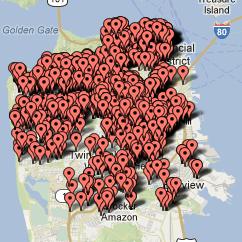
You want to see something frightening on a lovely afternoon? Check out this amazing interactive map of Ellis Act evictions in San Francisco put together by Brian Whitty.

It’s stunning: Between 1997 and 2013, it seems as if most of the Mission, Noe Valley, North Beach, the Marina, and Potrero Hill was evicted. Hundreds and hundreds of apartments turned into TICs, which now want to convert to condos. Hundreds and hundreds of tenants, who once had rent-controlled apartments, losing their homes — and given the price of housing, losing their ability to live in San Francisco.

Each little red flag is a human tragedy. Each one represents a transforming city that no longer has room for the middle class, much less poor people. It makes we want to cry. Or throw up. Or something.

Pride faces backlash from defenders of gay whistleblower

In the wake of the debacle unleashed by San Francisco Pride’s announcement that gay whistleblower Bradley Manning would not be grand marshal for this year’s Pride Parade after all, a large crowd of protesters assembled outside Pride’s Market Street headquarters April 29 for a hastily organized rally condemning the move. They held signs depicting Manning’s image, and chanted, “Grand marshal, not court martial!”

Famed whistleblower Daniel Ellsberg, who helped foment opposition to the Vietnam War by leaking classified government documents known as the Pentagon Papers to the New York Times in 1971, expressed support and admiration for the young US Army soldier. Manning was arrested in May of 2010 on suspicion of having leaked classified government cables and military footage later published by WikiLeaks, and faces a possible life sentence.

“A big mistake was made by the Board of Directors of SF Pride,” Ellsberg said. Referencing director Lisa Williams’ statement that not even a “hint” of support for Manning would be tolerated, Ellsberg said, “I don’t hint at support for Bradley Manning. I couldn’t be louder. I will be marching in that parade, for the first time for me, with a banner honoring Bradley Manning.”

Gay Navy veteran John Caldera, commander of the Bob Basker Post 315 of the American Legion, an LGBT-focused veteran’s organization, announced that his members had voted unanimously to call for Williams’ resignation, saying she had “negated and belittled all of the voices of the community” who had expressed support for Manning. He also condemned Pride for withholding its support for Manning while accepting funding from the likes of Wells Fargo, a banking giant responsible for foreclosures that have affected veterans. “The SF Pride committee has to put people first and corporations second,” he said.

Joey Cain, a former grand marshal who said he nominated Manning, noted that he was not calling for Williams to resign, but hoped she would realize the mistake and reinstate him as grand marshal. “What he did was heroic … Bradley made the world a better place,” Cain said. He shamed Pride for straying so far from the roots of the gay movement. “We believed in radical inclusivity,” practicing tolerance for all “colors, genders and opinions,” he said, with the understanding that “We don’t all agree. We never will. But we’re sure never going to throw any part of the community under the bus.”

The rally was organized by longtime housing activist Tommi Mecca (pictured, center), comedian Lisa Geduldig and blogger Michael Petrelis.

Some counter-protesters from the Log Cabin Republicans, a gay GOP organization, even made an appearance. “We were praising the Pride Committee for not having selected Manning,” SF Log Cabin Republicans Fred Schein told the Bay Guardian.

Paul Bloom, a longtime activist, handed the Guardian a written statement on his take of the whole dustup, which he viewed as “an opportunity for people to unite in our understanding that there is no antiwar movement without gay people, and no movement for human rights that doesn’t envision an end to war.”

“Why does the SF Gay Pride Parade need corporate sponsorship, anyway?” Bloom wrote. “The parade must be brought back into the struggle as a part of it instead of remaining the grossly commercial spectacle it has become. We need to occupy the parade.”


Noodles, street dancers, and more from the Tribeca Film Fesival

0

The only-in-Noo Yawk perks of the Tribeca Film Festival? The proximity of theaters like AMC Loews Village 7 to repositories of ramen deliciousity like Momofuku Noodle Bar, a scant two blocks away. You can keep the free ketchup-flavored popcorn distributed by sponsors in front of other theaters. I’ll take Momofuku’s house ramen, which overwhelms with porky goodness (a.k.a. pork belly, pork shoulder) and comes with a soft poached egg and gotta-have-it fish cake, cabbage, and nori.

Momofuku’s mini mason jar of flavorful kimchi also makes an ideal spicy side to such Tribeca talkies as The Broken Circle Breakdown, Big Joy: The Adventures of James Broughton, and Flex Is Kings.

The grass is blue out in Belgian farm country in the completely recognizable albeit lovable The Broken Circle Breakdown. Imagine the sad-eyed, death-fixated songs of Appalachia with a tattooed rocker twist and European political bent (we’re talking socialized-med lefty rather than Bush-booster Hank Williams Jr.). Director Felix Van Groeningen gives his familiar love story a slight twirl through a nonlinear time-and-space mixing machine, and we pick it up as country-music-playing sweethearts Elise (Veerle Baetens) and Didier (Johan Heldenbergh) are anxiously watching over daughter Maybelle (Nell Cattrysse), hospitalized with leukemia.

Little is made of the disjunctions and commonalities between bucolic Belgium and backwoods America, though Van Groeningen dutifully charts the lovers’ highs (their sexual chemistry and affinity for high and lonesome music) and lows (the fights and personality conflicts in the form of Elise’s creative impulsiveness vs. Didier’s anger management issues) with affection and small moments of grace — much of which is brought to the screen by Baetens, who pulls her tattooed vintage girl beyond the cliche with the passionate intensity of a rock ‘n’ roll Noomi Rapace.

Serving up an inspired, wonderful, flawed glimpse of the inspired, wonderful, and sadly, happily flawed James Broughton and his multigenerational ride through Bay Area bohemia, Big Joy: The Adventures of James Broughton got its suitable Tribeca send-off with an afterparty hosted by radical-fairy-identified documentary-makers Stephen Silha and Eric Slade (spurred to make the movie with the remaindering of the poet’s many books) and a clutch of Broughton’s beloved Sisters of Perpetual Indulgence.

In the process of documenting the polymorphously creative life and times of the Modesto-born, Bay Area-nurtured poet, filmmaker, activist, teacher, dancer, and Pauline Kael baby daddy, the directors gather invaluable footage — including clips from Broughton’s pivotal experimental films, like The Potted Psalm and The Bed; frank interviews with ex-wife Suzanna Hart and son Orion, and footage of the man’s death-bed send-off — as well as talking-head snippets capturing Broughton friends and colleagues such as George Kuchar, Anna Halprin, Armistead Maupin, and Broughton’s onetime San Francisco Art Institute student and great love Joel Singer. I confess: the ‘80s-merry, multicolored-swiggle aesthetic of the film’s titles and animations isn’t quite my cuppa — but who can resist Broughton himself, the movie’s ineffable, mutable, magical center? 

Also irresistible, and just as immersed in pure-product-of-American-going-wild subculture, is Flex Is Kings, a snapshot of the so-called extreme street-dancing scene of East Brooklyn. Documentarians Michael Beach Nichols and Deidre Schoo take aim at Flex crew, a group of practitioners in this tough-to-define art — though I’ll try. The miraculously fluid, double-jointed hybrid of breakdancing, moonwalking, popping and locking, vogueing, and super-slo-mo anime-cum-zombie-martial-arts-video-game action plays off the violence of both comic books and street corners, valuing molten flow over crisp, sharp moves, weird new sights over tried-and-true repertoire.

We follow Flizzo, the stocky, eyelinered OG with an infant daughter on the way, who prides himself on his creativity (and predilection for gimmicky moves straight out of a magician’s bag of tricks) but can’t quite imagine his way out of petty fights with his girlfriend. And then there’s Jay Donn, the scrawnily handsome dancer who embraces spectacle, can take an artful spill off the roof of a building onto the walkway below, and manages to skillfully stumble his way into a legit dance company’s production of Pinocchio.

It’s a shame that Nichols and Schoo didn’t trust these dancers’ routines to hold the attention of viewers: they insist on cutting away and mashing moments up into sliced-and-diced montages. But such issues seem like quibbles when you picture these performers otherwise lost to history — and then sees their fellow dancers perfecting their moves on the subway. So savor it.  

Michael Mina reaches settlement after overcharging customers at his SF restaurants

27

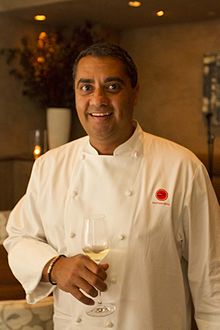
Celebrity Chef Michael Mina and his four San Francisco restaurants – Michael Mina, RN74, Bourbon Steak, and Clock Bar – have agreed to pay $83,617 to their employees to settle charges of overbilling their customers a 4 percent meal surcharge ostensibly intended to cover the company’s employee health care obligations.

As I reported last week, City Attorney Dennis Herrera is investigating fraudulent use of surcharges by restaurants, and its settlement with Mina Group LLC was the first of what could be dozens with local restaurants to come clean under Herrera’s partial amnesty offer. The company was the city’s worst violator, according to filings last year with the city’s Office of Labor Standards Enforcement, which showed the company collected $539,806 in surcharges and spent just $211,809 on employee health care.

A spokesperson for Mina Group had told the Guardian that a settlement was in the offing and that the company would forward it to us as soon as it was available. Instead, the company leaked the settlement to SFgate.com’s Inside Scoop restaurant column, which posted a story about it on Friday evening, the dead spot in the weekly news cycle.

Mina told Inside Scoop that all the surcharges it collected are being held in a fund for employee health care and the company has lowered its surcharges from 4 to 3 percent to correct the overcharging. San Francisco’s restaurant industry – which waged an aggressive legal battle against the employer health care mandate – is the only industry to use explicit customer surcharges to cover its obligations under city law.

The full joint statement by the City Attorney’s Office and Mina Group follows:

“The City Attorney’s Office and Mina Group announce a settlement regarding surcharges imposed in response to San Francisco’s Health Care Security Ordinance. The settlement terms have been guided in part by findings in which the City Attorney’s Office acknowledges that Mina Group’s employee health care program reflects some best practices in administration of health care surcharge funds.

“Mina Group and its affiliates collected surcharges during 2009 – 2011, as previously reported to the Office of Labor Standards Enforcement (OLSE). The City recognizes that 100 percent of the surcharges collected will continue to be used exclusively for employee healthcare and that the majority has already been used. Under the settlement agreement, Mina Group will contribute $83,617.50 of remaining surcharges to eligible persons who were employees during that period.

“The City Attorney’s Office reaches no conclusions on liability in successfully concluding its enforcement action with Mina Group and its affiliates. Mina Group will continue to fully support the San Francisco Health Care Security Ordinance.”

Live shots: Baby Dee and Little Annie at Amnesia

0

Baby Dee and Little Annie are a match made in camp heaven. The women, nearing their 60s, may have only been playing for 25 people, but boy did they put on a
show Thu/25 at Amnesia.

The two looked like characters out of a B movie or a dirty New York speakeasy. Annie, a diminutive little creature, looked like a gypsy in a headwrap and heavy eyeliner. Dee towered over her in an ’80s-esque leopard print sweater and leggings with a pink tulle skirt. When Baby Dee finally appeared an hour after the show was advertised to begin, she sat down at the piano and called into the microphone, “If anyone sees Little Annie, tell her the show has started.”

Soon Annie was located, and the duo launched into their first song (with a little help from a man in the audience to lift her tiny frame onto the stage.) Little Annie’s low, gravelly voice — which sounded like two packs a day and 40 years, if not something a little harder — was deliciously ragged and worn over Dee’s cabaret-like piano. As Baby Dee headbanged and bashed the piano keys, Annie swayed and posed on stage, using her cane as percussion. Two songs into the set, however, Annie stopped the show because she had forgotten to pray. “I’m discombobulated,” she cried. “Our makeup is crap and I forgot to pray.” As Annie knelt by the stage, Dee said a little prayer of her own. “Please Jesus,” she requested sweetly, “make someone get me a Scotch on the rocks. J&B or Dewar’s.”

When she was informed that Amnesia is a beer and wine bar, Dee screamed, “Fuck you, Jesus! I didn’t want your fucking scotch anyway!” before launching into her next dirge.

After, she repented. “Jesus, I’m sorry. Can I have a beer?”

Calling each other exclusively “honey” and “darling” Dee and Annie played, jested, and improvised through an hour-long set that felt about an hour too short. In between songs each woman told fantastic anecdotes from their tremendously colorful lives. Annie spoke about her short time living in San Francisco, when she got held up for food stamps in the Haight. Dee told a story about curating a Christmas show at the Pyramid Club, in which she dressed a 400 lb woman as the baby Jesus and put an Entemann’s chocolate cake down “the world’s biggest diaper.”

Halfway through the set, I realized something amazing. There was absolutely no side conversation through the entire show. Here we were, in a bar in the Mission, and not a single person was idly chatting with their friends. It’s a testament to the amazing showmanship and magnetic personalities of Baby Dee and Little Annie that every eye was on them for the whole hour they played. The crowd was small, but every person was there for them.

“This has turned out to be a really nice show, hasn’t it?” remarked Baby Dee. “Now I’m happy. It took me a while, but now I’m happy.”

SFIFF + Hollywood = your weekend movie plans

0

The San Francisco International Film Festival kicked off its 56th year last night; it continues through May 9 at venues around San Francisco and Berkeley. Read my take on standout docs here; Dennis Harvey’s appreciation of Finnish cinema here; and short takes by both of us (plus Kimberly Chun) here.

Meanwhile, down in Hollywood, Michael Bay’s musclebound latest opens today, along with a wedding comedy starring Robert De Niro, Diane Keaton, Susan Sarandon, and always-the-bride Amanda Seyfried. Reviews of both below, along with François Ozon’s new film, a martial-arts slo-mo-stravaganza, and, yes, even more.

Arthur Newman Colin Firth and Emily Blunt star in this tale of lost souls who find happiness after meeting on a road trip. (1:41)

http://www.youtube.com/watch?v=bTGvnMQe9a4

The Big Wedding The wedding film has impacted our concepts of matrimony, fashion, and marital happiness more than all the textbooks in the world have affected our national testing average; but it’s with that margin of mediocrity I report from the theater trenches of The Big Wedding. With this, the wedding movie again peters to a crawl. Susan Sarandon (an actress I love with a loyalty beyond sense) is Bebe, the stepmother/caterer swept under the rug by the selfishness of her live in lover Don (De Niro), his ex-wife/baby momma Elle (Diane Keaton) and their racist wackjob future in-laws. When Don and Elle faced the end of their marriage, they tried to rekindle with a Columbian orphan. Cue Ben Barnes in brownface. Alejandro is set to wed Amanda Seyfried and when his mother ascends from Columbia for the wedding, he decides Don and Elle have to act like their marriage never ended … which makes Bebe a mistress. Surprise! A decade of caring selflessly for your lover’s kids has won you a super shitty wedding you still have to cater! To give you a sense of the conflict management on display, Bebe — the film’s graceful savior — drops a drink on Don before fleeing the scene in her Alfa Romeo; she’s the one character not determined to act out her more selfish urges in the style of an MTV reality show. Despite some less imaginative conflicts and degrading “solutions,” this blended family still speaks some truth about the endearing embarrassment of the happy family. (1:29) (Sara Maria Vizcarrondo)

In the House In François Ozon’s first feature since the whimsical 2010 Potiche, he returns somewhat to the playful suspense intrigue of 2003’s Swimming Pool, albeit with a very different tone and context. Fabrice Luchini plays a high school French literature teacher disillusioned by his students’ ever-shrinking articulacy. But he is intrigued by one boy’s surprisingly rich description of his stealth invasion into a classmate’s envied “perfect” family — with lusty interest directed at the “middle class curves” of the mother (Emmanuelle Seigner). As the boy Claude’s writings continue in their possibly fictive, possibly stalker-ish provocations, his teacher grows increasingly unsure whether he’s dealing with a precocious bourgeoise satirist or a literate budding sociopath — and ambivalent about his (and spouse Kristin Scott Thomas’ stressed gallery-curator’s) growing addiction to these artfully lurid possible exposé s of people he knows. And it escalates from there. Ozon is an expert filmmaker in nimble if not absolute peak form here, no doubt considerably helped by Juan Mayorga’s source play. It’s a smart mainstream entertainment that, had it been a Hollywood feature, would doubtless be proclaimed brilliant for its clever tricks and turns. (1:45) (Dennis Harvey)

Mud The latest from Jeff Nichols (2011’s Take Shelter) stars Matthew McConaughey as an escaped con who befriends two Arkansas boys while he’s on the run. (2:15)

http://www.youtube.com/watch?v=BeDYibIzS8E

Pain & Gain In mid-1995 members of what became known as the “Sun Gym Gang” — played here by Mark Wahlberg, Dwayne Johnson, and Anthony Mackie — were arrested for a series of crimes including kidnapping, extortion, and murder. Simply wanting to live large, they’d abducted one well-off man (Tony Shalhoub) months earlier, tortured him into signing over all his assets, and left him for dead — yet incredibly the Miami police thought the victim’s story was a tall tale, leaving the perps free until they’d burned through their moolah and sought other victims. Michael Bay’s cartoonish take on a pretty horrific saga repeatedly reminds us that it’s a true story, though the script plays fast and loose with many real-life details. (And strangely it downplays the role steroid abuse presumably played in a lot of very crazy behavior.) In a way, his bombastic style is well-suited to a grotesquely comic thriller about bungling bodybuilder criminals redundantly described here as “dumb stupid fucks.” There have been worse Bay movies, even if that’s like saying “This gas isn’t as toxic as the last one.” But despite the flirtations with satire of fitness culture, motivational gurus and so forth, his sense of humor stays on a loutish plane, complete with fag-bashing, a dwarf gag, and representation of Miami as basically one big siliconed titty bar. Nor can he pull off a turn toward black comedy that needs the superior intelligence of someone like the Coen Brothers or Soderbergh. As usual everything is overamped, the action sequences overblown, the whole thing overlong, and good actors made to overact. You’ve got to give cranky old Ed Harris credit: playing a private detective, he alone here refuses to be bullied into hamming it up. (2:00) (Dennis Harvey)

http://www.youtube.com/watch?v=AXdIlx29W2s

Simon Killer Antonio Campos — producer of 2011’s Martha Marcy May Marlene and director of 2008’s Afterschool — helms this dread-filled, urban-noir tale of the ultimate ugly American abroad. Smarting from a recent breakup, Simon (Brady Corbet) roams Paris’ seedier streets, composing letters to his ex in his head while blasting ironically cheerful pop songs in his headphones. But this is no twee tale of redemption: Simon is a sociopath, probably also a psychopath, and we soon fear for the willowy prostitute (Mati Diop of 2008’s 35 Shots of Rum) who is taken in by his manipulative charm. Campos has said that Simon is inspired by convicted murderer and Natalee Holloway suspect Joran van der Sloot, and Corbet’s coolly unnerving performance bears that out. The story, alas, is not nearly as compelling — even without a gold-hearted hooker it’d still hit too many predictable beats. (1:45) (Cheryl Eddy)

Tai Chi Hero Six months ago, Tai Chi Zero — Stephen Fung’s nutty tale of a martial arts savant who journeys to an isolated town to learn a top-secret technique — barreled into local theaters. A stylish kung fu flick with a high degree of WTF-ness, Zero ended on a pretty significant cliffhanger, so here’s the cheeky sequel for those who’ve been wondering what happened to Yang Lu Chan (Yuan Xiaochao) — a sweet fool when he’s not in supernatural Hulk-smash mode — and company. A brief intro gets newbies up to speed before the action starts: Lu Chan and the bossy-yet-comely daughter (Angelababy) of the local grandmaster (Tony Leung Ka Fai) have entered into a marriage of convenience — and there’s something fishy about Lu Chan’s brother-in-law, newly returned from a long exile with his own secretive bride. Meanwhile, the family worries about the dreadful “bronze bell prophecy” while the first film’s Westernized villian plots tasty revenge. In addition to all the high-flying, slo-mo scenes of hand-to-hand combat, highlights include a soundtrack filled with unexpected choices (heavy metal, accordion), a cameo by cult actor Peter Stormare (hamming it up big-time), and an army tricked out with steampunky weapons. (1:40) (Cheryl Eddy)

Captain Greg Corrales saves the Haight from Demon Weed

63

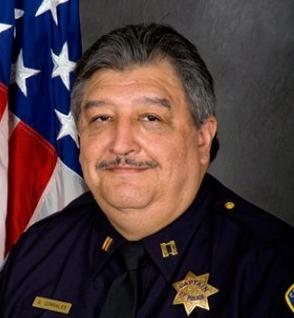
I’m glad to see the Ex now has the data to show what we all knew was happening: The old Drug Warrior at Park Precint, Captain Greg Corrales, is trying to save the Haight from pot smokers.

Hate to have to tell you, Cap, but you lost that battle a loooong time ago.

And here’s the thing: Arresting people is expensive. It takes the time of police officers (who, let’s remember, often make $100,000 a year or more), it takes the time of the District Attorney’s Office, and, since none of the people Corrales arrests can afford private counsel, it takes the time of the Public Defender’s Office, which is already so short of money that it might have to stop taking cases.

And meanwhile, San Francisco has a terrible record closing homicide cases.

So now we’re spending hundreds of thousands of dollars (yes, that’s what it will add up to) busting small-time pot dealers in Golden Gate Park.

Remember, the statistics are clear: The “buy-bust” arrests are not nabbing crack or meth or heroin dealers. It’s all about the Demon Weed.

It’s also part of the quiet transformation of law enforcement and city policy in the Haight, which has become all about “quality-of-life” cases. A guy named Giuliani made that a big deal in New York way back when. Now we have sit-lie, and we have the eviction of the Haight Ashbury Neighborhood Council Recycling Center, and we have buy-bust. It’s really about trying to turn the Haight into a sanitized, movie-set version of itself.

Which, by the way, has never seemed to work.


Party Radar: Prosumer, Kafana Balkan, Night Light, Adnan Sharif, Shonky, Distrikt, Derrick Carter, Ana Matronic, more

0

Jajajaja — this installment of Party Radar is going to be like a last minute dump, since I’m still kind of drunk and the weekend, she is here. Besides, bloggity bloggity blah blah blah, let’s just get to the good stuff. But let’s first have some delicious beef for breakfast:

No not this weak beef, this one:

Kinda makes me like Leger’s music. Now let’s guetta way from all that, and get into this. Click on the titles for more info.


>>EAGLE GRAND OPENING

And what a truly grand opening it shall be! (Right next to the back trough.) The legendary gay leather biker bar has been open for a couple months now, to great success — I guess this party means its here to stay. Hurray! With a gaggle of old school faves including Trauma Flintstone, the Ethel Merman Experience, Anna Conda, the Sisters of Perpetual Indulgence, and the Whoa Nellies.

Fri/26, 6pm, free. Eagle, 398 12th St., SF. www.sf-eagle.com


>>PROSUMER

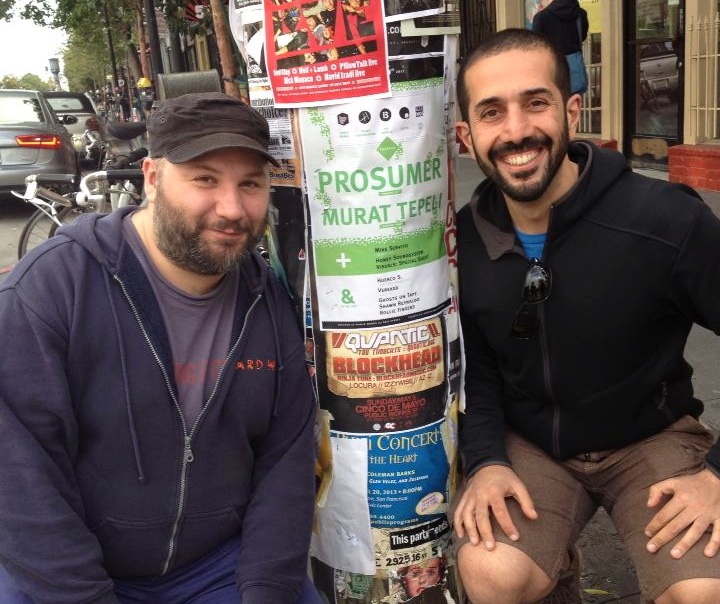
Ok, not just the lauded house master from Berlin, BUT his hottie partner in yum Murat Tepeli, AND NYC diva on the tables Mike Servito AND Huerco S., Vereker, Ghosts on Tape, Shawn Reynaldo, Rollie Fingers. All under he auspices of Honey Soundsystem, Icee Hot, Grey Area Foundation, and The Bunker NYC. Gonna be real cute and you will actually dance. 

http://www.youtube.com/watch?v=Tzoyc60din8

Fri/26, 9pm-4am, $15. Public Works, 161 Erie, SF. www.publicsf.com


>>DERRICK CARTER

This weekend is exploding with legends who hapen to be gay, just sayin’. The Chicago boogaloo house master has ruled the decks for more than two decades (he played at a party I threw back in 93! old) — and is appearing out of thin air, it seems, at Harlot. Derrick can turn anywhere into an instant party.

Fri/26, 9pm, $25. Harlot, 46 Minna, SF. 


>>NIGHT LIGHT

One of the coolest things to happen every year — a multimedia garden party at SOMArts featuring spme spectacularly cool and forward-thinking art, much of it interactive. With audio-visual performances by Pod Blotz, ChuCha Santamaria y Usted, Stephen Parr-Oddball Films, and Francois Chaignaud and Marie-Caroline Hominal. 

Sat/27, 8pm-12am, $12. SOMArts, 934 Brannan, SF. 


>>DISTRIKT

Fark yes, it’s Burning Man camp fundraising party time — and this beloved biggie is throwing an appropriatey huge, all-day block party at Public Works. Sheer tomfoolery! And Justin and Christian Martin headline, so really good. 

Sat/27, 1pm-4am, $40. Public Works, 161 Erie, SF. 


>>KAFANA BALKAN

Come early to this packed, ecstatic bi-monthly celebration of whirling gypsy music and Balkan culture. It’s one of the great parties of San Francisco, bringing all kinds of people together with some mindblowing music. Half the time I cant even begin to guess the time signature. With DJ Zeljko, dancer Jill Parker and her Foxglove Sweethearts, and awesome band Inspector Gadje. 

Sat/27, 9pm, $15. Rickshaw Stop, 155 Fell, SF.


>>SHONKY

One of my absolute fave deep house DJs of recent years. The sweet Parisian’s mixes are the kind you can really listen to and inhabit, while making you move as well. Plus he has an infectiously good-vibe stage presence that lifts the crowd. 

Sat/27, 9pm-late, $10-$15. Monarch, 101 Sixth St., SF. www.monarchsf.com


>>ADNAN SHARIF

Adnan is one of those people who are the true heart and soul of the Bay Area techno scene. His roving, underground Forward parties have rocked us for a decade and hes just a sweetheart of all swearthearts, with a great mystical take on beats. Hes decamping for Brazil, leaving us bereft, but happy for him. Let’s dance together one last time before his altar, at Honey Soundsystem.

Sun/28, 10pm, $10. Holy Cow, 1535 Folsom, SF.


>>ANA MATRONIC

The former Scissor Sister recently compared the energy at the mainstream gay White Party in Palm Springs to that of early punk rock trash drag era Trannyshack, which not only rewrote gay nightlife history, but surprised the fuck outta me. She should know though, I guess: she was an integral part of SF’s rough-and-rarin’ club kid scene in the ’90s before she hit the big time – and at least she’s brought some weirdo-ness to the Glee crowd. Now she’s doing her own thing, and this will be a glorious homecoming affair, hosted by Juanita More.

Sun/28, 9pm, $20. Public Works, 161 Erie, SF.  


Get out your action figures: ‘Robot Chicken’ is coming to town!

0

For those of us who grew up in the 1980s, who doesn’t have fond memories of playing with action figures? Whether you were plotting elaborate battles and all-out dirt mound warfare with GI Joe and Star Wars characters, or continuing the adventures of She-Ra and Strawberry Shortcake, those toys were a big part of our childhood.

Today, some lucky — and very talented — people still get to play with those toys, and get paid for it. Breathing life into these inanimate objects, the hit Adult Swim TV show Robot Chicken resurrects classic action figures and projects them into wild scenarios, or the everyday mundane world of real life, making for some side-splittingly hilarious situations.

Marking the end of the special exhibit “Between Frames: The Magic Behind Stop Motion Animation at the Walt Disney Family Museum,” the creative team behind the show is coming to the city this weekend for several special events celebrating their craft. Seth Green, Matthew Senreich, John Harvatine IV, Eric Towner, and Alex Kamer will be on hand Fri/26 for an after-hours party featuring food, drinks, an audience Q&A and screenings of behind the scenes footage, and then on Saturday for a special animation workshop followed by a panel discussion.

“When the Walt Disney Family Museum reached out to us as they were starting to work on the stop motion exhibit,  it was one of those surreal moments — they were talking about what they were looking to do for this exhibit, and mentioned how Gumby was going to be a part of it, and they were going to have pieces from movies like Nightmare Before Christmas, and wanted television shows like Robot Chicken — we had that moment where we were like, ‘Wait, why are you including us?’” laughs Senreich, co-creator, producer and writer for the show.

“So we had to slap ourselves, and go, ‘Well I guess this is going to happen!’ It was very surreal and amazing, and they’ve been so good to us.”

The creative group behind Robot Chicken all first met when most of them worked at Wizard Magazine, a now-defunct publication that covered comic books and toys. Green was a fan of the magazine, and after meeting Senreich they became friends. They came up with the idea for the show “after many years of just geeking out over things. For us, this is what we live for; we were the people going to Comic Con before it turned into the event that it is now, we’re the ones who are still going to the small or cult comic shows. I want to find the random bootleg thing, that’s the stuff I love,” says Senreich.

When the group first started working on Robot Chicken, which premiered in 2005, they had never really worked with stop motion animation themselves, and after a few mostly failing attempts, gathered a team of professionals to help out. The animation technique — where an object is photographed one frame at a time, and gradually moved each time to create the illusion of actual movement — has a long and influential history in filmmaking, but is an incredibly time-consuming and detail-oriented art form.

“You come to appreciate what these animators do every day and the patience that they have, and you realize that they are actors and their performance either makes or breaks the stuff that you write,” says Senreich.

http://www.youtube.com/watch?v=aPB4-EW2Fck

Although he can’t give an exact estimate of how much time is spent producing one particular episode of the show, as many multiple skits and shows are being made at once, Senreich says that they currently turn out about 20 episodes in 11 months. “We try to write as many episodes ahead of time as possible — what slows down stop motion is having to take a set off the stage, put a new set up, re-light it, re-configure it to get it ready for the next shot. If we can keep the lighting the same, and we can maintain a set that’s there, it simplifies the process.”

He adds, “If we have say 15 bathroom shots over the course of 20 episodes, we’ll keep the bathroom on the stage as long as we can and shoot all of those bathroom shots in order.”

In this day and age where so much of the work that goes into Hollywood productions is shipped overseas, or done in several places around the country, the Robot Chicken team keeps it all close to home in Southern California. “We have two buildings in Burbank where we’ll do everything from the storyboards to the building of the sets and puppets to the animation, and we have a voice booth. With the exception of our sound mixing, which is done literally down the block — everything is done in-house,” says Senreich.

Coming up with hilarious scenarios and which toys or characters to use in them is all part of the fun of working on the show. “What I like about our group of writers is that it’s a bunch of friends trying to make each other laugh; it’s really just whatever we find funny for the day, or what a topic of conversation has been about, that’s where things start. We like to take these very grandiose worlds and just find the very simple and mundane within them,  I think that’s what makes it relatable — if you can have Thundercats and simplify Lion-O to just being a cat, and being treated as such, where a spray bottle will affect him, there’s something fun about that.”

One of the toy realms that has been featured prominently on Robot Chicken over the years has been Star Wars. The first bit they did revolved around Emperor Palpatine getting a phone call from Darth Vader after the Death Star had been destroyed — and it immediately got the attention of Lucasfilm.

“We did that ‘Emperor’s Phone Call’ sketch, and right after it aired, the phone rang and the caller ID said ‘Lucasfilm,’ I thought, ‘Oh God, we’re going to get sued!’ But it turned out that George Lucas and some other people at the company had seen the show and liked it; they were calling to invite them to come take a tour of Skywalker Ranch. While there, Senreich threw out the idea of doing an entire Robot Chicken special centered around Star Wars, and within three weeks they were up and running.

“Meeting George was an experience; I was tongue-tied, and probably made a fool of myself — but now I’m the guy who can talk to him and go, ‘I don’t like that idea, George.’ It’s really nice to have that kind of relationship — he’s the first person to say back to me, ‘Well I don’t like this idea either,’ and we can have those kinds of creative conversations and we respect each other in that way, and it’s really nice,” says Senreich.

After this weekend’s festivities in San Francisco, Senreich and crew will head back to Los Angeles to start working on season seven of Robot Chicken. They’ll also be announcing several other upcoming projects in the near future. While his plate is full of work at the moment, and his schedule can be hectic at times, Senreich takes a laid-back approach when thinking about it all.

“The thing that we always come back to is that we’re playing with toys! There’s the pressure of deadlines and all of that, but you can’t get away from the fact that if the biggest stress is looking at a Star Wars figure and trying to figure out a way to make it funny, that’s not that bad!”

Robot Chicken and Stoopid Buddy Stoodios events
Fri/26, 7pm; Sat/27, 10am and 2pm, $8-$60
Walt Disney Family Museum
104 Montgomery, SF
(415) 345-6800
www.waltdisney.org

Boom life: Mattilda Bernstein Sycamore talks about ‘The End of San Francisco’

0

A picture of Brian Goggin’s iconic site-specific sculpture “Defenestration” (that 16-year-old “furniture leaping out of an abandoned building” piece in SoMa that may be demolished soon) is pictured on the cover of Mattilda Bernstein Sycamore’s latest book, The End of San Francisco — which I reviewed in this week’s Guardian.

It’s an almost too-perfect image to represent the book’s contents — “Defenestration” cheekily channeled the out-the-window frustration of the dawning of the first Internet boom, with its hordes of tech gold-rushers pushing out old San Francisco culture. (And now, in the middle of another tech boom, the artwork itself will be pushed aside to make way for affordable housing — the term for anything under $2500 per month rent pretty much at this point.) The End of San Francisco takes us on an atmospheric, highly personal through the turbulent period of the ’90s and early 2000s, while asking some hard questions about the queer activism, participatory gentrification, and “alternative culture” of the period. Along the way, Mattilda intimately delves into issues like her recovered memories of sexual abuse as a child at the hands of her father; the rampant drug use, mental illness, and hostile attitudes of Mission queer culture; the gynophobia and transphobia of many “underground” scenes, and much, much more. 

I asked Mattilda a few questions over email in advance of her appearances here at City Lights (April 30) and the GLBT Historical Society (May 9) to help set her book in the context of what was happening then, and what’s still happening now. As always, she pulled no punches. 

MATTILDA BERNSTEIN SYCAMORE reads Tue/30, 7pm, free at City Lights Bookstore, 261 Columbus, SF. www.citylights.com, and Thursday, May 9, 7pm, free at the GLBT History Museum, 4127 18th St., SF. www.glbthistory.org

SFBG What was the impetus for writing such a wide-ranging memoir? You cover almost your entire life, from some of your earliest memories to when you officially moved away from San Francisco. Was there a specific purpose when you sat down to write it?

MATTILDA BERNSTEIN SYCAMORE
With my anthologies, I always have a specific purpose in mind, a political intervention, but for this kind of personal writing – I write to stay alive. So it’s a different kind of intervention. I started with 1200 pages of material, and then separated different sections into themes. So, for example, the chapter called “The Texture of the Air,” originally that was something like 200 pages of writing about cruising and its limitations, about trying to regain a sense of hope in my own sexuality. Now it’s 15 pages. At some point I realized that the book centered around the myths and realities of San Francisco as a refuge for radical queer visions in community building. I first moved to San Francisco in 1992, when I was 19, and it’s where I figured out how to challenge the violence of the world around me, how to embrace outsider visions of queer splendor, how to create love and lust and intimacy and accountability on my own terms. I left San Francisco in 2010, and in some ways this book is an attempt to figure out why or how this city has such a hold on me, in spite of the failure of so many of my dreams, over and over and over again.

SFBG I think the most fascinating parts of the End of San Francisco are your spot-on description of life here in the 1990s, and your detailing of the excruciating decline of that era in the dot-com boom. Now
that we’re undergoing another dot-com boom, what are some of your thoughts as to how that’s once again affecting “alternative culture.” Is there any such thing as “alternative culture” anymore?

MBS Oh, it’s so sad! The way gentrification has progressed over these last 20 years. The displacement, the homogenization, the transformation of cultures of resistance into commodities. The way all of this limits people’s imaginations. At the same time, I don’t want to romanticize the past. In the early-‘90s, it felt like everywhere people were dying of AIDS and drug addiction and suicide; it was a desperate time, even if in some ways there were more possibilities for choosing a life outside status quo normalcy. But, no matter when we are living in this country so responsible for genocide, endless war, the destruction of the environment, we are living in a desperate time and we still need to come up with radical alternatives to giving up.

SFBG I figure a lot of the people who were here in that era (me included) will recognize a lot of truth in what you describe, including some pretty scathing but deadly accurate words about the people who thought they were on the forefront of alternative culture back then — how a lot of it was “vintage store glamour” and the “strung-out junkie look.” Have you had any reactions from anyone about that? Or from any of the people who were close to you back then that you’ve written about?

MBS I offered the manuscript ahead of time to everyone in the book who plays a major role. A few people didn’t respond. Some offered detailed feedback. And some, of course, are featured in conversations about the book, in the book – while The End of San Francisco is about my memories, of course these memories exist in the context of the relationships I’m describing. I want to challenge the notion of one true story, while at the same time I obsess about figuring out all these formative moments for me – politically, socially, sexually, ethically, emotionally. One of the funniest responses was from the first person who I trusted, we moved to San Francisco together in 1992. She wanted me to take out the parts where we do drugs, so she could show her kids!

SFBG Another fascinating part is your account of the rise and peter-out of Gay Shame [the guerilla anti-assimilationist co-founded by Mattilda]. You’ve talked about this before in previous books, like the anthology That’s Revolting — how did you approach writing about it within the context of this memoir?

MBS This writing is more self-critical. It’s more about the relationships I formed through activism, the gaps between our rhetoric of inclusiveness and the more complicated realities. Ultimately I’m looking at this activist group that meant so much to me, that challenged and inspired me in so many ways, but ultimately failed me. I’m not saying that it failed, but it did fail me and I’m trying to figure out why.

SFBG Do you think there’s any space now, in SF or anywhere else, for a true queer resistance movement?

MBS
There never is space. We have to create it. There is so much self-congratulatory rhetoric in San Francisco, especially in radical-identified queer spaces, and we’re never going to get to something beyond a cooler marketing niche unless we can examine the ways that so often in radical queer spaces people treat one another just as horribly as in dominant straight culture or mainstream gay culture, and it hurts so much more when this kind of viciousness comes from people you actually believe in.

SFBG I loved your take on the Eagle even while I disagreed with some of it. Have you been following the whole return of the Eagle thing, spearheaded by probably our loudest current voice in queer anti-assimilationism, Glendon Anna Conda Hyde?

MBS In the book, mostly I’m talking about how the Eagle, a bar entrenched in mainstream gay norms of mandatory masculinity, objectification without appreciation, racial exclusion, and fear of all things feminine without beards, became a hipster hotspot without changing its core values. I can’t comment specifically on Glendon Anna Conda Hyde, but I will say that it depresses me when people embrace tragic gay institutions as “community,” as if they have ever offered us anything meaningful beyond a place to get smashed with people we’ll hate in the morning. Yes, it’s also depressing that public sex cultures that used to exist South of Market have basically disappeared, but I think we need to envision new possibilities instead of fetishizing the past.

SFBG You write so boldly and candidly about sexual abuse, drug will addiction, illness, relationships, politics … were there any memoir models you worked off of, and were there any rituals you went through to be able to open up so much?

MBS I think most memoirs take the most fascinating, multifaceted, complicated lives and turn them into Choose Your Own Adventure books without the choice. I wanted to create something more layered and honest — I was drawn to exploring the places where my analysis stops, to using those gaps as openings into something more spontaneous and incisive. As a teenager I needed to create a facade of invulnerability in order to survive, in order to find other kids like myself, in order to go on living. But now that façade leaves me feeling shut off rather than connected. Now I’m drawn towards expressing vulnerability, I think that’s what will save me.

SFBG
I felt like you left us with a cliffhanger in terms of your father reconciling with you over memories of your childhood sexual abuse. Was there ever any resolution?

MBS
I love that it felt like a cliffhanger for you even though the part about visiting my father before he died was right at the beginning. That was an incredibly intense moment for me, to visit him on his deathbed, to go to the house where I grew up with all that violence and still be able to express everything, to sob and tell him that I loved him, something I would never have imagined I would even want to say, but it’s what I felt in the moment and so I figured why not, he’ll be dead soon and I don’t want to hold anything in. For me that felt really powerful: it meant that all this work I’d done to become someone other than the person my parents wanted me to be, it really had worked. That was a certain kind of closure, that openness. But no, he refused to acknowledge anything. He wouldn’t even tell me that he loved me.

SFBG In terms of queer relationships and friendships, The End of San Francisco speaks insightfully about pain, desire, co-dependence, processing, betrayal, apathy, need, and abuse. Was there ever any love? Could there be?

MBS Yes, there was so much love – I hope that comes through in the book! And nothing has let me down more than love.

San Francisco International Film Festival tickets on sale now!

0

Anything but expected.

The San Francisco International Film Festival returns for two lively weeks. SFIFF showcases cinematic innovation and presents marquee premieres, international competitions, new media programs, and star-studded events – including anticipated appearances by actor Julie Delpy of closing night film Before Midnight, actor Kate Bosworth and director Michael Polish of Big Sur, actors Greta Gerwig, Michael Cera, Amy Acker, and Alexis Denisof, Kanbar Screenwriting Award recipient Eric Roth, and POV Award recipient Jem Cohen. The program features 200 films and events of international and local distinction – highlighting new works by Peaches and Sarah Polley.
 
Thursday, April 25 thru Thursday, May 9 | Buy tickets and see full line-up at festival.sffs.org

Care clash

13

The first week in April was a rough time for Connie Salguero. The Filipina nursing assistant, who says she would’ve been eligible to retire in two years, reported to her shift at the University of California San Francisco medical center at Mt. Zion on April 1 — and was told she was laid off. Two days after that, she was forced out of her home through an eviction, but fortuitously met an elderly Filipina woman who said Salguero could stay with her until she gets back on her feet.

“This manager said to me, Connie, come here, let’s talk,” and delivered the bad news, Salgeuro recounted, getting a little misty-eyed. Two other Filipina hospital assistants in her unit met with the same fate that day, she said.

“I’m trying to find a job,” Salguero said. “It’s very hard. But I will survive.” She projected a sense of resolve despite the whirlwind of sudden stress, which seemed fitting for someone whose job entailed feeding, bathing, and assisting up to ten bedridden patients at a time, many of them suffering from cancer.

Salguero said management told her the layoffs were necessary because of the most recent wave of federal budget cuts. But Cristal Java, lead organizer for UC patient care technical workers’ union, AFSCME 3299, interjected during an interview with the Bay Guardian to refute that explanation, calling it “total crap. They don’t want to tell workers the truth,” Java said, “which is that the hospitals are extremely profitable.”

UCSF ELIMINATES 300 POSITIONS

Salguero is one of about 25 UCSF certified nursing assistants whose recent layoffs prompted AFSCME to register a formal complaint with the Public Employee Relations Board, an agency that mediates labor disputes. The CNA layoffs hit in March and early April as part of a raft of cutbacks that eliminated a total of 300 full-time equivalent positions. Some of those positions were unfilled while other staffers were reassigned elsewhere or had their hours cut; a total of 75 individuals were laid off.

The cuts prompted union representatives to organize a protest at UCSF’s Parnassus Campus April 4, with San Francisco Sup. John Avalos and California Sen. Leland Yee turning out in support of the workers. Salguero was there too, waving a sign, and she wound up telling her story for an international broadcast by a Filipino news station. Things took a dramatic turn when police arrived on the scene, and Union President Kathryn Lybarger and some others were escorted off the premises in handcuffs.

Asked to explain the rationale behind the layoffs, UCSF spokesperson Karin Rush-Monroe responded, “We evaluated the impact of the Affordable Care Act, expected reductions in Medicare, MediCal and private insurance reimbursements,” as well as employee benefits and rising costs in drugs and medical supplies, and ultimately decided on a 4 percent labor budget cut. “We must make a ‘course correction’ if we are to maintain our resources to care for our patients,” Rush-Monroe said.

But the staffing cuts hit just weeks after AFSCME published a blistering report, titled “A Question of Priorities,” charging that UC has prioritized profit margins at its medical centers since 2009 while needlessly eliminating frontline staff positions, all to the detriment of patient care.

“It feels very much like they’re chasing down the Wall Street model of business,” Randall Johnson, an MRI technologist at UCSF Parnassus Campus who is active with Local 3299, told the Guardian. “We’re pressed to move faster and faster and faster. It’s more about profit than it is about patient care.”

Steve Montiel, spokesperson for UC Office of the President, told us that UCSF is “consistently ranked as one of the top hospitals in the country by U.S. News and World Report,” and pointed out that the AFSCME report coincided with an ongoing contract dispute concerning patient care technical workers, which may lead to a strike authorization in the next few weeks.

DANGEROUSLY LOW STAFFING LEVELS?

Billed as a “whistleblower report,” AFSCME’s 40-page publication portrays an internal environment throughout UC medical centers in which staffers — particularly frontline workers — are exhausted, overburdened, and dangerously likely to make mistakes.

Peppered with anecdotal horror stories describing things like dried blood observed on operating room tables at facilities where custodial staffing was cut to a bare minimum, or an incident in which a mentally altered patient was found on a window sill at a medical facility where harrowed nursing assistants’ attention was divided too many ways, the report portrays an unsafe environment that seems out of sync with the system’s reportedly healthy earnings derived from patient care.

“Bring it up at bargaining, and you get told to kick rocks,” said union spokesperson Todd Stenhouse. AFSCME has called upon state agencies and lawmakers to investigate UC policies on “cutting costs, reducing staff, and maximizing revenue.”

“We’ve been getting lots of reports about short staffing, and no coverage for breaks,” said Tim Thrush, a diagnostic sonographer who works with patients experiencing complications in pregnancy, and has worked at UCSF for years. “If you get a break or a lunch, it seems to be rare — even though it’s state law.” Thrush added. “It looks to us … that UC’s response to us raising concerns … is to say, OK well then let’s make it worse. Let’s lay off a whole bunch of people.

“It’s been very disappointing,” he said, “and it’s getting to be kind of scary.”

The report emphasizes California Department of Public Health findings of violations relating to bedsores from 2008 to 2012. The sores can occur if a patient stays in one position for too long, causing reduced blood flow and damage to skin tissue, and have been linked to infection.

Among those affected by the layoffs were “lift and turn team” members, including care workers tasked with turning immobilized patients to prevent bedsores.

Ironically, Rush-Monroe, the UCSF spokesperson, noted in response to a Guardian query that a $300,000 “incentive pay” bonus CEO Mark Laret received in 2011 was based on multiple “clinical improvement goals” that had to be satisfied in order to qualify for the 2011 compensation increase. One of these targets was a reduction in the number of hospital-acquired bedsores.

While the union report points to rising instances of bedsores, and the UCSF administration claims they were reduced to the extent that the CEO was monetarily rewarded for the accomplishment, a quick look at scores on hospital ranking website California Hospital Compare showed that pressure sore rankings at UCSF are almost exactly even with the statewide average.

Meanwhile, hospital rankings of patient safety indicators on Health Grades, an online consumer ranking website, didn’t reflect any dramatic differences between patient safety scores at UCSF, CPMC or Kaiser Permanente.

QUESTIONS RAISED

In the midst of these staffing cuts, AFSCME charges, the $6.9 billion system has enjoyed robust finances, with UCSF earning $100 million in net revenue last year. Between 2009 to 2012, management positions increased by 38 percent system-wide, while payroll costs for managers grew by 50 percent, with an additional $100 million a year allocated to administrative staffing.

According to a 2013-14 budgetary report prepared at the UC level, the system’s network of public universities have suffered deep financial cuts while its five medical centers “have continued to flourish and grow,” and “enjoy robust earnings.”

A revenue breakdown in the UC budget report shows that 62 percent of medical center earnings system-wide were derived from private health care plan reimbursements, while about a third came from Medicare and MediCal, funded by the federal and state government.

Meanwhile, ASCFME’s report has raised eyebrows in the California Senate. Sen. Ed Hernandez, who represents part of Los Angeles County and chairs the Senate Health Committee, “has expressed an interest in looking at it further,” according to committee consultant Vincent Marchand. “We may decide to call a hearing” sometime in May to see if further action is warranted, he added.

Sen. Yee lambasted the UC system for what he called “blatant disregard for the working staff.” Yee said the layoffs raised concerns about the quality of patient care, saying, “How do you lay off 300 individuals and think that it’s not going to compromise patient care?”

Yee added that he thought the UC budget ought to be scrutinized when it goes before the Senate. “Although the Constitution gives the UCs of California tremendous autonomy via the Board of Regents, ultimately we in the Legislature still allocate dollars … so there is a legislative and moral responsibility that we need to exercise,” he said. “Are the dollars within UC being used appropriately to take care of patients and in ensuring their safety?”

CONSTRUCTION, COMPENSATION AND VIPS

In early 2015, UCSF will open its new Mission Bay complex, a 289-bed facility featuring a children’s hospital with an urgent/emergency care unit and an adult care unit for cancer patients. The estimated price tag for the project is about $1.5 billion, and construction costs associated the project were referenced in an Oct. 12 letter Laret, UCSF’s CEO, issued to hospital staff announcing the pending staffing cuts.

Thrush questions decisions made at the highest administrative levels. Laret is “eliminating 300 jobs, and we’re opening a new facility, and he’s getting a $300,000 bonus,” he said, referring to a “retention bonus” expected to be awarded this year, which could be followed by a $400,000 bonus in 2014. “Why is he getting a huge bonus if we’re having to lay off so much staff?”

With a total compensation of around $1.2 million in 2011, Laret’s salary seems excessive in comparison with that of frontline workers — and it is. At the same time, it seems to be within the realm of a CEO of a major medical facility, a quick Internet search reveals.

ACSFME’s report targets Laret specifically, saying he repeatedly emphasized to hospital staff, “When you see patients, you should see dollar signs.” Johnson, the MRI technician, told the Guardian he heard Laret make this statement years ago, when he first came on as CEO. “I know that some physicians were outraged by it,” he said. “I heard that the physicians told him to stop, and he stopped saying it.” UCSF did not respond to Guardian requests for a comment on this allegation.

The report also focuses on a practice of so-called “VIPs” — patients connected with the UC Regents or other influential persons — receiving preferential care. “I got called in on a Sunday to take care of a celebrity, because they had a headache,” said Johnson. “I’ve seen patients have to be on hold so we can scan the [VIPs]. They definitely get preference. I’ve been told, if one of those VIPs comes in, we have to get them on the scanner.” UCSF didn’t respond to Guardian questions concerning VIP patient treatment, either.

LABOR DISPUTE

Montiel, the media relations director for the UC system, responded to a Guardian query with a wholesale rejection of the detailed 40-page report, without directly addressing any of the allegations. Instead, he said the whole controversy arose from a labor rift over pension reform.

“These claims by AFSCME coincide with a bargaining impasse, and the scheduling of a strike vote by its patient care technical workers,” Montiel wrote in an email. “Quality of care is not the issue. The real issue is pension reform. AFSCME has resisted pension reforms that eight unions representing 14 other UC bargaining units have agreed to. The reforms also apply to UC faculty and staff not in unions.”

AFSCME recently announced that its membership would begin voting on April 30 over whether to authorize a strike, following months of stalled negotiations over a contract that expired last September. Stenhouse, the union spokesperson, called it “the impasse of impasses” yet suggested to the Guardian that the strike authorization vote was a side issue from the concerns raised in the whistleblower report. The workers are there to “provide patient care,” he told the Guardian. “They’re not making Buicks.”

“This report is about something much bigger than our members’ livelihoods,” Lybarger stated when the report was released. “It’s about whether the UC is prioritizing quality care for the millions of Californians who put their lives in our hands.”


The vultures of greed

129

A small but enthusiastic crowd marched through the Castro April 20 to bring some attention to the rash of Ellis Act evictions that are forcing seniors and disabled people out of the city. The activists stopped at the home of Jeremy Mykaels, whose plight is symbolic of the state of housing in San Francisco today. Mykaels insists he’s not a public speaker, but his remarks were poignant; we’ve excerpted them here:

I have AIDS and I am being evicted through the use of the Ellis Act. I want to welcome you to my home for the past 18 years, and to my Castro neighborhood where I’ve spent the last four decades, or two-thirds of my life.

I was there at some of the earliest Gay Pride Parades and Castro Street Fairs, listening to speakers like Harvey Milk and seeing entertainers like Sylvester with Two Tons ‘O Fun and Patrick Cowley. I proudly voted for Harvey to become the city’s first openly gay supervisor. I participated in the fight against the Briggs amendment, which would have outlawed gay teachers in California schools. I walked in the candlelight march honoring the lives of Harvey Milk and Mayor Moscone after their assassinations by Supervisor Dan White. And I’ve been here for many other protests and for many other celebrations.

And like most of you, I’ve seen how HIV and AIDS have devastated this community over the years and I have lost most of my closest friends and lovers to this disease. Until 12 years ago I thought I had somehow miraculously escaped it’s clutches, but that was not to be and I have been dealing with that reality as best as I can ever since, with mixed results. And now on top of the great losses this disease has cost our gay community, even more losses are occurring in the form of more and more long-term tenants with HIV/AIDS living in rent-controlled apartments being forced to move out of their homes and/or out of the city after being evicted through the use of the Ellis Act, or who have been scared and bullied by just the threat of an Ellis eviction into accepting low buyout offers to vacate.

I had always thought that I would spend the rest of my life living in this neighborhood and city that I love. Now I know that, like so many others before me who found themselves in similar situations, I will have no choice but to move out.

Tech boom 2.0 has brought out what I call the Vultures of Greed, a de facto alliance of banks, the real estate lobby, and, whether unwittingly or not, city officials like the mayor and several supervisors and the Planning Commission. But the worst Vultures of Greed have been the real estate speculators, many of whom I have listed on my website.

And here I would like to call out my own personal vultures as a prime example of how uncaring real estate speculators can be. The new owners of this property are Cuong Mai, William H. Young and John H. Du, and their business entity is 460Noe Group LLC, based in Union City. These are truly callous individuals who knew from the very beginning that they had a person with AIDS living in the building, and soon after they bought the place they began threatening me with an Ellis eviction if I didn’t accept their low-ball buyout offer and vacate. On September 10th, 2012 they subsequently Ellised the building and served me with eviction papers which means that I will only have until September 10th of this year to legally occupy my apartment. All these men want is the highest profit they can get after they remodel and re-sell this building. They could care less what happens to me when I am forced to move out of the city and no longer have access to all my HIV specialists who have kept me alive for this long. A prospect I’ll admit that, yes, scares me. But these guys, they won’t lose even a seconds sleep over my fate.


Yes, the Vultures of Greed are soaring high with sharpened talons ready to feed upon our city’s seniors and disabled, and on what’s left of our already decimated San Francisco gay community. But we don’t have to allow it. Together with our growing number of allies, we can change minds and we can eventually reclaim this city from the Vultures of Greed.

BTW, we couldn’t reach Mai, Young, or Du, and their lawyer, Saul Ferster, did not return a call seeking comment.

City-owned electricity generation works

7

I remember years ago a loser of a supervisor named Bill Maher tried to make a lame joke in opposition to a public-power measure. “If the city tries to run an electric system,” he said, “every time I throw a light switch my toilet would flush.”

Ha. Ha. Ha.

But it’s a common refrain: We can’t even run the Muni on time — how can we run an electricity system?

Which is why it’s worth noting that the San Francisco Public Utilities Commission and the Department of Public Works have managed, all on their own, to build successful solar generating facilities –– without contract scandals or any other apparent problems. The School District is happy; when they throw the light switch, the lights turn on — and the price of electricity is really, really low (far less than half what Pacific Gas and Electric Co. charges), so there’s more money for classroom instruction.

This is the future of green energy in San Francisco: Small-scale renewable projects, either owned by the city or financed by the city and placed on residential and commercial rooftops. It’s why CleanPowerSF is so important. PG&E is never going to support distributed generation; that kind of project makes PG&E irrelvant and undermines its business model. Once the city has enough generating facilities, it can start buying its own distribution system.

So yeah: Public power works. On a small scale, to be sure, but if the city can build one solar project, it can build more.

Ammiano’s on a roll

18

Willie Brown, the former mayor and current unregistered lobbyist, has been trying to undermine Assemblymember Tom Ammiano for years. But take a look at two Ammiano bills this spring and you get a sense of how effective San Francisco’s veteran representative can be.

On April 23, the state Assembly Judiciary Committee passed Ammiano’s Homeless Bill of Rights, 7-3. That wasn’t easy; he had to amend the bill and work the committee hard. The League of California Cities, which has a lot of clout in Sacto, doesn’t like the bill; neither does the California Chamber of Commerce. This is a big deal; the bill would ban most “sit-lie” laws and guarantee everyone the right to use public space.

Then the Pubilc Safety Committee approved his marijuana regulation bill, 5-2 (despite Brown and Co. trying to screw it up). And his Domestic Workers Bill of Rights , which the governor vetoed last year, is headed for likely approval at the Labor and Employment Committee.

There’s still a long road ahead for all of these bills — more committees, Assembly floor, Senate, and then the guv (and who the hell knows where Jerry will be on anything these days). But it’s possible that, in his final term, Ammiano could have several landmark bills approved.

(Yeah, it’s his final term. Six years is all you get in the Assembly. Crazy what terms limits has wrought. The minute you get to the point where you really know how to do your job, and you can truly deliver for your constitutents, they shove you out the door.)


On 8 Washington, it’s No, No

56

The November ballot may contain not one but two measures addressing super-luxury condos on the waterfront. And that could pose a serious problem for the developer of the 8 Washington condominium project.

The Board of Supervisors approved that proposed 134-unit complex, which would be the most expensive condos ever built in San Francisco, in June, 2012, but immediately opponents gathered enough signatures to force a vote of the people. The referendum would overturn the increased height limits that developer Simon Snellgrove wants for the site.

That, it turns out, is a popular notion: “If Snellgrove is looking at the same polls we’re looking at, the public is not interested in raising building heights on the waterfront,” Jon Golinger, who is running the referendum campaign, told us.

So Snellgrove is now funding his own initiative — a ballot measure that would essentially approve the entire project, allowing 136-foot buildings along the Embarcadero and giving the green light to start construction on housing for multimillionaires.

The paperwork for the initiative was set to be filed April 23, allowing Snellgrove’s team to begin collecting signatures. They’ll need more than 9,000 valid ones to make the November ballot — and that’s not much of a threshold. If the developer funds the signature-gathering effort — which he’s vowed to do — he’ll almost certainly get enough people who are fooled by the fancy name of his campaign: “San Franciscans for Parks, Jobs, and Housing.”
That, presumably, suggests that there are San Franciscans who are against Parks, Jobs, and Housing, although we don’t know any of them. We just know people who think this particular project provides housing the city doesn’t need without paying nearly enough for affordable units.

At any rate, the campaign manager for this effort, according to the paperwork filed at the Department of Elections, is Derek Jensen, a 20-something communications consultant who was Treasurer of the Lee for Mayor Campaign. The address for the waterfront initiative is listed as 425 Market St, 16th floor –which, by the way, was the same address used by the Lee Campaign. And since it’s right near our office, we took a stroll over to see what the Snellgrove forces had to say.

Well, it turns out that 425 Market is a secure building, and the 26th floor is the law office of Hanson Bridgette, and you can’t get up there unless your name is already in the computer system, which ours was not. The security guard kindly called up to ask about the 8 Washington initiative, and was told there was nobody who could talk about it today, but to check back later.

The person who answered the phone at Hanson, Bridgette had never heard of Derek Jensen. Transferred to voicemail, we left a message for someone named “Lance.” Perhaps that would be Associate Counsel Arthur “Lance” Alarcon, Jr. He hadn’t called back at press time.

The campaign against 8 Washington, on the other hand, has an office at 15 Columbus. First floor. Walk right in the door. The campaign manager is Jon Golinger, who answers his own phone.

At any rate, we can’t figure out what Snellgrove is up to, since his plan makes zero political sense. The referendum needs a “no” vote to block the project. If voters don’t like increased height limits on the waterfront, they won’t like his initiative, either. And if all that this does is confuse the voters, they’ll tend to vote “no” on both measures. If anything, he’s only hurting himself.

Chiu and Herrera roll up their sleeves for spring cleaning in City Hall

For some time now, oft-labeled “power brokers” with undue influence in San Francisco city government have taken heat for failing to register as lobbyists. At the same time, politically connected insiders are often criticized for manipulating the permitting process for major real estate developments far outside the public gaze.

It’s said that sunshine is the best disinfectant. Yesterday, City Attorney Dennis Herrera and Board of Supervisors President David Chiu introduced a package of reforms designed to shed more light on lobbyists’ practices.

The new set of rules would tighten up lobbying regulations, create new disclosure rules for developers and their lobbyists, create more oversight around city contracting and grant-making, and require the publication of a guide for campaign donors spelling out Ethics laws regarding campaign contributions.

“We’re not demanding of anybody else anything different than we would demand of ourselves,” Herrera said, adding that he and Chiu had been working on drafting the proposal for months.

Chiu and Herrera both vied for the city’s highest office in competition with Mayor Ed Lee in 2011. Since beginning his term as mayor, Lee has drawn sharp criticism for his cozy relationships with former San Francisco Mayor Willie Brown, Chinatown consultant Rose Pak and a handful of others who are not registered as lobbyists.

Without mentioning anyone by name, Chiu noted, “I do think there are individuals who have not registered as lobbyists who probably should.”

The proposed rules would broaden the definition of “lobbyist” under the city’s Ethics regulations. The new definition would include “any individual who makes contact with” an elected official on behalf of an employer or anyone else paying them “for lobbyist services.” If someone makes $1,000 or more per month for lobbying, that person would be considered a lobbyist under the law.

The new legislation would also create new disclosure requirements for “permit expediters,” who work on behalf of developers to hasten the permitting process for major real estate construction. They would have to register with the city’s Ethics Commission and file regular reports about their contacts with city officials. Developers with major planning projects in the pipeline would also have to disclose donations of $5,000 or more to city-based nonprofits.

Chiu noted that he and Herrera had consulted with Friends of Ethics, a group of government accountability advocates that’s been pushing for Ethics reform, for help drafting the proposal.

Chiu and Herrera also acknowledged that better enforcement of existing laws was needed in addition to the proposed legislative reforms. “Our city could be more proactive in enforcing our Ethics laws to the fullest,” Chiu said. “Not just the letter of the law, but the spirit of the law.”

Red-eyed trends: 420 fashion at Dolores Park

2

For the really sloppy, you had to go to Hippie Hill. All in all, Dolores Park last Saturday looked pretty much the same as any other gloriously warm Saturday in San Francisco. Course, we love a theme.

“Rasta colors” made their appearance in smatterings, as did green pot leaves on tank tops and hella tie-dye. My favorite trend this year? Blankets covered with trays of cheesy bread and chimichangas. 

>>FOR MORE MARIJUANA MUSINGS, READ THIS WEEK’S STREET SEEN COLUMN

Betchu though, the Dolo kids didn’t leave the same amount of trash as the multitudes out in Golden Gate Park (to be fair, I wouldn’t spend too much cleaning up either if there had been a guitar-swinging brawl going down.)

You have to appreciate the coordinating stripes on these four. Props to goofy glasses for demonstrating that stoner pride need not entail ill-advised homage to another religious faith 

Blogger Broke Ass Stuart probably wasn’t even stoned — he’s just trying to hype his costume closet

Cute couple #1

Best of the Bay-winning entrepreneur Crista Hill of Hey Cookie! had the only un-medicated baked goods on the block

She gives me hope.

At this point things get a little unfocused. Here’s roaming foodie Rocky Yazzie (front) with his friend inna funny hat

“You gotta scream when you take a photo”

Simply majestic. 

I got sprung on these ladies’ snacks, then I noticed they looked amazing…

… but really, their snacks.

Cute couple #2, the best.