Internet

Rep Clock

0

Schedules are for Wed/8-Tue/14 except where noted. Director and year are given when available. Double and triple features marked with a •. All times pm unless otherwise specified.

ANSWER COALITION 2969 Mission, SF; www.answersf.org. $5-10 (no one turned away for lack of funds). The Battle of Chile: The Power of the People (Guzmán), Wed, 7.

ARTISTS’ TELEVISION ACCESS 992 Valencia, SF; www.atasite.org. $6-10. "Revelcade Applause Night," shorts by Bay Area filmmakers, Fri, 8.

CASTRO 429 Castro, SF; (415) 621-6120, www.castrotheatre.com. $8.50-13. •Badlands (Malick, 1973), Wed, 7, and Electra Glide in Blue (Guercio, 1973), Wed, 8:50. San Francisco International Film Festival, Thu. See festival.sffs.org for schedule. •John Dies at the End (Coscarelli, 2012), Fri, 7, and The Rambler (Reeder, 2013), Fri, 8:55. "Marc Huestis presents: Mother’s Day with Mommie Dearest:" Mildred Pierce (Curtiz, 1945), Sat, 2; Mommie Dearest (Perry, 1981), Sat, 7:30. Evening event ($15; www.ticketfly.com) includes a live appearance by actress Rutanya Alda, with host Matthew Martin. •The Red Shoes (Powell and Pressburger, 1948), Sun, 2:55, 8, and The Life and Death of Colonel Blimp (Powell and Pressburger, 1943), Sun, 5. The Master (Anderson, 2012), Tue, 2, 5, 8.

CHRISTOPHER B. SMITH RAFAEL FILM CENTER 1118 Fourth St, San Rafael; (415) 454-1222, www.cafilm.org. $6.75-$10.25. The Angels’ Share (Loach, 2012), call for dates and times. Blancanieves (Berger, 2012), call for dates and times. In the House (Ozon, 2012), call for dates and times. The Reluctant Fundamentalist (Nair, 2012), call for dates and times. Renoir (Bourdos, 2012), call for dates and times.

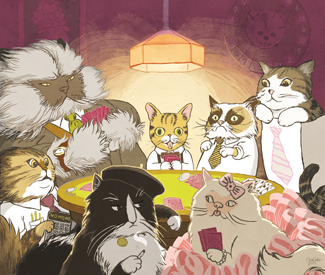
GREAT WALL OF OAKLAND West Grand between Broadway and Valley, Oakl; www.oaklandcatvidfest.com. $10-75. "Oakland Internet Cat Video Festival," benefit for the East Bay SPCA with pre-screening events (cat-themed music, animal rescue groups, food trucks, and more), plus an appearance by special guest Dusty the Klepto Kitty, Sat, 3-10.

JEWISH COMMUNITY CENTER OF SAN FRANCISCO Kanbar Hall, 3200 California, SF; www.jccsf.org. $8-12. Under African Skies (Berlinger, 2012), Mon, 7.

MECHANICS’ INSTITUTE 57 Post, SF; (415) 393-0100, milibrary.org/events. $10 (reservations required as seating is limited). "CinemaLit Film Series: Paddy Chayefsky: Scenes from American Lives:" The Catered Affair (Brooks, 1956), Fri, 6.

NEW PARKWAY 474 24th St, Oakl; www.thenewparkway.com. $6-10. "New Parkway Classics:" Wild at Heart (Lynch, 1990), Thu, 9pm. "Thrillville:" Mothra (Honda, 1961), Sun, 6.

OAKLAND PUBLIC LIBRARY 1021 81st Ave, Oakl; www.oaklandlibrary.org. Free. Just a Piece of Cloth (Henze), Sat, 2.

"PLAYGROUND FILM FESTIVAL" Various Bay Area venues; playground-sf.org/filmfest. $10-25. Showcasing Bay Area filmmakers and writers and their short work. Through May 25.

PACIFIC FILM ARCHIVE 2575 Bancroft, Berk; (510) 642-5249, bampfa.berkeley.edu. $5.50-9.50. San Francisco International Film Festival, Wed-Thu. See festival.sffs.org for schedule. "Film and Video Makers at Cal: Works from the Eisner Prize Competition," Fri, 7. PFA closed through June 5.

ROXIE 3117 and 3125 16th St, SF; (415) 863-1087, www.roxie.com. $6.50-11. CXL (Gillane, 2012), Wed, 7:15. The Source Family (Demopoulos and Wille, 2012), Wed-Thu, 7, 9:30. Upstream Color (Carruth, 2013), Wed-Thu, 9. The Crumbles (Boch, 2012), Sat, 3, 5, 7, 9. "I Wake Up Dreaming 2013:" •I Wake Up Screaming (Humberstone, 1941), Fri, 6:15, 9:45, and Blues in the Night (Rossen, 1941), Fri, 8; •Under Age (Dmytryk, 1941), Sat, 2, 6:30; Johnny O’ Clock (Rossen, 1947), Sat, 3:15, 8; and The Monster and the Girl (Heisler, 1941), Sat, 5, 9:45; •Fall Guy (Le Borg, 1947), Sun, 1:30, 6:15; Night Has a Thousand Eyes (Farrow, 1948), Sun, 2:50, 7:45; •Club Havana (Ulmer, 1945), Mon, 6:40, 9:30, and Island of Doomed Men (Barton, 1940), Mon, 8; •Nightmare (Whelan, 1942), Tue, 6:15, 9:50, and All Through the Night (Sherman, 1942), Tue, 8.

VICTORIA THEATRE 2961 16th St, SF; www.peacheschrist.com. $30-35. "The Rocky Horror Show 40th Anniversary Concert Tribute," with Patricia "Magenta" Quinn performing live and other special guests, Fri-Sat, 8 (also Sat, 3).

YERBA BUENA CENTER FOR THE ARTS 701 Mission, SF; www.ybca.org. $8-10. "Girls! Guns! Ghosts! The Sensational Films of Shintoho:" Ghost Story of Yotsuya (Nakagawa, 1959), Thu, 7:30; Flesh Pier (Ishii, 1958), Sun, 2.

Tribeca Film Festival wrap-up: the best of the rest!

2

It was the best of sequesters: oh, Tribeca, how to wrap up the many, many days spent hidden away in the dark, watching flickering images dart across a screen? I can only try, as I speed through the best of the rest — and the notable not-so-muchs.

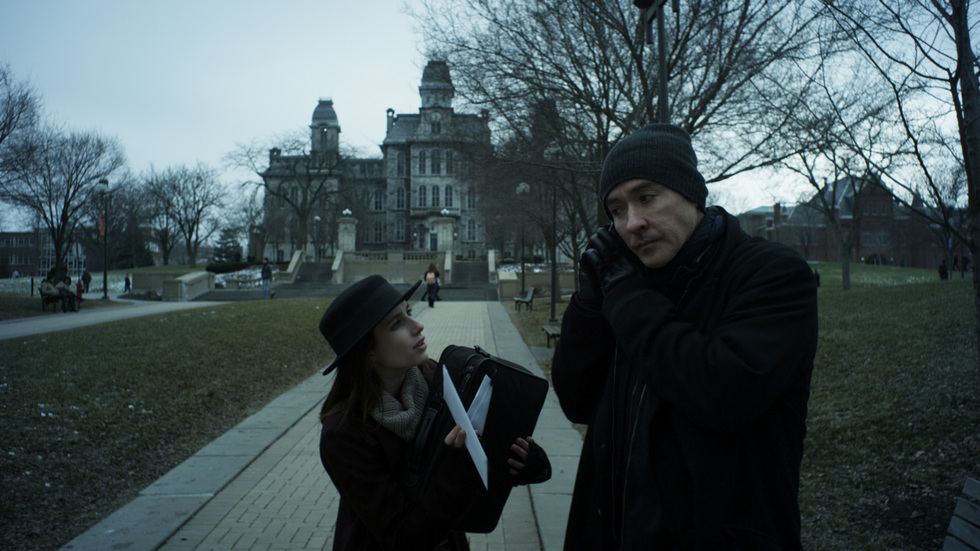
Kids these days: Poets and the young girls that love them are at the very funny heart of indie comedy Adult World, which is sure to make a star of Emma Roberts. She’s the shrill, just-graduated, wannabe-verse-slinger Amy, who’s moonlighting in an adult video store alongside hollow-eyed cutie Alex (American Horror Story’s Evan Peters) and hoping scuzzball genius will rub off if she “interns” (read: cleans house) for her favorite poet, Rat Billings (writ world-weary and hilariously cynical by John Cusack). First-time feature director Scott Coffrey (also, weirdly, a graduate of the same Honolulu high school where I did my own Amy impression) lets a few rough edges (i.e., edits) show, but it’s all good when the filmmaker winds up Roberts, playing the cringe-worthy Tracy Flick for the chapbook set, and lets her go.

http://www.youtube.com/watch?v=Z6DJSGrfNbk

Just as funny — and very of-the-moment — is G.B.F., as in gay best friend. As in every Bravo-watching gal’s latest, greatest slice of arm candy. Tanner (Michael J. Willett of United States of Tara) is just your average, comic-book-reading closeted gay teen when bestie Brent (Paul Iacono) decides his path to social success will be established once he comes out as the first openly gay teenager at their high school. He’s sure to become the pet pick of the would-be prom queens: the girl-with-the-best-hair Fawcett (Sasha Pieterse of Pretty Little Liars), drama mama Caprice (Xosha Roquemore), and Mormon good girl ‘Shley (Andrea Bowen). Alas, the wholly unprepared Tanner gets outed first — and the battle for the O.G. G.B.F. ensues.

Working with a fast, sassy, and slangy script — and teen comedy vets Natasha Lyonne, Rebecca Gayheart, and Jonathan Silverman — director Darren Stein (1999’s Jawbreaker) has already traversed some of this uber-camp territory: yes, there’s a multiplayer saunter down a high school hall and a maj makeover montage. But the snappy, laugh-out-loud dialogue by first-time screenwriter George Northy (fresh from the Outfest Screenwriting Lab, as he discussed after the film in a Q&A with Stein and much of the cast), along with some high-speed-DSL improvising by the cast, made this one of the more effortlessly enjoyable — and commercial — movies at Tribeca.

Speaking of effortlessly commercial, I mean, adorable: It sounds like NYC went stir-cray for Lil Bub and Friendz, especially when the lil’ permakitten herself materialized for a free open-air screening of the Vice documentary on a Saturday night. Short (at about 60 minutes), sweet, and definitely crammed with more than you’d ever wanted to know about Internet cats (even after Bravo’s LOLwork), their owners, and their merchandising, Lil Bub fortunately keeps its eye firmly trained on the prize, namely the wide-eyed little mutant in the center of a viral firestorm, while framing visits with Nyan Cat, Grumpy Cat, and Keyboard Cat with Bub’s life story.

This runt o’ the litter may not appear to have any bone marrow in her leg bones, zero teeth, a permanently extended tongue, and extra toes on every paw, yet she’s won more than just owner Mike Bridavsky’s heart — she’s repping for all the totes-adorbs misfits out there, making their fortunes just by being themselves (or by creating a grabby persona) on the Interwebs. Now we just need a 24-hour Bub-cam to fill in the gaps of our Bub-Friends-Forever obsession.  

Lighter fare? Paul Verhoeven’s crowd-sourced sex comedy Tricked was a mildly diverting exercise in group think, or better, gang-grope creativity. It’s no The Fourth Man (1983), Starship Troopers (1997), or even Showgirls (1995). There’s only a dash of that eye-tinglingly perverse psycho-drama that Verhoeven specializes in is evident in, perhaps, that tampon spinning in the toilet or this luscious ingenue suddenly flashing her ta-tas.

On the perversity tip — it doesn’t get much more against the grain than cannibalism, Maori family style, in the Kiwi cult-circuit-primed OTT Fresh Meat, which wallows then practically whirls in its own trough of bad taste. When a group of shoot-’em-up screw-ups invade the suburban home of an upstanding Maori suburban family, they learn that their freezer’s contents are less than savory — the hard and gory way — in a tone that seems derived from ‘80s Hong Kong martial arts comedies. Still, you have to appreciate the salacious brio with which director Danny Mulheron tackles this homecoming to Z-grade yuck-fests. 

Keeping it real: Ground-level neorealistic storytelling made its stand in features about everyday, blue-collar folks just trying to keep their head above the … snow. The best of which was Whitewash, a journey into the heart of a murder mystery with Thomas Haden Church cast as a snow-plow driver forced to rough it in the snow-swathed woods of Quebec. Church ably navigates that thin line between a kind of natural, deadpan humor and serious, even deadly, drama.

Kitted out with a cast that includes John Slattery (Mad Men), Adam Driver (Girls), and Margo Martindale (who’s in everything), Bluebird checks in on a similar, northerly terrain, an isolated, snow-cloaked Maine logging town, on the pretext of investigating the dire ramifications of single lapse by a well-meaning school bus driver (Amy Morton of Boss). Frustrated by that traumatized character’s deer-in-the-headlights muteness, you know there’s nowhere to go but up.

Much better, down south in burn-out, strip-mauled Florida, is Sunlight Jr. — otherwise known as Walking Dead heartthrob Norman Reedus’s return to the big screen, as yet another scary redneck, this time wielding a big-wheeled truck rather than a crossbow. Serenaded by an elegant guitar soundtrack by Dinosaur Jr.’s J. Mascis, Naomi Watts is as fantastic as usual, as a convenience-store honey struggling to stay sober and maintain a relationship with a hard-drinking, wheelchair-bound boyfriend (Matt Dillon). Director and writer Laurie Collyer (Sherrybaby) keeps her focus tight, only adding to Sunlight Jr.’s power.

Meanwhile, earnest Iowa farm-centered At Any Price, which opens theatrically in the Bay Area tomorrow, wasn’t quite the breakout movie for a mugging, dead-eyed Dennis Quaid, but it might be for Zac Efron, who rises above the fray in an indie that aspires to the gravitas of A Thousand Acres.

A continent and millions of concerns away in Italy, Ali Blue Eyes made a case for the story of two rebellious teenaged pals — one an Egyptian Muslim, the other a Catholic Italian. Nader (Nader Sarhan) may wear blue contacts in order to, rather lamely, blend in, but his loyalties and cultural ties are tested after a Romanian kid is stabbed in this compelling glimpse into an immigrants world at the edges of affluent Milan.   

http://www.youtube.com/watch?v=wSTjh9Sd5Vs

Shock and awe: Midnight movies abounded — two of the best that I caught were The Machine, a relatively polished, low-budg Frankenstein story set in an English weapons research lab where researchers are intent on building the ultimate cybernetic super soldier. Riddling his script to references to quantum computers and the like, director-writer Caradog James manages to infuse a solid sense of Cronenbergian dread — as well as a tenuous moral ambiguity — into a sci-fi narrative that’s as old as the Romantics.

Much more disappointing — and marred by technical roughness — was Dark Touch, Marina de Van’s (2002’s In My Skin) rendition of Carrie, this time in the form of a telekinetically gifted (or cursed) 11-year-old. I get it — child abuse leads kids to act out, in this case, in murderous ways — I just kept tripping over the lapses in continuity and logic, the beautiful female characters’ uniform Breck Girl look, and the tragic special effects.

Fun, in the way that a blood-sucking brotherhood brandishing the “pointed nails of justice” can only be fun, is Byzantium, Neil Jordan’s return to the world of the undead, so long after 1994’s Interview With a Vampire. Here, the would-be malignant spirits choose to their path by visiting a wicked island that gushes blood when another little vampire is born. They also stroll about conveniently by day — though the isle and its keepers forbid women to make vampires (childbirth, I suppose, is considered sufficient). Still, it’s a trashy good time, with a lush Gemma Arterton wildly vamping as harlot-prey-turned-madam-predator and taking a garrote to her hunter (though after sitting through The Host, I’m not sure how much longer I’m willing to buy Saoirse Ronan’s ethereal space-cadet act).

The final, very wonderful monster in the room? A certain pantless Broadway legend who has shared a stage with Harpo Marx, dated Jack Kennedy, and has had Noel Coward and Stephen Sondheim write for her. The doc Elaine Stritch: Shoot Me follows the feisty song-and-dance Broadway icon on the verge of 87 as she tosses off wisecracks, appears on 30 Rock as the mother of Alec Baldwin’s Jack Donaghy, copes with diabetes, and bosses around documentary maker Chiemi Karasawa. It’s a unique delight — much like its subject. Yes, she just moved out of her digs in the Carlyle Hotel and back to her native Michigan — but Shoot Me allows us to bask in the considerable afterglow left in her wake.

‘Maximus’ through Flarf

0

marke@sfbg.com

LIT Mm-hmm

Yeah, mm-hmm, it’s true

Big birds make

Big doo! I got fire inside

My “huppa”-chimpTM

Gonna be agreesive, greasy aw yeah god …

In 2000, Gary Sullivan’s grandfather fell victim to a then-familiar poetry.com scam. (“You’ve won a poetry contest! Order the book with your poem in it now!”) In revenge, he went on the scam site and wrote what he thought was the worst, most offensive poem ever — which of course won its own scam contest. Then a curious thing happened:

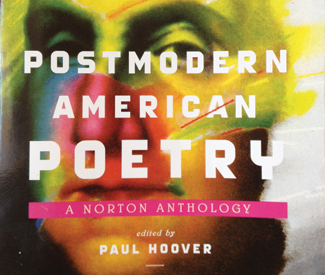
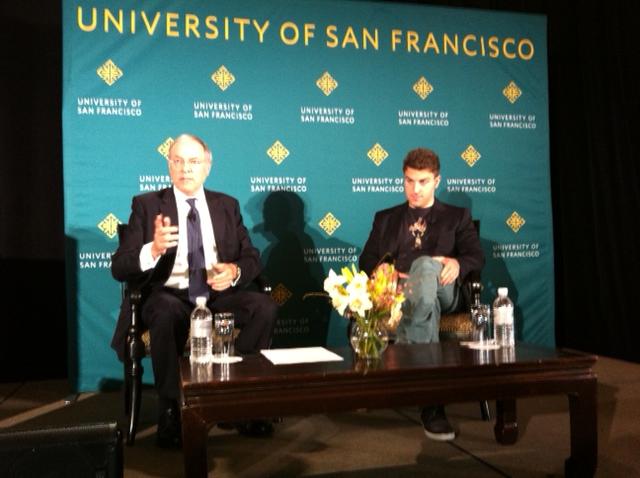
“When Sullivan sent his poem to friends online, they decided to write their own purposely bad poems,” editor Paul Hoover tells the tale in the introduction to his updated Norton Anthology of Postmodern American Poetry, released last month. Soon a whole listserv of sniggering poets were randomly Googling phrases from bad poems (this was when Google was brand new, mind you) and “plugging in” the random juxtapositions to create new, worse ones — which incidentally also captured the logorrheic splooge, misfired proto-snark, corrosive cuteness, pornographic troll-holes, and manic self-hype of the Internet itself.

Thus a new poetic movement called Flarf was born.

A lot has changed since the first edition of NAPAP came out, in 1994. Back then, hyperacademic multicultural poetics and practitioners of the Language school, which sought to “scatter attention” over the poem with discursive overload and deliberate (yet often hilarious) difficulty, were riding high. In the color-saturated days before the Internet, the first edition was a revelation. Hoover, a San Francisco-based poet and teacher with a knack for highlighting the emotional resonance in abstract practices, served as a perfect guide to postmodern poetry, or at least a certain exciting type, which he broadly defines as “an experimental approach to composition, as well as a worldview that sets itself apart from mainstream culture and the sentimentality and self-expressiveness of its life in writing.” In other words: “truth” is out, truthiness in. And enough weeping over your dead great-grandmother’s recipe book, already.

I met with the tall, calm Hoover in his frighteningly humble San Francisco State office, where he’d been “locked up for months” working on the second edition (see my full interview this week at www.sfbg.com/pixel_vision). “We called the anthology ‘post-modern’ rather than ‘experimental’ or ‘avant-garde’ mostly because those terms are problematic, and have enough cultural baggage to really turn people off. So we started with the poet Charles Olson, who was the first poet to label himself postmodern and attempt to break with the grand modernist past. ‘And had we not ourselves (I mean postmodern man) better just leave such things behind us — and not so much trash of discourse, & gods?’ he wrote to fellow poet Robert Creeley. And he put this into practice in his ‘Maximus’ poems.”

The anthology is chronological: after Olson, in almost 1000 pages, we get almost all the big avant-garde-y names like John Cage, Robert Duncan, Denise Levertov, Frank O’Hara, John Ashbery, Jack Spicer, Allen Ginsberg … Uncontroversially, Hoover takes his lodestars to be the Black Mountain School, the New York School, and (somewhat shakily to me, in terms of intellectual rigor, yet still charming) the Beats. Then come the Language poets, near where the first volume ended, and afterward a multitude of newbies — Vanessa Place, G.C. Waldrep, Noelle Kocot, Ben Lerner — begin.

“In order for this book to not be 13,000 pages, I had to make some hard decisions, about who was not to be included, and who needed to go. It wasn’t so much a matter of redefining what is ‘post-modern’ or even what’s ‘American,’ although maybe those things have also changed. But so much has happened — the Internet, social media, September 11, the expansion of global capitalism, mass media, and multinational corporations. I don’t think there’s been such a fundamental change that we’ve moved out of this thing called ‘postmodernism’ into something completely different or new. But poetry reflects these changes with constant innovations of its own. There’s a lyricism completely of the time in the best of these poems, but also completely outside of it.”

So what are some of the innovations? Besides the hyperreal grotesqueness of Flarf poets like Sullivan, Sharon Mesmer, and K. Silem Mohammed, there is its nemesis — at least in a poetry beef possibly ginned up for attention — Conceptualism. Whereas Flarf adrenalizes visceral response within a poem’s span, conceptualism often makes the poem into nothing but the static result of grand idea: the best example of this is Kenneth Goldsmith’s epic “Day,” in which he reconstructed the entire September 1, 2000 issue of the New York Times into a 900-page book (excerpted in the anthology).

In between lie practices like Proceduralism (Christian Bök’s strangely affecting “Vowels” made out of words that contain the same letters as the title, and which ends “wolves evolve”), Google sculpting and cybernetics (Muhammed’s hilarious “Sonnagrams,” in which he puts Shakespeare’s sonnets through an online anagram generator, then “sculpts” the results in Microsoft Word, dragging the words around to form a new sonnet). There is also the deliberately “girly” “Gurlesque” poetry of Catherine Wagner, and the eerie and complex “ambient” poetics of Tan Lin, which is just a beautiful drift of words across a page, a “gossip of the mind.” And much, much more in this fascinating and necessary volume.

Funny, infuriating, dangerously familiar, hauntingly strange, way too intellectual, true despite itself: poetry is the same as it ever was. The next edition, in 2034, ought to be a real corker.

POSTMODERN AMERICAN POETRY READING CELEBRATION with Paul Hoover and 16 more poets: Fri/3, 6:30pm, free. Koret Auditorium, de Young Museum, 50 Hagiwara Tea Garden Drive, SF. 


Boom life: Mattilda Bernstein Sycamore talks about ‘The End of San Francisco’

0

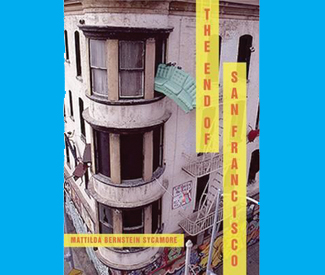
A picture of Brian Goggin’s iconic site-specific sculpture “Defenestration” (that 16-year-old “furniture leaping out of an abandoned building” piece in SoMa that may be demolished soon) is pictured on the cover of Mattilda Bernstein Sycamore’s latest book, The End of San Francisco — which I reviewed in this week’s Guardian.

It’s an almost too-perfect image to represent the book’s contents — “Defenestration” cheekily channeled the out-the-window frustration of the dawning of the first Internet boom, with its hordes of tech gold-rushers pushing out old San Francisco culture. (And now, in the middle of another tech boom, the artwork itself will be pushed aside to make way for affordable housing — the term for anything under $2500 per month rent pretty much at this point.) The End of San Francisco takes us on an atmospheric, highly personal through the turbulent period of the ’90s and early 2000s, while asking some hard questions about the queer activism, participatory gentrification, and “alternative culture” of the period. Along the way, Mattilda intimately delves into issues like her recovered memories of sexual abuse as a child at the hands of her father; the rampant drug use, mental illness, and hostile attitudes of Mission queer culture; the gynophobia and transphobia of many “underground” scenes, and much, much more. 

I asked Mattilda a few questions over email in advance of her appearances here at City Lights (April 30) and the GLBT Historical Society (May 9) to help set her book in the context of what was happening then, and what’s still happening now. As always, she pulled no punches. 

MATTILDA BERNSTEIN SYCAMORE reads Tue/30, 7pm, free at City Lights Bookstore, 261 Columbus, SF. www.citylights.com, and Thursday, May 9, 7pm, free at the GLBT History Museum, 4127 18th St., SF. www.glbthistory.org

SFBG What was the impetus for writing such a wide-ranging memoir? You cover almost your entire life, from some of your earliest memories to when you officially moved away from San Francisco. Was there a specific purpose when you sat down to write it?

MATTILDA BERNSTEIN SYCAMORE
With my anthologies, I always have a specific purpose in mind, a political intervention, but for this kind of personal writing – I write to stay alive. So it’s a different kind of intervention. I started with 1200 pages of material, and then separated different sections into themes. So, for example, the chapter called “The Texture of the Air,” originally that was something like 200 pages of writing about cruising and its limitations, about trying to regain a sense of hope in my own sexuality. Now it’s 15 pages. At some point I realized that the book centered around the myths and realities of San Francisco as a refuge for radical queer visions in community building. I first moved to San Francisco in 1992, when I was 19, and it’s where I figured out how to challenge the violence of the world around me, how to embrace outsider visions of queer splendor, how to create love and lust and intimacy and accountability on my own terms. I left San Francisco in 2010, and in some ways this book is an attempt to figure out why or how this city has such a hold on me, in spite of the failure of so many of my dreams, over and over and over again.

SFBG I think the most fascinating parts of the End of San Francisco are your spot-on description of life here in the 1990s, and your detailing of the excruciating decline of that era in the dot-com boom. Now
that we’re undergoing another dot-com boom, what are some of your thoughts as to how that’s once again affecting “alternative culture.” Is there any such thing as “alternative culture” anymore?

MBS Oh, it’s so sad! The way gentrification has progressed over these last 20 years. The displacement, the homogenization, the transformation of cultures of resistance into commodities. The way all of this limits people’s imaginations. At the same time, I don’t want to romanticize the past. In the early-‘90s, it felt like everywhere people were dying of AIDS and drug addiction and suicide; it was a desperate time, even if in some ways there were more possibilities for choosing a life outside status quo normalcy. But, no matter when we are living in this country so responsible for genocide, endless war, the destruction of the environment, we are living in a desperate time and we still need to come up with radical alternatives to giving up.

SFBG I figure a lot of the people who were here in that era (me included) will recognize a lot of truth in what you describe, including some pretty scathing but deadly accurate words about the people who thought they were on the forefront of alternative culture back then — how a lot of it was “vintage store glamour” and the “strung-out junkie look.” Have you had any reactions from anyone about that? Or from any of the people who were close to you back then that you’ve written about?

MBS I offered the manuscript ahead of time to everyone in the book who plays a major role. A few people didn’t respond. Some offered detailed feedback. And some, of course, are featured in conversations about the book, in the book – while The End of San Francisco is about my memories, of course these memories exist in the context of the relationships I’m describing. I want to challenge the notion of one true story, while at the same time I obsess about figuring out all these formative moments for me – politically, socially, sexually, ethically, emotionally. One of the funniest responses was from the first person who I trusted, we moved to San Francisco together in 1992. She wanted me to take out the parts where we do drugs, so she could show her kids!

SFBG Another fascinating part is your account of the rise and peter-out of Gay Shame [the guerilla anti-assimilationist co-founded by Mattilda]. You’ve talked about this before in previous books, like the anthology That’s Revolting — how did you approach writing about it within the context of this memoir?

MBS This writing is more self-critical. It’s more about the relationships I formed through activism, the gaps between our rhetoric of inclusiveness and the more complicated realities. Ultimately I’m looking at this activist group that meant so much to me, that challenged and inspired me in so many ways, but ultimately failed me. I’m not saying that it failed, but it did fail me and I’m trying to figure out why.

SFBG Do you think there’s any space now, in SF or anywhere else, for a true queer resistance movement?

MBS
There never is space. We have to create it. There is so much self-congratulatory rhetoric in San Francisco, especially in radical-identified queer spaces, and we’re never going to get to something beyond a cooler marketing niche unless we can examine the ways that so often in radical queer spaces people treat one another just as horribly as in dominant straight culture or mainstream gay culture, and it hurts so much more when this kind of viciousness comes from people you actually believe in.

SFBG I loved your take on the Eagle even while I disagreed with some of it. Have you been following the whole return of the Eagle thing, spearheaded by probably our loudest current voice in queer anti-assimilationism, Glendon Anna Conda Hyde?

MBS In the book, mostly I’m talking about how the Eagle, a bar entrenched in mainstream gay norms of mandatory masculinity, objectification without appreciation, racial exclusion, and fear of all things feminine without beards, became a hipster hotspot without changing its core values. I can’t comment specifically on Glendon Anna Conda Hyde, but I will say that it depresses me when people embrace tragic gay institutions as “community,” as if they have ever offered us anything meaningful beyond a place to get smashed with people we’ll hate in the morning. Yes, it’s also depressing that public sex cultures that used to exist South of Market have basically disappeared, but I think we need to envision new possibilities instead of fetishizing the past.

SFBG You write so boldly and candidly about sexual abuse, drug will addiction, illness, relationships, politics … were there any memoir models you worked off of, and were there any rituals you went through to be able to open up so much?

MBS I think most memoirs take the most fascinating, multifaceted, complicated lives and turn them into Choose Your Own Adventure books without the choice. I wanted to create something more layered and honest — I was drawn to exploring the places where my analysis stops, to using those gaps as openings into something more spontaneous and incisive. As a teenager I needed to create a facade of invulnerability in order to survive, in order to find other kids like myself, in order to go on living. But now that façade leaves me feeling shut off rather than connected. Now I’m drawn towards expressing vulnerability, I think that’s what will save me.

SFBG
I felt like you left us with a cliffhanger in terms of your father reconciling with you over memories of your childhood sexual abuse. Was there ever any resolution?

MBS
I love that it felt like a cliffhanger for you even though the part about visiting my father before he died was right at the beginning. That was an incredibly intense moment for me, to visit him on his deathbed, to go to the house where I grew up with all that violence and still be able to express everything, to sob and tell him that I loved him, something I would never have imagined I would even want to say, but it’s what I felt in the moment and so I figured why not, he’ll be dead soon and I don’t want to hold anything in. For me that felt really powerful: it meant that all this work I’d done to become someone other than the person my parents wanted me to be, it really had worked. That was a certain kind of closure, that openness. But no, he refused to acknowledge anything. He wouldn’t even tell me that he loved me.

SFBG In terms of queer relationships and friendships, The End of San Francisco speaks insightfully about pain, desire, co-dependence, processing, betrayal, apathy, need, and abuse. Was there ever any love? Could there be?

MBS Yes, there was so much love – I hope that comes through in the book! And nothing has let me down more than love.

Care clash

13

The first week in April was a rough time for Connie Salguero. The Filipina nursing assistant, who says she would’ve been eligible to retire in two years, reported to her shift at the University of California San Francisco medical center at Mt. Zion on April 1 — and was told she was laid off. Two days after that, she was forced out of her home through an eviction, but fortuitously met an elderly Filipina woman who said Salguero could stay with her until she gets back on her feet.

“This manager said to me, Connie, come here, let’s talk,” and delivered the bad news, Salgeuro recounted, getting a little misty-eyed. Two other Filipina hospital assistants in her unit met with the same fate that day, she said.

“I’m trying to find a job,” Salguero said. “It’s very hard. But I will survive.” She projected a sense of resolve despite the whirlwind of sudden stress, which seemed fitting for someone whose job entailed feeding, bathing, and assisting up to ten bedridden patients at a time, many of them suffering from cancer.

Salguero said management told her the layoffs were necessary because of the most recent wave of federal budget cuts. But Cristal Java, lead organizer for UC patient care technical workers’ union, AFSCME 3299, interjected during an interview with the Bay Guardian to refute that explanation, calling it “total crap. They don’t want to tell workers the truth,” Java said, “which is that the hospitals are extremely profitable.”

UCSF ELIMINATES 300 POSITIONS

Salguero is one of about 25 UCSF certified nursing assistants whose recent layoffs prompted AFSCME to register a formal complaint with the Public Employee Relations Board, an agency that mediates labor disputes. The CNA layoffs hit in March and early April as part of a raft of cutbacks that eliminated a total of 300 full-time equivalent positions. Some of those positions were unfilled while other staffers were reassigned elsewhere or had their hours cut; a total of 75 individuals were laid off.

The cuts prompted union representatives to organize a protest at UCSF’s Parnassus Campus April 4, with San Francisco Sup. John Avalos and California Sen. Leland Yee turning out in support of the workers. Salguero was there too, waving a sign, and she wound up telling her story for an international broadcast by a Filipino news station. Things took a dramatic turn when police arrived on the scene, and Union President Kathryn Lybarger and some others were escorted off the premises in handcuffs.

Asked to explain the rationale behind the layoffs, UCSF spokesperson Karin Rush-Monroe responded, “We evaluated the impact of the Affordable Care Act, expected reductions in Medicare, MediCal and private insurance reimbursements,” as well as employee benefits and rising costs in drugs and medical supplies, and ultimately decided on a 4 percent labor budget cut. “We must make a ‘course correction’ if we are to maintain our resources to care for our patients,” Rush-Monroe said.

But the staffing cuts hit just weeks after AFSCME published a blistering report, titled “A Question of Priorities,” charging that UC has prioritized profit margins at its medical centers since 2009 while needlessly eliminating frontline staff positions, all to the detriment of patient care.

“It feels very much like they’re chasing down the Wall Street model of business,” Randall Johnson, an MRI technologist at UCSF Parnassus Campus who is active with Local 3299, told the Guardian. “We’re pressed to move faster and faster and faster. It’s more about profit than it is about patient care.”

Steve Montiel, spokesperson for UC Office of the President, told us that UCSF is “consistently ranked as one of the top hospitals in the country by U.S. News and World Report,” and pointed out that the AFSCME report coincided with an ongoing contract dispute concerning patient care technical workers, which may lead to a strike authorization in the next few weeks.

DANGEROUSLY LOW STAFFING LEVELS?

Billed as a “whistleblower report,” AFSCME’s 40-page publication portrays an internal environment throughout UC medical centers in which staffers — particularly frontline workers — are exhausted, overburdened, and dangerously likely to make mistakes.

Peppered with anecdotal horror stories describing things like dried blood observed on operating room tables at facilities where custodial staffing was cut to a bare minimum, or an incident in which a mentally altered patient was found on a window sill at a medical facility where harrowed nursing assistants’ attention was divided too many ways, the report portrays an unsafe environment that seems out of sync with the system’s reportedly healthy earnings derived from patient care.

“Bring it up at bargaining, and you get told to kick rocks,” said union spokesperson Todd Stenhouse. AFSCME has called upon state agencies and lawmakers to investigate UC policies on “cutting costs, reducing staff, and maximizing revenue.”

“We’ve been getting lots of reports about short staffing, and no coverage for breaks,” said Tim Thrush, a diagnostic sonographer who works with patients experiencing complications in pregnancy, and has worked at UCSF for years. “If you get a break or a lunch, it seems to be rare — even though it’s state law.” Thrush added. “It looks to us … that UC’s response to us raising concerns … is to say, OK well then let’s make it worse. Let’s lay off a whole bunch of people.

“It’s been very disappointing,” he said, “and it’s getting to be kind of scary.”

The report emphasizes California Department of Public Health findings of violations relating to bedsores from 2008 to 2012. The sores can occur if a patient stays in one position for too long, causing reduced blood flow and damage to skin tissue, and have been linked to infection.

Among those affected by the layoffs were “lift and turn team” members, including care workers tasked with turning immobilized patients to prevent bedsores.

Ironically, Rush-Monroe, the UCSF spokesperson, noted in response to a Guardian query that a $300,000 “incentive pay” bonus CEO Mark Laret received in 2011 was based on multiple “clinical improvement goals” that had to be satisfied in order to qualify for the 2011 compensation increase. One of these targets was a reduction in the number of hospital-acquired bedsores.

While the union report points to rising instances of bedsores, and the UCSF administration claims they were reduced to the extent that the CEO was monetarily rewarded for the accomplishment, a quick look at scores on hospital ranking website California Hospital Compare showed that pressure sore rankings at UCSF are almost exactly even with the statewide average.

Meanwhile, hospital rankings of patient safety indicators on Health Grades, an online consumer ranking website, didn’t reflect any dramatic differences between patient safety scores at UCSF, CPMC or Kaiser Permanente.

QUESTIONS RAISED

In the midst of these staffing cuts, AFSCME charges, the $6.9 billion system has enjoyed robust finances, with UCSF earning $100 million in net revenue last year. Between 2009 to 2012, management positions increased by 38 percent system-wide, while payroll costs for managers grew by 50 percent, with an additional $100 million a year allocated to administrative staffing.

According to a 2013-14 budgetary report prepared at the UC level, the system’s network of public universities have suffered deep financial cuts while its five medical centers “have continued to flourish and grow,” and “enjoy robust earnings.”

A revenue breakdown in the UC budget report shows that 62 percent of medical center earnings system-wide were derived from private health care plan reimbursements, while about a third came from Medicare and MediCal, funded by the federal and state government.

Meanwhile, ASCFME’s report has raised eyebrows in the California Senate. Sen. Ed Hernandez, who represents part of Los Angeles County and chairs the Senate Health Committee, “has expressed an interest in looking at it further,” according to committee consultant Vincent Marchand. “We may decide to call a hearing” sometime in May to see if further action is warranted, he added.

Sen. Yee lambasted the UC system for what he called “blatant disregard for the working staff.” Yee said the layoffs raised concerns about the quality of patient care, saying, “How do you lay off 300 individuals and think that it’s not going to compromise patient care?”

Yee added that he thought the UC budget ought to be scrutinized when it goes before the Senate. “Although the Constitution gives the UCs of California tremendous autonomy via the Board of Regents, ultimately we in the Legislature still allocate dollars … so there is a legislative and moral responsibility that we need to exercise,” he said. “Are the dollars within UC being used appropriately to take care of patients and in ensuring their safety?”

CONSTRUCTION, COMPENSATION AND VIPS

In early 2015, UCSF will open its new Mission Bay complex, a 289-bed facility featuring a children’s hospital with an urgent/emergency care unit and an adult care unit for cancer patients. The estimated price tag for the project is about $1.5 billion, and construction costs associated the project were referenced in an Oct. 12 letter Laret, UCSF’s CEO, issued to hospital staff announcing the pending staffing cuts.

Thrush questions decisions made at the highest administrative levels. Laret is “eliminating 300 jobs, and we’re opening a new facility, and he’s getting a $300,000 bonus,” he said, referring to a “retention bonus” expected to be awarded this year, which could be followed by a $400,000 bonus in 2014. “Why is he getting a huge bonus if we’re having to lay off so much staff?”

With a total compensation of around $1.2 million in 2011, Laret’s salary seems excessive in comparison with that of frontline workers — and it is. At the same time, it seems to be within the realm of a CEO of a major medical facility, a quick Internet search reveals.

ACSFME’s report targets Laret specifically, saying he repeatedly emphasized to hospital staff, “When you see patients, you should see dollar signs.” Johnson, the MRI technician, told the Guardian he heard Laret make this statement years ago, when he first came on as CEO. “I know that some physicians were outraged by it,” he said. “I heard that the physicians told him to stop, and he stopped saying it.” UCSF did not respond to Guardian requests for a comment on this allegation.

The report also focuses on a practice of so-called “VIPs” — patients connected with the UC Regents or other influential persons — receiving preferential care. “I got called in on a Sunday to take care of a celebrity, because they had a headache,” said Johnson. “I’ve seen patients have to be on hold so we can scan the [VIPs]. They definitely get preference. I’ve been told, if one of those VIPs comes in, we have to get them on the scanner.” UCSF didn’t respond to Guardian questions concerning VIP patient treatment, either.

LABOR DISPUTE

Montiel, the media relations director for the UC system, responded to a Guardian query with a wholesale rejection of the detailed 40-page report, without directly addressing any of the allegations. Instead, he said the whole controversy arose from a labor rift over pension reform.

“These claims by AFSCME coincide with a bargaining impasse, and the scheduling of a strike vote by its patient care technical workers,” Montiel wrote in an email. “Quality of care is not the issue. The real issue is pension reform. AFSCME has resisted pension reforms that eight unions representing 14 other UC bargaining units have agreed to. The reforms also apply to UC faculty and staff not in unions.”

AFSCME recently announced that its membership would begin voting on April 30 over whether to authorize a strike, following months of stalled negotiations over a contract that expired last September. Stenhouse, the union spokesperson, called it “the impasse of impasses” yet suggested to the Guardian that the strike authorization vote was a side issue from the concerns raised in the whistleblower report. The workers are there to “provide patient care,” he told the Guardian. “They’re not making Buicks.”

“This report is about something much bigger than our members’ livelihoods,” Lybarger stated when the report was released. “It’s about whether the UC is prioritizing quality care for the millions of Californians who put their lives in our hands.”

Laid bare

0

marke@sfbg.com

LIT “I met Johanna at a party in New York in 1998 — actually I was talking to her boyfriend first, barrettes in his dyed black hair and painted nails, I was trying to figure out if he was a fag or from Olympia.”

If you were “alternative” in the ’90s, that priceless sentence should ring strikingly true, as will this one: “Obviously we believed in attitude: if someone said something about not wanting to judge people, that was New Age garbage. New Age garbage was almost as bad as a trust fund, it was the same thing as stealing from your friends because you were stealing their rage.”

Mattilda Bernstein Sycamore — outspoken queer anti-assimilation activist, genderblending thriftstore style icon, archetypal Mission District character, huge-hearted den mother, insufferable gadfly — is the posterchild for all that was culturally alternative in San Francisco in that pierced-lip poser decade, while at the same time possessing one of the loudest voices cutting through the bullshit clamor back then and questioning it all.

She’s also a brilliant writer, with two novels and several anti-assimilationist essay anthologies, including last year’s Why Are Faggots So Afraid of Faggots?, under her sparkly little purple belt. Her new memoir The End of San Francisco from City Lights Books is written in such a hypnotically elliptical style (summoning City Lights’ Beat poet legacy) and contains so many spot-on observations and era-damning epigrams that anyone who lived through the period described will cling to its pages while wishing to hurl the book at a wall in embarrassed self-recognition.

Searing, funny, maudlin, elegiac, infuriating, and confessional, The End of San Francisco is a deliberately disordered collection of vignettes dealing mostly with Sycamore’s span living in the city and launching the highly influential Queeruption, Fed Up Queers, and Gay Shame activist movements.

“At some point I realized that the book centered around the myths and realities of San Francisco as a refuge for radical queer visions in community building,” Sycamore told me via email.

“I first moved to San Francisco in 1992, when I was 19, and it’s where I figured out how to challenge the violence of the world around me, how to embrace outsider visions of queer splendor, how to create love and lust and intimacy and accountability on my own terms. I left San Francisco in 2010, and in some ways this book is an attempt to figure out why or how this city has such a hold on me, in spite of the failure of so many of my dreams, over and over and over again.”

Along the way we get drug overdoses, AIDS, lesbian potlucks, heroin chic, crystal meth, ACT UP, the birth of the Internet, the dot-com boom, the dot-com bust, mental breakdowns, outdoor cruising, phony spirituality, Craigslist hookups, hipster gentrification, Polk Street hustling, fag-bashing, shoplifting, house music, the Matrix Program, crappy SoMa live/work lofts, “Care Not Cash,” gallons of bleach and hair dye, and processing, processing, and more processing.

It’s definitely not a nostalgia-fest: Juicy passages about SF club history, ’90s queer life in the Mission, and Gay Shame’s internal dynamics and gloriously kooky pranks (guerrilla Gay Shame Awards ceremonies blocking Castro traffic; a Pride adjacent, corporate-sponsor-tweaking “Budweiser Vomitorium” where you could “barf up your pride”) are accompanied by an Oprah-load of issues including chronic pain, incest, personal betrayals, anorexia, depression. The moving opening chapter describes Sycamore confronting her father in the upscale Washington, DC home she grew up in about her recovered memories of his sexual abuse, as he lay dying.

And Sycamore has surprising words for those who think queer punk, riot grrrl, the bathhouse disco and clone-look revival, or the scene at the SF Eagle were essential to the queer activist movement (Kathleen Hanna of Bikini Kill makes a memorable appearance — Sycamore befriended her without knowing who she was, and later attended the first Le Tigre show.) Her habit of questioning everything can often paint her into corners of abrasive self-absorption, but she continues to raise interesting points about the fetishization of machismo in the FTM, leather, and punk communities, the emptiness of hipster activism, and the capitalist-colluding hypocrisy of “alternative culture.”

As usual though, she saves her heaviest judgments for the mainstream gay morass, its Borg-like drive toward cultural hegemony via marriage, military, and consumerism — even as she acknowledges the necessary symbiosis that binds queer outcasts together. At 1993’s March on Washington, “where suddenly there were a million white gay people in white t-shirts applying for Community Spirit cards”: “Gays in the military was the big issue and what could be more horrifying but here’s the thing: freaks actually found one another — we were so alienated that we went right up and said hi, I like your hair…”

This, then, is the tenderness that drives Bernstein to keep speaking out, despite the personal costs. As we weather another dot-com boom of homogenizing gentrification, The End of San Francisco is a timely reminder of the community that can spring from resistance.

MATTILDA BERNSTEIN SYCAMORE reads Tue/30, 7pm, free at City Lights Bookstore, 261 Columbus, SF. www.citylights.com, and Thursday, May 9, 7:30pm, free at the GLBT History Museum, 4127 18th St., SF. www.glbthistory.org


Covering the Boston bombing

21

Ever since the horrible, awful bombing at the Boston Marathon, I’ve been doing what every crazy newshound does and spending far too much time on the Internet trying to get the latest scrap of information. This morning, none of us could drag ourselves away from the developing story.

And I have to say: There are thousands of web sites covering this, mostly be aggregating other people’s content. But the real work of finding and reporting news has been done by the old-fashioned traditional mainstream media that we all so freely dismiss as dinosaurs.  The New York Times and The Boston Globe have done an exceptional job, as has the Associated Press. That’s in large part because they still employ significant numbers of staff reporters, with the experience and contacts to accurately cover this kind of story.

The MSM screws up a lot, and allows politicians to avoid accountability, and has all sorts of biases. But nobody else has the ability to cover a tragedy and disaster like this.

Of course, not all is perfect. The New York Daily News and CNN have screwed up badly. The rightwingosphere is so obsessed with Muslim Terrorists that it’s seeing them everywhere, creating them out of paranoid visions if necessary.

But if there weren’t newspapers and broadcast outlets with old-fashioned reporting staff, we’d be far less informed and more reliant on official law-enforcement sources. The old business model is falling apart, but there’s still a need for actual news outlets.

And for my money, the absolute best source of accurate, fair, complete, and insightful coverage has been that very, very old medium — raido — and that old goverment-funded institution, NPR.

Something to think about when a real major news event happens.

Punk democracy

1

arts@sfbg.com

MUSIC When the going gets tougher in the music biz, scrappy little South Bay punk label Asian Man Records has kept on going, downsizing yet sticking to its guns. That means standing by bands that have a chance to jump ship to a bigger imprint — by wishing them well.

Such might be the case with San Francisco’s Wild Moth, which came heavy with its sprawling, epic post-punk on the Mourning Glow EP released by Asian Man last summer, plays this week’s showcase, and has recently completed a full-length. “There’s some bigger labels that might be interested,” says Asian Man’s main man Mike Park, 43, on a recent morning in the office in his mom’s basement garage in affluent, arcadian Monte Sereno, right where it’s been for the past 16 years. “Our thought pattern is we want what’s best for the band. We’re here for you, but we want you to get the best deal.”

DIY, book-your-own-life punk has always hinged on that kind of support to Park, no slouch when it comes to both music-making and community-building. I last spoke to the vet of the South Bay ska scene and linchpin of Skankin’ Pickle about eight years ago when he was embarking on his “Bike For Peace” tour, cycling down the coast along with others to play and raise funds for a local youth center. Five years along from the opening of the first drug- and alcohol-free arts-focused Plea For Peace center in Stockton, Park continues to keep the faith — and to keep Asian Man out of the red — by staying small, though over the years he’s sold more than a 1 million albums by artists as disparate as Alkaline Trio, Andrew Jackson Jihad, the Queers, Kepi Ghoulie, the Lawrence Arms, and Slow Gherkin.

“A lot has to do with, when the music industry started to tank, I had a big jump-start on it,” says Park today. “I felt there was going to be a big turn and I started cutting back quite a bit. Bigger labels were still spending a lot of money and doing well in 2000, but I’ve always been able to turn a profit and, with the present-day music industry, I cut back even more.”

“We’re really upfront with the bands as far as our limitations — and we don’t do much at all!” he continues, chuckling. Yet despite the fact that Asian Man doesn’t harbor a major’s or major-indie’s marketing team (Park employs only one full-time employee besides himself) it does what it can, fostering a space that helps everyone help themselves. “Mostly the bands want to be part of this community. A lot of bands come over and hang out, help us pack records, lend a hand. We try to go to each other’s shows, and bands help out other bands when they tour.”

Park clearly took the lessons of Ian MacKaye’s Dischord Records to heart: keep prices low, maintain integrity, the works. The upcoming show with Wild Moth, the Exquisites, and Shinobu might be considered a good example of punk democracy in action: “They’re all on the same level,” Park says of the groups. “We’re just hoping we get a decent crowd. It’s a test to see how many people we can get out with no real headliner!” He got SF’s Great Apes on the bill because he’s known member Brian Moss since he was a teenager playing music: “He’s a super-talented guy and very supportive of all bands. You can tell some people are into it for what can further their careers, but instead with him, it’s ‘how can I help others?'”

Sounds a little like someone else we know. Still, punks mature, get married, and have kids, much like Park, who, despite an upcoming reunion show for his combo the Chinkees at a ska festival in Las Vegas in May, seems most excited about his latest project: his album of kids music and his kids label, Fun Fun Fun, which aims to release children’s music by punks. So far, the imprint’s Play Date, composed of Greg Attonito of Bouncing Souls and wife Shanti Wintergate, has shown up on NPR, and Park himself won a spot as the “Super Music Friend” on this winter’s Yo Gabba Gabba! Live! tour. “Other than the fact that we try to put out music that isn’t dumbed down, musically, it can pass for any of the records we normally put out,” he explains of Fun Fun Fun’s sounds, “only more G-rated and more educational lyrics.”

Whether he’s teaching kids when it’s safe to cross the street via ska or learning about new hardcore genres from the high schoolers that come by the office to help out, Park certainly can’t be accused of turning into a cranky punk nostalgist, grumbling about awesome mosh pits long gone.

“Punk’s evolved like everything. Things can’t stay the same with technology and the social media tools that artists have,” he says optimistically. “Let’s say there’s an underground show, and it gets canceled. Someone says, ‘Let’s do it at my house and here’s the address,’ and after a social media blast, you have 100 kids in a house in an hour. I remember pre-Internet you’d have to call people, and no one would have a cell phone, and someone would camp out at the old location and say the new location is here. I think it’s kind of cool, to be honest.”

SHINOBU, WILD MOTH, THE EXQUISITES, GREAT APES

Sat/20, 9pm, $9

Bottom of the Hill

1233 17th St., SF

(415) 621-4455

www.bottomofthehill.com

Looking over the Overlook

1

cheryl@sfbg.com

FILM Though he’s now living in Los Angeles, Rodney Ascher was a San Franciscan “for years and years,” he says, adding that he used to spend “a lot of time at Craig Baldwin’s Other Cinema.” He also has praise for the Roxie, the venue that’ll be hosting the local premiere of his Room 237 — a fascinating, kinda disturbing documentary that burrows deep down the rabbit hole with people who are obsessed with Stanley Kubrick’s 1980 horror masterpiece The Shining.

The Roxie screens that film Thu/18, and opens Ascher’s doc Fri/19; Ascher hints that he’ll journey to SF for the occasion. I spoke with him about Kubrick, Italian horror, and other mind-bending topics.

San Francisco Bay Guardian How did you find your five subjects?

Rodney Ascher Before I did the first interview, [producer] Tim Kirk and I spent maybe a year researching different theories about The Shining and people who were writing about it. Some people were fairly well-known to us, like Bill Blakemore, who has the Native American [theory]. His article was syndicated in newspapers in 1987, and has been reprinted all over the internet, so he was a person that we always wanted to talk to. Jay Weidner, who talks about subliminal techniques and allusions to the space program — his essay has circulated pretty widely online too.

So we started with them, and we would find other people as we went. The writer Jonathan Lethem, who’s had a lot of interesting things to say about The Shining, turned me on to John Fell Ryan, a guy in Brooklyn who’d been screening the movie backwards and forwards at the same time. Not only was that amazing in and of itself, but like a lot of this other stuff we were finding, it was amazing that it had only happened in the time since we’d started the project. A lot of [Room 237] is about the substance of what people are saying about The Shining — but it’s also very concerned with this phenomenon at the beginning of the 21st century, where an awful lot of people seem obsessed with this movie made in 1980, and isn’t that interesting, and why is that happening?

SFBG What was the interview process like?

RA I mailed [each subject] a digital audio recorder, and I would talk to them via Skype from my studio. I’d have a list of questions based on what I knew about what they had written, but oftentimes the more open-ended questions would lead in more interesting directions: “What was the first time you saw The Shining?” or “When did you figure out this idea? How did it come to you?”

I read someplace that one of the best interview questions is just, “Why?” I don’t have much of a hard-core documentary background, so I haven’t interviewed tons of people, but I figured out pretty quickly that the less I said, the better.

SFBG What role do you think the internet has played in this growing obsession with The Shining?

RA I think it’s got everything to do with it. Things like YouTube videos and digital technology in general allow us to look at movies more carefully. We try to have a little bit of a subplot of people being able to watch the movie in theaters, and then on home video, on DVD, Blu-ray, YouTube. As [the opportunity to watch the film again] increases, the way we watch it changes.

But it’s also things like comment threads and blog postings, which allow people to share ideas with other folks in a way that was never possible before. Even if you could write a newspaper article or a magazine entry, there are very practical length considerations that you’d have to work with. But now, if you feel like writing a 125-page article about the manager of the Overlook Hotel, you can put it up on your blog, and there’s no limit to how much detail you can include.

SFBG Both your 2010 short The S From Hell and Room 237 are about hidden meanings and subtexts. What draws you to those themes?

RA The S From Hell started because I read about these people who had a childhood phobia of the old Screen Gems logo, and I had a flashback to myself at the age of three. Although my experience wasn’t quite as intense, I had a similar strong, confused reaction to that thing. And I’ve watched The Shining again and again, and have been obsessed with it, even if I haven’t come close to deciphering it. So it may be that — although I barely appear in these movies — there’s an autobiographical quality to this, that I’m recognizing aspects of myself in what these folks are doing. But maybe it’s not best for me to try to analyze Room 237 too deeply!

SFBG The Shining isn’t the only film used to illustrate Room 237. How did you decide what else to use? I spotted clips from Lamberto Bava’s Demons (1985), for example.

RA It was kind of instinctual. I tried to [gather] movies from a similar time or place to The Shining, but in all respects, I’m making a connection between The Shining and these other films. Sometimes it might be very literal, sometimes it might be personal to my own history.

In a big-picture sense, I think we’re talking about the ways movies get into our heads. Bill Blakemore, one of our interviewees, has a great phrase where he compares The Shining to a dream, and Stanley Kubrick’s process of filmmaking to dreaming — that you condense everything that’s happened in your life up to that point, and then it comes out in dreams, in some kind of strange new version.

Demons is a movie about the line between what’s happening on the screen, and what’s happening in the audience, getting very blurry. So for people who are familiar with Demons, the connection might play very clearly; but for people who aren’t, they’re still seeing a really stylishly shot scene of people in a theater in the early ’80s who are struggling to understand this very baffling movie they’ve been presented with.

SFBG Room 237‘s sound design is very distinctive. Can you talk about how that came together?

RA The sound design is by Ian Herzon, an amazing guy who was able to create this heavy, atmospheric mix. It was important to me that Room 237 played more as an immersive experience than as a dry piece of journalism. In a weird way I wanted it to be kind of a horror movie in itself. And Ian has worked on some of the Resident Evil movies, so that was a style that he was comfortable with.

The music is by William Hutson and Jonathan Snipes, who specialize in [horror themes]. Jonathan plays in a band called Nilbog, which performs, like, music from Dawn of the Dead (1978) and Suspiria (1977) live in concert. Their studio looks like a museum of analog synthesizers. So when I was discussing the music I wanted for the film, and I was talking about the early ’80s, Italian synthesizer scores, or John Carpenter music, or Tangerine Dream’s score for Sorcerer (1977), we spoke the same language very quickly. I love the way the synth scores have this trance-inducing, meditative effect. They sometimes have even quasi-religious aspects to them, which seemed kind of appropriate, since we’re looking at The Shining the way some people interpret the Bible.

SFBG What is your reaction when you hear people say, “After seeing Room 237, I’ll never watch The Shining the same way again?”

RA That’s great! And another thing that a lot of them say is, “I’m gonna go and immediately re-watch The Shining,” which is awesome. The Shining is a maze that certainly me and the people that we talked to can’t get out of — so there’s something satisfying about luring other people back into the middle of it. 

ROOM 237 opens Fri/19 at the Roxie.

Indicator city

74

steve@sfbg.com

When biologists talk about the health of a fragile ecosystem, they often speak of an “indicator species.” That’s a critter — a fish, say, or a frog — whose health, or lack thereof, is a signal of the overall health of the system. These days, when environmentalists who think about politics as well as science look at San Francisco, they see an indicator city.

This progressive-minded place of great wealth, knowledge, and technological innovation — surrounded on three sides by steadily rising tides — could signal whether cities in the post-industrial world will meet the challenge of climate change and related problems, from loss of biodiversity to the need for sustainable energy sources.

A decade ago, San Francisco pioneered innovative waste reduction programs and set aggressive goals for reducing its planet-cooking carbon emissions. At that point, the city seemed prepared to make sacrifices and provide leadership in pursuit of sustainability.

Things changed dramatically when the recession hit and Mayor Ed Lee took office with the promise to focus almost exclusively on economic development and job creation. Today, even with the technology and office development sectors booming and employment rates among the lowest in California, the city hasn’t returned its focus to the environment.

In fact, with ambitious new efforts to intensify development along the waterfront and only lackluster support for the city’s plan to build renewable energy projects through the CleanPowerSF program, the Lee administration seems to be exacerbating the environmental challenge rather than addressing it.

According to conservative projections by the Bay Conservation and Development Commission, the Bay is expected to rise at least 16 inches by 2050 and 55 inches by the end of the century. BCDC maps show San Francisco International Airport and Mission Bay inundated, Treasure Island mostly underwater, and serious flooding the Financial District, the Marina, and Hunters Point.

Lee’s administration has commissioned a report showing a path to carbon reduction that involves promoting city-owned renewable energy facilities and radically reducing car trips — while the mayor seems content do the opposite.

It’s not an encouraging sign for Earth Day 2013.


HOW WE’RE DOING

Last year, the Department of the Environment hired McKinsey and Company to prepare a report titled “San Francisco’s Path to a Low-Carbon Economy.” It’s mostly finished — but you haven’t heard much about it. The department has been sitting on it for months.

Why? Some say it’s because most of the recommendations clash with the Lee administration’s priorities, although city officials say they’re just waiting while they get other reports out first. But the report notes the city is falling far short of its carbon reduction goals and “will therefore need to complement existing carbon abatement measures with a range of new and innovative approaches.”

Data presented in the report, a copy of which we’ve obtained from a confidential source, shows that building renewable energy projects through CleanPowerSF, making buildings more energy-efficient, and discouraging private automobile use through congestion pricing, variable-price parking, and building more bike lanes are the most effective tools for reducing carbon output.

But those are things that the mayor either opposes and has a poor record of supporting or putting into action. The easy, corporate-friendly things that Lee endorses, such as supporting more electric, biofuel, and hybrid vehicles, are among the least effective ways to reach the city’s goals, the report says.

“Private passenger vehicles account for two-fifths of San Francisco’s emissions. In the short term, demand-based pricing initiatives appear to be the biggest opportunity,” the report notes, adding a few lines later, “Providing alternate methods of transport, such as protected cycle lanes, can encourage them to consider alternatives to cars.”

Melanie Nutter, who heads the city’s Department of the Environment, admits that the transportation sector and expanding the city’s renewable energy portfolio through CleanPowerSF or some other program — both of which are crucial to reducing the city’s carbon footprint — are two important areas where the city needs to do a better job if it’s going to meet its environmental goals, including the target of cutting carbon emissions 40 percent from 1990 levels by the year 2025.
But Nutter said that solid waste reduction programs, green building standards, and the rise of the “shareable economy” — with Internet-based companies facilitating the sharing of cars, housing, and other products and services — help San Francisco show how environmentalism can co-exist with economic development.

“San Francisco is really focused on economic development and growth, but we’ve gone beyond the old edict that you can either be sustainable or have a thriving economy,” Nutter said.

Yet there’s sparse evidence to support that statement. There’s a two-year time lag in reporting the city’s carbon emissions, meaning we don’t have good indicators since Mayor Lee pumped up economic development with tax breaks and other city policies. For example, Nutter touted how there’s more green buildings, but she didn’t have data about whether that comes close to offsetting the sheer number of new energy-consuming buildings — not to mention the increase in automobile trips and other byproducts of a booming economy.

Tom Radulovich, executive director of Livable City and president of the BART board, told us that San Francisco seems to have been derailed by the last economic crisis, with economic insecurity and fear trumping environmental concerns.

“All our other values got tossed aside and it was all jobs, jobs, jobs. And then the crisis passed and the mantra of this [mayoral] administration is still jobs, jobs, jobs,” he said. “They put sustainability on hold until the economic crisis passed, and they still haven’t returned to sustainability.”

Radulovich reviewed the McKinsey report, which he considers well-done and worth heeding. He’s been asking the Department of the Environment for weeks why it hasn’t been released. Nutter told us her office just decided to hold the report until after its annual climate action strategy report is released during Earth Day event on April 24. And mayoral Press Secretary Christine Falvey told us, “There’s no hold up from the Mayor’s Office.”

Radulovich said the study highlights how much more the city should be doing. “It’s a good study, it asks all the right questions,” Radulovich said. “We’re paying lip service to these ideas, but we’re not getting any closer to sustainability.”

In fact, he said the promise that the city showed 10 years ago is gone. “Gavin [Newsom] wanted to be thought of as an environmentalist and a leader in sustainability, but I don’t think that’s important to Ed Lee,” Radulovich said.

Joshua Arce, who chairs the city’s Environmental Commission, agreed that there is a notable difference between Newsom, who regularly rolled out new environmental initiatives and goals, and Lee, who is still developing ways to promote environmentalism within his economic development push.

“Ed Lee doesn’t have traditional environmental background,” Arce said. “What is Mayor Lee’s definition of environmentalism? It’s something that creates jobs and is more embracing of economic development.”

Falvey cites the mayor’s recent move of $2 million into the GoSolar program, new electric vehicle charging stations in city garages, and his support for industries working on environmental solutions: “Mayor Lee’s CleantechSF initiative supports the growth of the already vibrant cleantech industry and cleantech jobs in San Francisco, and he has been proactive in reaching out to the City’s 211 companies that make up one of the largest and most concentrated cleantech clusters in the world.”

Yet many environmentalists say that simply waiting for corporations to save the planet won’t work, particularly given their history, profit motives, and the short term thinking of global capitalism.

“To put it bluntly, the Lee administration is bought and paid for by PG&E,” said Eric Brooks with Our City, which has worked for years to launch CleanPowerSF and ensure that it builds local renewable power capacity.

The opening of the McKinsey report makes it clear why the environmental policies of San Francisco and other big cities matter: “Around the globe, urban areas are becoming more crowded and consuming more resources per capita,” it states. “Cities are already responsible for roughly seventy percent of global carbon dioxide emissions, and as economic growth becomes more concentrated in urban centers, their total greenhouse gas emissions may double by 2050. As a result, tackling the problem of climate change will in large part depend on how we reduce the greenhouse gas emissions of cities.”

And San Francisco, it argues, is the perfect place to start: “The city now has the opportunity to crystallize and execute a bold, thoughtful strategy to attain new targets, continue to lead by example, and further national and global debates on climate change.”

The unwritten message: If we can’t do it here, maybe we can’t do it anywhere.


ON THE EDGE

San Francisco’s waterfront is where economic pressures meet environmental challenges. As the city seeks to continue with aggressive growth and developments efforts on one side of the line — embodied recently by the proposed Warriors Arena at Piers 30-32, 8 Washington and other waterfront condo complexes, and other projects that intensify building along the water — that puts more pressure on the city to compensate with stronger sustainability initiatives.

“The natural thing to do with most of our waterfront would be to open it up to the public,” said Jon Golinger, who is leading this year’s referendum campaign to overturn the approval of 8 Washington. “But if the lens you’re looking through is just the balance sheet and quarterly profits, the most valuable land maybe in the world is San Francisco’s waterfront.”

He and others — including SF Waterfront Alliance, a new group formed to oppose the Warriors Arena — say the city is long overdue in updating its development plan for the waterfront, as Prop. H in 1990 called for every five years. They criticize the city and Port for letting developers push projects without a larger vision.

“We are extremely concerned with what’s happening on our shorelines,” said Michelle Myers, director of the Sierra Club’s Bay Chapter, arguing that the city should be embracing waterfront open space that can handle storm surge instead of hardening the waterfront with new developments. “Why aren’t we thinking about those kinds of projects on our shoreline?”

David Lewis, director of Save the Bay, told us cities need to think less about the value of waterfront real estate and do what it can to facilitate the rising bay. “There are waterfront projects that are not appropriate,” Lewis said. Projects he puts in that category range from a scuttled proposal to build around 10,000 homes on the Cargill Salt Flats in Redwood City to the Warriors Arena on Piers 30-32.

“We told the mayor before it was even announced that it is not a legal use of the pier,” Lewis said, arguing it violated state law preserving the waterfront for maritime and public uses. “There’s no reason that an arena has to be out on the water on a crumbling pier.”

But Brad Benson and Diana Oshima, who work on waterfront planning issue for the Port of San Francisco, say that most of San Francisco’s shoreline was hardened almost a century ago, and that most of the planning for how to use it has already been done.

“You have a few seawall lots and a few piers that could be development sites, but not many. Do we need a whole plan for that?” Benson said, while Oshima praises the proactive transportation planning work now underway: “There has never been this level of land use and transportation planning at such an early stage.”

The Bay Conservation and Development Commission was founded almost 50 years ago to regulate development in and around the Bay, when the concern was mostly about the bay shrinking as San Francisco and other cities dumped fill along the shoreline to build San Francisco International Airport, much of the Financial District, and other expansive real estate plans.

Now, the mission of the agency has flipped.

“Instead of the bay getting smaller, the bay is getting larger with this thing called sea level rise,” BCDC Executive Director Larry Goldspan said as we took in the commanding view of the water from his office at 50 California Street.

A few years ago, as the climate change predictions kept worsening, the mission of BCDC began to focus on that new reality. “How do we create a resilient shoreline and protect assets?” was how Goldspan put it, noting that few simply accept the inundation that BCDC’s sea level rise maps predict. “Nobody is talking about retreating from SFO, or Oakland Airport, or BART.”

That means Bay Area cities will have to accept softening parts of the shoreline — allowing for more tidal marshes and open space that can accept flooding in order to harden, or protect, other critical areas. The rising water has to go somewhere.

“Is there a way to use natural infrastructure to soften the effect of sea level rises?” Goldspan asked. “I don’t know that there are, but you have to use every tool in the smartest way to deal with this challenge.”

And San Francisco seems to be holding firm on increased development — in an area that isn’t adequately protected. “The seawall is part of the historic district that the Port established, but now we’re learning the seawall is too short,” Goldspan said.

BCDC requires San Francisco to remove a pier or other old landfill every time it reinforces or rebuilds a pier, on a one-to-one basis. So Oshima said the district is now studying what it can remove to make up for the work that was done to shore up Piers 23-27, which will become a new cruise ship terminal once the America’s Cup finishes using it a staging ground this summer.

Yet essentially giving up valuable waterfront real estate isn’t easy for any city, and cities have both autonomy and a motivation to thrive under existing economic realities. “California has a history of local control. Cities are strong,” Goldspan said, noting that sustainability may require sacrifice. “It will be a policy discussion at the city level. It’s a new discussion, and we’re just in the early stages.”


NEW WORLD

Global capitalism either grows or dies. Some modern economists argue otherwise — that a sustainable future with a mature, stable economy is possible. But that takes a huge leap of faith — and it may be the only way to avoid catastrophic climate change.

“In the world we grew up in, our most ingrained economic and political habit was growth; it’s the reflex we’re going to have to temper, and it’s going to be tough.” Bill McKibben writes in Eaarth: Making a Life on a Tough New Planet. “Across partisan lines, for the two hundred years since Adam Smith, we’ve assumed that more is better, and that the answer to any problem is another burst of expansion.”

In a telephone interview with the Guardian, McKibben discussed the role that San Francisco could and should be playing as part of that awakening.

“No one knows exactly what economy the world is moving toward, but we can sense some of its dimensions: more localized, less material-based, more innovative; these are things that San Francisco is good at,” he told us, noting the shift in priorities that entails. “We need to do conservation, but it’s true that we also need to build more renewable power capacity.”

Right now, CleanPowerSF is the only mechanism the city has for doing renewable energy projects, and it’s under attack on several fronts before it even launches. Most of the arguments against it are economic — after all, renewable power costs more than coal — and McKibben concedes that cities are often constrained by economic realities.

Some city officials argue that it’s more sustainable for San Francisco to grow and develop than suburban areas — thus negating some criticism that too much economic development is bad for the environment — and Radulovich concedes there’s a certain truth to that argument.

“But is it as green as it ought to be? Is it green enough to be sustainable and avert the disaster? And the answer is no,” Radulovich said.

For example, he questioned, “Why are we building 600,000 square feet of automobile-oriented big box development on Hunters Point?” Similarly, if San Francisco were really taking rising seas seriously, should the city be pouring billions of dollars into housing on disappearing Treasure Island?

“I think it’s a really interesting macro-question,” Jennifer Matz, who runs the Mayors Office of Economic Development, said when we asked whether the aggressive promotion of economic development and growth can ever be sustainable, or whether slowing that rate needs to be part of the solution. “I don’t know that’s feasible. Dynamic cities will want to continue to grow.”

Yet that means accepting the altered climate of new world, including greatly reduced fresh water supplies for Northern California, which is part of the current discussions.

“A lot of the focus on climate change has moved to adaptation, but even that is something we aren’t really addressing,” Radulovich said.

Nutter agreed that adapting to the changing world is conversation that is important: “All of the development and planning we’re doing today needs to incorporate these adaptation strategies, which we’re just initiating.”

But environmentalists and a growing number of political officials say that San Francisco and other big cities are going to need to conceive of growth in new ways if they want to move toward sustainability. “The previous ethos was progress at any cost — develop, develop, develop,” Myers said, with the role of environmentalists being to mitigate damage to the surrounding ecosystem. But now, the economic system itself is causing irreversible damage on a global level. “At this point, it’s about more than conservation and protecting habitat. It’s about self-preservation.”

Internet cats, in their own words: Luna the Fashion Kitty

10

While writing this week’s Pets Issue cover story on world domination by Internet-famous cat magnates — or the “Cat Pack,” as they will forever after be dubbed thanks to the quick linguistic thinking of Mike “Owner of Lil Bub” Bridavsky during our interview for the piece — a certain fashion icon was never far from my mind.

Luna the Fashion Kitty is hardly the most famous Internet cat, but her cross-eyed good looks, coupled with owner Rocio Grijalva’s ability to get her to wear tutus and hairbows, is to me emblematic of the American Dream. Let the fact that Luna hails from the city of Hermosillo, in the Mexican state of Sonora allow you to draw your own conclusions about the continued cultural relevancy of that trope.

Read about Grijalva’s motivations behind hyping Luna to the world in the cover story. But right now, take a moment to hear directly from Luna herself about what its like to be “a face fur to be admired,” as she herself put it when we chatted via email about the time commitment necessary to be an Internet cat in this brave new era. She also schooled me on the hautest pet brands today, should I ever be in the company of an animal as glorious as herself. [Sic]: 

And stay tuned, we’ll be dropping our Colonel Meow interview this week…

SFBG: Describe the average day in the life of Luna. 

LTFK: I wake up my daddy fur get my morning massage, then I like to do more beauty sleep. Around 10am my assistant brushes me, does my eye treatment fur tear stains (it’s like the Botox ritual fur the Housewives of Beverly Hills). I get my teeth cleaned, my outfit it’s carefully picked out (I don’t use the same twice in months), my accessories are the last of course. After 2pm, I usually have my photo shot since the lighting it’s good, I superhate bad lighting. If my momma has errands and I can go I usually tag along. Finally at 8 sharp I have dinner and that’s it fur the day.

SFBG: How much time do you spend on photoshoots?

LTFK: Believe it or not I don’t spend too much time in a photoshoot, when you look LIKE THIS and you pose like a PRO, 15 minutes TOPS it’s all I need.

SFBG: Do you do public appearances? 

LTFK: I’m always in public girl this FACE is fur be admired! I also made a public appearance in a event fur support kitty adoptions and recently I strolled around at Rodeo Drive, CaliFURnia with my furriends Amy and Dawn that volunteer in the Purrsian rescue Helping Persian Cats and we handed many business cards of the Rescue. 

SFBG: Have you ever gone on tour?

LTFK: I haven’t, but I would LOVE to do it and visit all my fans around the world! Well I don’t want to go to the countries that have quarantine because is NO WAY I will stay in a cage like a savage!


SFBG: Who are your favorite designers?

LTFK: I like many designers but unFURtunately they don’t make fur-child clothes, it’s sooo frustrating! So I have to say that my FAVE furchilds brands are SimplyShe, Louis Dog, and Martha Stewart fur commercial pieces. Now, talking couture I love Off the Leash custom pet couture and Ada Nieves designs. 

SFBG: Have you ever met another famous cat? What was that like for you?

LTFK: Nahhh and fur be honest I don’t want to! I’m like Mariah Carey, I don’t like to share my limelight. It’s not that we are Divas per say it’s that it’s rude to be MEGAFAB in front of the wannabes!

SFBG: What does success look like for Luna?

LTFK: Success it’s not something I think about because I was born a winner, so stuffs just happen because of my fabulousness. 

SFBG: Why do you think so much attention is being paid these days to Internet cats?

LTFK: That’s an easy answer, we are WAY more interesting and cute than purrsons. Also we provide a stress release fur everyPAWdy. Do you know how many purrsons are stressed just in the USA? TONS girl and every year gets higher. Bottom line we are not going anywhere our cuteness is the healthy PROZAC!… well at least mine megaultracuteness lol 100 purrcent natural and the only side effect is that you might turn into a cat lady 🙂

UPDATE: Luna responds to a quote in original story from Mike “Bub’s owner” Bridavsky:

Happy Wednesday guys! Guess who is being feature in the SF Bay Guardian?? ME! OMG I just love the cartoon! ps: didn’t appreciate that Bub’s owner said “Bub’s always naked, she doesn’t wear stupid outfits”. Don’t hate if your child it’s a nudist, I never hate on nudist furchilds!

New forms

0

caitlin@sfbg.com

STREET SEEN What’s in a lookbook? When you’re a styling collective that works with one-of-a-kind vintage items, the question is somewhat challenging. Only one person can buy each outfit in Retrofit Republic‘s newest “Tastemakers” style book, after all.

But co-founder Julia Rhee explains to me in an email that her brand is about way more than call-and-response trend manufacturing. “We could’ve exclusively sourced from the big box stores when we started our business,” she writes. “But we wanted to show clients that we don’t have to live in a throwaway culture that constantly churns out fast fashion with no regard to the environment.”

Rhee and co-founder Jenny Ton counsel clients who make appointments at their private showroom for styling tips that unique pieces that don’t quite fit can be adjusted. “When in doubt, roll it, cuff it, belt it,” she says.


“Tastemakers” lookbook: Brown Boi Project founder B. Cole


>>CLICK HERE TO READ LAST YEAR’S SFBG PROFILE ON RETROFIT’S STYLE 

Angie Chang, founder of Women 2.0 and Bay Area Geek Girl dinners

 Given the preponderance of grown-and-sexy types at the release party for their newest lookbook on April 13 at the SoMa-sleek Tank18 tasting room, it would seem that SF (a town whose picked-over thrift stores should tip you off on our luv for secondhand) is down for the Retrofit message.

Or maybe there’s another message the party people were responding to. Because instead of populating their campaigns with traditional models, Retrofit is known for making mannequins out of the Bay’s social changers. “Tastemakers” features food justice activist-sustainable chef Bryant Terry, feminist tech networker Angie Chang, founder of genderqueer youth leadership advocates Brown Boi Project B. Cole. Past books have included Supervisors Jane Kim and David Chiu.

Founder of Four Barrell Coffee Jeremy Tooker

“As people of color, we’re not often given the space to be positively highlighted and affirmed that we are beautiful,” Ton writes. “So instead of waiting for that space and change to happen, we decided to take it into own hands, on our terms, to be the change we want to see in fashion and in this world.”

CAN YOU SAY Мишка?

Мишка lookbook photos by Chris Brennan

Five-panel ball caps printed with fresh fruit, outer galaxy scenes, or Harvey Comics panels. A cutely patterned cut-and-sew collection that includes button-downs speckled with astrological signs, classical sculptures interspersed with spray paint bursts, pot leaves and one-eyed skeleton heads arranged in Nordic ski sweater patterns. This is the look of Мишка (pronounced “Mishka,” in case your Cyrillic skills are rusty), the Brooklyn brand that opens its first SF store this week.

Are we really becoming the outer borough to Silicon Valley’s Manhattan? The fact that Мишка, a Greenpoint brand, is opening up its first store in the city next to a tattoo shop on 25th Street in the Mission is one sign that: yep, maybe. Or maybe it says more about how the Internet is globalizing hipster culture — the brand already has stores in Tokyo and Los Angeles.

Мишка is the kind of low brow movie-inspired streetwear brand (read: many hats and t-shirts) that inspires hordes of young enthusiasts so gung ho that the brand’s national marketing coordinator Leigh Barton tells me, her bloodshot eyeball-adorned fingernails lightly gripping a cappuccino cup in a Haight Street coffee shop a few blocks from where she was hosting last week’s warehouse sale, kids will show up to stores ready to work for free, just for good vibes and freebies to further their sartorial addiction.

The company already has a passionate Bay Area fan base, and co-founder Mikhail Bortnik tells me in an email the feeling is mutual. “The art, music, and culture that has been oozing out of the city for decades has influenced our brand and art greatly,” he writes.

SF store manager Chris Brennan actually shot a lookbook last summer featuring the Bay’s new crop of hip-hop heartthrobs: Chippy Nonstop, Antwon, and Trill Team 6 were among the models — which makes sense given that Мишка’s a hybrid project — Bortnik and co-founder Greg Rivera also run Мишка Records, which recently released Cakes Da Killa’s rad sophomore effort The Eulogy and had its hand in Das Racist’s early mixtape glory as well. Keep an eye out to see how the company will be contributing to the ongoing rhythms and melodies here in the Bay.

Мишка SF opening party Fri/12, 7-9pm, free. Мишка, 3422 25th St., SF. www.mishkasf.com


CAREERS AND ED: She’s got it

0

caitlin@sfbg.com

STREET SEEN Anti-racist club kids, virulently feminist East Bay rap fans, those who dig spangled Iranian mini-dresses as much as striped referee shirts and A$AP Rocky-inspired sportswear looks, add Browntourage to your late night Tumblr hole.

The 20-something duo behind the site and virtual gallery Konversation, Hawa Arsala and Tonia Beglari, parse trends like pros.

In addition to, and in tandem with, their finger-on-the-pulse culture sites, the two represent up-and-coming Bay artists with PR services, Beglari’s website design skills, and Arsala’s penchant for innovative editorial shoots. Collaboration projects with the hot artists of color like Antwon and Chippy Nonstop? Check. Doodling dates with radical visiting artists, say Australia’s felt tip marker wonder Texta Queen? Check.

Alix Black, Nastia Voynavskya from Hi Fructose magazine, Annie Nguyen, and Pauline Poderoso: “they’re like, Oakland’s muses,” says Arsala

Jaqi Sparro, house, minimal, bass DJ and traditional Chinese medicine healer

“We realized we could use our skills to help the people we actually care about,” says the Afghani American Arsala (Beglari’s family is from Iran), who is holed up with me in a FiDi cubicle showing off the photos of fresh female Bay style icons that I asked her to compile before Women’s History Month fades too far from pop culture consciousness.

Thanks to their vision of a strong, diverse Bay Area art-music-nightlife family, Arsala and Beglari are getting props on feminist media sites. Their idea to spread love for queers, people of color, and other faces underrepresented in mainstream media is in itself is nothing new, but what is fresh is the duo’s media savvy – they’re ready to take their social views into brave new binary code that packages radical artists in a fresh, viral-ready format. They spit tech knowledge, and use the apps that other culture workers will take years to learn.

Heidi Petty, 12FPS creative agency producer, stop-motion filmmaker


Oakland rapper Chippy Nonstop

What sparked their fire? Hat tip to the duo’s built-in bullshit meter, very essential when dealing with milieus in which “groupie” is the only recognized role for gorgeous women their age.

“The name Browntourage started as a joke to combat a really oppressive situation,” says Arsala. “A guy asked us to be part of his harem.”

Gross. But Arsala and Beglari’s hardcore eye for trend-spotting and Internet Age professionalism packs more pounds any deadweight. Future, anyone?

Yetunde Olagbaju, avant-garde drag performer, model

Time to enforce the law

83

EDITORIAL The new tech companies that are making waves in San Francisco — Airbnb in the short-term rental business and Lyft and Uber in the taxi industry — may describe themselves as innovative and disruptive, and they may be appealing to investors.

But there’s a more accurate word that describes their relationship to the city:

Cheaters.

The way these companies are luring customers isn’t really about high-tech applications or brilliant business models. They’ve just found a way to get around the rules that everyone else has to obey.

Some city officials are talking about hearings and new legislation, all of which is fine. But in the rest of the business community, when someone flagrantly, openly violates the regulations, the City Attorney’s Office cracks down. That’s what needs to happen here, and soon.

Airbnb has a slick and appealing promise: You can rent out your house or apartment on the Internet to someone who wants to stay in the city for a few days, but is looking for an alternative to a traditional hotel. The homeowner or tenant gets some extra bucks; the visitor gets to stay in a cool neighborhood at a bargain price. What’s not to like?

Well, for one thing, most leases in San Francisco bar unauthorized sublets, so renters who offer their places on Airbnb face problems with their landlords, including possibly eviction. City laws also bar the use of residential property for commercial purposes. And, as we’ve pointed out repeatedly, Airbnb isn’t collecting the transient occupancy tax that every other hotel operator in the city has to pay. The total tab: At least $1.8 million a year.

Lyft and Uber say they’re using creative apps to offer an alternative to the screwed-up taxi system. Drivers offer rides to people who can “volunteer” to pay at the end — but if nobody pays, the whole business model fails and the venture capitalists who put up the money lose. So everyone knows that these are pay-for-hire taxis.

Except that San Francisco requires every taxi driver to have a permit, called a medallion — and drivers have to go through training, background checks, and carry extensive insurance. If a driver overcharges or refuses a fare, a customer can complain to the city, and get recourse. The startups don’t follow the same rules.

There are reasons the city regulates cabs and charges hotel taxes. Cab drivers are ferrying people, some of them vulnerable; it’s only a matter of time before a rogue driver who sneaks into the new unregulated startups winds up in a horrible crash or criminally preying on riders.

Driving a cab without a medallion is illegal. Failing to pay city taxes is, too. City Hall can debate and dither and try to avoid offending the mayor (who, unfortunately, is trying to help Airbnb slide). But this is a clear-cut case of businesses flouting city law. Herrera needs to put an end to it.