Google

Live Shots: Crystal Castles at the Fox

0

Arriving early to the Crystal Castles show Monday at the Fox Theater, discovering that one opener, HEALTH, had canceled its performance, and that the photo pit would be off limits for the other, Kontravoid, I was left with some unexpected time on my hands. Time that I spent trying to recall where I had seen the eerily familiar image hung over the stage, of a veiled figure cradling a fragile, vulnerable looking man in their arms.

Presented without context, it could be potentially tenderly romantic or gothically morbid, an ambiguity which seemed to typically invite the sort of let-me-Google-that mystery that recent bands have found so chic.*

But all that gets into a realm of meaning that is largely irrelevant here, because that’s not really what was on display at the Fox last night. Ask someone about a Crystal Castles show and they will mostly recount the spectacle. A woman walked out into the crowd supported by the hands of her fans, in a messianic rock move, or alternately crowd surfed in their arms.

All the while, she was performing with a near epileptic frenzy, mouth agape, spitting words that were largely drowned out by the barrage of beats produced onstage by her partner and a tour drummer. If singer Alice Glass were ever actually sent into a fit by the painful amount of strobes accompanying the show**, it is likely that her cries would go unnoticed.

The tradeoff with such pounding intensity is that there isn’t a whole lot of variety. The music drives and drives, largely due to the production of Ethan Kath, but rarely opens up (“Not in Love” a track featuring clear vocals from the Cure’s Robert Smith remains the exception in this regard) as Glass’s primary mode is a wrenching scream. New tracks, including one instrumental that had both of the main members at the controls, only seem to further the band’s hard, caustic edge.

I imagine that there are few casual Crystal Castles fans, and only two extreme ways to appreciate them: either in a drunken fury or with a finger twitching, phone tapping obsessiveness***. When I went home I immediately opened my laptop, to find that picture, and to look up the new songs.

* And perhaps Crystal Castles more than any other. It is after all – as anyone with a search engine could tell you – a band that emerged so rapidly from the internet underground that even the singer was late to find out about it.

** “Shoot between the beats,” the band’s handler told the photographers as he lead us to the side of the stage. “Otherwise you won’t get anything.” Quite helpful advice, really. He could be seen later in the show at the front of the pit, pulling Alice off of the audience, and he promised to give us a heads up if the singer was about to throw a mic stand in out general direction.

*** Remember watching Lost and then immediately going online to talk about the smoke monster or the map in the hatch? This is the musical equivalent of that.

SF Stories: Tiny

3

46TH ANNIVERSARY SPECIAL I have a Vision..(Too!)

of poor people-led revolutions and clan mothers wit solutions including the many colored, many spirited, humble people who still remain in San Francisco even though we are systematically incarcerated, profiled, shot or just hated Used by akkkademic institutions, Nonprofiteering, complex over-funded government collusions — From gang ijunctions to sit-lie laws —

Arresting poor folks of color for no just cause

From Ambassador security guards to Stop ‘ n’ Frisk-

using code words like”cleaning up streets”

so frisko is only for the white ‘ n’ Rich The Afrikan population Out-migration caused by Negro Removal, Redlining, Re-Devil-opment and Lennar displacement La Raza en la mission replaced, displaced by condominiums and Eastern Neighborhood Plans, making room for wheatgrass juice and gourmet coffe stands-

And then let’s go back to the Original removal — !st Peoples of the Ohlone Nation — rarely remembered, considered, spoken about or even named..

Caring for Pachamama, mother Earth in a good way, by the teachings of our ancestors every day

So where does this leave us folx who refuse to be cleaned out, incarcerated, profiled or Wheat-grasserated…

We still here, aqui estamos y no nos vamos —

You can’t Frisk, me, Injunct me or incarcerate me cuz let me be clear.

I am staying in my hood, on my corner

and gonna stay seated in my newly gentrifuked park

.. and to Google buses, condominium, devil-opers and un-conscous new-comers,

we will be a thorn in your side for life and up-end your corporate, money-driven hustle

with our feet, our love, our actions …and our ancestors at our side…

“Where we supposed to go, us po’ folks born here, raised here?” said Vietnam vet, disabled, poverty skola and panhandler reporter at POOR magazine, Papa Bear, arrested three times in one day under Sit-lie. “Going to Hell,” thats my vision (of the city) — when they killed the black community — the soul of this city was gone,” said Tony Robles, PNN co-editor, poet, author and organizer and revolutionary son of San Francisco natives of Manilatown. “I don’t care if I’m the last Mexican in the Mission,” said Sandra Sez, indigenous warrior mama and organizer born and raised in the Mission District.

I was born in the back seat of a car, dealt with houselessness and criminalization since I was 11. Ended up in the Bay Area when I was 14. Can’t say San Francisco is my town. But I have had the blessing of meeting and being in family with some of the most powerful revolutionaries from both sides of this beautiful bay. From the I-Hotel resistance to Mission Anti-displacement Coalition to HOMIES to PODER, from The Bay View Newspaper, Idriss Stelley Foundation to the Coalition on Homelessness. Me and my houseless mama along with other landless revolutionaries launched revolutionary projects, POOR Magazine/Prensa POBRE, PeopleSkool, the Po Poets/Poetas POBRE’s , the welfareQUEENs and Theatre of the POOR, to name a few.

I have also been houseless, incarcerated, evicted, profiled, poverty-pimped, gentriFUKed and welfare deformed in the Bay. I have seen beauty and felt resistance in this place in ways I don’t believe would have been possible anywhere else. And yet now it seems like the struggle is just to remain.

Should one fight to stay in a party that no longer includes most of your friends? Neighborhoods filled with people you don’t know and don’t want to know. Schools stripped of their color and cultures. Corporate streets filled with shiney white buses for people who can’t put their deliecate feet on a public bus. Bike lanes filled with $3,000 bicycles and coffee shops that only sell $4 cups of coffee and $3 vegan donuts.

My humble vision for SF includes reparations for black peoples in the Bay View, giving back stolen vacant land to Original Peoples, makng the more than 30,000 empty units in San Francisco available for poor, houseless, and foreclosed on peoples to live in. For landlords to rent at least one apartment per building to families in poverty at reduced or no rent, for doctors and dentists to see at least three patients per practice for a sliding scale starting at $0 — and for people to not question “where their money is going” when they give 50 cents to a panhandler/street newspaper vendor while never questioning where their tax dollars go to politricksters and CEOs of corporations. For the SFPD to arrest, profile, and harass drunken white people who spill out of Bay to Breakers and Golden Gate Park concerts with the same voracity that they do poor youth of color — cause then maybe it would actually have to stop.

And finally for all racist, classist laws that target us poor folks, like sit-lie, gang injunctions and stop and frisk be repealed for their flagrant and disgusting unconstitutionality so that public space will remain truly public and people might truly be free.

Tiny, aka Lisa Gray-Garcia, is a founder of POOR Magazine.

PG&E union mounts attack on Clean Power SF

31

The union that represents PG&E workers — and has opposed every single public-power initiative in modern San Francisco history — just launched an attack on Clean Power SF. And the union’s business representative is having a hard time explaining exactly why he’s working with PG&E to try to undermine this modest step toward public power.

Hunter Stern, with IBEW Local 1245, sent a press release out Sept. 11 announcing the start of a campaign to convince the supervisors not to approve the Clean Power SF plan. The line of attack: Shell Energy, which got the contract to supply sustainable energy to customers in the city, in competition with PG&E. The pitch:

San Francisco city government is considering a proposal to partner with Shell Energy of North America to inaugurate SF’s so-called “clean power” program. If the Board of Supervisors approves the proposal, San Francisco would pay millions to Shell, one of the most notorious environmental violators in business today.

Shell’s a pretty bad company. So is PG&E. So is just about everyone in the energy business. Not justifying Shell’s behavior, just noting: If you want a contractor to deliver electricty to San Francisco, you aren’t going to get a cool independent small business. You aren’t even going to get Google. These folks are evil, all of them.

Oh, and by the way: Shell Energy also sells power to PG&E (pdf). Stern’s boss has a contract similar to what the city is going to get. So the PG&E power we all pay for today is in part Shell power. And as Sup. David Campos points out, it wasn’t as if the city chose Shell over some better competitors: There was no other company out there anywhere in the world that responded to the city’s bid process and offered to work with Clean Power SF.

The key point here is that Clean Power SF is going to use Shell as a bridge — the private outfit will deliver power generated at renewable facililities to the city’s power operation, which will resell it to customers … for a while. The goal is to use the revenue stream from the sales of power to back bonds that will allow the city to build its own renewable energy system. Five, maybe ten years down the road, San Francisco will have solar generators on city property (including large swaths of Public Utilities Commission property in the East Bay), wind generators, maybe at some point tidal generators, and will be able to sell cheap, clean, local power to customers. Shell will be gone.

Let’s face it: this is a step on the path to creating a city-owned and city-run power system — that is, a step to eliminating PG&E as a player in San Francisco’s energy future. Public power will be cheaper and cleaner — and it’s going to take a while to get there. Which is why we need to start now.

PG&E knows this, too, and is fighting to block Clean Power SF, which comes before the board’s Budget and Finance Committee Sept. 12. Now IBEW is allied, as usual, with the giant company.

The Stern press release talks about how Clean Power SF will be expensive:

The average home can expect to see a rate increase of 77% over their current PG&E electricity generation rates. That comes out to an increase of over $200 per year.  The higher cost of power would eat up more and more of the City budget, forcing service reductions and costing San Francisco vitally needed jobs. Our local economy would take a multi-million dollar hit.

Actually, not true: The only people who will pay for Clean Power SF are the ones who want it. The idea is that a significant number of San Franciscans will be willing to pay a little more — maybe $10 a month — to help save the planet. The ones who want to stick with PG&E wil have every opportunity to do so. The city budget isn’t taking a hit — municipal services already use the city’s Hetch Hetchy hydropower. This doesn’t cost the city money or jobs.

It will, of course, hurt PG&E.

I called Hunter Stern to talk about all of this, and we had a long conversation. He was polite and answered all of my questions. Sort of.

He insisted that IBEW isn’t against community choice aggregation, that he’s only worried about the city budget and the impacts on ratepayers. And Shell. So we started going around in circles, like this:

Me: So you don’t oppose Clean Power SF?

Stern: We are not opposed to community choice aggregation. Just to this contract with Shell.

Me: I’m told Shell is the only contractor willing to fulfill this role.

Stern: That’s what I’m told, too.

Me: So if you support CCA, what should the city do?

Stern: Find somebody else.

Me: The city has made it clear there IS nobody else.

Stern: We should put this on hold and wait around until there is.

Me: Why is IBEW unhappy with Shell?

Stern: This is contracting out.

Me: Is Shell Energy a nonunion company?

Stern: They don’t generate power, they just buy and sell, so they don’t really have any employees who could be in IBEW.

Me: So what if they city can use this revenue to build its own renewables, with union labor?

Stern: We aren’t opposed to the city building its own renewables.

Me: But the idea here is to use the revenue stream from Clean Power SF to raise money for local renewables.

Stern: You don’t need revenue to build local renewables. Just creativity.

Me: But the city has a huge budget problem now. There’s no money to build local generation unless you have a revenue stream to bond against.

Stern: There are creative ways to do it.

Me: So you support CCA. You support building local renewables.Clean Power SF is a CCA program to build local renewables. Shell is the only company that answered the city’s call for bids for this project. You don’t have any labor issues with Shell. I don’t understand where you’re coming from.

Stern: I don’t disagree with your checklist.

Me: So why are you against this project?

Stern: We don’t think this is good for the city or for the ratepayers.

Me: But the ratepayers don’t have to be a part of it if they don’t want to.

Stern: I think the way the city is approaching that is a good strategy.

Round and round and round. It was making my head hurt. I wish I’d put it on tape so you could all listen.

I passed the press release along to Tyrone Jue at the SFPUC. He had a pretty clear response:

This attack is not surprising. IBEW is one of the largest unions at PG&E. They historically side with PG&E on all their issues. The fact is CleanPowerSF will not cost IBEW workers jobs. Ironically, the local renewable build out phase will be creating even more green union jobs. This happens while we weaning ourselves off dirty fossil fuel sources.San Franciscans want the choice to embrace a clean energy future. While PG&E shareholders stand to lose with CleanPowerSF, the consumer and environment stand to win.

He added:

Our ‘little creativity’ involves reinvesting revenue into aggressive energy efficiency and local renewable generation projects.  We’re simply not motivated to maximize profit at the expense of our customers or the environment.   Our common sense goal is to reinvest revenue into real projects that will reduce San Francisco’s carbon footprint, create local jobs, and build a sustainable energy future that is better for the environment and our customers.

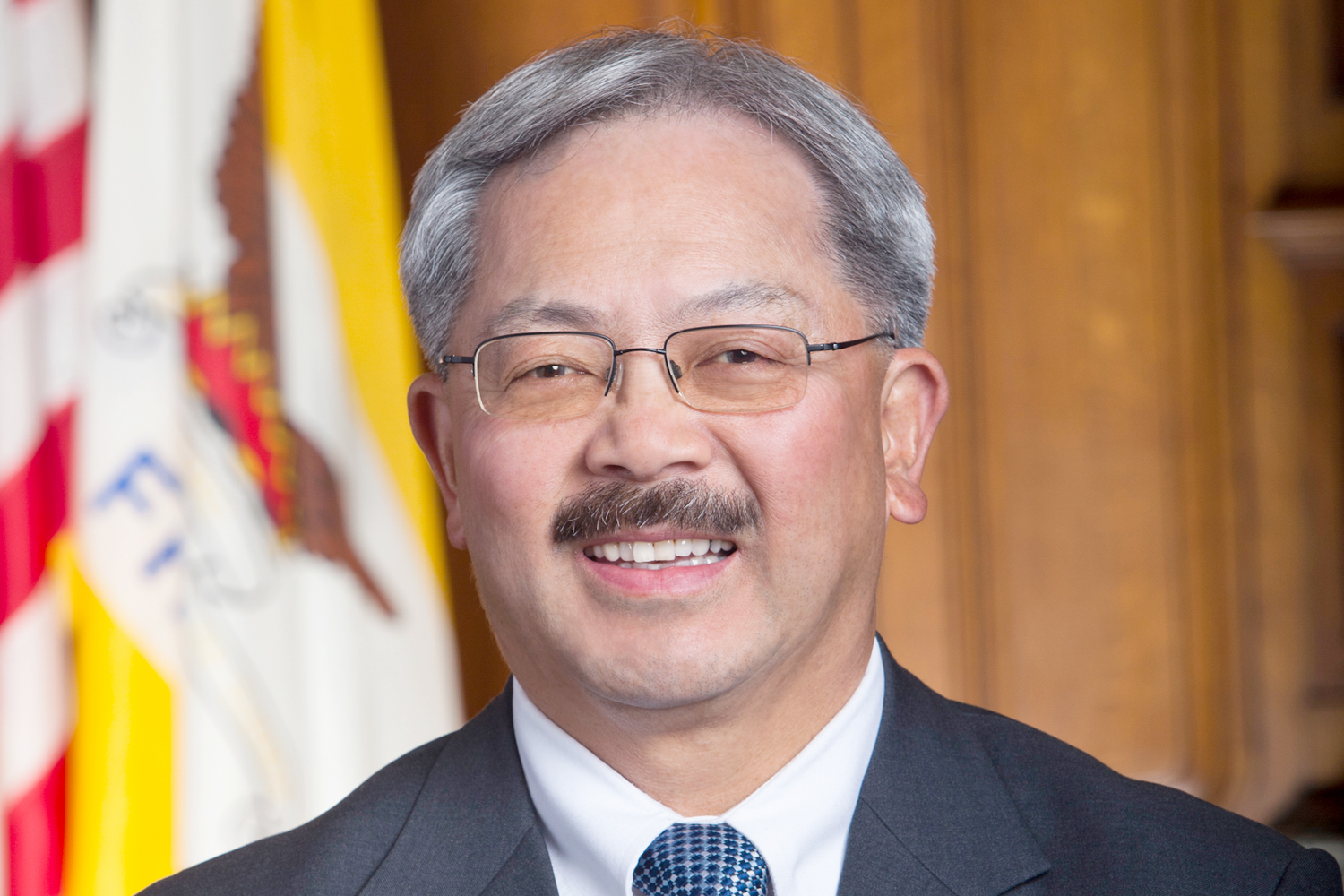
Ugh. This is going to be a battle royal. I hope there are six votes on the board for Clean Power SF, which is imperfect but important. And then Mayor Lee will have to decide whether to side with his highly respected SFPUC general manager, Ed Harrington, who wants to make this happen, and PG&E, which doesn’t.

Oh, by the way: PG&E pays Willie Brown about $250,000 a year as a “legal retainer.” And I hear the mayor takes his phone calls.

Our Weekly Picks: August 15-21

0

WEDNESDAY 15

Family of the Year

The most compelling aspect of Family of the Year’s live show is the transparency of the band members’ genuine affection for each other. The Los Angeles-based indie group weaves together folk influences and male/female vocal harmonies to create a fun, lighthearted brand of nostalgic rock. If this sounds familiar, look no further than West Hollywood, where Edward Sharpe and the Magnetic Zeroes have been doing their own multi-gendered feel-good folk melodies for years. Apparently the Magnetic Zeroes also noticed these similarities, because they asked Family of the Year to tour with them in 2011, shortly after Ben Folds chose them out of 700 bands as his opener at Symphony Hall. (Haley Zaremba)

With the Colourist

9pm, $10

Brick and Mortar Music Hall

1710 Mission, SF

(415) 800-8782

www.brickandmortarmusic.com


THURSDAY 16

Squeeze This! A Cultural History of the Accordion

Was there anything more unexpected in season three of Mad Men than the scene in which Joan brought out her cherry-red squeezebox, and serenaded a dinner party with “C’est Magnifique?” And yet, accordions were once a bastion of adult gatherings; there were bona fide accordion stars — Dick Contino, who played San Francisco’s Barbary Coast in the 1940s, made it on the pop charts — but in this century, they’ve left the mainstream, resurging underground in pockets of klezmer, pirate polka, Tejano music, and gypsy jazz. In her new biography, Squeeze This, writer-musician Marion Jacobson delves deep into the history of the instrument and contemplates its place as a cultural technology. At an event this week, Jacobson will likely discuss some of her findings with the Accordion Apocalypse crew (and sign copies of her book), followed by squeezebox-filled performances by Luz Gaxiola, the Mad Maggies, and Sheri Mignano. (Emily Savage)

7pm, free

Accordion Apocalypse

255 10th St., SF

(415) 596-5952

www.accordionapocalypse.com


Whiskerman

The cover of Whiskerman’s self-titled 2011 album features a sharp dressed man in a a forest clearing, his untamed hair brimming out from behind an animal mask, while he holds up a violin. The intriguing cover art introduces us to a sound no less whimsical and complex: led by Graham Patzner, Whiskerman boasts an inventive alternative rock meets folk sound. The Bay Area band demands attention with softly building songs such as “Brother Jim”, while their rock’n’roll songs like “Blind Saint” are undeniably catchy hits. Patzner comes from a musical family — his brother Lewis (Judgment Day) plays cello in the band, and their eldest brother Anton Patzner plays violin in JD. The work of the Patnzer brothers can be characterized by their attention to musical craft, but also, a certain magical quality. Whiskerman takes each magic moment and stretches it out — until you, and everyone else privy, becomes immersed in the wild sounds that are their nature. (Shauna C. Keddy)

With Con Brio $10, 9pm

Ashkenaz

1317 San Pablo, Berk.

(510) 525- 5054

www.ashkenaz.com


Dr. John and the Lower 911

Locked Down — the latest from the inimitable Dr. John — opens with a Afro-strutting, funky rhythm that’s swamped with confidence. And it’s for good reason, because at this point in his career, the New Orleans based bayou blues rocker has little to prove. An influential session player and solo artist — without whom Beck’s “Loser”, Richard Linklater’s Dazed and Confused, Martin Scorsese’s The Last Waltz, and that band from the Muppets would not be the same — Dr. John has laid his hands on so many genres and has a lengthy list of collaborators that it’s simply exhausting to think about. The Black Keys’s Dan Auerbach lends some playing and production to the new album, which will likely win Grammys in all the relevant categories. (Ryan Prendiville)

With John Cleary

hu/16-Fri/17 9pm, $39.50

Independent

628 Divisadero, SF

(415) 771-1421

www.theindependentsf.com


Alejandro Escovedo and the Sensitive Boys

Alejandro Escovedo’s illustrious career spans four decades, beginning with his role as a founding member of San Francisco punk band the Nuns in the 1970s. From there, he moved to Austin, Tex. to play alternative country and roots rock, first with Rank and File, and later as True Believers with brother Javier. Escovedo released his first solo album in 1992, Gravity, a heartfelt record that explores themes of love and loss while showcasing a variety of his musical influences. Escovedo has performed with his band the Sensitive Boys as of late, and their most recent album, Big Station, sees Escovedo turn up the amps and embrace his heartier, rollicking rock’n’roll side. (Kevin Lee)

With Jesse Malin

8pm, $25

Bimbo’s 365 Club

1025 Columbus

(415) 474-0365

www.bimbos365club.com


FRIDAY 17

Blue Note Rendezvous Cabaret

One of the great things about America is that people are free to blend ideas and concepts to their hearts’ content. (Personal favorite example: Korean tacos.) In this grand tradition, the folks at 50 Mason mix and match Blue Note-flavored music with belly dancing at the quarterly Blue Note Rendezvous Cabaret. Professional gyrators shake and slither to live bands hammering out jazz, swing, and whatever happens to be the music of the night. This installment’s headliners, MWE, call themselves a Middle Eastern marching band, and bring festive sounds that also evoke the Balkans, Greece, and Turkey. Opening five-piece local ensemble Horns a Plenty ditched drums, strings, and piano, instead opting for an all-brass jazz approach. (Lee)

With MWE, Horns a Plenty

9pm, $10

50 Mason Social House, SF

(415) 433-5050

www.50masonsocialhouse.com


Nosaj Thing

Nosaj Thing (pronounced “no such thing”) cemented his position in the post-dubstep community in 2009, no small feat considering the number of already-established Los Angeles-based beatmakers. He gained an international following in 2009 with the release of his haunting, spacey debut LP Drift, along with well-received remixes of Flying Lotus, Charlotte Gainsbourg, and Radiohead. Live performances at Spain’s Sonar festival, at California’s own Coachella — and seemingly everywhere in between — solidified Nosaj’s reputation for dreamy, woozy, electronic hip-hop. Fans are pining for a new full-length but will have to settle for bits and pieces Nosaj will likely drop during his set. Opener Mux Mool has just released Planet High School, a playful mix of ’80s-rooted beats and video game synths. (Lee)

With Mux Mool, Manitous ft. Swoonz, Drewmin

9:30pm, $15

Public Works

161 Erie, SF

(415) 932-0955

www.publicsf.com


SATURDAY 18

Pedalfest

Babes, your bikes put up with a lot. Literally, think of how supportive they are of your behind, through denim and spandex, skirts and shorts. Why don’t you take it somewhere nice? This weekend provides the ultimate opportunity for two-wheeled QT: the East Bay Bike Coalition’s second annual Pedalfest, where bikey will encounter new and interesting peers like the WhymCycle art bike collection, BMX stunt rides, even a bike that, owner attached, swings on a rope through the air in looping aerial acrobatics. Ambition! One of the largest cycle events in the Bay, last year Pedalfest attracted 18,000 happy riders. Kids activities, snacks galore, relay races, and live tunes — JLS is going to be the place to show love for the bike that gets you to where you need to go. (Caitlin Donohue)

11am-8pm, free

Jack London Square

Broadway and 1st St., Oakl.

www.pedalfestjacklondon.com


Midnight Magic

It’s become apparent that the PR agents have discovered the trick to getting my attention: listing the name of a band next to the words “ex-mems of LCD Soundsystem,” thereby exploiting the hole left in one of my bodily organs by that now defunct group. The connection here is a bit tenuous, referring to former members of Hercules and Love Affair (quite a good name drop on its own) enlisted to play backup at LCD’s last shows. Moving beyond the past, the nine piece disco outfit’s releases so far — “Drop Me a Line” and “Beam Me Up” — have a promising, lively romanticism that’s doing all the influences justice. (Prendiville)

With Tron Jeremy, Brother Sister, hosted by Ava Berlin and Andy Vague

10pm, $10-$15

Rickshaw Stop

155 Fell, SF

(415) 861-2011

www.rickshawstop.com


Lee Fields & the Expressions

Lee Fields is a soul singer’s soul singer. Between innumerable session gigs, years of touring with bands like Kool and the Gang, and a string of early-’70s singles that have become legendary among crate-diggers, Fields has paid his dues since 1969. So, it seems deliciously redemptive that in 2012, Fields has found himself in the most prolific stage of his career, churning out records for the bona-fide Truth & Soul label as the bandleader of the Expressions. Faithful Man, released earlier this year, has drawn comparisons to soul heavyweights, from Stax/Volt to James Brown, and as far as throwbacks go, it’s the real deal. Which poses the question: can Fields channel the vitality of his recent recordings when he graces the Independent on Saturday night? One way to find out. (Taylor Kaplan)

With Hard French, Top Cat & Miles Ahead

9pm, $25

Independent

628 Divisadero, SF

(415) 771-1421

www.theindependentsf.com


Mrs. Doubtfire

Dolores Park gets all the hipster love, but li’l sis Duboce Park is not to be overlooked — especially when it hosts an outdoor screening of San Francisco-set 1993 comedy Mrs. Doubtfire, a movie that’s earned a cult following despite its gentle, family-friendly content. A father (Robin Williams) goes undercover as an elderly nanny so he can spend more time with his kids, thus circumventing the court-ordered wishes of his estranged wife (Sally Field). Plus: Harvey Fierstein as the make-up whiz behind Doubtfire’s drag; immortal lines “Hellooo!” and “It was a run-by fruiting!”; and enough camp cachet to inspire at least one portrait tattoo (Google it). Just be sure you bring a low chair or a waterproof cloth to sit on at the screening; Duboce Park’s rep as a doggie paradise is irrefutable. (Cheryl Eddy)

8:15pm, free

Duboce Park

Duboce and Steiner, SF

www.friendsofdubocepark.org


SUNDAY 19

Calvin Johnson

Having founded Olympia, Wash.’s influential K Records and Dub Narcotic Studio, Calvin Johnson has signed, recorded, and collaborated with countless Northwest music icons, from Modest Mouse to the Microphones. Since 2002, he’s issued a handful of solo, (mostly) acoustic efforts, built around his unmistakably drawling baritone. Walk into a thrift store in Olympia, though, and odds are you’ll find a stack of mixtapes for sale, compiled by you-know-who; this Saturday, Johnson will headline the release party for the Believer’s music issue cassette along with a roster of tape-centric outsider-artists handpicked by the king of Oly, himself. (Kaplan)

With Katie & the Lichen, Laura Leif & A.P.B., the Shivas, the Memories, Tomorrow’s Tulips, Mom, Happy Noose

8:30pm, $8

Cafe Du Nord

2170 Market, SF

(415) 861-5016

www.cafedunord.com


Braid

The year 1993 saw the conception of what was soon to be one of the decade’s most influential and controversial genres: emo. Braid was one of the frontrunners of the scene, lamenting lost loves and expressing the melancholy nature of youth over minor chords years before My Chemical Romance would don its first guyliner. The group disbanded through most of the Aughts, but reunited in 2011, for the band’s 600th show. Now that emo has turned into a cabaret of red eyeshadow and comically impractical hairstyles, Braid bears little resemblance to the current wave of emotional rockers, but it can still get down with the sadness. (Zaremba)

With Owen, TS & the Past Haunts

9pm, $20

Slim’s

333 11th St, SF

(415) 255-0333

www.slimspresents.com

The Guardian listings deadline is two weeks prior to our Wednesday publication date. To submit an item for consideration, please include the title of the event, a brief description of the event, date and time, venue name, street address (listing cross streets only isn’t sufficient), city, telephone number readers can call for more information, telephone number for media, and admission costs. Send information to Listings, the Guardian Building, 135 Mississippi St., SF, CA 94107; fax to (415) 487-2506; or e-mail (paste press release into e-mail body — no text attachments, please) to listings@sfbg.com. Digital photos may be submitted in jpeg format; the image must be at least 240 dpi and four inches by six inches in size. We regret we cannot accept listings over the phone.


Worship long-haired handsome at cult-museum on first Thursdays

3

I am used to vegetarian restaurants and churches being cults, but this is something new. I’m loathe to spoil the surprise for you, nonetheless: the International Art Museum of America on Sixth Street and Market? 90 percent full of works by the stunning gentleman-living Buddha pictured. Also, it is free on first Thursdays!

Perhaps you have walked by the place before. Surely, you would have noticed the superlative tree-house-in-moat out front. 

Upon entering the museum, one is escorted through a Rainforest Cafe-like entry room, only to double-back past two large wooden Chinese dragons flanking the entrance to a room that holds only a glass case with a large piece of coral. It is called “Sea Palace Monarch,” says the corresponding metal plaque. You will soon find that these plaques are a highlight of the International Art Museum.

Says plaque:

Presumably, your first feeling was that of surprise. Does such large coral exist in the world? If it is not a genuine coral, then why do its luster, texture, and appearance look so real and natural? From the bottom of your heart, you would happily accept it as genuine coral because it is so truly beautiful, so aesthetically pleasing. How beautiful your living room would be if it contained this sculpture.

It is not real coral. But this truly beautiful, aesthetically pleasing piece of ceramic was created by our man Dorje Chang Buddha the III, who it turns out made roughly 90 percent of all the art you are about to see. Dorje does coral ceramics, massive wax drippings, traditional-looking Japanese drawings of lion prides and pandas, Van Gogh-like sunflowers, psychedelic spacescapes, and even builds his own gingko bilboa-esque frames that often as not house large holograms of cave interiors. He also creates jade-inspired tiling, which is available for purchase in the gift shop. 

Hell yeah that frame is holding a hologram.

Dorje’s yellow period.

It’s not all Dorje — there are occasional works by Flemish masters and oil paintings of sailboats. This is because Dorje is humble. Says the IAMA website, the museum’s board of directors initially only wanted the living Buddha’s works but:

His Holiness the Buddha adamantly disagreed, expressing His opinion that the International Art Museum of America is a site for masters of art worldwide to showcase their artistic accomplishments and should embrace diversity in orde to provide the public with broader aesthetic enjoyment. the Board of Directors yielded to this suggestion of His Holiness the Buddha.  

That’s so Dorje, who has done a million amazing things and totally deserves his own museum if only he wasn’t so humble. He’s the recipient of the ambiguously awesome World Peace Prize and check out the guy’s resume (via this spectacular website):

Examples of such holy phenomena include the following. Both humans and non-humans have prostrated to H.H. Dorje Chang Buddha III and have listened to His Holiness’s discourses on the dharma. Sentient beings, non-sentient things, birds, aquatic animals, land animals, flowers, grass, trees, tiles, and stones have all expressed respect for His Holiness’s dharma discourses either verbally or through physical actions. His Holiness taught a disciple how to transmit dharma on His behalf. When the person who was transmitted dharma by that disciple passed away, that person’s body emitted light. Thunder rumbled in the sky in reaction to the voice of His Holiness. 

Researching Dorje is likely to through you into a k-hole of reincarnation debate and superlative 1990s web design. Tell me this isn’t the best website ever. Wish-fulfilling jewel mirrors, a digital prayer wheel that “sends out this peaceful prayer of compassion to all directions and to all beings, purifying the area.” That’s worth a perma-tab on your Google Chrome. Now compare to the museum’s site. What happened there, Board of Directors?

Still, new favorite museum. It has a treehouse, holograms, and I wasn’t abducted despite the fact that there was maybe one other visitor there on the first Thursday I was waved in from the sidewalk. The other visitor was a guy who talked loudly on his cell phone about how he was “just checking out some museum man, they like said it was free so I was like cool.”

International Art Museum of America

Open Tuesdays-Sundays 10am-7pm, $10

Open until 7pm and free on first Thursdays

1025 Market, SF

www.iamasf.org

Antonini, quarterback for development interests, wins the game

20

If there was any doubt about the loyalty to developers of Planning Commissioner Michael Antonini, he put them to rest yesterday shortly after finally winning reappointment to a fourth, four-year on a 6-5 vote by the Board of Supervisors. Afterward, in comments to Examiner reporter Joshua Sabatini, Antonini likened his role on the commission to that of a successful football team’s quarterback.

“You want to knock out the quarterback for the other team,” Antonini said. “It’s a tribute in a way – backhanded.”

The five supervisors who opposed Antonini – Sups. David Chiu, John Avalos, David Campos, Eric Mar, and Jane Kim, the board’s most progressive members – seemed to understand that Antonini saw himself playing for the developers and big corporations that see San Francisco mostly as a place to make money, even at the expense of eastern neighborhoods and the city’s long-term interests.

The voting record of this Republican dentist – an elected member of the San Francisco Republican County Central Committee who advocates for right-wing causes (such as crackdowns on the homeless) and candidates – makes clear which team Antonini plays for, and it isn’t the same team as the vast majority of people in San Francisco, where Republicans constitute less than 10 percent of the electorate.

It says a great deal about the corporatist politics of Mayor Ed Lee for re-appointing him, as well as the politics and integrity of the swing votes, Sups. Malia Cohen and Christina Olague, the Lee appointee now running for election in District 5, one of the city’s most progressive districts.

Both supervisors mouthed meaningless platitudes and justifications for their votes, but in reinstating the developers’ quarterback just as the progressives were about to remove him from the game, one wonders what team they’re playing for – or whether they even understand the dimensions of the game they have unexpectedly found themselves playing.

But Antonini clearly understands. And despite the ridiculous statements that Cohen and Olague made about holding him “accountable,” Antonini now has four more years to continue leading a team that is rapidly gentrifying San Francisco, making it more inviting to the Google-busers and Twitterati and their landlords, but less so for the average teacher, clerk, and social worker.

Another reason corporate shuttles are a problem

54

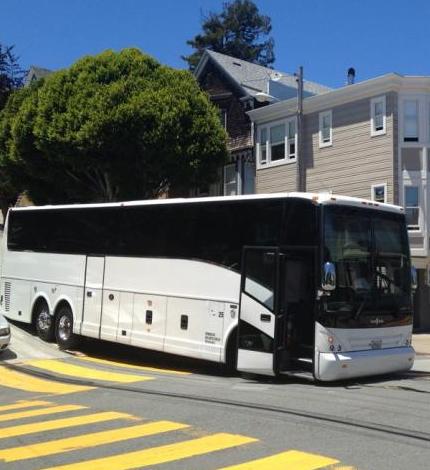
They’re huge, and they block Muni stops, and they crowd into narrow streets. And now there’s another reason the city needs to get into the businesses of regulating private corporate shuttles:

The buses can get stuck on the hills.

Uptown Almanac has a great item, with excellent photos and a video, of a Google shuttle getting caught in Noe Valley, beached like a whale at 23rd and Chattanooga. A pickup truck tries in vain to haul the monster away.

Folks: The streets of SF’s neighborhoods weren’t designed for 50-foot luxury coaches. Someone’s got to write some rules about where these private shuttles can go — and where they can’t. 

I Love This City’s tasteful use of confetti, fog, and lighting

0

When I first heard that the inaugural I Love This City festival was moved from AT&T Park to Mountain View’s Shoreline Amphitheater, I thought fate (or Live Nation) was twisting my arm.

The last time I visited Shoreline was a decade ago, when Moby headlined a nationwide tour and invited top electronic DJs to spin. One of the side stage’s top acts was a Dutch mixer taking Europe by storm: Tiësto. It was the first electronic music show I ever attended.

More than 10 years later at I Love This City, Tiësto was one of the main stage headliners and I’m pushing the age when attending an event that allows high school sophomores is questionable at best. But I was actually eager to attend ILTC. For one thing, the event promised, at the very least, a lineup chock full of well-known talent, ranging from Steve Aoki to DFA co-founder James Murphy to Man-of-the-Moment David Guetta, voted number one in DJ Magazine’s annual Top 100 List in 2011.

In full disclosure, my sentimental side was pulling for success for this inaugural event, just to soak in my trance-filled Tiësto nostalgia. Venue change and all, Live Nation did a pretty good job of holding things together. Here’s a rundown:

The Good
David Guetta: The man knows how to work a crowd, and he had to. He had to follow Tiësto, an unenviable task given the Dutch DJ’s enduring popularity. But Guetta won over listeners with his infectious grin and antics, which included dancing on the DJ equipment table and gesturing to the crowd like a conductor guides a symphony.

Crystal Method: On the Bass Stage, Los Angeles duo Scott Kirkland and Ken Jordan threw down a storming set of big beats that was only derailed by technical glitches at the very end. Kirkland was jamming buttons and strumming strings on an original and fascinating contraption, a CD turntable and a mini-keyborard fused to two guitar necks.

The Visuals: Whoever handled visuals for the main stage DJs did a tremendous job. In fact, the graphics were so stunning, I couldn’t help but wonder if the headliners had their playlists prepared in order to sync up with the montages. Regardless, the production crews should be lauded for tasteful use of confetti, fog, and lighting to lend some extra oomph to the shows. The side stages also had elaborate lighting and visual setups.

The Swaps: Transitions between sets were grab-a-beer-go-to-the-bathroom short. The production teams were well-oiled machines, setting up gear and visuals.

Shoreline was a success: The amphitheater ended up being a fantastic scene for the headliners. The effect gave a truly condensed focus on the DJ, something that might have been lacking at AT&T Park. The folks on the grass had a view and still has reams of bass blasting from the speakers. And the seats gave a much needed reprieve from concert goers, who wanted to take in music and crowd.

Food Trucks: An extremely welcome addition, though they were placed between the side stages, out of the way of the concession stands flanking the amphitheater. Thankfully, the food trucks didn’t seem too inclined to mark up the prices of their own offerings, and I very much would rather have an $8 Curry Up Now burrito over a $6 meat tube in a bun. But that’s just me.

The Bad
Where was the afterparty? The one big drawback with relocating ILTC to Shoreline was the surrounding neighborhood. Once Guetta finished his set and cooed to the restless crowd that he could not play any more music, Mountain View became Bay Area electronic music limbo just before midnight, caught between San Francisco and San Jose. If only nearby Google headquarters had been open, surely the search engine conglomerate could have thrown a kick-ass shindig.

Three stages: There was an impressive collection of talent to be had at ILTF. The Bass Stage made a lot of sense, a refuge where concert-goers could get their fill of low-end frequencies and throbbing drums. But some very good electronic artists got kind of lost in the fray at the Park Stage, which seemed like it was the everything-but-trance-and-dubstep venue. James Murphy, Holy Fuck, Apparat, and Cut Chemist all got shoehorned into an area that struggled to draw a significant following simply because of the size of the other two stages. A main stage and a strong alternate stage likely would have been sufficient.

The nickle-and-dime: $15 to park. $10 for a beer. $4.50 for bottled water. This after $60 for one-day tickets or $100 for two-days. And that’s without any, shall we say, “extracurricular activities.” Today’s electronic festival-goer seems like they have to be more part of the 1% than the 99%.

Gotye‘s ubiquity: No fewer than three main stage headliners threw in a redo of “Somebody That I Used to Know” and the crowd went absolutely crazy, shouting “You didn’t have to stoop so low” every time. C’mon DJs! You didn’t have to milk the crowd so much.

Headliners referring to the crowd as “San Francisco”. I know Tiesto, Afrojack, and David Guetta are all from Europe, but it was kind of awkward when pretty much everyone kept saying “San Francisco!” when the city was a 40-minute drive away. Then again, if the 49ers move to Santa Clara, I guess anything in between can fall under the San Francisco title.
 

Heads Up: 7 must-see concerts this week

0

This week, musicians come from far and wide, from broad plains on the other side of the spinning globe, plucked from different coasts of varying notoriety, and from our very own backyards to entertain us. It’s a veritable Google Earth of sonic endeavors.

Far: exquisite Malian vocalist Khaira Arby. Around the corner: Thee Oh Sees with new Oakland act Warm Soda. Not quite as far as West Africa: Brooklyn’s Light Asylum, and Manhattan’s Emily Wells (different nights). Out of this word: Carletta Sue Kay. Now that’s entertainment. Let’s globe trot together from the comfort of our own venues, shall we?

Here are your must-see Bay Area concerts this week/end:

Light Asylum
Supernatural goth-pop duo Light Asylum is back, this time celebrating the release of its self-titled debut full-length, out now on Mexican Summer. Both gritty and ethereal, the record is a study in straddled extremes. Light Asylum also plays Amoeba at 5pm Monday.
Mon/14, 9pm, $12-$15
Public Works
161 Erie, SF
(415) 932-0955
www.publicworks.com
http://www.youtube.com/watch?v=TTk3R–Heug

Khaira Arby
She’s been hailed as “Mali’s reigning queen of song,” and is revered outside of Timbuktu by fellow world acts, including the Sway Machinery, which asked her to join it on tour a few years back. She writes and sings in indigenous languages of the Sahara desert and in those, her voice has a husky, powerful draw.
Wed/16, 9pm, $10-$15
New Parish
579 18th St., Oakl.
(510) 444-7474
www.thenewparish.com
http://www.youtube.com/watch?v=1UDecjaj4ek

Warm Soda and Thee Oh Sees
The name brings to mind cola burps. But it’s actually a brand new pop band put together by Oakland’s Matthew Melton, formerly of Bare Wires. And this will be your first chance to catch it live. And of course, fellow locals/headliners Thee Oh Sees routinely shred. And that goes for the rest of the lineup as well.
With the Mallard, Burnt Ones
Wed/16, 9pm, $12
Brick and Mortar Music Hall
1710 Mission, SF
(415) 800-8782
www.brickandmortarmusic.com

http://www.youtube.com/watch?v=vSZTJsUWqXA

Emily Wells
Her variable voice is intoxicating, as are her live-looping violin skills. Sure, the video below is old and the multi-instrumentalist/”one-woman orchestra” has a brand album (Mama, Partisan Records) that’s full of endless layers and vigor. But this song’s called “Take It Easy, San Francisco,” and so we will.
With Portland Cello Project
Thu/17, 8pm, $15
Swedish American Hall
2174 Market, SF
(415) 431-7578
www.swedishamericanhall.com
http://www.youtube.com/watch?v=d6e2wOt1E2Y

Alright, here’s one off Mama
http://www.youtube.com/watch?v=7tnMlQcWcsI

Suckers
Riding a sunny art-pop rainbow of sticky, digitally-enhanced highs on newly released sophomore record Candy Salad (French Kiss), Suckers – whom you may know from previous single “It Gets Your Body Movin’”  –  journey to our coast this week from their adopted-home base of Brooklyn. Collective thanks again, Brooklyn, these Suckers are stuck in our heads.
With Young Man, Vanaprasta
Thu/17, 9pm, $12
Bottom of the Hill
1233 17 St., SF
(415) 621-4455
www.bottomofthehill.com
http://www.youtube.com/watch?v=5ZjfpBO_n2w

Carletta Sue Kay
Carletta Sue Kay vocalist Randy Walker has a fancy new (and if you can believe it, debut) album out this week – Incongruent (Kitten Charmer, May 15) – but is already something of a local legend, having opened for the likes of Kurt Vile, Ariel Pink’s Haunted Graffiti, Girls, the Fresh & Onlys, and Kelley Stoltz. Oh, and recently got a damn profile in the New York Times. Go, hear that silky, bluesy four octave vocal range once more, and rightfully fete the singer-songwriter. Carletta Sue Kay also plays Amoeba at 6pm Thu/17.
With Avengers, Erase Errata
Fri/18, 8pm, $15
Cafe Du Nord
2170 Market, SF
(415) 861-5016
www.cafedunord.com
http://www.youtube.com/watch?v=324m9sDQQl8

Black Sabbath’s Paranoid
The next round in a creative ongoing series from UnderCover Presents, “Black Sabbath’s Paranoid” pits more than 50 Bay Area musicians against one monumental heavy metal record. Each band covers one song, then on to the next. Note: there will be heavy metal-themed sandwiches sold outside, courtesy of Brass Knuckles.
With Extra Action Marching Band, Uriah Duffy with the Memorials, Sabbaticus Rex & the Axe-Wielders of Chaos, Tiger Honey Pot with Max Baloian, and more
Sat/19, 9pm, $20 (includes cover CD)
Independent
628 Divisadero, SF
(415) 771-1421
www.theindependentsf.com

The private bus problem

84

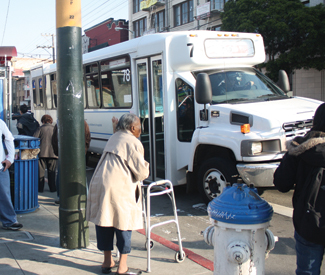
If you’re used to riding to work on a crowded, lurching Muni bus that arrives late and costs too much, consider this: Some San Franciscans commute on 50-foot luxury coaches with cushioned seats, wifi, air conditioning and mini television screens. The state-of-the-art vehicles arrive on time — and the service is free.

The buses aren’t regulated by the city and pay nothing for the use of public streets. But these giant private beasts freely and without penalty stop in the Muni zones, clogging traffic, and sometimes preventing the city’s buses from loading and discharging passengers. They barely fit through narrow corridors in neighborhoods like Noe Valley and Glen Park.

City officials agree the fleets of private commuter buses have created a problem — but so far, they’ve done nothing about it.

And most people don’t realize that some of these luxury bus lines are, in effect, open to the public.

The buses primarily serve the city’s growing status as a Silicon Valley bedroom community, carrying commuters to and from the corporate campuses of places like Genentech and Google.

Private shuttle buses have been booming in San Francisco. Genentech has more than 6,000 employees registered in commute programs on 56 routes. Google’s Gbus service transports more than 3,500 daily riders on more than 25 routes, with about 300 scheduled departures. Then there’s Zynga, Gap, California College of Arts, Apple, Google, Yahoo!, and Academy of Art. And the University of California, San Francisco has its own fleet of 50 shuttles.

The good news is that the buses take cars off the road, giving tech workers a much less environmentally damaging way to get to work. Google’s transportation manager, Kevin Mathy, noted in the GoogleBlog that “The Google shuttles have the cleanest diesel engines ever built and run on 5 percent bio-diesel, so they’re partly powered by renewable resources that help reduce our carbon footprint.” He continued, “In fact, we’re the first and largest company with a corporate transportation fleet using engines that meet the Environmental Protection Agency’s 2010 emission standards.”

But nobody at City Hall has any idea how many total buses are running on the San Francisco streets.

Jesse Koehler, a planner at the city’s transportation authority, conducted a study on shuttles that identified a number of problems, most linked to a lack of local regulation.

Requested by then-Supervisor Bevan Dufty, the study, completed in 2011, found that, while shuttles play a valuable role in the overall San Francisco transportation system, there’s little policy guidance or management. In fact, there’s no local oversight, the study found: Shuttle operators are licensed by the state, but the California Public Utilities Commission is mostly concerned with the safety of the equipment and the licensing of the drivers. Local concerns aren’t under the agency’s purview.

And there are plenty of reasons for local concern. Under city law, only Muni buses are allowed to pull over and use the designated bus stops — but Koehler reported, “Shuttles are generally also using these Muni bus spots. Some cases prevent Muni buses from entering the Muni bus zone and having the passengers board late.”

The study notes that “the large majority (approximately 90 percent) of shuttle stops occur at Muni bus zones.” The shuttles take much longer to load and unload than Muni buses (because of their size and the lack of a rear door) and often force the public buses to wait, delaying routes, or to pick up and discharge passengers outside of the bus zone, creating a safety problem.

Shuttle carnage

Local residents surveyed had their own complaints. The study quotes critics saying that “the shuttles can be noisy, especially at night when there isn’t much other traffic or when they are the kind with diesel engines” and “large coach shuttles are noisy on small neighborhood streets.”

Muni routes are designed with the city’s neighborhoods in mind; you don’t see the extra-long articulated coaches that ply Mission Street and Geary Boulevard cramming themselves into the much-tighter and more residential streets of Potrero Hill, Noe Valley, Glen Park and the Castro. That’s not a concern for the giant corporate shuttles; they go where they want.

That can cause problems for pedestrians, bicyclists and drivers who aren’t used to seeing these long, tall buses, which at times take up both lanes, squeezing through turns with barely an inch to spare.

And while Muni drivers are far from perfect, the shuttle safety records are even more of a concern. In November of 2010, a UCSF shuttle bus struck and killed 65-year-old Nu Ha Dam as she was crossing Geary Street at Leavenworth Street. Not even a year later, another UCSF shuttle was involved in a collision, killing Dr. Kevin Allen Mack and injuring four other passengers. A witness confirmed that the shuttle ran a red light.

On February 14, a pedestrian crossing Eddy Street at Leavenworth in the Tenderloin was run over by a paratransit van. The victim was pinned under the shuttle for 20 minutes until he was finally rescued. The victim lived, but suffered several broken bones.

Carli Paine, transportation demand management project manager of the SFMTA, told us that shuttles are a growing component of the San Francisco transportation network and overall, support San Francisco’s greenhouse gas emission goals.

But, she noted, “Because they are relatively new, and a growing one at that, there is really a need to work together between the city and shuttle providers to make sure that our policy framework is supporting shuttles and also working to avoid conflict with shuttles and transit, pedestrians, and bikes.”

Paine noted: “What we’ve heard is that there are places where shuttles do have conflict with other uses and then there are places that work really well, so one of the things we want to find out in those areas where spaces are being shared successfully, is what’s happening.”

Elizabeth Fernandez, press officer at UCSF, said the city doesn’t have any specific rules regarding transit systems like UCSF’s. “With the proliferation of corporate services throughout the city, there are several studies that are ongoing,” she said. “These studies are an attempt to manage the growth of these kinds of shuttle services in regards to volume as well as routing, staging, and parking.”

Tony Kelly, a Potrero Hill community activist, said the root of the problem is the consistent cut in Muni service over the past 20 years. “Potrero Hill is going to double population in the next 15 years,” he said. “People and new housing units are doubling.

“When all the shuttles are in our bus stops, everyone is wondering why we can’t ride these things,” he said. “Why can’t they take it when there is so much unused capacity?”

Hitching a ride

Actually, I rode several UCSF shuttles around the city, and nobody ever asked for identification.

I was picked up at the Muni stop on Sutter St. at the UCSF Mt. Zion Campus (yes, the shuttle pulled — illegally — into the Muni stop to pick up passengers). Fernandez told me the school’s official policy states that “Riding UCSF shuttles is restricted for use by Campus faculty, staff, students, patients and patient family members, and formal guests.” But when I boarded, the driver made no attempt to verify if I was associated with UCSF. I did a full trip, passing through the UCSF Laurel Heights Campus, and then back to Mt Zion. There were no more than seven people on the shuttle, and about 20 seats available for riders. There are also handrails for standing if the bus ever gets too crowded.

I also hopped a Genebus at Glen Park BART and rode to company headquarters in South San Francisco. Again, nobody asked for ID; in fact, Genentech spokesperson Nadine O’Campo said the company is happy to let others who work in the area hitch a ride on the cush coaches.

For information on the Genenbus routes and schedules for the Millbrae bus line, go to www.caltrain.com and look under “schedules.” UCSF also provides shuttle schedules and route maps at www.campuslifeservices.ucsf.edu under transportation. For general information on shuttle providers that provide service from and to BART, visit www.transit.511.org and go to Transit Provider Info.

Riding on these shuttles is an entirely different experience than riding on the Muni. People are friendlier, the buses are clean, the seats were nicer, and the transportation is a lot faster.
A UCSF student on the shuttle, commutes using the BART from South San Francisco to 16th and Mission to take a shuttle to UCSF. She said it’s far better (and cheaper) than driving — and while Muni costs $2, the shuttles are free.

The downside of that, of course, is that some of the shuttles are bleeding off Muni patrons, and riders of other public systems, in effect stealing customers, and thus robbing the transit system of fares. They’re also another example of the privatization of what were once public services. Instead of working with the city and the region to improve transit for everyone, these tech firms have decided to create a private system of their own..

And that may be the most disturbing trend of all.

Into new territory

2

arts@sfbg.com

SFIFF How to account for the desire for difficult terrain that runs through so much contemporary art cinema? Exploring the margins and crevices of what’s readily visible is just what good filmmakers do, but extremes have become commonplace. The irony that these far-flung films live on in the cosmopolitan vapors of the festival circuit cannot be lost on the filmmakers themselves. Remoteness may be a relative matter, with patience revealing islands everywhere, but inaccessible landscapes nonetheless guide a handful of interesting features showing at this year’s San Francisco International Film Festival.

>> Read our complete coverage of the San Francisco International Film Festival here.

The bourgeois couple stripped bare by vacation is a standby of modernist cinema, with Roberto Rossellini’s Viaggio in Italia (1954) still the gold standard and Maren Ade’s Everyone Else (2009) the best in recent memory. Julia Loktev’s The Loneliest Planet is an almost classical work in this mode. An engaged couple (Gael García Bernal and Hani Furstenberg) hire a local guide (Bidzina Gujabidze) to lead them through the magnificent Georgian steppe, and so the psychological roundelay begins. Fraught staging, language difficulties, Gerry-rigged tracking shots, and significant pocks in the Caucasus landscape are all worked out with great expertise but little verve.

Where The Loneliest Planet draws on landscape to reveal repressed instincts, Ulrich Köhler’s Sleeping Sickness drifts towards further occlusion. Joseph Conrad’s Heart of Darkness is the obvious reference point, though here it’s a black European who pursues a white man gone native. In the film’s first half we watch as rueful Dr. Ebbo Velten (Pierre Bokma) prepares to leave Cameroon’s lush danger with his wife and daughter. The imminent departure emboldens him to accuse the local authorities of bilking international aid donors for a nonexistent sleeping sickness crisis. Then Alex Nzila (Jean-Cristophe Folly) arrives in Cameroon to evaluate the medical program and finds Velten changed: he’s in a business partnership with a man he openly despised in the first half of the film, and we hardly hear any mention of his European family. Berlin School director Köhler works displacement as a figure of psychology, politics, and narrative and smartly uses the international aid question as a frame to plunge deeper mysteries of identity.

Conrad is a significant presence in The Rings of Saturn, the peripatetic novel by W.G Sebald that’s also the focus of Grant Gee’s suitably oblique documentary portrait. Patience (After Sebald) offers astute commentary on the moods of Sebald’s prose from thinkers like Adam Phillips, Robert Macfarlane, and Tacita Dean, though Gee succumbs to the spectacle of Google Earth mapping of the novel and some decidedly sub-Sebaldian spiritualism. Still, hearing the author speak his own mind on Virginia Woolf’s moth and the phenomenology of walking is worth the price of admission for fans.

Gonçalo Tocha eschews the Google’s eye view in It’s the Earth Not the Moon, his resplendent study of Corvo (the tiny northernmost island of the Azores, close enough to being in the middle of the ocean and a far outlier of European Union). Tocha and his sound man Dídio Pestana dropped anchor there to capture every face, bird, and rock on the island — a self-consciously grandiose goal with something of the 19th century about it. The film first approaches Corvo with statistical lyricism: dimensions, number of residents, number of roads, and so on. The notion that you could hold the entire island in your head at once is an illusion, of course, but a sustaining one. Corvo is an island such as you might have imagined as a child, which is not to say that It’s the Earth is innocent of the world. As economic math and electoral politics sweep the second part of the film, Tocha proves himself an inheritor of the French essay-film tradition of Chris Marker and Agnès Varda. The film’s three hours pass easily in the intimacy of encounter, but one still admires the desire to give the film experience some qualitative measure of being marooned.

Corvo’s aging population might well feel at home in the timeless Brazilian village of Found Memories, the fable of a young woman born in the wrong time coming to a community of people who have forgotten to die. Along with It’s the Earth and other SFIFF selections Palaces of Pity and Neighboring Sounds, Júlia Murat’s first narrative feature seals a particularly strong year of Portuguese-language films. She delineates time and space through routine, patiently unfolding characterization in the adjoining repetitions. Lucio Bonelli’s cinematography is beautiful work in itself, fearlessly embracing darkness and shadow (the rural village must have seemed like easy street after lensing Lisandro Alonso’s formidable landscapes). Found Memories doesn’t break the mold of slow cinema — its melancholy mingling of photography and myth is especially reminiscent of Manoel de Oliveira’s The Strange Case of Angelica (2010) — but a late passage of clipped post-punk demonstrates that Murat can handle a sudden swerve.

That leaves little space for Davy Chou’s assured debut, Golden Slumbers, and it deserves an article of its own. The remoteness we experience here is that of phantoms: Chou’s film excavates the thriving Cambodian cinema that was rubbed out by the Khmer Rouge. All that remains are fugitive traces of printed ephemera and soundtracks of curling orchestral ballads and psychedelic nuggets — and the memories of those people who made or relished the films and survived Pol Pot. Most of the films discussed in this article use offscreen sound to develop a sense of place beyond the frame, but Golden Slumbers is a special case, with the poverty of archival materials turned to an advantage as elegy. Chou’s gliding Phnom Penh interludes and spaciously staged interviews reflect the influence of Jia Zhangke and Tsai Ming-liang’s Goodbye, Dragon Inn (2003), but these cinephilic touchstones never overwhelm the personal, defiant accounts of moviemaking at the heart of the film. Ever after is the tragic refrain of Chou’s film, but the once upon a time is as golden as he says. 


www.sffs.org

Was the cyclist who killed a pedestrian reckless?

215

San Francisco’s bicycling community is bracing for a backlash following the second recent case of a cyclist hitting and killing a pedestrian, particularly given a callous online posting by someone claiming to be the cyclist, whose 71-year-old victim this week died of injuries sustained a week ago at the intersection of Castro and Market streets.

The case was a hot topic at last night’s monthly Carfree Happy Hour, a gathering of cyclists, transportation professionals, and alternative transportation activists, many of whom had unearthed new information about a case they’re all grappling with. And the consensus opinion was that the cyclist seemed reckless and may deserve to face criminal charges.

Yet activists also sought to place this case in context, noting that an average of almost three pedestrians are hit by cars everyday in San Francisco, even though that rarely makes headlines. There were 220 pedestrians killed in San Francisco from 2000-2009, the vast majority hit by cars whose drivers rarely faced criminal charges. In fact, the same week that Sustchi Hui was killed there was another pedestrian killed by a motorist and another one by a Muni bus.

But that doesn’t lessen the importance of this latest bike-vs.-pedestrian fatality, which is sure to make news precisely because it’s so rare, and because it comes just weeks after 23-year-old Randolph Ang pled guilty to vehicular manslaughter for running a red light at Embarcadero and Folsom Street in July 2001, hitting a 68-year-old woman who later died from her head injury.

San Francisco Police Department won’t identify the cyclist in the latest incident unless he’s charged with a crime, and its investigation is still ongoing, said SFPD spokesperson Albie Esperanza. “It’s a tragic accident,” he told us, noting that the cyclist was cooperating with the investigation. Once the investigation is complete, the District Attorney’s Office will decide whether to bring criminal charges against the cyclist.

Someone who identified himself as Chris Bucchere posted a note on the Mission Cycling Google group on the afternoon of the incident, March 29, describing an accident that apparently took place at the same time and place. And the description that Bucchere gave of the accident is not likely to garner much public sympathy for him (We contacted Bucchere by e-mail and telephone, we’re waiting to hear back for him, and we can’t independently confirm the authenticity of the message or its contents).

“I wrecked on the way home today from the bi-weekly Headlands Raid today. Short story: I’m fine. The pedestrian I clobbered? Not so much,” the message began.

The post then goes on to describe the incident, which matches the details of other reported accounts of the fatal crash: “Around 8 am I was descending Divisidero Street southbound and about to cross Market Street. The light turned yellow as I was approaching the intersection, but I was already way too committed to stop. The light turned red as I was cruising through the middle of the intersection and then, almost instantly, the southern crosswalk on Market and Castro filled up with people coming from both directions. The intersection very long and the width of Castro Street at that point is very short, so, in a nutshell, blammo.”

Another member of the Carfree Happy Hour group who is a regular competitive cyclist said that Bucchere was a member of the website strava.com, which tracks minute-by-minute data of cyclists for training purposes. And this source said he was able to use the site to determine that Bucchere was traveling through the intersection – which is at the bottom of a steep hill – at approximately 35 mph at the time of the collision.

Bucchere’s message continued: “The quote/unquote ‘scene of the crime’ was that intersection right by the landmark Castro Theatre – it leads from a really busy MUNI station to that little plaza where The Naked Guy always hangs out. It was commuter hour and it was crowded as all getup. I couldn’t see a line through the crowd and I couldn’t stop, so I laid it down and just plowed through the crowded crosswalk in the least-populated place I could find.

“I don’t remember the next five minutes but when I came to, I was in a neck brace being loaded into an ambulance. I remember seeing a RIVER of blood on the asphalt, but it wasn’t mine. Apparently I hit a 71-year old male pedestrian and he ended up in the ICU with pretty serious head injuries. I really hope he ends up OK.

“They asked me a bunch of stupid easy questions that I couldn’t answer, so they kept me for a few hours for observation, gave me a tetanus shot and sent me on my way.

“Anyway, other than a stiff neck, a sore jaw/TMJ, a few bruises and some raspberries, I’m totally fine. I got discharged from the hospital during the lunch hour. The guy I hit was not as fortunate. I really hope he makes it.

“The cops took my bike. Hopefully they’ll give it back.

“In closing, I want to dedicate this story to my late helmet. She died in heroic fashion today as my head slammed into the tarmac. Like the Secret Service would do for a president, she took some serious pavement today, cracking through-and-through in five places and getting completely mauled by the ragged asphalt. May she die knowing that because she committed the ultimate sacrifice, her rider can live on and ride on. Can I get an amen?

“Amen.

“The moral of this little story is: WYFH”

Several members of the newsgroup took issue with the lesson Bucchere claims to have learned : WYFH, or “Wear Your Fucking Helmet.” One poster wrote, “I’m not sure that’s the moral of the story,” to which several others agreed. Another poster wrote: “What were you thinking ? As a 15 year sf resident and a 10 year cyclist and a pedestrian at that intersection every weekday .. I’m kind of embarrassed to wear my mc kit anywhere nearby now. I truly hope you’ve learned your lesson but I’d have to say this is not the end of the story for you, and yes you should get yourself a lawyer.”

Recent studies have shown that San Francisco is a dangerous city for pedestrians, but not as dangerous as many other cities on a per capita basis given our density and high pedestrian populations. A study released in January by the Alliance for Biking & Walking concludes San Francisco has the third highest biking and walking levels among major US cities, but ranks eighth in bicycle and pedestrian fatality rates.

A 2011 study by the group Transportation for America, “Dangerous by Design,” analyzed factors associated with pedestrian deaths – some of which seem to be at play in this case – and concluded, “Especially when combined with unsafe street and road design, vehicle speed presents a deadly threat to pedestrians.”

Parra’s world gets a wall at SFMOMA, spun at Mighty

2

How about this: for your first museum piece you can take the entryway wall of the second floor of the SFMOMA. It’s a bigger surface than you’ve ever painted on before. Just do whatever. You usually decorate skateboards and coffee mugs with your work, but putting your bird-faced, omni-stilletoed characters in front of some of the world’s most voracious art fans isn’t a big deal.

Oh, and the passers-by aren’t going to know that you’re the artist, so they’ll probably offer some critique. You’re good with criticism, right? Also, don’t upset the children. And then your band can play a show at Mighty (Thu/29).

Dutch artist Pieter Janssen, artist name simply Parra, laughs at the prospect of his fine arts debut in San Francisco. “I had an interview the other day and they asked me if I was nervous about now being reviewed by art critics. I was like, dude you don’t even know. I already have critics all day!” All week long Parra and his helpers had been carefully filling in the lines of his quirky design: an avian-faced Icarus tumbling through the air, bare-breasted females, and the loopy typography he is known for. Snaking across the length of the wall a sentence can be pieced together that speaks to an early musical love of Parra’s: Kate Bush. The piece, he says, is about taking time for yourself, and terminates in the shape of a woman holding back the chaos of the world. 

Which, since its painted on the well-traversed second floor landing of the SFMOMA, has been something he’s had to deal with during its creation. “You get the real-real,” Parra reflects. Teachers walk by with school groups, unsure whether they should subject the young minds in their care to Parra’s vision. “You have to keep in mind who is your audience here,” he tells me. “There are little kids, they might be offended by something. There’s still a bit of nudity, but I think that is allowed. I’m the kind of guy who doesn’t like it when people don’t like it. I mean, when they have a reason to say ‘that’s vulgar.’”

It is true that a Parra design usually has some bite to it. He demurely counsels me to Google Image search “Rustico the Great,” a T-shirt he made that was rejected by the Paris clothing company he created it fro, as an example of a time when he might possibly have taken things too far. He says that some have called his work “unfriendly to women,” which I found surprising, since his work seems stridently feminist when you compare it to other designers in the skateboard and sportswear oeuvre. 

This Parra woman is unfriendly — but just to non-partiers.

Coupled with a cutting sense of humor and some measure of vulgarity when children are not present, Parra’s work has garnered a worldwide fanbase, who can claim a piece of his bizarre universe for itself via his clothing company Rockwell. I particularly kindled to the artist’s girlfriend Nicole Pedder’s gauzy Rockwell blouse from the brand’s current line, its pattern echoing the figures she was helping to fill in on the SFMOMA wall. Parra has also done coffee mugs, bedding, and sneakers for Nike. He’d like to put out a line of moving boxes, he jokes. Or maybe it’s not a joke (ping, U-Haul!)  

Oh yes, and he’s a musician. Parra’s band Lele will indeed be playing a show at Mighty immediately after the exclusive opening reception for his wall. A die-hard skateboarder, he’s a little bummed that it won’t be all ages, but hey, at least it’s free. During the set he’ll be occupying himself by drawing characters and putting them through some sort of magical machine he has that will animate them and project them on the wall of the club, leaving the world with one less surface that has not had Parra designs on it. 

Lele

Thu/29 9 p.m.-midnight, free

Mighty

119 Utah, SF

www.mighty119.com


“Parra: Weirded Out” mural exhibit

Opens Sat/31, through July 29

SFMOMA

151 Third St., SF

(415) 357-4000

www.sfmoma.org


Parra in conversation

With local graphic designer Victor Moscoso

April 3 noon, free museum admission and entry

SFMOMA

151 Third St., SF

(415) 357-4000

www.sfmoma.org

The sex worker struggle

3

yael@sfbg.com

Google has come under fire in the past year for everything from privacy policies to censorship. But in December, some Bay Area residents were protesting the tech giant for a very different reason. The group that marched in front of the company’s San Francisco office was angry over the company’s donation to organizations fighting human trafficking.

The flyers declared, “Google: Please fund non-judgmental services for sex workers, NOT the morality crusaders that dehumanize us!”

Google had donated a whopping $11.5 million to organizations that “fight slavery” last December, including the anti-sex trafficking groups International Justice Mission, Polaris Project, and Not For Sale.

But the activists said that these are religious organizations that ignored the rights of consensual sex workers.

According to a press release from Sex Worker Activists, Allies, and You (SWAAY), “As frontline sex-worker support services struggle for funding to serve their communities, it is offensive to watch Google shower money upon a wealthy faith-based group like the International Justice Mission, which took in nearly $22 million in 2009 alone.”

“I appreciate what they’re trying to do, but I wish that they had done more research,” Kitty Stryker, a local performer, sex worker and activist, of Google’s choice to fund the organizations.

In a society where the term “sex worker” — coined to describe those who consensually engage in commercial sex and consider it legitimate labor — is still new to most people, this sex workers rights struggle can be an uphill battle. But it rages on, and San Francisco remains one of its most important front lines.


FREE SEX FOR HIRE

The heart of the struggle is, and or years has been, fighting the prohibition of prostitution, and the ultimate goal of the sex workers movement is the repeal of the laws that criminalize sex for hire. Decriminalization would be a vital safety measure for escorts, people working on the street, phone-sex operators, exotic dancers, porn actors, and other occupations that fall under the umbrella category of sex work.

Sex workers held worldwide conferences in the 1980s, meeting in Amsterdam and Brussels. Sex work was legalized and decriminalized in several countries around the world, including New Zealand, the Netherlands and Germany. The Sex Workers Outreach Project (SWOP) became one of the most important organizations fighting for the cause, with chapters around the world.

Here in San Francisco, the city remains a hub for sex-workers rights advocates, who raise awareness about issues ranging from STD prevention to consent in BDSM contexts. The Saint James Infirmary supports and treats sex workers when they need medical assistance, and the Center for Sex and Culture is a resource and community center that embraces all San Franciscan’s with their minds in the gutter, sex industry workers included.

San Francisco’s sex workers rights history includes two unions. Workers at the North Beach strip club the Lusty Lady formed the Exotic Dancers Union in 1997. The union became part of the Service Employees International Union, and the Lusty Lady remains the only collectively run, sex-worker-owned strip club in the United States.

Maxine Doogan founded the Erotic Service Providers Union (ESPU) in 2004 as an umbrella organization for sex workers in various industries. The ESPU has been active in opposing regulations of the massage industry and sponsoring Proposition K, a 2008 ballot measure that would have decriminalized sex work in San Francisco.

I spoke to a handful of Bay Area sex-workers rights activists to get a sense of the major issues and priorities for the next year.

NO VISAS

Activists are currently planning for the July, 2012 International AIDS Conference in Washington, D.C.

Many international sex workers rights advocates have been denied visas to get to the conference. The U.S. typically bars convicted felons — but there’s a special exception for people guilty of misdemeanor prostitution charges.

“SWOP has an idea of getting in touch with some of the people denied entrance and asking them what they were going to present on and to try and present their papers in their place, to make sure these organizers voices are heard,” said SWOP-Bay Area spokesperson Shannon Williams.

But that’s not where the government’s weird exclusion of sex workers from its efforts to fight AIDS ends.

The Presidents Emergency Plan for AIDS Relief (PEPFAR) fund allocates $48 billion to organizations around the world engaged in AIDS treatment and prevention. But thanks to the religious right, the law, approved in 2003, includes a stipulation that all recipient groups must make a pledge decrying prostitution. It’s known as the “anti-prostitution loyalty oath.”

A court ruling July 6, 2011 declared the oath a violation of the free-speech rights of organizations in the United States, but the U.S. still blocks PEPFAR funding for international organizations based on the “loyalty oath.”

“Sex worker activists are going to converge in D.C. for the AIDS conference and talk about the loyalty oath. The US is exporting its ideology through this funding requirement” said Carol Leigh, a longtime activist who curates the annual San Francisco Sex Worker Film and Art Festival.


EMPHASIZING CONSENT

Sex workers rights activists continue to be engaged in their complex, decades-long struggle with anti-sex trafficking organizations.

People who want safer working conditions say that decriminalization would make it easier for police to distinguish between coerced and consensual prostitution and encourage those with knowledge of crimes perpetuated against sex workers to come forward without risking prosecution for their own illegal work.

But many anti-trafficking advocates dismiss the distinction between forced and consensual prostitution in their efforts. According to a document called “Ten reasons for not legalizing prostitution,” on the website of the Coalition Against Trafficking in Women, “There is no doubt that a small number of women say they choose to be in prostitution, especially in public contexts orchestrated by the sex industry… In this situation, it is harm to the person, not the consent of the person that is the governing standard (emphasis theirs).”

It’s this refusal to acknowledge the importance of consent that really pisses off advocates —and has a powerful effect on the policy that governs them.

The federal definition of sex trafficking includes consensual prostitution, and defines coerced prostitution as “severe sex trafficking.” “Law enforcement agencies can use anti-trafficking funds to arrest sex workers in prostitution, on the grounds that the feds define all prostitution as trafficking, even though the government distinguishes between trafficking and severe trafficking,” said one sex workers rights activist.

According to Leigh, anti-trafficking organizations are not all bad; she named the Global Alliance Against Traffic in Women as an organization that “has been allied with sex workers rights movement and takes rights-based approach.”

But organizations that conflate consensual and coerced commercial sex are often big-time recipients of public and private funding.

Doogan is wary of any attempt to further regulate or criminalize sex work. She says that often, laws meant to deter prostitution trap people who may want to change occupations.  “Women have to continue working in the industry because no one else will take them for work when they have those convictions on their record,” said Doogan.

That may be the case with Lola, an occasional Erotic Service Providers Union volunteer who was arrested on prostitution-related charges outside California earlier this year. She moved to the Bay Area and is looking for a job, but after a promising interview last week, she’s nervous that a background check will reveal her arrest.

“I’m waiting to hear whether that’s going to be an issue or not. They could tell my landlord, and then I could lose my house too…all I’m trying to do is get a job,” Lola told the Guardian.


THE WORK GOES ON

For most sex-workers rights activists, the long-term goal remains decriminalization. For now education, creative projects, and protest in service of that goal continue.

Members of SWOP-Bay Area have a program called Whorespeak that does outreach at colleges, and “we’ve also been speaking in classes for therapists about how to work with current and former sex workers and not pathologize them,” said Williams.

According to Stryker, one of the most exciting projects happening now is Karma Pervs. The website, run by local queer porn star Jiz Lee, sells unique sex-positive porn and donates the proceeds to organizations like the Saint James Infirmary.

Then, of course, there’s the International Day to End Violence Against Sex Workers, when sex workers and allies gather to commemorate sex workers who have been assaulted and killed.

Sex workers often can’t go to police to report crimes for fear of being locked up themselves, society retains a huge stigma surrounding sex work, and there is an insidious cultural myth that “you can’t rape a prostitute.” These all add up to put sex workers at high risk for assault and murder; serial killers, such as the Green River Killer in Seattle and a murdered in Long Island-area this past summer, are disproportionately likely to target prostitutes.

That’s why, for Williams, “Our long-term goal is to decriminalize prostitution. But the real goal is to end violence against sex workers.”

Weed on wheels

9

steve@sfbg.com

CANNABIS CLUB GUIDE 2012 When we first created our detailed local Cannabis Club Guide two years ago — which you can find at www.sfbg.com/cannabisguide — it seemed as if the marijuana business had entered a golden age of openness and professionalism in San Francisco. But with a federal crackdown shuttering at least a half-dozen dispensaries in the Bay Area (Market Street Collective, Sanctuary, Mr. Nice Guy, Medithrive, Divinity Tree, Marin Alliance for Medical Marijuana) things have changed. Luckily for needy patients and stoners alike, San Francisco has always been a resourceful city, so those meddling feds have actually done very little to disrupt the free flow of the world’s best marijuana.

Even before the cannabis industry moved above ground and into brick-and-mortar storefronts, there were always pot delivery services here. Now they’re really proliferating, so we thought it was high time to add them to our guide. And once we delved into this realm, we found that it was every bit as civilized and professional as a visit to our friendly neighborhood dispensary — and perhaps even more convenient and cost-effective.

The process seems just as secure and legally compliant as it is at the clubs, with most reputable delivery services requiring that you become a member before accessing their products. That means sending them copies of your doctor’s recommendation and California ID, which can be even done from a photo on your smart phone. After the services verify you, you’re good to go.

We’re starting the guide with just a trio of the most high-profile delivery services, as well as a couple more dispensaries, but we’ll be adding to the online guide throughout the year, so check back frequently for more updates.


DELIVERIES


THE GREEN CROSS

This is one of San Francisco’s premier cannabis clubs, setting the standard for everyone else in terms of quality, professionalism, and advocacy for the industry. My sources had long been telling me that the Green Cross carries the best weed in the city — information validated by the long string of awards it accumulates at cannabis competitions. And founder Kevin Reed has been a passionate, high-profile leader in the community for years.

But I became even more impressed once I actually used the service. Its great website features the best descriptions of its nearly two dozen strains of lab-tested marijuana, including where and how it was grown, as well as products ranging from inexpensive pipes to eye drops. I settled on a $40 eighth of Blue Deliah, a sativa-dominant hybrid that looked both cheap and good.

Within about 30 minutes, the friendly delivery guy showed up at my apartment, handed me a white paper bag full of goodies, and charged me $35 with my new customer discount. Inside the bag, there was a grinder, a cool jar, rolling papers, a lighter and other Green Cross swag, a pot cookie, non-medicated munchies, an information packet, a receipt stuck to the inside of the bag — and a baggie of beautifully trimmed buds.

www.thegreencross.org

(415) 648-4420

Opened in 2004

Price: Low to average

Selection: Huge and high-quality

Delivery time: Super fast

Sketch factor: Very low

Access: Secure but easy to use


MEDITHRIVE

When Medithrive opened as a dispensary in my Mission District neighborhood, it became one of my favorite clubs, so I was disappointed to see it shut down by threats from the federal government late last year. But it immediately reinvented itself as a delivery-only club, and it still retains the friendly service and large selection that first endeared me to it.

“It’s definitely been a change for us, but if patients can handle the delivery thing, it ends up being better for everyone,” said the employee who took my order: the Apocalypse Medi-Mix, a mix of high-quality small buds (better for vaporizers) for $40 for four grams. And because I was a newbie to its delivery service, they threw in a free joint.

I called at 3 p.m. and was told to expect delivery between 4:15 p.m.-4:45 p.m. — and it actually showed up at 4 p.m. It wasn’t a problem because I was working at home all afternoon, but I can imagine such a long arrival window wouldn’t be ideal for some. And frankly, the buds were pretty dry, perhaps the result of not moving as much inventory as Medithrive is used to.

But on the whole, it’s still a solid dispensary and a very friendly staff that’s still worth using.

www.medithrive.com

(415) 562-MEDI

Opened in 2010

Price: Average with good deals

Selection: Large

Delivery time: Fast but uncertain

Sketch factor: Low

Access: Secure but easy to use


FOGGY DAZE DELIVERY

This place pops up prominently when people Google marijuana delivery services in San Francisco, but other parts of its operation don’t seem quite as tight as its search engine savvy. Even its readily available website, I learned while trying to order, has an outdated menu of available items. For what it actually offers, customers need to visit www.weedmaps.com, where the guy said the menu would quickly appear when I typed in “foggydaze,” but it didn’t.

Finally, I just asked him to recommend a good sativa strain, and he mentioned just two that they had in stock: Headband and Cheezle. Shooting in the dark, I went with an eighth of Cheezle for $45, and he offered me a new member gift of a joint or sample of equal or lesser priced weed. I opted for the joint because it just seemed easier at that point, particularly since my initial call went to voicemail and then I had to wait 45 minutes to get my information verified. An hour later (he said it would be 45 minutes), I had my weed.

Compared to the bad old days of ordering whatever my underground drug dealer had and jumping through whatever hoops he required, Foggy Daze is much better. But in the modern marijuana scene in this highly evolved city, Foggy Daze doesn’t quite measure up as is.

www.foggydazedelivery.com

(415) 200-7451

Price: Average

Selection: Small

Delivery time: OK, but slow on verification

Sketch factor: Medium

Access: Pretty good


DISPENSARIES


APOTHECARIUM

It was only a matter of time before someone had the idea to really emphasize excellent personal service with high-end products in an elegant environment — but the folks at Apothecarium have done it in a way that really sets them apart from the rest of the pack. This place is an experience more than just a place to score weed, much the same way adventurous bars like Alembic aren’t just about getting tipsy but appreciating just what a cocktail can become in the right hands.

Visitors to the Apothecarium are warmly greeted and seated in front of an extensive (and well-designed) menu, which an knowledgeable staffer patiently and enticingly walks you through, focusing exclusively on you and your needs. Once you finally find what you want, a large jar of your chosen buds emerge, and the employee uses long silver tweezers to place the prettiest ones on a display tray in front of you to inspect while he weighs out your choice of small or large buds with an air of showmanship.

2095 Market, SF.

(415) 500-2620

www.apothecariumsf.com

Buds weighed on purchase

Opened in 2011

Price: High to low (“compassionately priced” strains available)

Selection: Large, extremely informative menu available

Ambiance: Looks like a fancy hair salon, hardwood floors and patterned wallpaper

Smoke on site: No

Sketch factor: Low

Access/security: Secure but easy access


1944 OCEAN COLLECTIVE

Despite a somewhat forbidding waiting room, this neighborhood dispensary on a mellow stretch of Ingleside’s Ocean Avenue has a real family feel once you step onto the salesfloor.

I was in the market for edibles when I went to 1944, and chatted with the jocular sales staff about which available edible wouldn’t give me couch lock or paranoia — a fully-functioning treat, as it were. My budtender pointed me towards a sativa-based peanut butter cookie with high potency, and then made me feel OK about our difficulty making a decision. “We’re all stoners here,” he laughed.

Once you make your selection among the edibles, flowers, and tinctures on offer, head to the back of the low-glitz, comfortably appointed room to give your money at the cash register. Head back to the bud counter to pick up your selection — if you’re lucky you can grab a brownie bite, cup of tea, or apple from the buffet to assuage your munchies. There’s even a sign that announces the dispensary’s job counseling and resume writing classes. A somewhat cold exterior sure, but it belies a warm heart. (Reviewed by Caitlin Donohue)

1944 Ocean, SF.

(415) 239-4766

Buds weighed on purchase

Opened in 2004

Price: From cheap to high

Selection: Large

Ambiance: Comfortable seating, jovial staff, family feel

Smoke on site: No

Sketch factor: Forbidding waiting room, friendly inside

Access/security: Tight 

Find our full Cannabis Club Guide at www.sfbg.com/cannabisguide

OFFIES 2011

0

It was the year of the Rapture (oh, wait, maybe not), the year of the great Republican resurgence (oh wait, maybe not), the year of Anthony Weiner’s penis and Gerard Depardeiu’s piss, the year of the Kardashians and Charlie Sheen … and the Offies in-basket overflows. Here are our favorite choice moments of 2011.


ACTUALLY, HIS THUMBS ON THE PHONE WERE THE ONES DOING DAMAGE

Anthony Weiner, in a sexting conversation with a middle-aged Nevada Democratic volunteer, described his penis as “ready to do some damage.”


AT LEAST SOMEBODY’S DOING SOMETHING ABOUT THE UNEMPLOYMENT RATE

Hustler publisher Larry Flynt offered Weiner a job


GOOD THING EXPERTISE IN THE ENGLISH LANGUAGE HAS NEVER BEEN A PREREQUISITE OF THE JOB

Presidential candidate Herman Cain, in an interview, said he didn’t know the name of the president of Uzbekistan, which he called UBEKE BEKI KEIE BAH BAH STAND O BAN STAN SO WHAT WHAT?


CERTAINLY NOT THE KIND OF FOOD FOR A MIGHTY MAN WHO SEXUALLY HARASSES HIS SUBORDINATES

Cain said that too many vegetable toppings make a “sissy pizza.”


BECAUSE AN ELECTRIFIED CARTOON MOUSE IS AN INSPIRATION TO US ALL

Cain blamed “elites” for derailing his campaign, then quoted from the Pokemon theme song.


NICE TO SEE HERMAN CAIN HAS COMPANY IN THE DEPARTMENT OF QUALITY POLITICAL CANDIDATES

Joe the Plumber announced he would run for Congress


COULD IT BE — THE STUPIDEST REPUBLICAN CANDIDATE EVER?

Rick Perry couldn’t remember which federal agencies he wanted to shut down.


EXCEPT THAT THE ALMIGHTY HASN’T BEEN ABLE TO TELL US WHICH DEPARTMENTS HE WOULD CUT, EITHER

Michelle Bachman said that the East Coast earthquake and hurricane were signs that God thought the country was spending too much money on government services.


IT APPEARS THE CHRISTIAN RIGHT CAN’T GET ITS STORIES STRAIGHT

Rush Limbaugh said that the power of Hurricane Irene, which caused 53 deaths and $15 billion in property damage, was blown out of proportion to promote “the leftist agenda.”


HMMM… SINCE HERS MAKES A BUSINESS OF “CONVERTING” GAY PEOPLE, WE HAVE TO WONDER WHAT HE TELLS HER TO DO

Bachman said wives should be obedient to their husbands


BUT HEY — THOSE GUYS ALL LOOK ALIKE

Bachman praised Waterloo, Iowa as the home of John Wayne, when it’s actually the home of serial killer John Wayne Gacy


AN EXCEPTIONAL NEW INTERPRETATION OF THE INTELLECTUAL ROOTS OF THE SECOND AMENDMENT

Sarah Palin insisted that Paul Revere “warned the British that they weren’t going to be taking away our arms, by ringing those bells.”


UM, RICK, THE SCHOOLS ARE CLOSED ON CHRISTMAS

A Rick Perry campaign ad said that “something’s wrong with America” because “gays can serve openly in the military but our kids can’t openly celebrate Christmas or pray in school.”


DAMN — THAT MEANS HE REALLY IS A DUMB AS HE LOOKS

Perry insisted he wasn’t drunk when he delivered a rambling speech in New Hampshire


OR MAYBE A LITTLE LIKE FINDING OUT THAT SHE WAS JUST USING YOU ALL ALONG

Sup. David Chiu said meeting Mayor Lee — who he helped put in office — after he broke his promise not to run was “a little like meeting an ex-girlfriend after a breakup.”


AND TALK ABOUT BEING USED

Ed Lee said he didn’t want to run for mayor, but he had trouble saying no to Rose Pak and Willie Brown


IT DOESN’T MATTER — AS THE GREAT RONALD REAGAN ONCE SAID, “FACTS ARE STUPID THINGS.”

Sen. John Kyle announced that 90 percent of Planned Parenthood’s business was abortions, and when it turned out he was wrong by a factor of 30, he said his allegation “wasn’t meant to be factual.”


THE U.S. HAS DEPOSED PEOPLE FOR LESS THAN THAT. OH, WAIT …

Moammar Gadafi said his political opponents were on LSD and kept a stash of photos of Condoleeza Rice.


OH WELL, YOU KNOW HOW GOD IS; HE FLAKES OUT ON DATES ALL THE TIME

Oakland radio minister Harold Camping announced that the end of the world would come Oct. 21.


TOO BAD THAT WILL ONLY COVER THE FIRST SESSION OF THE POOR KID’S THERAPY

A woman who created a media frenzy when she said that she had given her young daughter botox admitted she made the story up so a tabloid would pay her $200.


WHEREAS, OBAMA HAS NEVER DEMANDED THAT TRUMP SHOW HIS REAL HAIR

Donald Trump demanded that Barack Obama show his birth certificate.


IF THE JAPANESE WOULD ONLY CUT GOVERNMENT SPENDING SOME MORE, THIS SORT OF THING WOULDN’T HAPPEN

Rush Limbaugh made fun of Japanese people after the earthquake and tsunami, saying “where Gaia blew up is right where they make all these electric cars.”


THE SCHOOL’S ESTEEMED NAMESAKE, ON THE OTHER HAND, HAD 27 WIVES, SOME AS YOUNG AS 15, AND AT LEAST 64 CHILDREN, SO HE WOULD NEVER HAVE APPROVED OF SUCH A THING

Brigham Young University suspended basketball star Brandon Davies because he sex with his girlfriend.


IT’S AWFUL, THE SACRIFICES OUR POLITICAL LEADERS HAVE TO MAKE IN THE NAME OF THE COUNTRY

Newt Gingrich told the Christian Broadcasting Network that he’d cheated on his wife because he loved America so much.


ON THE OTHER HAND, IF YOU WEREN’T SO FULL OF SHIT THE PLUMBING MIGHT FUNCTION A BIT BETTER

Sen. Rand Paul complained to an energy department official that he didn’t like appliance efficiency standards because “we have to flush the toilet 10 times before it works.”


NATURALLY — CLEANLINESS IS NEXT TO GODLINESS. SORT OF LIKE MARITAL FIDELITY

Gingrich told Occupy protesters to take a bath.


WHAT — HE DOESN’T CONSIDER HIMSELF A “FROTHY MIX OF FECAL MATTER AND LUBE THAT IS SOMETIMES THE BYPRODUCT OF ANAL SEX?”

Former Senator and presidential candidate Rick Santorum complained about what turns up when you put his name in a Google search.


AND NEXT, WE’LL REDEFINE “POOR” AND ELIMINATE FOOD STAMPS

House Republicans tried to redefine “rape” to eliminate funding for abortions


OH WELL, THERE GOES THE SEASON

Stanford University stopped giving student athletes special lists of easy classes


DONALD — YOU’RE FIRED

Donald Trump tried to host a presidential debate but gave up when nobody wanted to be there.


THIS FROM A MAN WITH “INVENTED” INTEGRITY

Gingrich called the Palestinians an “invented” people.


GOOD THING ABOUT THE CRACK — THAT SHIT FUCKS UP YOUR BRAIN

Charlie Sheen opened his Violent Torpedo of Truth Tour in Detroit, where he burned a Two and A Half Men T-shirt, told the crowd that he was “finally here to identify and train the Vatican assassin locked inside each and every one of you,” demanded “freedom from monkey-eyed&ldots;sweat-eating whores,” and said he doesn’t do crack anymore.


AT LEAST HE’S GOT ONE THING GOING FOR HIM: HE JOGS WITH A GUN AND SO FAR HASN’T SHOT HIS OWN BALLS OFF

Rick Perry told the Associated Press that he shot a coyote that had threatened him on his morning jog.


KILL ‘EM ALL AND LET GOD SORT ‘EM OUT

The crowd at a Republican debate cheered after moderator Brian Williams noted that Rick Perry had overseen 234 executions.


ANOTHER GREAT MOMENT IN THE ANNALS OF LAW ENFORCEMENT

A Davis police officer pepper sprayed a group of peaceful protesters who were sitting on the ground.


SINCE THERE’S NO NEWS IN THE WORLD OF THE 1 PERCENT

The New York Post investigated sex at Occupy Wall Street


GOOD THING IT DIDN’T WORK — THE WATER FROM HEAVEN WOULD HAVE MADE THE BUNS ALL SOGGY

Perry held a religious rally to pray for rain at Reliant Stadium in Houston, and urged people to fast, although the concession stands sold hot dogs.


BUT WAIT — IF WE SHUT DOWN THE GOVERNMENT, AREN’T WE … OH, NEVER MIND

Michelle Bachman said she opposes same-sex marriage because “the family is the fundamental unit of the government.”


THE FACT THAT WE’RE EVEN WRITING ABOUT A TEENAGER WHO CALLS HER TITS “SNOWBALLS” IS A SIGN OF THE END OF CIVILIZATION

Child bride Courtney Stodden was kicked out of a pumpkin patch for dressing in daisy dukes and making out with her 53-year old husband, Doug Hutchinson, and she madly tweets things like “Squeezing my snowballs inside of a seasonal sexy little lingerie as I begin to swing around the Christmas tree to hot rock ‘n roll hits!”


IT SELLS, BABY, IT’S SELLS

Kim Kardashian made $12 million for doing essentially nothing.


A NEW DEFINITION OF TERROR: WATCHING A 63-YEAR-OLD MAN WHIP OUT HIS DICK

Gerard Depardieu pissed on the floor of an Air France jet after flight attendants told him he’d have to wait to use the bathroom.


WE’RE GOING TO TAKE A BUNCH OF STEROIDS AND THEN LIE ABOUT IT AND MAYBE WE CAN SPEND A MONTH THERE, TOO

The U.S. Justice Department spent millions of dollars and eight years to convince a judge to sentence Barry Bonds to spend a month at his Beverly Hills estate.

For the kids?

2

caitlin@sfbg.com

HERBWISE Mission District dispensary Medithrive has started doing home deliveries. Since Nov. 22 its medical marijuana patients can have buds, tinctures, Auntie Dolores’ brownie bits, and more delivered straight to their apartment doors.

So why are Medithrive customers and staff members peeved? Because the new feature isn’t an expansion in services — it’s a forced shift in the co-op’s business structure. The dispensary was compelled to close its doors on 1933 Mission Street after a Sept. 28 letter from Department of Justice attorney Melinda Haag threatened its landlord with jail time if Medithrive didn’t cease operations in the space within 45 days. (Full disclosure: Medithrive is a Guardian advertiser)

The feds’ given reason was Medithrive’s proximity to Marshall Elementary School, located a 745-foot walk (according to Google Maps) from the dispensary door.

But Marshall’s principal Peter Avila wasn’t consulted on the matter. When called for comment by the Guardian, he said that he had bigger safety concerns.

“Right next door to Medithrive is a liquor store,” Avila said, adding that there is also a methadone clinic across the street from his school. “We have to deal with people passed out on the property, people smoking — those are more the issues than people buying medical marijuana.”

The principal says he patrols Marshall’s immediate neighborhood three to four times a day, dealing with drug addicts, people with mental problems, and the Mission’s homeless population. He called the dispensary “discreet” and never saw any cannabis usage by dispensary patients. Indeed: “They looked pretty much like the people who were coming out of the Walgreens [down the street].” In the past, Medithrive has offered to sponsor health education at Marshall.

Regardless, the dispensary’s Mission Streets doors are shuttered now. On many days, a staff member stands outside, handing out flyers announcing the delivery service to customers unaware that walk-up sales have ceased.

“We’re actually not in such a unique position,” said Medithrive community outreach liaison Hunter Holliman. The Tenderloin’s Divinity Tree and the Mission’s Mr. Nice Guy dispensaries also closed their doors this autumn in light of similar school zone notifications sent to their landlords. The landlord of Marin County marijuana activist Lynnette Shaw, founder of Marin Alliance for Medical Marijuana, was also hit. Shaw intends to fight to stay open.

Holliman says the shift to delivery services has been unexpectedly popular with Medithrive’s customers and allows the dispensary to service patients unable to physically access the storefront location — but it’s not without its challenges. Operations have been transient since the co-op is unable to even stage deliveries from the space on Mission Street. The day that the Guardian called, a voicemail informed patients that due to high call volume they’d have to leave a message so that dispensary staff could call them back. Once contacted by a helpful “budtender,” it took a little over an hour for the order to arrive.

Although Medithrive let go of many employees in its initial closure, it’s hired nearly all back in the transition to the labor-intensive delivery services. The dispensary is still hoping to secure another brick and mortar location, but permitting for new dispensaries has stalled at the city level.

Even if the dispensary’s been booted from its space, at least Medithrive patients still have access to medical cannabis — for now. Holliman is convinced that Bay Area dispensaries haven’t seen the end of legal challenges. “I’m sure there’s more to come,” he said grimly. “The feds are really serious about this.” 

Medithrive’s delivery-only menu is available at www.medithrive.com

The Performant: Cheap thrills

0

Bargain Basement Mondays and Amoebapalooza

The upside to living in a city as notoriously pricey as San Francisco is that despite the myriad opportunities to blow too much cash on a mediocre time out, there are plenty of options for cheaper entertainments, keeping the broke-ass among us from being eternally housebound. This weekend in particular, a couple of low-budge music showcases offered those too skint to make it to Iggy Pop a way to afford more beer by charging less cover, and one even threw in the pizza! Sure, rocking out with the godfather of punk would have been quite a bang for its buck, but at least Bottom of the Hill and Café du Nord offered economical alternatives to hanging out in a drafty San Francisco flat Google-stalking Mike Watt. Not that I’d know anything about that.

If free’s your price, then Bargain Basement Mondays at Bottom of the Hill is your place. A once-monthly showcase of local musicians with no cover charge, the attitude is chummy and freewheeling. This week’s lineup was intriguing in that it was not just a random assortment of strangers, but instead a loose coalition of one-man bands gathered together to put on a show subdued only in decibels, but certainly not in invention.

I made it just in time to catch Andrew Goldfarb “The Slow Poisoner” halfway through a cluster of bug-themed songs, such as the instrumental “Spastic Maggot” (a personal fave). Goldfarb’s musical sensibility is one part Southern Gothic, one part B-movie creature feature, and one part swampy psychobilly, and in addition to accompanying himself on the electric guitar and kick drum, he also provides a visual “slideshow” of oversized flashcards with the names of each song painted in Goldfarb’s distinctive cartooning style, deceptively simple lines, skewed perspectives, and boneless, Piraro-esque physiology.     

Sean Lee’s 1manbanjo act followed, in which he led a spontaneous conga line of oddience members around the dance floor, beating time on a snare drum strapped to his back while strumming his mandolin-sized banjo, a hobo pied piper in a rumpled suit. A member of Thee Hobo Gobbellins, about half of Lee’s set was comprised of songs from their Alice in Wonderland-themed “Cheshire Rock Opera”—next slated to play the Oakland Metro on Jan 27, 2012. Last but certainly not least, Jordan B. Wilson debuted his very interesting music-making machine, which the other musicians kept referring to as a “squid”. An elaborate array of cables , computers, mixing boards, and drumsticks snaked around an entire drum kit’s worth of percussion, additionally Wilson played a double-necked guitar with keys, and sang, a triumph of multi-tasking, to say nothing of the three-year creation process of his singular contraption. 

Sunday’s Amoebapalooza, the annual open-to-the-public holiday party of Amoeba Music employees, was as quirky and varied as the music selection at our favorite converted bowling alley, during which the employees rocked the stage, and the aforementioned pizza was distributed like the modern equivalent to a Dickenson turkey. With a couple of exceptions (Vanishing Breed being one), most of the bands gave the impression of being hastily assembled for the purpose of playing this one show, but for five bucks, and all-you-can eat, it basically paid for itself, which was ultimately the desired effect..

Give The Performant a reason to Twit. Follow @enkohl for of-the-minute updates from the underground