SFBG Blogs

Party Radar: Prosumer, Kafana Balkan, Night Light, Adnan Sharif, Shonky, Distrikt, Derrick Carter, Ana Matronic, more

0

Jajajaja — this installment of Party Radar is going to be like a last minute dump, since I’m still kind of drunk and the weekend, she is here. Besides, bloggity bloggity blah blah blah, let’s just get to the good stuff. But let’s first have some delicious beef for breakfast:

No not this weak beef, this one:

Kinda makes me like Leger’s music. Now let’s guetta way from all that, and get into this. Click on the titles for more info.


>>EAGLE GRAND OPENING

And what a truly grand opening it shall be! (Right next to the back trough.) The legendary gay leather biker bar has been open for a couple months now, to great success — I guess this party means its here to stay. Hurray! With a gaggle of old school faves including Trauma Flintstone, the Ethel Merman Experience, Anna Conda, the Sisters of Perpetual Indulgence, and the Whoa Nellies.

Fri/26, 6pm, free. Eagle, 398 12th St., SF. www.sf-eagle.com


>>PROSUMER

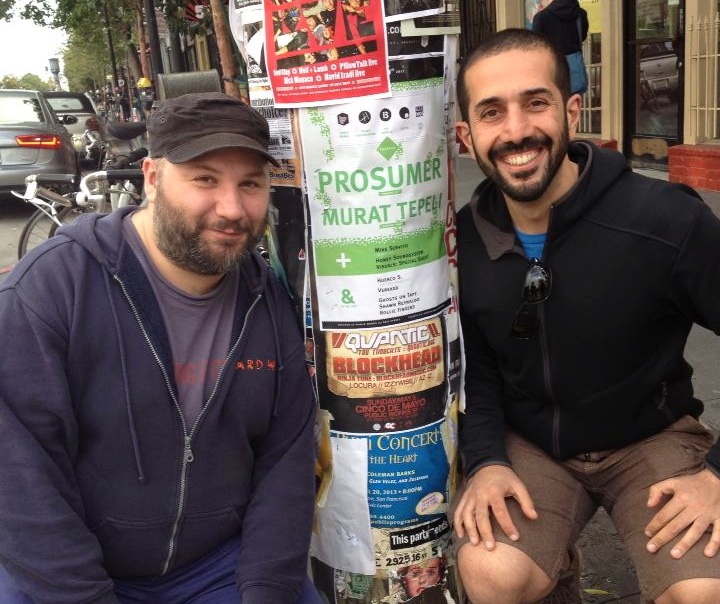
Ok, not just the lauded house master from Berlin, BUT his hottie partner in yum Murat Tepeli, AND NYC diva on the tables Mike Servito AND Huerco S., Vereker, Ghosts on Tape, Shawn Reynaldo, Rollie Fingers. All under he auspices of Honey Soundsystem, Icee Hot, Grey Area Foundation, and The Bunker NYC. Gonna be real cute and you will actually dance. 

http://www.youtube.com/watch?v=Tzoyc60din8

Fri/26, 9pm-4am, $15. Public Works, 161 Erie, SF. www.publicsf.com


>>DERRICK CARTER

This weekend is exploding with legends who hapen to be gay, just sayin’. The Chicago boogaloo house master has ruled the decks for more than two decades (he played at a party I threw back in 93! old) — and is appearing out of thin air, it seems, at Harlot. Derrick can turn anywhere into an instant party.

Fri/26, 9pm, $25. Harlot, 46 Minna, SF. 


>>NIGHT LIGHT

One of the coolest things to happen every year — a multimedia garden party at SOMArts featuring spme spectacularly cool and forward-thinking art, much of it interactive. With audio-visual performances by Pod Blotz, ChuCha Santamaria y Usted, Stephen Parr-Oddball Films, and Francois Chaignaud and Marie-Caroline Hominal. 

Sat/27, 8pm-12am, $12. SOMArts, 934 Brannan, SF. 


>>DISTRIKT

Fark yes, it’s Burning Man camp fundraising party time — and this beloved biggie is throwing an appropriatey huge, all-day block party at Public Works. Sheer tomfoolery! And Justin and Christian Martin headline, so really good. 

Sat/27, 1pm-4am, $40. Public Works, 161 Erie, SF. 


>>KAFANA BALKAN

Come early to this packed, ecstatic bi-monthly celebration of whirling gypsy music and Balkan culture. It’s one of the great parties of San Francisco, bringing all kinds of people together with some mindblowing music. Half the time I cant even begin to guess the time signature. With DJ Zeljko, dancer Jill Parker and her Foxglove Sweethearts, and awesome band Inspector Gadje. 

Sat/27, 9pm, $15. Rickshaw Stop, 155 Fell, SF.


>>SHONKY

One of my absolute fave deep house DJs of recent years. The sweet Parisian’s mixes are the kind you can really listen to and inhabit, while making you move as well. Plus he has an infectiously good-vibe stage presence that lifts the crowd. 

Sat/27, 9pm-late, $10-$15. Monarch, 101 Sixth St., SF. www.monarchsf.com


>>ADNAN SHARIF

Adnan is one of those people who are the true heart and soul of the Bay Area techno scene. His roving, underground Forward parties have rocked us for a decade and hes just a sweetheart of all swearthearts, with a great mystical take on beats. Hes decamping for Brazil, leaving us bereft, but happy for him. Let’s dance together one last time before his altar, at Honey Soundsystem.

Sun/28, 10pm, $10. Holy Cow, 1535 Folsom, SF.


>>ANA MATRONIC

The former Scissor Sister recently compared the energy at the mainstream gay White Party in Palm Springs to that of early punk rock trash drag era Trannyshack, which not only rewrote gay nightlife history, but surprised the fuck outta me. She should know though, I guess: she was an integral part of SF’s rough-and-rarin’ club kid scene in the ’90s before she hit the big time – and at least she’s brought some weirdo-ness to the Glee crowd. Now she’s doing her own thing, and this will be a glorious homecoming affair, hosted by Juanita More.

Sun/28, 9pm, $20. Public Works, 161 Erie, SF.  


Cal president resists pressure to veto West Bank divestment bill

17

Late Tuesday night, UC Berkeley Student President Connor Landgraf decided not to a veto SB 160, which called on the university to divest from companies that profit from the Israeli occupation of the West Bank. The bill labels the university “a complicit third party in illegal occupation and ensuing human rights abuses” by Israel.

Before announcing his decision, Landgraf acknowledged to the Guardian that he had promised divestment proponents during his campaign that he would not exercise his veto. But following the close 11-9 vote last Thursday, Landgraf came under intense pressure from both pro- and anti-divestment groups and he waited until just before the deadline for a veto to announce his decision.

Although the UC Berkeley Student Senate has no control the university’s budget, the divestment bill drew national attention. Palestinian solidarity activists called upon Landgraf to allow the bill to stand, while the Jewish Community Relations Council (JCRC) and the Israel Action Network launched campaigns to pressure Landgraf into vetoing the measure.

Early Tuesday morning, the Guardian revealed that Landgraf had taken advantage of a fully-funded trip to Israel, paid for by the the American Jewish Committee, a sponsor organization for the Israel Action Network. Landgraf failed to disclose this relationship during the debate over SB160, even after the Israel Action Network launched a pro-veto campaign.

Although Landgraf stopped short of issuing a veto, he did release a statement distancing himself from the bill.“I firmly reject its one-sided narrative, and the bill’s complete and utter failure to create any constructive discussion or dialogue on a complex and multifaceted issue,” Landgraf wrote.

Following Landgraf’s announcement, SB 160 author Senator George Kadifa praised Landgraf’s decision to refrain from a veto. “The 60 communities that supported divestment are grateful for President Landgraf’s courage in agreeing not to veto,” Kadifa told the Guardian.

Pro-Israel groups on campus expressed disappointment in his decision. “Obviously we’re really dismayed by the decision,” Abby Porth, associate executive director of the JCRC, told J Weekly.

Ultimately, the divestment bill is unlikely to alter the UC’s investment portfolio. Before Landgraf announced his decision, UC Chancellor Robert Birgeneau voiced his opposition to SB 160, promising the bill would have no effect of the UC’s investment decisions.

But the success of encouraging divestment at Berkeley may inspire other UC campuses to follow suit. On Tuesday, students at UC Davis launched a campaign calling on their own student government to consider divestment from many of the same companies included in Berkeley’s SB 160.

Get out your action figures: ‘Robot Chicken’ is coming to town!

0

For those of us who grew up in the 1980s, who doesn’t have fond memories of playing with action figures? Whether you were plotting elaborate battles and all-out dirt mound warfare with GI Joe and Star Wars characters, or continuing the adventures of She-Ra and Strawberry Shortcake, those toys were a big part of our childhood.

Today, some lucky — and very talented — people still get to play with those toys, and get paid for it. Breathing life into these inanimate objects, the hit Adult Swim TV show Robot Chicken resurrects classic action figures and projects them into wild scenarios, or the everyday mundane world of real life, making for some side-splittingly hilarious situations.

Marking the end of the special exhibit “Between Frames: The Magic Behind Stop Motion Animation at the Walt Disney Family Museum,” the creative team behind the show is coming to the city this weekend for several special events celebrating their craft. Seth Green, Matthew Senreich, John Harvatine IV, Eric Towner, and Alex Kamer will be on hand Fri/26 for an after-hours party featuring food, drinks, an audience Q&A and screenings of behind the scenes footage, and then on Saturday for a special animation workshop followed by a panel discussion.

“When the Walt Disney Family Museum reached out to us as they were starting to work on the stop motion exhibit,  it was one of those surreal moments — they were talking about what they were looking to do for this exhibit, and mentioned how Gumby was going to be a part of it, and they were going to have pieces from movies like Nightmare Before Christmas, and wanted television shows like Robot Chicken — we had that moment where we were like, ‘Wait, why are you including us?’” laughs Senreich, co-creator, producer and writer for the show.

“So we had to slap ourselves, and go, ‘Well I guess this is going to happen!’ It was very surreal and amazing, and they’ve been so good to us.”

The creative group behind Robot Chicken all first met when most of them worked at Wizard Magazine, a now-defunct publication that covered comic books and toys. Green was a fan of the magazine, and after meeting Senreich they became friends. They came up with the idea for the show “after many years of just geeking out over things. For us, this is what we live for; we were the people going to Comic Con before it turned into the event that it is now, we’re the ones who are still going to the small or cult comic shows. I want to find the random bootleg thing, that’s the stuff I love,” says Senreich.

When the group first started working on Robot Chicken, which premiered in 2005, they had never really worked with stop motion animation themselves, and after a few mostly failing attempts, gathered a team of professionals to help out. The animation technique — where an object is photographed one frame at a time, and gradually moved each time to create the illusion of actual movement — has a long and influential history in filmmaking, but is an incredibly time-consuming and detail-oriented art form.

“You come to appreciate what these animators do every day and the patience that they have, and you realize that they are actors and their performance either makes or breaks the stuff that you write,” says Senreich.

http://www.youtube.com/watch?v=aPB4-EW2Fck

Although he can’t give an exact estimate of how much time is spent producing one particular episode of the show, as many multiple skits and shows are being made at once, Senreich says that they currently turn out about 20 episodes in 11 months. “We try to write as many episodes ahead of time as possible — what slows down stop motion is having to take a set off the stage, put a new set up, re-light it, re-configure it to get it ready for the next shot. If we can keep the lighting the same, and we can maintain a set that’s there, it simplifies the process.”

He adds, “If we have say 15 bathroom shots over the course of 20 episodes, we’ll keep the bathroom on the stage as long as we can and shoot all of those bathroom shots in order.”

In this day and age where so much of the work that goes into Hollywood productions is shipped overseas, or done in several places around the country, the Robot Chicken team keeps it all close to home in Southern California. “We have two buildings in Burbank where we’ll do everything from the storyboards to the building of the sets and puppets to the animation, and we have a voice booth. With the exception of our sound mixing, which is done literally down the block — everything is done in-house,” says Senreich.

Coming up with hilarious scenarios and which toys or characters to use in them is all part of the fun of working on the show. “What I like about our group of writers is that it’s a bunch of friends trying to make each other laugh; it’s really just whatever we find funny for the day, or what a topic of conversation has been about, that’s where things start. We like to take these very grandiose worlds and just find the very simple and mundane within them,  I think that’s what makes it relatable — if you can have Thundercats and simplify Lion-O to just being a cat, and being treated as such, where a spray bottle will affect him, there’s something fun about that.”

One of the toy realms that has been featured prominently on Robot Chicken over the years has been Star Wars. The first bit they did revolved around Emperor Palpatine getting a phone call from Darth Vader after the Death Star had been destroyed — and it immediately got the attention of Lucasfilm.

“We did that ‘Emperor’s Phone Call’ sketch, and right after it aired, the phone rang and the caller ID said ‘Lucasfilm,’ I thought, ‘Oh God, we’re going to get sued!’ But it turned out that George Lucas and some other people at the company had seen the show and liked it; they were calling to invite them to come take a tour of Skywalker Ranch. While there, Senreich threw out the idea of doing an entire Robot Chicken special centered around Star Wars, and within three weeks they were up and running.

“Meeting George was an experience; I was tongue-tied, and probably made a fool of myself — but now I’m the guy who can talk to him and go, ‘I don’t like that idea, George.’ It’s really nice to have that kind of relationship — he’s the first person to say back to me, ‘Well I don’t like this idea either,’ and we can have those kinds of creative conversations and we respect each other in that way, and it’s really nice,” says Senreich.

After this weekend’s festivities in San Francisco, Senreich and crew will head back to Los Angeles to start working on season seven of Robot Chicken. They’ll also be announcing several other upcoming projects in the near future. While his plate is full of work at the moment, and his schedule can be hectic at times, Senreich takes a laid-back approach when thinking about it all.

“The thing that we always come back to is that we’re playing with toys! There’s the pressure of deadlines and all of that, but you can’t get away from the fact that if the biggest stress is looking at a Star Wars figure and trying to figure out a way to make it funny, that’s not that bad!”

Robot Chicken and Stoopid Buddy Stoodios events
Fri/26, 7pm; Sat/27, 10am and 2pm, $8-$60
Walt Disney Family Museum
104 Montgomery, SF
(415) 345-6800
www.waltdisney.org

Reports of grenade-type devices used in West Oakland raid

A high profile police raid occurred last night in multiple East Bay locations, with most activity centered at the Acorn public housing complex in West Oakland. According to recent news reports, some 150 FBI agents and support staff carried out the raid, along with 120 Oakland police officers and other law enforcement officers from San Leandro, Hayward and Antioch.

OPD Chief Howard Jordan told reporters at a press conference that the raid targeted the Acorn gang of West Oakland, and that officers made five arrests, served 16 narcotics and weapons warrants, and seized firearms, heroin, cocaine and marijuana.  

An official statement attributed to OPD spokesperson Johnna Watson in a Chronicle report suggested that police did not use force during the operation. This suggests OPD does not consider deploying grenade-type devices (considered to be “less lethal weapons”) to be “use of force,” because residents living nearby the Acorn housing complex at Eighth and Adeline streets told the Guardian that they heard loud bangs, probably from flash grenades, go off when the operation was underway around 7:30 Wednesday night.

A neighbor who lives nearby the apartment complex, who asked not to be identified, had a partial view of the police activity from their West Oakland residence. The person described the operation as “like a military presence” due to the sheer number of officers, many outfitted in SWAT gear, and “very precise,” targeting a specific address and lasting roughly an hour and 15 minutes. The streets surrounding the apartment complex were closed off for the duration of the raid.

The neighbor estimated that the flash grenades (or similar devices) were used five times, but since the explosions produce echoes, there could have been fewer deployments. The observer wasn’t able to see how they were used because there wasn’t a clear view of the unit, but heard the bangs in sequence. An OPD officer could be heard addressing occupants inside one of the units on a loudspeaker, reading out the address, telling them they were surrounded, and then saying something like, “you in the suit, get down, get down on the ground.”

The neighbor said they observed three people being removed from the unit and taken into custody – a man who was wearing a suit, a person in a motorized wheelchair, and a tall, younger-looking man. The arrestees were cooperative. 

The West Oakland resident also reported seeing an armored vehicle parked at the scene. A host of official OPD vehicles were parked along the street, along with unmarked cars including SUVs and white vans. 

More details about the massive police operation, the targeted gang, and the criminal activity the cops zeroed in on are sure to come out. A lot of outstanding questions remain, of course, including why officers decided to use the grenade-type devices. So far, OPD hasn’t responded to our email or voice message, but we’ll post the department’s response if we receive one.

Boom life: Mattilda Bernstein Sycamore talks about ‘The End of San Francisco’

0

A picture of Brian Goggin’s iconic site-specific sculpture “Defenestration” (that 16-year-old “furniture leaping out of an abandoned building” piece in SoMa that may be demolished soon) is pictured on the cover of Mattilda Bernstein Sycamore’s latest book, The End of San Francisco — which I reviewed in this week’s Guardian.

It’s an almost too-perfect image to represent the book’s contents — “Defenestration” cheekily channeled the out-the-window frustration of the dawning of the first Internet boom, with its hordes of tech gold-rushers pushing out old San Francisco culture. (And now, in the middle of another tech boom, the artwork itself will be pushed aside to make way for affordable housing — the term for anything under $2500 per month rent pretty much at this point.) The End of San Francisco takes us on an atmospheric, highly personal through the turbulent period of the ’90s and early 2000s, while asking some hard questions about the queer activism, participatory gentrification, and “alternative culture” of the period. Along the way, Mattilda intimately delves into issues like her recovered memories of sexual abuse as a child at the hands of her father; the rampant drug use, mental illness, and hostile attitudes of Mission queer culture; the gynophobia and transphobia of many “underground” scenes, and much, much more. 

I asked Mattilda a few questions over email in advance of her appearances here at City Lights (April 30) and the GLBT Historical Society (May 9) to help set her book in the context of what was happening then, and what’s still happening now. As always, she pulled no punches. 

MATTILDA BERNSTEIN SYCAMORE reads Tue/30, 7pm, free at City Lights Bookstore, 261 Columbus, SF. www.citylights.com, and Thursday, May 9, 7pm, free at the GLBT History Museum, 4127 18th St., SF. www.glbthistory.org

SFBG What was the impetus for writing such a wide-ranging memoir? You cover almost your entire life, from some of your earliest memories to when you officially moved away from San Francisco. Was there a specific purpose when you sat down to write it?

MATTILDA BERNSTEIN SYCAMORE
With my anthologies, I always have a specific purpose in mind, a political intervention, but for this kind of personal writing – I write to stay alive. So it’s a different kind of intervention. I started with 1200 pages of material, and then separated different sections into themes. So, for example, the chapter called “The Texture of the Air,” originally that was something like 200 pages of writing about cruising and its limitations, about trying to regain a sense of hope in my own sexuality. Now it’s 15 pages. At some point I realized that the book centered around the myths and realities of San Francisco as a refuge for radical queer visions in community building. I first moved to San Francisco in 1992, when I was 19, and it’s where I figured out how to challenge the violence of the world around me, how to embrace outsider visions of queer splendor, how to create love and lust and intimacy and accountability on my own terms. I left San Francisco in 2010, and in some ways this book is an attempt to figure out why or how this city has such a hold on me, in spite of the failure of so many of my dreams, over and over and over again.

SFBG I think the most fascinating parts of the End of San Francisco are your spot-on description of life here in the 1990s, and your detailing of the excruciating decline of that era in the dot-com boom. Now
that we’re undergoing another dot-com boom, what are some of your thoughts as to how that’s once again affecting “alternative culture.” Is there any such thing as “alternative culture” anymore?

MBS Oh, it’s so sad! The way gentrification has progressed over these last 20 years. The displacement, the homogenization, the transformation of cultures of resistance into commodities. The way all of this limits people’s imaginations. At the same time, I don’t want to romanticize the past. In the early-‘90s, it felt like everywhere people were dying of AIDS and drug addiction and suicide; it was a desperate time, even if in some ways there were more possibilities for choosing a life outside status quo normalcy. But, no matter when we are living in this country so responsible for genocide, endless war, the destruction of the environment, we are living in a desperate time and we still need to come up with radical alternatives to giving up.

SFBG I figure a lot of the people who were here in that era (me included) will recognize a lot of truth in what you describe, including some pretty scathing but deadly accurate words about the people who thought they were on the forefront of alternative culture back then — how a lot of it was “vintage store glamour” and the “strung-out junkie look.” Have you had any reactions from anyone about that? Or from any of the people who were close to you back then that you’ve written about?

MBS I offered the manuscript ahead of time to everyone in the book who plays a major role. A few people didn’t respond. Some offered detailed feedback. And some, of course, are featured in conversations about the book, in the book – while The End of San Francisco is about my memories, of course these memories exist in the context of the relationships I’m describing. I want to challenge the notion of one true story, while at the same time I obsess about figuring out all these formative moments for me – politically, socially, sexually, ethically, emotionally. One of the funniest responses was from the first person who I trusted, we moved to San Francisco together in 1992. She wanted me to take out the parts where we do drugs, so she could show her kids!

SFBG Another fascinating part is your account of the rise and peter-out of Gay Shame [the guerilla anti-assimilationist co-founded by Mattilda]. You’ve talked about this before in previous books, like the anthology That’s Revolting — how did you approach writing about it within the context of this memoir?

MBS This writing is more self-critical. It’s more about the relationships I formed through activism, the gaps between our rhetoric of inclusiveness and the more complicated realities. Ultimately I’m looking at this activist group that meant so much to me, that challenged and inspired me in so many ways, but ultimately failed me. I’m not saying that it failed, but it did fail me and I’m trying to figure out why.

SFBG Do you think there’s any space now, in SF or anywhere else, for a true queer resistance movement?

MBS
There never is space. We have to create it. There is so much self-congratulatory rhetoric in San Francisco, especially in radical-identified queer spaces, and we’re never going to get to something beyond a cooler marketing niche unless we can examine the ways that so often in radical queer spaces people treat one another just as horribly as in dominant straight culture or mainstream gay culture, and it hurts so much more when this kind of viciousness comes from people you actually believe in.

SFBG I loved your take on the Eagle even while I disagreed with some of it. Have you been following the whole return of the Eagle thing, spearheaded by probably our loudest current voice in queer anti-assimilationism, Glendon Anna Conda Hyde?

MBS In the book, mostly I’m talking about how the Eagle, a bar entrenched in mainstream gay norms of mandatory masculinity, objectification without appreciation, racial exclusion, and fear of all things feminine without beards, became a hipster hotspot without changing its core values. I can’t comment specifically on Glendon Anna Conda Hyde, but I will say that it depresses me when people embrace tragic gay institutions as “community,” as if they have ever offered us anything meaningful beyond a place to get smashed with people we’ll hate in the morning. Yes, it’s also depressing that public sex cultures that used to exist South of Market have basically disappeared, but I think we need to envision new possibilities instead of fetishizing the past.

SFBG You write so boldly and candidly about sexual abuse, drug will addiction, illness, relationships, politics … were there any memoir models you worked off of, and were there any rituals you went through to be able to open up so much?

MBS I think most memoirs take the most fascinating, multifaceted, complicated lives and turn them into Choose Your Own Adventure books without the choice. I wanted to create something more layered and honest — I was drawn to exploring the places where my analysis stops, to using those gaps as openings into something more spontaneous and incisive. As a teenager I needed to create a facade of invulnerability in order to survive, in order to find other kids like myself, in order to go on living. But now that façade leaves me feeling shut off rather than connected. Now I’m drawn towards expressing vulnerability, I think that’s what will save me.

SFBG
I felt like you left us with a cliffhanger in terms of your father reconciling with you over memories of your childhood sexual abuse. Was there ever any resolution?

MBS
I love that it felt like a cliffhanger for you even though the part about visiting my father before he died was right at the beginning. That was an incredibly intense moment for me, to visit him on his deathbed, to go to the house where I grew up with all that violence and still be able to express everything, to sob and tell him that I loved him, something I would never have imagined I would even want to say, but it’s what I felt in the moment and so I figured why not, he’ll be dead soon and I don’t want to hold anything in. For me that felt really powerful: it meant that all this work I’d done to become someone other than the person my parents wanted me to be, it really had worked. That was a certain kind of closure, that openness. But no, he refused to acknowledge anything. He wouldn’t even tell me that he loved me.

SFBG In terms of queer relationships and friendships, The End of San Francisco speaks insightfully about pain, desire, co-dependence, processing, betrayal, apathy, need, and abuse. Was there ever any love? Could there be?

MBS Yes, there was so much love – I hope that comes through in the book! And nothing has let me down more than love.

Solomon: It’s time to renounce the “war on terror”

1

Norman Solomon is co-founder of RootsAction.org and founding director of the Institute for Public Accuracy. His books include “War Made Easy: How Presidents and Pundits Keep Spinning Us to Death.” He writes the Political Culture 2013 column.

As a perpetual emotion machine — producing and guzzling its own political fuel — the “war on terror” continues to normalize itself as a thoroughly American way of life and death. Ongoing warfare has become a matter of default routine, pushed along by mainline media and the leadership of both parties in Washington. Without a clear and effective upsurge of opposition from the grassroots, Americans can expect to remain citizens of a war-driven country for the rest of their lives.

Across the United States, many thousands of peeling bumper stickers on the road say: “End this Endless War.” They got mass distribution from MoveOn.org back in 2007, when a Republican was in the White House. Now, a thorough search of the MoveOn website might leave the impression that endless war ended with the end of the George W. Bush presidency.

MoveOn is very big as online groups go, but it is symptomatic of a widespread problem among an array of left-leaning organizations that have made their peace with the warfare state. Such silence assists the Obama administration as it makes the “war on terror” even more resolutely bipartisan and further embedded in the nation’s political structures — while doing immense damage to our economy, siphoning off resources that should go to meet human needs, further militarizing society and undermining civil liberties.

Now, on Capitol Hill, the most overt attempt to call a halt to the “war on terror” is coming from Rep. Barbara Lee, whose bill H.R. 198 would revoke the Authorization for Use of Military Force that Congress approved three days after 9/11. Several months since it was introduced, H.R. 198 only has a dozen co-sponsors. (To send your representative and senators a message of support for Lee’s bill, click here.)

Evidently, in Congress, there is sparse support for repealing the September 2001 blanket authorization for war. Instead, there are growing calls for a larger blanket. Bipartisan Washington is warming to the idea that a new congressional resolution may be needed to give War on Terror 2.0 an expansive framework. Even for the law benders and breakers who manage the executive branch’s war machinery, the language of the September 2001 resolution doesn’t seem stretchable enough to cover the U.S. warfare of impunity that’s underway across the globe . . . with more on the drawing boards.

On Tuesday afternoon, when a Senate Judiciary subcommittee held a hearing on “targeted killing,” the proceedings underscored the great extent of bipartisan overlap for common killing ground. Republican super-hawk Sen. Lindsey Graham lauded President Obama for “targeting people in a very commander-in-chief-like way.” And what passed for senatorial criticism took as a given the need for continuing drone strikes. In the words of the subcommittee’s chairman, Sen. Dick Durbin, “More transparency is needed to maintain the support of the American people and the international community” for those attacks.

This is classic tinkering with war machinery. During the first several years of the Vietnam War, very few senators went beyond mild kibitzing about how the war could be better waged. In recent years, during President Obama’s escalation of the war in Afghanistan that tripled the U.S. troop levels in that country, senators like John Kerry (now secretary of state) kept offering their helpful hints for how to fine tune the war effort

The “war on terror” is now engaged in various forms of military intervention in an estimated two-dozen countries, killing and maiming uncounted civilians while creating new enemies. It infuses foreign policy with unhinged messages hidden in plain sight, like a purloined letter proclaiming “What goes around won’t come around” and telling the world “Do as we say, not as we do.”

Political ripple effects from the Boston Marathon bombings have only begun. While public opinion hasn’t gotten carried away with fear, much of the news media — television in particular — is stoking the fires of fear but scarcely raising a single question that might challenge the basic assumptions of a forever “war on terror.”

After a city has been traumatized and a country has empathized, a constructive takeaway would be that it’s terribly wrong to set off bombs that kill and maim. But that outlook is a nonstarter the moment it might be applied to victims of U.S. drones and cruise missiles in Afghanistan, Pakistan, Yemen and elsewhere. The message seems to be that Americans should never be bombed but must keep bombing.

The death of Richie Havens days ago is a loss and reminder. Each of us has only so many days ahead. We may as well live them with deeper meaning, for peace and social justice. To hear Havens performing the song “Lives in the Balance” written by another great musician, Jackson Browne, is to be awakened anew:

I want to know who the men in the shadows are
I want to hear somebody asking them why
They can be counted on to tell us who our enemies are
But they’re never the ones to fight or to die

And there are lives in the balance
There are people under fire
There are children at the cannons
And there is blood on the wire

Norman Solomon is co-founder of RootsAction.org and founding director of the Institute for Public Accuracy. His books include “War Made Easy: How Presidents and Pundits Keep Spinning Us to Death.” He writes the Political Culture 2013 column.


The vultures of greed

129

A small but enthusiastic crowd marched through the Castro April 20 to bring some attention to the rash of Ellis Act evictions that are forcing seniors and disabled people out of the city. The activists stopped at the home of Jeremy Mykaels, whose plight is symbolic of the state of housing in San Francisco today. Mykaels insists he’s not a public speaker, but his remarks were poignant; we’ve excerpted them here:

I have AIDS and I am being evicted through the use of the Ellis Act. I want to welcome you to my home for the past 18 years, and to my Castro neighborhood where I’ve spent the last four decades, or two-thirds of my life.

I was there at some of the earliest Gay Pride Parades and Castro Street Fairs, listening to speakers like Harvey Milk and seeing entertainers like Sylvester with Two Tons ‘O Fun and Patrick Cowley. I proudly voted for Harvey to become the city’s first openly gay supervisor. I participated in the fight against the Briggs amendment, which would have outlawed gay teachers in California schools. I walked in the candlelight march honoring the lives of Harvey Milk and Mayor Moscone after their assassinations by Supervisor Dan White. And I’ve been here for many other protests and for many other celebrations.

And like most of you, I’ve seen how HIV and AIDS have devastated this community over the years and I have lost most of my closest friends and lovers to this disease. Until 12 years ago I thought I had somehow miraculously escaped it’s clutches, but that was not to be and I have been dealing with that reality as best as I can ever since, with mixed results. And now on top of the great losses this disease has cost our gay community, even more losses are occurring in the form of more and more long-term tenants with HIV/AIDS living in rent-controlled apartments being forced to move out of their homes and/or out of the city after being evicted through the use of the Ellis Act, or who have been scared and bullied by just the threat of an Ellis eviction into accepting low buyout offers to vacate.

I had always thought that I would spend the rest of my life living in this neighborhood and city that I love. Now I know that, like so many others before me who found themselves in similar situations, I will have no choice but to move out.

Tech boom 2.0 has brought out what I call the Vultures of Greed, a de facto alliance of banks, the real estate lobby, and, whether unwittingly or not, city officials like the mayor and several supervisors and the Planning Commission. But the worst Vultures of Greed have been the real estate speculators, many of whom I have listed on my website.

And here I would like to call out my own personal vultures as a prime example of how uncaring real estate speculators can be. The new owners of this property are Cuong Mai, William H. Young and John H. Du, and their business entity is 460Noe Group LLC, based in Union City. These are truly callous individuals who knew from the very beginning that they had a person with AIDS living in the building, and soon after they bought the place they began threatening me with an Ellis eviction if I didn’t accept their low-ball buyout offer and vacate. On September 10th, 2012 they subsequently Ellised the building and served me with eviction papers which means that I will only have until September 10th of this year to legally occupy my apartment. All these men want is the highest profit they can get after they remodel and re-sell this building. They could care less what happens to me when I am forced to move out of the city and no longer have access to all my HIV specialists who have kept me alive for this long. A prospect I’ll admit that, yes, scares me. But these guys, they won’t lose even a seconds sleep over my fate.


Yes, the Vultures of Greed are soaring high with sharpened talons ready to feed upon our city’s seniors and disabled, and on what’s left of our already decimated San Francisco gay community. But we don’t have to allow it. Together with our growing number of allies, we can change minds and we can eventually reclaim this city from the Vultures of Greed.

BTW, we couldn’t reach Mai, Young, or Du, and their lawyer, Saul Ferster, did not return a call seeking comment.

City-owned electricity generation works

7

I remember years ago a loser of a supervisor named Bill Maher tried to make a lame joke in opposition to a public-power measure. “If the city tries to run an electric system,” he said, “every time I throw a light switch my toilet would flush.”

Ha. Ha. Ha.

But it’s a common refrain: We can’t even run the Muni on time — how can we run an electricity system?

Which is why it’s worth noting that the San Francisco Public Utilities Commission and the Department of Public Works have managed, all on their own, to build successful solar generating facilities –– without contract scandals or any other apparent problems. The School District is happy; when they throw the light switch, the lights turn on — and the price of electricity is really, really low (far less than half what Pacific Gas and Electric Co. charges), so there’s more money for classroom instruction.

This is the future of green energy in San Francisco: Small-scale renewable projects, either owned by the city or financed by the city and placed on residential and commercial rooftops. It’s why CleanPowerSF is so important. PG&E is never going to support distributed generation; that kind of project makes PG&E irrelvant and undermines its business model. Once the city has enough generating facilities, it can start buying its own distribution system.

So yeah: Public power works. On a small scale, to be sure, but if the city can build one solar project, it can build more.

Ammiano’s on a roll

18

Willie Brown, the former mayor and current unregistered lobbyist, has been trying to undermine Assemblymember Tom Ammiano for years. But take a look at two Ammiano bills this spring and you get a sense of how effective San Francisco’s veteran representative can be.

On April 23, the state Assembly Judiciary Committee passed Ammiano’s Homeless Bill of Rights, 7-3. That wasn’t easy; he had to amend the bill and work the committee hard. The League of California Cities, which has a lot of clout in Sacto, doesn’t like the bill; neither does the California Chamber of Commerce. This is a big deal; the bill would ban most “sit-lie” laws and guarantee everyone the right to use public space.

Then the Pubilc Safety Committee approved his marijuana regulation bill, 5-2 (despite Brown and Co. trying to screw it up). And his Domestic Workers Bill of Rights , which the governor vetoed last year, is headed for likely approval at the Labor and Employment Committee.

There’s still a long road ahead for all of these bills — more committees, Assembly floor, Senate, and then the guv (and who the hell knows where Jerry will be on anything these days). But it’s possible that, in his final term, Ammiano could have several landmark bills approved.

(Yeah, it’s his final term. Six years is all you get in the Assembly. Crazy what terms limits has wrought. The minute you get to the point where you really know how to do your job, and you can truly deliver for your constitutents, they shove you out the door.)


On 8 Washington, it’s No, No

56

The November ballot may contain not one but two measures addressing super-luxury condos on the waterfront. And that could pose a serious problem for the developer of the 8 Washington condominium project.

The Board of Supervisors approved that proposed 134-unit complex, which would be the most expensive condos ever built in San Francisco, in June, 2012, but immediately opponents gathered enough signatures to force a vote of the people. The referendum would overturn the increased height limits that developer Simon Snellgrove wants for the site.

That, it turns out, is a popular notion: “If Snellgrove is looking at the same polls we’re looking at, the public is not interested in raising building heights on the waterfront,” Jon Golinger, who is running the referendum campaign, told us.

So Snellgrove is now funding his own initiative — a ballot measure that would essentially approve the entire project, allowing 136-foot buildings along the Embarcadero and giving the green light to start construction on housing for multimillionaires.

The paperwork for the initiative was set to be filed April 23, allowing Snellgrove’s team to begin collecting signatures. They’ll need more than 9,000 valid ones to make the November ballot — and that’s not much of a threshold. If the developer funds the signature-gathering effort — which he’s vowed to do — he’ll almost certainly get enough people who are fooled by the fancy name of his campaign: “San Franciscans for Parks, Jobs, and Housing.”
That, presumably, suggests that there are San Franciscans who are against Parks, Jobs, and Housing, although we don’t know any of them. We just know people who think this particular project provides housing the city doesn’t need without paying nearly enough for affordable units.

At any rate, the campaign manager for this effort, according to the paperwork filed at the Department of Elections, is Derek Jensen, a 20-something communications consultant who was Treasurer of the Lee for Mayor Campaign. The address for the waterfront initiative is listed as 425 Market St, 16th floor –which, by the way, was the same address used by the Lee Campaign. And since it’s right near our office, we took a stroll over to see what the Snellgrove forces had to say.

Well, it turns out that 425 Market is a secure building, and the 26th floor is the law office of Hanson Bridgette, and you can’t get up there unless your name is already in the computer system, which ours was not. The security guard kindly called up to ask about the 8 Washington initiative, and was told there was nobody who could talk about it today, but to check back later.

The person who answered the phone at Hanson, Bridgette had never heard of Derek Jensen. Transferred to voicemail, we left a message for someone named “Lance.” Perhaps that would be Associate Counsel Arthur “Lance” Alarcon, Jr. He hadn’t called back at press time.

The campaign against 8 Washington, on the other hand, has an office at 15 Columbus. First floor. Walk right in the door. The campaign manager is Jon Golinger, who answers his own phone.

At any rate, we can’t figure out what Snellgrove is up to, since his plan makes zero political sense. The referendum needs a “no” vote to block the project. If voters don’t like increased height limits on the waterfront, they won’t like his initiative, either. And if all that this does is confuse the voters, they’ll tend to vote “no” on both measures. If anything, he’s only hurting himself.

Chiu and Herrera roll up their sleeves for spring cleaning in City Hall

For some time now, oft-labeled “power brokers” with undue influence in San Francisco city government have taken heat for failing to register as lobbyists. At the same time, politically connected insiders are often criticized for manipulating the permitting process for major real estate developments far outside the public gaze.

It’s said that sunshine is the best disinfectant. Yesterday, City Attorney Dennis Herrera and Board of Supervisors President David Chiu introduced a package of reforms designed to shed more light on lobbyists’ practices.

The new set of rules would tighten up lobbying regulations, create new disclosure rules for developers and their lobbyists, create more oversight around city contracting and grant-making, and require the publication of a guide for campaign donors spelling out Ethics laws regarding campaign contributions.

“We’re not demanding of anybody else anything different than we would demand of ourselves,” Herrera said, adding that he and Chiu had been working on drafting the proposal for months.

Chiu and Herrera both vied for the city’s highest office in competition with Mayor Ed Lee in 2011. Since beginning his term as mayor, Lee has drawn sharp criticism for his cozy relationships with former San Francisco Mayor Willie Brown, Chinatown consultant Rose Pak and a handful of others who are not registered as lobbyists.

Without mentioning anyone by name, Chiu noted, “I do think there are individuals who have not registered as lobbyists who probably should.”

The proposed rules would broaden the definition of “lobbyist” under the city’s Ethics regulations. The new definition would include “any individual who makes contact with” an elected official on behalf of an employer or anyone else paying them “for lobbyist services.” If someone makes $1,000 or more per month for lobbying, that person would be considered a lobbyist under the law.

The new legislation would also create new disclosure requirements for “permit expediters,” who work on behalf of developers to hasten the permitting process for major real estate construction. They would have to register with the city’s Ethics Commission and file regular reports about their contacts with city officials. Developers with major planning projects in the pipeline would also have to disclose donations of $5,000 or more to city-based nonprofits.

Chiu noted that he and Herrera had consulted with Friends of Ethics, a group of government accountability advocates that’s been pushing for Ethics reform, for help drafting the proposal.

Chiu and Herrera also acknowledged that better enforcement of existing laws was needed in addition to the proposed legislative reforms. “Our city could be more proactive in enforcing our Ethics laws to the fullest,” Chiu said. “Not just the letter of the law, but the spirit of the law.”

Tribeca Film Festival report: opening night (and beyond)!

0

Ah, welcome to the land of Law and Order — and the Tribeca Film Festival —as Richard Belzer introduced the event’s opening night movie, Mistaken For Strangers, on April 17.

“As if Bob doesn’t have enough money with his American Express commercials …,” he drawled of festival founder Robert De Niro and its splashy sponsor. He went on to say that De Niro started Tribeca to bring people back to the neighborhood after 9/11, so it follows that this year’s fest is dedicated to those suffering the after-effects of the Boston Marathon bombings.

After a brief monosyllabic appearance by the Bob himself — it’s really not about him despite his presence on key red carpets; he quickly passed the spotlight to cofounder Jane Rosenthal — out came the grateful, guileless-looking Mistaken For Strangers director Tom Berninger, brother to the National vocalist Matt Berninger and the maker of the doc ostensibly about the band but a really about brotherly love, competition, and creation. Looking like a viking Zach Galifianakis and playing like a bumbling, hard-partying, apolitical Michael Moore in the film, Tom Berninger looked like he could not quite believe his incredible luck as he was joined on stage by the suited-up National, as well as his small crew, the latter thanked for editing down and “cleaning up this mess.”

And Mistaken for Strangers is certainly a fun, loving, and loveable mess. National fanboys (and fangirls) will love this sidelong glance into the group and the indie rock life as it stands with its endless tours of Europe, its riders, its moments of tedium and instances of performative ecstasy. But likely more — perhaps future National fans — will get this family yarn about intertwined sibling support and rivalry, spinning off a somewhat genius conceit of brother vs. brother since the combo is composed of two sets of siblings: twins Aaron and Bryce Dessner on guitars and Scott and Bryan Devendorf on bass and drums respectively. The obvious question — what of singer Matt and his missing broheim?

Turns out little bro Tom is one of those rock fans — of metal and not, it seems, the National — more interested in living the life and drinking the brewskis than making the music. So when Matt reaches out to Tom, adrift in their hometown of Cincinnati, to work as a roadie for the outfit, it’s a handout, sure, but also a way for the two to spend time together and bond.

A not-quite-realized moviemaker who’s tried to make his own z-budge scary flicks but never seems to finish much, Tom decides to document, and in the process gently poke fun at, the band (a.k.a. his authority-figures-slash-employers), which turns out to be much more interesting than gathering their deli platters and Toblerone. The National’s aesthetic isn’t quite his cup of tea: they prefer to wrap themselves in slinky black suits like Nick Cave’s pickup band, and the soft-spoken Matt tends to perpetually stroll about with a glass of white wine or bubbly in hand when he isn’t bursting into OTT, albeit elegant, fourth-wall-busting high jinks on stage.

Proud of his sib yet also intimidated by the National’s fame and not a little envious of the photo shoots, the Obama meetings, and the like, Tom is all about having fun — at one point, while he tries to commune with bearded, long-haired drummer Bryan Devendorf via praise: “You’re more metal, and they’re more coffeehouse.” But it’s not a case of us vs. them, Tom vs. Matt, he discovers, but a matter of connecting with family and oneself. In, again, a Michael Moore-ian sense, the sweet-tempered Mistaken for Strangers is as much, if not more so, about the filmmaker and the journey to make the movie than the supposed subject.

After the screening, the audience got a sampling of what the National does so well — well-timed to the movie’s premiere and the May 20 release of their next album, Trouble Will Find Me (4AD) — with a performance, just a quick subway ride uptown, at Highline Ballroom. Opening out of the blue with “O Holy Night,” the band also played new songs such as “Demons” and “Don’t Swallow the Cap,” the latter acknowledged by Matt Berninger as the topic of online criticism: he quipped that fans have renamed the song “Don’t Swallow the Cat.” The new recording’s sound comes off as bigger, more percussive, and vaguely more ’80s-ish than that of 2009’s High Violet.

Serenaded by the now-Brooklyn-based band, chomping mint ice cream pops, and throwing back espresso mousse shots, the packed crowd was clearly starting Tribeca on a high — and I was hard-pressed to imagine a better opening (though after seeing Flex Is Kings, Michael Beach Nichols and Deidre Schoo’s fantastic documentary on Brooklyn street dancers, I wished a few of those flexers found their way on stage, too).

Stay tuned for more of Kimberly Chun’s dispatches from the Tribeca Film Festival.

Red-eyed trends: 420 fashion at Dolores Park

2

For the really sloppy, you had to go to Hippie Hill. All in all, Dolores Park last Saturday looked pretty much the same as any other gloriously warm Saturday in San Francisco. Course, we love a theme.

“Rasta colors” made their appearance in smatterings, as did green pot leaves on tank tops and hella tie-dye. My favorite trend this year? Blankets covered with trays of cheesy bread and chimichangas. 

>>FOR MORE MARIJUANA MUSINGS, READ THIS WEEK’S STREET SEEN COLUMN

Betchu though, the Dolo kids didn’t leave the same amount of trash as the multitudes out in Golden Gate Park (to be fair, I wouldn’t spend too much cleaning up either if there had been a guitar-swinging brawl going down.)

You have to appreciate the coordinating stripes on these four. Props to goofy glasses for demonstrating that stoner pride need not entail ill-advised homage to another religious faith 

Blogger Broke Ass Stuart probably wasn’t even stoned — he’s just trying to hype his costume closet

Cute couple #1

Best of the Bay-winning entrepreneur Crista Hill of Hey Cookie! had the only un-medicated baked goods on the block

She gives me hope.

At this point things get a little unfocused. Here’s roaming foodie Rocky Yazzie (front) with his friend inna funny hat

“You gotta scream when you take a photo”

Simply majestic. 

I got sprung on these ladies’ snacks, then I noticed they looked amazing…

… but really, their snacks.

Cute couple #2, the best.

Help fund Goldie winner Jamie Meltzer’s latest doc!

0

When I last spoke with filmmaker and Stanford assistant professor Jamie Meltzer, it was at the 2012 Guardian Local Outstanding Discovery (a.k.a. Goldie) awards ceremony. I selected him for that honor — the Goldies are meant to recognize up-and-coming artists who are making impressive work but haven’t yet gotten widespread recognition — based on the two documentaries of his I’d seen: 2003’s cult favorite Off the Charts: The Song-Poem Story, and 2012’s Informant, about a prickly activist-turned-FBI-informant-turned-Tea-Partier, which premiered at the 2012 San Francisco International Film Festival.

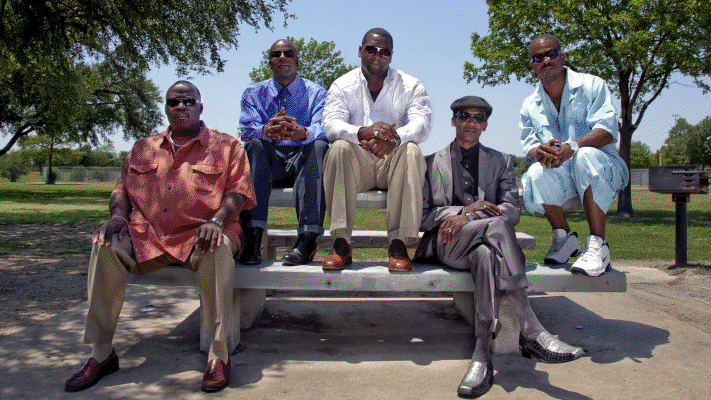
Well, chances are, that widespread recognition is soon to come Meltzer’s way. Informant was picked up by Music Box Films for distribution (look for it late summer or early fall in the Bay Area), and his latest project, Freedom Fighters, sounds highly promising: “The film follows three exonerated men from Dallas, with 57 years in prison served between them, as they start their own detective agency to look for innocent people who are still behind bars,” Meltzer wrote in an email late last week. “It’s a documentary detective film — a documentary noir, if you will.” (NPR broadcast a story about the men on April 16; listen here.)

I called him up to learn more, including details on the Kickstarter he just launched to help fund the next phase of shooting.

San Francisco Bay Guardian Sounds like you’ve been busy since the Goldies!

Jamie Meltzer I’m a little harried! Kickstarter is much more stressful than I realized. On top of teaching and actually trying to make the film, too, it’s like piling on this thing where you’re trying to promote the film. It’s a bit tricky.

SFBG Where are you in the process of making Freedom Fighters? What is the Kickstarter campaign for, exactly?

JM We’re a year into shooting. So that whole year was getting to know the guys, and them starting their first cases. And then, trying to come up with the trailer to fundraise, which is the Kickstarter.

The fun thing about it, and the challenge of it as a project, is that you’ve got to follow some cases all the way through. So, I think we have another year of shooting to be able to do that in a good way. The insurance of the project is that the [subjects] can kind of carry it on their own. Each of them has an amazing back story about they were wrongfully convicted, and about how they have transformed their lives since they got out — and they’ve only been out for a few years.

So I’m kind of relying in that, and realizing how big of a part of the story, at least the emotional part of the story, is: what does this do to you, to be in prison for 26 years, and how does that change you in negative and positive ways? I think that’s the kind of the core of the story.

SFBG After checking out the trailer, I got the sense that the subjects of Freedom Fighters were probably more amenable to being filmed than the subject of Informant was. Has it been a different experience getting to know them?

JM Totally. With almost every project I’ve done, I sort of gravitate to things early on and I’m not really sure why I’m gravitating toward it. In some senses, though, it’s always a reaction against the film that I did before. These guys are so fun to hang out with. Their lives are totally inspiring.

There’s some complexity to it that I hope to bring out in the story, but it’s also a very straightforward, inspirational story. It tells a lot of dark things about our justice system, but the guys themselves are super positive. That’s actually one of the things I responded to when I first met them. You’d think they’d be incredibly bitter after all this time in prison, but they figured out a way to turn this really bad situation into something that could be really positive: calling attention to the fact that this is a persistent problem, and trying to free people using their detective agency.

They do all sorts of other things, too, like they have an exoneree support group. When people come out in Dallas — which happens like once or twice a year, at least — these guys bring them into the fold. They support them when they come out, emotionally and sometimes financially, and they rely on one another, because no one else has had their experience.

The ideal of documentary is that you kind of parachute into these amazing circumstances among these amazing characters, and you just get to sort of be in their lives as long as you’re making the film. In the case of Informant, that had its challenges in terms of dealing with the subject. Other times, it’s just nothing but a pleasure, like with these guys.

SFBG When are you heading back down to Texas?

JM Well, there’s someone there [filming] right now; I’m pretty much going back and forth all the time. The reason we’re doing the Kickstarter right now is that they’re about to expand their roster of cases. We want to be able to follow all of those initially, and really hone in on the one most promising, interesting case that has something profound to say about wrongful convictions.

To me, it also doesn’t matter if they get someone off or not. That won’t be the point of the film. The point of the film is, by looking into these different cases, you kind of learn about how a wrongful conviction happens. Like, you see what happens to the eyewitness testimony. And through investigating these cases, you start to think about the larger problem. That said, I hope that they do get someone out!

SFBG Going back to Informant for a minute — it’s been exactly a year since the 2012 San Francisco International Film Festival, so getting picked up by a distributor must feel like coming full circle on that film.

JM It’s crazy how these deals can happen in so many different ways. The lifespan of a film is this weird thing that you don’t have a lot of control over. I’m really excited to bring Informant out to an audience in a theater — I think that’s the way films should be seen.

At the same time, I’m totally invested in this new film and kind of moving on. But obviously, I’m really excited about Informant being seen by more people.

Contribute to the Kickstarter (it ends May 10) and learn more about Freedom Fighters here!

Newsom calls for marijuana legalization

8

For all his flaws, Gavin Newsom has never shied away from taking a stand or showing leadership on emerging issues, particularly when the politicians are lagging behind public opinion. As mayor, he did it on same-sex marriage, temporary public art, and taking street some space from cars. And today, as the state’s lieutenant governor, he is calling for an end to marijuana prohibition.

“It is time for California to decriminalize, tax and regulate marijuana and decide who sells it, who can buy it legally, and for how much. When California became the first state to approve medical marijuana, we led the nation on progressive drug policies, and now it is time to lead again,” Newsom wrote in a Huffington Post column that was posted last night.

Newsom recites a case for legalization that the public has long supported, particularly here in California, citing how damaging and expensive it is to wage “war” on a substance that most Californians know is less harmful than alcohol or tobacco, peppering his column with compelling stats like this: “The U.S. leads the world in the incarceration of its citizens, with less than 5 percent of the world’s population but almost 25 percent of the world’s incarcerated population.”

The Drug Policy Alliance amplified Newsom’s column with a press release today, calling for other politicians to follow his lead and finally remove marijuana from its federal listing as a Schedule One narcotic, “where is current sits alongside heroin,” as Newsom noted. He closes by writing: “There is no reason why California cannot set the example for the nation in responding to drugs in a rational and sensible way. It is time to be bold enough to consider the science and the examples set forth by other states and nations. The time has come to decriminalize, tax and regulate marijuana — anything less is not enough.”

Drug Policy Alliance Executive Director Ethan Nadelmann praised the stand, writing, “What I find remarkable is that not one sitting governor or U.S. senator has spoken out in favor of legalizing marijuana notwithstanding the fact that a majority of Americans now support that approach. But I am confident that it’s only a matter of time until elected officials follow in Gavin Newsom’s bold footsteps as they did with marriage equality.”

Indeed, when Newsom unilaterally began issuing marriage licenses to same-sex couples in 2004, it was opposed by then-House Speaker Nancy Pelosi, US Senator Dianne Feinstein (in fact, all but two US Senators), and the official platforms of both major parties. Today, after a rapid upwelling of political support, it is supported by President Obama and half of the US Senate and it may be on the verge of being legalized by the US Supreme Court (we find out next month). Newsom showed foresight on that issue, and he’s doing so again with marijuana.

Washington and Colorado voters legalized recreational uses of marijuana last year, and they are well on their way to reviving their economies promoting what is already California’s top cash crop, despite its strained legal status. In fact, we also got a press release today from Gaynell Rogers, who handles public relations for Harborside Health Center, the Oakland medical marijuana dispensary that is currently waging an expensive fight for its life after a federal raid.

“Investors Gather to Fund the Most Promising Marijuana Companies in Seattle,” was the headline of a press release about an April 29 event where 40 wealthy investors will “hear pitches from the top entrepreneurs in the hot, new legal cannabis industry,” an event hosted by ArcView Investor Network, which includes many tech entrepreneurs and investors.

“Cannabis is the next great American industry,” said ArcView co-founder and CEO Troy Dayton. “Now that a majority support legalization, a geyser is about to go off. The question is: which companies will be seated on top of it? That is what’s being decided at this investor event.”

Similarly, as California wrestles with tight budgets and a overcrowded prison system, can we really afford to continue wasting money and lives criminalizing such an industry that already is already an important part of the state’s economy? Newsom says no, and so do we.

TNGHT whips the Mezzanine’s 420 crowd into a frenzy

0

Like a microcosm of our ever-morphing music culture, electronic duo TNGHT stands squarely between the traditions of EDM and hip-hop, reaping the benefits of both musical forms, and generating something new in the process. Comprised of Lunice (from Montreal), and Hudson Mohawke (from Glasgow), the pair stopped by the Mezzanine this past Saturday after a two-weekend Coachella run, bringing their shiny, brassy, bass-loaded grooves to a sold-out crowd of ecstatic 420ers.

On paper, Lunice and Hudson Mohawke seem like natural collaborators. Both musicians specialize in an oversaturated, hypermelodic brand of electronica, often resembling the glossy tones of the Sonic the Hedgehog soundtrack, if it were layered atop big, punchy drum loops. However, the pair’s self-titled debut EP as TNGHT is impressive in its lack of melodic drive, relying on huge bass and punishing hip-hop beats to do most of the heavy lifting. Although the lack ear-candy melodies left something to be desired, this groove-based approach resulted in the danciest output of either artist’s career so far: five songs, waiting for a hyped-up audience to whip into a frenzy.

Saturday’s show got off to a rocky start with two sets from DJ Dials and DJ Bogl. While both DJs spun a decent, eclectic selection of tracks (ranging from trap music to Flying Lotus-esque wonkiness), neither of them displayed the showmanship necessary to justify a combined four hours of stage time. Watching someone stand in front of their MacBook is only engaging for so long.

However, when it took the stage at 1am, TNGHT made up for the enthusiasm deficit, and then some. For two guys poking at electronics from behind a desk, their crowd-pleasing skills were extraordinary, with Lunice leaving his workstation every five minutes or so to run to the front of the stage and rev up the audience, crowd-surfing twice before the night was over. His infectious stage presence, combined with the duo’s relentlessly thumping beats, and seizure-inducing, strobe-laden lightshow, made for a vitalic, completely immersive performance.

For a duo with just one EP under its belt, TNGHT churned out a remarkably fluid, hour-long set, alternating between original tracks (“Higher Ground,” “Bugg’n”), a few Hudson Mohawke numbers (most memorably, “Cbat” from 2010’s Satin Panthers EP), and a number of hip-hop songs from the likes of OutKast and Rick Ross, with original productions layered on top. The sequencing of the set was basically perfect, with no dull moments to be found.

The crowd was befitting of TNGHT’s crossover appeal, ranging from snappily dressed urban professionals, to 420 bros, to hip-hop heads, to hipsters resembling the guy on the Zig Zag logo. Everyone seemed equally intent on dancing their ass off, though: a welcome alternative to the stiff, self-conscious audiences that populate all too many shows in this town.

As long as the musical landscape remains in its current state of flux and uncertainty, we should be thankful for projects like TNGHT, bent on exploring the grey area between disparate genres. The fact that Lunice and Hudson Mohawke can contribute so meaningfully to the conversation, while remaining so effortlessly, viscerally likable, is no small achievement.

Miranda rights in Boston

25

It’s the age-old dilemma, the stuff of dozens of thrillers and action movies: You’ve captured a guy who knows exactly where a bomb has been planted, and it’s going to explode in 30 minutes and kill thousands of people. Do you bother to read him his Miranda rights and encourage him to speak to an attorney before he answers any questions?

In the movies, no: You shoot him in the knee, or break his fingers one by one, or waterboard him until he talks, and then with seconds to spare, you rappel down the side of a giant building, crash through the glass door, and disarm the bomb. No sweat.
In real life, it’s a bit more tricky — particularly when the suspect, an American citizen, hasn’t even been arrested yet, but can’t go anywhere because he has a bullet hole in his throat.

I can get the initial instinct: When FBI agents grabbed 19-year-old Dzhokhar Tsarnaev, they wanted to be sure he didn’t know of any other devices that were about to go off. If they’d refused to read him the Miranda warning and even used “enhanced interrogation techniques” and he’d said: “Hey, OK, I give up, there’s another bomb about to go off,” and they’d found it and saved lives, well…we’d have some Zero Dark Thirty debates, but at least there would have been a point.

In this case, it appears he has said no such thing, and no other bombs connected to him have gone off. There may be evidence that later emerges showing that the normally illegal interrogation saved lives, but so far, it looks as if all the feds have done is compiled information they can try to use against him in court.

Which is a problem.

It’s really, really hard to be even remotely sympathetic here — the guy (allegedly) killed three people, including an eight-year-old, and wounded many more, including a lot of amputations. He terrorized the Boston Marathon. I’m not even remorely suggesting that he get any special treatment. If he’s guilty — and the evidence at this point is pretty solid — then he’s going away for life. (Unless the federal prosecutors foolishly seek the death penalty, which would turn him into a martyr.)

But you can’t just decide that this guy is a bad guy and so the Miranda rule doesn’t matter. There are all sorts of really horrible criminals arrested in the United States, and they all have the right to remain silent, to avoid self-incrimination, and to have an attorney present before they say anything.

There’s a whole cottage industry of cops and prosecutors finding ways to avoid the Miranda warnings, which is not only unConstitutional but somewhat nutty, because Miranda almost never hurts a criminal investigation or prosecution. The Boston Bomber’s case won’t rest on what he told investigators from his hospital bed. In fact, I tend to agree with what law professor David Harris says:

The Obama administration’s interpretation of the public safety exception is suspect; its announcement that no Miranda rights would be given was transparently political, aimed at avoiding criticism from conservative quarters. Worst of all, the administration seemed to be telling the public that Miranda warnings are just petty rules — another instance of hyper-technical laws that get in the way of real justice. This is dead wrong, and it shows grave disrespect for the rule of law and the Constitution — the very things that make our country great.
 

I would guess that now that Tsarnaev has a lawyer, he’s hearing the grim reality of his situation: Unless there’s something we really don’t know, and he’s got some astonishing claim of innocence, (“my brother made me do it” won’t work) he’s never going to get out of prison, and everything that the legal team does from this point on is about saving his life. He’ll wind up, most likely, pleading guilty to a crime that gives him life without parole, if prosecutors drop the death penalty.

We’ll never know exactly what happened when the FBI gave Tsarnaev a pencil and paper and asked for written answers to interrogation, because that evidence likely won’t be made public. But I suspect that the first thing the agents asked was whether there were any more bombs, and once they got that answer, they should have stopped and issued the Constitutional warnings. Which they almost certainly didn’t.

I know this is speculative, but it’s the reason the Miranda rules are in place. Because we shouldn’t have to speculate on this stuff; we should know that the federal government doesn’t think the “Miranda warnings are just petty rules.”

Wells Fargo foreclosure fighters: They’re baaaack!

See an update at the end of this article.

 A group of activists focused on organizing against Bay Area foreclosures will return to Wells Fargo’s San Francisco headquarters today for a protest timed to coincide with the banking giant’s shareholders’ meeting – even though the meeting was moved to Salt Lake City, Utah this year. (Perhaps the change of scenery had something to do with what happened last year, or the year before?)

Unfazed, the Alliance of Californians for Community Empowerment has sent some homeowners who are facing bank foreclosure on a road trip to Utah to bring their message to CEO John Stumpf in person, according to ACCE organizer Erin Franey.

Meanwhile, in San Francisco, activists focused on fighting foreclosure will congregate outside the bank’s Mongtomery Street headquarters. “Wells is foreclosing on more homeowners in California than any other bank,” says Franey, adding that there are currently 11,000 California homes in the foreclosure pipeline.

In attendance at this afternoon’s San Francisco rally will be Bernetta Adolf, a cancer survivor in her late 60s who has also struggled with blindness, a particularly challenging disability that forced her to retire from her city job as a Muni driver.

Adolf is locked in a battle with Wells Fargo over the foreclosure of her home in San Francisco’s Oceanview-Merced-Ingleside neighborhood. The trouble started when she borrowed against the home she’s lived in 20 years, to fund her son’s college education.

“It turns out the loan to provide for my son’s future was designed to ruin my own,” Adolf wrote in an online statement. “It was predatory, calculated to strip my equity and set me up for failure. When I tried to work with Wells to fix the loan, they offered a modification so small it didn’t make any difference. Then they started trying to take my house. The stress hastened my blindness and continues to aggravate my health problems.”

UPDATE: Wells Fargo spokesperson Ruben Pulido contacted us in response to this article and requested that we post a statement in response:

“Our foreclosure rate in 2012 fourth quarter was just 1.04 percent in California—less than half our national rate (2.1 percent) during that period.

Over the past four years, Wells Fargo has helped more than 850,000 customers nationwide with loan modifications, and has helped customers through $6.6 billion in principal forgiveness; the majority of that principal forgiveness has gone to borrowers in California.

When customers with financial challenges choose to work with us, we help 7 of 10 avoid foreclosure. Over the last 6 months, customers who completed a foreclosure were, on average, 19 months past due on their payments.”

You want to live in Manhattan? Move there.

192

I feel like I’ve been having this discussion for 30 years, and it still keeps coming back. The latest installment (thanks to sfist for the link) is a Slate article by Matthew Yglesias arguing that San Francisco could solve its housing crisis by becoming as dense as Manhattan. Lots of highrise condos and apartments in places like the Mission. A total of 3.2 million residents.

Obviously, a totally different city:

Obviously that would have a transformative effect on Oakland as well in various regards. It’s obviously not “politically realistic” to imagine San Francisco rezoning to allow that kind of density. But uniquely among American cities, I completely believe that 3.2 million people would want to live in a hypothetical much-more-crowded version of the city if they were allowed to. You’d need to build another heavy rail line or three and do some better dedicated bus lanes, but it’d be affordable with a much larger tax base.

Here’s the problem. Two problems, really.

1. That level of density hasn’t exactly made Manhattan affordable. (Although if you want to move there, it’s probably cheaper than SF at this point). There’s been a huge surge in housing construction in NYC, and housing prices are still way too high. The housing market in San Francisco is so unusual that demand is essentially infinite; you can’t build your way out of this.

2. There are already 800,000 people living here, and most of us don’t want to live in Manhattan.

One of the reasons San Francisco is so attractive is that it’s still a human-scale city. I’ve spent a lot of time in Manhattan, and the rush is pretty cool, and some urbanists say that’s how we’re all going to have to live in the future — packed into tall buildings in dense cities — but that’s not how I want to live. I know I sound old and I’m becoming a curmudgeon and one of those “you should have seen us in the old days” people, but I like the fact that there are no highrises in the Mission. 

Yeah, San Francisco is going to have to grow in population. There are ways to do that — to make dense neighborhoods that are still very livable. See: North Beach. But San Franciscans have generally taken the position that we don’t want to be Manhattan. We want to be San Francisco.

Now: My vision is not in synch with how housing is allocated in a hyper-capitalist system. Me, I think housing should be treated as a human right and regulated like a public utility. Landlords should be allowed a “reasonable return on investment” but not the greatest profit the market will bear. Homeowners should see their property appreciate at a reasonable level, but not at a speculative level. Housing shouldn’t be bought and sold as a commodity. And it should be allocated by seniority — that is, the people who have been a part of a community for the longest get the better housing.

That’s how you avoid the demand-exceeds-supply issue (and again, in this city, there will always be more demand than supply.) I know that’s commie shit, but that’s the way it is.

Still, whatever the economic or policy arguments, you can’t force that level of density onto this city. Because before you make those kinds of plans, you have to check with the people who live here.

I wrote this mostly to give the trolls some red meat, since they don’t seem to be agitated enough lately. Go to it, Adam Smith.