SFBG Blogs

Another attack on public-employee unions

43

Big-business and conservative interests have been trying to years to find a way to undermine the political clout of organized labor, particularly unions like the teachers and nurses, who have played a huge role in progressive campaigns. And now there’s a new tactic.

The anti-union folks have gone to court to try to do what they haven’t been able to do in the legislative arena: take away the ability of public-employee unions to use membership dues for political campaigns:

In a scarcely-noticed lawsuit filed Monday in federal district court in Los Angeles, a conservative nonprofit, the Center for Individual Rights, claims that California’s system for collecting union dues from government employees abridges free speech safeguards by compelling employees to subsidize union political advocacy and activities with which they disagree.

Peter Scheer, who runs the California First Amendment Coalition, notes that current law is on the side of the unions — but five Supreme Court justices have been critical of the prevailing case law.

And if they prevail? Public employee unions, not just in California but across the country, would lose the bulk of their dues funding-and with it, the ability to wield decisive political influence in state and local governments everywhere. That is a big deal.

Yep. It’s a big deal. It could do what corporate America has been trying to do for years — eliminate the one remaining power base with the money to challenge right-wing efforts. If this gets all the way to the Supremes, it will be a few years away, but we need to keep an eye on it.

Guest opinion: LGBT supporters of Bradley Manning

33

Editor’s note: At least 24 LGBT community leaders and activists have signed on to the following statement in support of Bradley Manning as a Pride grand marshal.

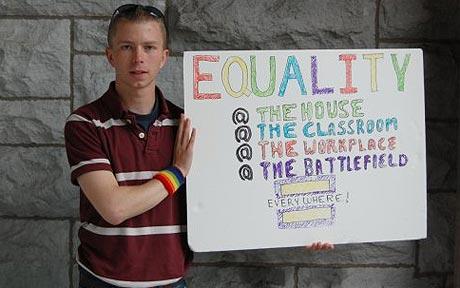
Recently, it was announced that PFC Bradley Manning would be a grand marshal of the 2013 San Francisco Pride Celebration. We felt this decision was a bold and uplifting choice, bestowing a great honor on a young whistleblower being persecuted for following his conscience.

Much to our disappointment, two days later SF Pride board president Lisa Williams issued a separate announcement that the SF Pride board would not be honoring PFC Manning as a grand marshal after all.  It appears the SF pride board’s reversal was affected by criticism from a recently formed gay military rights group. 

We want the world to know that the SF Pride board’s decision is not reflective of the LGBTQ community as a whole, and that many of us proudly celebrate PFC Manning as a member of our community.  Unfortunately, the statements by Williams, and the group which originally advocated against PFC Manning as grand marshal, continue to perpetuate certain factual inaccuracies with regards to the military prosecution against him. 

The first inaccuracy would be that PFC Manning did not advocate for gay rights.  In fact, while serving in the military, PFC Manning experienced harassment and physical assault because of his perceived sexuality.  He responded by marching against Don’t Ask Don’t Tell in the DC pride parade, where he spoke to reporters about his position, in addition to attending a fundraiser with Gavin Newsom and the Stonewall Democrats so he could discuss the issue of homophobia in the military.  He told a friend in February of 2009 that his experience living under DADT and experiencing the oppression that entailed helped increase his interest in politics more generally.

LGBTQ activists fought hard for years to win the right to live free from the fear that we could be targeted with violence deemed acceptable to society at large, simply for being who we are.  We members of the LGBTQ community would like to stand in solidarity with others around the world who still must live in fear of violence and oppression, simply for being born into a particular group.

Contrary to SF Pride Board president Lisa Williams’s claim, no evidence has been presented that PFC Manning’s actions endangered fellow soldiers or civilians. In fact, the military prosecution has successfully argued in court that it isn’t required to provide such evidence, and former State Department spokesperson P.J. Crowley continues to insist that the “Aiding the enemy” charge is unwarranted. 

In a February 28, 2013, court statement, PFC Manning detailed the due diligence he performed prior to releasing materials to ensure this lack of harm, in addition to explaining,

“I believed the detailed analysis of the [Iraq and Afghanistan war log] data over a long period of time by different sectors of society might cause society to reevaluate the need or even the desire to even to engage in counterterrorism and counterinsurgency operations that ignore the complex dynamics of the people living in the affected environment every day.”

The truth is that President Bush and VP Cheney’s aggressive wars in the Middle East endangered far more LGBTQ service members and civilians than any Army whistle-blower.  Unlike PFC Manning, however, they have never served prison time, and likely never will.

Millions of people around the world support Bradley for the personal risk he took in sharing realities of complicated U.S. foreign conflicts with the American people.  He is the only gay U.S. serviceperson to be nominated three times for the Nobel Peace Prize.  In joining the Army, soldiers take an oath to protect the U.S. Constitution, and we believe that by his actions PFC Manning strengthened our democracy, and fulfilled that oath to a greater degree than most enlisted.

We are proud to embrace PFC Bradley Manning as one of our icons, and intend to march for him in pride contingents across the country this year, as we have in years past.  We think Bradley Manning sets a high standard for what a U.S. serviceperson, gay or straight, can be.

Lt. Dan Choi, 2009 SF Pride Celebrity Grand Marshal, anti-DADT activist
Joey Cain, 2008 SF Pride Community Grand Marshal, former Board Member and President of SF Pride
Gary Virginia, 2012 SF Pride Community Grand Marshal
John Caldera, Commander, Bob Basker Post 315ED, American Legion, SF Veterans For Peace
Peter Tatchell, Peter Tatchell Foundation
Glenn Greenwald, award-winning journalist
Leslie Feinberg, transgender author and activist
Minnie Bruce Pratt, award-winning poet, activist and educator
Dossie Easton, Therapist and Author
Susie Bright, public speaker, educator, writer
Andy Thayer, co-founder, Gay Liberation Network
Becca von Behren, Staff Attorney, Swords to Plowshares Veterans Service Organization
Stephen Eagle Funk, Artistic Director, Veteran Artists
Liz Henry, poet and activist
Lori Selke, author and activist
Rainey Reitman, Steering Committee, Bradley Manning Support Network
Sergei Kostin, Codepink Art Director
Kit Yan, Queer & Trans Asian American Poet
Lori Hurlebaus, Civilian-Soldier Alliance, SF Chapter; Co-founder, Courage to Resist
Evan Greer, radical queer riotfolk musician
Pat Humphries, Emma’s Revolution
Sandy Opatow, Emma’s Revolution
Pamela Means, award-winning OUT musician
Malachy Kilbride, Coordinating Committee, National Campaign for Nonviolent Resistance
Oliver Shykles, Queer Friends of Bradley Manning
Gabriel Conaway, equality activist, Steering Committee of SAME
Adele Carpenter, Civilian-Soldier Alliance, SF Chapter


May Day rally for immigration reform in SF

Hundreds gathered for a rally outside San Francisco City Hall on May 1, capping off a march that drew activists into the streets to commemorate International Workers Day. The events were organized by a broad coalition of immigrant rights advocates to call for improvements to the recently unveiled proposal for federal immigration reform, which will go before the Senate Judiciary Committee next week. [More photos after the jump]

Olga Miranda of SEIU Local 87, the San Francisco Janitors Union, addressed the crowd. “I want to be able to recognize sheet metal workers, carpenters, laborers, hospital workers, housekeepers, domestic workers,” she said. “We are a proud economy. … All we want is for workers to be able to come out of the dark. We want to make sure that we are not exploited for the color of our skin, that we are not pushed into the darkness. We are Chinese, we are Arabic, we are Filipino, we are gay, we are transgender. We are workers! And comprehensive immigration reform needs to be inclusive.”

Activists from Causa Justa / Just Cause led the crowd in a unity chant in five different languages.


Putri Siti, an undocumented student from Indonesia, shared the story of when she and her family thought they might face deportation. “I am more than just an illegal. I am more than just undocumented. I’m a student. I’m a dancer. It doesn’t matter what paper I have. And now, I am proud to say, that I am undocumented, unafraid, unashamed,”  she said.


SFMTA chief hopes to calm the parking meter furor at supervisorial hearing

64

San Francisco Municipal Transportation Agency director Ed Reiskin faces a tough challenge tomorrow (Thu/2) at the Board of Supervisors Neighborhood Services and Safety hearing that Sup. Mark Farrell has called on expanding parking meters into new neighborhoods, where Reiskin is expected to face a hornet’s nest of SFMTA critics stirred up by the loss of free street parking and perceptions that the agency is mismanaging public spaces and transit. [UPDATE: Read what happened here.]

Reiskin needs to quell some of the anger that is erupting in the northeast Mission District, Potrero Hill, and other areas slated for new meters enough to prevent increased supervisorial intervention into his independent agency and ensure a transit improvement bond measure planned for next year has a chance of passing – which the agency desperately needs to make improvements to Muni.

“We appreciate the opportunity to share information on how we’re trying to create more parking availability and ease congestion,” SFMTA spokesperson Paul Rose told us.

Jay Primus, who manages the SF Park variable price meter program for the SFMTA, told us he’s seen the presentation that Reiskin will be giving and finds it compelling, even though he knows better than anyone that, as Primus said, “Parking is always a difficult subject, particularly in an area as dense as San Francisco.”

It’s hard to imagine what might satisfy the SFMTA’s staunchest critics, who have created websites blasting and lampooning the agency’s every action and formed opposition groups that use militant rhetoric.

Mary Eliza is the spokesperson for Eastern Neighborhoods United Front, which has whipped up critics of the parking plans with calls to “FILL THE HALL. Raise your flag and wear your colors.” Speaking to the Guardian, she cited a litany of complaints and deep, conspiratorial suspicion of the SFMTA and its agenda, which is why she said critics have appealed to the supervisors.

“We’re not dealing much with the MTA anymore, we’re dealing with the supervisors because we think it’s our best chance to get anything accomplished,” Eliza told us.

They seem to have found a sympathetic audience with Farrell, a conservative from the westside, where pro-car ideologies are strongest. “Even as a transit first city, San Franciscans deserve to have reasonable parking situations in their neighborhoods. With plans under discussion to expand SFMTA’s number of parking meters citywide, every potentially affected neighborhood deserves to have extensive input into and thorough understanding of SFMTA’s upcoming plan,” Farrell wrote in calling for the hearing.

Primus said the SFMTA does try to be responsive to community concerns, noting that when its plans for new meters in the northeast Mission, Potrero Hill, and Mission Bay ran into strong community opposition in 2011, officials delayed the plans to gather more data and do more community outreach, separate the proposals, and remove them from the SF Park pilot program.

They are now finishing work on the Mission plan, which should come out this summer, after they do more work on solving issues raised by car repair and other light industrial businesses. But Primus said parking scarcity and good transit access in the area make it “an area where good parking management is all the more important.”

Then comes Potrero Hill, where the anti-meter furor appears to be strongest. But with increased development planned for the area, Primus noted that the community and Board of Supervisors have already called for more active parking management by the SFMTA: “All these parking policies were called for in the Eastern Neighborhoods plan, so it was already approved by the supervisors.”

Assembly committee OKs moratorium on fracking in California

Three bills seeking to impose moratoriums on fracking in California won approval at the California Assembly Natural Resources Committee in Sacramento on April 29, an important milestone for environmentalists who ultimately plan to push for a permanent ban on the practice.

Assembly Bill 1301, introduced by Assembly Member Richard Bloom (D-Santa Monica), is backed by a host of statewide environmental organizations including the Center for Biological Diversity, Food & Water Watch, and Clean Water Action. That bill and AB 1323, similar legislation sponsored by Holly Mitchell of Culver City, seek to halt the controversial oil-and-gas extraction method in California until possible health and environmental impacts have been adequately reviewed.

“It’s an important step,” notes Adam Scow, California campaigns director for Food & Water Watch in San Francisco. “In theory, the quickest timeline the bill could pass is [sometime] this year.” He added, “Gov. Jerry Brown has the power to issue a moratorium now,” but “Brown is repeating industry talking points that fracking can be done safely.”

A third bill, AB 649, would create moratoriums on fracking only nearby sensitive sites such as aquifers or agricultural lands, but that proposal received less support from fracking opponents who believe it should be subjected to a blanket moratorium and ultimately banned. All three bills won approval from the Natural Resources Committee, and are now headed for the Assembly Appropriations Committee.

Short for hydraulic fracturing, fracking is an oil and gas extraction method that utilizes high-pressure water and toxic chemicals to fracture shale deep underground. It’s prompted fierce opposition in New York, Pennsylvania and throughout western states, where fears about groundwater contamination and long-term ecological impacts are growing as the practice is more widely adopted.

“It uses huge amounts of water,” Wenonah Hauter, executive director of Food & Water Watch, told the Bay Guardian in an interview. “It pollutes the water with chemicals that don’t even have to be disclosed, and the wastewater either stays underground and we don’t really know what happens to it, or it has to be disposed of through injection wells that are associated with earthquakes.”

And yet, powerful momentum is building in the petroleum industry around oil extraction from the Monterey Shale, a geologic formation estimated to contain 15 billion barrels of oil that would have been inaccessible but for technological advancements in fracking. The Western States Petroleum Association, a powerful industry lobby, placed the vast California fossil fuel reserve in the crosshairs in a mid-March report, along with the outright giddy pronouncement that “this oil, if prudently and safely developed, could dramatically change our state’s energy security picture for decades to come and usher in an era of unprecedented prosperity.”

All of which amounts to stringent opposition to bills that would impose a moratorium until health and environmental impacts can be carefully evaluated. According to this article in High Country News, that industry association spent $8.5 million last year lobbying state government.

While things still hang in the balance in California as far as fracking is concerned, the mad dash for shale oil has already transformed vast swaths of rural landscape in North Dakota, where oil production has shot up dramatically in recent years. According to a study released by the Western Organization of Resource Councils, fracking and other oil and gas extraction practices result in the permanent removal of seven billion gallons of water from the hydrologic cycle each year in North Dakota, Montana, Wyoming, and Colorado.

The most bitter Bradley Manning-Pride piece yet

16

Lots of people angry about the Pride Committee’s decision to fire Bradley Manning as a grand marshal. But the most savage, all-out assault comes from Steven W. Thrasher, a former Village Voice writer who has nothing good to say at all about Pride or the people who run it — or for the more mainstream parts of the LGBT movement:

Listen up, fellow homos—you have been bought, paid-for and sold to the highest bidder. The military industrial complex is so far up the ass of the LGBT movement that it can feel what is being digested in its upper intestines. Talking points and “messaging,” not discussion and debate, are the preferred methods of “communication” in a movement now run and owned by PR-firm trained Professional Homosexuals. Dissent will not be tolerated, and the assimilation of homosexuals into the rest of the militarized American public is complete.

On Manning and Pride:

A regular homosexual can give Dan Savage handjob after handjob for his anti-bully “It Gets Better” campaign if he wants, and he can even scream from the rafters that Savage should be given the Nobel Peace Prize for saying that something must be done to protect the powerless who are bullied by the powerful. But that same homosexual becomes as beholden to the military-industrial complex as the Professional Homosexual when he fails to call out SF Pride as a bully. The powerful group found perhaps the most marginalized, powerless homosexual in the nation, pulled him into the spotlight for a few hours, took a giant shit on him, roughed him up a little, called him names, and then kicked him back into the gutter.

I had to smile when I came to the end of the post, which notes:

Steven W. Thrasher was named Journalist of the Year 2012 by the National Lesbian and Gay Journalists Association for his staff writing for the Village Voice and his freelance contributions to the New York Times and Out magazine. Two weeks after receiving this award, he was laid off by the Voice.

Is he being too harsh? Is he channeling his inner Marc Salomon? Or does the guy have a point here?


Teachers try to dis-accredit accreditation group

14

The union representing teachers at San Francisco City College have fired back at the accreditation commission that’s threatened to shut the school down and forced dramatic changes in its mission. The California Federation of Teachers and AFT Local 2121 filed a legal complaint May 1 charging the Accrediting Commission for Community and Junior Colleges with violating its own rules and federal law — and the complaint asks the federal Department of Education to withdraw the accreditation of the accreditation commission.

The language of the 260-page complaint is harsh:

The Commission has violated nearly every Federal regulation which guides it, disregards its own policies, misrepresents
its actions or legal requirements, fails to respect the law and public policy of the State,violates Federal common law due process and California common law fir procedure, and acts arbitrarily, capaciously, unfairly and inconsistently in evaluating colleges and
districts throughout the State, thereby harming colleges, students, faculty and staff, boards of trustees and ultimately the People.

But in the end, union members on a conference call noted, the big issue is whether the ACCJC ought to be evaluating classroom instruction and offering constructive criticisms (which is what these panels have tended to do in the past) — or ought to be looking at overall college finances, including retirement costs and management structure.

For example, the ACCJC wants City College to pre-fund some of its retiree health-care benefits — diverting money that could be used right now in classrooms. “Accreditation agencies shouldn’t be looking at [those types of] finances,” union spokesperson Fred Glass said.

Alisa Messer, president of the Local 2121, said that the commission’s threat to withdraw accreditation from City College “has thrown the college into turmoil,” which is hardly news. Jim Mahler, president of the CFT Community College Council, took the broader view, saying that schools are now so afraid of the ACCJC that they’re spending disproportionate amounts of money and time just trying to please the agency.

CFT President Joshua Pechthalt said the goal of the legal filing was to get the ACCJC to withdraw its “show cause” order at City College — and the change the overall approach the accreditors are taking. “No other body operates like this,” he said. The Department of Education has to accredit the accreditors, and the ACCJC comes up for review this year — so in a sense, the unions want to put the oversight agency under the same type of scrutiny the schools are enduring.

So far, no response from ACCJC.

UPDATE: ACCJC posted the following on its website:

While we understand there is interest in obtaining information in this regard directly from the ACCJC,
the Commission will maintain its normal practice of reviewing third party comment and communicating
about that comment directly to the affected member institution. Further, complaints against the ACCJC
are treated formally, in accordance with policy; comment from the organization or its officers is limited
during this time.


Calling all Latino photogs: Accion Latina wants your work on a wall

0

Somehow in the shiny blitz of new restaurants made out of stainless steel, you may have missed the arrival of the Eric Quezada Center for Politics and Culture right in the thick of the Mission. That’d be a shame — the space where the Abandoned Planet bookstore stood until 2010 now hosts some of the most vibrant alternative events in the country. Last time I made it through, it was for a poster show of screenprinted calls for immigration justice. A theater group comprised of Filipina caretakers performed, and in the back you could buy homemade butterfly cookies and sangria.

Speaking of the Quezada Center, if you’re a Latino photographer, you’re in luck — a local non-profit wants to put your snaps up the gallery walls.  

The contest is sponsored by Accion Latina, a local nonprofit intent on empowering the Latino community (the group runs El Tecolote, the well-loved bilingual Mission District newspaper whose editors will judge the shots). The group is looking for photos that capture life here in the Bay for Latinos. Winners will get cash and prizes from local photography contests, and yes, have their shots displayed in an exhibit that will open at the Quezada Center in August. 

All photos must be submitted by the person who took them, taken between March 1, 2012 and July 31, 2013, and not overly digitally manipulated. These are the categories they’re interested in seeing snaps from:

(1) Traditions, rituals, celebrations

(2) Politics, controversy, protests

(3) People, characters, families

(4) Everyday life, people at work, at play, family

(5) Activities representing environmentally friendly concepts.

Full contest rules available here

Hearing on event security as SFPD pushes police state

17

Just a few weeks ago, Sup. Scott Wiener, civil libertarians, and I were raising concerns here about the SFPD unilaterally expanding its video surveillance reach. Then came the bombings at the Boston Marathon, which the SFPD used to seriously up the ante in the police state pot, asking for real time video surveillance up and down Market Street and banning backpacks at Bay to Breakers.

Now, I’m not one to stand in the way of reasonable security precautions. But we shouldn’t just defer to the SFPD on whatever it says it wants because then we’ll have cameras on every corner, spy drones overhead, stop-and-frisk, and an ever-greater portion of our tax dollars going to expand the police state. Because the cops will always want more tools to police us, tools they will always say they need to protect us – it’s just in their nature. But it’s up to the rest of us to strike the right balance and not lose our heads every time some whack-job resorts to violence.

That’s why it’s good to see that Sup. Eric Mar has called a Neighborhood Service and Safety Committee hearing for this Thursday at 2pm on security measures for large events, to which he’s invited the SFPD, Planning Department, Recreation and Parks Department, and Entertainment Commission. Let’s talk about this before acting too rashly.

For example, is it really reasonable to ban backpacks at Bay to Breakers just because the Tsarnaev brothers allegedly carried their homemade bombs in backpacks? Is it possible for police to ensure that nobody in or around an event that draws more than 100,000 people has a backpack? Is it even legal to prevent me from riding my bike near a race that bisects San Francisco if I happen to be wearing a backpack?

I’m always amazed at Americans’ capacity for fear and overreaction. One nut decides to put a crude explosive in his shoe and suddenly we all have to remove our shoes every time we board an airplane (a silly measure most other countries don’t require). Even as horrible as the 9-11 attacks were, the 2,977 people they killed that day is a small fraction of the death toll that we inflicted in response (6,693 US troops killed in Afghanistan and Iraq, and at least hundreds of thousands of Iraqis and Afghanis killed), and I don’t think anyone can credibly claim that we’re any safer today as a result.

Fearful people will accept anything police say will make them safer, and that’s how the slide into police states throughout history always begin, pushed by tyrants of all ideological stripes. But isn’t that just giving in to terrorism? After all, we’re all far more likely to be killed by a distracted motorist than we are a terrorist, but I’m not hearing calls for big crackdowns on drivers, even in the face of good evidence this would keep us safer than banning backpacks.

Our country was founded by people who were more wary of soldiers and cops than they were random kooks, and I think we’d do well to remember what people like Benjamin Franklin had to say about irrational fears: “Those who would give up essential liberty to purchase a little temporary safety deserve neither liberty nor safety.”

You want scary? We’ve got an eviction map

205

You want to see something frightening on a lovely afternoon? Check out this amazing interactive map of Ellis Act evictions in San Francisco put together by Brian Whitty.

It’s stunning: Between 1997 and 2013, it seems as if most of the Mission, Noe Valley, North Beach, the Marina, and Potrero Hill was evicted. Hundreds and hundreds of apartments turned into TICs, which now want to convert to condos. Hundreds and hundreds of tenants, who once had rent-controlled apartments, losing their homes — and given the price of housing, losing their ability to live in San Francisco.

Each little red flag is a human tragedy. Each one represents a transforming city that no longer has room for the middle class, much less poor people. It makes we want to cry. Or throw up. Or something.

Bay to Breakers: Go naked, everyone!

15

I realize security is a serious issue after Boston. And I’m all for public safety. So if the city is going to ban backpacks at Bay to Breakers, (just for runners, or for spectators, too? How can that be enforced?), we might as well take the next logical step:

More naked runners.

Run naked and you can’t hide a bomb. Run naked and you are no security threat to anyone. In fact, public nudity is one of the best defenses against terrorism; have you ever heard of a naked terrorist?

Let’s go all the way. The runners. The spectators. The casual passers-by, the folks who happen to live along the route …. banning backpacks is just a start. Ban clothes. All day, all along the 7.5 miles. A naked city is a safe city.

Scott Wiener can stay home.

Pride faces backlash from defenders of gay whistleblower

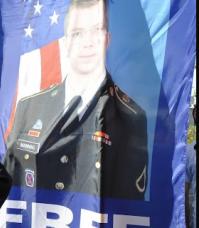
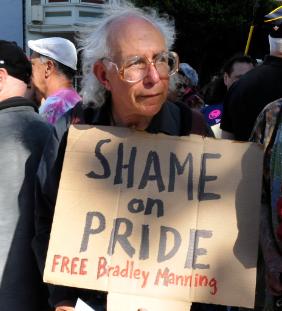
In the wake of the debacle unleashed by San Francisco Pride’s announcement that gay whistleblower Bradley Manning would not be grand marshal for this year’s Pride Parade after all, a large crowd of protesters assembled outside Pride’s Market Street headquarters April 29 for a hastily organized rally condemning the move. They held signs depicting Manning’s image, and chanted, “Grand marshal, not court martial!”

Famed whistleblower Daniel Ellsberg, who helped foment opposition to the Vietnam War by leaking classified government documents known as the Pentagon Papers to the New York Times in 1971, expressed support and admiration for the young US Army soldier. Manning was arrested in May of 2010 on suspicion of having leaked classified government cables and military footage later published by WikiLeaks, and faces a possible life sentence.

“A big mistake was made by the Board of Directors of SF Pride,” Ellsberg said. Referencing director Lisa Williams’ statement that not even a “hint” of support for Manning would be tolerated, Ellsberg said, “I don’t hint at support for Bradley Manning. I couldn’t be louder. I will be marching in that parade, for the first time for me, with a banner honoring Bradley Manning.”

Gay Navy veteran John Caldera, commander of the Bob Basker Post 315 of the American Legion, an LGBT-focused veteran’s organization, announced that his members had voted unanimously to call for Williams’ resignation, saying she had “negated and belittled all of the voices of the community” who had expressed support for Manning. He also condemned Pride for withholding its support for Manning while accepting funding from the likes of Wells Fargo, a banking giant responsible for foreclosures that have affected veterans. “The SF Pride committee has to put people first and corporations second,” he said.

Joey Cain, a former grand marshal who said he nominated Manning, noted that he was not calling for Williams to resign, but hoped she would realize the mistake and reinstate him as grand marshal. “What he did was heroic … Bradley made the world a better place,” Cain said. He shamed Pride for straying so far from the roots of the gay movement. “We believed in radical inclusivity,” practicing tolerance for all “colors, genders and opinions,” he said, with the understanding that “We don’t all agree. We never will. But we’re sure never going to throw any part of the community under the bus.”

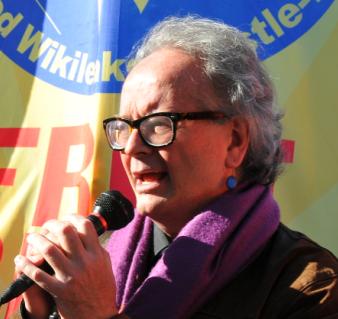
The rally was organized by longtime housing activist Tommi Mecca (pictured, center), comedian Lisa Geduldig and blogger Michael Petrelis.

Some counter-protesters from the Log Cabin Republicans, a gay GOP organization, even made an appearance. “We were praising the Pride Committee for not having selected Manning,” SF Log Cabin Republicans Fred Schein told the Bay Guardian.

Paul Bloom, a longtime activist, handed the Guardian a written statement on his take of the whole dustup, which he viewed as “an opportunity for people to unite in our understanding that there is no antiwar movement without gay people, and no movement for human rights that doesn’t envision an end to war.”

“Why does the SF Gay Pride Parade need corporate sponsorship, anyway?” Bloom wrote. “The parade must be brought back into the struggle as a part of it instead of remaining the grossly commercial spectacle it has become. We need to occupy the parade.”


Noodles, street dancers, and more from the Tribeca Film Fesival

0

The only-in-Noo Yawk perks of the Tribeca Film Festival? The proximity of theaters like AMC Loews Village 7 to repositories of ramen deliciousity like Momofuku Noodle Bar, a scant two blocks away. You can keep the free ketchup-flavored popcorn distributed by sponsors in front of other theaters. I’ll take Momofuku’s house ramen, which overwhelms with porky goodness (a.k.a. pork belly, pork shoulder) and comes with a soft poached egg and gotta-have-it fish cake, cabbage, and nori.

Momofuku’s mini mason jar of flavorful kimchi also makes an ideal spicy side to such Tribeca talkies as The Broken Circle Breakdown, Big Joy: The Adventures of James Broughton, and Flex Is Kings.

The grass is blue out in Belgian farm country in the completely recognizable albeit lovable The Broken Circle Breakdown. Imagine the sad-eyed, death-fixated songs of Appalachia with a tattooed rocker twist and European political bent (we’re talking socialized-med lefty rather than Bush-booster Hank Williams Jr.). Director Felix Van Groeningen gives his familiar love story a slight twirl through a nonlinear time-and-space mixing machine, and we pick it up as country-music-playing sweethearts Elise (Veerle Baetens) and Didier (Johan Heldenbergh) are anxiously watching over daughter Maybelle (Nell Cattrysse), hospitalized with leukemia.

Little is made of the disjunctions and commonalities between bucolic Belgium and backwoods America, though Van Groeningen dutifully charts the lovers’ highs (their sexual chemistry and affinity for high and lonesome music) and lows (the fights and personality conflicts in the form of Elise’s creative impulsiveness vs. Didier’s anger management issues) with affection and small moments of grace — much of which is brought to the screen by Baetens, who pulls her tattooed vintage girl beyond the cliche with the passionate intensity of a rock ‘n’ roll Noomi Rapace.

Serving up an inspired, wonderful, flawed glimpse of the inspired, wonderful, and sadly, happily flawed James Broughton and his multigenerational ride through Bay Area bohemia, Big Joy: The Adventures of James Broughton got its suitable Tribeca send-off with an afterparty hosted by radical-fairy-identified documentary-makers Stephen Silha and Eric Slade (spurred to make the movie with the remaindering of the poet’s many books) and a clutch of Broughton’s beloved Sisters of Perpetual Indulgence.

In the process of documenting the polymorphously creative life and times of the Modesto-born, Bay Area-nurtured poet, filmmaker, activist, teacher, dancer, and Pauline Kael baby daddy, the directors gather invaluable footage — including clips from Broughton’s pivotal experimental films, like The Potted Psalm and The Bed; frank interviews with ex-wife Suzanna Hart and son Orion, and footage of the man’s death-bed send-off — as well as talking-head snippets capturing Broughton friends and colleagues such as George Kuchar, Anna Halprin, Armistead Maupin, and Broughton’s onetime San Francisco Art Institute student and great love Joel Singer. I confess: the ‘80s-merry, multicolored-swiggle aesthetic of the film’s titles and animations isn’t quite my cuppa — but who can resist Broughton himself, the movie’s ineffable, mutable, magical center? 

Also irresistible, and just as immersed in pure-product-of-American-going-wild subculture, is Flex Is Kings, a snapshot of the so-called extreme street-dancing scene of East Brooklyn. Documentarians Michael Beach Nichols and Deidre Schoo take aim at Flex crew, a group of practitioners in this tough-to-define art — though I’ll try. The miraculously fluid, double-jointed hybrid of breakdancing, moonwalking, popping and locking, vogueing, and super-slo-mo anime-cum-zombie-martial-arts-video-game action plays off the violence of both comic books and street corners, valuing molten flow over crisp, sharp moves, weird new sights over tried-and-true repertoire.

We follow Flizzo, the stocky, eyelinered OG with an infant daughter on the way, who prides himself on his creativity (and predilection for gimmicky moves straight out of a magician’s bag of tricks) but can’t quite imagine his way out of petty fights with his girlfriend. And then there’s Jay Donn, the scrawnily handsome dancer who embraces spectacle, can take an artful spill off the roof of a building onto the walkway below, and manages to skillfully stumble his way into a legit dance company’s production of Pinocchio.

It’s a shame that Nichols and Schoo didn’t trust these dancers’ routines to hold the attention of viewers: they insist on cutting away and mashing moments up into sliced-and-diced montages. But such issues seem like quibbles when you picture these performers otherwise lost to history — and then sees their fellow dancers perfecting their moves on the subway. So savor it.  

The Google-bus elitism

144

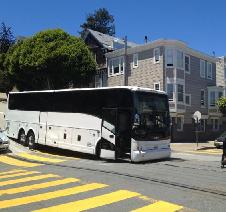
I’ve been waiting for the Chron’s culture columnist Caille Millner to finally write about something interesting, and I got it April 27 when she stumbled onto the Google Buses. Or rather, the problem with the Google buses.

Thanks to the Chron’s silly paywall, you can’t read her column online, and since hardly anyone in San Franciso buys the Chronicle anymore, Millner’s story won’t get the attention it should. So allow me to repeat some of it here:

It was close to 9 p.m., and I was waiting at a bus stop on an island in the middle of Market Street. Next to me stood a tired-looking middle-aged woman who had clearly just left work. While we waited, up cruised the big white pod. It paused right in front of us. The door at the front slid open to discharge a few Googlers, and the luggage door on the lower right side of the bus also slid open to allow them access to their belongings.

One gentleman bounced down the bus steps and pushed his way in front of us to get his bicycle from beneath the bus. As he hurled it out onto the bus island, it hit the woman standing next to me. She glanced at me, mute and horrified, and in that moment I sensed that she didn’t feel able to confront him. So I did.

“Excuse you,” I said loudly.

>No response. He was busy fumbling with his messenger bag

“You hit her,” I yelled.

He glanced up in no particular direction, as though suddenly troubled by the buzz of an insect. Circling his head around, he finally noticed where he was – the bus stop, the night, the fact that there were other people around him.

“Sorry?” he asked the air, in a tone of confusion. Then he climbed on his bicycle and pedaled away. He never looked at the woman he had hit.

There’s a sense of entitlement about the rich, and the young rich are often the worst. And that’s one reason why the logic of the Google bus — it’s better to have a single luxury vehicle haul all those people to work than have them all drive cars — doesn’t register with a lot of us. They’re too good for Caltrain. They’re too good for Muni. And they’re too damn good to bother to notice that they’ve hit an old lady.


Behind the Gay Pride “Manning-gate”

13

The whole Bradley Manning-Pride fiasco was such a clusterfuck that we’re starting to wonder whether the people who run the giant parade and festival can count, much less make a decision.

Here, as best as we can tell, is how it went down.

Every year, the Pride board selects a group of people as honorary parade grand marshalls. All the past recipients of that distinction — the “college” of former marshalls — get to pick on person for the list.
It’s never a very big issue.

Joey Cain, who served on the Pride board for ten years and is a former grand marshall, made some waves this time around by nominating Bradley Manning. And after the email went out, and the votes were counted (only perhaps 30 or so of the former poobahs bother to vote most years), it appeared that Manning was on top.

But no: According to a written chronology that Cain has prepared, “On Tuesday, April 23,  Michael Thurman from Bradley Manning Support Network called me to say that Bradley Manning had been chosen by the collage of former Pride grand marshals to be a Grand Marshal but that he was then contacted two hours later by Joshua Smith and told that the Pride Board of Directors had asked for an audit of the votes and as a result of the audit he had not been elected.”

So Cain started pushing back. “You don’t tell someone they’re a grand marshall and then pull it away,” he told me. “That’s just not right.” His plea to Board Chair Lisa Williams: Just use the power of the board to vote Manning back in.

“At 9:41 on Tuesday night, I got a call back from Lisa. She said they were going to do the right thing, make him a grand marshall, and make it all right,” Cain recalled.

Williams hasn’t responded to our phone calls.

The next day, the Bay Area Reporter released the full list of GMs, and Manning’s name was on the list. “It said he DID win the college vote,” Cain noted.

Cain called the Manning crew. “I told them that Pride would do the right thing, that they wouldn’t back down,” he said. “I’ve been on the board ten years, and we’ve never backed down.”

Ah, but the office was flooded with phone calls and emails, organized by a group of gay soldiers in San Diego, and the pressure got intense. And next thing you know, Williams had issued a blistering press release saying that Manning should never have been named a grand marshall and in effect accusing him of endangering the lives of service members, something even the Pentagon hasn’t actually said.

Manning’s in. Manning’s Out. Manning’s in. Manning’s out. Yes, it’s part of the New Gay World, where the Pentagon is our friend because: gay soliders. But it’s also embarassing.

“I call it Manning-gate,” Cain said. “The cover up is always worse than the crime.”

And the fact that Williams isn’t talking to the press makes it all more confusing.

“The worst part is that I’m part of the anarchist community, and I’ve always been out there arguing in support of Pride,” Cain said. “Then this is like, holy fucking shit, they just proved everything I’ve been trying to disprove all these years.”
 

Michael Mina reaches settlement after overcharging customers at his SF restaurants

27

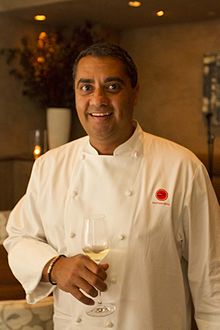
Celebrity Chef Michael Mina and his four San Francisco restaurants – Michael Mina, RN74, Bourbon Steak, and Clock Bar – have agreed to pay $83,617 to their employees to settle charges of overbilling their customers a 4 percent meal surcharge ostensibly intended to cover the company’s employee health care obligations.

As I reported last week, City Attorney Dennis Herrera is investigating fraudulent use of surcharges by restaurants, and its settlement with Mina Group LLC was the first of what could be dozens with local restaurants to come clean under Herrera’s partial amnesty offer. The company was the city’s worst violator, according to filings last year with the city’s Office of Labor Standards Enforcement, which showed the company collected $539,806 in surcharges and spent just $211,809 on employee health care.

A spokesperson for Mina Group had told the Guardian that a settlement was in the offing and that the company would forward it to us as soon as it was available. Instead, the company leaked the settlement to SFgate.com’s Inside Scoop restaurant column, which posted a story about it on Friday evening, the dead spot in the weekly news cycle.

Mina told Inside Scoop that all the surcharges it collected are being held in a fund for employee health care and the company has lowered its surcharges from 4 to 3 percent to correct the overcharging. San Francisco’s restaurant industry – which waged an aggressive legal battle against the employer health care mandate – is the only industry to use explicit customer surcharges to cover its obligations under city law.

The full joint statement by the City Attorney’s Office and Mina Group follows:

“The City Attorney’s Office and Mina Group announce a settlement regarding surcharges imposed in response to San Francisco’s Health Care Security Ordinance. The settlement terms have been guided in part by findings in which the City Attorney’s Office acknowledges that Mina Group’s employee health care program reflects some best practices in administration of health care surcharge funds.

“Mina Group and its affiliates collected surcharges during 2009 – 2011, as previously reported to the Office of Labor Standards Enforcement (OLSE). The City recognizes that 100 percent of the surcharges collected will continue to be used exclusively for employee healthcare and that the majority has already been used. Under the settlement agreement, Mina Group will contribute $83,617.50 of remaining surcharges to eligible persons who were employees during that period.

“The City Attorney’s Office reaches no conclusions on liability in successfully concluding its enforcement action with Mina Group and its affiliates. Mina Group will continue to fully support the San Francisco Health Care Security Ordinance.”

Former Pride grand marshal: Manning is LGBT hero, Board action ‘height of stupidity’

61

“I was one of the 15 former grand marshals on the electoral commission that voted for Bradley Manning,” Barry Saiff, former BiNet president, told me over the phone this morning from Washington, DC, about the Bradley Manning Pride grand marshalship controversy. (As one half of a bi-national queer couple, he lives most of the year in the Phillipines with his boyfriend, who is unable to come to the United States due to discriminatory immigration laws.)

To recap: An ‘electoral college’ of former grand marshals elected the jailed gay (possibly now transgender) whistleblower who provided Wikileaks with a huge dump of raw classified US government info. Someone announced the choice on Friday and the media went nuts. Then the Pride executive director issued this bizarre statement repudiating the decision and rescinding the honor, to the dismay of the electoral college and a huge swath of LGBT locals. A protest at Pride HQ is planned for today, 5pm at 1841 Market, SF.) 

“The list of nominees from the other board members was presented to me in March, and the instant I saw Bradley’s name on there I knew it was the right choice. Pride stands for justice, freedom, and an end to discrimination, and I feel Bradley represents all of these things — as well as complete honesty and bravery. What the Pride board did to repudiate that choice, especially in its official statement — to not be able to make the distinction between Manning’s necessary actions and way the government is denigrating our troops with these illegal and unjust wars — is the height of stupidity.

“They [the Pride board] are colluding in the giant ‘Support Our Troops’ hoax that says you must never question the leadership of the military. There is actually no contradiction between supporting our troops as individuals, including our LGBT folks in the armed services, and supporting Bradley Manning and what he did.

“Specifically, if we care about our troops, we should care that they are used by our military for just ends, for missions and goals that actually increase our security, rather than decrease it, and that they are dealt with honestly. And, regardless of how you feel about the rightness or wrongness of Manning’s actions, there is no question that it is both immoral and illegal under international law (the US is a signatory to the Convention Against Torture), that he was tortured by the USA. Bradley Manning is an American hero, and an LGBT hero. We can rightfully be proud of him. He will rightly be remembered long after his duplicitous superiors are forgotten.

“What the Pride Board should have done to respond to the critics of the nomination was to point out that they were failing to make a crucial distinction. That it is simply a point of logic that we can support our troops while being diametrically opposed to the ends to which they are used by our government. This is a crucial point for the LGBT movement to understand and promote. We should not allow ourselves to be divided by people who are committed to denying reality. We can agree to disagree on the military and the wars in Afghanistan and Iraq, but there is no disagreement on this, it is a point of fact.”

What about the charge that Manning’s leaks endangered US troops?

“I say, ‘Bullshit.’ Of course that’s what the government says. Look, Manning did not act alone. He worked with some extremely savvy media people with this — Wikileaks, the New York Times — he didn’t just publish everything himself. Those organizations worked to edit what was put out there and protect peoples’ lives. To dump this all on him and call him a traitor is a mistake.”

How much of all this had to do with Manning’s queerness?

“Well, all things being equal, that’s what qualified him in the first place. But as I said, this fight has resonance with LGBT people in terms of freedom and justice. The fact that he’s gay may play into his situation in terms of military and former persecution.”

Were you ever given guidelines by the Pride board about who was qualified to be elected a grand marshall?  

“Not that I know of. I don’t know the bylaws off-hand, but every year, as the ‘electoral college,’ we’ve been able to elect one grand marshall and it’s never been a problem. We voted in March, although there may have been a period before the final decision was tallied. [Radical faerie elder and historian Joey Cain put forth the Manning nomination.] And that was the last I heard of it until Friday. I wasn’t contacted personally by [executive director] Lisa Williams or anybody else saying we had to change anything. It wasn’t until Friday that I found out about any controversy — in the news media, like everybody else. And I was outraged.”  


Live shots: Baby Dee and Little Annie at Amnesia

0

Baby Dee and Little Annie are a match made in camp heaven. The women, nearing their 60s, may have only been playing for 25 people, but boy did they put on a
show Thu/25 at Amnesia.

The two looked like characters out of a B movie or a dirty New York speakeasy. Annie, a diminutive little creature, looked like a gypsy in a headwrap and heavy eyeliner. Dee towered over her in an ’80s-esque leopard print sweater and leggings with a pink tulle skirt. When Baby Dee finally appeared an hour after the show was advertised to begin, she sat down at the piano and called into the microphone, “If anyone sees Little Annie, tell her the show has started.”

Soon Annie was located, and the duo launched into their first song (with a little help from a man in the audience to lift her tiny frame onto the stage.) Little Annie’s low, gravelly voice — which sounded like two packs a day and 40 years, if not something a little harder — was deliciously ragged and worn over Dee’s cabaret-like piano. As Baby Dee headbanged and bashed the piano keys, Annie swayed and posed on stage, using her cane as percussion. Two songs into the set, however, Annie stopped the show because she had forgotten to pray. “I’m discombobulated,” she cried. “Our makeup is crap and I forgot to pray.” As Annie knelt by the stage, Dee said a little prayer of her own. “Please Jesus,” she requested sweetly, “make someone get me a Scotch on the rocks. J&B or Dewar’s.”

When she was informed that Amnesia is a beer and wine bar, Dee screamed, “Fuck you, Jesus! I didn’t want your fucking scotch anyway!” before launching into her next dirge.

After, she repented. “Jesus, I’m sorry. Can I have a beer?”

Calling each other exclusively “honey” and “darling” Dee and Annie played, jested, and improvised through an hour-long set that felt about an hour too short. In between songs each woman told fantastic anecdotes from their tremendously colorful lives. Annie spoke about her short time living in San Francisco, when she got held up for food stamps in the Haight. Dee told a story about curating a Christmas show at the Pyramid Club, in which she dressed a 400 lb woman as the baby Jesus and put an Entemann’s chocolate cake down “the world’s biggest diaper.”

Halfway through the set, I realized something amazing. There was absolutely no side conversation through the entire show. Here we were, in a bar in the Mission, and not a single person was idly chatting with their friends. It’s a testament to the amazing showmanship and magnetic personalities of Baby Dee and Little Annie that every eye was on them for the whole hour they played. The crowd was small, but every person was there for them.

“This has turned out to be a really nice show, hasn’t it?” remarked Baby Dee. “Now I’m happy. It took me a while, but now I’m happy.”

SFIFF + Hollywood = your weekend movie plans

0

The San Francisco International Film Festival kicked off its 56th year last night; it continues through May 9 at venues around San Francisco and Berkeley. Read my take on standout docs here; Dennis Harvey’s appreciation of Finnish cinema here; and short takes by both of us (plus Kimberly Chun) here.

Meanwhile, down in Hollywood, Michael Bay’s musclebound latest opens today, along with a wedding comedy starring Robert De Niro, Diane Keaton, Susan Sarandon, and always-the-bride Amanda Seyfried. Reviews of both below, along with François Ozon’s new film, a martial-arts slo-mo-stravaganza, and, yes, even more.

Arthur Newman Colin Firth and Emily Blunt star in this tale of lost souls who find happiness after meeting on a road trip. (1:41)

http://www.youtube.com/watch?v=bTGvnMQe9a4

The Big Wedding The wedding film has impacted our concepts of matrimony, fashion, and marital happiness more than all the textbooks in the world have affected our national testing average; but it’s with that margin of mediocrity I report from the theater trenches of The Big Wedding. With this, the wedding movie again peters to a crawl. Susan Sarandon (an actress I love with a loyalty beyond sense) is Bebe, the stepmother/caterer swept under the rug by the selfishness of her live in lover Don (De Niro), his ex-wife/baby momma Elle (Diane Keaton) and their racist wackjob future in-laws. When Don and Elle faced the end of their marriage, they tried to rekindle with a Columbian orphan. Cue Ben Barnes in brownface. Alejandro is set to wed Amanda Seyfried and when his mother ascends from Columbia for the wedding, he decides Don and Elle have to act like their marriage never ended … which makes Bebe a mistress. Surprise! A decade of caring selflessly for your lover’s kids has won you a super shitty wedding you still have to cater! To give you a sense of the conflict management on display, Bebe — the film’s graceful savior — drops a drink on Don before fleeing the scene in her Alfa Romeo; she’s the one character not determined to act out her more selfish urges in the style of an MTV reality show. Despite some less imaginative conflicts and degrading “solutions,” this blended family still speaks some truth about the endearing embarrassment of the happy family. (1:29) (Sara Maria Vizcarrondo)

In the House In François Ozon’s first feature since the whimsical 2010 Potiche, he returns somewhat to the playful suspense intrigue of 2003’s Swimming Pool, albeit with a very different tone and context. Fabrice Luchini plays a high school French literature teacher disillusioned by his students’ ever-shrinking articulacy. But he is intrigued by one boy’s surprisingly rich description of his stealth invasion into a classmate’s envied “perfect” family — with lusty interest directed at the “middle class curves” of the mother (Emmanuelle Seigner). As the boy Claude’s writings continue in their possibly fictive, possibly stalker-ish provocations, his teacher grows increasingly unsure whether he’s dealing with a precocious bourgeoise satirist or a literate budding sociopath — and ambivalent about his (and spouse Kristin Scott Thomas’ stressed gallery-curator’s) growing addiction to these artfully lurid possible exposé s of people he knows. And it escalates from there. Ozon is an expert filmmaker in nimble if not absolute peak form here, no doubt considerably helped by Juan Mayorga’s source play. It’s a smart mainstream entertainment that, had it been a Hollywood feature, would doubtless be proclaimed brilliant for its clever tricks and turns. (1:45) (Dennis Harvey)

Mud The latest from Jeff Nichols (2011’s Take Shelter) stars Matthew McConaughey as an escaped con who befriends two Arkansas boys while he’s on the run. (2:15)

http://www.youtube.com/watch?v=BeDYibIzS8E

Pain & Gain In mid-1995 members of what became known as the “Sun Gym Gang” — played here by Mark Wahlberg, Dwayne Johnson, and Anthony Mackie — were arrested for a series of crimes including kidnapping, extortion, and murder. Simply wanting to live large, they’d abducted one well-off man (Tony Shalhoub) months earlier, tortured him into signing over all his assets, and left him for dead — yet incredibly the Miami police thought the victim’s story was a tall tale, leaving the perps free until they’d burned through their moolah and sought other victims. Michael Bay’s cartoonish take on a pretty horrific saga repeatedly reminds us that it’s a true story, though the script plays fast and loose with many real-life details. (And strangely it downplays the role steroid abuse presumably played in a lot of very crazy behavior.) In a way, his bombastic style is well-suited to a grotesquely comic thriller about bungling bodybuilder criminals redundantly described here as “dumb stupid fucks.” There have been worse Bay movies, even if that’s like saying “This gas isn’t as toxic as the last one.” But despite the flirtations with satire of fitness culture, motivational gurus and so forth, his sense of humor stays on a loutish plane, complete with fag-bashing, a dwarf gag, and representation of Miami as basically one big siliconed titty bar. Nor can he pull off a turn toward black comedy that needs the superior intelligence of someone like the Coen Brothers or Soderbergh. As usual everything is overamped, the action sequences overblown, the whole thing overlong, and good actors made to overact. You’ve got to give cranky old Ed Harris credit: playing a private detective, he alone here refuses to be bullied into hamming it up. (2:00) (Dennis Harvey)

http://www.youtube.com/watch?v=AXdIlx29W2s

Simon Killer Antonio Campos — producer of 2011’s Martha Marcy May Marlene and director of 2008’s Afterschool — helms this dread-filled, urban-noir tale of the ultimate ugly American abroad. Smarting from a recent breakup, Simon (Brady Corbet) roams Paris’ seedier streets, composing letters to his ex in his head while blasting ironically cheerful pop songs in his headphones. But this is no twee tale of redemption: Simon is a sociopath, probably also a psychopath, and we soon fear for the willowy prostitute (Mati Diop of 2008’s 35 Shots of Rum) who is taken in by his manipulative charm. Campos has said that Simon is inspired by convicted murderer and Natalee Holloway suspect Joran van der Sloot, and Corbet’s coolly unnerving performance bears that out. The story, alas, is not nearly as compelling — even without a gold-hearted hooker it’d still hit too many predictable beats. (1:45) (Cheryl Eddy)

Tai Chi Hero Six months ago, Tai Chi Zero — Stephen Fung’s nutty tale of a martial arts savant who journeys to an isolated town to learn a top-secret technique — barreled into local theaters. A stylish kung fu flick with a high degree of WTF-ness, Zero ended on a pretty significant cliffhanger, so here’s the cheeky sequel for those who’ve been wondering what happened to Yang Lu Chan (Yuan Xiaochao) — a sweet fool when he’s not in supernatural Hulk-smash mode — and company. A brief intro gets newbies up to speed before the action starts: Lu Chan and the bossy-yet-comely daughter (Angelababy) of the local grandmaster (Tony Leung Ka Fai) have entered into a marriage of convenience — and there’s something fishy about Lu Chan’s brother-in-law, newly returned from a long exile with his own secretive bride. Meanwhile, the family worries about the dreadful “bronze bell prophecy” while the first film’s Westernized villian plots tasty revenge. In addition to all the high-flying, slo-mo scenes of hand-to-hand combat, highlights include a soundtrack filled with unexpected choices (heavy metal, accordion), a cameo by cult actor Peter Stormare (hamming it up big-time), and an army tricked out with steampunky weapons. (1:40) (Cheryl Eddy)

Captain Greg Corrales saves the Haight from Demon Weed

63

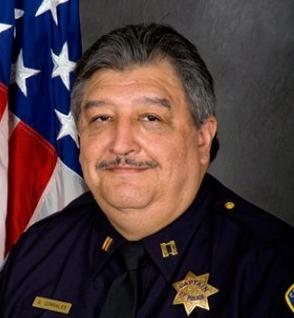
I’m glad to see the Ex now has the data to show what we all knew was happening: The old Drug Warrior at Park Precint, Captain Greg Corrales, is trying to save the Haight from pot smokers.

Hate to have to tell you, Cap, but you lost that battle a loooong time ago.

And here’s the thing: Arresting people is expensive. It takes the time of police officers (who, let’s remember, often make $100,000 a year or more), it takes the time of the District Attorney’s Office, and, since none of the people Corrales arrests can afford private counsel, it takes the time of the Public Defender’s Office, which is already so short of money that it might have to stop taking cases.

And meanwhile, San Francisco has a terrible record closing homicide cases.

So now we’re spending hundreds of thousands of dollars (yes, that’s what it will add up to) busting small-time pot dealers in Golden Gate Park.

Remember, the statistics are clear: The “buy-bust” arrests are not nabbing crack or meth or heroin dealers. It’s all about the Demon Weed.

It’s also part of the quiet transformation of law enforcement and city policy in the Haight, which has become all about “quality-of-life” cases. A guy named Giuliani made that a big deal in New York way back when. Now we have sit-lie, and we have the eviction of the Haight Ashbury Neighborhood Council Recycling Center, and we have buy-bust. It’s really about trying to turn the Haight into a sanitized, movie-set version of itself.

Which, by the way, has never seemed to work.


The Performant: More than words

0

Sheetal Gandhi and Ragged Wing Ensemble stretch their forms

If an image is worth a thousand words, how much dialogue does the art of dance encompass, when every flick of the wrist can denote whole unspoken volumes? As dance in the Bay Area moves ever further into hybrid territories, where language and limbs combine to stretch the parameters of storytelling, patrons of more traditional theatrical fare may find familiarity in the broadened scope of this increasingly amalgamated artform.

Sheetal Gandhi’s “Bahu-Beti-Biwi” at ODC is a great example of this heterogeneity, bringing to life a series of characters who speak as much in gesture as with words on an almost ascetically bare stage.

When Gandhi does speak it is often in song, and just as frequently in Marwadi, a dialect of Rajasthani, a language obscure enough that it’s guaranteed to be unfamiliar to a large portion of her audiences. Which means it’s through her nuanced physicality that she connects best, blending traditional dance forms such as Kathak with the modern, inhabiting the skin of each of her creations as easily as she wraps herself in a length of striped fabric which serves sometimes as a sari, sometimes a veil, and sometimes as an evocative hobble.

Ghandi is light on her feet, even when she portrays the hunched figure of a family elder, but many of her characters do bear an internal weight—from the smiling auntie who serves the multitudes with a stretched smile to the veiled woman threatening to throw pepper in the eyes of her father-in-law to blind him, a regretful groom on the other side of an arranged marriage to the young girl being wrapped in a length of golden satin in preparation for her own wedding day. Alone and onstage for the entire piece, Gandhi’s more dramatic shifts of scene are expertly heralded by Tony Shayne’s lighting design, which expands and contracts according to the limits of her characters’ perspectives while the elegant compositions by Joseph Trapanese that frame each portion of her performance are equally atmospheric, mixing electronica and field recorded samples with the distinctive tones of the sitar, the insistent rhythm of the tabla.

Across the Bay Bridge, in a vaulted room dubbed “The Sanctuary,” Ragged Wing Ensemble debuts a new play written and directed by Artistic Director Amy Sass called “Time Sensitive.” Just as dancers such as Sheetal Gandhi are experimenting with theatrical techniques within a dance context, so are collaborative arts ensembles such as Ragged Wing creating works of theatre that incorporate far more than the spoken word as the building blocks of narrative.

In “Time Sensitive,” ensemble members don featherlight robes and enter singing “Da Pacem Cordium” (“Give Peace to Every Heart”) before morphing abruptly into suited, scowling business-persons who scuttle back and forth across the stage chanting “gotta GO GO GO” and position themselves in the manner of a flock of early birds demanding worms. In two of several alternating storylines an old clockmaker and his faithful automaton (Addie Ulrey and Keith C. Davis) travel beneath the cracks of the known world on an existential quest, while an adrenaline-seeking elevator-repair guy (Soren Santos) hurls himself from the top of the city’s tallest building and hopes his parachute (artfully rendered with a bobbing line of umbrellas) doesn’t fail. At two hours plus intermission, punctuated by a series of choppy transitions, the ambitious piece does lose some of its initial ballistic momentum, but none of the curious beauty of its dialogue-defying, sumptuously-devised ritual.

“Time Sensitive”

Through May 18, $25-$40

The Sanctuary

496 38th St, Oakl.

(800) 316-8559

www.raggedwing.org