SFBG Blogs

Pride Board statement: Manning “not local,” controversy “not our mission”

20

Here’s the official statement just issued by the Pride SF Board about the Bradley Manning grand marshal fiasco, “clarifying” its bizarre rules (“Under longstanding policy, the community grand marshal upon whom the Electoral College votes is defined as ‘a local hero (individual) not being a celebrity'”), and directing the electoral college to vote for one of “two, duly qualified nominees for the 2013 Community Grand Marshal: Bebe Sweetbriar and Associate Justice Jim Humes.”

(Poor singing drag queen BeBe Sweetbriardespite her incredible productivity, even Pride doesn’t think she’s a celebrity! We still love you, Beebs.)

The statement also engages in a gross bit of condescencion.

“Those that nominated Mr. Manning surely knew that he is not a local, Bay Area community member, and that he should not have been voted on by the Electoral College. His nomination is more appropriately debated and voted on by the public than by a small group, and it could be next year when nominations open…. Taking sides in the controversy concerning Mr. Manning’s conduct is not appropriate for the organization and falls outside its core mission. We apologize to Mr. Manning, knowing that he did not ask to be at the center of a community firestorm, and for any harsh words that may have been said about him.”

Because the core mission of Pride, of course, is not to take a side in any controversy ever. Except gays in the military. And whether the Altoids float should come before or after PFLAG. Tell us, SF Pride: does Bud Light taste great, or is it less filling? We’ll have to wait until the end of time for an answer.

I’ll be asking the Pride Board about this statement tonight at its public meeting (7pm at 30 Pearl St., Fourth Floor). Stay tuned.


“For the past four decades, SF Pride has stood firmly to advance its mission to educate the world about LGBT issues, commemorate LGBT heritage, celebrate LGBT culture, and liberate LGBT people.  It remains a considerable honor and utmost commitment to engage the community to recognize those persons who have positively advanced the LGBT liberation movement, representing the full spectrum of contributions to advance full equality for all.

Presenting various categories and criteria for annual parade grand marshal nominees offers SF Pride and the community a broad range of opportunities to recognize and honor a diverse range of individuals and organizations for their achievements on behalf of LGBT people. Grand Marshal Categories include Celebrity, Lifetime Achievement, Organizational, Community, Special Guests, and Pink Brick.

The SF Pride Board recognizes and regrets the recent error in the announcement of Mr. Bradley Manning as the Electoral College’s Community Grand Marshal.  The Electoral College was not the appropriate forum for his nomination. The longstanding Grand Marshal Policy provides that one community grand marshal shall be elected by an electoral college composed of Community Grand and Honorary Marshals elected or appointed since 1999. Grand Marshal/Pink Brick Policy, Sections 3.3 and 5.2.3.  Under that longstanding policy, the community grand marshal upon whom the Electoral College votes is defined as “a local hero (individual) not being a celebrity.” Grand Marshal/Pink Brick Policy, Section 5.2.3.

Because Mr. Manning is not local, by definition under the Grand Marshal policy, he may not be nominated or elected by the Electoral College as its community grand marshal. The SF Pride Board determined that because the nomination and election had been conducted in the incorrect forum, the election could not be upheld as valid. Mr. Manning might rightfully qualify as a nominee for Celebrity Grand Marshal or another community grand marshal spot, but not as the Electoral College’s nominee, as a matter of longstanding, written policy.

The integrity of the elections process and procedures are important to SF Pride and the community. Those that nominated Mr. Manning surely knew that he is not a local, Bay Area community member, and that he should not have been voted on by the Electoral College.  His nomination is more appropriately debated and voted on by the public than by a small group, and it could be next year when nominations open.

Taking sides in the controversy concerning Mr. Manning’s conduct is not appropriate for the organization and falls outside its core mission. We apologize to Mr. Manning, knowing that he did not ask to be at the center of a community firestorm, and for any harsh words that may have been said about him. In the end, SF Pride recognizes that becoming embroiled in the controversy concerning the merit of Mr. Manning’s conduct was an honest mistake. However, because the Grand Marshal/Pink Brick policy precludes Mr. Manning from being nominated for, or elected as a community grand marshal by the Electoral College, SF Pride stands by his disqualification on those unequivocal policy grounds.

Moving forward, in the spirit of fairness and to respectfully honor the contributions of qualified nominees, the SF Pride Board is re-opening the Electoral College’s voting process so that it may select a Community Grand Marshal from the remaining two, duly qualified nominees for the 2013 Community Grand Marshal: Bebe Sweetbriar and Associate Justice Jim Humes. Members of the Electoral College will have until May 16 to re-cast their vote. 

Starting on Wednesday, May 8, ballots will be sent to the Electoral College both by email and snail mail. Votes can be cast by either email or postal mail to the SF Pride offices at 1841 Market Street, 4th Floor, San Francisco, CA 94103; Att: Electoral Voting.  Votes must be cast by 5pm PST on Thursday, May 16.  The elected Grand Marshal will be announced by noon the following day, Friday, May 17.  The SF Pride Board of Directors appreciates the support of concerned members of the community. These matters have been sorted out towards a fair resolution.  We encourage all former Community and Honorary Grand Marshals in the Electoral College to participate in this extended opportunity to select a qualified Community Grand Marshal for the 2013 Parade and Celebration.

Shortly before this statement was released, SF Pride received a complaint filed against it at the San Francisco Human Rights Commission concerning Mr. Manning.  This statement is not a response to that complaint, and SF Pride will be responding to that complaint in the proper forum, not in the press and/or at board meetings.”

T-Third passengers unhappy about train service disruptions

Around 20 residents from San Francisco’s Bayview neighborhood lined up at the San Francisco Municipal Transportation Agency board meeting May 7 to voice complaints that all too often, the T-Third light rail transit vehicles leave passengers stranded on train platforms, taking rail cars out of service before the end of the line and leaving riders to wait for the next arrival.

Organized by People Organized to Win Employment Rights, an organization better known as POWER that has campaigned around Muni issues before, the riders asked the SFMTA board to address the T train turnarounds, and called on the transit agency to run all trains through to the end of the line in the city’s Southeast neighborhoods.

Muni service disruptions along the T-Third occur most frequently at 23rd and Third, Armstrong and Third, and Williams and Third, based on SFMTA data. The passengers expressed frustration that even though the T-Third technically runs all the way to Sunnydale, a Visitation Valley housing complex, it often stops short of the final destination and causes delays on an already lengthy commute. The topic of Muni “switchbacks” picked up momentum earlier this year after District 4 Sup. Katy Tang vowed to take up the issue of train turnarounds, which also impact transit passengers in the Sunset. 

Jackie Wysinger, who walks with a cane and resides at a senior center nearby Armstrong and Third streets, told SFMTA board members that she’s no longer able to drive and depends upon the T train to get around.

“We need better transportation,” Wysinger said. “The T train turns around right there, and they do it regularly,” leaving passengers with no choice but to walk or wait in discomfort. “It’s just bad on the senior citizens.”

Claudia Bustamante, a member of POWER who spoke in Spanish through a translator, related a story of traveling back to the Bayview on the T-third on Monday night. “We were on the T-train and there was a person in a wheelchair, and another woman crying,” she said. “But the driver said, ‘sorry, this is the last stop. Everybody has to get off.’ … They kicked us off. This happens not just to me, but to the members of the African American community in Bayview. And this needs to stop.”

Jim Hill, who told SFMTA board members that he’s lived in the Bayview for 51 years, said he’s experienced train service disruption at 23rd Street on a regular basis. “I don’t understand why a man would turn a train around that’s full of people,” he said. “I have experienced 45 minutes to an hour before another train comes.”

Hill added, “I don’t think a person should have to work all day, and have to stand up from the time they get off work, until they get home.”

Gloria Dean, a Bayview resident who penned an editorial in the San Francisco BayView newspaper in March, characterized the frequent disruptions to service in Bayview Hunters Point as “shameful racism” in her opinion piece. She recounted one evening when her commute from Oakland to Third and LaSalle took from 6:45pm until 9:08pm. Since her husband is battling health problems, “it’s important for me to get home” following her evening classes at Mills College in Oakland, Dean wrote.

Juana Teresa Tello, an organizer with POWER, stressed that while switchbacks are known to occur on other lines, Bayview residents tend to have fewer transportation options. “It’s the highest concentration of people in public housing,” Tello pointed out. “It’s people who need the transit system the most.”

There was no SFMTA agenda item on the topic of turnarounds on the T-Third line, so residents aired their grievances about the issue during public comment. Once they had all finished speaking, SFMTA board chair Tom Nolan indicated that the item should be added to the board meeting agenda “sometime in the near future.”

In response to a query submitted several weeks ago, SFMTA spokesperson Paul Rose sent the Bay Guardian a detailed response to questions about train turnarounds at the 23rd and Third stop.

“Trains going to 23rd Street on the T-Third are typically going to our maintenance yard located near 25th Street and Illinois at the end of their shift,” Rose explained in an email. “These trains are J, K, L, M, and N trains that travel in service as T-Third trains to the yard and accept passengers all the way to the last stop before the yard – 23rd Street. The alternative is to have the trains travel ‘not in service’ to the yard from the subway and accept no passengers.

“The vehicles returning to the yard and traveling from the subway only to 23rd Street add additional frequency between the subway and 23rd Street but are not scheduled full trips to Sunnydale,” Rose acknowledged.

The 23rd Street stop marks the end of a stretch of recently installed condominium complexes in San Francisco’s Dogpatch neighborhood, an increasingly popular residential area for Silicon Valley commuters who have easy access to the highway to travel south to tech campuses.

Finally, Rose stressed that “We minimize unscheduled train turnarounds as much as possible … Supervision is also told to only perform these turnarounds when there is another train within five minutes or less,” he added, “to minimize passenger inconvenience.”

The Performant: The dame, the dick, and the dismembered torso

0

Extreme adventures in storytelling

 In noir, it’s the clichés that play best: the hardboiled Private Eyes with sharp reflexes and the hardhearted women with secrets to keep. Archetypes, almost, they stand in for something larger than themselves, larger than us, extravagantly idealized Everypersons colored with just enough of the mundane to seem believable, each tawdry crime scene standing in for a twisted version of the American Dream gone horribly awry.

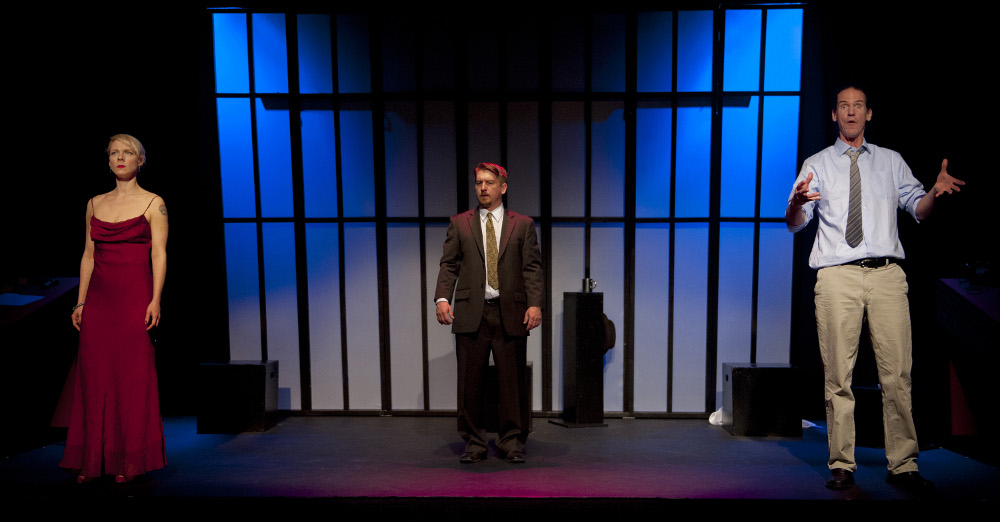
In Dan Harder’s “A Killer Story,” playing at the Berkeley Marsh through May 18, the detective, Rick (Ryan O’Donnell) cuts a familiar figure in a shabby suit, wise-cracking his way through seemingly endless interrogations of his clients, the dame and the duped business partner, both of whom have cause to suspect the other of treachery. Throw in a missing man, a ground-breaking scientific discovery, and an undercurrent of sexual licentiousness, and stir them together with a swizzle stick, and you’ve got yourself a recipe for a martini of “Killer” suspense.


The dame, a ferociously icy Madeline H.D. Brown, and the dupe, a furiously twitchy Robert Parsons, flank O’Donnell from opposite sides of the moodily-lit stage (lighting courtesy of Erich Blazeski). He plays the suspicions of each against the other, waiting for one to break, inadvertently setting them both up for a far greater fall from grace than even he can predict. Harder’s grasp of the tough talk of classic noir juxtaposes nicely with his humorous references to present-day markers such as email and anti-smoking regulations. A bit less successfully rendered are the experimental sections of “zippered” dialogue—overlapping lines of cleverly complementary phrases—which call attention to themselves every time they’re trotted out and do little to propel the momentum of the piece. But there’s a wicked pleasure in a crime story that holds not just human nature but the art of the tale culpable for murder, a juicy twist tastier than any lemon rind.

 In the usually hushed galleries of SF MOMA, the stories one typically encounters are of a quieter kind: didactic curator statements of the various artworks on display and biographical information of the artists plus the viewer’s own internal interpretations of what they see. That these interpretations might take fanciful flight into a realm of random association and spontaneous fiction is an undeniable yet under-acknowledged part of the museum experience. It’s this silent side of art appreciation the experimental Storytelling in the Galleries program attempted to give voice to, with some heady results.

Four local solo performers — Victoria Doggett, Sharon Eberhardt, Mia Pashal, and WL Dherin — each wrote and performed a story inspired by a quartet of unique art works. Doggett’s tongue-in-cheek love letter to the untitled, undefended Robert Gober torso crafted from beeswax and human hair was the first story on deck, followed by Eberhardt’s odyssey of an art student enraptured by the muted palette of Philip Guston. Pashal passionately dissected the concept of the artist’s muse while positioned before Jim Dine’s textured canvas of a giant heart bloating around a c-clamp while Dherin narrated a tale as witty and wondrous as the Fred Tomaselli work that inspired it. It wasn’t immediately clear what the effect of these articulated fantasies had on the museum-going public at large, but they certainly added a fascinatingly interactive layer to the typically hands-off gallery experience.

“A Killer Story”

runs through May 18

The Berkeley Marsh

2120 Allston Way

$20-$50

(415) 282-3055

www.themarsh.org

Why the PG&E settlement is lame

3

One of the factors that the state regulators took into account when they decided how much PG&E should be fined for the San Bruno blast was the company’s financial situation — that is, how much of a fine could the utility “safely absorb.” That’s the first sign that something screwy is going on here.

If I run a red light, the traffic court doesn’t ask how much of a fine I can “safely absorb.” A crook who embezzles money not only has to pay the money back, but suffer a financial penalty that can greately exceed what he or she can afford. A murderer doesn’t get to go before a judge and say, gee, two years in prison is all I can “safely absorb.” That’s not how it works.

PG&E is a giant company that has a guaranteed annual rate of return exceeding ten percent on everything it spends. It’s shareholders are large investment banks and stock funds. Its executives are very well paid. And gross negligence — that is, intential mismanagement at the level of criminal activity — on the part of the company led to the deaths of eight people and the destruction of an entire neighborhood.

The penalty ought to be MORE than the company can “safely absorb.” It ought to be enough to make shareholders wonder whether PG&E is a good investment. It ought to really, really hurt PG&E.

Instead, the CPUC staff is just telling the company to spend $2.25 billion doing what it should have been doing all along, and needs to do anyway: Fix the pipelines.

Sure, that money will come from profits, not from the ratepayers. But again, as the mayor of San Bruno pointed out on KQED’s Forum this morning, PG&E, as a regulated monopoly utility, has a guaranteed rate of return — and can borrow money at less than half that rate. The company reported revenues of $15 billion and profits of $830 million for 2012. PG&E seems to have plenty of money to fight CleanPowerSF and offer its own “green energy” program for less than the city will charge — and that’s guaranteed to be a money-loser, covered by some of those profits.

The CPUC ought to order the company to fix the pipes — then assess a fine high enough to wipe out all profits for, say, five years, which is how long it’s going to take San Bruno to fully repair the damage and recover from the explosion.

That would be a suitable “punishment.” Would it drive PG&E into bankruptcy? No — lots of companies operate with little or no profit margin these days. Let the killer utility cover its costs, do its job, pay its employees … and nothing more. The staff report is scathing; the penalty sounds stiff. But it’s not going to send enough of a message.


The 8 Washington-Monterey connection

11

The guy who wants to build the most expensive condos in San Francisco history on the waterfront is facing a ballot measure that could derail his dreams — so he’s hiring a team of signature-gatherers to put a competing measure on the ballot. Which makes little sense to us, since when the voters are confused, then tend to vote against things, and there will be two measures (confusing) and all the opponents of the 8 Washington have to go is get people to vote No, which is easier than Yes.

But whatever.

What intrigued us is that the signature-gathering company that is about to launch Simon Snellgove’s pro-condo drive is also doing a petition drive a couple hours to the south — where environmentalists are facing off against a developer who wants to build a luxury horse-racing facility along with housing, two hotels, and an office complex on the old Fort Ord military base in Monterey.

The opponents, who want to preserve open space, are doing an initiative campaign to block it — and the developer is now doing his own counter-intiative.

According to a message on the petition company’s voice mail, signature gatherers are getting $1.60 a signature in Monterey. Don’t know yet what they’re getting in San Francisco.

And of course, the developers in Monterey are talking about jobs and recreation and parks — just as they are in San Francisco. Someone must have done a few focus groups on that.

If Monterey Downs gets built (and for the record, I am not an opponent of race tracks, horse racing, or gambling, and I love Golden Gate Fields and its $1 beers) it won’t be the kind of blue-collar cheapie place across the Bay. It will be a high-end equestrian center. “Maybe,” Jon Golinger, an 8 Washington foe, says, “that’s where the multimillionaires in the new condos will keep their horses.”

It’s an interesting political tactic — block an opposition intiative with one of your own — and it’s going to play out twice this fall in Northern California. If it works, the developers will have yet another tool. If it fails, that may be the end of it.


Get festy: Burger Boogaloo, BottleRock, and nachos

1

Flop, flop, flop. Can you hear that? It could be a burger flipping. Or maybe that’s the sound of your tanned, bloated belly landing between crisp white sheets after long stretches of outdoor music-listening, dirt(y) dancing, craft beer-imbibing, and gourmet food stand-patronizing. It’s festival season, and there’ve been some tasty developments in the past couple of weeks.

Burger Boogaloo (July 6-7) excited Oaklanders and beyond by releasing its delictable lineup full of icons and punks, Outside Lands (Aug. 9-11) announced its even fancier food lineup, and hey, BottleRock is this weekend (May 9-12)

BottleRock Napa (May 9-12)
So BottleRock is a bit of a trek — it’s out in Napa Valley, but it’s a four-day-long fest in a real pretty location (that’s bound to get more unclouded sun than SF). It kicks off this Thu/9 with live music, food, comedy and yes, beer and wine. The top billing on the lineup is a bit ho-hum, with broadly appealing rock’n’roll, blues rock, and folk acts like Kings of Leon, the Black Keys, and Zac Brown Band, but there’s also the Flaming Lips, the Shins, and the thunderous Alabama Shakes. And for a certain breed of ‘90s kid: Primus and Cake.

There’s a safe, solid comedy showing too, with Jim Gaffigan, Demetri Martin, Tig Notaro, Rob Delaney, and Daily Show alums Wyatt Cenac, Kristen Schaal, and Aasif Mandvi (not appearing together).

Tickets: www.bottlerocknapavalley.com.

http://www.youtube.com/watch?v=svZNjhsk2ys

Burger Boogaloo (July 6-7)
Here’s the one to watch. Burger Records just keeps outdoing itself. It has fests around the country (including a recent biggie on its home turf of Orange County, Burgerama II) and brings together an elite mix of sloppy, legendary, and up-and-coming surf, garage, fun punk, and slack doo-wop acts. Burger Boogaloo is even more special because it brings Burger together with our own local slop heroes Total Trash Booking, for a mega-fest created by two equally appealing masters. Plus, the Boogaloo is in a park, so things could get steamy.

Everyone is talking about the disparate headliners early LA punk band Red Kross and Modern Lover/singer-songwriter Jonathan Richman — and rightfully so, they are incredible — but can we also take a minute to thank satan for the Trashwomen addition to the lineup? Epic. For those somehow unaware, the Trashwomen are Bay Area noisy surf-punk royalty, born of the ‘90s, and featuring Tina Lucchesi (of every band ever), Danielle Pimm, and Elka Zolot (Kreayshawn’s hot mama).

Add to that Ty Segall’s early trio Traditional Fools, Audacity, Guantanamo Baywatch (listen to thumping “Barbacoa” now, please), and Pangea. And, with the addition of NY Night Train’s Jonathan Toubin, there will be a Mosswood Park soul clap dance off.

I can hardly wait to kick off these smelly sneakers.

Tickets: www.burgerboogaloo.com.

Outside Lands (Aug. 9-11)
The crème de le crème of foodie-meets-rocker outdoor fêtes, Outside Lands knows what its fan base wants. So with nearly as much fanfare as its band lineup (which this year includes Paul McCartney, Phoenix, D’Angelo, Foals, and Yeah Yeah Yeahs, and around 20 or so others), the fest also releases its noted food vendor roundup.

There are 75 food stuff sellers at Outside Lands’ “A Taste of the Bay Area” 2013 including “returning favorites” like massive pizza truck Del Popolo, carnival fare brick-and-mortar business Straw, 4505 Meats, American Grilled Cheese Kitchen, and Pacific Catch. Newbies this year include newish SF favorite Wise Sons Deli, Rich Table, 1300 on Fillmore, Blue Bottle Coffee Co., and Nopa offshoot, Nopalito. And worry not, my personal favorite from last year (besides Metallica), Azalina’s, will be back with the Malaysian nachos that stole my blackened heart.

The vendors are usually placed in two distinct sections, with somewhat close proximity to the main stages, plus there’s the Wine Lands circus tent, Beer Lands, and Chocolate Lands. So much better than overcooked hot dogs and stale keg beer, right?

Tickets: www.sfoutsidelands.com.

Condo bypass legislation now before the full board

196

Controversial condominium lottery bypass legislation — sponsored by Sups. Mark Farrell and Scott Wiener but substantially modified by tenant group that strongly opposed the original legislation, with the help of Sup. David Chiu, Jane Kim, and Norman Yee — is finally coming to the full Board of Supervisors today (Tues/7, starting at 2pm).

Those involved in the negotiations say the legislation will likely to be returned to the Land Use Committee because of amendments being introduced today that the City Attorney’s Office has deemed substantial enough to require another public hearing. [UPDATE: The board voted unanimously to send this back to committee, which will consider it on Monday the 13th].They include a provision pushed by tenant groups that would scuttle the lottery bypass if the 10-year lottery moratorium is challenged in court. 

That moratorium was pushed by tenants and their supporters as a tradeoff for letting a backlog of around 2,000 tenancy-in-common owners buy their way out of the city’s lottery for the annual allowed conversion of 200 TICs into condominiums, which are more valuable and easier to sell and finance than TICs.

Farrell told the Guardian late last week that he was still negotiating with both sides and hopeful that he might be able to support the legislation, despite the hostile amendments that Chiu made which were opposed by Farrell and Wiener in committee.

San Francisco Tenants Union head Ted Gullicksen told us that the tenants’ side was willing to accept a couple of the technical amendments that Farrell proposed during negotiations with them, including exempting from the bypass fee the 19 building that have awaited conversion the longest and allowing some owner-occupier changes as the bypass is phased in over six years.

He said Farrell also proposed that if less than 2,000 condos opt for the bypass, then the difference in numbers would be added to the allowable number of condos in the first year that the lottery is restored, which the tenants’ groups haven’t yet agreed to.

Farrell and Wiener are also expected to offer other amendments, but the tenant groups have said they’ve gone as far as they’re willing to in allowing any increase in condo conversions, and they seem to have six solid votes lined up on the board.

Yet it’s still an open question how new amendments might affect those political dynamics, how the real estate industry (which simply wants as many condo conversions as possible) will respond, whether Mayor Ed Lee (who has avoided taking a position on the legislation) will sign or veto whatever emerges, and whether whoever is left unsatisfied by this deal will try to go to the ballot.

In other words, there may be some tricky political maneuvering ahead, so stay tuned. 

Hospital union targets UC executive pensions [VIDEO]

An update to this story has been posted below.

An ongoing labor rift is intensifying between frontline University of California hospital employees and the UC medical center system. UC administrators have minimized employees’ stated concerns about eroding patient care due to staffing rollbacks, saying the real issue at the heart of the dispute is AFSCME’s “refusal to agree to UC’s pension reforms.”

But now the union is striking a different note on pension reform, most recently taking aim at UC executive pensions – or what AFSCME 3299 spokesperson Todd Stenhouse glibly refers to as the “golden handshake protection program.”

AFSCME 3299 represents 13,000 UC patient care and technical workers. The union is expected to announce the outcome of a strike authorization vote, stemming from a contract negotiation that has been at an impasse for months, any day now.

Meanwhile, the hospital workers’ union issued a statement on May 3 pointing out that top-ranking UC executives, particularly longtime administrators whose robust retirement benefits were grandfathered in from a more bountiful era, stand to receive pension payouts that dramatically exceed the reduced retirement benefits most public employees can now expect.

“Our point is simply this,” Stenhouse explains. “How can you even pretend to have pension reform when you’re not capping executives’?”

UC spokesperson Steve Montiel noted that UC restructured its pension program several years ago. He justified the higher payouts, saying, “That’s something we see as being necessary to attract the best people at all levels, and to compete with others for the very best people.”

This past January, sweeping pension reform legislation took effect after winning bipartisan support in Sacramento. The new limits cap pensionable salary levels at $110,000 for public employees who earn Social Security, and $130,000 for those who don’t.

Yet the leaner retirement regime does not apply to employees in the UC system, which operates under a separate pension structure. Under the UC framework, pensionable salary levels are capped at $250,000, or $375,000 for employees hired prior to 1994.

“The cap on compensation for the governor of California is $110,000,” Stenhouse points out. “They say they want pension reform. Well, we want real pension reform.”

AFSCME is targeting Mark Laret, CEO of UCSF Medical Center, in particular. Since he was hired early enough to benefit from the higher pensionable salary cap, the hospital director, whose total annual compensation exceeds $1 million, is expected to earn more than $309,000 per year in retirement benefits.

In 2010, Laret joined 35 other UC executives in threatening to sue the Board of Regents if pension caps, mandated by the Internal Revenue Service, were not lifted. The IRS had offered to grant an exemption to the UC system but Regents ultimately determined that the caps should remain in place, despite executives’ objections.

In this clip, AFSCME 3299 President Kathryn Lybarger and Pathology/Lab Technician Margaret Mann confront Laret during his onstage address at the UC Health Center for Health Quality and Innovation’s Spring Colloquium, held at Oakland Marriott City Center on May 3. Video courtesy AFSCME.

Had they succeeded in lifting the caps, Laret could have received more than twice as much in annual retirement benefits, according to AFSCME estimates. (The medical center CEO recently co-authored an Op Ed in the San Francisco Examiner admonishing AFSCME for resisting “modest reforms” on pension contributions proposed by hospital management.)

Montiel emphasized to the Bay Guardian that contract bargaining negotiations are the central issue, noting that executive pensions haven’t figured into that discussion. “They haven’t raised this at the bargaining table,” he said. “If they wanted to propose caps on pensions for their units, we would look at that, but what they’re talking about is beyond what’s being bargained right now.” A key issue, he added, is a proposal for employees to contribute 6.5 percent toward retirement savings, up from 5 percent.

AFSCME has estimated that the UC system could save $35 million annually if executives were held to the $110,000 pensionable salary cap now in effect for a majority of state, county and municipal employees.

“I haven’t looked at the math on that,” Montiel said when asked about this potential source of savings. “The medical centers are supported by medical center revenue, so there’s really no state funding that is going into salaries there. … There are lots of savings that could be made. These are all things that have been taken into consideration for years as compensation levels have been set and so forth, but this is not part of the negotiations with AFSCME.”

Sen. Leland Yee has introduced legislation, SB 8, to prohibit pay increases for top UC administrators within two years of a tuition hike or when budget allocations are not increased. According to a fact sheet prepared by Yee’s office, the bill is meant to address a trend where “the UC and the CSU systems have historically hiked executives’ pay while raising student fees and have given new administrators more than double digit pay hikes.” The legislation is working its way through the approval process, currently in committee.

On this latest debate, Yee sided with the union. “I don’t see why, when state workers are in a pinch and tuitions are at record highs, UC executives should be pulling down $300,000 a year on their pensions,” he said. “This shows yet again the profoundly backwards priorities in the UC system.”

UPDATE: We just got word that AFSCME 3299 members voted to authorize a strike with 97 percent support. The union can lawfully call a strike any day now, but dates and duration of a strike have not been finalized.

The warriors arena: How are you going to get there?

51

The Warriors and the all-star lineup of nearly every political consultant in town launched a new public relations offensive this week with the release of a new, spiffy set of drawings and a rewritten plan for a waterfront arena. And opponents of the project pretty much shrugged and said: So, what?

Sure, it looks nicer than it did before. Sure, there’s a pedestrian walkway around the arena. Yeah, there’s glass on the inside that will give spectators a nice view of the Bay. Oh, and there’s room for a cruise ship terminal, to give the whole thing a veneer of maritime use.

But the problems with this project have never been the architecture of the 12-story structure or the inevitably dubious links to the water. “The design was never the point,” Randy Shandobil, a spokesman for the Waterfront Alliance, told us. “Is this the best place to put a big arena?”

The new plan calls for a slightly smaller arena — 125 feet high instead of 135 — with slightly less retail space and seating inside. The glass sides will not only allow fans to look out, but allow people walking around the outside to view in and see something going on inside. The scoreboard will probably be visible; the actually play on the floor less so.

The visuals presented by the architects, Snøhetta and AECOM, indicate that the arena will perch on a large pad raised significantly above the level of the current Piers 30-32. From the ground level, the arena looks like a giant flying saucer, taller than AT&T Park, that’s plopped down below the Bay Bridge.

Craig Dykers, a representative of the architects, told a Board of Supervisors committee May 6 that the arena will fill a need for some sort of project along the open stretch of waterfront from the Ferry Building to AT&T Park. His presentation made it sound as if that undeveloped area was by nature a blight; thousands of joggers, walkers, bicyclists and people enjoying the unimpeded views of the Bay might disagree.

In fact, the project will change more than the two piers; it will create a busy residential and commercial shopping district that will increase foot and vehicle traffic even when there are no games or concerts scheduled.

This is, by any standard, a very different project from what the Warriors first proposed back in November, 2012. That’s why the Waterfront Alliance is asking that the scoping sessions for the environmental impact report on the project ought to go back to square one.

No matter what you think about the design, or the views, or the impact on the city’s priceless waterfront, there’s a problem that’s glaringly obvious, and Sup. Scott Wiener made the point very clearly:

This absolutely has to be a transit-first arena. There’s no way that part of the city can handle even half of the 5,000 cars that have been counted at the Warrior’s current home, Oracle Arena in Oakland. And much of that impact is going to fall on the subway, or light-rail vehicle system.

“It absolutely has to have good LRV service,” Wiener said.

The problem: “Our current system is not even meeting our current needs. I have a lot of constituents who say, when there’s a Giants game you just don’t take the subway because there’s not going to be any capacity. We’re close to a breaking point now, even past it. and our ten-year capital plan puts to the side most of Muni’s unmet capital needs.”

Jennifer Matz, the Mayor’s Office point person on waterfront development, said she agreed with Wiener. “I recognize this challenge,” she said. “There needs to be more of a holistic approach.”

But Wiener wasn’t backing down. Adding the capacity that will be needed to serve the new arena, and the new Giants development, and the new residents moving into the waterfront neighborhood, is not going to be cheap. “Where,” he asked, “is the money going to come from?”

Peter Albert, who works for the Municipal Transportation Agency, is looking into the number of passengers that will be riding Muni — and BART, and Caltrain — and the capacity those systems plan to add. But he had no answer to Wiener’s question.

That’s because there is only one answer: The taxpayers will have to come up with something in the range of a billion dollars to solve Muni’s capacity problems in the next few years — or else the developers will. And right now, there’s not a lot of political will at City Hall to ask for either.

The right wing and armed revolution

29

Man, I’m getting old. When I was growing up, in the 1960s, and even when I was in college in the 1970s, and when I was first in San Francisco in the early 1980s, the only ones talking about “armed revolution” were the commies. The system was coming down, fast; the Black Panthers marched around with rifles. The RCP and the Weather Underground and a bunch of other offshoots and fringe groups talked about fighting in the streets. Mick Jagger once sang “hey, think the time is right for violent revolution,” tho Mick was living in a posh condo in Manhattan and dating supermodels and building the first band ever to gross a billion dollars in sales.

Now nobody on the left talks about revolution much any more; it’s the folks on the far right — and, alarmingly, nearly half of the Republicans in this country — who say that “armed revolution might be necessary in order to protect our liberties.” The poll is a bit scary — 18 percent of Democrats even agree that it’s going to be time to pull out the assault rifles and have at the Gummint.

I wonder how this breaks down by age, and how much of it is (not-so) subtle racism aimed at the first Black president. Probably most of it comes from the gun nuts who think Obama is going to take away their weapons. But Jeez: “Armed revolution?” That’s so 1968.


Dick Meister: We’ve suffered a great loss

0

She’s gone, Gerry, the love of my life, my dearly beloved wife for 57 years. It’s difficult at this time of deep mourning for me to think of Gerry except in the context of our long and extremely happy life together and great devotion to each other, difficult to think of Gerry as anything but a loving partner who shared my life for so long.

We met briefly while I was playing semi-professional baseball in Gerry’s hometown of Coquille on the Oregon coast in 1952, and again a few years later during a party at Stanford, where we were both students. I was introduced to her as someone who actually knew of Coquille.

Within two years, we were married. That came shortly after a lunch date at Tommy’s Joynt on Van Ness Avenue in San Francisco. We were earnestly discussing the merits of Presidential candidate Adlai Stevenson (remember him?} and savoring our beer and pastrami on rye when it suddenly popped into my head, and I blurted it out : “I think we ought to get married.” Gerry paused for just a moment. “Yes,” she said, “I think we should.”


But our relationship aside, let me don my journalist’s hat to objectively note that Gerry was long one of the key leaders in the often extraordinary efforts of active and retired teachers and other public employees to win, secure and expand their rights and benefits.

Gerry died in San Francisco on March 4 at 77 after a brief struggle with cancer.  She was most recently chair of the 900-member retired division of the local teachers’ union, the United Educators of San Francisco (UESF) and co-chair of the Protect Our Benefits Committee (POB) that advocates for retired teachers and retired public employees generally.

Gerry was particularly effective in advocating for the local Health Service System (HSS) and insisting that it provide workers the health care they required. It was a very difficult task to which she devoted most of her time after retiring in 2001 from the social studies teaching post she had held with distinction at San Francisco’s Washington High School for nearly 40 years. She had taught more than 7000 students and generously mentored scores of new teachers. She was an activist member of the Silver Eagles organization of retired Washington teachers and of several neighborhood organizations.

She  played a major role in passing the ballot initiative that defined the HSS as a separate and thus much more effective agency in 2004 and went on to become a valued advisor to each HSS director and to the many retirees who sought her help

Gerry also was a leader in political campaigns involving ballot initiatives. She led the way to victory for several important worker-friendly measures and to the defeat of several that she and her fellow activists and their allies thought harmful to the general public as well as to teachers, students and retirees.

Gerry, who modestly described her work as “doing what needs to be done,” was an exceptionally popular teacher and leader. Her death drew dozens of messages from students, her fellow teachers and others praising and thanking her for her life’s work and for leaving behind an invaluable legacy.

They described Gerry as overwhelmingly concerned about others, always giving, but never taking; loyal; highly competent and knowledgeable, tenacious, dynamic, brilliant, truly inspirational.

Gerry’s work, conducted with integrity, grace, warmth and compassion, made her a force for truth and justice throughout her lifetime  and an inspirational guide for those who follow. We are fortunate she lived among us, and I am especially fortunate that she lived her extraordinary life with me.

Memorial contributions may be sent to Protect Our Benefits Committee, P.O.
Box 320057, San Francisco 94132, or to Gerry Meister Scholarship Fund, UESF
Retired Division, 170 Topeka Ave., San Francisco 94124.

Why are the feds cracking down on pot again?

13

President Obama keeps saying that marijuana isn’t a big priority for his administration, and his rogue nutcase of a US Attorney in Northern California keeps making it a priority. Now the Drug Enforcement Administration, which also reports to the White House, is joining the action, going after licensed dispensaries in San Francisco and San Jose.

Maybe the feds are just trying to make sure everyone’s following the rules — except that the DEA has no jurisdiction over California law, and California laws says the dispensaries are just fine. So it’s hard to imagine that this is anything other than a heavy-handed attempt to drive more pot clubs out of business.

For what? For why? And why are our US Senators, Dianne Feinstein and Barbara Boxer, not making a stink about this?

Take my hand: Our trip to the Follies same-sex dance-off

0

Had TLC’s Dance Moms lead me astray? I expected cut-throat twirlers and an atmosphere you could cut with a sharpened acrylic nail when I arrived at the April Follies same-sex dance competition on April 27.

But against all television precedent, the vibe at Follies’ 11th annual competition, which was held at Just Dance Ballroom in Oakland had more to do with back pats than stabs. Competing dancers joked around on stage and cheered each other on from the sidelines. During breaks, contestants and supporters danced together for fun. For fun! 

Kalin Mitov and Michael Winward from Boston

April Follies is the largest and longest running same-sex dance competition in North America. Open to beginners and professionals alike, the event drew in competitors all the way from places such as Boston, Denmark, and London.

The all-day event began with competitions for beginner and intermediate dancers in styles such as: American smooth, West Coast swing, country-western, and Argentine tango. The competition went on pause for a buffet dinner, free dance lessons, and dance social, resuming in the evening with the “Showcase of Champions,” for which the more advanced dancers took to the stage.

Competitors rehearse in Just Dance Ballroom

April Follies organizer Barbra Zoloth tells me that the competitive same-sex dance community emerged Stateside when the dance world got wind of the fact that there were a significant amount of same-sex dancers out there cutting a rug. “[Dance authorities] added to their rules that the definition of a couple is a man and a woman,” Zoloth says. “The only way we could compete, the only way we could have our own sort of same-sex dance community, was to create our own competitions.”

Just as it is in the queer community’s debates over gay marriage, the issue of whether assimilation equals equality is a frequently debated topic in the dance world. Zoloth says some would like to be accepted into mainstream competitions because it is only fair to have equal opportunity, whereas others aren’t so interested in a merger because it won’t feel as comfortable and supportive as the atmosphere that rules in same-sex competitions.

Competitors and their supporters danced together during breaks

To be eligible to compete in the Follies, couples must both be the same sex, or have a female leader and male follower – no opposite sex, male leading couples are allowed here.

But Zoloth wants it to be clear that the event isn’t meant to exclude anyone. “We don’t care what people’s sexual preferences are,” she says. “We got straight people. We got gay people. We got in-between people. As long as it’s either two women, two men, or a female leader, male follower you’re welcome.”

The competitors at April Follies appeared genuinely happy to be part of this small, but growing community. Certainly, when everyone knows and dances with everyone, it becomes difficult to scowl at your competition.

Competitors line up on stage for the results

As I speak with professional dancer and owner of Vima Dance Studio, Photis Pishiaras he informs me that three of his students were performing alongside him in the competition. April Follies event organizer Phil Siegel chimes in to say that he also dances a Pishiaras’ studio, and proceeded to give it a rave review.

Politics aside, April Follies was at its core a bright day for the same-sex dance community to come together and do what they love. Pishiaras puts it best when he says, “whether it’s same-sex or straight, dancing is dancing.”

For a full list of 2013 Follies competition winners, dance over here

Bay to Breakers will have video surveillance, license plate scans, and secret “FBI assets”

19

Police video surveillance was in the spotlight during yesterday’s City Hall hearing on security measures at large events, as supervisors voiced a desire to strike the right balance between security and civil liberties. And while they got some reassurance and small signs of restraint from the SFPD, they also learned about secretive new security measures that go beyond what the public was aware of.

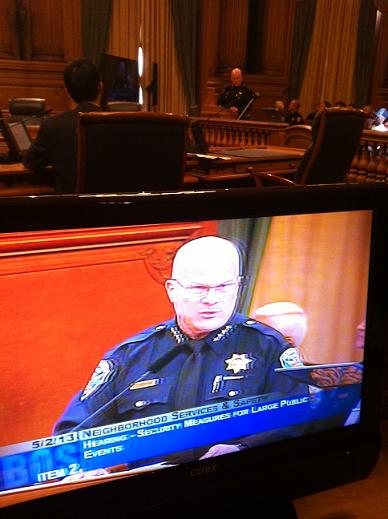
San Francisco Police Chief Greg Suhr clarified misleading media reports (a Chronicle story then picked up by Associated Press) that he’s seeking real time video surveillance along Market Street. Right now, Suhr said he just wants an inventory of existing video cameras along Market and downtown that he can request footage from after a crime is committed and that he would make his case to the board if he ever wanted to go beyond that.

“Right now, we only look at footage in retrospect,” Suhr told the Neighborhood Services and Safety Committee hearing, adding that he has no objections to seeking a court warrant to obtain that footage because “we do want it to be admissible.”

Yet Suhr and Deputy Chief James Loftus also revealed that SFPD will be deploying an undisclosed number of temporary real-time video surveillance cameras atop long poles at the Bay to Breakers footrace on May 19, as it did last fall during the World Series and the big parade down Market Street celebrating the Giants victory.

“We always want more video,” Suhr told the Guardian, although he said that he also understands the civil liberties sensitivities of San Franciscans, which is why he isn’t now seeking a permanent increase in SFPD’s real time video surveillance capabilities. “I’m from San Francisco, I get it.”

Other security tools that the SFPD will be employing at Bay to Breakers and other large events are technology that uses video cameras on police cars to capture license plate numbers and run them through a DMV database, what Loftus vaguely described as “specialized resources from surrounding jurisdictions” (watch out for the drones, y’all), and unspecified “FBI assets [that] will be present and assisting in event security.”

When Sup. Eric Mar, who called the hearing, asked about those last two items, Loftus said he wouldn’t discuss them publicly, but “I could talk to you about it offline if you’d like.”

Sup. David Campos said that he doesn’t want San Francisco to be reactionary after incidents like the Boston Marathon bombing and that we should be a model city for balancing security with civil liberties: “I think that’s a very difficult balance to strike, but it anyone can strike that balance, I think San Francisco can.” He also expressed concerns about plans to ban backpacks at Bay to Breakers: “I don’t know if that’s going to address the problem.”

Loftus said the ban only applied to large backpacks (larger than 8.5x11x14 inches) and that runners and spectators will still be allowed to use small backpacks to hold water and changes of clothing. Yet for those concerned about the creeping police state, including several people who spoke during the public comment period, there was little consolation offered in the presentations, and the supervisors said this would be an important ongoing discussion.

“This is a discussion that goes beyond San Francisco,” Campos said. “We as a country need to have this discussion.”

Typhoid fever warning for Stonestown Nordstrom’s eaters

5

If you or someone you know ate at Nordstrom Cafe at Stonestown Galleria on April 16, 17, 18, 20, or 27, there is a risk of contracting typhoid fever — eek. A restaurant worker has been diagnosed with the infectious disease. Full press release and more info from the SF Department of Public Health below: 

Typhoid Fever in Restaurant Worker

Department of Public Health Issues Alert for Customers Who Ate at Nordstrom Café in Stonestown Galleria

San Francisco, CA—Officials at the San Francisco Department of Public
Health announced today that a local restaurant food handler was diagnosed
with typhoid fever.  The public health investigation is ongoing, but based
on current information, health officials believe the infectious disease was
acquired by the food handler during a trip outside of the United States.

Anyone who ate at the Nordstrom Cafe within the Nordstrom store in the
Stonestown Galleria in San Francisco on April 16, 17, 18, 20, or 27, 2013
may be at risk.  Health officials advise these individuals to see a
healthcare provider right away if they start to experience symptoms such as
fever, weakness, stomach pains, headache, nausea, vomiting, diarrhea, or
loss of appetite.  In some cases a rash of flat, rose-colored spots may
appear.  Symptoms usually begin within 8 to 14 days after exposure, but
could potentially appear for up to 30 days.

“Unfortunately, symptoms of typhoid fever can resemble other illnesses,”
said Tomás J. Aragón, MD, Health Officer for City & County of San
Francisco.  “Persons who are at risk because they dined at the Stonestown
Nordstrom Cafe on one of those dates should see a healthcare provider right
away if they are feeling unwell, and should tell their physician that they
may have been exposed to typhoid fever.  There is testing and effective
treatment available.  If you suspect you have typhoid fever, do not prepare
food or drink for anyone and do not care for young children, hospitalized
patients, or persons with weakened immune systems.”

Typhoid fever is an illness caused by the bacterium Salmonella enterica
serotype Typhi.  Although death is uncommon, typhoid fever can be severe
and life-threatening. In the United States, 300-400 cases of typhoid fever
occur each year, and most of those are acquired during international
travel. People are at risk of typhoid fever if they eat food or drink
beverages that have been handled by someone who has typhoid fever, or if
sewage contaminated with the bacteria gets into the water supply used for
drinking or food preparation. Typhoid fever is still common in the
developing world, where it affects about 22 million people and causes about
200,000 deaths.

The only way to know if an illness is typhoid fever is by testing samples
of stool, blood, and urine for the presence of Salmonella enterica serotype
Typhi.  Typhoid fever can be successfully treated with appropriate
antibiotics, and persons given antibiotics usually begin to feel better
within 2 to 3 days.  Although untreated typhoid can potentially be fatal,
deaths from typhoid fever are uncommon in the United States.  However,
persons with typhoid fever who do not get treatment can continue to have
fever and feel unwell for weeks or months. Even if their symptoms go away,
persons with typhoid fever may continue to pass typhoid bacteria to others,
and so they should not handle food or care for children, hospitalized
persons, or those with weakened immune systems until further testing proves
that typhoid bacteria are gone from the body.

Nordstrom at Stonestown Galleria is cooperating with the Department of
Public Health in the investigation to ensure that the public and their
workers are informed and protected.

For more information about typhoid fever, go to
http://www.cdc.gov/nczved/divisions/dfbmd/diseases/typhoid_fever/

‘Iron Man 3’ and everything else: new movies!

1

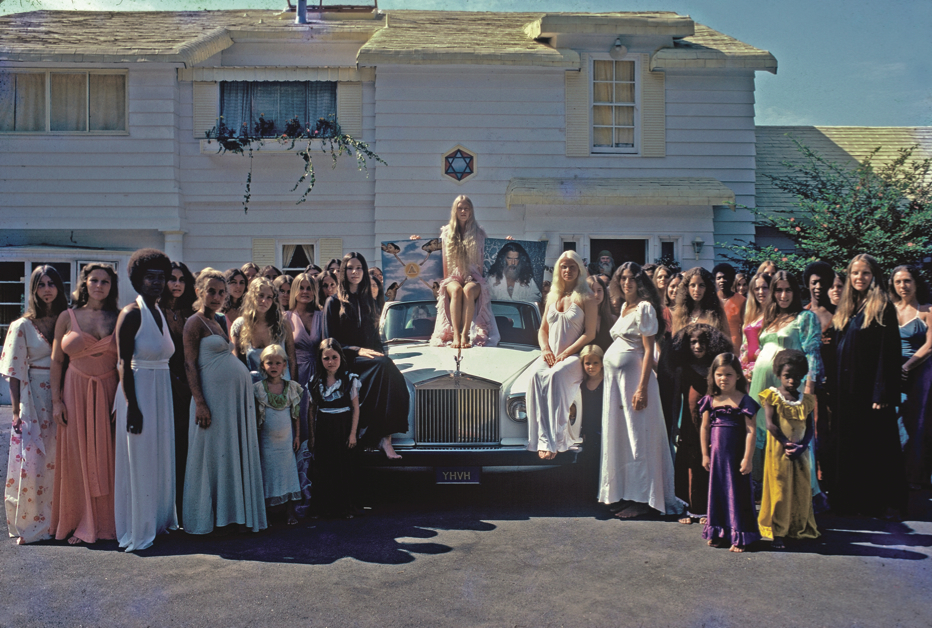
This week: the 56th San Francisco International Film Festival continues (our second week picks here); hippie cult doc The Source Family opens at the Roxie (my interview with the filmmakers, who were able to access vast amounts of archival footage shot by the group itself, here); and Iron Man 3 follows the exploits of Tony Stark, Lord of Winterfell. My review of that low-budget indie that you probably haven’t heard of below, plus more!
http://www.youtube.com/watch?v=JNMljhftcWY

At Any Price Growing up in rural Iowa very much in the shadow of his older brother, Dean Whipple (Zac Efron) cultivated a chip on his shoulder while dominating the figure 8 races at the local dirt track. When papa Henry (Dennis Quaid) — a keeping-up-appearances type, with secrets a-plenty lurking behind his good ol’ boy grin — realizes Dean is his best hope for keeping the family farm afloat, he launches a hail-mary attempt to salvage their relationship. This latest drama from acclaimed indie director Ramin Bahrani (2008’s Goodbye Solo) is his most ambitious to date, enfolding small-town family drama and stock-car scenes into a pointed commentary on modern agribusiness (Henry deals in GMO corn, and must grapple with the sinister corporate practices that go along with it). But the film never gels, particularly after an extreme, third-act plot twist is deployed to, um, hammer home the title — which refers to prices both monetary and spiritual. A solid supporting cast (Kim Dickens, Heather Graham, Clancy Brown, Red West, newcomer Maika Monroe) helps give the film some much-needed added weight as it veers toward melodrama. (1:45) (Cheryl Eddy)

Bert Stern: Original Mad Man Mad man, cad man: both describe photographer Bert Stern, famed for his groundbreaking vodka ads as well as his “Last Sitting” session with Marilyn Monroe (a series he recently re-created, rather regrettably, with Lindsay Lohan). Now in his 80s, he’s coaxed in front of the camera by longtime muse Shannah Laumeister; though their closeness (despite a 40-year age difference) means Bert Stern: Original Mad Man contains a few uncomfortably intimate moments, it also makes for some remarkably candid interviews. And what a life he’s had, melding his voracious appetite for women with a talent for capturing them in stunning, creatively innovative photographs. Though his parade of exes (including celebrated ballet dancer Allegra Kent) remember him with a certain amount of curled-lip disdain, his iconic work — 1959 documentary Jazz on a Summer’s Day, the poster for former co-worker Stanley Kubrick’s 1962 Lolita (those heart-shaped glasses? Stern’s idea) — speaks for itself. (1:50) (Cheryl Eddy)

Iron Man 3 Neither a sinister terrorist dubbed “the Mandarin” (Ben Kingsley) nor a spray-tanned mad scientist (Guy Pearce) are as formidable an enemy to Tony Stark (Robert Downey, Jr.) as Tony Stark himself, the mega-rich playboy last seen in 2012’s Avengers donning his Iron Man suit and thwarting alien destruction. It’s been rough since his big New York minute; he’s been suffering panic attacks and burying himself in his workshop, shutting out his live-in love (Gwyneth Paltrow) in favor of tinkering on an ever-expanding array of manned and un-manned supersuits. But duty, and personal growth, beckon when the above-mentioned villains start behaving very badly. With some help (but not much) from Don Cheadle’s War Machine — now known as “Iron Patriot” thanks to a much-mocked PR campaign — Stark does his saving-the-world routine again. If the plot fails to hit many fresh beats (a few delicious twists aside), the 3D special effects are suitably dazzling, the direction (by series newcomer Shane Black) is appropriately snappy, and Downey, Jr. again makes Stark one of the most charismatic superheros to ever grace the big screen. For now, at least, the continuing Avengers spin-off extravaganza seems justified. (2:06) (Cheryl Eddy)

Kon-Tiki This Best Foreign Language Film nominee from Norway dramatizes Thor Heyerdahl’s 1947 Kon-Tiki expedition. (1:58)

http://www.youtube.com/watch?v=7SQs2Y8drP8

The Reluctant Fundamentalist Based on Pakistani novelist Mohsin Hamid’s award-winning 2007 novel, and directed by the acclaimed Mira Nair (2001’s Monsoon Wedding, 2006’s The Namesake), The Reluctant Fundamentalist boasts an international cast (Kate Hudson, Martin Donovan, Kiefer Sutherland, Liev Schreiber, Om Puri) and nearly as many locations. British-Pakistani actor Riz Ahmed (2010’s Four Lions) stars as Changez Khan, a Princeton-educated professor who grants an interview with a reporter (Schreiber) after another prof at Lahore University — an American citizen — is taken hostage; their meeting grows more tense as the atmosphere around them becomes more charged. Most of the film unfolds as an extended flashback, as Changez recounts his years on Wall Street as a talented “soldier in [America’s] economic army,” with a brunette Hudson playing Erica, a photographer who becomes his NYC love interest. After 9/11, he begins to lose his lust for star-spangled yuppie success, and soon returns to his homeland to pursue a more meaningful cause. Though it’s mostly an earnest, soul-searching character study, The Reluctant Fundamentalist suddenly decides it wants to be a full-throttle political thriller in its last act; ultimately, it offers only superficial insight into what might inspire someone’s conversion to fundamentalism (one guess: Erica’s embarrassingly bad art installation, which could make anyone hate America). Still, Ahmed is a compelling lead. (2:08) (Cheryl Eddy)

Don’t vent, organize and “primary” a Democrat near you

5

By Norman Solomon

Norman Solomon is co-founder of RootsAction.org and founding director of the Institute for Public Accuracy. His books include “War Made Easy: How Presidents and Pundits Keep Spinning Us to Death.” He writes the Political Culture 2013 column.

Progressives often wonder why so many Republican lawmakers stick to their avowed principles while so many Democratic lawmakers abandon theirs. We can grasp some answers by assessing the current nationwide drive called “Primary My Congressman” — a case study of how right-wing forces gain ground in electoral terrain where progressives fear to tread.

Sponsored by Club for Growth Action, the “Primary My Congressman” effort aims to replace “moderate Republicans” with “economic conservatives” — in other words, GOP hardliners even more devoted to boosting corporate power and dismantling the public sector. “In districts that are heavily Republican,” the group says, “there are literally dozens of missed opportunities to elect real fiscal conservatives to Congress — not more ‘moderates’ who will compromise with Democrats. . .”

Such threats of serious primary challenges often cause the targeted incumbents to quickly veer rightward, or they may never get through the next Republican primary.

Progressive activists and organizations could launch similar primary challenges, but — to the delight of the Democratic Party establishment — they rarely do. Why not?

Here are some key reasons:

*  Undue deference to elected Democrats.

Members of Congress and other elected officials deserve only the respect they earn. All too often, for example, plenty of Congressional Progressive Caucus members represent the interests of the establishment to progressives rather than the other way around. 

*  Treating election campaigns more like impulse items than work that requires long-term planning and grassroots follow-through.

The same progressives who’ve spent years planning, launching and sustaining a wide range of community projects are apt to jump into election campaigns with scant lead time. Progressives need to build electoral capacity for the long haul, implementing well-planned strategic campaigns with candidates who come out of social movements and have a plausible chance to win on behalf of those movements.

*  Assuming that millions of dollars are necessary to win.

Yes, successful campaigns require effective fundraising — but money is often a less significant obstacle than a shortage of commitment and willingness to do painstaking grassroots organizing.

*  Self-marginalization by ignoring elections.

Some on the left prefer to stay out of electoral contests while focusing on the next protest demonstration — thus leaving the electoral field to battles between corporate Democrats and Republicans. One sure result: a progressive won’t win.

*  Self-marginalization with third-party efforts in partisan races.

In congressional races, Green Party and other progressive third-party candidates have a zero record of success in our lifetimes. In other races with party affiliations also on the ballot (such as governor and state legislature), victories have been almost nonexistent. In such races, the corporate-military complex is not in the slightest threatened by third-party candidates, who rarely get higher than a low single-digit percentage of the vote. In nonpartisan races, by contrast, there are examples of successful and uplifting campaigns by third-party candidates, as with Green Party member Gayle McLaughlin, the mayor of Richmond, California. 

By changing just a few words in the Club for Growth’s “Primary My Congressman” manifesto, progressives have a road map for electoral progress: In districts that are heavily Democratic, there are literally dozens of missed opportunities to elect real progressives to Congress — not more of those who go along with the Obama White House as it keeps compromising with Republicans.

Anyone serious about getting genuine progressives elected to Congress next year should be engaged in developing campaigns now. To avoid the impulse-item syndrome, that means identifying key races where progressives have a real chance to win, while remaining mindful that election campaigns should be subsets of social movements and not the other way around.

If there’s a defining issue that now separates the Obama party leadership from social decency, it is the president’s push to cut Social Security benefits. Less ballyhooed but also crucial is his push to cut Medicare benefits and the ever-present danger of cuts to already woefully-underfunded Medicaid. Meanwhile, Democratic leaders are unwilling to seriously cut the enormous military budget.

Any incumbent Democrat who is not serving progressive interests should be weighed as a possible primary target. And the most fruitful primary challenges are beckoning in heavily Democratic districts where there are many progressive voters and incumbents aren’t measuring up.

By that standard, the Congress members who may be vulnerable to a primary challenge include the 44 who tout their membership in the Progressive Caucus but have refused to sign the letter (initiated by Congressmen Alan Grayson and Mark Takano) promising not to vote to cut Social Security, Medicare or Medicaid benefits.

A good starting point to consider launching a primary challenge in your area would be to look at those 44 members of Congress who continue to refuse to make such a promise, leaving themselves wiggle room to vote for cuts in three crucial programs of the social compact. To see the list of those self-described “progressives,” click here. (Meanwhile, wherever you live, you can let your Congress member and senators know what you think of proposals for such cuts by clicking here.)

It’s fair to say those 44 members of Congress are among the many Democratic incumbents showing themselves to be more afraid of the Obama White House and the Democratic Party hierarchy than they are of voters in their own districts. Progressives in and around those districts need to do less venting and more organizing.

Norman Solomon is co-founder of RootsAction.org and founding director of the Institute for Public Accuracy. His books include “War Made Easy: How Presidents and Pundits Keep Spinning Us to Death.” He writes the Political Culture 2013 column.


Students celebrate SF resolution to divest from fossil fuels

Famed environmental writer and 350.org founder Bill McKibben wore a short-sleeved T-shirt as he stood on the steps of San Francisco City Hall this afternoon and addressed a crowd of energized student climate activists.

“It’s a pretty day here, but it’s a little warmer than it should be,” he remarked of the hot afternoon with temperatures creeping above 80 degrees F. “This is the hottest May 2 ever recorded in the city of San Francisco.”

McKibben was there to celebrate a recent victory for his organization’s fossil fuel divestment campaign, which came last week when the San Francisco Board of Supervisors voted to adopt a resolution by Sup. John Avalos urging the San Francisco Employee Retirement System to divest from companies that hold fossil fuel reserves.

McKibben’s organization, 350.org, has been urging colleges, universities and city governments across the country to enact similar measures. “This is pretty simple math. The math is, if you’re invested in the fossil fuel industry, then you are profiting from the wreckage of the climate,” McKibben said. You are making a bet that nothing will ever be done to stop or slow down climate change, because if anything ever is done, it will put those investments at risk. The perversity of that is stunning.”

Students across the country have organized campaigns to divest, borrowing a tactic from the anti-apartheid movement. Over the last couple days, “The students at the Rhode Island School of Design had gone and occupied their president’s office, because they were getting no attention to their demand for divestment,” McKibben noted. “And they dropped a banner out the window. And the banner said, ‘We may be art students, but we can still do the math.’”

He went on: “There’s no absolute guarantee that we’re going to win this fight. But I do know … that we’re at the very least going to fight. And fight hard.”

Sup. John Avalos also delivered comments at the rally. When he first contemplated introducing the resolution, “I thought, oh no, just another advisory measure that we’re going to do as a Board of Supervisors,” Avalos admitted, “but I also saw the real value of it. That if San Francisco could take a stand like this, it could have a real impact on all the other cities around the country.”

He added that the most compelling argument for divestment was that, “We know that we cannot take all of the fossil fuel out of the ground that those corporations are seeking. And eventually … they’ll be stranded assets that we’ll have no return on in the future.”

Asked after the rally whether he thought SFERS would indeed divest as a result of the nonbinding resolution, McKibben told the Bay Guardian, “I have no doubt that they will. … I think that that’s starting to happen all over the country, and I think people like Supervisor Avalos are serious about making sure that it’s for real. You know, in Washington we make rhetorical statements with nothing behind them, but hopefully in San Francisco,” things will turn out differently, he added.

Earlier in the day, Norm Nickels of SFERS noted that the resolution has not yet been added as an agenda item for the Retirement Board to take up, because it has not yet cleared the final hurdle for official Board of Supervisors approval.

SFIFF report: French glam … and grit

0

At the outset of Friday evening’s SFIFF screening of the ’50s-set French film Populaire, director Régis Roinsard offered two hints as to what lay ahead — noting that his SF sightseeing agenda had included a visit to Jimmy Stewart’s Lombard Street Vertigo residence, and encouraging the audience to stick around for a Q&A sampling of his Borat-level English proficiency. As it turned out, Roinsard handled the post-screening questions with slightly awkward but un-Borat-like charm (and occasional interpreter assistance). And the film itself — while featuring a man gripped by a daffy obsession involving a beautiful blond, who, come to think of it, is often seen sporting an updo — has a considerably lighter mood than the Hitchcock thriller, finding its tense plot turns and clacking rhythms within the fast-paced world of competitive typing.

Yes, typing, and perhaps if it weren’t the ’50s, this would be the fluorescent-lit story of a soul-sucking data entry job and the office drone who supplements it with a moonlighting gig. But it is the ’50s, a cheery, upbeat, non–Far from Heaven version, and Populaire invests with a shiny glamour the transformation of small-town girl Rose Pamphyle (Déborah François) from an incompetent but feisty secretary with mad hunting-and-pecking skills into a celebrated and adored speed-typing champion. The daffy obsessed guy is her boss, Louis Échard (Romain Duris), a handsome young insurance salesman who bullies her, but very charmingly, into competing against a vast secretarial pool in a series of hectic, nail-biting tourneys, which treat typing as a sporting event for perhaps the first time in cinematic history. (See also: scenes of Rose cranking up her physical endurance with daily jogs and cross-training at the piano.)
 
The glamour slips a touch when Populaire (Roinsard said he took the title from the Nada Surf song “Popular”; the word also translates as “working-class”) starts to delve into psychological motivations to rationalize some of Louis’s more caddish maneuvers. But meanwhile, back in the arena, bets are made, words-per-minute stats are quoted by screaming, tearful fans in the bleachers, hearts are won and bruised, a jazz band performs that classic tune “Les Secrétaires Cha Cha Cha,” and we find ourselves rooting passionately for Rose to best the reigning champ’s 312(!)-wpm record.

Fast-forwarding a few days and a couple decades, Olivier Assayas’s Something in the Air, which screened Monday night and opens theatrically May 17, depicts a France far removed from the modern-fairy-tale setting of Populaire. Set a few years after the strikes and street battles of May ’68 (the film’s original title is Après Mai, or “After May”), Something centers on a group of radical teenagers in the Paris suburbs grappling with riot police and questions of what use to make of themselves in the world. Only loosely plotted, the film is more a series of vignettes, tracking the restless progress of Gilles (Clément Métayer) and a handful of his cohorts through school’s end, their flight to an Italian squat for the summer after a political action at home turns violent, and the dispersal of the group to various world-map points.

School seems to be mainly a place to sell movement newspapers to other students, or to wheat-paste and graffiti-bomb the walls at night. Conversations revolve around political sectarianism and the pitfalls of bourgeois documentary-filmmaking impulses. And position speeches on revolutionary tactics and relationships alike are delivered with a flat dogmatism (Gilles’s friend Alain makes it through the entire two-hour film without cracking a smile) as the characters attempt to sort out their allegiances to political revolt, art making, and romantic entanglement.

While the youth of Assayas’s film seem to view their lives and actions against a vast panorama of political and social import, the heroine of Justine Malle’s Youth keeps her gaze trained on a smaller circle encompassing academic ambition, romantic and sexual exploration, and family, though the order of precedence shifts several times over the course of this small, somewhat slight coming-of-age film. Malle is the daughter of celebrated French director Louis Malle, who passed away in 1995, and Youth is a semi-autobiographical examination of a 20-year-old girl’s experience of losing her father amid a period of personal upheaval.
 
Juliette (Esther Garrel, daughter of director Philippe and sister of actor Louis) is in the midst of studying for entrance exams and falling in love (she believes) for the fourth time when she learns that her father has been diagnosed with a fatal and quickly moving virus. Unable or unwilling to fully register this terrible new reality, she spends little time with him at the country house where he lives with his third wife and their daughter, choosing to stay in Paris cramming for her exams and pursuing a lengthier sexual résumé.

This is some dark material to mold into story form, and in certain ways it feels as if Malle had trouble looking at it as she worked with script cowriter Cécile Vargaftig. It’s hard to know how much overlap exists between the events Malle experienced nearly 20 years ago and those Juliette goes through on-screen, but the film has the feel of a tight fit, with little room leftover to step back and gain perspective.

SFIFF continues through May 9.

Party Radar: Honey Dijon, Kenny Dope, Plastic Plates, Daniel Maloso, Pearson Sound, more

It’s too sunny out to read! My eyes keep glazing over with lusty sparkles and unicorns in mankinis. Let’s meet in the park with a duffel of cold 40s, listen to some fun music with our tops off, and plan our party outfits for the following weekend blowouts (click on the titles for more details).

Oh, and PS: the only reason I didn’t include one of the best parties of the the spring, the Sunset Boat Party, is because it is, as usual, sold out. But check out the Sunset FB page for afterparty deets.

>>PEARSON SOUND

UK wiz kid David Kennedy updates that good ol’ UK bass sound with some neat twists of his own. 

Thu/2, 9:30pm-late, $10-$15. Public Works, 161 Erie, SF.


>>DEEP CRATES

Two great musical tastes will make a delicious, peanut-buttery dance floor sandwich: bathhouse disco prince Bus Station John and house/techno pumper Brian Bejarano giving us some rare classics. Diggin’ deep and finding gold y’all! 

Fri/3, 9pm, $5. UndergroundSF, 424 Haight, SF. 


>>SOME THING: THE BACHELORETTE PARTY

The best art-drag club in the city takes on party buses, “woo girls,” stiletto disasters, and puke-in-the-purse with this celebration of all things Bachelorette. Watch your fucking tiara or you will get cunt-punted into another sorority.

http://www.youtube.com/watch?v=cJNOOBOyn20

Fri/3, 10pm-late, $7. The Stud, 399 9th St., SF. www.studsf.com 


>>DANIEL MALOSO

Cute Spaniard, who in his darker moments can’t quite shake the influence of Liaisons Dangereuses “Los Ninos Del Parque” (and that’s just fine), will have you bopping around at the impeccable No Way Back party.

Fri/3, 10pm-4am, $15. Monarch, 101 Sixth St., SF. www.monarchsf.com


>>KENNY DOPE

The master — as in one half of the actually legendary Masters at Work — bangs out the heavy rhythm house and hip-hoppy jams with equally adept and beloved DJ Spinna.

Sat/4, 10pm-late, $20. Mighty, 119 Utah, SF. www.mighty119.com


>>PLASTIC PLATES

He’s an electro-pop smoothie! Love the Aussie-via-LA producer’s irresistible takes on songs, givng them a moody bounce. 

Sat/4, 9:30pm, $15. Monarch, 101 Sixth St., SF. www.monarchsf.com


>>SWAGGER LIKE US

Supercute, super-diverse monthly queer hip-hop party — where, incidentally, you’ll hear some of the most cutting-edge music going on in the dance world right now. With special guest DJ Rapidfire!

Sun/3, 3-pm, $5-$8. El Rio, 3158 Mission, SF.


>>HONEY DIJON

The first mistress of NYC house has come along way since we all used to cheer at the EndUp back in the day when she’d accidentally play the same record three times. (And yet she ALWAYS turned it out for the children.) Miss Honey will sinko your de mayo. 

>Sun/5, 10pm, $10. Holy Cow, 1535 Folsom, SF. 

Tribeca Film Festival wrap-up: the best of the rest!

2

It was the best of sequesters: oh, Tribeca, how to wrap up the many, many days spent hidden away in the dark, watching flickering images dart across a screen? I can only try, as I speed through the best of the rest — and the notable not-so-muchs.

Kids these days: Poets and the young girls that love them are at the very funny heart of indie comedy Adult World, which is sure to make a star of Emma Roberts. She’s the shrill, just-graduated, wannabe-verse-slinger Amy, who’s moonlighting in an adult video store alongside hollow-eyed cutie Alex (American Horror Story’s Evan Peters) and hoping scuzzball genius will rub off if she “interns” (read: cleans house) for her favorite poet, Rat Billings (writ world-weary and hilariously cynical by John Cusack). First-time feature director Scott Coffrey (also, weirdly, a graduate of the same Honolulu high school where I did my own Amy impression) lets a few rough edges (i.e., edits) show, but it’s all good when the filmmaker winds up Roberts, playing the cringe-worthy Tracy Flick for the chapbook set, and lets her go.

http://www.youtube.com/watch?v=Z6DJSGrfNbk

Just as funny — and very of-the-moment — is G.B.F., as in gay best friend. As in every Bravo-watching gal’s latest, greatest slice of arm candy. Tanner (Michael J. Willett of United States of Tara) is just your average, comic-book-reading closeted gay teen when bestie Brent (Paul Iacono) decides his path to social success will be established once he comes out as the first openly gay teenager at their high school. He’s sure to become the pet pick of the would-be prom queens: the girl-with-the-best-hair Fawcett (Sasha Pieterse of Pretty Little Liars), drama mama Caprice (Xosha Roquemore), and Mormon good girl ‘Shley (Andrea Bowen). Alas, the wholly unprepared Tanner gets outed first — and the battle for the O.G. G.B.F. ensues.

Working with a fast, sassy, and slangy script — and teen comedy vets Natasha Lyonne, Rebecca Gayheart, and Jonathan Silverman — director Darren Stein (1999’s Jawbreaker) has already traversed some of this uber-camp territory: yes, there’s a multiplayer saunter down a high school hall and a maj makeover montage. But the snappy, laugh-out-loud dialogue by first-time screenwriter George Northy (fresh from the Outfest Screenwriting Lab, as he discussed after the film in a Q&A with Stein and much of the cast), along with some high-speed-DSL improvising by the cast, made this one of the more effortlessly enjoyable — and commercial — movies at Tribeca.

Speaking of effortlessly commercial, I mean, adorable: It sounds like NYC went stir-cray for Lil Bub and Friendz, especially when the lil’ permakitten herself materialized for a free open-air screening of the Vice documentary on a Saturday night. Short (at about 60 minutes), sweet, and definitely crammed with more than you’d ever wanted to know about Internet cats (even after Bravo’s LOLwork), their owners, and their merchandising, Lil Bub fortunately keeps its eye firmly trained on the prize, namely the wide-eyed little mutant in the center of a viral firestorm, while framing visits with Nyan Cat, Grumpy Cat, and Keyboard Cat with Bub’s life story.

This runt o’ the litter may not appear to have any bone marrow in her leg bones, zero teeth, a permanently extended tongue, and extra toes on every paw, yet she’s won more than just owner Mike Bridavsky’s heart — she’s repping for all the totes-adorbs misfits out there, making their fortunes just by being themselves (or by creating a grabby persona) on the Interwebs. Now we just need a 24-hour Bub-cam to fill in the gaps of our Bub-Friends-Forever obsession.  

Lighter fare? Paul Verhoeven’s crowd-sourced sex comedy Tricked was a mildly diverting exercise in group think, or better, gang-grope creativity. It’s no The Fourth Man (1983), Starship Troopers (1997), or even Showgirls (1995). There’s only a dash of that eye-tinglingly perverse psycho-drama that Verhoeven specializes in is evident in, perhaps, that tampon spinning in the toilet or this luscious ingenue suddenly flashing her ta-tas.

On the perversity tip — it doesn’t get much more against the grain than cannibalism, Maori family style, in the Kiwi cult-circuit-primed OTT Fresh Meat, which wallows then practically whirls in its own trough of bad taste. When a group of shoot-’em-up screw-ups invade the suburban home of an upstanding Maori suburban family, they learn that their freezer’s contents are less than savory — the hard and gory way — in a tone that seems derived from ‘80s Hong Kong martial arts comedies. Still, you have to appreciate the salacious brio with which director Danny Mulheron tackles this homecoming to Z-grade yuck-fests. 

Keeping it real: Ground-level neorealistic storytelling made its stand in features about everyday, blue-collar folks just trying to keep their head above the … snow. The best of which was Whitewash, a journey into the heart of a murder mystery with Thomas Haden Church cast as a snow-plow driver forced to rough it in the snow-swathed woods of Quebec. Church ably navigates that thin line between a kind of natural, deadpan humor and serious, even deadly, drama.

Kitted out with a cast that includes John Slattery (Mad Men), Adam Driver (Girls), and Margo Martindale (who’s in everything), Bluebird checks in on a similar, northerly terrain, an isolated, snow-cloaked Maine logging town, on the pretext of investigating the dire ramifications of single lapse by a well-meaning school bus driver (Amy Morton of Boss). Frustrated by that traumatized character’s deer-in-the-headlights muteness, you know there’s nowhere to go but up.

Much better, down south in burn-out, strip-mauled Florida, is Sunlight Jr. — otherwise known as Walking Dead heartthrob Norman Reedus’s return to the big screen, as yet another scary redneck, this time wielding a big-wheeled truck rather than a crossbow. Serenaded by an elegant guitar soundtrack by Dinosaur Jr.’s J. Mascis, Naomi Watts is as fantastic as usual, as a convenience-store honey struggling to stay sober and maintain a relationship with a hard-drinking, wheelchair-bound boyfriend (Matt Dillon). Director and writer Laurie Collyer (Sherrybaby) keeps her focus tight, only adding to Sunlight Jr.’s power.

Meanwhile, earnest Iowa farm-centered At Any Price, which opens theatrically in the Bay Area tomorrow, wasn’t quite the breakout movie for a mugging, dead-eyed Dennis Quaid, but it might be for Zac Efron, who rises above the fray in an indie that aspires to the gravitas of A Thousand Acres.

A continent and millions of concerns away in Italy, Ali Blue Eyes made a case for the story of two rebellious teenaged pals — one an Egyptian Muslim, the other a Catholic Italian. Nader (Nader Sarhan) may wear blue contacts in order to, rather lamely, blend in, but his loyalties and cultural ties are tested after a Romanian kid is stabbed in this compelling glimpse into an immigrants world at the edges of affluent Milan.   

http://www.youtube.com/watch?v=wSTjh9Sd5Vs

Shock and awe: Midnight movies abounded — two of the best that I caught were The Machine, a relatively polished, low-budg Frankenstein story set in an English weapons research lab where researchers are intent on building the ultimate cybernetic super soldier. Riddling his script to references to quantum computers and the like, director-writer Caradog James manages to infuse a solid sense of Cronenbergian dread — as well as a tenuous moral ambiguity — into a sci-fi narrative that’s as old as the Romantics.

Much more disappointing — and marred by technical roughness — was Dark Touch, Marina de Van’s (2002’s In My Skin) rendition of Carrie, this time in the form of a telekinetically gifted (or cursed) 11-year-old. I get it — child abuse leads kids to act out, in this case, in murderous ways — I just kept tripping over the lapses in continuity and logic, the beautiful female characters’ uniform Breck Girl look, and the tragic special effects.

Fun, in the way that a blood-sucking brotherhood brandishing the “pointed nails of justice” can only be fun, is Byzantium, Neil Jordan’s return to the world of the undead, so long after 1994’s Interview With a Vampire. Here, the would-be malignant spirits choose to their path by visiting a wicked island that gushes blood when another little vampire is born. They also stroll about conveniently by day — though the isle and its keepers forbid women to make vampires (childbirth, I suppose, is considered sufficient). Still, it’s a trashy good time, with a lush Gemma Arterton wildly vamping as harlot-prey-turned-madam-predator and taking a garrote to her hunter (though after sitting through The Host, I’m not sure how much longer I’m willing to buy Saoirse Ronan’s ethereal space-cadet act).

The final, very wonderful monster in the room? A certain pantless Broadway legend who has shared a stage with Harpo Marx, dated Jack Kennedy, and has had Noel Coward and Stephen Sondheim write for her. The doc Elaine Stritch: Shoot Me follows the feisty song-and-dance Broadway icon on the verge of 87 as she tosses off wisecracks, appears on 30 Rock as the mother of Alec Baldwin’s Jack Donaghy, copes with diabetes, and bosses around documentary maker Chiemi Karasawa. It’s a unique delight — much like its subject. Yes, she just moved out of her digs in the Carlyle Hotel and back to her native Michigan — but Shoot Me allows us to bask in the considerable afterglow left in her wake.

The Performant: The real weekend warriors

Holding down the weekend of the weekend with the Dark Room Theatre’s “Ghostbusters: Live” and Har Mar Superstar

Among the true creatures of the night, Saturday Night has always been passé, amateur night if you will, when even the most accommodating of dive bars or clubs are suddenly jammed tight with lightweight dilettantes, whose allegiance to the night life is as superficial as it is truncated. But the real weekend has always begun on Thursday, straddling the line between Wednesday’s hump and Saturday’s slump, a connoisseur’s indulgence.

Though San Francisco is happily full of those who understand that Thursday is when the party starts, any number of theatres can still attest that packing the house on that particular evening can be a tricky prospect, a trend I can attest to from the personal experience of having attended many a Thursday show where the actors outnumbered the oddience. Awkward. Which made entering the oversold, packed to the rafters performance of “Ghostbusters: Live”! at the Dark Room Theatre that much more refreshing. This is one Mission Street outpost that has thus far ably resisted the siren song of gentrification and co-option, and remains a place where silly good fun can be had for the price of cheap, with an additional calendar of ten p.m. comedy shows that caters specifically to the committed night owl crowd.

“Ghostbusters: Live” was a perfect example of the Dark Room aesthetic from start to finish, one which other no-budget production companies would do well to take note of. Eschewing a set, which would really just impede the action on the tiny, 12’ x 8’ stage, but expending just enough effort on costuming, lights, and sound to support the storyline and bolster the humor, “Ghostbusters: Live!” opened with the three researchers (played by Adam Curry, Tim Kay, and Thomas Apley) looking for signs of a haunting in the public library, the best lines about great sponge migrations, family psychosis, and menstruation left intact. With clever puppetry standing in for any number of ghostly apparitions, and a strong supporting cast including Adam Vogel as a pitch-perfect Louis Tully, and Alexia Staniotes as the acerbic Janine Melnitz, “Ghostbusters: Live!” managed to capture both the essence of the movie it was sending up and the heady geist of a Thursday night out on the town, framing the possibilities for the rest of the weekend to come.

If Thursday Night is the prelude to the weekend, then Sunday night is its final salute, and the true testing ground of the dedicated denizens of the dark. Which made it perhaps the perfect day of the week for the rarified talent that is Har Mar Superstar to perform. True, the tough sell that is Sunday night kept the crowd at the Bottom of the Hill from swelling to the epic proportions you might expect for a performer of his caliber, but wasn’t that just more elbow room for the rest of us?

Often compared to the lovably schlubby porn star Ron Jeremy, the Bay Area celebrity Sean Tillmann most closely resembles is Josh Kornbluth, although Tillman’s a whole lot more exhibitionistic. His alter-ego’s double-entendre filled lyrics, funky dance moves, catchy hooks, and unabashed libido combine into a stage persona of pure sweaty id, while his true weapon, a silkily soulful croon, tongue-bathes the oddience in its liquid smooth. While a lot of his songs skew towards the humorous, including the trashy-pop “Tall Boy” and his boy-band ode to “the male camel-toe” “Almond Joy,” when Har Mar gets serious he wields an epic howl such as when he turns on the retro-soul for “Lady, You Shot Me” and further unleashes his formidable upper register on “Sunshine.”

And while there was some initial trepidation on the part of the crowd, perhaps fearful of the unpredictable intentions of the lascivious songster, by the end everyone was getting into the spirit of the moment, rubbing Tillman’s proudly bared belly for luck, swapping saliva, getting down. Rounding out the set with a literally stripped-down (to the briefs) acapella version of “It’s So Hard to Say Goodbye to Yesterday” provided the appropriate closure for the weekend’s last hurrah, and set the mood for all the weekends to come, the sunshine and the rain.