Print sections as they appeared in the early 2010s

To find articles by keyword or author, you may want to use our Search function.

Print Sections

Not from around here

0

arts@sfbg.com

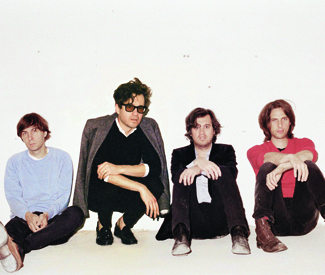
MUSIC It was a case of the French pop love that dared not speak its name, as earlier this month rumors roiled about a Coachella coupling — mon dieu, deux! — to truly rave about: headliner Phoenix along with possibly, just maybe, hush-hush special guest Daft Punk, returning to stage de triomphe that it dominated seven years ago. The Phoenix guest that materialized, R. Kelly, wasn’t exactly the faceless freak the audience had imagined springing from the closet, and instead the mob had to cool its jets and content itself with an old-school LP ad from Thomas Bangalter and Guy-Manuel de Homem-Christo.

The abbreviated 102-second spot saw the duo in glittery soft focus performing new single “Get Lucky” alongside Pharrell Williams and Nile Rodgers — the kind of clip you’d uncover on late-night TV during Don Kirshner’s Rock Concert — and announcing Daft Punk’s own special guest stars, including Giorgio Moroder, Panda Bear, past Daft Punk collaborator Todd Edwards, Paul Williams (who must have had Phantom of Paradise-tinged flashbacks), and Pharrell Williams. Just a taste, but enough to stir the pot in the lead up to the May 21 release of Daft Punk’s fourth studio full-length, Random Access Memories, on Columbia.

Is it so strange that Daft Punk and Phoenix should find their fortunes so intertwined out in the Cali desert, so far from Old World Paris and Versailles? After all, the two share a past — and a future: Phoenix guitarist Laurent Brancowitz, Bangalter, and de Homem-Christo all started out in a Beach Boys-inspired combo called Darlin’. And much like fellow French native Anthony Gonzalez’s M83, the two groups are managing to find creative juices to grease their wheels out west, in the fantasy industrial complex of LA — with Daft Punk stressing the importance of a West Coast feel à la Fleetwood Mac to Memories guest Edwards, and Phoenix telling MTV that its new CD, Bankrupt!, was inspired by its work on Thomas Mars spouse Sofia Coppola’s 2010 movie Somewhere.

Not to mention the fact that Bankrupt! and Memories are two of the most buzz-ridden releases of the year, particularly judging from the homemade “Get Lucky” remixes and videos already proliferating online. Long gone are the old rockist daze — the same that slurred “Disco sucks” — when French rock was derided as just another thing an entire country does wrong, like loving Jerry Lewis. Thoughts surely far from the minds of Daft Punk obsessives, though from the start the duo’s vocoder-obscured vocals and helmeted visages proudly proclaimed, “We’re alien, a.k.a. not from around here.” That tease is the name of Daft Punk’s space-rockin’ game this time around, taking control with a carefully orchestrated marketing campaign after a humbling day job scoring a sorry Tron sequel.

Working with its biggest crowd of collaborators yet, Daft Punk appears to be bursting the mythic bubble of an enigmatic twosome working solo behind the decks, letting others into the party, circling back to its clubland origins, and reaffirming that, as “Get Lucky” goes, its “ends were beginnings.”

And though indie seems leached of meaning, Phoenix sounds far deprived when it came to ideas for Bankrupt! Nate Chinen of the New York Times may quibble with Mars’s Dadaist “word salad” — why not attack a fellow for singing with an accent? — but then Phoenix isn’t the first band to privilege the sound of lyrics over content. Bankrupt! isn’t as “experimental” as promised early on, but it’s by no means as polished and predictable as your average Killers or Imagine Dragons product.

Starting with title and extending to the cover symbolism of a lucky peach, and the busy little rickshaw of an orientalist motif on opener “Entertainment,” Phoenix sounds as if it’s grappling with a Daft Punky notion of alien-ness, too — and the global economics of pop success, having hit it big at the height of an economic downtown with 2009’s Wolfgang Amadeus Phoenix. The distorted, bristling synths grinding beneath songs like “The Real Thing,” in fact, make Bankrupt! one of the noisier mainstream rock albums of recent years. Scope out the lonely cries of the entitled asking to have their names put on lists on “SOS in Bel Air,” the fluty synths opening the languorous “Trying to Be Cool,” and hear the sound of a band conveying the seduction — and anxiety — of too many bright lights, big cities, and marathon tours and responding by mainly turning up on the volume.

So why French pop and why now? In fits and starts, leaps and stumbles, Daft Punk and Phoenix are creating less a pop language of diplomacy than a kind of lingua franca between classic sunny pop hooks, Beach Boys style, and the all-mighty often-electronic groove, be it analog or digital, IDM or EDM, boyish or girlish, human or alien.

LPs like Memories hark to another time, while satisfying on the primal level of da funk. As Pharrell Williams has said of “Get Lucky,” “The only click track they had was the human heartbeat, which makes it really interesting because these are robots.” So how does the sunlit, smoggy terroir of the west touch two French aliens and a band of Versailles refugees? Perhaps we’ll know when Daft Punk unveils Memories even further out West: May 17, at the the 79th Wee Waa Regional Show in Wee Waa, Australia.

Let it all out

0

VISUAL ART Dottie Guy had a difficult time in 2006. In addition to the death of her grandfather, she was recovering from surgery for an injury to her ankle and foot that she had sustained on duty in Iraq. She started taking pictures as motivation to walk around and to reclaim a sense of purpose.

This year, Guy is one of the artists participating in a one-night art exhibition presented by Shout!, an initiative to support female veterans in the Bay Area. Primary organizer Star Lara asked Guy to submit a photo to an event that, in its fifth year, will include several different media — photography, painting, sculpture, drawing, writing, and music — made by 22 vets. As a result of Lara’s outreach efforts, this year’s event has grown so much that she had to turn artists away.

Lara is the Women Veterans Coordinator at Swords to Plowshares, a nonprofit that helps veterans transition back to civilian life. Leaving the military in 2007 after serving on active duty for 12 years, she knows the hardships of adapting, particularly those that affect women. As more women enlist, she explains, the gender-specific problems become increasingly defined. Female veterans now represent the fastest growing homeless population, yet they seek help through Veteran Affairs at far lower rates than men do.

Issues also stem from public perception. People understand what it means when they see a man with a military pin, but Lara often hears the question, “Is your dad in the military?” Society resists the idea of a female veteran.

And when civilians do know about a woman’s military service, another problem arises: the tendency to reduce all aspects of her persona to her veteran identity. For Guy, the exhibition provides an opportunity to showcase another side of herself. Though her life revolves around veterans — she works at the VA — she is also a photographer, and her photography does not directly address military service.

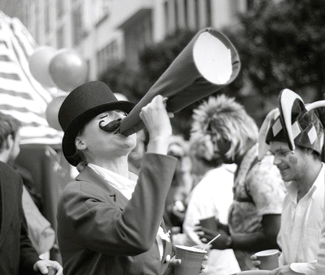
Guy snapped her Shout! photo at Bay to Breakers a couple of years ago when she stumbled across a woman in a top hat and fake moustache shouting into a bullhorn next to a man wearing a polar bear mask. It is a quirky image one could find in few places besides San Francisco. “I embrace the ridiculous stuff,” says Guy. “Being in the military, there’s not much room to celebrate that. You’d never see somebody walking around in a mask like that, unless it meant trouble.”

Another Shout! artist, JoAnn Martinez, has only recently begun to experiment with military subjects. For her second year in the show, she has submitted comics derived from dialogues she has heard within the female veteran community. By undertaking this new comedic mode of art, she hopes she can not only share a creation she’s proud of besides her family and work (she started the nonprofit Women Veterans Connect), but also communicate a digestible message to the non-veteran community. “Instead of complaining, let’s laugh about it,” she says.

Not only do Martinez’s comics convey a therapeutic levity, but they also contain an expressive subtext; they are printed on homemade paper created in response to the Combat Paper Project, in which workshops instruct veterans how to create paper pulp from their shredded military uniforms.

Extending the practice beyond Shout!, Martinez is seeking female veterans to submit stories about their uniforms for a Shotwell Paper Mill limited-edition book created using the same fabric-turned-paper method. So far, the stories range in tone, some reflecting a similar lightness to Martinez’s comics; one woman tells how after she painted her toenails, the Iraqi heat melted the polish and she had trouble removing her socks.

Lara has also participated in the project, an experience she found restorative in part because it involved breaking down and reclaiming an object laden with intense experiences, but primarily because of the work’s collectivity. After talking with fellow female veterans while their hands were busy cutting, she says, “It was no longer about the trauma that brought you to the table — it was about what you took from the table.” (The Combat Paper Project also inspired Lara’s contribution to this year’s Shout!, a piece that involved her “painting the shit out of” her last uniform.)

Though Lara does not consider herself a fine artist, Shout! presents an opportunity to share the voice of her small group within a greater context. In the Women’s Building, a hub of action in the Mission, the event will enact her idea that women veterans comprise a subset of larger existing communities and should be reached as such.

Lara says that without focusing on trauma, without involving policy, services, or outreach, Shout! offers a chance for artists like Guy and Martinez to declare, “I am a woman and a veteran, and here’s how I express myself.”

SHOUT!: ART BY WOMEN VETERANS

Wed/8, 6-9pm, free

San Francisco Women’s Building

3543 18th St, SF

swords-to-plowshares.org/shout


Yuh look good

0

STREETS Only our deep-seated disinclination against street harassment prevented us from hollering at these sterling examples of the Bay’s blazing style sense. We respectfully snapped their pics instead: the trio of gents in town for their 50th high school reunion sporting pencil mustaches and monochrome, Agathe Guttuhaugen’s surreal ombre locks and coordinated cap brim, Amber Asaly’s midriff. All good excuses to take to the sidewalk this season in search of fashion stimulation.


Alex Pingis. Photo by Cortney Clift

Amber Asaly. Photo by Stephanie Sesin

Brian McGrath, Jeffrey Tucker, and Donald Owen. Photo by Cortney Clift

Elena Miska. Photo by Jessica Wolfrom

Virgil Gabaldon. Photo by Jessica Wolfrom

Agathe Guttuhaugen. Photo by Cortney Clift

Unidentified filthy objects

0

caitlin@sfbg.com

SEX In an email interview in advance of her Fri/10 appearance at the Center for Sex and Culture, Suzie Silver told me that her interest in alien sex was spawned by a mix of her childhood fascination with Star Trek: The Original Series, NASA’s launch of the Kepler space observatory in 2009, and Isabella Rossellini’s “Green Porno” short film series on the sensual activities of insects and marine animals. Silver recently co-edited (along with Christopher Kardambikis and Jasdeep Khaira) Strange Attractors, a book-DVD project (www.extraterrestialsexuality.org) that explores the notions of extraterrestrial sexuality held by 70 artists, writers, and filmmakers. If that doesn’t inspire you to read the rest of this article, I give up on you.

San Francisco Bay Guardian Please explain your fascination with extraterrestrial sexuality.

Suzie Silver Strange Attractors  asks the participants and audience to try to imagine otherworldly and unknowable life-forms and sexualities. We are imagining sexual possibilities beyond gender, beyond genitalia. In my short story “Donkey Show,” one of the things I describe is a live sex show made up of shape shifting platonic solids that can create pleasurable and climactic responses from all audience members. I’m attempting to envision universal ecstasy and orgasm!

SFBG Have you noticed commonalities related in true-life alien sex experiences? 

SB I have read some accounts, mostly online. For the most part I find them rather unimaginative and not very interesting. The focus is usually on penetration. It all seems rather BDSM, which has its appeal, otherwise how to explain the success of all those 50 Shades books? Strange Attractors attempts a polymorphous perversity: sex outside of reproduction, for pleasure, communication, joy, connection, fun, more complicated power dynamics than dominance and submission. We imagine erogenous zones in, on, and outside of every part of the body and mind.

SFBG Which contributions to  Strange Attractors did you find particularly compelling?

SB I find all of the works truly amazing. Works that I’m particularly compelled by include Vanessa Roveto’s extraterrestrial dating profile where the being’s desirable qualities include “a body comprised mostly of healthy scrotal tissue, the ability to mimic my selves, an oral tolerance for liquid hand sanitizer, a traumatic childhood that will work in your erotic favor, and minimal bloating.” In Michael Mallis and Mikey McParlane’s “Love Puddles:” “In the golden fringe of a far off galaxy, an alien planet teems with exotic life. Twiggy creatures rush to an ominous volcano and rub their bodies against its glittering surface, enticing the volcano to awaken and spray its gooey chaos across the furry world.”

Strange Attractors video screening Fri/10, 7-10pm, $5-10 sliding scale. Center for Sex and Culture, 1349 Mission, SF. www.sexandculture.org


THIS WEEK’S SEXY EVENTS

Tricks and Chickenhawks reading Wed/8, 7:30pm, free. Booksmith, 1644 Haight, SF. www.booksmith.com. Sex worker literati — Madison Young, Kitty Stryker, Carol Queen, more — gather to read from a new anthology of sex worker and john experiences.

“How to Create an Effective Online Profile” Tue/14, 7-10pm, $20. Center for Sex and Culture, 1349 Mission, SF. www.sexandculture.org. Hear back from that babe on Scruff, FetLife, or Tinder after taking this one-off seminar.


Rep Clock

0

Schedules are for Wed/8-Tue/14 except where noted. Director and year are given when available. Double and triple features marked with a •. All times pm unless otherwise specified.

ANSWER COALITION 2969 Mission, SF; www.answersf.org. $5-10 (no one turned away for lack of funds). The Battle of Chile: The Power of the People (Guzmán), Wed, 7.

ARTISTS’ TELEVISION ACCESS 992 Valencia, SF; www.atasite.org. $6-10. "Revelcade Applause Night," shorts by Bay Area filmmakers, Fri, 8.

CASTRO 429 Castro, SF; (415) 621-6120, www.castrotheatre.com. $8.50-13. •Badlands (Malick, 1973), Wed, 7, and Electra Glide in Blue (Guercio, 1973), Wed, 8:50. San Francisco International Film Festival, Thu. See festival.sffs.org for schedule. •John Dies at the End (Coscarelli, 2012), Fri, 7, and The Rambler (Reeder, 2013), Fri, 8:55. "Marc Huestis presents: Mother’s Day with Mommie Dearest:" Mildred Pierce (Curtiz, 1945), Sat, 2; Mommie Dearest (Perry, 1981), Sat, 7:30. Evening event ($15; www.ticketfly.com) includes a live appearance by actress Rutanya Alda, with host Matthew Martin. •The Red Shoes (Powell and Pressburger, 1948), Sun, 2:55, 8, and The Life and Death of Colonel Blimp (Powell and Pressburger, 1943), Sun, 5. The Master (Anderson, 2012), Tue, 2, 5, 8.

CHRISTOPHER B. SMITH RAFAEL FILM CENTER 1118 Fourth St, San Rafael; (415) 454-1222, www.cafilm.org. $6.75-$10.25. The Angels’ Share (Loach, 2012), call for dates and times. Blancanieves (Berger, 2012), call for dates and times. In the House (Ozon, 2012), call for dates and times. The Reluctant Fundamentalist (Nair, 2012), call for dates and times. Renoir (Bourdos, 2012), call for dates and times.

GREAT WALL OF OAKLAND West Grand between Broadway and Valley, Oakl; www.oaklandcatvidfest.com. $10-75. "Oakland Internet Cat Video Festival," benefit for the East Bay SPCA with pre-screening events (cat-themed music, animal rescue groups, food trucks, and more), plus an appearance by special guest Dusty the Klepto Kitty, Sat, 3-10.

JEWISH COMMUNITY CENTER OF SAN FRANCISCO Kanbar Hall, 3200 California, SF; www.jccsf.org. $8-12. Under African Skies (Berlinger, 2012), Mon, 7.

MECHANICS’ INSTITUTE 57 Post, SF; (415) 393-0100, milibrary.org/events. $10 (reservations required as seating is limited). "CinemaLit Film Series: Paddy Chayefsky: Scenes from American Lives:" The Catered Affair (Brooks, 1956), Fri, 6.

NEW PARKWAY 474 24th St, Oakl; www.thenewparkway.com. $6-10. "New Parkway Classics:" Wild at Heart (Lynch, 1990), Thu, 9pm. "Thrillville:" Mothra (Honda, 1961), Sun, 6.

OAKLAND PUBLIC LIBRARY 1021 81st Ave, Oakl; www.oaklandlibrary.org. Free. Just a Piece of Cloth (Henze), Sat, 2.

"PLAYGROUND FILM FESTIVAL" Various Bay Area venues; playground-sf.org/filmfest. $10-25. Showcasing Bay Area filmmakers and writers and their short work. Through May 25.

PACIFIC FILM ARCHIVE 2575 Bancroft, Berk; (510) 642-5249, bampfa.berkeley.edu. $5.50-9.50. San Francisco International Film Festival, Wed-Thu. See festival.sffs.org for schedule. "Film and Video Makers at Cal: Works from the Eisner Prize Competition," Fri, 7. PFA closed through June 5.

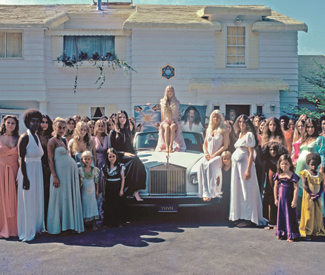
ROXIE 3117 and 3125 16th St, SF; (415) 863-1087, www.roxie.com. $6.50-11. CXL (Gillane, 2012), Wed, 7:15. The Source Family (Demopoulos and Wille, 2012), Wed-Thu, 7, 9:30. Upstream Color (Carruth, 2013), Wed-Thu, 9. The Crumbles (Boch, 2012), Sat, 3, 5, 7, 9. "I Wake Up Dreaming 2013:" •I Wake Up Screaming (Humberstone, 1941), Fri, 6:15, 9:45, and Blues in the Night (Rossen, 1941), Fri, 8; •Under Age (Dmytryk, 1941), Sat, 2, 6:30; Johnny O’ Clock (Rossen, 1947), Sat, 3:15, 8; and The Monster and the Girl (Heisler, 1941), Sat, 5, 9:45; •Fall Guy (Le Borg, 1947), Sun, 1:30, 6:15; Night Has a Thousand Eyes (Farrow, 1948), Sun, 2:50, 7:45; •Club Havana (Ulmer, 1945), Mon, 6:40, 9:30, and Island of Doomed Men (Barton, 1940), Mon, 8; •Nightmare (Whelan, 1942), Tue, 6:15, 9:50, and All Through the Night (Sherman, 1942), Tue, 8.

VICTORIA THEATRE 2961 16th St, SF; www.peacheschrist.com. $30-35. "The Rocky Horror Show 40th Anniversary Concert Tribute," with Patricia "Magenta" Quinn performing live and other special guests, Fri-Sat, 8 (also Sat, 3).

YERBA BUENA CENTER FOR THE ARTS 701 Mission, SF; www.ybca.org. $8-10. "Girls! Guns! Ghosts! The Sensational Films of Shintoho:" Ghost Story of Yotsuya (Nakagawa, 1959), Thu, 7:30; Flesh Pier (Ishii, 1958), Sun, 2.

Psychic Dream Astrology: May 8-14, 2013

0

ARIES

March 21-April 19

In order to progress to the level you want to be at you’re going to need to let go of control, Aries. Taking action is great, but doing it without attachment to what happens next is awesome. You don’t always know what’s best, so leave room for your life to surprise you this week.

TAURUS

April 20-May 20

Your relationships are super important and you need to be treating them that way. The only means to achieving balance in your life is to make choices that support it. Carve out time for the people you care about this week, even if that means mending fences or being a supportive cast member instead of the lead.

GEMINI

May 21-June 21

How many times has something awful happened to you that later turned out to be the best possible thing? This week you need to deal head-on with whatever disappointments are plaguing you because they may turnout to be great assets at the end of the day. Don’t shy away from responsibility, Twin Star.

CANCER

June 22-July 22

Shutting down or forcing your will on others will not yield the kind of results that you’ll be pleased with. Dare to be optimistic, to put yourself and your desires out there, Moonchild. The trick is to stay present and kind even if you receive opposition to your plans. Know what is too much versus not enough this week.

LEO

July 23-Aug. 22

The only way to have clear emotional boundaries is to be vulnerable enough to know the difference between what you are scared of versus what feels inauthentic for you. Your relationships are in a state of flux and you need to be honest with yourself about how you need them to change, Leo. Realness trumps security this week.

VIRGO

Aug. 23-Sept. 22

As you grow and change you will have the opportunity to take the sure path, or the path less traveled. This week you should not choose based on what seems easier, Virgo, instead go for what best matches your needs. Your own history is the best teacher about what is realistic for you to ask of yourself.

LIBRA

Sept. 23-Oct. 22

You always have a choice, no matter how stuck you feel. You may not be able to control your surroundings or circumstances, but you can shape how you choose to deal with them. You are on high alert to not get caught up in a reactive cycle that makes you feel overwhelmed and trapped. Look for unlocked doors.

SCORPIO

Oct. 23-Nov. 21

If you don’t adhere to the conditions you know you need to feel secure and sane then you’ll be the only one who suffers, Scorpio. Instead of blaming things on your self, try taking the lead on project Clean Up Your Life. This week you should correct the ways you have overstepped your own limits.

SAGITTARIUS

Nov. 22-Dec. 21

Your sign is known for enjoying meteoric bursts and instant gratification, so this week’s advice may annoy you. Your greatest rewards will be won with some good old fashion elbow grease and patience. Set your sights on attainable goals and commit your time and energy to achieving them. Might be boring, but it’ll work.

CAPRICORN

Dec. 22-Jan. 19

Taking responsibility for your self is not the same as taking control. Resist all impulses to micromanage this week. Look for the habits and dynamics in your life that are keeping you in a rut. You may need to subtract before you add, but you do not need to stay stuck! Embrace the changes you long for, Capricorn.

AQUARIUS

Jan. 20-Feb. 18

The frustration that you’re feeling is real, Aquarius, and the best way to cope with it is with an open mind. Instead of indulging in anxiety riddled narratives, try dropping the story you’re fixated on and try to calm down. Clarity doesn’t come from fearfulness. Be interested in your situation instead of scared of it.

PISCES

Feb. 19-March 20

It can be unclear what it means to "be yourself"; we are constantly changing and what’s true for you this month may be not be true the next. Don’t look for concrete answers this week, just practice being more self-referential. Either be willing to bend or you’ll break, Pisces.

Jessica Lanyadoo has been a Psychic Dreamer for 18 years. Check out her website at www.lovelanyadoo.com to contact her for an astrology or intuitive reading

Stage listings

0

Stage listings are compiled by Guardian staff. Performance times may change; call venues to confirm. Reviewers are Robert Avila, Rita Felciano, and Nicole Gluckstern. Submit items for the listings at listings@sfbg.com.

THEATER

OPENING

Black Watch Drill Court, Armory Community Center, 333 14th St, SF; www.act-sf.org. $100. Previews Thu/9-Sat/11, 8pm. Opens Sun/12, 7pm. Runs Tue-Sat, 8pm (Tue/14, show at 7pm; also Wed and Sat, 2pm); Sun, 2pm. Through June 16. American Conservatory Theater presents the National Theatre of Scotland’s internationally acclaimed performance about Scottish soldiers serving in Iraq.

Vital Signs: The Pulse of an American Nurse Marsh San Francisco, 1062 Valencia, SF; www.themarsh.org. $15-50. Opens Sun/12, 7pm. Runs Sun, 7pm. Through June 16. Registered nurse Alison Whittaker returns to the Marsh with her behind-the-scenes show about working in a hospital.

ONGOING

Acid Test: The Many Incarnations of Ram Dass Marsh San Francisco, 1062 Valencia, SF; www.themarsh.org. $15-50. Fri, 8pm; Sat, 5pm (Sat/11, show at 8pm). Through May 18. Playwright Lynne Kaufman invites you to take a trip with Richard Alpert, a.k.a. Ram Dass (Warren David Keith), as he recounts times high and low in this thoughtful, funny, and sometimes unexpected biographical rumination on the quest for truth and meaning in a seemingly random life by one of the big wigs of the psychedelic revolution and (with his classic book, Be Here Now) contemporary Eastern-looking spirituality. Directed by Joel Mullennix, the narrative begins with Ram Dass today, in his Hawaiian home and partly paralyzed from a stroke, but Keith (one of the Bay Area’s best stage actors, who is predictably sure and engagingly multilayered in the role) soon shakes off the stiff arm and strained speech and springs to his feet to continue the narrative as the ideal self perhaps only transcendental consciousness and theater allow. Nevertheless, Kaufman’s fun-loving and extroverted Alpert is no saint and no model of perfection, which is the refreshing truth explored in the play, but rather a seeker still, ever imperfect and ever trying for greater perfection or at least the wisdom of acceptance. As the privileged queer child of a wealthy Jewish lawyer and industrialist, Alpert was both insider and outsider from the get-go, and that tension and ambiguity makes for an interesting angle on his life as well as the complexities of his relationships with a homophobic Leary, for instance, and his conservative but ultimately loving father. Perfection aside, the beauty in the subject and the play is the subtle, shrewd cherishing of what remains unfinished. (Avila)

Boomeraging: From LSD to OMG Marsh San Francisco, 1062 Valencia, SF; www.themarsh.org. $15-50. Tue, 8pm. Through May 28. Comedian Will Durst performs his brand-new solo show.

Dirty Dancing: Live! Dark Room, 2263 Mission, SF; dirtydancinglive-fbe.eventbrite.com. $20. Fri-Sat, 8pm. Through May 25. Watermelons will be carried, lifts will be attempted, eyes will be hungry, and nobody better put Baby in a corner.

Foodies! The Musical Shelton Theater, 533 Sutter, SF; www.foodiesthemusical.com. $30-34. Fri-Sat, 8pm. Open-ended. AWAT Productions presents Morris Bobrow’s musical comedy revue all about food.

Last Love Mojo Theatre, 2940 16th St, SF; www.mojotheatre.com. $17-30. Thu-Sun, 8pm. Through May 19. Will the apocalypse save us from ourselves? Mojo Theater again raises that question as it presents the second installment in director-playwright Peter Papadopoulos’ Love-Gone-Wrong-at-the-End-of-the-World trilogy, the follow-up to last season’s fertile and funny Lost Love. The story centers on a George and Martha-esque couple, Charles (Jonathan Bender) and Lucida (Kimberly Lester), who on the eve of their fifth wedding anniversary declare all-out war, lobbing younger lovers at each other only to find their new partners (played by an increasingly endearing Michael Saenz and an unexpectedly powerful Gloria McDonald) have a past together and unresolved issues of their own. The grimly romantic comedy returns to, without greatly elaborating on, a familiar fantasy: blowing away the haze of our fractious, insecure, and muddled love lives in the clarifying immediacy of disaster. That this may be more than pure fantasy — that the seemingly discrete realms of personal and political trauma may be in some subtle and profound way connected — is an animating dimension of the trilogy, but here in a more superficial and perfunctory fashion than in Lost Love. The strength of the production lies less in its premise than in the penetrating humor and emotional veracity in Papadopoulos’ sure, heightened dialogue, which is played generally well by the cast and exceptionally so by a vibrantly intelligent Lester, Mojo’s co–artistic director. The staging also benefits, albeit inconsistently, from a stylized approach that revels in self-conscious artifice (including a trio of stage managers from “Command Center Communications,” a video-backdrop by Micah Stieglitz, and some light choreography by Lester). These strengths lend a restless, occasionally inspired production a slow-burning charm, but leave one wondering what might be left when all the dust settles. (Avila)

Little Me Eureka Theatre, 215 Jackson, SF; www.42ndstreetmoon.org. $25-75. Wed, 7pm; Thu-Fri, 8pm; Sat, 6pm. Through May 19. 42nd Street Moon performs Neil Simon’s outrageous musical.

The Lost Folio: Shakespeare’s Musicals Un-Scripted Theater, 533 Sutter, Second Flr, SF; www.un-scripted.com. $10-20. Thu-Sat, 8pm. Through May 18. Un-Scripted Theater Company performs a fully-improvised, full-length musical inspired by Shakespeare.

The Merry Wives of Windsor Buriel Clay Theater, African American Art and Culture Complex, 762 Fulton, SF; www.african-americanshakes.org. $10-35. Sat, 8pm; Sun, 3pm. Through May 26. African-American Shakespeare Company performs a twist on the Shakespeare classic, set in an urban neighborhood in the 1950s.

“PlayGround Festival of New Works” Various venues, SF and Berk; www.playground-sf.org. $15-40. Through May 26. The 17th fest presented by “San Francisco’s incubator for a new generation of playwrights” includes the PlayGround Film Festival, staged readings of four new full-length plays, a fully-produced program of six short plays, panel discussions, and more.

reasons to be pretty San Francisco Playhouse, 450 Post, Second Flr, SF; www.sfplayhouse.org. $30-100. Wed/8-Thu/9, 7pm; Fri/10-Sat/11, 8pm (also Sat/11, 3pm). Completing a trilogy of plays about body awareness and self-image (along with The Shape of Things and Fat Pig), Neil LaBute’s reasons to be pretty begins with a misconstrued remark that quickly gathers enough weight and momentum to tear three sets of relationships apart in the span of a two-hour play. The SF Playhouse production begins with a bang, or rather an awesomely knock-down, blow-out breakup fight between a righteously pissed-off Steph (Lauren English) and her awkwardly passive boyfriend Greg (Craig Marker), who has inadvertently referred to her as “regular” in a conversation with his jerkish buddy Kent (Patrick Russell), which she takes to mean he finds her ugly. English’s Steph is at turns ferocious and fragile, and her comic timing as she eviscerates Greg’s looks in a mall food court zings, while the hyperkinetic Russell elevates the condition of noxiously irredeemable douchebag to an art form. But terrific acting and polished design can only make up so much for a script that feels not only flawed, barely scratching the surface of the whys and wherefores each character has internalized an unrealistic view of the importance of conventional beauty standards, but also already dated, with its circa-2008 pop culture references. Ultimately it gives the impression of being a rerun of a Lifetime television drama that wraps itself up into a too-neat package just in time for the final credits to roll to its admittedly kickass soundtrack (provided by Billie Cox). (Gluckstern)

Sam I Am: A Processional of Short Plays and Prose About Samuel Beckett Bindlestiff Studio, 185 Sixth St, SF; www.pustheatre.com. $10-20. Fri/10-Sat/11, 8pm. Performers Under Stress remounts and revamps its series of short plays and pieces by Samuel Beckett, this time staging it throughout the basement quarters of Bindlestiff Studio, where audiences are led around an economical maze of performance spaces. Opening weekend consisted of too much text and too little in way of staging ideas, especially with several spoken selections of Beckett prose (which have reportedly since been dropped from the program). The best of what remains (in a program of six short plays total) includes Valerie Fachman’s respectable performance as the disembodied “mouth” of the brilliant Not I; and James Udom and Geo Epsilany’s duet in Rough for Theatre I, in which a wheelchair-bound food-hoarder (a softly eccentric Epsilany) strikes up a doomed friendship with a blind beggar (a solid Udom) amid a colorless and barren landscape. The bucket of Beckett dreary gets less satisfying from there, though director Scott Baker’s wordless performance as the titular Joe in Eh Joe proves poised and the doubled voices in his head (by Melissa Clason and Allison Hunter Blackwell) both haunting and intriguing. (Avila)

Sex and the City: LIVE! Rebel, 1760 Market, SF; trannyshack.com/sexandthecity. $25. Wed, 7 and 9pm. Open-ended. It seems a no-brainer. Not just the HBO series itself — that’s definitely missing some gray matter — but putting it onstage as a drag show. Mais naturellement! Why was Sex and the City not conceived of as a drag show in the first place? Making the sordid not exactly palatable but somehow, I don’t know, friendlier (and the canned a little cannier), Velvet Rage Productions mounts two verbatim episodes from the widely adored cable show, with Trannyshack’s Heklina in a smashing portrayal of SJP’s Carrie; D’Arcy Drollinger stealing much of the show as ever-randy Samantha (already more or less a gay man trapped in a woman’s body); Lady Bear as an endearingly out-to-lunch Miranda; and ever assured, quick-witted Trixxie Carr as pent-up Charlotte. There’s also a solid and enjoyable supporting cast courtesy of Cookie Dough, Jordan Wheeler, and Leigh Crow (as Mr. Big). That’s some heavyweight talent trodding the straining boards of bar Rebel’s tiny stage. The show’s still two-dimensional, even in 3D, but noticeably bigger than your 50″ plasma flat panel. (Avila)

Steve Seabrook: Better Than You Marsh San Francisco, 1062 Valencia, SF; www.themarsh.org. $15-50. Thu, 8pm; Sat, 8:30pm. Extended through May 18. Self-awareness, self-actualization, self-aggrandizement — for these things we turn to the professionals: the self-empowerment coaches, the self-help authors and motivational speakers. What’s the good of having a “self” unless someone shows you how to use it? Writer-performer Kurt Bodden’s Steve Seabrook wants to sell you on a better you, but his “Better Than You” weekend seminar (and tie-in book series, assorted CDs, and other paraphernalia) belies a certain divided loyalty in its own self-flattering title. The bitter fruit of the personal growth industry may sound overly ripe for the picking, but Bodden’s deftly executed “seminar” and its behind-the-scenes reveals, directed by Mark Kenward, explore the terrain with panache, cool wit, and shrewd characterization. As both writer and performer, Bodden keeps his Steve Seabrook just this side of overly sensational or maudlin, a believable figure, finally, whose all-too-ordinary life ends up something of a modest model of its own. (Avila)

Talk Radio Actors Theatre of San Francisco, 855 Bush, SF; www.actorstheatresf.org. $26-38. Wed-Sat, 8pm. Through June 15. Actors Theatre of San Francisco performs Eric Bogosian’s breakthrough 1987 drama.

Tinsel Tarts in a Hot Coma: The Next Cockettes Musical Hypnodrome, 575 10th St, SF; www.thrillpeddlers.com. $30-35. Thu-Sat, 8pm. Through June 1. Thrillpeddlers and director Russell Blackwood continue their Theatre of the Ridiculous series with this 1971 musical from San Francisco’s famed glitter-bearded acid queens, the Cockettes, revamped with a slew of new musical material by original member Scrumbly Koldewyn, and a freshly re-minted book co-written by Koldewyn and “Sweet Pam” Tent — both of whom join the large rotating cast of Thrillpeddler favorites alongside a third original Cockette, Rumi Missabu (playing diner waitress Brenda Breakfast like a deliciously unhinged scramble of Lucille Ball and Bette Davis). This is Thrillpeddlers’ third Cockettes revival, a winning streak that started with Pearls Over Shanghai. While not quite as frisky or imaginative as the production of Pearls, it easily charms with its fine songs, nifty routines, exquisite costumes, steady flashes of wit, less consistent flashes of flesh, and de rigueur irreverence. The plot may not be very easy to follow, but then, except perhaps for the bubbly accounting of the notorious New York flop of the same show 42 years ago by Tent (as poisoned-pen gossip columnist Vedda Viper), it hardly matters. (Avila)

The Waiting Period Marsh San Francisco, 1062 Valencia, SF; www.themarsh.org. $25-50. Fri, 8pm; Sat, 5pm. Through May 18. Brian Copeland (comedian, TV and radio personality, and creator-performer of the long-running solo play Not a Genuine Black Man) returns to the Marsh with a new solo, this one based on more recent and messier events` in Copeland’s life. The play concerns an episode of severe depression in which he considered suicide, going so far as to purchase a handgun — the title coming from the legally mandatory 10-day period between purchasing and picking up the weapon, which leaves time for reflections and circumstances that ultimately prevent Copeland from pulling the trigger. A grim subject, but Copeland (with co-developer and director David Ford) ensures there’s plenty of humor as well as frank sentiment along the way. The actor peoples the opening scene in the gun store with a comically if somewhat stereotypically rugged representative of the Second Amendment, for instance, as well as an equally familiar “doood” dude at the service counter. Afterward, we follow Copeland, a just barely coping dad, home to the house recently abandoned by his wife, and through the ordinary routines that become unbearable to the clinically depressed. Copeland also recreates interviews he’s made with other survivors of suicidal depression. Telling someone about such things is vital to preventing their worst outcomes, says Copeland, and telling his own story is meant to encourage others. It’s a worthy aim but only a fitfully engaging piece, since as drama it remains thin, standing at perhaps too respectful a distance from the convoluted torment and alienation at its center. Note: review from an earlier run of the same production. (Avila)

The World’s Funniest Bubble Show Marsh San Francisco, 1062 Valencia, SF; www.themarsh.org. $8-50. Sun, 11am. Through July 21. Louis “The Amazing Bubble Man” Pearl returns after a month-long hiatus with his popular, kid-friendly bubble show.

BAY AREA

The Arsonists Aurora Theatre, 2081 Addison, Berk; www.auroratheatre.org. $35-60. Wed/8-Sat/11, 8pm; Sun/12, 2 and 7pm. There’s a lot of humor to be found in Alistair Beaton’s crackling translation of Max Frisch’s The Arsonists, playing now at the Aurora Theatre, but much of the laughter it elicits is of the nervous variety, as the play’s mostly protagonist, the effete, bourgeois Herr Biedermann (Dan Hiatt) inadvertently signs off on his own destruction when he invites an uncouth arsonist to come and stay in his attic (Michael Ray Wisely). “If we assume everyone is an arsonist, where does that get us?” becomes his standard deflection, as one arsonist becomes two (adding in the unctuous, nihilistic Tim Kniffin), and the empty attic a repository for giant drums of gasoline, a detonator, and fuse wire — arousing the suspicions of a chorus of firefighters (Kevin Clarke, Tristan Cunningham, Michael Uy Kelly), who act as the conscience and guardians of the township. Although on the surface the scenario is patently absurd, the message that passivity in the face of evil is like helping to measure out the fuse wire that will eventually claim your life, is relatively clear. “Not every fire is determined by fate,” point out the firefighters right in the first act. Hiatt, as Biedermann, strikes an admirable balance between loathsome and powerless, while Gwen Loeb shines as his socialite wife, Babette, as does Dina Percia as his agitated housemaid, Anna. (Gluckstern)

The Dead Girl Avant Garde, 1328 Fourth St, San Rafael; www.altertheater.org. $25. Wed, 7:30pm; Fri-Sat, 8pm; Sun, 3pm. Through May 19. AlterTheater performs 90-year-old playwright Ann Brebner’s new family drama.

A Killer Story Marsh Berkeley, 2120 Allston, Berk; www.themarsh.org. $20-50. Thu-Sat, 8pm (pre-show cabaret at 7:15pm). Through May 18. Dan Harder’s film noir-inspired detective tale premieres at the Marsh Berkeley.

Pericles, Prince of Tyre Berkeley Repertory Theatre, 2025 Addison, Berk; www.berkeleyrep.org. $29-77. Tue, Thu-Sat, 8pm (also Sat and May 23, 2pm; no show May 24); Wed and Sun, 7pm (also Sun, 2). Through May 26. Mark Wing-Davey directs Berkeley Rep’s take on the Bard.

PERFORMANCE/DANCE

“Bailout! Or can you picture this prophecy? The temperatures are too hot for me.” Dance Mission Theater, 3316 24th St, SF; www.brownpapertickets.com. Fri/10-Sun/12, 8pm. Pay what you can. Navarrete x Kajiyama Dance Theater perform a site-specific multidisciplinary performance inspired by environmental disasters.

“Bitch and Tell: A Real, Funny Show” Garage, 715 Bryant, SF; www.ftloose.org. Sat/11, 8pm. $8-10. Comedy with Tracy Shapiro, Carolé Acuña, Allison Mick, and more.

“Bob’s Burgers Live!” Nob Hill Masonic Auditorium, 1111 California, SF; http://bit.ly/bobssanfrancisco. Sat/11, 8pm. $32.50. The cast of the animated series performs.

“Bound for Glory” Marsh San Francisco, 1062 Valencia, SF; www.themarsh.org. Fri/10, 7:30pm; Sat/11, 2pm. $8-50. Marsh Youth Theater’s MainStage Performance Ensemble presents a musical (written by the ensemble with director Lisa Quoresimo) about a Dust Bowl-era family.

Caroline Lugo and Carolé Acuña’s Ballet Flamenco Peña Pachamama, 1630 Powell, SF; www.carolinalugo.com. Sun/12, 3 and 6:15pm. $29.95-49.95 (includes meal). Flamenco performance by the mother-daughter dance company, featuring live musicians.

“Comedy Returns to El Rio” El Rio, 3158 Mission, SF; www.elriosf.com. Mon/13, 8pm. $7-20. Fourth anniversary show with Frankie Quiñones, Dan St. Paul, Aundre the Wonderwoman, and more.

“The Fantasticks” Mission Dolores Academy Auditorium, 3371 16th St, SF; www.16thstreetplayers.org. Fri/10 and Sat, 7:30pm (also Sat/11, 3pm); Sun, 3pm. Through May 19. Free. The 16th Street Players perform the classic musical.

“I Am a Lie that Always Tells the Truth” Garage, 715 Bryant, SF; www.kingdomofnot.com. Fri/10, 8pm. $10-20. The Kingdom of Not (Dan Carbone and Andrew Goldfarb) perform “music, monologues, and emergency dispatches.”

“ImmigraNation” Punchline Comedy Club, 444 Battery, SF; www.punchlinecomedyclub.com. Tue/14, 8pm. $15. Comedy about the immigrant experience with Dhaya Lakshminarayanan, Samson Koletkar, and more.

“Mission Position Live” Cinecave, 1034 Valencia, SF; www.missionpositionlive.com. Thu, 8pm. Ongoing. $10. Stand-up comedy with rotating performers.

“Mortified” DNA Lounge, 373 11th St, SF; www.getmortified.com. Fri/10, 7:30pm. $21. Also Sat/11, 7:30pm, $20. Uptown, 1928 Telegraph, Oakl. The storytelling series, which specializes in all things embarassing, ups the ante with a Mother’s Day theme this month.

“Mutant Creatures and Unlikely Teachers: Short Plays by Short People” Koret Auditorium, De Young Museum, Golden Gate Park, SF; www.stagewright.org. Tue/14, 11am. Free (advance reservations required). Also May 16, 6:30pm ($10) and May 17, 7pm ($50; fundraiser for StageWright program), Brava Theater Center, 2781 24th St, SF; www.stagewright.org. StageWright presents plays by fifth graders at Starr King Elementary School, performed by professional actors and museums.

“Once in Love with Loesser” Eureka Theatre, 215 Jackson, SF; www.42ndstreetmoon.org. Mon/13-Tue/14, 7pm. $45-70. 42nd Street Moon presents Tony nominee Emily Skinner performing songs by Frank Loesser.

Red Hots Burlesque El Rio, 3158 Mission, SF; www.redhotsburlesque.com. Wed, 7:30-9pm. Ongoing. $5-10. Come for the burlesque show, stay for OMG! Karaoke starting at 8pm (no cover for karaoke).

San Francisco Ballet War Memorial Opera House, 301 Van Ness, SF; www.sfballet.org. Wed/8, 7:30pm; Thu/9-Sat/11, 8pm (also Sat/11, 2pm); Sun/12, 2pm. $45-250. Performing the US premiere of Christopher Wheeldon’s Cinderella.

“San Francisco Magic Parlor” Chancellor Hotel Union Square, 433 Powell, SF; www.sfmagicparlor.com. Thu-Sat, 8pm. Ongoing. $40. Magic vignettes with conjurer and storyteller Walt Anthony.

Smuin Ballet Yerba Buena Center for the Arts, 701 Mission, SF; www.smuinballet.org. Fri-Sat and May 16, 8pm (also Sat, 2pm); Sun, 2pm. Through May 19. $24-65. Also May 22-25, 8pm (also May 25, 2pm); May 26, 2pm. $52-68. Mountain View Center for the Performing Arts, 500 Castro, Mtn View. Also May 31-June 1, 8pm (also June 1, 2pm). $54-70. Lesher Center for the Arts, 1601 Civic, Walnut Creek. The company presents the West Coast premiere of Helen Pickett’s Petal and Darrell Grand Moultrie’s JAZZIN’, among other works.

“A Spaghetti Western” Stage Werx Theatre, 446 Valencia, SF; www.clownsnotbombs.com. Fri/10-Sat/11, 8pm (also Sat/11, 2pm). $15-20. ClownSnotBombs performs a circus adventure about pasta and the Wild West.

“Stretchmarks” Creativity Theater, Children’s Creativity Museum, 221 Fourth St, SF; www.themommadrama.com. Fri/10-Sat/11, 8pm. $25. The Momma Drama presents this play as part of a mom-centric event on Mother’s Day.

“Union Square Live” Union Square, between Post, Geary, Powell, and Stockton, SF; www.unionsquarelive.org. Through Oct 9. Free. Music, dance, circus arts, film, and more; dates and times vary, so check website for the latest.

“Yerba Buena Gardens Festival” Yerba Buena Gardens, Mission between 3rd and 4th Sts, SF; www.ybgfestival.org. Through Oct 15. Free. This week: “Asian Improv aRts: 25th Anniversary: Traditions in Transformation,” Sat/11, 1-3pm; “Taiwan in the Gardens,” Sun/12, 1-2:30pm.

BAY AREA

Company C Contemporary Ballet Lesher Center for the Arts, 1601 Civic, Walnut Creek; www.lesherartscenter.org. Thu/9-Sat/11, 8pm; Sun/12, 1pm. $23-45. The company’s spring program features Natoma, a world premiere by Company C dancer David von Ligon.

Eifman Ballet of St. Petersburg Zellerbach Hall, Bancroft at Telegraph, UC Berkeley, Berk; www.calperformances.org. Fri/10-Sat/11, 8pm; Sun/12, 3pm. $30-92. The company performs the Bay Area premiere of its latest ballet, Rodin.

“A History of the Body” Oakland Asian Cultural Center, 388 Ninth St, #290, Oakl; historyofbody.eventbrite.com. Sat/11, 7:30pm. $15-25. Work-in-progress performance of Aimee Suzara’s new play.

Oakland Ballet Malonga Casquelourd Center for the Arts, 1428 Alice, Oakl; www.oaklandballet.org. Fri/10-Sat/11, 8pm (also Sat, 2pm). $20-35. The company performs its spring season program, “Diaghilev Imagery.”

“The Shout: Life’s True Stories” Grand Lake Coffee House, 440 Grand, Oakl; www.theshoutstorytelling.com. Mon/13, 7:30pm. $5-20. Ten-minute tales from a variety of storytellers.

“Swearing in English: Tall Tales at Shotgun” Ashby Stage, 1901 Ashby, Berk; www.shotgunplayers.org. June 3 and 17, 8pm. $15. Shotgun Cabaret presents John Mercer in a series of three stranger-than-fiction dramatic readings.

Film listings

0

Film listings are edited by Cheryl Eddy. Reviewers are Kimberly Chun, Dennis Harvey, Lynn Rapoport, and Sara Maria Vizcarrondo. For rep house showtimes, see Rep Clock.

SAN FRANCISCO INTERNATIONAL FILM FESTIVAL

The San Francisco International Film Festival runs through Thu/9 at the Castro Theatre, 429 Castro, SF; New People Cinema, 1746 Post, SF; Pacific Film Archive, 2575 Bancroft, Berk; and Sundance Kabuki Cinemas 1881 Post, SF. For tickets (most shows $10-15) and complete schedule, visit festival.sffs.org.

OPENING

The Crumbles The awkward slackers and damaged hipsters of The Crumbles live in a sun-strafed, paved-over Los Angeles habitat of coffee shops, taco trucks, bookstores, budding filmmakers, and living room band practice. Darla (Katie Hipol) is slouching nowhere fast when her zany, charismatic cool-girl chum Elisa (Teresa Michelle Lee) enters the picture, looking for a place to crash. Elisa’s wacky, erratic, and unreliable, but she’s also capable of generating real excitement — and a mean little keytar hook — and the girls’ band, the Crumbles, gets off the couch and threatens to get all involved to bust out of their shells. Though director Akira Boch never quite dips into the deep background of his characters’ various dysfunctions — the threatened readings of Darla and Elisa’s psychic friend never quite sheds light — the first-time feature filmmaker has a real feel for the drifting, up-for-anything quality of Cali 20-somethings and an appreciation for their highs and lows that makes this familiar, loving, lets-put-on-show-kids update compelling. (1:13) Roxie. (Chun)

The Great Gatsby Baz Luhrmann reunites with his Romeo + Juliet (1996) star Leonardo DiCaprio for this long-awaited 3D adaptation of F. Scott Fitzgerald’s classic novel. (2:22) California, Four Star, Marina, Presidio, Vogue.

Kiss of the Damned This first feature by Xan Cassavetes isn’t remotely like the Method-y angstfests her late father John used to direct (although he did act in upscale genre movies like 1968’s Rosemary’s Baby and 1978’s The Fury). Instead, it’s an homage to the erotic European horror movies of the late 1960s through early ’80s, with further nods to Dario Argento, 1983’s The Hunger, and other fan-bait. Mysterious Djuna (Joséphine de La Baume) is immediately attracted to hunky screenwriter Paolo (Milo Ventimiglia), and vice versa. But she’s reluctant to follow through, and when he presses, she explains why: she’s a vampire, albeit the respectable kind who only "hunts" wild animals. When he decides that is a drawback he can deal with, they seem set to spend an undead eternity together. Unfortunately, they soon get an unwelcome guest in Djuna’s sister Mimi (Roxane Mesquida), a classic "bad girl" type who has no such compunctions about feasting on "stupid humans," and whose recklessness threatens the cover of any associated fellow vampire. Like its models, Kiss drags at times, and probably will seem too arty and slow to those attuned to mainstream current horror cinema. But if you’re a dweeb enough to know who the likes of Jean Rollin and Jess Franco are, this aesthetically slavish (on a faithfully low budget) salute to their sexy-bloody vintage schlock should amuse, with Steven Hufsteter’s original score an encyclopedia of vintage Eurotrash soundtrack tropes. (1:37) Shattuck. (Harvey)

Love is All You Need Copenhagen hairdresser Ida (Trine Dyrholm) has just finished her cancer treatments — with their success still undetermined — when she arrives home to find her longtime husband Leif (Kim Bodnia) boning a coworker on their couch. "I thought you were in chemo" is the closest he comes to an apology before walking out. Ida is determined to maintain a cheerful front when attending the Italian wedding of their daughter Astrid (Molly Blixt Egelind) — even after emotionally deaf Leif shows up with his new girlfriend in tow. Meanwhile brusque businessman and widower Philip (Pierce Brosnan), the groom’s father, is experiencing the discomfort of returning to the villa he once shared with his beloved late wife. This latest from Danish director Susanne Bier and writing partner Anders Thomas Jensen (2006’s After the Wedding, 2004’s Brothers, 2010’s In a Better World) is more conventionally escapist than their norm, with a general romantic-seriocomedy air reinforced by travel-poster-worthy views of the picturesque Italian coastline. They do try to insert greater depth and a more expansive story arc than you’d get in a Hollywood rom com. But all the relationships here are so prickly — between middle-aged leads we never quite believe would attract each other, between the clearly ill-matched aspiring newlyweds, between Paprika Steen’s overbearing sister in-law and everyone — that there’s very little to root for. It’s a romantic movie (as numerous soundtracked variations on "That’s Amore" constantly remind us) in which romance feels like the most contrived element. (1:50) Embarcadero. (Harvey)

Peeples Kerry Washington and Diahann Carroll star in this Tyler Perry-produced family drama set in the Hamptons. (1:35)

Scatter My Ashes at Bergdorf’s This glossy love letter to posh New York City department store Bergdorf Goodman — a place so expensive that shopping there is "an aspirational dream" for the grubby masses, according to one interviewee — would offend with its slobbering take on consumerism if it wasn’t so damn entertaining. The doc’s narrative of sorts is propelled by the small army assembled to create the store’s famed holiday windows; we watch as lavish scenes of upholstered polar bears and sea creatures covered in glittering mosaics (flanking, natch, couture gowns) take shape over the months leading up to the Christmas rush. Along the way, a cavalcade of top designers (Michael Kors, Vera Wang, Giorgio Armani, Jason Wu, Karl Lagerfeld) reminisce on how the store has impacted their respective careers, and longtime employees share anecdotes, the best of which is probably the tale of how John Lennon and Yoko Ono saved the season by buying over 70 fur coats one magical Christmas Eve. Though lip service is paid to the current economic downturn (the Madoff scandal precipitated a startling dropoff in personal-shopper clients), Scatter My Ashes is mostly just superficial fun. What do you expect from a store whose best-selling shoe is sparkly, teeteringly tall, and costs $6,000? (1:33) Clay, Shattuck. (Eddy)

ONGOING

The Angels’ Share The latest from British filmmaker Ken Loach (2006’s The Wind that Shakes the Barley) and frequent screenwriter collaborator Paul Leverty contains a fair amount of humor — though it’s still got plenty of their trademark grit and realism. Offered "one last opportunity" by both a legal system he’s frequently disregarded and his exasperated and heavily pregnant girlfriend, ne’er-do-well Glaswegian Robbie (Paul Brannigan) resolves to straighten out his life. But his troubled past proves a formidable roadblock to a brighter future — until he visits a whiskey distillery with the other misfits he’s been performing his court-ordered community service with, and the group hatches an elaborate heist that could bring hope for Robbie and his growing family … if his gang of "scruffs" can pull it off. Granted, there are some familiar elements here, but this 2012 Cannes jury prize winner (the fest’s de facto third-place award) is more enjoyable than predictable — thanks to some whiskey-tasting nerd-out scenes, likable performances by its cast of mostly newcomers, and lines like "Nobody ever bothers anybody wearing a kilt!" (not necessarily true, as it turns out). Thankfully, English subtitles help with the thick Scottish accents. (1:41) Opera Plaza, Smith Rafael. (Eddy)

At Any Price Growing up in rural Iowa very much in the shadow of his older brother, Dean Whipple (Zac Efron) cultivated a chip on his shoulder while dominating the figure 8 races at the local dirt track. When papa Henry (Dennis Quaid) — a keeping-up-appearances type, with secrets a-plenty lurking behind his good ol’ boy grin — realizes Dean is his best hope for keeping the family farm afloat, he launches a hail-mary attempt to salvage their relationship. This latest drama from acclaimed indie director Ramin Bahrani (2008’s Goodbye Solo) is his most ambitious to date, enfolding small-town family drama and stock-car scenes into a pointed commentary on modern agribusiness (Henry deals in GMO corn, and must grapple with the sinister corporate practices that go along with it). But the film never gels, particularly after an extreme, third-act plot twist is deployed to, um, hammer home the title — which refers to prices both monetary and spiritual. A solid supporting cast (Kim Dickens, Heather Graham, Clancy Brown, Red West, newcomer Maika Monroe) helps give the film some much-needed added weight as it veers toward melodrama. (1:45) SF Center. (Eddy)

The Big Wedding The wedding film has impacted our concepts of matrimony, fashion, and marital happiness more than all the textbooks in the world have affected our national testing average; but it’s with that margin of mediocrity I report from the theater trenches of The Big Wedding. With this, the wedding movie again peters to a crawl. Susan Sarandon (an actress I love with a loyalty beyond sense) is Bebe, the stepmother/caterer swept under the rug by the selfishness of her live in lover Don (De Niro), his ex-wife/baby momma Elle (Diane Keaton) and their racist wackjob future in-laws. When Don and Elle faced the end of their marriage, they tried to rekindle with a Columbian orphan. Cue Ben Barnes in brownface. Alejandro is set to wed Amanda Seyfried and when his mother ascends from Columbia for the wedding, he decides Don and Elle have to act like their marriage never ended &ldots; which makes Bebe a mistress. Surprise! A decade of caring selflessly for your lover’s kids has won you a super shitty wedding you still have to cater! To give you a sense of the conflict management on display, Bebe — the film’s graceful savior —drops a drink on Don before fleeing the scene in her Alfa Romeo; she’s the one character not determined to act out her more selfish urges in the style of an MTV reality show. Despite some less imaginative conflicts and degrading "solutions," this blended family still speaks some truth about the endearing embarrassment of the happy family. (1:29) 1000 Van Ness, SF Center. (Vizcarrondo)

Blancanieves If you saw the two crappy overblown Hollywood takes on Snow White last year, my condolences. This is probably its best cinematic incarnation ever not made by someone called Walt. Pablo Berger’s Blancanieves transplants the tale to 1920s Spain and told (à la 2011’s The Artist) in the dialogue-free B&W style of that era’s silent cinema. Here, Snow is the daughter of a famous bullfighter (a beautiful performance by Daniel Giménez Cacho) who’s paralyzed physically in the ring, then emotionally by the death of his flamenco star wife (Inma Cuesta) in childbirth. He can’t bring himself to see his daughter until a grandmother’s death brings little Carmencita (the marvelous Sofía Oria) to the isolated ranch he now shares with nurse-turned-second-wife Encarna — Maribel Verdú as a very Jazz Age evil stepmother. Once the girl matures (now played by the ingratiating, slightly androgynous Macarena García), Encarna senses a rival, and to save her life Carmen literally runs away with the circus — at which point the narrative slumps a bit. But only a bit. Where The Artist was essentially a cleverly sustained gimmick elevated by a wonderful central performance, Blancanieves transcends its ingenious retro trappings to offer something both charming and substantiative. Berger doesn’t treat the story template as a joke — he’s fully adapted it to a culture, place, and time, and treats its inherent pathos with great delicacy. (1:44) Opera Plaza, Shattuck, Smith Rafael. (Harvey)

The Company You Keep Robert Redford directs and stars as a fugitive former member of the Weather Underground, who goes on the run when another member (Susan Sarandon) is arrested and a newspaper reporter (Shia LaBeouf) connects him to a murder 30 years earlier during a Michigan bank robbery. Both the incident and the individuals in The Company You Keep are fictive, but a montage of archival footage at the start of the film is used to place them in the company of real-life radicals and events from the latter days of the 1960s-’70s antiwar movement. (The film’s timeline is a little hard to figure, as the action seems to be present day.) Living under an assumed name, Redford’s Nick Sloan is now a recently widowed public interest lawyer with a nine-year-old daughter, still fighting the good fight from the suburbs of Albany, NY — though some of his movement cohorts would probably argue that point. And as Nick heads cross-country on a hunt for one of them who’s still deep underground, and LaBeouf’s pesky reporter tussles with FBI agents (Terrance Howard and Anna Kendrick) and his besieged editor (Stanley Tucci) — mostly there to pass comment on print journalism’s precipitous decline — there’s plenty of contentious talk, none of it particularly trenchant or involving. Redford packs his earnest, well-intentioned film with stars delineating a constellation of attitudes about revolution, justice, and violent radical action — Julie Christie as an unrepentant radical and Nick’s former lover, Nick Nolte and Richard Jenkins as former movement members, Brendan Gleeson as a Michigan police detective involved in the original investigation, Chris Cooper as Nick’s estranged and disapproving younger brother. But their scrutiny, and the film’s, feels blurry and rote, while the plot’s one major twist seems random and is clumsily exposed. (2:05) Albany, SF Center. (Rapoport)

The Croods (1:38) Metreon, 1000 Van Ness.

Disconnect (1:55) 1000 Van Ness, Presidio, SF Center.

Evil Dead "Sacrilege!" you surely thought when hearing that Sam Raimi’s immortal 1983 classic was being remade. But as far as remakes go, this one from Uruguayan writer-director Fede Alvarez (who’d previously only made some acclaimed genre shorts) is pretty decent. Four youths gather at a former family cabin destination because a fifth (Jane Levy) has staged her own intervention — after a near-fatal OD, she needs her friends to help her go cold turkey. But as a prologue has already informed us, there is a history of witchcraft and demonic possession in this place. The discovery of something very nasty (and smelly) in the cellar, along with a book of demonic incantations that Lou Taylor Pucci is stupid enough to read aloud from, leads to … well, you know. The all-hell that breaks loose here is more sadistically squirm-inducing than the humorously over-the-top gore in Raimi’s original duo (elements of the sublime ’87 Evil Dead II are also deployed here), and the characters are taken much more seriously — without, however, becoming more interesting. Despite a number of déjà vu kamikaze tracking shots through the Michigan forest (though most of the film was actually shot in New Zealand), Raimi’s giddy high energy and black comedy are replaced here by a more earnest if admittedly mostly effective approach, with plenty of decent shocks. No one could replace Bruce Campbell, and perhaps it was wise not to even try. So: pretty good, gory, expertly crafted, very R-rated horror fun, even with too many "It’s not over yet!" false endings. But no one will be playing this version over and over and over again as they (and I) still do the ’80s films. (1:31) Metreon, 1000 Van Ness. (Harvey)

42 Broad and morally cautious, 42 is nonetheless an honorable addition to the small cannon of films about the late, great baseball player Jackie Robinson. When Dodgers owner Branch Rickey (Harrison Ford) declares that he wants a black player in the white major leagues because "The only real color is green!", it’s a cynical explanation that most people buy, and hate him for. It also starts the ball curving for a PR shitstorm. But money is an equal-opportunity leveling device: when Robinson (Chadwick Boseman) tries to use the bathroom at a small-town gas station, he’s denied and tells his manager they should "buy their 99 gallons of gas another place." Naturally the gas attendant concedes, and as 42 progresses, even those who reject Robinson at first turn into men who find out how good they are when they’re tested. Ford, swashbuckling well past his sell-by date, is a fantastic old coot here; his "been there, lived that" prowess makes you proud he once fled the path of a rolling bolder. His power moves here are even greater, but it’s ultimately Robinson’s show, and 42 finds a lot of ways to deliver on facts and still print the legend. (2:08) Metreon, 1000 Van Ness, Sundance Kabuki. (Vizcarrondo)

From Up on Poppy Hill Hayao (dad, who co-wrote) and Goro (son, who directed) Miyazaki collaborate on this tale of two high-school kids — Umi, who does all the cooking at her grandmother’s boarding house, and Shun, a rabble-rouser who runs the school newspaper — in idyllic seaside Yokohama. Plans for the 1964 Olympics earmark a beloved historic clubhouse for demolition, and the budding couple unites behind the cause. The building offers a symbolic nod to Japanese history, while rehabbing it speaks to hopes for a brighter post-war future. But the past keeps interfering: conflict arises when Shun’s memories are triggered by a photo of Umi’s father, presumed lost at sea in the Korean War. There are no whimsical talking animals in this Studio Ghibli release, which investigates some darker-than-usual themes, though the animation is vivid and sparkling per usual. Hollywood types lending their voices to the English-language version include Jamie Lee Curtis, Christina Hendricks, Ron Howard, and Gilllian Anderson. (1:31) Shattuck. (Eddy)

GI Joe: Retaliation The plot exists to justify the action, but any fan of badass-ness will forgive the skimpy storyline for the outlandish badassery in GI Joe: Retaliation. Inspired by action figures and tying loosely to the first flick, Retaliation starts with a game of "secure the defector," followed by "raise the flag," but as soon as the stakes aren’t real, the Joes outright suck. They don’t have "neutral," which is maybe why a mission to rescue and revive the Joes as a force is the most ferocious fight that ever pit metal against plastic. The set pieces are stunning: a mostly silent sequence with Snake Eyes (Ray Park) and Jinx (Elodie Yung) on a mountainside will leave the audience gaping in its high speed wake, and a prison break featuring covert explosives is nonstop amazing. You’ll notice an emphasis on chain link fences and puddles (terra nostra for action figures) and set pieces conceived as if by kids who don’t have a concept of basic irrefutable truths like gravity. It’s just that kind of imagination and ardor and limitlessness that makes this Joe incredible, memorable, and a reason to crack out your toys again. (1:50) Metreon. (Vizcarrondo)

In the House In François Ozon’s first feature since the whimsical 2010 Potiche, he returns somewhat to the playful suspense intrigue of 2003’s Swimming Pool, albeit with a very different tone and context. Fabrice Luchini plays a high school French literature teacher disillusioned by his students’ ever-shrinking articulacy. But he is intrigued by one boy’s surprisingly rich description of his stealth invasion into a classmate’s envied "perfect" family — with lusty interest directed at the "middle class curves" of the mother (Emmanuelle Seigner). As the boy Claude’s writings continue in their possibly fictive, possibly stalker-ish provocations, his teacher grows increasingly unsure whether he’s dealing with a precocious bourgeoisie satirist or a literate budding sociopath — and ambivalent about his (and spouse Kristin Scott Thomas’ stressed gallery-curator’s) growing addiction to these artfully lurid possible exposé s of people he knows. And it escalates from there. Ozon is an expert filmmaker in nimble if not absolute peak form here, no doubt considerably helped by Juan Mayorga’s source play. It’s a smart mainstream entertainment that, had it been Hollywood feature, would doubtless be proclaimed brilliant for its clever tricks and turns. (1:45) Albany, Embarcadero, Smith Rafael. (Harvey)

Iron Man 3 Neither a sinister terrorist dubbed "the Mandarin" (Ben Kingsley) nor a spray-tanned mad scientist (Guy Pearce) are as formidable an enemy to Tony Stark (Robert Downey, Jr.) as Tony Stark himself, the mega-rich playboy last seen in 2012’s Avengers donning his Iron Man suit and thwarting alien destruction. It’s been rough since his big New York minute; he’s been suffering panic attacks and burying himself in his workshop, shutting out his live-in love (Gwyneth Paltrow) in favor of tinkering on an ever-expanding array of manned and un-manned supersuits. But duty, and personal growth, beckon when the above-mentioned villains start behaving very badly. With some help (but not much) from Don Cheadle’s War Machine — now known as "Iron Patriot" thanks to a much-mocked PR campaign — Stark does his saving-the-world routine again. If the plot fails to hit many fresh beats (a few delicious twists aside), the 3D special effects are suitably dazzling, the direction (by series newcomer Shane Black) is appropriately snappy, and Downey, Jr. again makes Stark one of the most charismatic superheros to ever grace the big screen. For now, at least, the continuing Avengers spin-off extravaganza seems justified. (2:06) Marina, 1000 Van Ness, Presidio, Sundance Kabuki. (Eddy)

Jurassic Park 3D "Life finds a way," Jeff Goldblum’s leather-clad mathematician remarks, crystallizing the theme of this 1993 Spielberg classic, which at its core is more about human relationships than genetically manufactured terrors. Of course, it’s got plenty of those, and Jurassic Park doesn’t really need its (admittedly spiffy) 3D upgrade to remain a thoroughly entertaining thriller. The dinosaur effects — particularly the creepy Velociraptors and fan-fave T. rex — still dazzle. Only some early-90s computer references and Laura Dern’s mom jeans mark the film as dated. But a big-screen viewing of what’s become a cable TV staple allows for fresh appreciation of its less-iconic (but no less enjoyable) moments and performances: a pre-megafame Samuel L. Jackson as a weary systems tech; Bob Peck as the park’s skeptical, prodigiously thigh-muscled game warden. Try and forget the tepid sequels — including, dear gawd, 2014’s in-the-works fourth installment. This is all the Jurassic you will ever need. (2:07) 1000 Van Ness, SF Center, Shattuck. (Eddy)

Kon-Tiki In 1947 Norwegian explorer and anthropologist Thor Heyderdahl arranged an expedition on a homemade raft across the Pacific, recreating what he believed was a route by which South Americans traveled to Polynesia in pre-Columbian times. (Although this theory is now disputed.) The six-man crew (plus parrot) survived numerous perils to complete their 101-day, 4300-mile journey intact — winning enormous global attention, particularly through Heyderdahl’s subsequent book and documentary feature. Co-directors Joachim Roenning and Espen Sandberg’s dramatization is a big, impressive physical adventure most arresting for its handsome use of numerous far-flung locations. Where it’s less successful is in stirring much emotional involvement, with the character dynamics underwhelming despite a decent cast led by Pal Sverr Hagen as Thor (who, incredibly, was pretty much a non-swimmer). Nonetheless, this new Kon-Tiki offers all the pleasures of armchair travel, letting you vicariously experience a high-risk voyage few could ever hope (or want) to make in real life. (1:58) Embarcadero. (Harvey)

Mud (2:15) California, Metreon, 1000 Van Ness, Piedmont.

No Long before the Arab Spring, a people’s revolution went down in Chile when a 1988 referendum toppled the country’s dictator, Augusto Pinochet, thanks in part to an ad exec who dared to sell the dream to his countrymen and women — using the relentlessly upbeat, cheesy language of a Pepsi Generation. In No‘s dramatization of this true story, ad man Rene Saavedra (Gael Garcia Bernal) is approached by the opposition to Pinochet’s regime to help them on their campaign to encourage Chile’s people to vote "no" to eight more years under the brutal strongman. Rene’s well-aware of the horrors of the dictatorship; not only are the disappeared common knowledge, his activist ex (Antonia Zegers) has been beaten and jailed with seeming regularity. Going up against his boss (Alfredo Castro), who’s overseeing the Pinochet campaign, Rene takes the brilliant tact in the opposition’s TV programs of selling hope — sound familiar? — promising "Chile, happiness is coming!" amid corny mimes, dancers, and the like. Director-producer Pablo Larrain turns out to be just as genius, shooting with a grainy U-matic ’80s video camera to match his footage with 1988 archival imagery, including the original TV spots, in this invigorating spiritual kin of both 2012’s Argo and 1997’s Wag the Dog. (1:50) Shattuck. (Chun)

Oblivion Spoiler alert: the great alien invasion of 2017 does absolutely zilch to eliminate, or at least ameliorate, the problem of sci-fi movie plot holes. However, puny humans willing to shut down the logic-demanding portions of their brains just might enjoy Oblivion, which is set 60 years after that fateful date and imagines that Earth has been rendered uninhabitable by said invasion. Tom Cruise plays Jack, a repairman who zips down from his sterile housing pod (shared with comely companion Andrea Riseborough) to keep a fleet of drones — dispatched to guard the planet’s remaining resources from alien squatters — in working order. But Something is Not Quite Right; Jack’s been having nostalgia-drenched memories of a bustling, pre-war New York City, and the déjà vu gets worse when a beautiful astronaut (Olga Kurylenko) literally crash-lands into his life. After an inaugural gig helming 2010’s stinky Tron: Legacy, director Joseph Kosinski shows promise, if not perfection, bringing his original tale to the screen. (He does, however, borrow heavily from 1968’s 2001: A Space Odyssey, 1996’s Independence Day, and 2008’s Wall-E, among others.) Still, Oblivion boasts sleek production design, a certain creative flair, and some surprisingly effective plot twists — though also, alas, an overlong running time. (2:05) Metreon, 1000 Van Ness, Sundance Kabuki. (Eddy)

Oz: The Great and Powerful Providing a backstory for the man behind the curtain, director Sam Raimi gives us a prequel of sorts to 1939’s The Wizard of Oz. Herein we follow the adventures of a Depression-era Kansas circus magician named Oscar (James Franco) — Oz to his friends — as he cons, philanders, bickers with his behind-the-scenes assistant Frank (Zach Braff), and eventually sails away in a twister, bound for a Technicolor land of massively proportioned flora, talking fauna, and witches ranging from dazzlingly good to treacherously wicked. From one of them, Theodora (Mila Kunis), he learns that his arrival — in Oz, just to clarify — has set in motion the fulfillment of a prophecy: that a great wizard, also named Oz, will bring about the downfall of a malevolent witch (Rachel Weisz), saving the kingdom and its cheery, goodhearted inhabitants. Unfortunately for this deserving populace, Oz spent his last pre-twister moments with the Baum Bros. Circus (the name a tribute to L. Frank Baum, writer of the Oz children’s books) demonstrating a banged-up moral compass and an undependable streak and proclaiming that he would rather be a great man than a good man. Unfortunately for the rest of us, this theme is revisited ad nauseam as Oz and the oppressively beneficent witch Glinda (Michelle Williams) — whose magic appears to consist mainly of nice soft things like bubbles and fog — stand around debating whether he’s the right man for the task. When the fog clears, though, the view is undeniably pretty. While en route to and from the Emerald City, Oz and his companions — among them a non-evil flying monkey (voiced by Braff) and a rather adorable china doll (Joey King) — wander through a deliriously arresting, Fantasia-esque landscape whose intricate, inventive construction helps distract from the plodding, saccharine rhetoric and unappealing story line. (2:07) SF Center, Shattuck. (Rapoport)

Pain & Gain In mid-1995 members of what became known as the "Sun Gym Gang" — played here by Mark Wahlberg, Dwayne Johnson, and Anthony Mackie — were arrested for a series of crimes including kidnapping, extortion, and murder. Simply wanting to live large, they’d abducted one well-off man (Tony Shalhoub) months earlier, tortured him into signing over all his assets, and left him for dead — yet incredibly the Miami police thought the victim’s story was a tall tale, leaving the perps free until they’d burned through their moolah and sought other victims. Michael Bay’s cartoonish take on a pretty horrific saga repeatedly reminds us that it’s a true story, though the script plays fast and loose with many real-life details. (And strangely it downplays the role steroid abuse presumably played in a lot of very crazy behavior.) In a way, his bombastic style is well-suited to a grotesquely comic thriller about bungling bodybuilder criminals redundantly described here as "dumb stupid fucks." There have been worse Bay movies, even if that’s like saying "This gas isn’t as toxic as the last one." But despite the flirtations with satire of fitness culture, motivational gurus and so forth, his sense of humor stays on a loutish plane, complete with fag-bashing, a dwarf gag, and representation of Miami as basically one big siliconed titty bar. Nor can he pull off a turn toward black comedy that needs the superior intelligence of someone like the Coen Brothers or Soderbergh. As usual everything is overamped, the action sequences overblown, the whole thing overlong, and good actors made to overact. You’ve got to give cranky old Ed Harris credit: playing a private detective, he alone here refuses to be bullied into hamming it up. (2:00) Metreon, 1000 Van Ness, Shattuck. (Harvey)

The Place Beyond the Pines Powerful indie drama Blue Valentine (2010) marked director Derek Cianfrance as one worthy of attention, so it’s with no small amount of fanfare that this follow-up arrives. The Place Beyond the Pines‘ high profile is further enhanced by the presence of Bradley Cooper (currently enjoying a career ascension from Sexiest Man Alive to Oscar-nominated Serious Actor), cast opposite Valentine star Ryan Gosling, though they share just one scene. An overlong, occasionally contrived tale of three generations of fathers, father figures, and sons, Pines‘ initial focus is Gosling’s stunt-motorcycle rider, a character that would feel more exciting if it wasn’t so reminiscent of Gosling’s turn in Drive (2011), albeit with a blonde dye job and tattoos that look like they were applied by the same guy who inked James Franco in Spring Breakers. Robbing banks seems a reasonable way to raise cash for his infant son, as well as a way for Pines to draw in another whole set of characters, in the form of a cop (Cooper) who’s also a new father, and who — as the story shifts ahead 15 years — builds a political career off the case. Of course, fate and the convenience of movie scripts dictate that the mens’ sons will meet, the past will haunt the present and fuck up the future, etc. etc. Ultimately, Pines is an ambitious film that suffers from both its sprawl and some predictable choices (did Ray Liotta really need to play yet another dirty cop?) Halfway through the movie I couldn’t help thinking what might’ve happened if Cianfrance had dared to swap the casting of the main roles; Gosling could’ve been a great ambitious cop-turned-powerful prick, and Cooper could’ve done interesting things with the Evel Knievel-goes-Point Break part. Just sayin’. (2:20) Embarcadero, Four Star, 1000 Van Ness, Piedmont, Presidio, Shattuck, Sundance Kabuki. (Eddy)

The Reluctant Fundamentalist Based on Pakistani novelist Mohsin Hamid’s award-winning 2007 novel, and directed by the acclaimed Mira Nair (2001’s Monsoon Wedding, 2006’s The Namesake), The Reluctant Fundamentalist boasts an international cast (Kate Hudson, Martin Donovan, Kiefer Sutherland, Liev Schreiber, Om Puri) and nearly as many locations. British-Pakistani actor Riz Ahmed (2010’s Four Lions) stars as Changez Khan, a Princeton-educated professor who grants an interview with a reporter (Schreiber) after another prof at Lahore University — an American citizen — is taken hostage; their meeting grows more tense as the atmosphere around them becomes more charged. Most of the film unfolds as an extended flashback, as Changez recounts his years on Wall Street as a talented "soldier in [America’s] economic army," with a brunette Hudson playing Erica, a photographer who becomes his NYC love interest. After 9/11, he begins to lose his lust for star-spangled yuppie success, and soon returns to his homeland to pursue a more meaningful cause. Though it’s mostly an earnest, soul-searching character study, The Reluctant Fundamentalist suddenly decides it wants to be a full-throttle political thriller in its last act; ultimately, it offers only superficial insight into what might inspire someone’s conversion to fundamentalism (one guess: Erica’s embarrassingly bad art installation, which could make anyone hate America). Still, Ahmed is a compelling lead. (2:08) Embarcadero, Shattuck, Smith Rafael. (Eddy)

Renoir The gorgeous, sun-dappled French Riviera setting is the high point of this otherwise low-key drama about the temperamental women (Christa Theret) who was the final muse to elderly painter Auguste Renoir (Michel Bouquet), and who encouraged the filmmaking urges in his son, future cinema great Jean (Vincent Rottiers). Cinematographer Mark Ping Bin Lee (who’s worked with Hou Hsiao-hsein and Wong Kar Wai) lenses Renoir’s leafy, ramshackle estate to maximize its resemblance to the paintings it helped inspire; though her character, Dédée, could kindly be described as "conniving," Theret could not have been better physically cast, with tumbling red curls and pale skin she’s none too shy about showing off. Though the specter of World War I looms in the background, the biggest conflicts in Gilles Bourdos’ film are contained within the household, as Jean frets about his future, Dédée faces the reality of her precarious position in the household (which is staffed by aging models-turned-maids), and Auguste battles ill health by continuing to paint, though he’s in a wheelchair and must have his brushes taped to his hands. Though not much really happens, Renoir is a pleasant, easy-on-the-eyes experience. (1:51) Opera Plaza, Shattuck, Smith Rafael. (Eddy)

The Sapphires The civil rights injustices suffered by these dream girls may be unique to Aboriginal Australians, but they’ll strike a chord with viewers throughout the world — at right about the same spot stoked by the sweet soul music of Motown. Co-written by Tony Briggs, the son of a singer in a real-life Aboriginal girl group, this unrepentant feel-gooder aims to make the lessons of history go down with the good humor and up-from-the-underdog triumph of films like The Full Monty (1997) — the crucial difference in this fun if flawed comedy-romance is that it tells the story of women of color, finding their voices and discovering, yes, their groove. It’s all in the family for these would-be soul sisters, or rather country cousins, bred on Merle Haggard and folk tunes: there’s the charmless and tough Gail (Deborah Mailman), the soulful single mom Julie (Jessica Mauboy, an Australian Idol runner-up), the flirty Cynthia (Miranda Tapsell), and the pale-skinned Kay (Shari Sebbens), the latter passing as white after being forcibly "assimilated" by the government. Their dream is to get off the farm, even if that means entertaining the troops in Vietnam, and the person to help them realize that checkered goal is dissolute piano player Dave (Chris O’Dowd). And O’Dowd is the breakout star to watch here — he adds an loose, erratic energy to an otherwise heavily worked story arc. So when romance sparks for all Sapphires — and the racial tension simmering beneath the sequins rumbles to the surface — the easy pleasures generated by O’Dowd and the music (despite head-scratching inclusions like 1970’s "Run Through the Jungle" in this 1968-set yarn), along with the gently handled lessons in identity politics learned, obliterate any lingering questions left sucking Saigon dust as the narrative plunges forward. They keep you hanging on. (1:38) Opera Plaza, Piedmont, Shattuck. (Chun)

Scary Movie 5 (1:35) Metreon.

The Source Family Under the guidance of charismatic, luxuriously-bearded leader Father Yod (once named Jim Baker, later known as YaHoWha), the Source Family operated one of the country’s first health food restaurants. They lived in a Hollywood Hills mansion, wore flowing robes, assumed dreamy new names, meditated, and studied Father Yod’s custom blend of Eastern and Western philosophy and mysticism. As the home movies that comprise Maria Demopoulos and Jodi Wille’s documentary, The Source Family, suggest, there were golden moments aplenty, even as the mainstream began to view the group with suspicion (and an aging Father Yod’s decision to take multiple wives confused some members — particularly the woman he was already legally married to). Tapping into the group’s extensive film and psych-rock music archives, as well as interviews with surviving members, The Source Family offers a captivating look at what had to be the most earnest (and most photogenic) cult of the 1970s. (1:38) Roxie. (Eddy)

Trance Where did Danny Boyle drop his noir? Somewhere along the way from Shallow Grave (1994) to Slumdog Millionaire (2008)? Finding the thread he misplaced among the obfuscating reflections of London’s corporate-contempo architecture, Boyle strives to put his own character-centered spin on the genre in this collaboration with Grave and Trainspotting (1996) screenwriter John Hodge, though the final product feels distinctly off, despite its Hitchcockian aspirations toward a sort of modern-day Spellbound (1945). Untrustworthy narrator Simon (James McAvoy) is an auctioneer for a Sotheby’s-like house, tasked with protecting the multimillion-dollar artworks on the block, within reason. Then the splashily elaborate theft of Goya’s Witches’ Flight painting goes down on Simon’s watch, and for his trouble, the complicit staffer is concussed by heist leader Franck (Vincent Cassel). Where did those slippery witches fly to? Simon, mixed up with the thieves due to his gambling debts, cries amnesia — the truth appears to be locked in the opaque layers of his jostled brain, and it’s up to hypnotherapist Elizabeth (Rosario Dawson) to uncover the Goya’s resting place. Is she trying to help Simon extricate himself from his impossible situation, seduce Franck, or simply help herself? Boyle tries to transmit the mutable mind games on screen, via the lighting, glass, and watery reflections that are supposed to translate as sleek sophistication. But devices like speedy, back-and-forth edits and off-and-on fourth-wall-battering instances as when Simon locks eyes with the audience, read as dated and cheesy as a banking commercial. The seriously miscast actors also fail to sell Trance on various levels — believability, likeability, etc. — as the very unmesmerized viewer falls into a light coma and the movie twirls, flaming, into the ludicrous. (1:44) SF Center. (Chun)

Upstream Color A woman, a man, a pig, a worm, Walden — what? If you enter into Shane Carruth’s Upstream Color expecting things like a linear plot, exposition, and character development, you will exit baffled and distressed. Best to understand in advance that these elements are not part of Carruth’s master plan. In fact, based on my own experiences watching the film twice, I’m fairly certain that not really understanding what’s going on in Upstream Color is part of its loopy allure. Remember Carruth’s 2004 Primer? Did you try to puzzle out that film’s array of overlapping and jigsawed timelines, only to give up and concede that the mystery (and sheer bravado) of that film was part of its, uh, loopy allure? Yeah. Same idea, except writ a few dimensions larger, with more locations, zero tech-speak dialogue, and — yes! — a compelling female lead, played by Amy Seimetz, an indie producer and director in her own right. Enjoying (or even making it all the way through) Upstream Color requires patience and a willingness to forgive some of Carruth’s more pretentious noodlings; in the tradition of experimental filmmaking, it’s a work that’s more concerned with evoking emotions than hitting some kind of three-act structure. Most importantly, it manages to be both maddening and moving at the same time. (1:35) Roxie. (Eddy)

Music listings

0

Since club life is unpredictable, it’s a good idea to call ahead or check the venue’s website to confirm bookings and hours. Prices are listed when provided to us. Visit www.sfbg.com/venue-guide for venue information. Submit items for the listings at listings@sfbg.com. For further information on how to submit items for the listings, see Picks.

WEDNESDAY 8

ROCK/BLUES/HIP-HOP

Andy Cabic and Eric D. Johnson Band, Neal Casal, Bart Davenport Chapel. 9pm, $17.

Michael Barrett Johnny Foley’s Irish House. 10pm, free.

Born Ruffians, Moon Kings Slim’s. 8pm, $17.

Great American Cities, Kallisto, DJ Creepy B Elbo Room. 9pm, $8.

"Johnny Foley’s Dueling Pianos" Johnny Foley’s Irish House. 9pm. With Michael C. vs. Rags Tuttle.

Laura Stevenson Band, Field Mouse, Haunted Summer Bottom of the Hill. 9pm, $12.

Low Magic, Yellow Dress, Jaberi and Deutsch Rickshaw Stop. 8pm, $10.

Tom Odell, Cillie Barnes Café Du Nord. 9:30pm, $15.

Joshua Radin, My Name is You Great American Music Hall. 8pm, $41.

Teddy Riley and Blackstreet featuring Dave Hollister Yoshi’s San Francisco. 10pm, $39.

Two-Tone Steiny and the Cadillacs Biscuits and Blues. 8 and 10pm, $15.

Kurt Vile, Steve Gunn Independent. 8pm, $20.

JAZZ/NEW MUSIC

Dink Dink Dink, Gaucho, Eric Garland’s Jazz Session Amnesia. 7pm, free.

Hammond organ soul jazz blues party with Big Bones Royal Cuckoo, 3203 Mission, SF; www.royalcuckoo.com. 7:30-10:30pm, free.

Edward Schocker Meridian Gallery, 535 Powell, SF; www.meridiangallery.org. 7:30pm, $8-10.

Sophisticated Ladies Rite Spot Café, 2099 Folsom, SF; www.ritespotcafe.net. 9pm, free.

Terry Disley’s Rocking Jazz Trio Burritt Room, 417 Stockton, SF; www.mystichotel.com. 6-9pm, free.

FOLK/WORLD/COUNTRY

Daniel Seidel Plough and Stars. 9pm.

Curt Yagi and the People Standing Behind Me, Katie Garibaldi, Salet, Lauren Sturm Brick and Mortar Music Hall. 8pm, $8.

DANCE CLUBS

Debut DNA Lounge. 8pm, $5 suggested donation. SFEIC students showcase their work in a hair and make-up show, with DJ C-Lektra.

Timba Dance Party Bissip Baobab. 10pm, $5. Timba and salsa Cubana with DJ Walt Diggz.

THURSDAY 9

ROCK/BLUES/HIP-HOP

Allah-Las, Blank Tapes Chapel. 9pm, $17.

Chrysta Bell, Emily Jane White Bimbo’s 365 Club. 8pm, $20.

Brasil Couches, Old & Gray Amnesia. 9pm.

Cloud Cult, JBM Independent. 8pm, $17.

Paula Cole Yoshi’s San Francisco. 8pm, $32.

"An Evening with Chris Thile and Michael Daves" Great American Music Hall. 8pm, $19.

French Cassettes, Ash Reiter, yOya, Annie Girl and the Flight Bottom of the Hill. 9pm, $10.

Glitter Wizard, Carlton Melton, Joy Hemlock Tavern. 8:30pm, $8.

Gunshy Johnny Foley’s Irish House. 10pm, free.

"Johnny Foley’s Dueling Pianos" Johnny Foley’s Irish House. 9pm. With Nathan Temby vs. Michael C.

Machine Gun Kelly Regency Ballroom. 8pm, $28.

Rolando Morales Biscuits and Blues. 8 and 10pm, $16.

Picture Atlantic, Little Daylight, Finish Ticket Rickshaw Stop. 9:30pm, $10. Plus Popscene DJs.

Spanish Moss, Feeding People, Holy Wave, Mr. Elevator and the Brain Hotel Thee Parkside. 9pm, $5.

That1Guy, Captain Ahab’s Motorcycle Club Café Du Nord. 9pm, $15.

Zodiac Death Valley, Leopold and His Fiction, Sporting Life, Rusty Maples, DJ Neil Martinson Brick and Mortar Music Hall. 9pm, $10.

JAZZ/NEW MUSIC

Hammond organ soul jazz blues party with Chris Siebert Royal Cuckoo, 3203 Mission, SF; www.royalcuckoo.com. 7:30-10:30pm, free.

Tin Cup Serenade Rite Spot Café, 2099 Folsom, SF; www.ritespotcafe.net. 9pm, free.

FOLK/WORLD/COUNTRY

Haesemeyer Lost Church, 65 Capp, SF; www.thelostchurch.com. 8pm, $15.

Tipsy House Plough and Stars. 9pm.

DANCE CLUBS

Afrolicious Elbo Room. 9:30pm, $8-15. Six-year anniversary celebration with hosts Pleasuremaker and Señor Oz, plus the Afrolicious 12-piece band, DJ Smash, J Boogie, and Captain Planet.

DAMSF DNA Lounge. 10:30pm, $10-20. Hip-hop performance showcase.

DJ Kaos, Mozhgan, Jason Greer Monarch, 101 Sixth St, SF; monarchsf.ticketfly.com. 10pm, $10.

8bitSF DNA Lounge. 9pm, $11. Chiptunes with DJ Cutman, A_Rival, E.N. Cowell, and more.

Pa’lante! Bissip Baobab. 10pm, $5. Electro-cumbia, dancehall, and soca with DJs Juan G., El Kool Kyle, and Mr. Lucky.

FRIDAY 10

ROCK/BLUES/HIP-HOP

Acid Mothers Temple and the Melting Paraiso UFO, Tjutjuna, 3 Leafs Bottom of the Hill. 10pm, $12.

B.A.P. (Best.Absolute.Perfect.) Warfield. 7:30pm, $40-100.

Body and Soul Johnny Foley’s Irish House. 10pm, free.

Chris Duarte Group Biscuits and Blues. 8 and 10pm, $20.

Dead Winter Carpenters, Cody Canada and the Departed Great American Music Hall. 9pm, $16.

Justin Townes Earle Chapel. 9pm, $20-25.

Greyboy Allstars Independent. 9pm, $25.

"Johnny Foley’s Dueling Pianos" Johnny Foley’s Irish House. 9pm. With Greg Zema, Nathan Temby, and Michael C.

Pokey LaFarge, West Coast Ramblers Rickshaw Stop. 9pm, $13-15.

Of Montreal, Wild Moccasins Slim’s. 9pm, $21.

Paul Collins Beat, Courtney and the Crushers, the Cry Thee Parkside. 9pm, $10.

Lydia Pense and Cold Blood featuring Rick Stevens Yoshi’s San Francisco. 8 and 10pm, $19-26.

Secret Chiefs 3 Café Du Nord. 9:30pm, $20.

Technicolors, Fictionist DNA Lounge. 8pm, $12.

Thrive!, Dewey and the Peoples, Sono Vero, Da Mainland Brick and Mortar Music Hall. 9pm, $15.

Tomihara, Fox and the Law, Tokyo Raid Hemlock Tavern. 9:30pm, $8.

JAZZ/NEW MUSIC

Audium 1616 Bush, SF; www.audium.org. 8:30pm, $20. Theater of sound-sculptured space.

Mike Burns Rite Spot Café, 2099 Folsom, SF; www.ritespotcafe.net. 9pm, free.

Regina Carter, John Blake, Jr. SFJAZZ, 201 Franklin, SF; www.sfjazz.org. 7:30pm, $20-40.

Hammond organ soul jazz blues party Royal Cuckoo, 3203 Mission, SF; www.royalcuckoo.com. 7:30-10:30pm, free.

FOLK/WORLD/COUNTRY

Big Lion, Rich McCulley Plough and Stars. 9pm.

Underskore Orchestra, Sour Mash Hug Band Amnesia. 9pm, $5.

DANCE CLUBS

Afrolicious Elbo Room. 9:30pm, $8-15. Six-year anniversary celebration with hosts Pleasuremaker and Señor Oz, plus the Afrolicious 12-piece band and DJ Smash.

DJ What’s His Fuck Pop’s Bar, 2800 24th St, SF; (415) 401-7677. 9pm, free. Old-school punk and metal.

Indie Slash Amnesia. 10pm. With DJ Danny White.

Kitsune Club Night Mezzanine. 9pm, $17. With Fred Falke, Chrome Sparks, and Beni.

Makossa West Bissip Baobab. 10pm, $5. Classic salsa, funk, Afrobeat, reggae, and more with DJs Wonway Posibul and Joe Quixx.

That 90s Dance Party DNA Lounge. 10pm, $7-9. With DJs Devon, Netik, Sage, Starr, and Myster C.

TBMA, Syd Gris, DJ Icon, Ultraviolet Monarch, 101 Sixth St, SF; monarchsf.ticketfly.com. 10pm, $10.

SATURDAY 11

ROCK/BLUES/HIP-HOP

Big Blu Soul Revue Grant and Green. 9pm, free.

Blame Sally, Lia Rose Great American Music Hall. 9pm, $26-31.

Jay Brannan, Rin Tin Tiger, Plastic Arts Bottom of the Hill. 9pm, $14.

Bright Grey Wing, Rebecca Pronsky, Eight Belles Amnesia. 6:30pm, $7.

Fonseca Regency Ballroom. 8pm, $38.

Greyboy Allstars Independent. 9pm, $25.

Hanalei, Divided Heaven, Rob Carter, Keeley Valentino Thee Parkside. 3pm, free.

"Johnny Foley’s Dueling Pianos" Johnny Foley’s Irish House. 9pm. With Michael C., Greg Zema, and Nathan Temby.

K’Jon Yoshi’s San Francisco. 8 and 10pm, $24-28.

Kids on a Crime Spree, Number One Smash Hits, Manatee Hemlock Tavern. 9:30pm, $7.

Man or Astro-Man?, Terry Malts, Ogres Bimbo’s 365 Club. 9pm, $18.

Meat Sluts, Thee Merry Widows, Dirty Shakers Bender’s, 800 S. Van Ness, SF; www.bendersbar.com. 10pm, $5.

Kate Nash Chapel. 9pm, $18-20.

Rose Windows, Extra Classic, Zig Zags Thee Parkside. 9pm, $8.

Rustangs Riptide. 9:30pm, free.

Secret Chiefs 3 Café Du Nord. 9:30pm, $20.

"Slim’s Goes British: Revue #3" Slim’s. 8:30pm, $15. With RaveUps, Blondies, Haunted by Heroes, and Whitecliff Rangers with special guest Girl Named T. 8:30pm, $15.

Lavay Smith and Her Red Hot Skillet Lickers Biscuits and Blues. 8 and 10pm, $20.

2 Men Will Move You Amnesia. 9pm.

Wild Rumpus Salle Pianos, 1632 C Market, SF; www.wildrumpusmusic.org. 8pm, $15-25.

Wolf + Lamb, Soul Clap, Pillowtalk, Nick Monaco Mezzanine. 9pm, $10-20.

X-Static Johnny Foley’s Irish House. 10pm, free.

JAZZ/NEW MUSIC

Audium 1616 Bush, SF; www.audium.org. 8:30pm, $20. Theater of sound-sculptured space.

Regina Carter SFJAZZ, 201 Franklin, SF; www.sfjazz.org. 11am (family matinee), $5-15, and 7:30pm, $25-60.

Cottontails Rite Spot Café, 2099 Folsom, SF; www.ritespotcafe.net. 9pm, free.

FOLK/WORLD/COUNTRY

Flux Pavilion, Cookie Monsta, Funtcase, Brown and Gammon, Roksonix Warfield. 9pm, $42.

Fogo Na Roupa, DJs Ras Rican, Sake One, and Epic, live percusion by Quique Padilla Bissip Baobab. 10pm, $5. Fundraiser for Mission Girls Violence Prevention Program.

Lovebirds Plough and Stars. 9pm.

Mision Flamenca Bissip Baobab. 7:30pm, $15.

DANCE CLUBS

Bootie SF DNA Lounge. 9pm, $10-15. Mash-ups with A Plus D and others.

Cockblock Rickshaw Stop. 10pm, $10. Queer dance party with DJs Nuxx and Zax.

Dark Days Eagle. 3-6pm. Lady Bear and her Dark Dolls host this beer bust (tickets benefit the AIDS Emergency Fund) with beats from DJ Le Perv and guests.

Tormenta Tropical Elbo Room. 10pm, $5-10. With resident DJs Shawn Reynaldo and Oro11, and guest DJ Quality.

SUNDAY 12

ROCK/BLUES/HIP-HOP

Karina Denike and friends Rite Spot Café, 2099 Folsom, SF; www.ritespotcafe.net. 8:30pm, free.

Hydrophonic, My Victim, Bad Bones Bottom of the Hill. 9pm, $10.

Jamaican Queens, Maus Haus, Black Jeans Brick and Mortar Music Hall. 9pm, $7.

Merchants of Moonshine, DJ Quarterman Jack Champion Thee Parkside. 4pm, free.

Buddy Miller and Jim Lauderdale, Max Gomez Great American Music Hall. 8pm, $23.

Dave Moreno and friends Johnny Foley’s Irish House. 10pm, free.

Rotten Sound, Early Graves, Hellbeard, Aurgurs, Parasitic Explosion DNA Lounge. 7:30pm, $16.

JAZZ/NEW MUSIC

Regina Carter and Carolina Chocolate Drops SFJAZZ, 201 Franklin, SF; www.sfjazz.org. 3 and 7pm, $25-50.

Hammond organ soul jazz blues party with Lavay Smith Royal Cuckoo, 3203 Mission, SF; www.royalcuckoo.com. 7:30-10:30pm, free.

FOLK/WORLD/COUNTRY

Brazil and Beyond Bissip Baobab. 6:30pm, free.

Hipwaders Contemporary Jewish Museum, 736 Mission, SF; www.thecjm.org. Sun, 11am. $10-12 (kids under 18 free).

Junior Brown Yoshi’s San Francisco. 7pm, $25.

Darcy Noonan, Richard Mandel, Jack Gilder, and friends Plough and Stars. 9pm.

Thee Old Country Tupelo, 1337 Grant, SF; www.tupelosf.com. 4pm, free.

MONDAY 13

ROCK/BLUES/HIP-HOP

Damir Johnny Foley’s Irish House. 10pm, free.

Highlands, Orange Revival Brick and Mortar Music Hall. 9pm, $10.

Yngwie Malmsteen Regency Ballroom. 8pm, $32.

Collin Ludlow-Mattson and the Folks, Casual Dolphins, Air Surgeon, Catharsis for Cathedral Elbo Room. 9pm, $6.

Milk Carton Kids, Barefoot Movement Great American Music Hall. 8pm, $17-19.

Sweat Lodge, Photo Atlas, Father President Bottom of the Hill. 9pm, $8.

FOLK/WORLD/COUNTRY

Toshio Hirano Amnesia. 9pm, free.

"The Pick: Open Bluegrass Jam" Amnesia. 6pm.

DANCE CLUBS

Death Guild DNA Lounge. 9:30pm, $3-5. Gothic, industrial, and synthpop with Decay, Joe Radio, and Melting Girl.

TUESDAY 14

ROCK/BLUES/HIP-HOP

Buffalo Tooth, Joy, A Million Billion Dying Sons, Disappearing People, DJ Dahmer Brick and Mortar Music Hall. 9pm, $9.

Go Time, pseudotunesmith, Reliics Bottom of the Hill. 9pm, $8.

IAMX, Moto Boy Slim’s. 8pm, $20.

John Garcia Band Biscuits and Blues. 8 and 10pm, $15.

Kisses, Sister Crayon, Astronauts etc. Rickshaw Stop. 8pm, $10-12.

Laurels, Moonbeams, Fleeting Joys Hemlock Tavern. 8:30pm, $8.

Pow, Cold Beat, Cold Circuits, Daisy World, DJ Ack Ack Ack Knockout. 9:30pm, $6.

Stan Earhart Band Johnny Foley’s Irish House. 10pm, free.

Steve Adamyk Band, Needles // Pins, Primitive Hearts, Adam Widener Thee Parkside. 8pm, $7.

JAZZ/NEW MUSIC

Frisky Frolics Rite Spot Café, 2099 Folsom, SF; www.ritespotcafe.net. 8:30pm, free.

"sfSoundSalonSeries: Xenoglossia/Leishmania (Christopher Burns and Bill Hsu)" Center for New Music, 55 Taylor, SF; www.centerfornewmusic.com. 7:49pm, $10.

Terry Disley’s Rocking Jazz Trio Burritt Room, 417 Stockton, SF; www.mystichotel.com. 6-9pm, free.
DANCE CLUBS
’90s Hip-Hop Sample Night Double Dutch, 3192 16th St, SF; www.thedoubledutch.com. 9pm, free. With Mr. Murdock and DJ Haylow.


On the Cheap listings

0

For information on how to submit events for listing consideration, see the guidelines in Selector.

THURSDAY 9

Bike to work day Various SF locations. www.sfbike.org. 5:30am-7pm, free. Trade in a cramped morning Muni commute for an open-air bike ride today in honor of bike to work day. The SF Bicycle Coalition knows biking the hills of SF is not always an easy task, which is why it has set up 26 "energizer stations" all around the city to serve free snacks, beverages, and reusable, goodie-filled tote bags to use on your to-and-froms. Check the Coalition’s site to find a station along your regular route.

Thirsty Thursday Toga Party Atmosphere, 447 Broadway, SF. www.a3atmosphere.com. 9:30pm, free. RSVP required. Revive your Animal House-esque days with a toga party. Travelers, locals, au pairs, and international students will be decked out in the finest bed sheets around. Show up before 10pm and score a free bingo card with a $3 shot offered every time you check off a square.

Britweek Design Series San Francisco Design Center, 2 Henry Adams, SF. www.babcsf.org. 4:30-10pm, $20-25 advance. The British-American Business Council hosts this design-driven evening. The event will kick off with a panel of British and American architects and interior designers, followed by a second international panel of innovators working in product design and technology, finishing up with an after party at Project One Gallery, just down the street from the design center.

FRIDAY 10

Spirit: A Century of Queer Asian Activism Mission Cultural Center, 2868 Mission, SF. www.queerrebels.com. 8pm, $12-20. Queer Rebels’ organization for queer artists of color brings movers and shakers of the community together to celebrate 100 years of queer Asian activism. The two-day event begins tonight with performances by Eli-Coppola award winning poet Ryka Aoki, performance artist Genevieve Erin O’Brien, and more. The festivities will continue tomorrow night with a panel discussion and film screenings.

SATURDAY 11

Pet Week kick-off Little Marina Green, Marina and Baker, SF. www.marinatimes.com. 11am-3pm, free. Soak up some sun and get your puppy fix today at Pet Week’s kick-off event. Bring your favorite four-legged friend for free microchipping, watch police K-9s show off their detective skills, pick up some free goodies for Fido, and maybe even adopt a new friend. Pet adoption will be available from eight organizations including Pets Unlimited, Muttville, and Rocket Dog Rescue.

Bluegrass Pickin’ Picnic Dahlia Picnic Area, Golden Gate Park, SF. www.countryroundupsf.com. Noon-6pm, free. If you’re a fan of Golden Gate Park and bluegrass but the giant mobs of the Hardly Strictly festival bruise your gentle nerves, here is your second chance. Sponsored by the California Bluegrass Association, this afternoon is an open jam session for all who play or just like listening to bluegrass. Set up your picnic blanket early and score some free hamburgers and hot dogs while supplies last.

SUNDAY 12

Wanderlust Festival Marina Green. sf.wanderlustfestival.com. 12-5pm, free. Register online. If the daily grind of city life is taking its toll, head over to the Marina for a stress-relieving day of yoga and music. The day will begin with yoga sessions led by Pradeep Teotia and Susan Hauser, Lululemon 2012 ambassador. The evening will conclude with musical performances by DJ Drez and the fittingly named MC Yogi.

TUESDAY 14

Cakespy book signing Book Passage, 1 Ferry Building, SF. www.bookpassage.com. 6pm, free. Ever been stuffing your face with a red velvet cupcake or Girl Scout cookie and wondered where the recipe originated? Self proclaimed "dessert detective" Jessie Oleson Moore has these answers and more in her new book The Secret Lives of Baked Goods: Sweet Stories & Recipes from America’s Favorite Desserts. Head over to the Ferry Building to meet Moore and get a signed copy of this sweet literary treat.

"Ask a Scientist: Origins of the Universe" SoMa StrEat Food Park, 428 11th St., SF. www.askascientistsf.com. In this lecture hosted by UC Berkeley Professor Eliot Quataert science fanatics will learn how the universe evolved from its smooth beginnings to its current state. Quataert will focus on how gravity reigns supreme and builds up the planets, stars, and galaxies required for biological evolution. If digesting all this scientific chatter works up an appetite, fuel up at one of the ten gourmet food trucks at SoMa StrEat Food Park.

Secret San Francisco: Adventures in History Balboa Theatre, 3630 Balboa, SF. www.cinemasf.com/balboa. 6:30pm, $10. The history of the downtown neighborhoods of San Francisco are well photographed and documented, but head further west and things tend to get a bit foggy. That’s where the Western Neighborhood Projects comes in. The nonprofit has been documenting all things west of Stanyan Street since 1999. Head to the Balboa Theatre tonight for a dose of SF history — west and east — short films, archival TV footage, and other historic surprises.

Parking breaks

9

steve@sfbg.com

This was the moment these indignant motorists had been waiting for. The elected supervisors were finally going to get the unelected bureaucrats at the San Francisco Municipal Transportation Agency to back off of plans to manage street parking and install new parking meters in their Western SoMa, northeast Mission, Potrero Hill, and Dogpatch neighborhoods.

Anger and frustration over the parking program has been building for more than a year (see "Pay to park," 1/24/12), and when Sup. Mark Farrell called a May 2 hearing before the Neighborhood Services and Safety Committee, SFMTA’s critics put out the call and dozens showed up to voice their displeasure.

Farrell opened the hearing with a clear statement about where he stands on the issue: "I am very much against expanding parking meters into our residential neighborhoods." He also expressed opposition to the SFMTA’s extension of meter hours to evenings and Sundays and said that would be the subject of another upcoming hearing.

"I think we’re frankly on the wrong track," said Sup. Malia Cohen, who isn’t on the committee but showed up just to voice the frustrations of her District 10 constituents and to help grill SFMTA head Ed Reiskin. She repeated the populist criticisms of the SFMTA, calling its goals "unattainable" and its critics "reasonable," and accusing the agency of not having a comprehensive parking management plan.

"I look forward to you saying, ‘I quit, you win, no more parking meters,’" Cohen said to Reiskin, throwing red meat to the seething crowd, which erupted into loud, raucous, sustained applause and shouts of appreciation at the comment.

Those comments frame a defining problem in San Francisco: The city can’t get to its sustainability and climate-change goals without reducing car use (see "Zero-sum future, p. 12) — but even mild attempts to reduce parking create populist furor.

When Reiskin took the podium to deliver his presentation, he struck an even, diplomatic tone, saying that he understands people’s concerns about the issue. "Parking is a challenging, sensitive, and difficult issue. Parking matters to people," he said.

But then he went on to explain that voters and previous supervisors charged the SFMTA with managing the city’s entire transportation system — Muni, cars, bikes, cabs, pedestrians, and parking — in accordance with the city’s Transit-First policy, which calls for active promotion of alternatives to private automobile use in this dense and growing city.

Then he responded directly to Cohen’s challenge: "I would have to respectfully decline the suggestion that we don’t manage parking. We have an obligation under the Charter to do so."

BALANCING ACT


Reiskin rejects the frequent accusation that SFMTA is anti-car — and the suggestion that the agency should focus on improving Muni before it can realistically expect people to rely less on private automobiles. The reality, he said, is that the city can’t make Muni or bicycling more attractive without regulating automobiles in general and parking in particular.

He said drivers who circle the blocks looking for parking spots constitute 20-30 percent of traffic in this highly congested city, and they are the worst sorts of drivers to have on the roads. They clog traffic by stopping frequently or double-parking, they drive in bike lanes, they do dangerous U-turns, and they are often inattentive and distracted, presenting a danger to pedestrians and cyclists.

The agency’s SF Park program tries to alleviate some of that problem by using market-based pricing at meters and garages to promote turnover in high-demand areas and to ensure the availability of parking spots. But in Potrero Hill and the few other parts of the city that still have unregulated street parking, other issues arise, such as out-of-town commuters parking for free all day and limiting availability in a region slated for lots of new development in the coming years.

"Parking management matters," Reiskin said, adding that without it, "we won’t be able to achieve our goals of having an efficient transit system."

He cited policies in the Eastern Neighborhoods Plan that the supervisors approved that call for parking management and noted growth projections that could draw another 100,000 people into San Francisco in the next 20 years.

"The competition we feel today in the public right-of-way will only grow more intense," Reiskin said.

Farrell argued that families and many individuals need cars to get around: "The use of a car is simply necessary." Reiskin acknowledged that cars are still the top transportation choice in San Francisco and they will remain so for the foreseeable future. But he said that each person who opts to use a bike, Muni, or to walk is an important gain in the efficiency of the overall transportation system, given how much space cars take up, so eliminating free parking is an important incentive.

"There is a clear relationship between transportation choices and costs," Reiskin said. "If there is free parking, a lot more people will choose to drive."

Farrell then repeated the other big criticism that gets aimed at the SFMTA over its parking management program, that it’s simply a "revenue grab" that uses meter and parking citation revenue to make Muni and cycling improvements. But Reiskin said the $200 million in revenues from parking have been fairly consistent, with increases in meter revenue being offset by declining revenue from citations (which he attributed to longer meter hours and new payment options) and lowering the rates in city parking garages to make them more competitive with street parking.

"We’re lowering your rates as much as we’re raising them," Reiskin said after noting that, "We’d much rather get the revenue through the meter than through citations."

Finally, Farrell got down to the crux of the criticism from car owners: why can’t everything else wait until the SFMTA makes Muni more efficient and attractive? This is a car-dominant culture, and people won’t take the bus until it’s easy and reliable. Bike advocates make a similar argument, saying completion of a safe system of bike lanes is the only way to substantially increase cycling in the city. But Reiskin said the SFMTA has to do everything at once lest traffic congestion slow the entire system.

"I know it’s a challenge for you, but it’s a challenge for us with how to respond to it as well," Reiskin replied to Farrell. "I don’t think we have the luxury of putting one part on hold while we make up for decades of underinvestment in public transit."

Sup. David Campos said he understands the frustrations of his northeast Mission constituents and he thought the SFMTA was right to delay the implementation of parking management programs there (the revised plan comes out this summer). But he noted that many of his constituents can’t afford to own a car and they need SFMTA to actively promote other transportation options: "We do need to find a way to do everything and balance this out."

FRUSTRATION WITH SFMTA


No neighborhood epitomizes the tricky balancing act on parking polices more than the northeast Mission, with its tight mix of residential and production, distribution, and repair businesses in a neighborhood where growing parking demand will be exacerbated by plans to convert the parking lot at 17th and Folsom streets into a park.

That was where the anger at the SFMTA’s approach to parking reached a fever pitch last year, spawning opposition groups such as the Northeast Mission Coalition. Angela Sinicropi, who heads that group, is calling for new preferential parking permits for local residents and the PDR businesses in the area.

"It’s not a preference or a choice. Vehicles are a necessary part of these businesses," said Sinicropi, who owns a photography business called Syntax Studio. "We need long-term, all-day parking."

She said her members appreciate SFMTA staff working with residents, but they’re still frustrated by the agency’s reliance on parking meters as the main parking management tool. Others simply slammed the SFMTA — which was set up as an independent agency that would be somewhat immune from political pressures — as out-of-control.

"The problem with the MTA is their lack of transparency and accountability," Rob Francis said.

"MTA has lost its way. They shouldn’t be focused on parking. They should focus on transit," said Potrero Hill resident Jim Wilkins. "As taxpayers, we pay for the streets. We pay to maintain those streets. So we should be given priority on those streets."

"Keep things as they are and be respectful of taxpayers," said Walter Bass, a Potrero Hill property owner, blaming the "bike people" for skewing the agency’s priorities. "SFMTA has lost the privilege to manage parking in San Francisco."

Reiskin sat in the front row listening to angry tirades against him and his agency for more than an hour, yet he stuck by his position that managing parking is far from a privilege — it is a difficult duty and one he doesn’t intend to shirk, even as he tries to heed the public’s concerns.

In the end, the supervisors didn’t really chasten the SFMTA, as its critics had hoped for.

Farrell seemed content to declare, "There are no other plans to expand parking meters throughout San Francisco," after Reiskin said he’s not planning to go beyond the five parking management areas now being created.

"I hope MTA was listening to the public comments and concerns," Cohen offered, hoping the hearing will somehow alleviate the shitstorm from some of her car-driving constituents.

And Campos closed with perhaps the only real conclusion that could be drawn from this hearing: "This won’t be the last time we’ll be talking about this issue."

Behind the attacks on City College

17

OPINION Last year the Accrediting Commission for Community and Junior Colleges harshly sanctioned City College of San Francisco and gave us just nine months to shape up or face the consequences. This was pushed on the community even though the quality of education provided at City College was never in question.

Since then, CCSF has changed student assessment metrics and addressed the governance, institutional planning, and enrollment management issues cited. We have done so even as we have also documented disquieting information about the ACCJC’s damaging role at CCSF and at community colleges throughout California.

Our research into ACCJC found that the commission failed to respect the law and public policy of the state and violated federal common-law due process and California common-law fair procedure. Further, at CCSF and in districts around the state, the ACCJC often acts arbitrarily, capriciously, unfairly, and inconsistently in evaluating colleges, thereby harming the schools and their communities.

San Francisco has shown valiant support for City College despite the drumbeat of negative publicity around our accreditation status.

Recently, the San Francisco Board of Supervisors voted unanimously in support of preserving the quality and diversity of education at City College of San Francisco, of tackling the achievement gap and ensuring equitable opportunities for students, and of utilizing Proposition A funds as intended.

In the age of the 24-7 corporate news cycle, educators and unions are too often portrayed as the opposition in attempts to push austerity, undermine the public sector, and efface the important educational work we do for students. We will not apologize for resisting the downsizing of our students’ educations, for saving jobs, and for protecting educational programs that benefit our students—particularly our most vulnerable students. We will not apologize for attempting to sustain employees’ health, working conditions, and well-being.

When San Franciscans passed Proposition A overwhelmingly last November, it was a ray of light for those of us who have devoted our lives to City College and its students. Providing $15.2 million, the tax was designed to reverse the cuts to classes and employees in our starved public educational system, helping sustain our college for San Franciscans. Now the administration is diverting millions of these dollars and pumping additional money into consultants, lawyers, computers, and maintenance. Under the administration plan, next year less than a third of that money will go toward the educational purposes voters were promised.

Meanwhile, the race to downsize continues. At the negotiating table and in the press, the administration uses the need to retain the college’s accreditation—something all of us agree is crucial—as reason, excuse, and threat. It has shirked its duties at the bargaining table, imposing pay cuts and implementing premature and damaging layoffs of staff and faculty.

We face a host of other dramatic changes that cut into our ability to serve student needs, including a reorganization that pushes faculty expertise and voices further into the background and a shocking lack of substantive dialogue or transparent processes. Our trustees now preside over meetings that squelch public speech, restricting access to a too-small meeting room with the windows literally papered over so that no one can see in or out.

Thankfully, we are not alone in this fight. In Chicago, in Seattle, and in communities around the country afflicted with disingenuous “reforms” and diminished access, we are gathering strength and allies and standing up for the principles that inform our work as educators, responsible for defending and improving quality, accessible public education for the public good.

To join the fight to save our City College, email aft@aft2121.org

Alisa Messer is an English instructor at City College of San Francisco and president of AFT Local 2121, which represents instructors, counselors, and librarians at the college.


Editor’s notes

1

EDITORS NOTES It’s a good thing the Giants were at home Friday night, or I might have tried to drive across the Bay Bridge. Always a bad idea after work, always a worse idea on a Friday, when the backup starts somewhere around SF General Hospital. I spent almost two hours getting past Berkeley one Friday when I thought we could leave at 3:30 and beat the traffic. When the Giants are in town, it’s impossible.

It’s so crowded nobody drives there any more. Or something like that. I didn’t.

Instead, I got on my bike and rode to BART, took the Richmond train to North Berkeley, and rode a few blocks to a birthday party on University Avenue. Cost $7.70, I think, for the round trip. Took less than an hour each way, including biking home up Bernal Hill. The late train back was party central, with the bridge and tunnel crowd all decked out in club finery and a woman singing full-volume along with her phone.

“How was I?” she asked me. “Ready for American Idol,” I said.

I could have been stuck in traffic.

This is how life is going to have to be in the future, and it’s not a bad picture. One of the main reasons I like riding my bike in San Francisco, and I hate driving, is that I know exactly how long it’s going to take me to get somewhere on two wheels. On four, it could be 15 minutes, or it could be an hour.

The thing is, we’re so used to the idea that cars are the fastest way to get around — and in some places, sometimes they are. If we fixed up the city the way we should (which would mean changing not only the lane patterns but the directions of some streets) cars would almost always be the worst and slowest way to go most places.

Either way, in this Bike to Work Day issue, were explore the idea that speeding around town at 30 miles an hour in your personal can isn’t a natural right of all people. In fact, Jason Henderson, a professor at San Francisco state who I interviewed argues that the most environmentally sound thing we can do in urban areas might be to … slow down.

Hard to imagine, that. This city runs on speed: Tech speed, work speed, party speed, frenetic speed … I can’t imagine not being in a serious rush for a large part of my day. It’s nice, sometimes, to think about the alternative.

Bike hot spots

16

steve@sfbg.com

When a four-year-long court injunction against new bicycling improvement projects in San Francisco was finally lifted in 2010, there was great hope in the cycling community that the city would rapidly move forward on completing its long-planned network of bike lanes.

Feeding that optimism, Mayor Ed Lee, Board President David Chiu, and other top officials set ambitious goals to increase cycling, even though they did little to provide funding that was up to the task or overcome political opposition that inevitably arises to projects that take space from cars (see “20 percent by 2020,” 5/8/12).

San Francisco is still a long way from emerging into even double-digits in terms of the percentage of vehicle trips taken by bike, and a big part of that is many people don’t feel safe or comfortable fighting with cars for space on the roads. They want bike lanes throughout the city, ideally more of the physically separated cycletracks that debuted a few years ago on Market Street.

So, on Bike to Work Week 2013, we’re taking a look some of the cycling hot spots in the city, places where the San Francisco Bicycle Coalition and other advocates have been pushing for pivotal bike safety improvements, the opposition they’ve encountered, and the status on those improvements.

Polk Street: This has become the hottest of hot spots in recent weeks, with an SFMTA plan for cycletracks shot down by local residents and businesses who complained about the loss of parking spaces on this narrow and increasingly congested corridor. SFBC is organizing to restore the bike lanes, starting with a May 14 event at its office.

Masonic Boulevard: Cars turning left from Fell onto Masonic, which bisects the bike-friendly Panhandle, used to be one of the most dangerous spots in the city, a problem that was largely solved with a special bike-signal light. Next, the SFMTA is proposing to take a lane from cars on that fast-moving thoroughfare and install bikes lanes all the way to Geary, with important funding decisions on that project coming up this summer.

Fell and Oak Streets: There’s finally been some recent progress to this short but important east-west connection after years of delays and broken promises. Cycletracks on each busy street to connect the Wiggle to the Panhandle were approved in October, with an appeal denied the next month as Fell got new striping. But it was only in the last week that Oak finally got two blocks of temporary bike lanes, with parking spaces still standing in the way of the final block.

Second Street: After years of political haggling and community meetings, the SFMTA is finally on the verge of approving bicycle and pedestrian improvements on this dangerous car-clogged artery. The latest plans call for one-way cycletracks running next to the sidewalks on both sides of the street separated by a raised median with street trees separating riders from rows of parked and moving cars. Look for community meetings on the project in June.

Caesar Chavez Boulevard: This busy street got some much needed improvements earlier this year, with good bike lanes on the eastern portion, clearer signage for automobiles approaching the confusing maze as Chavez crosses I-280, and pedestrian safety improvements. Now the city just needs to continue what it started and complete the bike-lane link all the way to Valencia.

Market Street: Cyclist demand is causing mini Critical Masses everyday during the morning and evening commutes on mid-Market Street. Yet despite the fact that the last two mayors long ago called for private cars to be removed from this showplace thoroughfare, Market is a traffic mess and will probably remain so for awhile without fresh political will. The Better Market Street project has delayed improvements to 2017, and its planners this year offered the daffy idea of banning bikes from Market and forcing them over to Mission.

Mansell Street: Improving people’s ability to safely ride bikes to and through McLaren Park, the SFMTA has designed and approved a road diet along Mansell that includes a two-way cycletrack and pedestrian path from Brazil to University, after a series of multilingual community meetings.

Embarcadero: To help improve access to and views of the waterfront during this year’s America’s Cup, the SFBC is aggressively pushing for a pilot project with a two-way cycletrack along the bay side of the roadway. Meanwhile, the SFMTA is now doing a long-term transportation study that will inform approval of the Warriors Arena and the Giants/Anchor Stream development at Pier 48, which will hopefully fund the Blue-Greenway bike path along the waterfront.

Alerts

0

WEDNESDAY 8

Tales from the Mission District 518 Valencia, SF. www.shapingsf.org. 7:30pm, free. Adriana Camarena, a longtime Mission District resident famous for interviewing everyone in her midst, unveils her new multimedia work, “Unsettlers: Migrants, Homies, and Mammas in the Mission.” Join Shaping SF for an evening of storytelling featuring the Mission’s most precarious residents: Indigenous migrant workers from Mexico, day laborers, war veterans, and youth in gangs.

THURSDAY 9

Debate: Hack the Sky? Richard and Rhoda Goldman Theater, David Brower Center, 2150 Allston, Berkl. www.earthisland.org/events/skyhack. 7pm, $10. Join Earth Island Journal and Grist.org for an important debate about geoengineering: Controversial proposals to artificially reduce the amount of sunlight filtering through earth’s atmosphere, using technological fixes, to solve climate change. Atmospheric scientist Ken Caldeira and Australian professor of ethics Clive Hamilton will debate this timely, provocative issue.

SHOUT! Art by Women Veterans San Francisco Women’s Building, 3543 18th St, SF. www.swords-to-plowshares.org. 6-9pm, free. RSVP requested. Hosted by Swords to Plowshares, a San Francisco-based veteran service organization, the fifth annual SHOUT aims to engage with women veterans and bring about greater public awareness to the issues they face. The event, which began as an annual art show and celebration of women veterans, was inspired by the intersections of art, community, health, and healing.

FRIDAY 10

Jeremy Scahill Lecture on Dirty Wars First Congregational Church of Oakland, 2501 Harrison St, Oakl. 7:30pm, $12 advance / $15 door. 800-838-3006 www.kpfa.org/events. KPFA Radio hosts author and journalist Jeremy Scahill, author of the New York Times best-seller Blackwater. Scahill will discuss his latest book, Dirty Wars, tracing the consequences of the declaration that “the world is a battlefield.” From Afghanistan to Yemen, Somalia and beyond, Scahill reports from the frontlines of his high-stakes investigation.

SUNDAY 12

Conflict Kitchen: The two Koreas Headlands Center for the Arts, 944 Simmonds Rd, Sausalito. tinyurl.com/2koreas. 6:30pm, $35. RSVP requested. Artists Jon Rubin and Dawn Weleski bring their Pittsburgh-based project, Conflict Kitchen, to the Marin Headlands’ Mess Hall. Serving cuisine from countries with which the United States is in conflict, the artists present flavors from North and South Korea. Featuring three courses, as well as guided discussion on the culture, politics, and issues at stake within the two countries.

Aquarius rising

0

FILM Under the guidance of charismatic, luxuriously-bearded leader Father Yod (once named Jim Baker, later known as YaHoWha), the Source Family operated one of the country’s first health food restaurants. They lived in a Hollywood Hills mansion, wore flowing robes, assumed dreamy new names, meditated, and studied Father Yod’s custom blend of Eastern and Western philosophy and mysticism.

As the home movies that comprise Maria Demopoulos and Jodi Wille’s documentary, The Source Family, suggest, there were golden moments aplenty, even as the mainstream began to view the group with suspicion (and an aging Father Yod’s decision to take multiple wives confused some members — particularly the woman he was already legally married to). Tapping into the group’s extensive film and music archives, as well as interviews with surviving members, The Source Family (opening here with a big gala Thu/2 and running through May 9 at the Roxie) offers a captivating look at what had to be the most earnest (and most photogenic) cult of the 1970s. I spoke with Demopoulos and Wille to learn more.

San Francisco Bay Guardian When did you first hear about the Source Family, and how did you hook up with “Family historian” Isis Aquarian?

Jodi Wille In 1999, a friend showed me a CD box set with all nine of the original Family records. I’d been obsessed with cults, communes, and radical groups from the 1960s and ’70s for 20 years — but I’d never heard of the Source Family. I was shocked that this existed, and that they had this kind of musical output. Also, there were pictures of them looking very beautiful and stylish. But I went online and there was nothing there [about them].

One day, my then-husband, [Feral House publisher] Adam Parfrey, came home with a DVD he’d found at Amoeba Records: a very limited-release student film on the Source Family. We watched it, and I was struck by how thoughtful and charming the Family members were in the interviews.

I went online again, and this time there was a website. I’m a book publisher, too — I put out books on counterculture, sustainability, and things like that [on Process Media and Dilettante Press] — so I emailed, asking if they’d ever considered doing a book. Isis Aquarian wrote back and said [she and her Source Family brother Electricity] had been working on a book for seven years. So I started going through her massive archives with her; we worked to expand the book, which had been written for Family members, for the public. As we were doing that, we were filming interviews with other Family members. When Isis let me know about the film component to her archive, I realized that this was an extraordinary story that had all of the elements we would need for a great documentary.

At that point, I brought in Maria, a close friend of mine who had become a very talented commercial director. Before the book, [The Source: The Untold Story of Father Yod, Ya Ho Wa 13, and The Source Family], people were really private about their experiences, and I think some of them were uncomfortable about going public. But the book was received positively; it told the story from the believers’ point of view and I think that helped develop their trust. So we were very lucky to get incredible access.

SFBG You were friends with Isis, who’s credited as an associate producer, by the time you started working on the film — yet it offers a balanced portrait. How did you stay objective?

JW Isis has done an enormous amount of work helping us in many ways, but she was not involved creatively. That was really important to us, to have that freedom, and she agreed to that. But I became close to some Family members, so I think bringing Maria in was really essential to help with the balance.

Maria Demopoulos I think, objectivity aside, we just focused on letting the Family members speak for themselves, and trying to go for as much authenticity as possible, hearing all perspectives. We worked hard to represent as many Family members as possible and really tell the story from an insider’s point of view.

JW We tried to reflect the overall feelings that we were getting from Family members, because everyone had completely different experiences within the Family, and everybody had strong opinions about it.

And it’s not really about being objective — no filmmaker or documentary is ever truly objective. It’s just about being open and letting people come to their own conclusions.

SFBG Since you had access to all of that footage, what was the editing process like?

MD It was extremely difficult, but honestly, we hit the jackpot. It was just like an incredible gift and honor to go through the archive. We had a three-and-a-half-hour cut, and we just kept whittling it down. Often times, we just had to stay focused; even if we had some fantastic footage, if it didn’t absolutely serve the story, we had to pull it out. It was difficult, but that’s actually a great problem to have.

JW And I’d like to give credit to Isis Aquarian for preserving that archive. There were hundreds or maybe thousands of groups like this that existed. But most of them didn’t document themselves, or if they did, they didn’t hold on to the artifacts or preserve the documents. She’s a true documentarian, even now.

SFBG Did you encounter any resistance from former members, or anyone who thought the documentary shouldn’t be made?

MD From the Family members’ perspective, no. They were extremely cooperative. [On the other hand,] since the Source Family existed in Hollywood, they had many connection to celebrities. We approached a lot of celebrities who were around at that time, and we had a tough time getting access to them.

JW The Source Family members all knew about the book, and they knew that people in their 20s and 30s had become fans of the Family. So I think that made them a lot more open to talking to us. But as far as people like Warren Beatty and Donald Sutherland, who were actually friends with Father Yod, I don’t think they were aware of that phenomenon. They were still thinking about how the Source Family was perceived with a lot of controversy back in the ’70s. I think it’s possible that those people, besides being really busy, weren’t quite sure what we were doing with the material, or if they wanted to associate themselves with it.

SFBG Also, now that decades have passed, when people hear “Southern California cult” and “the Family,” they automatically think “Manson.”

JW For me, that was an important inspiration to make this film. Again, when you speak with the participants, or even with scholars, you find it’s a very different story. We have such a primitive understanding of what these radical, social, and spiritual experiments were really doing back in the 1960s and ’70s, and the kinds of effects that they were having on the participants’ lives.

Maria and I interviewed about 40 of them just for The Source Family, and I’ve gotten to know members of other groups over the years. I find that these groups, more often than not, were very important cultural incubators. A lot of progressive ideas came from them, including the slow food movement, the mind-body-spirit movement, the natural birthing movement. A lot of tech-industry people came from these experiments — San Francisco was a hotbed for them. And many of them were harmless. They didn’t create any major havoc. They were high-risk experiments, of course, but a lot of what people took away was deep and transformative.

SFBG Music plays a huge part in the film, and again, you had a lot of material to choose from. How did you decide which songs to match with the footage?

JW I knew the music really well, and then our editor, Jennifer Harrington, did an incredible job working with the music, and Maria pitched in, too. We did it by knowing the music and thinking about the mood, and just playing with stuff to see what fit.

MD We often chose songs that actually lyrically fit with what was happening in that particular scene. The music was incredibly well-suited to what was happening, because they’re basically singing their own story.

SFBG I missed The Source Family when it played the San Francisco International Film Festival last year, but I heard the Q&A got pretty colorful. How have screenings been going overall?

MD Response has been great. We’ve been selling out shows, and the Q&As have been very lively. A lot of people who participated in social experiments or lived in communes have been coming to the Q&As, but we’ve been getting a lot of younger kids as well. It’s been intergenerational.

JW That was the fun part in San Francisco, because there were two or three people in the audience who were in different communities who spoke up during the Q&A, and it became this really interesting group therapy session. And it’s not about us saying, “Oh, it was this way.” It’s us opening up new ideas so people can have new discussions about what was really going on back then.

SFBG What’s the opening event going to be like?

JW For the various premieres, we have Source Family members showing up to do Q&As in eight cities. We’ve got three in San Francisco: Isis, Electricity, and Galaxy — who was the fashion designer in the family. Also at the Roxie, we’re going to have food made from original Source Family recipes.

We’ll also have tribute bands in six cities. In San Francisco, after the screening, the Source Family tribute band is going to be playing at the Chapel [at 777 Valencia] — they’re called the Penetration Blues Band, with Michael Beach from Electric Jellyfish and Colossal Yes, Noel von Harmonson from Comets On Fire and Sic Alps, [and others]. It’s going to be a really fun night! *

THE SOURCE FAMILY

Opening event Thu/2, 7pm (complete experience with food, film, and concert, $40; film only, $10; concert only, $15)

Film runs May 3-9, 7:15 and 9:30pm (also Sat/4-Sun/5, 2:45pm), $6.50–$10

Roxie

3117 16th St., SF

www.roxie.com

Scenes from the struggle for economic justice

9

Hacking Oakland’s budget

Sporting trucker hats, nose rings, and in activist Shawn McDougal’s case, a white tee with “Revolutionary” printed across the front in simple black lettering, the young, energetic activists assembled at Sudo Room, an Oakland hacker space, come across as unlikely ballot-initiative proponents. Nevertheless, in a few short weeks, the all-volunteer Community Democracy Project crew intends to hit the pavement and begin collecting signatures for a measure to introduce “participatory budgeting” to Oakland city government.

Their objective is to set up a kind of direct democracy system for hashing out the city’s discretionary spending. The proposal would create a charter amendment and a new Oakland city department to reconfigure the politically contentious budget allocation process, by “shifting accountability in a way that more people are able to engage,” says organizer Sonya Rifkin.

The proposal envisions convening democratic “neighborhood assemblies,” each of which would represent roughly 4,000 Oaklanders. Any resident age 16 or older would be free to attend meetings and vote on NA proposals. The NA proposals would then be forwarded onto citywide committees and synthesized as proposals for the ballot, whereupon the electorate would have the final say.

For the Community Democracy Project organizers, who mostly became acquainted through Occupy Oakland, the radical concept is just as much about achieving equitable budget allocation as it is about stoking the embers of community building. To place it on Oakland’s city ballot, the ambitious campaigners hope to collect 40,000 signatures in the next six months.

It’s a tall order, yet the activists appear undaunted. It’s a movement, McDougal says, comprised of “regular people, realizing that they don’t have to be spectators. They can be participants.” (Rebecca Bowe)

Solidarity with Bangladeshi sweatshop workers

News of a Bangladesh factory collapse last week that killed hundreds of low-wage workers reached San Francisco just as labor organizers were preparing to rally for stronger safety measures in overseas sweatshops.

Last November, a fire broke out in the Tarzeen Fashions factory in Bangladesh, killing 112 employees who produced garments for Walmart and other retailers. Sumi Abedin, a 24-year-old garment worker who earned about $62 a month working 11-hour days, six days a week, survived the blaze.

Through a translator, Abedin told reporters, “We were trying to exit through the staircase, and then we saw a lot of burned bodies, injured bodies. And I jumped through a third floor window because I thought, instead of being burned alive, even if I die, my mother will get my body.”

Abedin was standing outside San Francisco’s Gap headquarters, flanked by Bay Area activists from Jobs with Justice, Unite HERE, Our Walmart, and others. They were there to call on the popular retailer to sign a fire-safety agreement to implement renovations, at an estimated cost of about 10 cents per garment. In a statement, Gap noted that it had implemented its own four-point plan “to improve fire safety at the selected factories that produce our products.”

Gap had no direct connection with the Tarzeen Fashions blaze that Abedin narrowly escaped. Yet Bangladesh Center for Worker Solidarity organizer Kalpona Akter explained that the campaign was targeting Gap because “they’re saying they have corporate social responsibility,” yet have refused to sign onto the worker-sanctioned, legally binding fire safety agreement endorsed by BCWS, which brands such as Tommy Hilfiger and German retailer Tchibo have committed to. “This is one appropriate thing Gap can do in this moment,” Akter said, “if they really wanted to prevent this death toll in other parts of the world.” (Bowe)

Making job-training programs actually work

The phrase “welfare” may conjure up the image of a couch potato catching up on daytime soaps while the checks roll in, but Karl Kramer of the San Francisco Living Wage Coalition says it’s simply not the case — some people are not only working to earn those meager checks, they’re faced with few options once their participation in such programs comes to an end.

In San Francisco, many recipients of public assistance are part of the local Community Jobs Program, designed to provide unemployed people with on-the-job experience to help them land on their feet after six months. In practice, however, “it’s not happening,” Kramer says. “They’re dead-end programs. People aren’t moving onto jobs, and at the end of the Community Jobs program, they’re cut off completely.”

Part of the problem is that few pathways exist to connect the workers with actual paid gigs once they’ve finished. So the Living Wage Coalition is pushing for legislation that would improve and expand upon the Community Jobs Program, by raising the wage rate from $11.03 to $12.43 per hour, giving participants the option of working 40 hours a week, extending the program from six months to one year to square with eligibility requirements for many job listings, and creating an advisory committee to facilitate entry-level job creation in city departments.

“There has not been political will to really make these programs successful,” Kramer notes. And in the meantime, “people don’t connect it with why there’s such a growth of homeless families” in San Francisco. (Bowe)

Basic rights for domestic workers

The California Domestic Workers Bill of Rights would apply basic federal labor protections (such as a minimum wage, the right to breaks, and basic workplace safety standards) to domestic workers. If it becomes law, credit will go in part to its author, Assemblymember Tom Ammiano, but also to the California Domestic Workers Coalition, which has been pushing the issue for years.

Supporters of the bill say it’s unconscionable that domestic workers — the people who care for our children and grandparents and tend our homes — are one of just two occupations exempt from the Fair Labor Standards Act of 1938, the other being farm workers (another profession with a well-documented history of labor abuses, and also one comprised largely of unpaid immigrants). “We need to have protections for the people who do really important work,” Katie Joaquin, campaign coordinator for the coalition, told the Guardian.

As we reported recently (“Do We Care?,” 3/26/13), Gov. Jerry Brown vetoed the measure last year after it was overwhelmingly approved by the Legislature, expressing the paternalistic concern that it may reduce wages or hours of domestic workers. But its supporters have come back stronger than ever this year. Now know as Assembly Bill 241, the measure cleared the Assembly Labor Committee on a 5-2 vote on April 24 and it now awaits action by the Assembly Appropriations Committee. They say this bill, which New York approved in 2010, is a key step toward valuing caregiving and other undervalued work traditionally performed by women. (Steven T. Jones)

Debt peons, unite!

49

rebecca@sfbg.com

David Graeber is renowned among occupiers and idealists as an intellectual founder, or anti-leader as it were, of the Occupy Wall Street encampment that sprung up in Zucotti Park in the fall of 2011. He’s an organizer, an anarchist, a professor of anthropology and sociology at Goldsmiths University of London, a former instructor at Yale, and the author of several books, including Debt: The First 5,000 Years, a tome tracing the concept of debt back to the roots of Western civilization.

His latest book, The Democracy Project: A History, a Crisis, a Movement (Spiegel & Grau, 2013), chronicles the rise of Occupy, a leaderless economic justice movement Graeber unapologetically characterizes as a success. In honor of International Workers Day, May 1, the Bay Guardian caught up with him over coffee to talk about economic pressures facing today’s workers, particularly the young and marginalized.

Turns out, it’s not a pretty picture out there — but at least Graeber, who has a propensity to collapse into giggles between full throttle ruminations on the absurdity of global economic policy, has a sense of humor about it.

Below are some excerpts.

San Francisco Bay Guardian: Looking at the Occupy movement, the mainstream narrative seems to be that it was a short-lived, failed experiment and now it’s over. But in your book, you ask the question ‘why did it work?’

David Graeber: Let’s put it this way. When was the last time that the issue of social class was put at the center of American politics? Probably the 1930s. Social movements have been desperately trying to do this for 50, 60, 70 years and gotten nowhere. We managed to do it in three months. Um, that’s pretty impressive. … And I’m pretty sure that if it weren’t for us, we’d have a President Romney right now. That whole 47 percent thing? It would not have resonated had it not been for the 99 percent thing.

SFBG: Why do you think the idea of wealth inequality, of all issues, resonated so much?

DG: I think because there’s a basic change in the way capitalism works in America. It’s been going for some time, but it just became unmistakably apparent after 2008. People talk about the “financialization” of capitalism, and it sounds very abstract. Casino capitalism, speculation, they’re playing these games, they’re making money appear out of thin air, which is not entirely untrue. … It’s based on getting everybody into debt. The profits of Wall Street are — they now say a very small percentage is actually based on commerce — it’s now based on finance. But what does ‘based on finance’ actually mean? It means they go into your bank account and take your money.

I’ve been trying to figure out just what percentage of the average American’s income is simply extracted every month by the finance sector. …You count mortgages, you count credit card debt, loan debt, all the fees and penalties that you don’t notice… all that stuff put together comes to about 20 percent at least, and probably higher. For example, families that are in their early 30s, it’s often 40 percent. … I saw a poll the other day that said, for the first time since they’ve been taking statistics, a majority of Americans don’t consider themselves middle class. … And I think the reason for this is because it really never was an economic category. It has to do with how you feel you relate to basic institutions. What middle class first and foremost means is, if you see a policeman, do you feel safer, or do you feel less safe? … Then there’s more going on. For the first time, we found that there is incredible solidarity between students and workers, which have traditionally not been friends — go back to the 60s and it’s hard-hats beating up hippies. Now, the transit workers in New York are suing the police over taking their buses to arrest us [occupiers].

SFBG: How would you reflect on the economic condition that workers are facing, compared with how things were historically over the last several decades?

DG: It’s atrocious. One thing that’s happened is there’s been this disconnect between productivity and wages. This is kind of the deal they struck at the end of World War II in most of the North Atlantic countries: It used to be that you work harder, you produce more, you get a share of the profits. And that was worked out through mass unionization, it was worked out through negotiations, and it was tacit somewhat, but you know, it was understood.

Since the ’70s, that deal is off. So, productivity goes up, wages stay flat. So that’s why they say all profits have now gone to one percent of the population. So workers are working harder and harder, more and more hours, under more and more stress. …It’s all the more difficult because of education, because now it’s gotten to the point where if you don’t have a college degree, your chance of having any benefits at work is basically nil. If you want to have health care, you need to go to college. At the same time, if you want to go to college, you need to pay student loans. So you’re double damned. … You have all these people who are sort of trapped: I’d like to finish, I’m still going, I’ll take night classes — for five or ten years, while you have a working class job. So the line between the students and the proletariat blurs, and this is one of the reasons why the student loan issue actually spoke to people in unions.

And there’s also a shift in the type of work. Did you ever see the “We are the 99 percent” tumblr page? It was all these people talking about their jobs… their debts and difficult medical problems…. One of the things that fascinated me about that was that like 80 percent of the people on that page were women. …They were all doing something where the work was clearly to the benefit of someone else. And I think that those are the people who are the most screwed right now, ironically. The more obviously your work benefits other human beings, the less you’re paid.

SFBG: Going back to this idea of debt — your book [Debt: The First 5,000 Years] looks at debt through the ages of human history. I’m curious to hear your thoughts on debt as it relates to personal freedom.

DG: That’s one of the most pernicious things about the current debt regime in America. Being young is supposed to be a place where you can let your imagination run free and explore your sense of possibility. That’s what college used to be. In a sense, those students who are just out of college, I always call them post-students, they’re the kind of people who are activists, the kind of people who are thinking okay I’ll start a band, maybe I’ll be an artist. That’s where everything comes out of in a generation, where everything new and exciting emerges. What could be more stupid than taking all those people and turning them into debt peons? … I think of it like horror movies — what is it that’s so scary about monsters? It’s that they turn you into them, right? Vampires, werewolves. But you don’t get to be like the really cool super count vampire, you get to be a pathetic minion vampire, where you’re in debt for the rest of eternity, as a flunkie. In a way, that’s what’s scary about debt. It forces you to think like a capitalist, you have to think about money and profit all the time. But it’s even worse, because you’re a capitalist with no capital. It like totally destroys your ability to think of anything but money, and you don’t even have any money.

SFBG: Another thing we’re seeing increasingly is austerity measures and public sector spending cuts. What’s the root cause of these rollbacks, and what do you see as the most appropriate response from economic justice activists?

DG: I am in the peculiar situation at the moment that some members of the ruling class actually talk to me and even ask for my advice. Which, you know they’re in trouble if they’re talking to me, right? Part of the reason for that is that these guys are on a completely self-destructive course. I live in the UK most of the time. They’re going into a triple debt recession because of these austerity programs. Now what are you going to make of it? It has nothing to do with economics.

SFBG: So why is it happening?

DG: It’s moral. It’s political, and moral. Neoliberalism is not basically an economic ideology. It’s about politics … Always prioritize the political advantage over the economic advantage. Breaking unions, getting rid of job security, making people work more and more hours — that’s not economically efficient … So what does it do? Well, it’s the best thing you could possibly do if you want to depoliticize workers … The classic justifications for capitalism are harder and harder to maintain. … So what excuse do they have left? They can say, well, it’s the only thing that’s possible. Basically all they can do is hammer away at our imagination. The only alternative is this, or North Korea. And the amazing thing is that the only war they’ve won, is the war against the imagination.


A call to arms

38

OPINION No one can deny that the San Francisco of the new dot-com boom is a scary place to live. Rents are astronomical: $2,353 is the median rent for a one-bedroom in the Bayview, an area that has never had high rents. Ellis Act evictions are up 68 percent from last year, and buyouts and threats of Ellis (de facto evictions) are skyrocketing. Longterm rent-controlled tenants live in absolute dread that their buildings will be sold to a real-estate speculator who will decide, a month later, to “go out of the business of being a landlord.”

Neighborhoods are being transformed, and not for the better. The once immigrant Latino and working-class lesbian area of Valencia Street is now mostly white, straight and solidly upscale. The Castro has more baby strollers per square foot than a suburban mall, not to mention a high rate of evictions of people with AIDS. Along Third Street and in SOMA and other areas, people of color are being pushed out, and the working-class is being replaced by middle-income condo owners. The African American population of the city is down to 6 percent.

Small businesses, too, are being decimated, as landlords demand higher and higher rents and chain stores try and creep into every block. If the demographics of the city continue to change and become more moderate, many longstanding political gains could be lost.

Resistance is not futile.

During the Great Depression, the Communist Party in the Bronx and elsewhere successfully mobilized the working class to block doorways when the marshals arrived to evict tenants. In the 1970s here in San Francisco, the “redevelopment” of the Fillmore and the I-Hotel was met with widespread protests. Then-sheriff Richard Hongisto went to jail rather than evict the working-class Filipino tenants at the I-Hotel. In the late 1990s, organizing to fight the evictions and displacement happening in the wake of the first dot-com boom culminated in a progressive takeover of the Board of Supervisors.

These days, there’s no mass movement to fight the evictions and displacement. Occupy Bernal, ACCE and others have successfully stopped the auctions of foreclosed homes, and even twisted the arms of banks to renegotiate some mortgages. Tenant organizations have been holding back efforts to weaken rent control for years.

Where is the building-by-building organizing of renters? Where is the street outreach in every neighborhood? Where are the blocked doorways of those being forced out of their apartments by pure greed? Where are the direct actions against the speculators and investors who are turning our neighborhoods into a monopoly game? Where is the pressure on the Board of Supervisors to pass legislation to curb speculation and gentrification rather than approve tax breaks for dot-com companies? Where is the pressure on state legislators to repeal the Ellis Act and other state laws that prohibit our city from strengthening rent control and eviction protections?

Every moment we wait, more people are displaced from their homes, more neighborhoods become upscale, more small businesses are lost. Progressives wake up.

It’s time to take back what’s left of our city.

Tommi Avicolli Mecca is a longtime queer housing activist who works at the Housing Rights Committee. He is editor of Smash the Church, Smash the State: the early years of gay liberation (City Lights).


A win for the tenants

44

EDITORIAL In a stunning victory, tenant advocates have managed to derail a terrible piece of condo-conversion legislation — and replace it with a compromise that actually improves the current situation and could help slow the wave of speculative evictions.

The supervisors need to support the revised version of the bill — and if Mayor Lee wants to have any credibility at all with tenants, he needs to sign it.

For some 30 years, San Francisco has had a strict policy limiting the conversion of rental apartments to condominiums. Only 200 units a year get permission, through a lottery.

But thanks to the popularity of tenancies in common (a backdoor way around the limit) and the state’s Ellis Act, which allows landlords to evict all their tenants and sell the units as TICs, there’s now a long waiting list.

TIC owners say it’s unfair that they have to accept (somewhat) higher mortgage payments and reduced value on their homes because the wait for a conversion permit has grown to ten years or more. Real-estate speculators see huge profits in clearing buildings of long-term tenants with rent-controlled apartments and selling the places as TICs.

When Supervisors Scott Wiener and Mark Farrell first proposed allowing more than 2,000 tenancy-in-common units to bypass the lottery, tenant advocates began organizing to defeat the bill. Nobody thought a compromise was possible — particularly when the landlord-backed Plan C refused to negotiate in good faith and look for a solution everyone could accept.

But with the help of Supervisors Norman Yee, Jane Kim, and David Chiu, the tenants were able to craft a deal that clears up the backlog — and then prevents any further conversions for at least a decade. That’s fair: If the limit is 200 a year, and TIC owners want to clear up a backlog of 2,000 all at once, a ten-year moratorium makes sense. The tenant package also bars conversion of any buildings with more the five units and includes more protections for existing tenants.

If this proposal is really about helping TIC owners who face a long and uncertain time on the conversion list, then the compromise ought to be fine — and indeed, many TIC owners support it. The real-estate speculators who want to see evictions continue at a rapid pace hate it — this would make TICs less appealing and less valuable. But that’s fine: Buying a TIC has never been, and should never be, based on a future promise of condo conversion. And if this slows down the horrifying epidemic of evictions and displacement, it will be a very positive change.

Wiener and Farrell didn’t accept the compromise, but it was amended into their legislation anyway. The new version will come before the supervisors May 7. The supervisors should see this for what it is — greedy speculators against everyone else — and vote yes.

Mean Greens

0

culture@sfbg.com

THE BLOB Good green goddess, we’re only midway through the season but your Blob is getting asparagused out! This year, that delectable spring stalk seems especially abundant on menus about the Bay, from the warming canh cua mang tay (crab and asparagus soup) at PPQ Dungeness Island (www.ppqcrab.com) in the Outer Richmond to the verdant asparagus ice cream served at a Blob friend’s garden party. Along the way: zingy asparagus lemon pizzetta with prosciutto at Per Diem (www.perdiem.com) in the FiDi, using Zuckerman Farm in Stockton’s trademark purple variety, and the snap of a Shattuck tempura roll with battered yam at Mission vegan Japanese go-to Cha-Ya (762 Valencia, SF).

The following treats are deliberately void of nubby spears — you can asparaguess why. Yet they’re pretty veg-tacular all the same.


WOLFGANG SALAD AT MARKET AND RYE

As the Blob was rolling through the diner-riffic wonderland that is West Portal — seriously, the bottomless coffee per square footage of this neighborhood is out of countrol — she remembered a sustainable, construct-your-own salad green spot had sprung up among the laden hash brown platters: Market and Rye. (There’s also one on Potrero Hill.) With choices like strawberries, flax seeds, crispy onions, and, yes, roasted asparagus, it was a lunch lock. It was also lunch rush, and the supercute staff seemed a might stretched to put together everyone’s picky orders, so the Blob chose a signature Wolfgang salad ($10.50) instead. It’s a twist on your old school Asian chicken salad, loaded with roasted chicken, red cabbage, carrots,

toasted sesame seeds, mandarin oranges, crunchy Asian trail mix, and hot mustard soy vinaigrette.

The dressing was just a might too creamy-thick for the Blob’s taste. But if there’s one thing

she loves, it’s a twisted Asian chicken salad. So she sat right down at the rustic space’s communal table with her Mason jar of strawberry water — and Wolfganged that ish right down. You can also order yummy premade salads like spring pea with lemon dressing or broccolini Waldorf by the scoop, like ice cream, which is neat.

68 West Portal and 300 De Haro, www.marketandrye.com


HAYES VALLEY FARM COCKTAIL AT ORBIT ROOM

The Orbit Room is such a special splice of atmospheric Europe cafe into artisanal SF cocktailia that the Blob hates to risk ruining it by overpromotion. Its spring drink menu is stunning ($10 each — add egg white for two more dollars, cluck cluck). The Blob stopped in with tasty amiga the Tablehopper (www.tablehopper.com), who recounted her scandalous Coachella exploits while enthusing over a Koriander — practically a salad in a glass, with leafy cilantro, tequila, ginger syrup, lime, and celery bitters. A Spring Shrub shapes a traditional American shrub (a colonial-era cocktail using sweetened vinegar syrup) with strawberry balsamic and black peppercorn base, vodka, lemon, a splash of rosé, and mint seltzer.

But the delicious Hayes Valley Farm coated the Blob’s gullet. It’s a classic bee’s knees cocktail, popular during Prohibition, with honey from the farm down the street, gin, lemon, celery juice, and rose water — all romantically garnished with dried rose petals. Sweet, but also bittersweet: sweet because the Hayes Valley farm honey came back after a massive bee die-off in 2010, bitter(ish) because the farm itself will be demolished next month for pricey condos. (The stalwart farmers claim to be OK with this, appreciating the brief time they had.) In 50 years, will people believe there was once a thriving farm there, not in 1813 but in 2013?

1900 Market, SF. www.orbitroomcafe.com


“LA FESTA DI TUTTE LE FESTE” AT CUPOLA

If you’re going to name something “the feast of all feasts” and price it at $30 per person, you know the Blob’s gonna check it out — even if it’s at a mall (in this case under the dome, thus “cupola,” at the Westfield Center). And yes, even though it does that awful phony four percent HealthySF surcharge thing, which the Blob didn’t know until she got the bill. Up to that point, she would have recommended it profligately.

Strap yourself in for eight or so random courses from handsome Lark Creek offshoot Cupola’s impressive Italian menu, decided by the kitchen. (A complementary “Festa Di Bacchus” wine journey can be had for $17.) As in: two-plus hours of well-portioned food — no flighty tasting menu flim-flam here, these are actual dishes. As in: the Blob and her companion Pinky received two whole Neapolitan pizzas (margherita and spice sopressata), a gloriously delicate handkerchief pasta with simple red sauce, a butter lettuce and gorgonzola salad, another salad of chopped veggies and wine-marinated croutons, an al dente squash and (sorry) asparagus dish, and frothy strawberry tiramisu. The highlight? A somehow feather-light artichoke lasagna — they do pasta soft here — accompanied by an arugula-cashew salad. Finally, the Blob was stuffed!

Westfield Center, 845 Market Street, fourth floor, www.cupolasf.com


Take the plunge

0

arts@sfbg.com

DANCE FACT/SF’s new Falling is a conceptually demanding, convincingly realized 70-minute sextet that annoys, puzzles, and ultimately persuades. Choreographer Charles Slender set his work on six beautifully-trained, well-rehearsed women. He also engaged excellent collaborators.

Falling asks questions that resonate beyond the physicality of what Slender has said he wanted to look at: the human need to stay upright and the reality of falling. That’s what the dancers do. They walk, stand, wobble, turn, and they fall — like rocks, sponges, and leaves. And then they get up. Again, and again, and again.

Repetition and unisons are the work’s most effective strategy. At first they are also annoying. A dancer bourrées across the stage like some Swan Queen, another joins her, then another. One starts an in-place stepping pattern, companions pick it up. A daisy-chain run calls up responses.

After a very short time this domino effect defocuses attention the way a déjà vu does. It also threatens to paralyze Falling’s thrust. But Slender keeps it going, and the set-up becomes uncomfortable because the process seems unstoppable. Then he shifts gears, with Shannon Leypoldt at the head of a diagonal shooting up her arm into the air as if delivering a manifesto.

That single gesture, besides elongating the body, becomes perhaps a leader’s command, an invitation, or a greeting among equals. It will be repeated over and over again, and everyone responds to it. To watch this process recalls cults and causes, rigid beliefs, and military indoctrination. In Falling, it’s insidious because not force but seduction sends those arms into the air. The initiation is made gently with a close body-to-body encounter as if in a tango. Tender hands help you take off that monkish, hooded robe to reveal the pretty dress, just like everyone else’s, underneath. Subjugation becomes possible because you really want to belong, no matter how hesitantly your arm responds.

There is a cool sense of inevitability about the way Leypoldt accrues these acolytes, until only Catherine Newman is left as the outsider. Desperately trying to hang on to her gown, and yet trying to step into the existing unisons, she attacks one of the dancers but crumples. That’s when hands reach out and welcome Newman to the brave new world accompanied by Dan Cantrell’s “angelic” voices. However, in that section, with its quasi-militaristic, though bare-foot stepping pattern, Falling stepped rather too close to literalism.

When Newman becomes the last acolyte and Leypoldt goes into a tailspin, Falling’s emotional temperature rises to something like a fever pitch. For the most part Slender keeps overt expressiveness in the cooler. The choreography stresses clarity and unity of purpose; there is little room for individual phrasing. Some of the floor patterns look as if they were designed on graph paper. Even when the dancers squirm flat on their backs and look like beasts about to expire, Darl Andrew Packard throws a harsh light on body parts as if they were on a dissecting table. Even in pretty phrases, elegantly rendered, the women look impersonal, primarily engaged in tasks — not in communicating. The dancing exists within strict parameters, yet not oppressively beyond the implications of the thematic material. The finale could have become melodramatic, but it didn’t; the dancers just walked away, leaving us with more questions than answers.

Falling benefits greatly from excellent production values. Packard suspended dozens of reflectors across the stage that blink on and off, suggesting a vast but dark space. Together with Slender he designed a simple set of dark woods in the beginning that became something like a world aflame at the end. Cantrell’s score, often fractured, is first-rate. Often you sense that the music, or its absence, serves as a comment to what’s happening in front of our eyes. Miyuki Bierlein designed two outstanding costumes, one a dark body-hiding robe, the other a subtly colorful summer frock that enhanced turns and suggested common ease. In addition to Leypoldt and Newman, the praiseworthy performers included Liane Burns, Michaela Burns, LizAnne Roman, and Amanda Whitehead.