Print sections as they appeared in the early 2010s

To find articles by keyword or author, you may want to use our Search function.

Print Sections

Film listings

0

Film listings are edited by Cheryl Eddy. Reviewers are Kimberly Chun, Dennis Harvey, Lynn Rapoport, and Sara Maria Vizcarrondo. For rep house showtimes, see Rep Clock.

OPENING

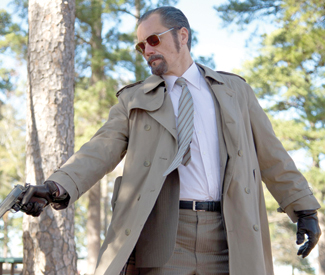
The Iceman See “Assassination Character” at www.sfbg.com. (1:46) Embarcadero, Shattuck.

Midnight’s Children Deepa Mehta (2005’s Water) directs and co-adapts with Salman Rushdie the author’s Booker Prize-winning 1981 novel, which mixes history (India’s 1947 independence, and the subsequent division of India and Pakistan) with magical elements — suggested from its fairy-tale-esque first lines: “I was born in the city of Bombay, once upon a time.” This droll voice-over (read by Rushdie) comes courtesy of Saleem Sinai, born to a poor street musician and his wife (who dies in childbirth; dad is actually an advantage-taking Brit played by Charles “Tywin Lannister” Dance) but switched (for vaguely revolutionary reasons) with Shiva, born at the same moment to rich parents who unknowingly raise the wrong son. Rich or poor, it seems all children born at the instant of India’s independence have shared psychic powers; over the years, they gather for “meetings” whenever Saleem summons them. And that’s just the 45 minutes or so of story. Though gorgeously shot, Midnight’s Children suffers from page-to-screen-itis; the source material is complex in both plot and theme, and it’s doubtful any film — even one as long as this — could translate its nuances and more fanciful elements (“I can smell feelings!,” Saleem insists) into a consistently compelling narrative. Last-act sentimentality doesn’t help, though it’s consistent with the fairy-tale vibe, I suppose. (2:20) Opera Plaza, Shattuck, Smith Rafael. (Eddy)

Something in the Air After accidentally causing a guard serious harm during a Molotov-cocktail revenge attack on high school campus police, floppy-haired Gilles (Clément Métayer) and his baby anarchist comrades have to scatter for summer vacation. He heads to Italy along with potential new girlfriend Christine (Lola Créton), the last one (Carole Combes’ Laure) having tripped off to London and Ibiza with her artist parents. Gilles wants to be an artist, too. As much of a narrative arc as there is here details his gradual shift from dedication to political ideology toward decisions that might help further his career and define his aesthetic as a painter (or maybe a filmmaker). Always interesting but never involving, Olivier Assayas’ somewhat autobiographical feature is a portrait-of-a-young-man exercise that’s ultimately a little too much like everyone’s freshman college year: Fascinating and life-changing if you were there, not so much if you’re just hearing someone else’s counter cultural reminiscences. Gilles is a petulant blank whose revolutionist convictions seem borrowed rather than felt — which may be the writer-director’s intent, but it’s hard to tell. Originally titled Apres Mai — a much more useful reference to the French far-left political tumult of May 1968 and its aftermath — this is one more cinematic attempt to encapsulate the “turbulent” 1960s (extending here into the mid-’70s) that at least fleetingly captures the era’s fluidity of sex, love, community, and ideology. And that’s far less successful at convincing us the beliefs our protagonists tout are anything more than an immature following of cultural fashion. It’s an incongruously passive movie about a time in which passion reigned. (2:01) Opera Plaza, Shattuck. (Harvey)

Star Trek Into Darkness CUMBERBATCH! (2:07) Balboa, Presidio.

Stories We Tell Actor and director Sarah Polley (2011’s Take This Waltz) turns the camera on herself and her family for this poignant, moving, inventive, and expectation-upending blend of documentary and narrative. Her father, actor Michael Polley, provides the narration; our first hint that this film will take an unconventional form comes when we see Sarah directing Michael’s performance in a recording-studio booth, asking him to repeat certain phrases for emphasis. On one level, Stories We Tell is about Sarah’s own history, as she sets out to explore longstanding family rumors that Michael is not her biological father. The missing piece: her mother, actress Diane Polley (who died of cancer just days after Sarah’s 11th birthday), a vivacious character remembered by Sarah’s siblings and those who knew and loved her. Stories We Tell‘s deeper meaning emerges as the film becomes ever more meta, retooling the audience’s understanding of what they’re seeing via convincingly doc-like reenactments. To say more would lessen the power of Stories We Tell‘s multi-layered revelations. Just know that this is an impressively unique film — about family, memories, love, and (obviously) storytelling — and offers further proof of Polley’s tremendous talent. (1:48) Embarcadero, Shattuck, Smith Rafael. (Eddy)

Sun Don’t Shine Prolific indie producer and actor (Upstream Color) Amy Seimetz’s debut as feature writer-director is a intriguingly ambiguous mumblecore noir about a couple on the run, à la Bonnie and Clyde. Crystal (Kate Lyn Sheil) and Leo (Kentucker Audley) are driving south through Florida — a state that seemingly always relaxes demands on intelligence and legality — with a handgun, innumerable anxieties, and something problematic hidden in the trunk. We gradually realize she’s unstable, though to what extent remains unclear. Seimetz’s refusal to spell out that and other basic narrative elements lends her film a compelling aura of mystery, one that heightens some striking, tense sequences but also can prove somewhat frustrating in the long run. (A little more insight would have made it easier to understand why the seemingly level-headed Leo has hitched his wagon to the increasingly off-putting Crystal.) Overall, though, it’s the kind of first feature that makes you eager to see what she’ll come up with next. (1:20) Roxie. (Harvey)

ONGOING

Aftershock Dumped into theaters without fanfare or advance screenings, this collaboration between co-scenarist/producer/star Eli Roth and Chilean director Nicolás López deserves better — it’s possibly the most luridly entertaining of numerous recent jokey homages to retro grindhouse cinema. Roth plays a character known only as Gringo, a divorced Yank lawyer on vacation traveling around Chile with two local friends, brash Pollo (Nicolás Martínez) and mopey Ariel (Ariel Levy). Their tour of raves, clubs, drugz, and tail-chasing — the rare warm-up half-hour that’s actually very funny and enjoyable — comes to an abrupt halt in Valparaiso. Partying with three newly met multinational lady friends (Lorenza Izzo, Andrea Osvárt, Natasha Yarovenko) they find themselves caught in a major earthquake — and the carnage that it causes is just the beginning of their woes, as crisis piles upon crisis. Spinning ’70s disaster-flick tropes toward crass gore-horror, Aftershock is gleefully trashy enough to get away with outrageous cruelties, including mortal harm served out to characters shockingly high on the cast list. (1:30) (Harvey)

The Angels’ Share The latest from British filmmaker Ken Loach (2006’s The Wind that Shakes the Barley) and frequent screenwriter collaborator Paul Leverty contains a fair amount of humor — though it’s still got plenty of their trademark grit and realism. Offered “one last opportunity” by both a legal system he’s frequently disregarded and his exasperated and heavily pregnant girlfriend, ne’er-do-well Glaswegian Robbie (Paul Brannigan) resolves to straighten out his life. But his troubled past proves a formidable roadblock to a brighter future — until he visits a whiskey distillery with the other misfits he’s been performing his court-ordered community service with, and the group hatches an elaborate heist that could bring hope for Robbie and his growing family … if his gang of “scruffs” can pull it off. Granted, there are some familiar elements here, but this 2012 Cannes jury prize winner (the fest’s de facto third-place award) is more enjoyable than predictable — thanks to some whiskey-tasting nerd-out scenes, likable performances by its cast of mostly newcomers, and lines like “Nobody ever bothers anybody wearing a kilt!” (not necessarily true, as it turns out). Thankfully, English subtitles help with the thick Scottish accents. (1:41) Smith Rafael. (Eddy)

At Any Price Growing up in rural Iowa very much in the shadow of his older brother, Dean Whipple (Zac Efron) cultivated a chip on his shoulder while dominating the figure 8 races at the local dirt track. When papa Henry (Dennis Quaid) — a keeping-up-appearances type, with secrets a-plenty lurking behind his good ol’ boy grin — realizes Dean is his best hope for keeping the family farm afloat, he launches a hail-mary attempt to salvage their relationship. This latest drama from acclaimed indie director Ramin Bahrani (2008’s Goodbye Solo) is his most ambitious to date, enfolding small-town family drama and stock-car scenes into a pointed commentary on modern agribusiness (Henry deals in GMO corn, and must grapple with the sinister corporate practices that go along with it). But the film never gels, particularly after an extreme, third-act plot twist is deployed to, um, hammer home the title — which refers to prices both monetary and spiritual. A solid supporting cast (Kim Dickens, Heather Graham, Clancy Brown, Red West, newcomer Maika Monroe) helps give the film some much-needed added weight as it veers toward melodrama. (1:45) SF Center. (Eddy)

The Big Wedding The wedding film has impacted our concepts of matrimony, fashion, and marital happiness more than all the textbooks in the world have affected our national testing average; but it’s with that margin of mediocrity I report from the theater trenches of The Big Wedding. With this, the wedding movie again peters to a crawl. Susan Sarandon (an actress I love with a loyalty beyond sense) is Bebe, the stepmother/caterer swept under the rug by the selfishness of her live in lover Don (De Niro), his ex-wife/baby momma Elle (Diane Keaton) and their racist wackjob future in-laws. When Don and Elle faced the end of their marriage, they tried to rekindle with a Columbian orphan. Cue Ben Barnes in brownface. Alejandro is set to wed Amanda Seyfried and when his mother ascends from Columbia for the wedding, he decides Don and Elle have to act like their marriage never ended &ldots; which makes Bebe a mistress. Surprise! A decade of caring selflessly for your lover’s kids has won you a super shitty wedding you still have to cater! To give you a sense of the conflict management on display, Bebe — the film’s graceful savior —drops a drink on Don before fleeing the scene in her Alfa Romeo; she’s the one character not determined to act out her more selfish urges in the style of an MTV reality show. Despite some less imaginative conflicts and degrading “solutions,” this blended family still speaks some truth about the endearing embarrassment of the happy family. (1:29) SF Center. (Vizcarrondo)

Blancanieves If you saw the two crappy overblown Hollywood takes on Snow White last year, my condolences. This is probably its best cinematic incarnation ever not made by someone called Walt. Pablo Berger’s Blancanieves transplants the tale to 1920s Spain and told (à la 2011’s The Artist) in the dialogue-free B&W style of that era’s silent cinema. Here, Snow is the daughter of a famous bullfighter (a beautiful performance by Daniel Giménez Cacho) who’s paralyzed physically in the ring, then emotionally by the death of his flamenco star wife (Inma Cuesta) in childbirth. He can’t bring himself to see his daughter until a grandmother’s death brings little Carmencita (the marvelous Sofía Oria) to the isolated ranch he now shares with nurse-turned-second-wife Encarna — Maribel Verdú as a very Jazz Age evil stepmother. Once the girl matures (now played by the ingratiating, slightly androgynous Macarena García), Encarna senses a rival, and to save her life Carmen literally runs away with the circus — at which point the narrative slumps a bit. But only a bit. Where The Artist was essentially a cleverly sustained gimmick elevated by a wonderful central performance, Blancanieves transcends its ingenious retro trappings to offer something both charming and substantiative. Berger doesn’t treat the story template as a joke — he’s fully adapted it to a culture, place, and time, and treats its inherent pathos with great delicacy. (1:44) Opera Plaza, Smith Rafael. (Harvey)

The Company You Keep Robert Redford directs and stars as a fugitive former member of the Weather Underground, who goes on the run when another member (Susan Sarandon) is arrested and a newspaper reporter (Shia LaBeouf) connects him to a murder 30 years earlier during a Michigan bank robbery. Both the incident and the individuals in The Company You Keep are fictive, but a montage of archival footage at the start of the film is used to place them in the company of real-life radicals and events from the latter days of the 1960s-’70s antiwar movement. (The film’s timeline is a little hard to figure, as the action seems to be present day.) Living under an assumed name, Redford’s Nick Sloan is now a recently widowed public interest lawyer with a nine-year-old daughter, still fighting the good fight from the suburbs of Albany, NY — though some of his movement cohorts would probably argue that point. And as Nick heads cross-country on a hunt for one of them who’s still deep underground, and LaBeouf’s pesky reporter tussles with FBI agents (Terrance Howard and Anna Kendrick) and his besieged editor (Stanley Tucci) — mostly there to pass comment on print journalism’s precipitous decline — there’s plenty of contentious talk, none of it particularly trenchant or involving. Redford packs his earnest, well-intentioned film with stars delineating a constellation of attitudes about revolution, justice, and violent radical action — Julie Christie as an unrepentant radical and Nick’s former lover, Nick Nolte and Richard Jenkins as former movement members, Brendan Gleeson as a Michigan police detective involved in the original investigation, Chris Cooper as Nick’s estranged and disapproving younger brother. But their scrutiny, and the film’s, feels blurry and rote, while the plot’s one major twist seems random and is clumsily exposed. (2:05) Albany, SF Center, Sundance Kabuki. (Rapoport)

The Croods (1:38) Metreon.

Disconnect (1:55) Presidio, SF Center.

Evil Dead “Sacrilege!” you surely thought when hearing that Sam Raimi’s immortal 1983 classic was being remade. But as far as remakes go, this one from Uruguayan writer-director Fede Alvarez (who’d previously only made some acclaimed genre shorts) is pretty decent. Four youths gather at a former family cabin destination because a fifth (Jane Levy) has staged her own intervention — after a near-fatal OD, she needs her friends to help her go cold turkey. But as a prologue has already informed us, there is a history of witchcraft and demonic possession in this place. The discovery of something very nasty (and smelly) in the cellar, along with a book of demonic incantations that Lou Taylor Pucci is stupid enough to read aloud from, leads to … well, you know. The all-hell that breaks loose here is more sadistically squirm-inducing than the humorously over-the-top gore in Raimi’s original duo (elements of the sublime ’87 Evil Dead II are also deployed here), and the characters are taken much more seriously — without, however, becoming more interesting. Despite a number of déjà vu kamikaze tracking shots through the Michigan forest (though most of the film was actually shot in New Zealand), Raimi’s giddy high energy and black comedy are replaced here by a more earnest if admittedly mostly effective approach, with plenty of decent shocks. No one could replace Bruce Campbell, and perhaps it was wise not to even try. So: pretty good, gory, expertly crafted, very R-rated horror fun, even with too many “It’s not over yet!” false endings. But no one will be playing this version over and over and over again as they (and I) still do the ’80s films. (1:31) Metreon. (Harvey)

42 Broad and morally cautious, 42 is nonetheless an honorable addition to the small cannon of films about the late, great baseball player Jackie Robinson. When Dodgers owner Branch Rickey (Harrison Ford) declares that he wants a black player in the white major leagues because “The only real color is green!”, it’s a cynical explanation that most people buy, and hate him for. It also starts the ball curving for a PR shitstorm. But money is an equal-opportunity leveling device: when Robinson (Chadwick Boseman) tries to use the bathroom at a small-town gas station, he’s denied and tells his manager they should “buy their 99 gallons of gas another place.” Naturally the gas attendant concedes, and as 42 progresses, even those who reject Robinson at first turn into men who find out how good they are when they’re tested. Ford, swashbuckling well past his sell-by date, is a fantastic old coot here; his “been there, lived that” prowess makes you proud he once fled the path of a rolling bolder. His power moves here are even greater, but it’s ultimately Robinson’s show, and 42 finds a lot of ways to deliver on facts and still print the legend. (2:08) Metreon, 1000 Van Ness, Sundance Kabuki. (Vizcarrondo)

From Up on Poppy Hill Hayao (dad, who co-wrote) and Goro (son, who directed) Miyazaki collaborate on this tale of two high-school kids — Umi, who does all the cooking at her grandmother’s boarding house, and Shun, a rabble-rouser who runs the school newspaper — in idyllic seaside Yokohama. Plans for the 1964 Olympics earmark a beloved historic clubhouse for demolition, and the budding couple unites behind the cause. The building offers a symbolic nod to Japanese history, while rehabbing it speaks to hopes for a brighter post-war future. But the past keeps interfering: conflict arises when Shun’s memories are triggered by a photo of Umi’s father, presumed lost at sea in the Korean War. There are no whimsical talking animals in this Studio Ghibli release, which investigates some darker-than-usual themes, though the animation is vivid and sparkling per usual. Hollywood types lending their voices to the English-language version include Jamie Lee Curtis, Christina Hendricks, Ron Howard, and Gilllian Anderson. (1:31) Shattuck. (Eddy)

The Great Gatsby Every bit as flashy and in-your-face as you’d expect the combo of “Baz Luhrmann,” “Jazz Age,” and “3D” to be, this misguided interpretation of F. Scott Fitzgerald’s classic tale is, at least, overstuffed with visual delights. For that reason only, all the fashion-mag fawning over leading lady Carey Mulligan’s gowns and diamonds, and the opulent production design that surrounds them, seems warranted. And in scenes where spectacle is appropriate — Gatsby’s legendary parties; Tom Buchanan’s wild New York romp with his mistress — Luhrmann delivers in spades. The trade-off is that the subtler aspects of Fitzgerald’s novel are either pushed to the side or shouted from the rooftops. Leonardo DiCaprio, last seen cutting loose in last year’s Django Unchained, makes for a stiff, fumbling Gatsby, laying on the “Old Sports” as thickly as his pancake make-up. There’s nothing here so startlingly memorable as the actor and director’s 1996 prior collaboration, Romeo + Juliet — a more successful (if still lavish and self-consciously audacious) take on an oft-adapted, much-beloved literary work. (2:22) California, Four Star, Marina, 1000 Van Ness, Presidio, SF Center, Sundance Kabuki, Vogue. (Eddy)

In the House In François Ozon’s first feature since the whimsical 2010 Potiche, he returns somewhat to the playful suspense intrigue of 2003’s Swimming Pool, albeit with a very different tone and context. Fabrice Luchini plays a high school French literature teacher disillusioned by his students’ ever-shrinking articulacy. But he is intrigued by one boy’s surprisingly rich description of his stealth invasion into a classmate’s envied “perfect” family — with lusty interest directed at the “middle class curves” of the mother (Emmanuelle Seigner). As the boy Claude’s writings continue in their possibly fictive, possibly stalker-ish provocations, his teacher grows increasingly unsure whether he’s dealing with a precocious bourgeoisie satirist or a literate budding sociopath — and ambivalent about his (and spouse Kristin Scott Thomas’ stressed gallery-curator’s) growing addiction to these artfully lurid possible exposé s of people he knows. And it escalates from there. Ozon is an expert filmmaker in nimble if not absolute peak form here, no doubt considerably helped by Juan Mayorga’s source play. It’s a smart mainstream entertainment that, had it been Hollywood feature, would doubtless be proclaimed brilliant for its clever tricks and turns. (1:45) Opera Plaza, Shattuck, Smith Rafael. (Harvey)

Iron Man 3 Neither a sinister terrorist dubbed “the Mandarin” (Ben Kingsley) nor a spray-tanned mad scientist (Guy Pearce) are as formidable an enemy to Tony Stark (Robert Downey, Jr.) as Tony Stark himself, the mega-rich playboy last seen in 2012’s Avengers donning his Iron Man suit and thwarting alien destruction. It’s been rough since his big New York minute; he’s been suffering panic attacks and burying himself in his workshop, shutting out his live-in love (Gwyneth Paltrow) in favor of tinkering on an ever-expanding array of manned and un-manned supersuits. But duty, and personal growth, beckon when the above-mentioned villains start behaving very badly. With some help (but not much) from Don Cheadle’s War Machine — now known as “Iron Patriot” thanks to a much-mocked PR campaign — Stark does his saving-the-world routine again. If the plot fails to hit many fresh beats (a few delicious twists aside), the 3D special effects are suitably dazzling, the direction (by series newcomer Shane Black) is appropriately snappy, and Downey, Jr. again makes Stark one of the most charismatic superheros to ever grace the big screen. For now, at least, the continuing Avengers spin-off extravaganza seems justified. (2:06) Marina, Metreon, 1000 Van Ness, Presidio, Sundance Kabuki. (Eddy)

Jurassic Park 3D “Life finds a way,” Jeff Goldblum’s leather-clad mathematician remarks, crystallizing the theme of this 1993 Spielberg classic, which at its core is more about human relationships than genetically manufactured terrors. Of course, it’s got plenty of those, and Jurassic Park doesn’t really need its (admittedly spiffy) 3D upgrade to remain a thoroughly entertaining thriller. The dinosaur effects — particularly the creepy Velociraptors and fan-fave T. rex — still dazzle. Only some early-90s computer references and Laura Dern’s mom jeans mark the film as dated. But a big-screen viewing of what’s become a cable TV staple allows for fresh appreciation of its less-iconic (but no less enjoyable) moments and performances: a pre-megafame Samuel L. Jackson as a weary systems tech; Bob Peck as the park’s skeptical, prodigiously thigh-muscled game warden. Try and forget the tepid sequels — including, dear gawd, 2014’s in-the-works fourth installment. This is all the Jurassic you will ever need. (2:07) 1000 Van Ness. (Eddy)

Kon-Tiki In 1947 Norwegian explorer and anthropologist Thor Heyderdahl arranged an expedition on a homemade raft across the Pacific, recreating what he believed was a route by which South Americans traveled to Polynesia in pre-Columbian times. (Although this theory is now disputed.) The six-man crew (plus parrot) survived numerous perils to complete their 101-day, 4300-mile journey intact — winning enormous global attention, particularly through Heyderdahl’s subsequent book and documentary feature. Co-directors Joachim Roenning and Espen Sandberg’s dramatization is a big, impressive physical adventure most arresting for its handsome use of numerous far-flung locations. Where it’s less successful is in stirring much emotional involvement, with the character dynamics underwhelming despite a decent cast led by Pal Sverr Hagen as Thor (who, incredibly, was pretty much a non-swimmer). Nonetheless, this new Kon-Tiki offers all the pleasures of armchair travel, letting you vicariously experience a high-risk voyage few could ever hope (or want) to make in real life. (1:58) Albany, Embarcadero, Piedmont. (Harvey)

Love is All You Need Copenhagen hairdresser Ida (Trine Dyrholm) has just finished her cancer treatments — with their success still undetermined — when she arrives home to find her longtime husband Leif (Kim Bodnia) boning a coworker on their couch. “I thought you were in chemo” is the closest he comes to an apology before walking out. Ida is determined to maintain a cheerful front when attending the Italian wedding of their daughter Astrid (Molly Blixt Egelind) — even after emotionally deaf Leif shows up with his new girlfriend in tow. Meanwhile brusque businessman and widower Philip (Pierce Brosnan), the groom’s father, is experiencing the discomfort of returning to the villa he once shared with his beloved late wife. This latest from Danish director Susanne Bier and writing partner Anders Thomas Jensen (2006’s After the Wedding, 2004’s Brothers, 2010’s In a Better World) is more conventionally escapist than their norm, with a general romantic-seriocomedy air reinforced by travel-poster-worthy views of the picturesque Italian coastline. They do try to insert greater depth and a more expansive story arc than you’d get in a Hollywood rom com. But all the relationships here are so prickly — between middle-aged leads we never quite believe would attract each other, between the clearly ill-matched aspiring newlyweds, between Paprika Steen’s overbearing sister in-law and everyone — that there’s very little to root for. It’s a romantic movie (as numerous soundtracked variations on “That’s Amore” constantly remind us) in which romance feels like the most contrived element. (1:50) Embarcadero, Shattuck. (Harvey)

Mud (2:15) California, Metreon, 1000 Van Ness, Piedmont, Sundance Kabuki.

Oblivion Spoiler alert: the great alien invasion of 2017 does absolutely zilch to eliminate, or at least ameliorate, the problem of sci-fi movie plot holes. However, puny humans willing to shut down the logic-demanding portions of their brains just might enjoy Oblivion, which is set 60 years after that fateful date and imagines that Earth has been rendered uninhabitable by said invasion. Tom Cruise plays Jack, a repairman who zips down from his sterile housing pod (shared with comely companion Andrea Riseborough) to keep a fleet of drones — dispatched to guard the planet’s remaining resources from alien squatters — in working order. But Something is Not Quite Right; Jack’s been having nostalgia-drenched memories of a bustling, pre-war New York City, and the déjà vu gets worse when a beautiful astronaut (Olga Kurylenko) literally crash-lands into his life. After an inaugural gig helming 2010’s stinky Tron: Legacy, director Joseph Kosinski shows promise, if not perfection, bringing his original tale to the screen. (He does, however, borrow heavily from 1968’s 2001: A Space Odyssey, 1996’s Independence Day, and 2008’s Wall-E, among others.) Still, Oblivion boasts sleek production design, a certain creative flair, and some surprisingly effective plot twists — though also, alas, an overlong running time. (2:05) Balboa, Metreon, 1000 Van Ness, Sundance Kabuki. (Eddy)

Oz: The Great and Powerful Providing a backstory for the man behind the curtain, director Sam Raimi gives us a prequel of sorts to 1939’s The Wizard of Oz. Herein we follow the adventures of a Depression-era Kansas circus magician named Oscar (James Franco) — Oz to his friends — as he cons, philanders, bickers with his behind-the-scenes assistant Frank (Zach Braff), and eventually sails away in a twister, bound for a Technicolor land of massively proportioned flora, talking fauna, and witches ranging from dazzlingly good to treacherously wicked. From one of them, Theodora (Mila Kunis), he learns that his arrival — in Oz, just to clarify — has set in motion the fulfillment of a prophecy: that a great wizard, also named Oz, will bring about the downfall of a malevolent witch (Rachel Weisz), saving the kingdom and its cheery, goodhearted inhabitants. Unfortunately for this deserving populace, Oz spent his last pre-twister moments with the Baum Bros. Circus (the name a tribute to L. Frank Baum, writer of the Oz children’s books) demonstrating a banged-up moral compass and an undependable streak and proclaiming that he would rather be a great man than a good man. Unfortunately for the rest of us, this theme is revisited ad nauseam as Oz and the oppressively beneficent witch Glinda (Michelle Williams) — whose magic appears to consist mainly of nice soft things like bubbles and fog — stand around debating whether he’s the right man for the task. When the fog clears, though, the view is undeniably pretty. While en route to and from the Emerald City, Oz and his companions — among them a non-evil flying monkey (voiced by Braff) and a rather adorable china doll (Joey King) — wander through a deliriously arresting, Fantasia-esque landscape whose intricate, inventive construction helps distract from the plodding, saccharine rhetoric and unappealing story line. (2:07) SF Center. (Rapoport)

Pain & Gain In mid-1995 members of what became known as the “Sun Gym Gang” — played here by Mark Wahlberg, Dwayne Johnson, and Anthony Mackie — were arrested for a series of crimes including kidnapping, extortion, and murder. Simply wanting to live large, they’d abducted one well-off man (Tony Shalhoub) months earlier, tortured him into signing over all his assets, and left him for dead — yet incredibly the Miami police thought the victim’s story was a tall tale, leaving the perps free until they’d burned through their moolah and sought other victims. Michael Bay’s cartoonish take on a pretty horrific saga repeatedly reminds us that it’s a true story, though the script plays fast and loose with many real-life details. (And strangely it downplays the role steroid abuse presumably played in a lot of very crazy behavior.) In a way, his bombastic style is well-suited to a grotesquely comic thriller about bungling bodybuilder criminals redundantly described here as “dumb stupid fucks.” There have been worse Bay movies, even if that’s like saying “This gas isn’t as toxic as the last one.” But despite the flirtations with satire of fitness culture, motivational gurus and so forth, his sense of humor stays on a loutish plane, complete with fag-bashing, a dwarf gag, and representation of Miami as basically one big siliconed titty bar. Nor can he pull off a turn toward black comedy that needs the superior intelligence of someone like the Coen Brothers or Soderbergh. As usual everything is overamped, the action sequences overblown, the whole thing overlong, and good actors made to overact. You’ve got to give cranky old Ed Harris credit: playing a private detective, he alone here refuses to be bullied into hamming it up. (2:00) Metreon, 1000 Van Ness. (Harvey)

Peeples (1:35) 1000 Van Ness.

The Place Beyond the Pines Powerful indie drama Blue Valentine (2010) marked director Derek Cianfrance as one worthy of attention, so it’s with no small amount of fanfare that this follow-up arrives. The Place Beyond the Pines‘ high profile is further enhanced by the presence of Bradley Cooper (currently enjoying a career ascension from Sexiest Man Alive to Oscar-nominated Serious Actor), cast opposite Valentine star Ryan Gosling, though they share just one scene. An overlong, occasionally contrived tale of three generations of fathers, father figures, and sons, Pines‘ initial focus is Gosling’s stunt-motorcycle rider, a character that would feel more exciting if it wasn’t so reminiscent of Gosling’s turn in Drive (2011), albeit with a blonde dye job and tattoos that look like they were applied by the same guy who inked James Franco in Spring Breakers. Robbing banks seems a reasonable way to raise cash for his infant son, as well as a way for Pines to draw in another whole set of characters, in the form of a cop (Cooper) who’s also a new father, and who — as the story shifts ahead 15 years — builds a political career off the case. Of course, fate and the convenience of movie scripts dictate that the mens’ sons will meet, the past will haunt the present and fuck up the future, etc. etc. Ultimately, Pines is an ambitious film that suffers from both its sprawl and some predictable choices (did Ray Liotta really need to play yet another dirty cop?) Halfway through the movie I couldn’t help thinking what might’ve happened if Cianfrance had dared to swap the casting of the main roles; Gosling could’ve been a great ambitious cop-turned-powerful prick, and Cooper could’ve done interesting things with the Evel Knievel-goes-Point Break part. Just sayin’. (2:20) Embarcadero, Four Star, 1000 Van Ness, Presidio, Shattuck, Sundance Kabuki. (Eddy)

The Reluctant Fundamentalist Based on Pakistani novelist Mohsin Hamid’s award-winning 2007 novel, and directed by the acclaimed Mira Nair (2001’s Monsoon Wedding, 2006’s The Namesake), The Reluctant Fundamentalist boasts an international cast (Kate Hudson, Martin Donovan, Kiefer Sutherland, Liev Schreiber, Om Puri) and nearly as many locations. British-Pakistani actor Riz Ahmed (2010’s Four Lions) stars as Changez Khan, a Princeton-educated professor who grants an interview with a reporter (Schreiber) after another prof at Lahore University — an American citizen — is taken hostage; their meeting grows more tense as the atmosphere around them becomes more charged. Most of the film unfolds as an extended flashback, as Changez recounts his years on Wall Street as a talented “soldier in [America’s] economic army,” with a brunette Hudson playing Erica, a photographer who becomes his NYC love interest. After 9/11, he begins to lose his lust for star-spangled yuppie success, and soon returns to his homeland to pursue a more meaningful cause. Though it’s mostly an earnest, soul-searching character study, The Reluctant Fundamentalist suddenly decides it wants to be a full-throttle political thriller in its last act; ultimately, it offers only superficial insight into what might inspire someone’s conversion to fundamentalism (one guess: Erica’s embarrassingly bad art installation, which could make anyone hate America). Still, Ahmed is a compelling lead. (2:08) Opera Plaza, Shattuck, Smith Rafael. (Eddy)

Renoir The gorgeous, sun-dappled French Riviera setting is the high point of this otherwise low-key drama about the temperamental women (Christa Theret) who was the final muse to elderly painter Auguste Renoir (Michel Bouquet), and who encouraged the filmmaking urges in his son, future cinema great Jean (Vincent Rottiers). Cinematographer Mark Ping Bin Lee (who’s worked with Hou Hsiao-hsein and Wong Kar Wai) lenses Renoir’s leafy, ramshackle estate to maximize its resemblance to the paintings it helped inspire; though her character, Dédée, could kindly be described as “conniving,” Theret could not have been better physically cast, with tumbling red curls and pale skin she’s none too shy about showing off. Though the specter of World War I looms in the background, the biggest conflicts in Gilles Bourdos’ film are contained within the household, as Jean frets about his future, Dédée faces the reality of her precarious position in the household (which is staffed by aging models-turned-maids), and Auguste battles ill health by continuing to paint, though he’s in a wheelchair and must have his brushes taped to his hands. Though not much really happens, Renoir is a pleasant, easy-on-the-eyes experience. (1:51) Shattuck, Smith Rafael. (Eddy)

The Sapphires The civil rights injustices suffered by these dream girls may be unique to Aboriginal Australians, but they’ll strike a chord with viewers throughout the world — at right about the same spot stoked by the sweet soul music of Motown. Co-written by Tony Briggs, the son of a singer in a real-life Aboriginal girl group, this unrepentant feel-gooder aims to make the lessons of history go down with the good humor and up-from-the-underdog triumph of films like The Full Monty (1997) — the crucial difference in this fun if flawed comedy-romance is that it tells the story of women of color, finding their voices and discovering, yes, their groove. It’s all in the family for these would-be soul sisters, or rather country cousins, bred on Merle Haggard and folk tunes: there’s the charmless and tough Gail (Deborah Mailman), the soulful single mom Julie (Jessica Mauboy, an Australian Idol runner-up), the flirty Cynthia (Miranda Tapsell), and the pale-skinned Kay (Shari Sebbens), the latter passing as white after being forcibly “assimilated” by the government. Their dream is to get off the farm, even if that means entertaining the troops in Vietnam, and the person to help them realize that checkered goal is dissolute piano player Dave (Chris O’Dowd). And O’Dowd is the breakout star to watch here — he adds an loose, erratic energy to an otherwise heavily worked story arc. So when romance sparks for all Sapphires — and the racial tension simmering beneath the sequins rumbles to the surface — the easy pleasures generated by O’Dowd and the music (despite head-scratching inclusions like 1970’s “Run Through the Jungle” in this 1968-set yarn), along with the gently handled lessons in identity politics learned, obliterate any lingering questions left sucking Saigon dust as the narrative plunges forward. They keep you hanging on. (1:38) Piedmont, Shattuck. (Chun)

Scatter My Ashes at Bergdorf’s This glossy love letter to posh New York City department store Bergdorf Goodman — a place so expensive that shopping there is “an aspirational dream” for the grubby masses, according to one interviewee — would offend with its slobbering take on consumerism if it wasn’t so damn entertaining. The doc’s narrative of sorts is propelled by the small army assembled to create the store’s famed holiday windows; we watch as lavish scenes of upholstered polar bears and sea creatures covered in glittering mosaics (flanking, natch, couture gowns) take shape over the months leading up to the Christmas rush. Along the way, a cavalcade of top designers (Michael Kors, Vera Wang, Giorgio Armani, Jason Wu, Karl Lagerfeld) reminisce on how the store has impacted their respective careers, and longtime employees share anecdotes, the best of which is probably the tale of how John Lennon and Yoko Ono saved the season by buying over 70 fur coats one magical Christmas Eve. Though lip service is paid to the current economic downturn (the Madoff scandal precipitated a startling dropoff in personal-shopper clients), Scatter My Ashes is mostly just superficial fun. What do you expect from a store whose best-selling shoe is sparkly, teeteringly tall, and costs $6,000? (1:33) Clay. (Eddy)

The Source Family Under the guidance of charismatic, luxuriously-bearded leader Father Yod (once named Jim Baker, later known as YaHoWha), the Source Family operated one of the country’s first health food restaurants. They lived in a Hollywood Hills mansion, wore flowing robes, assumed dreamy new names, meditated, and studied Father Yod’s custom blend of Eastern and Western philosophy and mysticism. As the home movies that comprise Maria Demopoulos and Jodi Wille’s documentary, The Source Family, suggest, there were golden moments aplenty, even as the mainstream began to view the group with suspicion (and an aging Father Yod’s decision to take multiple wives confused some members — particularly the woman he was already legally married to). Tapping into the group’s extensive film and psych-rock music archives, as well as interviews with surviving members, The Source Family offers a captivating look at what had to be the most earnest (and most photogenic) cult of the 1970s. (1:38) Roxie. (Eddy)

Upstream Color A woman, a man, a pig, a worm, Walden — what? If you enter into Shane Carruth’s Upstream Color expecting things like a linear plot, exposition, and character development, you will exit baffled and distressed. Best to understand in advance that these elements are not part of Carruth’s master plan. In fact, based on my own experiences watching the film twice, I’m fairly certain that not really understanding what’s going on in Upstream Color is part of its loopy allure. Remember Carruth’s 2004 Primer? Did you try to puzzle out that film’s array of overlapping and jigsawed timelines, only to give up and concede that the mystery (and sheer bravado) of that film was part of its, uh, loopy allure? Yeah. Same idea, except writ a few dimensions larger, with more locations, zero tech-speak dialogue, and — yes! — a compelling female lead, played by Amy Seimetz, an indie producer and director in her own right. Enjoying (or even making it all the way through) Upstream Color requires patience and a willingness to forgive some of Carruth’s more pretentious noodlings; in the tradition of experimental filmmaking, it’s a work that’s more concerned with evoking emotions than hitting some kind of three-act structure. Most importantly, it manages to be both maddening and moving at the same time. (1:35) Roxie. (Eddy)
Music listings

0

Music listings are compiled by Emily Savage. Since club life is unpredictable, it’s a good idea to call ahead or check the venue’s website to confirm bookings and hours. Prices are listed when provided to us. Visit www.sfbg.com/venue-guide for venue information. Submit items for the listings at listings@sfbg.com. For further information on how to submit items for the listings, see Picks.

WEDNESDAY 15

ROCK/BLUES/HIP-HOP

Appleseed Cast, Hospital Ships, Dandelion War Bottom of the Hill. 9pm, $14.

Caldecott, Super Water Sympathy, Emily Moldy Café Du Nord. 8:30pm, $8.

Alice Dimicele, Dave Mulligan, Jordan Feinstein, James Nash Brick and Mortar Music Hall. 9pm, free.

Lee Huff vs Todd Johnny Foley’s Dueling Pianos. 10pm, free.

Kevin Russel Band Biscuits and Blues. 8 and 10pm, $15.

Mister Loveless, Teenage Sweater, Happy Fangs, Here Come Dots Elbo Room. 9pm, $10.

Terry Savastano Johnny Foley’s. 10pm, free.

Soul Train Revival with Ziek McCarter and the Revival Band Boom Boom Room. 8pm, $5.

Surplus 1980, Disonova, Aberrant Phase Hemlock Tavern. 8:30pm, $7.

JAZZ/NEW MUSIC

Dink Dink Dink, Gaucho, Eric Garland’s Jazz Session Amnesia. 7pm, free.

Terry Disley Burritt Room, 417 Stockton, SF; www.burrittavern.com. 6-9pm, free.

Freddie Hughes Royal Cuckoo, 3203 Mission, SF; www.royalcuckoo.com. 7:30-10:30pm, free.

Redwood Tango Trio Rite Spot. 9pm.

William Parker Quartet Yoshi’s SF. 8pm, $25; 10pm, $16.

DANCE CLUBS

Timba Dance Party Bissip Baobab. 10pm, $5. Timba and salsa Cubana with DJ Walt Diggz.

Booty Call Q-Bar, 456 Castro, SF; www.bootycallwednesdays.com. 9pm. Juanita MORE! and Joshua J host this dance party.

Cash IV Gold Double Dutch, 3192 16th St, SF; www.thedoubledutch.com. 9pm, free.

Coo-Yah! Slate Bar, 2925 16th St, SF; www.slate-sf.com. 10pm, free. With Vinyl Ambassador, DJ Silverback, DJs Green B and Daneekah.

Hardcore Humpday Happy Hour RKRL, 52 Sixth St, SF; (415) 658-5506. 6pm, $3.

Martini Lounge John Colins, 138 Minna, SF; www.johncolins.com. 7pm. With DJ Mark Divita.

Stay Sick Monarch. 9pm, free. With DJ Omar.

THURSDAY 16

ROCK/BLUES/HIP-HOP

Big Boi, Killer Mike, Fishawk, Goast Mezzanine. 8:30pm, $35.

Burnt Ones, Week of Wonders, Fronds, Jollapin Jasper Hemlock Tavern. 8:30pm, $7.

Delorean, Romans, DJ Aaron Axelsen Rickshaw Stop. 9pm, $16.

Egg, Sophie Barker Red Devil Lounge. 9pm, $15-$20.

Exhausted Pipes 50 Mason Social House, SF; www.50masonsocialhouse.com. 10pm, free.

Foxy Monarch. 9pm, free. With DJ Kizmiaz.

Groovy Judy Johnny Foley’s. 10pm, free.

J Boogie’s Dubtronic Science Boom Boom Room. 8pm, $7.

Chris James and the Showdowns, Pebble Theory, Voodoo Switch Bottom of the Hill. 9pm, $10.

Picture and the Frame, Exhausted Pipes, Peck the Town Crier 50 Mason Social House, SF; www.50masonsocialhouse.com. 10pm, free.

Religious Girls, San Francesca, Split Screens, Hoot Hoots Brick and Mortar Music Hall. 9pm,$10.

Shady Maples, Whiskerman, Cave Clove Café Du Nord. 8:30pm, $10.

SRV Tribute with Alan Iglesias Biscuits and Blues. 8 and 10pm, $20.

Todd vs Lee Huff Johnny Foley’s Dueling Pianos. 10pm, free.

JAZZ/NEW MUSIC

Bela Fleck SF Jazz Center, 201 Franklin, SF; www.sfjazz.org. 7:30pm, $20-$60.

Goapele Yoshi’s SF. 8pm, $35; 10pm, $30.

Nick Rossi Rite Spot. 9pm.

Chris Siebert Royal Cuckoo, 3203 Mission, SF; www.royalcuckoo.com. 7:30-10:30pm, free.

DANCE CLUBS

Afrolicious Elbo Room. 9:30pm, $8. DJs Pleasuremaker and Señor Oz spin Afrobeat, Tropicália, electro, samba, and funk.

All 80s Thursday Cat Club. 9pm, $6 (free before 9:30pm). The best of ’80s mainstream and underground.

Pa’lante! Bissip Baobab. 10pm, $5. Electro-cumbia, dancehall, and soca with DJs Juan G, El Kool Kyle, Mr. Lucky.

Ritual Temple. 10pm-3am, $5. Two rooms of dubstep, glitch, and trap music.

Tropicana Madrone Art Bar. 9pm, free. Salsa, cumbia, reggaeton, and more with DJs Don Bustamante, Apocolypto Sr. Saen, Santero, and Mr. E.

FRIDAY 17

ROCK/BLUES/HIP-HOP

Black Angels, Hanni El Khatib, Wall of Death Fillmore. 9pm, $25.

Hello Monster, Audiodub, Culprit, Bulkhead Betty Brick and Mortar Music Hall. 8pm, $13.

Lee Huff, Jeff V, Todd Johnny Foley’s Dueling Pianos. 10pm, free.

Lee Vilenski Trio Rite Spot. 9pm.

Main Squeeze Boom Boom Room. 8pm, $10.

Midi Matilda, OONA, holychild Rickshaw Stop. 8:30pm, $10-$12.

MIRV, Kehoe Nation, Polkacide Bottom of the Hill. 9pm, $17.

Mobb Deep DNA Lounge. 8pm, $20.

Ocean Blue, Orange Peels Café Du Nord. 7pm, $15.

Savoy: Live With Lasers, Lobounce Slim’s. 9pm, $16.

SRV Tribute with Alan Iglesias Biscuits and Blues. 8 and 10pm, $20.

Sweet Chariot, Chelsea Crowell, Happy Family Singers Hemlock Tavern. 9:30pm, $8.

Top Secret Band Johnny Foley’s. 10pm, free.

Claude Von Stroke, Justin Martin, Kill Frenzy, Leroy Peppers, J. Philip, Worthy Mezzanine. 9pm, $5-$20.

JAZZ/NEW MUSIC

Audium 1616 Bush, SF; www.audium.org. 8:30pm, $20. Theater of sound-sculptured space.

Bela Fleck SF Jazz Center, 201 Franklin, SF; www.sfjazz.org. 7:30pm, $25-$65.

Goapele Yoshi’s SF. 8pm, $40; 10pm, $35.

Hammond Organ Soul Jazz Blues Party Royal Cuckoo, 3203 Mission, SF; www.royalcuckoo.com. 7:30-10:30pm, free.

Mike Reed’s People Places and Things, Darren Johnston Ensemble Center for New Music, 55 Taylor, SF; www.centerfornewmusic.com. 8pm, $10-$15.

Trance Mutations #3 Lab, 2948 16th St, SF; www.thelab.org. 9pm, $5. Soundscapes by Idaho Joe, Waxy Tombs, Black Thread, Business Etiquette.

Lee Vilenski Rite Spot. 9pm.


FOLK/WORLD/COUNTRY

Flamenco del Oro with Kina Mendez cante ya baile, Stephanie Narvaez baile, Glopal Slavonic Emerald Tablet, 80 Fresno, SF; www.flamencodeloro.com. 8pm, $10.

Shapes Redwood Grove at the SF Botanical Gardens, 1199 Ninth St, SF; www.brownpapertickets.com. 6-8pm.

DANCE CLUBS

DJ What’s His Fuck Riptide Tavern. 9pm, free.

Hella Tight Amnesia. 10pm, $5.

Joe Lookout, 3600 16th St.,SF; www.lookoutsf.com. 9pm. Eight rotating DJs, shirt-off drink specials.

Old School JAMZ El Rio. 9pm. Fruit Stand DJs spinning old school funk, hip-hop, and R&B.

Paris to Dakar Little Baobab, 3388 19th St, SF; (415) 643-3558. 10pm, $5. Afro and world music with rotating DJs including Stepwise, Steve, Claude, Santero, and Elembe.

Smoke N’ Mirrors Monarch. 9:30pm, $10. With Wildkats, Shiny Objects, Sleight of Hands, Trev Campbell.

Thirsty Third Fridays Atmosphere, 447 Broadway, SF; www.a3atmosphere.com. 10pm, $10.

Queer Cumbia Bissip Baobab. 8pm, $3-$7. Musica tropical, cumbia, merengue with DJs Adan Atl, Rosa La Rumorosa, Jiggles and AlumiuX.

SATURDAY 18

ROCK/BLUES/HIP-HOP

Bay Area Heat Johnny Foley’s. 10pm, free.

Bhi Bhiman, Meklit and Quinn SF Live Arts at Cyperian’s, 2097 Turk, SF; www.noevalleymusicseries.com. 8pm, $15.

Black Pus, CCR Headcleaner, Reptilian Shape Shifters Hemlock Tavern. 9:30pm, $10.

Crackerjack Preacher Riptide Tavern. 9pm, free.

Disappears, LENZ, Tambo Rays Bottom of the Hill. 10pm, $12.

Foreverland: Michael Jackson tribute Slim’s. 9pm, $16.

Hibbity Dibbity Thee Parkside. 3pm, free.

Juanes Warfield. 8pm, $39.50-$100.

Laura Marling Chapel, 777 Valencia, SF; www.thechapelsf.com. 9pm, $25.

Mud City Manglers, Vans, Arabs, Spider Garage Thee Parkside. 9pm, $7.

Project Pimento Rite Spot. 9pm.

Robert Randolph and the Family Band Bimbo’s. 8pm, $75-$150. Blue Bear School of Music Benefit.

“R5 Loud Tour” with Brandon and Savannah, Taylor Matthews, Alex Aiona Great American Music Hall. 8pm, $18-$20.

Shahram Solati, Firoozeh, Sami Beigi Mezzanine. 9pm, $50.

Skerik’s Bandalabra feat. members of MCTuff Boom Boom Room. 8pm, $10.

Sonny Rhodes Biscuits and Blues. 8 and 10pm, $20.

Todd, Lee Huff, Jeff V Johnny Foley’s Dueling Pianos. 10pm, free.

Y&T Fillmore. 9pm, $36.50.

JAZZ/NEW MUSIC

Audium 1616 Bush, SF; www.audium.org. 8:30pm, $20. Theater of sound-sculptured space.

Bela Fleck SF Jazz Center, 201 Franklin, SF; www.sfjazz.org. 7:30pm, $30-$70.

Goapele Yoshi’s SF. 8pm, $40; 10pm, $40.

Project Pimento Rite Spot. 9pm.

Hammond Organ Soul Jazz Blues Party Royal Cuckoo, 3203 Mission, SF; www.royalcuckoo.com. 7:30-10:30pm, free.

Wear? Hear! Suitable Actions, Lost and Found, Exo-Skatch Center for New Music, 55 Taylor, SF; www.centerfornewmusic.com. 7:30pm, $10-$15.

FOLK/WORLD/COUNTRY

Free Dive Red Poppy Art House. 8pm, $12-$15.

Gamelan Sekar Jaya Yerba Buena Gardens, Mission between Third and Fourth Streets, SF; www.ybgfestival.org. 1-2:30pm, free.

Go Van Gogh Revolution Café, 3248 22nd St, SF; (415) 642-0474. 9pm, free.

Trans Balkan Expressway Brick and Mortar Music Hall. 9pm, $10.

DANCE CLUBS

Bootie SF: Bay to Breakers Pre-Party DNA Lounge. 9pm, $10-$15.

Fringe Madrone Art Bar. 9pm, $5. Indie music video dance party with DJ Blondie K and subOctave.

Kinky Disko Underground SF, 424 Haight; www.kinkydisko.com. 10pm, $7. Vintage boogie.

Kiss the Sky Bissip Baobab. 9pm, $5. Afro-soul, house, and world with DJs Nina Sol and Emancipacion.

OK Hole Amnesia. 9pm, $5-$7.

Paris to Dakar Little Baobab, 3388 19th St, SF; (415) 643-3558. 10pm, $5. Afro and world music with rotating DJs.

Radio Franco Bissap, 3372 19th St, SF; (415) 826 9287. 6 p.m. Rock, Chanson Francaise, Blues. Senegalese food and live music.

Saturday Night Soul Party Elbo Room. 10pm, $5-$10.

Smiths Party Slate Bar, 2925 16th St, SF; www.slate-sf.com. 10pm, $5. Sounds of the Smiths, Morrissey, the Cure, and New Order.

Super Big Gay Dance Party El Rio. 3-8pm, $7. Benefit for 2013 Dyke March, with Hard French DJs, Mango, Stay Gold, and more.

Trapeze VI: Electro-Casba Monarch. 9pm, $10.

Uncanny Valley, DJ Sean Dimentia, hostess Lady Bear and her Dark Dolls Café Du Nord. 9:30pm, $7.

Wild Nights Kok BarSF, 1225 Folsom, SF; www.kokbarsf.com. 9pm, $3. With DJ Frank Wild.

SUNDAY 19

ROCK/BLUES/HIP-HOP

Dillinger Escape Plan, Faceless, Royal Thunder, Rob Metal DNA Lounge. 8:30pm, $20.

Hans Eberbach Castagnola’s, 286 Jefferson, SF; www.castagnolas.com. 2pm, free.

Fabolous, Pusha T Mezzanine. 9pm, $27.50-$60.

Flobots, Wheelchair Sports Camp, All City Elite Café Du Nord. 7:30pm, $15.

Gothic Tropic, Seatraffic, Cruel Summer Brick and Mortar Music Hall. 9pm, $10.

Terry Savastano Johnny Foley’s. 10pm, free.

Tunnel, Ghostfoot, Gashcat Hemlock Tavern. 6pm, $6.

Yard Sale, Scott Young Rite Spot. 5pm.

JAZZ/NEW MUSIC

Bela Fleck SF Jazz Center, 201 Franklin, SF; www.sfjazz.org. 7:30pm, $25-$65.

Goapele Yoshi’s SF. 7pm, $35; 9pm, $30.

Lavay Smith Royal Cuckoo, 3203 Mission, SF; www.royalcuckoo.com. 7:30-10:30pm, free.

FOLK/WORLD/COUNTRY

Coburns Tupelo, 1337 Grant, SF; www.tupelosf.com. 4-7pm, free.

GoldDiggers, Moonshine Maybelline Thee Parkside. 4pm, free.

ZOFO’s Mosh Pit Red Poppy Art House. 4pm, $20.

DANCE CLUBS

Beats for Brunch Thee Parkside. 11am, free.

Crème Fraiche ft. Mrs. Blythe Monarch Lounge. 9pm, free.

Dub Mission Elbo Room. 10pm, $5-$10.

Jock Lookout, 3600 16th St, SF; www.lookoutsf.com. 3pm, $2.

Ms White, Vin Sol, Matrixxman, Robert Jeffrey Monarch. 9:30pm, $5.

MONDAY 20

ROCK/BLUES/HIP-HOP

Jeremy Messersmith Café Du Nord. 7:30pm, $12.

Tyler the Creator, Earl Sweatshirt Regency Ballroom. 8pm, $30.

DANCE CLUBS

Crazy Mondays Beauty Bar, 2299 Mission, SF; www.thebeautybar.com. 10pm, free. Hip-hop and other stuff.

Death Guild DNA Lounge. 9:30pm, $3-$5. Gothic, industrial, and synthpop with Joe Radio, Decay, and Melting Girl.

M.O.M. Madrone Art Bar. 6pm, free. DJs Timoteo Gigante, Gordo Cabeza, and Chris Phlek playing all Motown every Monday.

Monarch Live Mondays Monarch. 8pm, free. With DJ Jules, Jacob, Alden, and live acts.

Soul Cafe John Colins Lounge, 138 Minna, SF; www.johncolins.com. 9pm. R&B, Hip-Hop, Neosoul, reggae, dancehall, and more with DJ Jerry Ross.

Vibes’N’Stuff El Amigo Bar, 3355 Mission, SF; (415) 852-0092. 10pm, free. Conscious jazz and hip-hop with DJs Luce Lucy, Vinnie Esparza, and more.

Tuesday.

TUESDAY 21

ROCK/BLUES/HIP-HOP

Devendra Banhart, Rodrigo Amarante Regency Ballroom. 8pm, $30.

Boris, Bosse-de-Nage Rickshaw Stop. 8pm, $18.

Butt Problems, D’Jelly Brains, Nanash 774 Riptide Tavern. 9:30pm, $6.

Joey Cape, Kevin Seconds, Russ Rankin, Mick Leonardi Thee Parkside. 8pm, $10.

Fpod BPod Amnesia. 9:30pm, $5-$7.

Level Vibes Monarch Lounge. 9pm, free. With Now Time DJs.

Nick Moss Biscuits and Blues. 8 and 10pm, $20.

Noise Tour: Marianas Trench Powered by Journeys, Air Dubai, Good Natured Slim’s. 7:30pm, $18.

Ariel Pink Chapel, 777 Valencia, SF; www.thechapelsf.com. 9pm, $28-$32.

San Quinn, Repp Money, Tadaysha, Don Toriano, DaVinci Brick and Mortar Music Hall. 10pm, $10.

Sea Wolf, Savoir Adore Great American Music Hall. 8pm, $16.

3 Leafs, Resin Cum, Heroic Trio Hemlock Tavern. 8:30pm, $6.

Union Trade Bottom of the Hill. 9pm, $10.

JAZZ/NEW MUSIC

Terry Disley Burritt Room, 417 Stockton, SF; www.burrittavern.com. 6-9pm, free.

Drizoletto Rite Spot. 9pm.

Rova Saxophone Quartet Center for New Music, 55 Taylor, SF; www.centerfornewmusic.com. Noon, free.

FOLK/WORLD/COUNTRY

Drizoletto Rite Spot. 8:30pm.

DANCE CLUBS

Brazilian Wax Elbo Room. 9pm, $7.

Soundpieces Monarch. 10pm, $5. With Bogl, Ryury, and more.

On the Cheap listings

0

Events compiled by Cortney Clift. For information on how to submit events for consideration, see Selector.

WEDNESDAY 15

Information Technology Talk World Affairs Council, 312 Sutter, SF. www.worldaffairs.org. 7-8pm, $15. Will the advancement of technology will solve all of humankind’s problems? One of today’s most respected cyber philosophers Evgeny Morozov doesn’t think so. Join him tonight as he discusses what might happen if we continue on our path that diverges from the natural imperfections of human life toward a digitally standardized age.

Oakland Walking Tour Paramount Theatre, 2025 Broadway, Oakl. www2.oaklandnet.com. 10am, free. RSVP at (510) 238-3234 or aallen@oaklandnet.com. Whether you’re an Oakland resident or looking to get better acquainted with the city, take to the streets and join this 90-minute walking tour of Uptown and Lake Merritt. Volunteers will guide you past sparkly Art Deco landmarks like the Fox and Paramount theaters and the Floral Depot. Finish up atop the Kaiser Center’s secret rooftop garden for a camera-worthy view of Lake Merritt. Because what better way to wrap up a walk than in a perfectly manicured rooftop garden?

THURSDAY 16

Jaron Lanier: "Who Owns the Future?" JCCSF Kanbar Hall, 3200 California, SF. www.jccsf.org/arts. 7pm, $10. Computer scientist, musician, and digital media pioneer Jaron Lanier will be at the Jewish Community Center to discuss his new book Who Owns the Future? Lanier will speak about the effects social media has on the economy and the paths we will take to move toward a new information economy.

FRIDAY 17

Fun Times with Friends Lost Weekend Video 1034 Valencia, SF. www.lostweekendvideo.com. 8pm, $10. So you’ve been to a stand-up show before. But have you been to a stand-up show with free cake? Fun Time with Friends (FTWF) aptly summarizes its event as something like "a comedy show crashing a party, or a party crashing a comedy show." As this is the premiere FTWF event, its hilarious founders will take to the stage. Some of which include: Ron Chapman, Aly Jones, Scott Simpson, and Brandon Stokes.

World Congress on Qigong and Tradition Chinese Medicine Hotel Whitcomb 1231 Market, SF. www.15thworldcongress.eventbrite.com. 9am-9:30pm, free. Register online. Think East this evening at a world-traveling event that aims to educate attendees on the benefits and practices of traditional Chinese medicine and Qigong– physical and breathing exercises related to tai chi. Acupuncturists, herbalists, martial artists, physicians, and clinical researchers will be hosting workshops throughout the day and opening festivities will kick off in the evening at 7pm.

SATURDAY 18

Little Paper Planes store opening 855 Valencia, SF. www.littlepaperplanes.com. 6-9pm, free. Be real, did you get Mom a present worth her love on Mother’s Day? Of course not, but today’s brick-and-mortar opening of this beloved website of goods made by small producers is the perfect opportunity to be a good child again. Little Paper Planes moves onto Valencia Street today, and DJs Jackie Im and Aaron Harbour will be dropping beats to which you can happily peruse the shop’s selection of well-made, quietly gorgeous clothes, housewares, and accessories. (Your momma thanks you in advance.)

Festival of the Silk Road Mexican Heritage Plaza Theatre, 1700 Alum Rock, San Jose. www.festivalsilkroad.com. 2-10pm, $10-45. The 7,000-mile Silk Road trade route extending through Iran, China, Turkey, India, Greece, and Egypt will be recreated today for a cross-cultural extravaganza. During the day take part in various dance and musical workshops, check out a costume exhibit, or snatch up some jewelry and art at the Silk Road Bazaar. In the evening sit back and enjoy performances by an array of ethnic dance groups.

Ferry Plaza Farmer’s Market Birthday Bash Ferry Plaza, Embarcadero at Market, SF. farmersmarketbirthdaybash.eventbrite.com. 9am-noon, free–$20. The best thing about birthday parties is often the food. We think it’s safe to say the food at this party is going to be hard to beat. Celebrate the 20th anniversary of the Ferry Plaza’s market and its contribution to the Bay Area’s farm to table movement. Ticket holders will enjoy a build-your-own shortcake station, a custom beverage and juice bar, and special party favors. Non-ticketed, free activities include a market-wide treasure hunt and presentation by local luminaries.

"The Whole Enchihuahua" Dolores Park, SF. www.sfspca.org. Noon-3pm, free. Be warned: your cuteness tolerance is going to be tested this afternoon. The third annual Whole Enchihuahua — a canine-filled afternoon organized to bring awareness to the high numbers of Chihuahuas in shelters — will consist of a doggie fashion show, adoptable animals, free dental checks for your pup, and food trucks (serving up people food, although we all know that your four-legged friend will get your scraps).

SUNDAY 19

Amgen Tour of California 2013 Marina Green, Marina and Fillmore, SF. www.amgentourofcalifornia.com. 8:15am-noon, free. Whether you are a cycle-to-work or cycle-across-the-country kind of biker, the Amgen Tour of California is sure to stir up some motivation within your little bike-loving skull. Competitors will be biking down from Santa Rose to cross the finish line of the 750-mile California coast race. Where’s the best place to watch? We advise snagging a spot on the Golden Gate Bridge, which will be closed to cars during the event.

TUESDAY 21

Feast of Words SOMArts Cultural Center 934 Brannan, SF. www.feastofwords.eventbrite.com. Doors open 6:30pm, $5 with potluck dish or $12 at the door. Scarf down some literature amongst friends and food at this monthly literary feast. Tonight’s special guest will be author of Birds of Paradise Lost Andrew Lam. Grab a plate of homemade goodies, take part in writing exercises led by Lam, and share your on-the-spot scribbles for a chance to be entered in a drawing for edibles, books, and other prizes.

Changing the metaphor

2

news@sfbg.com

With my partner-in-crime Keith Chandler at the wheel, we’re driving through San Francisco on our way to Stanford University Law School for the Three Strikes Summit, a deeply personal topic to both of us. Three Strikes is partly why I served 15 years in prison, and Stanford’s Three Strikes Project is a big reason why I was released earlier this year.

Chandler is a renowned activist, ex-lifer, and my comrade in the struggle to reintegrate inmates back into life in the outside world. I have become a fanatic on a mission, and this May 2 event will feature many of the top criminal justice players responsible for last year’s Three Strikes reform measure, from Attorney General Kamala Harris to San Francisco District Attorney George Gascon.

So the path we carve through the City takes us deep into the heart of the reform movement that changed my life. Change is in the air, and I’m following the scent back to its roots.

POSTER CHILD

Three Strikes as a metaphor made perfect sense. In the 1980s, the justice system was a revolving door. Relatively short sentences for serious and/or violent crimes were the norm, sentences often cut in half by parole. Lengthy records of arrests and convictions fueled a movement to get tough on crime.

As per usual, bad things happened. In 1993, sexual predator Richard Allen Davis killed Polly Klaas, a 12-year-old girl from Petaluma. A general consensus formed that repeat offenders needed to be punished to the fullest. So prison industrialists came up with a catchy solution: three strikes and you’re out. Commit three violent crimes, the authors sold to the public in 1994, and you’ll serve 25 years to life.

However, the fine print expanded the concept to any third felony — even crimes that would be misdemeanors to non-parolees — and California’s prisons swelled.

In many ways, I was a Three Strikes poster child. As a wild youngster in Sacramento, I was a menace. At 18 in 1984, I began a four-year spree of crimes that included armed robbery, assault with a deadly weapon, and residential burglary. For those transgressions, among others, I received a 12-year sentence in 1988.

I embraced sobriety, college, and writing as I served six discipline-free years. Back then, we had a right to participate in rehabilitative endeavors. Effective programs like cognitive restructuring and life-skills classes might have been foreign concepts, but I benefitted from college, weight training, and family visiting.

But I was still trapped by my criminal thinking — plagued by my nefarious associations. Though I hid it well, I was all fucked up.

In 1994, I was paroled into a whole new ball game: the era of three strikes. As soon as the law passed, the horror stories began to amass. Guys were being struck out for stealing from stores or possessing small amounts of drugs. California became the republic of the intolerant. Mired by myriad imperfections, I stepped up to the plate and swung for the fences.

A 28-year-old undergraduate with a range of goals, I started a construction company and contemplated graduate school. And instead of taking my construction company seriously, or even finishing my undergraduate education, I started using and selling meth — partying like there was no tomorrow.

In my broken way of thinking, I convinced myself that supplementing my income made perfect sense. In reality, it was an excuse to get high for free and it all fell apart. Two parole violations for drug cases seamlessly lead to a felony drug case in 1999. I went from baller to squalor, and hit a line drive right to the catcher. I struck out and faced a lifetime behind bars.

When my life came to an end, I chose to change the rules of my game. I found purpose by advocating for my demographic. As the system began to shift towards smart-on-crime principles in the mid-’00s, I managed to shift with it. My two-pronged litigious and literary activism — a lifestyle that regularly put me at odds with my captors — morphed into rehabilitative advocacy.

As a result of voters approving Prop 36 last fall, my life sentence was lifted on March 22. The merits of my rehabilitative record coalesced with a successful one-time review. As I walked out of prison a week later and jumped into the arms of my childhood sweetheart, I told Charlotte, “Let’s get the hell out of here before they change their minds.”

ROAD TO REFORM

After all the craziness of 15 years of incarceration, I have been decompressing in a transitional housing program. With a bachelor’s degree and multiple drug counseling certifications, I’m establishing myself as rehabilitative consultant. Moreover, I received the ultimate welcome home gift when The Sacramento Bee covered my reentry.

As we arrived on the Stanford campus, I thought of the friends and foes I left behind in prison. To me, this is serious business, a personal progression of nonstop advocacy. Keith’s gig as a criminal justice consultant now includes a new task — delivering me into the apex of reform.

Stanford Law School started the Three Strikes Project in 2006. The human lessons learned from securing the release of 26 three strikers motivated project director and law professor Mike Romano to shift tactics. He decided to take a bigger swing at a very bad law. By avoiding the mistakes from a catastrophic 2004 reform initiative, Romano could secure the release of thousands rather than dozens.

The project decided a narrowly drafted initiative would have the best chance for success. To qualify for a reduced sentence, minor third strikers without murder or sex offenses in their backgrounds would be vetted by the courts to determine whether they currently posed an unreasonable risk to public safety. He took down one of the nation’s toughest laws with 69 percent of the vote.

Of the 9,000 three strikers in California prisons, Prop. 36 made nearly 3,000 eligible for review. On the day of the summit, a prison official reported 460 had already been released — a number that will climb daily. While most counties have over 100 candidates — and some hotly contested cases are on the horizon — Los Angeles has a staggering 1,325 cases. San Francisco, by contrast, only has two, the result of SF’s sober, compassionate approach to charging three strikes cases.

Hearing the statewide cries from their landmark measure, Stanford invited all relevant parties to discuss how to move forward. Harris, the keynote speaker, wrapped her entire speech around a unique prosecutorial career that began in San Francisco.

As the author of Smart on Crime: A Career Prosecutor’s Plan To Make Us Safer, Harris models cutting-edge thinking as the state’s top cop. She pursued data-driven policies as she learned to look at “other issues through the lens of public safety.” By doing so, Harris avoided the sensationalism mentality that leads to hyper-incarceration.

Her successor, Gascon, followed her approach. Research showed Gascon that “higher levels of incarceration don’t translate into increased public safety.” So he teamed up with Stanford, the NAACP, and other like-minded officials as early supporters of the Three Strikes Reform Act of 2012.

Overall, the summit included a range of panelists who discussed a number of relevant topics. But how to adjudicate all these cases was juxtaposed by the need to find resources for reentry services. Stanford professor Joan Petersilia has been instrumental in every recent criminal justice policy change in California, and she warned of the need for more reentry programs.

“What goes down can easily go up,” Petersilia said, warning the crowd about prison populations and crime rates. “Roughly $1 million is being spent on the average three striker, and zero is being spend on their reentry.”

FREEDOM

Most of us are being released without any supervision or any type of state or county funds associated with probation or parole. Since we have far exceeded our sentences, the average three striker is leaving prison with little to no resources, let alone being able to tap into existing programs. I’m paying for my program out of my own pocket.

While it took decades to create the worst justice and prison system in the country, it’s definitely going to take years to correct. I advocated for more than a decade while buried under draconian measures buttressed by dreadful prison policies. Thus, I am excited groundbreaking issues are being discussed by people like this.

For those officials still trapped in their broken thinking, I also know how hard it is to abandon criminal thinking. However, like Gascon said, “Prop 36 is changing the metaphor.”

Seated in Keith’s sports car with the top down, we are making our way up 280 towards the city. Heading back home to Sacramento, I felt like a passenger on the Titanic with an alternate ending. While I am still in the honeymoon stage of my reentry — and reluctant to let this feeling go — I am at the beginning of a new era. We all have work to do.

My life of crime and activism has been an open book — and so is my reentry. After spending the day with journalists and actors in the field of justice, now I feel an even greater obligation to repay my debts. For the first time the light at the end of the tunnel is no longer blurred by the cold hard steel of the penitentiary, or maintained by tone-deaf policy-makers.

I still can’t believe it — I am free.

Tech workers aren’t all evil

59

Read the full original blog post this op-ed was drawn from here.

OPINION I hear a lot of talk, especially from my own queer community, about how “tech people” are ruining San Francisco. From skyrocketing rent prices and disappearing diversity to economic and cultural ruination, the tech community has become the scapegoat for a lot of the problems we are facing in the city as a whole. As a tech worker, I’m writing this to say: wake up and direct your anger at the real sources of these problems.

First of all, let’s get one thing straight. The vast majority of “tech people” in San Francisco don’t make nearly as much money as you think they do. We are not all making six-figure salaries, we are not personally driving up rent costs, and we are not killing the cultural community here. Simply put, we are trying to further our careers and make the city we call home a nicer place to live.

From day one of living in San Francisco, I’ve put blood sweat and tears into building the cultural community in SF (music, mostly), and I’ll never stop doing that. I first moved here with my husband in 2006 from Indiana. I immediately immersed myself in the music scene here, forming a touring band and quickly becoming a booker and promoter for live shows. It wasn’t until several years into my time here that I snuck my way into the tech industry. Here I am, five years into my tenure at Bay Area music tech startup Thrillcall, hustling every day to help build music communities not only in SF, but across the country.

The tipping point for me, to be honest, was the nonsense of people beating up a Google bus piñata in the Mission, shouting epithets about how they’re the bane of San Francisco. The people that ride those buses are not to blame. They are not heading up that company, they don’t make millions of dollars, and they certainly don’t deserve the hatred being directed at them by many people here in San Francisco.

You know what is ruining San Francisco? Complacency. Apathy. Misguided hate. Inaction. Put some energy into making change, not senseless whining.

If you’re upset about rising rent costs, be angry at the money-hungry landlords that do absolutely nothing to put money back into the city or help build culture. Want SF prices to stop skyrocketing? Let’s organize and drive proposals with our city government. Upset about the recent sanitization of many of the lovely traditions and values of San Francisco? Get mad at Sup. Scott Weiner, who is actually supported by a lot of longtime, non-tech residents. Want more culture, arts, music? Maybe try reaching out to people that can help in the tech world instead of complaining about everything going downhill.

We are not the companies we work for, however large or small. Corporations, for the most part, suck.

We’re not the douche bags you think we are. Let’s put our energy toward doing good, instead of just pointing fingers. We all know that. Demonizing the people that work for them (while contributing to this wonderful city) is baseless, classless, and makes you look like a total dick.

A great deal can be accomplished if people take an active role toward coexisting, rather than shouting “ENEMY!” to anyone who will listen.

Johnny Koch is promotional manager, artist management, and site administrator at Thrillcall.

Ultimate zero

3

rebecca@sfbg.com

In January, Mayor Ed Lee appeared on the PBS NewsHour to talk up the city’s Zero Waste program, an initiative to eliminate all landfilled garbage by 2020 by diverting 100 percent of the city’s municipal waste to recycling or compost. “We’re not going to be satisfied,” with the 80 percent waste diversion already achieved, Lee told program host Spencer Michels. “We want 100 percent zero waste. This is where we’re going.”

But somewhere in Te Anau, New Zealand, an environmental scholar tuning into an online broadcast of the program was having none of it. “I sat there thinking, no, you’re not. It would be great if you were, but you’re not — for obvious reasons,” said Robert Krausz, who’s working toward a PhD in environmental management, describing his reaction during a Skype call with the Bay Guardian.

Krausz, a Lincoln University scholar originally from Canada, spent three years studying municipal zero-waste initiatives internationally, and completed an in-depth, 40-page analysis of San Francisco’s Zero Waste program as part of his doctoral thesis.

He may as well have taken aim at a sacred cow. The city’s Zero Waste program has near-universal support among local elected officials, and has garnered no shortage of glowing media attention. San Francisco’s track record of diverting 80 percent of waste from the landfill is well ahead of the curve nationally, scoring 15 percent higher than Portland, Ore., a green hub of the Pacific Northwest, and 20 percentage points or higher above Seattle, according figures provided by Recology, San Francisco’s municipal waste hauler.

Despite the city’s well-earned green reputation, Krausz arrived at the pessimistic conclusion that “San Francisco’s zero waste to landfill by 2020 initiative is headed for failure.” In seven years’ time, he predicts, the program deadline will be marked with a day of reckoning rather than a celebratory gala. “I think the city is setting itself up,” Krausz told the Guardian. “Somebody’s going to be holding the bag in 2020.”


ANOTHER AFFLUENT CITY

Sporting a goatee and glasses, Krausz comes across as the type you might find locking up his bike outside a natural foods store with canvas bags at the ready. When he visited San Francisco, he said he was ready to be wowed by the example of an ecologically enlightened city, yet ultimately left in disappointment. “It was just another affluent American city, in terms of consumption.”

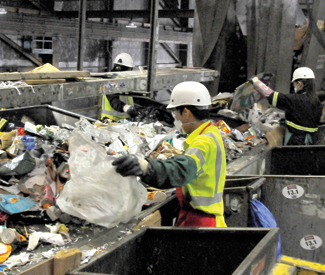
The problem, he argues, is that people are still buying way too much disposable stuff — and a significant amount can’t be recycled. Plastic bags, food wrapping, pantyhose, plastic film, pet waste, construction materials with resin in them (like the popular Trex decking), and particularly disposable diapers have nowhere to go but into the landfill.

San Francisco produces a total of about six kilograms of trash per person per day before diversion is factored in — three times the U.S. national average. That’s a sobering figure that puts a slight dent in the city’s eco-conscious image. It’s not really fair to denizens of the city by the Bay, because it counts trash generated by 20 million annual visitors, daytime employees, developers, and businesses as well as residents. Nevertheless, the trash output ranks well above the per capita average for the Eurozone, which clocks in at a minimalistic 0.5 kg per person per day.

The city has earned its bragging rights for making strides toward diverting waste from the landfill — yet truckloads of waste still leave the famously green city every day. Since 2003, Krausz notes, San Francisco’s overall waste generation has actually increased, from 1,900 to 2,200 kilograms per person per year. At the same time, the per capita amount of waste going into a landfill has dropped, from about 1,000 to 500 kilograms per year. That’s still a lot of garbage.

Krausz argues that San Francisco has no comprehensive plan for achieving Zero Waste, while at the same time having little control over “top of the pipe” consumption, which generates a glut of trash. “While the city has achieved success at managing waste at the end-of-pipe, it has thus far failed to address the fundamental problem of consumption, which is driving waste generation,” his study notes.

Guillermo Rodriguez and Jack Macy of San Francisco’s Department of the Environment counter that there is a strategy, involving a host of different measures ranging from education, to policy initiatives, to incentive programs aimed at reducing waste. They think zero waste is possible. “We’re probably at 99 percent diversion here in this office,” said Macy, who serves as the city’s Commercial Zero Waste Coordinator. “At least 90 percent of the discard stream is recyclable and compostable,” he added. And as for the last 10 percent, “that pie will be shrinking as we find more markets” for recyclables.

Krausz also raised skepticism about Recology’s bid for a landfill contract that would extend until 2025, five years beyond the deadline for all waste elimination. To that, Recology’s Eric Potashner responded that state law requires 15 years of disposal capacity to guarantee a safety net, regardless of municipal aspirations.

Krausz is critical of San Francisco officials for promising zero waste, but he acknowledges that manufacturers of disposable goods, not city officials, are to blame. Ambitious legislative measures such as San Francisco’s mandatory composting program and a ban on plastic bags have been enacted and achieved tangible results, but for items like ubiquitous thin-film plastics, dirty diapers, synthetic materials, and the like, good solutions have yet to be found.

Krausz’ study also determined that no city on the planet that’s set out to do so has ever actually succeeded at achieving zero waste. “If you are a city that is a member of Western civilization as we know it, you’re not going to be zero waste to landfill, because you participate in the global economy,” Krausz states plainly.


SF’S TRASH PIT

On a recent Friday morning, Recology’s Potashner and Paul Giusti led a tour of the city’s recycling and waste processing facilities. It featured a stop at the transfer station, housed in a large warehouse off of Tunnel Road where all the refuse from the black trash bins is deposited before being carted off to the Altamont Landfill. A sweet, pungent aroma hung in the air. “We call this the pit,” Giusti explained as we approached a sunken area that could have contained multiple Olympic-sized swimming pools, extending a story or two below us into the earth. “This is the last frontier,” Potashner added. “The last 20 percent.”

It was filled with an astonishing quantity of trash, making a tractor that ambled awkwardly over top the mound to compact it down appear toy-like in comparison. The sea of discarded material contained every hue, and floating around in the debris were orange juice containers, cardboard boxes, and thousands upon thousands of (banned) plastic bags. Between 200 and 300 garbage trucks eject their contents into the pit each day, and a single truck can hold up to four tons of trash.

Giusti started working for Recology, formerly NorCal Waste Systems, in 1978, following in the footsteps of his father. Back then, the pit was more like a mountain: “When I would dump my truck, I could walk up this pile,” he said, gesturing toward a set of sprinklers suspended from the ceiling to indicate how high it once extended. State data confirms the story: In 2011, according to CalReycle, San Francisco sent 446,685 tons of waste to the landfill. That number has steadily declined over time; in 2007, it stood at 628,914 tons.

Asked for his reaction to Krausz’s thesis that the Zero Waste program won’t ever actually get to zero, Guisti turned the question around by asking, what’s the harm in trying? “Let’s say you said, zero waste is unattainable,” he said. “Then what’s the number? I think zero waste is an ambitious goal — but if we get to 90 or 95 percent, what a tremendous achievement.” Setting the highest of bars is important, he said, because striving for it provides the motivation to keep diverting waste from the landfill.

In order to actually reduce the city’s garbage from 446,685 tons to zero in the next seven years, Zero Waste program partners Recology and San Francisco’s Department of the Environment face a twofold challenge. First, they must prevent compostable and recyclable material from getting into the landfill pile. Second, they must find solutions for diverting the waste that currently has nowhere else to go but the landfill. With a combination of seeking new markets for recyclables, using technology that can sort out the recyclable and compostable matter, and implementing incentives and educational outreach programs, they’re still focused on the goal. “It’s hard to tell how close we’ll get to zero in 2020,” Macy said. So even if zero waste does not actually mean zero waste in the end, that goal “sends a message that we want to move toward being as sustainable as we can.”

Editor’s notes

2

tredmond@sfbg.com

EDITORS NOTES Jaron Lanier is not a Luddite. He’s one of the most brilliant technologists in the world, the virtual inventor of virtual reality and one of the first people calling for information (and music) to be free. He was a tech giant when most of today’s tech titans were in their disposable diapers. So when he starts talking about how the Internet is destroying the middle class, everybody ought to listen.

And that’s exactly what he saying in his new book, Who Owns the Future?

Lanier is 53; he’s been around long enough to see some of the best promises our modern industrial era turn out to be failures or lies. He’s got a little perspective on things — and he’s not happy with what he’s seeing.

We all know American capitalism is a force for disruption and destruction as well as creativity and creation. We all know that industries are born and die. The automobile replaced the horse and buggy. And in a lot of today’s conventional thinking, the tech revolution is just another step in the same direction.

Lanier has another perspective. The current light-speed, youth-driven tech economy has undermined the social contract that has been part of the United States political and economic systems since the Great Depression: People ought to have the right to job security, a decent wage, and the chance to have a family and grow old.

In an interview with Salon, Lanier notes:

“We don’t realize that our society and our democracy ultimately rest on the stability of middle-class jobs. When I talk to libertarians and socialists, they have this weird belief that everybody’s this abstract robot that won’t ever get sick or have kids or get old. It’s like everybody’s this eternal freelancer who can afford downtime and can self-fund until they find their magic moment or something.

“The way society actually works is there’s some mechanism of basic stability so that the majority of people can outspend the elite so we can have a democracy. That’s the thing we’re destroying, and that’s really the thing I’m hoping to preserve. So we can look at musicians and artists and journalists as the canaries in the coal mine, and is this the precedent that we want to follow for our doctors and lawyers and nurses and everybody else? Because technology will get to everybody eventually.”

Hey Googlers and Twitterati and Facebookians: You should listen, sometimes, to your elders.

Alerts

0

WEDNESDAY 15

Bike ride for fallen cyclists Justin Herman Plaza, SF. ramona.wheelright@gmail.com. tinyurl.com/bq623vg. 6:30pm, free. On the third Wednesday of May each year, the Ride of Silence is held in cities throughout the world to honor cyclists injured or killed while riding. The ride is also intended to advocate for safe streets for all users. The San Francisco 2013 contingent will visit nine locations, where ten bicyclists have been killed since 2001, to honor their memories.

THURSDAY 16

Sportswriter Dave Zirin in conversation with KALW’s Rose Aguilar Mission Cultural Center for Latino Arts, 2868 Mission, SF. tinyurl.com/cyujal2. 7pm, $10. The Center for Political Education (CPE) and Solespace present Rose Aguilar, the host of KALW’s “Your Call,” for a special on-stage discussion with noted author Dave Zirin, an author who writes regularly for The Nation and whose commentaries decode the political messages and messaging embedded in sports. Aguilar has hosted Your Call, a daily public affairs radio show on KALW, since 2006. This the only chance to catch Zirin in SF; he’ll appear a second time on May 17 in Oakland (visit link for details).

SATURDAY 18

Yogathon to raise awareness of HIV Madison Square Park, 849 Madison, Oakl. asianhealthservices.org/0518/ 8:30am-1pm, $10. Join Asian Health Services’ HIV/AIDS program for its Fourth Annual Strike a Pose! Yogathon, held in observance of National Asian and Pacific Islander (API) HIV Awareness Day. The event was created to raise awareness and resources for HIV/AIDS prevention within the Asian American, Native Hawaiian, and Pacific Islander (AANHPI) community in Alameda County.

Bay Area Debtors’ Assembly. Unite Here, Local 2, 209 Golden Gate, SF. strike-debt-bay-area.tumblr.com. (415) 568-6037. 2-5pm, free. Strike Debt Bay Area, a local chapter of an international movement formed to resist unjust debt, will host its second Debtors’ Assembly, with the goal of rethinking debt as a political platform for collective resistance and action. Come to the Assembly to learn about tools for escaping debt, sharing resources, skills and experiences, and brainstorming.

MONDAY 20

Eve Ensler reads from her memoir First Congregational Church, 2501 Harrison, Oakl. tinyurl.com/brcvovn. 7:30pm, $35 advance / $38 door. KPFA Radio, Code Pink and Pegasus Books present “Eve Ensler: In the Body of the World,” hosted by Erica Bridgeman. Internationally renowned playwright, activist and author Eve Ensler is the founder of V-Day, the global movement to end violence against women and girls. Ensler will discuss her memoir, In the Body of the World, taking readers through her personal history of sexual abuse, her travels to the Congo, her diagnosis with cervical cancer, and her reflections on the resilience of humanity.

TUESDAY 21

An Evening with Eduardo Galeano First Congregational Church of Oakland, 2501 Harrison, Oakl. tinyurl.com/bl8mb4z. 7:30-9:30pm, $15 advance. One of Latin America’s most distinguished writers, journalists and historians, Eduardo Galeano is the author of the Memory of Fire Trilogy, Open Veins of Latin America, Days and Nights of Love and War, and many other works. Born in Montevideo in 1940, Galeano lived in exile in Argentina and Spain for many years before returning to Uruguay. In his latest work, Children of the Days: A Calendar of Human History, each page has an illuminating story that takes inspiration from that day of the calendar year. Hosted by KPFA Radio.

Gang’s all here

0

culture@sfbg.com

THE BLOB We so very want to love the brand new Sydney Town Tavern (531 Commercial, SF. www.sydneytownsf.com) in the Financial District, named after a roving gang of Australian, Irish, and English convict-rogues who terrorized the Barbary Coast. The Blob certainly loves a bad boy or five! The pedigree is right: Syndney Town is sister to Irish Times, right around the corner. And the drinks are nice — a huge, like pint-glass huge, pomegranate margarita will solve any afternoon problems, and a refreshing orange crush replicates an Orangesicle, though not too sticky-sweet. But the menu falls too much on the typical gourmet bar snacks side, executed not-so-stellarly: fish was leathery and its chips were a droopy few; meatballs were firm but unmemorable; truffle mac and cheese was dry and pasty. Channel your namesake and do something naughty, Sydney Town Tavern!

PS: Cherries are amazing right now; grab some at the farmers market this week.


A+ DEEP GREEN FROM JUICE SHOP

Friends, we are living in an era of $9 juice. There’s a complex story behind the founding of Juice Shop by brothers Charlie, Ben, and Jake Gulick (and Charlie’s wife Linda) involving miraculous liver cleansing, which we won’t relate here, because “liver cleansing.” We will relate, however, the taste of our glass-bottle pint of cold-pressed, unpasteurized, kale-parsley-spinach-romaine-etc. A+ Deep Green juice, purchased at a rustic-cute streetside stand in the FiDi (there’s one in Cow Hollow, too): “Deeep Greeen deeelightful. Immediately, the Blob was ready to conquer her day — probably aided by some sort of squeaky super-clean hyper-liver.

Other options include Coco-Clorophyll, pineapple pear chia, Alpha Green, Beta Beet, and apple lemon ginger. Juice Shop will also program an entire 1-10 day cleanse to suit your needs, including an array of juices, plus aloe and blue-green algae, starting at $62. Has there ever been a kickstarter for a personal cleanse?

353 Pine, SF. www.juiceshopsf.com


PASTRAMI ON RYE AT SHORTY GOLDSTEIN’S

So long ago seem the days when the concept of gourmet Jewish deli food was unconcepted, and that cute guy with the dreads from Wise Sons was hawking chocolate babka out of a hand cart on Ferry Plaza. Wouldn’t you know it, here we are, digging with both hands and a fork into the mountain of meat Shorty Goldstein presents as a pastrami on rye ($12). Lean is definitely not the byword here, with thick, peppery, fat-laced slices piled up like brisket on solid, if completely overwhelmed, rye (mustard and accompanying pickle provided). The Blob cannot lie — it took her two days to finish this giant, which comes out to $6 per lunch. Not bad, and helps explain the lines down the street.

As if that were not recommendation enough, when we showed a picture of said sandwich to our very Jewish uncle from the East Coast, he grunted in condescending amusement, which in old-school East Coast Jewish terms is the closest any gourmet West Coast deli food is going to come to approval, so what’s to complain?

We piled on a hefty side of farm fresh veggies as a treat ($5) — that day it was rainbow carrots roasted with a hint of mint. Other sandwich options include exactly what you’d expect: corned beef (every day), egg salad (Mondays), beef tongue (Thursday), etc. Go eat, already.

126 Sutter, SF. www.shortygoldsteins.com


MATJES HERRING AT WALWERK

Let’s waltz out of the Financial District and its parade of newbies, and right into SoMa for an old favorite, Walzwerk, which was hopping on an early Sunday evening. (If there’s ever a time for wonderful, heavy East German food, Sunday dinner time is it.) The Blob had not been there for at least one historico-dialectical cycle, but the giant etchings of Marx, Engels, and Lenin on the walls still amused, the fabulously direct waitress remembered us, and the German Democratic Republic memorabilia remained fascinating and somehow hilarious.

And the food. Oh, the food. Mouthwatering sauerbraten with pickled cabbage and hefty dumplings covered in gravy, chicken breast stuffed with apples and bacon, awesomely firm cheese spaetzle, “soljanka” cabbage soup with salami, bacon, and pickles. Treat of all treats? Tangy, dill infused matjes herring (mildly salted herring served “housewife-style”), with fresh fillets soused in sour cream with apples, onions, and pickles — a light, sweet take on Thousand Island dressing, maybe, served with firm pumpernickel for spreading. We love you, tangy-sweet East German housewife!

381 South Van Ness, SF. www.walzwerk.com

May flowers

0

arts@sfbg.com

DANCE Smuin Ballet has grown up. Perhaps that should come as no surprise, since the company celebrates its 20th anniversary this November. While the troupe, now 17 strong, has always been engaged in showing what ballet can be without huge production values (and huge budgets), the company is lately doing it better than ever.

Six years ago Michael Smuin died unexpectedly, and a remarkable woman stepped into the cowboys boots he was so fond of wearing. Artistic and executive director Celia Fushille, a founding member and longtime Smuin performer, has a done a remarkable job raising the level of dancing, of choreography, and of widening the company’s appeal to more than Smuin’s traditional, older audience who “just loved Michael.”

Perhaps this fact should be irrelevant, but it is not: Fushille is also one of very few women who are running professional ballet companies. While she is committed to Smuin’s huge repertoire — and she chooses wisely from a very mixed bag — more importantly, she is stretching these dancers with choreography that is fresh, wide-ranging, and never less than professional.

The current program, “Bouquet,” which runs at Yerba Buena Center for the Arts through this weekend before moving to Walnut Creek, Mountain View, and Carmel, is very much worth seeing.

The evening opened with Smuin’s 1999 Chants d’Auvergne, set to a collection of French folk songs popularized by Joseph Canteloupe’s grand arrangements. The orchestration is unbearably soupy and an operatic soprano seems so irritatingly inappropriate for the original material’s simplicity. But Smuin cut through all that ballast and managed to create a modest, charming, and highly romantic vision of country life.

Light in spirit, often with a touch of humor, Smuin’s choreography deftly incorporates casual touches into balletic solos, duets and trios. Jonathan Dummar put his long lines to good use in a goofy yet elegant solo. Longtime company member Erin Yarborough brought ardency to her solo, as well as to her duet with Jonathan Powell.

The gem of the evening was Helen Pickett’s 2008 Petal, set to music by Thomas Montgomery Newman and two four-hand piano pieces by Philip Glass. The work’s title promised something flowery. Nope. The octet, excellently performed, offered highly structured, high-octane choreography with moments of such intimacy that they sent it shivers down your back. Performed in a white box lit in colors that ranged from blinding yellow to sunset orange, Petal’s constantly changing relationships created a pulsating space anchored by stillness. Dancers might move downstage as if being sucked into the audience; the next moment they became part of the scenery, rooted like columns or cornice pieces. A woman might sail high above her partners moments before another tore through a male relationship.

The lush sensuality of liquid torsos and dancers twining around each other balanced the non-stop, full-out dancing, with limbs shooting sky high or snaking along the floor. Yet these people — and they were people — suggested a sense of ease within their own skin that translated to the way they connected and separated. Small caresses around someone’s neck, or on an inner thigh, gave Petal one of its most appealing qualities: the intimacy of the human touch.

Last on this pleasing program was Darrell Grand Moultrie’s Jazzin’, bookended by exuberant ensemble dancing. Opener “Struttin'” was set to the Count Basie Orchestra’s take on Duke Ellington, the finale to the Wynton Marsalis Lincoln Center Jazz Orchestra with the LA Philharmonic. How can you go wrong with inspiration like that? These sections were choreographed with a sense of gusto and joyous celebration of the beat, but without too much personal vision.

For that we had to wait for the center sections of Jazzin’, which offered more theatrically nuanced choreography. Newcomer Erica Felsch’s “Spring in My Step” channeled a Marilyn Monroe-esque mix of innocence and sexual allure with wit and charm. The punchy “Takin’ No Mess,” in which a woman is trying to sell a chair and something else, sounded a different note of humor. Jane Rehm — perhaps the Smuin company’s finest stylist — revealed a comedic side of her talent by hitting every move, every glance with just the right timing. In the dark “Solitude” — again set to Ellington — Joshua Reynolds gave a man’s tortured soul all the pain and dignity it served. It was a beautiful performance.

SMUIN BALLET

Thu/16-Sat/18, 8pm (also Sat/18, 2pm); Sun/19, 2pm, $24-$65

Yerba Buena Center for the Arts

701 Mission, SF

www.smuinballet.org


Bye bye Briski

3

marke@sfbg.com

SUPER EGO It’s been half a minute since I poked my stilettos through an extra-large Target bag and pulled it up to make an evening gown for hitting the town. I only have one sinus left over from the ’90s, so I have to pace my nightlife, ha AS IF. But lately sometimes it’s all like, “where’d everybody go?” when I go out. SF is definitely undergoing another of its periodic freak drains (although much wild unicorn magik still remains, as the Odyssey party proved last weekend).

In 1999 everyone was moving to NYC, in 2003 it was Portland, in 2007 it was Berlin, and now everyone’s either moving to Oakland or LA or beyond. Soon as I manage to turn around without falling down, someone’s gone: beloved DJ bear Claude VonStroke, party maniac Sleazemore, phantasmagoric art star boychild, radical queer activist Michael Lorin Friedman, future Ms. Drag Mess Universe Ambrosia Salad, almost all my tricks I didn’t want to leave…

Yes, it’s the economy, rising rents, influx of drones, lack of jobs or diversity or artistic opportunity, the outrageous wish to not live in a pantry with five other crazies. Also some people seem to think they want professional careers? What is this, “Star Search”?

Well, here’s another story of a beloved someone moving on — but unlike many others, this one’s a happy one (although it may reflect on just how high you can go in this town when it comes to dance music). “No, I’m not really afraid that once I move out of SF I won’t be able to afford moving back,” As You Like It crew resident and sweetest person ever DJ Briski, a.k.a. Brian Bejarano told me over the phone. “Someone will have a floor for me to crash on, and I’ve got family in Pacifica.” That’s where Briski grew up, but he spent a formative period raving in the UK in 2006, which cemented his transition from a psychedelic rock and punk fan to a deeper house sound. Minimal techno was breaking hard back then, but Briski cut his rave teeth at Back to Basics, the infamously gonzo darker-funk night in Leeds (now the longest running weekly in the world).

His signature groove is deep and somewhat tense, almost playfully post-punk — he’s great at ’80s rarities, too — and very consciously indebted to Bay psychedelic house legends the Wicked crew. In fact, his last gig here will be playing back to back with Wicked’s Jenö at the next As You Like It party, Fri/17 at Mighty.

Briski’s off to become the tour manager for one of tech-house’s biggies, Maceo Plex, who has basically achieved pop star status in Europe, and is now based in Barcelona. Briski met the Cuban-born Maceo in Dallas a few years ago, and grew close. “My girlfriend Mariesa [Stevens, also moving], became Maceo’s agent a few years back and we’ve been like a little rave family ever since. Our musical styles are very different, but I’ll be opening for him in some places, and have access to his studio and record label to continue developing my music.”

The only fear Briski has, really, is the fact that he doesn’t know Spanish (despite his family’s Nicaraguan roots). “I grew up here, and I know San Francisco will always be San Francisco, despite whatever changes come. You can still make the life you want here, and go as far as you can go with it. The dance scene is all about family and support — not just my crew, but everyone involved. It’s the true spirit of the city, and that will never die.”

AS YOU LIKE IT w/ Wagon Repair’s Mathew Johnson and Konrad Black, plus Briski B2B Jenö. Fri/17, 9pm-5am, $10–$20. Mighty, 119 Utah, SF. www.ayli-sf.com


THE CLOCK

Christian Marclay’s incredible round-the-clock collage of realtime film moments is one of the hottest nightlife events going — it plays 24-hours at the SF MOMA on Saturdays. You’ll need to get there two-and-a-half hours early to catch midnight, but the wait dies down for 4am, so maybe go then.

Saturdays through June 1, 10am until 5:45om on Sunday, $18. SF MOMA, 151 Third Street, SF. www.sfmoma.org


KASTLE

The SF-based major player on the moody, post-dubstep R&B-sample scene has knocked up an impressive array of hits and a big following. I was more impressed by his recent classic two-step mix, which showed he really knew his sound’s historical progression. With xxxy, Clicks & Whistles, Matrixxman.

http://www.youtube.com/watch?v=nhOn6XaULlU

Thu/16, $16–$18, doors 8:30pm, show at 9pm. The Independent, 628 Divisadero, SF. www.theindependentsf.com


DIRTYBIRD PLAYERS


Oh look, it’s goofball bass papa Claude VonStroke back in town to play with his wily gang of bass-keteers, including Justin Martin, Leroy Peppers (a.k.a. Christian Martin), and one of my favorites J. Phlip, who just returned from Berlin.

Fri/17, 9pm, $5 before 11pm, $20 after. mezzanine, 444 Jessie, SF. www.mezzaninesf.com


OBJEKT

Sonic sculpting with premium put on a dark bass edge from this Berlin-via-Britain dub minimalist: “expansive banging” is a term that comes up alot, which sounds just fine. With Gerd Jansen and the Icee Hot crew.

Sat/18, 10pm-3am, $10. Public Works, 161 Erie, SF. www.publicsf.com


“YAZ: UPSTAIRS AT ERIC’S”

Very cool. New “San Francisco Album Project” — made up of a gaggle of fabbies like DJ Chicken, Trixxie Carr, Nikki Six Mile, Elijah Minelli, Dia Dear, and Precious Moments is performing this classic album from beginning to end, with added dialogue, gender clown zazz, and visual treats. Dragons, the policeman knew, were supposed to breathe fire.

Sun/19, 7pm, $15 advance. The Chapel, 777 Valencia, SF. www.chapelsf.com


Get high

3

cheryl@sfbg.com

FILM San Francisco has a lot of film festivals (understatement of the millennium), but none until now can claim to show "films from the roof of the world." The first annual Himalayan Film Festival kicks off this week with screenings in San Francisco, Oakland, and Berkeley. Opening night features the West Coast premiere of Leon Stuparich’s Road to Peace, a doc that follows the Dalai Lama on his 2008 tour of the UK.

The timing of the visit coincides with a period of unrest in Lhasa, so the trip takes on an unexpectedly political tone, with reporters pressing His Holiness to speak about "the Tibetan problem." Which he does (advocating for "meaningful autonomy" instead of complete independence from China, and emphasizing the need for "a realistic approach" to the conflict), though he nudges his message toward broader themes: universal responsibility, religious harmony, cultural preservation, the environment, and so forth.

In his wake, he leaves a trail of teary-eyed, thoroughly chuffed Brits, including Absolutely Fabulous‘ Joanna Lumley, and proves once again to be one of the world’s most laid-back leaders, with an easy chuckle that puts awed audiences at ease. No wonder he’s such a frequent, favorite subject for documentarians like Stuparich; to that end, if you’ve seen a previous film on the Dalai Lama, this genial travelogue is likely to feel somewhat familiar.

More unusual subject matter is explored in Himalayan Gold Rush, which manages to overcome its stiff, National Geographic-ish narration with a gripping narrative and quite a bit of spectacular scenery. Director Eric Valli travels to rural Nepal to investigate the lucrative yartsa gunbu, or "Himalayan Viagra" trade. Derived from a fungus-and-caterpillar situation that only occurs 5,000 meters above sea level, it’s "worth more than gold" to herbal-remedy shops that cater to rich Chinese clients.

Medicinal claims aside, much of its value is due to the fact that it’s incredibly rare, as well as back-breakingly difficult to harvest. Himalayan Gold Rush zeroes in on a few different foot soldiers, including a father with two young sons who worries about the mountains’ rapidly dwindling yartsa supply — even as he gambles away the family’s meager earnings in a dice game — and a man who rides from camp to camp, buying the crop to sell to his boss, an exporter, in Kathmandu. This, too, is perilous work, with armed guards necessary to protect large parcels of the precious stuff, which to the untrained eye resembles dried-up tequila worms.

An entirely different Nepalese story unfolds in The Sari Soldiers, a 2008 film that focuses on the country’s turbulent political unrest in 2005-2006. It begins with a reminder about the 2001 Nepalese royal massacre, in which the country’s crown prince shot and killed nine of his family members, then himself — or so goes the official version of the controversial tragedy (where’s the documentary on that, by the way?) It then explains how the slain king’s unpopular brother ascended to the throne, and a few years later, amid a Maoist insurgency, claimed "absolute power" for himself.

With this chaos forming a potent backdrop, The Sari Soldiers highlights six women whose different viewpoints make for a remarkably even-handed doc. Not only does filmmaker Julie Bridgham make great use of handheld footage taken amid tense, anti-monarchy student demonstrations, she interviews both a Maoist soldier and a Royal Nepalese Army soldier. Most powerfully, she traces the struggles of a human-rights lawyer who advocates for the country’s alarming number of people who’ve been "disappeared" by the government, including the 15-year-old daughter of another of Bridgham’s subjects.

Other intriguing entries in the small but promising Himalayan Film Festival line-up include another doc about the Nepalese civil war, Beneath Everest: Nepal Reform; a doc about Tibetan athletes’ attempts to earn representation at the Beijing Olympics, Leaving Fear Behind — whose director was jailed because of the film; and, among a handful of narrative works, Old Dog, about a family at odds over the treatment of their much-cherished dog (a Tibetan Mastiff, natch).

HIMALAYAN FILM FESTIVAL

Wed/15-Sun/19, $10

Various venues

www.himalayanfilmfest.com

Assassination character

0

arts@sfbg.com

FILM Starting in the late 1960s, it was noted that Hollywood no longer necessarily required actors who were conventionally handsome. Dustin Hoffman, George Segal, and others were hailed as representatives of a brave new system in which the idiosyncratic character actor of another generation could now be the star. This was an oversimplification, given that the movies had already made room for the likes of Lon Chaney, Humphrey Bogart, and Bette Davis, among others who wouldn’t be considered conventionally beautiful. Nonetheless, the cult of beauty remains a huge factor in movie stardom — even more so now that we live in an era where the principal cinematic heroes are primarily superheroes of one sort or another, defined by their physical perfection.

Nevertheless, sometimes sheer, striking talent forces someone into the front ranks without their having the benefit of looking like a former model. A case in point is Michael Shannon, who has simply been too intense to ignore in movies since at least 2006’s Bug — through indelible performances in Revolutionary Road (2008), Take Shelter (2011), TV’s Boardwalk Empire, last month’s Mud, and more. He’s such a Method-y changeling that it’s hard to believe he’s six-foot-four — he’s so often, so effectively shrunken himself to play flawed men whose souls are in danger of being shrunken further by irresponsible actions.

He’s pretty much the whole show in The Iceman, about a real-life hitman who purportedly killed over 100 people during his career. Despite some scarily violent moments, however, Ariel Vromen’s film doesn’t show much of that body count — he’s more interested in the double life Richard Kuklinski (Shannon) leads as a cold-blooded killer whose profession remains entirely unknown for years to his wife, daughters, and friends. The waitress he marries, Deborah (Winona Ryder), isn’t exactly a brainiac. But surely there’s some willful denial in the way she accepts his every excuse and fake profession, starting with “dubbing Disney movies” when he actually dupes prints of pornos.

It’s in that capacity that he first meets Roy Demeo (Ray Liotta), a volatile Newark mobster impressed by Kuklinski’s blasé demeanor at gunpoint. He correctly surmises this guy would make a fine contract killer, and his offer does seem to strike a chord. Telling Deborah he’s now an investment banker, or some such, Kuklinski upgrades their lifestyle to suburban comfort on a mafia salary. When he has a falling out with Demeo, he “freelances” his skill to collaborate with fellow hitman Mr. Freezy (Chris Evans), so named because he drives an ice-cream truck — and puts his victims on ice for easier disposal.

For the sake of a basic contrast defined by its ad line — “Loving husband. Devoted father. Ruthless killer.” — The Iceman simplifies Kuklinski’s saga, making him less of a monster. His wife said he frequently beat her, though here the marriage is portrayed as fairly idyllic. You can see why Ryder’s Deborah might choose to overlook so many gaps in her husband’s alibis — Shannon makes Richard someone whose stern dedication to murder can also be applied to the roles of spouse and father. Woe betide anyone who insults his family, as one pool hall loudmouth finds out early on.

The movie only briefly suggests Kuklinski’s abused childhood, and it omits entirely other intriguing aspects of the real-life story. But Shannon creates a convincing whole character whose contradictions don’t seem so to him — or to us. It’s an unflashy performance, everything reined in, very tightly wound, such that you’d never imagine this actor could be loose or funny — though that’s exactly what he is in Mud. Shannon isn’t yet 40, and while there are plenty of actors whose bags of tricks leave little room for surprise, one suspects this guy couldn’t repeat himself if he tried.


THE ICEMAN opens Fri/17 in Bay Area theaters.

Joyful noise

0

arts@sfbg.com

LIT If the intrinsic value of an ephemeral experience is its very impermanence, then attempting to capture it for posterity is an exercise fraught with peril. No sanitized textbook description of such chaos-driven movements as Dada, Situationism, and Fluxus could ever hope to capture the raw vibrancy of being a part of the action, and the true value of such movements has really never been in spectating, but from the transformation experienced by the participants while pushing their personal boundaries.

With that caveat in mind, the gorgeously-rendered, scrap-and-patchwork anthology Tales of the San Francisco Cacophony Society (Last Gasp, 300 pp., $39.95) does a pretty good job of conveying not just the external hi-jinks of a group bound together by a yen for the unpredictable, but also the internal philosophical trajectory of many of its members.

Designed to resemble a hardbound EC Comics collection, boldly adorned with a zombie-green, six-fingered hand further deformed by the presences of a bloodshot, unblinking eye smack in the middle of its lined palm, Tales of the San Francisco Cacophony Society is a collaborative effort between key cacophonists Kevin Evans, Carrie Galbraith, John Law, and, in a sense, the whole of the multi-faceted, loosely-knit “society” which ebbed and flowed through the secret pathways and deep underground spaces of the Bay Area and beyond from 1986 through the mid-aughts.

The comprehensive yet quirky tome gathers together an abundance of flyers, photographs, descriptions of momentous pranks and experiential escapades, and newspaper columns documenting such shenanigans as a Thomas Pynchon Walking Tour; the bunker-squatting “Atomic Café”; bridge-climbing; sewer-spelunking; art-car parades; a hide-and-chase game of “Smuggler” at Fisherman’s Wharf; and a rowdy afternoon of shopping cart sled-racing known as the Urban Iditarod. Strewn with colorful collages of ephemerabilia designed by Galbraith and brightly illustrated “Cacophony Factoids” by Evans, the densely-layered visuals bear a whiff of the cheerfully Dada-tastic aesthetic of counter-culture classic The Book of the SubGenius as well as the Cacophony Society’s own former newsletter of events, Rough Draft.

Birthed from the relatively short-lived but highly influential prankster cadre the Suicide Club, which operated from 1977 to 1982, the Cacophony Society itself has “spawned” a veritable pantheon of offbeat occurrences such as SantaCon, the Bay to Breakers Salmon Run, and that bloated megalopolis of arts festivals, Burning Man. In fact, it’s difficult to imagine a San Francisco without the insidious influence of an organization dubbed “the Merry Pranksters of the 1990s.” Even organizations and events (local and national) not specifically born of the society such as Improv Everywhere, Atlas Obscura, the Yes Men, and the Maker Faire bear its imprint: a sense of irreverence combined with a belief in the possible.

“There wasn’t anything that we could think of that we couldn’t figure out how to do,” reminisces Galbraith — who is notably the original instigator of the organizations’ iconic, unmediated Zone Trips (which came to include the first expedition to Black Rock Desert with Larry Harvey’s “man” in tow). This sentiment is echoed by Evans when asked his opinion on the key traits shared by cacophonists, “curiosity, creativity, a deep appreciation of the absurd and the silly, [and] an addiction to making something from nothing”.

Although the idea of a book about Cacophony had been floated around as early as the mid-’90s, it wasn’t until Evans called a meeting between some of his former cacophony comrades in 2010 that the idea began to take a concrete shape. A Bay Area-based fine artist and illustrator, Evans came to the meeting with an already thought-out concept for a “visual history” of the Cacophony Society, and though most of the other people at that first meeting decided against participating, Galbraith, who has a master’s degree in book arts, jumped onboard, eventually spearheading the layout and working most closely with publisher Last Gasp on the final incarnation.

Joining the project soon after Evans and Galbraith got rolling, John Law — a founding member of the Cacophony Society, and a long-time member of the Suicide Club before it — brought his extensive archive of flyers, newsletters, and more to the mix, and, with Galbraith, provided much of the written content. In the end the grueling, three-way editorial process became less about finding enough material for a book, but whittling all the available material down to 300 pages, a process Law likens to lopping off fingers.

“We could have compiled a thousand-page book without repeating anything, or becoming dull,” he muses ruefully by email. “My hope is that others who were involved will write their own books about the period.”

Until that happens, however, pranksters, subversives, free spirits, and urban explorers alike will want to go ahead and splurge on a copy of The Tales of the San Francisco Cacophony Society. And remember, though now technically defunct, the society has always been open to all. You may already be a member. *

TALES OF THE SAN FRANCISCO CACOPHONY SOCIETY

Thu/16, 7pm, free

City Lights

261 Columbus, SF

www.citylights.com


Sun/19, 6pm, free

Green Apple Books

506 Clement, SF

www.greenapplebooks.com

For more readings and related events, including a May 31 party at the Castro Theatre, visit www.lastgasp.com or www.talesofsfcacophony.com.

Psycho beach party

0

emilysavage@sfbg.com

TOFU AND WHISKEY Why don’t more surfers listen to surf music? I found myself in one of those fuzzy-eyed, web-based black holes, frustrated, rhetorically asking the question through the endless prism of social media a few months back. And furthermore, why don’t surfer-musicians play authentic surf rock? While the sound was born in Southern California in the early 1960s, most of the early musicians who incorporated it weren’t active participants in the sport for which it was named, save for Dick Dale. The oft-repeated story is that Dale wanted to reflect the sounds he heard in his mind while surfing. And around that time, Santa Ana, Calif. based guitar-maker Fender even ran ads with beach babes and the tag “Fender makes music to surf by.”

But in the past few decades at least, the more prominent surfer-musicians seem to mostly vacillate between producing pop-punk, reggae, or more commonly, your ubiquitous, folky, banana pancake-loving Jack Johnson boredom block.

Tom Curren is in an elite class, a world champion surfer and son of legendary big-wave rider Pat Curren, he’s an athlete who took all his souped-up energy, and left his sport to pursue…folk rock. He released first album In Plain View in March.

During an ancient ritual in which I participated last week — that would be my honeymoon on Oahu — the bus drivers, tour leaders, cabbies, and general friendly tourist industry folks kept offering up slice-of-life songs for our listening pleasure. You like music? Well, get a load of this beach-ready sound. Cue soft rock (Hawaiian-born) Jack Johnson, or, the late Honolulu singer-ukulele musician Israel “Iz” Kamakawiwo’ole. We heard Iz’s “Somewhere Over The Rainbow/What A Wonderful World” medley no fewer than 15 times in seven days. I asked my husband, who grew up surfing on the Central Coast, what was up with the surfer/surf rock divide and he quietly responded, “I’ve never participated in surf culture, I have no idea.”

When I returned to work this week, I asked local surf musician Donald Bell of Aloha Screwdriver a similar question, and he shut it down more academically, “I can’t speak for surfers. I don’t surf. I grew up skateboarding. I don’t know a single one of our fans who surf. What’s funny is that our biggest fans live in the gloomiest climates. We have a bunch of fans in Seattle.” He added, “I think that Californians have a kind of cultural cringe when they hear surf music, because it’s the kind of thing that always gets played in the background whenever a California beach scene is shown on TV. It can feel cliché. But once you get outside of California, that baggage tends to disappear and you get treated like an exotic import.”

Bell got it though, what I was after. I wanted the explosive electric guitar of Dale and the Trashmen, the wet noodling power of ’90s revival acts like Phantom Surfers and Man Or Astro-Man?, or powerful throwback shock of Guantanamo Baywatch or Trashwomen (those last two, by the way, will play the Burger Boogaloo fest July 6-7 in Oakland). OK, so Hawaii wasn’t technically the place to find the thriving surf rock stuff; if I’m being fair, I knew the style I desired wasn’t based there. Plus, I didn’t exactly plow through underground punk shows while visiting, being buried deep in the sand and fruity alcohol-based beverages and all.

So maybe it doesn’t matter if professional surfer-musicians are out there playing the music of their cultural ancestors, there’s still an avid fan base.

A week earlier, the husband and I walked down the aisle to the Ventures, “Walk Don’t Run” (“Pipeline” was considered but ultimately dismissed). See, this was the music I grew up loving. The vroom-vroom-vroom of wild guitar riffs, heavy reverb, Eastern scales, rapid and escalating drumming peaking, crescendoing, wiping out. Proto-beach punk.

“People forget that before the Beatles hit, surf music was once pop music in this country. Right now, pop music is very focused on a synthetic sound, but everything comes back around,” Bell says.

And there will be a fix of the good stuff nearby this weekend, at radio station KFJC’s Battle of the Surf Bands benefit (Sat/18, noon, $10, all ages. The Surf Spot, 4627 Coast Hwy., Pacifica. www.kfjc.org). Bell’s Alameda-based trio will play the yearly event for the second time. And the 16-band battle also includes Beachkrieg, Deadbeats, Mighty Surf Lords, Tomorrowmen, Frankie and the Pool Boys, Meshugga Beach Party, and more surf acts with cheeky names. The event benefits the station itself, and also will be broadcast using Live Cam.

Given that it does often feel like a maligned art form, the abundance of traditional surf bands participating every year at KFJC’s event (now in its sixth year) seems surprising.

“There are probably more surf rock groups in the Bay Area than any other location in the world,” Bell says, naming off many that will play the battle, and beyond. “A lot of that has to do with the continued support of KFJC and DJs like Phil Dirt and Cousin Mary who really championed the genre…I formed my first surf band when I was 16, and Dirt brought us into the studio to play live on the air for 30 minutes. It was crazy to have that kind of outlet. It’s unheard of.”

Now in his early 30s, Bell has continued to play in surf bands with his musician friends from high school — drummer Steve Slater and bassist Grant Shellen. They grew up together in Fremont and that’s where they formed that first band: Chachi, Boba Fett and the Wookiee. Bell says he initially found the genre through the surf revival acts of the ’90s like the Phantom Surfers and Shadowy Men on a Shadowy Planet, but then, once he was hooked, he tumbled backward toward the Ventures, Link Wray, the Shadows, and of course, Dale.

Aloha Screwdriver began in ’09, and the trio plays all instrumental music. “Sometimes it veers into rockabilly or like a Ennio Morricone spaghetti western vibe, or even like a Disney Haunted Mansion feel, but I’m always holding our songs up to this idea that they could carry a Tarantino-worthy action sequence.”


MYRON AND E

Listen to Myron and E’s single “If I Gave You My Love” and you’ll start to feel some involuntary movements, your head bouncing in agreement, shoulders shimmying side to side. It’s the nature of the solid gold soul beast. The duo was recently signed to tastemaker Stones Throw, and will release newest album Broadway, backed by Timmion Records house band the Soul Investigators, on the label July 2. With a handful of 45s already out there, the two — Bay Area bred Myron Glasper and Eric “E da Boss” Cooke — have successfully maneuvered an authentic soul sound that’s at once smooth and celebratory (with the help of some well-placed horns). The duo, which met on tour with Blackalicious, stops by Berkeley this weekend for the East Bay Soul Stomp 2. With Bang Girl Group Revue, New Love Soul Revue, DJ Derek See, DJ Der.

Sat/18, 8pm, $9–$12. Starry Plough, 3101 Shattuck, Berk.www.starryploughpub.com.


BLACK PUS

The first thing you need to know about Black Pus is that it’s just a looping Brian Chippendale — he of Lighting Bolt fame. For this project, the madman drummer (and forever art-school kid at heart) uses percussion, a triggered oscillator, and those echoing, distorted Lightning Bolt style vocals you’d expect. Most tracks sound like a spaceship lifting off and exploding into starry darkness, repeatedly. With CCR Headcleaner, Reptilian Shape Shifters.

Sat/18, 9:30, $10. Hemlock Tavern, 1131 Polk, SF. www.hemlocktavern.com.


Take it all off

0

arts@sfbg.com

THEATER In the downstairs den of her Noe Valley home, director Vidhu Singh and her cast are rehearsing some of the opening scenes in a madcap and punchy satirical revue making its US premiere at the Brava Theater this week. In the center of the room, to the driving beat of some irresistible Eastern pop, an MC (played by veteran improv actor-teacher Mick Laugs) introduces the diverse ensemble in the manner of a runway fashion show, as each character parades to the front of the stage to strike a pose in her or his burqa — because, female or male, just about everyone wears a burqa in this play.

Especially in this domestic setting, the whole project seems a good-natured and relaxed affair. At the same time, it’s impossible to ignore the charge that comes with the satirical appropriation of this politically fraught piece of clothing, or miss the serious intention behind every comical line and gesture. For all its campy humor, Burqavaganza is a defiant piece of political theater — and, it turns out, a critique of much more than an embattled piece of female attire.

Written by award-winning Pakistani playwright, journalist, and human rights activist Shahid Nadeem, Burqavaganza sends up authoritarianism and extremism at large, the burqa becoming a byword for various public masks and ideological certainties thrown around by both sides in the tangled “war on terror.” The word itself is woven obsessively into the dialogue like a ubiquitous fabric, its constant iteration — including in names and titles — making for a comical punctuation that sounds more and more absurd as time goes on. By the end, “burqa” becomes a nonsense word, burbling on the surface of an irrational state of affairs churned by deeper interests and forces that otherwise go unnamed.

First produced in Lahore by the Ajoka Theatre Company — co-founded by Nadeem and wife Madeeha Gauhar (the play’s original director) — Burqavaganza was quickly banned by the Pakistani government after complaints from women members of a fundamentalist political party. That has not stopped it being mounted in various provinces of the country, however. As for its US debut, director Singh thinks it has something to offer local audiences beyond just entertainment.

“It seems to me that people want to talk about issues, but they don’t have a way of addressing the debate about the burqa; and the play does that using humor and satire. That makes it very accessible. It humanizes the characters while highlighting the debate,” Singh says. “I think the divide between the West and Islam is so sharp. The play tries to address both sides of the divide. On the one hand, it offends conservative Muslims, who think basically you’re making fun of the burqa. On the other hand, it’s also a critique of the West and the US’s attitude toward Islam, and parodies the war on terror. So it sort of offends people on both sides — and it’s funny, so it works.”

Positioning itself somewhere between Islamist extremism and Western imperialism, Burqavaganza critiques both from the ground of human dignity and respect for human rights. Such principled critique is more widespread throughout Muslim-majority countries than many here in the West might suspect, according to human rights lawyer and author Karima Bennoune, whose new book, Your Fatwa Does Not Apply Here: Untold Stories from the Fight Against Muslim Fundamentalism (forthcoming from W.W. Norton), is a far-flung firsthand survey of artists, intellectuals, and activists across the Muslim world combatting Islamist extremism in the cultural realm. Among the artists she profiles are Nadeem and Guahar. (In fact, she adapts her title from a line in another Ajoka Theatre play, Bulha). Bennoune says Ajoka has proved more outspoken in their critique of Muslim fundamentalism “than many liberal circles or diaspora populations in the West dare to be.”

“What is perhaps most remarkable is that the Ajoka Theatre Company debuted this play, complete with its satire of burqa-obsessed extremists, in Pakistan in 2007, as political violence was on the rise — and only about a month after the nearby killing of the 36-year-old Punjab minister for social welfare, the women’s rights advocate Zil-e Huma Usman,” says Bennoune in a recent email correspondence. “Her murderer said she was not sufficiently covered in her shalwar kameez [a traditional South Asian dress]. As I write in my book, the real ‘Burqavaganza’ was right there, just outside the theater door.”

For all its humor and high spirits, Burqavaganza has the potential to provoke questions as well as debate among the Bay Area audiences who come to see it. But that, enthuses Bennoune, is all to the good.

“The importance of a production of this kind in the US now after the Boston bombings — when there is still such a limited space to offer a sharply critical yet non-discriminatory response to the terrible mentality that accompanies jihadism — cannot be overstated. After all, as Nadeem reminds us, ‘We all live in a Burqavaganza.'”

BURQAVAGANZA

Through June 2

Opens Thu/16, 8pm; runs Thu-Sat, 8pm; Sun, 3pm, $20

Brava Theater Center

2781 24th St, SF

www.brava.org


Fair play

4

arts@sfbg.com

VISUAL ART It’s art fair time again. Last year there were three, this year there are only two, though it looks like artMRKT, which is taking over now defunct SF Fine Art Fair’s slot at Fort Mason, has pretty much absorbed the former’s area galleries. ArtPadSF, the more festive of the two fairs, will again be renting out all the rooms at the Tenderloin’s Phoenix hotel. (Both fairs run Thu/16-Sun/19). I can’t help but wonder, will there be synchronized swimming again in the pool this year?

>>View a slideshow of our fair picks here

Say what you will about whether or not art fairs are a reasonable way to actually engage artworks in a serious way (read: they’re not), they do offer exposure to people that are worth knowing more about. With that in mind, here’s our locals only guide to Bay area artists — some emerging, some established — whose work you can catch at the fairs.


ARTPADSF

Andrew Benson, Johansson Projects

Benson’s sometimes gooey, sometimes crunkly digital video/experimental software work breathes some ragged, frenetic energy into the standard trope of “relationships between the body and technology.” His piece is scheduled to be projected from the Phoenix onto the six-story building next door at 8pm, Thu/16-Sat/18.

Justine Frischmann, Unspeakable Projects

Frischmann’s paintings look like something that one of those spiders on Benzedrine would make. If it lived inside an Etch A Sketch. And used neon spray paint. During a dust storm. Trust me, these are compliments.

David Hevel, Marx & Zavattero

Hevel makes collaged sculptures and sharp pop abstract paintings, usually riffing on American celebrity. His work at the fair will be very MTV 1983.

Scott Hove, Spoke Art

Will Oaklander Hove be showing one of his intensely drugged up fanged wall cakes, a knotted rope work installation, or a surrealism-on-meth painting? Yeah, it all sounds good to me, too.

Jason Kalogiros, Queen’s Nails Gallery

Kalogiros makes edgy, dense, cerebral, photo-based works, lately by manipulating found commercial images. I’m hoping to see a couple from his series of Cartier and Bvlgari watches.

Ed Loftus, Gregory Lind Gallery

Loftus does photorealism pretty much the right way, by marrying intense attention to detail with an obsessive and neurotic subject matter that crawls under your skin ever deeper the more time you spend with it. While you’re in Gregory Lind’s space, also check out Thomas Campbell and Jovi Schnell.

Matt Momchilov, Unspeakable Projects

Momchilov queers punk and rock fandom in the traditional sense of the word, meaning his paintings and sculpture snatch and redirect standard accoutrements of punk fanboys and girls to point that hardcore laser focus in new directions and at more fey subjects.

Gregg Renfrow, Toomey-Tourell

I won’t blame you one bit if you try to lick Renfrow’s luminous, vibrating color field abstractions. His meticulous, precise, wondrous paintings are like visual everlasting gobstoppers, and I fully expect that by the time I see ’em, they’ll have a layer of saliva all over.

Jonathan Runcio, Queen’s Nails Gallery

Runcio makes incisive 2 and 3D work that takes traditional hardedge abstraction in the art concrete vein, shacks it up with remnants of urban architecture, and has a post-formalist lovechild.

www.artpadsf.com


ARTMRKT

Johnna Arnold, Traywick Contemporary

The fair’s Collector’s Lounge will be showing Arnold’s video created to accompany the richly saturated, haunting landscape photos that will be showing offsite at the gallery.

Carol Inez Charney, Slate Contemporary

Charney’s complex photographs were the single most outstanding thing I saw last year at ArtPad. That’s complex like a personality, not like your taxes. A year later, I’m prepared for the brainfreeze again.

Amanda Curreri, Romer Young

Curreri’s precisely conceived conceptual color and abstract works are subtle in that they tend to yield only small nibbles at first pass, but they’re deceptive that way, and usually end up smacking you around by the time it’s all over.

Lauren DiCioccio, Jack Fischer Gallery

DiCioccio has recently been applying her super-meticulous needlework to fastidiously x-ing out individual letters in pages of books, as an act of both scrutiny and physical redaction of the received, mediated world.

Joshua Hagler, Jack Fischer Gallery

Somewhere in the Hamptons summer home where Glenn Brown and Lucian Freud are renting with Mark Tansey and Matthew Day Jackson, Hagler is stoned on the couch making fart noises with his armpits. That is also a compliment.

Claire Rojas, Gallery Paul Anglim

Sure Gallery Paul Anglim shows Barry McGee, but I’ll be looking at the Rojas paintings, whose hard edge and off-kilter abstractions of interior architectural spaces are spot-on and mesmerizing.

Diane Rosenblum, Slate Contemporary

Rosenblum switches up hyperanalytical and conceptual works that incorporate research, crowdsourced interactions, and photography. I’m hoping to see images from a series of recent photos that work Flickr comments into the image.

Dana Hart Stone, Brian Gross

I can’t wait to examine Hart Stone’s paintings up close, which in the past have been made by repeatedly transferring or printing antique images in rows onto canvas. Also at Brian Gross are Bay Area stalwarts Roy de Forest and Robert Arneson.

Esther Traugot, Chandra Cerrito

Traugot combines found organic objects with crochet. I know what you’re thinking, but this is not a Portlandia skit. She does it the right way, promise.

www.art-mrkt.com/sf

Crazy sexy cruel

0

FILM Long before VHS demon Sadako glared one eye through a tent of tangled black hair in 1998’s Ring (American viewers may switch that to “Samara” and “2002”), another angry, swampy-coiffed dame was doing her best to scare the bejesus out of ticket buyers. The year was 1825, and the kabuki play was called Yotsuya Kaidan. Ghost Story of Yotsuya, the 1959 version of that oft-filmed tale — which contains visual motifs made famous by J-horror — kicks off the Yerba Buena Center for the Arts’ titillatingly-titled “Girls! Guns! Ghosts! The Sensational Films of Shintoho” series (Thu/9-May 26).

Exploitation specialist Shintoho is often described as “the Japanese American International Pictures,” with output likened to Roger Corman’s oeuvre. The comparison is apt, what with the overlapping timelines (Shintoho was active from 1949-1961) and shared love of low-budget productions chockablock with daring, sleazy, violent, racy, and otherwise beyond-the-mainstream themes. Most of the films in “Girls!” are under 90 minutes, and a good portion of them are even shorter. Ghost Story of Yotsuya, directed by prolific Shintoho hand Nobuo Nakagawa, clocks in at a pulse-pounding 76 minutes.

It opens on a kabuki stage, with a macabre song hinting at what’s to come: “the greatest horror there is,” we’re warned, is “the fury of a woman maddened.” Though it takes nearly an hour to get to payback o’ clock, that allows plenty of time to pile up just cause: sleazy samurai Iemon woos pretty, naive Iwa (played, respectively, by studio faves Shigeru Amachi and Katsuko Wakasugi) after killing her suspicious father and shoving her sister’s beau over a waterfall. Unsurprisingly, he makes for a cruel, manipulative husband, using his wife for gambling collateral and feeding her “medicine for your circulation” once a younger, richer girl captures his attentions. The poison does a Phantom of the Opera-style number on Iwa’s face before hastening her death. “I will visit my hatred upon you,” Iwa’s pissed-off ghost declares, and boy, does she — no VCR required.

More cranky spirits populate Ghost Cat of Otama Pond (1960), which leans heavily on (blood) red and (supernatural) green lighting effects to weave its tale of, again, revenge from beyond the grave. This time, it’s revenge so patient it waits generations to cause havoc, cursing a contemporary woman who stumbles into an abandoned house when she and her fiancé keep tracing the same route through the woods in a Twilight Zone-ish frame story. (Pro-tip: maybe don’t declare, “I hate cats!” when you encounter one with witchy powers.) A flashback to centuries prior explores a feud between two families that encompasses forced marriages, haunted hairpins, horrific fires, bodies tossed in the titular pond, and a monster that takes on an oddly feline form.

Of course, not all of Shintoho’s films were period-pic screamers. A trio of black-and-white “Girls!” selections embrace pulpy, seedy, noirish characters and situations. Nakagawa’s Death Row Woman (1960) begins, ominously, as a posh family goes duck hunting. (“You could kill a person!” someone remarks of another character’s shooting skill.) Rebel daughter Kyoko (Miyuki Takakura) doesn’t want to marry the man her father has picked out for her — but her stepmother and stepsister are none too pleased with Kyoko’s own choice, for different reasons. When Daddy Dearest suddenly croaks, it’s a death sentence for Kyoko — who is actually guilty only of being shrill pain in the ass. Lightly lascivious woman-in-prison scenes (this isn’t 1983’s Chained Heat or anything) are followed by a daring, Fugitive-style escape, though ain’t nobody getting justice without suffering through a vat full of melodrama first.

Even more entertaining are the two films in “Girls!” directed by Teruo Ishii: 1958’s Flesh Pier and 1960’s Yellow Line. Both make great use of back-alley characters, with fedoras and fishnets to spare. Flesh Pier‘s action is set in Ginza, as an undercover cop who’s in love with a burlesque dancer investigates the city’s “trade in flesh;” also undercover is a female reporter hoping to get a big scoop on same. (This film contains a fashion-show scene in which nightie-clad models smoke cigarettes on the runway.) Meanwhile, Yellow Line follows a moody hitman (Amachi again) who kidnaps a dancer (a sassy Yoko Mihara) and drags her to Kobe’s red-light “Casbah” district, with her newspaper-reporter boyfriend in hot pursuit. (This film contains a hooker named “the Moor,” played by a white actress in blackface.)

Not available for preview, but likely as mind-blowing as any and all of the above: Michiyoshi Doi’s The Horizon Glitters (1960), described as a “black comedy about a prison break gone wrong;” Toshio Shimura’s 1956 Revenge of the Pearl Queen, about a bodacious, ass-kicking female pearl diver played by Michiko Maeda (a.k.a. “the first Japanese actress to appear in a nude scene in a mainstream film” … this film); and Kyotaro Namiki’s Vampire Bride (1960), in which a scarred young dancer transforms into a horrific, hairy beast. If a picture says a thousand words, the widely circulated still from this film positively shrieks them. 


“GIRLS! GUNS! GHOSTS! THE SENSATIONAL FILMS OF SHINTOHO”

May 9-26, $8-10

Yerba Buena Center for the Arts

701 Mission, SF

www.ybca.org

Nice builds

5

marke@sfbg.com

STREETS ISSUE “Oh, we’re doing pretty well right now,” a hunky contractor with Cahill Construction said with a wink at a chic party a couple weeks ago. He was referring to the building boom that’s hitting SF, its slender cranes teetering across our skyline like a stilettoed bacherorette party drinking its way down Polk Street. In terms of new build, 2010s SF is the new 1990s Berlin (somebody wrap our Reichstag, already). And while some of the design is surprisingly gorgeous, and we thankfully haven’t fallen yet for too much trendy starchitect stuff, a lot of it is a bit perfunctory to say the least. For a region that produced visionary architects from A.G Rizzoli to Ant Farm (and the often gorgeous infrastructure of your personal computer), you’d think we could push beyond stacked glass boxes lined in travertine and looming USB-like forms a tad more.

Practicality intrudes, of course, and while we wait for this, one of the richest and most creative places on earth, to develop a contemporary street vernacular to replace those awful ’90s SoMa live/work lofts, there’s a lot of loveliness hitting our streets, This year’s American Institute of Architecture SF Awards, which took place April 25, were abuzz with great, recently completed projects that focused on ground-up design that was practical, sustainable, inventive, and just plain neato. Here are a few winners that caught my eye, mostly because I had seen them in action on my weekly walks through the city and beyond. Their worth a closer look on your own jaunts. (See more winners at www.aiasf.org.)

RICHARDSON APARTMENTS

Designed by David Baker + Partners (snappy sage of green design Baker is SF’s closest thing to a starchitect) and run by Community Housing Partnership, this Hayes Valley supportive housing complex is named for Drs. Julian and Raye Richardson, who started Marcus Books in the Fillmore, the country’s oldest black book store. It houses 120 formerly homeless tenants as well as several businesses, and its swoop of natural materials and neighborhood-brightening color “seek to repair the site of a collapsed freeway with homes.”


OAKLAND MUSEUM ENTRY PLAZA

You usually go to a museum to see (worship?) others’ creativity: Oakland Museum’s interactive entry plaza and event space, designed by Jensen Architects, allows you to express your own. Usable white garden furniture hangs from a giant blackboard — make a space to chill, and write out your thoughts. Simple and stunning.


OURCADIA

The parklet movement began in San Francisco in 2010 and has now spread throughout the world, decommissioning parking spaces for more humanely amenable uses. (Maybe parklets are our new native architectural vernacular? Hope so.) Now some of the sharper ones are being institutionally recognized, like this nifty zag outside farm:table restaurant in the Tenderloin, designed by Ogrydziak/Prillinger Architects and Reynolds-Sebastiani landscape architects. Funding by, duh, Kickstarter.


HAYES VALLEY PLAYGROUND

Hayes Valley has gotten so congested at this point, its need for some space to breathe is critical — and with patricia’s Green being pretty much overrun and Hayes Valley Farm about to disappear under a cloud of construction, it’s only getting worse. This groovy clubhouse and playground design by WRNS Studio (in association with the Trust for Public Land) updates the 1958 Parks and Rec space with some bright color, fun contraptions, and spacious feel, creating a safe space for kids to “foster an appreciation of nature and social gathering.”


LAND’S END LOOKOUT

Perched above Sutro Baths, on a cliff exploding right now with colorful blooms, this exceedingly graceful 4,050 sq. ft. National Park Service visitor center is one of my new favorite places in the world. It contains a smart little cafe, oodles of info on the natural surroundings and nearby historical hot spots, and a superfriendly staff. But the design itself, by EHDD, fits so perfectly into its Point Lobos surroundings (and puts further to shame the industrial barn-like Cliff House next door) that you may find yourself lingering beyond a cappuccino to enjoy the light and light-filled space, waves frothing on the rocks far below.


ONE KEARNY LOBBY

A walk through the Financial District at night is a journey into Mad Men nostalgia — further back, even, as elaborately sculpted Neo-Gothic lintels from the early 1900s beckon over entranceways, lit dramatically by the spacious lobbies within. Contemporary takes are worth searching out as well. Redeveloped century-old beauty One Kearny’s tiny new lobby, designed by IwamotoScott Architecture and entitled Lightfold (because we brand our lobbies now), is a wee swooner of luminescent stalactites, a.k.a. “an array of digitally-fabricated wood veneer lanterns” and bright, odd angles. Like all good entryways, it draws you fully in.


SFO T2

The glistening, organic-futuristic San Francisco International Airport Terminal Two “elevates the passenger experience with design strategies that reduce traveler stress, promote progressive sustainability measures and highlight the airport’s art installations.” It also kind of makes me not want to leave.

C who we R

0

arts@sfbg.com

DANCE When Charles Anderson returned from a performing and choreographing career in New York 11 years ago to start a chamber-size contemporary ballet company, it seemed fair to wonder whether the Bay Area really needed another one. In the intervening years he certainly, and justifiably, has put his Company C Contemporary Ballet on the map. He assiduously assembles contemporary choreography that, at the very least, has a tenuous relationship to ballet. If there are missteps, and there are some in almost in every program, he nonetheless manages to offer a generous and broad spectrum of perspectives. You walk away glad that you came.

In the most recent program — which was performed in San Francisco May 2-4 and travels to Walnut Creek this week — his dancers dove into a smorgasbord of world and company premieres with gusto. Only Anderson’s own 2007 Boléro, choreographed to you-know-what, has been previously danced by this well-trained troupe.

What Anderson has not yet found is a good (and affordable) San Francisco venue to showcase his fine company. This season he tried out Z Space, an inviting theater, albeit one that could benefit from updating its lighting system. And for ballet dancers, who often have flying exits, Z Space’s lack of wing space is a problem. Momentum needs to be truncated to avoid crashing into the brick walls.

Company dancer David Van Ligon’s world premiere, Natoma, in particular needs to be seen on a more suitable stage. Set to an odd assemblage of scores by iconoclast composer Zoe Keating, Natoma runs out of steam about halfway through. Yet this is an honest attempt to deal with traditional structures seen through contemporary eyes. Laura Hazlett’s simple costumes (black bathing suits for the women, tights and white top for the men) nicely highlighted the dancers’ lines.

Van Ligon bowed to convention with a central pas de deux (for gorgeous Edilisa Armendariz and Connolly Strombeck), and three couples and a female duo (Laura Dunlop and Kristin Lindsay) that also framed the pas de deux. Yet he reconfigured this set-up into a number of ever-changing variations that gave Natoma a satisfying sense of elasticity. Wisely, perhaps influenced by Keating’s stab at minimalism, he pared down his vocabulary to basic steps and unisons in conjunction with flowing arms. Still, at times one wanted more richly textured choreography. Pleasing was the design’s clarity, though it put in relief both the dancers’ strengths and their weaknesses.

The appropriately-named A Modest Proposal, from John Bohannon (concept and text) and Carl Flink (direction and choreography), was a fresh, clever, and amusing smashing of verbosity against the succinctness of art, entertained without a whiff of Swiftian sarcasm. Trying to explain complex scientific facts with more and more words, and worse, with PowerPoint, is useless, narrator Ryan Drummond. Do it through dance. When the ensemble, having swirled around Drummond, stepped out of their overalls and into Hazlett’s diaphanous white for an airy, fluid finale, you could almost believe him.

Dennis Nahat’s 1970 Ontogeny — named for the process of life forms’ individuation, in case you slept through biology class — received a stunning interpretation. Using Karel Husa’s densely-layered, Pulitzer-winning String Quartet No. 3, Nahat excellently drew on the resources of modern dance and ballet to suggest eroticism and struggle as a biological necessity. With a powerful and nuanced Jacqueline McConnell and a vulnerable and athletic Tian Tan in the leads, Nahat’s angular yet expansive choreography looked as vibrant and edgy as it must been over 40 years ago.

A surprise addition was Anderson For Your Eyes Only, a splendid duet, originally performed for a hearing-impaired audience. Chantelle Pianetta and Bobby Briscoe, he a head taller than she, sensitively explored the give and take of an on/off relationship. Performed in silence, you heard their footfalls, the exertion of their breath, even the swish of their pants.

Anderson’s Boléro closed the program. It’s a good enough Spanish-flavored work for an over-used score. But perhaps it’s one that choreographers just have to get out of their systems.

COMPANY C CONTEMPORARY BALLET

Thu/9-Sat/11, 8pm; Sun/12, 1pm, $23-$45

Lesher Center for the Arts

1601 Civic, Walnut Creek

www.companycballet.org


The zero-sum future

74

tredmond@sfbg.com

It’s going to take longer, sometimes, to get from here to there. Acres of urban space are going to have to change form. Grocery shopping will be different. Streets may have to be torn up and redirected. The rules for the development of as many as 100,000 new housing units in San Francisco will have to be rewritten.

That’s the only way this city — and cities across the country — can meet the climate-change goals that just about everyone agrees are necessary.

Jason Henderson, a geography professor at San Francisco State University, lays out that case in a new book. He argues, persuasively, that the era of easy “automobility” — a time when people could just assume the ease and convenience of owning and using a private car as a primary means of transportation — has come to an end.

Henderson isn’t suggesting that all private vehicles go away; there are places where cars and trucks will remain the only way to move people and supplies around. But in the urban and suburban areas where most Americans live, the automobile as the default option simply has to end.

“In 10 years, there will be less automobility,” he told me in a recent interview. “It’s a simple limit to resources.”

And the sooner San Francisco starts preparing for that, the better off the city and its residents are going to be.


BIG NUMBERS

Henderson’s book, Street Fight: The Politics of Mobility in San Francisco, focuses largely on the Bay Area. But as he points out, the lessons apply all over. The numbers are daunting: Cities, Henderson reports, “use 75 percent of the world’s energy and produce 78 percent of global greenhouse gas emissions.” He adds: “Transportation is the fastest growing sector of energy use and [greenhouse gas] emissions, and this fact is in great measure owing to the expansion of automobility.”

And the United States is the biggest culprit. This nation has 4 percent of the world’s population — and 21 percent of the world’s cars.

To turn around the devastating impacts of climate change, “America will need not only to provide leadership, but also to decrease its appetite for excessive, on demand, high-speed automobility.”

And buying a lot of Priuses, or even electric cars, isn’t going to do the job. “Americans must undertake a considerable restructuring of how they organize cities, and that must include the rethinking of mobility and the allocation of street space.”

The Bay Area is about to enter into a long-term planning cycle that, according to groups like the Association of Bay Area Governments, will involve increased urban density. ABAG, according to its most recent projections, would like to see some 90,000 new housing units in San Francisco.

That’s got plenty of problems — particularly the likelihood of the displacement of existing residents. Henderson agrees that more density is going to be needed in the Bay Area — but he’s surprisingly bullish on the much-denigrated suburb.

“It’s actually quick and easy to retrofit suburbia,” he told me.

And like so much of what he discusses in his book, the primary solution is the old, venerable, human-powered contraption known as the bicycle.

“Existing communities like Walnut Creek are eminently bikeable,” Henderson told me. He suggests expanding development in three-mile circles around BART stations — after getting rid of all the parking. “We could easily get 20 to 30 percent of the trips by bike,” he noted.

In fact, he argues, it’s easier to put bicycle lanes and paths in the suburbs than in San Francisco. The streets tend to be wider, there’s more room in general — and it’s fairly simple to provide barriers from cars that make biking safe for everyone.

In fact, a lot of European cities are less dense than San Francisco — and have far fewer drivers. Even in California, the city of Davis is famous for its bike culture; “In Davis,” Henderson said, “There are all these children riding their bikes to school.”


ACRES OF PARKING

One of the most profound changes San Francisco is going to have to make involves coming to terms with the immense amount of scarce space that’s devoted to cars. Parking spaces may not seem that big — but when you combine the 300-square-foot typical space (larger than many bedrooms and offices) with the space needed for getting into and out of that space, it adds up.

“Parking for 130 cars amounts to about an acre, and the aggregate of all non-residential off-street parking is estimated to be equal in area to several New England states.”

Cars need more than a home parking space — they need someplace to park when they’re used. So in a city like San Francisco that has more than 350,000 cars, a vast amount of urban land must be devoted to parking. In fact, Henderson estimates that parking space in San Francisco amounts to about 79.4 million square feet — or about 79,400 two-bedroom apartments. Off-street parking alone takes up space that could house 67,000 two-bedroom units.

And it’s hella expensive. Building parking adds as much as 20 percent to the cost of a housing unit. He cites studies showing that 20 percent more San Franciscans could afford to buy a condo unit if it didn’t include parking.

But the city still mandates off-street parking for all new residential construction — and while activists have managed to get the amount reduced from a minimum of one parking space per unit to a maximum of around eight spaces per 10 units, that’s still a whole lot of parking.

And if San Francisco is expected to absorb 90,000 more housing units, under current rules that’s 72,000 more cars — which means a demand for 72,000 more parking spaces near offices, shopping districts, and parks. Crazy.

So how do you get Americans, even San Franciscans, to give up what Henderson calls the “sense of entitlement that we can speed across town in a private car?” Some of it requires the classic planning measures of discouraging or banning parking in new development (AT&T Park works quite well as a facility that is primarily accessed by foot and transit). Some of it means putting in the resources to improve public transit.

And a lot of it involves shifting transportation modes to walking and bicycles.

San Francisco has had significant success increasing the use of bikes in the past few years. But there are limits to what you can do by tinkering around the edges, with a few more bike lanes here and there.

There are, for example, the hills. And there’s grocery shopping for a family. Those things need bigger shifts in the use of urban space.

San Francisco’s street grid, for example, sends travelers straight up some nearly impossible inclines. Young, healthy people in great physical condition can ride bikes up those hills, but children and older people simply can’t.

Henderson suggests that the city could install lifts in some areas, but there’s another, more radical (but less energy-intensive) solution: Reroute the grid.

If city streets wound around the sides of hills, instead of heading straight up, walking and biking would be far easier. That would involve major changes, particularly since there’s housing in the way of any real route changes — but in the long term, that sort of concept should, at least, be on the table.

Bikes with cargo trailers make a lot of sense for shopping, Henderson told me — and once big supermarkets get rid of all that parking, the price of food will come down.


THE POLITICS OF NEO-LIBERALS

The biggest challenge, though — and the heart of Henderson’s book — is political. Transportation, he argues, is inherently ideological: “It matters how you get from here to there.” And he notes that progressives, who are willing to think about social responsibility, not just individual rights, see the choices very differently than the neo-liberals, who in this city are often called “moderates.” If the neo-libs have their way, he says, the changes will be too little, too late, and mostly ineffective.

Because Americans are facing a series of choices — and there are no solutions that preserve the old way of life without sacrificing the future of the planet. It’s entirely a zero-sum game: We can slow global climate change, or we can keep driving cars. (Oh, and electric cars — which still require large amounts of power, mostly from fossil-fuel plants — aren’t going to solve the problem any time soon.)

We can shift to bicycles and transit as our primary ways to get around, or we can leave our kids an ecological disaster of unprecedented scope. We can overhaul the entire way we think about urban planning — to make streets friendly to bikes and buses — or we can go down a deadly path of no return.

We can accept the fact that moving around cities may be a little slower, particularly while we adapt. Or we can join the climate-change deniers. “There are a lot of neo-liberals out there who say we can’t start controlling automobility until we have a gold-plated transit system,” Henderson told me. “But this is not a chicken and egg problem. First you have to create the urban space. Then you can build a better system.”

Man up

0

arts@sfbg.com

FILM While frequently spiced by dames alluring and sometimes deadly, film noir has always been intrinsically a manly-man’s world. Elliot Lavine’s latest Roxie noir retrospective, offering 30 features over two weeks, seems particularly heavy on vintage male charisma. Whether showcasing the seldom-noted comic chops of Humphrey Bogart, the seldom-appreciated star swagger of Victor Mature, or Cliff Robertson having an unusually credible (for the era) mental breakdown, the range of familiar and ultra-rare titles in “I Wake Up Dreaming 2013” offers a compendium of variably tough guys in tougher situations.

If you’re wondering where the series’ title comes from, the answer kicks things off: 1941’s I Wake Up Screaming is a most enjoyable murder mystery in which Manhattan sports promoter and all-around hustler Frankie Christopher (Mature) decides on a whim to play Pygmalion and make a pretty but coarse waitress (Carole Landis) his Galatea. Once she’s successfully launched as a “glamour girl,” however, she proves quite the little ingrate — “Why should I go on slinging hash when I can sling other things?” she leers, preparing to bolt for Hollywood. There’s no lack of suspects (including reliable sleazeballs Elisha Cook, Jr. and Laird Cregar) once she’s found knocked off.

The publicity at the time focused on 20th Century Fox’s big wartime pin-up and musical star Betty Grable making her dramatic debut as Landis’ “sourpuss sister” (meaning she’s a nice girl who disapproves of her trampy sib). But the movie belongs to Mature, a big strapping lunk who became a punch line about looks-but-no-brains Hollywood he-men. (Later career highlights include playing opposite Hedy Lamarr in Cecil B. DeMille’s vapid 1949 megahit Samson and Delilah, then getting mocked two decades later in the Monkees’ 1968 Head.) But he’s charming, confident, and surprisingly nuanced here. Oddly, Screaming‘s orchestral score heavily features unaccredited lifts from “Over the Rainbow” — a standard now, but then just a song from a two-year-old movie that everybody had already forgotten.

Similarly playing a semi-respectable Big Apple man-about-town, Bogart gives a master course in magnetizing viewer attention while seeming to do very little in the next year’s All Through the Night. “Gloves” Donahue is a gambler — surrounded by memorable flunkies including Jackie Gleason, Phil Silvers, and William Demerest — reluctantly sucked by his busybody mom (Jane Darwell from 1940’s The Grapes of Wrath) into investigating the death of her beloved local immigrant baker-neighbor. This being 1942, the path leads directly to Nazis — Peter Lorre, Conrad Veidt, and Judith “Mrs. Danvers” Anderson chief among them. Packed with priceless snappy patter, this comedy action hybrid may lack the “classic” cache of the star’s other ’40s vehicles. But it’s enormous fun, even if it goes off the rails a bit toward the end.

Another revelation in the program is Screaming‘s co-feature Blues in the Night, a strikingly ambitious sort of jazz musical melodrama written by Robert Rossen (director and co-writer of 1961’s The Hustler) and directed by another intriguing, now-neglected talent, Anatole Litvak. Following the very rocky road traveled by a combo of white musicians seriously dedicated to “real low-down New Orleans blues,” this starless effort is one of those rare B movies that packs an incredible amount of incident and depth into a relatively short runtime without ever feeling cluttered.

Some of “Screaming”‘s bills are themed by director or performer. May 19 brings a double dose of 1950s Joan Crawford, with her eerie resemblance at the time to Mrs. Potatohead. Female on the Beach (1955) is a fun thriller in which she’s a widow seduced and possibly menaced by Jeff Chandler, one of the era’s several leading blond pin-up boys. But Robert Aldrich’s 1956 Autumn Leaves is something else: a May-December romance that turns into a serious treatment of mental illness, as much-younger suitor Robertson turns out to be unstable in ways less conventionally scary than credibly pathetic. Unusually vulnerable — her nervously babbling curtain speech might be the finest acting she ever did — Crawford knew this was one of her best movies, and later paid due credit to Robertson’s “stupendous” performance.

Another evening pays tribute to the fascinatingly odd oeuvre of longtime industry fringe-dweller Arch Obeler, who famously made the first 3D feature (1952’s Bwana Devil), but is found in more intriguing form here with two earlier black and white cheapies. Bewitched (1945) is an offbeat thriller from the POV of a pretty schizophrenic (Phyllis Thaxter), though that term is never used. Its primitive psychoanalysis is bettered by the post-apocalyptic psychodrama of 1951’s Five, whose titular quartet — including a pregnant woman, a kind African American war veteran, and a fascistic white supremacist — mysteriously survive nuclear disaster but may not survive each other’s personalities. Politically progressive if sometimes dramaturgically simple, it’s a fascinating obscurity.

Other highlights include quintessential cult object The Monster and The Girl (1941), in which a giant gorilla takes out various corrupt underworld types whilst “Skipper the Terrier” follows its trail; ultra-low-budget 1957 Mickey Spillane adaptation My Gun is Quick, with Robert Bray as a marginally less cretinous Mike Hammer than usual; the very cool 1961 British drama All Night Long, which transposes Othello into a jazzbo context (complete with Brubeck and Mingus); and last but possibly least, a double bill devoted to short-lived blonde bombshell Beverly Michaels. A hammer-voiced minor challenge to Monroe, Mansfield, and Van Doren, she was invariably cast as destructive man bait. But like Victor Mature, her performances in Pickup (1951) and Wicked Woman (1953) suggest a more alert, modern intelligence than she was given credit for.

I WAKE UP DREAMING 2013

May 10-23, $10

Roxie Theater

3117 16th St, SF

www.roxie.com


Catch up!

0

SUPER EGO Happy 45th birthday to Specs, my favorite bar in the city. The Capitan cocktail at La Mar is drink of the year so far. I think I finally get Daft Punk. There will probably soon be a “high-end” “gay” “strip” club called the Randy Rooster in the Castro, but you can’t make it rain — tips are donated at entry to a favorite charity, the dancers only strip to g-strings, and there’ll be upscale food. (It sounds positively Mormon.)

The winner of How Weird Street Faire was homegrown genius Larry Gonnello Jr.’s Boombox Affair, the back alley stage with the wired-together boomboxes, this killer six-hour set, and a perfect respite from the overflow of looky-loos this year. And that proposal by Mark Leno for bars in Cali to stay open until 4am? It died in committee, much like Roxxxy Andrews’ hair (I don’t even know who that is) — mostly due to the twisted machinations of the California Police Chiefs Association, who said it would mean more drunks on the road. Absolutely untrue! And this is why we can’t ever have nice things. My goddess, even the bars in Anchorage, Alaska can stay open longer than ours. Guess I’ll just have to keep my Scooby Doo flask polished and at the ready in my tubesock.


BOO WILLIAMS

I am so very excited for this. A Chicago house legend and true sweetie who knows soul biz like nobody — except maybe his Strictly Jazz Unit partner in crime Glenn Underground. The Housepitality weekly does it again.

Wed/8, 9pm, $10. f8, 1192 Folsom, SF. www.housepitalitysf.com


AFROLICIOUS 6-YEAR

Six years of this awesome Latin funk and Afro jazz collective’s dance floor vibes. As always, groovy brothers Pleasuremaker and Senor Oz preside over the festivities, full of live goodies and sweaty hotties, so good it’s taking over two nights.

Thu/9 and Fri/10, $8–$15 per night. Elbo Room, 647 Valencia, SF. www.elbo.com


DERRICK MAY

Oh hi, Detroit originator of techno.

Fri/10, $20. 9:30pm-3:30am. Public Works, 161 Erie, SF. www.publicsf.com


KITSUNE CLUB NIGHT

Poof! It’s the return of that special-smart French hyperdisco feeling, as beloved label Kitsune spreads its pixie dust around with Fred Falke, Chrome Sparks, and our own Aaron Axelsen.

Fri/10, 9pm, $17. Mezzanine, 444 Jessie, SF. www.mezzaninesf.com


ODYSSEY

The best and most freakish roving house party is at it again, this time bringing in the energetic and gorgeous W. Jeremy and Christy Love of NYC’s House of Stank and Get Up Recordings.

Fri/10, $10, 9:30pm-3:30am. Public Works, 161 Erie, SF. www.publicsf.com


PUSH THE FEELING

“An all locals, disco-heavy night of music,” too-cute promoter Kevin Meenan promises, somewhat surprisingly, for this installation of his monthly boundary pushing night, with Beat Broker on decks and plaza performing live.

http://www.youtube.com/watch?v=nUsxpZ_xKyg

Fri/10, 9pm, $5. UndergroundSF. 424 Haight, SF.


TORMENTA TROPICAL

Everyone’s favorite 808cumbia, electro-salsa, and tech-bachata monthly celebrates a bangin’ new release on its Bersa Discos label from Mexican DJ Quality, with DJ Quality! Sat/11, $5–$10, 10pm. Elbo Room, 647 Valencia, SF. www.elbo.com


WOLF + LAMB, SOUL CLAP

The two greatest bromances of the retro-rebuild decade, these male duos melted minds when they Frankensteined tunes from the 1950s-2000s (emphasis on the ’90s) into exotic-sounding hybrids of moody funk and deep house. Now everyone’s taken their cues — what will they pull off next?

Sat/11, 9pm, $20. Mezzanine, 444 Jessie, SF. www.mezzaninesf.com


KIM ANN FOXMAN

She has the tightest style — sound + vision — of anyone going right now, melting late ’80s and early ’90s sonic signifiers into a sophisticated semiotic code that packs the dance floor every time. Funky Mother’s Day!

Sun/12, 10pm, $10. Holy Cow, 1535 Folsom, SF. www.honeysoundsystem.com


Kronnerburger

1

culture@sfbg.com

DINING “Never judge a book by its cover” — if ever there was a place that warranted that old saw, it’s KronnerBurger. Standing across from the Mission burger joint’s ramshackle facade, its name spelled out on the marquee atop a grungy window display, beneath an unlit “Tonight” neon sign, it was hard to believe this was the same place I’ve been practically begging my friends to attend with me. As we inched closer to the entrance, we noticed a little old-fashioned TV in the window displaying the restaurant’s logo on a background of static. My friend and I looked at each other warily and stepped inside chef Chris Kronner’s joint.

Even around 8pm on a rather sunny evening, light inside Kronnerburger was practically nonexistent. Besides the wooden, almost -’70s inspired light fixtures at the bar in the corner of the restaurant, sources of illumination are few and far between, with only a couple of other lights scattered throughout the dining area and a Mexican-style devotional candle at every table. It took my eyes a while to adjust but once I did, I was pleased to see walls of exposed brick and ample seating. Before long, the hostess emerged from the darkness and, despite the absence of a member of our party, seated us at a table anyway.

Once our party was complete, we ordered drinks. I must say that half of the reason I wanted to eat at Kronnerburger was to try its Carbonated Motherfucking Margarita ($10, $54 pitcher). But after looking over the paper menu — which included curiosity-spikers like scotchocolate milk and sasparilla Old Fashioned — I was torn between my original choice and the mysterious Stranger Juice ($9, $50 pitcher). A friend went for the Stranger, so I was able to get a taste of both.

As for food, both of my friends decided to get the eponymous KronnerBurger burger with a single patty ($11, $18 double), one with a $4 side of bone marrow, and the other with the addition of bacon ($3). I decided on getting a crispy Crabburger ($14, also available grilled). For sides, we got some onion rings ($6) and fries ($4).

Naturally, our drinks came out first and while both the margarita and Stranger Juice were perfect choices on an unusally hot day in the city, if I had the option to reconsider, I would have ordered the Stranger Juice for myself. Loaded with gin, Aperol and I’m guessing (they’re secretive) sweet vermouth, the Stranger Juice was surprisingly fresh, light, and floral. The Carbonated Motherfucking Margarita was tasty and bubbly, but a little bit too sour for me.

While waiting, my tablemates and I peered through the darkness to see what the other guests were ordering. We saw the burgers we couldn’t wait to sink our teeth into and a delicious plate full of marrow and fries — a twist on French Canadian poutine, also with cheese curds and beef cheek gravy.

Once it came out (not long) it took a while to dig in, because it really was too dark to get a good look at what was on our plate. As we waved our Jesus candles over our food, everything looked small but tasty. Small but decadent-looking patties on our burgers, a small but crispy portion of fries. We were, however, given an absolutely huge portion of onion rings. A little bit too much for the humble amount of delicious dipping sauce that accompanied it, alas. As for the taste, what can I say? The burger was moist and solid — and isn’t that everything a burger should be?

For dessert, we got the only item on the menu: strawberry bread pudding. Topped with chocolate ice cream, the warm dish was so gooey and flavorful that even though we had three people sharing the small portion, we couldn’t finish it.

After throwing in the towel on the dessert, we ordered a round of beers, talked some shop, and then asked for the check. When we stepped out of the restaurant around 10pm, the night was nice and warm. And while the “Tonight” sign still hadn’t been lit, we wondered if it would be when we returned.

2379 Mission, SF. (415) 656-9871, www.kronnerburger.com