Print sections as they appeared in the early 2010s

To find articles by keyword or author, you may want to use our Search function.

Print Sections

Parents under pressure

1

 In recent weeks, the San Francisco Unified School District held a series of community forums to ask parents what they think kids need in order to thrive in school. The meetings were held as part of a policymaking process leading up to next year’s renewal of two important funds — the Children’s Fund and the Public Education Enrichment Fund, which account for some $100 million in funding combined.

There were huge turnouts — a Chinatown forum, where Mayor Ed Lee was reportedly in attendance, attracted more than 180 participants, while a Nov. 14 meeting at Cesar Chavez Elementary in the Mission District drew a crowd of between 80 and 90.

The parents weren’t exactly asking for more museum field trips for their kids. During breakout sessions where facilitators wrote group members’ concerns on flip pads, a few recurring themes emerged. “Job security for parents,” one read. “Affordable housing,” another stated. “It’s a shame to have to talk about lack of funds given wealth and corporations in SF,” more parent feedback stated.

Maria Su, director of the San Francisco Department of Children, Youth and their Families, thanked parents for coming and told them, “We know how hard it is and how challenging it is to survive in the city. But that doesn’t mean we should give up.”

The whole exercise provided a glimpse into just how tough it is for families to get by in a city where a hefty cost of living amounts to serious pressure. “The sacrifices they make is, their children will have access to resources you can’t get anywhere else,” said Mario Paz with the Good Samaritan Family Resource Center, who works with a lot of Latino immigrant families.

A report digesting the findings of stakeholder focus groups boiled it down. “Many participants commented on … the extraordinarily high cost of living in San Francisco,” it noted, which “contributes to both financial and emotional strain on the part of our many working class and lower income residents.” 


Eviction epidemic spurs legislative solutions

3

Tenants, organizers and residents impacted by Ellis Act evictions packed the Board of Supervisors Chambers at San Francisco City Hall Nov. 14 for a hearing on eviction and displacement in San Francisco. As more and more residents face ousters only to be priced out, lawmakers and advocates are floating legislative fixes to try and reverse the trend before it reaches the soaring levels of the displacement epidemic that impacted the city during the first dot-com boom.

“It seems to me that we have a tale of two cities,” Sup. David Campos, who requested the hearing, said at the start of the discussion, held at the Board of Supervisors’ Neighborhood Services and Safety Committee. “We must act urgently to address this crisis, which I believe is a crisis,” he added. “We are fighting, I think, for the soul of San Francisco.”

Fred Brousseau of the San Francisco Budget and Legislative Analyst’s office shared his recent analysis on eviction and displacement trends across the city.

Overall evictions in San Francisco rose from 1,242 to 1,716 over the past three years, he said, reflecting an increase of 38.2 percent. Ellis Act evictions rose by 169.8 percent in that same time frame.

Almost 42 percent of individuals impacted by eviction had some form of disability, Brousseau noted, while 49 percent had incomes at or below the federal poverty level. On the whole, a total of nearly 43 percent of San Francisco households are “rent-burdened,” a term that officially means devoting more than 30 percent of household income toward rent, the study found.

Ted Gullicksen of the San Francisco Tenants Union emphasized that tenant buyouts, frequently offered in lieu of an eviction, are also driving displacement, although those transactions aren’t reflected in city records. “There are about three of them for every Ellis Act eviction,” he said. “When you consider them in combination with Ellis, the numbers are very dramatic.”

Throughout the afternoon, tenants shared their stories and fears about getting frozen out of San Francisco by eviction. “I’m looking at shopping carts, and I’m terrified,” one woman told supervisors during public comment. “You have to do something. It might not be enough for me right now, but you can’t do this to any more people.”

Campos is working with Assembly Member Tom Ammiano on a proposal to grant San Francisco the authority to place a moratorium on Ellis Act evictions. He’s also pursuing legislation that would create a mechanism at the San Francisco Rent Board to allow tenants to register formal complaints about landlord harassment and other kinds of pressure.

“I am eager to introduce a bill in January,” Ammiano noted. “One option might be a law that will allow the local jurisdictions, like San Francisco, to suspend the Ellis Act or establish a moratorium, because of the emergency housing situation. Another possibility is working to make sure that landlords are not skirting Ellis eviction requirements by improperly pressuring tenants to leave. We must do something, but we have to work together to make it successful.”

Meanwhile, Mayor Ed Lee recently announced that he is working with Sen. Mark Leno on legislation to curb Ellis Act evictions by requiring additional permits or hearings before they proceed. They’re also contemplating floating more stringent regulations on the sale and resale of properties where tenants have been evicted under Ellis.

At the end of the day, it’s clear that housing advocates are gaining momentum as the spike in tenant ousters continues in pricey San Francisco, where rents are the highest in the nation.


After Prop 30, What’s Next? Reform Prop 13.

23


By Matt Haney

Proposition 30 was a big deal: It raised over $6 billion a year by increasing taxes on the wealthy, balanced the state budget, and allowed our K-12 and higher education systems to put an end to mass layoffs, exploding class sizes, and ballooning tuition.

But one year later, it’s about time we ask ourselves: What’s next?

Even after Prop 30, the under funding of education and essential services remains, with California still near the bottom nationally in K-12 per pupil funding. Prop 30 was a step forward, but we all knew that we ultimately would have to take on the “Godzilla” of California tax policy: Proposition 13.

Since its passage in 1978, Prop 13 has decimated public education and essential services in our state. Per pupil support in California plummeted from top 10 in the nation to bottom 10, and the tax burden shifted away from businesses and onto individuals. As state investments in services and education went down, poverty went up.

California voters originally passed Prop 13 mainly to protect homeowners. But due to loopholes in the law that prevent regular reassessment of commercial property, large commercial property owners are getting a multi-billion dollar public subsidy. Many commercial property owners are paying taxes at rates that are nearly unchanged from decades ago. Chevron alone is under-taxed by a billion dollars!

Reforming the commercial property tax loophole in Prop 13 could bring in over $7 billion dollars annually, most of which would go directly to education. Despite new funding from Prop 30, our schools desperately need greater investments if we are going to provide a 21st century education for all of our children.

Prop 13 has long been viewed as the “third rail” of California politics. Talk about reforming it, and risk your political career. Yet recent polls show an openness from Californians to reform Prop 13 to ensure more regular value reassessment of commercial property. Demographic change, voter education and registration, and the victory of Prop 30, have shifted the political landscape.

The San Francisco School Board recently joined dozens of School Boards, City Councils, and Board of Supervisors across the state in calling for the reform of Prop 13 through a statewide ballot initiative in 2016 or sooner. The strategy, led by organizations like Evolve California and California Calls, is to ramp up the pressure from the ground up. Cities, schools, and communities are the canaries in the mine. We have experienced Prop 13’s carnage firsthand, and we cannot be silent.

Just as we did with Prop 30, Californians deserve a choice: fully fund education and essential services, or maintain a broken and inequitable tax system. We can’t have both. Next time the stakes will be even higher, so it’s critical that we start preparing for this fight now. Let’s get to work.


Overstimulated

2

Environmentalists who oppose fracking in California are concerned about more than possible groundwater contamination or other hazards that could directly result from the fossil fuel drilling practice. They also want to save the planet.

The Monterey Shale, a massive underground geological formation spanning a large swath of California, contains approximately 15 billion barrels of hard-to-get oil that could technically be extracted in massive fracking operations, Kassie Siegel of the Center for Biological Diversity said during a Nov. 15 call with reporters.

All told, burning that quantity would eventually release six billion metric tons of carbon dioxide into the air. “That is a carbon bomb,” Siegel stated bluntly. Combined with methane that is released from the wells during the drilling operations, “a fracking boom in California could undo all the progress our state has made on greenhouse reductions,” she warned.

But for now, the debate on fracking in California is focused on newly drafted state regulations that would place controls on the practice for the first time. The proposed rules pertain to permitting and disclosure in the areas surrounding individual wells — yet they don’t contemplate the cumulative impact of fossil fuel combustion over time.

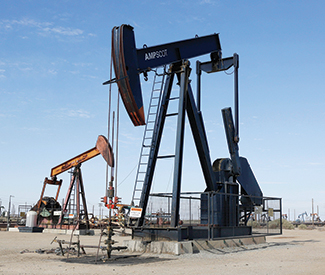
Fracking, formally known as hydraulic fracturing, is a technique used for extracting oil or natural gas. It involves injecting high-pressure fluids underground, often containing toxic chemicals, to break up bedrock in order to access the fossil fuel sources trapped within. The California Division of Oil, Gas, and Geothermal Resources (DOGGR) released a set of draft regulations Nov. 15 proposing new rules around what’s known as “well stimulation,” industry-speak for a type of drilling that includes fracking.

The new rules are slated to go into effect on Jan. 1, 2015. They’ll continue to be hashed out throughout next year, and DOGGR will accept public comment on the initial proposal until Jan. 14, 2014.

The regulations came about in response to Senate Bill 4, legislation enacted Sept. 30 after a statewide coalition of environmentalists launched a campaign to put a stop to fracking, which is already happening in some parts of California. Many groups within that coalition viewed the legislation as flawed, because it didn’t prohibit the practice outright.

“The only safe way forward for California is a halt to fracking in our state,” Siegel said.

Still, the draft regulations do seek to place new requirements on the oil and gas industry in an effort to protect public health where fracking occurs. According to DOGGR records, fracking is most common in Kern County.

“There are some good provisions in the regulations,” Bill Allayaud of the Environmental Working Group said in the briefing. “For the first time, all forms of well stimulation will require a permit from DOGGR. That’s a good thing.”

The rules will also require companies to conduct an analysis of groundwater and other wells nearby before proceeding with fracking operations, unlike before. The new regulations also establish a notification process to make nearby residents aware of new drilling operations.

Meanwhile, SB 4 calls for an environmental impact report and a study on the overall health and safety effects of fracking — but it’s unlikely that this study would result in a prohibition on the drilling practice, as environmentalists had initially called for.

“The Natural Resources Agency is currently developing the scope of the study and will begin the analysis in December 2013,” according to a fact sheet published by DOGGR.

“We don’t think we’ll be getting deep answers as to whether fracking and acidization and all forms of well stimulation are safe or not, for both protecting public health and the environment,” Allayaud said.

Meanwhile, he expressed concern that the public comment period for the initial set of proposed rules did not provide enough time for concerned Californians to respond, because people are being asked to weigh in over the course of the holiday season. The Environmental Working Group has requested an extension of that deadline, but it seems unlikely that DOGGR will grant one.

“The comment period was extended from the mandatory 45 days to 60 days for that reason,” California Department of Conservation Chief Deputy Director Jason Marshall said when asked whether the deadline extension would be granted in light of the holidays. “Additionally, we are anticipating an additional 45-day public comment period after the initial draft regulations are adjusted based on that initial public comment.”

Environmentalists also voiced the concern that while DOGGR plans to hold a series of public hearings on the proposed fracking regulations, none will be held in the Bay Area, despite its concentration of advocates who helped get the statewide opposition campaign off the ground.

“The law requires one public meeting, if requested. We are doing five, primarily in areas of the state where oil production is most common,” Marshall responded when asked why there weren’t any Bay Area meetings scheduled.

Asked whether any of the pending studies would take into account the six billion metric tons of CO2 that could potentially be released if the Monterey Shale were to be developed, Marshall seemed to suggest that the state was willing to go along with a regulated form of fracking even as it continues pursuing initiatives to curb greenhouse gas emissions.

“We still derive over 90 percent of our transportation fuels from hydrocarbons,” he wrote in an email. “With SB 4 and these regulations, California is acting now to ensure that extraction of those hydrocarbons happens in the safest way possible, even as we work to reduce our energy dependence on those hydrocarbons.”

Alerts: November 20 – 26, 2013

0

WEDNESDAY 20

Photographic journey through modern-day slavery The Commonwealth Club, 595 Market, SF. 5:30-7pm, $20. Photographer Lisa Kristine will share photographs from her travels to over a hundred countries on six different continents. The photographs document the daily lives of some of the millions of people who live in slavery around the world today. Kristine’s presentation will be preceded by a reception where attendees can connect with one another. The reception will be followed by a book signing.

Thu/21.  

Forum on America’s workers First Unitarian Universalist Society of San Francisco, 1187 Franklin, SF. tinyurl.com/WorkersFighting4Dignity. 7-9pm, free. Californian domestic workers recently won a landmark Domestic Bill of Rights after a long and trying struggle. This result, coupled with the nationwide fast-food strike in August, has launched the fight for livable wages into the realm of public debate. Join activists Katie Joaquin and Andrew Dadko as they discuss what’s next for some of our nation’s most exploited, lowest-paid workers. For more information, please email Dolores Priem at doloresmp@gmail.com.


SATURDAY 23


History of Market Street walking tour Plaza across from Ferry Building near southern Millennium Tower, SF. shaping@foundsf.org. 1-3pm, $5-10. RSVP required. Market Street has long been San Francisco’s most prominent boulevard. It’s where residents congregate in public, and has been the site of countless protests, celebrations, riots, festivals, and more. Uncover the hidden histories during this two-hour walk through the heart of the city. Tour ends at UN Plaza, Seventh and Market streets.

SUNDAY 24

Film Screening: The House I Live In Russian Center of San Francisco, 2450 Sutter, SF. 7-9:30pm, free. City Hope is screening the Sundance award-winning documentary on the War on Drugs. The film examines the forty-year war that our country has waged against narcotics and the results it has produced: 45 million arrests, making the U.S. the world’s largest jailer, and damaging poor, minority communities at home and abroad. Meanwhile, drugs have only become cheaper, stronger, and easier to obtain. By demonstrating how this war has been fueled by political and economic corruption and showcasing the individual lives that it affects, from the street dealer to the narcotics officer to the prison inmate, the film makes the case for the total failure of the War on Drugs. Refreshments will accompany the screening.

Subversive film screening on drones outside the San Francisco Jazz Center, 201 Franklin, SF. 6pm, free. CODEPINK, World Can’t Wait and others plan to host a film screening on drone strikes, projecting one or two films about drones outside the SF Jazz Center. It’s part of a protest against President Barack Obama, who is scheduled to visit the city and attend a luncheon at the Jazz Center on Nov. 25. Protesters plan to march to the Jazz Center at 11:30am on Mon/25 to protest drone strikes.

Single-payer is the cure

168

EDITORIAL We’re sorry to see all the problems surrounding President Obama’s Affordable Care Act, which has made some important improvements to the country’s healthcare system, such as helping those with preexisting conditions get coverage and preventing those who do have coverage from being arbitrarily dropped. Given a break from being exploited by the insurance industry, there’s no way this country’s citizens will want to go back to how things were.

But the convoluted Obamacare system was a foreseeable mess, one that is now causing unnecessary anxiety across the country and bringing right-wing extremists back from the political dead as the mid-term elections approach. Republicans may not be correct when they trumpet the old system as the best on the world, but their criticisms of Obamacare are already finding increasing resonance, and we haven’t even gotten to the point yet where it will be illegal not to have health insurance.

It doesn’t make sense to leave something as important as our healthcare system in the hands of for-profit corporations with the incentive to drive up costs. The New York Times has done some excellent work this year showing how US residents pay astronomically more for every procedure and drug than citizens of other countries. We should have all been suspicious when the insurance industry cooperated with enacting Obamacare and helped preclude a public option, leaving us with the insurance exchanges that have been so problematic.

There’s really only one remedy to this country’s ailing healthcare system, which we said at the time that Obamacare was being passed and we’ll repeat again now that there’s even more evidence supporting our position: We need socialized medicine in this country.

Conservatives who read that assertion are probably shaking their heads in disbelief right now, believing that Obamacare’s shortcomings prove that government can’t run a healthcare system. And the inexcusable technical problems with the federal healthcare.gov website and its related state exchanges unfortunately reinforce that view. But they’re wrong, and the single-payer advocates have been right all along, noting among other things that the government runs Medicare well and with far lower overhead than insurance companies.

The problems with Obamacare are similar to the problems it sought to address, and they stem from the fact that an insurance-based model is a terrible way to run a healthcare system. It’s too expensive and does too little to hold down medical costs, it’s confusing and stressful to people who are already wrestling with disease or injury, and it unjustly creates different standards of care for the rich and poor.

Socialized medicine — or a single-payer system, administered by either government or a private contractor, but paid for automatically through our taxes — works well in just about every other industrialized country, most of which are far less expensive and yet have better healthcare outcomes. A single-payer system could utilize the existing healthcare infrastructure, it would simply change how we pay for it and bring much-needed price controls and regulatory oversight.

Think about it: Healthcare coverage is something that every citizen needs in equal measure. We all need the right to see a doctor when we’re sick or injured. None of us should have to gamble with our health by weighing the cost of various monthly insurance premiums against our likelihood of ending up in the hospital. And it really shouldn’t be up to struggling small businesses to pay expensive health insurance premiums for their employees, even though that’s really the only way to make the fatally flawed insurance model work.

There’s infighting among congressional Democrats now about whether to roll back parts of Obamacare, such as hospital subsidies and whether to let people remain on minimal catastrophic coverage plans, and all that will do it upset the careful balance the plan tried to achieve to hold down long-term costs.

For now, we need to apply whatever bandages needed to stop the bleeding and limp the flawed Obamacare along for a little while. But we also need to immediately start the difficult work of transitioning to a socialized medicine system.


Music Listings: Nov. 13-19

0

WEDNESDAY 13
ROCK
Brick & Mortar Music Hall: 1710 Mission, San Francisco. Hot Toddies, Kill Moi, Odd Owl, Blaus, 9 p.m., $6-$9.
Cafe Du Nord: 2170 Market, San Francisco. “Thanks But No Thanksgiving,” Benefit for KUSF in Exile and One Mama featuring The Sam Chase, Jesús & The Rabbis, M.O.M. DJs, 9 p.m., $10-$15.
The Chapel: 777 Valencia St., San Francisco. Those Darlins, Diane Coffee, Jesus Sons, 9 p.m., $12-$15.
Elbo Room: 647 Valencia, San Francisco. Buffalo Tooth, Commissure, Growwler, Popgang DJs, 9 p.m., free.
Hemlock Tavern: 1131 Polk, San Francisco. White Mystery, Dead Meat, 8:30 p.m., $10.
Hotel Utah: 500 Fourth St., San Francisco. Grex, Cash Pony, Inner Ear Brigade, Mark Clifford Quartet, 8 p.m., $8-$10.
Monarch: 101 6th St., San Francisco. Tall Fires, Mosaics, Unruly Things, Stomping Grounds, 8 p.m., $8.
Thee Parkside: 1600 17th St., San Francisco. The Deer Tracks, Low Leaf, Survival Guide, 8 p.m., $10.
DANCE
The Cafe: 2369 Market, San Francisco. “Sticky Wednesdays,” w/ DJ Mark Andrus, 8 p.m., free.
Cat Club: 1190 Folsom, San Francisco. “Bondage A Go Go,” w/ DJs Damon, Tomas Diablo, & guests, 9:30 p.m., $5-$10.
Clift Hotel, Redwood Room: 495 Geary, San Francisco. “Enigma: Sessions 003,” w/ Reckless in Vegas, Dean Samaras, Richard Habib, Marija Dunn, 6 p.m., free.
Club X: 715 Harrison, San Francisco. “Electro Pop Rocks,” 18+ dance party with Gummy & Dosvec, 9 p.m.
Edinburgh Castle: 950 Geary, San Francisco. “1964,” w/ DJ Matt B & guests, Second and Fourth Wednesday of every month, 10 p.m., $2.
The EndUp: 401 Sixth St., San Francisco. “Tainted Techno Trance,” 10 p.m.
F8: 1192 Folsom St., San Francisco. “Housepitality,” w/ Francesca Lombardo, Michael Tello, Paul Carey, Mike Bee, Joel Conway, 9 p.m., $5-$10.
Harlot: 46 Minna, San Francisco. “Qoöl,” 5 p.m.
The Independent: 628 Divisadero, San Francisco. Thundercat, Real Magic, The Seshen, 8 p.m., $15-$17.
Infusion Lounge: 124 Ellis, San Francisco. “Indulgence,” 10 p.m.
The Knockout: 3223 Mission, San Francisco. “Disorder,” w/ Detachments, Replicanti, DJ Nickie, 10 p.m., $5.
Lookout: 3600 16th St., San Francisco. “What?,” w/ resident DJ Tisdale and guests, 7 p.m., free.
Madrone Art Bar: 500 Divisadero, San Francisco. “Rock the Spot,” 9 p.m., free.
MatrixFillmore: 3138 Fillmore, San Francisco. “Reload,” w/ DJ Big Bad Bruce, 10 p.m., free.
Q Bar: 456 Castro, San Francisco. “Booty Call,” w/ Juanita More, Joshua J, guests, 9 p.m., $3.
HIP-HOP
Double Dutch: 3192 16th St., San Francisco. “Cash IV Gold,” w/ DJs Kool Karlo, Roost Uno, and Sean G, 10 p.m., free.
Skylark Bar: 3089 16th St., San Francisco. “Mixtape Wednesday,” w/ resident DJs Strategy, Junot, Herb Digs, & guests, 9 p.m., $5.
ACOUSTIC
Cafe Divine: 1600 Stockton, San Francisco. Craig Ventresco & Meredith Axelrod, 7 p.m., free.
Club Deluxe: 1511 Haight, San Francisco. Happy Hour Bluegrass, 6:30 p.m., free.
Dolores Park Cafe: 501 Dolores, San Francisco. Joe Marson & Roem Baur, 6:30 p.m.
Johnny Foley’s Irish House: 243 O’Farrell St., San Francisco. Terry Savastano, Every other Wednesday, 9 p.m., free.
The Lost Church: 65 Capp St., San Francisco. Tall Heights, Jeff Conley, 8 p.m., $10.
Plough & Stars: 116 Clement, San Francisco. Daniel Seidel, 9 p.m.
Rickshaw Stop: 155 Fell, San Francisco. Farallons, Michael Musika, From a Fountain, 8 p.m., $10.
Swedish American Hall: 2174 Market, San Francisco. Vanessa Carlton, Birdcloud, 7:30 p.m., $25.
JAZZ
Amnesia: 853 Valencia, San Francisco. Gaucho, Eric Garland’s Jazz Session, The Amnesiacs, 7 p.m., free.
Burritt Room: 417 Stockton St., San Francisco. Terry Disley’s Rocking Jazz Trio, 6 p.m., free.
Center for New Music: 55 Taylor St., San Francisco. Peter Brötzmann & Paal Nilssen-Love, 7:30 p.m., $18-$28.
Jazz Bistro At Les Joulins: 44 Ellis, San Francisco. Charles Unger Experience, 7:30 p.m., free.
Le Colonial: 20 Cosmo, San Francisco. The Cosmo Alleycats featuring Ms. Emily Wade Adams, 7 p.m., free.
Savanna Jazz Club: 2937 Mission, San Francisco. “Cat’s Corner,” 9 p.m., $10.
Sheba Piano Lounge: 1419 Fillmore, San Francisco. Jesse Foster, 8 p.m.
Top of the Mark: One Nob Hill, 999 California, San Francisco. Ricardo Scales, Wednesdays, 6:30-11:30 p.m., $5.
Tupelo: 1337 Green St., San Francisco. Kit Ruscoe, 9:30 p.m.
Zingari: 501 Post, San Francisco. Sherri Roberts, 7:30 p.m., free.
INTERNATIONAL
Bissap Baobab: 3372 19th St., San Francisco. Timba Dance Party, w/ DJ WaltDigz, 10 p.m., $5.
Cafe Cocomo: 650 Indiana, San Francisco. “Bachatalicious,” w/ DJs Good Sho & Rodney, 7 p.m., $5-$10.
First Unitarian Universalist Society of San Francisco: 1187 Franklin, San Francisco. Kaoru Kakizakai with Shirley Kazuyo Muramoto, 7 p.m., $20.
Pachamama Restaurant: 1630 Powell, San Francisco. “Cafe LatinoAmericano,” 8 p.m., $5.
BLUES
Biscuits and Blues: 401 Mason, San Francisco. Alvon Johnson, 7:30 & 9:30 p.m., $15.
The Saloon: 1232 Grant, San Francisco. Leah Tysse, 9:30 p.m.
FUNK
Vertigo: 1160 Polk, San Francisco. “Full Tilt Boogie,” w/ KUSF-in-Exile DJs, Second Wednesday of every month, 8 p.m.-1:30 a.m., free.
SOUL
The Royal Cuckoo: 3202 Mission, San Francisco. Freddie Hughes & Chris Burns, 7:30 p.m., free.
THURSDAY 14
ROCK
Bottom of the Hill: 1233 17th St., San Francisco. 65daysofstatic, Caspian, The World Is a Beautiful Place & I Am No Longer Afraid to Die, 9 p.m., $15-$17.
Brick & Mortar Music Hall: 1710 Mission, San Francisco. The Besnard Lakes, Elephant Stone, 9 p.m., $13-$15.
S.F. Eagle: 398 12th St., San Francisco. Thursday Nite Live: Titan Ups, Bell Tower, The Hampton Wicks, 9 p.m., $8.
Hemlock Tavern: 1131 Polk, San Francisco. Slough Feg, Skeletor, Vulturegeist, 8:30 p.m., $10.
The Independent: 628 Divisadero, San Francisco. KMFDM, Chant, 8 p.m., $28-$30.
The Knockout: 3223 Mission, San Francisco. Vaz, Burmese, Donkee, 10 p.m., $8.
Thee Parkside: 1600 17th St., San Francisco. Alestorm, Trollfest, Gypsyhawk, Valensorow, 9 p.m., $20.
DANCE
1015 Folsom: 1015 Folsom St., San Francisco. “A Light in the Attic,” w/ Phutureprimitive, Unlimited Gravity, Soulular, Bedrockk, Evolutionista, Smash & Grab, 10 p.m., $5-$10 advance.
Abbey Tavern: 4100 Geary, San Francisco. DJ Schrobi-Girl, 10 p.m., free.
Audio Discotech: 316 11th St., San Francisco. “Phonic,” w/ Felix Cartal, Ron Reeser, more, 9:30 p.m., $10 advance.
Aunt Charlie’s Lounge: 133 Turk, San Francisco. “Tubesteak Connection,” w/ DJ Bus Station John, 9 p.m., $5-$7.
The Cafe: 2369 Market, San Francisco. “¡Pan Dulce!,” 9 p.m., $5.
Cat Club: 1190 Folsom, San Francisco. “Throwback Thursdays,” ‘80s night with DJs Damon, Steve Washington, Dangerous Dan, and guests, 9 p.m., $6 (free before 9:30 p.m.).
The Cellar: 685 Sutter, San Francisco. “XO,” w/ DJs Astro & Rose, 10 p.m., $5.
Club X: 715 Harrison, San Francisco. “The Crib,” 9:30 p.m., $10, 18+.
Danzhaus: 1275 Connecticut, San Francisco. “Alt.Dance,” Second Thursday of every month, 7 p.m., $7, 18+.
DNA Lounge: 375 11th St., San Francisco. “8bitSF,” w/ Crashfaster, Bit Shifter, Trash80, Unwoman, DJ Doctor Popular, 9 p.m., $10-$15.
Elbo Room: 647 Valencia, San Francisco. “Afrolicious,” w/ DJs Pleasuremaker, Señor Oz, and live guests, 9:30 p.m., $5-$8.
Harlot: 46 Minna, San Francisco. “Modular,” w/ Uner, JOill, Pedro Arbulu, MFYRS, 9 p.m., $7-$10.
Infusion Lounge: 124 Ellis, San Francisco. “I Love Thursdays,” 10 p.m., $10.
Madrone Art Bar: 500 Divisadero, San Francisco. “Night Fever,” 9 p.m., $5 after 10 p.m.
Public Works: 161 Erie, San Francisco. “Enigma,” w/ Butane, Stephanie, Marija Dunn, Amber Reyn, Richard Habib (in the OddJob Loft), 10 p.m., $10-$20 advance.
Q Bar: 456 Castro, San Francisco. “Throwback Thursday,” w/ DJ Jay-R, 9 p.m., free.
Raven: 1151 Folsom St., San Francisco. “1999,” w/ VJ Mark Andrus, 8 p.m., free.
Ruby Skye: 420 Mason, San Francisco. “Awakening,” w/ Danny Avila, Matisse Sadko, 9 p.m., $20-$25 advance.
The Tunnel Top: 601 Bush, San Francisco. “Tunneltop,” DJs Avalon and Derek ease you into the weekend with a cool and relaxed selection of tunes spun on vinyl, 10 p.m., free.
Underground SF: 424 Haight, San Francisco. “Bubble,” 10 p.m., free.
HIP-HOP
Eastside West: 3154 Fillmore, San Francisco. “Throwback Thursdays,” w/ DJ Madison, 9 p.m., free.
The EndUp: 401 Sixth St., San Francisco. “Cypher,” w/ resident DJ Big Von, 10 p.m., $5-$10.
John Colins: 138 Minna, San Francisco. “Party with Friends,” w/ resident DJs IllEfect, GeektotheBeat, Merrick, and Delrokz, Second Thursday of every month, 9 p.m., free.
Mezzanine: 444 Jessie, San Francisco. A$AP Ferg, A$AP Mob, Joey Fatts, Aston Matthews, 100s, DJ Sean G, 9 p.m., $20.
Milk Bar: 1840 Haight, San Francisco. Rime Force Most Illin’, Fatees, Al Lover, Height with Friends, DJ Brycon, 9 p.m., $5.
Park 77 Sports Bar: 77 Cambon, San Francisco. “Slap N Tite,” w/ resident Cali King Crab DJs Sabotage Beats & Jason Awesome, free.
Skylark Bar: 3089 16th St., San Francisco. “Peaches,” w/lady DJs DeeAndroid, Lady Fingaz, That Girl, Umami, Inkfat, and Andre, 10 p.m., free.
ACOUSTIC
Amnesia: 853 Valencia, San Francisco. Ghost & Gale, Lea Pruett, The Shants, 9 p.m., $7-$10.
Atlas Cafe: 3049 20th St., San Francisco. Gayle Lynn & The Hired Hands, 8 p.m., free.
Bazaar Cafe: 5927 California, San Francisco. Acoustic Open Mic, 7 p.m.
Boom Boom Room: 1601 Fillmore, San Francisco. Whitewater Ramble, Free Peoples, 9:30 p.m., $10.
Cafe Du Nord: 2170 Market, San Francisco. The Melodic, Steve Taylor Band, Sophia Knapp, 8:30 p.m., $12.
The Lost Church: 65 Capp St., San Francisco. Aireene & The Hobos, Deborah Crooks, 8 p.m., $10-$12.
Pa’ina: 1865 Post St., San Francisco. Ashley Lilinoe, 7 p.m., free.
Plough & Stars: 116 Clement, San Francisco. Emperor Norton Céilí Band, 9 p.m.
Yoshi’s San Francisco: 1330 Fillmore, San Francisco. An Evening with Graham Nash, 8 p.m., $89.
JAZZ
Blush! Wine Bar: 476 Castro, San Francisco. Doug Martin’s Avatar Ensemble, 7:30 p.m., free.
Bottle Cap: 1707 Powell, San Francisco. The North Beach Sound with Ned Boynton, Jordan Samuels, and Tom Vickers, 7 p.m., free.
Cafe Claude: 7 Claude, San Francisco. Mad & Eddie Duran Trio, 7:30 p.m., free.
Le Colonial: 20 Cosmo, San Francisco. Steve Lucky & The Rhumba Bums, 7:30 p.m.
The Royal Cuckoo: 3202 Mission, San Francisco. Charlie Siebert & Chris Burns, 7:30 p.m., free.
Savanna Jazz Club: 2937 Mission, San Francisco. Savanna Jazz Jam with Eddy Ramirez, 7:30 p.m., $5.
SFJAZZ Center: 205 Franklin St., San Francisco. “Hotplate,” w/ Tiffany Austin (playing Hoagy Carmichael), 8 & 9:30 p.m.
Top of the Mark: One Nob Hill, 999 California, San Francisco. Stompy Jones, 7:30 p.m., $10.
Zingari: 501 Post, San Francisco. Barbara Ochoa, 7:30 p.m., free.
INTERNATIONAL
Bissap Baobab: 3372 19th St., San Francisco. “Pa’Lante!,” w/ Juan G, El Kool Kyle, Mr. Lucky, 10 p.m., $5.
Cafe Cocomo: 650 Indiana, San Francisco. Danilo y Universal, DJ Good Sho, 8 p.m., $12.
Fort Mason, Southside Theater: Marina, San Francisco. Theatre Flamenco: Con Nombre y Apellido, The country’s oldest flamenco dance company celebrates its 47th home season., Nov. 14-16, 8 p.m.; Sun., Nov. 17, 2 p.m., $35-$75.
H Cafe: 3801 17th St., San Francisco. An Evening to Benefit the Duniya Center for Arts & Education, w/ Duniya Dance & Drum Company, Wontanara Revolution, Charlotte Nehm, Vanessa Sanchez, Naila, more, 6 p.m., $35-$80.
Pachamama Restaurant: 1630 Powell, San Francisco. “Jueves Flamencos,” 8 p.m., free.
Pier 23 Cafe: Pier 23, San Francisco. Armando Compean, 7 p.m., free.
Sheba Piano Lounge: 1419 Fillmore, San Francisco. Gary Flores & Descarga Caliente, 8 p.m.
Verdi Club: 2424 Mariposa, San Francisco. The Verdi Club Milonga, w/ Christy Coté, DJ Emilio Flores, guests, 9 p.m., $10-$15.
REGGAE
Make-Out Room: 3225 22nd St., San Francisco. “Festival ‘68,” w/ Revival Sound System, Second Thursday of every month, 10 p.m., free.
Pissed Off Pete’s: 4528 Mission St., San Francisco. Reggae Thursdays, w/ resident DJ Jah Yzer, 9 p.m., free.
BLUES
50 Mason Social House: 50 Mason, San Francisco. Bill Phillippe, 5:30 p.m., free.
Biscuits and Blues: 401 Mason, San Francisco. Nick Moss, 7:30 & 9:30 p.m., $20.
Jazz Bistro At Les Joulins: 44 Ellis, San Francisco. Bohemian Knuckleboogie, 7:30 p.m., free.
The Saloon: 1232 Grant, San Francisco. Tom Bowers, 4 p.m.; Steve Freund, 9:30 p.m.
COUNTRY
The Parlor: 2801 Leavenworth, San Francisco. “Twang Honky Tonk & Country Jamboree,” w/ DJ Little Red Rodeo, 7 p.m., free.
EXPERIMENTAL
The Luggage Store: 1007 Market, San Francisco. Capricious Forms Vol. 1, 8 p.m., $6-$10.
Yerba Buena Center for the Arts: 701 Mission, San Francisco. San Francisco Contemporary Music Players, 8 p.m., $12-$30.
FRIDAY 15
ROCK
Bottom of the Hill: 1233 17th St., San Francisco. Meat Puppets, The World Takes, 10 p.m., $17.
Brick & Mortar Music Hall: 1710 Mission, San Francisco. Golden Void, Hot Lunch, Harsh Toke, 9 p.m., $7-$10.
DNA Lounge: 375 11th St., San Francisco. Happy Fangs, Night Club, Everyone Is Dirty, Kat Haus, 8 p.m., $10.
El Rio: 3158 Mission, San Francisco. Friday Live: Down in Front, DJ Emotions, 10 p.m., free.
Hotel Utah: 500 Fourth St., San Francisco. The Bananas, Audacity, Hunters, Caldecott, 9 p.m., $10-$12.
Milk Bar: 1840 Haight, San Francisco. Part Time, Exray’s, Andy Human, Epicsauce DJs, 9 p.m., $10.
Rickshaw Stop: 155 Fell, San Francisco. Heroes and the Homo Superior: The Parables of Fancy Nancy, A “David Bowie superhero burlesque rock odyssey” featuring music by First Church of the Sacred Silversexual, burlesque routines by Hubba Hubba Revue, drag performances, and more., 9 p.m., $13.
Slim’s: 333 11th St., San Francisco. Alternative Tentacles 33 1/3 Anniversary Party, w/ Jello Biafra & The Guantanamo School of Medicine, Mojo Nixon, Death Hymn Number 9, Pins of Light., 8 p.m., $18.
Thee Parkside: 1600 17th St., San Francisco. That Ghost, FayRoy, Sons of Hippies, WAG, 9 p.m., $8.
DANCE
1015 Folsom: 1015 Folsom St., San Francisco. Rusko, Roni Size, Tonn Piper, Dynamite MC, Havoc, Ivry, Nebakaneza, Mr. Kitt, Johnny5, Danny Weird, Miss Haze, DJ Dials, Jays One, Audio-Troma, White Mike, Ryury., 10 p.m., $25 advance.
Audio Discotech: 316 11th St., San Francisco. Alex Sibley, Eelrack, Festiva, 9:30 p.m., $10 advance.
Cafe Flore: 2298 Market, San Francisco. “Kinky Beats,” w/ DJ Sergio, 10 p.m., free.
The Cafe: 2369 Market, San Francisco. “Boy Bar,” w/ DJ Matt Consola, 9 p.m., $5.
Cat Club: 1190 Folsom, San Francisco. “The Witching Hour,” w/ DJs Sage, Daniel Skellington, Joe Radio, and Nickie, 9:30 p.m., $7 ($3 before 10 p.m.).
The Cellar: 685 Sutter, San Francisco. “F.T.S.: For the Story,” 10 p.m.
The Chapel: 777 Valencia St., San Francisco. DJ Assault, Double Duchess, BadboE, Rapid Fire, 10 p.m., $10-$15.
DNA Lounge: 375 11th St., San Francisco. “So Stoked 13,” w/ Daniel Kandi, Ravine, Jimini Cricket, more, 7 p.m., $15-$25.
The EndUp: 401 Sixth St., San Francisco. “Fever,” 10 p.m., free before midnight.
The Grand Nightclub: 520 4th St., San Francisco. “We Rock Fridays,” 9:30 p.m.
Infusion Lounge: 124 Ellis, San Francisco. “Escape Fridays,” 10 p.m., $20.
Lookout: 3600 16th St., San Francisco. “HYSL,” 9 p.m., $3.
Madrone Art Bar: 500 Divisadero, San Francisco. “That ‘80s Show,” w/ DJs Dave Paul & Jeff Harris, Third Friday of every month, 9 p.m., $5.
Manor West: 750 Harrison, San Francisco. “Fortune Fridays,” 10 p.m., free before 11 p.m. with RSVP.
MatrixFillmore: 3138 Fillmore, San Francisco. “F-Style Fridays,” w/ DJ Jared-F, 9 p.m.
Mezzanine: 444 Jessie, San Francisco. “Fools in the Night,” w/ Ladyhawke (DJ set), American Royalty, Blackbird Blackbird, Aaron Axelsen, 9 p.m., $15.
Mighty: 119 Utah, San Francisco. “Masters at Work,” w/ Kenny Dope & Louie Vega, 9 p.m., $20-$50.
OMG: 43 6th St., San Francisco. “Release,” 9 p.m., free before 11 p.m.
Public Works: 161 Erie, San Francisco. “Odyssey,” w/ Rick Preston, Robin Simmons, Trevor Sigler (in the OddJob Loft), 9:30 p.m., $10.
Q Bar: 456 Castro, San Francisco. “Pump: Worq It Out Fridays,” w/ resident DJ Christopher B, 9 p.m., $3.
Ruby Skye: 420 Mason, San Francisco. Arnej, Bobina, Dirtyhertz, 9 p.m., $20 advance.
Slate Bar: 2925 16th St., San Francisco. “Darling Nikki,” w/ resident DJs Dr. Sleep, Justin Credible, and Durt, Third Friday of every month, 8 p.m., $5.
Sub-Mission Art Space (Balazo 18 Gallery): 2183 Mission, San Francisco. “Deathrock Night Terrors,” w/ The Frozen Autumn, V.E.X., Red Light, plus DJs Le Perv, Necromos, and Burning Skies, 8:30 p.m., $12-$15.
Temple: 540 Howard, San Francisco. “Refresh,” w/ Pedro Arbulu, Chemical Ali, David Gregory, DJ Tone, DJ Von, 10 p.m., $15.
Underground SF: 424 Haight, San Francisco. “Bionic,” 10 p.m., $5.
Vessel: 85 Campton, San Francisco. Dirty South, 10 p.m.
Wish: 1539 Folsom, San Francisco. “Bridge the Gap,” w/ resident DJ Don Kainoa, Fridays, 6-10 p.m., free; “Depth,” w/ resident DJs Sharon Buck & Greg Yuen, Third Friday of every month, 10 p.m., free.
HIP-HOP
EZ5: 682 Commercial, San Francisco. “Decompression,” Fridays, 5-9 p.m.
The Independent: 628 Divisadero, San Francisco. Big Freedia, 9 p.m., $20.
John Colins: 138 Minna, San Francisco. “Juicy,” w/ DJ Ry Toast, Third Friday of every month, 10 p.m., $5 (free before 11 p.m.).
Showdown: 10 Sixth St., San Francisco. BPos, Mo Classics, Monk McNizzle, 9 p.m., free.
Yoshi’s San Francisco: 1330 Fillmore, San Francisco. Sir Mix-A-Lot, 10:30 p.m., $18-$22.
ACOUSTIC
Amnesia: 853 Valencia, San Francisco. SnowApple, 7 p.m.
Bazaar Cafe: 5927 California, San Francisco. The Canon Band, 7 p.m.
Cafe Du Nord: 2170 Market, San Francisco. Megan Slankard, Tom Freund, Wafflebarrel, 9 p.m., $15.
Mercury Cafe: 201 Octavia, San Francisco. Toshio Hirano, Third Friday of every month, 7:30 p.m., free, all ages.
Plough & Stars: 116 Clement, San Francisco. “Bluegrass Bonanza,” w/ Travers Chandler & Avery County, Belle Monroe & Her Brewglass Boys, 9 p.m., $6-$10.
Red Poppy Art House: 2698 Folsom, San Francisco. Amy LaCour with Ross Hammond, 7:30 p.m., $10-$15.
The Sports Basement: 610 Old Mason, San Francisco. “Breakfast with Enzo,” w/ Enzo Garcia, 10 a.m., $5.
Yoshi’s San Francisco: 1330 Fillmore, San Francisco. An Evening with Mason Jennings, 8 p.m., $29.
JAZZ
Beach Chalet Brewery & Restaurant: 1000 Great Highway, San Francisco. Johnny Smith, 8 p.m., free.
Bird & Beckett: 653 Chenery, San Francisco. The Third Quartet, Third Friday of every month, 5:30 p.m., free.
Cafe Claude: 7 Claude, San Francisco. Nick Rossi Trio, 9:30 p.m., free.
City College: 50 Phelan, San Francisco. The Cartoon Jazz Band, 7:30 p.m., free.
Jazz Bistro At Les Joulins: 44 Ellis, San Francisco. Charles Unger Experience, 7:30 p.m., free.
The Palace Hotel: 2 New Montgomery, San Francisco. The Klipptones, 8 p.m., free.
Revolution Cafe: 3248 22nd St., San Francisco. Emily Anne’s Delights, Third Friday of every month, 8:45 p.m., free/donation.
Savanna Jazz Club: 2937 Mission, San Francisco. Jim Butler Group, 7:30 p.m., $8.
SFJAZZ Center: 205 Franklin St., San Francisco. Pamela Rose & Wayne De La Cruz, 7 & 8:30 p.m., $25.
Sheba Piano Lounge: 1419 Fillmore, San Francisco. Sam Caddy Quintet, 9 p.m.
Top of the Mark: One Nob Hill, 999 California, San Francisco. Black Market Jazz Orchestra, 9 p.m., $10.
Zingari: 501 Post, San Francisco. Joyce Grant, 8 p.m., free.
INTERNATIONAL
Bissap Baobab: 3372 19th St., San Francisco. Qumbia Qrew, Third Friday of every month, 8 p.m.; “Paris-Dakar African Mix Coupe Decale,” 10 p.m., $5.
Cafe Cocomo: 650 Indiana, San Francisco. Taste Fridays, featuring local cuisine tastings, salsa bands, dance lessons, and more, 7:30 p.m., $15 (free entry to patio).
Cigar Bar & Grill: 850 Montgomery, San Francisco. Orquesta La Clave, 8 p.m.
Fort Mason, Southside Theater: Marina, San Francisco. Theatre Flamenco: Con Nombre y Apellido, The country’s oldest flamenco dance company celebrates its 47th home season., Nov. 14-16, 8 p.m.; Sun., Nov. 17, 2 p.m., $35-$75.
Pachamama Restaurant: 1630 Powell, San Francisco. Cuban Night with Fito Reinoso, 7:30 & 9:15 p.m., $15-$18.
Pier 23 Cafe: Pier 23, San Francisco. Armando Compean, 8 p.m., free.
Public Works: 161 Erie, San Francisco. Afrolicious Band, J-Boogie, 10 p.m., $10.
REGGAE
Elbo Room: 647 Valencia, San Francisco. “The Social,” w/ Native Elements, Jah Yzer, 10 p.m., $10.
Gestalt Haus: 3159 16th St., San Francisco. “Music Like Dirt,” 7:30 p.m., free.
BLUES
Biscuits and Blues: 401 Mason, San Francisco. Kevin Selfe & The Tornadoes, 7:30 & 10 p.m., $20.
The Saloon: 1232 Grant, San Francisco. West Coast Blues Revue, 4 p.m.; Cathy Lemons, 9:30 p.m.
FUNK
Amnesia: 853 Valencia, San Francisco. “Hella Tight,” w/ resident DJs Vinnie Esparza, Jonny Deeper, & Asti Spumanti, Third Friday of every month, 10 p.m., $5.
Dolores Park Cafe: 501 Dolores, San Francisco. Shake It! Booty Band, 7:30 p.m.
Make-Out Room: 3225 22nd St., San Francisco. “Loose Joints,” w/ DJs Centipede, Damon Bell, & Tom Thump, 10 p.m., $5.
SOUL
Edinburgh Castle: 950 Geary, San Francisco. “Soul Crush,” w/ DJ Serious Leisure, 10 p.m., free.
The Knockout: 3223 Mission, San Francisco. “Oldies Night,” W/ DJs Primo, Daniel, Lost Cat, and friends, Third Friday of every month, 10 p.m., $5.
SATURDAY 16
ROCK
Bender’s: 806 S. Van Ness, San Francisco. Moses, Hornss, 10 p.m., $5.
Bottom of the Hill: 1233 17th St., San Francisco. Quasi, Blues Control, Street Eaters, 9:30 p.m., $15.
Brick & Mortar Music Hall: 1710 Mission, San Francisco. Someone Still Loves You Boris Yeltsin, Army Navy, 9 p.m., $12-$15.
Cafe Du Nord: 2170 Market, San Francisco. San Francisco Food Bank Benefit with Tommy Guerrero & Friends, El Diablitos, DJ Romanowski, 9:30 p.m., $10-$15.
The Chapel: 777 Valencia St., San Francisco. Cellar Doors, 9 p.m., $12.
El Rio: 3158 Mission, San Francisco. Benefit for Family Dog Rescue with The Shams, The Next, The Unfortunate Bastard, Psychokitty, 9 p.m.
Hemlock Tavern: 1131 Polk, San Francisco. Guantanamo Baywatch, Death Hymn Number 9, Buffalo Tooth, Pookie & The Poodlez, 8:30 p.m., $7.
Hotel Utah: 500 Fourth St., San Francisco. “Rocket Ship!,” w/ Starr Saunders, The Coffis Brothers, Exhausted Pipes, Katie Ekin, 9 p.m., $8-$12.
Rickshaw Stop: 155 Fell, San Francisco. Tera Melos, Zorch, Sister Crayon, Creepers, 9 p.m., $15.
Slim’s: 333 11th St., San Francisco. Born Ruffians, Grmln, 9 p.m., $17.
Thee Parkside: 1600 17th St., San Francisco. Fog of War, Nekrofilth, Burning Monk, Tomes, 9:30 p.m., $8.
DANCE
Amnesia: 853 Valencia, San Francisco. “Pance Darty,” w/ Jjaaxxnn & Duke, Third Saturday of every month, 9 p.m., $7.
Audio Discotech: 316 11th St., San Francisco. Miguel Migs, Andrew Phelan, 9:30 p.m., $10 advance.
Balancoire: 2565 Mission St., San Francisco. “Play It Cool,” w/ Boogie Nite, Avalon Emerson, Derek Opperman, Guillaume Galuz, Matthew Favorites, 9 p.m., $5.
BeatBox: 314 11th St., San Francisco. “I Just Wanna F*ckin Dance,” w/ DJs Hector Fonseca & Chi Chi LaRue, 10 p.m., $15-$25.
Cafe Flore: 2298 Market, San Francisco. “Bistrotheque,” w/ DJ Ken Vulsion, 8 p.m., free.
Cat Club: 1190 Folsom, San Francisco. “New Wave City: Duran Duran Video Night,” w/ DJs Shindog, Andy T, B.A.D. Reputation, and Girl Panic, 9 p.m., $7-$12.
DNA Lounge: 375 11th St., San Francisco. “Bootie S.F.,” w/ DJ Tripp, Entyme, Meikee Magnetic, Mixtress Shizaam, Dcnstrct, MyKill, Hubba Hubba Revue, more, 9 p.m., $10-$15.
The EndUp: 401 Sixth St., San Francisco. “The Show,” w/ Ben Seagren, Dean Samaras, and guests (starts 2 a.m. Sunday morning), Third Saturday of every month, $10-$20 (free before 11 p.m.).
F8: 1192 Folsom St., San Francisco. “Hegemoney,” w/ Mr. Carmack, Insightful, Mikos Da Gawd, Bobby Peru, Starter Kit, 9 p.m., $10-$15.
Infusion Lounge: 124 Ellis, San Francisco. “Social Addiction,” Third Saturday of every month, 10 p.m., $20.
Lookout: 3600 16th St., San Francisco. “Bounce!,” 9 p.m., $3.
Madrone Art Bar: 500 Divisadero, San Francisco. “Fringe,” w/ DJs Blondie K & subOctave, Third Saturday of every month, 9 p.m., $5 (free before 10 p.m.).
Mighty: 119 Utah, San Francisco. “Mighty Real,” w/ Tiga, Bells & Whistles, David Harness, 10 p.m., $15 advance.
Milk Bar: 1840 Haight, San Francisco. “The Queen Is Dead: A Tribute to the Music of Morrissey & The Smiths,” w/ DJ Mario Muse & guests, Third Saturday of every month, 9 p.m.
Monarch: 101 6th St., San Francisco. “Lights Down Low,” w/ MK, Richie Panic, Sleazemore, MPHD, 10 p.m., $15-$20.
Powerhouse: 1347 Folsom, San Francisco. “Beatpig,” Third Saturday of every month, 9 p.m.
Project One: 251 Rhode Island, San Francisco. “Familia vs. Friends and Family,” w/ Lee Coombs, Ethan Miller, Ding Dong, Tamo, Nugz, 9 p.m., $10-$15 advance.
Public Works: 161 Erie, San Francisco. “Isis,” w/ PBR Streetgang, Mountaincount (in the OddJob Loft), 9:30 p.m., $10-$15.
Ruby Skye: 420 Mason, San Francisco. “World Town,” w/ Deorro, Trevor Simpson, 9 p.m., $20 advance.
Slate Bar: 2925 16th St., San Francisco. “Smiths Night S.F.,” w/ The Certain People Crew, Third Saturday of every month, 10 p.m., $5.
Slide: 430 Mason, San Francisco. “Luminous,” w/ DJ Zhaldee, Third Saturday of every month, 9 p.m.
Supperclub San Francisco: 657 Harrison, San Francisco. “Scorpio’s Ball,” w/ El Papa Chango, Smasheltooth, Jocelyn, Portal, 9 p.m., $10-$20.
Vessel: 85 Campton, San Francisco. Tall Sasha, 10 p.m., $10-$30.
HIP-HOP
111 Minna Gallery: 111 Minna St., San Francisco. “Shine,” Third Saturday of every month, 10 p.m.
John Colins: 138 Minna, San Francisco. “The Bump,” w/ The Whooligan, Third Saturday of every month, 10 p.m., free.
The Knockout: 3223 Mission, San Francisco. “The Booty Bassment,” w/ DJs Dimitri Dickinson & Ryan Poulsen, Third Saturday of every month, 10 p.m., $5.
Mezzanine: 444 Jessie, San Francisco. Spawnbreezie, BigBody Cisco, Drew Deezy, 9 p.m., $20.
Showdown: 10 Sixth St., San Francisco. “Purple,” w/ resident DJs ChaunceyCC & Party Pablo, Third Saturday of every month, 10 p.m.
ACOUSTIC
Amoeba Music: 1855 Haight, San Francisco. Mason Jennings, 3 p.m., free.
Atlas Cafe: 3049 20th St., San Francisco. Craig Ventresco & Meredith Axelrod, Saturdays, 4-6 p.m., free.
Bazaar Cafe: 5927 California, San Francisco. Paul Griffiths, 7 p.m.
The Independent: 628 Divisadero, San Francisco. Vienna Teng, 6 & 9 p.m., $25.
The Lost Church: 65 Capp St., San Francisco. North Home, Jean Marie, 8 p.m., $10.
Plough & Stars: 116 Clement, San Francisco. John Haesemeyer, Jeff Hayward, RonDre., 8 p.m., $6.
The Riptide: 3639 Taraval, San Francisco. Chris James & The Showdowns, 9:30 p.m., free.
St. Cyprian’s Episcopal Church: 2097 Turk, San Francisco. A Musical Tribute & Celebration of the Life & Songs of Phil Ochs, featuring Sonny Ochs, Kim & Reggie Harris, Carolyn Hester, James Lee Stanley, and Aileen Vance, 8 p.m., $17-$20.
Tupelo: 1337 Green St., San Francisco. Shantytown, 9 p.m.
Yoshi’s San Francisco: 1330 Fillmore, San Francisco. An Evening with Mason Jennings, 8 & 10 p.m., $24-$29.
JAZZ
Cafe Claude: 7 Claude, San Francisco. The Monroe Trio, 7:30 p.m., free.
Jazz Bistro At Les Joulins: 44 Ellis, San Francisco. Bill “Doc” Webster & Jazz Nostalgia, 7:30 p.m., free.
The Royal Cuckoo: 3202 Mission, San Francisco. Jules Broussard, Danny Armstrong, and Chris Siebert, 7:30 p.m., free.
Savanna Jazz Club: 2937 Mission, San Francisco. Lily Alunan, 7:30 p.m., $10.
SFJAZZ Center: 205 Franklin St., San Francisco. Wesla Whitfield, 7 & 8:30 p.m., $30.
Sheba Piano Lounge: 1419 Fillmore, San Francisco. The Robert Stewart Experience, 9 p.m.
Zingari: 501 Post, San Francisco. Brenda Reed, 8 p.m., free.
INTERNATIONAL
1015 Folsom: 1015 Folsom St., San Francisco. “Pura,” 9 p.m., $20.
Bissap Baobab: 3372 19th St., San Francisco. “Paris-Dakar African Mix Coupe Decale,” 10 p.m., $5.
Cafe Cocomo: 650 Indiana, San Francisco. Peruvian Salsa Showdown, w/ Pepe y Su Orquesta vs. Julio Bravo y Su Orquesta Salsabor, 8 p.m., $15.
Cigar Bar & Grill: 850 Montgomery, San Francisco. Conjunto Picante, 8 p.m.
Fort Mason, Southside Theater: Marina, San Francisco. Theatre Flamenco: Con Nombre y Apellido, The country’s oldest flamenco dance company celebrates its 47th home season., Nov. 14-16, 8 p.m.; Sun., Nov. 17, 2 p.m., $35-$75.
Make-Out Room: 3225 22nd St., San Francisco. “El SuperRitmo,” w/ DJs Roger Mas & El Kool Kyle, 10 p.m., $5.
OMG: 43 6th St., San Francisco. “Bollywood Blast,” Third Saturday of every month, 9 p.m., $5 (free before 10:30 p.m.).
Pachamama Restaurant: 1630 Powell, San Francisco. Peña Eddy Navia & Pachamama Band, 8 p.m., free.
Public Works: 161 Erie, San Francisco. “Non Stop Bhangra,” w/ Jimmy Love, Rav-E, Pavit, Mehul, Dholrhythms dance troupe, more (in the main room), 9 p.m., $10-$15.
Red Poppy Art House: 2698 Folsom, San Francisco. Makrú, 7:30 p.m., $10-$15.
Revolution Cafe: 3248 22nd St., San Francisco. Go Van Gogh, Third Saturday of every month, 9 p.m., free/donation.
Roccapulco Supper Club: 3140 Mission, San Francisco. Farruko, 8 p.m., $40 advance.
BLUES
Biscuits and Blues: 401 Mason, San Francisco. Paula Harris, 7:30 & 10 p.m., $20.
Pier 23 Cafe: Pier 23, San Francisco. Bobbie Webb, 8 p.m., free.
The Saloon: 1232 Grant, San Francisco. Tony Perez & Second Hand Smoke, Third Saturday of every month, 4 p.m.; Nick Gravenites, 9:30 p.m.
EXPERIMENTAL
Columbarium: One Loraine Court, San Francisco. Luciano Chessa: Lightest, 6 p.m., free.
FUNK
Boom Boom Room: 1601 Fillmore, San Francisco. Polyrhythmics, Ideateam, 9:30 p.m., $10-$15.
SOUL
Elbo Room: 647 Valencia, San Francisco. “Saturday Night Soul Party,” w/ DJs Lucky, Phengren Oswald, and Paul Paul, Third Saturday of every month, 10 p.m., $10 ($5 in formal attire).
SUNDAY 17
ROCK
Bottom of the Hill: 1233 17th St., San Francisco. The Grannies, Winter Teeth, Bar Fight, 7 p.m., $10.
Cafe Du Nord: 2170 Market, San Francisco. Grant Farm, Emily Yates, Misisipi Mike Wolf, 8 p.m., $12.
Hemlock Tavern: 1131 Polk, San Francisco. Pop. 1280, 8:30 p.m., $7.
The Independent: 628 Divisadero, San Francisco. Anna Calvi, Sandy’s, 8 p.m., $20.
Milk Bar: 1840 Haight, San Francisco. Corners, Froth, Adult Books, Bicycle Day, 8 p.m., $5.
Neck of the Woods: 406 Clement St., San Francisco. Cadaver Dogs, MoonFox, A Happy Death, 8 p.m., $5-$8.
Rickshaw Stop: 155 Fell, San Francisco. White Lung, Antwon, Tony Molina, 7 p.m., $10-$12.
Slim’s: 333 11th St., San Francisco. Tonight Alive, The Downtown Fiction, For the Foxes, Echosmith, 7 p.m., $14.
DANCE
BeatBox: 314 11th St., San Francisco. “Tea-Rex,” w/ DJ Corey Craig, 4-8 p.m., $5-$10.
The Cellar: 685 Sutter, San Francisco. “Replay Sundays,” 9 p.m., free.
The Edge: 4149 18th St., San Francisco. “’80s at 8,” w/ DJ MC2, 8 p.m.
Elbo Room: 647 Valencia, San Francisco. “Dub Mission,” w/ Roger Mas, DJ Sep, Vinnie Esparza, 9 p.m., $6 (free before 9:30 p.m.).
The EndUp: 401 Sixth St., San Francisco. “T.Dance,” 6 a.m.-6 p.m.; “Soul Affair,” Third Sunday of every month, 8 p.m.; “Sunday Sessions,” 8 p.m.
F8: 1192 Folsom St., San Francisco. “Stamina Sundays,” w/ DLR & Adept, 10 p.m., free.
The Knockout: 3223 Mission, San Francisco. “Sweater Funk,” 10 p.m., free.
Lookout: 3600 16th St., San Francisco. “Jock,” Sundays, 3-8 p.m., $2.
MatrixFillmore: 3138 Fillmore, San Francisco. “Bounce,” w/ DJ Just, 10 p.m.
Monarch: 101 6th St., San Francisco. “Reload,” 9:30 p.m., $5; “Reload,” 9:30 p.m., $5.
Otis: 25 Maiden, San Francisco. “What’s the Werd?,” w/ resident DJs Nick Williams, Kevin Knapp, Maxwell Dub, and guests, 9 p.m., $5 (free before 11 p.m.).
The Parlor: 2801 Leavenworth, San Francisco. DJ Marc deVasconcelos, 10 p.m., free.
Q Bar: 456 Castro, San Francisco. “Gigante,” 8 p.m., free.
Showdown: 10 Sixth St., San Francisco. “The Dark Wave Rises,” w/ DJ Xtine Noir & DJ From Full House, Third Sunday of every month, 10 p.m.
Slate Bar: 2925 16th St., San Francisco. “She Said…: A Queer Affair,” Third Sunday of every month, 4 p.m., $3-$5.
HIP-HOP
Boom Boom Room: 1601 Fillmore, San Francisco. “Return of the Cypher,” 9:30 p.m., free.
Brick & Mortar Music Hall: 1710 Mission, San Francisco. Chuck Inglish, Kings Dead, Sayknowledge, Young Gully, Nick Jame$, Symba, 9 p.m., $12-$15.
ACOUSTIC
Hotel Utah: 500 Fourth St., San Francisco. Donovan Plant Band, Ian Franklin & Infinite Frequency, Jeff Desira, Ray Vaughn, Benjamin Brown, 8 p.m., $8-$10.
The Lucky Horseshoe: 453 Cortland, San Francisco. Sunday Bluegrass Jam, 4 p.m., free.
Madrone Art Bar: 500 Divisadero, San Francisco. “Spike’s Mic Night,” Sundays, 4-8 p.m., free.
Neck of the Woods: 406 Clement St., San Francisco. “iPlay,” open mic with featured weekly artists, 6:30 p.m., free.
Plough & Stars: 116 Clement, San Francisco. Seisiún with Darcy Noonan, Richard Mandel, and Jack Gilder, 9 p.m.
St. Luke’s Episcopal Church: 1755 Clay, San Francisco. “Sunday Night Mic,” w/ Roem Baur, 5 p.m., free.
Tupelo: 1337 Green St., San Francisco. The West Nile Ramblers, 9 p.m.
JAZZ
Biscuits and Blues: 401 Mason, San Francisco. Macy Blackman, 7:30 & 9:30 p.m., $15.
Chez Hanny: 1300 Silver, San Francisco. Scott Amendola Quartet, 4 p.m., $20 suggested donation.
Jazz Bistro At Les Joulins: 44 Ellis, San Francisco. Bill “Doc” Webster & Jazz Nostalgia, 7:30 p.m., free.
Madrone Art Bar: 500 Divisadero, San Francisco. “Sunday Sessions,” 10 p.m., free.
Revolution Cafe: 3248 22nd St., San Francisco. Jazz Revolution, 4 p.m., free/donation.
The Riptide: 3639 Taraval, San Francisco. The Cottontails, Third Sunday of every month, 7:30 p.m., free.
The Royal Cuckoo: 3202 Mission, San Francisco. Lavay Smith & Chris Siebert, 7:30 p.m., free.
SFJAZZ Center: 205 Franklin St., San Francisco. Jackie Ryan, 5:30 & 7 p.m., $20.
Zingari: 501 Post, San Francisco. Amanda Addleman, 7:30 p.m., free.
INTERNATIONAL
Atmosphere: 447 Broadway, San Francisco. “Hot Bachata Nights,” w/ DJ El Guapo, 5:30 p.m., $10 ($18-$25 with dance lessons).
Bissap Baobab: 3372 19th St., San Francisco. “Brazil & Beyond,” 6:30 p.m., free.
Fort Mason, Southside Theater: Marina, San Francisco. Theatre Flamenco: Con Nombre y Apellido, The country’s oldest flamenco dance company celebrates its 47th home season., Nov. 14-16, 8 p.m.; Sun., Nov. 17, 2 p.m., $35-$75.
Old First Presbyterian Church: 1751 Sacramento, San Francisco. Shoko Hikage with Thomas Schultz & Narae Kwon, 4 p.m., $14-$17.
Thirsty Bear Brewing Company: 661 Howard, San Francisco. “The Flamenco Room,” 7:30 & 8:30 p.m.
REGGAE
Mezzanine: 444 Jessie, San Francisco. Shaggy, Rayvon, Thrive, DJ Green B, 9 p.m., $25.
Pa’ina: 1865 Post St., San Francisco. Siaosi, Kiwini Vaitai, Jasmine Lee, 7 p.m., $10.
BLUES
Amnesia: 853 Valencia, San Francisco. HowellDevine, Third Sunday of every month, 8:30 p.m., $7-$10.
Lou’s Fish Shack: 300 Jefferson St., San Francisco. Nat Bolden, 4 p.m.
Revolution Cafe: 3248 22nd St., San Francisco. HowellDevine, 8:30 p.m., free/donation.
The Saloon: 1232 Grant, San Francisco. Blues Power, 4 p.m.; Silvia C, 9:30 p.m.
Sheba Piano Lounge: 1419 Fillmore, San Francisco. Bohemian Knuckleboogie, 8 p.m., free.
Swig: 571 Geary, San Francisco. Sunday Blues Jam with Ed Ivey, 9 p.m.
EXPERIMENTAL
El Rio: 3158 Mission, San Francisco. Marielle Jakobsons, Tecumseh, Names, 8 p.m., $7.
The Lab: 2948 16th St., San Francisco. “Godwaffle Noise Pancakes,” w/ Medicine Cabinet, Dictionary of Ghosts, Beast Nest, Rent Romus, Moo Kau, noon, $5-$10.
Musicians Union Local 6: 116 Ninth St., San Francisco. The Reckoning Quartet, Skullkrusher, 7:30 p.m., $8-$10.
SOUL
Delirium Cocktails: 3139 16th St., San Francisco. “Heart & Soul,” w/ DJ Lovely Lesage, 10 p.m., free.
MONDAY 18
ROCK
Brick & Mortar Music Hall: 1710 Mission, San Francisco. Social Studies, Foli, The Tropics, 9 p.m., $6.
The Chapel: 777 Valencia St., San Francisco. Nightlands, 8 p.m., $12.
Slim’s: 333 11th St., San Francisco. Wire, Chastity Belt, 8 p.m., $25.
DANCE
DNA Lounge: 375 11th St., San Francisco. “Death Guild,” 18+ dance party with DJs Decay, Joe Radio, Melting Girl, & guests, 9:30 p.m., $3-$5.
Q Bar: 456 Castro, San Francisco. “Wanted,” w/ DJs Key&Kite and Richie Panic, 9 p.m., free.
Underground SF: 424 Haight, San Francisco. “Vienetta Discotheque,” w/ DJs Stanley Frank and Robert Jeffrey, 10 p.m., free.
HIP-HOP
Elbo Room: 647 Valencia, San Francisco. Travaille, Ickymack, Cozmost, 9 p.m.
ACOUSTIC
Amnesia: 853 Valencia, San Francisco. Windy Hill, Third Monday of every month, 9 p.m., free.
Bazaar Cafe: 5927 California, San Francisco. West Coast Songwriters Competition, 7 p.m.
Cafe Du Nord: 2170 Market, San Francisco. Lindi Ortega, Brett Detar, 8:30 p.m., $12.
The Chieftain: 198 Fifth St., San Francisco. The Wrenboys, 7 p.m., free.
Fiddler’s Green: 1333 Columbus, San Francisco. Terry Savastano, 9:30 p.m., free/donation.
Hotel Utah: 500 Fourth St., San Francisco. Open mic with Brendan Getzell, 8 p.m., free.
Make-Out Room: 3225 22nd St., San Francisco. “Sad Bastard Club,” Third Monday of every month, 7:30 p.m., free.
Osteria: 3277 Sacramento, San Francisco. “Acoustic Bistro,” 7 p.m., free.
The Saloon: 1232 Grant, San Francisco. Peter Lindman, 4 p.m.
JAZZ
Cafe Divine: 1600 Stockton, San Francisco. Rob Reich, First and Third Monday of every month, 7 p.m.
Le Colonial: 20 Cosmo, San Francisco. Le Jazz Hot, 7 p.m., free.
Sheba Piano Lounge: 1419 Fillmore, San Francisco. City Jazz Instrumental Jam Session, 8 p.m.
The Union Room at Biscuits and Blues: 401 Mason, San Francisco. The Session: A Monday Night Jazz Series, pro jazz jam with Mike Olmos, 7:30 p.m., $12.
Zingari: 501 Post, San Francisco. Nora Maki, 7:30 p.m., free.
REGGAE
Skylark Bar: 3089 16th St., San Francisco. “Skylarking,” w/ I&I Vibration, 10 p.m., free.
BLUES
Biscuits and Blues: 401 Mason, San Francisco. Craig Horton, 7:30 & 9:30 p.m., $15.
Jazz Bistro At Les Joulins: 44 Ellis, San Francisco. Bohemian Knuckleboogie, 7:30 p.m., free.
The Saloon: 1232 Grant, San Francisco. The Bachelors, 9:30 p.m.
SOUL
Madrone Art Bar: 500 Divisadero, San Francisco. “M.O.M. (Motown on Mondays),” w/ DJ Gordo Cabeza & Timoteo Gigante, 8 p.m., free.
TUESDAY 19
ROCK
Amnesia: 853 Valencia, San Francisco. French Cassettes, Black Cobra Vipers, Eagle, 9:15 p.m., $7.
Boom Boom Room: 1601 Fillmore, San Francisco. The Bennys, Big Sticky Mess, Glimpse Trio, 9:30 p.m., $5.
Bottom of the Hill: 1233 17th St., San Francisco. Obits, Rob Crow’s Gloomy Place, Pins of Light, 9 p.m., $12.
Cafe Du Nord: 2170 Market, San Francisco. Ezra Furman, Tristen, Fronds, 8:30 p.m., $10.
The Chapel: 777 Valencia St., San Francisco. The Reverend Horton Heat, Larry & His Flask, Deke Dickerson, 9 p.m., $25.
Hotel Utah: 500 Fourth St., San Francisco. The Melismatics, Goldenboy featuring The New Familiar, Laura Leighe, South Hero, 8 p.m., $8-$10.
The Knockout: 3223 Mission, San Francisco. Payoff, Great Apes, Jabber, DJ Jesse Luscious, 9:30 p.m., $7.
DANCE
Aunt Charlie’s Lounge: 133 Turk, San Francisco. “High Fantasy,” w/ DJ Viv, Myles Cooper, & guests, 10 p.m., $2.
Monarch: 101 6th St., San Francisco. “Soundpieces,” 10 p.m., free-$10.
Otis: 25 Maiden, San Francisco. “Vibe,” w/ Binkadink, Third Tuesday of every month, 6 p.m., free.
Q Bar: 456 Castro, San Francisco. “Switch,” w/ DJs Jenna Riot & Andre, 9 p.m., $3.
Underground SF: 424 Haight, San Francisco. “Shelter,” 10 p.m., free.
Wish: 1539 Folsom, San Francisco. “Tight,” w/ resident DJs Michael May & Lito, 8 p.m., free.
HIP-HOP
Skylark Bar: 3089 16th St., San Francisco. “True Skool Tuesdays,” w/ DJ Ren the Vinyl Archaeologist, 10 p.m., free.
ACOUSTIC
Bazaar Cafe: 5927 California, San Francisco. Andy Padlo, 7 p.m. continues through Nov. 26.
Plough & Stars: 116 Clement, San Francisco. Seisiún with Autumn Rhodes, 9 p.m.
Swedish American Hall: 2174 Market, San Francisco. Moonface, 8 p.m., $14-$16.
JAZZ
Beach Chalet Brewery & Restaurant: 1000 Great Highway, San Francisco. Gerry Grosz Jazz Jam, 7 p.m.
Blush! Wine Bar: 476 Castro, San Francisco. Kally Price & Rob Reich, 7 p.m., free.
Burritt Room: 417 Stockton St., San Francisco. Terry Disley’s Rocking Jazz Trio, 6 p.m., free.
Cafe Divine: 1600 Stockton, San Francisco. Chris Amberger, 7 p.m.
Jazz Bistro At Les Joulins: 44 Ellis, San Francisco. M.B. Hanif & The Sound Voyagers, 7:30 p.m., free.
Le Colonial: 20 Cosmo, San Francisco. Lavay Smith & Her Red Hot Skillet Lickers, 7 p.m.
Revolution Cafe: 3248 22nd St., San Francisco. West Side Jazz Club, 5 p.m., free; Panique, Third Tuesday of every month, 8:30 p.m., free/donation.
Sheba Piano Lounge: 1419 Fillmore, San Francisco. Michael Parsons, 8 p.m.
Tupelo: 1337 Green St., San Francisco. Mal Sharpe’s Big Money in Jazz Band, 6 p.m.
Verdi Club: 2424 Mariposa, San Francisco. “Tuesday Night Jump,” w/ Stompy Jones, Carl Sonny Leyland, 9 p.m., $15; “Tuesday Night Jump,” w/ Stompy Jones, 9 p.m., $10-$12.
Yoshi’s San Francisco: 1330 Fillmore, San Francisco. Tommy Igoe Big Band, 8 p.m., $22.
Zingari: 501 Post, San Francisco. Linda Kosut, 7:30 p.m., free.
INTERNATIONAL
Cafe Cocomo: 650 Indiana, San Francisco. “Descarga S.F.,” w/ DJs Hong & Good Sho, 8 p.m., $12.
The Cosmo Bar & Lounge: 440 Broadway, San Francisco. “Conga Tuesdays,” 8 p.m., $7-$10.
Elbo Room: 647 Valencia, San Francisco. “Porreta!,” all night forro party with DJs Carioca & Lucio K, Third Tuesday of every month, 9 p.m., $7.
F8: 1192 Folsom St., San Francisco. “Underground Nomads,” w/ rotating resident DJs Amar, Sep, and Dulce Vita, plus guests, 9 p.m., $5 (free before 9:30 p.m.).
Yoshi’s San Francisco: 1330 Fillmore, San Francisco. Jorge Ben Jor, 8 & 10 p.m., $35-$55.
REGGAE
Milk Bar: 1840 Haight, San Francisco. “Bless Up,” w/ Jah Warrior Shelter Hi-Fi, 10 p.m.
BLUES
Biscuits and Blues: 401 Mason, San Francisco. The Pulsators, 7:30 & 9:30 p.m., $18.
The Saloon: 1232 Grant, San Francisco. Lisa Kindred, Third Tuesday of every month, 9:30 p.m.
EXPERIMENTAL
Center for New Music: 55 Taylor St., San Francisco. sfSoundSalonSeries, 7:49 p.m., $7-$10.
FUNK
Madrone Art Bar: 500 Divisadero, San Francisco. “Boogaloo Tuesday,” w/ Oscar Myers & Steppin’, 9:30 p.m., free.
SOUL
Make-Out Room: 3225 22nd St., San Francisco. “Lost & Found,” w/ DJs Primo, Lucky, and guests, 9:30 p.m., free. 

Cul de sac

0

arts@sfbg.com

Two mothers are coping with grief — and becoming friends — in a room at a Bakersfield community center. Ruth (Nora El Samahy) is still not at the point of speaking the depth of her burden, and instead chirps on about the horror visited on her murdered child with a kind of fierce, enforced casualness, fueled by too much coffee. Mary (Catherine Castellanos), meanwhile, her emotional turmoil welling just beneath the surface, has a stronger bearing — and a peculiar lilt indicative of someone who has only recently heard the sound of her own voice.

“My son is alive,” avers Mary. “I don’t mean to be rude, but it’s true,” she tells a skeptical Ruth. “But he’s spinning inside a very big tornado,” she explains, before catching herself. “Oh. That’s very dramatic…”

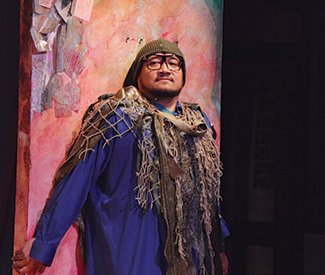
It is dramatic. But then her son, Isaac (Sean San José), a onetime child faith healer turned junkie drifter, is an extraordinary person, named with equally telling Biblical import. Sacrificed without his consent to the extravagant will of his parents — including a wily Pentecostal preacher of the Central Valley (Donald E. Lacy Jr.) who sports a red tail under his Western gear — the once gifted Isaac has an ambivalent relationship with the open road that set him free but left him rootless, lost, dogged by his past. Spurning pleas by his drug-addled girlfriend (Maria Candelaria) to be healed by him, he is now headed backward down that road, haunted by her death from a subsequent overdose, in search of his estranged brother (Brian Rivera) and some kind of redemption. It’s a road that leads him to the Golden Gate, as far west as you can get, and maybe a step too far.

Mary’s deflating note of modesty at the top of the play, amid the outsized proportions of her character’s almost classical stature, not only produces a gentle laugh. It marks something wise and alluring in the work of Luis Alfaro, which resurfaces with varied success throughout Campo Santo’s production of Alleluia, the Road, a world-premiere collaboration with the playwright now up at Intersection for the Arts. That amounts to a built-in, meta-theatrical commentary on the epic proportions of the vernacular, and the normally unsung lives that speak it. (Part of the Triangle Lab’s Califas project and festival, summoning and celebrating voices of the Central Valley, the play takes place amid the faces and recorded stories of an accompanying gallery exhibition.)

It’s a knowing style, mixing pop references and inflated prose, that lends itself naturally to fourth-wall breaks, asides, or magical realism; and it reflects throughout a certain ethnic “double consciousness” (to borrow W.E.B. DuBois’s famous term) alive and present in the “real” world. For the characters seem aware at times of the vastly different cultural terrain they occupy simultaneously and straddle almost surreally — including the narrative tropes of the dominant culture, as well as a set of more familial narratives rooted in some mélange of Latino, African American, and indigenous traditions.

This double consciousness in the writing is redolent of a similar tragi-comical tension in the plays of Octavio Solis, for example, a Campo Santo stalwart. Or those of Richard Montoya — whose American Night premiered in the summer at California Shakespeare Theater as part of the same Califas project of Intersection’s Triangle Lab (a community-expanding initiative of Intersection and Cal Shakes). But it does not necessarily make for a strong play, and neither American Night or Alleluia, the Road is very persuasive as reflections of real life, or even magical-real ones. (Montoya’s The River, which premiered last April, while uneven, was a more inspired outing penned specifically for Campo Santo, also as part of the Califas project.)

Among other problems, the narrative twists and turns in Road feel too well trod already, and too bumpy in terms of characterization or backstory. (These are characters who speak their complexes and motivations with too much ready articulation, leaving little for the audience to interpret or intuit.) At the same time, the use of a choir of voices, bursting now and then into some classic spirituals, tends to feel thematically heavy-handed rather than rousing and meaningful. Aesthetically, instead of genuinely forward leaning, the play ends up seeming derivative of stronger Campo Santo productions of the past.

Directed (like Night) by Cal Shakes’ Jonathan Moscone, the action unfurls along a runway playing area, two small stages on either end, and around the audience, but for all its structured intimacy is only sporadically effective. Castellanos and San José deliver the strongest, most intricately crafted performances — and indeed their characters are the more detailed ones. San José also offers a volcanic monologue that’s a highlight of the evening. There is a listless and forced feeling to the performances overall, however, which reinforces the sense that this road does not lead anywhere very new.

Who speaks, who is heard, and the power of the word — a major theme connecting not only the stories in Alleluia, the Road but those of the larger Califas project of which it is a part — is a perennially important, and potent, subject for drama. But our ability to connect with it in Road, at least, may require that it be pitched in a new key. *

ALLELUIA, THE ROAD

Extended through Nov 23

Thu-Sun, 8pm, $30

Intersection for the Arts

925 Mission, SF

www.theintersection.org


Rep Clock: November 13 – 19, 2013

0

Schedules are for Wed/13-Tue/19 except where noted. Director and year are given when available. Double and triple features marked with a •. All times pm unless otherwise specified.

ATA GALLERY 992 Valencia, SF; www.atasite.org. $6. “Other Cinema:” Your Day is My Night (Sachs, 2012), Sat, 8:30.

BALBOA THEATRE 3630 Balboa, SF; cinemasf.com/balboa. $10. “Popcorn Palace:” Back to the Future (Zemeckis, 1985), Sat, 10am. Matinee for kids.

CASTRO 429 Castro, SF; (415) 621-6120, www.castrotheatre.com. $8.50-12. •Weekend (Godard, 1967), Wed, 7, and Crash (Cronenberg, 1996), Wed, 9. •The Big Lebowski (Coen and Coen, 1998), Thu, 7, and The Long Goodbye (Altman, 1973), Thu, 9:15. Warren Miller’s Ticket to Ride (2013), Fri, 8. Advance tickets at www.warrenmiller.com. •Purple Rain (Magnoli, 1984), Sat, 2:30, 8, and Amadeus (Forman, 1984), Sat, 4:40. •Lawrence of Arabia (Lean, 1962), Sun, 1:30, and Doctor Zhivago (Lean, 1965), Sun, 6. Danish chef Rene Redzepi of Copenhagen’s top-rated Noma discusses A Work in Progress, Tue, 7. Tickets ($30-65) at www.brownpapertickets.com.

CHRISTOPHER B. SMITH RAFAEL FILM CENTER 1118 Fourth St, San Rafael; (415) 454-1222, www.cafilm.org. $6.50-$10.75. Blue is the Warmest Color (Kechiche, 2013), call for dates and times. Running from Crazy (Kopple, 2013), call for dates and times. The Armstrong Lie (Gibney, 2013), Nov 15-21, call for times. JFK: A President Betrayed (Taylor, 2013), Sun, 7. With director Cory Taylor and producer Darin Nellis in person.

CLAY 2261 Fillmore, SF; www.sffs.org. $10-25. “New Italian Cinema:” Garibaldi’s Lovers (Soldini, 2012), Wed, 6:15; Napoli 24 (Various directors, 2010), Wed, 9; Balancing Act (De Matteo, 2012), Thu, 6:30; There Will Come a Day (Diritti, 2013), Thu, 8:45; Steel (Mordini, 2012), Fri, 6:30; Cosimo and Nicole (Amato, 2013), Fri, 9; We Believed (Martone, 2010), Sat, 12:15; Ali Blue Eyes (Giovannesi, 2012), Sat, 4:15; Out of the Blue (Leo, 2013), Sat, 6:30; The Interval (di Costanzo, 2012), Sat, 9; Gorbaciof (Incerti, 2010), Sun, 1; The Ideal City (Lo Cascio, 2012), Sun, 3; The Great Beauty (Sorrentino, 2013), Sun, 6; One Man Up (Sorrentino, 2001), Sun, 9:30.

ELLEN DRISCOLL PLAYHOUSE 325 Highland, Piedmont; www.diversityfilmseries.org. Free. “Piedmont Diversity Film Series:” The Invisible War (Dick, 2012), Wed, 6:30.

EXPLORATORIUM 600 the Embarcadero, SF; www.sfcinematheque.org. $5-10. “Necrology and More: Films of Standish Lawder,” Wed, 7.

FOUR STAR 2200 Clement, SF; www.lntsf.com. $6-8. Chinese American Film Festival, with 14 new Chinese feature films, Wed-Tue.

MECHANICS’ INSTITUTE 57 Post, SF; milibrary.org/events. $10. “CinemaLit Film Series: Dark Star: The Films of Barbara Stanwyck:” Clash By Night (Lang, 1952), Fri, 6.

PACIFIC FILM ARCHIVE 2575 Bancroft, Berk; (510) 642-5249, bampfa.berkeley.edu. $5.50-9.50. “Alternative Visions” and “Arrested History: New Portuguese Cinema:” 48 (de Sousa Dias, 2009), Wed, 7. “Arrested History: New Portuguese Cinema:” No Man’s Land (Lamas, 2012), Thu, 7; Tabu (Gomes, 2012), Sat, 6; The Last Time I Saw Macao (Rodrigues and Guerra da mata, 2012), Sat, 8:30; Ruins (Mozos, 2009), Sun, 3:30; Still Life (de Sousa Dias, 2005), Sun, 5. “Fassbinder’s Favorites:” Pickpocket (Bresson, 1959), Fri, 7. “Love is Colder Than Death: The Cinema of Rainer Werner Fassbinder:” Fox and His Friends (1974), Fri, 8:35.

ROXIE 3117 and 3125 16th St, SF; (415) 863-1087, www.roxie.com. $6.50-11. God Loves Uganda (Williams, 2013), Wed-Thu, 9. The Motel Life (Polsky and Polsky, 2012), Wed-Thu, 7. “Live Projects 2: John Herschend and Alex Karpovsky in Conversation:” Red Flag (Karpovsky, 2012), with “Stories from the Evacuation” (Herschend, 2013), Thu, 7. American Promise (Brewster and Stephenson, 2013), Nov 15-22, 6:15, 9 (also Sat-Sun, 1, 3:30). “United Film Festival,” Fri-Sun. For schedule, visit www.theunitedfest.com. Medora (Cohn and Rothbart, 2013), Mon, 7:15 and 9:15.

TANNERY 708 Gilman, Berk; berkeleyundergroundfilms.blogspot.com. Donations accepted. “Berkeley Underground Film Society:” JFK (Stone, 1991), Sun, 7:30.

UPTOWN THEATRE 1350 Third St, Napa; www.uptowntheatrenapa.com. $35-50. “Napa Valley Film Festival Comes to the Uptown Theatre,” screenings with filmmakers in person, Sun, 10am-midnight.

YERBA BUENA CENTER FOR THE ARTS 701 Mission, SF; www.ybca.org. $8-10. “X: The History of a Film Rating:” Fritz the Cat (Bakshi, 1972), Thu, 7:30; Beyond the Valley of the Dolls (Meyer, 1970), Sun, 2 and 4:30. *


Theater Listings: November 13 – 19, 2013

0

Stage listings are compiled by Guardian staff. Performance times may change; call venues to confirm. Reviewers are Robert Avila, Rita Felciano, and Nicole Gluckstern. Submit items for the listings at listings@sfbg.com.

THEATER

OPENING

Amaluna Big Top at AT&T Park, Third Street at Terry A. Francois Blvd, SF; www.cirquedusoliel.com. $50-175. Opens Wed/13, 8pm. Check website for schedule, including special holiday showtimes. Through Jan 12. Cirque du Soliel returns with a show set on “a mysterious island governed by Goddesses and guided by the cycles of the moon.”

Arlington Magic Theatre, Fort Mason Center, 2 Marina, Bldg D, Third Flr, SF; www.magictheatre.org. $20-60. Previews Wed/13-Sat/16, 8pm; Sun/17, 2:30pm; Tue/19, 7pm. Opens Nov 20, 8pm. Runs Wed-Sat, 8pm (no show Nov 28; also Dec 4, 2:30pm); Sun and Tue, 7pm (also Sun, 2:30pm; no 7pm show Dec 8); Through Dec 8. Magic Theatre performs Victor Lodato and Polly Pen’s world-premiere musical.

Urge For Going Z Below, 470 Florida, SF; www.goldenthread.org. $10-45. Previews Thu/14-Fri/15, 8pm. Opens Sat/16, 8pm. Runs Thu-Sat, 8pm (no show Nov 28); Sun, 3pm. Through Dec 8. Golden Thread Productions presents Mona Mansour’s play about a Palestinian teen who hopes academics will be her ticket out of the Lebanese refugee camp she calls home.

BAY AREA

Harvey Barn Theatre, 30 Sir Francis Drake, Ross; www.rossvalleyplayers.com. $10-22. Previews Thu/14, 7:30pm. Opens Fri/15, 8pm. Runs Thu, 7:30pm; Fri-Sat, 8pm; Sun, 2pm (no show Sun/17). Through Dec 15. Ross Valley Players perform the Pulitzer-winning play by Mary Chase.

110 in the Shade Douglas Morrison Theatre, 22311 N. Third St, Hayward; www.dmtonline.org. $10-29. Previews Thu/14, 8pm. Runs Fri-Sat and Dec 5, 8pm (also Sat, 2pm); Sun, 2pm. Through Dec 8. Douglas Morrison Theatre performs N. Richard Nash’s romantic musical, adapted from his classic play The Rainmaker.

ONGOING

The Barbary Coast Revue Stud Bar, 399 Ninth St, SF; eventbrite.com/org/4730361353. $10-40. Wed, 9pm (no show Nov 27). Through Dec 18. Blake Wiers’ new “live history musical experience” features Mark Twain as a tour guide through San Francisco’s wild past.

Bengal Tiger at the Bagdad Zoo SF Playhouse, 450 Post, SF; www.sfplayhouse.org. $30-100. Wed/13-Thu/14, 7pm; Fri/15-Sat/16, 8pm (also Sat/16, 3pm). In Rajiv Joseph’s Pulitzer-nominated Bengal Tiger at the Bagdad Zoo, the dead quickly outnumber the living, and soon the stage is littered with monologist ghosts lost in transition. In Joseph’s world, at least, death is but another phase of consciousness, a plane of existence where a man-eating tiger might experience a crisis of conscience, and a brash young soldier with a learning disability might suddenly find himself contemplating algebraic equations and speaking Arabic — knowledge that had eluded his comprehension in life. Will Marchetti’s portrayal of the titular tiger is on the static side, though his wry intelligence and philosophical awakening comes as a welcome contrast to the willfully obtuse world view of the American soldiers (Gabriel Marin and Craig Marker) guarding him. But it’s Musa (Kuros Charney), a translator for the Americans and a former gardener and topiary “artist,” who eventually emerges as the play’s most fully realized character and also the most tragic, becoming that which he dreads the most, a beast in a lawless land, egged on by the ghost of his former employer, the notoriously sadistic Uday Hussein (Pomme Koch). At times, director Bill English’s staging feels too understated and contained for a play that’s so muscular and expansive (an understatement not carried over into Steven Klems’ appropriately jarring sound design) focused less on its metaphysical implications than on its mundane surface, but however imperfect the production and daunting the script, it remains a fascinating response to an unwinnable war — the war against our own animal natures. (Gluckstern)

BoomerAging: From LSD to OMG Marsh San Francisco, 1062 Valencia, SF; www.themarsh.org. $15-50. Tue, 8pm. Extended through Dec 17. Will Durst’s hit solo show looks at baby boomers grappling with life in the 21st century.

Driving Miss Daisy Buriel Clay Theater at the African American Art and Culture Complex, 762 Fulton, SF; www.african-americanshakes.org. $12.50-37.50. Fri/15-Sat/16, 8pm; Sun/17, 3pm. It’s 1948 in Atlanta, Ga., the same year that Martin Luther King Jr. joined the ministry at Ebenezer Baptist Church, and Daisy Werthan (Ann Kendrick) has just crashed her new Packard. Grudgingly forced into accepting a driver hired by her son Boolie (Timothy Beagley), she enters what will become a 25-year association with Hoke Coleburn (L. Peter Callender). Although she is a wealthy Jewish widow and he is a working-class African American man, they share a similar stubborn attitude, and although initially constrained by the manners of the time, the two gradually warm up to each other, their relationship evolving simultaneously with the mores of the South. In African-American Shakespeare Company’s production, Kendrick in the title role cuts a formidable figure yet ably reveals her character’s weaknesses and insecurities, while Callender as Hoke maintains an aura of quiet dignity and self-sufficiency; a hired man, but never a servant. Rounding out the excellent cast, Beagley as Boolie is the perfect foil for both his mother’s tendency towards imperiousness and her chauffeur’s sanguine sense of self. Charming, humorous, and subtly profound, Daisy ushers in the holiday season with a non-saccharine sweetness. (Gluckstern)

Emmett Till: A River NOH Space in Project Artaud, 2840 Mariposa, SF; www. theatreofyugen.org. $20-30. Thu/14-Sat/16, 8pm; Sun/17, 2pm. Taken from his bed in the dead of night and brutally killed for allegedly making a pass at a white woman, 14-year-old Emmett Till’s tragic demise helped to fuel the growing fires of the Civil Rights movement. But although his story has become deeply embedded within the fabric of American consciousness, it is usually recalled as a symbol for an oppressive system rather than representative of an actual human being. In an intriguing exploration of Till’s internal landscape, Kevin Simmonds and Judy Halebsky’s Emmett Till: A River at Theatre of Yugen takes Till’s story and fits it into a mugen (or phantasm) noh framework in which the restless spirit of Till encounters the woman in whose defense he was killed over 50 years earlier. As the performers remain seated, moving only to turn the pages of their score in unison, or to play their instruments, the experience is ritualistic in nature, a commingling of chant, poetry, and ghost story, expressed primarily via the sonorous vocals and heavy silences of Lluis Valls (as both Mamie and Emmett Till) and Sheila Berotti (as Carolyn Bryant). A gospel-style chorus of three African American voices (Derek Lassiter, Khalil Sullivan, and Dario Slavazza), the mournful flutes of Polly Moller, and the traditional percussion instruments and kakegoe vocals employed by David Crandall add tonal and atmospheric texture. (Gluckstern)

Foodies! The Musical Shelton Theater, 533 Sutter, SF; www.foodiesthemusical.com. $32-34. Fri-Sat, 8pm. Open-ended. AWAT Productions presents Morris Bobrow’s musical comedy revue all about food.

The Gershwins’ Porgy and Bess Golden Gate Theatre, One Taylor, SF; www.shnsf.com. $60-210. Tue-Sat, 8pm (no show Nov 28; check website for matinee schedule); Sun, 2pm. Through Dec 8. The Tony-winning Broadway revival launches its national tour in San Francisco.

Hedwig and the Angry Inch Boxcar Theatre, 505 Natoma, SF; www.boxcartheatre.org. $27-43. Thu-Sat, 8pm. Open-ended. John Cameron Mitchell’s cult musical comes to life with director Nick A. Olivero’s ever-rotating cast.

I Married an Angel Eureka Theatre, 215 Jackson, SF; www.42ndstmoon.org. $25-75. Wed/13-Thu/14, 7pm; Fri/15, 8pm; Sat/16, 6pm; Sun/17, 3pm. 42nd Street Moon performs the Rodgers and Hart classic.

The Jewelry Box: A Genuine Christmas Story The Marsh San Francisco, 1062 Valencia, SF; www.themarsh.org. $15-40. Fri, 8pm; Sat, 5pm. Through Dec 28. Brian Copeland performs the world premiere of his new, holiday-themed work, an Oakland-set autobiographical tale that’s a prequel to his popular Not a Genuine Black Man.

My Beautiful Launderette New Conservatory Theatre Center, 25 Van Ness, SF; www.nctcsf.org. $25-45. Wed-Sat, 8pm; Sun, 2pm. Through Dec 22. New Conservatory Theatre Center performs Andy Gram and Roger Parsley’s adaptation of Hanif Kureishi’s award-winning screenplay.

Peter and the Starcatcher Curran Theatre, 445 Geary, SF; www.shnsf.com. $40-160. Tue-Sat, 8pm (also Wed and Sat, 2pm; no show Nov 28); Sun, 2pm. Through Dec 1. Fanciful, Tony-winning prequel to Peter Pan.

The Rita Hayworth of This Generation Garage, 715 Bryant, SF; www.715bryant.org. $10-15. Wed-Thu, 8pm. Through Nov 21. Writer-performer Tina D’Elia’s 2010 solo comedy spins a queer and ethnically rich world that straddles the living and the dead in a Las Vegas that, let’s face it, lies somewhere between those two poles already. Drawing on her own professional obsession with Rita Hayworth (née Margarita Carmen Cansino), the ethnically neutered Hispanic star of 1940s Hollywood, D’Elia plays Carmelita, an ambitious Rita Hayworth impersonator who gets entangled with a Latino/a transgender blackjack champion with a drinking problem and too many deals with the devil — in the person of deceased Columbia Pictures mogul Harry Cohn’s daughter, a powerful Vegas TV host and Star-maker. Meanwhile, Carmelita’s smitten production manager Angel tries her best to look out for her, while would-be angel Rita Hayworth herself takes on the role of Carmelita’s consultant on all things Hayworth in a bid to earn her wings from a God moving in typically mysterious ways. While the piece requires patience with the usual formal pitfalls of the solo form (including some awkward back-and-forth between multiple characters) and the hefty plot could also use some editing, D’Elia (under director Mary Guzmán), in a production with few frills, proves a sharp and engaging performer, her characters tending to be both endearing and amusingly full-bodied. (Avila)

Scamoramaland Bindlestiff Studio, 185 Sixth St, SF; www.performersunderstress.com. $15-30. Thu/14-Sat/16, 8pm; Sun/17, 2pm. We’ve probably all received at least one “419” letter from a Nigerian prince-businessman-widow with a fortune abroad that must be reclaimed, for reasons not completely clear, by you and you alone. Eve Edelson’s play Scamoramaland (inspired loosely by her book of the same name) takes a closer look at these scams and attempts to flesh out what we never see online, namely, the faces behind the fraud. As such, however, it’s an incomplete look at best. We’re first introduced to Freddy (James Udom) a charming youth with a fast, flirty patter and a hunger for words, which has driven him to his strange profession, a writer of advance fee fraud scenarios for his boss or “oga” (Duane Lawrence), who holds his school fees hostage for more lucrative letters. As scam artists go, Udom’s Freddy is relatively likable, and it’s hard not to feel for him when a belligerent, wheelchair-bound “scambaiter” Tom (Scott Baker) begins to string him along. But as Freddy becomes more entangled in his unsavory trade, we never get a strong sense of what he is giving up by descending irrevocably deeper into the criminal underworld, his character remaining almost as two-dimensional as his loquacious online alter ego. As for the global socio-economic inequalities that drive such endeavors, they too are barely touched upon, and we’re left with a play that is more troubling than the comedy it’s billed as, but not unflinching enough to be truly transformative. (Gluckstern)

Shakespeare Night at the Blackfriars (London Idol 1610) Phoenix Arts Association Annex Theatre, 414 Mason, SF; www.subshakes.com. $20-25. Fri/15-Sat/16, 8pm; Sun/17, 7pm. Subterranean Shakespeare performs George Crowe’s comedy about a playwriting contest between Ben Jonson, Thomas Middleton, Francis Beaumont, and the ghost of Christopher Marlowe.

“Shocktoberfest 14: Jack the Ripper” Hypnodrome, 575 10th St, SF; www.thrillpeddlers.com. $25-35. Thu-Sat, 8pm. Through Nov 23. It’s lucky 14 for the Thrillpeddlers’ annual Halloween-tide Shocktoberfest, and while there are few surprises in this year’s lineup, there’s plenty of reliable material to chew on. Opening with A Visit to Mrs. Birch and the Young Ladies of the Academy, a ribald Victorian-era “spanking drama,” the fare soon turns towards darker appetites with a joint Andre De Lorde-Pierre Chaine work, Jack the Ripper. Works by De Lorde — sometimes referred to as the “Prince of Fear” — have graced the Hypnodrome stage over the years, and this tense Victorian drama, though penned in the 30s, is suitably atmospheric. Although it becomes pretty evident early on who dunnit, it’s the why that lies at the heart of this grim drama, and in the course of that discovery, the play’s beleaguered lawmen reveal themselves to be no less ruthless than the titular Ripper (John Flaw) in pursuit of their quarry. Norman Macleod as Inspector Smithson particularly embodies this unwholesome dichotomy, and Bruna Palmeiro excels as his spirited yet doomed bait. Inspired by Oscar Wilde’s Salome, the Thrillpeddlers’ piece by the same name is perhaps the weak link in the program, despite being penned by the ever-clever Scrumbly Koldewyn, and danced with wanton abandon by Noah Haydon. Longtime Thrillpeddlers’ collaborator Rob Keefe ties together the evening’s disparate threads under one sprawling big top media circus of murder, sex, ghosts, and sensationalism with his somewhat tongue-in-cheek, San Francisco-centric The Wrong Ripper. (Gluckstern)

Sidewinders Exit on Taylor, 277 Taylor, SF; www.cuttingball.com. $10-50. Thu/14, 7:30pm; Fri/15-Sat/16, 8pm (also Sat/16, 2pm); Sun/17, 5pm. Cutting Ball opens its 15th season with the world premiere of Basil Kreimendahl’s absurdist romp through gender queerness. In a cartoonish, desolate wasteland (designed by Michael Locher), Dakota (Sara Moore), a bleached-blonde gunslinger in buckskin fringes, and Bailey (DavEnd), a possibly AWOL soldier rocking high-heeled boots and a single drop earring, wrestle with the conundrum of what to call their respective genitals. And more to the point, what to do with them after they figure it out. Or as Bailey bluntly puts it, “Who am I supposed to fuck?” But there’s more to being stranded in the uncharted wilderness at stake than “organ confusion,” and soon they must channel their uncommon alliance into finding a way back out. What they find instead include a regal figure of indeterminate gender possessed of extra limbs (Donald Currie), a suicidal servant with surgical skills (Norman Muñoz), and a growing realization that wilderness, like identity, is relative. Moore and DavEnd make a good comedic team, their endless banter, circular logic and exaggerated facial gymnastics giving them the philosophical gravitas of a Looney Tunes episode, while Currie’s turn as mutated muse is unexpectedly moving. Recent winner of the prestigious Rella Lossy award, this intriguing world premiere marks playwright Basil Kreimendahl’s first professional production, though it seems safe to say that it won’t be the last. (Gluckstern)

Underneath the Lintel Geary Theater, 415 Geary, SF; www.act-sf.org. $20-150. Tue-Sat, 8pm (check website for matinees). Extended through Nov 23. A lone librarian (David Strathairn) takes the stage with a suitcase of “scraps” he will use to “prove one life and justify another.” To illustrate the first, he pulls a battered travel guide — 113 years overdue — from the case, and then, as the play continues, displays further “lovely evidence” to bolster his admittedly vague hypothesis. The life he is attempting to prove is that of the so-called “Wandering Jew,” but it’s the life he attempts to justify, namely his own, that becomes the more compelling, and his broadening horizons drive his narrative far more efficiently than his curious obsession with a man in a funny hat (who owes the library quite a fine for his century-delayed return of the guidebook). As a man who has rarely left the comfortable confines of his home town, Hoofddorp, traveling to London, China, New York City, and even Australia is nothing short of epic in the best sense of the word — a hero’s journey during which the benignly dotty librarian emerges transformed. Given the expanse of ACT’s Geary Theater mainstage, the production does suffer somewhat from a lack of intimacy, but moments of inventive staging take advantage of Nina Ball’s fantastically-cluttered set and the librarian’s innate sense of curiosity, as he unearths a wealth of evidence and fraught memories from the depths of the cavernous space. (Gluckstern)

BAY AREA

A Bright New Boise Aurora Theatre, 2081 Addison, Berk; www.auroratheatre.org. $32-50. Previews Wed/13, 8pm. Opens Thu/14, 8pm. Runs Tue, 7pm; Wed-Sat, 8pm; Sun, 2 and 7pm. Through Dec 8. Aurora Theatre presents Samuel D. Hunter’s tale of an ex-evangelical cult member attempting to bond with his estranged son before the end of the world.

Can You Dig It? Back Down East 14th — the 60s and Beyond Marsh Berkeley, 2120 Allston, Berk; www.themarsh.org. $15-50. Sat, 8:30pm; Sun, 7pm. Extended through Dec 15. Don Reed’s new show offers more stories from his colorful upbringing in East Oakland in the 1960s and ’70s. More hilarious and heartfelt depictions of his exceptional parents, independent siblings, and his mostly African American but ethnically mixed working-class community — punctuated with period pop, Motown, and funk classics, to which Reed shimmies and spins with effortless grace. And of course there’s more too of the expert physical comedy and charm that made long-running hits of Reed’s last two solo shows, East 14th and The Kipling Hotel (both launched, like this newest, at the Marsh). Can You Dig It? reaches, for the most part, into the “early” early years, Reed’s grammar-school days, before the events depicted in East 14th or Kipling Hotel came to pass. But in nearly two hours of material, not all of it of equal value or impact, there’s inevitably some overlap and indeed some recycling. Reed, who also directs the show, may start whittling it down as the run continues. But, as is, there are at least 20 unnecessary minutes diluting the overall impact of the piece, which is thin on plot already — much more a series of often very enjoyable vignettes and some painful but largely unexplored observations, wrapped up at the end in a sentimental moral that, while sincere, feels rushed and inadequate. (Avila)

Don’t Dress For Dinner Center REPertory Company, 1601 Civic, Walnut Creek; www.centerrep.org. $33-52. Wed, 7:30pm; Thu-Sat, 8pm (also Nov 23, 2:30pm); Sun, 2:30pm. Through Nov 23. Center REP performs Marc Camoletti’s sequel to his classic farce Boeing-Boeing.

A King’s Legacy Pear Avenue Theatre, 1220 Pear, Mtn View; www.thepear.org. $10-35. Thu-Sat, 8pm; Sun, 2pm. Through Nov 24. Pear Avenue Theatre performs Elyce Melmon’s world premiere, a drama about King James VI of Scotland.

A Little Princess Julia Morgan Theater, 2640 College, Berk; www.berkeleyplayhouse.org. $17-60. Thu-Fri, 7pm (Nov 28, shows at 1 and 6pm); Sat, 1 and 6pm; Sun, noon and 5pm (no 5pm show Dec 1). Through Dec 8. Berkeley Playhouse opens its sixth season with Brian Crawley and Andrew Lippa’s musical adaptation of the Frances Hodgson Burnett story.

Metamorphoses South Berkeley Community Church, 1802 Fairview, Berk; www.infernotheatre.org. $10-25. Thu and Sat-Sun, 8pm; Fri, 9pm. Through Nov 23. Inferno Theatre performs a multimedia, contemporary adaptation of Ovid’s classic.

The Pianist of Willesden Lane Berkeley Repertory Theatre, Thrust Theatre, 2015 Addison, Berk; www.berkeleyrep.org. $29-89. Tue and Thu-Sat, 8pm (also Dec 5 and Sat, 2pm; no show Nov 28); Wed and Sun, 7pm (also Sun, 2pm). Through Dec 8. Mona Golabek stars in this solo performance inspired by her mother, a Jewish pianist whose dreams and life were threatened by the Nazi regime.

Red Virgin, Louise Michel and the Paris Commune of 1871 Berkeley City Club, 2315 Durant, Berk; www.centralworks.org. $15-28. Thu-Sat, 8pm; Sun, 5pm. Through Nov 24. Central Works presents a new play (with live music) by Gary Graves about the Paris Commune uprising.

Social Security Muriel Watkin Gallery, 1050 Crespi Drive, Pacifica; (650) 359-8002. $10-25. Fri-Sat, 8pm; Sun, 2pm. Through Nov 24. Pacifica Spindrift Players performs Andrew Bergman’s classic comedy.

strangers, babies Ashby Stage, 1901 Ashby, Berk; www.shotgunplayers.org. $20-35. Wed/13-Thu/14, 7pm; Fri/15-Sat/16, 8pm; Sun/17, 5pm. Shotgun Players present Linda McLean’s drama about a woman confronting her past.

PERFORMANCE/DANCE

BATS Improv Bayfront Theater, B350 Fort Mason Center, SF; www.improv.org. $20. This week: “DuoProv Championship,” Fri, 8pm, through Nov 29; “Family Drama,” Sat, 8pm, through Nov 30.

“Be Bop Baby: A Musical Memoir: Z Space, 450 Florida, SF; www.zspace.org. Nov 19-21, 7pm; Nov 22-23, 8pm. $25-75. World premiere by Margo Hall and the Marcus Shelby Jazz Orchestra.

“Best of the 2013 San Francisco Fringe Festival” Exit Studio, 156 Eddy, SF; www.theexit.org. Fri/15-Sat/16, 8pm. $15-25. This week: Sarah Mackey’s Memphis On My Mind (“Best of” series continues through Nov. 23).

“Bitch and Tell: A Real Funny Variety Show” Garage, 715 Bryant, SF; www.ftloose.org. Fri/15-Sat/16, 8pm. $8-10. With Paco Romane, Rosemary Hannon, David Miller, Lindsay Wood, Bruce Yelaska, and others.

“Broadway Bingo” Feinstein’s at the Nikko, Hotel Nikko, 222 Mason, SF; www.feinsteinssf.com. Wed, 7-9pm. Ongoing. Free. Countess Katya Smirnoff-Skyy and Joe Wicht host this Broadway-flavored night of games and performance.

“The Buddy Club Children’s Shows” Randal Museum Theater, 199 Museum Wy, SF; www.thebuddyclub.com. Sun/17, 11am-noon. $8 (under 2, free). Dan Chan Magic Man performs dog tricks, illusions, and juggling.

“Con Nombre y Apellido” Fort Mason Center, Southside Theater, Marina at Laguna, SF; www.brownpapertickets.com. Thu/15-Sat/16, 8pm; Sun/17, 2pm. $35-40. Also Nov 23, 8pm, $45, Mtn View Center for the Performing Arts, 500 Castro, Mtn View. Theatre Flamenco of San Francisco presents renowned flamenco dancer Carola Zertuche.

CounterPULSE 1310 Mission, SF; www.counterpulse.org. This week: Year of the Snake with Jason Hoopes, Peiling Kao, and Karl Jensen, Fri/15-Sat/16, 8pm; Sun/17, 7pm, $10-15. “Beware the Band of Lions (They’re Dandy Lions),” with Bandelion, Sun/17, 3pm, free (reservations required as space is extremely limited; to request an invitation, email info@dandeliondancetheater.org).

“Fashioning Women” SOMArts Cultural Center, 934 Brannan, SF; www.brownpapertickets.com. Sat/16, 8pm. $25. Bay Area artist Kate Mitchell presents a dance/theater performance, book launch, and gallery show incorporating her faux costume designs.

Flyaway Productions Joe Goode Annex, 401 Alabama, SF; www.flyawayproductions.com. Wed/13-Sat/16, 7:30 and 9pm. $25. Director-choreographer Jo Kreiter and Flyaway Productions’ latest aerial composition banks off various aspects of female transcendence over the obstacles and confines of the modern world. That informs the deep structure of Give a Woman a Lift anyway — subtitled “a self-propelled, upward dash” — which is currently inhabiting the floor, walls, widows, and the very air within the high-ceilinged Joe Goode Annex. The piece has no narrative per se, but nevertheless evokes a sense of countless stories in both the sweeping grace and the spasmodic or reflexive contortions of its six performers (a lithe and forceful ensemble comprised of Christine Cali, Jennifer Chien, Becca Dean, Lisa Fagan, MaryStarr Hope, and Patricia Jiron). Further augmenting these proto-narrative tropes is an enveloping score by Jewlia Eisenberg and Laura Inserra, whose richly woven melodies are laced with images of women in flight and a repeated call to “rise up, fly girl.” Well-wrought and sympathetic as this fabric is, it can get in the way of some of the more immediately compelling parts of the dance, which makes fine use of the contact between the performers’ bodies and various (industrial) surfaces. These include discrete sections of rust-covered steel I-beams manipulated throughout as objects, supports, or as the central swinging platform suspended from the ceiling, which rises and falls throughout with dancers on and around it. There is something in that contact and negotiation which speaks to, but also reaches intriguingly beyond, the familiar tropes flagged by the “uplifting” aspects of the score and choreography. The latter is full of sweeping arcs and upended bodies, but also gestures that are unnecessarily histrionic. One ends up wondering what more silence and less affectation might have allowed to arise with this wonderfully kinetic and almost trans-human situation. (Avila)

“The Grawlix” Hemlock Tavern, 1131 Polk, SF; www.hemlocktavern.com. Fri/15, 9pm. $15. Club Chuckles hosts the Denver stand-up comedy troupe.

“Hysterical Historical San Francisco, Holiday Edition” Shelton Theater, 533 Sutter, SF; www.sheltontheater.org. Sun, 7pm. Through Dec 29. $30-40. Comic Kurt Weitzman performs.

“Mission Position Live” Cinecave, 1034 Valencia, SF; www.missionpositionlive.com. Thu, 8pm. Ongoing. $10. Stand-up comedy with rotating performers.

Megan Mullally and Stephanie Hunt Feinstein’s at the Nikko, Hotel Nikko, 222 Mason, SF; www.feinsteinssf.com. Thu/14-Fri/15, 8pm; Sat/16, 7pm. $45-65 ($20 food and beverage minimum). The performers present their band Nancy and Beth.

“Okeanos Intimate” Aquarium of the Bay, Pier 39, SF; www.capacitor.org. Sat, 4:30 and 7pm. $20-30 (free aquarium ticket with show ticket). Extended through Dec 28. Choreographer Jodi Lomask and her company, Capacitor, revive 2012’s Okeanos — a cirque-dance piece exploring the wonder and fragility of our innate connection to the world’s oceans — in a special “intimate” version designed for the mid-size theater at Pier 39’s Aquarium of the Bay. The show, developed in collaboration with scientists and engineers, comes preceded by a short talk by a guest expert — for a recent Saturday performance it was a down-to-earth and truly fascinating local ecological history lesson by the Bay Institute’s Marc Holmes. In addition to its Cirque du Soleil-like blend of quasi-representational modern dance and circus acrobatics — powered by a synth-heavy blend of atmospheric pop music — Okeanos makes use of some stunning underwater photography and an intermittent narrative that includes testimonials from the likes of marine biologist and filmmaker Dr. Tierney Thys. The performers, including contortionists, also interact with some original physical properties hanging from the flies — a swirling vortex and a spherical shell — as they wrap and warp their bodies in a kind of metamorphic homage to the capacity and resiliency of evolution, the varied ingenuity of all life forms. If the movement vocabulary can seem limited at times, and too derivative, the show also feels a little cramped on the Aquarium Theater stage, whose proscenium arrangement does the piece few favors aesthetically. Nevertheless, the family-oriented Okeanos Intimate spurs a conversation with the ocean that is nothing if not urgent. (Avila)

Point Break Live!” DNA Lounge, 373 11th St, SF; www.dnalounge.com. Dec 6 and Jan 3, 7:30 and 11pm. $25-50. Interactive interpretation of Kathryn Bigelow’s 1991 classic. (Some tickets include meatball sandwiches!)

San Francisco International Hip Hop DanceFest Palace of Fine Arts Theatre, 3301 Lyon, SF; www.sfhiphopdancefest.com. Fri/15-Sat/16, 8pm; Sun/17, 2 and 7pm. $39.99-$75. The fest celebrates its 15th anniversary with performances by 13 hip-hop dance companies.

“San Francisco Magic Parlor” Chancellor Hotel Union Square, 433 Powell, SF; www.sfmagicparlor.com. Thu-Sat, 8pm. Ongoing. $40. Magic vignettes with conjurer and storyteller Walt Anthony.

“Seijin no Hi/Coming of Age” Japanese Cultural and Community Center of Northern California, 1840 Sutter, SF; www.brownpapertickets.com. Sun/17, 1pm. $17-25. Taiko drumming and dance company GenRyu Arts performs its 18th anniversary concert.

BAY AREA

Adventures of a Black Girl: Traveling While Black EastSide Cultural Center, 2277 International, Oakl; www.brownpapertickets.com. Fri-Sat, 8pm. Through Nov 23. $5-15. Edris Cooper-Anifowoshe performs her solo show.

Diablo Ballet Lesher Center for the Arts, 1601 Civic, Walnut Creek; www.lesherartscenter.org. Fri/15-Sat/16, 8pm (also Sat/16, 2pm). $20-52. The company’s 20th season kicks off with Our Waltzes Trilogy and A Swingin’ Holiday.

“The Intergalactic Nemesis: Book One: Target Earth” Zellerbach Hall, UC Berkeley, Bancroft at Dana, Berk; www.calperformances.org. Thu/14, 8pm. $18-42. A “live-action graphic novel” for ages seven and up.

“Rednecks, God, and Angelenos: The Worst of Randy Newman” Subterranean Art House, 2179 Bancroft, Berk; www.shotgunplayers.org. Sun/17, 8pm. $10-15. First Person Singular performs.

Savage Jazz Dance Company Laney College Theater, 900 Fallon, Oakl; www.savagejazz.org. Thu/14-Sat/16, 8pm. $10-20. The company performs its 2013 fall season, with repertory classics set to Wynton Marsalis and Philip Glass, plus a world premiere.

Unión Tanguera Zellerbach Hall, UC Berkeley, Bancroft at Dana, Berk; www.calperformances.org. Sun/17, 7pm. $18-48. The contemporary tango ensemble performs Nuit Blanche (2010). *


Film Listings: November 13 – 19, 2013

0

Film listings are edited by Cheryl Eddy. Reviewers are Kimberly Chun, Dennis Harvey, Lynn Rapoport, Sam Stander, and Sara Maria Vizcarrondo. For rep house showtimes, see Rep Clock.

OPENING

American Promise This remarkable look at race, education, parenting, and coming-of-age in contemporary America is the result of 13 years spent following African American youths Seun and Idris (the latter the son of filmmakers Joe Brewster and Michèle Stephenson). At the beginning, the Brooklyn pals are both starting at the exclusive Dalton School, where most of their classmates are rich white kids. This translates into culture-clash experiences both comical (a 13-year-old Idris estimates he’s been to 20 bar mitzvahs) and distressing, as both boys struggle socially and academically for reasons that seem to have a lot to do with their minority status at the school. Culled from hundreds of hours of footage — a mix of interviews and cinéma vérité — Brewster and Stephenson’s film captures honest moments both mundane and monumental, sometimes simultaneously, as when Seun’s mother, driving the kids to school, discusses her battle with cancer as his younger siblings trill a Journey song in the back seat. (And even this seemingly light-hearted aside takes on heft later in the film.) Extra props to Brewster and Stephenson, who clearly made a conscious choice not to edit out any of their own foibles — for the most part, they’re caring, involved parents, but be warned: strident homework nagging is a recurrent theme. (2:20) Roxie. (Eddy)

The Armstrong Lie See “The Great Pretender.” (2:03) Embarcadero, Shattuck, Smith Rafael.

The Best Man Holiday Taye Diggs and Sanaa Lathan lead an ensemble cast in this seasonal sequel to 1999 hit The Best Man. (2:00)

The Book Thief One of those novels that seems to have been categorized as “young adult” more for reasons of marketing than anything else, Markus Zusak’s international best seller gets an effective screen adaptation from director Brian Percival and scenarist Michael Petroni. Liesl (Sophie Nelisse) is an illiterate orphan — for all practical purposes, that is, given the likely fate of her left-leaning parents in a just-pre-World War II Nazi Germany — deposited by authorities on the doorstep of the middle-aged, childless Hubermanns in 1938. Rosa (Emily Watson) is a ceaseless nag and worrywart, even if her bark is worse than her bite; kindly housepainter Hans (Geoffrey Rush), who’s lost work by refusing to join “the Party,” makes a game of teacher Liesl how to read. Her subsequent fascination with books attracts the notice of the local Burgermeister’s wife (Barbara Auer), who under the nose of her stern husband lets the girl peruse tomes from her manse’s extensive library. But that secret is trivial compared to the Hubermanns’ hiding of Max Vandenburg (Ben Schnetzer), son of Jewish comrade who’d saved Hans’ life in the prior world war. When war breaks out anew, this harboring of a fugitive becomes even more dangerous, something Liesl can’t share even with her best friend Rudy (Nico Liersch). While some of the book’s subplots and secondary characters are sacrificed for the sake of expediency, the filmmakers have crafted a potent, intelligent drama whose judicious understatement extends to the subtlest (and first non-Spielberg) score John Williams has written in years. Rush, Watson, and newcomer Schnetzer are particularly good in the well-chosen cast. (2:11) (Harvey)

How I Live Now As 16-year-old Daisy (Saoirse Ronan) arrives to spend the summer with cousins she’s never met, England is on the brink of war with an unnamed adversary. Daisy wants nothing to do with her new family and their idyllic countryside home — she’s too caught up in self-loathing image and diet obsessions, which manifest in the movie as overwhelming voiceover chatter. Her eldest cousin, Eddie (George MacKay), begins to draw her out of her shell, but everything changes when a nuclear explosion hits the country. At first, the cousins’ post-apocalyptic life is a charming bucolic, soundtracked by British folk-rock. But the horrors of war soon find them, and the movie’s latter half takes on a quite different tone. Adapted from Meg Rosoff’s YA novel, How I Live Now is almost eager to tackle the ugliest aspects of wartime existence — mass graves, prisoner abuse, work camps — and this unflinching approach is compelling, despite some flaws in the acting and character development. (1:41) Opera Plaza, Shattuck. (Stander)

Le Joli Mai See “Eternal Spring.” (2:25) Opera Plaza, Shattuck.

Your Day Is My Night Multidisciplinary artist Lynne Sachs returns to SF with this feature set in the world of NYC’s Chinatown “shift bed” apartments — ones whose crowded tenants take turns using sleeping space, a phenomenon that exists in many US cities and immigrant communities. An experimental mix of documentary and staged narrative, Day’s cohabiting protagonists are primarily older émigrés from China with diverse current jobs and divergent memories of life back home — from fond family reminiscences to the horrors of the Cultural Revolution. The individual stories told here are related not just in verbiage (both scripted and improvised), but song, dance, theater, poetical imagery, and composer-sound designer Stephen Vitiello’s collage soundtrack. At Other Cinema, Sachs will also present several of her short film works, including 2006’s Three Cheers for the Whale, a collaboration with the late Chris Marker that revised his 1972 Viva la Baleine, which was co-directed with Mario Ruspoli. In addition to its ATA screening Fri/16, Your Day Is My Night also plays the Pacific Film Archive Nov 20. (1:03) Artists’ Television Access. (Harvey)

ONGOING

About Time Richard Curtis, the man behind 2003’s Love Actually, must be enjoying his days in England, rolling in large piles of money. Coinciding with the 10-year anniversary of that twee cinematic love fest comes Curtis’ latest ode to joy, About Time. The film begins in Cornwall at an idyllic stone beach house, as Tim (Domhnall Gleeson) describes his family members (Bill Nighy is dad; Richard Cordery is the crazy uncle) and their pleasures (rituals (tea on the beach, ping pong). Despite beachside bliss, Tim is lovelorn and ready to begin a career as a barrister (which feels as out of the blue as the coming first act break). Oh! And as it happens, the men in Tim’s family can travel back in time. There are no clear rules, though births and deaths are like no-trespass signs on the imaginary timeline. When he meets Mary (Rachel McAdams), he falls in love, but if he paves over his own evening by bouncing back and spending that night elsewhere, he loses the path he’s worn into the map and has to fix it. Again and again. Despite potential repetition, About Time moves smoothly, sweetly, slowly along, giving its audience time enough to feel for the characters, and then feel for the characters again, and then keep crying just because the ball’s already in motion. It’s the most nest-like catharsis any British film ever built. (2:03) 1000 Van Ness, SF Center, Sundance Kabuki. (Vizcarrondo)

All Is Lost As other reviewers have pointed out, All Is Lost‘s nearly dialogue-free script (OK, there is one really, really well-placed “Fuuuuuck!”) is about as far from J.C. Chandor’s Oscar-nominated script for 2011’s Margin Call as possible. Props to the filmmaker, then, for crafting as much pulse-pounding magic out of austerity as he did with that multi-character gabfest. Here, Robert Redford plays “Our Man,” a solo sailor whose race to survive begins along with the film, as his boat collides with a hunk of Indian Ocean detritus. Before long, he’s completely adrift, yet determined to outwit the forces of nature that seem intent on bringing him down. The 77-year-old Redford turns in a surprisingly physical performance that’s sure to be remembered as a late-career highlight. (1:46) SF Center. (Eddy)

Blue is the Warmest Color The stars (Adèle Exarchopoulos and Léa Seydoux) say the director was brutal. The director says he wishes the film had never been released (but he might make a sequel). The graphic novelist is uncomfortable with the explicit 10-minute sex scene. And most of the state of Idaho will have to wait to see the film on Netflix. The noise of recrimination, the lesser murmur of backpedaling, and a difficult-to-argue NC-17 rating could make it harder, as French director Abdellatif Kechiche has predicted, to find a calm, neutral zone in which to watch Blue is the Warmest Color, his Palme d’Or–winning adaptation (with co-writer Ghalya Lacroix) of Julie Maroh’s 2010 graphic novel Le Blue Est une Couleur Chaude. But once you’ve committed to the three-hour runtime, it’s not too difficult to tune out all the extra noise and focus on a film that trains its mesmerized gaze on a young woman’s transforming experience of first love. (2:59) Smith Rafael, Sundance Kabuki. (Rapoport)

Blue Jasmine The good news about Blue Jasmine isn’t that it’s set in San Francisco, but that it’s Woody Allen’s best movie in years. Although some familiar characteristics are duly present, it’s not quite like anything he’s done before, and carries its essentially dramatic weight more effectively than he’s managed in at least a couple decades. Not long ago Jasmine (a fearless Cate Blanchett) was the quintessential Manhattan hostess, but that glittering bubble has burst — exactly how revealed in flashbacks that spring surprises up to the script’s end. She crawls to the West Coast to “start over” in the sole place available where she won’t be mortified by the pity of erstwhile society friends. That would be the SF apartment of Ginger (Sally Hawkins), a fellow adoptive sister who was always looked down on by comparison to pretty, clever Jasmine. Theirs is an uneasy alliance — but Ginger’s too big-hearted to say no. It’s somewhat disappointing that Blue Jasmine doesn’t really do much with San Francisco. Really, the film could take place anywhere — although setting it in a non-picture-postcard SF does bolster the film’s unsettled, unpredictable air. Without being an outright villain, Jasmine is one of the least likable characters to carry a major US film since Noah Baumbach’s underrated Margot at the Wedding (2007); the general plot shell, moreover, is strongly redolent of A Streetcar Named Desire. But whatever inspiration Allen took from prior works, Blue Jasmine is still distinctively his own invention. It’s frequently funny in throwaway performance bits, yet disturbing, even devastating in cumulative impact. (1:38) Metreon, Vogue. (Harvey)

Captain Phillips In 2009, Captain Richard Phillips was taken hostage by Somali pirates who’d hijacked the Kenya-bound Maersk Alabama. His subsequent rescue by Navy SEALs came after a standoff that ended in the death of three pirates; a fourth, Abduwali Abdukhadir Muse, surrendered and is serving a hefty term in federal prison. A year later, Phillips penned a book about his ordeal, and Hollywood pounced. Tom Hanks is perfectly cast as Phillips, an everyman who runs a tight ship but displays an admirable ability to improvise under pressure — and, once rescued, finally allows that pressure to diffuse in a scene of memorably raw catharsis. Newcomer Barkhad Abdi, cast from an open call among Minneapolis’ large Somali community, plays Muse; his character development goes deep enough to emphasize that piracy is one of few grim career options for Somali youths. But the real star here is probably director Paul Greengrass, who adds this suspenseful high-seas tale to his slate of intelligent, doc-inspired thrillers (2006’s United 93, 2007’s The Bourne Ultimatum). Suffice to say fans of the reigning king of fast-paced, handheld-camera action will not be disappointed. (2:14) 1000 Van Ness, SF Center, Sundance Kabuki. (Eddy)

Carrie Is the world ready for a candy-covered Carrie? It’s a sad state of affairs when the best thing about a movie, particularly a wholly superfluous remake like this, is its creepy poster. That’s the closest thing this Carrie has to offer next to that retina-scorching, iconic 1976 image of blood-saturated Sissy Spacek that continues to lend inspiration to baby Billiths everywhere. Nonetheless, like a shy violet cowering in the gym showers, this Carrie comes loaded with potential, with Boys Don’t Cry (1999) director Kimberly Peirce at the helm, the casting of Julianne Moore and Chloe Grace Moretz in the critical mother-daughter roles, and the unfortunately topical bullying theme. Peirce makes a half-hearted attempt to update the, um, franchise when the tormented Carrie (a miscast Moretz) is virally videoed by spoiled rival Chris (Portia Doubleday), but the filmmaker’s heart — and guts — aren’t in this pointless exercise. We speed through the buildup — which unconvincingly sets up Carrie’s torments at home, instigated by obviously mentally ill, Christian fundamentalist mom Margaret (Moore), and at school, where the PE teacher (Judy Greer) pep-talks Carrie and Sue Snell (Gabriella White) is mysteriously hellbent on paying penance for her bullying misdeeds — to the far-from-scary denouement. Let’s say mean-spirited reflexive revenge-taking is no real substitute for true horror and shock. Supposedly drawn to Carrie for its female-empowerment message, Peirce nevertheless isn’t cut out to wade into horror’s crimson waters — especially when one compares this weak rendition with Brian De Palma’s double-screen brio and high-camp Freudian passion play. (1:32) Metreon. (Chun)

Cloudy With a Chance of Meatballs 2 (1:35) Metreon.

The Counselor The reviews are in, and it’s clear Ridley Scott has made the most polarizing film of the season. Most of The Counselor‘s detractors blame Cormac McCarthy’s screenplay, the acclaimed author’s first that isn’t drawn from a prexisting novel. To date, the best film made from a McCarthy tale is 2007’s No Country for Old Men, and The Counselor trawls in similar border-noir genre trappings in its tale of a sleek, greedy lawyer (Michael Fassbender) who gets in way over his head after a drug deal (entered into with slippery compadres played by Brad Pitt and Javier Bardem) goes wrong. Yes, there are some problems here, with very few unexpected twists in a downbeat story that’s laden with overlong monologues, most of them delivered by random characters that appear, talk, and are never seen again. But some of those speeches are doozies — and haters are overlooking The Counselor‘s sleazy pleasures (many of which are supplied by Cameron Diaz’s fierce, feline femme fatale) and attention to grimy detail. One suspects cult appreciation awaits. (1:57) Metreon, 1000 Van Ness. (Eddy)

Dallas Buyers Club Dallas Buyers Club is the first all-US feature from Jean-Marc Vallée. He first made a splash in 2005 with C.R.A.Z.Y., which seemed an archetype of the flashy, coming-of-age themed debut feature. Vallée has evolved beyond flashiness, or maybe since C.R.A.Z.Y. he just hasn’t had a subject that seemed to call for it. Which is not to say Dallas is entirely sober — its characters partake from the gamut of altering substances, over-the-counter and otherwise. But this is a movie about AIDS, so the purely recreational good times must eventually crash to an end. Which they do pretty quickly. We first meet Ron Woodroof (Matthew McConaughey) in 1986, a Texas good ol’ boy endlessly chasing skirts and partying nonstop. Not feeling quite right, he visits a doctor, who informs him that he is HIV-positive. His response is “I ain’t no faggot, motherfucker” — and increased partying that he barely survives. Afterward, he pulls himself together enough to research his options, and bribes a hospital attendant into raiding its trial supply of AZT for him. But Ron also discovers the hard way what many first-generation AIDS patients did — that AZT is itself toxic. He ends up in a Mexican clinic run by a disgraced American physician (Griffin Dunne) who recommends a regime consisting mostly of vitamins and herbal treatments. Ron realizes a commercial opportunity, and finds a business partner in willowy cross-dresser Rayon (Jared Leto). When the authorities keep cracking down on their trade, savvy Ron takes a cue from gay activists in Manhattan and creates a law evading “buyers club” in which members pay monthly dues rather than paying directly for pharmaceutical goods. It’s a tale that the scenarists (Craig Borten and Melisa Wallack) and director steep in deep Texan atmospherics, and while it takes itself seriously when and where it ought, Dallas Buyers Club is a movie whose frequent, entertaining jauntiness is based in that most American value: get-rich-quick entrepreneurship. (1:58) Sundance Kabuki. (Harvey)

Diana The final years of Diana, Princess of Wales are explored in what’s essentially a classed-up Lifetime drama, delving into the on-off romance between “the most famous woman in the world” (Naomi Watts) and heart surgeon Hasnat Khan (Naveen Andrews). Relationship roadblocks (his Muslim family, back home in Pakistan, is hesistant to accept a divorced, Christian Brit as their son’s partner) are further complicated by extraordinary circumstances (Diana’s fame, which leads to paparazzi intrusions on the very private doctor’s life), but there’s real love between the two, which keeps them returning to each other again and again. By the third or fourth tearful breakup — followed by a passionate reunion — Diana‘s story becomes repetitive as it marches toward its inevitable tragic end. Still, director Oliver Hirschbiegel (2004’s Downfall, another last-days-in-the-life biopic, albeit of a slightly different nature) includes some light-hearted moments, as when a giggling Diana smuggles Hasnat through the palace gates (past guards who know exactly what she’s up to). As you’d expect, Watts is the best thing here, bringing warmth and complexity to a performance that strives to reach beyond imitation. (1:52) SF Center. (Eddy)

Don Jon Shouldering the duties of writer, director, and star for the comedy Don Jon, Joseph Gordon-Levitt has also picked up a broad Jersey accent, the physique of a gym rat, and a grammar of meathead posturing — verbal, physical, and at times metaphysical. His character, Jon, is the reigning kingpin in a triad of nightclubbing douchebags who pass their evenings assessing their cocktail-sipping opposite numbers via a well-worn one-to-10 rating system. Sadly for pretty much everyone involved, Jon’s rote attempts to bed the high-scorers are spectacularly successful — the title refers to his prowess in the art of the random hookup — that is, until he meets an alluring “dime” named Barbara (Scarlett Johansson), who institutes a waiting period so foreign to Jon that it comes to feel a bit like that thing called love. Amid the well-earned laughs, there are several repulsive-looking flies in the ointment, but the most conspicuous is Jon’s stealthy addiction to Internet porn, which he watches at all hours of the day, but with a particularly ritualistic regularity after each night’s IRL conquest has fallen asleep. These circumstances entail a fair amount of screen time with Jon’s O face and, eventually, after a season of growth — during which he befriends an older woman named Esther (Julianne Moore) and learns about the existence of arty retro Swedish porn — his “Ohhh&ldots;” face. Driven by deft, tight editing, Don Jon comically and capably sketches a web of bad habits, and Gordon-Levitt steers us through a transformation without straining our capacity to recognize the character we met at the outset — which makes the clumsy over-enunciations that mar the ending all the more jarring. (1:30) Metreon, 1000 Van Ness. (Rapoport)

Ender’s Game Those entering Ender’s Game in search of homophobic threads or politically unsavory themes will likely be frustrated. After all, Orson Scott Card — once a board member of the National Organization for Marriage, and here serving as a producer intent on preserving the 1985 novel that netted him acclaim — has revisited what was initially a short story multiple times over the years, tweaking it to reflect a new political climate, to ready it for new expedient uses. Who knows — the times are a-changin’ fast enough, with the outcry of LGBT activists and the growing acceptance of gay military members, to hope that a gay character might enter the mix someday. Of course, sexuality of all sorts is kept firmly in check in the Ender‘s world. Earth has been invaded by an insect-like species called the Formics, and the planet unifies to serve up its best and brightest (and, it’s implied, most ruthless) young minds, sharpened on first-person-shooters and tactical games, to the cause of defeating the alien “other.” Andrew “Ender” Wiggin (Asa Butterfield) is the knowing hybrid of his sociopath brother Peter (Jimmy Pinchak) and compassionate sister Valentine (Abigail Breslin) — of the trinity, he’s “the One,” as Han Solo, I mean, Harrison Ford, cadet talent-spotter and trainer Colonel Graff, puts it. Ender impresses the leather off the hardened old war horse, though the Colonel’s psychologically more equipped cohort Major Anderson (Viola Davis) suspects there’s more going on within their chosen leader. Director-screenwriter Gavin Hood demonstrates his allegiance to Card’s vision, valorizing the discipline and teamwork instilled by military school with the grim purpose and dead serious pleasure one might take in studying a well-oiled machine, while Ender is sharpened and employed as a stunningly effective tool in a war he never truly conceived of. This game has a bit more in common with the recent Wii-meets-Rock ‘Em Sock ‘Em Godzillas of Pacific Rim than the winking, acidic satire of Starship Troopers (1997), echoing a drone-driven War on Terror that has a way of detaching even the most evolved fighter from the consequences of his or her actions. The question is how to undo, or rewrite, the damage done. (1:54) 1000 Van Ness, SF Center, Sundance Kabuki. (Chun)

Free Birds (1:31) Metreon, 1000 Van Ness.

God Loves Uganda Most contemporary Americans don’t know much about Uganda — that is, beyond Forest Whitaker’s Oscar-winning performance as Idi Amin in 2006’s The Last King of Scotland. Though that film took some liberties with the truth, it did effectively convey the grotesque terrors of the dictator’s 1970s reign. But even decades post-Amin, the East African nation has somehow retained its horrific human-rights record. For example: what extremist force was behind the country’s Anti-Homosexuality Bill, which proposed the death penalty as punishment for gayness? The answer might surprise you, or not. As the gripping, fury-fomenting doc God Loves Uganda reveals, America’s own Christian Right has been exporting hate under the guise of missionary work for some time. Taking advantage of Uganda’s social fragility — by building schools and medical clinics, passing out food, etc. — evangelical mega churches, particularly the Kansas City, Mo.-based, breakfast-invoking International House of Prayer, have converted large swaths of the population to their ultra-conservative beliefs. Filmmaker Roger Ross Williams, an Oscar winner for 2010 short Music by Prudence, follows naive “prayer warriors” as they journey to Uganda for the first time; his apparent all-access relationship with the group shows that they aren’t outwardly evil people — but neither do they comprehend the very real consequences of their actions. His other sources, including two Ugandan clergymen who’ve seen their country change for the worse and an LGBT activist who lives every day in peril, offer a more harrowing perspective. Evocative and disturbing, God Loves Uganda seems likely to earn Williams more Oscar attention. (1:23) Roxie. (Eddy)

Gravity “Life in space is impossible,” begins Gravity, the latest from Alfonso Cuarón (2006’s Children of Men). Egghead Dr. Ryan Stone (Sandra Bullock) is well aware of her precarious situation after a mangled satellite slams into her ship, then proceeds to demolition-derby everything (including the International Space Station) in its path. It’s not long before she’s utterly, terrifyingly alone, and forced to unearth near-superhuman reserves of physical and mental strength to survive. Bullock’s performance would be enough to recommend Gravity, but there’s more to praise, like the film’s tense pacing, spare-yet-layered script (Cuarón co-wrote with his son, Jonás), and spectacular 3D photography — not to mention George Clooney’s warm supporting turn as a career astronaut who loves country music almost as much as he loves telling stories about his misadventures. (1:31) Metreon, 1000 Van Ness, Sundance Kabuki. (Eddy)

Inequality for All Jacob Kornbluth’s Inequality for All is the latest and certainly not the last documentary to explore why the American Dream is increasingly out of touch with everyday reality, and how the definition of “middle class” somehow morphed from “comfortable” to “struggling, endangered, and hanging by a thread.” This lively overview has an ace up its sleeve in the form of the director’s friend, collaborator, and principal interviewee Robert Reich — the former Clinton-era Secretary of Labor, prolific author, political pundit, and UC Berkeley Professor of Public Policy. Whether he’s holding forth on TV, going one-on-one with Kornbluth’s camera, talking to disgruntled working class laborers, or engaging students in his Wealth and Poverty class, Inequality is basically a resourcefully illustrated Reich lecture — as the press notes put it, “an Inconvenient Truth for the economy.” Fortunately, the diminutive Reich is a natural comedian as well as a superbly cogent communicator, turning yet another summary of how the system has fucked almost everybody (excluding the one percent) into the one you might most want to recommend to the bewildered folks back home. He’s sugar on the pill, making it easier to swallow so much horrible news. (1:25) Balboa. (Harvey)

Jackass Presents: Bad Grandpa (1:32) Metreon, 1000 Van Ness.

Kill Your Darlings Relieved to escape his Jersey home, dominated by the miseries of an oft-institutionalized mother (Jennifer Jason Leigh) and long-suffering father (David Cross), Allen Ginsberg (Daniel Radcliffe) enters Columbia University in 1944 as a freshman already interested in the new and avant-garde. He’s thus immediately enchanted by bad-boy fellow student Lucien Carr (Dane DeHaan), a veteran of numerous prestigious schools and well on the road to getting kicked out of this one. Charismatic and reckless, Carr has a circle of fellow eccentrics buzzing around him, including dyspeptic William S. Burroughs (Ben Foster) and merchant marine wild child Jack Kerouac (Jack Huston). Variably included in or ostracized from this training ground for future Beat luminaries is the older David Kammerer (Michael C. Hall), a disgraced former academic who’d known Carr since the latter was 14, and followed him around with pathetic, enamored devotion. It’s this last figure’s apparent murder by Carr that provides the bookending crux of John Krokidas’ impressive first feature, a tragedy whose motivations and means remain disputed. Partly blessed by being about a (comparatively) lesser-known chapter in an overexposed, much-mythologized history, Kill Your Darlings is easily one of the best dramatizations yet of Beat lore, with excellent performances all around. (Yes, Harry Potter actually does pass quite well as a somewhat cuter junior Ginsberg.) It’s sad if somewhat inevitable that the most intriguing figure here — Hall’s hapless, lovelorn stalker-slash-victim — is the one that remains least knowable to both the film and to the ages. (1:40) SF Center. (Harvey)

Last Vegas This buddy film may look like a Bucket List-Hangover hybrid, but it’s got a lot more Spring Breakers in it than you expect — who beats Vegas for most bikinis per capita? Four old friends reunite for a wedding in Vegas, where they drink, gamble, and are confused for legendary men. Morgan Freeman sneaks out of his son’s house to go. Kevin Kline’s wife gave him a hall pass to regain his lost sense of fun. Kline and Freeman trick Robert De Niro into going — he’s got a grudge against Michael Douglas, so why celebrate that jerk’s nuptials to a 30-year-old? The conflicts are mostly safe and insubstantial, but the in-joke here is that all of these acting legends are confused for legends by their accidentally obtained VIP host (Romany Malco). These guys have earned their stature, so what gives? When De Niro flings fists you shudder inside remembering Jake LaMotta. Kline’s velvety comic delivery is just as swaggery as it was during his 80s era collaborations with Lawrence Kasdan. Douglas is “not as charming as he thinks he is,” yet again, and voice-of-God Freeman faces a conflict specific to paternal protective urges. Yes, Last Vegas jokes about the ravages of age and prescribes tenacity for all that ails us, but I want a cast this great celebrated at least as obviously as The Expendables films. Confuse these guys for better? Show me who. (1:44) Metreon, 1000 Van Ness. (Vizcarrondo)

The Motel Life (1:25) Roxie.

Running From Crazy Can one ever escape one’s toxic genetic legacy, especially when one’s makeup, and even one’s genius, is so entangled with mental illness, the shadow of substance abuse, and a kind of burden of history? Actor, author, healthy-living proponent, and now suicide prevention activist Mariel Hemingway seems cut out to try, as, eh, earnestly as she can, to offer up hope. Part of that involves opening the door to documentarian Barbara Kopple, in this look at the 20th century’s most infamous literary suicide, Mariel’s grandfather Ernest Hemingway, and just one of his familial threads, one full of lives cut deliberately short. For Running From Crazy, Kopple generally keeps the focus on Mariel, who displays all the disarming groundedness and humility of the youngest care-taking, “good” child. Her father, Ernest’s eldest son, Jack, regularly indulged in “wine time” with his ailing wife and, according to Mariel, had a pitch-black side of his own. But we don’t look to closely at him as the filmmaker favors the present, preferring to watch Mariel mountain climb and bicker with her stuntman boyfriend, meet up with her eldest sister Muffet, and ‘fess up about the depression that runs through the Hemingway line to her own daughters. Little is made of Mariel’s own artistic contributions in acting, though Kopple’s work is aided immeasurably by the footage Mariel’s rival middle sister Margaux shot for a documentary she planned to do on Ernest. Once the highest paid model in the world, Margaux leaves the viewer with a vivid impression of her brash, raw, eccentric, and endearingly goofy spirit — she’s courageous in her own way as she sips vino with her parents and older sister and tears up during a Spanish bull fight. Are these just first world problems for scions who never hesitated to trade on their name? Kopple is more interested in the humans behind the gloss of fame, spectacle and sensation — the women left in the wake of a literary patriarch’s monumental brand of masculinity and misogyny. And you feel like you get that here, plainly and honestly, in a way that even Papa might appreciate. (1:40) Smith Rafael. (Chun)

Thor: The Dark World Since any tentacle of Marvel’s Avengers universe now comes equipped with its own money-printing factory, it’s likely we’ll keep seeing sequels and spin-offs for approximately the next 100 years. With its by-the-numbers plot and “Yeah, seen that before” 3D effects, Thor: The Dark World is forced to rely heavily on the charisma of its leads — Chris Hemsworth as the titular hammer-swinger; Tom Hiddleston as his brooding brother Loki — to hold audience interest. Fortunately, these two (along with Anthony Hopkins, Natalie Portman, Idris Elba, and the rest of the supporting cast, most of whom return from the first film) appear to be having a blast under the direction of Alan Taylor, a TV veteran whose credits include multiple Game of Thrones eps. Not that any Avengers flick carries much heft, but especially here, jokey asides far outweigh any moments of actual drama (the plot, about an alien race led by Christopher Eccleston in “dark elf” drag intent on capturing an ancient weapon with the power to destroy all the realms, etc. etc., matters very little). Fanboys and -girls, this one’s for you … and only you. (2:00) Balboa, Metreon, 1000 Van Ness, Sundance Kabuki. (Eddy)

12 Years a Slave Pop culture’s engagement with slavery has always been uneasy. Landmark 1977 miniseries Roots set ratings records, but the prestigious production capped off a decade that had seen some more questionable endeavors, including 1975 exploitation flick Mandingo — often cited by Quentin Tarantino as one of his favorite films; it was a clear influence on his 2012 revenge fantasy Django Unchained, which approached its subject matter in a manner that paid homage to the Westerns it riffed on: with guns blazing. By contrast, Steve McQueen’s 12 Years a Slave is nuanced and steeped in realism. Though it does contain scenes of violence (deliberately captured in long takes by regular McQueen collaborator Sean Bobbitt, whose cinematography is one of the film’s many stylistic achievements), the film emphasizes the horrors of “the peculiar institution” by repeatedly showing how accepted and ingrained it was. Slave is based on the true story of Solomon Northup, an African American man who was sold into slavery in 1841 and survived to pen a wrenching account of his experiences. He’s portrayed here by the powerful Chiwetel Ejiofor. Other standout performances come courtesy of McQueen favorite Michael Fassbender (as Epps, a plantation owner who exacerbates what’s clearly an unwell mind with copious amounts of booze) and newcomer Lupita Nyong’o, as a slave who attracts Epps’ cruel attentions. (2:14) 1000 Van Ness, Sundance Kabuki. (Eddy) *


War of the roses

32

emilysavage@sfbg.com

TOFU AND WHISKEY Rock ‘n’ roll guitarists do not typically have the opportunity to play with full, live orchestras. Though legendary avant-punk composer Rhys Chatham has long challenged that notion.

“I thought it would be nice to write a piece for a literal orchestra of guitars, both for its unique sonority, as well as for the social element of massing so many guitarists together, to give them the experience of playing in an orchestra, the way classical musicians do,” the 61-year-old writes from his home in France.

His first piece for multiple electric guitars was back in ’77 — Guitar Trio — and by ’84 he upped the number to six. But this is where the electric guitar orchestras of Chatham took a huge leap: 100 guitars, wailing, riffing, battling, rising in unison and twisting on their own windy paths.

Since then, Chatham has launched multiple pieces based on 100 to 400 electric guitarists, including An Angel Moves Too Fast to See (1989), and A Crimson Grail (2005). His newest piece, A Secret Rose, is back to 100 and will have its Bay Area premiere Sun/17 (7pm, $10–$75. Craneway Pavilion, 1414 Harbour, Richmond. otherminds.org).

The difference? A Secret Rose was a piece intended to be learned quickly, without placing “unreasonable demands” on the participating musicians’ time.

“An added plus as far as ease of mounting the piece is concerned is that I wrote the piece for guitars in a standard tuning, so the musicians can simply arrive with the strings they normally use, cutting down on the time it takes to restring the guitars, not to mention the purchasing of special strings for 100 guitarists!”

Like much of his other work, A Secret Rose is informed by Chatham’s strong connection to the roots of the ’77 punk scene, a world the minimalist composer cracked open in his early 20s. He says at the time he was trying to find his voice as a composer.

He grew up in New York City playing his father’s harpsichord, which he first picked up at age six. By age eight he was playing clarinet, and at 12, he switched to flute. “Luckily, my flute teacher was a contemporary music specialist, so she taught me Density 21.5 by Varèse, Sonatine for flute and piano by Boulez, and many others.”

In his early 20s, he first became entranced with the burgeoning loft jazz scene in NYC.

“I switched to tenor saxophone because the fingering is almost the same as flute, also because it was louder.”

There, he studied alongside the greats, including La Monte Young — he even sang in his group, the Theater of Eternal Music — along with Terry Riley. He was an early member of Tony Conrad’s the Dream Syndicate, and played alongside Charlemagne Palestine.

Around this time though, there was the punk awakening. Everything changed with an electrifying Ramones concert in 1976 at CBGB.

“I had never seen anything like it in my life. Wow! I felt that I had something in common with their music. I mean, as a hardcore minimalist composer, I was only using one chord in the music I was doing at the time — the Ramones were using three — but I loved the repetition, and that’s when I decided to embrace this music into my own.”

He dropped the sax and picked up a Fender Telecaster guitar, and he was soon playing minimal music in a rock context at Max’s Kansas City and CBGB.

The classic Fender is still integral to his performances more than three decades later. For A Secret Rose, each guitarist will bring her or his own electric guitar. Says Chatham, “The piece was written for a Fender kind of sound…so we ask the guitarists to bring guitars that have a Fender type of sound.”

As for finding those 100 talented guitarists to join the orchestra? It was a collaboration with the Other Minds new music community nonprofit, which is presenting the West Coast premiere of A Secret Rose, and Chatham’s manager Regina Greene. The application process was wide open, so the end result is a batch of musicians from all over the world, including the UK, Argentina, and Canada. The Richmond performance in the dramatic waterfront Craneway Pavilion includes musicians from Guided by Voices, Akron/Family, Tristeza, Hrsta, Sutekh Hexen, and Girls Against Boys.

Many of the guitarists are also local: Other Minds received a grant from the James Irvine Foundation that focuses on “nonprofessional and professional musicians from low-income and ethnically diverse communities in Contra Costa and Alameda counties” to help put the event on. After the applications came in, Other Minds and Chatham went to work mixing in musicians with backgrounds in jazz, folk, noise, psych, metal, experimental, classical, and punk.

The final blend includes Oakland’s Carolyn Kennedy, Alameda’s Kurt Brown, Berkeley’s Becky White, and more, plus Chatham alumni (who’ve played in different electric guitar orchestras with him) including John Banister of San Francisco and Brian Good of Walnut Creek.

All those guitarists will be backed by electric bassist Lisa Mezzacappa, and drummer Jordan Glenn, both from the Bay Area. In a much smaller scale preview of A Secret Rose earlier this year, Mezzacappa and Glenn did Guitar Trio (version for eight musicians) with Chatham at the Lab in the Mission. “They are excellent musicians. Well, they’d have to be to accompany 100 electric guitars,” Chatham says. “They are the rhythm section, the wind, indeed the hurricane that lights the fire of the playing of the guitarists!”

The performance itself is structured similar to a symphony, starting with an introduction and slow prelude, followed by an allegro movement

“[And] then I break with sonata form and have a structured aleatory movement, followed by an adagio section, ending with a brisk allegro, although having a vastly different character than the first one,” explains Chatham.

“All the music is notated, even the aleatory section has specific prose instructions. When we mount the piece it will probably be one of the few times the guitarists make use of a music stand!”

HOT TODDIES

For this third annual Friends of Tricycle Records comp release show, the favored local indie label brings out Oakland lady trio Hot Toddies. The Toddies make sunny though rough-edged beach pop with sugary multipart harmonies, and released their Bottoms Up EP on Tricycle earlier this year. The Tricycle Records comp, produced by Julie Schuchard, includes the slow-burning Hot Toddies’ track “Summertime Blues,” along with songs by James & Evander, Happy Fangs, Swiftumz, WOOF, and more. With Tambo Rays, Kill Moi, Odd Owl, Blaus (DJ set).

Wed/13, 8pm, $6–$9. Brick and Mortar Music Hall, 1710 Mission, SF. www.brickandmortarmusic.com.

MELT-BANANA

Melt-Banana has always been a curious subject: rapid, triumphant grindcore matched to yelpy staccato vocals tinted with Japanese accents, like Spazz meets Deerfhoof. And with each album, the group — formed in 1993 — has proved itself still endlessly fascinating, complex, even fun. Its latest, Fetch (A-Zap), is its first in six long years, and it comes speeding back to the present, not a moment of chaos lost. Check “The Hive” — it’s like riding a terrifying roller coaster on acid with a screeching sprite on your shoulder. With Retox. 

Sat/16, 8pm, $15. Oakland Metro, 630 Third St, Oakl. www.oaklandmetro.org.


Years Latyr(x)

0

arts@sfbg.com

When the last Latyrx album, The Album, came out in August 1997, hip-hop was still trying to figure out its footing in a post-Biggie and Tupac world. The duo, made up of East Bay rappers Lyrics Born and Lateef the Truthspeaker, was one of the first conscious acts to make waves in that world before the actual subgenre of conscious or progressive hip-hop solidified.

But 16 years is almost half the lifespan of hip-hop and every cultural aspect associated with it. Countless micro-genres, fads, and rappers have emerged, disappeared, and assumed their position in the annals of style during the years after The Album and before Latyrx’s follow-up. Though the game has changed between the last time they collaborated and the release of 2013 full-length The Second Album (Latyramid), Lyrics Born and Lateef have still been putting work in the hip-hop industrial complex. Combined, they’ve put out more than a couple dozen solo albums, remix records, EPs, live albums, and mixtapes.

http://www.youtube.com/watch?v=INU9nk4OQlY

So why get the band back together? Lyrics Born puts it simply “[The Album] was such a milestone in our lives and careers. It was something we always planned to revisit but never had the opportunity to do so. It was definitely one of the top five questions I was always asked by fans. ‘When are you guys gonna do the next Latyrx album?’ It was just sort of time.” A second Latyrx album was announced on Lyrics Born’s website back in early 2007, but there was little movement until a few years later. The duo realized it better finally get cracking on the follow-up record when it was invited to do a show in 2010 with local jazz maestro Adam Theis of the Jazz Mafia group at the Mezzanine — and witnessed the immensely warm reaction to its set the following year at Outside Lands. Following those two performances, it was apparent that another Latyrx record needed to happen: “The window was right, so we got in the studio” says Lateef.

The most striking element of The Second Album is the feeling that each track comes from a different album. “It’s Time” features Zion I incorporating whizzing Transformers-like synths. “Gorgeous Spirits” is a booty-shaking clubbanger. The two tracks featuring tUnE-yArDs’ Merrill Garbus — “Watershed Moment” (also featuring longtime collaborater Blackalicious’ Gift of Gab) and “Deliberate Gibberish” — each shine in uniquely differing ways. “Deliberate Gibberish” sounds like it was culled from a fast-paced spoken word album and “Watershed Moment” percolates with a bouncy and eccentric flow. “There’s really no reason why a song like [‘Deliberate Gibberish’] should exist. It’s like the anti-song, the anti-hip-hop song in the sense that there’s no drums, it’s just Merrill from tUnE-yArDs doing these weird voices in the background,” says Lyrics Born, on working with the indie-art pop crooner.

The seemingly out-of-nowhere appearances of Garbus on the LP is due to an artist retreat in New Orleans. The conference put on by the Air Traffic Control (ATC) organization (which put on the Tibetan Freedom Concert series) is described by Lyrics Born as “an effort to coordinate artist with nonprofits.”

“We were there looking at the aftermath and recovery with the Gulf oil spills as well as the recovery from Katrina. We spent a lot of time in the gulf and different neighborhoods connecting with other musicians and orgs to get involved there. It was amazing to see the spirit that the city has.”

Those drawn to Latyrx for its conscious aesthetic will find its progressive expectations satisfied. Its signature wordplay ricochets throughout the album, railing against crass commercialism, gun culture, and the overall desolate situation faced by many struggling Americans today.

Some may argue that progressive hip-hop is a relic from another generation, but for Lyrics Born, being an artist in 2013 is no different than in ’97. “It means what it’s always meant: I can’t do today what I did yesterday. That’s really how we approached this record and all my records. Neither of us is interested in covering ground that’s already been covered.”

Things are going well on the underground alt-rap stalwarts’ current tour together, and in the next year, Latyrx will be doing a larger world tour. As for the now-looming question about a third Latyrx album, the duo says: “We just hope the third one doesn’t take another 16 years to create. This last album was a chance for us to get back to doing what we do best. We got a lot of our solo stuff out of our system. The world needs unusual records right now.”

LATYRX

With Forrest Day, DJ Aaron Axelsen

Nov. 20, 9pm, $25

Independent

628 Divisadero, SF

www.independentsf.com


Break on through

1

arts@sfbg.com

 I drive up into the East Oakland hills, past 19th century “Poet of the Sierras” Joaquin Miller’s odd little cabin, to visit Michael McClure. Based on his youthful good looks, you’d never guess he was a few days shy of 81, but the trail McClure has blazed through literary history testifies by length, stretching back to 1955 when — alongside Philip Lamantia, Philip Whalen, and Gary Snyder — he was the youngest participant in the famous Six Gallery reading at which Allen Ginsberg debuted “Howl.” It was a seminal moment in postwar American poetry. “We all put our toes to the line that night and broke out,” he says. “And we all went our own directions.”

Beginning with his first book of poems, Passage (1956), McClure would find himself going in many directions, writing novels, essays, journalism, and even Obie-award-winning plays like The Beard (1965). As a countercultural figure, he could roll with the times, reading at the Human Be-In in 1967 in Golden Gate Park; associating with high-profile rock acts like Bob Dylan, the Doors, and Janis Joplin (for whom he co-wrote the 1970 classic “Mercedes Benz”); and appearing in movies like Peter Fonda’s The Hired Hand (1971) and Martin Scorsese’s The Last Waltz (1975). In the mid-’80s, he even began performing with the Doors’ Ray Manzarek on piano, releasing such CDs as last year’s The Piano Poems (Oglio Records). And though I’ve come to discuss Ghost Tantras, his 1964 self-published book of “beast language” reissued this month by City Lights, we inevitably touch on the recently deceased keyboardist with whom McClure played over 200 gigs.

“Ray died at a very wonderful time,” McClure says. “He’s 74 and at the height of his powers. People say, ‘You must feel broken up about Ray,’ but I’m actually happy to know someone who stepped out in his own glory. The last time I saw him was [last] November. We had just done a performance at the Sweetwater in Mill Valley. That night Bobby Weir sat in. It was like the Doors and the Grateful Dead embraced.”


THE LANGUAGE OF THE BEAST

But Ghost Tantras predates most of these famous exploits. The origins of what McClure calls its “beast language” can be traced back to his early play The Feast, performed in 1960 at SF’s Batman Gallery.

“The walls had Jay DeFeos and Bruce Conners on them,” he recalls. “The actors were dressed in Indian blankets and torn white tissue paper beards, seated before a long table that carried black plums and white bread, black wine. Thirteen of them performed a Last Supper-like rite and spoke in beast language and English of the melding of opposites and the proportion of all beings, from the incredibly tiny to the cosmic.”

“Beast language” might be described as a roaring deformation of language into something less oriented toward signification and more toward the physicality of the body, poetry as “a muscular principle,” as he writes in the original introduction, rather than as a mimetic text conveying images and ideas. Take, for example, these lines from tantra 46: “NOWTH / DROON DOOOOOOOOR AGH ! / Nardroor yeyb now thowtak drahrr ooh me thet noh / large faint rain dreeps oopon the frale tha toor / glooing gaharr ayaiieooo.” Signification isn’t the prime motivation here, nor is it entirely absent, as snippets of sense emerge and dissolve amid a sea of syllables. Such moments almost suggest reading Chaucer or Finnegans Wake, texts in some distant version of our own tongue, but they just as quickly vanish into phrases that resist intelligibility (“gaharr ayaiieooo”).

Yet despite this resistance, the writing of Ghost Tantras was also bound up in visionary experience. McClure began Ghost Tantras in 1962 while working for the Institute for Personality Assessment and Research, for the University of California.

“My role with IPAR was to give psilocybin to artists and to film them in that timeless state of the high,” he says. “I was probably an ideal person because I had given up the use of psychedelic drugs myself. Already, after a lot of experimentation in psychedelics and several essays that had been published by City Lights in Meat Science Essays (1963), I wanted to write a deep exploration of these highs after reading Henri Michaux’s gorgeous Miserable Miracle (1956), which was his — I felt personally — inaccurate description of the mescaline high. That inspired me to want to write clearly about this experience. Meanwhile, I had begun practicing Kundalini yoga, which is a chakra-centric yoga, and I was beginning to have powerful experiences.”


“ART WITH NO EDGES”

This desire to convey visionary experience might seem at odds with Ghost Tantras‘s frequent resistance to signification, yet the apparent paradox might be resolved through Abstract Expressionism, which McClure insists was “one of my most profound sources, the art with no edges, the art with no limits.” Viewed thusly, Ghost Tantras aspires to the degree of autonomy accorded to nonrepresentational art by not referring to experience but rather offering it.

“Allen Ginsberg had introduced me to Mark Rothko, and I got Rothko’s phone number,” McClure recalls. “I had Ghost Tantras and I wanted to show them to him but in the meantime I lost his number, as you did in those days. I always thought Rothko would be the right person to see the fields of letters in Ghost Tantras, as you see in one of his field paintings. If you look at Ghost Tantras in a different way, you see that each one is a field, a work of visual substance. Or nonsubstance.”

“I knew I was tangoing with my own personal ridiculousness when I wrote these. I don’t mind that, because in my writing when it’s at its most intensely serious it’s also at its most comic. And I call to mind what I think are some of the most important poems of the 20th century, Federico García Lorca’s ‘Gacela of Unforeseen Love,’ which is among the most intense love poetry I’ve ever experienced. It’s also kinda comic. My own poetry, when I believe in it the most, also has an edge to it that is not serious, or it’s serious, all right, but real seriousness has an edge that breaks on through to the other side.”

“It was part of the massive and inspired creativity that was rushing around me,” he concludes. “That’s probably the best clue I can give to anyone who wants to understand the sources behind Ghost Tantras, as part of the huge energy that was amassing itself and pouring through California at the time.” *

MICHAEL MCCLURE

Nov 20, 7pm, free

City Lights Bookstore

261 Columbus Ave, SF

www.citylights.com


Eternal spring

0

arts@sfbg.com

Chris Marker did not seem to see a hard distinction between cities and their people. The cat-loving leftist documentarian, whose distinctly poetic outlook we sadly lost last year, is probably best known for his experimental sci-fi short La Jetée (1962) and his ethnography-cum fictionalized-travel-memoir Sans Soleil (1983), film-school favorites both available through the Criterion Collection.

But his filmography goes much deeper than that, and often focuses on the inner life of human and political organisms. Restored and screened at this year’s Cannes Film Festival, Le Joli Mai is a 1962 collaboration with cinematographer Pierre Lhomme, which traipses geographically and temporally around Paris in May ’62. Much of the movie consists of man-and-woman-on-the-street interviews, with an assortment of more settled chats in people’s homes or workplaces. Framed by a chimera of English and French narration, by Simone Signoret and Yves Montand respectively, the film gives its “biggest roles” to “free people, those who are able to question, to refuse, to undertake, to think, or simply to love.”

Marker investigates these free people’s attitudes toward their professions, their social lives, their home city, the housing problems of Paris, the Algerian War, and numerous other subjects close to their hearts. Some are passionately political, while others think it’s best to keep silent or ignore certain crises — a cross-section of political approaches that echoes throughout modern society, whether in Europe or the United States. Indeed, seeing this movie now with its specificity of time and place, it’s possible to imagine a not-too-different portrait of, say, 2012 Paris, or Los Angeles, or London.

During the mostly casual interviews, Lhomme’s camera wanders, never too committed to its initial subject to notice something more interesting in the background, or even just elsewhere on the subject’s person. Marker and Lhomme’s approach is almost never without levity — people’s opinions on the issues of the day are not to be mocked necessarily, but neither are they to be taken at face value. They’re all just people, and the texture of the film repeatedly reinforces that truth. In one segment, a talkative inventor loses the spotlight to a spider crawling on his suit. In another, as two engineering consultants debate in complex Marxist terms the future of labor, the film cuts away over and over to close-ups on the faces of housecats, serving as both commentary and comic relief for the heated discussion.

Marker and Lhomme strive to represent the true diversity and cultural fabric of ’62 Paris. Their subjects include poets, a painter, an inventor of automotive technology, a pair of teenage stock market assistants, an introverted single theater seamstress and cat-lover, a worker from Algeria, a student from Dahomey, a poor family finally granted more spacious housing, an ex-clergyman turned union militant, and on and on.

In the film’s final act, a montage of city symphony-esque time lapse shots of the city and a litany of statistics about life, death, and resources in the month of May gives way to a glimpse at Paris’ not-so-free inhabitants. Finally, Marker offers a reflective monologue (via Signoret) in a style that will be familiar to anyone who has seen Sans Soleil, and which also prefigures Werner Herzog’s sci-fi-tinged epilogue to his Cave of Forgotten Dreams (2010). Marker makes a literary text of the human face, offering his interpretations and looking for recurring themes among the wildly diverse denizens of Paris; he imagines how a “Martian just landed on the planet Earth” might read these human documents, and philosophizes about what plagues these haunted-looking faces.

His poetic extrapolation might frustrate some viewers, as it leaps beyond the boundaries of empirical detail to ponder the collective psyche of the people of Paris, but this is Marker’s true gift. He is an imaginative reader of the human face, mind, and heart as they operate in an urban environment, and his critique from 1962 is as valuable as ever today. *


LE JOLI MAI opens Fri/15 in Bay Area theaters.

The great pretender

1

cheryl@sfbg.com

If something appears too good to be true, the saying goes, it probably is. Take Lance Armstrong, who beat cancer to become a cycling superstar, winning the grueling Tour de France a record seven consecutive times. He vehemently denied using performance-enhancing drugs until January 2013, when he ‘fessed up during a tastefully choreographed sit-down with Oprah. By that point, the big reveal wasn’t that he’d doped his way to athletic glory — it was that he was finally admitting to it.

“This is a story about power, not doping,” a talking head points out in Alex Gibney’s latest doc, The Armstrong Lie. Gibney, an Oscar winner for 2007’s Taxi to the Dark Side (he also made this year’s We Steal Secrets: The Story of WikiLeaks), set out to make something more along the lines of The Armstrong Return, shadowing Armstrong as he prepped for his 2009 Tour de France comeback. He envisioned crafting a “feel-good movie,” especially when Armstrong notched an impressive third-place finish — a feat intended to silence the drug rumors once and for all. In the end, it only amplified the skepticism that loomed over his accomplishments. And as the evidence against Armstrong mounted, Gibney scrapped his original concept and went in a decidedly darker direction.

Gibney, who narrates in the first person, unwittingly became a character in his own film. Armstrong’s critics, interviewed for Lie, admit they spotted the acclaimed documentarian among Armstrong’s Tour de France entourage and feared he was “buying into the bullshit.” Among these voices are Armstrong’s former US Postal Service teammate, Frankie Andreu, and his wife, Betsy, who both testified during the US Anti-Doping Agency’s investigation into Armstrong. Over the years, they’d been excoriated by their former good friend and his supporters for speaking out against him.

A feel-good movie, this is not. One need only read the film’s title to understand what motivated Gibney’s second attempt at making an Armstrong doc. “For this new film, doping was not the most important thing,” he writes in his director’s notes. Doping, he says, “was an essential part of the culture of professional cycling … and evidence of [Armstrong] doping had been hiding in plain sight since 1999.” Instead, “it was the lie that interested me” and “the abuse of power. Armstrong was so powerful in his sport that he could protect and defend his lie with the arrogance and cruelty that he showed his cycling rivals on the road.”

That arrogance extended to his participation in Gibney’s original film; unsurprisingly, he made for a control-freak documentary subject. But all bets were off once Armstrong came clean. He wasn’t Superman — he’d been pumping dope like everyone else. He was also revealed to be a bullying jerk who’d used his celebrity power to cover his tracks, according to his former teammates and associates. And once the curtain was lifted, he forfeited the luxury of being “the manager of his own storyline,” as Gibney puts it.

For someone like Armstrong, possessed of such carefully tended personal mythology, that was huge. His reputation suffered and sponsors cut ties. (In at least one San Francisco gym, an image of the Golden Gate Bridge was hastily tacked over an Armstrong photo mural.) His seven victories were stripped away, and — worst of all — cancer survivors who’d lifted him up as a hero were left feeling deeply deceived.

Ultimately, Gibney’s film probes deeper than Armstrong’s flaws; it’s careful to point out that drug use is widespread among professional cyclists (and in other pro sports, too — just ask Barry Bonds), who are surrounded by an insular, high-stakes culture that encourages it. The sports world lives and dies by the next world record or superhuman achievement. Is it any wonder that elite athletes seek out that extra competitive edge? And that Armstrong would believe he had the power to rearrange reality to keep his victories intact? *


THE ARMSTRONG LIE opens Fri/15 in Bay Area theaters.

Liquid spine

0

marke@sfbg.com

Here’s an insane and insanely wonderful San Francisco nightlife life — perhaps the kind of life we’re in danger of seeing no more. Run away from home in the 1950s and join the circus as a male hoochie-coochie dancer in the sideshow. Make your fame in the Midwest as glamorous and naughty drag performer back when men could be jailed for wearing a dress (priests excepted). Move to San Francisco and become a glorious institution, enshrined every weekend at Aunt Charlie’s in the TL, where you perform right up until you pass away at 76 in 2011 — “The Girl with the Liquid Spine,” looking and living fabulous as ever without losing your feisty, gritty edge. Then the accolades, the grand service, the big-screen documentary Forever’s Gonna Start Tonight.

And now, the museum exhibition. Vicki Marlane: I’m Your Lady (opening reception Fri/15, 7-9pm, $5 GLBT History Museum, 4127 18th St., SF. www.glbthistory.org) displays “video, artifacts and photographs from the performer’s estate that tell a remarkable life story.” But maybe it does more than just celebrate the kind of unique personality San Francisco used to make room for. Maybe Vicki’s life can inspire us to take heart that this city, too, has a liquid spine, and can bend itself around (and over) any obstacle that threatens to block us with blandness and smother us in meh. Forever really is gonna start tonight!

Fancy an Oddjob? There are an estimated 15,000 people moving in along Market Street in the next five years. Where will they all eat and drink? That’s the first thing that pops right into my mind. And then: Woah, I need to open a bar or a pop-up exotic flan truck or something and cash in. And then, also: Does this asymmetrical haircut make my butt look flat?

Well, someone has done something at least about the bar part — and I’ll soon be parking my well-rounded (thank you) cheeks at Oddjob (1337 Mission, SF. www.oddjobsf.com), a cute new joint in the old Shine spot from two of my longtime secret boyfriends Jeff Whitmore (Public Works) and Peter Glikshtern of practically every club in town, plus Jordan Langer of my former secret favorite bar, Big, now sadly closed.

Oddjob looks amazing — it has the deconstructed, construction site-like ambiance of Public Works in the front (including a conveyor belt bar top, drafting chair bar stools, and a neato Rube Goldberg-like “Corpse Reviver” automated cocktail maker) and the playfully swanky-swaggy atmosphere of Big at the back (along with Big’s incredible cocktail sensibility). Oddly, the press materials say Oddjob is located in, ugh, “Mid-Market Gulch,” which surely equals “SoMissPo” in catastrophic neighborhood nomenclature. A good stiff drink might erase that.


BUTANE

The ever-traveling Alphahouse label head, coming at us via St. Louis, blew me away with a roiling, bass-heavy techno set the old Kontrol party in 2008. But come for the whole evening, which also features phenomenal up-and-comers Stephanie from Brooklyn and Marija Dunn and Amber Reyn from the Bay.

Thu/14, 9pm-3am, $15. Public Works, 161 Erie, SF. www.publicsf.com


ALEXI DELANO

As luck would have it, one of Butane’s partners in tech-crime, Swedish-Chilean Alexi Delano (they release the booming EP “What You See Is What There Is” on Nov. 18) is in town at the very same time. Oooh, techno fight! Alexi experiments with dubby, acid effects but still keeping things pounding.

Thu/14, 9:30pm, $10. Monarch, 101 Sixth St., SF. www.monarchsf.com


KMFDM

Before the excruciatingly boring hyper-machismo (and hyper-whiny) phase of industrial music kicked in, there was the dark, delicious dance floor stomp of bands like Nitzer Ebb, early Ministry, and this aggressive batch of Germans, KMFDM, who are back and louder than ever.

Thu/14, 7:30 doors, 8pm show. $30. The Independent, 628 Divisadero, SF. www.theindependentsf.com


ODYSSEY

The old underground space that housed this incredible house and disco party is now a super-fancy restaurant. But you can’t stop the music. Seriously, one of the cutest affairs going in the city, with a lovely, freaky crowd. Happy birthday DJ Robin Simmons!

http://www.youtube.com/watch?v=sGapPeba4is

Fri/15, 9pm-3:30pm, $10. Public Works, 161 Erie, SF. www.publicsf.com


MASTERS AT WORK

Oh, honey. If you don’t know, you just don’t know. True masters Kenny Dope and Lil Louie Vega, who brought out one of the most diverse crowds I’d ever seen when they were at 1015 last time, are back to school us on classic house jams, soulful grooves, Latin rhythms, and vinyl wizardry — on the outstanding Mighty sound system. I can’t get no sleep.

http://www.youtube.com/watch?v=jYxZaLhNpTQ

Fri/15, 9pm-3am, $30. Mighty, 119 Utah, SF. www.mighty119.com


BOOGIE NITE

Old-school Chicago-style house mixing and some good ol’ dancefloor fun from Windy City denizen Boogie Nite will light up the funky new Play It Cool party. With Parisian Guillame Galuz, Matthew Favorites, Derek Opperman, and Avalon Emerson.

Sat/16, 9pm, $5. Balancoire, 2565 Mission, SF. www.howtoplayitcool.com


ORIGINAL PLUMBING

Hot-hot quarterly mag for transmen and admirers throws a party to celebrate the release of its latest issue — the Party Issue, duh. Hosted by Amos Mac and Rocco Katastrophe, with DJs Rapid Fire and Jenna Riot. Transmazing!

Sat/16, 10pm, $7. The Stud, 399 Ninth St., SF. www.originalplumbing.com


Move freely

0

arts@sfbg.com

Was Kunst-Stoff’s 15th anniversary concert this past weekend its last show in town? Perhaps, perhaps not. Yannis Adoniou, who founded the company with Tomi Paasonen, chooses his words carefully a couple of days before the shows. He acknowledges talking with local presenters about maybe “having an annual season here” and about “stabilizing our presence here.”

But for the time being, Kunst-Stoff is gone. The questions are “why?” and “why now?” In some ways, Adoniou has become a victim of his own success. He, together with La Alternativa and the Off Center, has run a successful studio space — the envy of many a struggling company — which has become what he calls a “sanctuary.” Besides classes and workshops the place has offered performance opportunities, not just for local artists but also for dancers from abroad like Anthony Rizzi and Constantine Baecher. “These conversations have been fantastic,” Adoniou says. “I could stay here as institutionalized Kunst-Stoff, but that’s what not what I am supposed to be doing. I have not done a major work in a theater for a long time because I have wanted to be available [to the artists working here].”

Adoniou, a ballet dancer originally from Greece, came to the Bay Area in 1993 after having seen Alonzo King set Without Wax on the Frankfurt Ballet. What impressed him was the equality between the sexes in King’s work. “I wanted to dance,” he remembers, and he knew that most ballet repertoire (at the time) reduced the male dancer to support the ballerina. He also liked that the Bay Area “does not have institutionalized names and technique as there are in New York and Europe.” So this was a good place for him as a young artist — but like many others, he finds it “very, very hard” to get support once you have developed beyond a certain level. So back to Europe it is, where he feels he can take his own work where it needs to go.

The easy riding 98-13, the second of the three pieces which formed the 15th anniversary retrospective, offered a good overview of Adoniou’s perspective on dance. He has long passed the restrictions of his ballet training not be rejecting but by transcending it. Some of 98-13’s individual moments did ring a bell — Repetika, Less Sylphides, the moment you stood — but for the most part they toppled over each other as if spilled from a bag of toys. This was an affectionate, lighthearted look at the past.

The fun was in seeing the dancers take shape. Leyya Tawil resembled a huge bird on the tip of her toes. Daiane Lopes da Silva is a fierce mover but also a comedian. Katie Gaydos told us that giving birth is no more difficult than doing a rond de jambe en l’aire. I’ll take her word for it. Parker Murphy, as the only male, of course got to lift some obstreperous females. In the end, Adoniou, in a business suit, offered an intricate, determined walking combination that included a lovely arabesque. Maybe he was taking measure of what has passed, or perhaps of what lies ahead.

If 98-13 was full of surprises, the trajectory for the opening Solo for Yannis could be foreseen. Strongly danced by Lopes da Silva with the assistance of Widon Yang, Ivo Serra, and Tomi Paasonen, the piece posed questions about navigating unstable ground if you have no point of reference. Blinded by a hooded garment, she rolled, stretched, and recoiled on a rug that kept being yanked away, her fingers becoming antennas, her head sniffing the air. Precarious for the men and the dancer, Solo derived its interest from the tiny shifts of give and take, limitations set and rejected. The moral of this story? Keep going even if you end up being naked, vulnerable, and alone.

Paasonen’s ironically named Those Golden Years may have been inspired by a dream about his mother but it also threw a mirror at Adoniou. The work opened with composer Yuko Matsyama, a flower garden in motion, carefully tracing a path along the edge of a mound of what turned out to be crumpled sheets of gold and silver Mylar. Her rhythmically intriguing score, which included a narration by Paasonen, set the tone for what became a seductive, but also touching visual feast.

Predictably, Adoniou emerged from this heap of plastic — one limb at a time. Yet Golden’s airy, glittering artifice contrasted seductively with the solidity and warmth of the human body. The dancer smashed, admired, hugged, and hid in it. He donned it as a fairy prince’s garment but also as a garbage bag. Eventually he too was left naked — even deprived of his manhood. *


Driving us crazy

209

STREET FIGHT Parking reform is one of the most radically important elements of making San Francisco a more livable and equitable city.

In this geographically constrained city, parking consumes millions of square feet of space that could be used for housing, especially affordable housing in secondary units. Curbside parking in the public right of way impedes plans to make Muni more reliable for hundreds of thousands of transit riders. Parking in new housing and commercial developments generates more car trips on our already congested and polluted streets, slowing Muni further while bullying bicyclists and menacing pedestrians.

Fundamentally, parking is a privatization of the commons, whereby driveway curb cuts and on-street parking hog the public right-of-way in the name of private car storage. The greater public good — such as reducing greenhouse gas emissions and enhancing public safety through bike lanes, wider sidewalks, public green spaces, and transit-first policies — is subsumed to narrow private interests. These are among the many reasons why, for over a decade, parking reform has been a key part of progressive transportation policy.

Yet lately, it has been disappointing to watch progressives, especially on the Board of Supervisors, retreat from that stance. In Potrero Hill and North Mission, a vitriolic reaction has slowed rollout of nationally acclaimed SF Park, which raises revenue for Muni and is a proven sustainable transportation tool. Yet there are murmurings that some progressive supervisors might seek an intervention and placate motorists who believe the public right-of-way is theirs.

On Polk Street, some loud merchants and residents went ballistic when the city and bicycle advocates proposed removing curbside parking to accommodate bicycles. The city, weary of Tea Party-like mobs, ran the other way, tail-between-legs. Progressive supervisors seem to have gone along with the cave-in.

Along Geary, planning for a desperately needed bus rapid transit project drags on. And on. And on. And on. The lollygagging includes bending over backward to placate some drivers who might be slightly inconvenienced by improvements for 50,000 daily bus riders.

One thing that is remarkably disturbing about this backpedaling is that, in an ostensibly progressive city by many measures (civil rights, tolerance, environmentalism), the counterattack is steeped in conservative ideology. That is, conservatives believe that government should require ample and cheap parking, whether in new housing or on the street. This conservative ideology, shared by many car drivers and merchants — and even by some self-professed progressives — is steeped in the idea people still need cars. This despite the evidence that cars are extremely destructive to our environment, socially inequitable, and only seem essential because of poor planning decisions, not human nature.

Progressive backpedaling has become more confusing with the recent debate over 8 Washington, defeated at the polls Nov. 5, and on the same day of a convoluted Board of Supervisors hearing on a proposed car-free housing development at 1050 Valencia. Both of these projects highlight the muddled inconsistency emerging among progressive supervisors.

Enough has been written about how 8 Washington was a symbolic battle for the soul of San Francisco. But during the campaigns, the lack of attention to parking was curious. Notably, progressive-leaning transportation organizations like the San Francisco Bicycle Coalition, Walk SF, and Transform sat out the election despite the project’s excessive 327 underground parking spaces, which violated hard-fought progressive planning efforts to make the waterfront livable. The Council of Community Housing Organizations also sat it out, despite benefitting from the progressive parking policies that 8 Washington violated. It appears that despite their transit-first rhetoric, progressives made a tactical calculation to keep parking out of the campaign.

The progressive victory came with a Faustian bargain which involved ignoring parking. To ensure 8 Washington was defeated, conservative voters were folded into the opposition. Groups like Eastern Neighborhoods United Front (ENUF), the Coalition for San Francisco Neighborhoods, and the Republican Party came out against 8 Washington and yet, ironically, all are opponents of progressive parking reform.

Moving forward, whatever happens at the 8 Washington site must include progressive parking policies. Don’t expect this from the unimaginative leadership at the Port, which speciously demanded the excessive parking. Don’t expect it from the developer, who steadfastly insists that the rich must have parking. And don’t expect conservatives to latch on to a waterfront scheme that is both publicly accessible and genuinely transit-oriented. It is progressives who will need to muster political will for a zero-parking project at the waterfront and set the tone for consensus among the other factions in the waterfront debate.

Meanwhile on the same day 8 Washington went down, 1050 Valencia barely made it out of a tortuous Board of Supervisors hearing in which progressives seemed to be the antagonists. As the first car-free market-rate housing proposal on Valencia under progressive parking reforms, this 12-unit mixed use building seemed an obvious win for progressives. It would be a walkable, bicycle-friendly urban infill mixed-use project with on-site affordable housing, all of which the city needs more of.

Yet since 2010, when the project first went to the Planning Commission, conservative rhetoric has been deployed to stop the project. Significantly, the Liberty Hill Neighborhood Association objected to the transit-oriented characterization of the project. It claimed that the 14 Mission and 49 Mission/Van Ness are filthy, crime-ridden, and unreliable and so 1050 Valencia must have parking.

Unlike progressives, who also decry shortfalls with Muni but propose solutions, the Liberty Hill opponents offered only secession from public transit, insisting on driving in secure armored cocoons instead of addressing Muni reliability, and they also expect free or cheap parking in the public right of way.

You would think that progressives at the Board of Supervisors would see through this thinly veiled bigotry against the 14 and 49 buses. But instead, four self-professed progressive supervisors — John Avalos, David Campos, Jane Kim, and Eric Mar — voted against 1050 Valencia.

They may argue that they were more concerned about the neighboring Marsh Theater, which has concerns about construction noise (and also parking). The noise issue can be worked out, and why the progressive supervisors did not work this out in advance is a mystery. But if you watch the hearing closely, the Marsh basically opposed the development — period — and thus a modest car-free development that included affordable housing at an appropriate location. And so did four progressive supervisors. It’s baffling.

At the end of the day, 1050 Valencia moved forward, barely. But it can still be stopped at the upcoming Board of Appeals hearing. Meanwhile, it’s time for progressives to make a frontal response to the Muni-bashing coming out of Liberty Hill.

The SFMTA is offering a bold and ambitious proposal for these buses on Mission between 13th and Cesar Chavez. This includes a transit-only lane, restricting automobile traffic, rearranging loading zones, and removing curbside parking so that 46,000 daily 14 and 49 passengers have better reliability and less crowding.

This plan will make life easier for San Franciscans who rely on these buses, but will require progressive supervisors to openly and sincerely advocate for removal of on-street parking, to support SF Park, and push for car-free housing development in the Mission, rather than knee-jerk posturing for a few political points in future elections. Progressives, stop screwing around.

Street Fight is a monthly column by Jason Henderson, an urban geography professor at San Francisco State University.