Print sections as they appeared in the early 2010s

To find articles by keyword or author, you may want to use our Search function.

Print Sections

BART’s safety culture slammed at Assembly hearing

1

BART was slammed by legislators and its workers on Nov. 7 for refusing to make a key worker safety improvement demanded by state regulators since a 2008 fatality, instead choosing to aggressively defend the “simple approval” process that contributed to two more fatalities on Oct. 19, after which the district finally made the change.

The Assembly Committee on Labor and Employment had already planned the San Francisco hearing into why BART spent years appealing rulings by the California Occupational Safety and Health Administration before the recent tragedy, but that incident sharpened criticism of the district for valuing efficiency over safety.

“The culture of safety at BART must change,” said BART train operator Jesse Hunt, who gave dramatic testimony about the callous culture at BART that led to the Oct. 19 tragedy. “It’s not a single incident, it’s a pattern of disregard for safety.”

The hearing also delved into why BART had an uncertified trainee at the helm of the train that killed Christopher Sheppard and Laurence Daniels on Oct. 19, despite warnings by its unions that district preparations to run limited service during the strike would be unsafe (see “Tragedy follows strike,” Oct. 23).

“Simple approval” made employees doing work on the tracks responsible to avoid being hit by trains moving silently at up to 80mph. When BART exhausted its administrative appeals of Cal-OSHA’s rulings in June, it filed a lawsuit in Alameda County Superior Court and continued to defend the practice, which its unions had long sought to end.

“BART challenged that citation and continues to do so to this day,” Chair Roger Hernandez (D-West Covina) said in his opening remarks, noting that it took two recent fatalities for BART to drop its stance. “I’m deeply troubled this decision wasn’t made much earlier.”

For BART, the hearing only went downhill from there as state regulators testified to the district’s litigious refusal to adopt important safety precautions, employees painted a picture of a district hostile to them and their safety concerns, and legislators chastised BART managers for not having reasonable answers to their questions.

In response, BART Assistant General Manager of Operations Paul Oversier denied the district undervalues safety and said that it defended the simple approval process because it had been used tens of thousand of times and, “We had a track record in mind of a procedure that was working well.”

Asked whether he continues to defend it after the Oct. 19 incident, Oversier said, “Irrespective of what our opinion might be, we suspended the simple approval process,” a decision that he said could disrupt service, increase costs, and “that may cause us to look at what our hours of operation are.”

The hearing was called by Assemblymember Phil Ting, D-SF, who said in his opening remarks, “I was very concerned to read many of the OSHA findings, that it found BART was in violation of California state law,” which prohibits employers from making workers responsible for their own safety in dangerous situations.

Later, Ting questioned BART Chief Safety Officer Jeff Lau about how many of OSHA’s safety violations it had taken steps to correct versus how many it continues to resist, a question Lau said that he couldn’t answer. “I’m extraordinarily disappointed in your response,” Ting told Lau, demanding that he prepare a detailed written response to the questions and submit it to the committee, which plans to revisit the issue once more details emerge from the NTSA investigation of the Oct. 19 incident.

Tale of two parties: Voters reject 8 Washington project

21

From the Election Night victory party for opponents of the 8 Washington waterfront luxury condo project, the overwhelming defeat of developer-backed Propositions B and C seemed to go beyond just this project. It sounded and felt like a blow against Mayor Ed Lee’s economic policies, the gentrification of the city, and the dominion that developers and power brokers have at City Hall.

“What started as a referendum on height limits on the waterfront has become a referendum on the mayor and City Hall,” former Board of Supervisors President Aaron Peskin told the large and buoyant crowd, a message repeated again and again at the Nov. 5 gathering.

Former Mayor Art Agnos also cast the victory over 8 Washington as the people standing up against narrow economic and political interests that want to dictate what gets built on public land on the waterfront, driven by larger concerns about who controls San Francisco and who gets to live here.

“This is not the end, this is the beginning and it feels like a movement,” Agnos told the crowd. “We’ll have to tell the mayor that his legacy,” a term Lee has used to describe the Warriors Arena he wants to build on Piers 30-32,” is not going to be on our waterfront.”

Campaign Manager Jon Golinger also described the victory in terms of a political awakening and turning point: “We are San Francisco and you just heard us roar!”

Campaign consultant Jim Stearns told the Guardian that he thought the measures would be defeated, but everyone was surprised by the wide margin — the initiative B lost by 25 percentage points, the referendum C was 33 points down — which he attributed to the “perfect storm” of opposition.

Stearns cited three factors that triggered the overwhelming defeat: recent populist outrage over the city’s affordability crisis, concerns about waterfront height crossing ideological lines, and “a tone deaf City Hall that didn’t want to hear there were any problems with the project.”

Among the key project opponents who have sometimes stood in opposition to the city’s progressives was former City Attorney Louise Renne, who blasted City Hall and called the Planning Department “utterly disgraceful,” telling the crowd, “Get your rest, more to come, San Francisco.”

Both progressive and political moderates often share a distrust of the close connections between powerful developers and the Mayor’s Office, and that seemed to play out in this campaign and at the polls.

“San Francisco, this victory is for you,” Renne said. “And to all those developers out there: Do not mess with our waterfront. We’re not going to stand for it.”

Meanwhile, it was a very different scene over at the Yes on B and C party.

Developer Simon Snellgrove, whose 8 Washington project was soundly rejected despite his spending almost $2 million on the campaign, was in no mood to comment. “I’m having a little private party tonight,” he told us, “and I don’t want to talk to the press.”

Rose Pak, a consultant for the San Francisco Chinese Chamber of Commerce who is well-known for her ties to powerful interests in the city, had a small circle of guests around her throughout the night and spent some time catching up with Snellgrove. Asked to comment, Pak said, “I don’t know the Bay Guardian,” and stopped making eye contact. At previous events, Pak has lectured Guardian reporters about what she sees as the paper’s shortcomings.

“I think this project got caught up in a lot of other things,” Jim Lazarus, the vice president for public policy at the San Francisco Chamber of Commerce, told us. “There was a lot of I think mistaken concern about the impact.”

He criticized the focus on building heights and the idea that it was about something more than just a waterfront development project. But this was the outcome, he said, because “an unholy alliance of people got together to oppose the project.”

Perhaps “unholy alliance” is in the eyes of the beholder, but the voters of San Francisco seemed to prefer the alliance that opposed 8 Washington and all that it has come to represent in San Francisco. 


Reduce California’s prison population

67

EDITORIAL California must reduce its prison population — as federal judges have been ordering for years to address severe overcrowding and substandard health care — and it should use this opportunity to completely reform its approach to criminal justice.

Instead, Gov. Jerry Brown has chosen to fight this reasonable directive, exporting thousands more of our inmates to other states and propping up the unseemly private prison industry in the process by signing a $28.5 million contract with Nashville-based Corrections Corporation of America.

Last month, the federal judges overseeing California’s prison downsizing once again extended their Dec. 31 deadline for the state to cut its 134,000-person prison population by another 9,600 inmates, pushing it back to Feb. 24 while the state and lawyers for the prisoners try to negotiate a deal. An update on the status of negotiations is due Nov. 18.

We urge Gov. Brown to follow the lead of his fellow Bay Area Democrats in choosing a more enlightened path forward. Assemblymember Tom Ammiano (D-SF), who chairs the Assembly Public Safety Committee, has convened several recent hearings looking at alternatives to incarceration, including one on Nov. 13 focused on diversion and sentencing.

“I’m hoping to come up with a sentencing reform bill out of this hearing,” Ammiano told the Guardian, expressing hopes that Californians are ready to move past the fear-based escalation of sentences that pandering politicians pushed throughout the ’90s, continuing the progress the state has already made on reforming Three Strikes and some drug laws. Sen. Mark Leno has also provided important leadership on these issues.

There’s no justification for California to have among the highest incarceration rates in the world, four times the European average, and we should embrace the mandate to reduce our prison population with everything from sentencing reform to addressing poverty, police and prosecutorial bias, early childhood education, and other social and economic justice issues.

Closely related to reducing our prison population, at least in term of dropping the “get tough” attitudes that undermine our compassionate and humanity, is treating those we do incarcerate more humanely.

Ammiano and Sen. Loni Hancock (D-Oakland) helped end this summer’s prisoner hunger strike by holding a hearing on improving conditions in the prisons, including the possibility of abolishing cruel solitary confinement practices, as the United Nations recommends and even Mississippi has managed to do. And we think abolition of capital punishment should remain an important near-term goal.

Brown isn’t the most progressive on criminal justice issues, following in an unfortunate tradition of Democratic governors who fear being called soft on crime. But Ammiano sees hopeful signs of potential progress, and he has our support. Now is the time to move California’s criminal justice system into the 21st century.

Schooled

10

joe@sfbg.com

Federal politicians are blasting the commission that would close City College of San Francisco, calling the entire accreditation process a debacle.

At a forum US Rep. Jackie Speier (D-SF) and Rep. Anna Eshoo (D-Palo Alto) convened at City College on Nov. 7, Speier trumpeted what local advocates have said all along: The evaluation of CCSF was bungled, lacked transparency, and violated federal education regulations, all pointing to a desperate need for reform of its accreditors.

Accreditation has been the means to check the quality of education in colleges, but now a growing chorus of critics says the process can be used to carry out an ideological agenda and usurp local control (“Whose college?” Aug. 13).

Yet upending the accreditation process could also have unintended consequences, perhaps letting corporate and conservative interests seize the chance to implement their long-simmering agendas.

Either way, it is beginning to look like the fight to save City College could end up being about more than just City College.


ACCJC UNDER FIRE

The Accrediting Commission of Community and Junior Colleges keeps a watchful eye on the community colleges of California, Guam, and Hawaii. After a six-year review, the ACCJC this summer rocked City College by terminating its accreditation, pending appeals before the sentence is carried out in July 2014.

At the forum, Speier said the debacle with the ACCJC signaled a need to reform accreditation on a national level, citing a lack of public accountability.

“I think the ACCJC has run amok, they have lost their vision — if they ever had one,” Speier said in an interview after the forum. “They are riddled with conflicts of interest and arbitrariness.”

Teachers, faculty, and education advocates packed City College’s Diego Rivera Theater, all cheering at every jibe toward the ACCJC. Pressure on the group is mounting. A third lawsuit against the body was announced the day of the forum, this one filed by the activist group Save CCSF.

But Speier sees the problems as stemming from the US Department of Education, which she said needs the tools to correct problems at the ACCJC, something she plans to meet with Education Secretary Arne Duncan to discuss.

“The Department of Education only has one hammer, and that is to deny the ACCJC certification,” she said.

The group is slated to undergo this evaluation in December, which could spell its end. But if the fight for City College sparks a change in accreditation nationally, what would take its place?

There are wolves at the door of the US education system, for-profit colleges with a history of taking vulnerable students to the bank with nothing to show for it. And they want accreditation reform too.


THE DEVIL YOU KNOW

The ideological argument between the ACCJC and City College is taking place nationally.

President Obama called for a change to college accreditation in his last State of the Union speech, calling for higher graduation and transfer rates for community colleges (see “Who killed City College?” July 9).

One of the biggest cheerleaders of the president’s reform is the American Enterprise Institute, a conservative think tank. At a conference it held on accreditation last month, AEI and its partners lampooned accreditation as it stands now.

“This is a system that is flawed, unable to deal with the rapidly changing higher education landscape,” Anne D. Neal, a partner of the American Council of Trustees and Alumni, a national education reform group, said at the conference. “If meat inspections were as loose as college accreditation… most of us would have mad cow disease.”

On the surface, the critique seems reasonable. More people should transfer, and more people should graduate. But how colleges get those numbers is the challenge. The ACCJC asking City College to jettison students not aiming for a higher degree was just the start, one higher education watchdog told us.

“There are people on both sides saying that accreditation is broken. The White House is pushing this, as are Republicans. You almost never hear that,” Paul Fain, a reporter for Inside Higher Ed, told the Guardian.

But the reform may lead to the transformation of accreditation, allowing tech companies and long distance online learning universities to bypass the process entirely.

Accreditation is seen as “holding back innovators who are trying to transform the Internet,” Fain said.

These “innovators” are largely for-profit colleges that want to offer single courses or shortened courses online, like the Minerva Project or Straighterline, both online universities lobbying Congress to loosen accreditation requirements.

But for-profit colleges have been attacked nationally for their abysmal job placement rates, and their graduation rates aren’t much better. A widely circulated 2010 report by the think tank Education Trust found that for-profits in the U.S. had a graduation rate of 22 percent.

And with many of those for-profits fighting for accreditation reform by Congress, it’s unclear how a push to reform accreditation from Speier would aid or stall them.


FEAR FACTOR

ACCJC President Barbara Beno said that City College is having problems facing reality. Beno would only speak with the Guardian by email through a representative. She defended the accountability of the ACCJC, saying that her doors were always open.

“Colleges don’t need a forum like that held on Nov. 7; they can write to the commission at any time, or ask to address the decision-making commissioners at one of their two meetings each year, or can call up the commission chair or president,” Beno wrote.

“Instead of joining forces to help improve City College, many purported supporters of the college are bent on disrupting the ACCJC operations. It is simple to blame the messenger of bad news,” she wrote. “People unhappy with the commissioners’ decisions are targeting [me] for doing [my] job.”

But Rafael Mandelman, a newly elected member of CCSF Board of Trustees, told those assembled at the forum that ACCJC was unprofessional and unduly punitive: “I went from ACCJC agnostic, to skeptic, to foe”

Dr. Sarah Perkins, vice president of instruction of Skyline College, told the forum that ACCJC is hard to work with.

“I came here to California after spending 25 years in the middle part of the country under the Higher Learning Commission,” she said, contrasting that accrediting agency with the bullying done by ACCJC. “That I even feel like I’m putting my college at risk by speaking at this forum speaks volumes.”

Indeed, the ACCJC even makes criticism of the agency or its methods grounds for a revocation of accreditation, making “collegiality” part of its “policy on institutional integrity and ethics.” CCSF Special Trustee Bob Agrella in September cited that as one reason not to criticize the agency.

Sen. Jim Beall and Assemblymember Tom Ammiano were also in attendance at the forum, and promised to continue the fight at the state level to preserve City College. The Joint Legislative Audit Committee is evaluating ACCJC at the request of those legislators and Sen. Jim Nielsen (R-Gerber).

“We will kick a lot of butt, with class, of course,” Ammiano said.

And would City College close down? “It’s not going to happen,” Speier said to the cheering crowd.

Alerts: November 13 – 19, 2013

0

Thursday 14

Forum: Our children, our city Cesar Chavez Elementary School, 825 Shotwell, SF. ourchildren-ourcity.wikispaces.com. 6-9pm, free. Mayor Ed Lee and San Francisco Unified School District Superintendent Richard Carranza will join with other city leaders for this forum on public education in the city. The Children’s Fund and the Public Education Enrichment Fund, which together provide more than $100 million for young people in the public education system, will soon expire. Are there smarter and more effective ways for parents, educators and city officials to work together? Show up to share your opinions and ideas. Mayor Ed Lee, San Francisco Unified, and senior leaders from the City and SFUSD invite you to share your opinions and ideas.

Watch a film about climate change aboard a famous ship Pier 15, 698 Embarcadero, SF. tinyurl.com/PostcardsofClimateChange. 6-7:30pm or 8-9:30 p.m., free. RSVP required. Join Greenpeace on the deck of their intrepid environmental crusading vessel, the Rainbow Warrior, which is temporarily berthed in the San Francisco Bay. “Postcards from Climate Change,” was inspired by the unprecedented destruction wrought by Hurricane Sandy. Greenpeace began collating climate change stories from the affected region and expanded its reach to the rest of the country.

Friday 15

Social Impact Film Festival The New Parkway Theater, 474 24th St., Oakl. Events.compathos.com. 6-11pm Friday, 5pm-12am Sat/16. Sponsored by the Compathos Foundation, the Relevate! Social Impact Film Forum will bring together community leaders to deepen an understanding of issues relevant to the Bay Area. With the theme New Worlds are Possible, it will include screenings of award-winning documentaries and nonfictional shorts by filmmakers and young, Oakland-based media artists tackling issues such as human rights, immigration, crime and violence, environmental and related heath issues and social injustice. Tickets can be purchased online in advance. Ticket proceeds benefit Compathos’ Youth Media Travel Abroad Program, which facilitates youth media and social justice. Cosponsored by KPFA.

Tuesday 19

Forum on a new county jail First Unitarian Universalist Center, 1187 Franklin, SF. 1-3pm. A debate is underway about a proposal to build a long-term jail, to replace seismically unsound county jails at San Francisco’s Hall of Justice. The planned facility would be smaller than the current jail and incorporate more space for programming and family visitation. But some prison justice advocates question the idea of building a new jail at all. At this forum, representatives from the San Francisco Sheriff’s Department and Californians United for a Responsible Budget, which seeks to reverse mass incarceration, will debate the best way forward for prison and restorative justice.

Undocumented and unafraid

45

rebecca@sfbg.com

Business as usual means buses depart from the Immigration and Customs Enforcement building in downtown San Francisco every weekday, ferrying deportees from throughout the region to federal detention centers or the airport. Even in San Francisco, a Sanctuary City where local law enforcement agencies have limited cooperation with ICE authorities, life can be filled with uncertainty for those who lack legal citizenship status.

In recent years, many immigrant activists have taken the step of publicly revealing themselves to be “undocumented,” to sound a call for immigration reform and to push back against the fearful existence that the looming threat of deportation can create.

But the young people who are profiled here have taken things a step further, going so far as to risk arrest by protesting deportations and pushing for immigration reform, all while identifying themselves loud and clear as undocumented.

In the same vein as protesters who marched for civil rights, gay rights, free speech, or in anti-war movements before them, the undocumented youth are putting themselves on the line. Their mantra, chanted at top volume, is “undocumented and unafraid,” highlighting the ever-present possibility that they could face stiff penalties for their actions.

Nationwide, an estimated 11 million undocumented immigrants remain in limbo as a push for federal immigration reform, which would create a pathway to citizenship for people in the country illegally, remains stalled in Congress. While community-led campaigns have yielded legislation that creates safeguards against deportation for young people who arrived with their parents as children, bureaucratic nightmares and forced deportations continue unabated.

Nearly everyone we interviewed for this article mentioned their grandparents while sharing their personal stories with the Guardian. While the politics and policy surrounding immigration reform are tremendously complex, the impact the current system has on people’s lives often boils down to problems like not being able to take a flight to visit an ailing grandparent because it would be impossible to return.

“It’s intense,” says Nicole Salgado, an American citizen who lives with her foreign-born husband in Mexico. “Because you know, it’s essentially an issue of trespassing, and so it seems to me like it’s a really harsh penalty for a civil infraction. No harm was done to a person, and that’s the case for the vast majority of people who are in this situation.”

ALEX ALDANA

Alex Aldana is nervous.

He’s stopped making eye contact, which is strange, because Aldana doesn’t normally break eye contact, and isn’t the nervous type. Since 2012, he’s been arrested seven times.

All seven arrests stemmed from acts of civil disobedience, each carried out to protest the same issue: immigration laws that he views as unjust, because they lead to forced deportation.

Aldana, 26, is an undocumented immigrant. He entered the US legally from Guadalajara, Mexico, in February 2003 on a work visa, but when the time on his visa ran out, he was left undocumented. It coincided with the departure of his father, a man Aldanda says deceived his family.

Like many other undocumented immigrants, he has been trying to give a largely misunderstood population a face. Unlike many others, he’s doing so in a way that carries a great deal of risk.

He’s part of the growing contingent of undocumented immigrants who are, as they say, “undocumented and unafraid.” And when they say it, they shout it.

Aldana participated in a sit-in inside Gov. Jerry Brown’s office. He’s faced the Ku Klux Klan at pro-immigration reform rallies in San Bernardino. He’s been a key link in a human roadblock created to halt a deportation bus in San Francisco. He’s been detained by ICE and local police departments. He normally comes across as fearless, but not on this day.

“This is probably the last crazy thing I’ll do,” Aldana says. “I have thought about it, I have planned it.”

Sometime in late November, he and an intrepid band of humanitarian crusaders plan on taking their fight to the southern US border for the first action of its kind.

The details — which they’re keeping intentionally vague — involve a group of activists crossing the San Diego-Tijuana border legally (many are still Mexican citizens, after all), before ferrying previously deported people back over the border into the United States.

Their hope is to create a spectacle to raise awareness, and even mentioning the planned action makes Aldana squirm a bit. He’s hesitant to disclose specific information; the wrong statement could end his journey before it begins, he explains.

And the timing isn’t perfect for community support, he adds. The last act of civil disobedience he engaged in — a human blockade that halted an ICE bus (see “On the line,” Oct. 23) — didn’t garner universal backing within the immigrant activist community.

“[Some] people are really backlashing the immigrant youth movement right now,” says Aldana. “They consider us harmful.”

But on the flip side, Aldana considers that community’s apathy toward deportation harmful. He doesn’t think that any approved immigration reform should even include deportation as an option.

“In the immigrant community, if you mention ‘immigration reform’ — not ‘conscious,’ not ‘comprehensive,’ just ‘immigration reform’ — then you hear, ‘Yeah, I support it,'” he says. “But what kind of immigration reform are we supporting? Are we supporting militarization? Are we supporting massive deportation? Because word by word, that’s what it says right now.”

The immigration reform package now being pushed by President Obama includes beefed up border security, a crackdown on the hiring of undocumented immigrants, and streamlined deportation procedures, along with a path to citizenship.

Aldana’s confidence in his activism belies a background drenched in fear.

“I never learned how to drive because of that fear [of being deported]. I never traveled because of that fear,” he says. “One of the reasons I never went to college was because ICE was in every bus stop, at least where I come from. When you lose fear, you do incredible things. I’ve been to like 30 states now.”

He started on the activism trail when he was still in high school in Coachella, advocating for women’s rights after watching his mother suffer through domestic abuse, but he didn’t start advocating for immigration reform until years later.

“I was very open about my sexuality and my gender identity very early on,” says Aldana, who identifies as queer. Yet he felt more self-conscious about sharing his immigration status. “Ten years after that, even when I was working for a nonprofit [in Southern California], I was really afraid saying I was undocumented, because my family depended on that job.”

More recently, Aldana has struck a balance between activism and bread winning, a lifestyle that will be put to the test in the coming month. He says he isn’t planning on coming back to the US for a little while after the protest at the border, but not for legal reasons. He just wants to have peace of mind for a moment, to be treated like any other American.

“My grandmother is dying, and I’m not gonna wait for any policy to deny what I couldn’t do with my mom’s mom,” says Aldana. “I think that when what makes us human is that vulnerability, that we really need to have those rights.”

He adds, “I really dislike when people say, ‘I’m gonna visit so-and-so because they’re really sick and they’re on the other side of the world.’ To me it’s like, why can’t I do that?” (Reed Nelson)


MAY LIANG

May Liang, a 23-year-old campaign organizer who accompanied her parents to the United States from China as a child, remembers the moment she realized there were other undocumented Asian families in her midst.

She was at a conference on issues surrounding the Asian Pacific Islander community at the University of California Berkeley campus, where she was a student. “Outside of each workshop, there’s this poster. This one said ‘undocumented Asian students.'” It struck a chord as she realized she wasn’t the only one.

It was one of the first meetings of ASPIRE (Asian Students Promoting Immigrant Rights through Education), a small but growing organization where Liang is now the first paid staff member. Her first undertaking was to plan out last month’s ICE bus blockade.

Now, she’s in the middle of preparing for a Thanksgiving Day vigil to be staged with others outside the West County Detention Center in Richmond, where undocumented immigrants are held in federal custody. Many in her community won’t get the chance to enjoy Thanksgiving dinner with loved ones, she says, “because their families have been ripped apart by deportation.”

Liang wasn’t always an activist. She didn’t become aware of the barriers her immigration status presented until she became a teenager and started pursuing part-time jobs and a driver’s license, only to discover she lacked a Social Security number.

Not having an ID posed problems, but she’s quick to note that she had it easier than some of her fellow activists. “I walk around, and nobody suspects me because I’m Asian. In the media we see a lot of Latino people,” she explains. Nevertheless, “It was just like hiding a secret. I was trying to pass as something I knew that I wasn’t.”

One day, just as she was gearing up to go to college, her father called a family meeting. Their immigration status had been “pending” ever since they’d arrived on tourist visas and applied for green cards. But he’d just been notified that their applications had been denied.

“As soon as you get denied, you can’t be here,” Liang notes. “And so we were also ordered deported.”

They decided to fight it out in court, and the case dragged on until after she’d entered college.

“My family’s first court date was on the same day as a midterm,” she recalls. “It was really early in the morning, at the immigration court on Montgomery. I was in the waiting room, reading and studying. And then right afterward, I got on the BART and took my anatomy midterm. It felt really surreal.”

In the end, they were able to avert deportation, yet remained undocumented. As a full-time activist, Liang is thinking big. “For me, it’s like we need to change the system of immigration. One of the most important things we need is sort of a cultural shift as to how we treat people.”

Her first priority is to call for an end to deportations as long as federal immigration reform remains pending in Congress.

Liang is big on being inclusive. Laws such as the California DREAM Act, which aids undocumented students, and the federal Deferred Action for Childhood Arrivals can help youth like herself. Yet she doesn’t understand that piecemeal approach.

“Why is there a distinction being made, just because we’re younger?” she says. “These narratives were given to us. We did not create them. And it becomes divisive, because it really puts our parents under the bus.”

She’s also critical of the notion that immigration laws should treat people differently based on their nations of origin. “We like to say immigration is a Latino issue,” she says. “But it is also an Asian issue. It’s an American issue, because we are immigrants of America.”

Along those lines, Liang regards the work that she and other undocumented youth are engaged in as being a kind of patriotism, for a country that hasn’t yet accepted them as citizens.

“We actually love this country,” she says, “because it does have this sort of mentality of fighting for your rights, social justice, freedom of speech, and that stuff. In all that has happened in the history of this country, there are so many examples of things having been changed because of the people.” (Rebecca Bowe)


DAVID LEMUS

On July 21, 2008, David Lemus arrived in the United States at the age of 16.

He’d spent the previous two days marooned in the pick-your-poison expanse of desert spanning the southern border of the US.

All told, his El Salvador-to-California journey lasted a month, and he did the final two-day leg of the passage solo, carrying nothing more than a water bottle, tortillas, and beans.

He had no identification, he said, and no other personal items; nothing that could tie him to an existence he was supposed to be leaving behind. The goal was to be invisible, both to Border Patrol and any computers storing records.

He made the trip with his father and two younger brothers, but he’d last seen them in Mexico; the coyote guiding them across the border had informed Lemus and his family that they stood a better chance of making it if they split up. Lemus got in one car, next to a Honduran teenager who was roughly the same age, and his father and brothers got into another one.

He didn’t see his father and brothers again until October 2008. They were detained at the US-Mexico border and were deported back to El Salvador; their second trip took over four months, but they finally made it.

Lemus, his father, and his brothers were trying to reunite with his mother and sister, who had successfully completed the journey earlier that year. But as things went, Lemus was ferried across the border, let out in the desert, and traveled across a desert known for its potentially fatal landscape, all without his family.

It was a remarkable journey — hot, rugged, impossibly arid — made even more remarkable by the fact that Lemus, along with the rest of his family, is among the millions to complete it. Yes, millions.

But now, as a UC Berkeley student and member of the East Bay Immigrant Youth Coalition, Lemus is a key player in the “undocumented and unafraid” wave of activism that is under way in California, and he’s a long way from donning the invisible mask he felt he had to wear while crossing the desert.

“Undocumented and unafraid is probably the only thing owned by the undocumented community, where we can say, ‘This is our thing,'” Lemus said.

Lemus and his peers have been making waves in California since 2011, when an anti-ICE action in San Bernardino made national headlines. He was arrested alongside six other students in the demonstration, which he refers to as “coming out of the shadows.”

It was his first action of civil disobedience, and the rush of activism overwhelmed him. The second time he was arrested for civil disobedience was this past summer, while protesting President Obama and the slow pace of immigration reform.

“The first time was scary, because we didn’t know what was going to happen,” Lemus said. “But I also feel that that is the moment when you really wake up, because you see it for the first time.”

Lemus is a born agitator, someone who can’t sit idly by while an injustice is being committed. His face, almost eternally placid, contorts when he mentions things like the public perception of undocumented immigrants.

“People say that we are not only the shit stirrers, but that we created the shit,” said Lemus. “And that’s not fair. The way I see it is that most immigrants are here because of a lot of actions the US has taken in Latin America; military interventions in Nicaragua, Guatemala, El Salvador, Columbia, Venezuela. You know we don’t even have a currency in El Salvador anymore? We have dollars.”

Lemus doesn’t consider himself a DREAMer, a word used to describe students brought here as children who would receive protection from deportation under the federal DREAM Act, were it signed into law. He was born in El Salvador and remembers it well, in stark contrast to the DREAMers — and doesn’t know if he would even want to become a US citizen should the opportunity present itself, since he says he’s witnessed too much injustice at the institutional level.

What he won’t stop fighting for is what he calls, “not civil rights, but human rights. It would be unfair for us to want civil rights right now, because we need to get human rights first.”

For Lemus, that distinction is about valuing our basic humanity more than our citizenship.

“I don’t think a lot of people realize the amount of risk it takes to come here,” he said. “We leave everything behind in the process, and a lot of times we don’t get it back. We just want a better life.” (RN)


SITI “PUTRI” RAHMAPUTRI

Siti Rahmaputri, who goes by Putri, was 19 when she risked arrest by joining a handful of classmates in disrupting a meeting of the University of California Board of Regents.

A petite, soft-spoken UC Berkeley student, she hardly comes across as an agitator. Yet she joined the July protest to voice anger about the selection of Janet Napolitano, former secretary of the Department of Homeland Security, as head of the UC system. For undocumented students like Rahmaputri, Napolitano is synonymous with deportations due to her former post as head of the agency that oversees ICE.

When they got word of Napolitano’s appointment, Rahmaputri and fellow activist Ju Hong joined with some students from UC Irvine and UC San Diego to call attention to the secretary’s role in deportations.

“We started chanting, ‘undocumented unafraid,’ ‘education not deportation,’ ‘no to Napolitano.’ Unfortunately, two of my friends got hurt — they were tackled down by the UC police. And at the end, the four of us stood there and really linked arms. We were screaming and screaming,” she recalls. In a matter of minutes, “everyone left except for us, the media, and the UC police. The UC Regents were just outside the door.”

She was charged with two misdemeanors, placed in handcuffs for several hours, and then released. But the whole time, Rahmaputri said she felt encouraged by supporters from ASPIRE and others.

“I heard people chanting from the outside: Let them go. Let them go. I didn’t want to seem scared, I wanted to seem confident, like here I am, getting arrested, so what?” she says. “I’m just standing for the things that I feel is right.”

Originally from Indonesia, Rahmaputri attended middle school and high school in San Francisco after coming to the United States with her parents at age 11. Not long ago, she and her parents narrowly averted deportation.

“They never really told me exactly that I was undocumented, but they gave me hints,” she says of her upbringing.

A couple years ago, not long after she’d enrolled in Diablo Valley College, her parents were notified — six months late, due to an incorrect address — that their green card applications had been denied.

“I lost a lot of hope. I didn’t really know what to do,” she remembers. “I talked to my counselor and asked, ‘should I keep going in school or should I start working instead to save money to go back to Indonesia?'”

In the end, they were able to defer deportation through letters of support and legal assistance from the Asian Law Caucus, but their immigration status continues to hang in the balance, and the possibility of eventual deportation still looms.

In early October, Napolitano agreed to sit down with Rahmaputri and nine other UC students to discuss policies affecting undocumented university students. The activists urged her to shore up sanctuary protections, by providing campus resources and incorporating better sensitivity training for UC police.

But it was a little awkward, Rahmaputri thought, because Napolitano’s office had made it a lunch meeting.

“She was just there eating her lunch, listening to our stories and our struggles and why we think she should not be here. And here she is, enjoying her meal. It was a weird conversation. She said okay, ‘I will look at it thoroughly. Give me time to look at it.’ So, she’s basically not giving us any answers.”

She and others plan to keep the pressure on by staging rallies whenever Napolitano makes public appearances, and they were planning an action for the Nov. 8 inauguration of the new Berkeley chancellor, Nicholas Dirks.

When her family was fighting deportation, Rahmaputri caught a glimpse of detainees in the ICE facility in downtown San Francisco when she was there to be fingerprinted. She was impacted by the sight of them being led around in shackles.

“It was time for me to reflect, that I have this privilege to be free, to be out here where I can speak my mind, and I am able to go to school and get educated,” she says of that experience. “At the same time, I want to represent others who cannot.” (RB)


Agitating in exile

An American citizen who was born and raised in the United States, Nicole Salgado holds a master’s degree, is a published author, and previously held jobs in the Bay Area as a high school science teacher and urban gardener. While she might seem like an unlikely person to be directly impacted by immigration laws, she’s essentially been living in exile in Queretaro, Mexico, for the past seven years.

She’s there because Margo, Salgado’s husband and the father of their daughter, is prevented from returning to the US from Mexico due to immigration laws.

“It really boils down to some pretty strict technicalities,” Salgado explained in a Skype interview. “There’s really not any way around it. My husband has a permanent bar that lasts 10 years, and we’re in year seven of that. And if there was no reform in the next three years, we would not be able to apply — just apply — for his return until 2016.”

They met in 2001, when she was 23.

“I worked for the San Francisco League of Urban Gardeners. I was working on a project down the peninsula, in La Honda, and I met Margo through friends. We got really close really fast, and got engaged within a few months,” she said.

Salgado knew he was undocumented, “but I didn’t know what it entailed.” Simply getting married, it turned out, wasn’t going to put them in the clear.

As long as they remained in the US, Margo’s status was a source of anxiety. He didn’t have a driver’s license, but nevertheless had to drive in order to work.

“I was always really petrified when he would be working more than half an hour away from the house,” Salgado said. “Because I always knew that if there was just one little bit of racial profiling, or something wrong with the taillight or something, then he could get pulled over.”

They closely monitored the progress of proposed laws that could offer protection for undocumented immigrants, and went to immigration rallies. But in the end, they opted for joining his family in Mexico, because they did not want to live in fear.

Salgado co-authored a book with Nathaniel Hoffman, Amor and Exile: True Stories of Love Across America’s Borders, which explores the role that American citizens who are married to undocumented immigrants might play in the larger immigration reform efforts in Congress.

She’s also been organizing online. “We got together and we formed a sort of loosely organized forum of women, like myself who were in exile, or were separated from their spouses in the US,” she said. “We called ourselves Action for Family Unity.”

She acknowledges that adults who knowingly crossed the border illegally might have a harder time winning over the public at large than youth who were brought to the US as children. Yet she still believes the laws that have placed her in this situation are in need of reform.

“My basic premise is, you know, the US is a nation of immigrants, and we depend on immigrants every year as part of our economy and part of our society,” Salgado says. “And as an American citizen, I believe that it’s my right to be able to determine where I want to live, regardless of who my choice of spouse is.” (RB)


The horror

1

arts@sfbg.com

THEATER Just last night a cordial campfire conversation with a hobgoblin and a menorah tumbled precipitously from the obscenity of rents in the city to the cold hard facts of our existence on this planet. Halloween was not yet over, and the really scary stuff had already returned.

You don’t have to be a librarian to have gathered something of the unlikeness, the arbitrariness, the inconsequence of an individual life measured against the eons of time and the vastness of space — but let’s say you are a librarian. What would get under your skin more than this? Maybe one thing: the fact that in addition to the obvious indifference of the universe, existence comes with the seemingly unnecessary cruelty visited on us by our fellow human beings.

Maybe one more thing, too: a library book returned 113 years overdue.

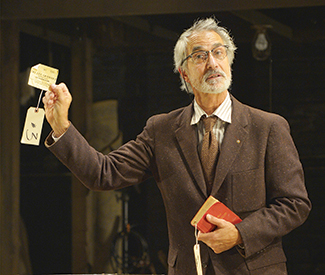
Both of these unpalatable situations gnaw at the bookish protagonist in Glen Berger’s 2001 play, Underneath the Lintel, currently enjoying a revival courtesy of American Conservatory Theater. Our protagonist, the play’s sole character, is a garrulous but faintly troubled librarian from Holland (played by an endearingly geeky David Strathairn, in trim graying beard and neat but comfy wool suit). In a makeshift lecture in an old rented theater, the librarian-turned-sleuth presents his remarkable findings concerning the possible reality behind an ancient myth. Along the way, we discover a gradual dovetailing of his own increasingly unmoored career and that of his subject: the fabled Wandering Jew, condemned to bear silent witness to history after a show of callousness before a desperate stranger at his door (who turned out to be Christ on the march to Golgotha, wouldn’t you know it).

The play — whose title refers to the upper portion of a doorway, the regretful place from which an ancient cobbler turned his back on his fellow man and our modern-day librarian dismissed the only woman he ever loved — works a tension between competing frameworks. Bounded by our little lives with their precious but small concerns, the play suggests, we too easily miss the bigger picture and stumble accordingly. But even when confronted with the worst of fate, the baleful immensity of history, or our own actions, we also carry on despite all the universe may throw at us.

Of course, the Geary stage is almost as vast as the aforementioned universe. Director Carey Perloff and her actor work hard to see this pocket-sized piece expand as much as possible to fill it. Strathairn’s fastidious and childlike librarian moves nervously, enthusiastically around the stage, scaling a tall freestanding ladder one moment, rummaging around a set of files the next, or stalking the second-tier storage area at the back of scenic designer Nina Ball’s atmospherically dingy, drippy, haze-filled bric-a-brac set.

The only time this nervous energy seems to go too far is in the final moment, when the librarian exits the stage in an awkward physical underscoring of a key line, wandering out who-knows-where. But Berger’s charming mystery, while ultimately affirming, has a haunted, melancholy streak running through it — a creeping pessimism at the edge of the firelight that is its most provoking aspect, and saves it from being purely sentimental.


ONCE UPON A WEEKNIGHT DREARY: ‘GRAND GUIGNOL’

The father of Paris’s Théâtre du Grand Guignol, French playwright Oscar Méténier (1859–1913), rests in pieces — or at least the pieces he left for the stage; naturalistic horror plays that were themselves full of body parts strewn hither and thither. Thither, in this case, has been renamed “the splatter zone” for playwright Carl Grose and director Mitchell Altieri’s macabre comedy homage to the legendary Parisian theater and genre (a specialty of local company Thrillpeddlers, whose own “Shocktoberfest” is also up and running not far away).

But though audiences in the first rows sit dutifully in plastic rain ponchos, the gore and the titillation and the laughs are surprisingly spare. Grand Guignol‘s opening night, moreover, was a rocky horror show, to say the least, plagued by delays, poor acoustics, slippery pacing, slightly inept execution (of executions, and other bloody deeds), and a storyline almost as mangled as the bodies it left in its wake. It has a game cast, however, and while variously successful at projecting their voices above the atmospheric sound design, its members deliver some nicely tailored performances under the circumstances, which are messy in ways intended and otherwise. *

UNDERNEATH THE LINTEL

Extended through Nov 23

Tue-Sat, 8pm (check website for matinees); Sun, 2pm, $20-150

Geary Theater

415 Geary, SF

www.act-sf.org

Theater Listings: November 6 – 12, 2013

0

Stage listings are compiled by Guardian staff. Performance times may change; call venues to confirm. Reviewers are Robert Avila, Rita Felciano, and Nicole Gluckstern. Submit items for the listings at listings@sfbg.com.

THEATER

OPENING

Emmett Till: A River NOH Space in Project Artaud, 2840 Mariposa, SF; www. theatreofyugen.org. $20-30. Opens Thu/7, 8pm. Runs Thu-Sat, 8pm; Sun, 2pm. Through Nov 17. Theatre of Yugen presents a world premiere by Kevin Simmonds and Judy Halebsky; it uses classical Japanese Noh drama to tell the story of civil rights-era murder victim Emmett Till.

The Gershwins’ Porgy and Bess Golden Gate Theatre, One Taylor, SF; www.shnsf.com. $60-210. Opens Sun/10, 2pm. Runs Tue-Sat, 8pm (no show Nov 28; check website for matinee schedule); Sun, 2pm. Through Dec 8. The Tony-winning Broadway revival launches its national tour in San Francisco.

My Beautiful Launderette New Conservatory Theatre Center, 25 Van Ness, SF; www.nctcsf.org. $25-45. Opens

Fri/8, 8pm. Runs Wed-Sat, 8pm; Sun, 2pm. Through Dec 22. New Conservatory Theatre Center performs Andy Gram and Roger Parsley’s adaptation of Hanif Kureishi’s award-winning screenplay.

The Rita Hayworth of this Generation Garage, 715 Bryant, SF; www.715bryant.org. $10-15. Opens Wed/6, 8pm. Runs Wed-Thu, 8pm. Through Nov 21. Tina D’Elia performs her multi-character solo play.

BAY AREA

A Bright New Boise Aurora Theatre, 2081 Addison, Berk; www.auroratheatre.org. $32-50. Previews Fri/8-Sat/9 and Nov 13, 8pm; Sun/10, 2pm; Tue/12, 7pm. Opens Nov 14, 8pm. Runs Tue, 7pm; Wed-Sat, 8pm; Sun, 2 and 7pm. Through Dec 8. Aurora Theatre presents Samuel D. Hunter’s tale of an ex-Evangelical cult member attempting to bond with his estranged son before the end of the world.

ONGOING

The Barbary Coast Revue Stud Bar, 399 Ninth St, SF; eventbrite.com/org/4730361353. $10-40. Wed, 9pm (no show Nov 27). Through Dec 18. Blake Wiers’ new “live history musical experience” features Mark Twain as a tour guide through San Francisco’s wild past.

Bengal Tiger at the Bagdad Zoo SF Playhouse, 450 Post, SF; www.sfplayhouse.org. $30-100. Tue-Thu, 7pm; Fri-Sat, 8pm (also Sat, 3pm). Through Nov 16. In Rajiv Joseph’s Pulitzer-nominated Bengal Tiger at the Bagdad Zoo, the dead quickly outnumber the living, and soon the stage is littered with monologist ghosts lost in transition. In Joseph’s world, at least, death is but another phase of consciousness, a plane of existence where a man-eating tiger might experience a crisis of conscience, and a brash young soldier with a learning disability might suddenly find himself contemplating algebraic equations and speaking Arabic — knowledge that had eluded his comprehension in life. Will Marchetti’s portrayal of the titular tiger is on the static side, though his wry intelligence and philosophical awakening comes as a welcome contrast to the willfully obtuse world view of the American soldiers (Gabriel Marin and Craig Marker) guarding him. But it’s Musa (Kuros Charney), a translator for the Americans and a former gardener and topiary “artist,” who eventually emerges as the play’s most fully realized character and also the most tragic, becoming that which he dreads the most, a beast in a lawless land, egged on by the ghost of his former employer, the notoriously sadistic Uday Hussein (Pomme Koch). At times, director Bill English’s staging feels too understated and contained for a play that’s so muscular and expansive (an understatement not carried over into Steven Klems’ appropriately jarring sound design) focused less on its metaphysical implications than on its mundane surface, but however imperfect the production and daunting the script, it remains a fascinating response to an unwinnable war — the war against our own animal natures. (Gluckstern)

BoomerAging: From LSD to OMG Marsh San Francisco, 1062 Valencia, SF; www.themarsh.org. $15-50. Tue, 8pm. Extended through Dec 17. Will Durst’s hit solo show looks at baby boomers grappling with life in the 21st century.

Dirty Little Showtunes New Conservatory Theatre Center, 25 Van Ness, SF; www.nctcsf.org. $25-45. Wed/6-Sat/9, 8pm; Sun/10, 2pm. Lyricist-performer Tom Orr and director F. Allen Sawyer’s sassy but loving remix of iconic Broadway songs returns in another iteration, this one at the New Conservatory Theatre Center, complete with a willing and able cast of five (Rotimi Agbabiaka, David Bicha, Jesse Cortez, Randy Noak, Orr), piano accompaniment by musical director Scrumbly Koldewyn, and some rudimentary if evocative choreography by Jayne Zaban. Truly silly, sometimes inspired, the show mixes favorite parodies from past productions with some new ones. Orr’s wit shines throughout, even if it does not necessarily outshine every borrowed theme. Gilbert and Sullivan, for example, are hardly upstaged as much as celebrated with Bicha belting out, “I Am the Very Model of a Modern Homosexual.” More sentimental numbers about T cell counts or gay marriage, while an understandable part of the landscape of gay life explored here, can feel a little strained in the context of the generally ribald. But the high-spirited nature of this whimsical show makes pardonable even the less-dirty parts. (Avila)

Driving Miss Daisy Buriel Clay Theater at the African American Art and Culture Complex, 762 Fulton, SF; www.african-americanshakes.org. $12.50-37.50. Fri-Sat, 8pm; Sun, 3pm. Through Nov 17. African-American Shakespeare Company performs Alfred Uhry’s Pulitzer-winning drama.

Foodies! The Musical Shelton Theater, 533 Sutter, SF; www.foodiesthemusical.com. $32-34. Fri-Sat, 8pm. Open-ended. AWAT Productions presents Morris Bobrow’s musical comedy revue all about food.

Gruesome Playground Injuries Tides Theatre, 533 Sutter, SF; www.tidestheatre.org. $20-40. Wed/6-Sat/9, 8pm. Tides Theatre performs Rajiv Joseph’s drama about two people who first meet as eight-year-olds in the school nurse’s office.

Hedwig and the Angry Inch Boxcar Theatre, 505 Natoma, SF; www.boxcartheatre.org. $27-43. Thu-Sat, 8pm. Open-ended. John Cameron Mitchell’s cult musical comes to life with director Nick A. Olivero’s ever-rotating cast.

I Married an Angel Eureka Theatre, 215 Jackson, SF; www.42ndstmoon.org. $25-75. Wed-Thu, 7pm; Fri, 8pm; Sat, 6pm (also Sat/9, 1pm), Sun, 3pm. Through Nov 17. 42nd Street Moon performs the Rodgers and Hart classic.

The Jewelry Box: A Genuine Christmas Story The Marsh San Francisco, 1062 Valencia, SF; www.themarsh.org. $15-40. Fri, 8pm; Sat, 5pm. Through Dec 28. Brian Copeland performs the world premiere of his new, holiday-themed work, an Oakland-set autobiographical tale that’s a prequel to his popular Not a Genuine Black Man.

The Life Machine DanzHaus, 1275 Connecticut, SF; www.faultlinetheater.com. $15-20. Fri/8-Sat/9, 8pm; Sun/10, 2pm. A naïve and restive young woman (Gwen Kingston), working as admin for a high-powered and ethically questionable business firm, marries her pig-headed and lecherous boss (Nick Medina) in a desperate bid to escape the drudgery of the work-a-day world. Instead, she finds her suffocating marriage and unwanted motherhood its own prison. An extramarital affair with a latter-day beatnik (Jon Oleson) gives her a first taste of life and freedom, for which she pays the ultimate price when things go south. Set in a palpably near future, this socially rich dystopic drama acknowledges several “reflective texts” as influences, including Donna Haraway’s “A Cyborg Manifesto” and (as evidenced in some of Maxx Kurzunshki and Clive Walker’s wide-ranging and remarkable video design) Godfrey Reggio and Philip Glass’s Koyaanisqatsi. But the piece remains in large part an astute revamping and updating of Sophie Treadwell’s Machinal. Director Cole Ferraiuolo’s inspired retooling of that 1928 expressionist stage classic proves a potent contemporary lens on the persistent anomie of the people, and growing enemies of the state, in a self-congratulatory high-tech and hyper-connected world. Sophie Needelman’s mercurial choreography for five dancers, meanwhile, evokes everything from the crush of the daily commute to the cyborg cogs of the post-industrial work world or the drift of the moon across a fathomless sky. At the heart of this worthwhile production from impressive newcomers FaultLine are a handful of strong and intelligent performances. These are led by Kingston’s dynamic, rigorously unsentimental performance as a tragically alienated every-woman, who must suffer any number of mundane indignities before her apotheosis as a deeply violent and repressed society’s convenient cipher. (Avila)

Lovebirds Marsh San Francisco, 1062 Valencia, SF; www.themarsh.org. $15-100. Thu/7-Fri/8, 8pm; Sat/9, 8:30pm. Workshop performances of Marga Gomez’s 10th solo show, about different characters seeking romance in the 1970s.

Peter and the Starcatcher Curran Theatre, 445 Geary, SF; www.shnsf.com. $40-160. Tue-Sat, 8pm (also Wed and Sat, 2pm; no show Nov 28); Sun, 2pm. Through Dec 1. Fanciful, Tony-winning prequel to Peter Pan.

Shakespeare Night at the Blackfriars (London Idol 1610) Phoenix Arts Association Annex Theatre, 414 Mason, SF; www.subshakes.com. $20-25. Fri-Sat, 8pm; Sun, 7pm. Through Nov 17. Subterranean Shakespeare performs George Crowe’s comedy about a playwriting contest between Ben Jonson, Thomas Middleton, Francis Beaumont, and the ghost of Christopher Marlowe.

“Shocktoberfest 14: Jack the Ripper” Hypnodrome, 575 10th St, SF; www.thrillpeddlers.com. $25-35. Thu-Sat, 8pm. Through Nov 23. It’s lucky 14 for the Thrillpeddlers’ annual Halloween-tide Shocktoberfest, and while there are few surprises in this year’s lineup, there’s plenty of reliable material to chew on. Opening with A Visit to Mrs. Birch and the Young Ladies of the Academy, a ribald Victorian-era “spanking drama,” the fare soon turns towards darker appetites with a joint Andre De Lorde-Pierre Chaine work, Jack the Ripper. Works by De Lorde — sometimes referred to as the “Prince of Fear” — have graced the Hypnodrome stage over the years, and this tense Victorian drama, though penned in the 30s, is suitably atmospheric. Although it becomes pretty evident early on who dunnit, it’s the why that lies at the heart of this grim drama, and in the course of that discovery, the play’s beleaguered lawmen reveal themselves to be no less ruthless than the titular Ripper (John Flaw) in pursuit of their quarry. Norman Macleod as Inspector Smithson particularly embodies this unwholesome dichotomy, and Bruna Palmeiro excels as his spirited yet doomed bait. Inspired by Oscar Wilde’s Salome, the Thrillpeddlers’ piece by the same name is perhaps the weak link in the program, despite being penned by the ever-clever Scrumbly Koldewyn, and danced with wanton abandon by Noah Haydon. Longtime Thrillpeddlers’ collaborator Rob Keefe ties together the evening’s disparate threads under one sprawling big top media circus of murder, sex, ghosts, and sensationalism with his somewhat tongue-in-cheek, San Francisco-centric The Wrong Ripper. (Gluckstern)

Sidewinders Exit on Taylor, 277 Taylor, SF; www.cuttingball.com. $10-50. Thu, 7:30pm; Fri-Sat, 8pm (also Sat, 2pm); Sun, 5pm. Through Nov 17. Cutting Ball opens its 15th season with the world premiere of Basil Kreimendahl’s absurdist romp through gender queerness. In a cartoonish, desolate wasteland (designed by Michael Locher), Dakota (Sara Moore), a bleached-blonde gunslinger in buckskin fringes, and Bailey (DavEnd), a possibly AWOL soldier rocking high-heeled boots and a single drop earring, wrestle with the conundrum of what to call their respective genitals. And more to the point, what to do with them after they figure it out. Or as Bailey bluntly puts it, “Who am I supposed to fuck?” But there’s more to being stranded in the uncharted wilderness at stake than “organ confusion,” and soon they must channel their uncommon alliance into finding a way back out. What they find instead include a regal figure of indeterminate gender possessed of extra limbs (Donald Currie), a suicidal servant with surgical skills (Norman Muñoz), and a growing realization that wilderness, like identity, is relative. Moore and DavEnd make a good comedic team, their endless banter, circular logic and exaggerated facial gymnastics giving them the philosophical gravitas of a Looney Tunes episode, while Currie’s turn as mutated muse is unexpectedly moving. Recent winner of the prestigious Rella Lossy award, this intriguing world premiere marks playwright Basil Kreimendahl’s first professional production, though it seems safe to say that it won’t be the last. (Gluckstern)

BAY AREA

Can You Dig It? Back Down East 14th — the 60s and Beyond Marsh Berkeley, 2120 Allston, Berk; www.themarsh.org. $15-50. Sat, 8:30pm; Sun, 7pm. Extended through Dec 15. Don Reed’s new show offers more stories from his colorful upbringing in East Oakland in the 1960s and ’70s. More hilarious and heartfelt depictions of his exceptional parents, independent siblings, and his mostly African American but ethnically mixed working-class community — punctuated with period pop, Motown, and funk classics, to which Reed shimmies and spins with effortless grace. And of course there’s more too of the expert physical comedy and charm that made long-running hits of Reed’s last two solo shows, East 14th and The Kipling Hotel (both launched, like this newest, at the Marsh). Can You Dig It? reaches, for the most part, into the “early” early years, Reed’s grammar-school days, before the events depicted in East 14th or Kipling Hotel came to pass. But in nearly two hours of material, not all of it of equal value or impact, there’s inevitably some overlap and indeed some recycling. Reed, who also directs the show, may start whittling it down as the run continues. But, as is, there are at least 20 unnecessary minutes diluting the overall impact of the piece, which is thin on plot already — much more a series of often very enjoyable vignettes and some painful but largely unexplored observations, wrapped up at the end in a sentimental moral that, while sincere, feels rushed and inadequate. (Avila)

Don’t Dress For Dinner Center REPertory Company, 1601 Civic, Walnut Creek; www.centerrep.org. $33-52. Wed, 7:30pm; Thu-Sat, 8pm (also Nov 23, 2:30pm); Sun, 2:30pm. Through Nov 23. Center REP performs Marc Camoletti’s sequel to his classic farce Boeing-Boeing.

A King’s Legacy Pear Avenue Theatre, 1220 Pear, Mtn View; www.thepear.org. $10-35. Thu-Sat, 8pm; Sun, 2pm. Through Nov 24. Pear Avenue Theatre performs Elyce Melmon’s world premiere, a drama about King James VI of Scotland.

A Little Princess Julia Morgan Theater, 2640 College, Berk; www.berkeleyplayhouse.org. $17-60. Thu-Fri, 7pm (Nov 28, shows at 1 and 6pm); Sat, 1 and 6pm; Sun, noon and 5pm (no 5pm show Dec 1). Through Dec 8. Berkeley Playhouse opens its sixth season with Brian Crawley and Andrew Lippa’s musical adaptation of the Frances Hodgson Burnett story.

Metamorphoses South Berkeley Community Church, 1802 Fairview, Berk; www.infernotheatre.org. $10-25. Thu and Sat-Sun, 8pm; Fri, 9pm (no show Sat/9). Through Nov 23. Additional performance Sat/9, 8pm, $5-20, Laney College, 900 Fallon, Oakl. Inferno Theatre performs a multimedia, contemporary adaptation of Ovid’s classic.

The Pianist of Willesden Lane Berkeley Repertory Theatre, Thrust Theatre, 2015 Addison, Berk; www.berkeleyrep.org. $29-89. Tue and Thu-Sat, 8pm (also Thu/7, Dec 5, and Sat, 2pm; no matinee Sat/9; no show Nov 28); Wed and Sun, 7pm (also Sun, 2pm). Through Dec 8. Mona Golabek stars in this solo performance inspired by her mother, a Jewish pianist whose dreams and life were threatened by the Nazi regime.

Red Virgin, Louise Michel and the Paris Commune of 1871 Berkeley City Club, 2315 Durant, Berk; www.centralworks.org. $15-28. Thu-Sat, 8pm; Sun, 5pm. Through Nov 24. Central Works presents a new play (with live music) by Gary Graves about the Paris Commune uprising.

Social Security Muriel Watkin Gallery, 1050 Crespi Drive, Pacifica; (650) 359-8002. $10-25. Fri-Sat, 8pm; Sun, 2pm. Through Nov 24. Pacifica Spindrift Players performs Andrew Bergman’s classic comedy.

strangers, babies Ashby Stage, 1901 Ashby, Berk; www.shotgunplayers.org. $20-35. Wed-Thu, 7pm; Fri-Sat, 8pm; Sun, 5pm. Through Nov 17. Shotgun Players present Linda McLean’s drama about a woman confronting her past.

Swing Shift Onboard the SS Red Oak Victory, 1337 Canal, Berth 6A, Richmond; www.galateanplayers.com. $18-20. Fri/8-Sat/9, 8pm; Sun/10, 3pm. Galatean Players Ensemble Theatre perform Kathryn G. McCarty’s adaptation of Joseph Fabry’s novel, performed aboard a ship in the yards where Fabry once worked.

PERFORMANCE/DANCE

BATS Improv Bayfront Theater, B350 Fort Mason Center, SF; www.improv.org. $20. This week: “DuoProv Championship,” Fri, 8pm, through Nov 29; “Family Drama,” Sat, 8pm, through Nov 30.

“Best of the 2013 San Francisco Fringe Festival” Exit Studio, 156 Eddy, SF; www.theexit.org. Fri/8-Sat/9, 8pm. $15-25. This week: 53 Letters (“Best of” series continues through Nov. 23)

Jim Brickman Venetian Room, Fairmont San Francisco, 950 Mason, SF; www.bayareacabaret.org. Sun/10, 5pm (with David Burnham) and 8pm (solo). $48. Romantic piano sensation Brickman plays, joined at the earlier show by Broadway tenor David Burnham.

“Broadway Bingo” Feinstein’s at the Nikko, Hotel Nikko, 222 Mason, SF; www.feinsteinssf.com. Wed, 7-9pm. Ongoing. Free. Countess Katya Smirnoff-Skyy and Joe Wicht host this Broadway-flavored night of games and performance.

“Cabinet of Wonders” Jewish Community Center of SF, Kanbar Hall, 3200 California, SF; www.jccsf.org. Mon/11, 8pm. $30-40. Musician-author Wesley Stace curates and hosts this variety show, featuring Eugene Mirman, Alec Ounsworth, Dean & Britta, Bobcat Goldthwaite, and others.

“Comedy Returns to El Rio!” El Rio, 3158 Mission, SF; www.brownpapertickets.com. Mon/11, 8pm. $7-20. With Micia Mosely, David Hawkins, Sampson McCormick, Emily Epstein White, and Lisa Geduldig.

“Competitive Erotic Fan Fiction” Punchline, 444 Battery, SF; www.punchlinecomedyclub.com. Tue/12, 8pm. $15. Ten comics (Nato Green, Caitlin Gill, Sean Keane, and others) perform erotic fan fic.

CounterPULSE 1310 Mission, SF; www.counterpulse.org. This week: Instrument by Monique Jenkinson (aka Fauxnique), Fri/8, 8pm and Sat/9, 7pm, $20-30; “Beware the Band of Lions (They’re Dandy Lions),” with Bandelion, Sun/10 and Nov 17, 3pm, free (reservations required as space is extremely limited; to request an invitation, email info@dandeliondancetheater.org).

Flyaway Productions Joe Goode Annex, 401 Alabama, SF; www.flyawayproductions.com. Fri/8-Sat/9 and Nov 13-16, 7:30 and 9:30pm. $25. Choreographer Jo Kreiter and designer Sean Riley present the world premiere of Give a Woman a Lift.

“Hysterical Historical San Francisco, Holiday Edition” Shelton Theater, 533 Sutter, SF; www.sheltontheater.org. Sun, 7pm. Through Dec 29. $30-40. Comic Kurt Weitzman performs.

Roslyn Kind Feinstein’s at the Nikko, Hotel Nikko, 222 Mason, SF; www.feinsteinssf.com. Fri/8, 8pm; Sat/9, 7pm. $30-60 ($20 food and beverage minimum per person). The Broadway star performs.

Kunst-Stoff Dance Company ODC Theater, 3153 17th St, SF; www.kunst-stoff.org. Fri/8-Sat/9, 8pm; Sun/10, 7pm. $25-45. The company marks its 15th anniversary with retrospectives, contained in two different programs: recreated old works and new works inspired by repertory.

“Mission Position Live” Cinecave, 1034 Valencia, SF; www.missionpositionlive.com. Thu, 8pm. Ongoing. $10. Stand-up comedy with rotating performers.

“ODC/Dance Unplugged” ODC Dance Commons Studio B, 351 Shotwell, SF; www.odctheater.org. Fri/8, 7pm. $25. Get a unique, behind-the-scenes look at Triangulating Euclid, a new collaboration between Brenda Way, KT Nelson, and Kate Weare.

“Okeanos Intimate” Aquarium of the Bay, Pier 39, SF; www.capacitor.org. Sat, 4:30 and 7pm. $20-30 (free aquarium ticket with show ticket). Extended through Dec 28. Choreographer Jodi Lomask and her company, Capacitor, revive 2012’s Okeanos — a cirque-dance piece exploring the wonder and fragility of our innate connection to the world’s oceans — in a special “intimate” version designed for the mid-size theater at Pier 39’s Aquarium of the Bay. The show, developed in collaboration with scientists and engineers, comes preceded by a short talk by a guest expert — for a recent Saturday performance it was a down-to-earth and truly fascinating local ecological history lesson by the Bay Institute’s Marc Holmes. In addition to its Cirque du Soleil-like blend of quasi-representational modern dance and circus acrobatics — powered by a synth-heavy blend of atmospheric pop music — Okeanos makes use of some stunning underwater photography and an intermittent narrative that includes testimonials from the likes of marine biologist and filmmaker Dr. Tierney Thys. The performers, including contortionists, also interact with some original physical properties hanging from the flies — a swirling vortex and a spherical shell — as they wrap and warp their bodies in a kind of metamorphic homage to the capacity and resiliency of evolution, the varied ingenuity of all life forms. If the movement vocabulary can seem limited at times, and too derivative, the show also feels a little cramped on the Aquarium Theater stage, whose proscenium arrangement does the piece few favors aesthetically. Nevertheless, the family-oriented Okeanos Intimate spurs a conversation with the ocean that is nothing if not urgent. (Avila)

Point Break Live!” DNA Lounge, 373 11th St, SF; www.dnalounge.com. Dec 6 and Jan 3, 7:30 and 11pm. $25-50. Interactive interpretation of Kathryn Bigelow’s 1991 classic. (Some tickets include meatball sandwiches!)

“San Francisco Magic Parlor” Chancellor Hotel Union Square, 433 Powell, SF; www.sfmagicparlor.com. Thu-Sat, 8pm. Ongoing. $40. Magic vignettes with conjurer and storyteller Walt Anthony.

“Solitude” Brava Theater Center, 2781 24th St, SF; www.brava.org. Thu/7-Sat/9, 8pm (also Sat/9, 3pm). $15-35. LA’s Latino Theater Company performs Evelina Fendandez’s critically acclaimed play about Chicaco life and culture.

“Upside-Downton Abbey” Palace of Fine Arts Theatre, 3301 Lyon, SF; www.lamplighters.org. Sun/10, 4pm (silent auction at 3pm). $35-97. Also Nov 24, 4pm, $58-83, Mountain View Center for the Performing Arts, 500 Castro, Mtn View; www.mvcpa.com. Lamplighters Musical Theatre’s annual gala performance spoofs the popular British soap opera.

“WERK! Performance Festival 2013” Dance Mission Theater, 3316 24th St, SF; www.werkcollective.org. Fri/8-Sun/10, 8pm (also Sun/10, 4pm). $20. Choreographers Alyce Finwall, Samantha Giron, Timothy Rubel, and Ashley Trottier share the weekend.

BAY AREA

Diablo Ballet Smith Center, Ohlone College, 43600 Mission, Fremont; www.diabloballet.org. Sat/9, 2 and 8pm. Also Nov 15-16, 8pm (also Nov 16, 2pm), Lesher Center for the Arts, 1601 Civic, Walnut Creek; www.lesherartscenter.org. $20-52. The company’s 20th season kicks off with Our Waltzes Trilogy and A Swingin’ Holiday.

“Dogugaeshi” Zellebach Playhouse, Dana at Bancroft, UC Berkeley, Berk; www.calperformances.org. Wed/6-Fri/8, 8:30pm (also Thu/7-Fri/8, 6pm); Sat/9-Sun/10, 2 and 7pm. $48-76. The latest from innovative puppeteer Basil Twist.

“Rapunzel” Marin Theatre Company, 397 Miller, Mill Valley; www.marintheatre.org. Sat/9-Sun/10, 10am and 12:30pm. $15-20. Marin Theatre Company performs a fairy-tale play for all ages. *


Film Listings: November 6 – 12, 2013

0

Film listings are edited by Cheryl Eddy. Reviewers are Kimberly Chun, Dennis Harvey, Lynn Rapoport, Sam Stander, and Sara Maria Vizcarrondo. For rep house showtimes, see Rep Clock.

OPENING

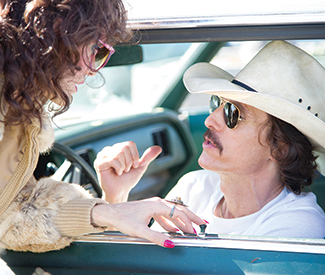
Dallas Buyers Club See “Life’s Work.” (1:58) Embarcadero.

The Motel Life Brothers (Stephen Dorff, Emile Hirsch) go on the run after a tragic accident. Kris Kristofferson and Dakota Fanning co-star. (1:25) Roxie.

Running From Crazy Can one ever escape one’s toxic genetic legacy, especially when one’s makeup, and even one’s genius, is so entangled with mental illness, the shadow of substance abuse, and a kind of burden of history? Actor, author, healthy-living proponent, and now suicide prevention activist Mariel Hemingway seems cut out to try, as, eh, earnestly as she can, to offer up hope. Part of that involves opening the door to documentarian Barbara Kopple, in this look at the 20th century’s most infamous literary suicide, Mariel’s grandfather Ernest Hemingway, and just one of his familial threads, one full of lives cut deliberately short. For Running From Crazy, Kopple generally keeps the focus on Mariel, who displays all the disarming groundedness and humility of the youngest care-taking, “good” child. Her father, Ernest’s eldest son, Jack, regularly indulged in “wine time” with his ailing wife and, according to Mariel, had a pitch-black side of his own. But we don’t look to closely at him as the filmmaker favors the present, preferring to watch Mariel mountain climb and bicker with her stuntman boyfriend, meet up with her eldest sister Muffet, and ‘fess up about the depression that runs through the Hemingway line to her own daughters. Little is made of Mariel’s own artistic contributions in acting, though Kopple’s work is aided immeasurably by the footage Mariel’s rival middle sister Margaux shot for a documentary she planned to do on Ernest. Once the highest paid model in the world, Margaux leaves the viewer with a vivid impression of her brash, raw, eccentric, and endearingly goofy spirit — she’s courageous in her own way as she sips vino with her parents and older sister and tears up during a Spanish bull fight. Are these just first world problems for scions who never hesitated to trade on their name? Kopple is more interested in the humans behind the gloss of fame, spectacle and sensation — the women left in the wake of a literary patriarch’s monumental brand of masculinity and misogyny. And you feel like you get that here, plainly and honestly, in a way that even Papa might appreciate. (1:40) Opera Plaza, Smith Rafael. (Chun)

Spinning Plates Joseph Levy’s enjoyable documentary contrasts life at three widely disparate U.S. restaurants: the Martinez family’s modest enterprise La Cocina de Gabby, a Tucson showcase for a wife and mother’s Mexican cooking; Breitbach’s Country Dining in rural Iowa, a 151-year-old purveyor of all-American comfort food; and superstar chef Grant Achatz’s Chicago Alinea, where a 24-course meal of culinary art/science experiments can set you back $800 (yes, that’s for one diner). The latter is a global destination for serious foodies, acclaimed by the industry’s most prestigious observers. (Its nearly 24/7 supply deliveries are also a noisy nightmare for someone I know whose apartment is next door.) The teensy town that’s grown up around Breitbach’s has a population of 70; on a busy weekend, the business attracts up to 2,000, many driving long distances to get there. Yet the people we get to know the best here, the émigré Martinezes, illustrate another side of restaurant life — the side in which a majority of new eateries fail within three years, despite (as seemingly is the case at Gabby’s) all palate-pleasing, reasonable pricing and tireless labor. Tying together these three stories is … well, nothing, really, beyond some vague notion that good food is something that breeds “community.” (Yet high-ticket Alinea can hardly be said to reflect that, while Levy doesn’t actually bother interviewing any patrons to let us know whether the other two establishments’ food is anything special.) Still, and despite some rather bogus dramatic chronology-manipulation of events that happened several years ago, Spinning Plates is an entertaining sampler plate of a movie. And the Martinez family’s story lends it a bit of real gravitas. (1:32) Opera Plaza, Shattuck. (Harvey)

Thor: The Dark World The Avengers juggernaut rolls on as Thor (Chris Hemsworth) grabs his hammer for a stand-alone sequel. See review at www.sfbg.com. (2:00) Balboa, Presidio.

ONGOING

About Time Richard Curtis, the man behind 2003’s Love Actually, must be enjoying his days in England, rolling in large piles of money. Coinciding with the 10-year anniversary of that twee cinematic love fest comes Curtis’ latest ode to joy, About Time. The film begins in Cornwall at an idyllic stone beach house, as Tim (Domhnall Gleeson) describes his family members (Bill Nighy is dad; Richard Cordery is the crazy uncle) and their pleasures (rituals (tea on the beach, ping pong). Despite beachside bliss, Tim is lovelorn and ready to begin a career as a barrister (which feels as out of the blue as the coming first act break). Oh! And as it happens, the men in Tim’s family can travel back in time. There are no clear rules, though births and deaths are like no-trespass signs on the imaginary timeline. When he meets Mary (Rachel McAdams), he falls in love, but if he paves over his own evening by bouncing back and spending that night elsewhere, he loses the path he’s worn into the map and has to fix it. Again and again. Despite potential repetition, About Time moves smoothly, sweetly, slowly along, giving its audience time enough to feel for the characters, and then feel for the characters again, and then keep crying just because the ball’s already in motion. It’s the most nest-like catharsis any British film ever built. (2:03) Marina, SF Center, Shattuck, Sundance Kabuki. (Vizcarrondo)

All Is Lost As other reviewers have pointed out, All Is Lost‘s nearly dialogue-free script (OK, there is one really, really well-placed “Fuuuuuck!”) is about as far from J.C. Chandor’s Oscar-nominated script for 2011’s Margin Call as possible. Props to the filmmaker, then, for crafting as much pulse-pounding magic out of austerity as he did with that multi-character gabfest. Here, Robert Redford plays “Our Man,” a solo sailor whose race to survive begins along with the film, as his boat collides with a hunk of Indian Ocean detritus. Before long, he’s completely adrift, yet determined to outwit the forces of nature that seem intent on bringing him down. The 77-year-old Redford turns in a surprisingly physical performance that’s sure to be remembered as a late-career highlight. (1:46) Albany, SF Center, Sundance Kabuki. (Eddy)

Big Sur (1:21) 1000 Van Ness, Smith Rafael.

Blue is the Warmest Color The stars (Adèle Exarchopoulos and Léa Seydoux) say the director was brutal. The director says he wishes the film had never been released (but he might make a sequel). The graphic novelist is uncomfortable with the explicit 10-minute sex scene. And most of the state of Idaho will have to wait to see the film on Netflix. The noise of recrimination, the lesser murmur of backpedaling, and a difficult-to-argue NC-17 rating could make it harder, as French director Abdellatif Kechiche has predicted, to find a calm, neutral zone in which to watch Blue is the Warmest Color, his Palme d’Or–winning adaptation (with co-writer Ghalya Lacroix) of Julie Maroh’s 2010 graphic novel Le Blue Est une Couleur Chaude. But once you’ve committed to the three-hour runtime, it’s not too difficult to tune out all the extra noise and focus on a film that trains its mesmerized gaze on a young woman’s transforming experience of first love. (2:59) Embarcadero, Shattuck, Smith Rafael, Sundance Kabuki. (Rapoport)

Blue Jasmine The good news about Blue Jasmine isn’t that it’s set in San Francisco, but that it’s Woody Allen’s best movie in years. Although some familiar characteristics are duly present, it’s not quite like anything he’s done before, and carries its essentially dramatic weight more effectively than he’s managed in at least a couple decades. Not long ago Jasmine (a fearless Cate Blanchett) was the quintessential Manhattan hostess, but that glittering bubble has burst — exactly how revealed in flashbacks that spring surprises up to the script’s end. She crawls to the West Coast to “start over” in the sole place available where she won’t be mortified by the pity of erstwhile society friends. That would be the SF apartment of Ginger (Sally Hawkins), a fellow adoptive sister who was always looked down on by comparison to pretty, clever Jasmine. Theirs is an uneasy alliance — but Ginger’s too big-hearted to say no. It’s somewhat disappointing that Blue Jasmine doesn’t really do much with San Francisco. Really, the film could take place anywhere — although setting it in a non-picture-postcard SF does bolster the film’s unsettled, unpredictable air. Without being an outright villain, Jasmine is one of the least likable characters to carry a major US film since Noah Baumbach’s underrated Margot at the Wedding (2007); the general plot shell, moreover, is strongly redolent of A Streetcar Named Desire. But whatever inspiration Allen took from prior works, Blue Jasmine is still distinctively his own invention. It’s frequently funny in throwaway performance bits, yet disturbing, even devastating in cumulative impact. (1:38) Metreon, Opera Plaza, Shattuck, Vogue. (Harvey)

Captain Phillips In 2009, Captain Richard Phillips was taken hostage by Somali pirates who’d hijacked the Kenya-bound Maersk Alabama. His subsequent rescue by Navy SEALs came after a standoff that ended in the death of three pirates; a fourth, Abduwali Abdukhadir Muse, surrendered and is serving a hefty term in federal prison. A year later, Phillips penned a book about his ordeal, and Hollywood pounced. Tom Hanks is perfectly cast as Phillips, an everyman who runs a tight ship but displays an admirable ability to improvise under pressure — and, once rescued, finally allows that pressure to diffuse in a scene of memorably raw catharsis. Newcomer Barkhad Abdi, cast from an open call among Minneapolis’ large Somali community, plays Muse; his character development goes deep enough to emphasize that piracy is one of few grim career options for Somali youths. But the real star here is probably director Paul Greengrass, who adds this suspenseful high-seas tale to his slate of intelligent, doc-inspired thrillers (2006’s United 93, 2007’s The Bourne Ultimatum). Suffice to say fans of the reigning king of fast-paced, handheld-camera action will not be disappointed. (2:14) Four Star, 1000 Van Ness, Piedmont, SF Center, Sundance Kabuki. (Eddy)

Carrie Is the world ready for a candy-covered Carrie? It’s a sad state of affairs when the best thing about a movie, particularly a wholly superfluous remake like this, is its creepy poster. That’s the closest thing this Carrie has to offer next to that retina-scorching, iconic 1976 image of blood-saturated Sissy Spacek that continues to lend inspiration to baby Billiths everywhere. Nonetheless, like a shy violet cowering in the gym showers, this Carrie comes loaded with potential, with Boys Don’t Cry (1999) director Kimberly Peirce at the helm, the casting of Julianne Moore and Chloe Grace Moretz in the critical mother-daughter roles, and the unfortunately topical bullying theme. Peirce makes a half-hearted attempt to update the, um, franchise when the tormented Carrie (a miscast Moretz) is virally videoed by spoiled rival Chris (Portia Doubleday), but the filmmaker’s heart — and guts — aren’t in this pointless exercise. We speed through the buildup — which unconvincingly sets up Carrie’s torments at home, instigated by obviously mentally ill, Christian fundamentalist mom Margaret (Moore), and at school, where the PE teacher (Judy Greer) pep-talks Carrie and Sue Snell (Gabriella White) is mysteriously hellbent on paying penance for her bullying misdeeds — to the far-from-scary denouement. Let’s say mean-spirited reflexive revenge-taking is no real substitute for true horror and shock. Supposedly drawn to Carrie for its female-empowerment message, Peirce nevertheless isn’t cut out to wade into horror’s crimson waters — especially when one compares this weak rendition with Brian De Palma’s double-screen brio and high-camp Freudian passion play. (1:32) Metreon, 1000 Van Ness, Shattuck. (Chun)

Cloudy With a Chance of Meatballs 2 (1:35) Metreon.

The Counselor The reviews are in, and it’s clear Ridley Scott has made the most polarizing film of the season. Most of The Counselor‘s detractors blame Cormac McCarthy’s screenplay, the acclaimed author’s first that isn’t drawn from a prexisting novel. To date, the best film made from a McCarthy tale is 2007’s No Country for Old Men, and The Counselor trawls in similar border-noir genre trappings in its tale of a sleek, greedy lawyer (Michael Fassbender) who gets in way over his head after a drug deal (entered into with slippery compadres played by Brad Pitt and Javier Bardem) goes wrong. Yes, there are some problems here, with very few unexpected twists in a downbeat story that’s laden with overlong monologues, most of them delivered by random characters that appear, talk, and are never seen again. But some of those speeches are doozies — and haters are overlooking The Counselor‘s sleazy pleasures (many of which are supplied by Cameron Diaz’s fierce, feline femme fatale) and attention to grimy detail. One suspects cult appreciation awaits. (1:57) Metreon, 1000 Van Ness, Sundance Kabuki. (Eddy)

Diana The final years of Diana, Princess of Wales are explored in what’s essentially a classed-up Lifetime drama, delving into the on-off romance between “the most famous woman in the world” (Naomi Watts) and heart surgeon Hasnat Khan (Naveen Andrews). Relationship roadblocks (his Muslim family, back home in Pakistan, is hesistant to accept a divorced, Christian Brit as their son’s partner) are further complicated by extraordinary circumstances (Diana’s fame, which leads to paparazzi intrusions on the very private doctor’s life), but there’s real love between the two, which keeps them returning to each other again and again. By the third or fourth tearful breakup — followed by a passionate reunion — Diana‘s story becomes repetitive as it marches toward its inevitable tragic end. Still, director Oliver Hirschbiegel (2004’s Downfall, another last-days-in-the-life biopic, albeit of a slightly different nature) includes some light-hearted moments, as when a giggling Diana smuggles Hasnat through the palace gates (past guards who know exactly what she’s up to). As you’d expect, Watts is the best thing here, bringing warmth and complexity to a performance that strives to reach beyond imitation. (1:52) SF Center. (Eddy)

Don Jon Shouldering the duties of writer, director, and star for the comedy Don Jon, Joseph Gordon-Levitt has also picked up a broad Jersey accent, the physique of a gym rat, and a grammar of meathead posturing — verbal, physical, and at times metaphysical. His character, Jon, is the reigning kingpin in a triad of nightclubbing douchebags who pass their evenings assessing their cocktail-sipping opposite numbers via a well-worn one-to-10 rating system. Sadly for pretty much everyone involved, Jon’s rote attempts to bed the high-scorers are spectacularly successful — the title refers to his prowess in the art of the random hookup — that is, until he meets an alluring “dime” named Barbara (Scarlett Johansson), who institutes a waiting period so foreign to Jon that it comes to feel a bit like that thing called love. Amid the well-earned laughs, there are several repulsive-looking flies in the ointment, but the most conspicuous is Jon’s stealthy addiction to Internet porn, which he watches at all hours of the day, but with a particularly ritualistic regularity after each night’s IRL conquest has fallen asleep. These circumstances entail a fair amount of screen time with Jon’s O face and, eventually, after a season of growth — during which he befriends an older woman named Esther (Julianne Moore) and learns about the existence of arty retro Swedish porn — his “Ohhh&ldots;” face. Driven by deft, tight editing, Don Jon comically and capably sketches a web of bad habits, and Gordon-Levitt steers us through a transformation without straining our capacity to recognize the character we met at the outset — which makes the clumsy over-enunciations that mar the ending all the more jarring. (1:30) Elmwood, Metreon, 1000 Van Ness. (Rapoport)

Ender’s Game Those entering Ender’s Game in search of homophobic threads or politically unsavory themes will likely be frustrated. After all, Orson Scott Card — once a board member of the National Organization for Marriage, and here serving as a producer intent on preserving the 1985 novel that netted him acclaim — has revisited what was initially a short story multiple times over the years, tweaking it to reflect a new political climate, to ready it for new expedient uses. Who knows — the times are a-changin’ fast enough, with the outcry of LGBT activists and the growing acceptance of gay military members, to hope that a gay character might enter the mix someday. Of course, sexuality of all sorts is kept firmly in check in the Ender‘s world. Earth has been invaded by an insect-like species called the Formics, and the planet unifies to serve up its best and brightest (and, it’s implied, most ruthless) young minds, sharpened on first-person-shooters and tactical games, to the cause of defeating the alien “other.” Andrew “Ender” Wiggin (Asa Butterfield) is the knowing hybrid of his sociopath brother Peter (Jimmy Pinchak) and compassionate sister Valentine (Abigail Breslin) — of the trinity, he’s “the One,” as Han Solo, I mean, Harrison Ford, cadet talent-spotter and trainer Colonel Graff, puts it. Ender impresses the leather off the hardened old war horse, though the Colonel’s psychologically more equipped cohort Major Anderson (Viola Davis) suspects there’s more going on within their chosen leader. Director-screenwriter Gavin Hood demonstrates his allegiance to Card’s vision, valorizing the discipline and teamwork instilled by military school with the grim purpose and dead serious pleasure one might take in studying a well-oiled machine, while Ender is sharpened and employed as a stunningly effective tool in a war he never truly conceived of. This game has a bit more in common with the recent Wii-meets-Rock ‘Em Sock ‘Em Godzillas of Pacific Rim than the winking, acidic satire of Starship Troopers (1997), echoing a drone-driven War on Terror that has a way of detaching even the most evolved fighter from the consequences of his or her actions. The question is how to undo, or rewrite, the damage done. (1:54) 1000 Van Ness, Presidio, SF Center, Sundance Kabuki. (Chun)

Enough Said Eva (Julia Louis-Dreyfus) is a divorced LA masseuse who sees naked bodies all day but has become pretty wary of wanting any in her bed at night. She reluctantly changes her mind upon meeting the also-divorced Albert (James Gandolfini), a television archivist who, also like her, is about to see his only child off to college. He’s no Adonis, but their relationship develops rapidly — the only speed bumps being provided by the many nit-picking advisors Eva has in her orbit, which exacerbate her natural tendency toward glass-half-empty neurosis. This latest and least feature from writer-director Nicole Holofcener is a sitcom-y thing of the type that expects us to find characters all the more adorable the more abrasive and self-centered they are. That goes for Louis-Dreyfus’ annoying heroine as well as such wasted talents as Toni Colette as her kvetching best friend and Catherine Keener as a new client turned new pal so bitchy it makes no sense Eva would desire her company. The only nice person here is Albert, whom the late Gandolfini makes a charming, low-key teddy bear in an atypical turn. The revelation of an unexpected past tie between his figure and Keener’s puts Eva in an ethically disastrous position she handles dismally. In fact, while it’s certainly not Holofcener’s intention, Eva’s behavior becomes so indefensible that Enough Said commits rom-com suicide: The longer it goes on, the more fervently you hope its leads will not end up together. (1:33) Albany, Piedmont. (Harvey)

Escape Plan It’s fascinating how ruined faces and silvered goatees can lend an air of, uh, gravitas to even the most muscle-bound action-movie veterans. The logic: Sylvester Stallone and Arnold Schwarzenegger have been around so long that they must possess more than a few brain cells to rub together. And rub they do — to surprisingly pleasing effect in this cut-above-the-next-Expendables-sequel meeting of blockbuster behemoths. Stallone’s Ray Breslin is a prison security specialist so nerdily devoted to his work that he gets himself locked up to test his clients’ jails. He gets in over his head when he’s thrown into the most secure private prison in the world, which happens to be run by former Blackwater mercenaries. It’s essentially the next, rather permanent-looking step after your not-so-friendly rendition flight. Breslin befriends security man Rottmayer (Schwarzenegger), who’s in the clink on behalf of his “digital Robin Hood” boss. Menaced by warden Hobbs (Jim Caviezel) and brawny Drake (Vinnie Jones), the two prisoners kick off a changeable game, Muslim prisoner Javed (Faran Tahir) in tow. Director Mikael Håfström lays out the plans with geeky enthusiasm by way of zippy point-of-view shots that are supposed to let you into Breslin’s noggin. Shockingly, after Stallone’s recent brain-dead exercises (2012’s Bullet to the Head), it’s not an unhappy experience in this smarter-than-it-looks post-9/11 prison-break drama that wears its complicated feelings about War on Terror-era crime and punishment — and torture — on its sleeve. Still, matters never get too bleeding-heart liberal here, at the risk of alienating the stars’ audiences. Sly obviously embraces this opportunity to play smarter than usual, while the ex-Governator sinks his choppers into his role with glee, trotting out a Commando-style slo-mo gun-swinging move that will have his geek brigade cheering. (1:56) SF Center. (Chun)

Free Birds (1:31) Elmwood, Metreon, 1000 Van Ness.

God Loves Uganda Most contemporary Americans don’t know much about Uganda — that is, beyond Forest Whitaker’s Oscar-winning performance as Idi Amin in 2006’s The Last King of Scotland. Though that film took some liberties with the truth, it did effectively convey the grotesque terrors of the dictator’s 1970s reign. But even decades post-Amin, the East African nation has somehow retained its horrific human-rights record. For example: what extremist force was behind the country’s Anti-Homosexuality Bill, which proposed the death penalty as punishment for gayness? The answer might surprise you, or not. As the gripping, fury-fomenting doc God Loves Uganda reveals, America’s own Christian Right has been exporting hate under the guise of missionary work for some time. Taking advantage of Uganda’s social fragility — by building schools and medical clinics, passing out food, etc. — evangelical mega churches, particularly the Kansas City, Mo.-based, breakfast-invoking International House of Prayer, have converted large swaths of the population to their ultra-conservative beliefs. Filmmaker Roger Ross Williams, an Oscar winner for 2010 short Music by Prudence, follows naive “prayer warriors” as they journey to Uganda for the first time; his apparent all-access relationship with the group shows that they aren’t outwardly evil people — but neither do they comprehend the very real consequences of their actions. His other sources, including two Ugandan clergymen who’ve seen their country change for the worse and an LGBT activist who lives every day in peril, offer a more harrowing perspective. Evocative and disturbing, God Loves Uganda seems likely to earn Williams more Oscar attention. (1:23) Roxie. (Eddy)

Gravity “Life in space is impossible,” begins Gravity, the latest from Alfonso Cuarón (2006’s Children of Men). Egghead Dr. Ryan Stone (Sandra Bullock) is well aware of her precarious situation after a mangled satellite slams into her ship, then proceeds to demolition-derby everything (including the International Space Station) in its path. It’s not long before she’s utterly, terrifyingly alone, and forced to unearth near-superhuman reserves of physical and mental strength to survive. Bullock’s performance would be enough to recommend Gravity, but there’s more to praise, like the film’s tense pacing, spare-yet-layered script (Cuarón co-wrote with his son, Jonás), and spectacular 3D photography — not to mention George Clooney’s warm supporting turn as a career astronaut who loves country music almost as much as he loves telling stories about his misadventures. (1:31) Metreon, 1000 Van Ness, Presidio, Sundance Kabuki. (Eddy)

Inequality for All Jacob Kornbluth’s Inequality for All is the latest and certainly not the last documentary to explore why the American Dream is increasingly out of touch with everyday reality, and how the definition of “middle class” somehow morphed from “comfortable” to “struggling, endangered, and hanging by a thread.” This lively overview has an ace up its sleeve in the form of the director’s friend, collaborator, and principal interviewee Robert Reich — the former Clinton-era Secretary of Labor, prolific author, political pundit, and UC Berkeley Professor of Public Policy. Whether he’s holding forth on TV, going one-on-one with Kornbluth’s camera, talking to disgruntled working class laborers, or engaging students in his Wealth and Poverty class, Inequality is basically a resourcefully illustrated Reich lecture — as the press notes put it, “an Inconvenient Truth for the economy.” Fortunately, the diminutive Reich is a natural comedian as well as a superbly cogent communicator, turning yet another summary of how the system has fucked almost everybody (excluding the one percent) into the one you might most want to recommend to the bewildered folks back home. He’s sugar on the pill, making it easier to swallow so much horrible news. (1:25) California. (Harvey)

Jackass Presents: Bad Grandpa (1:32) Metreon, 1000 Van Ness.

Kill Your Darlings Relieved to escape his Jersey home, dominated by the miseries of an oft-institutionalized mother (Jennifer Jason Leigh) and long-suffering father (David Cross), Allen Ginsberg (Daniel Radcliffe) enters Columbia University in 1944 as a freshman already interested in the new and avant-garde. He’s thus immediately enchanted by bad-boy fellow student Lucien Carr (Dane DeHaan), a veteran of numerous prestigious schools and well on the road to getting kicked out of this one. Charismatic and reckless, Carr has a circle of fellow eccentrics buzzing around him, including dyspeptic William S. Burroughs (Ben Foster) and merchant marine wild child Jack Kerouac (Jack Huston). Variably included in or ostracized from this training ground for future Beat luminaries is the older David Kammerer (Michael C. Hall), a disgraced former academic who’d known Carr since the latter was 14, and followed him around with pathetic, enamored devotion. It’s this last figure’s apparent murder by Carr that provides the bookending crux of John Krokidas’ impressive first feature, a tragedy whose motivations and means remain disputed. Partly blessed by being about a (comparatively) lesser-known chapter in an overexposed, much-mythologized history, Kill Your Darlings is easily one of the best dramatizations yet of Beat lore, with excellent performances all around. (Yes, Harry Potter actually does pass quite well as a somewhat cuter junior Ginsberg.) It’s sad if somewhat inevitable that the most intriguing figure here — Hall’s hapless, lovelorn stalker-slash-victim — is the one that remains least knowable to both the film and to the ages. (1:40) SF Center, Shattuck. (Harvey)

Last Vegas This buddy film may look like a Bucket List-Hangover hybrid, but it’s got a lot more Spring Breakers in it than you expect — who beats Vegas for most bikinis per capita? Four old friends reunite for a wedding in Vegas, where they drink, gamble, and are confused for legendary men. Morgan Freeman sneaks out of his son’s house to go. Kevin Kline’s wife gave him a hall pass to regain his lost sense of fun. Kline and Freeman trick Robert De Niro into going — he’s got a grudge against Michael Douglas, so why celebrate that jerk’s nuptials to a 30-year-old? The conflicts are mostly safe and insubstantial, but the in-joke here is that all of these acting legends are confused for legends by their accidentally obtained VIP host (Romany Malco). These guys have earned their stature, so what gives? When De Niro flings fists you shudder inside remembering Jake LaMotta. Kline’s velvety comic delivery is just as swaggery as it was during his 80s era collaborations with Lawrence Kasdan. Douglas is “not as charming as he thinks he is,” yet again, and voice-of-God Freeman faces a conflict specific to paternal protective urges. Yes, Last Vegas jokes about the ravages of age and prescribes tenacity for all that ails us, but I want a cast this great celebrated at least as obviously as The Expendables films. Confuse these guys for better? Show me who. (1:44) Four Star, Metreon, 1000 Van Ness, Presidio. (Vizcarrondo)

Man of Tai Chi (1:45) Metreon.

Muscle Shoals Hard on the heels of Dave Grohl’s Sound City comes another documentary about a legendary American recording studio. Located in the titular podunk Northern Alabama burg, Fame Studio drew an extraordinary lineup of musicians and producers to make fabled hits from the early 1960s through the early ’80s. Among them: Percy Sledge’s “When a Man Loves a Woman,” a slew of peak era Aretha Franklin smashes, the Rolling Stones’ “Brown Sugar,” and those cornerstones of Southern rock, Lynyrd Skynyrd’s “Freebird” and “Sweet Home Alabama.” Tales of how particular tracks came about are entertaining, especially when related by the still-lively likes of Etta James, Wilson Pickett, and Keith Richards. (Richards is a hoot, while surprisingly Mick Jagger doesn’t have much to say.) Director Greg Camalier’s feature can be too worshipful and digressive at times, and he’s skittish about probing fallouts between Fame’s founder Rick Hall and some long-term collaborators (notably the local in-house session musicians known as the Swampers who were themselves a big lure for many artists, and who left Fame to start their own successful studio). Still, there’s enough fascinating material here — also including a lot of archival footage — that any music fan whose memory or interest stretches back a few decades will find much to enjoy. (1:51) Opera Plaza, Shattuck. (Harvey)

12 Years a Slave Pop culture’s engagement with slavery has always been uneasy. Landmark 1977 miniseries Roots set ratings records, but the prestigious production capped off a decade that had seen some more questionable endeavors, including 1975 exploitation flick Mandingo — often cited by Quentin Tarantino as one of his favorite films; it was a clear influence on his 2012 revenge fantasy Django Unchained, which approached its subject matter in a manner that paid homage to the Westerns it riffed on: with guns blazing. By contrast, Steve McQueen’s 12 Years a Slave is nuanced and steeped in realism. Though it does contain scenes of violence (deliberately captured in long takes by regular McQueen collaborator Sean Bobbitt, whose cinematography is one of the film’s many stylistic achievements), the film emphasizes the horrors of “the peculiar institution” by repeatedly showing how accepted and ingrained it was. Slave is based on the true story of Solomon Northup, an African American man who was sold into slavery in 1841 and survived to pen a wrenching account of his experiences. He’s portrayed here by the powerful Chiwetel Ejiofor. Other standout performances come courtesy of McQueen favorite Michael Fassbender (as Epps, a plantation owner who exacerbates what’s clearly an unwell mind with copious amounts of booze) and newcomer Lupita Nyong’o, as a slave who attracts Epps’ cruel attentions. (2:14) California, Embarcadero, Marina, Piedmont, Sundance Kabuki. (Eddy)

Wadjda Hijabs, headmistresses, and errant fathers fall away before the will and wherewithal of the 11-year-old title character of Wadjda, the first feature by a female Saudi Arabian filmmaker. Director Haifaa al-Mansour’s own story — which included filming on the streets of Riyadh from the isolation of a van because she couldn’t work publicly with the men in the crew — is the stuff of drama, and it follows that her movie lays out, in the neorealist style of 1948’s The Bicycle Thief, the obstacles to freedom set in the path of women and girls in Saudi Arabia, in terms that cross cultural, geographic, and religious boundaries. The fresh star setting the course is Wadjda (first-time actor Waad Mohammed), a smart, irrepressibly feisty girl practically bursting out of her purple high-tops and intent on racing her young neighborhood friend Abudullah (Abdullrahman Algohani) on a bike. So many things stand in her way: the high price of bicycles and the belief that girls will jeopardize their virginity if they ride them; her distracted mother (Reem Abdullah) who’s worried that Wadjda’s father will take a new wife who can bear him a son; and a harsh, elegant headmistress (Ahd) intent on knuckling down on girlish rebellion. So Wadjda embarks on studying for a Qu’ran recital competition to win money for her bike and in the process learns a matter or two about discipline — and the bigger picture. Director al-Mansour teaches us a few things about her world as well — and reminds us of the indomitable spirit of girls — with this inspiring peek behind an ordinarily veiled world. (1:37) Opera Plaza, Shattuck. (Chun)

Zaytoun It’s 1982 in war-torn Beirut, and on the semi-rare occasion that streetwise 12-year-old Palestinian refugee Fahed (Abdallah El Akal) attends school, he’s faced with an increasing number of empty desks, marked by photos of the dead classmates who used to sit there. His own father is killed in an air strike as Zaytoun begins. When an Israeli pilot (Stephen Dorff — a surprising casting choice, but not a bad one) is shot down and becomes a PLO prisoner, Fahed’s feelings of hatred give way to curiosity, and he agrees to help the man escape back to Israel, so long as he brings Fahed, who’s intent on planting his father’s olive sapling in his family’s former village, along. It’s not an easy journey, and a bond inevitably forms — just as problems inevitably ensue when they reach the border. Israeli director Eran Riklis (2008’s Lemon Tree) avoids sentimentality in this tale that nonetheless travels a pretty predictable path. (1:50) Smith Rafael. (Eddy) *


Alive, not well

0

[Update: La Luz was in a car accident during its tour and will no longer be playing these shows. The accident totaled the van, destroyed the gear, and band members suffered injuries. To donate, click here]

TOFU AND WHISKEY Sometimes the unexpected can rip you apart. It can gnaw at your insides, leave your stomach in knots, and twist your thoughts into a confused, messy blur. And sometimes, those rare unanticipated moments can inspire you anew. All the hurt and bewilderment and dark emotions reconfigure and morph into a project, such as an album.

La Luz guitarist-vocalist Shana Cleveland felt this molten wave firsthand and the end result is a striking, blackened surf rock album with four-way doo-wop melodies and churling riffs smacking against the seawall. It’s the full-length debut from the Seattle all-lady quartet: It’s Alive (Hardly Art). The group tours to SF this week, opening up for of Montreal (Fri/8-Sat/9, 9pm, $21. Great American Music Hall, 859 O’Farrell, SF. www.slimspresents.com).

It’s Alive was built from death. “When something that dramatic happens, it could either crush you or give you a crazy energy,” Cleveland says. “For me it was like, after I came out of just being really depressed for awhile I was really inspired to….I don’t know exactly how to phrase it. It’s kind of a weird thing to talk about, I guess. It’s so heavy.”

That heavy moment took place May 30, 2012, when a deranged shooter burst into a Seattle café — Café Racer, where Cleveland and her friends routinely hung out — and killed five people. Around the corner from her house, it’s where she first met La Luz bassist Abby Blackwell. On that spring day last year, it’s where her friend Drew Keriakedes (otherwise known as “Shmootzi the Clod”), a vaudeville-style singing circus clown, died, slain in the rampage.

She describes him as always giving open, honest performances that made everyone fall in love with him — that performance style informed her own artistry. And the months after the shooting informed her songwriting. Though she also notes an intuition affected the record.

“It’s weird because a lot of the lyrics I wrote before the shooting happened and then a lot of them I wrote after. But then when I looked back…I kept seeing these weird premonitions. It just seems like the air was really heavy with this insane event and I was sort of channeling this crazy shit that was about to happen. This sounds kind of New Age-y. But when I looked back over the lyrics I was just like, ‘holy shit!’ I think I just felt something in the air.”

That gloom bled into It’s Alive, a record equally inspired by legendary surf guitarist Link Wray, who also lent a darker edge to the style.

“So it’s sort of a haunted album. It’s kind of cool that it’s coming out around Halloween, it seems fitting.”

It’s the band’s first real record, though before it played a single show, it recorded a demo tape called Damp Face. Both were recorded with the group’s friend Johnny Goss, who was living in a trailer park on the outskirts of town at the time. Goss, who “accumulated all this really cool old recording gear,” took a leisurely approach to It’s Alive, hanging out with La Luz and working together to add new vocal overdubs or extra fuzz.

Cleveland describes it as a highly collaborative process between Goss and the rest of La Luz — bassist Blackwell, drummer Marian Li Pino, and keyboardist Alice Sandahl — though she wrote the bulk of the lyrics before they started playing together. Once La Luz came together, the group altered the music and included everyone’s input.

But Cleveland is also comfortable making art on her own. In addition to La Luz, she’s also a poet (she actually majored in poetry at Columbia College in Chicago) and a visual artist, known for drawings and paintings of other bands and singers, often with big retro hairstyles or matching vintage suits.

“I found this record in a thrift store once and someone had done like, a ballpoint pen drawing of Buffalo Springfield. It was tucked inside of the record and I was really fascinated by it..and I kind of became obsessed with it. I’ve [always] been kind of obsessed with bands I guess, because my parents were both in bands too so it’s my whole life.”

Her dad plays in country and blues bands, her mom sings and plays blues harmonica. They met on tour, in fact — her dad was traveling with a band and stopped in her mom’s Colorado town, then she joined him on the road.

Cleveland grew up playing the instruments her parents — since divorced — had strewn around the house in Kalamazoo, Mich. She picked up guitar around 15 and began playing Veruca Salt songs.

After college, Cleveland headed west to LA but says she hated living in the San Fernando Valley. One day her mom brought her a copy of Seattle alt-weekly, The Stranger, and on a whim, she decided to move there.

“I packed up my Oldsmobile and moved. I don’t know if [The Stranger] knows that yet! I kind of want to tell them.”

Seattle became home and she has since ingrained herself in the local music scene, ticking off favorite Seattle acts like Rose Windows — “They’re doing this like, ’60s psych Jefferson Airplane kind of thing, they’re all really amazing players” — blues combo Lonesome Shack, and Pony Time.

For now, La Luz is touring on It’s Alive, and revving up for a first ever European jaunt in early 2014. While the songwriting began on a darker note, Cleveland is now seeing brightness in the future, at least when I pry out her band goals: “I really want to tour with Ty Segall. That’s just a dream of mine because I would like to see him play every night. I hope that happens. I really want to play with Shannon and the Clams too, because we’re all huge fans of theirs. And the Growwlers. We just played with them but I think it’d be fun to play more shows with them in the future too. They’re one of our favorite bands.”


SIX WEEKS RECORDS 20TH ANNIVERSARY

Two decades is a long lifeline for a DIY record label — especially one known for such short songs. Six Weeks Records, founded in ’92 by Athena Kautsch and Jeff Robinson, has distributed dozens of grimy grindcore, breakneck punk, and loud-as-hell hardcore albums from bands around the world. Clearly dedicated to the art of deafening music, the label also publishes the Short, Fast & Loud fanzine. This two-night anniversary fest features acts of the Six Weeks Records family including LA powerviolence legends Despise You, Tokyo’s Slight Slappers, NY’s Magrudergrind, Capitalist Casualties, Backslider, Coke Bust, P.L.F, and more.

Fri/8-Sat/9, 7pm, $17 each ($30 two-day pass). Oakland Metro, 630 Third St, Oakl. www.oaklandmetro.org.


MINOR ALPS

With Matthew Caws of Nada Surf and Juliana Hatfield of guest-starring-angel-on-My So-Called Life fame forming an intricate new pop band together — Minor Alps — it’s clear the ’90s resurgence beats on. The guitar-swelling, melodious new act, which just released debut LP Get There (Barsuk), plays the Independent Mon/11. And with it comes openers Churches, whom we previewed here at the Guardian before. The Nirvana-loving Bay Area band just released two new tracks: “Pretty in Black” and “Goths on the Boardwalk.” Says frontperson Caleb Nichols, “‘Goths on the Boardwalk’ is the culmination of my two years of living in Santa Cruz. It’s been weird — goths everywhere. [It’s] an ode to my love-hate with this place.” The angst continues.

Mon/11, 8pm, $20. Independent, 628 Divisadero, SF. www.theindependentsf.com.


CRASHFASTER

Local Nintendo-blasting electro rock group crashfaster released the track “Beacon,” the first single of its forthcoming sophomore LP, Further, this week. Like its earlier work, “Beacon” is a bouncy, nostalgic, digi-ride through ’80s video game culture, backed by motorcycle revving guitarwork and sound effects, in rock’n’roll chiptune style, which looks good for the rest of Further. Recorded at Different Fur Studios, that new full-length sees release Nov. 19 — but before that there’s a show at DNA Lounge. With Bit Shifter, Trash80, Unwoman.

Nov. 14, 9pm, $15. DNA Lounge, 375 11th St, SF. www.dnalounge.com.


High fidelity rockers

0

MUSIC Everyone knows the best way to music idolatry is a solid education in the school of rock (or pop, or hip-hop, or goth, Madchester, shoegaze, techno, et. al). And what better way to soak up the sexy, jagged history of music than to work at one of the few brick-and-mortar stores left that sells it exclusively.

Yes, we’re talking about the classic record shop clerk/artist dichotomy. It’s alive and well in San Francisco and the Bay Area beyond. We see it in Andee Connors of Aquarius Records and his bands like A Minor Forest [see full story]. And also bubbling over elsewhere in sound city thanks to still-vibrant music purveyors and lovers of all things sonic:

Perhaps the most well-documented record shop employee is SF’s darling garage rocker Kelley Stoltz, who works at Grooves on Market Street (he has done so for 12 years), and who released his latest full-length, Double Exposure, last month on Third Man Records.

There’s also Amoeba’s Upper Haight location, which is a hotbed of worker-musicians, including Fresh & Onlys bassist Shayde Sartin, whose formerly fuzzy band a few months back released latest EP Soothsaver on Mexican Summer, a shiny vintage pop gem. In that Golden Gate-adjacent mega-shop (which also has locations in Berkeley and LA) there’s also Andrew Kerwin of Trainwreck Riders, Luciano Talpini of Ceiling Eyes, Rory Smith of Death Pajamas, Steve Peacock of Pale Challis, and David James, who plays in many a band (Afrofunk Experience, Beth Custer Ensemble, Curtis Bumpy, David James’s GPS).

Brand-spanking-new record store RS94109 in the Tenderloin is brimming with vinyl dance music — and dance music talent. Twin owners Askander and Sohrab Harooni both make tracks upstairs, while close associate Oliver Vereker is rising through the dark techno ranks with eardrum-challenging DJ sets and hyped new L.I.E.S. label releases “Rosite” and “Fear Eats the Soul.”

The main man behind Explorist International, Chris Dixon, is currently in a few bands, including duo tujurikkuja, and a synthy electronic drone-psych project called Earth Jerks. He’s also finally remixed some Death Sentence: Panda! (remember them?) recordings from 2011 that will probably be released on cassette.

Punk-friendly Thrillhouse Records on the border of the Mission and Bernal hosts staffers who are also members of Apogee Sound Club, Dead Seeds, C’est Dommage, Dead Seeds, Pig DNA, Robocop 3, New Flesh, and Fantasy World.

Oakland’s newest record shop, Stranded, has Sam Lefebvre, a music writer himself who also plays in Pure Bliss and Cold Circuits.

And Rob Fletcher at 1-2-3-4 Go! is in Beasts of Bourbon-influenced rock band MUSK.

Some shops are breeding grounds for bands. Streetlight Records’ San Jose and Santa Cruz locations, for instance, harbor members of nearly a dozen different bands including death metal acts Abnutivum and Infernal Slave (both Matt DeLeon), Churches (Caleb Nichols), Cat & Shout (Cat Johnson), Folivore (Kyle Kessler), and Doctor Nurse (Jeff Brummett). There’s also Stiff Love, which includes four Street Light Santa Cruz co-workers: Raul Medrano, Rey Apodaca, Chelsea Cooper, Cherene Araujo.

Of course, there are plenty more budding musicians behind those shop counters. Do yourself a favor and talk to your local record store clerk. Get the dirt on his or her own musical project then dig deeper through the vinyl crates for the inspirations. And feel free to add your favorites in the comments.

Finally, lest we forget the archetypal, faintly satirical pop culture reference: there’s High Fidelity‘s band of jaded collectors who are also sort-of musicians and DJs on the side. “We’re no longer called Sonic Death Monkey. We’re on the verge of becoming Kathleen Turner Overdrive, but just for tonight, we are Barry Jive and his Uptown Five.”

Mathematical!

0

arts@sfbg.com

MUSIC To locals, Andee Connors is perhaps best known as the longtime co-owner of Aquarius Records, an independent record shop in the Mission. Aquarius, which specializes in obscure underground releases, is a landmark vinyl provider in SF that first opened its doors in 1970 to a group of stoners in the Castro, as the story goes.

Connors began working at aQ in 1994 (the shop by then long settled in the Mission), and became co-owner a decade ago. These days, he can still be seen behind the counter.

And yet, for math rock enthusiasts, Connors is recognized for a different music-related profession: He was the drummer and vocalist behind 1990s San Francisco rock band, A Minor Forest.

“Some people come in to the store and recognize me from A Minor Forest,” Connors says from his post in aQ. “It’s amazing when people in their early 20s tell me that they like the band. I’m like: ‘Holy crap, you were probably two years old when we were touring!'”

With noisy and jam-packed intricate time signatures and musical arrangements, A Minor Forest (AMF) stuck out in the Bay Area music scene years ago, taking on a post-rock sound in a community with a simplistic punk tradition. And on Sat/9, the band is reuniting to play its first show in 15 years — at Bottom of the Hill with Barn Owl, fellow labelmate of Chicago’s much-loved Thrill Jockey Records.

It all began in the early ’90s, when Connors left his home and school in San Diego to play music in the Bay Area. Shortly thereafter (’92), he teamed up with bassist John Trevor Benson and guitarist and fellow vocalist Erik Hoversten to “make the most difficult music possible.”

According to Connors, A Minor Forest took on a higher calling early on: making weird art and fucking with audiences as much as possible.

“A lot of our early shows were 45 minutes of nonstop repetition,” Connors says. “Over time, we drifted away from that and became less overtly annoying.”

Along the way, some people caught on to A Minor Forest’s “weird art project.” One such person: Legendary Nirvana producer Steve Albini, of Big Black and Shellac fame, who recorded AMF’s album Flemish Altruism (Constituent Parts 1993-1996) on Thrill Jockey in 1996.

With that, the band toured relentlessly and built a fanbase across the country, picking up friendly connections along the way.

“A lot of people I know now go back to my time in A Minor Forest,” says Connors. “When I look back on my life, it’s one of the coolest things I did.”

Though AMF hasn’t been active for the past 15 years, members Benson, Hoversten, and Connors have hosted their own musical projects. Currently, Connors lends his talents to four different bands: pop group Imperils, Ticwar, and Crappy Islands (respectively) with Benson from AMF and Common Eider, King Eider with Rob Fisk of early Deerhoof. Hoversten, meanwhile, was a touring guitarist for Pinback.

No matter what band he plays in, whether it be pop-punk or post-rock, Connors keeps it within a similarly complex, often calculated drumming style, whether he intends to or not.

“I think probably because of the bands I grew up listening to, and the era AMF was active, a lot of my drumming ended up being pretty mathy,” Connors says. “[It] became sort of permanently ingrained — and thus it seems like most bands I play with, I end up making them sound more mathy, whether I mean to or not.”

Weird time signatures, intricate arrangements, and long songs are a few of his favored sonic techniques. And Connors embraces math rock bands of yore like Polvo or Slint and newer bands that take on that same tradition.

“I loved math rock back in the day, and I still do,” Connors says. “I tend to dig bands that do whatever they do, pop, metal, whatever, in a way that’s…complex and weird. I also still dig that old ’90s style…and love the new bands that channel that sound.”

Although no longer active, AMF has long been embraced by enthusiasts of the fallen genre. So the question of the reunion remains: Why now? It goes back to A Minor Forest’s early supporters, Thrill Jockey, also known for releasing albums by bands such as Tortoise, the Sea and Cake, Wooden Shjips, and Barn Owl.

“We live in an era where many bands are reuniting, and though it’s great to hear that your favorite act is getting back together, I’ve been reluctant with the trend,” Connors says. “When Thrill Jockey expressed interest in reissuing our albums as a Record Store Day release recently, we thought that it would be weird and fun to play together again.”

Adding, “I’m psyched.”

And according to Connors, AMF will only be playing the finest and intriguingly named tunes like “…But the Pants Stay On” and “So Jesus Was at the Last Supper…”

“I know the frustration when an old band plays and is like ‘Hey we’re only going to play stuff from our new album!” Connors says. “We’re just sticking to the songs that people like and want to hear.”

A MINOR FOREST

With Barn Owl Sat/9, 9:30pm, $15

Bottom of the Hill

1233 17th St, SF

(415) 626-4455

www.bottomofthehill.com


On the Cheap: November 6 – 12, 2013

0

On the Cheap listings are compiled by Guardian staff. Submit items for the listings at listings@sfbg.com. For further information on how to submit items for the listings, see Selector.

WEDNESDAY 6

“The Big Book of Orgasms: 69 Sexy Stories” Good Vibrations, 1620 Polk, SF; www.goodvibes.com. 6:30pm, free. Contributors read from editor Rachel Kramer Bussel’s latest erotica anthology.

David Henry and Joe Henry Diesel, A Bookstore, 5433 College, Oakl; www.dieselbookstore.com. 7pm, free. The brothers (David’s a screenwriter; Joe’s a musician) discuss their new book, Furious Cool: Richard Pryor and the World That Made Him.

THURSDAY 7

Bill Ayers Booksmith, 1644 Haight, SF; www.booksmith.com. 7:30pm, free. The author discusses Public Enemy: Confessions of an American Dissident, a sequel to his Fugitive Days that delves into his life after the Weather Underground.

Travis Smith and Chris Bale Books Inc., 2275 Market, SF; www.booksinc.net. 7:30pm, free. The authors discuss their best-selling travel book, Guide for the Modern Bear, at this official SF Bear Pride Week (www.sfbearpride.com) event.

FRIDAY 8

“Last Word Reading Series” Nefeli Caffe, 1834 Euclid, Berk; (510) 841-6374. 7pm, free. Poets Ivan Arguelles and Mary-Marcia Castoly read, followed by an open mic.

“A Planned Disappearance Of” Proxy, 432 Octavia, SF; www.deptofarchitecture.com. 6-9:30pm, free. Also Sat/9, noon-8pm, free. Dept. of Architecture gallery presents this pop-up event with sound performances, temporary exhibitions, talks, music, and more.

SATURDAY 9

Daniel Alarcón Diesel, A Bookstore, 5433 College, Oakl; www.dieselbookstore.com. 7pm, free. The San Francisco-based author discusses his latest novel, At Night We Walk in Circles.

“Celebration of Craftswomen” Festival Pavilion, Fort Mason Center, Buchanan at Marina, SF; www.fortmason.org. 10am-5pm. Through Mon/11. $7-9 (free for children 12 and under; two-day pass, $15). Over 190 female artists showcase their wares and skills at this 35th annual juried event. Proceeds benefit the Women’s Building.

“Come Out & Play Festival” Today: Everett Middle School, 450 Church, SF; www.comeoutandplaysf.org. 11am-7pm (Journey to the End of Night, pre-registration required, 7pm), free. Sun/10, Mission Recreation Center, 2450 Harrison, SF. 11am-4pm, free. Local and visiting designers and street-game enthusiasts take to the Mission for smart phone-based games, alternative sports, sidewalk chalk-based adventures, and more.

“Diwali: The Festival of Lights” Brahma Kumaris Meditation Center, 401 Baker, SF; www.bksanfrancisco.com. 6-8pm, free (register online). Celebrate the Indian festival of Diwali, or “festival of lights,” with music and meditation to envision “the dawn of the era of peace, happiness, and prosperity.” Supervisor London Breed is the special guest.

“Issue in Focus: The Chocolate Industry” Eric Quezada Center for Cultura and Politics, 518 Valencia, SF; www.518valencia.org. 6-9pm, $5-10. Food Empowerment Project screens two short films (The Dark Side of Chocolate and The Shady Side of Chocolate) at its first-ever public event.

San Francisco Opera Free Community Open House War Memorial Opera House, 301 Van Ness, SF; www.sfopera.com. 10:30am-2:30pm, free. Onstage musical demonstrations, stage combat workshops, makeup and costume demos, a costume photo booth, scavenger hunt, food trucks, and more highlight this second annual event. Register online to win tickets to The Barber of Seville or The Barber of Seville for Families at sfopera.com/openhouse.

SF Green Festival Concourse Exhibition Center, 635 Eighth St, SF; www.greenfestivals.org. 10am-6pm; Sun/10, 11am-5pm. $10-15. Two-day festival celebrating sustainability and ecology, with cooking demos, environmental films, speakers, activities for kids, a green-biz marketplace, and more.

SUNDAY 10

Novemberfest in Temescal Alley Temescal Alley, 49th St at Temescal, Oakl; www.temescalalleys.com. Noon-4pm, free (beers, $5; all-you-can-drink tasting glass, $15-25; proceeds benefit Walk Oakland Bike Oakland). Live music and a showcase of local craft brewers, including Linden Street Brewery, Calicraft, Ale Industries, Drakes Brewing Company, and others.

MONDAY 11

Gail Carriger Borderlands Books, 866 Valencia, SF; www.borderlands-books.com. 7pm, free. The steampunk author reads from Curtsies and Conspiracies, the second title in her “Finishing School” series.

TUESDAY 12

Roxanne Dunbar-Ortiz University Press Books, 2430 Bancroft, Berk; www.universitypressbooks.com. 6pm, free. The author discusses indigenous resistance and the re-release of The Great Sioux Nation: Sitting in Judgment on America. There will also be a poetry reading by Julie Thi Underhill, a descendant of the indigenous Cham of Vietnam.

“The Fabulous World of Queer Pulp Yesterday and Today” Koret Auditorium, San Francisco Main Library, 100 Larkin, SF; www.sfpl.org. 6pm, free. Pulp icon Ann Bannon, historians Martin Meeker and Jenny Worey, and authors F. Allen Sawyer and Monica Nolan gather to discuss queer pulp paperbacks.

Warren Lehrer Booksmith, 1644 Haight, SF; www.booksmith.com. 7:30pm, free. The artist and author discusses A Life in Books: The Ride and Fall of Beau Mobley. *


Goin’ back to Gotham

0

arts@sfbg.com

GAMER There’s something inherently lazy in subtitling your video game sequel Origins. Almost as ubiquitous as games with names ending Revelations, it is a title that means very little outside of indicating that the game in question is a prequel. This specific move into prequel territory comes in the same year that the self-titled Batman comic revisits the vigilante’s first year as a caped superhero with the storyline Zero Year, and features a similarly reckless Batman battling a series of assassins amid a Christmas Eve snowstorm.

It was a good decision to set Batman: Arkham Origins (Warner Bros. Games Montréal/Warner Bros. Interactive Entertainment; Xbox 360, PS3, Wii U, PC) a bit further into Batman’s first year on the beat, considering even a casual fan can recite the details of Batman’s initial transformation from billionaire bachelor to crime-fighting defender of Gotham City in the wake of his parents’ murder. Thankfully, Arkham Origins skips all that and gives people what they want: more of the tempestuous and enduring love-hate relationship between Batman and the Joker. The clown-faced psychopath is an unknown quantity for Batman this early into his crime-fighting career, and the unhinged performance by new voice-actor Troy Baker, following Mark Hamill’s departure from the series in 2011, is the glue that holds Arkham Origins‘ mostly clumsy and contrived narrative together.

Aside from the Joker, the villains of Arkham Origins are less-than-exciting; headlining C-listers like Electrocutioner, Copperhead, and Firefly prove we are well beyond the realm of Christopher Nolan’s film universe. Arkham City (2011) offered a fair number of lesser characters as well, but their inclusion lent the sandbox city a feeling of life and excitement — there was a new story to discover around every corner — and there was a weight to the threats they posed. By comparison, destroying Black Mask’s drug caches or disarming Anarky’s bombs matter little in the grand scheme of the night, and leaves Gotham feeling a smidge emptier than you might remember.

Thankfully, the backbone of Rocksteady Games’ Batman titles proves strong enough to support a less ambitious entry in the series. Cinematic, referential, and fiercely game-y, the Arkham games walk the line between slick Hollywood thrills and narratively incongruous, old school collect-a-thon, and new in-house developer Warner Bros. Games Montréal has done its best to respect the formula. Whether you’re countering a knife-wielding thug or picking off goons from the shadows, being the Batman remains as invigorating as ever, and you certainly get to do plenty of both during the 10-plus hour campaign.

Ultimately, you probably aren’t mistaken if you think Arkham Origins sounds like a quick cash-in to keep insatiable fans happy and to continue making money off a successful franchise. Arkham City‘s great feat was that it was an ambitious expansion of everything that worked in Arkham Asylum; by comparison this is a lateral move for the series. Still, it’s only truly disappointing when you consider the benchmark Arkham Asylum and Arkham City set for comic book adaptations. Five years ago, this would have been the best Batman game ever made. Today, it stands as only a decent one. At least they didn’t get Ben Affleck to play Batman, right? *


Keep it reel

2

cheryl@sfbg.com

FILM Central India’s Gulabi Gang, composed of rural women fighting violence and oppression, has become a popular media subject, and it’s not hard to see why: Not only does it offer an inspiring story, it’s visually compelling, since its members dress in matching, hot-pink saris. Pink Saris, in fact, was the title of documentarian Kim Longinotto’s portrait of the group; it played in the 2011 San Francisco International Film Festival. Now, there’s Gulabi Gang, Nishtha Jain’s doc, which screens as part of the San Francisco International South Asian Film Festival, presented by 3rd i. (A Bollywood narrative, Gulaab Gang, is reportedly in production as well.)

Front and center in Jain’s film is formidable leader Sampat Pal, who speaks loudly and carries a big stick she’s perfectly willing to use. Though the Gulabi Gang’s trademark acts of physical retaliation are only discussed anecdotally, we do get to see the activists sharply criticize corrupt village leaders and dismissive cops. We also tag along as the women circulate among communities recruiting new members. The main plot thread follows Pal as she investigates a woman’s suspicious death — likely a murder, and one that’s being shoddily covered up by her husband and his family. (Later, it’s revealed that the wife was just 15 or 16, having been married off at age 11.)

Pal, who founded the group in 2006, is a skilled agitator, speaking for the voiceless and cannily grabbing whatever platform is available. “The video camera is recording it all,” she declares after visiting a crime scene that’s clearly been tampered with. “Your artistry will be shoved up your asses.”

But though Pal is backed up by fellow activists (Gulabi Gang notes that the group has some 150,000 members), Jain is careful to show that a happy ending is impossible amid an epidemic of violence against women. “Only God knows what happened,” the teen bride’s own father remarks with case-closed dismissiveness. Still, the women press on, and there’s hope to be found in their determination, and in the fact that there’s a trend of women’s rights docs coming out of India lately. Another, Invoking Justice — about women in southern India who’ve formed their own “Jamaat” to handle disputes traditionally settled by men according to Islamic Sharia law — screened at the Center for Asian American Media’s 2013 CAAMfest.

There’s a bit of feminist subtext to be found in Beyond All Boundaries, about India’s obsession with the sport of cricket. Er, ‘scuse me: “It’s not a sport — it’s a religion!” according to a first-act interviewee, hyperbole that starts to feel like fact once Boundaries gets rolling. Sushrut Jain’s doc, shot during the lead-up to the 2011 World Cup, follows three young people who’ve found their identities via cricket: homeless megafan Sudhir, who bicycles (sometimes for weeks) to every India match and coats himself with paint to become a living embodiment of team spirit; 12-year-old cricket prodigy Prithvi, whose skills are his golden ticket out of poverty, and (one hopes) a means to escape his sports-Svengali father; and Akshaya, an 18-year-old with a horrific home life who’s dropped out of school to pursue her dreams of playing professionally.

Reaching cricket’s elite level is no easy pursuit, even for a very talented boy — but for a girl, it’s nearly impossible. (Think of it this way: even in big-budget America, pro teams for women are pretty damn scarce.) And even if Akshaya makes it, whatever pay she earns will be laughably low; a coach interviewed in Boundaries is embarrassed to name the salary range on camera. But she has to try, since cricket is the only bright spot in what’s been a trying life. She seems so deserving that it’s hard to blame the filmmakers for stepping in and paying for medical care when an injury threatens an important try-out session.

Though Prithvi’s story contains some worrisome figures — the rich benefactor who’s funding the boy’s early career ominously notes, “If he doesn’t make it as a cricketer, that would be like a curse to me”; the youngster’s father, who jovially admits he “has to” hit his son from time to time — his future prospects seem brighter than Akshaya’s. Most uplifting is the tale of Sudhir, whose devotion to cricket makes him a misfit in his estranged family, but a hero to fellow supporters who admire his dedication.

Boundaries is more character piece than Cricket 101, but even if you don’t know its rules (seriously, why so many runs?), the language of sports fandom is universal. And in this case, it’s political: “Cricket was one way of showing the colonial rulers that we were your equal,” a sports journalist points out, and indeed the race to the World Cup finals, against long-standing rivals like Pakistan, makes for some highly charged matchups.

Elsewhere in the fest — which celebrates “100 Years of Indian Cinema” as well as offering a “Spotlight on Pakistan” — is a must-see for film history buffs: Celluloid Man, a nearly three-hour portrait of 80-year-old P.K. Nair, “the Henri Langolis of India” who founded the country’s National Film Archive. His is described as an “obsessive passion” (hey, for some it’s cricket, for some it’s film), and Shivendra Singh Dungarpur’s doc is an appropriately thorough, affectionate tribute, jammed with clips from movies Nair helped rescue and preserve. *

SF INTERNATIONAL SOUTH ASIAN FILM FESTIVAL: BOLLYWOOD AND BEYOND

Nov 6-16, $10-$125

Various venues, SF and Palo Alto

www.thirdi.org


Life’s work

1

arts@sfbg.com

FILM Beware Canadians — they may walk softly, but they carry a big hockey stick. The country next door has always had a bigger influence on American life than generally thought, especially at the movies. Mary Pickford, the medium’s first superstar, was Canadian; so, a century later, are Ryans Gosling and Reynolds, Jim Carrey, Ellen Page, Rachel McAdams, and Seth Rogen. Canadians have directed a lot of seemingly very American films, from 1982’s Porky’s to this year’s Prisoners.

Now there’s Dallas Buyers Club, the first all-US feature (though not the first English-language one) from Jean-Marc Vallée. He first made a splash in 2005 with C.R.A.Z.Y., which seemed an archetype of the flashy, coming-of-age themed debut feature — even if, in fact, it took him 42 years and three prior features to get there.

Like fellow Quebecker Denis Villeneuve (of Prisoners and 2010’s Incendies), Vallée has evolved beyond flashiness, or maybe since C.R.A.Z.Y. he just hasn’t had a subject that seemed to call for it. Which is not to say Dallas is entirely sober — its characters partake from the gamut of altering substances, over-the-counter and otherwise. But this is a movie about AIDS, so the purely recreational good times must eventually crash to an end.

Which they do pretty quickly. We first meet Ron Woodroof (Matthew McConaughey) in 1986, when he’s living one kind of red-blooded American Dream: a Texas good ol’ boy working the rodeo circuit, chasing skirts, partying nonstop. Not feeling quite right, he visits a doctor, who informs him that he is HIV-positive and probably has no more than 30 days left on this mortal plane. His response is “I ain’t no faggot, motherfucker” — and increased partying that he barely survives.

Afterward, he pulls himself together enough to visit somewhere you suspect he’s seldom been before — the public library — and research his options. It appears the only significant treatment drug is AZT, which isn’t even on the market yet; it’s just being tested on patient groups he’d be lucky to be a part of. Being a born hustler disinterested in such formal roadblocks, Ron simply bribes a hospital attendant into raiding its trial supply for him. But Ron discovers the hard way what many first-generation AIDS patients did — that AZT is itself toxic, and in the high doses originally administered could cause much more harm than good to embattled immune systems.

He ends up in a Mexican clinic run by a disgraced American physician (Griffin Dunne) who doesn’t have to bother with the more stringent drug regulations up north, and in any case recommends a regime consisting mostly of vitamins and herbal treatments. Reasonably hale again after three months, Woodroof realizes a commercial opportunity here: He can smuggle such variably legal supplies in bulk to those who’ll pay any price for some hope back home in Texas. Yes, they’re mostly fay-guts. But a buck is a buck.

Finding he’s viewed with high suspicion peddling his wares to a plague-embattled gay community, he acquires as liaison and business partner Rayon (Jared Leto), a willowy cross-dresser in the Candy Darling mode who won’t tolerate his homophobia, but requires considerable tolerance for his/her non medicinal drug usage. When the authorities keep cracking down on their trade, savvy Ron takes a cue from gay activists in Manhattan and creates a law-evading “buyers club,” in which members pay monthly dues rather than paying directly for pharmaceutical goods.

It’s a tale that the scenarists (Craig Borten and Melisa Wallack) and director steep in deep Texan atmospherics (even if they had to shoot in Louisiana, presumably for tax-break purposes), like 2011’s memorable McConaughey-featuring true story Bernie. Largely through his friendship of necessity with Rayon (and his own shunning by old friends who gay-bait the second his health news gets out), the actor’s character here develops a certain broader-minded tolerance — a softening of prejudice that is the film’s major emotional arc. (There’s also a developing quasi-romance with Jennifer Garner as a sympathetic doc, but that feels somewhat gratuitous, partly because Garner is the kind of not-bad actress who nevertheless seldom brings authenticity to the table.) Much has been made of the extreme weight loss McConaughey and Leto undertook to play their roles. In Leto’s case, the transformation is impressive all around; in the McConaughey’s, he isn’t doing anything he hasn’t done variations on before, though it’s admirable how he refuses to make this protagonist any more charming than needed to get business done. We’re meant to buy that Woodroof eventually redeems himself in heart as well as deeds. But the line that rings truest is when he snaps “We’re not running a goddamn charity!” in turning down desperate HIV-positive men short on their subscription fees. Only self-preservation forces him out of his manly-man’s world of unsafe sex with shady ladies, among other high-risk behaviors. The therapies that save his own skin are shared with others (at least at first) only for the sake of the bottom line.

But then, plenty of innovators and benefactors of mankind have been cutthroat profiteers — look at Edison, for instance. While it takes itself seriously when and where it ought, Dallas Buyers Club is a movie by a Canadian whose frequent, entertaining jauntiness is based in that most American value of get-rich-quick entrepreneurship. *


DALLAS BUYERS CLUB opens Fri/8 in San Francisco.

Hi, Guy

1

Guy Gerber is blowing his nose. A lot. He’s also trying to talk to me, through a massive hangover, over the phone from NYC. His chopped-up vocal snippets, mashed into long expulsions of compressed air, spiked with a woman’s giggle, rustling sheets, and clanking bottles somewhere in the background of his room, could almost be one of his driving, hypnotic, yet always surprisingly human, techno tracks. Good lord, even this protean dance music creator’s phlegmatic exudations are musical.

Honk. “We played somewhere in Brooklyn for Halloween last night, you know, in these ridiculous outfits. And then there were mischiefs,” he says. Brooklyn is a temporary homebase for the constantly on-the-go Supplement Fact label honcho — he’s opening a warehouse club in Williamsburg called Verboten soon — but the hyperactive Israeli underground star, ever restless in style and spirit, can’t stay in one place for long. He’ll be performing a hybrid live-DJ set this weekend at Public Works (Fri/8, 9:30-3:30, $16 advance, 161 Erie, SF. www.publicsf.com).

Appropriately for someone who came to techno via Joy Division and My Bloody Valentine, Gerber’s sonic imprint is as peripatetic as his ever-touring lifestyle: from moody, psychedelic electronic grooves and introspective Visionquest-style tech-house to the large-screen, crisply atmospheric “emotive” techno slices like “Stoppage Time” and “Timing” that made his name in the late 2000s. This year has been banner: Gerber was one of the major forces in Ibiza pushing back against EDM commercialization with his deep and surreal Wisdom of the Glove parties; his captivatingly intelligent September BBC Radio1 Essential Mix (my favorite mix of the year so far) refines and expands his dreamy post-minimal sound; and new releases with Clarian (“Claire”) and Dixon (“No Distance”) are gorgeous.

And then there’s that fabled collaboration with P. Diddy(!), 11:11, that may finally see the light of day. “I think Puff Daddy’s at the point where he’s finally ready to release something this deep to the world, and I just keep taking us deeper and weirder. But he completely trusts me,” the hyperproductive Gerber, who can toss off enough quality tunes to fill a stream in a blink, says about the long-delayed album. (The 2011 Jamie Jones remix of 11:11 leak “Tourist Trap” is what I wish pop music sounded like.)

On top of that, there’s the burden/privilege of being the only major Israeli DJ on the underground techno circuit. “It gets lonely. Techno’s supposed to be this global thing and I’m all over the world, even back in Tel Aviv a lot, which is great, but it feels like I’m the only one,” he says. “I’m proud to represent Israel, though of course I don’t agree with everything. I feel I want to represent less the country than the region, which shares these values of love and family while always being honest with their emotions. Sometimes too honest,” he laughs.

And what about the future? Has he composed three tracks and planned another tour while we’re talking on the phone? “Marke, right now my only concern is to get past this hangover.” Honk.


SANDRA ELECTRONICS

Karl O’Connor aka Regis and Juan Mendez aka Silent Servant dive into synthy darkness with this stunning live collaborative project, with roots in the 1990s. In Aeternum Vale and Veronica Vasicka round out this Minimal Wave label showcase at the new Surface Tension party.

Fri/8, 10pm, $15. Project One Gallery, 251 Rhode Island, SF. st001.eventbrite.com/


BEARS LOVE HONEY

There is a thing called Bear Pride Week going on right now; in typical fashion this Honey Soundsystem party both lauds and gooses the concept, with striking Berlin techno-soul DJ/singer Virginia and randy Roman DJ Hugo Sanchez of Alien Alien.

Fri/8, 10pm-4am, $15 advance. Beatbox, 314 11th St, SF. bearslovehoney.eventbrite.com


KAFANA BALKAN

Time once again for this insanely fun Balkan-themed stomp and whirl, where you’ll hear more time-signatures in one night (mostly all at once) than you’ll hear all year. DJ Zeljko leads the mad charge, with the Inspector Gadje brass band and Jill Parker’s bellydancers in tow. Arrive early.

Sat/9, 9pm, $15. Balancoire, 2565 Mission, SF. kafanabalkan.eventbrite.com


MAD PROFESSOR

No words to describe my love for the genius Guyanese godfather of dub. The prof’s about to school us, too — his “Roots of Dubstep” tour digs deep, deep into his 30-year DJ and recording career to show what’s what. At the excellent Dub Mission weekly.

Sun/10, 9pm, $15–$20. Elbo Room, 647 Valencia, SF. www.dubmissionsf.com


SF ALBUM PROJECT

Every two months a wonderfully inventive, theatrical troupe of drag queens performs an entire album you’d never think would benefit from drag treatment (OK Computer, Parade) — but it works! Next up: Roxy Music by Roxy Music.

Sun/10, doors at 8pm, $15. The Chapel, 777 Valencia, SF. www.thechapelsf.com


Living legend

0

arts@sfbg.com

DANCE When ODC opened its new theater in 2010, Brenda Way’s Architecture of Light celebrated the building’s bones and its potential for dance. This past weekend, the Los Angeles-based Rosanna Gamson/World Wide took over the whole complex for Layla Means Night, a feast of non-linear storytelling through dance, narrative, music, design, food, and drink. For this incarnation, the company brought richly detailed sets and costumes, excellent dancer-actors, and a first-rate trio of Persian musicians. They also made fine use of ODC Dance Jam’s teen dancers, whose poise and competence should be the envy of many a professional.

That said, not everything worked: A physical spelling of the difference between Arabic and Roman script fell flat. A solo for a caged bride in a white shift felt like filler. The celebratory finale looked thrown together. And the piece was slow getting off the ground.

Layla is a 70-minute work about power, specifically feminine power, inspired by Scheherazade, the heroine of 1,001 Nights, the collection of Middle Eastern and Indian folk tales, with which the heroine kept herself alive one more night because the king wanted to hear one more story. While she saves herself and other potential brides, the work does not address her transformative power to turn the king into a loving human being. (That was left to Alonzo King’s 2009 Scheherazade.) Gamson structured Layla into a number of distinct episodes whose sequences you watched according to your assigned group: men, women, or mixed. Just like a tourist, you followed a guide, traipsing up and down the theater’s three floors. While waiting to be admitted to the next attraction, you could catch aural cues of what other people were seeing. It certainly raised your curiosity, something this Scheherazade has also learned.

Layla‘s episodes formed a marvelously rich tapestry, the details of which constantly elicited admiration. Even though the jumbling of sequences felt distracting, they ultimately coalesced into a loosely structured but convincing theatrical experience. You can’t ask for much more.

Initially, young women offered to wash your hands, or offered a mimosa. Dominating this congeniality was an implacable Carin Noland, whose cleaver came down (on oranges) with the inevitability of a clock. Later, when you heard a rooster crow? Down came that ax. Gamson’s six women dancers, in blood red shifts, wove through the evening in almost Grahamesque modern dance, softened by a liquid use of the torso and the eloquent hands. You saw them as shadows, peering through drapes or striding and howling.

Balancing these particular images of female power was ODC’s teen Dance Jam. Lined up in a countdown of brides, they stepped into individual solos until they hit the floor and a communal handclap substituted for the ax falling. In the finale, they looked fresh and yet so professional in folkloric-inspired couple and circle dances. In another section, an overlapping trio of similar gestures in what looked like a cage looked less convincing.

In her confrontation with the King (a fierce C. Derrick Jones III), Gabrielle Rhodeen’s Scheherazade posed straightforward questions about sex that were both alluring and cleverly manipulative. Her white costume looked like a mixture of wedding dress and boudoir gown. If Layla had a single dramatic highpoint, it would have been the explosive cat-and-mouse game between these two dueling characters.

Layla is a piece that asks the audience to make decisions. Did you really want to accept a slice of orange when you knew where it came from? Two of the gorgeous sets — one a tent-like red hexagonal, the other a fragile, white paper cylinder — had slits in them. You had to step up and look in. Did this make you a voyeur? For me it did. I think this was Gamson’s way of making the audience not only participate in but also become complicit in the action.

Perhaps Layla’s most uncomfortable section involved our all-women’s group walking into the theater proper. The men were seated and blindfolded while the teen dancers whispered into their ears. It was creepy. Again, did we become participants in whatever was going on by watching this?

The ongoing offering of food and drink — appealing to the sense of taste, something not usually satisfied in the theater — was another way in which Gamson tried to pull the audience into her work. It raised, of course, the question on just how willing an audience member was to step out of his or her observer role.

A gorgeously laid out banquet table was used very little. It’s where Gamson asked for an account of a life-changing moment after having recounted a seminal one in her own life. She wanted us to share. Only one did (in writing). Nor did anybody follow the invitation to enter the final celebratory dance. Maybe there’s a reason why we have performers and observers: They need each other, but don’t necessarily want to change roles. *


NSA spies on Google and Yahoo users

3

More revelations on spying by the National Security Agency were published in the Washington Post on Oct. 31. Thanks again to whistleblower Edward Snowden, we now know that the NSA is capturing massive amounts of communications data flowing between data centers maintained by Bay Area-based Google and Yahoo.

According to the Post, digital information produced by Google and Yahoo account holders — texts, emails, documents, videos and yes, that does include content — is being copied by the NSA and sent to its Fort Meade headquarters, where some but not all is retained by the agency.

The NSA is intercepting Google and Yahoo user account information as it moves between data centers, but the exact collection points remain a mystery. A smiley face inserted into a hand-drawn sketch from a top-secret file was enough to cause a couple Google engineers to “explode in profanity,” the Post reporters noted.

That drawing demonstrated how encryption, a security measure meant to shield data from third parties, is “added and removed here,” at an intersection between the public Internet and Google’s internal cloud servers.

Seeing as how Google is a ubiquitous presence in our lives and a key player in Silicon Valley’s tech industry, it’ll be interesting to see how native San Franciscan US Sen. Dianne Feinstein responds to the news that the NSA has apparently been intercepting the tech giant’s data without its knowledge. Feinstein is uniquely positioned to weigh in on this activity in her capacity as chair of the Senate Intelligence Committee.

Since Snowden’s first leak, Feinstein has kept up the drumbeat that NSA’s spying program is good for national security. On Oct. 2, at a Judiciary Committee hearing on oversight of the Foreign Intelligence Surveillance Act, she delivered the following statement:

“Our great strength today, ladies and gentlemen, in protecting this homeland, is to be able to have the kind of technology that’s able to piece together data while protecting rights. I listened to this program being described as a surveillance program. It is not. There is no content collected by the NSA. There are bits of data—location, telephone numbers—that can be queried when there is reasonable, articulable suspicion. … I will do everything I can to prevent this program from being cancelled out. To destroy it is to make this nation more vulnerable.”

But more recently, following revelations of spying on foreign leaders, Feinstein changed her tune. In an Oct. 28 statement, she said the Senate Intelligence Community was “not satisfactorily informed.”

Suddenly, rather than being notified and informed, the committee members were seemingly kept in the dark while the NSA ran wild. She said, “It is abundantly clear that a total review of all intelligence programs is necessary so that members of the Senate Intelligence Committee are fully informed as to what is actually being carried out by the intelligence community.”

Media let BART slide

2

BART continues to stonewall important questions about whether it was training scab drivers to break the recent strike by its unions when its trainee-driven train killed two workers on Oct. 19 — a stance made possible by the failure of the mainstream media to connect the dots or correct the anti-union bias that characterized its coverage of this long labor impasse.

Local journalists have failed to highlight the connection between that tragedy and the subsequent decision by the district to suddenly soften its stance and sweeten its offer, within hours of the National Transportation Safety Board revealing that a trainee was driving and that BART’s “maintenance run” story was a deception.

Local media outlets did dutifully report that a trainee was driving, but they failed to point out to readers and viewers the significance of that disclosure or ask the district whether the training was intended to break the strike and whether that plan fed the district’s hardline bargaining stance.

We have asked those questions of the district, and when we got misleading obfuscations, we asked again and again, and our questions are still being largely ignored. And here’s why they matter: Because if the district was planning to run trains during the strike, it reinforces the unions’ contention that the district forced a strike that it was preparing to break, a plan that became untenable when two people died, just as the unions warned might happen if the district ran trains without experienced drivers.

BART spokesperson Alicia Trost did finally confirm to us that, “BART has been training some non-union employees to operate limited passenger train service in the event of an extended strike if so authorized by the Board of Directors,” but she and BART Board President Tom Radulovich have each ignored our follow-up questions and requests to discuss this is greater detail.

This should be a huge scandal, the kind of thing that might force General Manager Grace Crunican to resign and BART directors to lose their seats — except for the fact that the media are ignoring this simple, obvious narrative and failing to do their job.

The East Bay Express, a rare exception on the local media landscape, published an excellent article on Oct. 30 about how the San Francisco Chronicle and Bay Area News Group (which includes the Oakland Tribune, Contra Costa Times, and San Jose Mercury News) misled the public about the BART standoff.

Not only have these daily newspapers written some truly atrociously anti-worker editorials, but even the supposedly objective news stories have been clearly biased in their emphasis and omissions, including the current failure to demand accountability.

But this could backfire considering the truth will probably come out eventually, even if it’s long after the media spotlight has moved on. NTSB investigations can take up to a year, but they are remarkably thorough and it will probably eventually discuss why these drivers were being trained.

The Assembly Committee on Labor and Employment announced on Oct. 29 that it will also hold a hearing to “get to the bottom” of the tragedy, and one can only hope that someone on that committee will grill the district about its intentions in running that ill-fated train and conducting new driver training just one day into the latest strike.