Tech

Mecke joins crowded District 5 supervisorial race

26

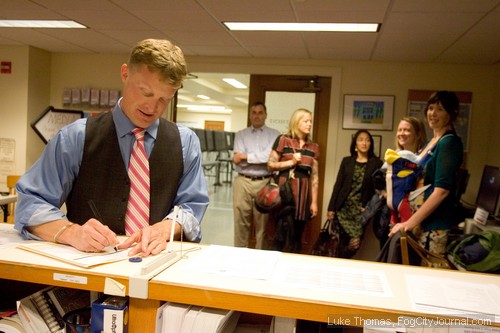
Progressive activist Quintin Mecke jumped into the District 5 supervisorial race today, echoing gentrification concerns raised this week by the Guardian and The New York Times and promising to be an independent representative of one of the city’s most progressive districts, a subtle dig at Sup. Christina Olague’s appointment by Mayor Ed Lee.

“The City is at an economic crossroads. As a 15 year resident of District 5, I cannot sit idly by while our City’s policies force out our residents and small businesses, recklessly pursuing profits for big business at whatever cost,” he began a letter to supporters announcing his candidacy, going on to cite the NYT article on the new tech boom that I wrote about earlier this week.

“What we do next will define the future of San Francisco; the city is always changing but what is important is how we choose to manage the change. One path leads to exponential rent increases, national corporate chain store proliferation, and conversion of rent-controlled housing. The other path leads to controlled and equitable growth, where the fruits of economic development are shared to promote and preserve what is great about this City and our district,” Mecke wrote.

Mecke came in second to Gavin Newsom in the 2007 mayor’s race and then served as the press secretary to Assembly member Tom Ammiano before leaving that post last week to run for office. Mecke joins Julian Davis and John Rizzo in challenging Olague from her left, while London Breed and Thea Selby are the leading moderates in a race that has 10 candidates so far, the largest field in the fall races.

Although he never mentioned Olague by name, Mecke closed his message by repeatedly noting his integrity and independence, a theme that is likely to be a strong one in this race as Olague balances her progressive history and her alliance with the fiscally conservative mayor who appointed her.

“Politics is nothing without principles; and it’s time now to put my own principles into action in this race,” Mecke wrote. “District 5 needs a strong, independent Supervisor. I am entering this race to fight for the values that I believe in and to fight to preserve what is great about District 5 and the city. I have brought principled independence to every issue I’ve worked on and that’s what I’ll continue to bring to City Hall.”

In an interview with the Guardian, Mecke said he sees the campaign as a “five-month organizing project” to reach both regular voters and residents of the district who haven’t been politically engaged, including those in the tech sector. He’d like to see the perspective of workers represented in discussions about technology, not simply the narrow view of venture capitalist Ron Conway that Mayor Lee has been relying on.

“Local politics needs new blood,” Mecke said, “it needs to hear from these people.”

Bikes and business, a new and evolving union in SF

3

Building Owners and Managers Association of San Francisco (BOMA) is being honored by the San Francisco Bicycle Coalition at next week’s annual Golden Wheel Awards, recognizing BOMA’s help earlier this year in passing a city law requiring commercial landlords to let workers bring their bikes indoors or another secure bike parking area.

It is a strange and noteworthy honor for BOMA, a downtown force that is usually at odds with SFBC and progressive political entities, including opposing an effort to pass similar bikes-in-buildings legislation a decade ago. But this time, BOMA was an early partner on legislation sponsored by progressive Sup. John Avalos, an indicator of just how much the politics surrounding urban cycling have changed in recent years, particularly in San Francisco.

In the city where Critical Mass was born 20 years ago this fall – since then exported to dozens of cities around the world, globalizing urban cyclists’ demand for the equal right to use roadways often built mainly for automobiles – the bicycle has moved from the preferred mode of rebels, children, and the poor into a mainstream transportation option recognized even by the suits in the corner offices.

“They’re responding to a market demand. They see lots of employees looking for bike access in their buildings,” San Francisco Bicycle Coalition Executive Director Lean Shahum said BOMA.

It was a point echoed by John Bozeman, BOMA’s government and public affairs manager and a regular cyclist. “Ten years ago, our members didn’t see it as something their tenants were asking of them,” Bozeman told us. “With the rise of young workers coming into our buildings, there was a greater demand for better bike access.”

But there are different ways of looking at this switch, which could undermine the progressive movement in San Francisco as SFBC increasingly adopts a more neoliberal approach of reliance on corporate support, rather than relying primarily on the political strength of their 12,000-plus members. For example, the Sunday Streets road closures that SFBC helped initiate are sponsored by a long list of corporations looking to improve their public image, including Bank of America (whose representative recently joined SFBC and city officials at a press conference announcing an expansion of the program), California Pacific Media Center, and Clear Channel, and in the past PG&E and Lennar.

“It reflects that bicycling sells real estate, and that’s a recent trend in hip, tech-focused cities,” says Jason Henderson, a San Francisco State University geography professor now finishing up a book on the politics of transportation, which explores these shifting dynamics.

The relationship with and dependence upon the business community could diminish SFBC’s willingness to champion bold reforms to our transportation system, such as congestion pricing charges for cars entering the city core during peak hours or demanding public transit mitigation fees of downtown corporations.

“On the other hand, it’s helping legitimize the bike as a legitimate form of transportation when the power elite accept it,” Henderson said.

Whatever the case, SFBC decision to honor BOMA with an award – which will be presented on the evening of June 5 during an event at the swank War Memorial Building – represents a new and evolving political dynamic for San Francisco.

“San Francisco has become a very different place in terms of embracing bicycling,” Shahum said. “There is a strong understanding that biking is good for the economy.”

Oakland gets jilted

0

By Frank Artrage

news@sfbg.com

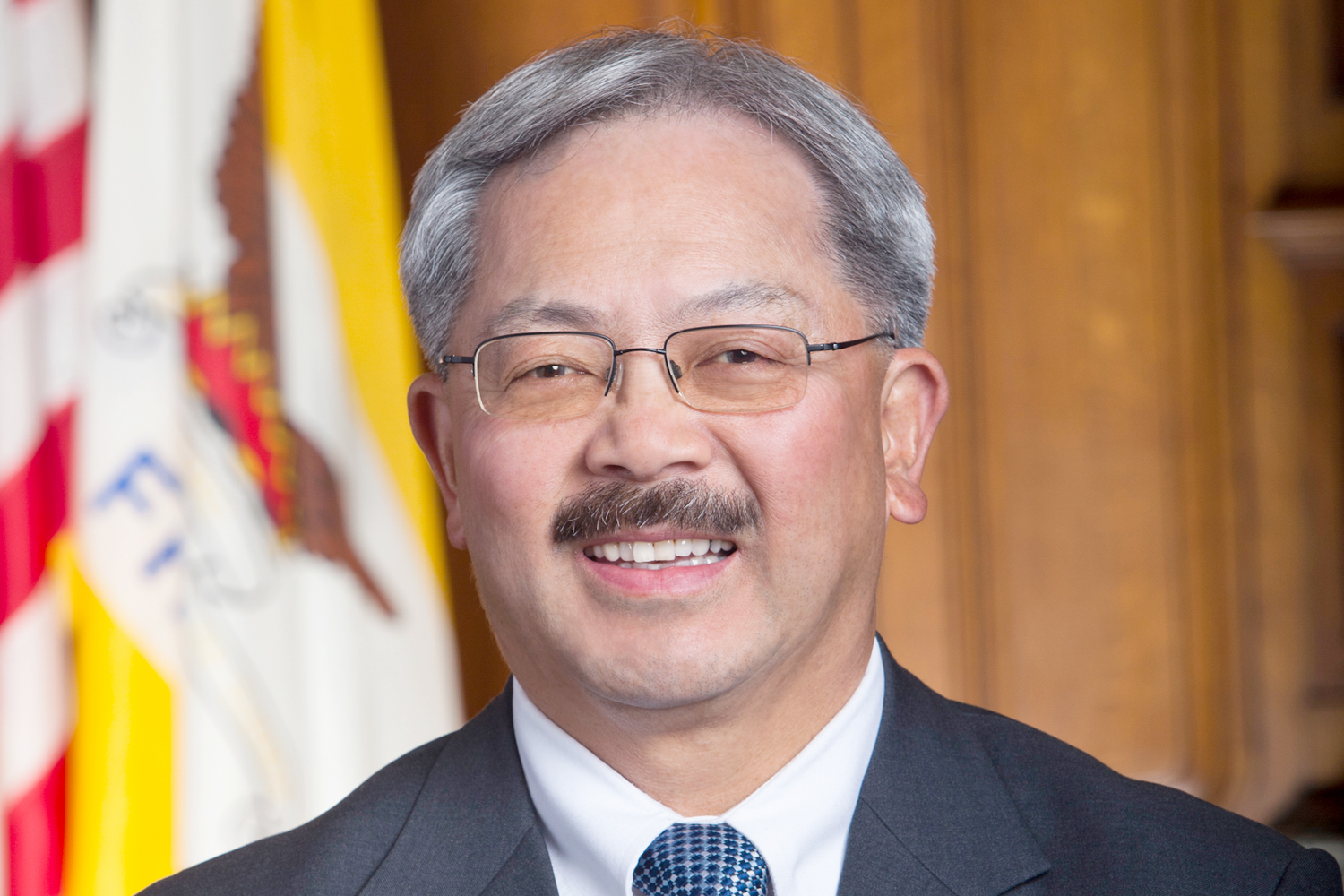
After a secret whirlwind courtship that lasted a mere five months, Mayor Ed Lee and the Golden State Warriors tied the knot May 22 at Piers 30-32, announcing their unexpected union at the site they intend to occupy with a new basketball arena by 2017.

The Warriors’ entrepreneurial new owners — Joe Lacob and Peter Guber — say they love this “iconic site” and promised to build a “spectacular sports and entertainment complex” that is “architecturally significant.”

But what about Oakland, the team’s unceremoniously jilted current homemaker? The perception from the East Bay is that Lacob and Guber were duplicitous and underhanded in their dealings with city officials that were desperately trying to retain the city’s three main sports franchises — the Oakland Athletics baseball club, the Oakland Raiders football team, and the Golden State Warriors basketballers — all of whom have recently signaled interest in moving.

Several sources told us that the Warriors’ new owners have been lying to Oakland officials about their intentions for months. For example, Oakland City Councilmember Larry Reid told me “that when our staff had conversations with the new owners, they always indicated they hadn’t yet come to a final decision.”

Reid told me what happened next. “I get a call Sunday night at 9:30 telling me about their move like a thief in the night.” Reid said. “It’s upsetting.”

On the fan site GoldenStWarriors, Lacob seemed to belittle Oakland. In an 18-minute video, Lacob predicts that Oakland will be left with only one sports team someday. “I think they’re challenged,” he said when asked what’s wrong with Oakland, adding the city is in “a difficult situation.”

Sports talk radio hosts, fan sites, and bloggers, however, seem to be evenly divided on the move. Even hardcore Oakland and Warriors blogger Ethan Sherwood Strauss prefers the San Francisco site. At his Warriorsworld site, Strauss wrote: “I’d never leave Oakland…. I have everything at arm’s length. There’s food from around the world, teeming farmers markets, lush green hills, Redwood trees, Mosswood Park, Grand Lake Theatre — this is all within two miles.”

But: “Guess which is the better place for the Golden State Warriors? It’s that west bay city national broadcasters keep showing during Warriors games while pretending Oakland doesn’t exist.”

Thus far, neither Oakland Mayor Jean Quan nor Mayor Lee have made any comments regarding the other side’s situation or whether their mutually reported “good relationship” has been strained. But it must be devastating to Quan, given all of her work and hoopla over her recent announcements surrounding her ambitious plans for the “Coliseum City” project.

Not unlike the Warriors’ “world class arena” planned for their new San Francisco home, Coliseum City, according to Quan, will be a “world-class sports and entertainment district.” Ryan Phillips, writing on the Oakland North blog in March, said that the project includes “building hotels, retail, office and residential space in the Coliseum complex…as well as building an Oakland Airport Business Park just across the freeway on the way to the airport. The business park will be developed to attract tech companies.”

Mayor Quan issued a press release following the Warriors’ bombshell to announce that she remains “bullish” on her Coliseum City project. Her new spin is that, “Coliseum City is a long-term development project that was never dependent on any one tenant. It was always a larger project than just one sports team.”

But if there’s even one team missing from the original trinity, then they have no choice but to lower their expectations and scale back their plans. Therefore, the Warriors’ move could trigger a complete unraveling of not only her recent plans to keep the Oakland A’s baseball team in Oakland, but also efforts to keep any team there.

For example, a case study published by the Airport Area Business Association (AABA) in conjunction with Coliseum City principal and manager Oakland-based JRDV Urban International, and students at UC Berkeley’s Haas School of Business found, The Coliseum complex presents a unique opportunity to prepare a pioneering business model that generates revenue for both public and private interests.”

Presciently, in the wake of this announced move by the Warriors and how that hurts Oakland, the study asked: “Are the withdrawal of redevelopment monies, the negative perception of Oakland (and especially Deep East Oakland) by investors and the soft commercial real estate market insurmountable? Can the City of Oakland and Alameda County garner the public support required to approve the necessary public financing and inspire investor confidence?”

Manning up, Councilmember Reid told me that Oakland bears some responsibility for this fiasco. “I’ve been agitating for 10 years to get this Coliseum project going. But let me tell you about two critical mistakes Oakland has made over the last decade,” he said. “One, Oakland has always taken the position that these teams had no place to go. Well, you see where that thinking got us today…Two, 10 years ago the decision was made to invest in the old [Oakland] Army Base. Yet, to this day, not one spade of dirt has been unearthed to symbolize any kind of progress is underway there. In fact, the whole project is at a standstill.”

Maybe, but Oakland and Warriors’ fans should not despair. It is not a done deal because a million things could go wrong. For example, this will be the fifth attempt to develop Piers 30-32 into something spectacular over the last several years.

Also, environmental groups and local activists are already squawking about the site. It has to pass a notoriously tough approval process of at least four major agencies. Financing might fall through, at least until Warriors ownership present to the press, government, and citizens some details: Tuesday’s press conference was basically a pep rally — the only thing missing were the pom-poms. Finally, Pier 30-32 and the site have yet to pass muster over the environmental and safety concerns and myriad other requirements of the California Environmental Quality Act (CEQA).

If any obstacle dooms the Warriors’ plans, Oakland’s Assistant City Administrator Fred Blackwell said they’d keep the door open for these prodigal owners: “And in the end, we will leave a space for the Warriors after they are exhausted from the CEQA litigation and cost increases required to be on the San Francisco Waterfront.”

“In a nutshell,” according to a City Hall press aide, Blackwell “means that waterfront development is expensive and requires an extensive and complex environmental review and permitting process involving review and approval by a number of local, state, and sometimes federal agencies.”

But what if it is a success? Oakland loses even more than just the Warriors. At least one politician pointed out, and I also heard this on 95.7 FM The Game, that what’s to stop circuses, ice shows, and major rock stars from ditching Oakland and following the Warriors to this splashy and scenic new entertainment venue?


Deep dish

0

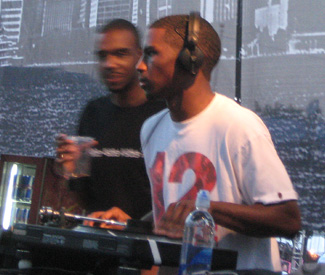
SUPER EGO Ooh, she's windy! And everybody knows it. I'm writing you from Chicago, specifically and improbably from the Hard Rock Hotel in the gorgeous old Union Carbide building. It's not so tacky (I'm staying on the Prince Floor, displaying several of his blouses), even though it's brimming with hopefuls for the International Mr. Leather Competition-related "Grabbys," the big annual gay porn awards. Someone please tell their hairdressers that 2005 was seven years ago! No more gay porn cockatoos, please. It is also big, hairy bear week here — officially called Bearpawcalypse 2012, I shit you not — so everything is thuper-thuper-gay.

I'll be back to join you at the following ragers, but right now I'm off to "grabby" me some drinks in the stunning Second City. First stop: a strong sidecar and some live Latin jazz at Al Capone's favorite hang, the Green Mill. Straight mobbin', y'all.

OMAR SOULEYMAN


Are you ready to completely lose it, hypnotic synth-groove hi-NRG Syrian folk-pop style? Even just thinking of how this hyper-energetic, legendary Middle Eastern singer somehow came to be embraced by Western ravers makes me smile — but we'll all be too busy bouncing and trying to sing along to deconstruct all that.

Fri/1, 8pm doors, $20 advance. Mezzanine, 444 Jessie, SF. www.mezzaninesf.com

STOMPY 20-YEAR REUNION


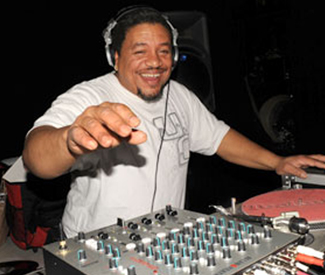
The Stompy label, party crew, and music production powerhouse has helped keep the chunky, funky, banging SF house sound alive (DJ Deron, Stompy's honcho, is one of my favorites when I just wanna let loose). To celebrate its second decade, Berlin's sunny tech-house wiz Ian Pooley is joining Jonene, Tasho, Sweet P, and Deron to stomp us good.

Fri/1, 9pm, $10 before 11pm, $20 after. Monarch, 101 Sixth St., SF. www.stompy.com

DOPPLEREFFEKT


Keepers of the true mad scientist techno flame, this mysterious, essential group — headed by mental lab technician Heinrich Mueller, a.k.a. Gerald Donald, a.k.a. Rudolf Klorzeiger — was all the rage, and one of the actual quality offspring, of the electro clash scene, which is now experiencing a full-blown revival. Dark thoughts and porn dreams burble up through insanely catchy melodies and sci-fi Kraftwerk affect. With C.L.A.W.S., Robot Hustle, Josh Cheon, Caltrop, and the No Way Back crew.

Sat/2, 10pm, $25. Monarch, 101 Sixth St., SF. www.monarchsf.com

KONTROL GRAND FINALE


What would the city's techno scene be like without Kontrol? Ace new crews like As You Like It and Rocket might not be around if it hadn't been for the seven-year-old monthly blast of live news from the global techno underground. Originally started at the storied Rx Gallery as a clean, minimal-pumping break from all the baroque, bombastic clutter that was techno in the early 2000s (and as a showcase for the burgeoning international touring circuit created by the Internet and advancing digital technology), Kontrol grew at the EndUp into one of our invaluable electronic faces to the world. Now the Kontrollers — Greg Bird, Alland Byallo, Sammy D, Nokloa Baytala, and Craig Kuna — have way too much going on, damn their popular talents! This seventh anniversary event is also the end of the line for the monthly party, although Kontrol will live on in other forms, including, I'm sure, one day, a 21st anniversary party, at which I will be raving in my hover-wheelchair. Berlin master Heiko Laux performs. Danke and aufweidersehn!

Sat/2, 10pm-6am, $20. EndUp, 401 Sixth St., SF. www.tinyurl.com/kontrolbye

WICKED 21-YEAR ANNIVERSARY


After last year's incredible reunion (and a hugely successful world tour) one of SF's original rave crews — the one that brought a tasty touch of pagan British psychedelia to its eclectic productions — gathers again to howl. DJs Garth, Jeno, Thomas, and Markie, plus a signature cast of beloved characters, get devilish all night. *

Sat/2, 10pm-7am, $20. Mighty, 119 Utah, SF. www.mighty119.com

Theater of the observed

0

arts@sfbg.com

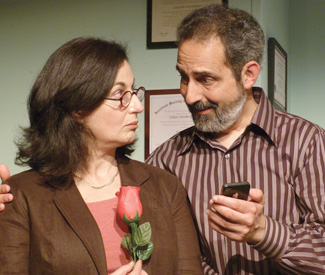
THEATER Unmanned spy drones, electronic snooping, cyber warfare — why should the government have all the fun? In FWD: Life Gone Viral — the world premiere comedy by Jeri Lynn Cohen, David Ford, and Charlie Varon currently enjoying a sharply-performed, comfortably low-tech production at the Marsh — today’s social media and some of Big Brother’s latest gadgetry inspire two pairs of ex-spouses to high-falutin’ excess over the more banal of security issues. The outcome is a surprisingly thoughtful and consistently amusing collision between perennial complaints, whether mortal or marital, and the current runaway state of online exhibitionism.

The nexus of issues are staked out early and with droll precision, beginning in the direct address by an entrepreneurial Russian (Varon) with a heavy accent and a former career in the security state, who explains a little device he has on offer to the abjectly curious. It’s a mini-drone in the shape of a housefly, operable through your cell phone, ready to beam into the palm of your hand pictures and audio from, say, your upstairs neighbors — answering those nagging questions you’ve always had about them: “How do they live? With whom do they have the sexual?”

It’s not as far-fetched as the accent. This kind of technology is already around, more or less. So it’s all the easier to accept middle-aged, terminally ill Donald Saperstein (Varon) getting to be the proverbial fly on the wall of his ex-wife’s medical practice. It’s a cozy arrangement for the rather megalomaniacal Saperstein, who seems to prefer one-way communication. He’s recently caught fire on YouTube, intoning his thoughts on dying to other cancer sufferers spread over the infinite expanse of cyberspace, while his ex-wife, oncologist Dr. Lillian Steinberg (a considerate, somewhat prim Cohen), toils away in a bland office. And offices are where director David Ford sets most of the action, sandwiched between parallel planes of dull carpet and off-white ceiling panels.

But Saperstein ends up having to share the wall with another fly, and another customer, named Ellen Green (a suddenly brash Cohen sporting a New York accent), who’s purchased the same gizmo to spy on her ex-husband, patient Adam Roth (Varon, bowed and anxious but with a pent-up exuberance). (As spy-flies Ellen and Donald, Cohen and Varon tuck their elbows in, jut their arms out and shake their jazz hands to indicate their droning drones’ airborne path through physical space.) Ellen is there to get her schadenfreude firsthand. Their unexpected encounter in cyberspace plays like a scene out of William Gibson, if Gibson wrote for 30 Rock. Meanwhile, their targets confer with what remains of patient confidentiality. It seems Roth is not dying after all, a matter of a mix-up in the records department: it’s another Adam Roth who has cancer.

The new lease on life gives Roth the hots for his doctor, who responds with cautious enthusiasm to his advances. But she’s deeply chagrined to learn he finds so much value in a certain YouTube video purporting to offer insight and aid to her patients while casting a veiled accusation in her own direction. Even the Mayo Clinic has seen fit to recommend her ex’s “Cancer of Blame” video. Roth, an amateur filmmaker with a taste for the classics and the ancient Athenian marketplace of ideas reborn in the internet, gallantly rises to her defense with a modest proposal: “Have you thought about reposting his video with your own subtitles?”

From this point, things get ugly, amid a rich vein of comical discourse and defensiveness around issues of privacy, revenge and pathological degrees of attention-seeking. The Russian spymaster, from his vantage, sees it all: “Soon we will have diseases of overexposure, diseases for which we still have no name.” It may be strange to say, but there’s something refreshing and affirming about a group of characters who, even in the face of their own mortality, can prove petty, vindictive assholes to each other. Our cyborg-selves end up pretty human after all.

FWD: LIFE GONE VIRAL

Through June 10

Thu, 8pm; Sat, 8:30pm; Sun, 7pm, $20-$50

Marsh San Francisco

1062 Valencia, SF

(415) 282-3055

www.themarsh.org


SF needs healthy housing

My greatest frustration as a tenants’ rights and affordable-housing advocate in San Francisco is that, despite all the good efforts by a lot of good people, we never address the root cause of our housing crisis. We routinely enact laws and ballot initiatives, organize endless demonstrations and elect progressive politicians, but in the final analysis, these efforts are just a Band Aid on a bad system that leaves a lot of people without a roof over their heads.

A few years ago, Brian Basinger of the AIDS Housing Alliance and I pushed “no fast pass to eviction” legislation to stop the eviction of seniors and people with AIDS and other disabilities through the state Ellis Act.

Ellis allows a landlord to override just-cause eviction protections and evict all of the tenants in a building. It’s often used by speculators to flip properties — that is, buy them, evict the tenants, and create a tenancy-in-common (where there’s the same number of owners as there are apartments). The new owners apply for condo conversion so that, instead of sharing a percentage in the building, they actually own their own units.

No Fast Pass says that if someone uses Ellis to evict tenants, then the building can’t convert to condos for ten years. If any of those tenants are seniors or disabled, it can never be converted. The legislation helped. There was a drop in Ellis evictions. Unfortunately, landlords and speculators now employ intimidation, harassment and buy-outs to get rid of tenants, so that they don’t have to Ellis.

It’s time to get beyond Band-Aids. Housing should be a human right, guaranteed for all, as healthcare is in other nations.

When former Supervisor Tom Ammiano realized that 65,000 San Franciscans (15% of the population) were without health coverage, he (not former Mayor Gavin Newsom, who takes credit for it) introduced legislation to create what is now “Healthy San Francisco,” our city’s version of universal healthcare. It’s not perfect, but it tackles the problem the way it should be tackled: by making healthcare a human right and not a luxury.

The same needs to be done for housing.

As long as housing is a commodity, affordable only to those who have the dough, there will always be people left out in the cold — literally. Our city has more than 10,000 homeless people, not to mention scores of others living (through no choice of their own) in deplorable conditions. The city builds more market-rate housing than it needs, while units for those below 50 percent of the city’s median income fall far short of the demand.

A mandate to house everyone in the city has never been tried. I don’t have an exact plan, but a “Housing SF” (like Healthy SF) might be created by pooling together all of our housing resources and aggressively working to pull in more. If the proposed Housing Trust Fund happens, it should be initially used only for those who need it most — the homeless and the poor, remembering that shelters are not housing, even if they’re considered such under Care Not Cash.

Put a moratorium on market-rate housing. Turn all abandoned properties (both city and privately owned) into affordable units. Raise money by letting the big businesses (including the tech companies) cough up some dough. Use land trusts as much as possible to keep the new places affordable into perpetuity.

It’s time to dream big.

Tommi Avicolli Mecca, editor of Smash the Church, Smash the State: The Early Years of Gay Liberation, is a longtime affordable housing advocate.

Our 2012 Small Business Awards

5

WOMEN IN BUSINESS

KELLY MALONE, WORKSHOP AND INDIE MART

In a tech-obsessed society, our hands navigate today’s gleaming gadgets more often than those of yesteryear: a sewing machine, say, or a manual drill. DIY goddess Kelly Malone has spent years trying to change that — and in so doing has created a business that serves as a cultural touchstone for the budding Divisadero Street corridor.

Malone’s brick-and-mortar shop is named Workshop (1798 McAllister, SF. 415-874-9186. www.workshopsf.org), and it’s a place where aspiring crafters receive hours of instruction in oft-neglected skills like sewing, knitting, and terrarium-making — all while drinking Pabst Blue Ribbon and meeting new friends. After receiving an enthusiastic response from her Indie Mart (www.indie-mart.com), a handmade craft fair she started six years ago in the backyard of her Mission digs, Malone saw a need for a hub for would-be crafters.

“I wanted to create a space that was super ‘hit it and quit it,'” she says. “Where you could come in and take a class, but you didn’t necessarily need to become some expert knitter. A place for people to sit down and get their hands dirty, learn to make something, and get inspired.”

Malone started Workshop on scant funding. Instead of relying on bank loans, she looked to her immediate community for investors. “I’ve started every business without money, which has forced me to really put myself out there and grow my businesses by meeting people and being super-passionate about what I do,” she says.

Malone says having a big budget to open her businesses would have been fun, but saving her pennies and having flea markets and garage sales to pay for sewing machines gives her more street cred, DIY all the way.

And like our favorite kind of businesspeople, Malone hardly sees her enterprises as a sterile way to make a quick buck. “I’m never going to get rich off these businesses, but if I get to the point where I can have a couple people on staff like I do now, and have enough to pay bills and go get some beers, hey, that’s good enough for me.” (Mia Sullivan)

CHAIN ALTERNATIVE

SPORTS BASEMENT

Although based locally, Sports Basement (www.sportsbasement.com) is technically a chain, as it now boasts four locations: an 80,000 square-foot building at the old commissary in the Presidio, SoMa’s brick-and-wood location, a store in Sunnyvale that once mimicked the inside of a computer (look for the remaining “ESC” keyboard sign), and another nearing Mount Diablo in Walnut Creek. But beyond the fact that it offers the only real alternative to national conglomerates when it comes to one-stop athletic and outdoor gear, the retail company is fiercely dedicated to its Bay Area community. Plus, its cozy, with hand-painted cardboard signs detailing specials, comfy couches, and super-friendly staff.

Founder Eric Prosnitz came up with the Sports Basement idea in an effort to create a more personalized experience in an off-price retail outlet, something tailored more closely to Northern California’s environment. Products change every week, discounts rule, and employees are encouraged to treat customers as individuals with a continuum of outdoor lifestyle needs. And the Basement recognizes that it’s an expansive company with the power to affect various neighborhoods. Last year, its locations hosted more than 2,000 community groups at 7,000 events, averaging around four events per store per day. Ten-15% of the retail space serves as free community space. Examples: Walnut Creek holds a fundraiser in the form of a kid apparel fashion show, Sunnyvale hosts ASHA for India, an organization dedicated to providing education for underprivileged children in India; Bryant St. houses the AIDS Lifecycle organization, and Presidio is the meeting spot for Golden Gate Mother’s Group — just to mention a few.

Aaron Schweifler, Director of Operations at Sports Basement, says the staff is encouraged to be creatively autonomous, and hopes each store will provide a shopping experience that can “wow” local residents. We are wowed! (Soojin Chang)

TENANT ADVOCATE

GREG MARKOULIS, AMERICAN INDUSTRIAL CENTER

In 1975, Greg Markoulis of American Industrial Center (2345 Third St., SF. www.aicproperties.com) was scouring San Francisco to find a new home for his family’s 25-year-old shoe manufacturing company. When American Can Company, one of the city’s oldest and busiest industrial complexes, offered an attractive deal on a vacant Third Street building, Markoulis gladly took them up. The new abode reinvigorated the company, transforming it from a street corner location to a community space housing more than 285 businesses — now including graphic designers, commercial photographers, architects, light industrial manufacturers, a winery, a yoga center, a martial arts studio, and a medley of Web-based companies and art collectives. That expansive spirit soon spread, helping to reinvigorate the entire Dogpatch area, which had suffered a lengthy period of industrial decline.

Thirty-seven years later, AIC still keeps the family ethos alive. When making executive decisions, Greg Makoulis says the company’s priorities align much more with how relatives interact with one another rather than those of a typical business. “The ideas of the oldest generation with the most experience are considered first,” says Markoulis.

As this side of town is rapidly undergoing gentrification, he could very well have sold the building to a corporation. But he sees his tenants as valuable community members, not just paychecks. Markoulis thrives on finding working solutions to accommodate his tenants, and respects the fact that people’s needs are ever-changing. Markoulis describes AIC’s priority to be “giving everyone a stable place to operate in.”

In Markoulis’ experience, one of the biggest challenges that AIC has faced over the years has to do with the cost and time for newly opening businesses to acquire permits. He hopes to see changes in San Francisco’s building and planning department, because he thinks a faster turnaround would help foster employment opportunities. (Soojin Chang)

CULTURE CHAMPION

DON ALAN, HEMLOCK TAVERN AND CASANOVA LOUNGE

“I think the challenge for San Francisco is to take care of the venues that its got,” says Don Alan of the ever-shrinking live music scene here. Alan has contributed enormously to the preservation of live rock in the City by the Bay with his raucous Hemlock Tavern space in Polk Gulch (1131 Polk, SF. 415-923-0923, www.hemlocktavernsf.com) on the site of former gay bar the Giraffe. He’s also a preservationist of dive bar ambiance, opening Mission District favorite Casanova Lounge, full to the brim of attractive indie young ‘uns on the make.

Alan got his rock start in the on community radio in Madison, WI, soon coming to SF and opening storied live bluegrass and jazz cafe Radio Valencia. “We opened the Casanova while we still had Radio Valencia and we realized that a bar format would work better for live entertainment than a cafe format,” Alan says. “We opened the Hemlock in 2001 after we closed Radio Valencia. I was really excited about having a space like this. I was very interested in having a kind of old Wisconsin tavern feel because that’s where I grew up. It was perfect for me, finding a space that had a small venue so we didn’t have to be concerned about getting 200 people in every night, so we could book the kind of music that we wanted and to have a big enough bar to support that.”

“But basically this is a subsidized entertainment operation. The money is made at the Hemlock’s bar and the culture happens in the back room with the shows. The culture wouldn’t happen without this up here.” So go buy a beer or eight, already, and then take in one of those rarer-and-rarer raging shows. (Mirissa Neff)

EMPLOYEE-OWNED BUSINESS AWARD

MANDELA FOODS COOPERATIVE

“In high school, all I wanted was there to be a place to find fruits and vegetables,” says Mandela Foods Cooperative (1430 Seventh St., Oakl. 510-452-1133, www.mandelafoods.com) worker-owner James Berk. “I never thought I’d be the one that could provide that. It’s an interesting place to be in.”

Before the store opened, Berk’s native West Oakland was a food dessert. A dependence on convenience stores for nutrition was leading to rampant bad health in his community, so when the opportunity arose to be a part of a for-profit, organic-heavy grocery store in Mandela Marketplace, he took it. Responding to the neighborhood’s request, the shop employs and is owned by community residents. These worker-owners make all the shop’s decisions in group meetings, aiming for consensus when it comes to many essential issues.

Now, nearly three years after opening its doors, Mandela Foods Cooperative is a neighborhood staple. The majority of customers live within a radius of a few blocks and come to snap up bestselling items like orange juice, coconut water, and kale (a vegetable Berk said he had never heard of before working at the store.)

Ready-made food is also popular, from full plate meals to sandwiches that neighbors drop in to buy, despite a Subway next door. Though the shop’s focus continues to be on organic, naturally-produced foods, worker-owners see a need for a greater diversity of products: cheap staples alternating with more spendy products geared towards sustainable foodies. Business is stronger than ever right now, too — Berk says the small shop is on pace to break even this year.

So how is it banding with your neighbors to bring the rest of the block ingredients for a healthy diet? About as positive as you’d imagine it to be. “There’s a unity here that I’m not accustomed to,” says Berk. (Caitlin Donohue)

ARTHUR JACKSON DIVERSITY IN SMALL BUSINESS AWARD

CHERYL BURR, PINKIE’S BAKERY AND CITIZEN’S BAND

Cheryl Burr has no idea why her first bakery boss left her 16-year old self in charge of the pastries. “I would never have let a teenager do that at my business!” she chuckles. But really, the guy was showing prescience — Burr and business partner Chris Beerman, who originally shared space in a bakery-bento retail window in Potrero Hill, opened the doors of their Pinkie’s Bakery (1196 Folsom, SF. 415-556-4900, www.pinkiesbakerysf.com) in SoMa nearly three years ago and have been tickling sweet teeth with their skills there ever since.

“I’ve always been a super-strong personality,” Burr tells us, sitting in the sunny table area of Pinkie’s. Though the Asian American breadsmith built a respectable career in high-class kitchens around the city, there came a moment when she wanted to be able to execute her own vision. “I’ve gotten to this point in my career where I didn’t want to answer to anybody.”

So she took control of her own trajectory, renting space in a commercial kitchen, starting her own hustle. Burr supplied pies to wholesale accounts, mainly friends of friends she’d met through her years in the restaurant business. Her commercial space is part of a culinary reinvigoration of the neighborhood around Seventh Street and Folsom. Pinkie’s is a stone’s throw from Bloodhound Bar, Sightglass Coffee, Radius restaurant, Terroir wine bar and more. “There is definitely a sense of community and partnership around here,” says Burr, who will sometimes refer to the strip as “Folsoma.”

Pinkie’s is also a room away from Citizen’s Band, Beerman and Burr’s freshly-sourced diner. The same customers that come for Burr’s famous levain bread and apple butter morning buns can now also order a dinner of poutine with wild mushroom gravy and crispy pork belly right next door.

“We want to continue to refine what we’re doing here,” Burr says when asked about her future business plans. Did that young woman on her first baking job envision the success of her own bread basket? She smiles. “I’m not entirely sure what I envisioned, but it’s different.” (Caitlin Donohue)

GOLDEN SURVIVOR AWARD

PHIL’S ELECTRIC

During World War II, Phil Sidari was commissioned to make artificial limbs for disabled US veterans returning home. The shortage of finished goods during wartime also prompted Sidari to begin constructing small appliances out of spare parts. Thus, 61 years ago, Phil’s Electric (2701 Lombard, SF. 415-921-3776, www.philselectric.com) was born.

Sidari passed away at the ripe old age of 103, but his friends Vicki and Bob Evans took the reins in the 1970s when Phil decided to retire. Vicki says the store has gone through quite a few changes over the years, including a relocation 28 years ago from Fillmore Street to a quiet corner near the gates of the Presidio.

The shop is intimate, homey, and entirely a family affair. Bob and Vicki’s sons Tom and Ken help their parents run the business and provide excellent customer service to their patrons. Phil’s Electric specializes in the repair of vacuums and lamps but also sells coffee makers, blenders, vacuums, razors, and a host of other small electronic items.

Yet the rise of cheap, disposable electronics has made it difficult a business that’s founded on, well, fixing things. “In the past, almost everything got repaired, but that’s changing,” says Vicki. “For example, you can buy a Cuisinart coffeemaker that, after its warranty, there are no parts for it. So you throw it out. Whereas, say 12 years ago, we would have had a part for that and fixed it for you.”

Phil’s Electric also faces stiff competition from the Internet and larger stores. But it does have some advantages. “Internet companies are working out of a warehouse somewhere, so they don’t really have any commitment to the neighborhood or the city or the community,” Vicki says. And the unique thing about San Franciscans, according to Vicki, is our interest in supporting neighborhood businesses. “If we moved this to a suburban area, I don’t know if we’d have that many loyal customers.”

Vicki’s favorite part about the business? The human aspect and her autonomy. “You can interact with your customers and really try to be flexible and meet people’s needs.” (Mia Sullivan)

SMALL BUSINESS ADVOCATE

CALIFORNIA MUSIC AND CULTURE ASSOCIATION

Two years ago, during the climax of the police and regulatory crackdown on San Francisco nightlife that we dubbed the “War of Fun,” the California Music and Culture Association (www.cmacsf.org) was formed to advocate for all the club owners, promoters, DJs, and other creatures of the night who create our urban soundtrack and culture.

Since then, CMAC has become powerful advocate on behalf of nightlife, demonstrating an influence on Mayor Ed Lee and other city leaders and promoting an understanding at City Hall of the important role played by nightlife, which a recent Controller’s Office report found accounts for $4.2 billion in annual economic activity.

“As the recent Controller’s report demonstrated, the small businesses that make up the nightlife economy have a huge impact on the overall economy, and we’re happy the city is starting to realize this,” Alix Rosenthal, co-chair of the CMAC board, told us.

Now, with the help of newly hired Executive Director Laura Hahn, CMAC hopes to move from playing defense against crackdowns and punitive legislation to playing offense by expanding its membership and developing a proactive agenda that will help nightlife and its purveyors flourish.

“Now that we don’t have our back against the wall, we’re trying to expand,” Hahn told us. “We want to bring it to even smaller business owners like individual DJs, promoters, and individual musicians — the backbone of nightlife in San Francisco.”

But not matter what new realms CMAC gets into, small business advocacy will always be at the core of its mission. As Hahn said, “We want to focus on standing up for the little guys who don’t have people fighting for them in City Hall.” CMAC will host the 2012 San Francisco Nightlife Awards, Thursday, May 31 at Mezzanine, doing even more to bring local nightlife to the fore. (Steve Jones)

GOOD NEIGHBOR

SHANNON AMITIN, FARM:TABLE

“People always ask me if I ever consider expanding,” Shannon Amitin, owner of farm:table (754 Post, SF. 415-292-7089, www.farmtablesf.com) says over the phone, although I swear I can hear his eyes twinkling. “I usually laugh and say, ‘Yes, but only if I can find a much smaller space.'”

The joke — or rather the good fortune — here is that Amitin’s bustling Tenderloin cafe and restaurant squeaks just shy of 265 square feet, with a large communal table for sharing some of the best gourmet dishes in the area. Those dishes are delectably evanescent: the three-year-old resto’s changing daily menu is Tweeted each morning for your rising and shining appetite. Featured as I write this: polenta cake + yukon potato hash + soft egg, asiago + rooftop herb frittata.

“Rooftop”? Yep, farm:table harvests most of its herbs and many greens from its roof, adding a bit of green to the neighborhood. Coming soon, another bit of green in the form of a farm:table parklet, whose funding was secured via, what else, Kickstarter. Farm:table itself has become a community hub for nightlife characters, nonprofit advocates, and office workers.

And yes, there is delicious coffee. Amitin cut his teeth dripping cups of Blue Bottle behind the original’s counter, but became disillusioned when Blue Bottle tipped from a friendly experiment into a chain-aspirational juggernaut. “I saw what I didn’t want to do,” he says. “That’s what led me to something small and personal. I have really good people working for me, in a vibrant area, with a crowd that’s open to new flavors. I want to keep that magic.” (Marke B.)

READERS’ CHOICE

PINK BUNNY

It’s been open less than a year, yet Marina luxury erotic goods boutique Pink Bunny (1772 Union, SF. 415-441-7399, www.pinkbunny.biz) has hopped into our readers’ hearts — and possibly other parts as well. Founder and CEO Serene Martinez showcases quality adult toys from the likes of Jimmyjane and gorgeous lingerie in a lovely, well-curated space. Union Street, get kinky!


Tax equity

3

steve@sfbg.com, yael@sfbg.com

A broad consensus in San Francisco supports reforming the city’s business-tax structure by replacing the payroll tax with a gross receipts tax through a November ballot measure. But the devil is in the details of how individual tax bills are affected, which has divided the business community and given a coalition of labor and progressives the opportunity to overcome the insistence by Mayor Ed Lee and other pro-business moderates that any change be revenue-neutral.

Service Employees International Union Local 1021, San Francisco’s biggest city employee union, last month launched a campaign demanding that the measure increase city revenue, setting a goal of at least $50 million, which represents the amount the city has lost annually since 2001 when 52 large downtown corporations sued to overturn the last gross receipts tax. The union is threatening to place a rival measure on the fall ballot.

“This call for it to be revenue-neutral didn’t make a lot of sense given all the reductions in city services in recent years,” said Chris Daly, the union’s interim political director. “It’s fair to at least get the money back that we lost in 2001.”

The union and the city recently agreed on a new contract that avoids more of the salary cuts that SEIU members have taken in recent years, but workers could still face layoffs under a new city budget that Lee is scheduled to introduce June 1. Lee, Board of Supervisors President David Chiu, and business leaders working on the tax-reform proposal have until June 12 to introduce their ballot measure.

But they don’t yet have an agreement on what the measure should look like — largely because the technology sector (led by billionaire venture capitalist Ron Conway, the biggest fundraiser for Lee’s mayoral campaign last year), the traditional businesses represented by the San Francisco Chamber of Commerce, and the small business community are pushing different interests and priorities.

“The technology industry has to realize they have a tax obligation like any member of the business community does,” Jim Lazarus, the Chamber’s vice president for public policy, told us.

Conway is reportedly using his influence on Lee to push for a model that keeps taxes low for tech companies — even if that comes at the expense of other economic sectors, such as commercial real estate and big construction firms, which will likely see their tax obligations increase. Yet some Chamber counter-proposals could end up costing small businesses more money, creating a puzzle that has yet to be worked out.

But one thing is clear: The business leaders don’t want to see overall city revenue increase. “If there’s anything that is unifying in the business community is that it’s revenue neutral,” small business advocate Scott Hauge told us. “We’re not going to increase revenues, that’s just a given, so if we have to do battle then so be it.”

SEIU and other members of progressive revenue coalition that has been strategizing in recent weeks are hoping to exploit the divisions in the business community and arrive at a compromise that increases revenue, and if not then they say they’re willing to go to the ballot with a rival measure.

“We’re working on trying to recover what we lost in the 2001 settlement and then some,” Sup. John Avalos, who has been working with the progressive coalition, told us. “We have to have something going to the ballot that is revenue generating.”


LABOR’S CAMPAIGN

For labor and progressives, this is an equity issue. Workers have been asked to give back money, year after year, despite the fact that big corporations have been doing well in recent years but haven’t contributed any of that wealth to the cash-strapped city. Labor leaders say that after they supported last year’s pension-reform measure, it’s time for the business community to support city services.

“When we talked about Prop C, we said if our members are doing this with our pensions now, we’ll see next year what businesses do with business tax,” said Larry Bradshaw, vice president of SEIU Local 1021. “Then we read about secret meetings where the labor movement was excluded from those talks.”

Anger over the “secret meetings” of business leaders that Lee assembled to craft the tax reform measure — meetings at which no labor leaders were included — helped inspire the fierce protest campaign that defined the SEIU’s recent contract negotiations.

In the first weeks of negotiations, workers were already up in arms. Protest marches at SF General Hospital and Laguna Honda Hospital brought hundreds of hospital workers to the streets. These hospitals serve some of the city’s poorest populations: Laguna Honda patients are mostly seniors on Medi-Cal and General is the main public hospital serving the city’s poor.

On April 5, city workers got creative with a street theater protest that involved six-story projections on the iconic Hobart Building. Protesters dressed as rich CEOs and handed out thank-you cards to commuters at the Montgomery transit station. SEIU’s “The City We Need, Not Downtown Greed” campaign included a website (www.neednotgreed.org), slick video, and direct mailers portraying CEOs as panhandlers on the street asking city residents, “Can you spare a tax break?”

The most dramatic civil disobedience came on April 18, when more than 1,000 workers rallied outside City Hall — along with several progressive supervisors — and then marched to Van Ness and Market. Protesters blocked the street, resulting in 23 arrests. At that point, increases in health care cuts and pay cuts to city workers were still on the table.

That was followed the next week by hundreds of workers staging noisy demonstrations in City Hall, and then again on May Day when SEIU workers were well represented in actions that took over parts of the Financial District.

In the end, the demands of union representatives were met in the contract agreement. Health care cost increases and pay cuts were eliminated, and a 3 percent pay raise will kick in during the two-year contract’s second year, a deal overwhelmingly approved by union members. Labor leaders hope to use that momentum to force a deal with the Mayor’s Office on the tax reform measure — which some sources say is possible. Otherwise, they say the campaign will continue.

“We may end up on the streets gathering signatures soon,” Daly said. “We need to figure it out in the next few weeks.”


THOSE DEVILISH DETAILS

The Controller’s Office released a report on May 10 that made the case for switching to a gross receipts tax and summed up the business community’s meetings, and the report was the subject of a joint statement put out by Lee and Chiu. “After months of thorough analysis, economic modeling and inclusive outreach to our City’s diverse business community, the City Controller and City Economist have produced a report that evaluates a gross receipts tax, a promising alternative to our current payroll tax, which punishes companies for growing and creating new jobs in our City'” the statement said. “Unlike our current payroll tax, a gross receipts tax would deliver stable and growing revenue to fund vital city services, while promoting job growth and continued economic recovery for San Francisco.”

Daly and Avalos say progressives agree that a gross receipts tax would probably be better than the payroll tax, and they say the controller’s report lays out a good analysis and framework for the discussions to come. But despite its detailed look at who the winners and losers in the tax reform might be, Daly said, “We haven’t seen an actual proposal yet.”

Lazarus made a similar statement: “Nobody likes the payroll tax, but the devil is in the details.”

But it’s clear some businesses those with high gross receipts but low payrolls — would pay more taxes. For example, the finance, insurance, and real estate sector now pays about 16 percent of the $410 million the city collects in payroll taxes. That would go up to about 21 percent under a gross receipts tax.

“Several industries that could face higher taxes under the proposal, such as commercial real estate, large retailers, and large construction firms, felt the increase was too sharp,” the report said under the heading of “Policy Issues Arising From Meetings with Businesses.”

The report highlighted how the change would broaden the tax base. Only about 7,500 businesses now pay the payroll tax (others are either too small or are exempt from local taxation, such as banks), whereas 33,500 companies would pay the gross receipts tax, which the report identified as another issue to be resolved.

“While some businesses appreciated the base-broadening aspect of the gross receipts proposal, others felt that too many small businesses were being brought into the Gross Receipts tax,” the report said. Hauge also told us that he fears a tax increase on commercial real estate firms could be passed on to small businesses in the form of higher rents. “I don’t want to see the business community split,” Hauge said, although it’s beginning to look like that might be unavoidable. The big question now is whether progressives and labor can find any allies in this messy situation, and whether they’ll be able to agree on a compromise measure that all sides say is preferable to competing measures.

Stage Listings May 16-22, 2012

0

Stage listings are compiled by Guardian staff. Performance times may change; call venues to confirm. Reviewers are Robert Avila, Rita Felciano, and Nicole Gluckstern. Submit items for the listings at listings@sfbg.com. For further information on how to submit items for the listings, see Picks.

THEATER

OPENING

My Tia Loca’s Life of Crime Bindlestiff Studio, 185 Sixth St, SF; www.brownpapertickets.com. $20. Opens Thu/17, 8pm. Runs Thu-Sat, 8pm. Through June 2. Guerrilla Rep performs a new play by Roy Conboy, chair of SF State’s Playwriting Department.

BAY AREA

The Great Divide Ashby Stage, 1901 Ashby, Berk; www.shotgunplayers.org. $20-30. Previews Wed/16-Thu/17 and May 23-24, 7pm; Fri/18-Sat/19, 8pm; Sun/20, 5pm. Opens May 25, 8pm. Runs Wed-Thu, 7pm; Fri-Sat, 8pm; Sun, 5pm. Through June 24. Shotgun Players performs Adamn Chanzit’s drama about the hot topic of fracking, inspired by Ibsen’s An Enemy of the People.

ONGOING

“Best of PlayGround 16: A Festival of New Writers and New Plays” Thick House, 1695 18th St, SF; www.playground-sf.org. $10-40. Thu-Sat, 8pm; Sun, 7pm. Through May 27. Seven short plays and musicals by Bay Area authors, plus a staged-readings series.

“DIVAfest” Exit Theatreplex, 156 Eddy, SF; (415) 673-3847, www.theexit.org. $15-25. Through May 27. Entering its second decade, the estrogen-centric DIVAfest at the Exit is so jam-packed with activities — workshops, burlesque, symposiums, readings, singer-songwriter nights — you’d be forgiven for not realizing that plays are also on the menu. But in fact, they are the main course. This year’s smorgasbord features three very different solo shows, each encapsulating a wholly unique female voice. Genevieve Jessee’s Girl in, but not of, the ‘Hood, which won a “Best of the Fringe Festival” award in 2011, has since been reworked with a new director, Exit Theatre stalwart Michelle Talgarow, rendering it sharper and more comic without minimizing the inner turmoil experienced by the main character, Jessee herself. Catherine Debon’s Alma Colarada, which also won a “Best of the Fringe” in 2011, is an emotionally-charged, experimental roller-coaster ride that appropriately begins and ends on a train. Detailing a family history fraught with World War II resistance fighting, concentration camps, communist sympathies, and endless trains, Debon nimbly vacillates between the neuroses of the present day and the deep despair of the past, while still finding a way to end to piece on a triumphal note. Last but by no means least, the laugh-out-loud romantic farce Pussy, by Maura Halloran, details the tricky intricacies of a lesbian-feline-nosy neighbor ménage à “cat-re”. Yes, it’s about a cat … hmmm, or is it? You should really take the opportunity to find out. (Gluckstern)

Down to This Exit Stage Left, 156 Eddy, SF; www.sleepwalkerstheatre.com. $12-20. Thu-Sat, 8pm. Through May 26. Thirty-something Charlie (Derek Fischer) plays this little game with himself where he tosses a rotten egg at the kitchen trash as if he were making a free-throw in sudden-death overtime. This little moment, innocent and ordinary on the surface, puzzles one-night stand Donna (Tonya Narvaez) after she happens on the scene. That she would be baffled, even momentarily disturbed by so common a flight of sports-dude imagination is our first taste of the strained mechanics of Adam Chanzit’s slight pulp revenge tale: sure enough, this game of chance turns out to be a (pretty ridiculous) psychopathology ruling Charlie’s world. When a moment later his equally imbalanced and estranged wife (Kendra Lee Oberhauser), fresh from prison and packing heat, bursts in on the two lovebirds, Charlie’s fate-game will become the tortured trope in a table-turning showdown between all three — plus Charlie’s hapless roommate (Jomar Tagatac) and his crew-cut–sporting sidekick (Shane Rhoades). Chanzit offers some mild surprises and amusing banter along the way in Sleepwalkers’ world premiere — helmed by artistic director Tore Ingersoll-Thorp — but the plot and characters are stretched thin, and the tension often grows slack despite the able and likable cast. By the time the story climaxes in a coin-toss of an ending (designed to work out one of two ways, depending), it’s too big a muddle to generate more than a momentary quiver of anticipation over anybody’s fate. (Avila)

Endgame and Play American Conservatory Theater, 415 Geary, SF; (415) 749-2228, www.act-sf.org. $10-95. Opens Wed/16, 8pm. Runs Tue-Sat, 8pm (also Wed, Sat-Sun, 2pm; no matinees Wed/16 or May 23; Tues/22 performance at 7pm). Through June 3. ACT presents two absurd dark comedies by Samuel Beckett.

Fwd: Life Gone Viral Marsh San Francisco, 1062 Valencia, SF; (415) 282-3055, www.themarsh.org. $20-50. Thu, 8pm; Sat, 8:30pm; Sun, 7pm. Through June 10. The internet becomes comic fodder for creator-performers Charlie Varon and Jeri Lynn Cohen, and creator-director David Ford.

*Hot Greeks Hypnodrome Theatre, 575 10th St, SF; www.brownpapertickets.com. $30-35. Thu/17-Sat/19, 8pm. Cheap thrills don’t come much cheaper or more thrilling than at a Thrillpeddlers musical extravaganza, and their newly remounted run of Hot Greeks affords all the glitter-dusted eye-candy and labyrinthian plot points we’ve come to expect from their gleefully exhibitionist ranks. Structured as loosely as possible on Aristophanes’ Lysistrata, Greeks appropriately enough follows the trials and tribulations of a college sorority tired of “losing” their boyfriends to the big football match every year (Athens U vs. Sparta Tech). Pledging to withhold sex from the men unless they call off the game results in frustration for all, only partially alleviated by the discovery that sexual needs can be satisfied by “playing the other team,” as it were. But like other Cockettes’ revivals presented by the Thrillpeddlers, the momentum of the show is carried forward not by the rather thinly-sketched narrative, but by the group song-and-dance numbers, extravagant costuming (and lack thereof), ribald wordplay, and overt gender-fuckery. In addition to many TP regulars, including a hot trio of Greek columns topped with “capital” headdresses who serve as the obligatory chorus (Steven Satyricon, Ste Fishell, Bobby Singer), exciting new additions to the Hypnodrome stage include a bewigged Rik Lopes as stalwart sister Lysistrata, angelically-voiced Maggie Tenenbaum as the not-so-angelic Sodoma, and multi-faceted cabaret talent Tom Orr as heartthrob hunk Pendulum Pulaski. (Gluckstern)

It’s All the Rage Studio Theater, Marsh San Francisco, 1062 Valencia, SF; (415) 282-3055, www.themarsh.org. $15-50. Thu, 8pm; Sat, 8:30pm, Sun, 7pm. Extended through May 27. Longtime comedian and radio host Marilyn Pittman’s solo play wrestles with the legacy of her parents’ violent deaths in a 1997 murder-suicide initiated by her father. It’s disturbing material that Pittman, a stout middle-aged woman with a gregarious and bounding personality, approaches indirectly via a good deal of humor — including recounting the first time she did her growing-up-lesbian bit before her mother in a DC comedy club. But the pain and confusion trailing her for 13 years is never far behind, whether in accounts of her own battle with anger (and the broken relationships it has left in its wake) or in ominous memories of her too complacent mother or her charming but domineering father, whose controlling behavior extended to casually announcing murderous dreams while policing the boundaries of his marriage against family interference. A fine mimic, Pittman deploys a Southern lilt in playing each parent, on a stage decorated with a hint of their Southwestern furnishings and a framed set of parental photographs. In not exactly knowing where to lay blame for, or find meaning in, such a horrifying act, the play itself mimics in subtler form the emotional tumult left behind. There’s a too brief but eerie scene in which her veteran father makes reference to a murder among fellow soldiers en route to war, but while PTSD is mentioned (including as an unwanted patrimony), the 60-minute narrative crafted by Pittman and director David Ford wisely eschews any pat explanation. If transitions are occasionally awkward and the pace a bit loose, the play leaves one with an uncomfortable sense of the darker aspects of love, mingled with vague concentric histories of trauma and dislocation in a weird, sad tale of destruction and staying power. Note: review from the show’s 2009 run at the Marsh San Francisco. (Avila)

A Raisin in the Sun Buriel Clay Theater, African American Art and Culture Complex, 762 Fulton, SF; 1-800-838-2006, www.african-americanshakes.org. $10-35. Fri-Sat, 8pm (no show May 25); Sun, 3pm. Through May 27. African-American Shakespeare Company performs Lorraine Hansberry’s classic drama.

“San Francisco International Arts Festival” Various venues, SF; www.sfiaf.org. Free-$70. Through Sun/20. Performance festival featuring theater and dance from Cuba, Iran, Russia, the U.S., China, Japan, Estonia, and more.

Tenderloin Exit on Taylor, 277 Taylor, SF; (415) 525-1205, www.cuttingball.com. $10-50. Thu, 7:30pm; Fri-Sat, 8pm (also Sat, 2pm); Sun, 5pm. Through May 27. Annie Elias and Cutting Ball Theater artists present a world premiere “documentary theater” piece looking at the people and places in the Cutting Ball Theater’s own ‘hood.

To Be Young, Gifted and Black: Honoring Lorraine Hansberry In Her Own Words Gough Street Playhouse, Trinity Episcopal Church, 1620 Gough, SF; www.custommade.org. $22-28. Thu-Sat, 8pm; Sun, 7pm. Through May 27. Custom Made Theater and Multi Ethnic Theater collaborate on this tribute to the groundbreaking playwright.

The Waiting Period MainStage, Marsh San Francisco, 1062 Valencia, SF; (415) 282-3055, www.themarsh.org. $15-50. Fri, 8pm; Sat, 5pm. Extended through July 7. Brian Copeland (comedian, TV and radio personality, and creator-performer of the long-running solo play Not a Genuine Black Man) returns to the Marsh with a new solo, this one based on more recent and messier events in Copeland’s life. The play concerns an episode of severe depression in which he considered suicide, going so far as to purchase a handgun — the title coming from the legally mandatory 10-day period between purchasing and picking up the weapon, which leaves time for reflections and circumstances that ultimately prevent Copeland from pulling the trigger. A grim subject, but Copeland (with co-developer and director David Ford) ensures there’s plenty of humor as well as frank sentiment along the way. The actor peoples the opening scene in the gun store with a comically if somewhat stereotypically rugged representative of the Second Amendment, for instance, as well as an equally familiar “doood” dude at the service counter. Afterward, we follow Copeland, a just barely coping dad, home to the house recently abandoned by his wife, and through the ordinary routines that become unbearable to the clinically depressed. Copeland also recreates interviews he’s made with other survivors of suicidal depression. Telling someone about such things is vital to preventing their worst outcomes, says Copeland, and telling his own story is meant to encourage others. It’s a worthy aim but only a fitfully engaging piece, since as drama it remains thin, standing at perhaps too respectful a distance from the convoluted torment and alienation at its center. (Avila)

The Wrong Dick Dark Room Theater, 2263 Mission, SF; www.darkroomsf.com. $20. Thu-Sat, 8pm. Through May 26. Ham Pants Productions presents a noir-inspired comedy set in San Francisco.

Zorba Eureka Theater, 215 Jackson, SF; (415) 255-8207, www.42ndstmoon.org. $20-50. Wed/16, 7pm; Thu/17-Fri/18, 8pm; Sat/19, 6pm; Sun/20, 3pm. 42nd Street Moon performs Kander and Ebb’s musical salute to Greece.

BAY AREA

Crevice La Val’s Subterranean, 1834 Euclid, Berk; www.impacttheatre.com. $10-20. Thu-Sat, 8pm. Through June 9. Just in case you were feeling panicked about the persistently recessed state of the economy and what might be your own less than ideal place in it, the Impact Theatre and Playground co-presentation of Lauren Yee’s Crevice might help to put your woes into perspective. That’s because slacker sibs Liz (Marissa Keltie) and Rob (Timothy Redmond) are only slightly exaggerated representatives of Generation Next whose penchant for making lackluster life choices has sentenced them to an indefinite prison term of couch-surfing and Teen Mom marathons in their childhood home. Naturally, they desire change, but it’s not until their mother (Laura Jane Bailey) starts having a hot fling with a younger man that things do. In an egregious breach of the TMI line, it appears that Mom’s orgasms open a “crevice” into an alternate reality that Rob and Liz subsequently fall into. Thus removed from the entropy of their former reality they begin testing the parameters of their new one, quickly coming to the realization that sometimes the alternatives to what you already have are even worse. Getting home again is a convoluted, not fully mapped-out process, but in the interim, their navigation of their erstwhile wonderland offers most of the play’s best lines as well as the uncomfortably effective transformation of Reggie D. White from Liz’s nerdish best buddy to multi-lingual Mafia killer and casual sadist. (Gluckstern) (Gluckstern)

A Hot Day in Ephesus Live Oak Theatre, 1301 Shattuck, Berk; info@aeofberkeley.org. $12-15. Fri/18-Sat/19, 8pm. Actors Ensemble performs the world premiere of a musical based on Shakespeare’s Comedy of Errors.

*The Kipling Hotel: True Misadventures of the Electric Pink ’80s New venue: Marsh Berkeley, 2120 Allston, Berk; (415) 282-3055, www.themarsh.org. $20-50. Sat, 8:30pm; Sun, 7pm. Extended through June 10. This new autobiographical solo show by Don Reed, writer-performer of the fine and long-running East 14th, is another slice of the artist’s journey from 1970s Oakland ghetto to comedy-circuit respectability — here via a partial debate-scholarship to UCLA. The titular Los Angeles residency hotel was where Reed lived and worked for a time in the 1980s while attending university. It’s also a rich mine of memory and material for this physically protean and charismatic comic actor, who sails through two acts of often hilarious, sometimes touching vignettes loosely structured around his time on the hotel’s young wait staff, which catered to the needs of elderly patrons who might need conversation as much as breakfast. On opening night, the episodic narrative seemed to pass through several endings before settling on one whose tidy moral was delivered with too heavy a hand, but if the piece runs a little long, it’s only the last 20 minutes that noticeably meanders. And even with some awkward bumps along the way, it’s never a dull thing watching Reed work. (Avila)

Not Getting Any Younger Marsh Berkeley, 2120 Allston, Berk; (415) 282-3055, www.themarsh.org. $15-50. Fri, 8pm; Sat, 5pm. Extended through June 30. Marga Gomez is back at the Marsh, a couple of too-brief decades after inaugurating the theater’s new stage with her first solo show — an apt setting, in other words, for the writer-performer’s latest monologue, a reflection on the inevitable process of aging for a Latina lesbian comedian and artist who still hangs at Starbucks and can’t be trusted with the details of her own Wikipedia entry. If the thought of someone as perennially irreverent, insouciant, and appealingly immature as Gomez makes you depressed, the show is, strangely enough, the best antidote. Note: review from the show’s 2011 run at the Marsh San Francisco. (Avila)

The Odyssey Angel Island; (415) 547-0189, www.weplayers.org. $40-76 (some tickets include ferry passage). Sat-Sun, May 25, and June 1, 10:30am-4pm (does not include travel time to island). Through July 1. We Players present Ava Roy’s adaptation of Homer’s epic poem: an all-day adventure set throughout the nature and buildings of Angel Island State Park.

The World’s Funniest Bubble Show Marsh Berkeley, TheaterStage, 2120 Allston, Berk; (415) 826-5750, www.themarsh.org. $8-50. Extended run: May 5-27 (Sat-Sun, 11am); June 3-July 15 (Sun, 11am). Louis “The Amazing Bubble Man” Pearl returns with this kid-friendly, bubble-tastic comedy.

PERFORMANCE/DANCE

BATS Improv Bayfront Theater, Fort Mason Center, Marina at Laguna, SF; www.improv.org. Fri, 8pm, through May 25: “Director’s Cut!,” $20. Sat, 8pm, through May 26: “Improvised Murder Mystery,” $20.

“A Celebration of Harold Pinter” Royce Gallery, 2901 Mariposa, SF; www.brownpapertickets.com. Fri/18-Sat/19, 7:30pm. $30. John Malkovich directs Julian Sands in this tribute to the famed author and playwright.

“Chanticleer and the Fox: Nun’s Priest’s Tale” Seventh Avenue Performances, 1329 Seventh Ave, SF; www.chaucertheater.org. Sat/19, 7:30pm. $20. Also Sun/20, 2pm, Christ Presbyterian Church, 620 del Ganado, San Rafael. Chaucer Theatre performs musical theater inspired by Canturbury Tales.

City Ballet School Cowell Theater, Fort Mason Center, Marina at Laguna, SF; www.fortmason.org. Sat/19-Sun/20, 2pm. $28. “Spring Showcase” featuring new choreography by Yuri Zhukov.

“Die Blonde Cabaret” Stage Werx Theatre, 446 Valencia, SF; www.stagewerx.org. Mon/21, 6:30pm. $5. Stand-up and burlesque performer Marié Lake presents her comedy cabaret.

“Drinking/Songs: A Night of Beer and the Music That Goes With It” 50 Mason Social House, 50 Mason, SF; www.brownpapertickets.com. Wed/16, 8pm. $20. Singing, beer-drinking, a drinking-songs competition, and more.

“Elect to Laugh” Studio Theater, Marsh San Francisco, 1062 Valencia, SF; (415) 282-3055, www.themarsh.org. Tue, 8pm. Ongoing through Nov 6. $15-50. Will Durst and friends perform in this weekly political humor show that focuses on the upcoming presidential election.

“The Heart of Mexico” Yerba Buena Center for the Arts, Novellus Theater, 700 Howard, SF; (415) 978-2787, www.ybca.org. Sun/20, 3pm. $20-39. Folkloric dance from Mexico performed by the acclaimed Compañia Mazatlán Bellas Artes.

“The Keys to Heaven” Exit on Taylor, 277 Taylor, SF; www.cuttingball.com. Sun/20, 1pm. Free. Cutting Ball Theater presents this August Strindberg reading as part of its “Hidden Classics” series.

“Low Down” Z Space, Theater Artaud, 450 Florida, SF; www.levydance.org. Thu/17-Fri/19, 8pm; Sat/20, 2pm. $18-25. LEVYdance and the Foundry present a world premiere collaboration exploring the body’s ability to tell a story.

“Man vs. Wild: Tales of the Great Outdoors!” Intersection for the Arts, 925 Mission, SF; www.litupwriters.com. Wed/16, 7:30pm. $7. Humor reading with the LitUp Writers.

“Martini Cabaret Burlesque” Biscuits and Blues, 401 Mason, SF; www.eventbrite.com. Sun/20, 6pm. $20. Tasteful striptease with costumes and props.

“Porchlight Storytelling Series: I Surrender” Verdi Club, 2424 Mariposa, SF; www.brownpapertickets.com. Mon/21, 8pm. $15. True tales with Harold Atkins, Dennis Collinson, Heather Gold, and more.

“Previously Secret Information” Stage Werx Theatre, 446 Valencia, SF; www.stagewerx.org. Sun/20, 7pm. $15. Storytelling with Paul Myers, Josh Healey, and Joe Klocek.

“Qcomedy Showcase” Stage Werx Theatre, 446 Valencia, SF; www.stagewerx.org. Mon/21, 8pm. $8-20. With Lisa Geduldig, Matina Bevis, and more.

“Ruth Asawa San Francisco School of the Arts 30th Year Anniversary Dance Concert” Palace of Fine Arts, 3301 Lyon, SF; www.sfsota.org. Fri/18-Sat/19, 8pm. $18-28. Student dancers, guests, and artists in residence perform to celebrate the 30th anniversary of this arts and educational institution.

“Smack Dab” Magnet, 4122 18th St, SF; www.magnetsf.org. Wed/16, 8pm. Free. Open mic with featured reader Jai Arun Ravine.

“Tales of Pangu: Lifting Up the Sky” CounterPulse, 1310 Mission, SF; www.counterpulse.org. Sat/19, 8pm. $10-20. Eth-Noh-Tec storytelling theater and Gay Asian Pacific Alliance present this multimedia performance collaboration.

“The Vagina Monologues” Castro Theatre, 429 Castro, SF; (415) 621-6120. Thu/17, 7:30pm. $30. A one-night-only performance in honor of Asian Pacific American Heritage Month.

“Verbatim Verboten” Garage, 715 Bryant, SF; www.brownpapertickets.com. Fri/18-Sat/19, 8pm. $15. The “invasion-of-privacy revue” created by Michael Martin and hosted by Wonder Dave Crady.

Stage Listings May 9-15, 2012

0

Stage listings are compiled by Guardian staff. Performance times may change; call venues to confirm. Reviewers are Robert Avila, Rita Felciano, and Nicole Gluckstern. Submit items for the listings at listings@sfbg.com. For further information on how to submit items for the listings, see Picks.

THEATER

OPENING

“DIVAfest” Exit Theatreplex, 156 Eddy, SF; (415) 673-3847, www.theexit.org. $15-25. May 9-27. Three solo shows, plus singer-songwriters, readings, and art displays, highlight this festival honoring female artists.

Endgame and Play American Conservatory Theater, 415 Geary, SF; (415) 749-2228, www.act-sf.org. $10-95. Previews Wed/9-Sat/12 and Tue/15, 8pm (also Sat/12, 2pm). Opens May 16, 8pm. Runs Tue-Sat, 8pm (also Wed, Sat-Sun, 2pm; no matinees Wed/9, Sun/13, May 16, or May 23; May 22 performance at 7pm). Through June 3. ACT presents two absurd dark comedies by Samuel Beckett.

A Raisin in the Sun Buriel Clay Theater, African American Art and Culture Complex, 762 Fulton, SF; 1-800-838-2006, www.african-americanshakes.org. $10-35. Opens Sat/12, 8pm. Runs Fri-Sat, 8pm (no show May 25); Sun, 3pm. Through May 27. African-American Shakespeare Company performs Lorraine Hansberry’s classic drama.

BAY AREA

The Odyssey Angel Island; (415) 547-0189, www.weplayers.org. $40-76 (some tickets include ferry passage). Opens Sat/12, 10:30am-4pm (does not include travel time to island). Runs Sat-Sun and Fri/18, May 25, and June 1, 10:30am-4pm. Through July 1. We Players present Ava Roy’s adaptation of Homer’s epic poem: an all-day adventure set throughout the nature and buildings of Angel Island State Park.

ONGOING

Act One, Scene Two Phoenix Arts Association Theatre, 414 Mason, Ste 601, SF; www.un-scripted.com. $10-20. Thu/10-Sat/12, 8pm. Un-Scripted Theater Company performs the beginning of a new, unfinished play by a local author — and creates an ending on the spot once the script runs out.

“Bay One Acts Festival” Boxcar Theatre, 505 Natoma, SF; www.bayoneacts.org. $25-45. Wed/9-Sat/12, 8pm (also Sat/12, 3pm). Ten bold and adventurous short plays by local playwrights, performed two full programs running in repertory.

Down to This Exit Stage Left, 156 Eddy, SF; www.sleepwalkerstheatre.com. $12-20. Thu-Sat, 8pm. Through May 26. Thirty-something Charlie (Derek Fischer) plays this little game with himself where he tosses a rotten egg at the kitchen trash as if he were making a free-throw in sudden-death overtime. This little moment, innocent and ordinary on the surface, puzzles one-night stand Donna (Tonya Narvaez) after she happens on the scene. That she would be baffled, even momentarily disturbed by so common a flight of sports-dude imagination is our first taste of the strained mechanics of Adam Chanzit’s slight pulp revenge tale: sure enough, this game of chance turns out to be a (pretty ridiculous) psychopathology ruling Charlie’s world. When a moment later his equally imbalanced and estranged wife (Kendra Lee Oberhauser), fresh from prison and packing heat, bursts in on the two lovebirds, Charlie’s fate-game will become the tortured trope in a table-turning showdown between all three — plus Charlie’s hapless roommate (Jomar Tagatac) and his crew-cut–sporting sidekick (Shane Rhoades). Chanzit offers some mild surprises and amusing banter along the way in Sleepwalkers’ world premiere — helmed by artistic director Tore Ingersoll-Thorp — but the plot and characters are stretched thin, and the tension often grows slack despite the able and likable cast. By the time the story climaxes in a coin-toss of an ending (designed to work out one of two ways, depending), it’s too big a muddle to generate more than a momentary quiver of anticipation over anybody’s fate. (Avila)

Fwd: Life Gone Viral Marsh San Francisco, 1062 Valencia, SF; (415) 282-3055, www.themarsh.org. $20-50. Thu, 8pm; Sat, 8:30pm; Sun, 7pm. Through June 10. The internet becomes comic fodder for creator-performers Charlie Varon and Jeri Lynn Cohen, and creator-director David Ford.

*Hot Greeks Hypnodrome Theatre, 575 10th St, SF; www.brownpapertickets.com. $30-35. Thu-Sat, 8pm. Extended through May 19. Cheap thrills don’t come much cheaper or more thrilling than at a Thrillpeddlers musical extravaganza, and their newly remounted run of Hot Greeks affords all the glitter-dusted eye-candy and labyrinthian plot points we’ve come to expect from their gleefully exhibitionist ranks. Structured as loosely as possible on Aristophanes’ Lysistrata, Greeks appropriately enough follows the trials and tribulations of a college sorority tired of “losing” their boyfriends to the big football match every year (Athens U vs. Sparta Tech). Pledging to withhold sex from the men unless they call off the game results in frustration for all, only partially alleviated by the discovery that sexual needs can be satisfied by “playing the other team,” as it were. But like other Cockettes’ revivals presented by the Thrillpeddlers, the momentum of the show is carried forward not by the rather thinly-sketched narrative, but by the group song-and-dance numbers, extravagant costuming (and lack thereof), ribald wordplay, and overt gender-fuckery. In addition to many TP regulars, including a hot trio of Greek columns topped with “capital” headdresses who serve as the obligatory chorus (Steven Satyricon, Ste Fishell, Bobby Singer), exciting new additions to the Hypnodrome stage include a bewigged Rik Lopes as stalwart sister Lysistrata, angelically-voiced Maggie Tenenbaum as the not-so-angelic Sodoma, and multi-faceted cabaret talent Tom Orr as heartthrob hunk Pendulum Pulaski. (Gluckstern)

It’s All the Rage Studio Theater, Marsh San Francisco, 1062 Valencia, SF; (415) 282-3055, www.themarsh.org. $15-50. Thu, 8pm; Sat, 8:30pm, Sun, 7pm. Extended through May 27. Longtime comedian and radio host Marilyn Pittman’s solo play wrestles with the legacy of her parents’ violent deaths in a 1997 murder-suicide initiated by her father. It’s disturbing material that Pittman, a stout middle-aged woman with a gregarious and bounding personality, approaches indirectly via a good deal of humor — including recounting the first time she did her growing-up-lesbian bit before her mother in a DC comedy club. But the pain and confusion trailing her for 13 years is never far behind, whether in accounts of her own battle with anger (and the broken relationships it has left in its wake) or in ominous memories of her too complacent mother or her charming but domineering father, whose controlling behavior extended to casually announcing murderous dreams while policing the boundaries of his marriage against family interference. A fine mimic, Pittman deploys a Southern lilt in playing each parent, on a stage decorated with a hint of their Southwestern furnishings and a framed set of parental photographs. In not exactly knowing where to lay blame for, or find meaning in, such a horrifying act, the play itself mimics in subtler form the emotional tumult left behind. There’s a too brief but eerie scene in which her veteran father makes reference to a murder among fellow soldiers en route to war, but while PTSD is mentioned (including as an unwanted patrimony), the 60-minute narrative crafted by Pittman and director David Ford wisely eschews any pat explanation. If transitions are occasionally awkward and the pace a bit loose, the play leaves one with an uncomfortable sense of the darker aspects of love, mingled with vague concentric histories of trauma and dislocation in a weird, sad tale of destruction and staying power. Note: review from the show’s 2009 run at the Marsh San Francisco. (Avila)

Killing My Lobster Chops Down the Family Tree TJT, 470 Florida, SF; www.killingmylobster.com. $10-22. Thu/10-Fri/11, 8pm; Sat/12, 7 and 10pm; Sun/13, 7pm. The sketch comedy troupe performs a new show inspired by contemporary families.

“San Francisco International Arts Festival” Various venues, SF; www.sfiaf.org. Free-$70. Through May 20. Performance festival featuring theater and dance from Cuba, Iran, Russia, the U.S., China, Japan, Estonia, and more.

Tenderloin Exit on Taylor, 277 Taylor, SF; (415) 525-1205, www.cuttingball.com. $10-50. Thu, 7:30pm; Fri-Sat, 8pm (also Sat, 2pm); Sun, 5pm. Through May 27. Annie Elias and Cutting Ball Theater artists present a world premiere “documentary theater” piece looking at the people and places in the Cutting Ball Theater’s own ‘hood.

To Be Young, Gifted and Black: Honoring Lorraine Hansberry In Her Own Words Gough Street Playhouse, Trinity Episcopal Church, 1620 Gough, SF; www.custommade.org. $22-28. Thu-Sat, 8pm; Sun, 7pm. Through May 27. Custom Made Theater and Multi Ethnic Theater collaborate on this tribute to the groundbreaking playwright.

The Waiting Period MainStage, Marsh San Francisco, 1062 Valencia, SF; (415) 282-3055, www.themarsh.org. $15-50. Fri, 8pm; Sat, 5pm. Extended through July 7. Brian Copeland (comedian, TV and radio personality, and creator-performer of the long-running solo play Not a Genuine Black Man) returns to the Marsh with a new solo, this one based on more recent and messier events in Copeland’s life. The play concerns an episode of severe depression in which he considered suicide, going so far as to purchase a handgun — the title coming from the legally mandatory 10-day period between purchasing and picking up the weapon, which leaves time for reflections and circumstances that ultimately prevent Copeland from pulling the trigger. A grim subject, but Copeland (with co-developer and director David Ford) ensures there’s plenty of humor as well as frank sentiment along the way. The actor peoples the opening scene in the gun store with a comically if somewhat stereotypically rugged representative of the Second Amendment, for instance, as well as an equally familiar “doood” dude at the service counter. Afterward, we follow Copeland, a just barely coping dad, home to the house recently abandoned by his wife, and through the ordinary routines that become unbearable to the clinically depressed. Copeland also recreates interviews he’s made with other survivors of suicidal depression. Telling someone about such things is vital to preventing their worst outcomes, says Copeland, and telling his own story is meant to encourage others. It’s a worthy aim but only a fitfully engaging piece, since as drama it remains thin, standing at perhaps too respectful a distance from the convoluted torment and alienation at its center. (Avila)

The Wrong Dick Dark Room Theater, 2263 Mission, SF; www.darkroomsf.com. $20. Thu-Sat, 8pm. Through May 26. Ham Pants Productions presents a noir-inspired comedy set in San Francisco.

Zorba Eureka Theater, 215 Jackson, SF; (415) 255-8207, www.42ndstmoon.org. $20-50. Wed, 7pm; Thu-Fri, 8pm; Sat, 6pm; Sun, 3pm. Through May 20. 42nd Street Moon performs Kander and Ebb’s musical salute to Greece.

BAY AREA

Anatol Aurora Theatre, 2081 Addison, Berk; www.auroratheatre.org. $30-55. Wed/9-Sat/12, 8pm; Sun/13, 2 and 7pm. Aurora Theatre Company performs a world premiere translation of Arthur Schnitzler’s drama about the love life of an Viennese philanderer.

Crevice La Val’s Subterranean, 1834 Euclid, Berk; www.impacttheatre.com. $10-20. Thu-Sat, 8pm. Through June 9. Impact Theatre and PlayGround present Lauren Yee’s world premiere play about 20-something siblings whose couch-potato lives are uprooted when a chasm opens up in their living room.

A Hot Day in Ephesus Live Oak Theatre, 1301 Shattuck, Berk; info@aeofberkeley.org. $12-15. Fri-Sat, 8pm; Sun/13, 2pm. Through May 19. Actors Ensemble performs the world premiere of a musical based on Shakespeare’s Comedy of Errors.

In Paris Berkeley Repertory Theatre, Roda Theatre, 2015 Addison, Berk; (510) 647-2949, www.berkeleyrep.org. $22.50-125. Wed/9, 7pm; Thu/10-Sat/12, 8pm (also Sat/12, 2pm); Sun/13, 2pm. Mikhail Baryshnikov stars in Dmitry Krymov’s romantic new play.

*The Kipling Hotel: True Misadventures of the Electric Pink ’80s New venue: Marsh Berkeley, 2120 Allston, Berk; (415) 282-3055, www.themarsh.org. $20-50. Sat, 8:30pm; Sun, 7pm. Extended through June 10. This new autobiographical solo show by Don Reed, writer-performer of the fine and long-running East 14th, is another slice of the artist’s journey from 1970s Oakland ghetto to comedy-circuit respectability — here via a partial debate-scholarship to UCLA. The titular Los Angeles residency hotel was where Reed lived and worked for a time in the 1980s while attending university. It’s also a rich mine of memory and material for this physically protean and charismatic comic actor, who sails through two acts of often hilarious, sometimes touching vignettes loosely structured around his time on the hotel’s young wait staff, which catered to the needs of elderly patrons who might need conversation as much as breakfast. On opening night, the episodic narrative seemed to pass through several endings before settling on one whose tidy moral was delivered with too heavy a hand, but if the piece runs a little long, it’s only the last 20 minutes that noticeably meanders. And even with some awkward bumps along the way, it’s never a dull thing watching Reed work. (Avila)

Lucky Duck Julia Morgan Theatre, 2640 College, Berk; www.berkeleyplayhouse.org. $17-35. Thu/10-Sat/12, 7pm (also Sat/12, 2pm); Sun/13, noon and 5pm. Berkeley Playhouse performs a musical inspired by the “Ugly Duckling” tale.

Not Getting Any Younger Marsh Berkeley, 2120 Allston, Berk; (415) 282-3055, www.themarsh.org. $15-50. Fri, 8pm; Sat, 5pm. Through May 19. Marga Gomez is back at the Marsh, a couple of too-brief decades after inaugurating the theater’s new stage with her first solo show — an apt setting, in other words, for the writer-performer’s latest monologue, a reflection on the inevitable process of aging for a Latina lesbian comedian and artist who still hangs at Starbucks and can’t be trusted with the details of her own Wikipedia entry. If the thought of someone as perennially irreverent, insouciant, and appealingly immature as Gomez makes you depressed, the show is, strangely enough, the best antidote. Note: review from the show’s 2011 run at the Marsh San Francisco. (Avila)

Oleanna Berkeley City Club, 2315 Durant, Berk; www.theatrefirst.com. $15-30. Thu/10-Sat/12, 8pm; Sun/13, 5pm. TheatreFIRST performs David Mamet’s tense two-charater drama.

Red Berkeley Repertory Theatre, Thrust Stage, 2025 Addison, Berk; (510) 647-2949, www.berkeleyrep.org. $14.50-83. Wed/9, 7pm; Thu/10-Fri/11, 8pm; Sat/12, 2pm. Mark Rothko (David Chandler) isn’t the only one painting with a broad brush in this labored and ultimately superficial two-hander by John Logan, enjoying a competent but underwhelming production by outgoing Berkeley Rep associate artistic director Les Waters. Set inside the late-1950s New York studio of the legendary abstract expressionist at the height of his fame, the play introduces a blunt and brash young painter named Ken (John Brummer) as Rothko’s new hired hand, less a character than a crude dramatic device, there first as a sounding board for the pompous philosophizing that apparently comprises a good chunk of the artist’s process and finally as a kind of mirror held up to the old iconoclast in challenging proximity to a new generation that must ultimately transcend Rothko’s canvases in turn. The dialogue holds up signs announcing intellectual and aesthetic depths but these remain surface effects, reflecting only platitudes, while the posturing tends to reduce Rothko to caricature. Much of the self-consciously reluctant filial interaction here smacks of biographical sound bites or heavy-handed underscoring of theme, and tends toward the outright hokey when touching on the credulity-bending subject of Ken’s murdered parents — with the attendant shades this adds to Rothko’s and the play’s chosen color palette. (Avila)

The World’s Funniest Bubble Show Marsh Berkeley, TheaterStage, 2120 Allston, Berk; (415) 826-5750, www.themarsh.org. $8-50. Extended run: May 5-27 (Sat-Sun, 11am); June 3-July 15 (Sun, 11am). Louis “The Amazing Bubble Man” Pearl returns with this kid-friendly, bubble-tastic comedy.

PERFORMANCE/DANCE

BATS Improv Bayfront Theater, Fort Mason Center, Marina at Laguna, SF; www.improv.org. Fri, 8pm, through May 25: “Director’s Cut!,” $20. Sat, 8pm, through May 26: “Improvised Murder Mystery,” $20.

“Bijoux: Seven-Year Beeyotch!” Martuni’s, Four Valencia, SF; (415) 241-0205. Sun/13, 7pm. $7. Trauma Flintstone hosts an eclectic queer variety show with a Mother’s Day theme.

“Comedy Returns to El Rio” El Rio, 3158 Mission, SF; www.elriosf.com. Mon/14, 8pm. $7-20. With comedians Shazia Mirza, Marga Gomez, Jeff Applebaum, Brendan Lynch, and Lisa Geduldig.

“Elect to Laugh” Studio Theater, Marsh San Francisco, 1062 Valencia, SF; (415) 282-3055, www.themarsh.org. Tue, 8pm. Ongoing through Nov 6. $15-50. Will Durst and friends perform in this weekly political humor show that focuses on the upcoming presidential election.

“Feast of Words: A Literary Potluck” SOMArts Cultural Center, 934 Brannan, SF; feastofwords.somarts.org. Tue/15, 7pm. $5-12. With author Cassie J. Sneider and culinary guest Kuukua Dzigbordi Yomekpe.

“A Funny Night for Comedy” Actors Theatre of San Francisco, 855 Bush, SF; (415) 345-1287, www.natashamuse.com. Sun/13, 7pm. $10. Mother’s Day is the theme of this comedy showcase.

“Let Me Entertain You” Venetian Room, Fairmont San Francisco, 950 Mason, SF; www.bayareacabaret.org. Sat/12, 8pm. $45. Tony winner Laura Benanti performs her solo cabaret.

“Listen to Your Mother San Francisco” Cowell Theater, Fort Mason Center, Marina at Laguna, SF; (415) 345-7575, www.listentoyourmothershow.com. Thu/10, 7pm. $25. 826 Valencia benefits from this reading event fearuting 12 local writers sharing stories of motherhood.

“Second Sundays” CounterPULSE, 1310 Mission, SF; www.counterpulse.org. Sun/13, 2-4pm. Free. Works-in-progress showings from Deborah Karp Dance Projects, detour dance, and Sarah Keeney/floating rib dance project.