Tech

Do we need more luxury condos?

0

There’s no shortage of high-end housing in San Francisco. If you can afford to pay $6,000 a month for your rent or mortgage, you’re going to find a nice place to live. And there’s no study anywhere in any corner of the City Planning Department suggesting that current San Francisco residents really want new luxury condos downtown.

In fact, all evidence suggests the contrary — the market for high-end downtown housing is new residents, people who are moving here to take tech jobs, empty nesters moving from the suburbs, or world travelers looking for a pied-a-terre in one of the greatest cities on Earth.

But when the City Planning Department analyzes a project like 75 Howard, that’s not part of the discussion.

The Dec. 12 preliminary environmental study on the “market-rate” (read: $1 million and up for waterfront views) project never addresses the question of what value this type of housing would bring to the city. Instead, it talks about projections from the Association of Bay Area Governments, which says that San Francisco will grow by 52,000 households by 2030.

So a project that’s creating fewer than 200 housing units, and creating a net of 77 jobs, isn’t big enough to be a factor in the future of either jobs or housing.

But in the process, the study makes a remarkable statement, one that underlines everything wrong with city planning policy. Buried on page 48 of a 151-page preliminary study is the following: “In addition, the demand for housing by the net increase in number of employees would be more than offset by the dwelling units that would be constructed on site under the proposed project or its variants.”

That sounds like bureaucratise, and it is, so allow me to translate: The project will create 186 housing units and 77 jobs. More housing than jobs; what’s there to worry about?

Well: The 77 employees at 75 Howard will work in the restaurants and stores, or in the garage under the building, or in maintenance. Not one of them will make even remotely enough money to afford to buy one of the condo units in the building.

So the project — like so much of the development that happens in San Francisco — will create jobs for people who can’t afford to live here, and housing for people who don’t currently work here. That imbalance is utterly unsustainable, spells disaster for the future of the city — and is pretty much hard-wired into current planning and housing policy.

The screams of dead children — everywhere

167

The screams of a thousand dead children wail through my mind. Children in Afghanistan, Iraq, Palestine and Libya killed by empires’ drones; thousands of young men of color America killed by white supremacist occupying armies called police, security guards and neighborhood watch agents; teenage workers from Bangladesh and China killed by corporations for profits; countless babies and young people killed by drive-by shootings and gun violence in communities of color intentionally ghettoized, destroyed and preyed upon by devil-opers, bank gangsters, gentriFUKators; and hundreds of white, middle-class children, youth, and adults killed by more gun violence perpetration, mental illness and the mental vacancy of wite culture.

Thousands of children die for corporate profits, war profits, and prison industrial profits every year in this country. Dead because gun violence is glorified and the sale of guns make some people rich, because parents are tired and don’t have the energy to fight with their kids to turn off the video games, because video games, un-conscious rap, Hollywood movies and corporate news with people killing each other make death look like entertainment — and with each sale make more profits for tech corporations in Silicon Valley run by the new technological colonizers. Because guns are exciting, especially when you have little else to be excited about.

So shouldn’t the grief for all of our children be the same? Shouldn’t our actions to stop the rise in death by gun violence everywhere be equally urgent and comprehensive?

The president shed tears in a prime-time speech for the 20 white middle-class children from Connecticut. But what about crying for babies killed by drive-by shooters, youth killed by police, and hundreds of teenage workers from China who react to mercury poison and throw themselves out the window while US tech companies make billions in profit? Why aren’t thousands of people shedding tears and sorrow and sympathy for the children in Gaza who die everyday?

In the bizarre naming of poverty positions there is a terrifying concept called the deserving vs undeserving poor rooted in the US crums (welfare) policies that were originally set up for white widows of World War II veterans in the 1930s and 1940s. Due to overt and systemic white supremacist institutional values that undergird everything in the US from its stolen beginnings to now, these white, hetero-normative women were viewed as the deserving poor, or “legitimate” poor people, who had come upon bad times from no “fault” of their own and therefore were deserving of our aid and our sympathy. In contrast, indigenous sisters, sisters of color in diaspora, or divorced, poor or unmarried women were viewed as aberrant, pathological or “lazy,” who had inherently done something to “deserve” their poverty and therefore deserved none of the US crums, only criminalization, incarceration or disgust.

I think we have come to a time, with the meteoric rise in death by gun violence of so many of us of all ages, colors, cultures and regions of the country, where we now have the deserving vs undeserving dead. How about little baby Hiram, 1 year old, who died because he happened to be in the line of fire from a passing car in Oakland? Or Ayana Jones, a 7-year-young innocent baby shot when Detroit police stormed their home with assault rifles to “find a suspect.” Or Derrik Gaines, a young disabled man who was killed by Daly City police? Or the countless children killed in Afghanistan, Palestine, Iraq or Libya by colonizing empire armies attempting to steal more indigenous resources for the ever-hungry jaws of capitalism? Did they deserve to die because someone calls their innocent bodies “collateral damage?”

What about all of our poor children of color — sorted, separated, tested, and arrested out of schools — who roam the streets with no jobs, no hope and endless violent images pumped into their heads from corporate media lies and mythologies in the holding tanks called our ghettoized neighborhoods, pick up guns and shoot each other for something to do until the police arrive to place them into the plantation prisons that await their profitable arrival? Do they deserve to die?

There are many reasons why children and adults are killing each other. My Black Indian Mama Dee used to say, white supremacy and capitalism isn’t good for any human, even white people. People have talked about the proliferation and glorification of guns to all young people through mass media, as well as the deep wounds of the cult of independence on a human’s psyche, not to mention the gutting by Republicrats of the mental health system. But one of the deepest ones that I see is the factory schools themselves, the separation of youth from elders’ wisdom and the ways that our children no longer even vaguely understand the respecting, honoring, and neccessary reverance of their elders.

Om this society, we are taught how to ghetto-ize and separate our elders from our children in as many ways as possible. This separation and lack of reverence is valued in capitalism as it sets up more products and capital to trade on. I pray and send love and strength to these families and little ancestors to help their still living families decolonize from this myth of separation and capital-inspired death so their may be healing for them.

From this moment and so many more like it, I am drawn to believe that when people like me and my mixed race family in poverty die, we deserve to. My hope and vision is that with this moment of so much sorrow for the families in Connecticut, perhaps the oddly democratizing impact of death will free us all from the unspoken but clearly existent concept that some of us deserve to die and awaken us all to the real-ness that none of us do.

Was it a great year?

149

At noon Dec. 19, a group of about 50 housing activists led by the Housing Rights Committee gathered at 18th and Castro, next to the giant Shopping Season Tree, to discuss the wave of evictions tenants are facing at the end of 2012. Tommi Avicolli Mecca held up a list of 26 buildings that are currently being clear of tenants under the Ellis Act, a state law that allows landlords to evict all their tenants and sell the property as a single-family home or tenancies in common. With him was a long line of tenants who are facing holiday homelessness thanks to landlord greed.

“There are too many tenants being evicted to fit in front of the tree,” he said.

We heard story after story: A man living with AIDS facing the loss of his home after 17 years. A family being forced out after 18 years. Seniors, kids, disabled people … all of them almost certainly displaced from San Francisco.

“San Francisco is becoming a city of the rich, and we are being pushed aside,” said Lisa Thornton, who works at Rainbow Grocery and is losing her home.

“This,” Mecca said, “is an epidemic of evictions.”

And we all know why: As the second tech boom roars in to San Francisco, high-paid young workers are able to afford to buy TICs or single-family homes, and long-term rent-control-protected tenants simply can’t compete. It’s not a pretty pciture.

So I almost barfed when I say Randy Shaw’s glowing paen to Mayor Ed Lee. “San Francisco had one of its greatest years in 2012, as the city’s job growth and vibrancy outpaced nearly everywhere else,” he wrote.

Oh, gee, he says, there are some problems:

Few want San Francisco to become a city where only the rich and subsidized poor can live. But these same fears were felt in the 1980’s. When I was moving to San Francisco in 1979, the lines for vacant apartments were just as long and the competition for vacant units as fierce as what we read about in 2012. We couldn’t believe we had to pay $375 for a Mission one bedroom apartment, a rate that is less than half the cost of an SRO room without private bathroom today. San Francisco has long been an expensive city that keeps getting pricier.

So what — because we were worried about displacement in the 1980s means we shouldn’t be worried today? Those worries were real — gentrification of San Francisco neighborhoods has been rampant for decades. It’s changed the city, for the worse.

In the 1980s, Shaw was part of a broad coalition that fought to get rent control laws and eviction protections and limits on condo conversions. Now he’s acting as if none of that was worth the fight, as if protecting affordable housing wasn’t, and isn’t, the most critical issue in the city today.

A great year? Fantastic vibrancy and job growth? Not if you’re one of the growing numbers of people who are losing their homes to Ed Lee’s vision of economic development.


Stage might

1

arts@sfbg.com

YEAR IN THEATER In addition to Christmas lights, the seasonal landscape would not be the same without a thick, shiny coating of awards. We reflect on some highs (and a few lows) from the year in theater with a nod of appreciation here, a nod of respect there, or just a nod, short and involuntary, before the house lights jolt us awake again.

Best theme, or, the year of living nervously Every year it seems like an unplanned, unintentional theme emerges from the collective theatrical hive mind, and this year it was definitely our ever-uneasy relationship with technology. From Mugwumpin’s Future Motive Power, an electric ode to the oft-overlooked genius of inventor Nikola Tesla; to Josh Costello’s dynamic adaptation of Cory Doctorow’s tech-age YA novel Little Brother at Custom Made Theatre Co.; to a stunning revival of Philip Glass’ 1976 opera Einstein on the Beach — technology’s omnipresence seeped onto the stage.

An incomplete list of other plays that variously explored this theme in 2012: Machine at the Crucible, FWD: Life Gone Viral at the Marsh, The Hundred Flowers Project at Crowded Fire, Status Update at Center REP, She Was a Computer by Cara Rose DeFabio, Zombie Vixens From Hell by Virago Theatre Company, and a quintet of newly-translated August Strindberg chamber plays at Cutting Ball Theater. (Nicole Gluckstern)

Best ensemble Choreographer-performer Keith Hennessy’s experimental project Turbulence (a dance about the economy) was the most unusual and fascinating piece to appear this year, hands down, and it featured a deceptively chaotic eruption of performances by a highly skilled ensemble of artist-generators whose sheer present-mindedness made me toss out my zafu in frustration. (Robert Avila)

Best “The Peasants are Revolting!” Just like a case of herpes, you just can’t keep a good revolution down, and who better to tackle the over-the-top outrageousness and poke-to-the-establishment’s-eye of Peter Weiss’ Marat/Sade than the wild and wily Thrillpeddlers? Set in a dilapidated insane asylum spray-painted with “Occupy” slogans and bathroom humor, starring the Marquis de Sade (Jeff Garrett) and a fully engaged complement of rabble and aristocracy, and stuffed with show tunes and moments of questionable taste, Marat/Sade played out like it was written expressly for the notoriously ribald and exhibitionistic Thrillpeddlers, right down to the “copulation pantomime.” (Gluckstern)

Pithiest acronym for a musical: Actor-musician-playwright DavEnd’s rowdy and saucy and smart new musical F.A.G.G.O.T.S. the Musical, directed by D’Arcy Drollinger, had a very long title (Fabulously Artistic Guys Get Overtly Traumatized Sometimes: The Musical!) but all too short a run when it premiered this year at CounterPULSE — so it was great to learn it’s coming back in February 2013. (Avila)

Best armchair cultural revolution The experience of watching The Hundred Flowers Project at Crowded Fire was like being trapped in a distilled version of Mao’s Great Proletarian Cultural Revolution, and all its ostentatious unpredictability. An unstable yet mesmerizing territory of shifting alliances and heightened paranoia, implicating even the colluding silent majority of the audience, Christopher Chen’s epic sprawl created a landscape of Big Brother totalitarianism with the deceptively innocuous building blocks of social media technology and theatricality. A recurring theme in the piece is that of zeitgeist, and Chen admirably captured the nervous implications of our own. (Gluckstern)

Best couple to give George and Martha a run for their money Megan Trout and Joe Estlack as Beth and Jake in Sam Shepard’s A Lie of the Mind at Boxcar Theatre. Trout and Estlack were powerhouses, terrifying and devastating by turns, but director Susannah Martin’s production was a winner all around, fitting nicely into Boxcar’s generally outstanding four-play Sam Shepard festival. (Avila)

Most glam-infused baker’s dozen Another from Boxcar: its summertime take on beloved rock musical Hedwig and the Angry Inch was certainly the most vibrant live production of it I’ve ever seen. Filling the stage with 12 Hedwigs and one very kickass Yitzhak (Anna Ishida), director Nick A. Olivero enhanced the rock club vibe with his unique line-up of “fractured” Hedwigs in skintight gear dripping with sweat and glitter, a guest DJ, and plenty of interaction with the rowdy Hed-heads who packed the house. (Gluckstern)

Best supporting cast Rami Margron in Precious Little at Shotgun. A fine three-member ensemble (also featuring Zehra Berkman and Nancy Carlin) was made to seem much larger thanks especially to Margron’s nimble work as, alternately, a streetwise graduate student, the nebbishy daughter of an aging research subject, a chirpy medical counselor, a relentlessly talkative little girl, and an entire crowd of visitors to the zoo. (Avila)

Most pleasurable peeks behind the mask Although the subject matter of each play were completely different, what The Elaborate Entrance of Chad Deity (at Aurora Theatre) and Truffaldino Says No (at Shotgun Players) had in common was their unmasking of traditionally disguised figures whose role in life is to entertain: professional wrestlers and commedia dell’arte stock characters. Masks off, a pair of truly memorable characters emerged — fall guy in the ring Macedonio “Mace” Guerra (Tony Sancho), and Truffaldino (William Thomas Hodgson), set to follow in the pratfalling footsteps of his father, the famous Arlecchino (Stephen Buescher). While neither play was entirely without flaw, these winsome protagonists bore their respective identity crises with wit, bravery, and heart. (Gluckstern)

Most prescient debut Mojo Theatre. It was in the immediate aftermath of Hurricane Sandy, many miles away from the storm’s path, in an obscure upstairs theater of the old Redstone Building on 16th Street, that Lost Love, a little jewel of an existentialist comedy from director-playwright Peter Papadopoulos, marked the San Francisco debut of impressive newcomers Mojo Theatre — and prefigured the day’s events with humane intelligence and uncanny meteorological instincts. (Avila)

Best example of “I might as well have slept in and just read the press release” The art of the interview is a delicate balance of research and serendipity, and just as important as knowing what questions to ask is knowing when to let the subject take the lead — which made interviewing the truly legendary playwright Eve Ensler on her newest piece, Emotional Creature (performed at Berkeley Rep), so frustrating. She never deviated from her well-worn script with any fresh insights, to the point where it didn’t seem to matter what my questions were. My only consolation is the fact that every other interview I’ve read with Ensler on the topic has unfolded almost word-for-word the same as my own — so at least I know I’m not alone. (Gluckstern)

Sexiest scene in which the actors don’t move (but the stage does) Alex Moggridge and Marilee Talkington at a slowly rotating pub table in Mark Jackson’s Salomania at Aurora. Eros and Thanatos seemed in a slow dance with each other in this striking flirtation between a jaded frontline soldier and a war widow recently liberated from stultifying domesticity. (Avila)

Most graceful bow Becoming Grace at the Jewish Theatre. Naomi Newman’s potent solo play, built from the words and writing of author Grace Paley, closed the 34th and final season of San Francisco’s esteemed Jewish Theatre (formerly Traveling Jewish Theatre). (Avila)

Best musical theater collaboration The Ratcatcher at the Imaginists. This Santa Rosa company is a must see for lovers of smart, intimate, community-based theater, and their latest, a re-telling of the Pied Piper of Hamelin legend, is a pitch-perfect dystopian fairytale featuring a memorable cast and an irresistible musical score by full-partners in the production, the Crux. It’s worth the drive, but here’s hoping they bring it down to SF sometime. (Avila)

Best death scene Michael Zavala in Phaedra’s Love at Bindlestiff Studio. Do It Live!’s worthy production of Sarah Kane’s reworking of the Hippolytus myth climaxes with Hippolytus (a hipster hedonist in Zavala’s capable rendering), castrated and disemboweled, but finally interested in life. (Avila) *


Short takes by Robert Avila:

Best impersonation of a pervy authority figure Sara Moore as Mr. Roper in Three’s Company at Finn’s Funhouse

Best argument for going color blind Red at Berkeley Rep

Best approximation of a teenager Ann Lawler as Theresa in 100 Saints You Should Know, at Theater Rhino

Worst approximation of teenagers Jesus in India, at the Magic Theatre

Best actual teenagers Director Nick A. Olivero’s excellent, age-appropriate cast in Dog Sees God at Boxcar

Most existentially satisfying use of a digital delay Sara Kraft’s TRUTH++ at the This Is What I Want festival at SOMArts

Best lounge act without a lounge Anne McGuire (and Anne McGuire) and Wobbly in Music Again at San Francisco Museum of Modern Art

State of the art

0

arts@sfbg.com

YEAR IN VISUAL ART Maybe it’s the Mayan calendar thing. Large cycles and turnings, old giving way to new, and all that. But in thinking about 2012, I can’t help but think about big seismic shifts and changes to infrastructure that are moving large pieces of the art world around, setting adrift transformations that won’t settle down for some time.

So, at year’s end I’ve written here something more like a love letter of hopes and apprehensions for my chosen profession as it evolves into whatever comes next. For to be sure, 2012 saw the structures of the art world (whatever that term means to you) a-changing.

From the viewpoint of commerce, never before has the term “art market” seemed more apt, as the art fair circuit has seized firm control over art buying, in environments that feel much more like a Tangier spice bazaar than any kind of dispassionate white-walled arena for ideas.

But forget that old definition for an art gallery anyway. The new one for 2012 and beyond is this: a storefront for itinerant consultancies who are measuring their time until touching down in the next art fair booth.

Given that, it’s completely logical, and also disheartening, that larger numbers of Bay Area galleries truncated their hours in 2012. Why be open for more than 10 or 15 hours a week? As one gallerist told me this year, “The storefront is just for hospitality. We don’t really sell anything out of here.” Indeed, increasingly Bay Area galleries sell on the road in Miami, New York, Basel, Hong Kong, or somewhere else at one of the large art-fair conglomerations that now define the selling calendar.

For people like me, for whom wandering in and out of galleries is necessary for our peace of mind, this emerging scenario really bites. The nascent, creeping practice of keeping gallery hours only on Saturday, possibly Sunday with maybe another weekday thrown in (and you know who you are) does nothing to bridge the widening gap between the commonly held outsider perception that galleries are not for ordinary people and the dawning insider suspicion that, well, maybe galleries are not for art people either.

There has always been a divide between inside and outside the art world, but that has largely been a matter of self-identification. The insiders have always been the weirdos who bothered to care, who got geeky about the poetic language of objects and situations, tracking artists and galleries the way other people track chefs and restaurateurs. What worries me is that us weirdos are losing bandwidth in our own scene; until recently “insider” has included the art-viewing-and-talking public, and not just the art-buying class. The forming idea of what an art constituency is has rapidly shifted, and though I’m not exactly on the same page as ex-critic Dave Hickey, who very publicly “quit” the art world this year (with statements like “Art editors and critics — people like me — have become a courtier class. All we do is wander around the palace and advise very rich people. It’s not worth my time.”), I get where he’s coming from.

If the work is increasingly being shown and promoted elsewhere along a rarified travel route, what recourse are the rest of us empty-pocketed onlookers supposed to have? But all signs point to this continuing and accelerating. In 2013 we’ll see the market further consolidate around global cities and travel plans, and for local galleries, “risk-taking” will increasingly have less to do with ambitious, place-aware programming and more with stretching budgets and maximizing production to keep pace with the expanding endless summer of art fairs.

But gathering together seems to present its own risks, too. Superstorm Sandy served an ominous warning about the geographic and physical contingency of the architectures where art is both sold and guarded. This year we witnessed the mass wipeout of both artworks and small galleries caused by a single (albeit badass) storm, literally swamping the world’s highest concentration of art dealers and contemporary artworks in the hemisphere’s most important art neighborhood. Many of those galleries and artworks will not resurface. For every one David Zwirner, with his stable of well-insured, blue chip artworks, there are a dozen small galleries each with emerging artists who just lost entire seasons of work and rent.

And I can’t not mention the January suicide of Mike Kelley, a hero to me and most artists I know. His death was a somber reminder that the art world is still inhabited by, and is shelter for, troubled hearts who sometimes can’t outrun their own demons, no matter how successful or beloved they become.

Yet there’s hope too. I saw some great shows this year, in museums, in galleries and, yes, at Burning Man, where Matthew Schultz’ breathtaking Pier 2, a 250-foot, full-size pier complete with shipwrecked Spanish galleon, hit the perfect note of surreality and absolute joy. Both the Jean Paul Gaultier show at the de Young and Cindy Sherman show at the San Francisco Museum of Modern Art reminded us that institutions can dazzle when they set their minds to it, and Ben Kinmont at SFMOMA demonstrated that even if you’re stuffed into the mezzanine reading room, you can still pack a conceptual wallop. I also loved Mark Benson’s show at Ever Gold, Liam Everett at Altman Siegel, and Brent Green at Steven Wolf, to name just a few.

Where art making intersects the public there were bright spots, too. I mean, sure it’s a publicity gimmick that’s in practice all over the country, but somehow Oakland Art Murmur became a thing this year, an authentically energetic collection point that now draws thousands of people to Uptown Oakland each month. And tech continues to make inroads into the decidedly old school art machine: Kickstarter, Indiegogo, Paddle8, Art.sy, and a slew of other web tools made following, researching, and funding creative projects more democratically accessible. Indeed, I’m increasingly hopeful that from tech somewhere we’ll see an antidote to the increasingly oligarchical practices that sustain the current art market. *


No brand

0

caitlin@sfbg.com

STREET SEEN To the casual observer, it may have appeared as if I had taken a painful, rainy early morning Muni ride into SoMa for the sole purpose of eating plastic-wrapped Japanese pancakes filled with red bean paste in a chain store. But to adherents of the Muji phenomenon, I was actually witnessing the birth of cross-Pacific retail revolution.

“The minimalism of Muji fits San Francisco perfectly with what the city is trying to do with conservation,” said store manager Eric Kobuchi, who was standing with the cash registers behind of him, and the sleepy-eyed attendees of the November 30th press preview and reception in front of him. His company was to open its first West Coast location (540 Ninth St., SF. www.muji.us) in an hour-and-a-half.

Among minimalism aficionados, this brand is paramount. Muji was born in 1980, originally as a line of 40 house and food items that were sold in Seiyu supermarkets. The name itself means “no label, quality goods.” The items were cheap, but relatively high quality. These savings were possible, said the company, by simplifying packaging and production, and utilizing offbeat materials, like the parts of the fish near the head and tail for its canned fish.

Muji fans kindled to the line’s recycled, plain packaging (the company has courted the “sustainable” label for decades). Being a Muji consumer is an identity unto itself, at least according to the brands’s brilliant ad campaigns. From a 256-page coffee table book of such endeavors presented to me at the preview: “Muji tries to attract not the customer who says ‘This is what I want,’ but rather the one who says, rationally, ‘this will do.'”

Zen. Today, Muji’s selection is an Ikea-Gap mélange. The San Francisco location, says Azami, has a similar, but smaller product selection (minus the food — tight regulations here make importing comestibles complicated), and the same layout and presentation as its Japanese stores. I don’t doubt that little changes have been made to the Muji formula for its West Coast audience — during the press preview, display prices for some of the stock were still only visible in yen.

Muji is but one simple, made-from-recycled-material package in a shopping bag full of newish Japanese brands to hit the Bay Area. Daiso, in my eyes the epitome of dollar (or rather 100 yen, roughly $1.50) store excellence, has been plying lunch boxes, fake eyelashes, party wigs, and stationary on the West Coast since 2005. It has several stores from SF to Milpitas (SF locations at 570 Market and 22 Japantown Peace Plaza).

We have homegrown Japanese retailers as well. Lounging in a bright office lined with shelves of Japanese comics, Seiji Horibuchi explained to me how he came to open retail complex New People (1746 Post, SF. www.newpeopleworld.com) in the heart of San Francisco’s Japantown.

Dressed in head-to-toe Sou Sou, a neo-traditional line of Japanese worker comfortwear whose signature item is its brightly patterned split-toe shoes, Horibuchi says he moved to the city in 1975, and started his anime-manga publishing house Viz Media in his adopted city in 1986. Viz Pictures, a distribution company for Japanese films followed, and then New People was born, originally as a movie theater at which to play Viz titles.

But the project grew, and by its opening in 2009, the J-pop mall included a gift shop, art gallery, and entire floor of Japanese fashion brands like Sou Sou and the babydoll goth Lolita brand Baby, the Stars Shine Bright.

New People is a bit different than the new megachains in town, however. Even the casual visitor can tell Horibuchi’s inventory couldn’t have come from any other country — unlike a lot of Muji’s stock, comprised of simply-universal products, most of New People’s vinyl dolls, high design flatware, and frilly babydoll bonnets could really have only come from Japan.

But Horibuchi understands why brands like Muji choose San Francisco for their debut on this side of the country. “We’re more open to foreign culture,” he says. “San Francisco is very flexible, livable.”

Plus, Asian Americans make up nearly 36 percent of the city’s population — and that ratio has grown in recent years. Companies know that many residents are already familiar with their brand, Horibuchi says. “I’m sure they’ve done enough marketing research.”

A company that has certainly done its marketing research is Uniqlo, which opened a popup shop (117 Post, SF) this summer, then a full-size West Coast flagship store (111 Powell, SF) in Union Square in October. In its opening weeks, the latter attracted 100-plus-person lines of shoppers with cheaply-priced rainbows of colored denim and ultralight down jackets.

In a calm moment on a busy holiday shopping day, I got a chance to talk with Uniqlo’s John “Jack” Zech, a “superstar store manager” according to a publicist that sat with us while we talked.

The three of us had a view of Uniqlo’s specially-designed-for-SF “magic mirror” (put on a down jacket, press a button, and the hue of your garment in the reflection shifts through the line’s different colors), its staircase of melting rainbow tones, and slowly rotating armies of mannequins clad in ski-ready fashions, ensconced in glass cases.

Zech worked in Uniqlo’s Japanese locations for months before the SF stores opened, and he says the company’s goal is to bring the Japanese concept of supreme customer service, irrashai mase, to the rest of the world.

When you walk into Uniqlo, a person in a happi day kimono greets you warmly. But other than that, I couldn’t see much of a difference between the cheery sales staff there versus that of any of the other chain stores in the neighborhood.

You won’t find happi on sale at Uniqlo. Instead, its affordably-priced cashmere, “Heat Tech” clothing — that I promise you, actually tingles and heats your skin up — and $9.90 packable raincoats (the only clothing item made specifically for the SF store) dominate the sales floor.

In 2010, the company’s official language switched to English. All managerial staff worldwide is required to speak it. “We found that people basically need the same things in Japan, France, London, here,” chirps Kech. “[CEO] Tadashi Yanai thinks we can improve the world by being a global company.”

Which snapped me out of the reverie I’d been lulled into by banks of $29.90 beige boot-cuts. Are Uniqlo and Muji really all that different than the globalized brands from the United States? Walmart, after all, has store greeters.

“If the product is good, it will sell,” regardless of geography, Horibuchi told me. These big brands have real cute stuff (admittedly, I would like to draw Santa’s attention to Muji’s $38 cardboard MP3 speakers.) But you’re not being worldly by shopping at them, though you are being globalized.


YEAR IN MUSIC 2012: Sinner’s exit

0

emilysavage@sfbg.com

YEAR IN MUSIC “We weren’t supposed to be allowed to play live on the morning news,” Ty Segall says just moments after finishing a meal at In-N-Out, on his way down the coast from San Francisco, the city he can no longer afford to live in, to pick up his 16-year-old sister from his hometown of Laguna Beach. “Giving a bunch of long-haired weirdos really loud amplifiers and free reign on the morning news is just stupid. So I thought that was a great opportunity to do whatever the hell we wanted.”

“And I’m really happy we did that,” he says of the Ty Segall Band’s bizarrely mesmerizing performance of “You’re the Doctor” off this year’s Twins (Drag City), on the Windy City’s WGN Morning News in October. It ended with screeching feedback and Segall repeatedly screaming “Chicago!” into the mic. “It was way too early, so we were already feeling a little weird.” The weirdness rubbed off on the news anchors, who, when the camera panned back to them mid-song, were throwing papers up in the air and pogoing behind their desk. It made for a great split second.

The band also made its late night debut in 2012, on perhaps more appropriate Conan. Segall, drummer Emily Rose Epstein, bassist Mikal Cronin, and guitarist Charlie Moothart seemed a bit more in tune with that set-up and host, playing Twins‘ awesome “Thank God For Sinners.”

The group of old friends toured extensively this year, playing a whole bunch of festivals including Bumbershoot, the Pitchfork Music Festival (“I had no idea what to expect with that one, because like, you know, Pitchfork is almost a mainstream media outlet now. But that was one of the most wild, definitely craziest festival we played”) and Treasure Island in San Francisco (“most beautiful festival…the scenery — it was just psychotic”).

http://www.youtube.com/watch?v=CCMSYRgRdAo

And Segall again had a full hand of releases over these 12 months. He began the year with a White Fence collaboration: Hair (Drag City), following that up with a Ty Segall Band record, Slaughterhouse (In the Red). Then in October he dropped a solo album, Twins (Drag City).

Each record stood for itself. They were recorded with different bands at various locations (Eric Bauer’s studio in Chinatown, the Hangar in Sacramento). Hair was a true collaboration between Segall and White Fence’s Tim Presley, exploring one another’s strengths through fuzzy noise, psychedelic wanderings and the occasional surfy licks. It was originally slated to be an EP, but it was going well, they decided to put out a full LP.

Slaughterhouse kicks off with foaming feedback and maintains a sonic assault of aggressive, noisy guitars, screaming in the ether, throughout — a loud, frenzied, psychedelic garage-punk masterpiece. Bluesy-punk thumper “Wave Goodbye” turns down the riffs on the intro and lets Segall’s nasal intonations take charge, with a ’70s punk approach: “I went to church and I went to school/I played by all of your other rules/but now it’s time to…wave goodbye/Bye bye.” He shrieks that last “bye bye,” simultaneously recalling early Black Sabbath, and sonically flipping the bird.

Twins was the solo triumph, lyrically exploring Segall’s dual personalities between his thrashy stage persona, and his casual, polite, dude-like demeanor off-stage.

“Who can know the heart of youth but youth itself?” — Patti Smith in ‘Just Kids.’

Segall first picked up the guitar at 15 after hearing Black Flag. “I was super into Black Sabbath and Cream and classic rock and then I heard Black Flag and I was like ‘dude, I can play punk.'”

The multi-instrumentalist still plays guitar, first and foremost. Currently, he sticks to a ’66 baby-blue Fender Mustang he calls “Old Blue” or “Blue-y,” but brings along a ’68 Hagstrom as backup.

During the week of Halloween though, Segall, 25, played drums with the first band he joined when he moved to San Francisco eight years back, straight-forward punk act Traditional Fools. It was at Total Trash’s Halloween show at the Verdi Club with a reunited Coachwhips (with Thee Oh Sees’ John Dwyer) and it made for an epic night of reunions for the two men most associated with the current garage rock scene in San Francisco. “I have always thought, and will always think, that John Dwyer is the savior of rock and roll.”

When I bring up the news of Segall’s pal Cronin signing to Merge recently, he has a similar compliment for him: “He’s going to be the savior of us all. I can’t wait until you guys hear his next record; it’s insane.” Segall swears Cronin will be the next big thing.

Late last week, In The Red Recordings announced it would be reissuing Segall and Cronin’s joint 2009 surf-laden, chainsaw-garage record Reverse Shark Attack. In a video from that era for the song “I Wear Black,” Segall and Cronin cruise through town on skateboards in washed-out clips, ever the beach-bred rockers.

It was just three years ago, but that’s lifetime in Ty-land.

As the city has watched him grow Segall has maintained a youthful glow, a raucous, energetic punk spirit surrounded by sun-kissed California locks and a fuck-everything attitude. His sound, however, has expanded. How couldn’t it? He put out three records in 2012, and a dozen more in his relatively short lifetime.

But youthful abandon has caught up Segall. He can longer afford to live and work in San Francisco, the city that loves him so. He plans to move to LA in March or April of 2013. Will the wide sea of local rockers here soon follow suit? How many have we already lost to the rising tides of tech money? It’s a question currently without an answer.

“It’s really expensive,” Segall says. “I’ve loved it there, but I can’t even play music…I can’t work at my home. It’s a drag. I think a lot of musicians and artists are being forced to move out of San Francisco because they can’t afford it, and they can’t really work anymore because they can’t afford housing that allows for noise.”

It seems backward, that a year full of such booming professional success and critical acclaim should be the final year he’s able to afford the life he’s lead for the better part of a decade. But perhaps he just needs a break, to go back and focus all of his time and energy on a single release in the far-off future. Give his tired mind a minute to grasp his explosive last year.

“[In 2013] I’m going to like, get my head wrapped around the next thing and take some time, [and] slowly and lazily start working on demos,” he says. “There’s definitely not going to be a record from me for a year. I just want to focus on one thing and make it as best as I can. I’ve never really focused on just one thing for a year straight, so I’d like to do that.”


EMILY SAVAGE’S LIST OF NEW ALBUMS I LISTENED TO ENDLESSLY IN 2012

1. Grass Widow, Internal Logic (HLR)

2. Cloud Nothings, Attack on Memory (Carpark)

3. Ty Segall, Slaughterhouse (In the Red)

4. Dum Dum Girls, End of Daze EP (Sub Pop)

5. Frankie Rose, Interstellar (Slumberland)

6. Godspeed You! Black Emperor, Alleluja! Don’t Bend! Ascend! (Constellation)

7. The Fresh and Onlys, Long Slow Dance (Mexican Summer)

8. THEESatisfaction, awE naturalE (Sub Pop)

9. Terry Malts, Killing Time (Slumberland)

10. Guantanamo Baywatch, Chest Crawl (Dirtnap Records)


Lee ducks tough questions about Alvarez and diversifying SF’s economy

24

For a career bureaucrat who was appointed mayor supposedly as a sort of straight-shooting un-politician, Mayor Ed Lee today once again demonstrated a real talent for addressing tough questions with a whole lot of words that don’t seem to say much at all. First came his non-responsive answers during Question Time at the Board of Supervisors meeting, followed by the hollow filibuster with reporters asking about the Housing Authority scandal as he briskly walked back to his office.

Asked why he continued to stand by Housing Authority Director Henry Alvarez despite the scandals and accusations of mismanagement and unethical conduct on the job that have placed a cloud over the agency, Lee said he’s just waiting for the investigations and lawsuits to play out, dismissing “the so-called cloud that you referred to.”

Given the obvious problems that Alvarez is now having running an agency whose employees and clients have such a problem with his leadership, I asked whether Lee has considered suspending him, to which he responded that Alvarez hasn’t been convicted of any crimes. So, apparently professional misconduct is a personal matter, but personal misconduct unrelated to one’s job warrants suspension. This is all very confusing.

Even more bewildering was Lee’s answer to the question from Sup. John Avalos. He prefaced his question with one from constituent/comedian Nato Green asking what the city is doing to diversify its economy beyond “the highly paid finance or tech jobs and their low wage servants,” noting that City Economist Ted Egan also recently asked that question in a report calling for “a more balanced distribution of job opportunities.”

So Avalos asked, “What is your plan to create living wage jobs in local-serving industries to prevent the City’s working and middle classes from being displaced by people moving to the city for new upper income jobs in the creative (including high tech), financial, and professional services industries?”

It’s a great and important question that has been increasingly raised by those who understand the risks of placing all our eggs in one economic basket, particularly given this city’s experience with the last dot.com bubble bursting.

But even though Lee had plenty of time to think about the issue and develop an answer, he clearly didn’t have a good one, instead singing the praises of the booming tech industry and his Tech.SF program for training new tech workers, just like his main financier, tech mogul Ron Conway, wants.

Now, Lee did cite industry studies that every tech job sustains four other jobs in the city, mostly in restaurants and tourism-related sectors (ie the “low wage servants” Green mentioned). And Lee touted the construction jobs created by his developer buddies, praising Avalos for his local hire ordinance.

But even the much-praised local hire standard of 25 percent means that 75 percent of those workers are living outside the city. It’s a similar story for the restaurant, retail, and bar jobs that the influx of well-heeled new residents are creating demand for, none of which answers Avalos’ questions about how to diversify our economy and create good jobs for most San Franciscans.

“Trickle down economics can only get us so far and without a specific and far-reaching plan to create local living wage jobs for San Francisco’s working and middle classes, we’ll see us falling behind,” Avalos told the Guardian after hearing the mayor’s “answer.”

But instead of a plan or a direct answer, we got political platitudes from Lee such as, “We’ll be investing in the greatest asset of our city and that’s the residents, our people, and ensuring San Francisco stays a city for the 100 percent.”

To which Avalos responded, “His comment about the 100 percent really means that by favoring the 1 percent, the 99 percent benefit. Well, as a country, we’ve been doing that for years and wealth disparities have only widened.”

Funding SFUSD’s graduation rescue

45

The San Francisco school district’s achievement gap exploded into the news when district officials learned that as many as 1,900 High School juniors — the vast majority of them students of color — aren’t on track to meet the new graduation standards.

It’s a crisis: The district several years ago mandated that every high school graduate complete the A to G classes required by the California State University system — essentially a requirement that every graduate be prepared for college. It was going to be a tough standard to meet — and that was before the state whacked $77 million out of the SFUSD budget.

Now, with the new standards on the books, the class of 2014 is nowhere near ready. The city’s laudatory 82 percent graduation rate is at risk — and more important, there’s a real possibility that hundreds of kids won’t get a high school diploma, which will severely damage their employment opportunities.

To make things worse, the district’s funding for after-school classes to help students who are behind catch up — known as “credit recovery” — is ending in December.

The statistics are alarming: More than 80 percent of African American kids and 70 percent of Latinos aren’t on track to graduate. And while Prop. 30 passed, preventing any more cuts, it doesn’t add to the district’s funding.

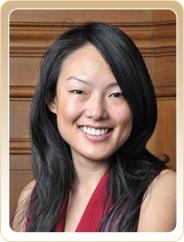
So Sup. Jane Kim is asking the city to pick up the $2.7 million tab for the credit recovery program, which makes perfect sense: If 1,900 kids don’t graduate from high school, the impacts on the city, from crime, unemployment, and social-service needs to homelessness, will vastly exceed that number. 

“It’s part of violence and crime prvention,” School Board member Sandra Fewer explained.

It’s also an issue of civic responsibility — we, as San Franciscans, can’t just let those kids fail. “Remember, these are the ones who stuck it out, who are really trying,” Kim told me. “They aren’t the drop-outs.”

There is, of course, the question of whether this is going to be an ongoing problem — what about the class of 2015? Fewer thinks the numbers will be a lot lower then: “”We’ve learned a lot,” she said. “We’ve had early warning indicators and I don’t think we’ll see these numbers again.”

Kim said that at first she thought the appropriation request would be noncontroversial — it is, after all, a fairly modest amount of money, and the city’s budget picture is improving. “We’re doing fairly well,” Kim said. “One of the promises of all this tech growth was that we’d get some more revenue, and I think we need to spread that wealth.”

But the Mayor’s Office and some of her colleagues weren’t ready to go along. So, as often happens in these situations, somebody found some fiscal magic — the Mayor’s Office folks “discovered” that the city had put an additional $1.5 million into the school district’s allocation from the Rainy Day Fund. Gee, maybe that could cover part of the cost.

Now it gets tricky.

The Rainy Day Fund, which Assemblymember Tom Ammiano created when he was supervisor, requires the city to set aside cash in flush years to use when times are tigher — and part of it goes to the school district. That money has been used in the past few years to prevent teacher layoffs. (Another whole crazy issue — the district has to issue layoff notices in the spring, and then rescind them, which sucks for everyone, but at least the Rainy Day Fund money has made most of the recissions possible).

So the teachers union isn’t thrilled with the idea of taking money that would prevent layoffs and using it for another worthy program. “We’re in support of the $2.7 million allocation,” union staffer Ken Tray told me. “We can’t fail these kids. But we’re afraid that the money that would go for this very good thing would lead to teacher layoffs.”

Sup. David Campos has concerns, too: “I think the Rainy Day Fund should stand on its own terms,” he said. “If any time something comes up we say let’s take it from the Rainy Day Fund, it can become a problem.”

He supports spending city money to help the students: “If it’s a crisis, we should handle it as a crisis.”

Which makes perfect sense to me. This IS a crisis, and Kim has properly identified a small amount of money for a one-time effort to address it, and in the end, her allocation would save the city way more than it costs. I can’t see why the mayor and the supervisors have to play games here; this is serious, serious stuff, and if the district thinks it can address it in a serious way for a modest amount of money at a time when the economy is picking up and the city budget is improving, why not just do it?

Looking up: Apex One’s Mid-Market rooftop street art gallery

0

I was a little devastated when I found that the owner of Ricardo “Apex” Richey’s Market and Sixth Street studio — where he painted his canvases of street art abstractions — had sold the building to a new owner intent on converting the raw space to tech offices. What of the Asian-run garment factories, the rickety elevators? And what, more importantly, of the rooftop that Apex had the run of, where he’d let his street art friends paint huge burners? Over the years, the space had converted into a guestbook of sorts, with murals done by Mona Caron, Neon, Chez.

In our recent interview, which appeared in this week’s paper, Richey told me that the owner had mentioned that though he intended to gut the structure, he may leave the rooftop gallery standing. Hopefully, that’s the case. In the meantime, here’s some shots from those sky-level works — and a few snaps of Richey’s murals from the Sixth Street neighborhood’s past and present. Hopefully whatever ‘hood he finds for his next studio space will benefit just as much from the aerosol artist’s work. 

Cabs v. Lyft et. al. isn’t just about tech

65

Of course the Chron portrays it as “The latest battle pitting disruptive high-tech innovators against old-school industries and regulators,” because that makes for good copy. It also puts the taxicab industry and the people who oversee it in the position of being dinosaurs fighting against an inevitable new world.

But seriously: This has so little to do with smart phones and apps and GPS systems. Those are tools that anyone can use, and the local cab companies ought to and will soon anyway.

What it’s about is the notion that there are such things as public utilities that ought to be regulated in a way that protects the public.

San Francisco decided as a city many, many years ago that you can’t just stick a sign on your car, call yourself a taxi and start charging people for rides. That’s fairly standard practice in American cities, where cabs are considered part of the transportation system — and are a service that, without regulation, is ripe for consumer fraud and safety problems.

Not to make too broad a case, but in California, you can’t just hang out a sign and call yourself a contractor and start applying for building permits. You need a license. You can’t just open a bank and start making loans, at any interest rate you want. You can’t call yourself a dentist and start pulling teeth, either. There are good reasons for these rules. (I suppose some day someone will suggest that surgeons should be chosen not by the AMA or by state licensing boards but by Yelp; some guy cuts off the wrong part of the body or kills someone on the operating table? Hey, he won’t get a good rep on social media and his prices will have to come down. But I don’t think that’s such an excellent idea.)

Even conservatives agree that there needs to be some form of business regulation — and when it comes to cabs in a major urban center, those regulations need to include safety tests and standards on the vehicles, safety checks for drivers (a DUI in the past three years will make you ineligible to drive a cab in SF), a system to regulate fares (so tourists who don’t speak English or understand US currency don’t get cheated) and, perhaps most important, an oversight system that allows people to complain about incompetent or dangerous drivers — and have those complaints investigated and addressed by a government agency.

The battle between the new high(er)-tech faux cabs and the existing industry is also being portrayed as selfish, entitled drivers not wanting to give up their piece of the game:

SideCar’s Paul, a onetime congressional policy analyst, said the issue might eventually work its way up to the governor’s office, which oversees the commission. “The PUC has an existing set of rules that were written for an era when communication technology was literally just a landline telephone, and they’re trying to shoehorn them into this new world,” he said. SideCar is also using social media to drive support of an online petition to the PUC. Within 24 hours, the petition at Change.org had more than 5,000 signatures. “Change always threatens incumbents,” wrote Tim O’Reilly, a Sebastopol business owner. “But some incumbents find ways to get government on their side and try to restrict competition.”

But let’s have a little perspective here. We’re not talking about (unregulated) musicians complaining about MP3 downloads and song-sharing or old-school (unregulated) newspaper publishers complaining that Craigslist took all the classified ads. We’re talking about an industry that is part of a public infrastructure and needs to fall under direct government supervision.

There are good reasons why San Francisco limits the number of cabs on the streets — and it’s not just industry corruption and influence. Too many cabs chasing too little money leads to bad behavior — and to bad drivers. You can’t get someone to drive a cab for so little money that they can’t pay the rent, and the lower the pay, the lower the quality of the drivers. There are excellent cab drivers in this town who have been doing the job for 20 years or more and know every address, every shortcut, every trick to get you there … but there won’t be many more of them if it becomes a business only for the young and the desperate.

Now: The city ought to have a centralized computerized dispatch system, with GPS on all the cars and an app to get the one that’s clsoes to you (and even more important, give you honest, real-time information about when the ride will arrive). These are technological changes that are coming, and that the city can mandate.

But you can’t just let anyone with a smart phone be a cab driver. That’s not innovation against old-school; that’s just good common sense.


GOLDIES 2012: Joe Landini and the Garage

1

GOLDIES Choreographer, impresario, and arts advocate Joe Landini likes to say yes. “It’s my philosophy to start that way,” the founder and artistic director of the Garage — San Francisco’s most hoppin’ performance venue — explains. “If you say no to something, the conversation is closed. There is nowhere to go.”

Landini is a curious mixture between visionary idealist and pragmatist who has a solid grasp of what it takes to get a job done. As a young jazz dancer, he was told to take ballet to improve his alignment. So he did, until his knees gave out and he switched to modern dance at UC Irvine, where he majored in choreography.

While Landini was in college, master choreographer Donald McKayle suggested that he had talents as an administrator. Landini accepted the observation though he saw himself primarily as a choreographer. He moved back to San Francisco — he grew up in Concord — and waited tables while interning for Mary Alice Fry’s Footloose Dance Company and Shotwell Studios. “I learned to write grants,” he remembers over coffee, near the Garage’s digs at 715 Bryant. “And I got free rehearsal space for my own choreography.” He also learned that per capita, San Francisco funds its dancers reasonably well. “In New York, you might have 200 applicants for one grant. Here, there may be 50 to 60.”

Opening the Garage in 2007 (its original location was on Howard Street) allowed him to offer what he thought artists, particularly young ones, need: an environment where experimentation, learning, and risk-taking are welcome. Artistic failure doesn’t bother Landini; it’s part of the learning process, he says. During the first five years, he estimated that annually around 10,000 people walked through that iconic red door on Howard.

Landini’s major initiative, RAW (Resident Artists’ Workshop), is modeled after AIRspace (AIR standing for “artists in residence”) — which had been set up for queer performers at the Jon Sims Center for the Arts. Landini ran it for a year. When the Sims Center closed, he bought the seats and tech equipment, putting them in storage until needed.

The Garage is run like a time-share in which 30 groups evenly divide up the time slots. While primarily a haven for dancers, theater folks and performance artists are equally welcome. Anybody can apply. True to form, Landini doesn’t tell them no, though “they just may have to wait until a space opens up.”

Wayne Hazzard, executive director of Dancers’ Group, the Bay Area’s dance service organization, considers the Garage a “powerful space where community-building can start. Joe, with his practically 24-hour open-door policy and constant presence, is almost like a neighborhood mom-and-pop store. For first-time young artists, this is particularly valuable.”

All Garage artists get three months of four-hours-a-week rehearsal time that ends with a public performance. Artists can come back — and many do. As for his own choreography, Landini is just getting back into it. During a two-year stint in London for an MA in choreography from the Laban Centre, he immersed himself in the European dance theater tradition. “I learned so much, and I have never been able to use it,” he says — until now: on November 27, he will present his new physical theater piece, Bitter Queen.

As if running the Garage seven days a week was not enough, Landini also started a Summer Performance Festival this year, curated in conjunction with ODC Theater. Again, he couldn’t say no — this time to offering a select group of Garage choreographers a venue more professional than his own modest theater can provide. The event will return in August 2013.

And, of course, Landini couldn’t say no when he heard that the city was interested in keeping another summer event, the 22-year-old West Wave Dance Festival, alive. “Every city needs a yearly independent dance festival, right?” he asks. One guess who will be running it in 2013.

Sorting out a strange election

120

steve@sfbg.com, tredmond@sfbg.com

The way the San Francisco Chronicle pundits put it, Mayor Ed Lee was the clear winner in a grand San Francisco election. “All his measures on the ballot won hands down,” noted Willie Brown, the high-paid lawyer and political operative who also functions as a Chron columnist. “It was a great day for Ed Lee,” proclaimed columnist C.W. Nevius.

Well, not really.

There are a lot of ways to explain and analyze the inconsistent results of one of the most heavily propagandized elections in recent San Francisco history. But no matter how you look at it, the election was at best a wash for the mayor. Indeed, we’d argue that voters rejected the basic premise of the mayor’s political agenda – that tax cuts and favors for big business are the best economic policy – despite record-breaking outside spending selling that agenda and targeting those who stood in its way.

Let’s take a look at the real facts:

• Every single initiative backed by the mayor, the ones he’s getting credit for – from the City College parcel tax to the housing fund to the business tax – was either a compromise with progressives or a measure that originated on the left. There was nothing the mayor pushed that had any significant progressive opposition; his wins were equally, if not more dramatically, wins for the left.

• Both people the mayor appointed to office were soundly rejected by the voters. Rodrigo Santos, his high-profile appointee to the troubled City College Board of Trustees, spent almost $200,000 and finished a distant sixth. Sup. Christina Olague lost to the candidate Lee had rejected for appointment, London Breed, in a complicated race where the mayor’s actual role was unclear (he never withdrew his endorsement of Olague even as his allies trashed her in nasty ways).

• A million-dollar effort funded by some of the mayor’s allies to oust Sup. Eric Mar was a spectacular failure, suggested some serious problems in the mayor’s political operation, and undermined his emphasis on “civility.”

• The voters made clear on every level that they believe higher taxes on the wealthy and closing tax loopholes on big business are the right approach to the economy and to funding government. From Prop. 30 to Prop. 39 to Prop. A to Prop. E, the message was pretty clear: The tax revolt that started in California in 1978 may be winding down, and the notion of making property owners and the wealthy pay for education and public services is no longer a radical idea.

Robert Cruikshank, who writes for the Calitics blog, argues that the November election signals a major sea change in California. “[The] vote to pass Prop 30 — by a larger margin than most observers expected — does more than just provide $6 billion of badly needed funding to the state’s public school,” he wrote. “It brings to a close a 34-year long tax revolt that came very close to destroying California’s middle class, locking its low income families into permanent poverty, and left the state on the edge of financial ruin.”

That sounds like a progressive message. The agenda put forward by the mayor’s closest allies, including right-wing billionaire Ron Conway, who played a heavy-handed role in this election, not only failed to carry the day; the big-money types may have overplayed their hand in a way that will shape the political narratives going forward.

A LOT OF CONSENSUS

Let’s start with the ballot measures (before we get to the huge and confusing mess that was D5).

Proposition A, the parcel tax for City College, didn’t come out of the Mayor’s Office at all; it came from a City College board whose direction the mayor tried to undermine with the appointment of Santos, a pro-development engineer so conservative that he actually endorsed the Republican opponent of Assembly member Tom Ammiano.

Lee didn’t even endorse Prop. A until a few weeks before the election, and played almost no role in raising money or campaigning for its passage (see “Words and deeds,” 9/11/12). Yet it got a higher percentage of the vote than any of the three measures that Lee actively campaigned for: Props. B, C, and E.

Then there’s Prop. C, the Housing Trust Fund. Lee’s office played a central role in drafting and promoting the measure -– but it wasn’t exactly a Lee initiative. Prop. C came out of the affordable housing community, and Lee, who has strong ties to that community, went along. There were tough negotiations -– the mayor wanted more guarantees and protections for private developers -– and the final product was much more what the progressives who have spent decades on the housing front wanted than what the mayor would have done on his own.

The way the mayor envisioned business-tax reform, the city would have eliminated the payroll tax, which tech firms hate, and replaced it with a gross-receipts tax -– and the result would have been revenue-neutral. It was only after Sup. John Avalos and the progressives demanded that the tax actually bring in more money that the outlines of Prop. E were drafted and it received strong support from groups across the ideological spectrum.

“You had a lot of consensus in the city about these ballot measures,” political consultant David Latterman, who usually works with downtown-backed campaigns, said at SPUR’s post-election round-up.

The supervisorial races were a different story, with unprecedented spending and nasty messaging aimed at tipping the balance in favor of real estate and development interests. Mayor Lee didn’t get directly involved in the District 1 race, but he was clearly not a supporter of incumbent Sup. Eric Mar.

The real-estate and tech folks who are allied with Lee spent more than $800,000 trying to oust Mar — and they failed miserably, with Mar winning by 15 points. While Mar did have the backing of Chinatown powerbroker Rose Pak, who raised money and helped organize ground troops to help, Mar’s victory was primarily the result of a massive outpouring of support from labor and progressive activists, many reacting to the over-the-top effort to oust him.

Mar, who voted to put Lee in office, won’t feel a bit indebted to the mayor for his survival against a huge money onslaught. But in District 5, the story was a whole lot more complicated, and impact more difficult to discern.

THE D5 MESS

Before we get into what happened in D5, let’s dispel some of the simplistic and self-serving stories that circulated in the wake of this election, the most prominent being that Olague’s loss -– the first time an incumbent was defeated in a ranked-choice election –- was payback for crossing Mayor Lee and voting to reinstatement Sheriff Ross Mirkarimi.

It’s certainly true that Lee’s allies went after Olague and supported London Breed, and that they tried to make an issue of domestic violence, but there was much, much more to this district election. Breed is an SF native with a compelling personal story who ran a strong campaign –- and that three strongest progressive candidates in the race each had major flaws that hurt their electability. By most accounts, the Olague campaign was a disaster until the very end. Equally important, the progressive community was divided over D5, leaving room for Breed to slip in.

“It’s hard to unravel what happened here,” Latterman said.

San Francisco Women for Responsibility and an Accountable Supervisor was an independent expenditure group fronted by domestic violence advocates and funded by more than $100,000 from the families of Conway and fellow right-wing billionaire Thomas Coates. It attacked Olague’s Mirkarimi vote as being soft on domestic violence — but it also did a last minute mailer criticizing Olague’s vote for CleanPowerSF, muddling its message of moral outrage.

On election night, Olague told us she believed her split with the Mayor’s Office really had more to do with CleanPowerSF –- which the board approved with a veto-proof majority over the objections of Lee and the business community –- and with her insisting on new revenue from Prop. E than it did with Mirkarimi, whose ouster she dismissed as “a power play” aimed at weakening progressives.

“They don’t want to say it, but it was the whole thing around CleanPowerSF. Do you think PG&E wanted to lose its monopoly?” she said.

Yet Olague said the blame from her loss was also shared by progressives, who were hard on her for supporting Lee, courting his appointment to the D5 seat, and for voting with him on 8 Washington luxury condo project and other high-profile issues. “The left and the right both came at me,” she told us. “From the beginning, people were hypercritical of me in ways that might not be completely fair.”

Fair or not, Olague’s divided loyalties hurt her campaign for the D5 seat, with most prominent progressives only getting behind her at the end of the race after concluding that John Rizzo’s lackluster campaign wasn’t going anywhere, and that Julian Davis, marred as he was by his mishandling of sexual impropriety accusations, couldn’t and shouldn’t win.

Olague told us she “can’t think of anything I would have done differently.” But she later mentioned that she should have raised the threats to renters earlier, worked more closely with other progressive candidates, and relied on grassroots activists more than political consultants connected to the Mayor’s Office.

“The left shouldn’t deal with consultants, we should use steering committees to drive the agenda,” Olague said, noting that her campaign finally found its footing in just the last couple weeks of the race.

Inside sources say Olague’s relations with Lee-connected campaign consultant Enrique Pearce soured months before the campaign finally sidelined him in the final weeks, the result of his wasteful spending on ineffective strategies and divided loyalties once a wedge began to develop between Olague and the Mayor’s Office.

Progressive endorsements were all over the map in the district: The Harvey Milk Club endorsed Davis then declined to withdraw that endorsement. The Tenants Union wasn’t with Olague. The Guardian endorsed Rizzo number one. And none of the leading progressive candidates had a credible ranked-choice voting strategy — Breed got nearly as many second-place votes from Davis and Rizzo supporters as Olague did.

Meanwhile, Breed had a high-profile falling out with Brown, her one-time political ally, after her profanity-laden criticism of Brown appeared in Fog City Journal and then the San Francisco Chronicle, causing US Sen. Dianne Feinstein to withdraw her endorsement of Breed. That incident and Olague’s ties to Lee, Brown, and Pak may have solidified perceptions of Breed’s independence among even progressive voters, which the late attacks on her support from landlords weren’t ever able to overcome.

Ironically, while Breed and some of her prominent supporters, including African American ministers in the district, weren’t happy when Lee bypassed her to appoint Olague, that may have been her key to victory. Latterman noted that while Olague was plagued by having to divide loyalties between Lee and her progressive district and make votes on tough issues like reinstating Mirkarimi –- a vote that could hurt the D5 supervisor in either direction -– Breed was free to run her race and reinforce her independence: “I think Supervisor Breed doesn’t win this race; challenger Breed did.”

But even if Breed lives up to progressive fears, the balance of power on the Board of Supervisors could be up in the air. District 7 soundly rejected Mike Garcia, the hand-picked successor of the conservative outgoing Sup. Sean Elsbernd.

At press time, progressive favorite Norman Yee seemed headed for victory, although FX Crowley was within about 30 votes, making this too close to call. But either way, the once-solid conservative seat will now be a swing vote on many issues, just as Breed will be in the once-solid progressive D5.

“The Board of Supervisors as a whole is becoming a helluva lot more interesting,” was how political consultant Alex Clemens put it at SPUR election wrap-up. “Determining what’s going to happen before it happens just got more difficult.”

GOBS OF MONEY

The other big story of this election was money, gobs of it, and how it can be spent effectively — or used to raise suspicions about hidden agendas.

Third-party spending on D1 loser David Lee’s behalf was $454,921, with another $219,039 to oppose Mar, pushing total spending to defeat Mar up over the $1 million mark, roughly doubling the previous record. Labor groups, meanwhile, spent $72,739 attacking Lee and $91,690 backing Mar. But many political analysts felt that lop-sided spending only served to turn off voters and reinforce the idea that powerful interests were trying to buy the seat.

In District 5, the landlords, Realtors, and tech moguls spent $177,556 in support of Breed, while labor spent $15,067 attacking her as a shill for the landlord lobby. The only other D5 candidate to attract significant spending by outside groups was Olague, who had $104,016 spent against her, mostly by the families of Conway and Coates, and $45,708 spent in support of her by SEIU 1021. Yet ultimately, none of these groups bought very much with their money. Conway, Salesforce CEO Marc Benioff, and San Francisco Association of Realtors each spent hundreds of thousands of dollars of their money, and the most obvious result was to convince San Franciscans that they’re working together to move an agenda in San Francisco. They may have the mayor on their side, but in a politically sophisticated city like San Francisco –- with its cost of living being driven up by the schemes of Lee, Conway, and the Realtors -– they seem to have a long way to go before they achieve they’re stated desire of destroying the progressive movement, particularly with its rising new leaders on the left, including Matt Haney and Sandra Fewer on the school board and Steven Ngo and Rafael Mandelman on the City College board. As Haney said on Election Night, “It was a good night for progressive San Francisco,” which stands for important egalitarian values. “We are the ones about equity and compassion. That’s what this city is about.”

D5 race displays key SF political dynamics

70

There’s so much to say about the District 5 supervisorial race, whose top five finishers’ parties I attended tonight, gathering interesting perspectives from each candidate. But given the late hour, I’m just going to run a few thoughts and quotes and save most of it for a more in-depth report tomorrow, because there’s a fascinating story to be told here.

Christina Olague, John Rizzo, and Julian Davis – respectively the second through fourth place candidates – each presented as more progressive than the likely winner, London Breed, who has an 8-point lead going into the final ballot tally and ranked choice tabulation. They and their allies raised concerns that renters were undermined by Breed’s victory in one of the city’s most progressive districts.

“It was a lie. I’m a renter, I live in a rent-controlled apartment,” she told us just before midnight outside in party at Nickie’s on Haight. “I will do everything to protect rent control. I will work with the Tenants’ Union. I’m here to be everybody’s supervisor.”

She pledged to work productively with all the progressive groups who opposed her, such at SEIU Local 1021, whose members “ take care of my mom at Laguna Honda,” while others are her friends.

“The pettiness of politics is over and it’s time to move forward,” Breed said.

It was a widely sounded theme among jubilant progressives tonight, but D5’s (likely) runner-up Olague sounded a bit of bitterness when we caught up with her a little after 11pm as she was leaving her party at Rassela’s on Fillmore. “The Left and the Right both came at me,” she told us.

She felt unfairly attacked by progressives after being appointed to the D5 seat by Mayor Ed Lee, saying her only bad vote was in favor of the 8 Washington luxury condo project, which Sup. Eric Mar also backed without losing progressive support. “From the beginning, people were hypercritical of me in ways that might not be completely fair.”

Then, this fall, Mayor Lee’s people – chief of staff Steve Kawa, tech point person Tony Winnicker, and billionaire backer Ron Conway – turned on her after a series of votes culminating in the one to reinstate Sheriff Ross Mirkarimi, resisting what she labeled “a power play” aimed at progressives.

Yet she believes her key vote in favor of CleanPowerSF, coming after her support for Sup. John Avalos getting new revenue out of the business tax reform Prop. E, was really what turned Conway and the downtown crowd against her and attracted outrageous attacks that she condoned domestic violence and supported Big Oil.

“They don’t want to say it, but it was the whole thing around CleanPowerSF. Do you think PG&E wanted to lose its monopoly?” she said. “It’s not about disloyalty, it’s about power.”

Julian Davis was similarly deflective about his campaign’s fourth place finish, despite having a strong presence on the streets today and lots of energy at his crowded campaign party at Club Waziema, after he weathered a loss of prominent progressive endorsements over his handling of sexual misconduct allegations.

“It’s been a challenging few weeks, but I’ve kept my head held high in this campaign,” Davis said, decrying the “self-fulfilling prophecy of the local media” that didn’t focus on the progressive endorsers who stayed with him, such as former D5 Sup. Matt Gonzalez and the SF Tenants Union.

Third place finisher John Rizzo, whose party at Murio’s Trophy Room party reflected his less-than-exuberant campaign, was generally positive about the night, although he expressed some concerns about the agenda of the “people putting up hundreds of thousands of dollars” into this race and the D1 contest, where progressive favorite Eric Mar won a strong victory.

I stopped by Breed’s party twice tonight: at the end, and a little before 10pm, when the results were coming over the television proclaiming that voters in Maryland approved same-sex marriage and Colorado voter legalized marijuana – and the room erupted in cheers – and Oregon voters rejected legalizing weed, drawing big boos.

Breed’s was a liberal crowd, a D5 crowd, and a largely African American crowd. Rev. Arnold Townsend, who is on the Elections Commission and local NAACP board, told me as I left Breed’s party the second time, “It’s a good election for my community. The black community was energized by this.”

New school board member Matt Haney, whose party at Brick & Mortar was my final stop of the night, also likes Breed and said her likely victory was another part of “a good night for progressive San Francisco,” which stands for important egalitarian values. “We are the ones about equity and compassion. That’s what this city is about.”