taxes

Avalos emerges as the board’s main progressive champion

23

Sup. John Avalos seems to be the only consistent champion of progressive values at the Board of Supervisors these days, as he demonstrated once again yesterday as he tried to present some alternatives to the neoliberal corporatism that has seized City Hall over the last couple years.

Last week, Avalos was the only vote against a pandering proposal by Sup. Mark Farrell to exempt more small businesses from the city’s payroll tax, which is projected to cost the city $1.5 million next fiscal year and $2.5 million the following one, blowing a $4 million hole in the two-year budget that supervisors are now finalizing for approval in two weeks.

Yesterday, as the measure was about to receive final approval on its second reading, Avalos made a motion to delay it until after the fall election when voters may consider a pair of measures to transition from a payroll to gross receipts tax as the means of assessing local businesses. Mayor Ed Lee and Board President David Chiu introduced one measure that is revenue neutral, while an alternative by Avalos would bring in about $40 million per year.

Avalos didn’t have the votes for the long delay, so he got behind a compromise motion by Sup. Jane Kim to delay the measure until July 10 so the Budget Committee can at least factor it into its deliberations. Farrell opposed the move, insisting that “this is about creating jobs now,” despite the fact that businesses couldn’t apply for the exemption until next February.

A spirited debate followed, in which Avalos criticized City Hall’s current penchant for business tax cuts and questioned whether it really creates the jobs its boosters claim. He also noted that it is the multitude fee increases that local politicians have approved in recent years to balance the budget without raising taxes that have become most onerous for small businesses.

“When we were raising fees over the last five years, we were raising taxes on small businesses,” Avalos said, suggesting that rolling back those fees and taxing larger corporations that can afford it is a better strategy for helping small businesses and encouraging them to create jobs.

Eventually, Avalos won the short delay on a 7-4 vote, with Sups. Farrell, Carmen Chu, Sean Elsbernd, and Scott Wiener opposed.

Meanwhile, Avalos managed to place on the fall ballot an increase in the real estate transfer taxes paid on properties worth $2.5 million or more, convincing Sups. Kim, David Campos, and Eric Mar to support the proposal as the 5 pm deadline for at least four supervisors to place measures on the ballot neared. It would raise $16 million and compete with a similar measure by Lee that would raise $13 million through a smaller increase on properties worth more than $1 million.

Avalos also joined Campos and Chiu in opposing final approval for the 8 Washington housing project for the uber-wealthy. On the same 8-3 vote, the board also rejected Chiu’s efforts to allow opponents of the project to circulate referendum petitions without having to lug around a thick stack of all the studies referenced in the project approval.

Chiu appealed to his colleagues to support “citizens of San Francisco exercising the constitutional right to referendum,” but he won few sympathies on a board that these days seems most concerned with the interests of this city’s wealthiest individuals and corporations.

Maybe I should move to France

57

I know that would make some of my happy trolls even happier. But then I’d have to learn French. And I don’t know if the bars in Paris have Bud Light.

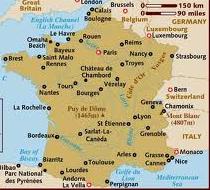
But when you look at the agenda of the new French government, it’s pretty much what a lot of us, including a lot of non-Socialists, have been advocating for the United States: Tax the rich, end tax breaks for banks and oil companies, hire a lot of new teachers, invest in youth and the future, don’t get your pants in a wad about short-term deficits, legalize same-sex marriage … damn. They’ve got it all.

Or rather, Fichu. Ils l’ont obtenu tous.

Did I get that right?

Of course, the critics are terrified about the same things they all seem terrified about whenever anyone in San Francisco talks about local taxes on the wealthy: OMG! The rich will all leave town and go live in Fresno! See:

The pledges have prompted fears of an exodus of wealthy footballers and pop stars to lands beyond the French border.

I suppose. But I suspect a lot of wealthy Parisians will stay Parisians even if their taxes go up. They live there for a reason, as do San Franciscans, and Californians. What, you’re going to play football in France and live in Antwerp? That’s not going to go over too well.

So this will be a fine experiment here. If France doesn’t collapse and Paris doesn’t empty out and the world doesn’t end, maybe we’ll all learn a lesson. Oui?


Why do Lee, Chiu, and others want to stifle economic growth?

16

Why do Mayor Ed Lee, Board of Supervisors President David Chiu, and San Francisco’s two major daily newspapers want to punish success? Because that’s exactly what their proposal to create a new gross receipts tax for businesses – in which corporations would be taxed more as they grow, thus encouraging economic stagnation – would do.

Right now, the city taxes businesses through a payroll tax, levying taxes based on the number of employees the company has. But under a gross receipts tax that would replace the payroll tax, employees have a disincentive to be productive and efficient and increase their companies’ profits because that would expose those companies to more of the city’s onerous tax burden.

Why would investors and employees want to grow a business in San Francisco when that would only submit them to higher taxes. Clearly, this is anti-business measure that is likely to plunge our local economy back into the depths of the recession. Don’t our leaders understand the need to help this fragile economic recovery?

Okay, okay, in case you haven’t guessed it yet, the previous three paragraphs are satire of the ridiculously overblown and misleading political rhetoric used by Lee and other critics of the city’s payroll tax, which they deride as as “job killer” that makes companies not want to hire new employees.

“Mayor Lee and Board President David Chiu proposed a gross receipts tax as an alternative to the City’s current payroll tax, which punishes companies for growing and creating new jobs in San Francisco,” Lee’s office wrote in a press release it distributed last week.

Yet my argument that a gross receipts taxes “punishes companies for growing” is just as logically sound as Lee’s argument that the payroll tax discourages companies from “creating new jobs” – and both arguments are also complete hyperbolic bullshit. But it’s seductively simple and widely parroted bullshit.

“To attract more companies to San Francisco and encourage existing employers to hire more employees, it is past time to do away with this tax,” our new neighbors down the hall, the editors of the Examiner, wrote in their editorial today, a oft-repeatedly refrain from the Chronicle and SF Chamber of Commerce as well. It later added that switching tax methods “wouldn’t penalize companies for employing people or paying them well. And city policy wouldn’t give employers any incentive to shed employees during a downturn.”

But the reality is that the 1.5 percent payroll tax is too small to really be a factor in the decision by corporations to add new employees, something they are already loath to do unless forced to by rising demand. It is simply one imperfect gauge of the size of a company and its ability to pay local taxes, just as the gross receipts tax is.

Health insurance costs, which Lee’s CPMC deal doesn’t adequate contain, is a far bigger factor in a company’s hiring decisions. So is commercial rent, which Lee’s corporate welfare policies are causing to go up downtown and throughout the city.

For decades, conservatives have tried to sell the general public on bogus trickle down economic theories that we all benefit from corporate tax cuts and that people will simply stop working if you tax them, ideas that should have been discarded as they were discredited. But they’re back with a vengeance, in supposedly liberal San Francisco of all places, actively peddled by key Lee supporters like billionaire venture capitalist Ron Conway, who only recently dropped his Republican party affiliation in favor of declined to state.

But it’s time to call out this voodoo economics for what it is: self-serving bullshit that ought to be rejected by citizens of a city that prides itself as being more educated and enlightened than the rubes in the flyover states that have been so thoroughly manipulated by the Republican Party and Blue Dog Democrats, to the detriment of our entire country.

Now, the Examiner’s argument that the business tax reform proposal would broaden and stabilize the tax base is a sound and meaningful argument, which is why the concept enjoys widespread support from across the ideological spectrum and is worth doing (although progressives rightful argue that if the tax base is being broadened then the city should reap some benefits from that, logic that Lee inexplicably resists).

Yet as the City Hall debates that will shape the details of business tax reform begin in a couple of weeks, it’s time to drop this misleading “job killer” label that has been promulgated by Republicans and other fiscal conservatives over the last decade and have an honest debate over what’s best for San Francisco’s private and public sectors.

WTF, Chuck: Those poor exploited landlords

92

In my continuing attempt to make sense of the politics of the Chron’s C.W. Nevius, I present: What The Fuck, Chuck — the saga of the poor landlord.

I’ll try to be fair: There’s nothing inherently wrong with this story. I don’t like rich people taking advantage of anything, particularly rent control. It’s true that there are a few people who are cheating, good for Chuck to expose them (tho he didn’t exactly name names). You can’t make better copy than a family that moves to Hawaii (!) and keeps a rent-controlled house in the Richmond. (Of course, maybe the parents needed to be there for a couple of years for work, and were hoping to return to their family home and the landlord wouldn’t allow sublets, but whatever. Sounds horrible.)

And I’m not excusing it for a minute.

But I’ve never seen Nevius write a story about a family that can remain in this city only because of rent control, or a longterm tenant being forced out by the Ellis Act to create “homeownership” opportunities for a wealthier person who can buy a tenance in common, or a landlord who lies, cheats and abuses tenants to get rid of them so he or she can raise the rent — and those are far, far more common occurences. Those are problems that happen every day in this city.

It’s always about the poor landlords.

Yeah, there are bad tenants. But anyone on the front lines of the renatl-housing struggles in San Francisco can tell you that the abuses by the property-owning class radically exceed the harm caused by the tenant class.

I feel about this the same way I feel about the ongoing stories on bloated city employee pay and pensions. Yes, it’s true: Some city employees game the overtime and pension systems and in effect pluck money from the pockets of the taxpayers. I see no reason why a police chief who retires at 55 should get $250,000 a year for life.

But it’s also true that a lot of city employees earn a basic middle-class salary and get a pension of maybe $30,000 a year, which is hardly excessive — and the fact that the private sector quit giving pensions decades ago doesn’t mean that the public sector is wrong to do it. But all of these stories create a powerful Big Lie mythology of bloated public payrolls, which undermines any effort to raise taxes for desperately needed public services.

You tell people enough tales about the poor landlord and the rich tenants and you start to make rent control look like a bad idea. Which is about the worst thing you can do in San Francisco today, where the existence of any middle class at all is primarily the result of rent control — and if anything, rent control ought to be stronger.

In other words: A little perspective here, please.


No deal yet on business tax reform as competing measure are introduced

21

Mayor Ed Lee and his business community allies failed to reach an agreement with labor and progressives by today’s deadline for submitting fall ballot measures to the Board of Supervisors, leading progressive Sup. John Avalos to introduce a business tax reform measure that would compete with Lee’s proposal.

The Avalos measure would raise $40 million in new General Fund revenue to restore recent cuts to city services while Lee’s would essentially be revenue-neutral, although Lee did tweak the formulas to raise about $13 million in new revenue that would be dedicated to a new Affordable Housing Trust Fund, which would be created by another ballot measure that Lee was having a hard time funding in the face of business community opposition.

“I don’t believe trickle down economics works, except for the 1 percent,” Avalos told the Guardian, arguing the importance of recovering revenue that the city lost when the biggest downtown corporations sued the city in 2001 to invalidate a gross receipts tax. Both the Lee and Avalos measures would gradually convert the current payroll tax into a new version of the gross receipts tax, which is preferred by most of the business community.

So, will voters in the fall be faced with competing ballot measures? Probably not, according to the same sources from the business and progressive sides of the negotiations who told us last week that it appeared a deal was in the offing, something they still believe.

“This is the beginning of the negotiations,” said the business community source, noting that both measures won’t be approved until next month, with discussions about merging them ongoing. “I’m sure this is part of the process and they will agree on a number.”

Our labor source agreed, predicting the two sides will come to an agreement because neither side wants competing ballot measure, but noting that Lee appears to be trying to create divisions between the progressive revenue coalition and the affordable housing advocates. “That’s just positioning on their part, but it doesn’t feel like good faith bargaining,” the source said.

Mayoral Press Secretary Christine Falvey seemed to leave the door open for compromise, telling the Guardian, “The Mayor believes that to be successful, we should continue building consensus around business tax reform and that it’s important that the business community continue to be key partners in that effort.”

Lee is trying to placate an emboldened business community, which has taken a hard line position on opposing new taxes even while seeking ever more tax breaks and public subsidies. In fact, Sup. Mark Farrell had another business tax cut on today’s board agenda, cutting the payroll tax for small businesses at a cost of more than $2 million to city finances.

“I believe we need to do all we can to incentivize job growth in our small business community,” Farrell said.

Avalos said he agrees with helping small businesses – which is why both his and Lee’s business tax reform measure shifts more of the tax burden to the large corporations that have been so profitable in recent years – but that “we should not be putting a hole in the city’s budget to do so.”

In a sign of just how strong the business community has become at City Hall compared to the progressive movement that had a board majority just two years ago, the tax cuts were approved on a 10-1 vote, with only Avalos opposed.

What $40 million buys

5

OPINION I am a diehard and devoted follower of the round-ball. Basketball. If the game did not exist, I wouldn’t spend a minute — hot or cold — planted in front of telly, save the half hour my kids and I watch the new Regular Show. I have no idea who wins the beauty contests or who is villain or hero on reality TV, couldn’t ID you the hit sitcom star of today, don’t know and don’t care.

For this reason, I am intimately aware of the massive anti-Prop 29 campaign waged by the tobacco companies (their target audience is male and of a certain age).

Prop. 29 narrowly lost last Tuesday, almost entirely due to the $40 million plus poured into its defeat from out of state interests, specifically RJ Reynolds.

Without that money, Prop. 29 passes easily, a no-brainer. A dollar-a-pack tax to raise $735 million a year for cancer research, with the secondary effect of smoking reduction (the costlier cigarettes are, the more likely one will quit — also, despite the misinformation, a raised tax on cigarettes doesn’t lead to bootlegging, as is Internet myth).

But at least a half dozen times per NBA playoff game, a grave looking woman in a medical outfit came on the air to warn us of the incipient dangers of this horrible idea — a new bureaucracy, new taxes (well, duh), money going out of state — relentless repetition of talking points ramrodded down the throats of the viewer.

I am told that Lance Armstrong made a pro-29 spot. Never saw it and now, I never will.

In most instances, I would have opposed Prop. 29 myself. I dislike sin taxes. I dislike the idea that one person’s poison is more pernicious than another when less than 15 percent of our state smokes and a much higher percentage is overweight. But the pounding of the tobacco industry — a far more diabolical and lethal group of parasites than even the lowliest dope dealer (but legal, of course and subsidized by the taxpayer) planted enough doubt in the minds of semi-interested sports fans to send a well-meaning and job creating piece of legislation onto the shoals of defeat.

This event, coupled with the Koch family’s purchase of the Wisconsin recall, signals the possible death knell for American democracy. The fact that money is speech and corporations are people has been codified into law doesn’t change the reality that said sentiment is gibberish intended to consolidate a permanent plutocrat class that, on any whim, can simply bury their opposition in an avalanche of half truths and outright lies.

If you own the megaphone, the transmitter, and the mouth, we are not equal — if you are heard and I am not, no one ever hears my side. And that’s where we’re going.

The saddest moment in all of this was taking a trip to a liquor store the other day with my kids to get some sodas and hearing the owner’s justification for supporting No on 29 — “this will wipe me out.” When I pointed out that maybe soon he could sell marijuana in the place of cigarettes when it becomes legal, he turned pale and exclaimed “I don’t want that shit in here”.

Marlboro’s and Jack Daniels, ok. The chronic, no.

And that’s the mindset in America’s most progressive state. I wasn’t made for these times at all.

Johnny Angel Wendell is a talk show host at KTLK-AM1150 and KFI-AM640 in Los Angeles and an American roots musician

Two things to watch for in CA

1

There are two things that could be really significant around the state tonight (and no, I’m not talking about which liberal, balding Jewish man wins the primary in the San Fernando Valley, which will almost certainly be replayed in the fall). There’s a real chance that, thanks to redistricting, the Democrats could pick up enough seats to win a super-majority in the state Senate — meaning they could pass new taxes despite GOP recalcitrance. And while it’s unlikely that the Dems will get a two-thirds majority in the Assembly, there are a few Republicans out there who are starting to question the Grover Norquist line.

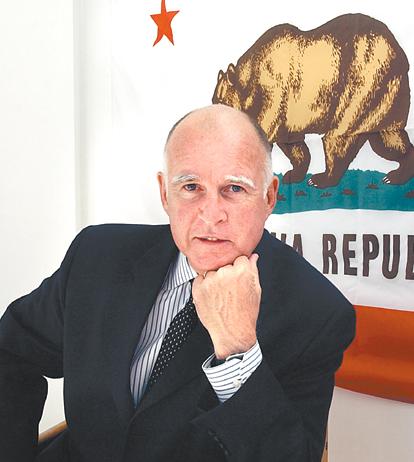
So what happens if, say, both houses approve an oil-severance tax or a restoration of the vehicle license fee? Will the Guv, who insisted in his campaign that he’d accept “no new taxes without a vote of the people” going to veto it? Seriously — is Jerry Brown going to veto an oil-severance tax?

Then there’s the Second Congressional District, where corporate Dem Jared Huffman is almost certainly going to come in first — but Norman Solomon, who is way closer politically to outgoing Rep. Lynn Woolsey, has a good chance of coming in second and making it to the November election. In which case the North Coast will see a classic fight between the left and the center of the Democratic Party, in one of the most progressive districts in the country — and it will attract national attention.

By the way: I’ve been checking out so many blogs tonight that I can’t remember where I saw this, but: The huge turnout in Wisconsin indicates that sharp political distinctions, clear-cut lines and hard fights, improve voter turnout. These cautious, don’t-take-risks pols shouldn’t be surprised that hardly anyone wants to vote for them.

Turnout light in SF; eyes on Wisconsin

0

My usual limited polling sample — my precinct in Bernal Heights — suggests what everyone pretty much knew: Turnout in San Francisco will be very low. Control of the local Democratic Party, and its endorsements, will be determined by a small fraction of the eligible voters.

On the national front, since the presidential primaries are long over and California has long been irrelevant, everyone’s looking at Wisconsin, where the battle to recall Gov. Scott Walker will have national implications. Walker’s trying to survive by blaming public employees for the state’s economic woes; since he ended collective bargaining, he said today, the state budget is running a surplus and property taxes are down.

If by some chance he’s thrown out of office — and it doesn’t look good right now — labor will have one of its greatest victories in years. If he becomes the first governor in US history to survive a recall, he’ll portray it as a confirmation that the public supports his attack on unions. The right-wing types have poured millions into this race — and if they get their way, a lot of labor folks are going to be asking why President Obama (who will be in San Francisco to raise money at Clint Reilly’s office building June 6) didn’t make an appearance in Wisconsin.

Labor came in big for the president in 2008, and this one is hugely important — and the White House has been entirely missing in action. And he may have to answer for it if Walker survives and GOP governors across the country take up the call and attack public-sector unions as the start of a larger attack on organized labor.

In California, I don’t care how much money the tobacco companies spent — Prop. 29, the cigarette tax, is going to win. And I think the term-limits measure squeaks through, too. Locally, we all know that Prop. A will lose under a barrage of Recology money; I hope Prop. B survives the strange last-minute money blitz.

We may not know for days how the Democratic County Central Committee races are shaking out. If it’s close, and control of the panel hangs on a couple of tight races, the absentee votes that get counted over the next few days will make the difference.

We’ll be posting updates all evening.

The funny money against Prop. B

19

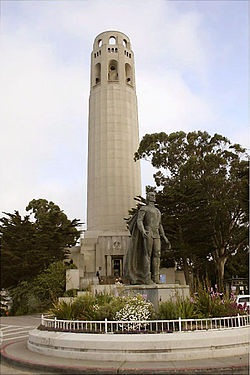
Credit where it’s due: My competitor and sometimes journalistic adversary Joe Eskenazi has a nice little piece on the weird money behind the campaign against Prop. B, a policy statement about the privatization of Coit Tower. He points out that such varied groups as the California Dental Association and the San Manuel Band of Mission Indians have coughed up money to protect the right of San Francisco officials to close Coit Tower to the public and rent it out for fancy corporate parties.

And how exactly did that happen?

Well, Eskenazi manages to tie Willie Brown into it. (He also calls this “Nimby against the Swells,” which isn’t quite fair — I don’t think the supporters of Prop. B are trying to keep anything out of their back yards. If anything, they want more noisy tourists and fewer quiet, subdued rich-people events. And I don’t think the “swells” are against it as much as the mayor, his Rec-Park director and big businesses that generally back the privatization of public resources.)

But there’s another interesting twist: I’m not sure the folks who gave to the Golden State Leadership Fund Political Action Committee, which is running a No on B independent expenditure, had any clue where their money was going.

Sure, the Chamber of Commerce and BOMA know what’s up, and it’s pretty clear why they like the idea of raising money for the parks by holding exclusive private events instead of by raising taxes. But the Indians? And the dentists? By what possible stretch do they care about a San Francisco ballot measure that has nothing to do with Native American rights or oral health?

Eskenazi may be right — maybe Brown called the Indians and asked, and they threw the money his way to help his buddy the mayor (while keeping the mayor’s fingers out of this particular political pie). But the Golden State Leadership PAC, through which all this money flowed, has been around for years and gives money to candidates all over the state. (It’s definately something of a slush fund for local races — files in the Secretary of State’s office show that in 2008, money from Pacific Gas and Electric Co. flowed in and out of the PAC as it ran a campaign against the San Francisco public-power measure, Prop. H. PAC money went to David Chiu, Phil Ting and Ed Lee for mayor.) It’s based in West Hollywood and the treasurer is a guy named William Molina.

I called the San Manuel Band of Mission Indians and the California Dental Association and asked them why there were helping fund a campaign against Prop. B in San Francisco. The press person at the dental group apparently had no idea what I was talking about and asked for more details about the contribution. I gave her the date and the PAC and I haven’t heard back.

The Indians didn’t seem to clear on Prop. B, either. Kenneth Shoji, a spokesperson for the group, told me by email:

The San Manuel Band of Mission Indians made a contribution of $25,000 to the Golden State Leadership Fund PAC with the expectation of helping to support candidate(s) for public office in the 2012 elections.  We do not control where or how the PAC might extend its support beyond that.

In other words: This Coit tower thing is news to us.

UPDATE: I got essentially the same message from the dentists. Alicia Malaby at the CDA writes:

 When an organization such as CalDPAC contributes to an independent expenditure committee, that committee may spend money on races and issues that CalDPAC supports, but may also spend money on other campaigns. CalDPAC does not control how those committees spend money, and in this case, CalDPAC has no interest in and no position on Proposition B.

UPDATE TWO: Ron Cottingham at PORAC just called me and said his group has no position on or interest in Prop. B. The money that went to the PAC was earmarked to support Rob Bonta for Assembly in the East Bay. Presumably the PAC folks keep track of such things.

Maybe not. Maybe Willie or someone else made a call. It happens all the time.  I mean, somebody clearly was raising money for this PAC, which right now isn’t doing a hell of a lot besides No on B in San Francisco. (Oh, I called Brown, too. He hasn’t called back. He never does. I still always try.)

Either way, it’s a classic San Francisco political story — and it reflects how muddy and corrupt local politics can still be, even in an era of electronic disclosure and ethics laws. Why, if the dentists and Indians don’t like Prop. B, didn’t they (or any of the others in the PAC) create a No on B committee, disclose who was behind it and let the voters know a little more about the real money trail? Why funnel all this cash through a little-known Southern California PAC?

And for that matter, why is there a sudden influx of late money in this race? Has the mayor and the Chamber types suddenly discovered that Prop. B might pass — and might set a precedent against future privatization efforts?

June 5 is Election Day. Vote early and often.


Dick Meister: Two big tests for labor

1

By Dick Meister

 Dick Meister, former labor editor of the SF Chronicle and KQED-TV Newsroom, has covered labor and politics for more than a half-century. Contact him through his website, www.dickmeister.com, which includes more than 350 of his columns.

Helping get President Obama re-elected tops organized labor’s political agenda. But for now, unions are rightly focusing on special elections this month in Wisconsin and Arizona, where other labor-friendly Democrats are being challenged by labor foes.

Coming up first, on June 5, is the Wisconsin election to recall Republican Gov. Scott Walker, who’s been labor’s public enemy No. 1 for his blatant anti-union policies. He’s been acclaimed by anti-labor forces nationwide and as widely attacked by labor.

Both sides see the election as highly symbolic, a possible guide for those seeking to limit the union rights of public employees and other workers or, conversely, for those attempting to halt the spread of Walker-like attacks on collective bargaining in private and public employment alike.

There are many reasons for replacing Walker with his recall election opponent, Democratic Mayor Thomas Barrett of Milwaukee. The AFL-CIO has come up with about a dozen reasons, headed by Walker’s severe limiting of the bargaining  rights of Wisconsin’s 380,000 public employees – a key action that helped trigger what Obama has described as a national “assault on unions.”

The AFL-CIO also complains that Walker has:

*”Led Wisconsin to last place in the nation in job creation.”

*”Disenfranchised tens of thousands of young voters, senior citizens and minority voters with voter suppression and voter ID laws.”

*”Put the health care coverage of 17,000 people at risk with unfair budget cuts.”

*”Allowed the extremist, corporate-backed American Legislative Council to exercise extraordinary influence.”

*”Made wage discrimination easier by repealing Wisconsin’s Equal Pay enforcement law.”

*”Attacked public workers’ retirement security.”

*”Blocked the path of young workers to middle class jobs by repealing rules on state apprenticeship programs.”

*”Killed the creation of more than 15,000 jobs when he rejected $810 million in federal  funds to construct a passenger rail system between Milwaukee and Madison.”

*”Sponsored new tax breaks for the wealthy and corporations that will cost the state $2.4 billion over the next 10 years.”

*”Proposed cuts to the state’s earned income tax credit that will raise taxes on 145,000 low-income families with children.”

Despite all that – and more – polls show the recall vote could go either way, with lots of campaign funding for Walker flooding in from  corporations and other union opponents across the country.

Unions have lots of tough campaigning ahead, as they do in Arizona. There, on June 12, a special election will determine who will serve in the Congressional seat held for three terms by Democrat Gabrielle Giffords. She resigned in mid-term this year while still recovering from the serious wounds she suffered during a 2011 shooting in Tucson in which six people were killed.

Ron Barber, a Giffords’ staffer who was wounded in the Tucson attack, will challenge Republican Jesse Kelly in the race to elect a representative to serve the rest of Giffords’ term. Kelly, who ran a close losing race against Giffords in 2010 , opposes  much of what the AFL-CIO supports.

The labor federation is especially unhappy with Kelly’s support for GOP proposals in Congress “which would turn Medicare into a voucher system,” and for getting $68 million in federal stimulus funds for his family’s construction firm while at the same time attacking Obama for creating the stimulus program.

Apparently, says the AFL-CIO, “Kelly lining his own pockets with stimulus dollars is proper. Everything else is socialism.” The AFL-CIO is likewise unhappy with Kelly’s endorsement by organizations considered “extremist and racist” by civil rights groups.

Like labor, Barber is a strong supporter of Social Security and Medicare. But Kelly says that Social Security is a “giant Ponzi scheme” and that Medicare recipients are “on the public dole.”

He’s said health care is a “privilege” and so presumably should not be a government-guaranteed right, and claimed that “the highest quality and lowest cost can only be delivered without the government.”

Kelly wants to reduce the Federal Drug Administration “as much as humanly possible.” He’s also advocated an end to government food safety inspections, leaving individuals to do their own inspections rather than rely on “the nanny state” to do it for them.

No wonder labor is mounting major campaigns against Kelly in Arizona and Walker in Wisconsin. Labor victories are needed there to help protect unions, their members and many others from attempts to weaken the rights, protections and other essential aid provided through government.

Dick Meister, former labor editor of the SF Chronicle and KQED-TV Newsroom, has covered labor and politics for more than a half-century. Contact him through his website, www.dickmeister.com, which includes more than 350 of his columns.

Are California taxes fair?

5

Let’s start with an assumption that I think most sane (non-libertarian, non-right-wing-GOP) people agree on: A tax system ought to be based on ability to pay, ought to avoid as much as possible special-interest breaks and should avoid the appearance and the reality of unfairness.

So as Jerry Brown tries to convince voters to approve his fall tax measure that’s part income taxes on the rich and part sales taxes on everyone, how does the state add up? The California Budget Project, which is one of my favorite organizations ever, has a couple of reports out that shed some light on why half of Brown’s plan — taxes on the millionaires — makes sense, and the other half of it doesn’t.

You can read the two reports here. Let’s start with who pays the taxes:

Measured as a share of family income, California’s lowest-income families pay the most in taxes.

Yes, many individual rich people pay more in terms of gross dollars — but when they’re done and the taxes are turned over to the government, the poor have very little left, and the rich have plenty. In fact, even with higher income tax rates, the wealthiest Californians only paid 7.4 percent of their incomes on state and local taxes. They poorest paid 10.2 percent.

Part of that comes from the inherently regressive nature of sales taxes. Part of it comes from the way different types of income are taxed (poor people don’t tend to have a lot of dividend or capital-gains income, which is taxed less than the income you earn from working all day at a job). But overall, the picture suggests that the income taxes on the wealthiest aren’t high enough.

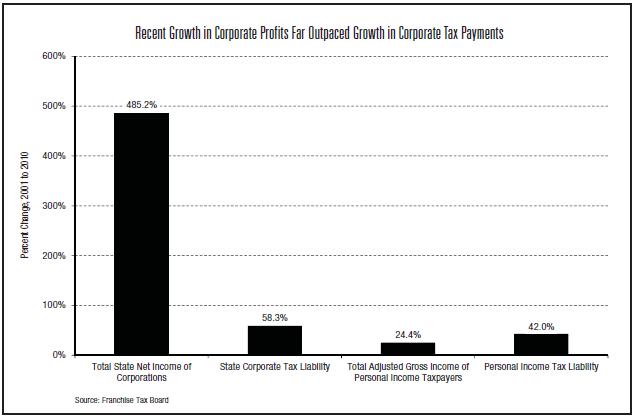
For all those types who complain that high taxes are hurting the state’s business climate, the report shows that California is pretty close to the national median in overall taxes. But it also notes that corporate income has soared relative to personal income: Over the past decade, the total reported taxable income of corporations in the state rose 485 percent. Total personal income rose 24 percent. Meanwhile, corporate tax liability rose only 58 percent, while personal liability rose 42 percent.

The result: Individual working people are paying more of the tax burden and corporations are paying less. (Unless you agree with Mitt Romney that “corporations are people.”)

Now let’s turn to the fairness report. It has some of the same data, but puts it in context:

California’s tax system is modestly regressive … [which] results from the relatively large share of income that lower-income households pay in the form of sales and excise taxes [and] the fact that low- and middle-income households spend all, or nearly all, of their incomes on necessities, including on many goods that are subject to tax.

I’m voting for the tax measure in November because the state desperately needs new revenue. But I say that recognizing that Brown’s proposal won’t do much of anything to address the basic unfairness of the way California raises the money to pay for state services.


What small business owners care about

14

Since the mayor’s office still insists that any business-tax reform ought to be revenue-neutral, and since he and other continue to talk about the myth that a payroll tax hurts job growth, I found the latest Bank of America survey of local small business owners fascinating.

Here’s what the survey found: Small business owners are concerned about (1) the cost of healthcare (2) access to credit and (3) finding qualified employees. Local taxes aren’t even on the list.

Now, if you ask almost any business operator whether he or she would like to pay lower taxes, most will probably say, sure. And I agree that a gross receipts tax is a better way of spreading the burden around. But the notion that slightly raising business taxes would hinder job growth in any significant way isn’t supported by reality.

In fact, if you used higher taxes to improve the schools (and thus the education of the future workforce) it would do more to keep employers from leaving San Francisco than cutting taxes. If the state of California went to a single-payer health-care system — dramatically reducing the cost to employers — it would do more to attract jobs to this state than all the tax cuts in a Republican’s wet dreams.

And if Bank of America and Wells Fargo would start loaning money to small businesess, you’d see almost immediate job growth.

How’s that for a Small Business Week agenda?

Obama: gay OK, pot not

0

steve@sfbg.com

HERBWISE President Barack Obama made big news last week when he became the first U.S. president to state his support for same-sex marriage, taking a states’ rights position on the issue and telling supporters “where states enact same-sex marriage, no federal act should invalidate them.” So why is his administration so aggressively going after medical marijuana providers that are fully compliant with state law?

As a presidential candidate, Obama said that his administration wouldn’t go after medical marijuana patients or suppliers that were in compliance with the laws in the 19 states where medical marijuana is legal or decriminalized, a position that his Department of Justice reinforced with a 2009 memo restating that position.

But then last year, the administration reversed course and began a multi-agency attack on the medical marijuana industry in California and other states, with the Drug Enforcement Administration raiding growers, dispensaries, and even Oaksterdam University; the Department of Justice and U.S. Attorneys’ Offices threatening owners of properties involved in medical marijuana with asset seizure; and the Internal Revenue Service adopting punitive policies aimed at shutting down dispensaries that are otherwise paying taxes and operating legally under state law.

Recently, Obama tried to explain his evolving stance on medical marijuana in a Rolling Stone interview: “What I specifically said was that we were not going to prioritize prosecutions of persons who are using medical marijuana. I never made a commitment that somehow we were going to give carte blanche to large-scale producers and operators of marijuana — and the reason is, because it’s against federal law. I can’t nullify congressional law.”

Yet statements like that only reinforce the idea that Obama has a double standard. After all, same-sex marriage is also against federal law, specifically the Defense of Marriage Act that President Bill Clinton signed in 1996. The Obama Administration last year refused to continue defending DOMA in the courts, whereas it has proactively and aggressively expanded enforcement of federal laws against pot.

When I asked Obama’s Press Office to address the contradiction, they referred to the Rolling Stone interview, provided a transcript of a press briefing from last week, and refused further comment.

Press Secretary Jay Carney spent much of that briefing discussing Obama’s “evolving” position on same-sex marriage, and said the president has always been supporter of states’ rights. “He vehemently disagrees with those who would act to deny Americans’ rights or act to take away rights that have been established in states. And that has been his position for quite a long time,” Carney said.

Assembly member Tom Ammiano, who has sponsored legislation to improve protections for those in the medical marijuana industry and criticized Obama’s crackdown on cannabis, said he was happy to hear Obama’s new stance on same-sex marriage. But he said that position of federal non-intervention in state and local jurisdictions isn’t being following with medical marijuana, or on immigration issues, where the federal government has circumvented local sanctuary city policies with its Secure Communities program targeting undocumented immigrants.

“Good move, Mr. President, now let’s work on that states rights issue,” Ammiano told us. “I don’t want to water down the significance of this, but I do want to treat it holistically.”

Ammiano praised House Minority Leader Nancy Pelosi for her May 3 public statement criticizing the federal raids on medical marijuana patients and suppliers, but he said federal leaders should act to remove marijuana from the list of Schedule 1 narcotics, a classification of dangerous drugs with no medical value.

“Pelosi was good to put that statement out, but now we need the next step of changing federal law,” Ammiano said.

David Goldman, a representative of Americans for Safe Access patient advocacy group who serves on the city’s Medical Cannabis Task Force, called Obama’s double-standard hypocritical: “If Obama is affirming federalism and states rights, then he’s inconsistent with state-regulated medical marijuana.”

But Goldman also said, “Why should we be surprised that politicians take contradictory positions on issues?”


Tax equity

3

steve@sfbg.com, yael@sfbg.com

A broad consensus in San Francisco supports reforming the city’s business-tax structure by replacing the payroll tax with a gross receipts tax through a November ballot measure. But the devil is in the details of how individual tax bills are affected, which has divided the business community and given a coalition of labor and progressives the opportunity to overcome the insistence by Mayor Ed Lee and other pro-business moderates that any change be revenue-neutral.

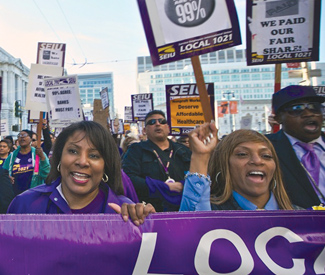
Service Employees International Union Local 1021, San Francisco’s biggest city employee union, last month launched a campaign demanding that the measure increase city revenue, setting a goal of at least $50 million, which represents the amount the city has lost annually since 2001 when 52 large downtown corporations sued to overturn the last gross receipts tax. The union is threatening to place a rival measure on the fall ballot.

“This call for it to be revenue-neutral didn’t make a lot of sense given all the reductions in city services in recent years,” said Chris Daly, the union’s interim political director. “It’s fair to at least get the money back that we lost in 2001.”

The union and the city recently agreed on a new contract that avoids more of the salary cuts that SEIU members have taken in recent years, but workers could still face layoffs under a new city budget that Lee is scheduled to introduce June 1. Lee, Board of Supervisors President David Chiu, and business leaders working on the tax-reform proposal have until June 12 to introduce their ballot measure.

But they don’t yet have an agreement on what the measure should look like — largely because the technology sector (led by billionaire venture capitalist Ron Conway, the biggest fundraiser for Lee’s mayoral campaign last year), the traditional businesses represented by the San Francisco Chamber of Commerce, and the small business community are pushing different interests and priorities.

“The technology industry has to realize they have a tax obligation like any member of the business community does,” Jim Lazarus, the Chamber’s vice president for public policy, told us.

Conway is reportedly using his influence on Lee to push for a model that keeps taxes low for tech companies — even if that comes at the expense of other economic sectors, such as commercial real estate and big construction firms, which will likely see their tax obligations increase. Yet some Chamber counter-proposals could end up costing small businesses more money, creating a puzzle that has yet to be worked out.

But one thing is clear: The business leaders don’t want to see overall city revenue increase. “If there’s anything that is unifying in the business community is that it’s revenue neutral,” small business advocate Scott Hauge told us. “We’re not going to increase revenues, that’s just a given, so if we have to do battle then so be it.”

SEIU and other members of progressive revenue coalition that has been strategizing in recent weeks are hoping to exploit the divisions in the business community and arrive at a compromise that increases revenue, and if not then they say they’re willing to go to the ballot with a rival measure.

“We’re working on trying to recover what we lost in the 2001 settlement and then some,” Sup. John Avalos, who has been working with the progressive coalition, told us. “We have to have something going to the ballot that is revenue generating.”


LABOR’S CAMPAIGN

For labor and progressives, this is an equity issue. Workers have been asked to give back money, year after year, despite the fact that big corporations have been doing well in recent years but haven’t contributed any of that wealth to the cash-strapped city. Labor leaders say that after they supported last year’s pension-reform measure, it’s time for the business community to support city services.

“When we talked about Prop C, we said if our members are doing this with our pensions now, we’ll see next year what businesses do with business tax,” said Larry Bradshaw, vice president of SEIU Local 1021. “Then we read about secret meetings where the labor movement was excluded from those talks.”

Anger over the “secret meetings” of business leaders that Lee assembled to craft the tax reform measure — meetings at which no labor leaders were included — helped inspire the fierce protest campaign that defined the SEIU’s recent contract negotiations.

In the first weeks of negotiations, workers were already up in arms. Protest marches at SF General Hospital and Laguna Honda Hospital brought hundreds of hospital workers to the streets. These hospitals serve some of the city’s poorest populations: Laguna Honda patients are mostly seniors on Medi-Cal and General is the main public hospital serving the city’s poor.

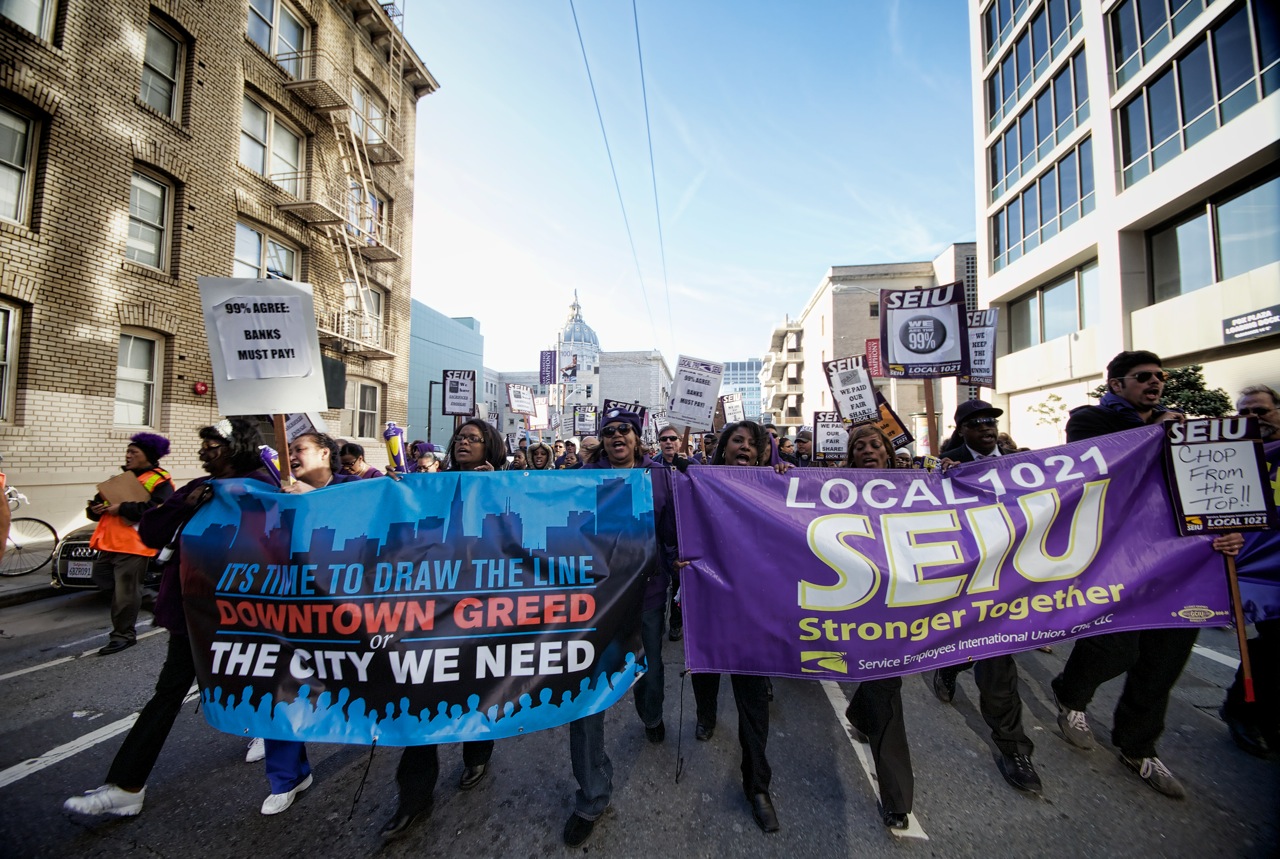
On April 5, city workers got creative with a street theater protest that involved six-story projections on the iconic Hobart Building. Protesters dressed as rich CEOs and handed out thank-you cards to commuters at the Montgomery transit station. SEIU’s “The City We Need, Not Downtown Greed” campaign included a website (www.neednotgreed.org), slick video, and direct mailers portraying CEOs as panhandlers on the street asking city residents, “Can you spare a tax break?”

The most dramatic civil disobedience came on April 18, when more than 1,000 workers rallied outside City Hall — along with several progressive supervisors — and then marched to Van Ness and Market. Protesters blocked the street, resulting in 23 arrests. At that point, increases in health care cuts and pay cuts to city workers were still on the table.

That was followed the next week by hundreds of workers staging noisy demonstrations in City Hall, and then again on May Day when SEIU workers were well represented in actions that took over parts of the Financial District.

In the end, the demands of union representatives were met in the contract agreement. Health care cost increases and pay cuts were eliminated, and a 3 percent pay raise will kick in during the two-year contract’s second year, a deal overwhelmingly approved by union members. Labor leaders hope to use that momentum to force a deal with the Mayor’s Office on the tax reform measure — which some sources say is possible. Otherwise, they say the campaign will continue.

“We may end up on the streets gathering signatures soon,” Daly said. “We need to figure it out in the next few weeks.”


THOSE DEVILISH DETAILS

The Controller’s Office released a report on May 10 that made the case for switching to a gross receipts tax and summed up the business community’s meetings, and the report was the subject of a joint statement put out by Lee and Chiu. “After months of thorough analysis, economic modeling and inclusive outreach to our City’s diverse business community, the City Controller and City Economist have produced a report that evaluates a gross receipts tax, a promising alternative to our current payroll tax, which punishes companies for growing and creating new jobs in our City'” the statement said. “Unlike our current payroll tax, a gross receipts tax would deliver stable and growing revenue to fund vital city services, while promoting job growth and continued economic recovery for San Francisco.”

Daly and Avalos say progressives agree that a gross receipts tax would probably be better than the payroll tax, and they say the controller’s report lays out a good analysis and framework for the discussions to come. But despite its detailed look at who the winners and losers in the tax reform might be, Daly said, “We haven’t seen an actual proposal yet.”

Lazarus made a similar statement: “Nobody likes the payroll tax, but the devil is in the details.”

But it’s clear some businesses those with high gross receipts but low payrolls — would pay more taxes. For example, the finance, insurance, and real estate sector now pays about 16 percent of the $410 million the city collects in payroll taxes. That would go up to about 21 percent under a gross receipts tax.

“Several industries that could face higher taxes under the proposal, such as commercial real estate, large retailers, and large construction firms, felt the increase was too sharp,” the report said under the heading of “Policy Issues Arising From Meetings with Businesses.”

The report highlighted how the change would broaden the tax base. Only about 7,500 businesses now pay the payroll tax (others are either too small or are exempt from local taxation, such as banks), whereas 33,500 companies would pay the gross receipts tax, which the report identified as another issue to be resolved.

“While some businesses appreciated the base-broadening aspect of the gross receipts proposal, others felt that too many small businesses were being brought into the Gross Receipts tax,” the report said. Hauge also told us that he fears a tax increase on commercial real estate firms could be passed on to small businesses in the form of higher rents. “I don’t want to see the business community split,” Hauge said, although it’s beginning to look like that might be unavoidable. The big question now is whether progressives and labor can find any allies in this messy situation, and whether they’ll be able to agree on a compromise measure that all sides say is preferable to competing measures.

The really bad news about the state budget

24

There’s no way to put a good spin on the new budget figures released by the Guv. No matter what happens in November, people who need help are going to get screwed in this state. Public schools will lose money. Health-care for the poor will be near collapse. Cities and counties will struggle to preserve the local safety nets. It’s just a disaster, and there’s no other way to look at it.

Of course, if we don’t approve Jerry’s tax plan in November, it will all be much, much worse. And he seems to be doing the right thing to promote the idea, making it clear just how deep the cuts will be and where they will hit.

But the tax plan is nowhere near enough, not even enough to keep the state at its current austerity level, much less to repair some of the damage and replace the funding that’s already been eliminated. And while the notion of cutting state workers back to a four-day week, or of mandatory furloughs, may sound better than cutting specific services, think about what it means:

First, all that money that the state workers give up will instantly disappear from the economy. Most of these folks aren’t wealthy, and they spend what they earn. That’s a hit to already-depressed demand. Then there’s the impact on the rest of us. Try getting an appointment at the DMV. (You think it’s bad now? Take away 20 percent of the employees.) Try getting a court date if you’ve been injured. (Oh, but if you’re a landlord, don’t worry — evictions won’t be slowed down at all.) This is going to be awful.

Here’s what I would say to Jerry: Push not only for your tax measure but to elect enough Democrats to pass taxes without going to the ballot. There’s no reason this current measure needs a vote of the public; the Legislature has every legal ability to pass all of those taxes. And if it weren’t for a handful of Republicans who drink the no-tax Kool Aide, it would be happening.

Closing a few corporate loopholes and instituting an oil-severance tax would solve much of the remaining deficit. Reinstating Schwarzenneger’s cuts to the vehicle license fee would solve the rest. And all of that can be done without a ballot fight.

The moderate Democrats in Sacto annoy me as much as the Republicans sometimes, but if Brown and Legistlative leaders make it clear that they’re helping candidates in swing districts, but that they expect them not to be obstructionist on taxes, there could be much better news in the years ahead.


What are “old-fashioned” SF values?

12

Michael Breyer, who has never held elective office in San Francisco and is running for state Assembly, is getting a fair amount of press — and although he has nowhere near the visibility of Assessor-Recorder Phil Ting, he has the support of Sen. Dianne Feinstein and may throw a boatload of money into the race. He’s already sent out one flier that features very little about him but a lot about his (more famous) family — his father, Steven Breyer, is a justice of the U.S. Supreme Court and his uncle, Charles Breyer, is a federal judge.

But here’s what intrigued me about the mail piece: It says that

“Sacramento needs a fresh perspective. It needs old-fashioned San Francisco values.”

What, exactly, are “old-fashioned San Francisco values?” One could certainly argue that the message harkens back to a day when the city was less diverse, less progressive, less open to the sometimes-radical ideas (remember this one?) that have changed the nation and the world. Of course, exploiting the workers and destroying the environment in the name of extracting riches was a famous SF value during the Gold Rush era; so was the Chinese Exclusion Act. On the other hand, resisting the Red Scare was a great traditional SF value in the 1950s, as were civil-rights sit-ins. Free love, free drugs and free lunch were vintage SF values a decade or so later. Labor struggles against capital are also a great San Francisco value.

So what, exactly, is Mr. Breyer talking about?

I called his campaign manager, Michael Terris, who wrote the piece, and asked him if Breyer was longing for a more conservative, less diverse era. “Not at all,” he said. “Old-fashioned values mean family, schools, neighborhoods, quality-of-life issues. Those are shared by the many diverse communities in the 19th District.” He added: “The West Side sees things a little differently.”

And while one of Breyer’s main issues is education, the great San Francisco value of taxing the wealthy to provide public services isn’t part of his platform. Although he does support Gov. Brown’s tax plan for November, he does not support amending Prop. 13 to shift the burden of taxation back to commercial property. He has the strong support of the Building Owners and Managers Association, which is all about keeping taxes low on huge commercial properties owned by vastly rich outfits.

So he clearly doesn’t share my old-fashioned San Francisco values. What about yours?

UPDATE: My mistake — Feinstein hasn’t endorsed Breyer. She supported him for D5 supervisor but is staying out of this race.


SEIU reps pleased with tentative contract

46

After heated negotiations, the city has come to a tentative two-year contract agreement with SEIU Local 1021. 

The union, which represents 12,000 city workers, has staged large protests in recent weeks while negotiators worked on the contract. The union was opposed to pay cuts and increases in health care costs that the city originally proposed.

With the new agreement, city workers will get a three percent pay increase, to kick in next year.

The arbitrator of the negotiations also ruled in favor of the union on the issue of temporary workers, who mostly don’t currently enjoy benefits or job security. Now, temporary city workers who have worked 1500 hours over the past three years will be prioritized for permanent jobs.

The SEIU did compromise on some parts of the deal. The new contract won’t include travel pay previously provided to people who commute outside the city for work. There will also be new restrictions placed on union organizing, as union stewards will need to be “escorted” into what the city deems “confidential areas,” restricting union access to work environments.

Larry Bradshaw, 1021 Vice President, has been at the table since negotiations began in February. “I’m very happy with the results,” said Bradshaw. “Its the first agreement since 2009 where the city is not going to balance the budget on the back of working families.”

In the years since 2009, city workers have had deferred pay wages, wage concessions, and increased health care costs. Bradshaw says the new contract will put base wages back at 2009 levels.

“I think in the first years of the recession our members were willing to sacrifice,” said Bradshaw. “But then year after year, they don’t want to keep doing that when the city is not going after corporations. They’re just sitting on wealth and the city is not taxing that wealth.”

http://vimeo.com/39869973

That sentiment has led to the SEIU’s call for increased taxes on some corporations in the city. That’s the issue they address in the above video, which may become a TV commercial for what may become a ballot measure in November that would restructure the business tax code.

SEIU Local 1021 members are currently in the process of voting to ratify the contract. The vote will be done by Monday evening, just in time for the Board of Supervisors to ratify the agreement at their May 15 meeting.

Obama’s evolution

58

Other than a few Mitt Romney supporters, most of us view evolution as a wonderful biological mechanism to which we owe our supposed higher intelligence. So Obama’s “evolution” from a foe to a supporter of same-sex marriage deserves tremendous praise. But before we go all ga-ga over the president, let’s remember:

He didn’t evolve on his own. In this case, the evolution needed a push, from generations of LGBT activists and supporters, who put the issue in front of the world, made it a basic matter of civil and human rights, and forced Obama to realize that he could no longer duck and had to take a stand.

Remember FRD’s famous statement to activists? “Now you have to make me do it.” That’s what happened here. Obama made the political calculation, of course, and it’s a good one — energizing his base is more important than angering a bunch of people who weren’t going to vote for him anyway. But there’s more to it, and I think Paul Hogarth has the right line:

Biden’s statement may have been the final trigger, but the LGBT movement deserves the credit – despite the odds – to hold firm on getting the President to take this historic stance. And it’s a lesson that other progressive constituencies should take heart in, as we strive to make Barack Obama the President we hoped he would be.

Let’s also remember that this really started in San Francisco, with an act of what I like to call civic disobedience. At the time, a lot of critics said that Mayor Gavin Newsom was hurting the Democratic Party by making a move before the rest of the nation was ready for it. But what he did eight years ago was force the rest of the nation to get ready for it — and the subsequent legalization of gay unions in a growing number of states has shown America what the Boston Phoenix referred to as “the utter, mundane normality” of same-sex marriage.

We all knew this moment was coming. The demographics can’t be denied. Almost everyone younger than 30, and most people younger than 40, supports same-sex marriage. The country is changing — in this case, in a very positive way — and Obama was risking being on the wrong side of history. Even the Republicans seem to get that — they’re running away from this issue as fast as they can.

So now it’s likely that L.A. Mayor Antonio Villaraigosa will have his way and the Democratic Party platform will have a same-sex marriage component. Romney will be on the defensive on a key social issue – a huge change from the past. The Supreme Court will be more likely to uphold Judge Vaughn Walker’s decision on Prop. 8 (yes, the high court is political and changes with the norms of society, sometimes slowly, but the president’s statement will have a clear impact.)

So this is huge — not just because of the impact but because of what it says about the power of progressive movements. Now let’s make the president raise taxes on the rich.


Low taxes are bad for business

29

The teachers at San Francisco’s public schools are talking about going on strike. The contracts talks with the district are at an impasse. Things look bleak.

Well, they don’t look as bleak as things in Philadelphia, but that’s not really much in the way of good news.

Part of the issue: The district wants the teachers to accept up to nine furlough days next year. Even if the governor’s tax measure passes, four furlough days are still on the schedule.

The teachers are complaining — with good reason — that the forced days off and other concessions cost them money, as much as $5,000 a year. But there’s another issue here: Furlough days are horrible for working parents — and for the businesses that employ them.

Ron Leuty has a nice column on this in the San Francisco Business Times, which doesn’t let you read all the stories unless you subscribe, but here’s the gist:

For parents, SFUSD parents who already have barely managed through four furlough days each of the past two school years, nine each year becomes intolerable. That totals up to nearly two school weeks for which we must find some sort of childcare or one-day mini-camps — and it’s cash out of our pocket. Or it means time off. For businesses, that means lost productivity, down work time and employees who are paying more for — and worrying more about — childcare.

For low-income parents who have to miss a day’s work and a day’s pay every time the kids are out of school, it’s a serious economic issue. And the local businesses, particularly small businesses which aren’t equipped to deal with excess employee absenteeism, it’s a nightmare.

Leuty doesn’t place any blame or explain how we got to this situation, so I will: Prop. 13 (and later, Prop. 218) made it really hard to raise local taxes, and a handful of Republicans are making it hard to raise state taxes, so there’s not enough money for the schools. Americans today, particularly wealthy Americans and corporations, are taxed far less than they were for most of the century, certainly the post-War era.

Local business leaders love to talk about the value of public schools. I don’t think many serious people who have looked at the finances believe that the SFUSD is fat, bloated, or wasting a lot of money; these days, even the anti-government folks have to admit it’s a pretty lean operation.

So why won’t those business folks (and, for the matter, the Business Times) start campaigning for changes in Prop. 13 to allow communities to fund the schools and avoid these debilitating furlough days? What, is this problem supposed to get fixed by magic?